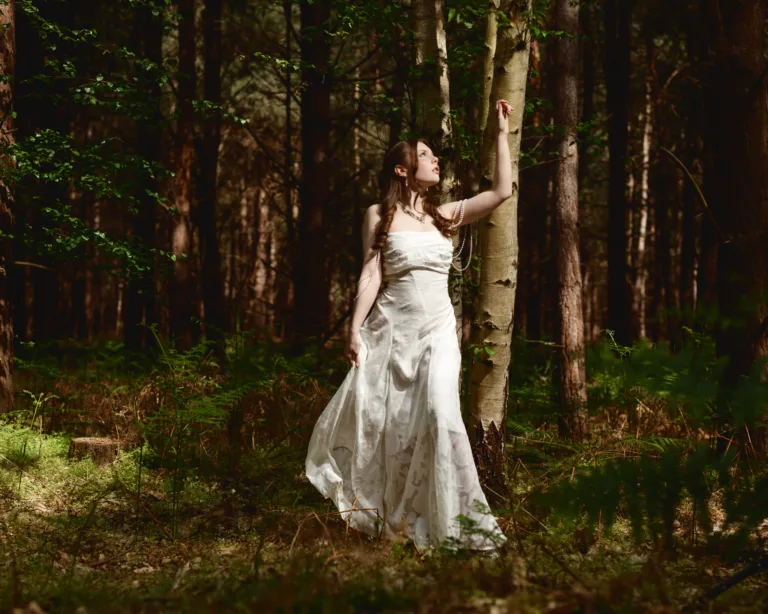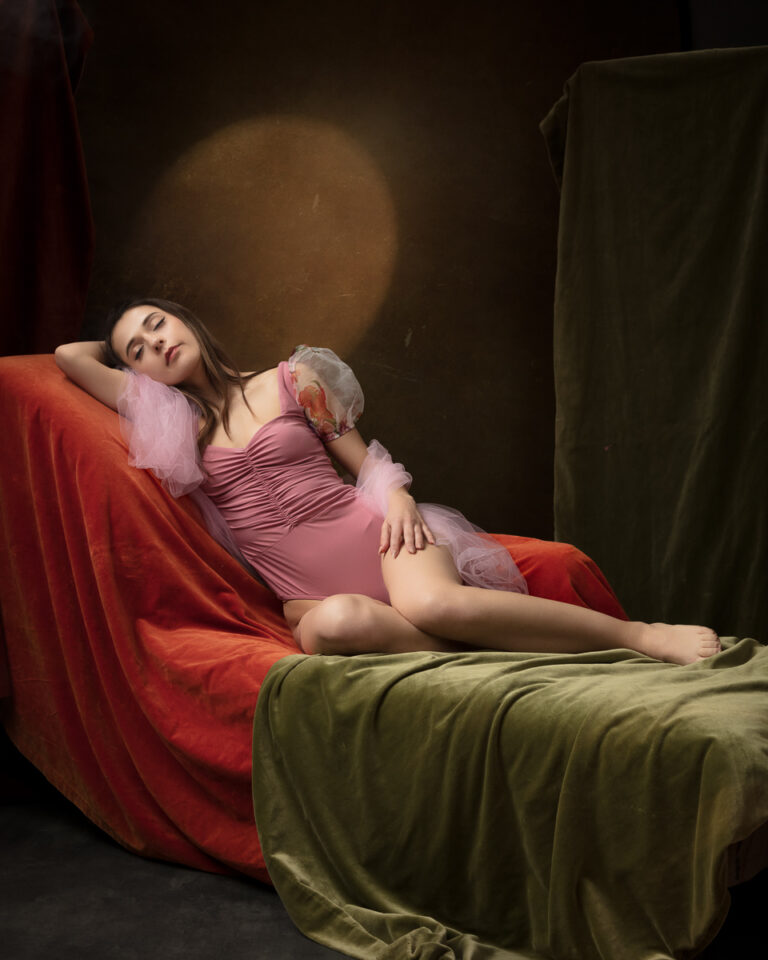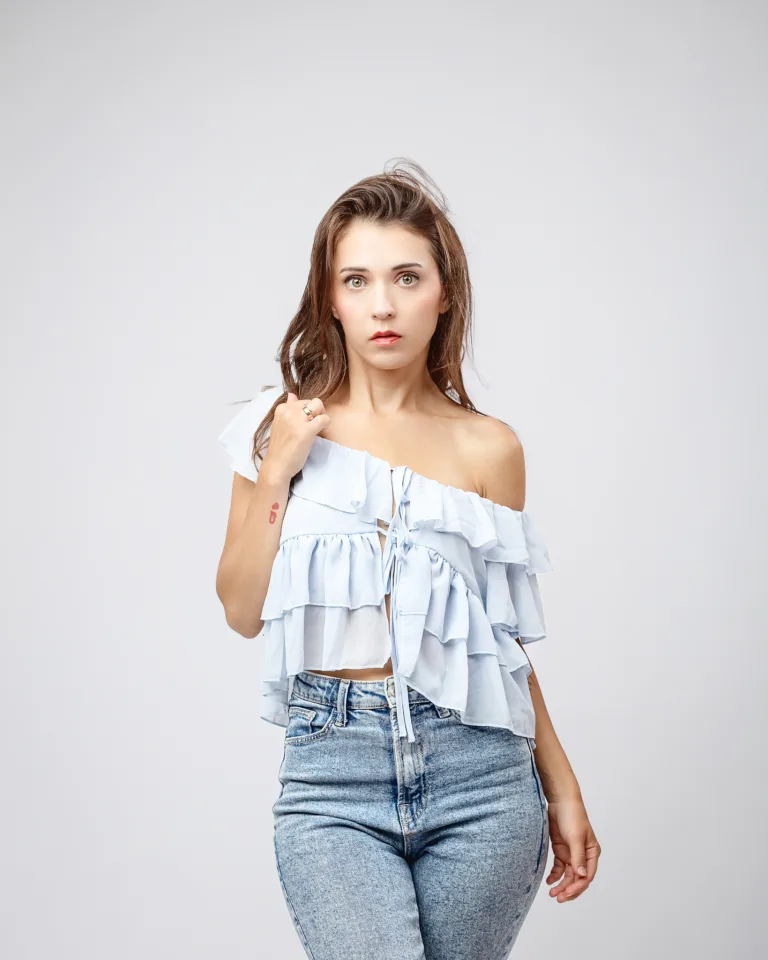
Justyna and Karolina came into my studio at Rendlesham on 10 August for another round of portfolio work. We started just after nine in the morning and finished a little before midday, and in that time we worked through eight looks each. That is a lot of ground to cover in under three hours. The only reason it is possible is that we have done this so many times now. There is very little explaining left to do. They know how I light, I know how they move, and the session runs at a pace that would not happen with people I had only just met.
I have been photographing both of them since 2024, sometimes separately, more often together. Sessions like this one are the reward for that. There is no warming up period and nobody is nervous, so we simply get on with it.
Two models in one session, and why I like working that way
They arrived together, which is how I prefer it. The practical benefit is that they chaperone each other, and I will come back to that further down because it matters more than most people realise.
The other benefit is the room itself. A studio with three people in it who know each other is a very different place to a studio with two people who do not. While one is in front of the camera, the other is checking a hem, spotting a strap that has twisted, holding something out of frame, or just making the other one laugh at the right moment. Expression is the hardest part of portrait work to fake. Having a friend in the room does more for it than any amount of direction from me.
Each of them still gets their own gallery at the end. A shared session does not mean a shared set of images. They book the time together, they use the same background and much of the same lighting, and then they go away with two separate portfolios.
Working from a shared Pinterest board
Before the shoot we had a Pinterest board running between the three of us. All of us could add to it in the weeks beforehand, and all of us could see it on the day.
I rate this method highly. A board is not a script, and I would not want it to be. What it does is remove the guesswork. When I can see the direction in advance, I already have a rough idea of how each set needs lighting, whether we need the plinth or the armchair out, and which looks are going to need more time than the others. It also gives us something to point at when the words are not quite landing. Describing a mood out loud is difficult. Pointing at an image and saying “that, but harder” takes two seconds.
With both models adding to the same board, we could also see in advance where their ideas were converging and where they were pulling apart. That shaped the running order for the whole morning.
Eight looks each, and how the morning ran
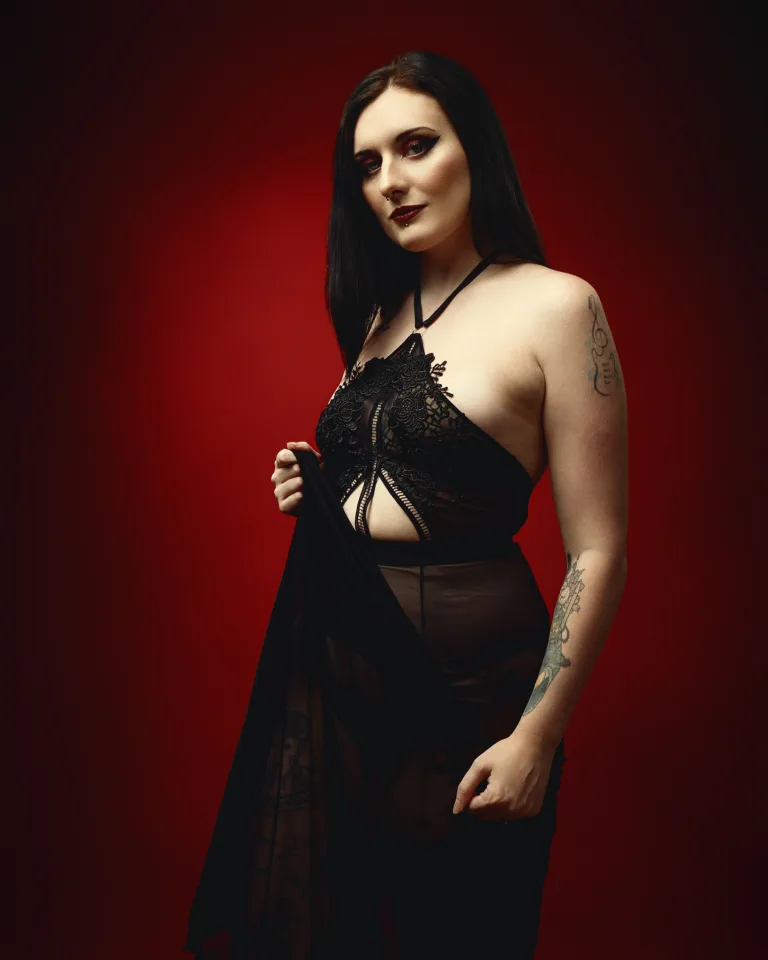
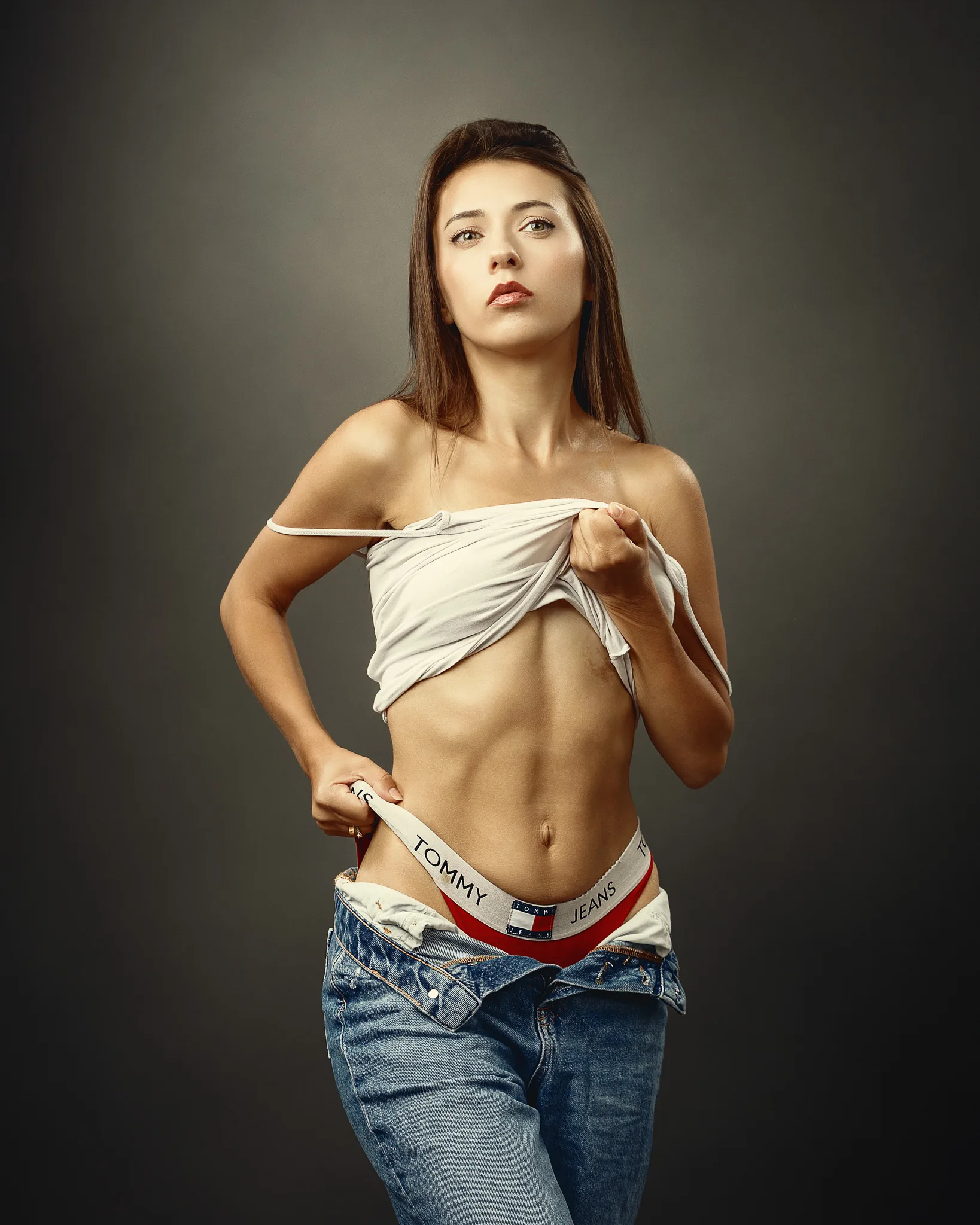
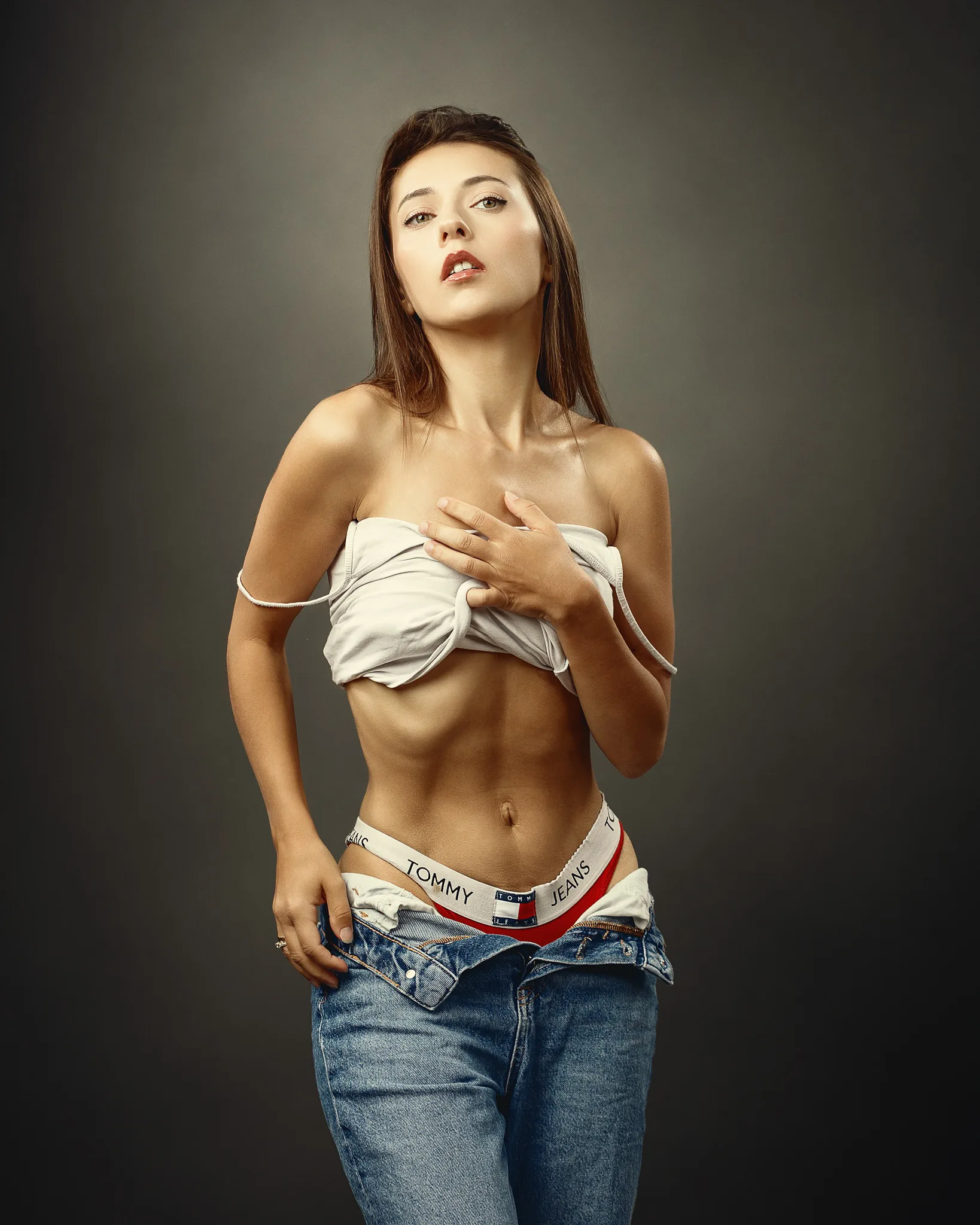
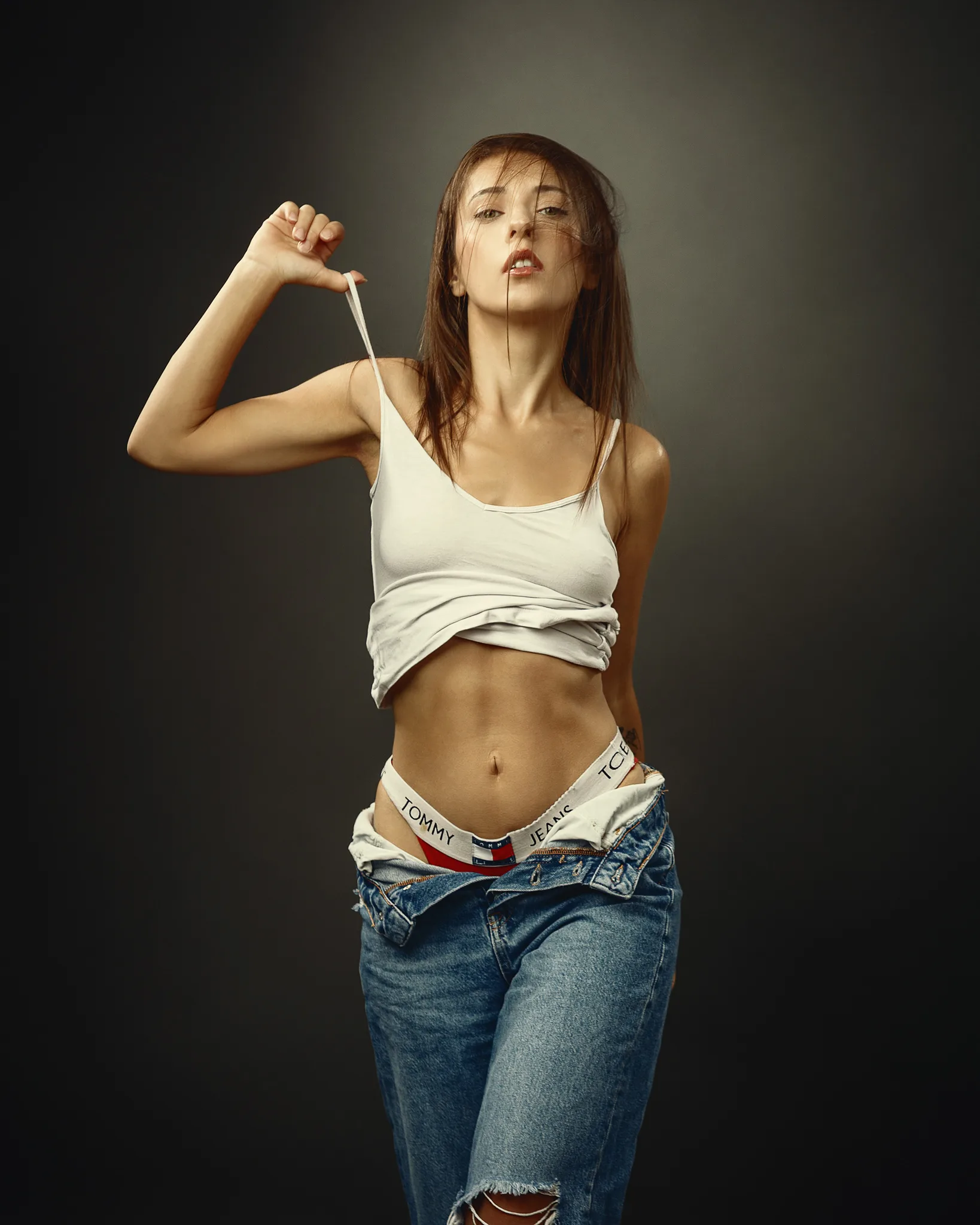
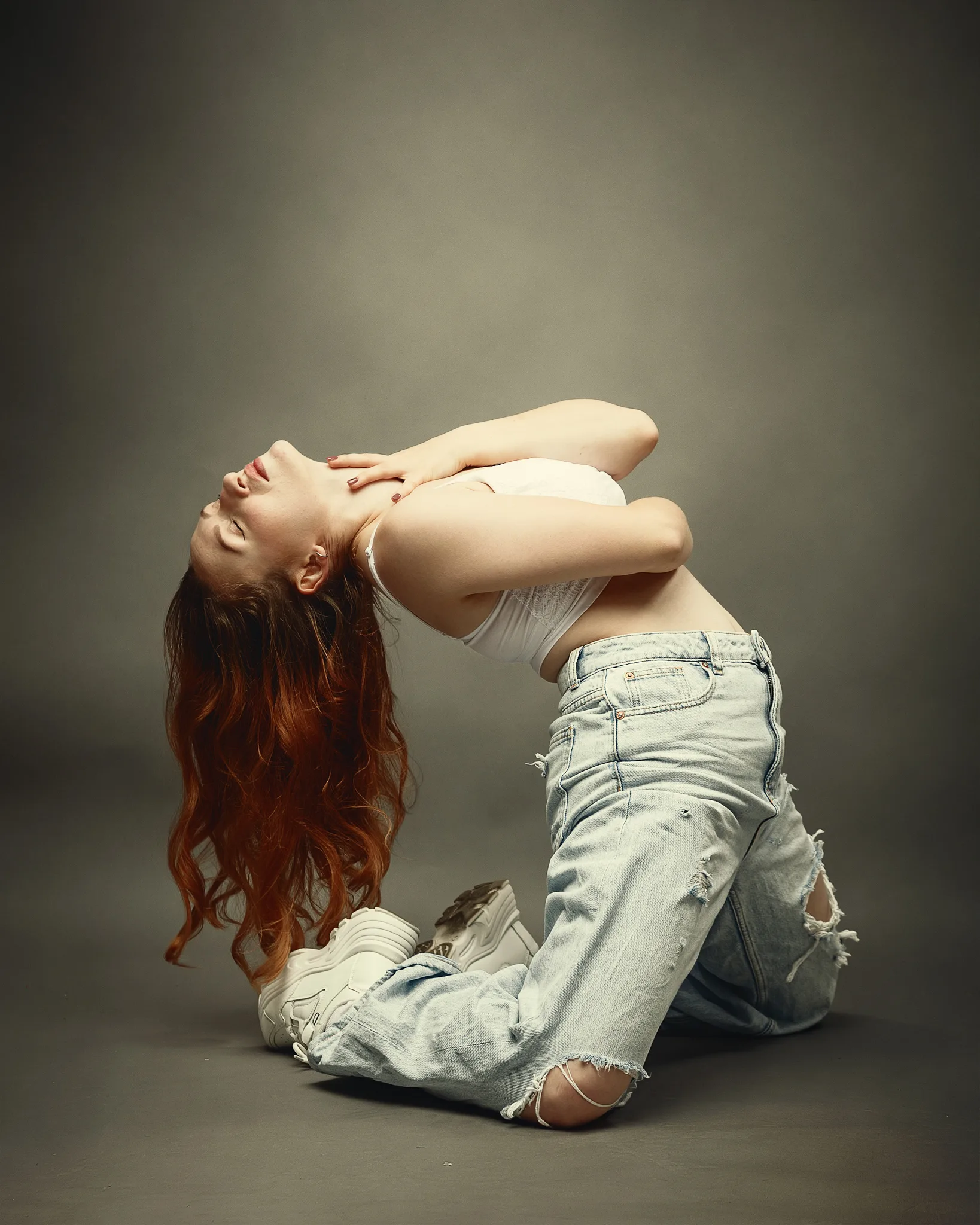
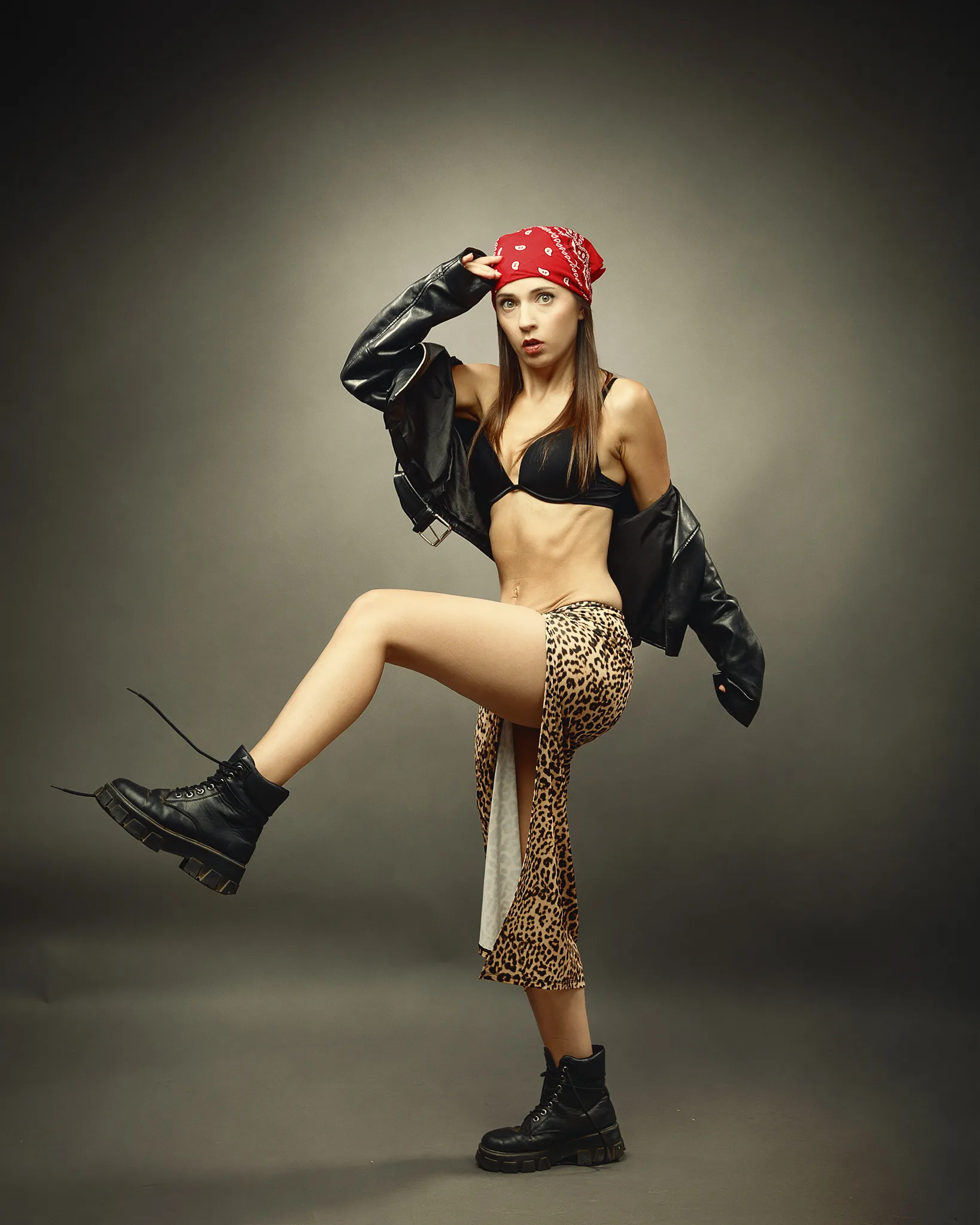
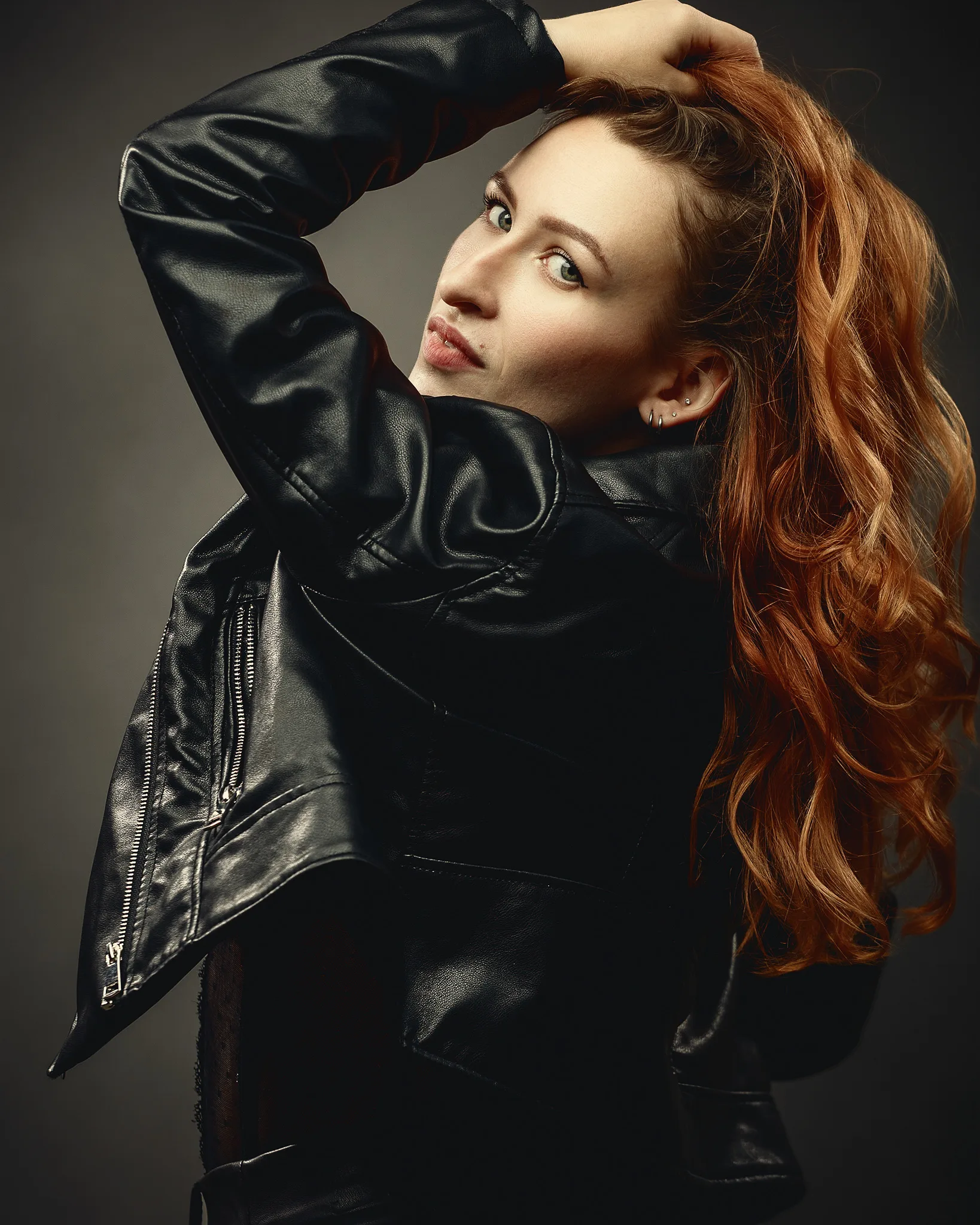
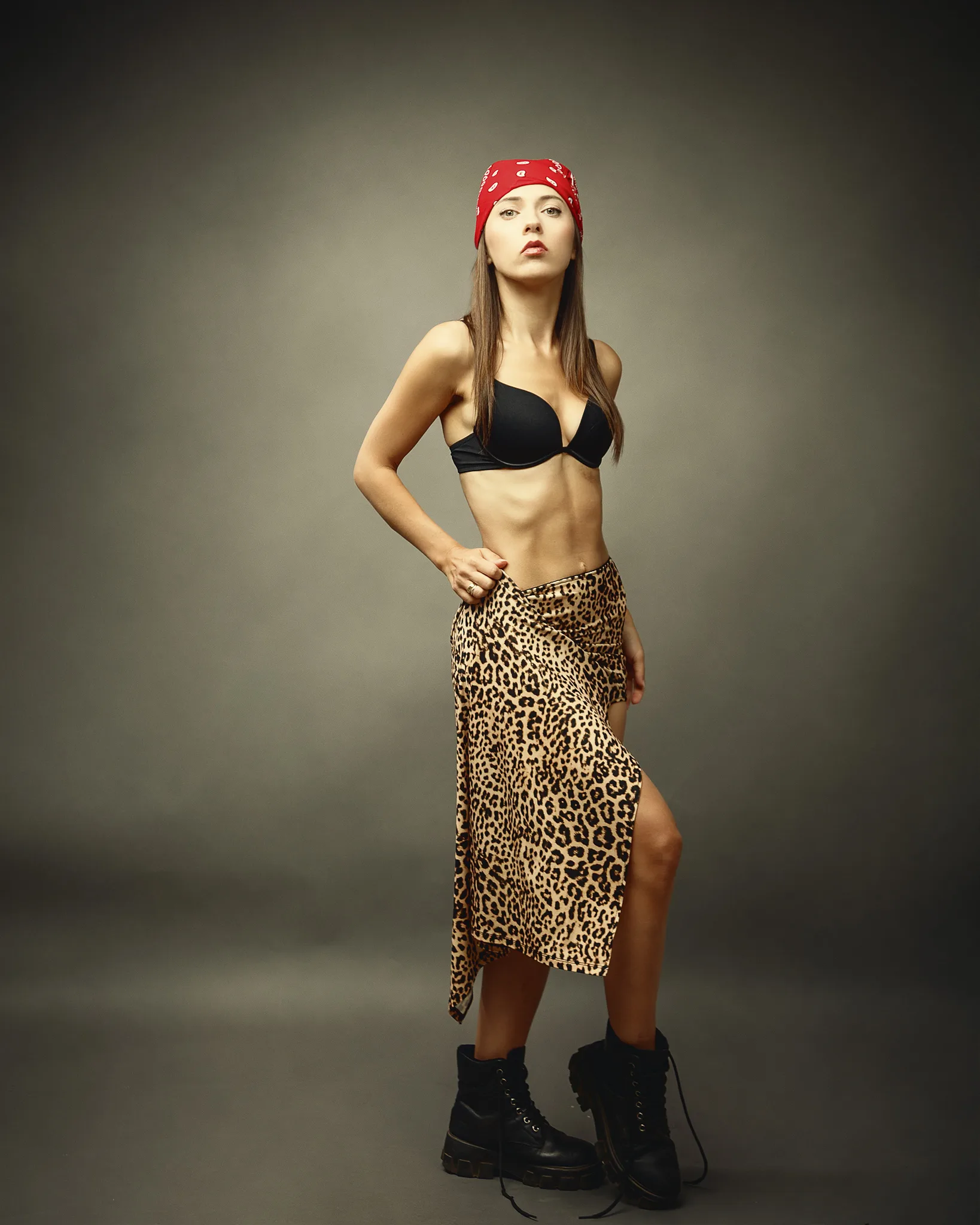
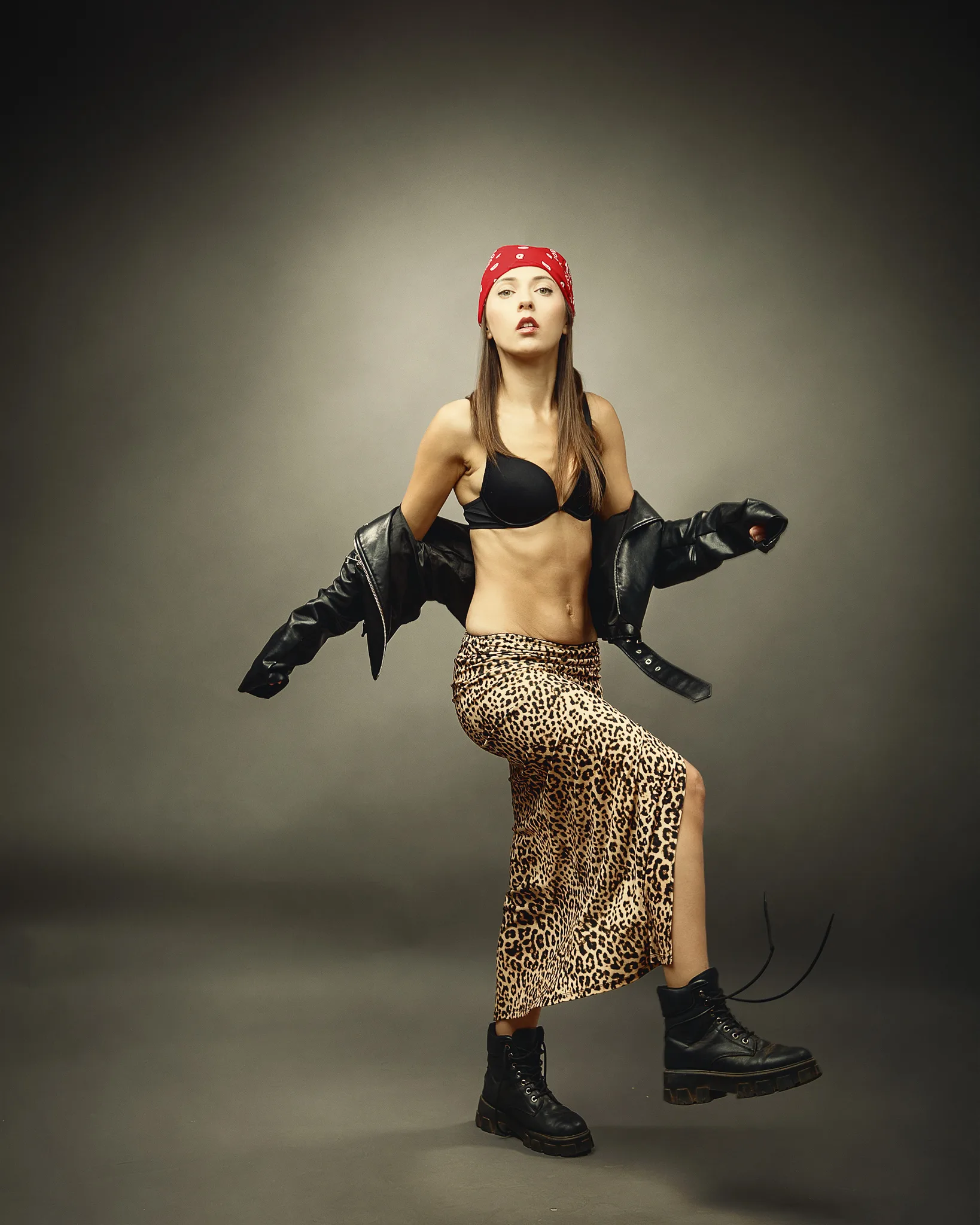
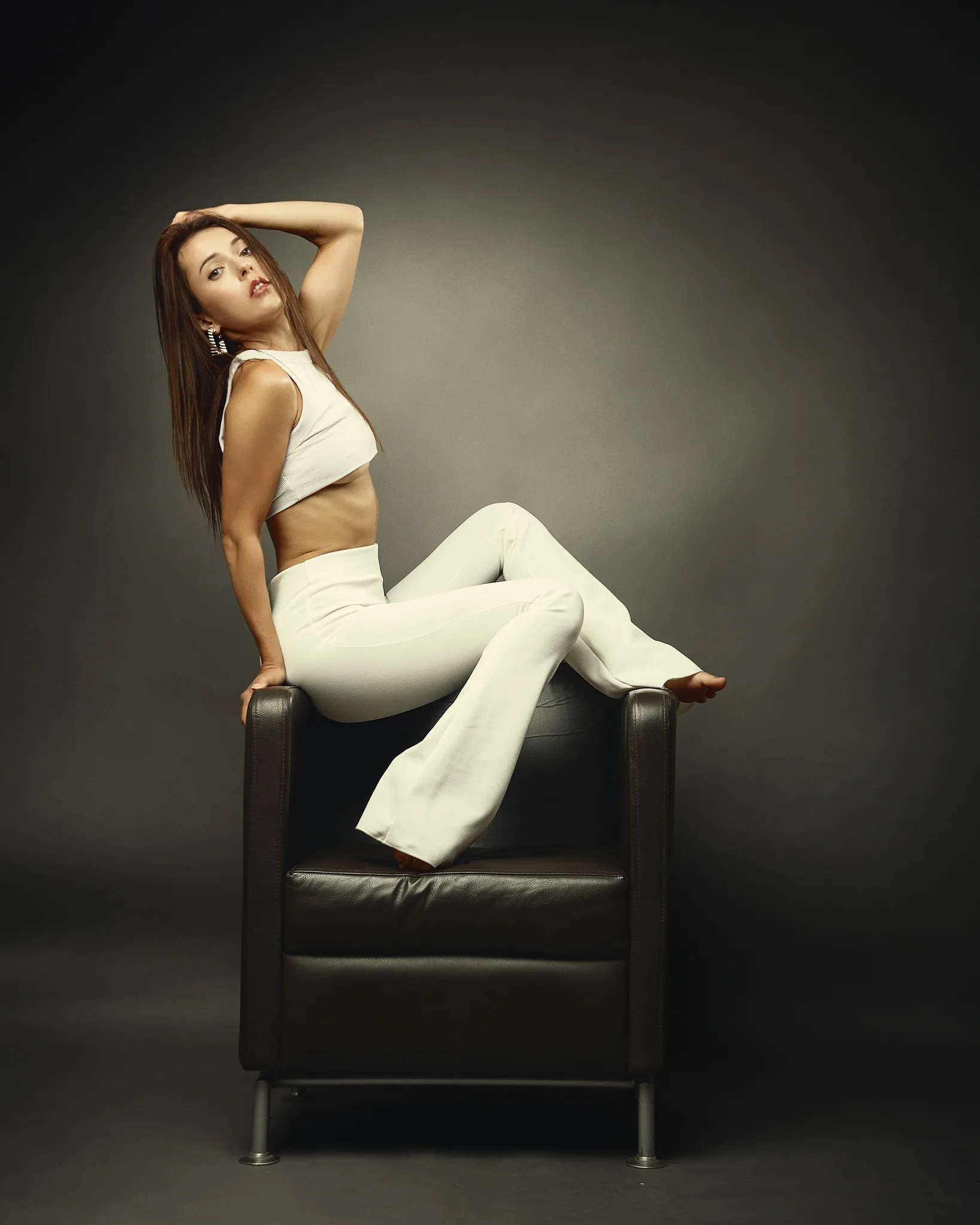
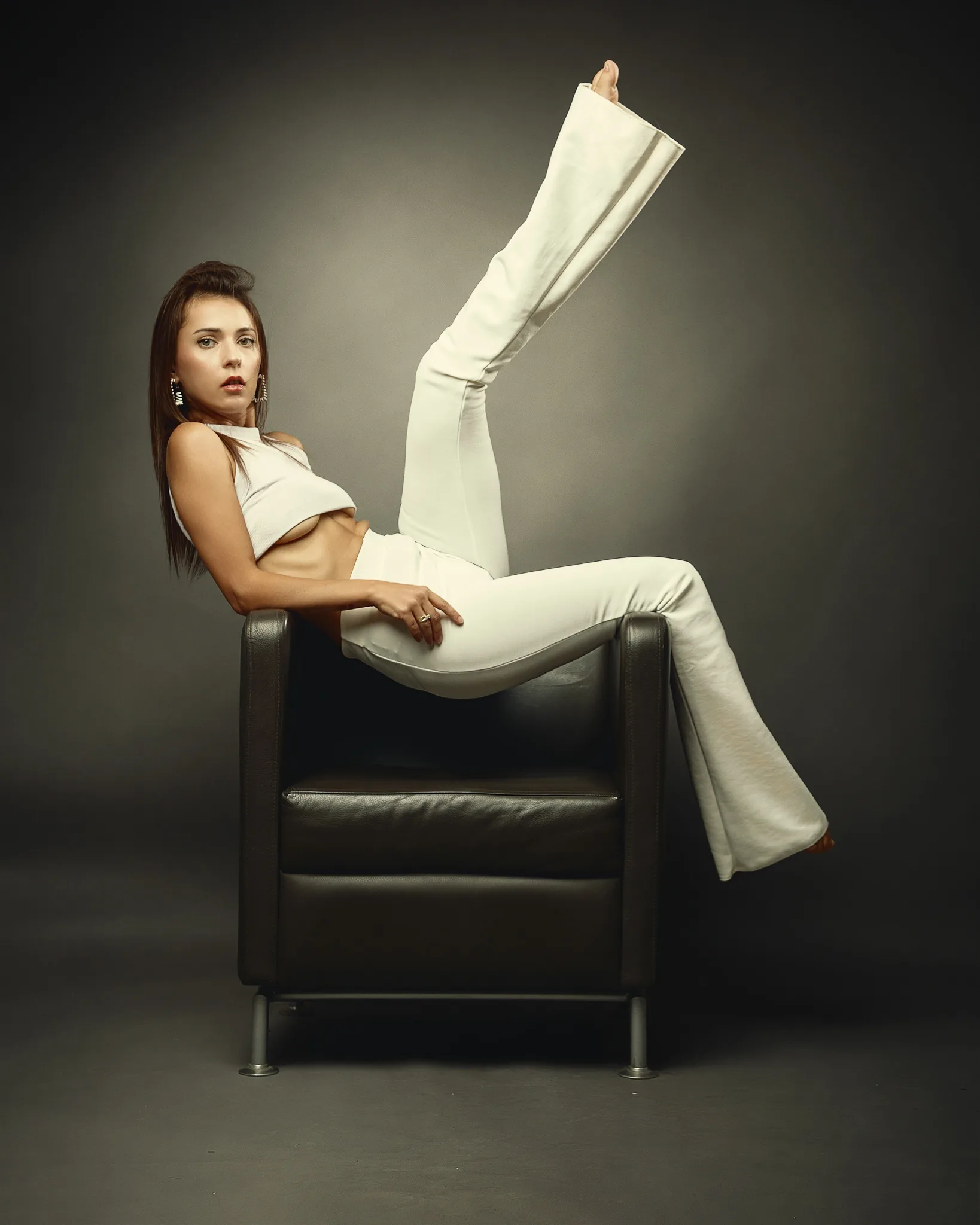
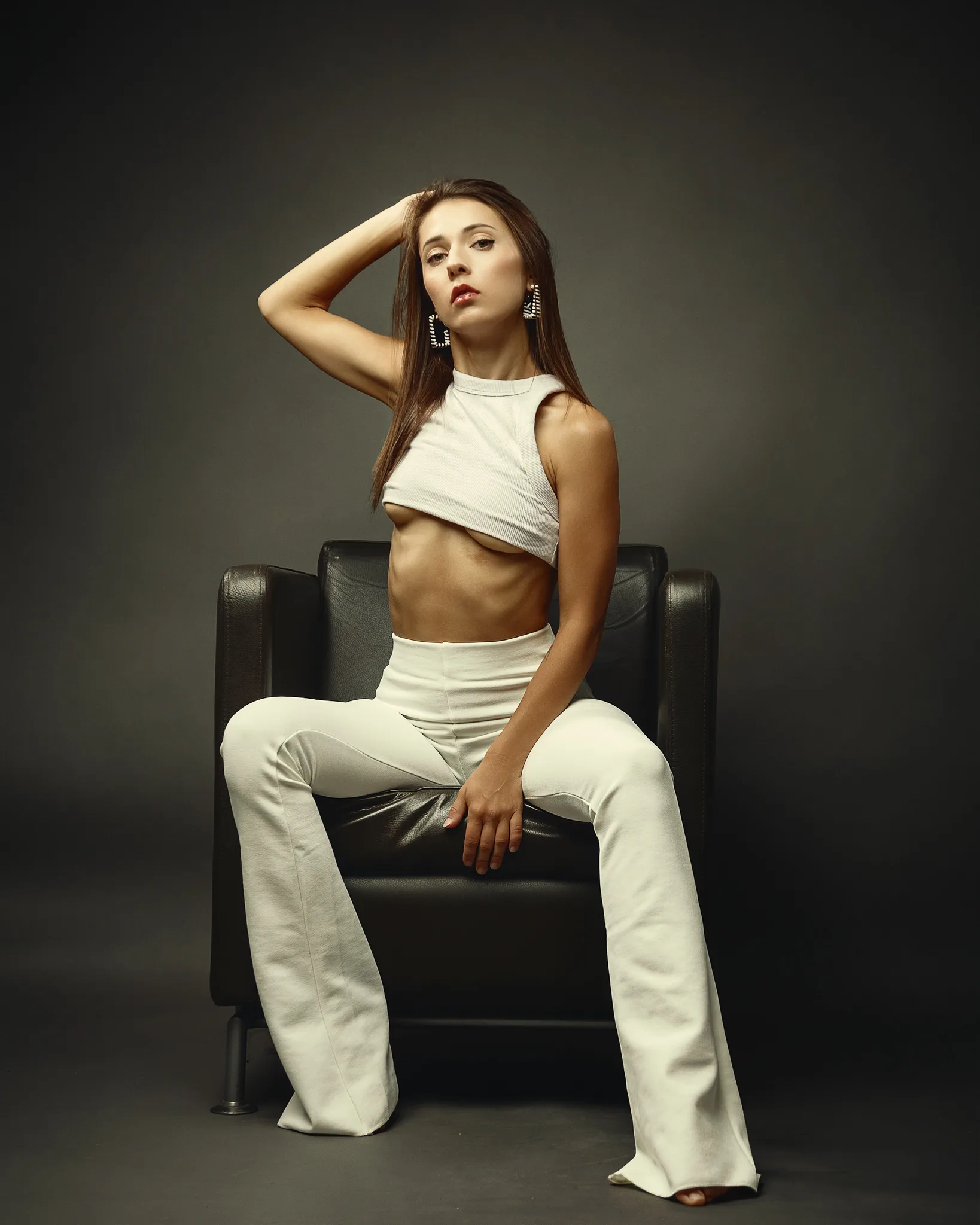
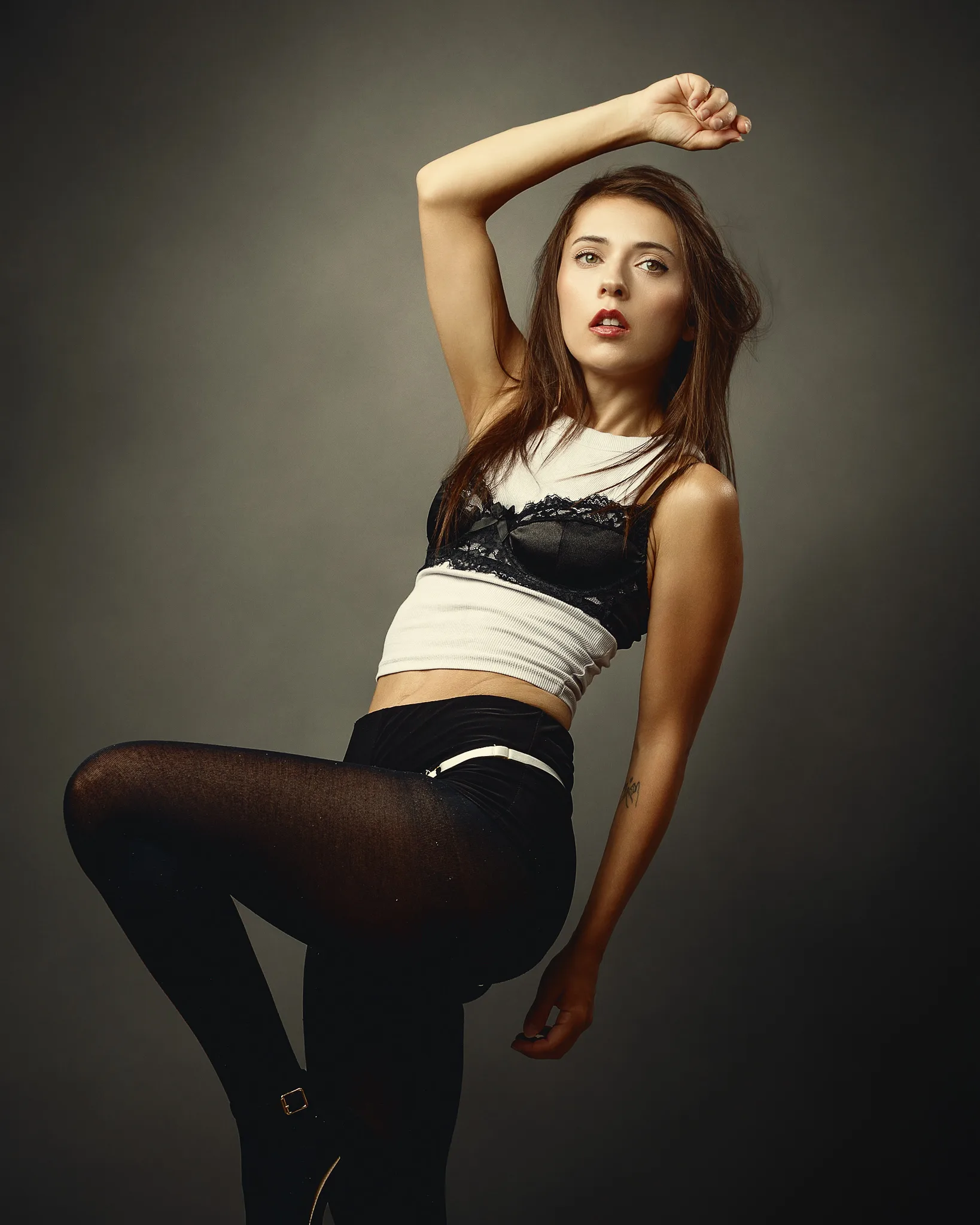
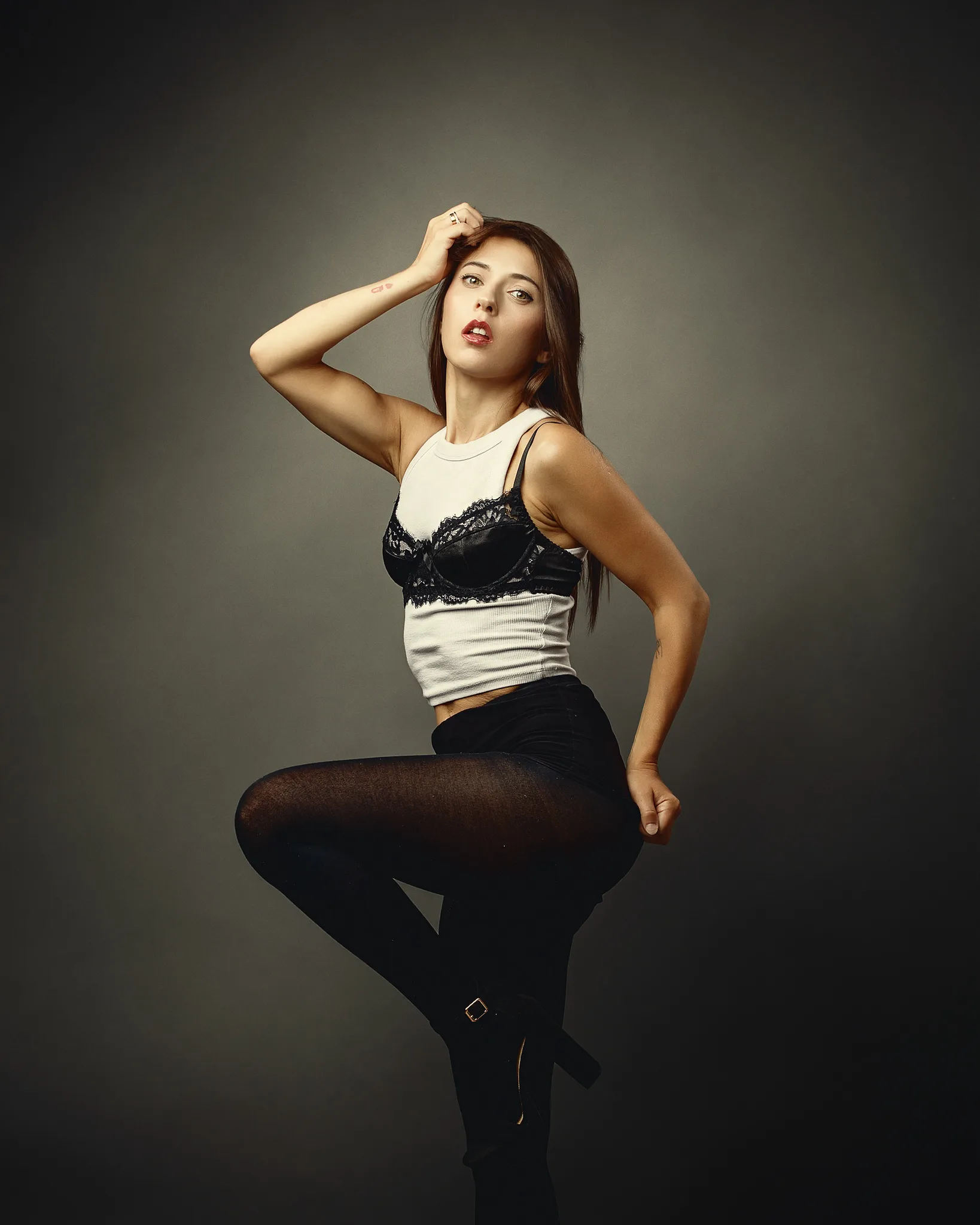
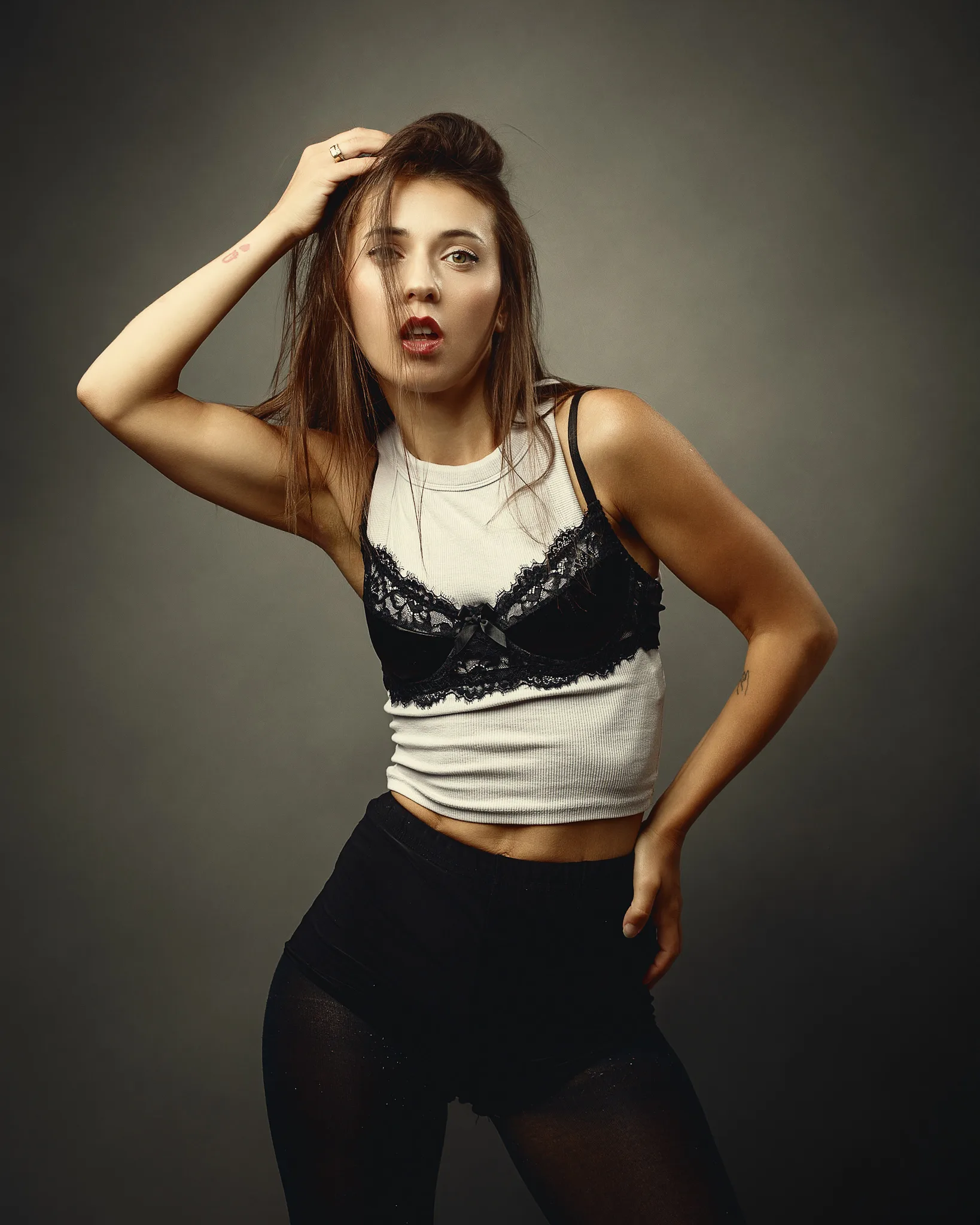
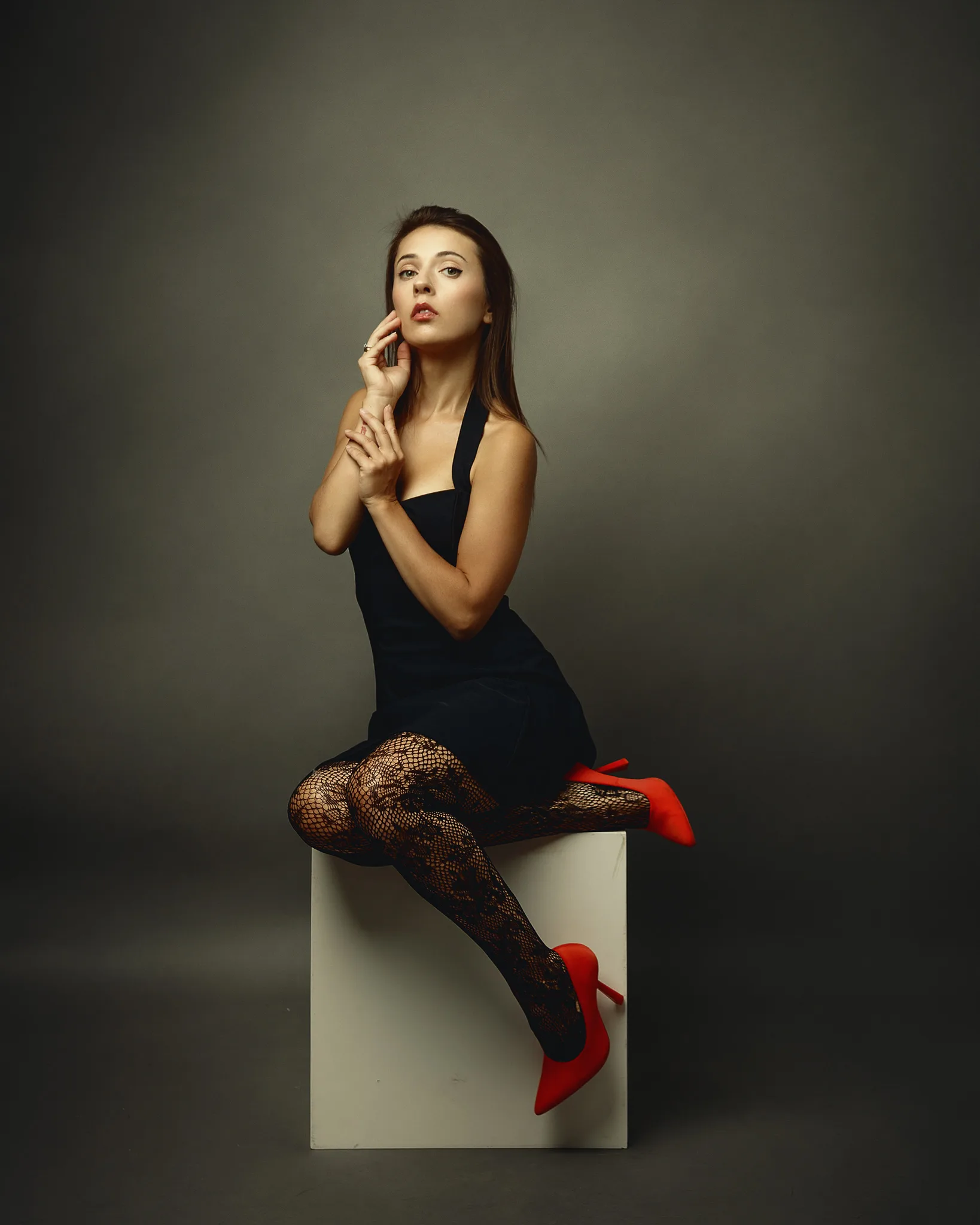
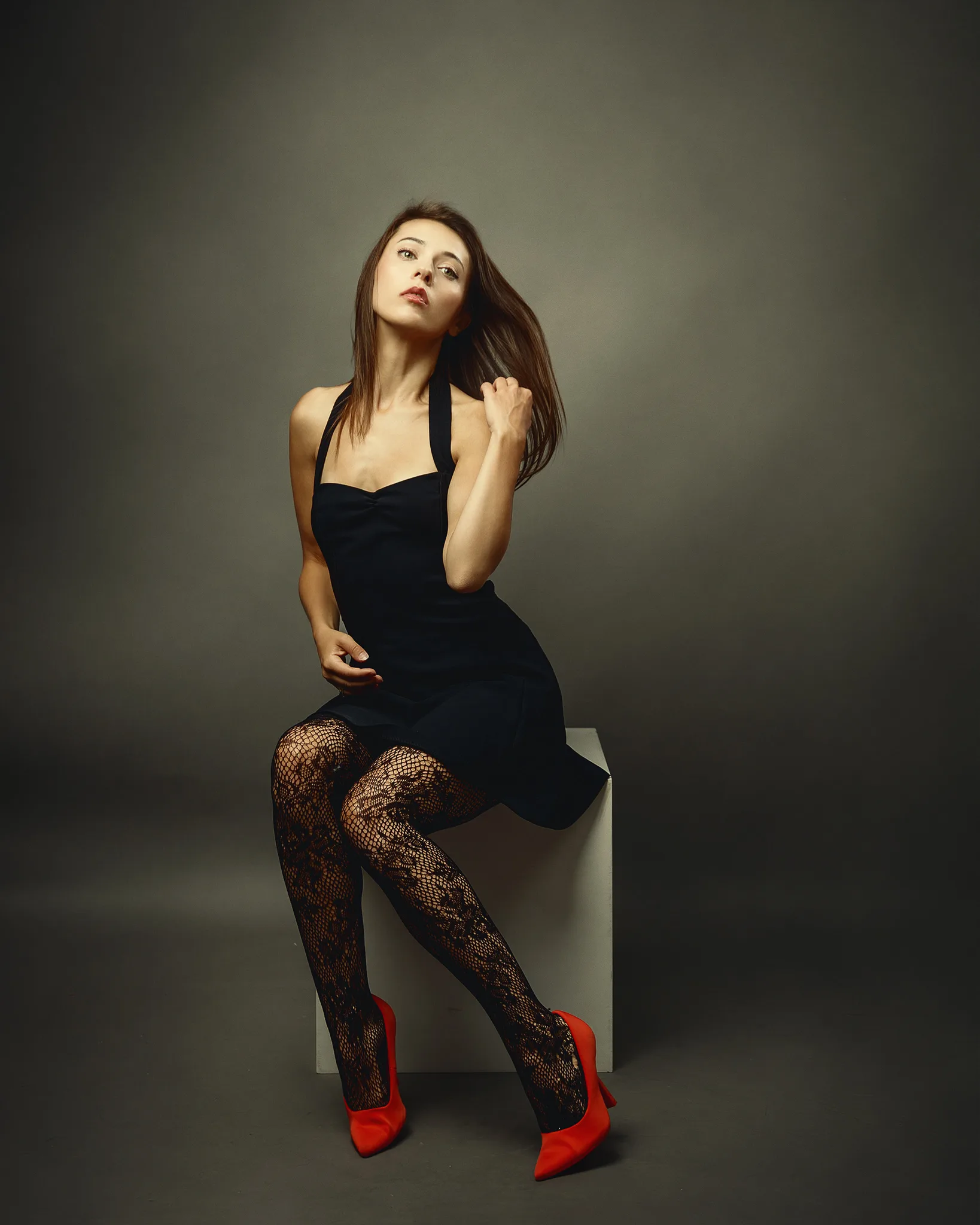
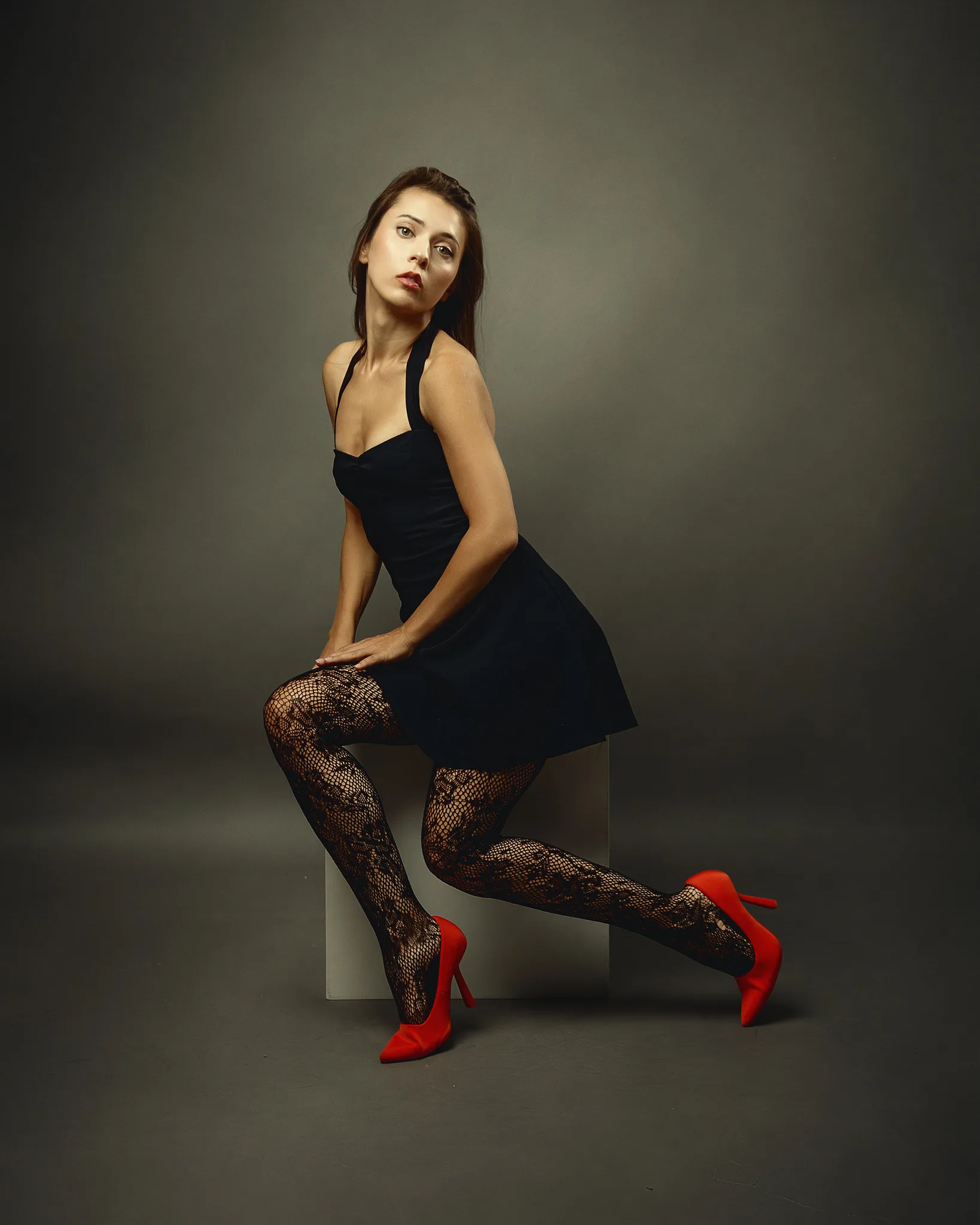
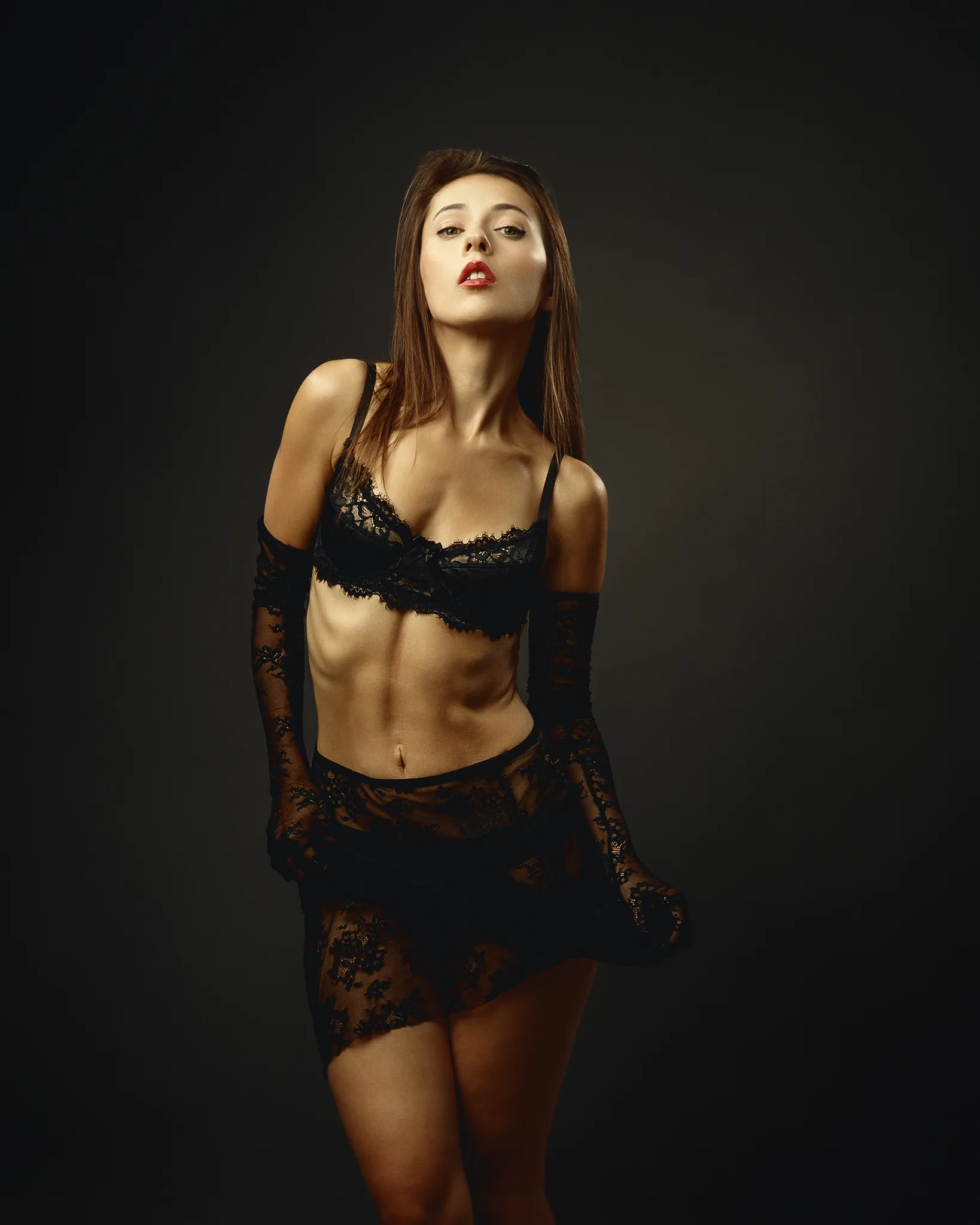
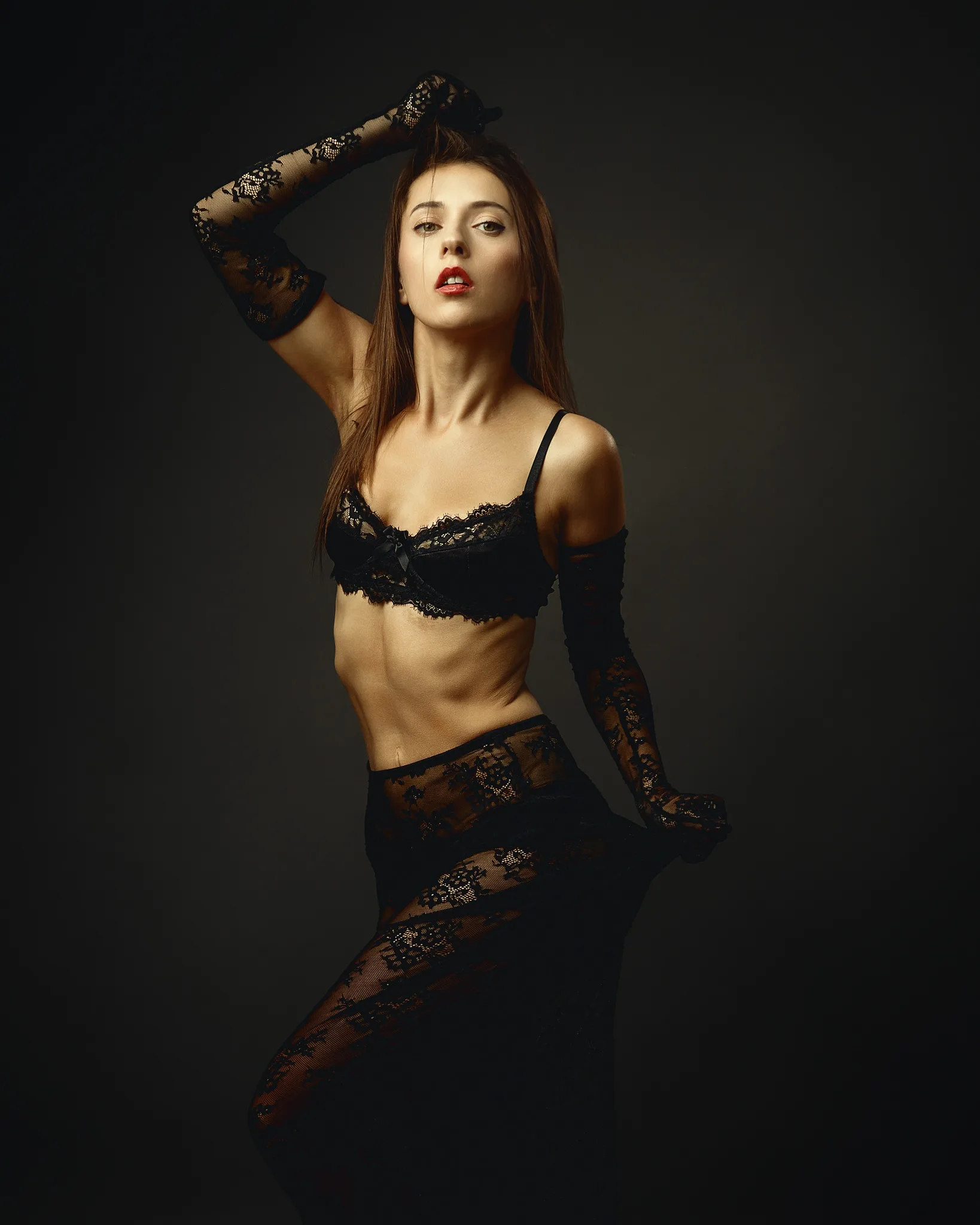
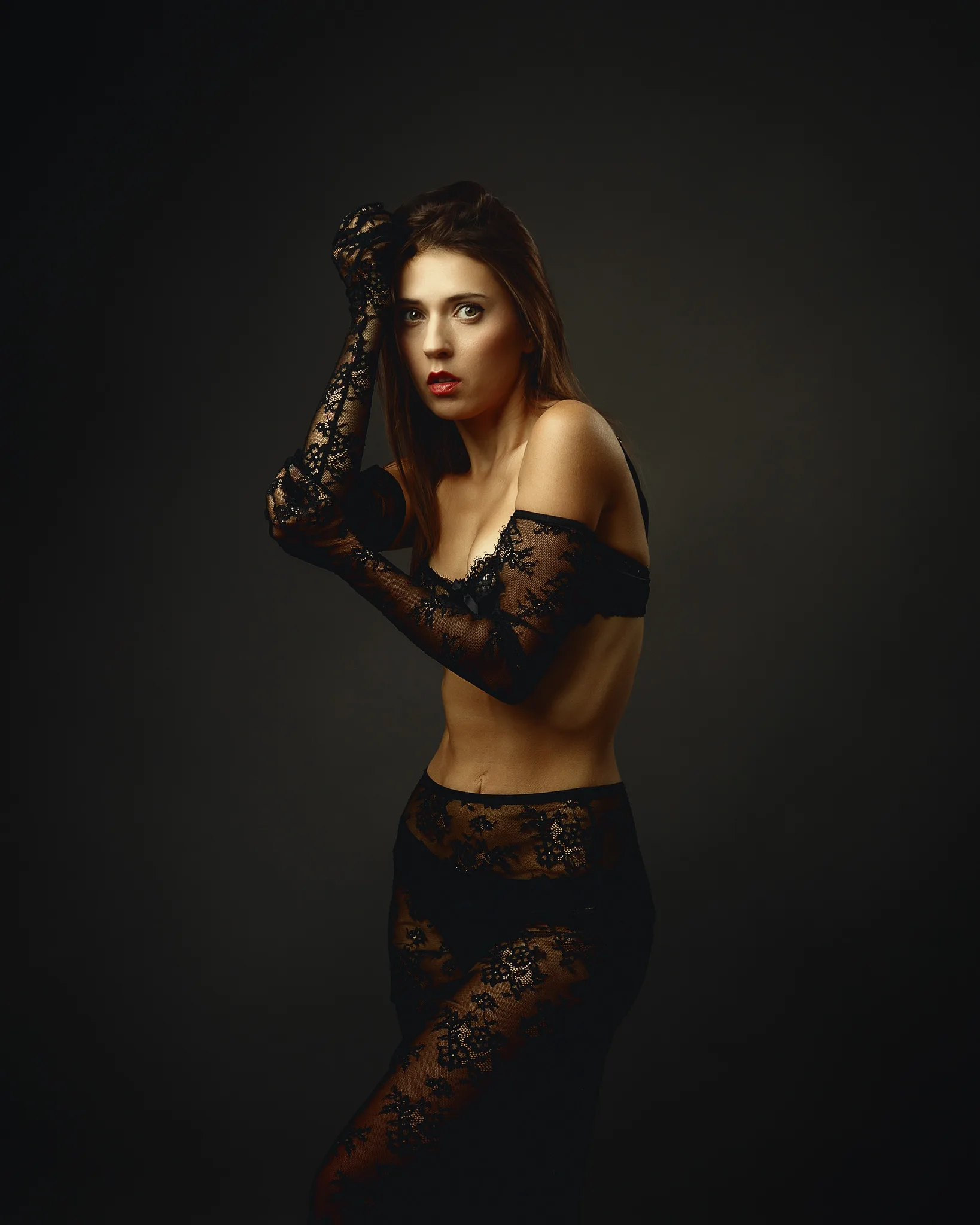
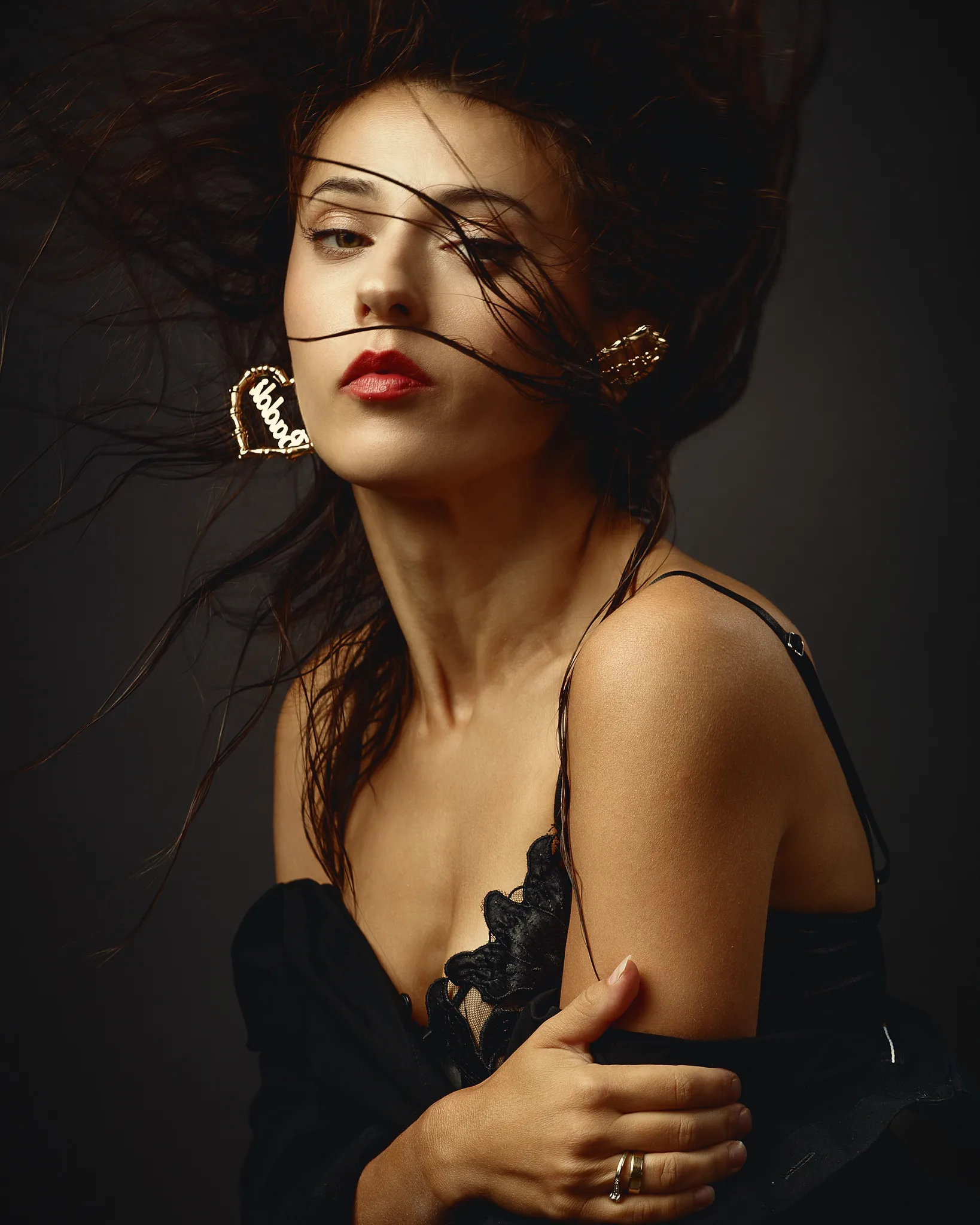
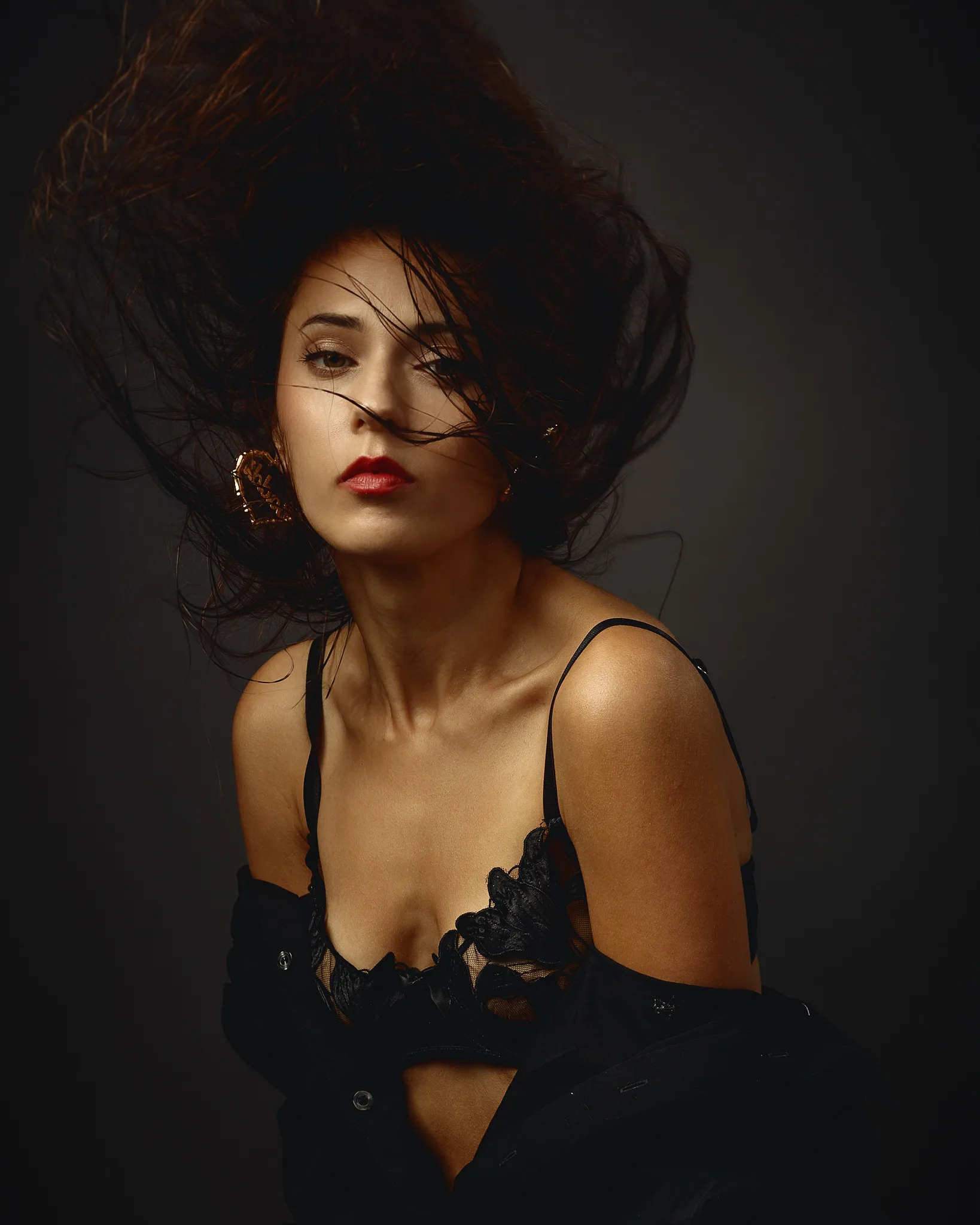
Karolina started in a cropped white vest with jeans, shot fairly high key against the grey. She then moved into a red bandana, a black leather biker jacket and a leopard print skirt with heavy boots, which was the most obviously attitude led set of her day. After that came a white halter top and white flared trousers using the black leather armchair, then a white vest layered over black lace with tights, then a black halterneck dress with lace tights and red heels on the white plinth. Her last three sets were the darkest of the morning: black lace with long lace gloves, the flower blindfold set, and the water and ice work we finished on.
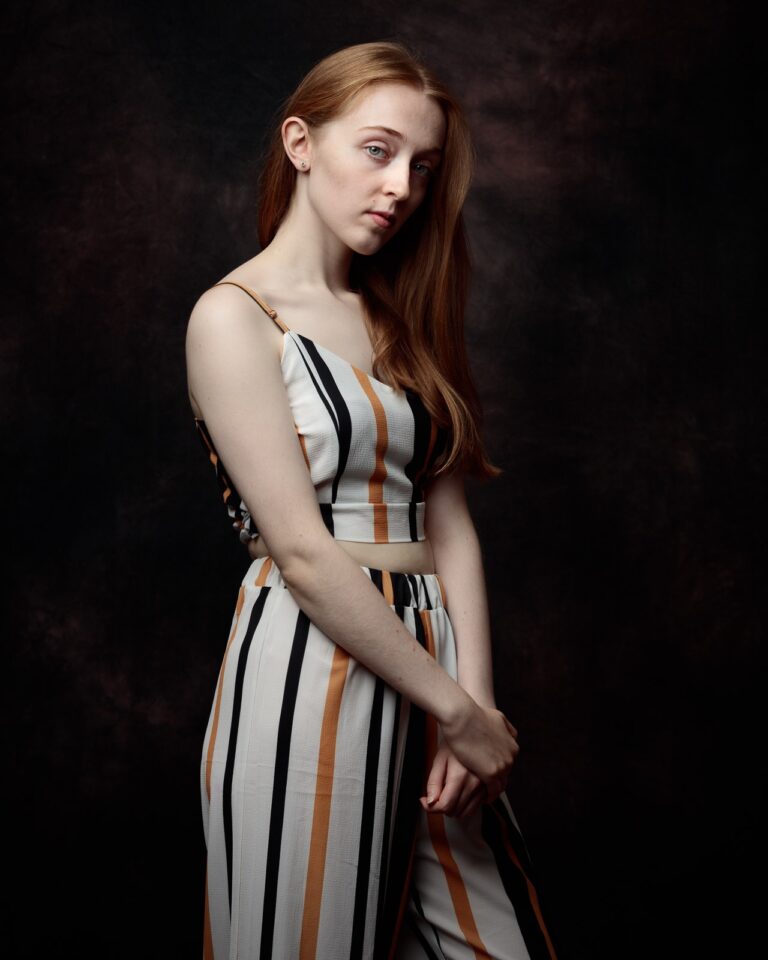
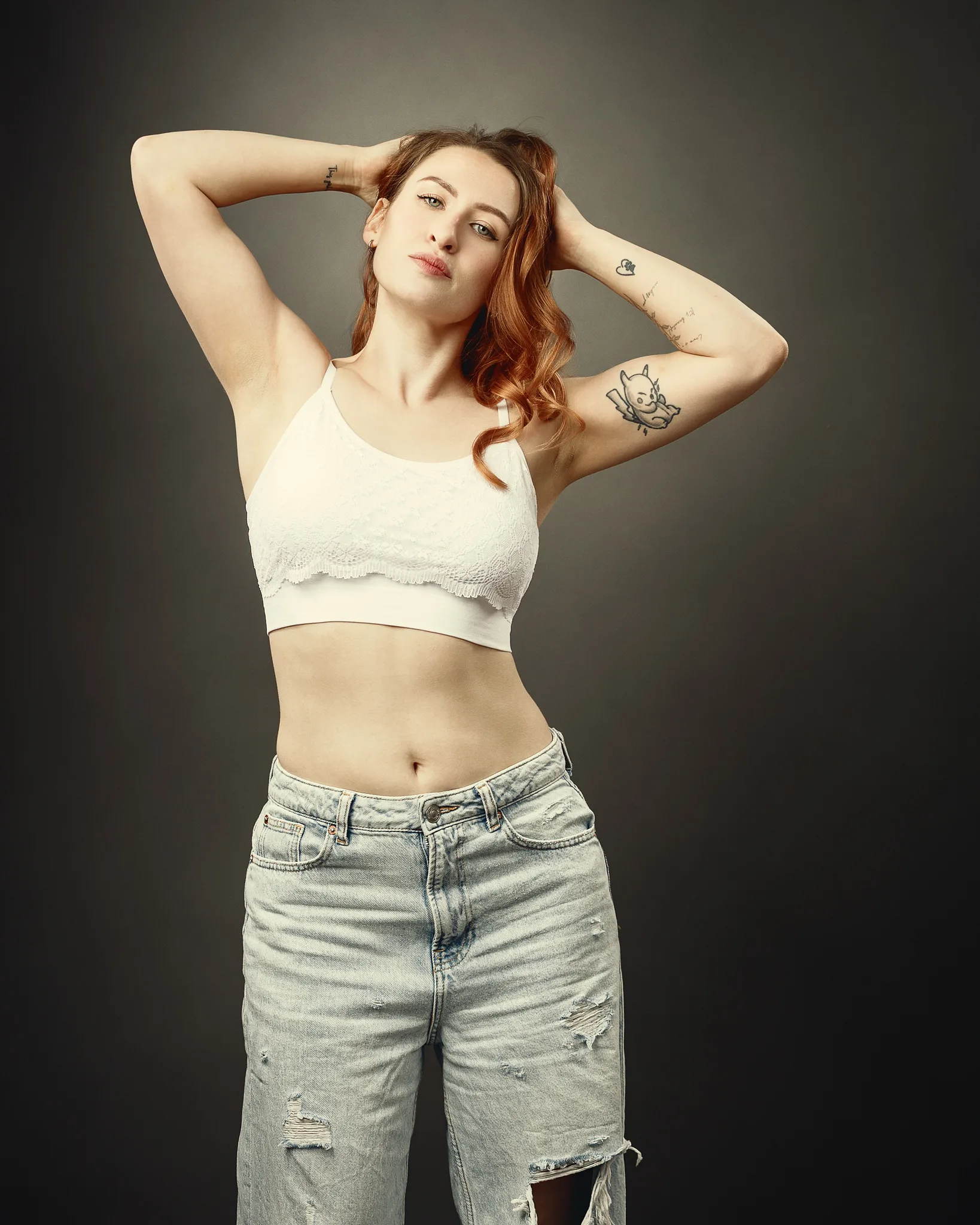
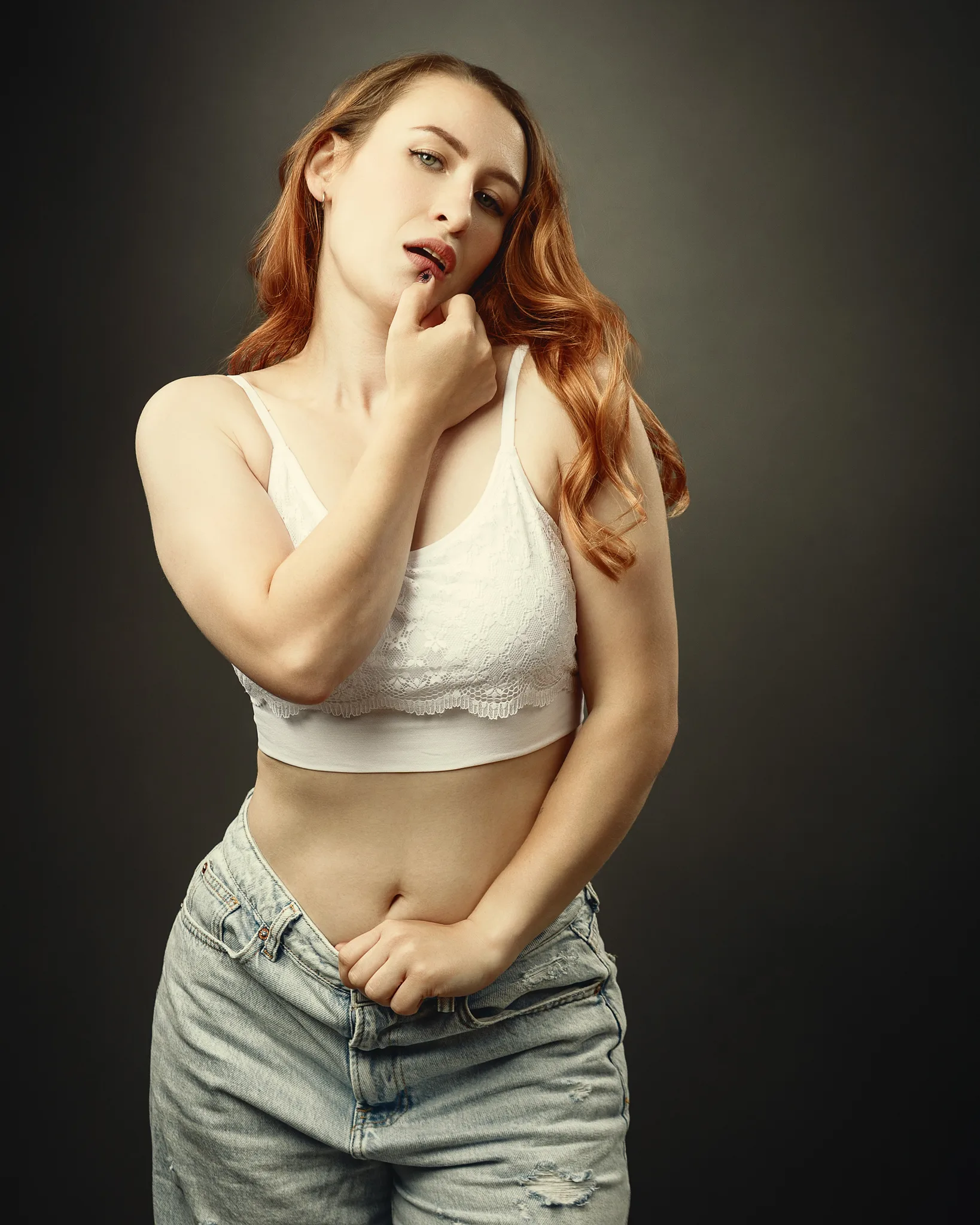
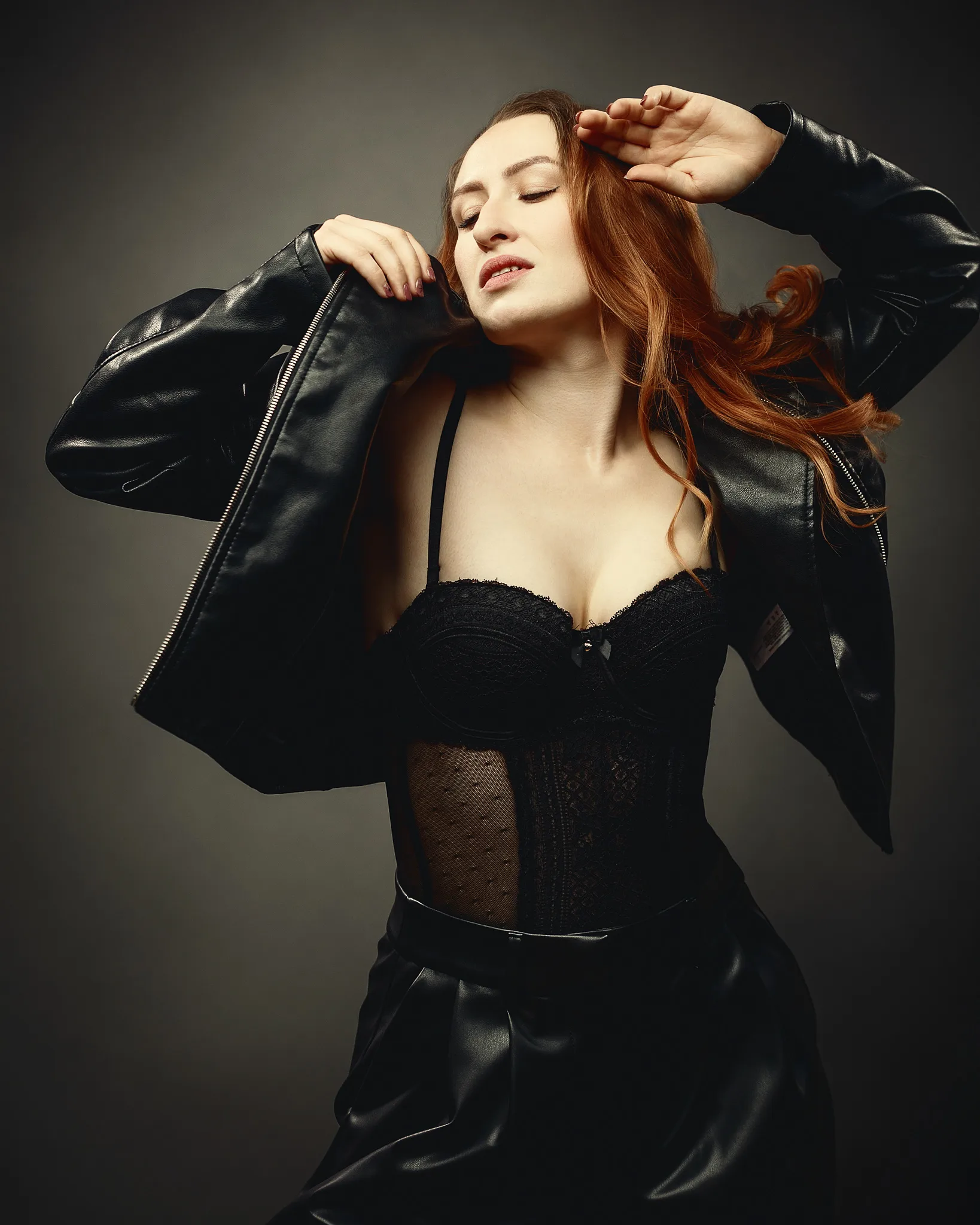
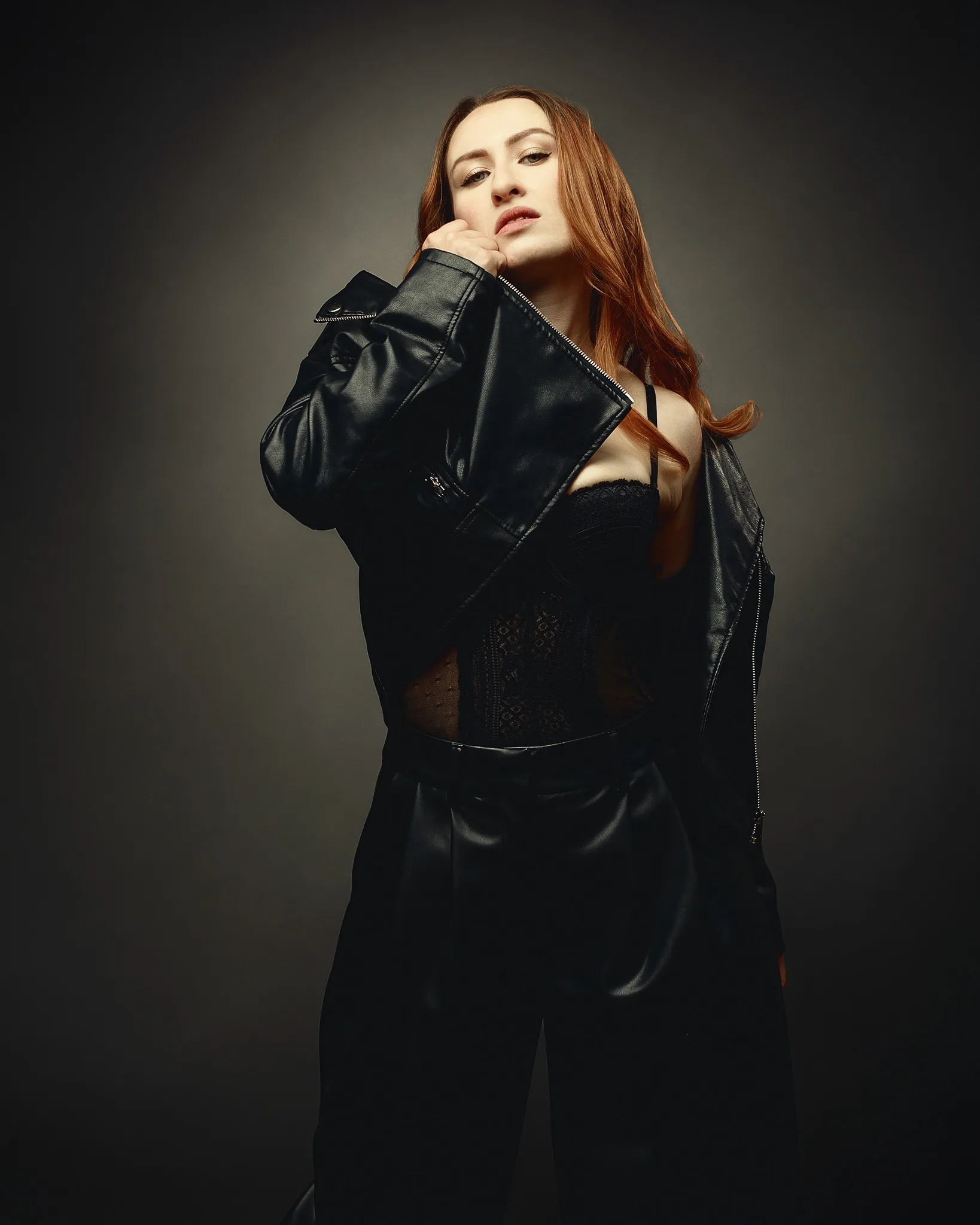
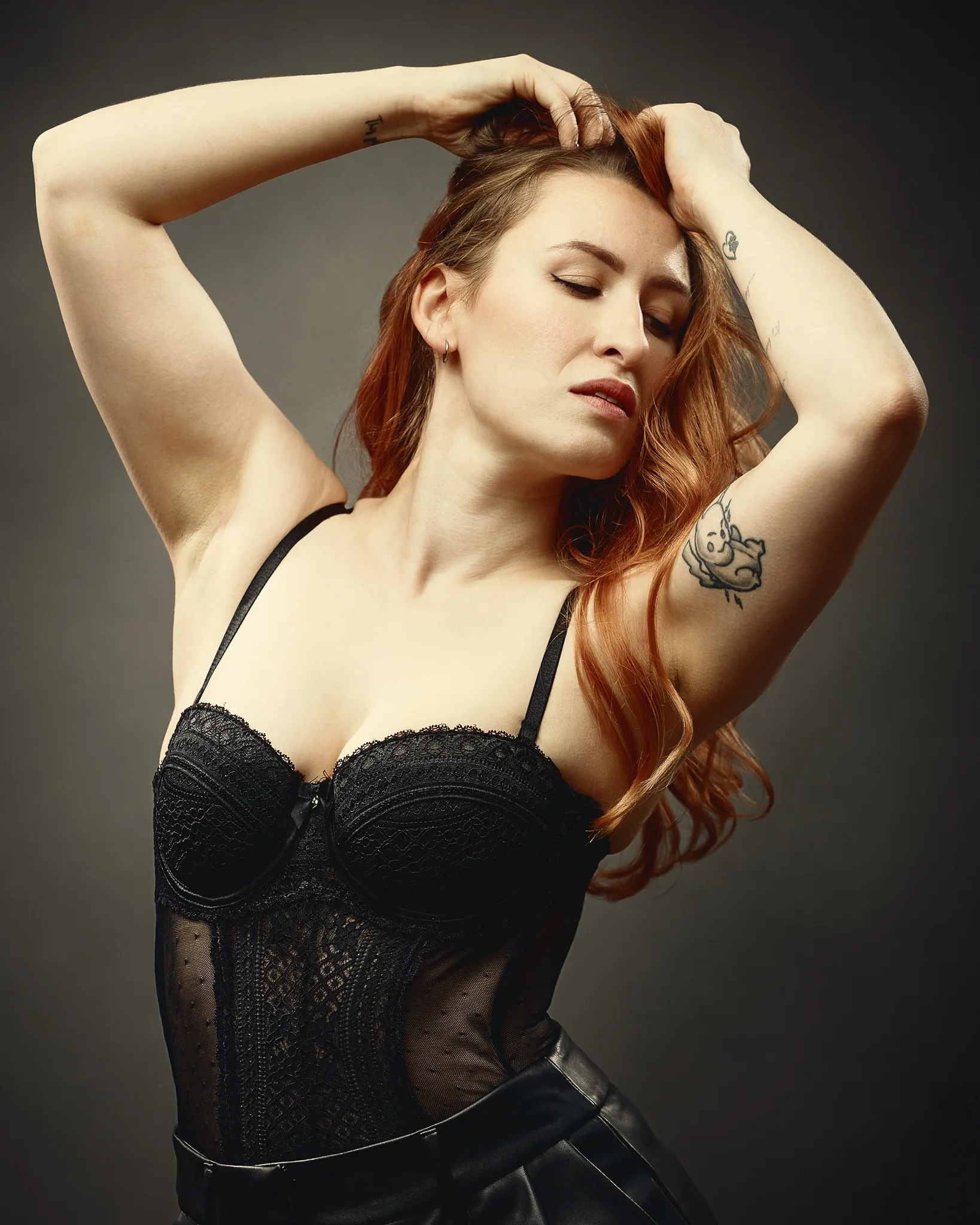
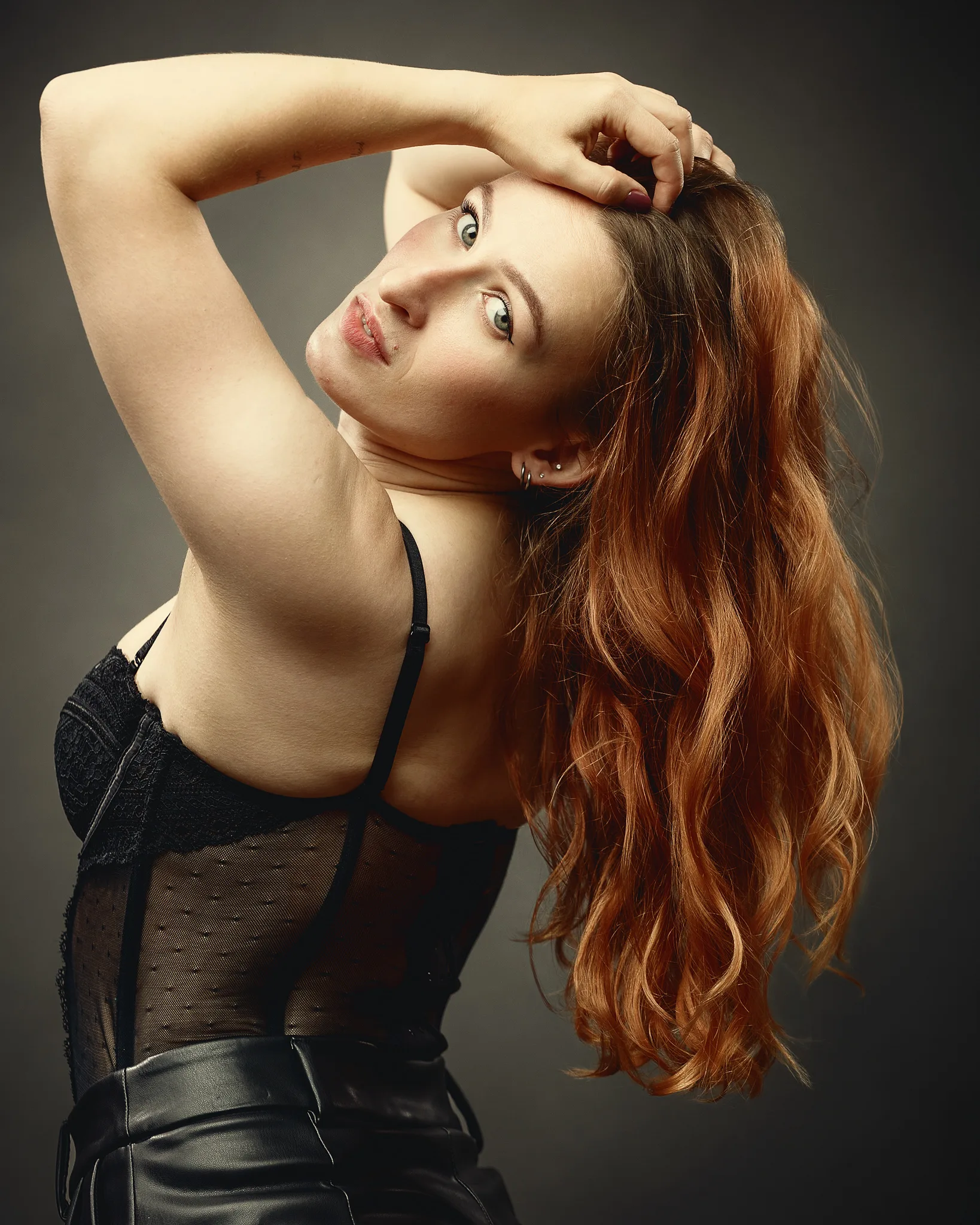
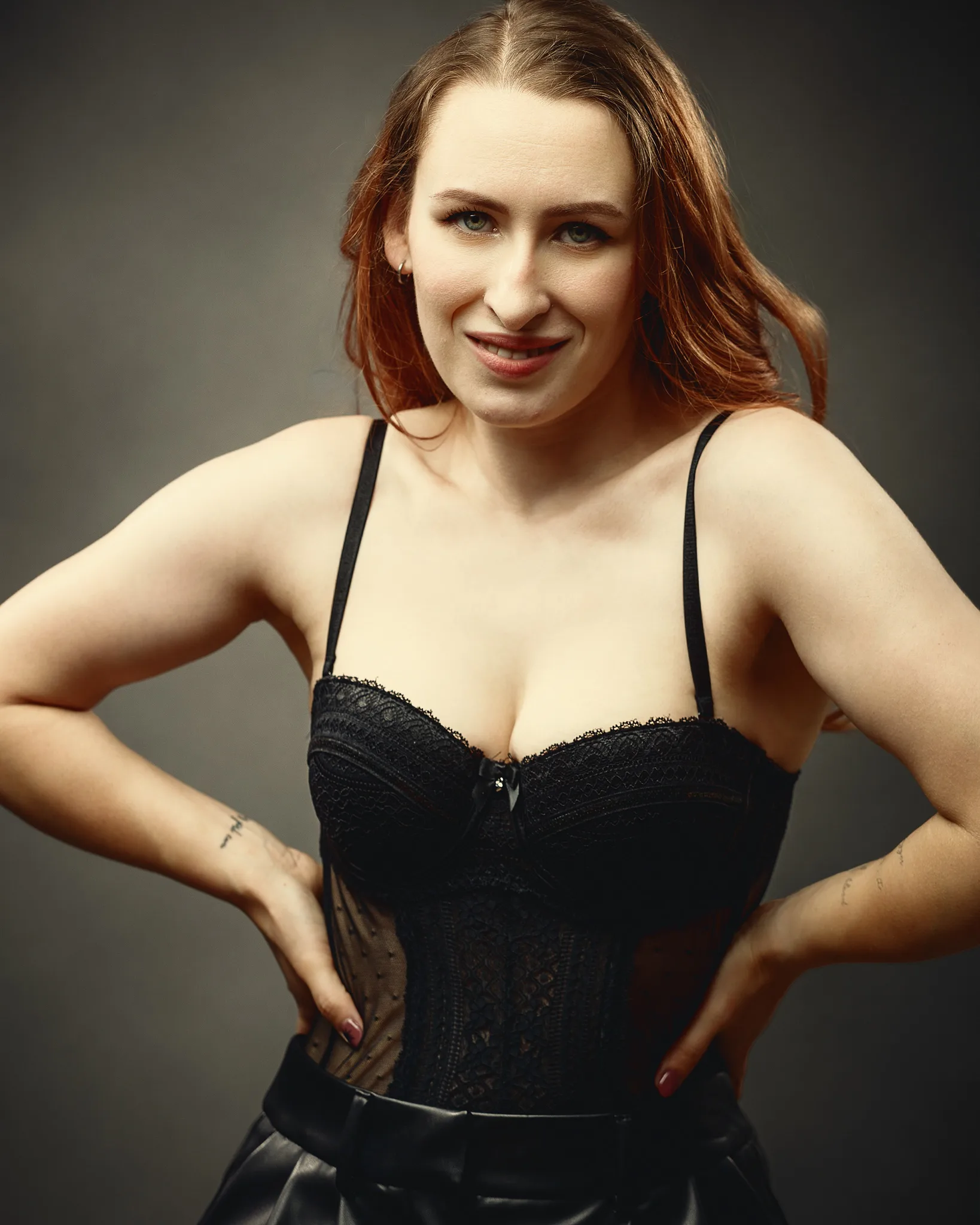
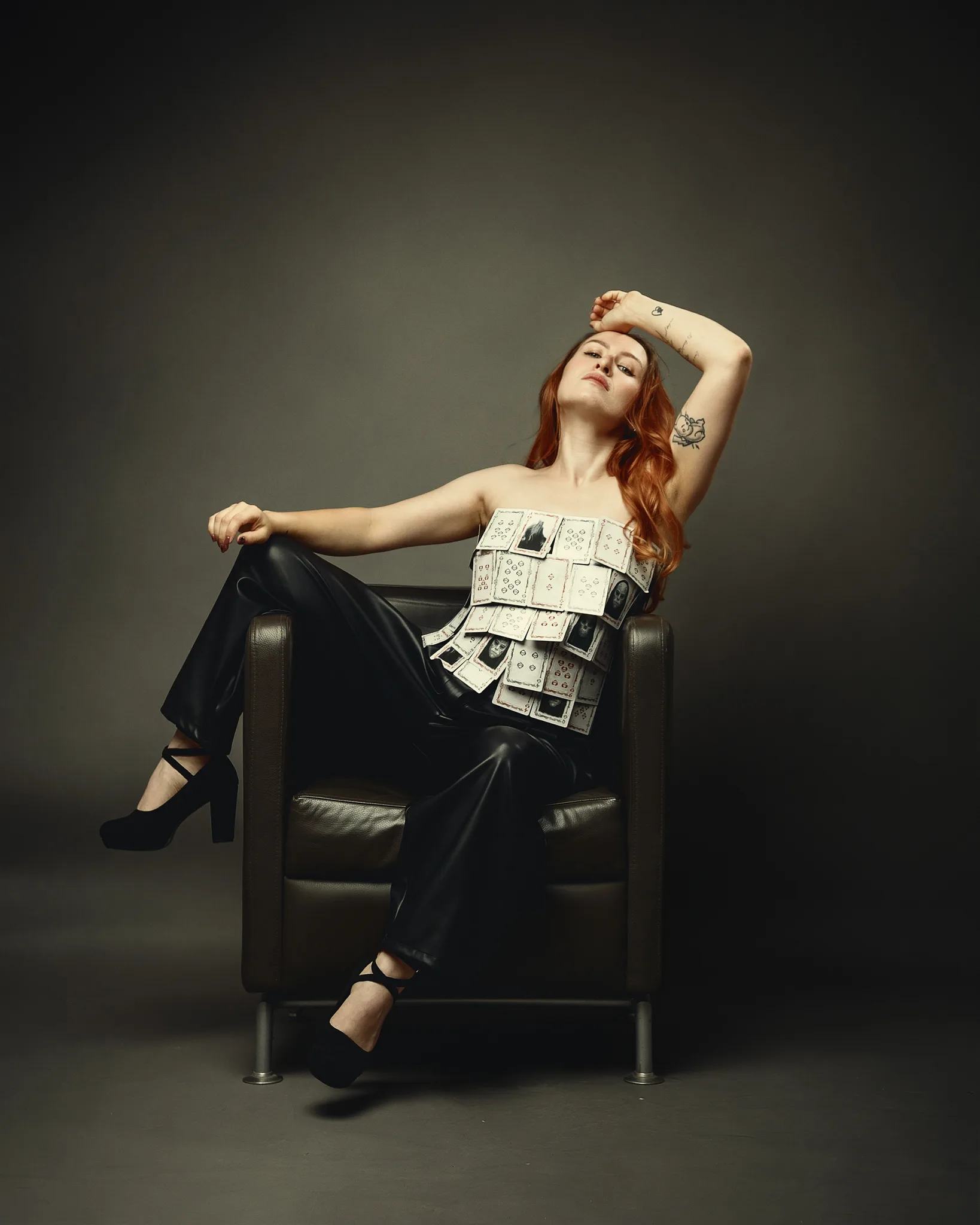
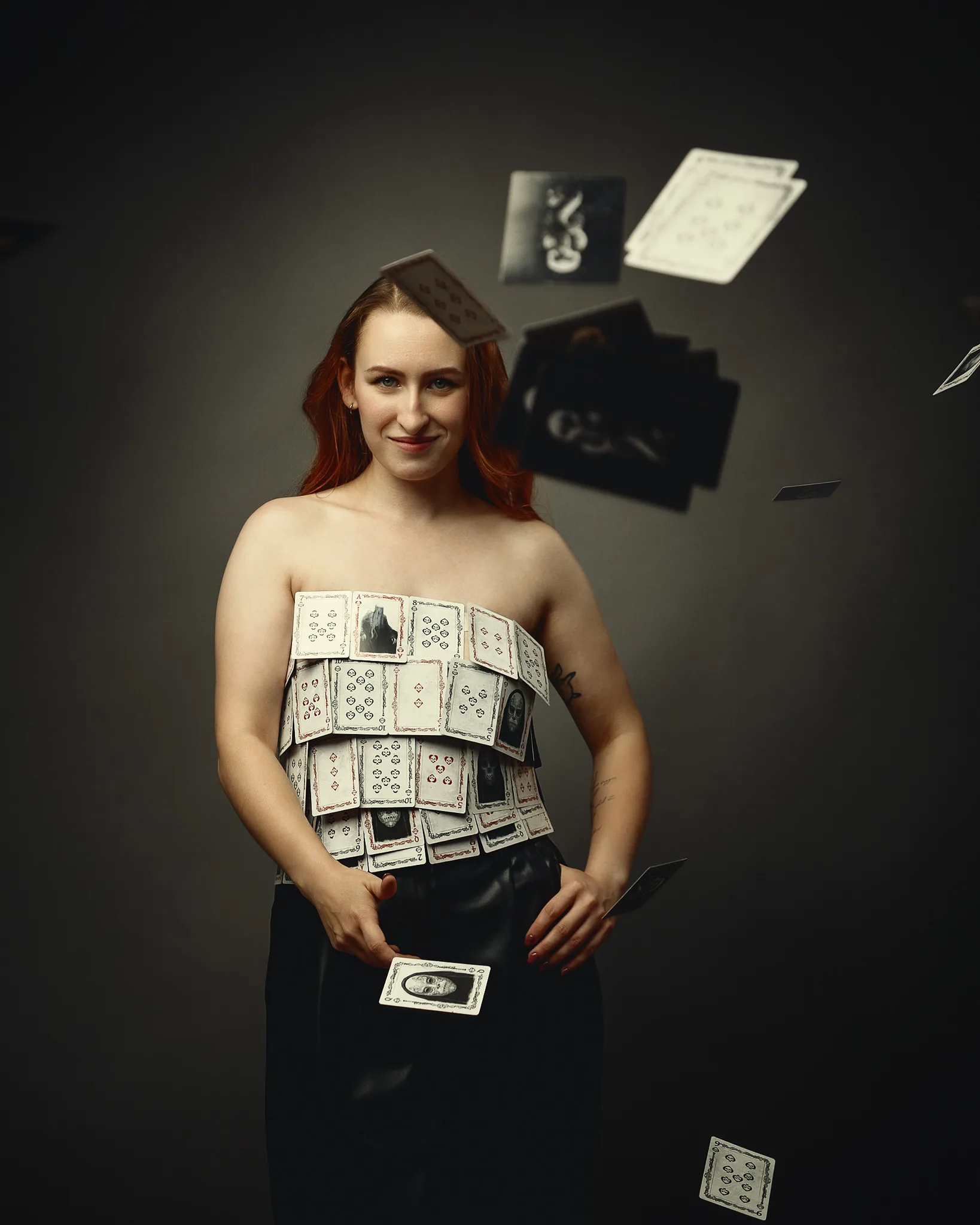
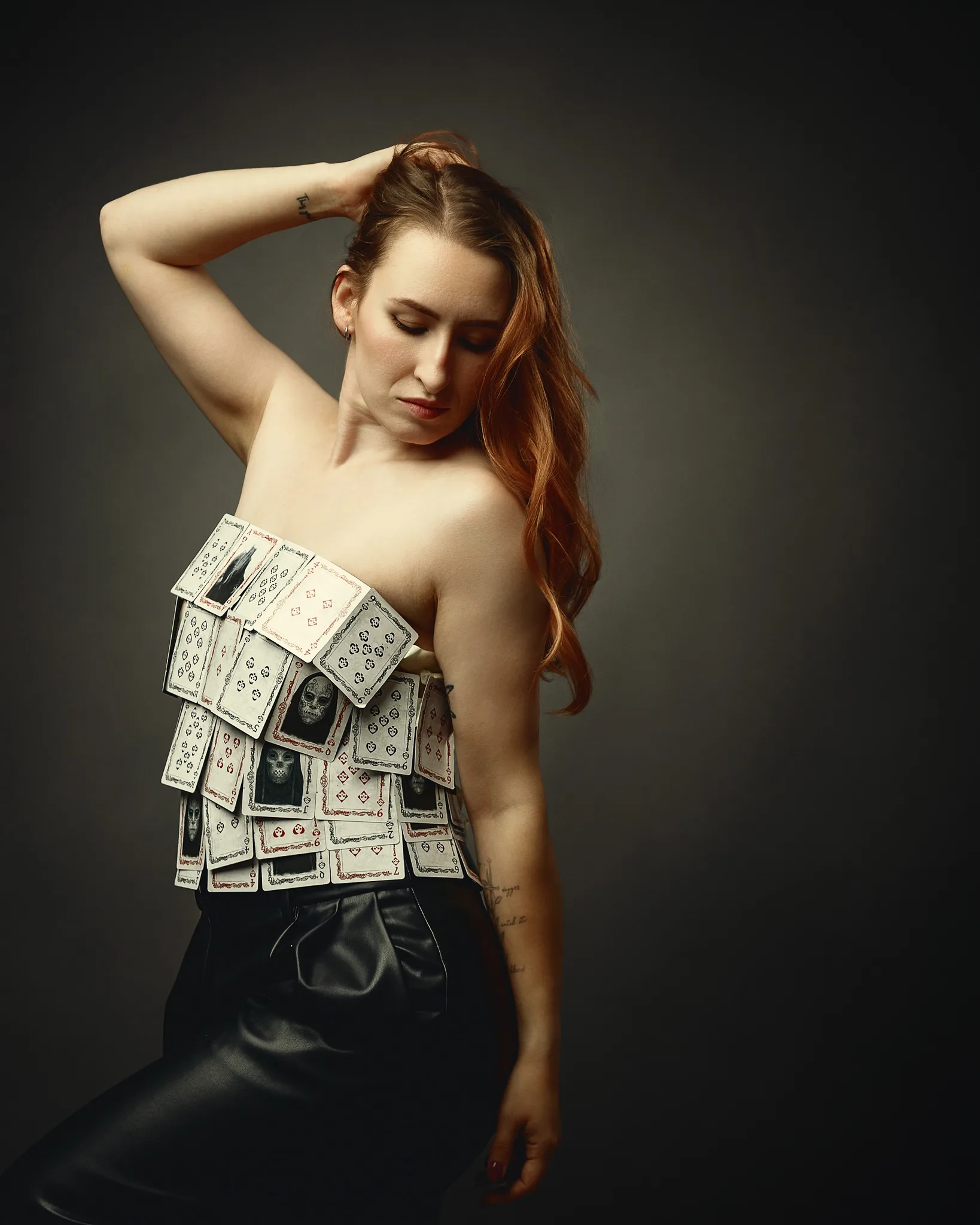
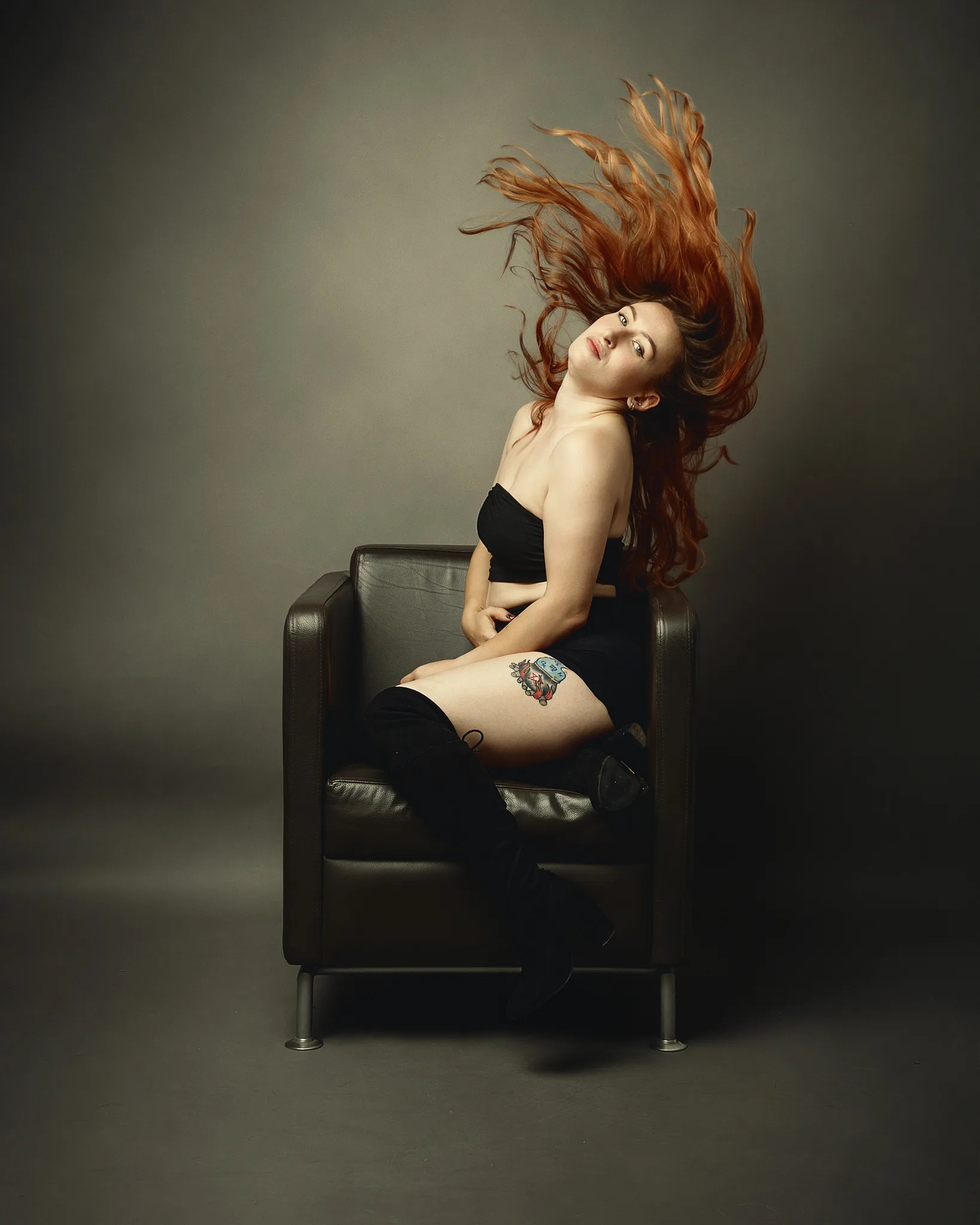
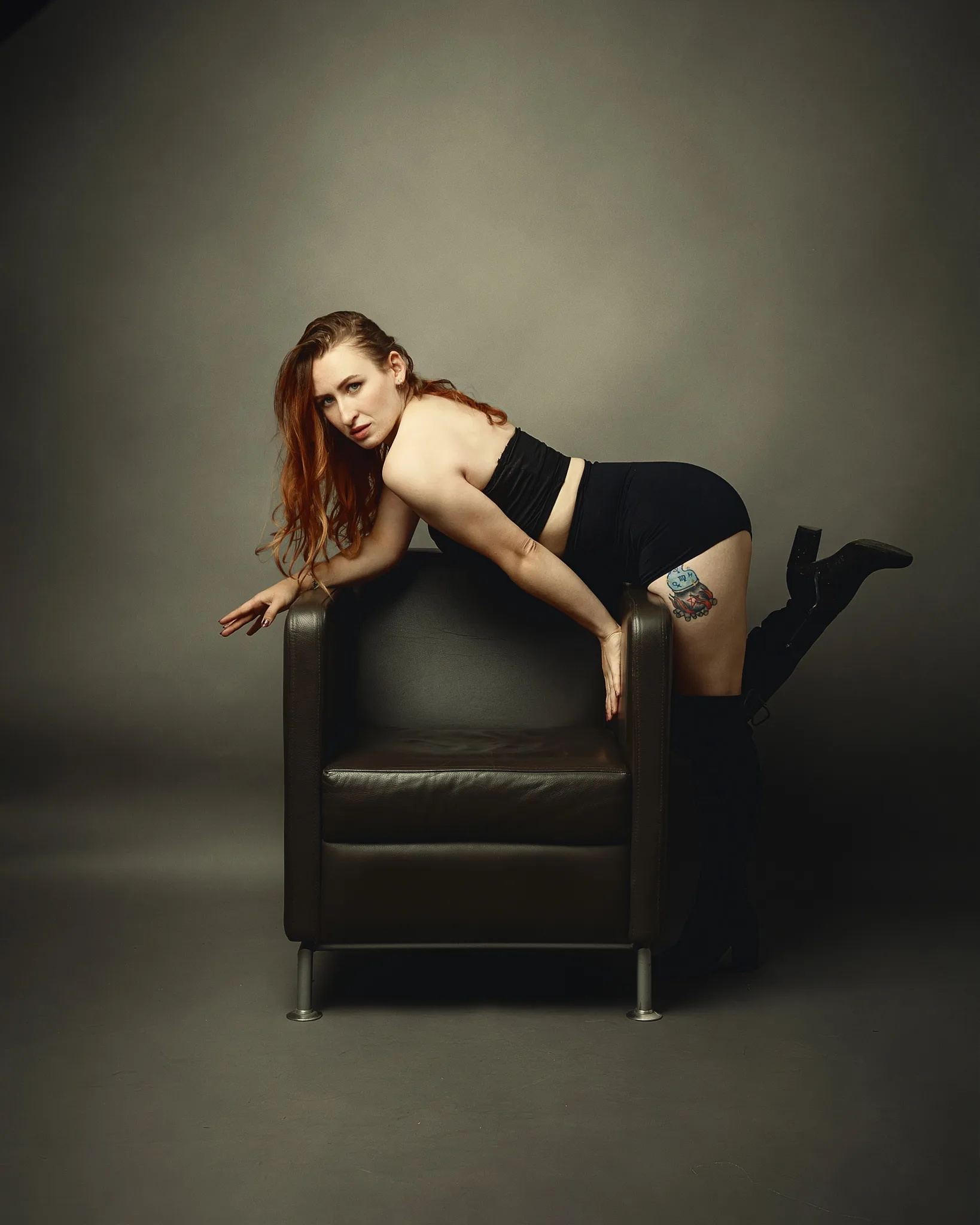
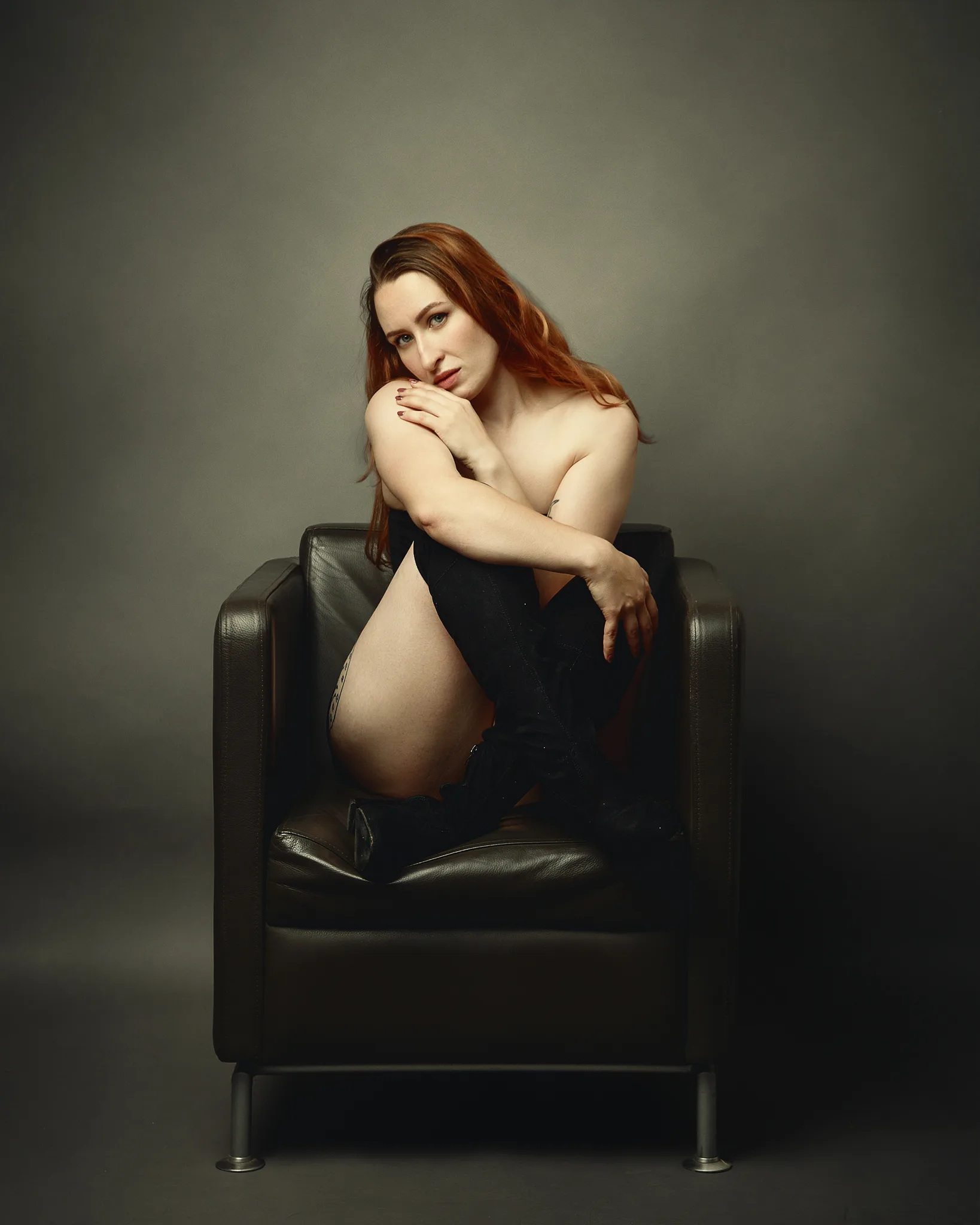
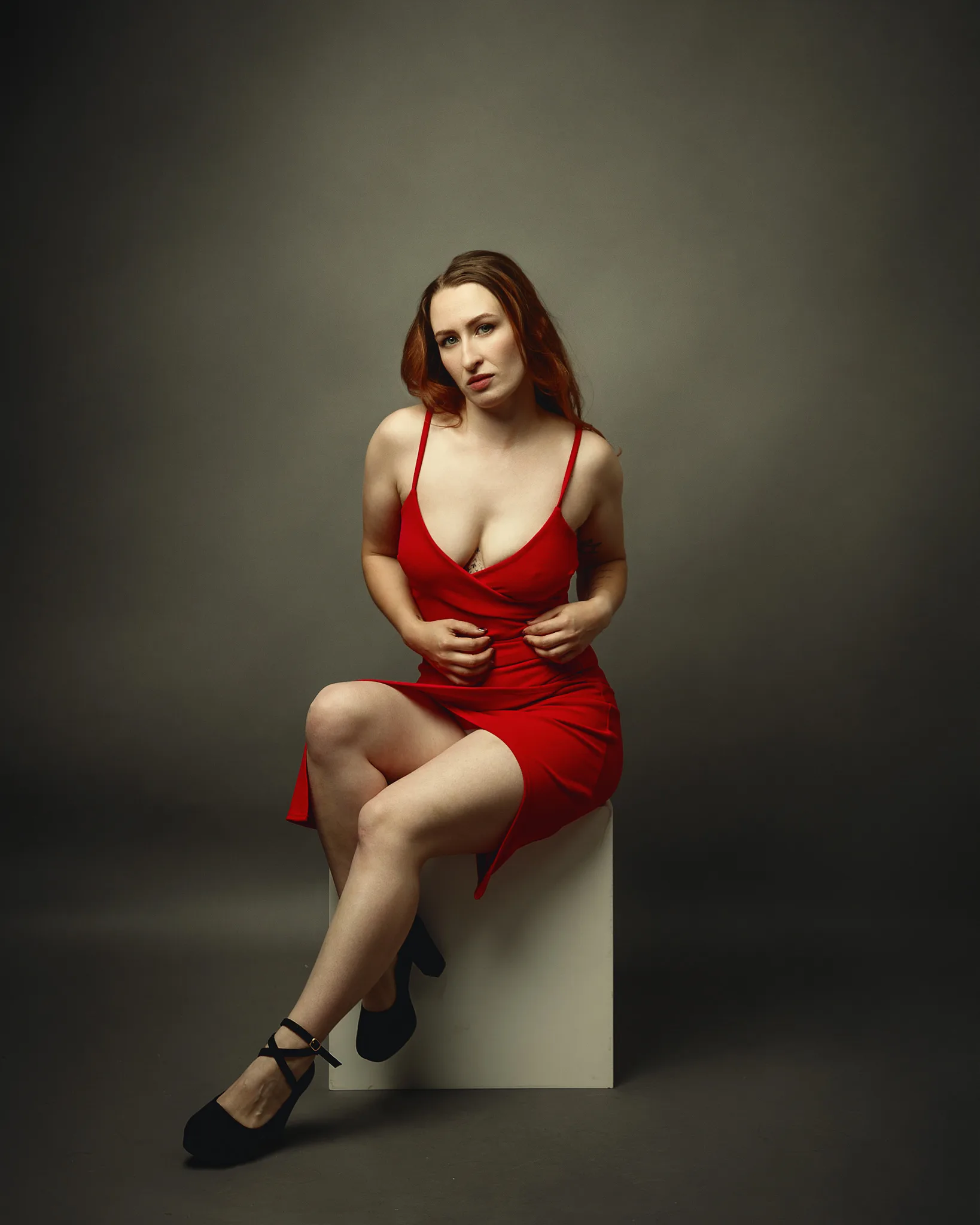
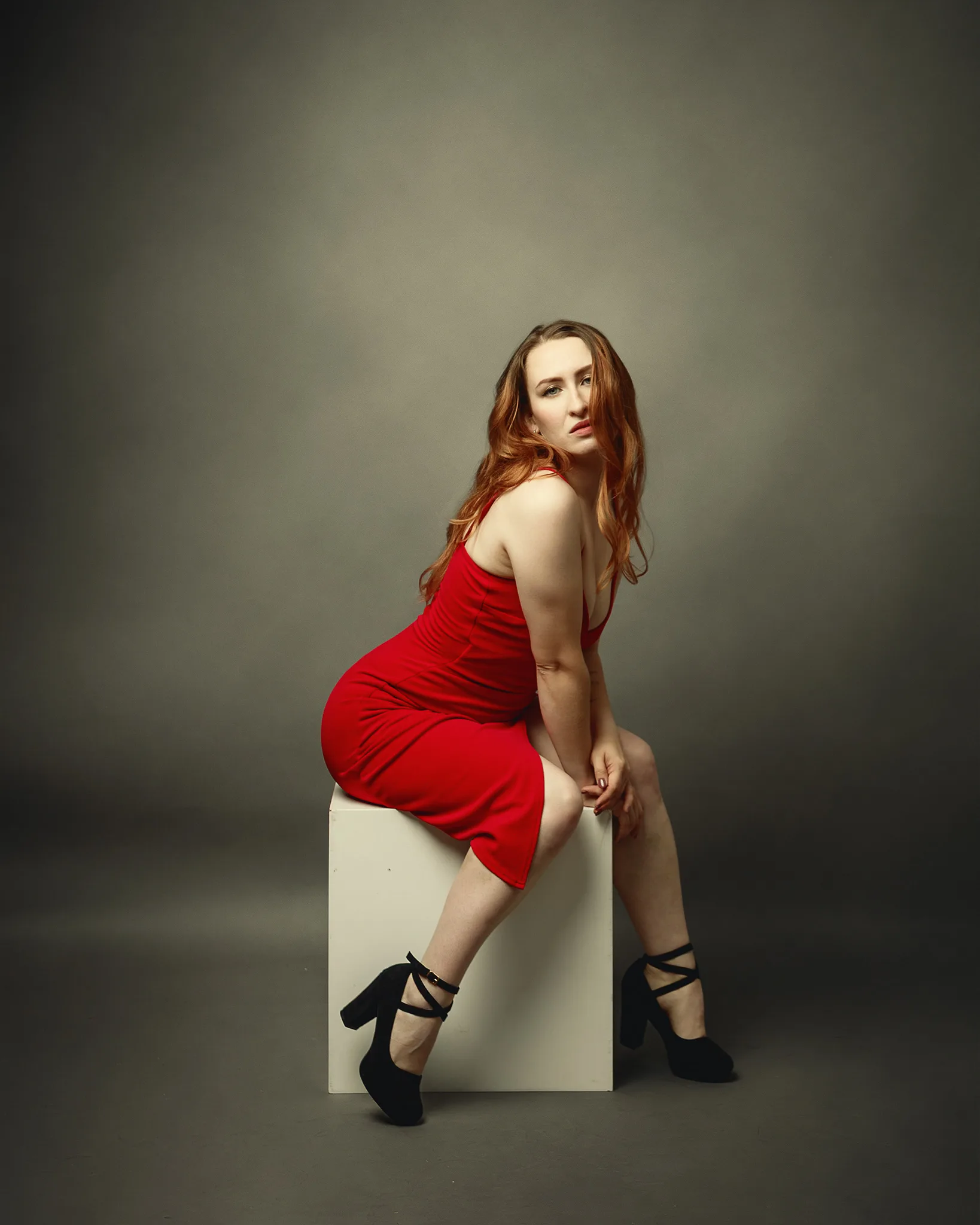
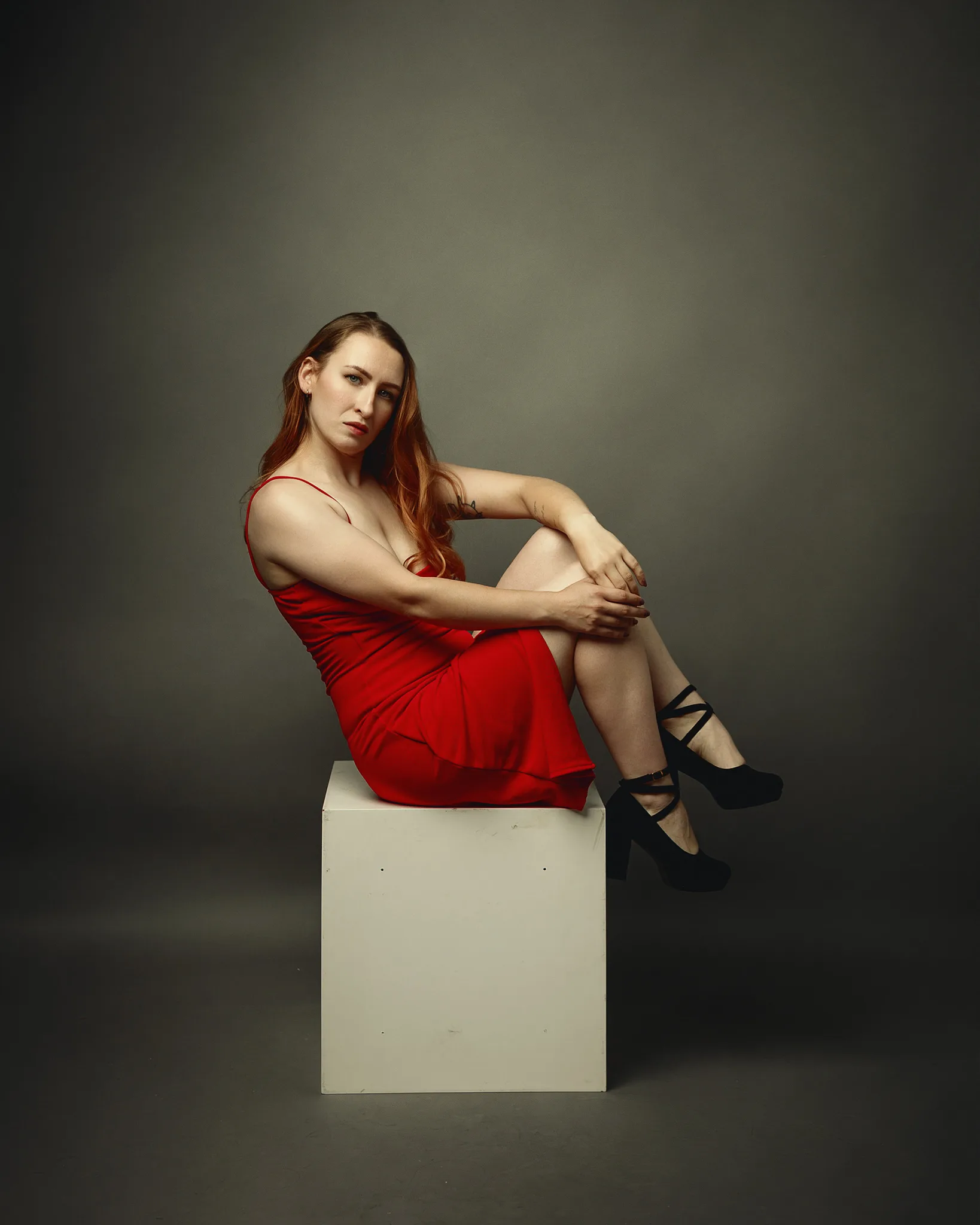
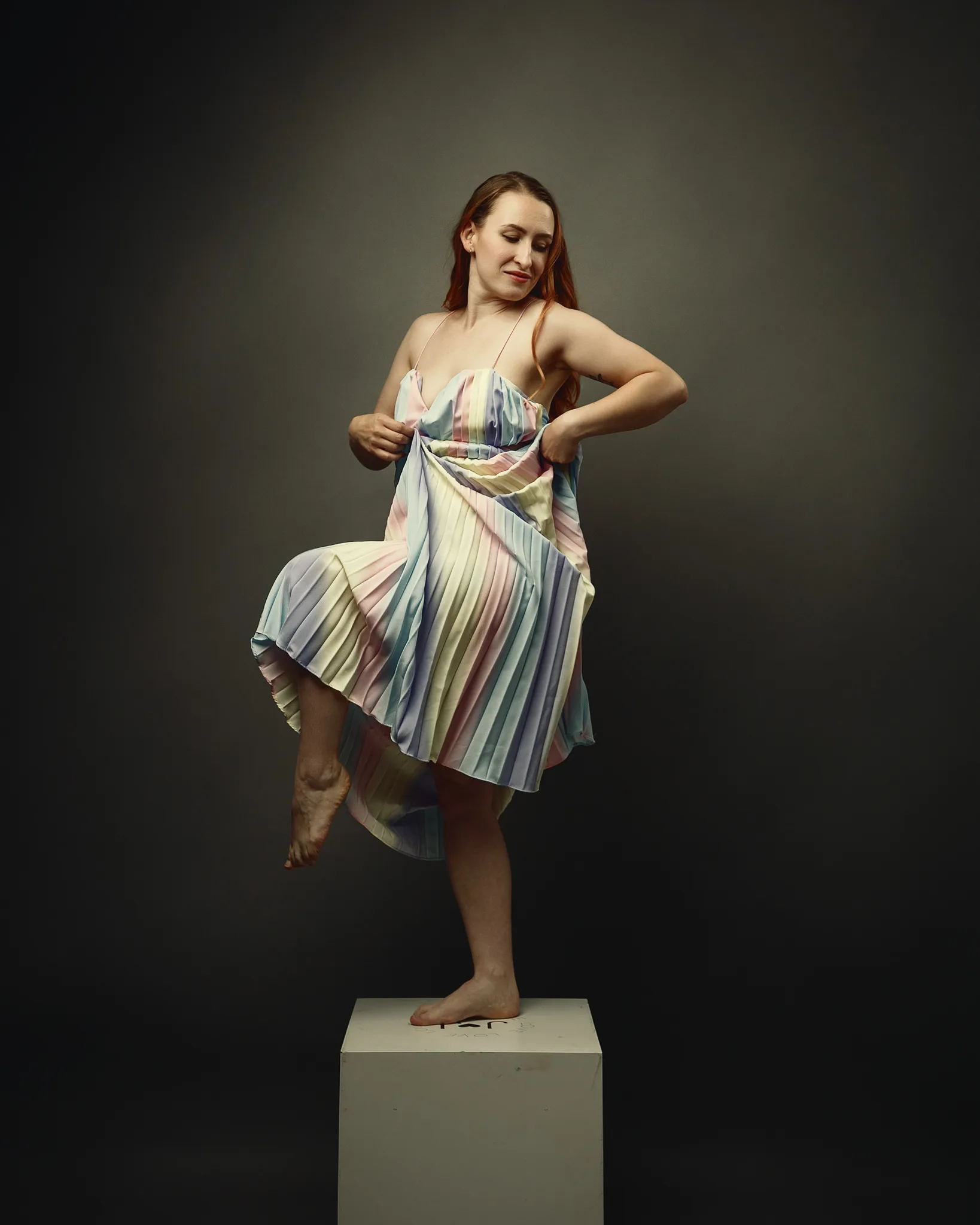
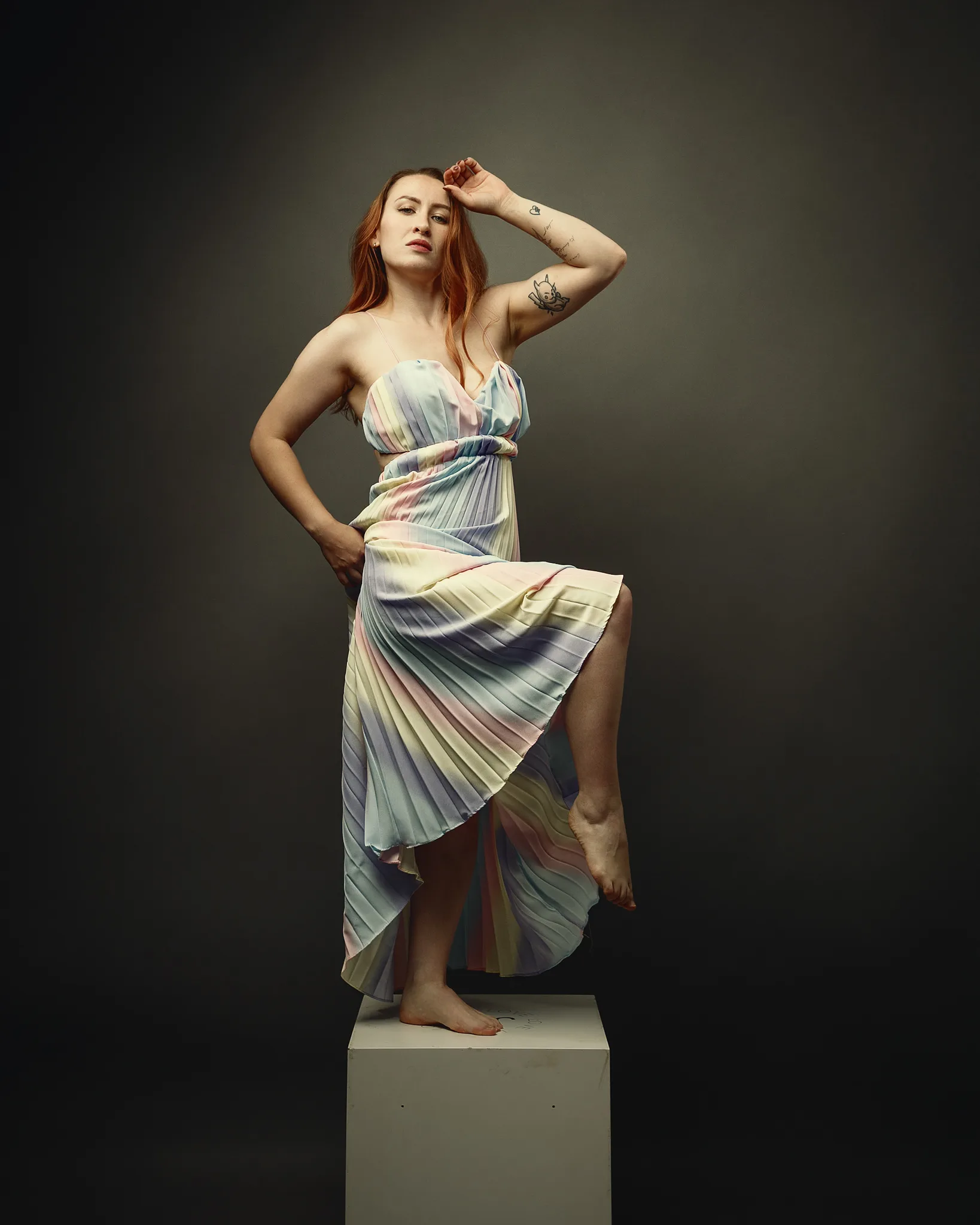
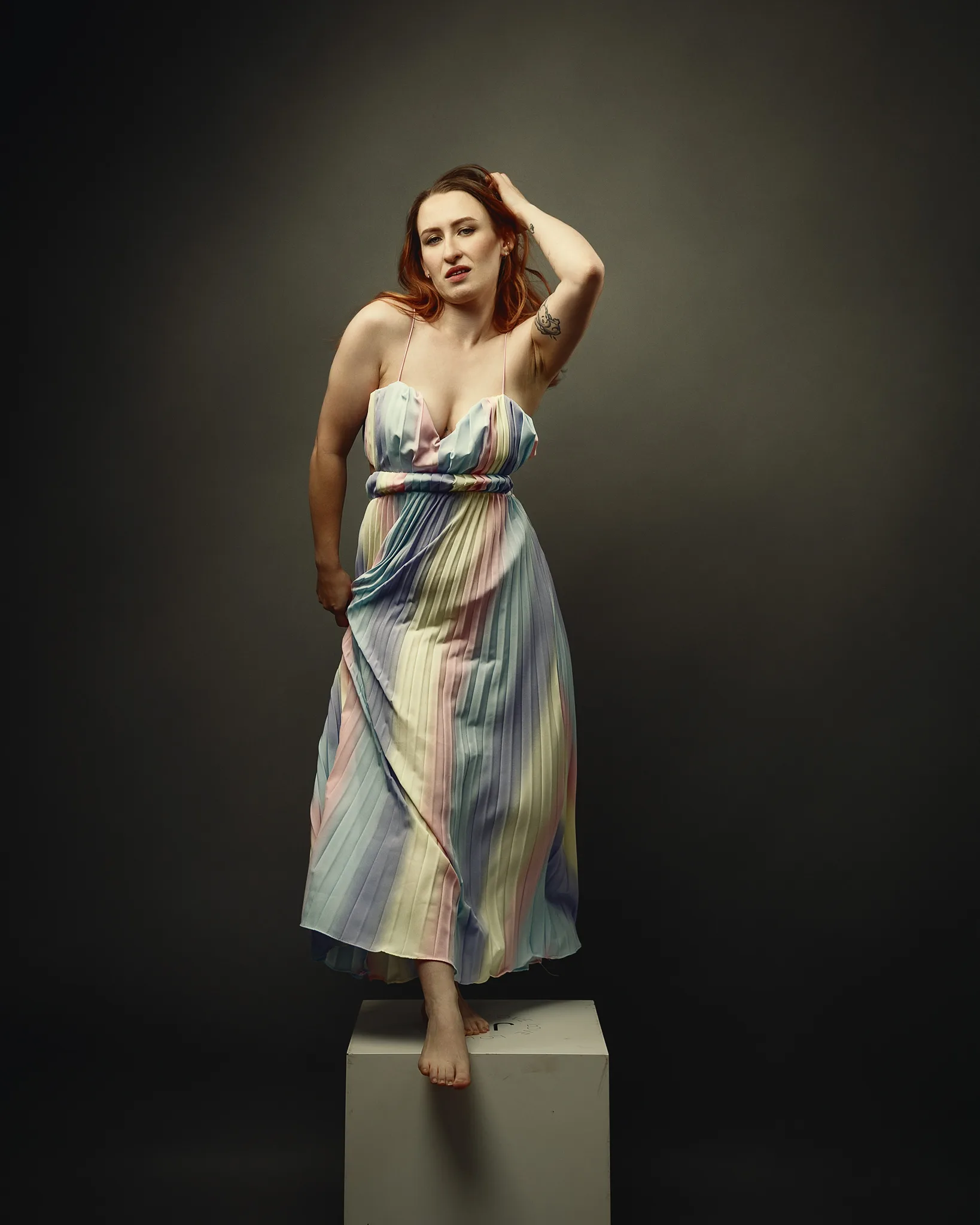
Justyna opened in a white lace top with wide leg jeans, deliberately close to Karolina’s first set so the two would sit together. She went into a black bustier with leather trousers and a biker jacket, and then into the set I enjoyed photographing most, a bodice built entirely from playing cards, with more cards thrown through the frame while she held the pose. After that she used the armchair for a black strapless top with over the knee boots, a red slip dress on the plinth, and a pastel pleated dress shot barefoot, which was the softest thing either of them did all morning. She finished with the same two closing concepts as Karolina, the flower blindfold and the ice.
Eight changes each in that time only works if the styling is organised before anyone arrives. It was.
Where the themes overlapped, and where they went their own way
This is normal when I photograph two models in one session, and it was the pattern again here.
The first two sets overlapped almost completely. White and denim to open, then leather jackets. I lit those the same way for both of them on purpose, because a matched pair of sets like that is useful for both portfolios and it gets everyone moving quickly at the start of a session.
The middle of the morning is where they separated. The playing card bodice was Justyna’s alone. The black lace and gloves set was Karolina’s alone. Neither of those would have suited the other model, and there is no reason to force it. A portfolio should look like the person it belongs to.
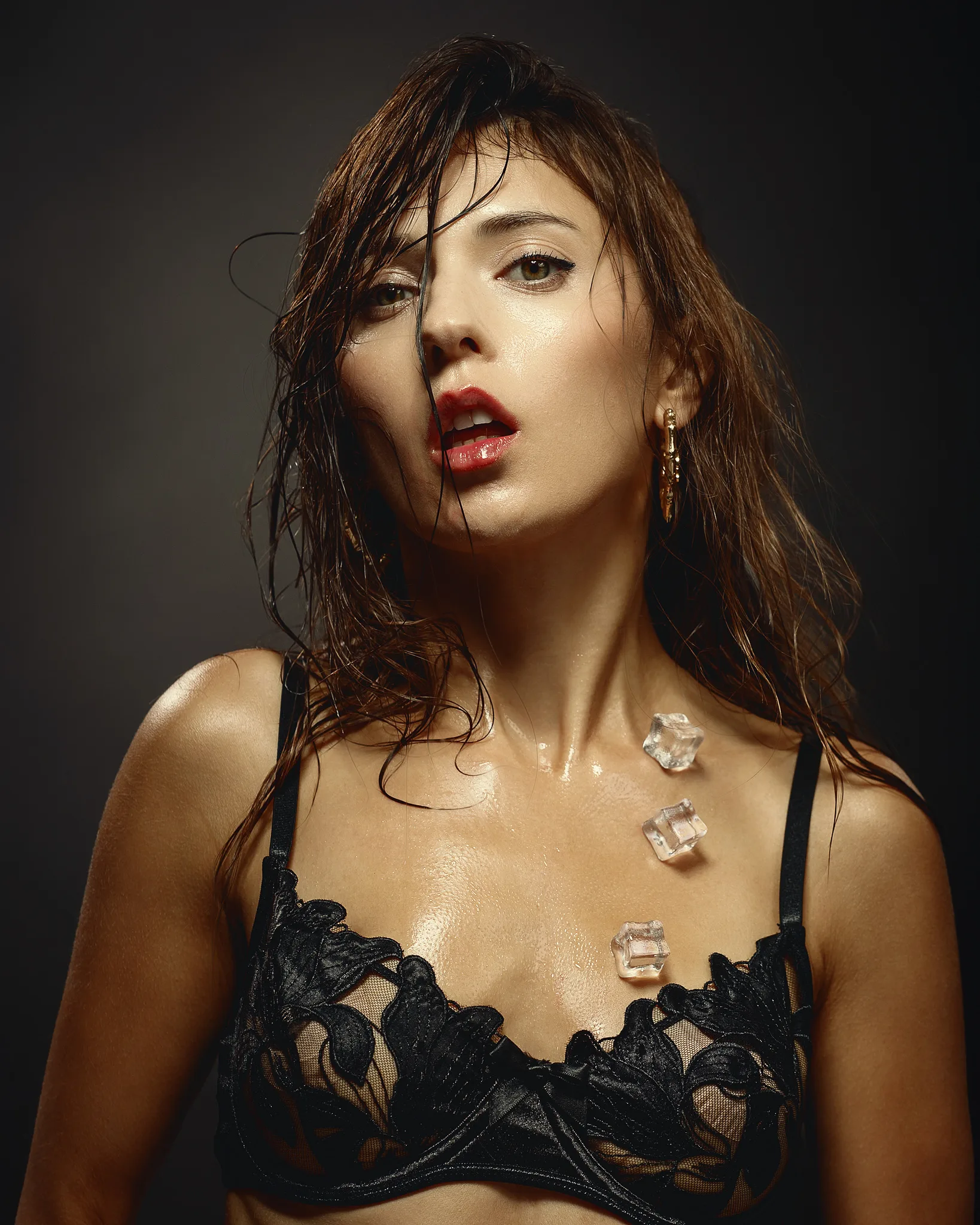
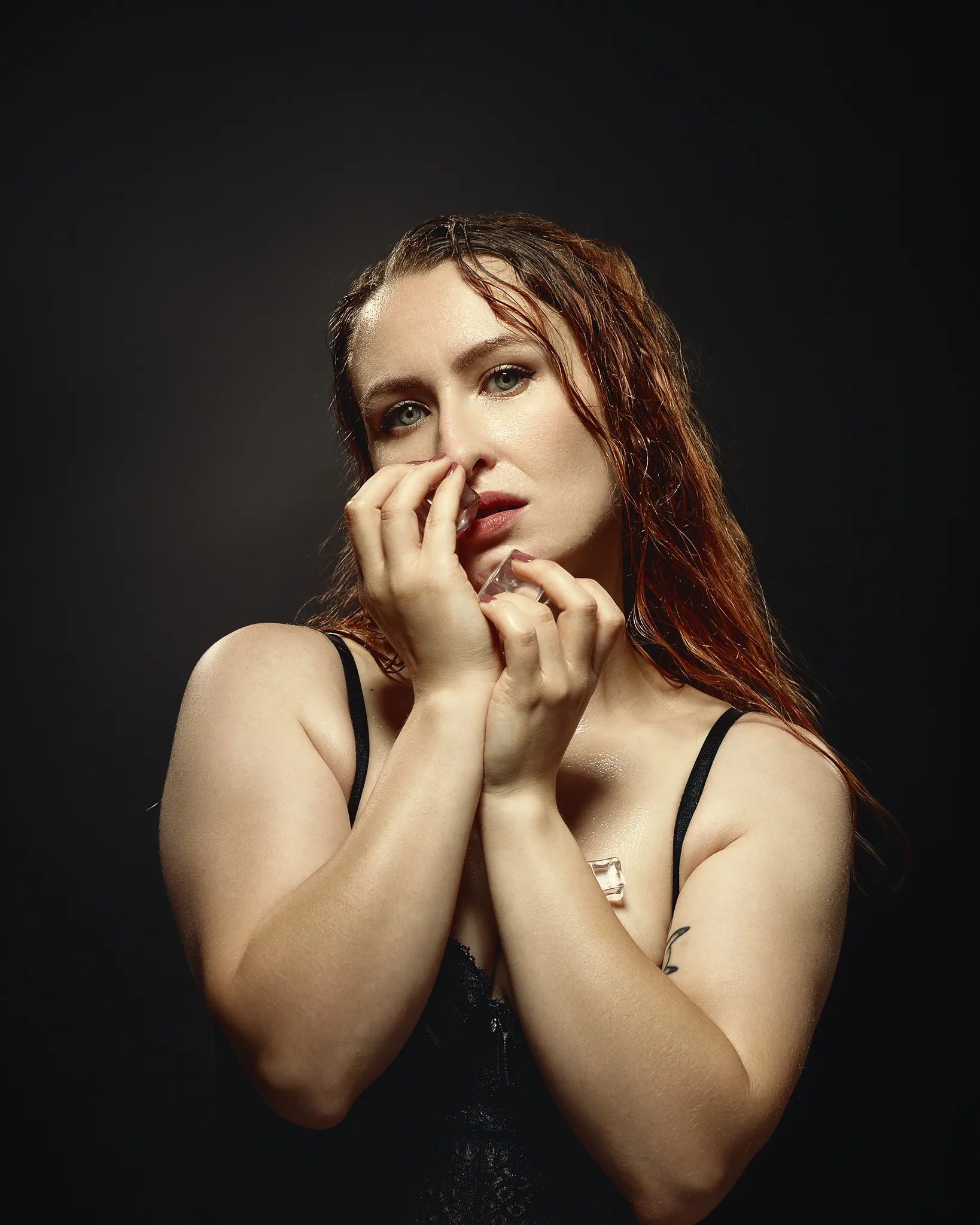
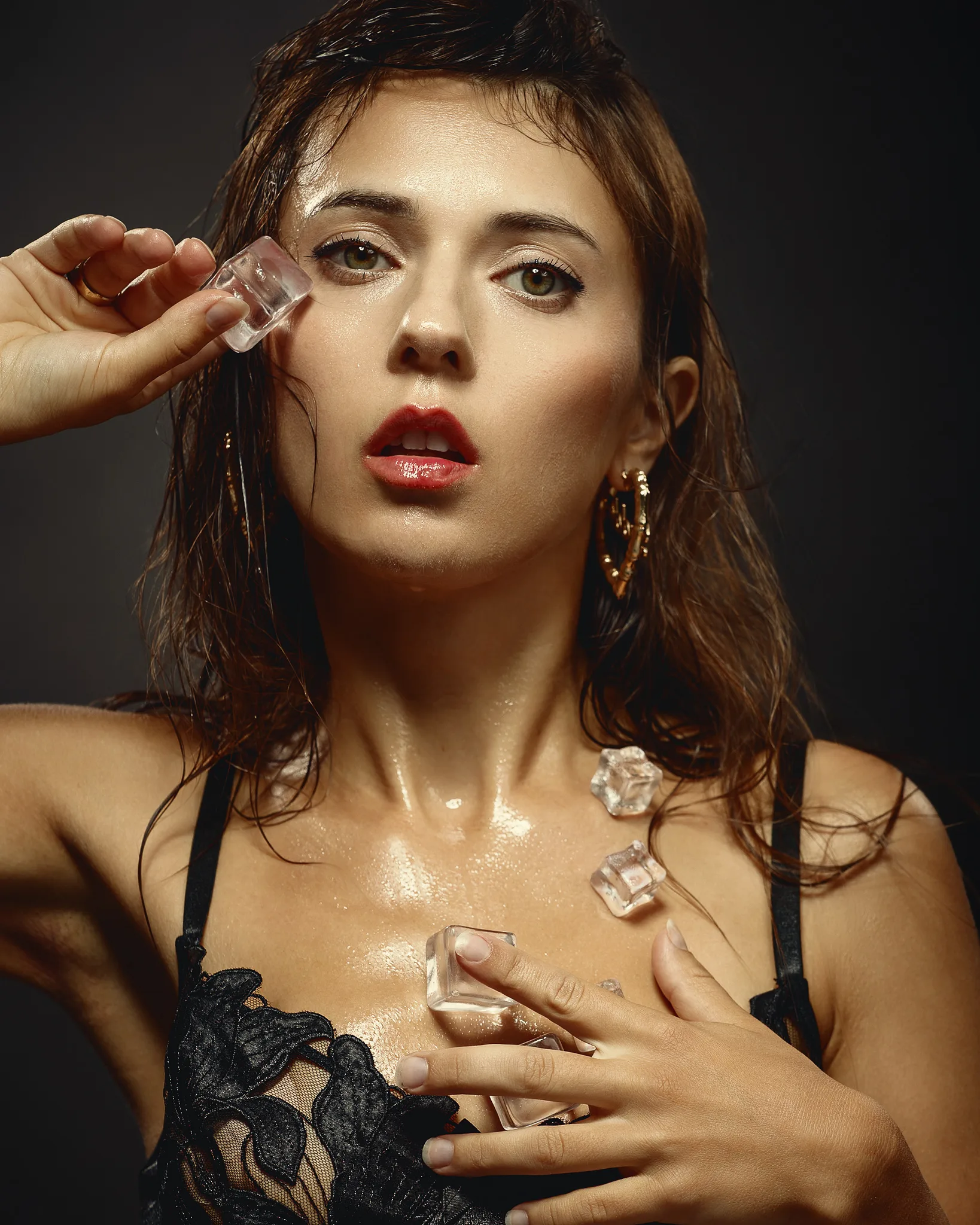
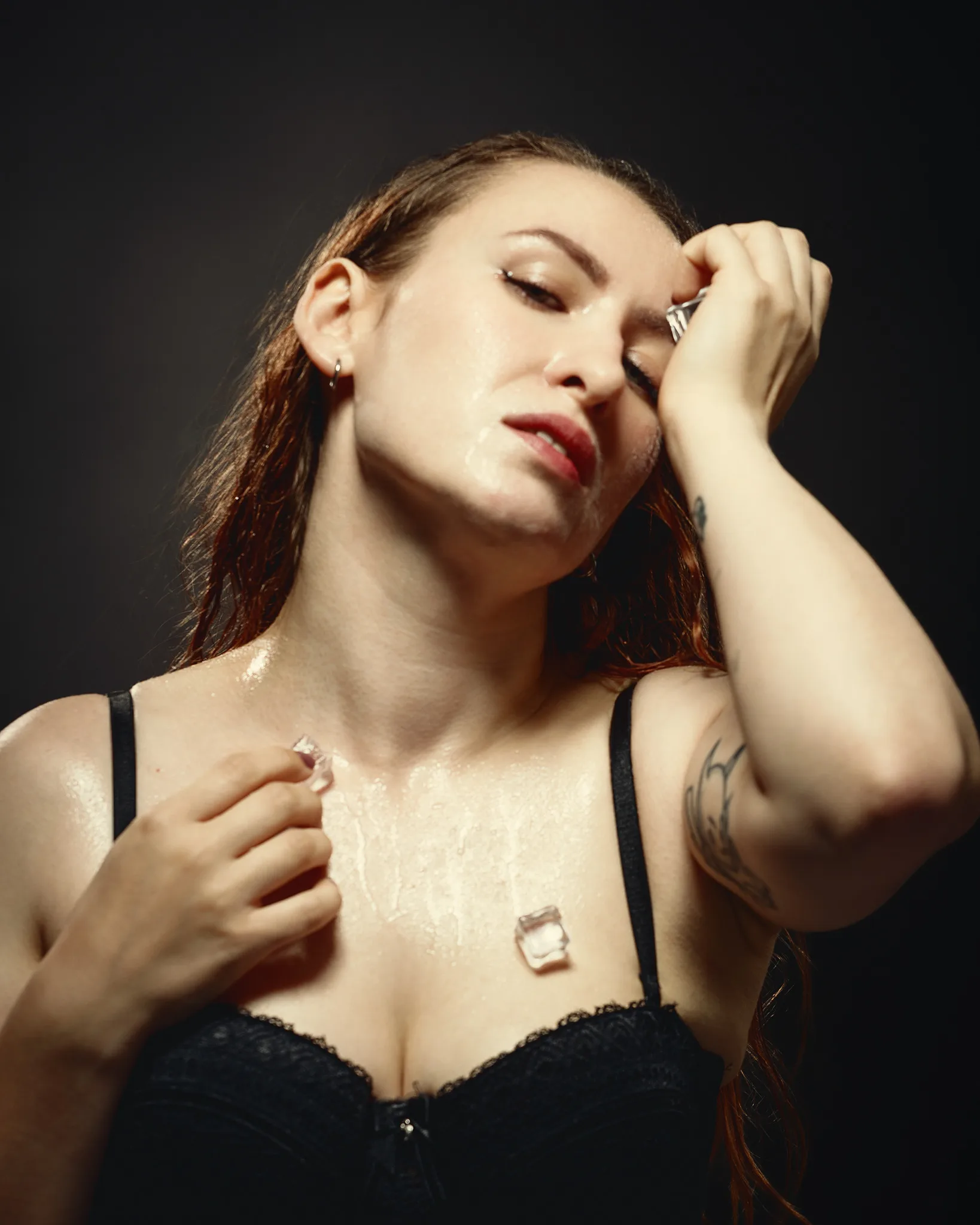
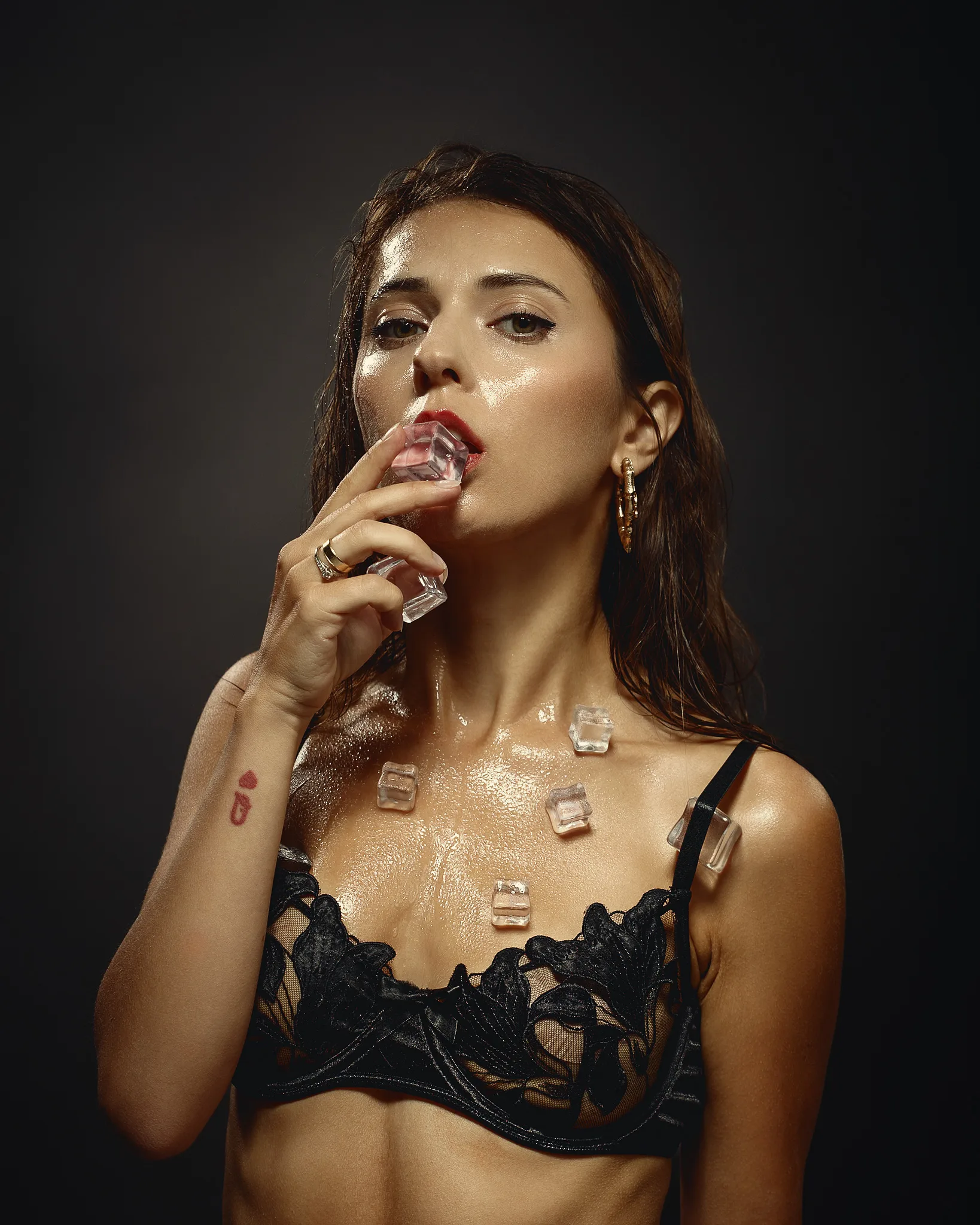
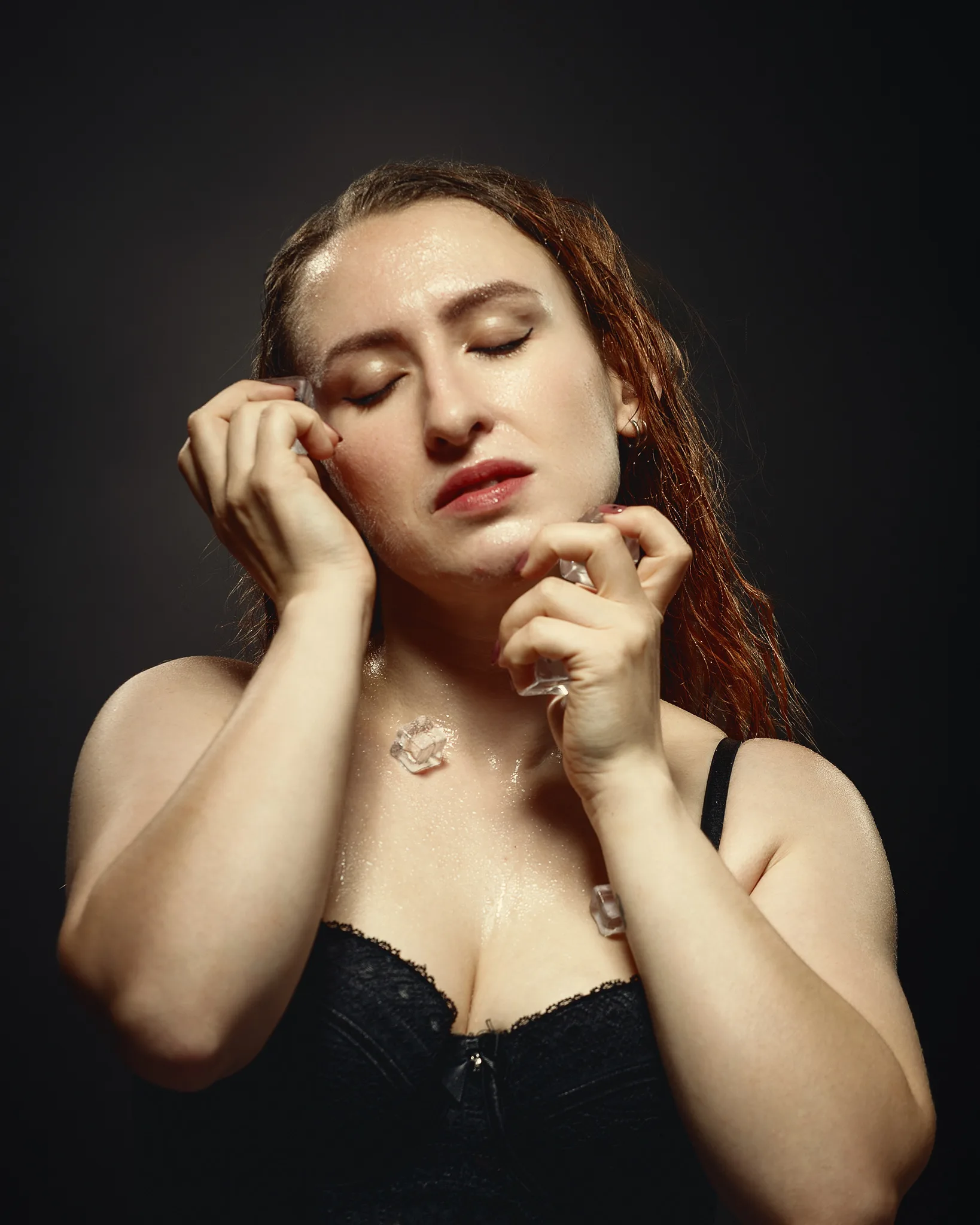
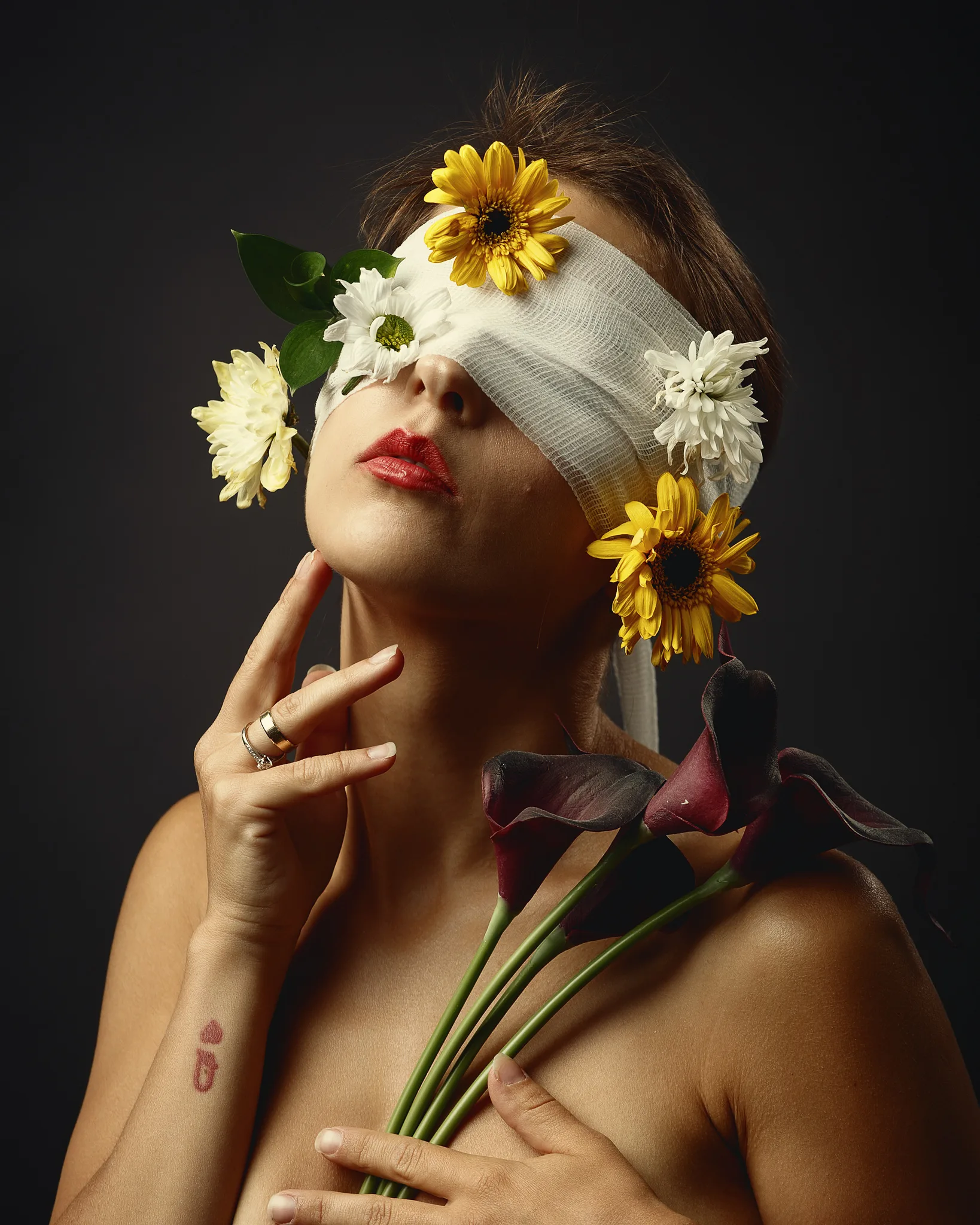
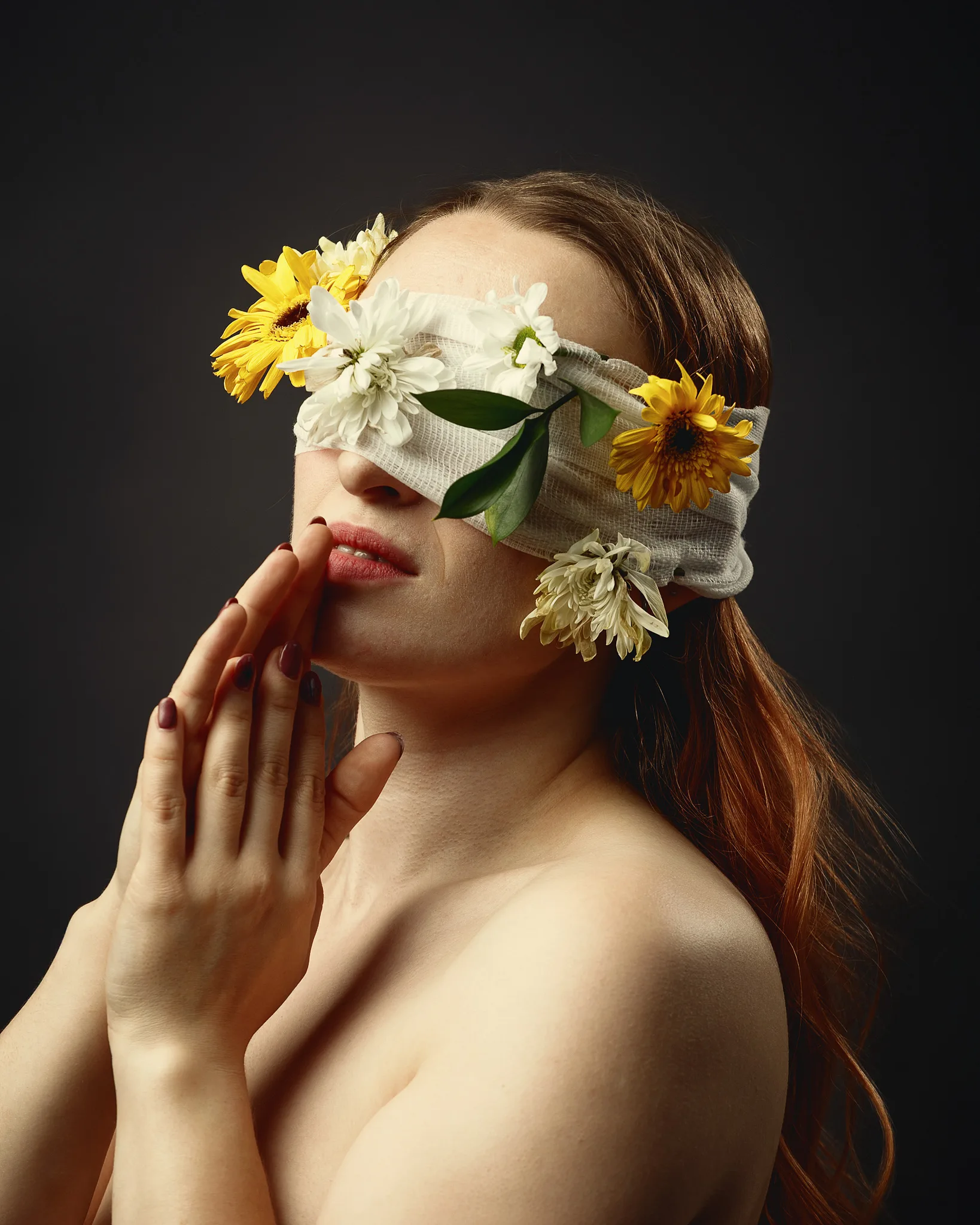
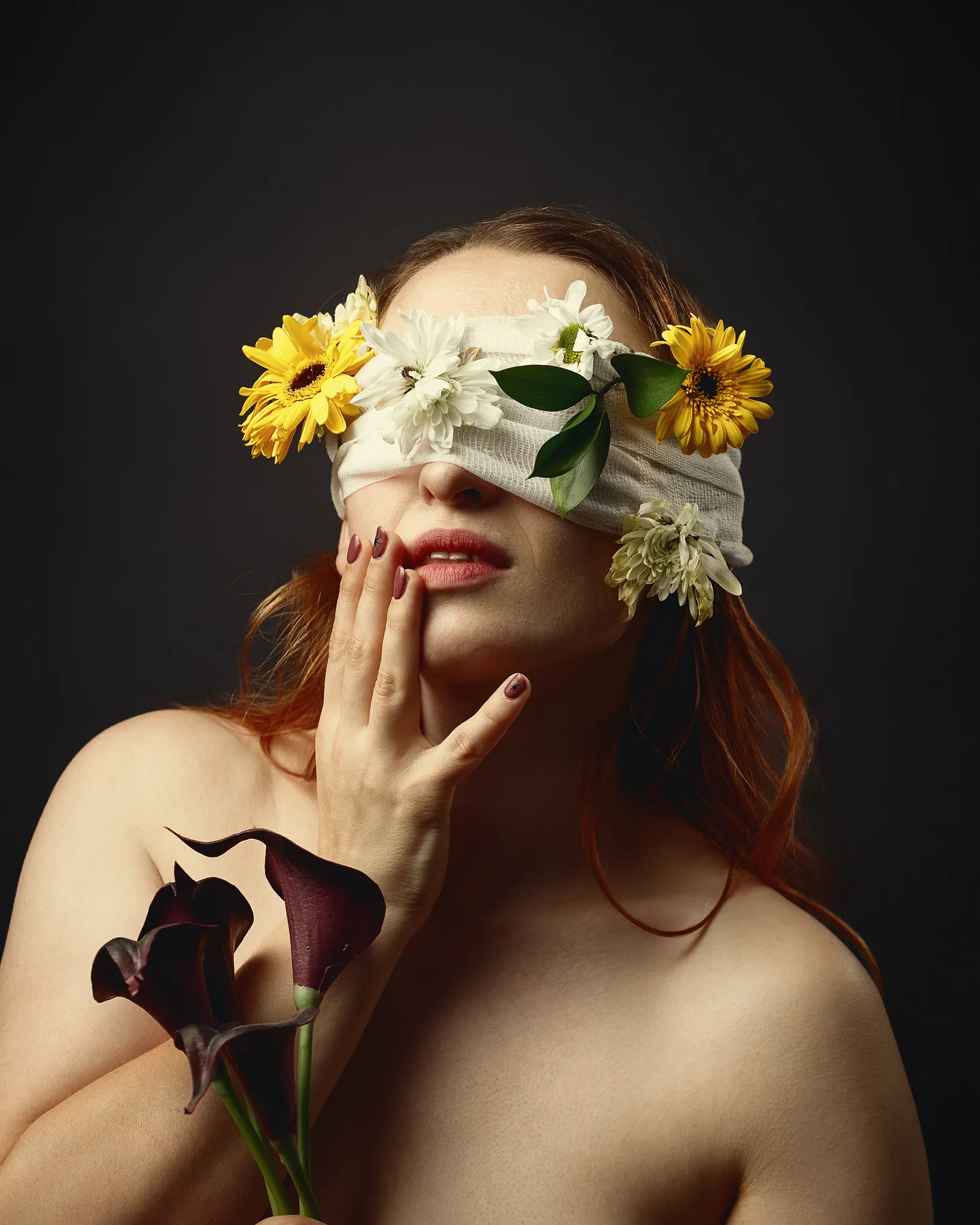
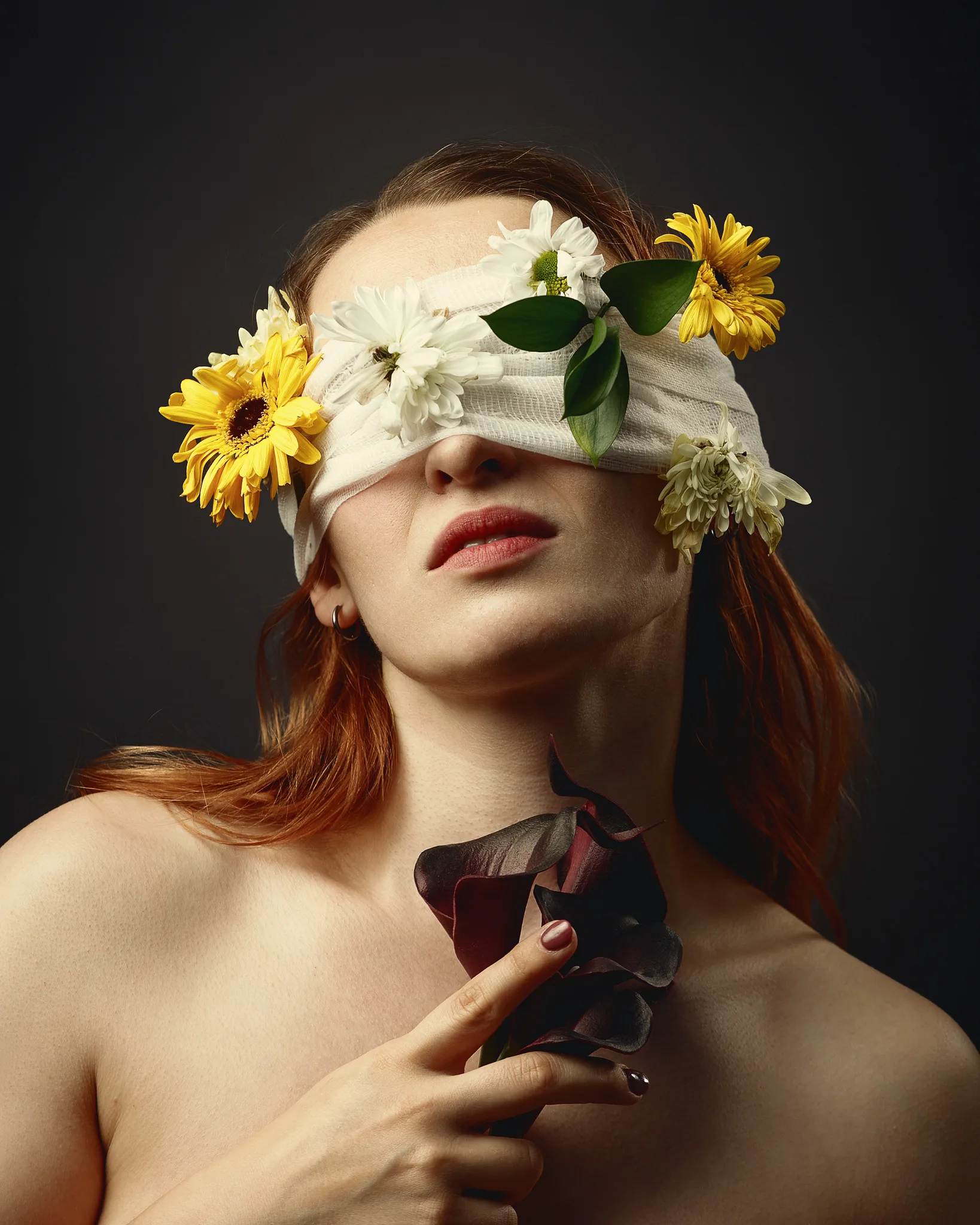
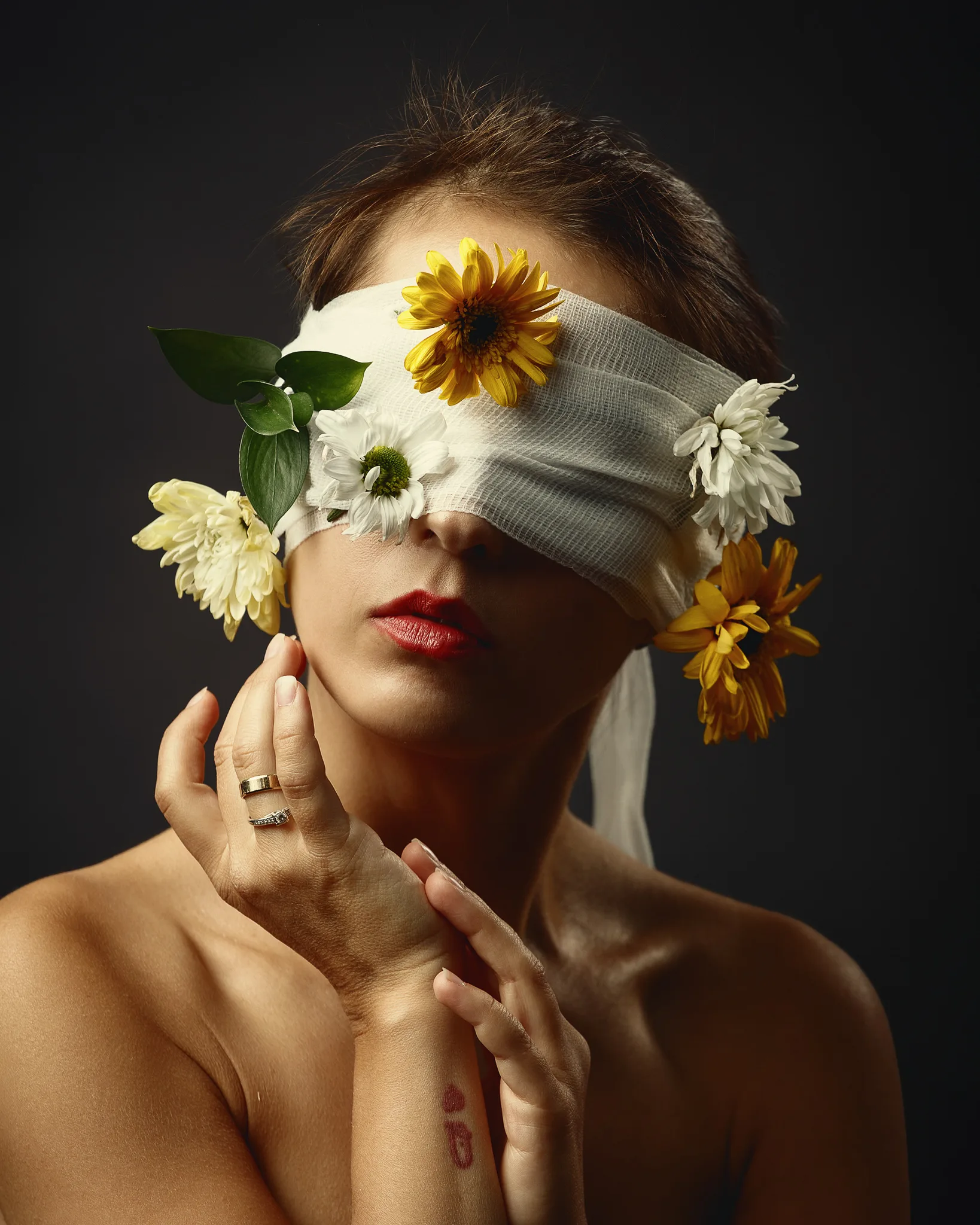
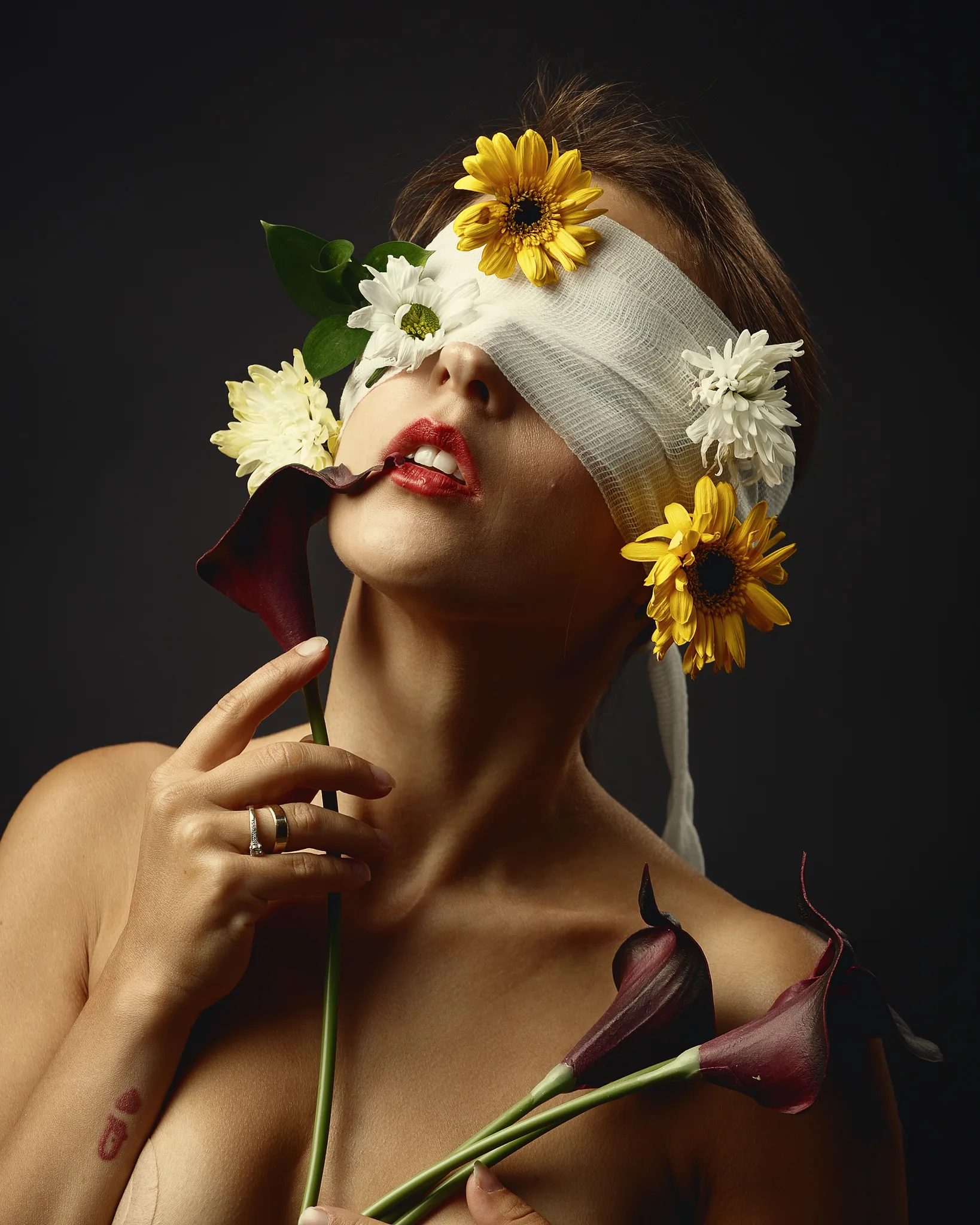
The last two concepts were shared again, and they were the two I would call fine art rather than portfolio work. The first was a blindfold of white gauze with fresh flowers tucked into it, shot in close, with calla lilies held up into the frame. The second was ice, held against the skin and against the face, with the hair wet and the light kept low. Both are simple ideas. Both take patience, because the useful frame is usually not the first one, and with the ice there is a limit to how long anyone wants to keep going.
Lighting and the practical side of the studio
Most of the day ran on a single main light with a modifier, moved and re-angled between sets rather than swapped out. The background is a painted grey, and how much light I allow to spill onto it is what changes the whole feel of a frame. Early on I let it catch the wall so the images read light and open. By the last few sets I had pulled the light in tight and let the background fall to near black.
The props were kept simple. A black leather armchair, a white plinth, and the floor. That is enough. A portfolio image is being looked at by someone who wants to see the model, not the furniture, and clutter in the frame competes for attention it should not be getting.
The ice set is the only one that needed a bit of thought technically. Water on skin only looks like anything if the light has some direction and some edge to it, so that is what I gave it.
The models choose the styling, and they set the level
On every model portfolio shoot I do, the outfits and the themes are the model’s choice. That is not me being hands off. It is the point of the session. The images are going into their portfolio and onto their own social media, and they should reflect what those two people want to say about themselves rather than an idea I have imposed on them.
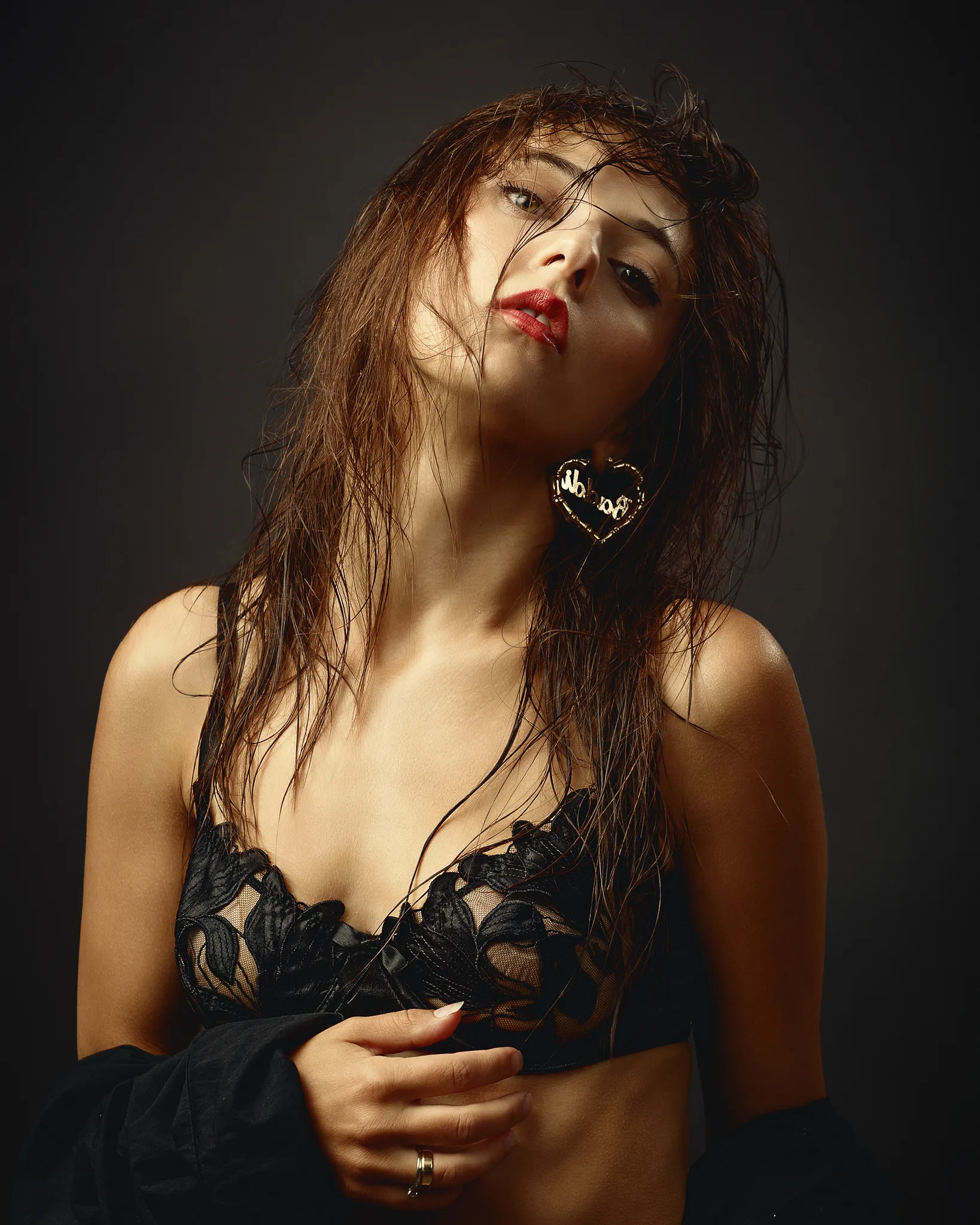
That principle covers how far a set goes as well. This session ran from clean, straightforward portfolio images through to lingerie and to implied topless work in a couple of the frames. Both models set that level themselves, look by look, and neither was asked to go further than they had planned. If a model wants an entire session that stays safe for work, that is completely fine and I have shot plenty of those. If they want to include something more body confident, that is their call to make and not mine to push for.
My job in all of it is the light, the direction, the pace, and making sure the room stays a place where those decisions are easy to make.
Model safety, chaperones, and how I work
I want to be direct about this, because I think it is one of the more important things on this website.
I do not touch models. Not to move a hand, not to fix a strap, not to adjust a chin. If something needs changing I describe it, or I demonstrate it on myself from where I am standing. It takes a few more seconds and it removes any ambiguity from the situation.
I encourage every model to bring a chaperone. A friend, a partner, a parent, whoever they trust. The offer is made before every single shoot, whether the model takes it up or not. Justyna and Karolina chaperone each other, which works well, and I would say the same to anyone considering a portfolio shoot with a photographer they have not met before.
If a photographer refuses to allow a chaperone, or talks you out of bringing one, or makes you feel awkward for asking, that tells you what you need to know. There is no legitimate professional reason to say no to a chaperone. I have heard most of the excuses used for it over the years and none of them stand up.
Your safety is not something you should have to negotiate for. A photographer who works properly will explain the whole session in advance, will tell you what to expect, and will have no objection at all to you bringing someone you trust.
Behind the scenes on YouTube
I filmed a behind the scenes video from this session
It gives a reasonable idea of how a shoot like this actually runs, including the resets between looks and how much of the day is spent on things that are not pressing the shutter.
Studio portrait and model portfolio photography in Suffolk
My studio is at Base Business Park in Rendlesham, on the old RAF Bentwaters site near Woodbridge. It is easy to find, there is parking outside, and there is space to change and to spread out several looks at once, which matters on a session like this one.
I photograph model portfolios, headshots, personal branding, and commercial work from there, and on location across Suffolk, Norfolk, Essex and Cambridgeshire. If you are in Ipswich, Woodbridge, Framlingham, Saxmundham or anywhere in that part of the county, it is a short drive.
If you are thinking about portfolio work and you want to talk through what would actually be useful for you, get in touch and we can go through it properly before you book anything.