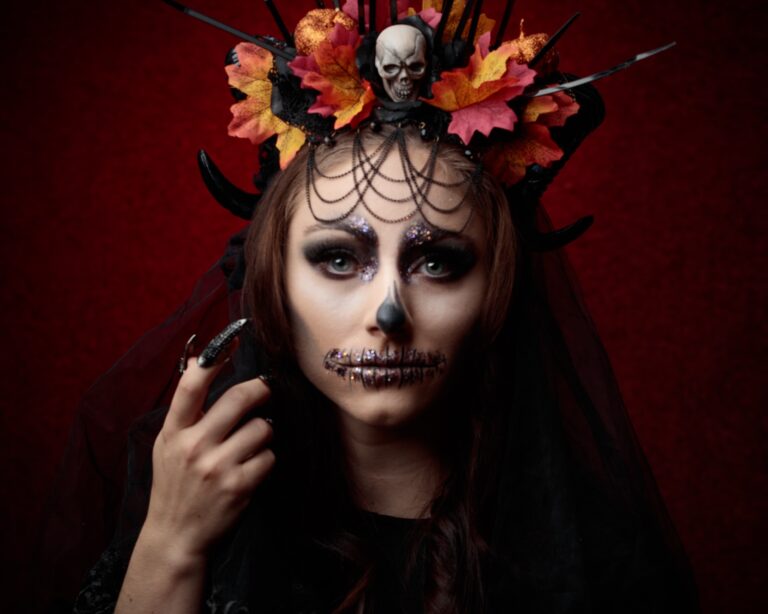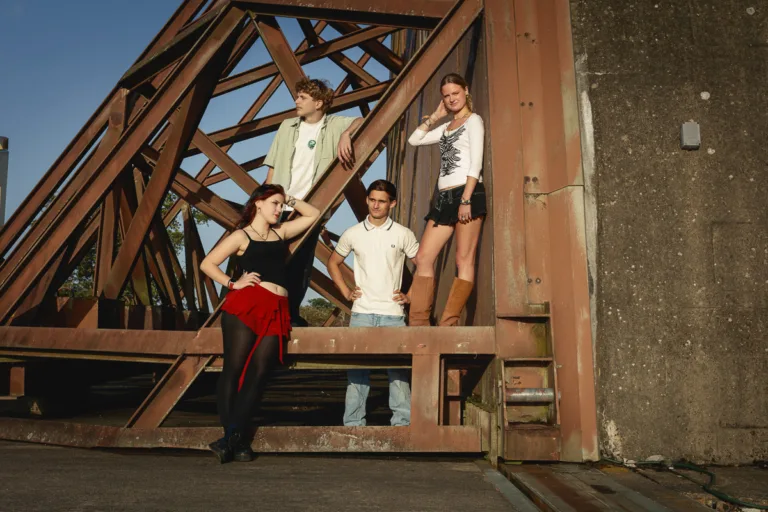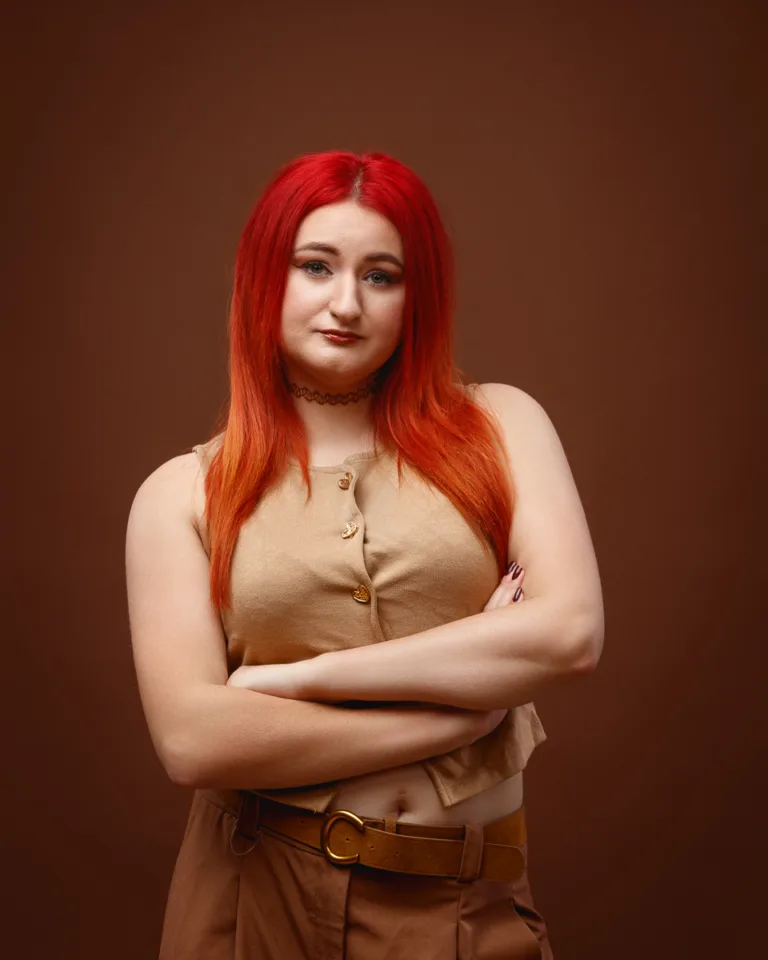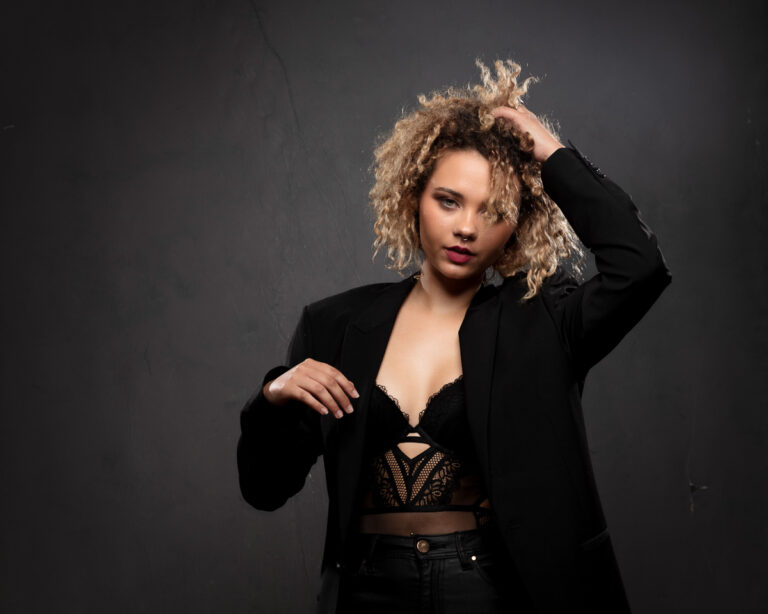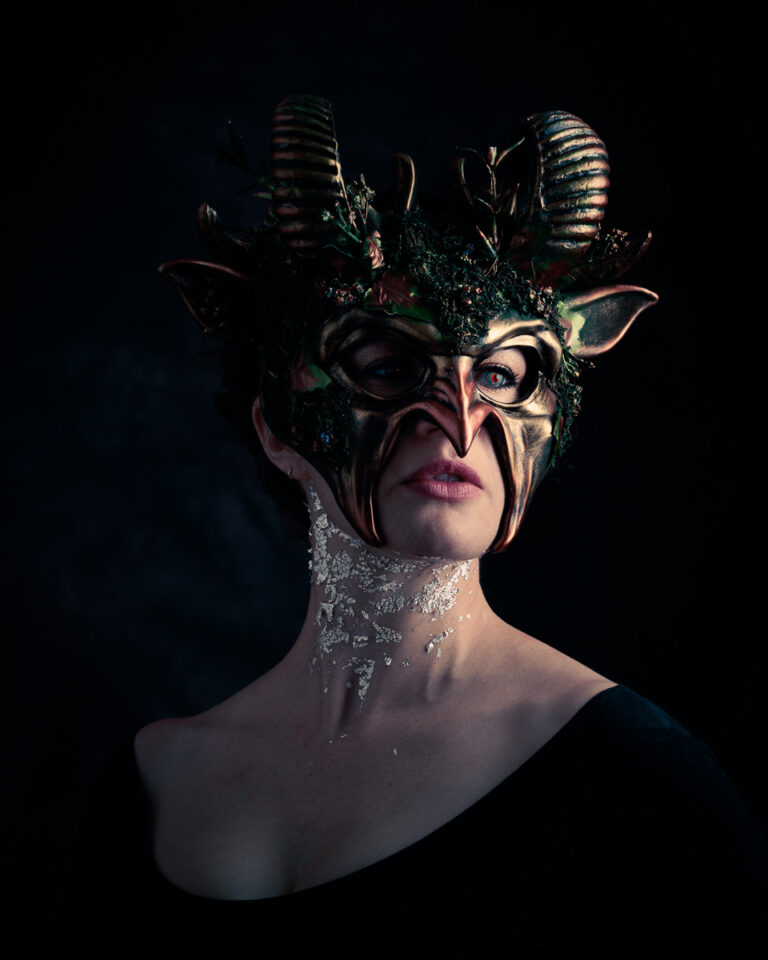
My last photoshoot of 2025 was a model portfolio session with Leona in my studio at Bentwaters, near Woodbridge in Suffolk. Leona and I have worked together many times, and it is always a pleasure. We had a loose theme going in, which suited the aim of the day. We wanted strong portraits that feel honest, current, and useful for a working portfolio.
That “useful” part matters. Portfolio images have a job to do. They need to show the model clearly, with range, without visual noise. They also need to look like the model right now, not six months ago.
This session felt like a proper full stop at the end of the year. Calm pace. Clear intent. A set of portraits that will stay relevant. It also set the tone for what I want to shoot more of in 2026, which is portrait sessions with purpose.
Starting with a loose theme (and why I like it)
When I say we had a theme, I do not mean a rigid concept with props and a fixed shot list. I mean we agreed a mood and a direction. Clean studio portraits, a few styling changes, and room to experiment.
A loose theme helps in three ways.
- It gives the session a backbone, so we do not drift.
- It leaves space for the model to bring ideas in the moment.
- It lets me respond to what I see, rather than forcing a plan.
In practical terms, it meant we stayed focused on portrait work. Expression. Hands. Body line. Subtle shifts in angle. Small changes that read clearly on camera.
That is often where the best portfolio work sits. It looks simple, but it is not lazy. It is precise.
The looks we photographed (and what each one added)
Leona brought styling that gave us clear variety without turning the shoot into a costume parade. Each look had a purpose. Each one added a different “use case” for her portfolio.
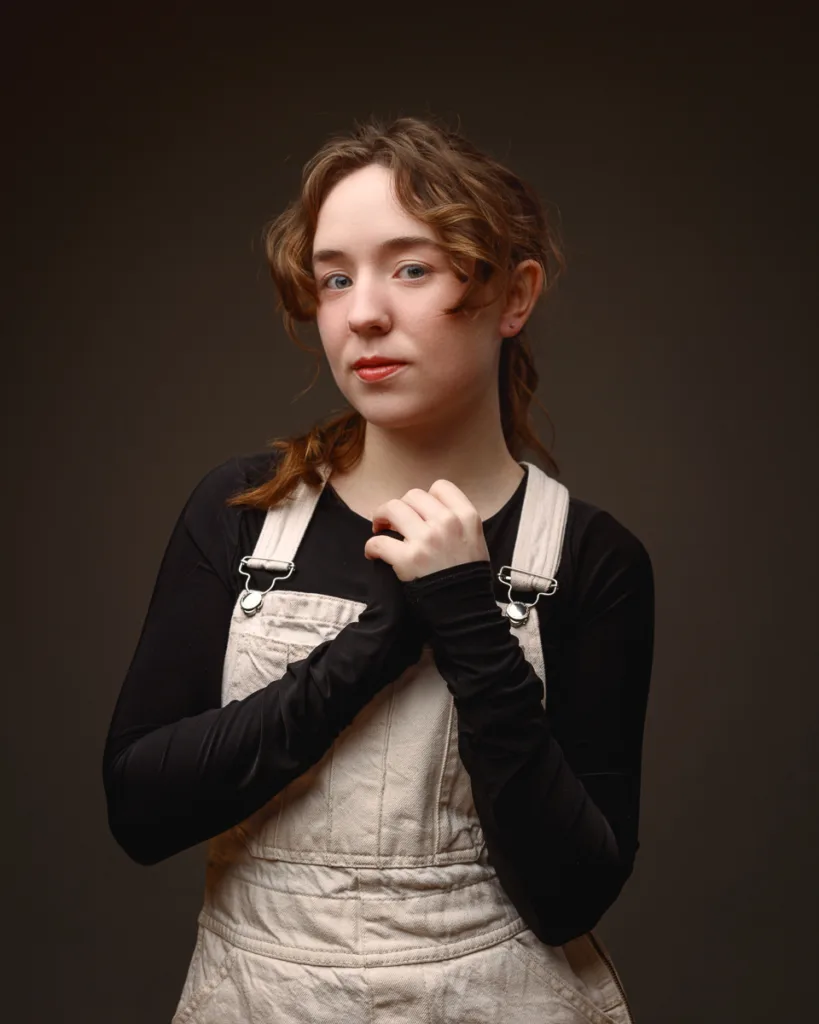
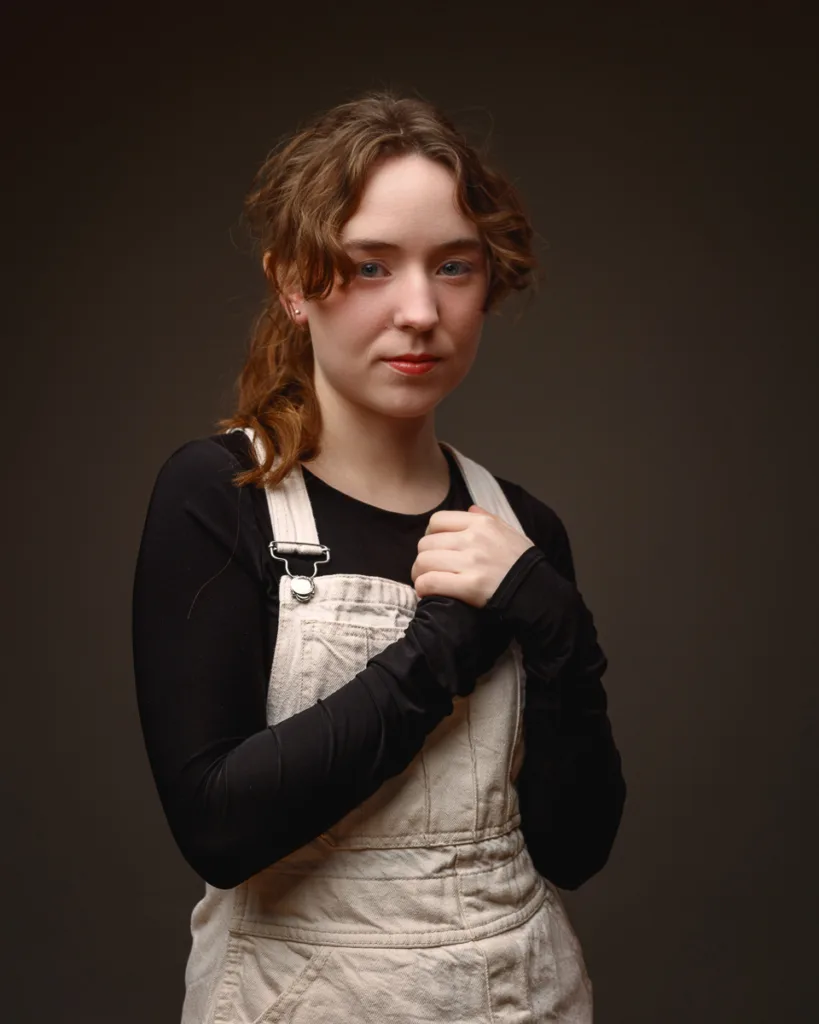
Look 1: Black, long-sleeve, clean lines
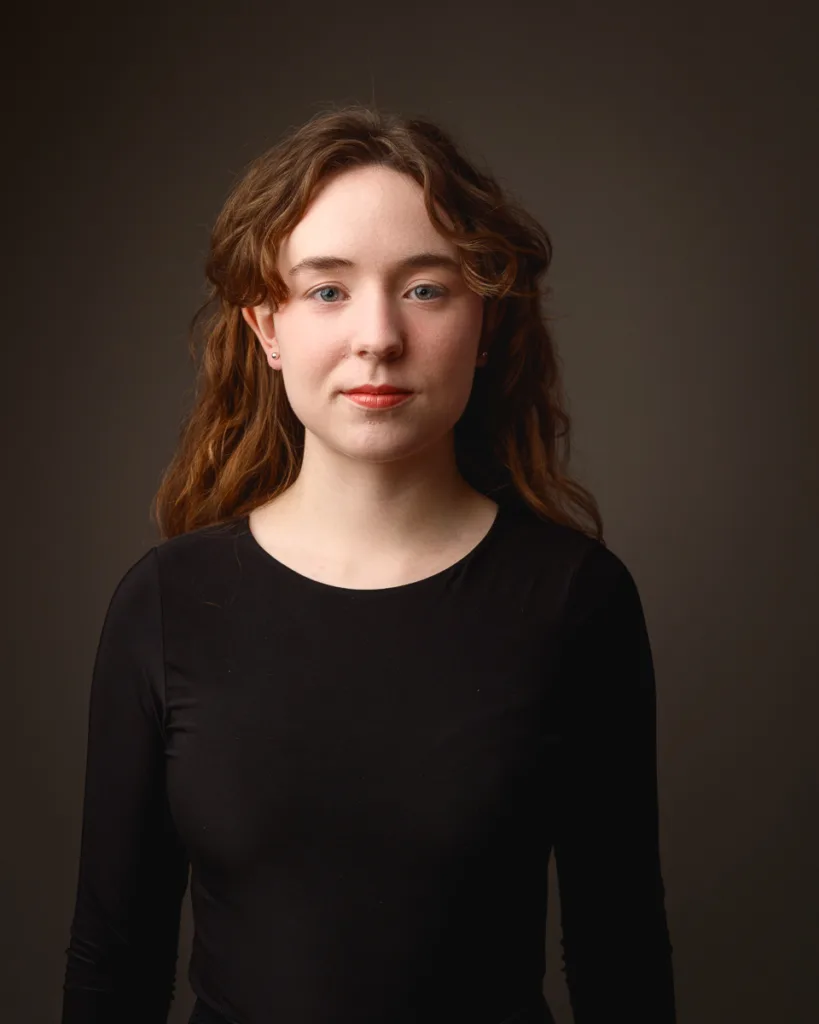
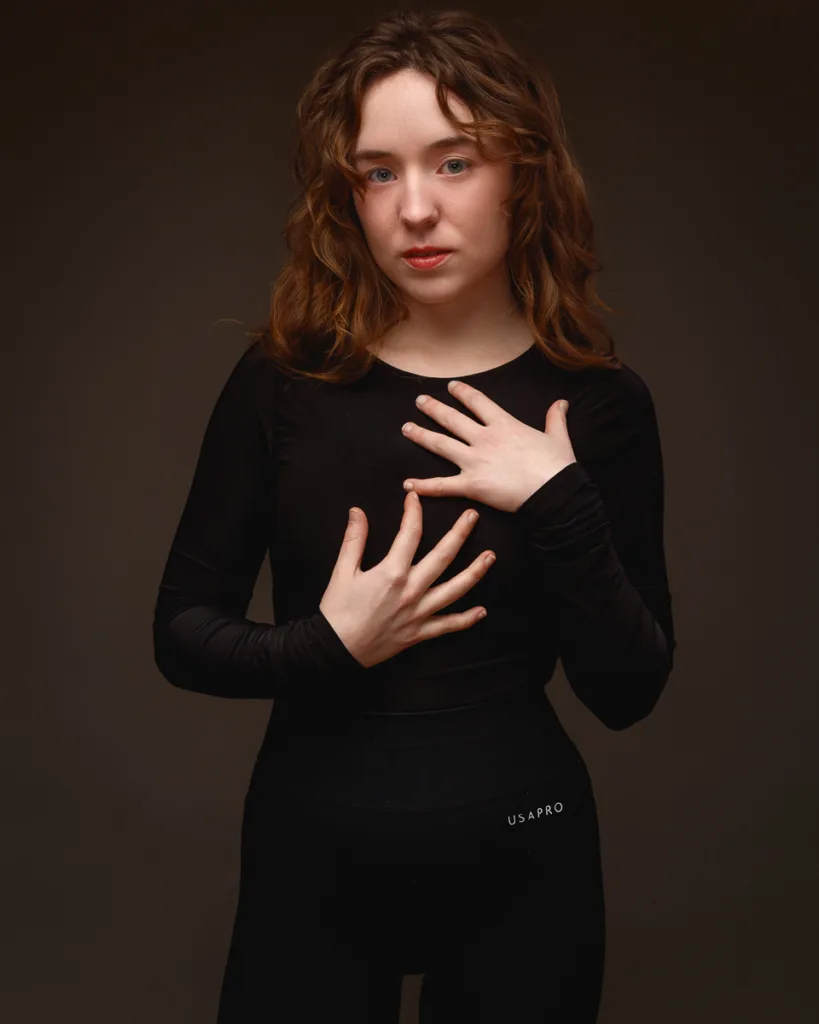
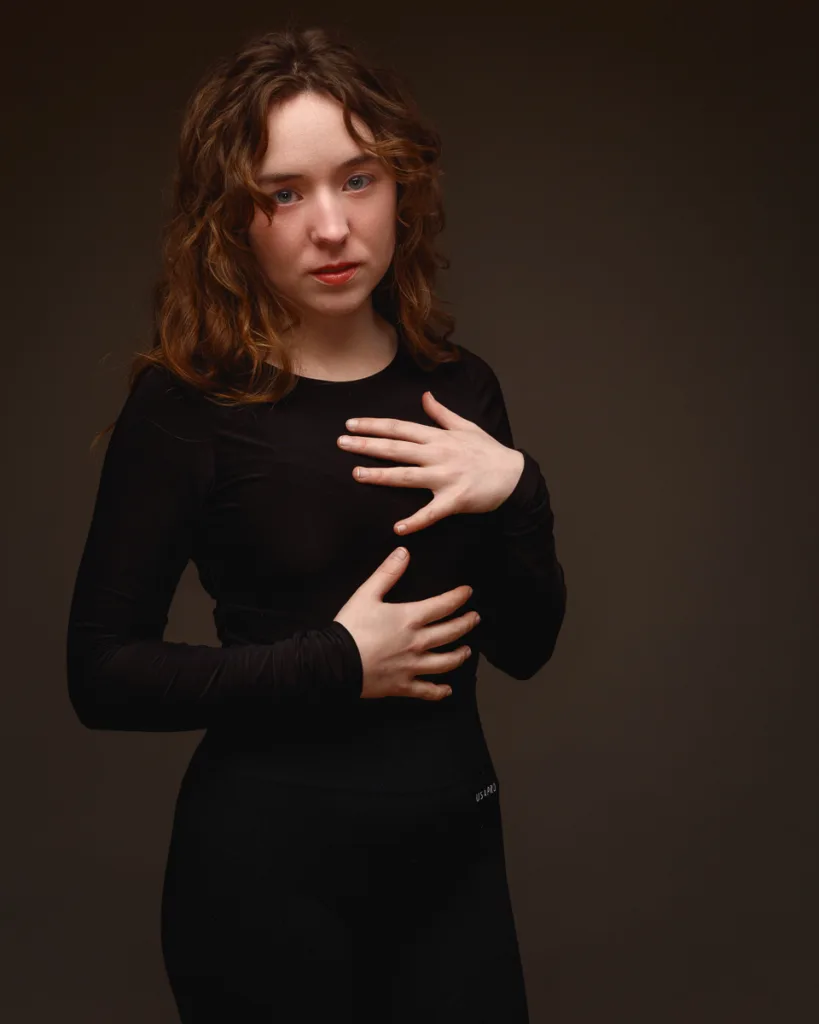
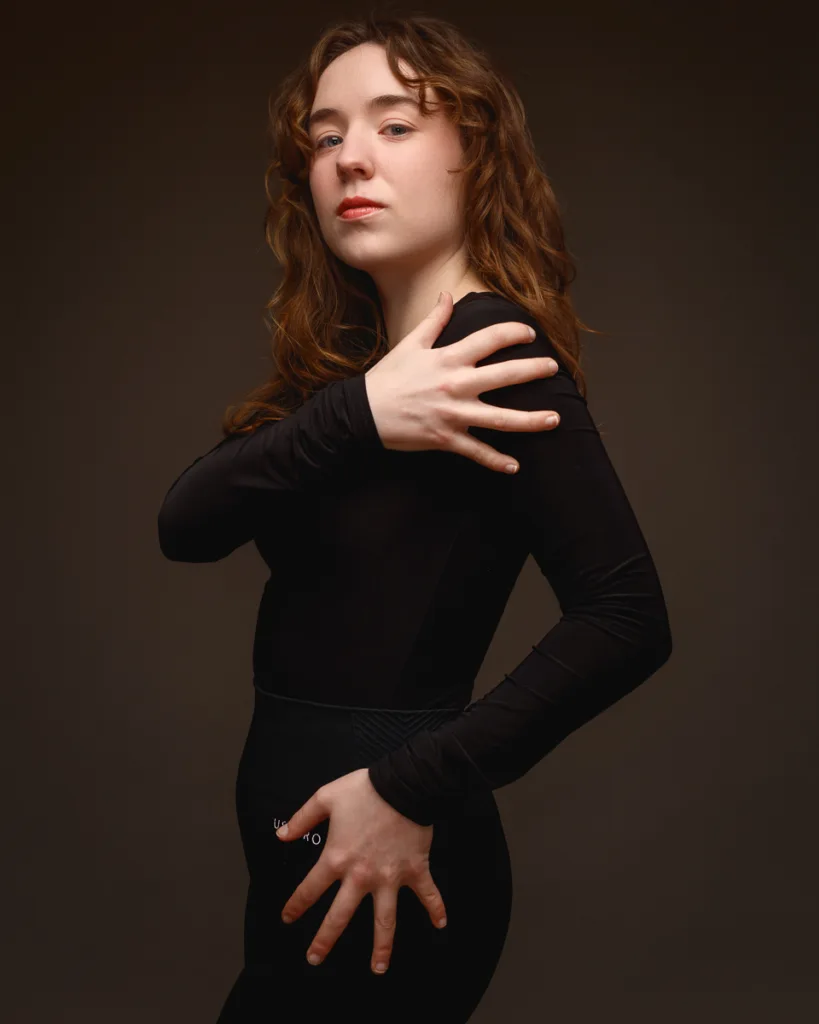

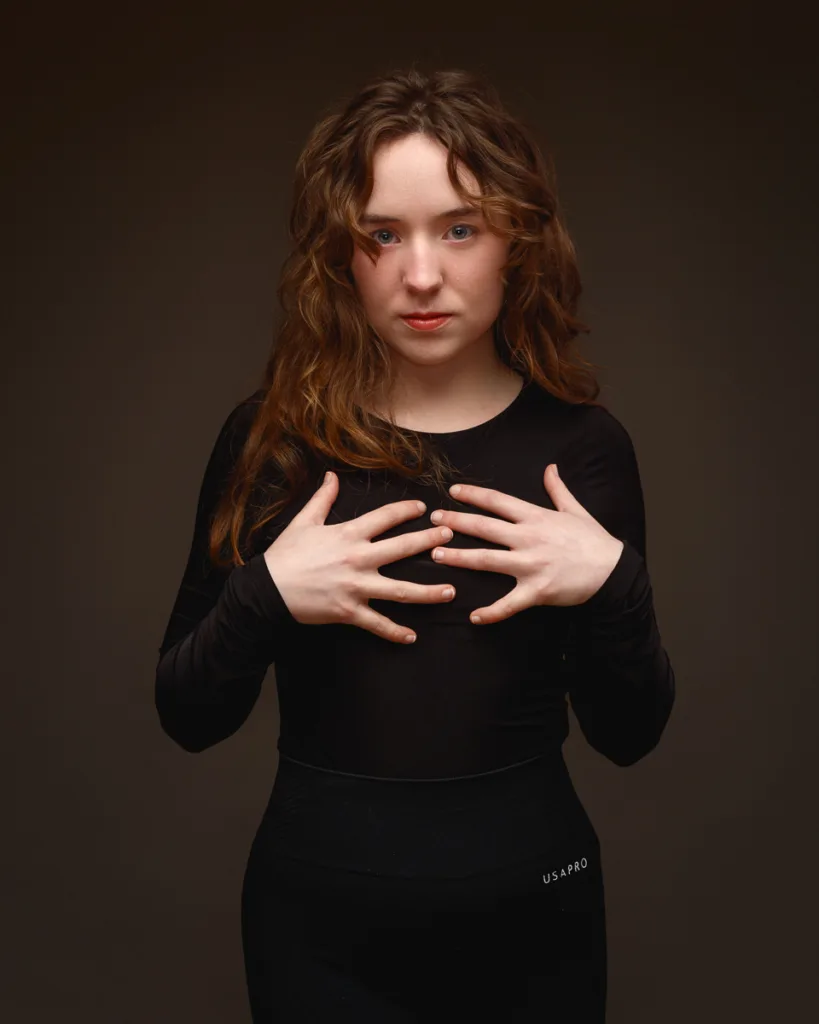

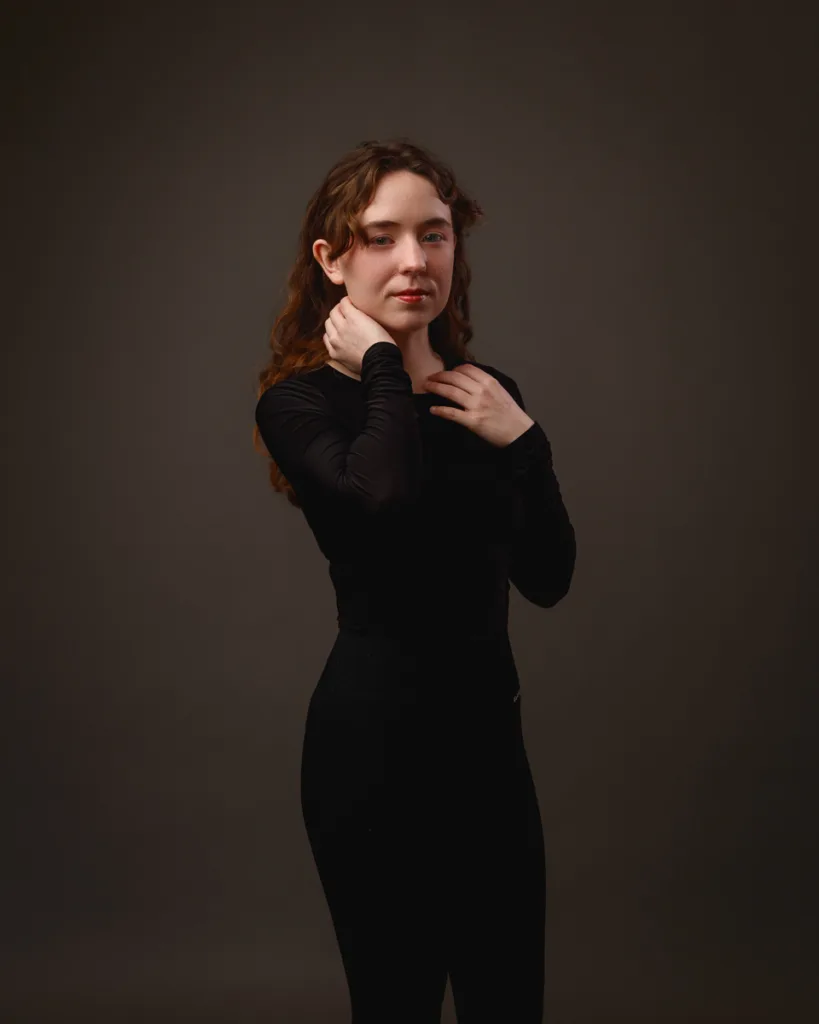
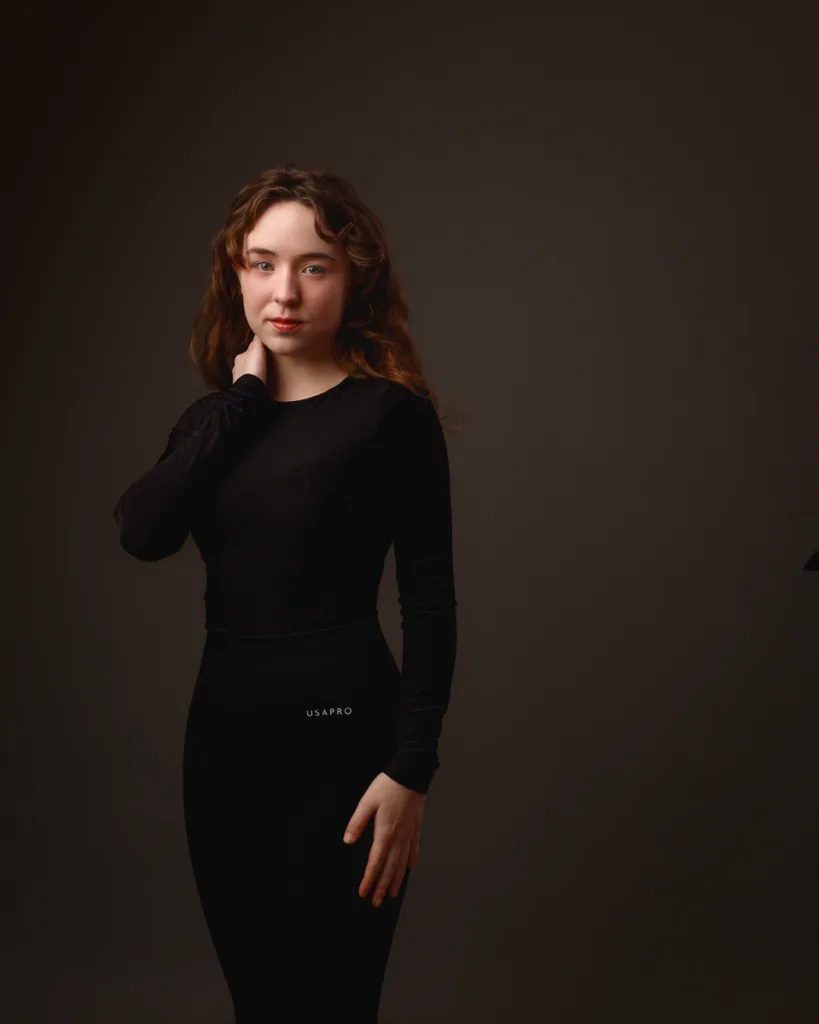


The black outfit gave us a minimalist base. It reads as modern and tidy, with zero distraction. That helps when the goal is to show facial structure, hair texture, and expression.
Black also lets me sculpt with light. Shadows become part of the shape. I can add depth without adding clutter.
This look is also very adaptable for casting. It can sit comfortably in a portfolio next to commercial work, editorial work, and actor-style portraits.
Look 2: Cream dungarees with a red knit
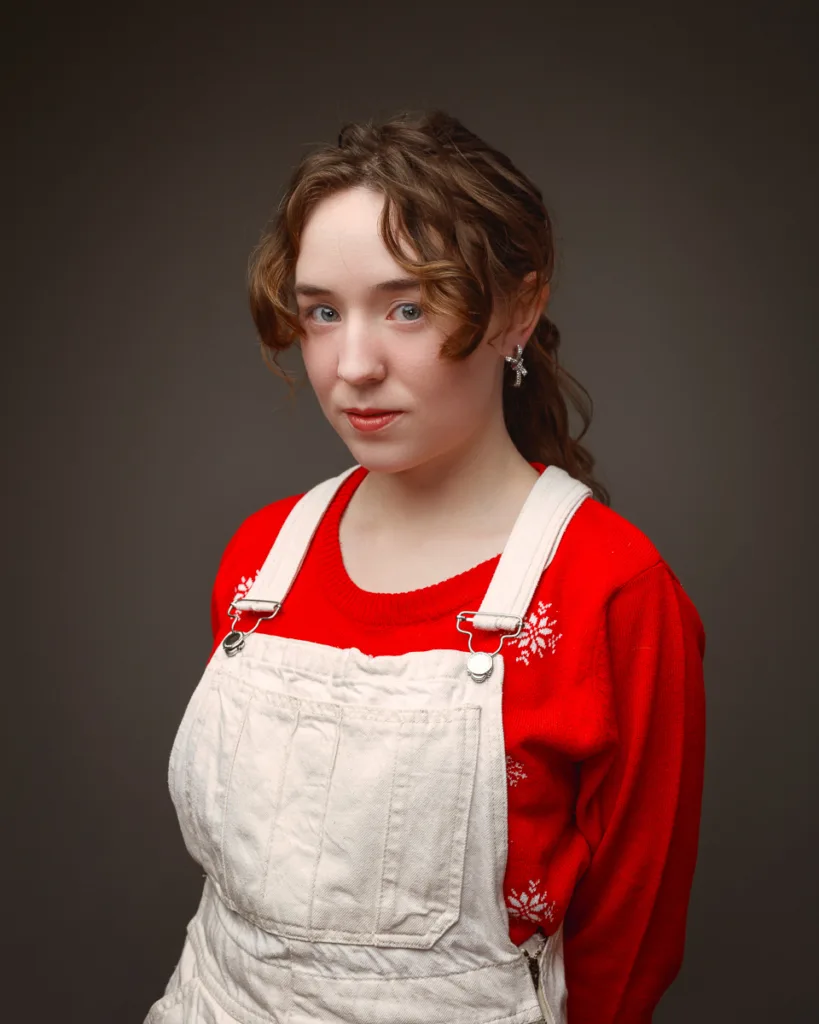

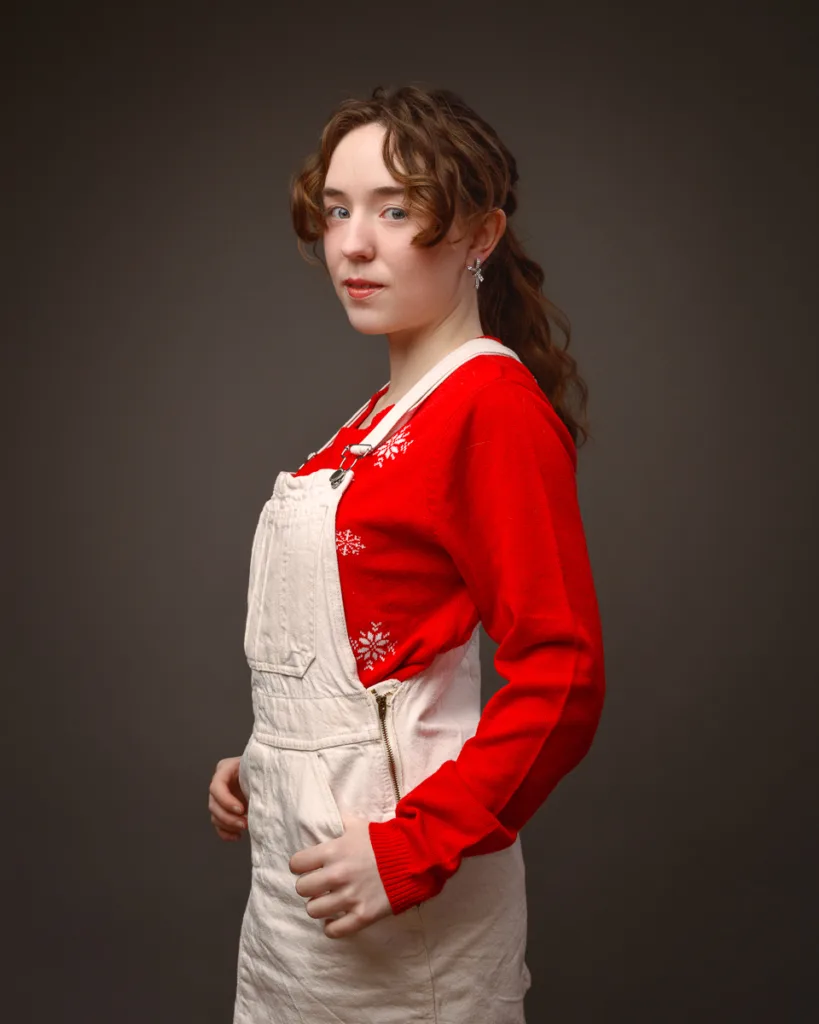
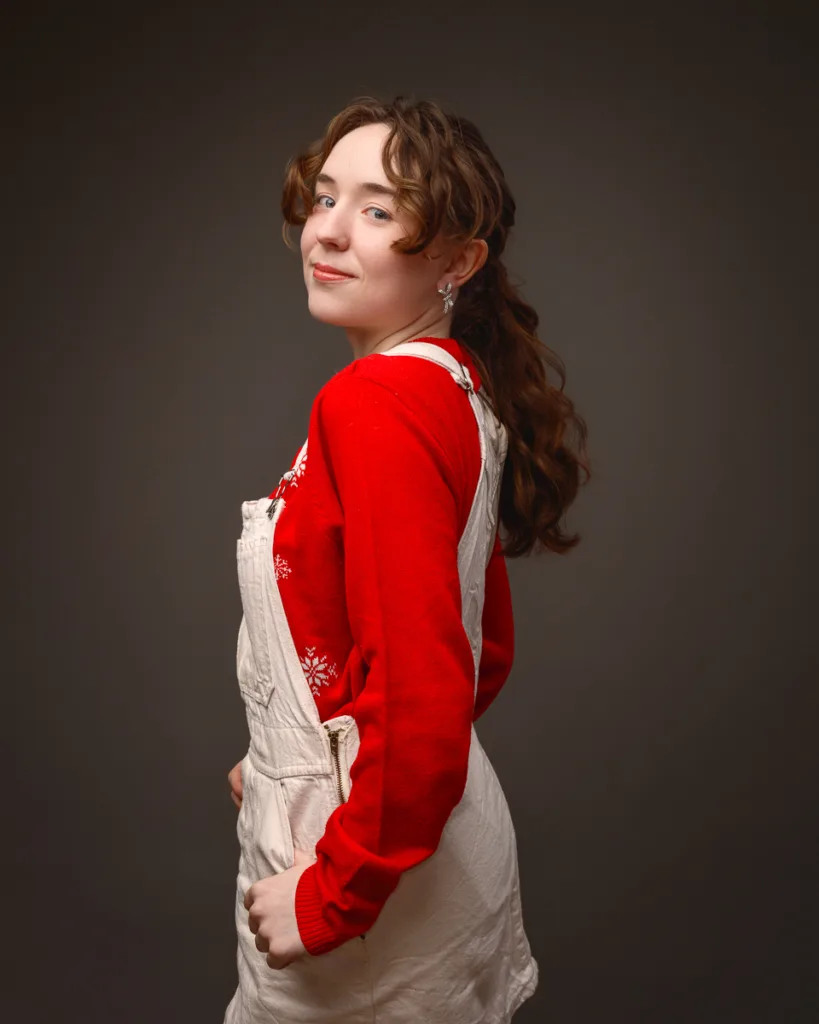
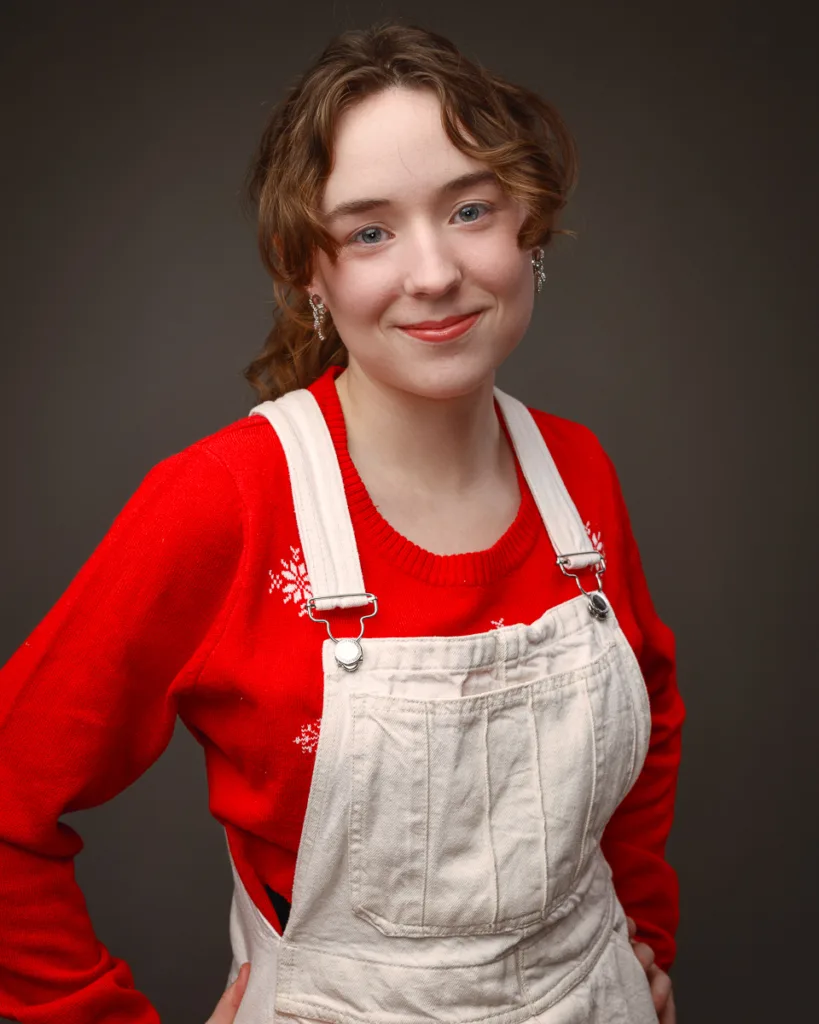
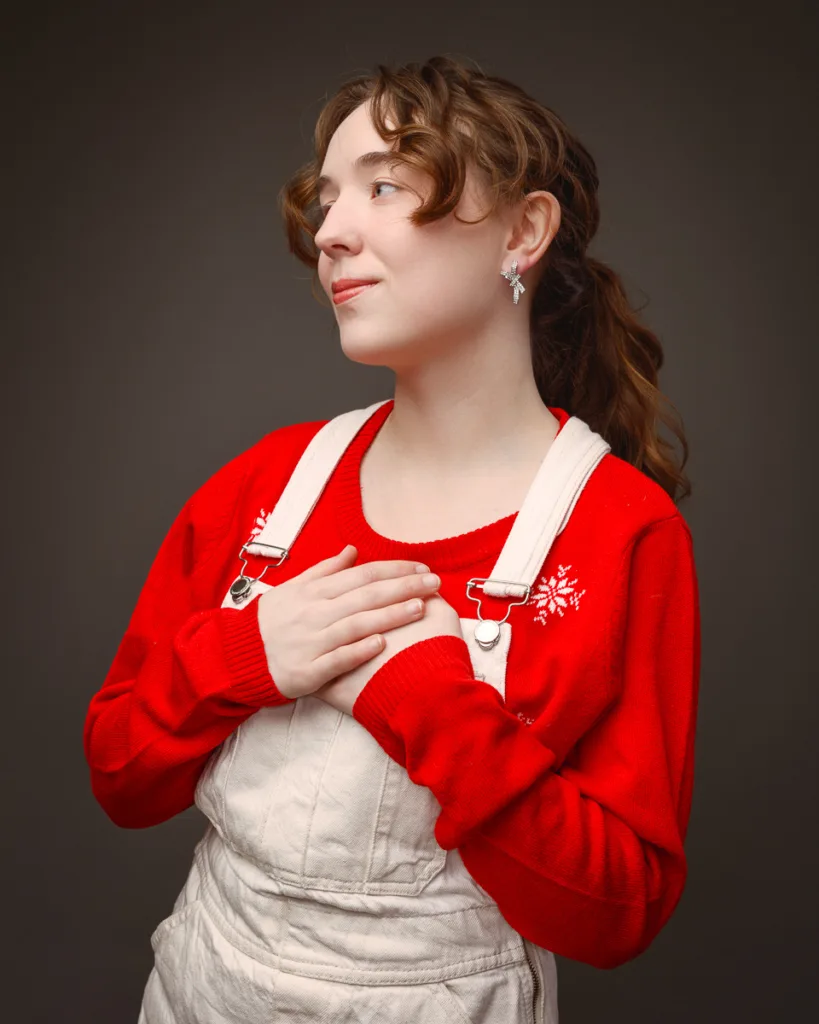
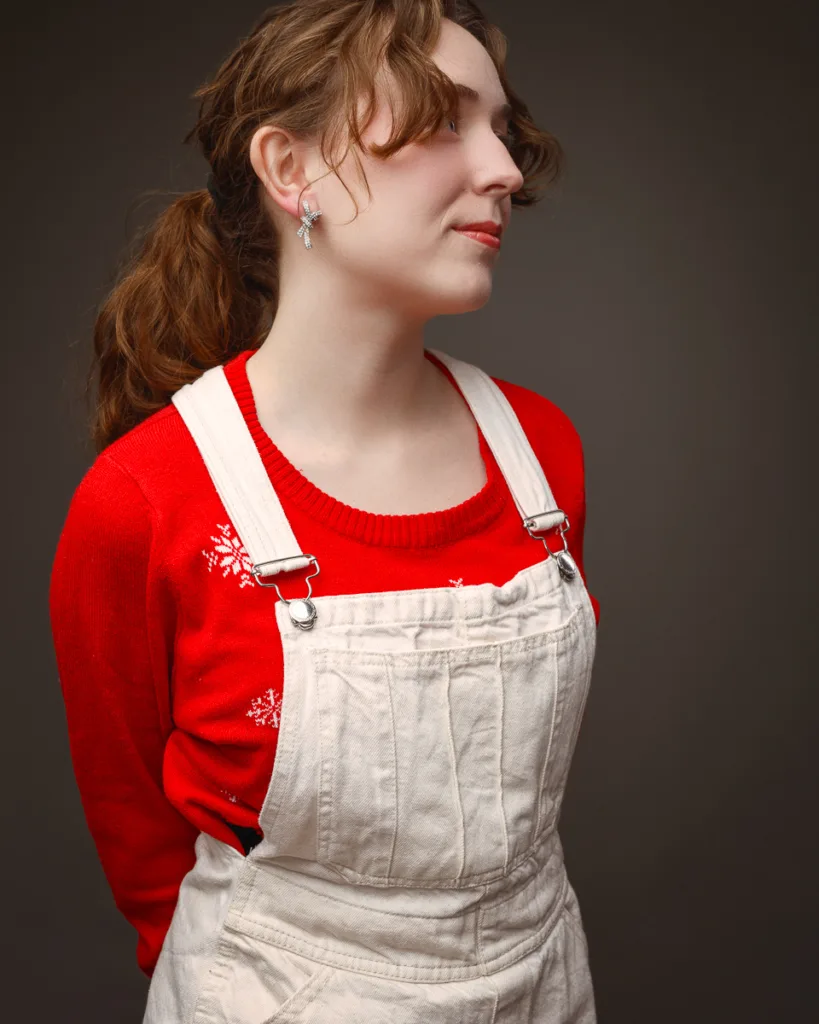


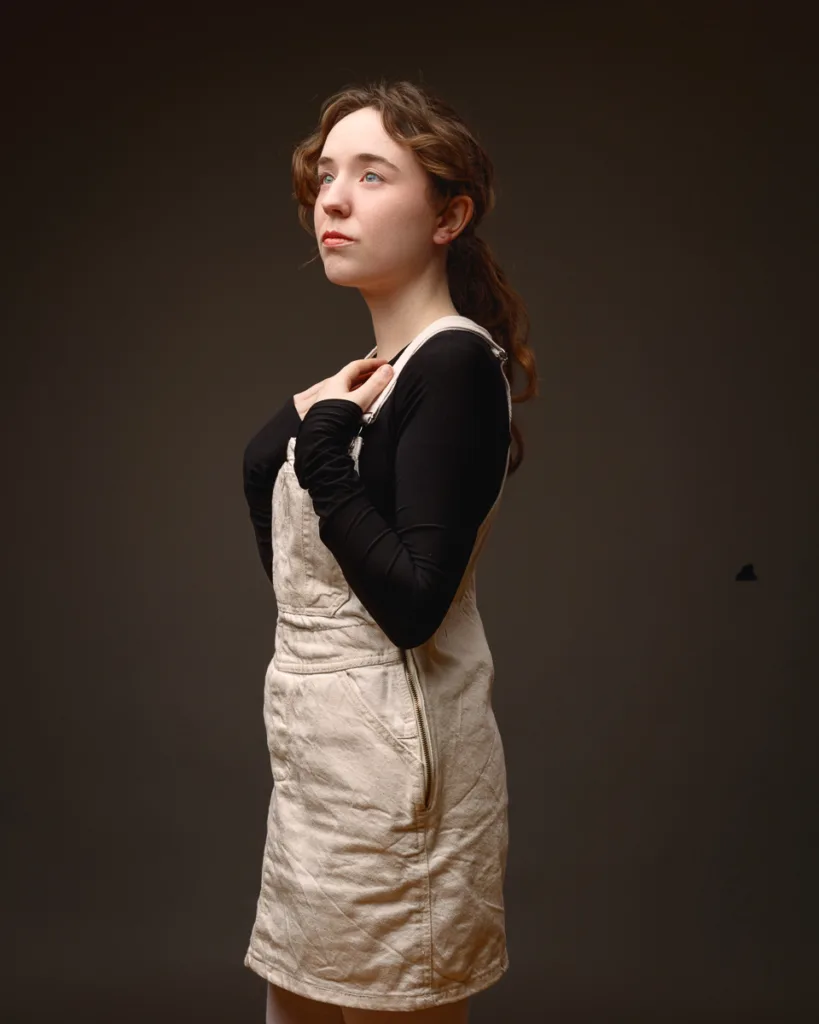
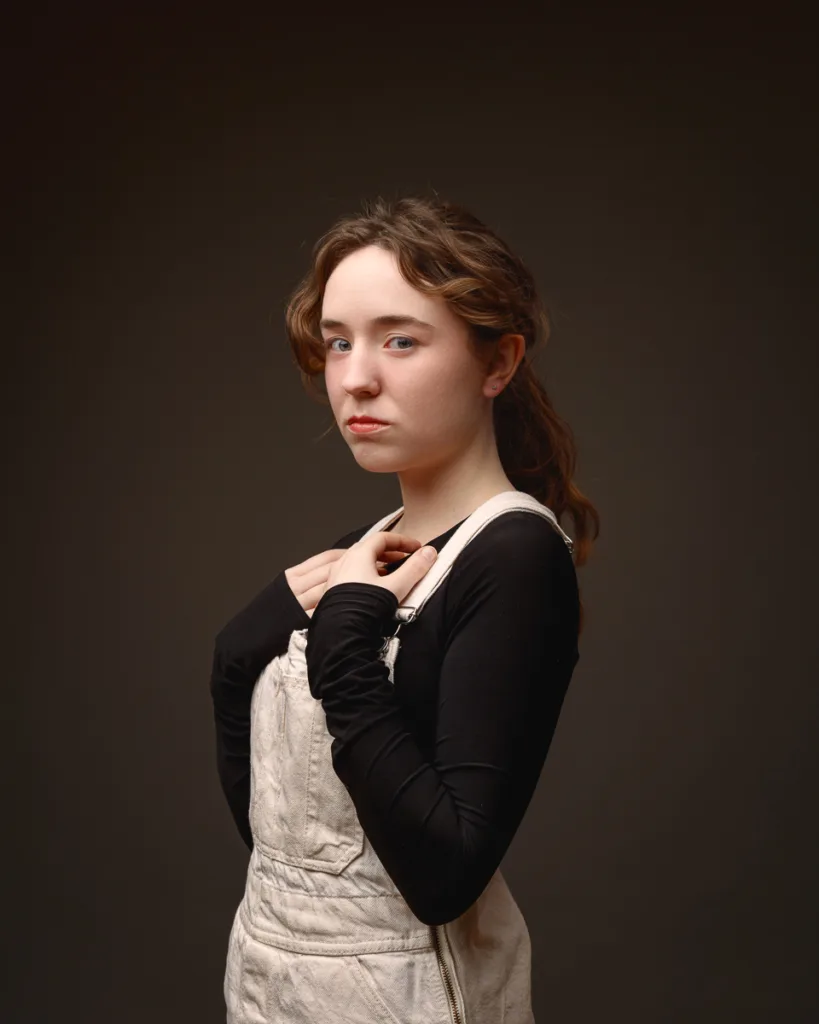
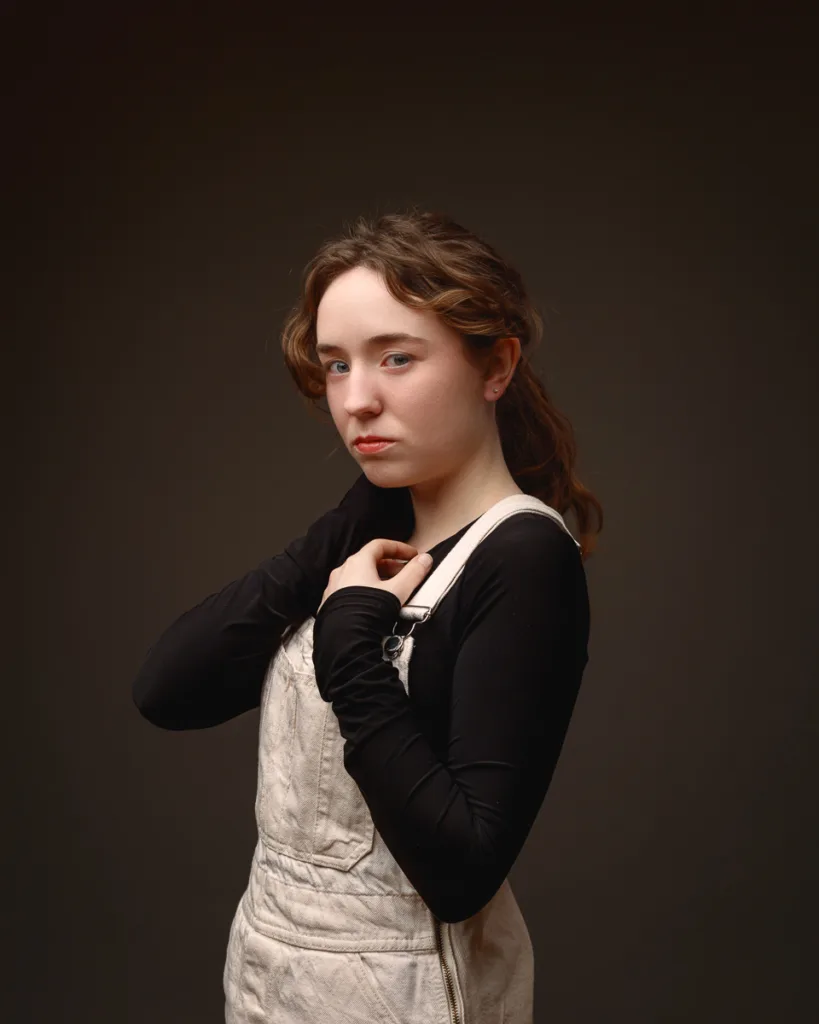
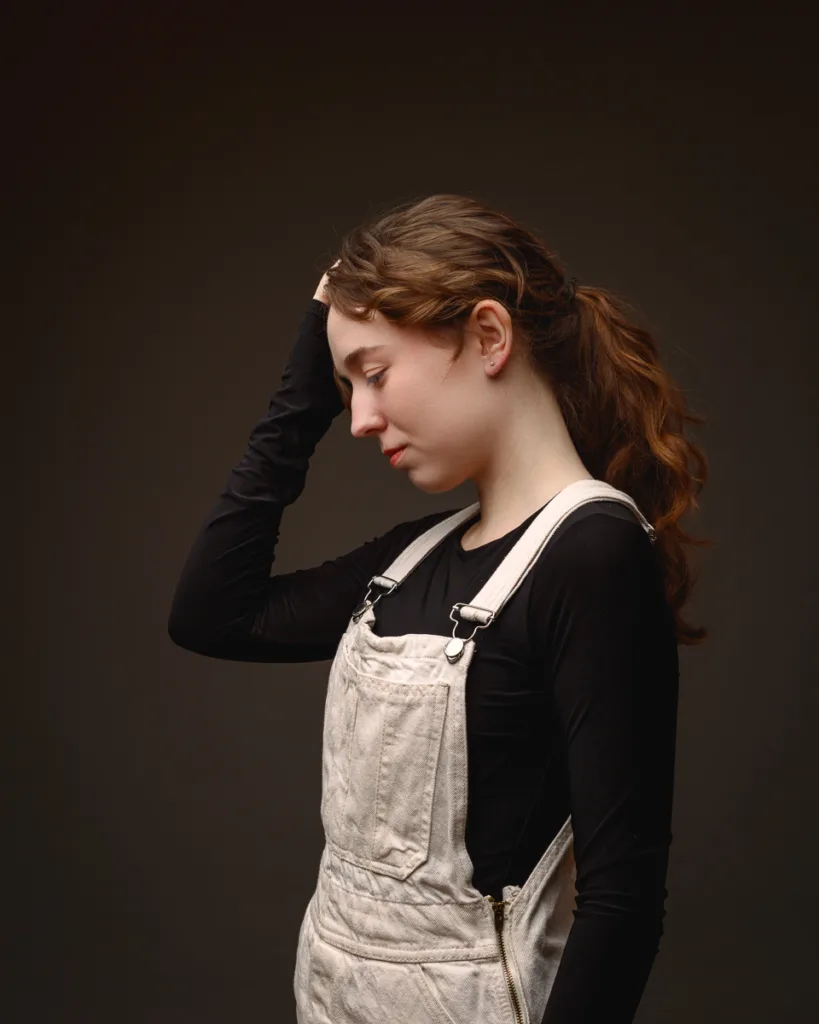
This look brought a softer, more youthful, lifestyle feel. The cream fabric adds texture and tone, and it lifts the frame without needing any props. The red knit adds warmth and a bold block of colour.
It is also a look that changes posture. Dungarees shift how someone stands and moves. That change is useful. You get a different energy, and it reads quickly.
If you are building a model portfolio, you want at least one look that feels friendly and accessible. This did that job.
Look 3: Burgundy dress, elegant portrait feel
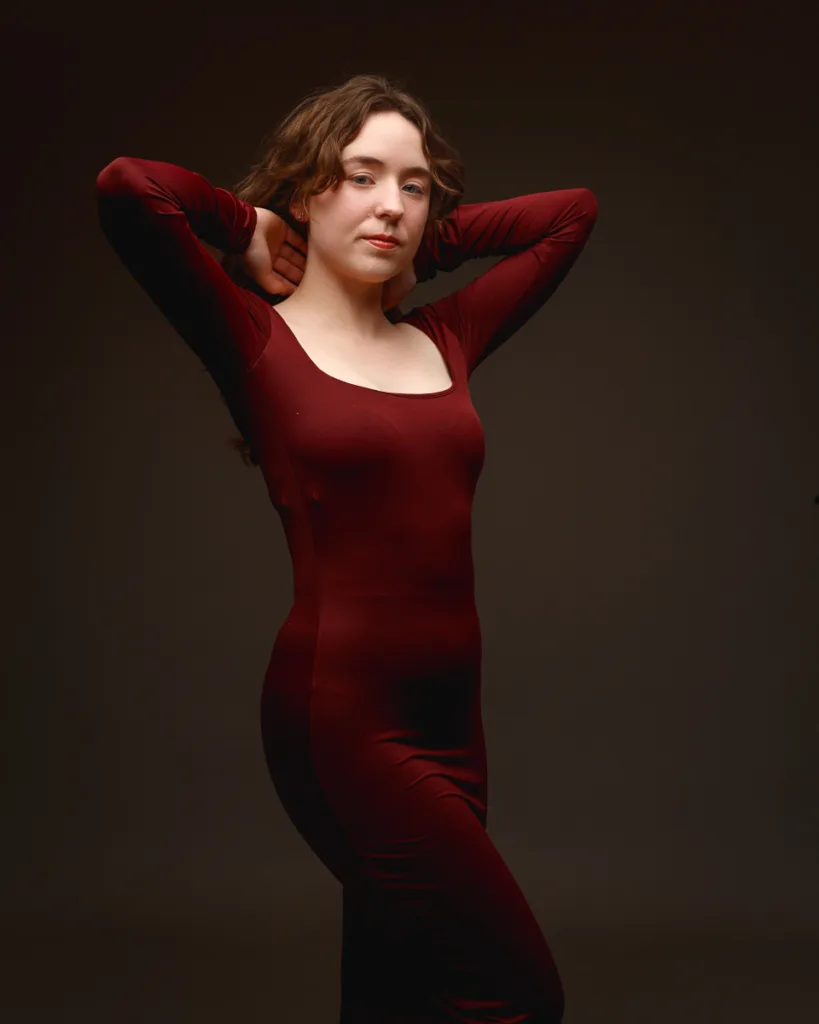
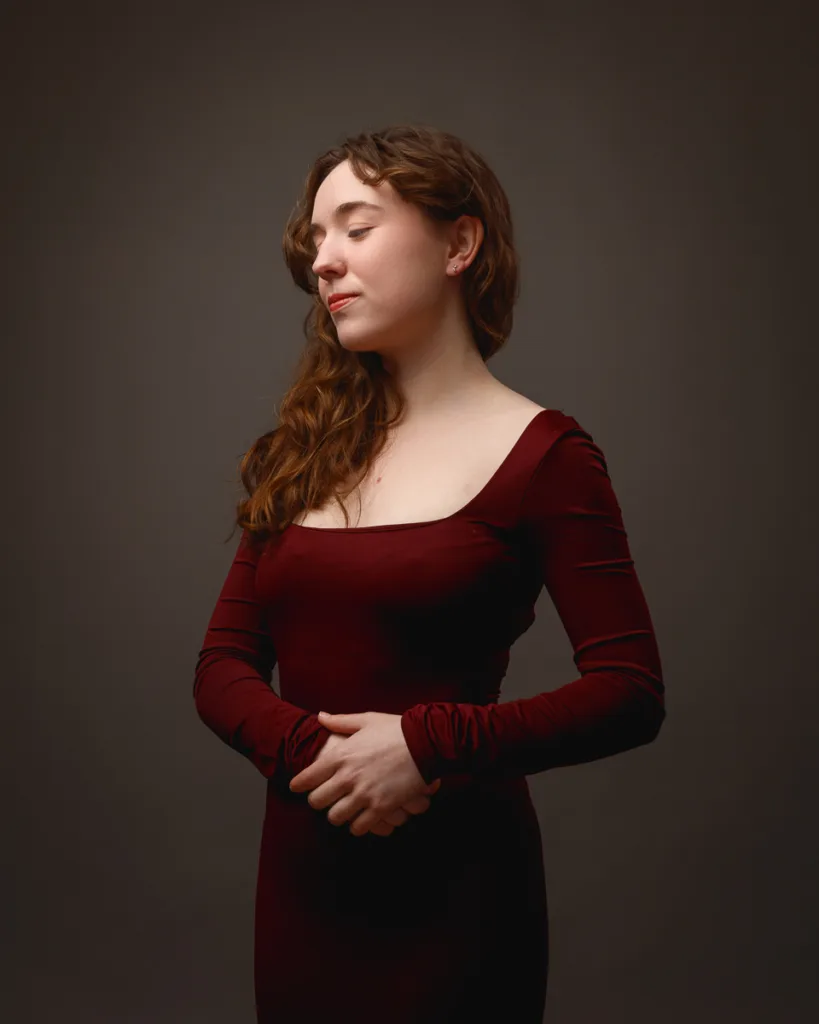
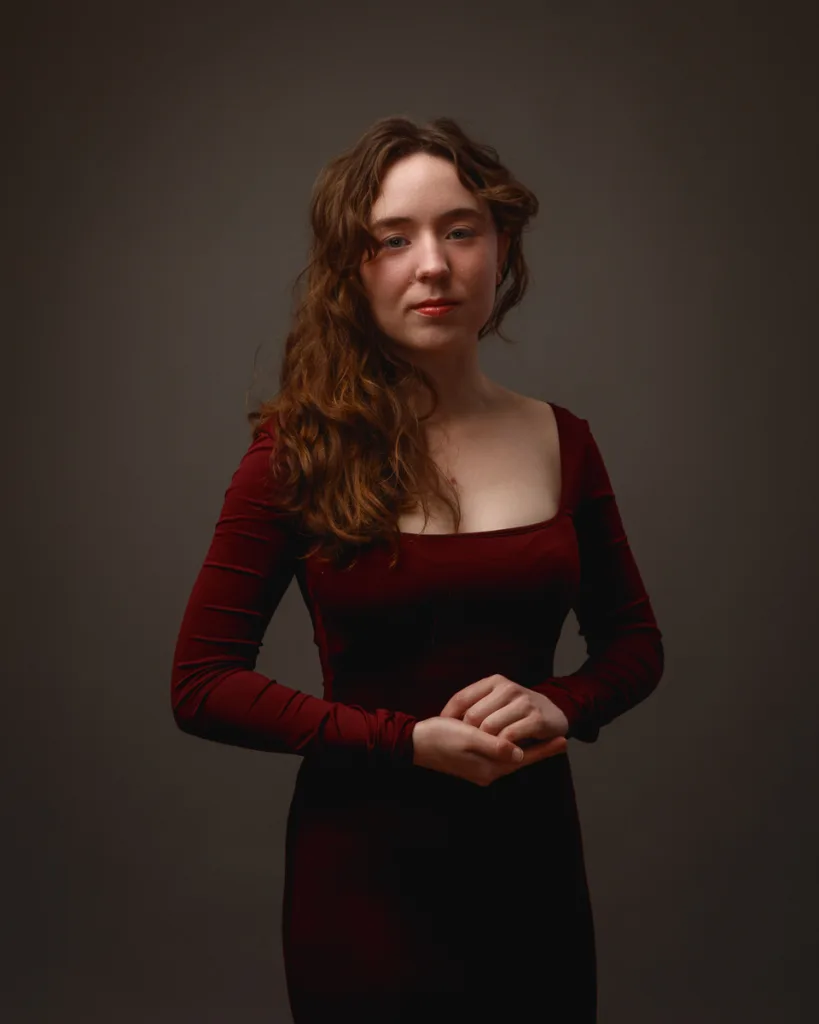

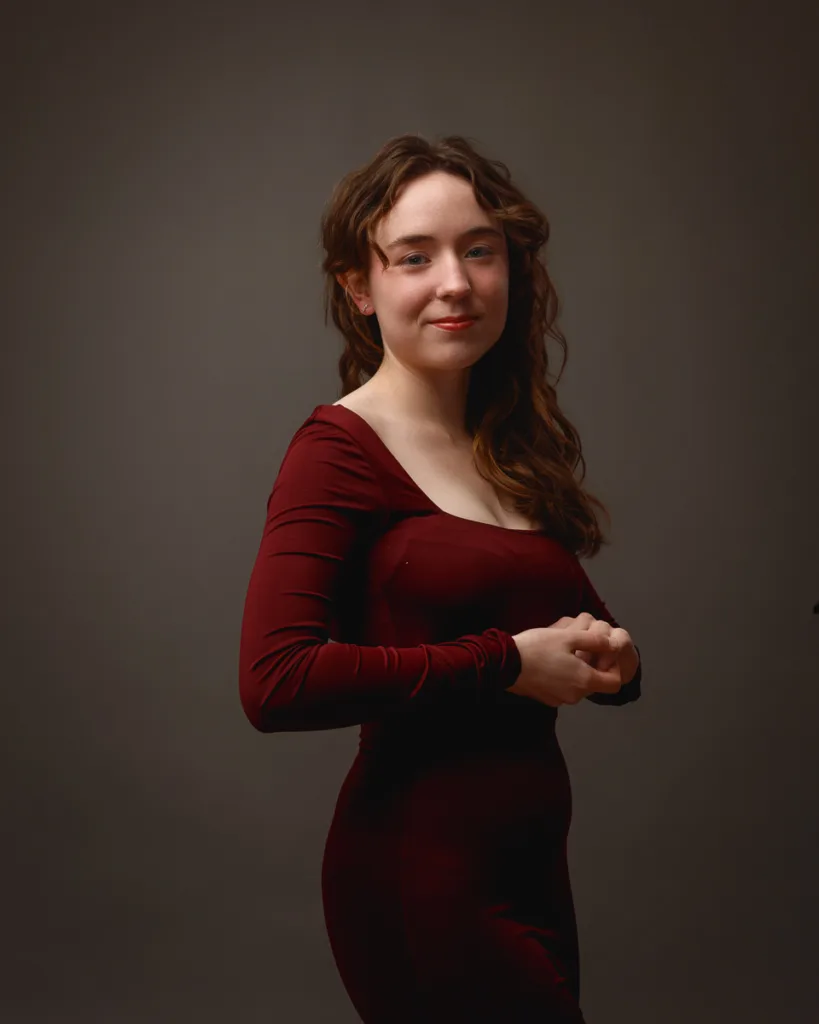
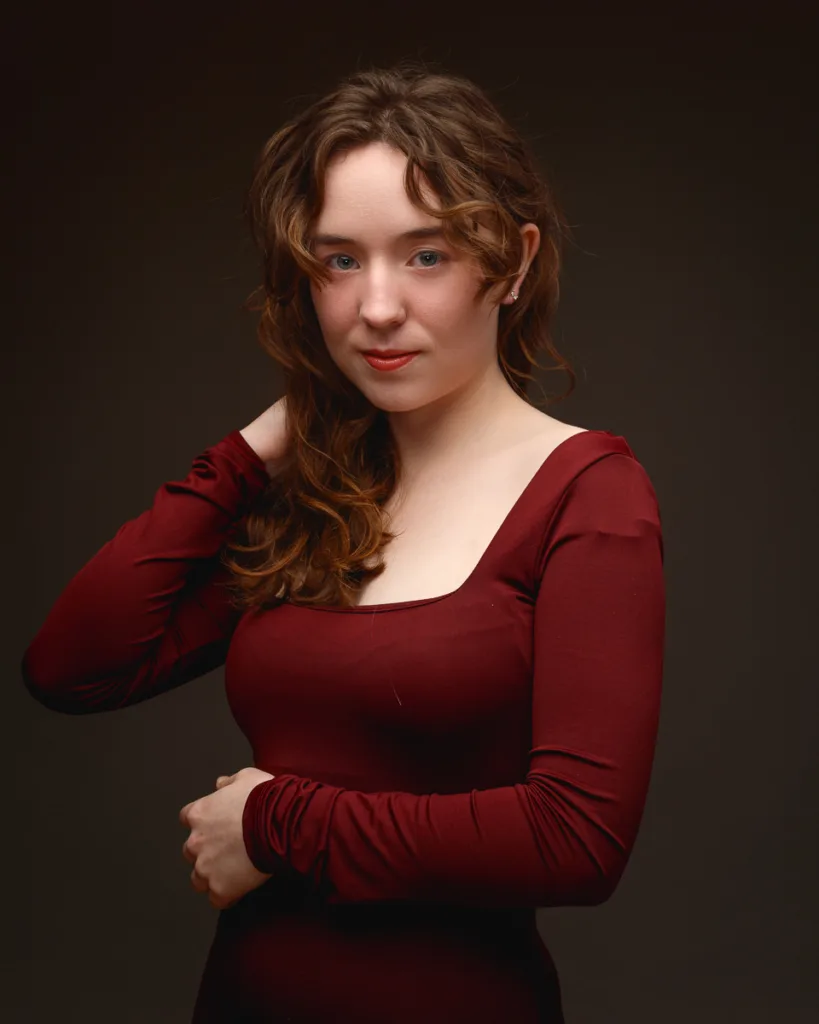
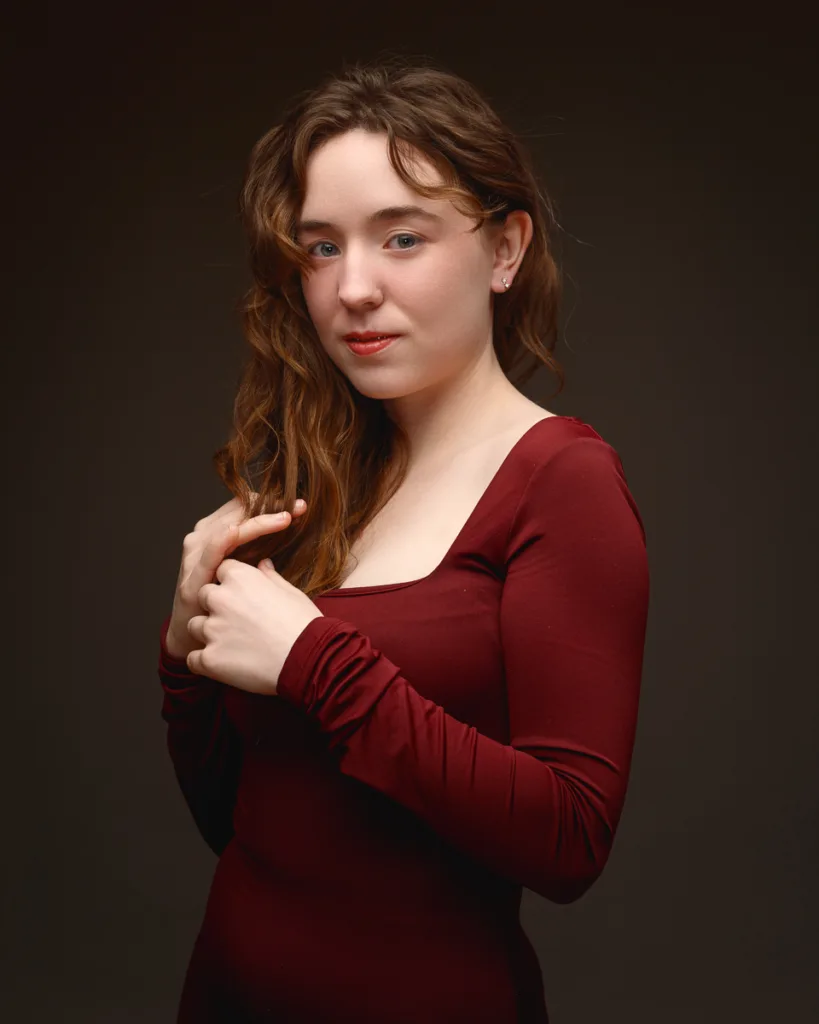


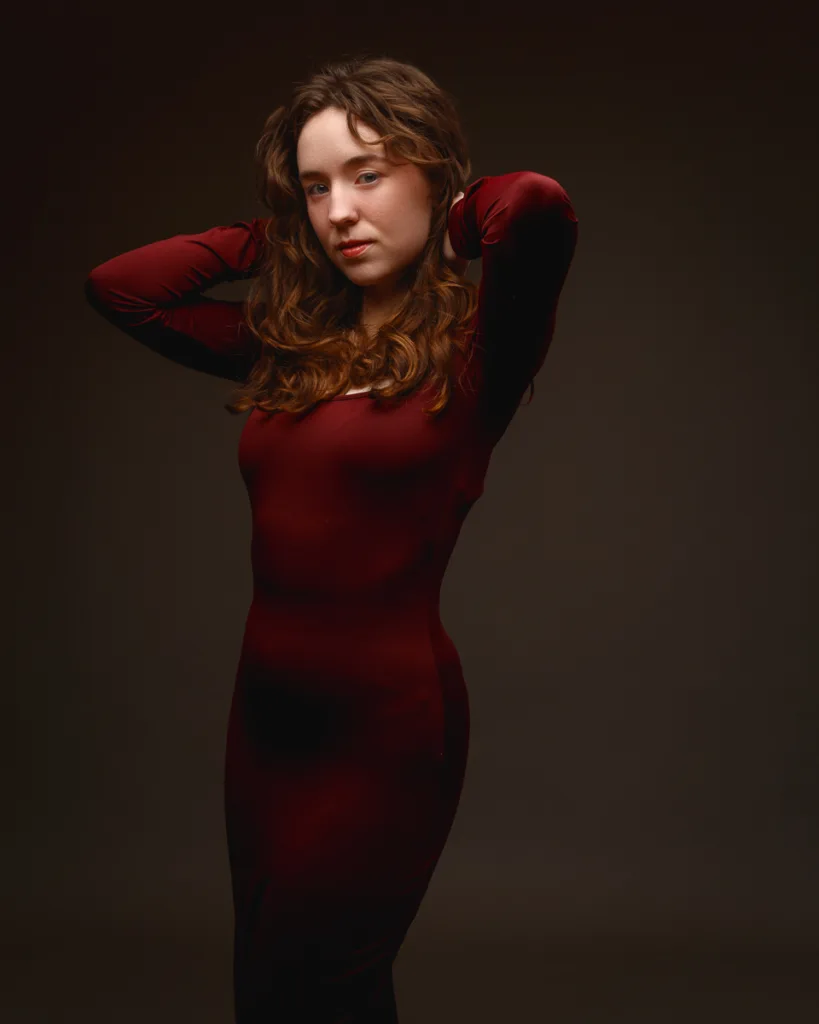
The burgundy dress moved us into a more classic portrait space. It feels grown-up, polished, and calm. The neckline and long sleeves also shape the pose options. You get clean shoulder lines and strong negative space around the face.
This sort of look works well for beauty-style portraits, and for anything that needs a more refined tone. It also photographs well against a darker studio background, where the colour can sit rich without becoming loud.
The studio lighting approach (controlled, flattering, repeatable)
A good portfolio session needs lighting that can be repeated and adjusted fast. I want consistency across a set, even when styling changes. That gives the final edit a coherent feel.
This session leaned into controlled studio portrait lighting.
- A soft key light, placed to shape the face gently.
- Careful feathering, so the light falls away smoothly.
- Shadow control, so the image keeps depth.
- A background tone that stays clean and uncluttered.
The backgrounds here read as warm grey to brown, with a subtle gradient. That is deliberate. It gives separation, and it keeps skin tones natural. It also avoids the “flat passport” feel that can happen when the background and subject sit at the same brightness.
If you are a model, this kind of lighting is a safe base for a portfolio. It does not fight your features. It describes them.
Why I like working with chaperones (and why I think you should always have the option)
As always, Leona’s mum came as a chaperone. That makes everything easier, and I am always glad to have a chaperone in the studio.
I think models should always have the option to bring a chaperone with any photographer, without it being treated as awkward. It should not be framed as a problem. It should be normal.
Here is why.
A chaperone helps the model feel settled
A photoshoot is still an intense situation. Lights. Camera. Direction. Silence between shots. Even confident models can feel exposed, especially in a studio where there is nowhere to hide.
A chaperone helps with that. It keeps the atmosphere grounded. It can lower stress without changing the work.
A chaperone supports clear professional boundaries
I never touch models. I never adjust clothing. I never fix hair. That is not my role.
In the real world, things still need adjusting. Stray hairs happen. A strap twists. A sleeve rides up. Jewellery turns. If I spot it, I would rather say it out loud and have someone else fix it.
That takes pressure off me, and it keeps everything clean and professional.
It also avoids that horrible grey area where a photographer thinks they are “helping” and the model feels uncomfortable. Clear boundaries protect everyone.
A chaperone speeds the session up
This surprises people, but it is true.
If there is someone there to help with small fixes, the shoot runs smoother. We stop less. We reset faster. The model stays in flow.
That flow is where expression gets good.
A chaperone is part of good safeguarding, especially for younger models
If you are photographing younger models, you have a duty of care. You also need to think about how the situation looks from the outside.
A chaperone makes it simple. It reduces risk. It builds trust. It also reassures parents, which matters when a young person is building experience.
If you want a useful starting point on safeguarding thinking, NSPCC guidance is a good read:
- https://learning.nspcc.org.uk/safeguarding-child-protection
- https://learning.nspcc.org.uk/research-resources/briefings/photography-sharing-images-guidance
What model portfolio shoots are really about
A model portfolio shoot is not just “getting nice photos”. Nice is not enough. A portfolio is closer to a working tool. You use it to apply, pitch, and get considered.
That means the images need to answer questions quickly.
- What do you look like right now?
- How well do you take direction?
- Can you hold expression without going blank?
- Can you move and still keep shape?
- Do you photograph consistently, or only in one pose?
A strong portfolio also shows range without becoming messy.
Range can mean:
- clean headshots, with direct eye contact
- softer expressions that still feel controlled
- three-quarter portraits, showing shape and posture
- full length frames with good body line
- movement that still reads clean
- hands that look intentional, not accidental
If you are updating a portfolio, you do not need fifty looks. You need a smaller set done properly.
What I aim to deliver in a portfolio set (a practical checklist)
Here is a simple way I think about it. This is the mix I want a model to leave with, even if we keep the styling minimal.
| Image type | What it proves | Why it matters |
|---|---|---|
| Clean headshot | Current face, natural expression | Most common first filter for castings |
| Headshot with variation | Range without extremes | Shows control and subtlety |
| Three-quarter portrait | Posture, shoulders, hands | Useful for many briefs |
| Full length | Body line and balance | Shows shape and confidence |
| A “softer” look | Approachability | Strong for lifestyle and commercial |
| A “stronger” look | Presence | Strong for fashion and editorial |
| A simple profile or near-profile | Bone structure and line | Adds variety without gimmicks |
That is not a strict formula. It is a guide. The point is that each image has a reason to exist.
Ready to update your model portfolio?
If you are planning a portfolio refresh in 2026, I keep the process simple and professional. We shoot in my studio at Bentwaters near Woodbridge, Suffolk, focusing on clean portraits that stay useful for castings, agencies, and social media. You are always welcome to bring a chaperone.
Why continual portfolio updates matter (even when nothing has “changed”)
Leona and I have worked together many times. That repeat work is not just because we get on well. It is because repeat shoots build stronger portfolios.
A portfolio is not a one-off project. It is more like maintenance.
Here is why regular updates help.
Your look changes more than you think
Hair changes. Skin changes. Weight shifts. Confidence changes. Even your resting face can change over a year.
If your portfolio does not match you, you start every casting on the back foot.
You get better with practice
Posing is a skill. Expression control is a skill. Knowing how to reset between frames is a skill.
The camera rewards practice. Each shoot teaches you what works.
You learn what your “bookable” range really is
Some people photograph beautifully in soft light but struggle with harder light. Some people shine in strong direct eye contact. Others come alive when they move.
You do not know your strengths until you test them.
A portfolio should show what you can do reliably, not what happened once.
You build trust with a photographer
When I work with someone repeatedly, the session gets easier. We waste less time. We take more risks safely. We get better results.
That trust is also why chaperones help. The vibe stays relaxed, and everyone knows the boundaries.
A quick note for parents of young models
If you are a parent reading this, I think you are right to be careful. The industry can be brilliant, and it can also be messy.
The basics I would want for any young model are simple:
- clear communication before the shoot
- a chaperone welcome at all times
- a professional studio environment
- clear boundaries, with no touching
- clear usage agreement for images
- a process that lets you review work properly
You do not need drama to get good photos. You need a calm, professional process.
Small details that make a big difference (and why a chaperone helps here)
During this shoot, we had the usual “small detail” moments. A stray hair in the wrong place. A strap is sitting slightly twisted. A crease that pulls attention.
I can spot these quickly, but I do not fix them physically. I will say what I see, and I will pause if needed. Having Leona’s mum there meant those fixes were handled fast and respectfully.
It sounds minor. It is not.
Those little distractions are the things that stop a portfolio image from looking professional. They are also the things that can be hard for a model to notice mid-shoot.
This is another reason I encourage models to bring someone. You get an extra pair of eyes, and you keep the session moving.
My focus for 2026: more portrait sessions, more intent
This shoot was a good way to close the year. It reminded me what I love about portrait work. It is quiet and careful, but it still has energy.
In 2026, I want to shoot more portrait sessions with clear intent. More work that is built around expression and identity, not just styling.
That does not mean everything will be serious. It means every image will have a reason.
If you are a model thinking about your portfolio for the new year, I would suggest you do two things.
- Look at your current images and ask, “Do these still look like me?”
- Check whether you have range, or just outfit changes.
If you do not have range, that is not a failure. It is a plan. Build it step by step.