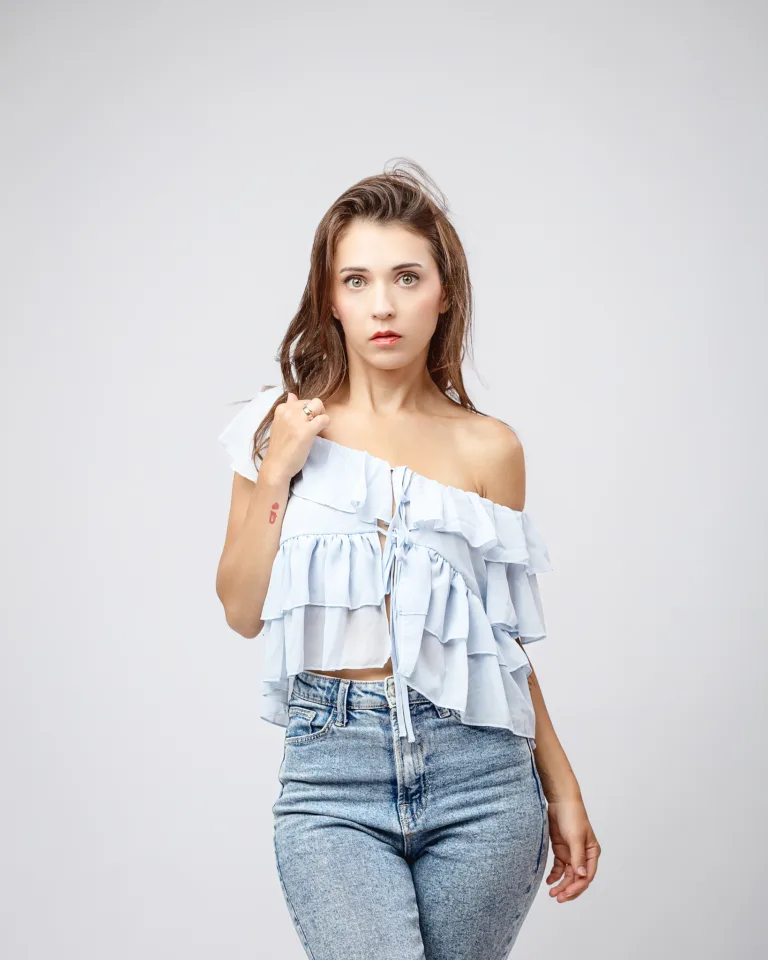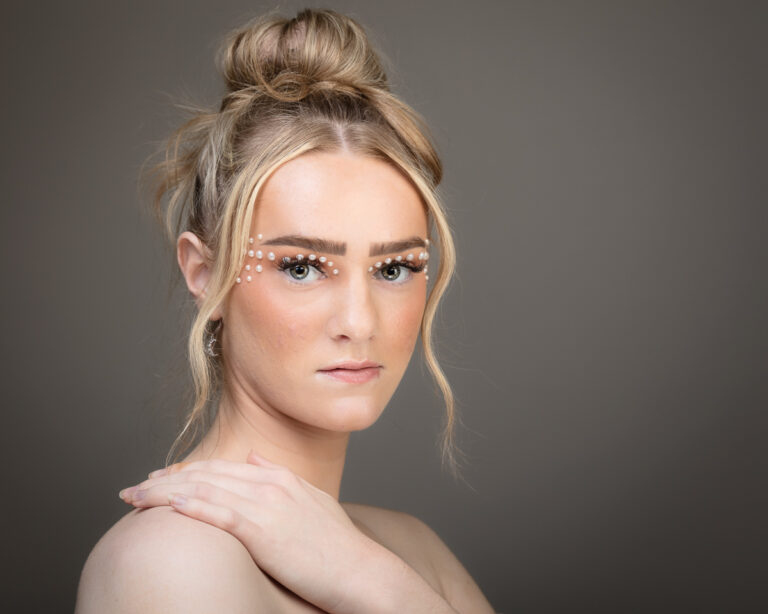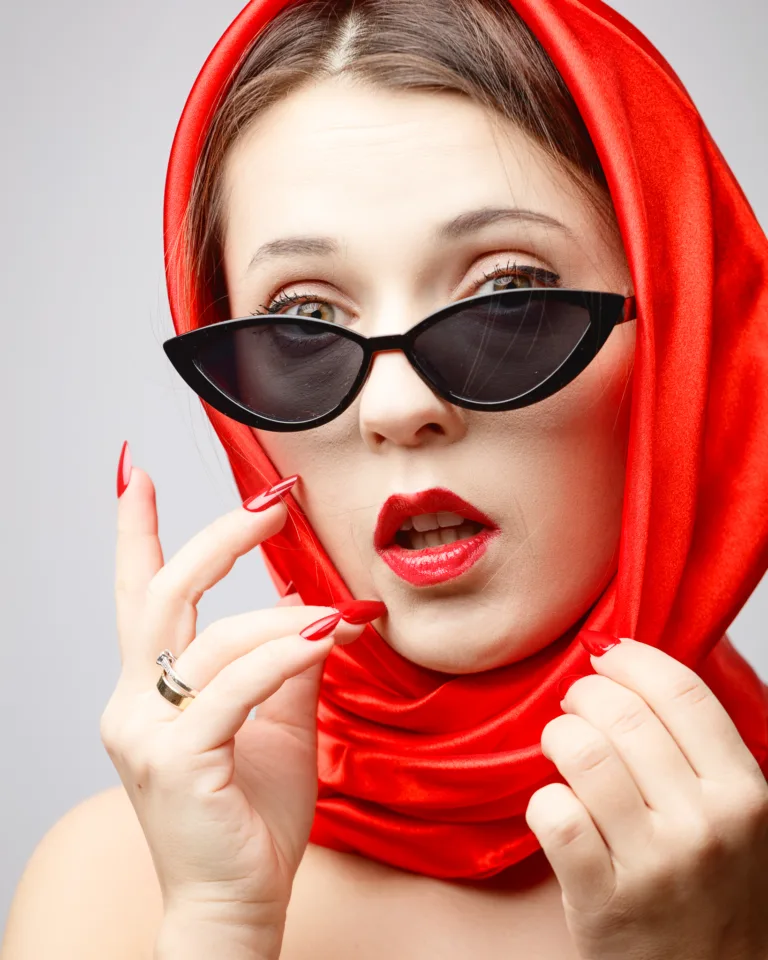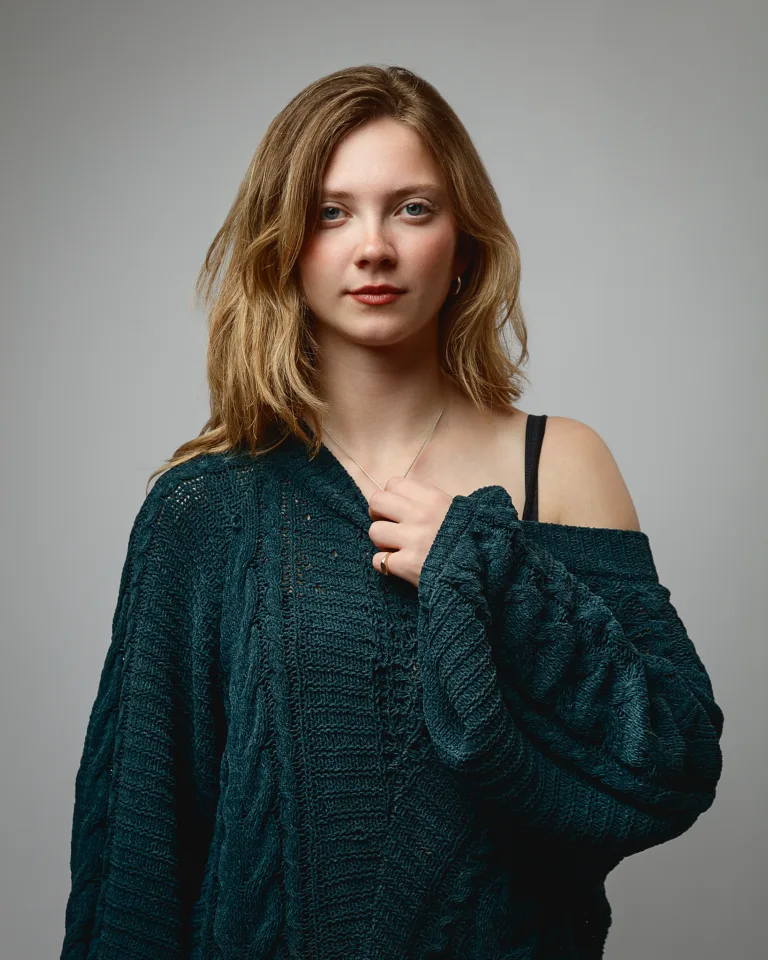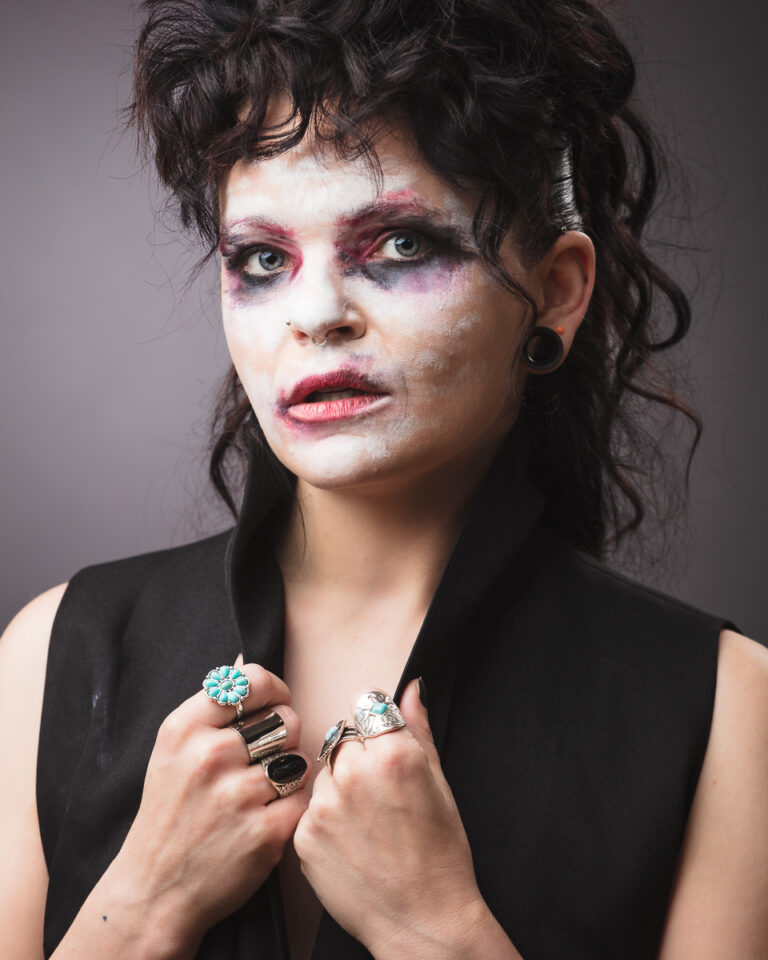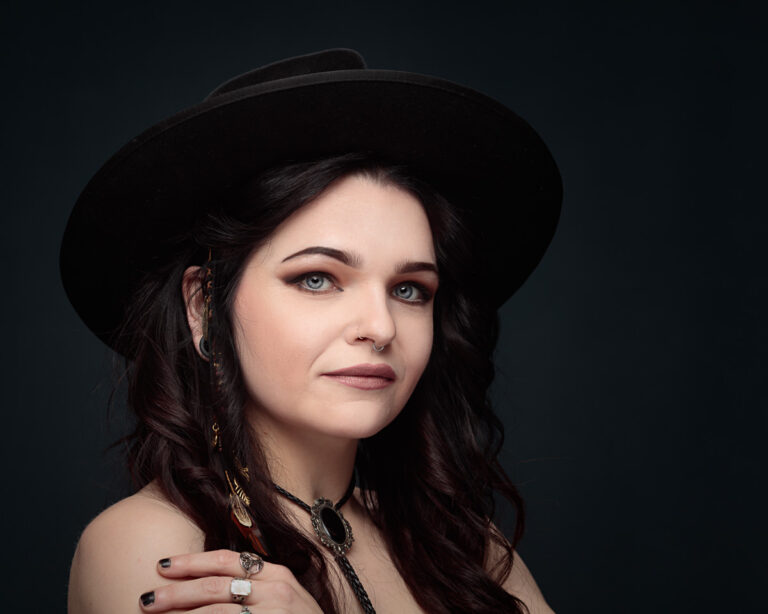

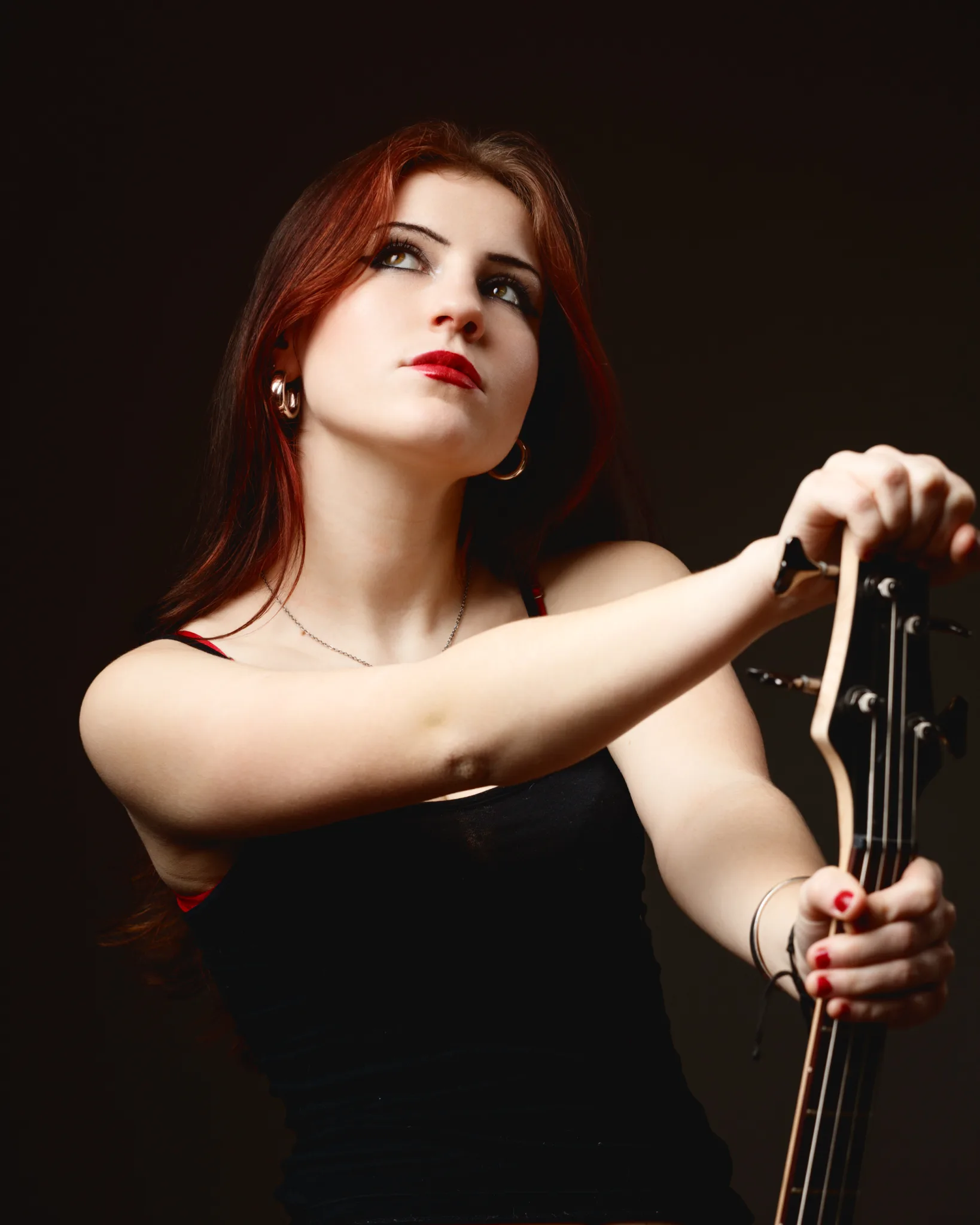
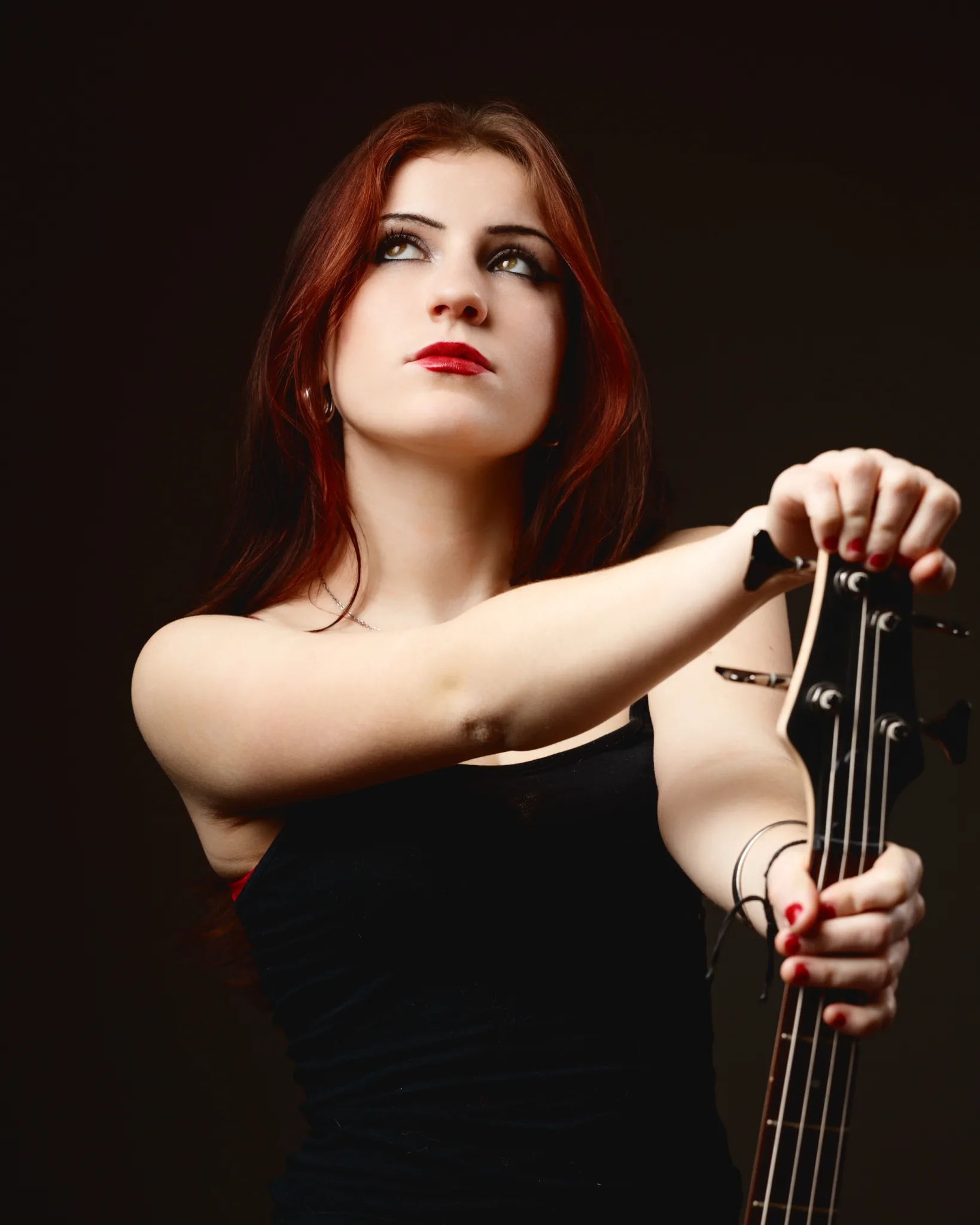
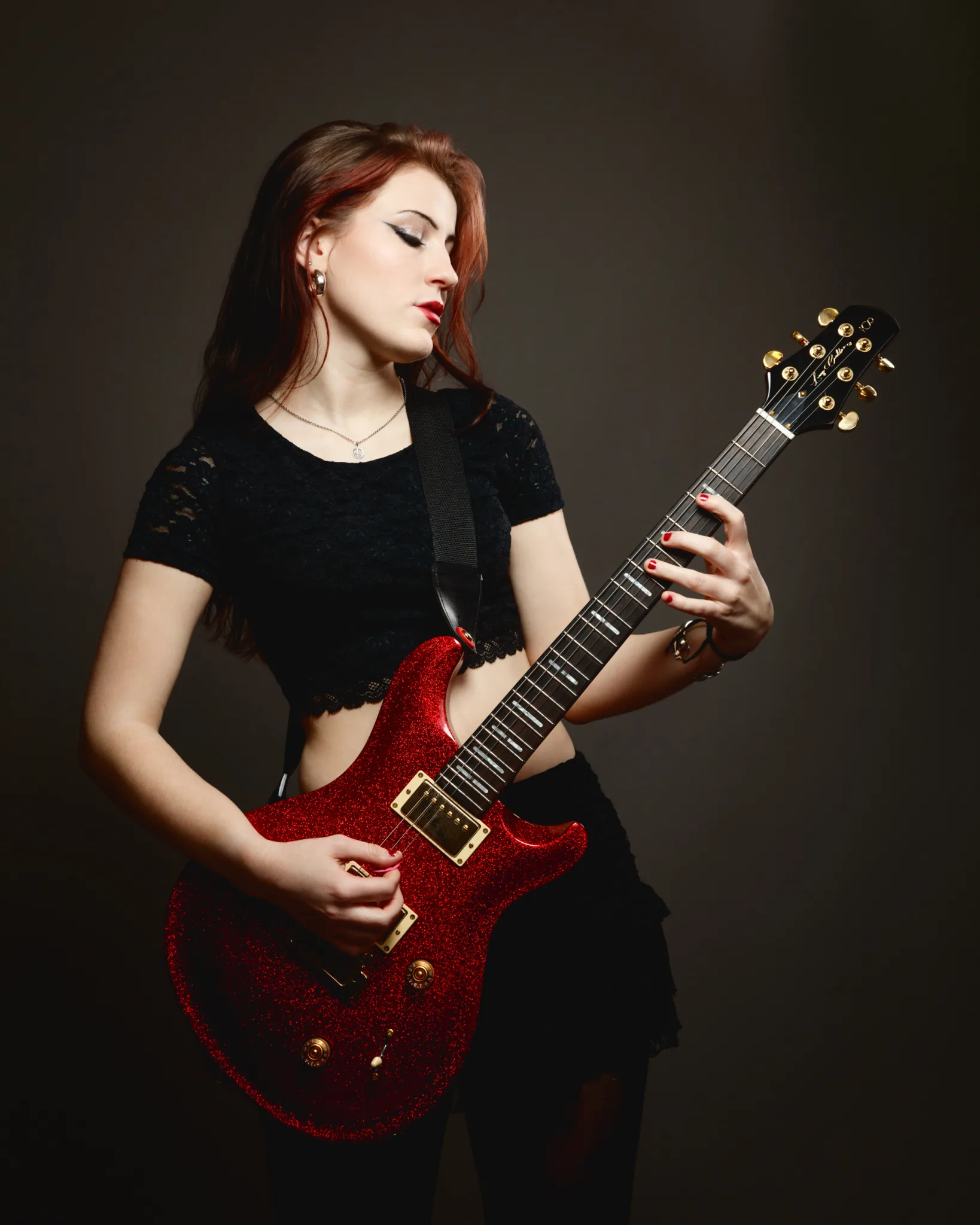
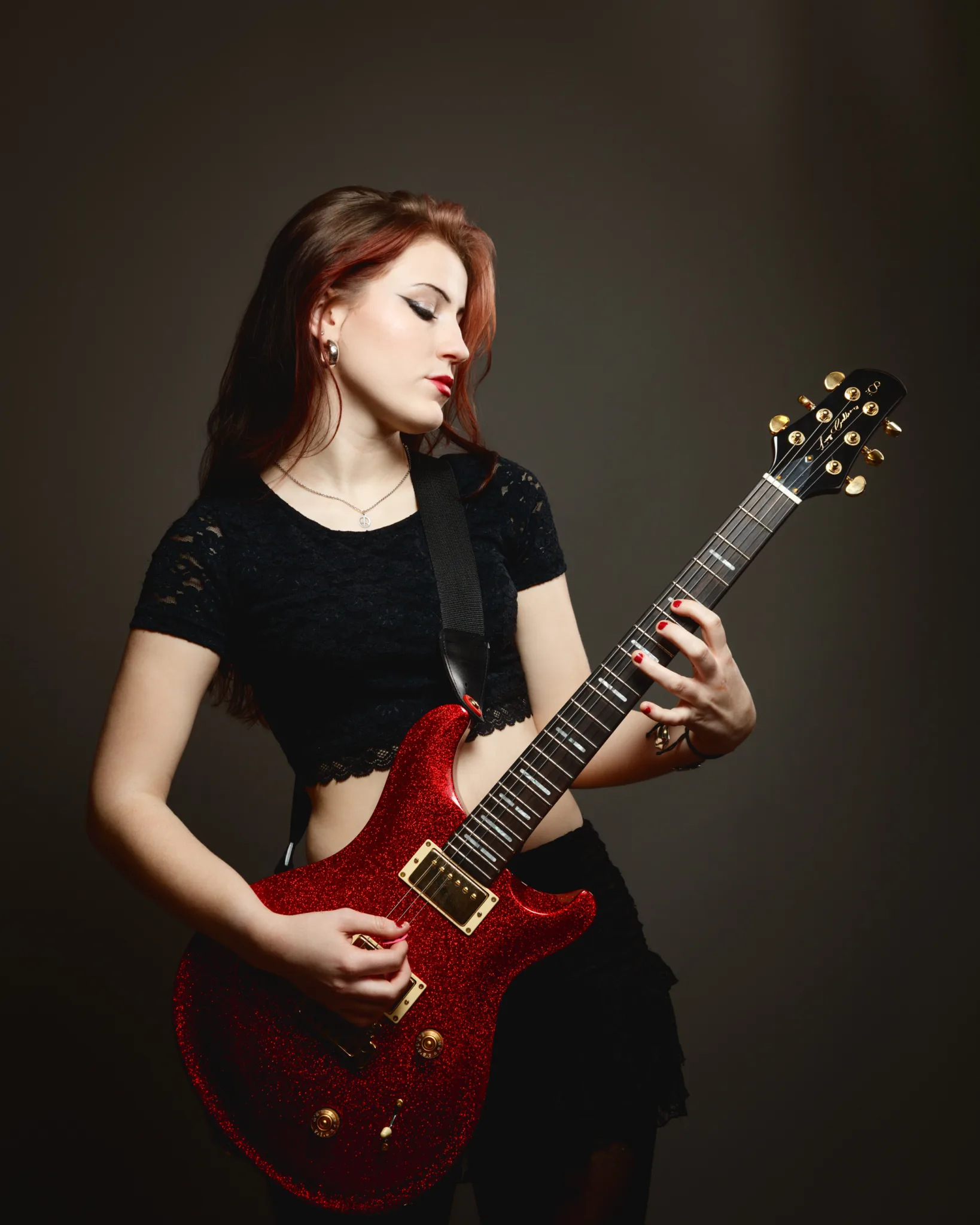
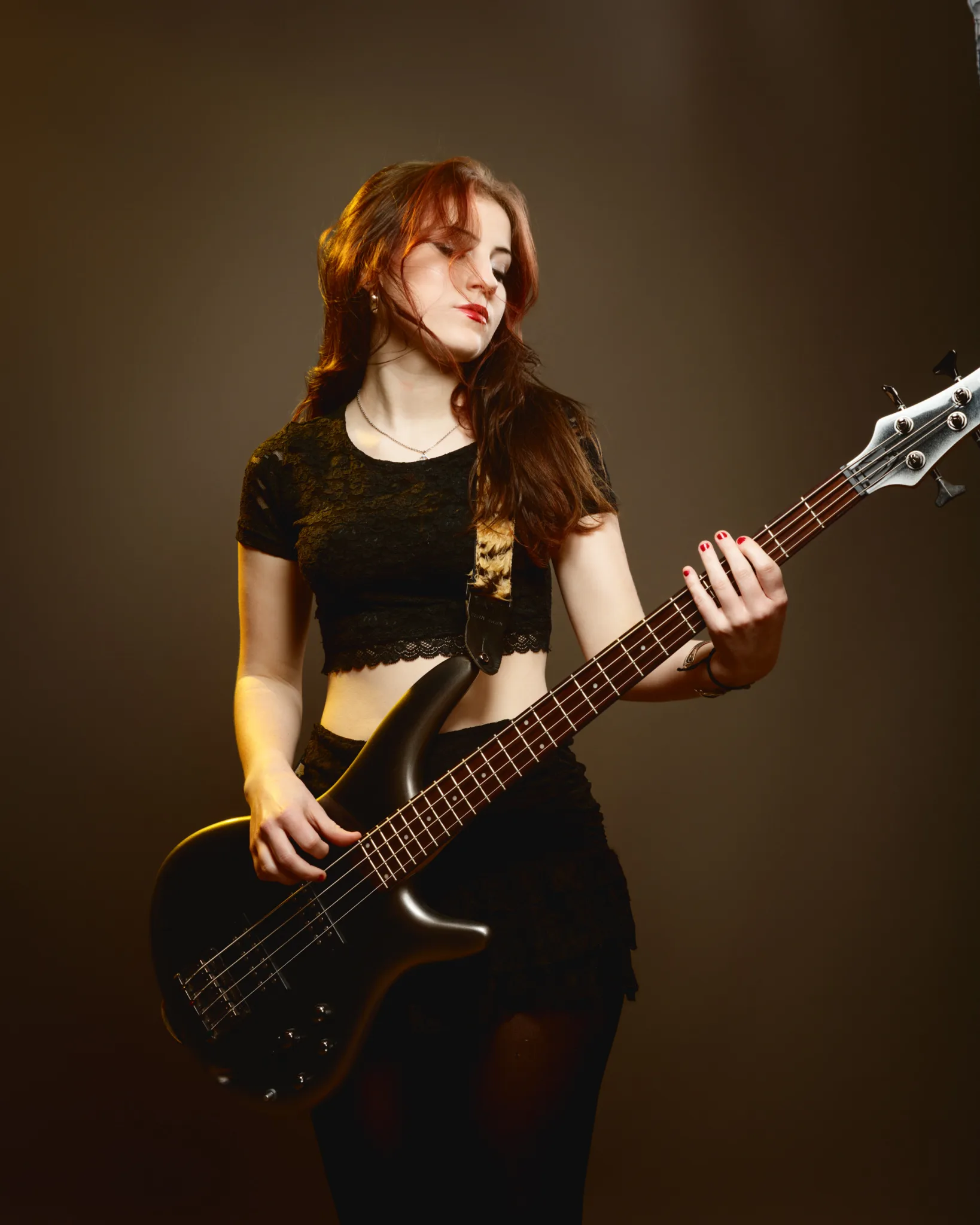
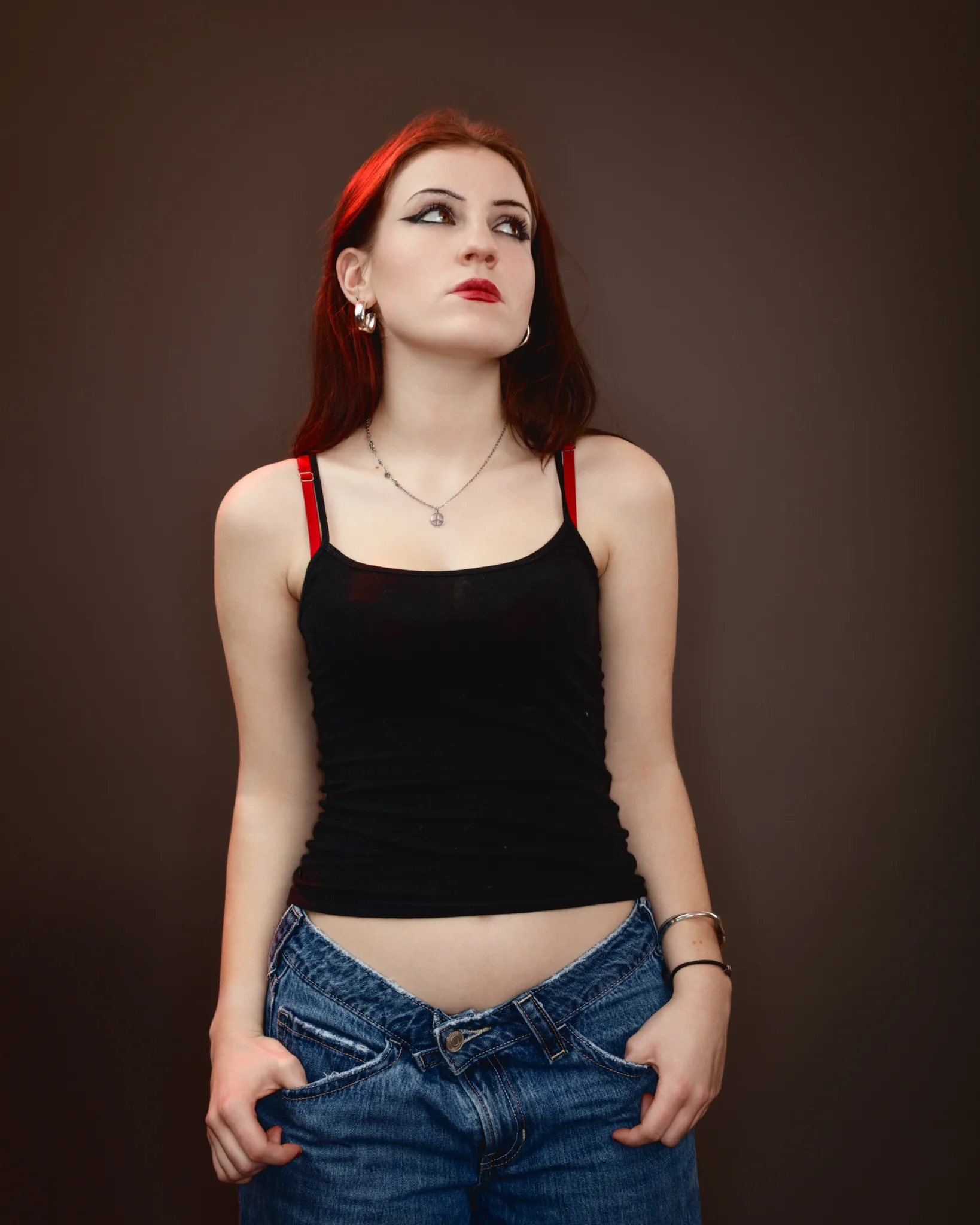
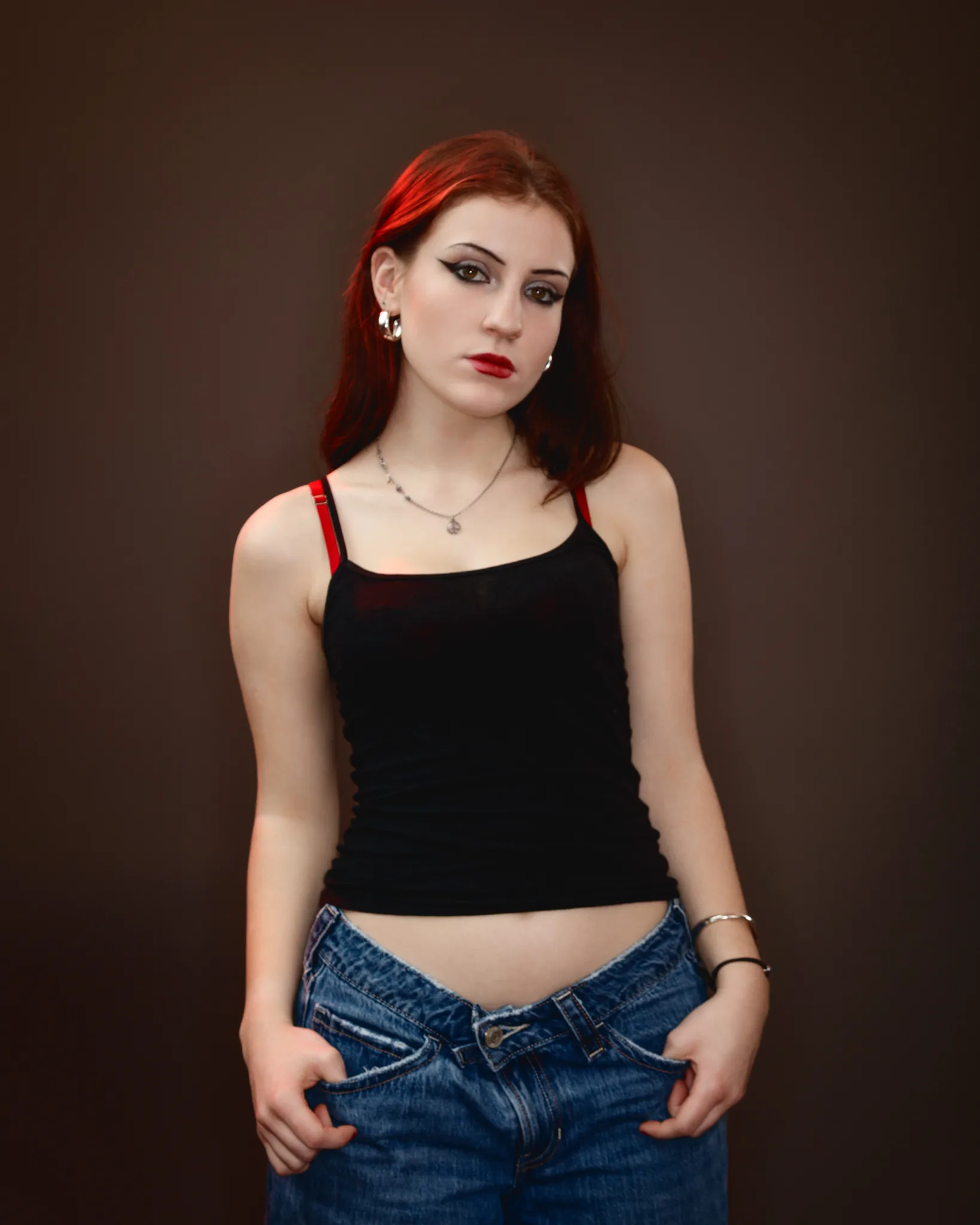
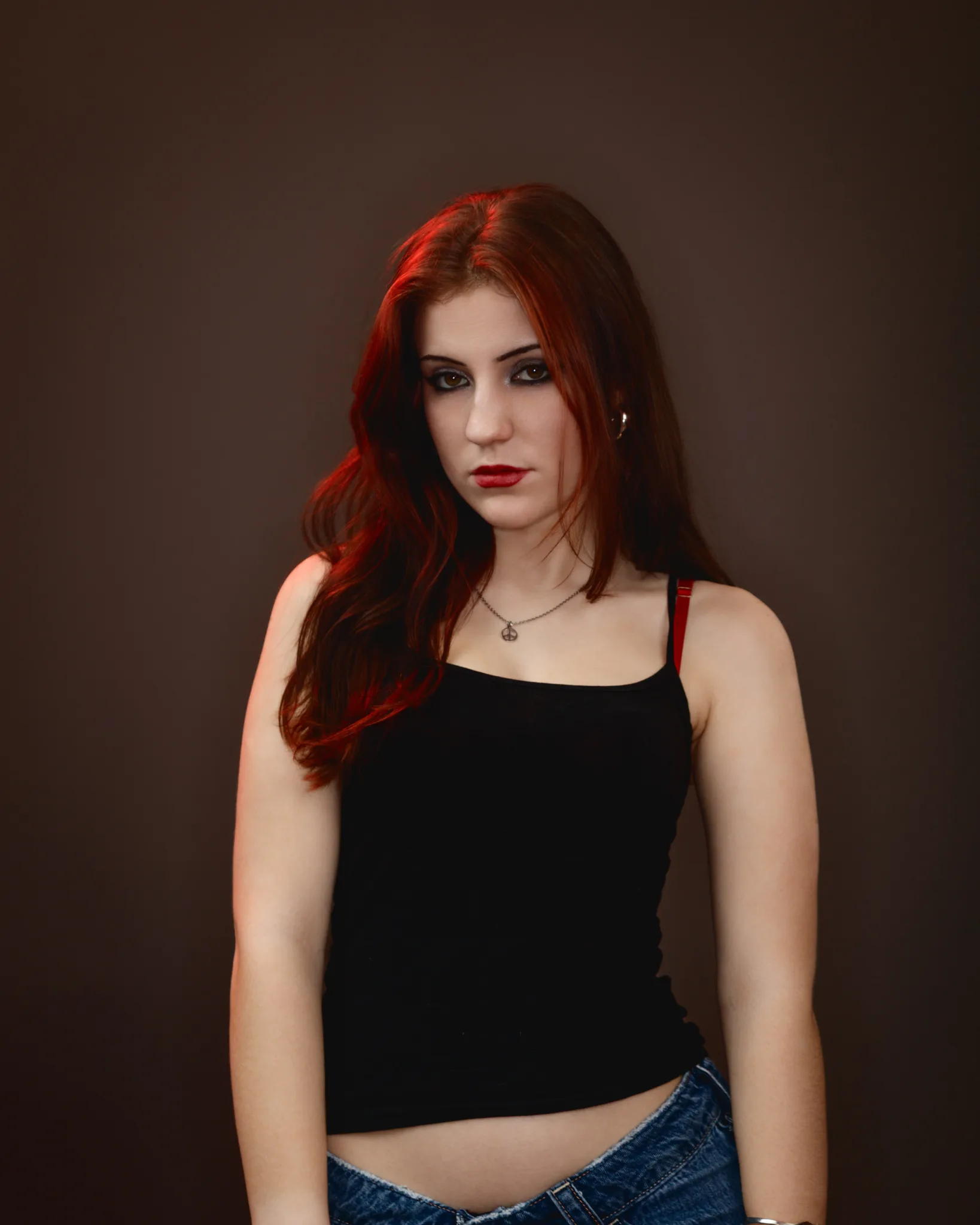
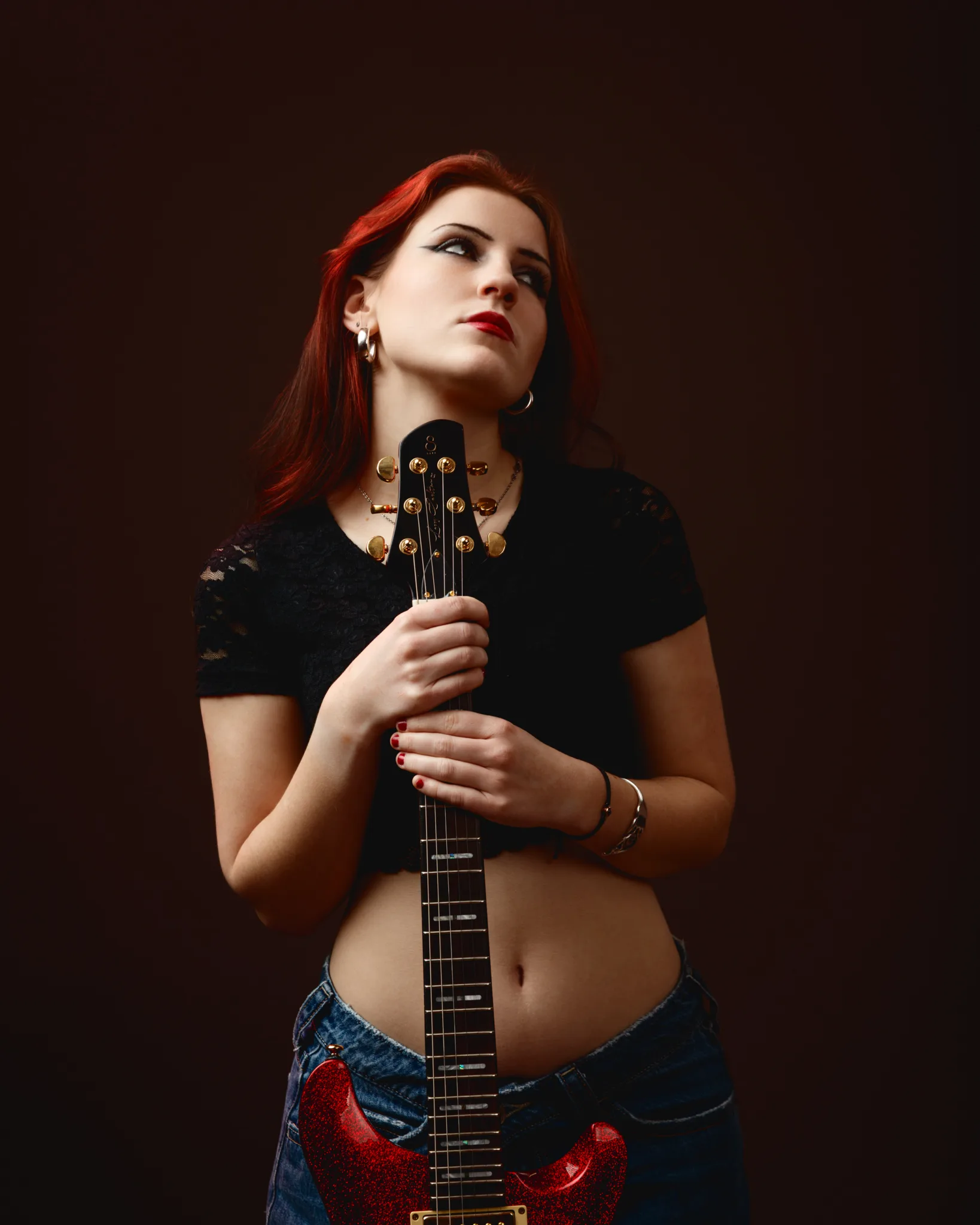
I recently had the pleasure of photographing Amelia at my studio at Bentwaters, near Woodbridge. This was a musician’s promo photoshoot, designed to create a small set of strong, usable images for the real-world places musicians actually need them: social media, websites, press/EPKs, and promotional materials.
Amelia brought a brilliant energy to the session. She is a young person, but genuinely professional in the way she approached the shoot, from preparation through to performance in front of the camera. Like many people who are new to professional promo photography, she arrived feeling a little nervous, which is completely normal. What I enjoyed most was seeing that nervousness fade as the session settled into a calm rhythm, with clear direction and a comfortable, safe environment.
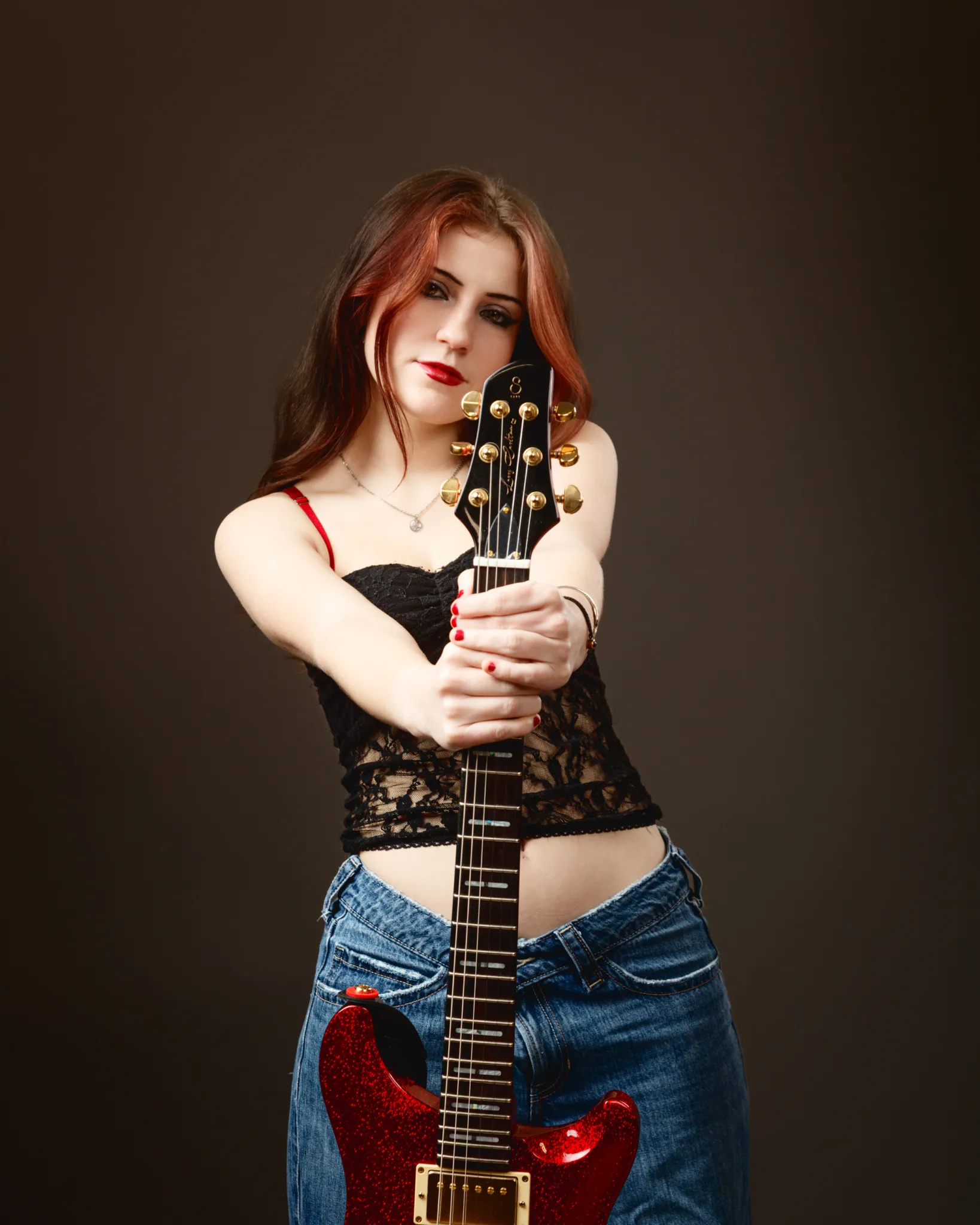
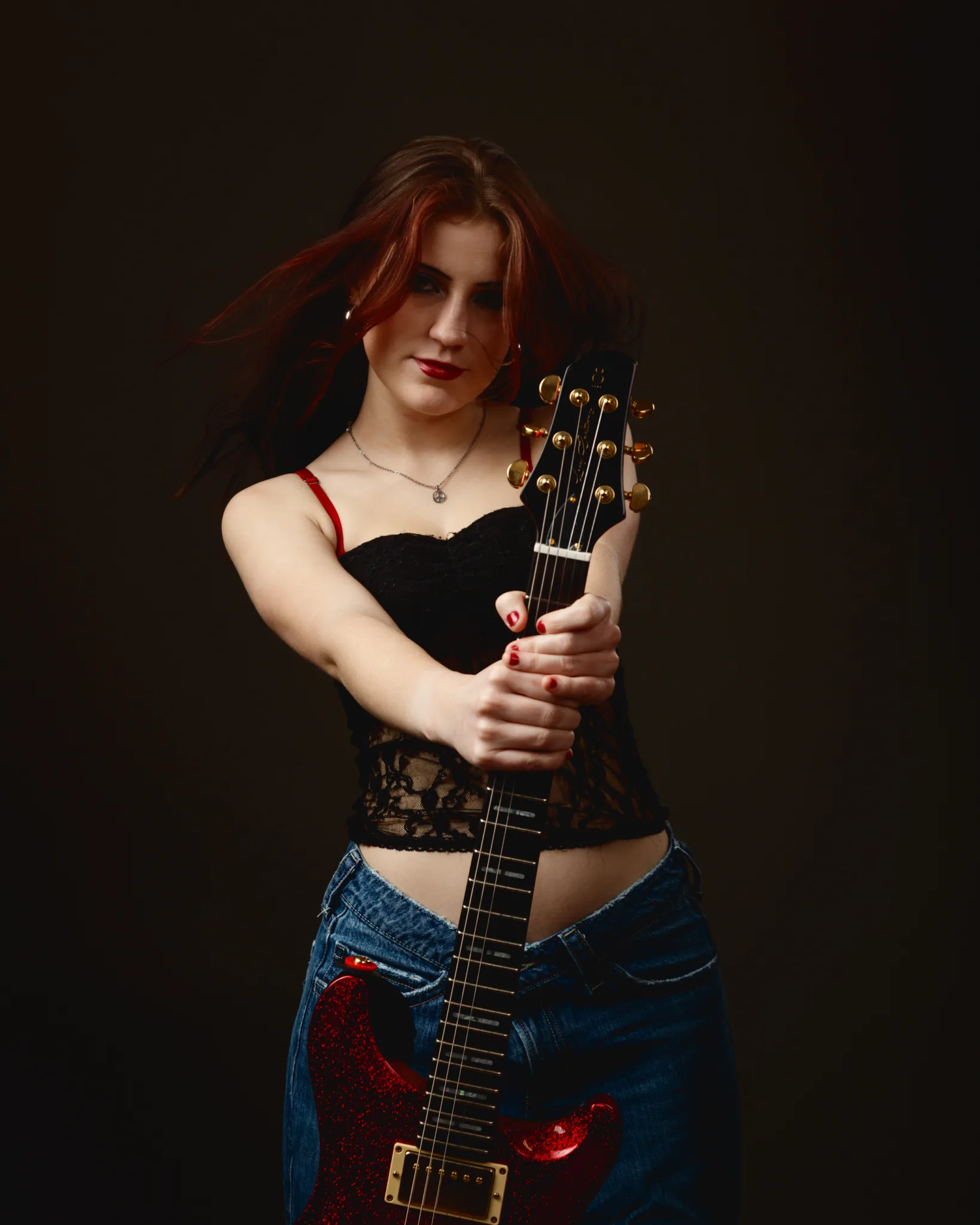
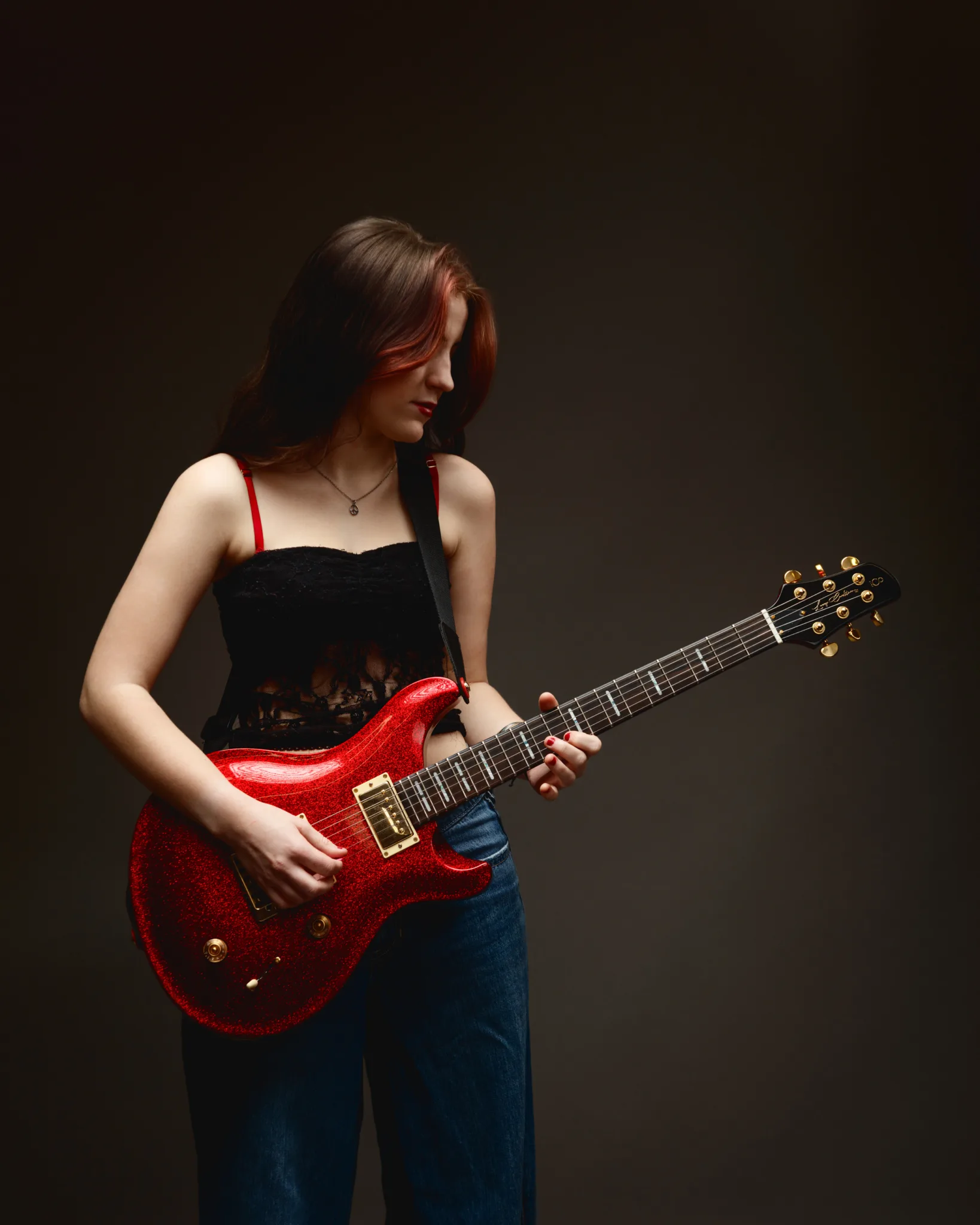
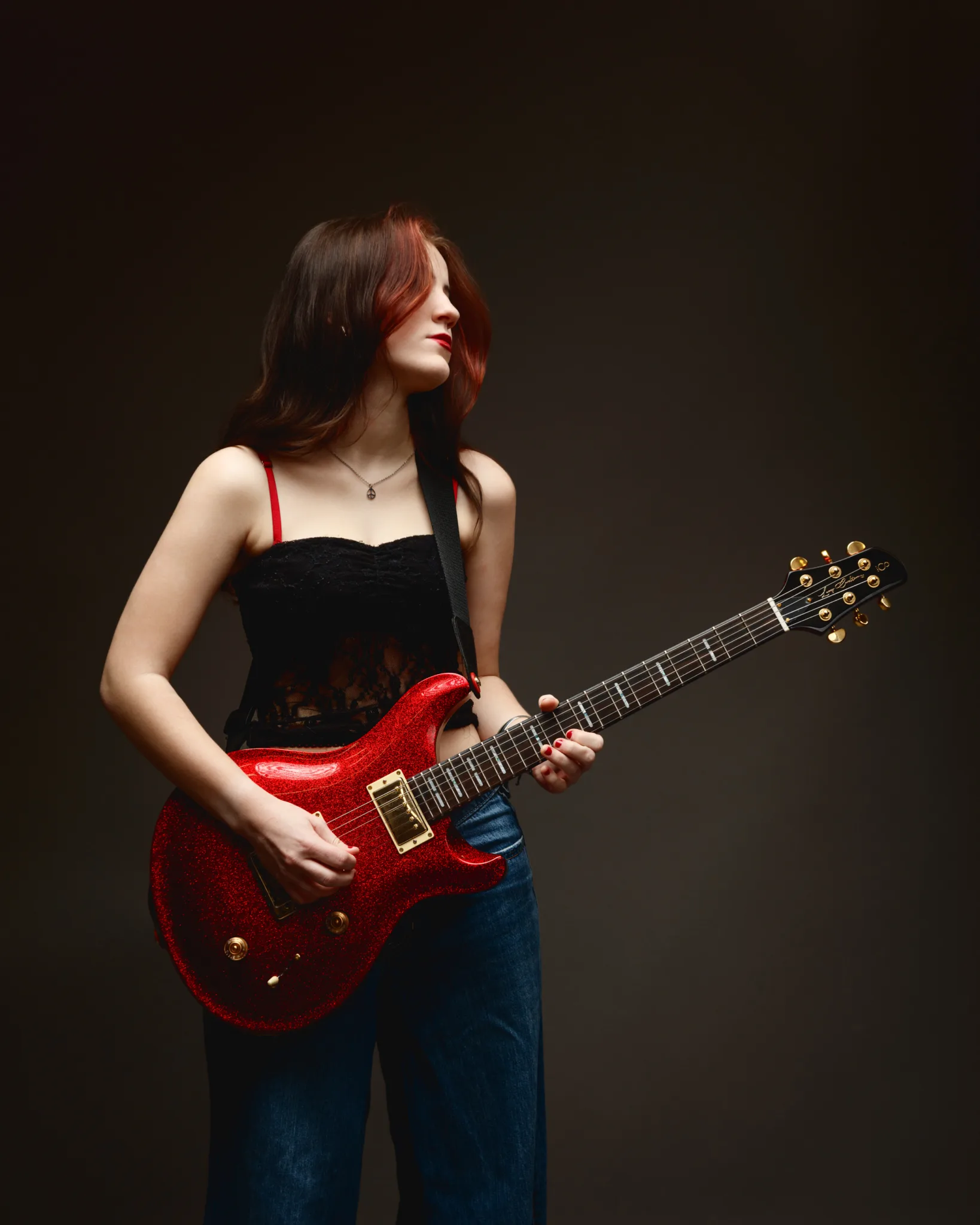
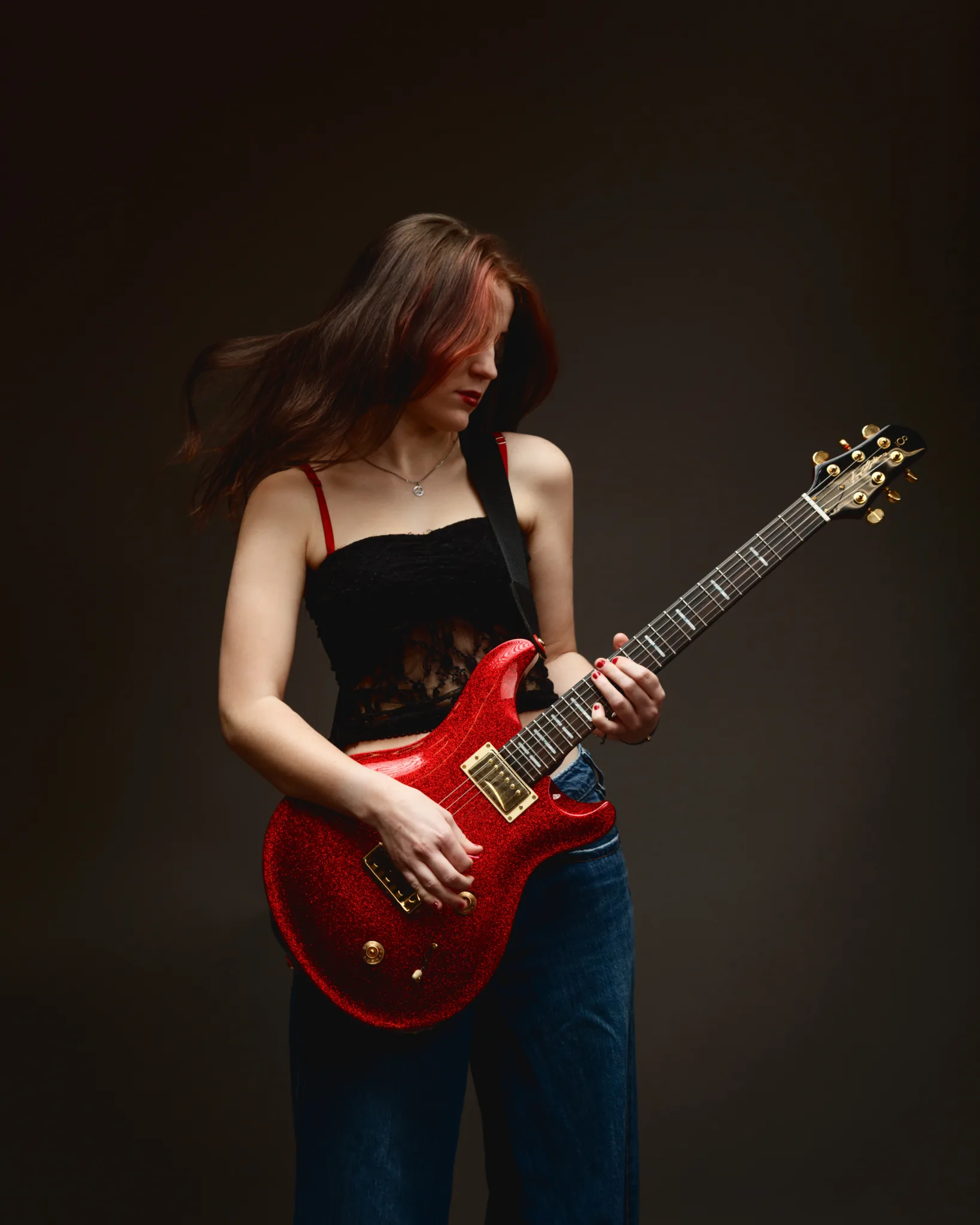
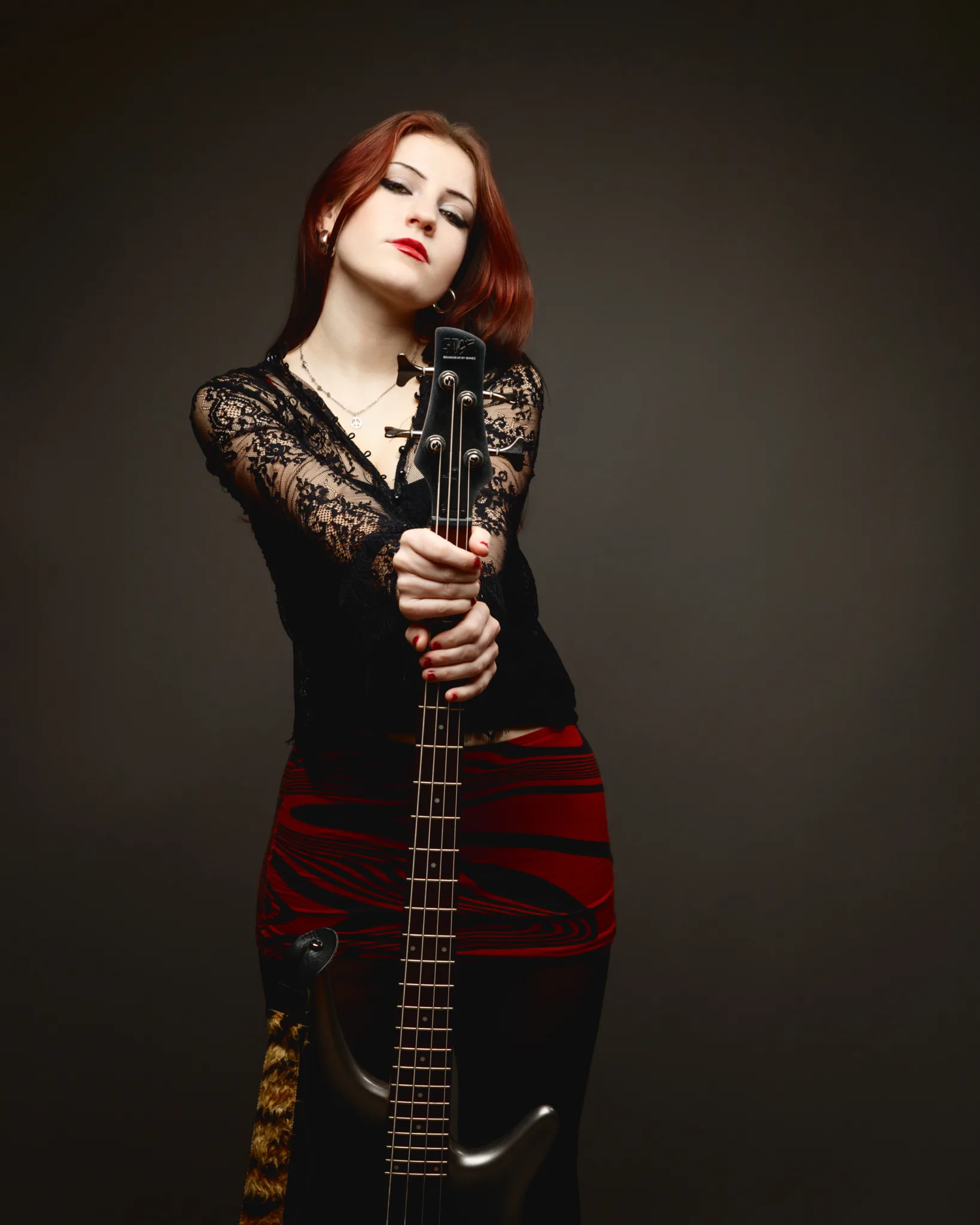
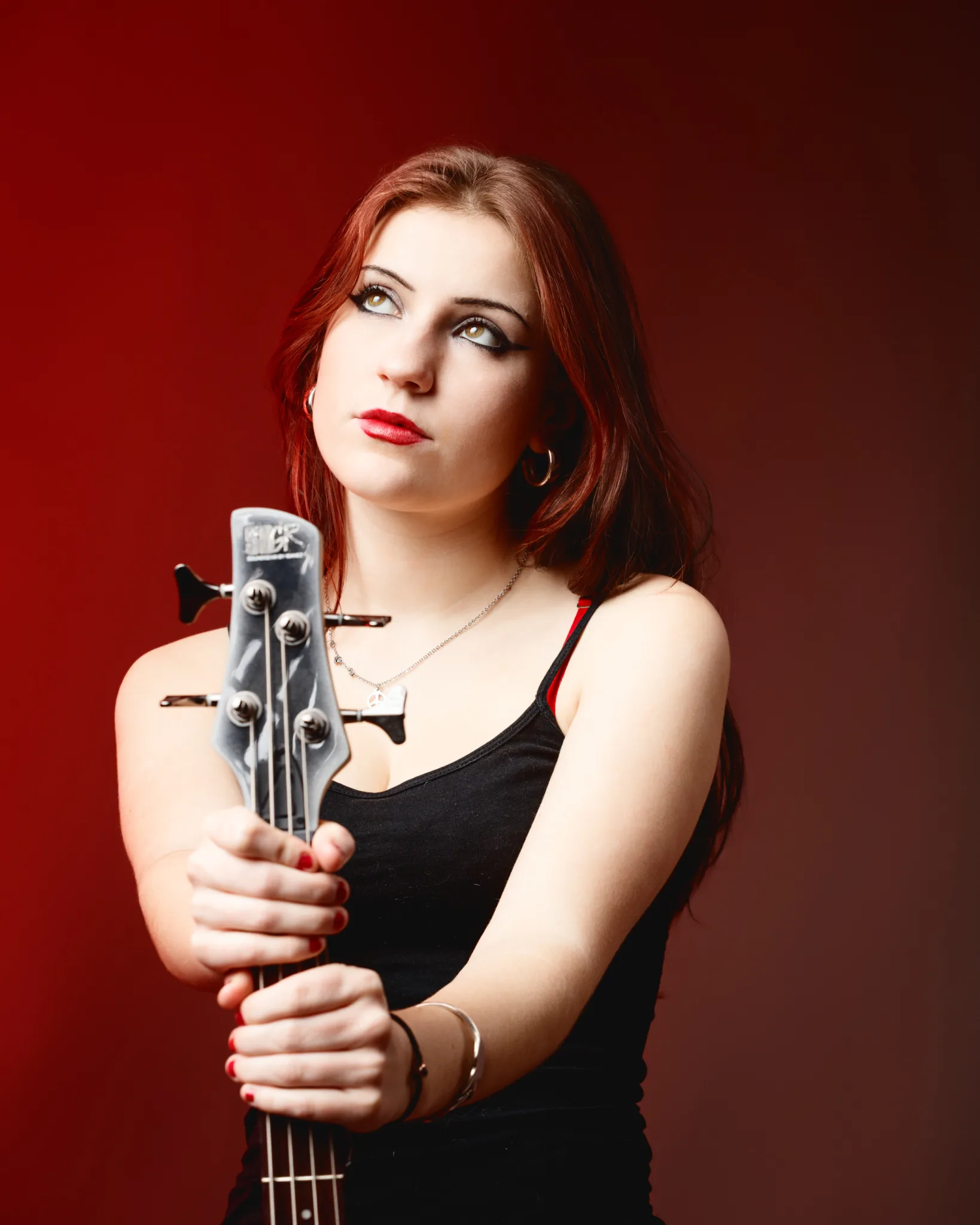
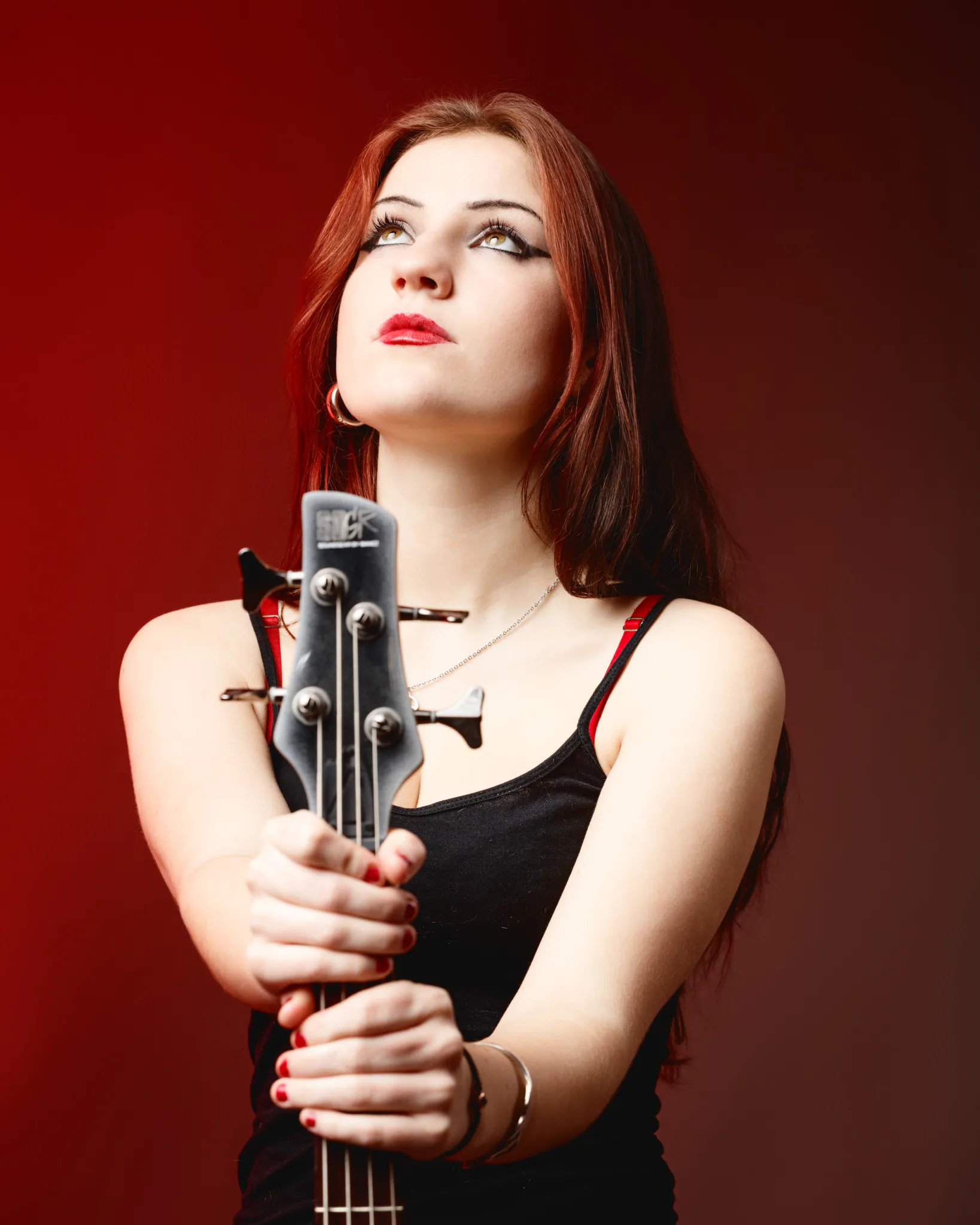
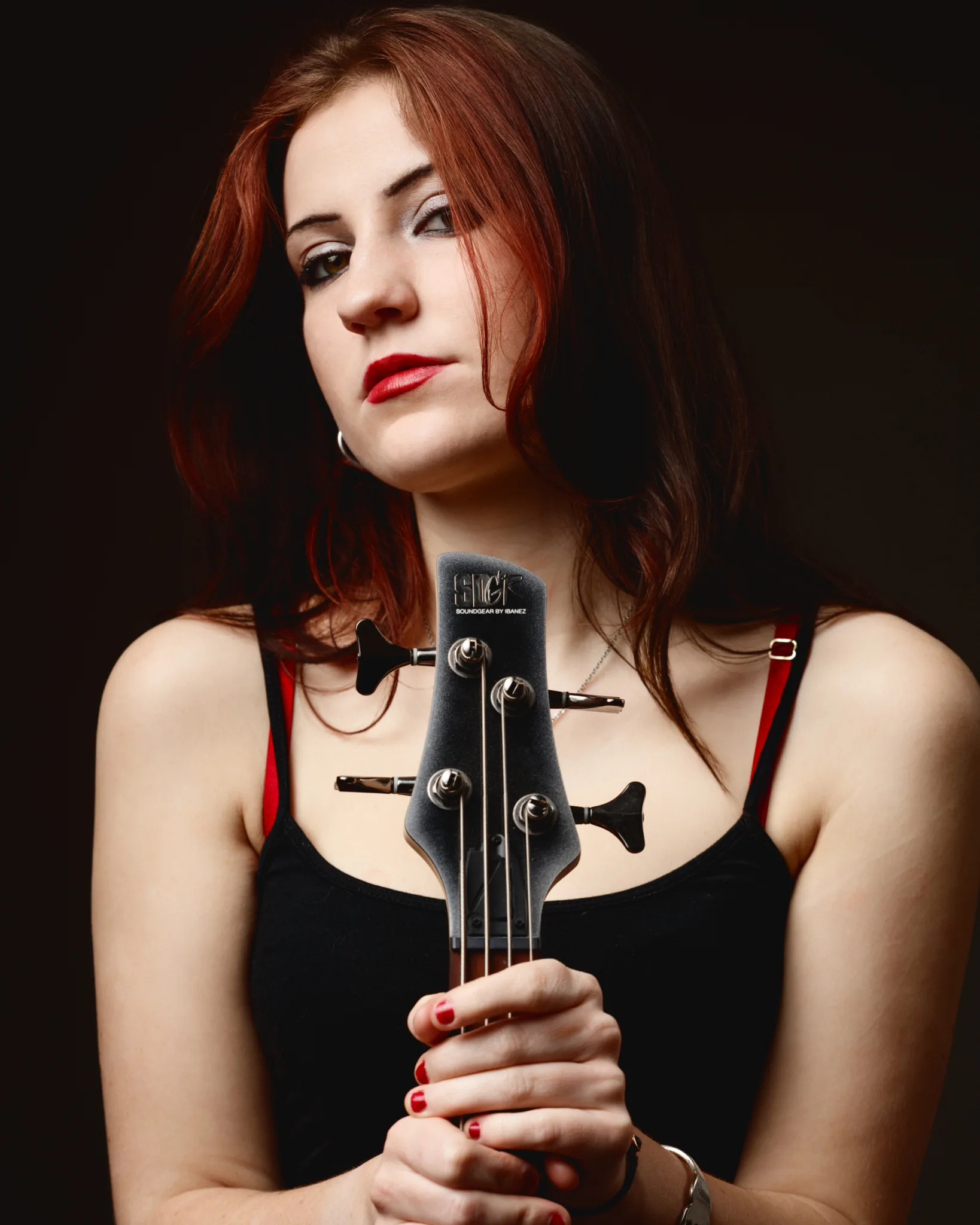
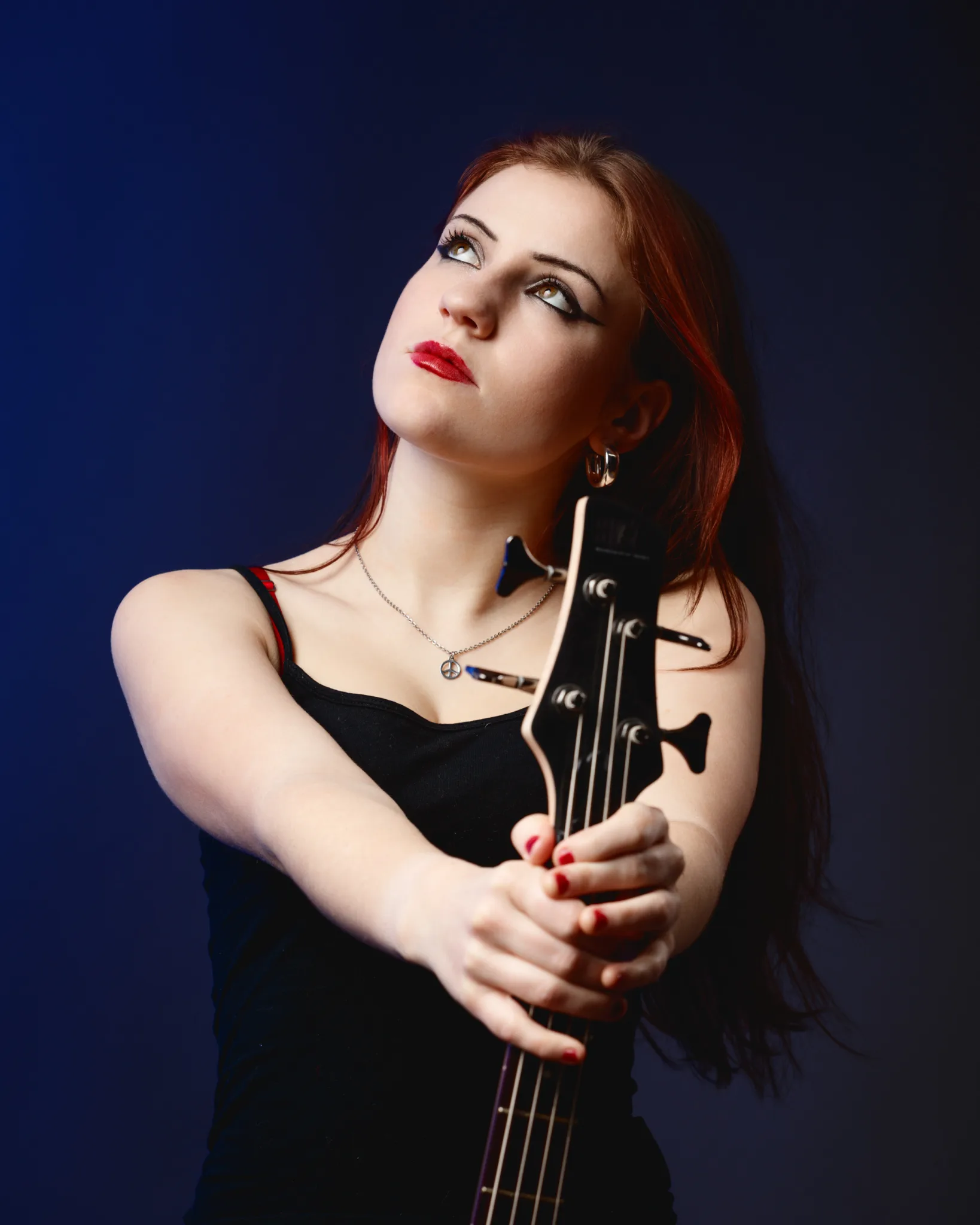
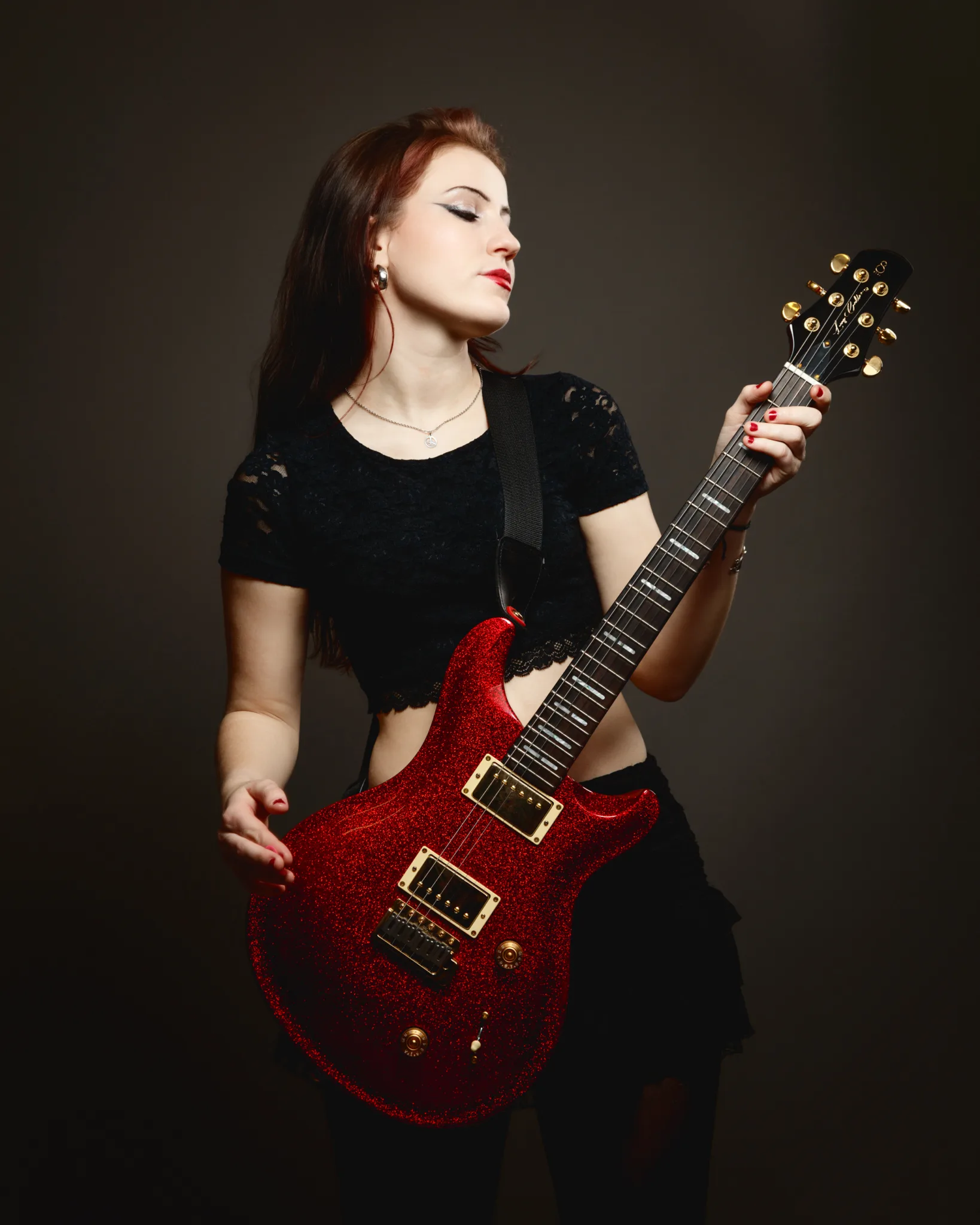
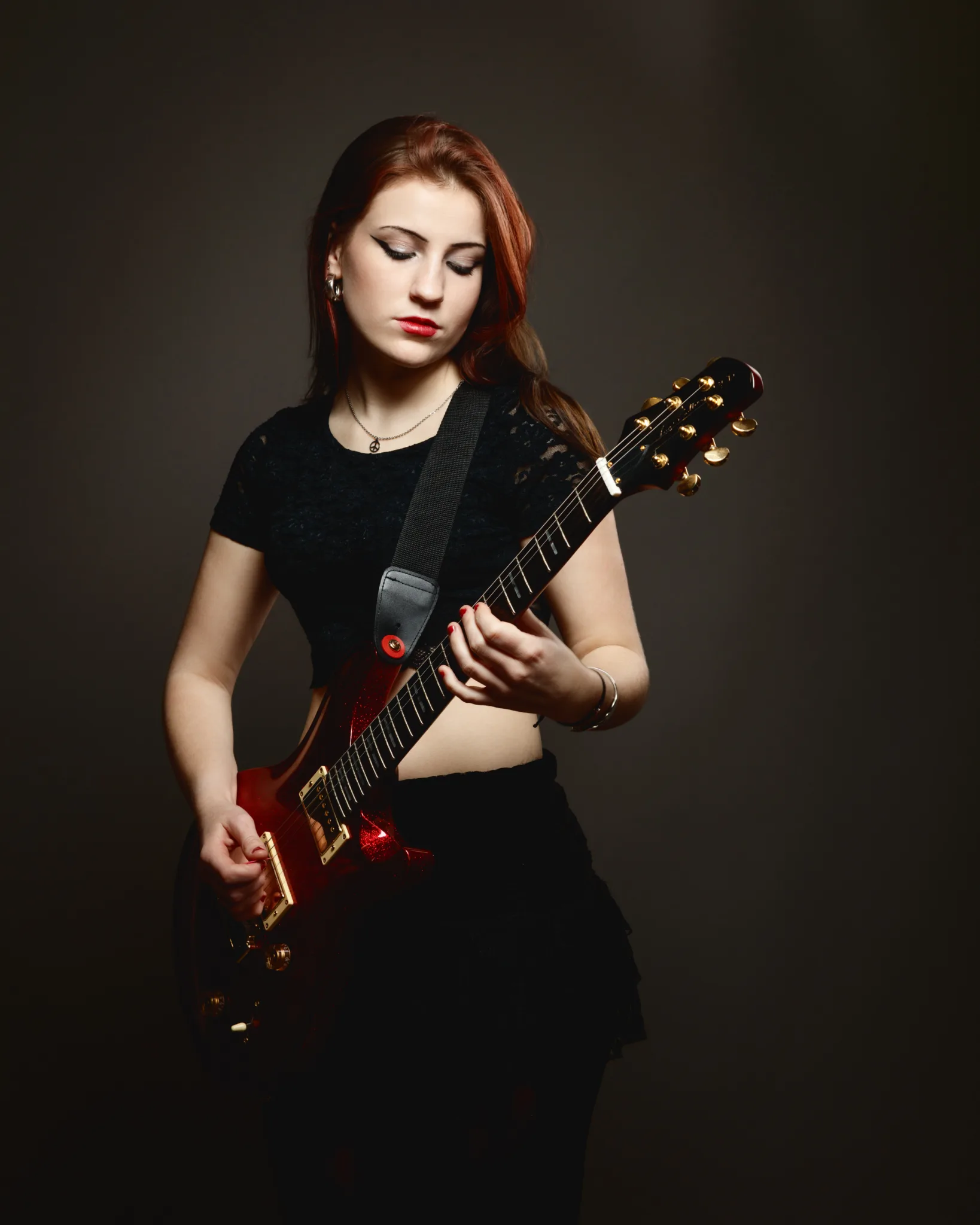
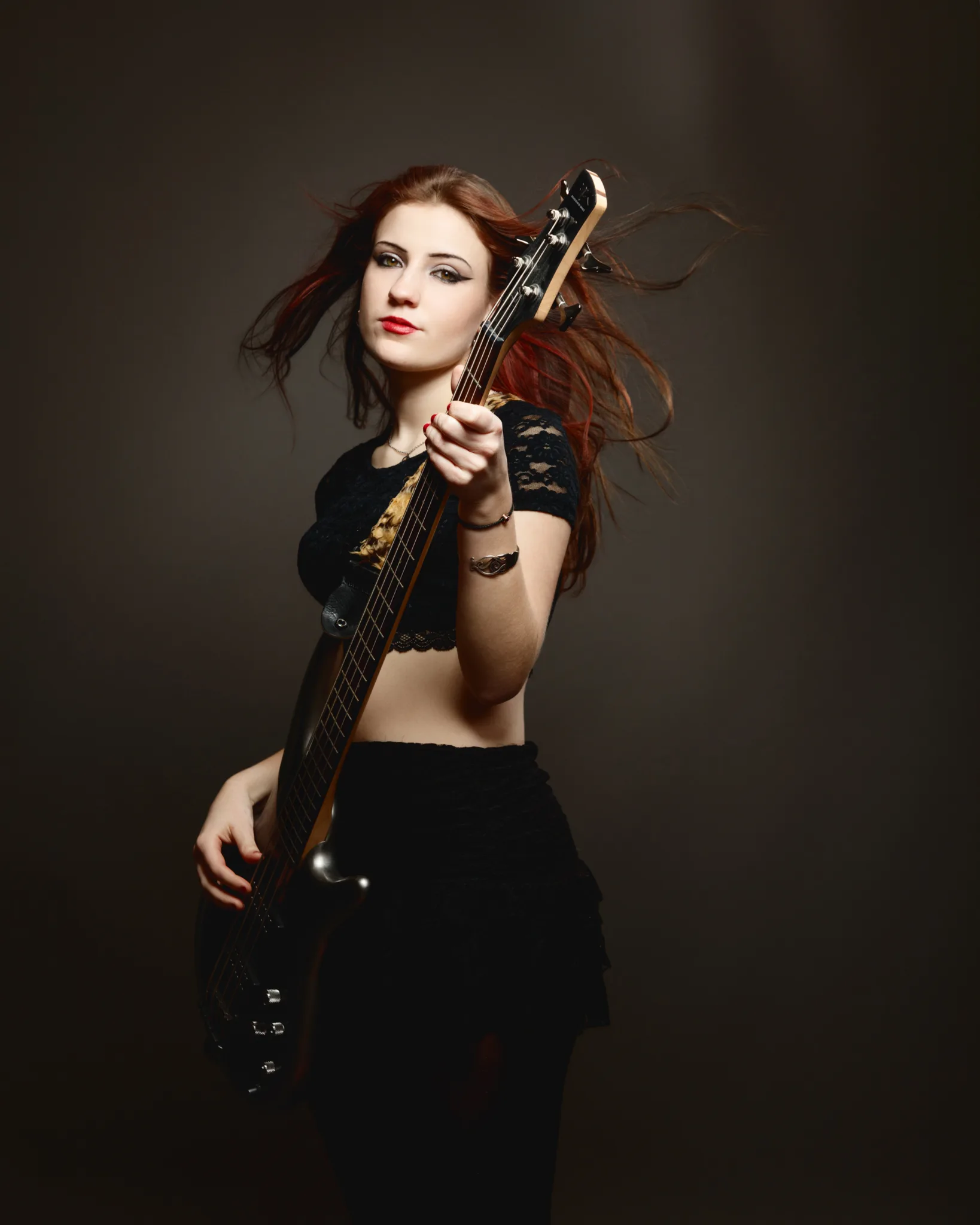
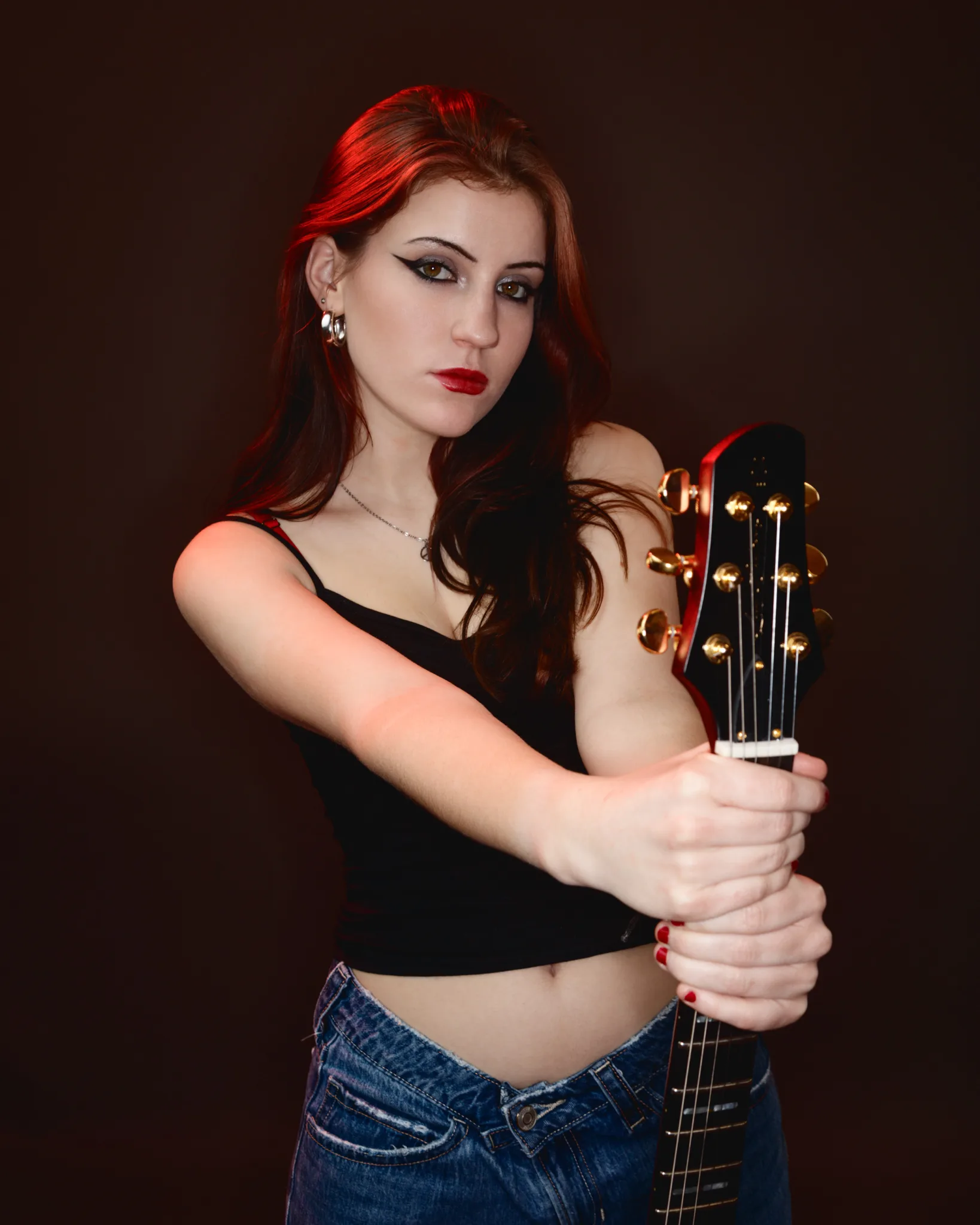
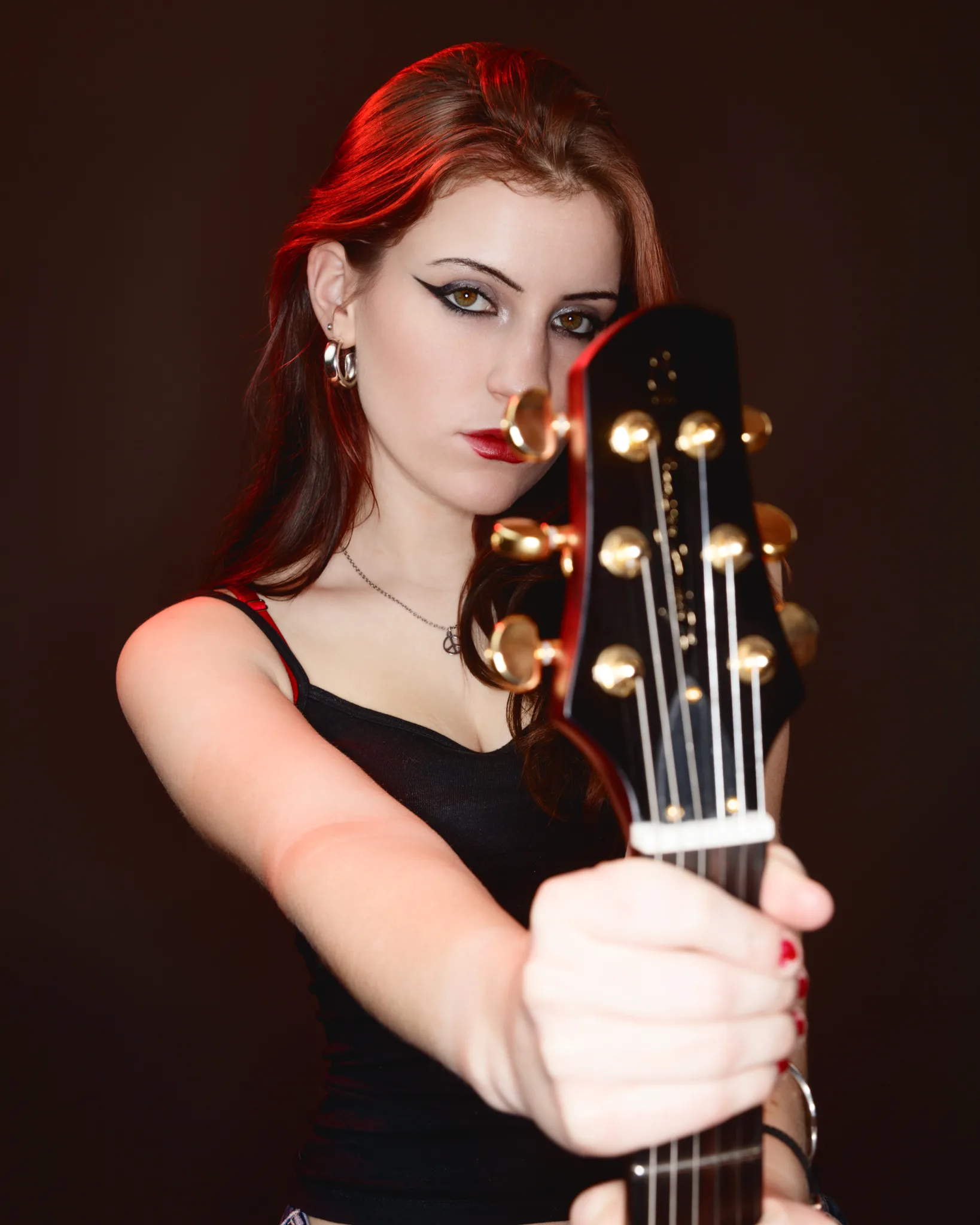
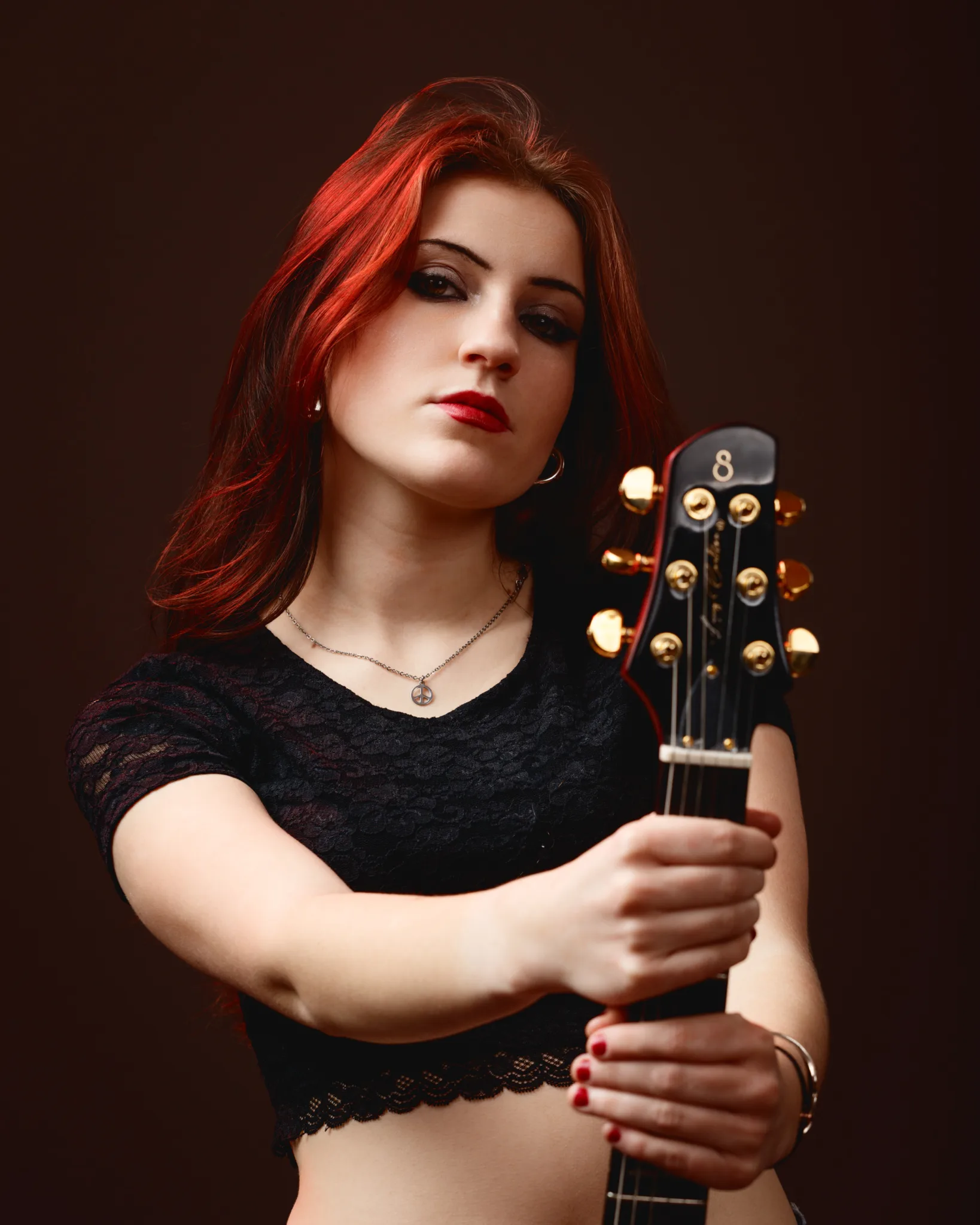
Amelia also brought her electric guitar and bass guitar, which immediately anchored the shoot in her identity as a musician. Those instruments are not just props; they are part of the story. The red background in particular worked beautifully because it matched her guitar and created a bold, confident mood. Amelia has already used one of those images as her new Instagram profile picture on her dedicated musician account, which is exactly the kind of practical outcome I like to see from a promo session.

Chaperones, comfort, and professionalism
Amelia’s mum came along as her chaperone. I always prefer chaperones at shoots. In my experience, it makes the session more positive and relaxed for the client, and it reinforces what I believe a photoshoot should be: a professional environment where someone feels supported.
Sometimes a chaperone sits in quietly and simply being present is enough. Sometimes they help with small practical bits, like keeping outfits tidy between changes or holding personal items. Either way, the benefit is the same: it helps people feel comfortable, and comfort always shows in the final images.

Styling choices that actually reflect gig life
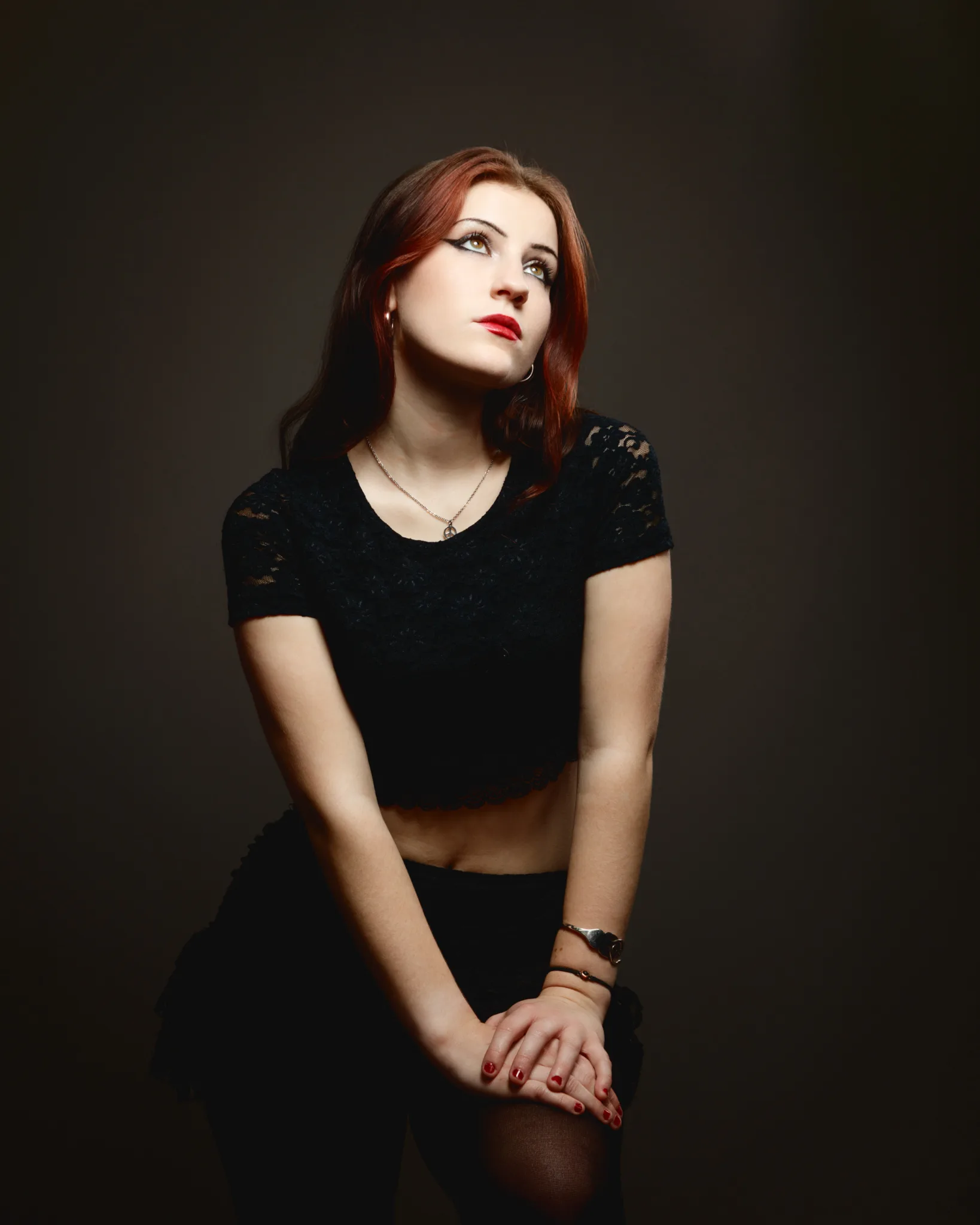
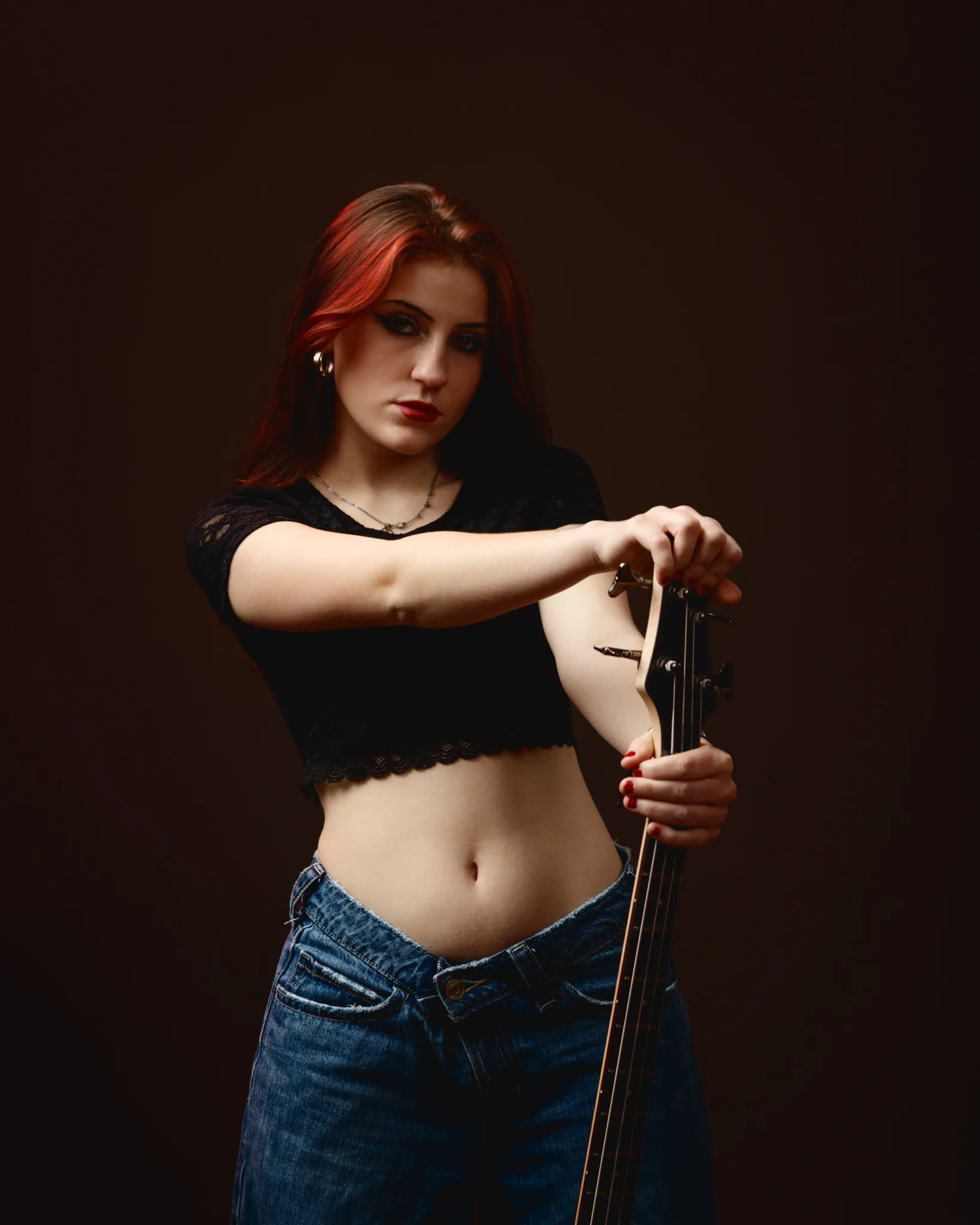
One thing Amelia did very well was to bring outfits that made sense for her. She chose clothing she has worn to gigs before, because it felt true to her style, and that authenticity matters in musician promo work. We also added a more casual jeans look to create variety and give her options for different contexts, such as a relaxed Instagram post versus a more deliberate press-style portrait.
This kind of variation is not about changing who someone is. It is about giving them a set of images that can work across different platforms and formats, without everything feeling like the same photo repeated.



How I structure a musician promo session in practice
A musician promo session at my studio is designed to be straightforward and guided. The shoot is up to three hours, and I direct throughout, including posture, expression, hand placement, and how to use the instrument naturally without it becoming awkward or forced. Most people do not walk into a studio knowing exactly what to do with their hands or how to stand for a strong three-quarter portrait, and they should not have to.
I also shoot for “portfolio-first” variety. In practical terms, that means I aim to deliver a spread of framing and options, typically including headshot, three-quarter, and full-length images, plus subtle shifts in expression and body language. We can change background colours to influence mood, and we can build options that crop well for posters and promo graphics.
Amelia mentioned how interesting it was seeing the effect that different coloured backgrounds had on the mood of the shoot, and she is absolutely right. Background choice can shift an image from warm and approachable to bold and dramatic, without changing anything else.



What happens after the shoot
My process is intentionally simple. Once the session is complete, I prepare an edited private gallery. Amelia can then choose and purchase only the images she actually wants.
Images are ready 5 to 10 working days from the date full payment is received. There is no pressure to decide immediately, and the private gallery remains available for 12 months. That means a musician can purchase a small selection for an immediate need, then return later if they want additional images for something new, such as a release, a poster run, or a refreshed press pack.
Digital images are high-resolution downloads with a Standard Edit included. My default approach is clean and consistent, keeping the finish natural and suitable for promo use. If someone needs extra polish for a hero image, there are optional retouching upgrades available, ranging from small tidy-ups through to more detailed finishing. I prefer that these remain options rather than assumptions, because musician promo photography should still look like the person.



Using the images and a quick note on licensing
The images a musician purchases are intended for their own promotion, such as websites, social media, EPKs, gig posters/flyers, press releases, and streaming platform artist profiles. If someone wants to use an image for album, single, or EP cover artwork, that is treated separately and needs its own written agreement and cover-art usage licence. I mention this here simply because it avoids confusion later, and it is a common question once artists start planning releases.


Amelia’s words on the experience
Amelia described the shoot as something she had never really done before, and said she felt calmer once the session got underway because of the comfortable environment. She also said the final images gave her a confidence boost in how she presents herself, which is one of the most meaningful outcomes a session can have. Promo photography is practical, but it can also be quietly transformative when someone sees themselves presented with care, good light, and the right direction.
I really enjoyed working with Amelia, and I am looking forward to seeing how she uses these images as her music presence continues to grow.