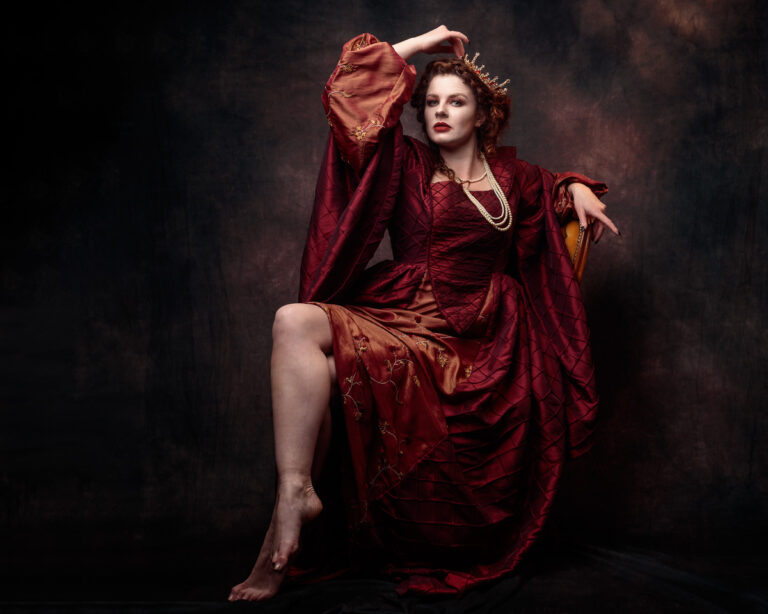
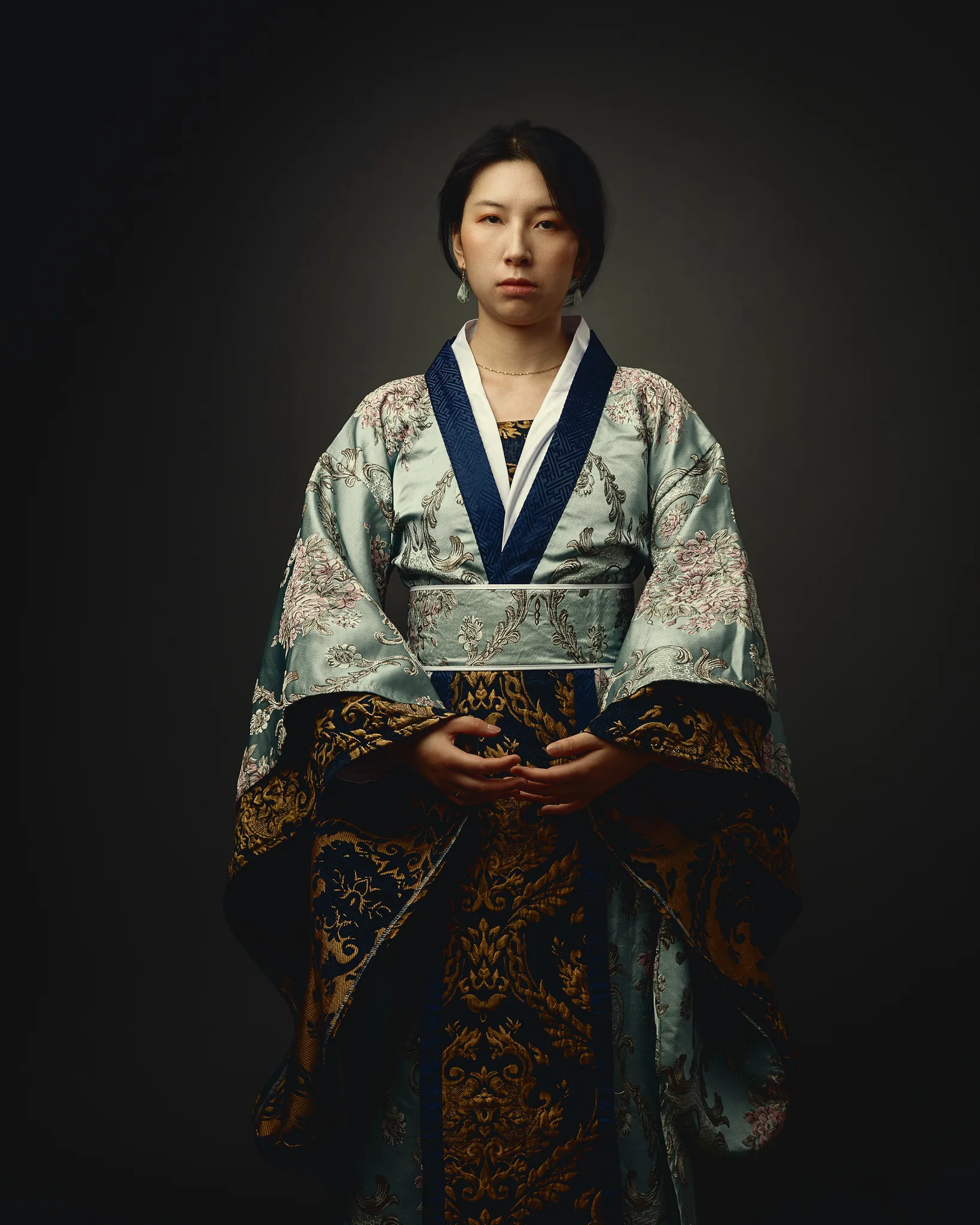
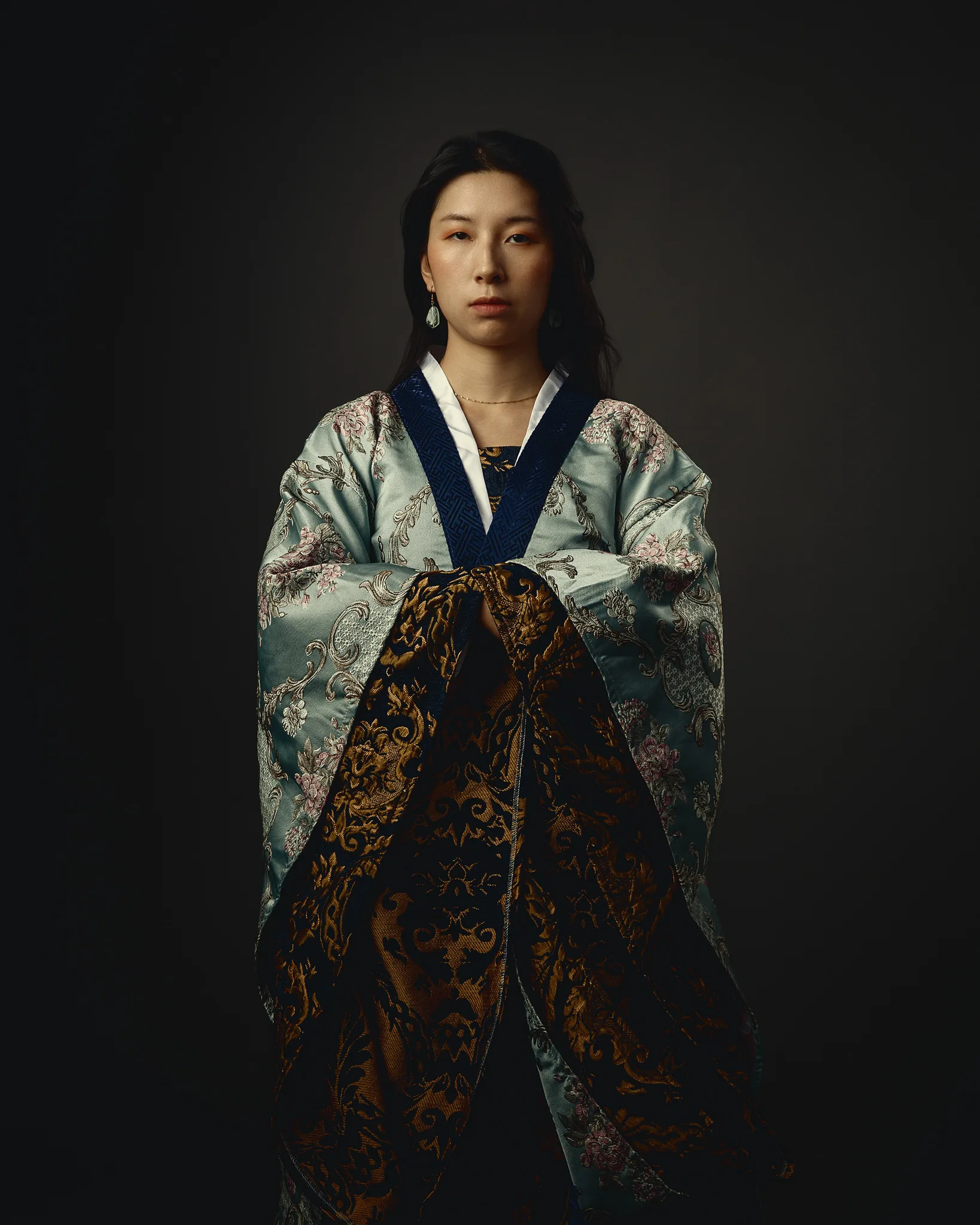
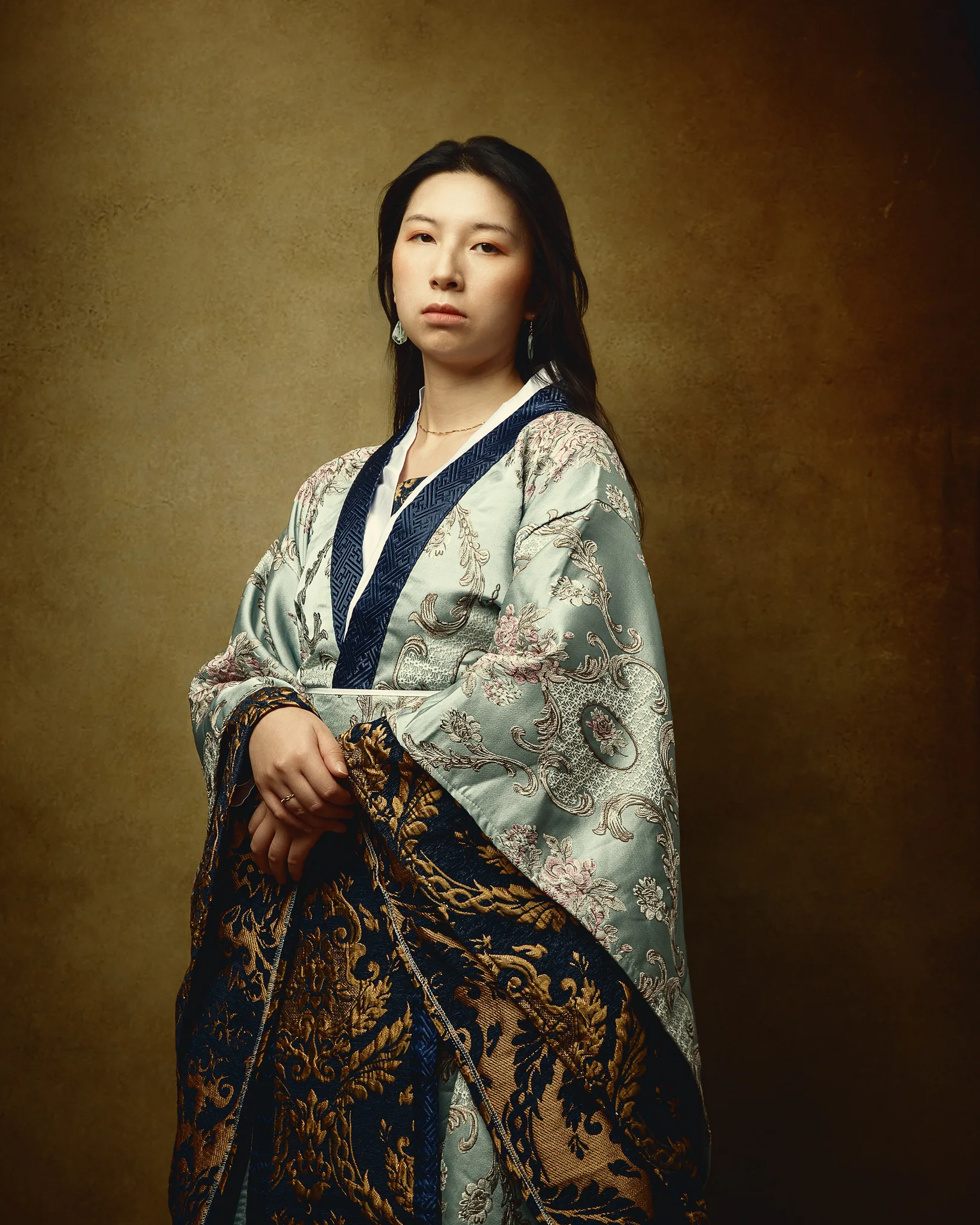
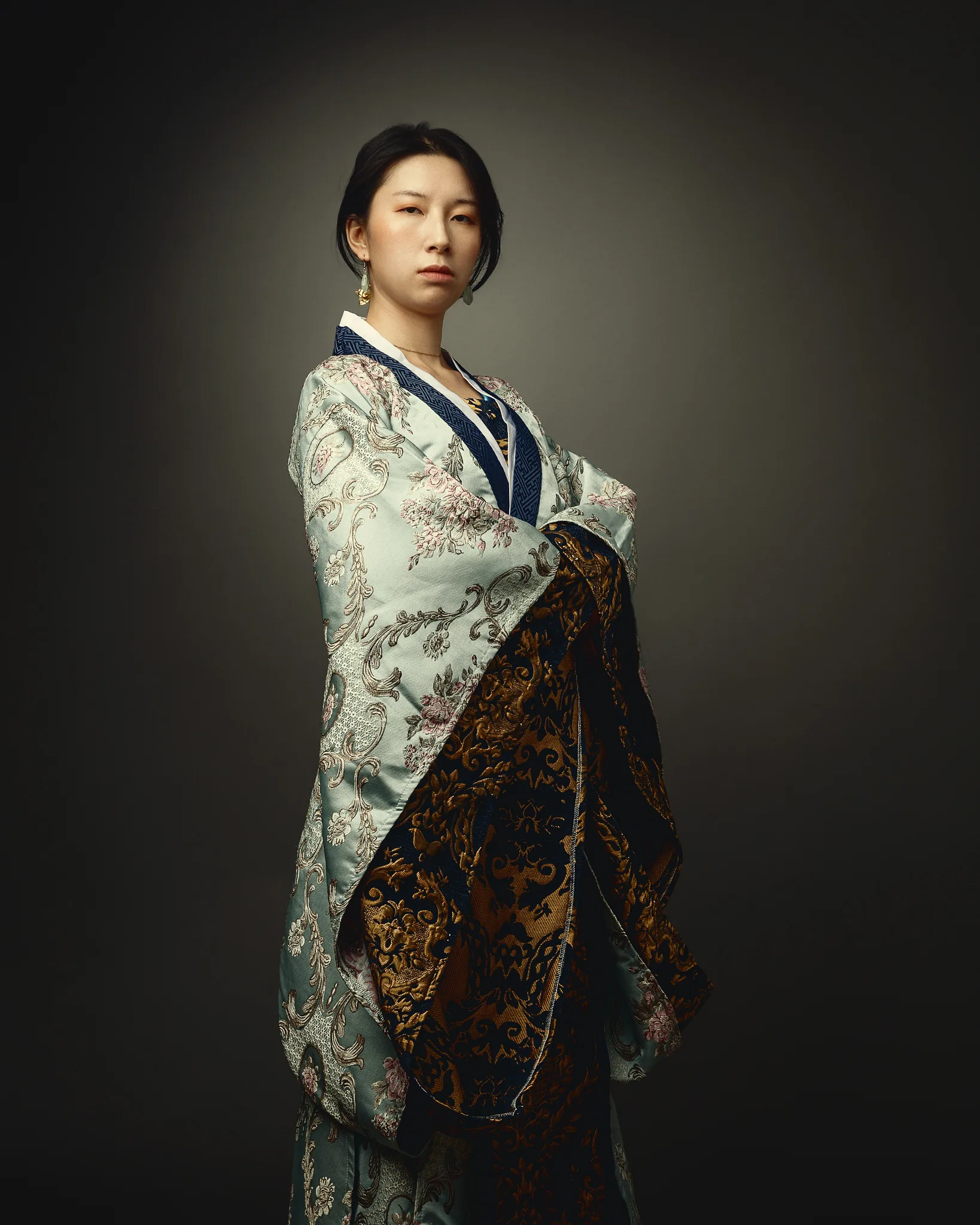
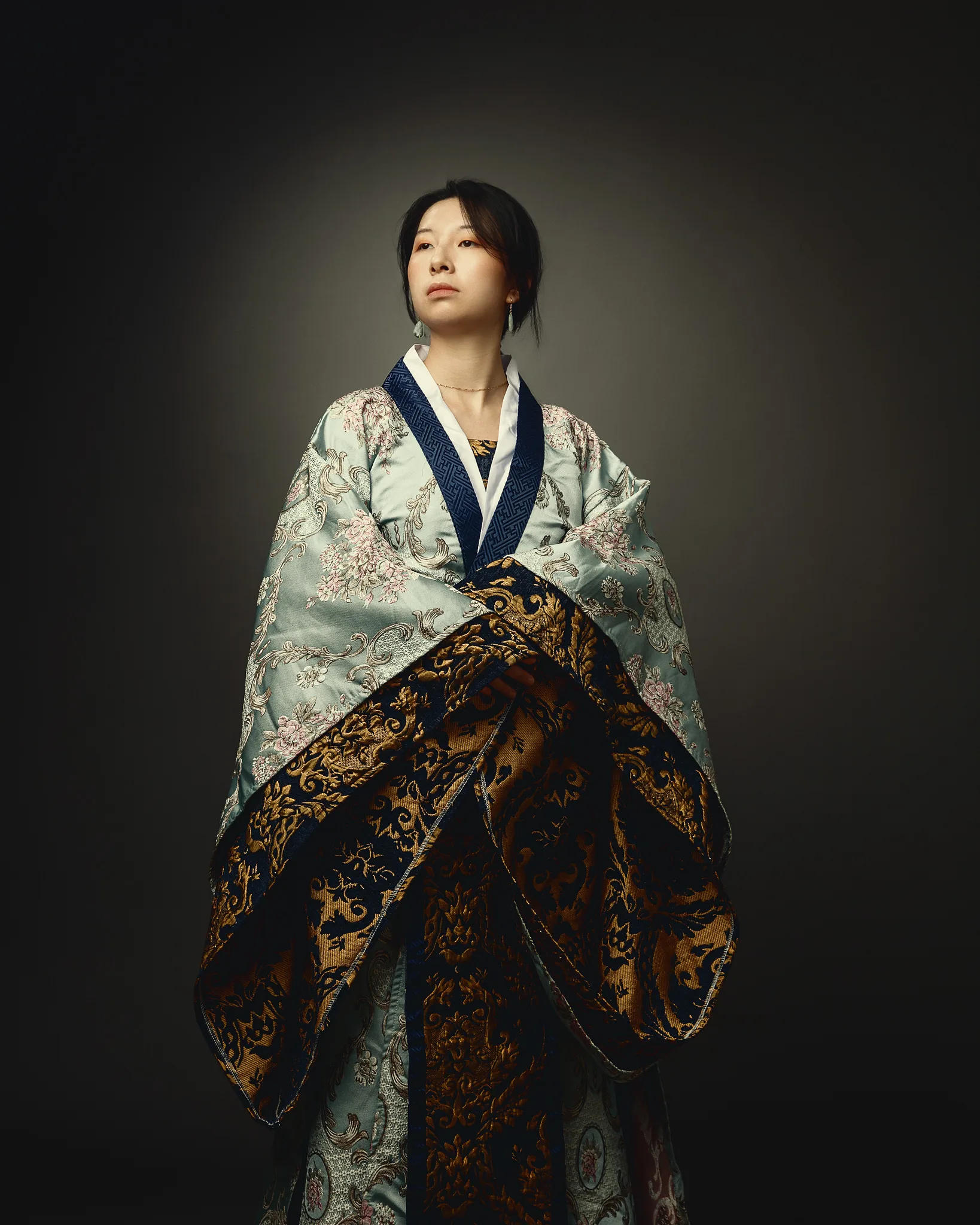
The first frame we made had almost nothing happening in it. Karma stood square to the camera in a heavy brocade robe, hands folded, chin level, eyes straight down the lens. No gesture, no lean, no tilt. It is the hardest kind of portrait to make work, because there is nothing to hide behind. If the expression is not right, the picture is not right, and you cannot rescue it with a flourish. That frame set the tone for the whole session, and it is the reason I wanted to write this one up.
This was the third time Karma and I have worked together, and the first time we have gone properly fine art with it. It was a personal project for both of us. No client, no brief from anyone else, no shot list to satisfy. Just two people who have built up enough trust over three sessions to try something that might not have worked.
What We Were Trying to Make
The aim was portraits, not a portfolio. That distinction matters more than it sounds. A portfolio session is about coverage. You want range, variety, enough usable frames across enough looks to give someone options. A portrait session is the opposite. You are trying to make a small number of images that are actually worth keeping, and you accept that most of what you shoot on the way there exists only to get you to those few.
So we went in aiming for a handful of finished pictures rather than a large gallery. Every look was defined before we started. We knew what each one was meant to feel like, and if a frame was not serving that, we moved on rather than filling the card with variations. That approach only works when the person in front of the camera is willing to work slowly, and Karma was.
The First Look, and the Discipline of Stillness
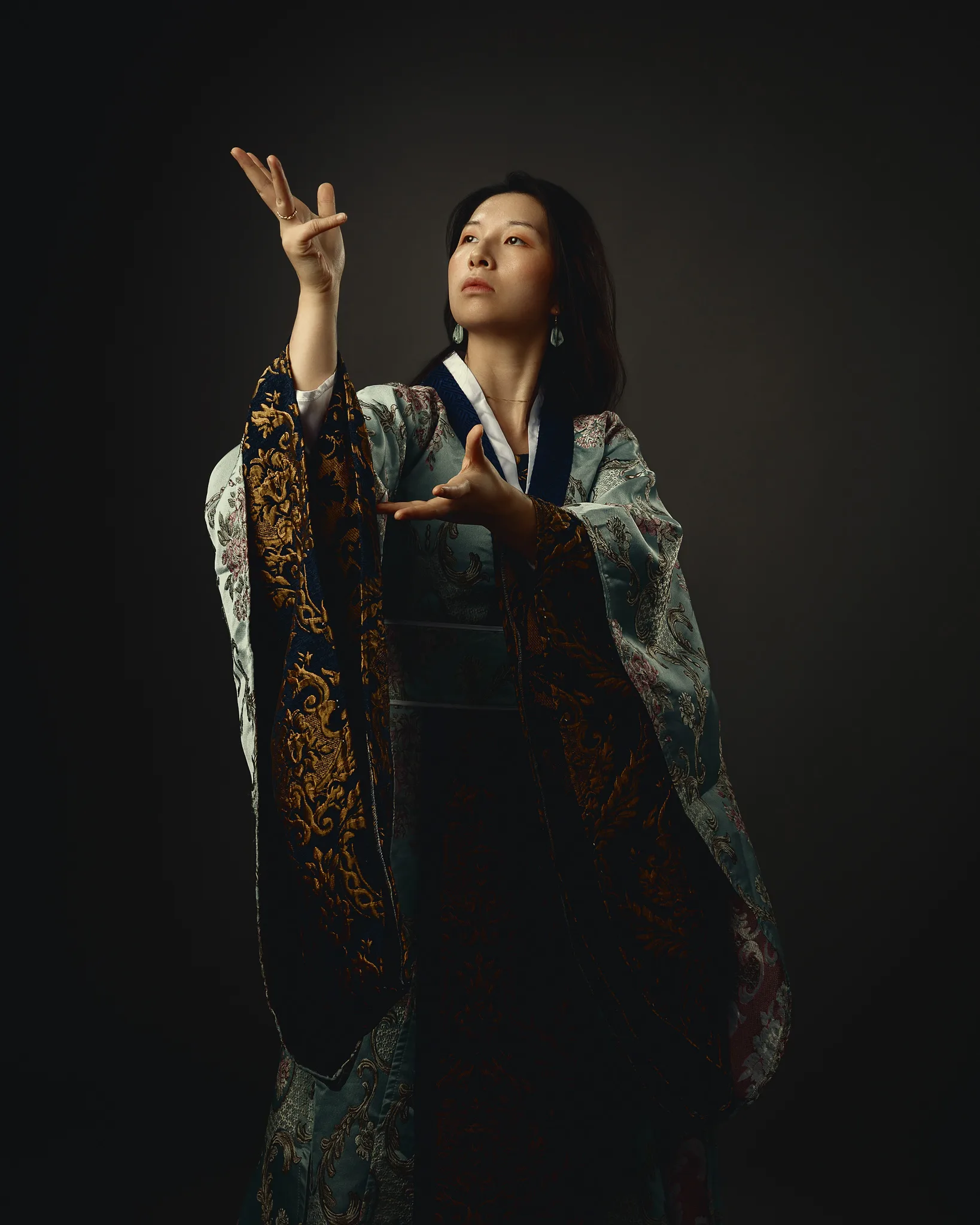
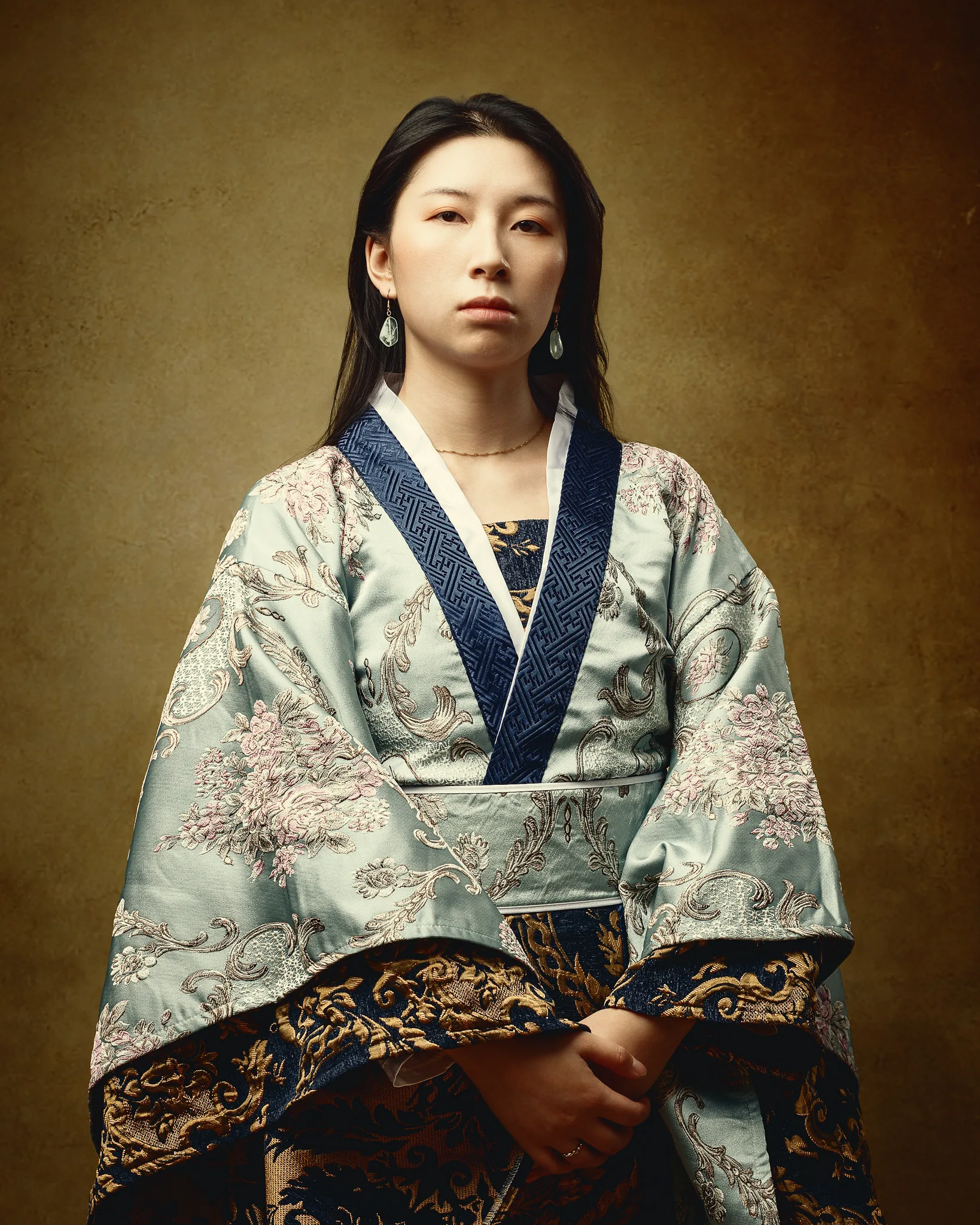
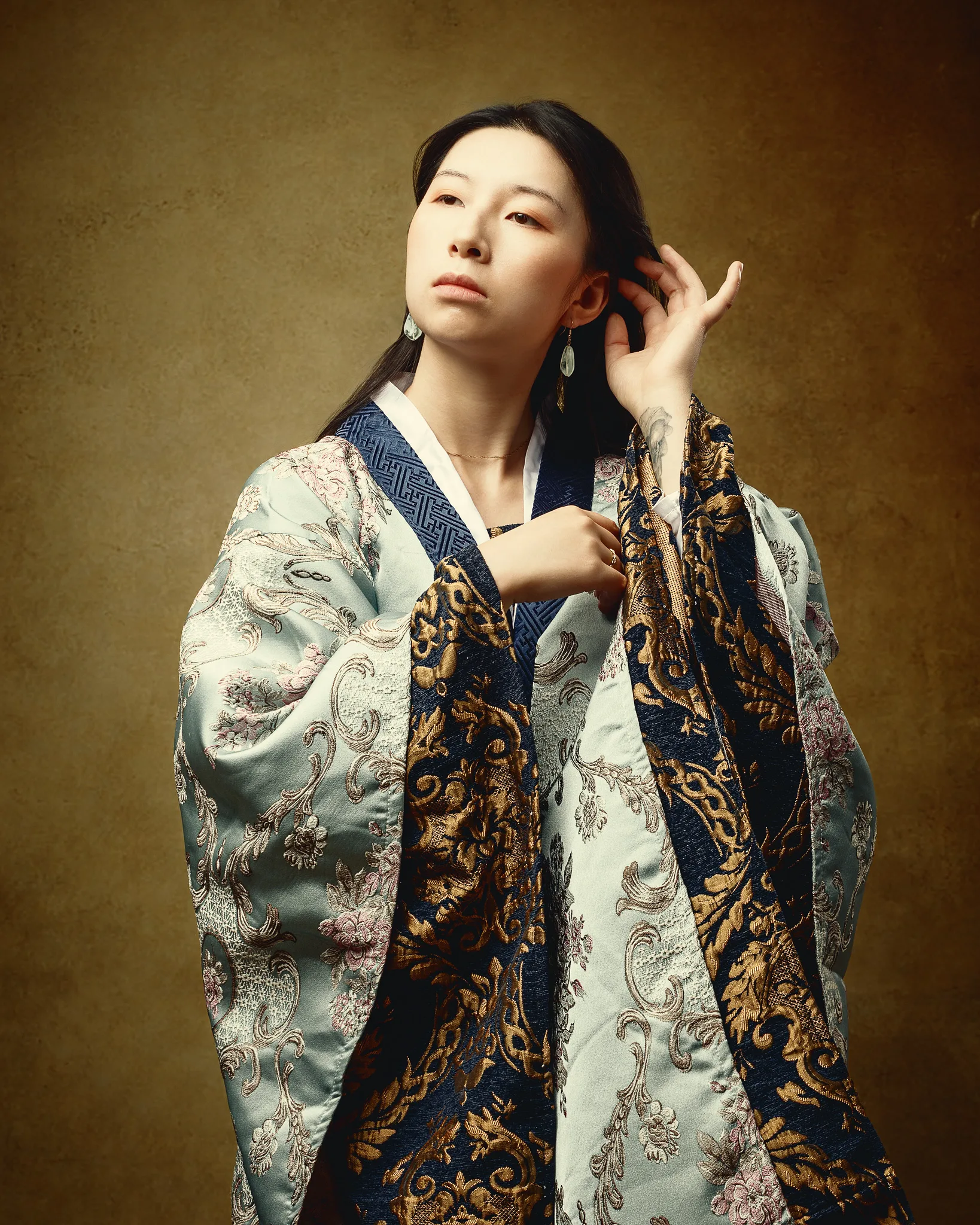
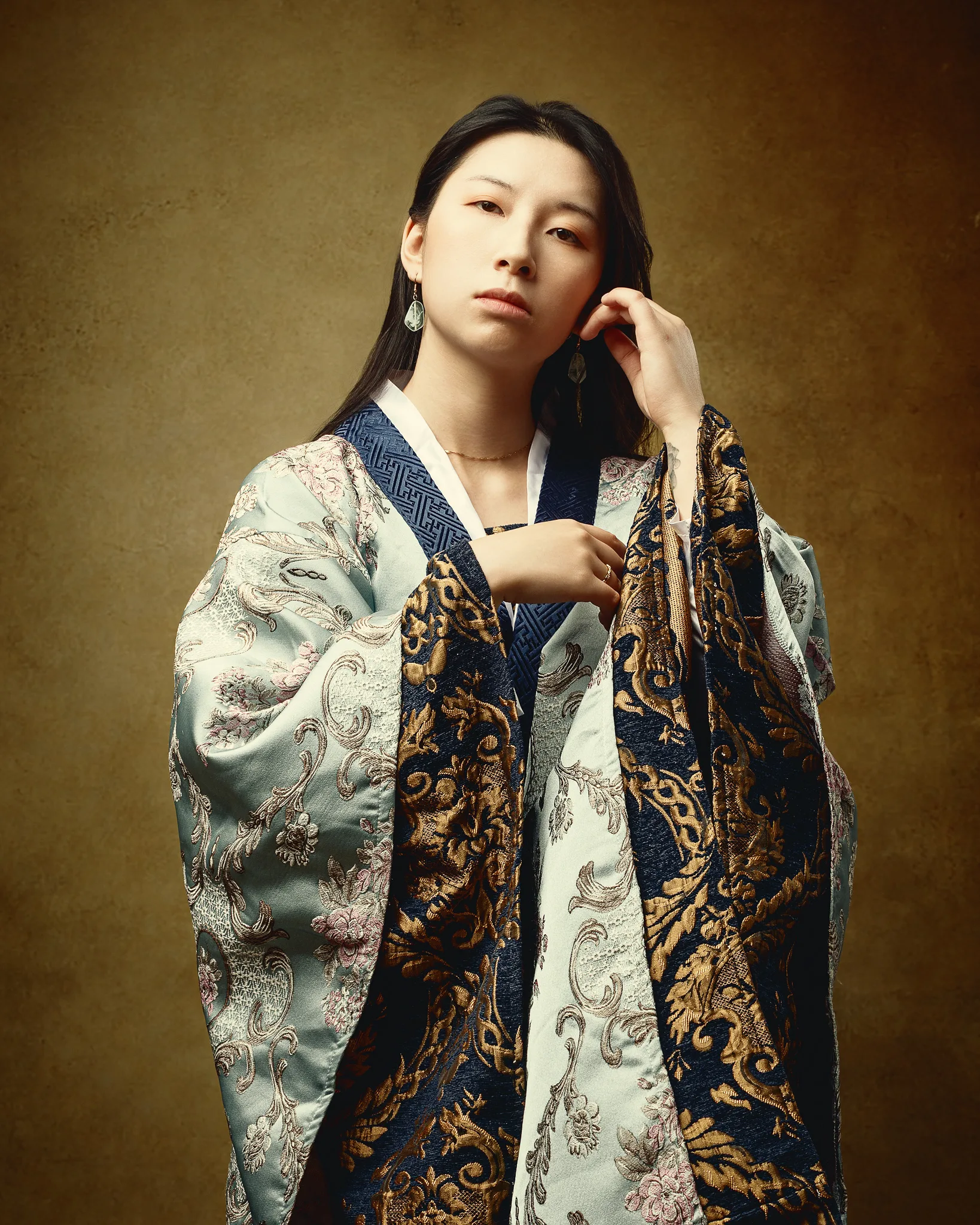
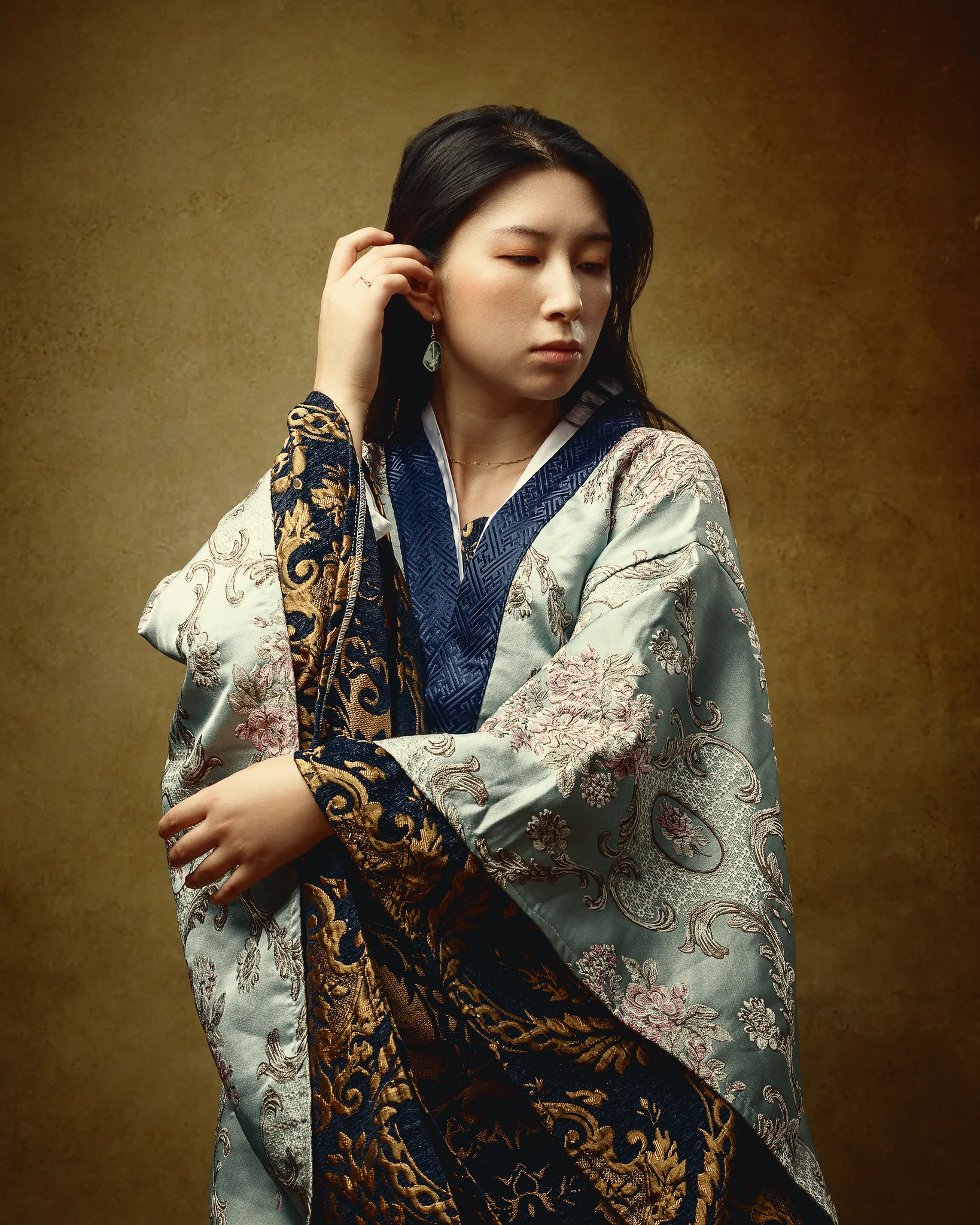
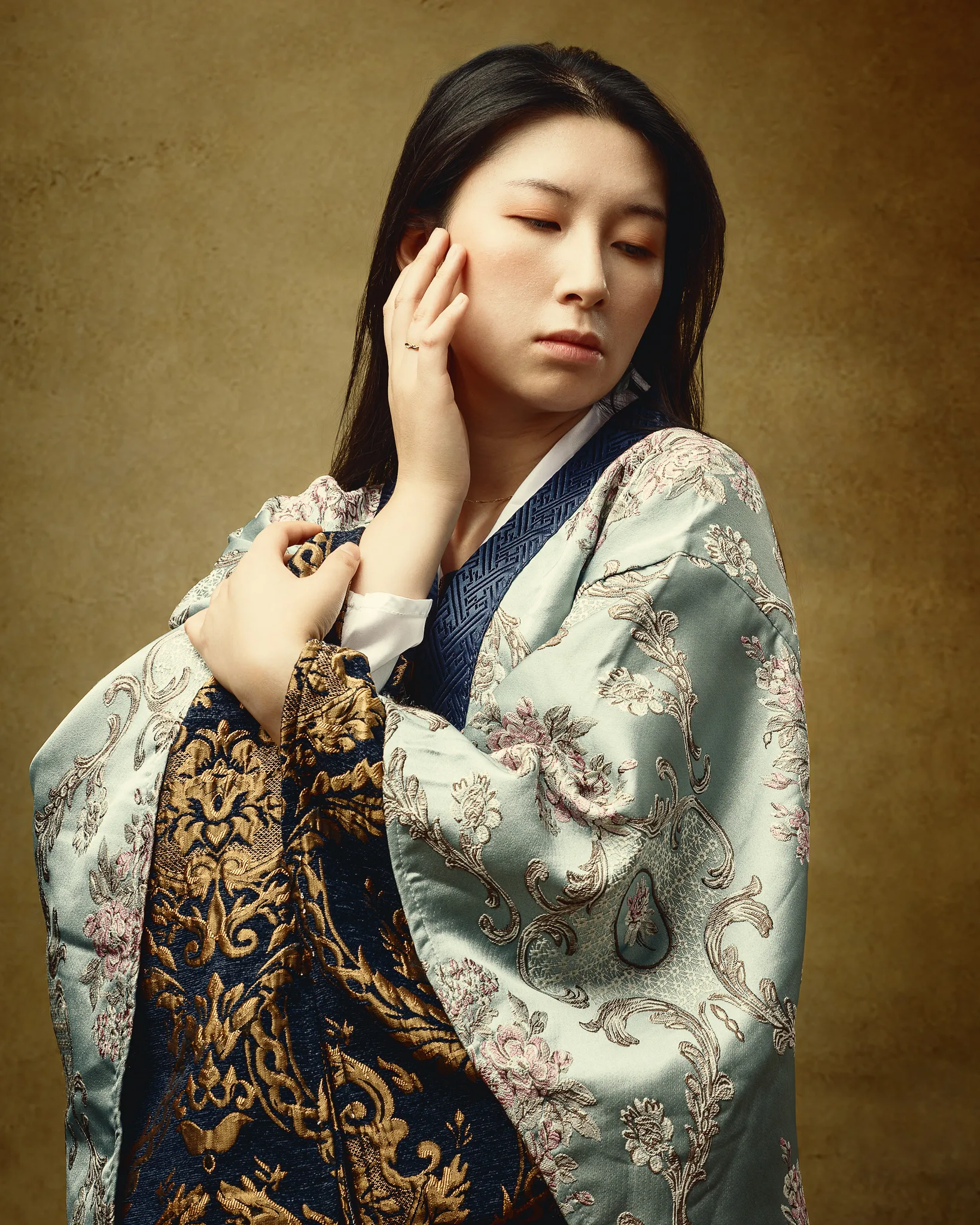
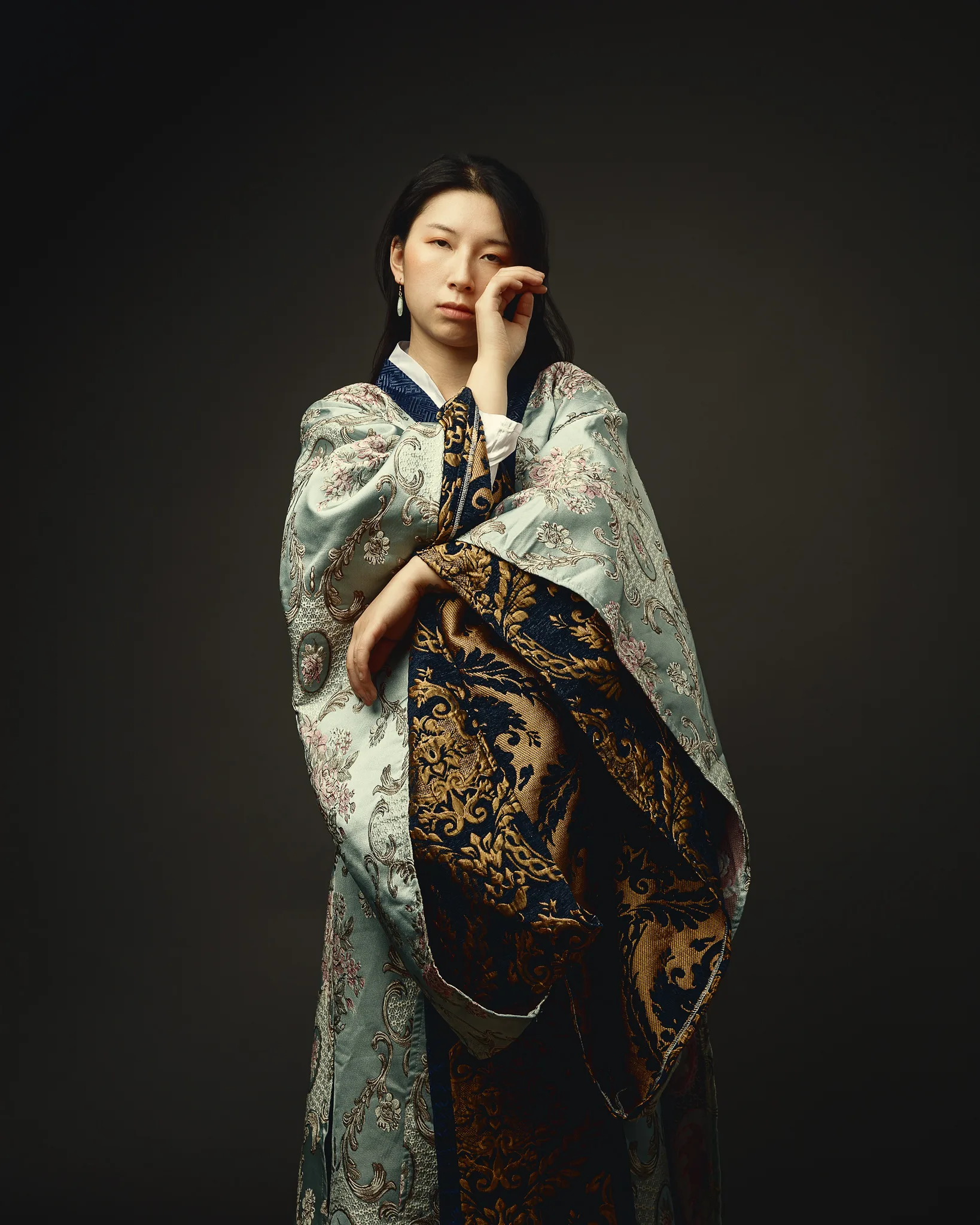
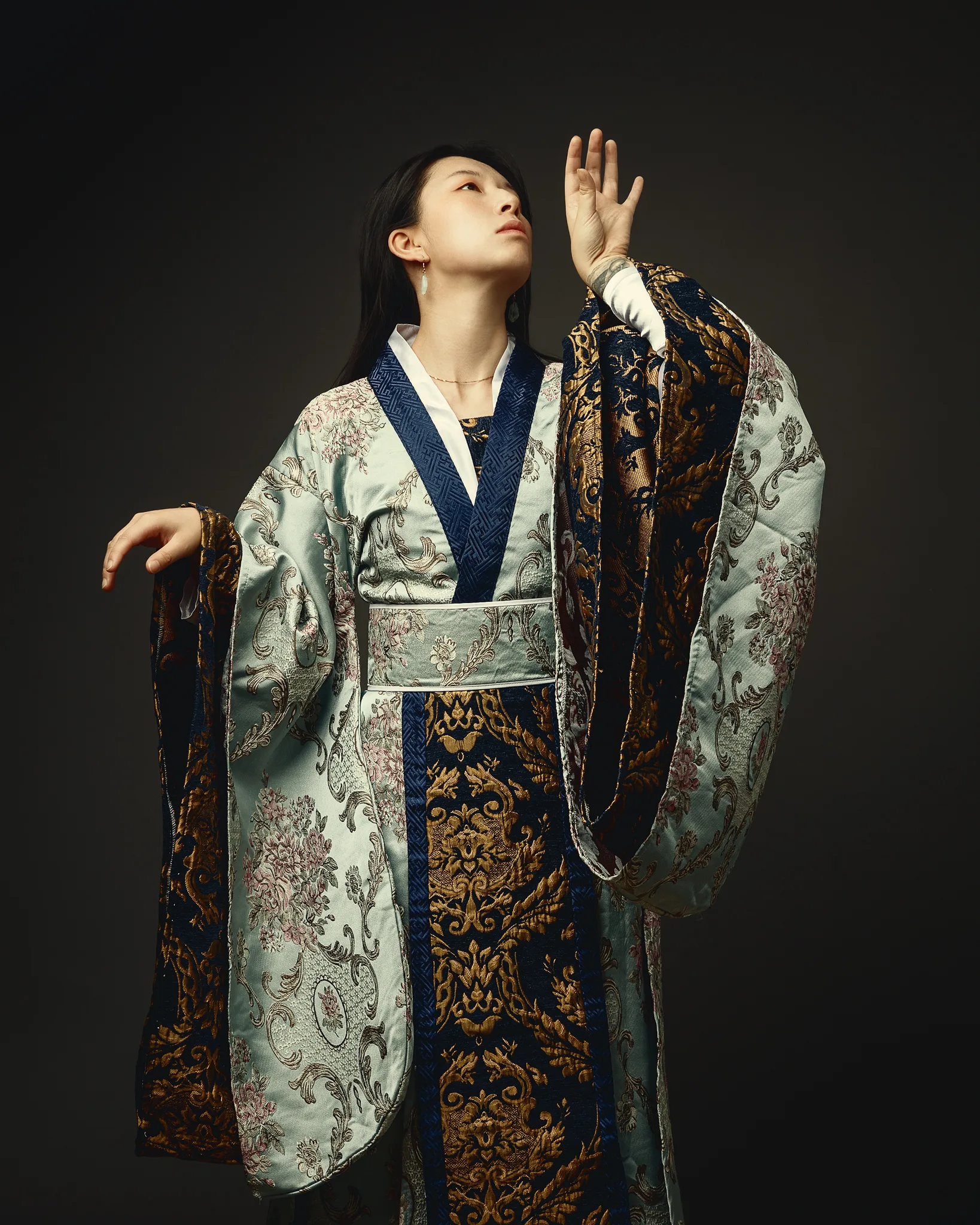
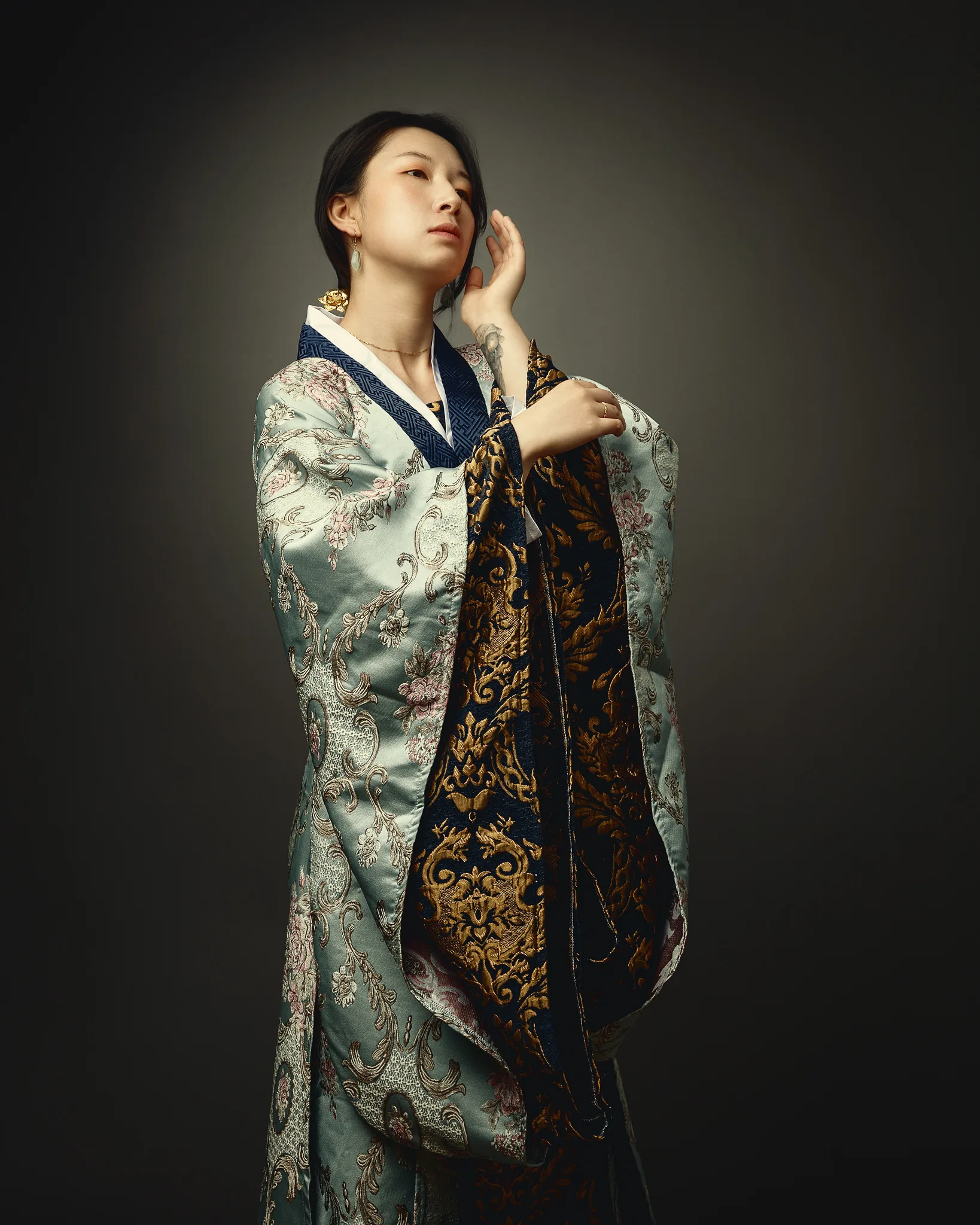
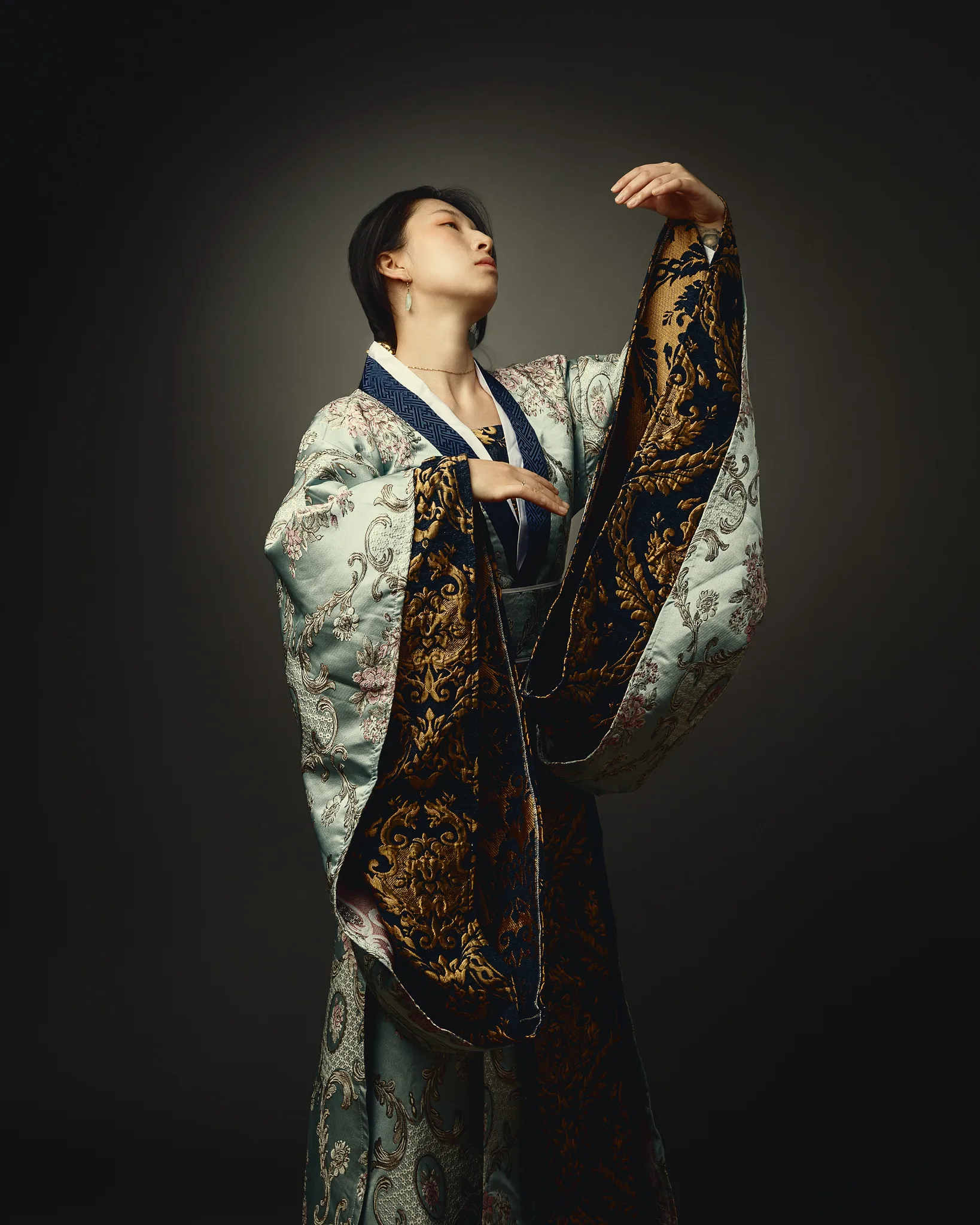
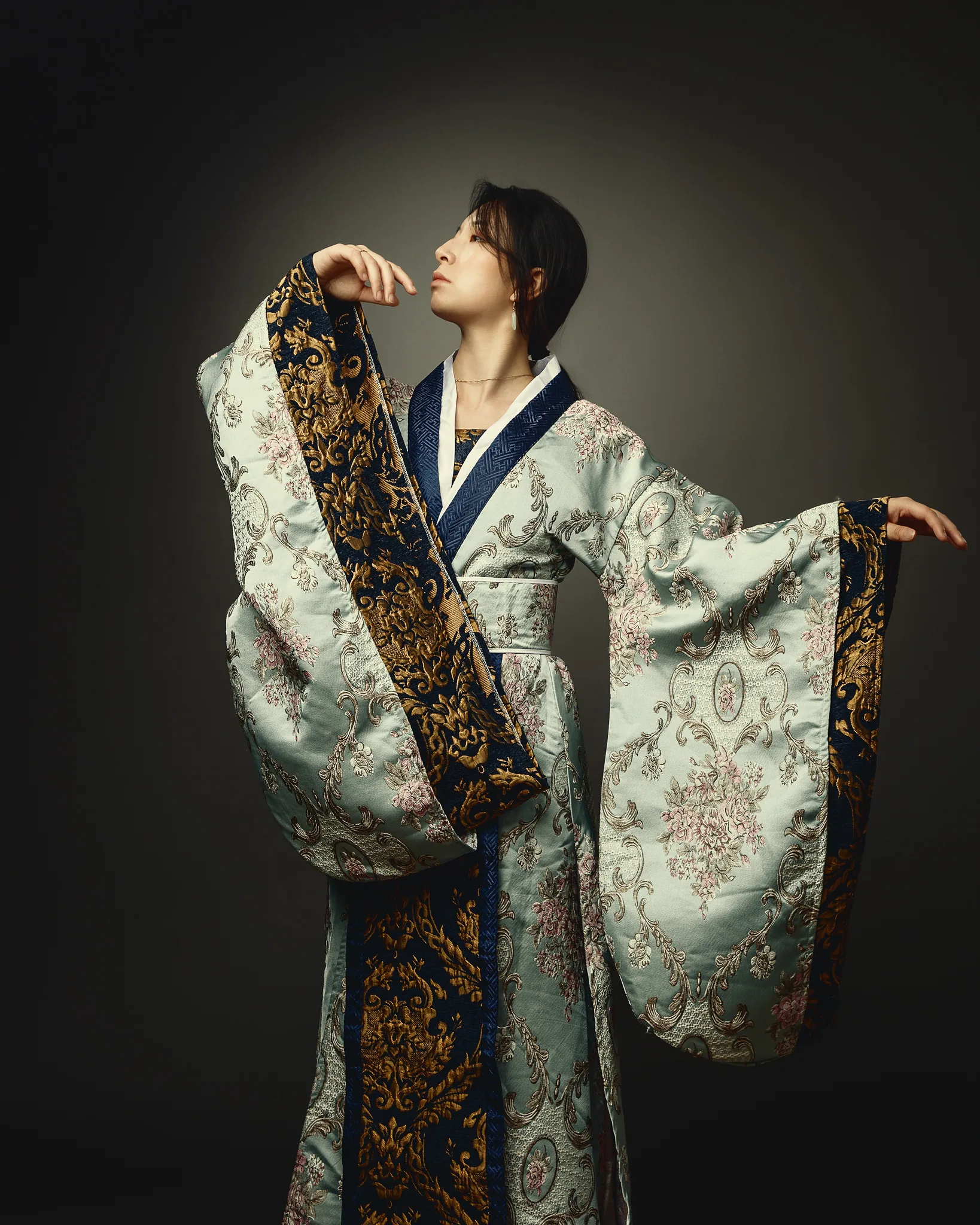
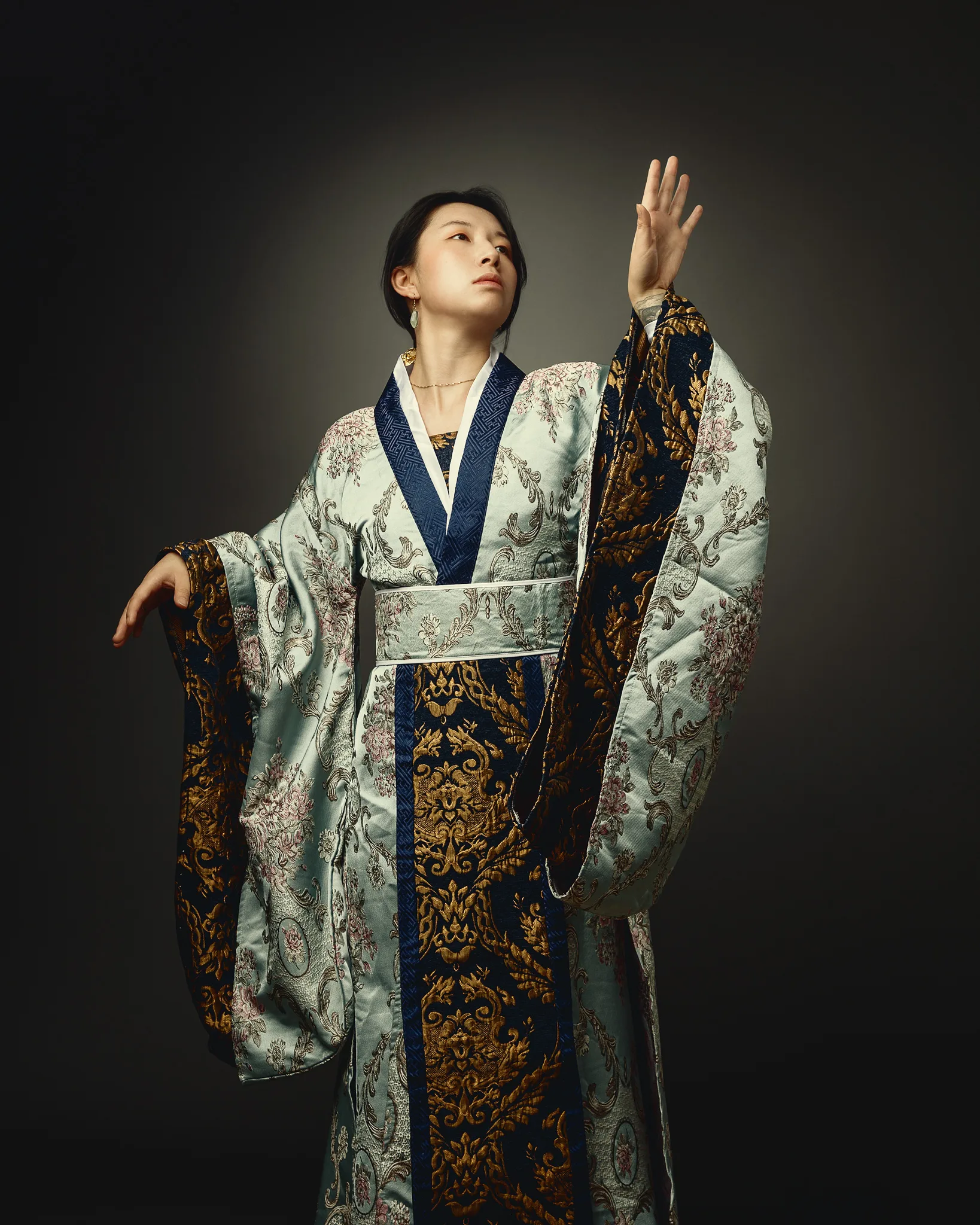
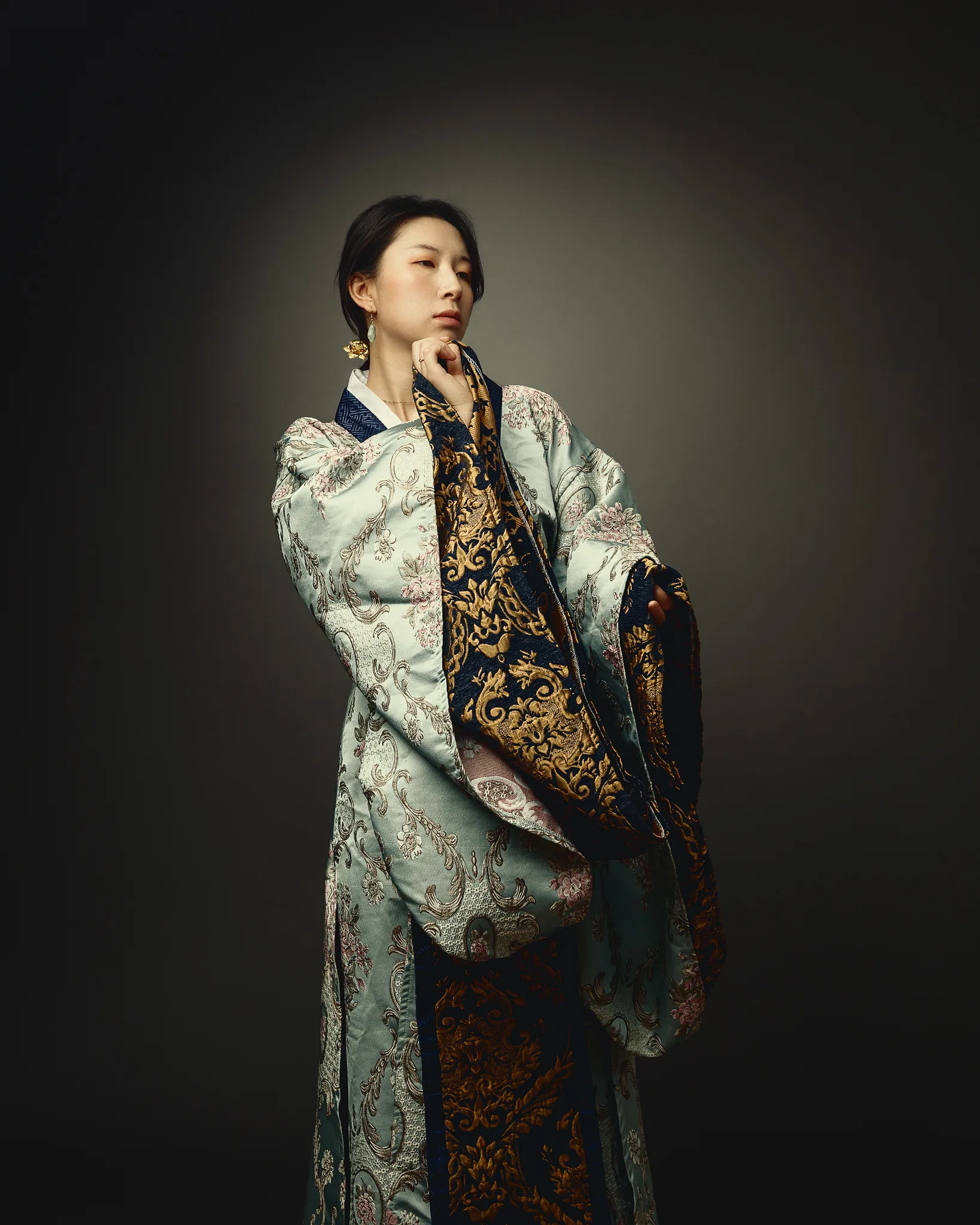
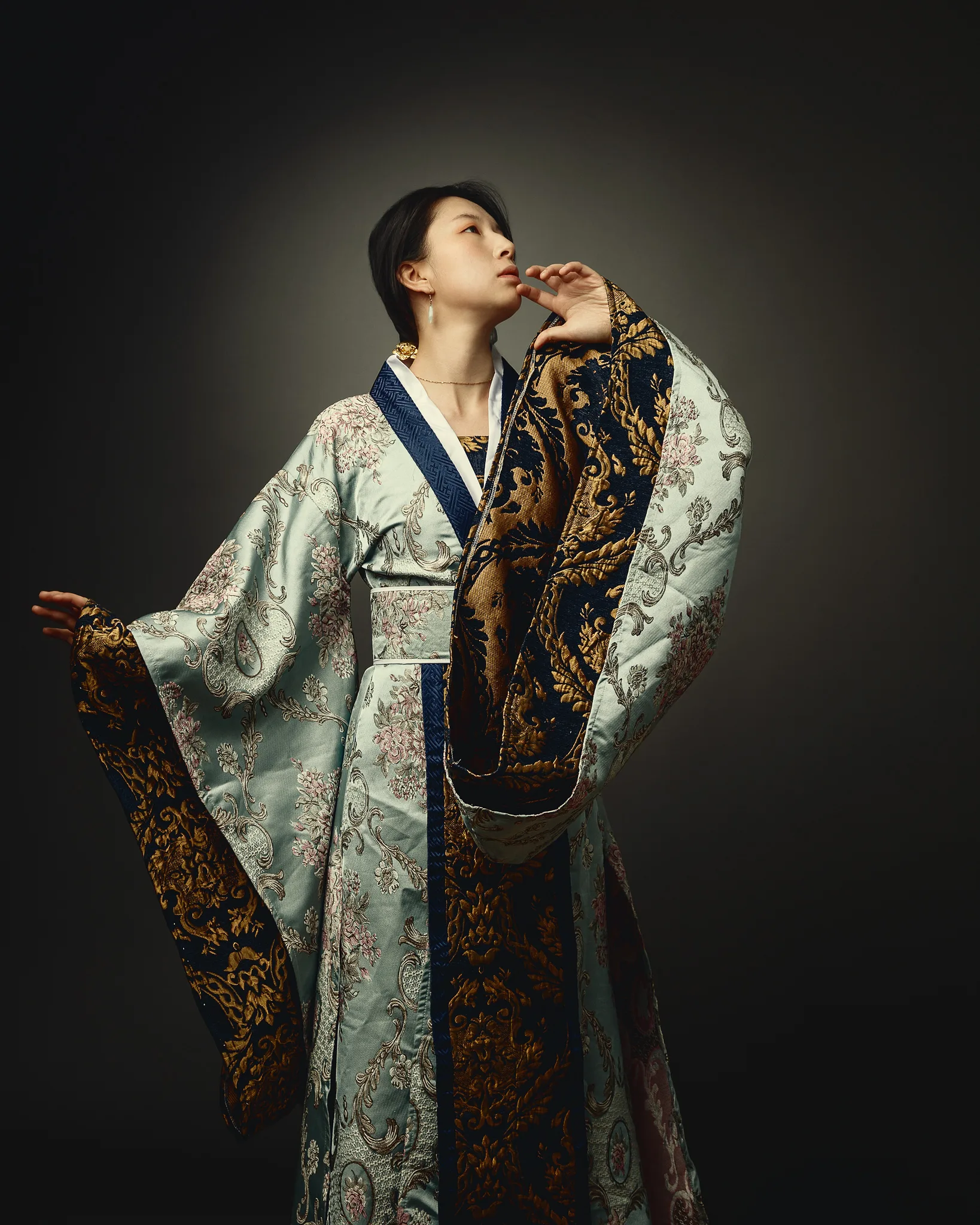
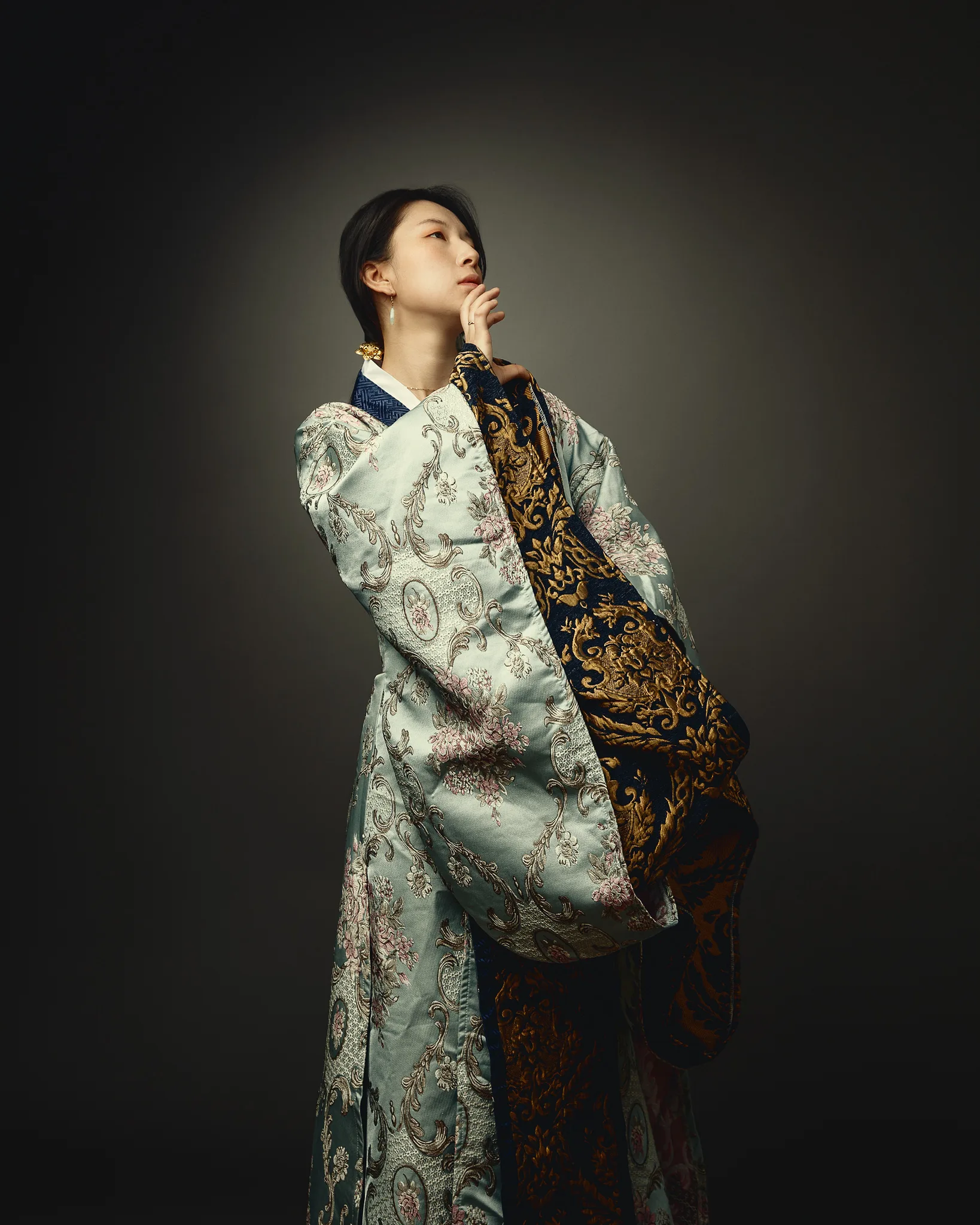
The opening set was Chinese inspired. A pale green silk robe with pink floral embroidery, a deep navy collar, and a gold and navy velvet underlayer with a lot of weight to it. The whole thing has a formality built into it, and the temptation with a garment like that is to make it perform. Big sleeves, big gestures, fabric thrown around. We did not do that.
Instead we kept it serene and almost entirely still. Hands low and quiet, weight even, shoulders square. Where there was any movement it was a single raised hand or a turn of the head, nothing more. I lit it low and directional against a dark background so the embroidery held detail without shouting, and the face stayed the brightest thing in the frame. A few of the same look were made against a warmer, more painterly ground, which changed the mood from cool and formal to something closer to an old portrait painting.
Stillness is genuinely difficult to hold. Most people, when asked to do nothing, start doing small things. A shift of the jaw, a fidget in the fingers, a softening of the eyes that reads as uncertainty. Karma held it. That is a skill, and it is not one you can direct into existence in someone who does not already have it.
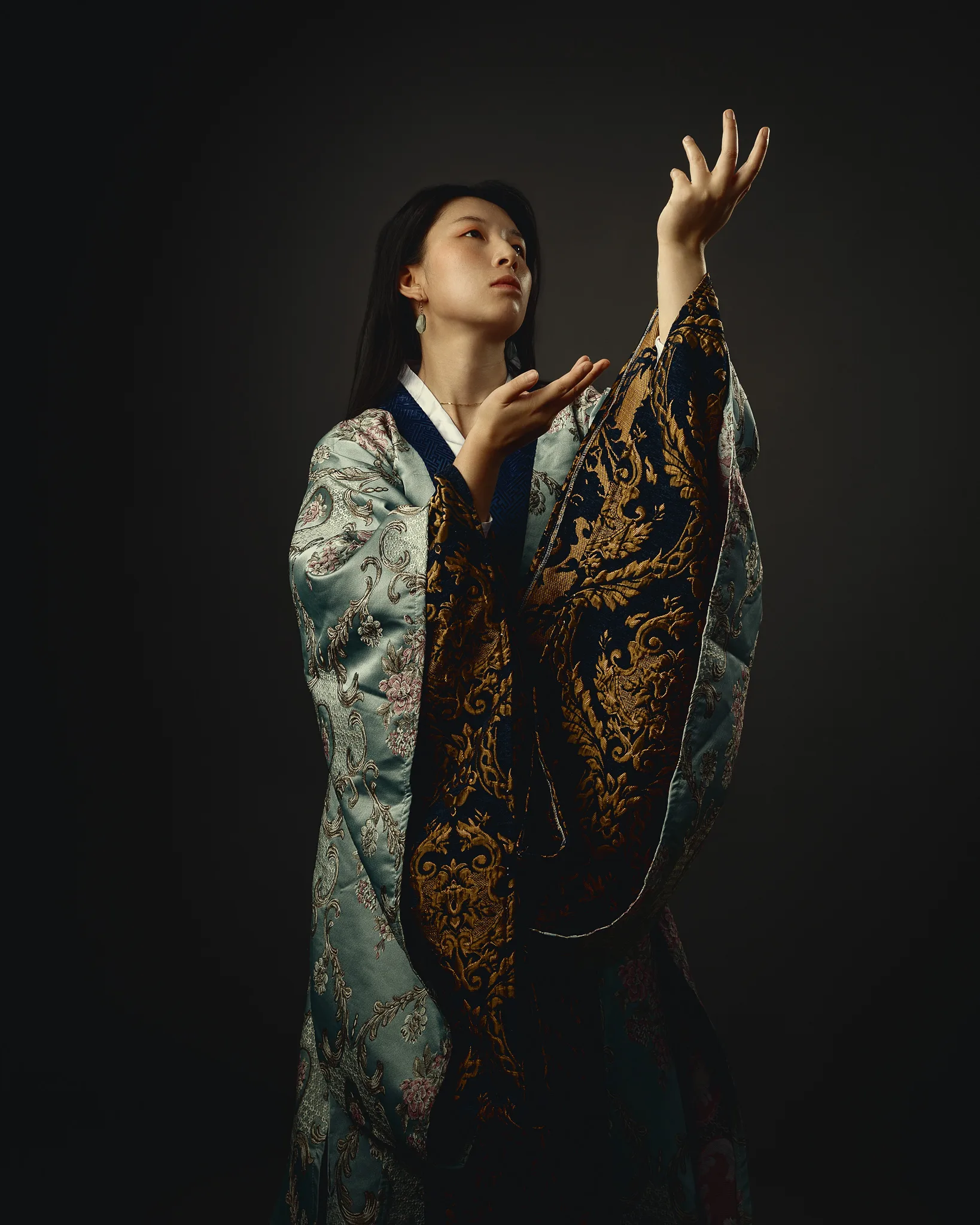
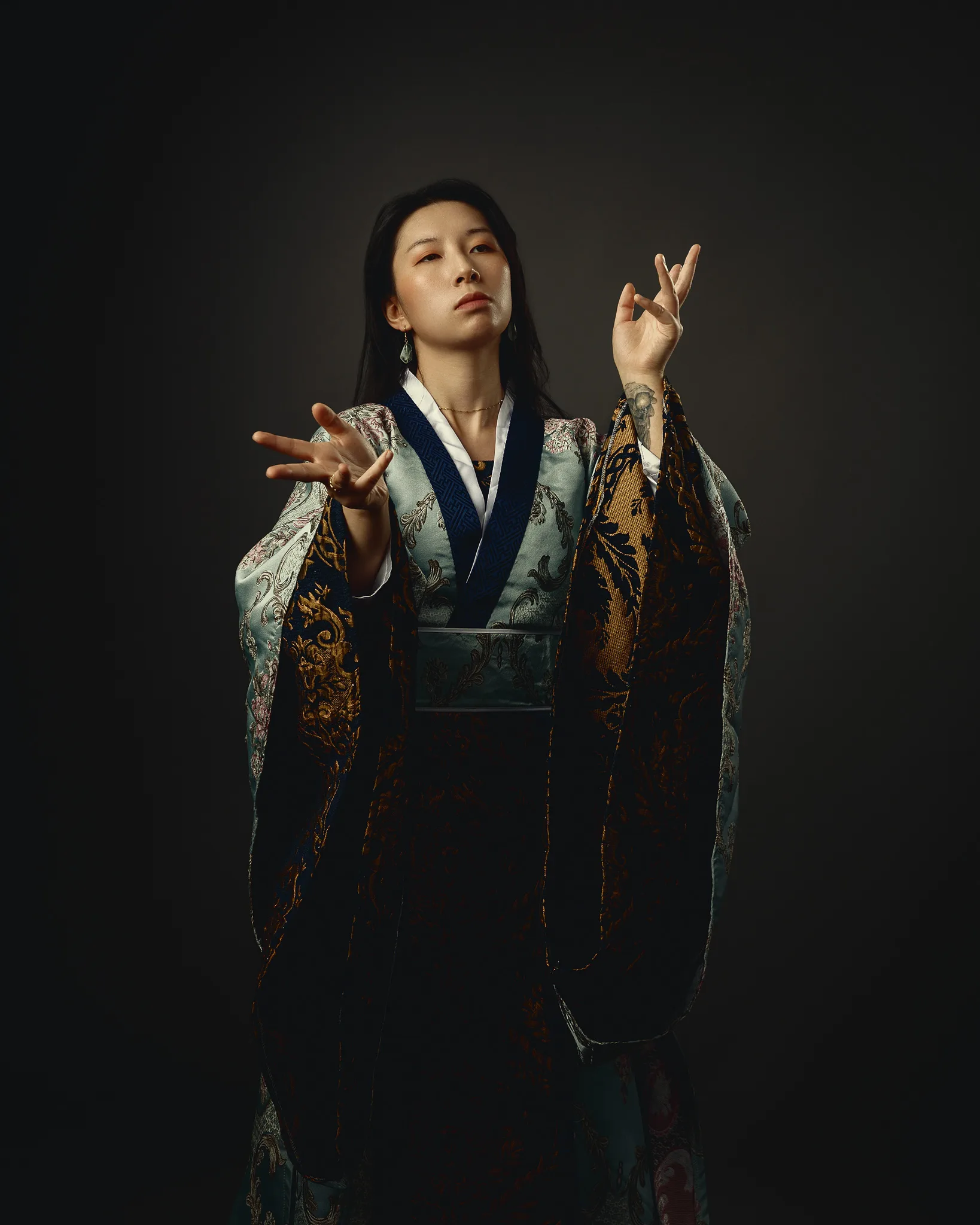
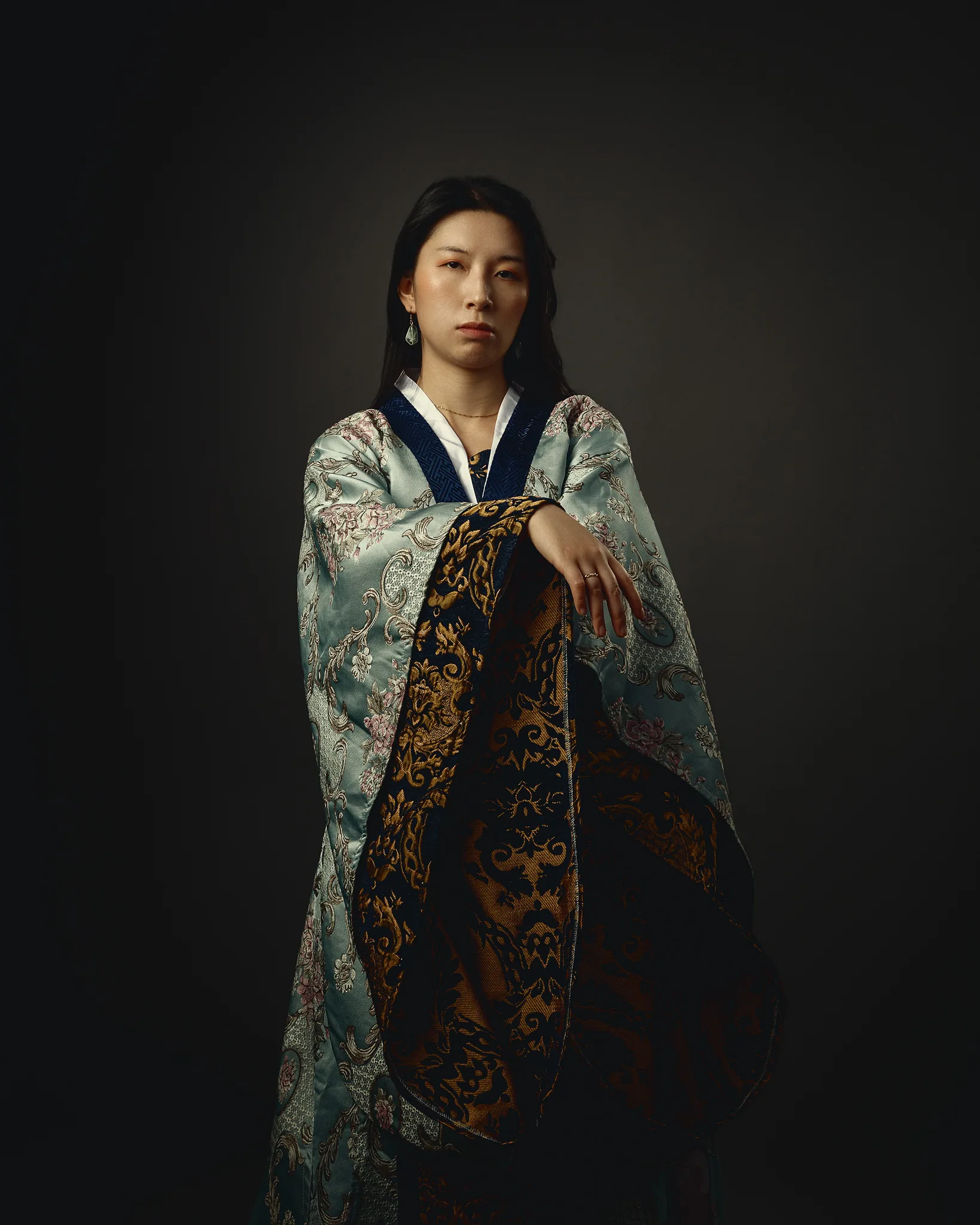
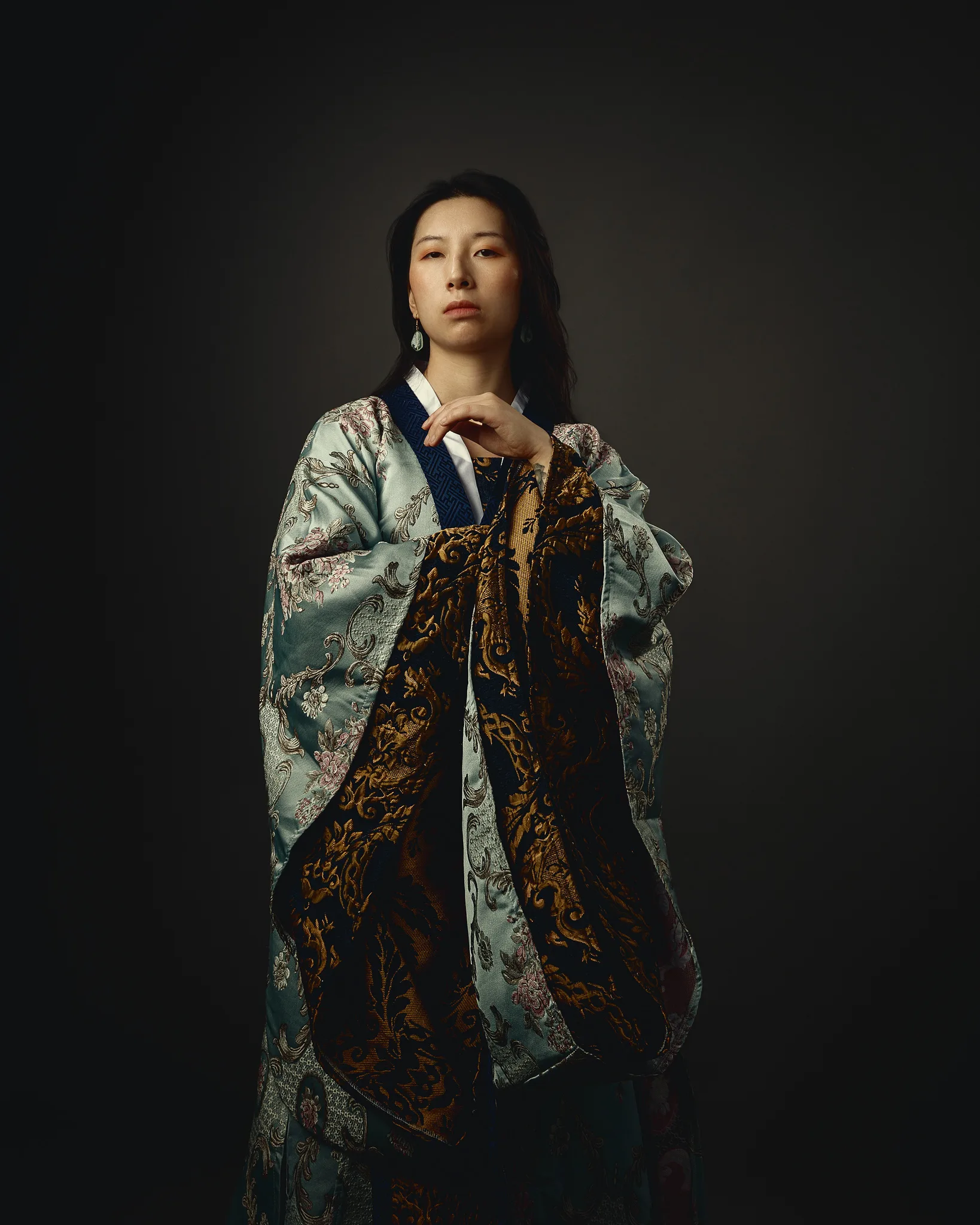
Movement, Fabric and the Looks That Followed
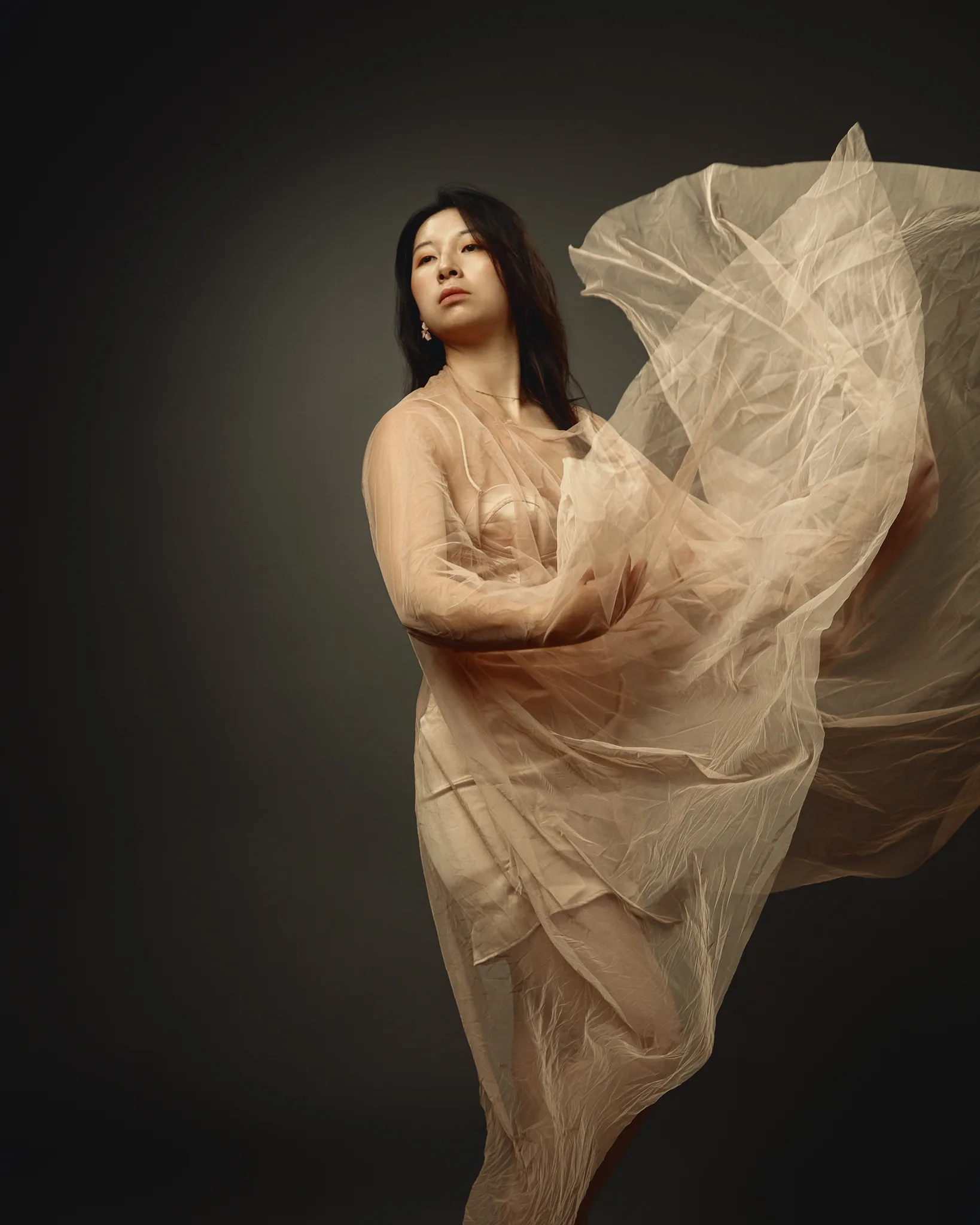
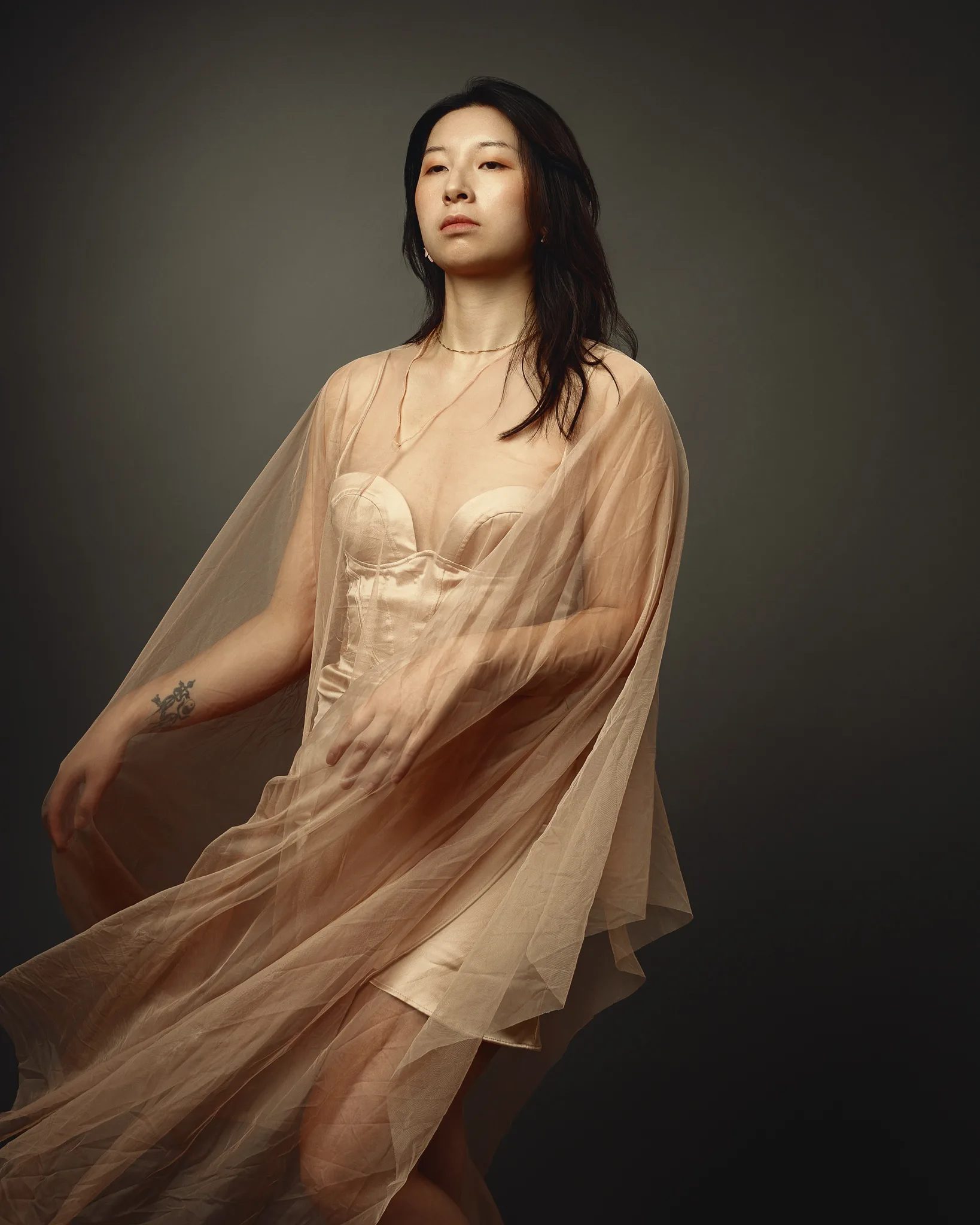
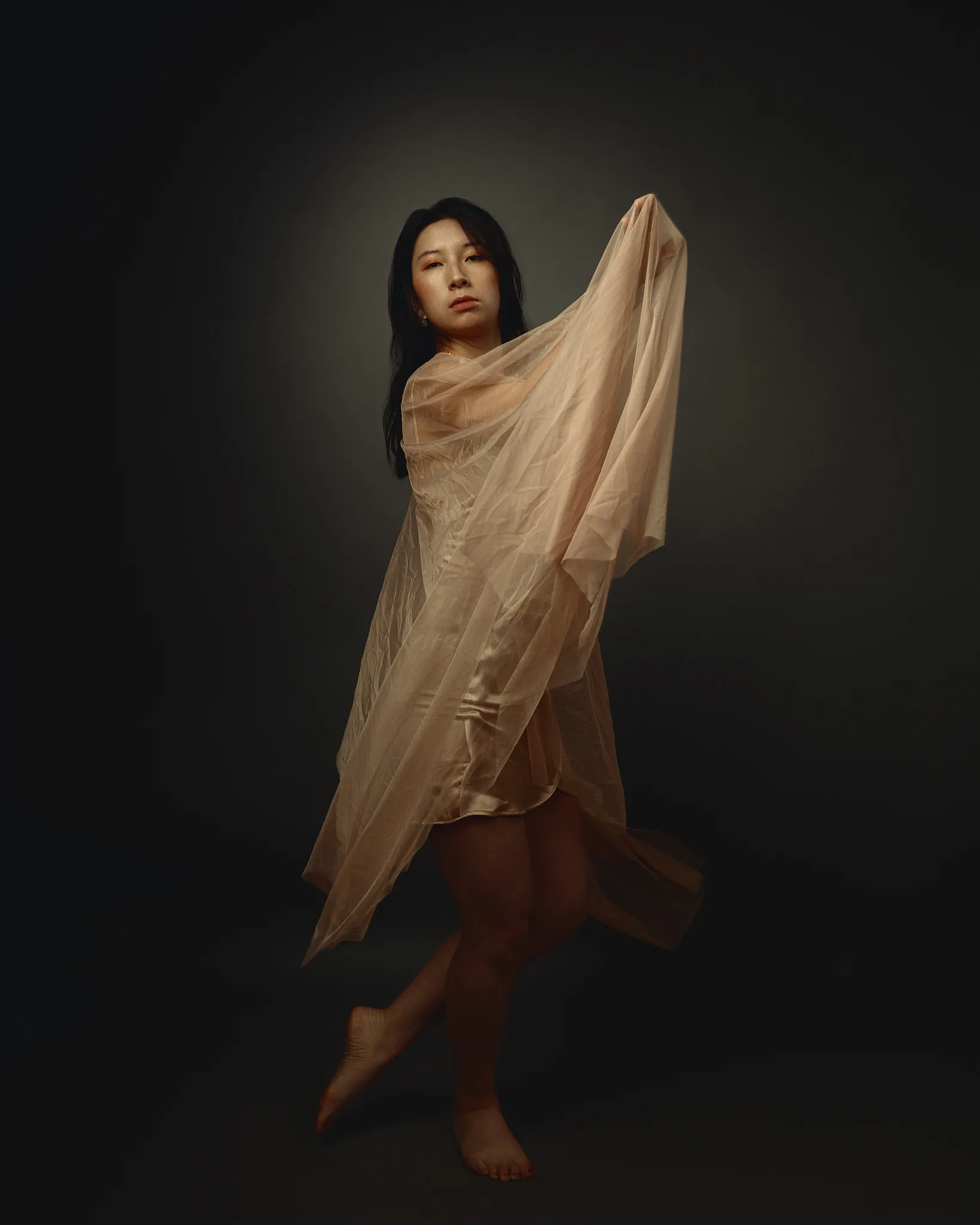
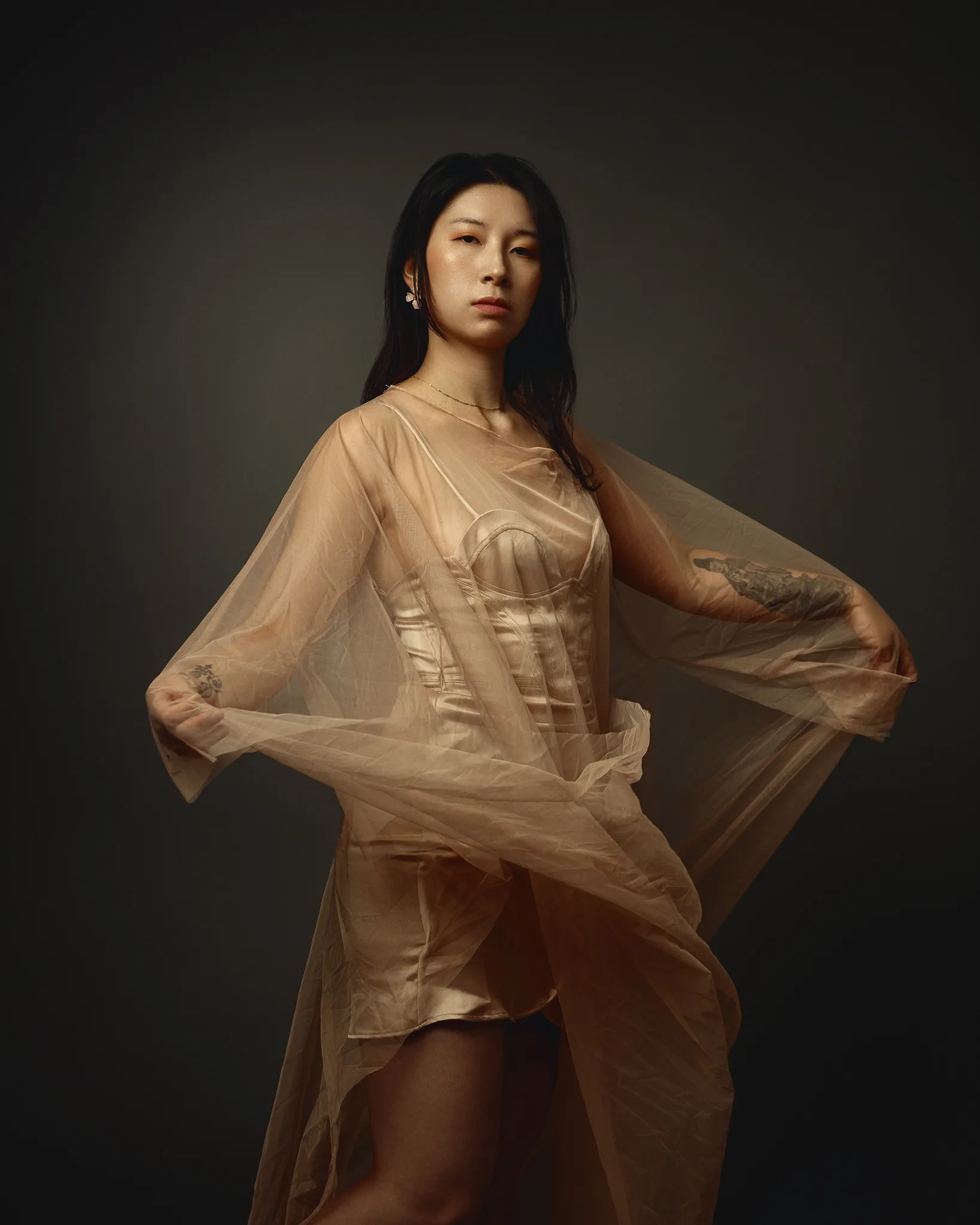
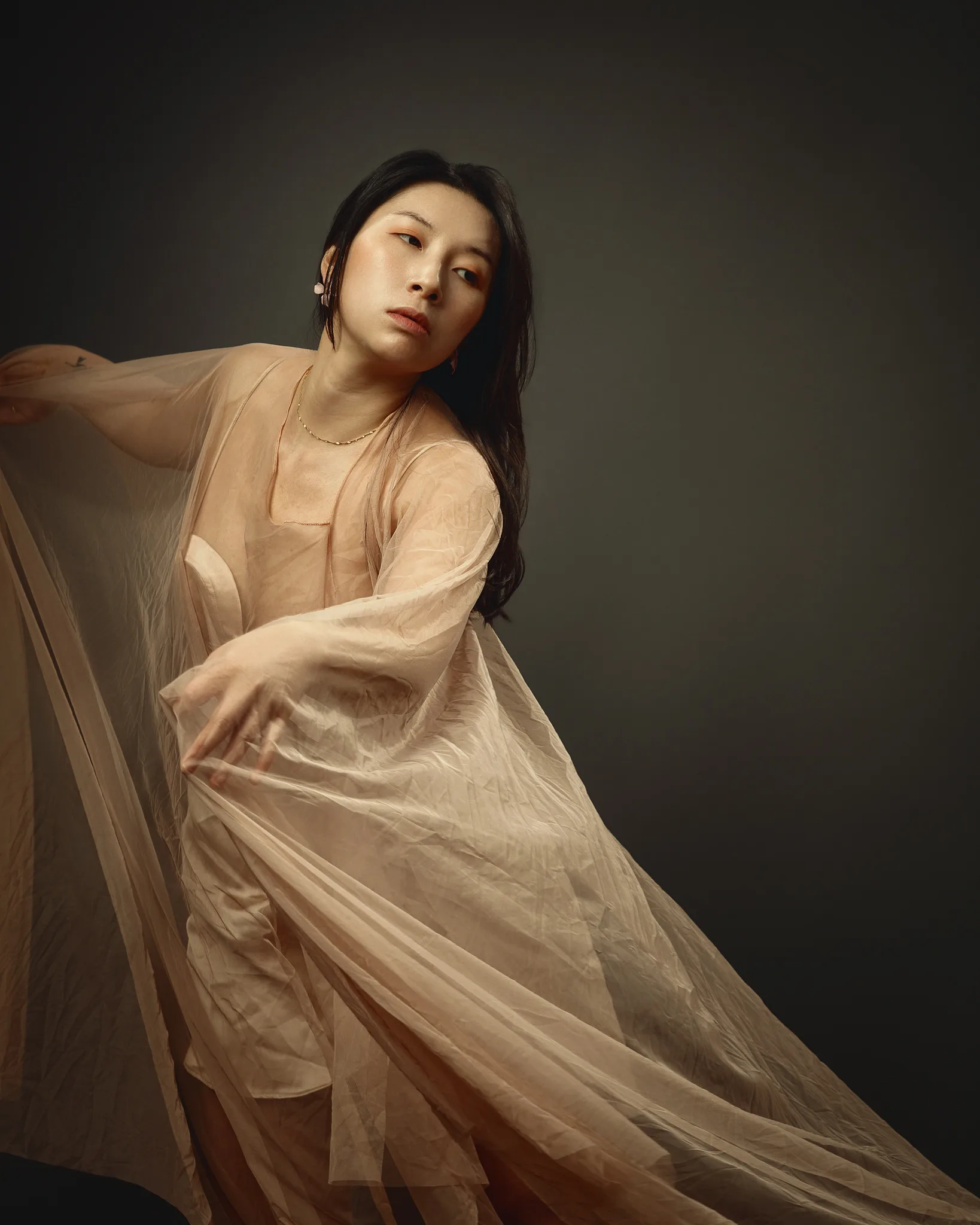
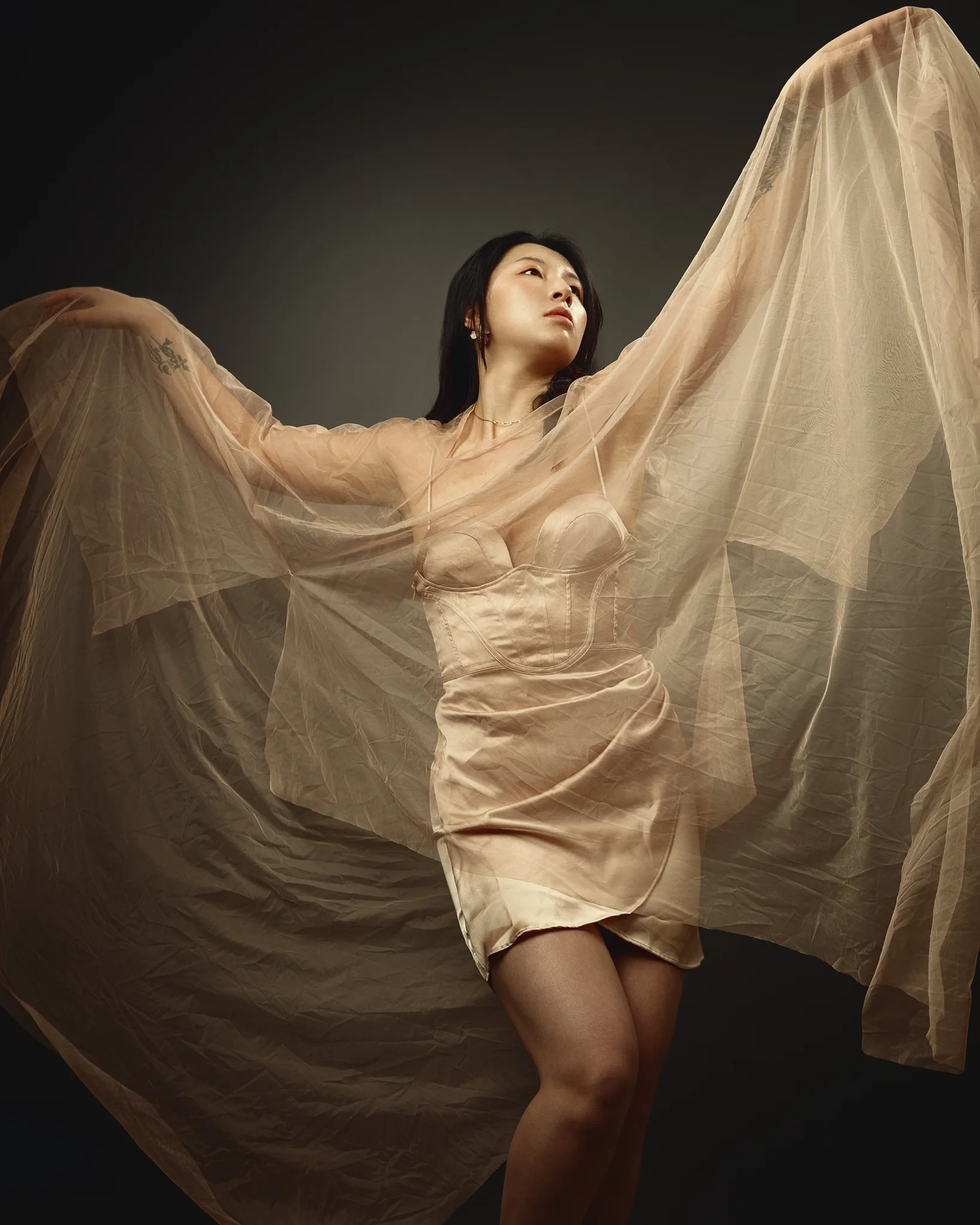
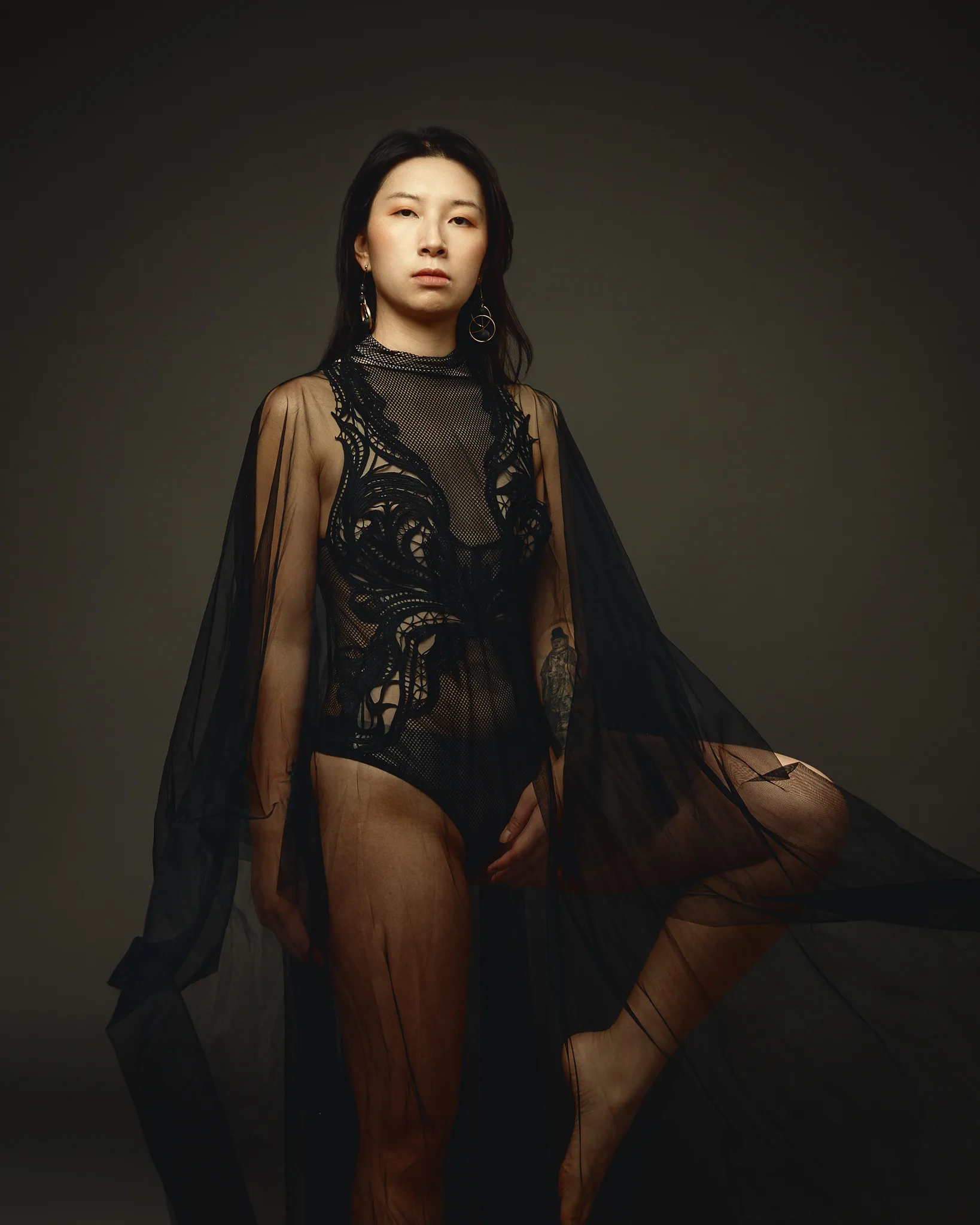
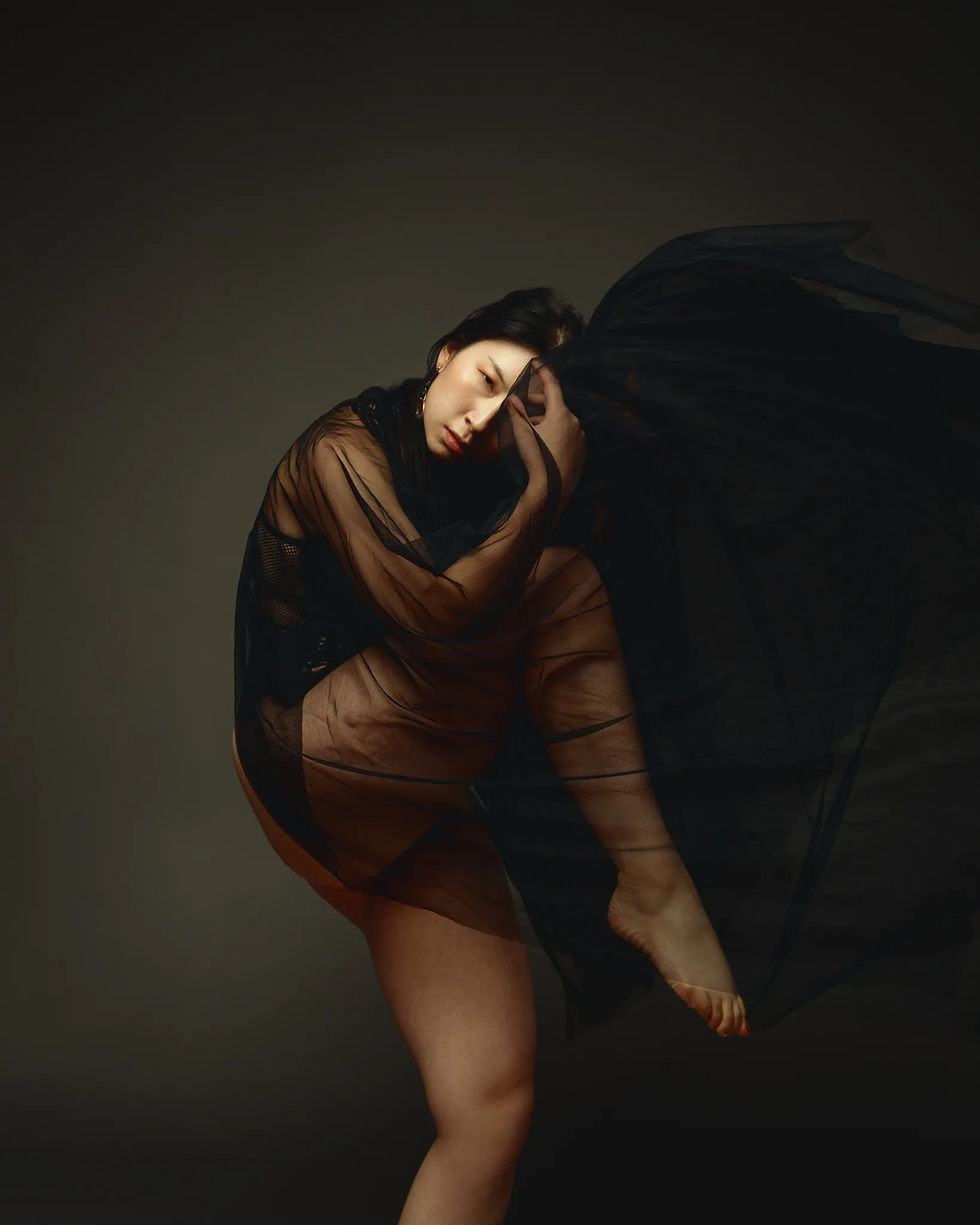
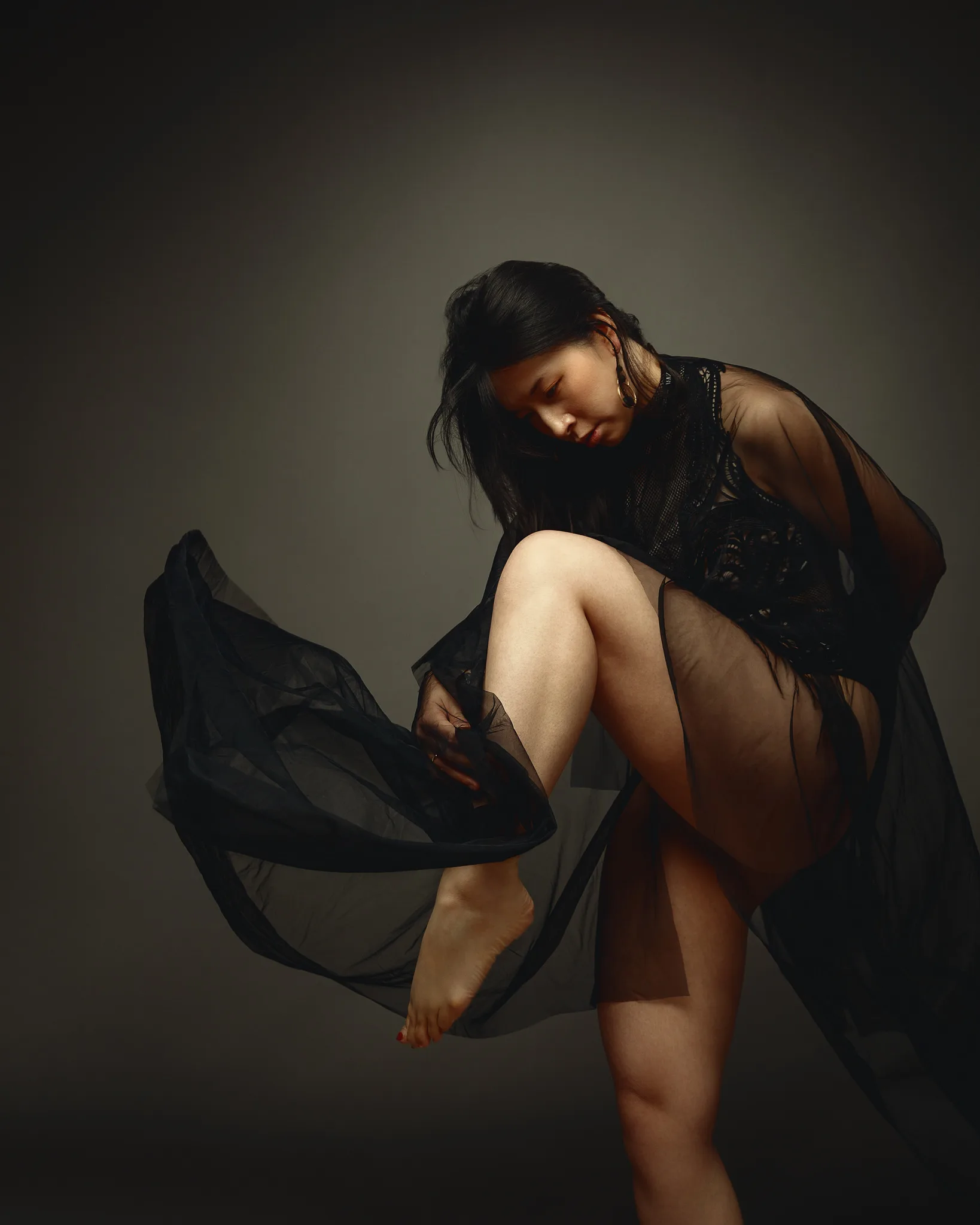
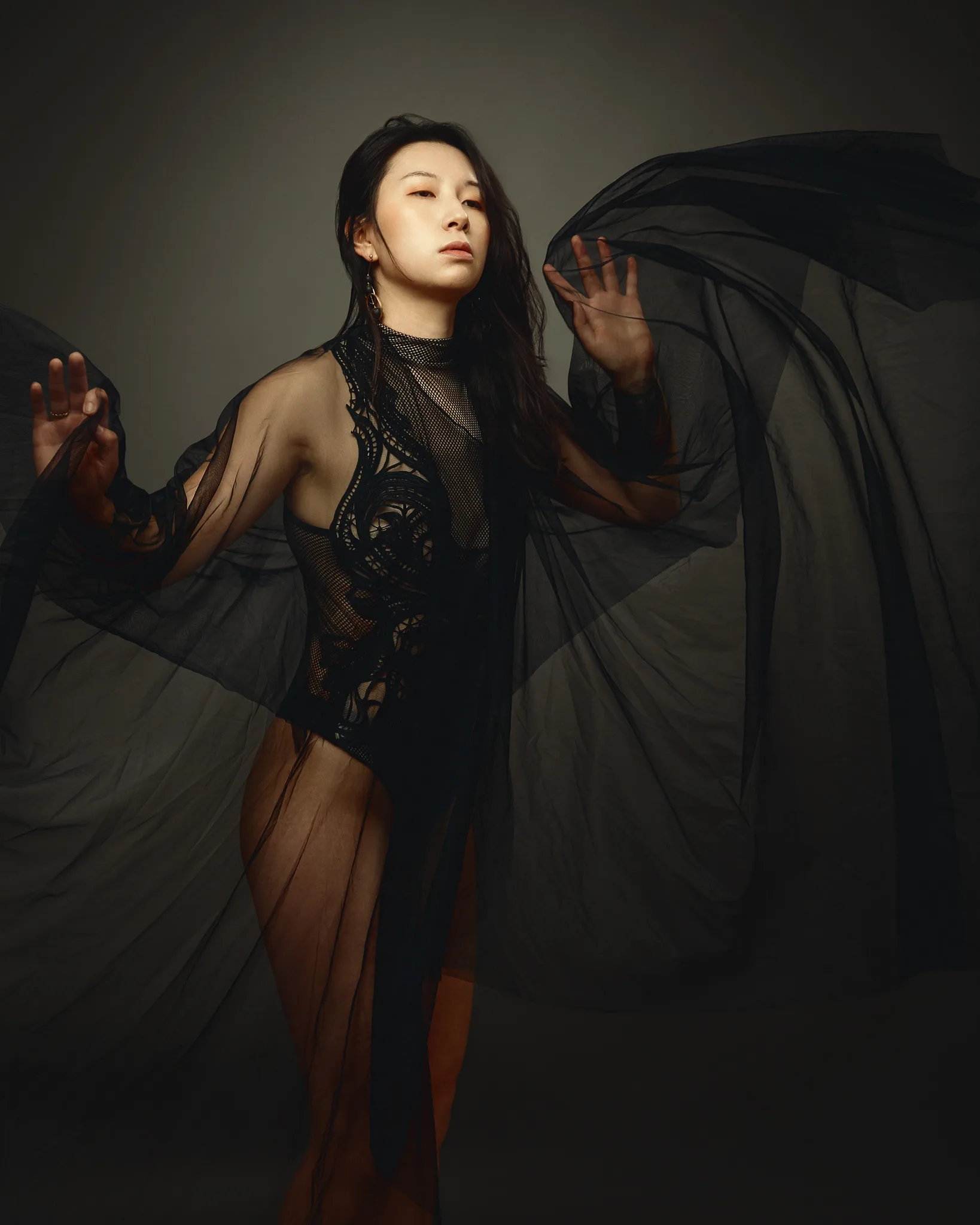
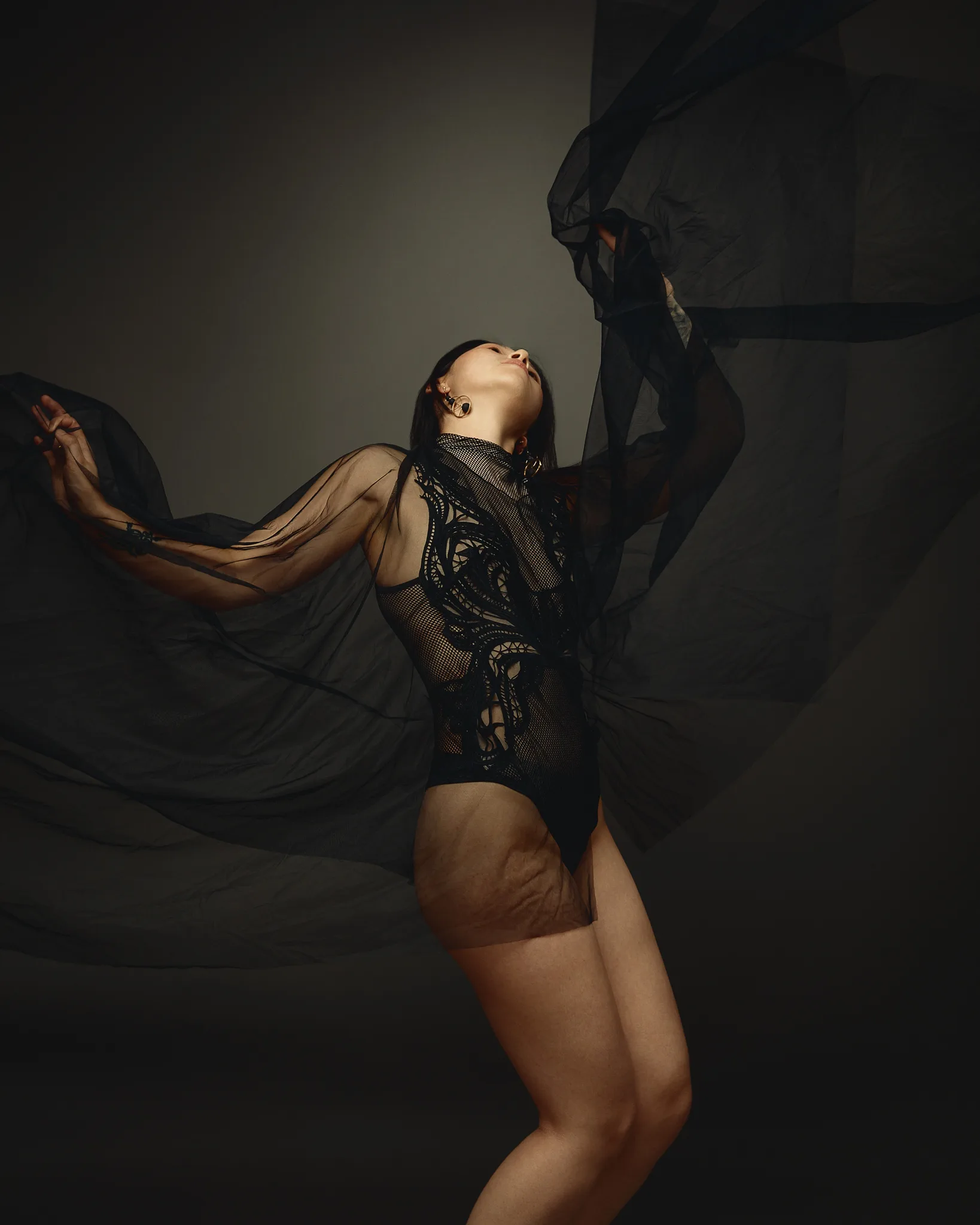
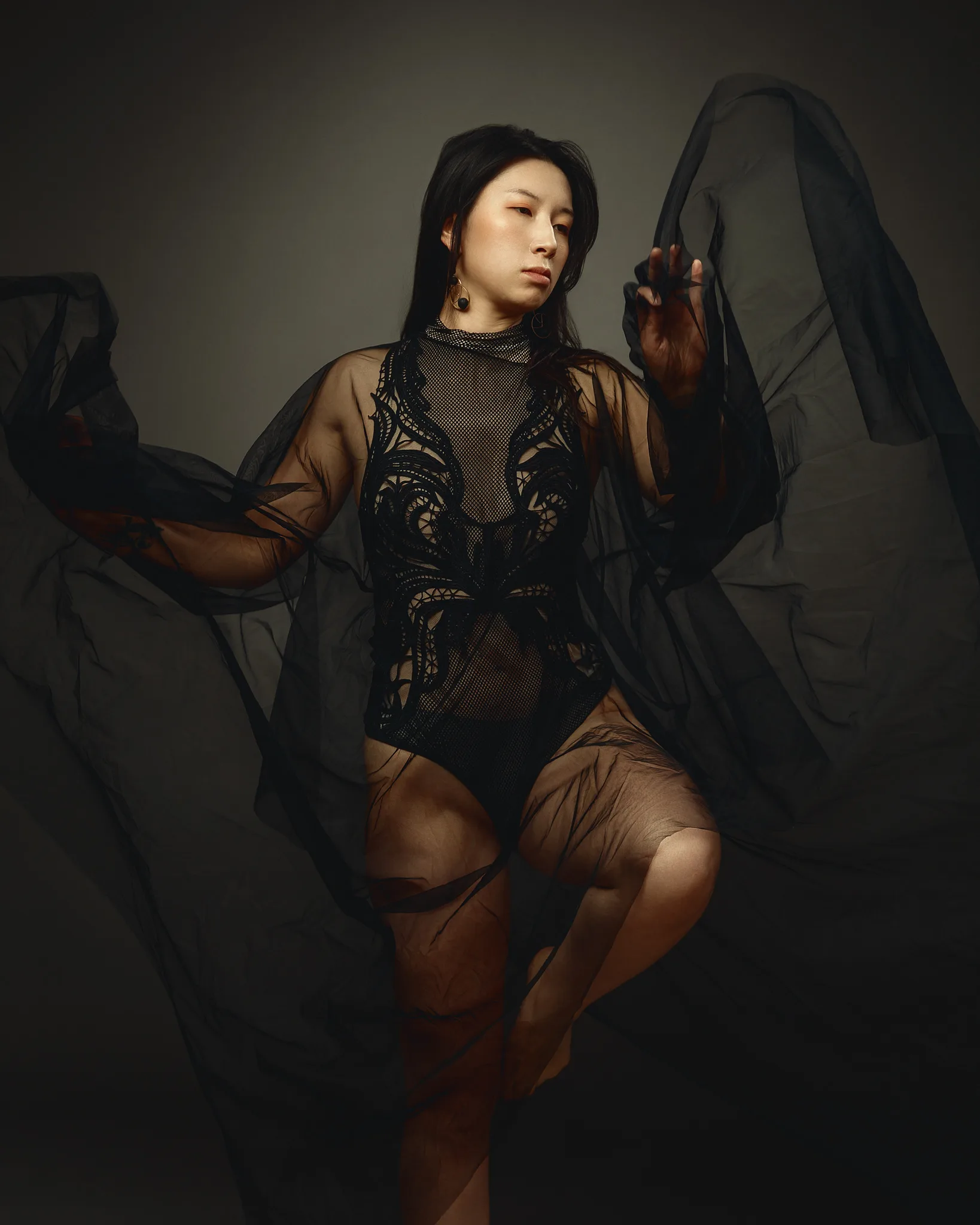
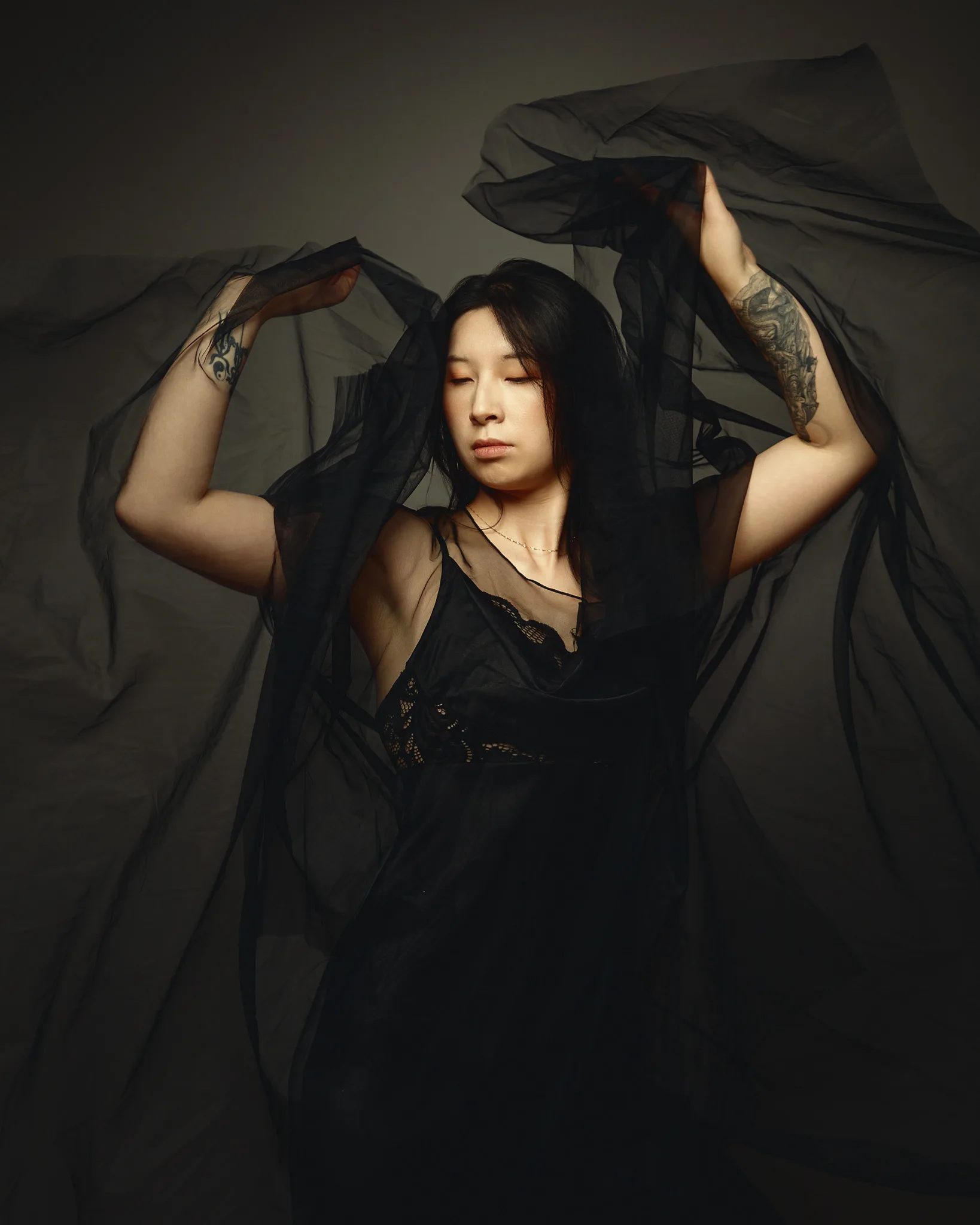
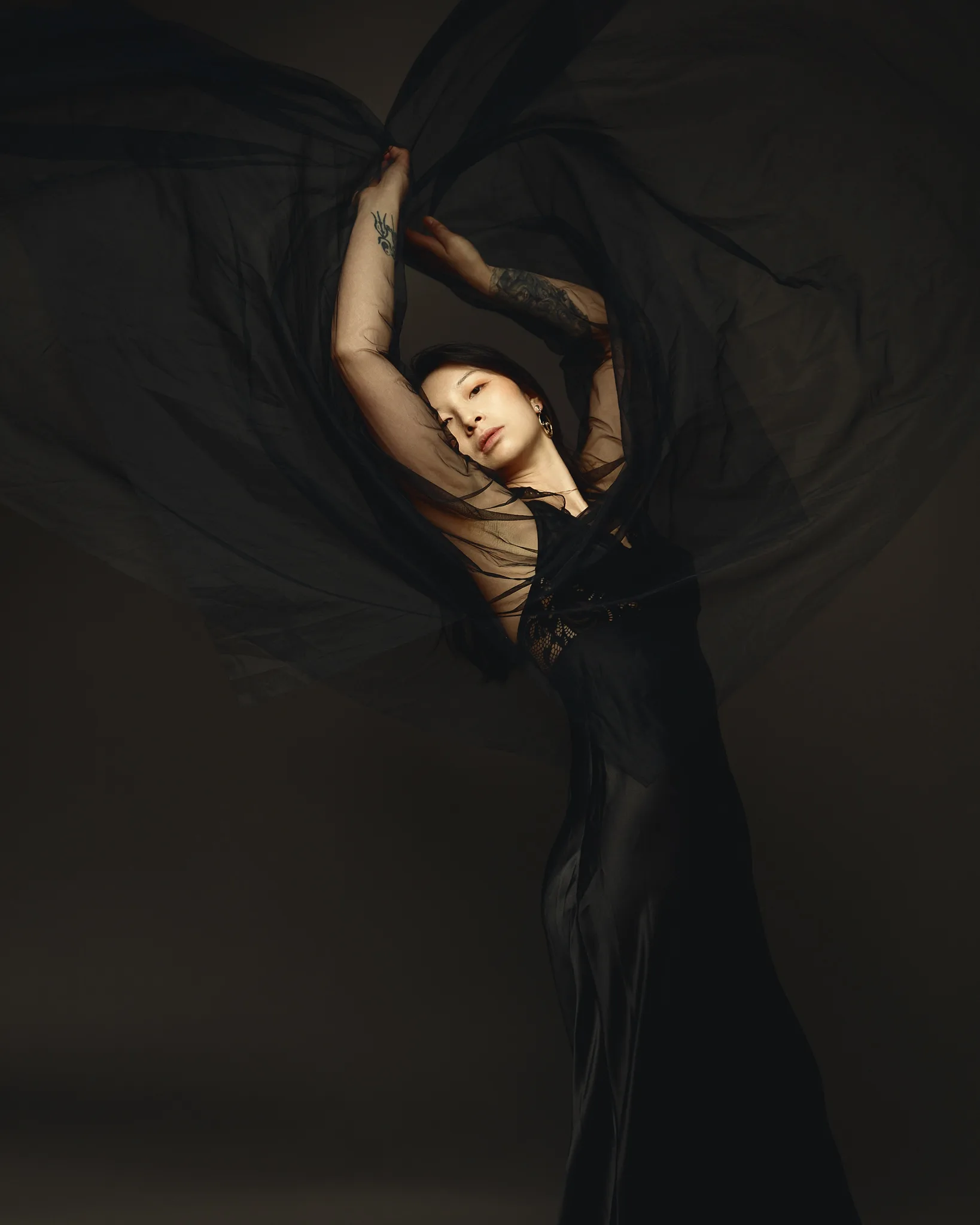
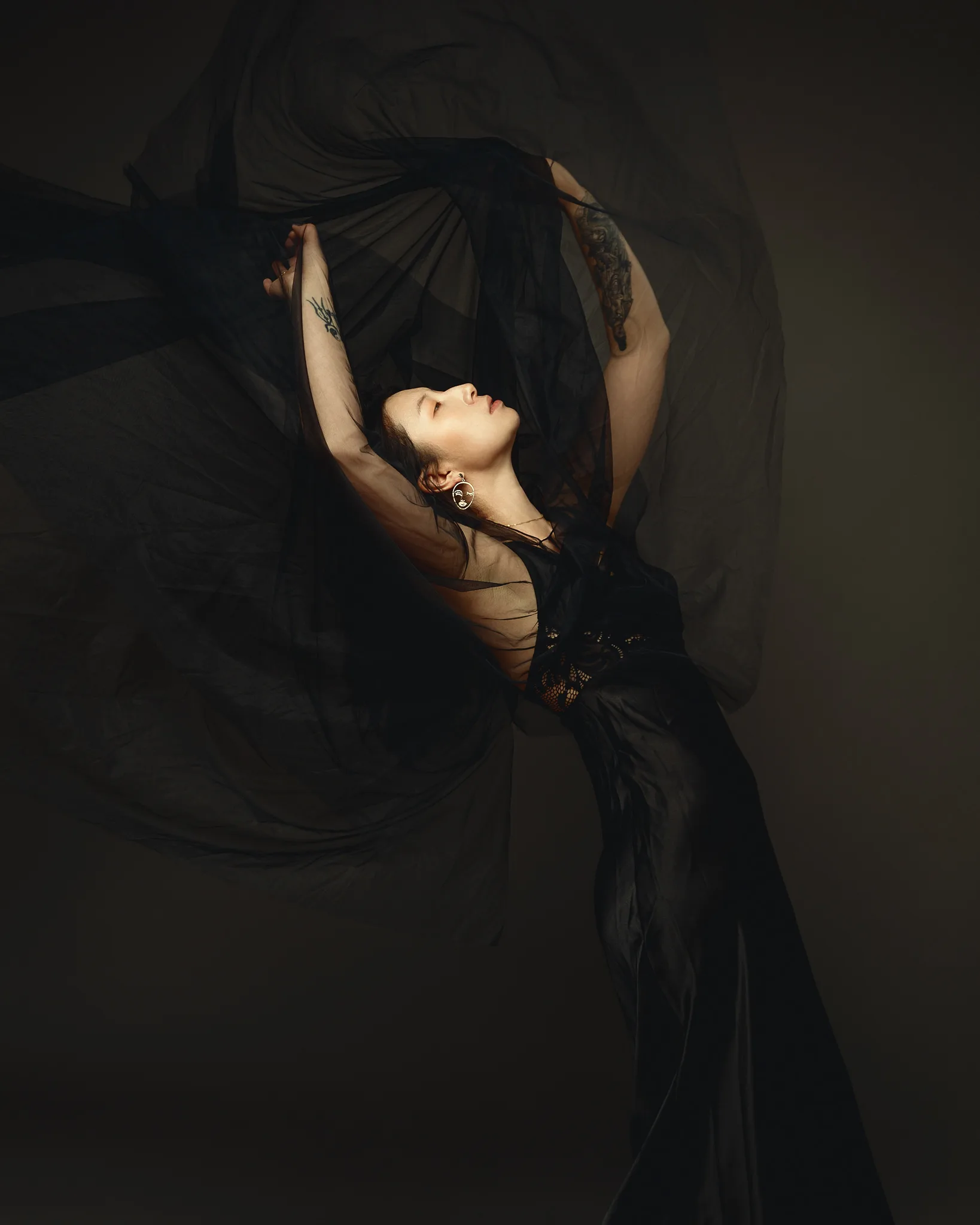
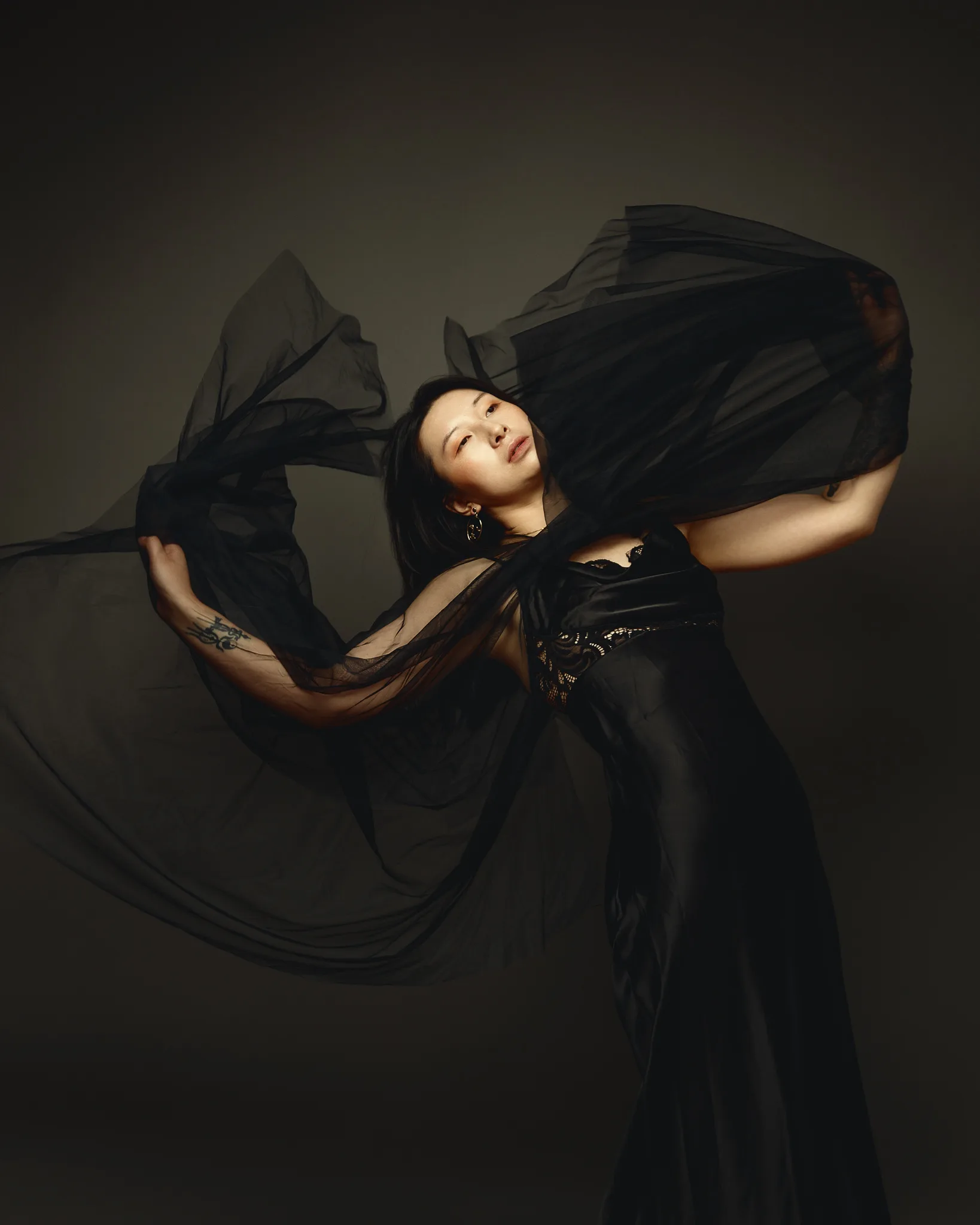
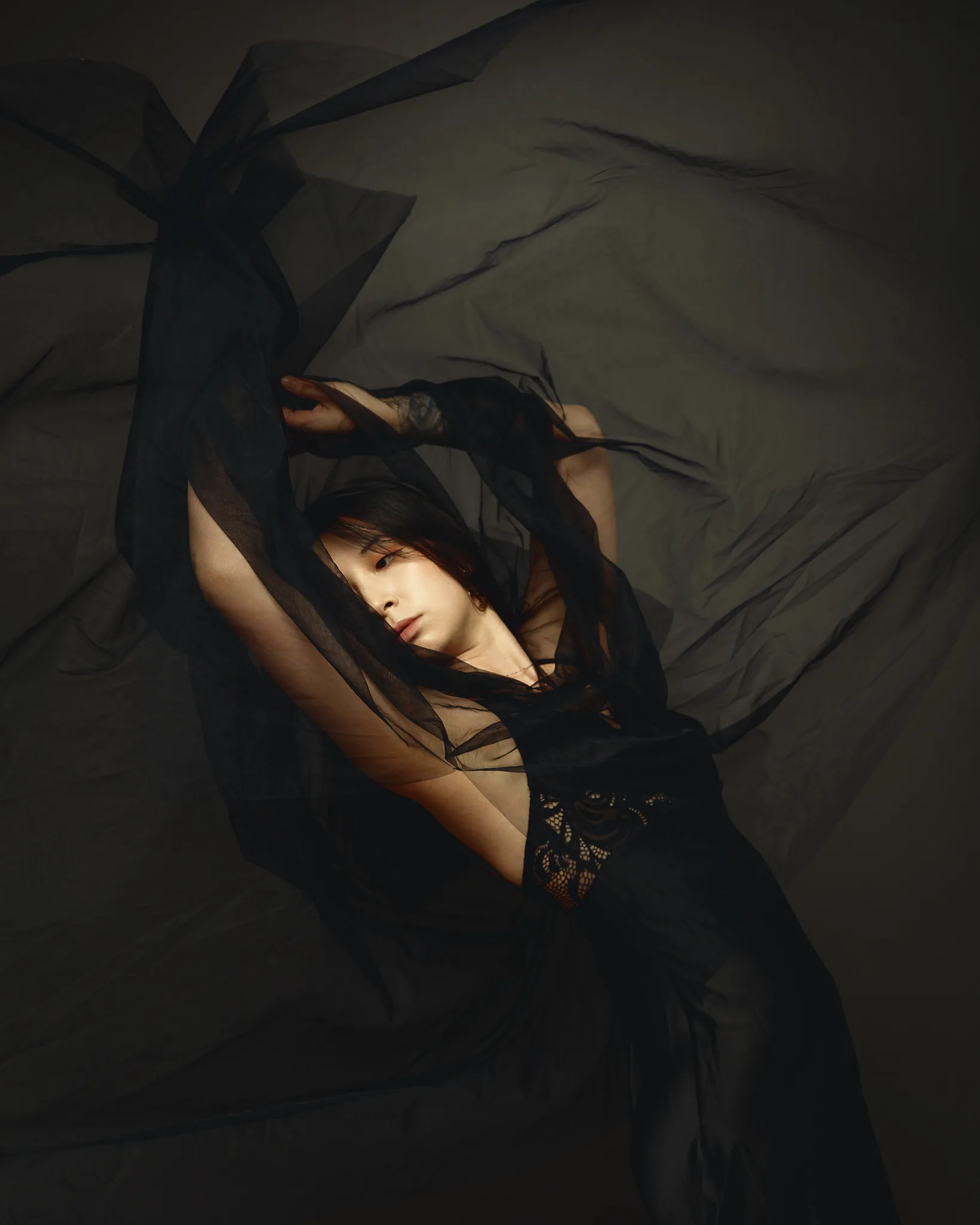
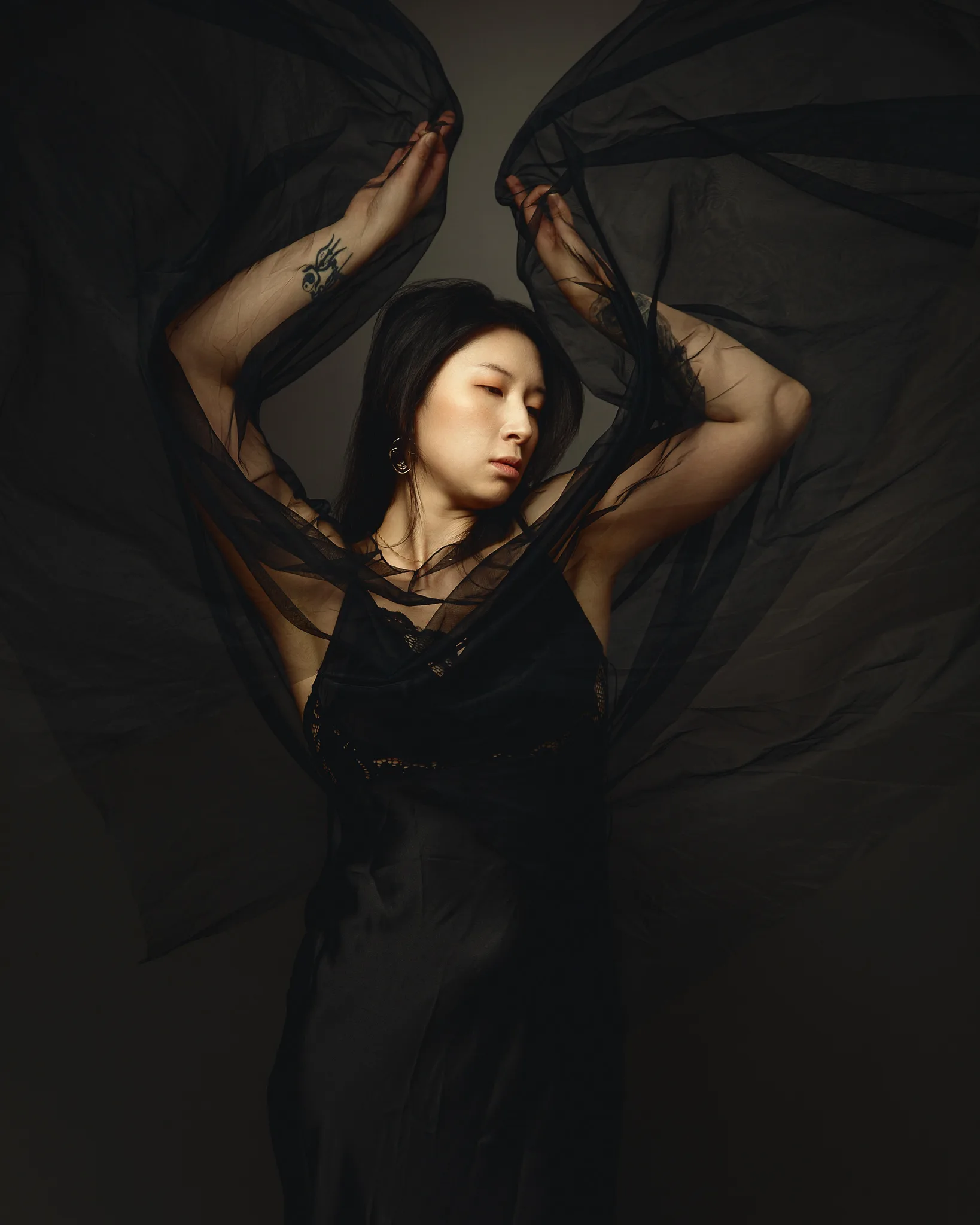
Once we had the still work in the bag, we opened it up. The next looks were built around movement and flowing fabric, which is the exact opposite discipline. A long panel of blush tulle, then black tulle over a black lace bodysuit, then a full black gown. All of it shot loose, with the fabric thrown and caught and thrown again.
Working with fabric in the air is largely about timing and repetition. The cloth does what it wants, you cannot pre-plan its shape, and you get one useful frame in perhaps eight or ten. The photographer’s job is to be ready and to keep the light doing what it should while everything else changes. The model’s job is harder. Karma had to launch the fabric, hold a line through her body, keep her face right, and do it again, and again, without the tenth attempt looking more tired than the first.
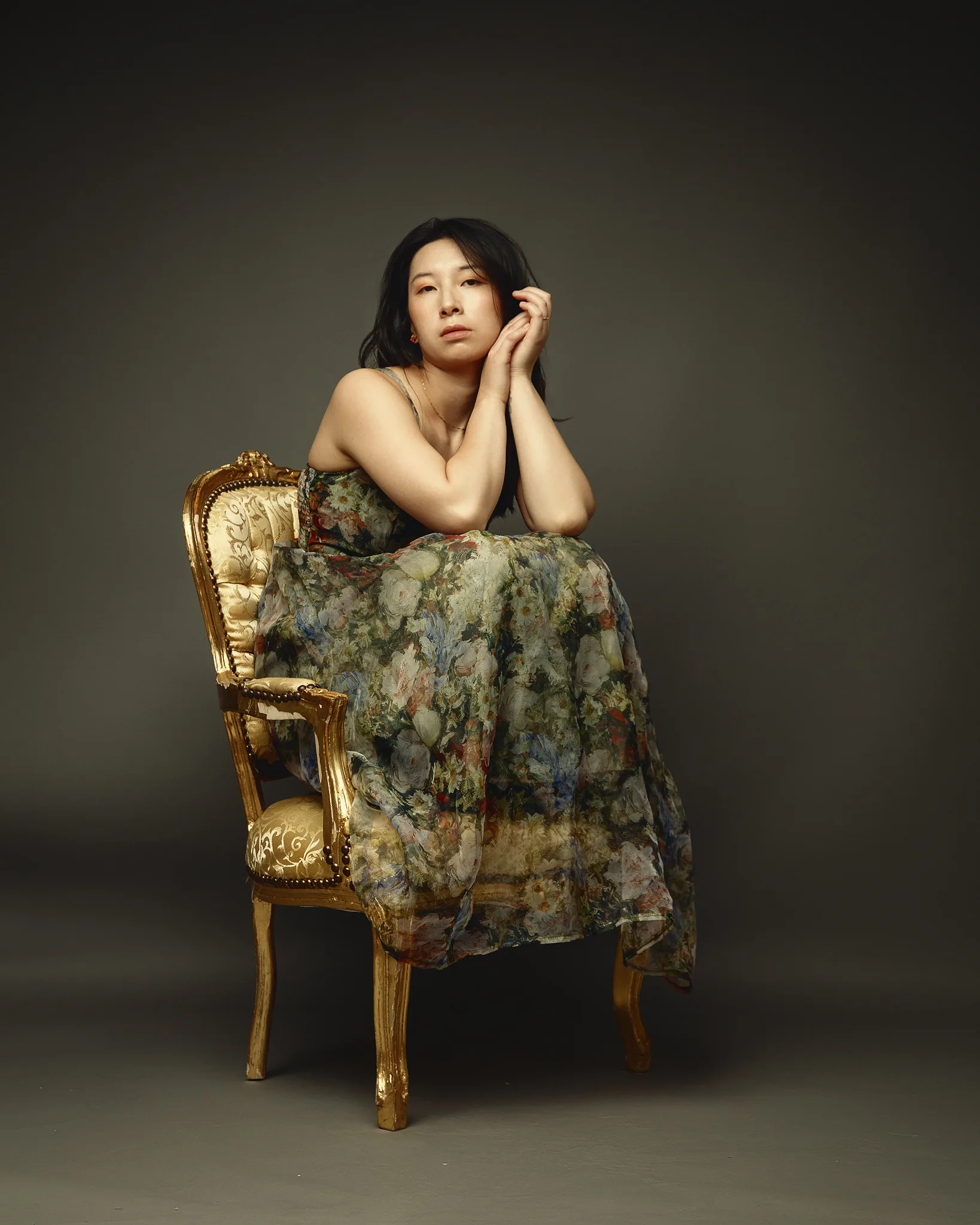
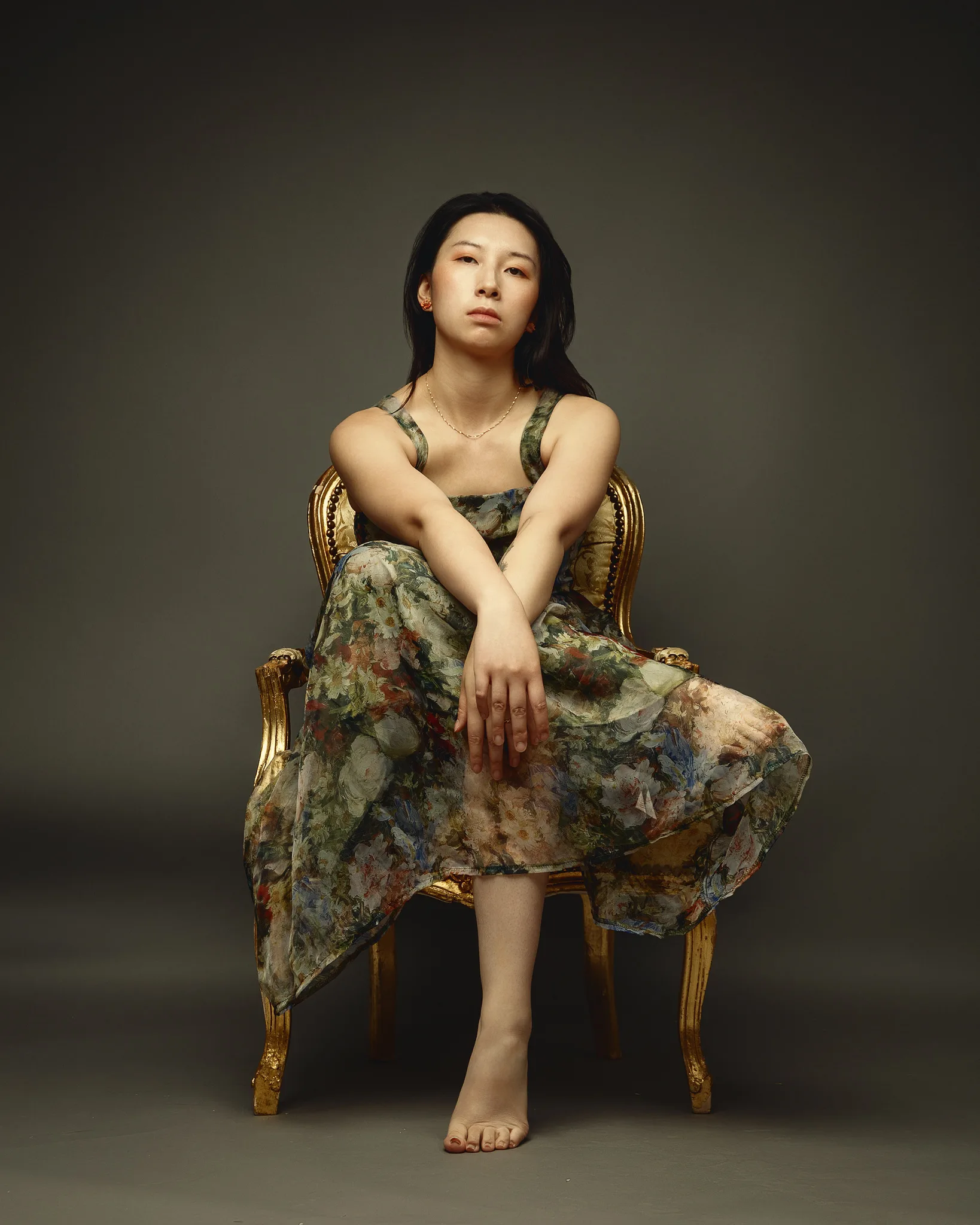
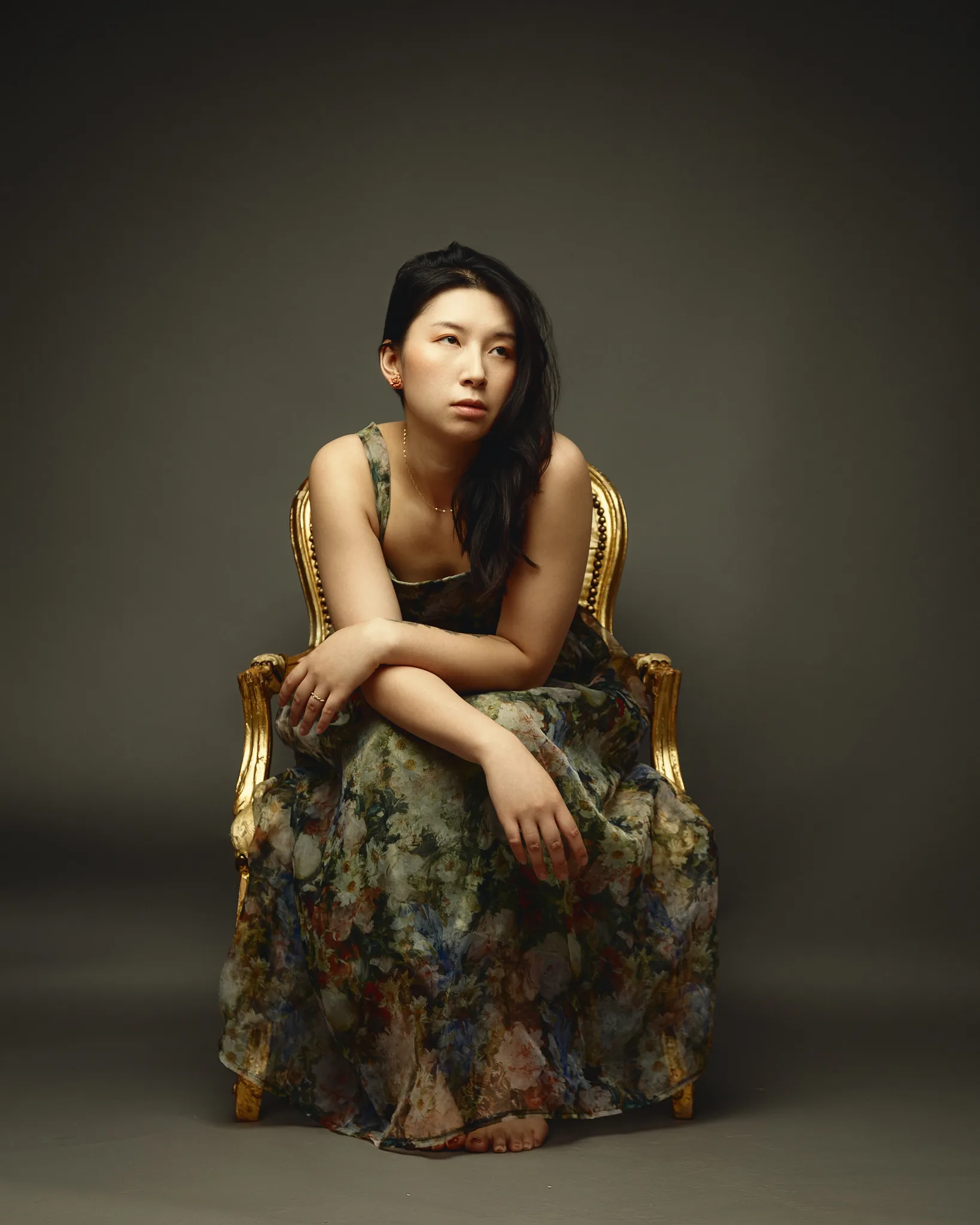
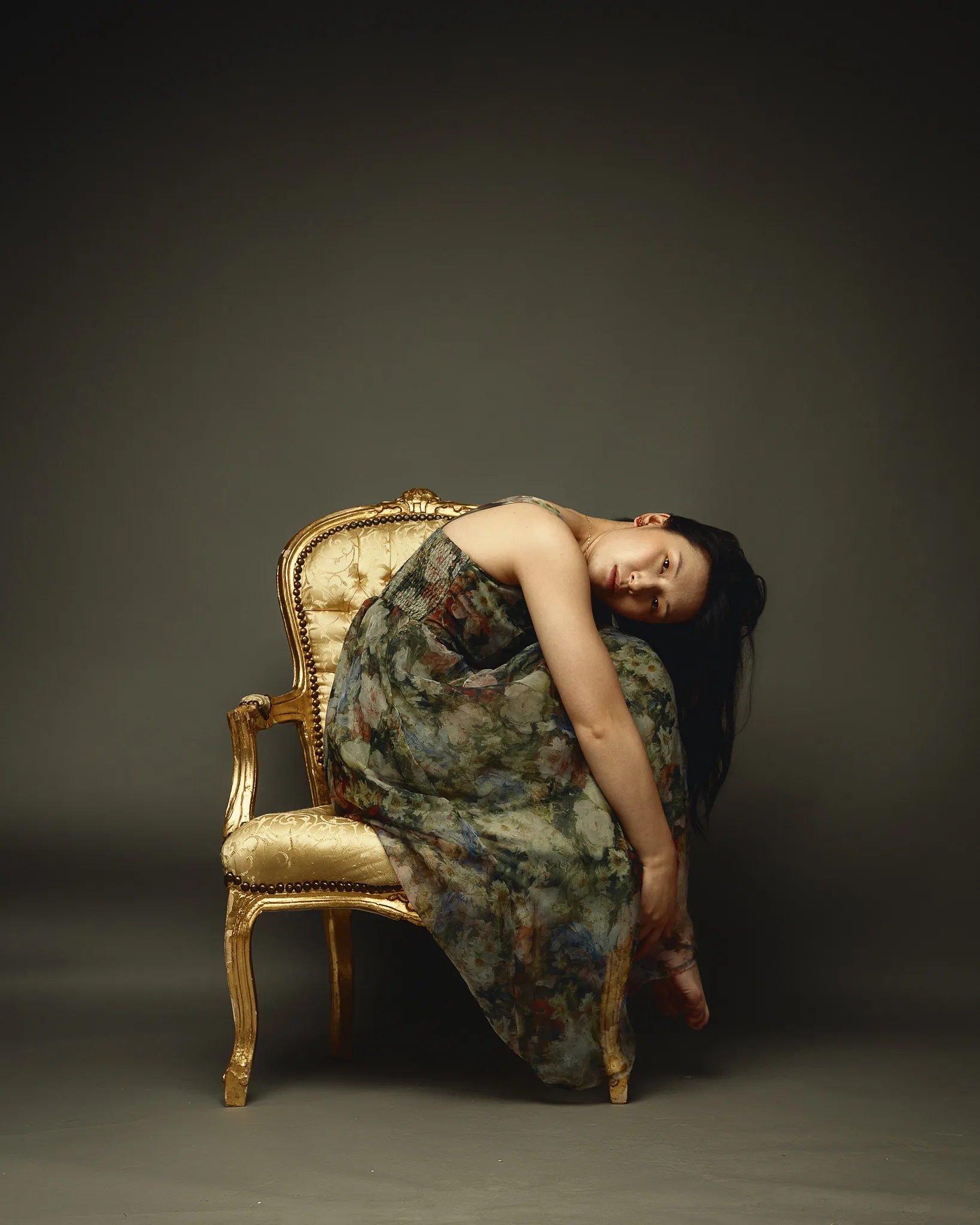
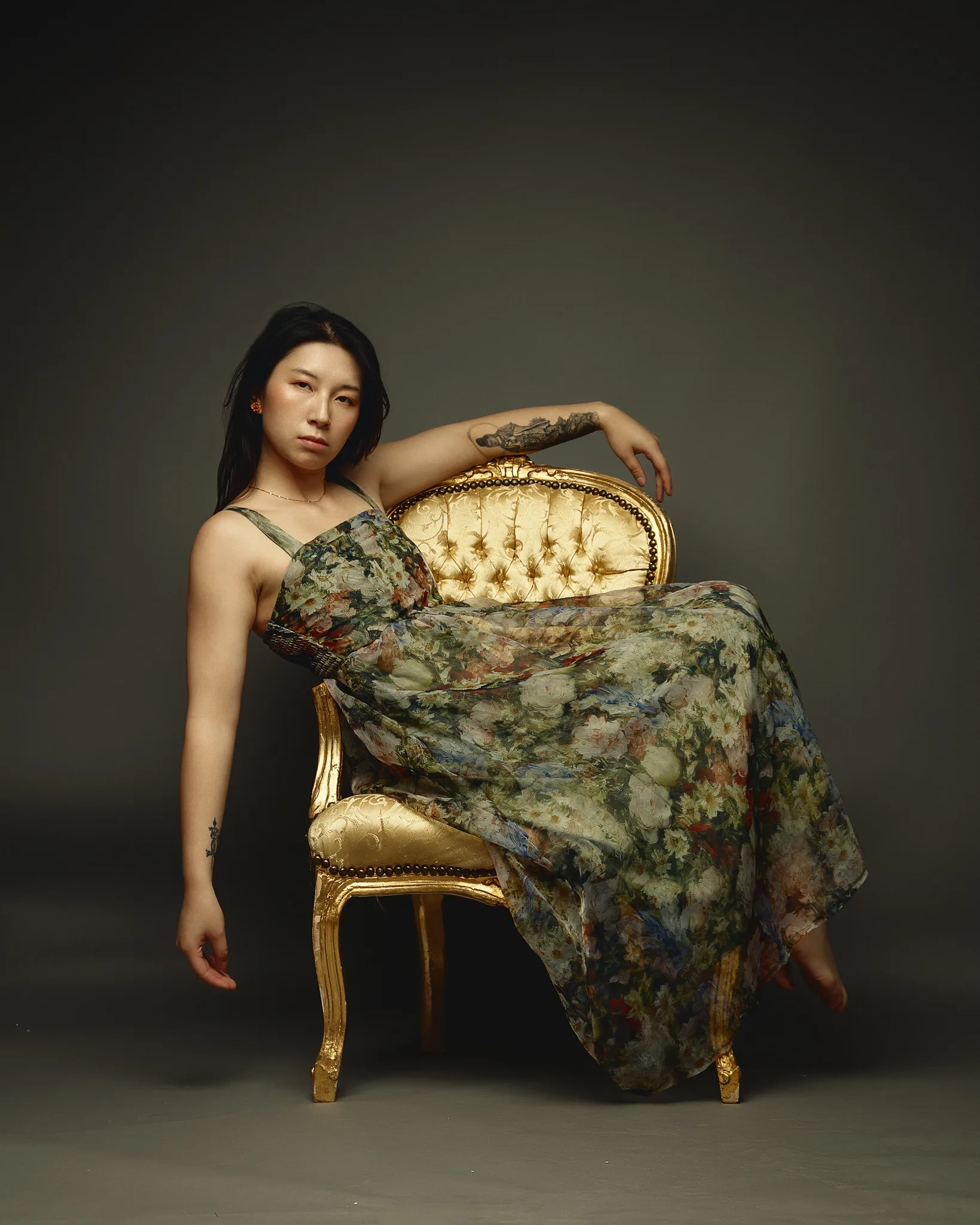
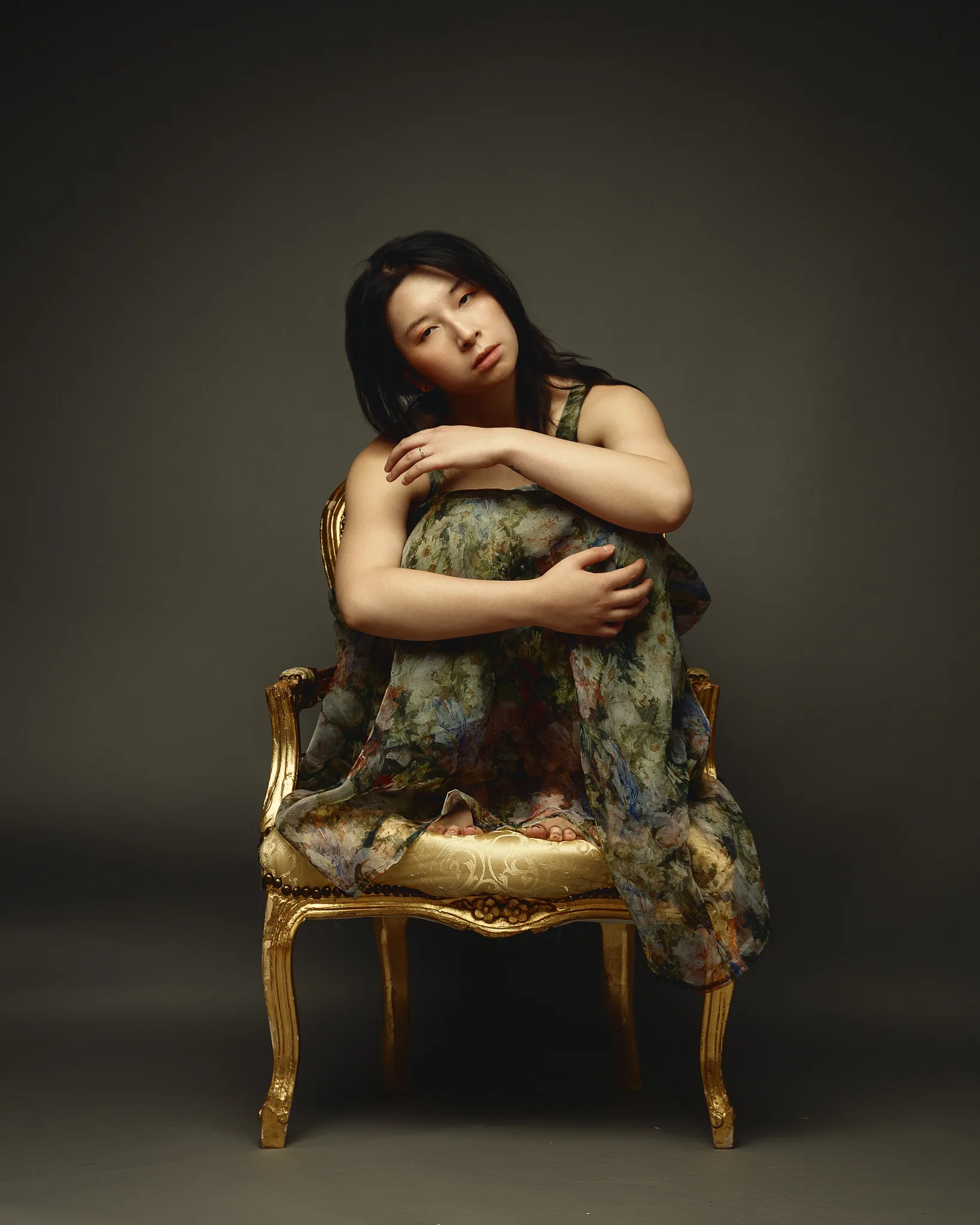
The last look was quieter again. A floral chiffon gown, seated on a gilt French chair, warm mid tone background. It brought the session back down after the movement work and gave us a set of calmer, more classical frames to finish on.
Karma Did Her Own Hair, Makeup and Styling
Every garment in this session was Karma’s, and she did her own hair and makeup for all of it. That is worth saying plainly, because the styling is doing an enormous amount of the work in these pictures. The brocade robe with its layers, the choice of earrings against a dark ground, the two different weights of tulle, the decision to go barefoot for the seated set. None of that came from me.
When someone turns up that prepared, the session changes shape. I am not problem solving on the day, I am photographing something that has already been thought through. It means the time goes into light and expression rather than into fixing a look that was not planned. Karma is a pleasure to work with for that reason as much as any other. She is talented, she takes it seriously, and she brings real ideas rather than waiting to be told what to do.
The Edit, and Why These Images Have a Tone to Them
The finished images carry a slight overall tone. It is subtle and I have kept it consistent across the set. The intention was to pull them a little away from a straight photographic look and towards something more painterly, closer to a portrait study than a photograph of a person in a nice outfit.
That treatment only works if the underlying picture earns it. A tone laid over a weak frame just looks like a filter. Laid over a well lit, well held portrait it does something useful, which is to slow the viewer down. It signals that the image is meant to be looked at rather than scrolled past. Getting there is a matter of restraint in the edit, and of resisting the urge to push it further than it needs.
What a Portrait Session Actually Is
I photograph a lot of headshots and personal branding work, and those sessions have a job to do. A portrait session is different. It is not about a website or a LinkedIn profile. It is about making a considered picture of a person, with proper attention paid to light, styling and expression, and coming away with something you would put on a wall.
People assume that kind of session is only for models. It is not. Most of the portrait work I do in the studio is for people who are not in front of a camera regularly and never expected to enjoy it. What makes it work is the same in every case. Decide what you want the picture to feel like before you start, plan what you are wearing rather than deciding on the day, and be willing to go slowly enough to get a small number of images right.
You do not need to arrive with an idea already formed. Working out what the session should be is part of what I do, and I would rather have that conversation properly beforehand than improvise it on the day. If you want to see how portrait sessions are structured and what they include, the details are on my portrait photography packages page.
How I Work With Models, and Why Chaperones Matter
Karma has worked with me three times now, so trust is not an issue between us. That is not the case for someone booking a photographer they have never met, so it is worth setting out how I work.
There is no physical contact between me and any model during a shoot. If a pose needs adjusting, I describe it or demonstrate it from where I am standing. I do not touch a model to move them, and there is no situation in which that is necessary.
I encourage every model to bring a chaperone. A friend, a partner, a parent, anyone they trust. The offer is made before the shoot whether or not it has been asked for, and it stands even if the model decides in the end to come alone. Any photographer who refuses a chaperone, or who talks a model out of bringing one, has told you something important about themselves. There is no legitimate professional reason to object.
A model’s safety is not something they should have to negotiate for. The right photographer will explain the whole thing clearly in advance, answer every question without irritation, and have no problem at all with someone else being in the room.
What Comes Next
We already have the next one planned. Karma is a violinist and a pianist, and there is an obvious set of pictures in that which neither of us wants to rush. We are holding off until the summer season is behind us and shooting it in the autumn or winter, when the light and the mood suit it better. I am looking forward to it.
There is also a behind the scenes film from this session, which shows how the fabric work was actually made and how much repetition sits behind the frames that ended up in the final set.
Portrait Photography in Suffolk
I work from my studio at Base Business Park in Rendlesham, on the former RAF Bentwaters site near Woodbridge. It is a straightforward drive from Ipswich, Framlingham, Saxmundham and Aldeburgh, and I regularly work with people from across Suffolk, Norfolk, Essex and Cambridgeshire. I also shoot on location where the idea calls for it.
If you are thinking about a portrait session, whether it is a single considered image or a set of defined looks like this one, I am happy to talk it through. You can reach me on 07884 366 342, by WhatsApp on the same number, or through the contact page on the website.
Get in touch
Have a question? Want to find out more?
Don’t be a stranger, just say hello.
 Bob Foyers
Photographer, Foyers Photography
Bob Foyers
Photographer, Foyers Photography
If you have not heard back within 24 hours, please check your spam folder for my reply. This is especially common with Hotmail, Gmail and Yahoo accounts.