
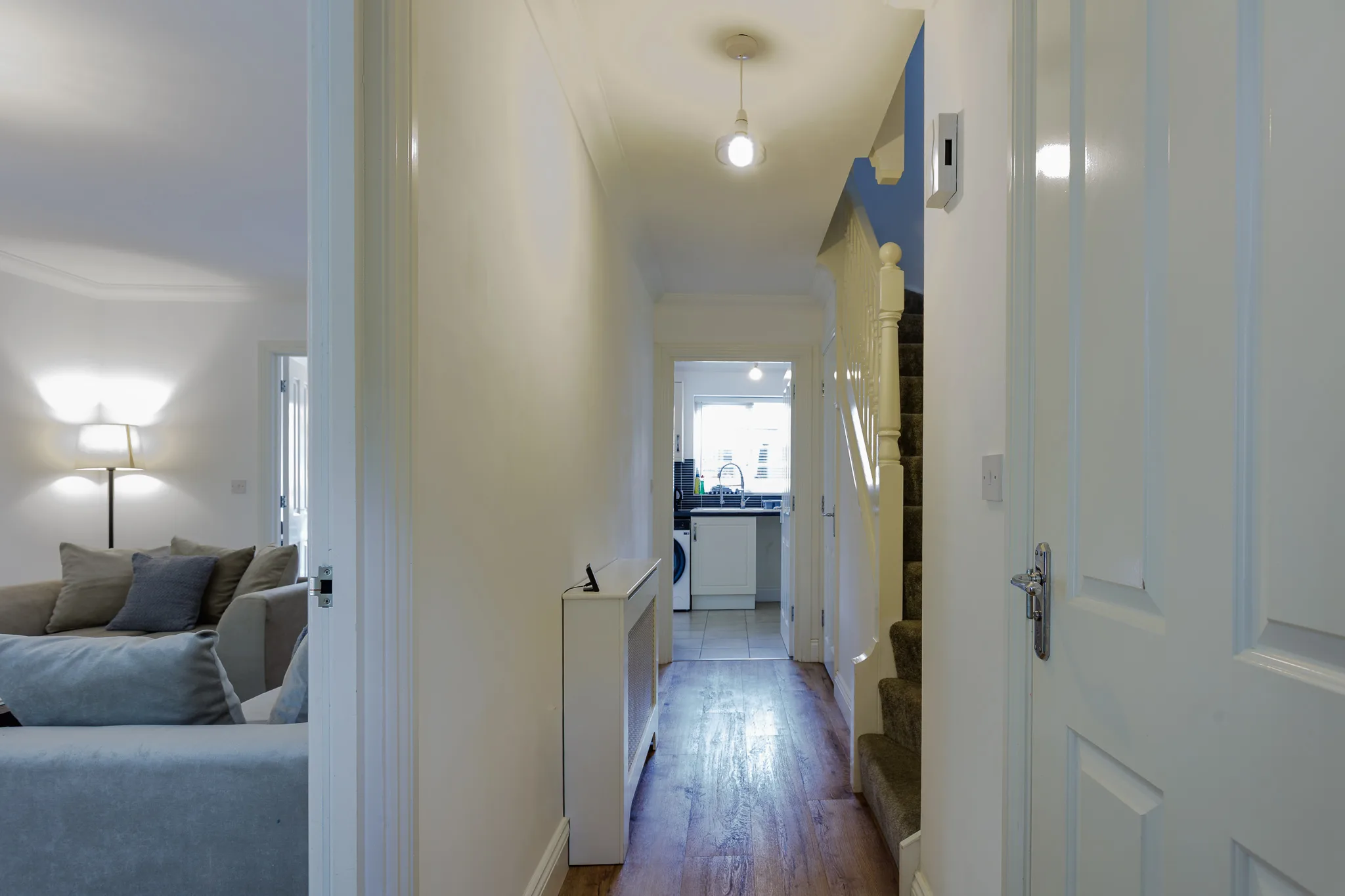
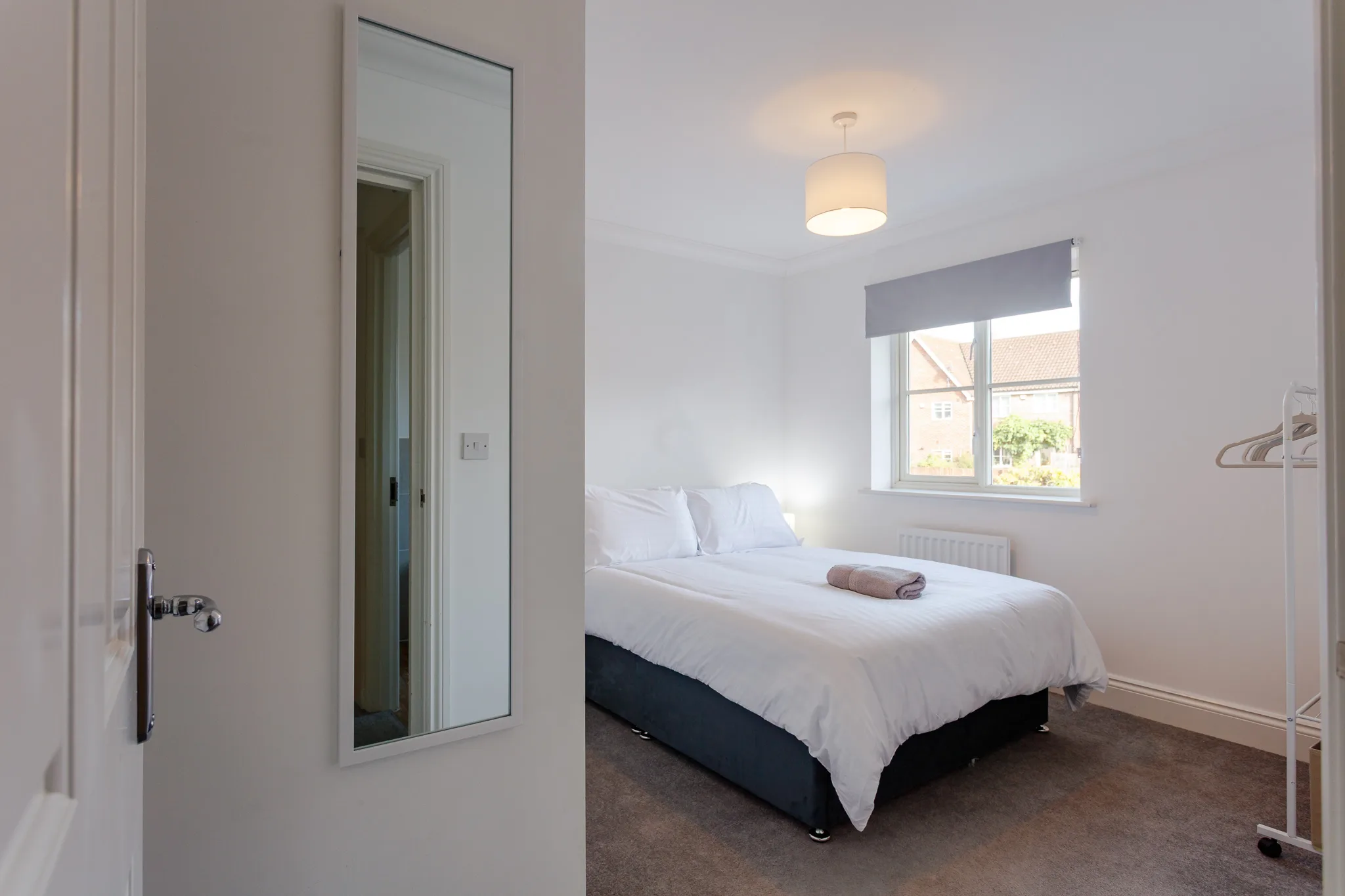
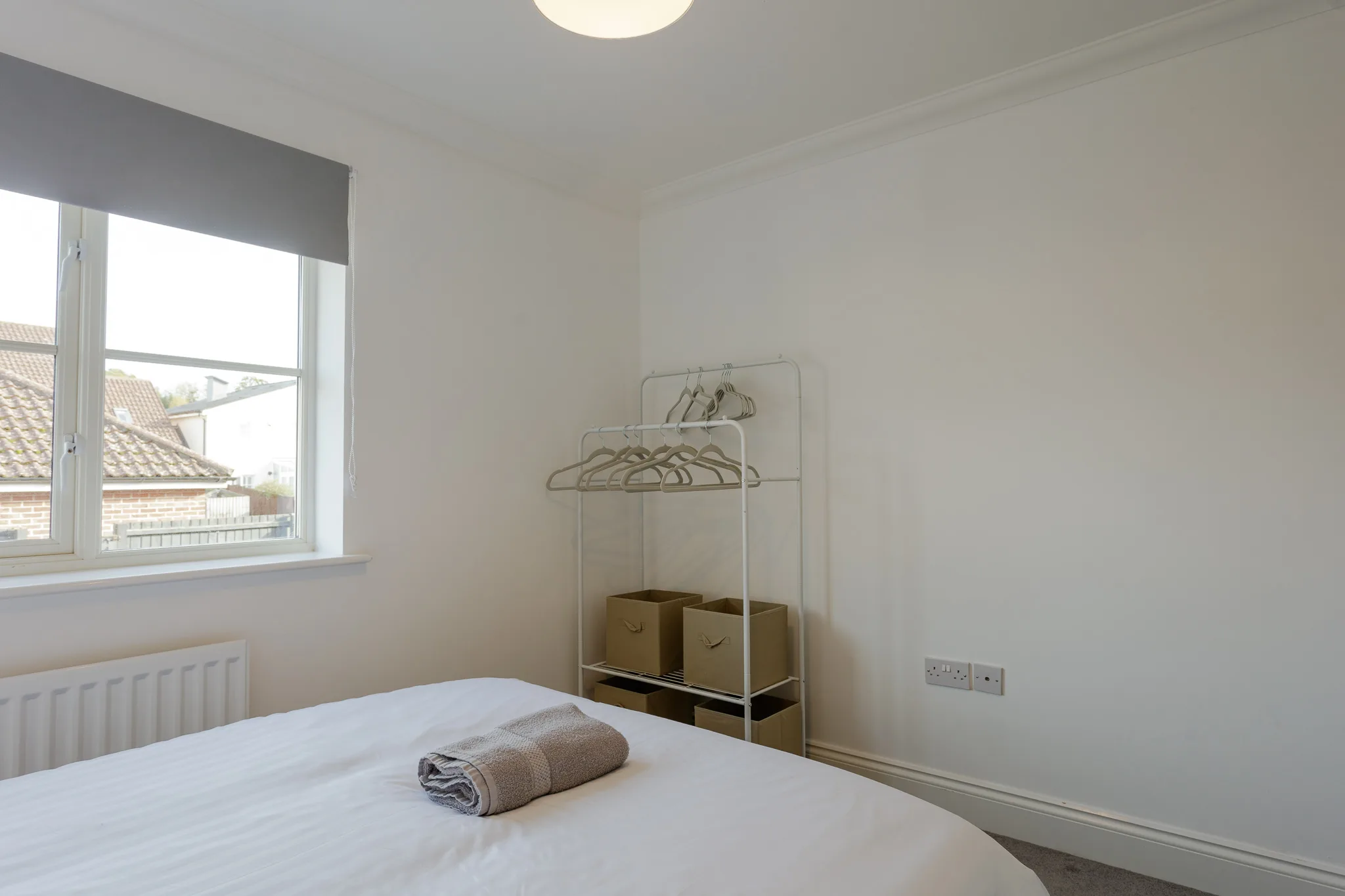
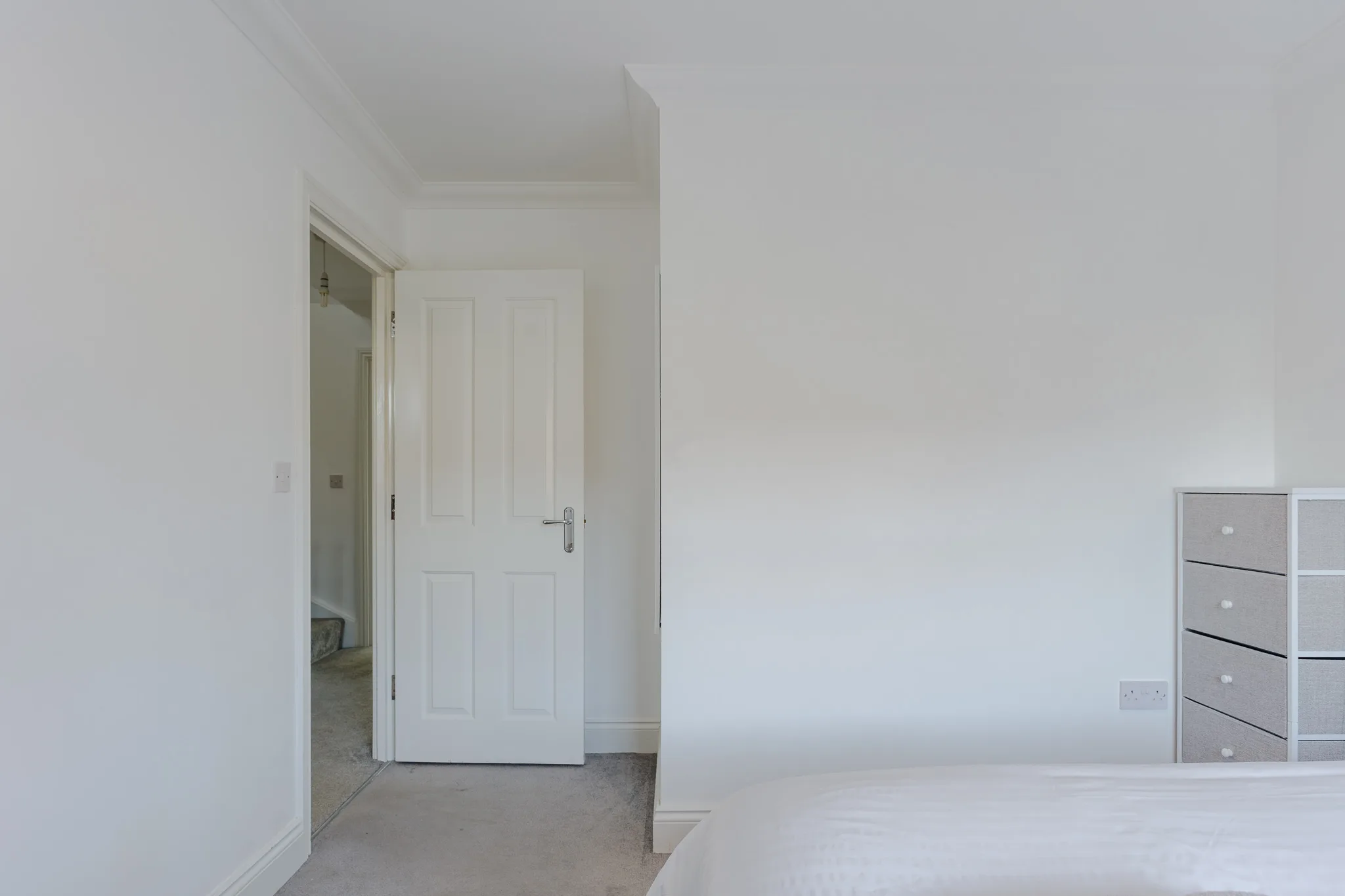
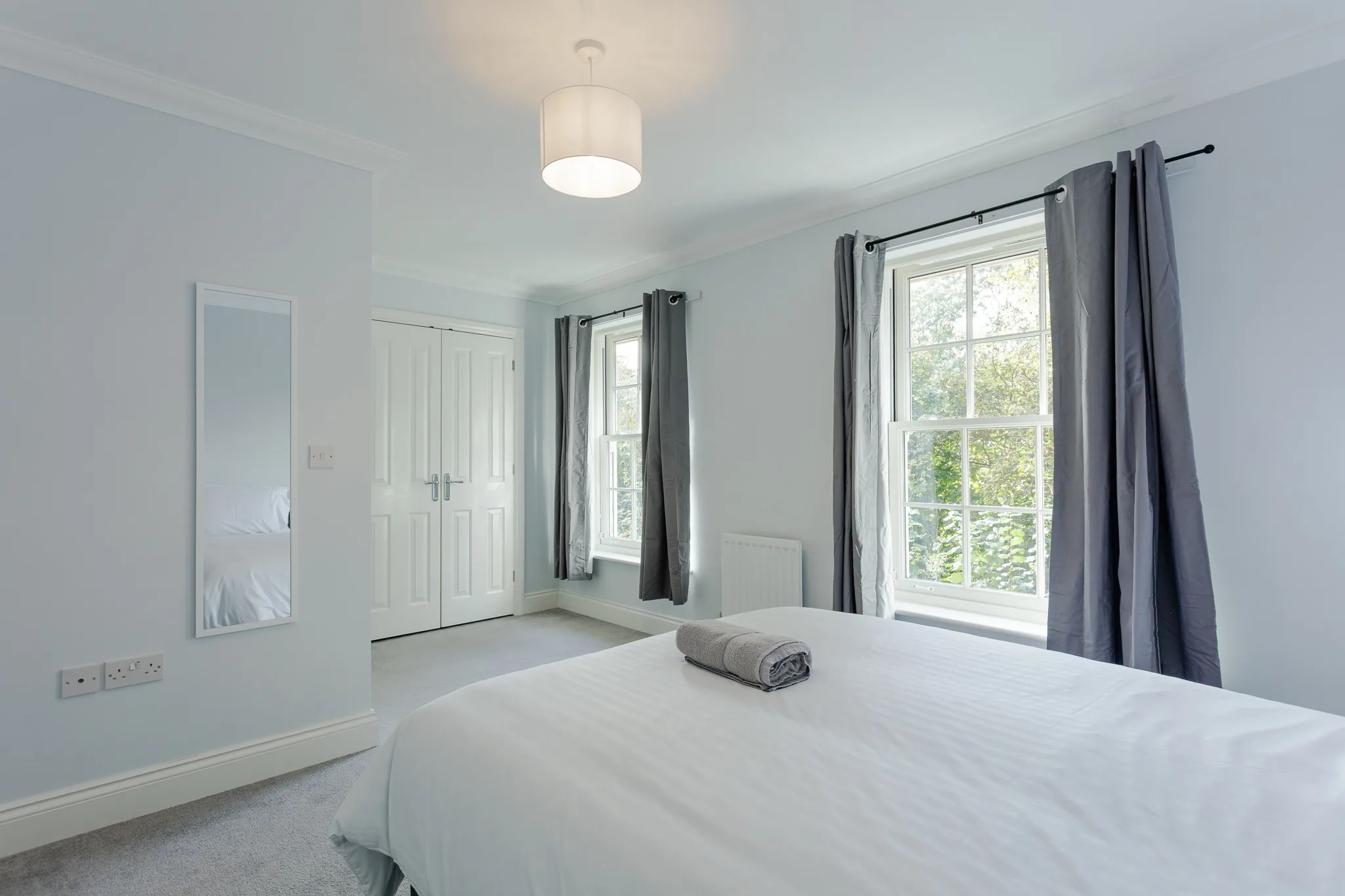
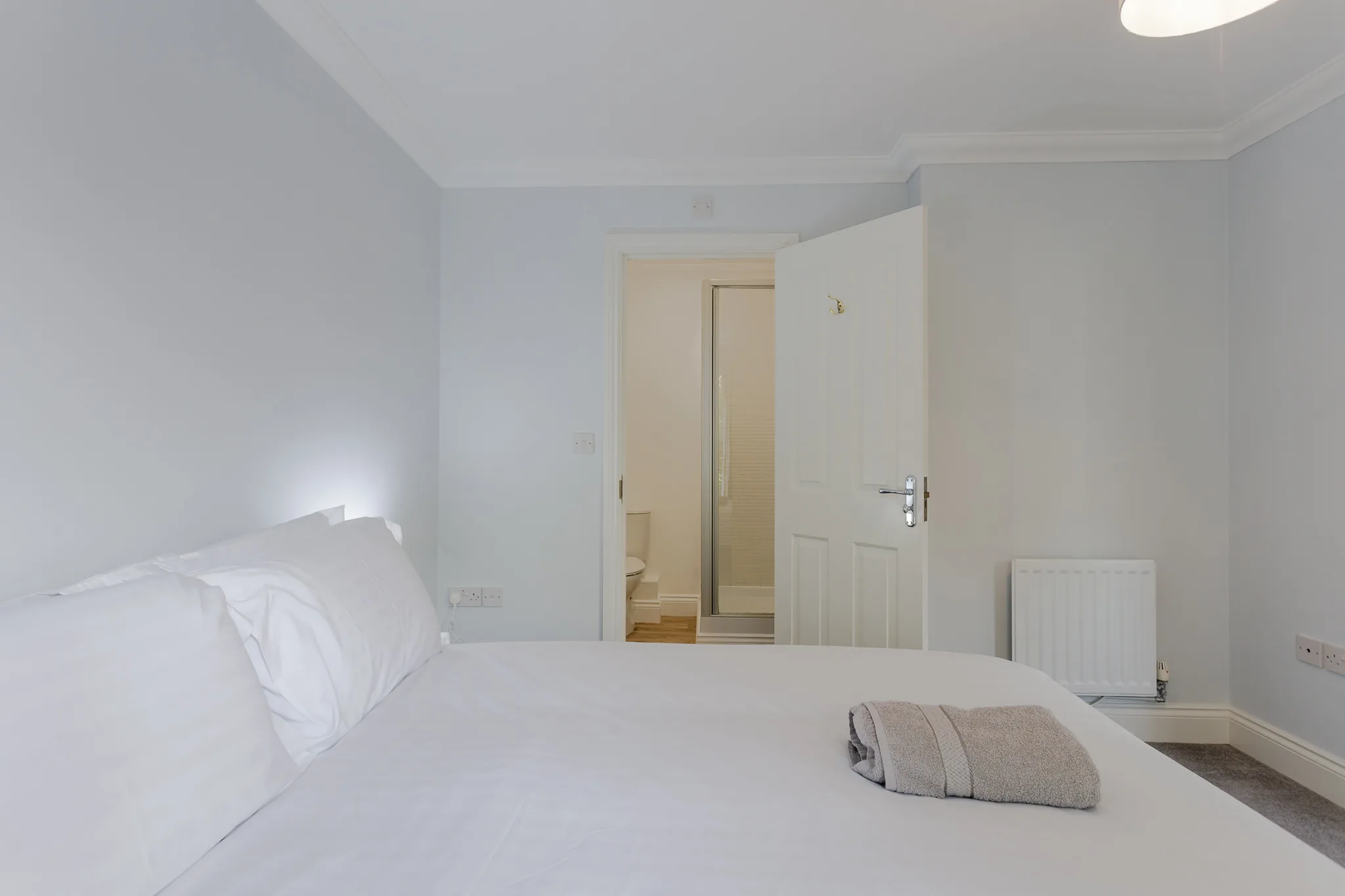
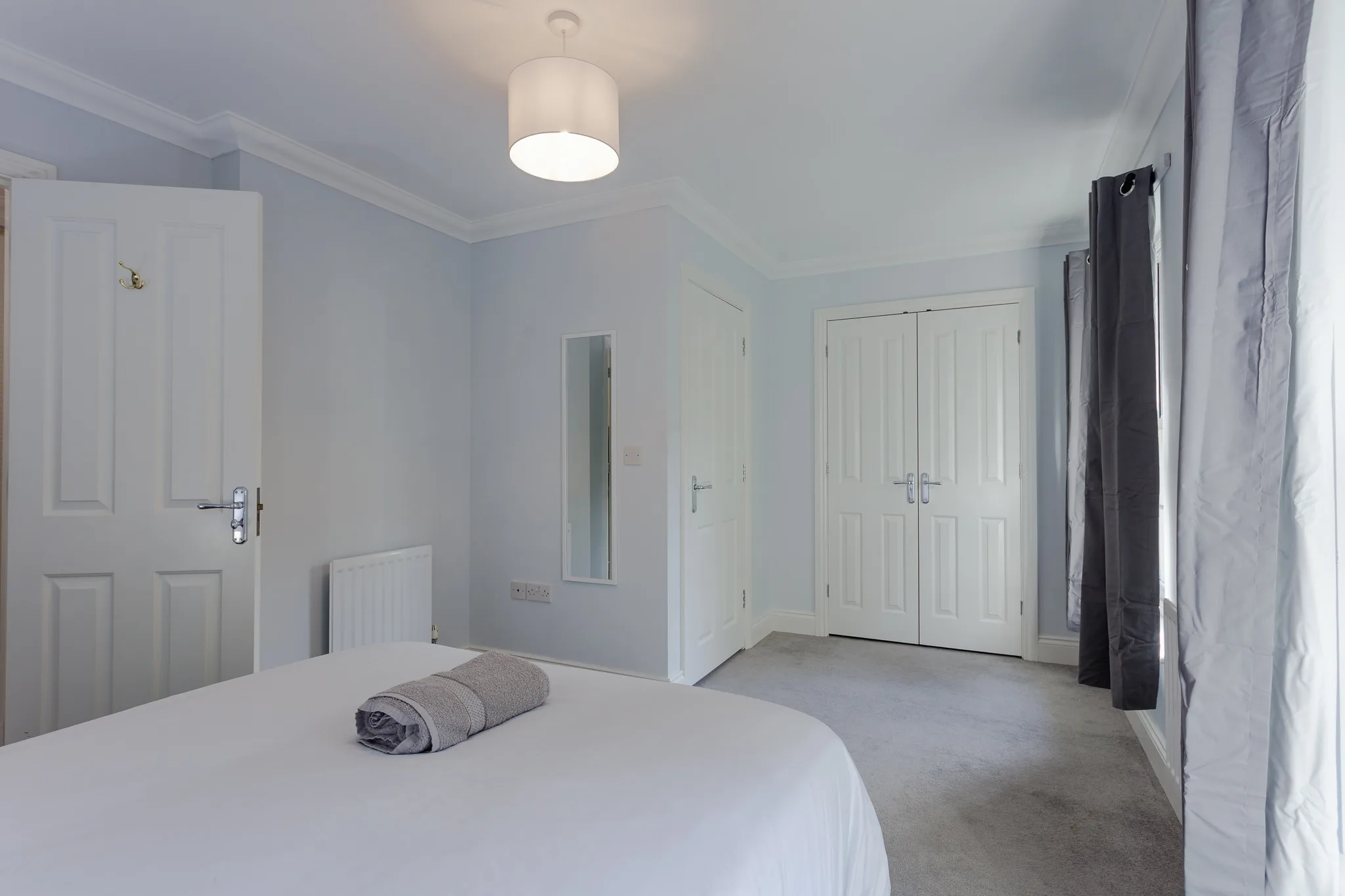
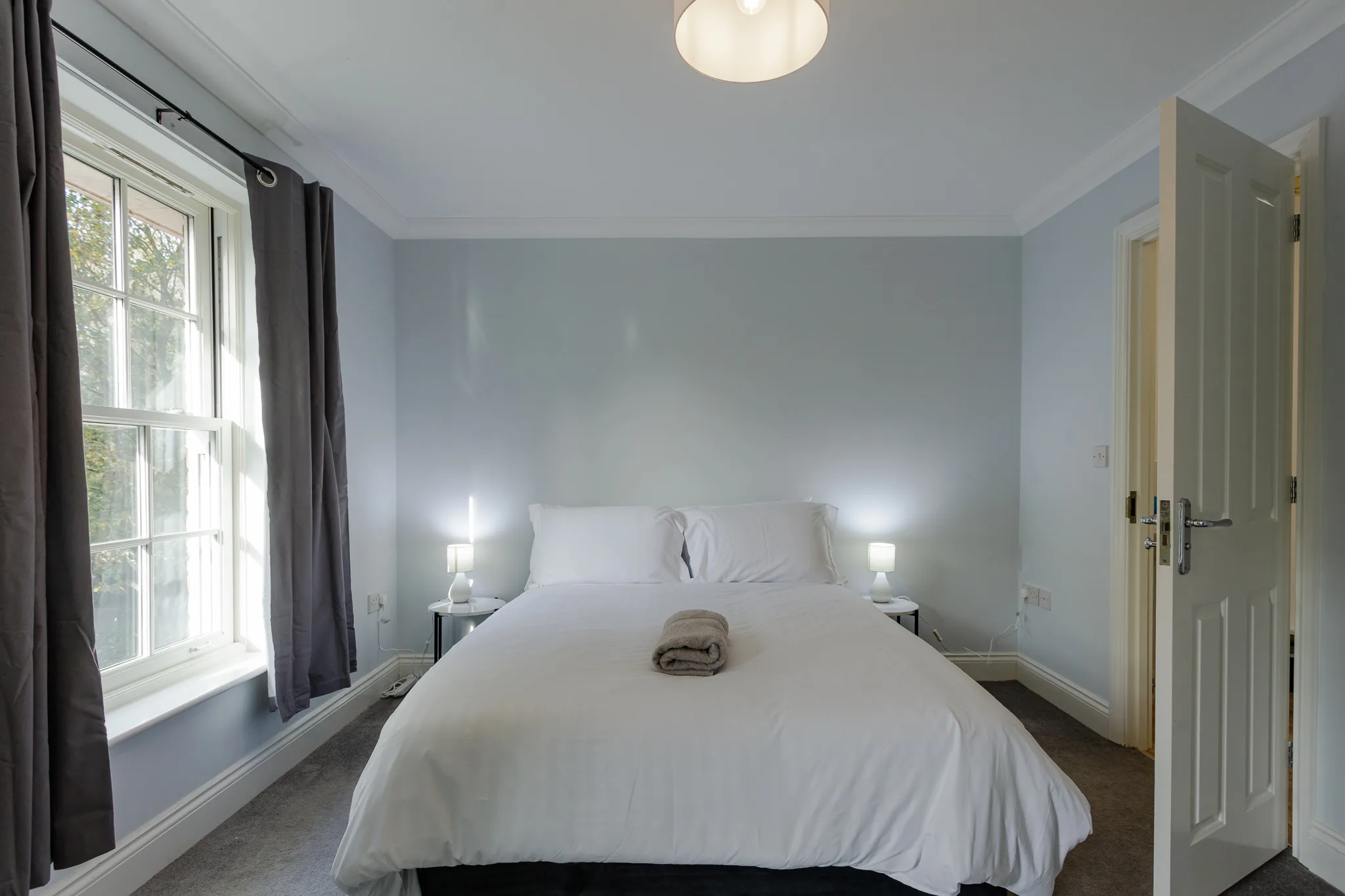
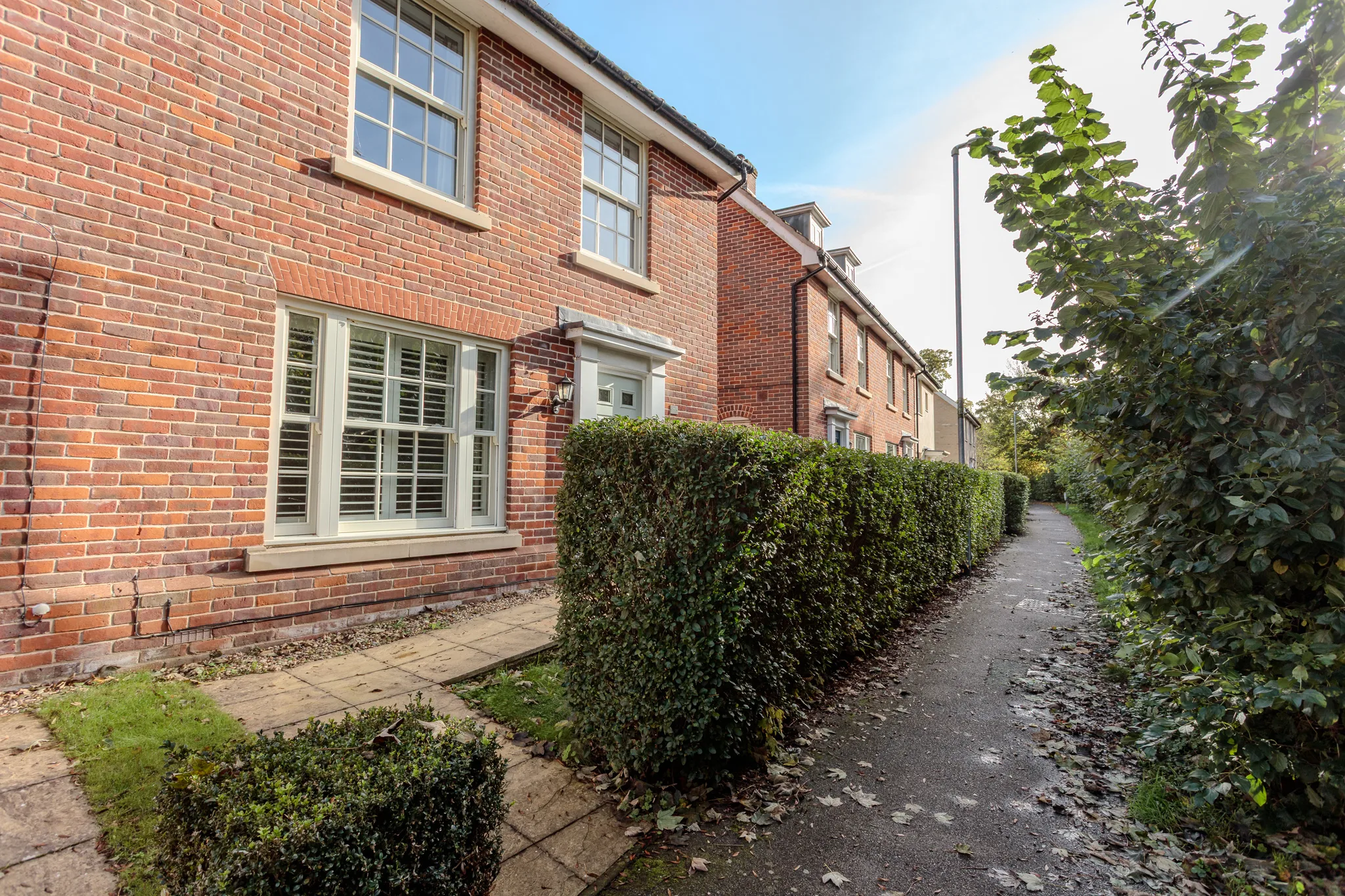
A new Airbnb listing has nothing to trade on. No reviews, no history, no guest snapshots in the gallery. Someone scrolling on their phone gives it about a second before they decide to tap or keep going, and in that second the only thing working for the property is the first photograph. That was the job at a three bedroom house on Fromus Walk in Saxmundham.
The client and the property
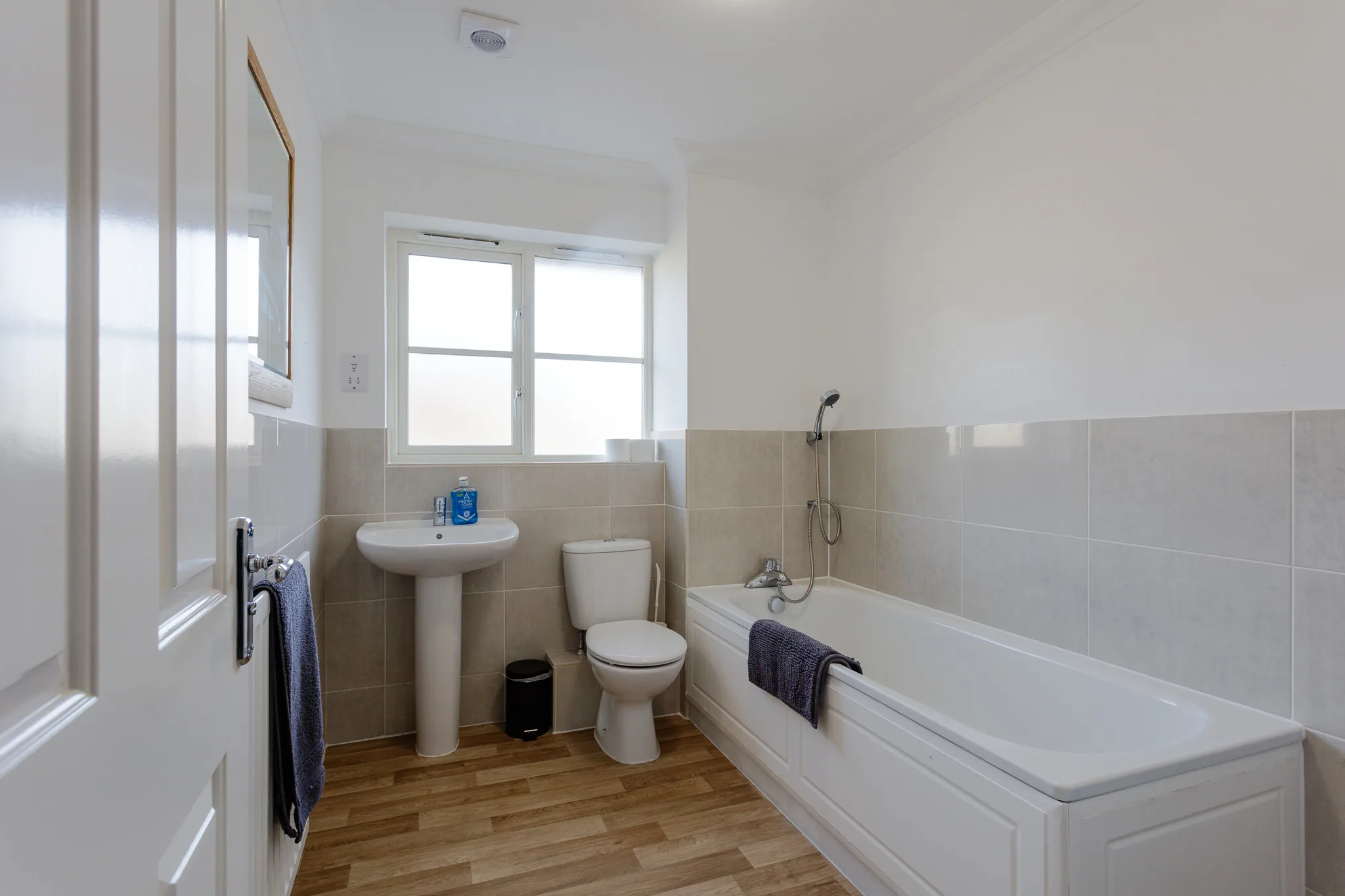
ML Short Stays asked me to photograph the house for their Airbnb listing. This is the third property I have photographed for them. They have been running serviced accommodation since 2021, with houses across the UK, and this one is aimed squarely at contractors and groups working on the Sizewell C project about twenty minutes up the road. Three bedrooms, three bathrooms, two of them en suite, free parking and a self check-in lockbox. It is a working house rather than a holiday cottage, and that changes what the photographs need to do.
What a contractor let has to prove
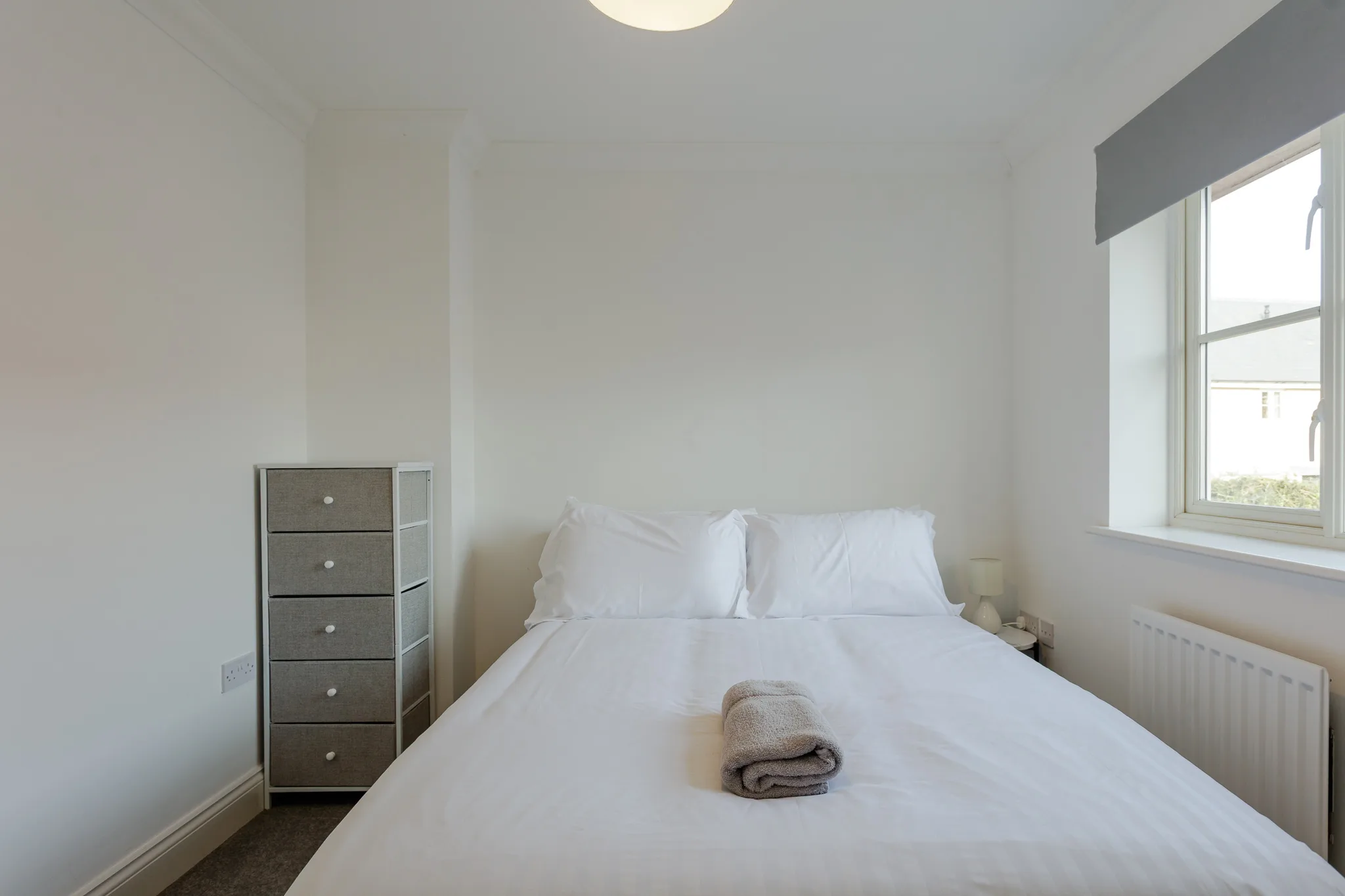
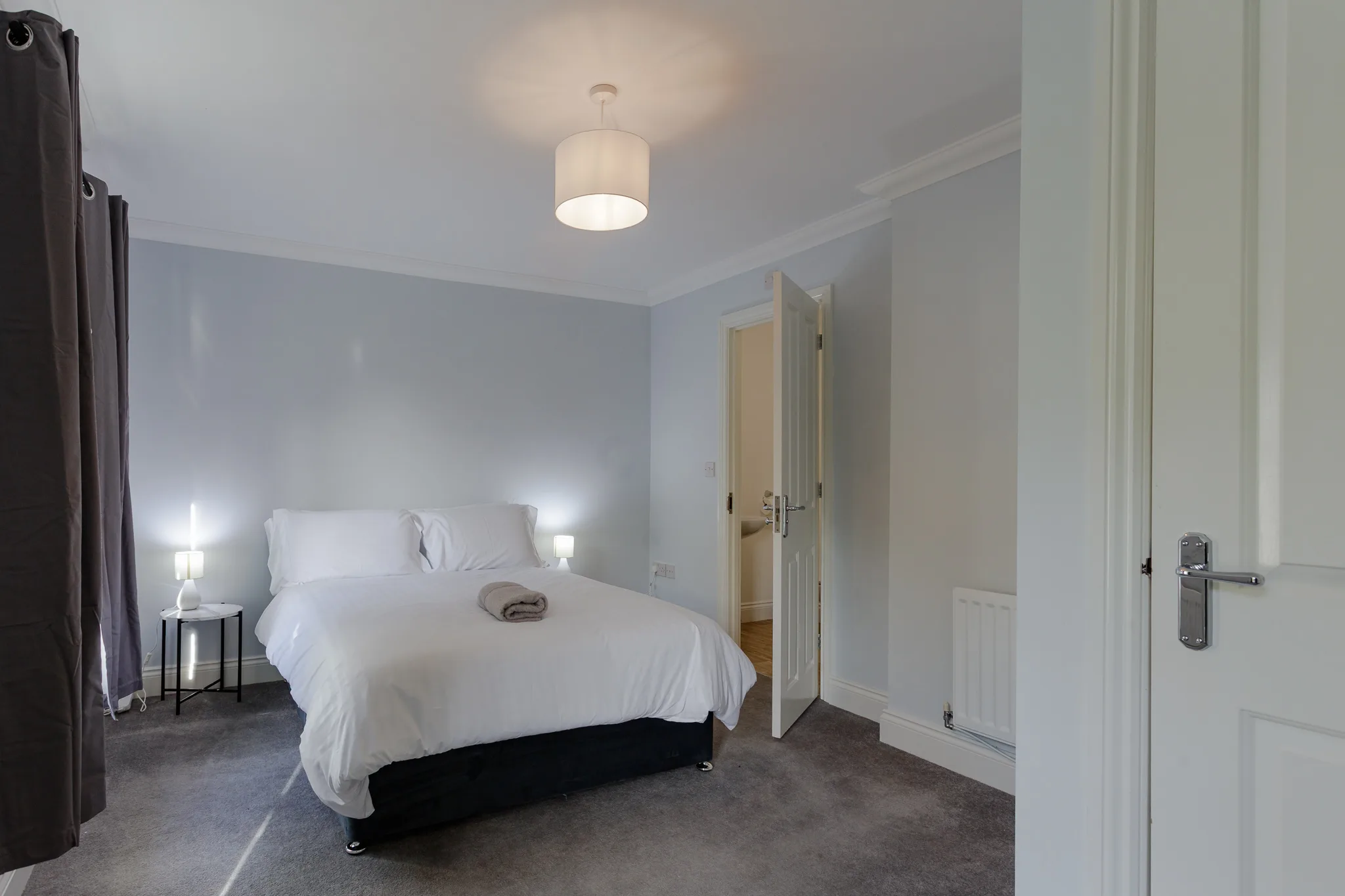
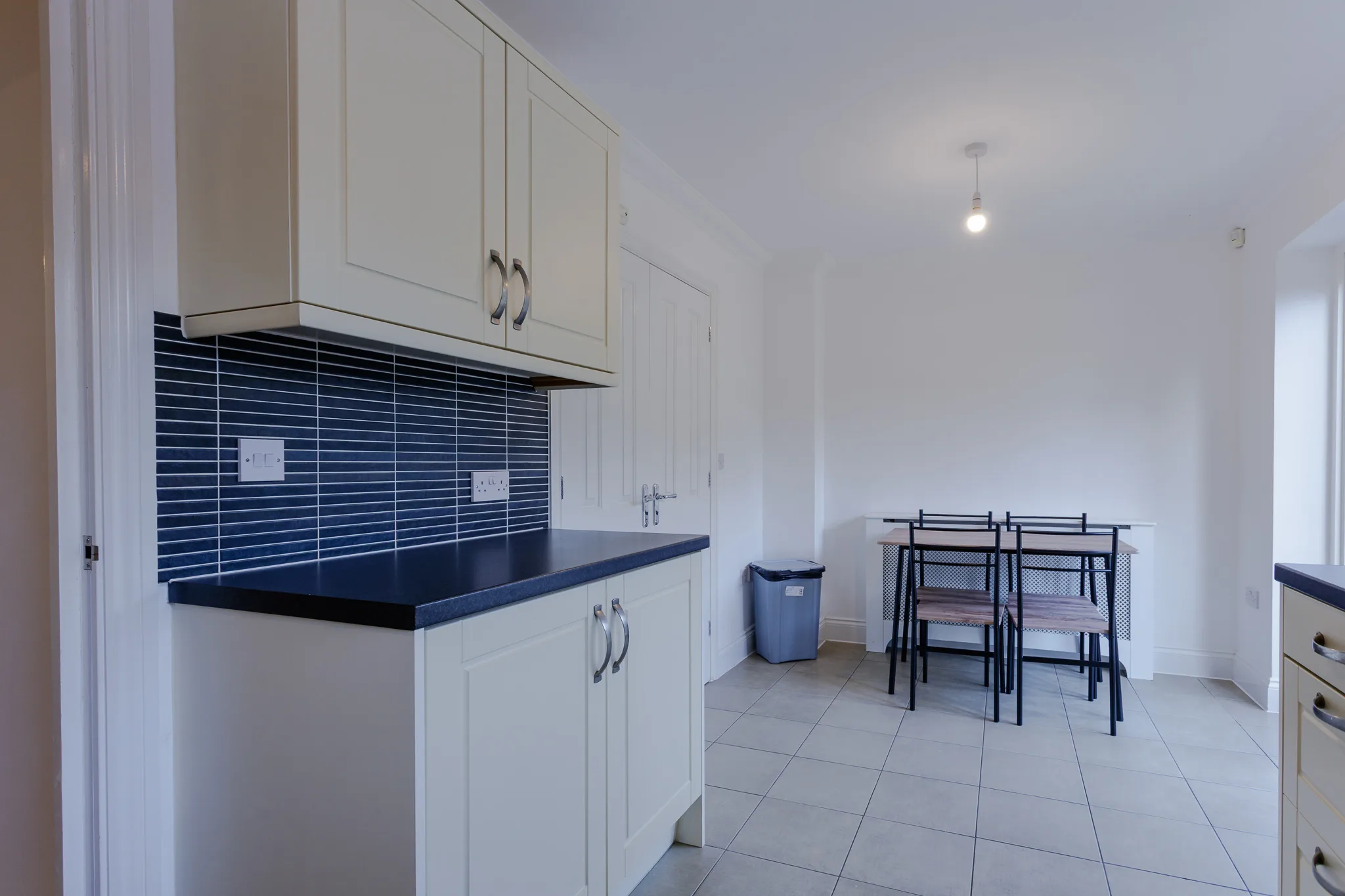
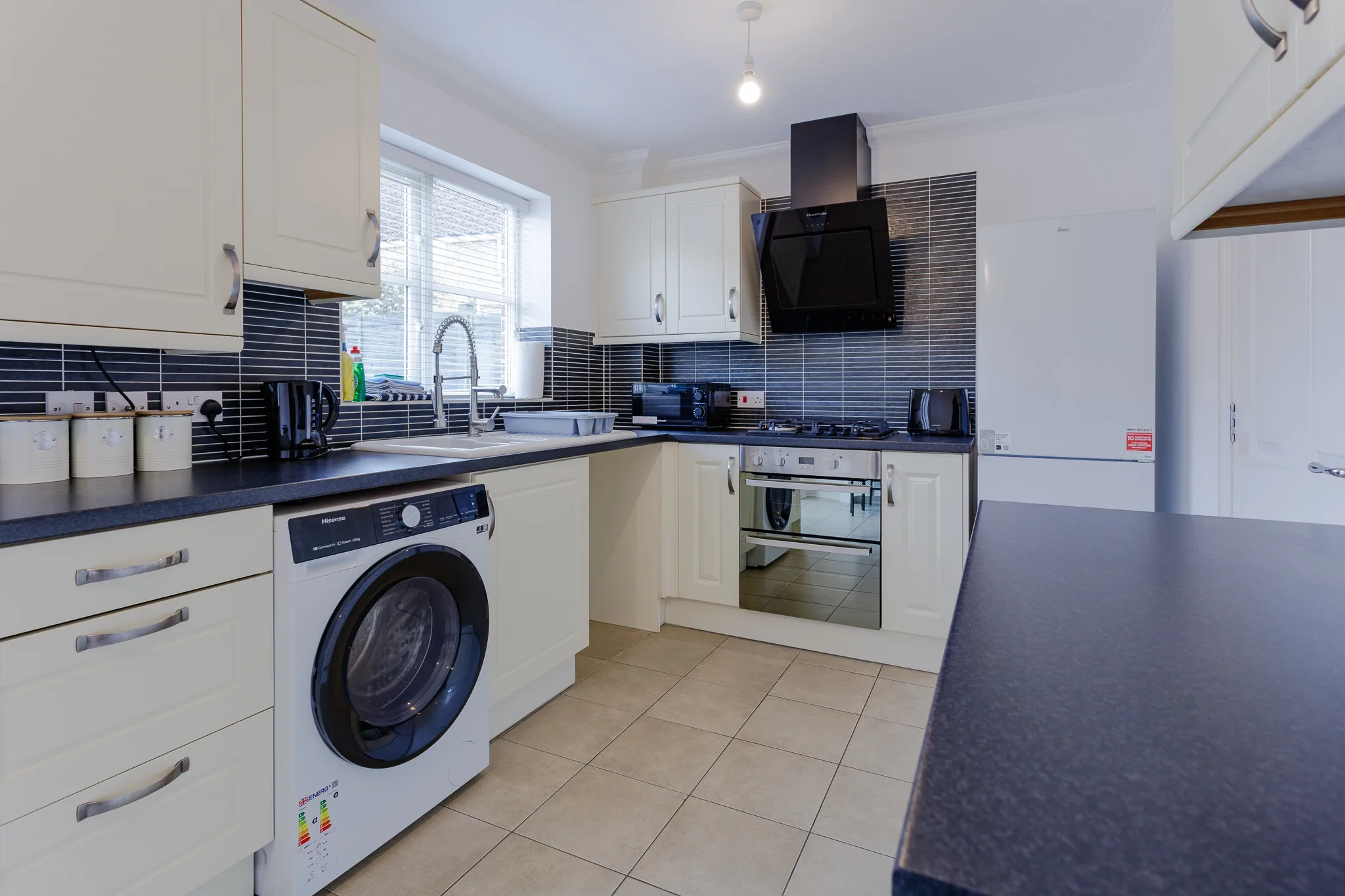
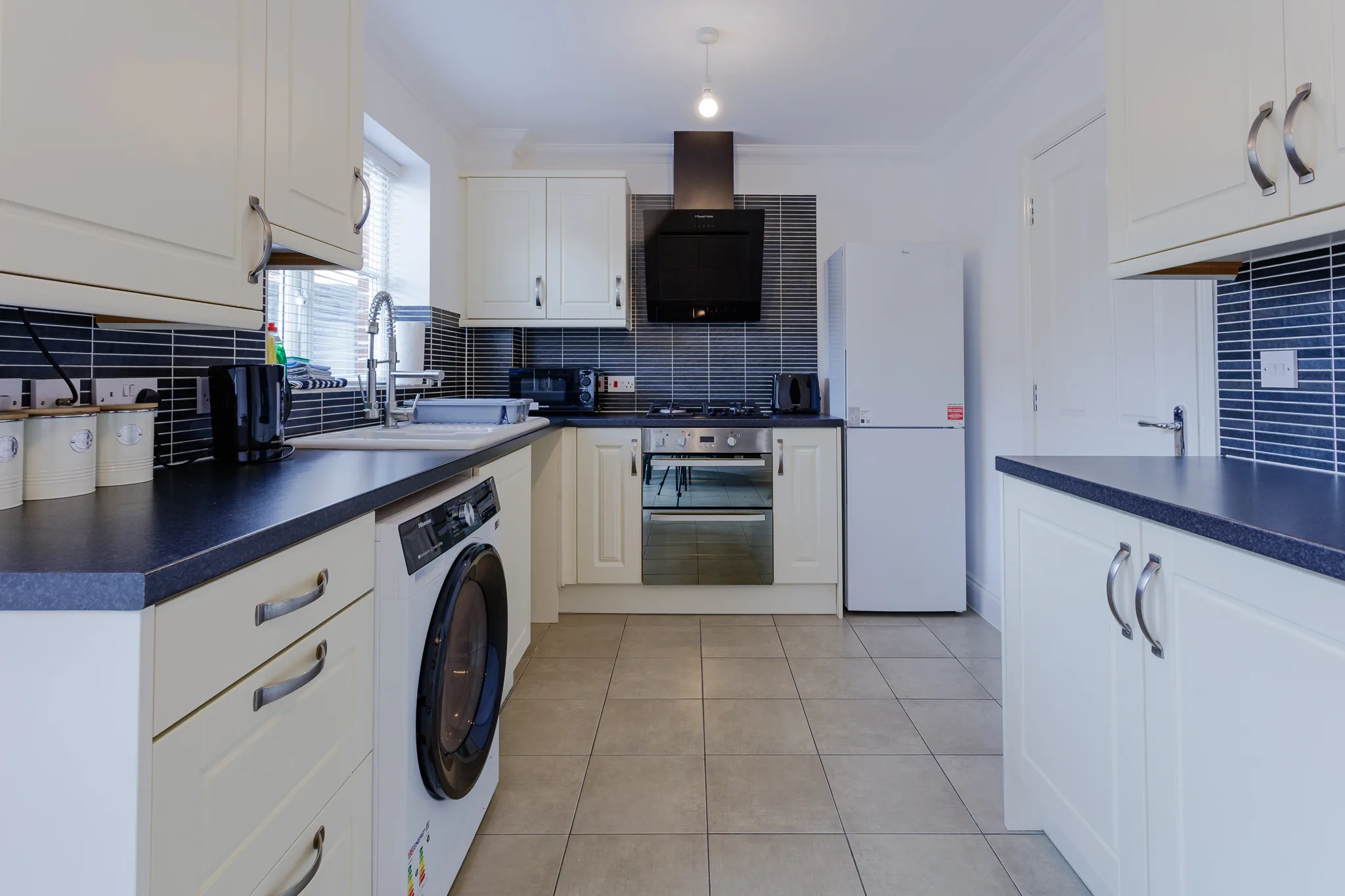
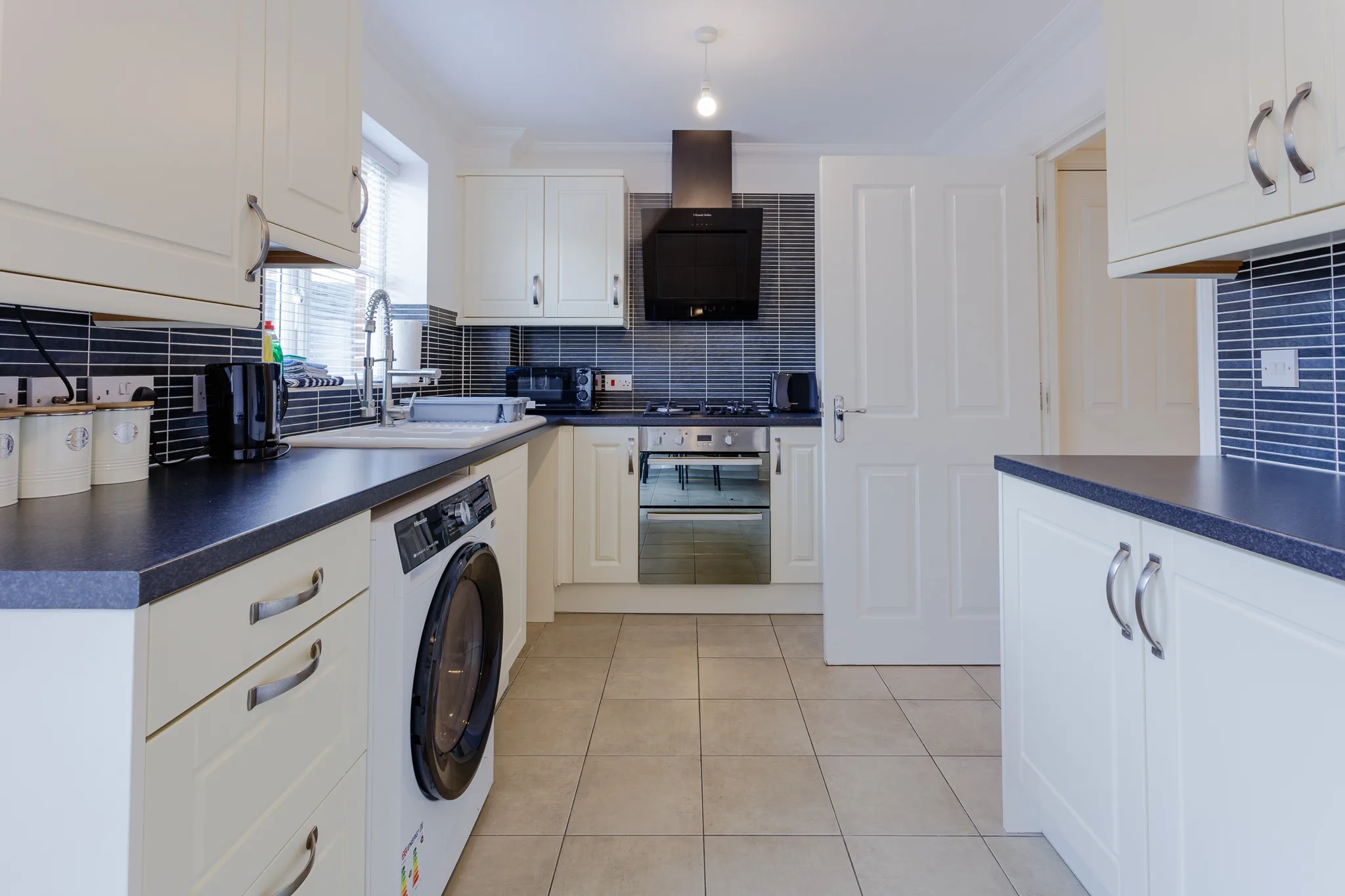
A holiday let sells a feeling. A contractor let sells reassurance. The person booking is often not the person staying, and they are usually booking on behalf of a team who will be there for weeks rather than a weekend. What they want to know from the pictures is straightforward. Is it clean, is there enough space that three adults are not falling over each other, are the beds proper beds, and is the kitchen good enough to cook in after a twelve hour shift. Nobody is looking for atmosphere. They are looking for evidence. I photographed it to answer questions rather than to create a mood, which meant showing whole rooms, honest proportions and the state of the finish rather than picking out styled corners and pretty details.
Keeping the windows and the rooms both looking right
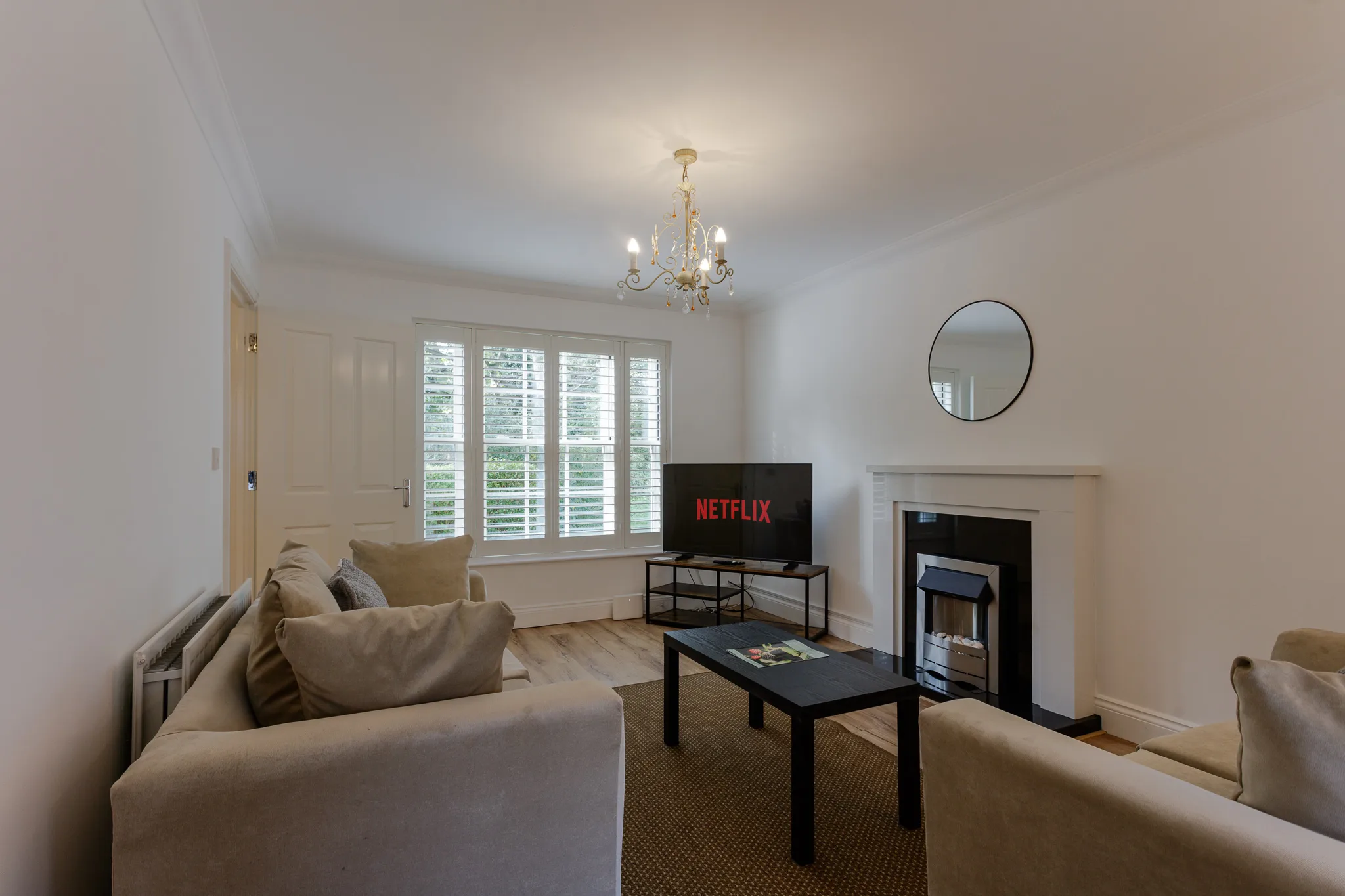
The technical problem in almost every interior is that the inside of a room and the view out of the window are several stops apart in brightness. Expose for the room and the windows go to blank white. Expose for the windows and the room falls into gloom. Neither looks like being in the house. In the sitting room there are plantation shutters with the garden showing through them, and holding that greenery while keeping the walls and sofas properly lit is most of the work in that frame. Get it right and the room reads as somewhere with daylight in it. Get it wrong and it looks like a cave with a hole punched in the wall.
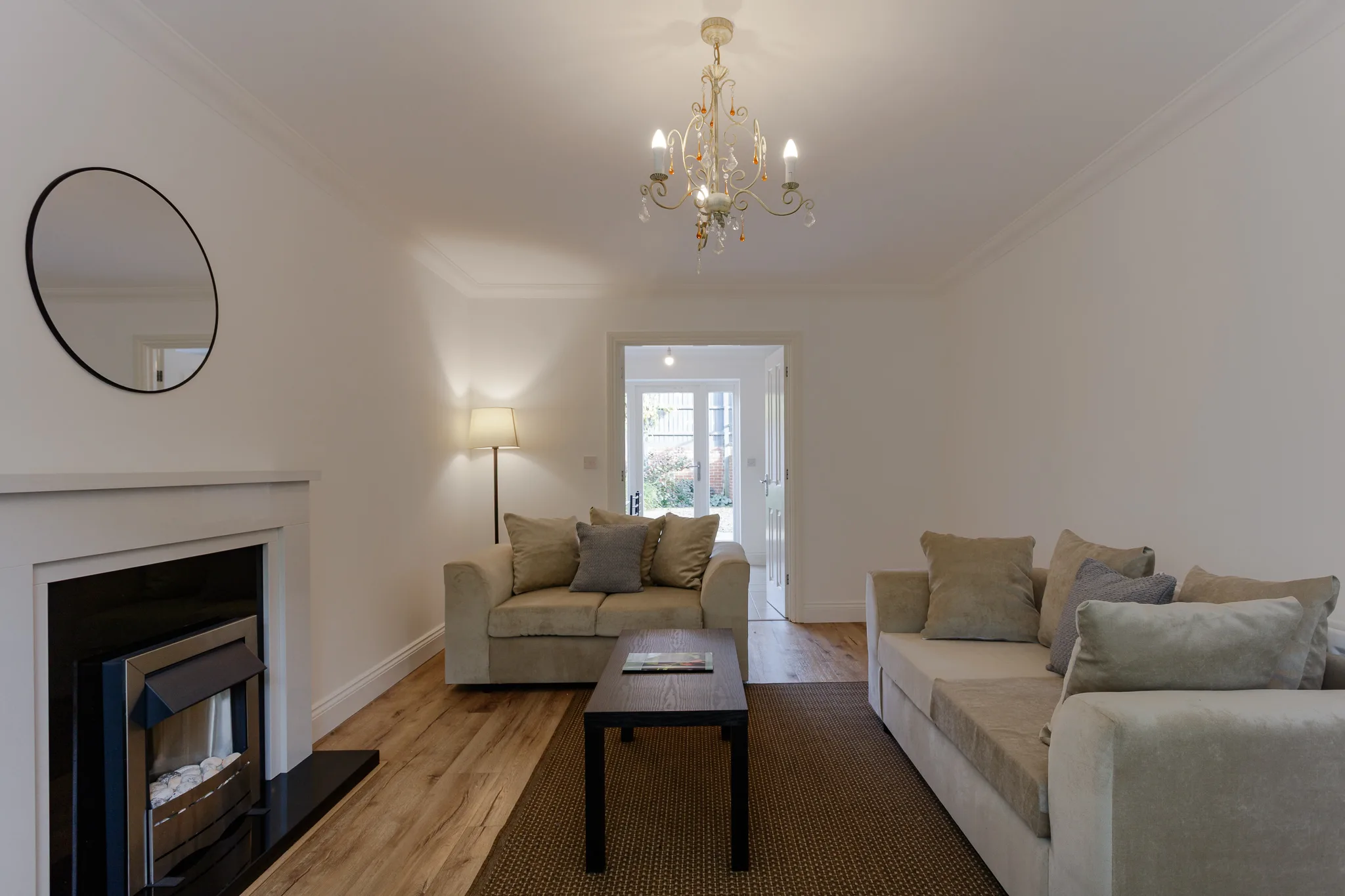
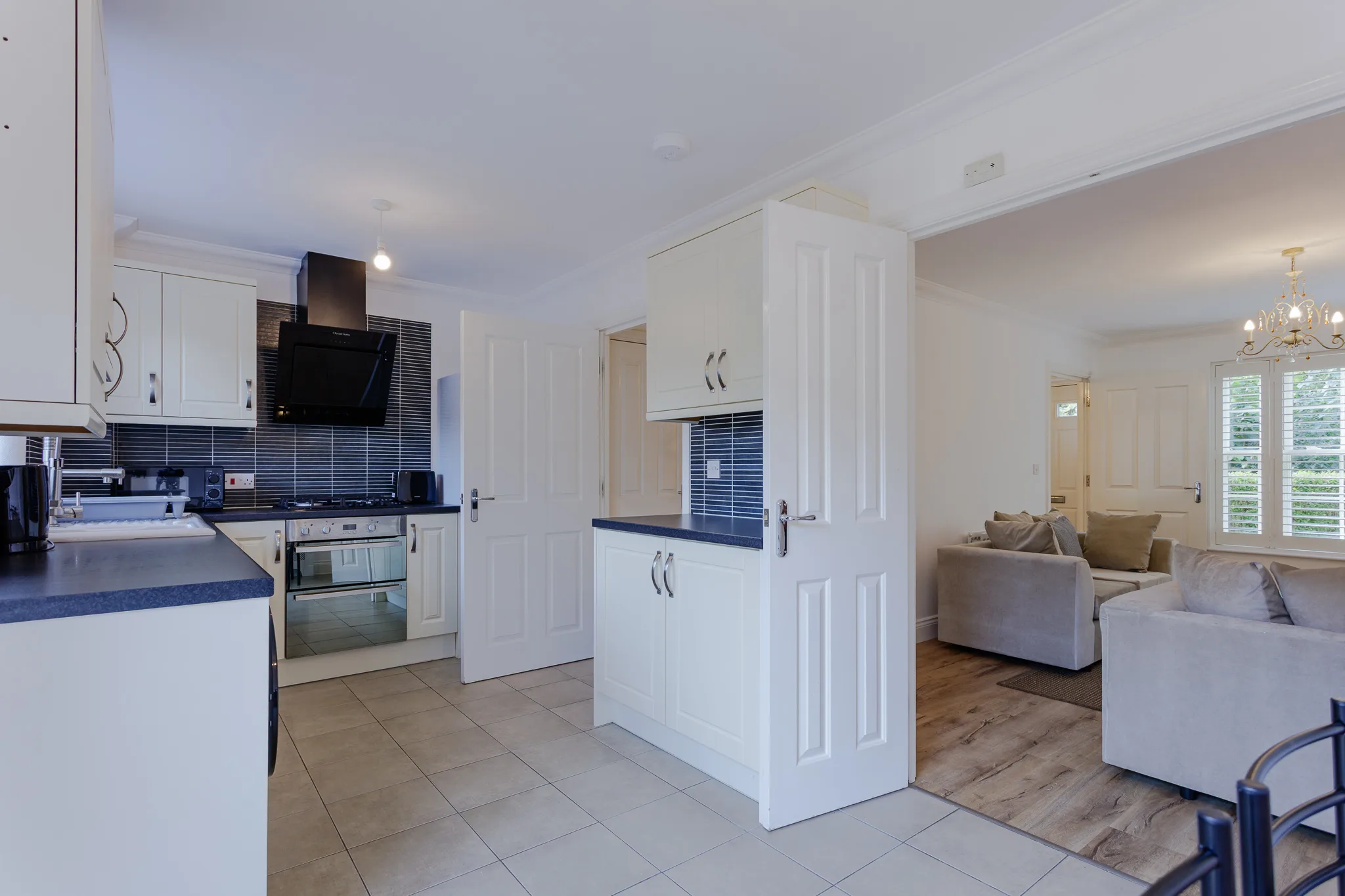
The other issue is that houses are full of competing light sources. There is daylight coming in cool from the windows, warm pendants and lamps overhead, and often a downlight of a different colour again in a bathroom. Left alone, that gives you orange faces of walls next to blue ones. Sorting it out so a white wall stays white throughout the set is unglamorous work, and it is the difference between a gallery that looks like one house and a gallery that looks like a collection of rooms from different buildings.
Straight lines, and why they matter more than you would think
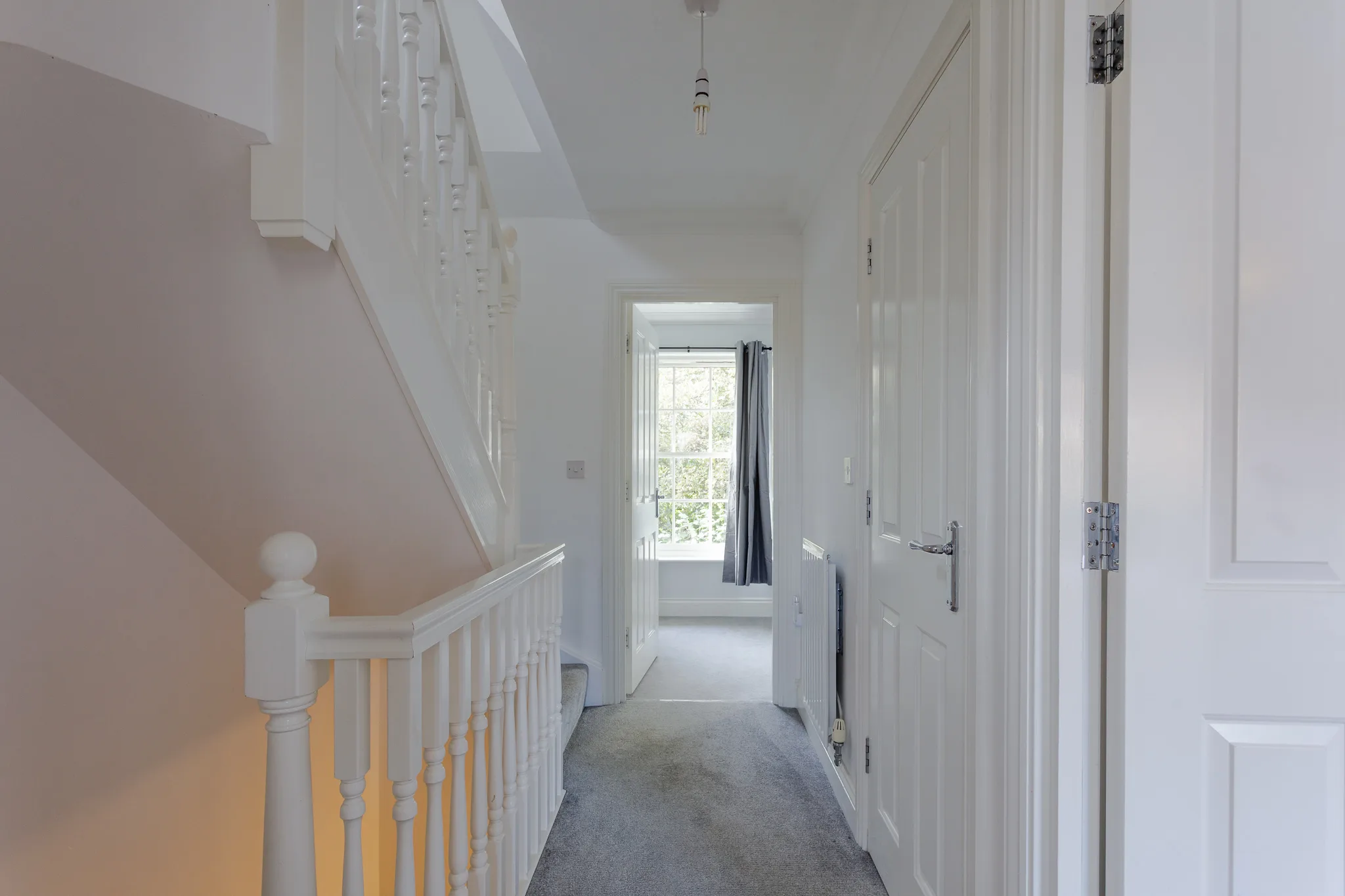
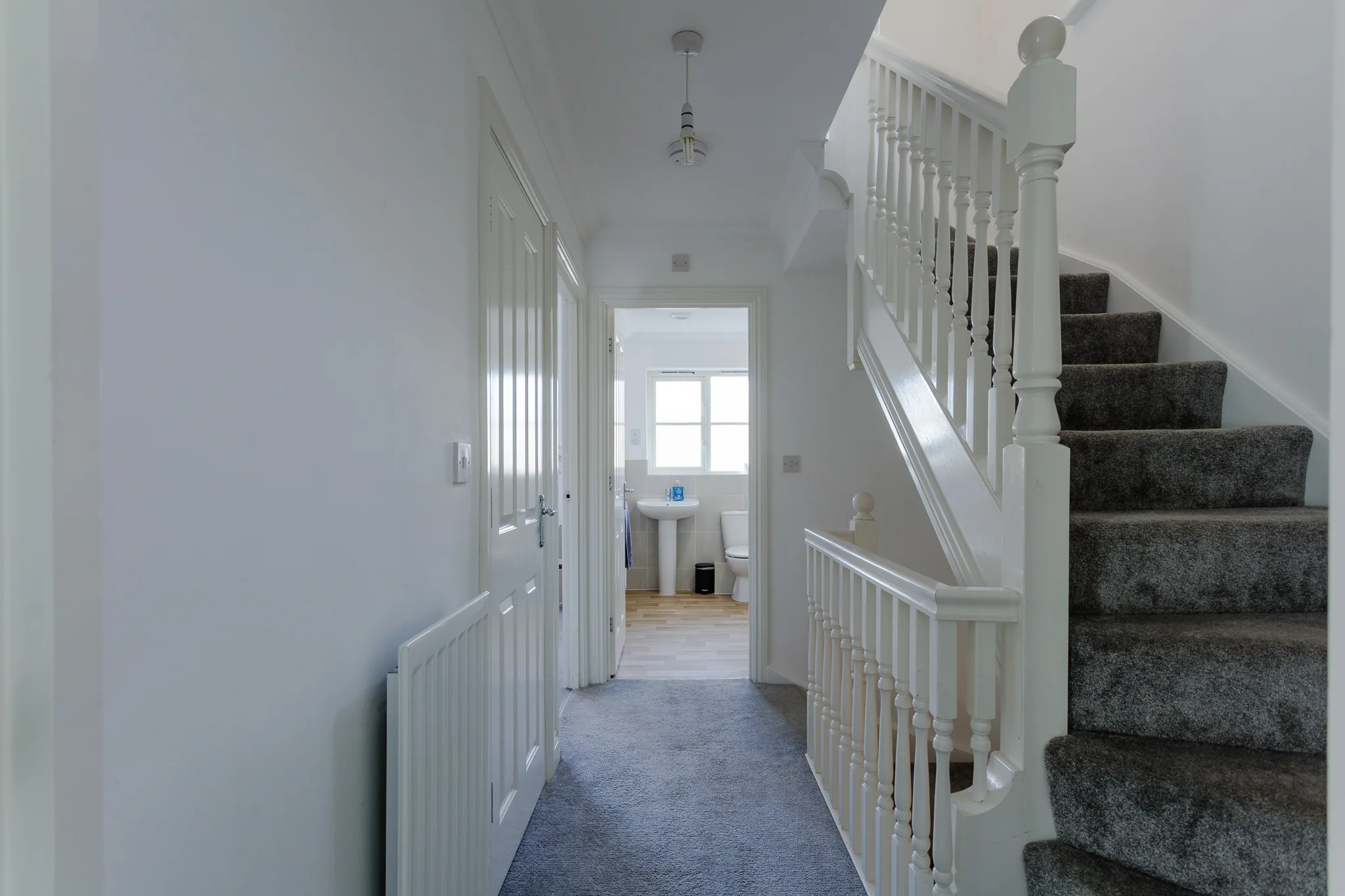
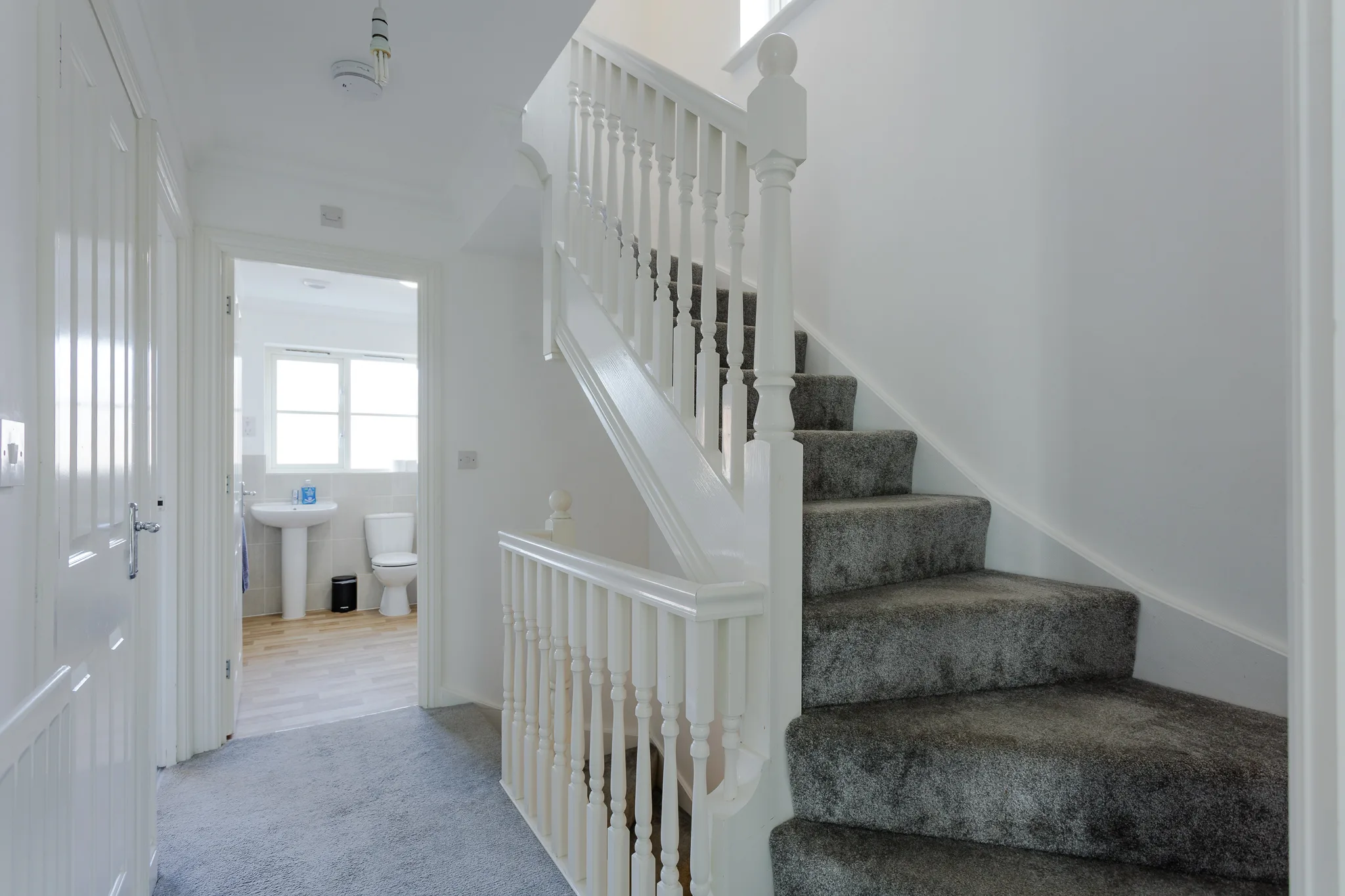
Every vertical in the set is vertical. Door frames, the newel posts on the stairs, the shower enclosure, the corners of every room. Nobody looking at a listing consciously notices that the walls are upright. They notice when they are not. Tilt the camera up or down to fit a room in and the walls lean, the space appears to fall backwards, and the whole thing reads as amateur even to someone who could not tell you why. Keeping the camera level and correcting what is left is basic, and skipping it is the fastest way to make a good house look cheap.
The rooms that are harder than they look
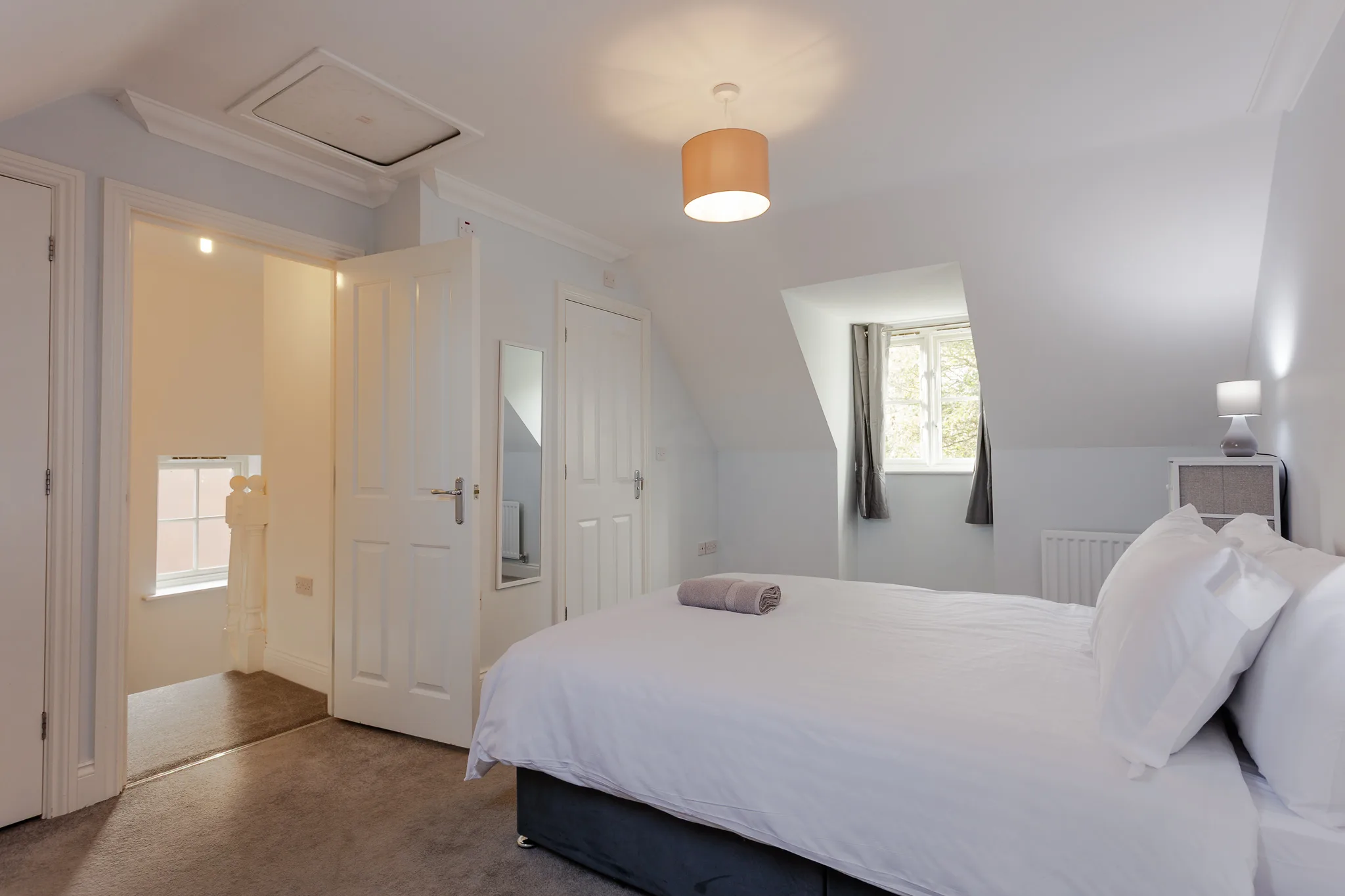
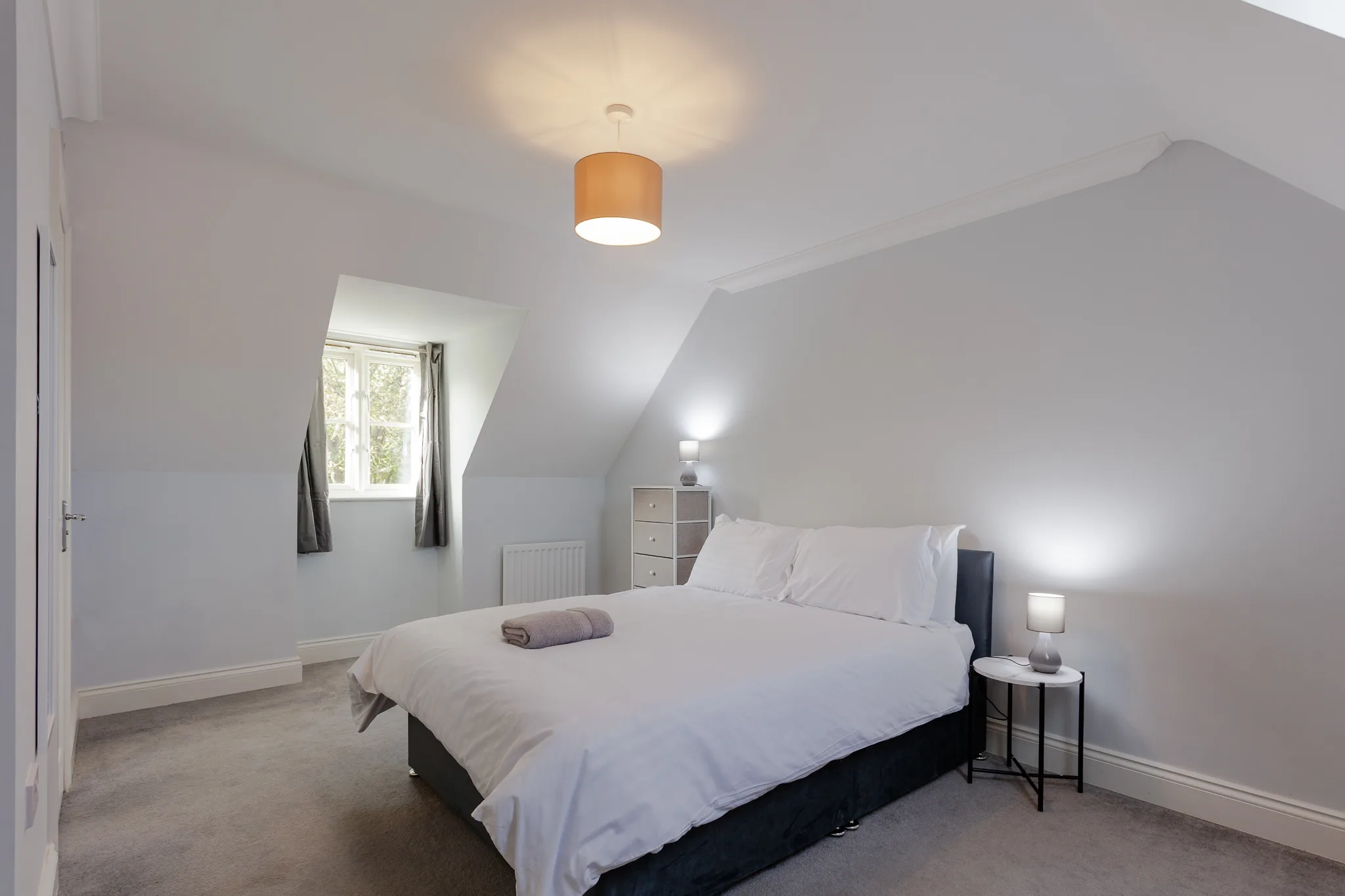
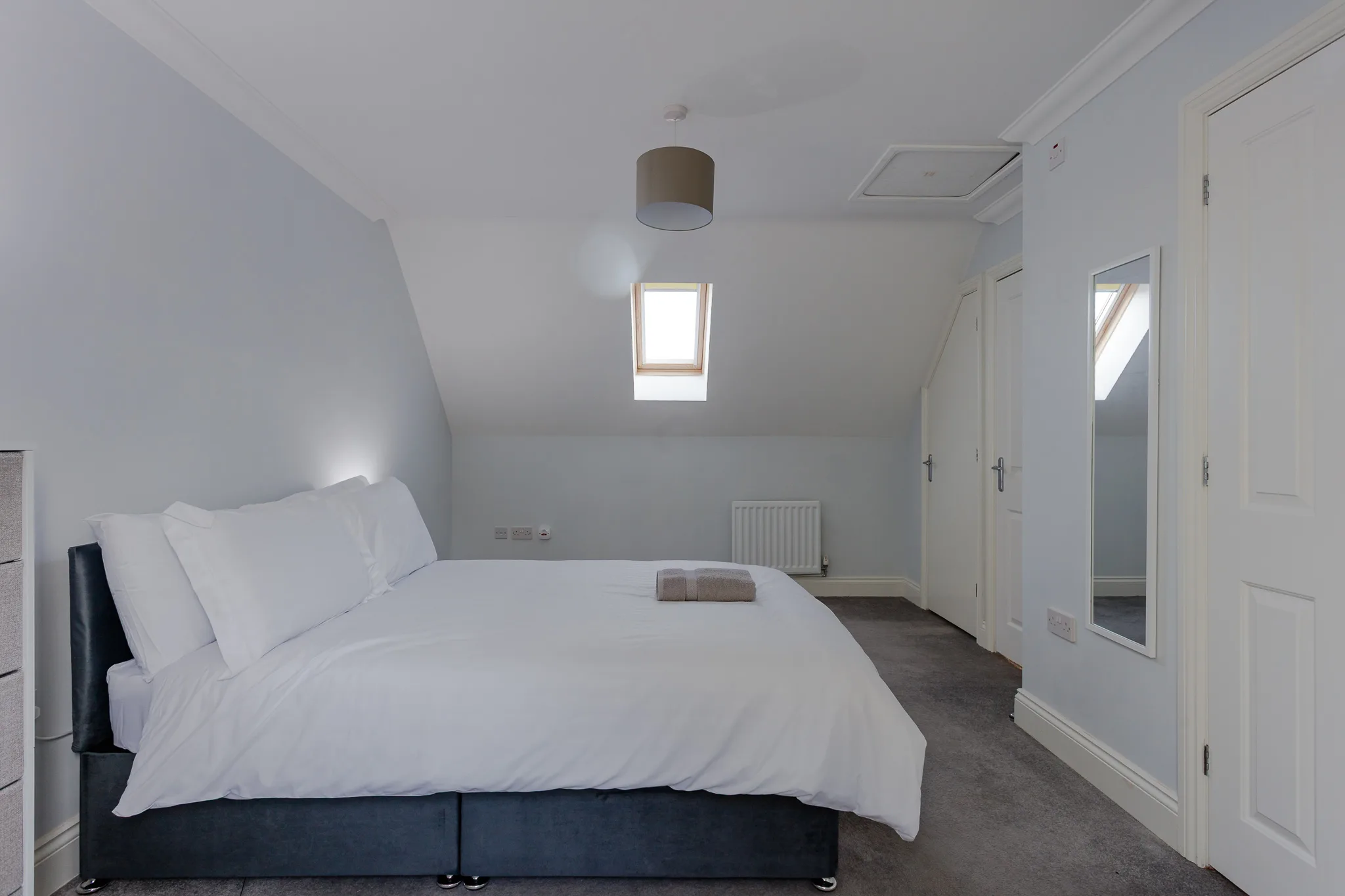
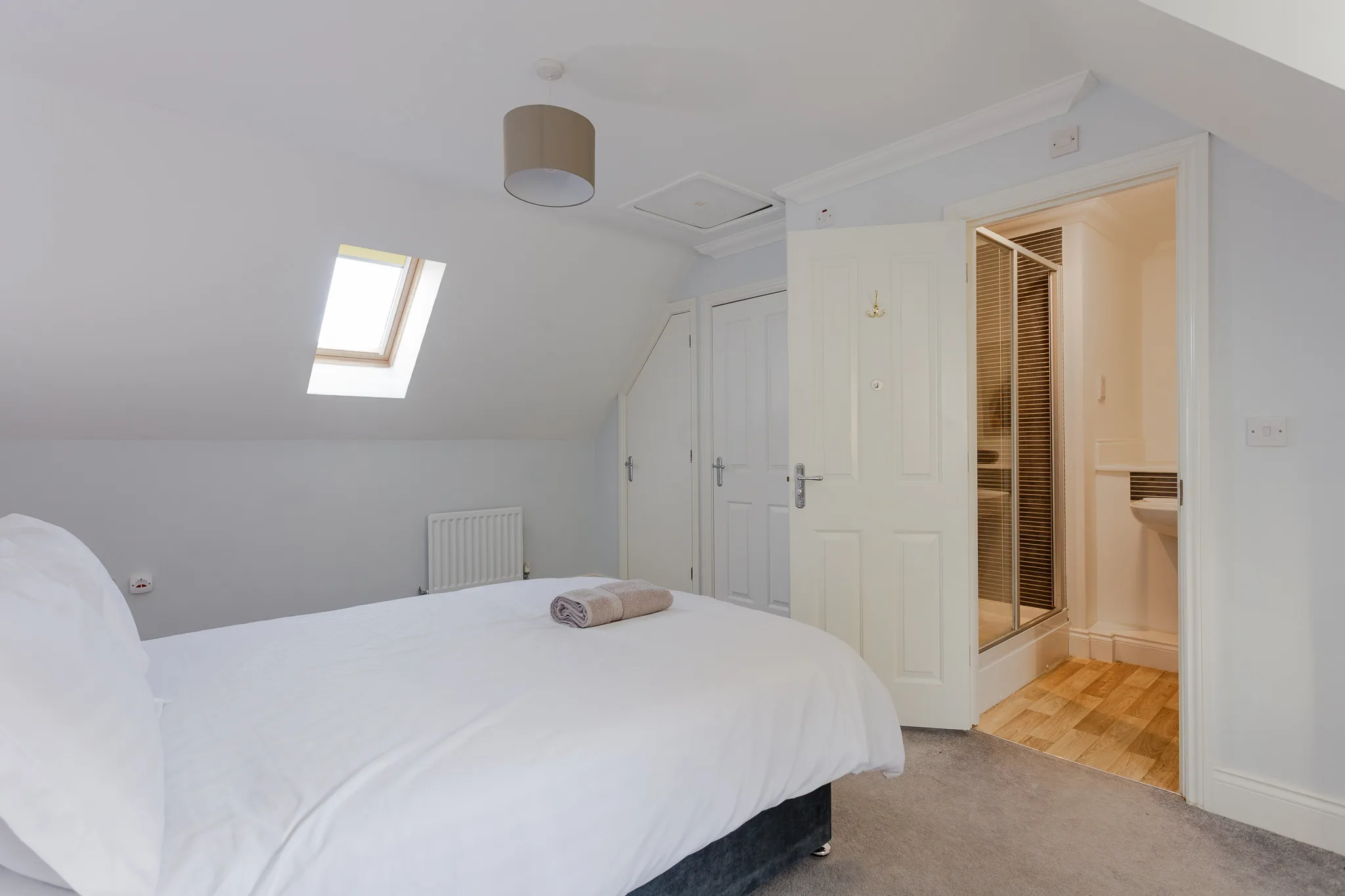
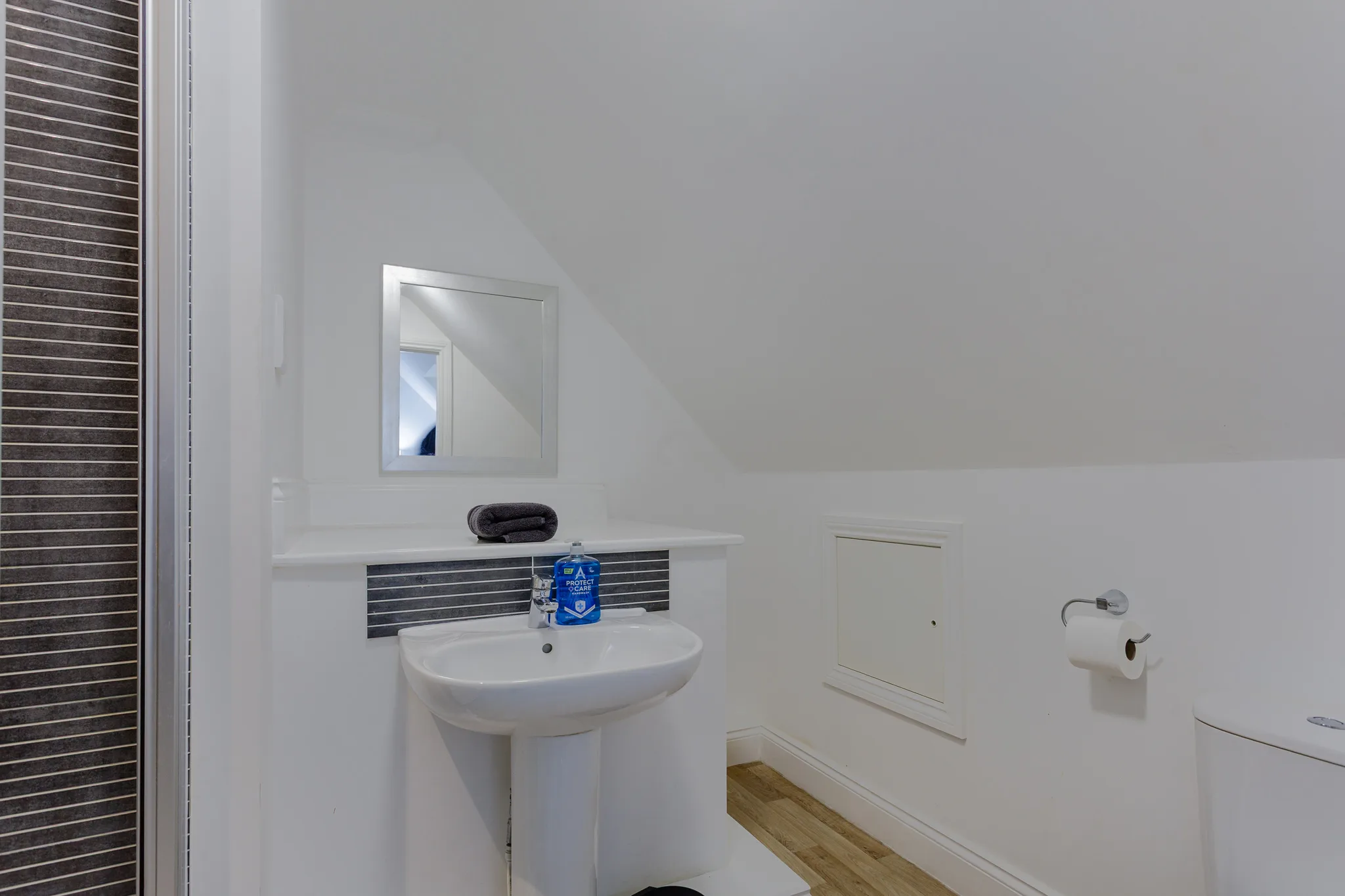
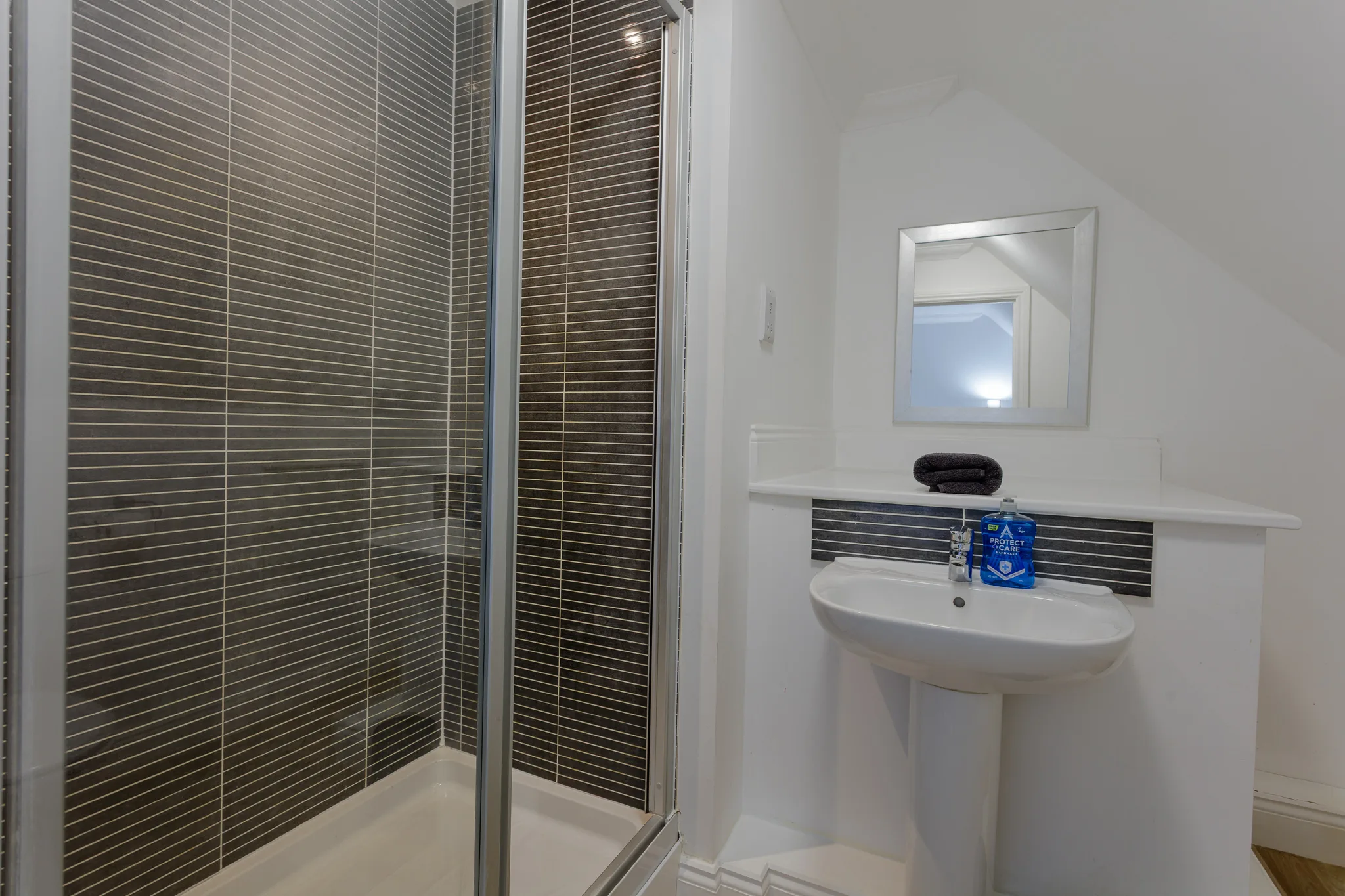
The loft rooms were the interesting part. Sloping ceilings, a Velux in one, a dormer in another, and en suites tucked in under the roof where a full sized basin and shower have been fitted into a space with a ceiling that runs out on you. Rooms like that photograph badly by default. Stand in the wrong place and you get a wall and a slope and no sense of how big the room actually is. The honest approach is to find the position that shows both the bed and the way the ceiling runs, so a guest understands the shape of the room before they arrive rather than discovering it at eleven at night with a bag in each hand.
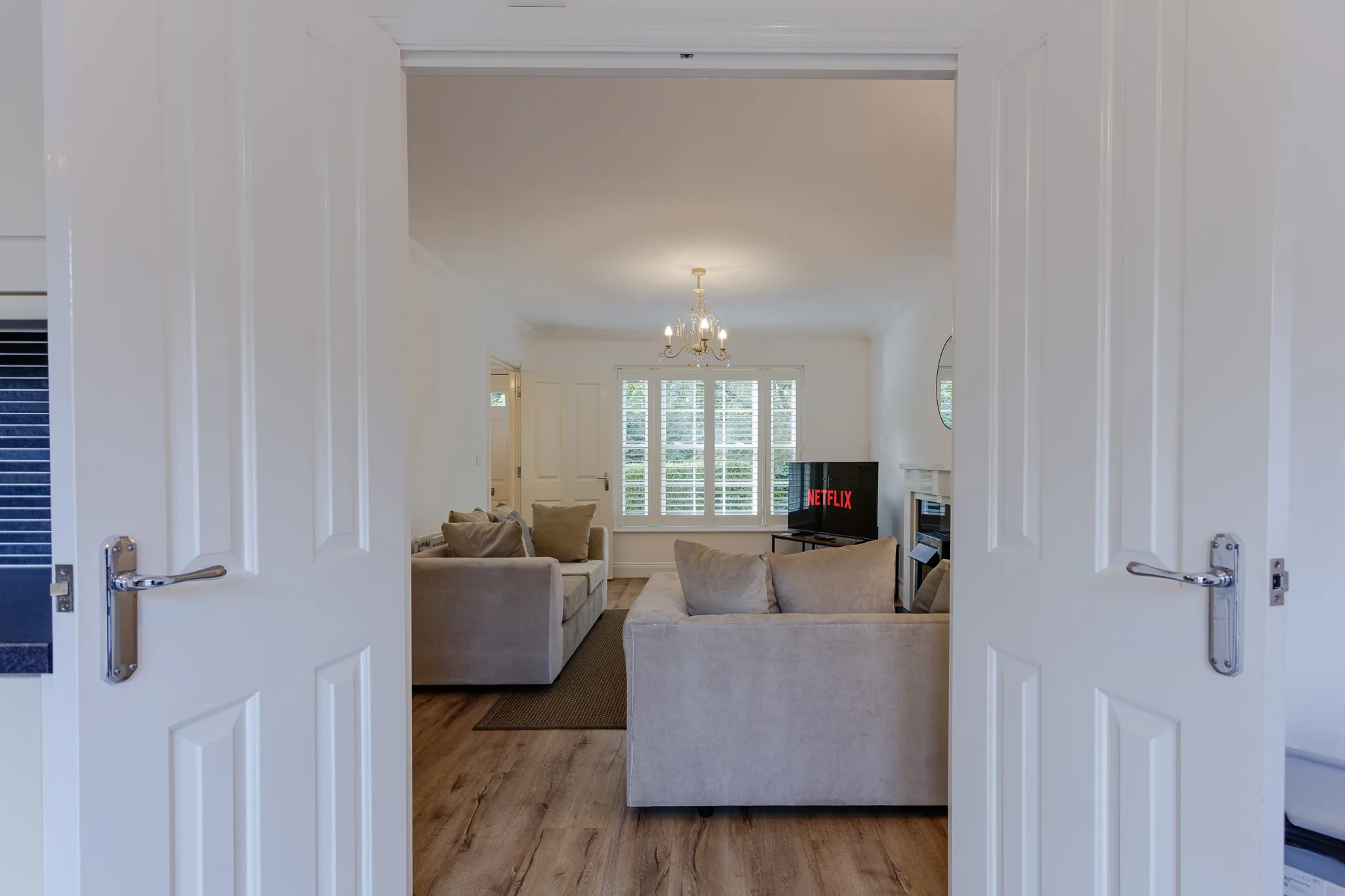
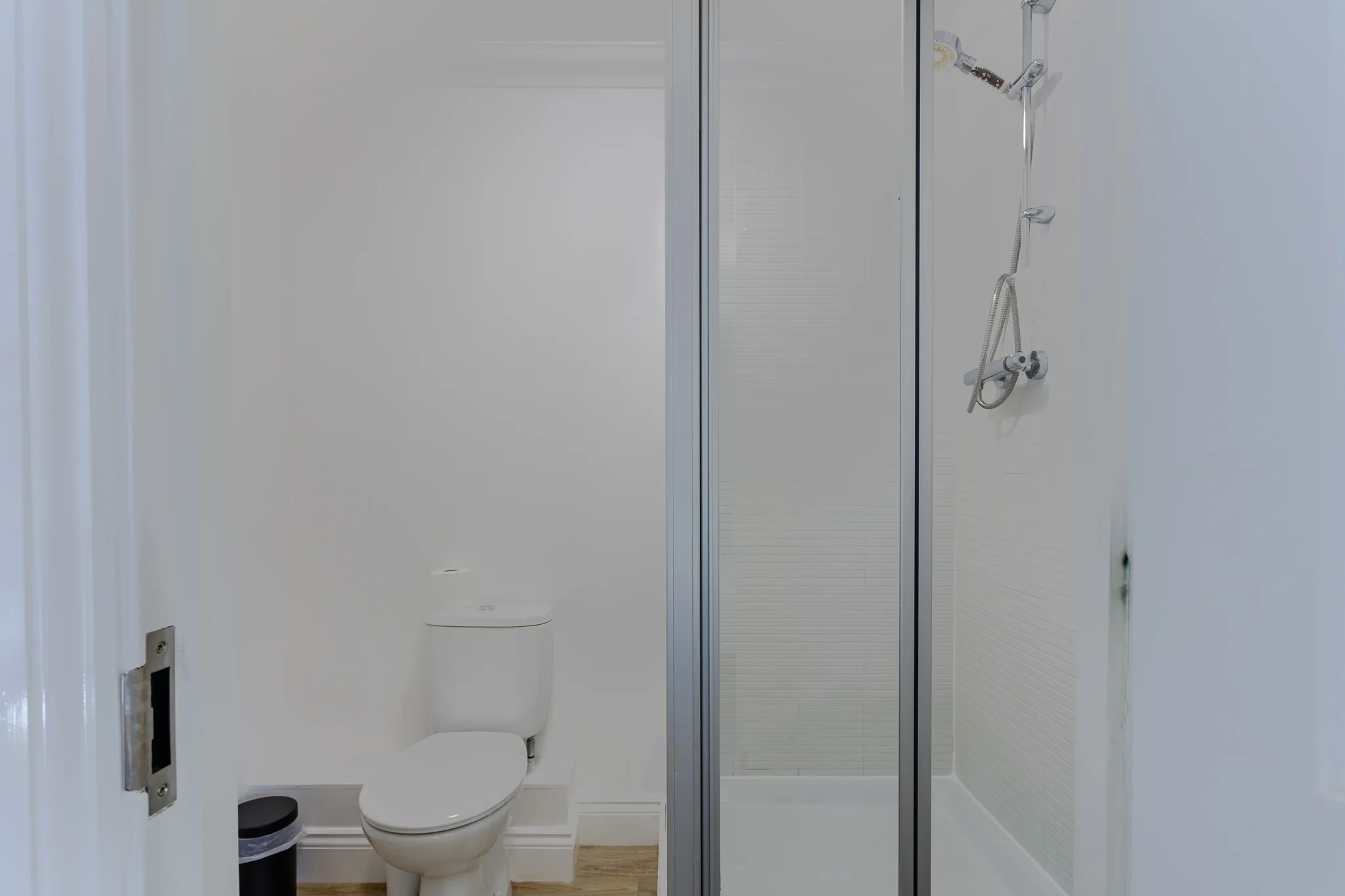
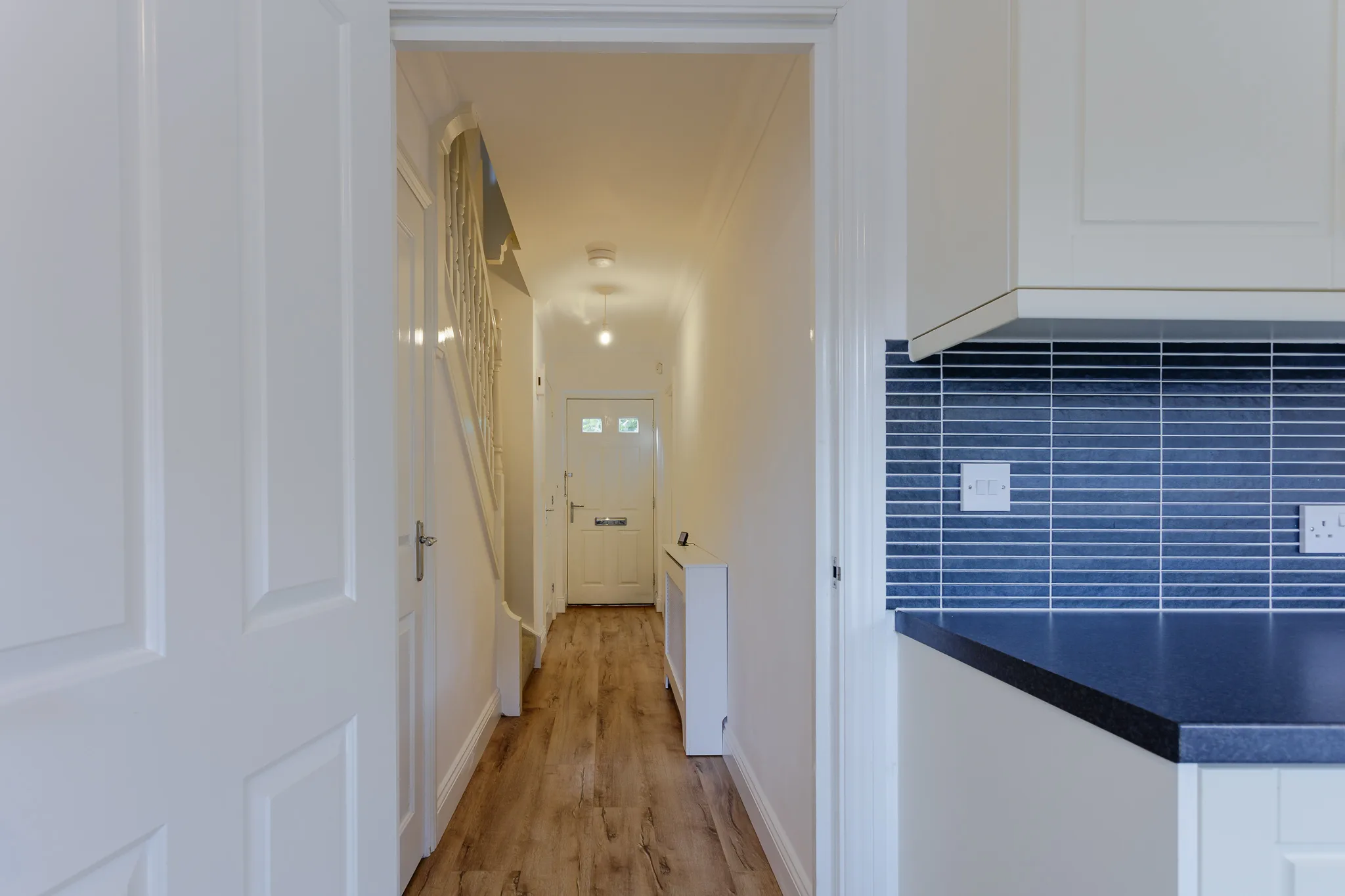
Small shower rooms are the same problem in miniature. There is often nowhere to stand that is not inside the shower. Shooting from the doorway, with the door frame in the picture, gives the eye something to hold onto and shows the room in relation to what is next to it. I used the same idea on the ground floor, framing the sitting room through the open double doors from the hall, which shows the flow between the two rooms rather than presenting them as unrelated boxes.
Small things that make a difference
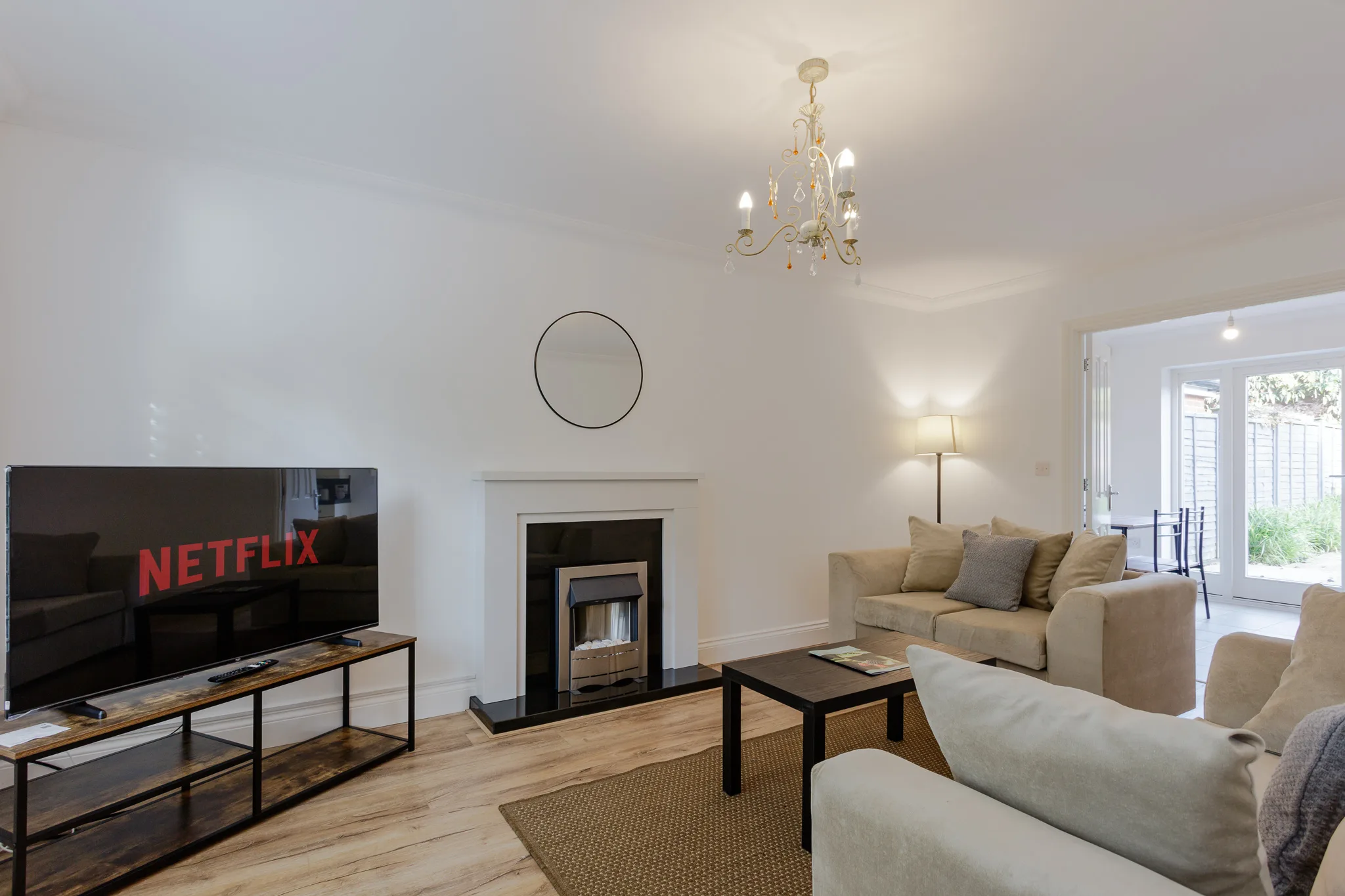
The television is on in the sitting room pictures. A blank screen is a black rectangle that pulls the eye straight to it and holds it there, and in a room with a fireplace and a window you have quite enough going on already. Towels folded on the beds and in the bathrooms do a similar job, giving the eye somewhere to land and quietly signalling that linen is provided. None of it is decoration for its own sake. Each of those choices is answering something a guest would otherwise have to ask.
Property photography across Suffolk
I photograph properties for letting agents, estate agents, holiday let owners and serviced accommodation operators across Suffolk, Norfolk, Essex and Cambridgeshire. That covers interiors, exteriors, and the sort of coverage a listing needs to work on Airbnb, Booking.com, or an agent’s own site. My rates for interior and exterior property photography are set out on the estate agency and property photography rates page.
My studio is at Base Business Park in Rendlesham, near Woodbridge, on the old RAF Bentwaters site. Saxmundham is about twenty minutes north, and I work regularly across Woodbridge, Leiston, Aldeburgh, Southwold and the wider Sizewell area. If you have a property that needs photographing properly, get in touch and tell me what it is and where it is going.
More on how I approach holiday let photography in Suffolk, including how I light and edit these properties.