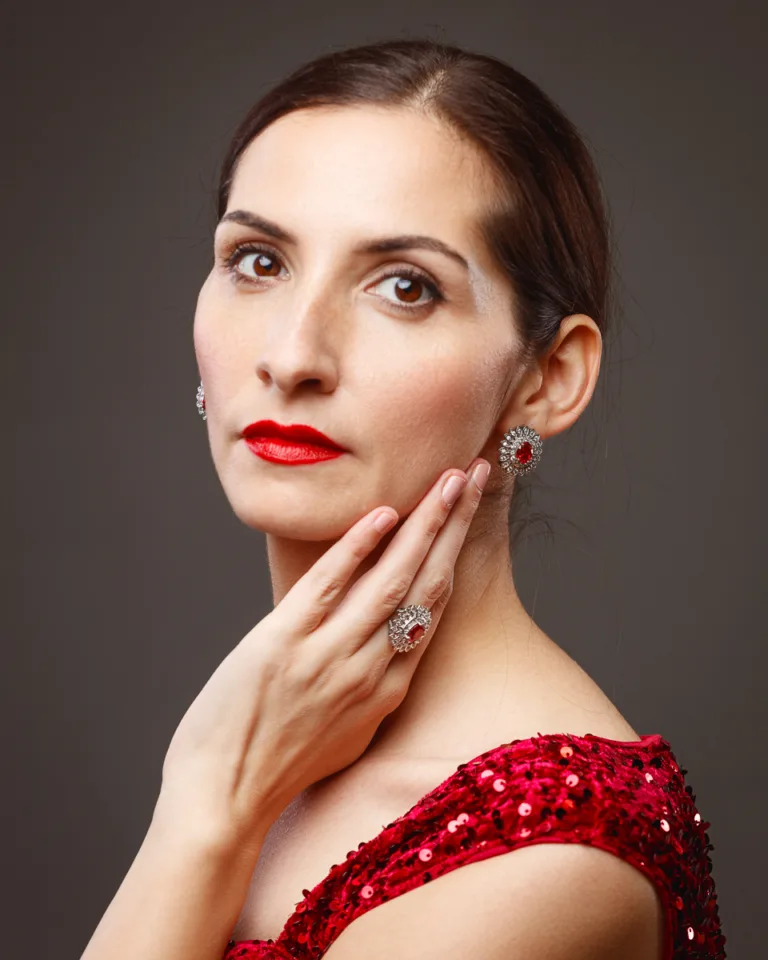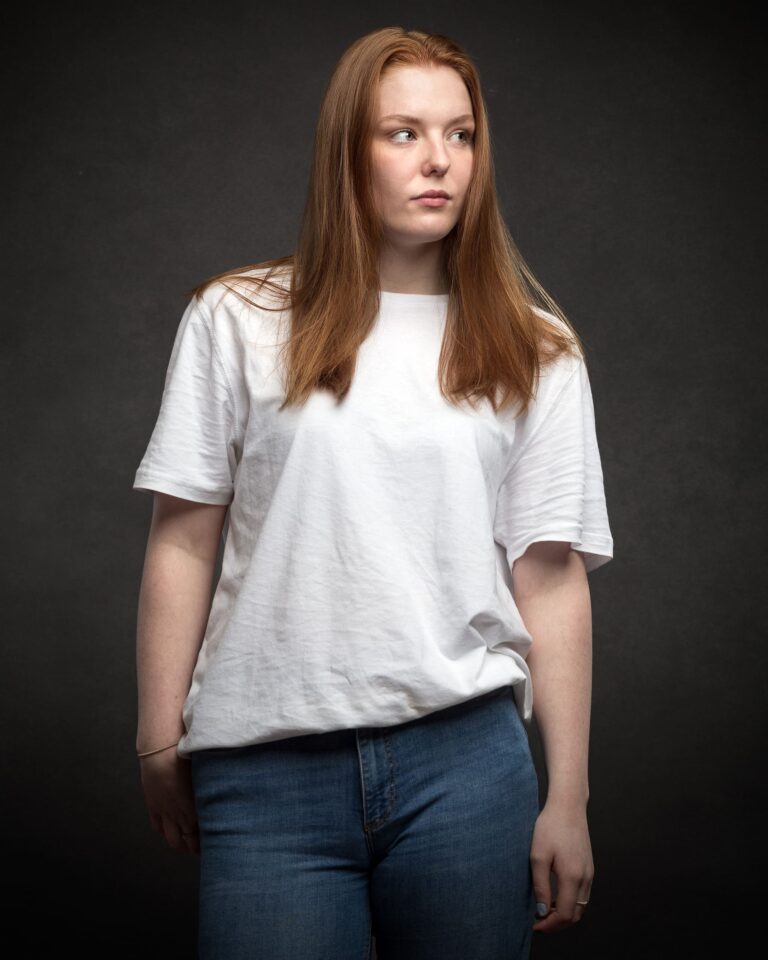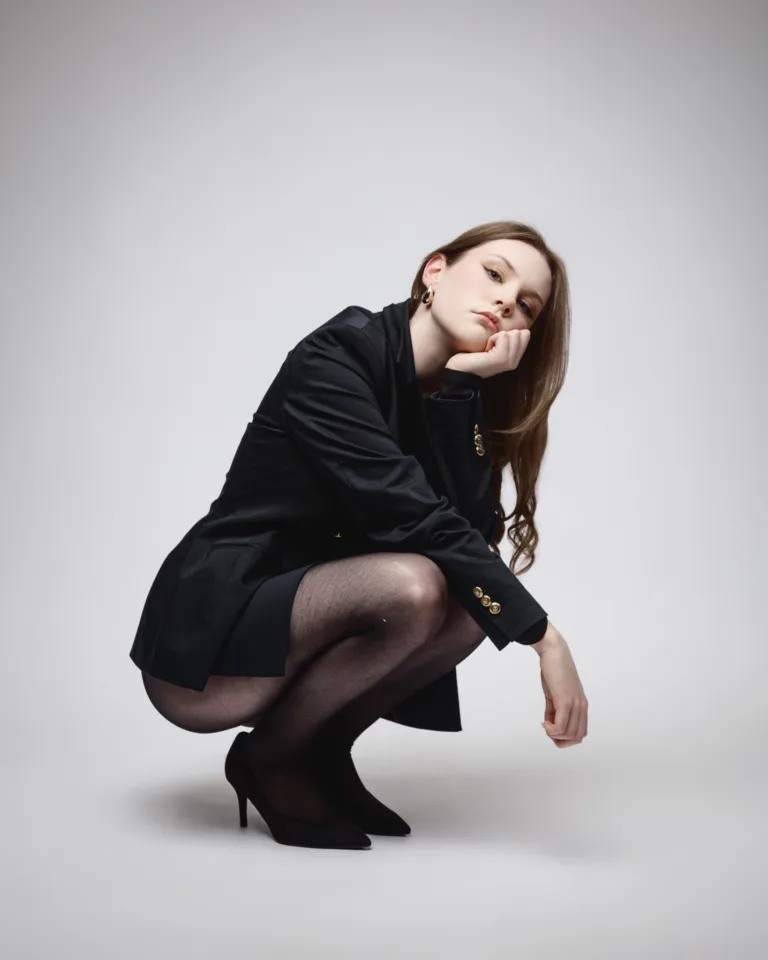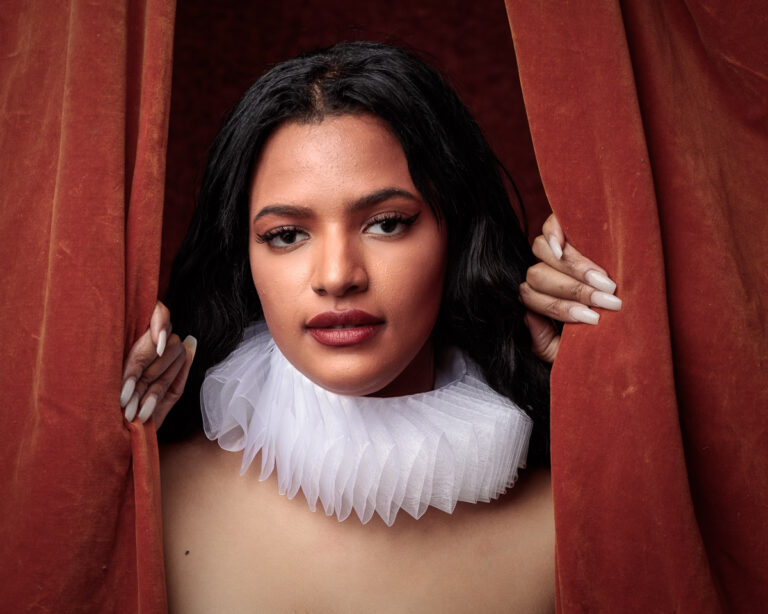
Rose arrived earlier this month with a full rail of clothes and a clear idea of where she wanted the session to go. That is not something I take for granted. This was the second shoot we have done together, and the difference a second session makes is worth writing about, because the groundwork is already laid. We knew how each other worked, so instead of spending the first half hour finding a rhythm, we started properly from the first frame.
The brief, as far as there was one, was a portrait shoot with an edge of fashion editorial. Clean studio lighting, strong shapes, plenty of room to try things and see what came out of them. Shoots like this are among the most useful work I do, because the goal is to produce good images while still leaving space to experiment. Those two things sound like they pull against each other. In practice, when the model is prepared and the lighting is under control, they support each other.
Eight Looks, Two Backgrounds
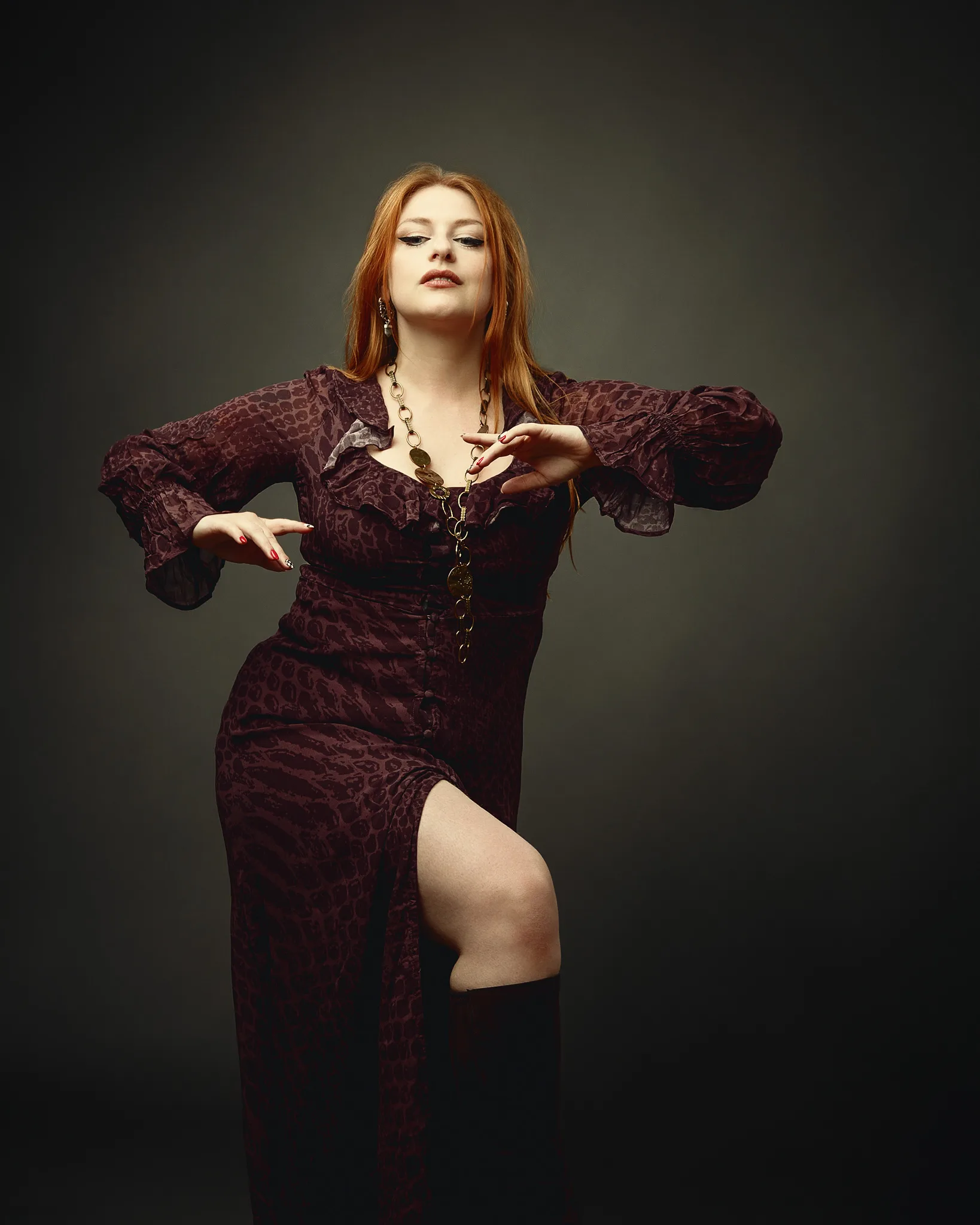
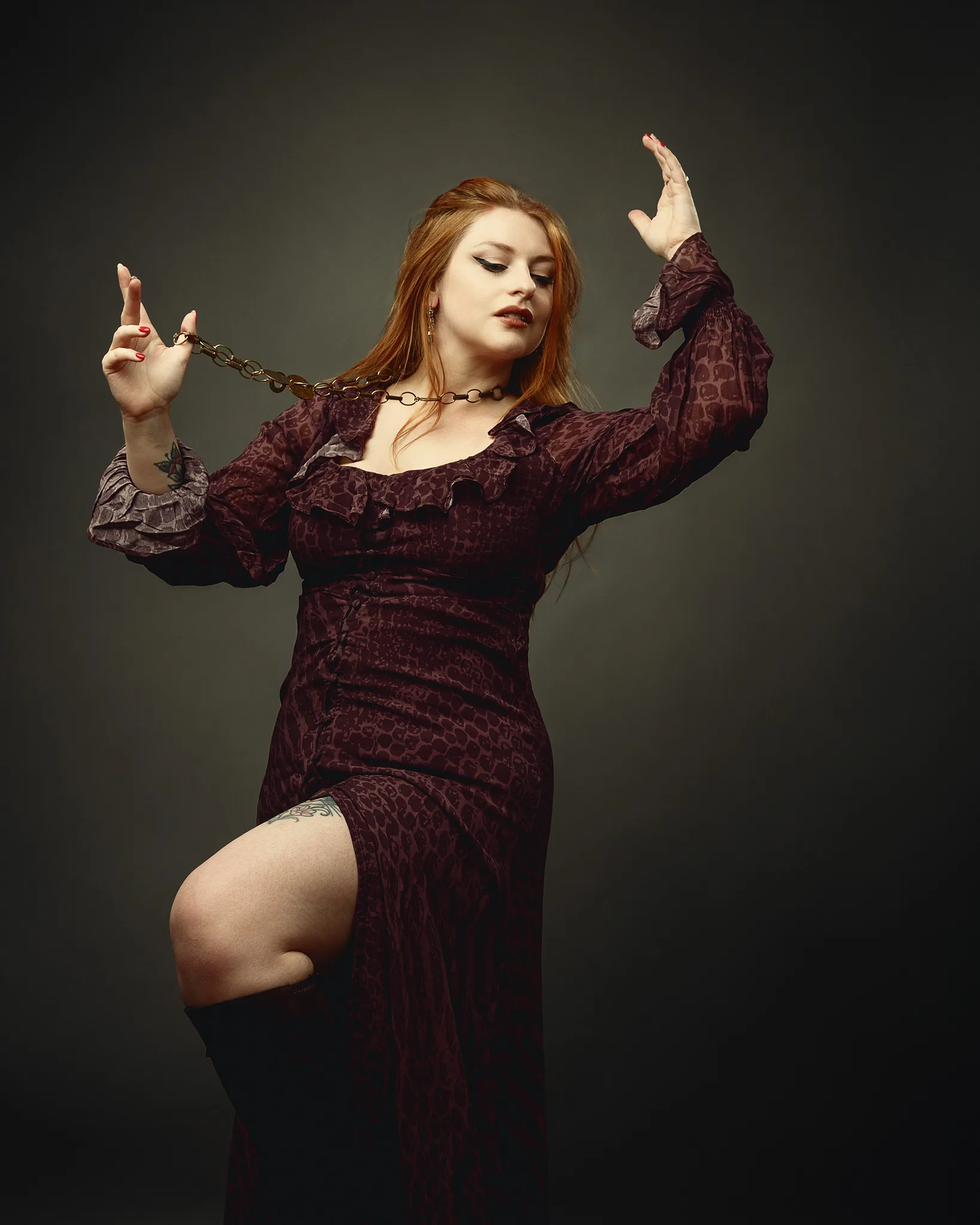
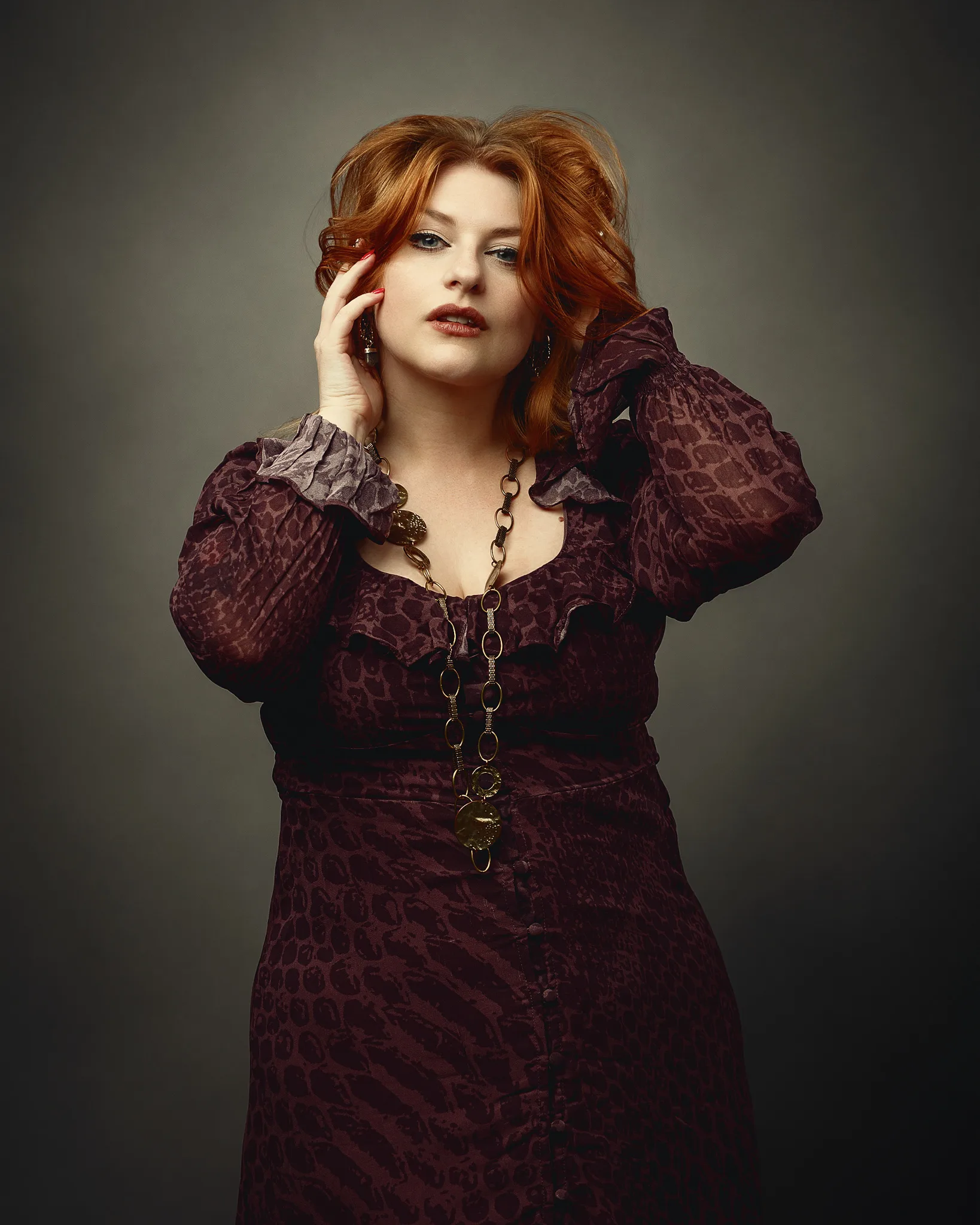
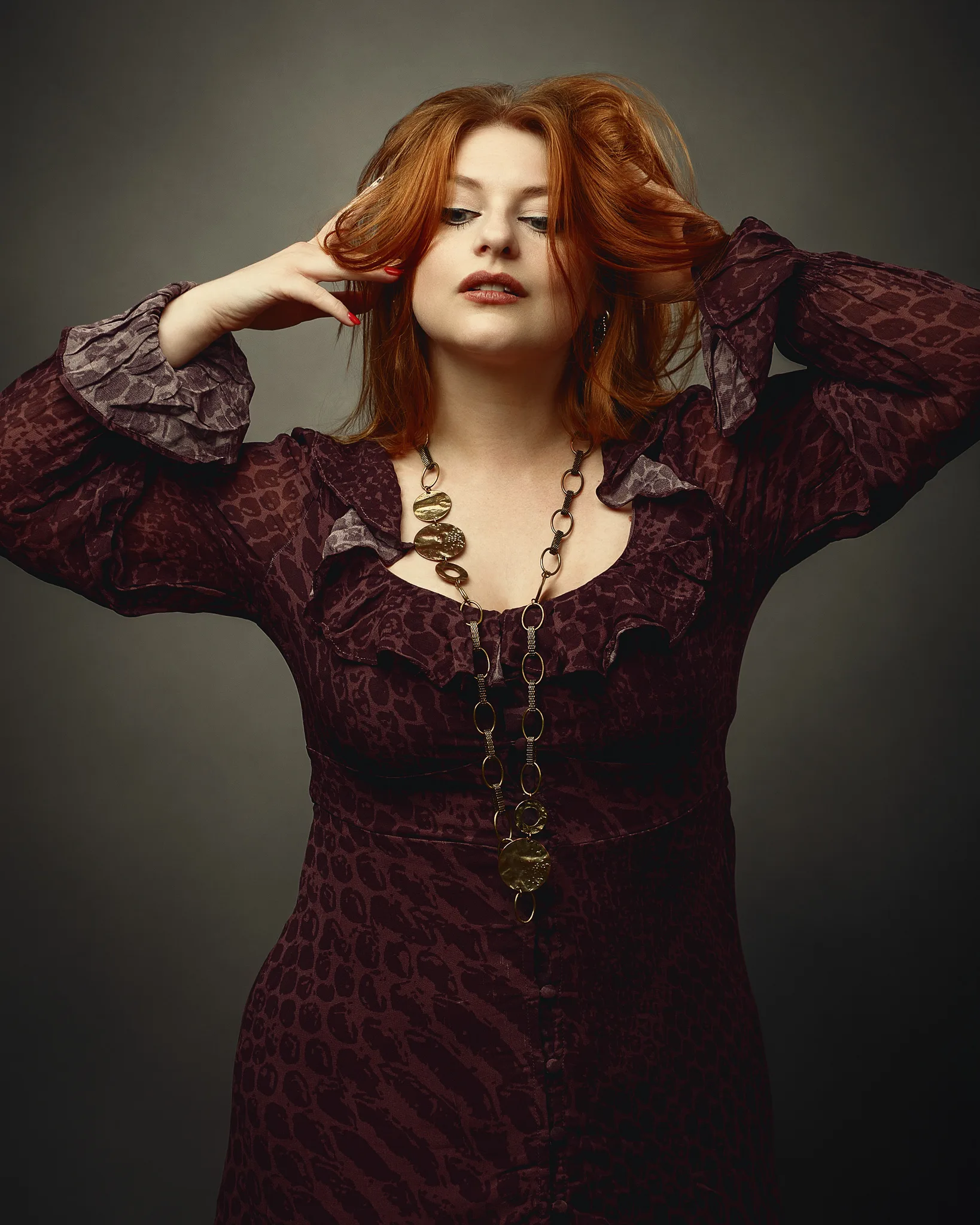
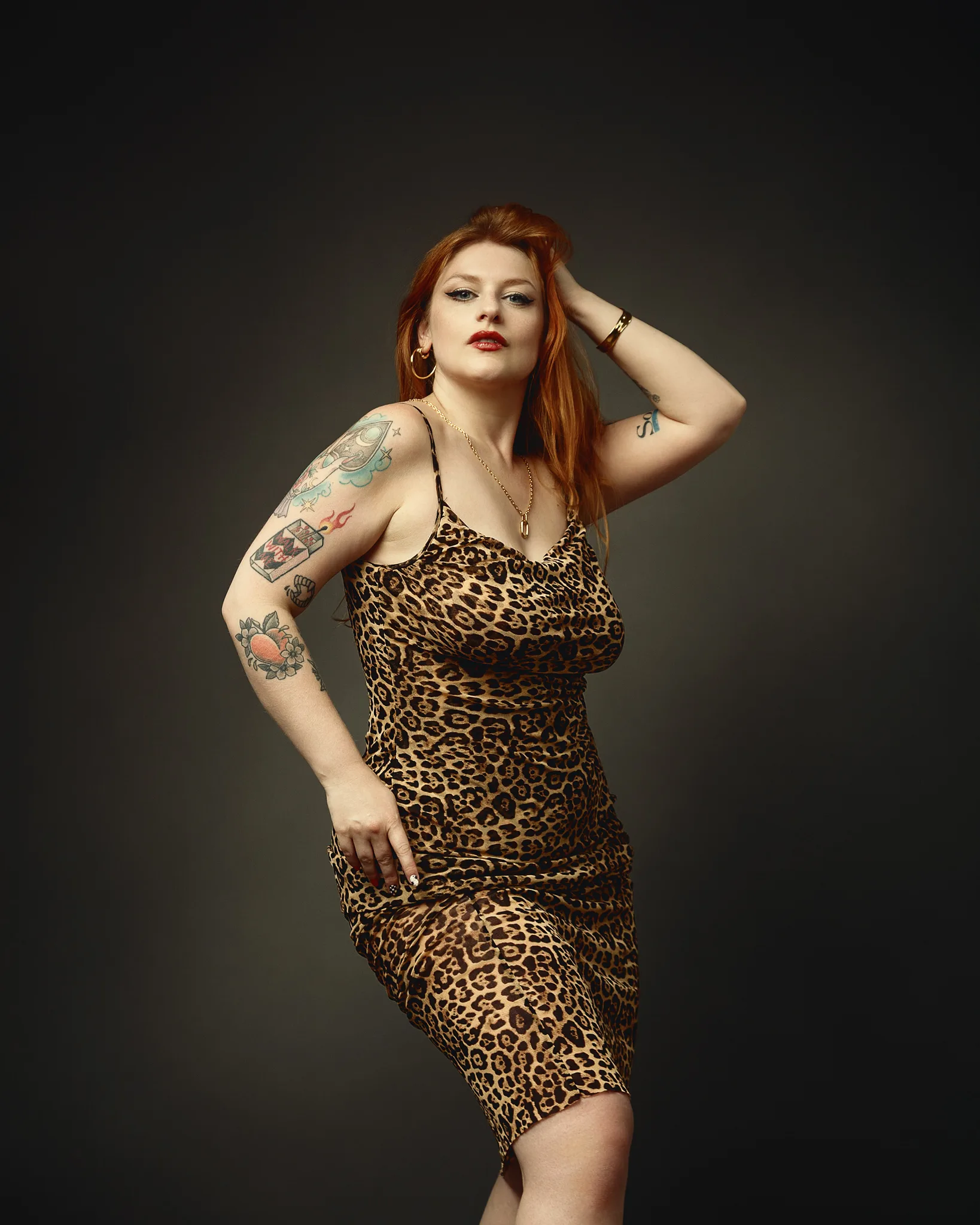
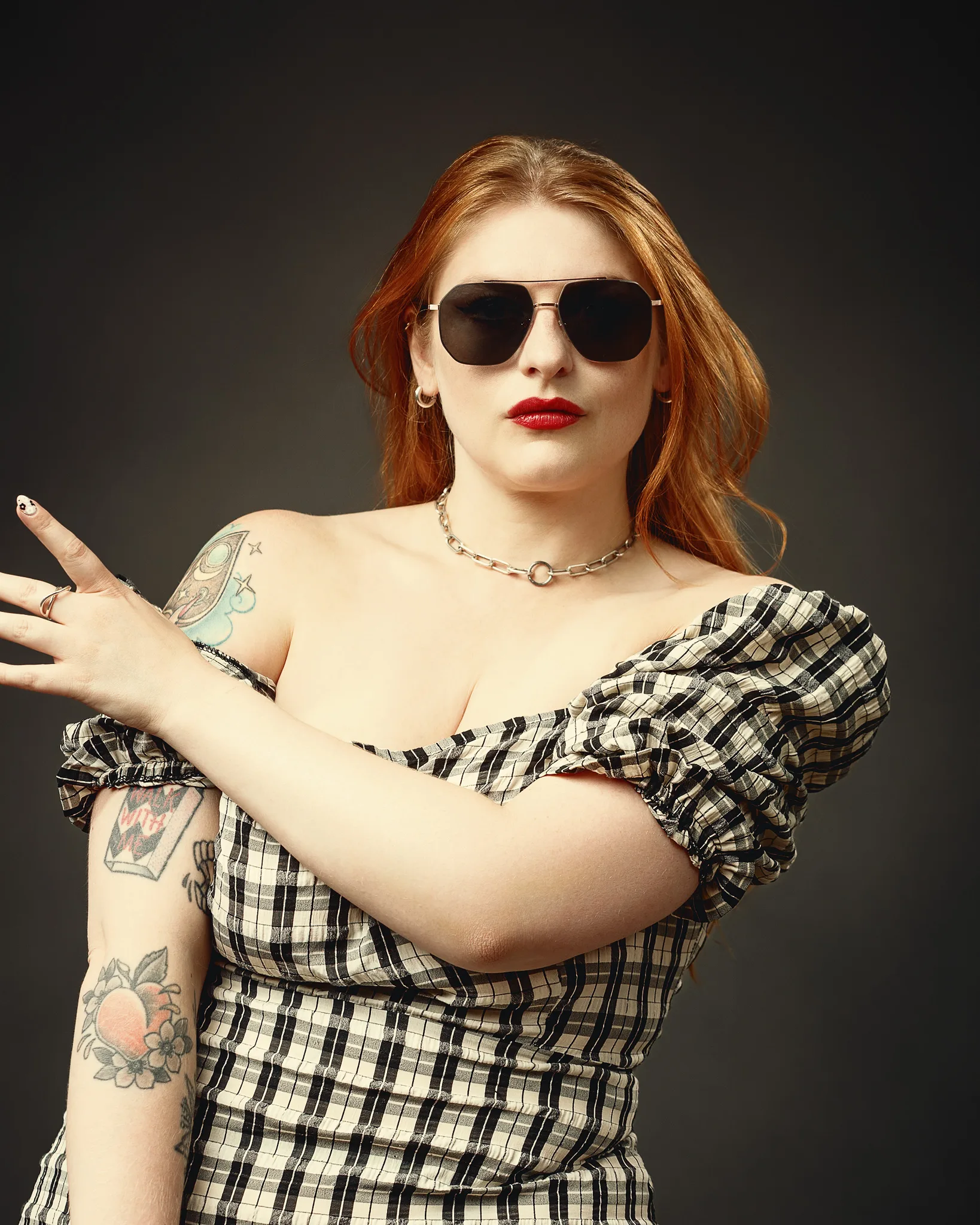
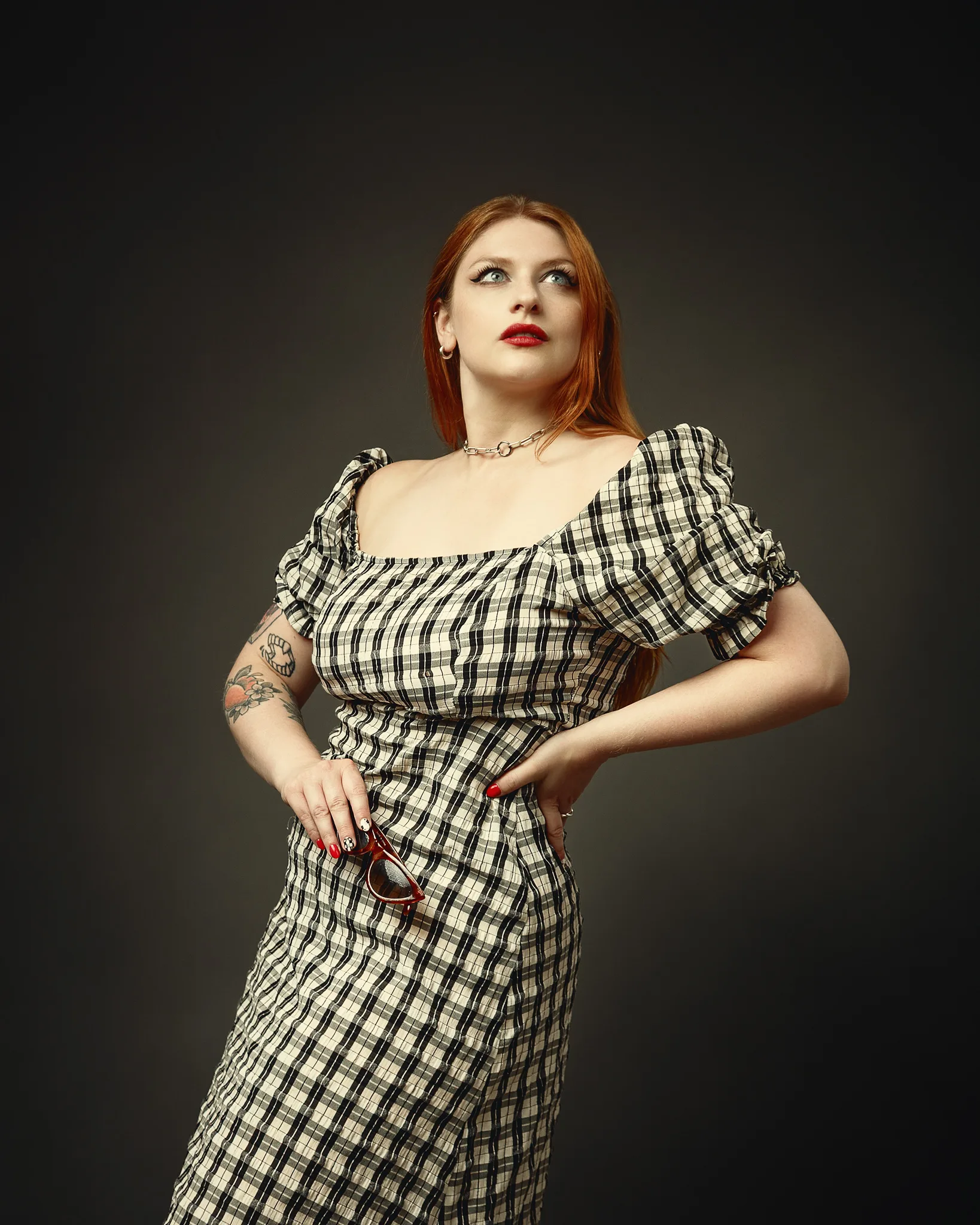
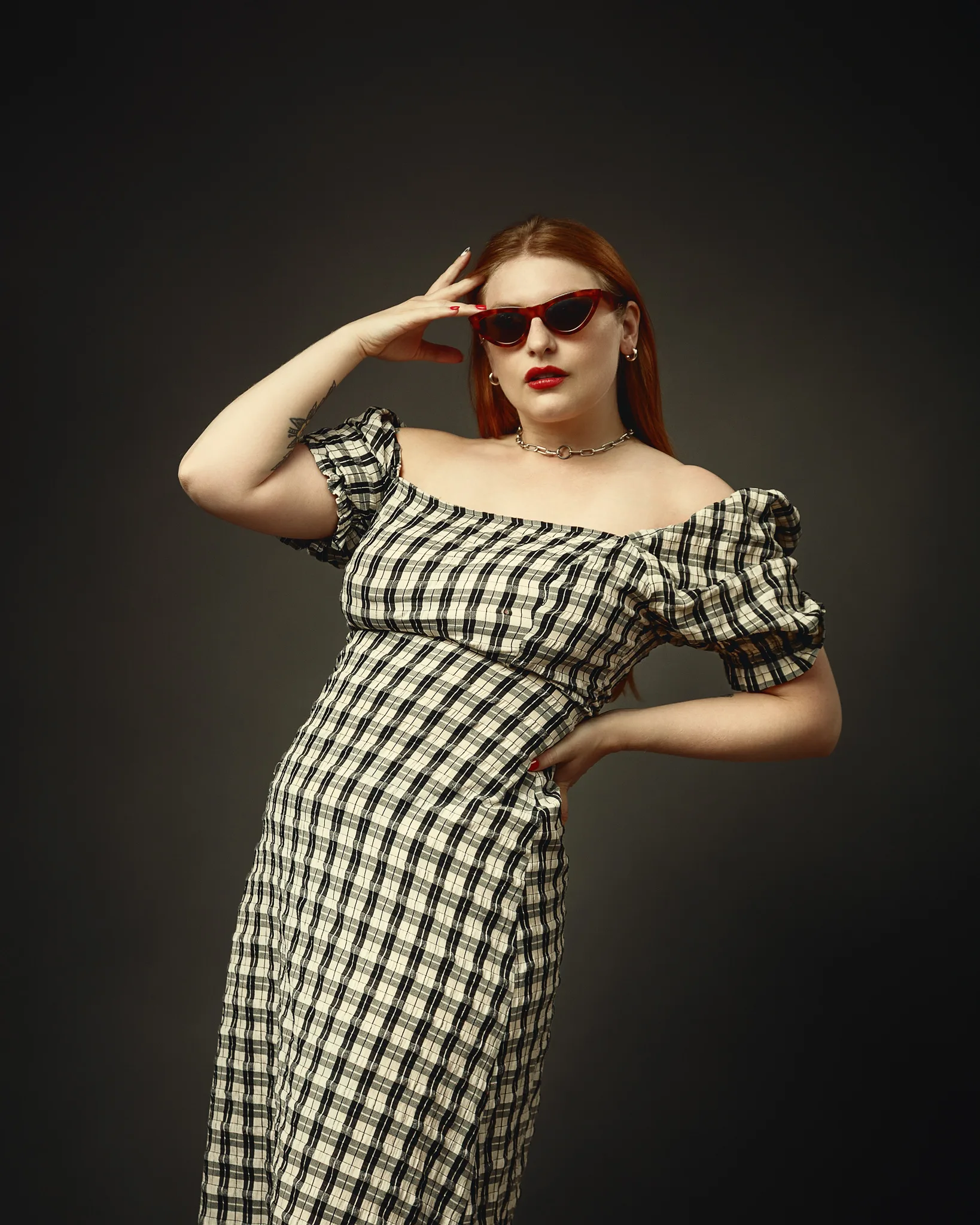
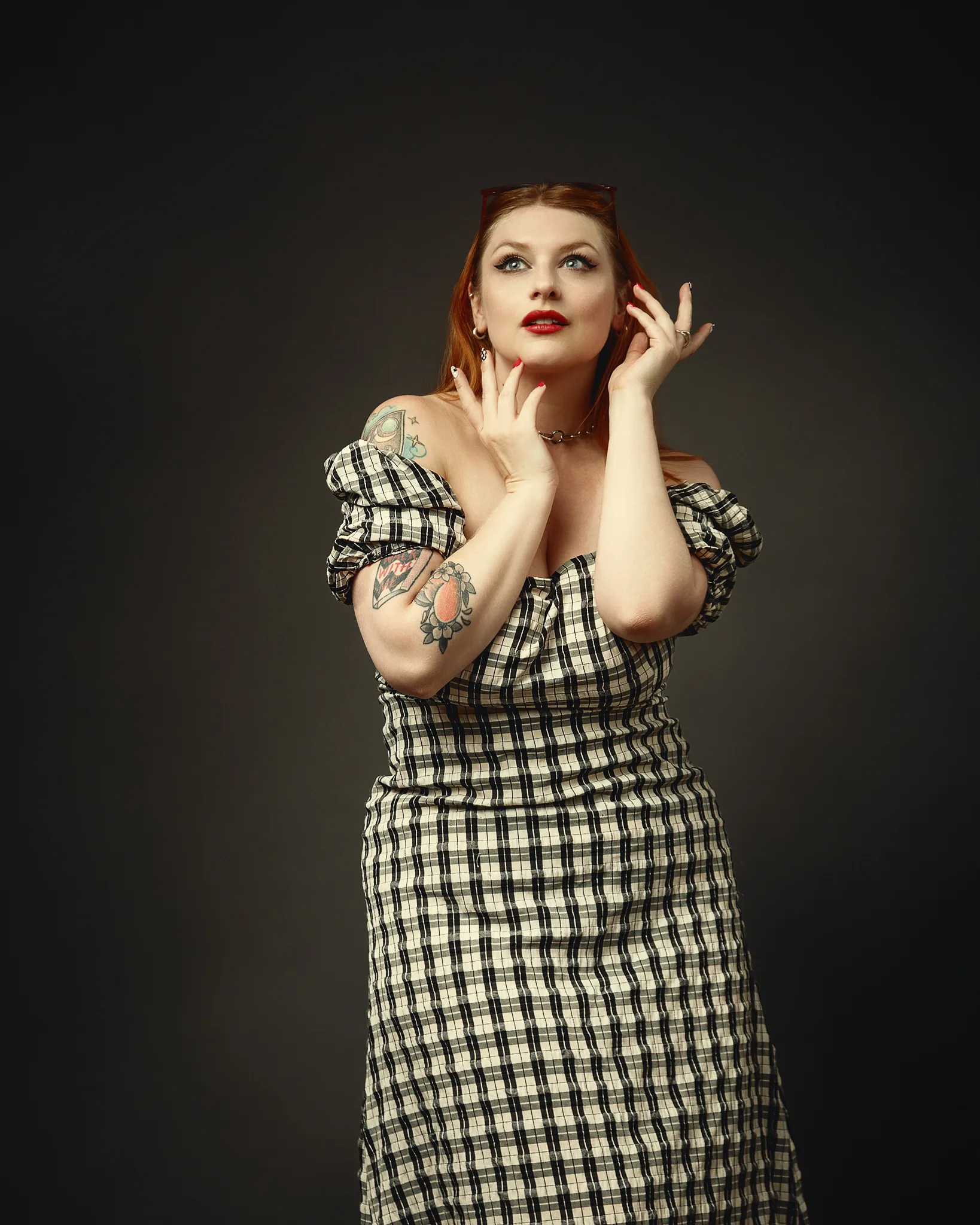
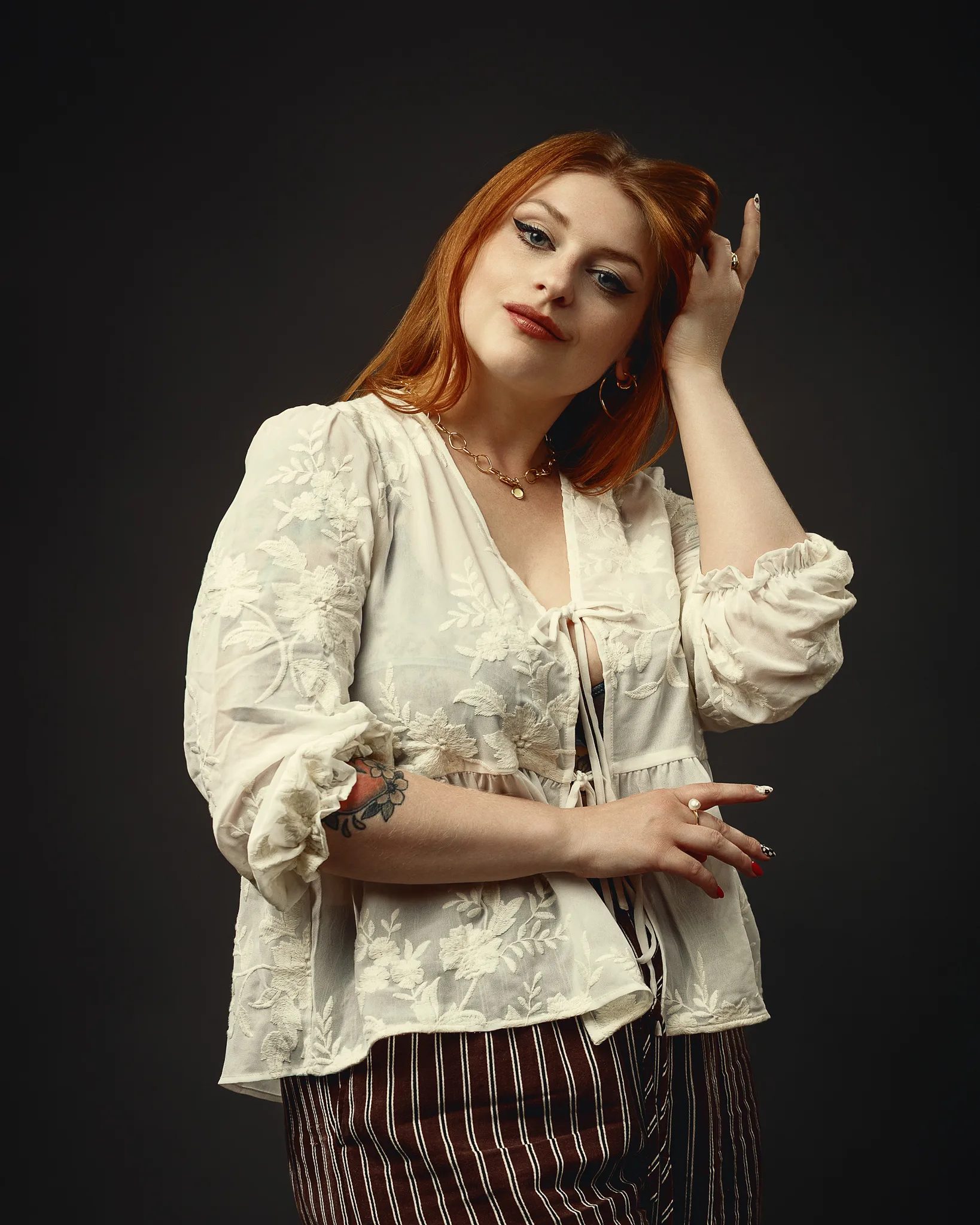
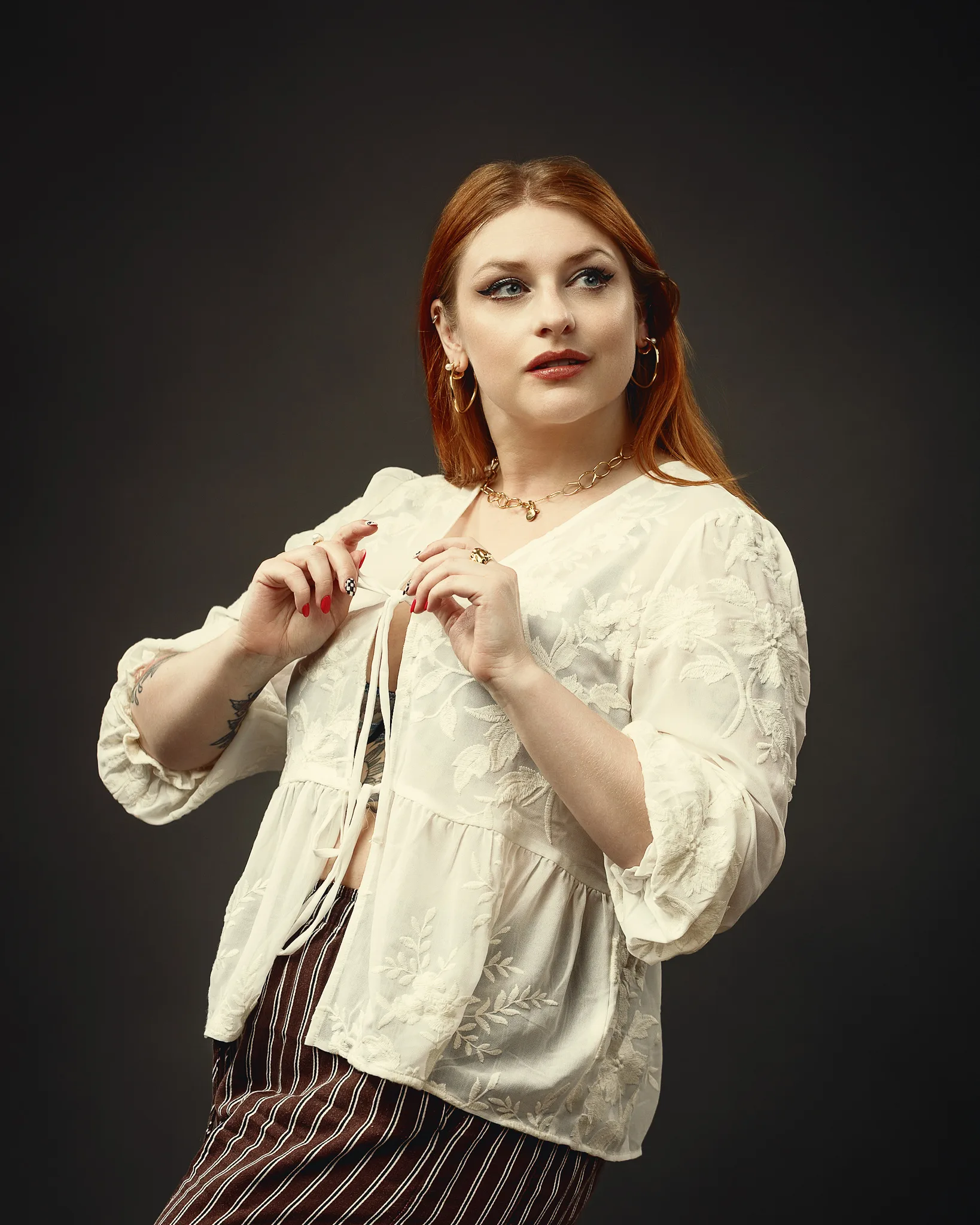
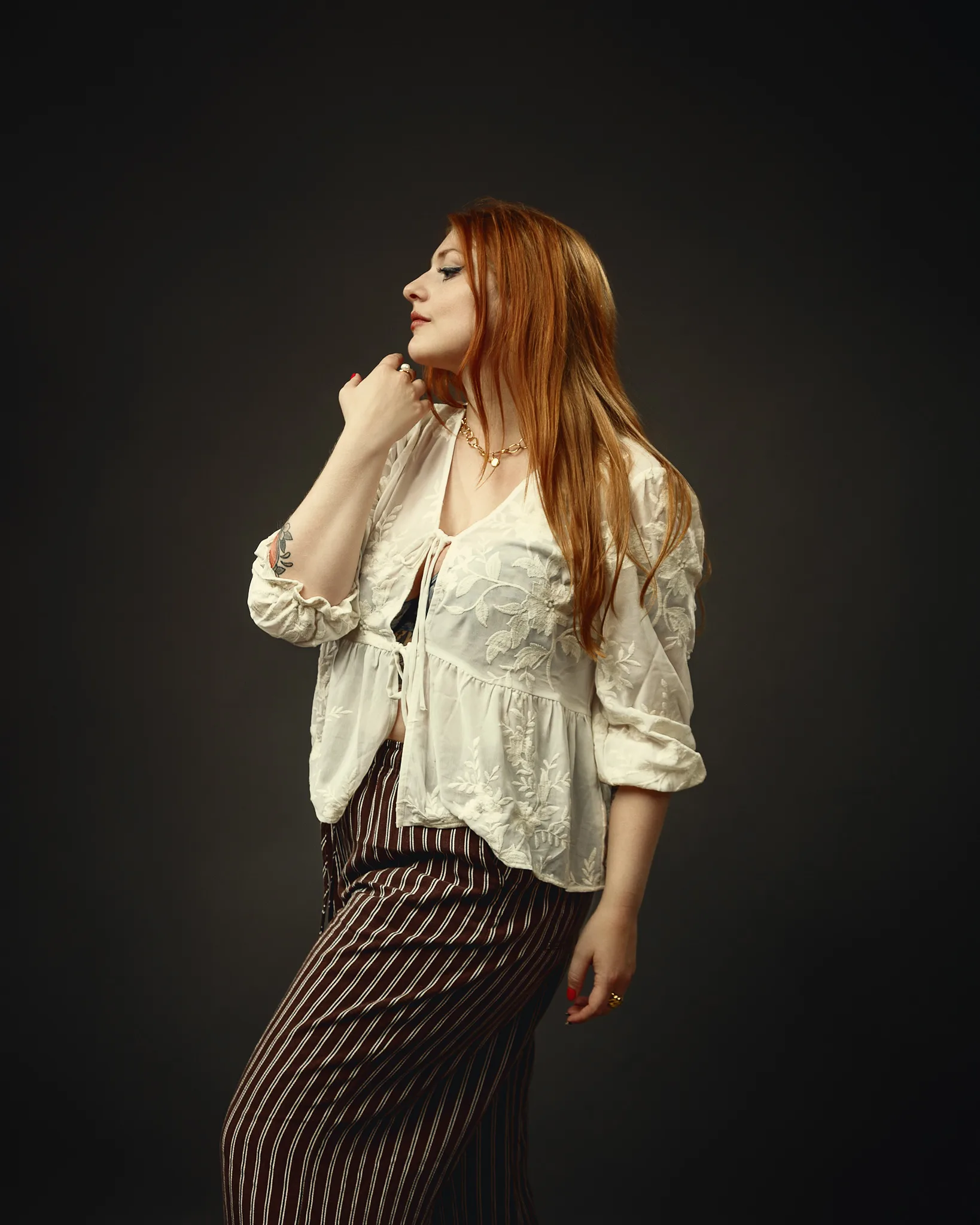
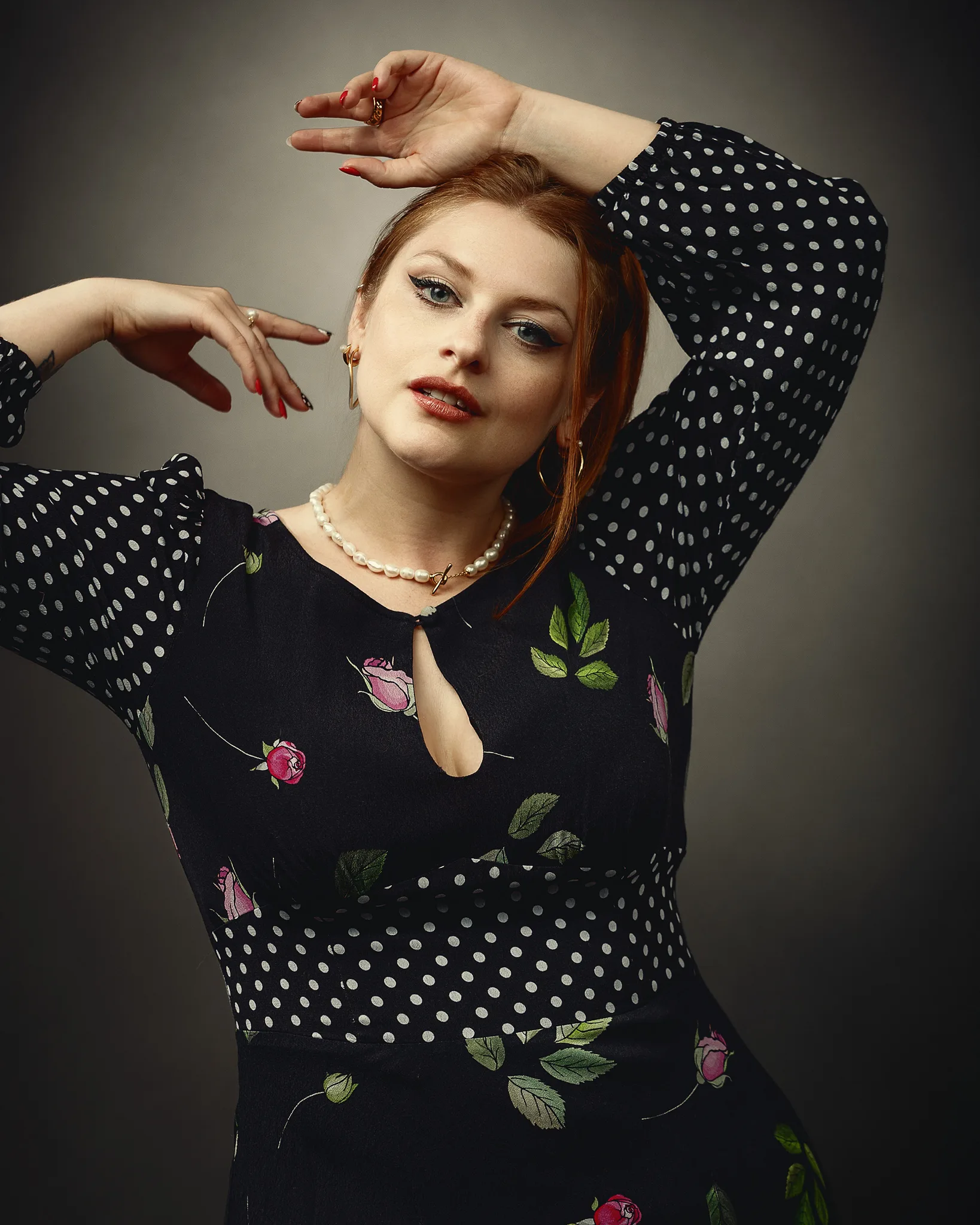
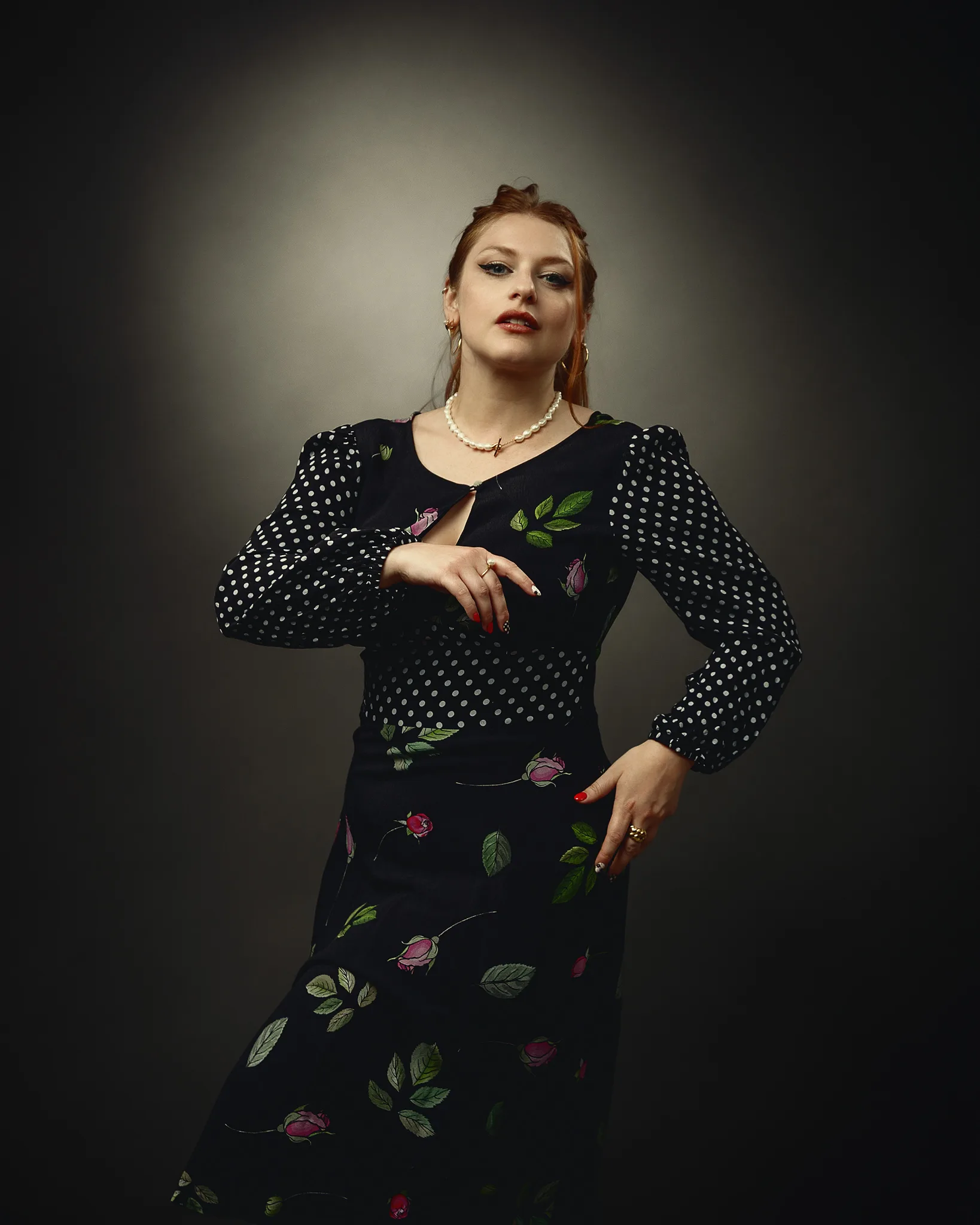
We worked through eight distinct looks over the course of the morning. Most of them were photographed against a mid grey painted background, lit with a single large soft source placed high and feathered off so the light falls away quickly into the corners. That falloff does a lot of the work. It keeps the attention on the face and shoulders and stops the background from competing.
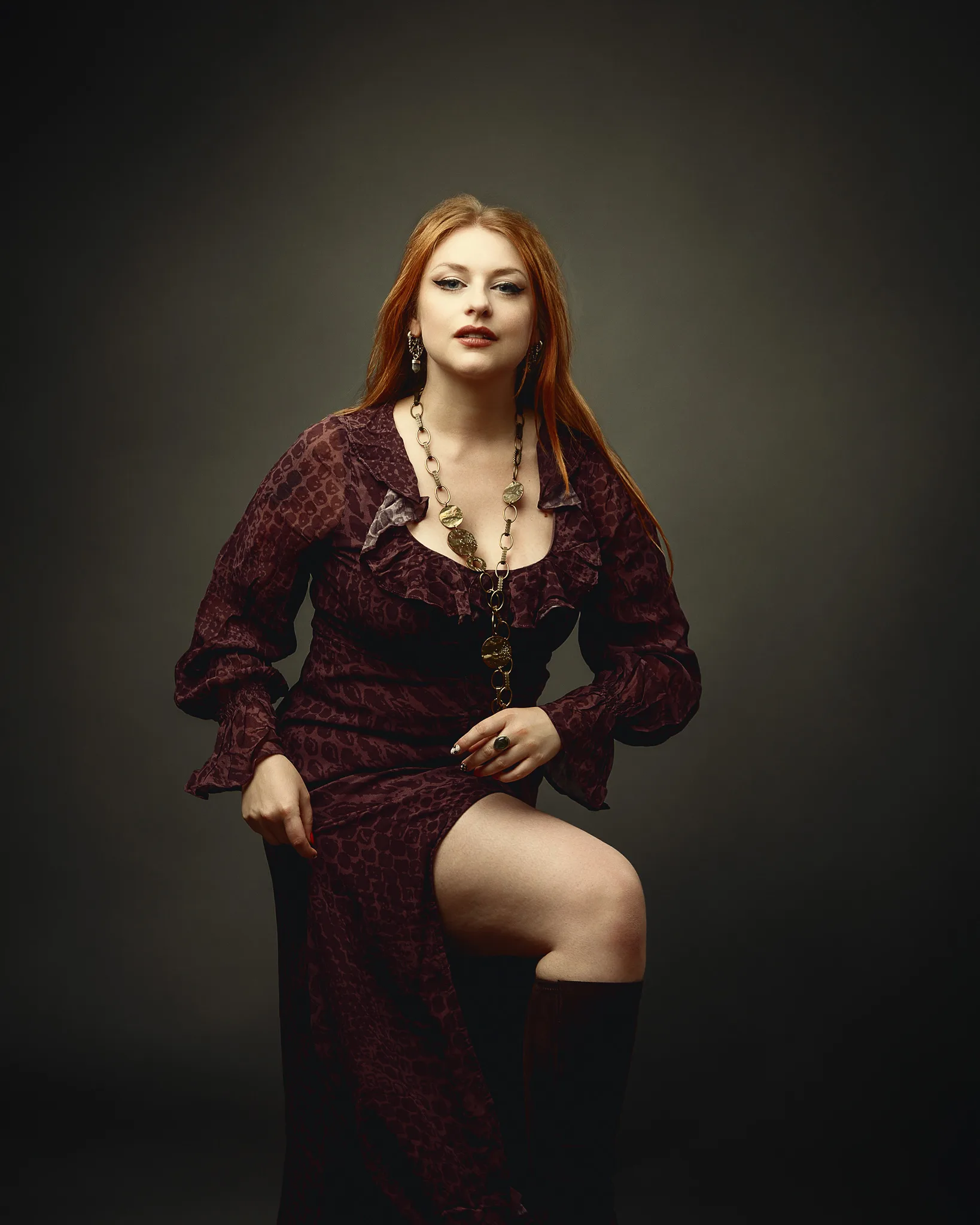
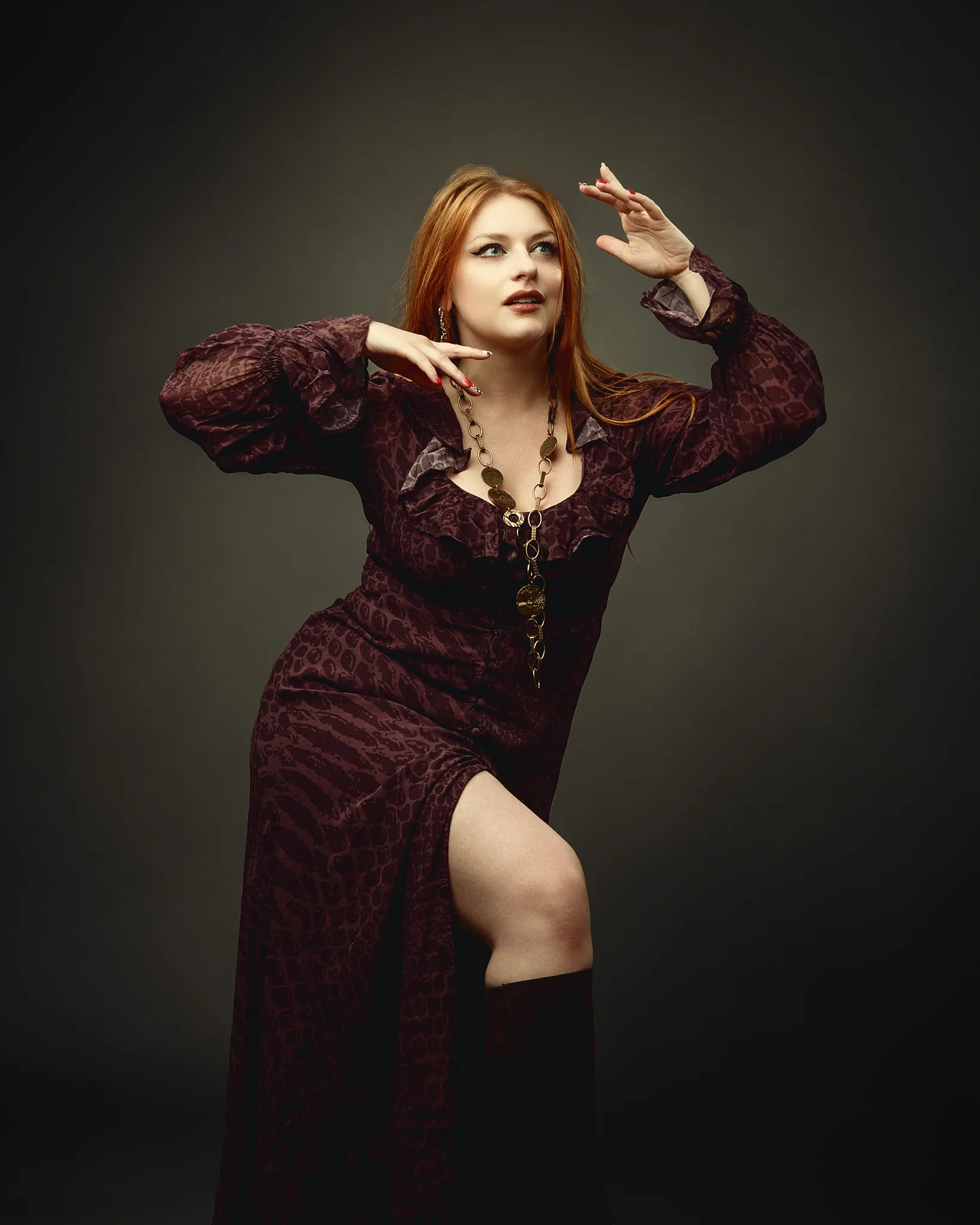
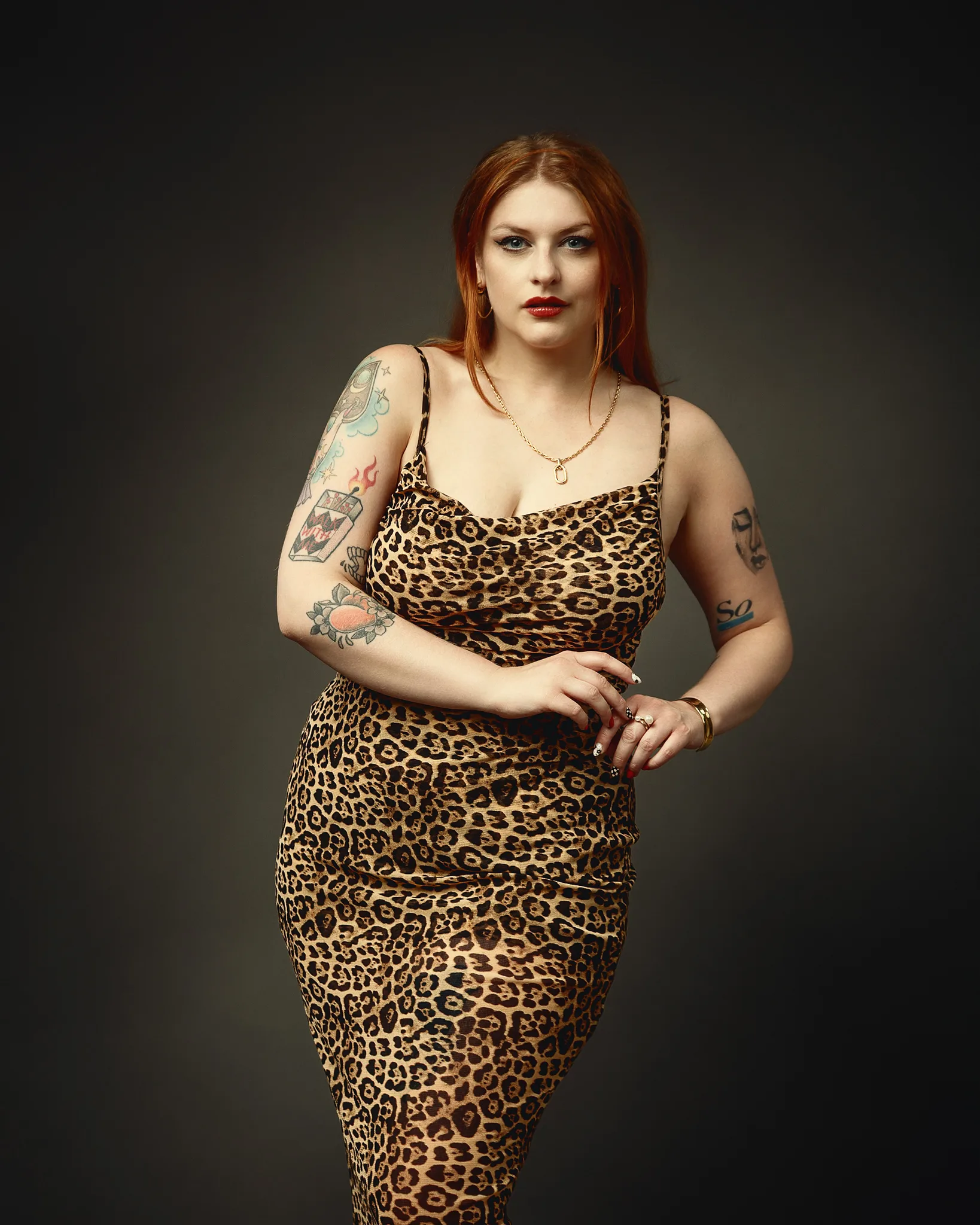
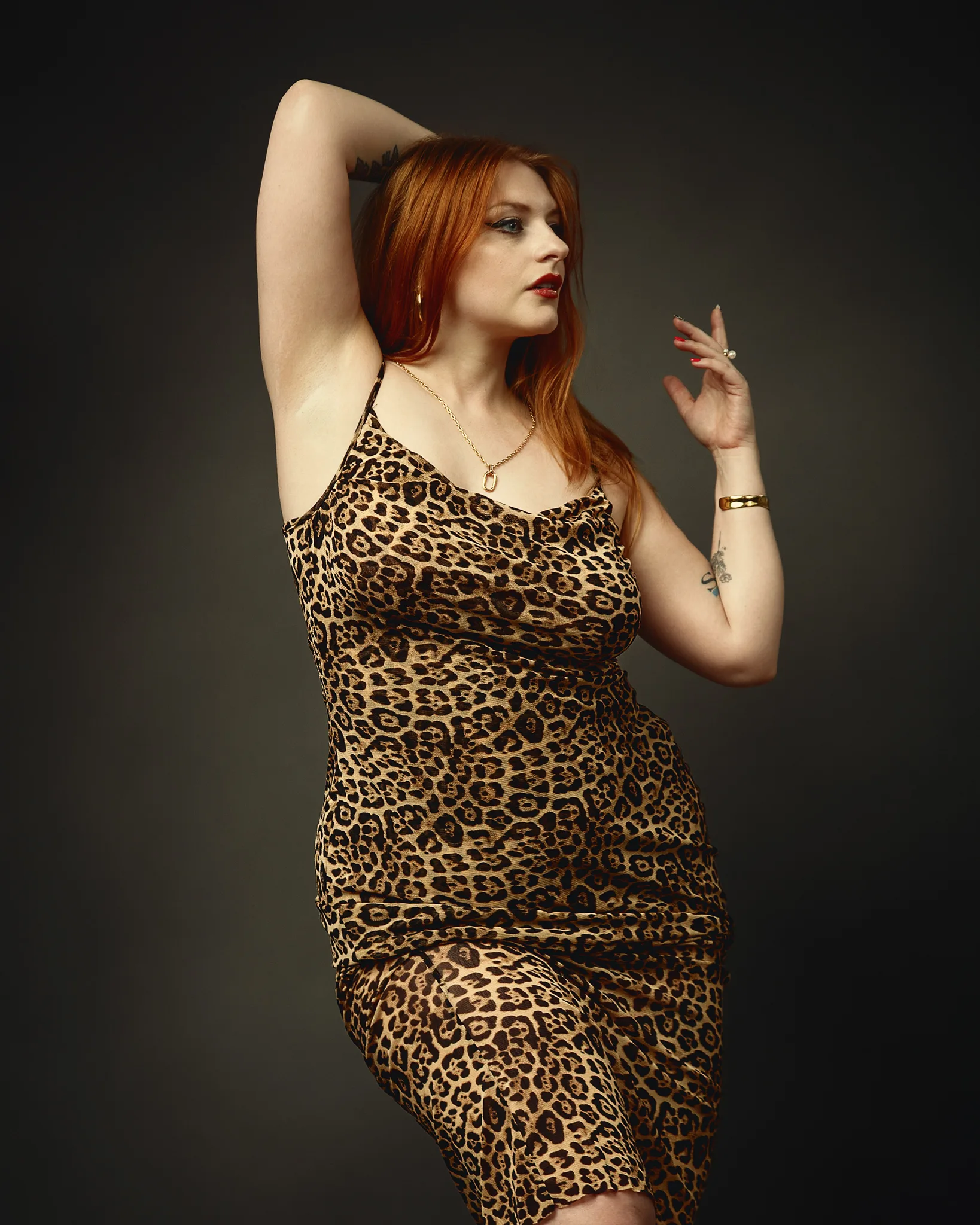
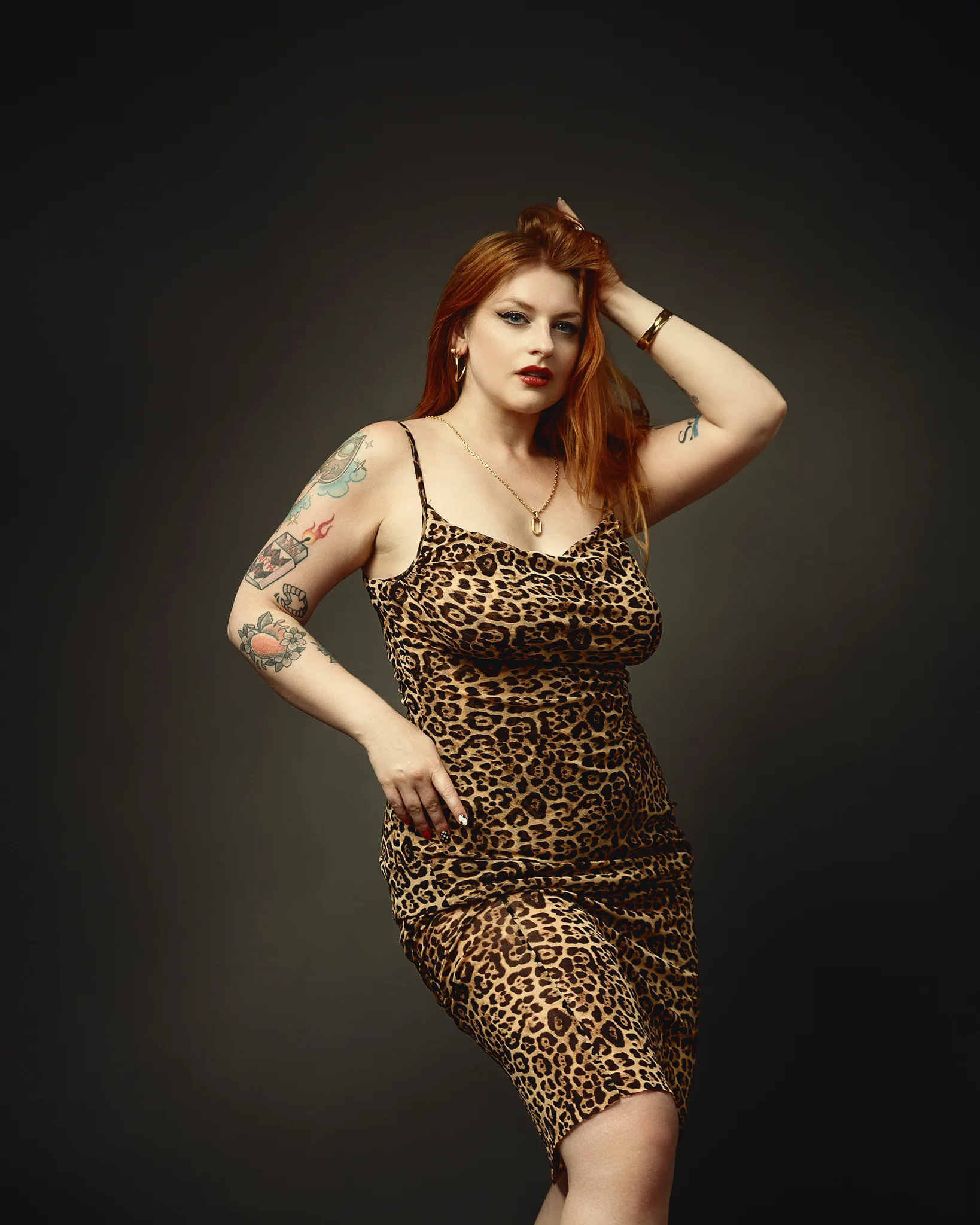
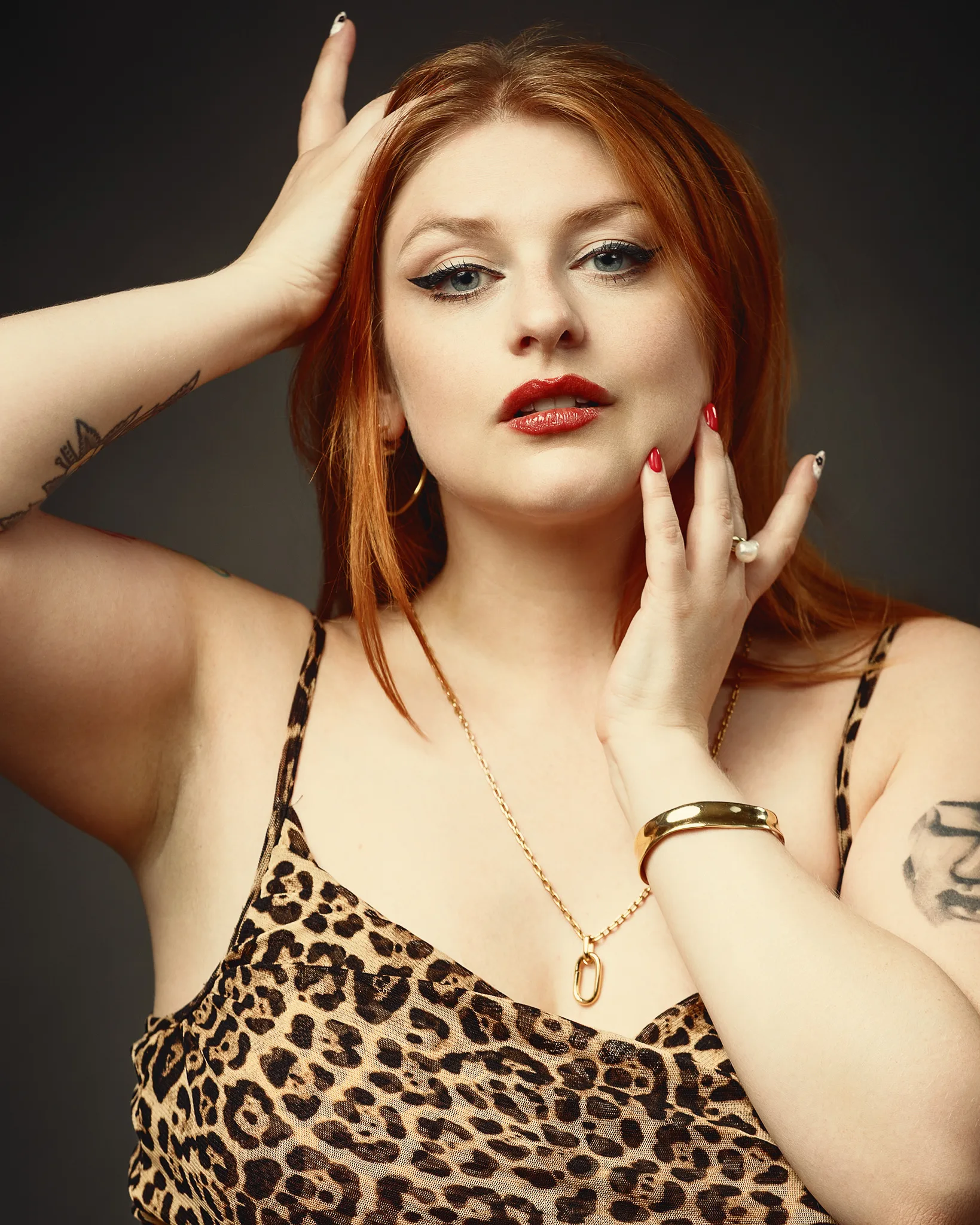
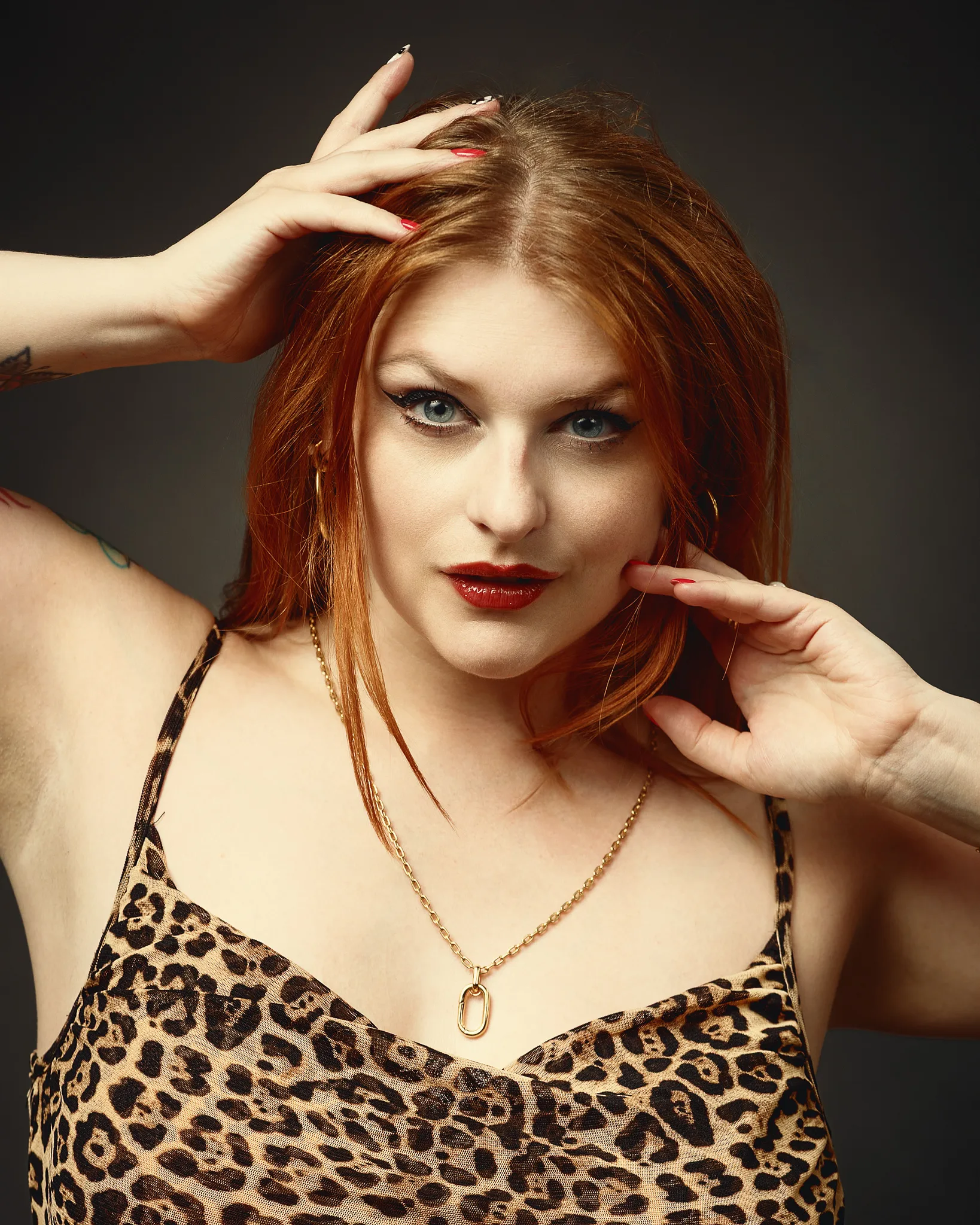
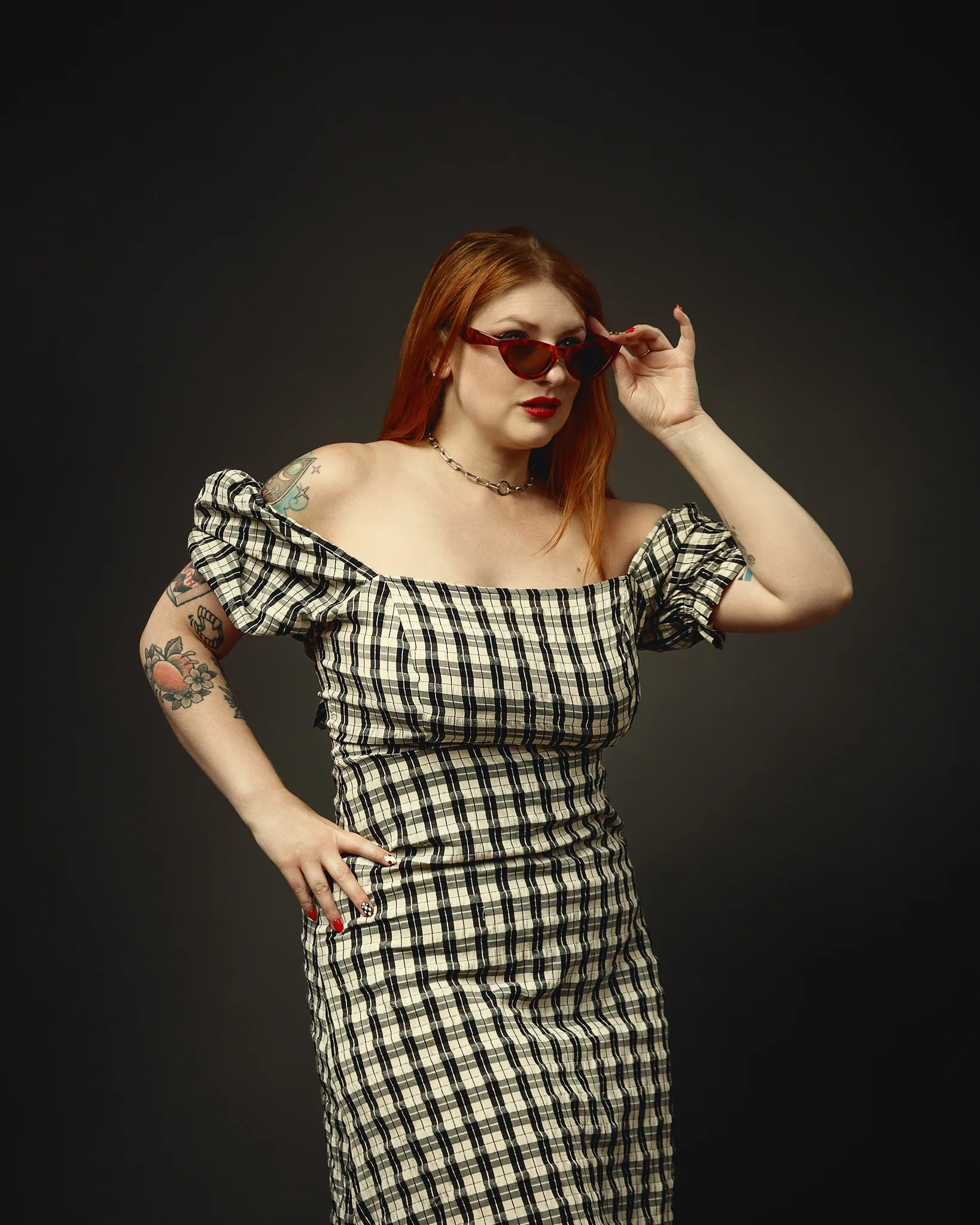
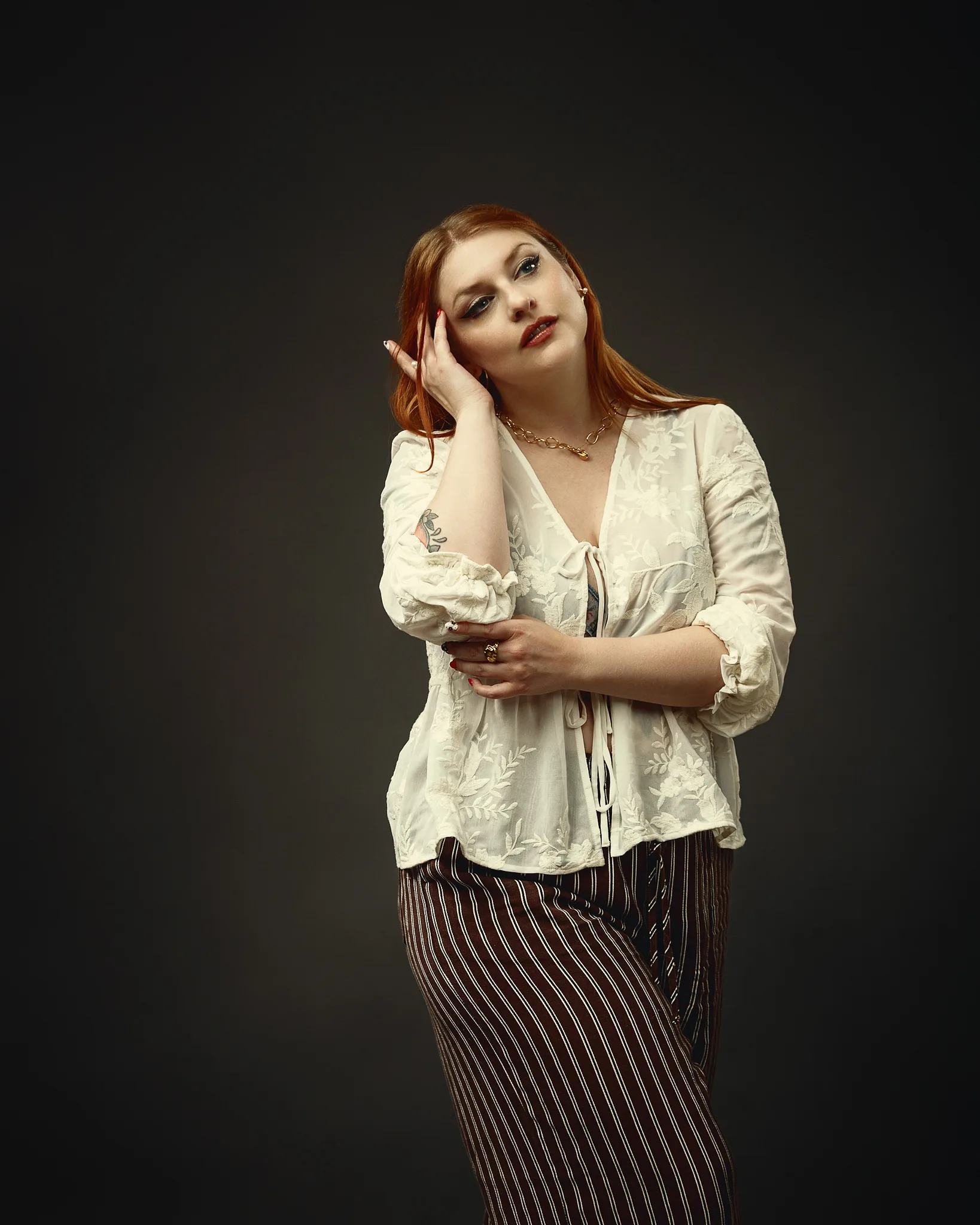
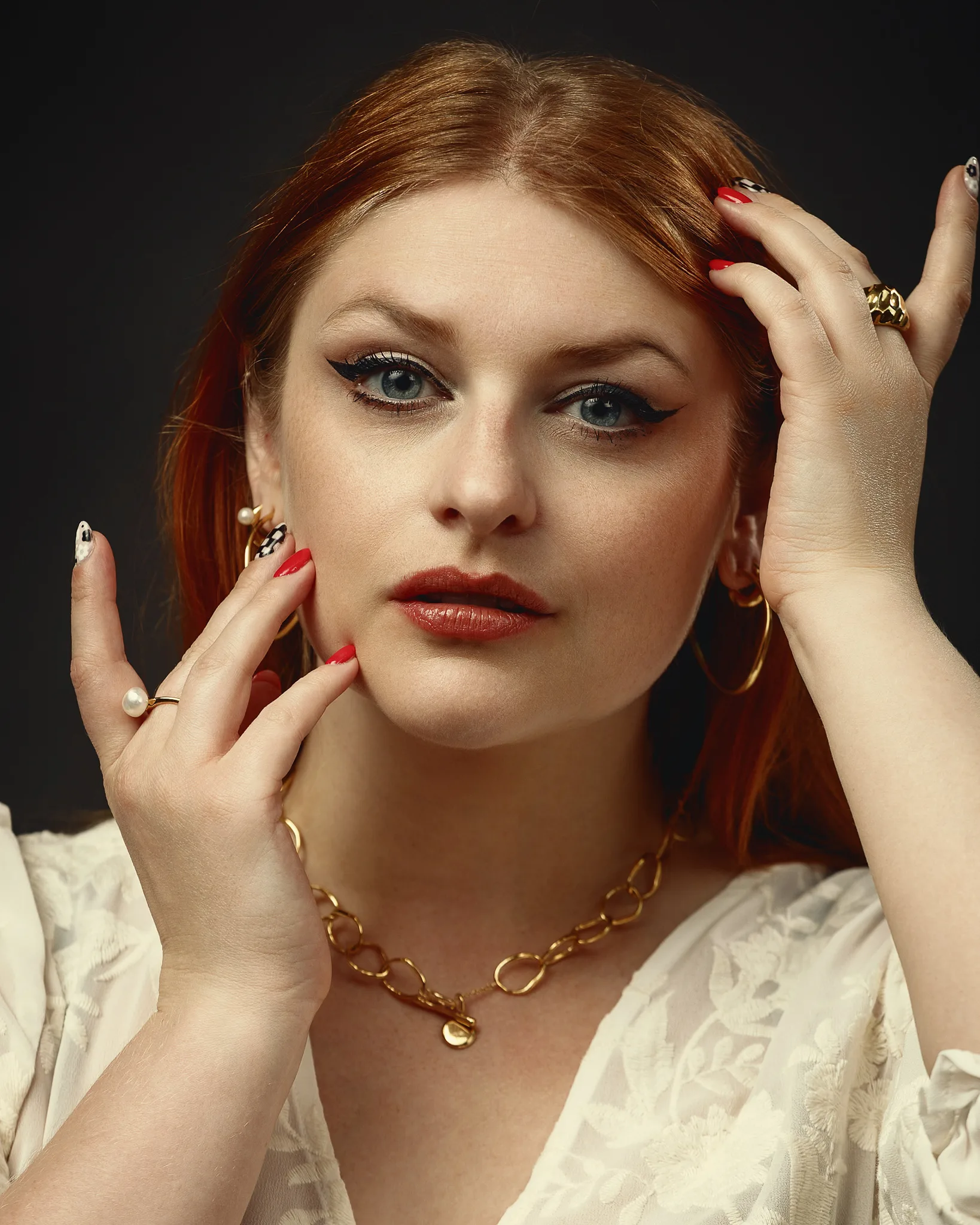
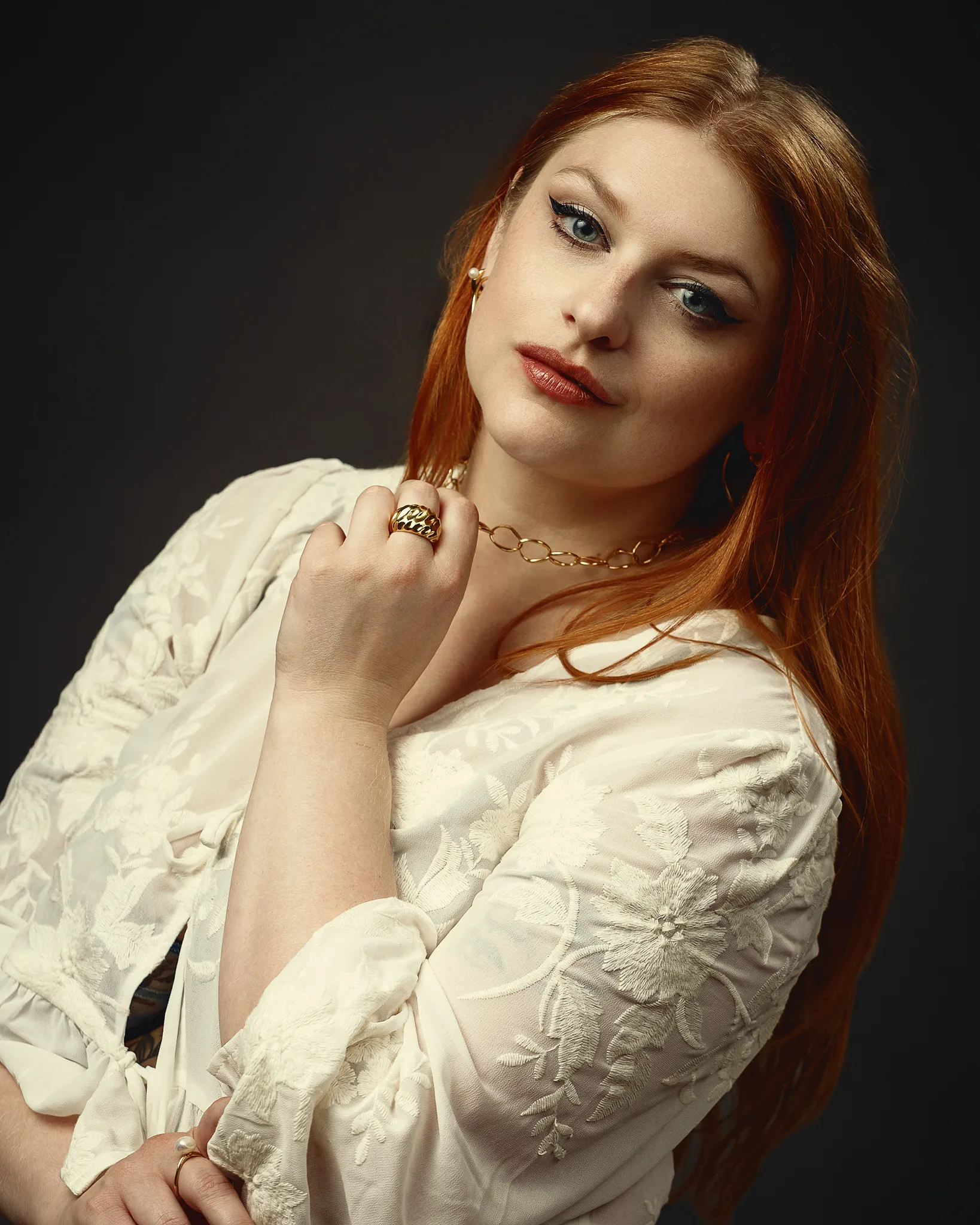
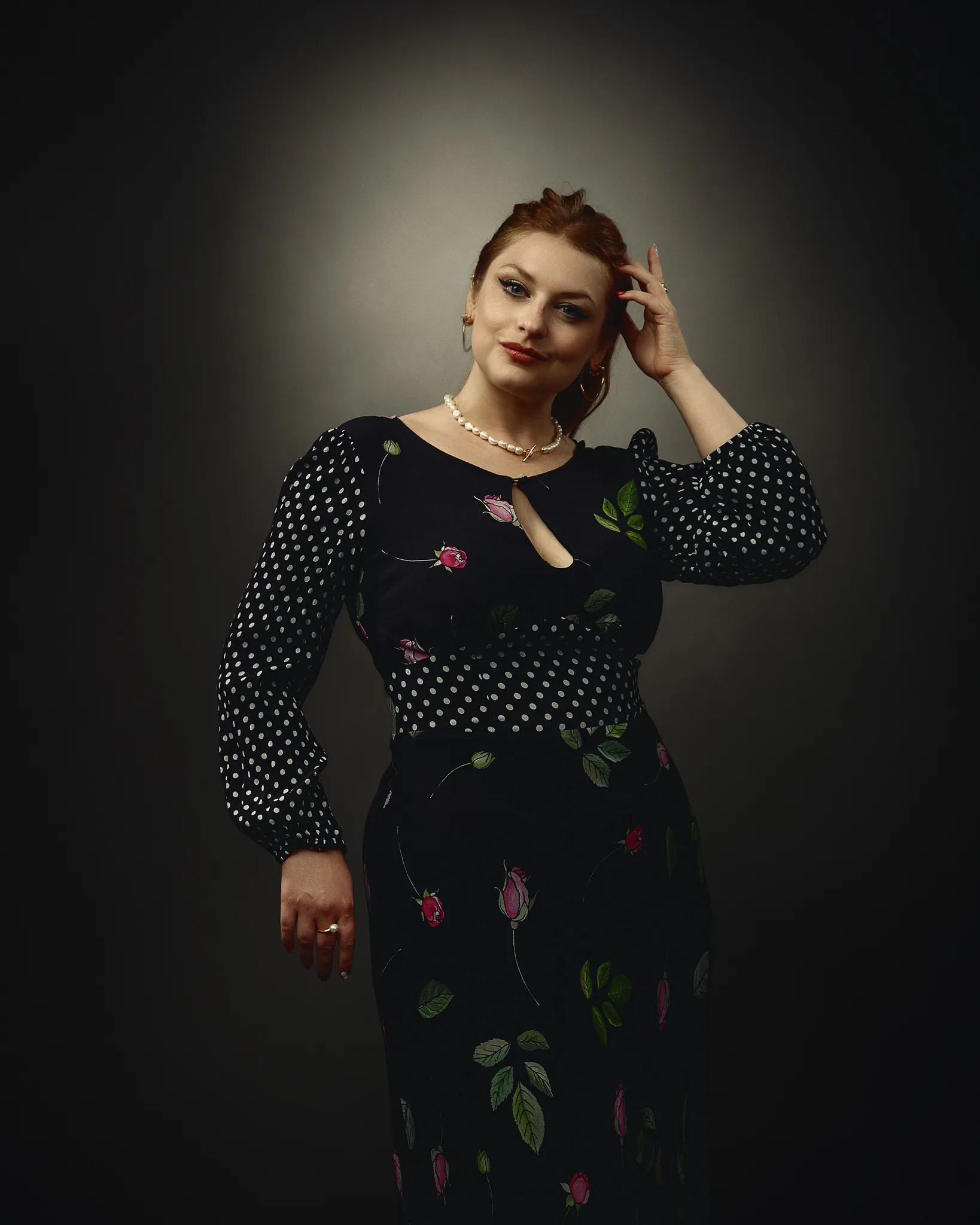
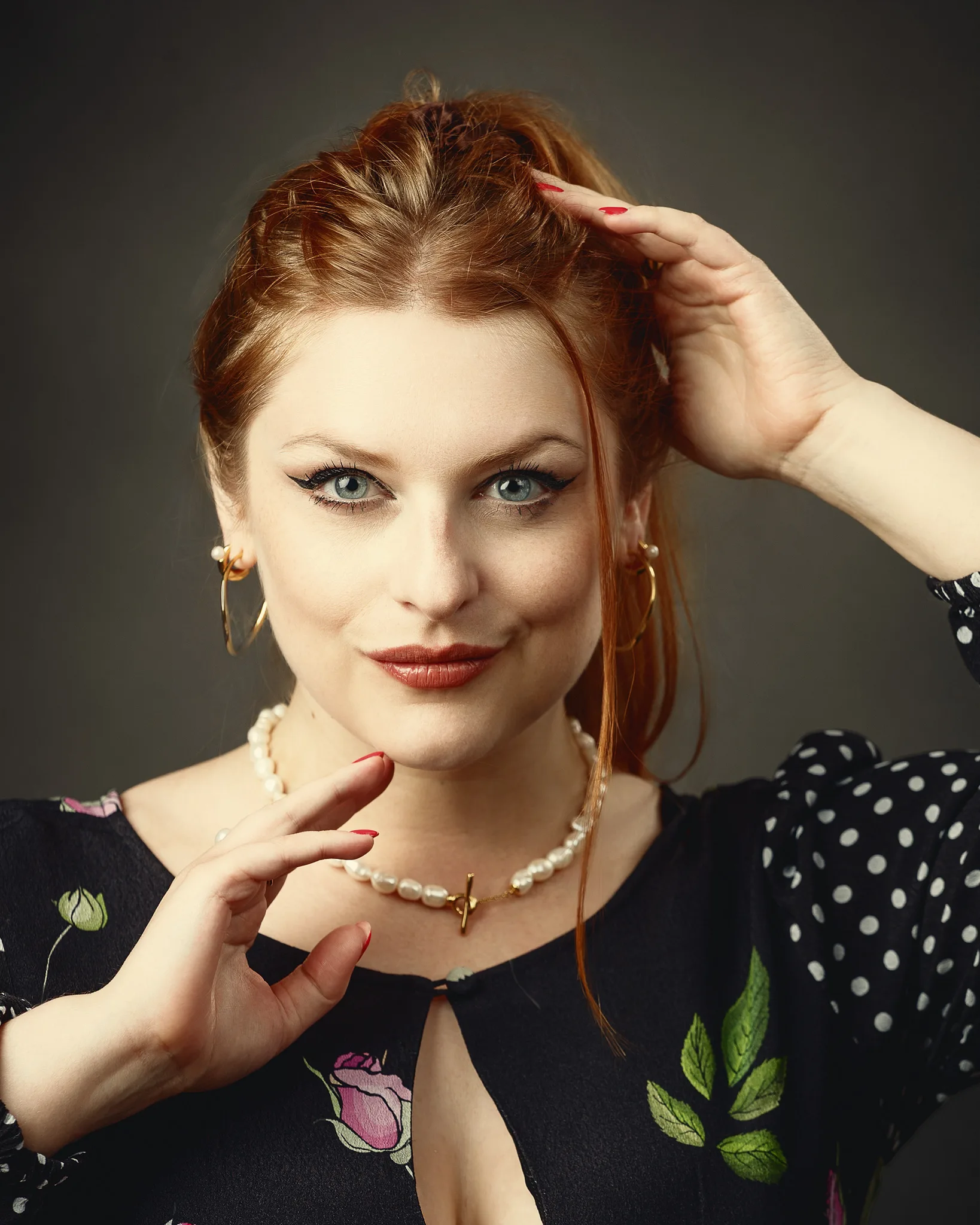
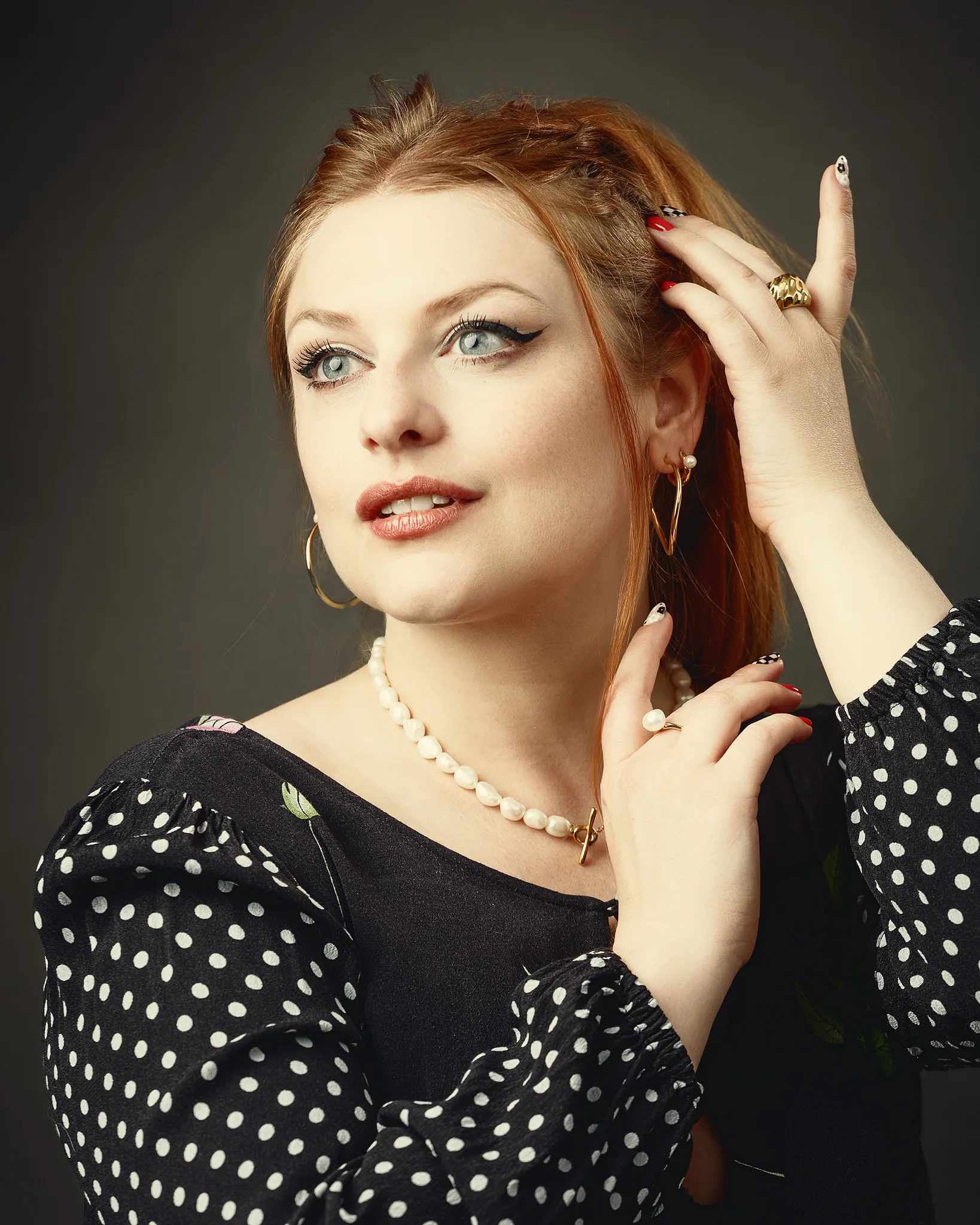
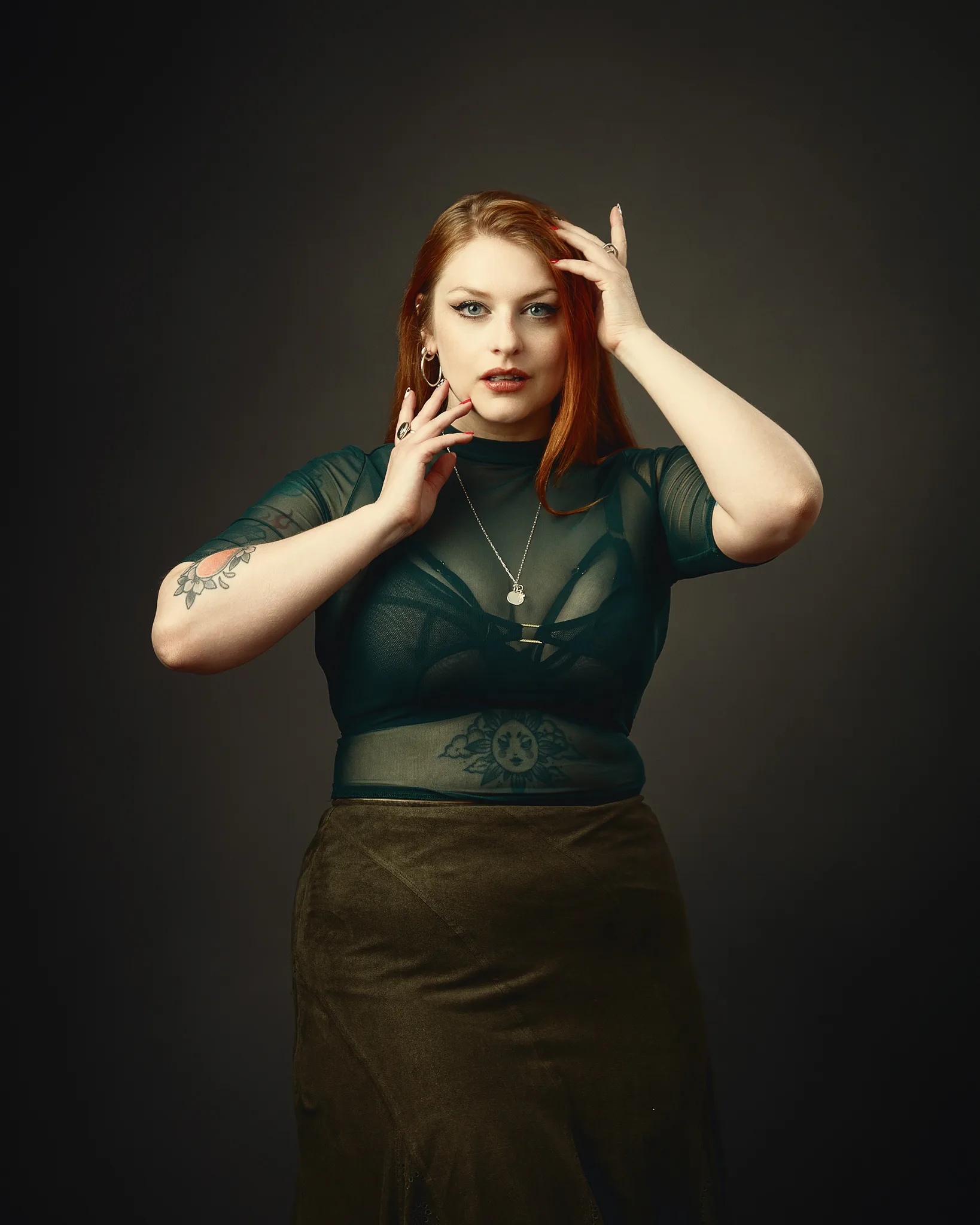
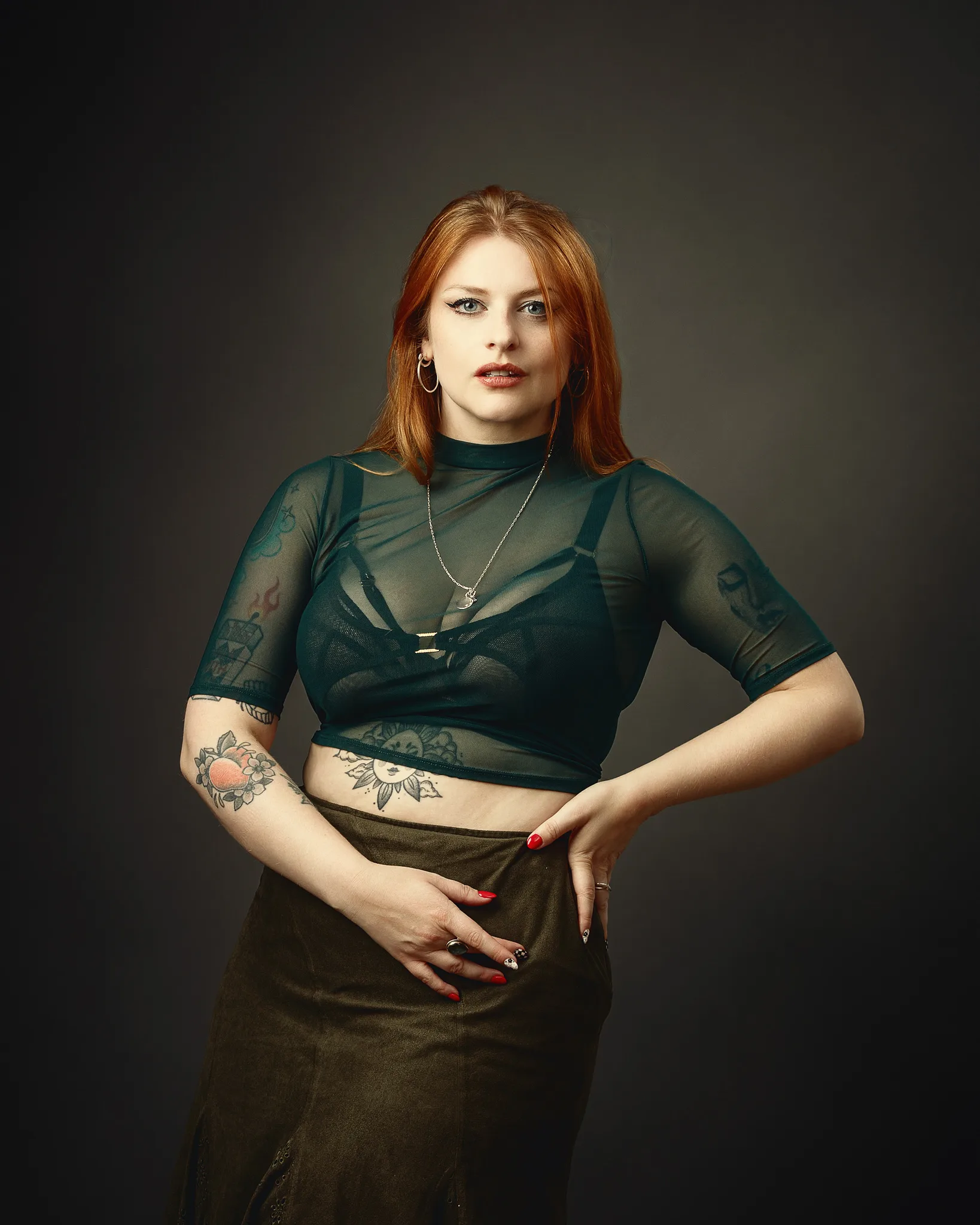
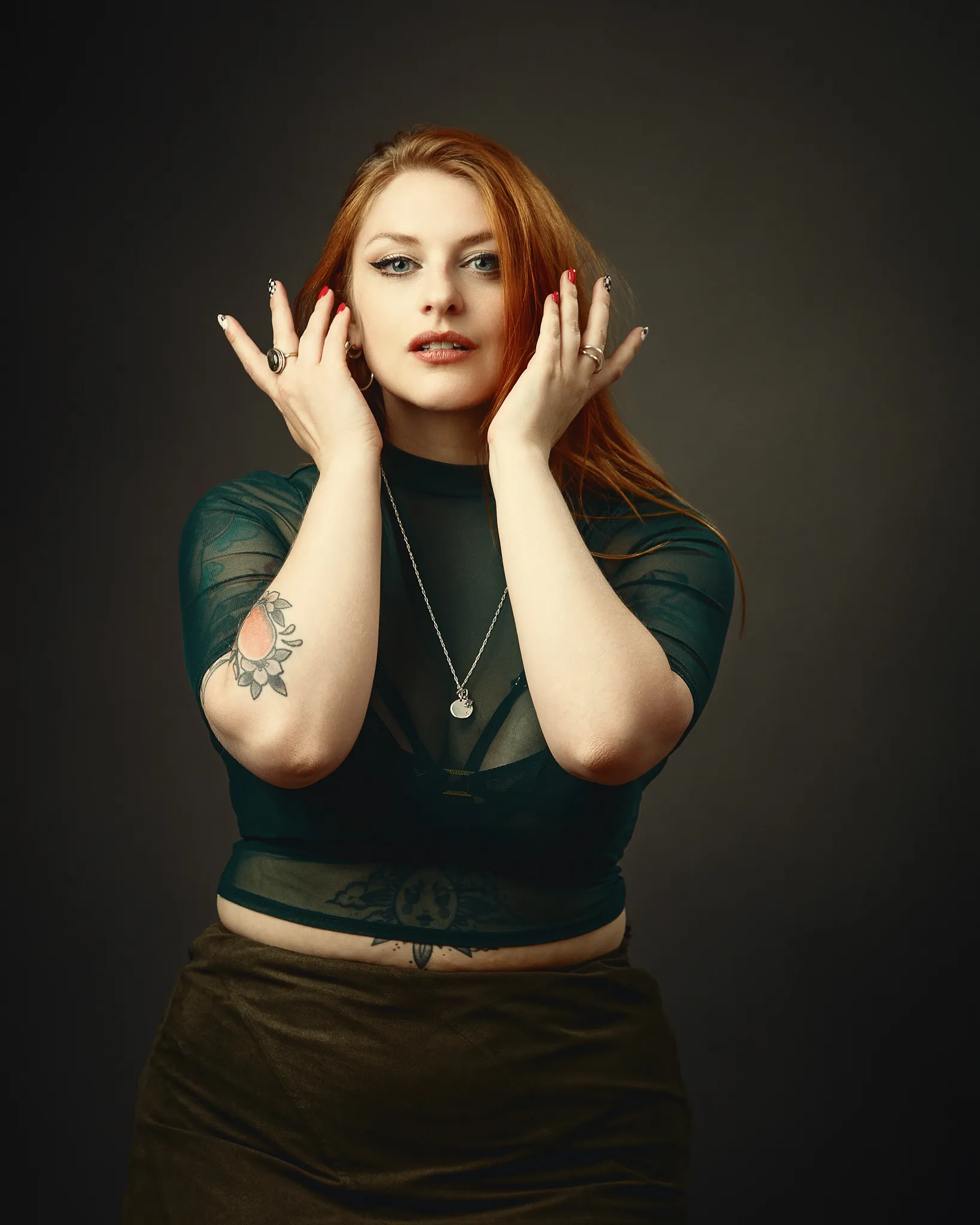
The set opened with a plum leopard jacquard maxi dress with a ruffled neckline and a long linked chain necklace, photographed seated and standing. From there we moved into a leopard print slip dress, a black and white checked off shoulder dress worn with aviators, a cream embroidered sheer blouse with brown pinstripe trousers, a black dress with polka dot sleeves and a rose print through the body, and finally a dark green mesh top with a suede skirt.
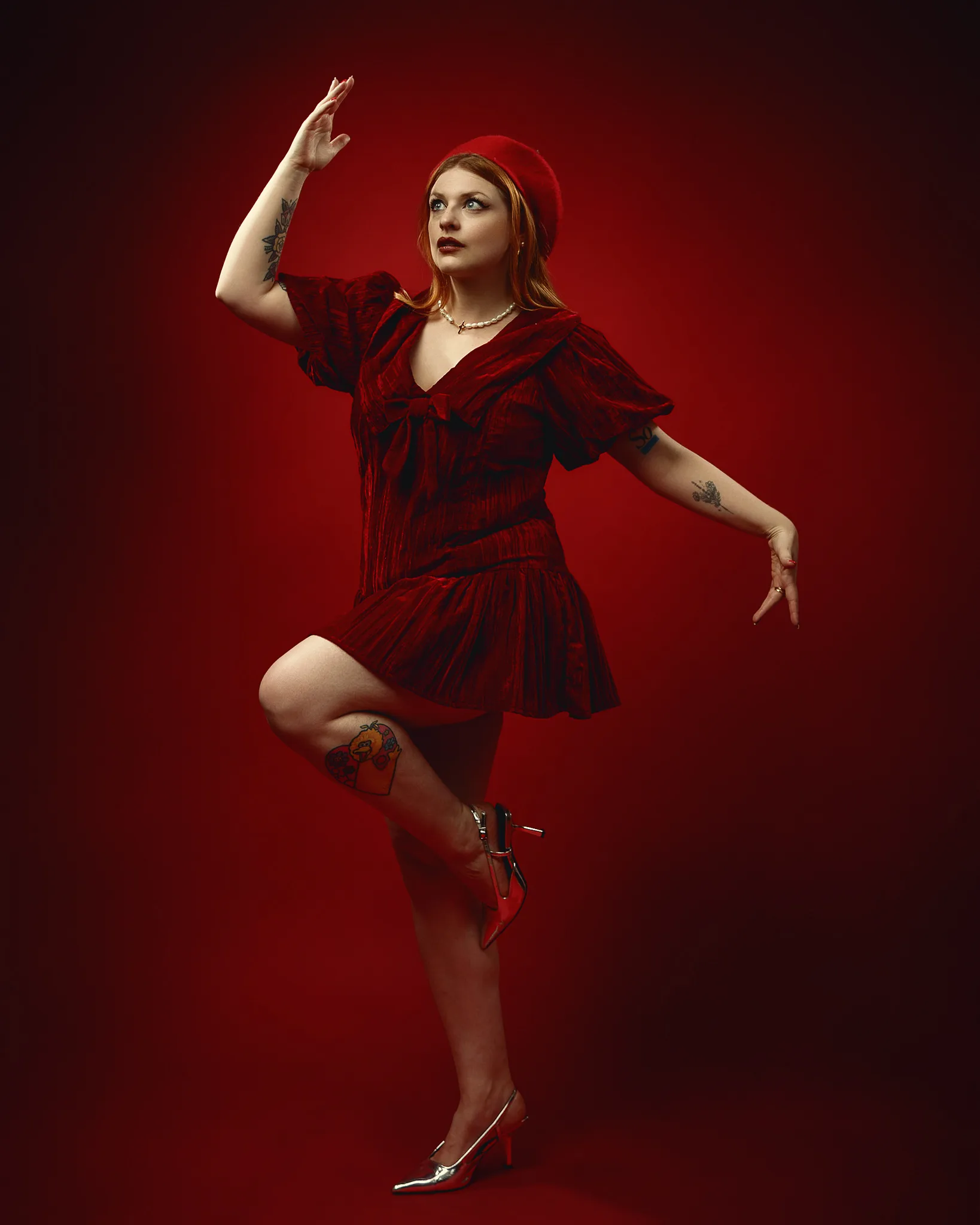
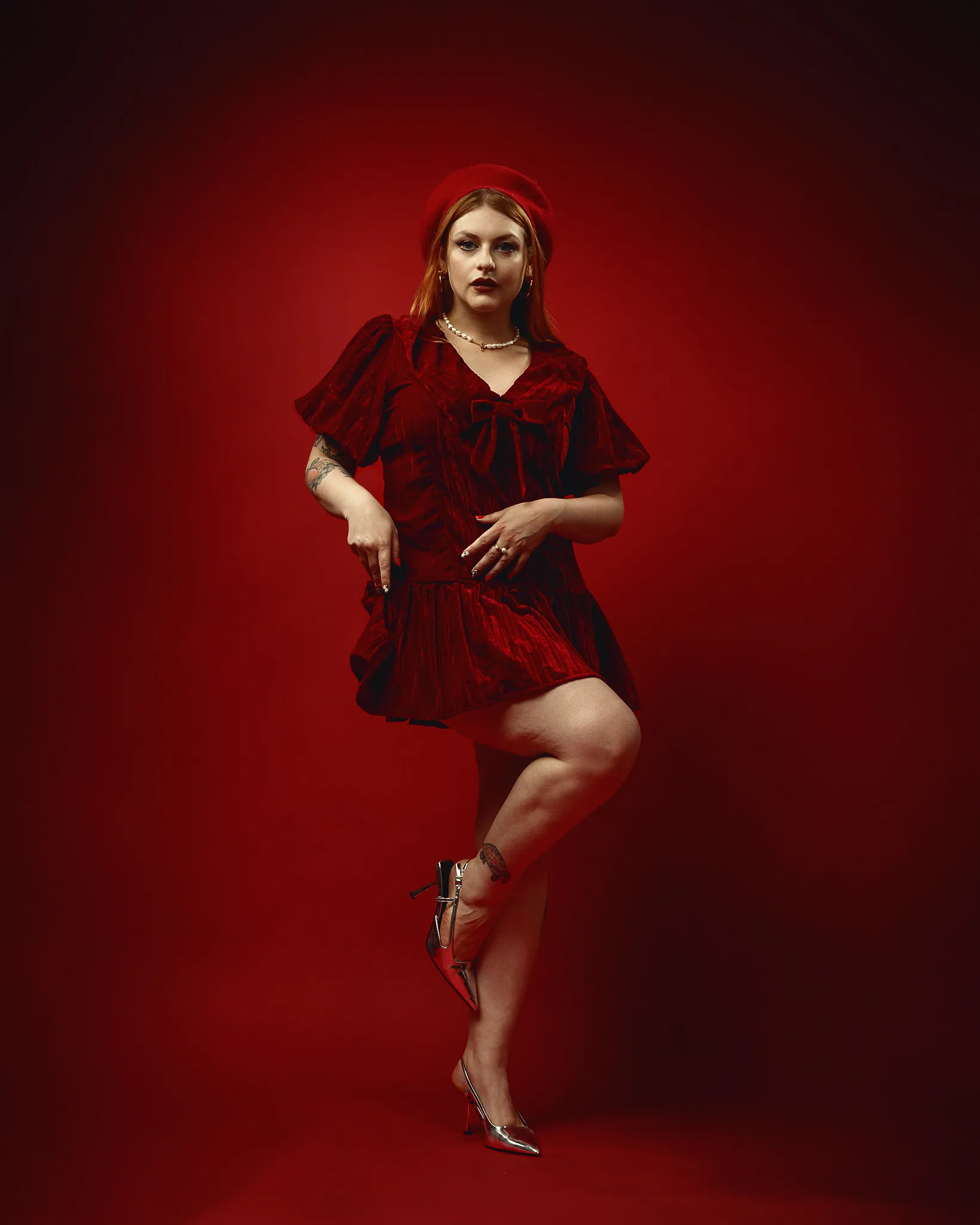
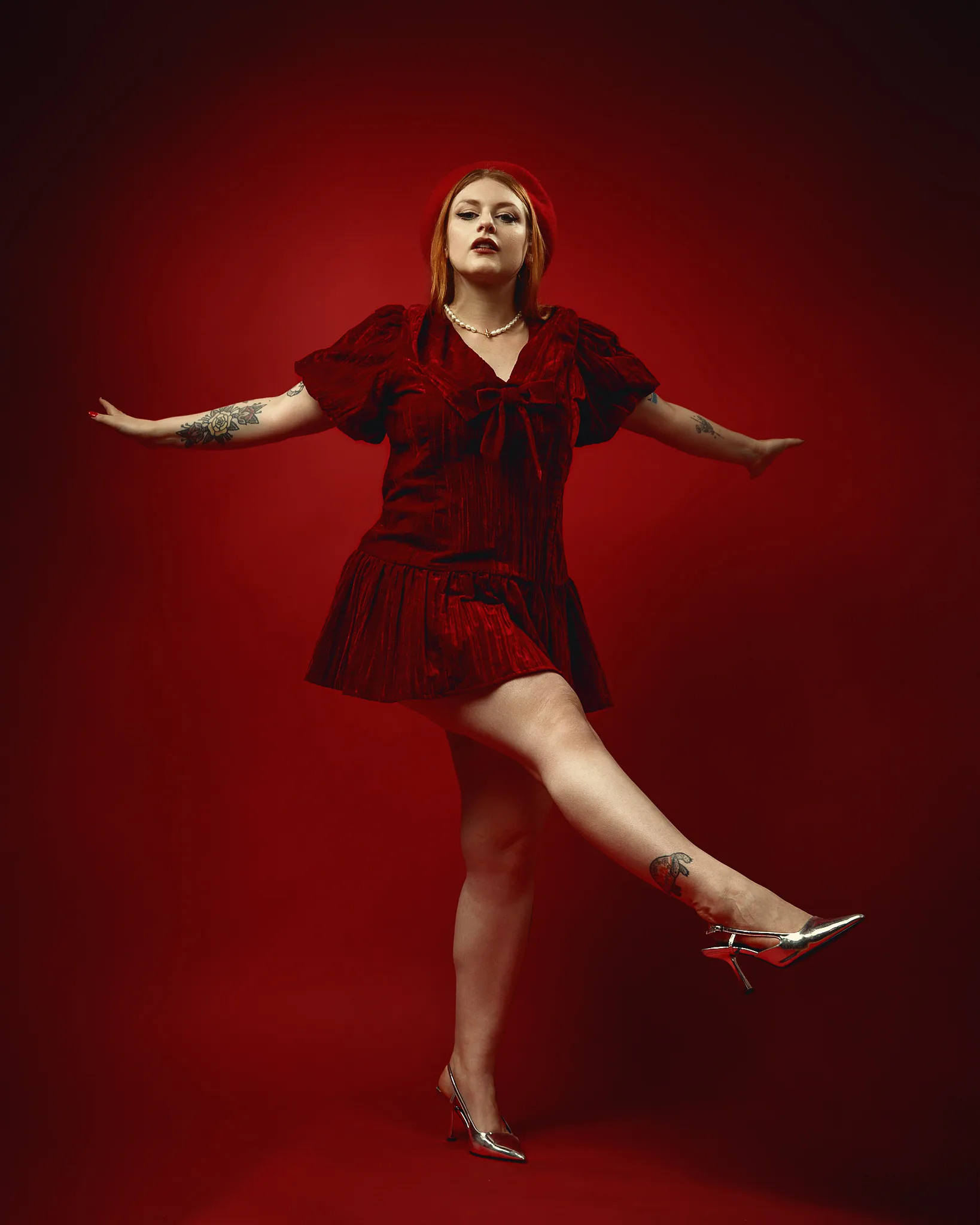
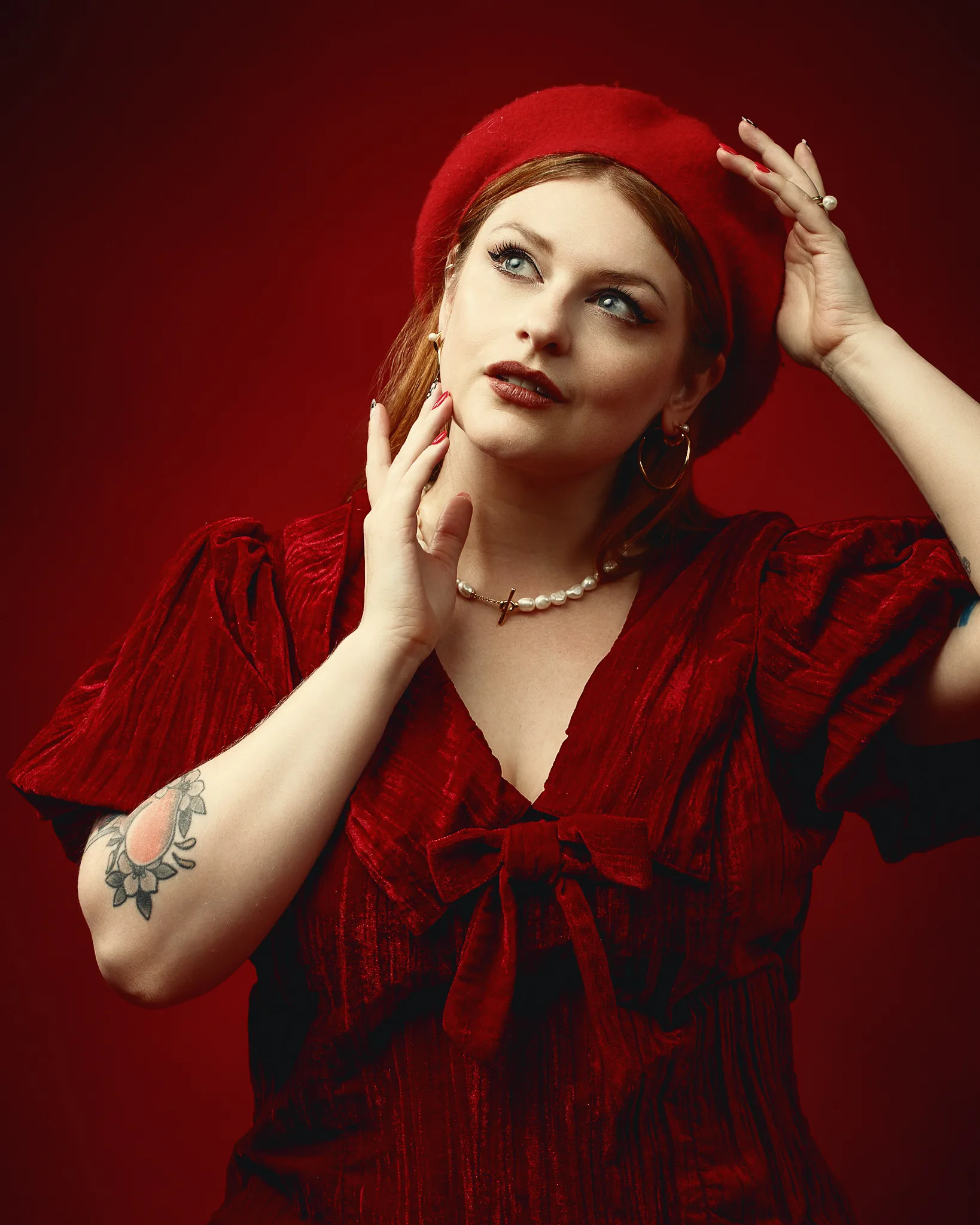
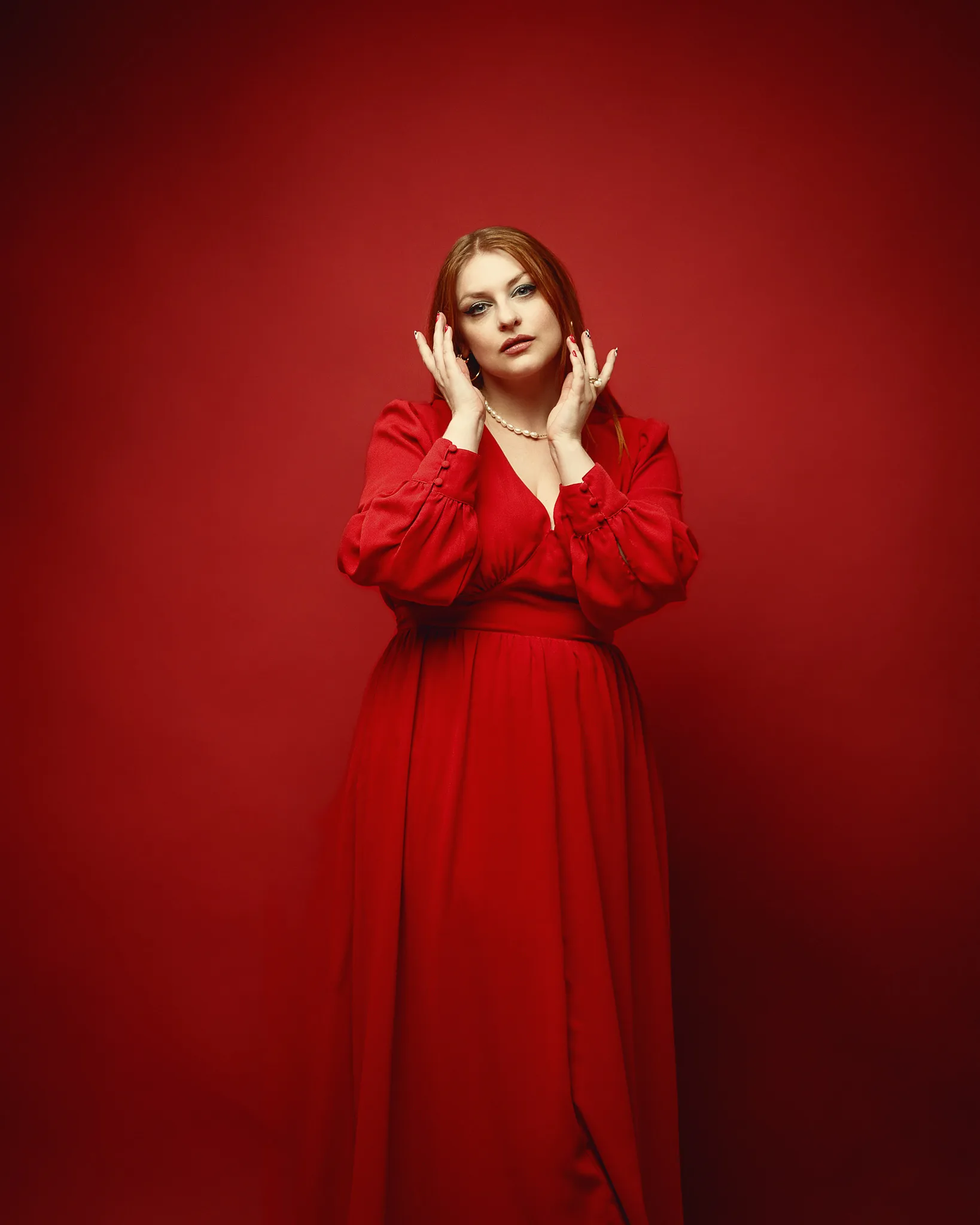
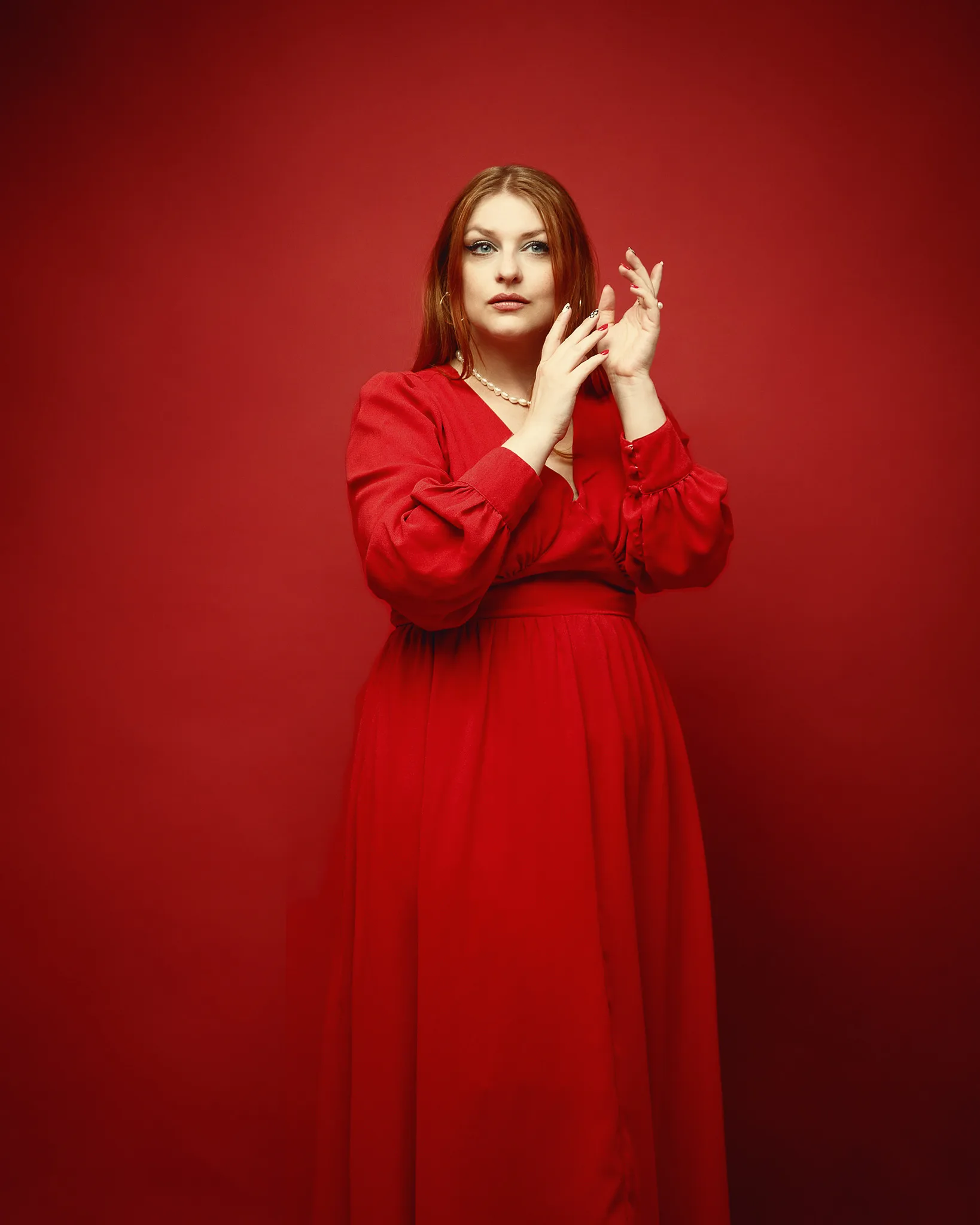
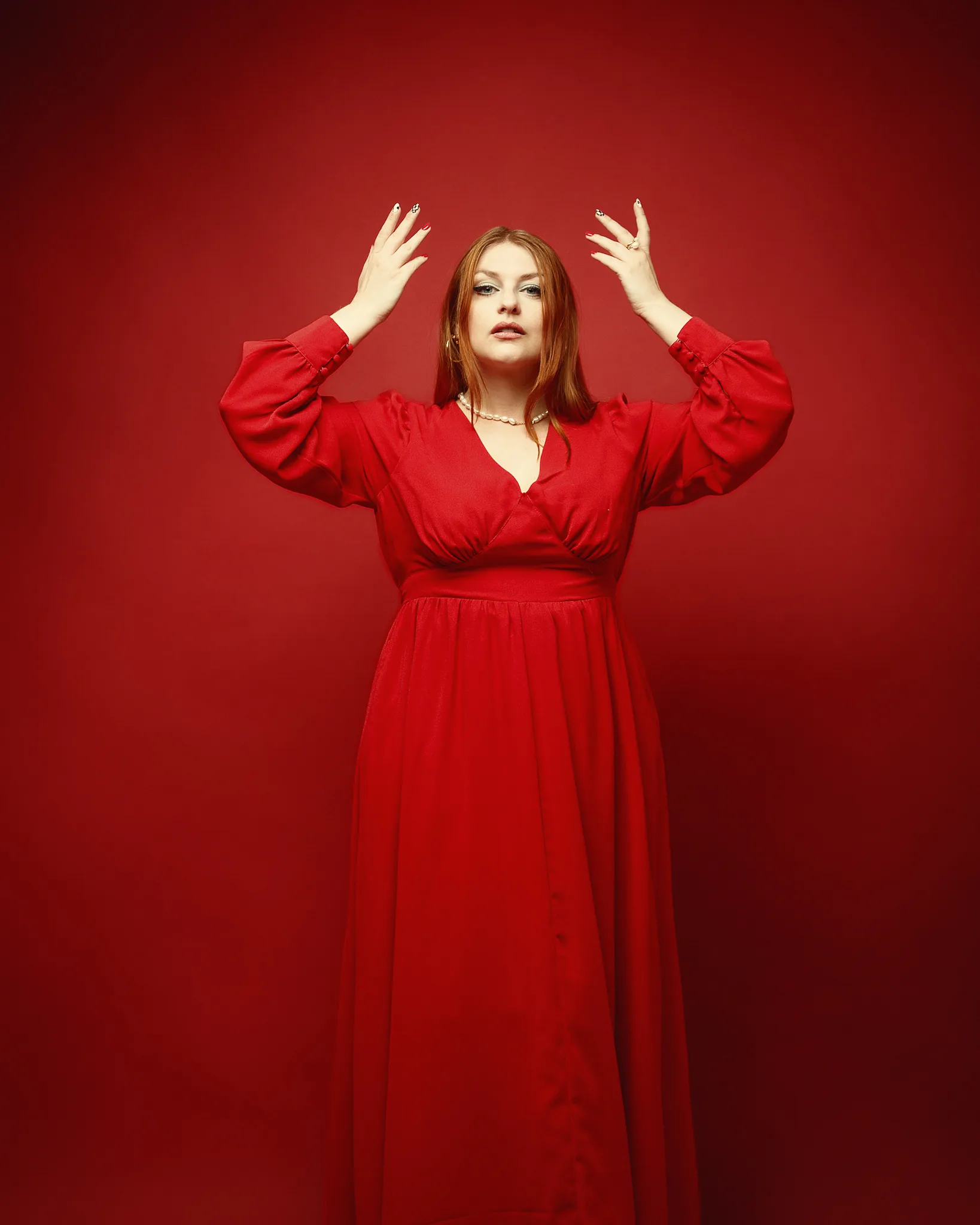
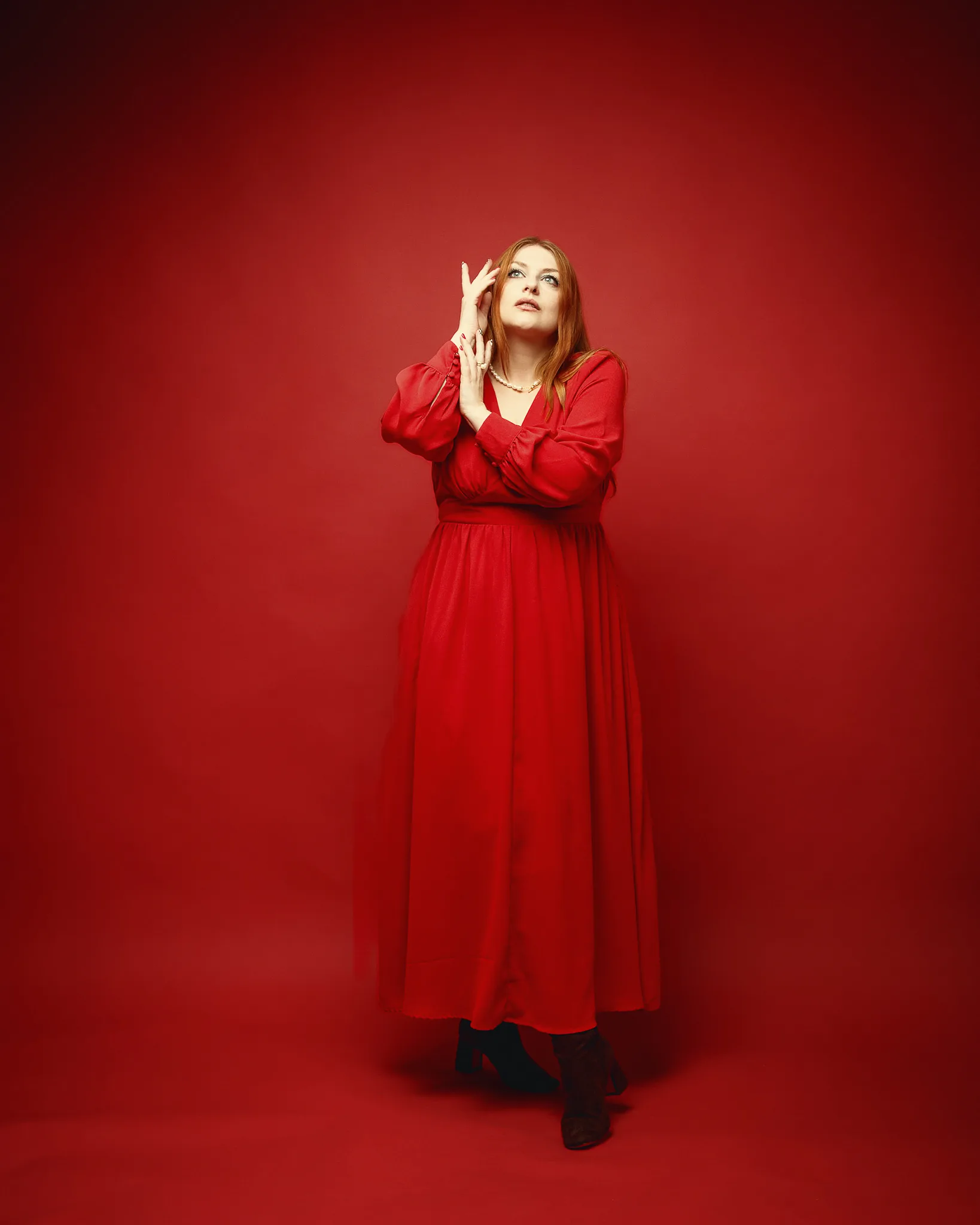
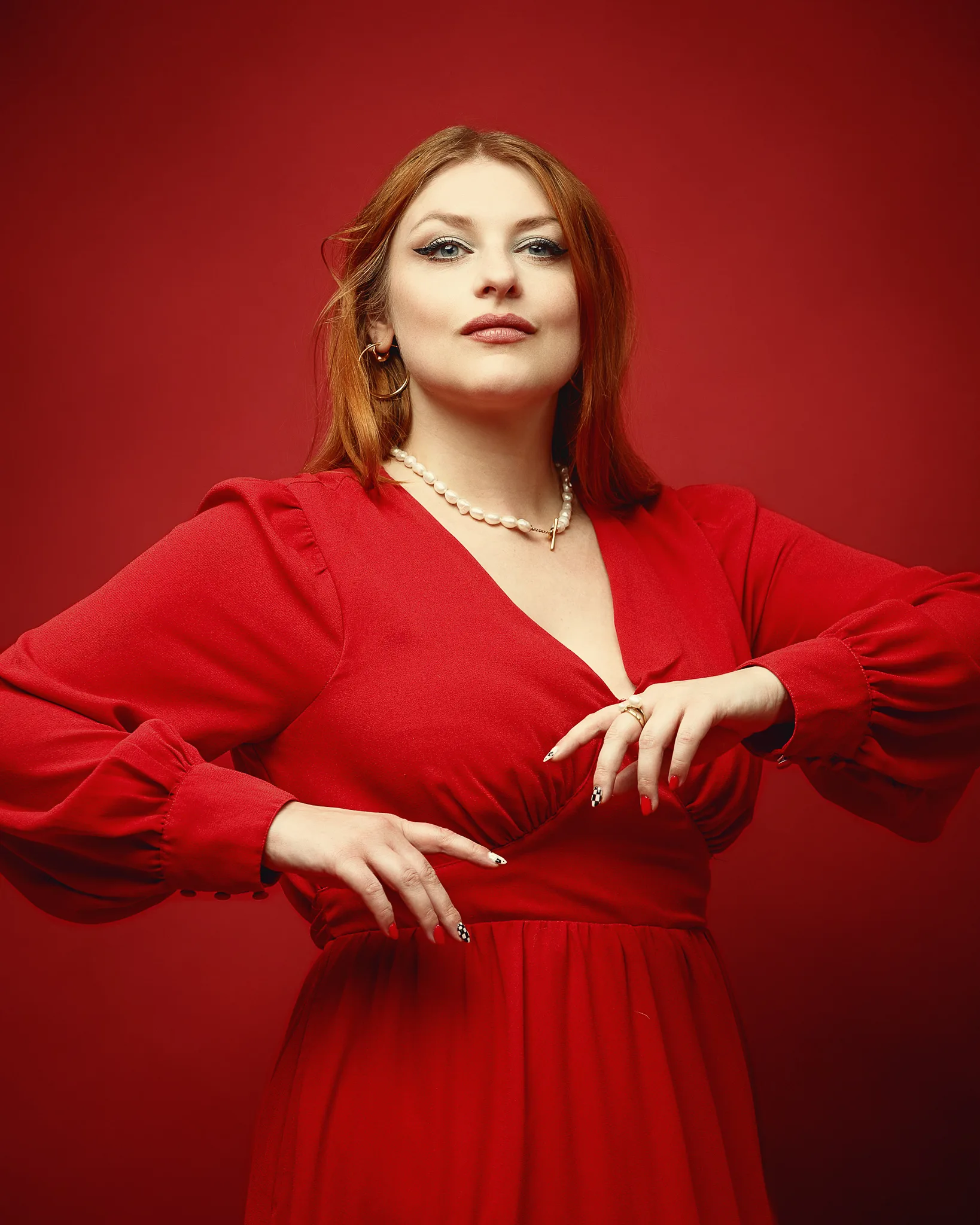
In the middle of the session we changed the background entirely and ran a red on red sequence. Rose had brought a red velvet drop waist mini dress, a red beret, pearls and silver slingbacks, and later a long red crepe dress with balloon sleeves. Red is difficult in the studio because it can flatten out and swallow detail if you are not careful, and the temptation is to underexpose the background to protect it. I lit the background separately so it held its depth, then kept the key light on Rose slightly cooler than the wash coming off the paper. The red beret images have a real sense of movement in them, with the arms out and one leg lifted, and that came from Rose rather than from me.
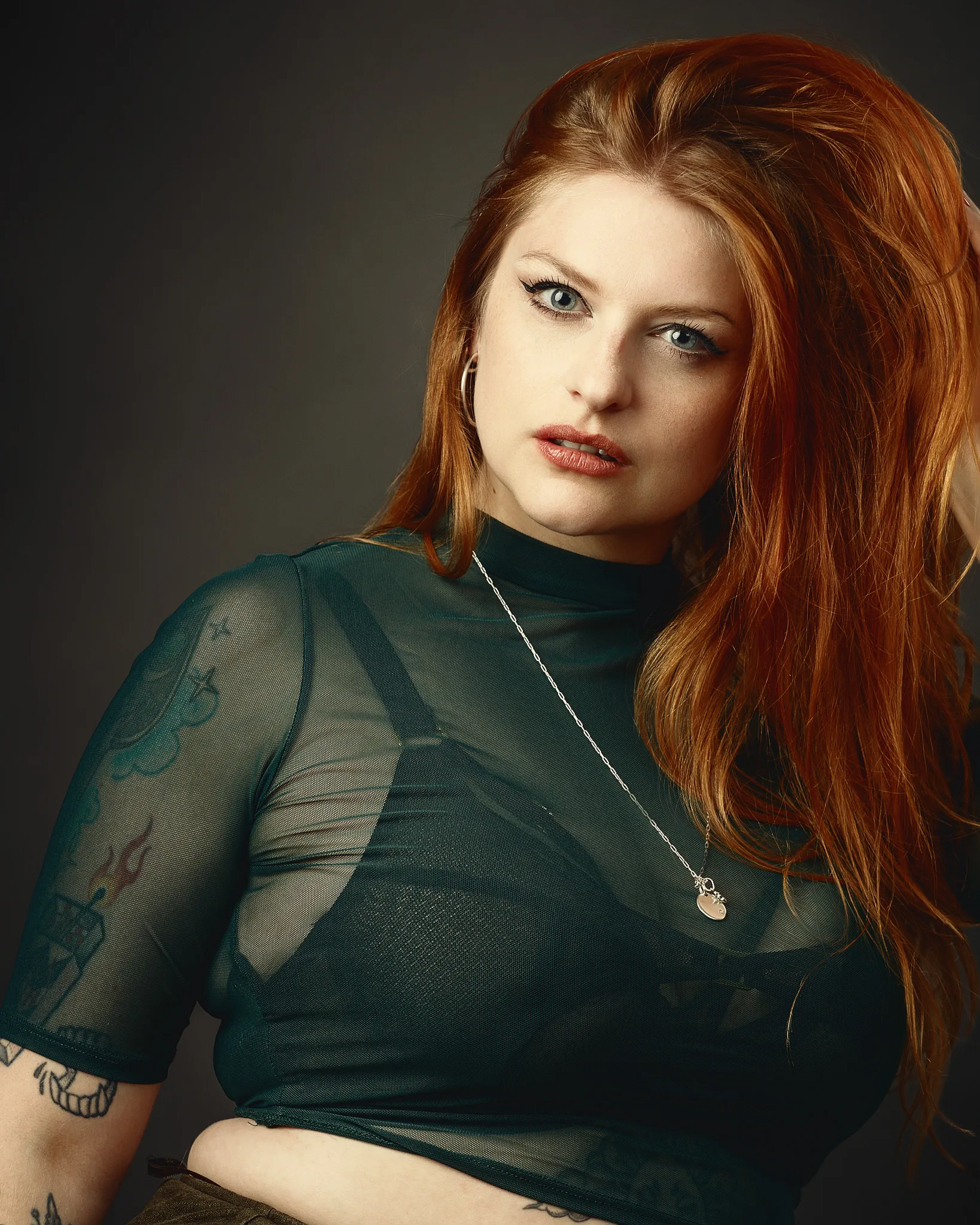
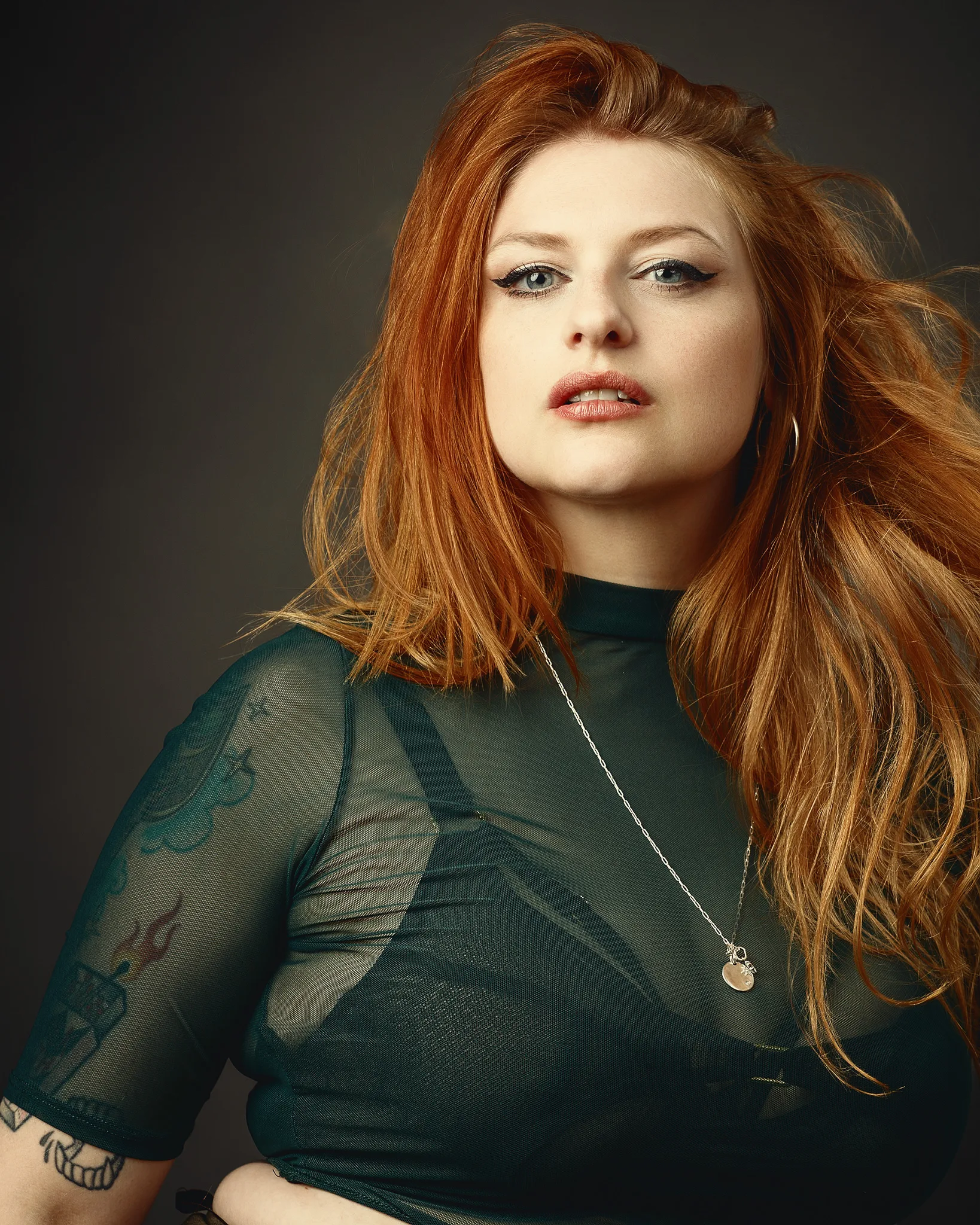
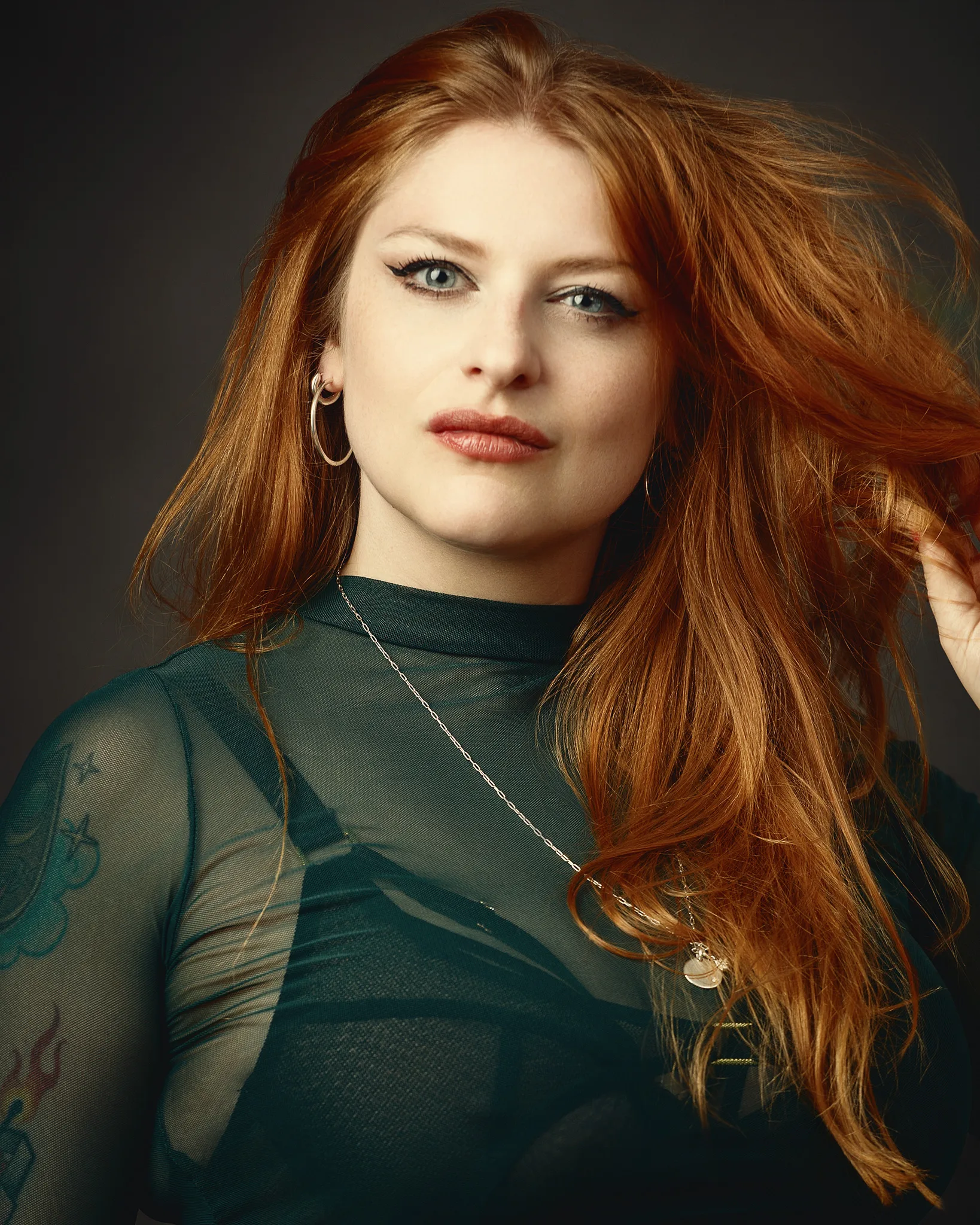
The green mesh top at the end of the session produced what I think is the strongest single portrait of the day. Loose hair with a bit of air in it, a direct look down the lens, and enough light on one side of the face to give the whole thing some weight.
The Model Chooses the Looks, Not Me
I want to be plain about something, because it matters more than any of the technical detail above.
On every model portfolio shoot I do, the model decides the outfits and the looks. I will give direction during the session, and I will offer advice on what is working and what is not, but the ideas and the theme come from the person in front of the camera. If a model wants to push a look somewhere a little riskier, that is their decision to make. All my shoots are safe for work, and that does not change. Within that, though, the level is theirs to set, look by look, and I want it understood that it is their choice and not something I have asked for.
The reason I am specific about this is that a number of models have told me they have been in situations with other photographers where they felt uncomfortable. Asked to pose a particular way. Asked to wear a certain item, or asked not to wear one. That should not be happening, and the fact that it does is why I would rather spell out how I work than assume people know.
My job is to give the model the look and feel they are after, and to photograph them the way they want to be seen. Quite often you can tell from someone’s existing portfolio which direction they want to go in. When someone is building a portfolio from scratch, the important thing is that they know from the start they do not have to do anything they are not comfortable with.
Confidence Is What Makes Someone Photogenic
I have said for years that everybody is photogenic. What varies is confidence, and confidence is what shows in a photograph.
Being in a studio with somebody pointing a camera at you and lights going off can be a stressful thing. I am aware of that every time I work with somebody new. Most people find their confidence somewhere in the session, and once they do, you can see it in the frames. The images from the second half of a shoot are usually better than the first half for exactly that reason.
That leads to a piece of advice I would give any model starting out. Do not judge yourself on your first shoot. Have a couple of sessions before you decide whether you are comfortable in front of a camera. Nobody is at their best the first time, and treating that first set as your baseline is not a fair test of anything.
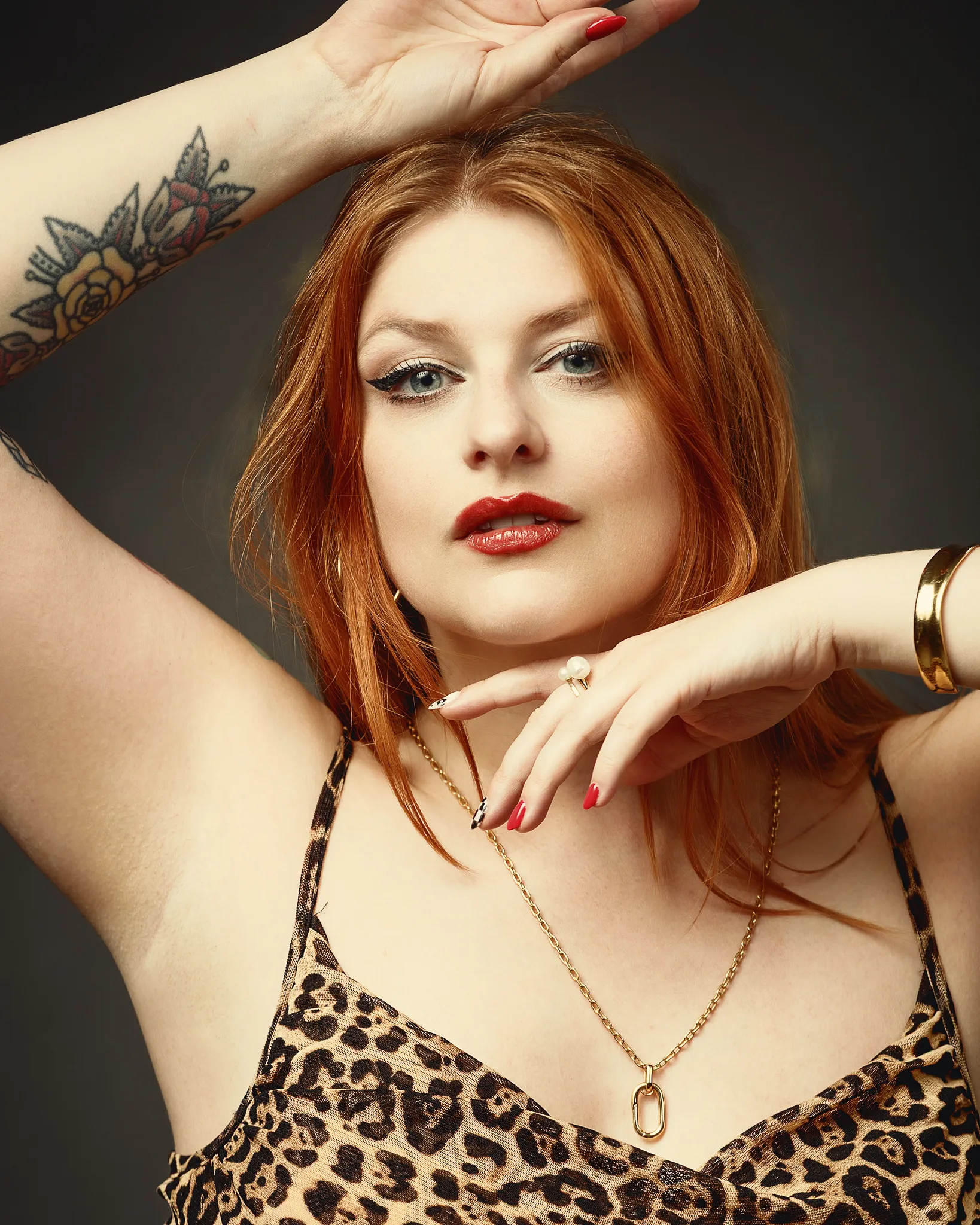
Rose is comfortable in her own skin and body positive with it, and that comes through in the pictures. It is not something you can manufacture on the day, and I think it is worth saying plainly that it makes a real difference to the work.
Who Sees the Images, and Who Decides
Two things I make clear to every model, and I will repeat them here.
The only people who see the unedited images from a shoot are the model and me. They do not go anywhere else. Nobody needs to worry about a frame they are unhappy with surfacing somewhere, because they will have seen everything.
Coming for a model portfolio shoot is also not an agreement that I can share the images. That is a separate question and I always ask afterwards, once the pictures exist and there is something concrete to decide about. The model has the final say on what goes public. Rose was happy for these to be shown, and she also allowed me to record a short behind the scenes video during the session.
Model Safety in the Studio
There is no physical contact between me and any model during a shoot. If a pose needs adjusting, I describe it or demonstrate it from where I am standing. I do not move people with my hands.
I encourage every model to bring a chaperone. A friend, a partner, a family member, whoever they trust. The offer is made before the shoot every time, whether or not the model takes it up.
If a photographer refuses to allow a chaperone, or talks a model out of bringing one, that is a red flag and it should be treated as one. There is no legitimate reason to object. A model’s safety is not something they should have to negotiate for, and anyone worth working with will explain how the session runs and have no problem at all with someone else being in the room.
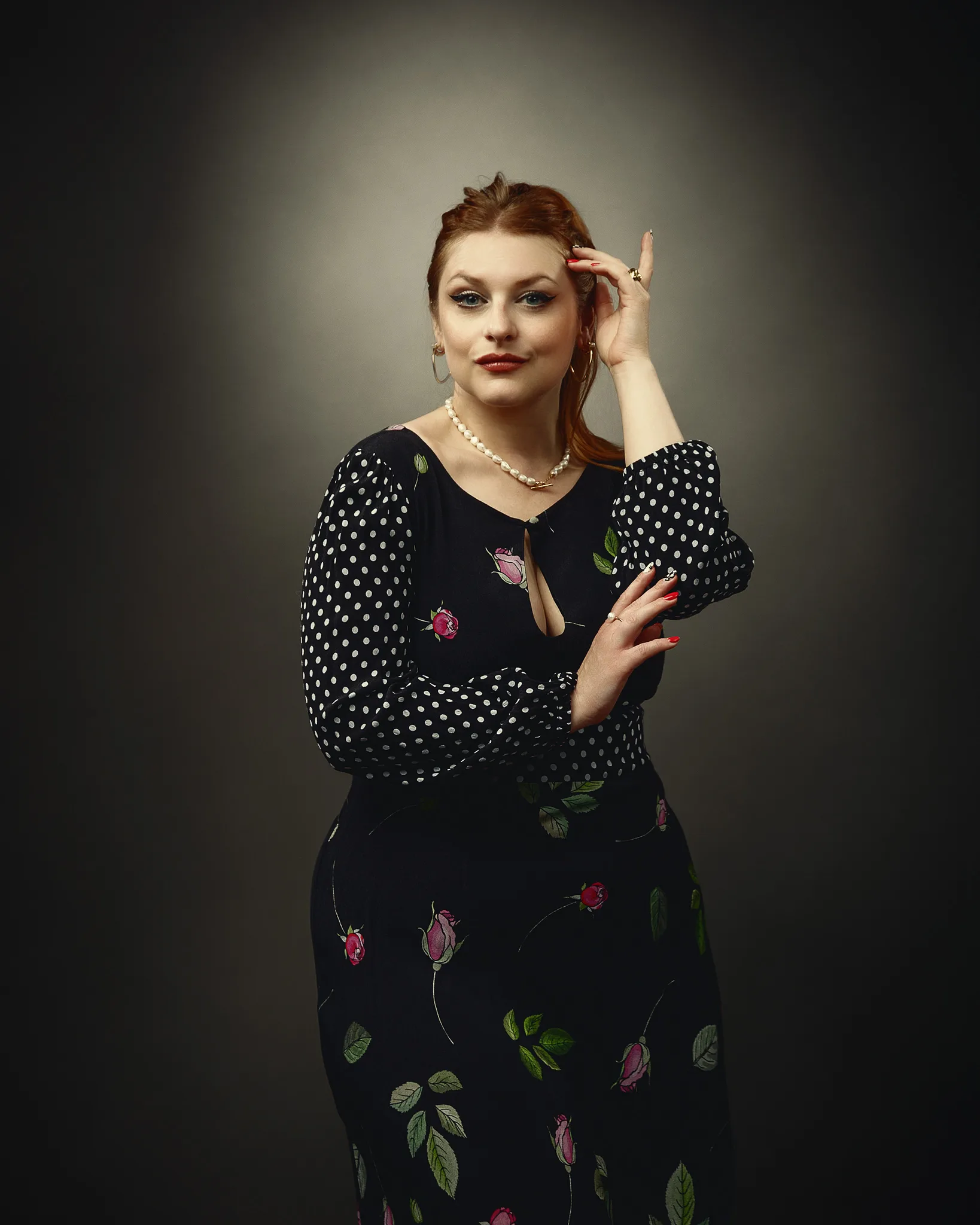
Working with Someone Who Brings Ideas
Rose is a fine art and published model whose own work sits somewhere between Pre-Raphaelite romanticism and the grittier end of eighties London. She writes, she acts, she shoots 35mm film, and she has experience in life modelling as well as fashion and portrait work. She does her own makeup and brings her own wardrobe, which is a considerable amount of preparation before she has even arrived.
That background shows up in how she works. She thinks about what an image is for before she moves, and she holds a pose without it going stiff. Working with somebody who arrives with a thought behind the looks makes for a better shoot, because we are both aiming at the same thing rather than negotiating our way towards it as we go.
Model Portfolio Photography at My Suffolk Studio
This session was photographed at my studio at Base Business Park in Rendlesham, on the former RAF Bentwaters site near Woodbridge. The studio gives me control over the light and the background, which is what makes it possible to run eight looks in a morning without the set losing its coherence.
I photograph model portfolios, portraits, headshots, personal branding and commercial work there, and I cover Suffolk, Norfolk, Essex and Cambridgeshire. If you are building a portfolio, or you are thinking about a first session and are not sure what to expect, I am happy to talk it through beforehand.