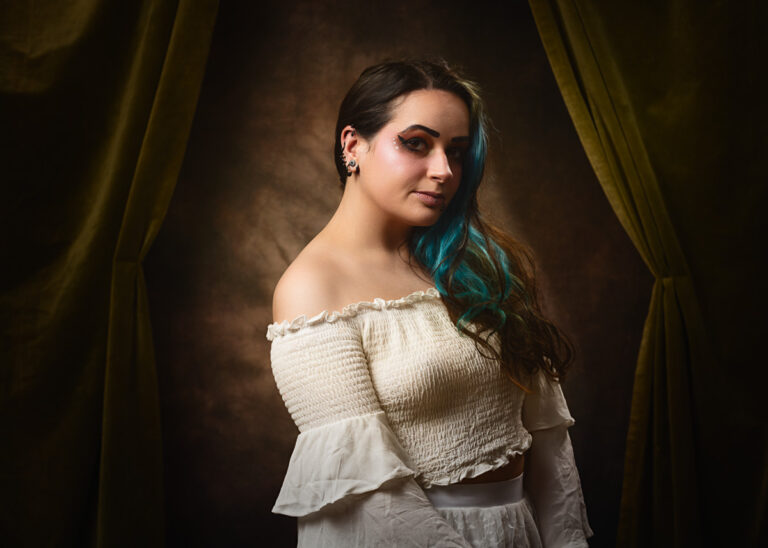
Working with Shelby is always a pleasure. For this model portfolio shoot, we went on location to Tunstall Forest in Suffolk to create a set of woodland portraits with a more editorial, atmospheric feel.
Location work is very different from working in the studio. In the studio, I can control almost every part of the image: the background, the direction of light, the quality of light, and the overall consistency of the set. On location, especially somewhere like Tunstall Forest, the environment becomes part of the image. The trees, shadows, pathways, ferns, bracken, colour, texture, and changing light all influence the final result.
That was exactly what made this shoot interesting.
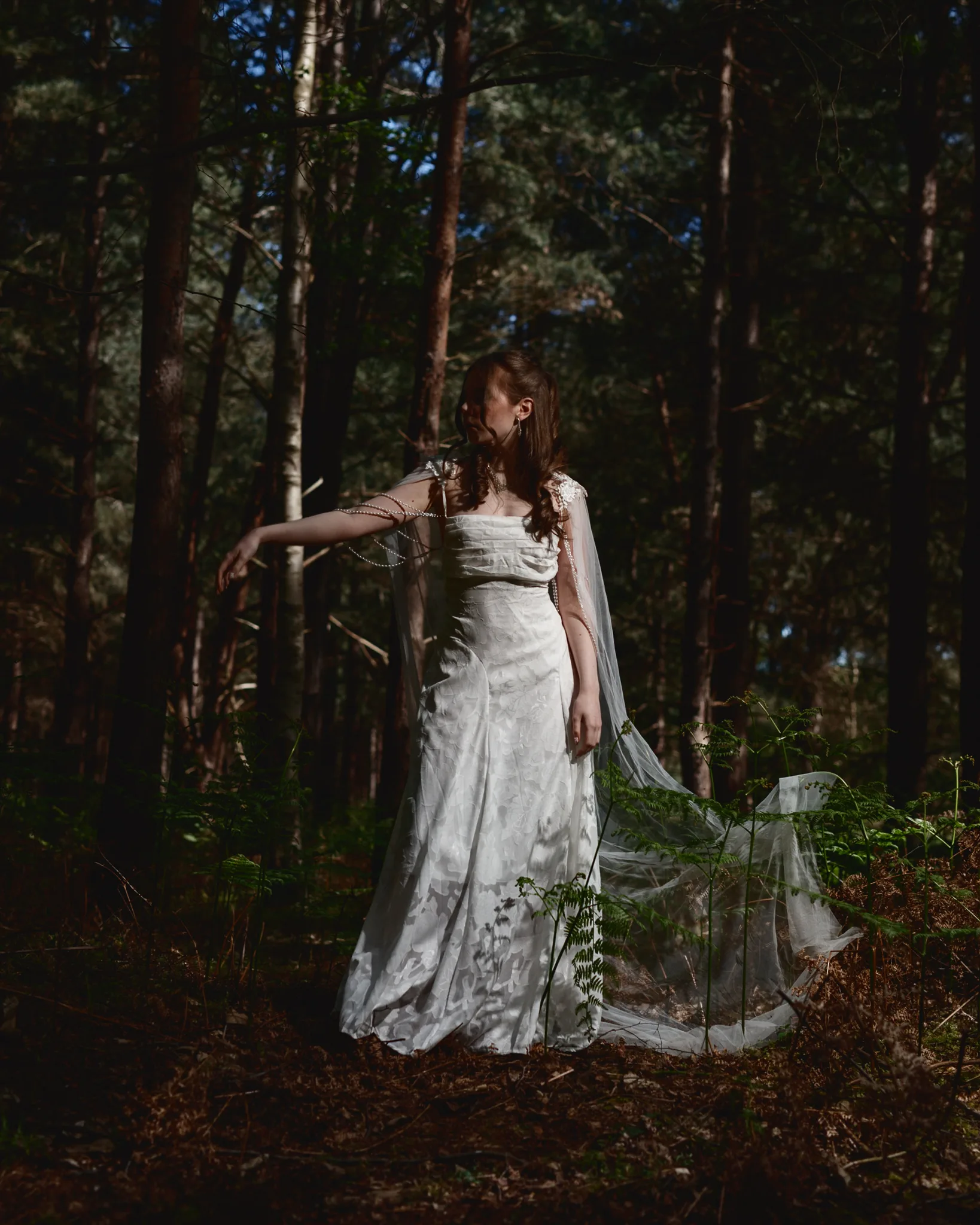
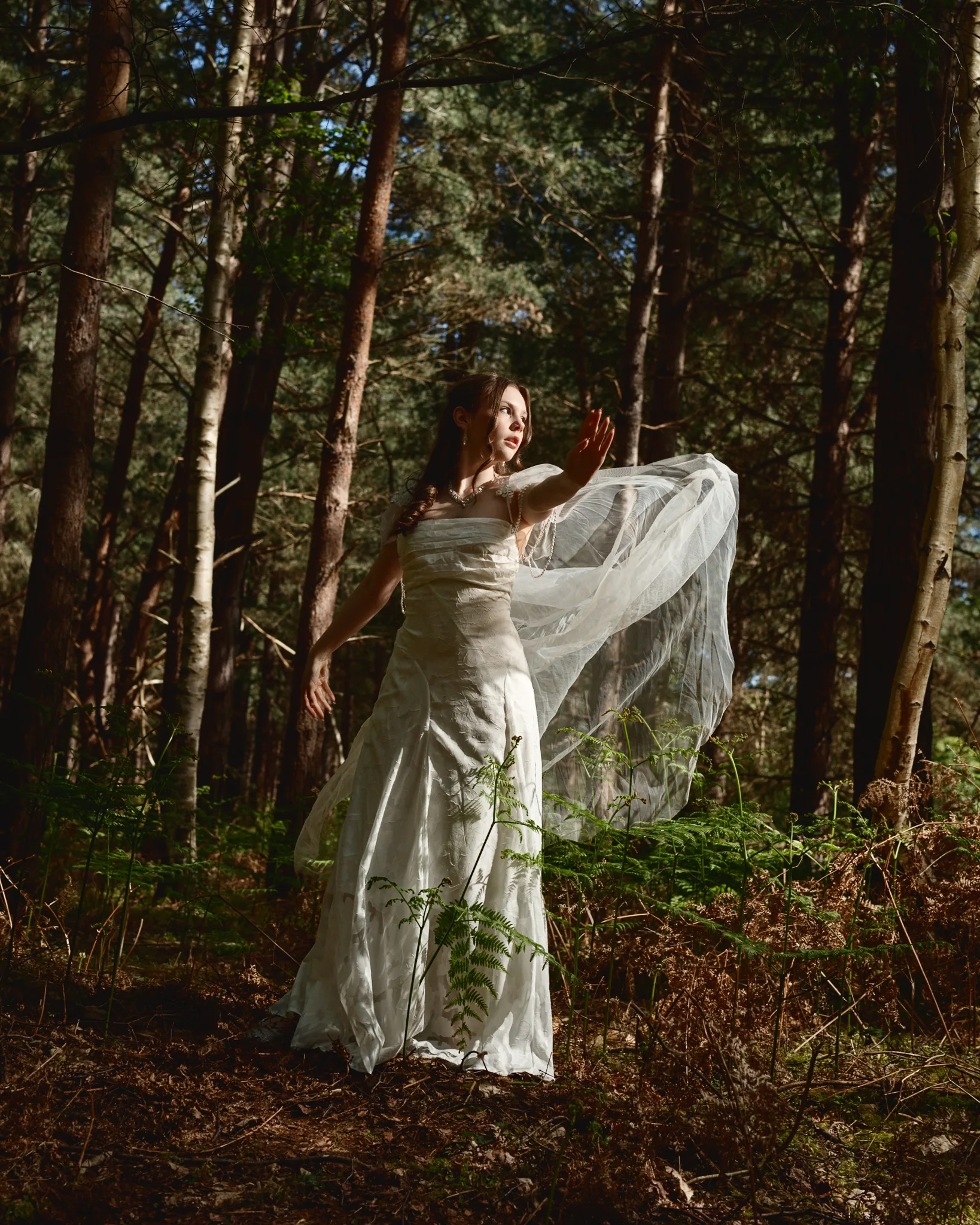
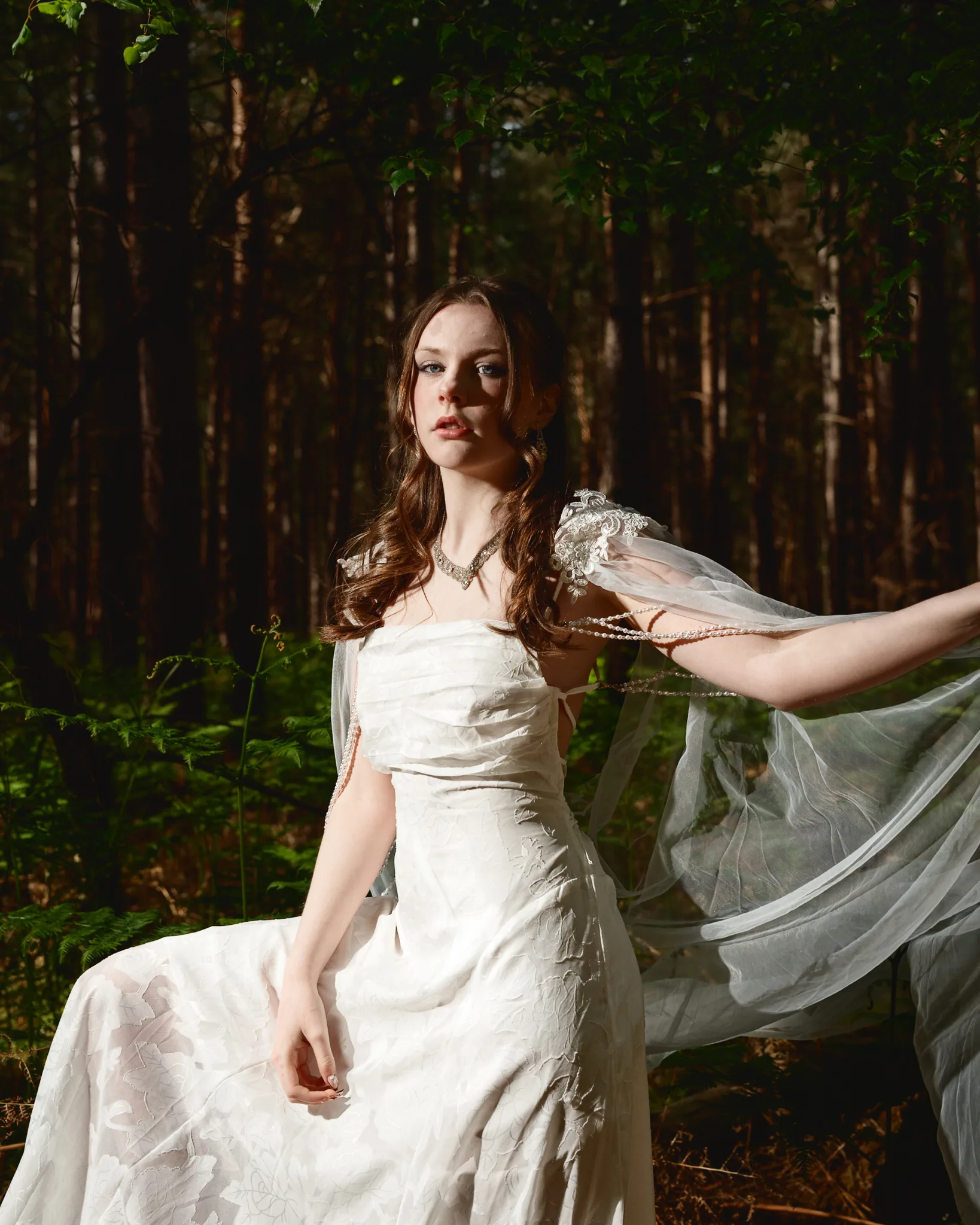
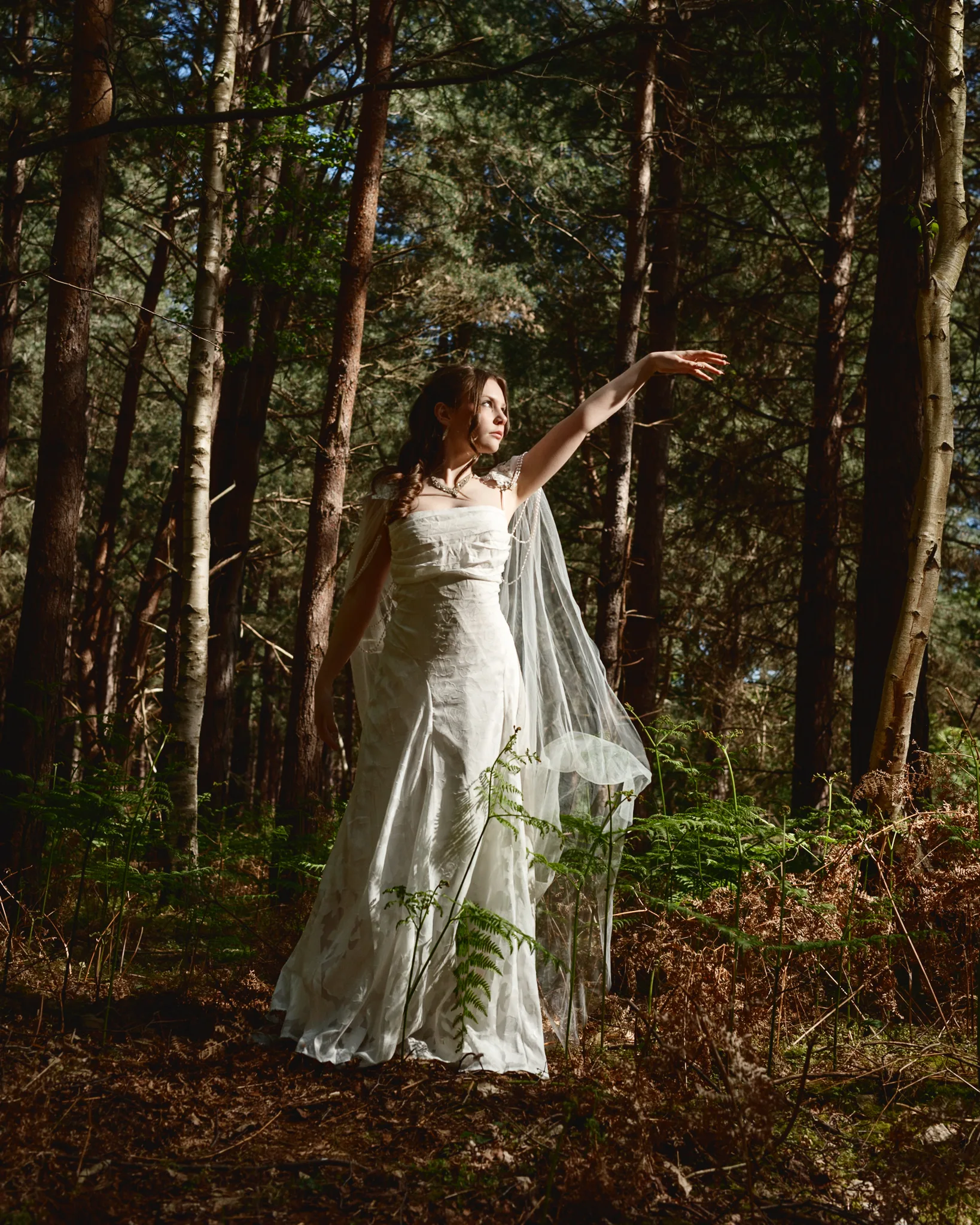
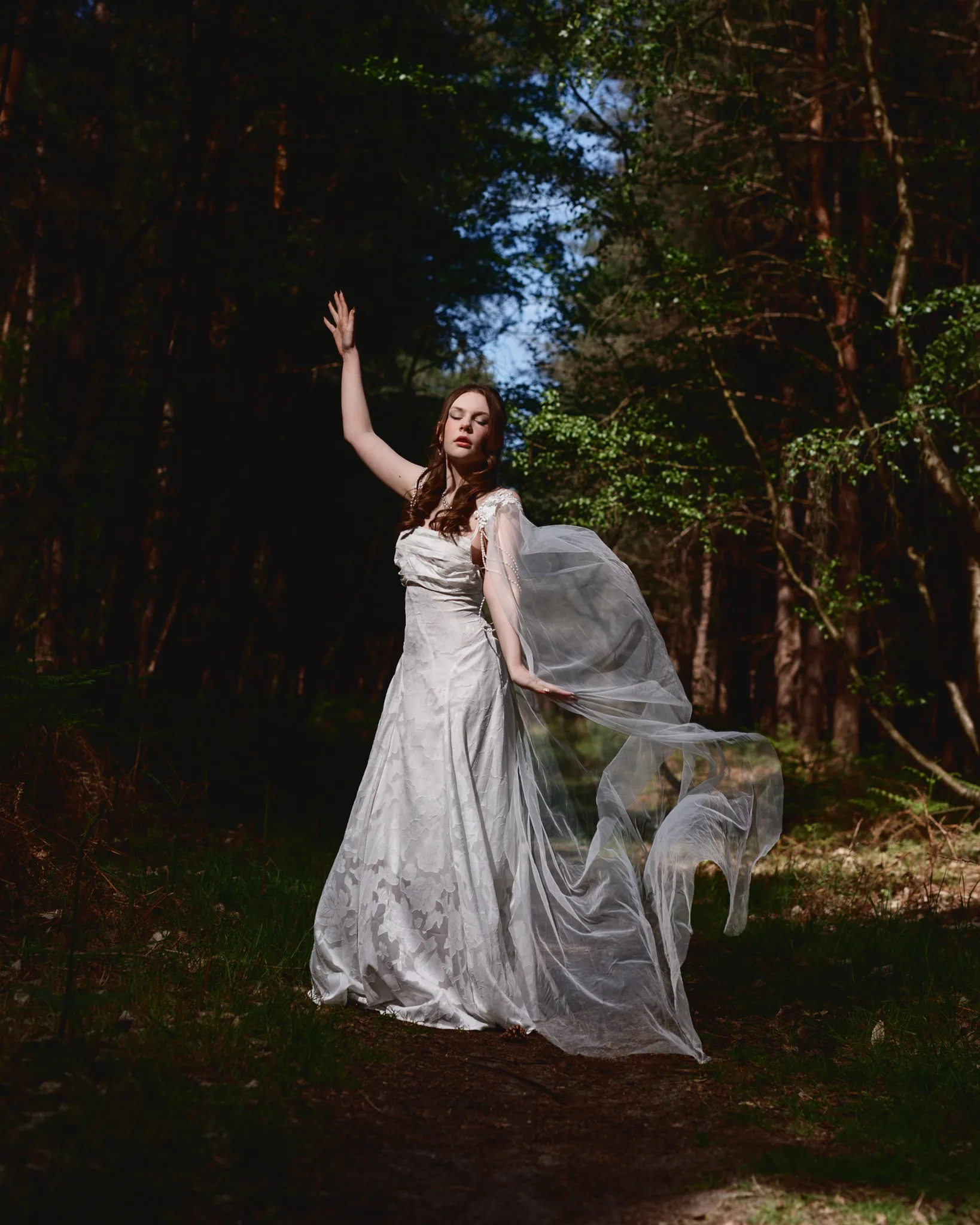
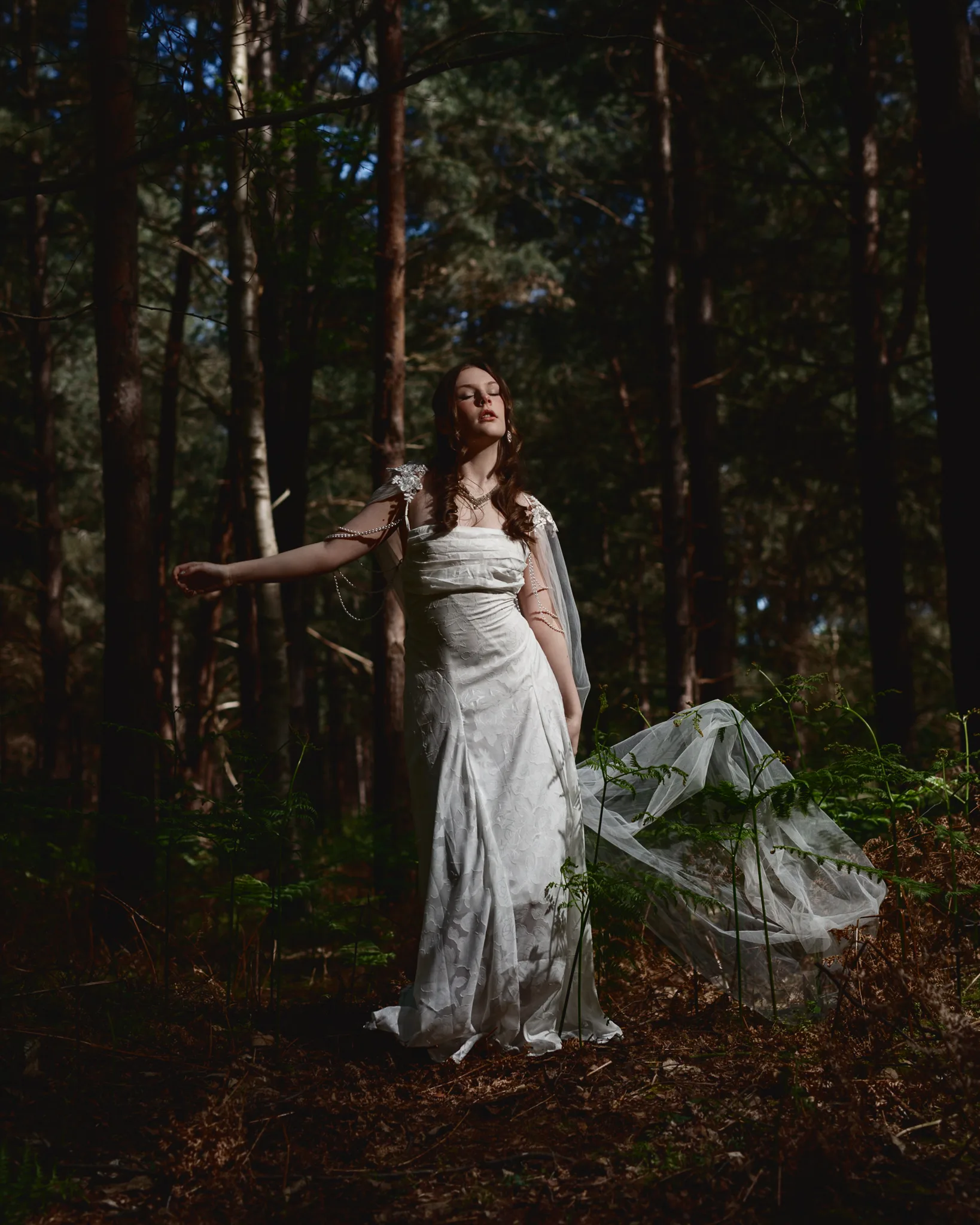
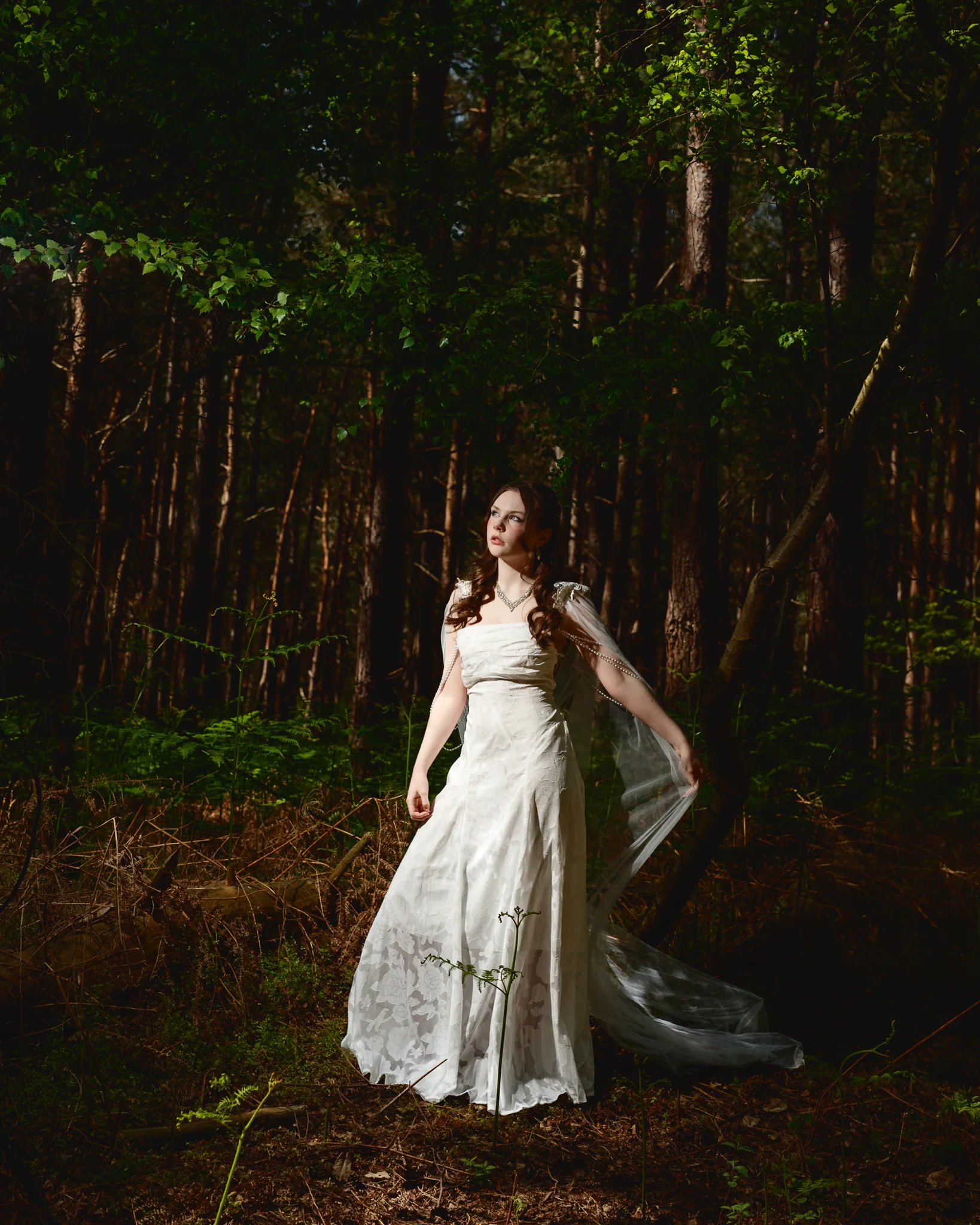
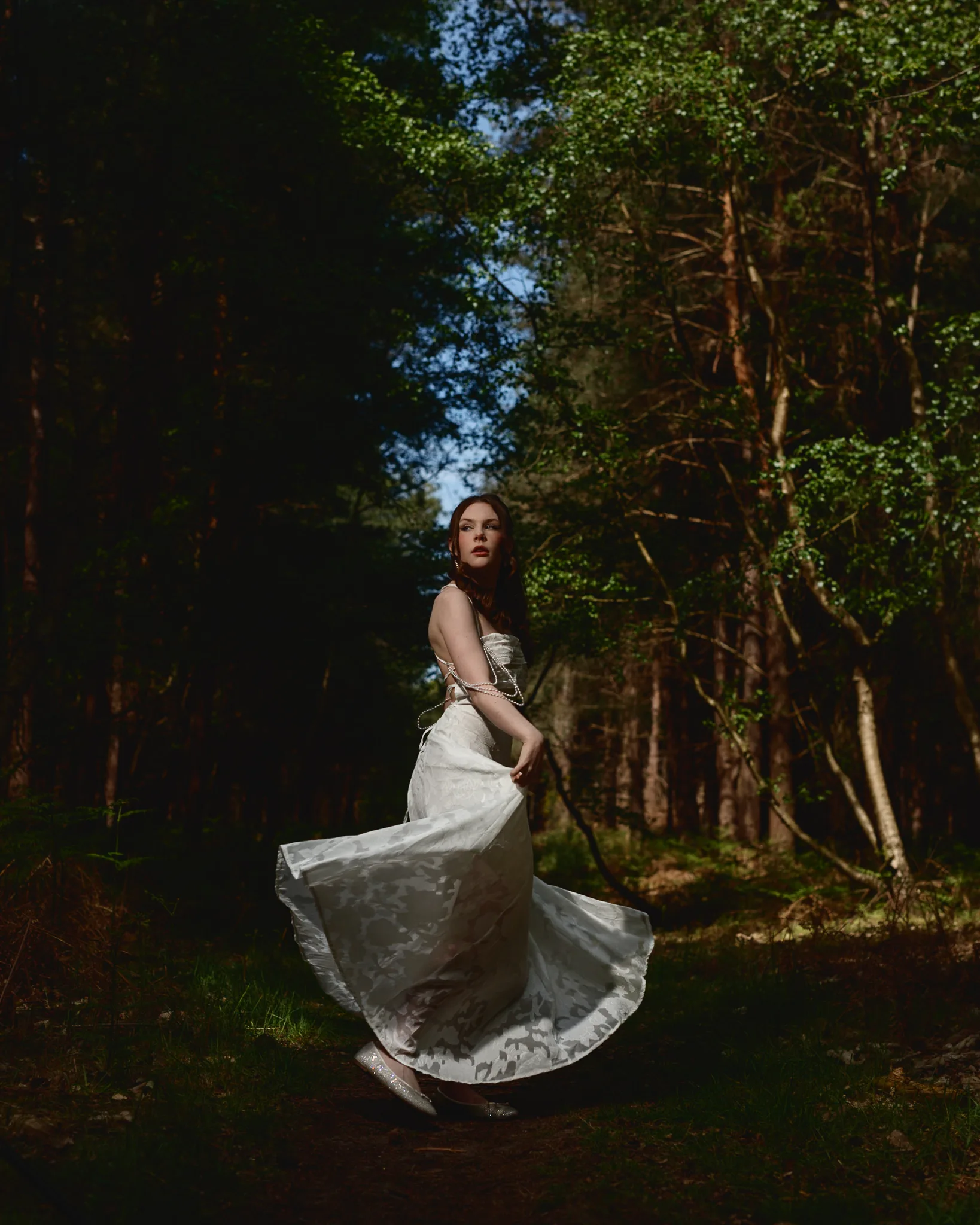
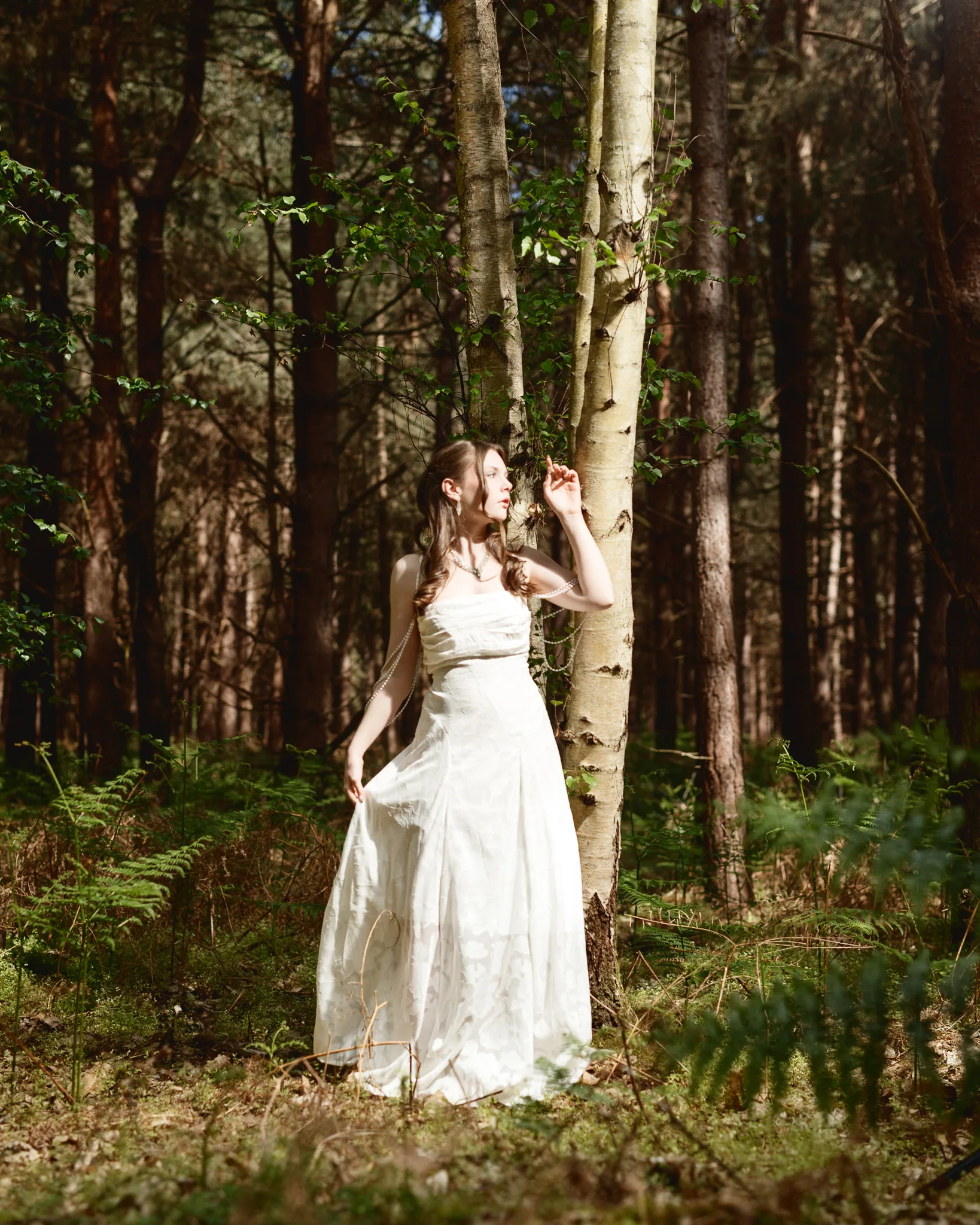
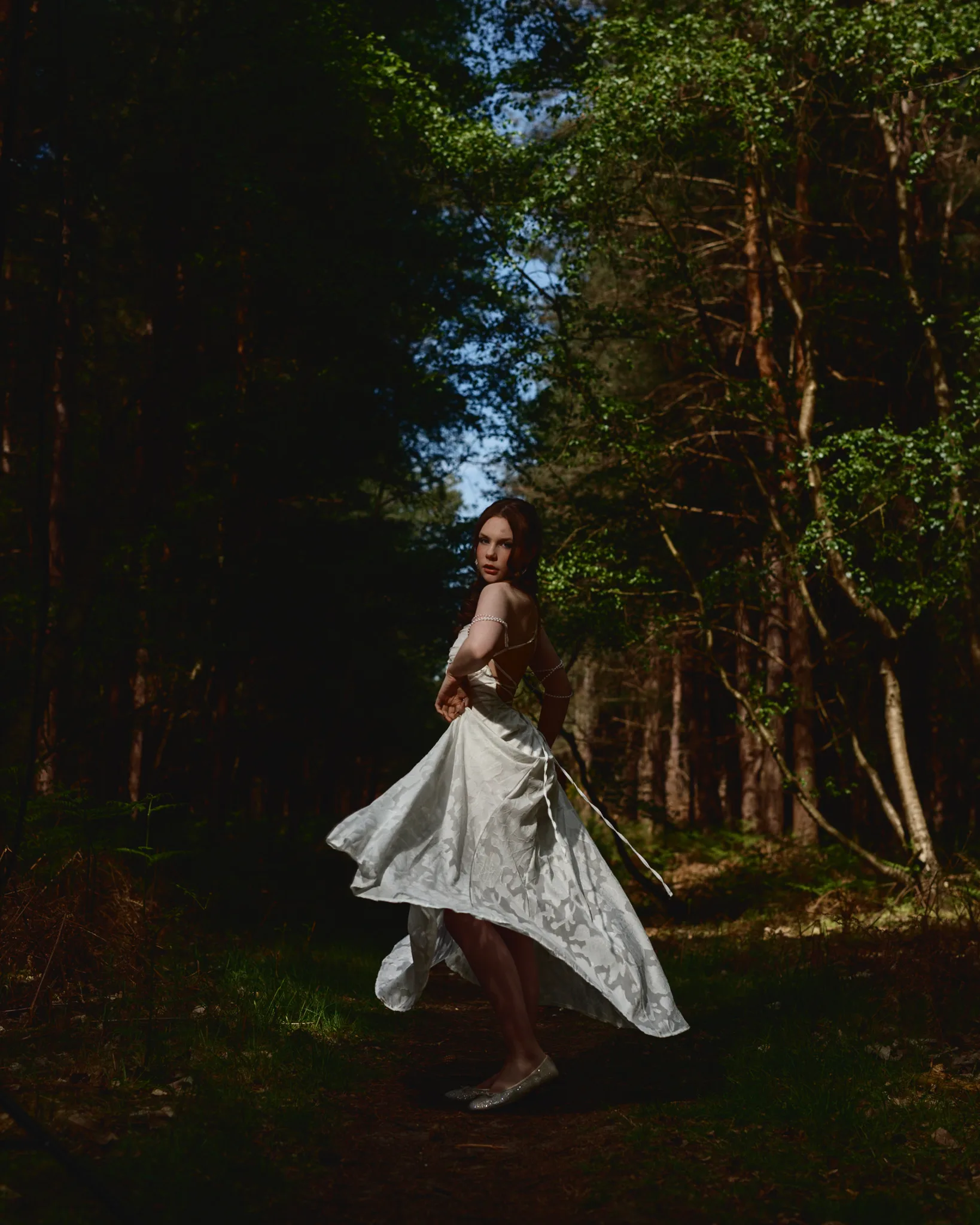
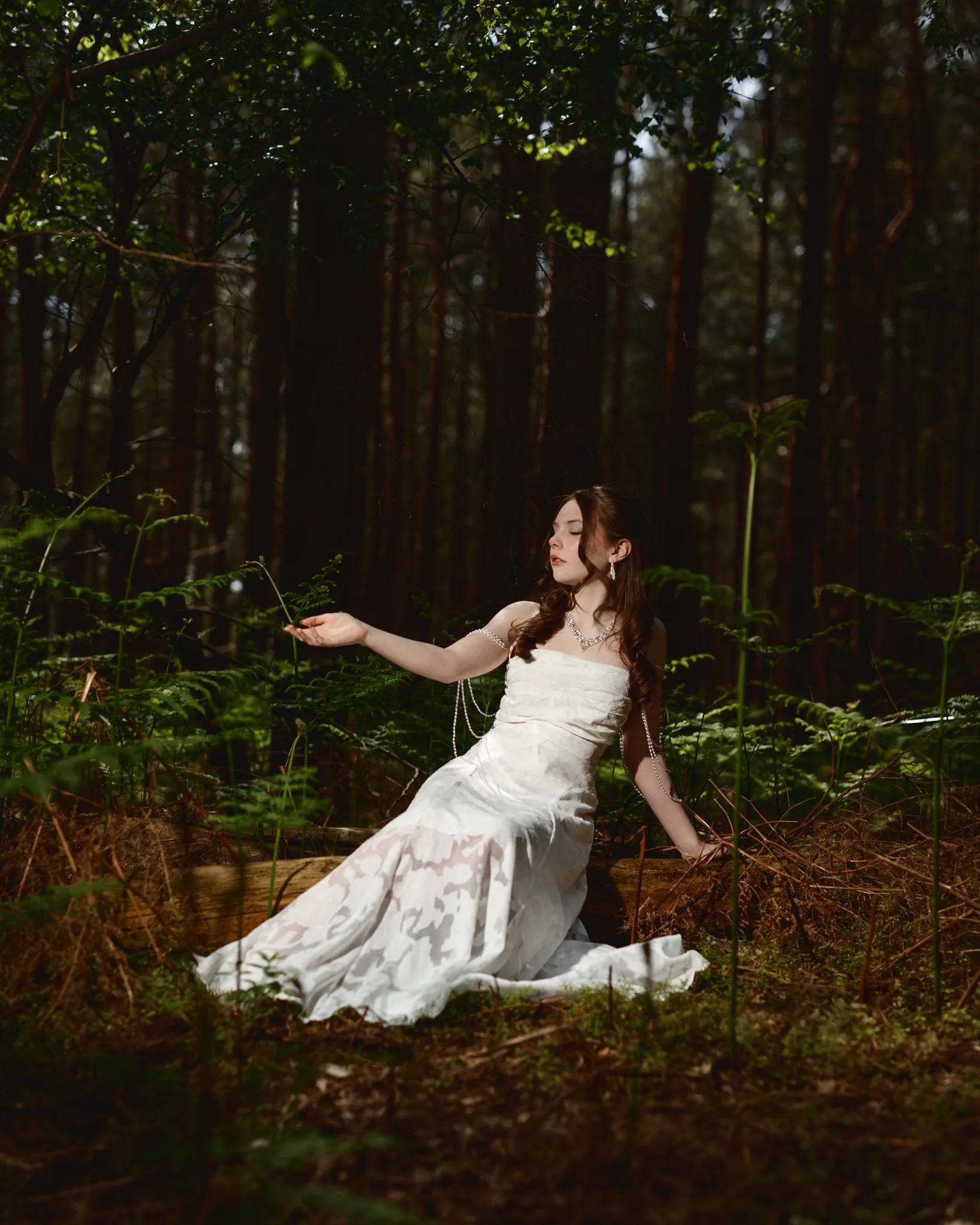
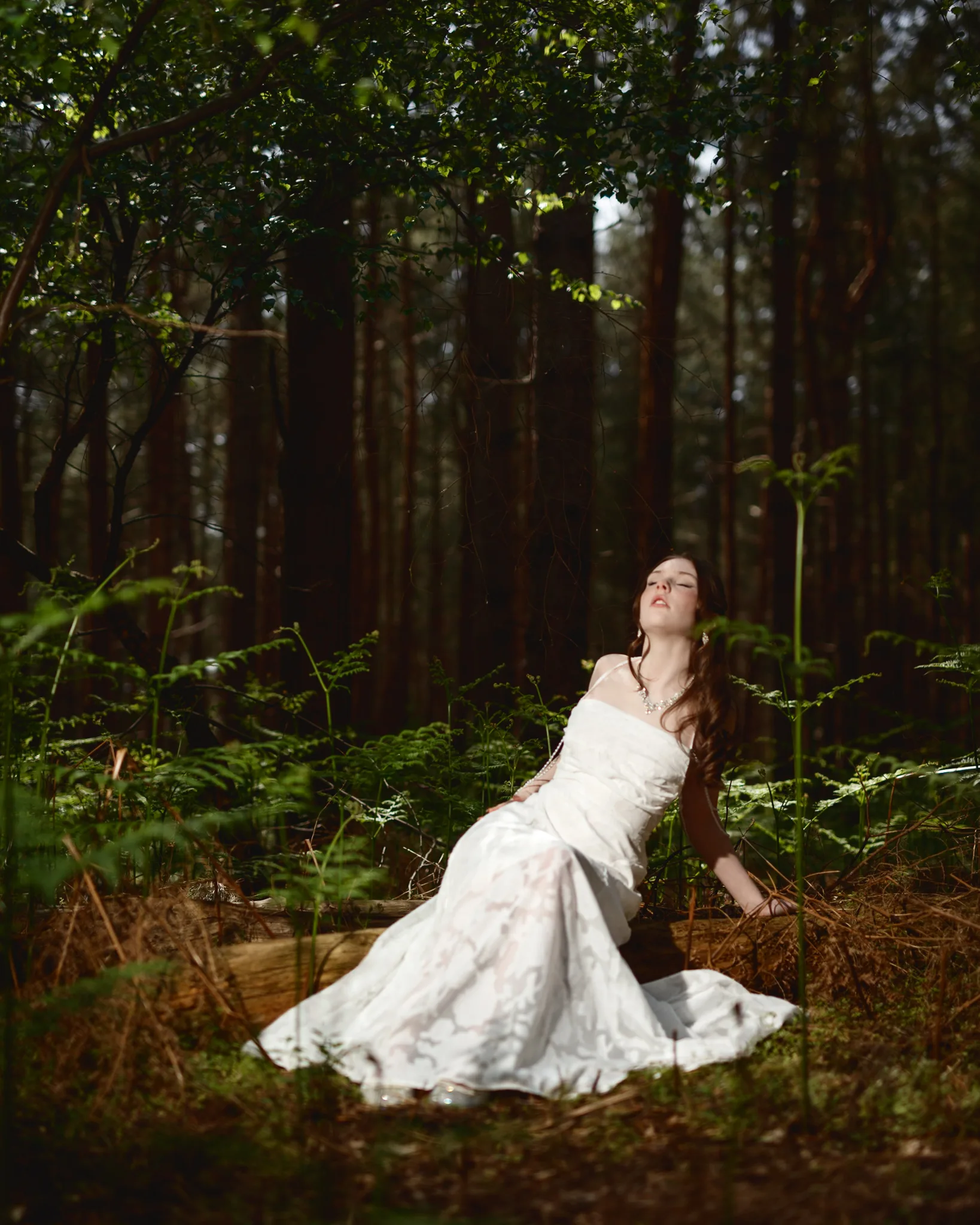
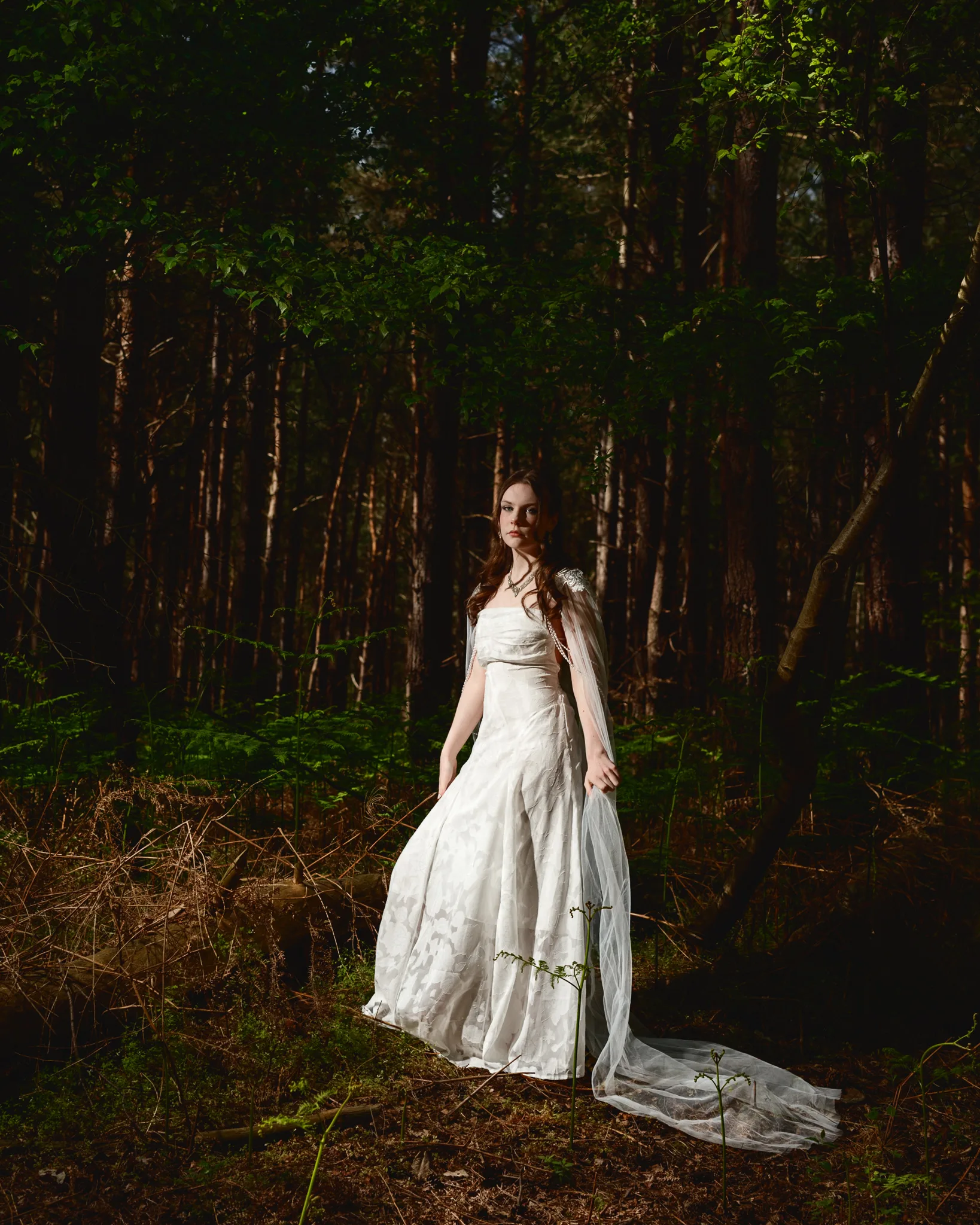
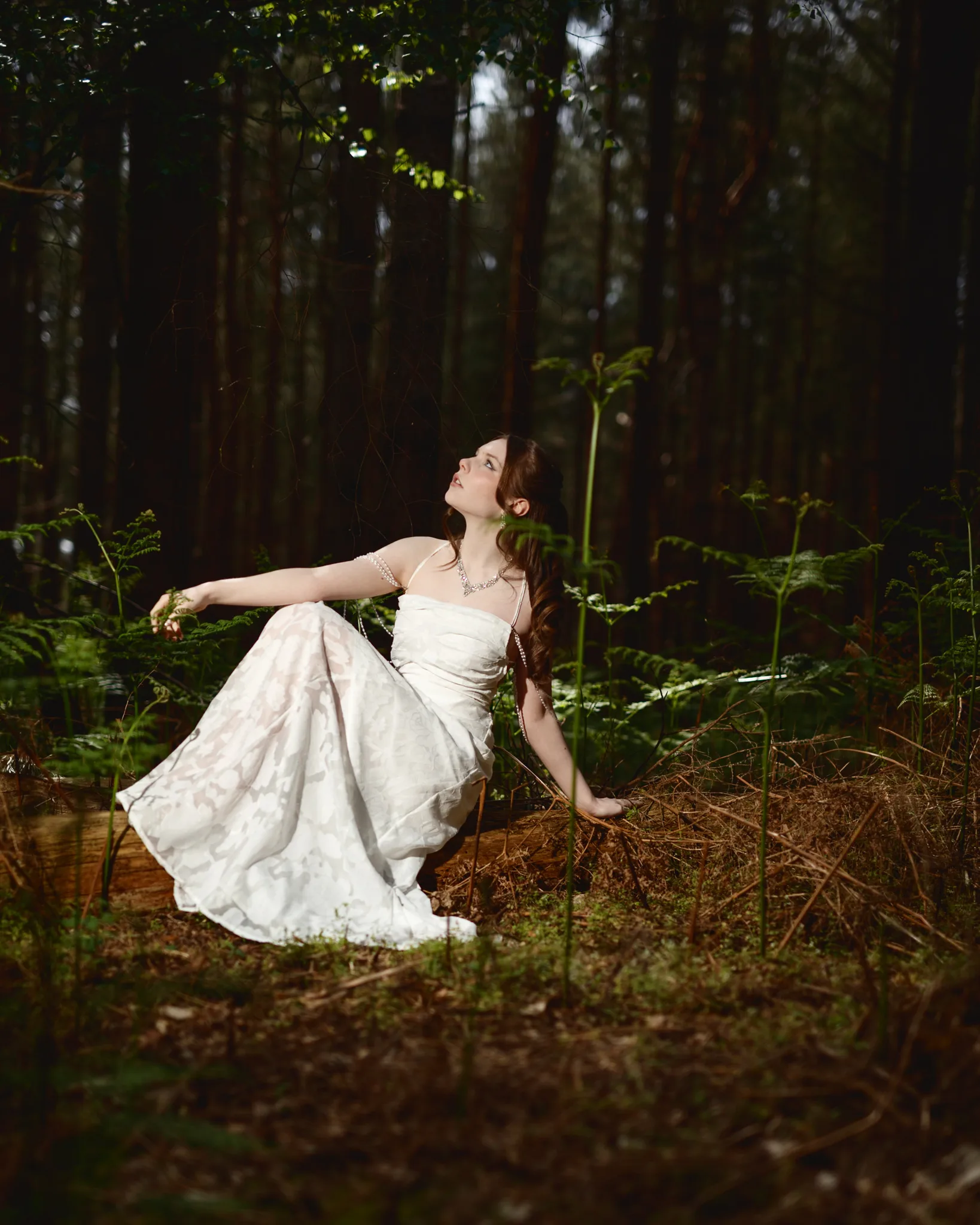
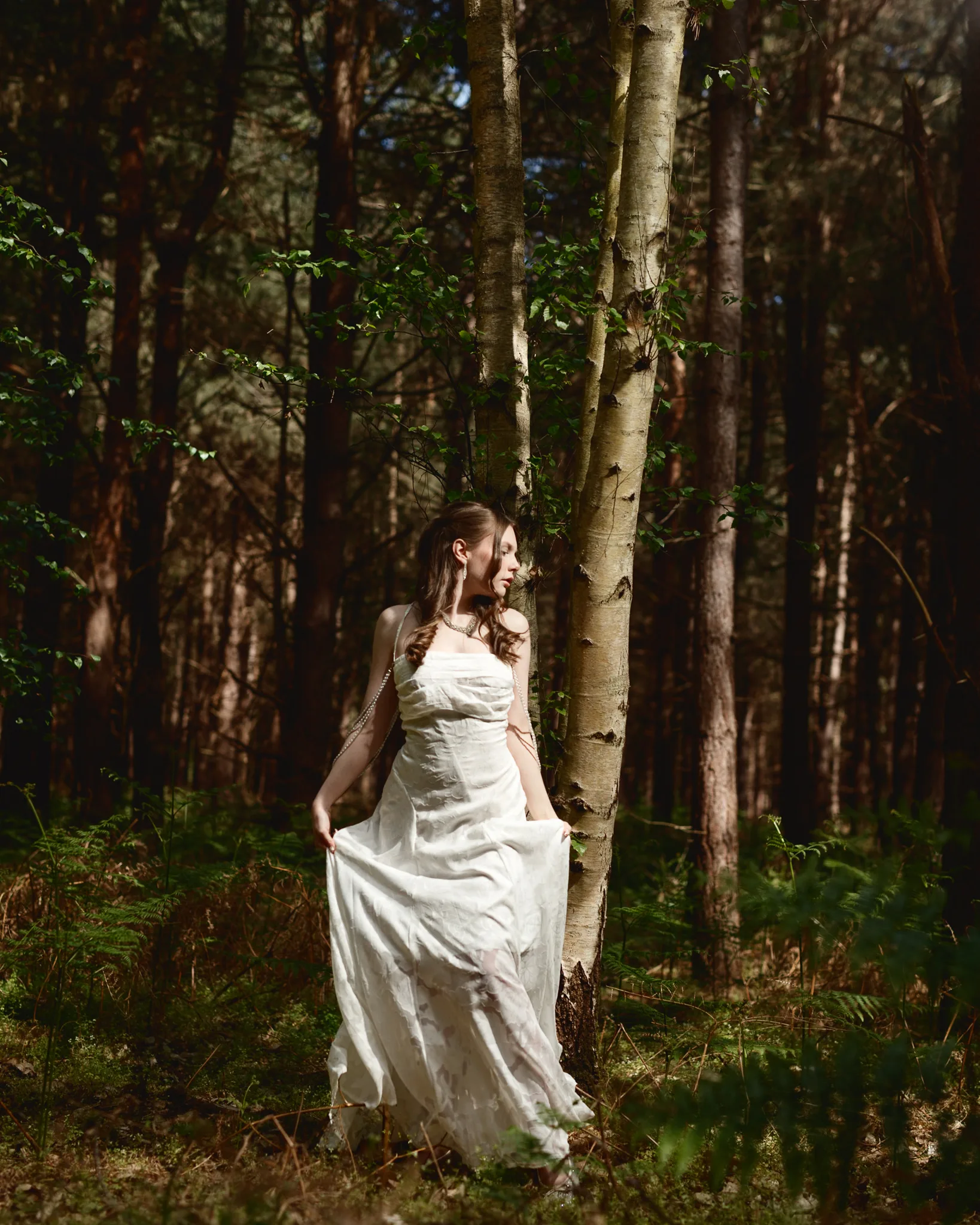
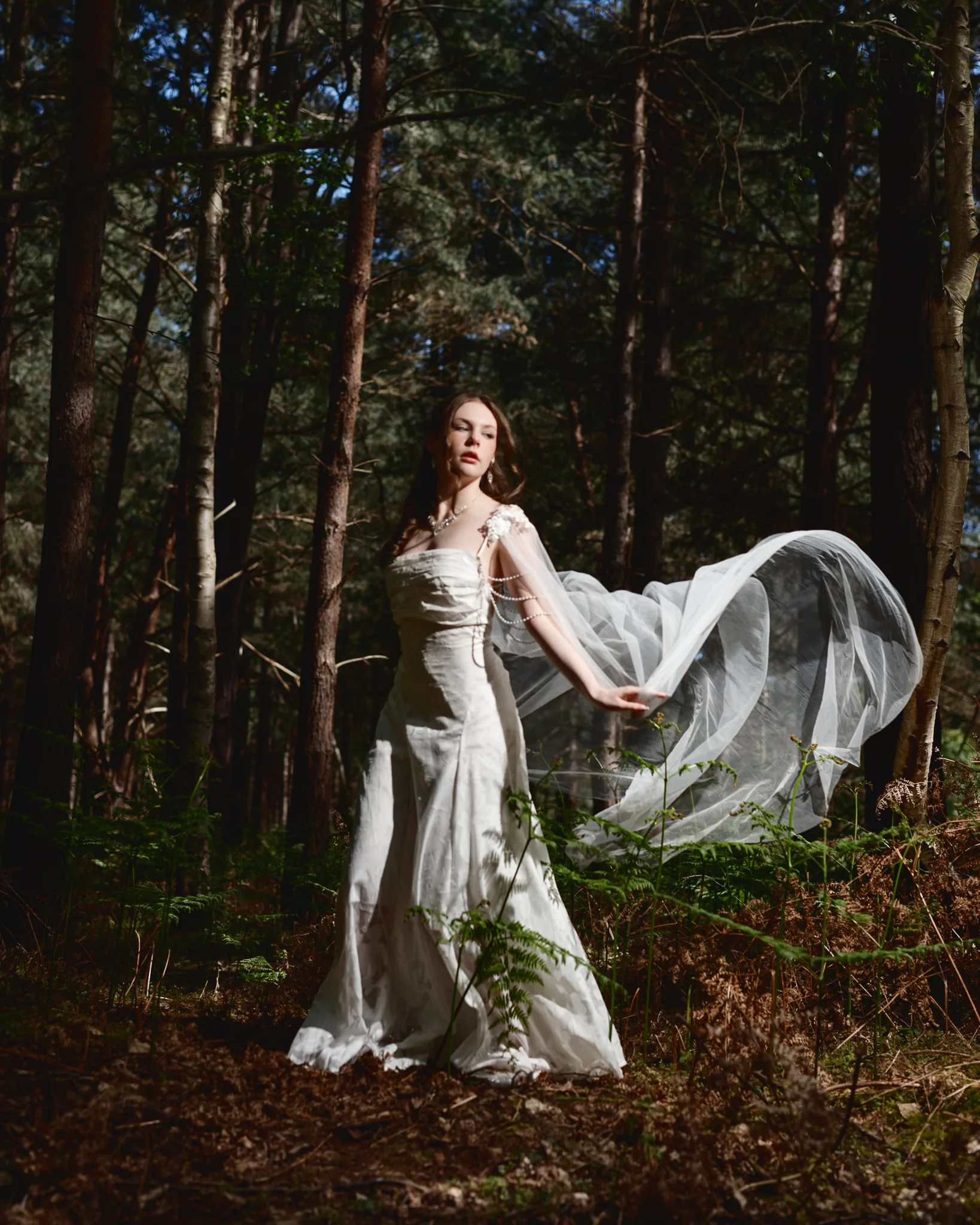
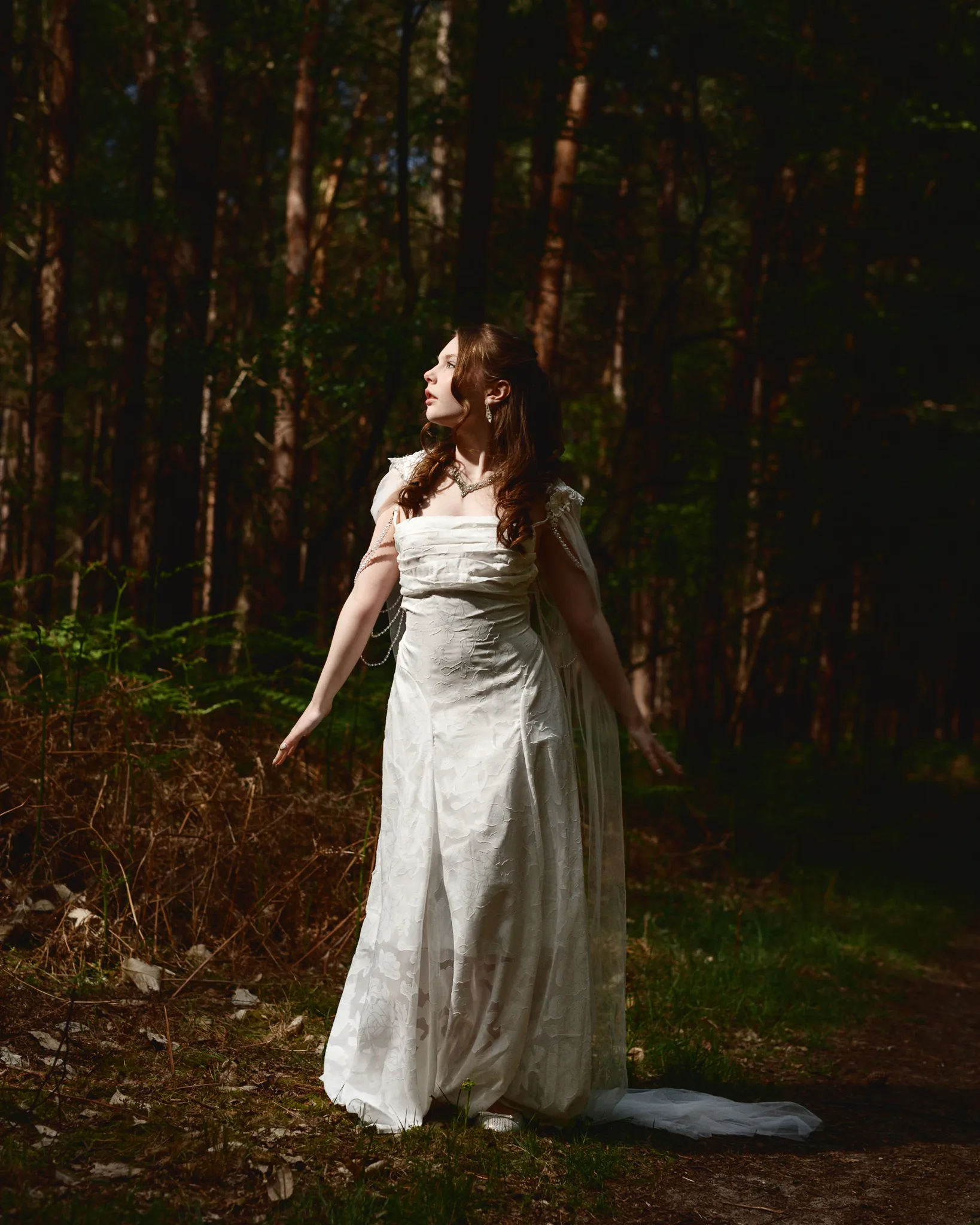
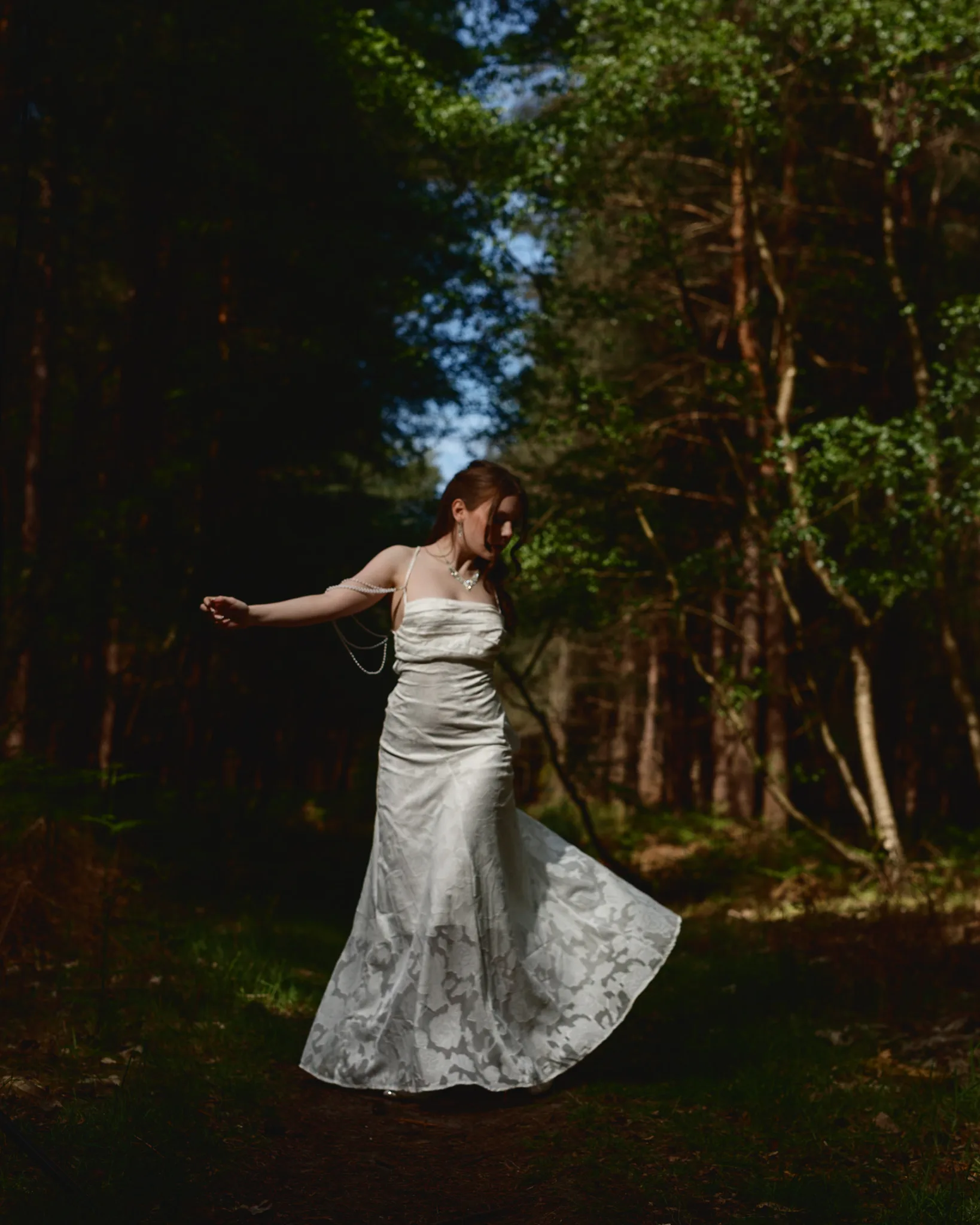
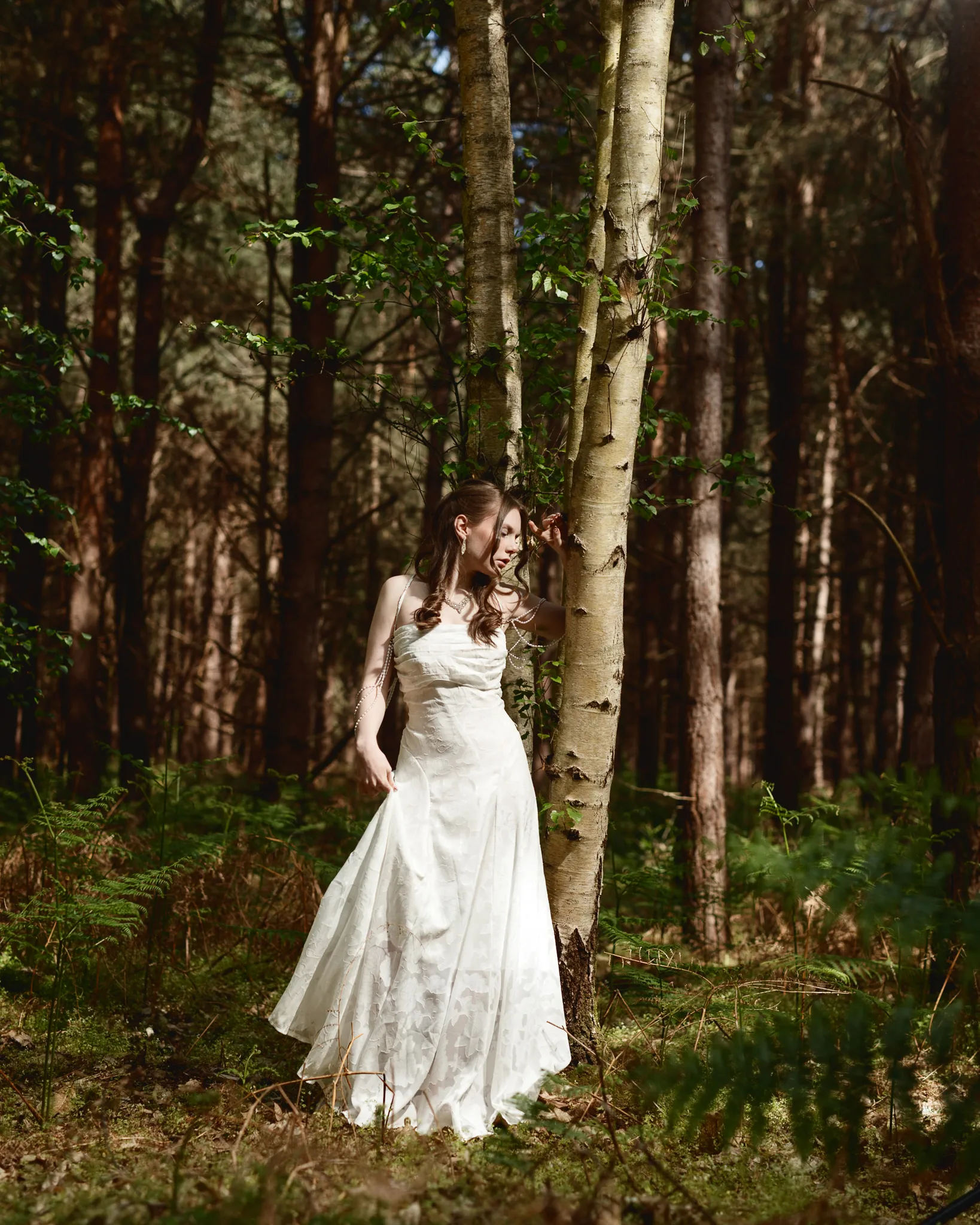
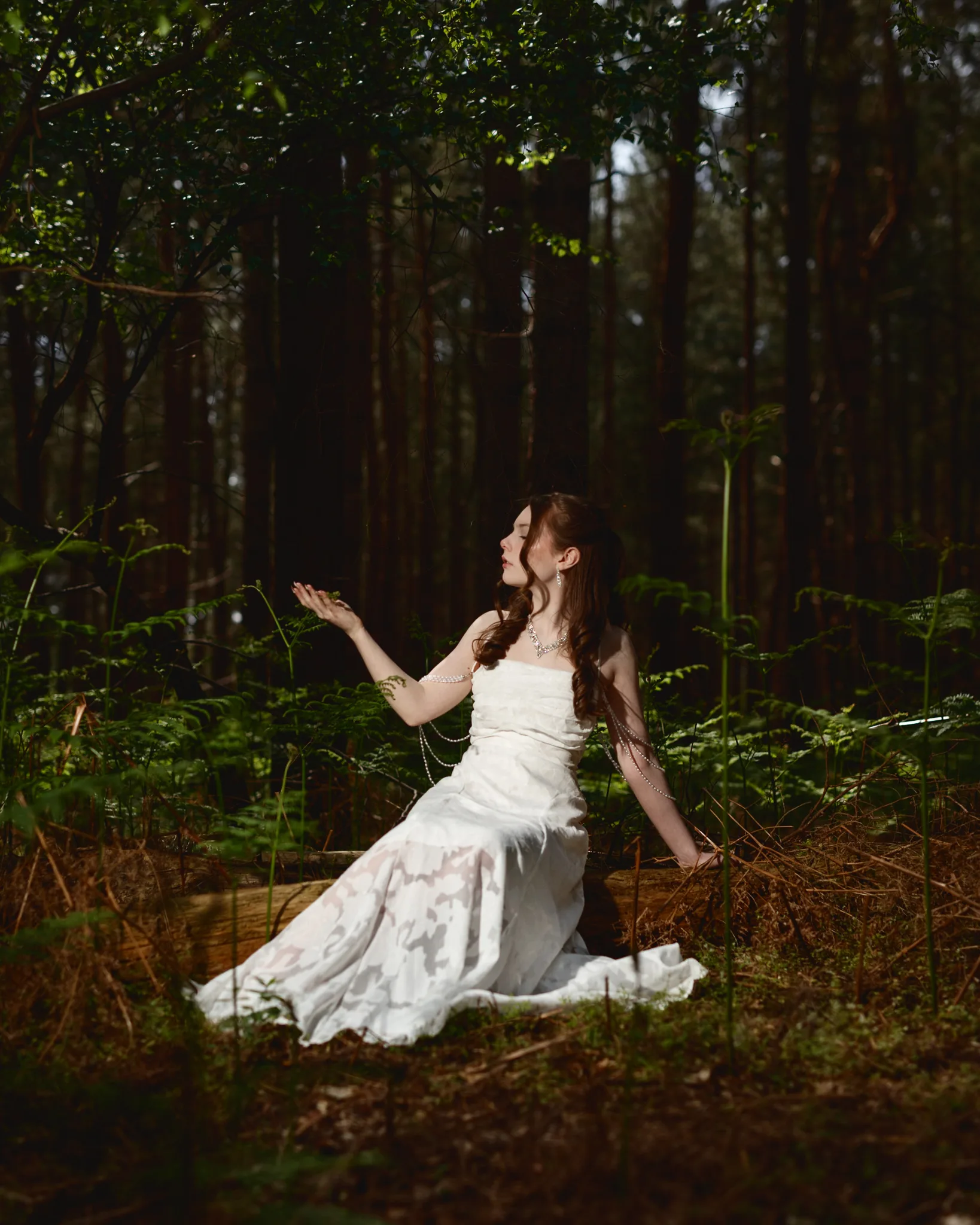
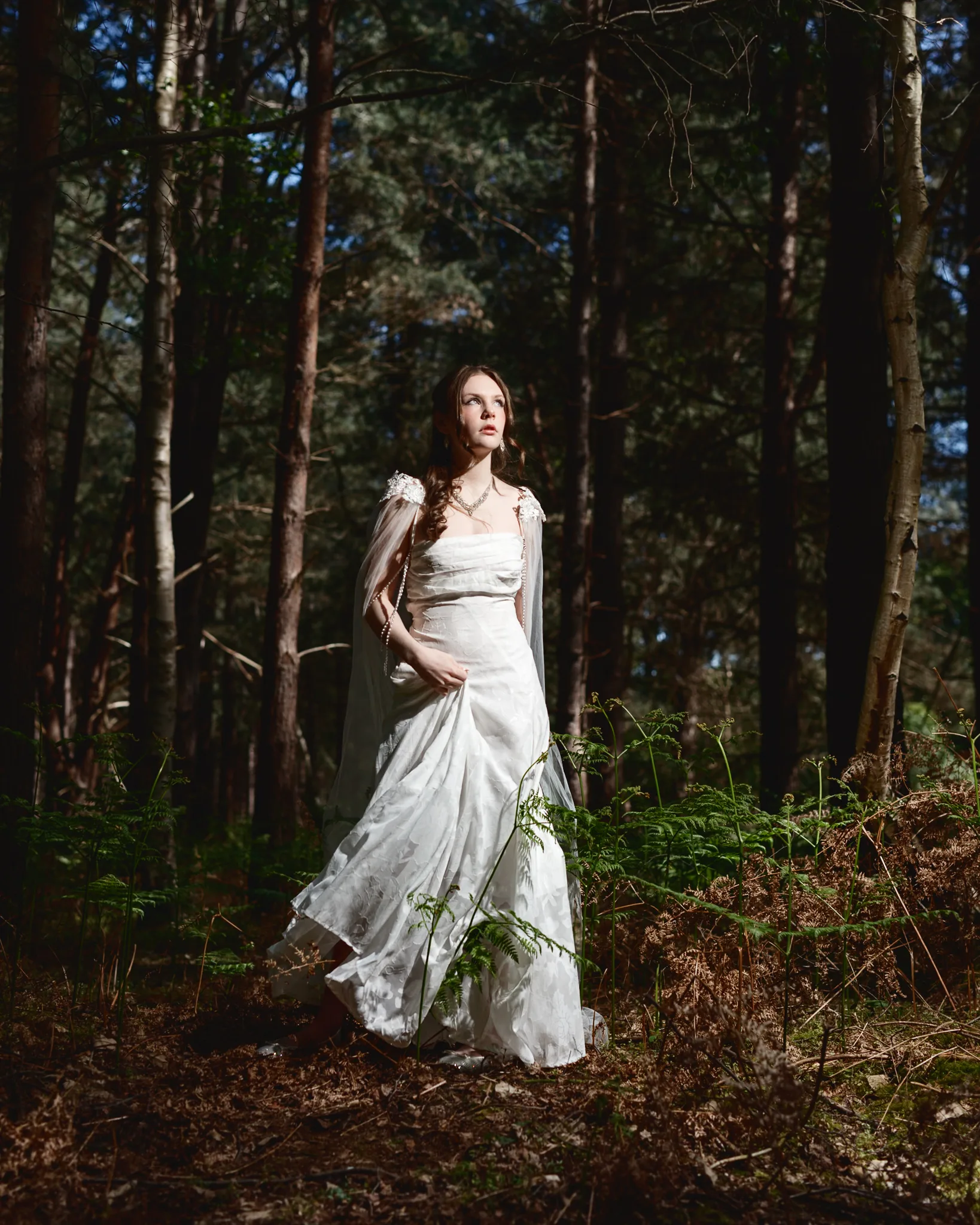
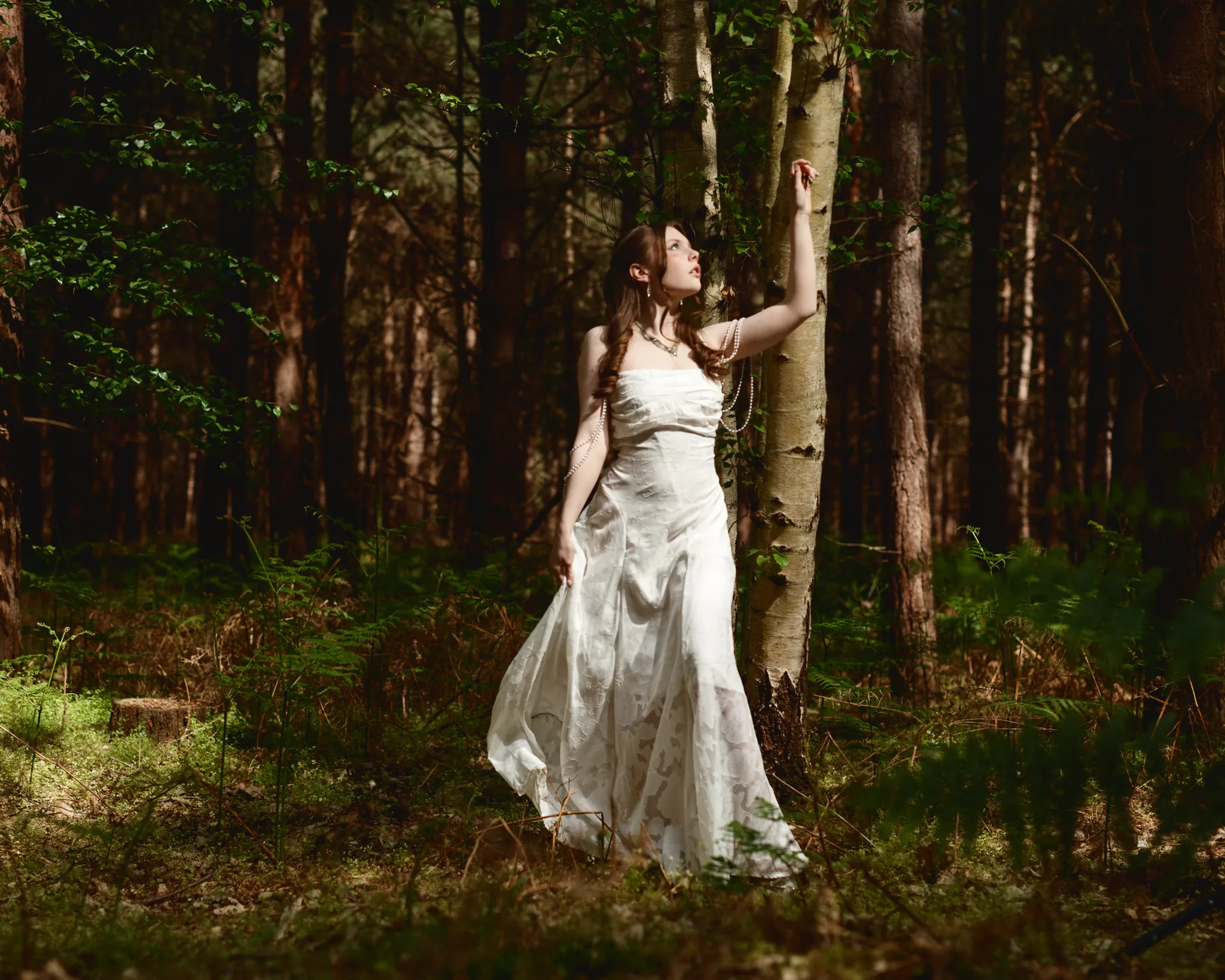
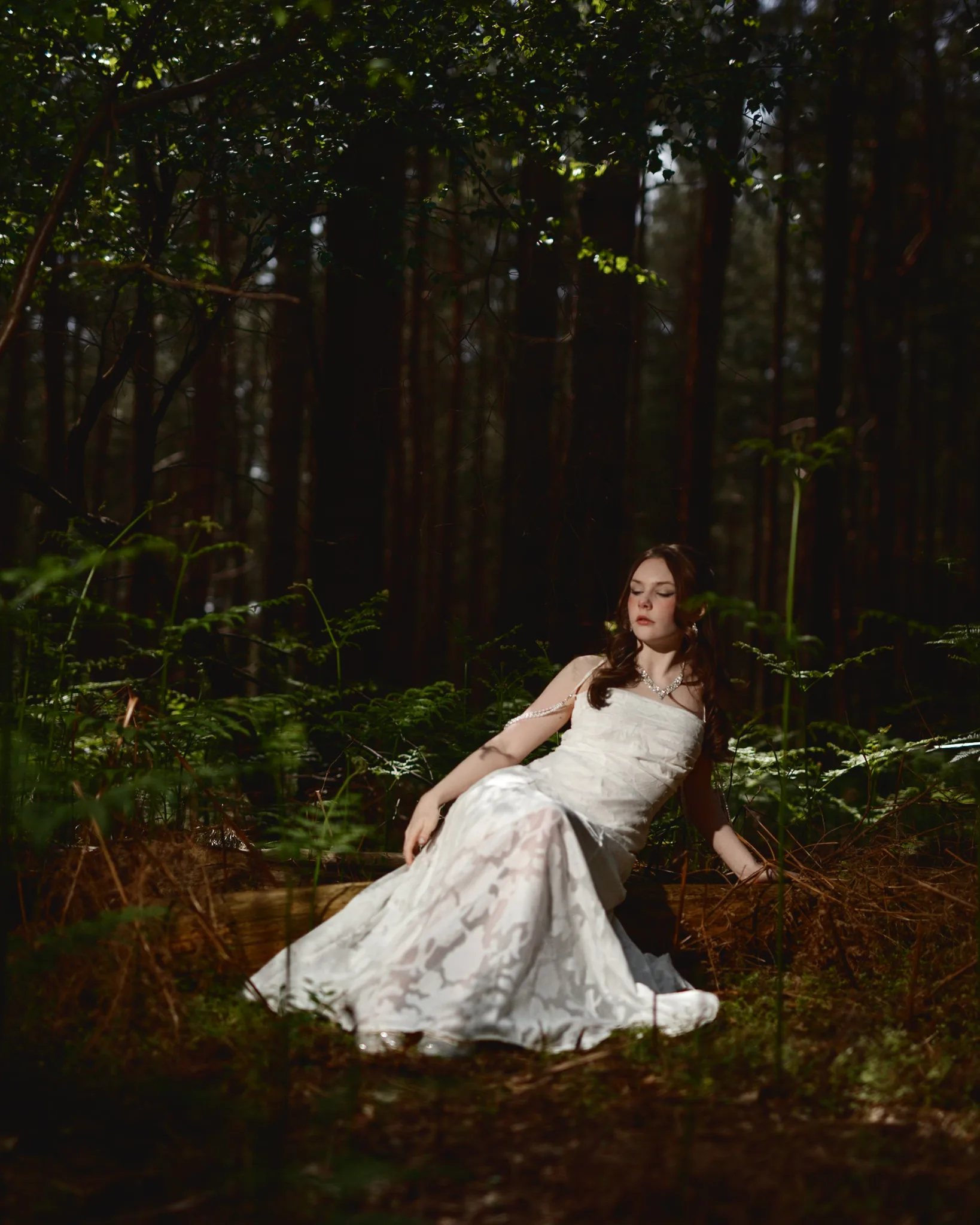
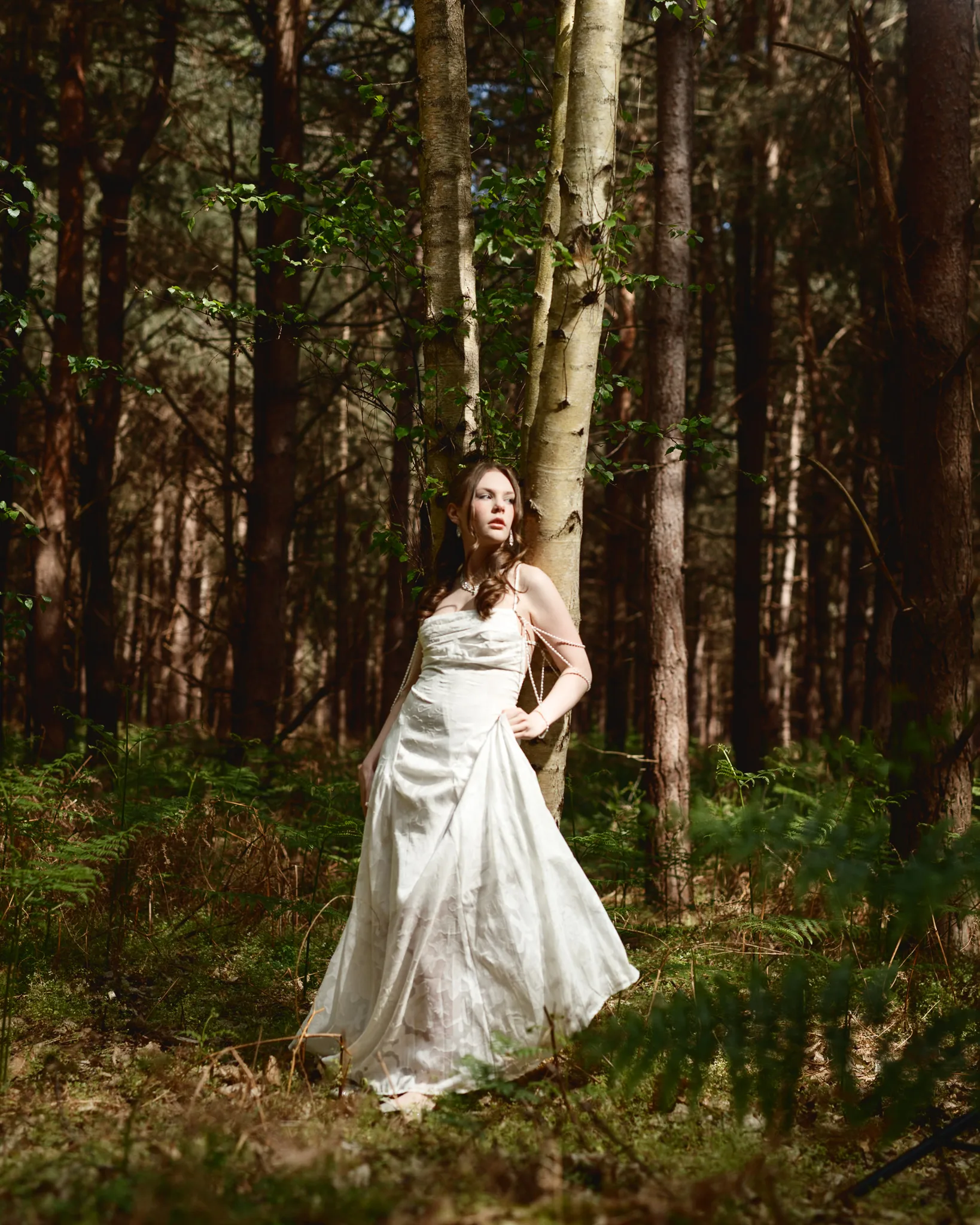
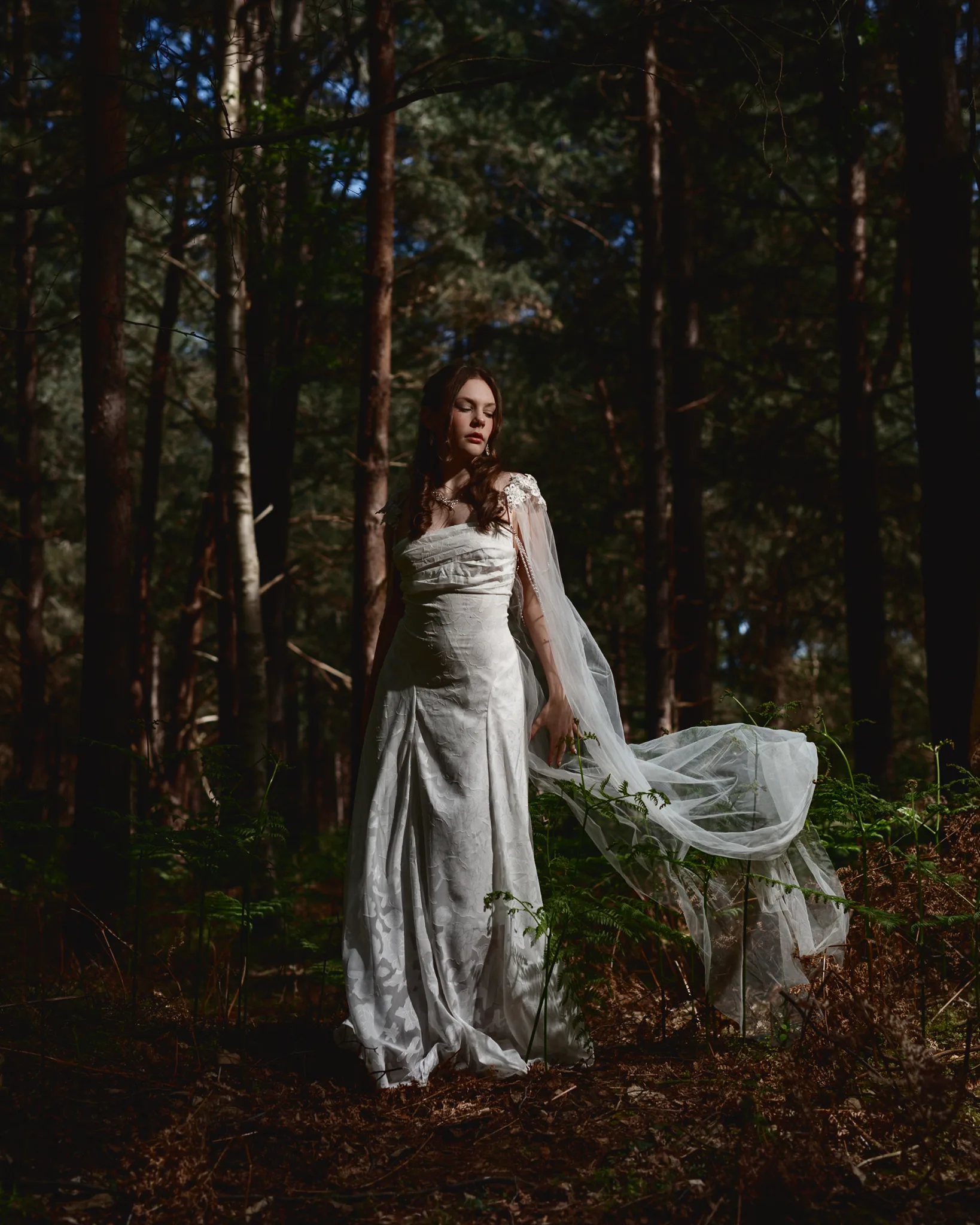
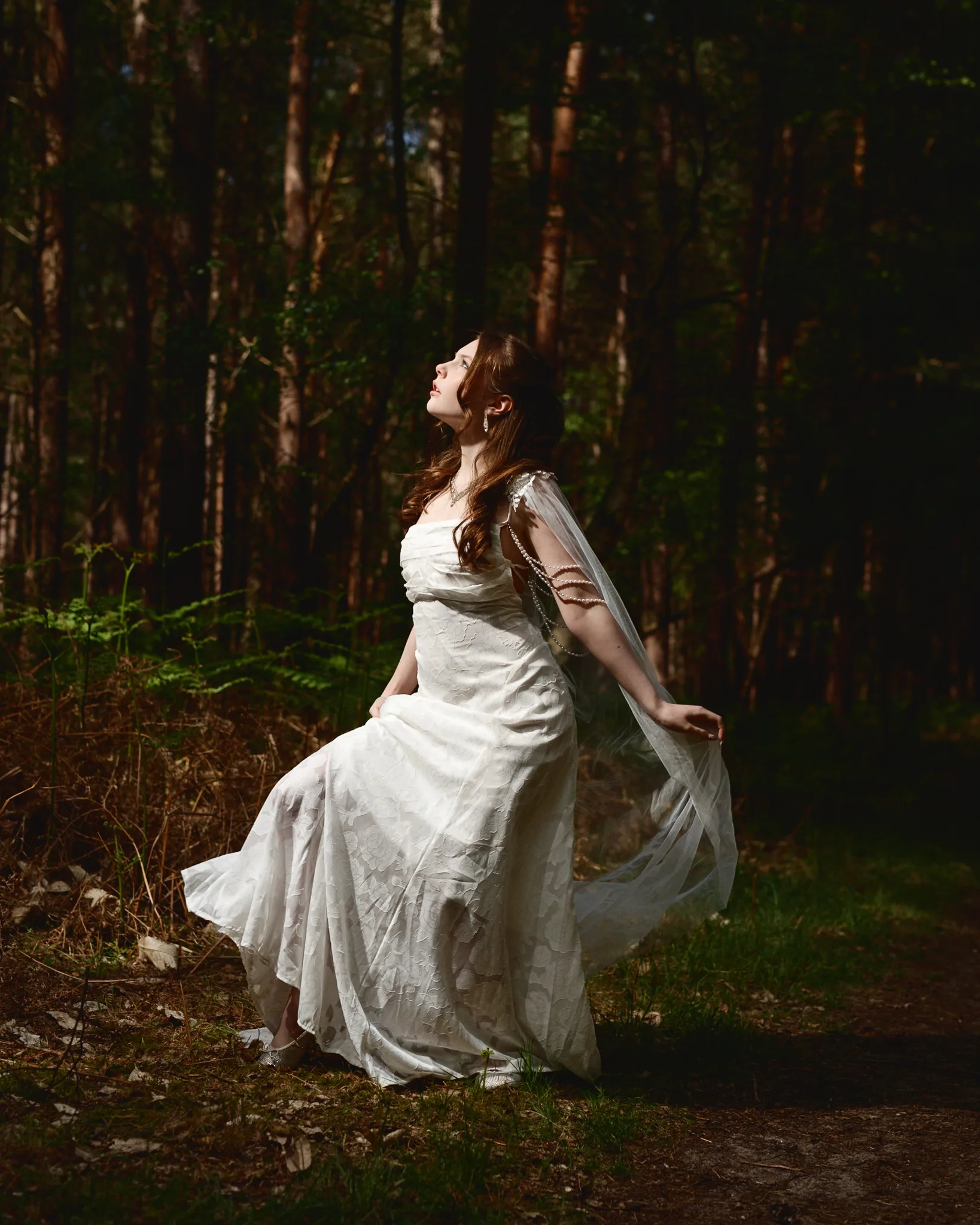
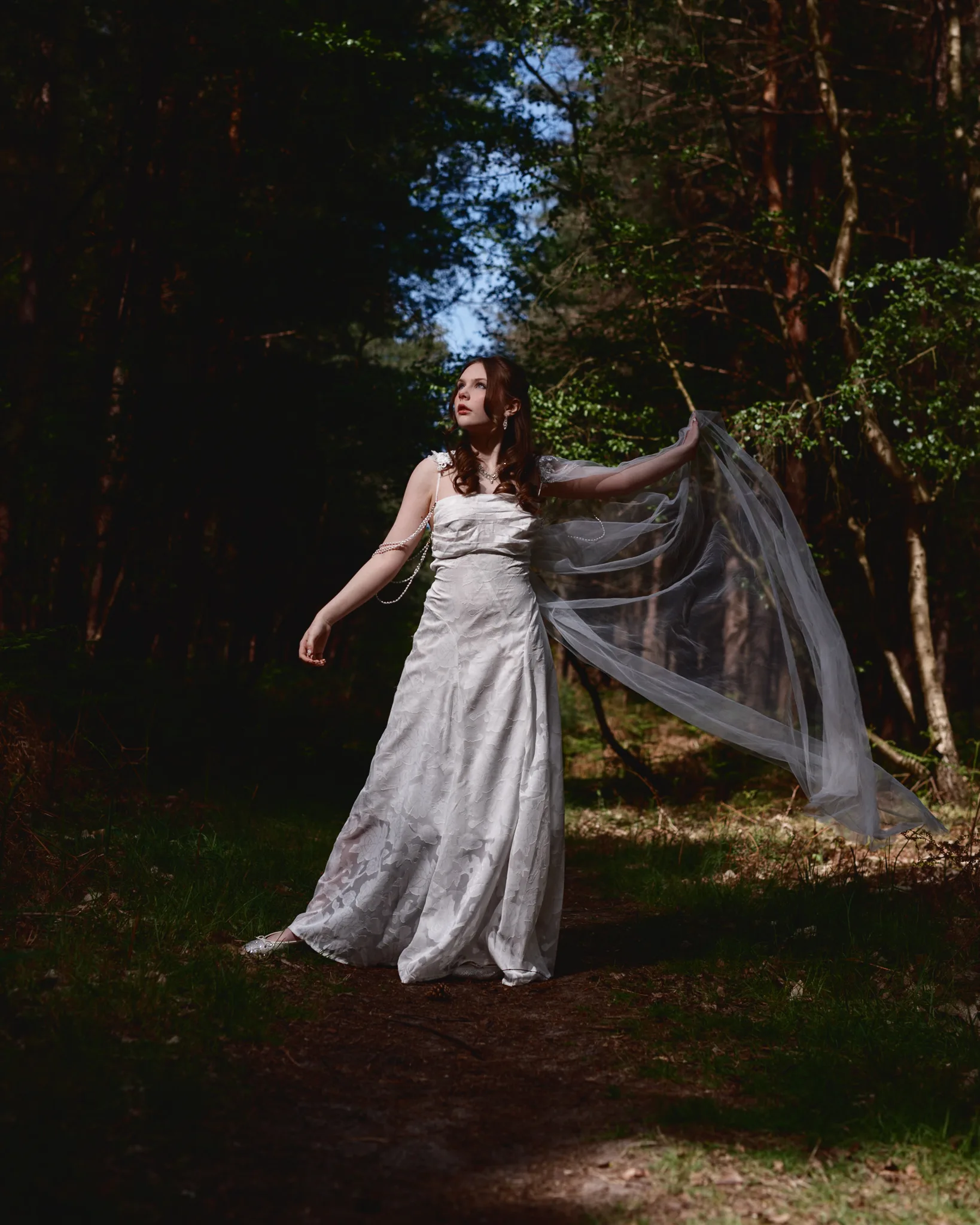
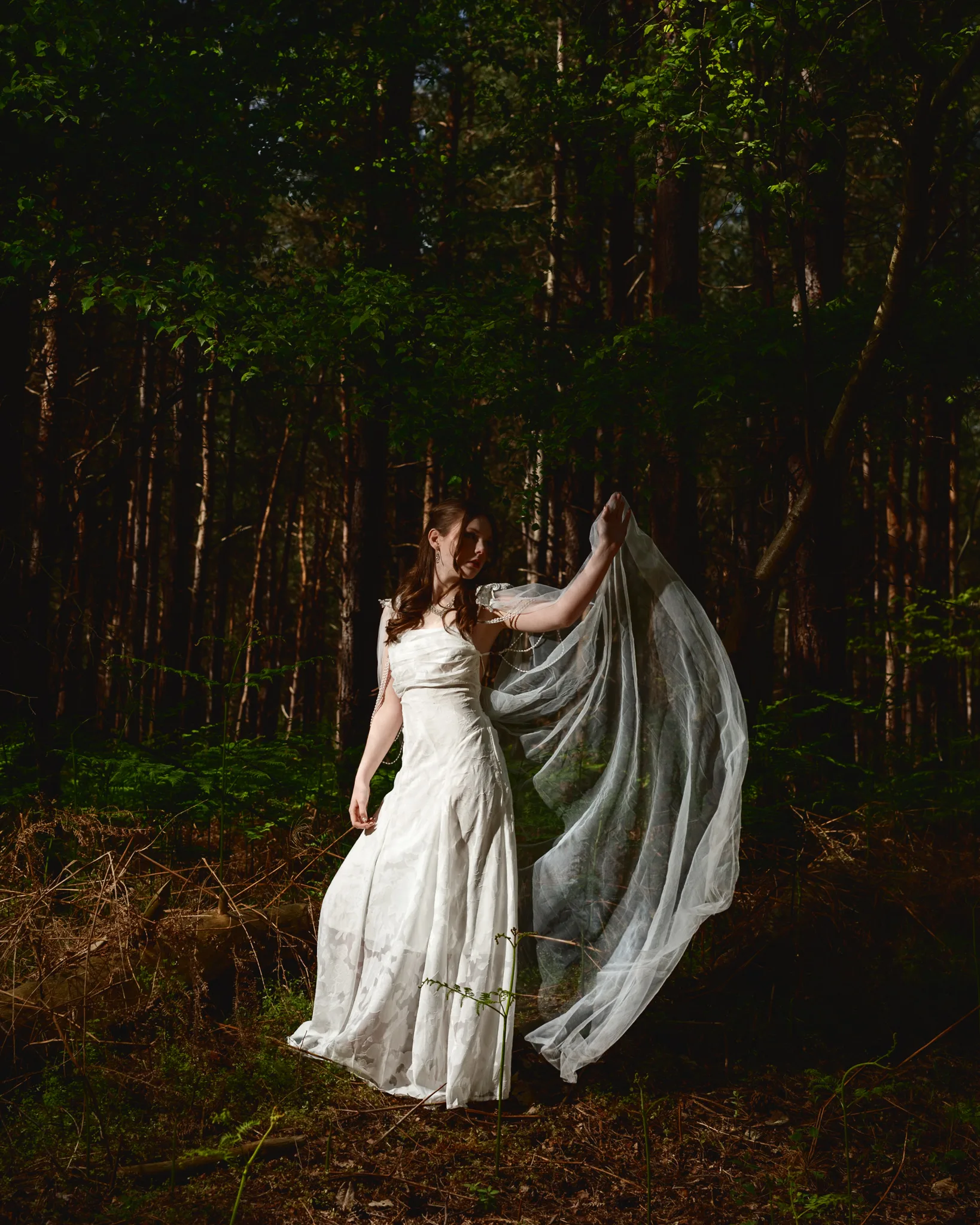
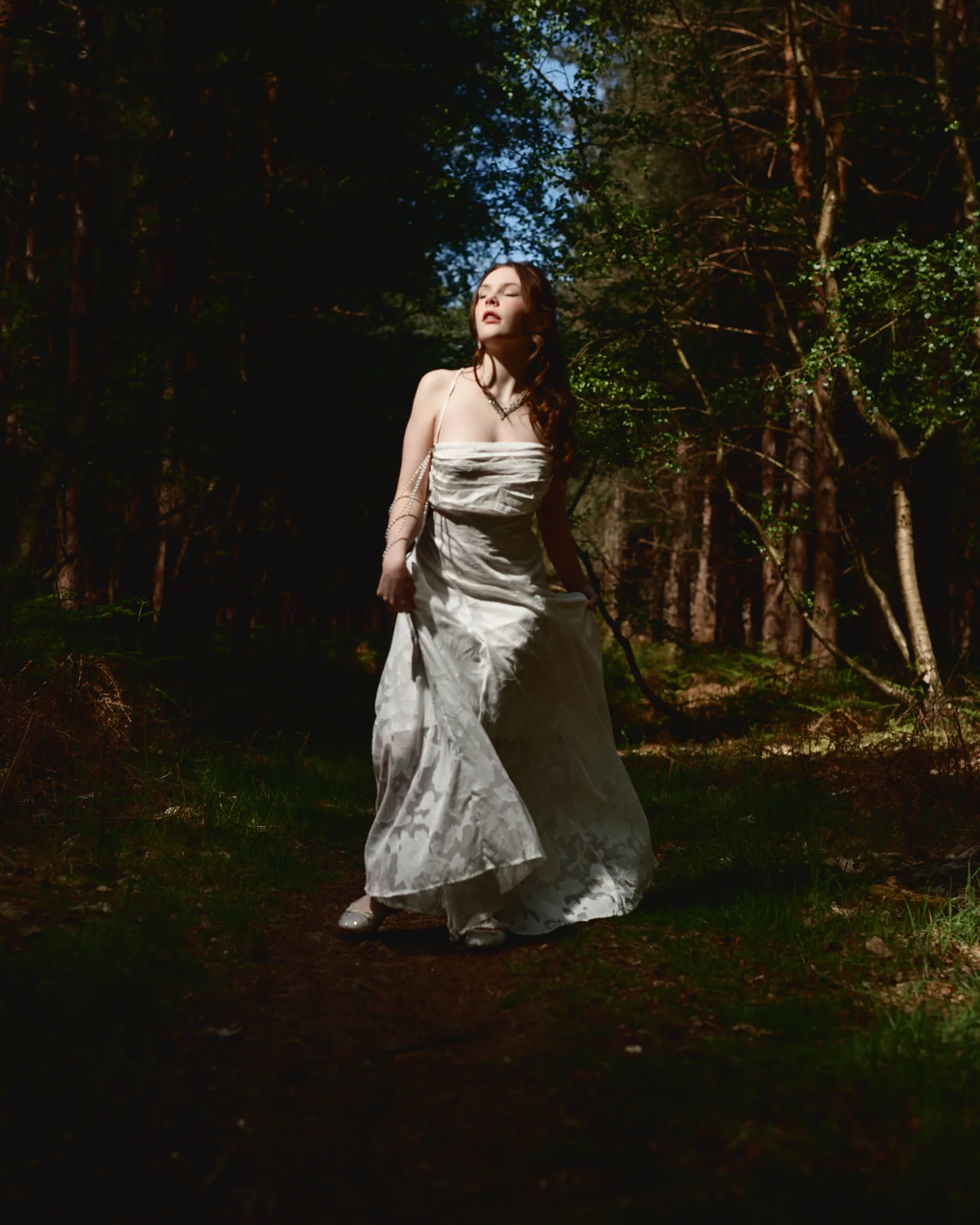
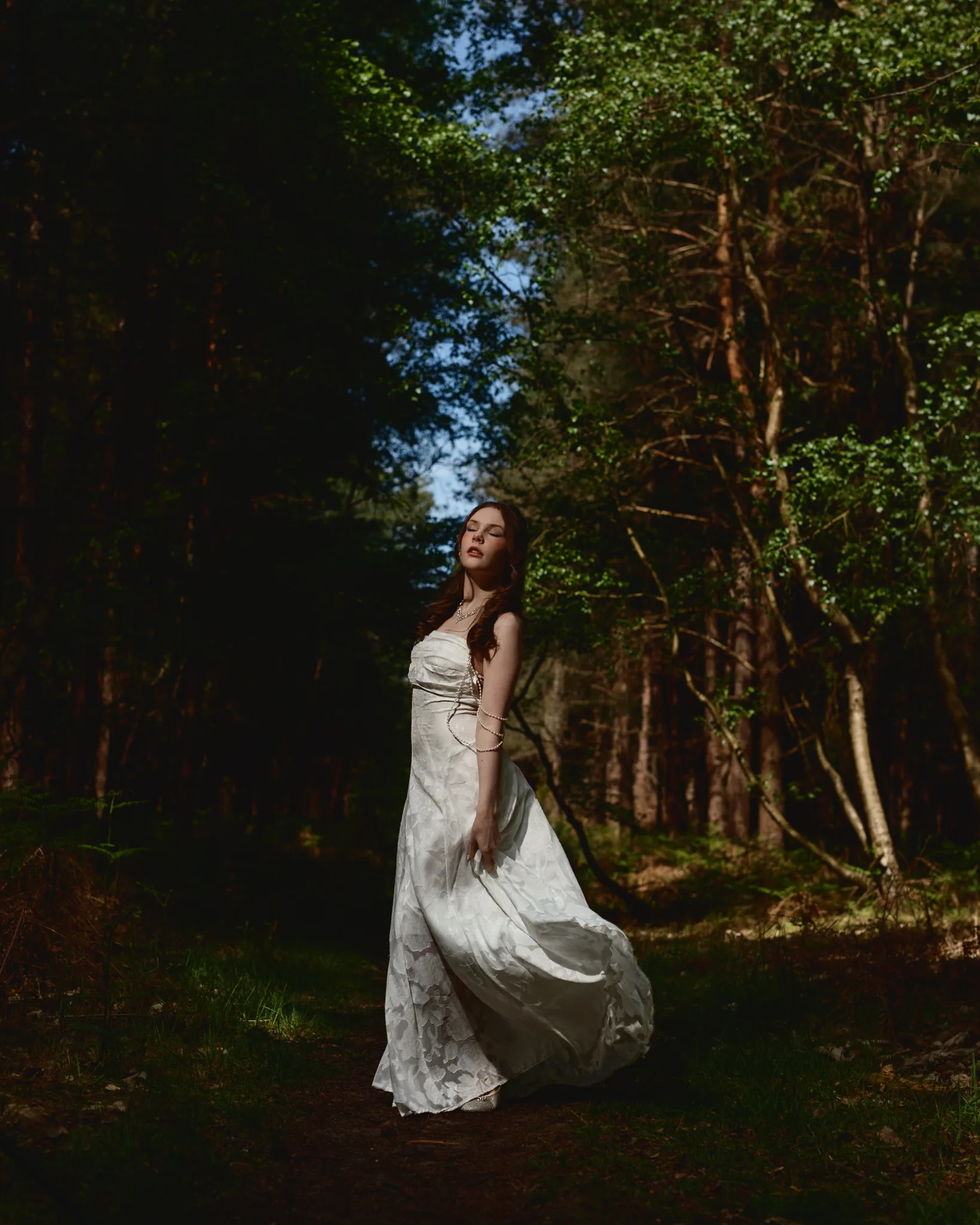
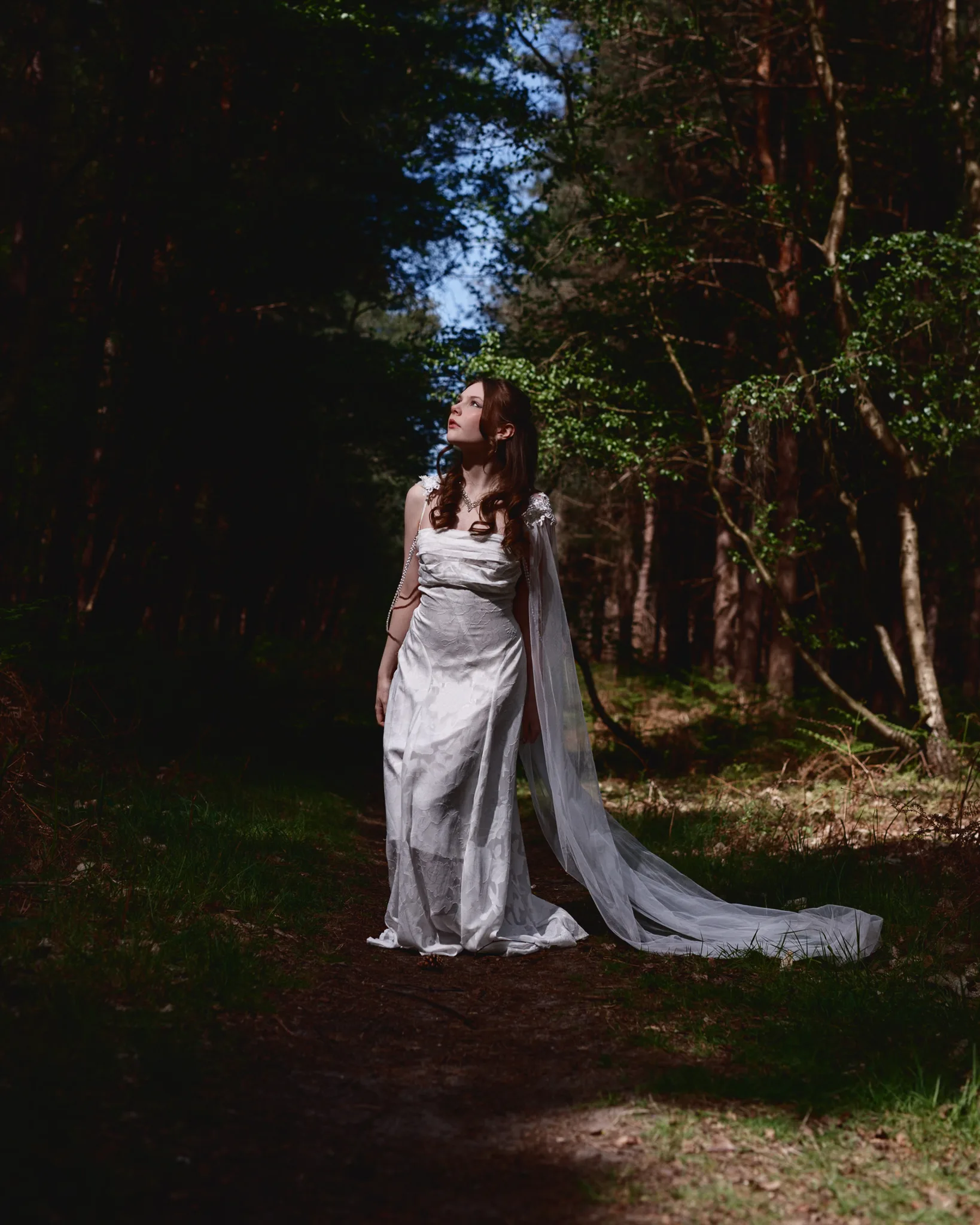
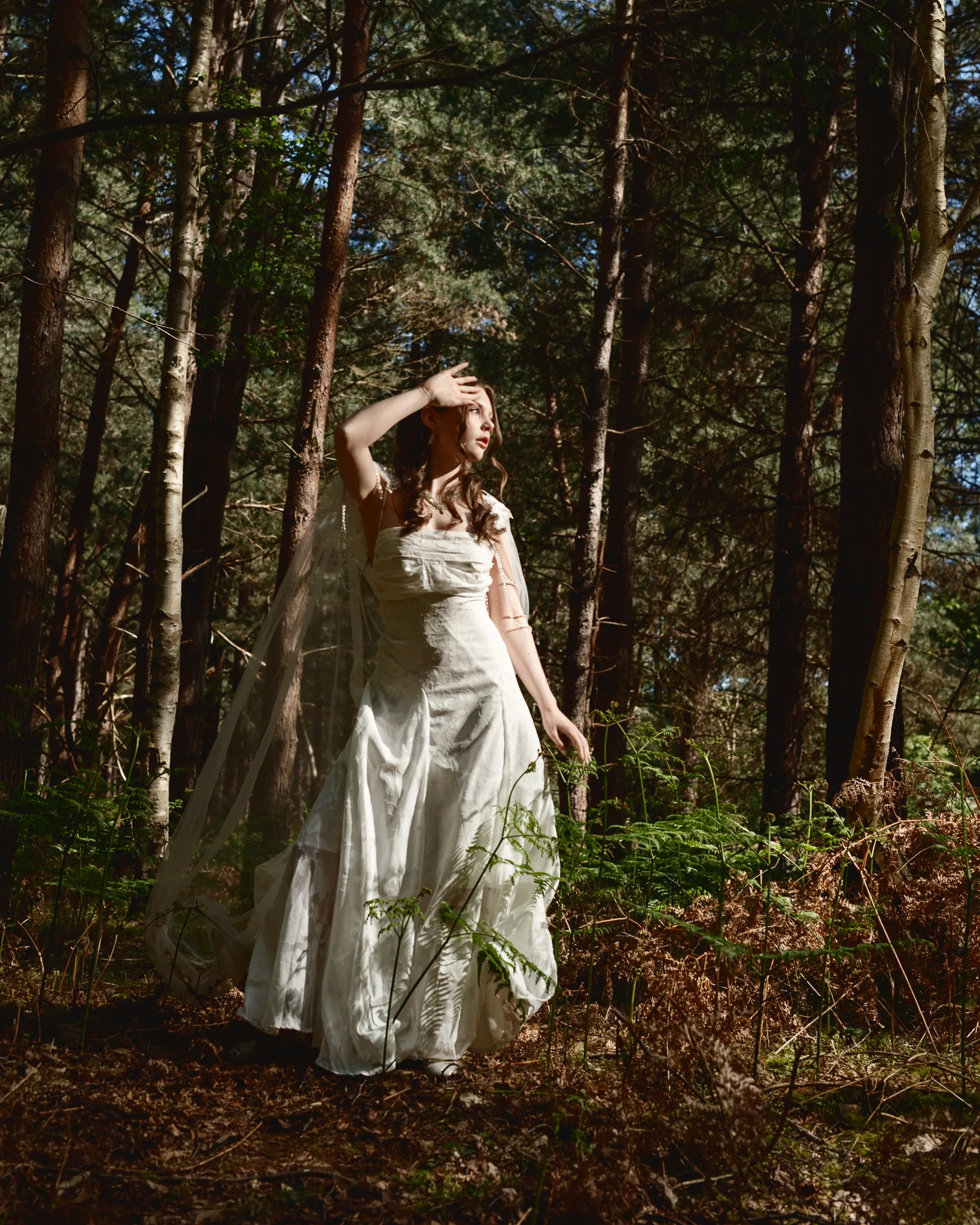
Shelby wore a long white dress with soft, flowing fabric and delicate detail around the shoulders and arms. Against the darker greens, browns, and deep shadows of the forest, the styling had a romantic and slightly ethereal quality. The images have a woodland editorial atmosphere, but they still feel grounded in a real location rather than becoming overly staged or theatrical.
For a model portfolio, that balance matters. The images need to show the model clearly, but they should also demonstrate range, adaptability, movement, expression, and the ability to work within a real environment.
A Woodland Model Portfolio Shoot in Suffolk
Tunstall Forest worked well for this model portfolio shoot because it offered a wide range of visual possibilities within one location. The woodland gave us tall vertical tree trunks, darker shaded areas, patches of hard sunlight, textured forest floor, ferns, dry bracken, and natural pathways.
That sort of location can add depth to a model portfolio because it is not just a background. It becomes part of the visual language of the shoot.
The forest helped create a sense of scale and atmosphere around Shelby. In some images, the trees gave the frame a strong vertical structure. In others, the lower ferns and bracken softened the scene and helped connect the dress to the landscape. The contrast between Shelby’s pale styling and the darker woodland setting became one of the strongest visual ideas in the set.
A location model portfolio shoot can be a useful addition to studio work because it shows a different side of the model. Studio portfolio images are excellent for clean, controlled, agency-friendly work, but location portraits show how someone responds to an environment. They show movement, awareness, expression, posture, and adaptability.
For Shelby, Tunstall Forest gave us a setting that felt quiet, textured, and slightly cinematic.
Working with Shelby
Shelby was excellent to work with throughout the shoot. She has a calm presence in front of the camera and took direction well, while still bringing her own natural movement and expression to the images.
That combination is important in a model portfolio session. A strong portfolio is rarely built from rigid posing alone. It usually comes from trust, communication, small adjustments, and the ability to move between directed poses and more instinctive moments.
Across the set, Shelby gave the images a graceful and controlled quality. There is a recurring sense of reaching, turning, pausing, and responding to the space around her. The body language is expressive without becoming exaggerated, which suited the woodland setting very well.
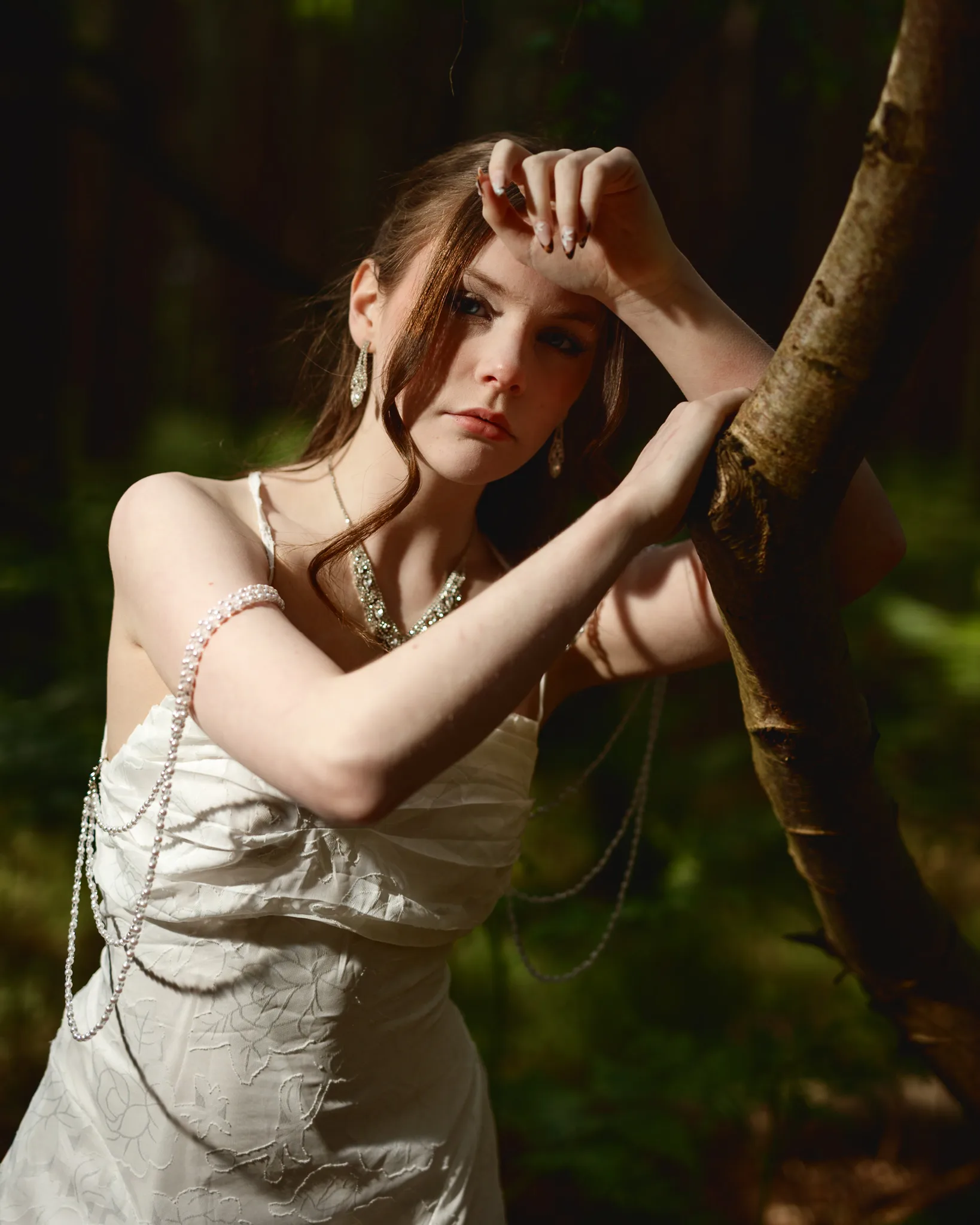
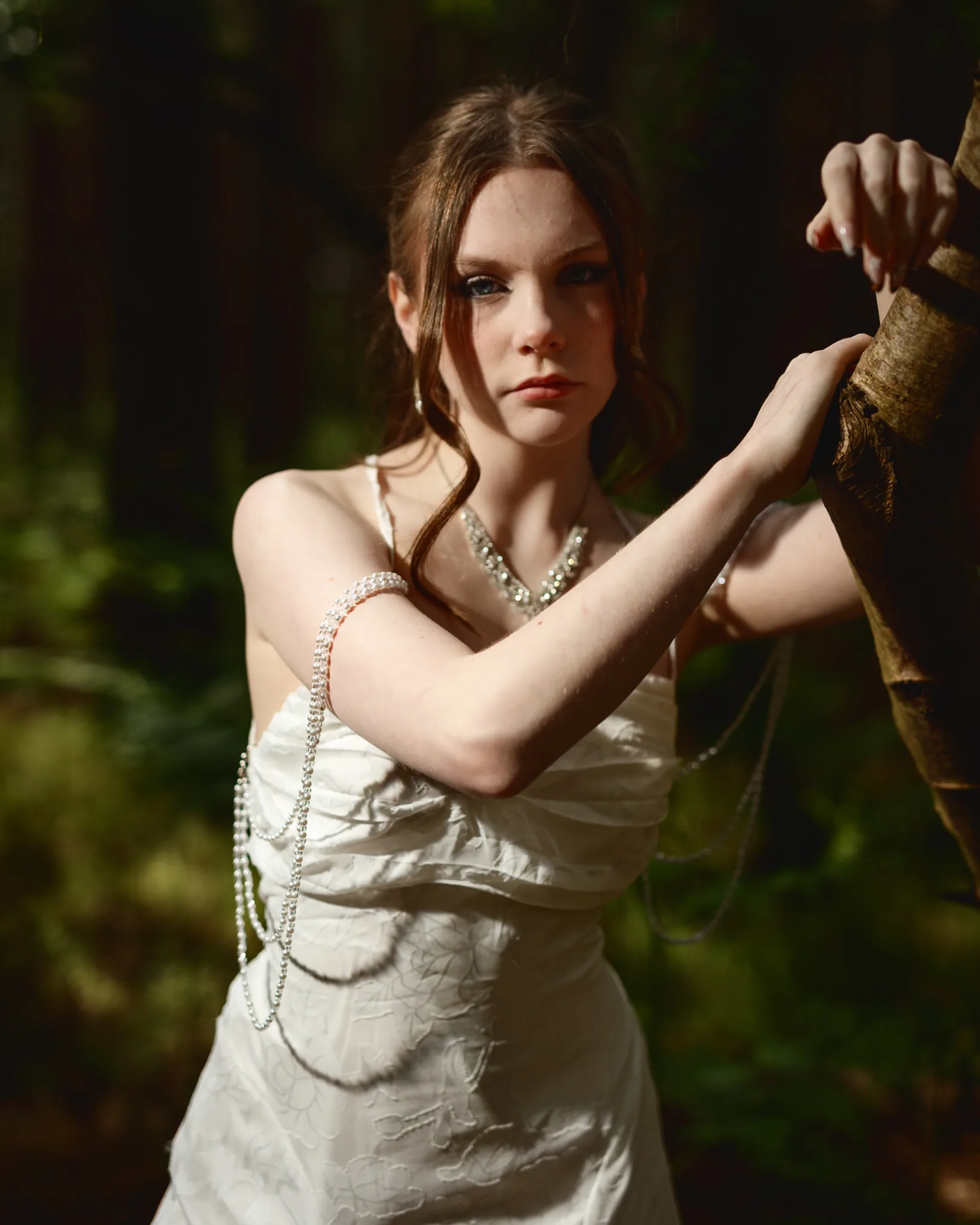
Some frames are more direct and fashion-led, especially the closer portraits where the styling, jewellery, expression, and fabric detail become more prominent. Other images are quieter and more reflective, with Shelby turned away from the camera or holding a softer, more inward expression.
That range is useful. A model portfolio should not rely on one expression, one angle, or one style of image.
Why Variety Matters in a Model Portfolio
One of the main aims of this shoot was to create variety.
A useful model portfolio should show more than whether someone can stand in front of a camera. It should show how they work with different compositions, distances, expressions, body shapes, styling, and environments.
During this session, we created a mixture of:
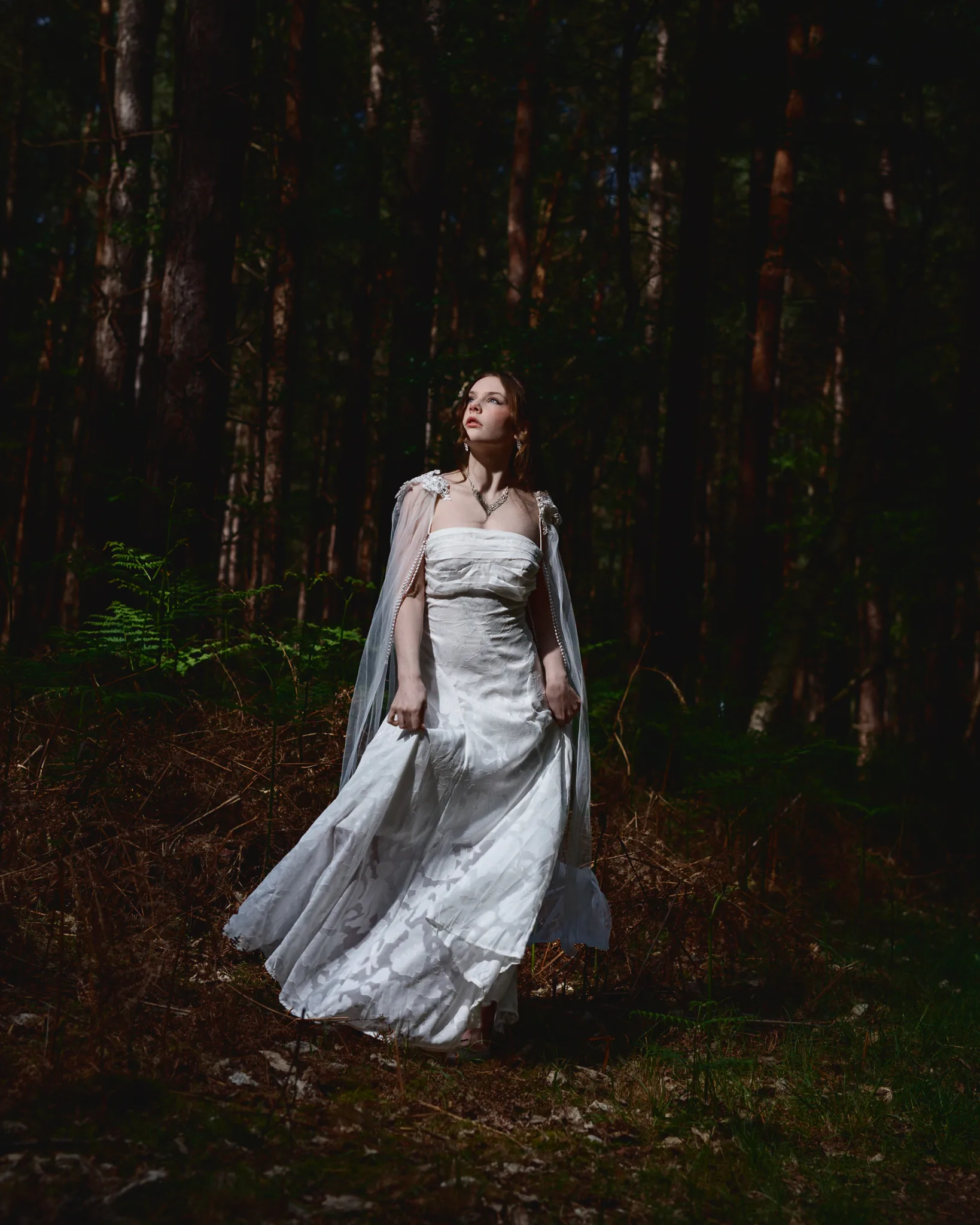
Full-length portraits showing the dress, pose, and woodland setting.
Closer portraits focusing on Shelby’s face, expression, jewellery, and styling.
Movement-based images using the dress and sheer fabric.
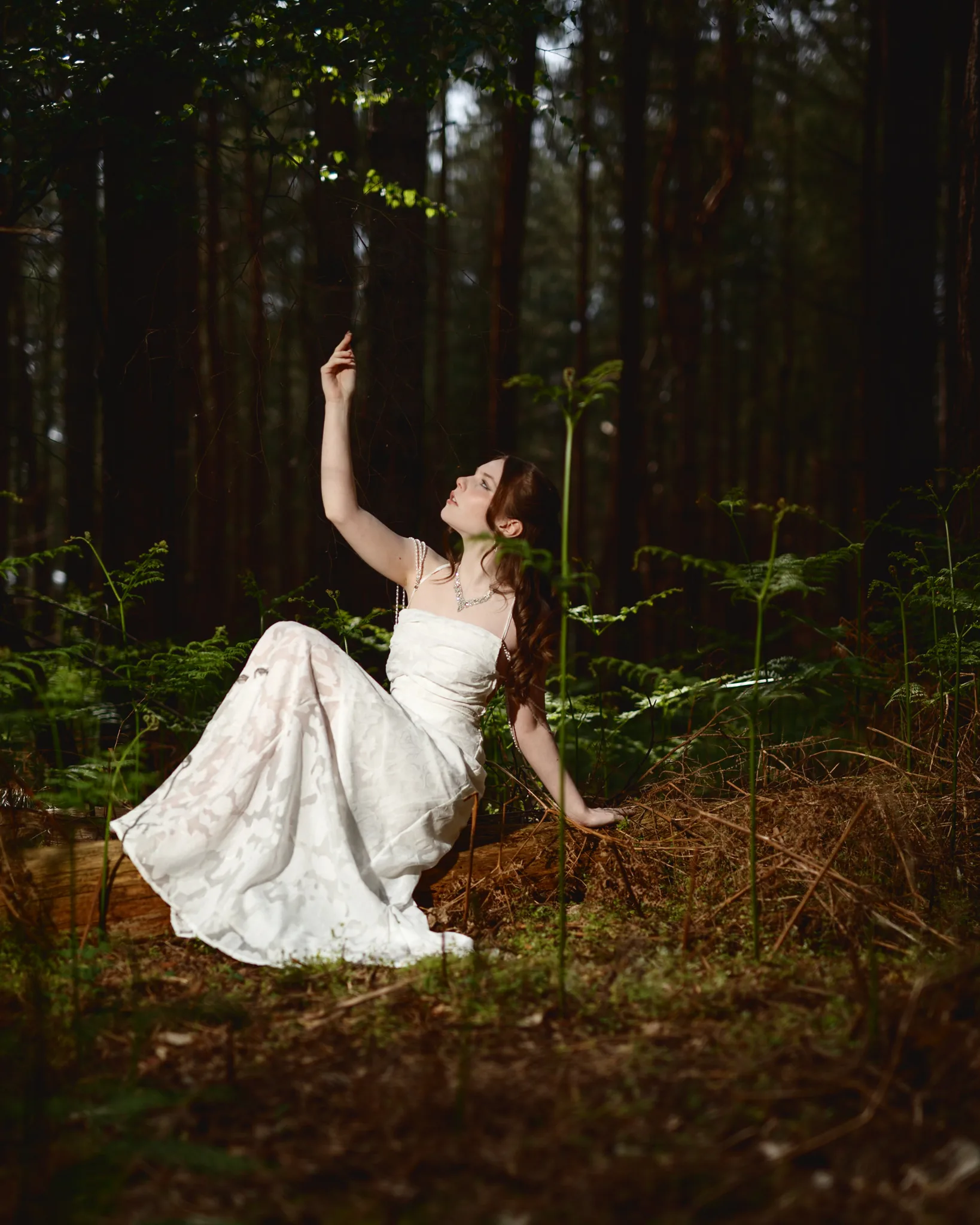
Quieter images built around stillness, posture, and atmosphere.
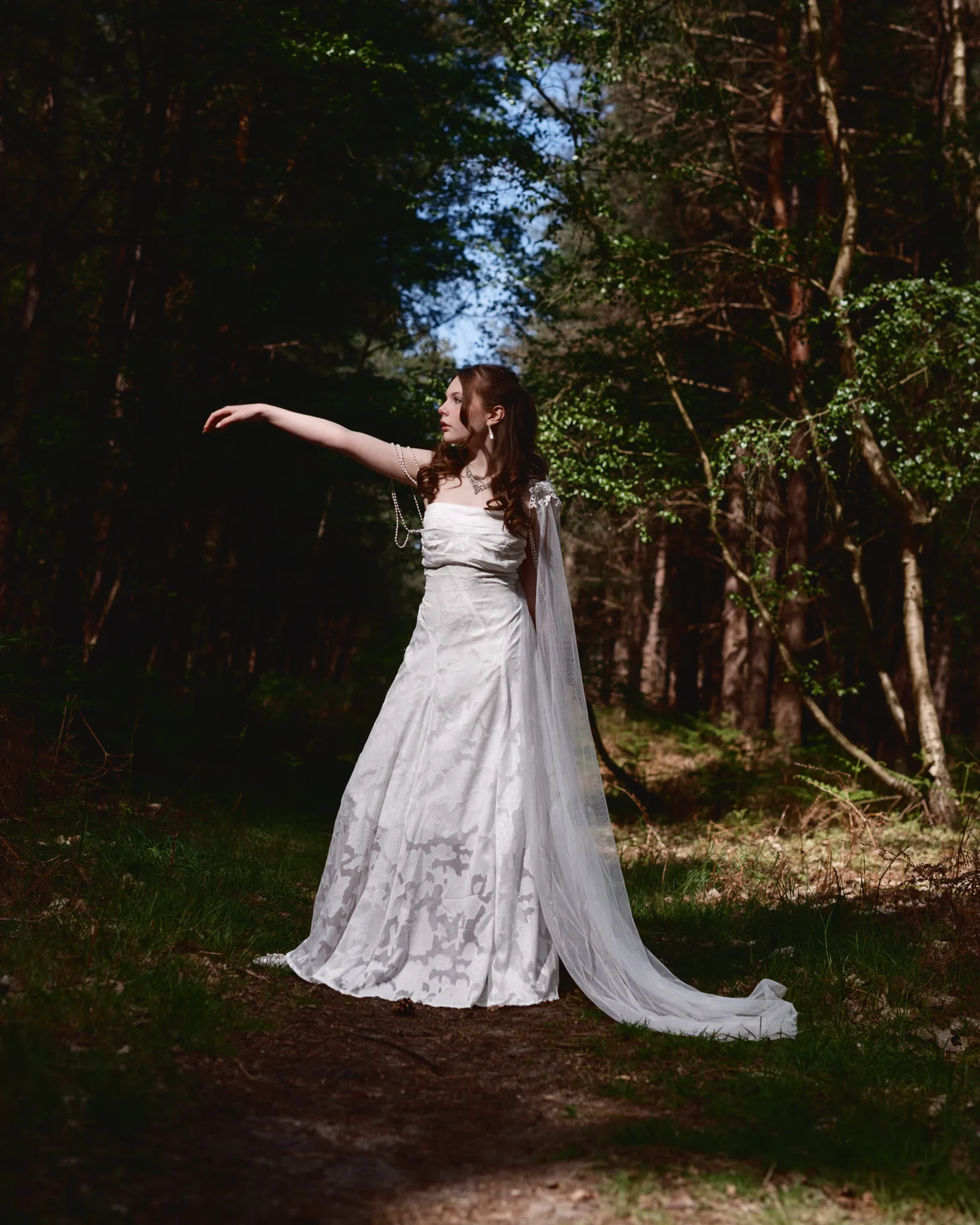
Wider environmental portraits where the forest becomes a major part of the frame.
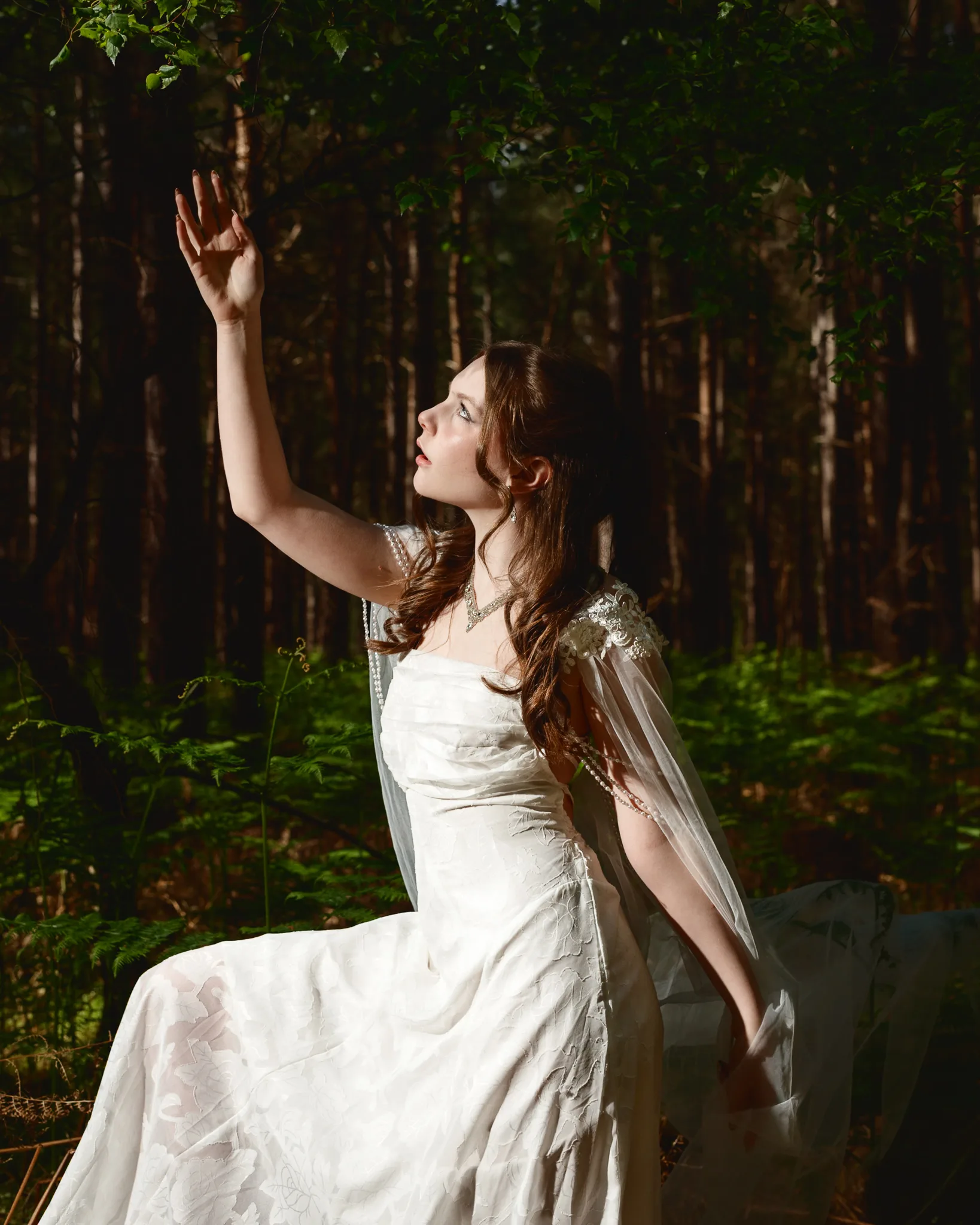
More editorial-looking images with stronger gestures and directional posing.
That range helps build a more complete model portfolio. It gives a better sense of how Shelby photographs in different situations, rather than presenting a set of images that all feel too similar.
For aspiring models, this is one of the most important things to understand. A portfolio does not need to be overloaded, but it does need to show genuine range. It should include images that are clear, useful, and varied enough to demonstrate how the model works in front of the camera.
The Styling and Woodland Atmosphere
Shelby’s styling was a key part of why this image set worked.
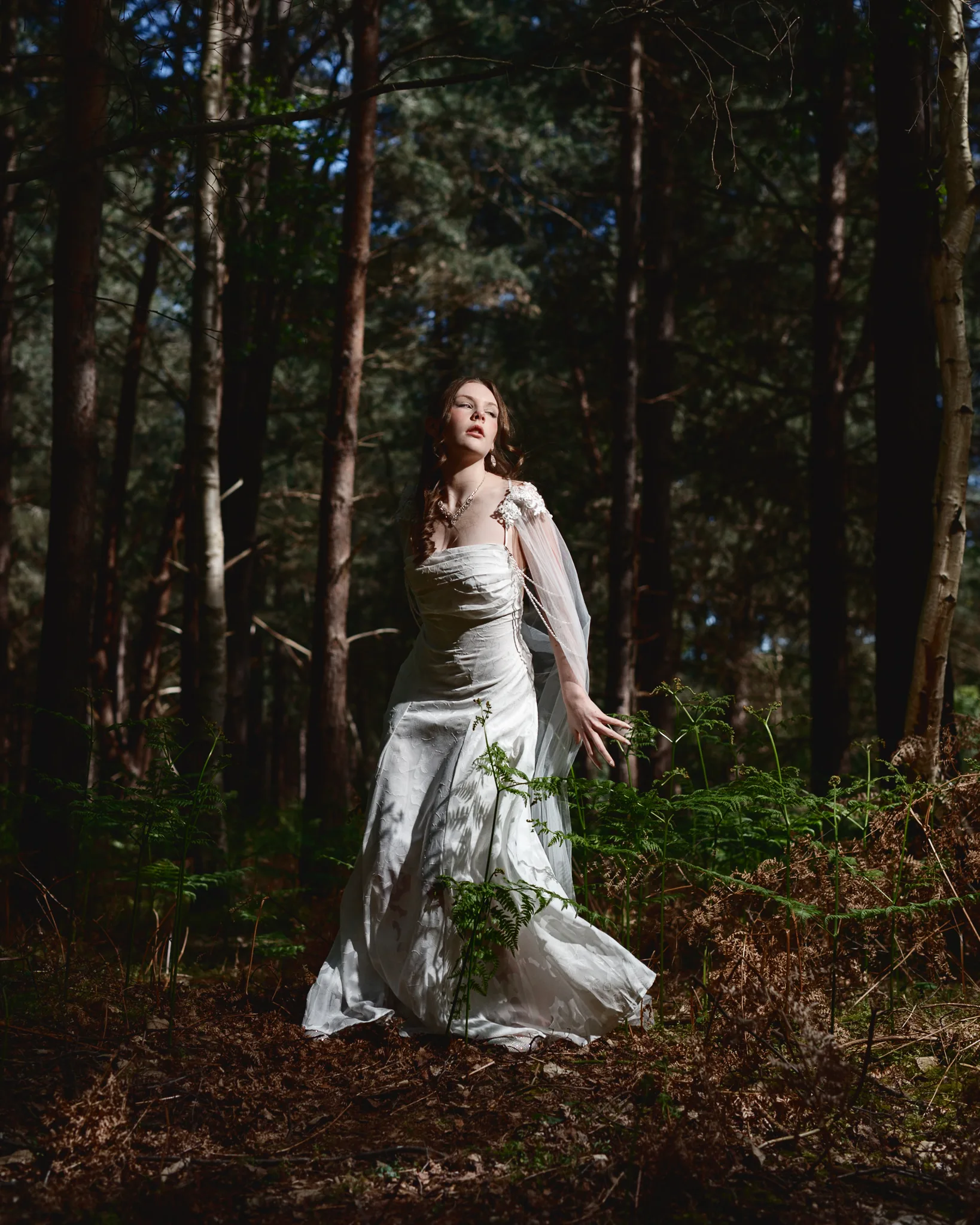
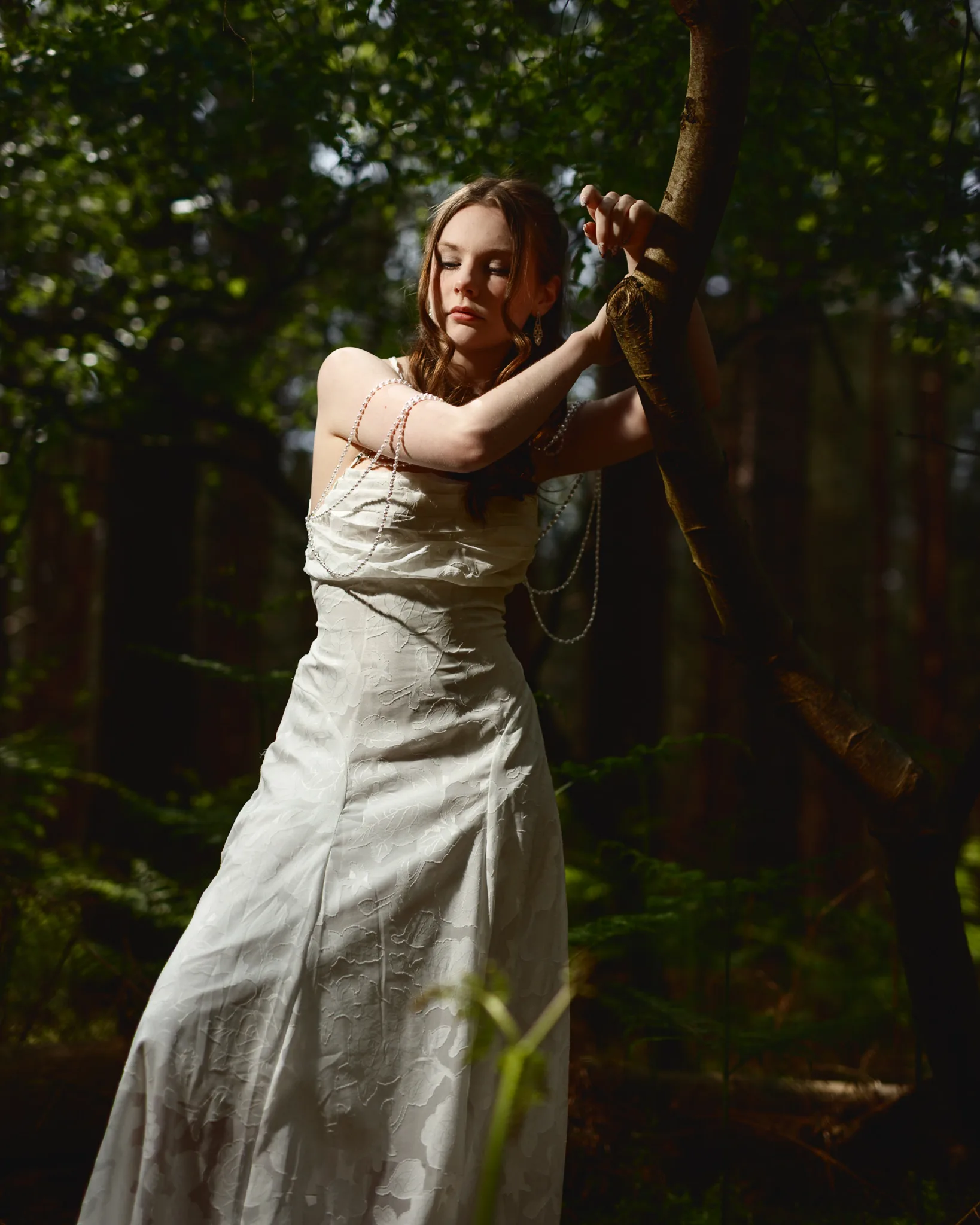
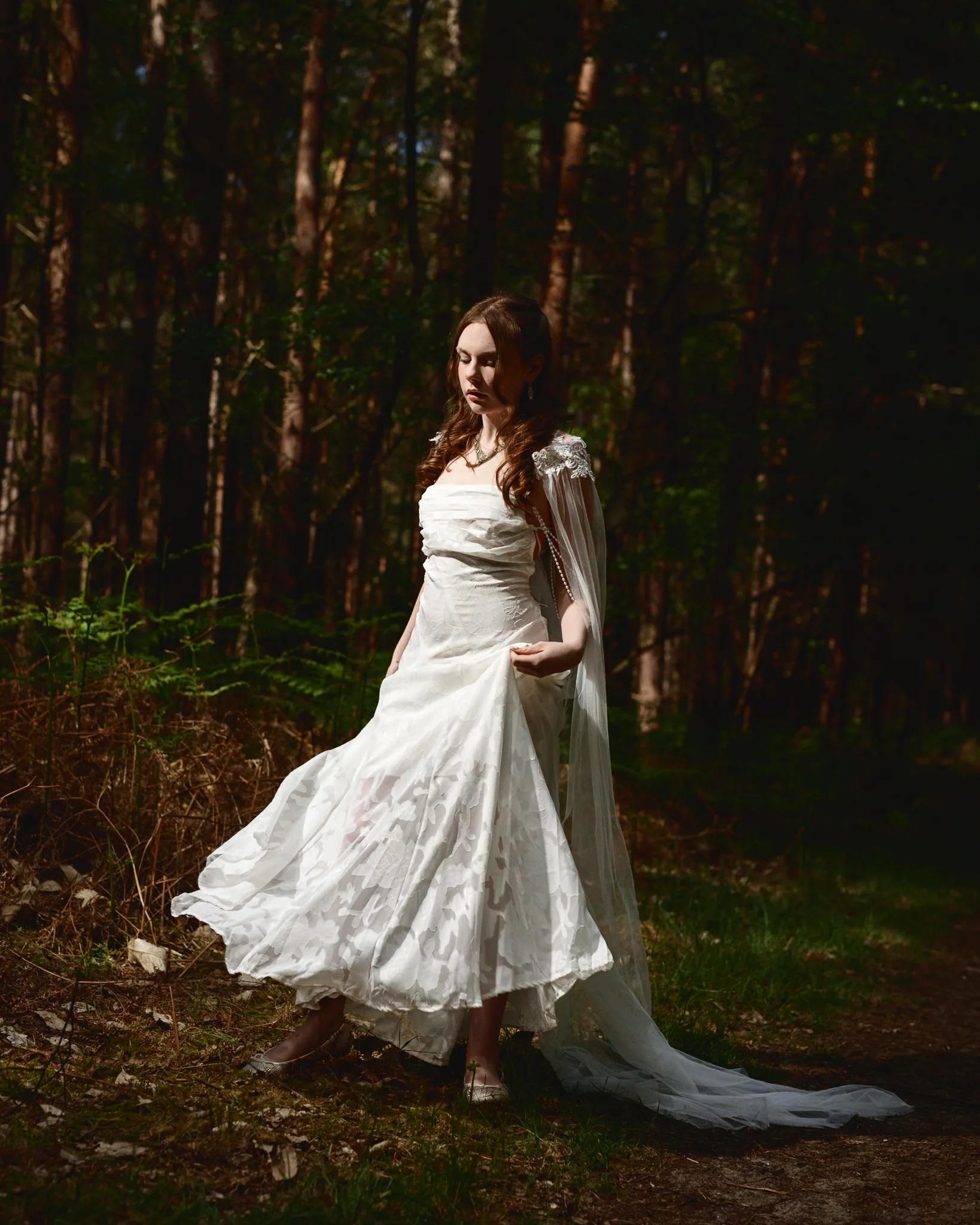
The long white dress had a soft, flowing shape with a subtle floral or foliage-like texture visible through the fabric. It had a slightly vintage or bridal quality, but in the woodland setting it became more editorial and story-led rather than purely bridal.
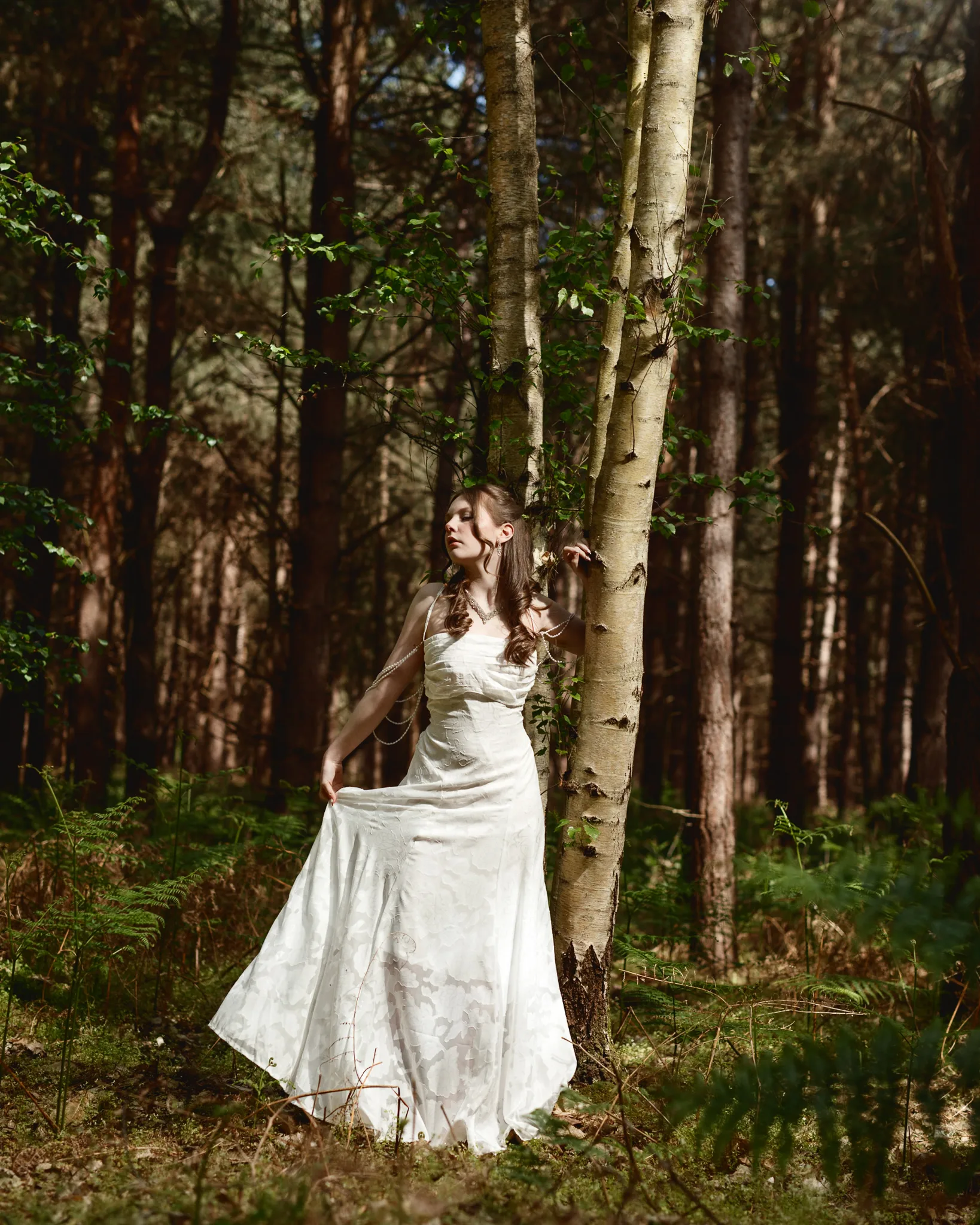
The bodice was structured without feeling too formal, while the lower part of the dress fell into loose folds and picked up shadows from the ferns, branches, and uneven forest floor. That helped stop the white fabric from appearing flat.
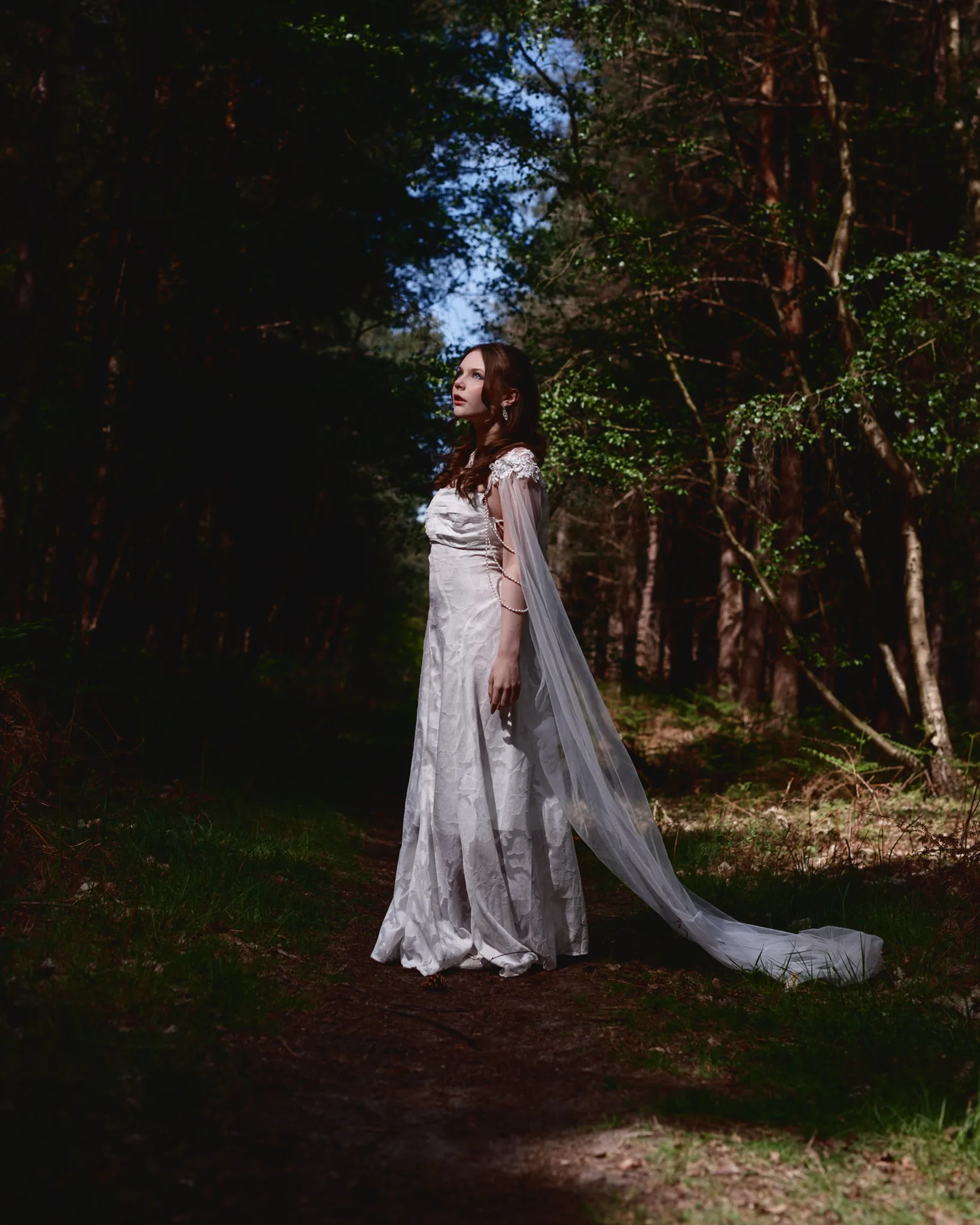
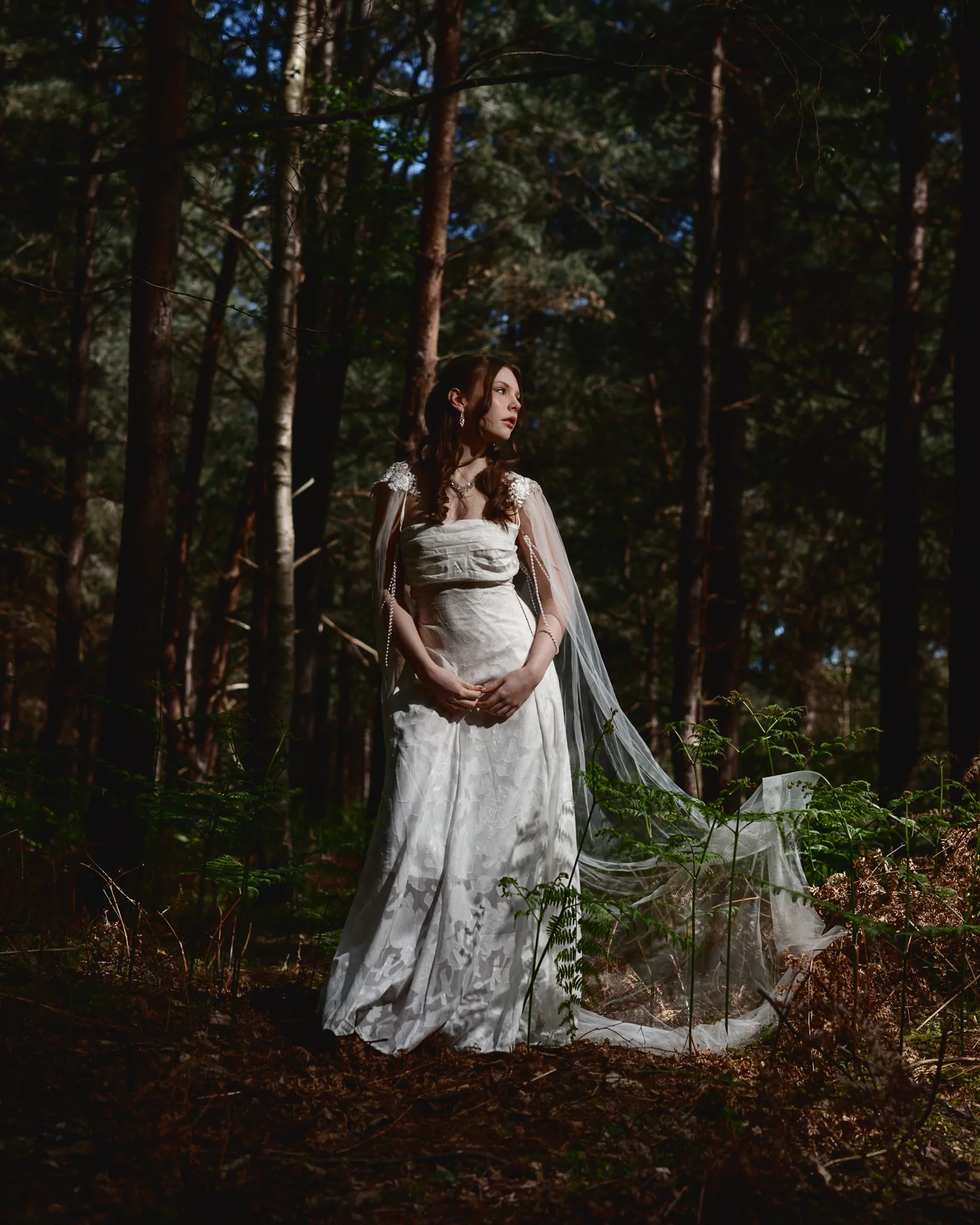
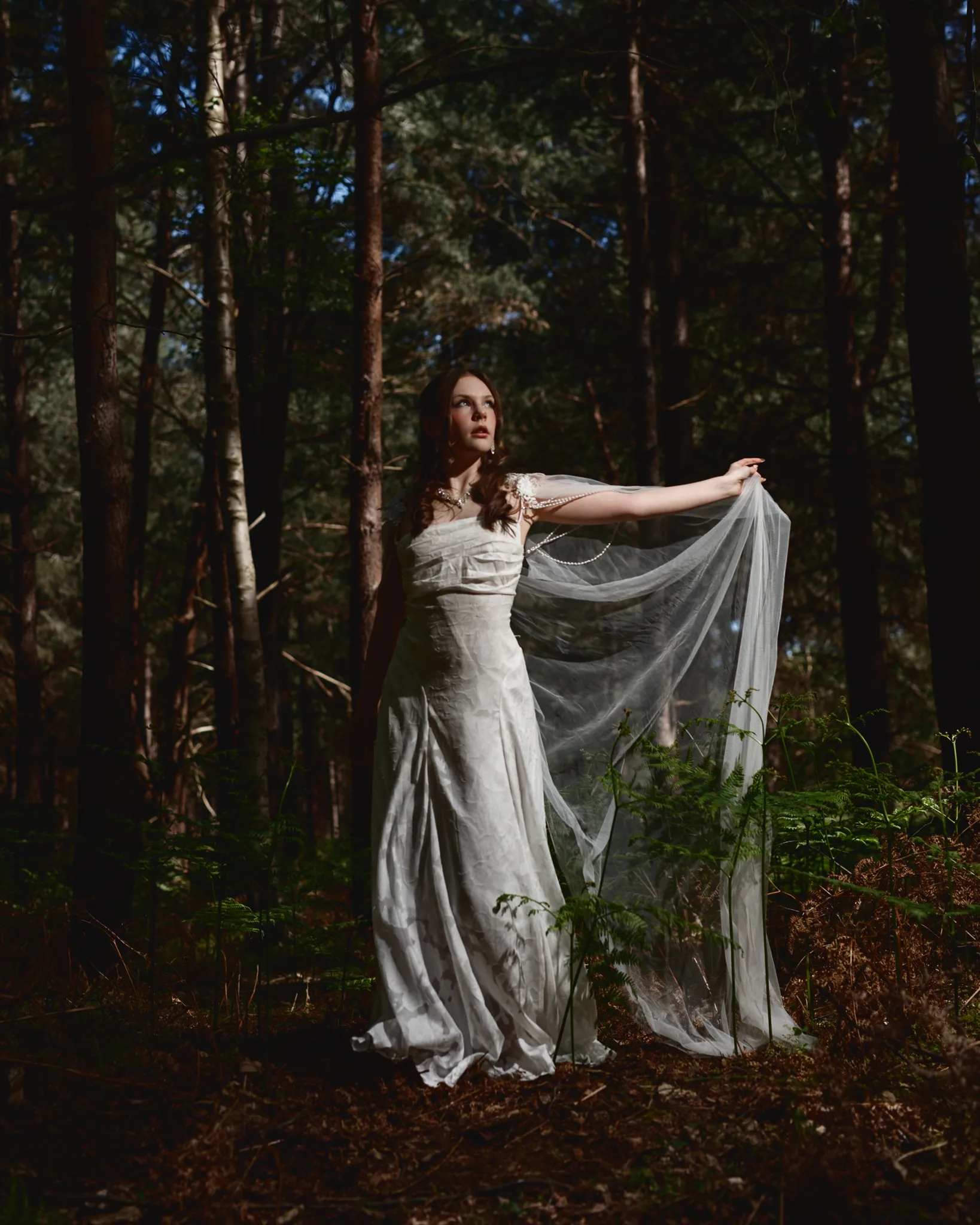
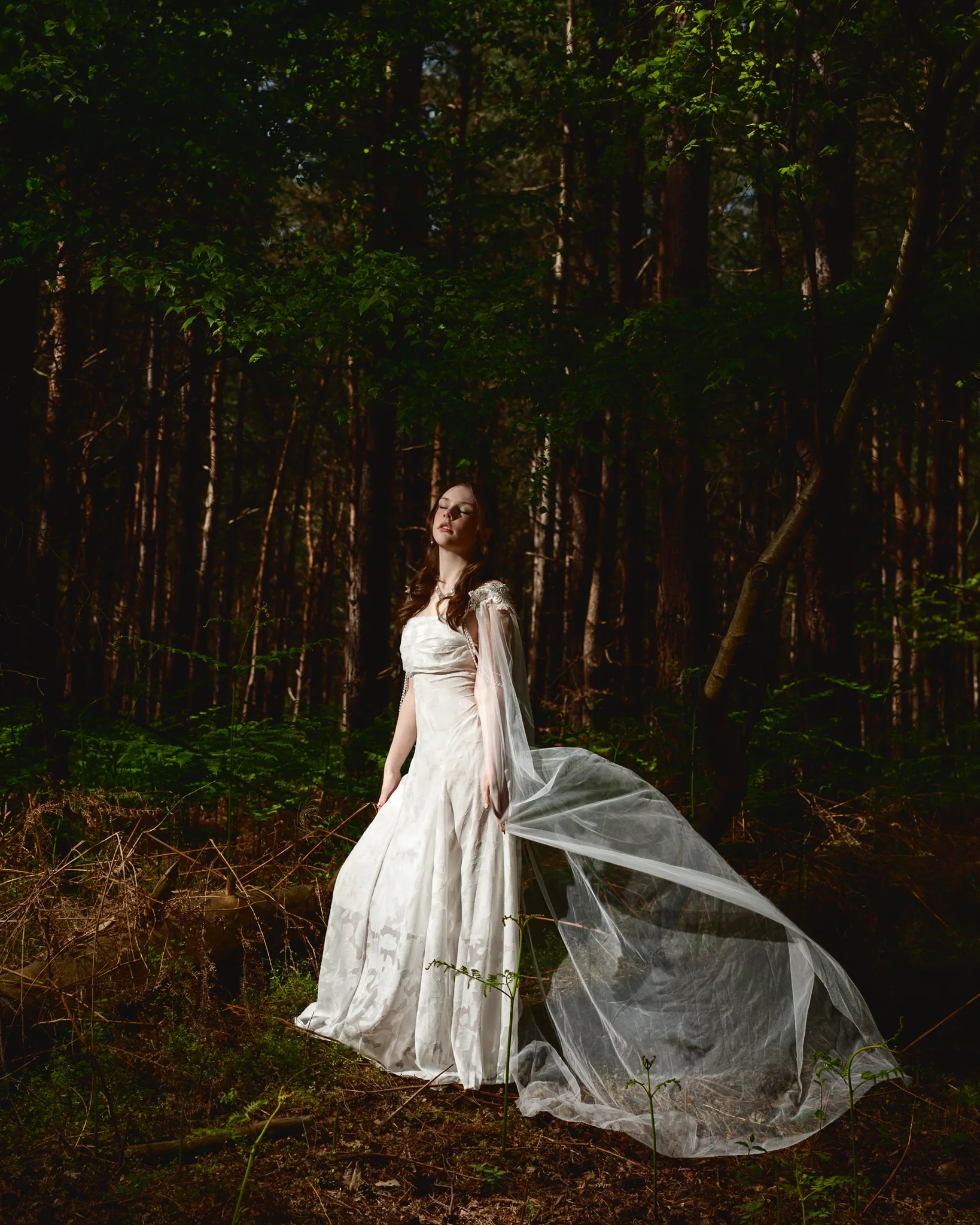
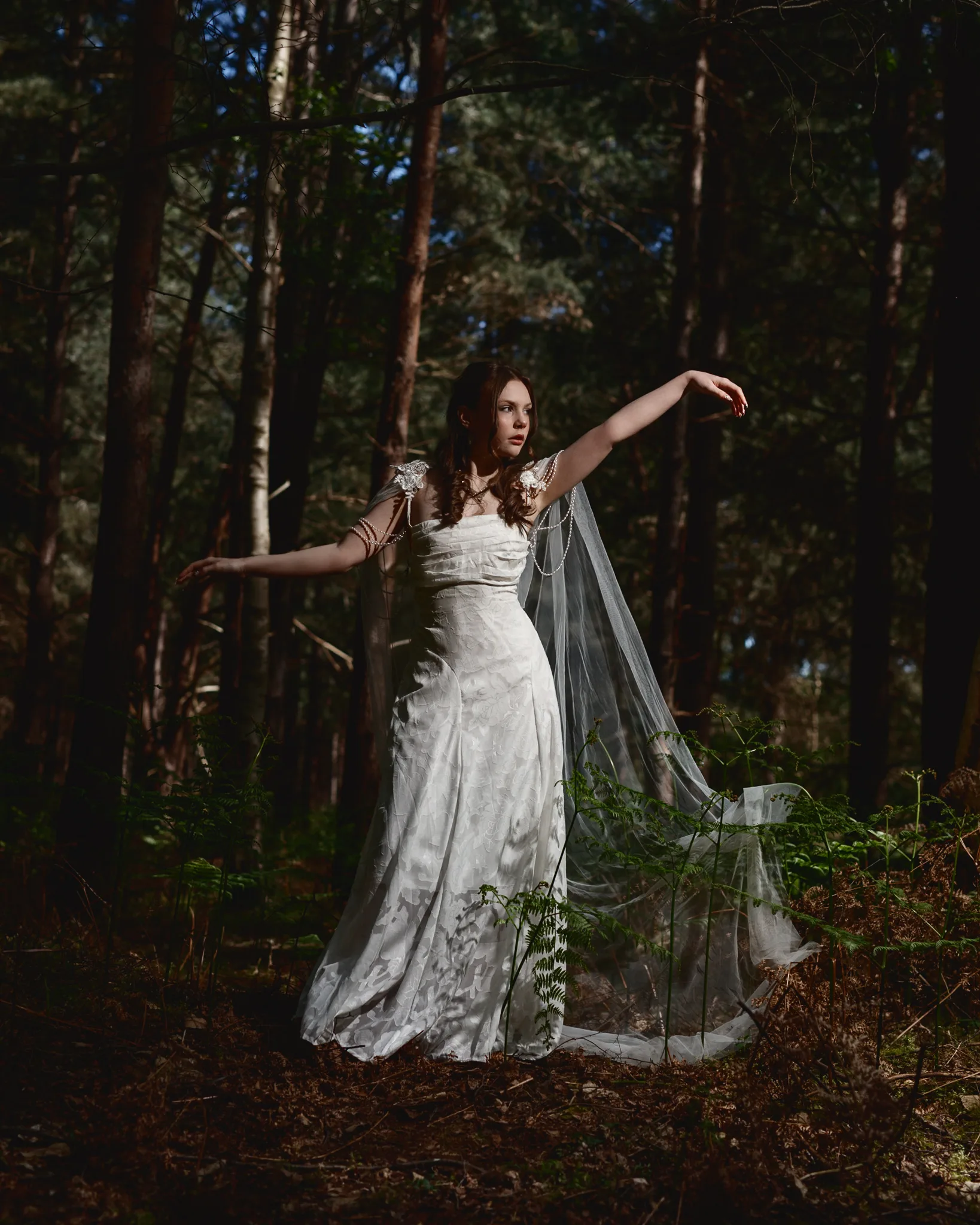
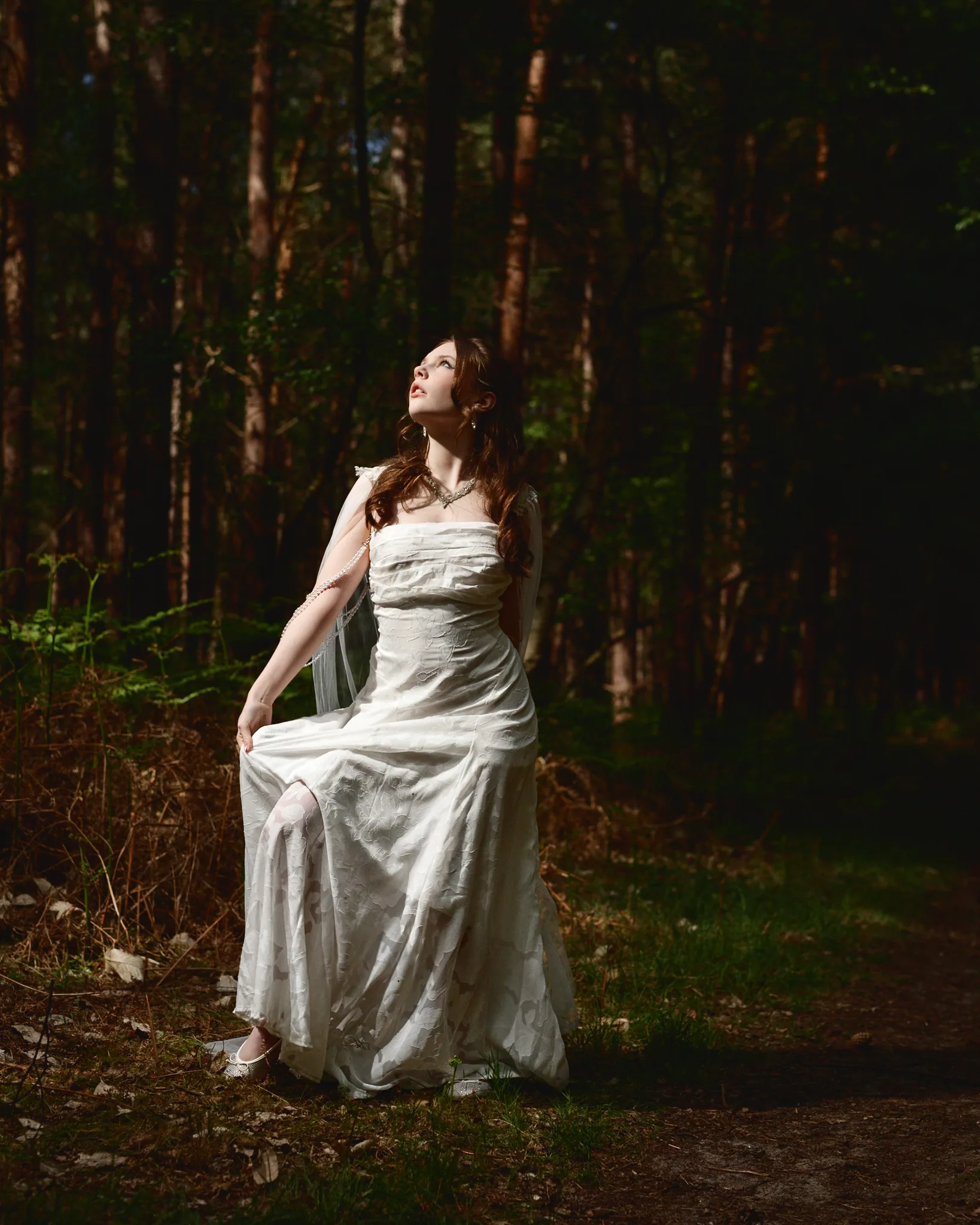
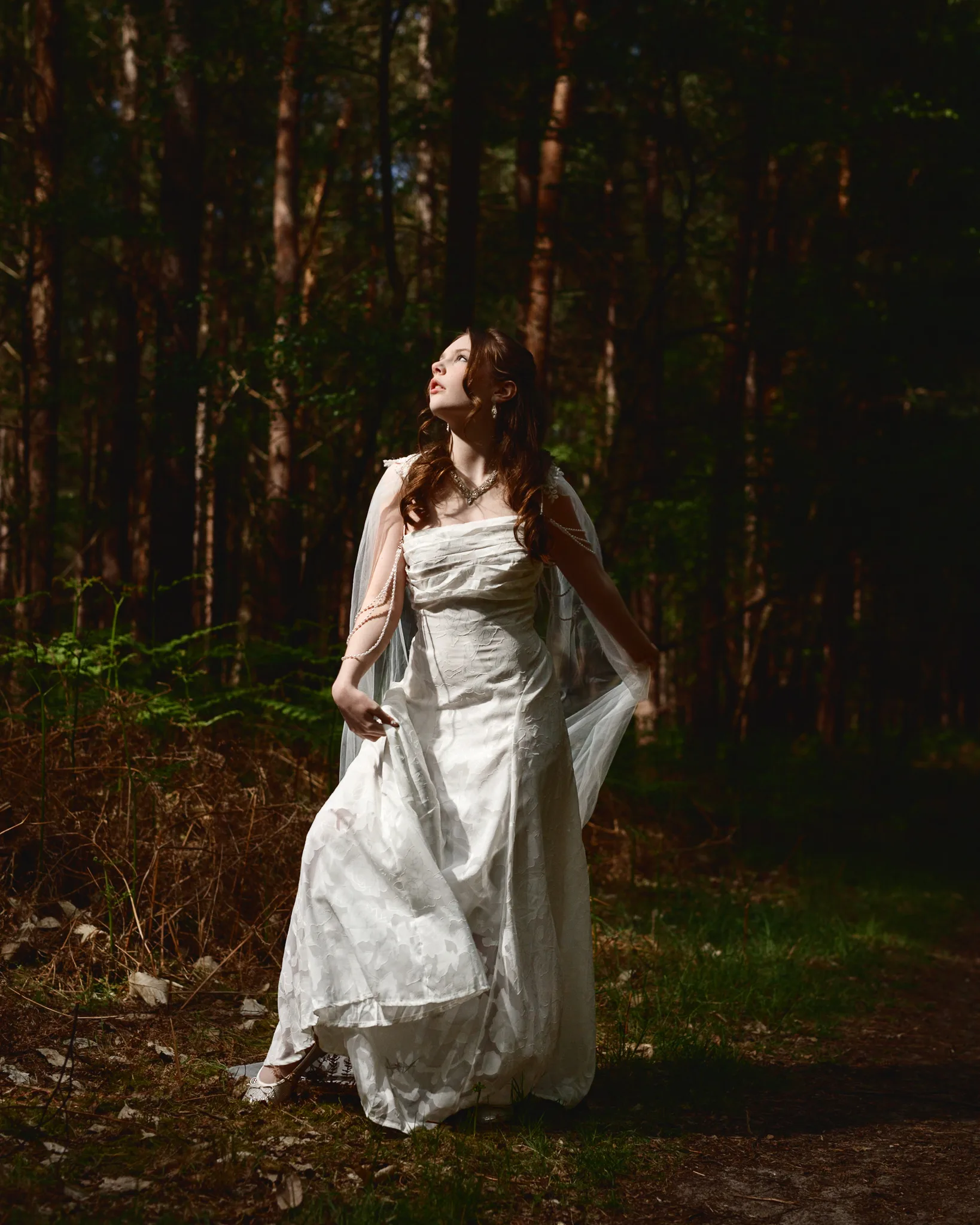
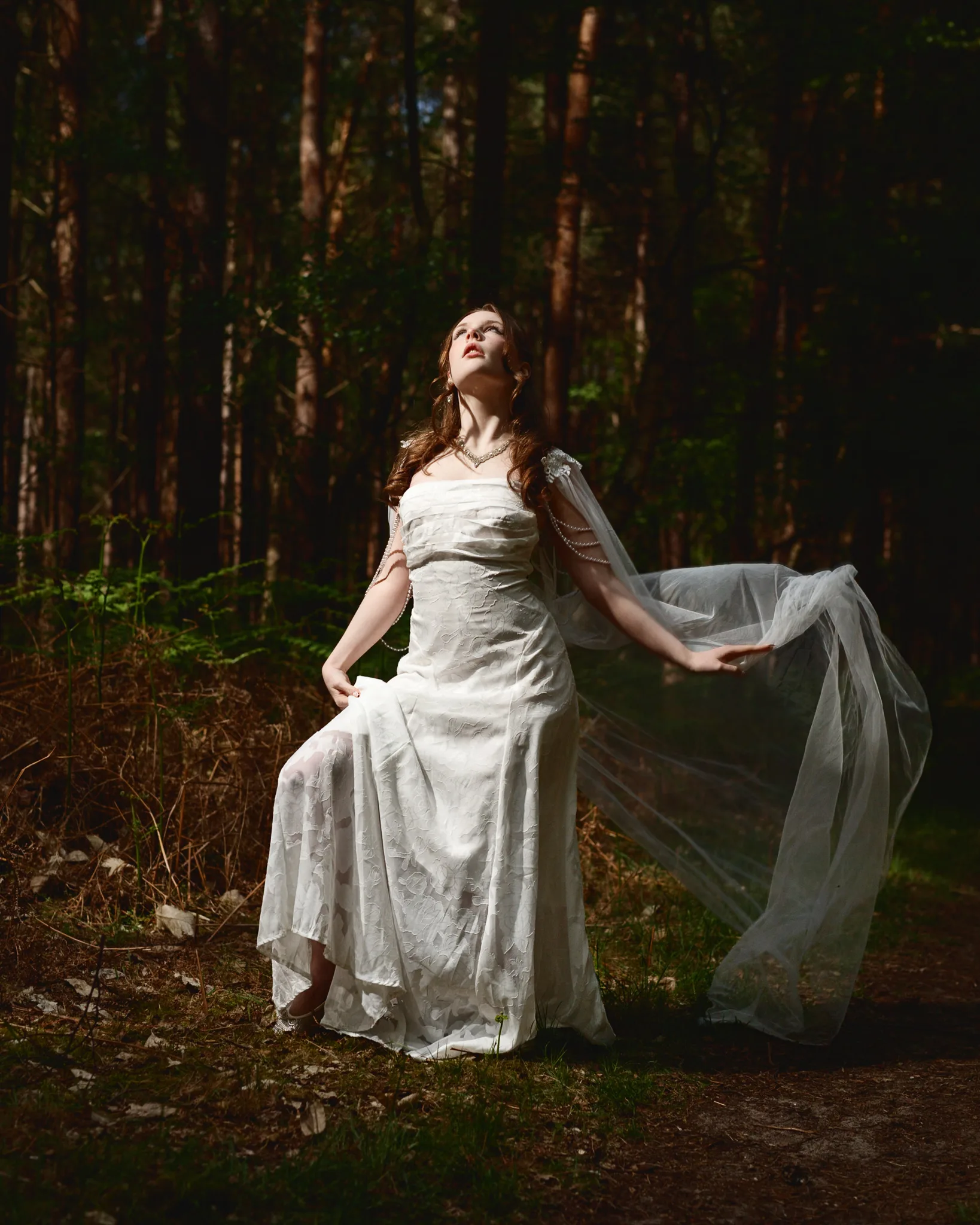
The sheer, veil-like fabric was one of the strongest visual elements in the shoot. It fell from the shoulders and trailed behind Shelby, sometimes resting in the bracken and sometimes lifting slightly through movement and posing. Because it was translucent, it caught the light differently from the dress itself. In some frames, it softened the darker tree trunks behind her. In others, it created a sweeping shape that added movement and direction to the image.
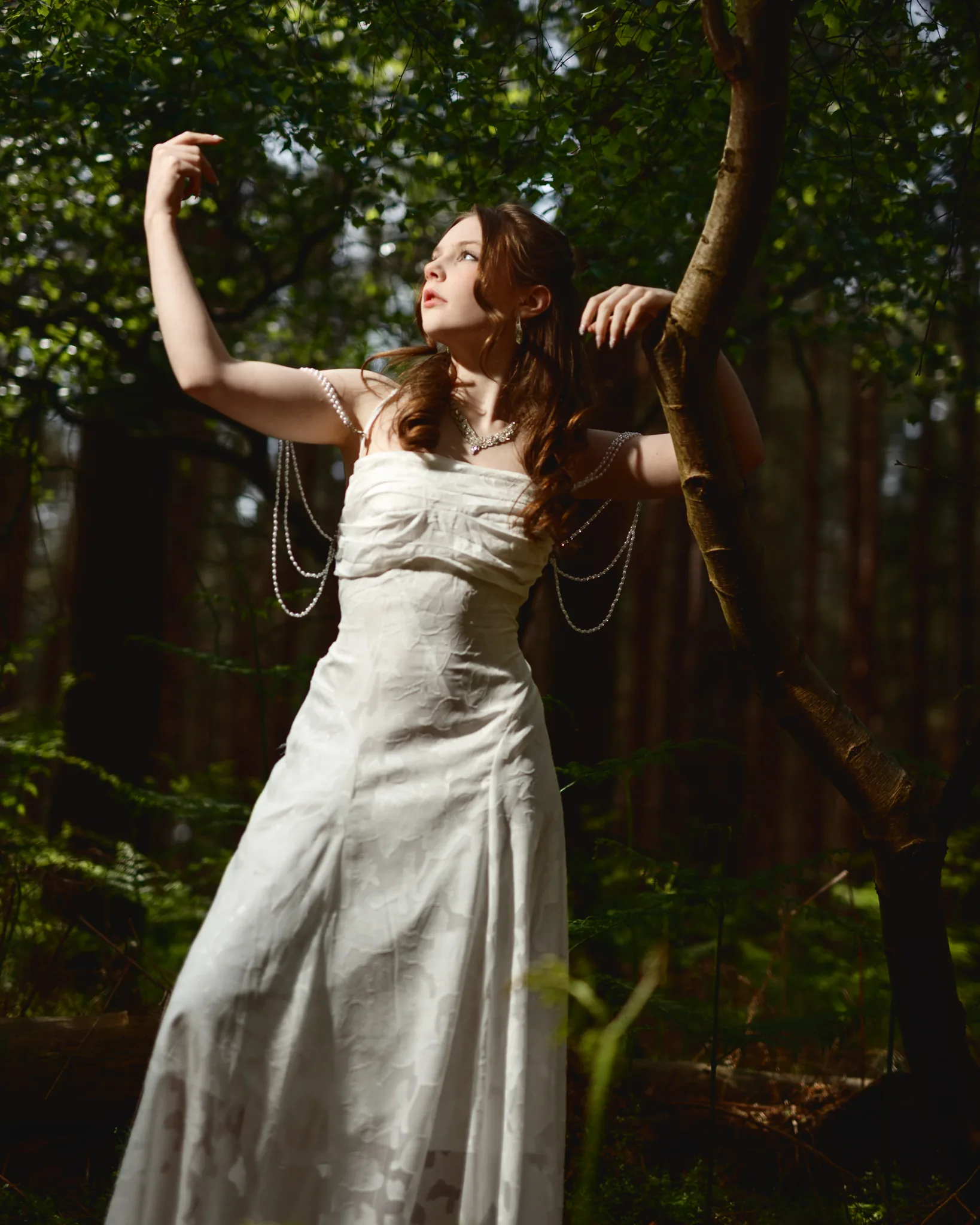
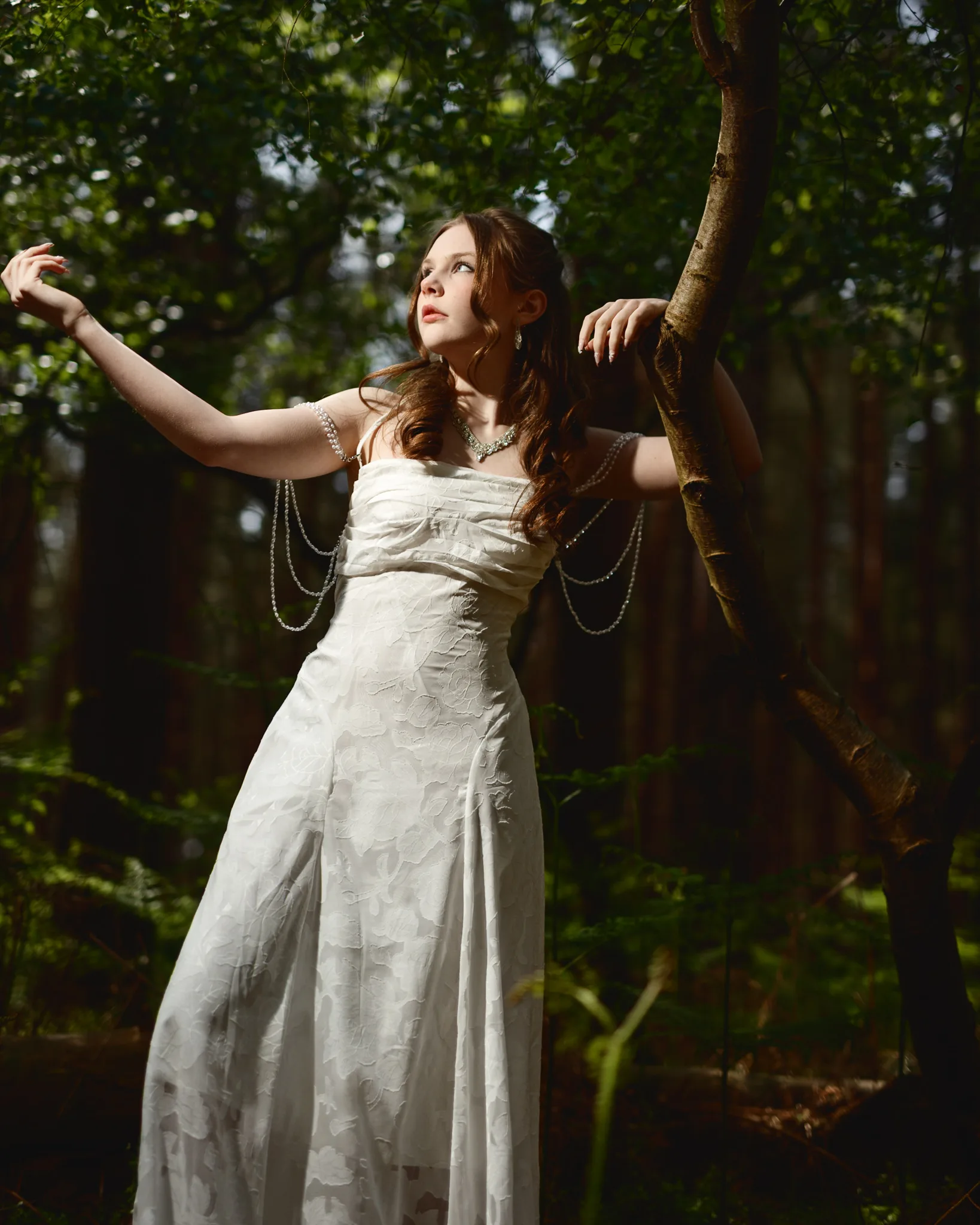
The pearl-style draping around the arms and shoulders added a classical detail to the look. It gave visual interest near the upper body without making the styling feel overdone.
Shelby’s loose curls also worked well with the setting. The hair styling kept the overall look soft and natural, while still feeling considered. Her makeup held up well against the contrasty woodland light, with enough definition around the eyes and lips to remain visible within the darker surroundings.
The styling gave the shoot elegance, but the forest gave it texture and shadow. That contrast between refinement and wilderness is what gave the set its character.
Balancing Flash with Ambient Woodland Light
For this set of images with Shelby at Tunstall Forest, I used a variable ND filter and flash to control the balance between the natural light in the woods and the light falling on Shelby.
Woodland light can be beautiful, but it can also be difficult. The canopy creates deep shadows, while gaps between the trees can produce strong, uneven patches of sunlight. That means one part of the frame can be very bright while another part is much darker.
Without controlling the ambient light, the brighter areas of the forest could easily have taken over the image. The mood of the woodland would have been lost, and Shelby could have either fallen into shadow or appeared disconnected from the setting.
The variable ND filter allowed me to reduce the ambient exposure and keep the background darker, richer, and more atmospheric. It also gave me more control when working with wider apertures, which helped separate Shelby from the background while still keeping the woodland recognisable.
Using flash then gave me control over Shelby herself.
Rather than relying only on patchy light coming through the trees, I could fill in the shadows on her face and dress, add catchlights to the eyes, bring detail back into the white fabric, and create a more deliberate highlight on her within the darker forest setting.
The result is a set of portraits where the woodland keeps its depth and shadow, but Shelby remains the clear focal point.
Why Flash Matters in Woodland Portrait Photography
I often find that people think woodland portraits are simply about finding a nice background and using natural light. Sometimes that can work, but woodland light is rarely straightforward.
The trees can create heavy shadows under the eyes. Dappled sunlight can leave bright patches across the face or clothing. Green surroundings can introduce colour casts. The background can easily become busy. There is also the practical challenge of making sure the model does not disappear into the darker parts of the frame.
Using flash carefully helps solve many of those problems.
For this shoot, the flash was not there to make the images look artificially lit. It was there to add control. It helped balance Shelby against the background, lift the shadows, define the shape of the dress, and create consistency across the set.
That matters when photographing pale clothing in a dark forest. A white dress needs enough light to show texture and shape, but the background still needs to retain enough darkness to provide atmosphere. The flash gave me detail and separation on Shelby, while the ND filter allowed the surrounding forest to remain rich, shadowed, and visually dramatic.
This balance between flash and ambient light is a large part of what gives the images their more cinematic, editorial feel.
Photographing Pale Styling in a Dark Forest
One of the technical challenges of this shoot was managing the contrast between Shelby’s white dress and the darker forest setting.
White clothing can easily lose detail if it is overexposed, especially where hard sunlight hits the fabric. At the same time, if the exposure is set only to protect the dress, the background can become too dark and heavy.
The aim was to keep detail in the dress while still allowing the woodland to feel deep and atmospheric.
The direction of the light, the flash exposure, the ambient exposure, and Shelby’s position all had to work together. I needed her to stand out clearly, but I did not want the images to feel as though she had been cut out and placed into the scene. The light still needed to feel believable within the location.
That is one of the reasons I enjoy this type of portrait work. It is not just about finding a visually interesting setting. It is about making a series of small decisions so the model, styling, lighting, and environment all support each other.
Posing, Movement, and Expression
Across the shoot, Shelby’s posing moved between graceful stillness and gentle movement.
In some images, she stands among the trees with one arm extended softly to the side and her face turned away from the camera. Those frames feel quiet and almost dreamlike, as though she has been caught in a private moment rather than directly presenting herself to the lens.
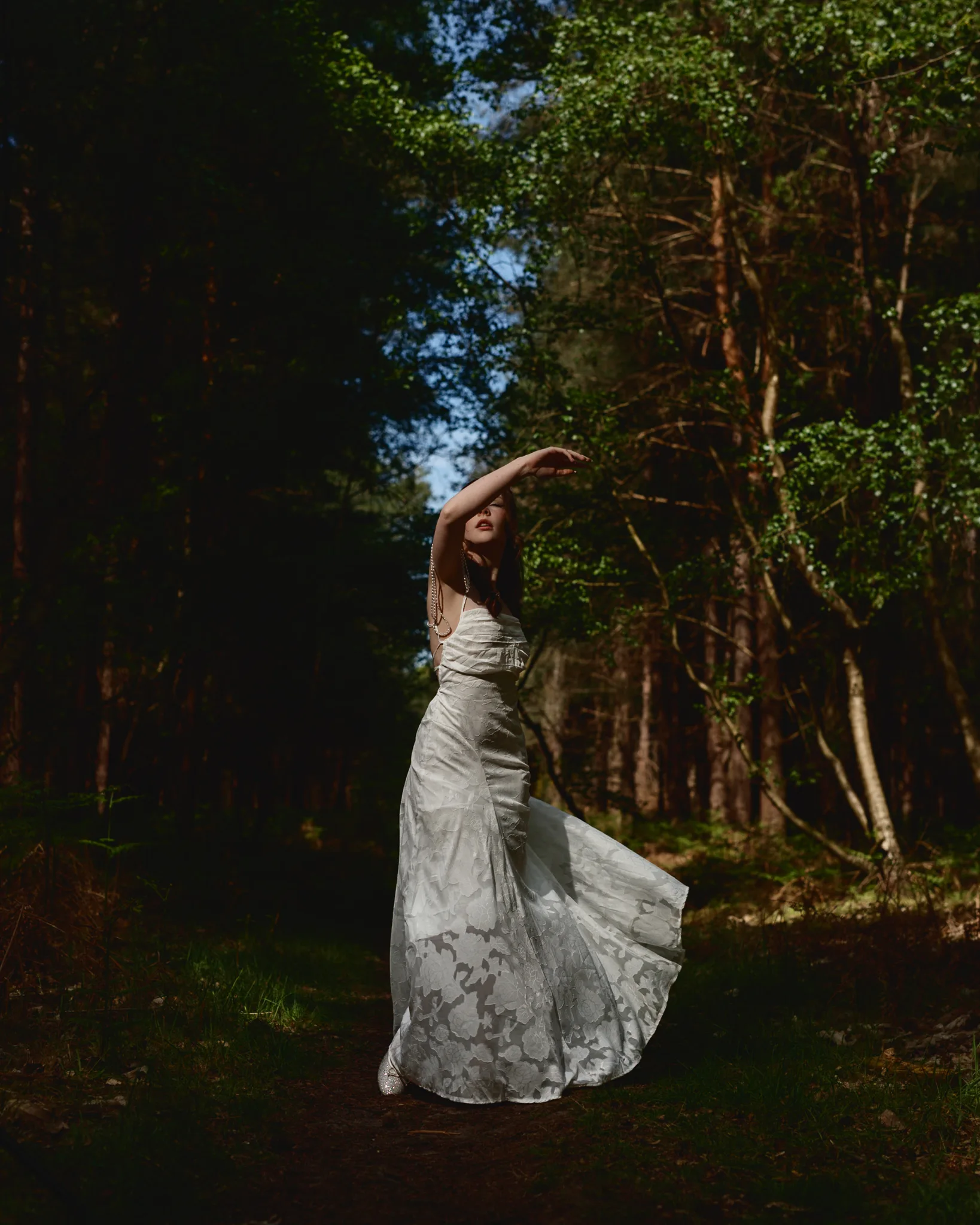
In other images, there is a stronger upward gesture, with Shelby reaching towards the light. That line works well against the vertical tree trunks because it breaks up the repeated shapes of the forest and gives the frame a more classical quality.
The closer portraits bring more attention to Shelby’s expression and styling. With a closer crop, the texture of the dress, the pearl draping, shoulder detail, necklace, hair, and makeup all become more important. These images feel more fashion-led and are useful in a model portfolio because they show expression, face shape, presence, and detail.
There are also images where the sheer fabric becomes almost sculptural. As Shelby extends her arm or turns through the pose, the fabric sweeps behind her and catches the light. That adds movement without making the images feel rushed.
The movement images, especially where the dress lifts or curves around her, bring a different energy to the set. They show how the clothing behaves in motion and give the portfolio more variety. The stiller frames then provide contrast, allowing the set to breathe rather than feeling as though every image is trying to do the same thing.
The Importance of the Environment
The forest in this shoot is not simply a backdrop. It is part of the story of the images.
Tall trunks run vertically through the frames and give structure to the compositions. The forest floor adds roughness through ferns, dry bracken, twigs, and uneven ground. This texture is important because it prevents the styling from feeling too polished or disconnected.
The contrast between the refined dress and the raw woodland floor creates visual tension. Shelby stands apart from the environment because of the pale styling, but she does not feel out of place within it. That balance is one of the strongest qualities of the set.
There is also a restrained colour palette running through the images. The white and ivory tones of the dress stand against deep greens, dark browns, muted bark tones, and patches of warm sunlight. There is very little visual clutter in the styling, which allows the natural texture of the location to do much of the work.
For a location portrait shoot in Suffolk, this is exactly the sort of detail I look for. The location needs to add something meaningful to the images without overwhelming the person being photographed.
The Practical Challenges of Shooting in Woodland
Woodland locations can be beautiful, but they are not always easy to work in.
The light changes quickly as the sun moves and clouds pass over. The background can become too busy if the model is placed in the wrong position. Tree trunks can cut awkwardly through the frame. Dappled sunlight can create distracting patches across the face or dress. The ground is uneven, which affects posing, movement, balance, and where equipment can safely be placed.
There is also the issue of separation. In a studio, separation can be controlled with background choice, lighting, distance, and lens selection. In a forest, the subject can quickly become absorbed into the surrounding texture if the lighting and composition are not carefully considered.
For Shelby’s shoot, I had to pay close attention to where she stood, how the background sat behind her, where the light was coming from, and how the flash balanced with the ambient woodland light.
This is why I think it is useful to explain the practical side of a shoot like this. The finished images may look soft and natural, but the process behind them was controlled and deliberate.
Why Location Shoots Help a Model Portfolio
A woodland shoot like this can be a useful addition to a model portfolio because it shows a different side of the model.
Studio images are important. They show the model clearly and cleanly, without too many distractions. They are particularly useful for headshots, agency-style portraits, full-length frames, and simple portfolio images where the focus is entirely on the model.
Location images do something slightly different.
They show how the model works within an environment. They show how they respond to natural surroundings, changing light, uneven ground, movement, clothing, and a less controlled setting. They can also add more atmosphere and narrative to a portfolio.
For Shelby, this shoot gave us images that feel more editorial and story-led than a simple studio set. That is not better or worse than studio work. It is simply different, and that difference can be valuable within a wider portfolio.
A strong model portfolio usually benefits from both approaches: clean, controlled studio images and more environmental location work.
A Calm, Considered Approach to Model Portfolio Photography
My approach to model portfolio photography is always based on communication, comfort, and useful variety.
I do not think a model portfolio shoot should feel rushed or forced. The aim is to create a set of images that feels considered, visually varied, and useful for the model. That means paying attention to lighting, styling, expression, posing, composition, and the purpose of the images.
With Shelby at Tunstall Forest, the shoot had a clear visual direction: pale, delicate styling placed within a darker woodland environment, using controlled flash and reduced ambient light to create separation, depth, and atmosphere.
The set includes full-length portraits, closer editorial-style images, movement, stillness, and environmental frames. That variety gives the images more value as part of a model portfolio because they show different aspects of Shelby’s presence in front of the camera.
It was a very enjoyable shoot, and Shelby was a pleasure to work with again. I am looking forward to working with her again soon.
Final Thoughts on the Tunstall Forest Shoot
This shoot with Shelby is a good example of why I enjoy location model portfolio photography in Suffolk.
The images are not just about the dress, the forest, or the lighting in isolation. They are about how those elements interact. Shelby’s styling brought softness and elegance. Tunstall Forest brought shadow, structure, and texture. The flash and variable ND filter gave me the control needed to keep Shelby as the focal point while preserving the atmosphere of the location.
For me, that is where a strong portrait set often comes from. It is not about adding more and more elements. It is about understanding what each part of the image is doing and making sure everything works together.
This was a woodland model portfolio shoot with a clear sense of mood, controlled lighting, and enough variety to give Shelby a useful and visually coherent set of images.
Model portfolio photography
Building your modelling portfolio?
I photograph new and experienced models across Suffolk. Session details, pricing and booking are all on the aspiring models page.