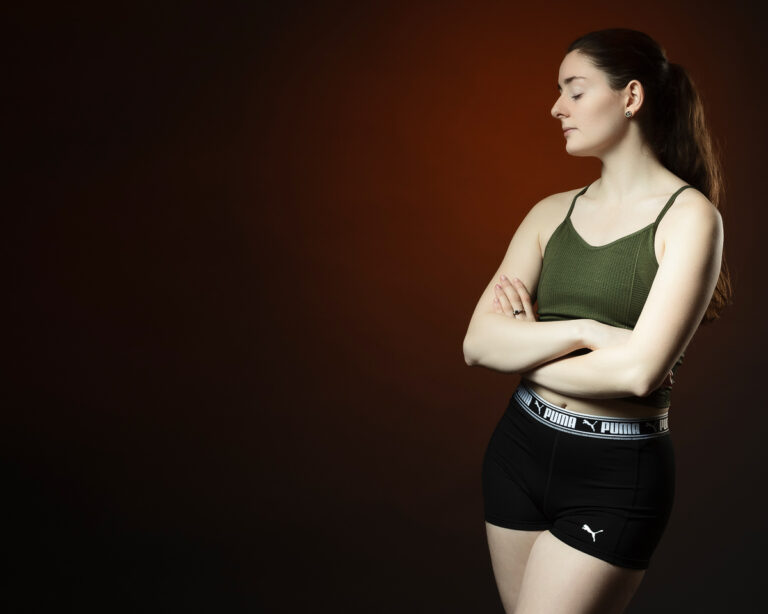
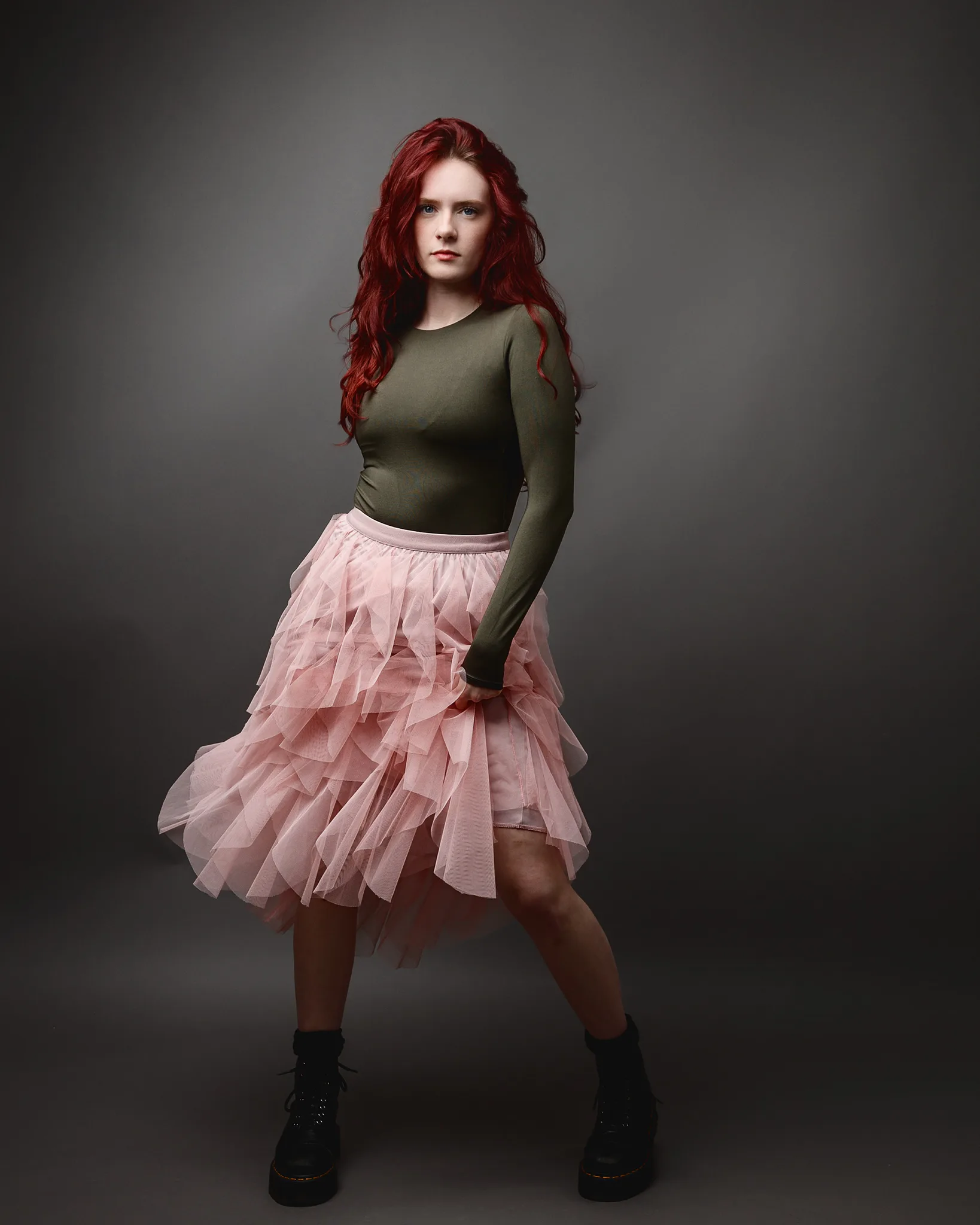
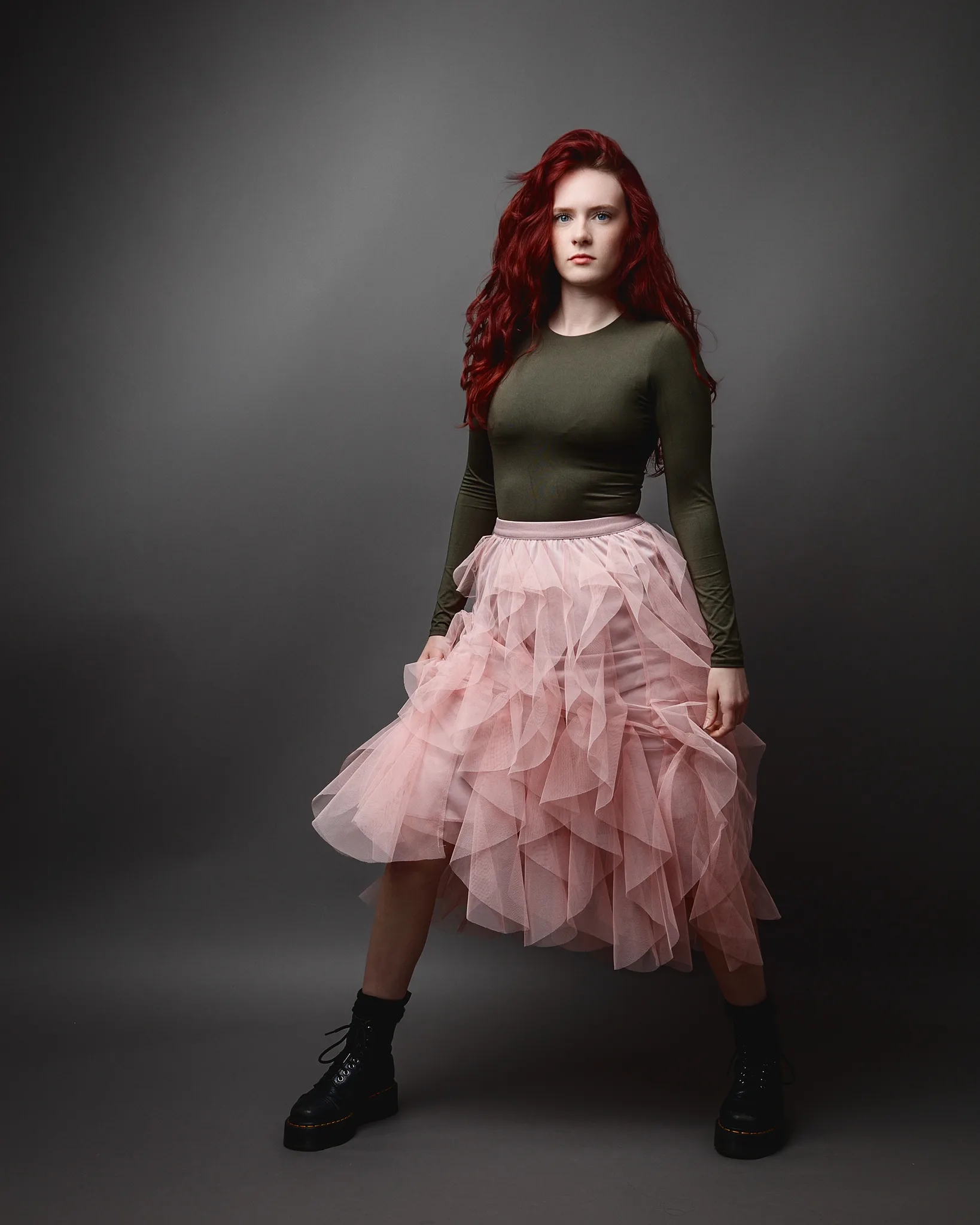
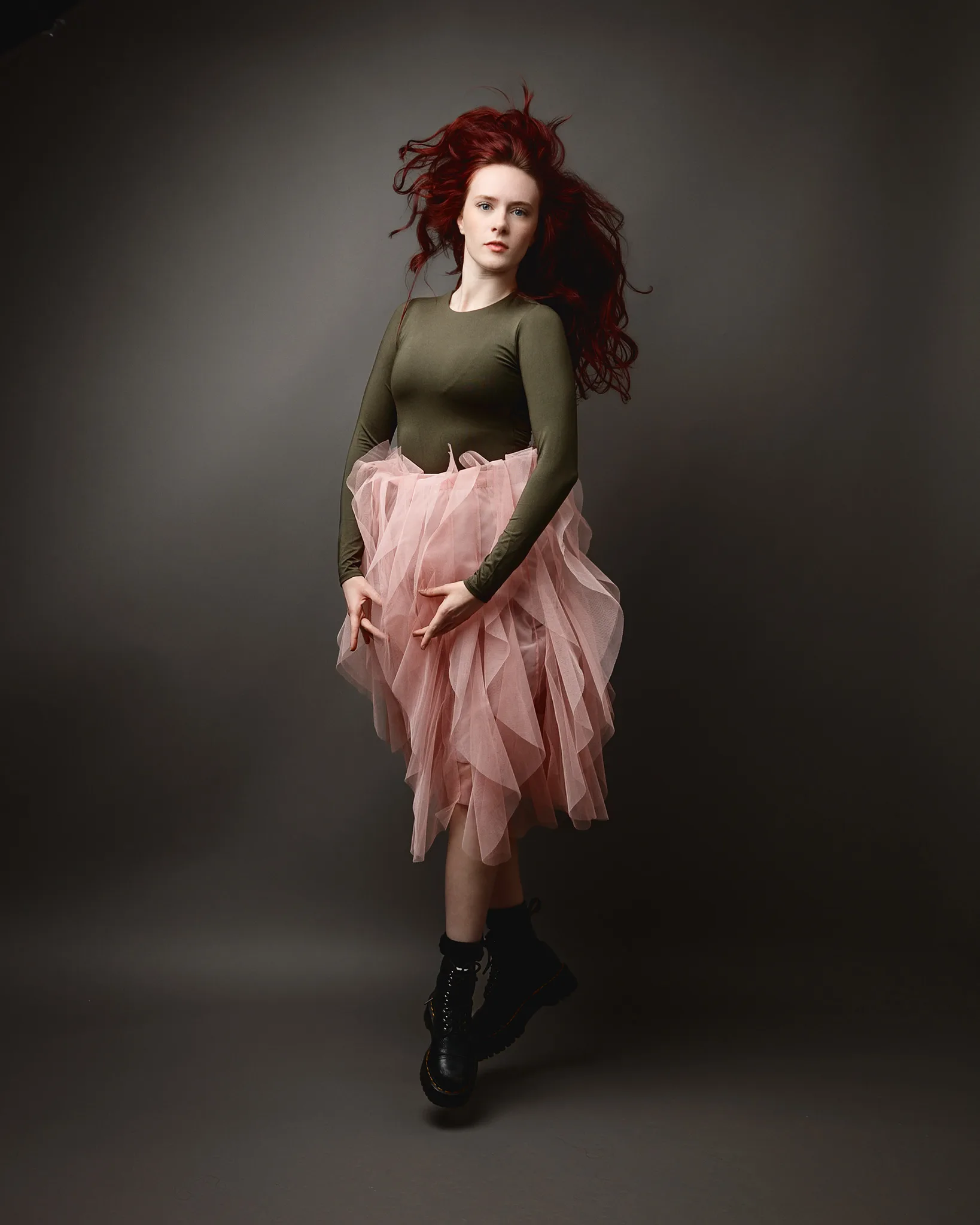
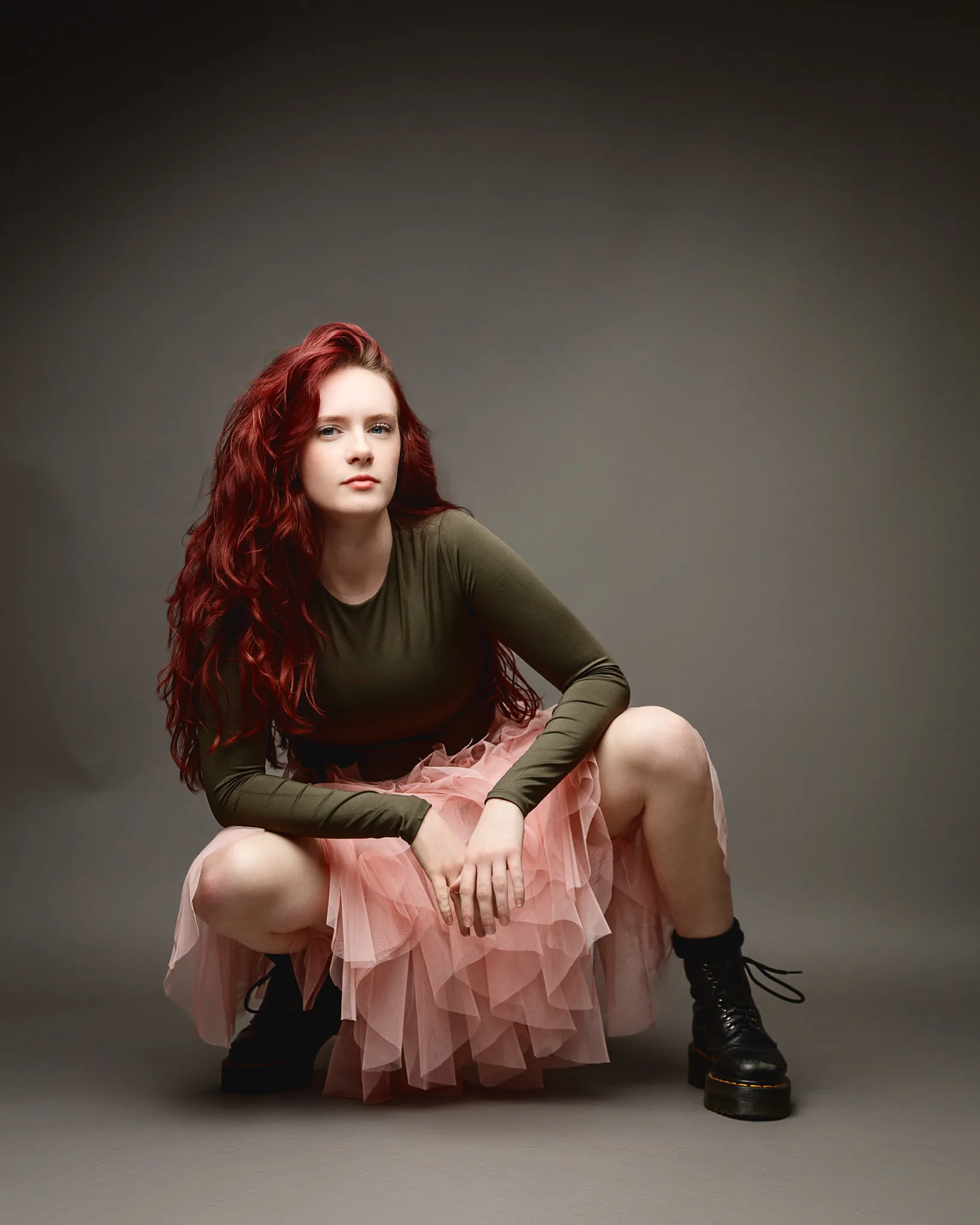
I recently photographed a studio model portfolio session with Lynn and Miranda, a mother and daughter who travelled from Norwich in Norfolk to my photography studio at Bentwaters, near Woodbridge in Suffolk.
There was a lovely working dynamic between them from the start. Although they came together, I did not treat the shoot as one shared session. I approached it as two individual portfolio shoots running in parallel, with each person having their own direction, styling, pace, and purpose.
That made the session particularly interesting from a photographic point of view. Lynn and Miranda have very different looks, different energies in front of the camera, and different portfolio needs. Alternating between them helped to keep the shoot moving, but it also gave each of them space to reset while the other was being photographed. That can be very useful during a studio shoot, especially when there are several looks, lighting changes, styling adjustments, and different types of images to produce.
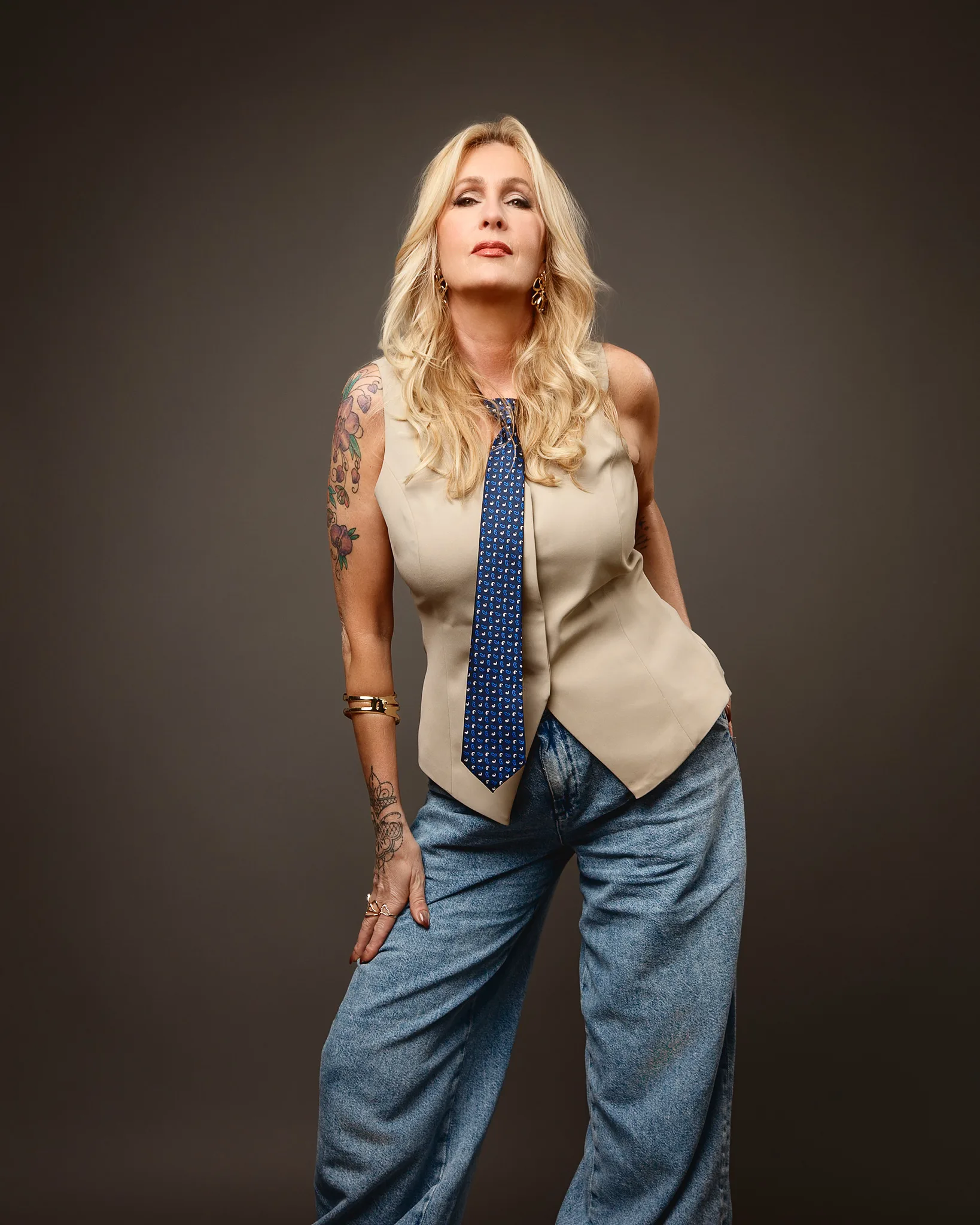
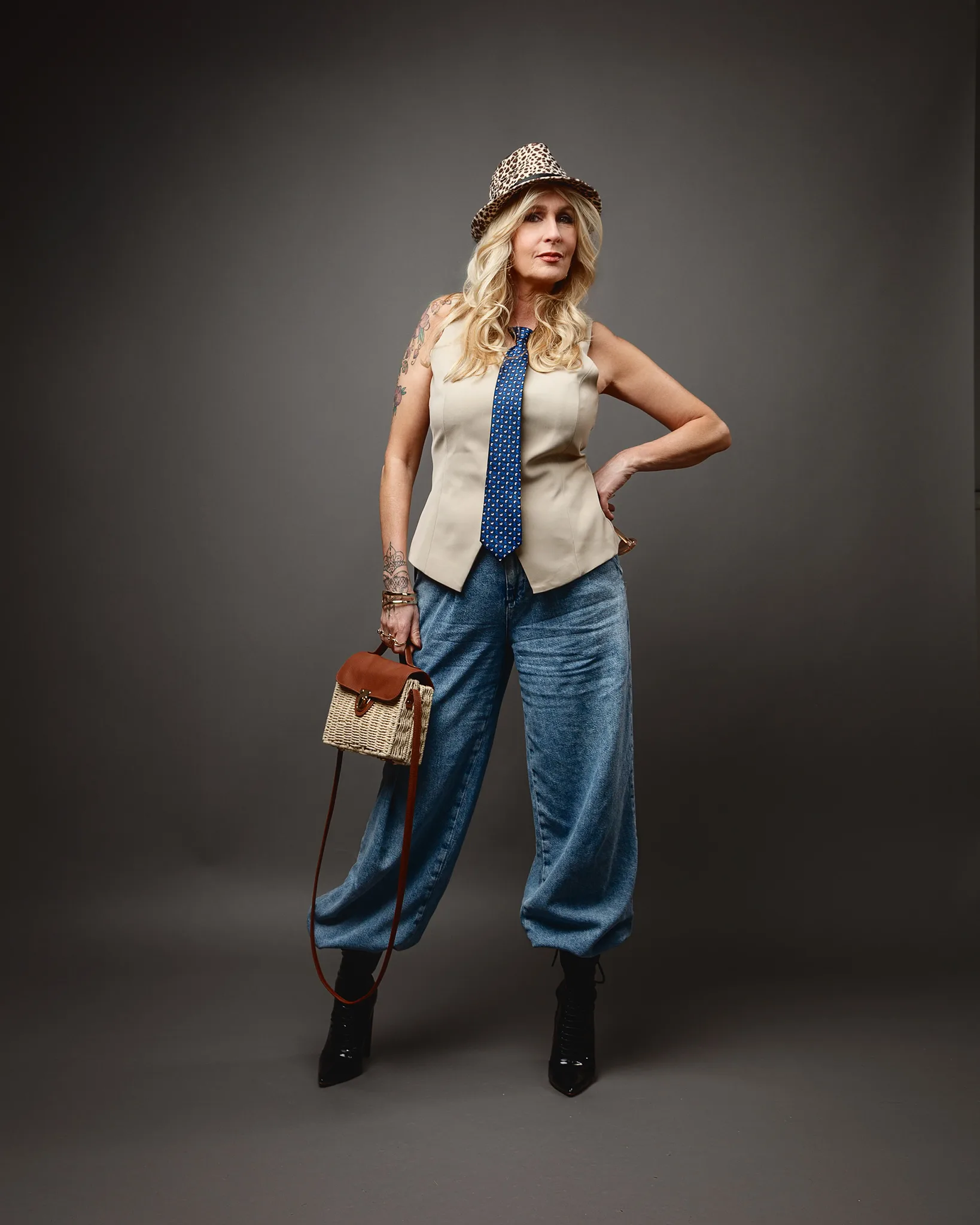
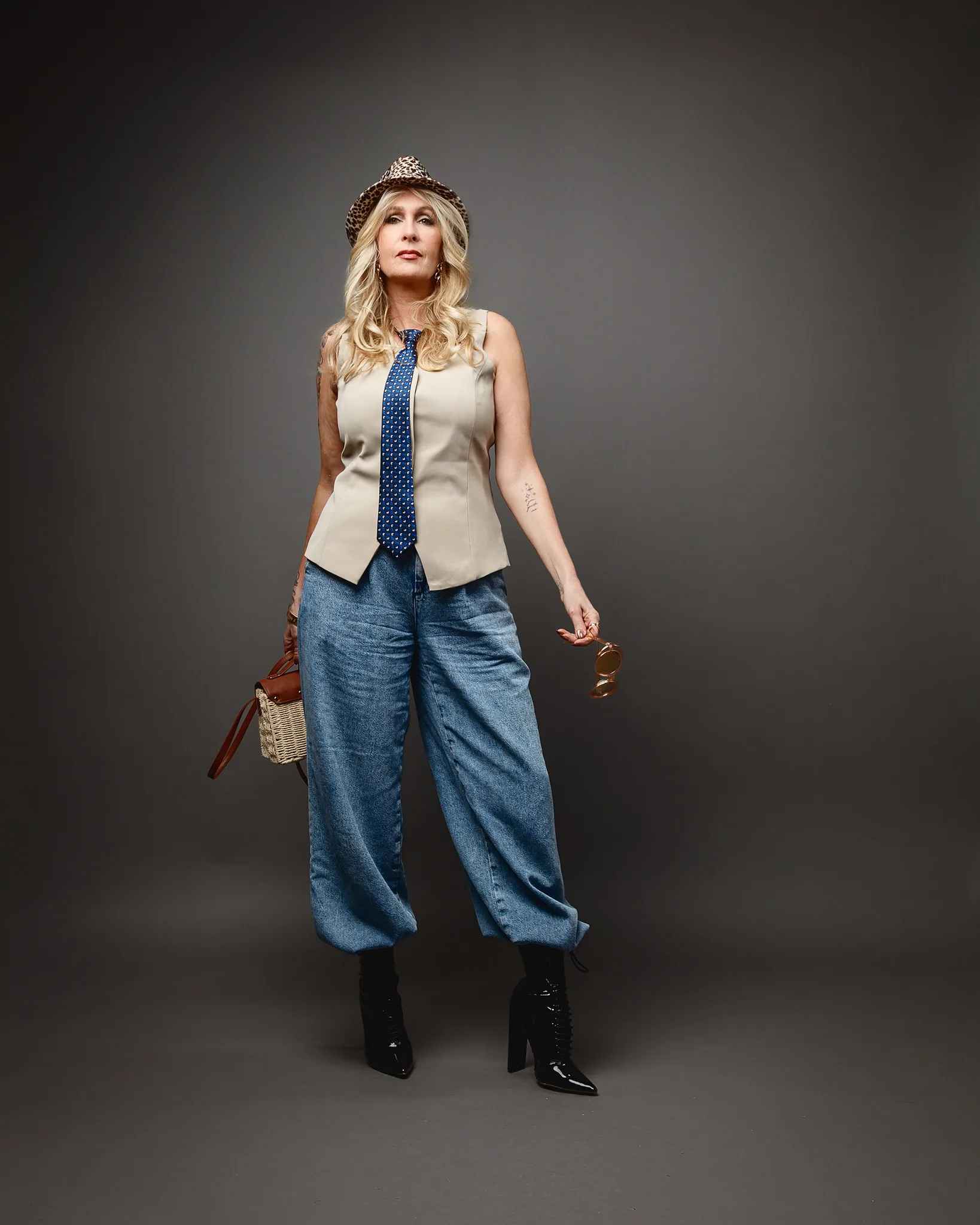
A Mother and Daughter Studio Portfolio Session
One of the things I enjoyed about this shoot was the natural support between Lynn and Miranda. Studio photography can feel quite intense if someone is not used to being in front of the camera, particularly when the aim is to produce portfolio images rather than casual portraits.
Having someone familiar in the room can make a real difference. In this case, it also created a natural chaperone arrangement, which is something I always welcome in my studio. I want people to feel comfortable, safe, and supported during a shoot. That matters whether I am working with an experienced model, someone building a portfolio for the first time, or a young actor needing images for casting and future opportunities.
The session had a relaxed but focused atmosphere. We were able to work through a range of looks without rushing, and because Lynn and Miranda were both engaged in the process, the shoot had a good rhythm. They supported each other, commented constructively, and helped keep the energy in the room positive without it becoming distracting.
Two Individual Portfolios Within One Shoot
Although Lynn and Miranda were photographed during the same session, the images needed to serve different purposes.
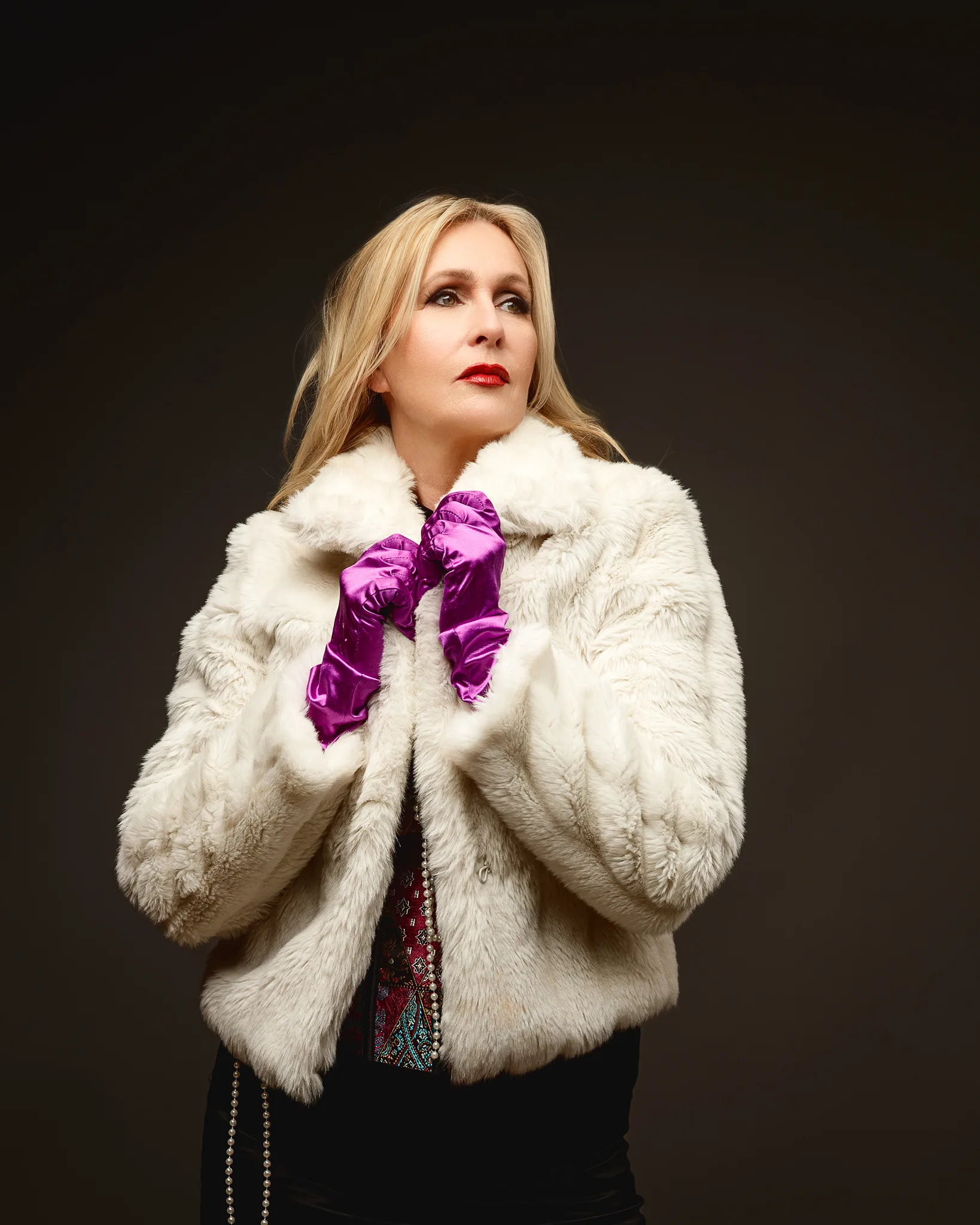
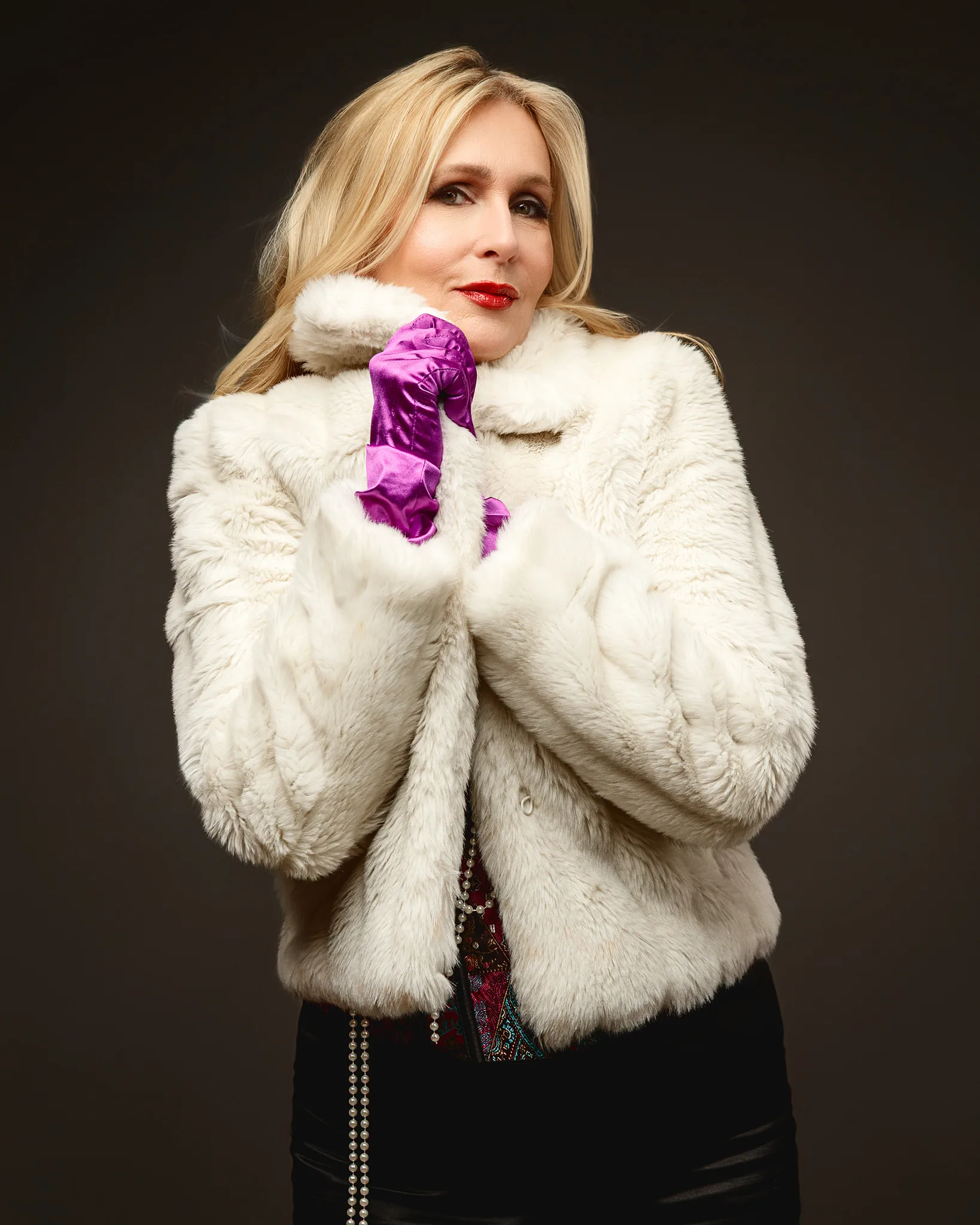
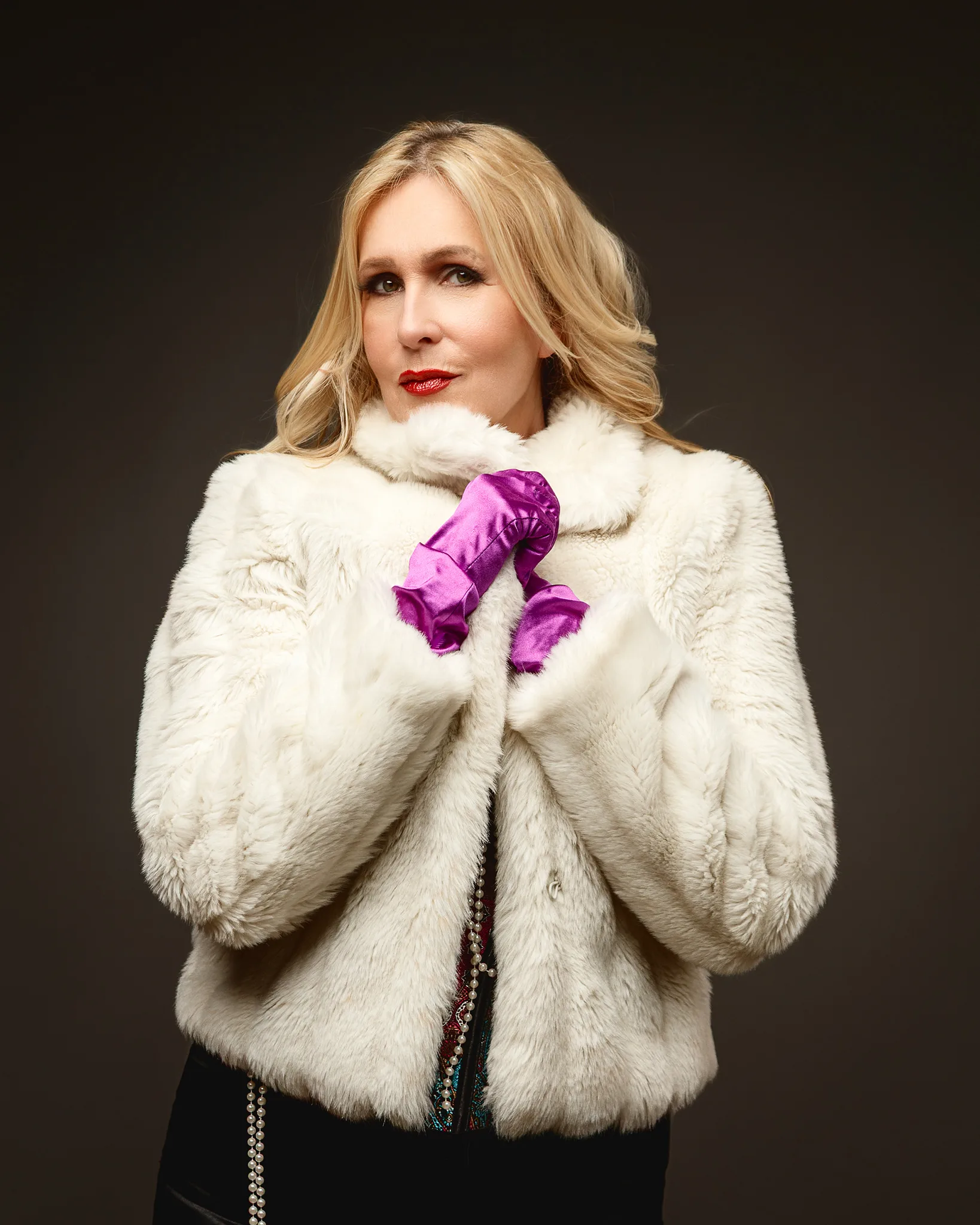
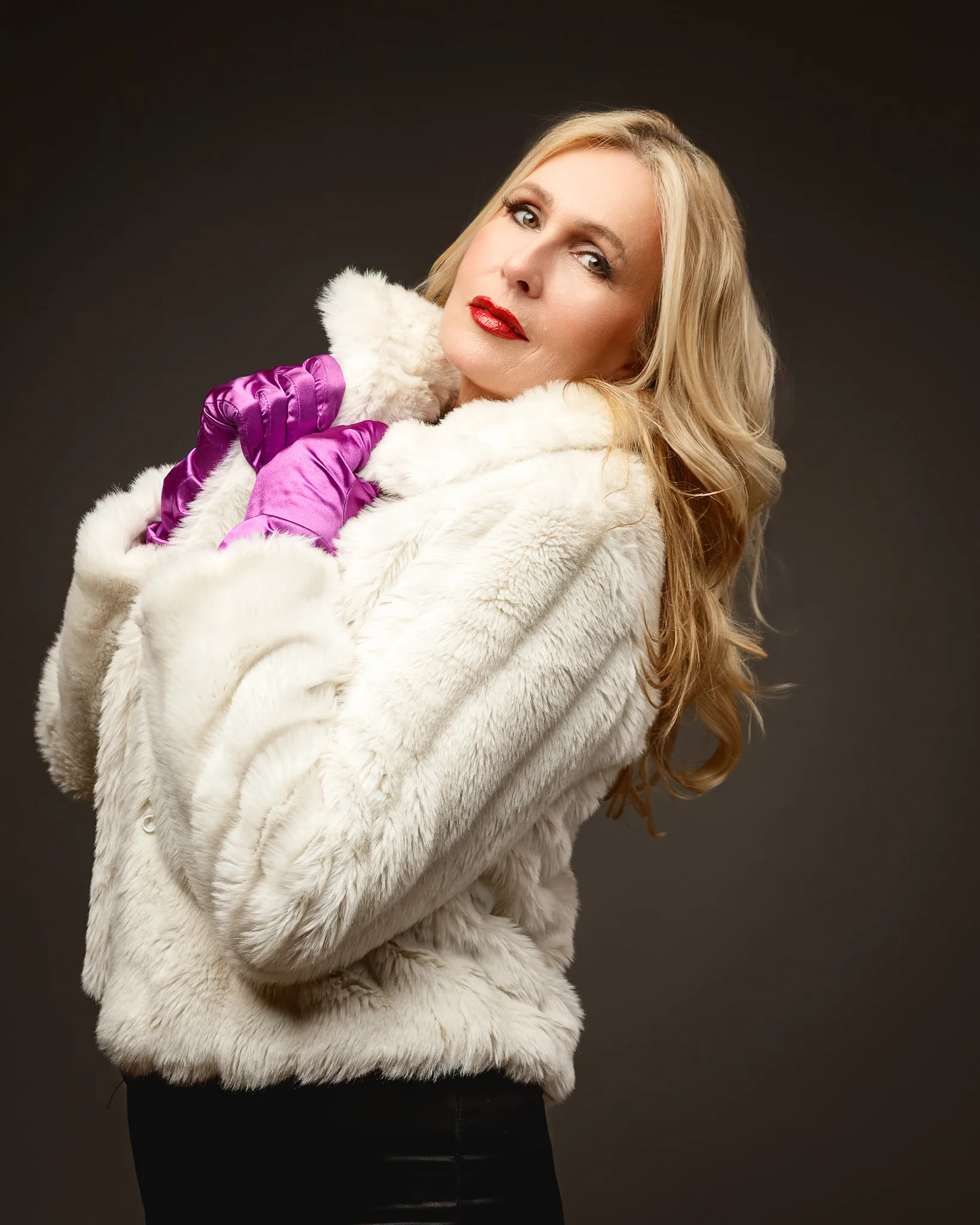
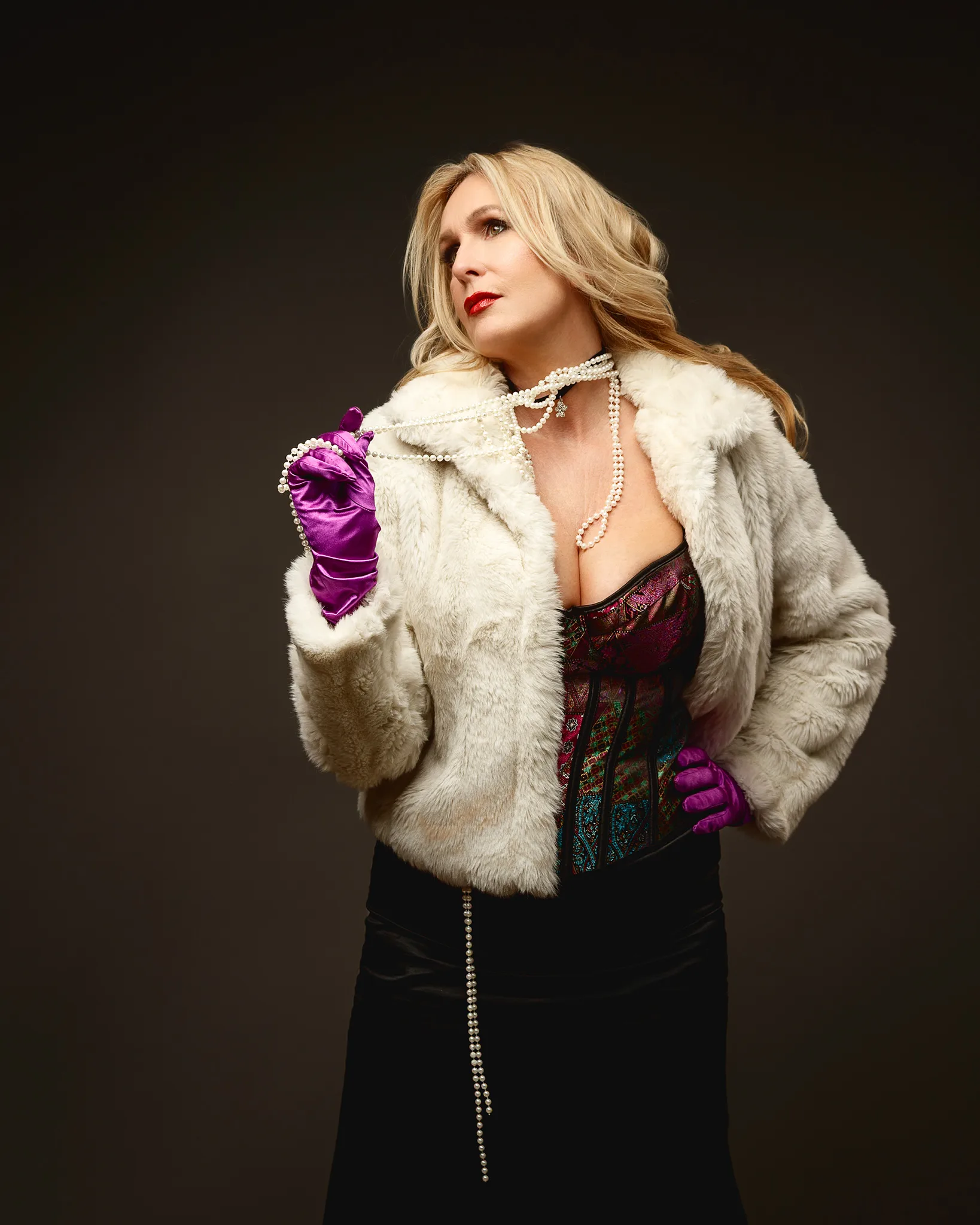
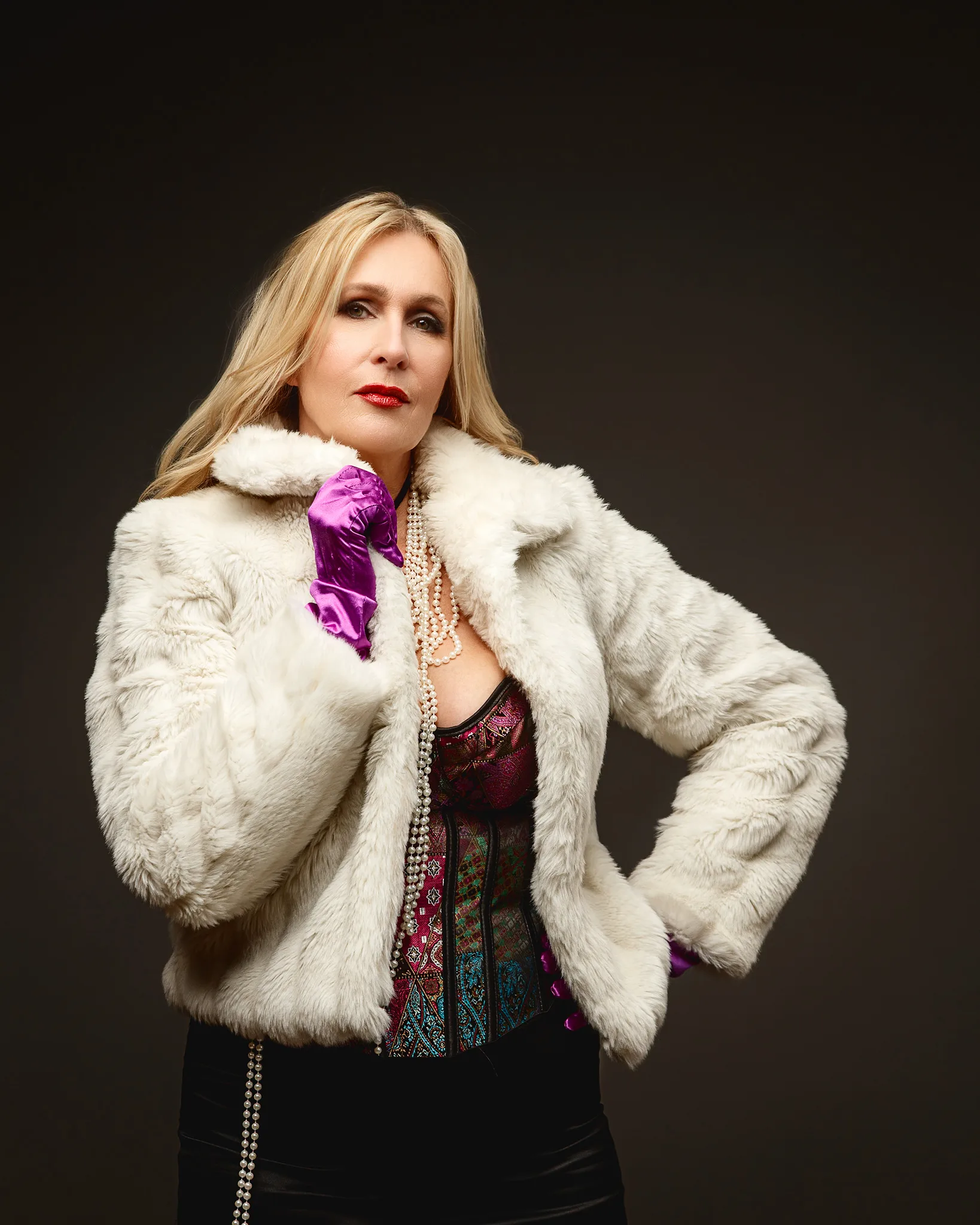
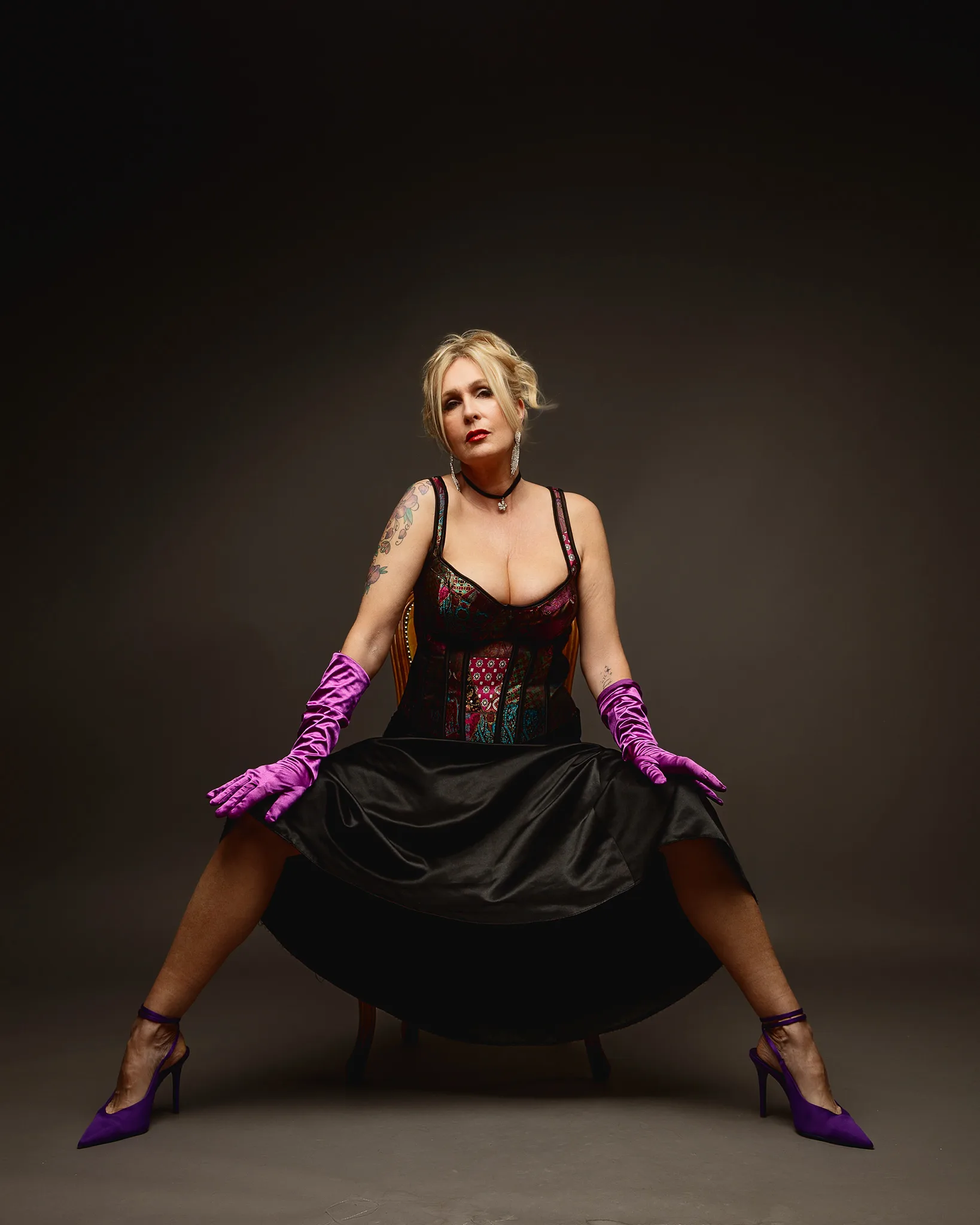
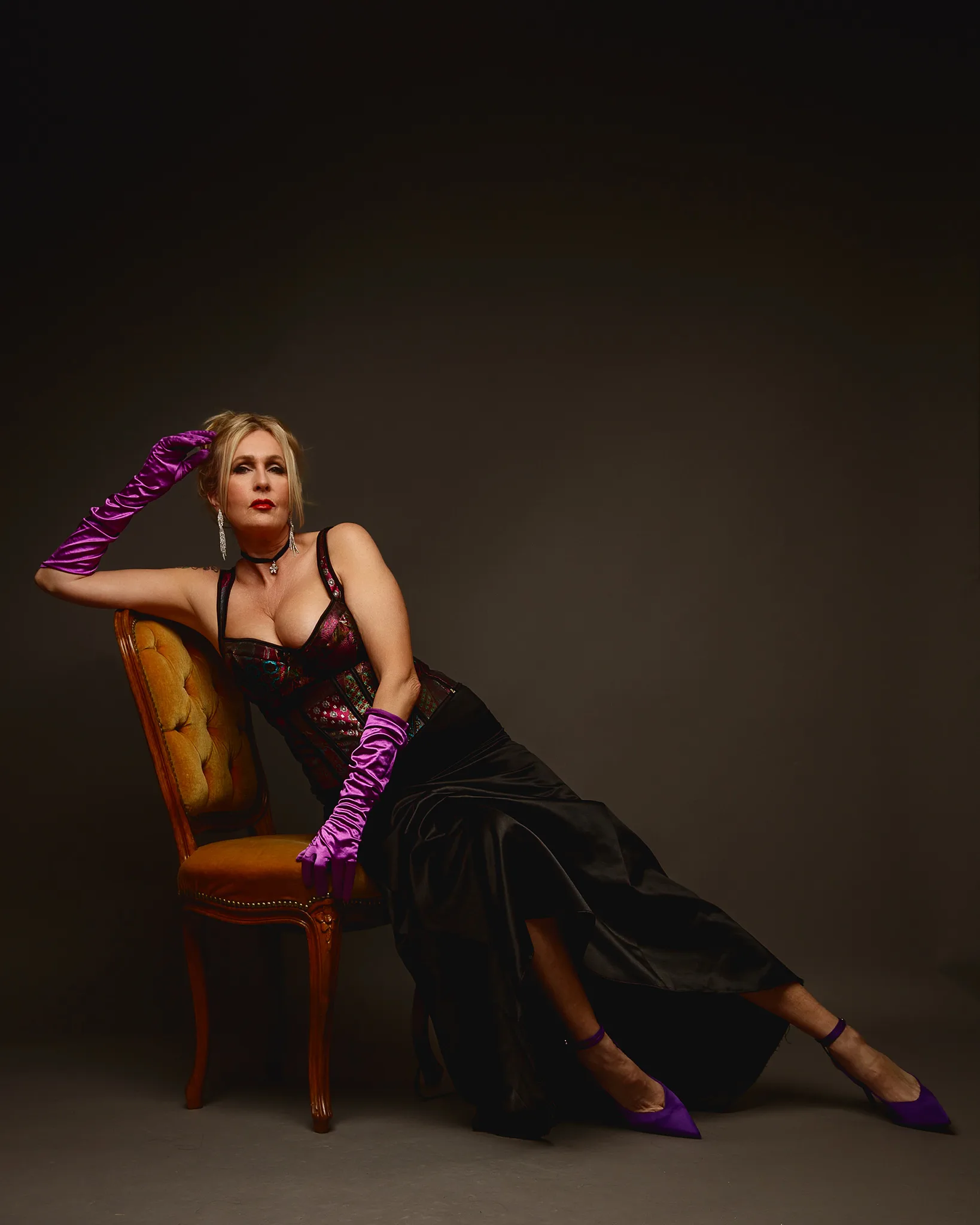
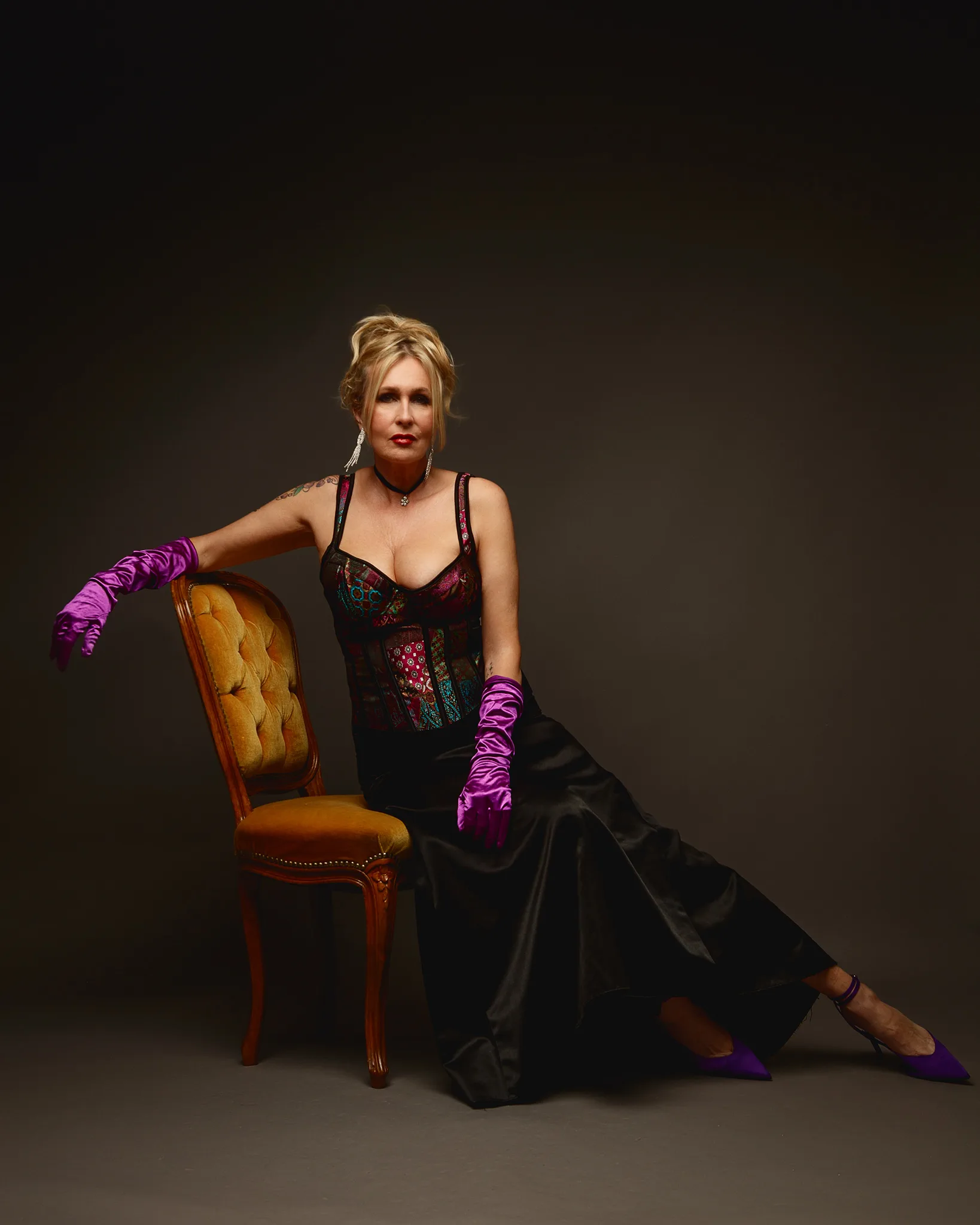
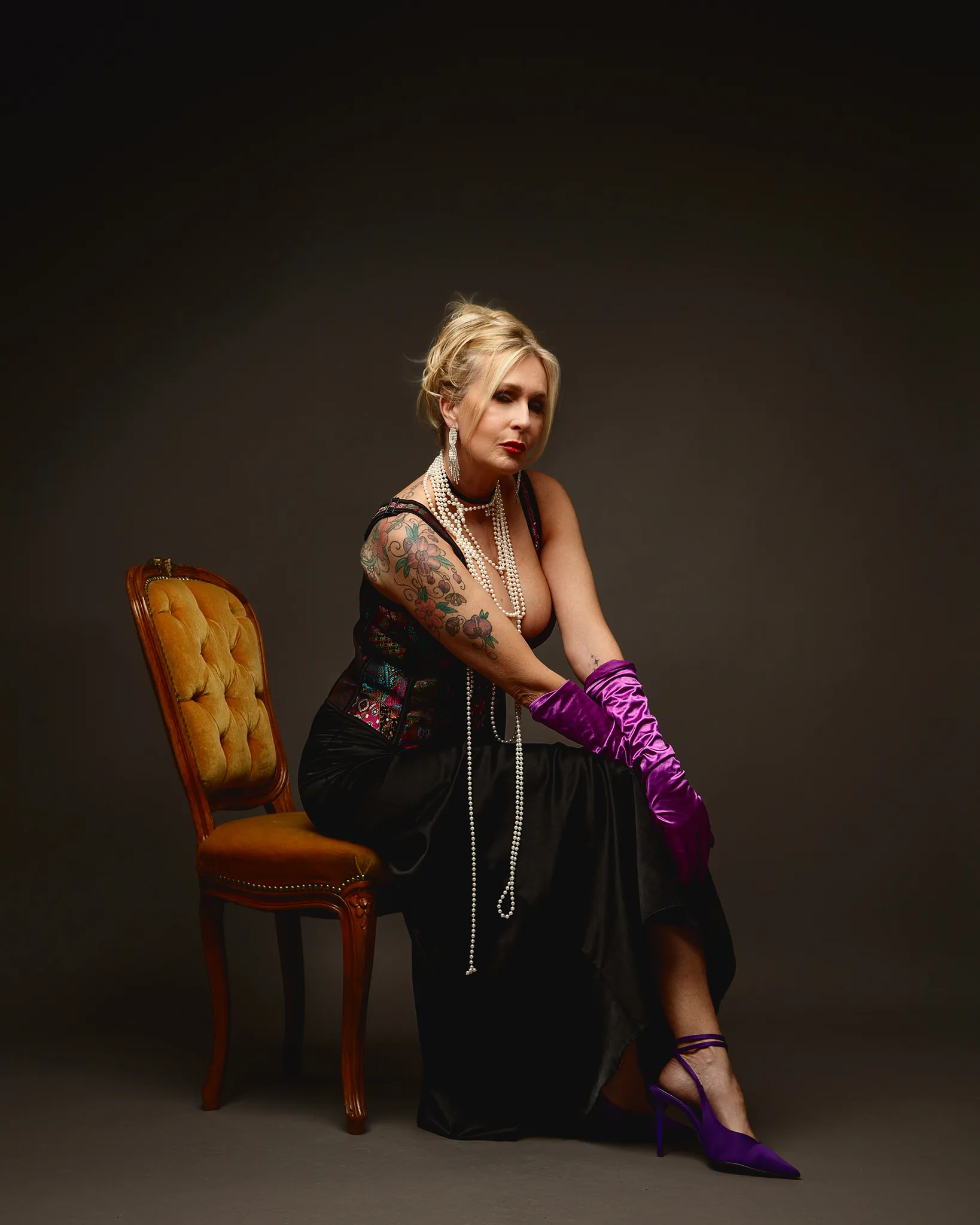
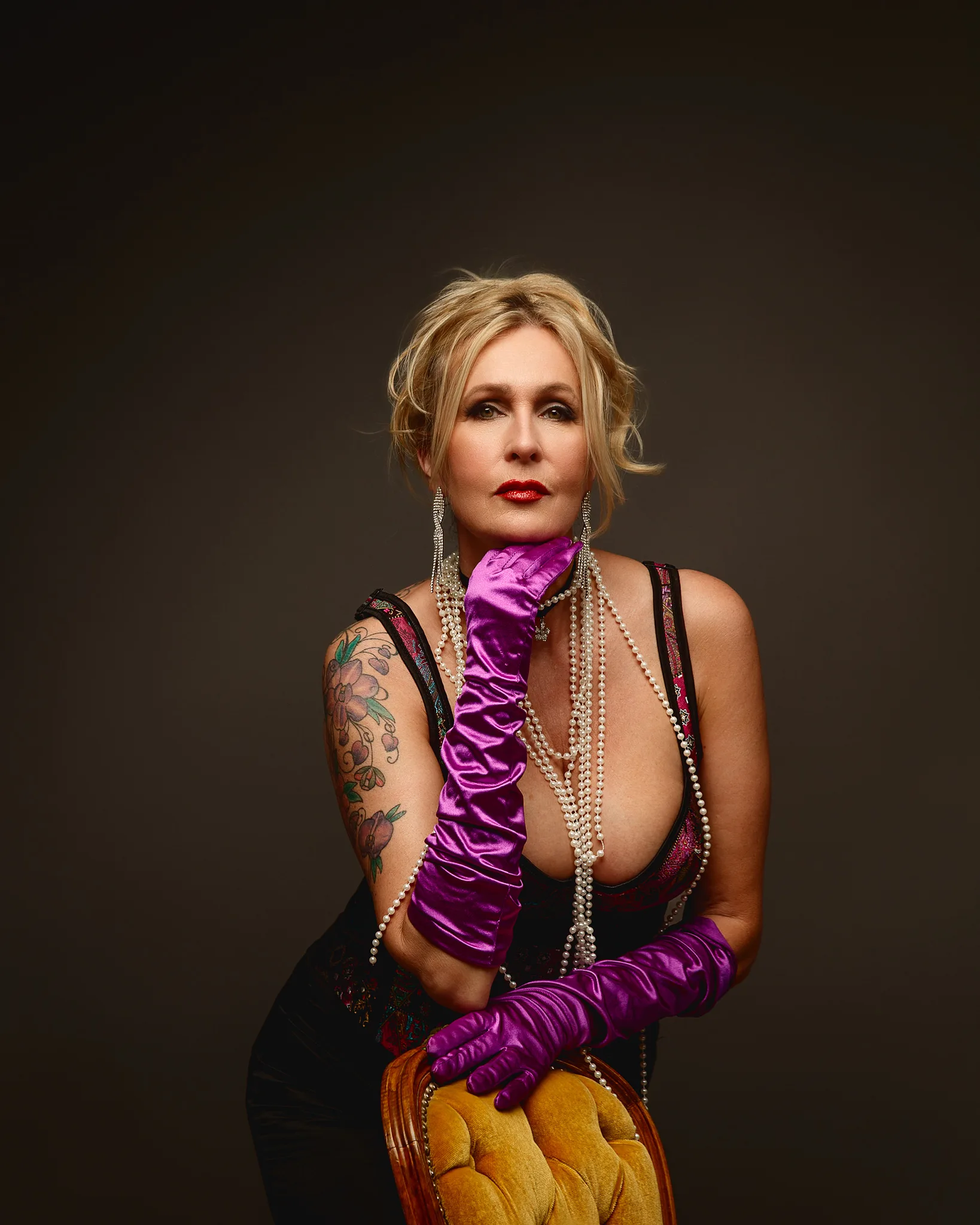
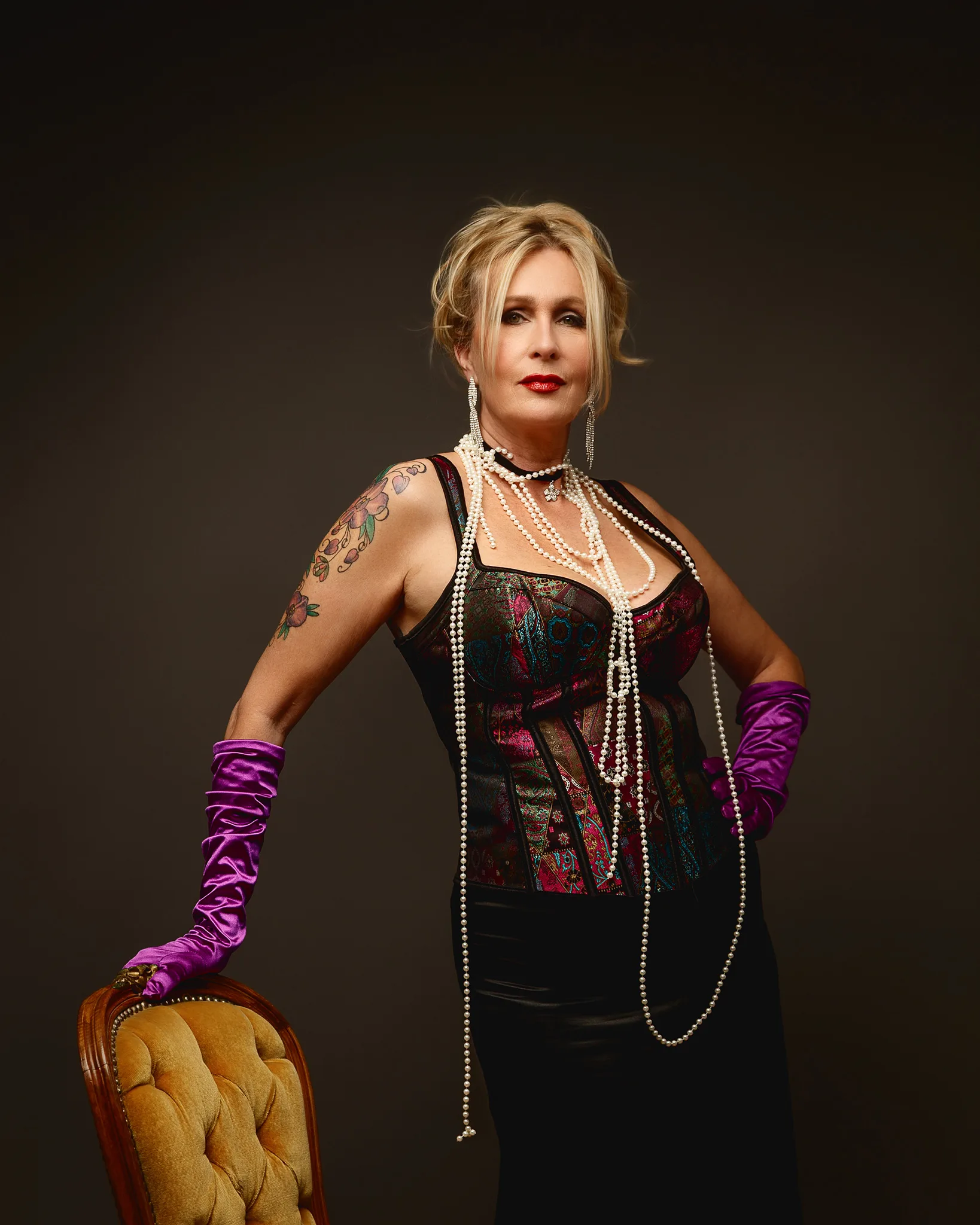
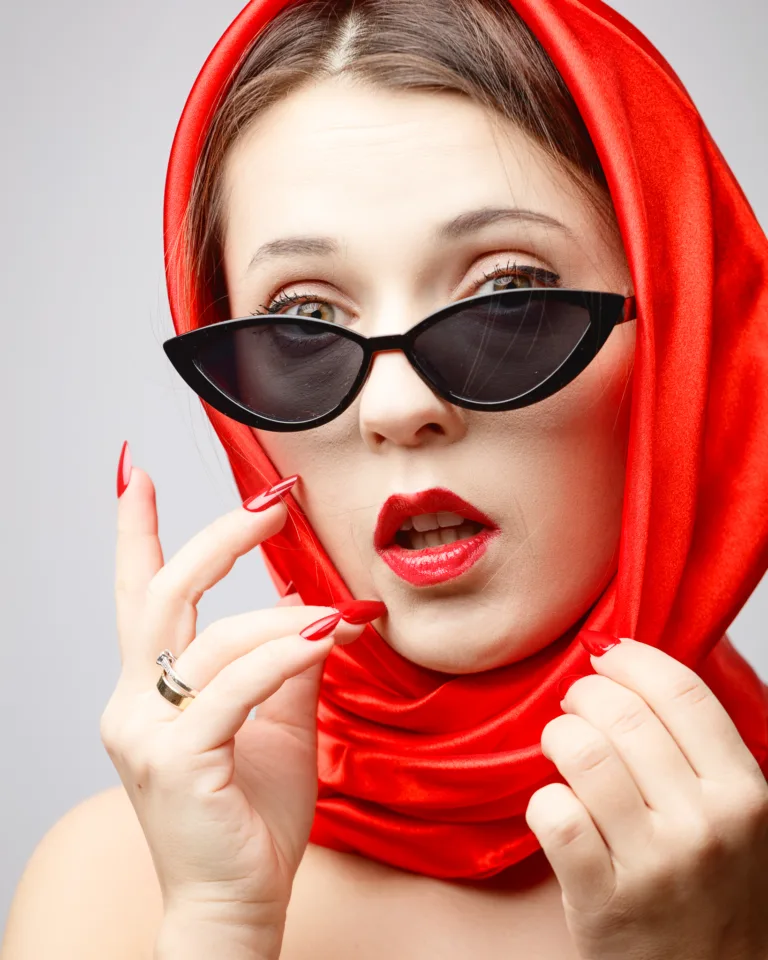
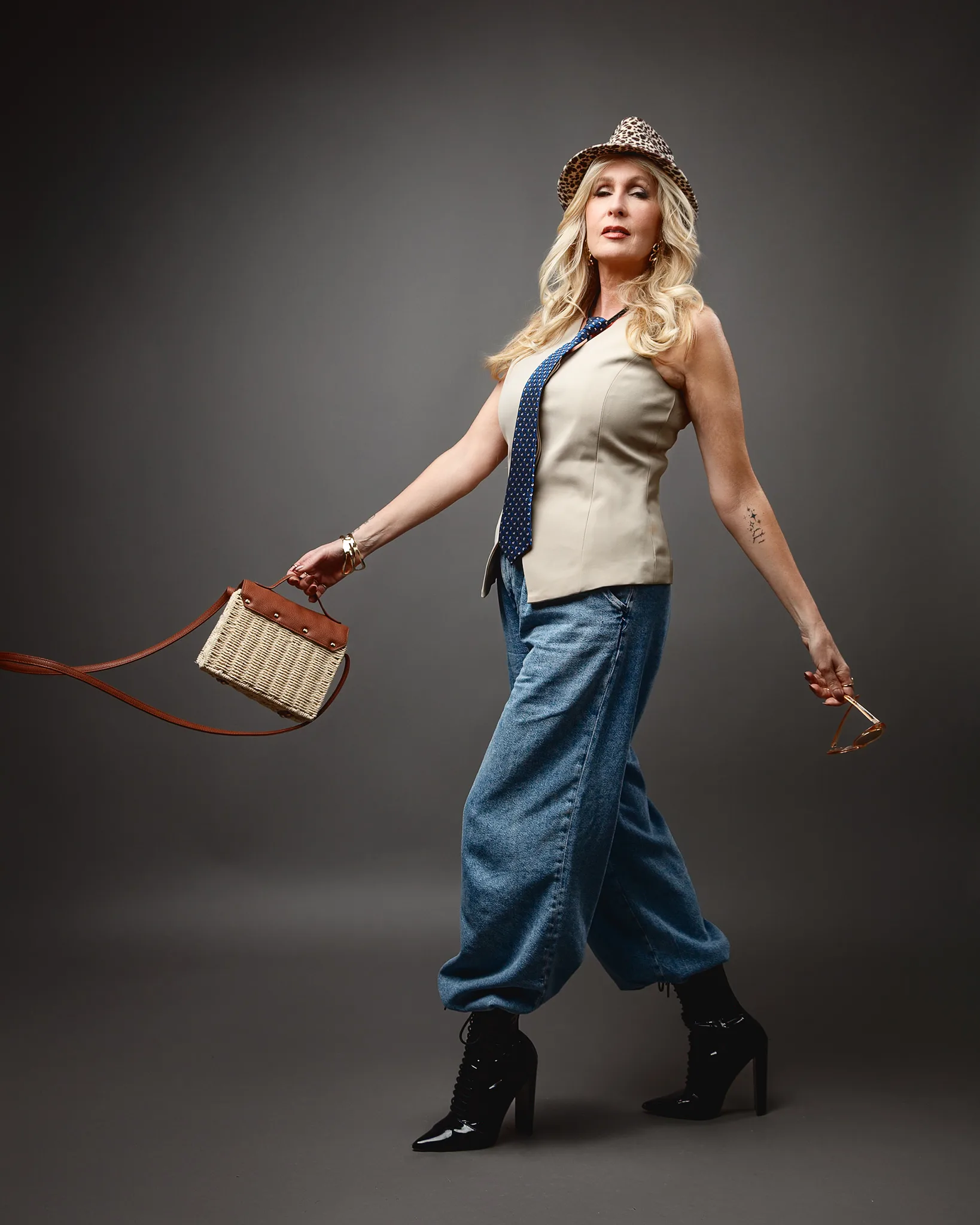
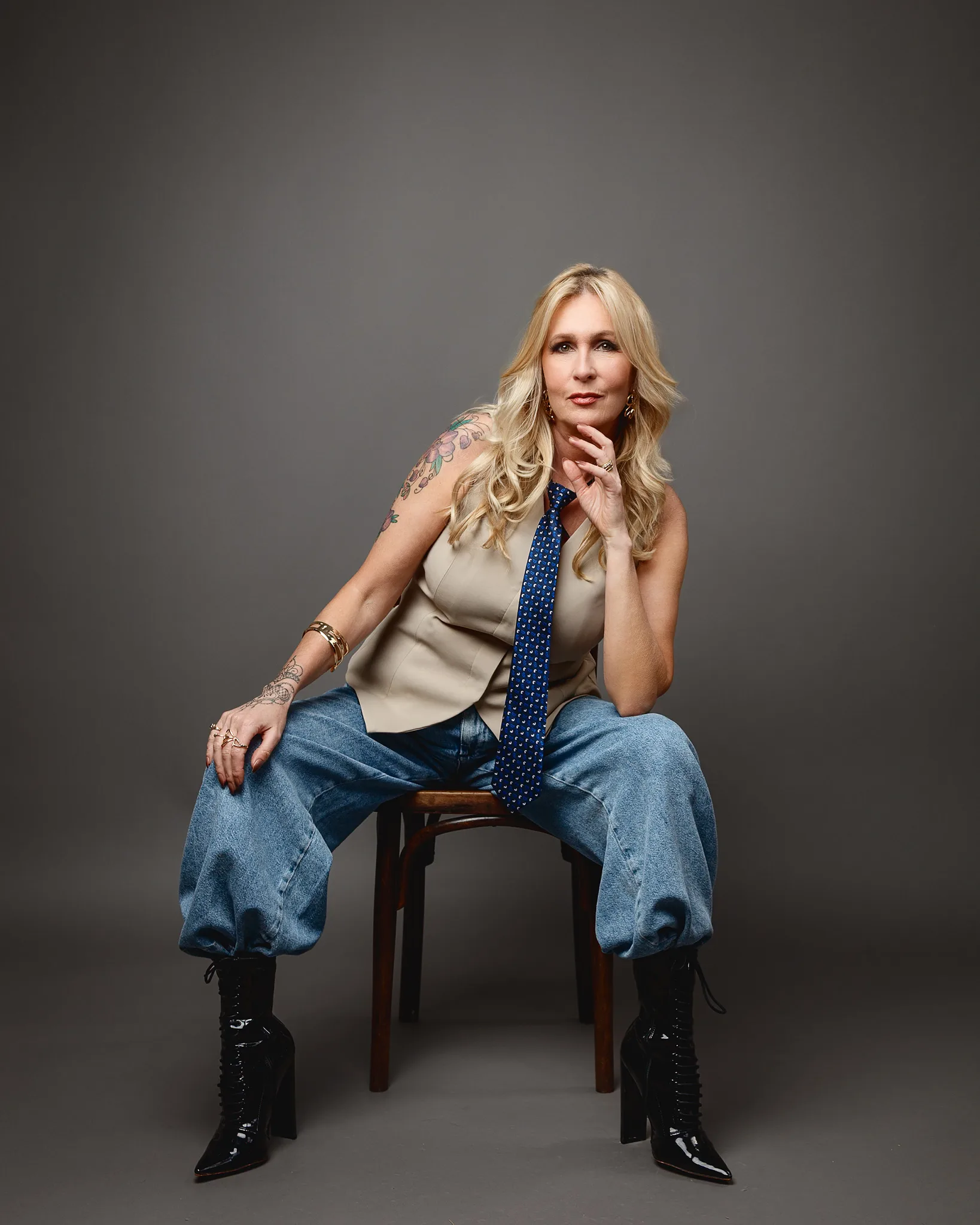
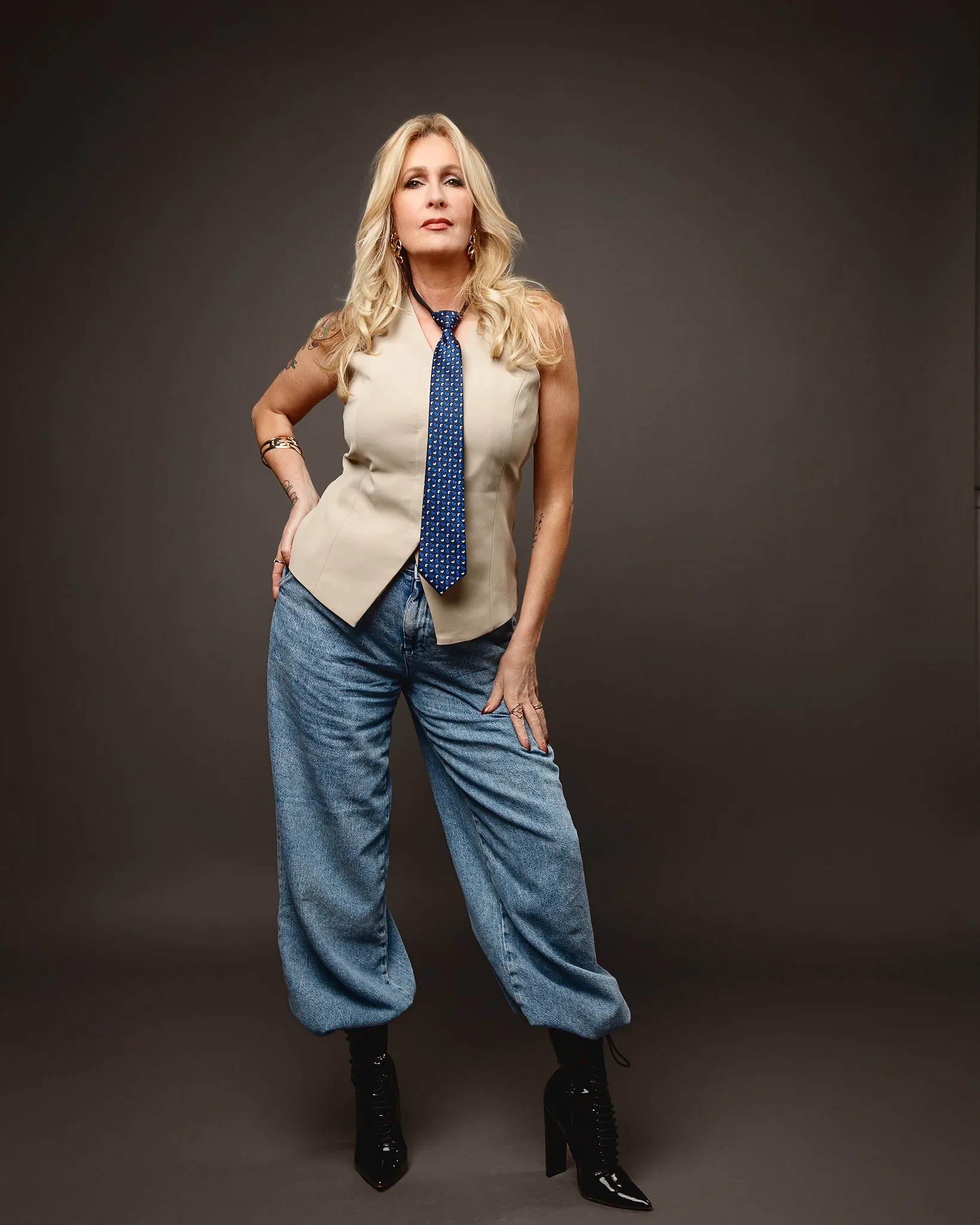
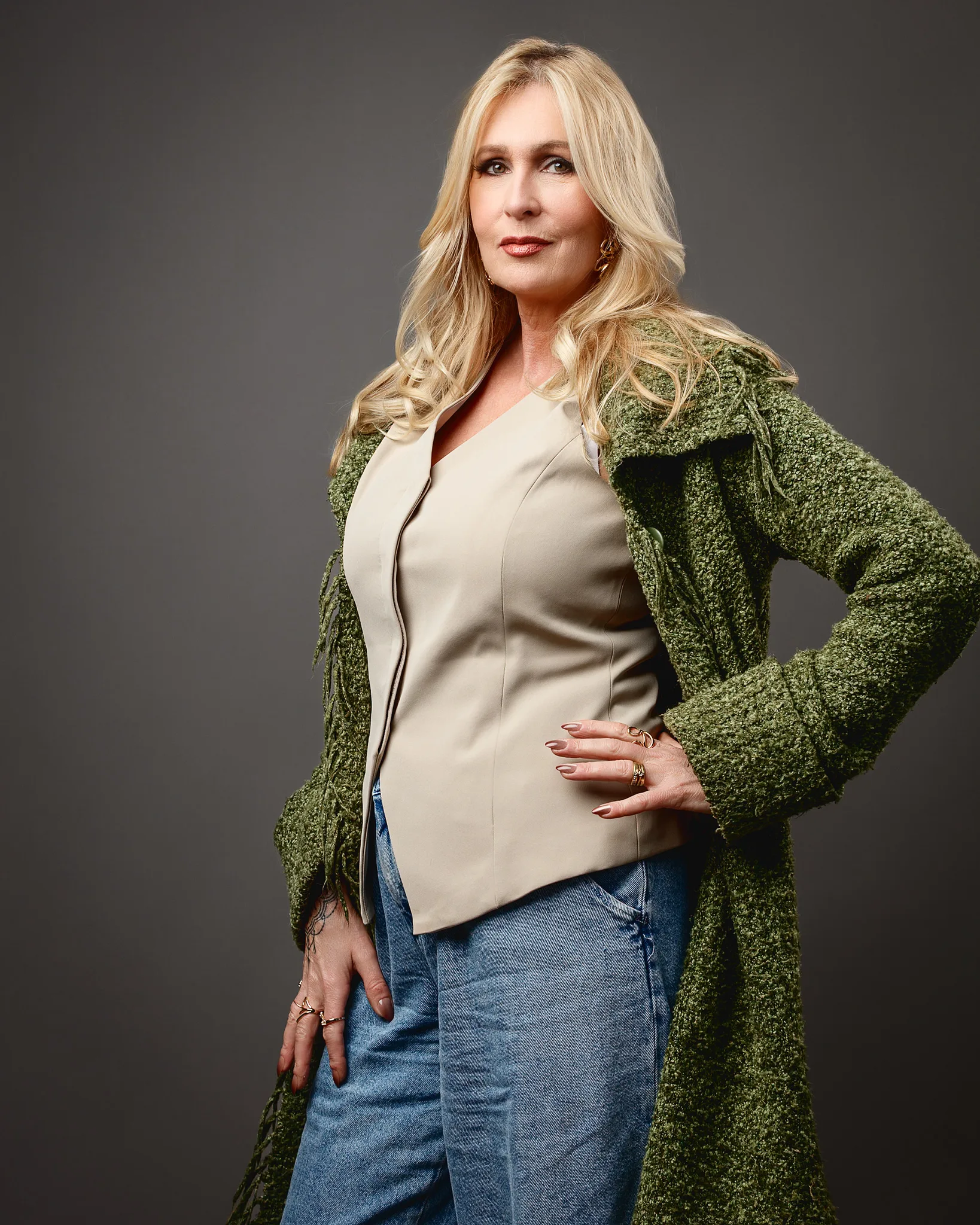
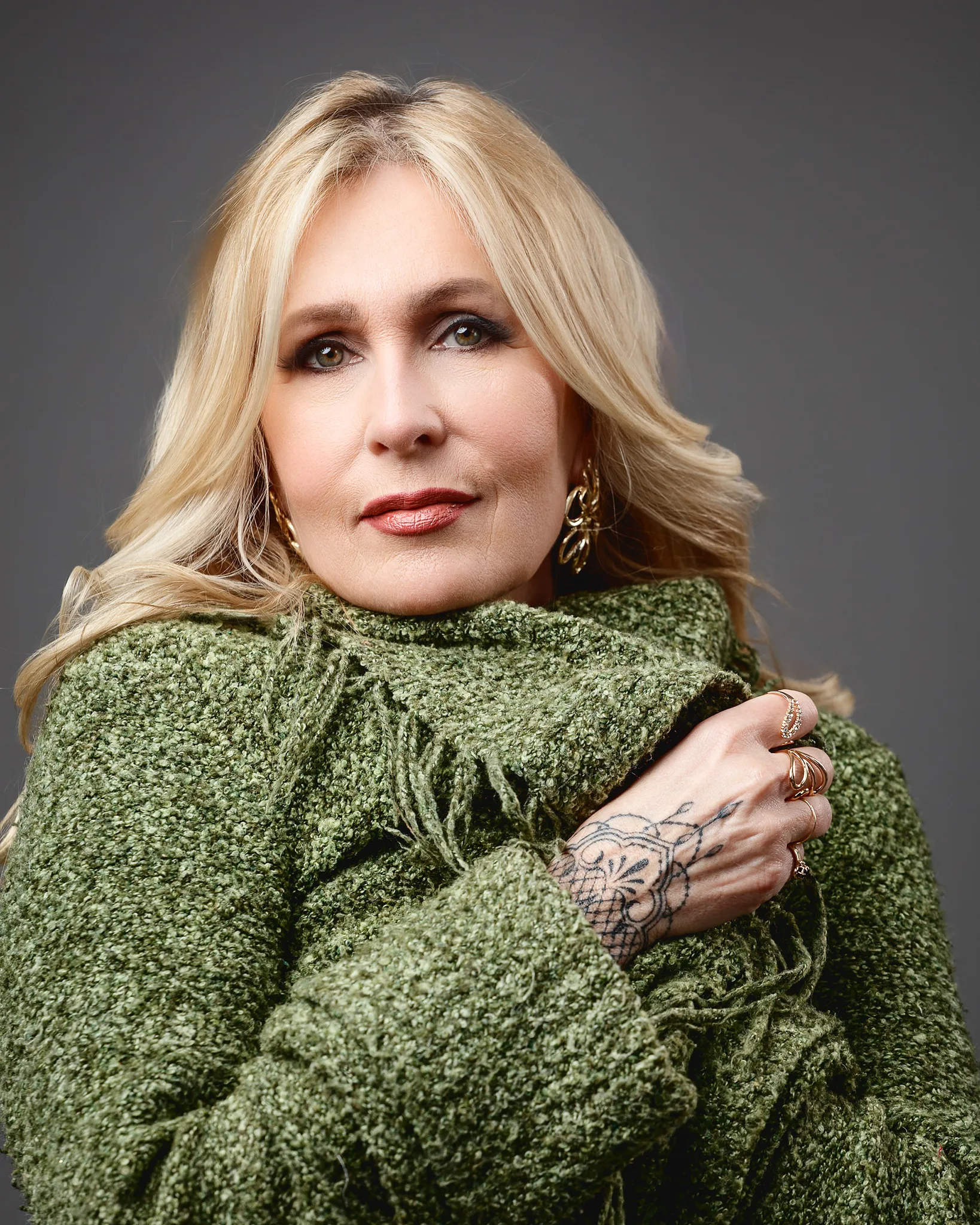
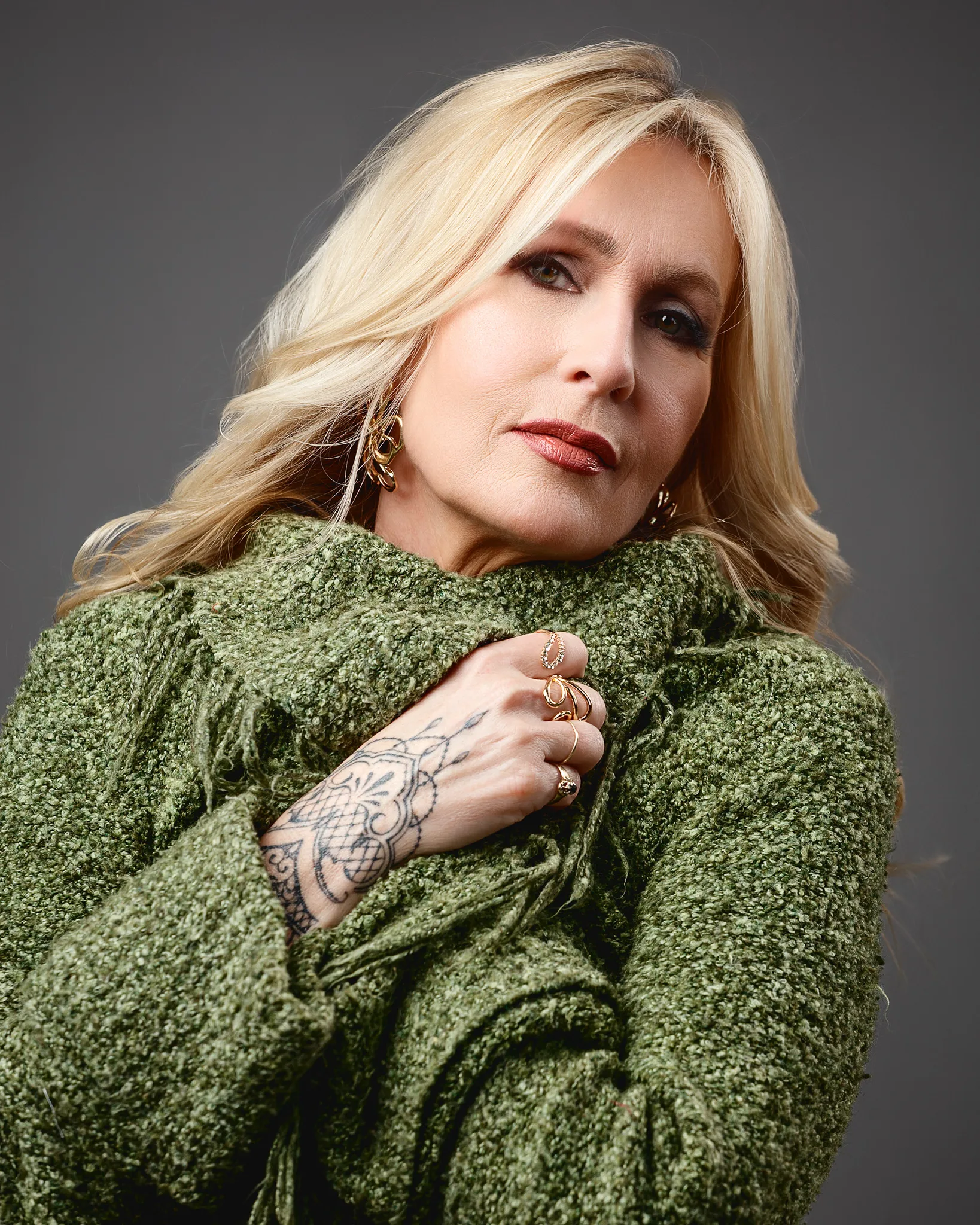
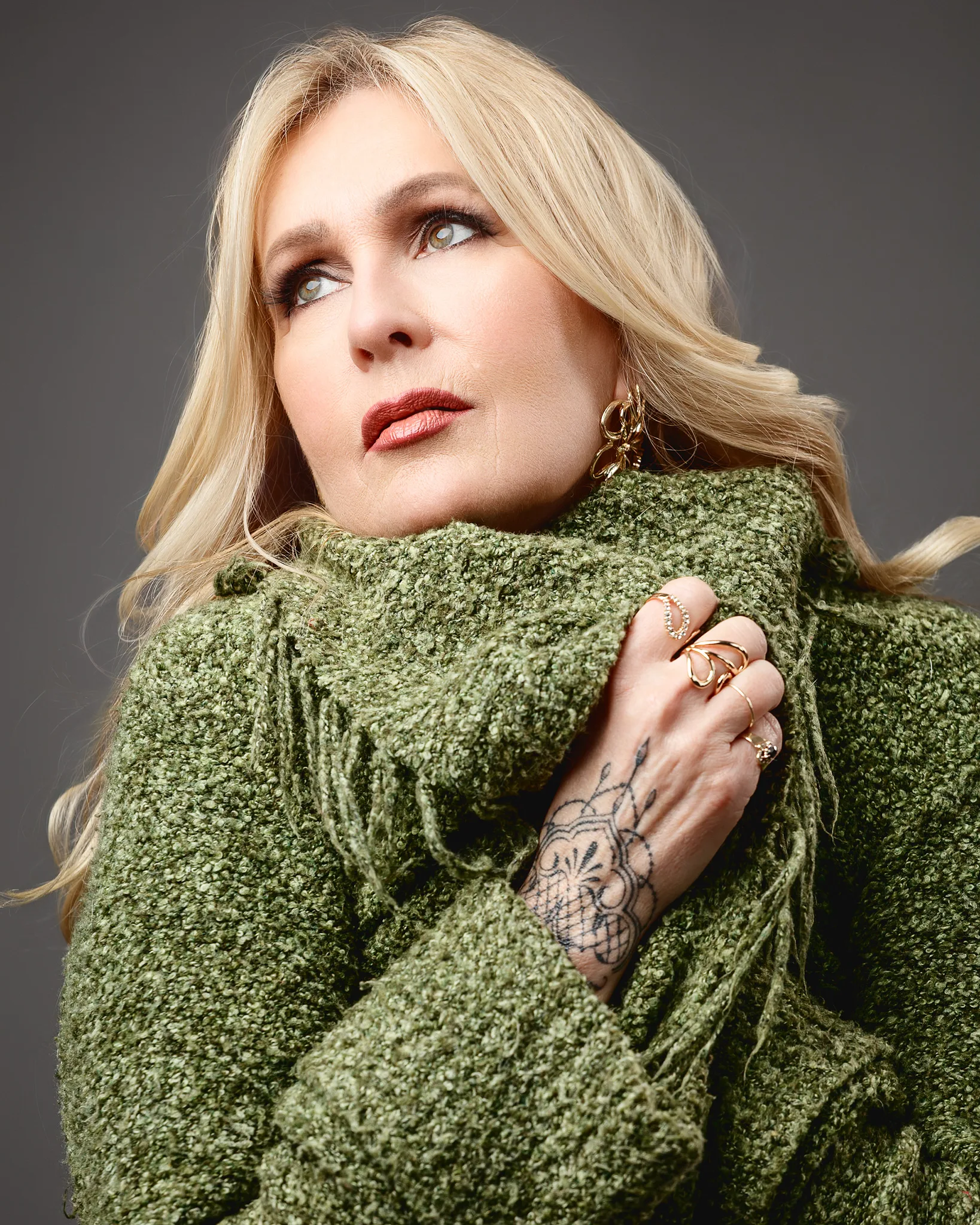
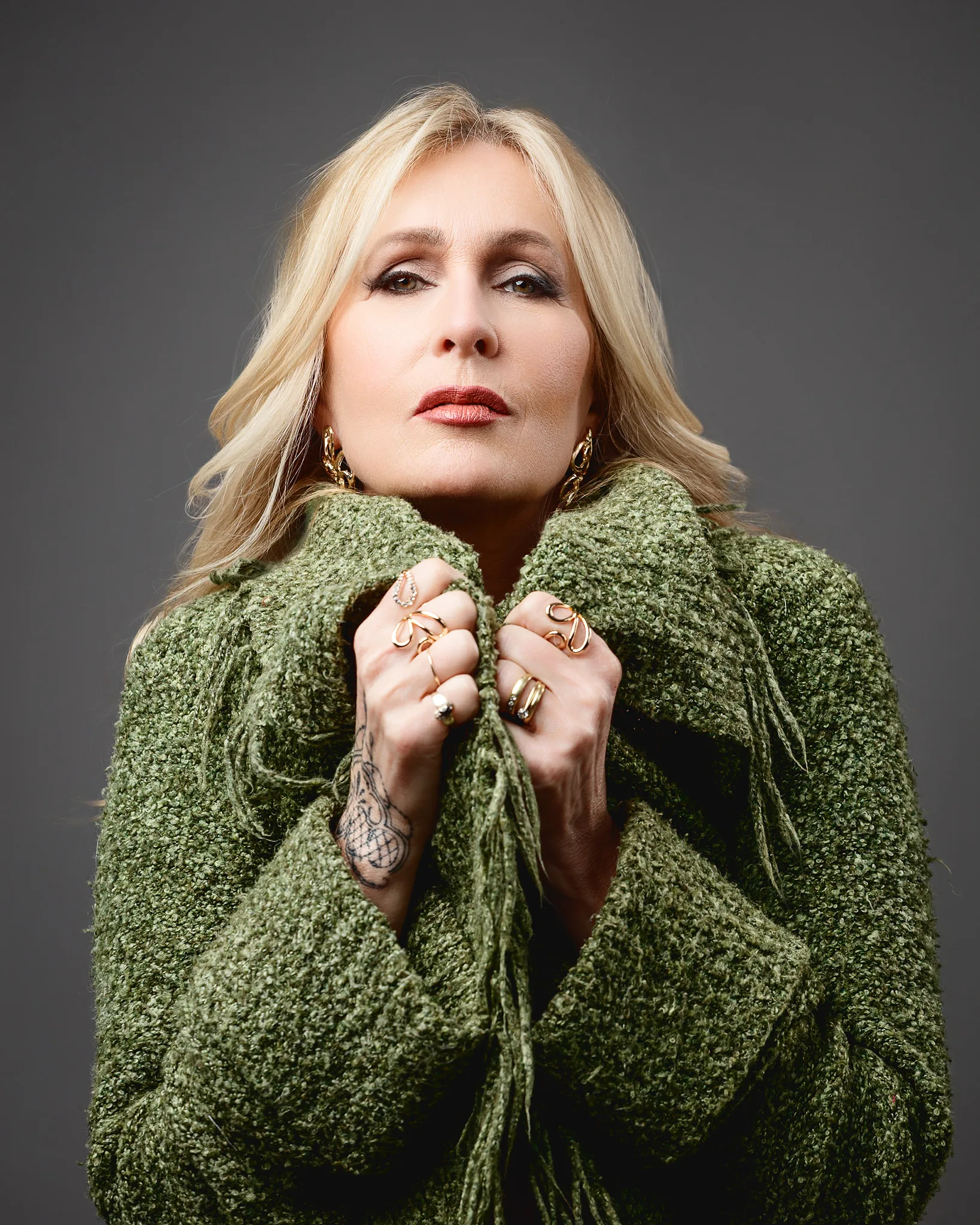
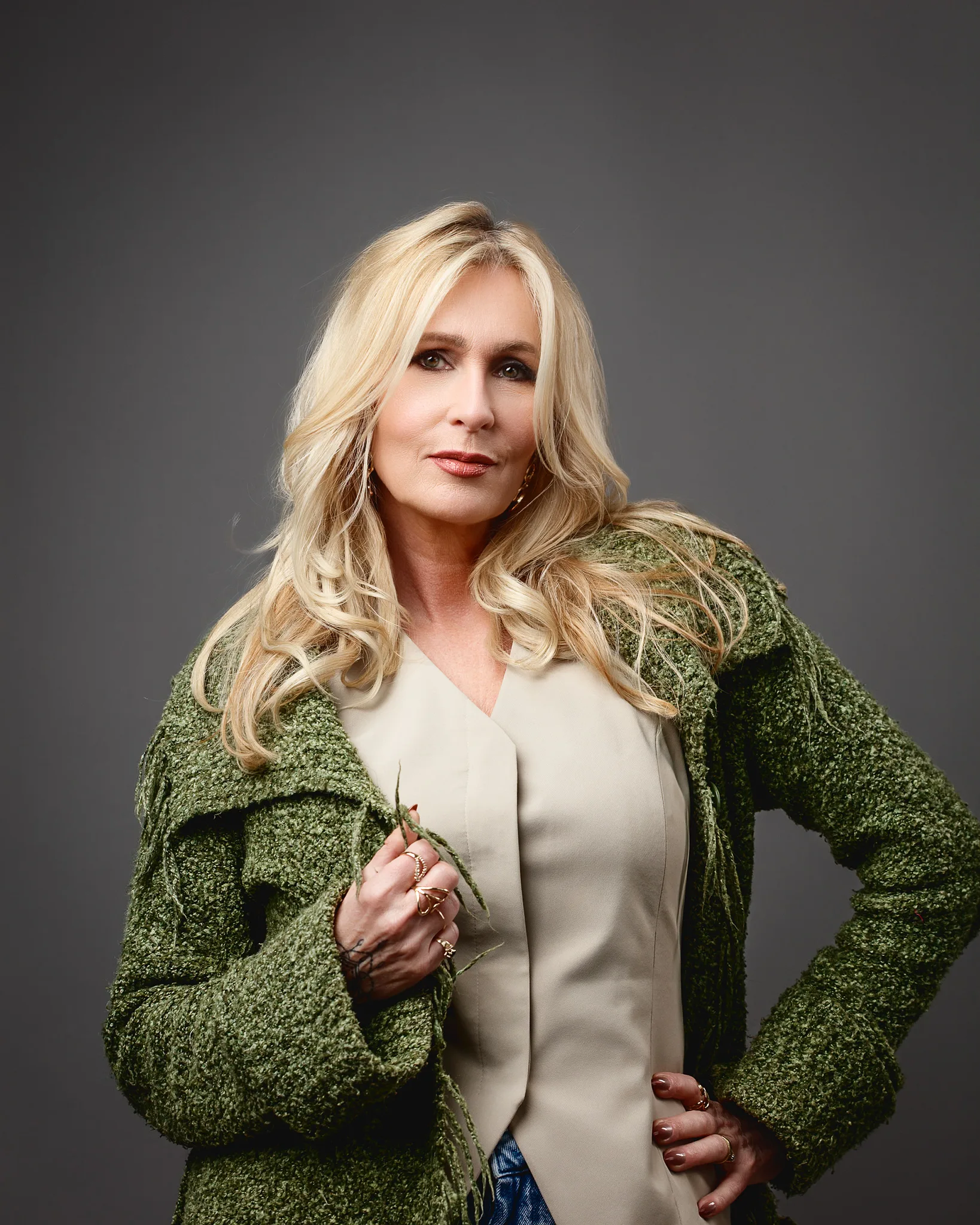
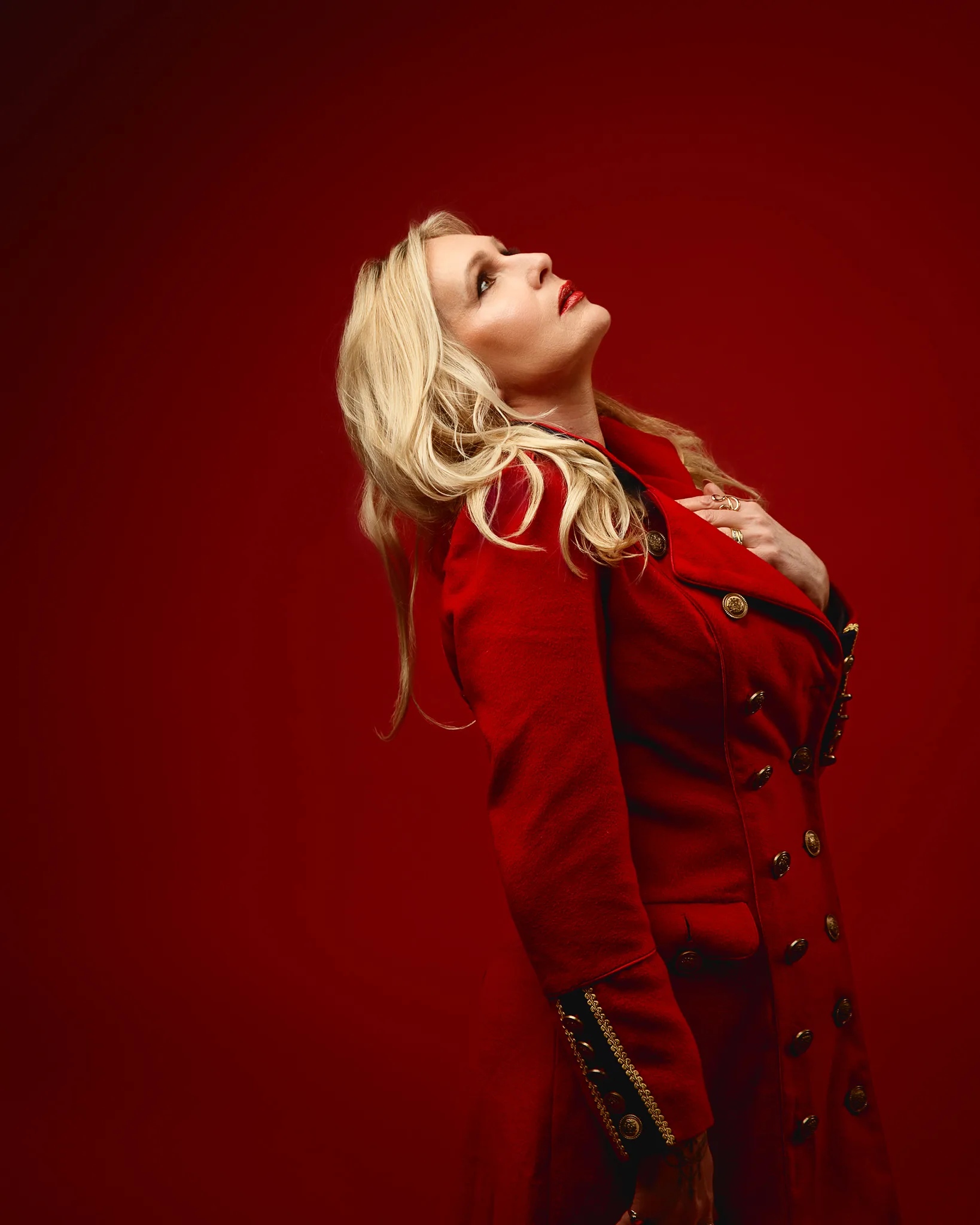
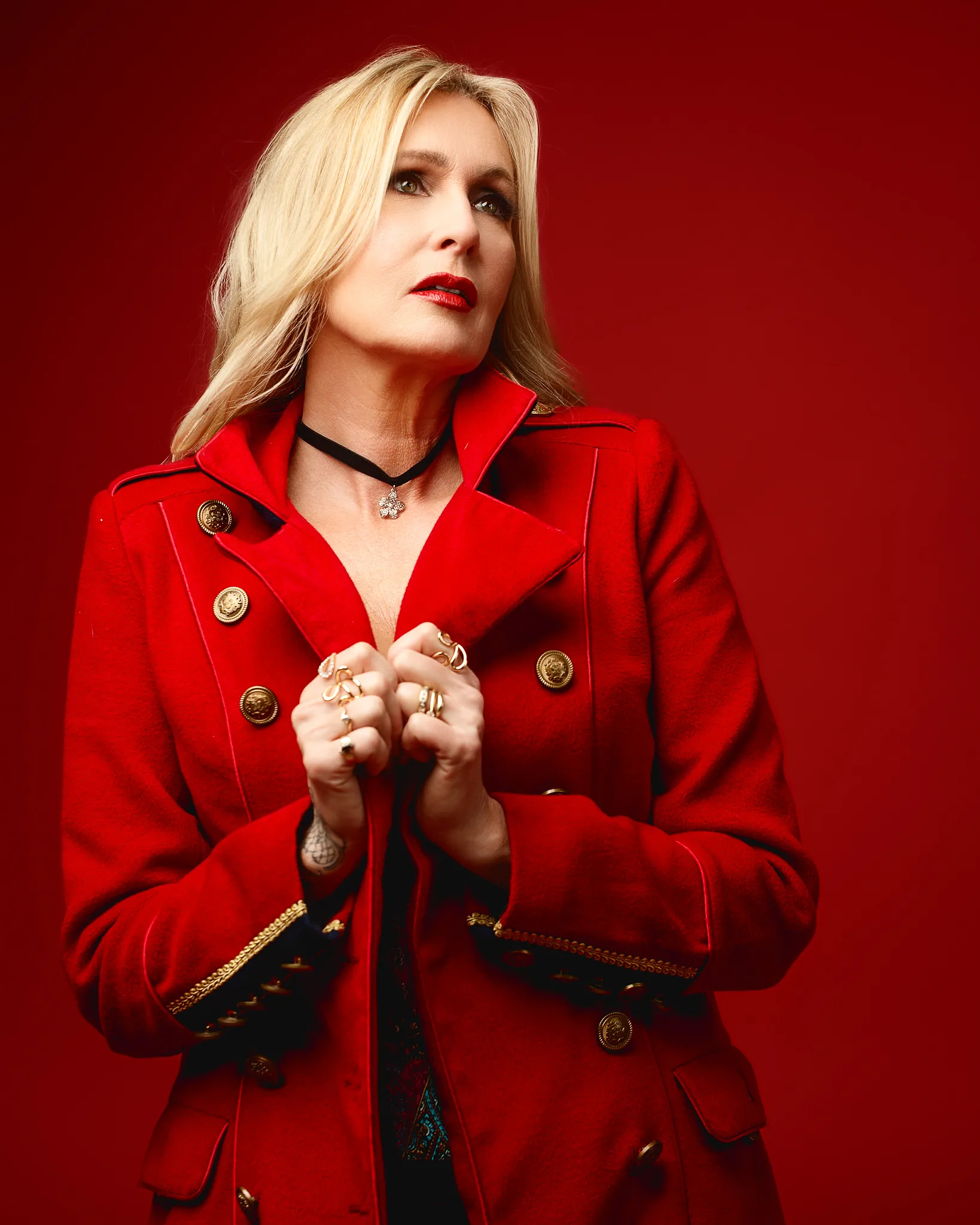
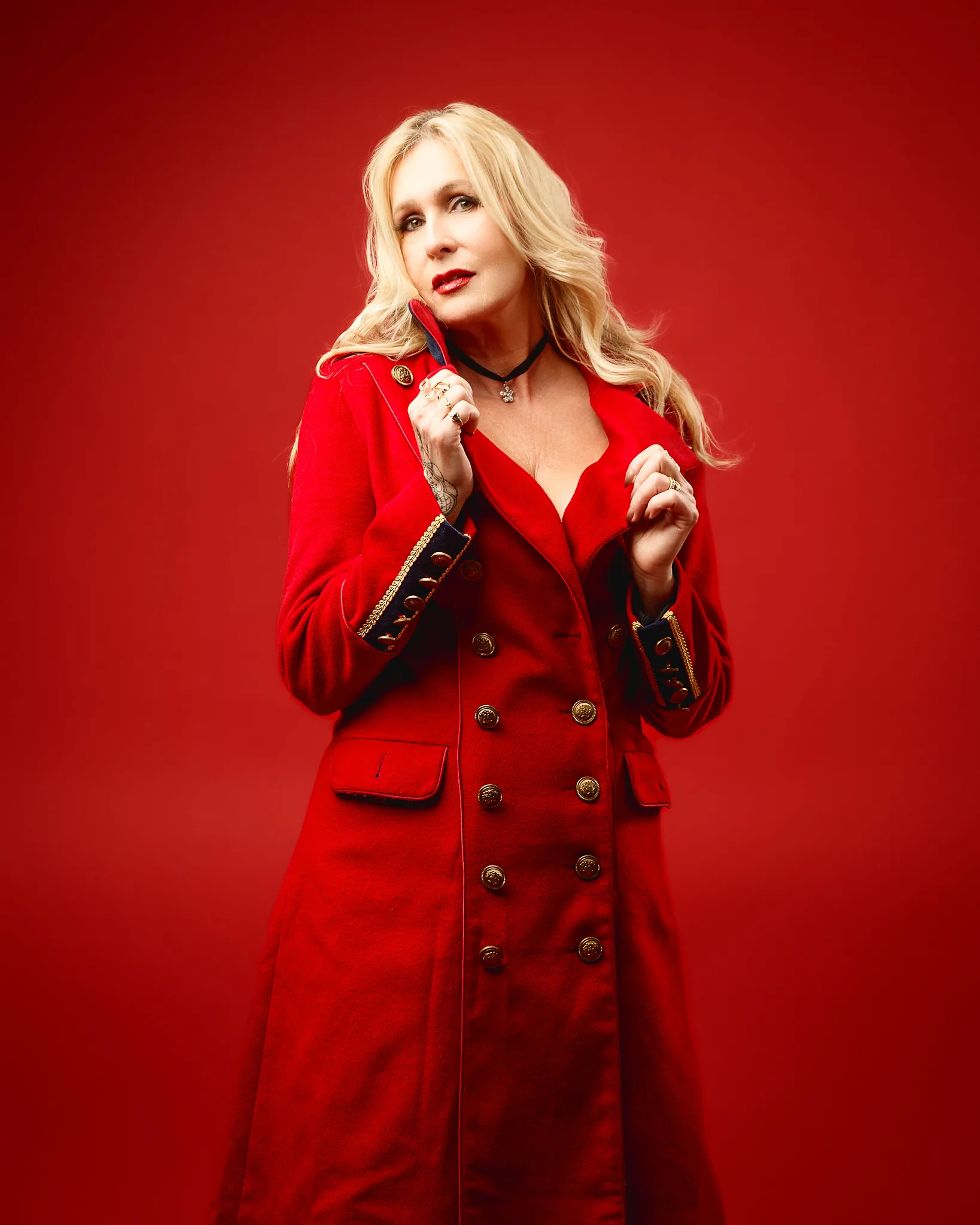
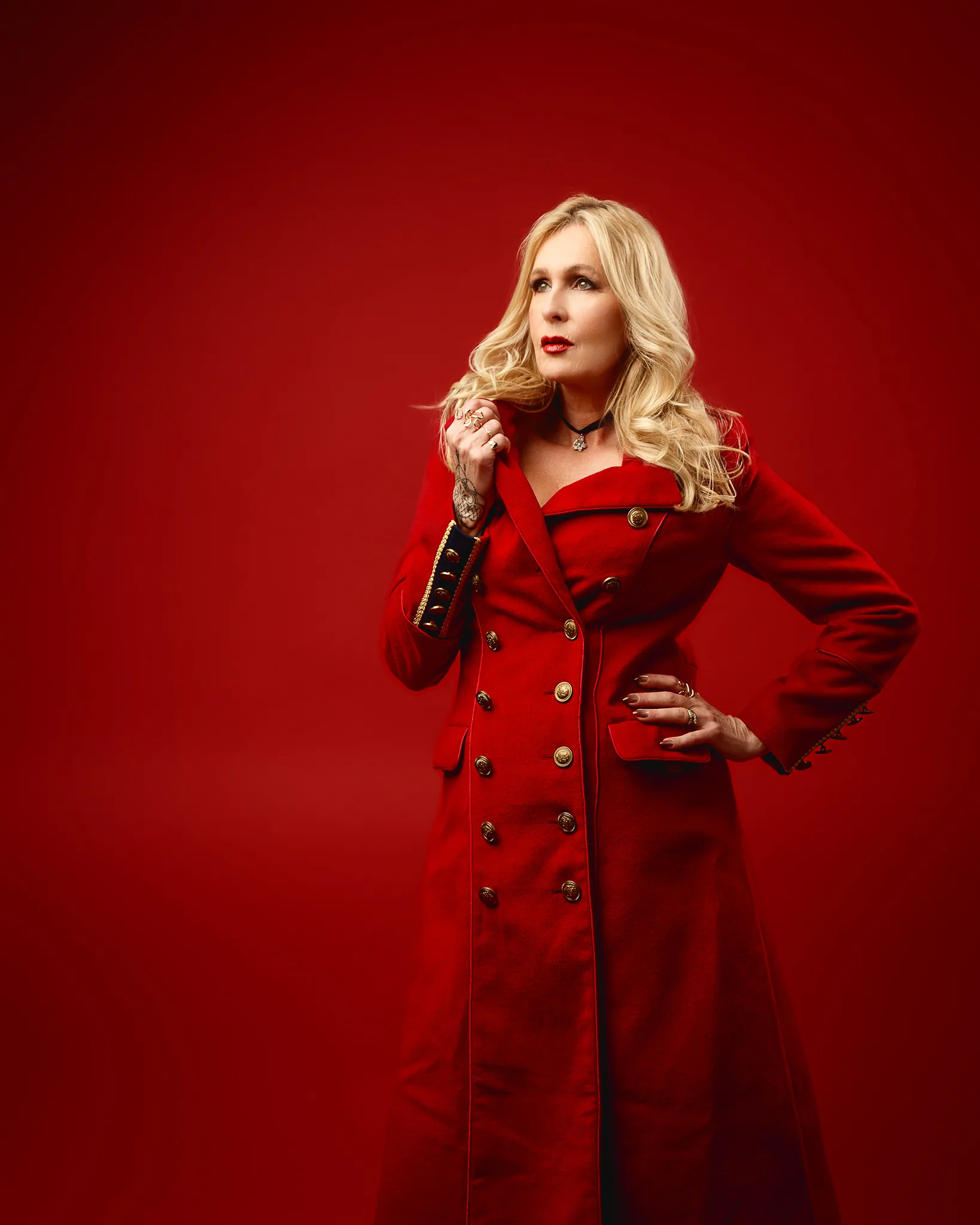
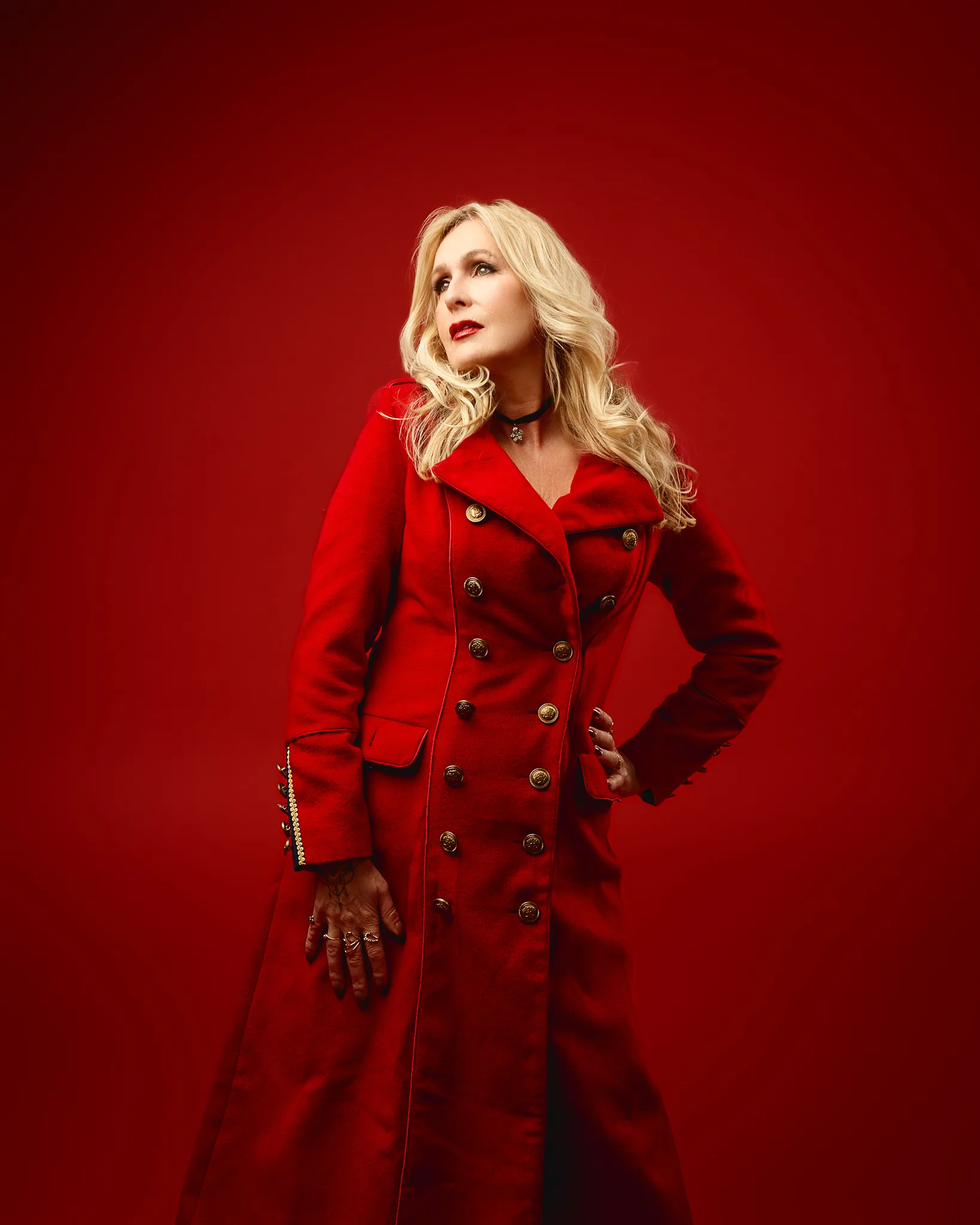
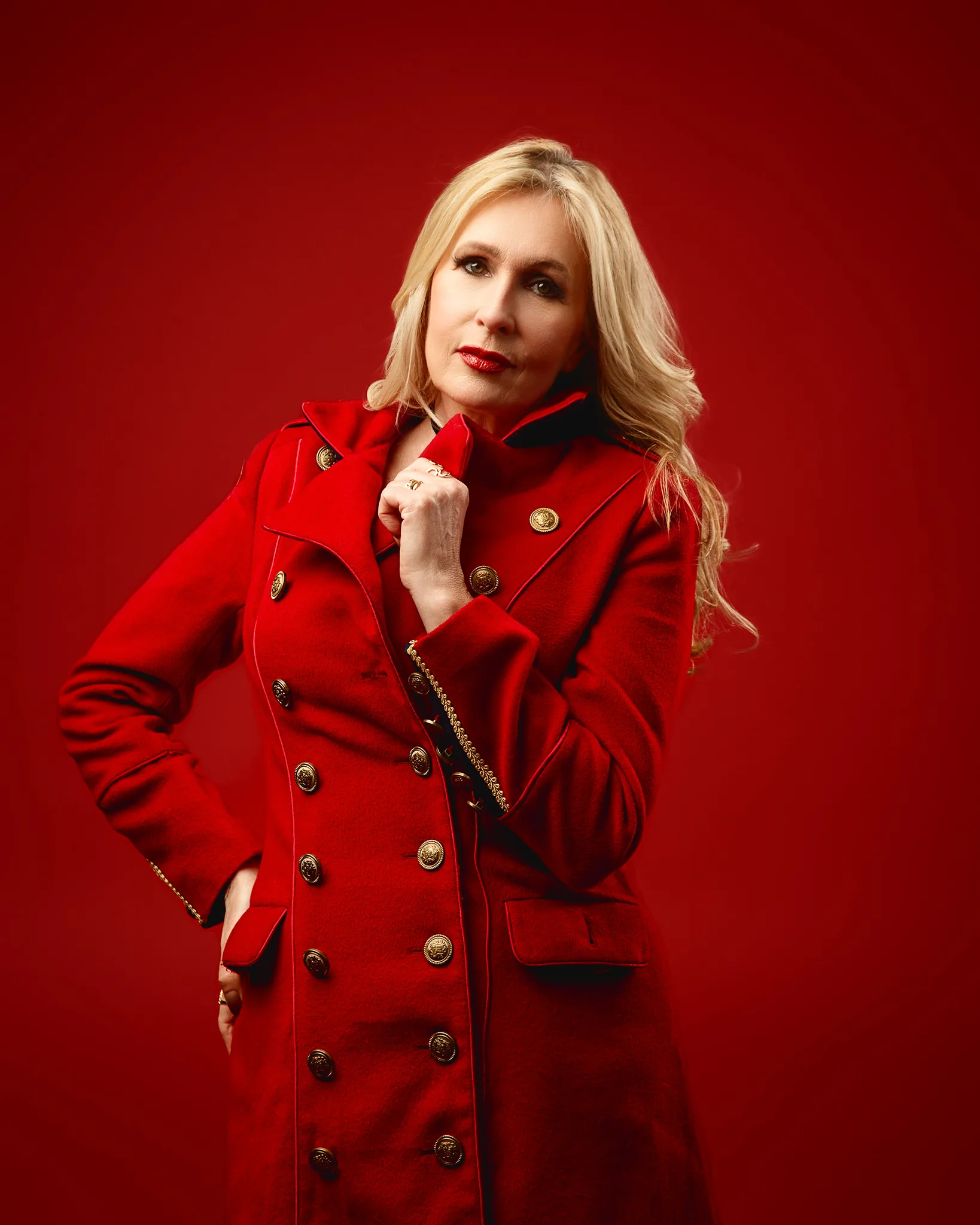
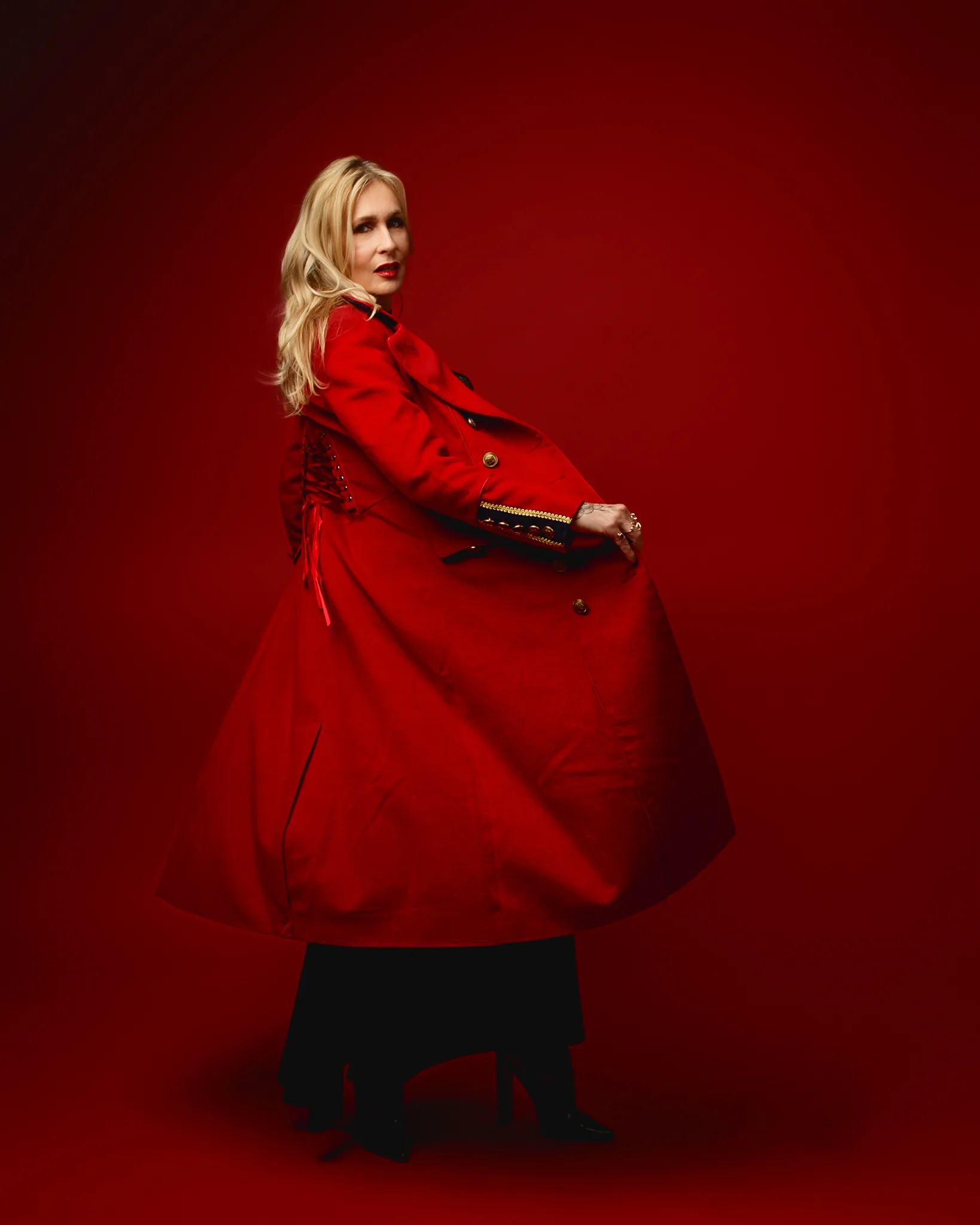
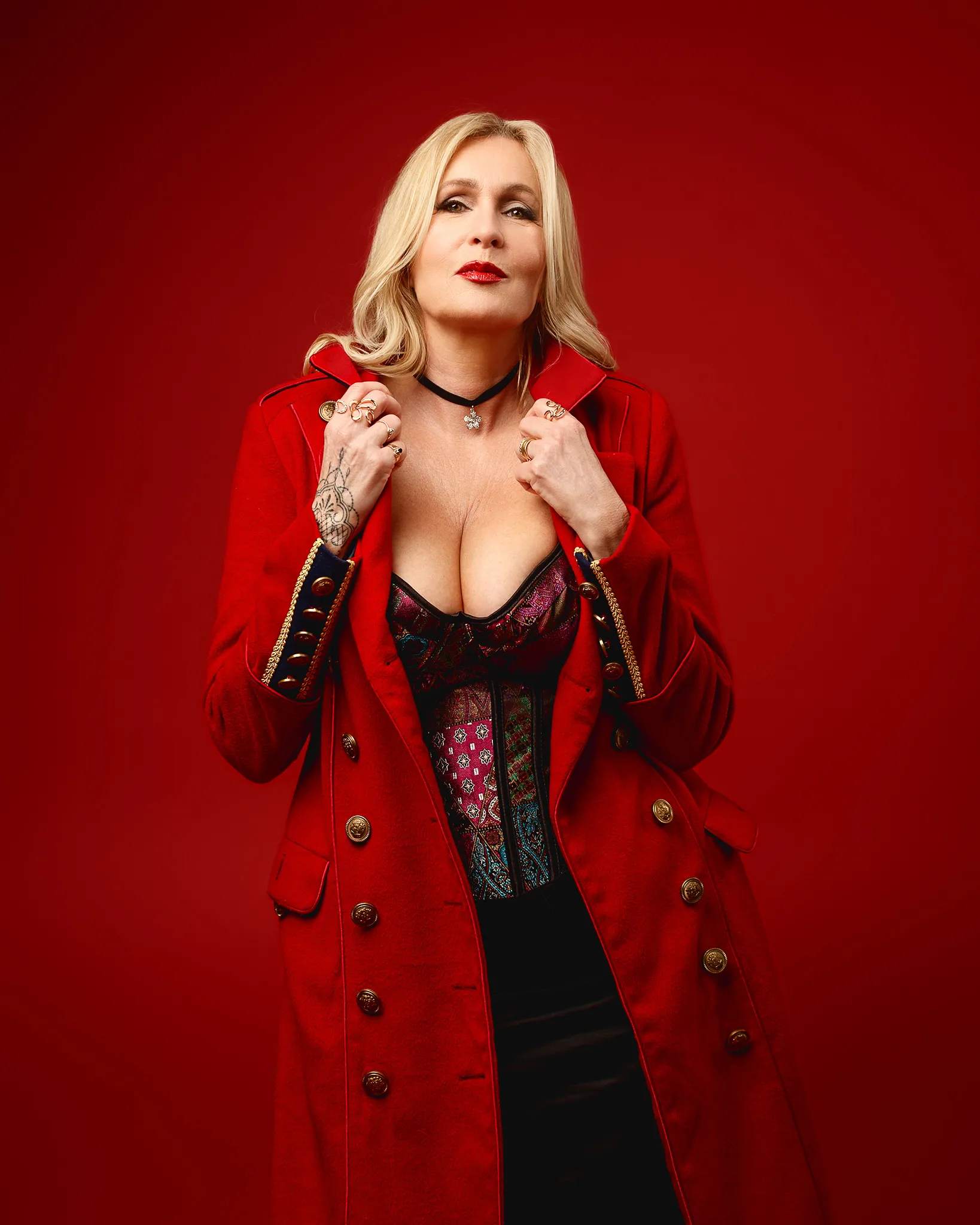
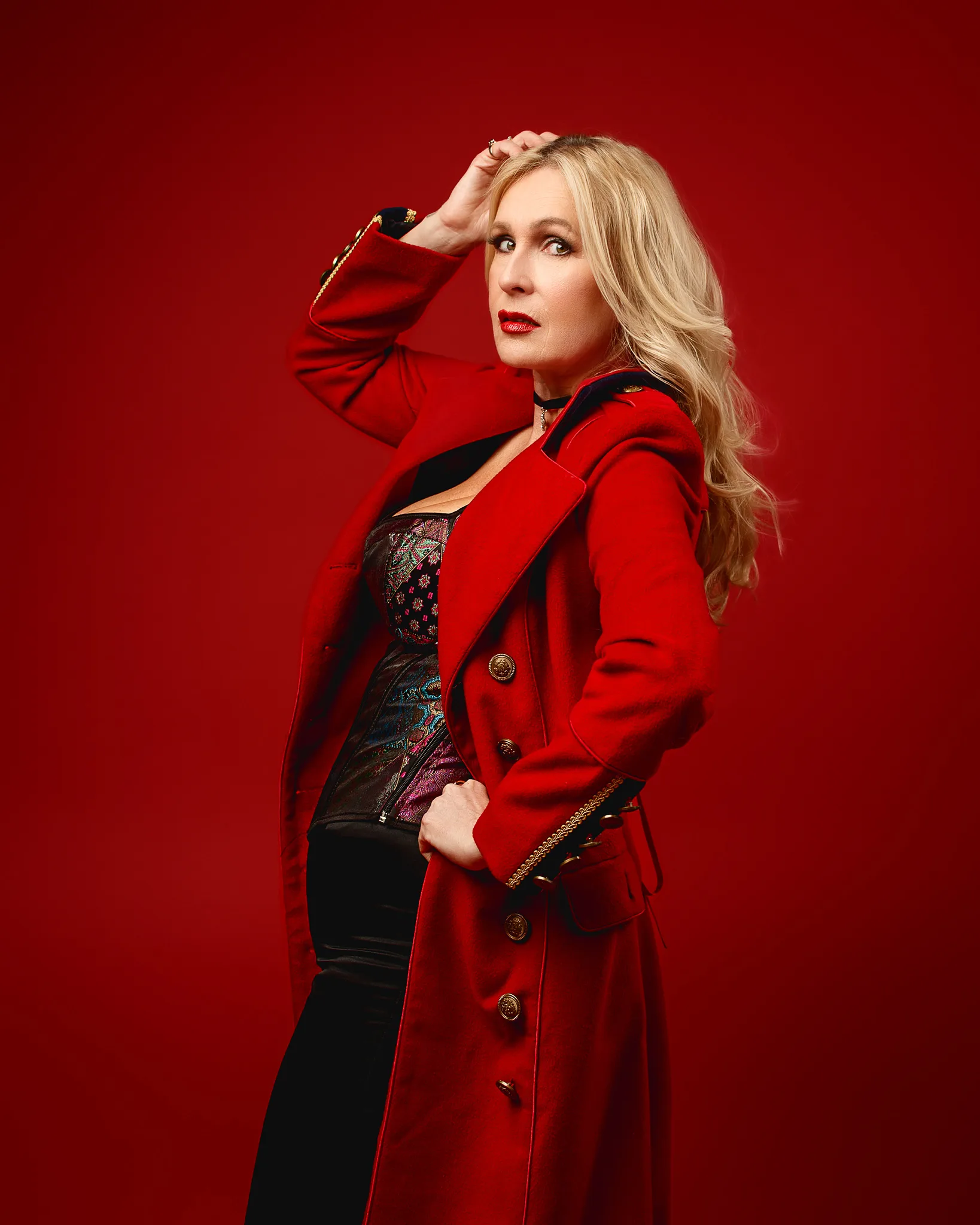
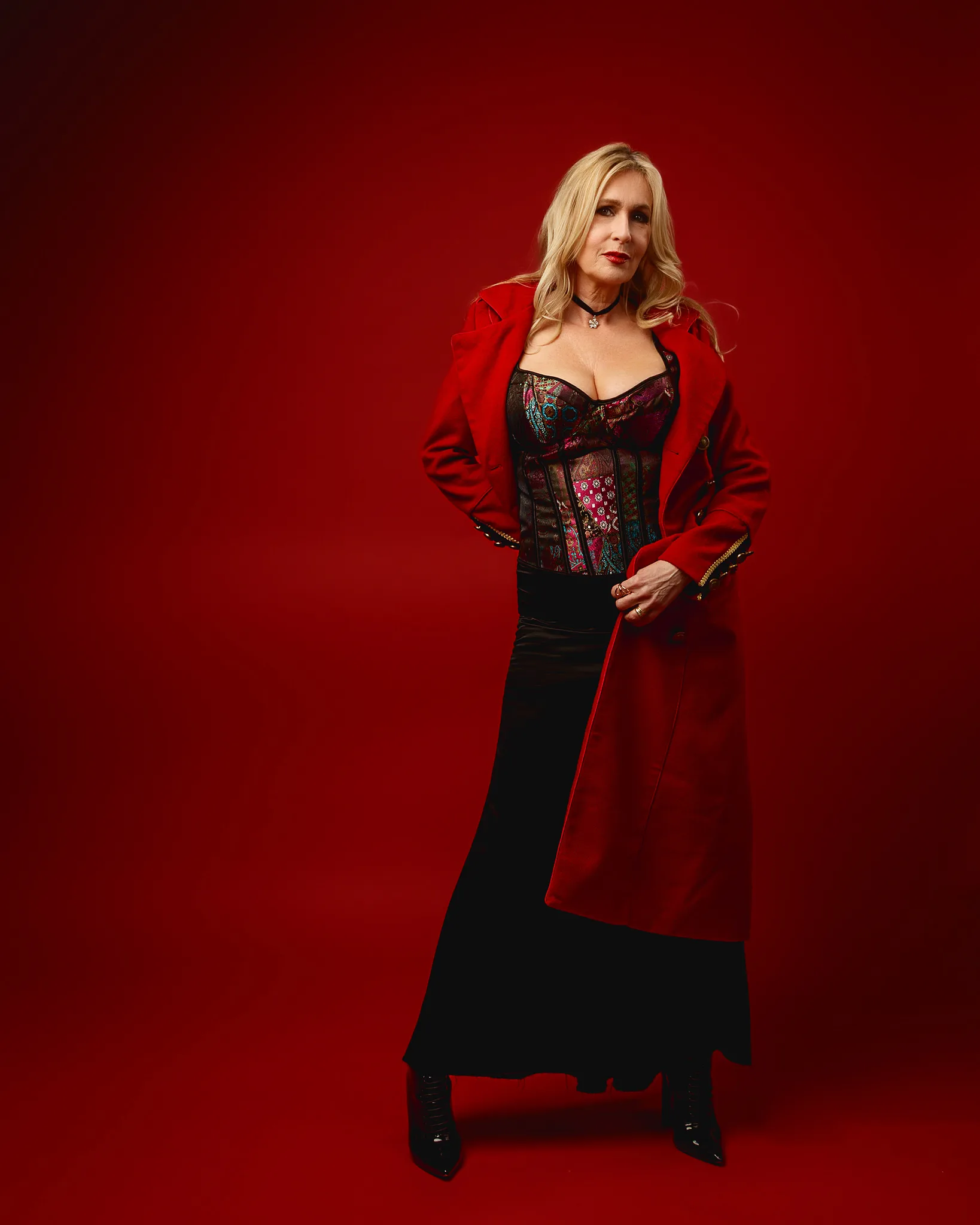
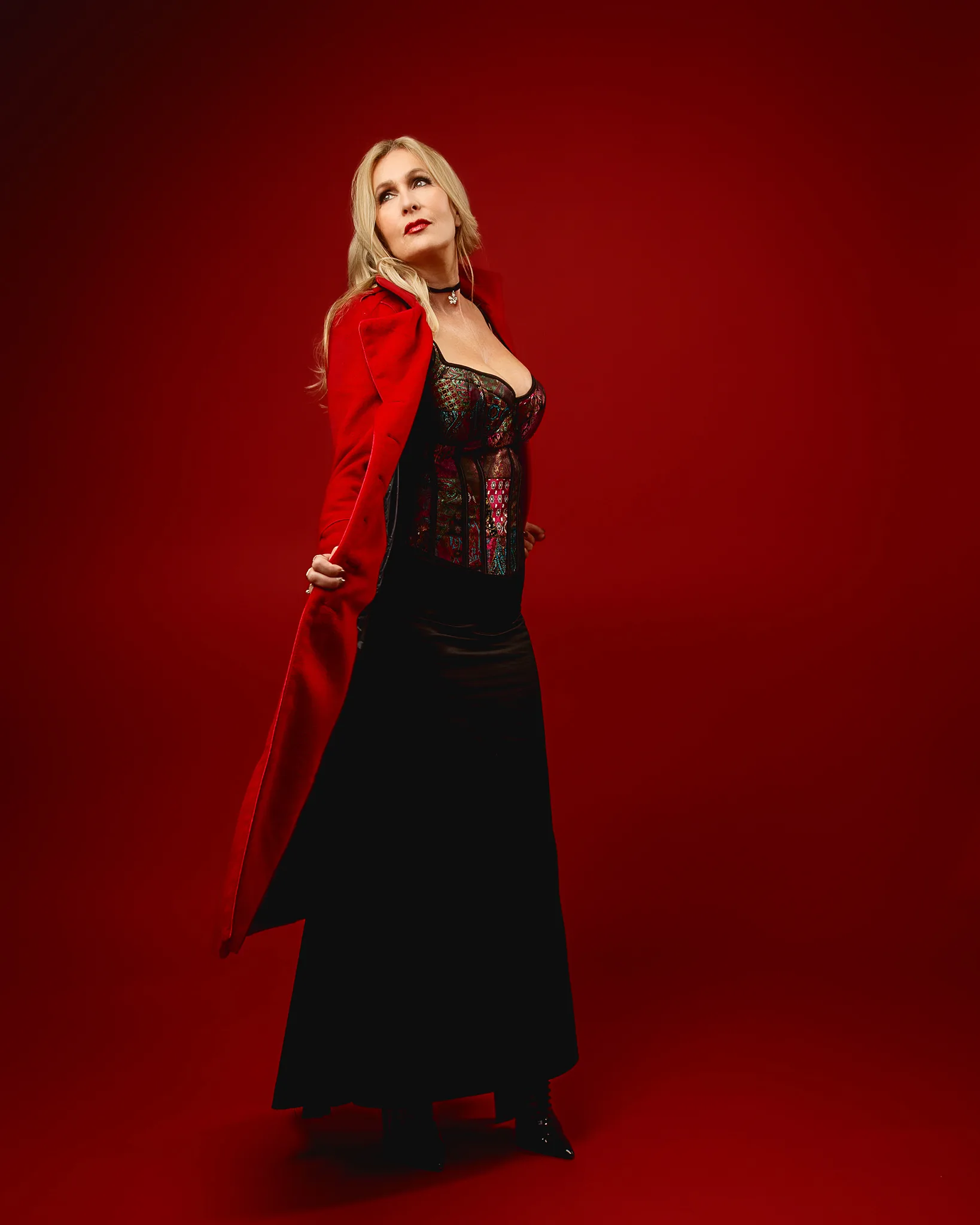
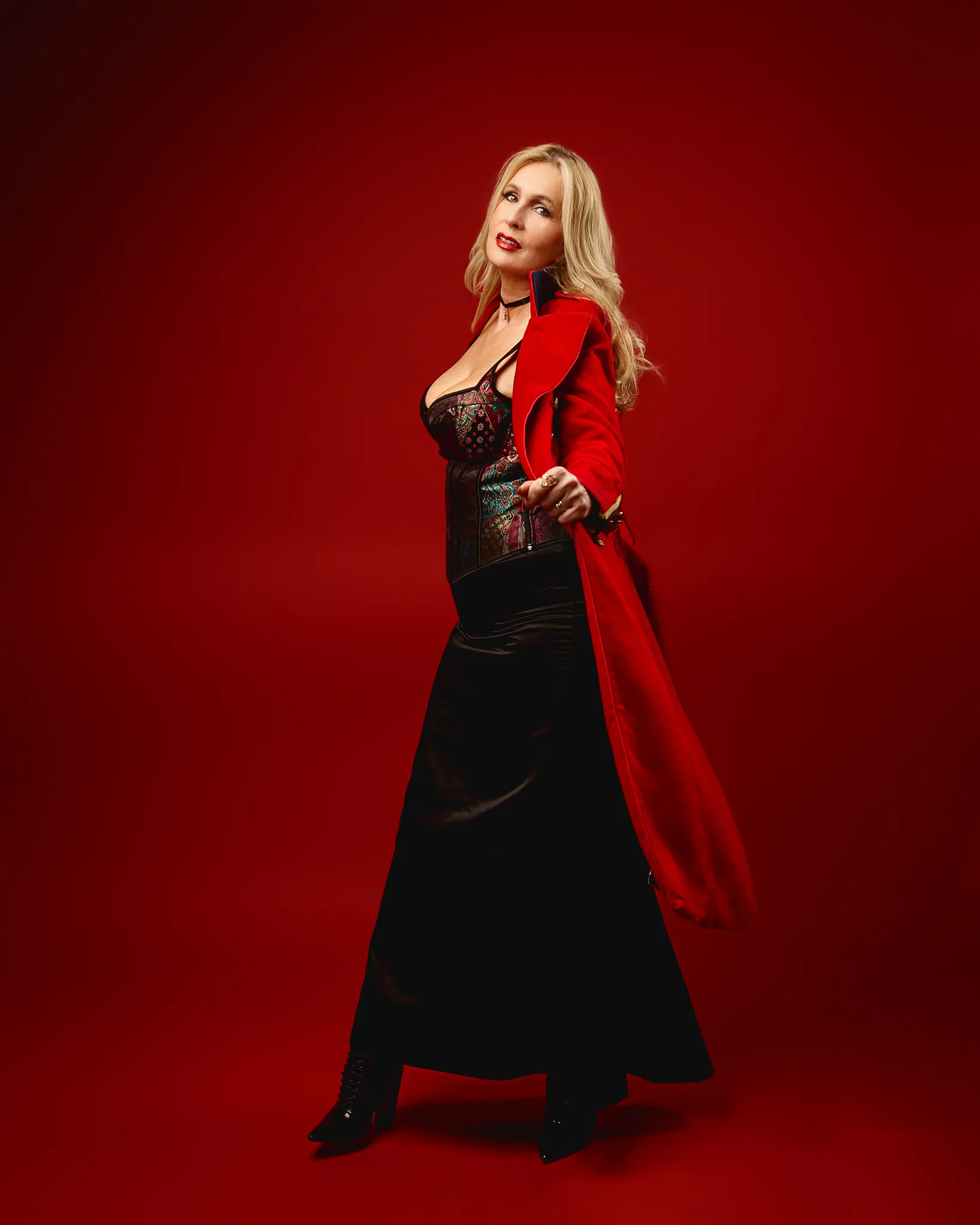
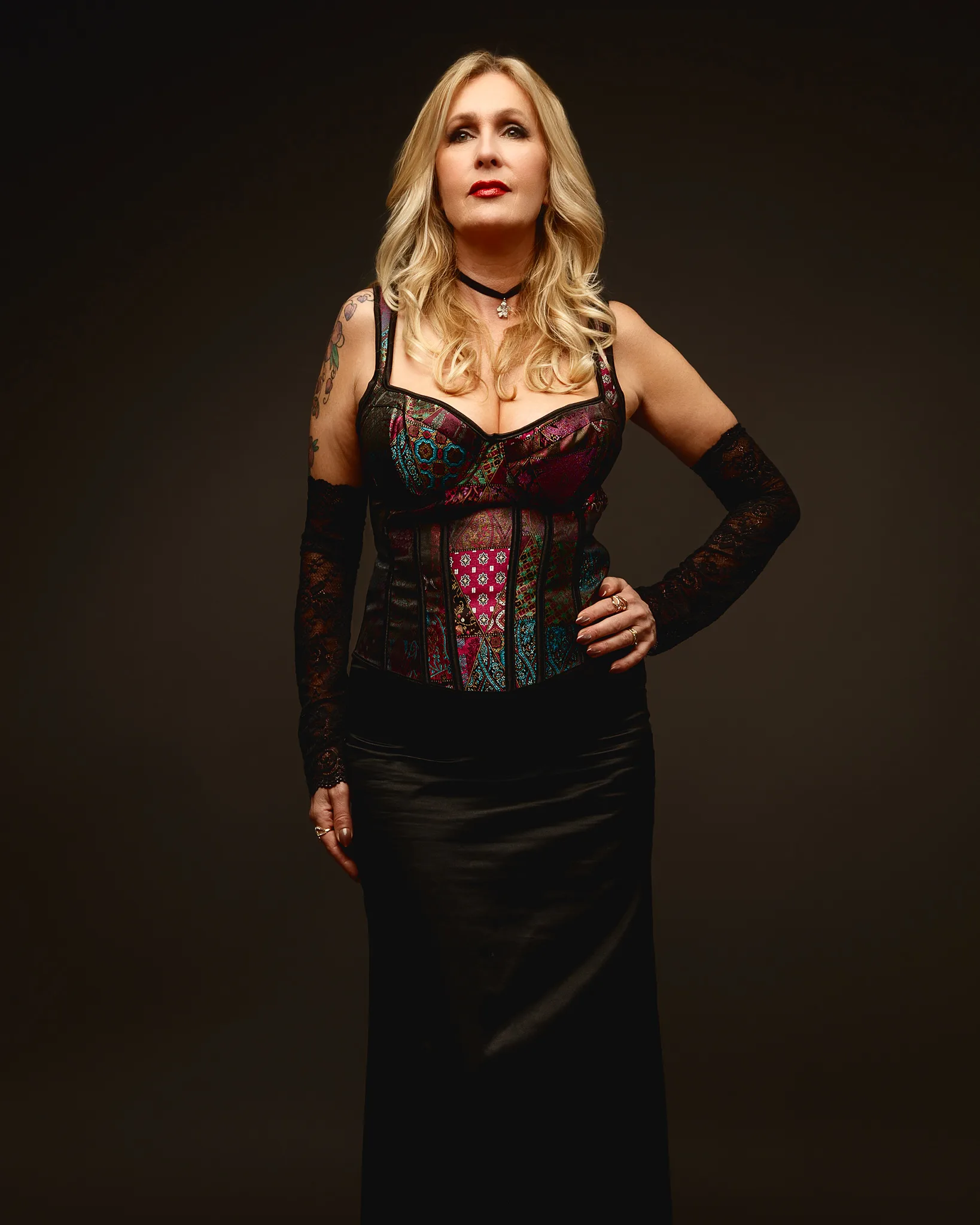
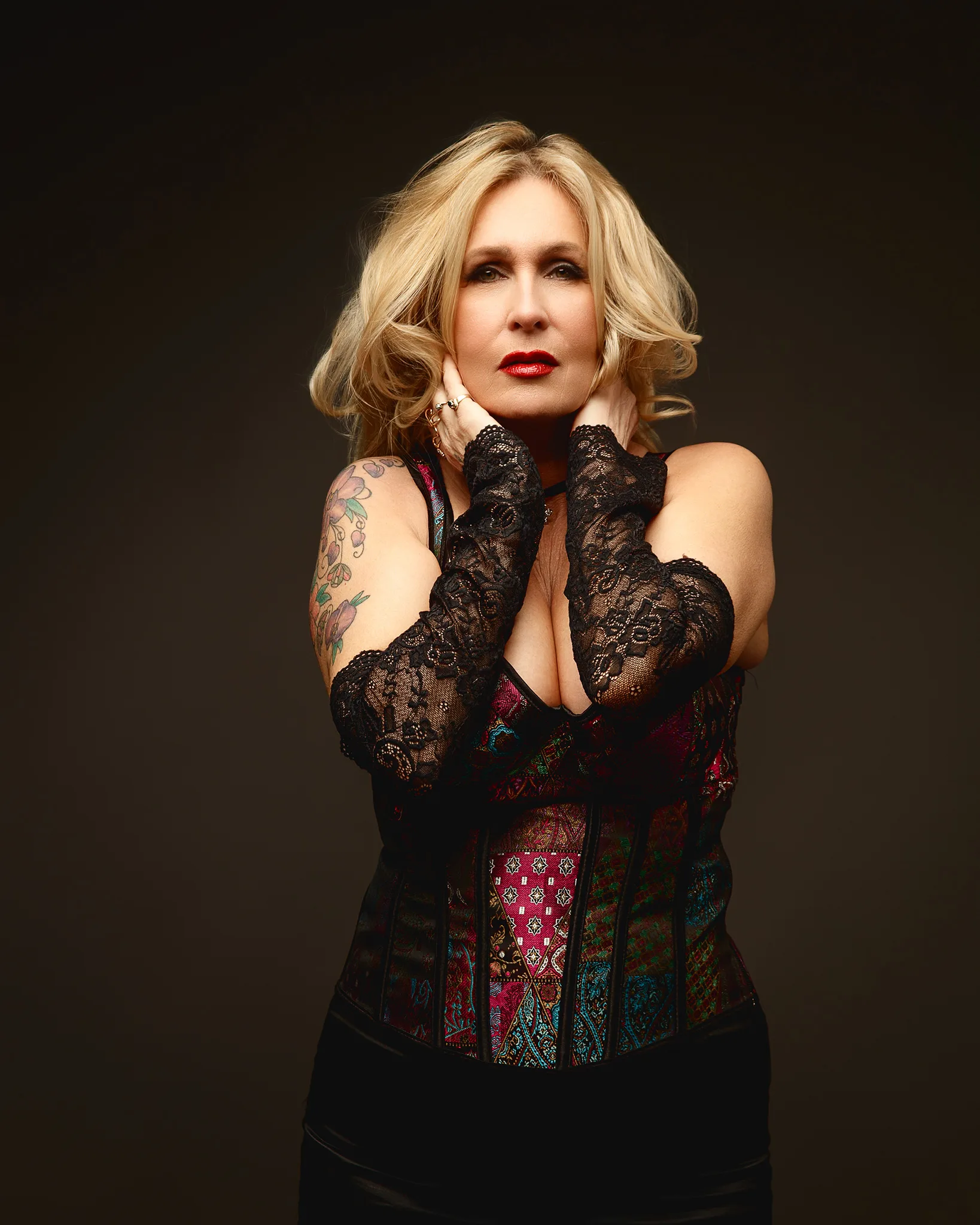
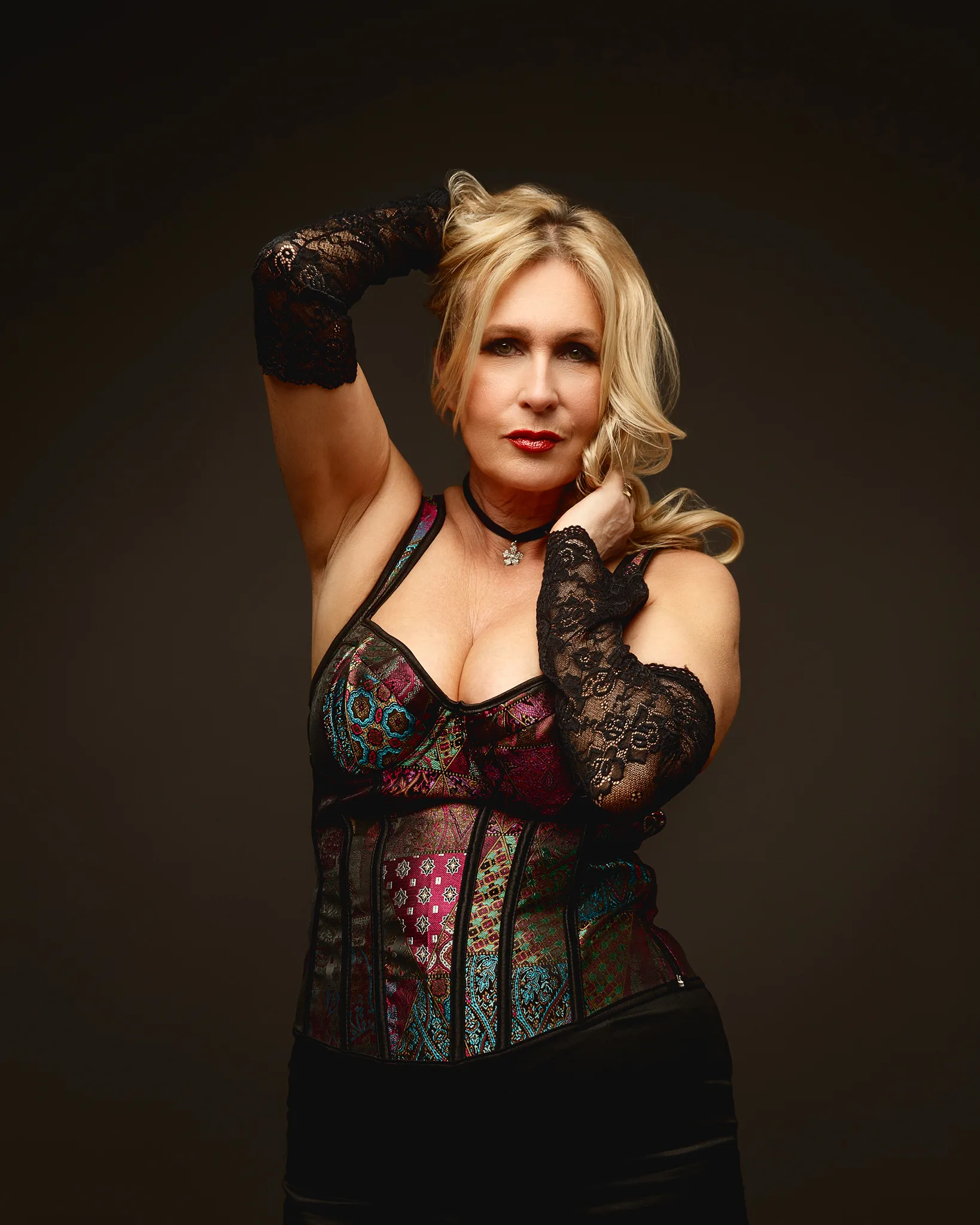
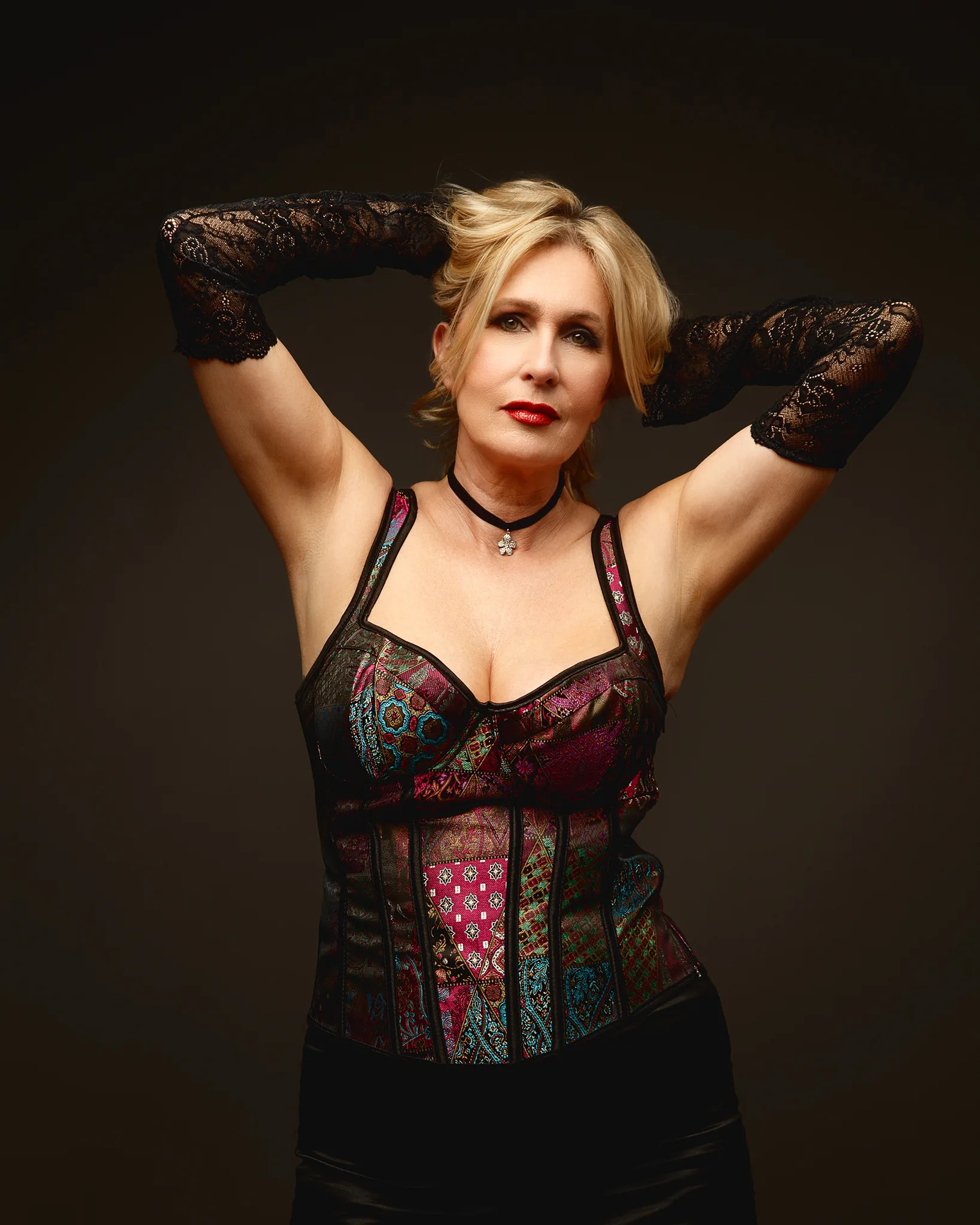
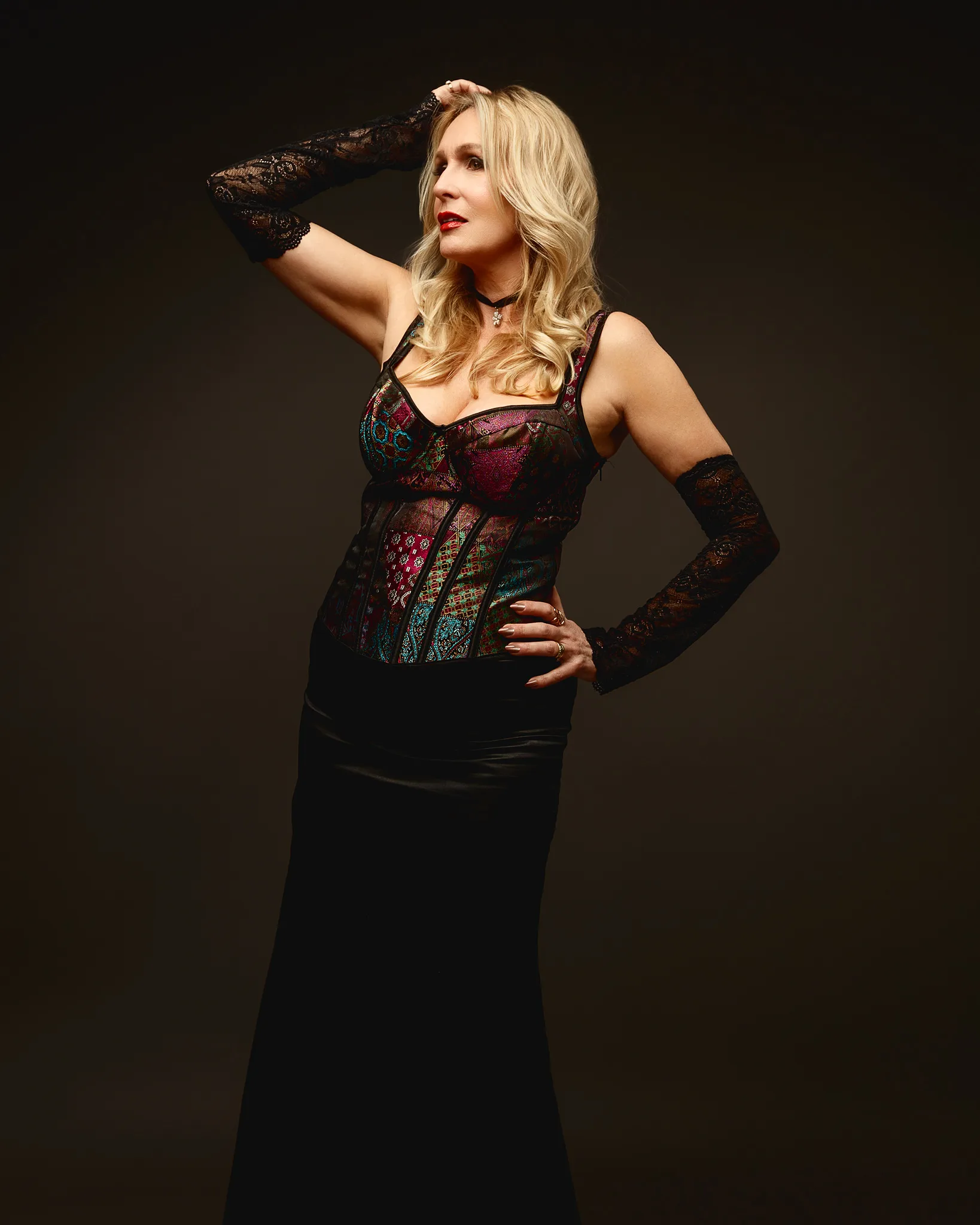
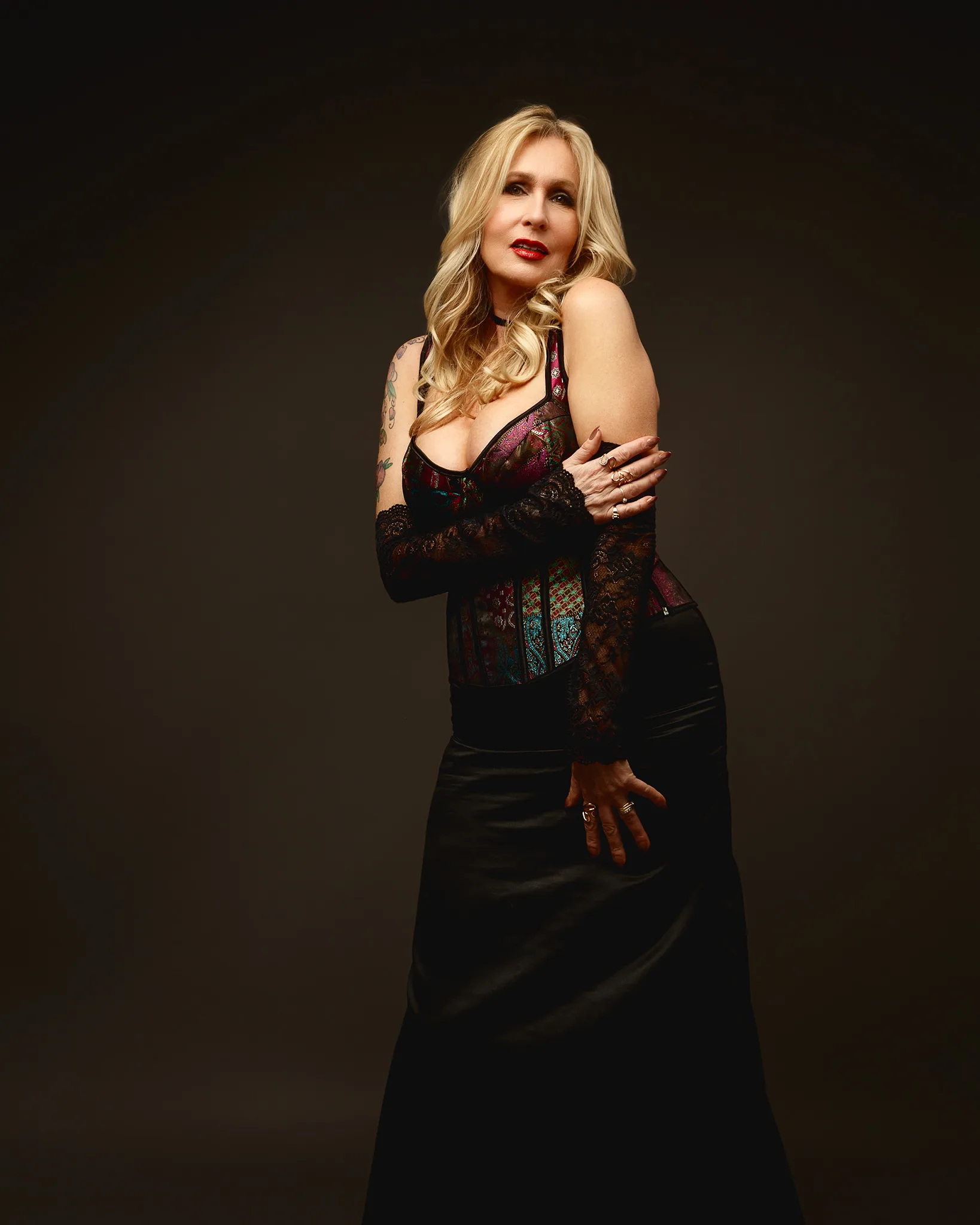
With Lynn, the styling gave us scope to explore a confident, editorial portrait style. Some of the images had a clean fashion-led feel, using strong styling choices such as the sleeveless tailored top, tie, wide-leg denim, high-heeled boots, textured coat, red military-style coat, lace gloves, corset styling, faux fur, pearls, and bold accessories. These details helped create variety without needing to overcomplicate the set.
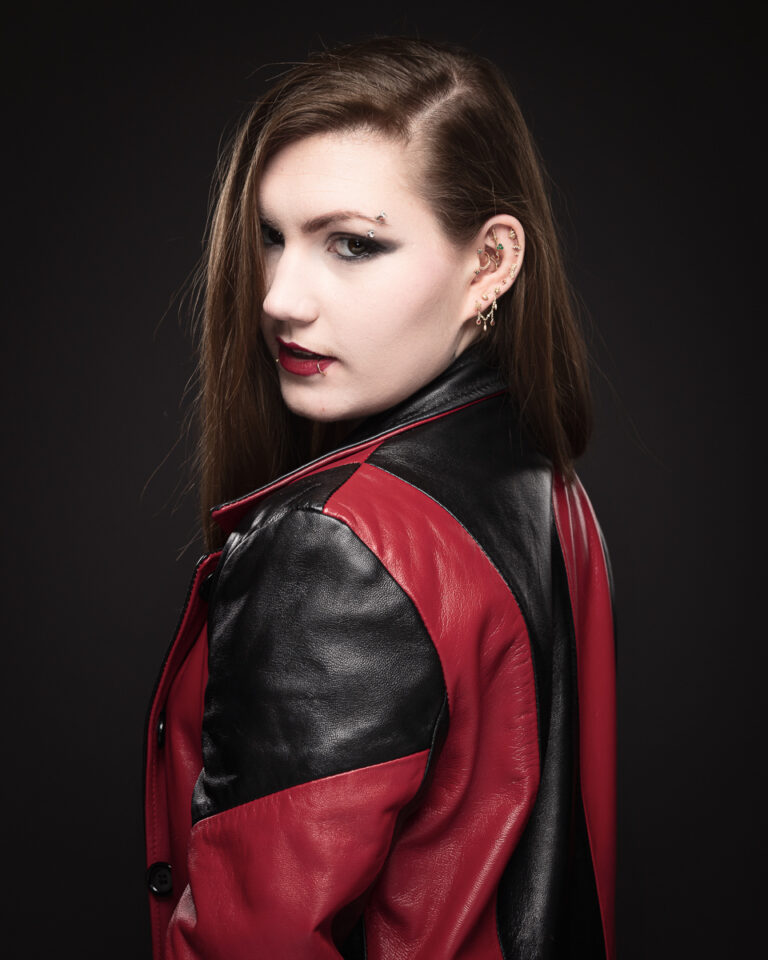
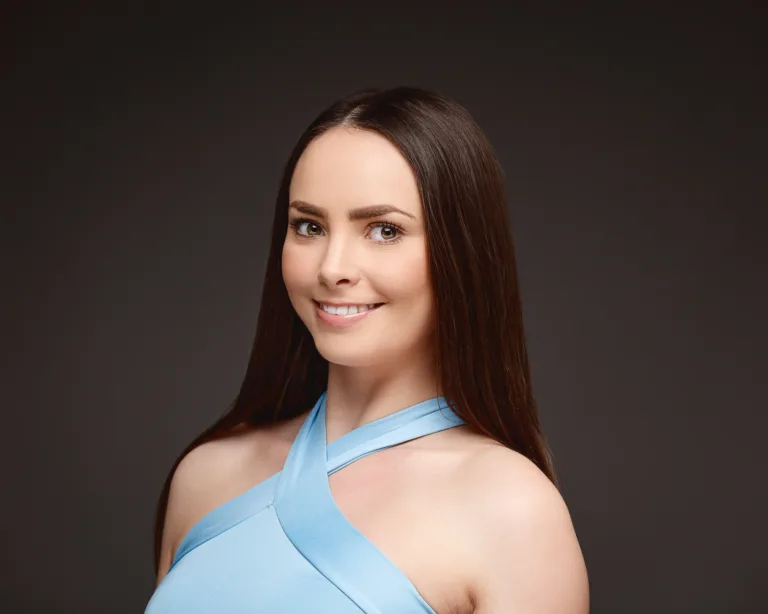
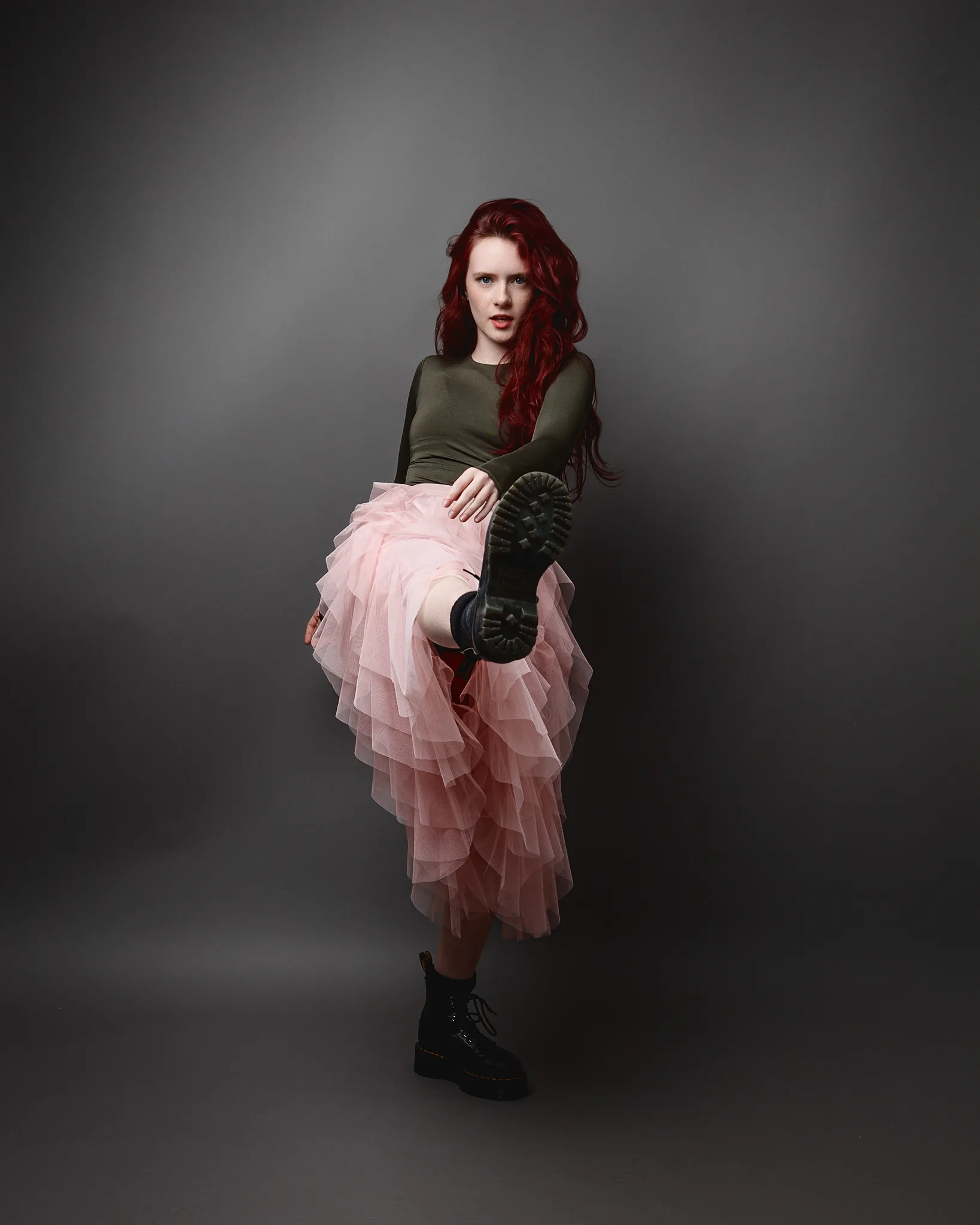
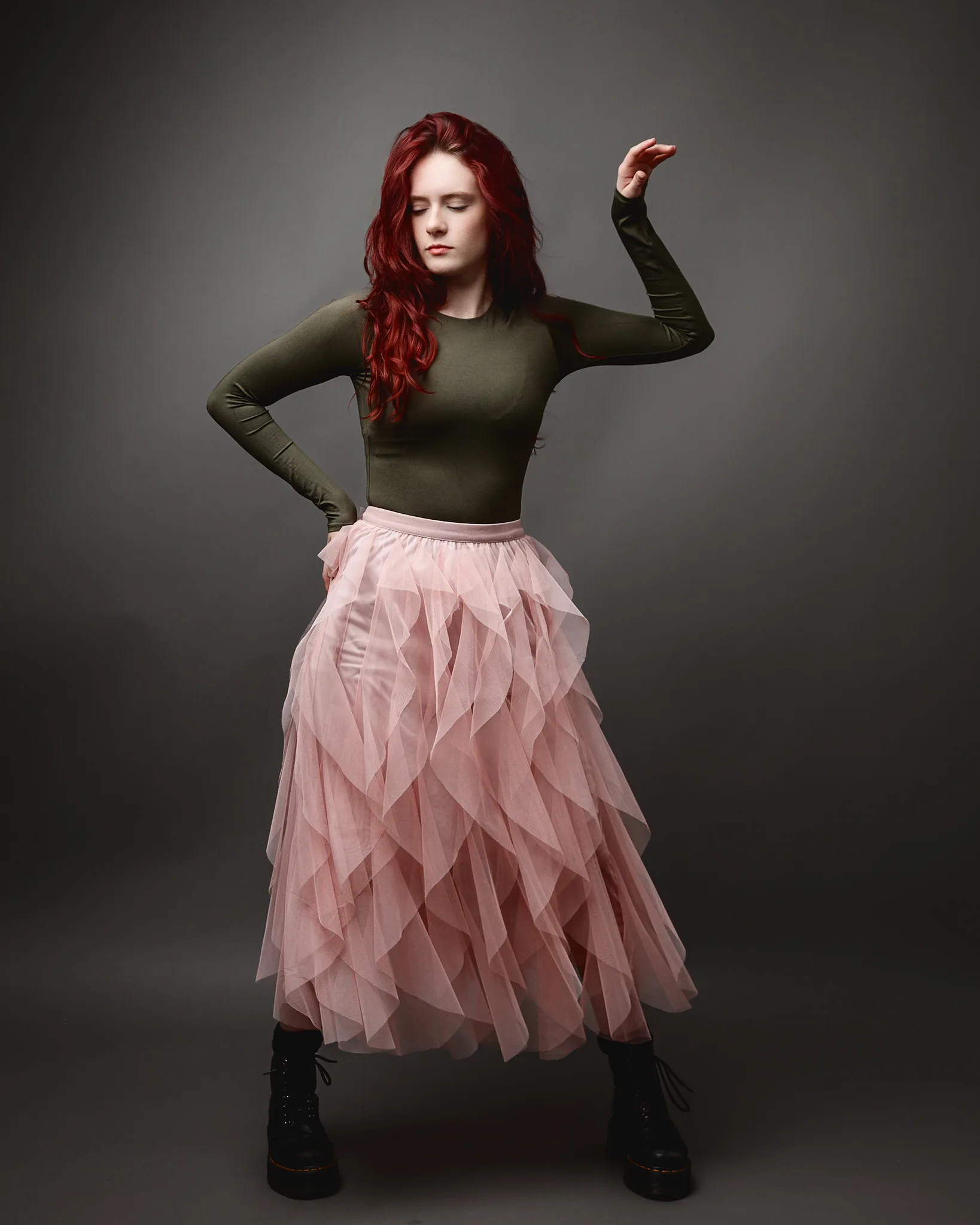
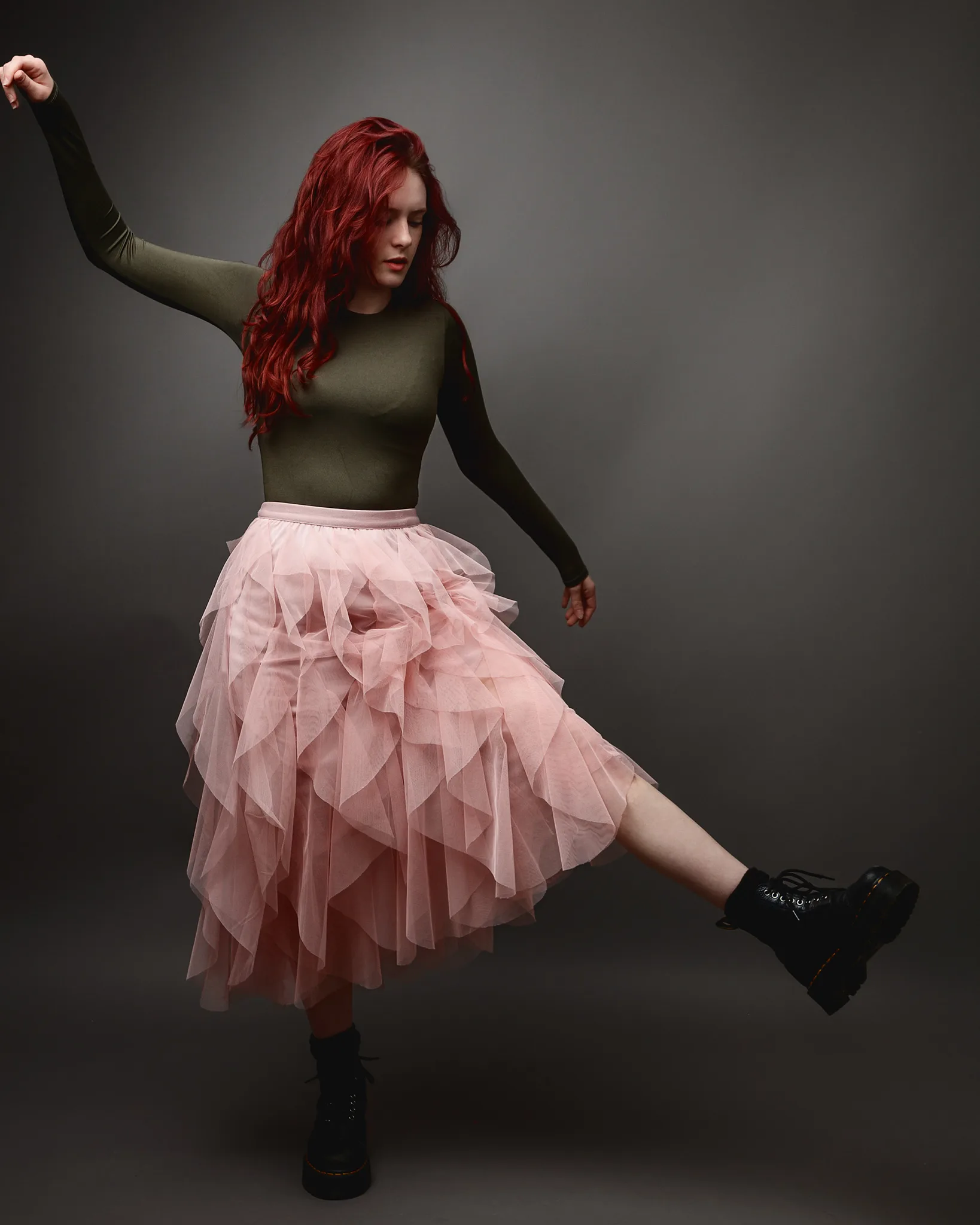
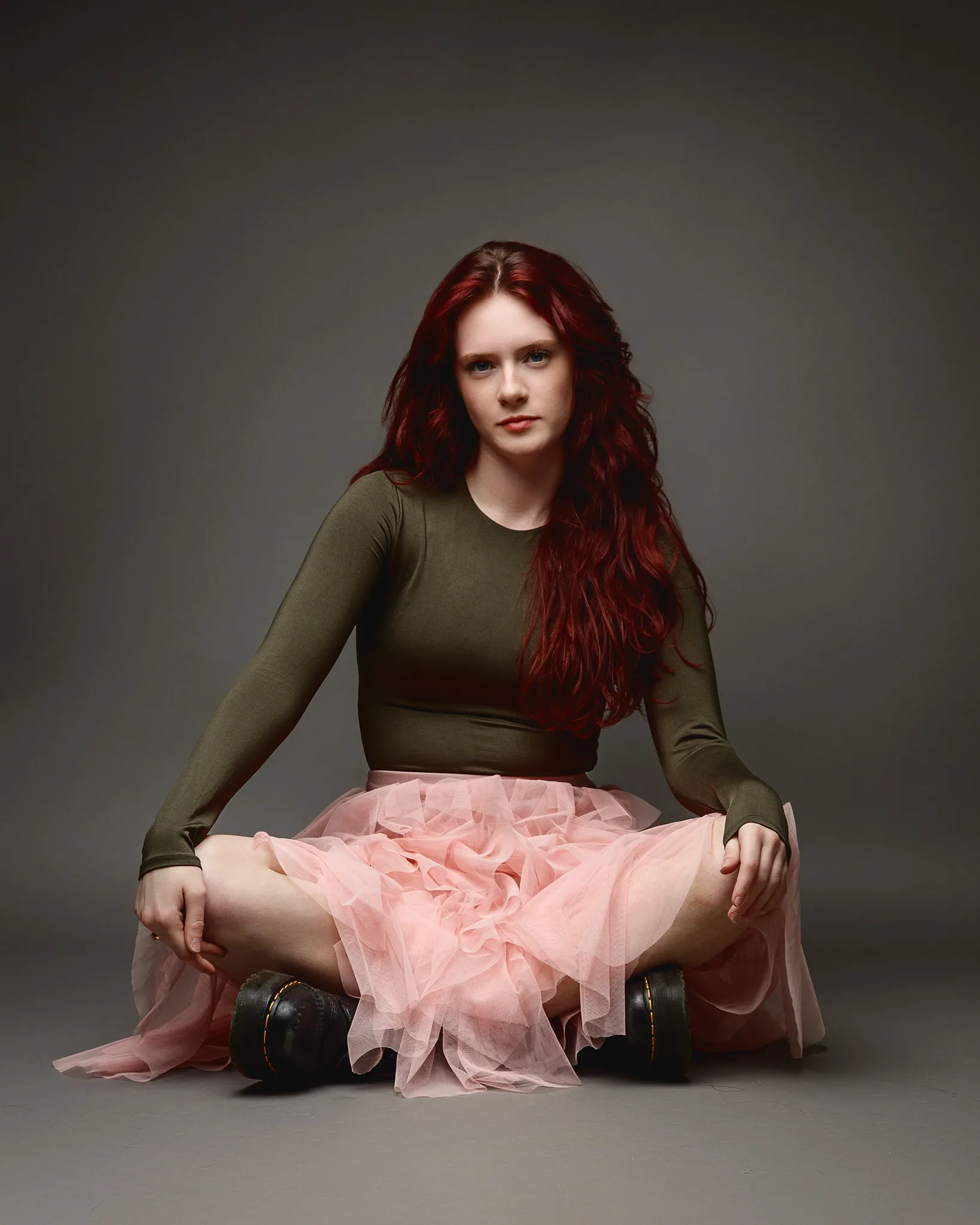
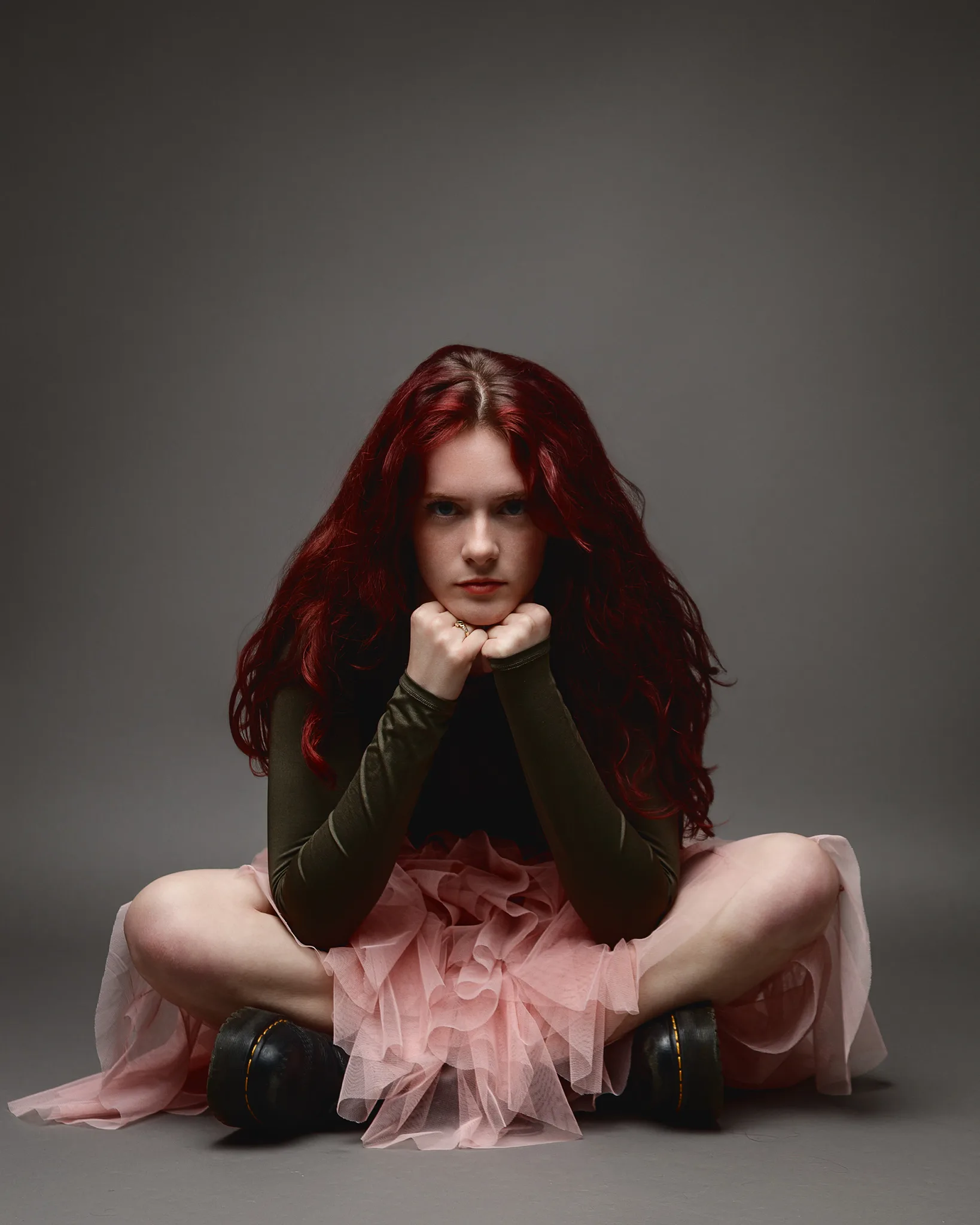
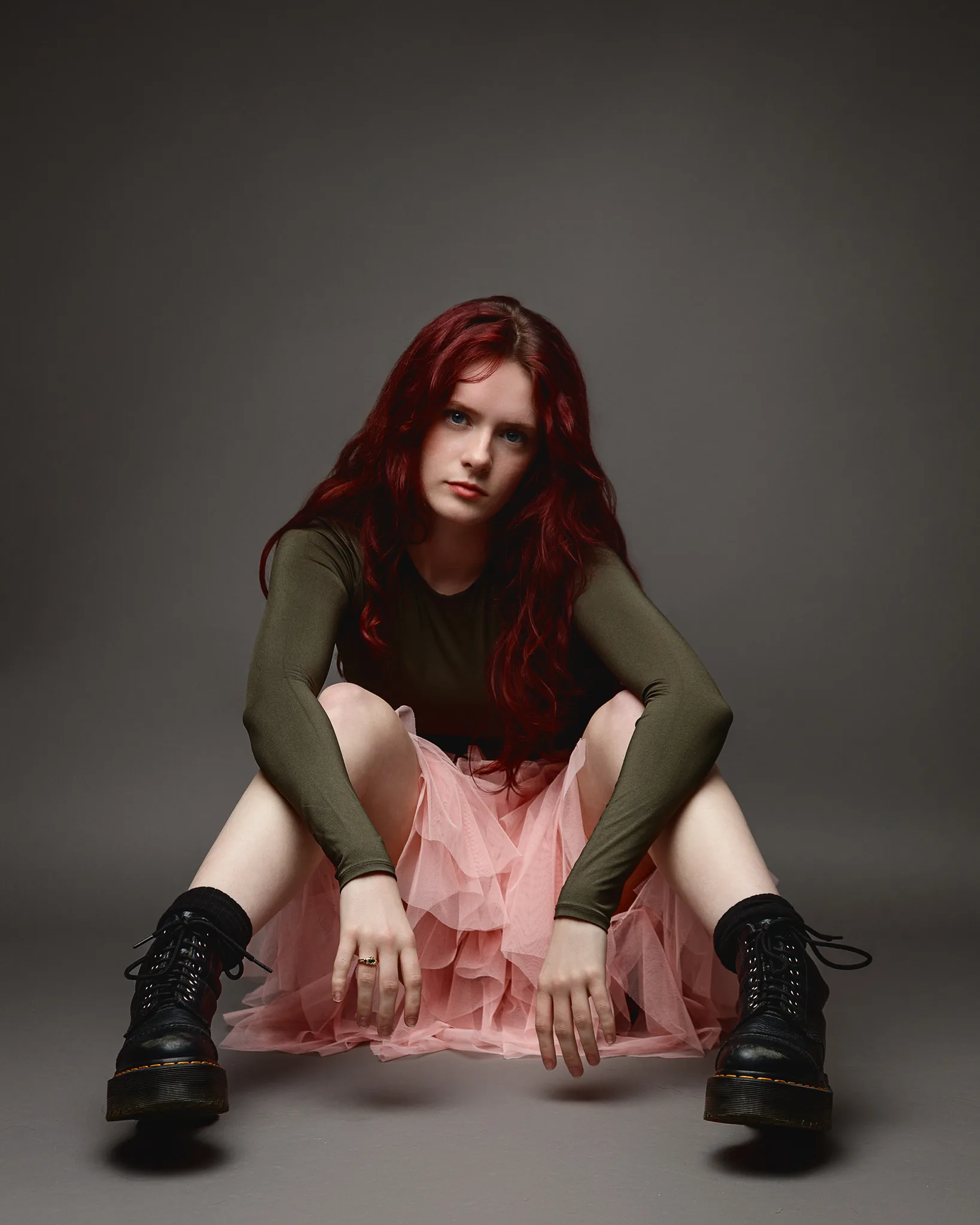
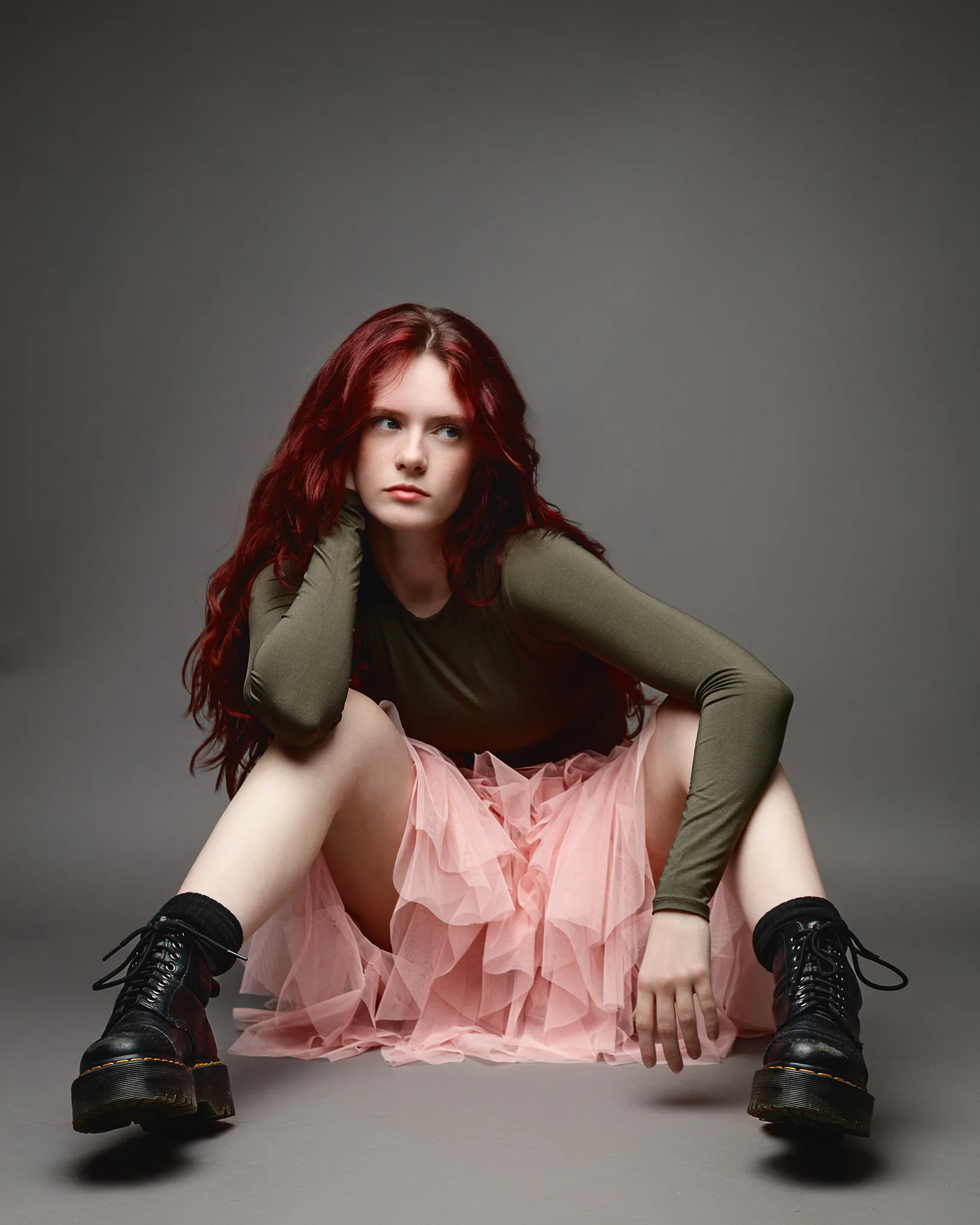
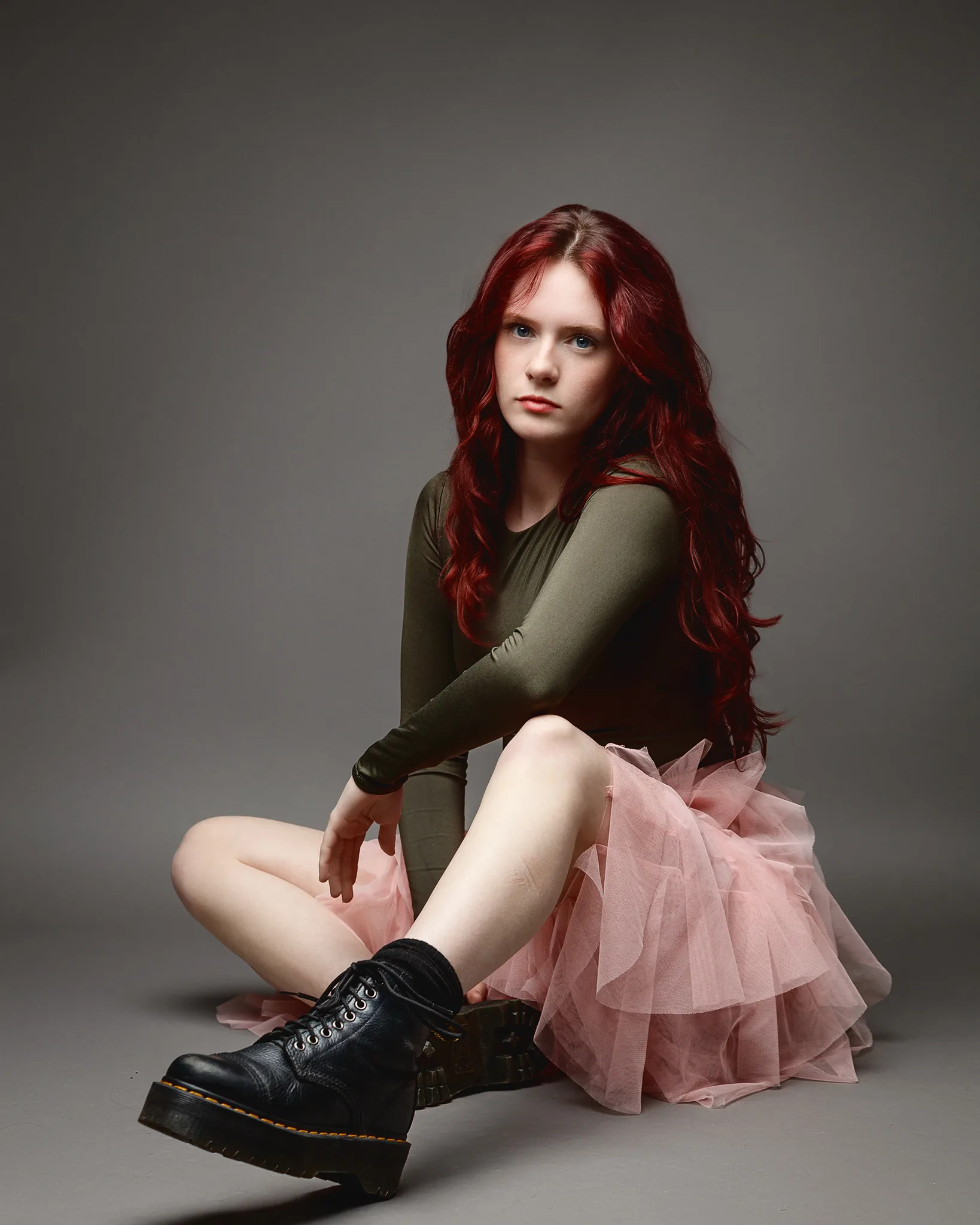
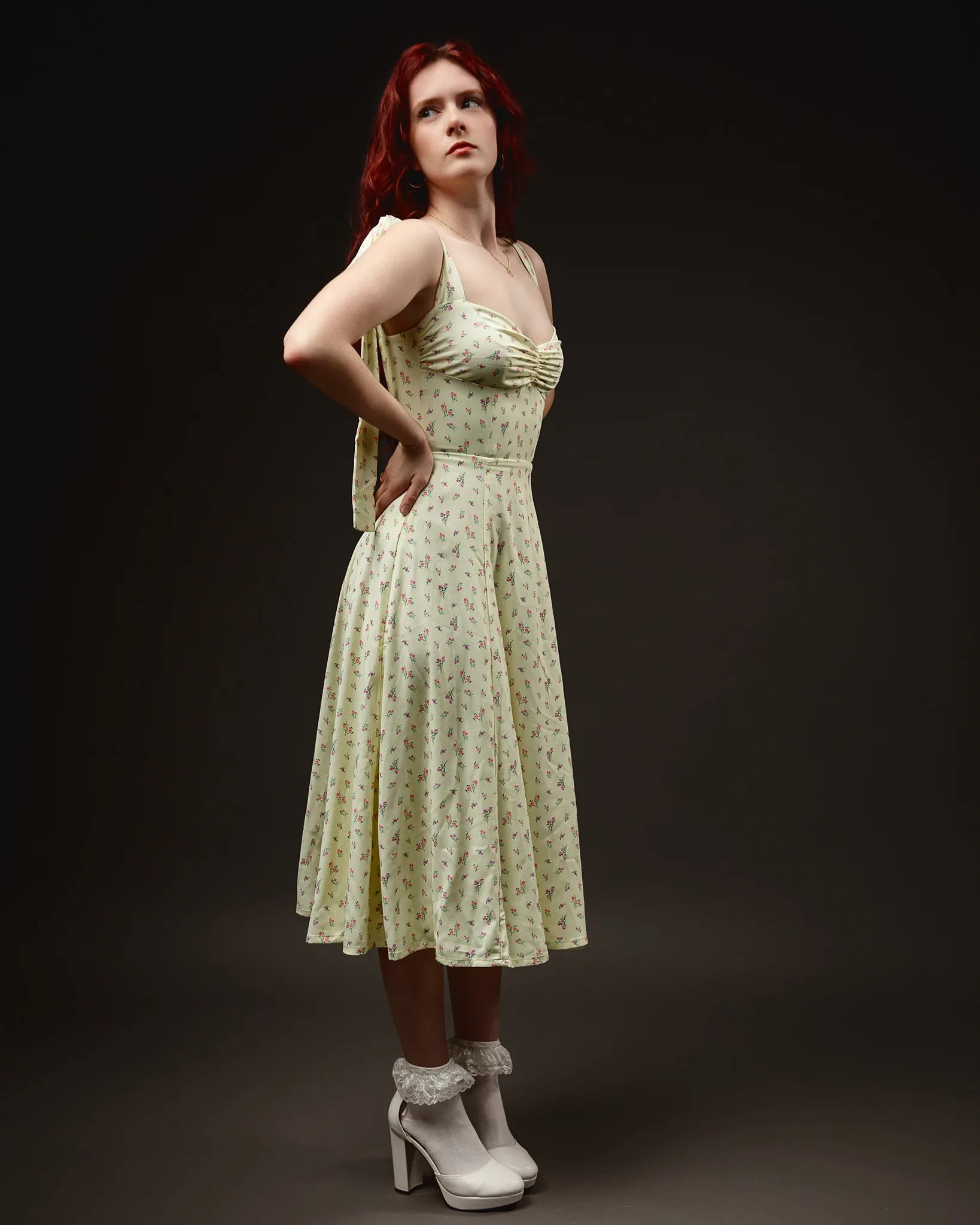
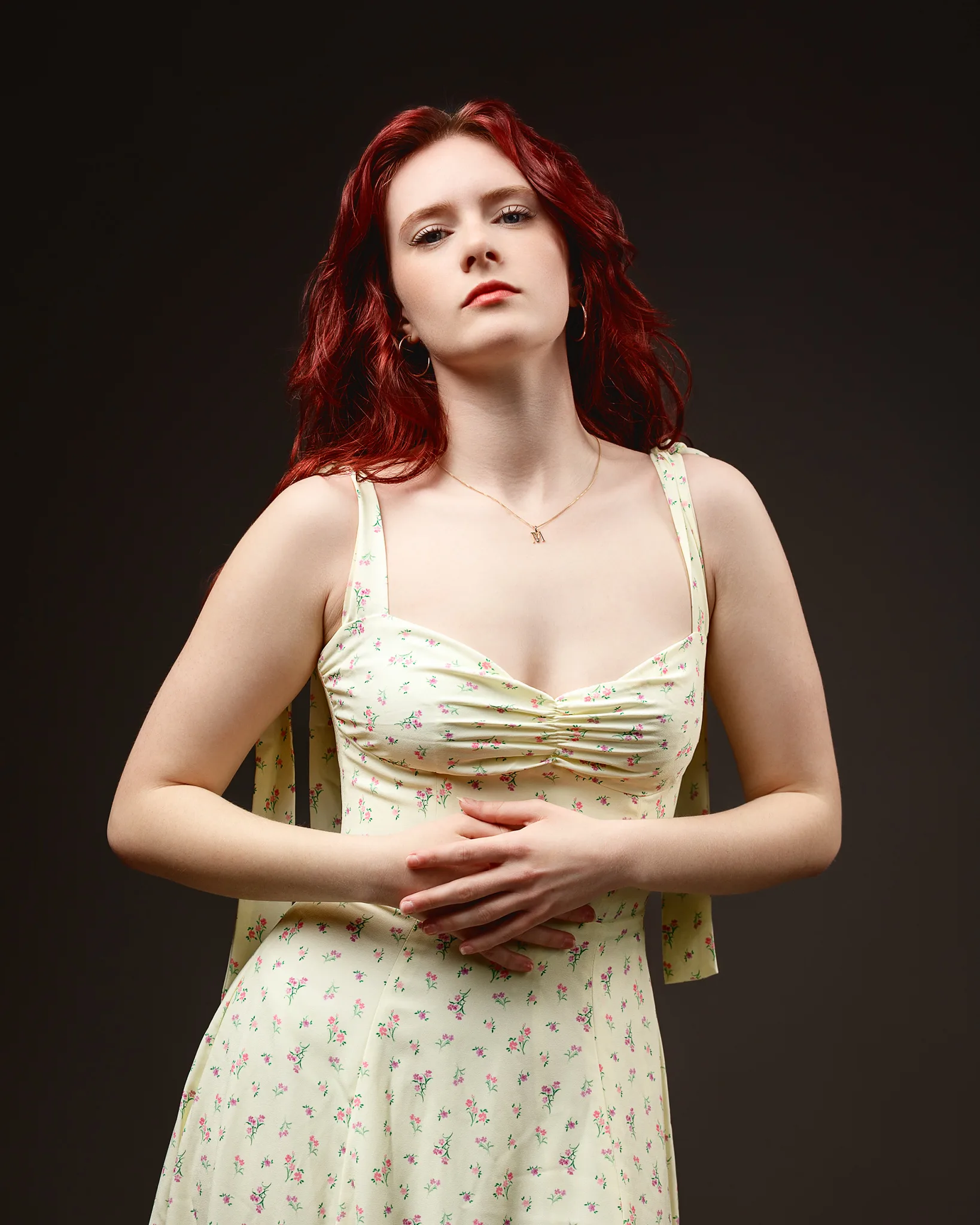
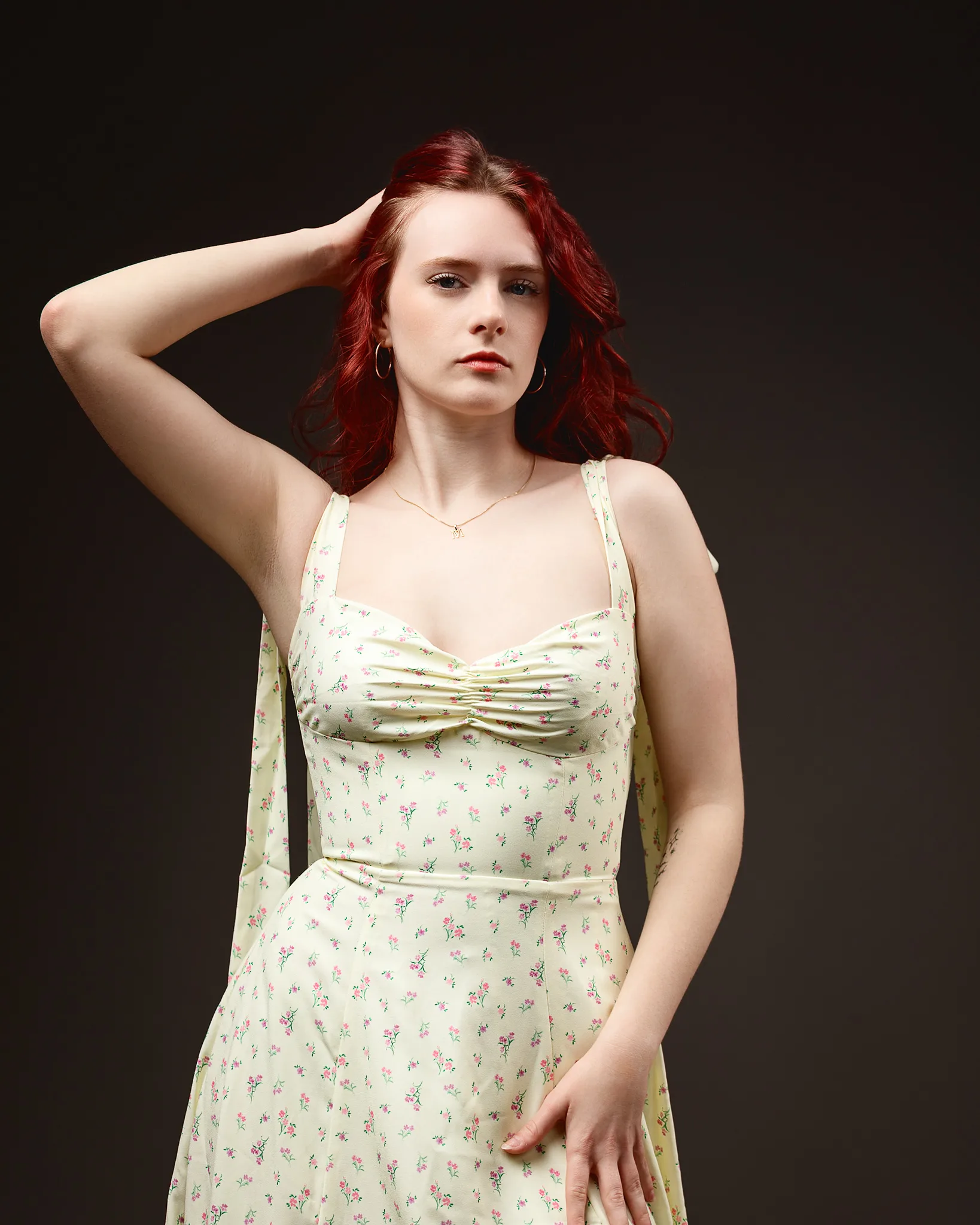
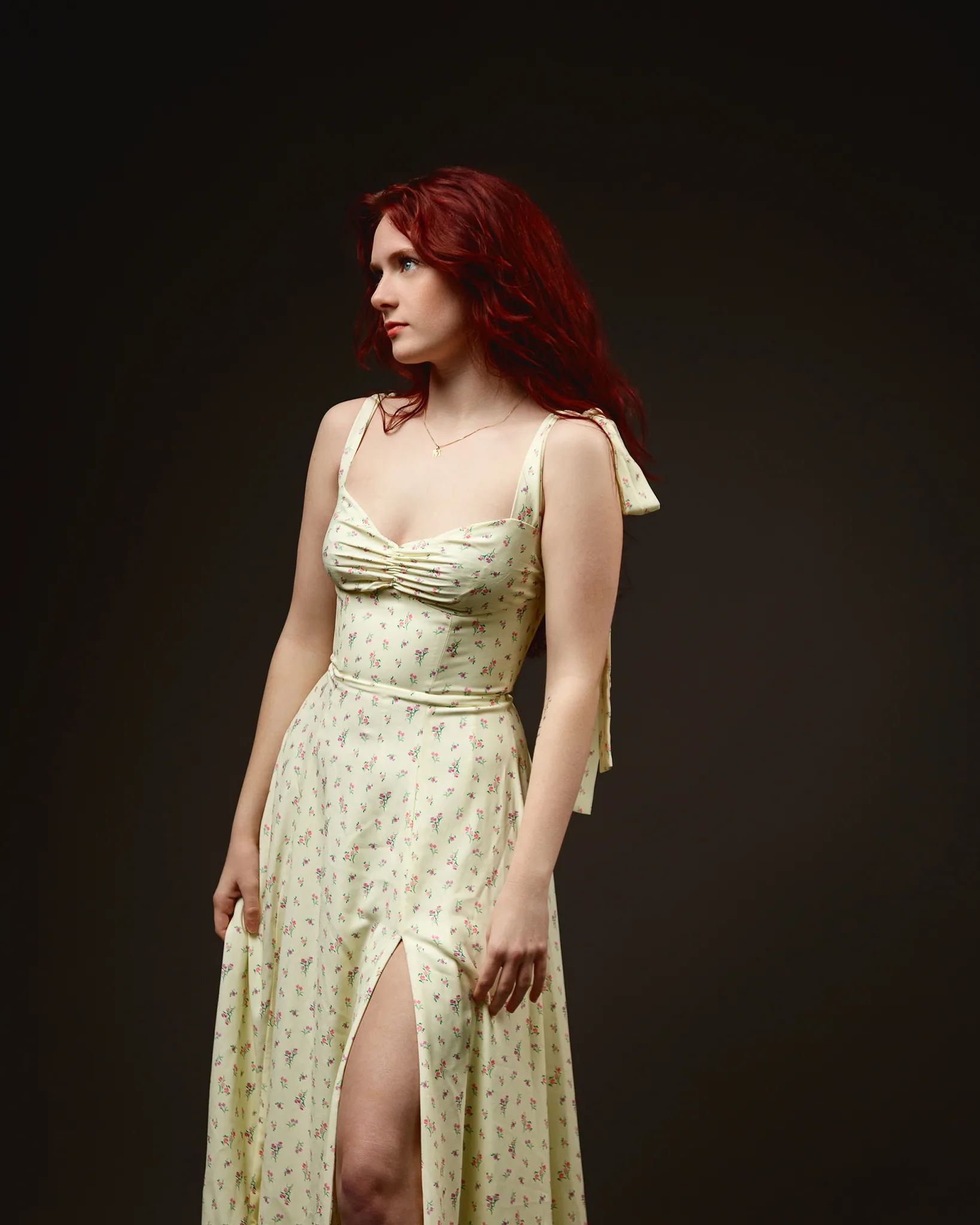
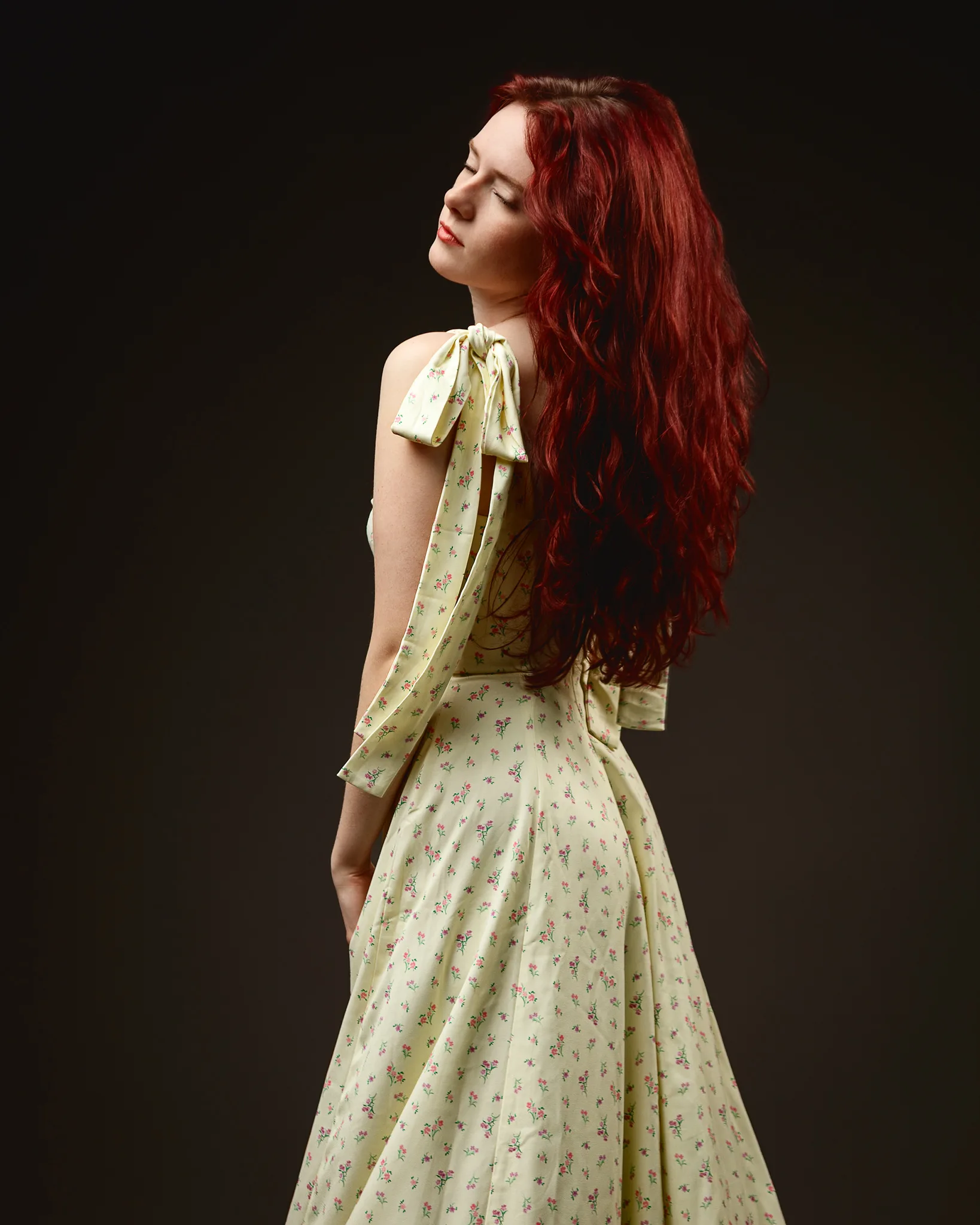
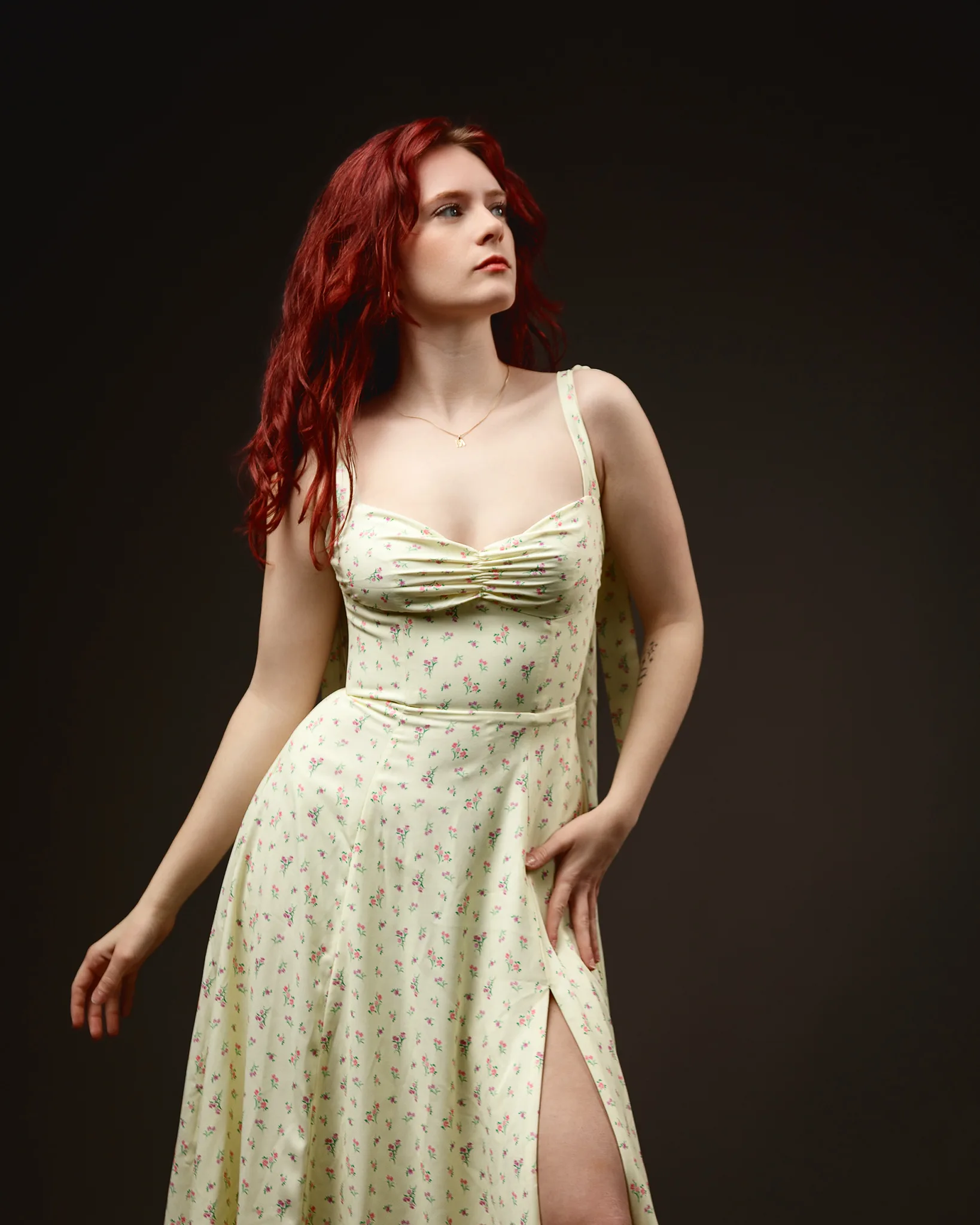
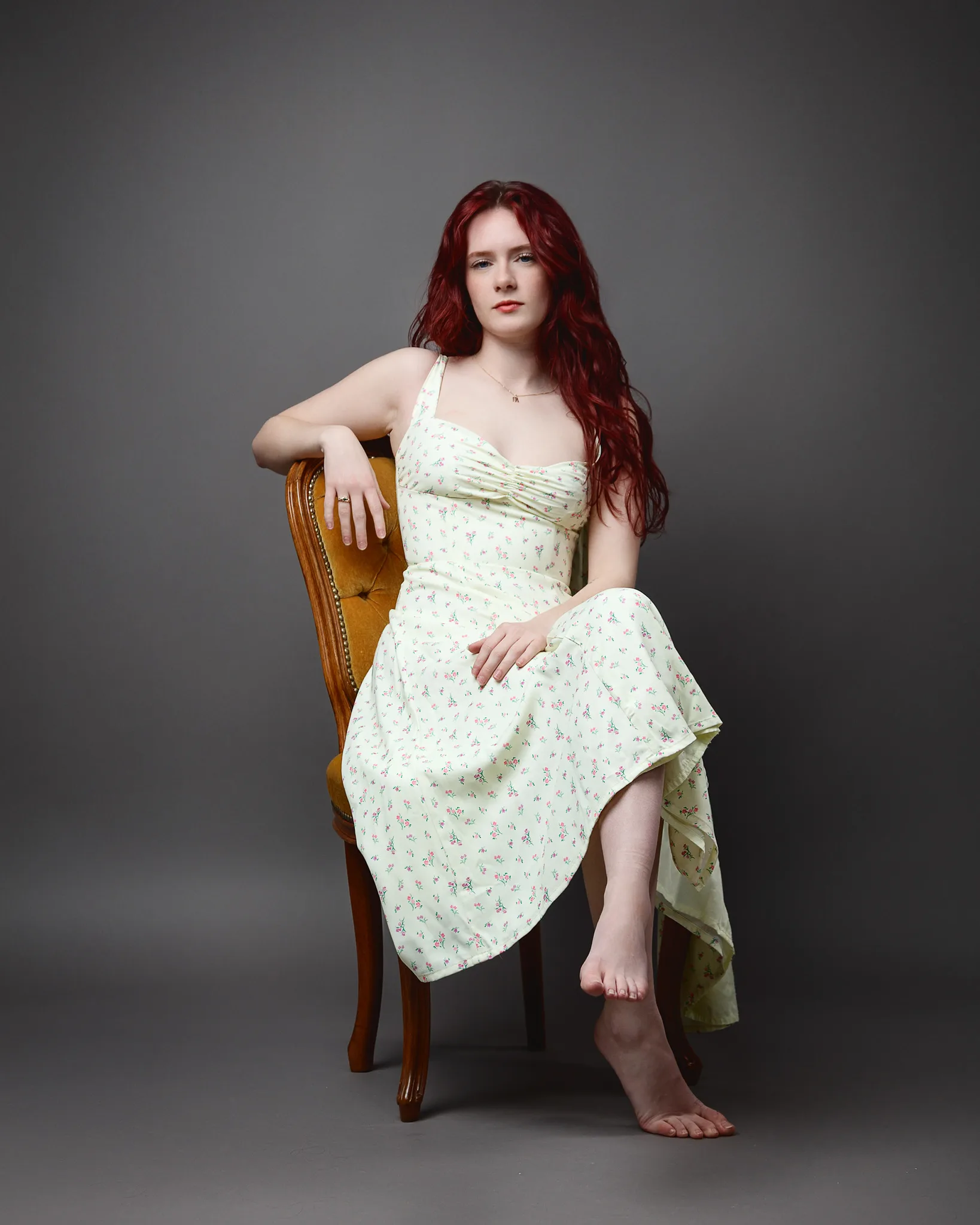
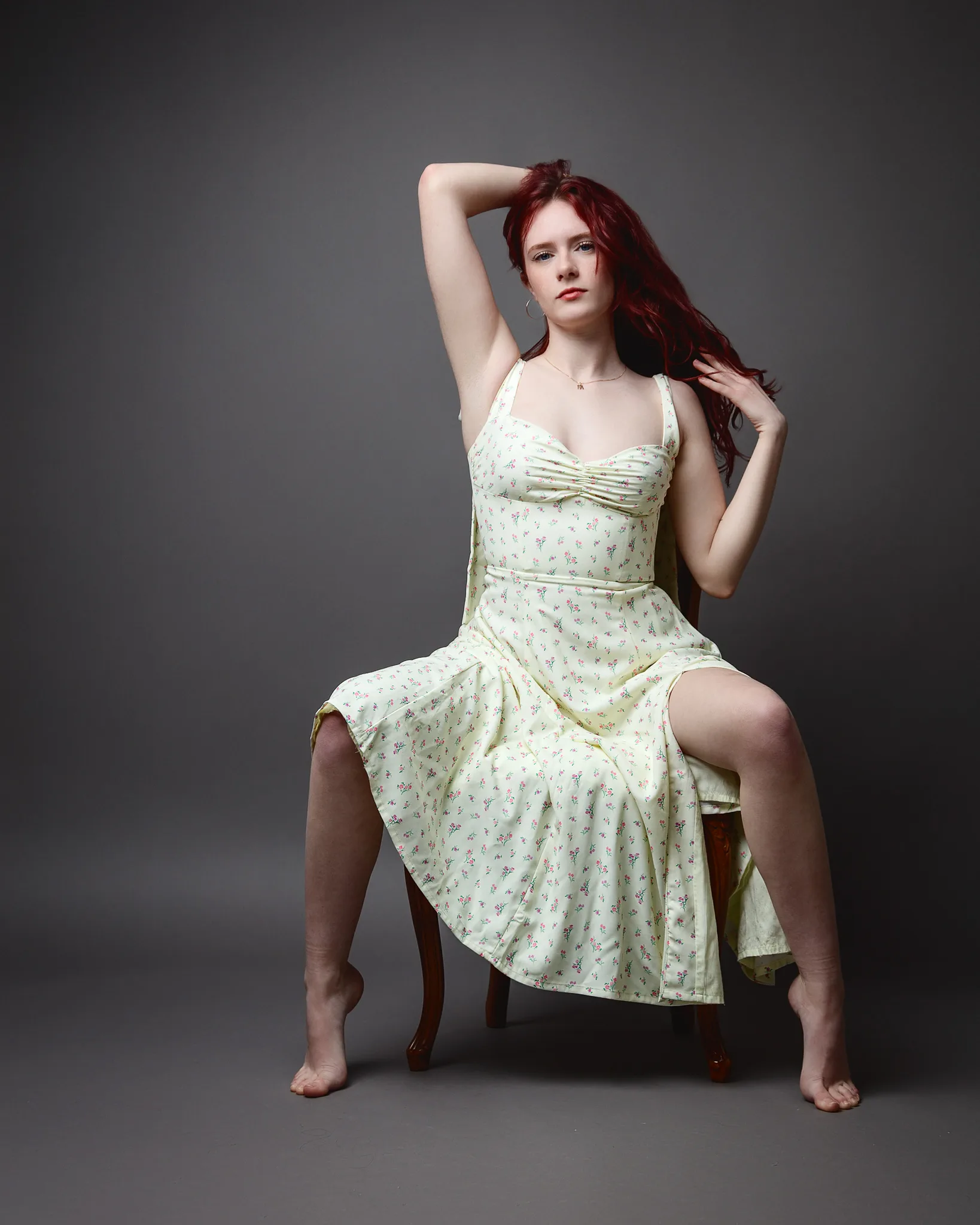
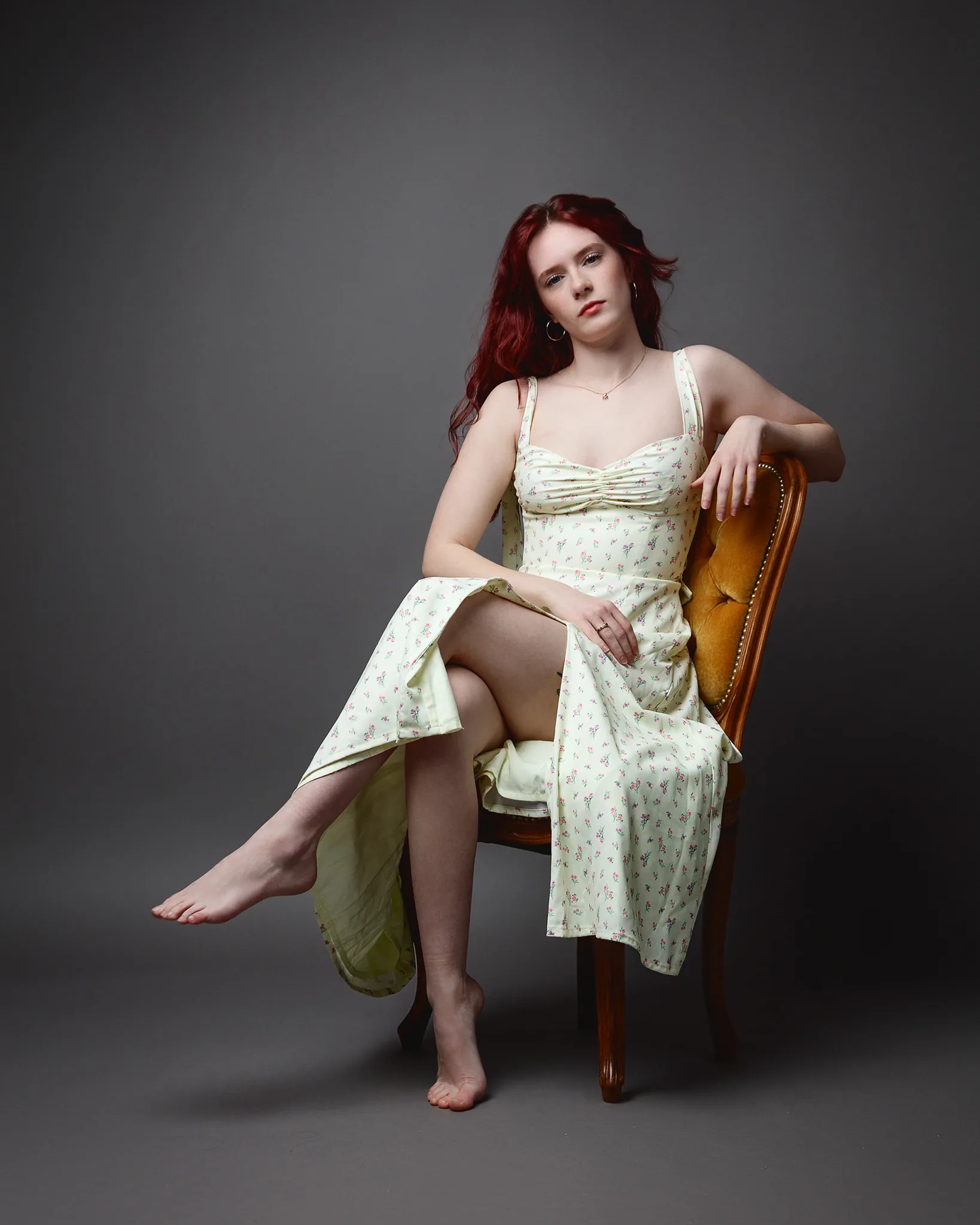
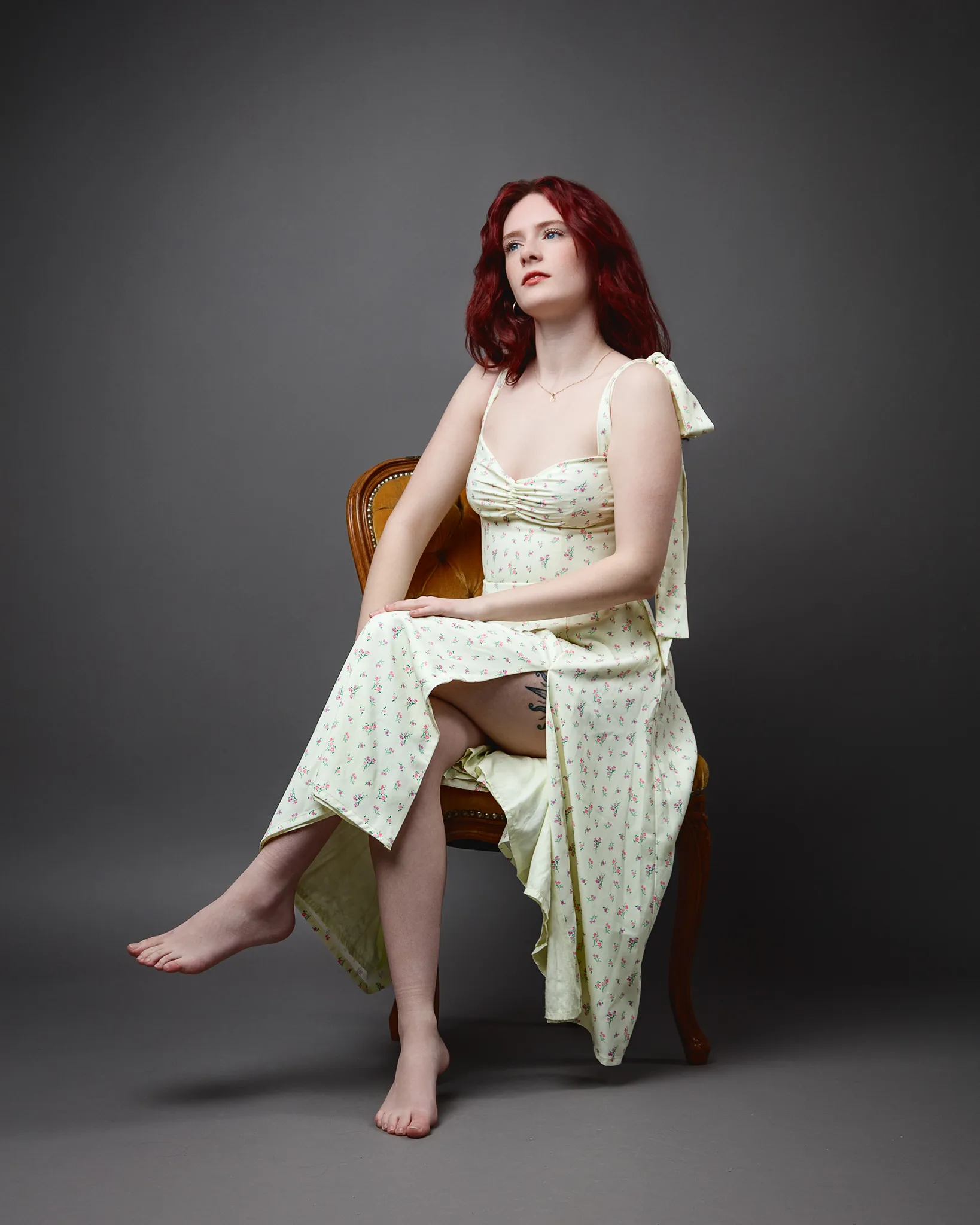
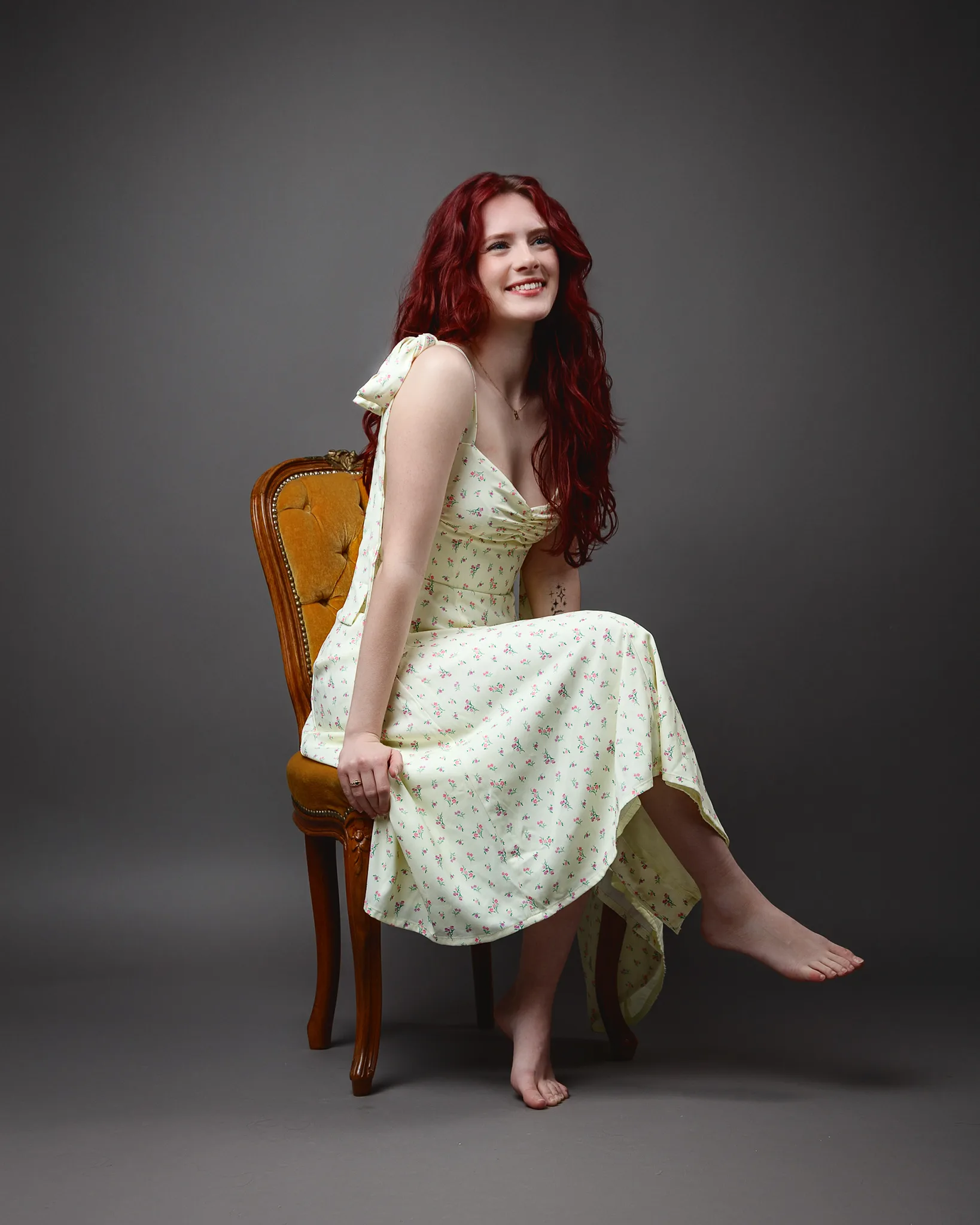
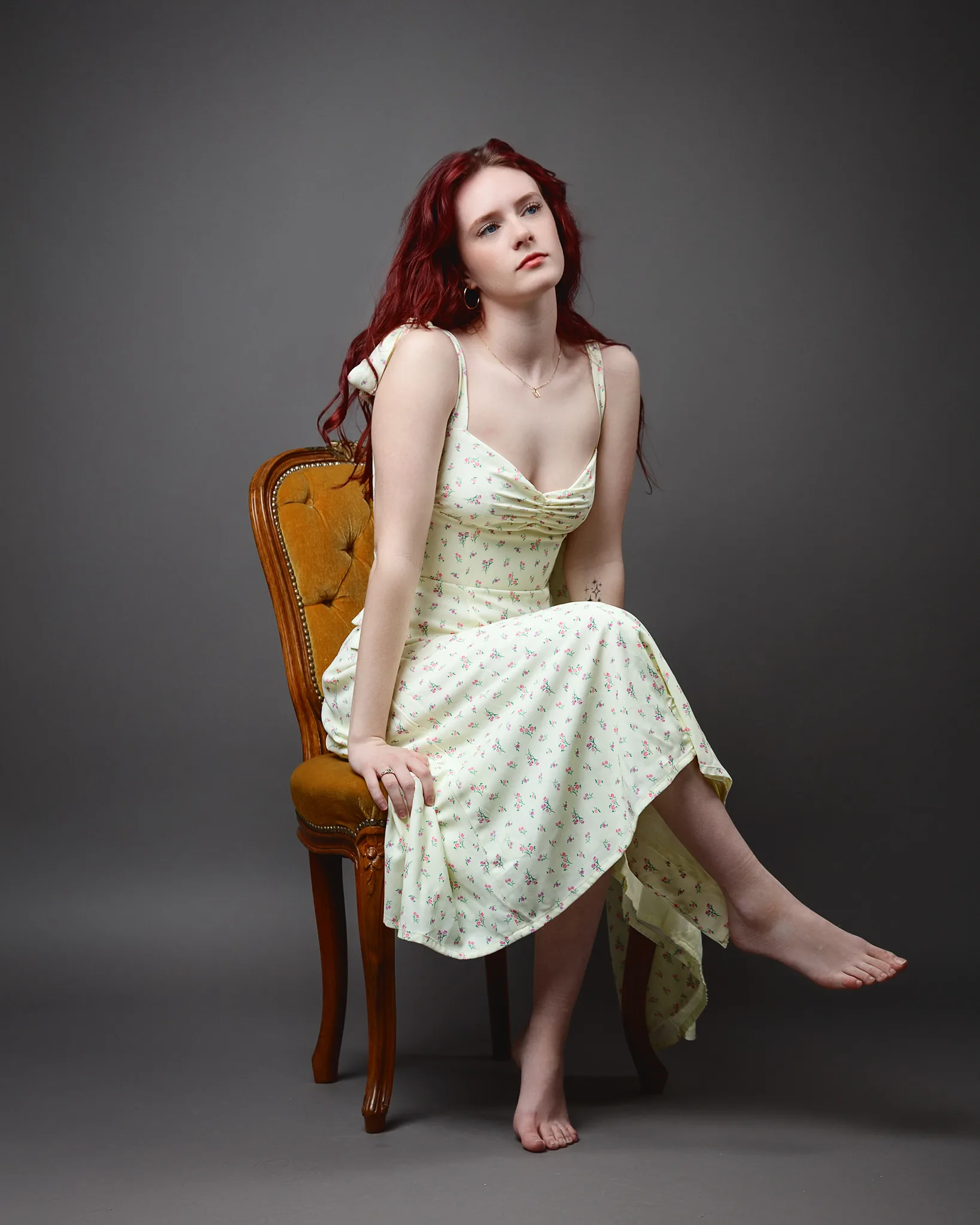
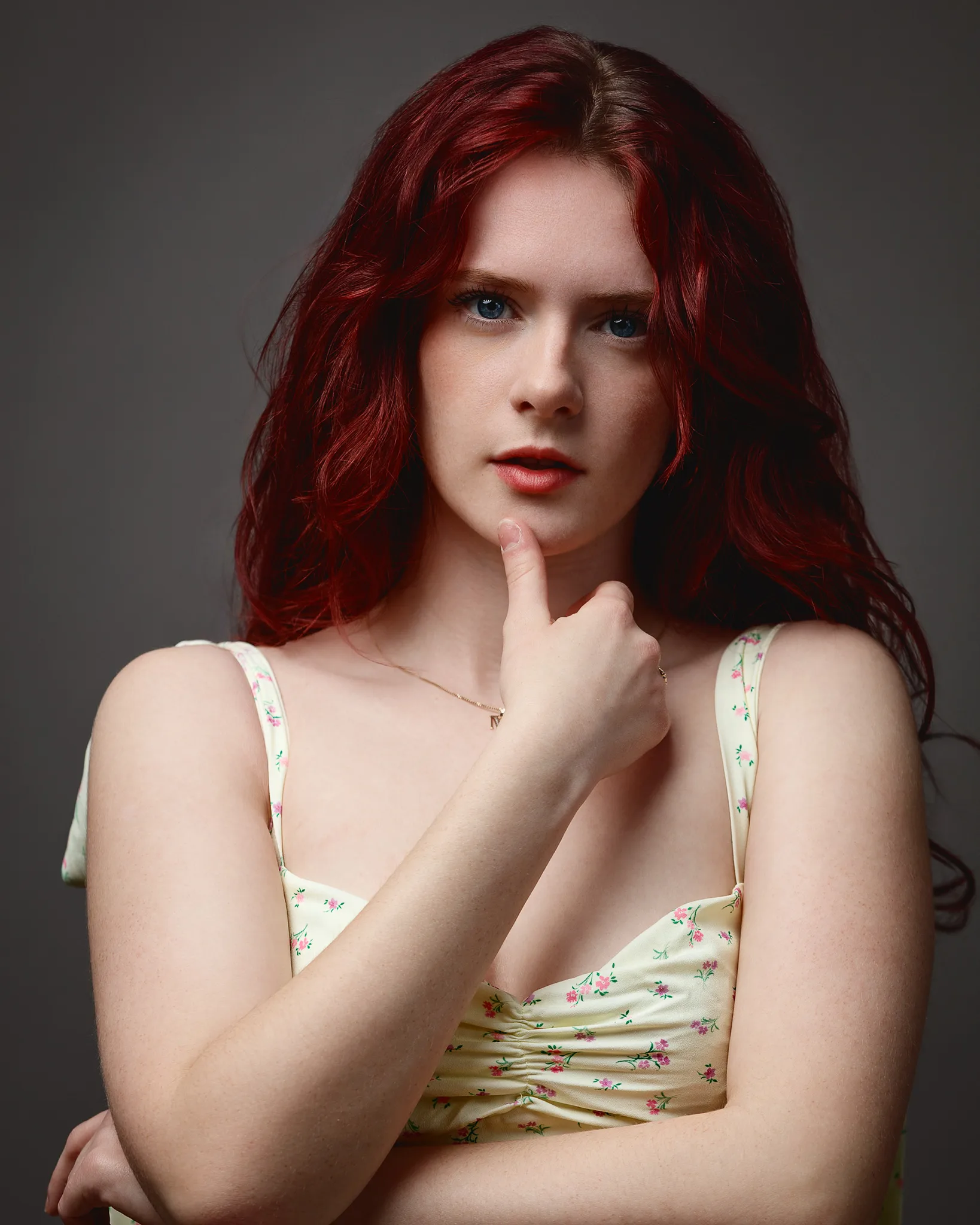
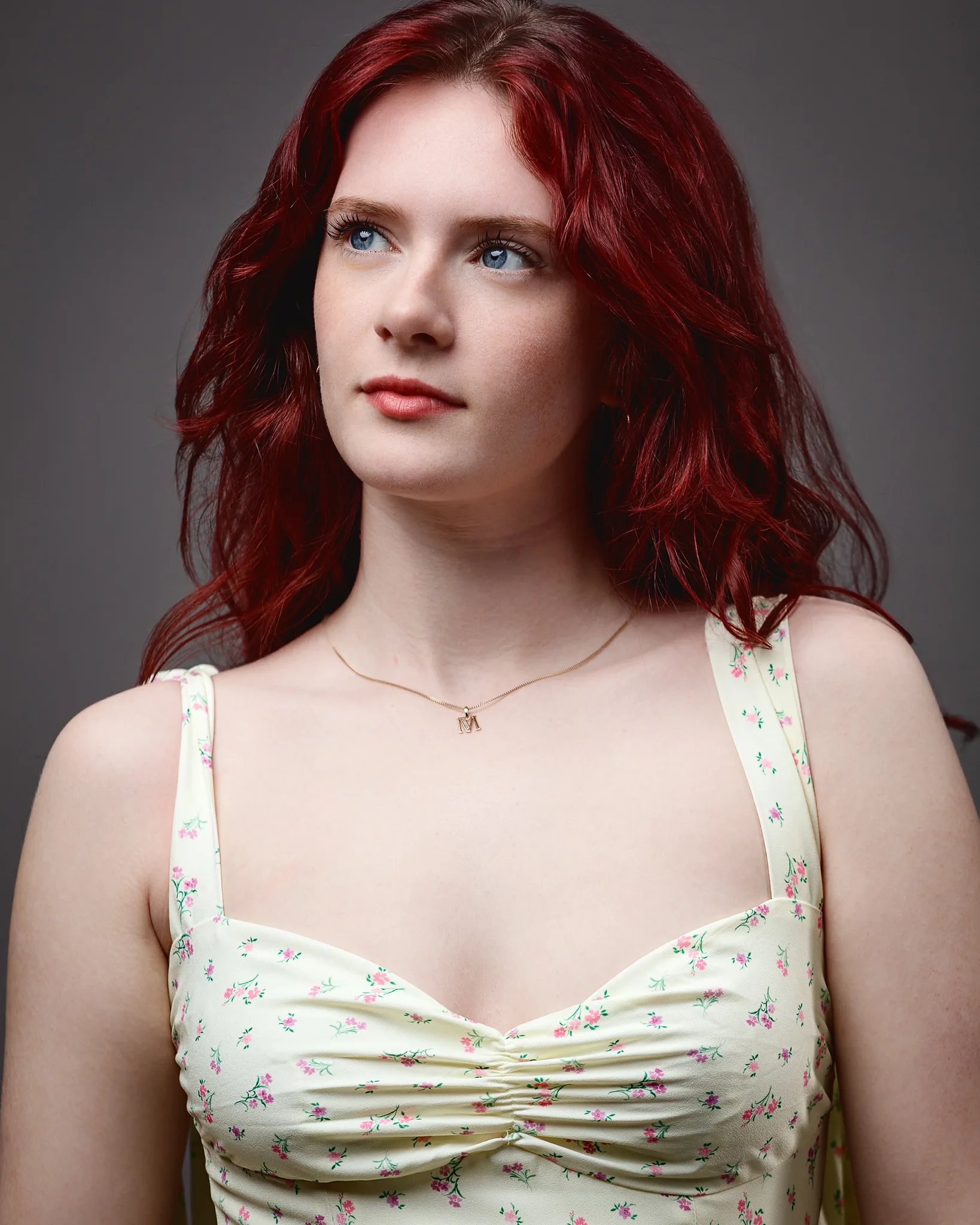
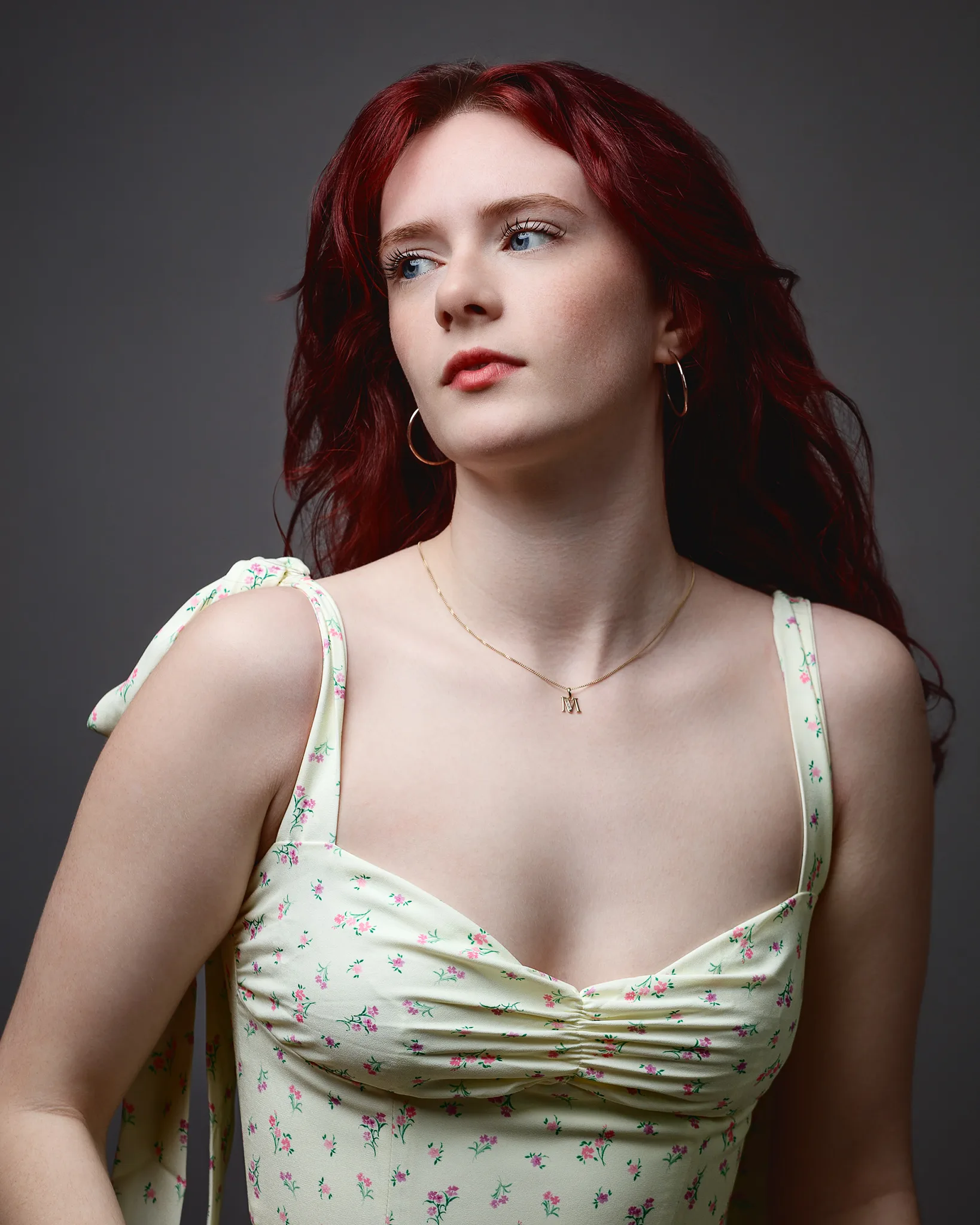
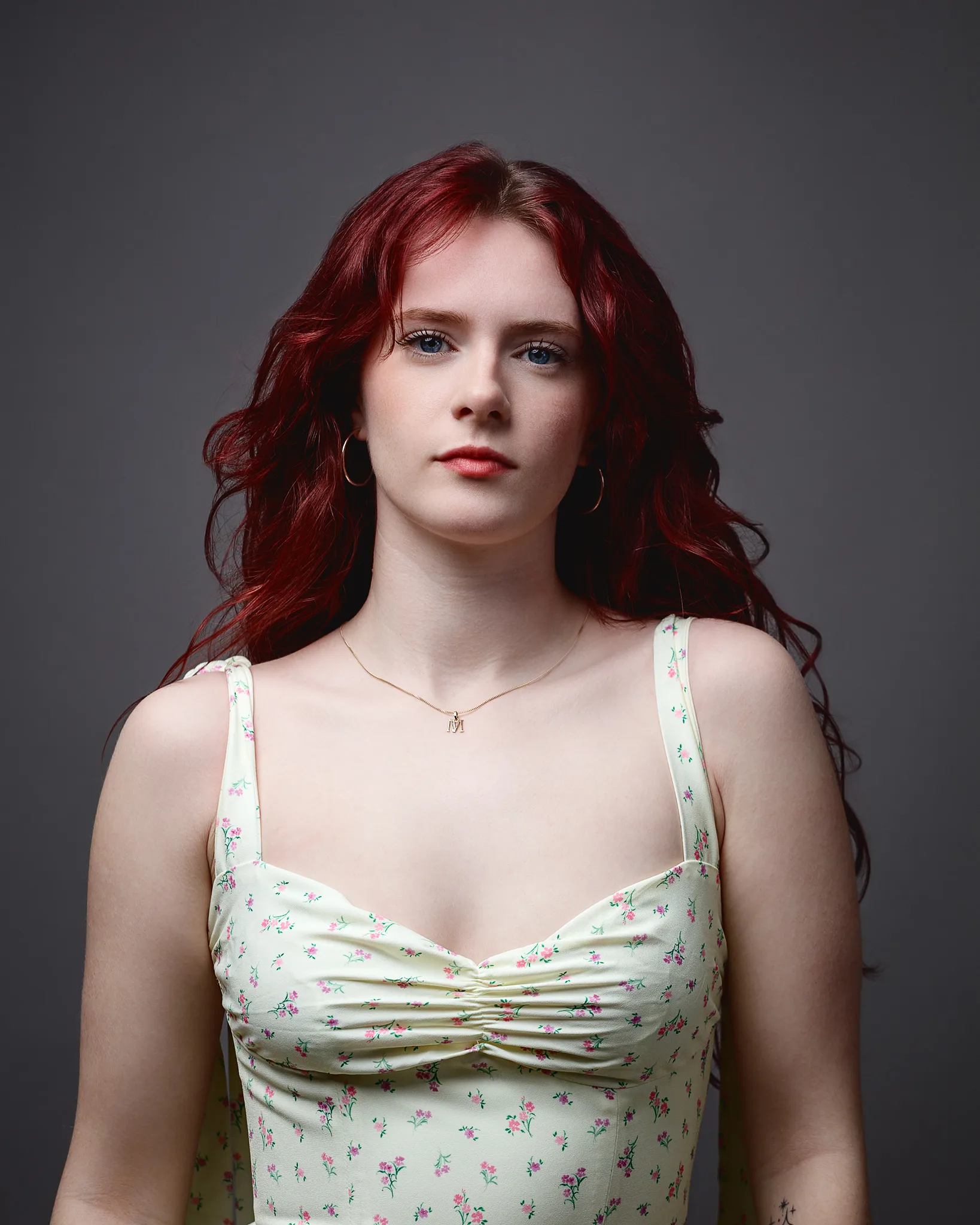
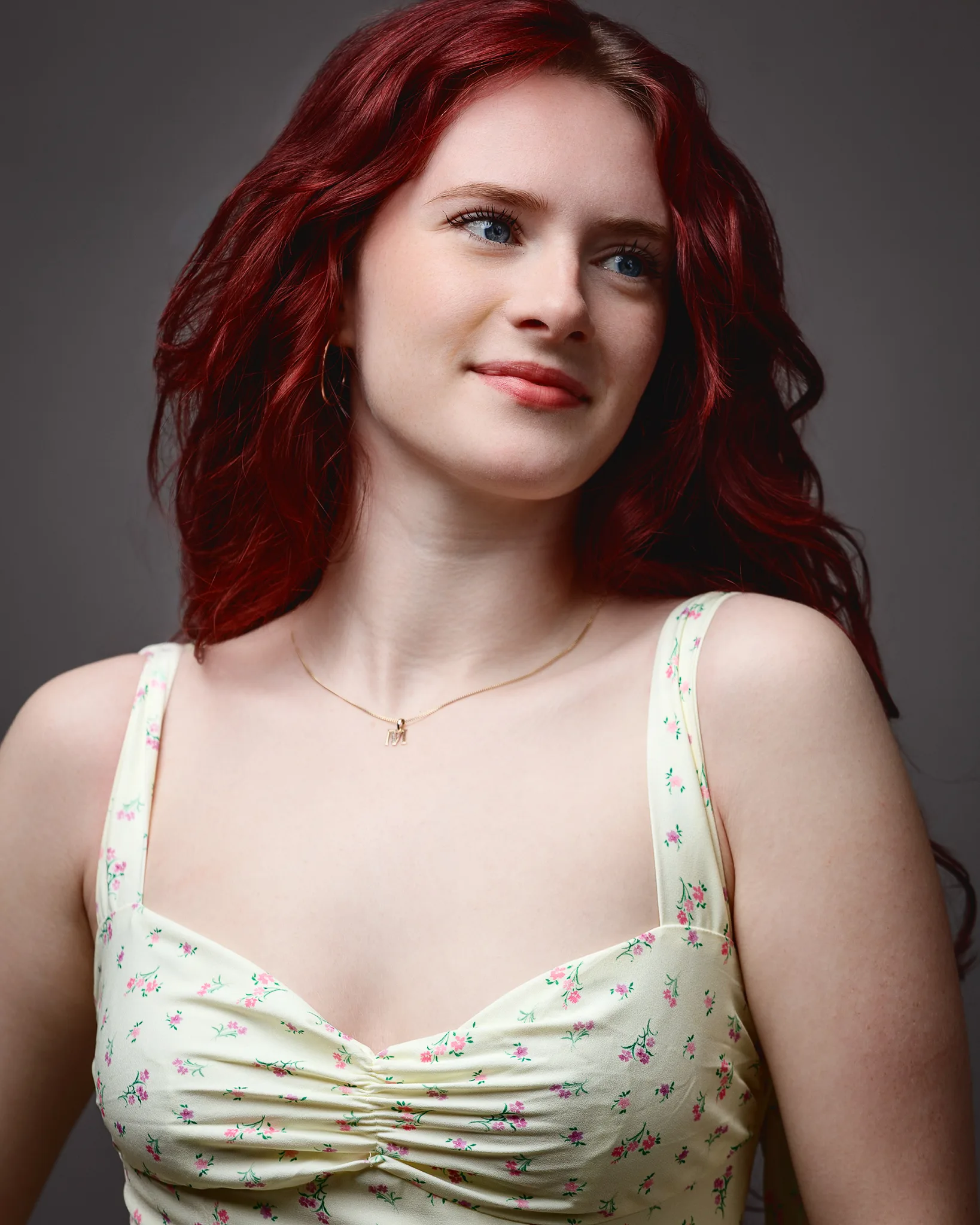
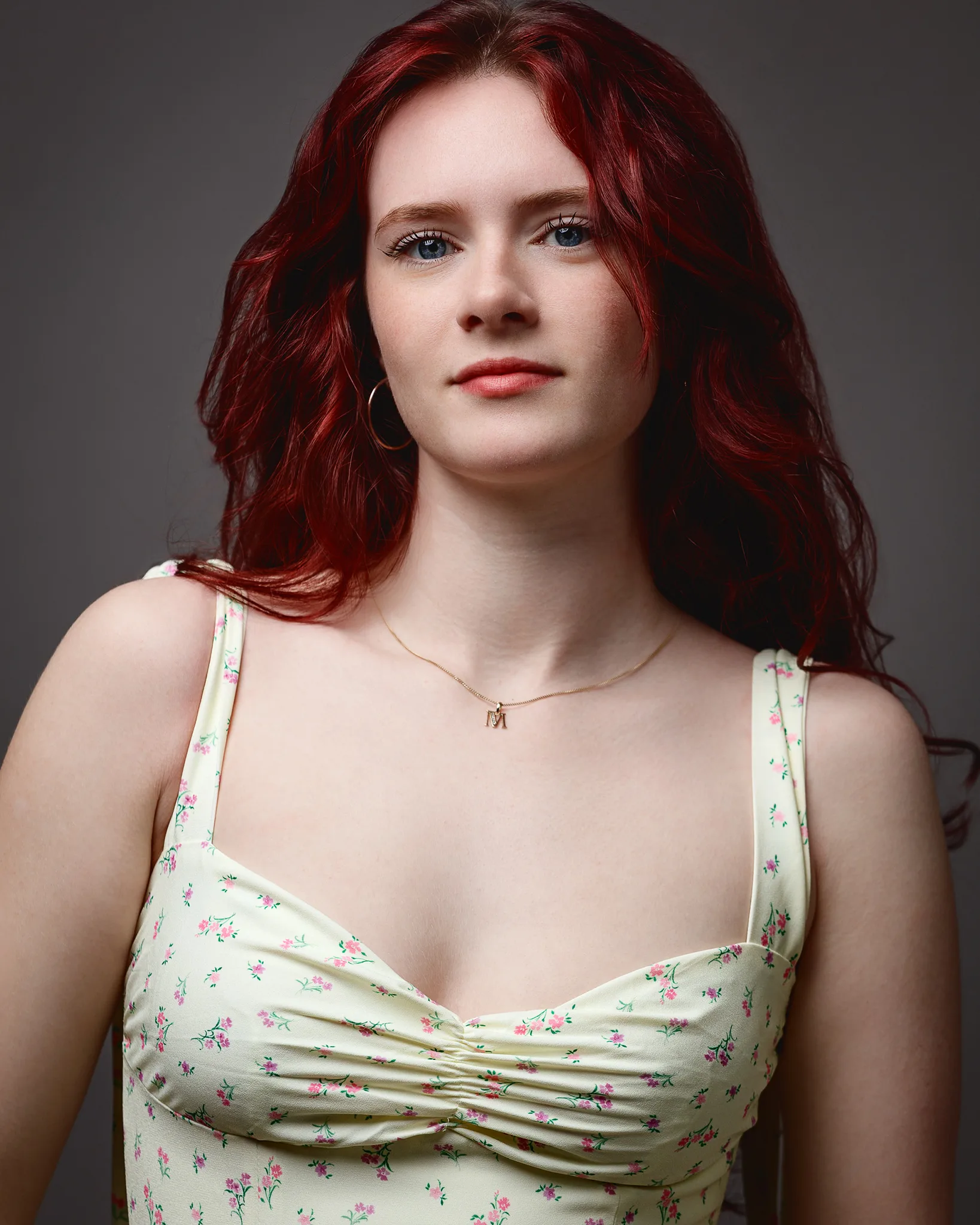
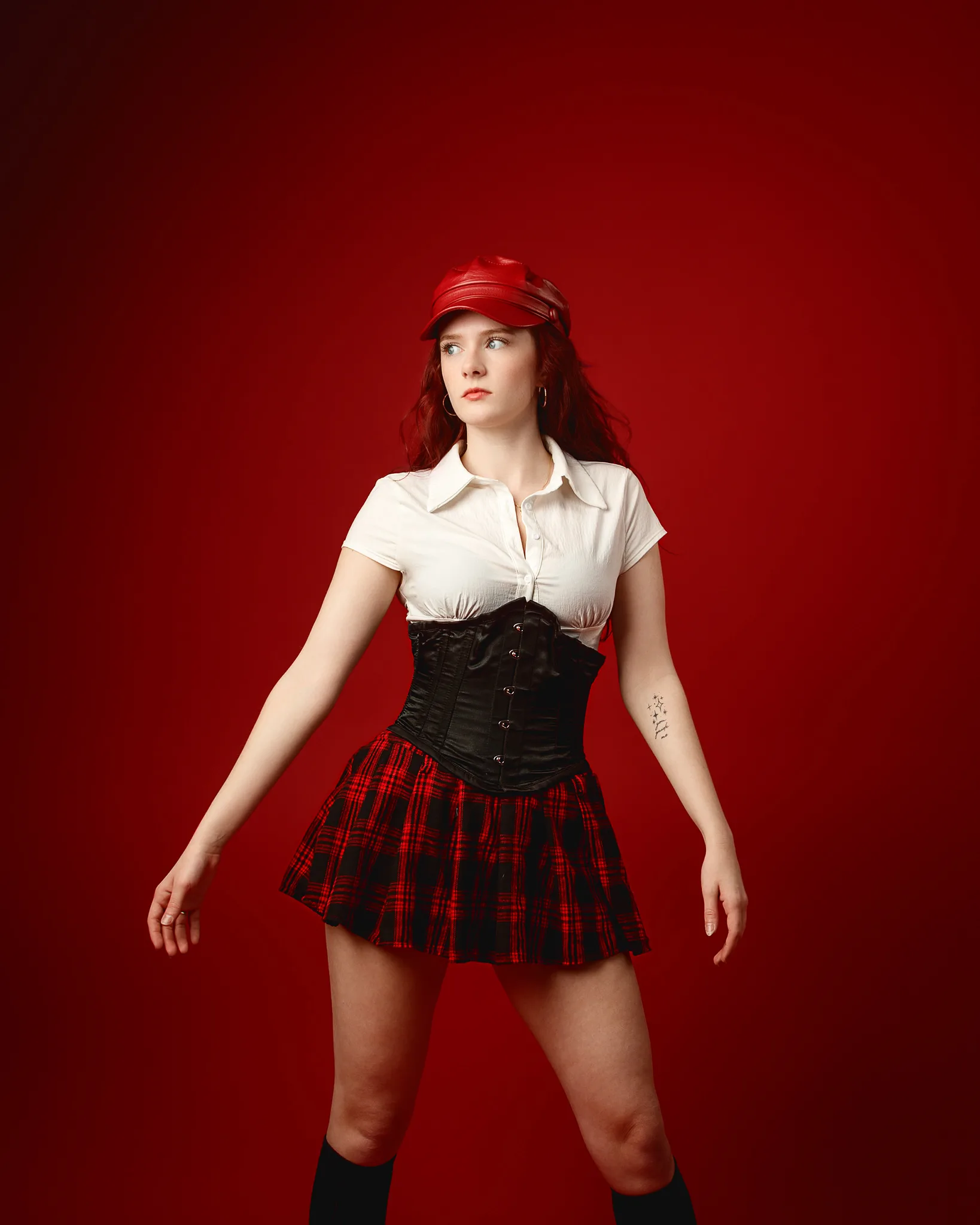
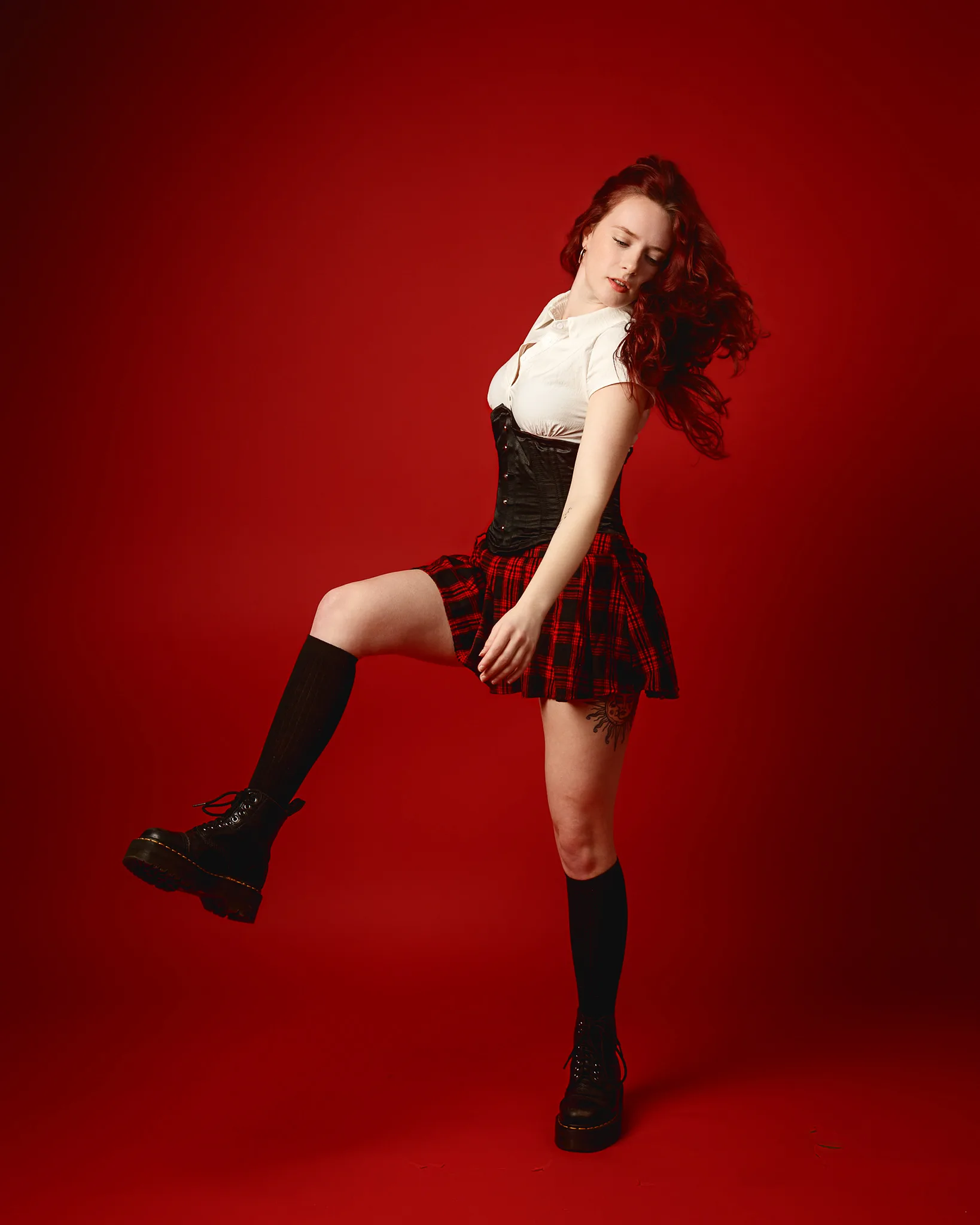
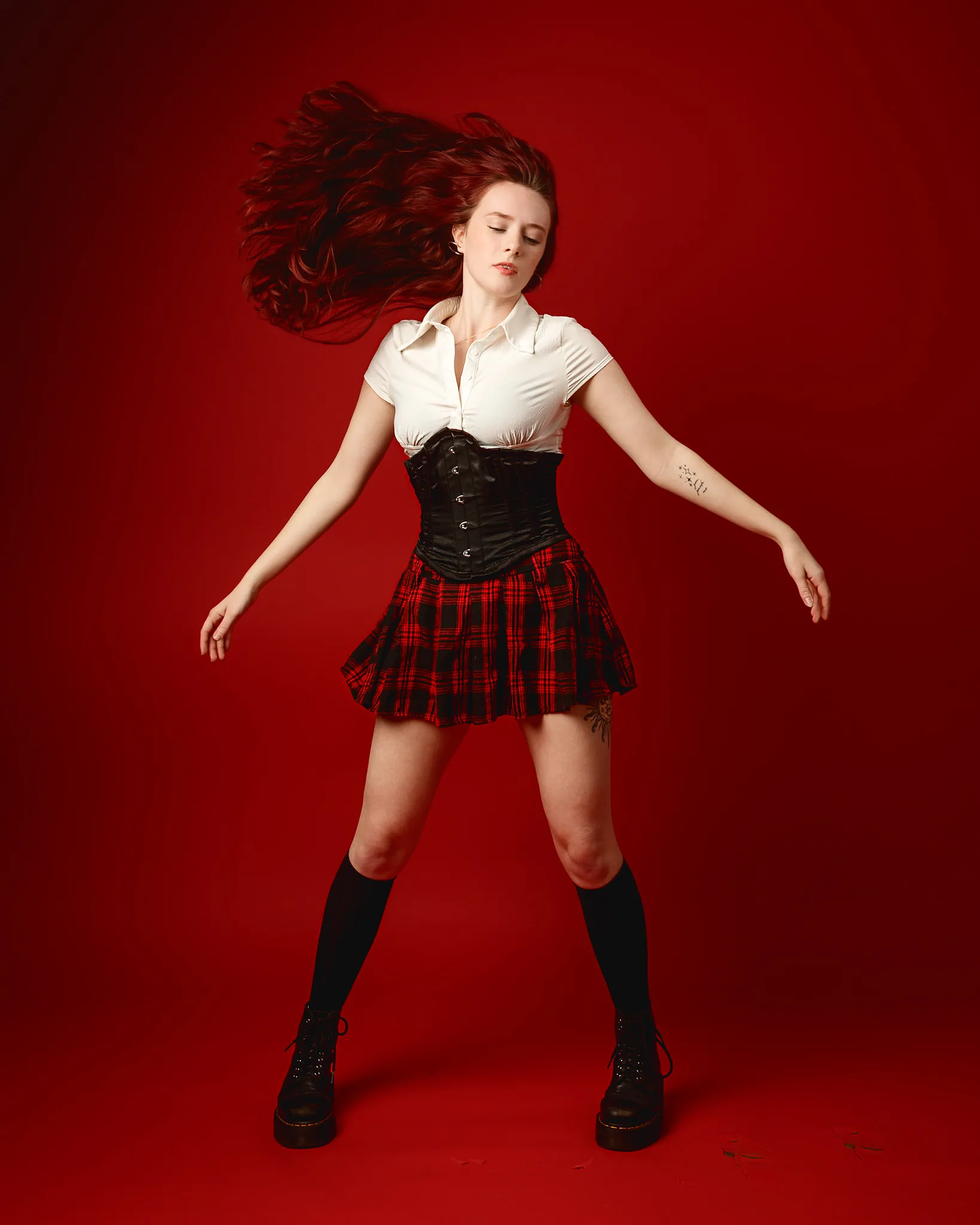
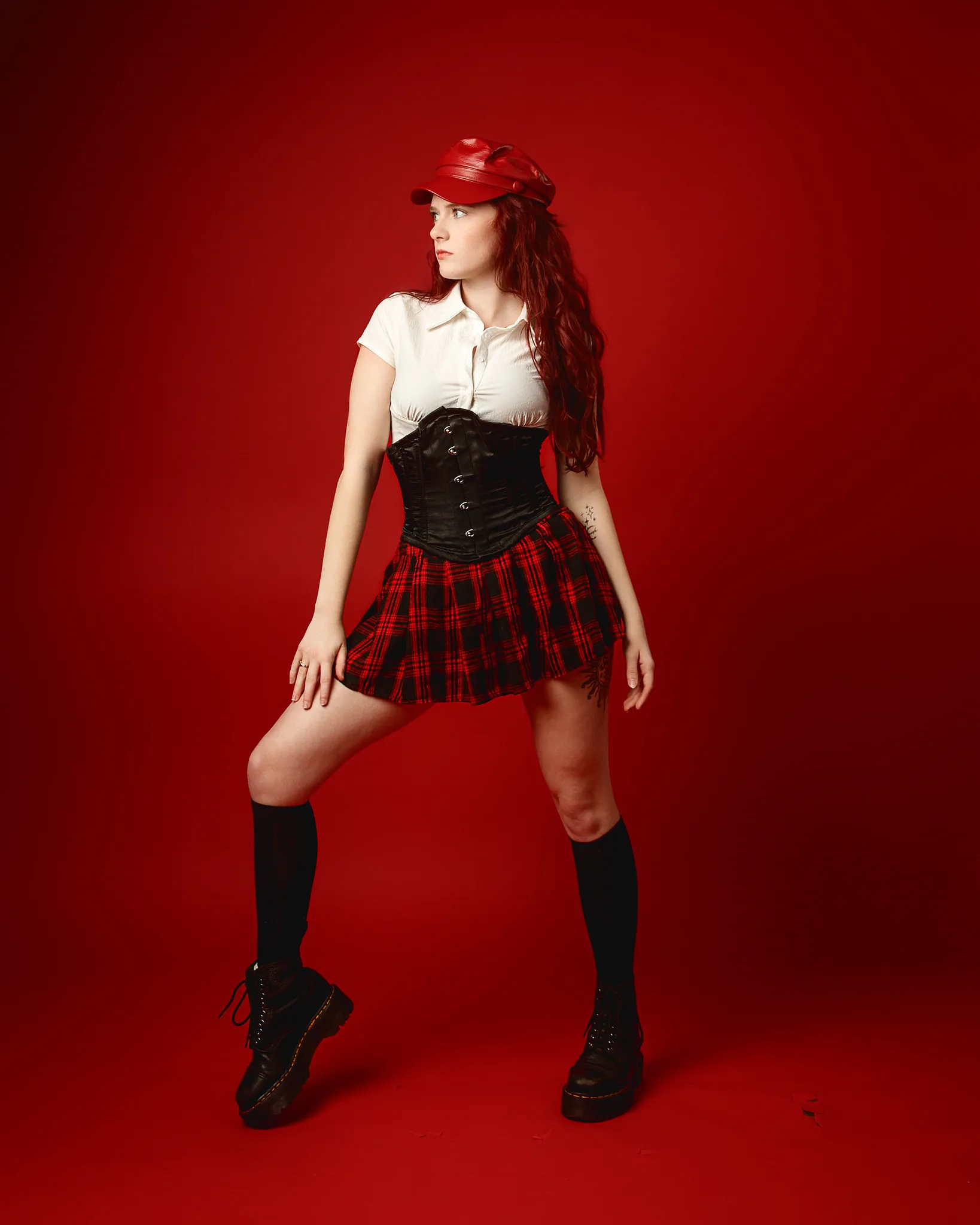
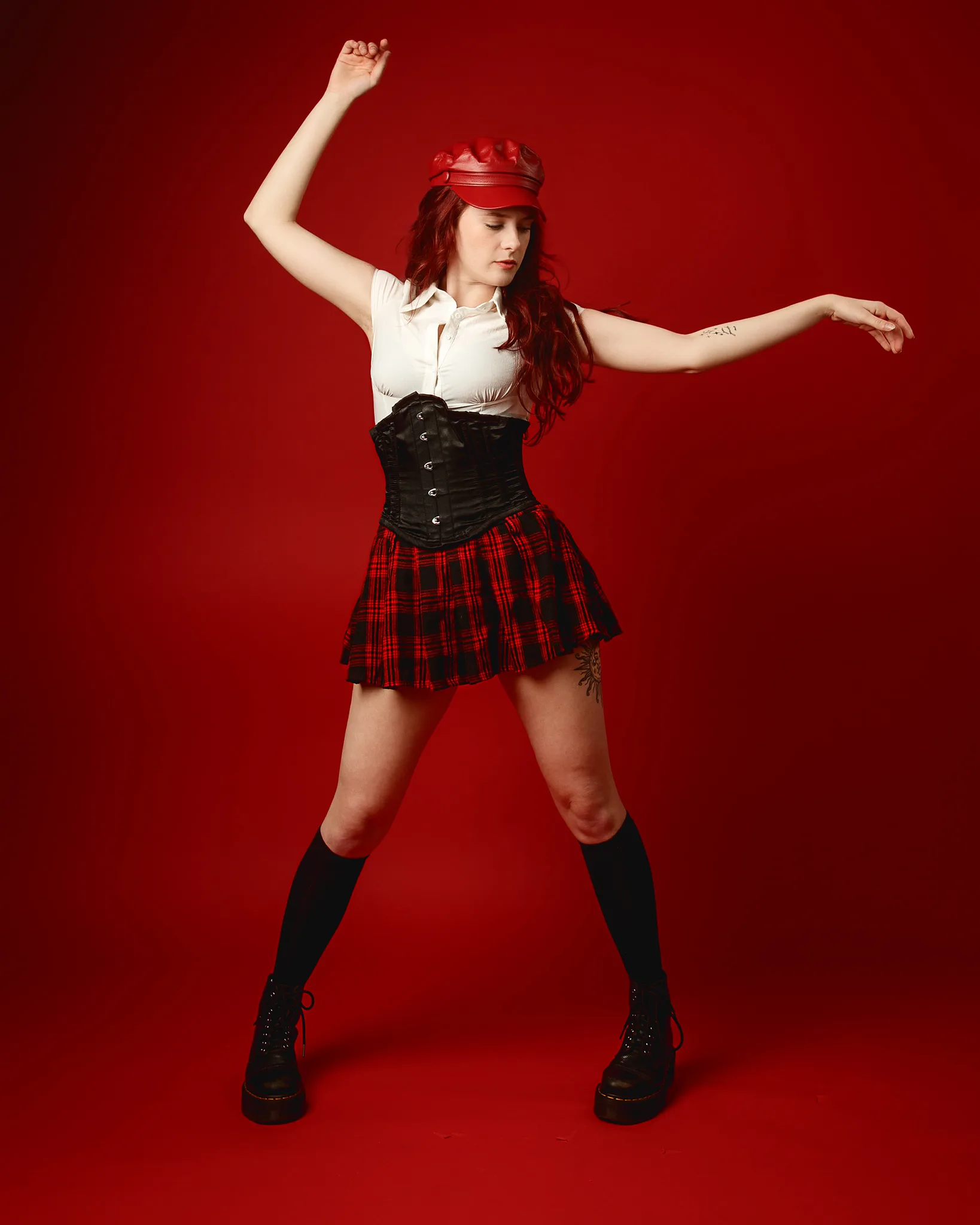
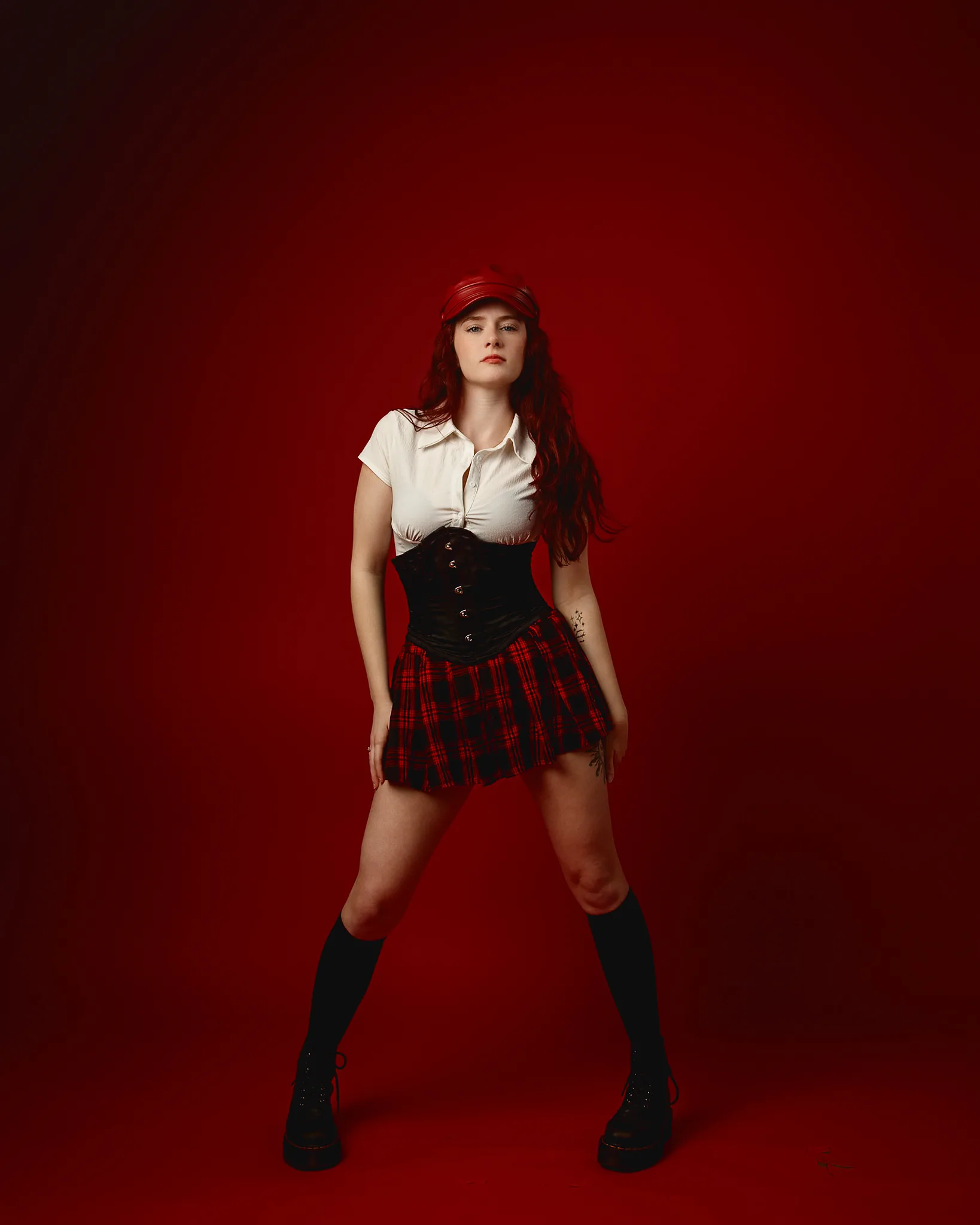
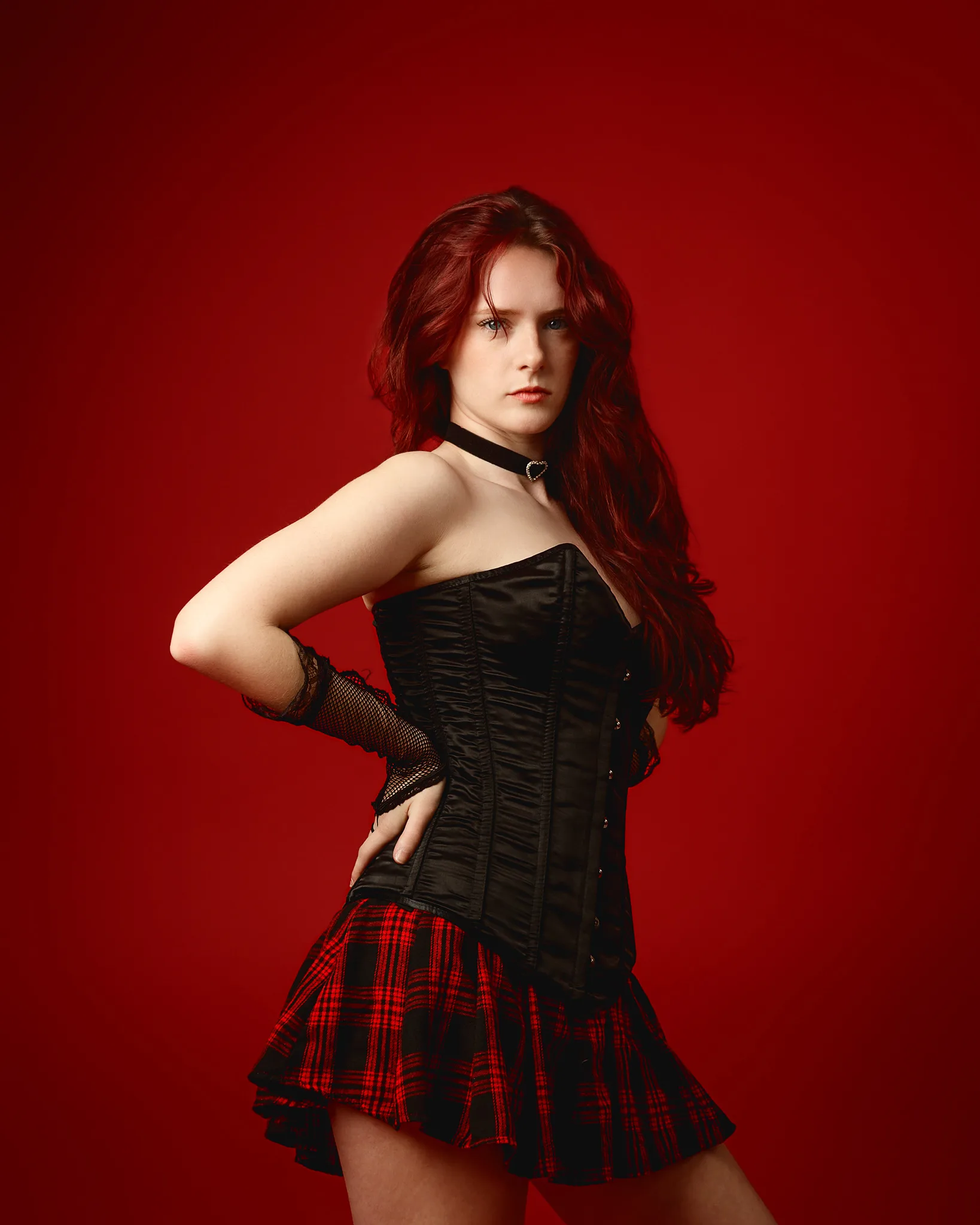
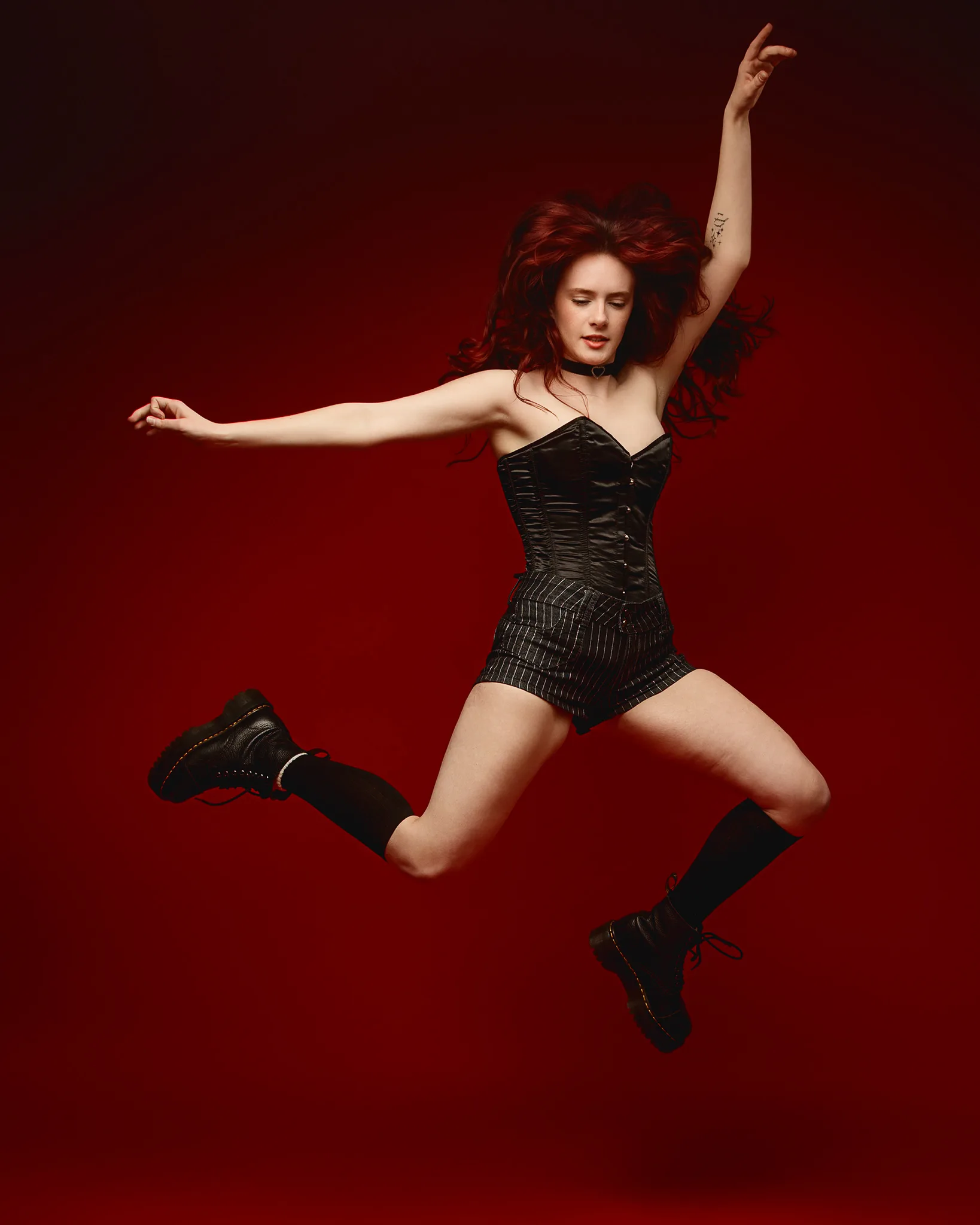
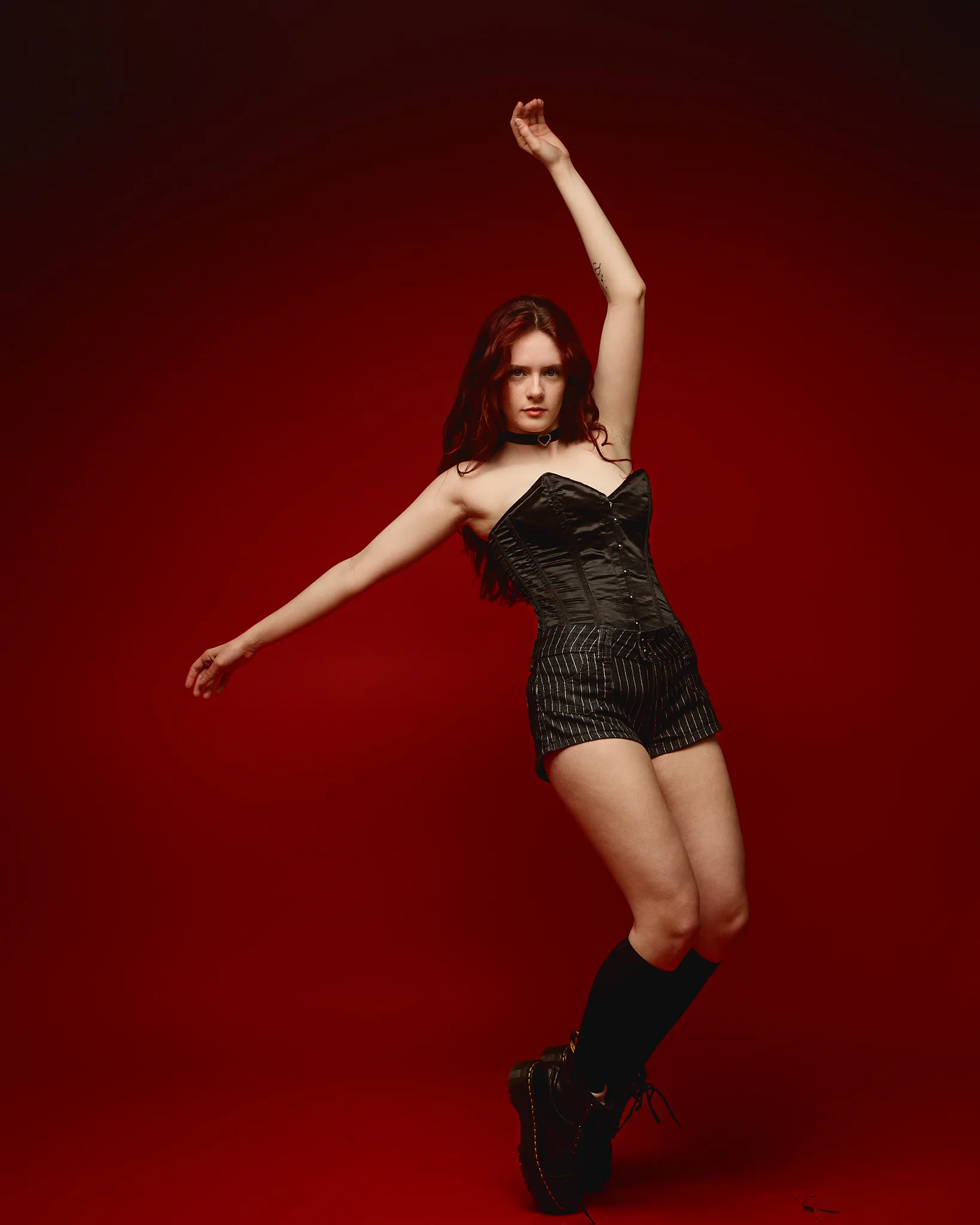
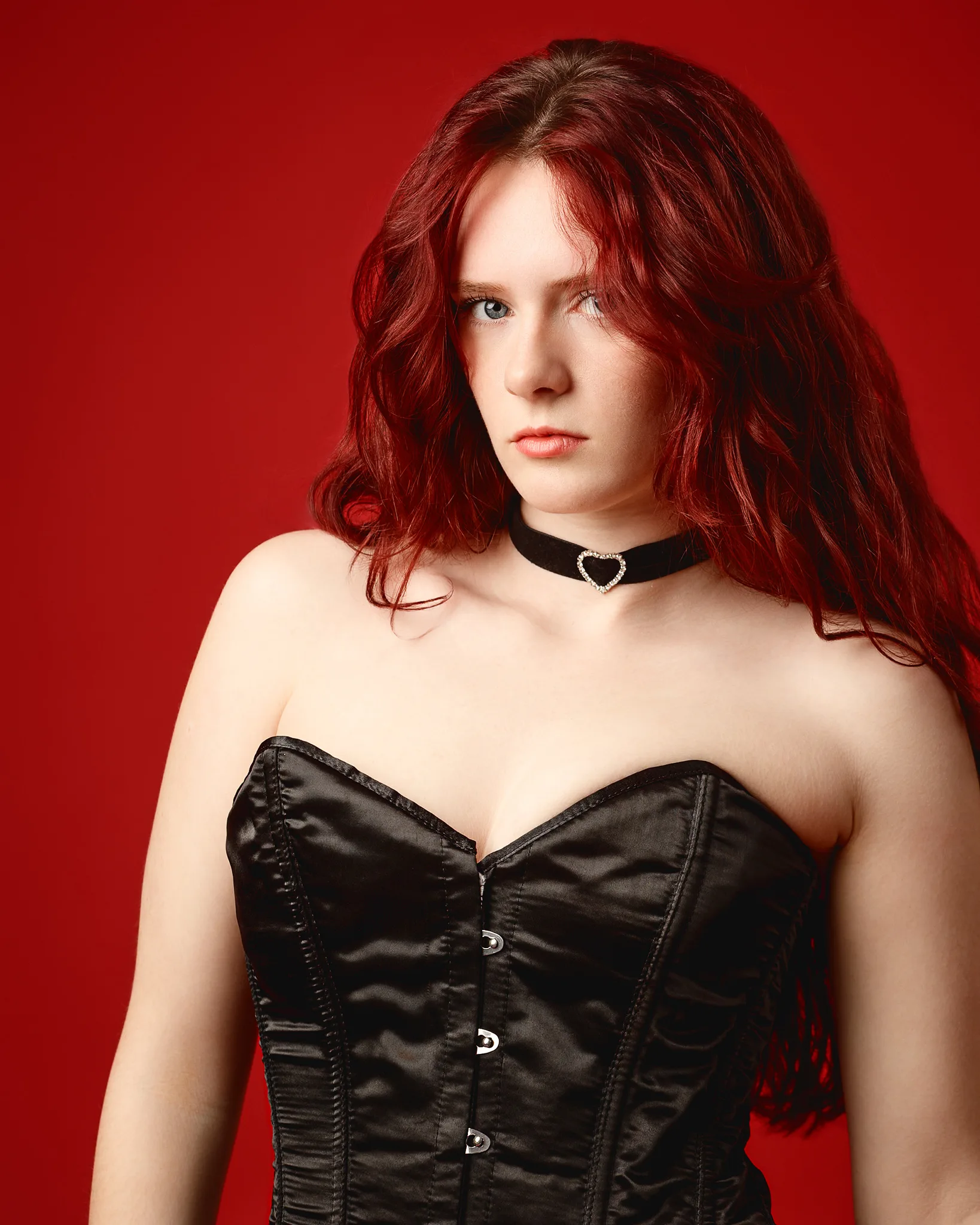
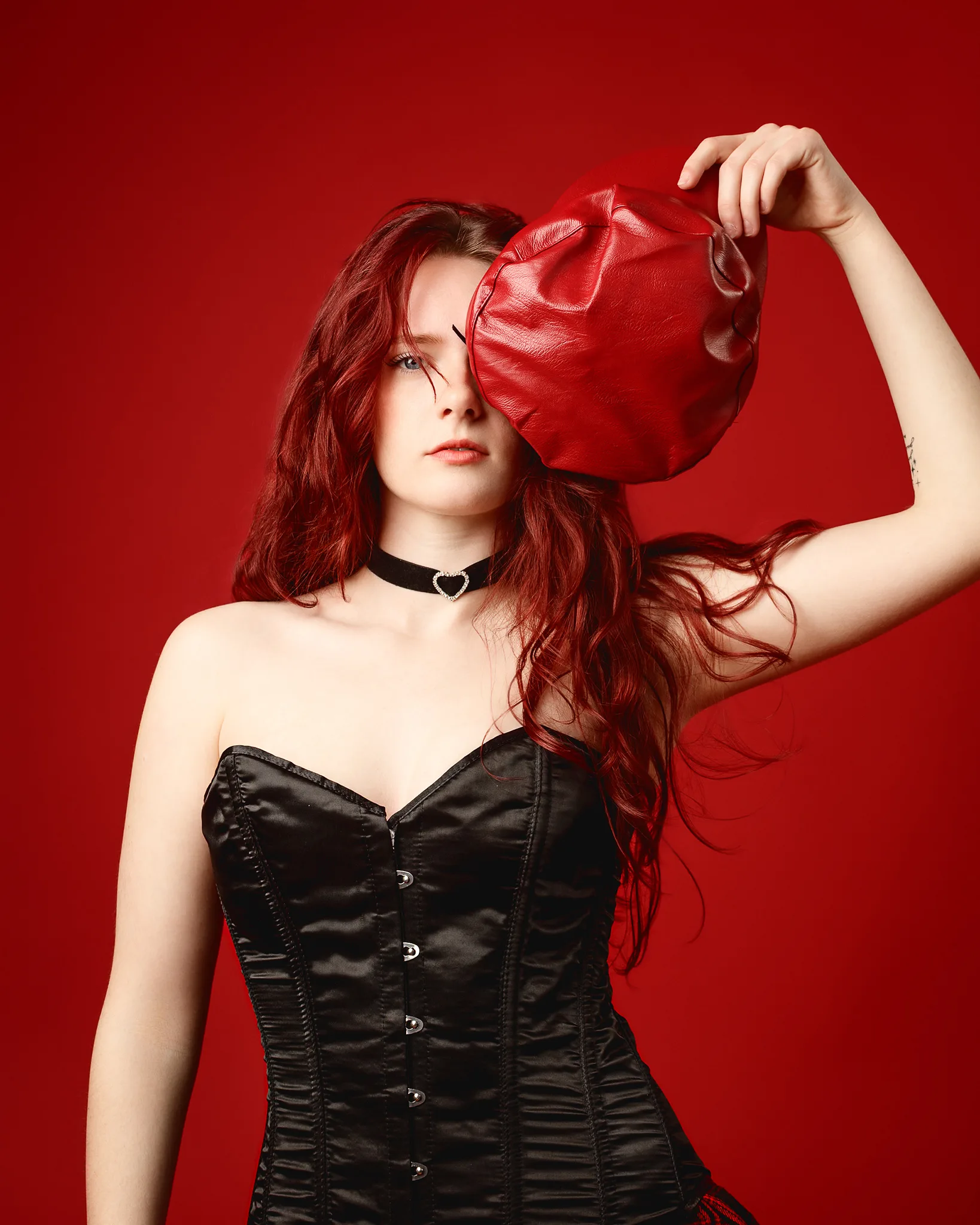
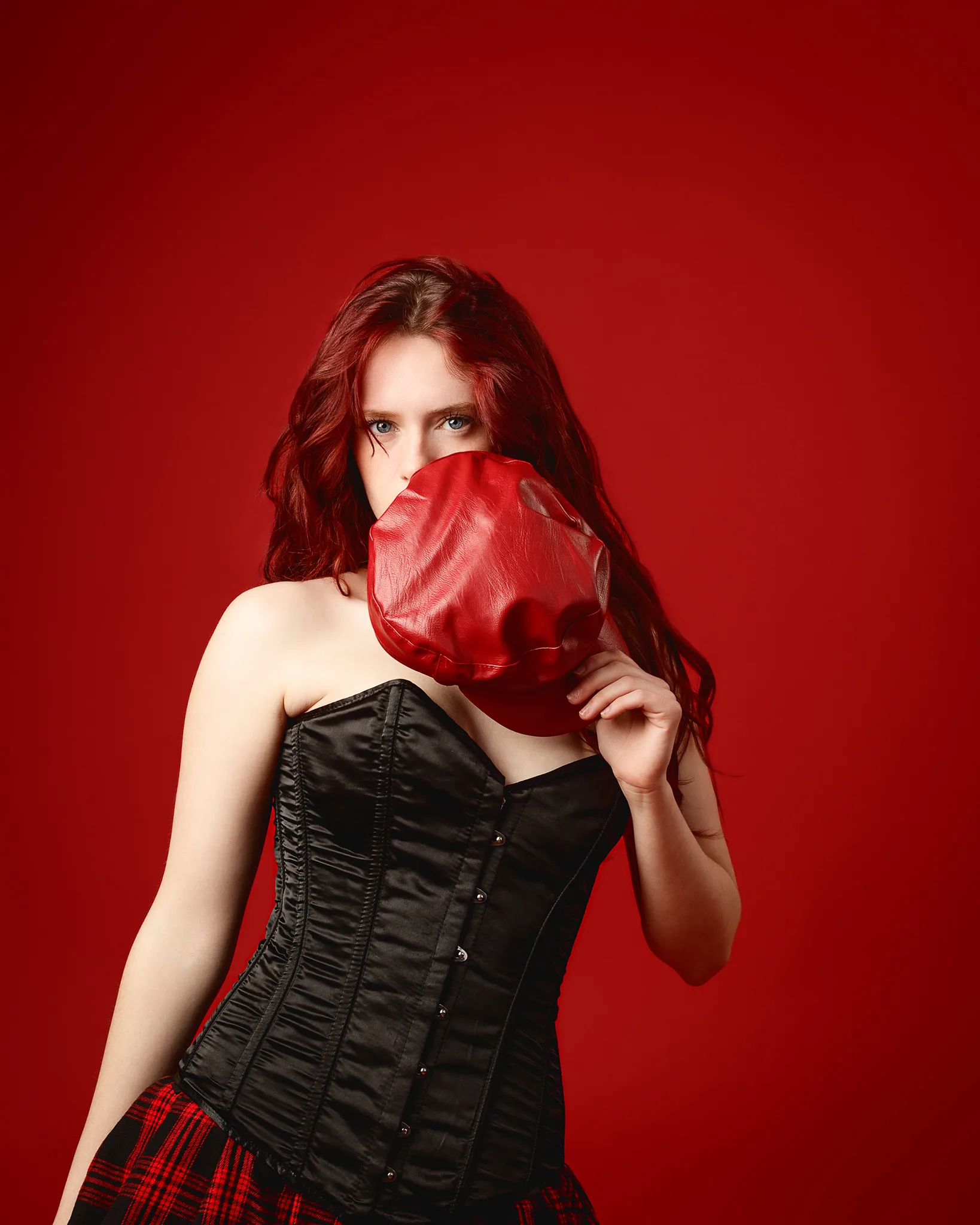
For Miranda, the session leaned more towards model portfolio and acting portfolio requirements. Her images needed to show range, expression, presence, and physicality. We worked with softer portrait styling, more fashion-influenced looks, full-length images, seated portraits, expressive movement, and closer head-and-shoulders images. The red hair against both the grey and red backgrounds gave the photographs a strong visual identity, while still allowing her expression and posing to remain the focus.
This is one of the reasons I prefer not to approach model portfolio photography as a simple set of “nice pictures”. A useful portfolio needs range. It needs to show how someone photographs under different conditions, with different styling, and in different crops. Headshots, three-quarter portraits, full-length images, seated poses, movement-based frames, and more character-led images can all serve different purposes.
Creating Images for Acting and Casting Use
As Miranda is a young actor, part of the session was shaped around images that could support her acting career. That meant thinking beyond fashion-led portfolio images and including portraits that show her clearly, naturally, and with enough variation for future use.
For actors, images often need to communicate more than appearance. They need to suggest casting range, confidence, expression, and the ability to hold the viewer’s attention without over-performing. A strong acting headshot should feel believable. It should show the person clearly, with good eye contact where appropriate, controlled lighting, and enough simplicity that casting professionals are not distracted by the photography itself.
At the same time, a young actor’s portfolio can benefit from a little variety. Alongside straightforward headshots, it can be helpful to have softer portraits, more characterful images, and a few frames that show movement or physical confidence. This gives more flexibility when submitting for roles, auditions, agency consideration, or performance-related opportunities.
For Miranda, I wanted to make sure the images did not all say the same thing. Some were quiet and composed, some had a more fashion-led quality, and others showed a lighter, more expressive side. That range is important because a portfolio should help someone present themselves clearly rather than limit them to one narrow interpretation.
Styling, Wardrobe and Visual Range
The styling choices made a significant contribution to the shoot. Lynn and Miranda brought a good variety of outfits, which gave us the ability to build distinct visual sections within the same studio session.
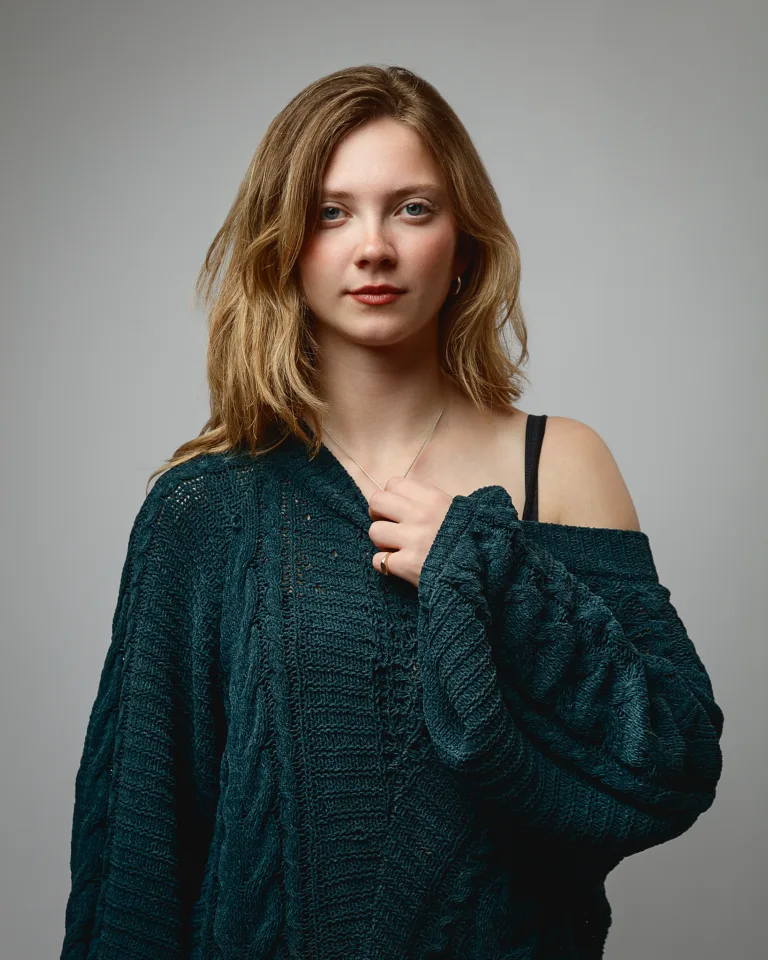
Neutral grey worked well for several of the looks because it gave the images a clean, professional base. Grey is one of the most useful studio backgrounds because it does not compete too heavily with clothing, hair colour, or expression. It also gives plenty of flexibility in post-production and tends to suit both headshots and wider portfolio images.
The red background created a completely different feel. It worked particularly well with the stronger styling, including Lynn’s red coat and Miranda’s red and black outfit. Red can be a very dominant colour, so it needs to be used carefully. In this session it helped create bold, graphic images without losing the subject into the background.
There was also a softer side to the shoot, particularly in Miranda’s pale floral dress and seated portrait. That look gave us a more gentle, almost classical studio portrait feel, while still remaining relevant to a model portfolio. By contrast, the corset styling, lace gloves, faux fur, pearls, and bold accessories gave Lynn’s images a more theatrical and editorial character.
This mix of styling is useful because it avoids the portfolio feeling too repetitive. A model or actor does not need every image to be dramatic, but they do need enough variation to show how they respond to different styling, lighting, expression, and body language.
Working With Lighting in the Studio
For this session, the lighting needed to be controlled but flexible. When alternating between two people, it is important not to slow the session down with unnecessary technical changes, but it is also important that the lighting supports each look properly.
The grey background images were kept clean and portrait-led, with enough shape in the light to give depth without becoming harsh. This suited both Lynn’s more editorial looks and Miranda’s softer portraits. The lighting needed to show texture, especially in Lynn’s green coat, lace gloves, faux fur, and corset, while still keeping the face as the main point of attention.
With the red background, I wanted the images to feel stronger and more graphic. Red can quickly dominate skin tones if it is not handled carefully, so the subject needs to be separated clearly from the backdrop. In Miranda’s red and black look, the styling, pose, and background all worked together to create a more energetic portfolio image. With Lynn’s red coat, the result was more structured and theatrical.
Good studio lighting is not just about making an image bright or technically correct. It is about deciding what needs to matter in the photograph. Sometimes that is the expression. Sometimes it is the shape of the clothing. Sometimes it is the posture, hand placement, or the way a model holds themselves. The lighting has to support those decisions.
Why Alternating Between Two People Worked Well
Photographing two individual portfolios in one session can be very effective when handled properly. It gives each person a short break while the other is being photographed, which helps avoid fatigue and keeps expressions fresher.
In practical terms, it also allows time for outfit changes, small styling adjustments, and mental reset. This can make a noticeable difference in the final images. A portfolio shoot is not just about standing in front of the camera. It involves concentration, listening, movement, expression, and repeated small refinements.
By alternating between Lynn and Miranda, we were able to keep the session moving without making it feel rushed. Each person could see how the other was working, which helped build confidence and created a collaborative atmosphere. It also meant that the session had a shared energy, while still producing images that belonged clearly to each person’s individual portfolio.
That balance mattered. I did not want the final set to feel like matching mother-and-daughter portraits. The aim was to create usable images for each of them as individuals.
What Makes a Useful Model Portfolio Shoot?
A model portfolio shoot should be planned with purpose. It does not need to be rigid, but it should have enough structure that the final images are useful after the session.
For someone starting or updating a model portfolio, I usually think about several types of images:
Headshots that show the face clearly.
Three-quarter portraits that show posture, expression, and styling.
Full-length images that show body shape, proportion, and how someone holds themselves.
A mixture of simple and more styled images.
A few images with personality, movement, or a stronger creative direction.
For actors, I also think carefully about expression and casting relevance. The images should not feel too forced or overly styled if the purpose is acting headshots. There needs to be enough clarity for an agent, casting director, or creative team to understand the person quickly.
For models, there is often more room to explore fashion, styling, shape, and editorial direction. Even then, the strongest images usually come from clarity rather than clutter. Wardrobe, lighting, posing, and expression all need to work together.
How to Prepare for a Model Portfolio Shoot
Preparation makes a considerable difference to the outcome of a studio portfolio session. It does not mean everything has to be over-planned, but arriving with a clear wardrobe selection and a sense of direction helps the shoot run more smoothly.
For a model portfolio shoot, I usually recommend bringing a good range of clothing. This might include simple fitted items, more expressive fashion pieces, a smart or tailored look, a softer portrait look, and anything that reflects the type of modelling or acting work the person hopes to pursue.
It is also worth thinking about underwear choices, especially when bringing light-coloured clothing, fitted garments, dresses, or outfits where straps may show. Having appropriate options available can avoid awkward styling problems during the shoot.
Small practical items are useful too: a hairbrush, makeup for touch-ups, suitable footwear, accessories, and something to eat and drink. Even in a studio environment, a portfolio shoot can be tiring. Staying hydrated and comfortable helps more than people sometimes expect.
For younger models or actors, I strongly recommend bringing a parent, guardian, or trusted chaperone. This is not a problem in my studio. I see it as good practice.
Model Portfolio Photography for Clients Travelling from Norfolk, Suffolk and Beyond
Although my studio is based in Suffolk, I regularly work with people from across the wider region. Lynn and Miranda travelled from Norwich, and I have also worked with clients from Norfolk, Essex, London, and other parts of East Anglia.
For anyone looking for a model portfolio photographer in Suffolk, Norfolk, or the surrounding area, the location of the studio can be useful because it gives us a controlled environment away from weather, public spaces, and changing light. That makes it easier to produce a varied set of professional images in one session.
Studio photography is particularly helpful for model portfolios, acting headshots, z-card images, commercial editorial portraits, test shoots, and lifestyle portfolio updates. It allows the lighting, background, and pace of the shoot to be carefully managed, while still leaving room for creative decisions on the day.
A Session Built Around Trust, Range and Individuality
What I appreciated most about this shoot was the balance between structure and openness. Lynn and Miranda arrived with strong visual potential, but the success of the session came from how they worked in the studio. They listened, adapted, supported one another, and gave each part of the shoot proper attention.
For Lynn, the images show a confident and expressive approach to styling, with a strong sense of presence in front of the camera. For Miranda, the session gave us a useful range of acting and model portfolio images, from clearer headshot-style portraits through to more styled and expressive frames.
Mother and daughter sessions can easily become sentimental if handled in the wrong way, but this was not that type of shoot. It was a professional portfolio session for two individuals, with the added benefit of a supportive working relationship between them.
That made it a very rewarding session to photograph.