Whincop Signs is part of Whincop of Peasenhall, a long-established family business based in the Suffolk countryside. The wider Whincop name includes coaches, garage services and signage, which gives the business a very practical connection to vehicles, trade work, local service and everyday commercial presentation.
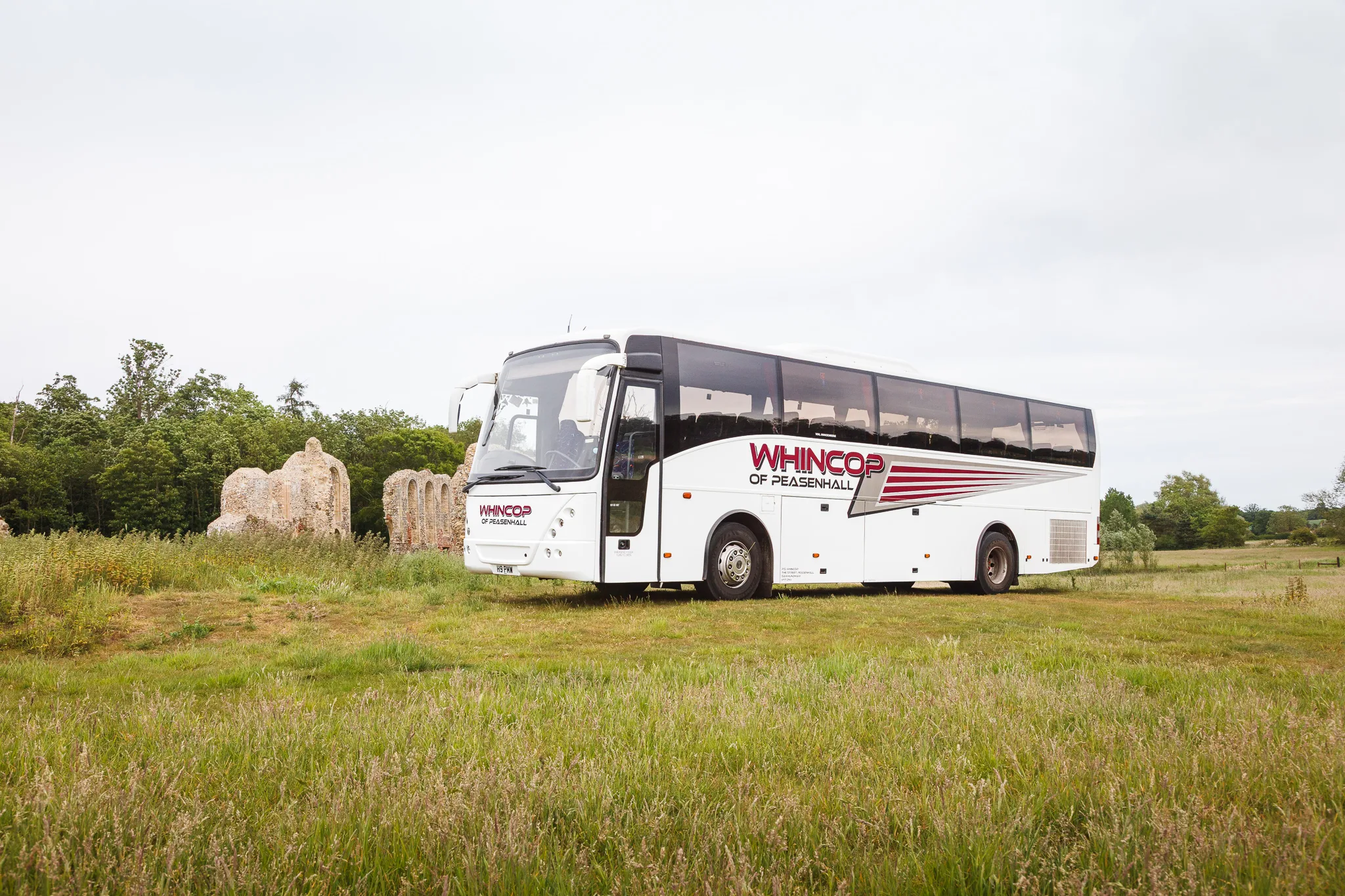
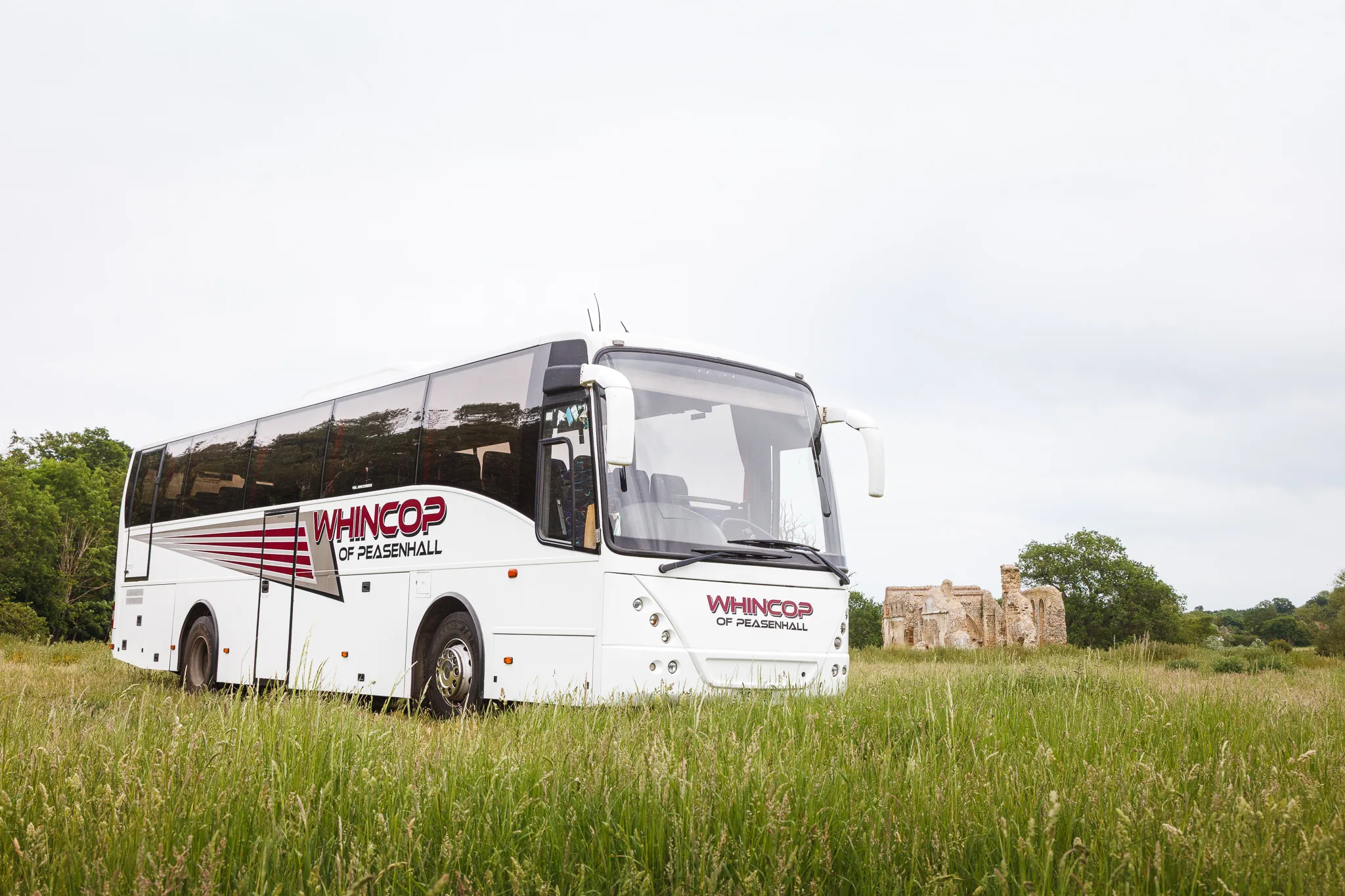
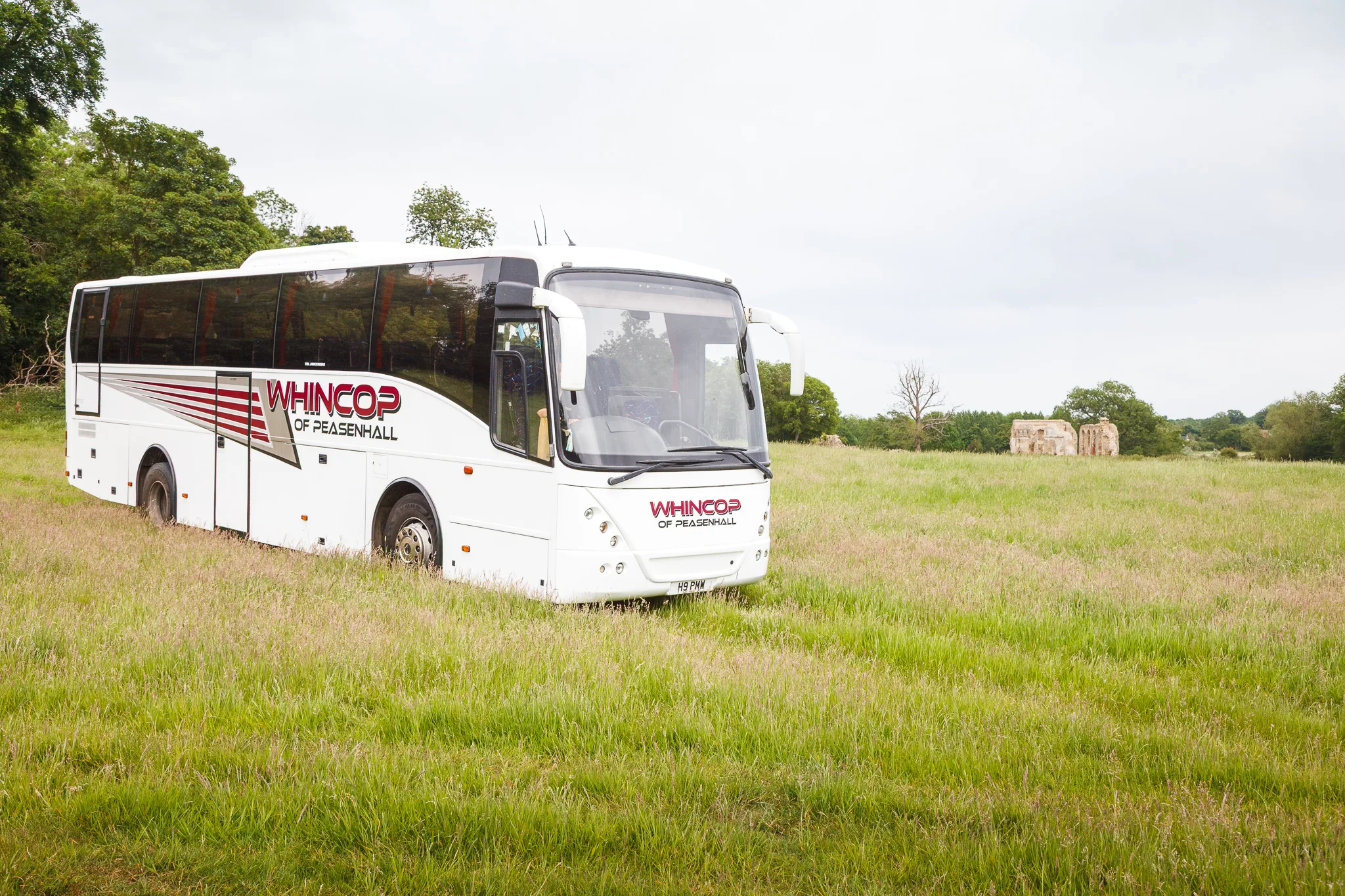
For this shoot, the focus was a Whincop of Peasenhall coach photographed on location at Sibton Abbey. Although the wider brief connects naturally with Whincop Signs and vehicle graphics, the images themselves were not simply about recording a coach. They were about creating a set of commercial photographs that placed the Whincop name within a recognisable Suffolk setting.
That distinction matters. A coach photographed in a yard, depot or car park can be useful, but it often becomes purely functional. By working at Sibton Abbey, the photographs gained a stronger sense of place. The coach remained the subject, but the ruined abbey walls, open meadow, mature trees and soft Suffolk landscape gave the images a local character that suited the heritage of the business.
A Suffolk Business With Practical Roots
Whincop of Peasenhall presents itself as a fourth-generation, family-run business with a history going back to 1930. That background gives the photographs an important context. This is not a disconnected new venture or a temporary brand. Whincop is a Suffolk business with deep practical roots in transport, vehicles, workshop services and local trade.
The wider business includes Whincop Coaches, Whincop Garage and Whincop Signs. That combination makes sense visually and commercially. Coaches need branding. Garage services depend on trust and clear local recognition. Signage helps businesses present themselves in the physical world. Commercial photography then helps carry that same recognition online, across websites, social media, Google Business Profile, printed material and future client communication.
What interested me about this shoot was the relationship between all of those things. The coach was the main subject in front of the camera, but the Whincop livery, the setting and the wider business identity were all part of the visual story. The photographs needed to show the vehicle clearly, but they also needed to feel rooted in Suffolk rather than anonymous.
Photographing a Whincop Coach at Sibton Abbey
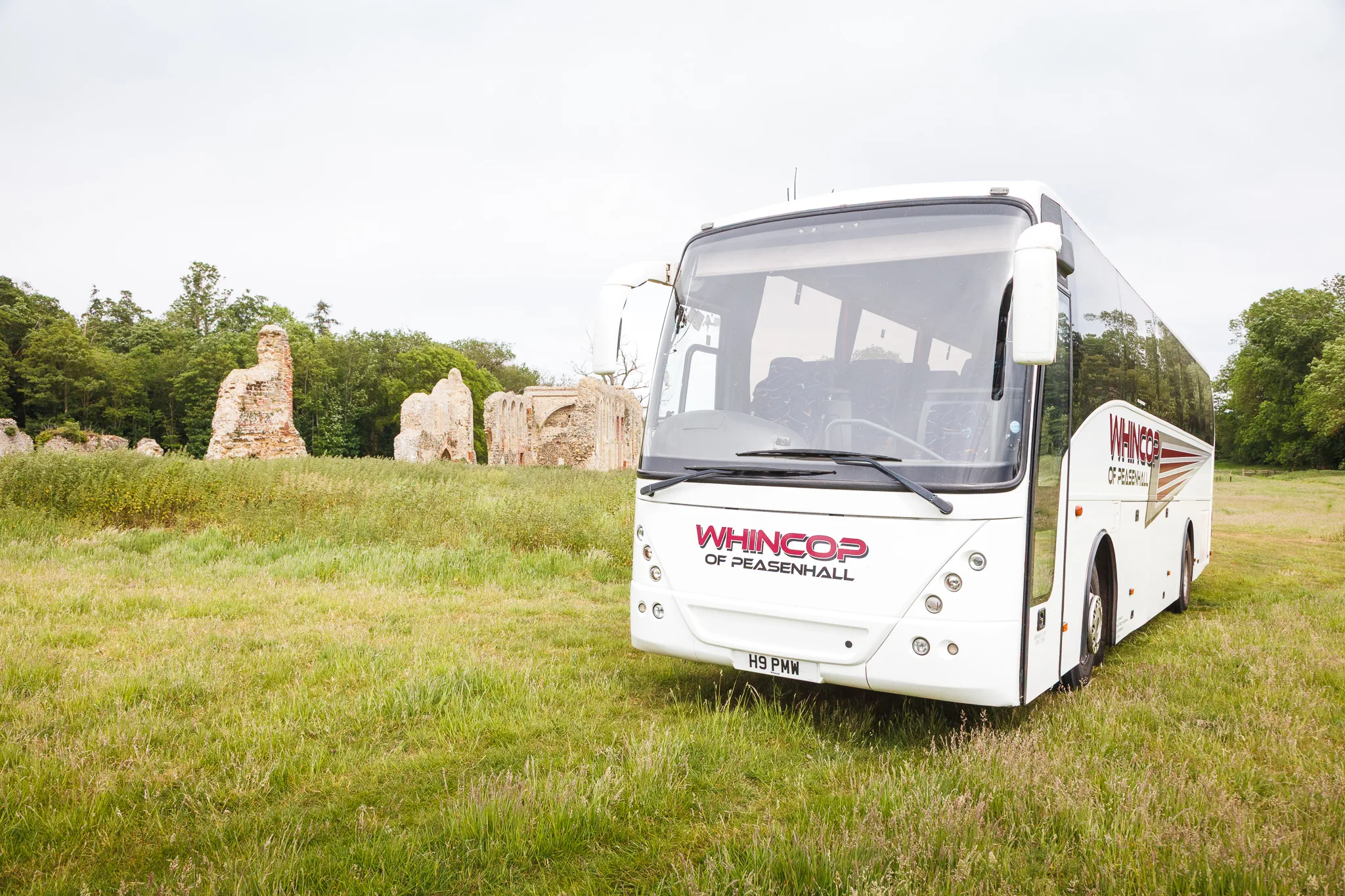
Sibton Abbey gave the shoot a very different feel from a standard vehicle photography session. The ruined abbey walls provided structure and historical context, while the meadow softened the whole set and helped the coach sit naturally in the landscape.
The choice of location created a useful contrast. The coach is a modern working commercial vehicle. It represents transport, movement, service and practical use. The abbey ruins represent history, place and continuity. Visually, those two elements worked well together because Whincop is both a working modern business and a long-established Suffolk name.
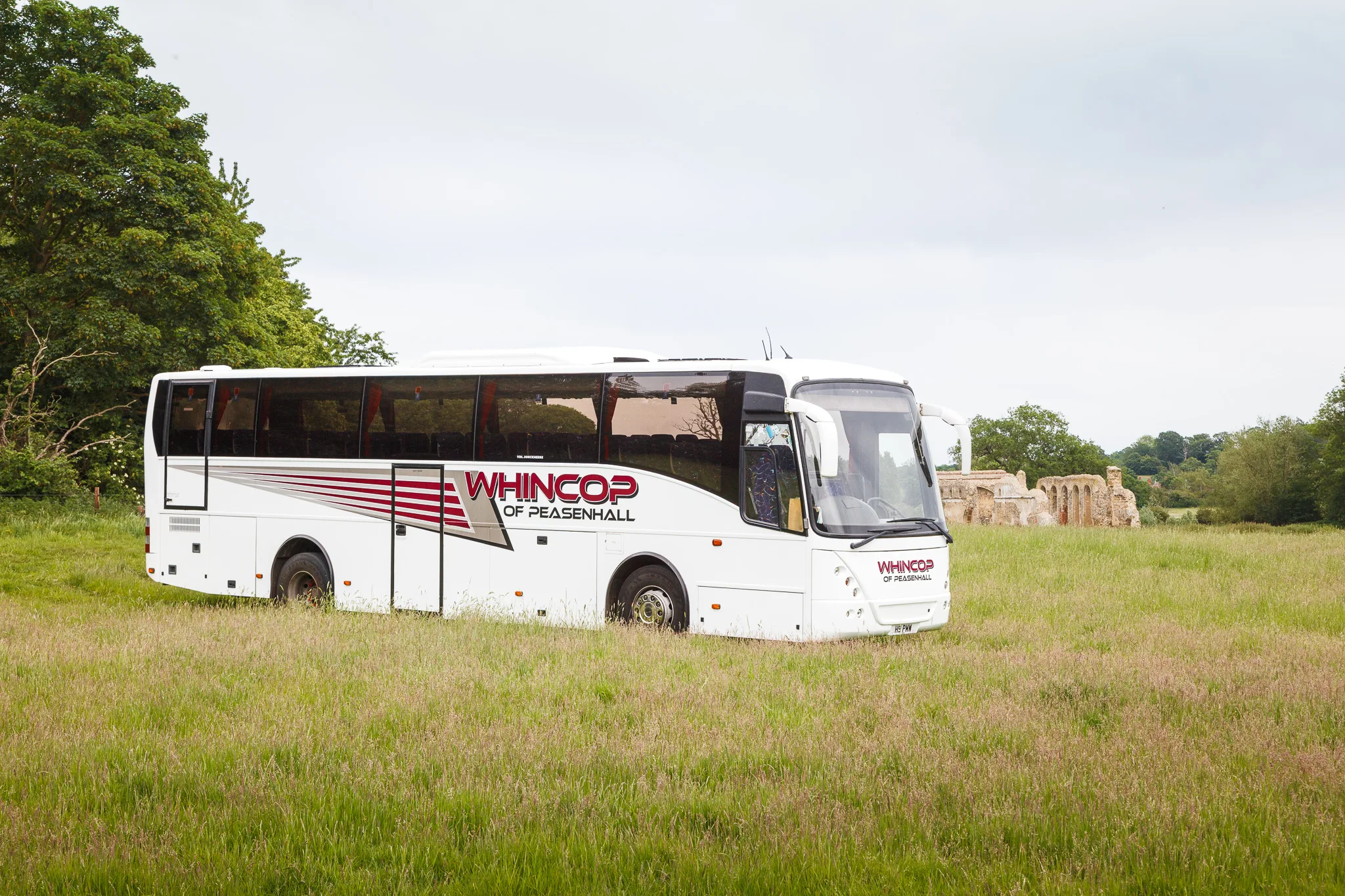
I wanted the photographs to avoid feeling too sterile. There is a place for clean record images of vehicles, but for this set I felt the strongest result came from letting the location do some of the work. The coach still had to be shown clearly, with the Whincop branding readable and the vehicle shape properly represented, but the surrounding landscape gave the images more atmosphere and more long-term value.
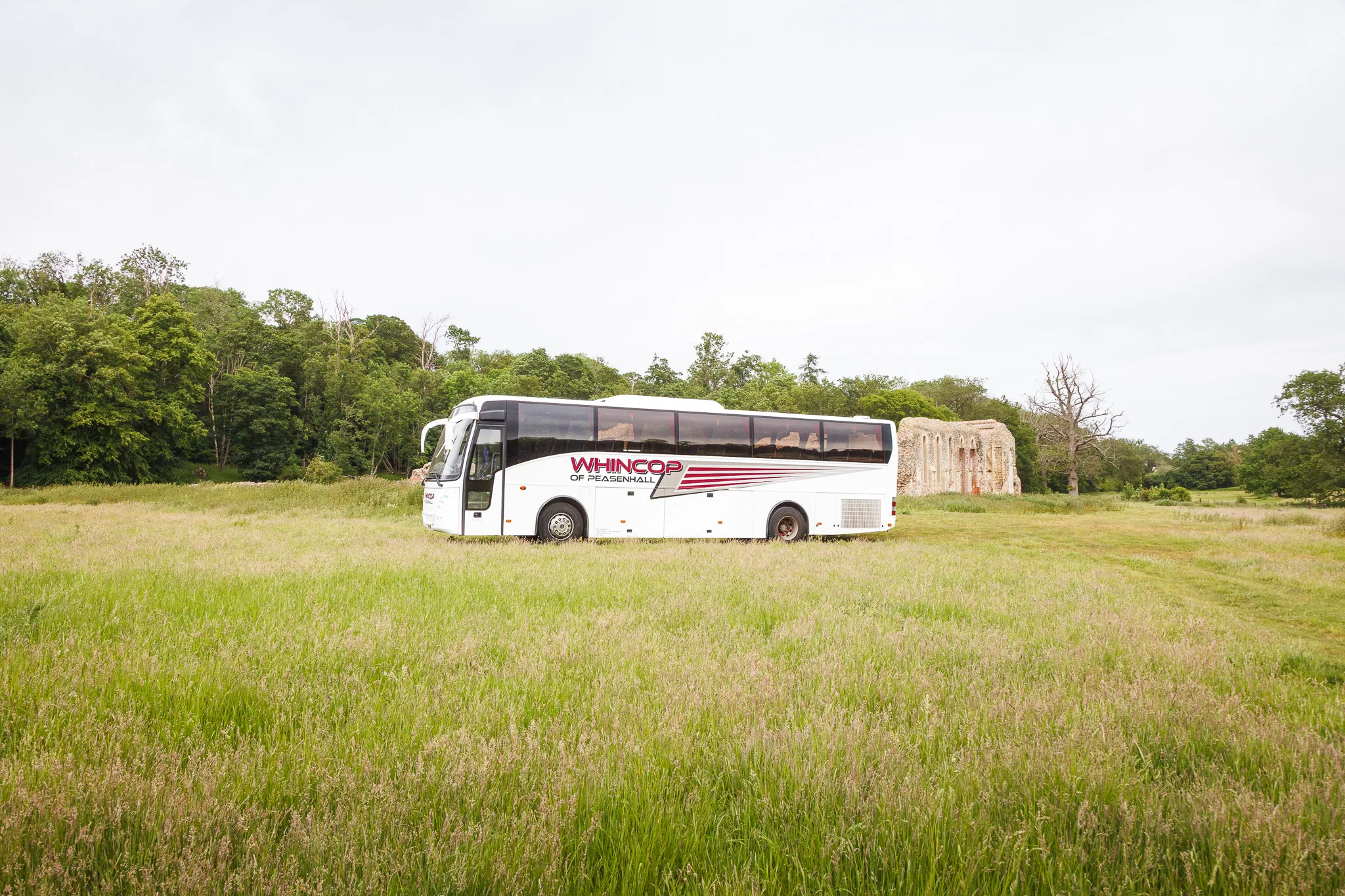
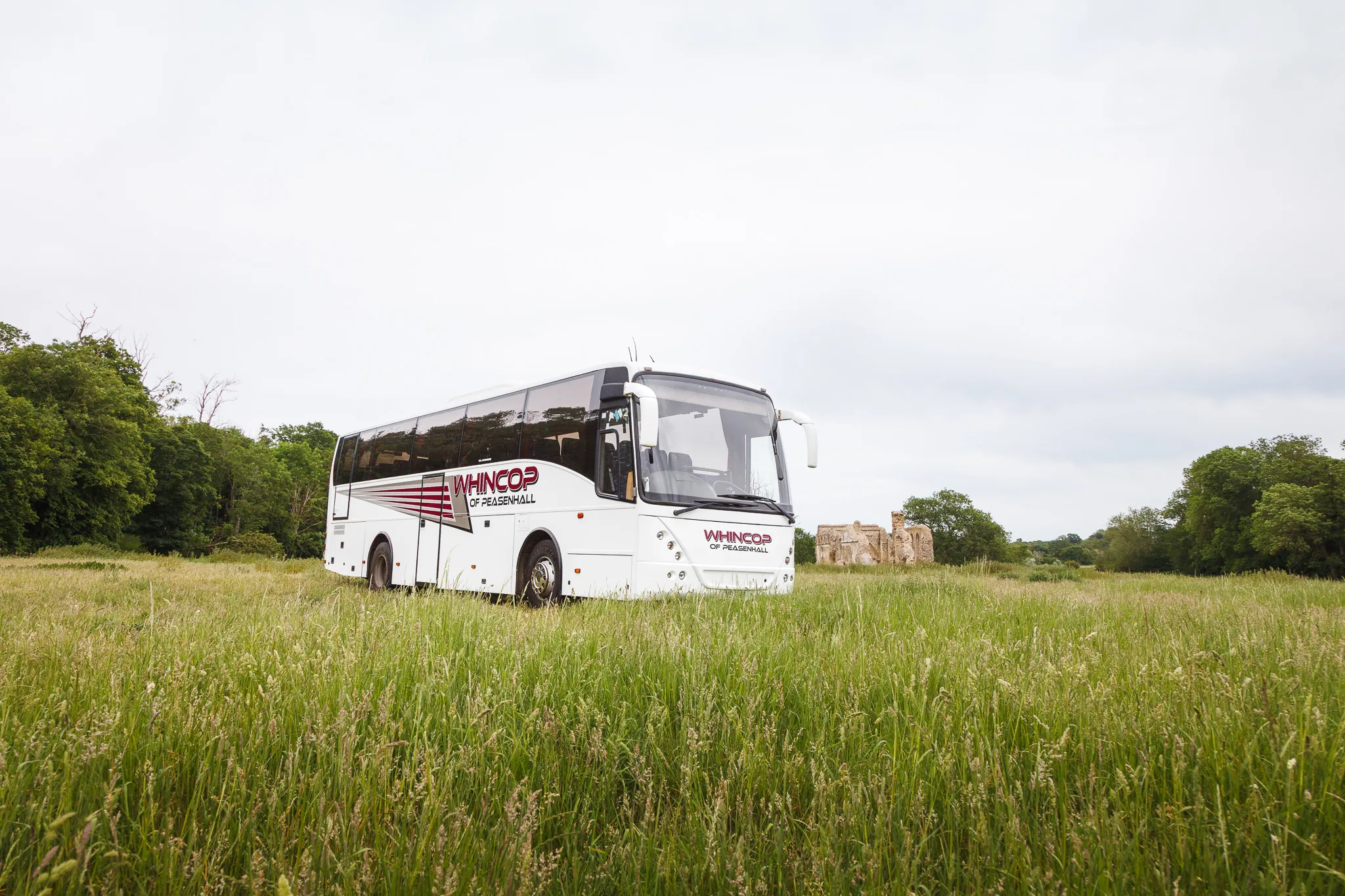
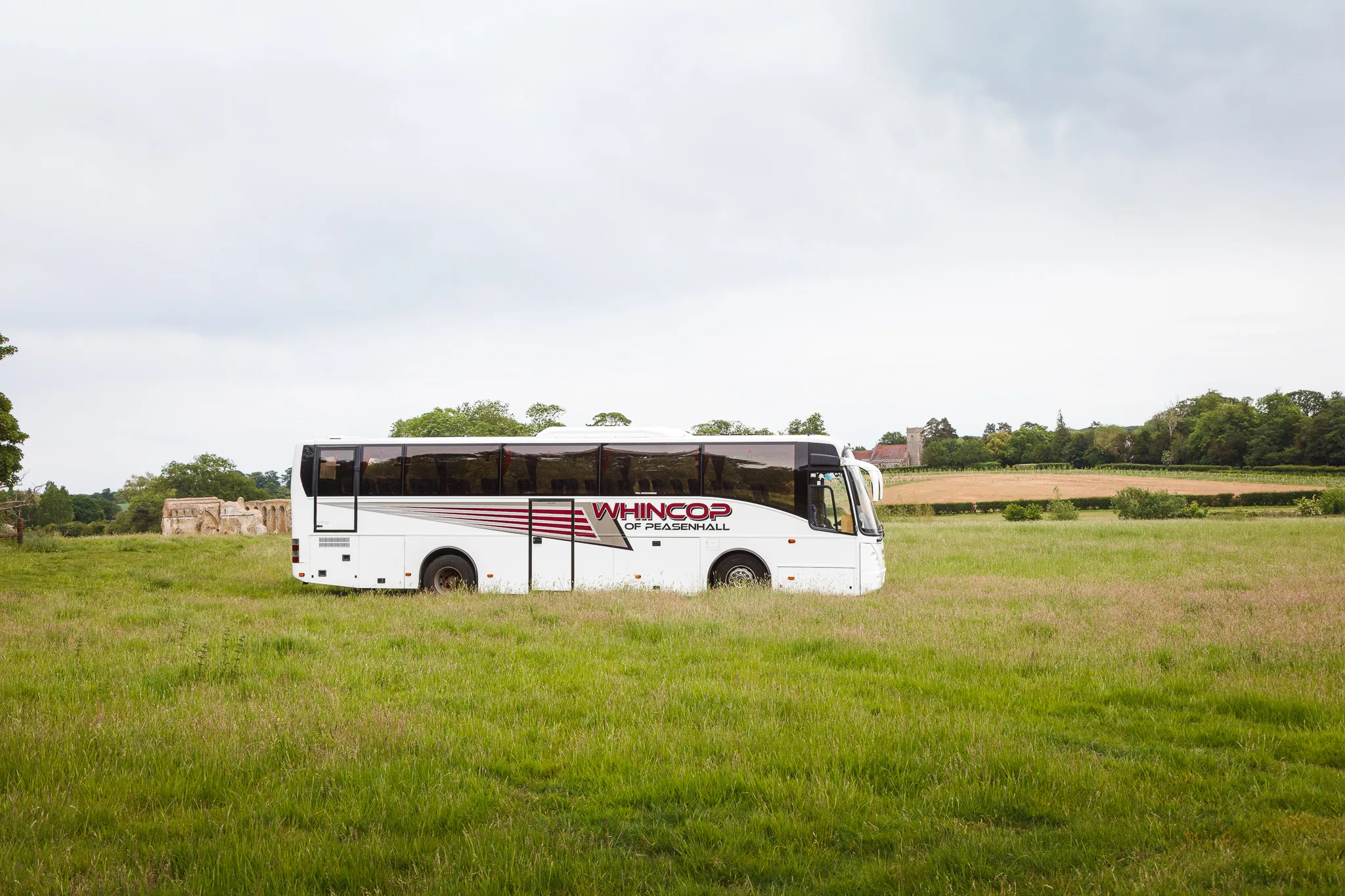
Several of the wider compositions show the full coach in the meadow, with Sibton Abbey either behind it or to one side. These frames give a clear sense of scale and location. They also leave space around the subject, which is useful for practical marketing use. Images like these can work well as website banners, social media headers, printed material or general brand photography where layout flexibility matters.
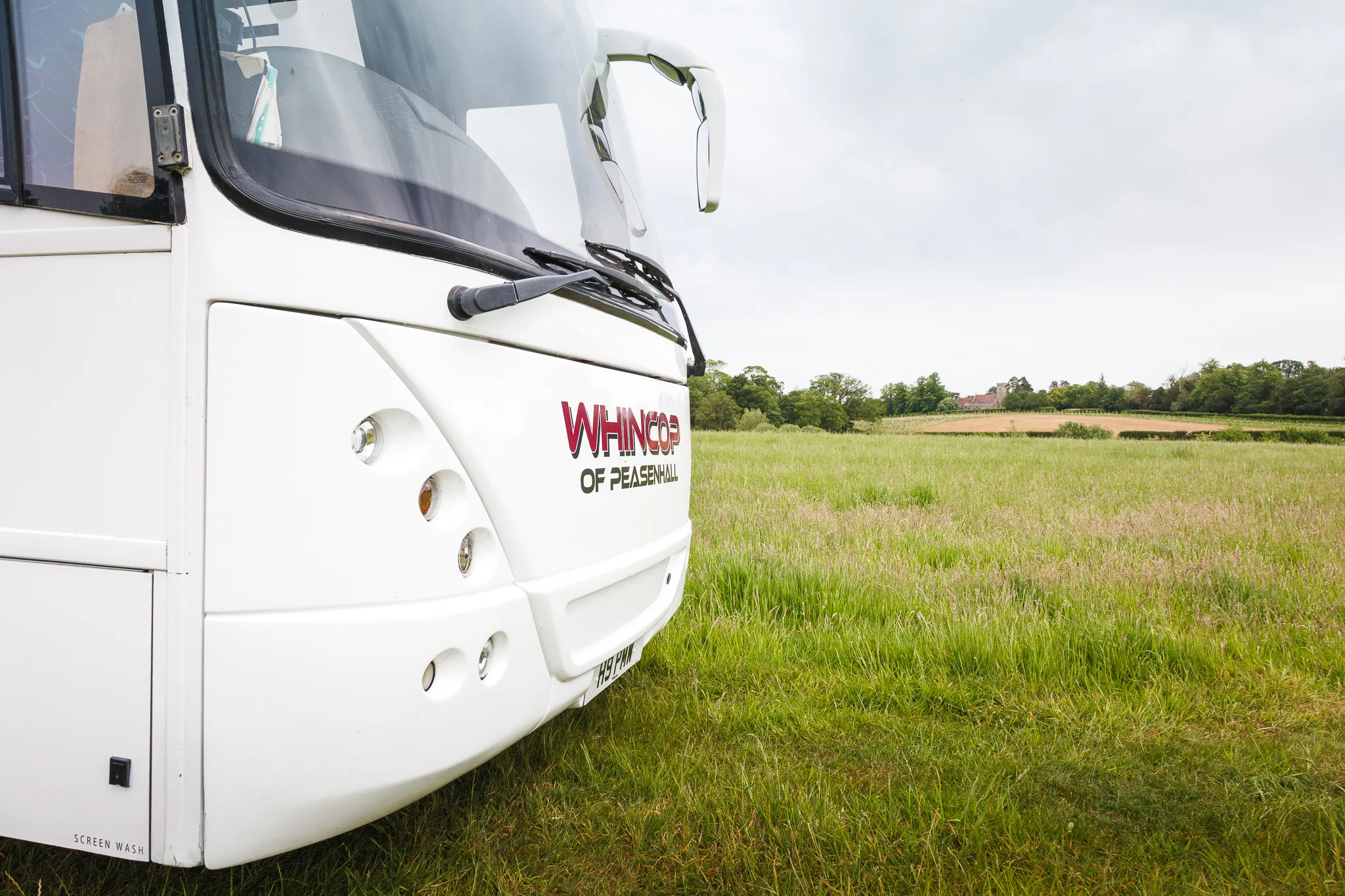
The closer images bring more attention to the front of the coach, the Whincop logo and the red graphic livery. These frames feel more direct and commercial. They show the business name clearly and give the vehicle more presence. Having both wider and closer images gives the client more options, rather than relying on one type of image for every use.
Why Location Matters in Commercial Vehicle Photography
Commercial vehicle photography is not only about showing what a vehicle looks like. The surroundings affect how the business is understood.
A coach photographed in a depot would say one thing. A coach photographed on a roadside would say something else. At Sibton Abbey, the photographs connect Whincop of Peasenhall with the Suffolk landscape and with a sense of local continuity. That makes the images more specific to the business.
For a Suffolk company, that sense of place has value. Many local businesses are not trying to look like national chains. They need images that feel professional, but still honest to where they are based and how they work. In this case, the location helped communicate that without needing to force the point.
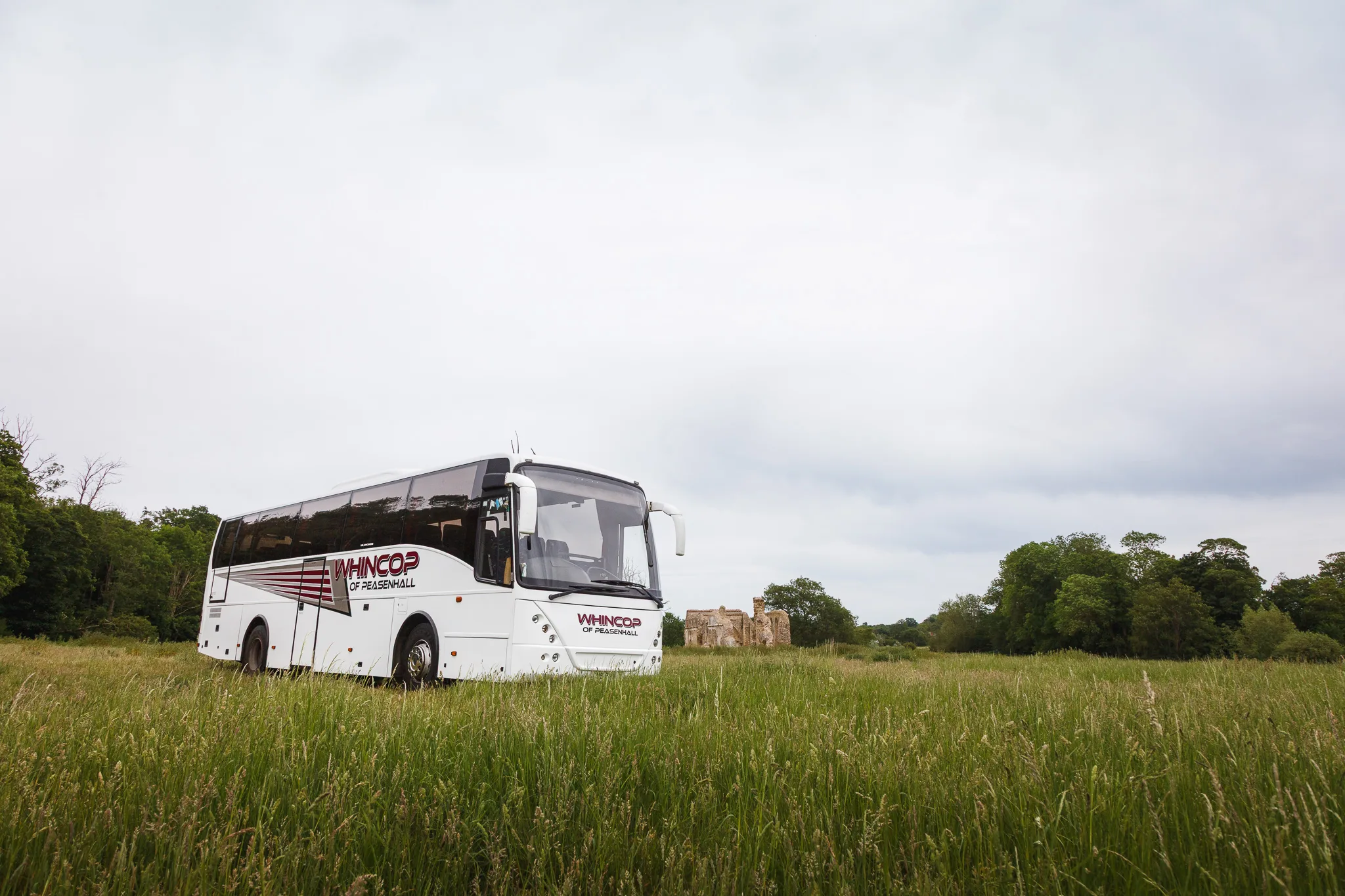
The meadow foreground was also important. In several frames, I worked low enough for the long grass to become part of the composition. This softened the base of the coach and avoided the hard, flat look that can happen when large vehicles are photographed on tarmac. The grass also helped connect the vehicle to the rural setting, which suited the wider tone of the shoot.
Permission to Photograph at Sibton Abbey
It is also important to note that Sibton Abbey is private property. This shoot was carried out with the kind permission of the landowners, who allowed us access to use the location for the photographs.
That permission made a real difference to the final images. The abbey ruins, meadow and surrounding landscape gave the shoot a strong sense of place, but locations like this need to be approached with care and respect. For any commercial photography work on private land, permission is not just a courtesy; it is an essential part of doing the job properly.
I am grateful that we were allowed to photograph there, as Sibton Abbey gave the Whincop coach a setting that felt far more connected to Suffolk than a standard yard, roadside or depot image would have done. The location helped support the visual story without taking attention away from the coach or the Whincop branding.
Working With Soft Overcast Light
The light on the day was soft and overcast, which was helpful for this type of commercial vehicle photography. A large white coach can be difficult to photograph in strong sunlight. Direct sun can create harsh reflections, blown highlights, deep shadows and difficult contrast across the windows and bodywork.
The diffused light kept the coach readable. It helped retain detail in the white exterior and allowed the windows, branding and body shape to sit more comfortably within the scene. The sky was pale and slightly heavy, which gave the images a grounded Suffolk feel rather than a dramatic or overly polished look.
That suited the shoot. These photographs did not need golden-hour drama or heavy stylisation. They needed to feel practical, calm, professional and relevant to the business. The soft light allowed the red Whincop branding to stand out clearly against the muted greens, greys and pale stone colours in the landscape.
Balancing Branding, Vehicle Detail and Landscape
One of the main considerations in this shoot was balance. The images had to show the coach as a commercial subject, but the location could not become so dominant that the vehicle became secondary.
The Whincop livery was a strong visual anchor. The red branding and graphic lines stood out well against the natural colour palette of the meadow and trees. Most of the surrounding environment was made up of greens, muted yellows, greys and soft stone tones, so the branding had a clear presence without needing heavy editing or artificial treatment.
In the wider frames, I allowed more room for the landscape and abbey ruins. These images give context and atmosphere. In the closer frames, I brought more emphasis to the logo, the front of the coach and the vehicle shape. That variety is useful for a working business because different platforms need different types of images.
A website banner often needs negative space and a broader composition. A social media post may work better with a stronger subject presence. A service page may need a direct image that shows the vehicle and branding clearly. By photographing the coach from several positions, the final set becomes more practical.
The Connection Between Signage, Vehicle Branding and Photography
Although this shoot was focused on the coach, the connection with Whincop Signs is clear. Vehicle livery is signage in motion. It carries a business name into the public space and makes the company recognisable wherever the vehicle is seen.
That is where signage and commercial photography overlap. A sign, a vehicle wrap, a branded garment or a shop front helps people recognise a business in the physical world. Photography does something similar online. It helps people understand who they are dealing with, what the business does and the quality of the work before making contact.
Whincop Signs offers a range of signage and branding services, including stickers and decals, wall-mounted signs, full vehicle wraps, shop front designs, domestic and commercial signage, branded mugs, printed garments and embroidered garments. From the information available, the service appears to include design, production and installation, which makes it a more complete signage service rather than simply the production of isolated items.
That wider context makes this type of photography particularly relevant. The coach is not only a vehicle. It is also a working example of business identity, vehicle branding and local recognition.
Creating Useful Commercial Images for a Working Business
For a business like Whincop, commercial photography needs to be useful beyond a single post or one page on a website. The images should support different parts of the business over time.
This set could be used for website content, social media, printed marketing, local business updates, coach service pages, brand presentation and general promotional material. The wider images work well where space and atmosphere are needed. The closer images work well where the logo, vehicle and business name need to be more immediate.
That is one of the reasons I think about commercial photography as more than simply producing attractive images. A photograph has to work in real situations. It may need to sit behind text on a website. It may need to crop well for Facebook or Instagram. It may need to communicate quickly when someone is scrolling. It may also need to remain useful months or years after the shoot.
For this Whincop shoot, the variety of compositions gives the business a more flexible image set. The photographs show the coach clearly, but they also give the business a stronger sense of place and identity.
Commercial Photography for Local Businesses in Suffolk
This shoot is a good example of why local business photography benefits from context. Not every commercial shoot needs to be in a studio, workshop or office. Sometimes the right location helps explain something important about the business.
For Whincop of Peasenhall, Sibton Abbey helped bring together the coach, the Whincop branding and the Suffolk landscape. The result is a set of images that feel practical, local and connected to the business. They are not just photographs of a coach. They are photographs of a Suffolk business presenting part of its identity in a way that feels grounded and relevant.
As a commercial photographer in Suffolk, I often find that the most useful images come from understanding how a business will actually use the photographs. Website photography, product photography, personal branding, headshots and commercial location photography all have different requirements, but the principle is the same. The images need to be clear, credible and useful.
For this Whincop shoot, that meant showing the coach properly, keeping the branding readable, using the location with care and creating a set of images that could support the business across several practical uses.
Commercial photography
Need photography for your business?
Photography for businesses across Suffolk, planned around how you will use it: premises, teams, products, events and PR. See what is involved and get a quote.