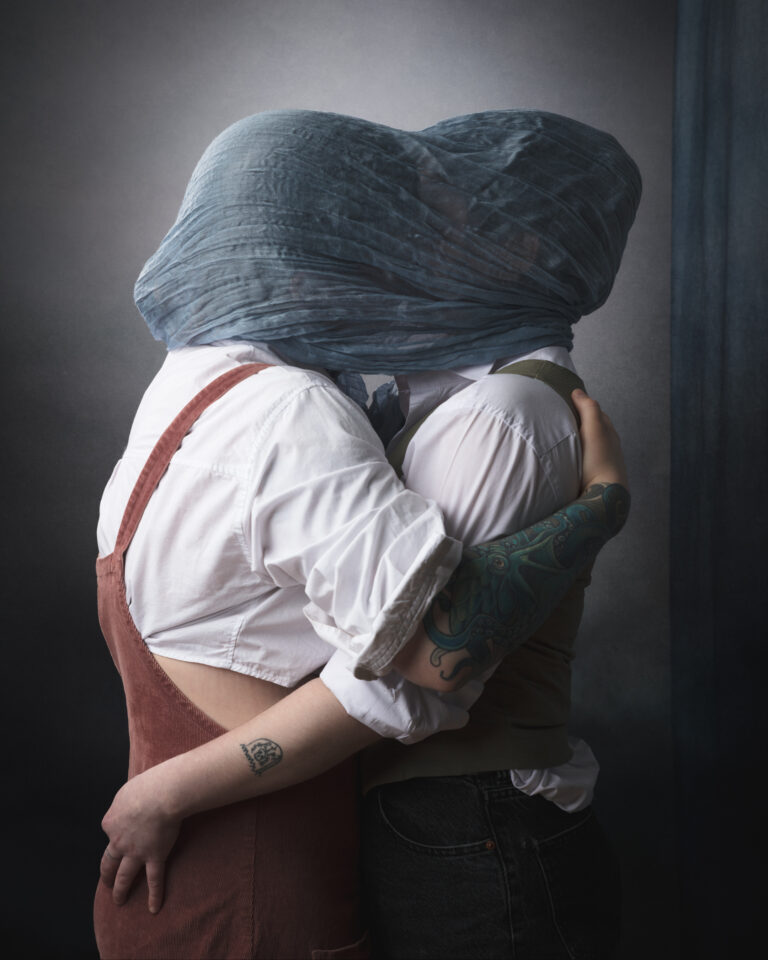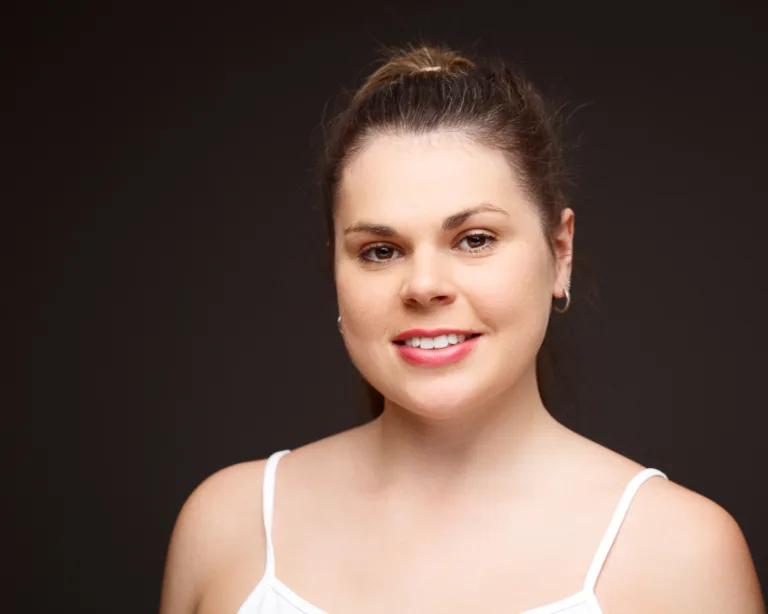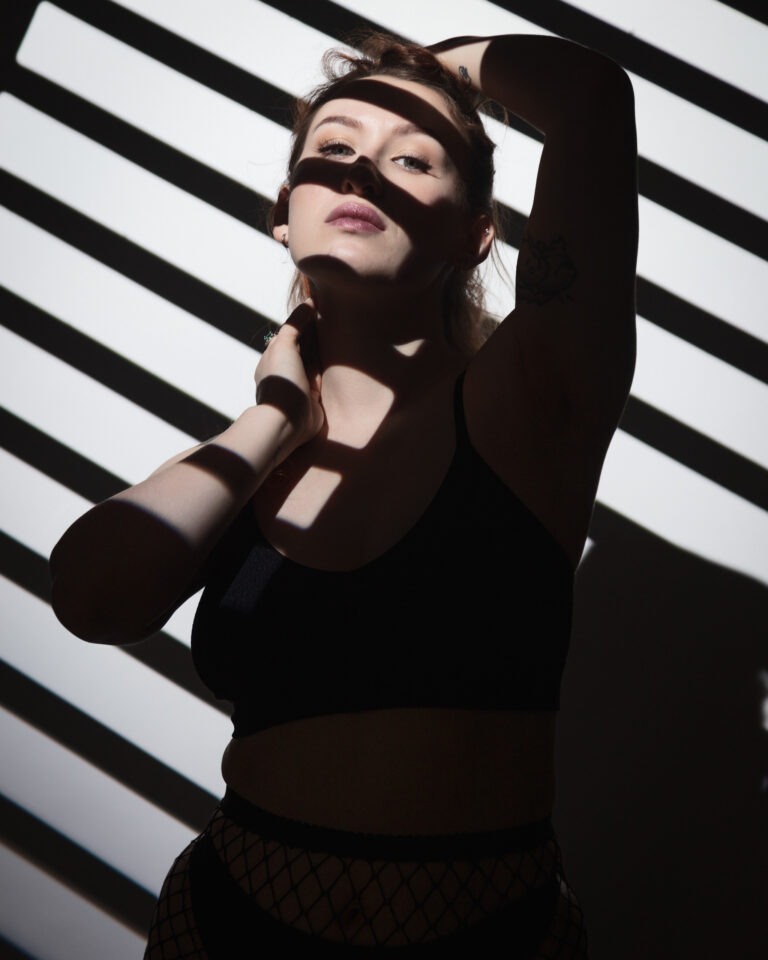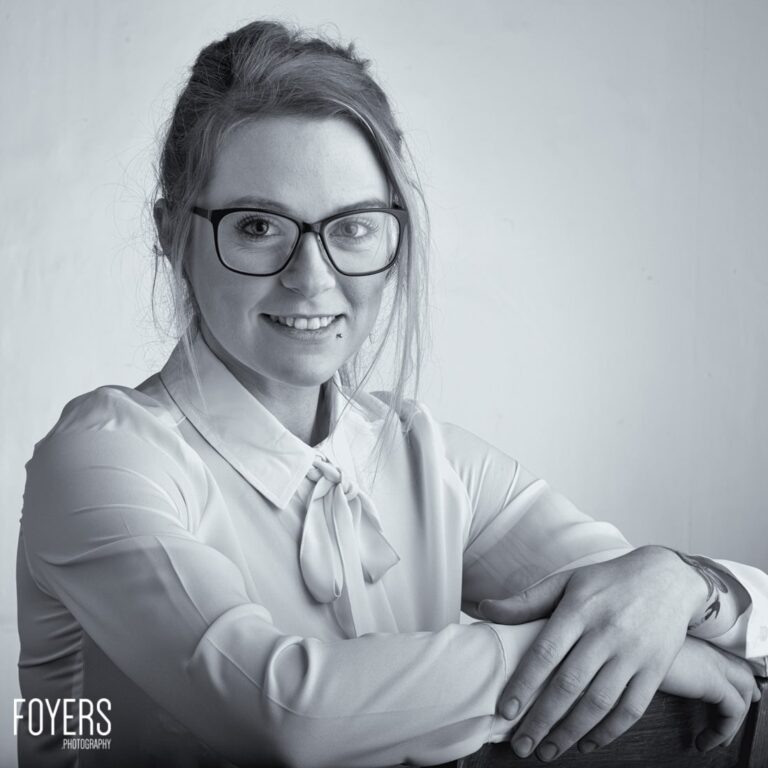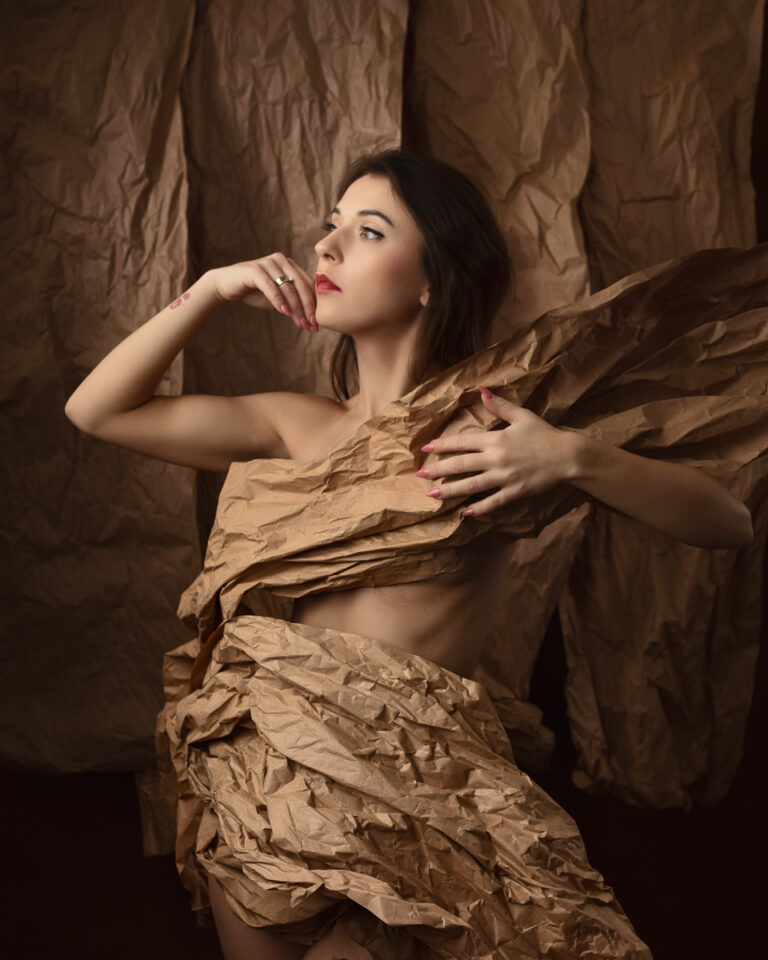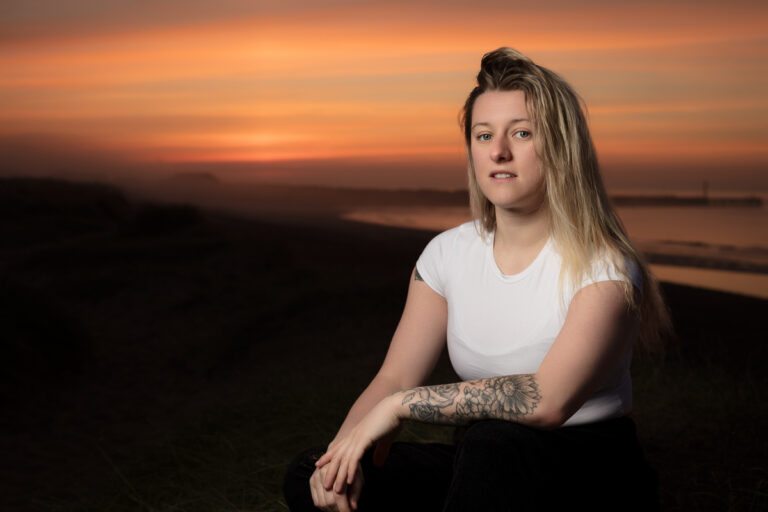
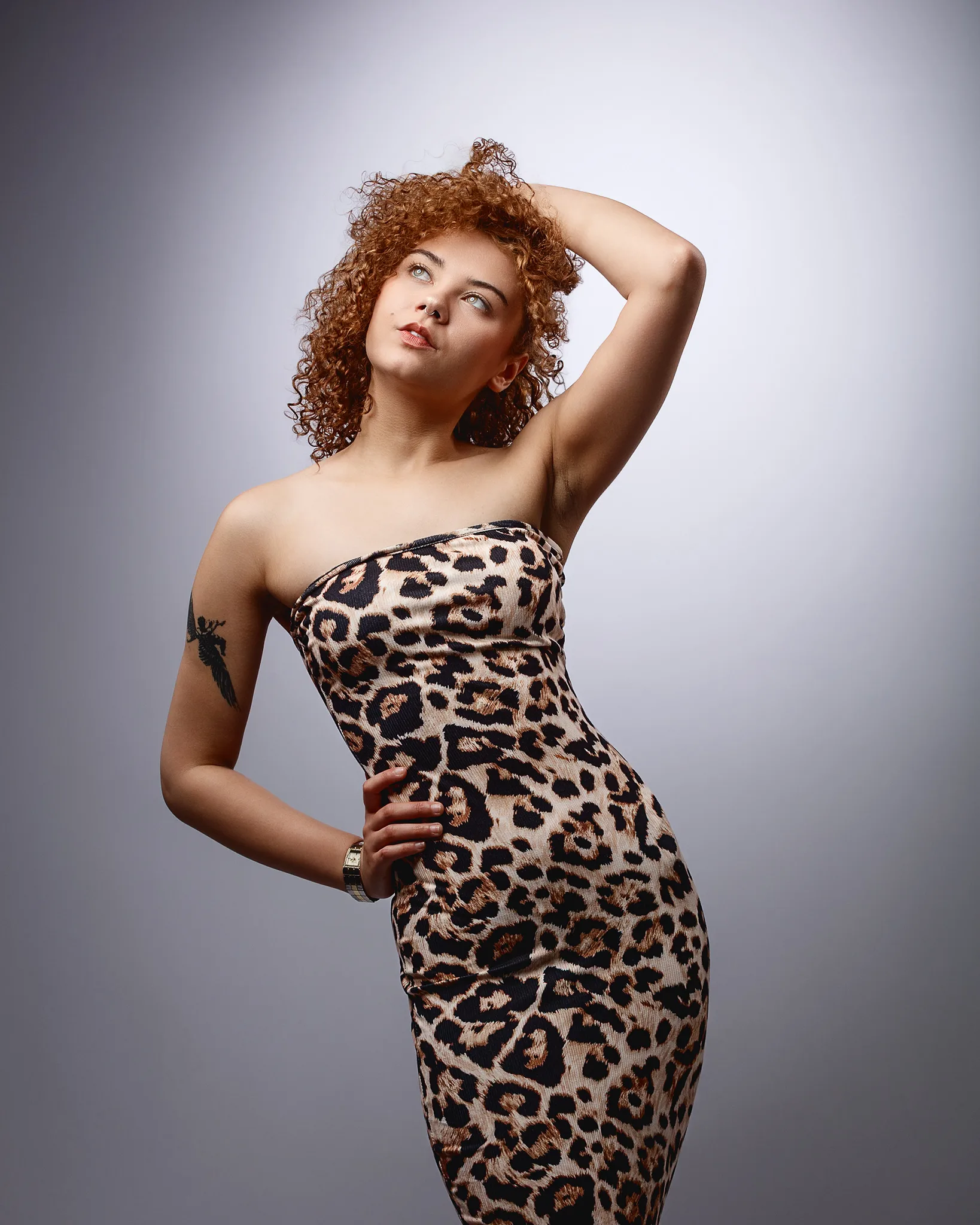
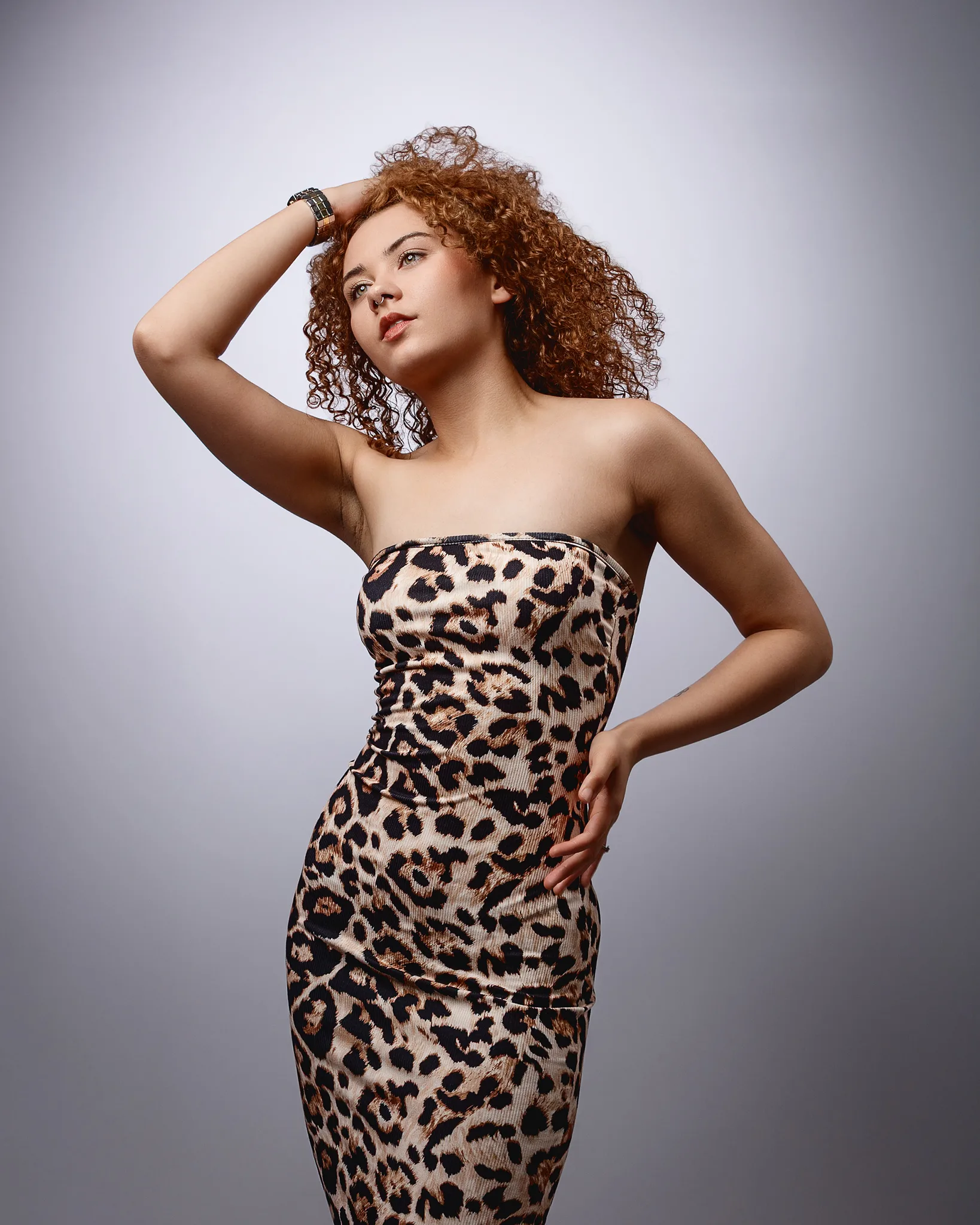
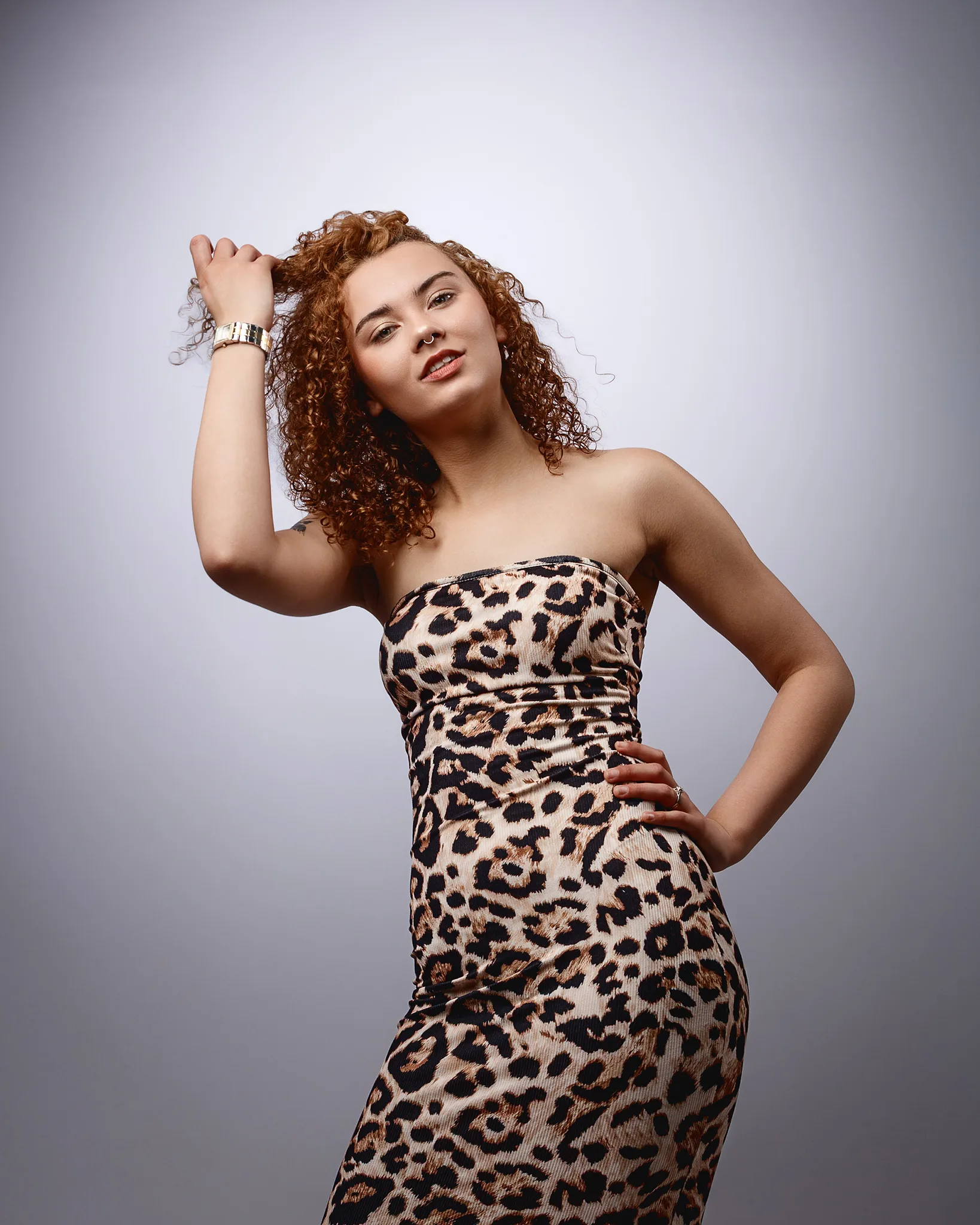
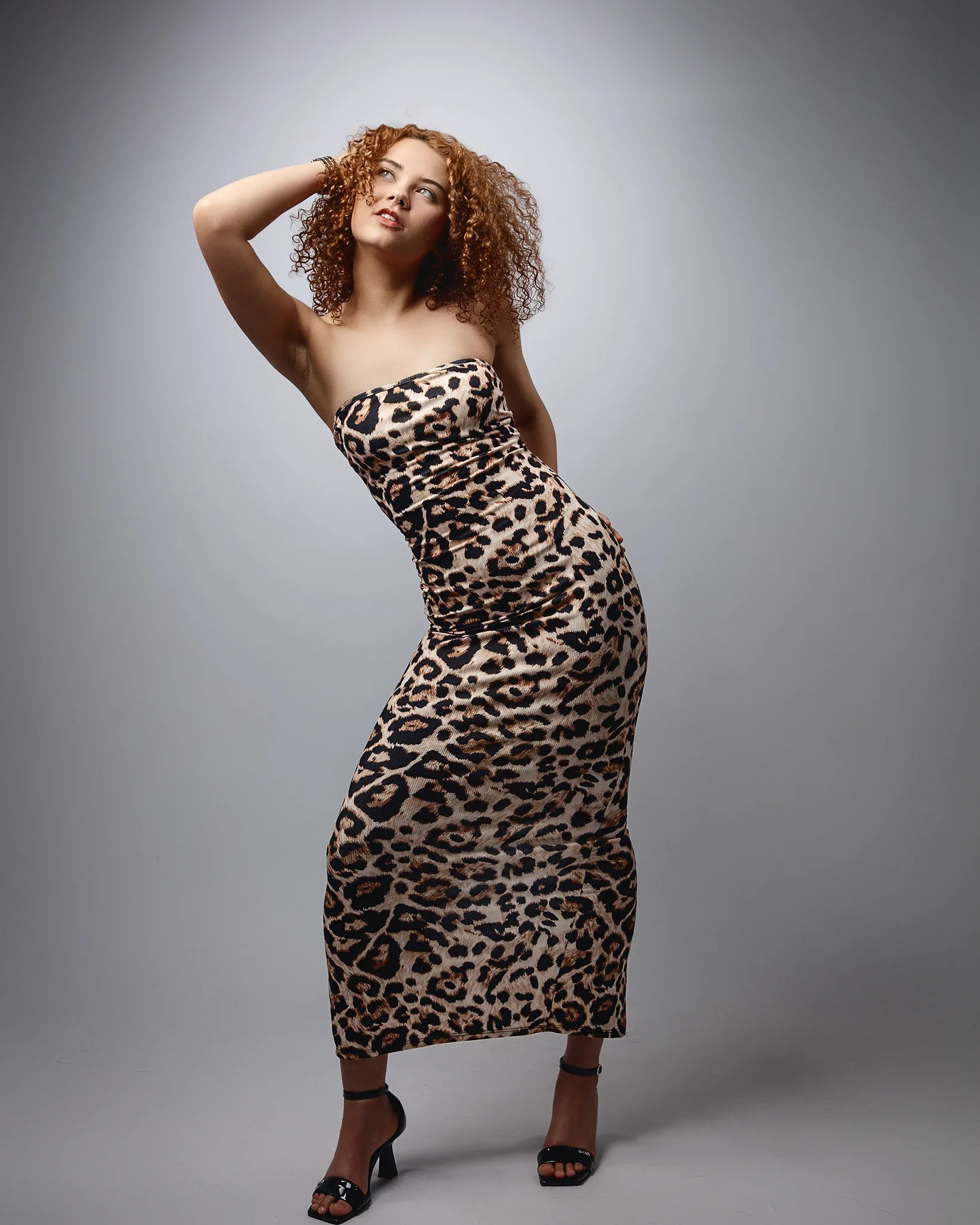
I recently worked with Maddie again on a model portfolio shoot at my photography studio at Bentwaters, near Woodbridge in Suffolk.
Maddie has photographed with me before, and I always take it as a real compliment when someone chooses to come back to the studio for another shoot. A returning model usually means there is trust in the process, the space, and the way we work together. Maddie is a joy to work with, and this session was a good example of how much variety can be created in a studio model portfolio shoot when the planning, wardrobe choices, lighting, and posing are allowed to develop naturally.
This was not a shoot built around one repeated look. The aim was to create a broad set of images for Maddie’s portfolio, including fashion-led portraits, softer studio portraits, close-up beauty-style images, stronger editorial looks, and more dramatic creative images. For anyone looking into model portfolio photography in Suffolk, this kind of variety is important. A strong portfolio should show more than one side of a person in front of the camera.
What Is a Model Portfolio Shoot?
A model portfolio shoot is not just about taking attractive photographs. That is part of it, of course, but it is not the whole point.
A useful model portfolio needs to show how someone photographs, how they move, how they respond to direction, and how they adapt to different clothing, lighting, expressions, and moods. It should give a clear sense of range.
For some people, a modelling portfolio shoot is about creating a first set of images to approach agencies, apply for castings, or build a presence on platforms such as PurplePort, Instagram, or a personal portfolio website. For others, it is about updating older images, changing direction, or adding more variety after gaining experience.
A strong portfolio usually benefits from a mixture of:
clean portraits
fashion-style images
full-length images
half-length images
close-up beauty portraits
different clothing choices
different moods and expressions
simple, usable images alongside more creative work
That balance matters. If every image in a portfolio has the same lighting, same outfit, same expression, and same crop, it does not give enough information. The viewer needs to see range, but the work still needs to feel considered and coherent.
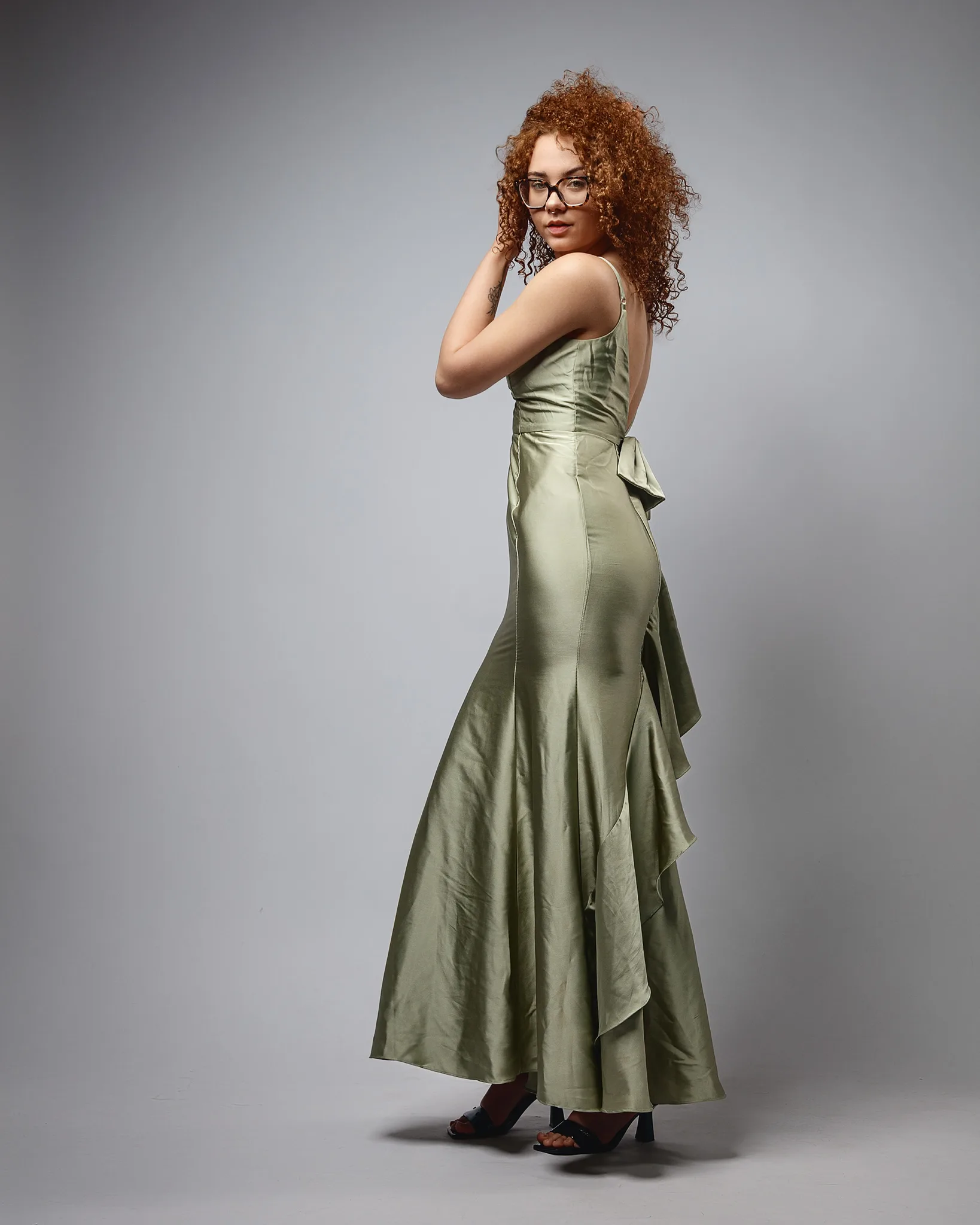
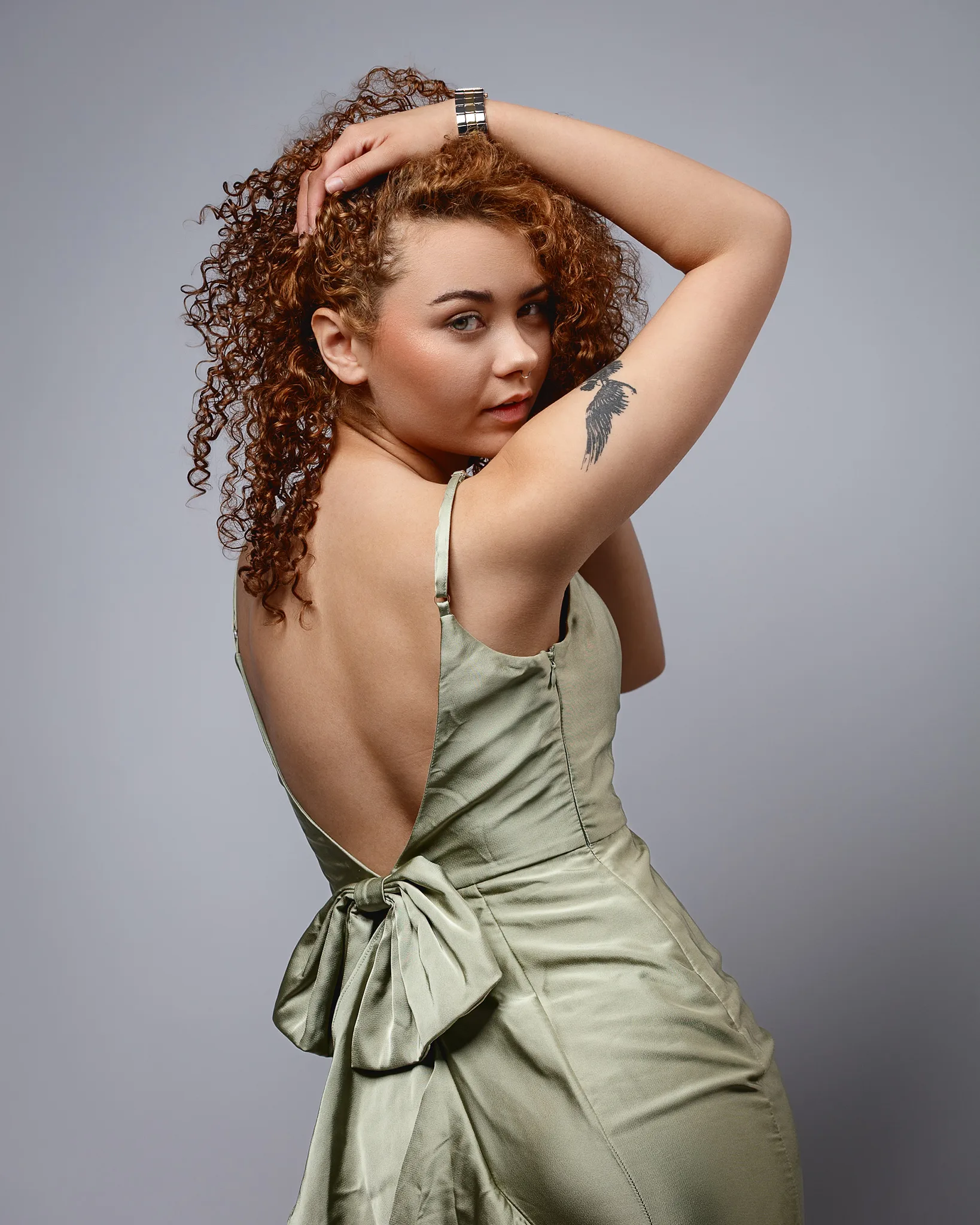
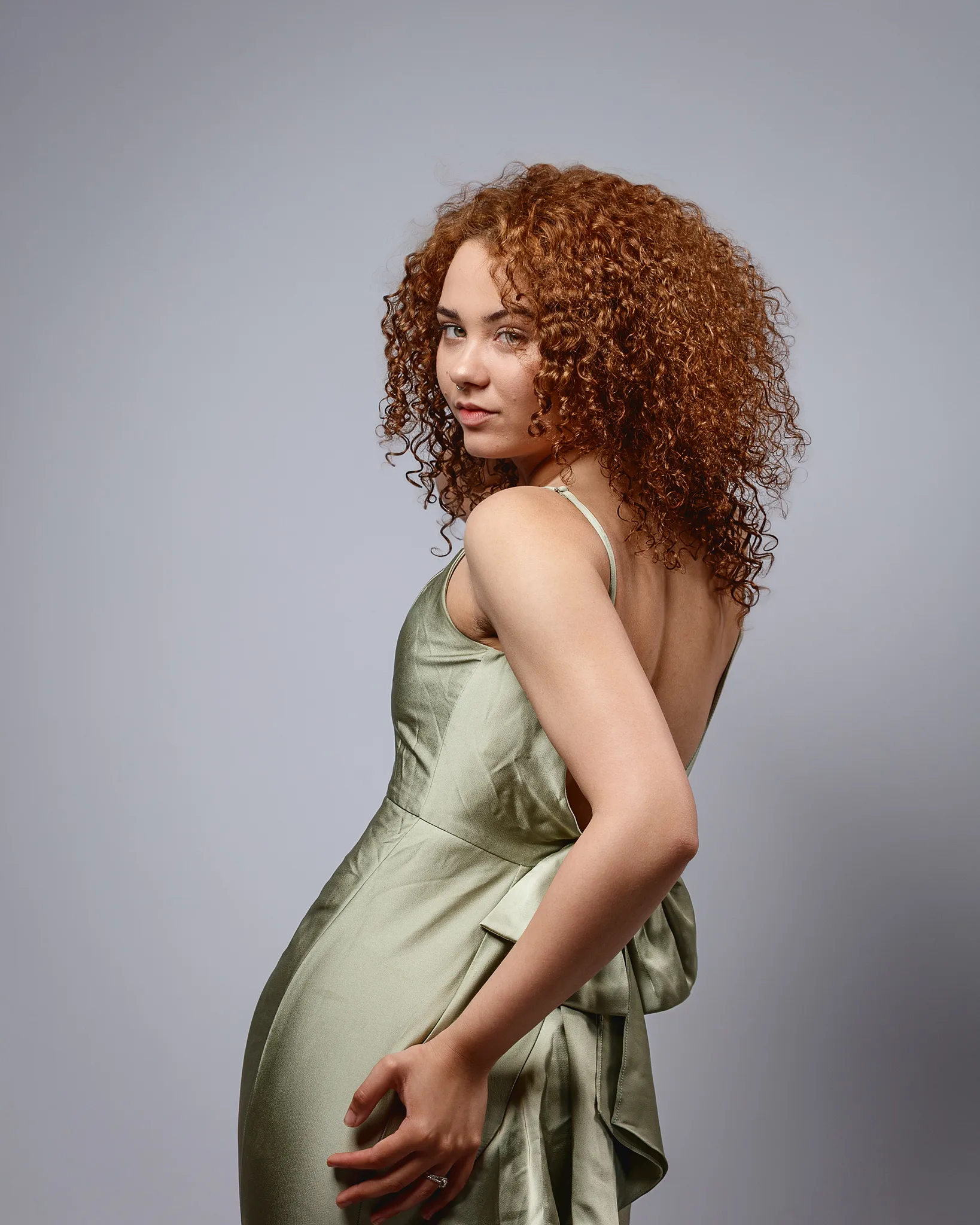
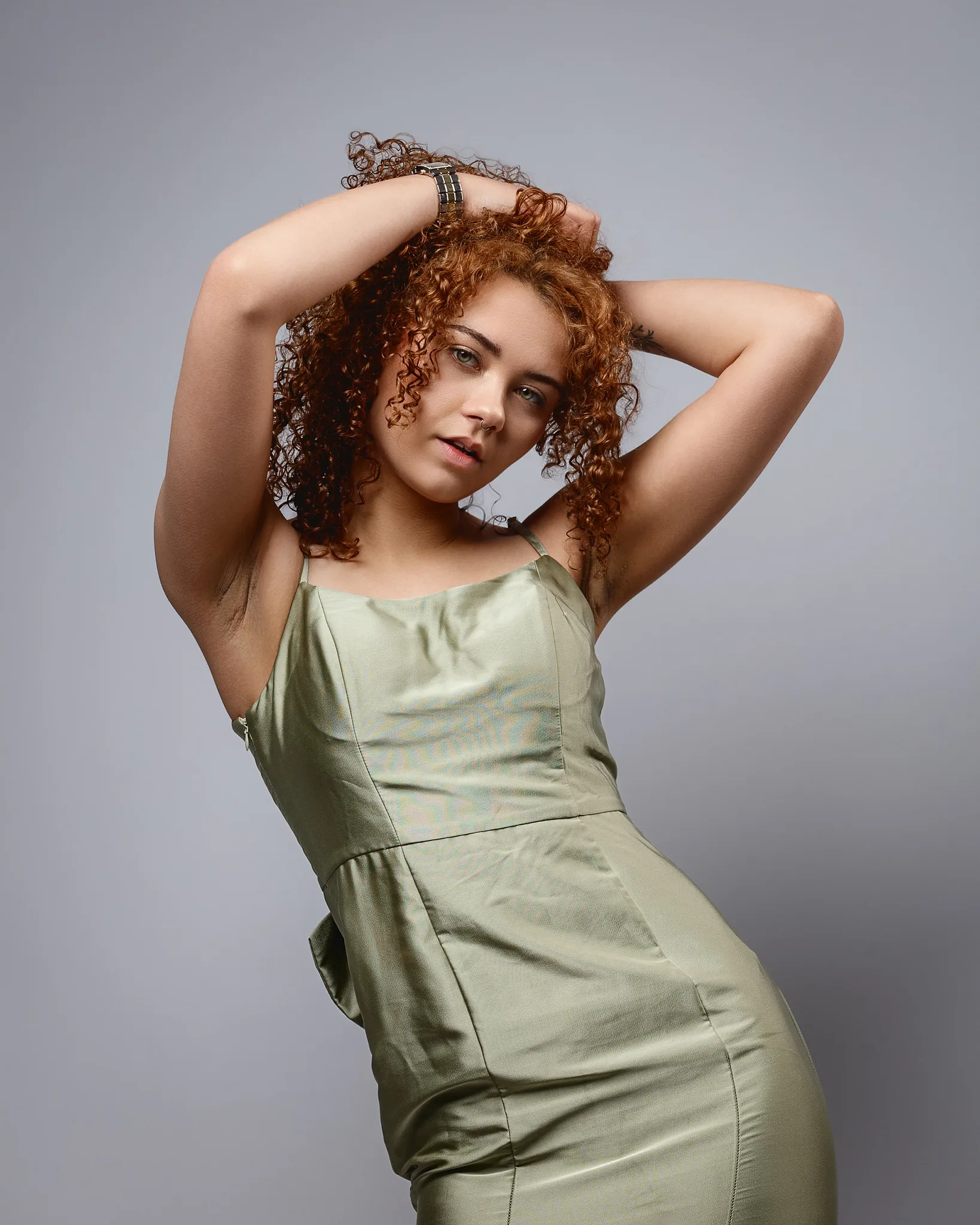
Creating Variety in Maddie’s Model Portfolio Shoot
Maddie’s shoot worked particularly well because we had a good range of visual directions to explore.
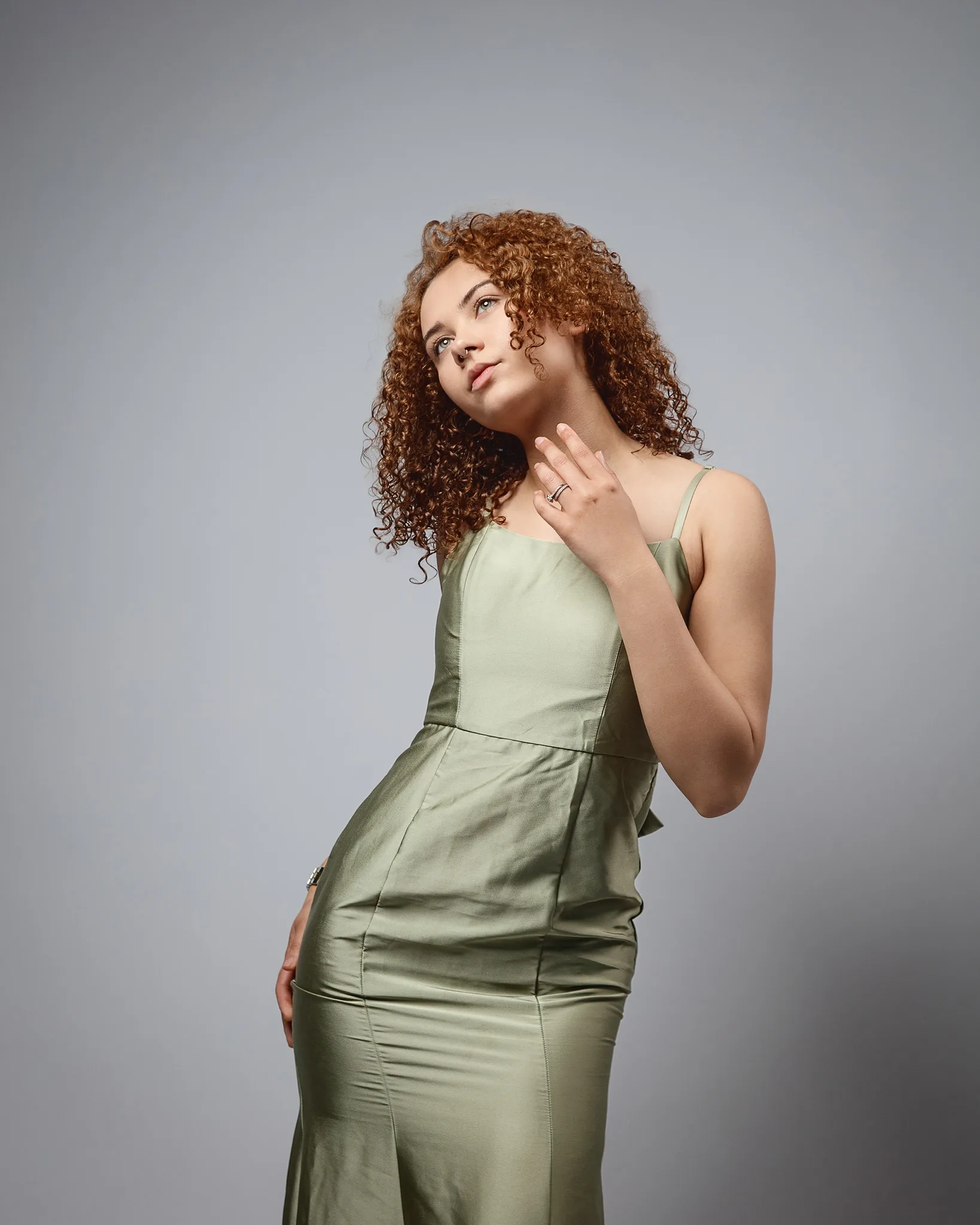
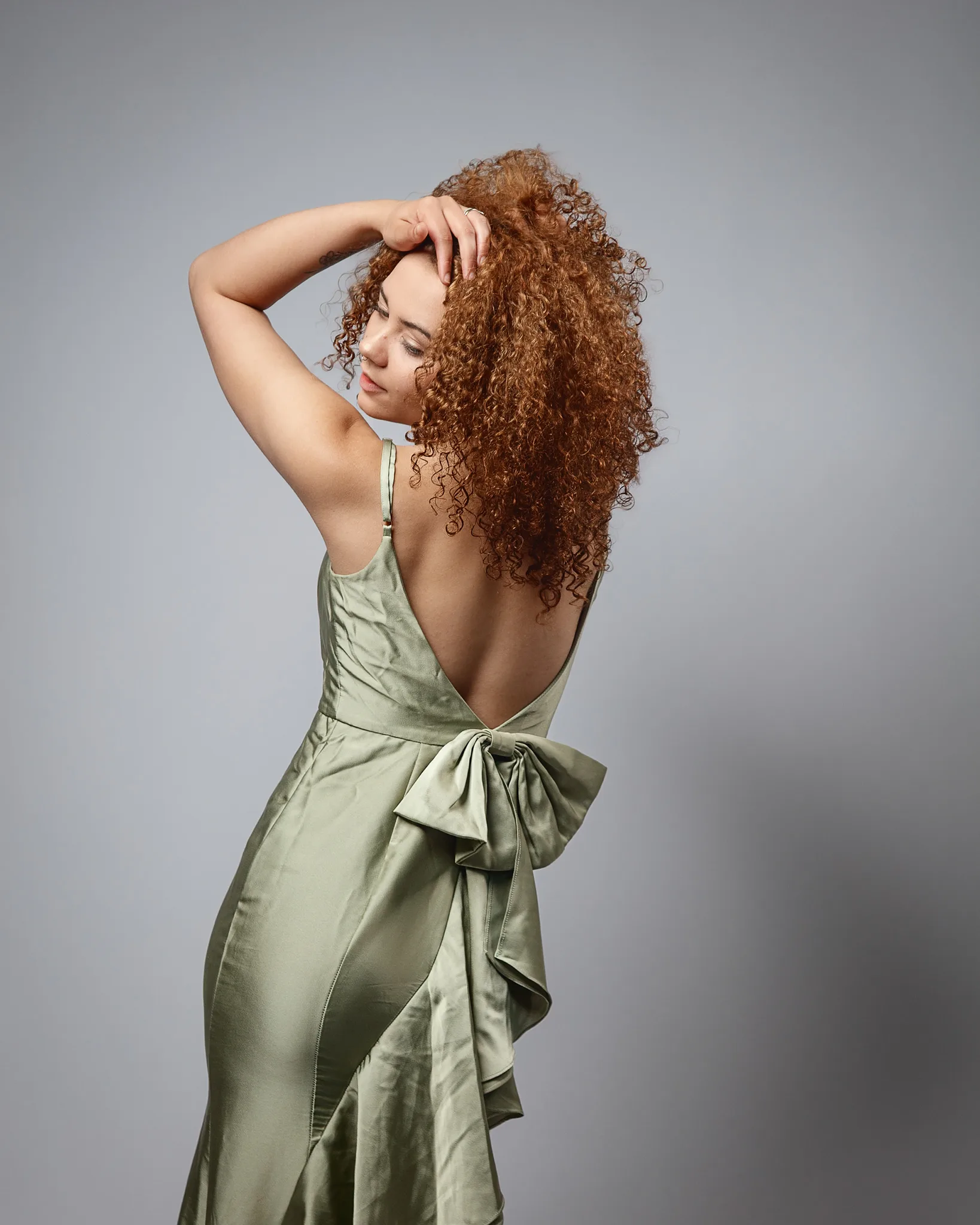
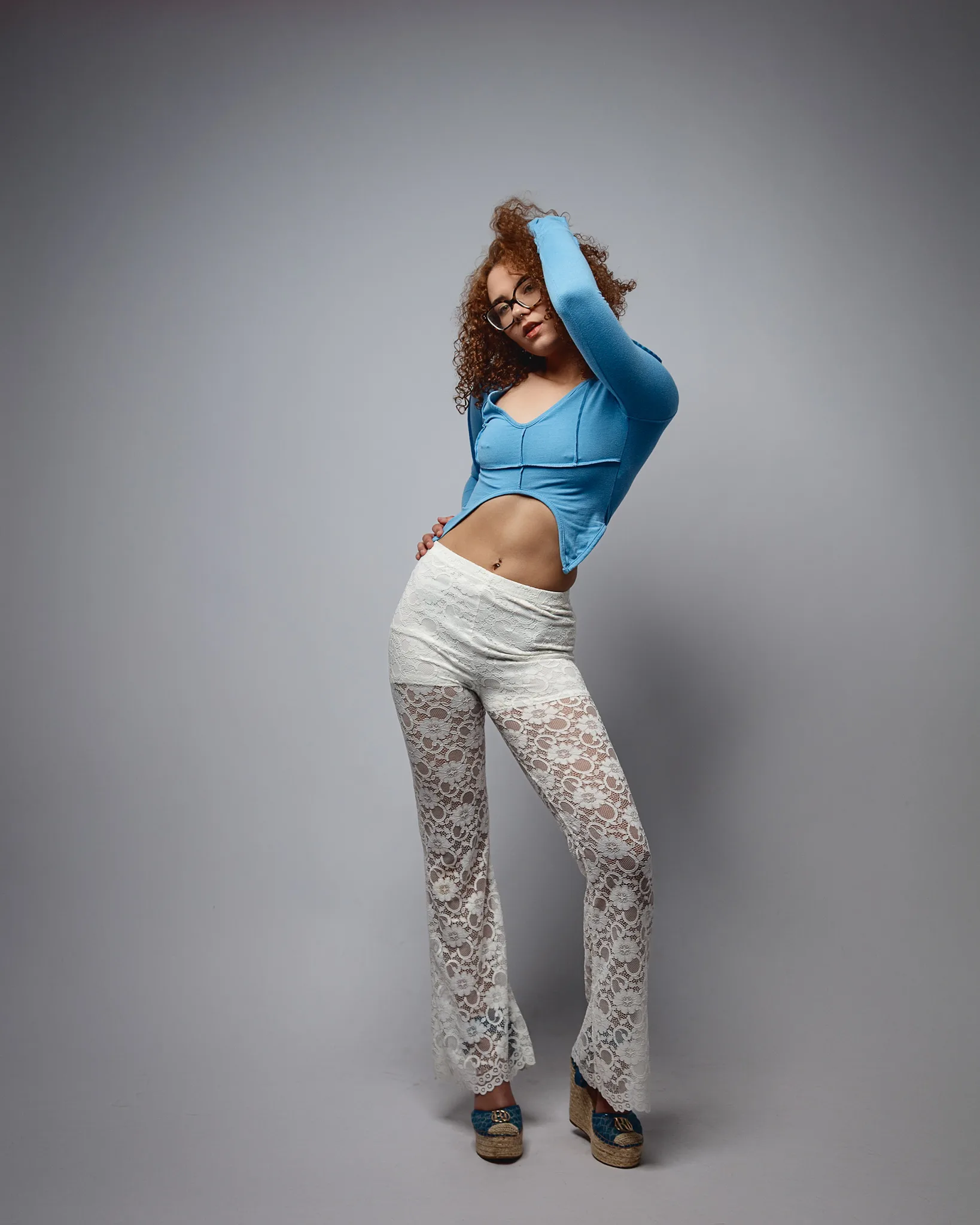
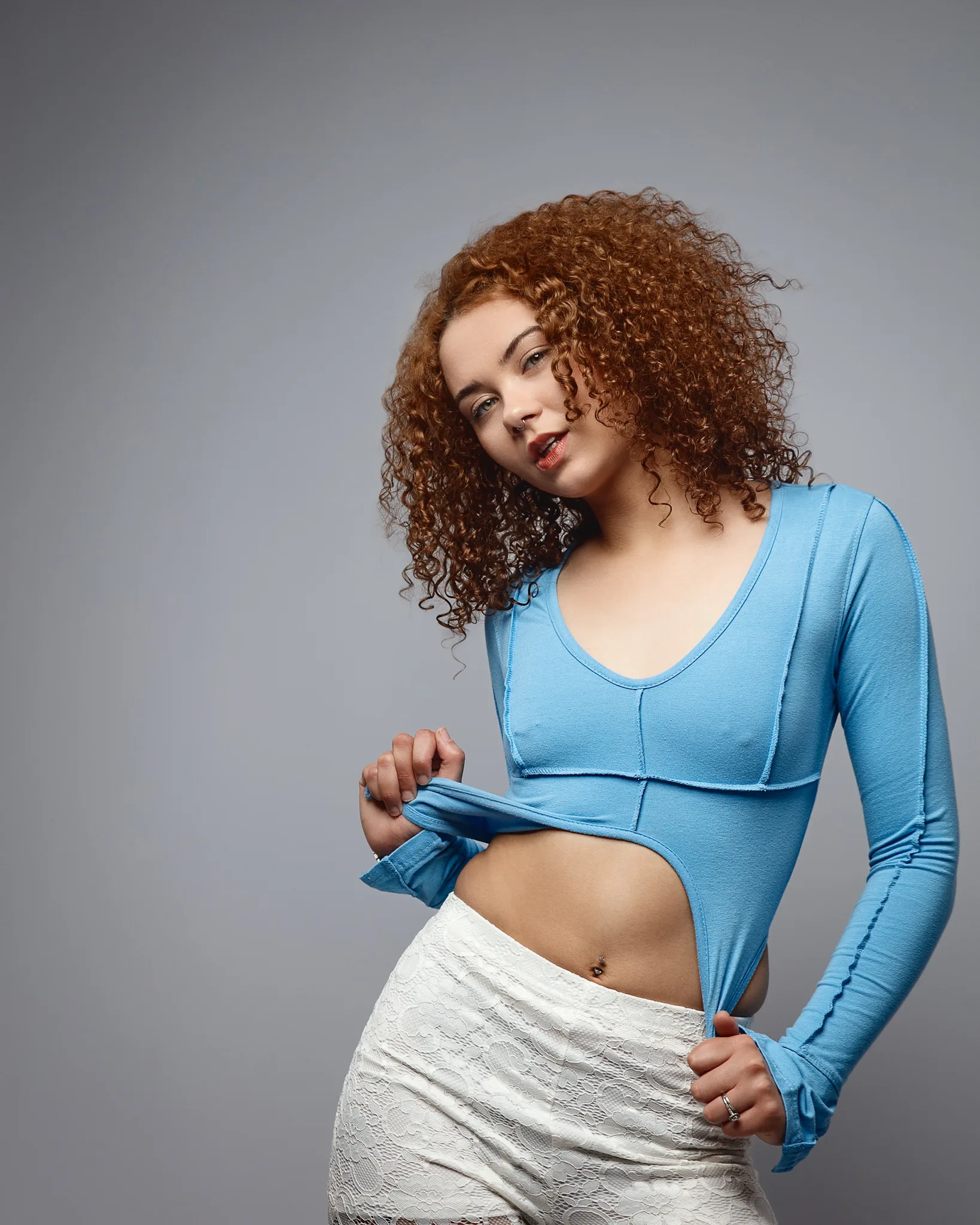
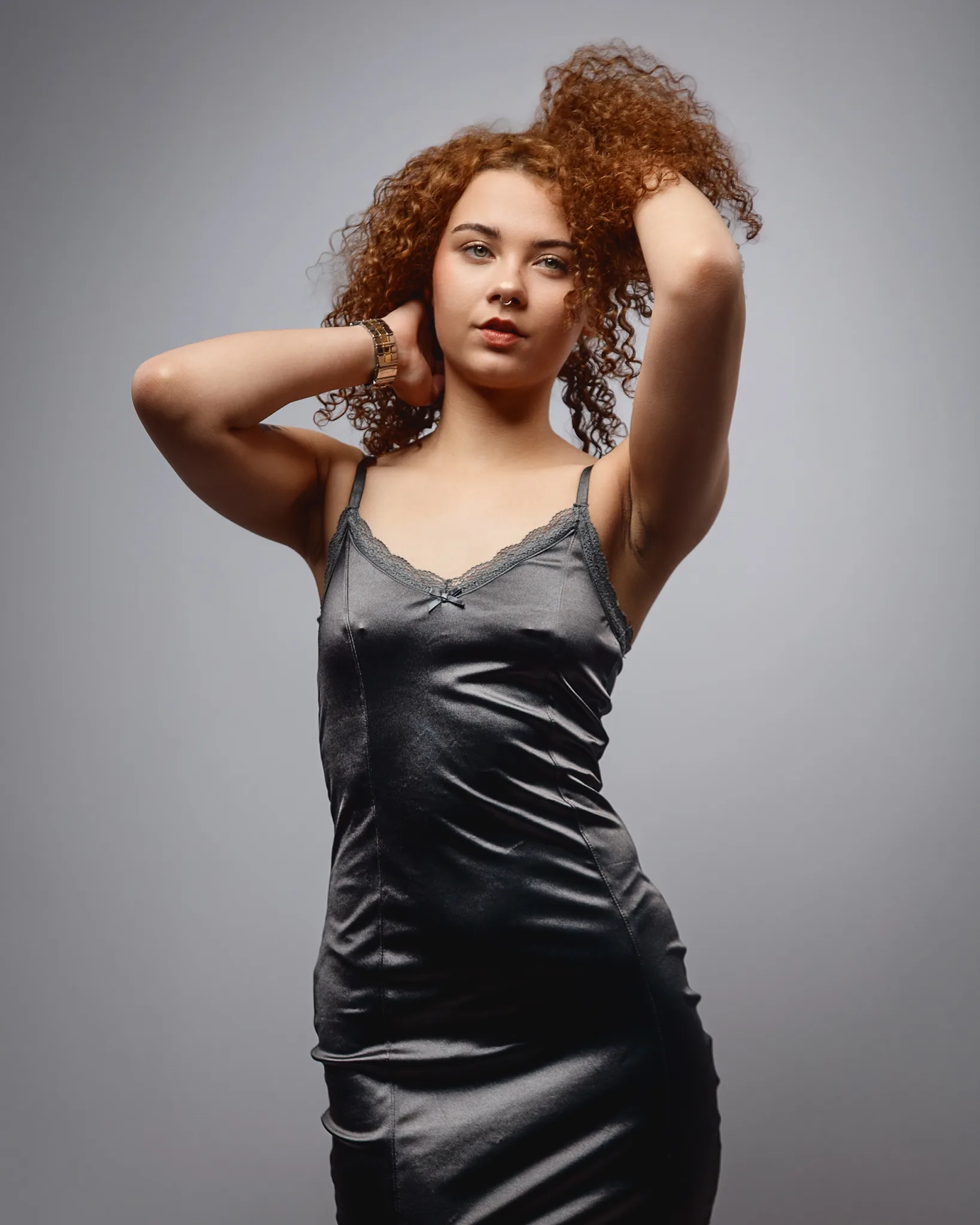
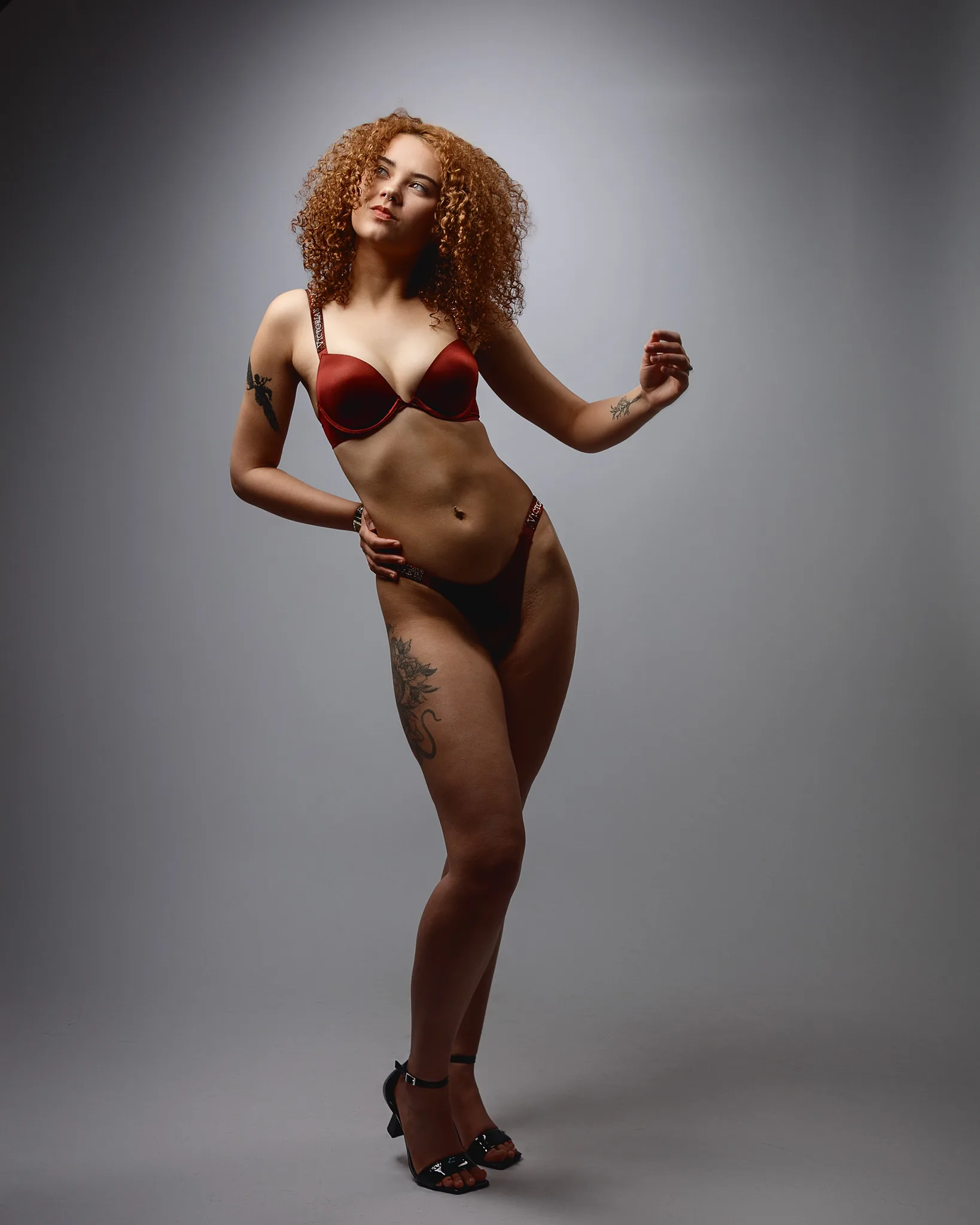
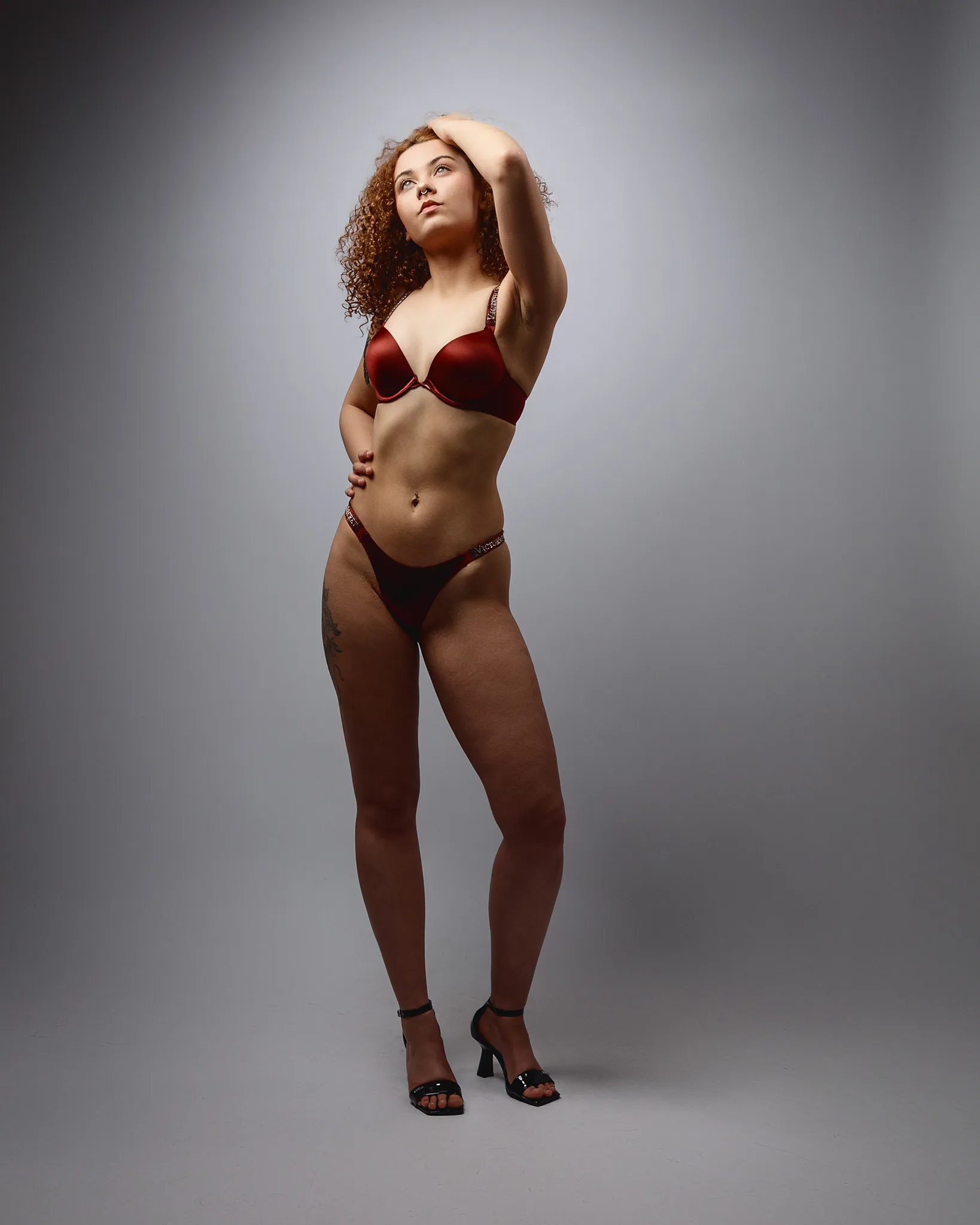
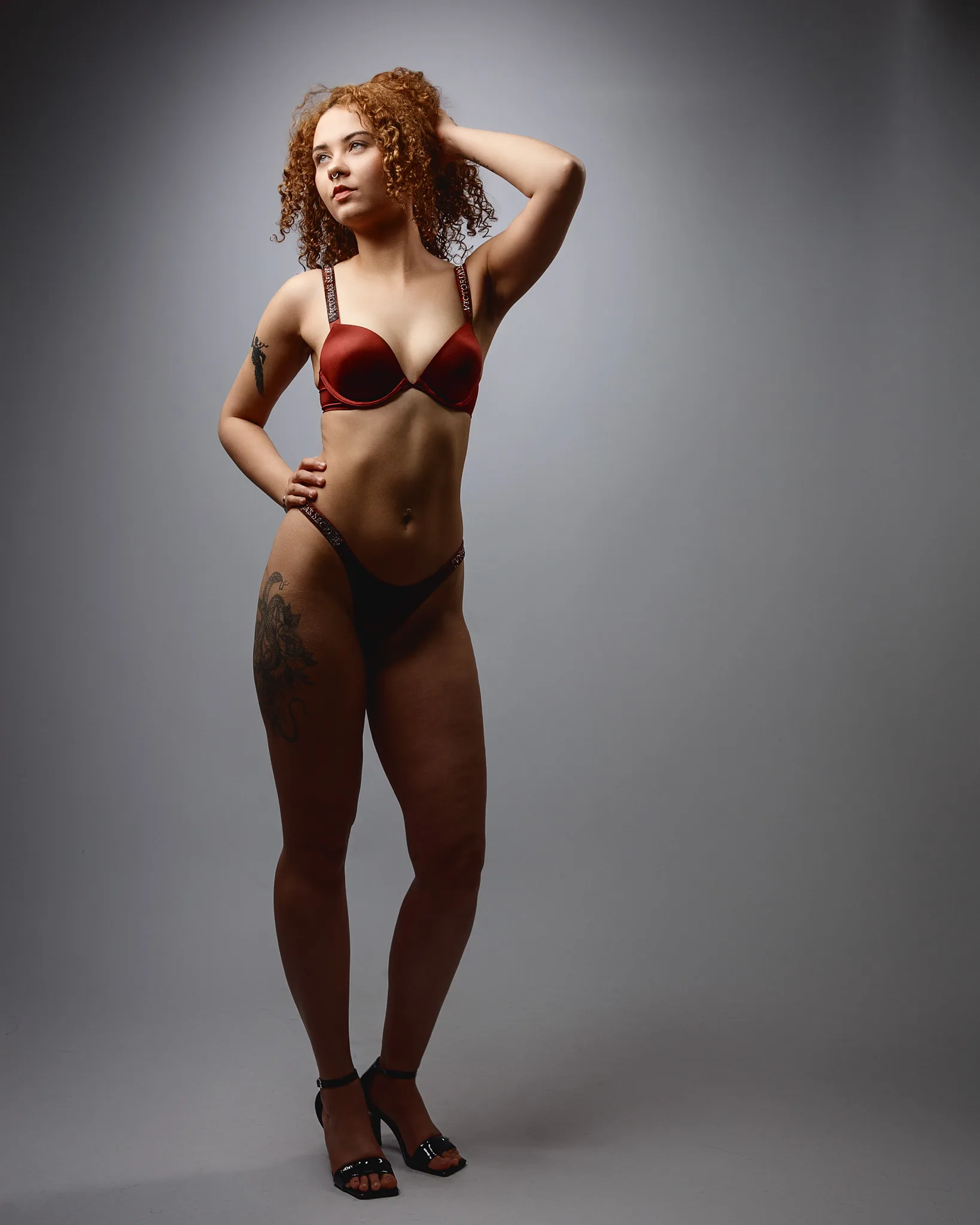
The final gallery included several different styles, from casual sportswear through to softer fashion portraits and more dramatic studio images. Each look changed the mood of the session and gave Maddie a different kind of image for her portfolio.
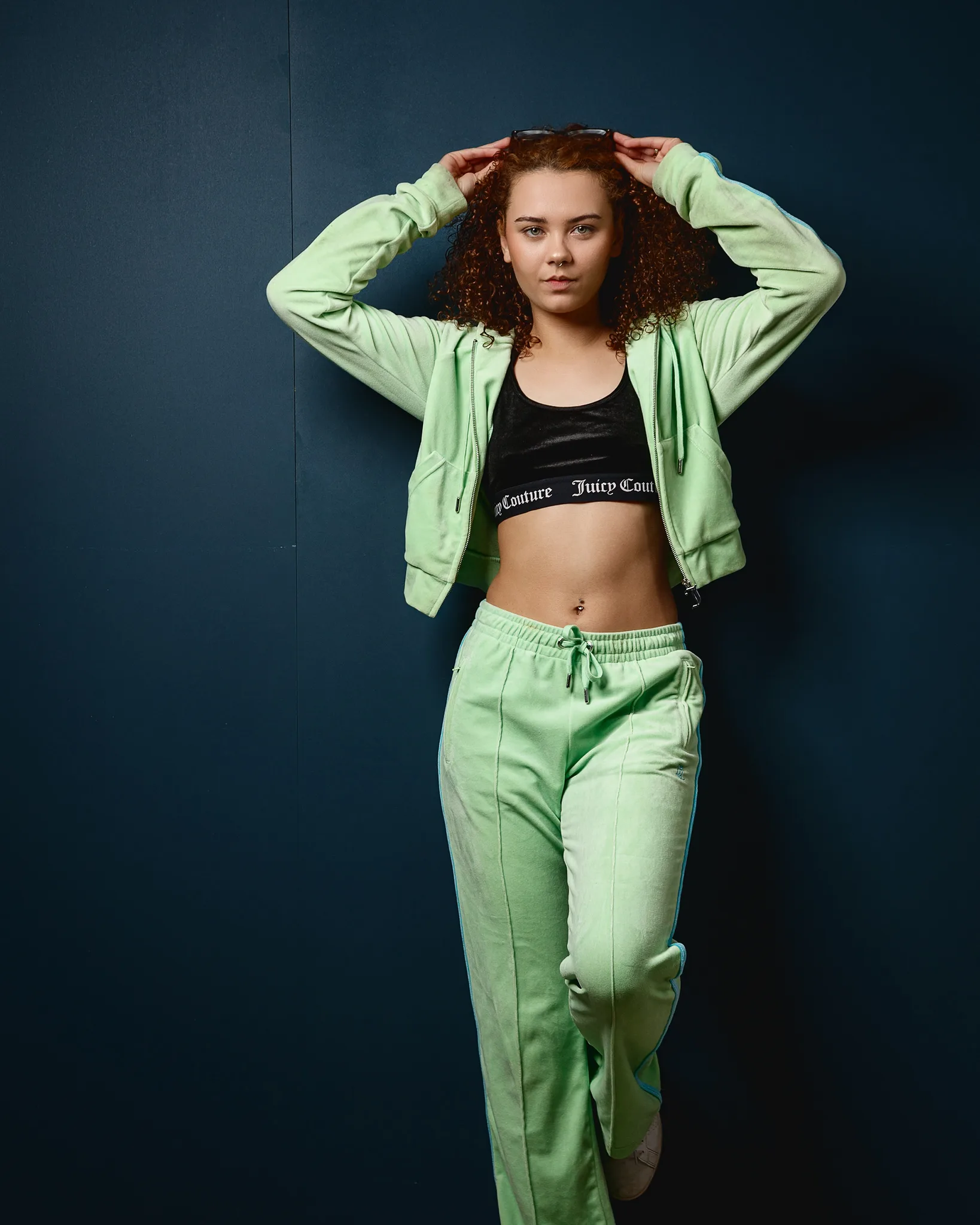
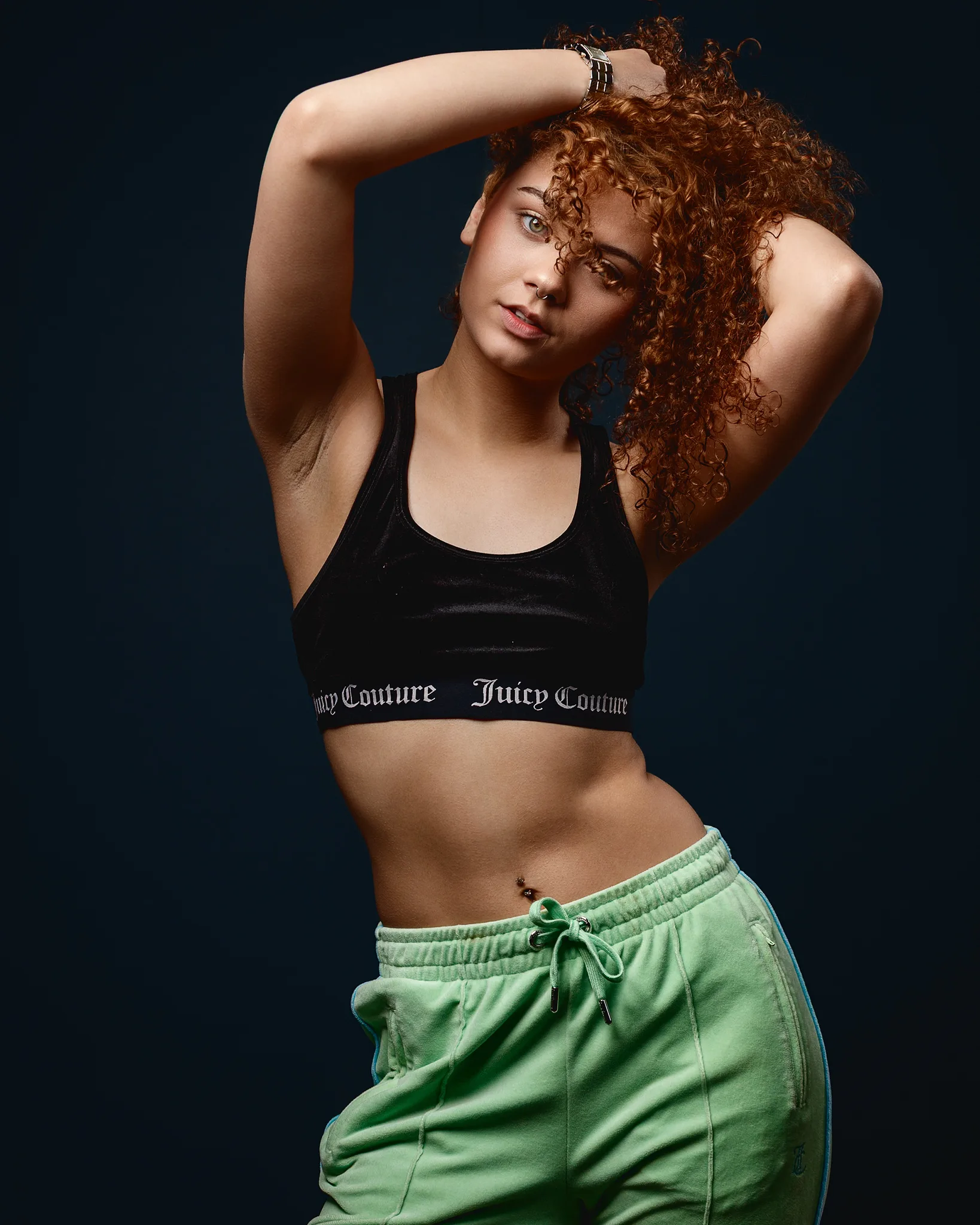
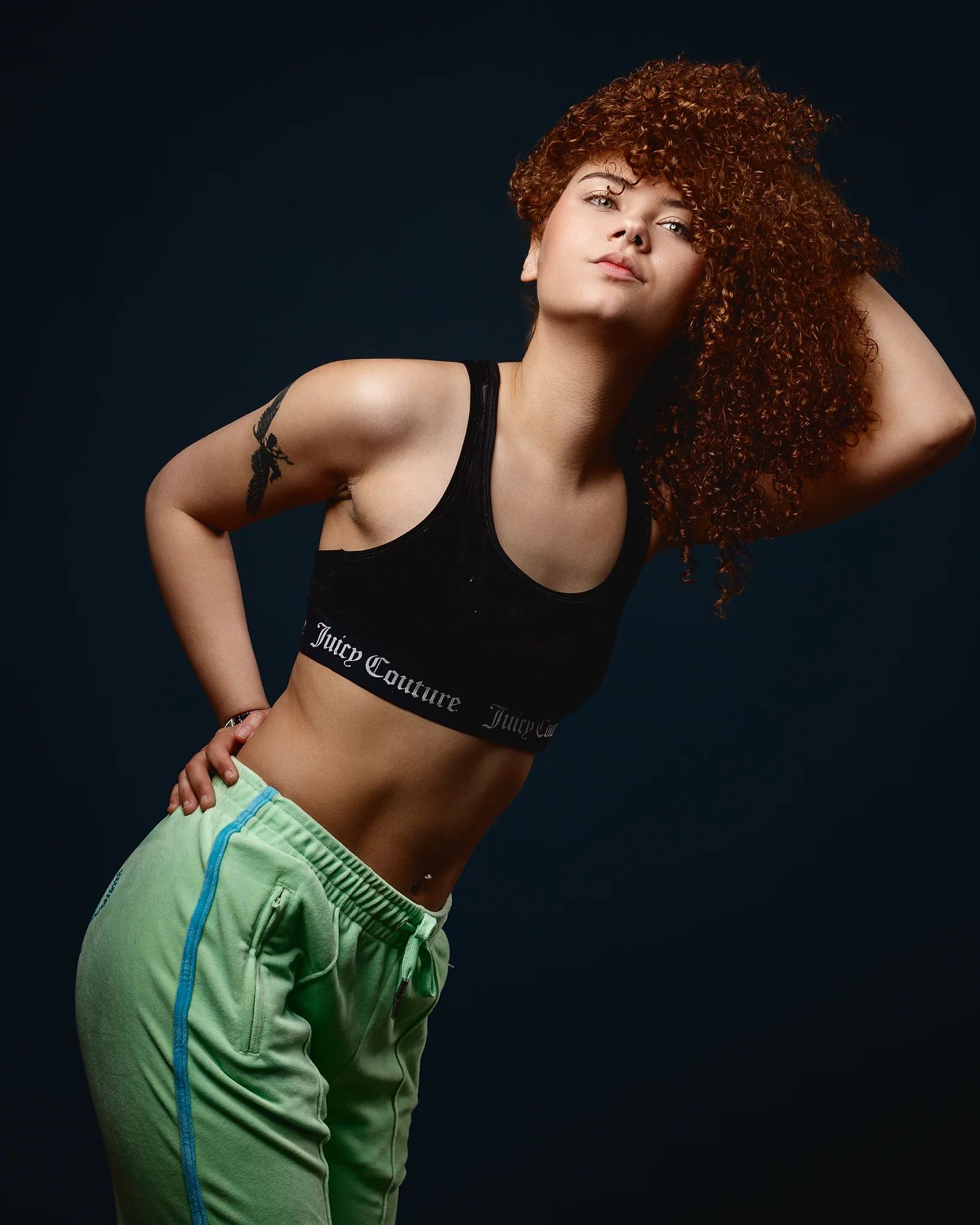
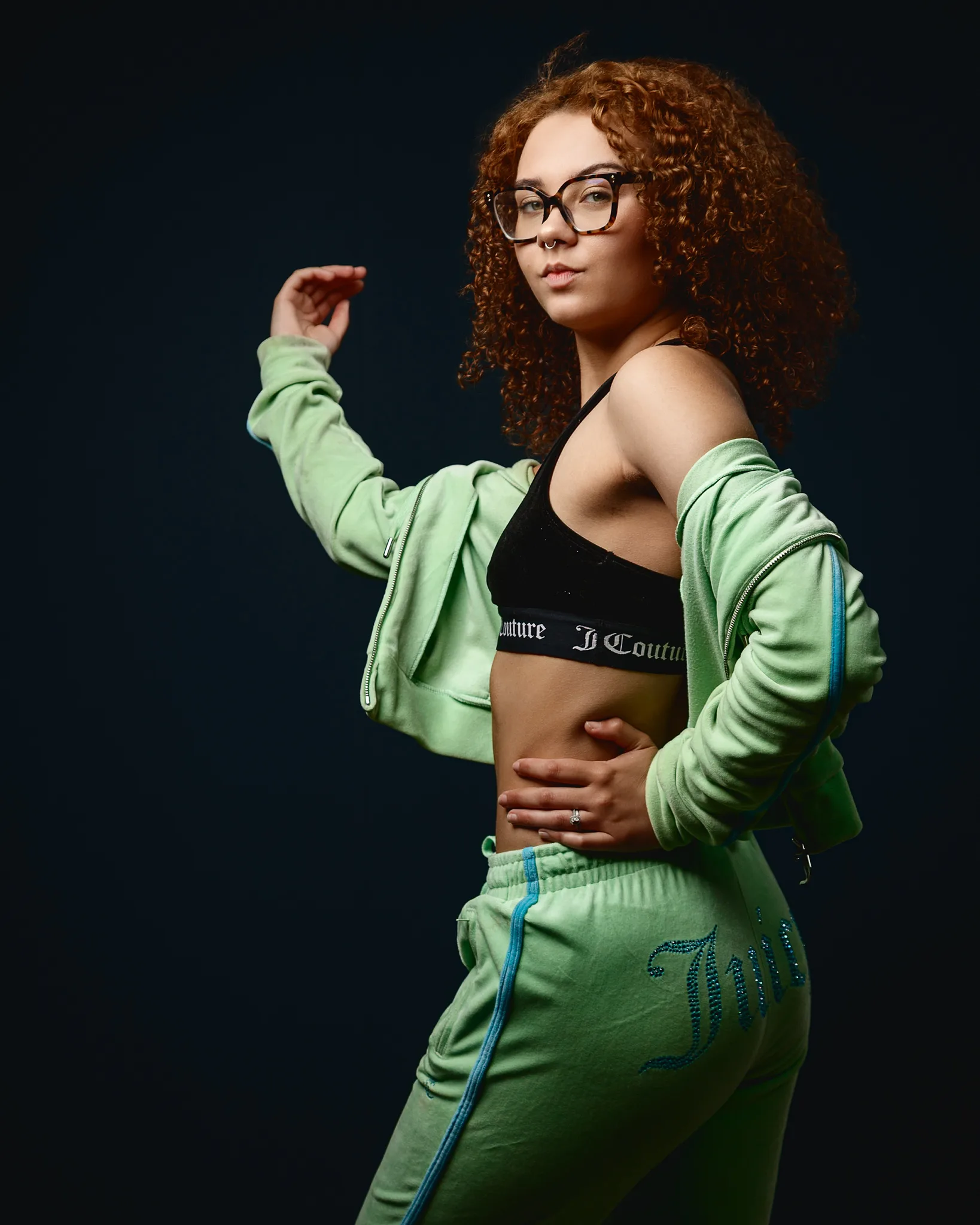
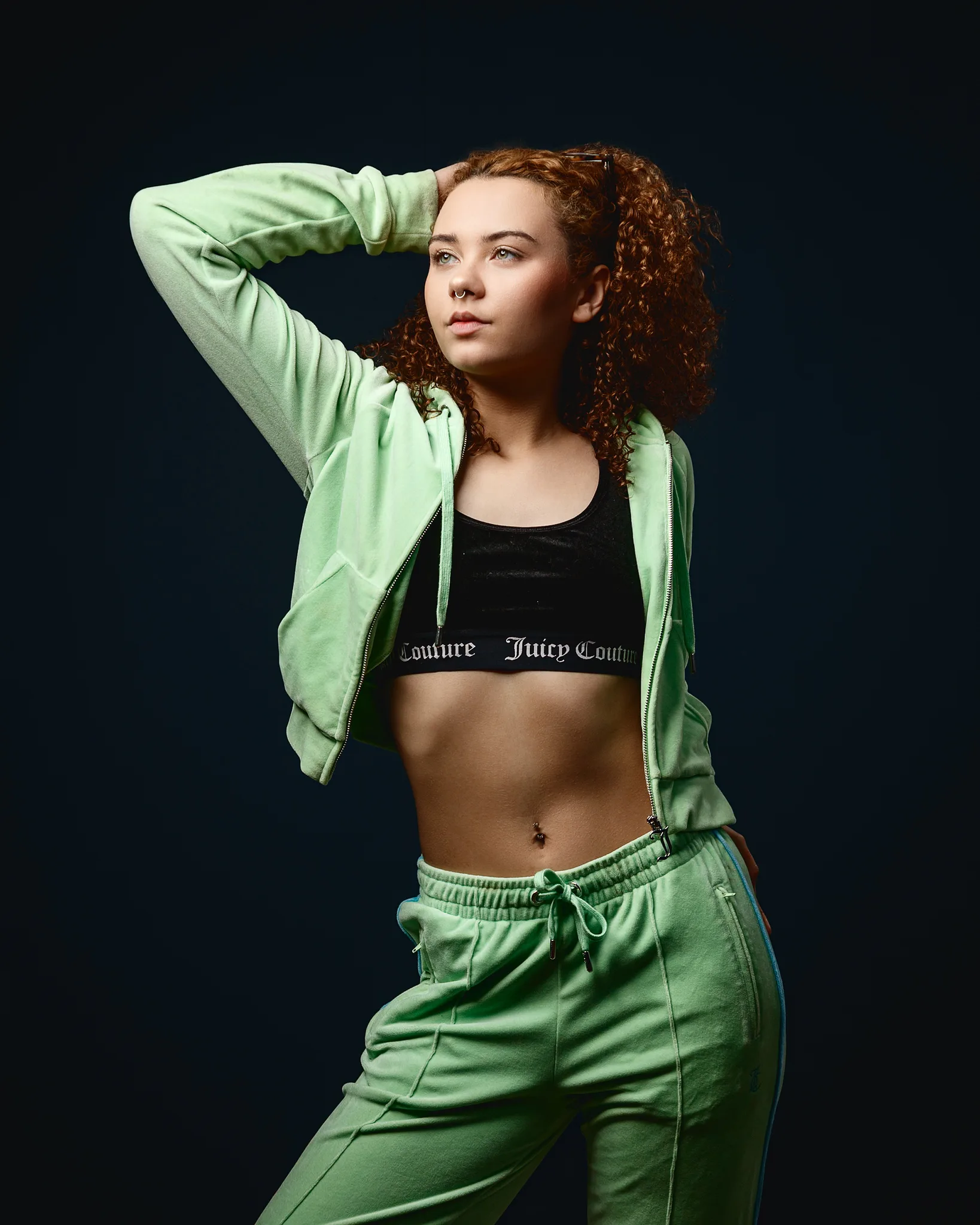
The black top with green joggers created a confident, contemporary fashion feel. It had a relaxed edge without looking careless, which is useful for modern model portfolio photography because it gives the images a current, wearable quality.
The pale green dress gave the shoot a softer and more elegant direction. It allowed for a gentler kind of portrait, with the focus moving more towards shape, posture, and expression.
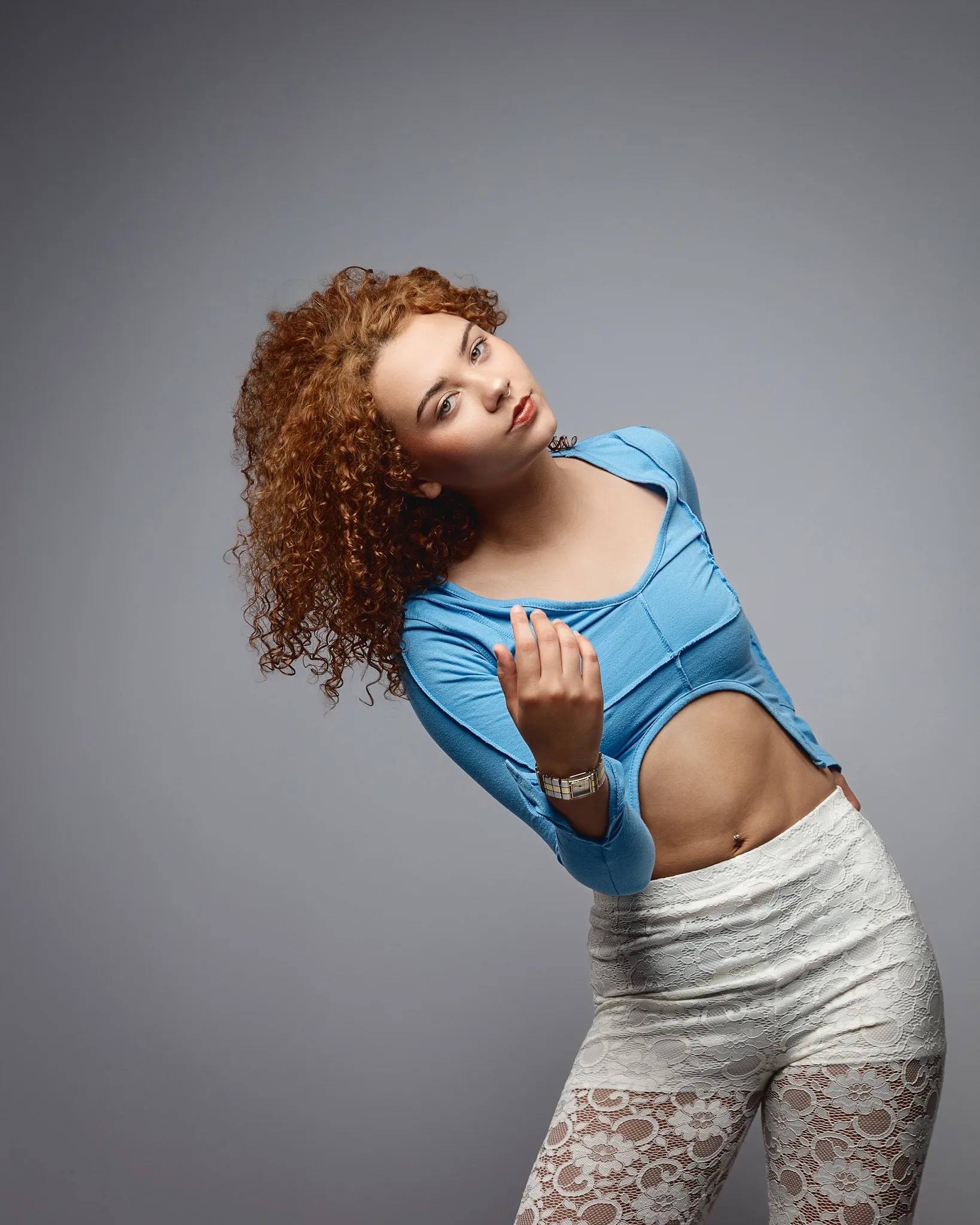
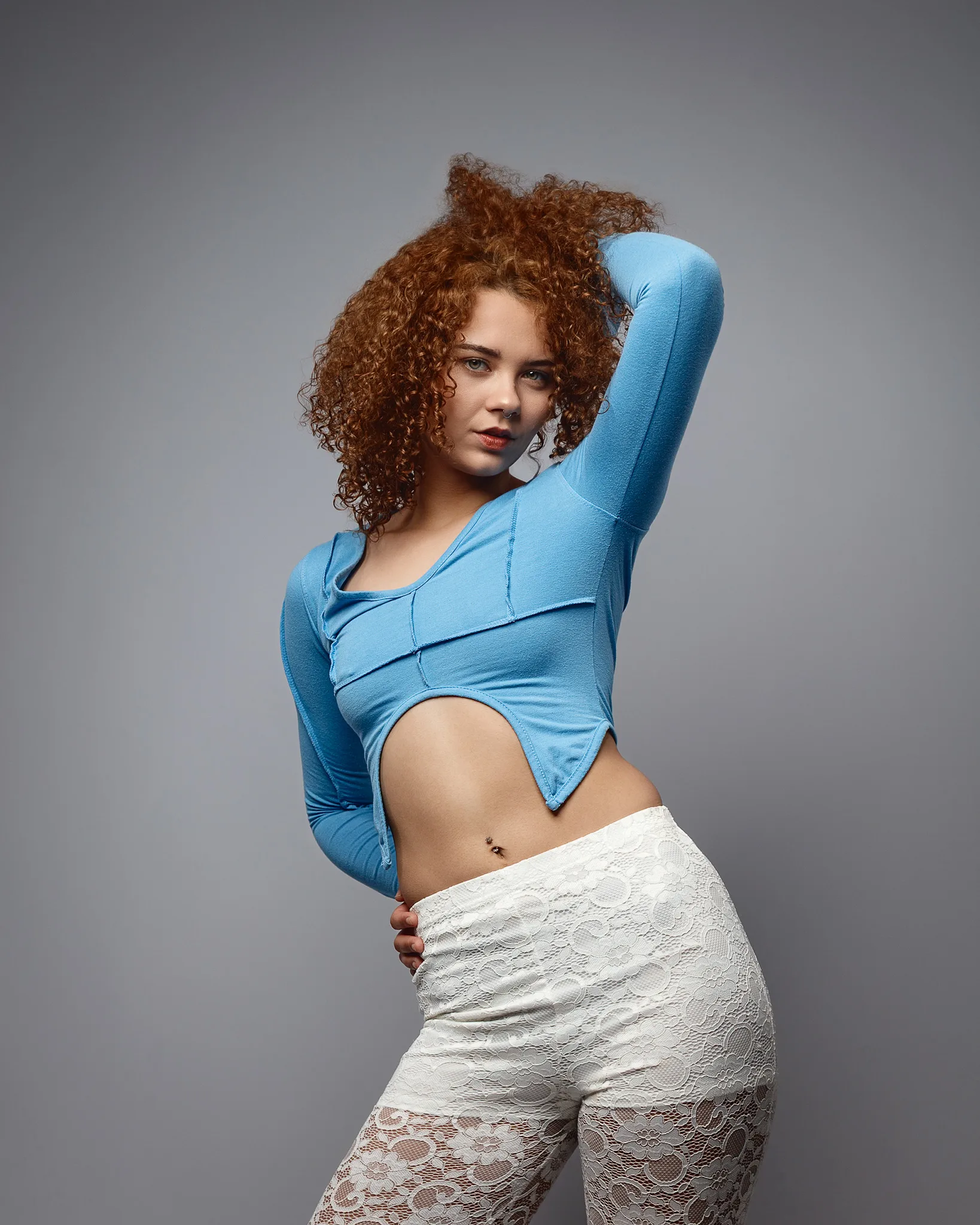
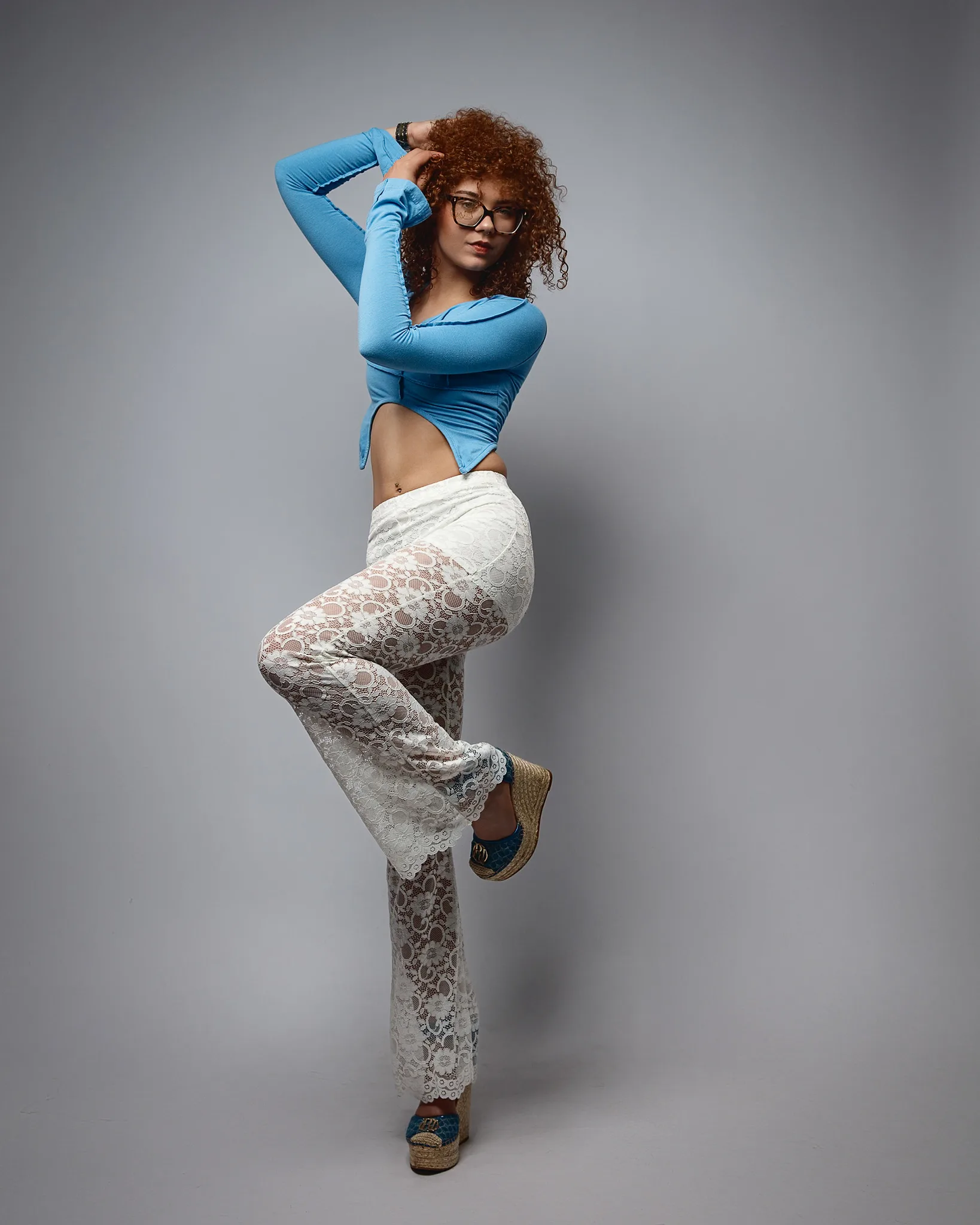
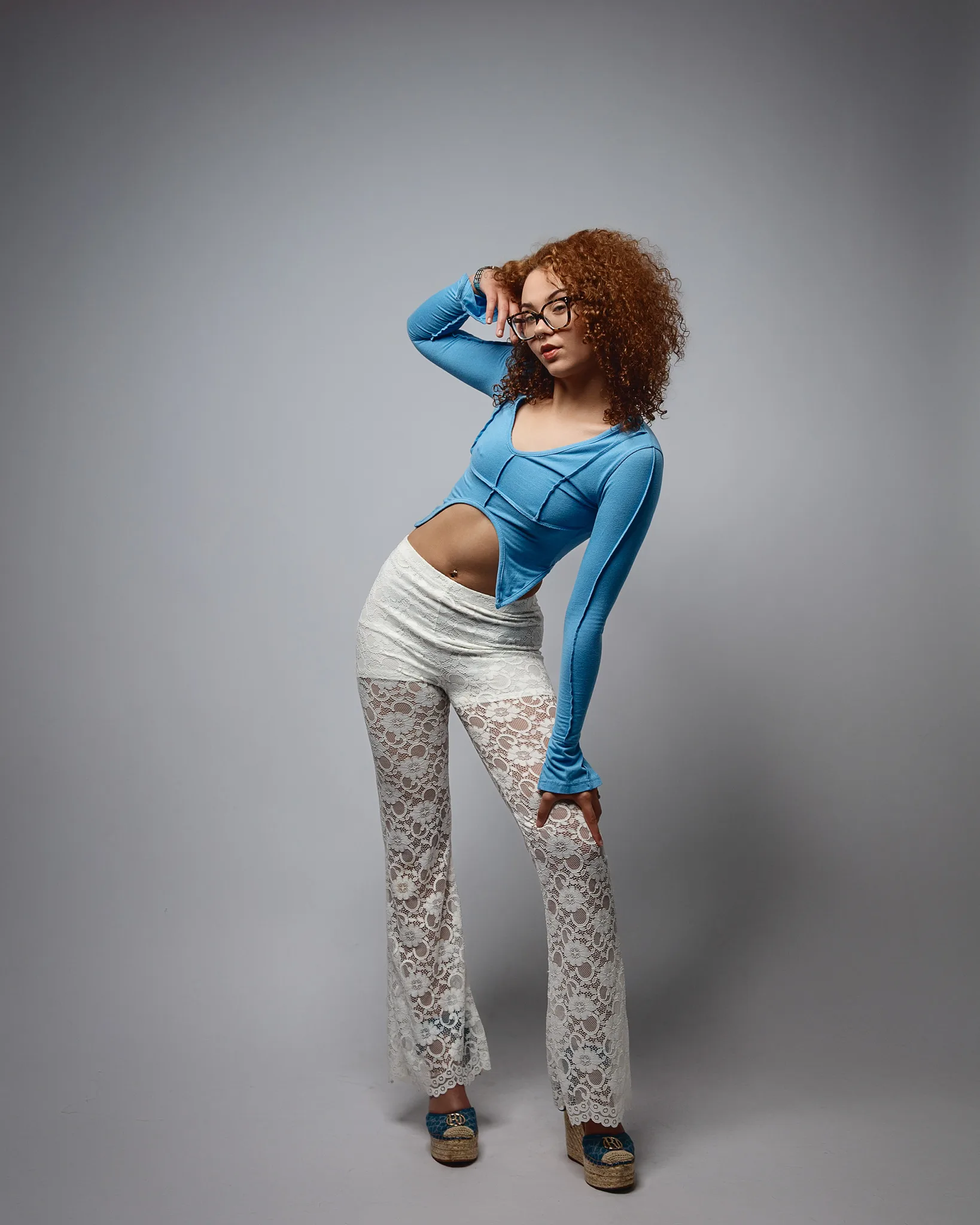
The blue top with a white skirt introduced a brighter, cleaner fashion look. This sort of styling can work well in a portfolio because it feels fresh and simple, without needing the image to become overly complicated.
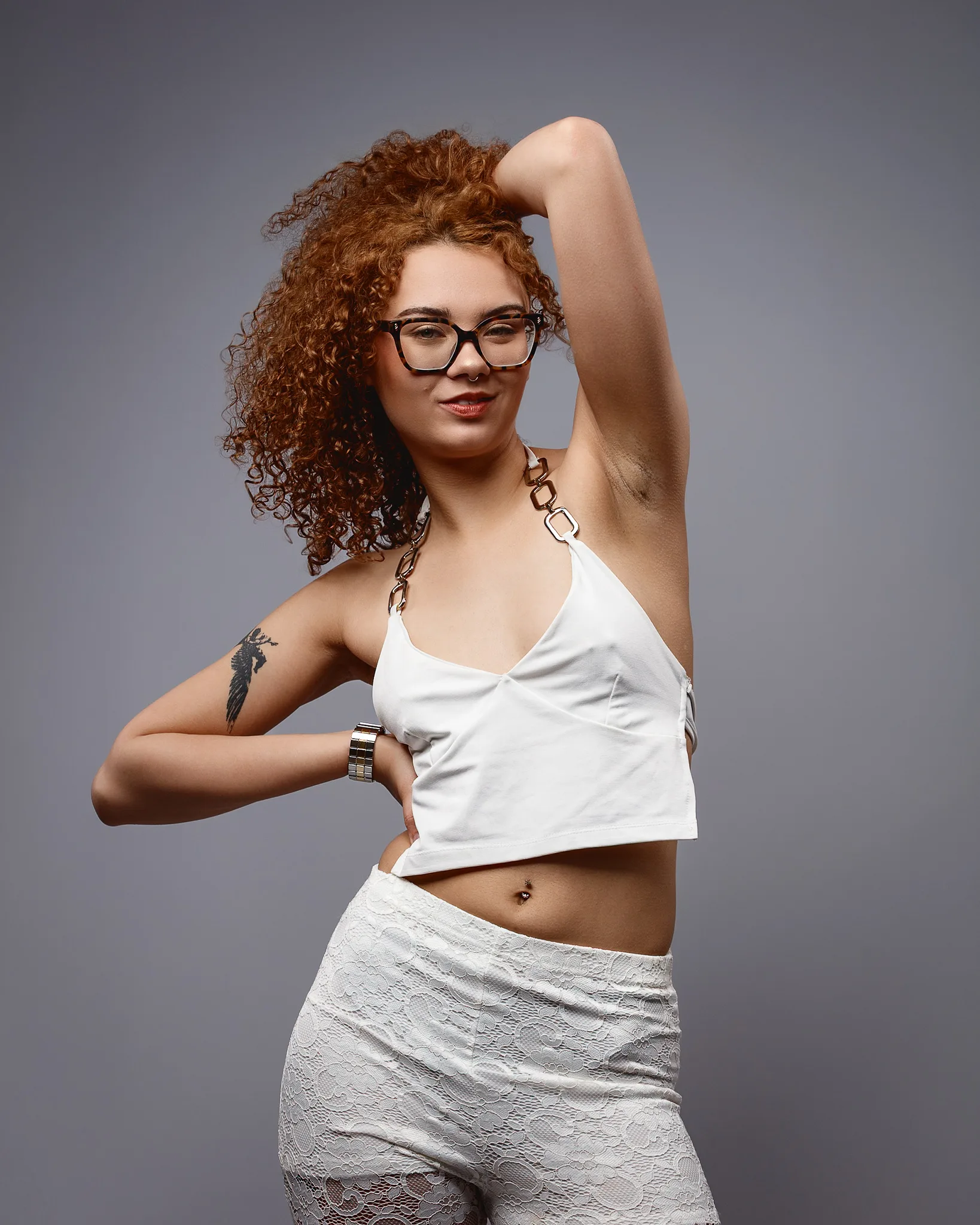
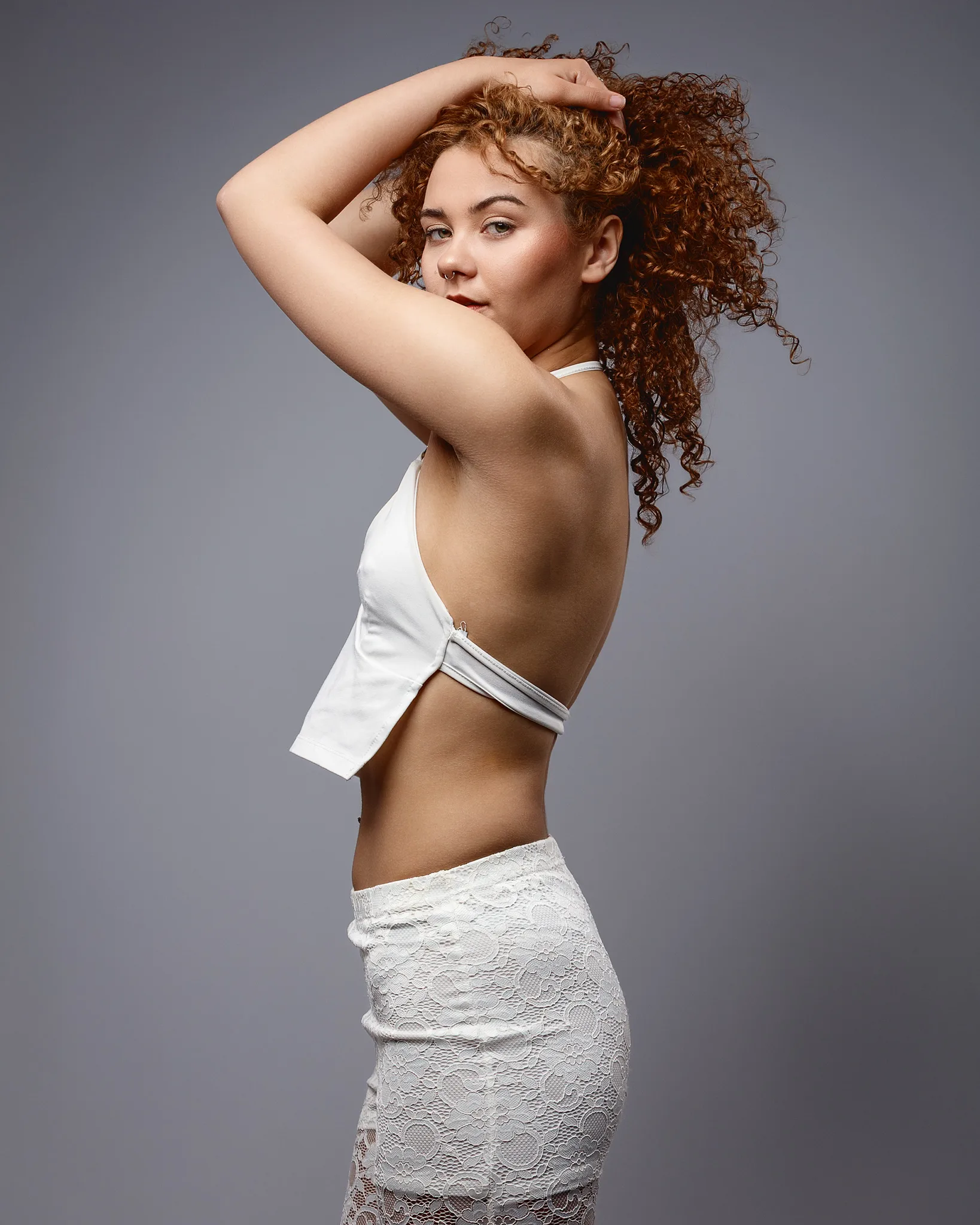
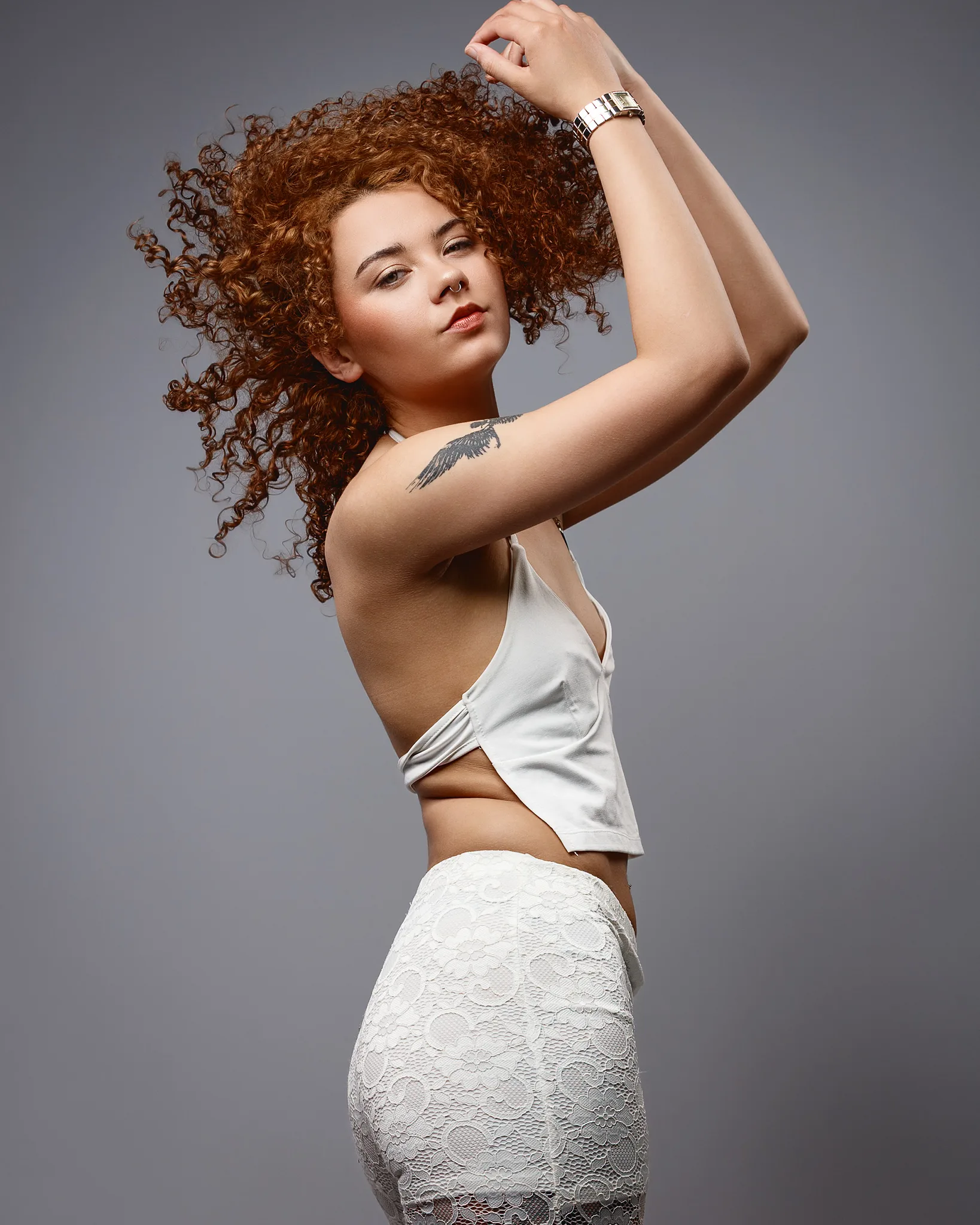
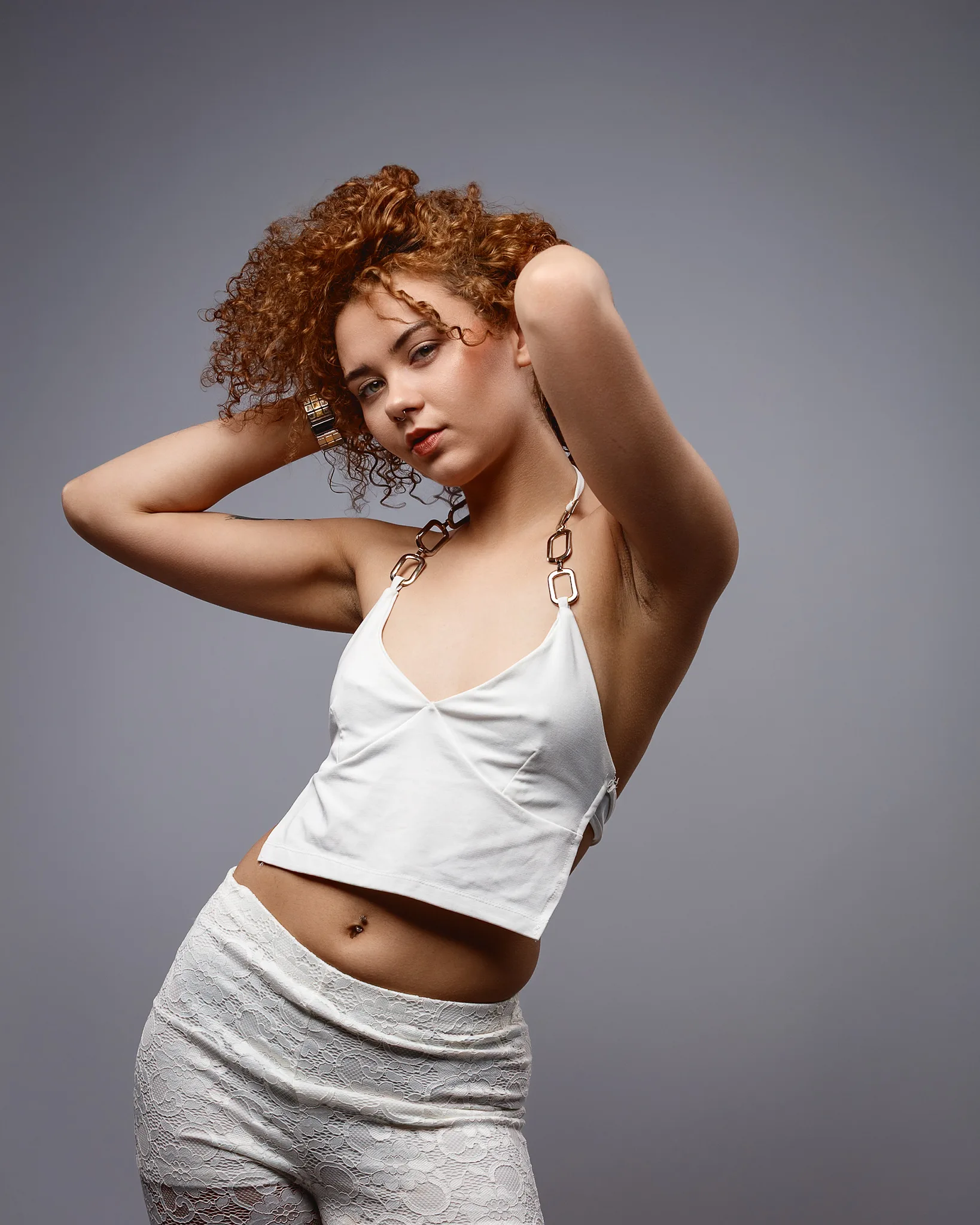
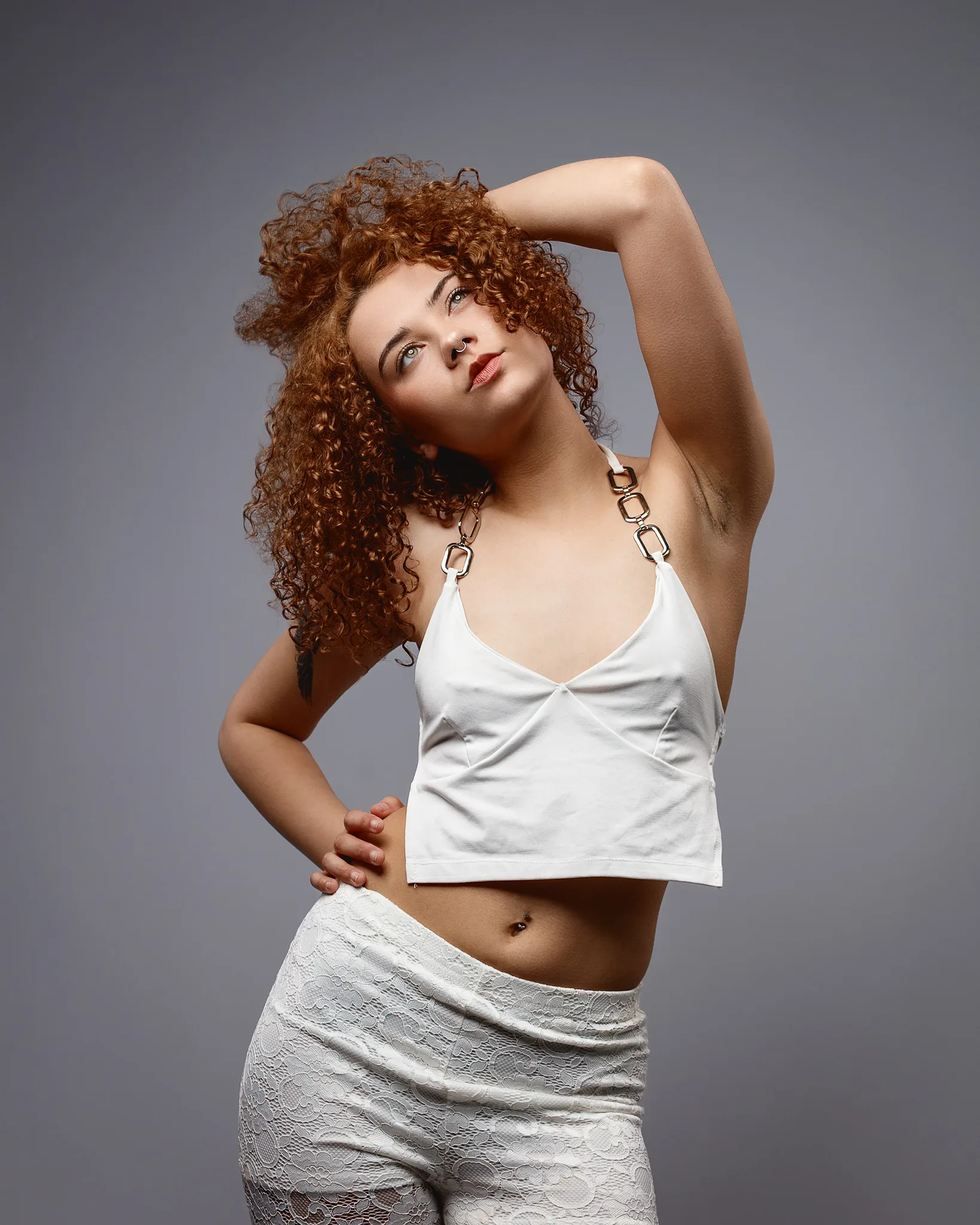
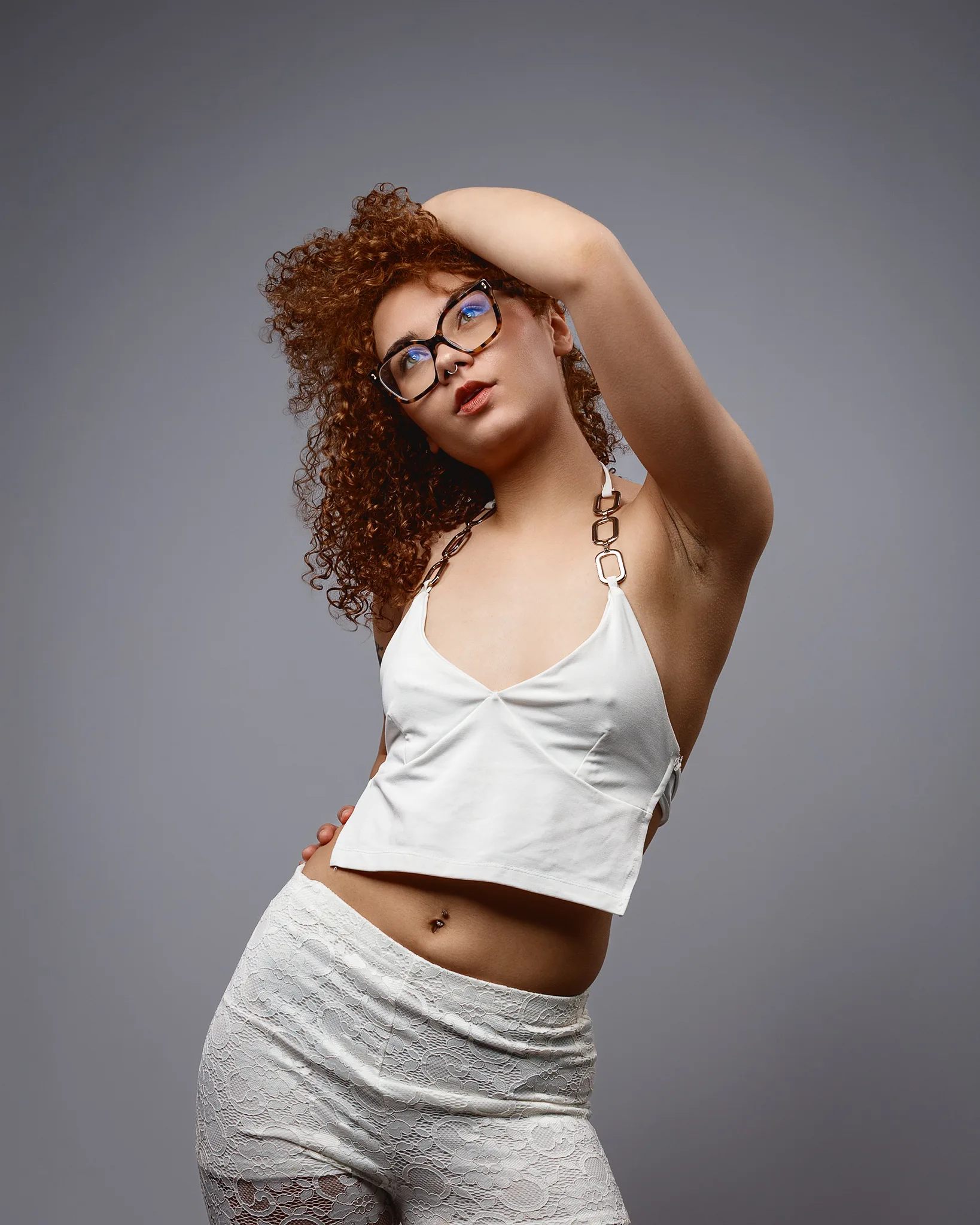
The white top with glasses had more of an editorial portrait feel. Glasses can completely change the character of an image, especially when paired with strong eye contact and controlled posing.
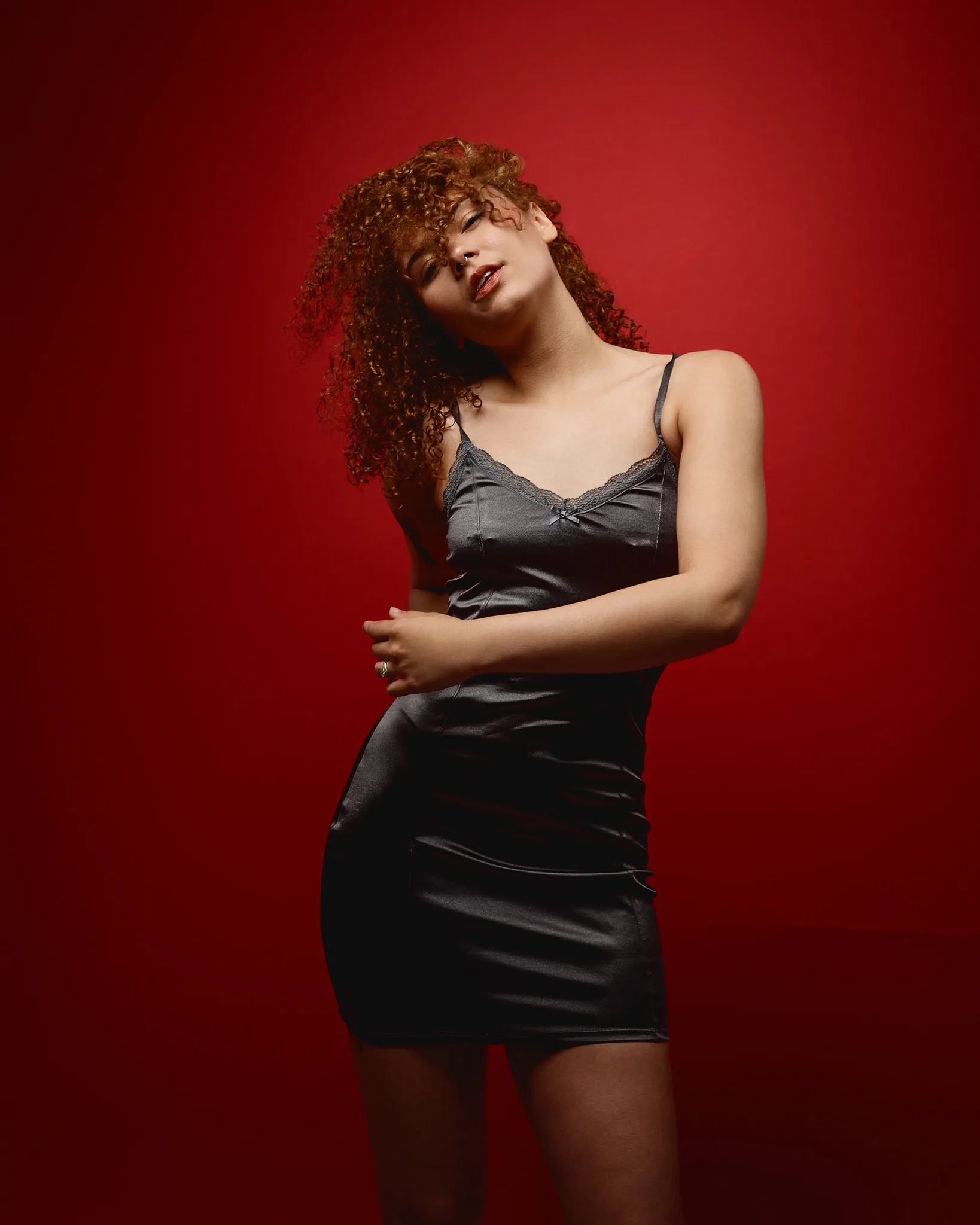
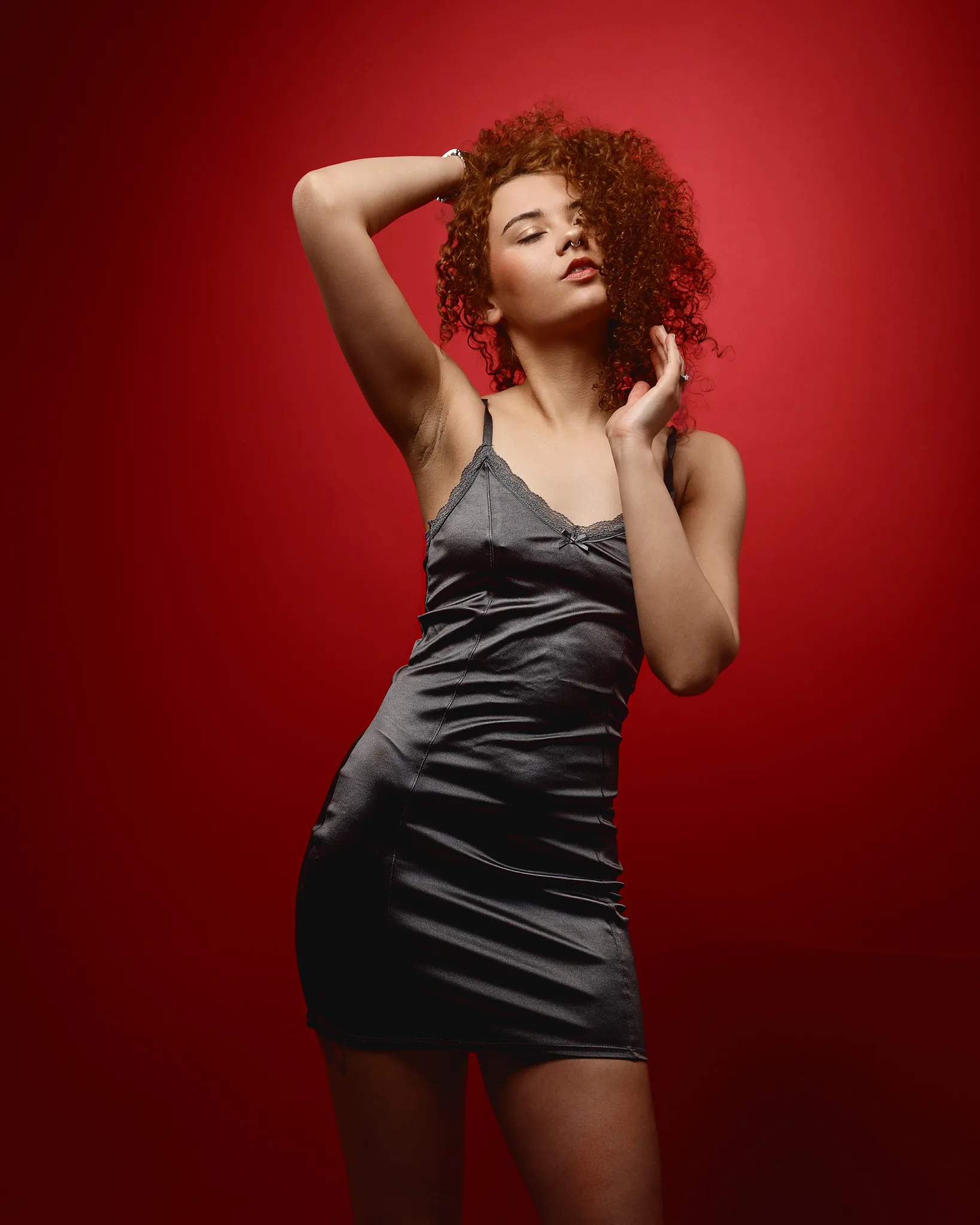
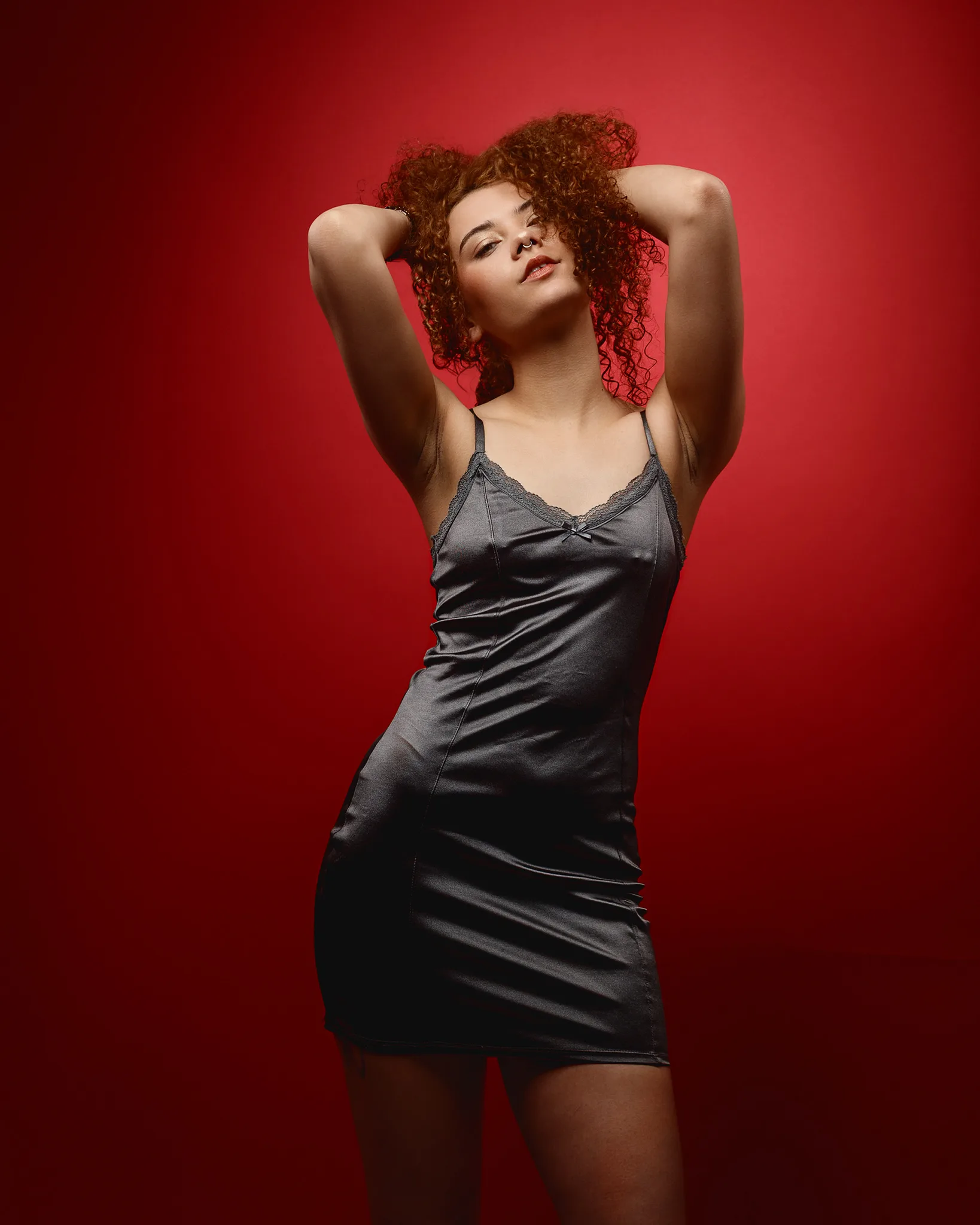
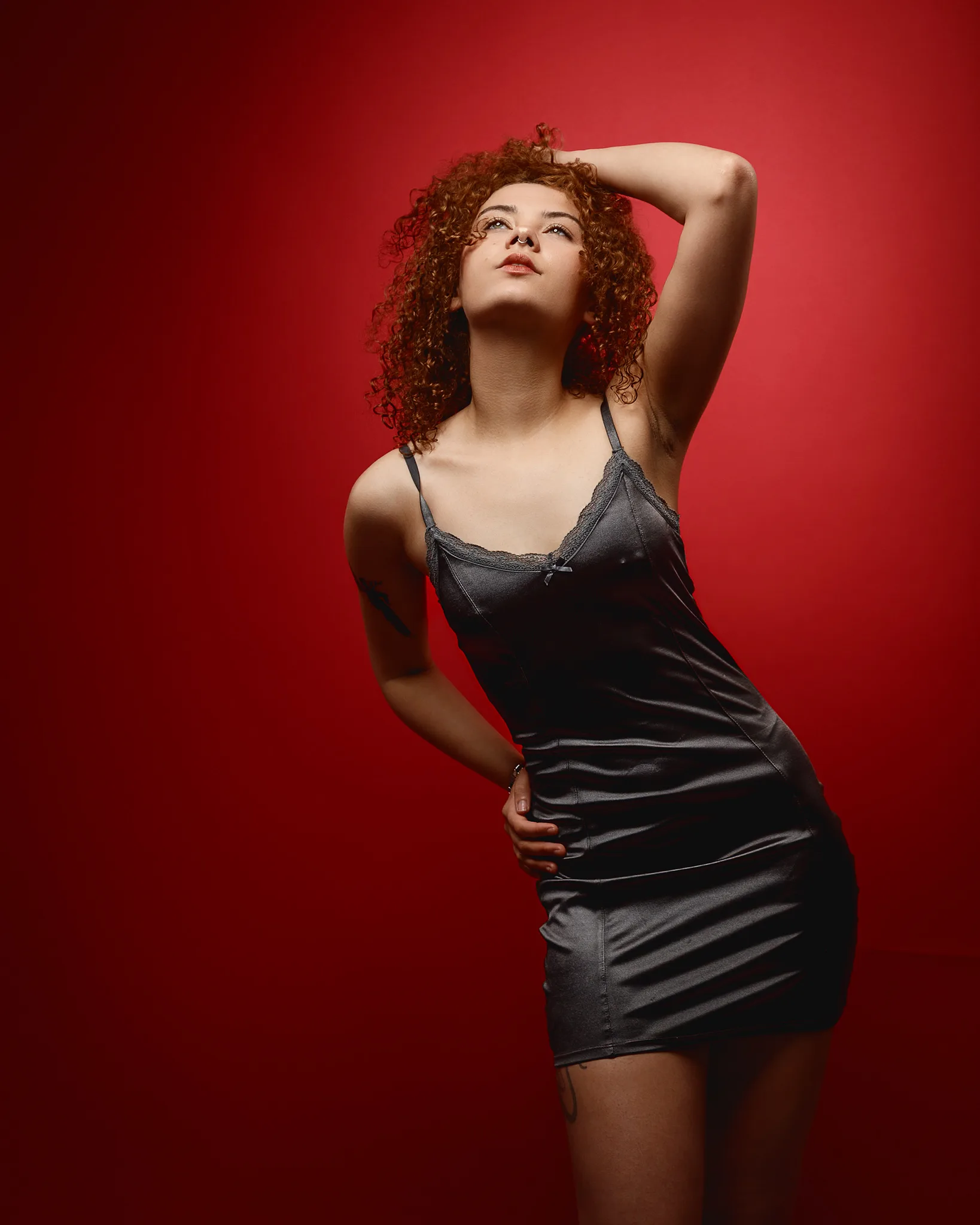
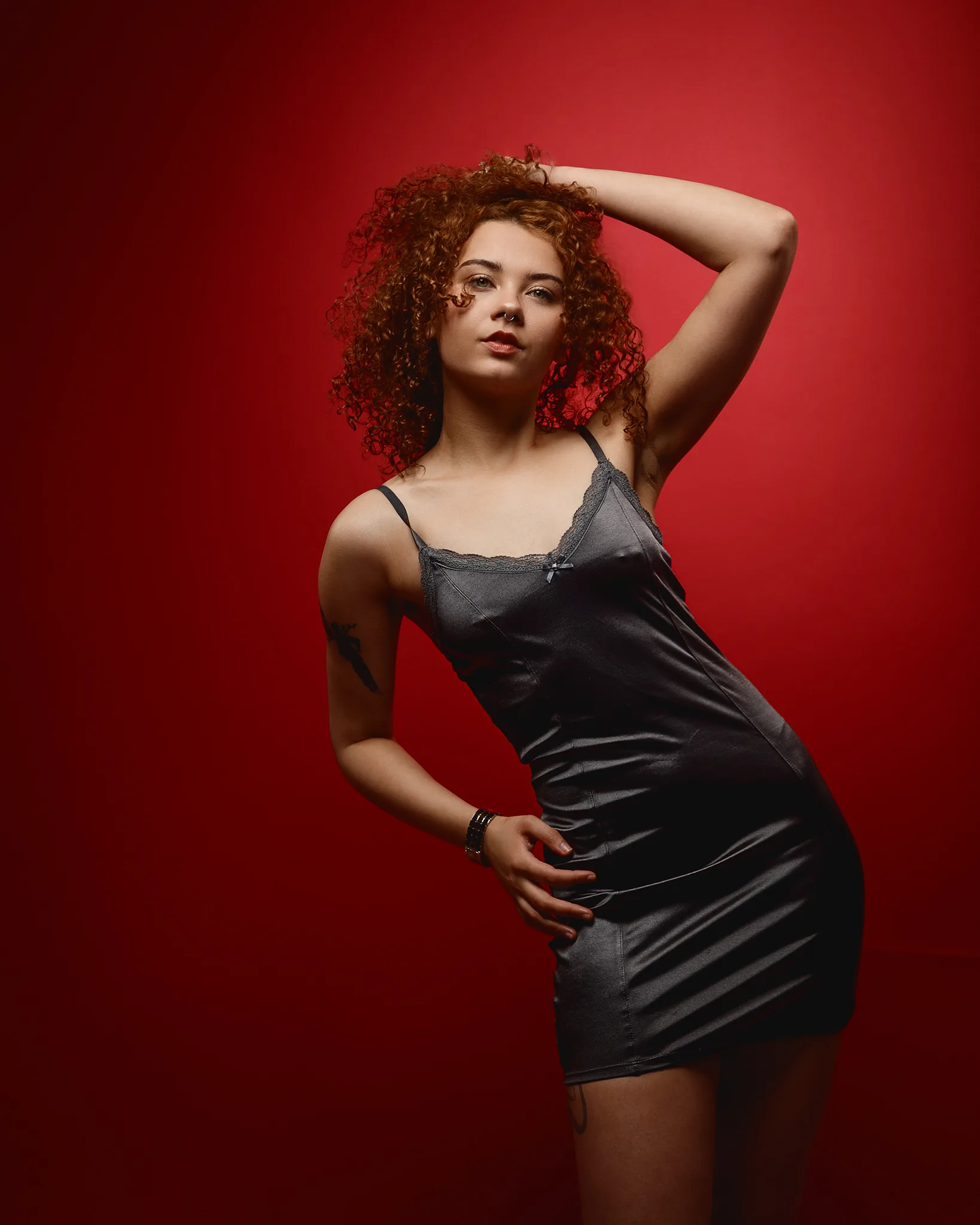
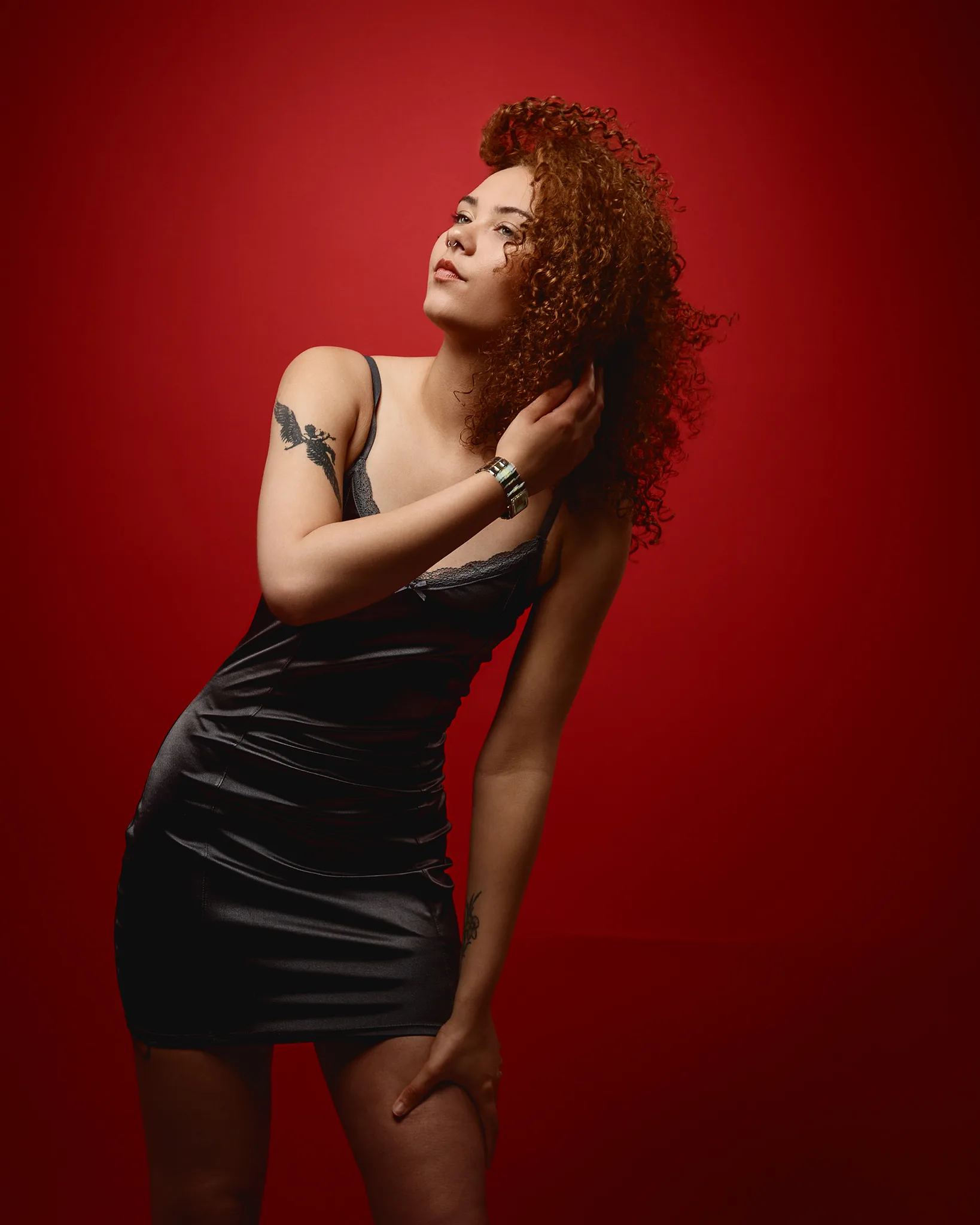
The red backdrop and black dress created a bolder fashion image. Red has a very direct visual impact, so it needs to be handled carefully. Used well, it can give a portfolio image more strength and confidence without making it feel forced.
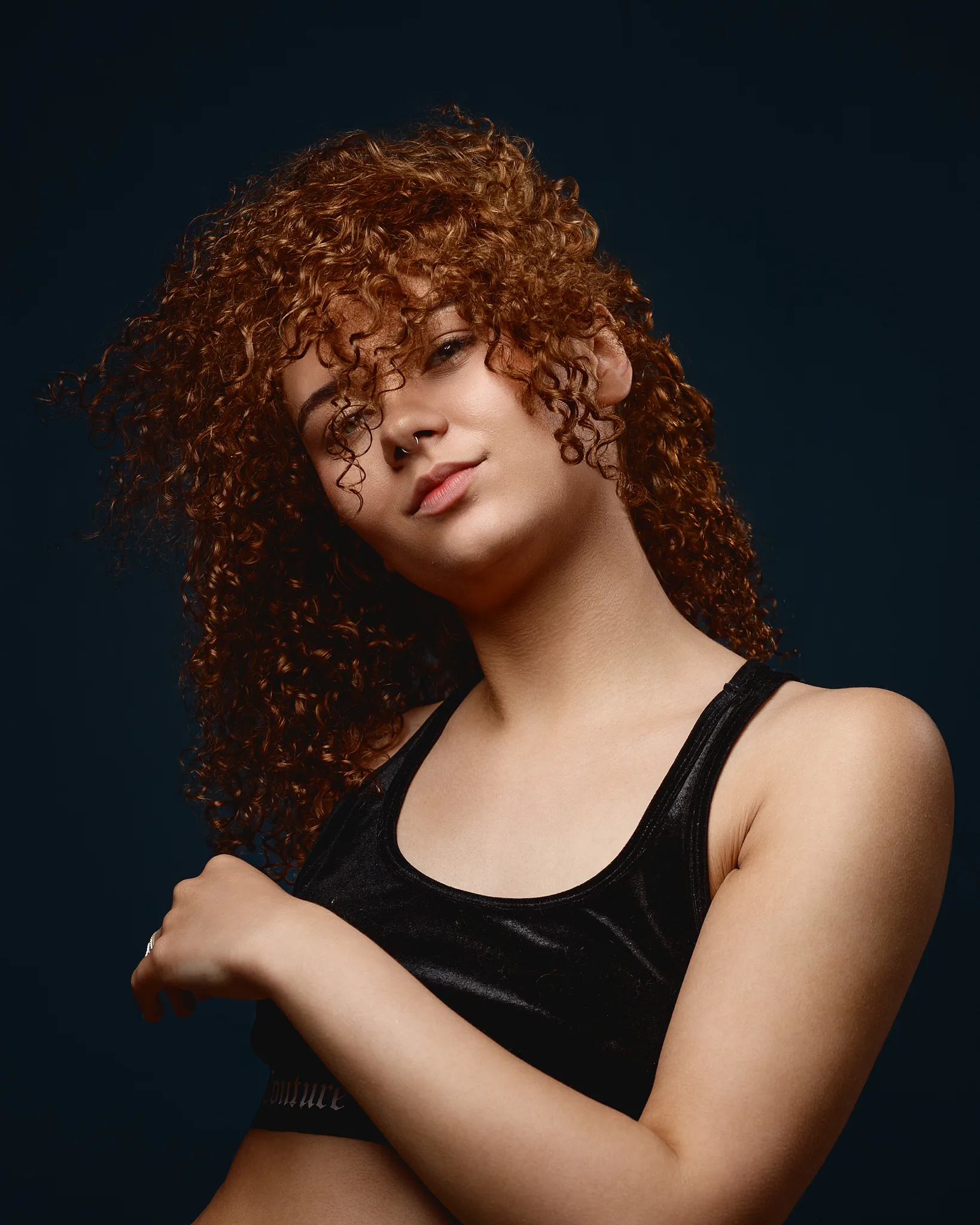
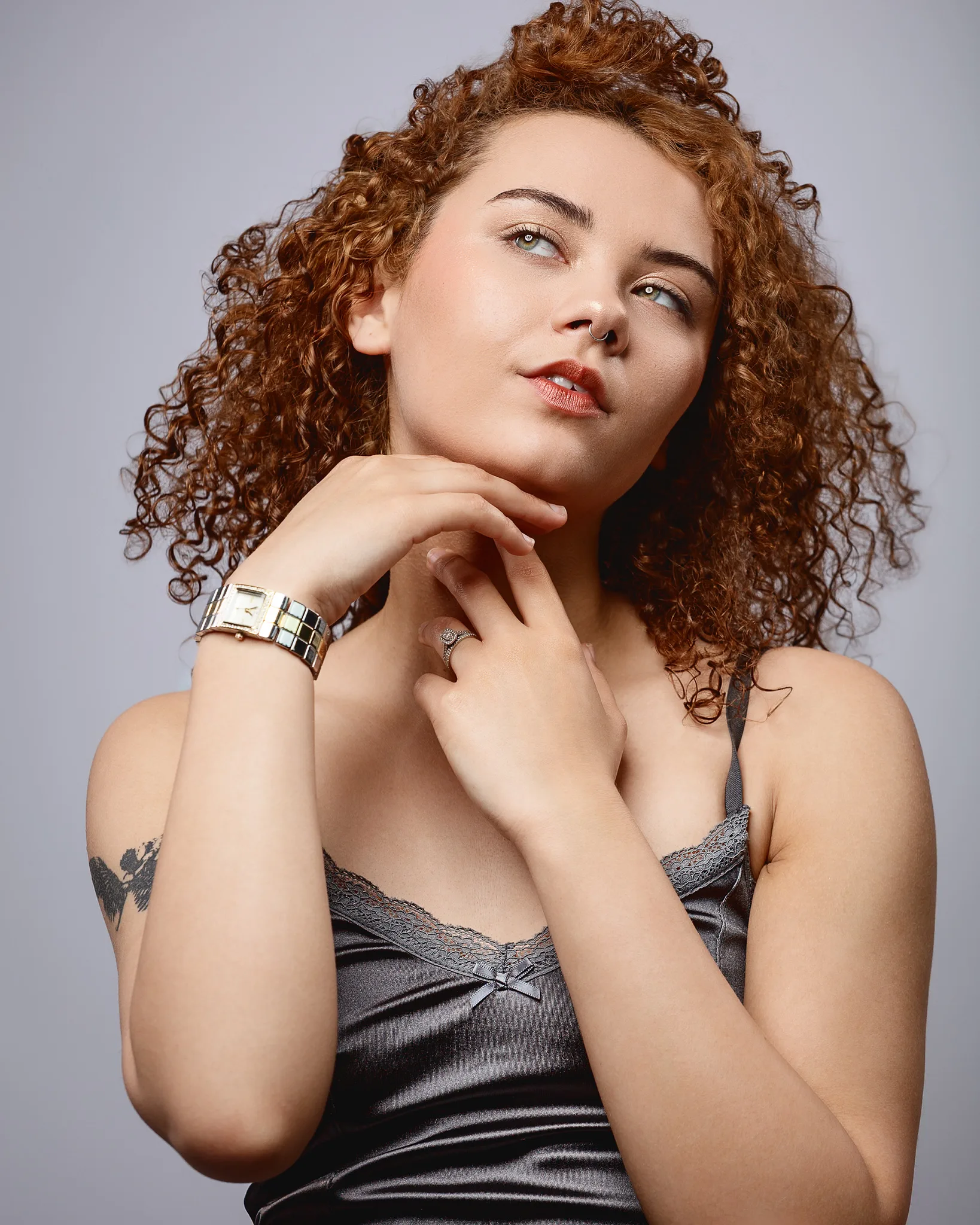
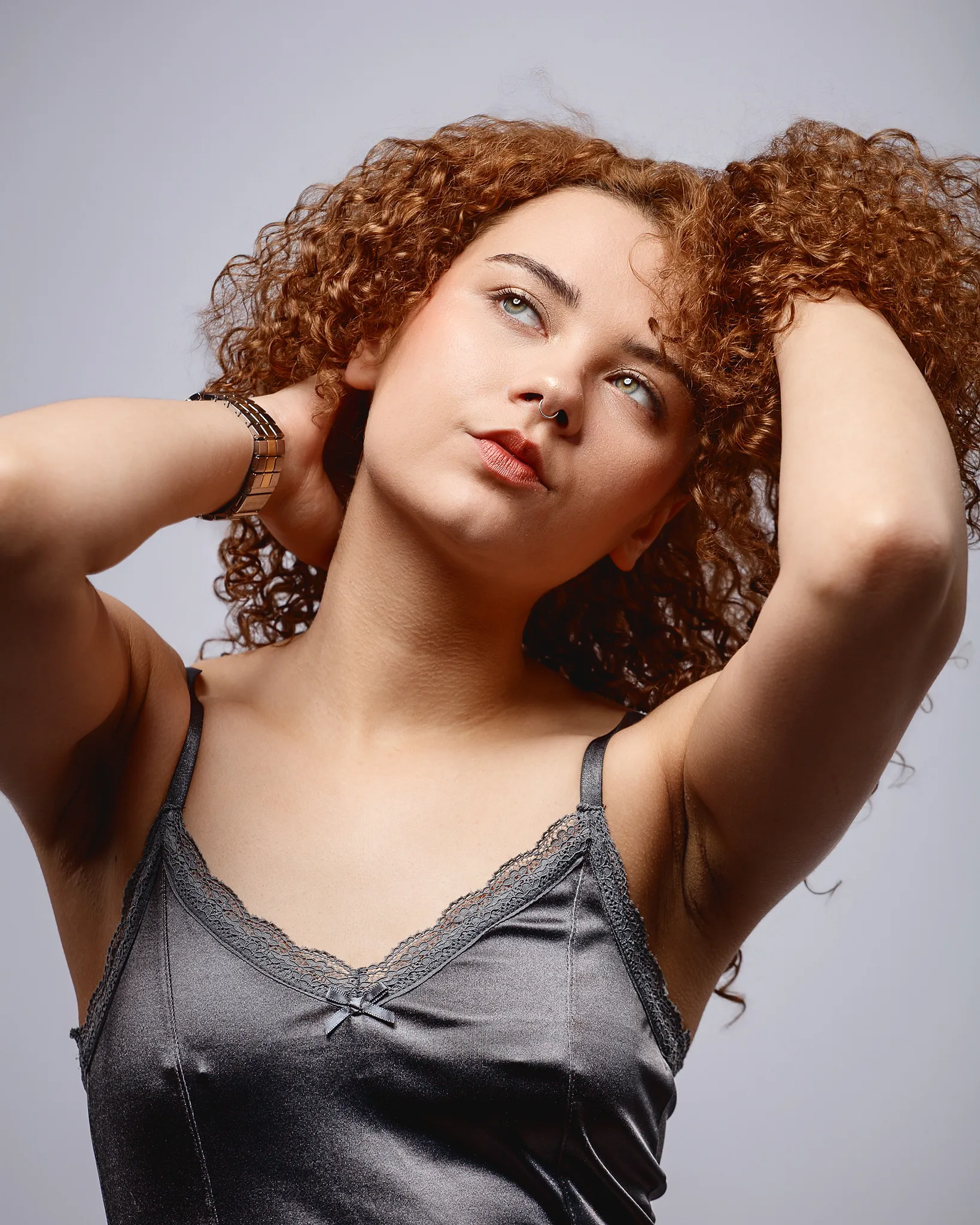
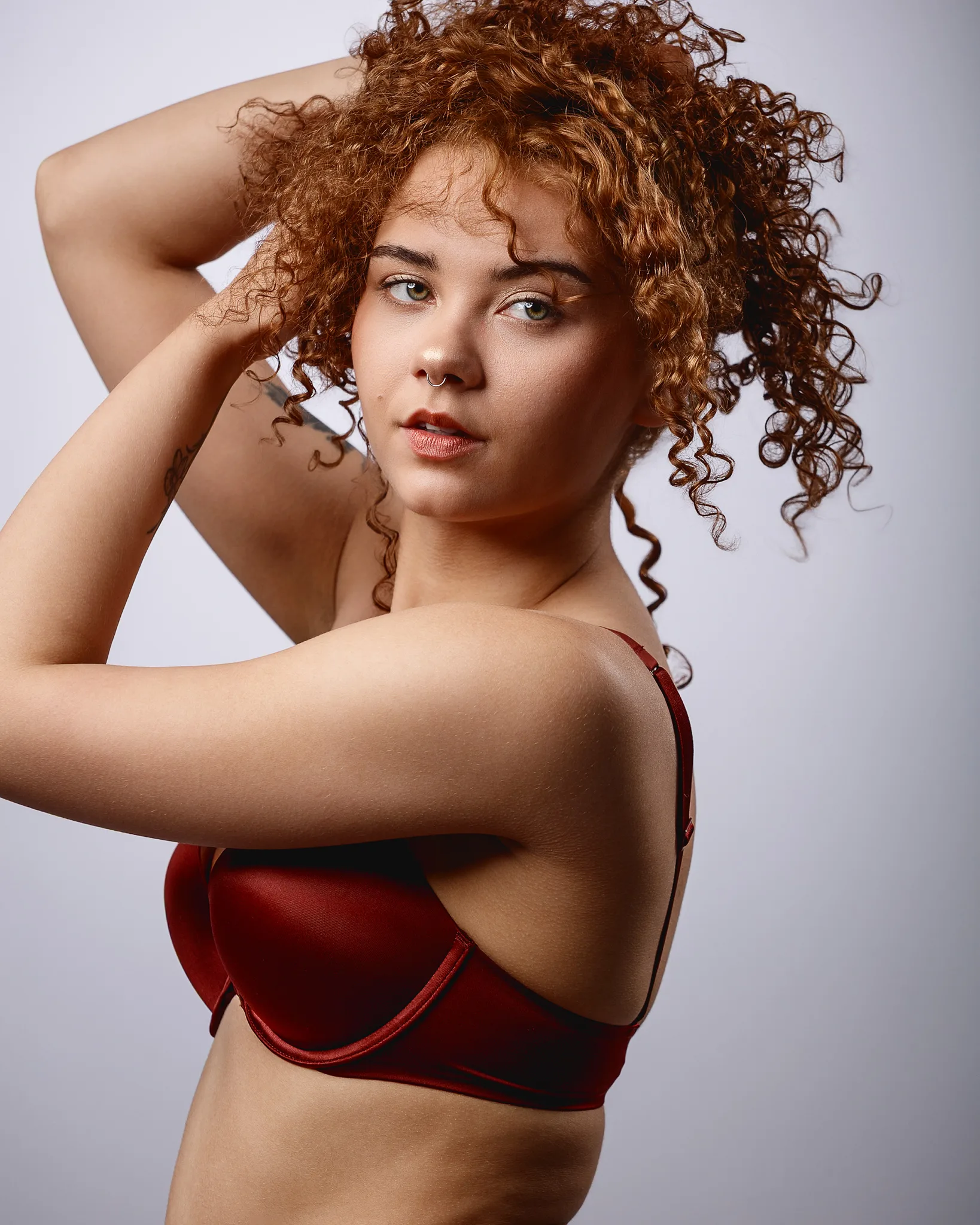
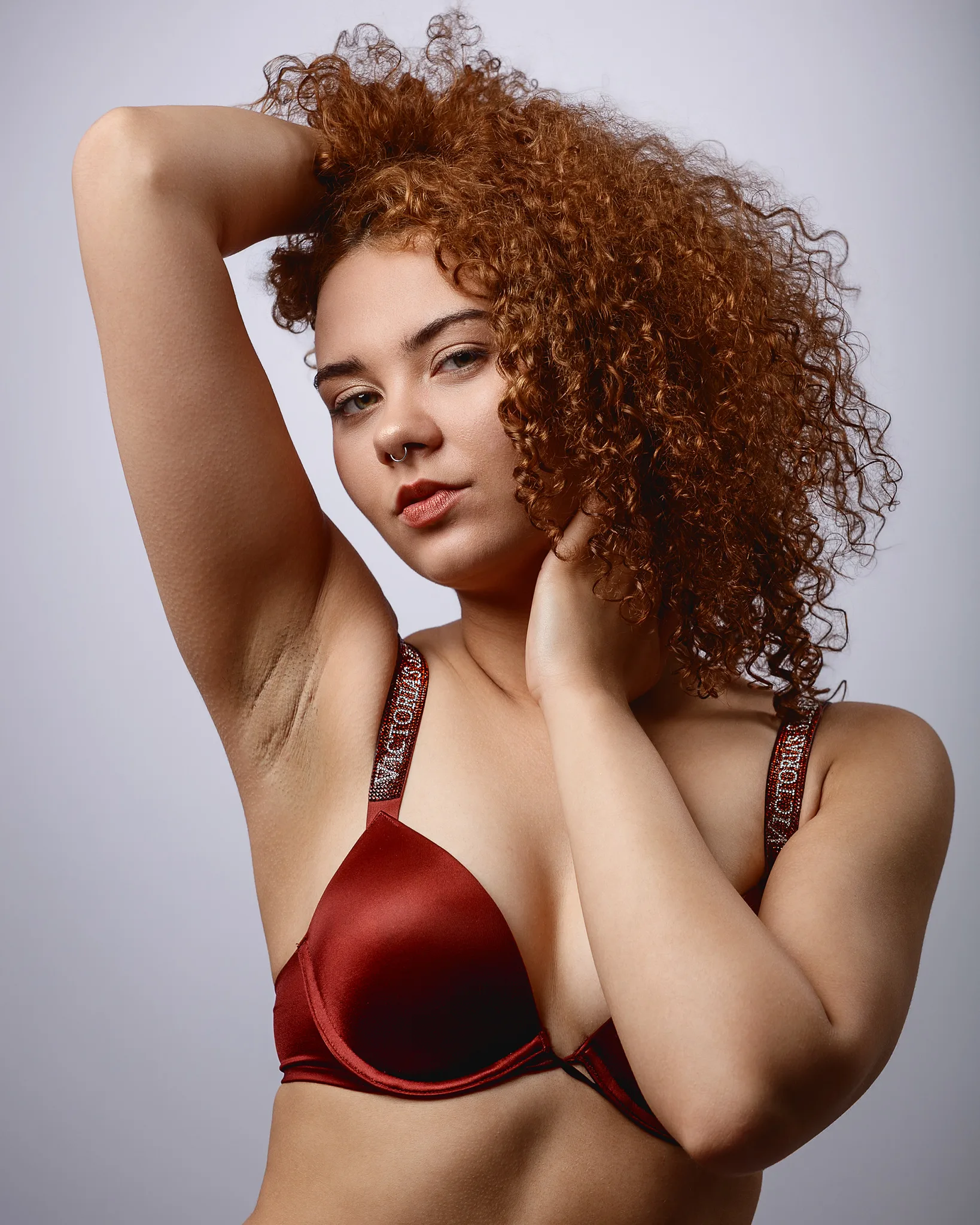
The closer portraits brought attention back to Maddie’s expression, face shape, hair, and connection with the camera. These images are often some of the most useful in a model portfolio because they show subtlety. Not every strong image needs a dramatic pose.
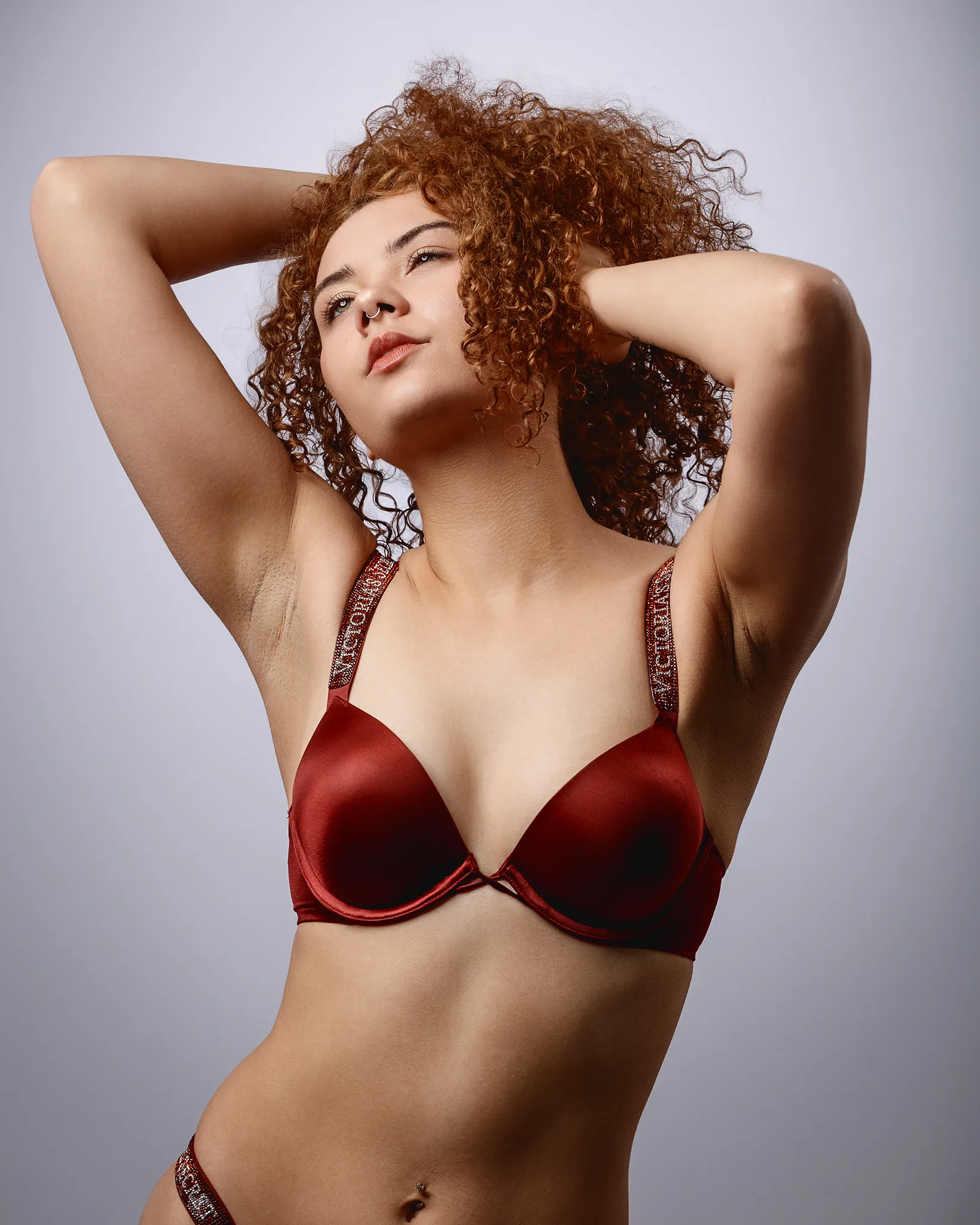
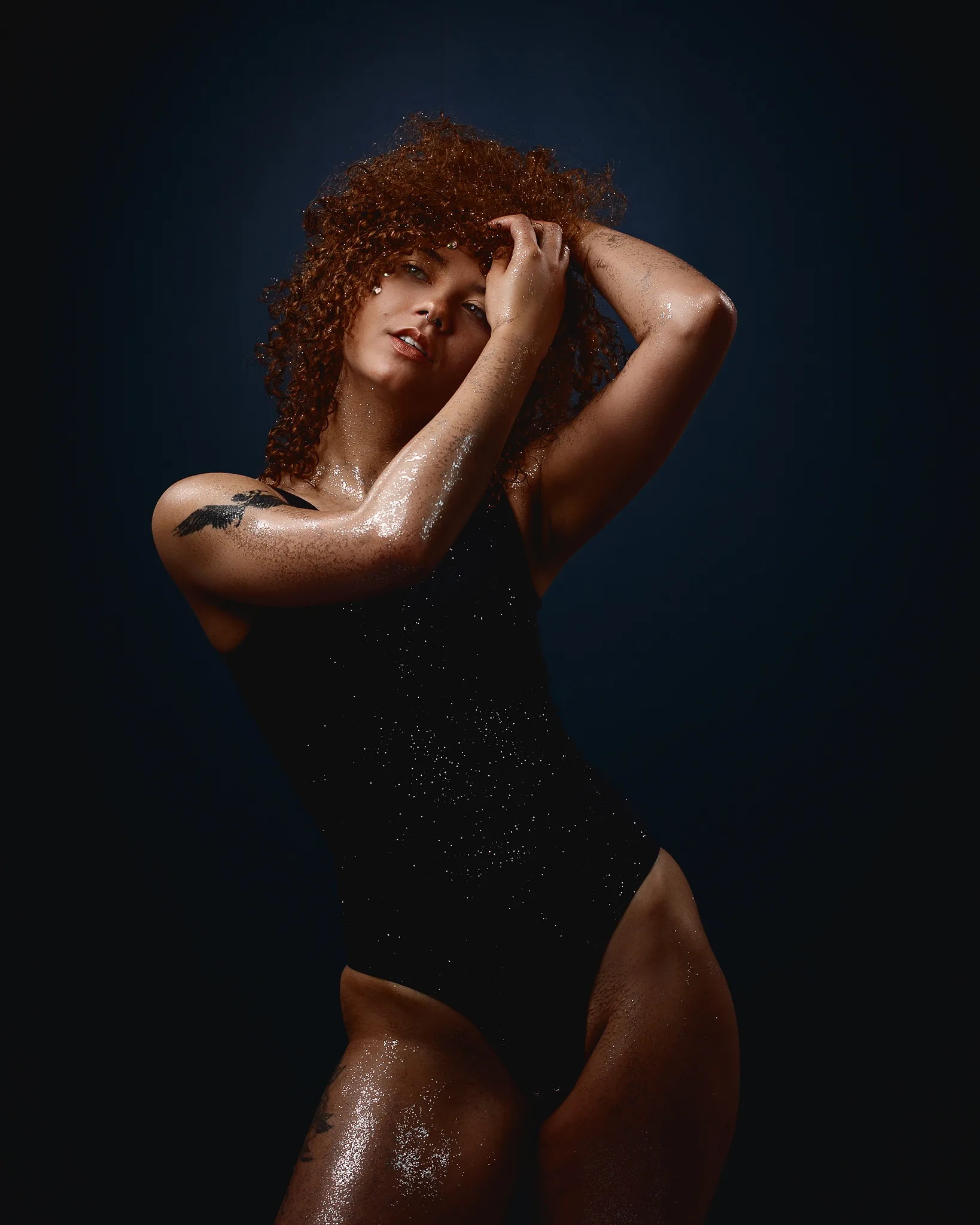
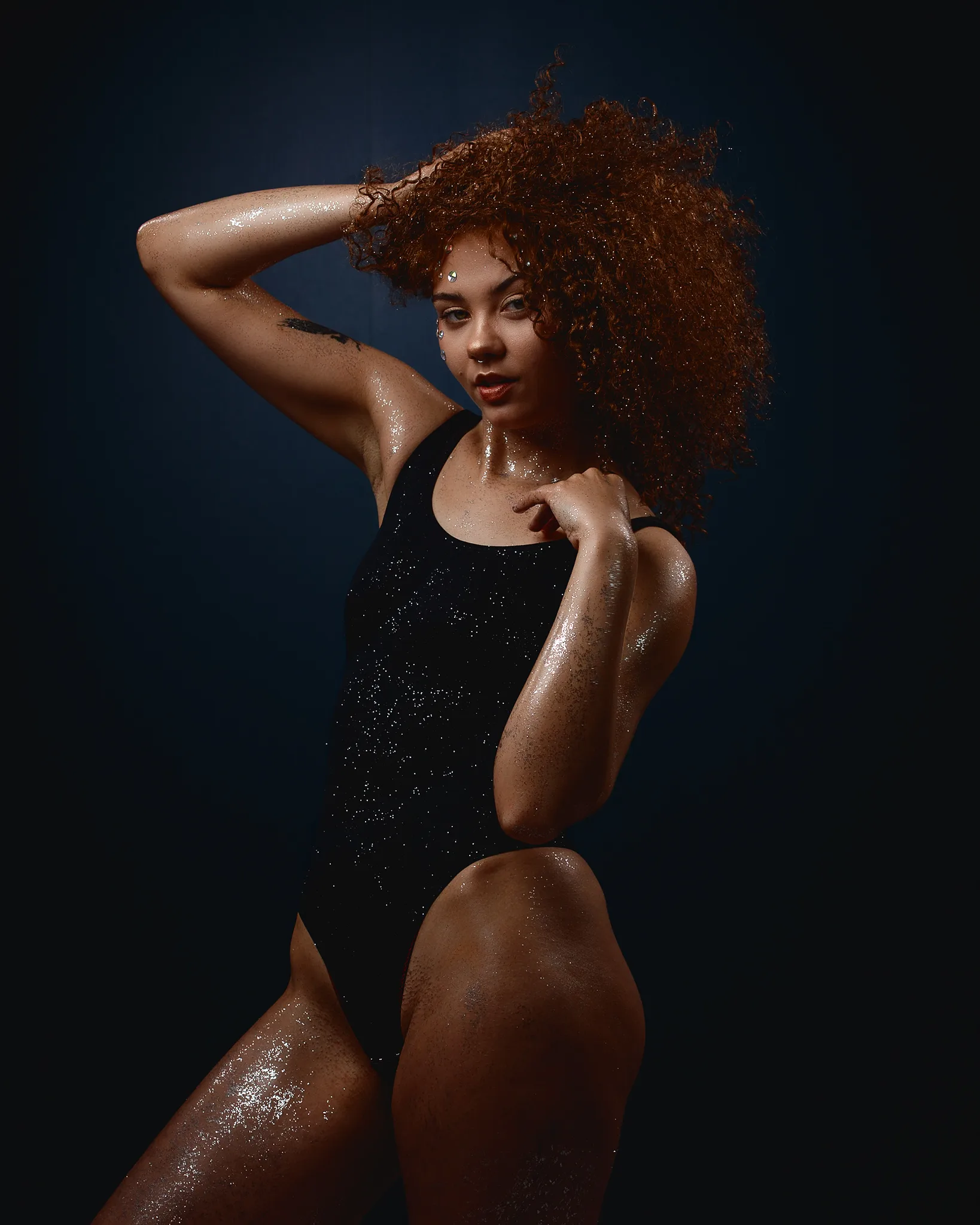
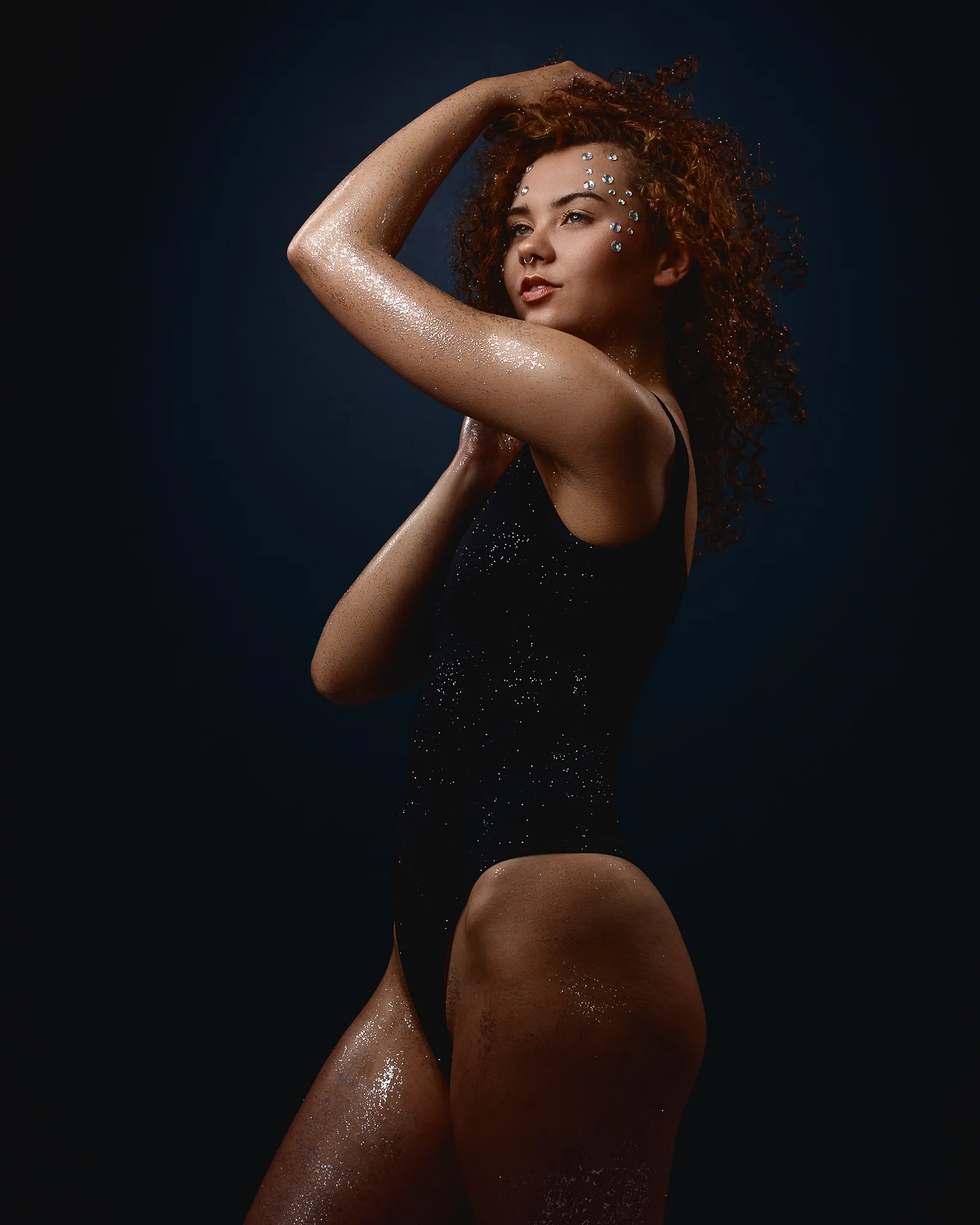
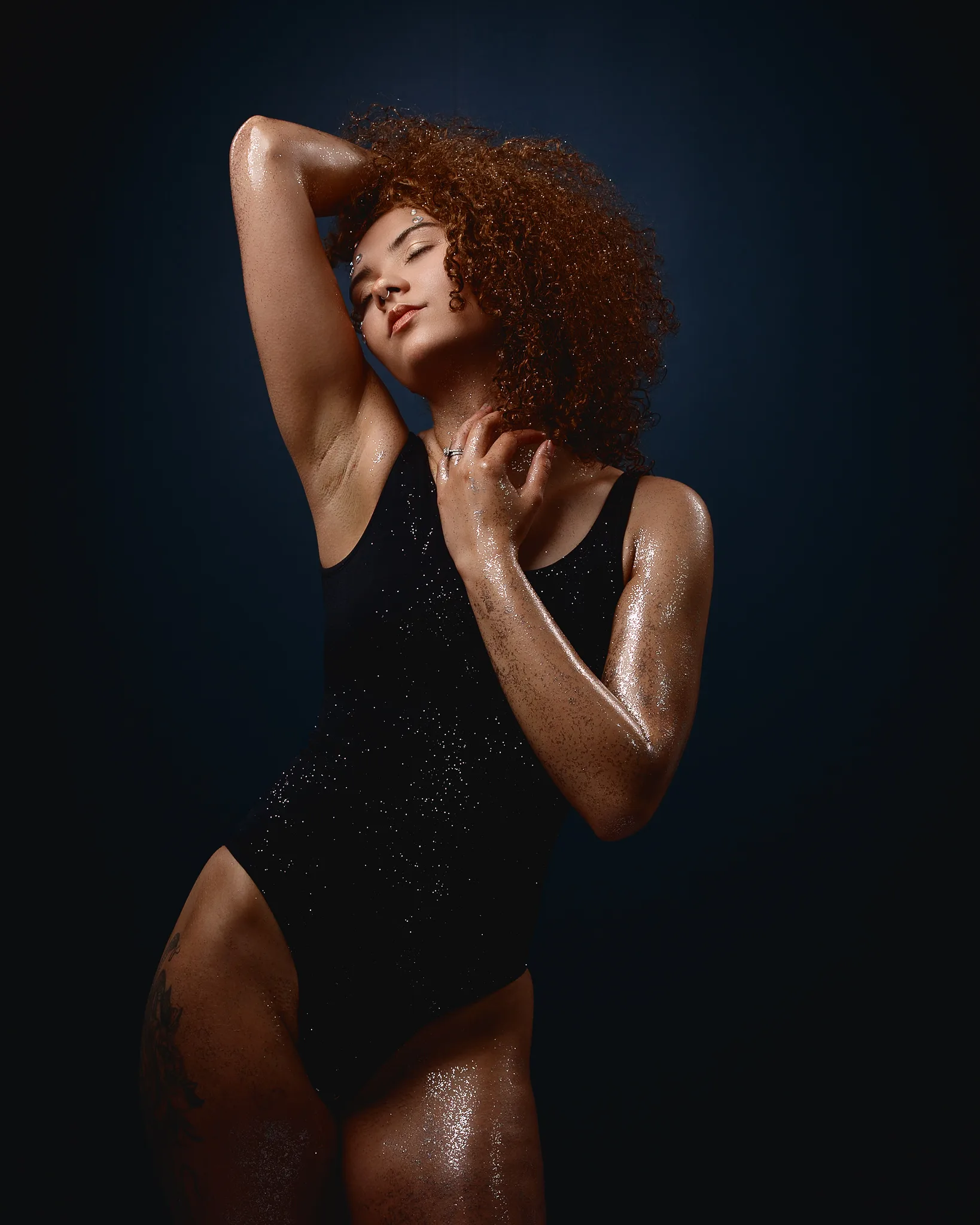
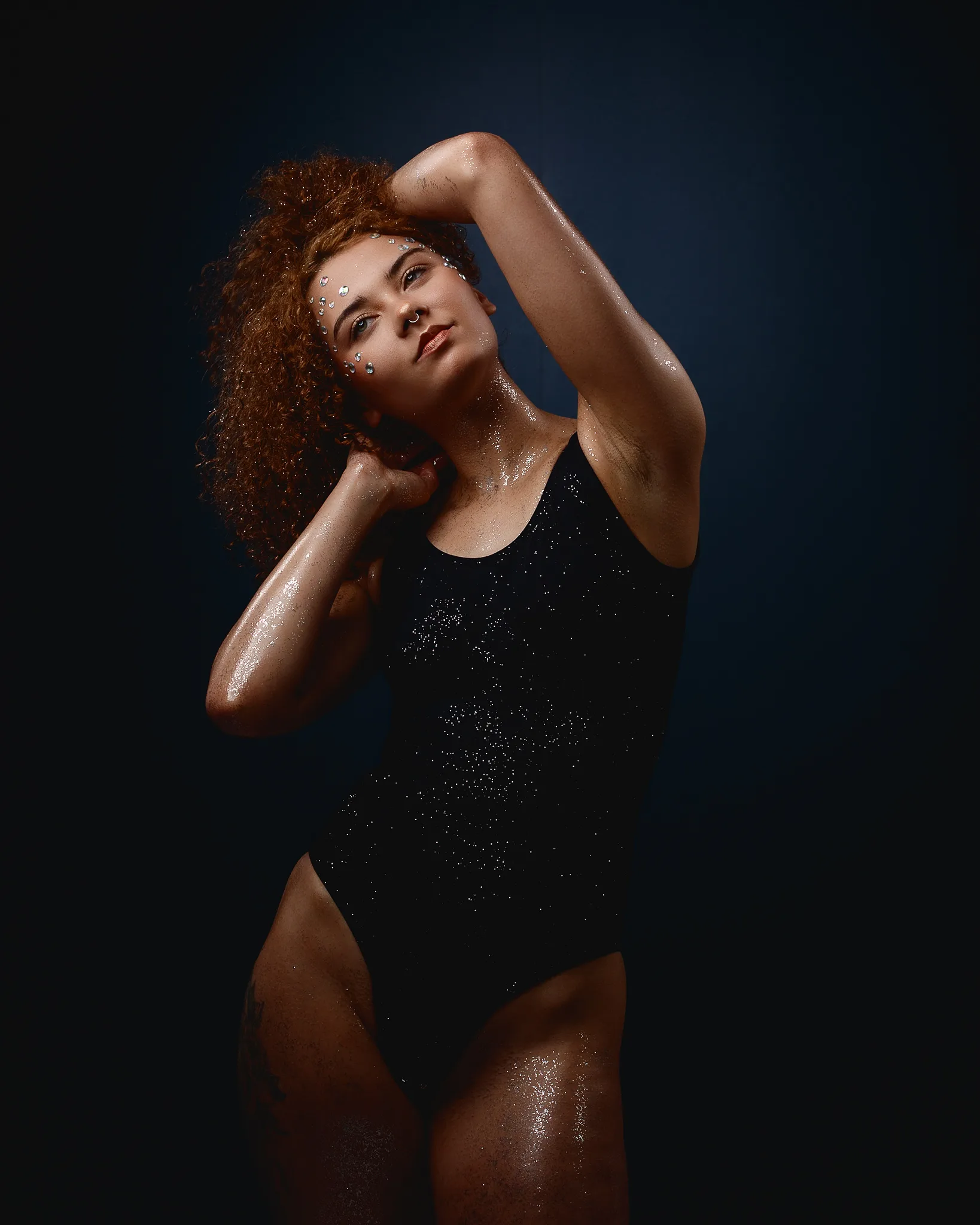
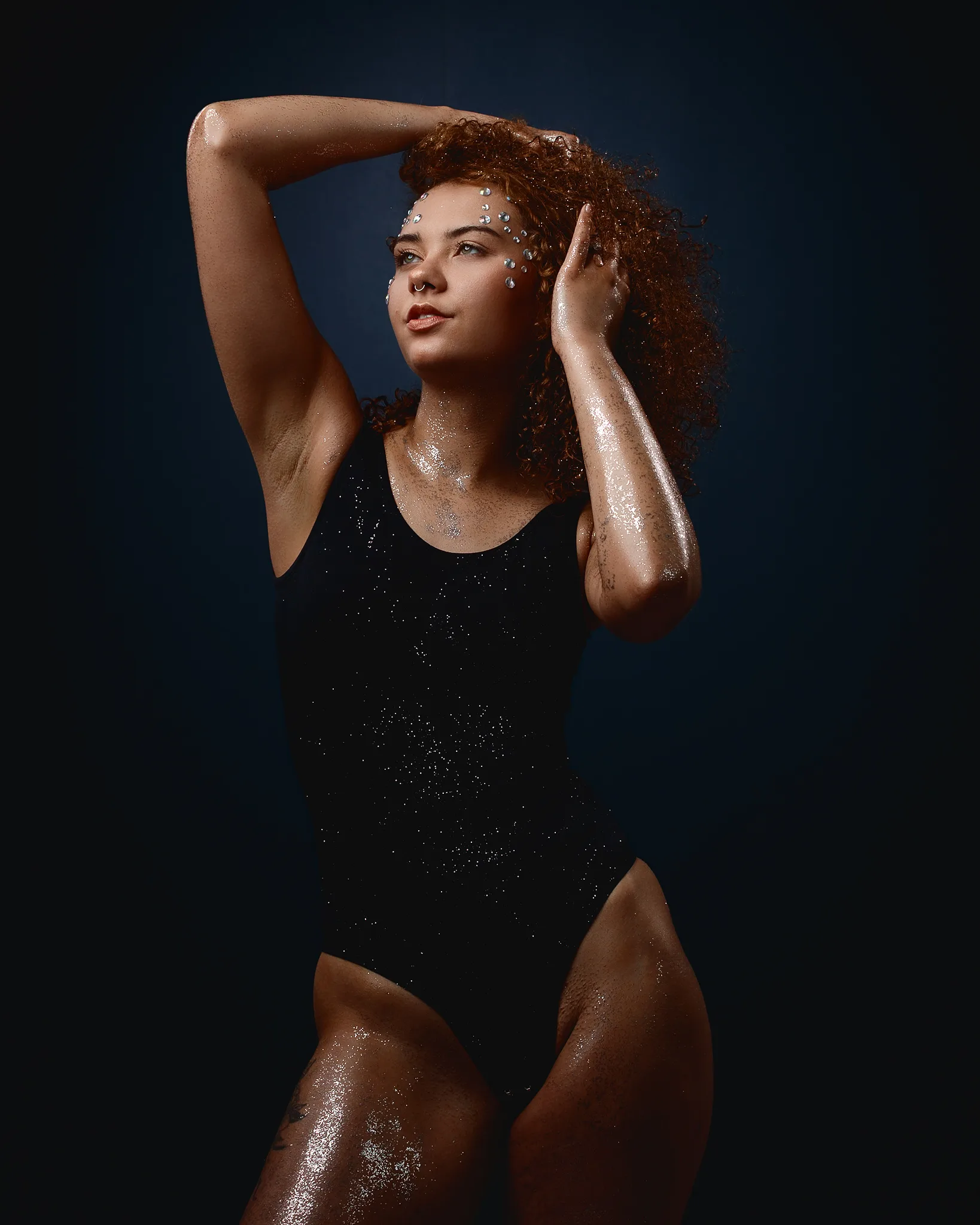
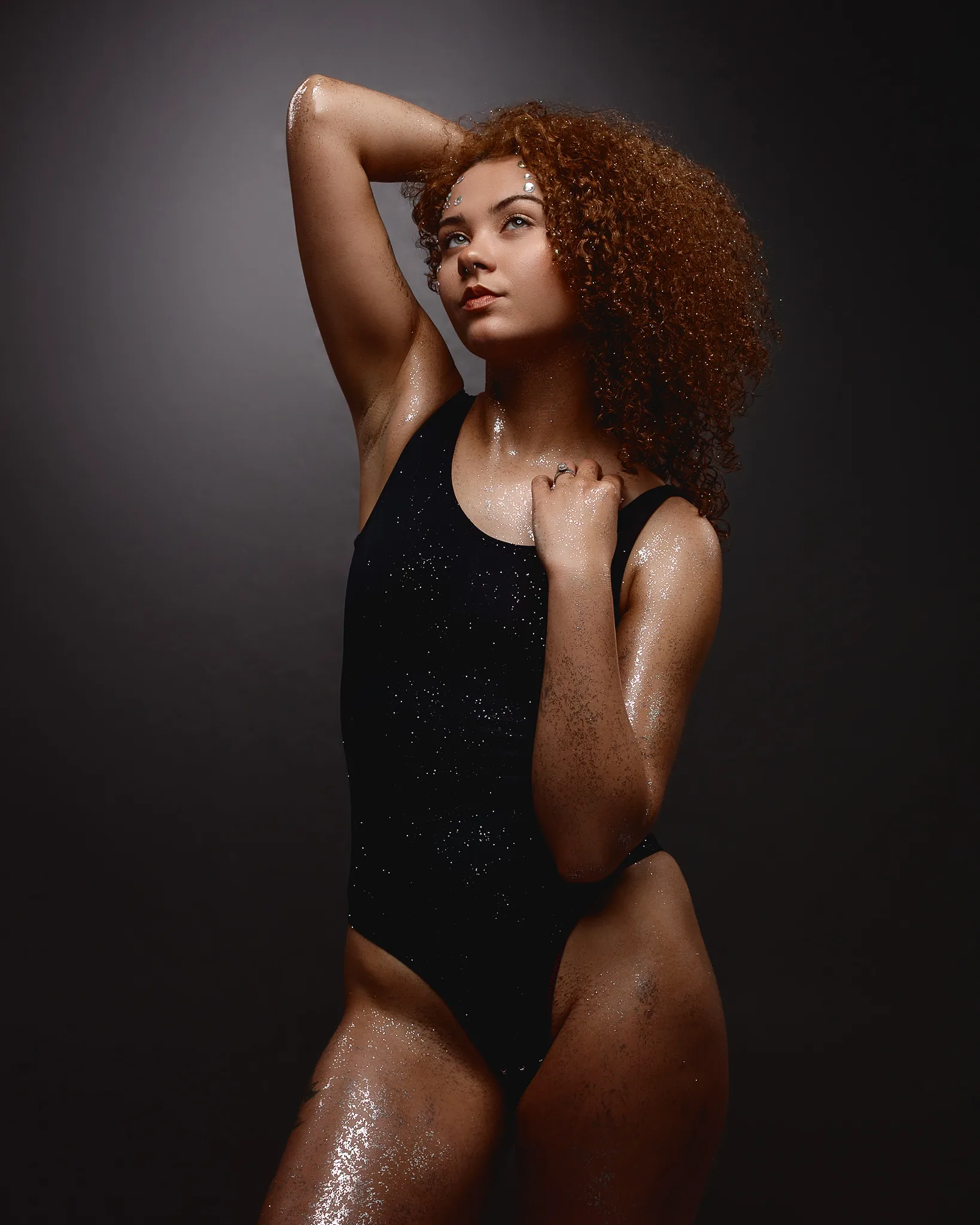
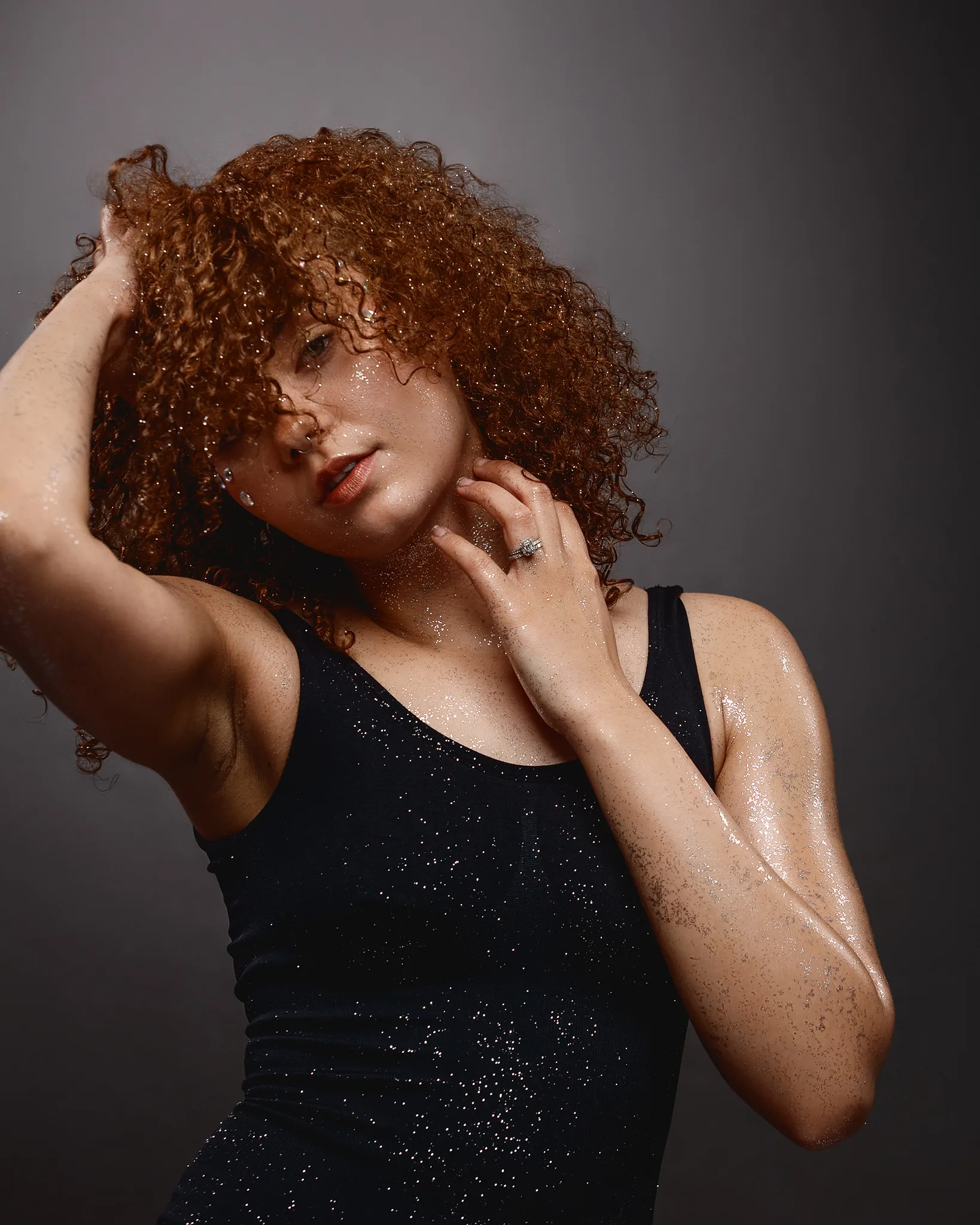
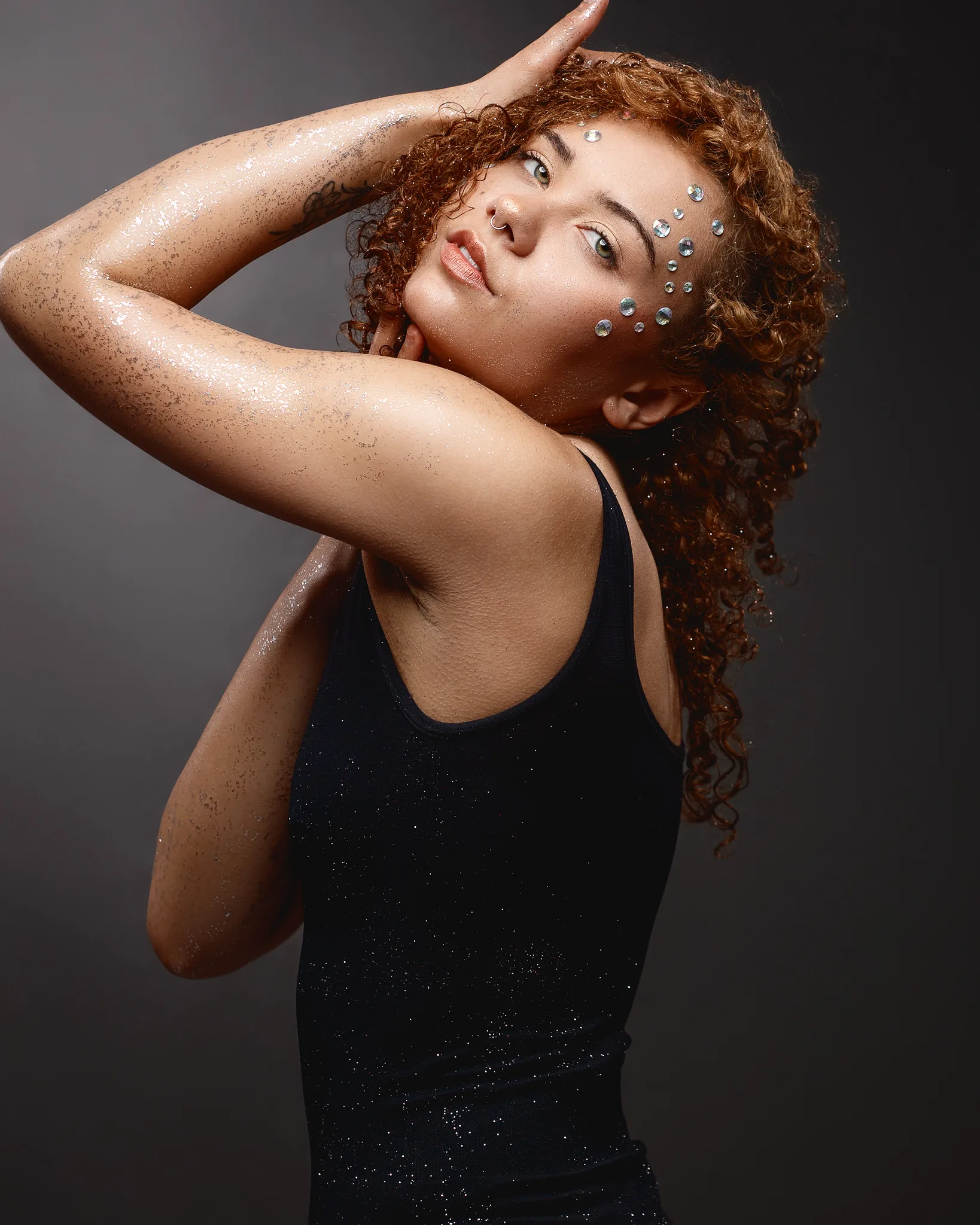
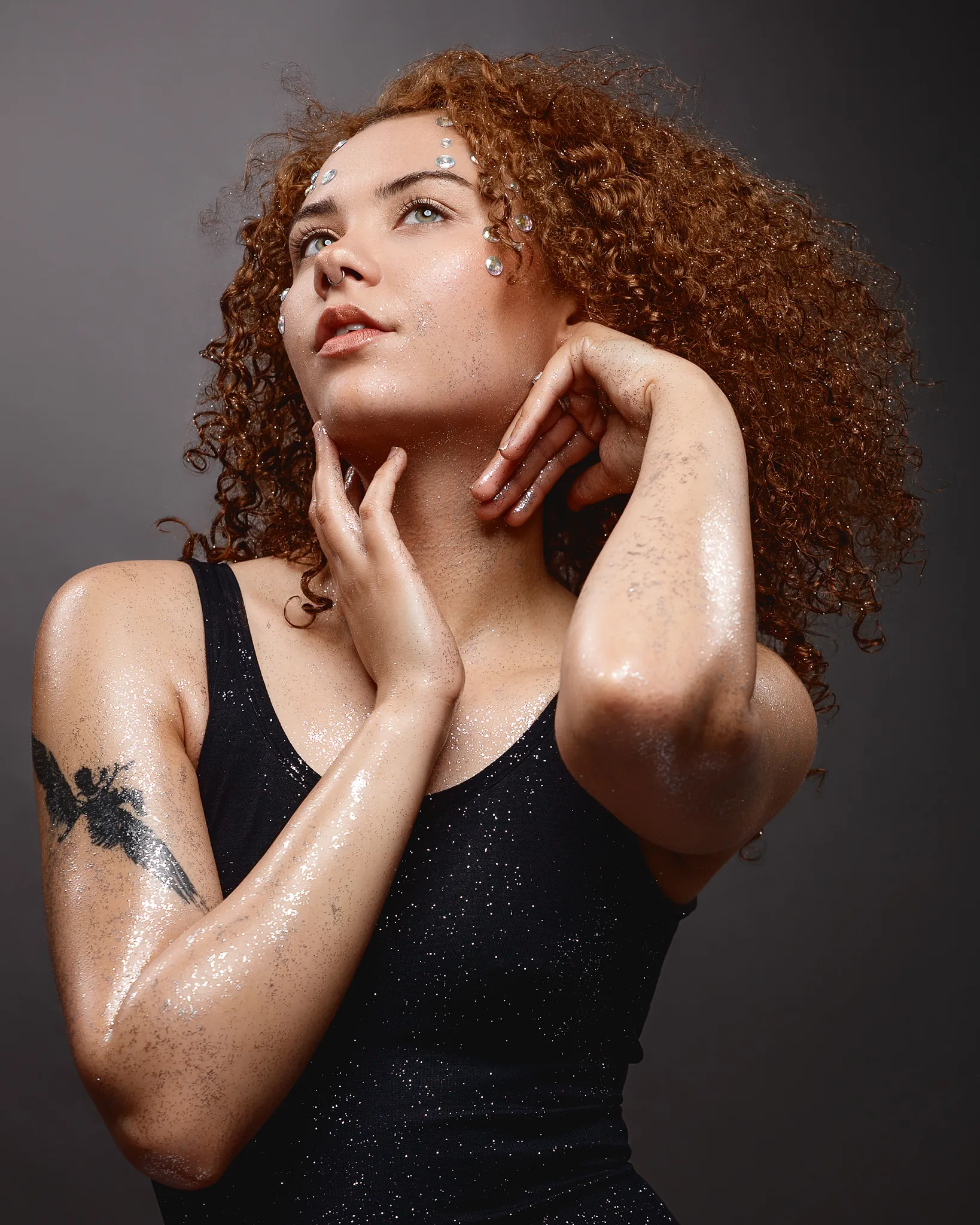
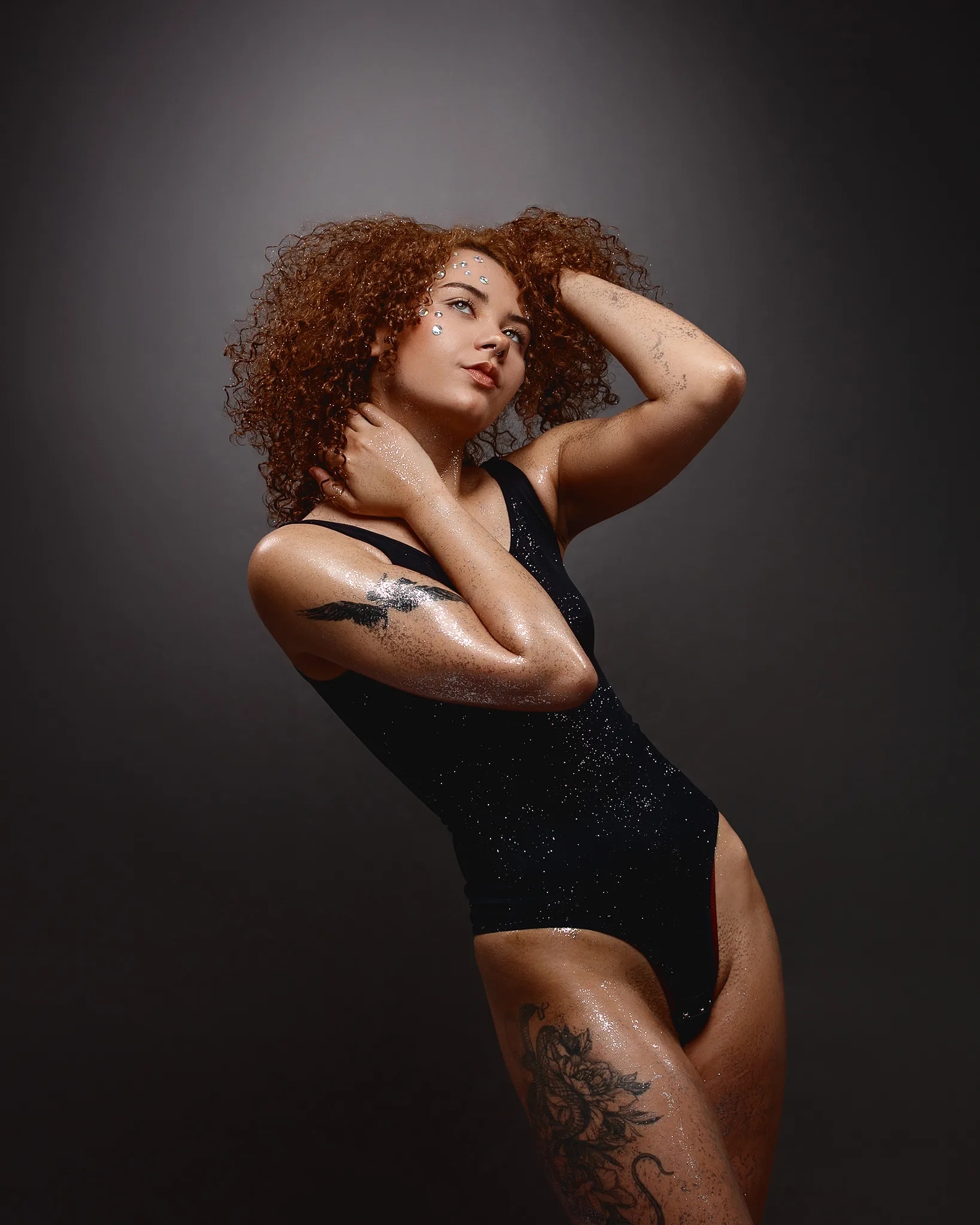
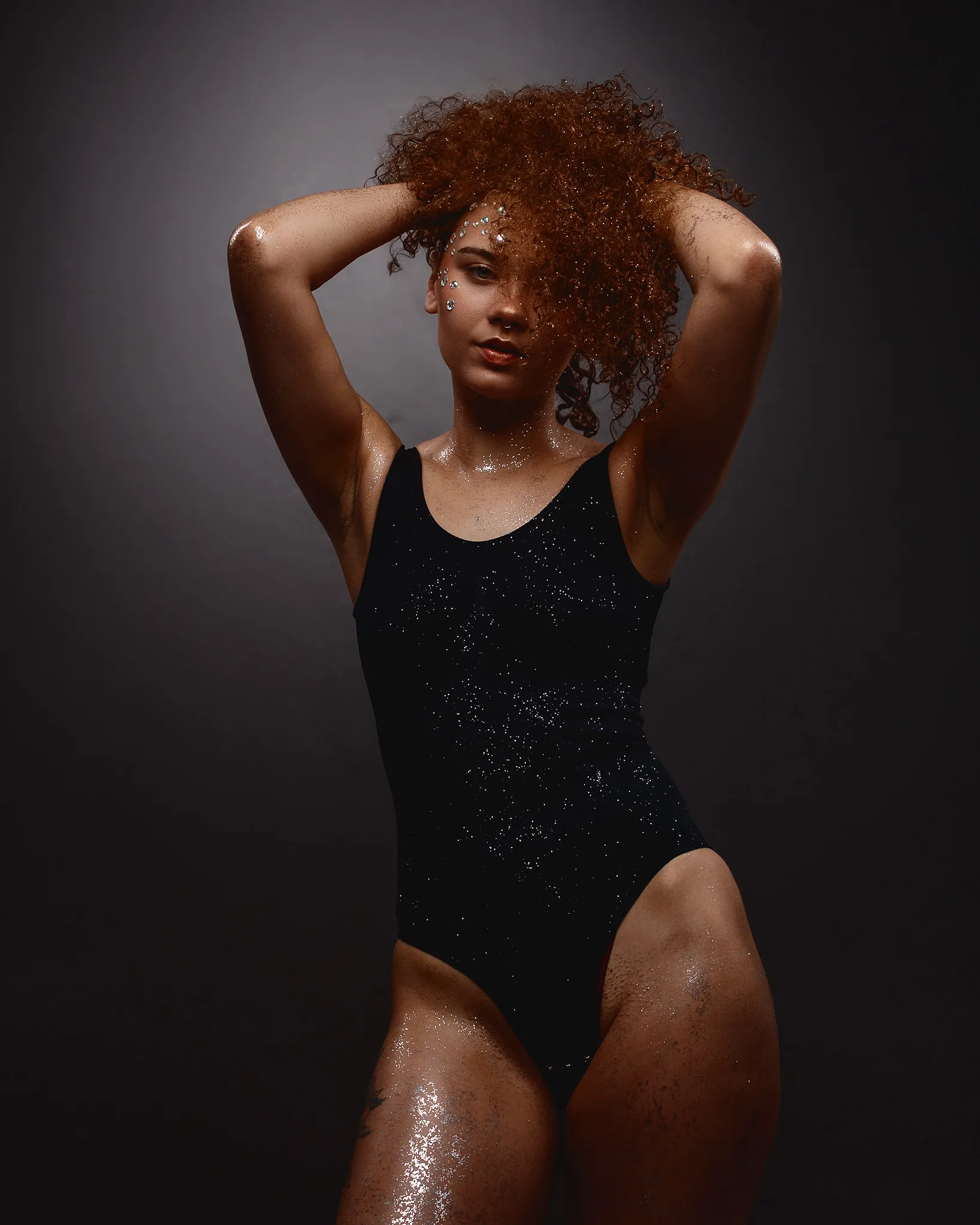
The glitter images gave the shoot a more creative and dramatic finish. These needed more controlled lighting and careful posing so the shine, body shape, and expression worked together rather than becoming visually messy.
Working with Maddie in the Studio
Maddie is very easy to work with in the studio. She listens, responds well to direction, and brings a calm confidence to the shoot. That does not mean everything needs to be rigidly planned. Some of the best parts of a session come from adjusting the pace, changing direction, and allowing the shoot to develop as the model settles into each look.
Because Maddie has worked with me before, there was already a good level of trust. That makes a difference. Studio portrait photography can feel quite exposed at times because there is nowhere to hide. The lights, background, and camera are all focused on small changes in posture, expression, and body language. When someone is comfortable in the space, those small changes become much easier to work with.
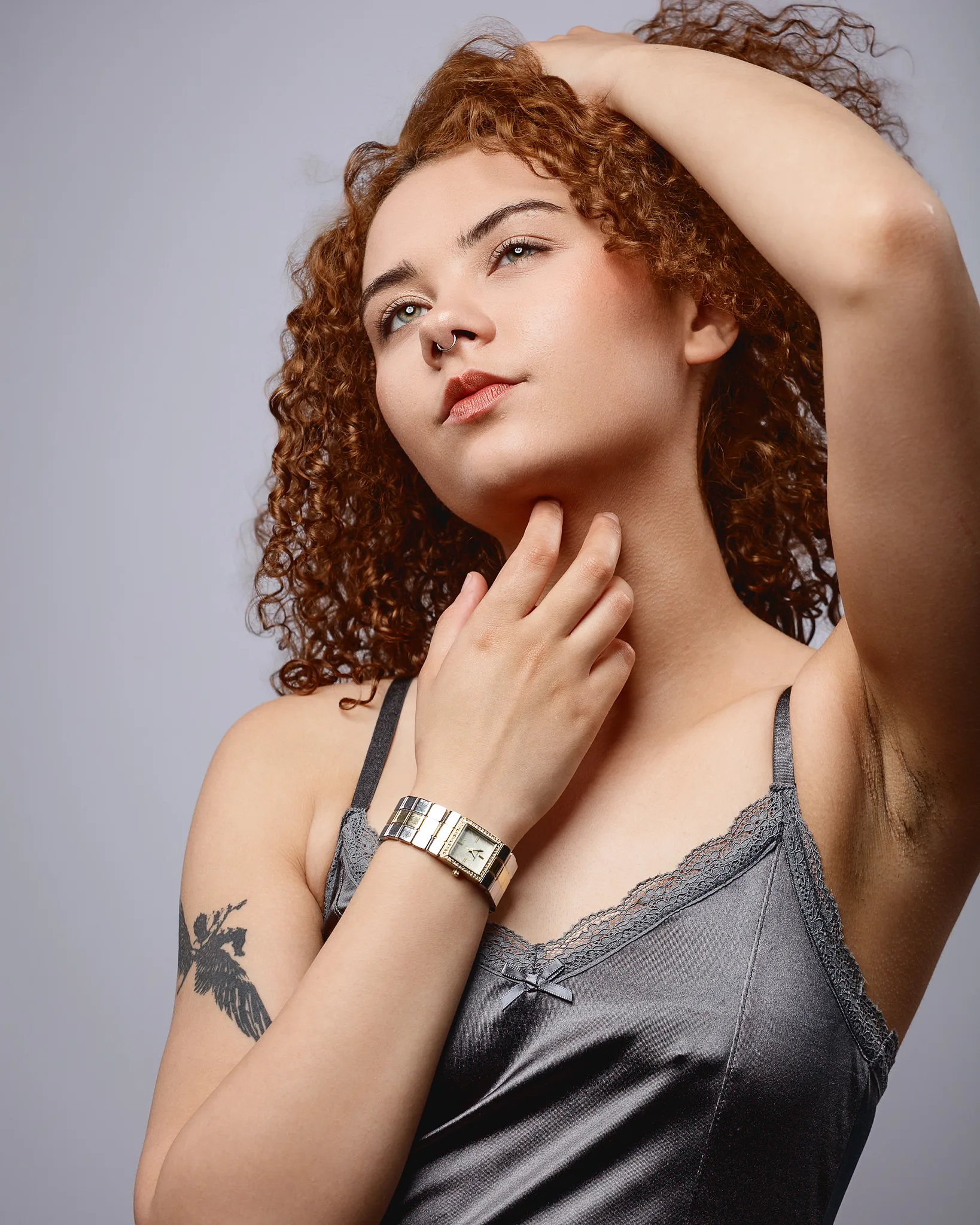
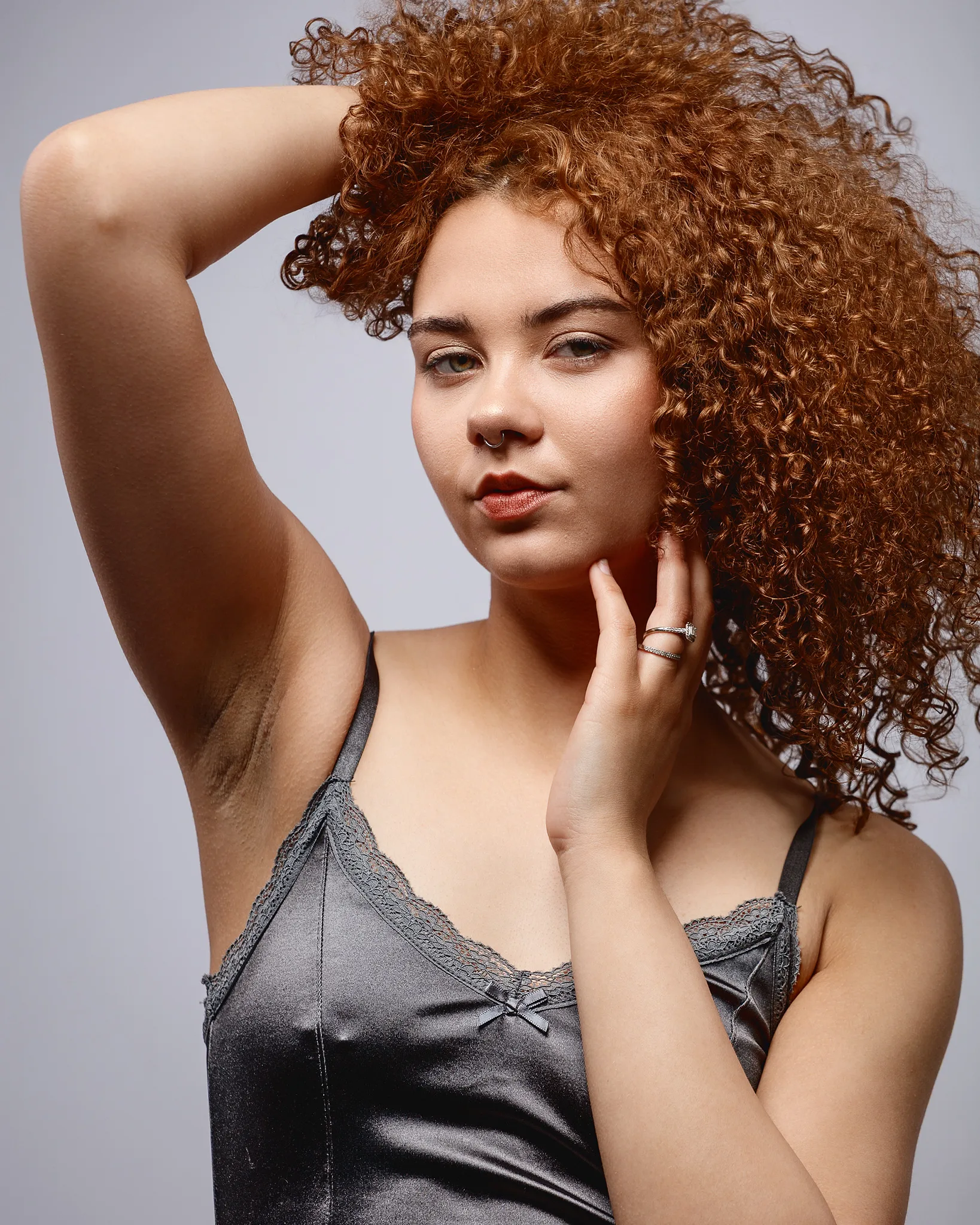
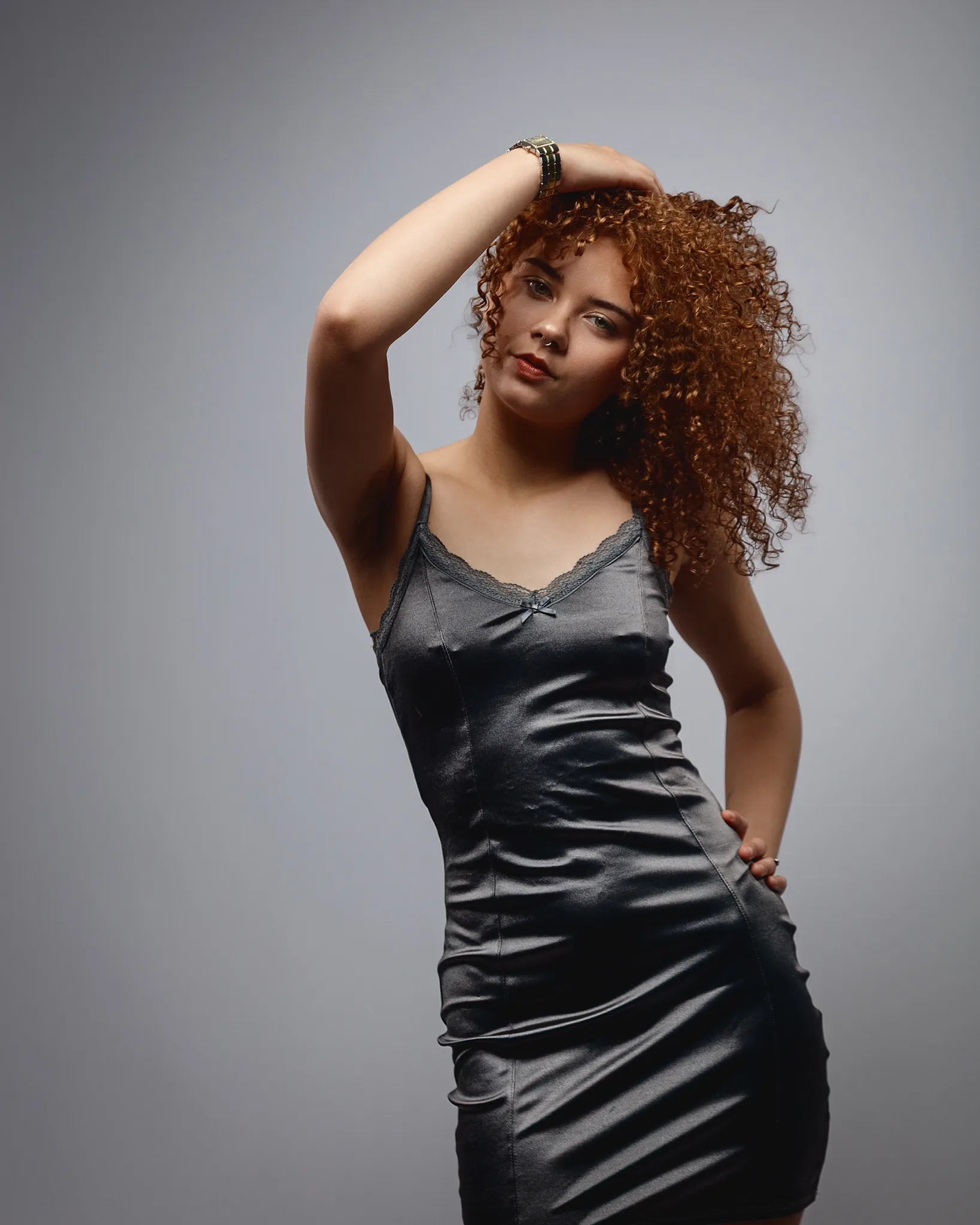
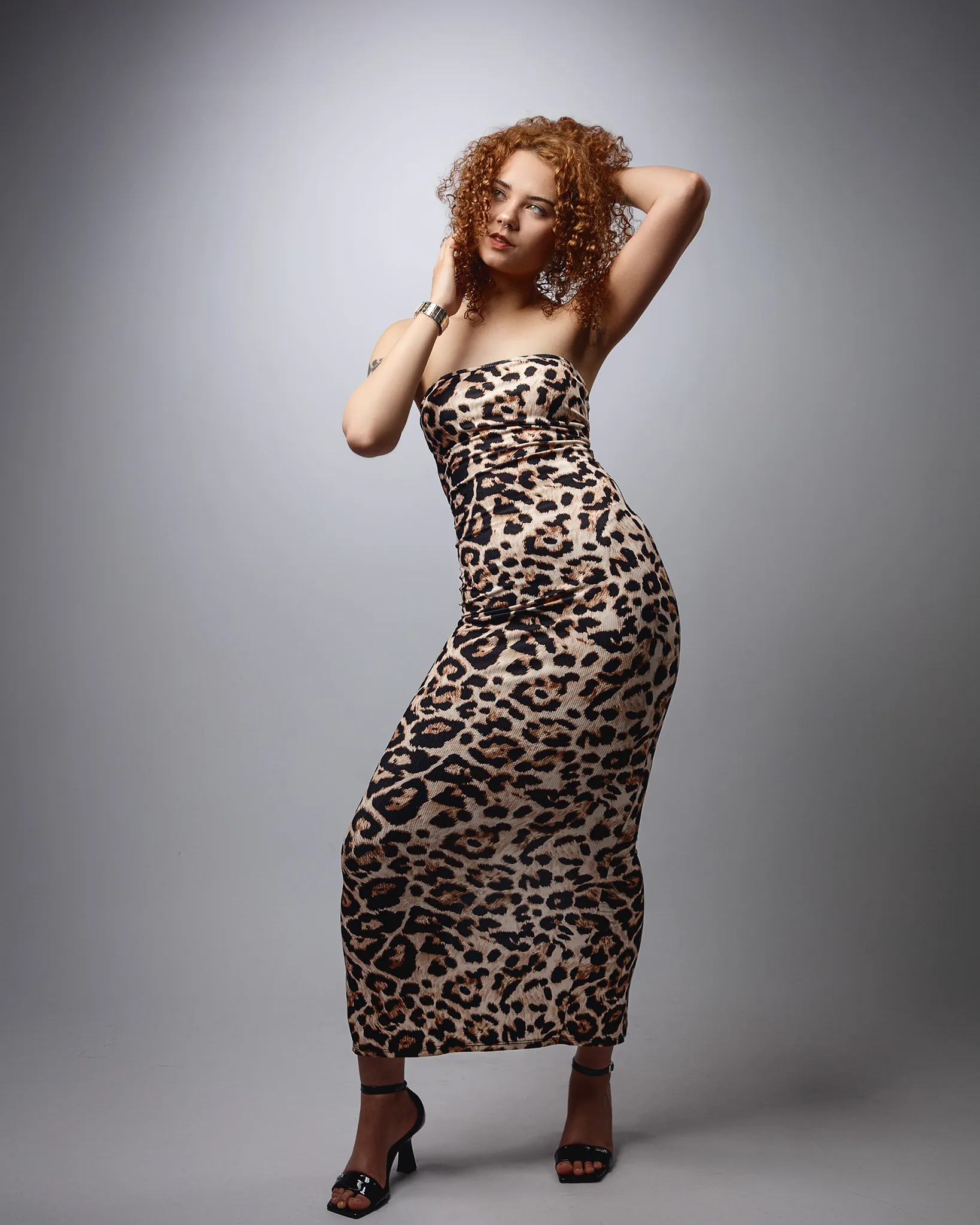
For this shoot, the posing ranged from simple standing portraits to stronger shapes using arms, hands, hair, body angle, and expression. Some images were soft and reflective, while others had more confidence and attitude. That contrast is valuable in a model portfolio because it shows adaptability.
Why Outfit Choice Matters in a Model Portfolio Shoot
Wardrobe choice can make a significant difference to a model portfolio shoot.
A good portfolio session works best when the model brings several outfit options. Even small changes in clothing can completely alter the feel of a photograph. Colour, fabric, neckline, fit, and texture all affect how the light behaves and how the body shape reads in the final image.
Maddie’s shoot is a good example of this. The outfits gave us a wide visual range, including casual looks, fashion-led pieces, softer styling, stronger colours, and more dramatic creative options.
I usually encourage models to bring more outfits than we expect to use. That does not mean we need to photograph everything. It simply gives us options. Sometimes an outfit that looks good in real life may not be the strongest choice under studio lighting. Equally, something simple can photograph very well because it does not distract from the model.
The shoot should be allowed to respond naturally. If one look is working particularly well, it may be worth spending more time on it. If another look does not feel right on the day, there is no need to force it.
Studio Lighting for Model Portfolio Photography
One of the advantages of working in a studio is control.
For Maddie’s session, I used a mixture of grey, dark, and red backgrounds. Each background served a different purpose.
The grey backdrop kept some images clean and versatile. This is useful for model portfolio photography because grey does not fight with the clothing or expression. It allows the model to remain the main subject.
The darker background gave several images a more dramatic studio portrait feel. Darker tones can help shape the face and body with more contrast, especially when the lighting is controlled carefully.
The red backdrop added impact. It worked particularly well with the stronger fashion-led images because it gave the frame more energy and visual confidence.
I adjusted the lighting to suit each outfit and mood rather than using one fixed setup for the whole shoot. That is important. Lighting that works beautifully for a soft portrait may not be right for a stronger fashion image. A close-up beauty-style portrait may need a different level of control compared with a full-length studio image.
The glitter images required particular care. Reflective detail can become distracting if the light is too harsh or uncontrolled. The aim was to let the shine add drama while still keeping the shape, expression, and portrait quality of the image intact.
Model Safety, Comfort and Clear Communication
Model safety and comfort are central to how I work, especially on portfolio sessions where someone may be trying new poses, clothing styles, or creative ideas.
A model portfolio shoot should always be collaborative. The model remains in control of what they are comfortable wearing and doing. I give direction verbally and respectfully, but I do not physically adjust models. I do not touch clothing, hair, hands, shoulders, or posture. If something needs changing, I explain it clearly so the model can make the adjustment themselves.
Chaperones are welcome at my studio. For younger or inexperienced models, I take extra time to explain the process, talk through what we are doing, and keep the session calm and professional. There is no pressure to do anything outside someone’s comfort level.
Outfits, poses, and styling are discussed throughout the shoot. If something does not feel right, we move on. The best images usually happen when the person being photographed feels safe enough to concentrate on expression, movement, and connection with the camera.
This matters. A portfolio shoot is not just about the final images. The way the session is handled is equally important. A model should leave with useful photographs, but also with a good experience of being photographed in a professional studio environment.
Helping Models with Posing and Direction
Many people assume they need to arrive at a model portfolio shoot already knowing how to pose. That is not the case.
Some models are very experienced and need only small adjustments. Others are still learning how their body moves in front of the camera. Both are perfectly fine. My job is to help guide the session in a way that produces useful images without making the process feel awkward or over-directed.
During Maddie’s session, we worked through a range of posing. Some images were based around simple standing positions with small changes to head angle and eye contact. Others used stronger body shapes, hands, arms, and movement.
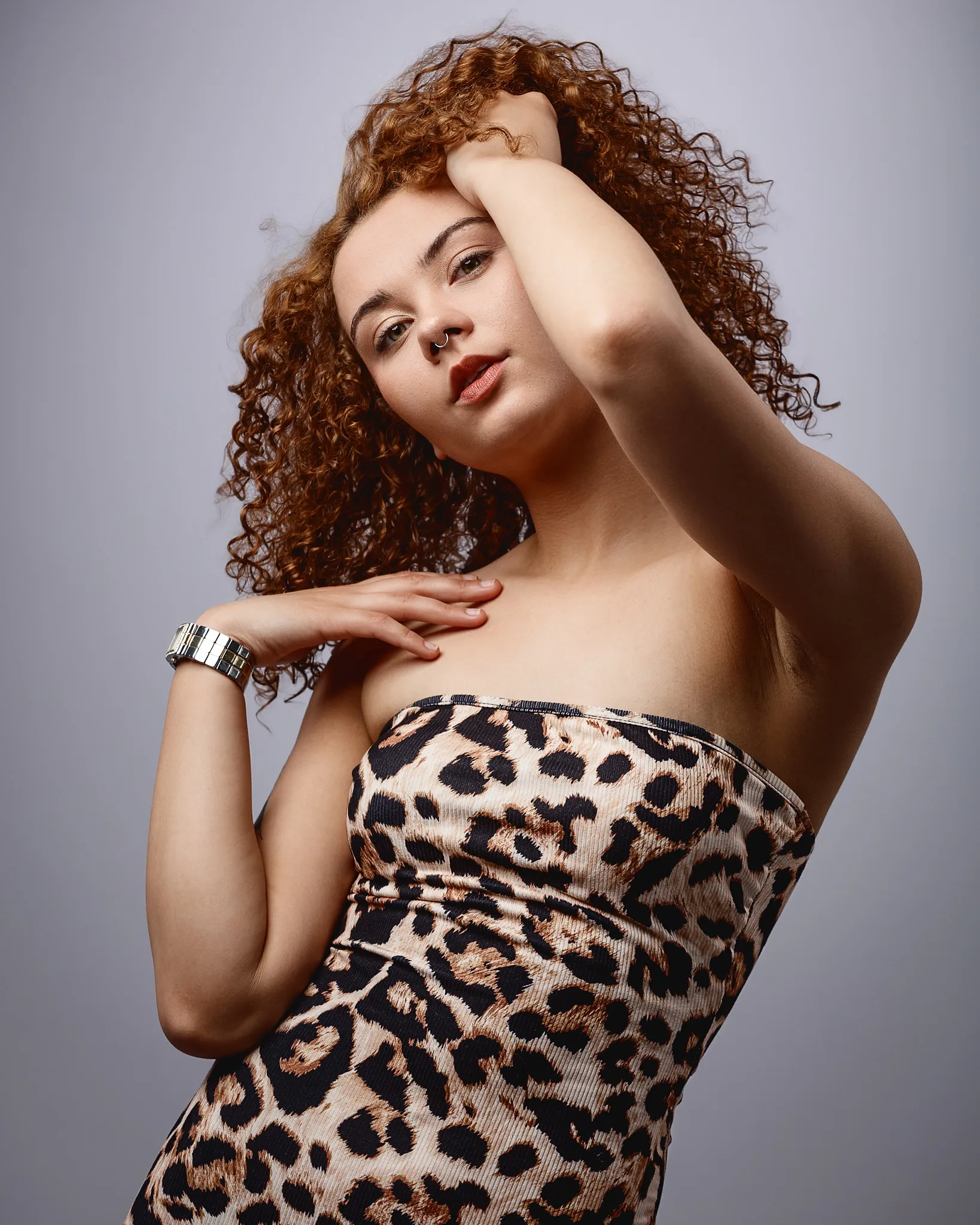
Small adjustments can make a major difference. A slight turn of the shoulder, a softer hand position, a change in chin angle, or a different focus in the eyes can alter the whole mood of an image. This is one of the reasons I prefer not to rush portfolio sessions. Confidence often builds gradually as the model becomes more familiar with the lights, the space, and the rhythm of the shoot.
Why Close-Up Portraits Matter in a Model Portfolio
A model portfolio should not only contain full-length images.
Close-up portraits are important because they show expression, eye contact, skin, hair, facial structure, and how the model connects with the camera. They also reveal subtlety. A strong close-up does not need exaggerated posing or heavy styling. Often, it is about stillness, control, and the smallest changes in expression.
Maddie’s close-up portraits worked well because they had a calm, thoughtful quality. They allowed the images to become less about clothing and more about presence.
For a model portfolio photographer, close-up images are an essential part of the set. They help balance the fashion-led images and show the person clearly. This is especially useful for agencies, casting, performers, and anyone who needs images that show both appearance and expression.
Portrait Photography, Fashion Photography and Model Portfolio Images
There is often some overlap between portrait photography, fashion photography, and model portfolio photography, but they are not exactly the same.
Portrait photography usually focuses on expression, character, and the person in front of the camera.
Fashion-style photography often gives more emphasis to clothing, styling, shape, posture, and visual attitude.
Model portfolio images need to do a bit of both. They need to show the person clearly, but they also need to show range, adaptability, and how the model works with different visual ideas.
Maddie’s shoot included all of these elements. Some images were simple studio portraits. Some had more of a fashion portrait quality. Others were more creative and dramatic. Together, they created a broader and more useful set of images than one repeated look would have done.
What to Bring to a Model Portfolio Shoot
Preparation helps a portfolio shoot run more smoothly, but it does not need to be overcomplicated.
For a studio model portfolio shoot, I usually suggest bringing:
several outfit options
simple tops in neutral colours
one or two stronger fashion-led outfits
black and white underwear options were relevant to clothing
comfortable shoes
shoes that suit specific outfits
a hairbrush or comb
make-up for touch-ups
jewellery and accessories
water and snacks
reference images or a Pinterest board
anything personal that helps shape the look of the shoot
Reference images can be helpful, but they should be treated as a guide rather than something to copy exactly. The best results usually come from using references to understand the mood, styling, and direction, then adapting that to the person being photographed.
Who a Model Portfolio Shoot Is Useful For
A model portfolio shoot can be useful for a range of people, not just established models.
It can work well for new models building a first portfolio, models returning after a break, actors or performers needing updated images, creative people wanting fashion-led portraits, and people applying to agencies or online casting platforms.
It can also be useful for someone who simply wants to practise being photographed in a professional studio. Being in front of the camera is a skill, and a calm studio session can be a good way to build confidence without the pressure of a busy location or commercial shoot.
My studio at Bentwaters is near Woodbridge in Suffolk and is within easy reach of Ipswich, Rendlesham, Wickham Market, Aldeburgh, Framlingham, Saxmundham, and the wider Suffolk coast. That makes it a practical location for anyone looking for model portfolio photography in Suffolk or a portrait photography studio near Woodbridge.
Choosing the Final Images
After the shoot, the next stage is the proof gallery.
I do not simply choose a random set of images and send them over. The proof gallery allows the model to review the images and choose the photographs they would like edited. This matters because different images can be useful for different reasons.
A full-length fashion image might be useful for showing posture and styling. A close-up portrait might be better for expression. A stronger editorial-style image might add personality and visual interest to a portfolio. The final selection should be useful, not just visually pleasing.
Once the final choices have been made, I edit the selected images carefully so the finished set feels consistent and professional while still looking like the person photographed.
Final Thoughts
Maddie’s shoot is a strong example of why variety matters in model portfolio photography.
The session produced a broad set of images, from clean studio portraits through to more creative fashion-led work. The different outfits, backgrounds, lighting choices, and expressions gave Maddie a portfolio update with range rather than repetition.
I always appreciate it when someone returns to the studio for another shoot. With Maddie, it felt like a natural continuation of work we had already started together, with space to explore new looks and create images that are useful for her portfolio.
For anyone considering a model portfolio shoot in Suffolk, I think this kind of session shows what can be achieved when the shoot is planned enough to have direction, but relaxed enough to allow the images to develop naturally.