
A Theme That Started with Polka Dots
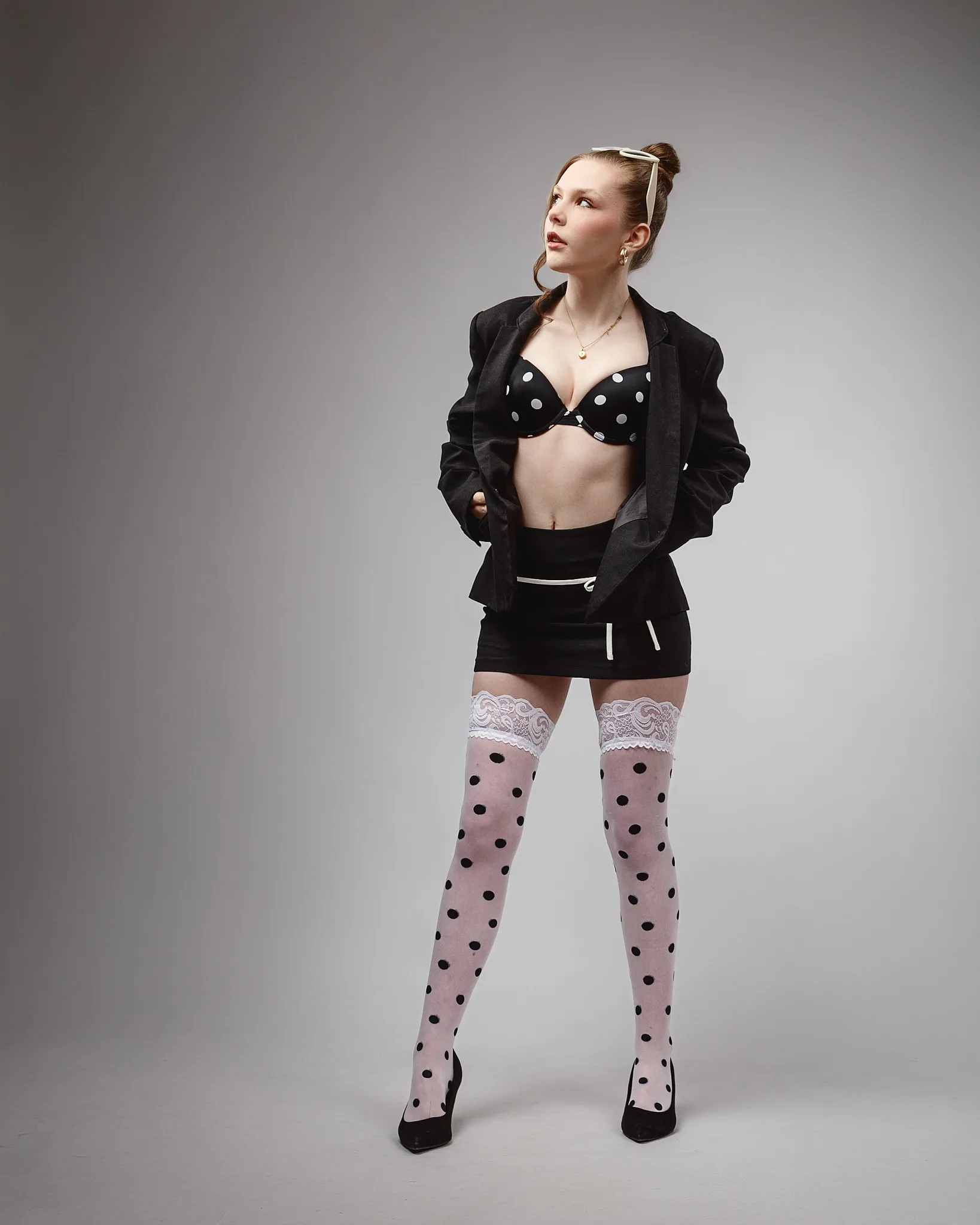
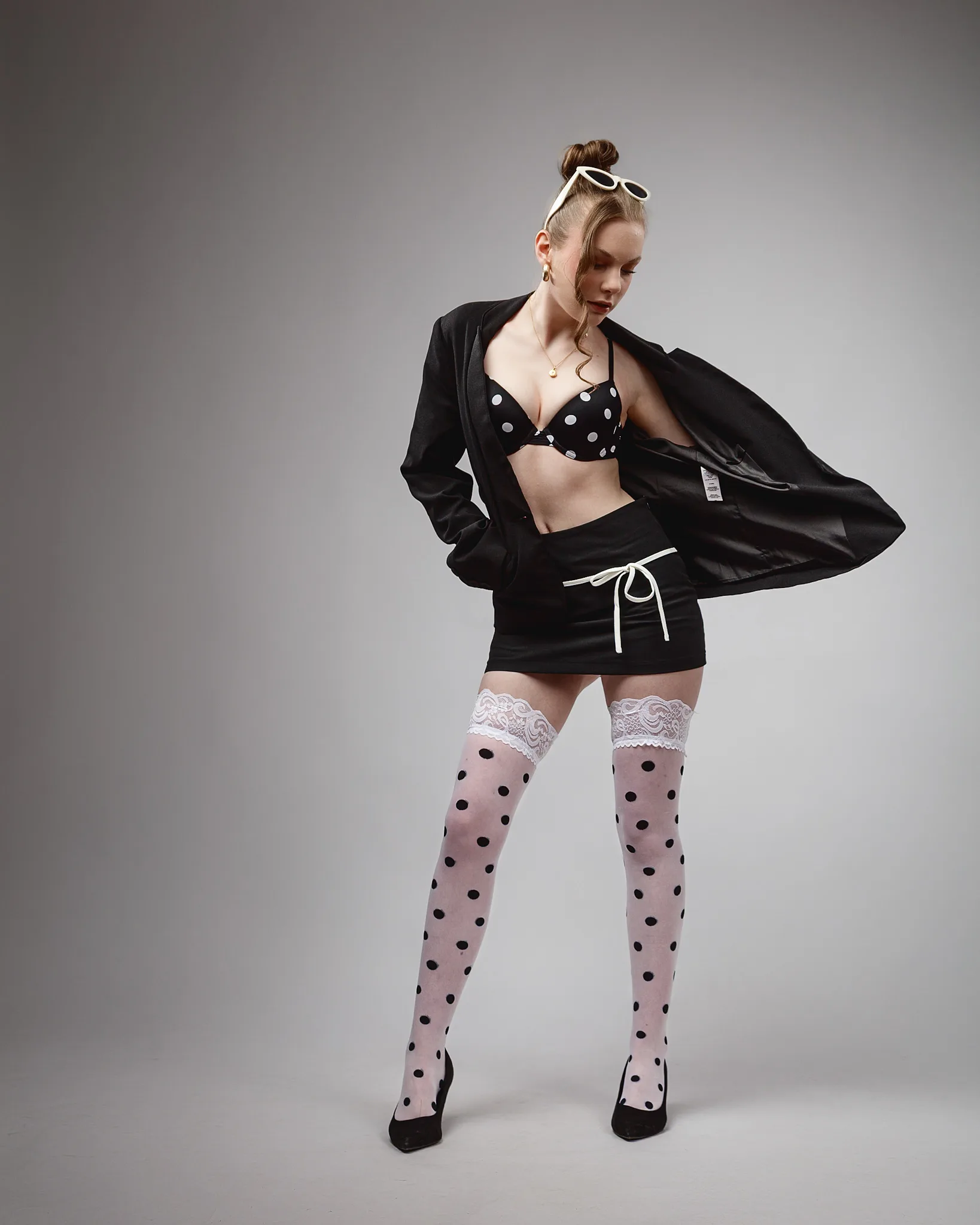
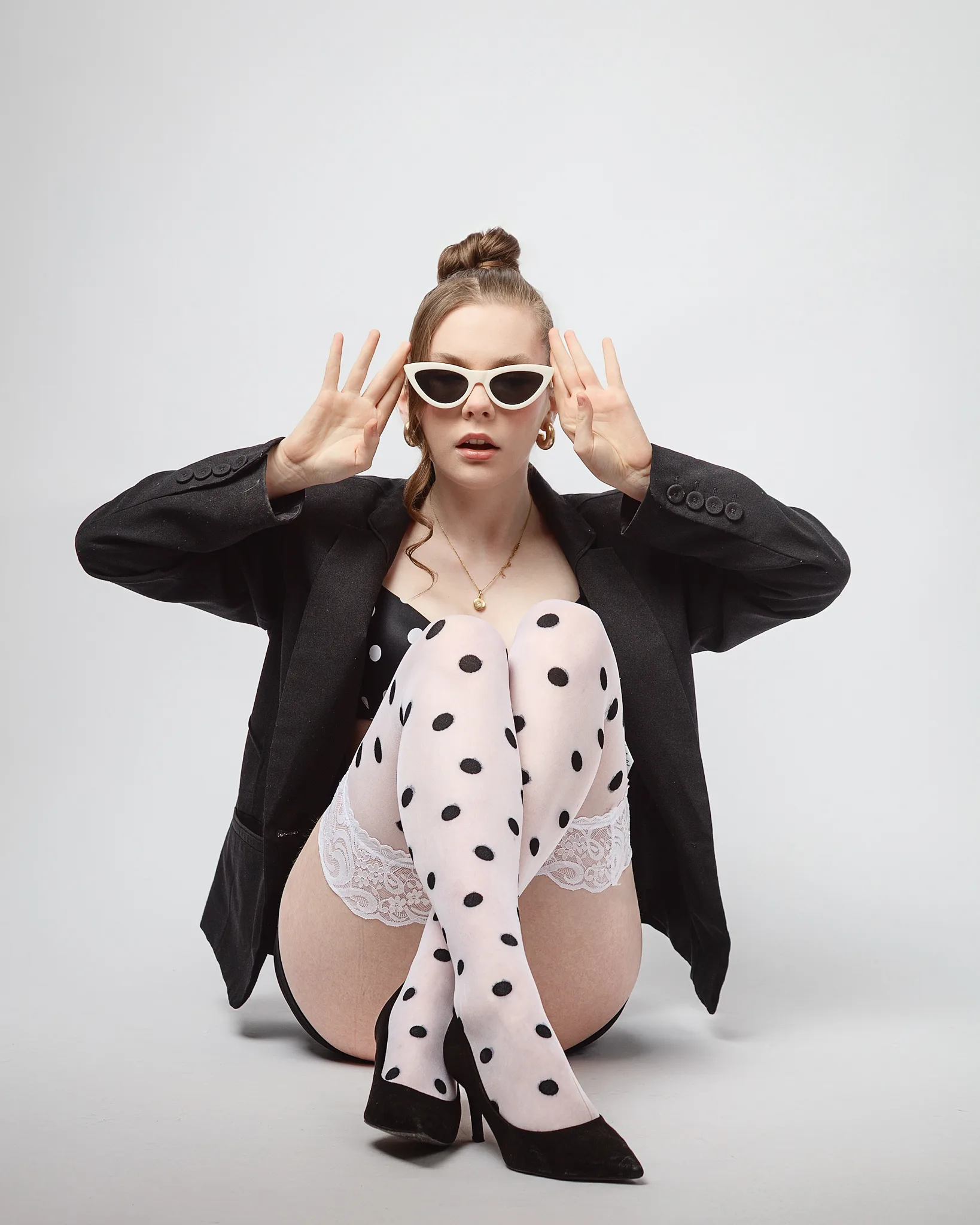
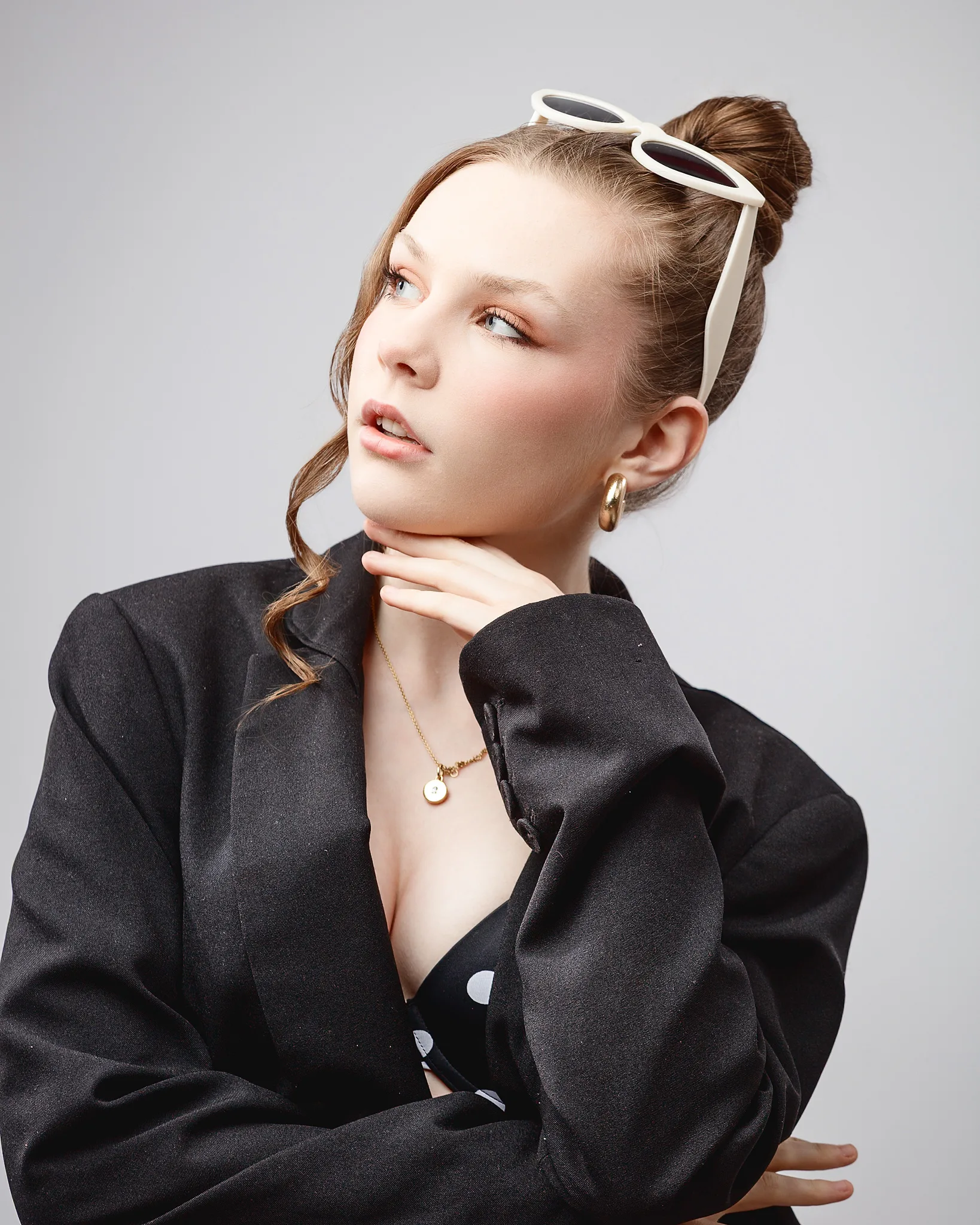
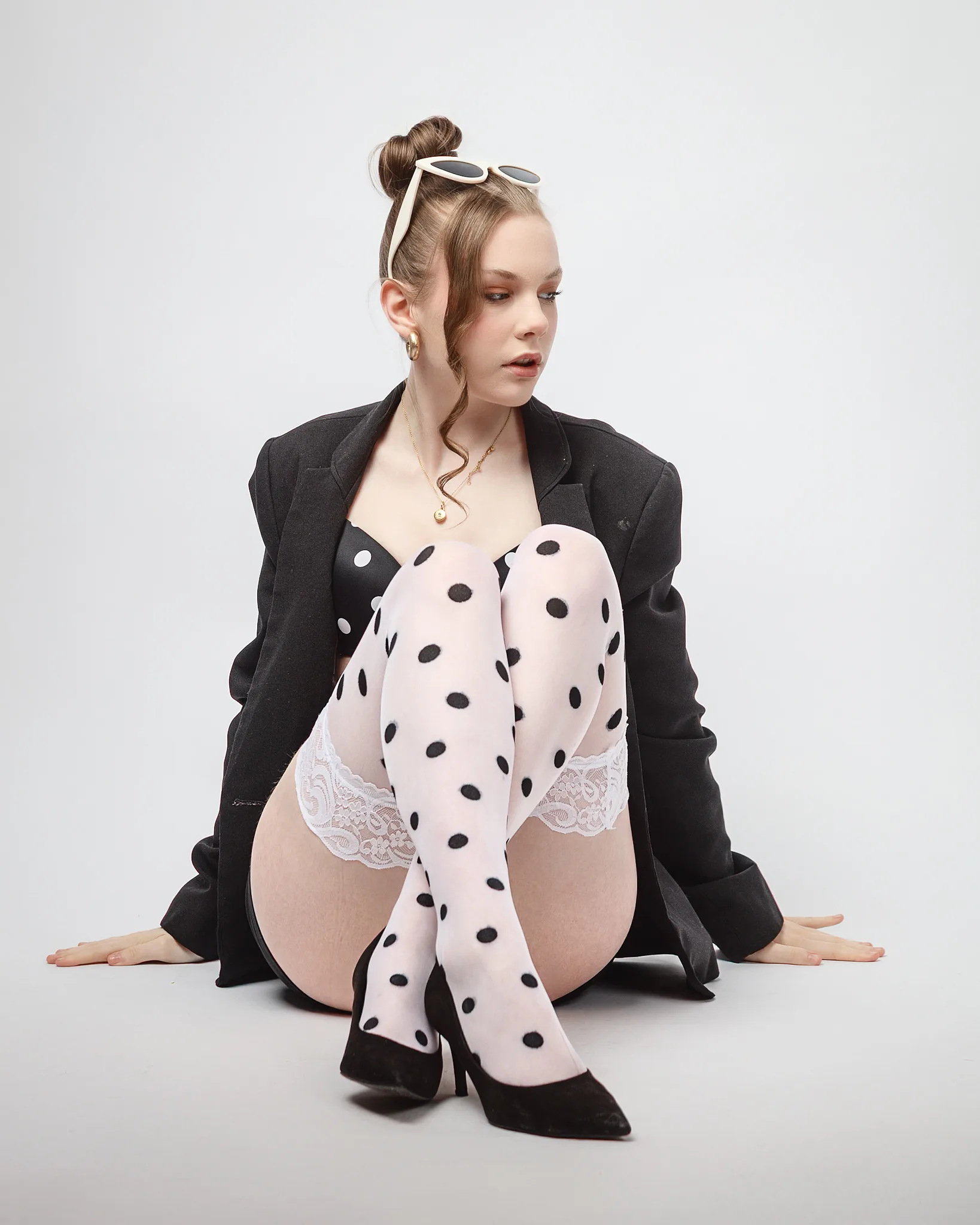
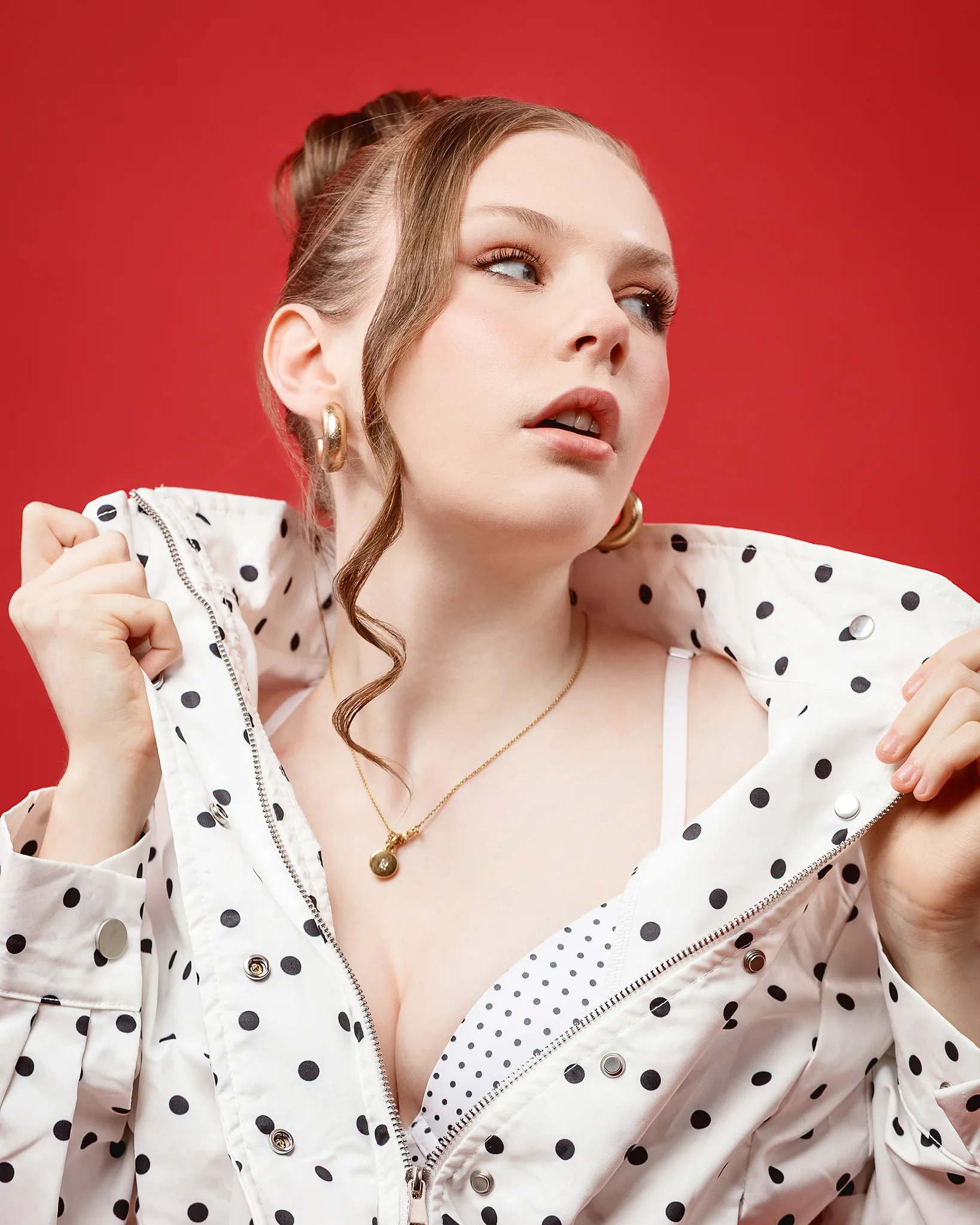
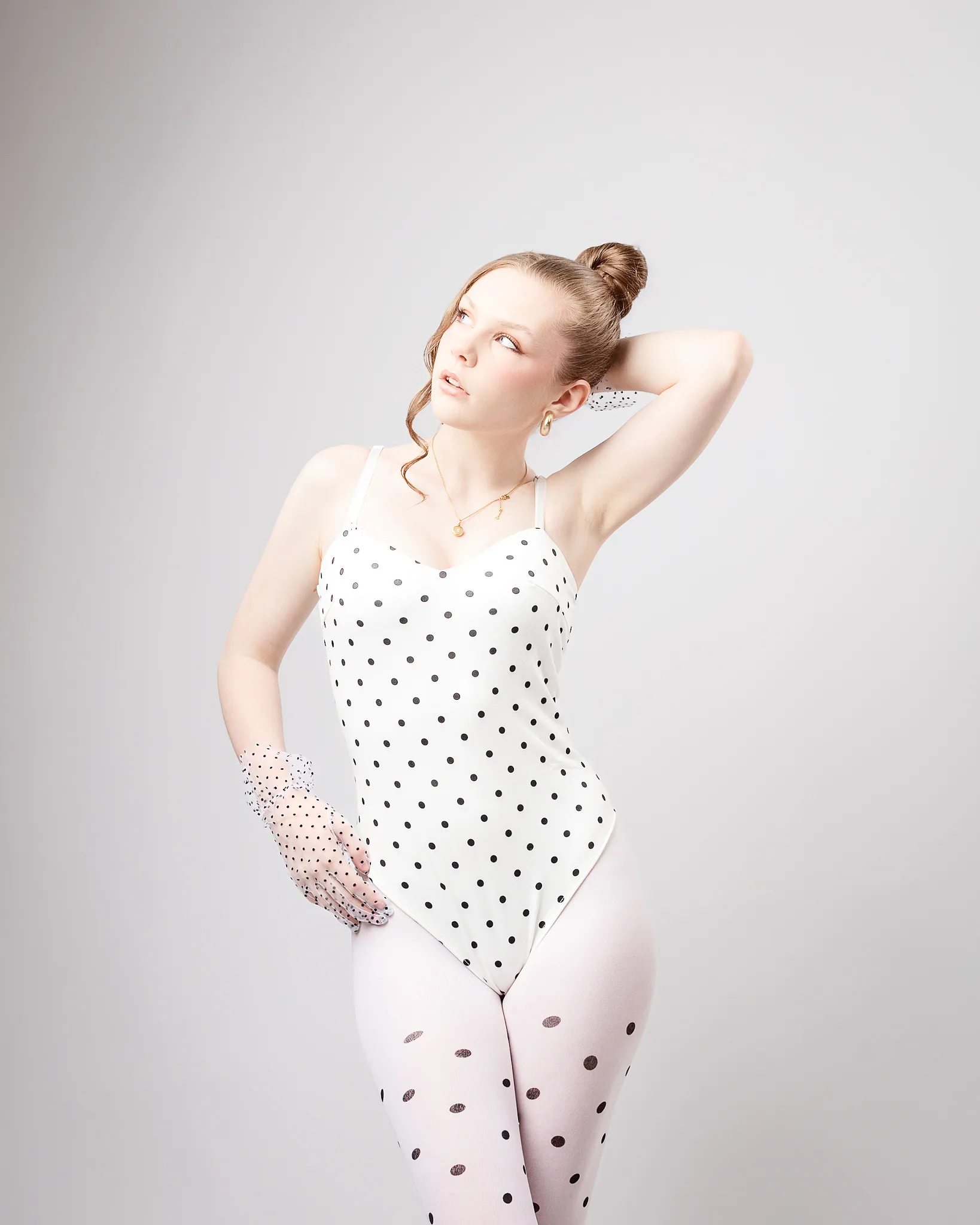
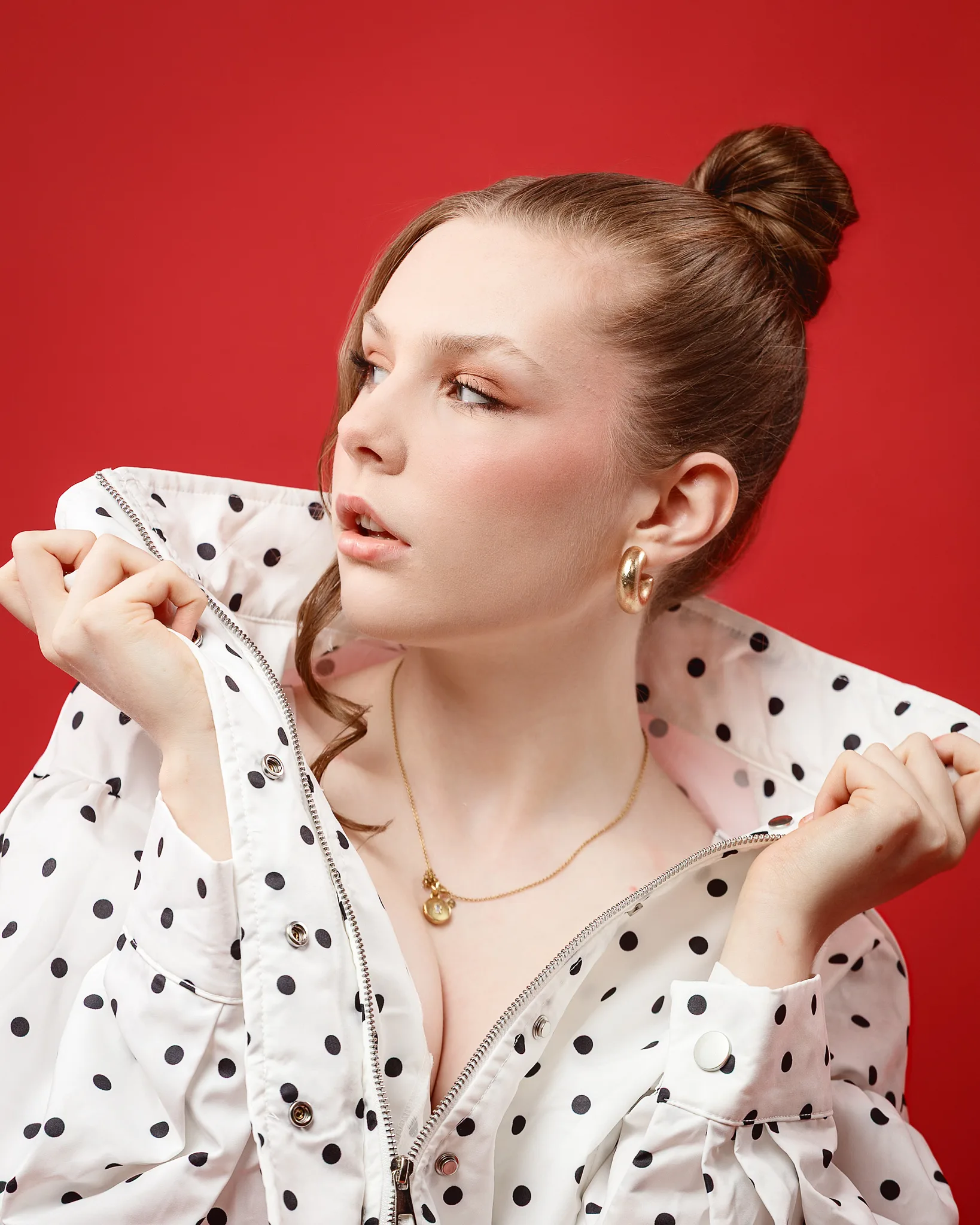
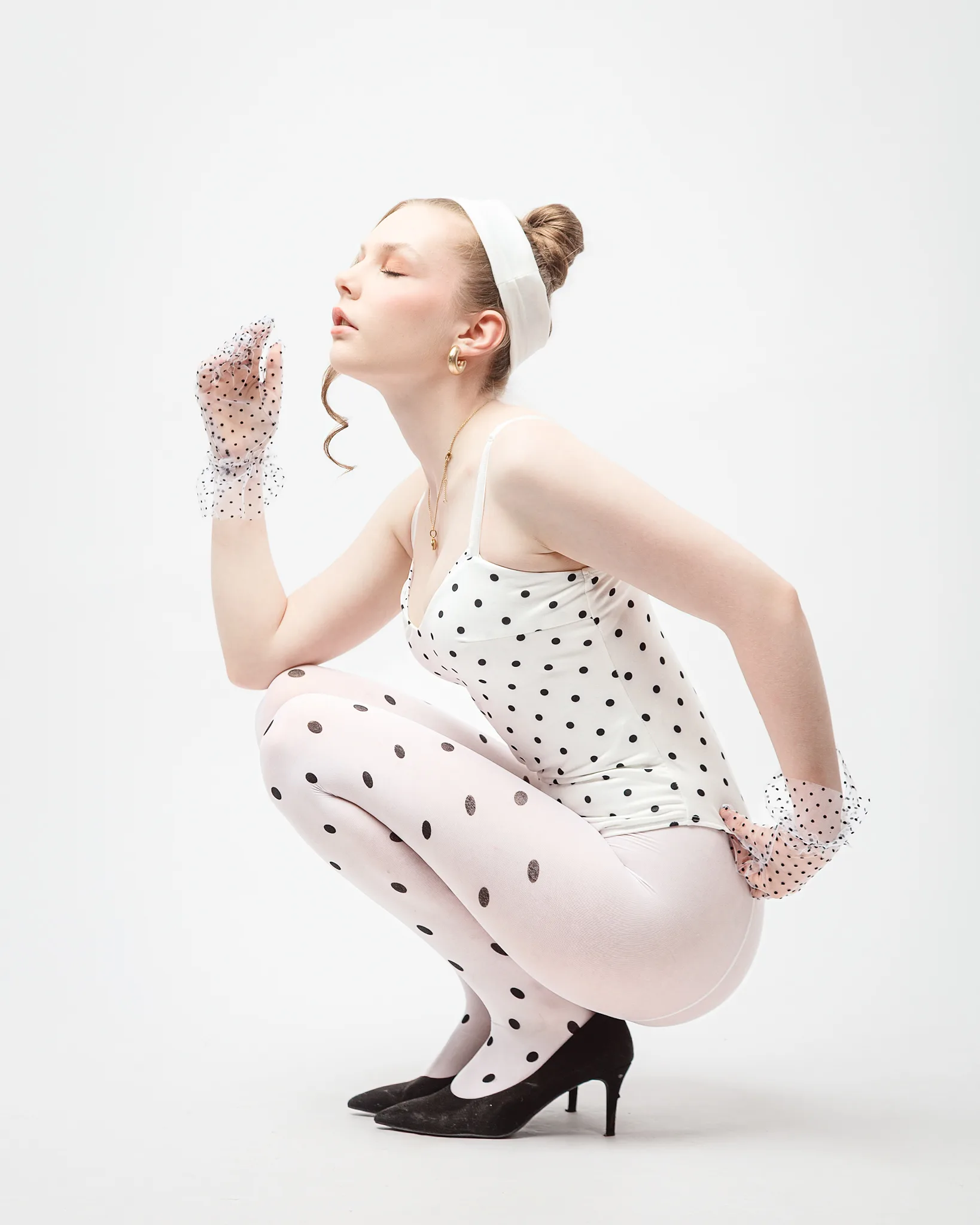
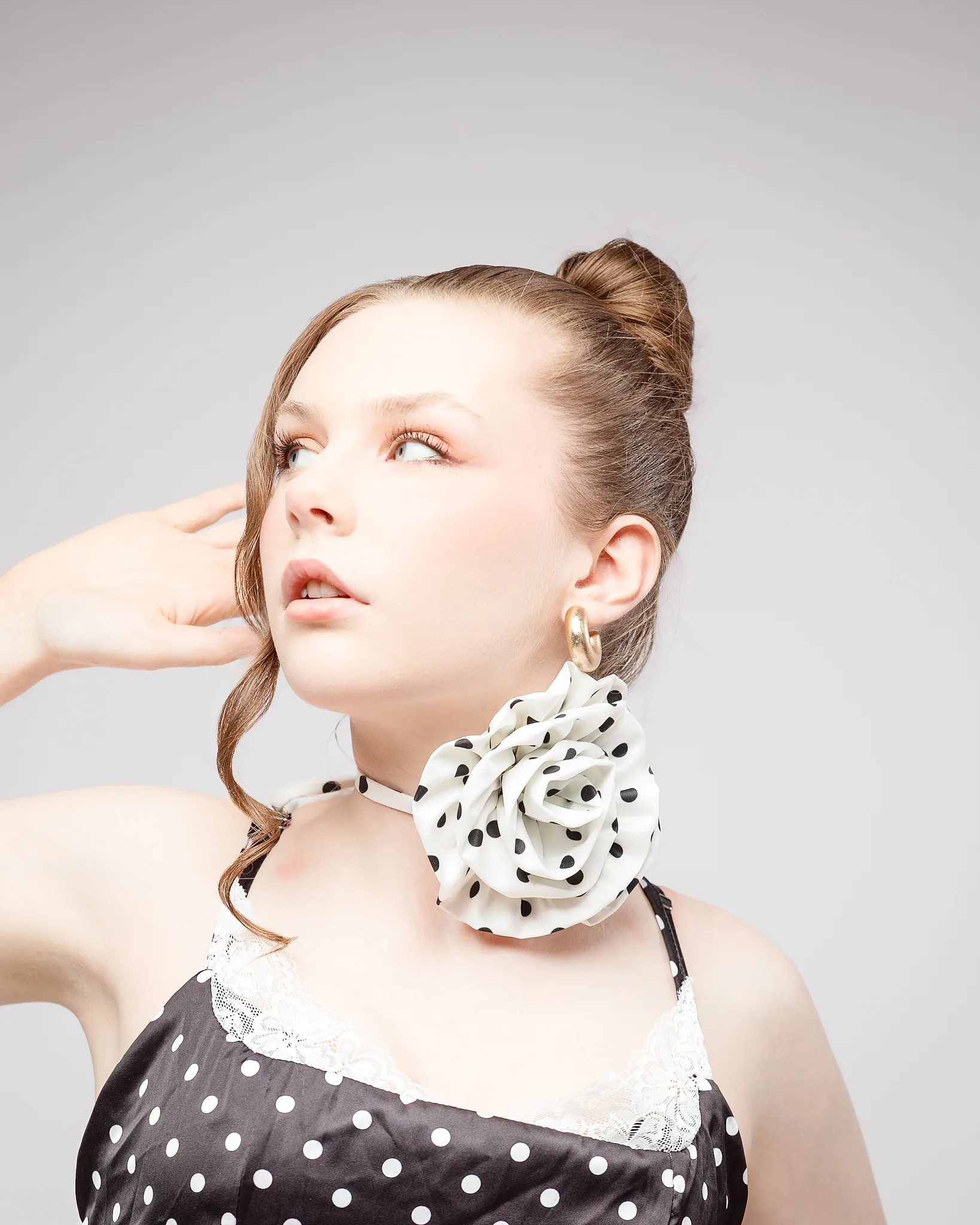
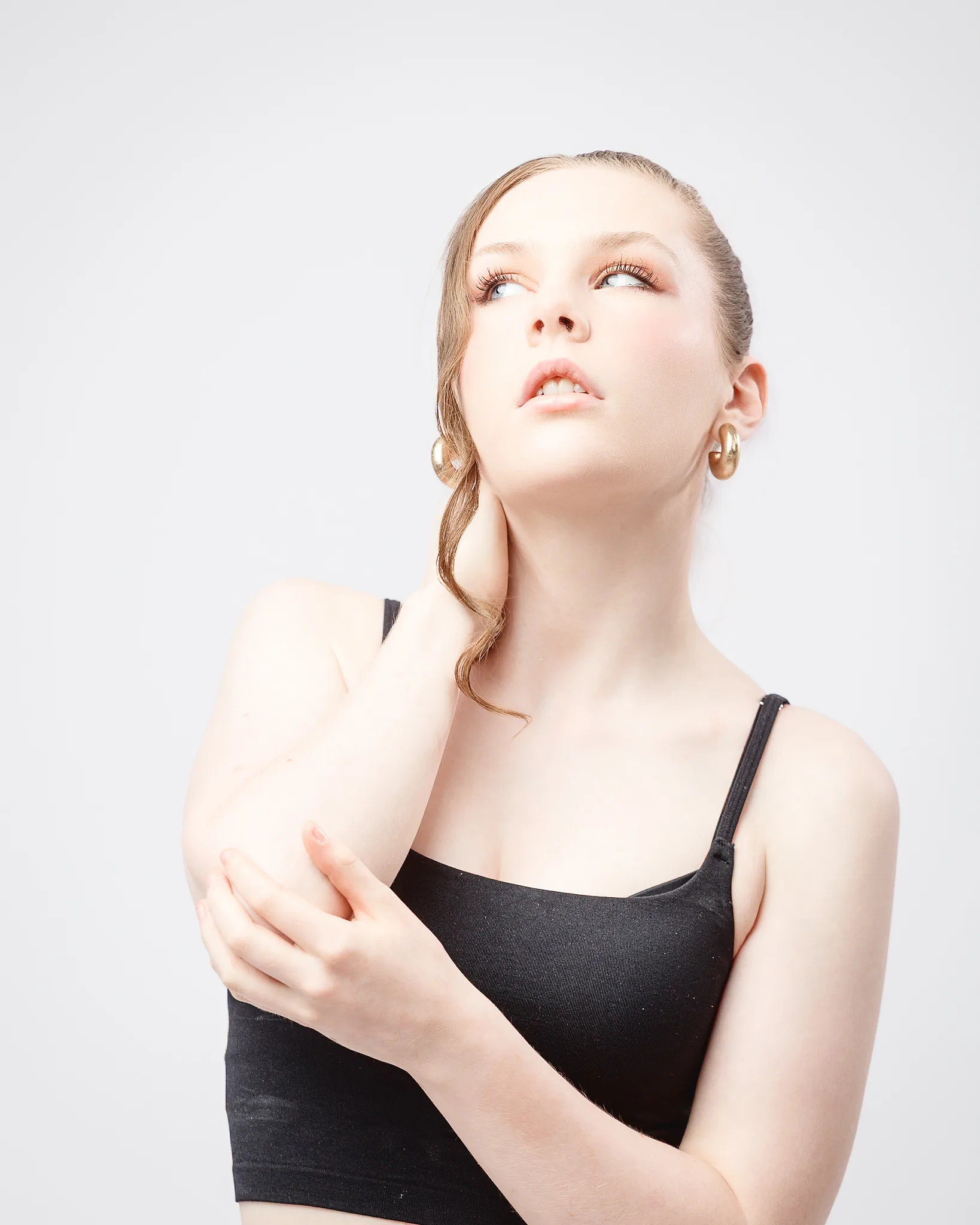
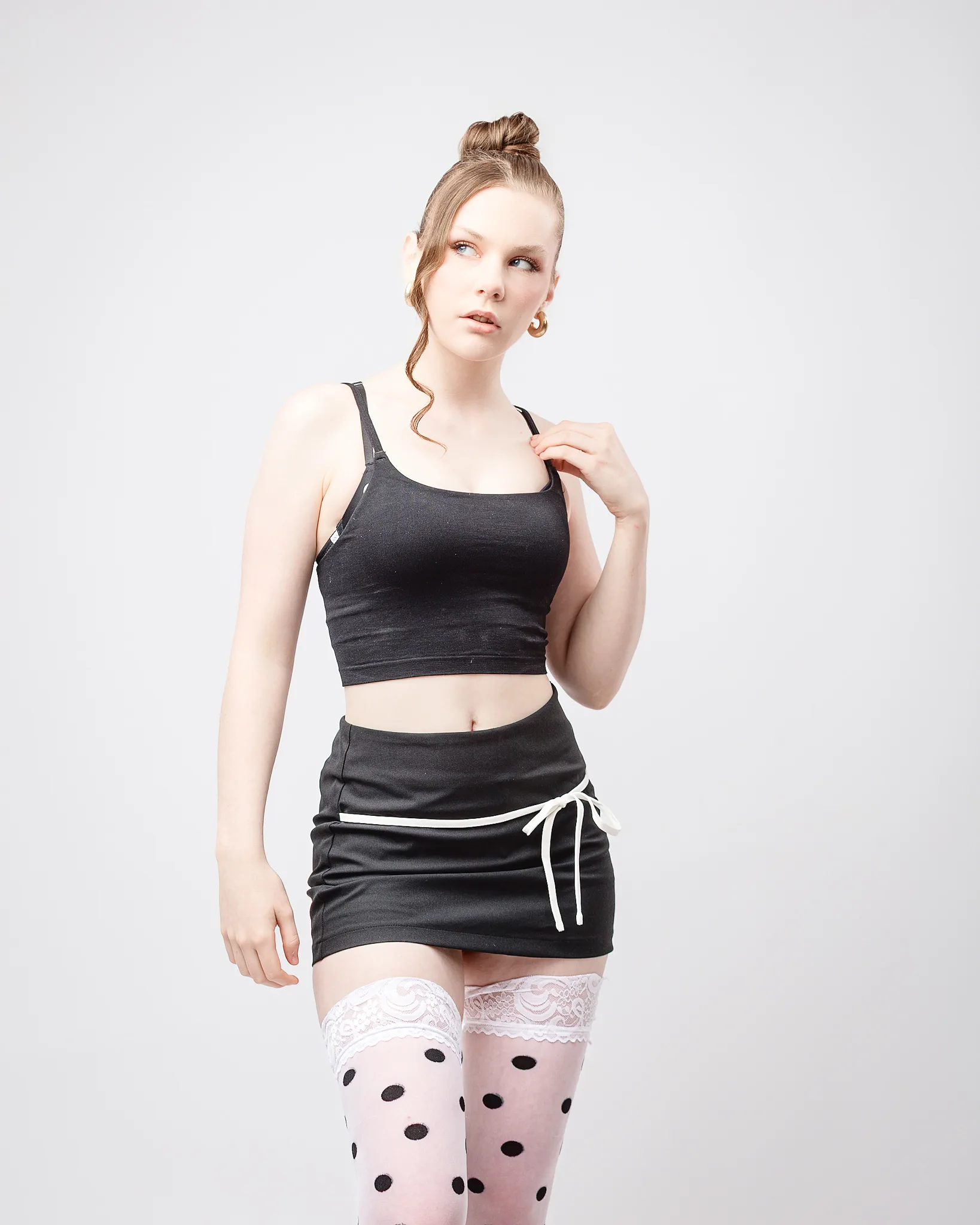
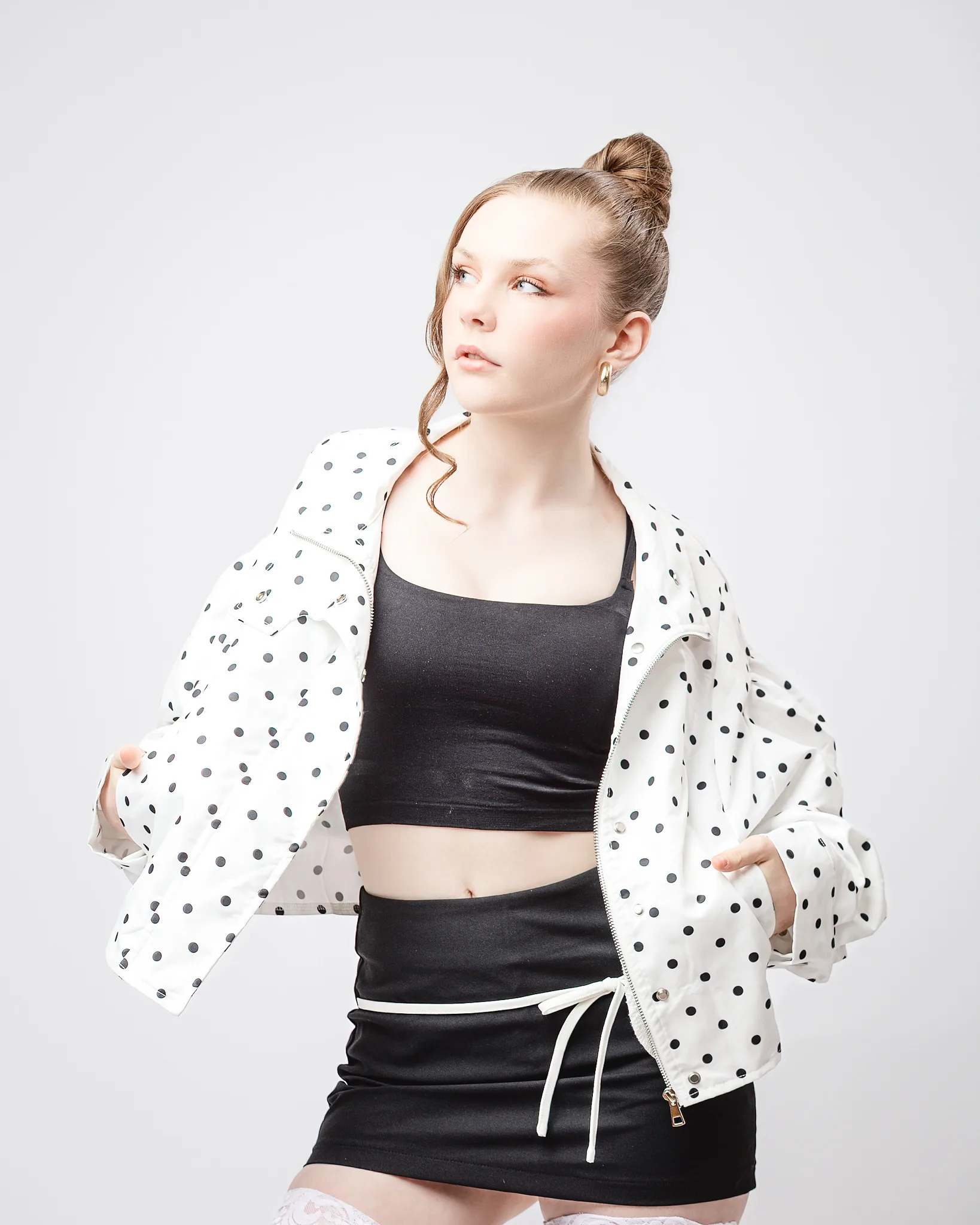
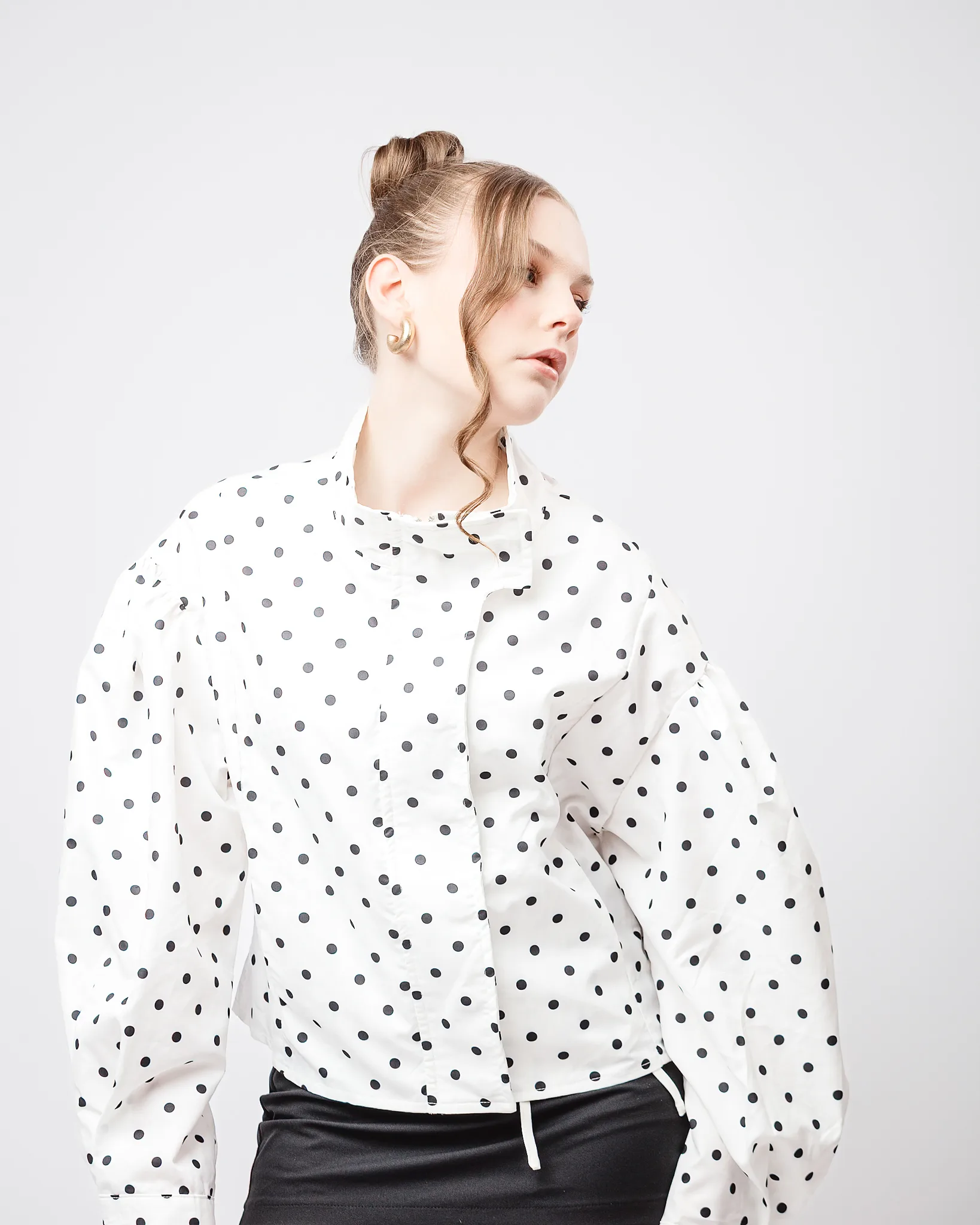
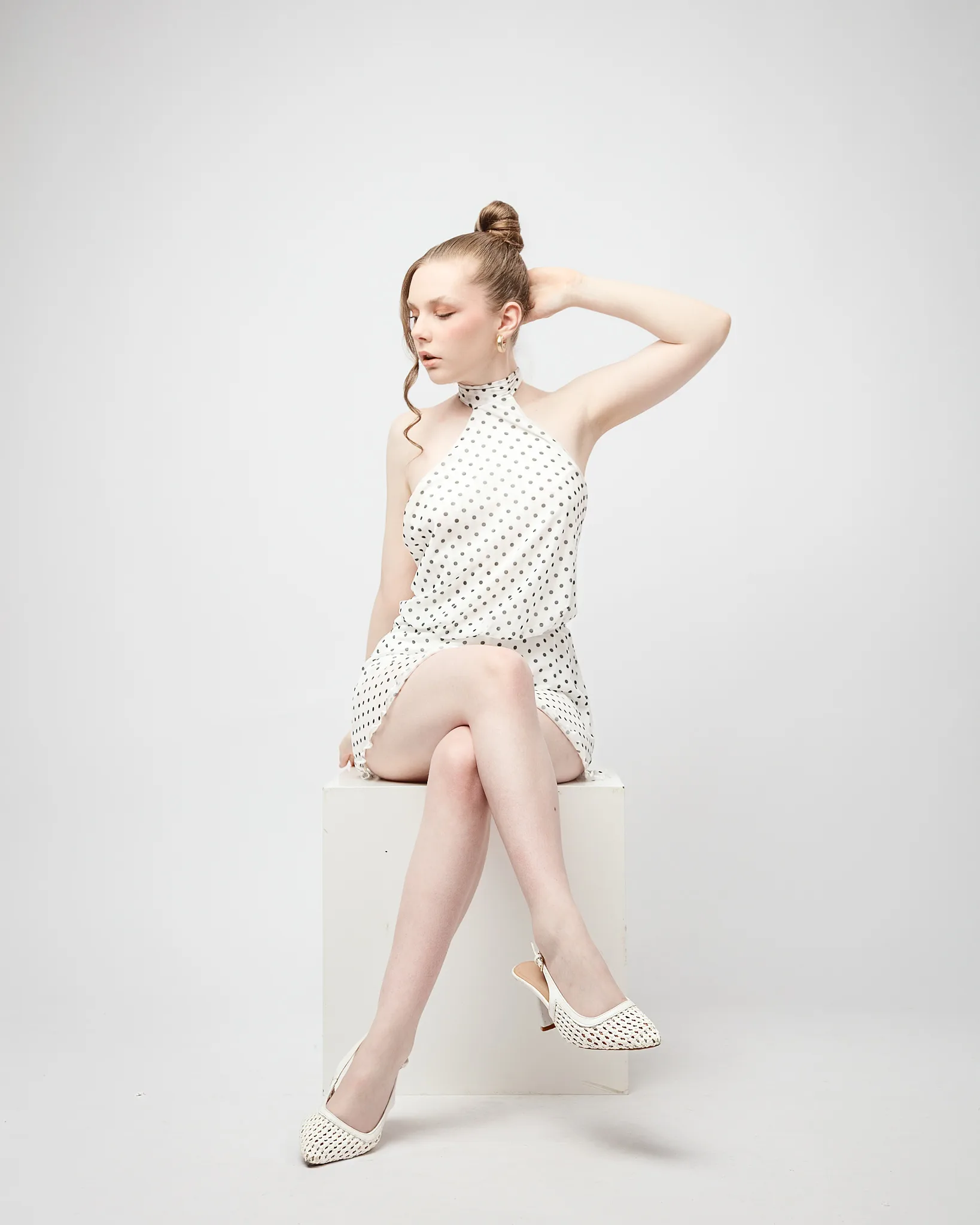
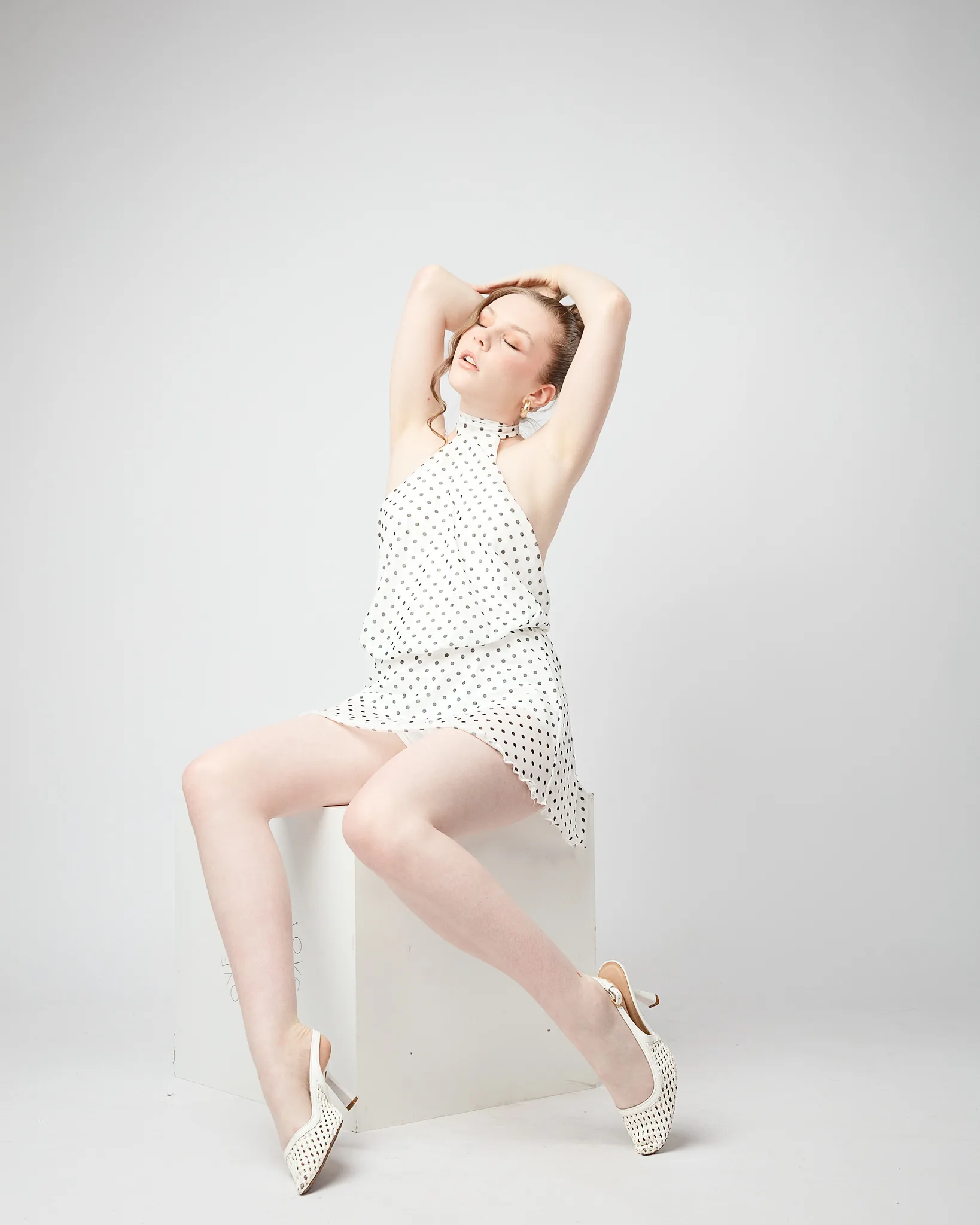
This was the third time Shelby has booked a shoot with me, and by now we have a rhythm to how we work. She came to the studio with a clear theme in mind, and that theme was polka dots. It is a simple idea on paper, but it gave the whole session a thread to follow, and everything we did across the day kept coming back to it. That is exactly how I like a model portfolio shoot to start. The model arrives knowing what they want, and my job is to help them get there.
The Model Brings the Idea
On my model portfolio shoots, the concept comes from the model. Shelby chose the theme, she chose the outfits, and she decided how she wanted to present herself. I give my input, of course, and I will always share my thoughts on what is working and what is not, but the direction belongs to the person in front of the camera. When someone comes to me for a portfolio shoot, the styling and the wardrobe are their call, not mine. I feel strongly about that. The model is the client, and the client is the one who should be in control of how they are seen.
That position matters to me for a reason. I have heard some grim stories over the years about photographers who take over a shoot and bend it towards their own ends. I want none of that in my studio. When a model works with me, they set the pace and they set the boundaries. I guide, I explain what we are trying to achieve, and I am confident in talking through the plan, but it is always built on respect and on the model feeling comfortable, safe, and listened to.
None of that means I say yes to everything. If a model brings me a concept that I think is weak or not right for what they are trying to build, I will say so, and we will either adjust the plan or agree not to work together. My model portfolio work is safe for work. I am open to a bit of implied styling where it genuinely serves the images, but it has to have a purpose and a reason behind it. It cannot just be there for its own sake. That is why every shoot starts with a proper conversation, so we both know what we are doing and why.
Planning It Through a Pinterest Board
One of the things that made this shoot work so well was Shelby’s Pinterest board. I always appreciate it when a model puts one together, because it gives me a graphical way of seeing what they are after before we start. Shelby’s board was clear. It pointed towards a clean, editorial, fashion-led look, and that told me straight away where we needed to take the lighting and the mood. She backed it up by bringing a strong set of outfits that all worked within the polka dot theme, so we had plenty to move through.
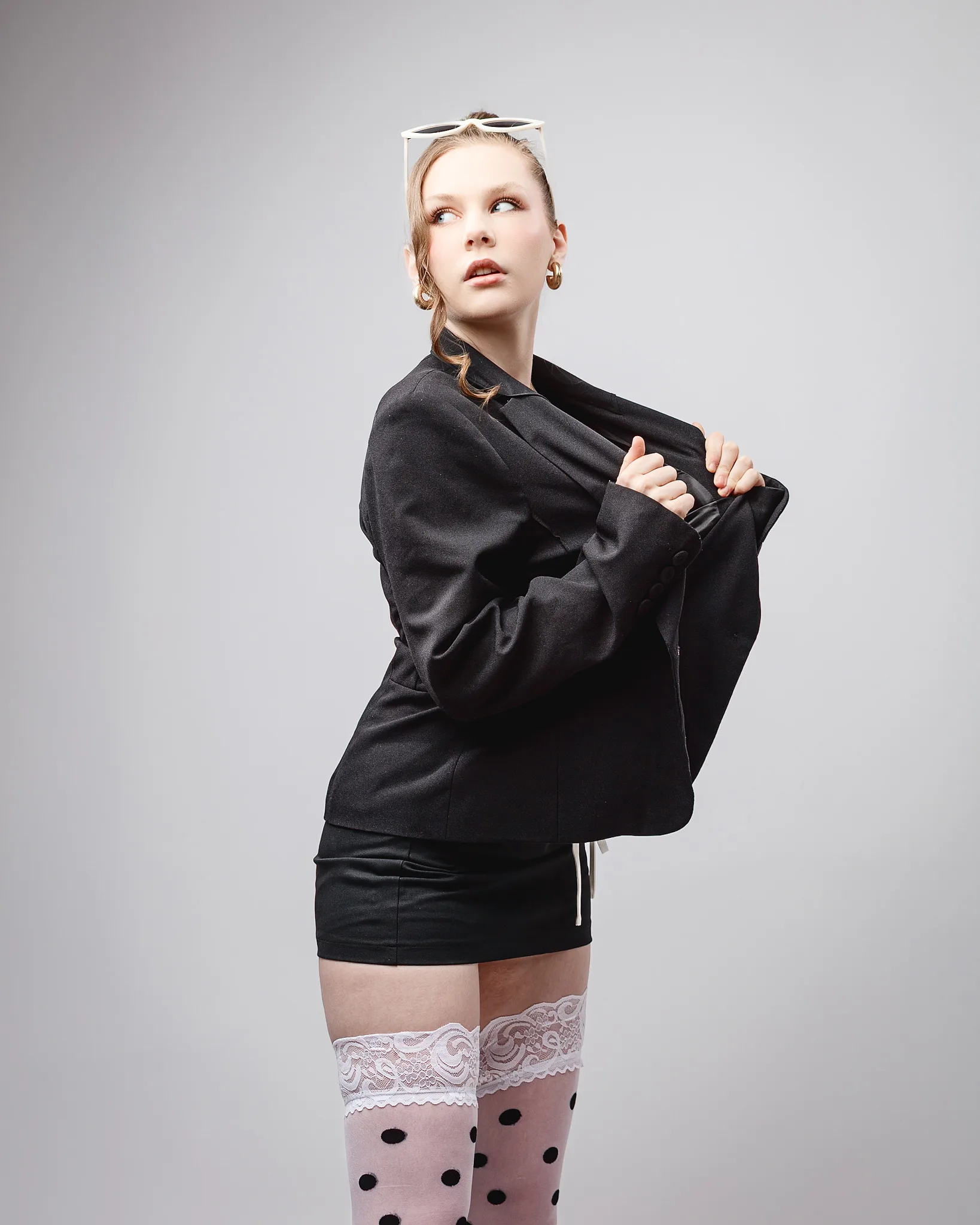
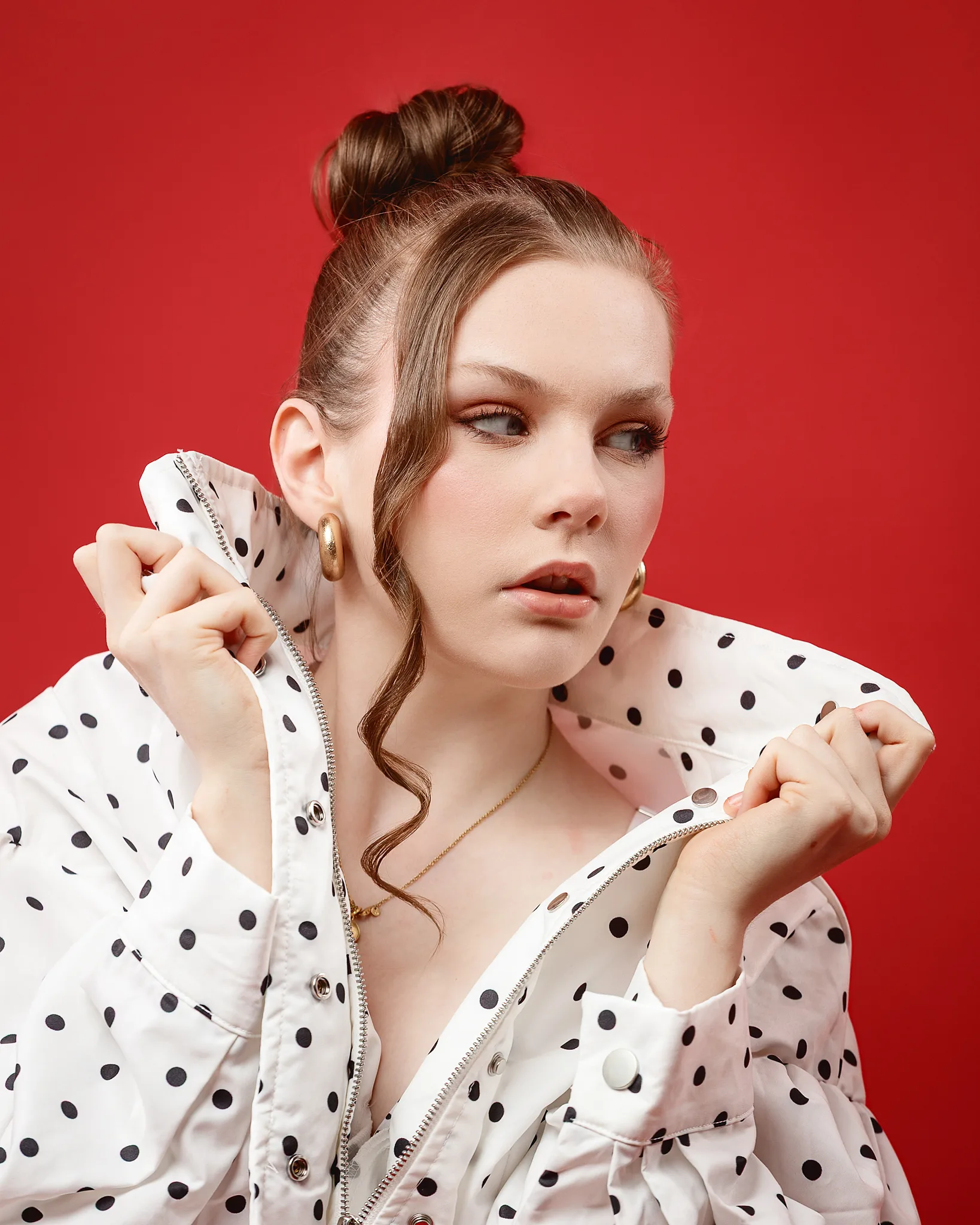
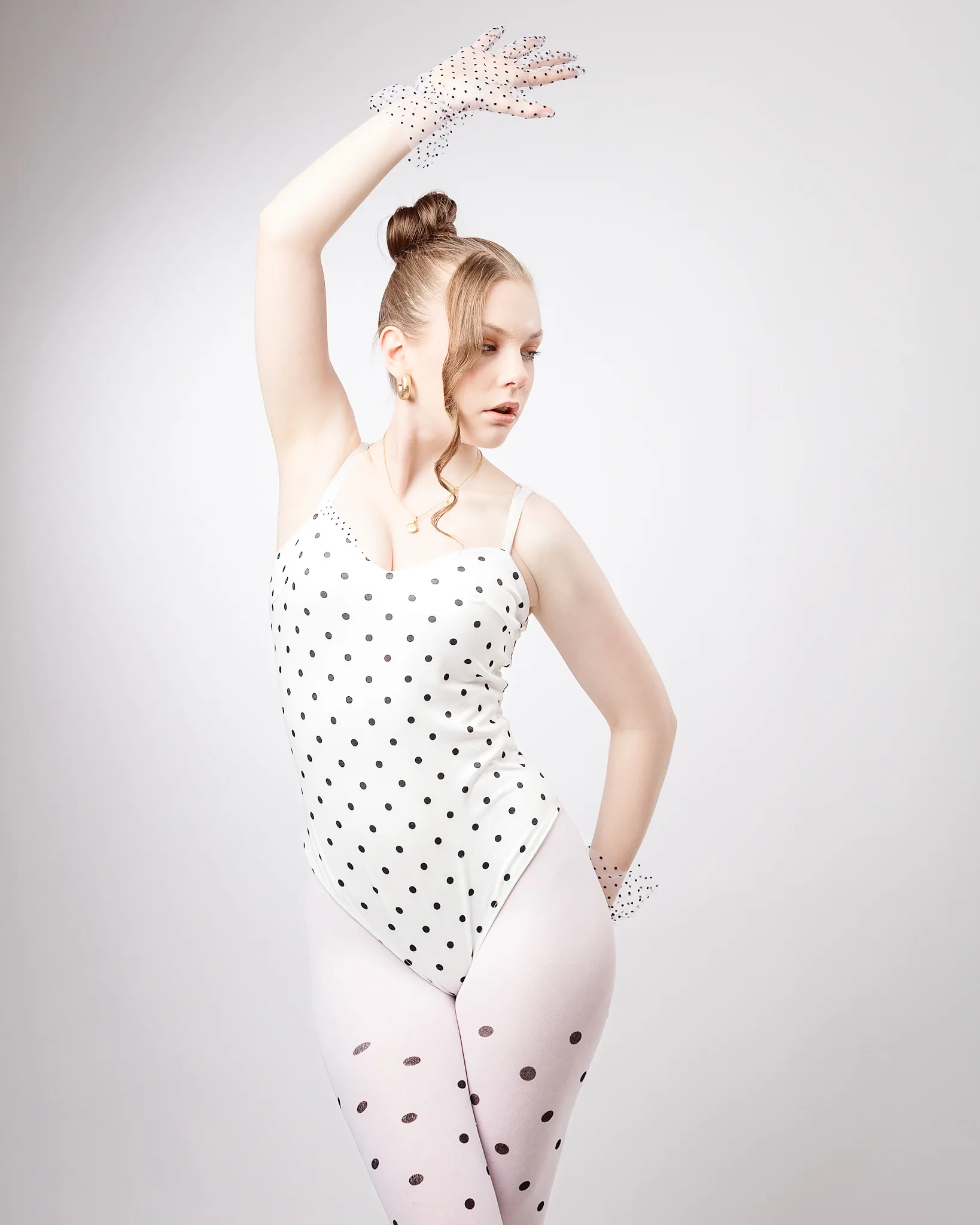
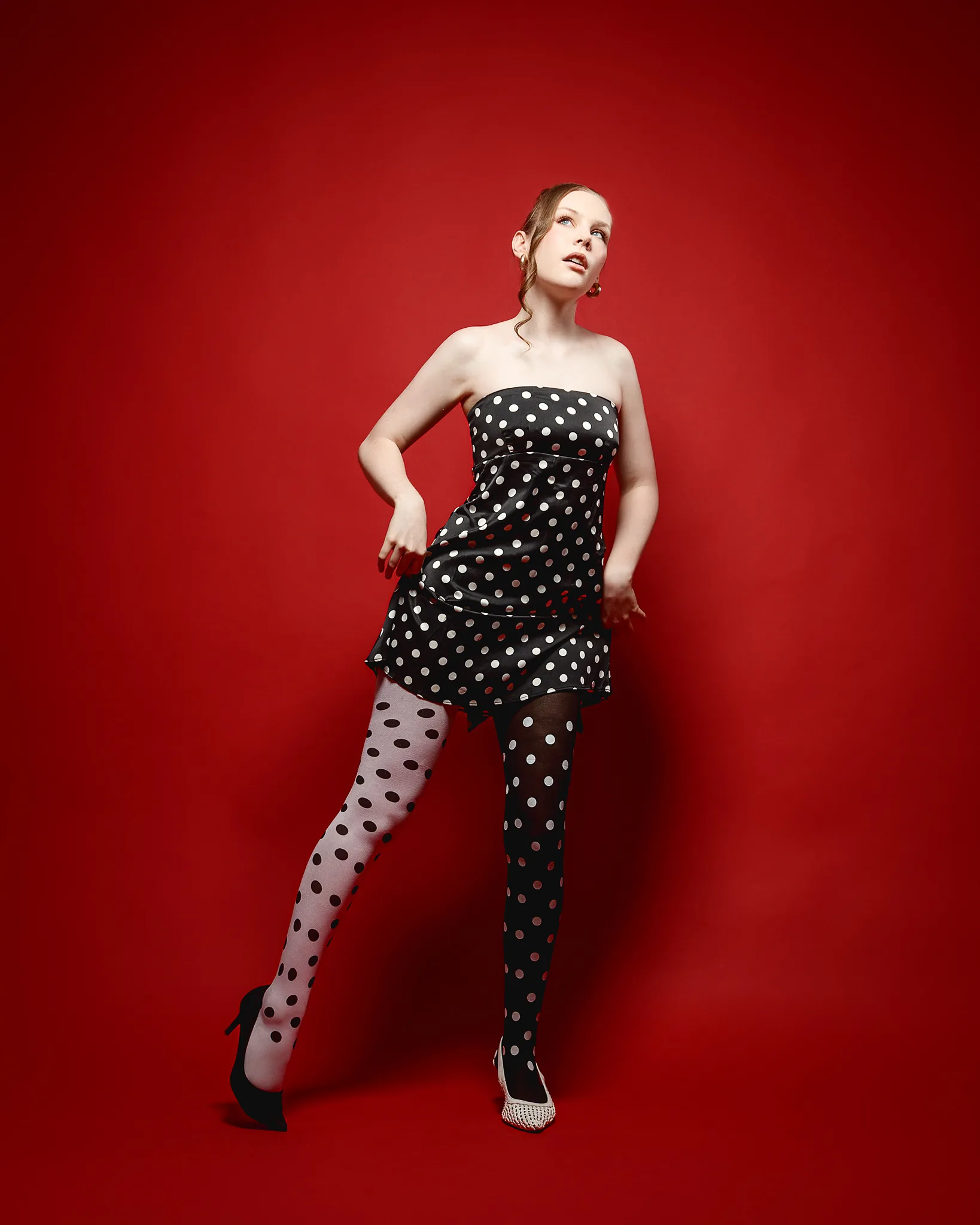
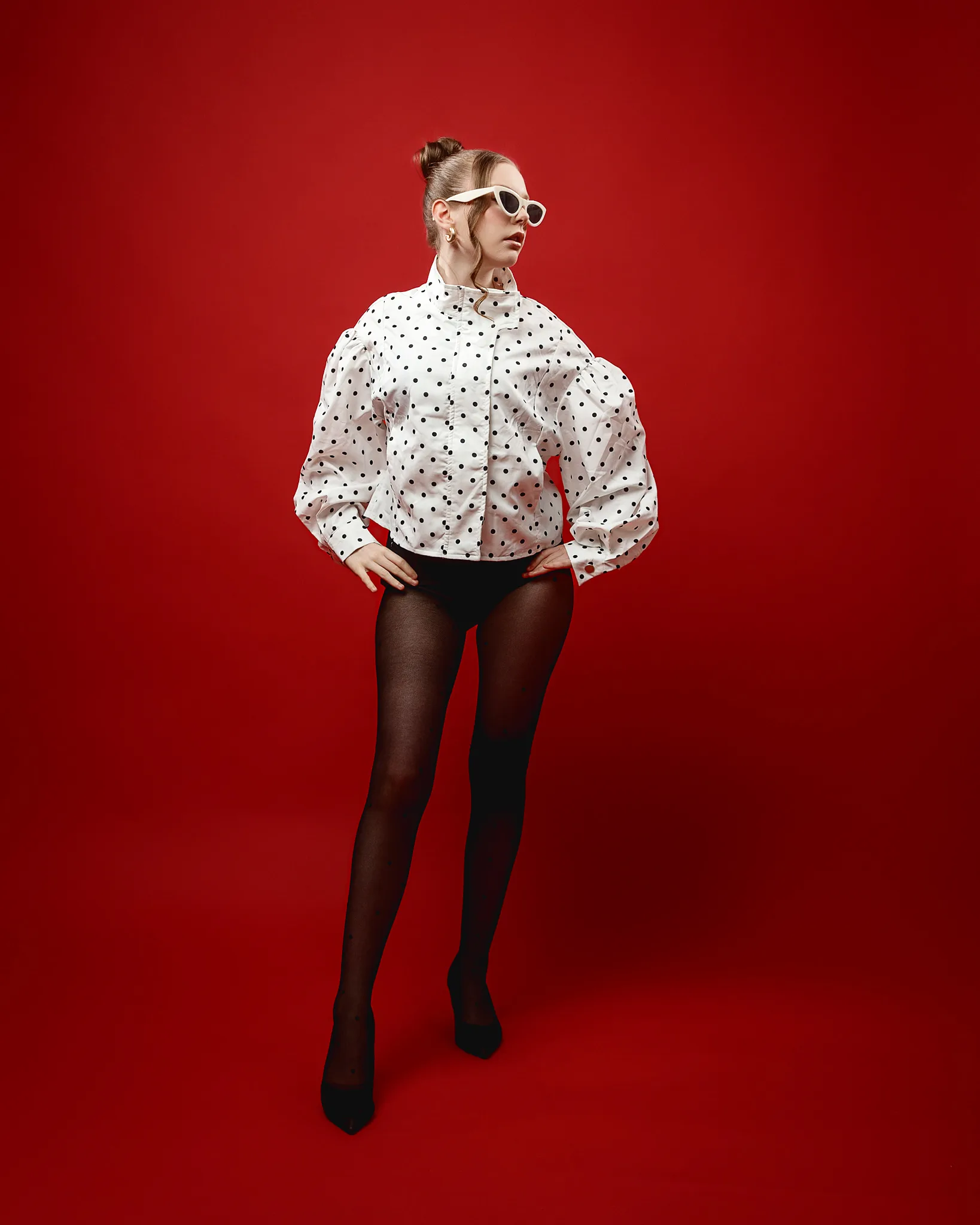
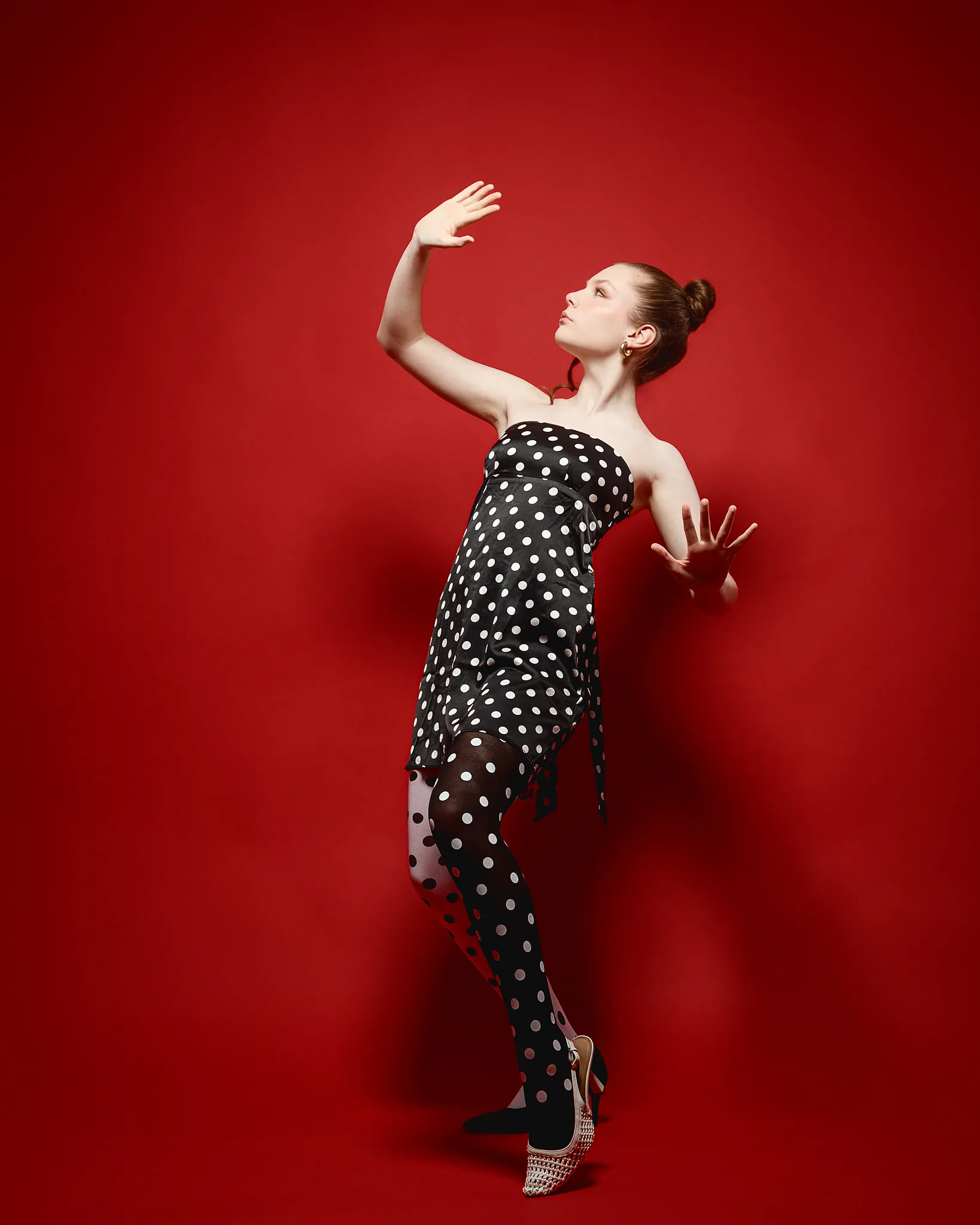
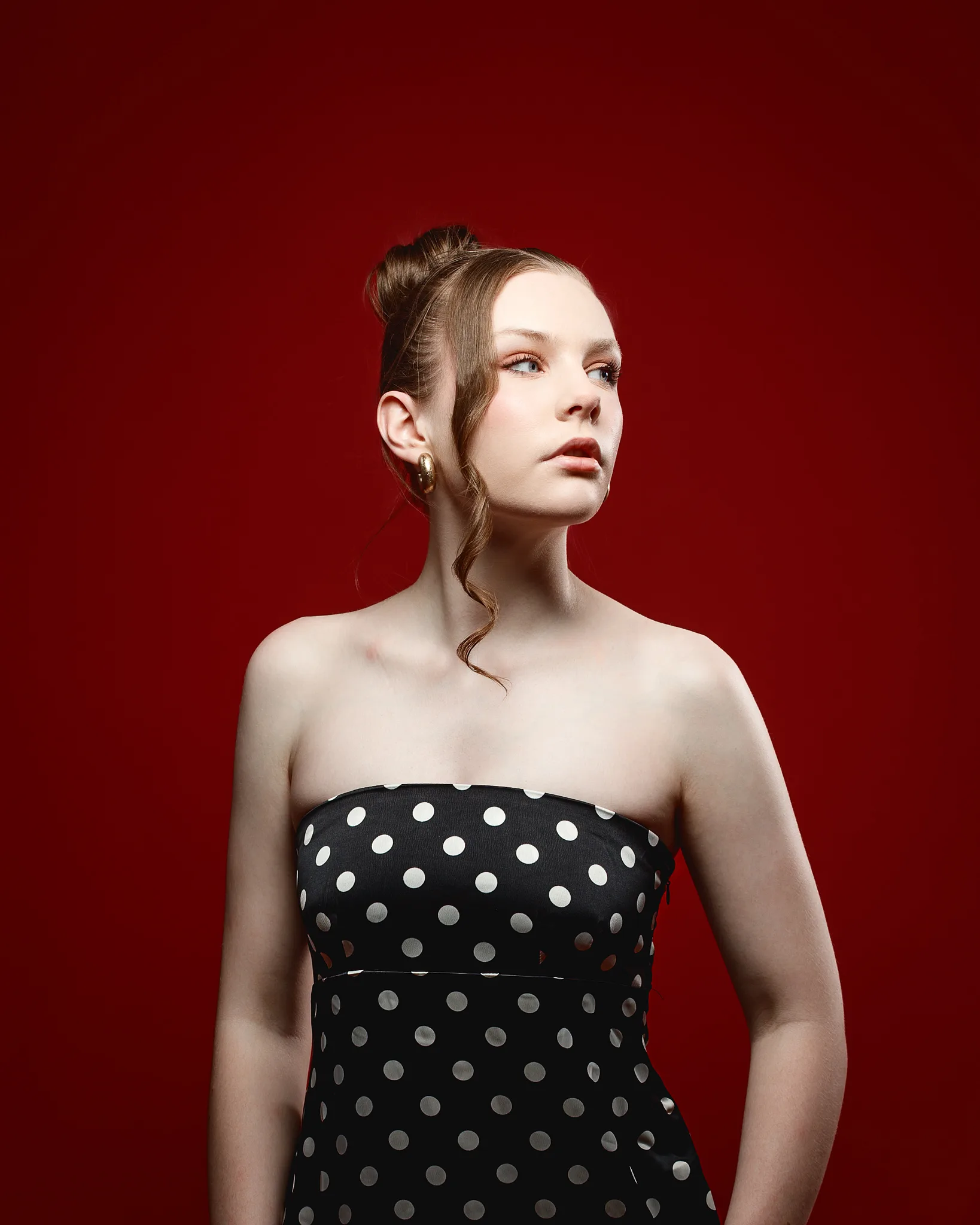
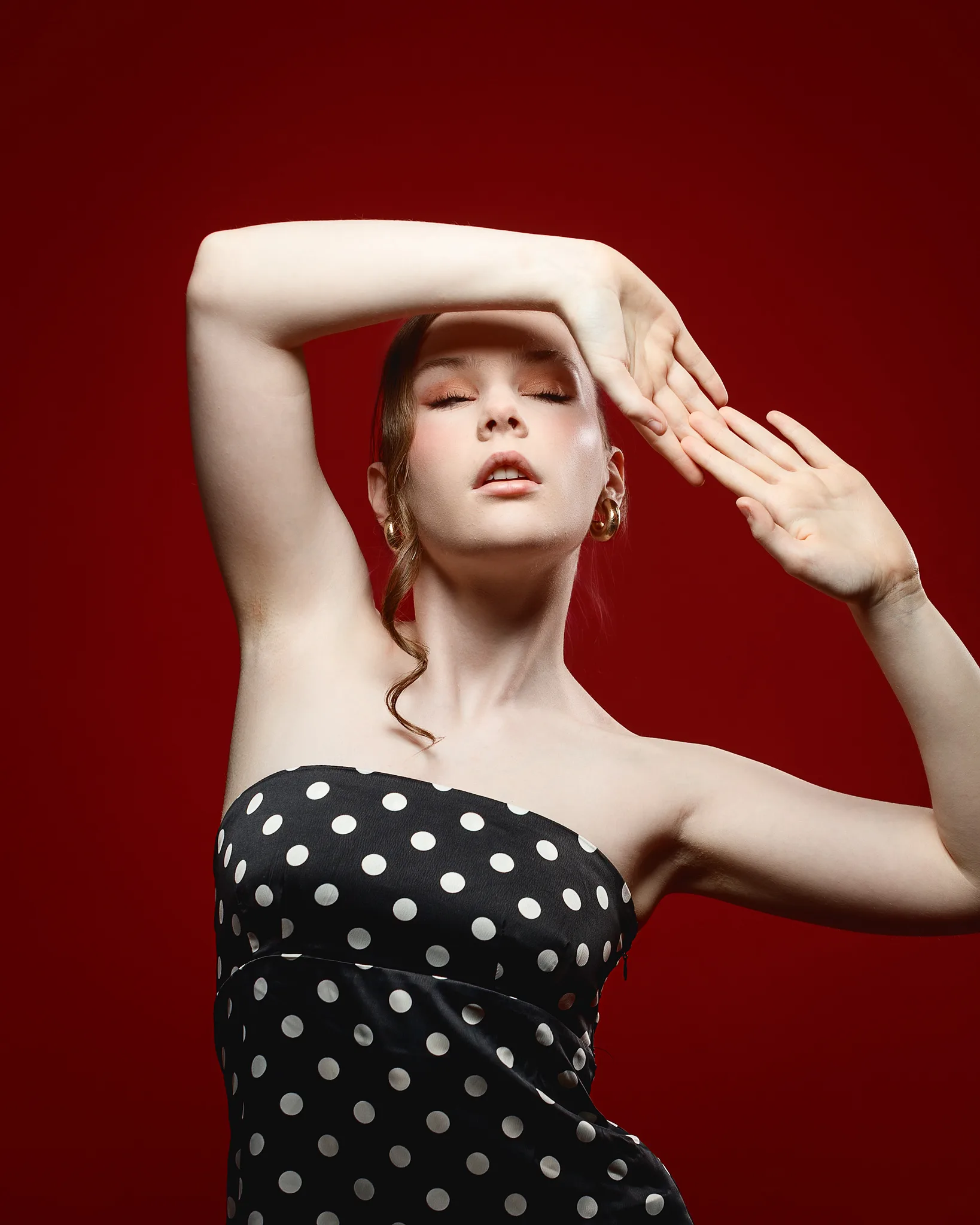
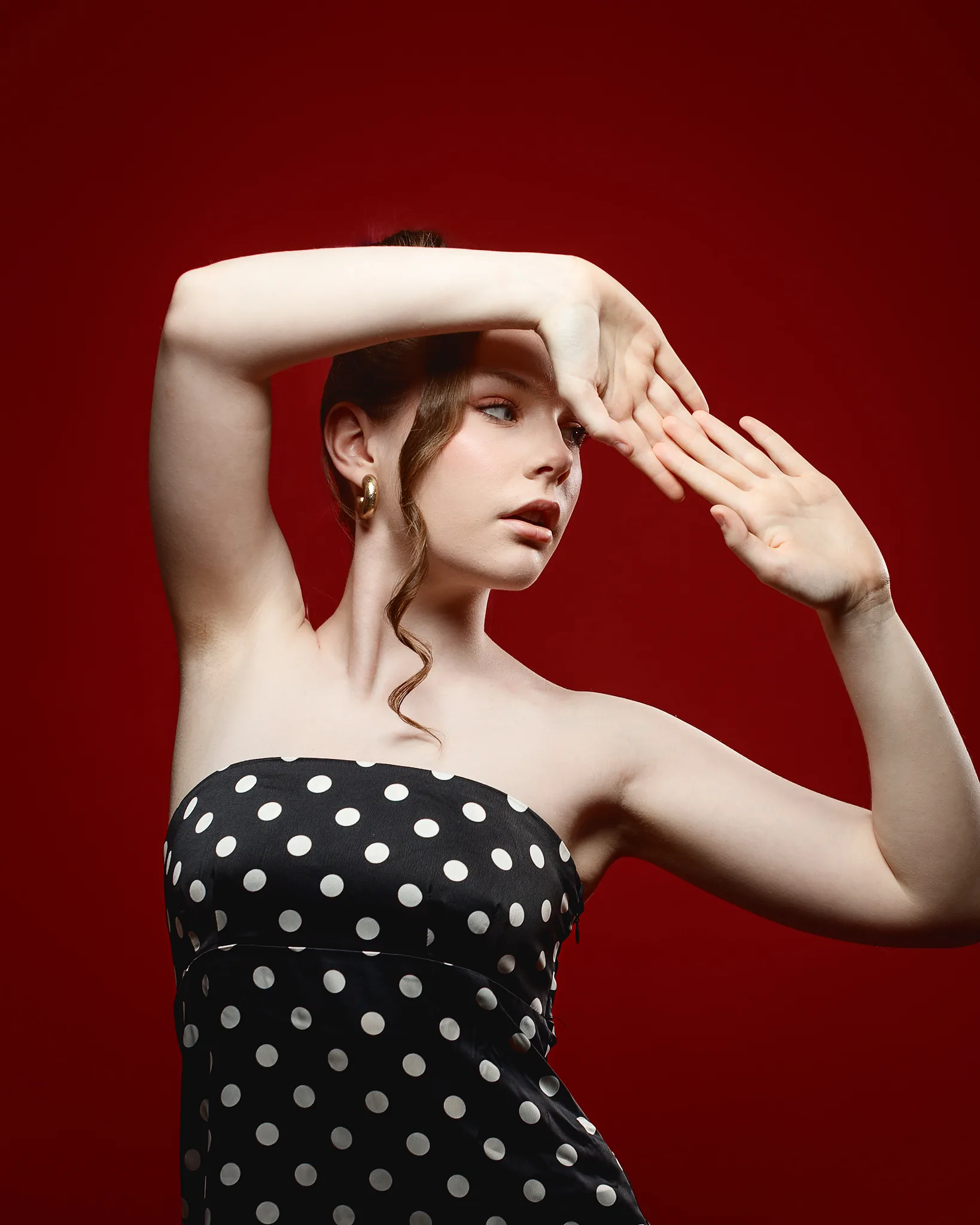
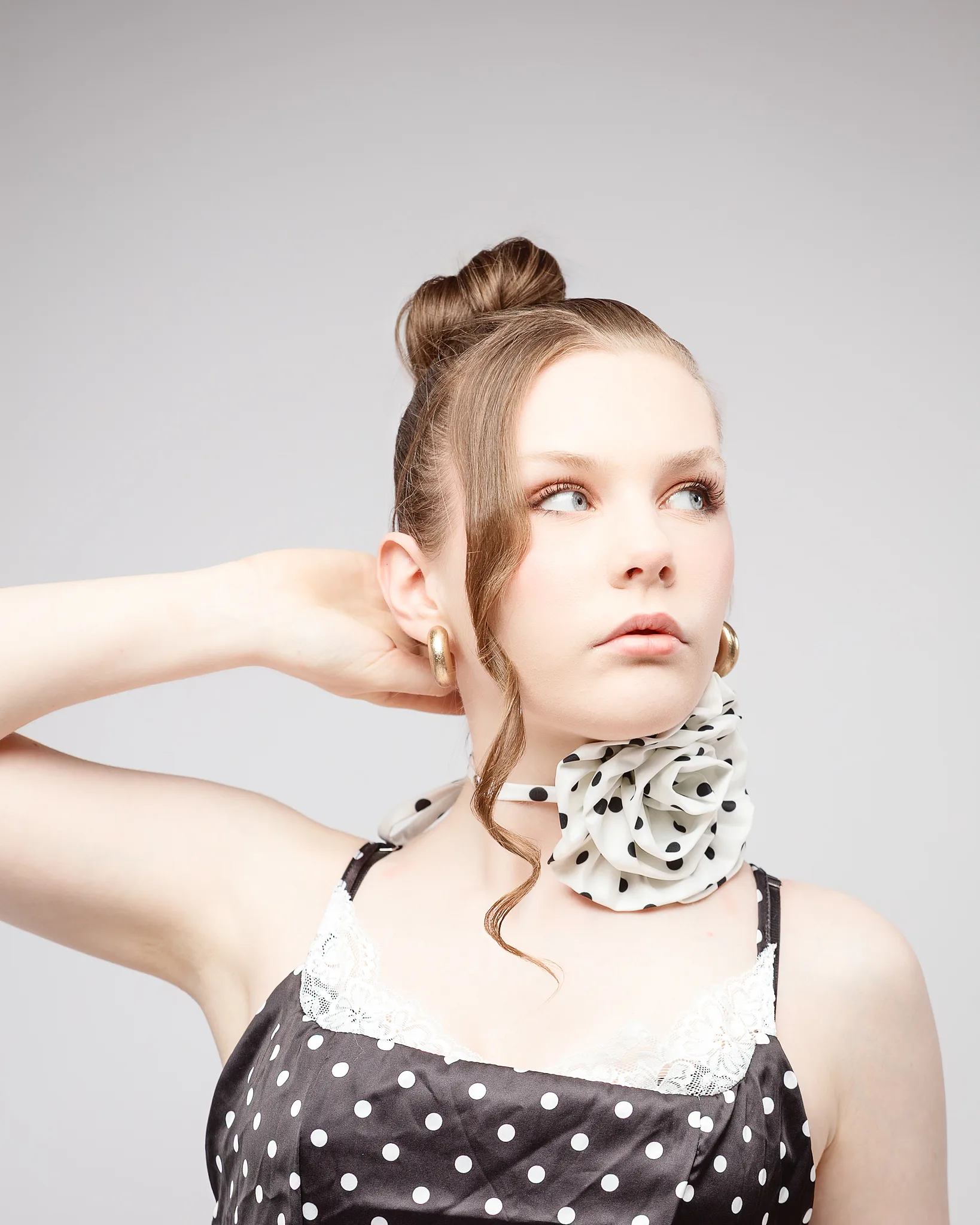
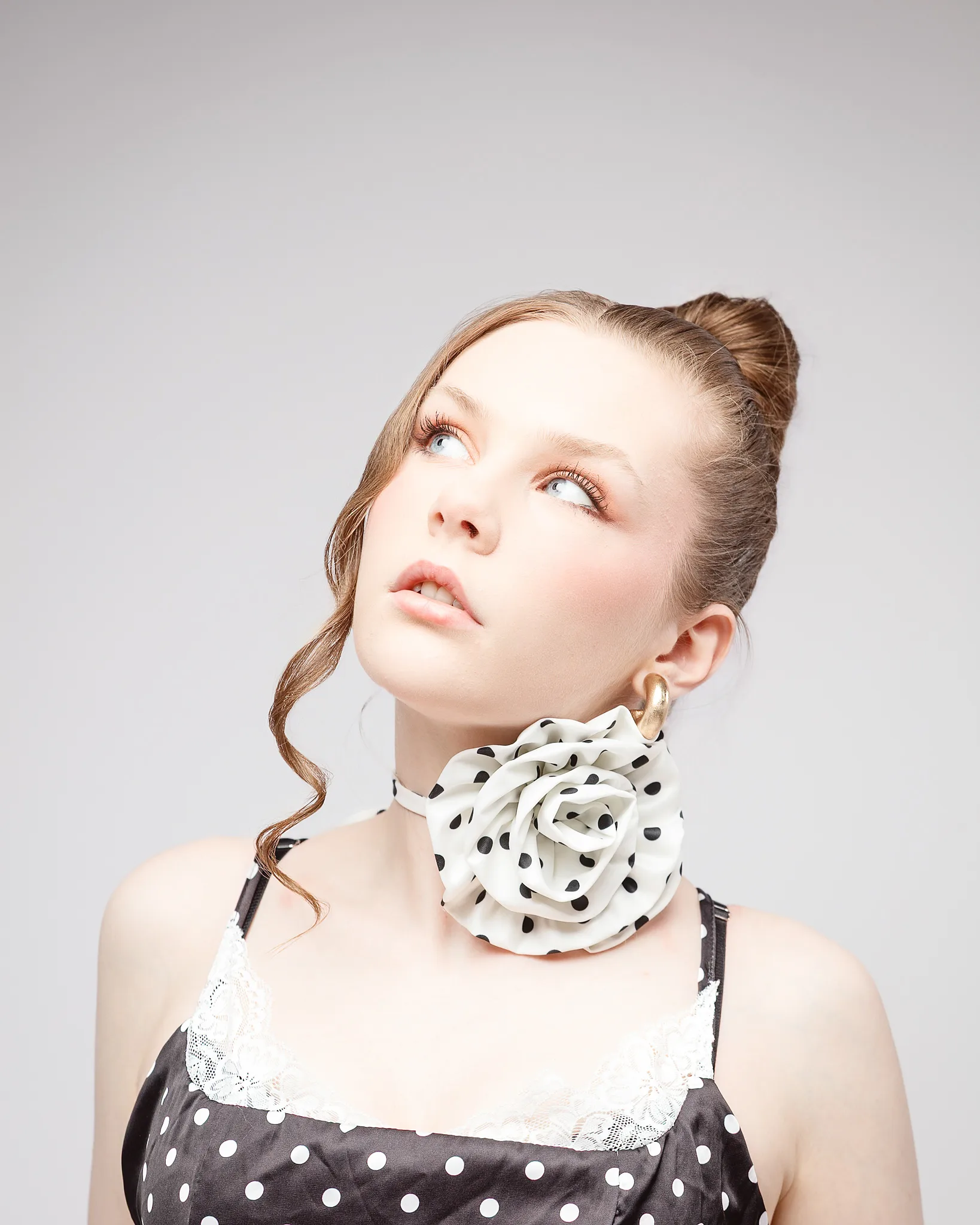
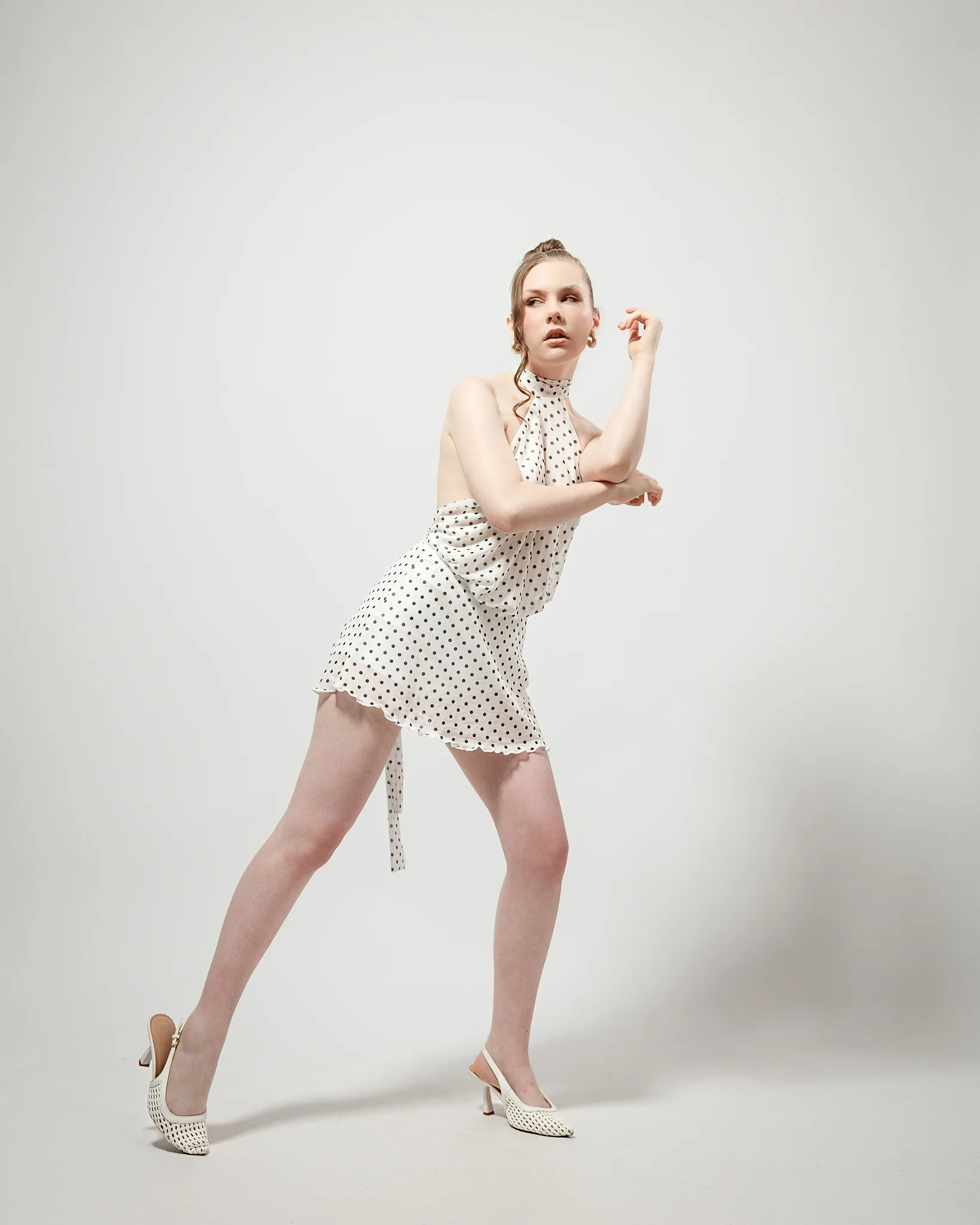
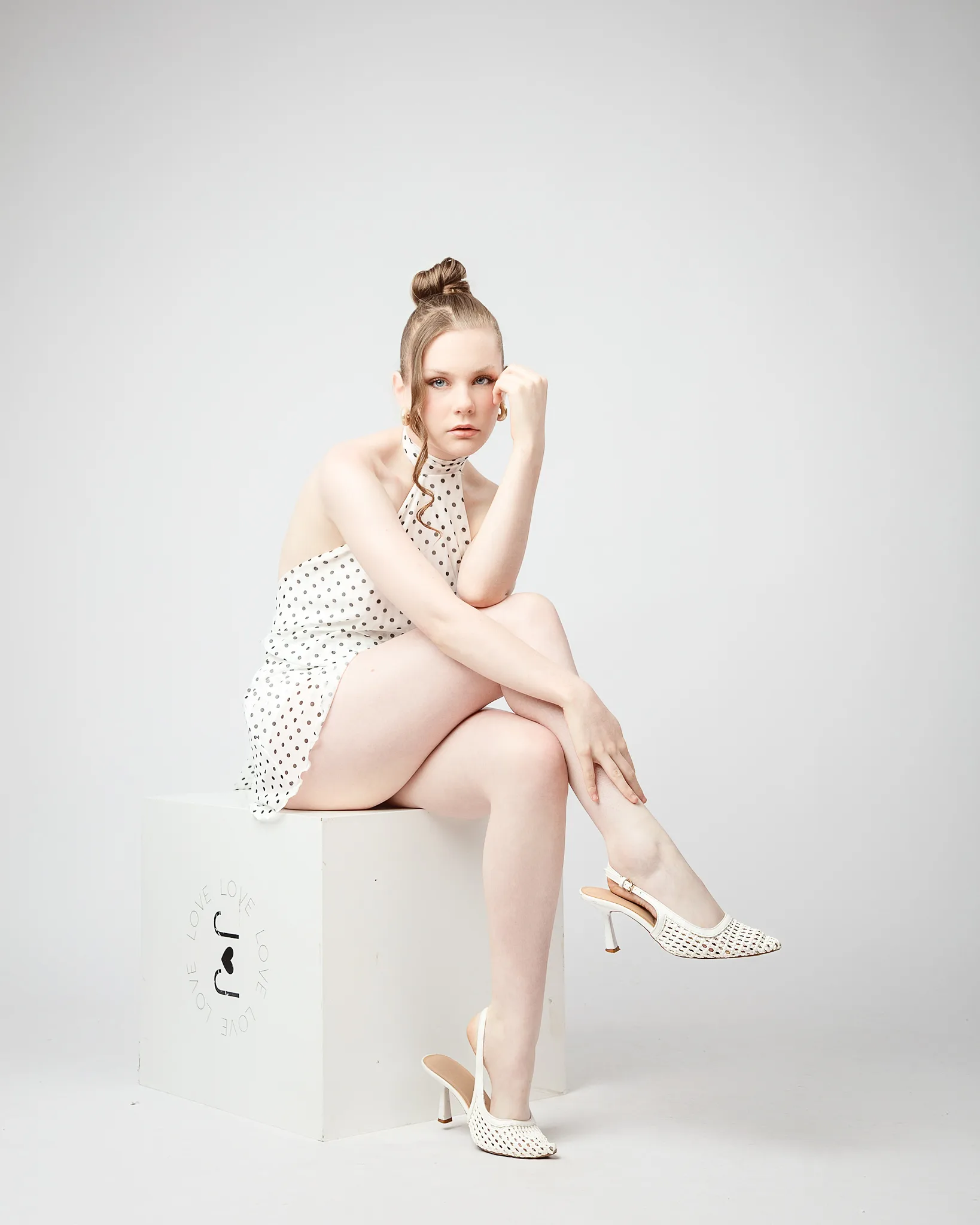
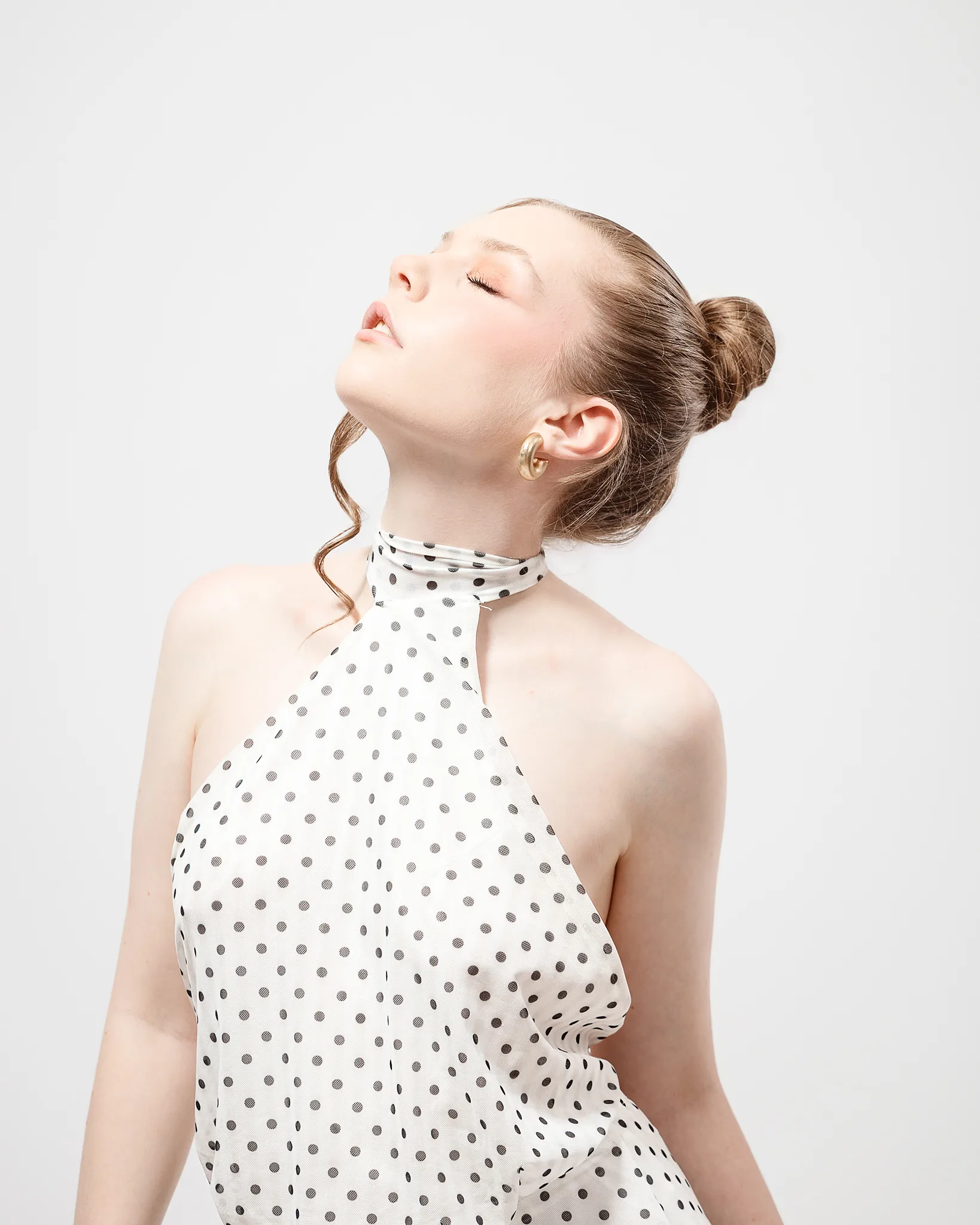
The theme ran through everything, not just the clothes. It was in the spotted tights, the sheer dotted gloves, a polka dot corsage worn at the neck, and the accessories that tied each look together. That gave us a lot of variety to play with while keeping one clear idea holding the whole set together. Across the day we worked through several distinct looks and moved between three different backdrops, a soft grey, a clean high-key white, and a bold red that gave the later frames far more punch and contrast. There was a lot going on, but the polka dot theme stayed constant. We tried different scenarios and different looks. Some worked and some did not, and that is exactly what a portfolio shoot is for. Experimenting is the point. A model should walk in expecting to test ideas, not expecting every frame to be a keeper.
Quality Over Quantity
There is something I try to explain to every model who comes to the studio, and it is worth saying here too. The goal of a portfolio shoot is not a thousand pictures. We take plenty across the day, but we are only ever looking for the best of the best. A strong portfolio is a selection of ten or twenty images that actually work, not a folder full of near-misses. Bulk is not the same as quality, and it never has been.
This is where I find newer models sometimes need a bit of guidance, particularly if they have done TFP shoots before. A time-for-print arrangement runs on a shoot-and-burn basis, where the model expects a large batch of images at the end because that is the deal. I should be honest about where I stand on that now. I do very few TFP shoots these days, and it is not something I offer as a standard option. I will only consider it when there is a strong theme or a genuinely good idea behind it, something that earns its place. The bulk of my work now is paid, with models booking my time and coming to the studio for a proper session. For most models, that is the better route. TFP is not really the way forward. Paying for a professional photographer means the session is built around what you need, and you come away with images you can actually depend on.
A portfolio shoot is a different thing to a shoot-and-burn. The value is in being decisive and choosing the frames that will earn their place. The way I work, the model chooses the images they want. I will offer my view, and if I think something is not strong I will tell them, but the final choice is theirs. That is what makes the shoot theirs, and it is what makes the result something they can actually use.
To make those choices easier, I shoot to a large monitor at the back of the studio. As the images come through, the model can see exactly what we are getting. If something is not working, or the shoot is drifting in a direction that does not feel right, we can stop, adjust, and change course there and then. We can turn on a sixpence and go somewhere else if we need to. It keeps everyone on the same page, and it means nobody is guessing at the end of the day.
Working with a Newer Model
Shelby is still relatively new to modelling, and there is plenty for her to learn, but she is a real pleasure to work with. She comes to the studio prepared, she communicates well, and she is comfortable in the room, which matters more than almost anything else on a shoot. Most of our planning happens over WhatsApp, which suits me. Messages can come through at any point and I am happy to reply in the evening if that is when the thinking is happening. By the time she arrives, we both know the plan.
What made this session enjoyable was that Shelby knew what she wanted and came in with real intent. My role as the photographer is to capture that, not to override it. She had the ideas, she had the wardrobe, and she had thought it through beforehand. That preparation is what lets the shoot time go on making images rather than working out what they should be. We have already talked about doing it again, with a fresh Pinterest board and some new ideas, and I am looking forward to it.
A Note on Model Safety
I include this section whenever I write about a shoot involving a model, because I think it matters, particularly for anyone newer to the industry.
During any shoot at my studio, I do not make physical contact with a model. If a posing adjustment is needed, I describe it or I demonstrate it from a distance. That is a straightforward professional boundary, and I hold to it every time, no exceptions.
I also encourage every model I work with to bring a chaperone. A friend, a family member, a partner, anyone they trust. The offer is made before the shoot, not mentioned in passing on the day. Even if a model decides to come alone, the choice is always theirs and the door is always open.
If you are a model thinking about working with any photographer, and that photographer is reluctant to allow a chaperone, or tries to talk you out of bringing one, treat it as a serious warning sign. There is no legitimate professional reason to refuse. A good photographer will explain everything clearly and will have no problem at all with you bringing someone you trust. Your safety is not something you should ever have to negotiate.
Model Portfolio Photography in Suffolk
My studio is based at Base Business Park in Rendlesham, on the former RAF Bentwaters site in Suffolk. It is a purpose-built space set up for portrait and commercial photography, and it gives models room to work through several looks and setups in a single session.
If you are a model, or an aspiring model, based in Suffolk, Ipswich, Woodbridge, or anywhere across East Anglia, and you are looking to build or refresh a portfolio, you can find out how my portfolio sessions work here: https://foyers.photography/rates/model-portfolio-and-aspiring-models/. I put together a short behind-the-scenes video from this shoot as well, so you can get a feel for what a model portfolio session actually looks like.