A wedding planner spends months building something that exists for one day. Then it comes down, the marquee goes back on the lorry, and what is left is whatever anyone managed to photograph. That gap is the reason Events by Amaury commissioned me for their launch event at Wilderness Reserve in Suffolk. The couple had their own wedding photographer. My job was different. I was there to build the brand image library that Amaury Girardeau would use to sell his planning business for the next few years.
This post is a full account of how that commission worked, from the brief through to how the files were organised and handed over. I have written it for planners, venues, florists, caterers and event designers who are weighing up whether this kind of photography is worth commissioning, and what to ask for if they do. If you plan events for a living and you are tired of asking couples for permission to use images you had no control over, this is the alternative.
Why Planners and Venues Need Their Own Photographer
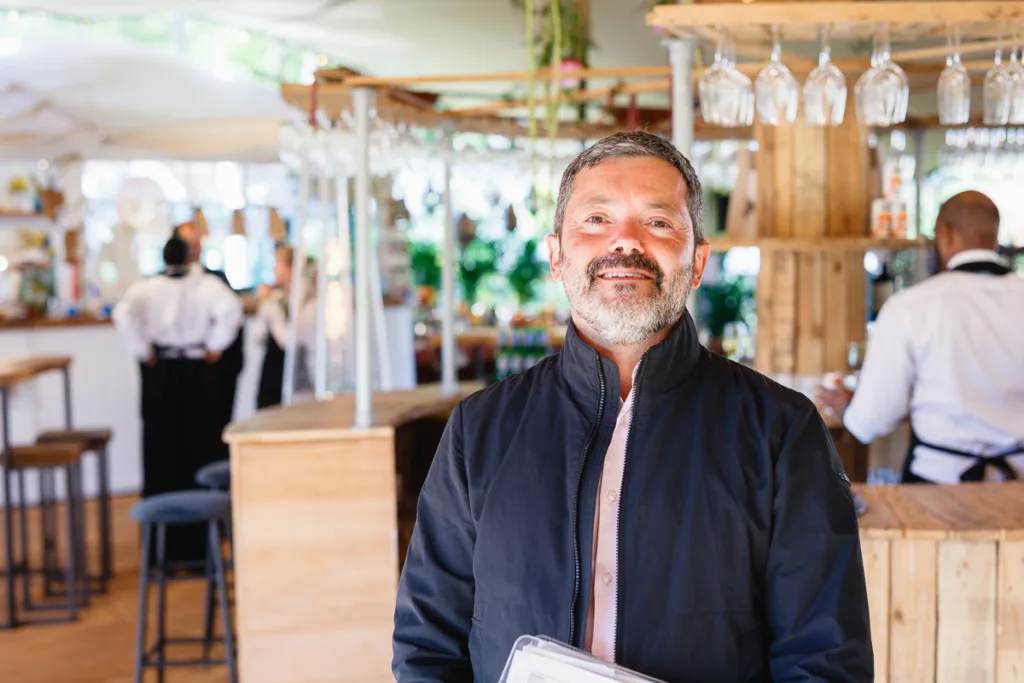
Most suppliers in the wedding and events industry build their portfolios out of borrowed images. The couple books a wedding photographer, that photographer shoots the day the way a wedding is normally shot, and afterwards the planner, florist and venue all ask for a few frames they can use. It works, up to a point. The problem is that a wedding photographer is being paid to document a couple’s day, and quite rightly that is what they do. They are not being paid to photograph the way a table was dressed before anyone sat at it, or the transition between two spaces, or the staff at work. Those are the images a planner needs and they are almost never the images that come back.
There is also a practical issue with rights. Images shot for a couple belong to the couple’s photographer, and using them commercially usually means asking permission, crediting carefully, and accepting whatever selection you are given. It is a weak foundation for a business that sells design and taste. Commissioning your own photographer removes all of that. You brief the shoot, you decide what matters, and the licence is yours.
Amaury understood this before he rang me, which made the whole commission straightforward. He was not looking for pretty pictures of a wedding. He was launching a brand and he needed the assets to launch it with.
The Brief: A Launch Commission with a Narrative
Events by Amaury is a design led planning business. Amaury’s approach is built around how guests move through a day and how the mood shifts as they do. His launch commission was a full wedding at Wilderness Reserve, spread across four separate locations on the estate, with each one styled to a different palette and a different tempo.
The brief he gave me was clear. He wanted the images to show that the four spaces belonged to one idea, not four unrelated parties. That is harder than it sounds. Photograph each location well in isolation and you end up with four sets that look like four different jobs. The cohesion has to be built in while you are shooting, through consistent exposure decisions, a controlled approach to colour, and a shooting distance that stays recognisably the same person’s work as the light changes across the day.
We also agreed what the images were for before the day started. Website, press submissions, Instagram, supplier sharing, and pitch material for future clients. That decision shaped everything, including how tightly I framed and how much space I left around subjects. An image destined for a website hero banner needs room at the top for text. An image for a press submission needs to be clean and uncluttered enough that a picture editor can crop it. If you decide that at the edit stage you have already lost the shot.
Wilderness Reserve as a Working Location
Wilderness Reserve covers around 8,000 acres of restored Suffolk countryside and properties. For a planner it offers privacy and scale. For a photographer it offers four or five genuinely different environments in a single booking, which is unusual and useful.
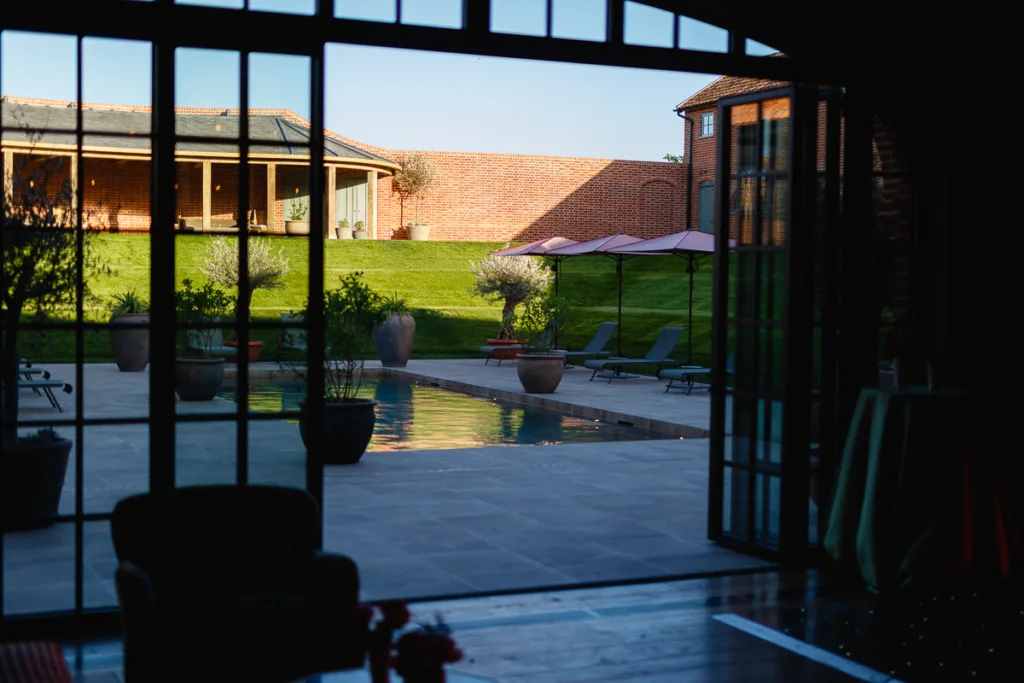
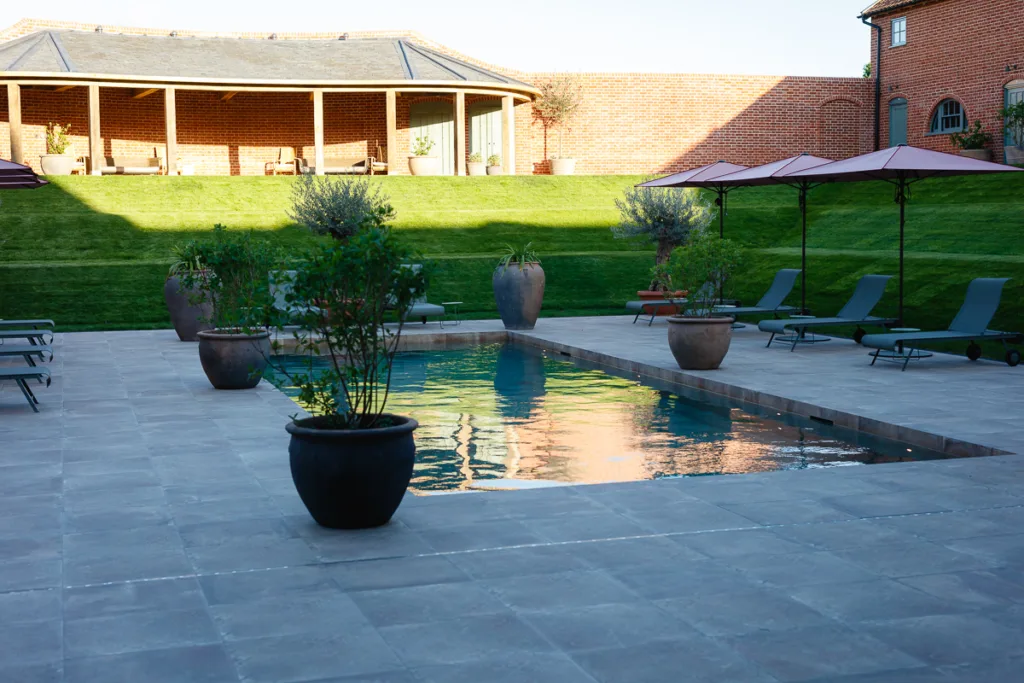
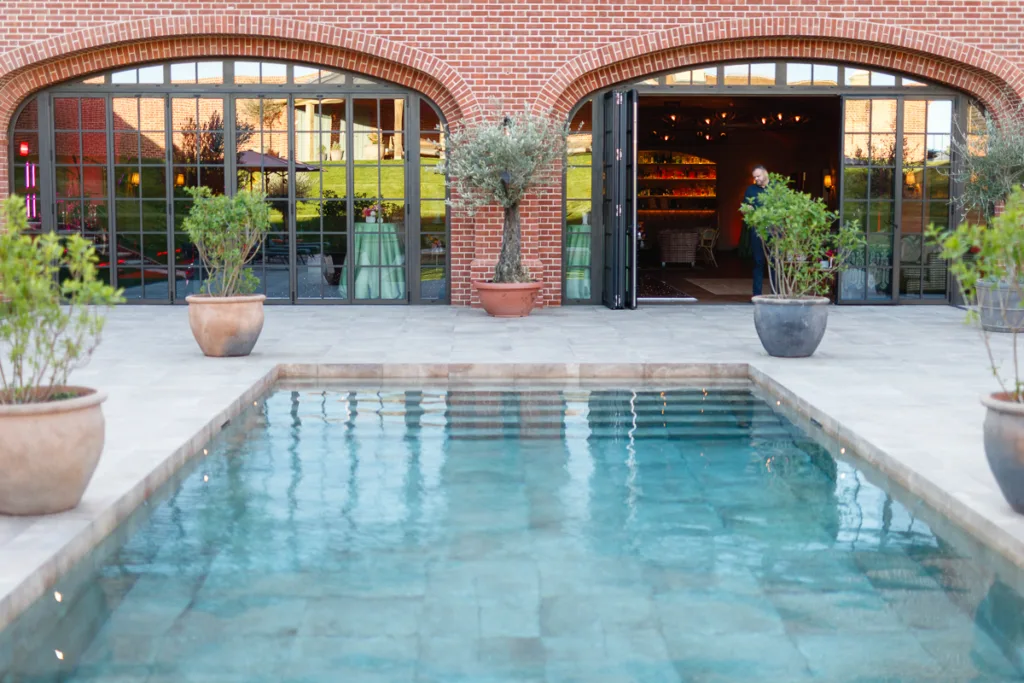
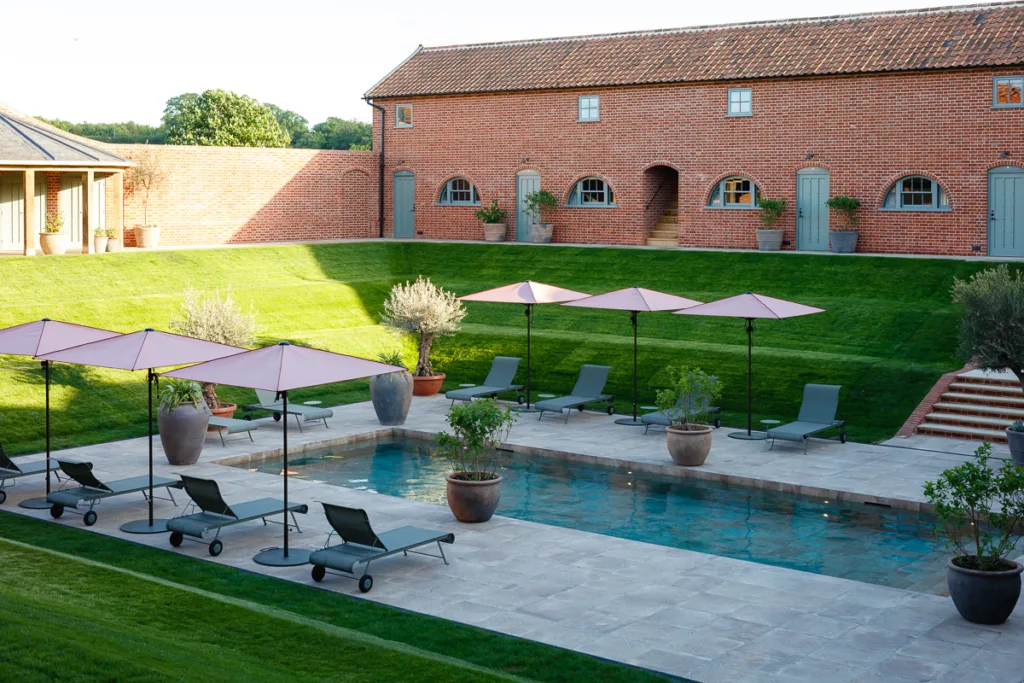
The four locations we worked across were Sibton Manor for the ceremony and welcome, the Sunken Pool for the aperitivo hour and speeches, the Walled Garden for food, games and socialising, and Blyth Barn for the evening celebration and live music.
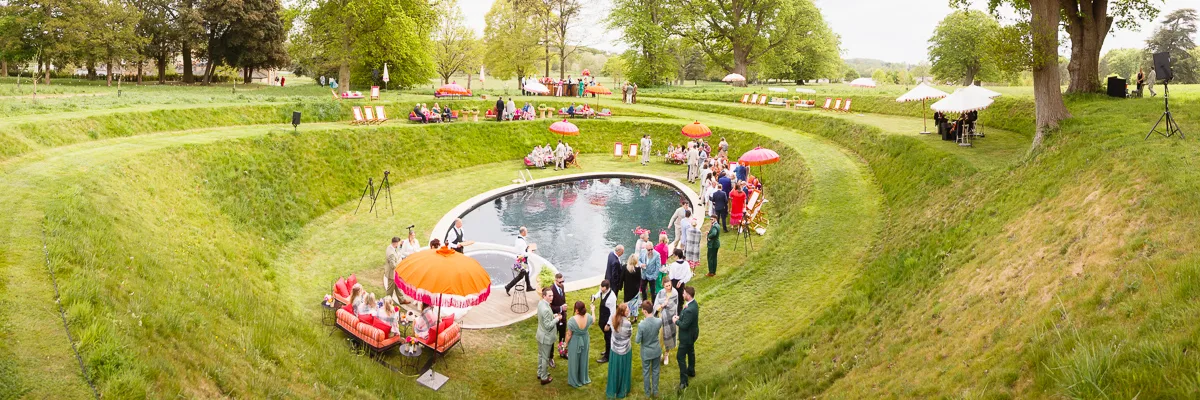
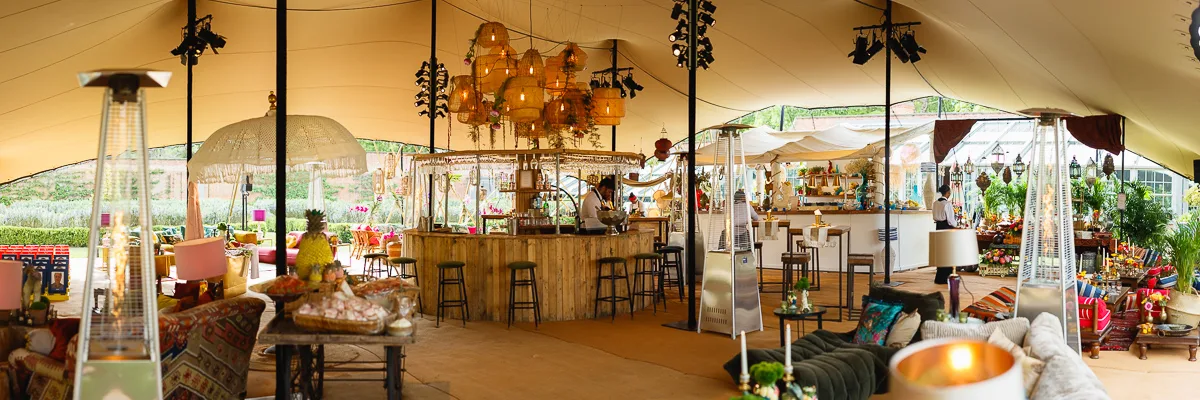
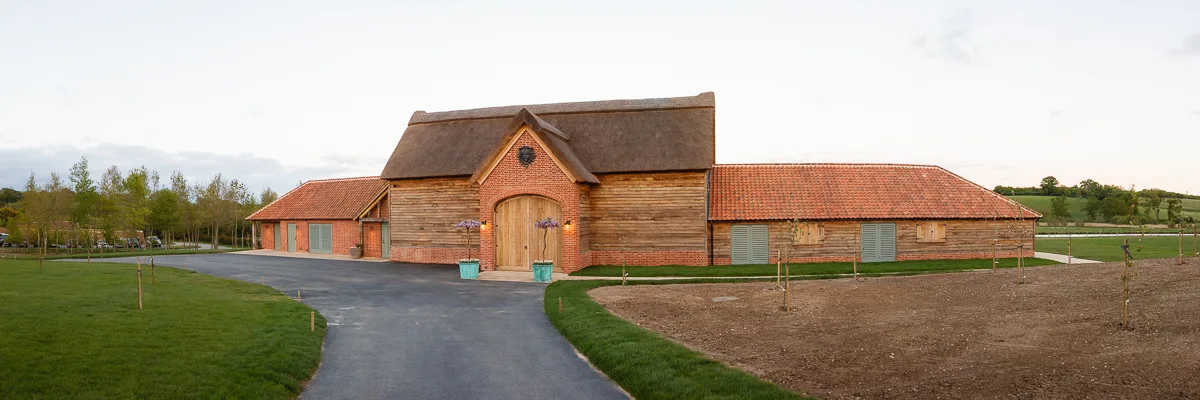
Moving between them is not simply a matter of walking. Each one has its own light, its own architecture and its own guest behaviour, and the practical consequence is that you cannot settle into one way of working. I planned the day as four short shoots with different priorities rather than one long one, and I scouted the transitions in advance so I knew where I would be standing when the light changed. Anyone photographing a multi location event on an estate this size should build that scouting time into the quote. It is not padding.
Sibton Manor: Formality, Symmetry and Restraint
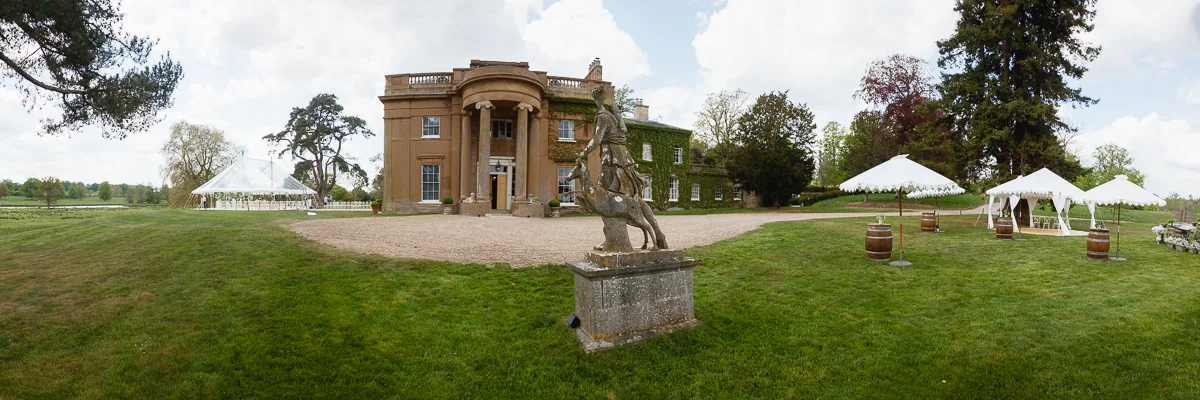
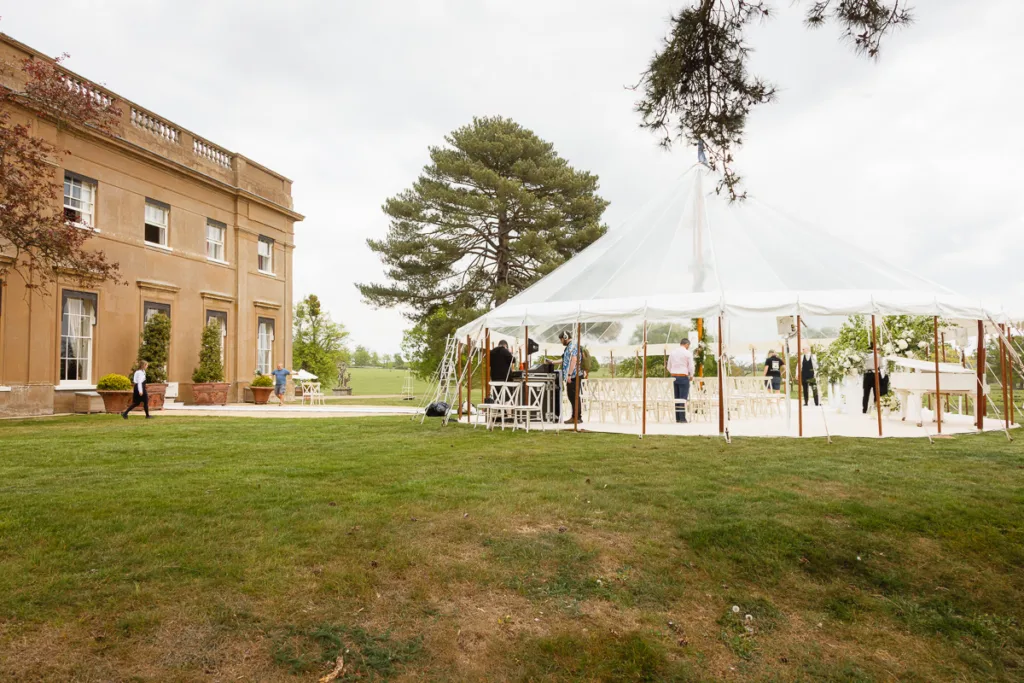
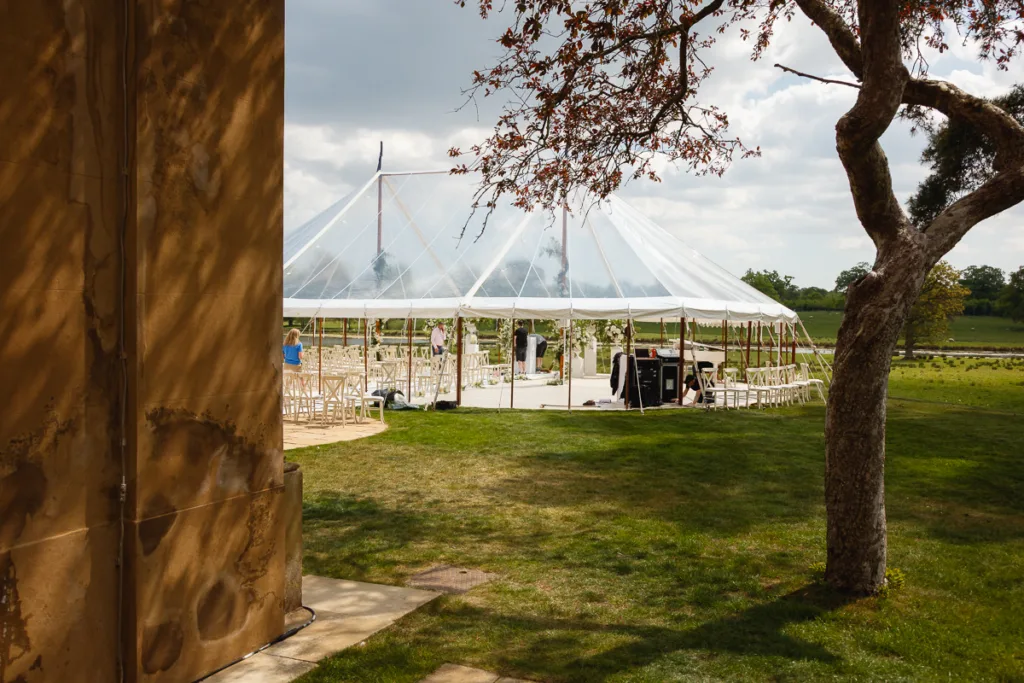
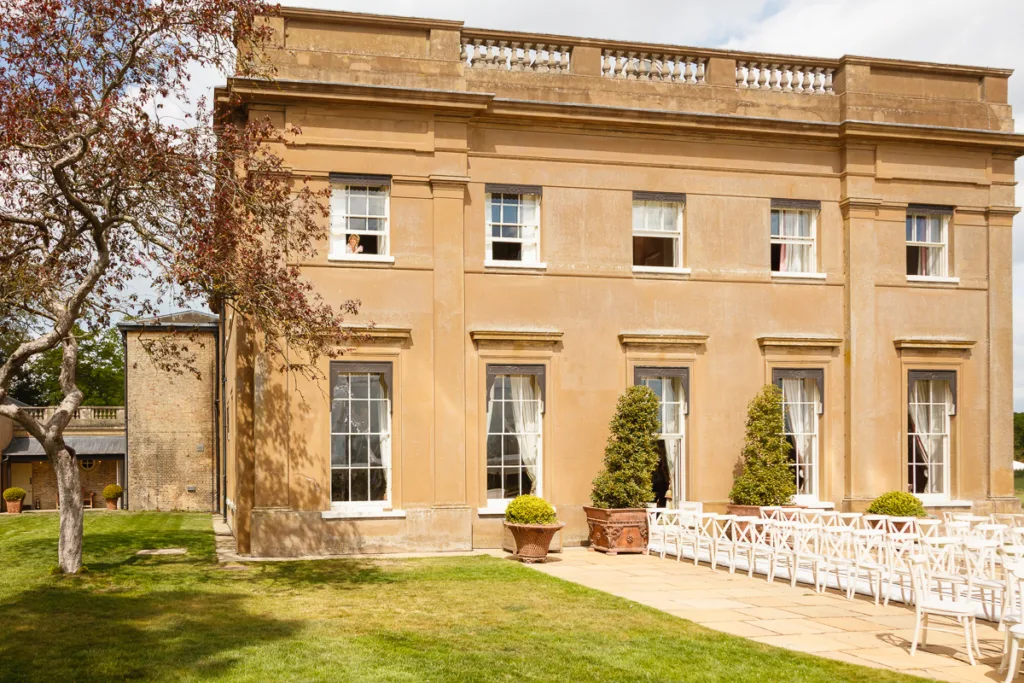
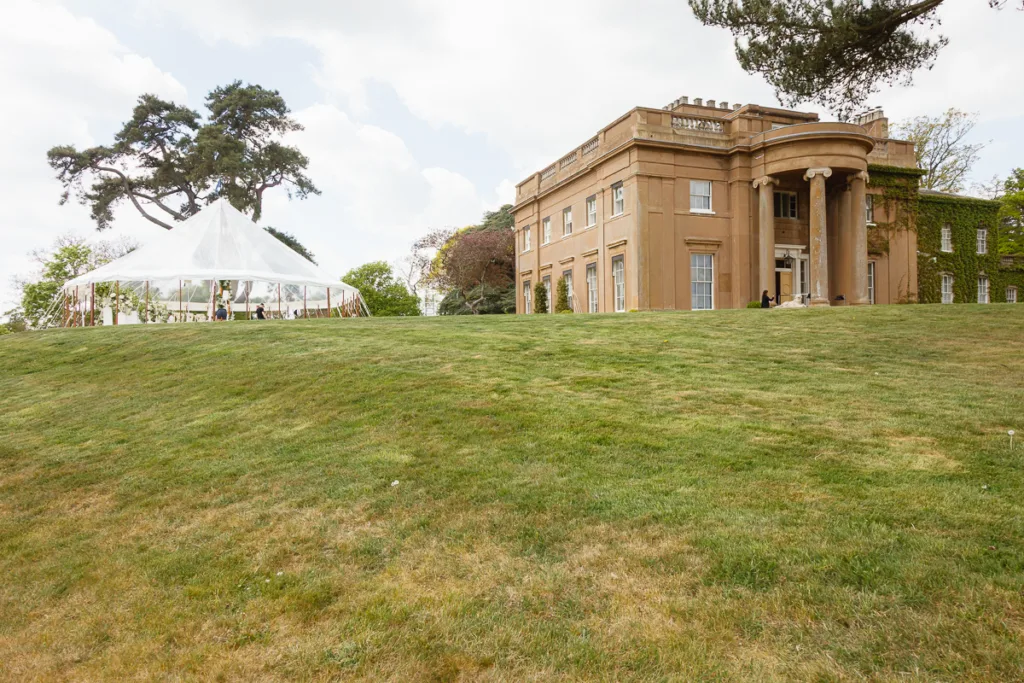
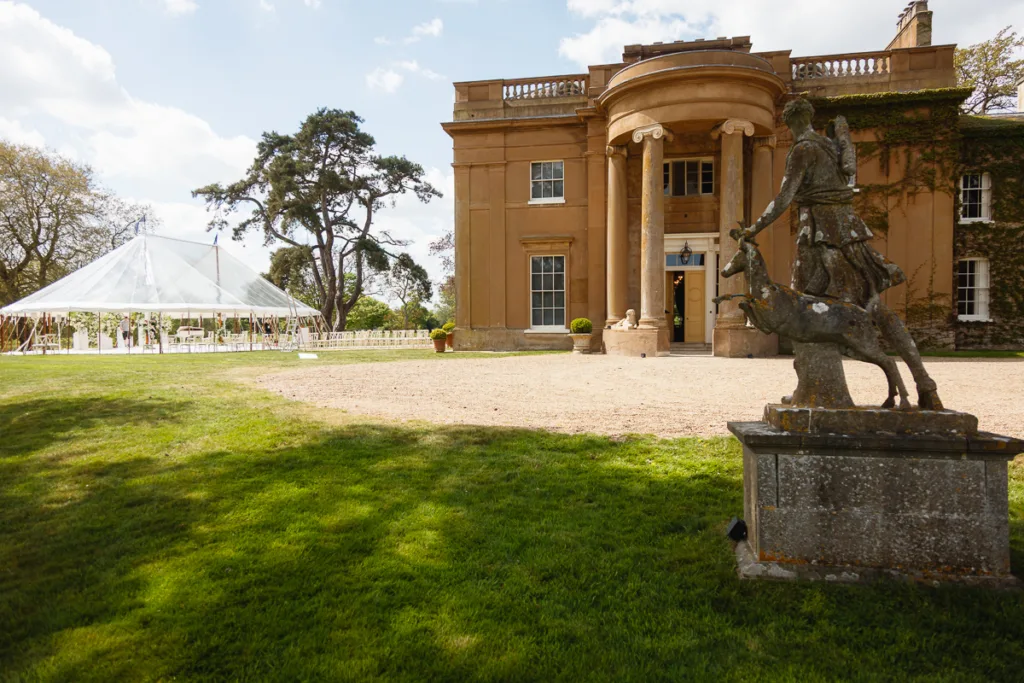
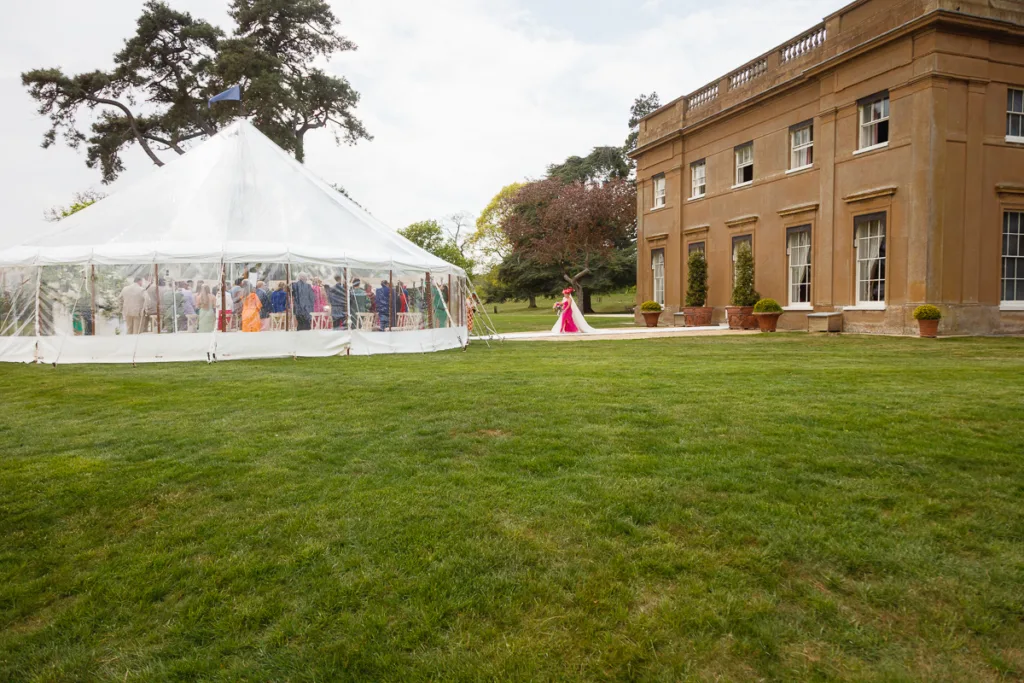
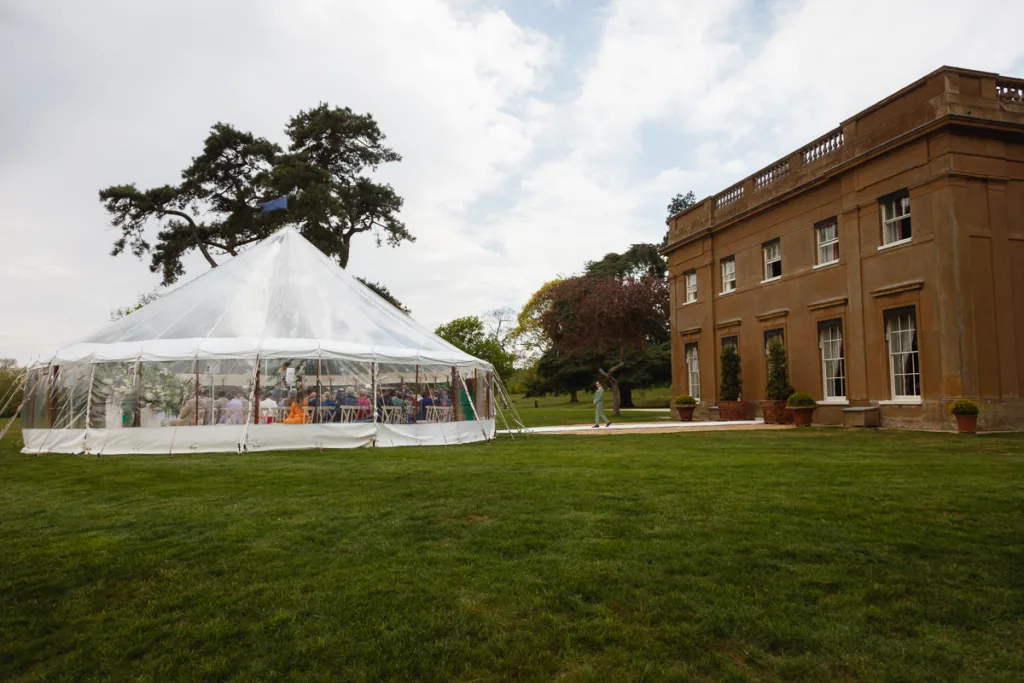
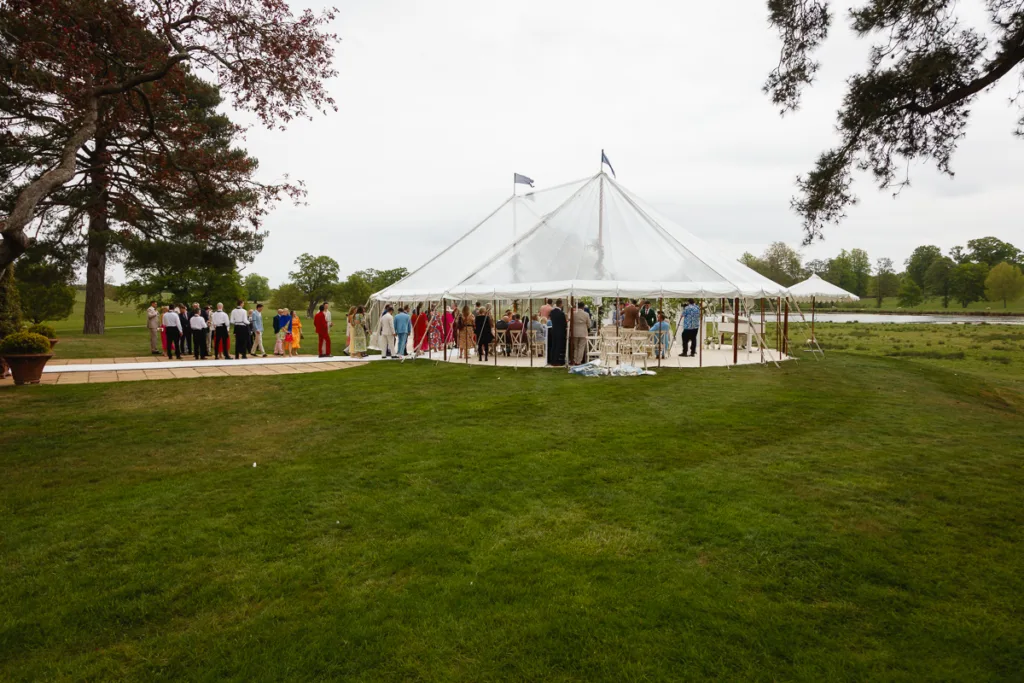
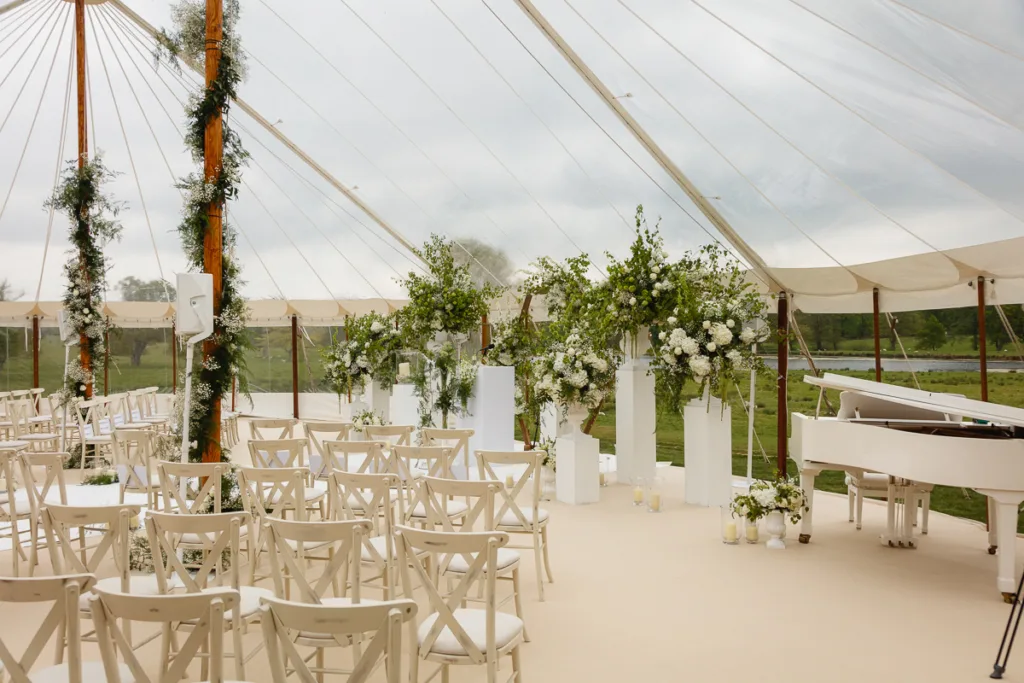
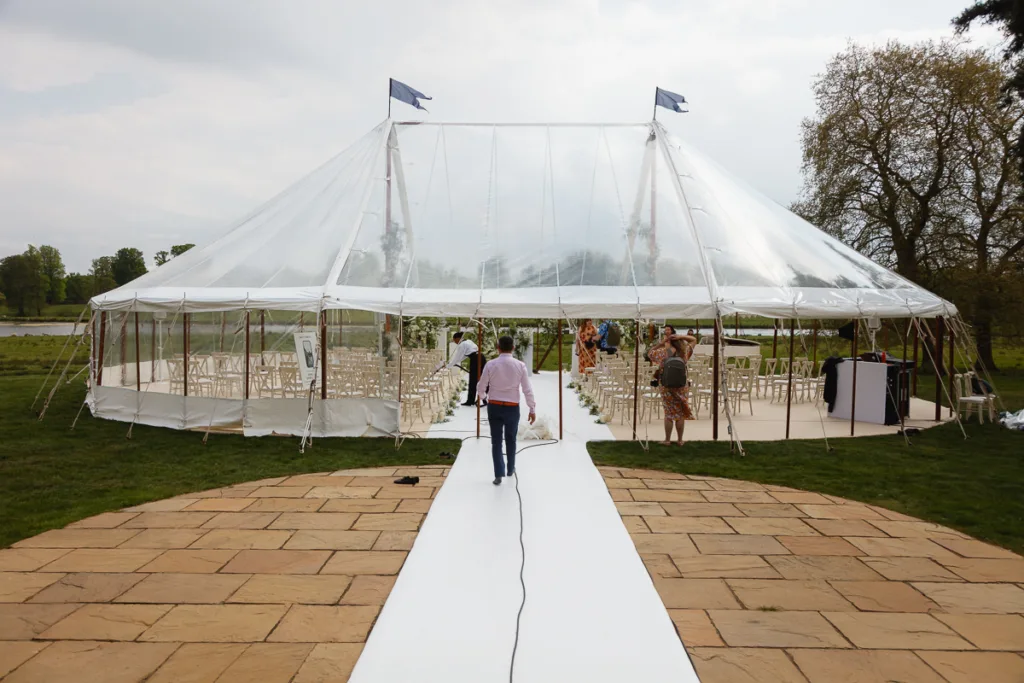
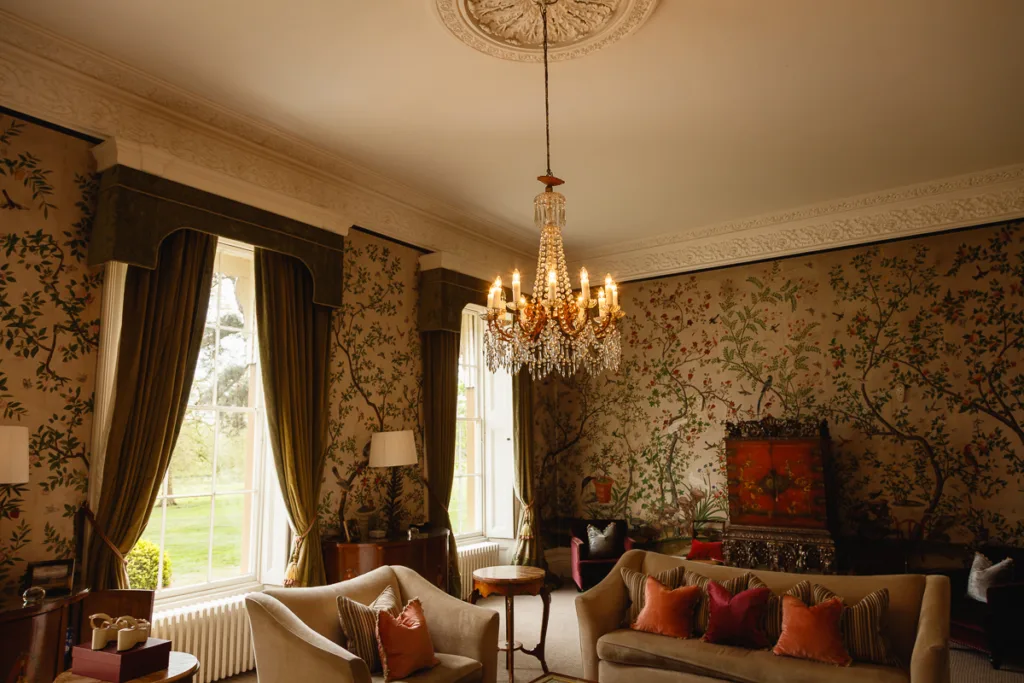
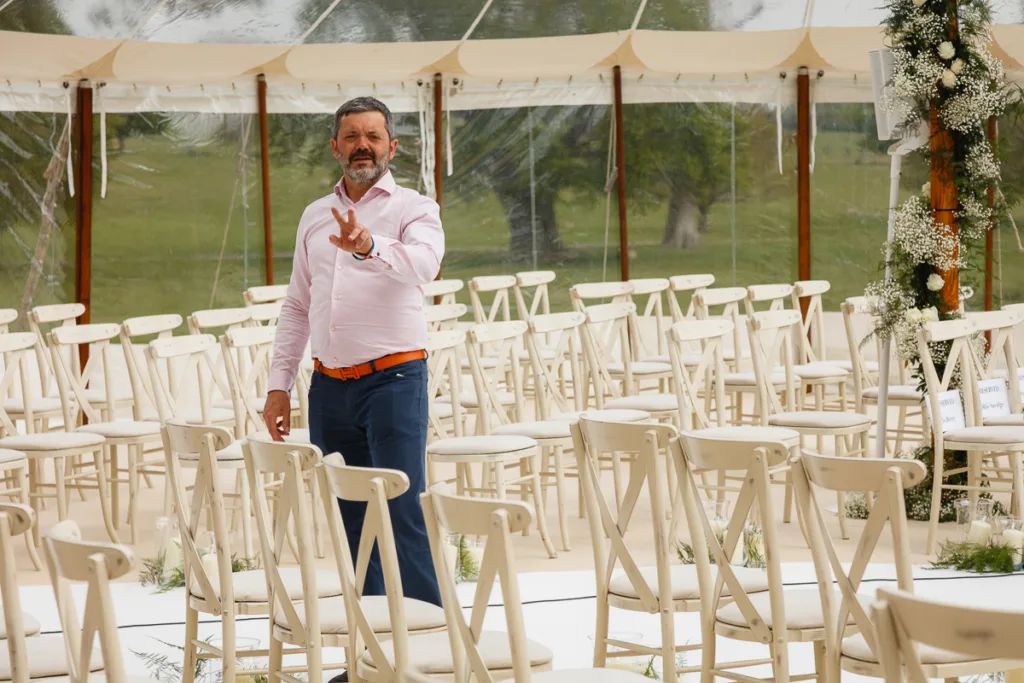
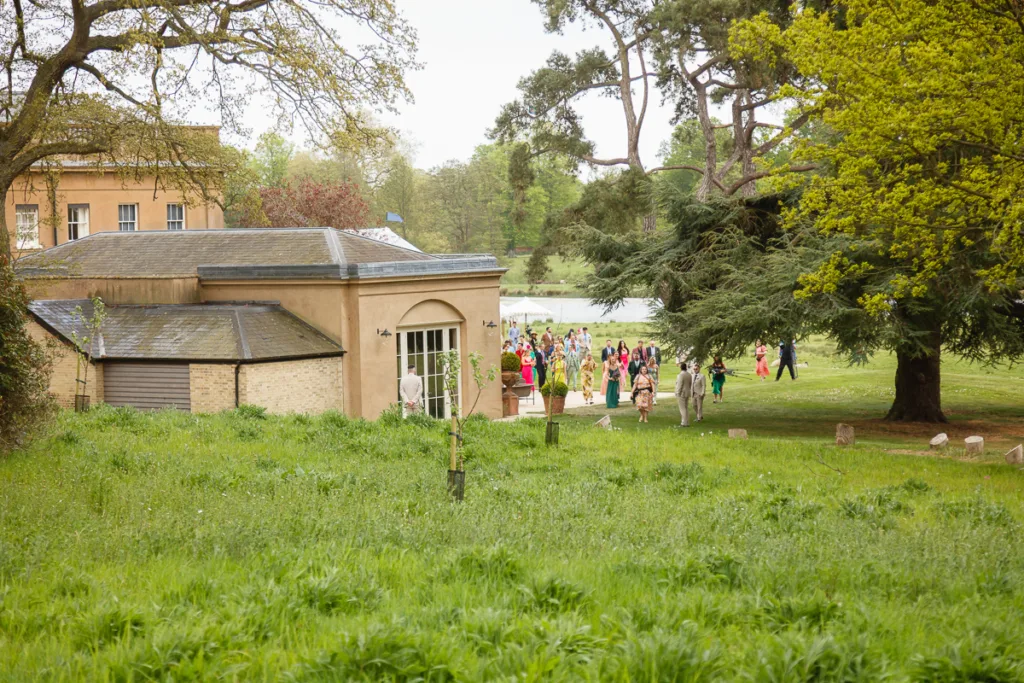
The day opened at Sibton Manor, a Georgian property with formal gardens. A clear span marquee had been installed directly in front of the house, so the building stayed visible through the structure while the guests were under cover. Floristry was green and white, structural rather than abundant, drawing the eye up the aisle without crowding it.
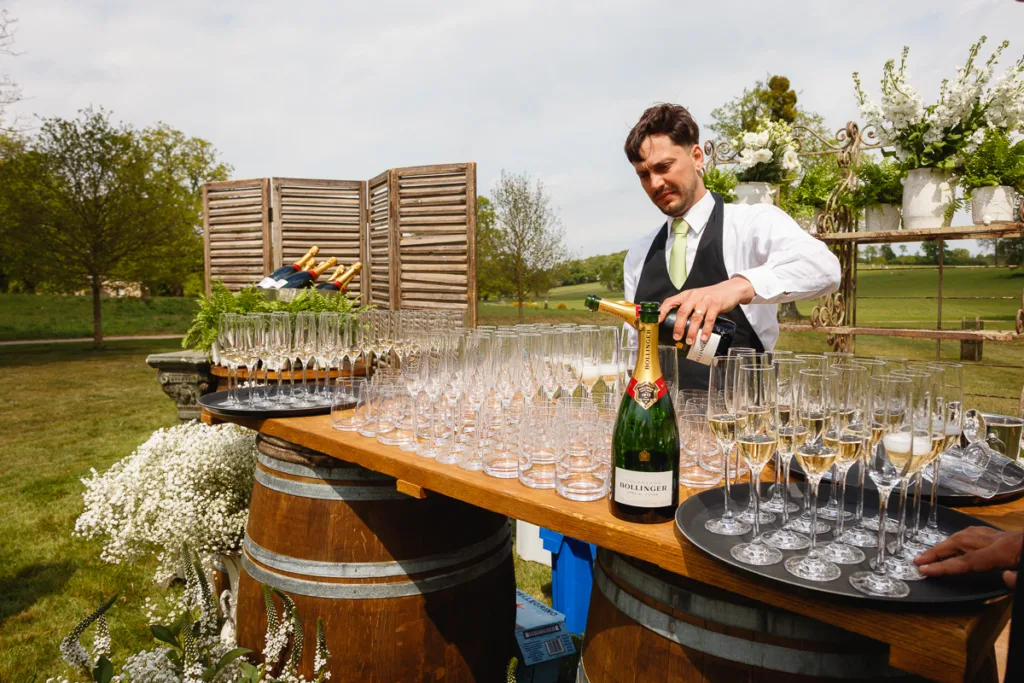
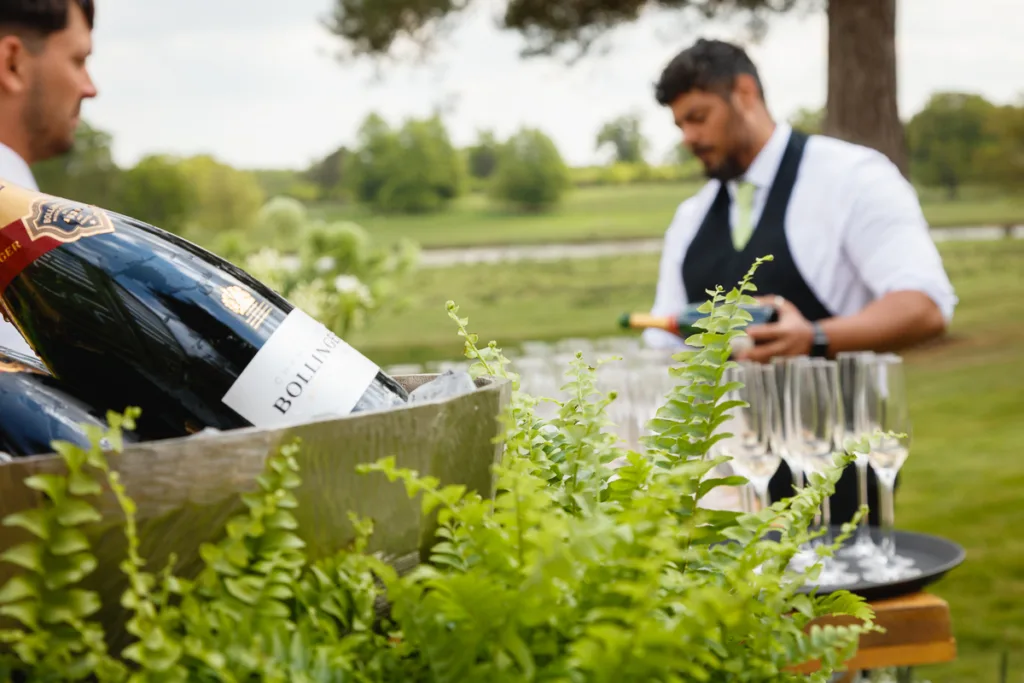
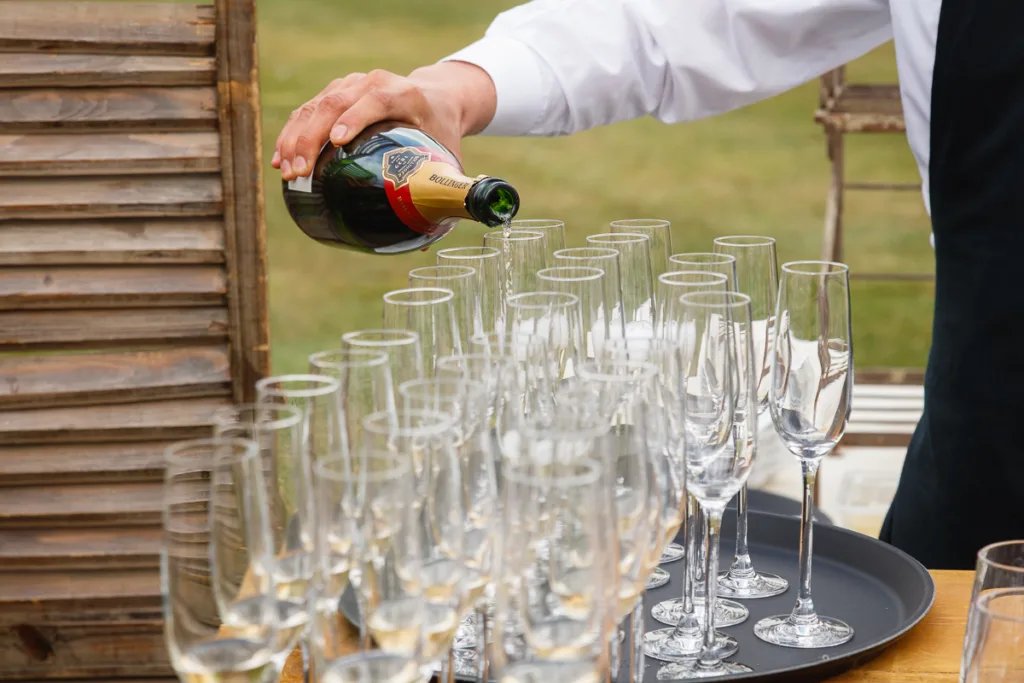
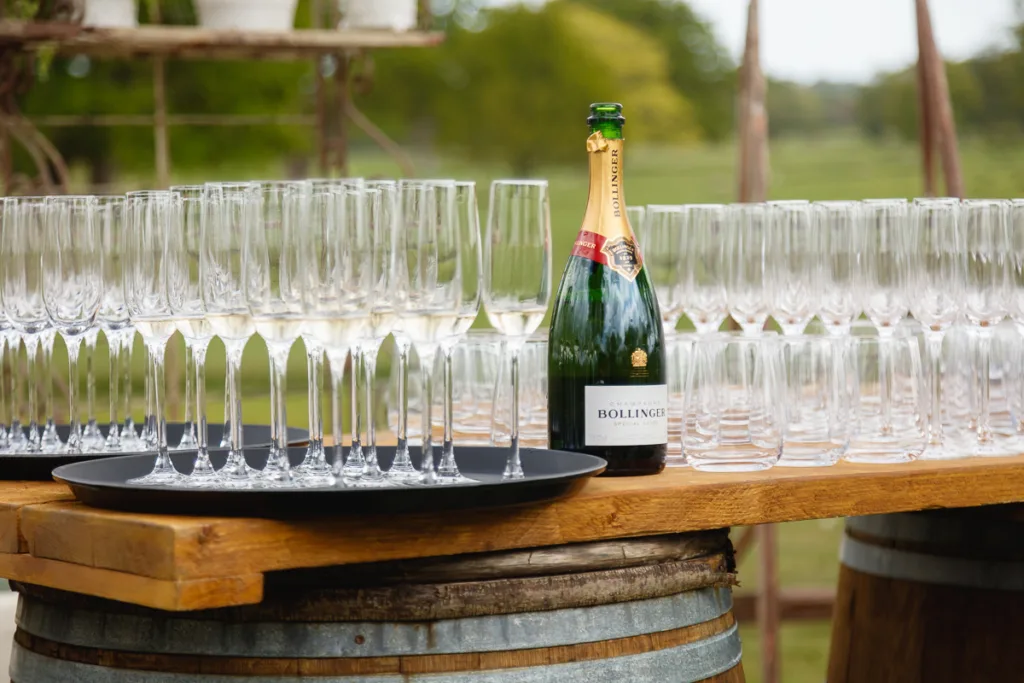
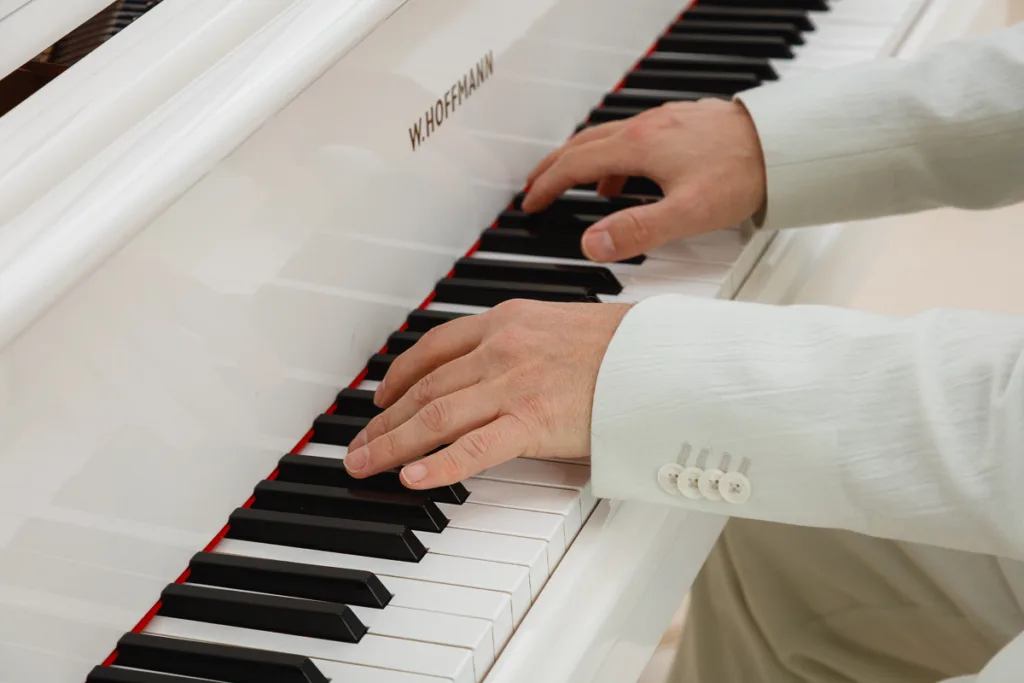
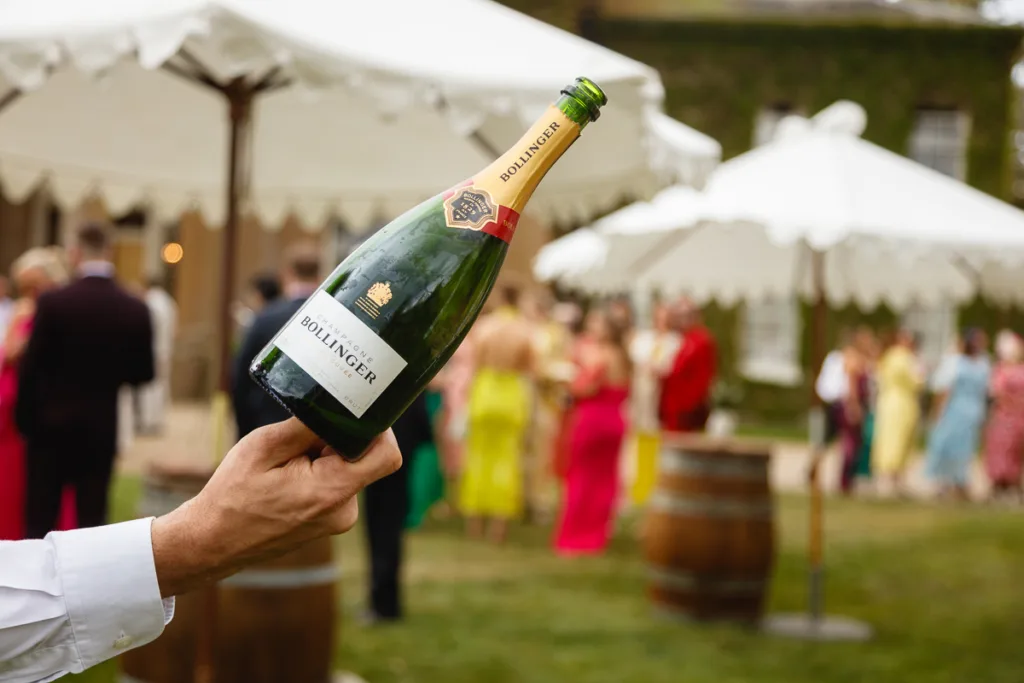
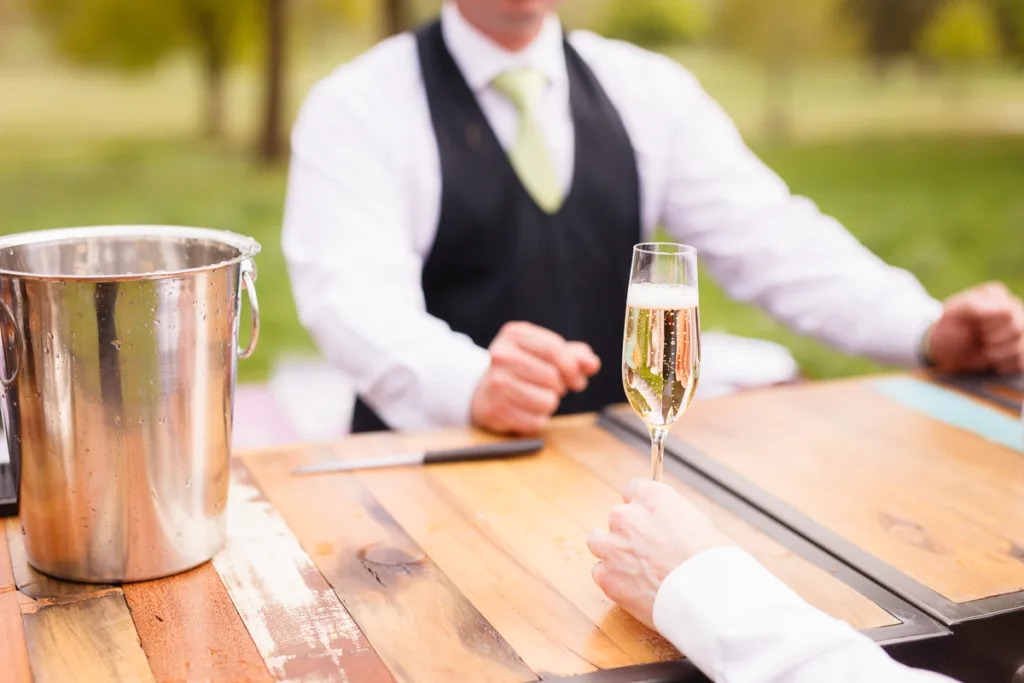
The photography here was deliberately restrained. Establishing frames of the manor and marquee in morning light, details of the florals, seating, signage and bar setup while the space was still empty, then guests arriving, prosecco being poured and staff working. I kept to open compositions and parallel lines because the setting was doing the work already. Georgian architecture is symmetrical and the styling was echoing that symmetry, so anything I added by way of unusual angles would have fought it.
The empty room frames matter more than people expect. Once the guests are in a marquee, nobody will ever see the florist’s work or the table dressing again. Those first twenty minutes are the only chance, and they are the frames a planner uses most.
The Sunken Pool: Colour, Service and Movement
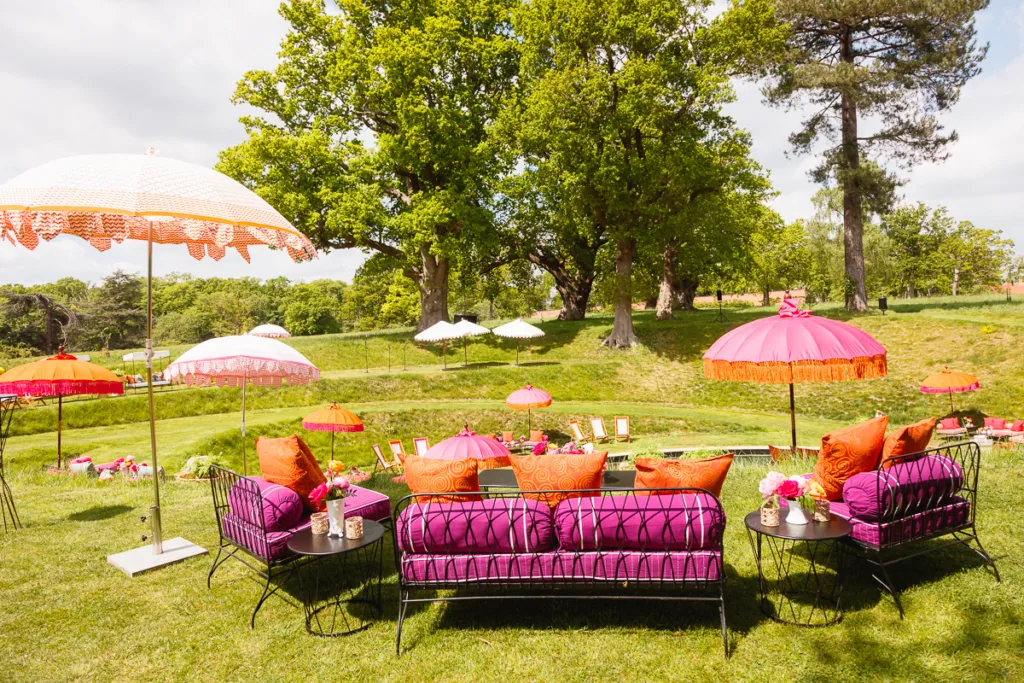
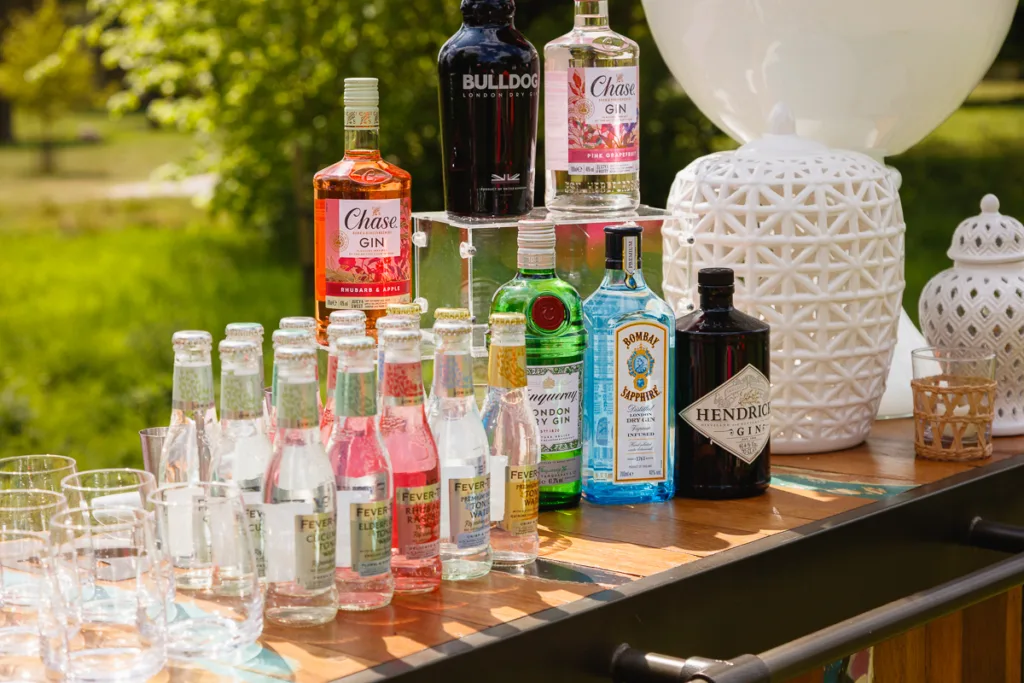
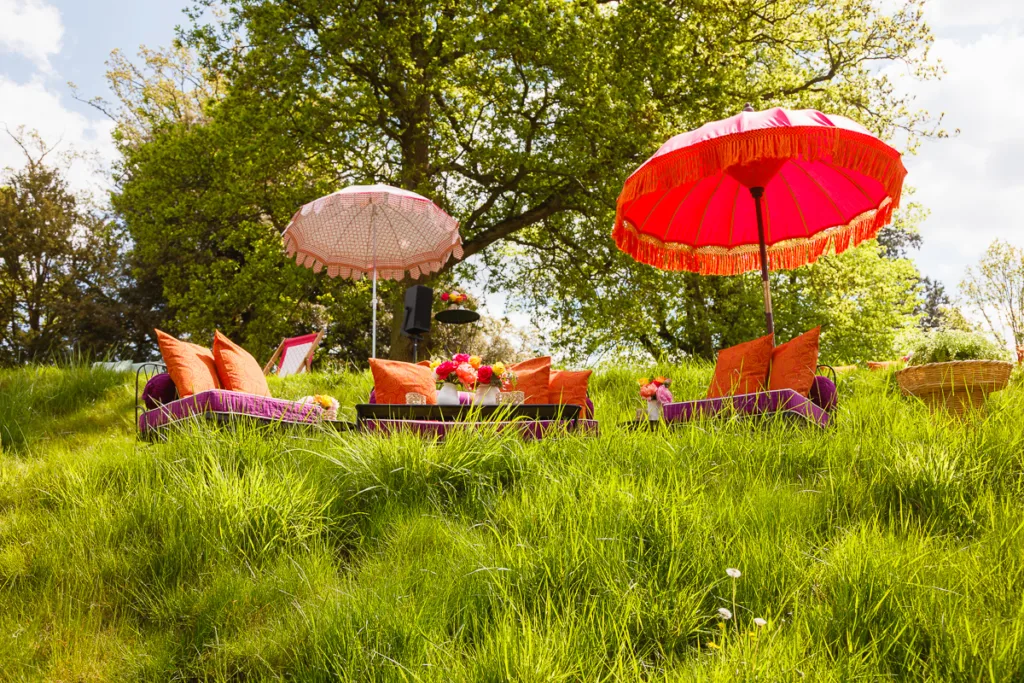
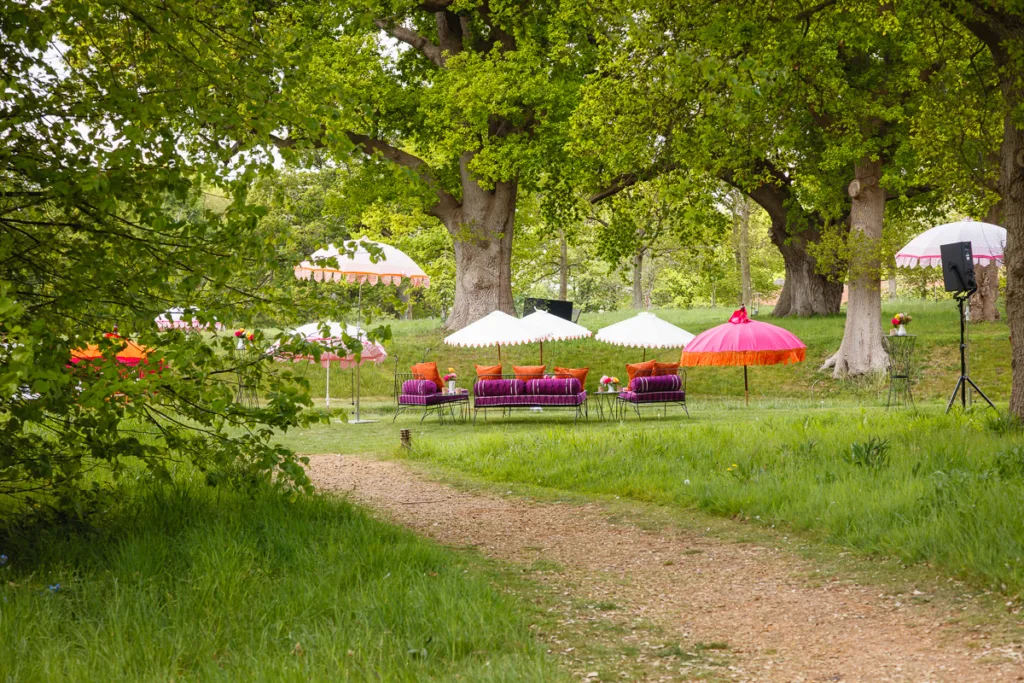
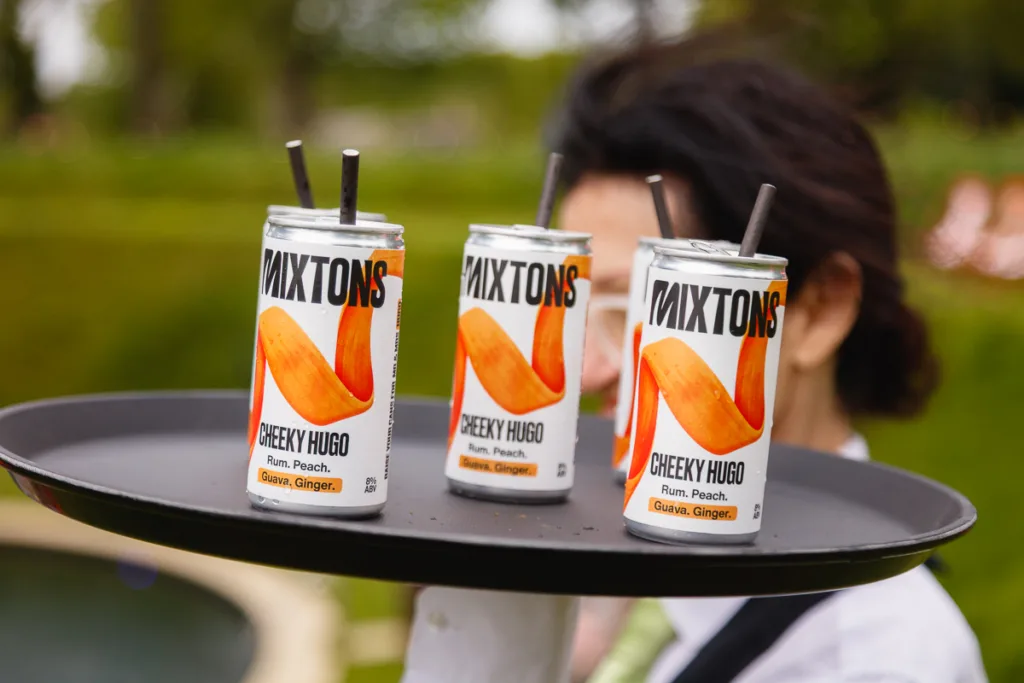
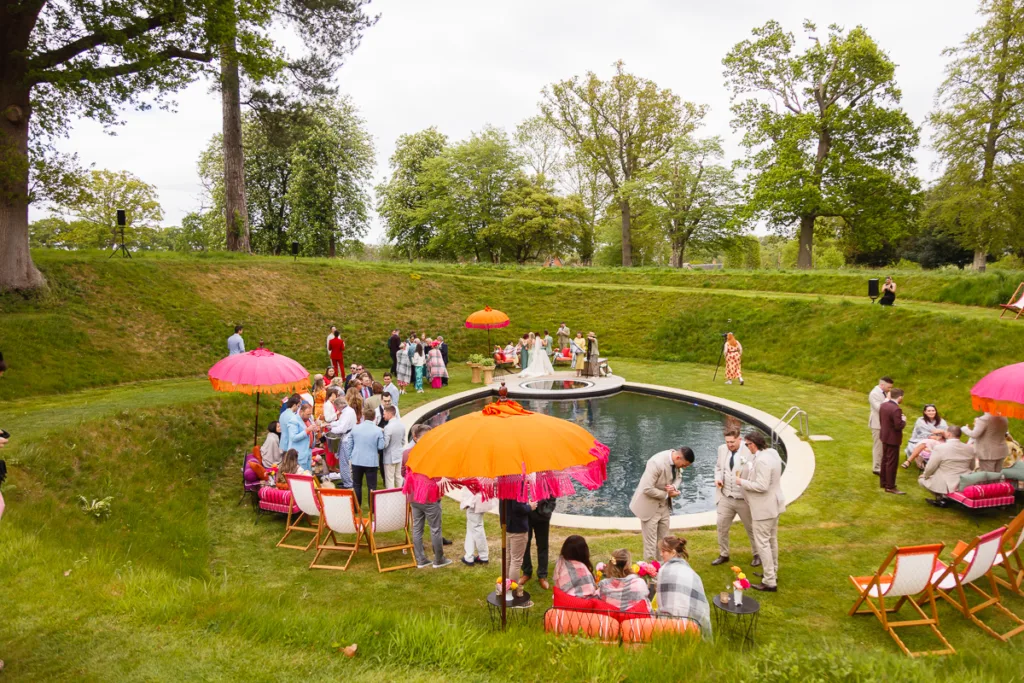
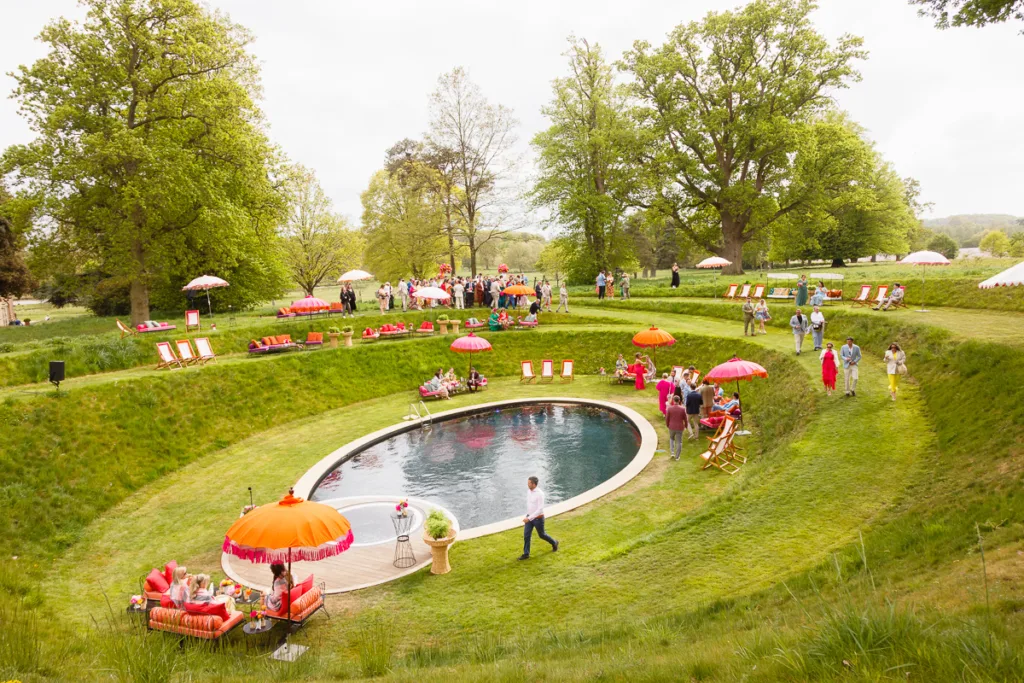
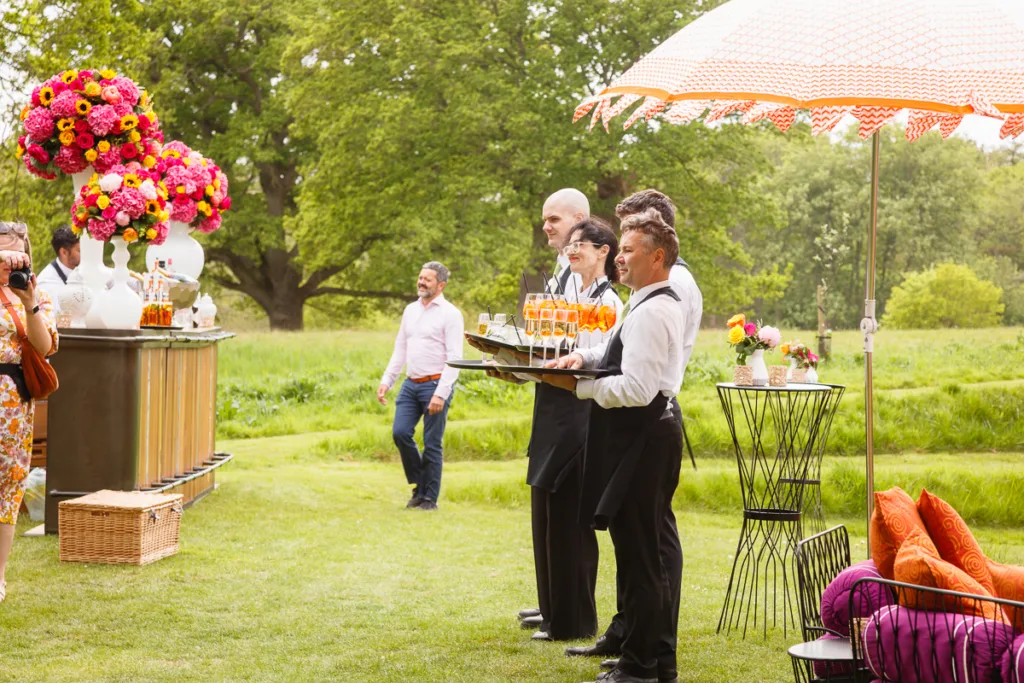
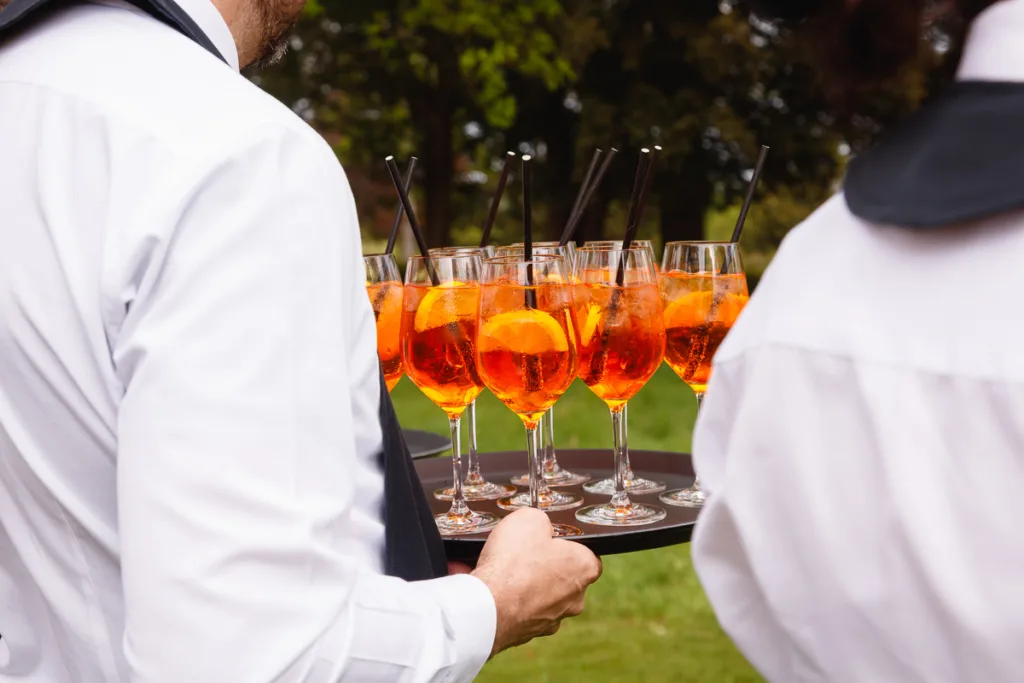
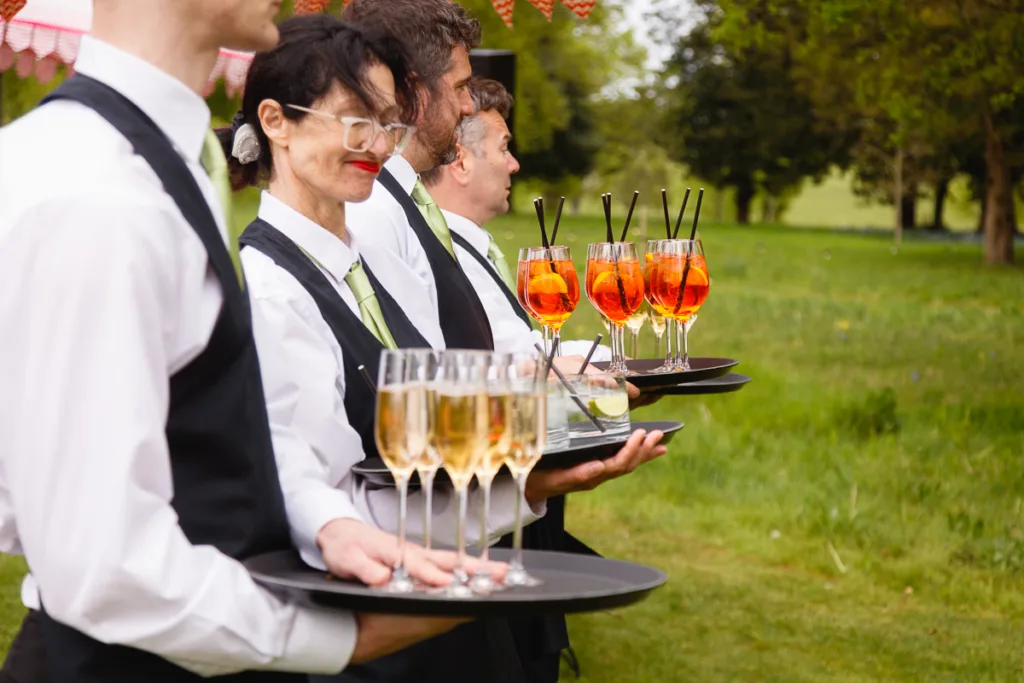
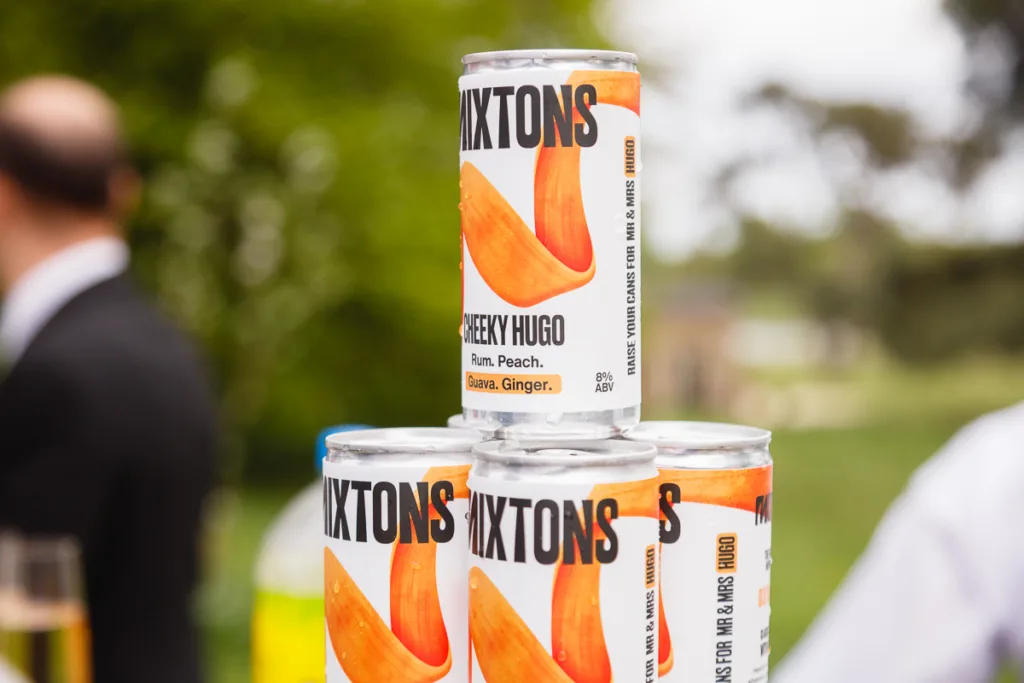
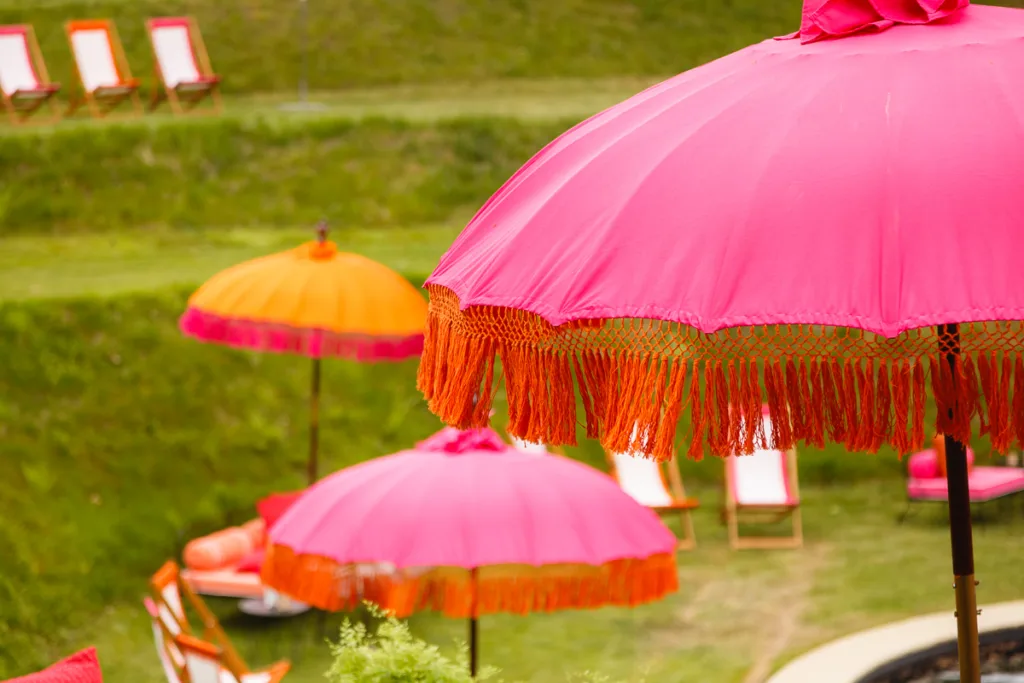
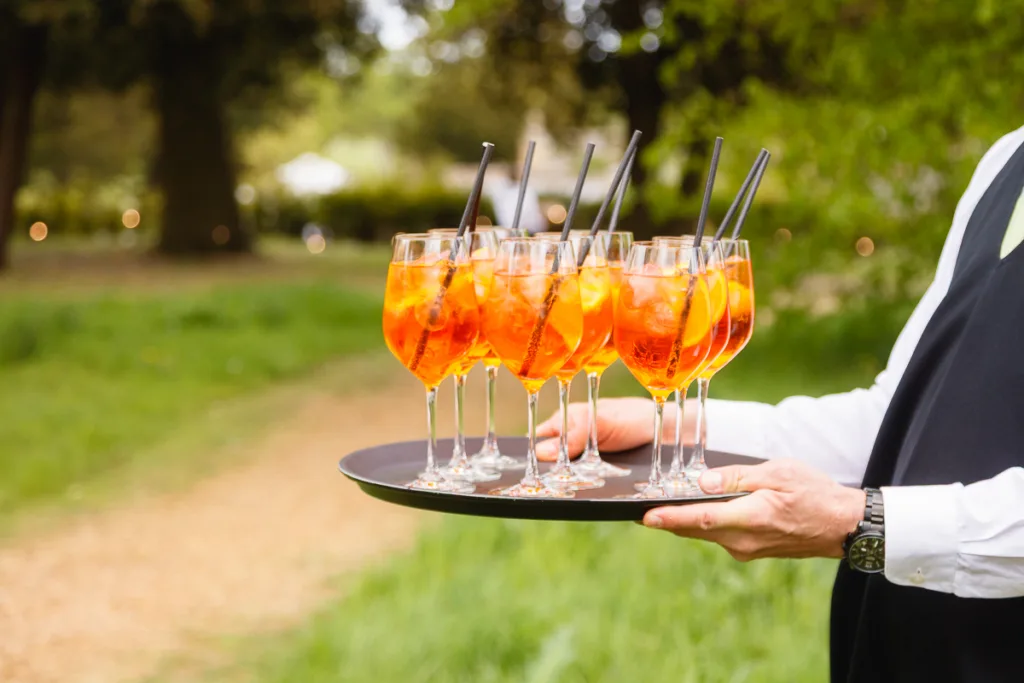
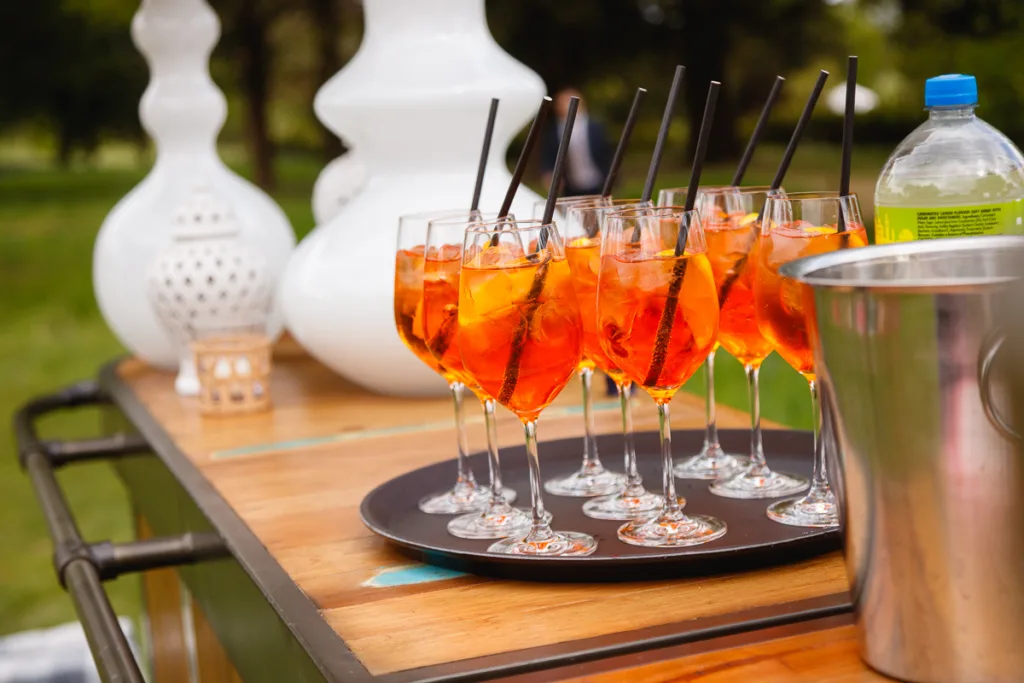
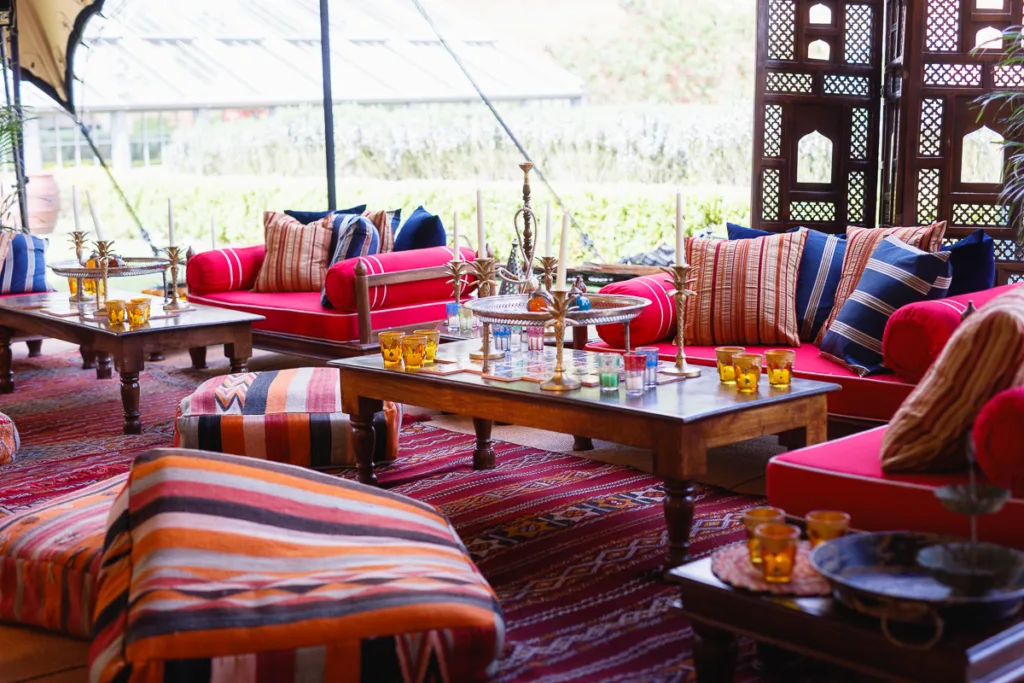
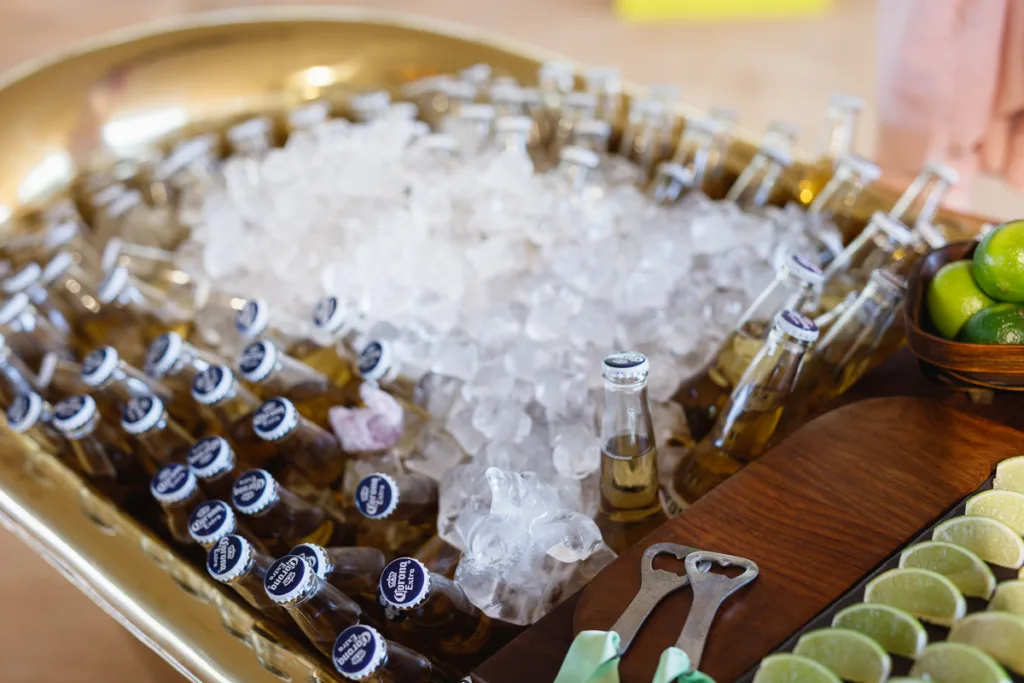
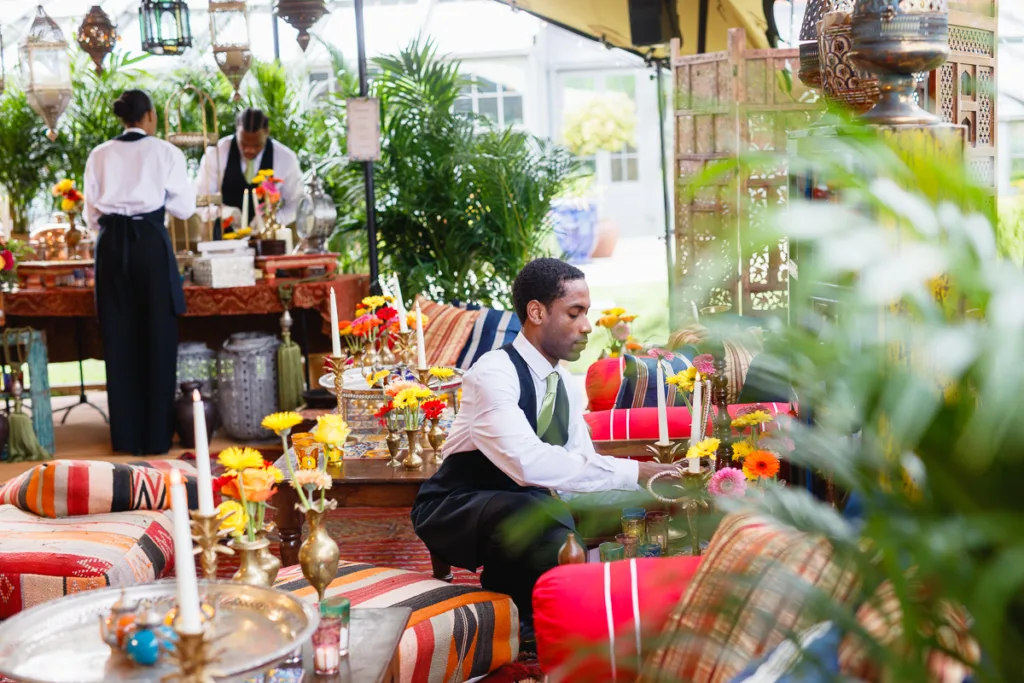
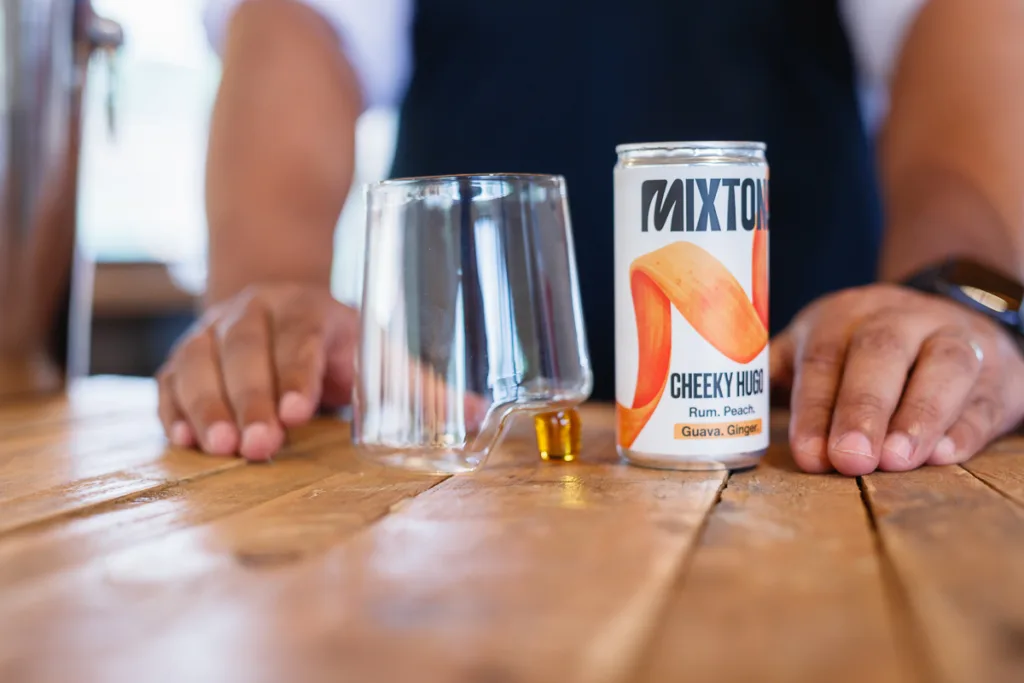
Guests then walked down a woodland path to the Sunken Pool, which had been styled as a Mediterranean lounge. Coral, orange and fuchsia parasols, striped seating, Aperol Spritz service, branded Cheeky Hugo cans, and floral installations wrapped around the central water feature.
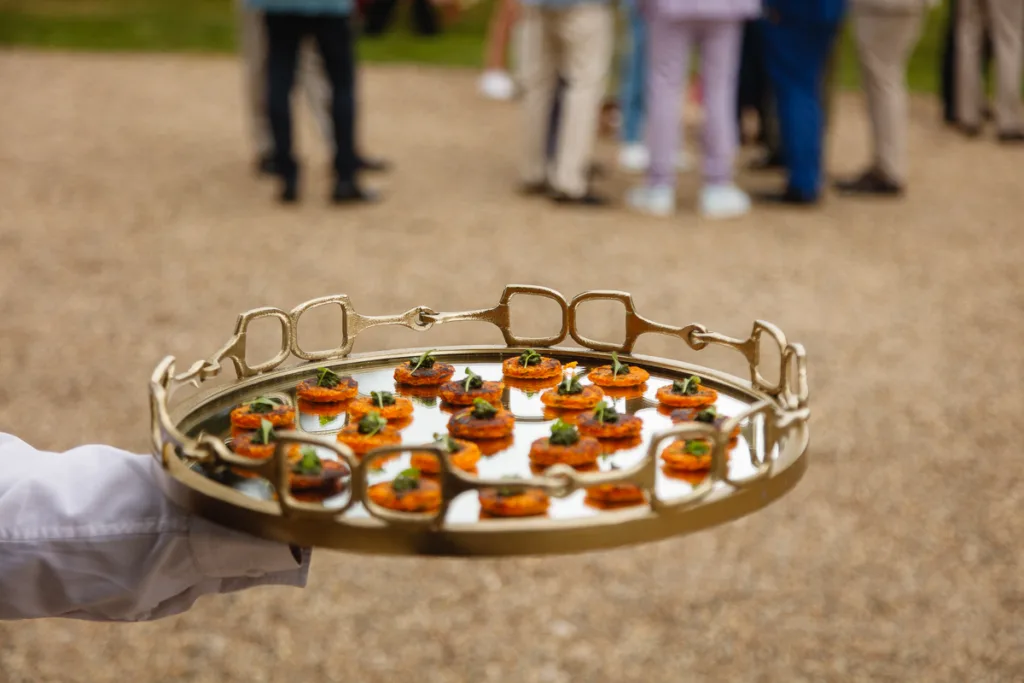
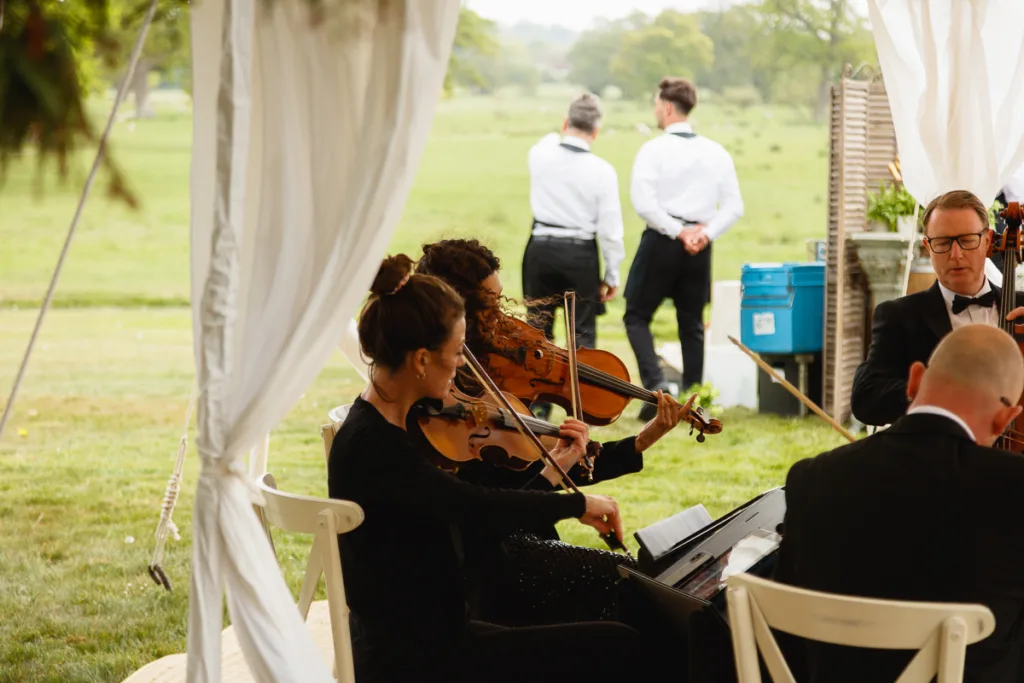
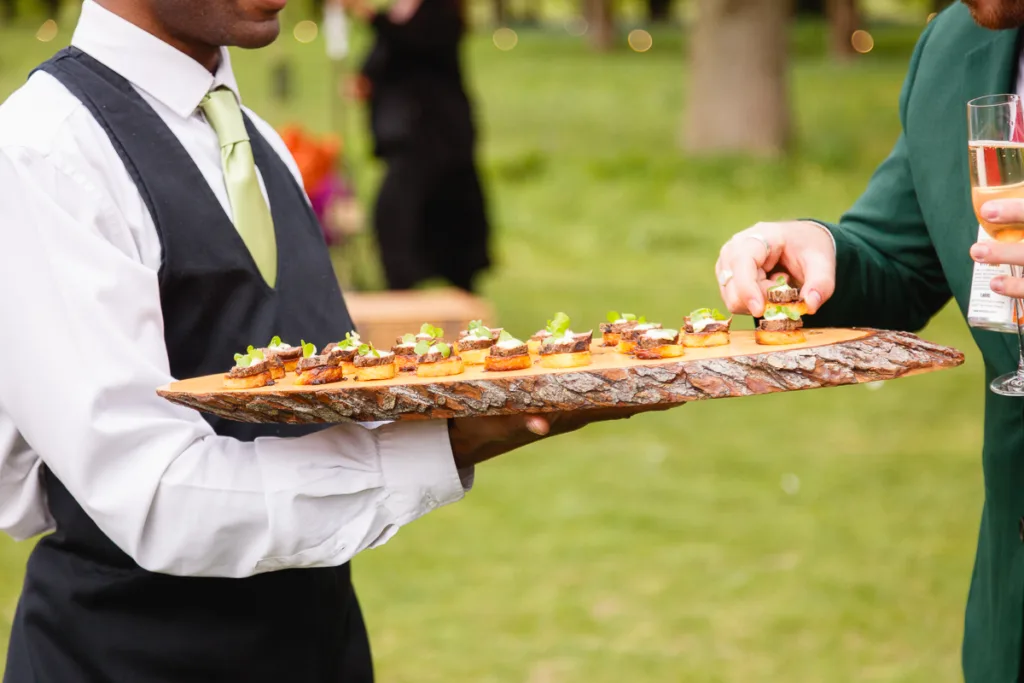
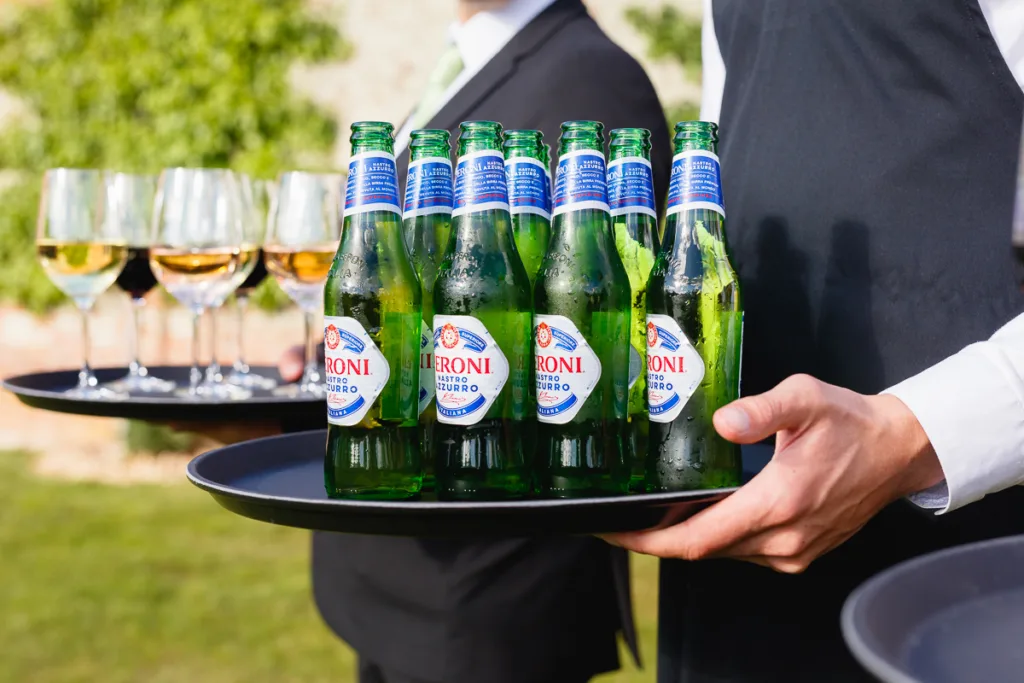
This was the strongest colour of the day and the brief shifted with it. Here I was photographing service and atmosphere: staff moving with trays, close work on the drinks and the branded cans, parasol patterns and floral shadows falling across the furniture, and social groups shot from slightly elevated positions so you could read the layout of the space.
I worked with ambient light throughout and dropped my shutter speed in some of the crowd frames to let movement register. A completely frozen crowd looks staged. A little blur in a passing tray or a turning head tells you the place had pace to it, which is exactly what a planner is selling. I shot both wide and tight versions of most setups, because the same moment ends up serving a lifestyle page, a product detail and a team feature depending on how it is cropped.
The Walled Garden: Texture and the Slower Hours
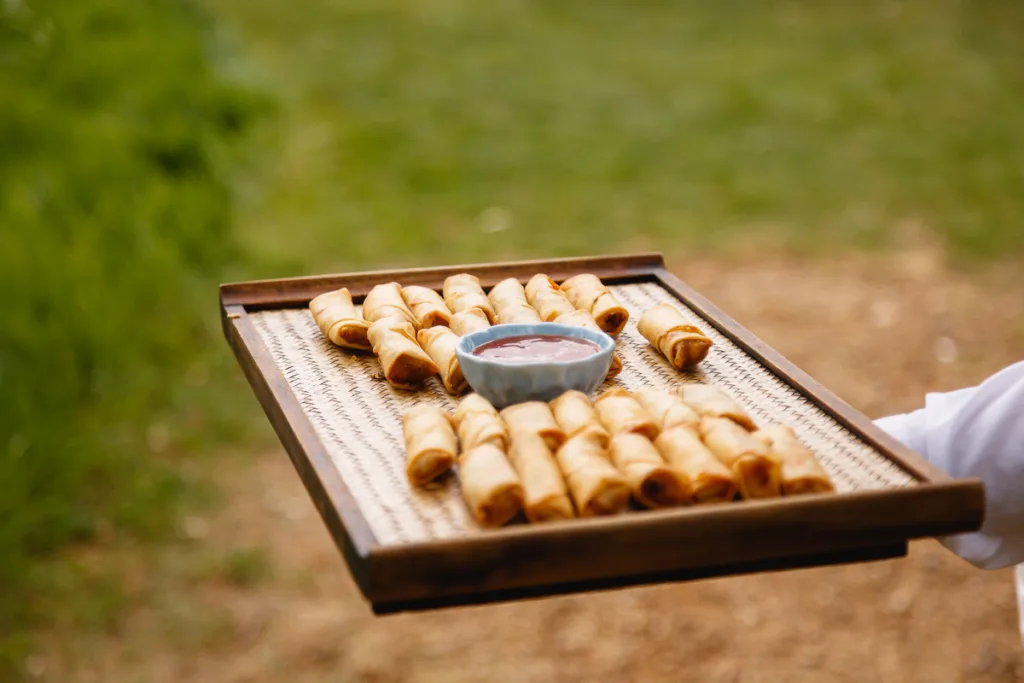
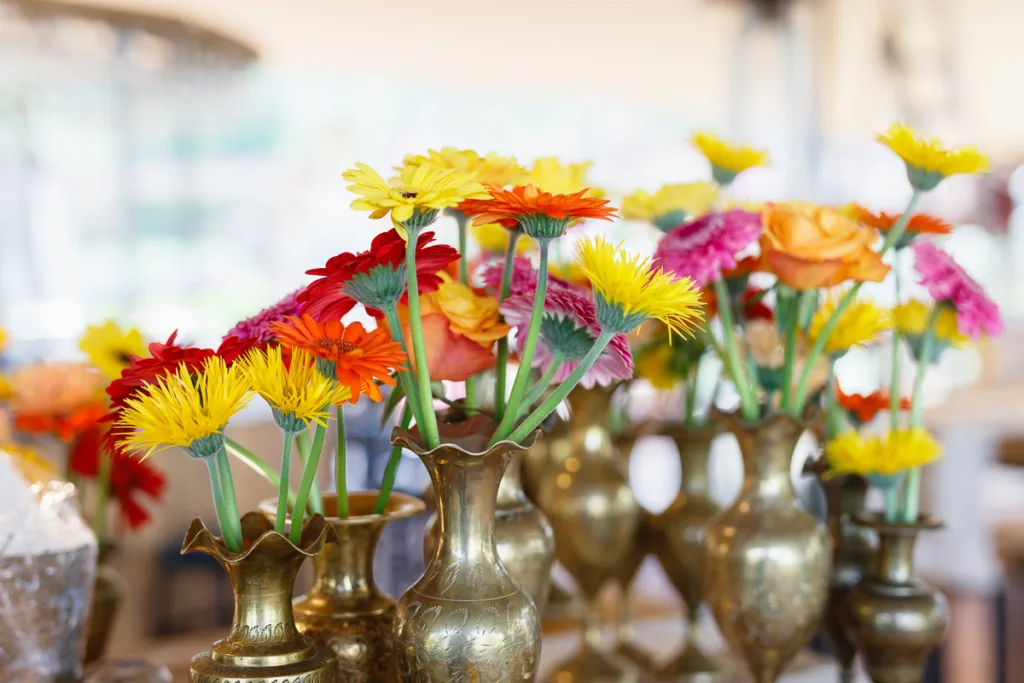
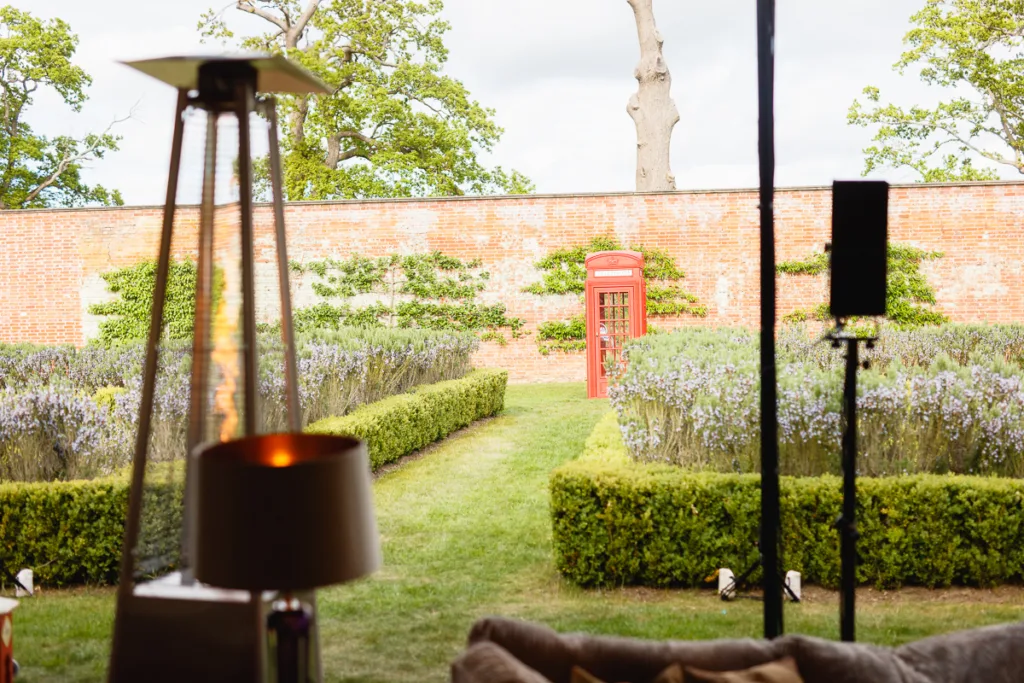
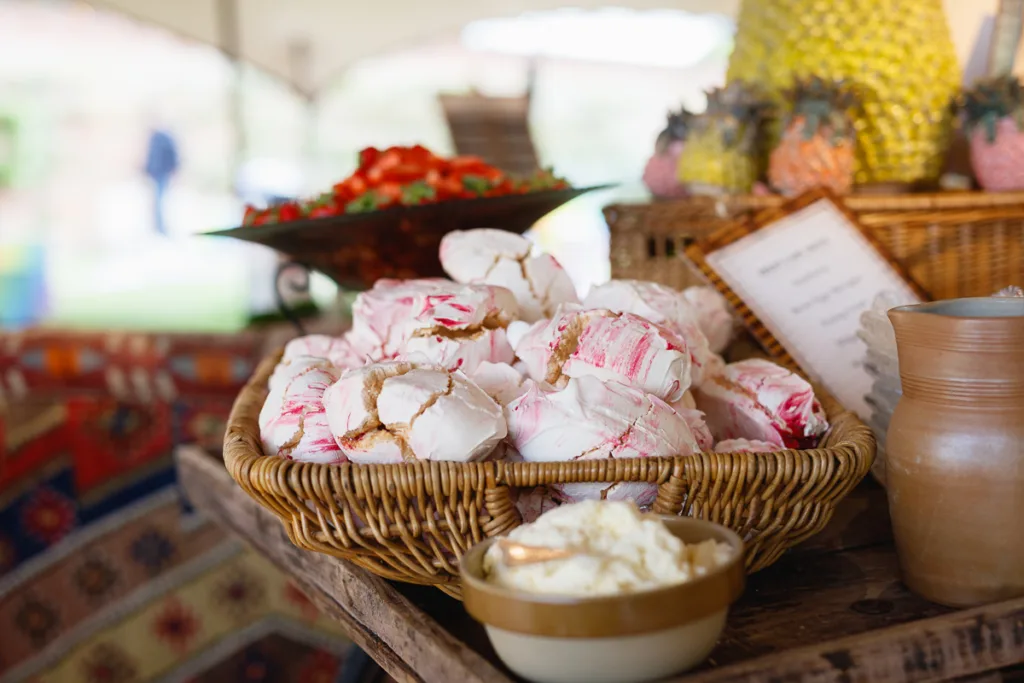
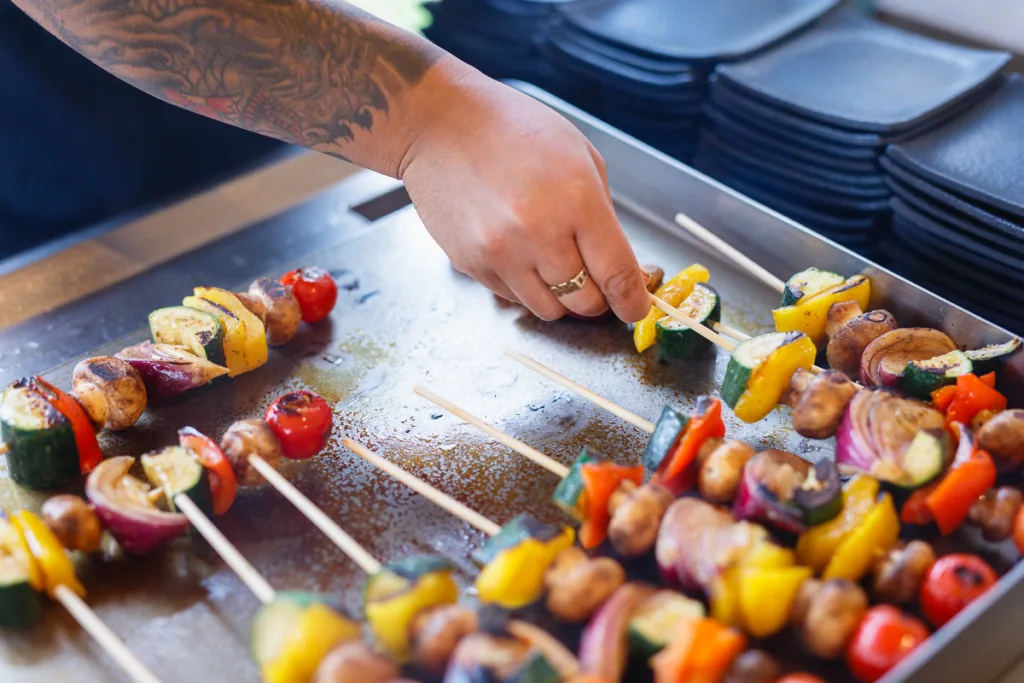
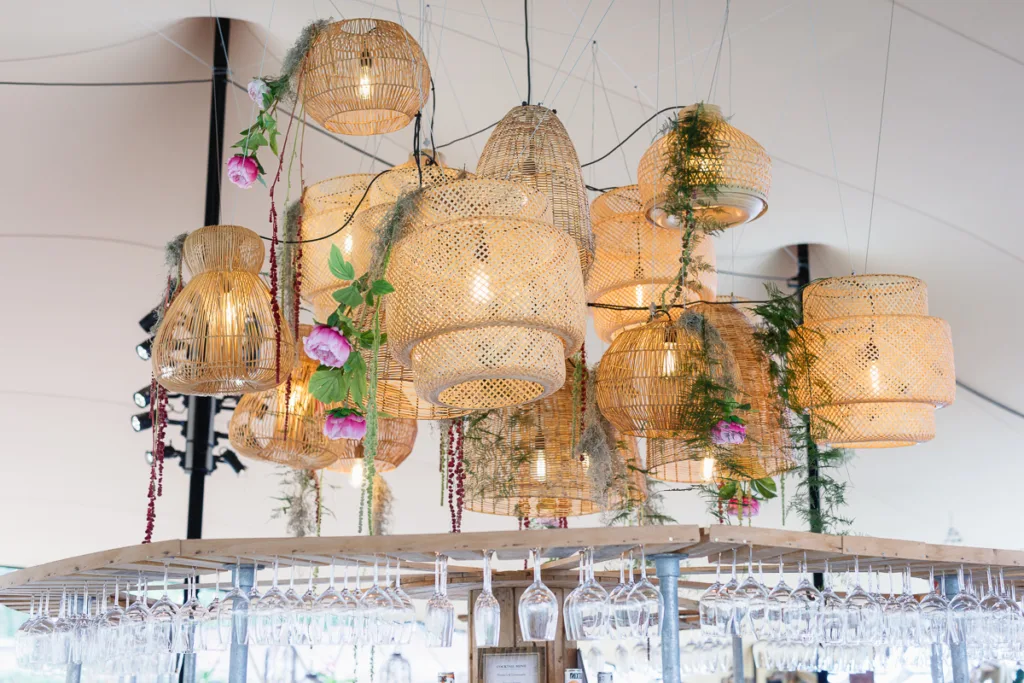
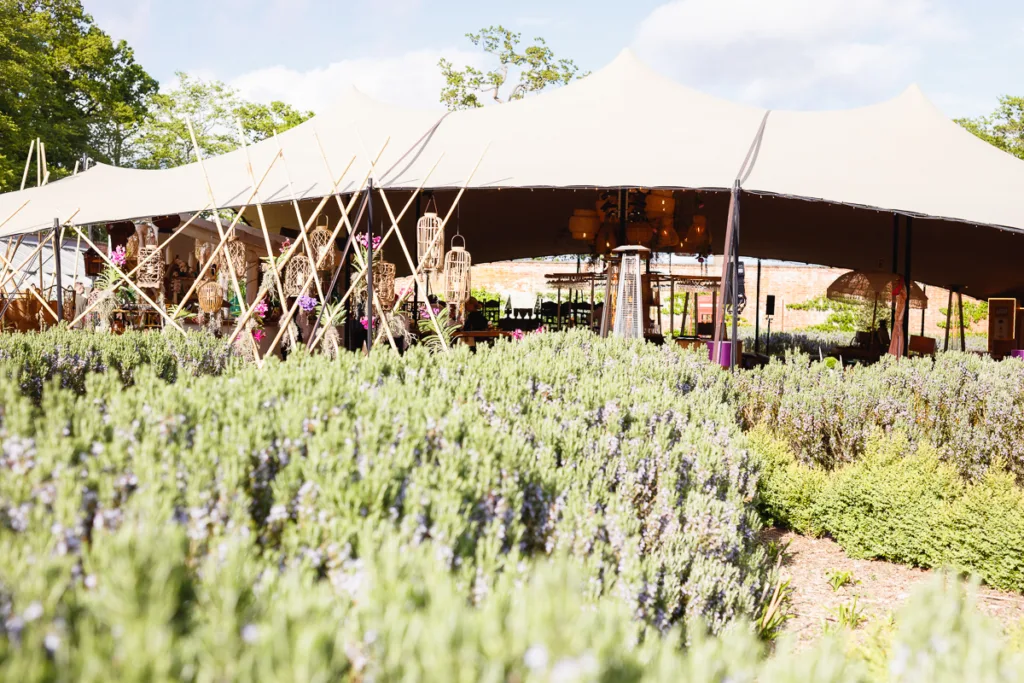
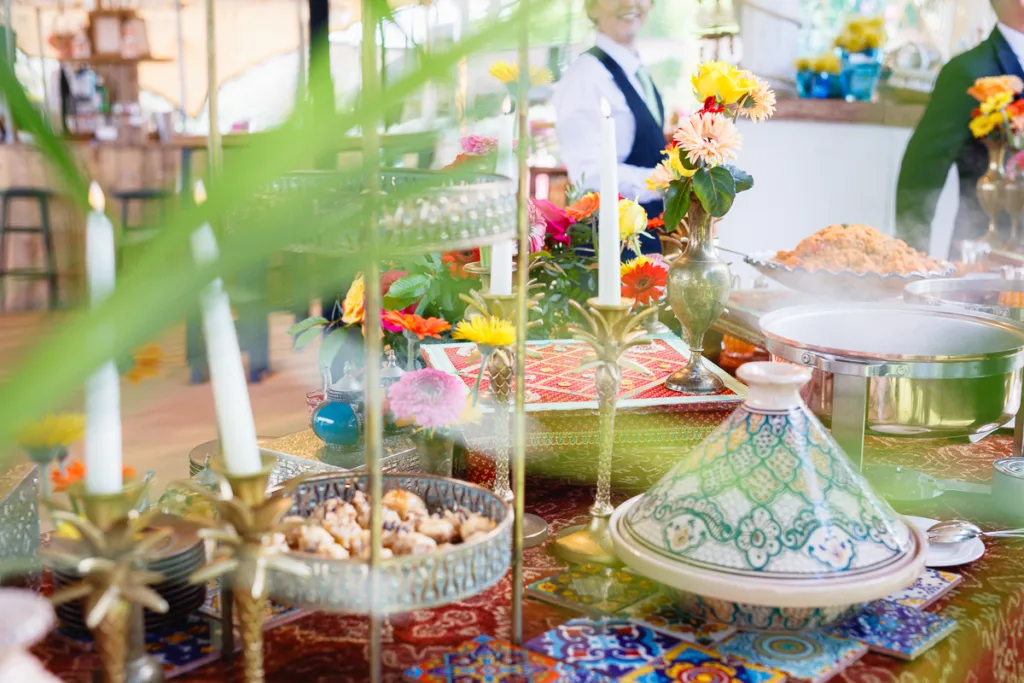
The afternoon moved into the Walled Garden, an enclosed space with greenery, wicker pendant lamps and lighting strung overhead. Lawn games, informal dining, sushi platters, pavlova towers and grazing tables.
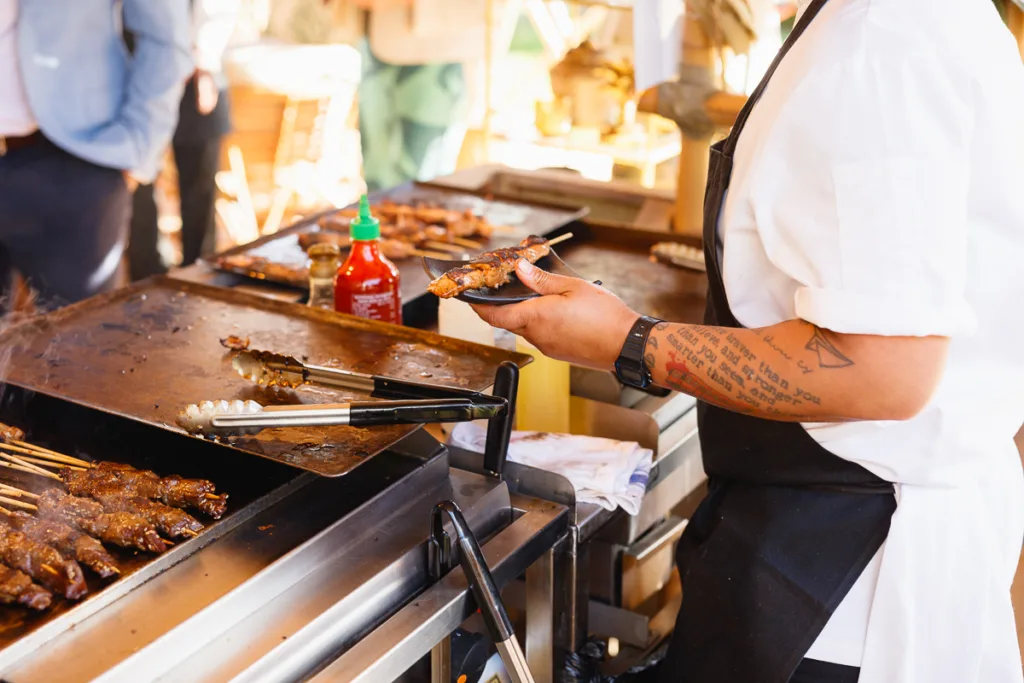
I treated this section as lifestyle coverage. Guests playing games and moving between food stations, the food styled and then the food being eaten, the decor and lighting as light levels dropped. The register here is softer and the risk is over styling. A walled garden in the afternoon should look comfortable and slightly lived in, and if you tidy every frame until nothing is out of place, you end up with something that reads as a catalogue rather than a party.
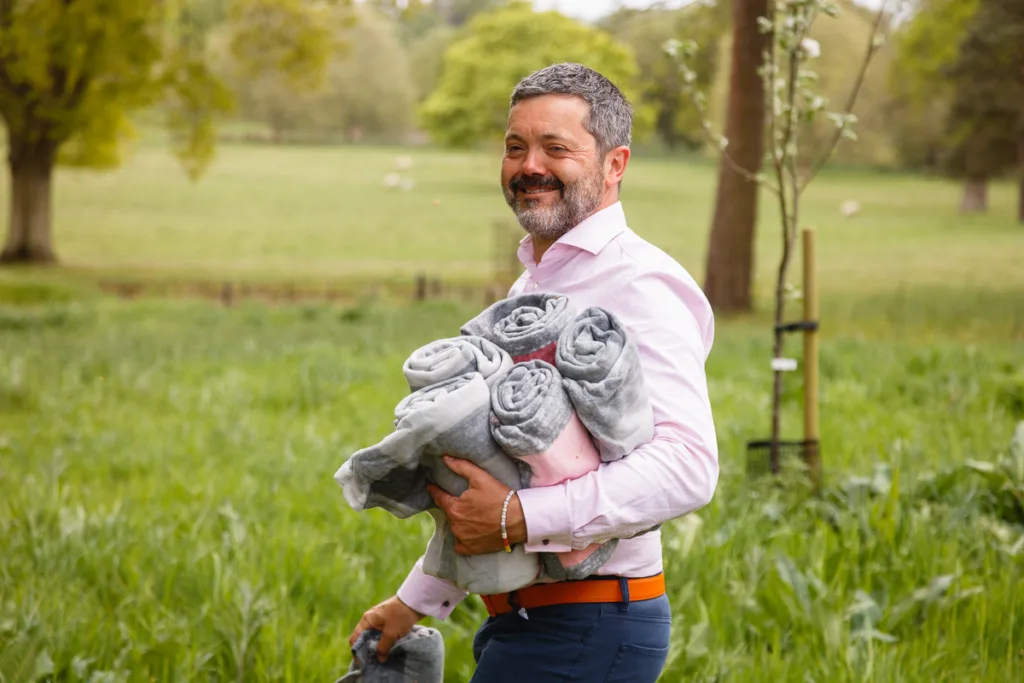
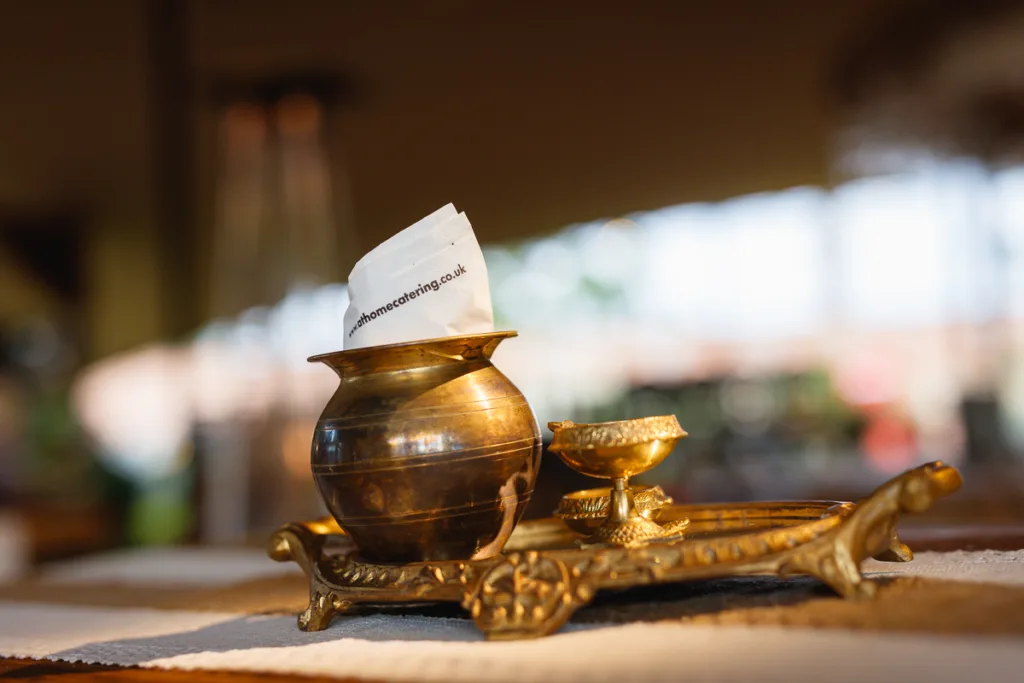
This part of the day also produced most of the behind the scenes material. Setup, service, the moments when staff are adjusting something before a guest notices. Planners use those images more than they expect to, because they demonstrate competence rather than just taste.
Blyth Barn: Low Light, Live Music and Controlled Highlights
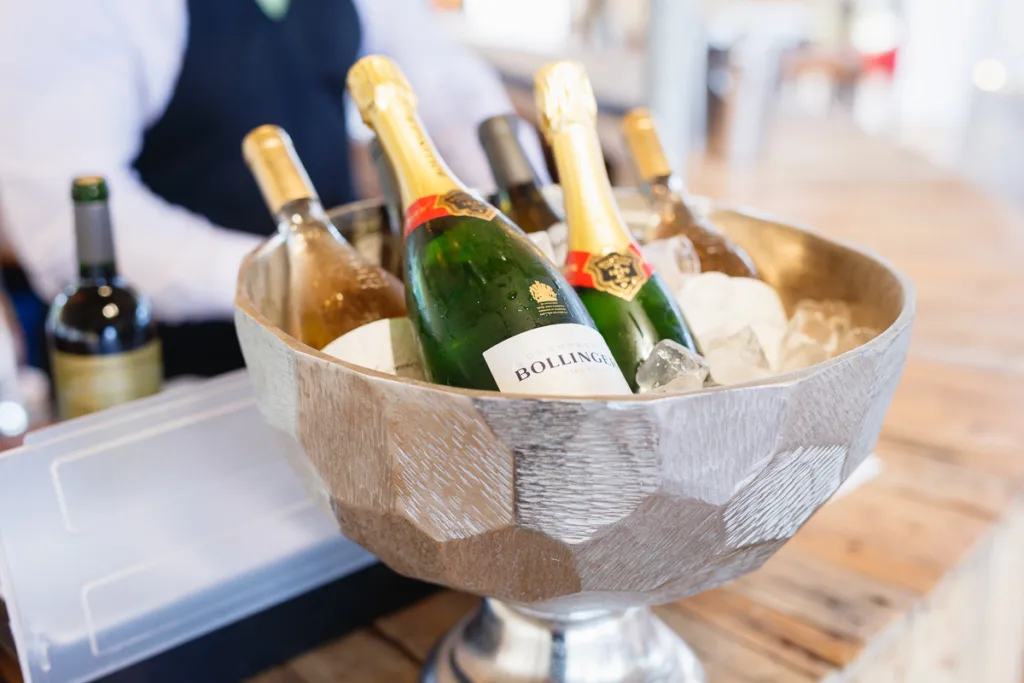
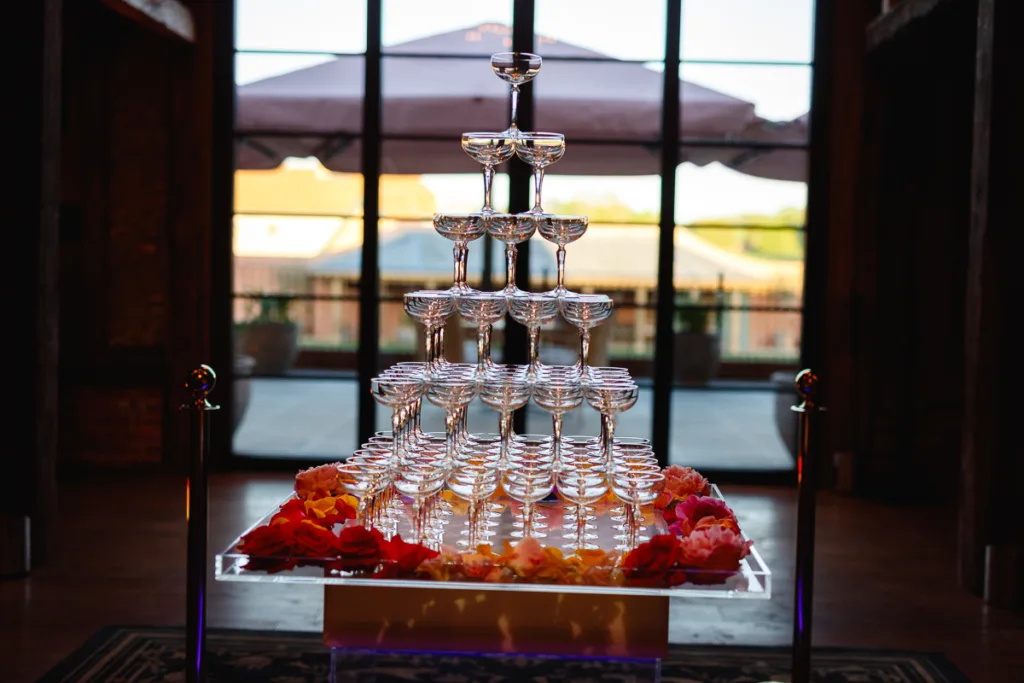
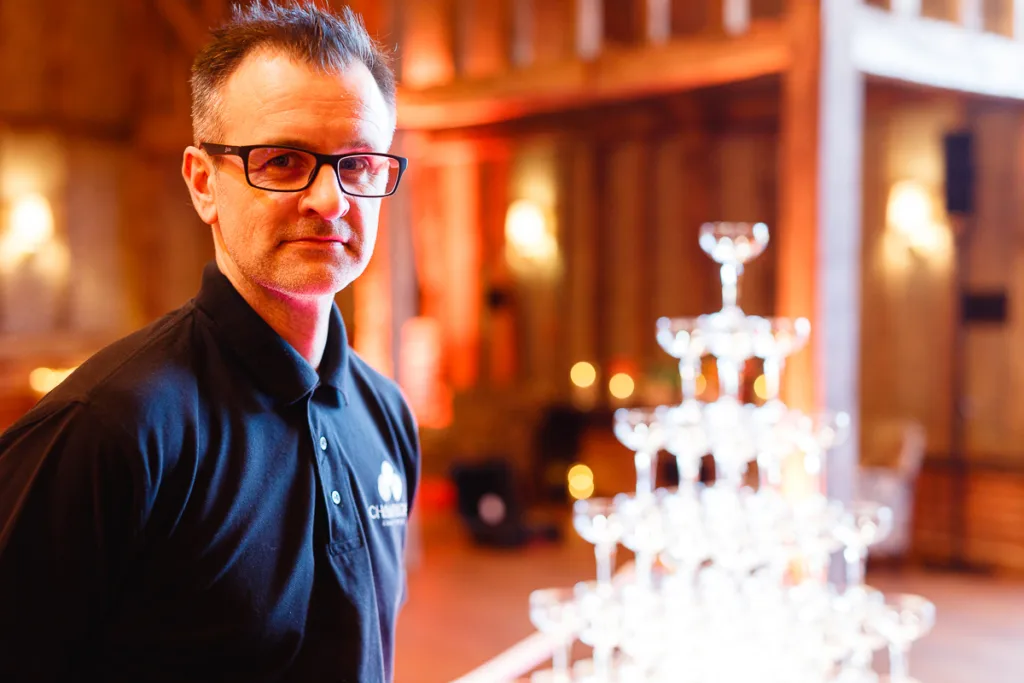
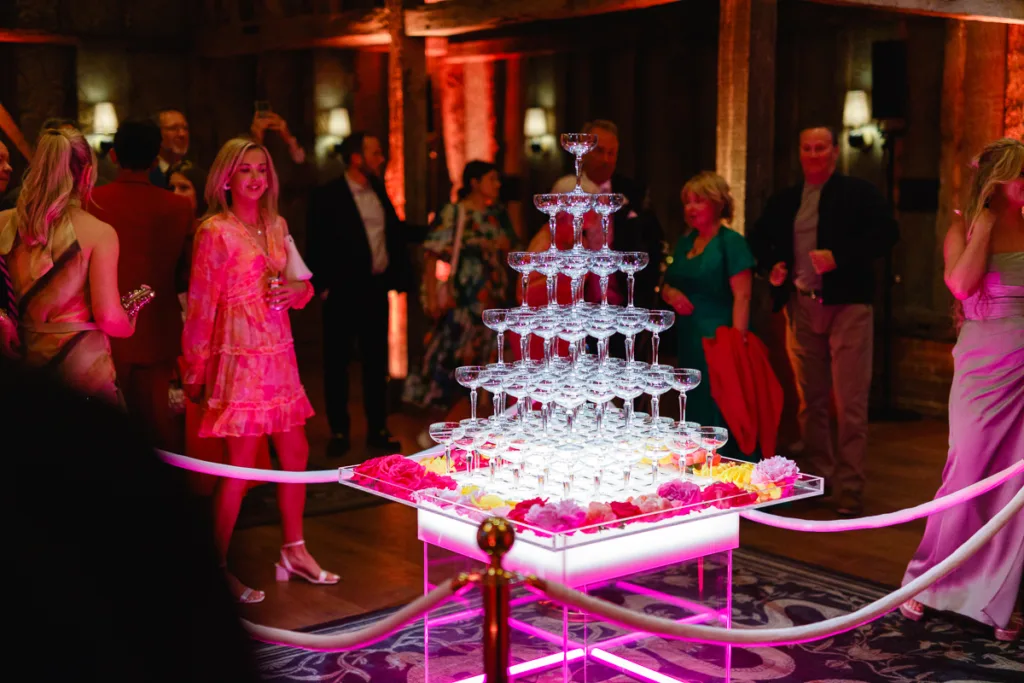
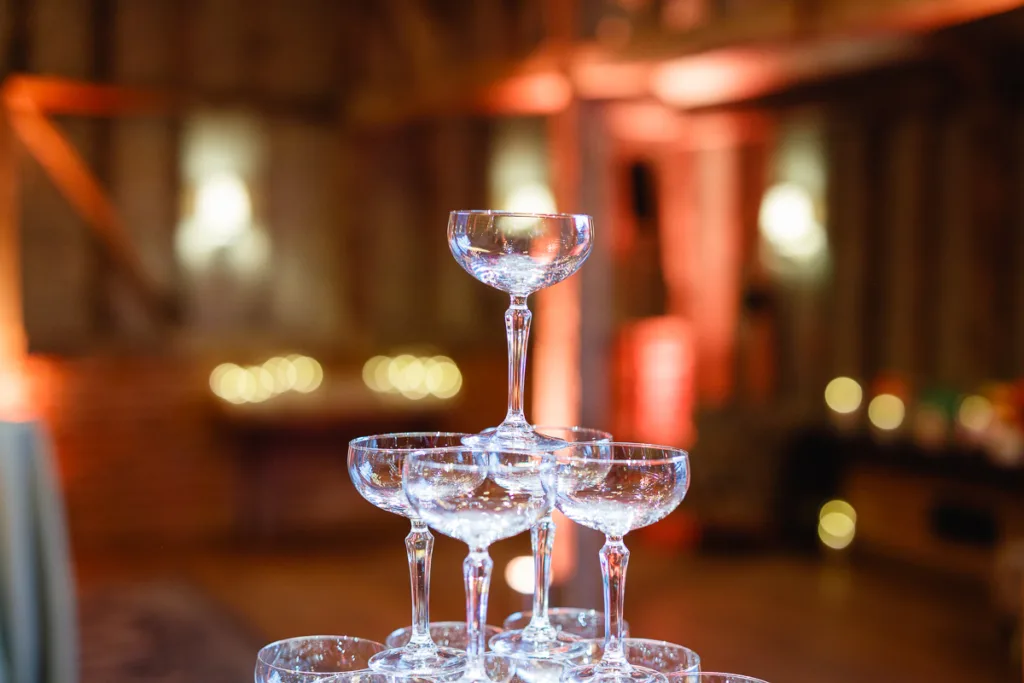
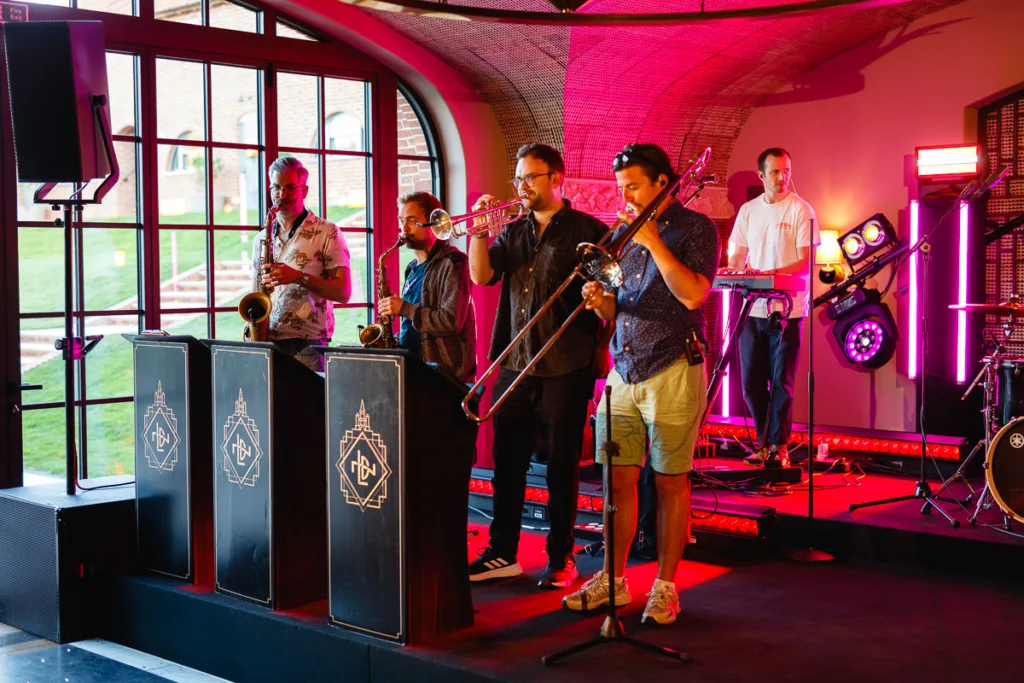
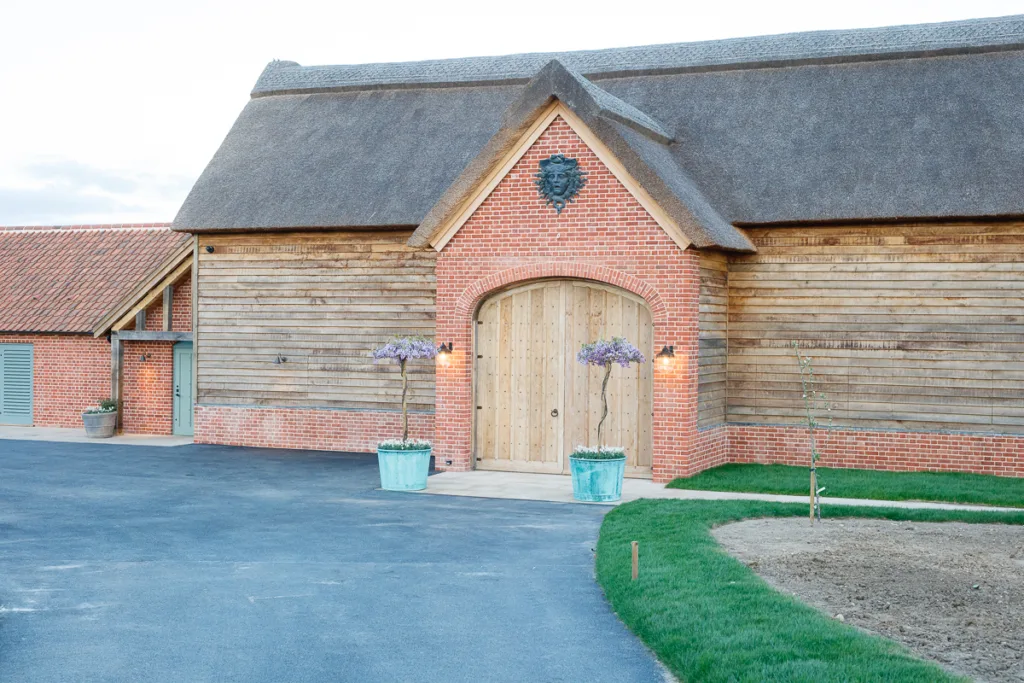
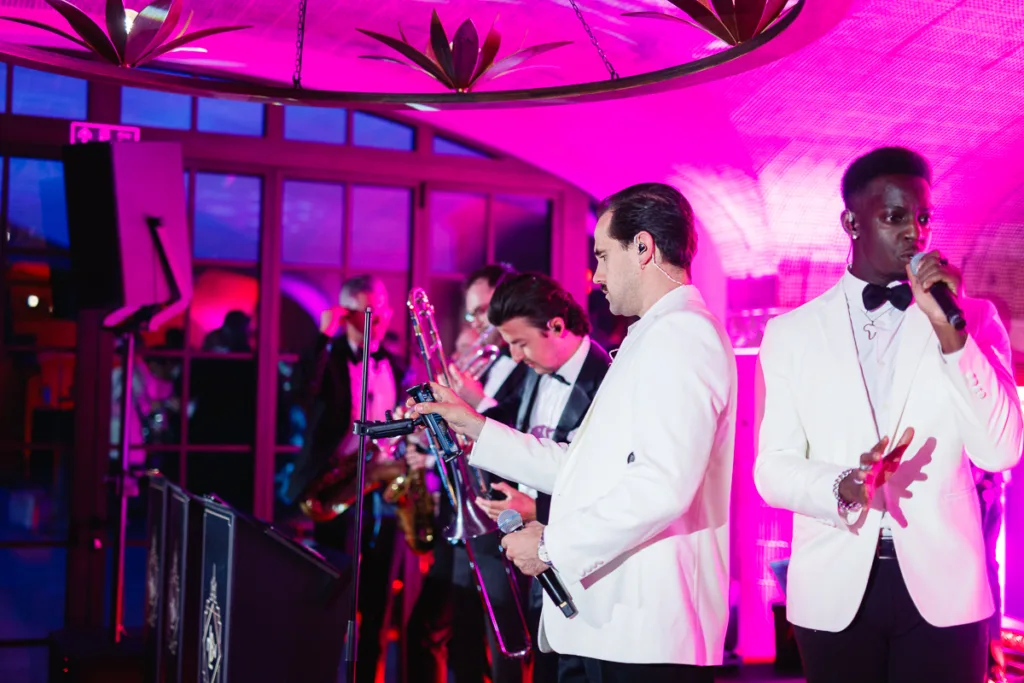
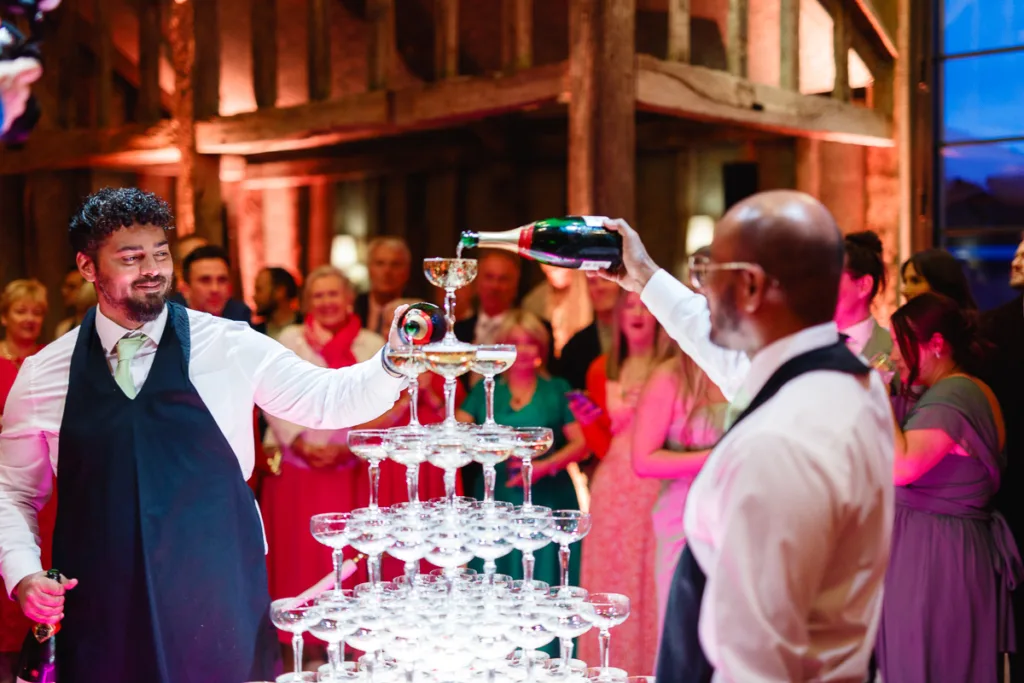
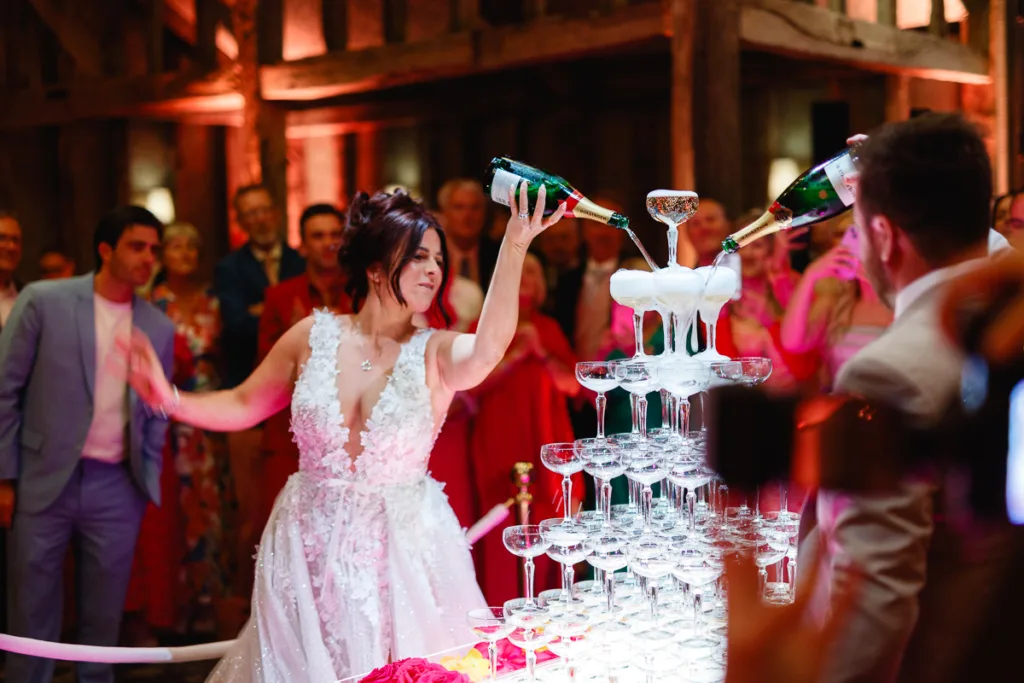
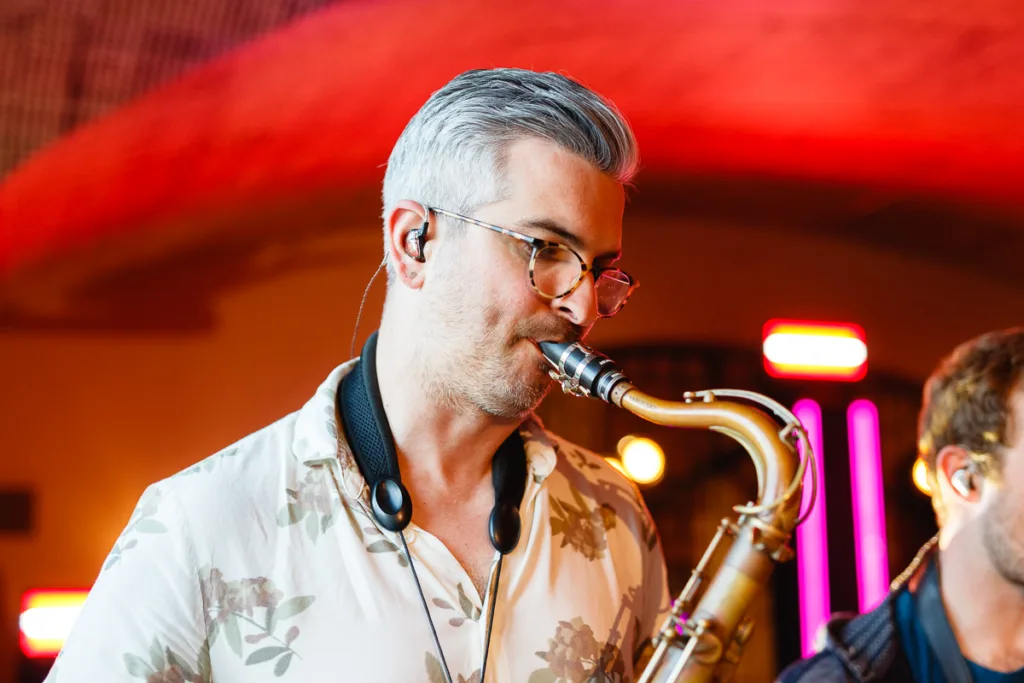
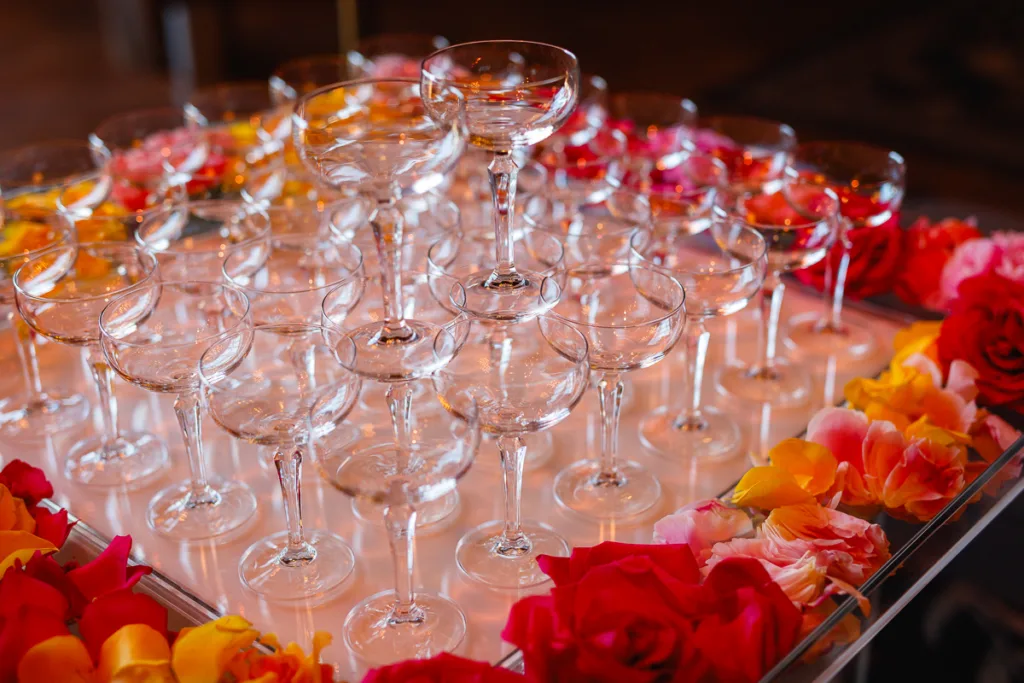
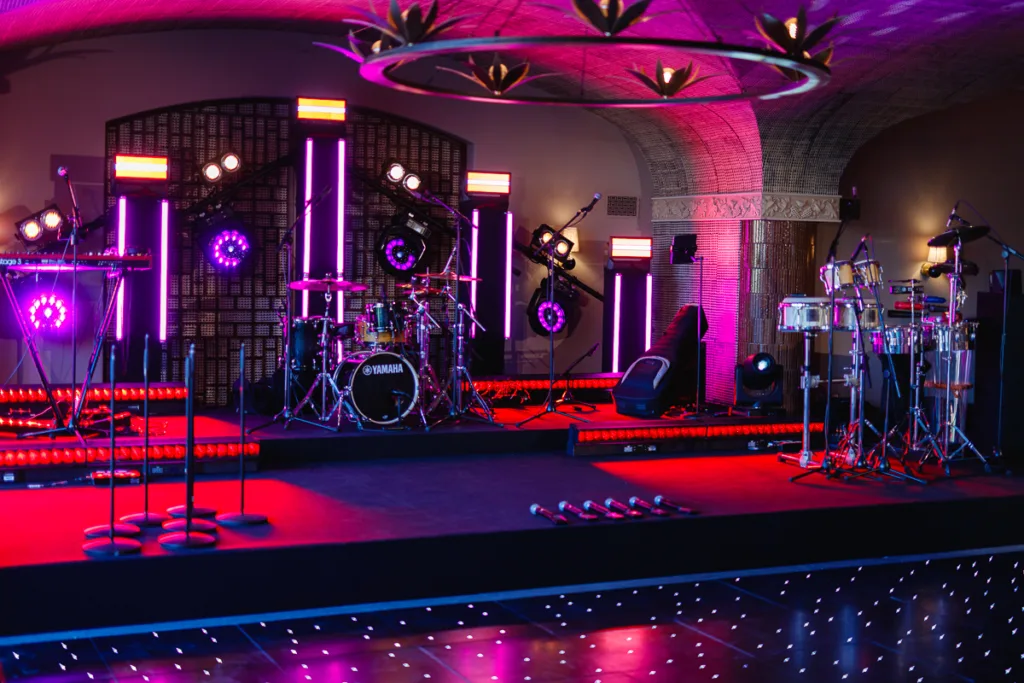
The evening ran at Blyth Barn, a modern event barn with a terrace and pool. A champagne tower opened the evening and a fifteen piece band played after it.
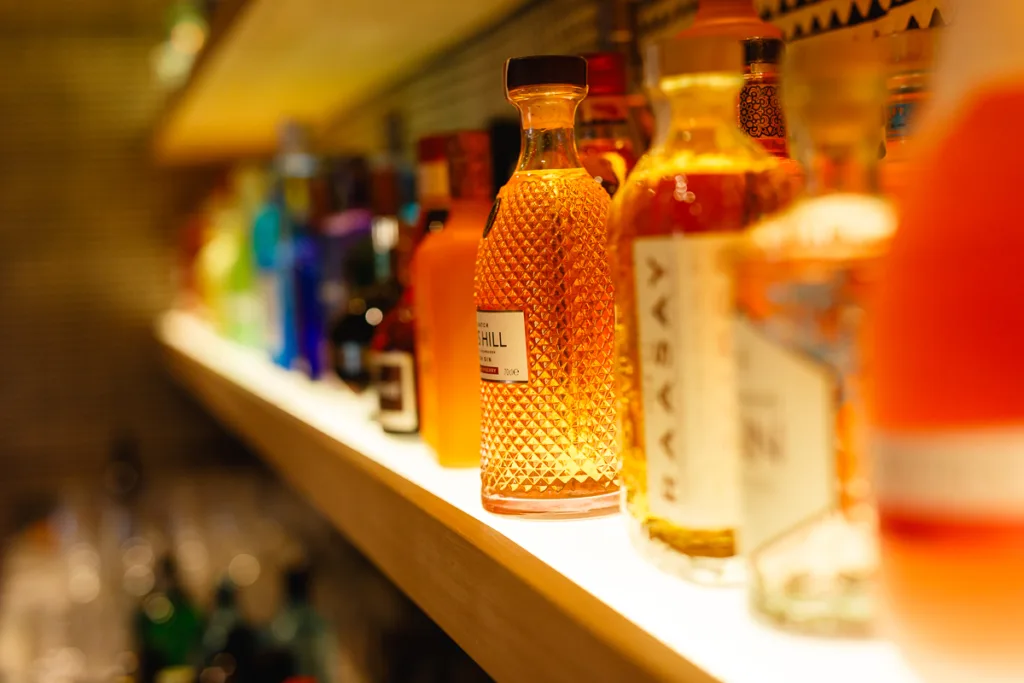
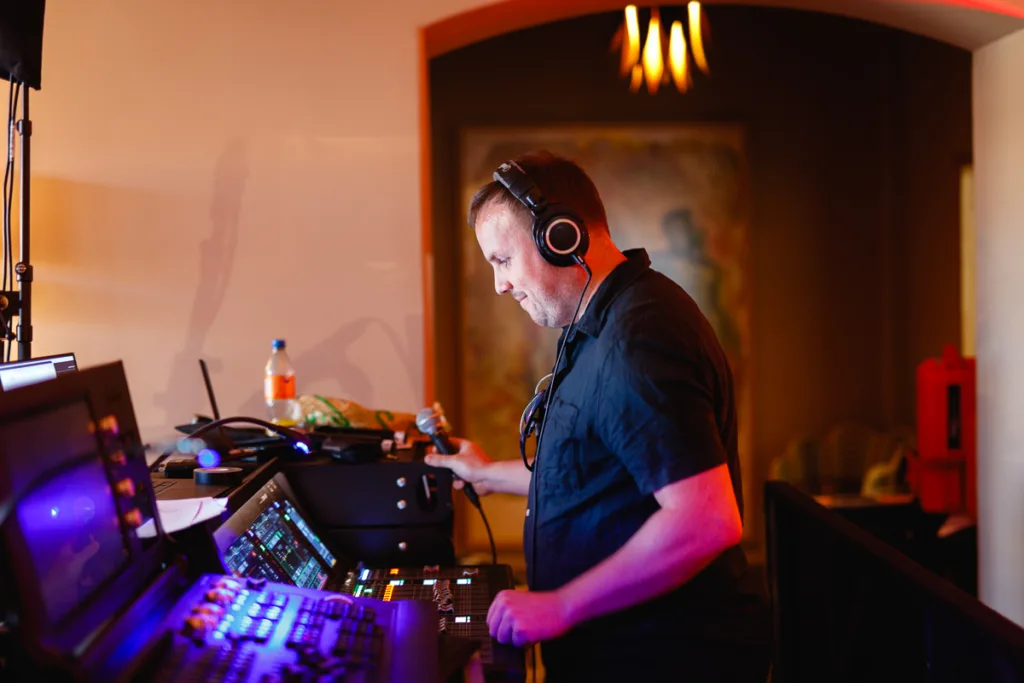
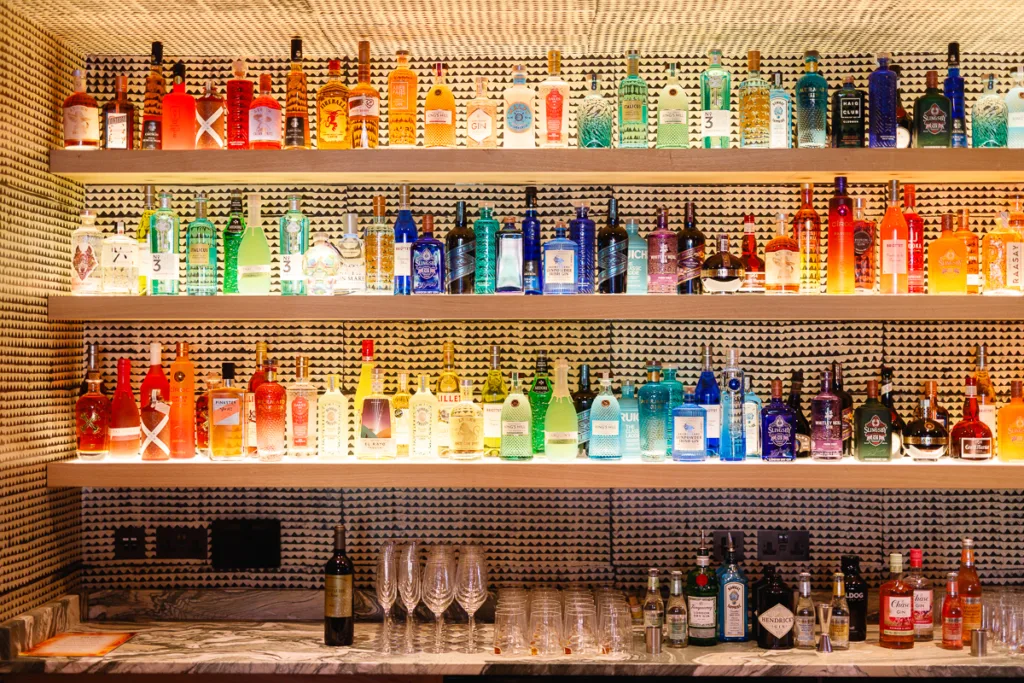
Technically this was the demanding part. Performance lighting, backlit bottles on the cocktail shelves, a dancefloor, and a twilight exterior all in the space of a couple of hours. I moved onto prime lenses and wider apertures, and kept flash to minimal fill where I needed it. Lighting a room like that properly with flash would have flattened exactly the atmosphere the lighting designer had built, and the point of the images is to sell that atmosphere.
The exterior twilight frames of the barn and terrace are worth calling out separately. There is a window of maybe fifteen minutes when the interior lighting and the remaining daylight balance, and if you miss it you either get a black building with bright windows or a lit building against a flat grey sky. It is the frame venues use on their own homepage, so it goes in the plan rather than being left to chance.
Delivery: Building a Library, Not a Gallery
The shooting is half of a commission like this. The other half is handing over something the client can actually use eighteen months later without ringing you up to ask where something is.
The final set was organised into folders by venue, by theme and by format. Venue folders for Sibton Manor, the Sunken Pool, the Walled Garden and Blyth Barn. Theme folders for food and drink, floral styling and evening atmosphere. Format folders for hero shots, vignettes and vertical crops. Files were supplied as high resolution JPEGs for print alongside web optimised versions, with social crops at 1:1 and 4:5 and negative space retained where text overlay was likely.
Every image carried metadata: copyright, brand tags, shoot date and descriptive keywords. That sounds like housekeeping and it is, but it is the difference between an asset library and a folder of pictures. It also means the images stay searchable when they are dropped into a digital asset management system or handed to whoever runs the client’s social media next year.
Colour grading was consistent across all four locations. Clean whites, warm highlights, controlled contrast. When six images from four different parts of the estate appear together in one carousel or one brochure spread, they need to look like one shoot.
Selections were also prepared for the suppliers involved, so the florists, lighting designers and caterers could show their own work in a properly styled setting. That is worth doing. Supplier goodwill is how planners get recommended, and a set of images with a clear credit attached tends to circulate.
What to Ask For When You Commission This Work
If you are a planner or a venue thinking about this, there are a handful of things worth settling before anyone picks up a camera.
- Agree what the images are for. Website, press, social, supplier sharing, pitch decks, or all of it. This changes framing decisions on the day, not just the edit.
- Agree the licence in writing. You are commissioning commercial images and you need to know what you can do with them and for how long. Ask the question early rather than discovering a restriction when you are mid campaign.
- Be clear about the couple. If the event is a wedding, the couple have their own photographer and their own expectations. My presence needs to be agreed with them in advance, and I stay out of the wedding photographer’s way as a matter of course.
- Build in the empty room time. The single most useful thing a planner can give a brand photographer is fifteen unhurried minutes in each space before the guests arrive. Almost every image you will use in your marketing comes from that window.
- Think about how long the images need to last. If the plan is to drip feed content over a year, the shoot needs enough variety and enough different formats to support that. Shooting for a single launch post is a waste of the budget.
Commissioning Brand and Event Photography in Suffolk
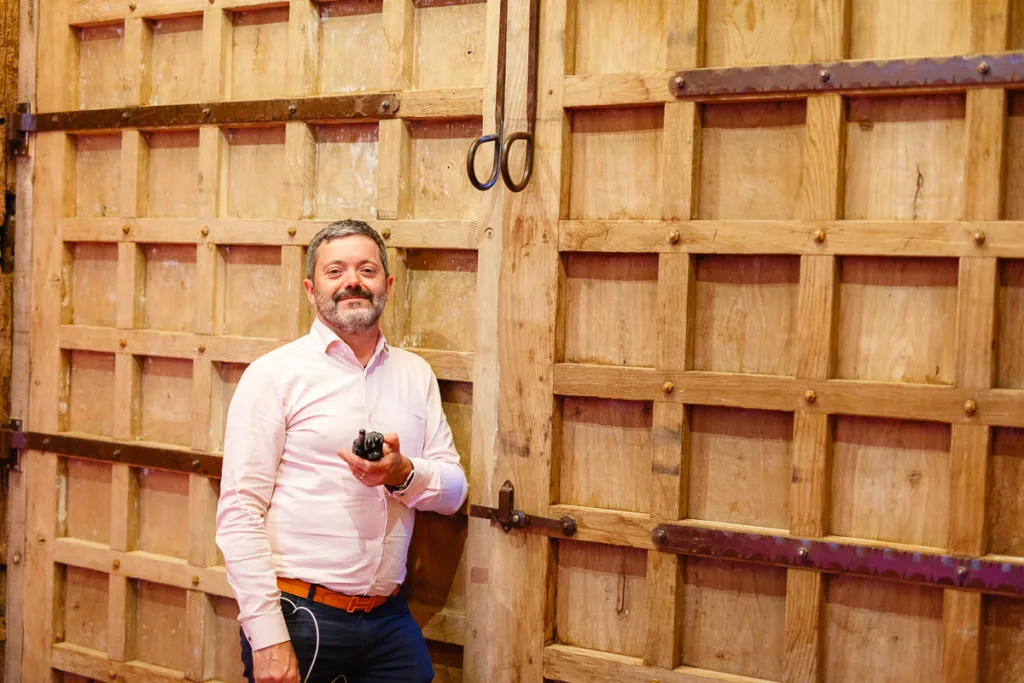
I work from my studio at Base Business Park in Rendlesham, on the former RAF Bentwaters site near Woodbridge, and on location across Suffolk, Norfolk, Essex and Cambridgeshire. Wilderness Reserve is close to home for me, which helps with the scouting and the early starts.
Commissions like this one sit alongside the rest of my commercial work: headshots, personal branding, product photography and business events. The common thread is that the images are planned around how they will be used rather than shot first and sorted out afterwards.
If you are a planner, venue or supplier working in East Anglia and you are thinking about building a proper image library rather than borrowing one, get in touch and we can talk through what your event would need.
Credits
Planning and styling: Events by Amaury
Photography: Foyers Photography
Venue: Wilderness Reserve, Suffolk
Need photography for your business?
Photography for businesses across Suffolk, planned around how you will use it: premises, teams, products, events and PR. See what is involved and get a quote.