Mental health has long been a subject shrouded in misunderstanding and stigma. Through this mental health photography project, I have sought to explore and depict the emotions, struggles, and isolation faced by individuals who, in the not-so-distant past, were confined to asylums. This project, titled Madness, is a collaborative effort inspired by Sue, a model who once worked as a hairdresser in a mental health hospital.
The Inspiration Behind the Project
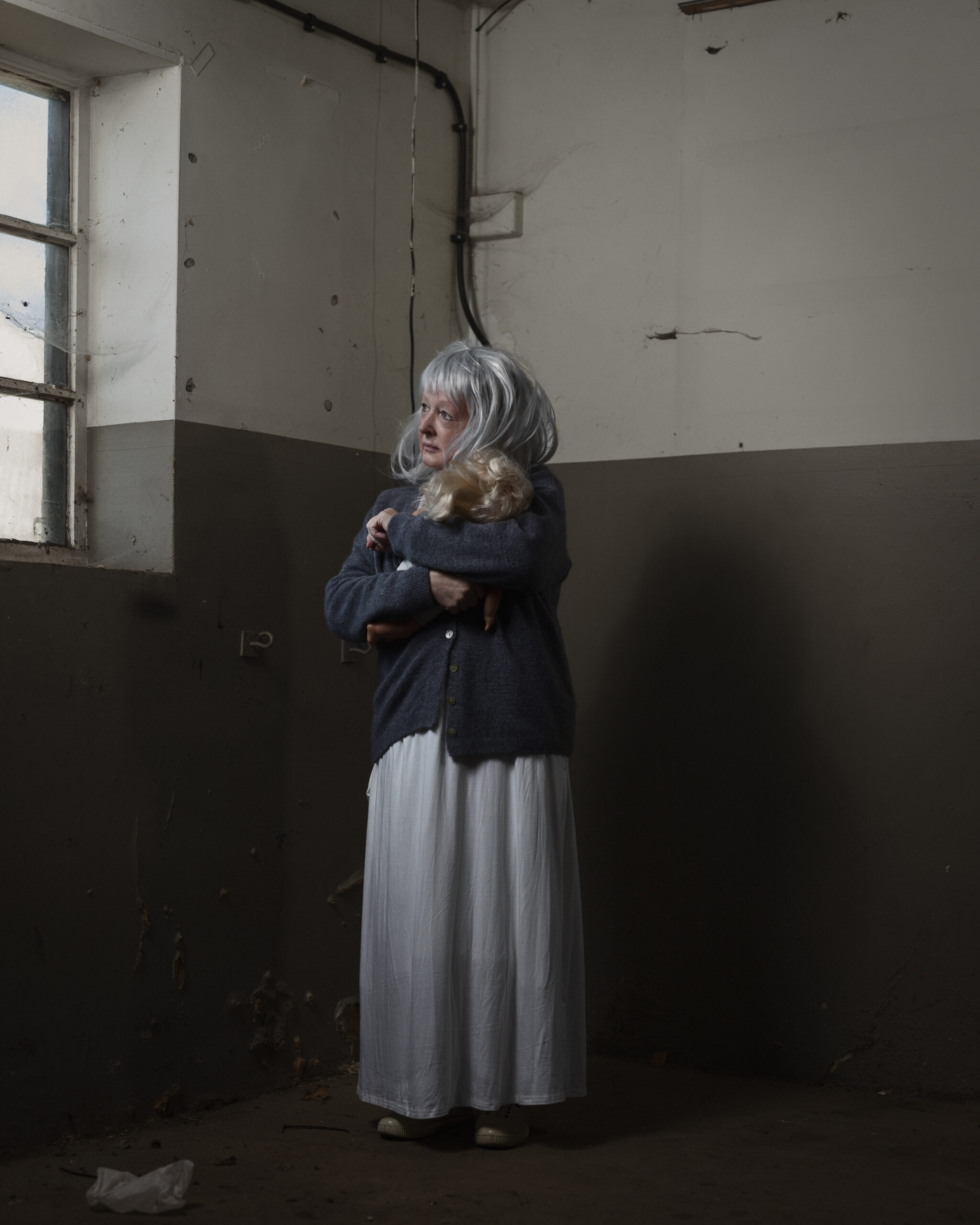
Sue’s firsthand experiences in a mental hospital in Surrey over forty years ago left a lasting impact on her. She encountered many patients who had been institutionalised for reasons that today would be considered unjust. One woman, in particular, stood out, a patient who wandered the grounds clutching a doll. She had been committed by her parents for having an illegitimate child, a baby who was taken away from her.
This story was the catalyst for this conceptual photography mental illness project, aiming to highlight the treatment of individuals who were abandoned by society due to circumstances beyond their control. The idea of using fine art photography and mental health as a medium to tell such powerful stories is something I have been passionate about for a long time.
The Photoshoot: A Collaboration with Sue
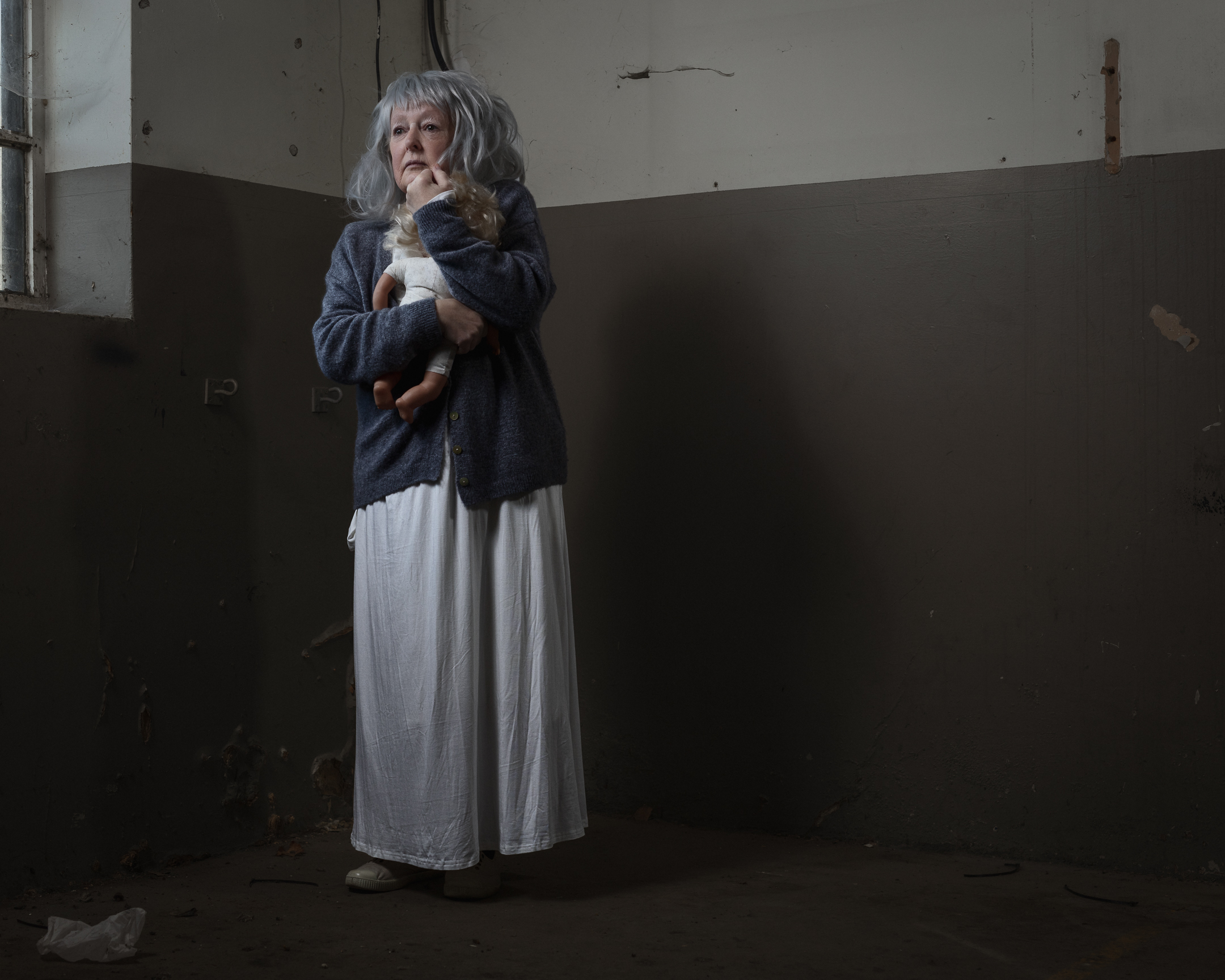
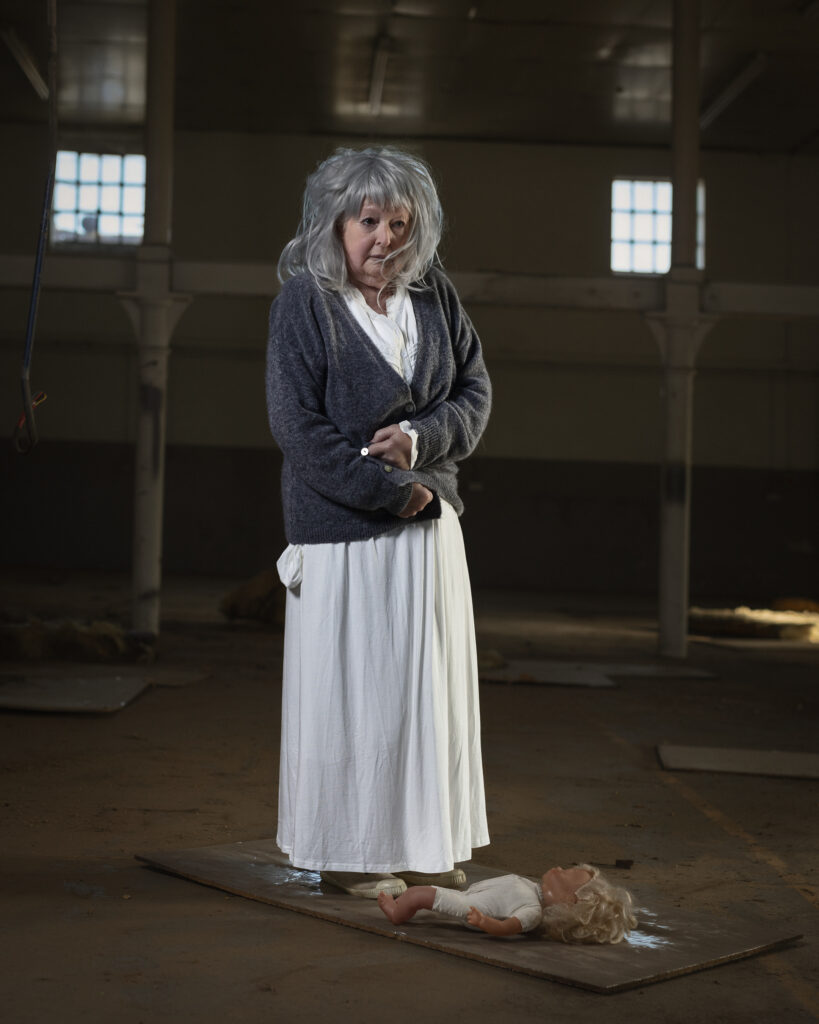
The setting for this shoot was an abandoned old mill in Halesworth, Suffolk. With special permission from the property owner, we were able to use this hauntingly atmospheric location to create a compelling visual narrative. The decayed walls, broken windows, and scattered debris provided an authentic backdrop that complemented the theme of mental health struggles and institutional abandonment.
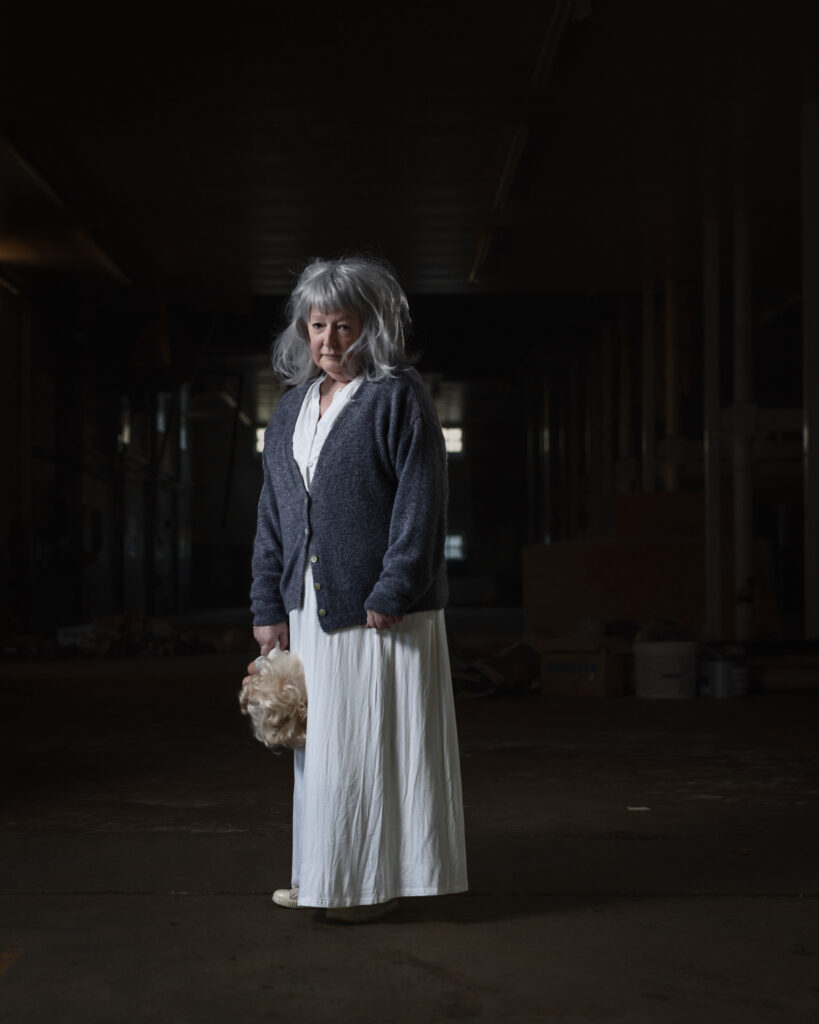
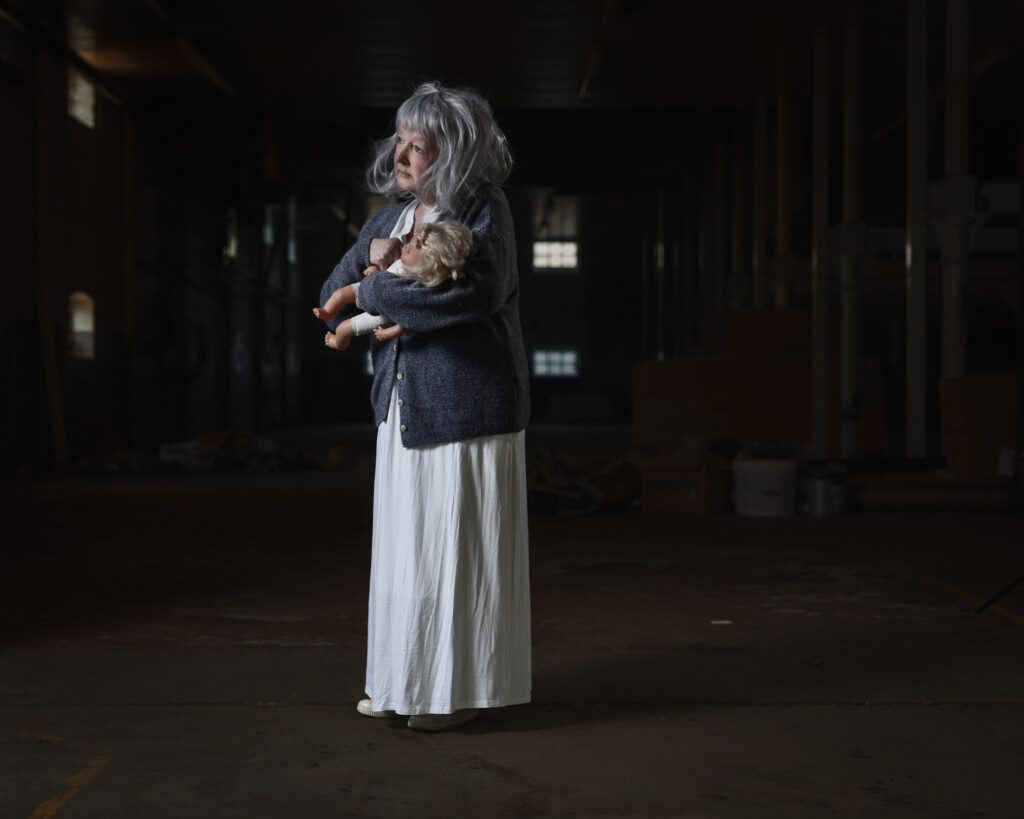
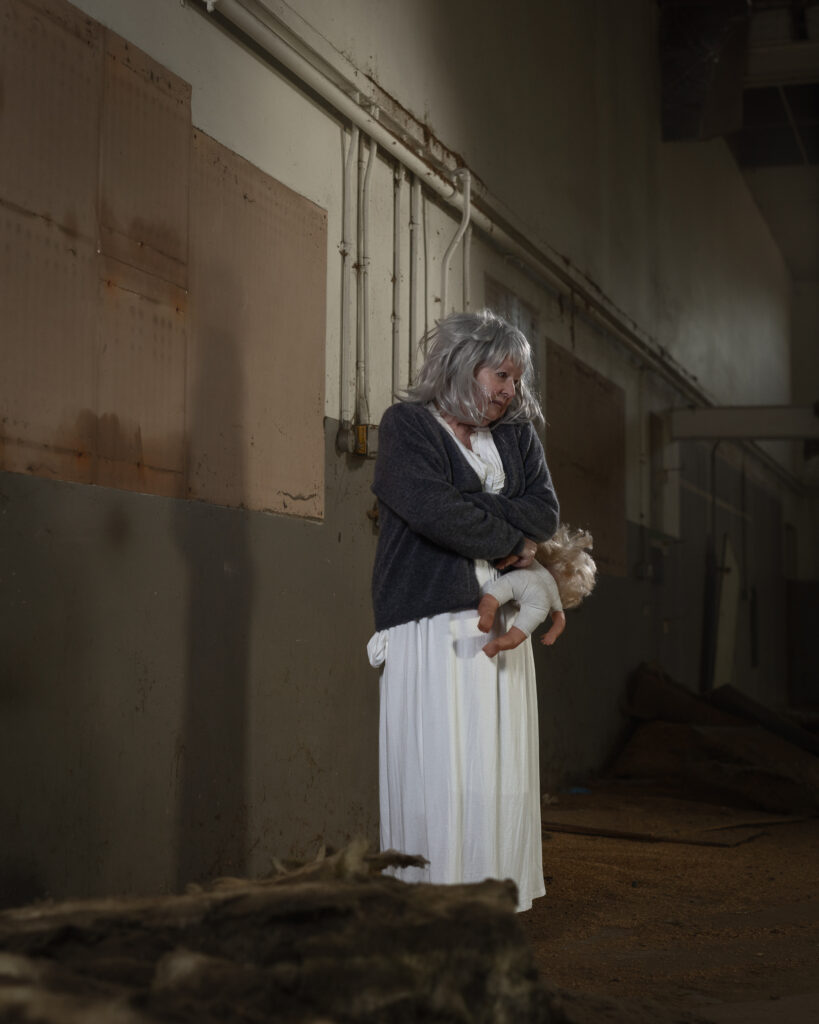
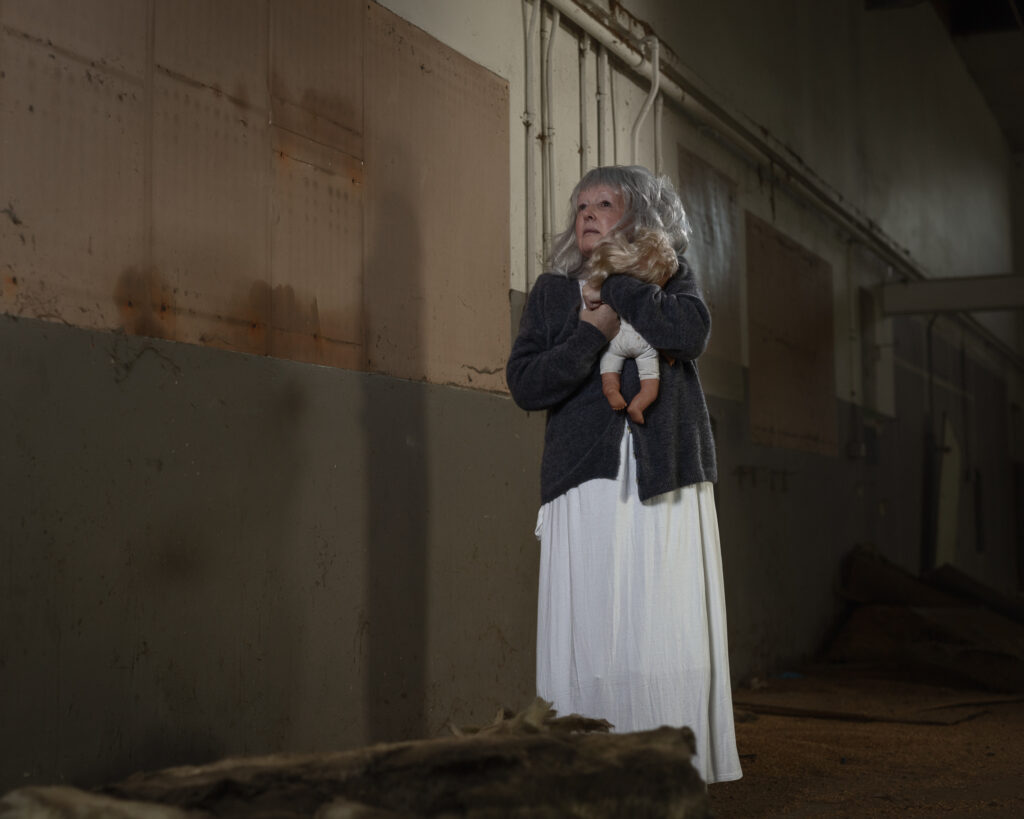
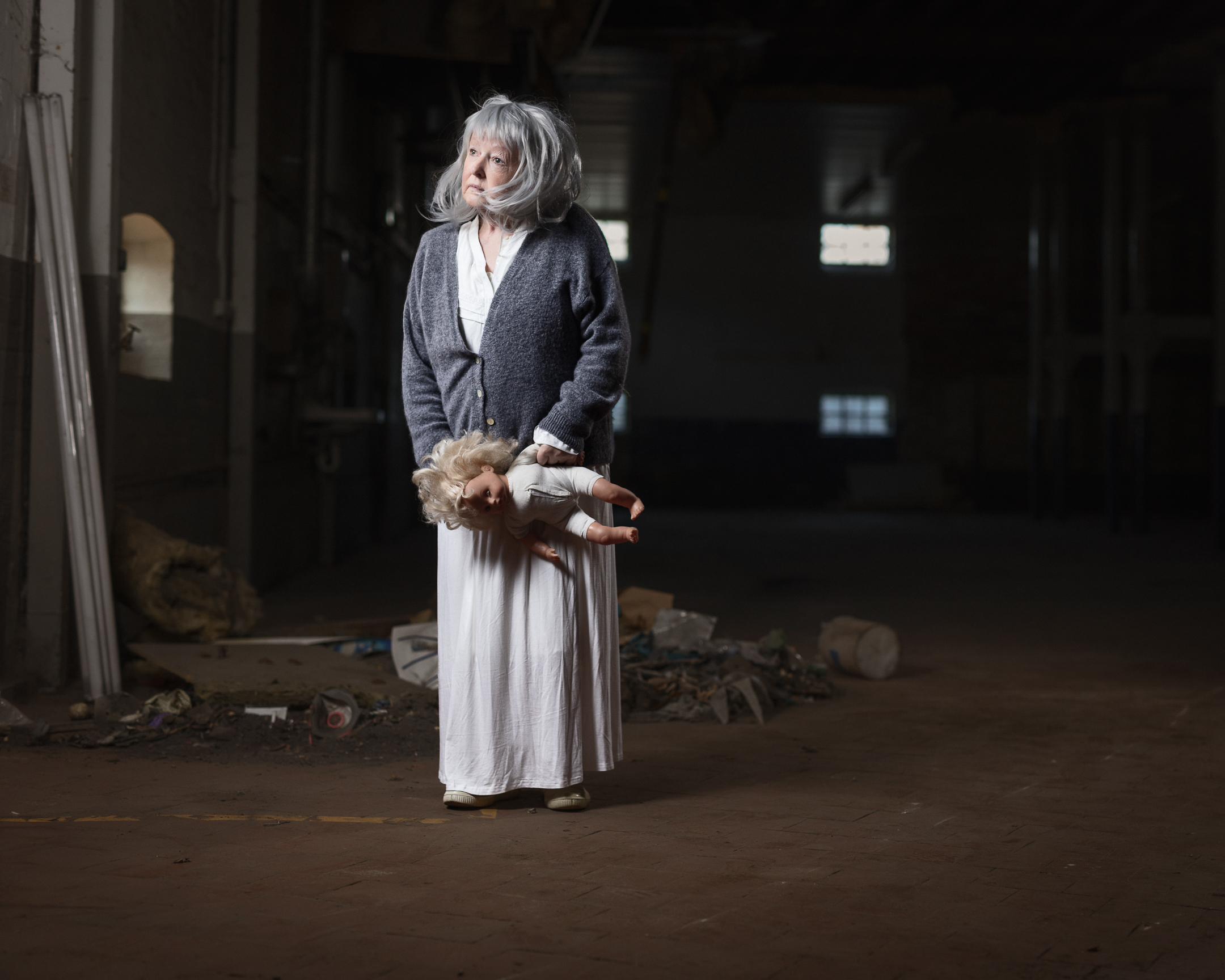
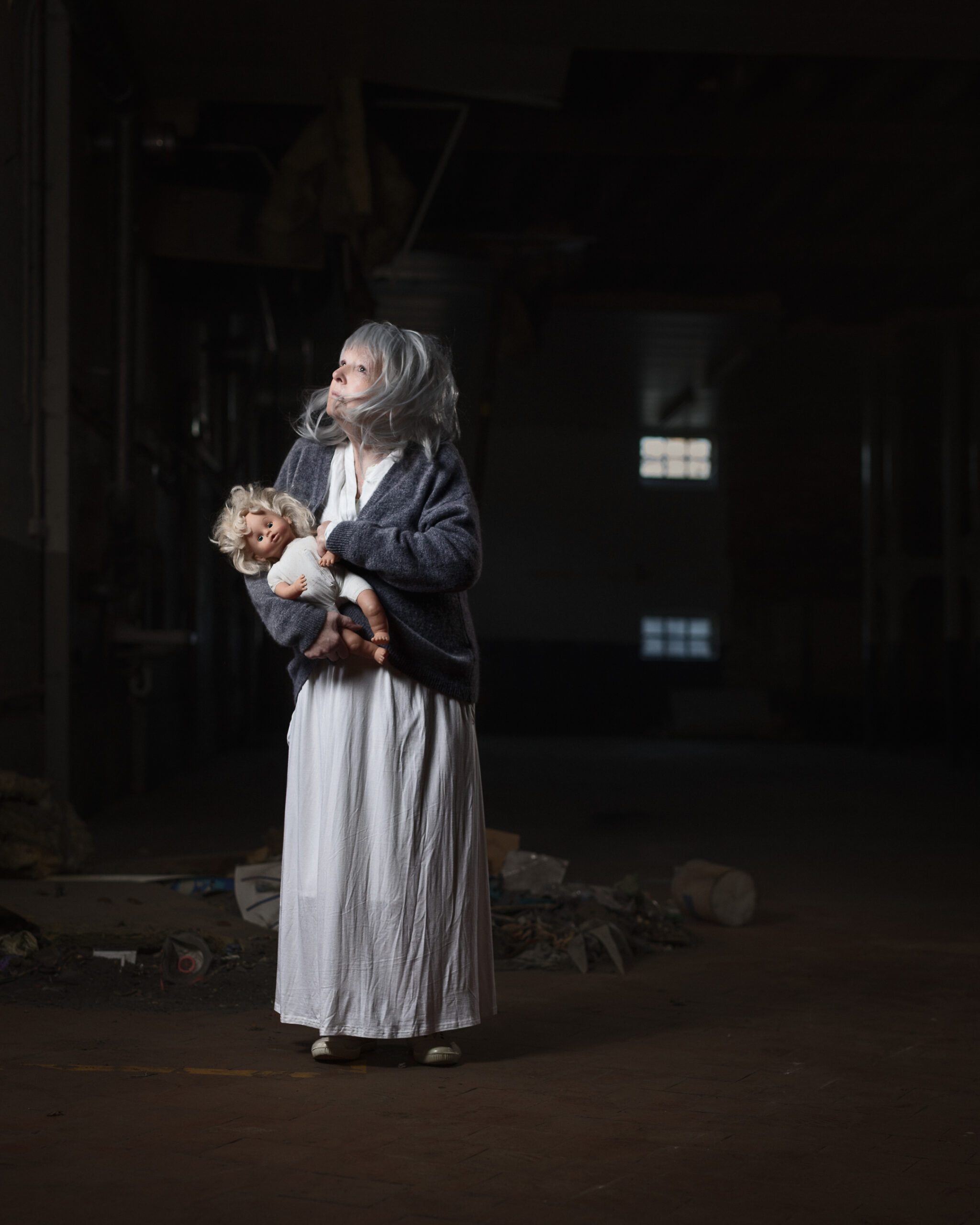
Sue embodied the role with striking authenticity, portraying a forgotten soul trapped in the remnants of an unjust past. Her grey wig, tattered cardigan, and white dress evoked the image of a woman who had spent years in isolation. The doll, an essential prop, symbolised the emotional void left behind by forced separation from a child. This element of expressive photography of mental health allowed us to create a more visceral representation of psychological suffering.
Visual Storytelling in Photography
The series of images captured in this shoot explores a range of emotions:
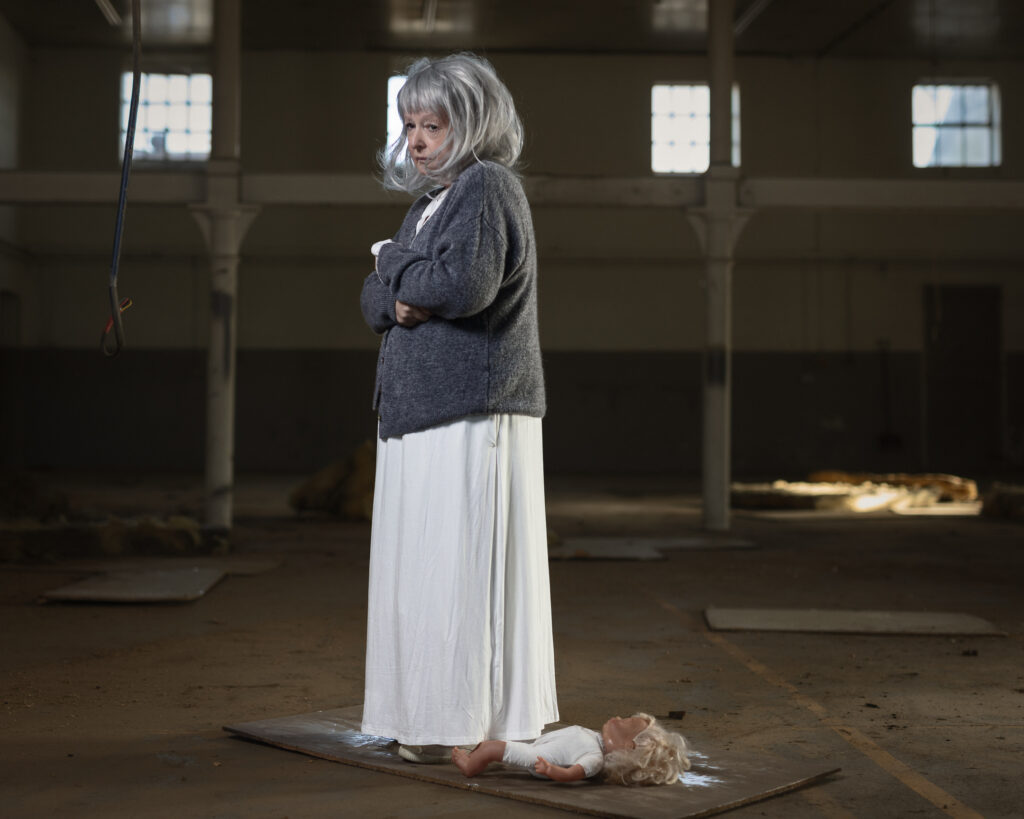
- Isolation: Wide-angle shots depict Sue as a small figure in the vast, decaying space, reinforcing feelings of loneliness often associated with psychological portrait photography.
- Despair: Close-ups highlight the pain and sorrow in her expression, reflecting the inner turmoil of individuals institutionalised without cause, a theme commonly explored in expressive photography’s mental health.
- Clinging to the Past: The doll becomes an extension of her grief, symbolising the child she lost and the life she never had a chance to live, resonating with themes found in fine art portraits exploring psychological struggles.
Each photograph was carefully composed to balance natural light and shadows, adding to the dark moody aesthetic that enhances the emotional weight of the project. Dark moody portrait photography has a unique way of conveying emotion, and this shoot exemplifies how light and shadow work together to tell a story.
The Symbolism of Abandoned Spaces
Abandoned buildings have a unique way of telling untold stories. This particular location, with its crumbling walls and remnants of the past, became more than just a backdrop, it became part of the narrative. It mirrors the neglect faced by those confined in outdated mental institutions, reinforcing the themes of abandoned building photography.
The use of such environments in documentary-style photography helps create an immersive experience for the viewer. In the past, mental asylums often operated in isolated, desolate locations, far removed from society. This separation created a profound sense of abandonment, one that many patients lived with for decades. Old mill photography in Suffolk was an ideal choice for depicting this theme, as it naturally conveyed a sense of desolation and history.
Mental Health and Photography: A Powerful Medium for Awareness
Photography has the power to evoke empathy and challenge perceptions. By portraying the psychological struggles of those historically marginalised, this project encourages reflection on the importance of mental health awareness photography. The images serve as a visual representation of what once was and a reminder of how far society has come, while also acknowledging the progress still needed in mental health care and social attitudes.
Art has always played a crucial role in helping society reflect on its past. Symbolic portraits of mental health challenges can act as a bridge between history and the present, urging viewers to engage in meaningful conversations. The use of fine art photography mental health in this project was a deliberate choice to blend artistry with storytelling, making the subject matter more accessible and emotionally impactful.
The Role of Fine Art in Expressing Mental Health Narratives
Photography, particularly fine art portraits exploring psychological struggles, is a vital tool in mental health awareness through conceptual photography. A single image has the ability to convey despair, loneliness, or even resilience in a way that words often cannot. Through carefully curated poses, settings, and lighting, the aim was to visually translate emotions into something tangible.
As a Halesworth photography project, this shoot also highlights the importance of community involvement in creating meaningful artistic expressions. Mental health is not just an individual struggle, it is something that affects families, communities, and society at large. By collaborating with Sue, who has direct experience in this field, we were able to ensure that the representation was both authentic and respectful.
Personal Reflection on the Project
Working on this project has been both eye-opening and emotionally challenging. It is a stark reminder that mental health care, though improved, still carries stigma in many areas. Through documentary-style photography, I hope to bring these stories to light, encouraging conversations that foster understanding and compassion. The fusion of fine art photography mental health with a documentary approach allows for a deeper emotional impact.
Through this project, I have also learned the importance of using visual storytelling in dark and moody photography to craft compelling narratives. The ability to capture raw emotion through imagery is a powerful tool, and I hope that viewers of this project will take a moment to reflect on the historical injustices faced by individuals struggling with mental health challenges.
Final Thoughts
This shoot was a deeply moving experience, and I am grateful to Sue for sharing her story and bringing it to life. Madness is more than just a photography project on mental health, it is a statement, a piece of history, and a call for continued awareness. The ability to use symbolic portraits of mental health challenges in artistic representation helps create visual storytelling that connects with audiences on an emotional level.
Through Halesworth photography projects like this, I hope to continue exploring themes that matter, shedding light on the unseen and forgotten. Mental health photography is not just about images, it is about stories, emotions, and, ultimately, understanding. Using photography to express inner emotions is one of the most profound ways to engage with an audience and foster empathy.