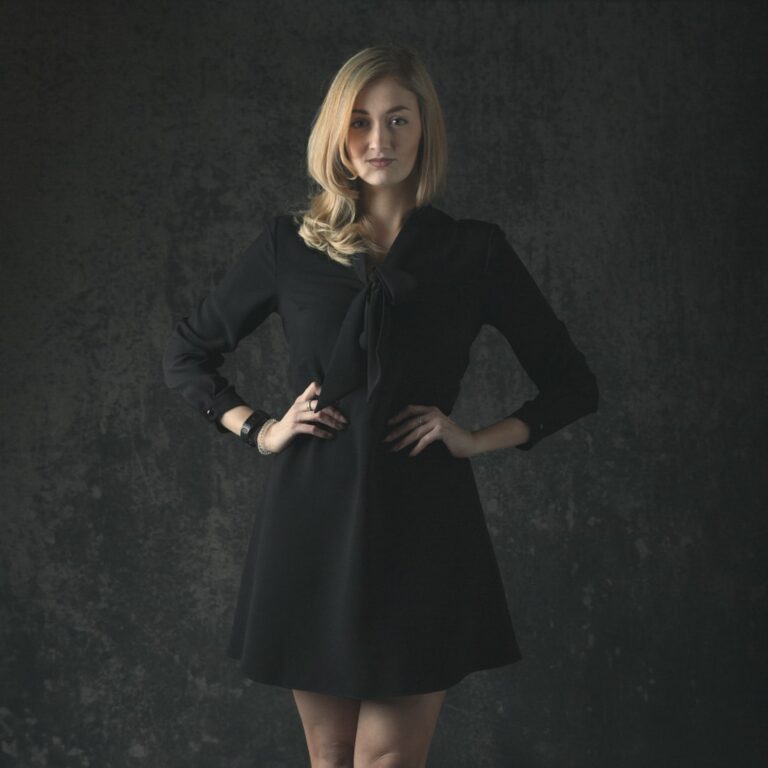
The Shoot
Margita and I have worked together a number of times now, which changes how a session runs. When there’s an established working relationship, you spend less time on the basics and more time on the images that actually matter. That makes a difference.
The idea for this shoot had been forming for a while. Royal Ascot has a very specific visual language to it, particularly when it comes to what the women attending choose to wear. The hats, the occasion dressing, the whole considered effort that goes into a look for a race day. It’s a world that doesn’t really exist anywhere else in modern British life to quite that degree, and it felt like the right starting point for an editorial session. When I mentioned it to Margita, she was immediately on board and came with exactly the right outfits to make it work.
Three Looks, Three Different Directions
We planned three distinct looks for the day, and they each had a different purpose.
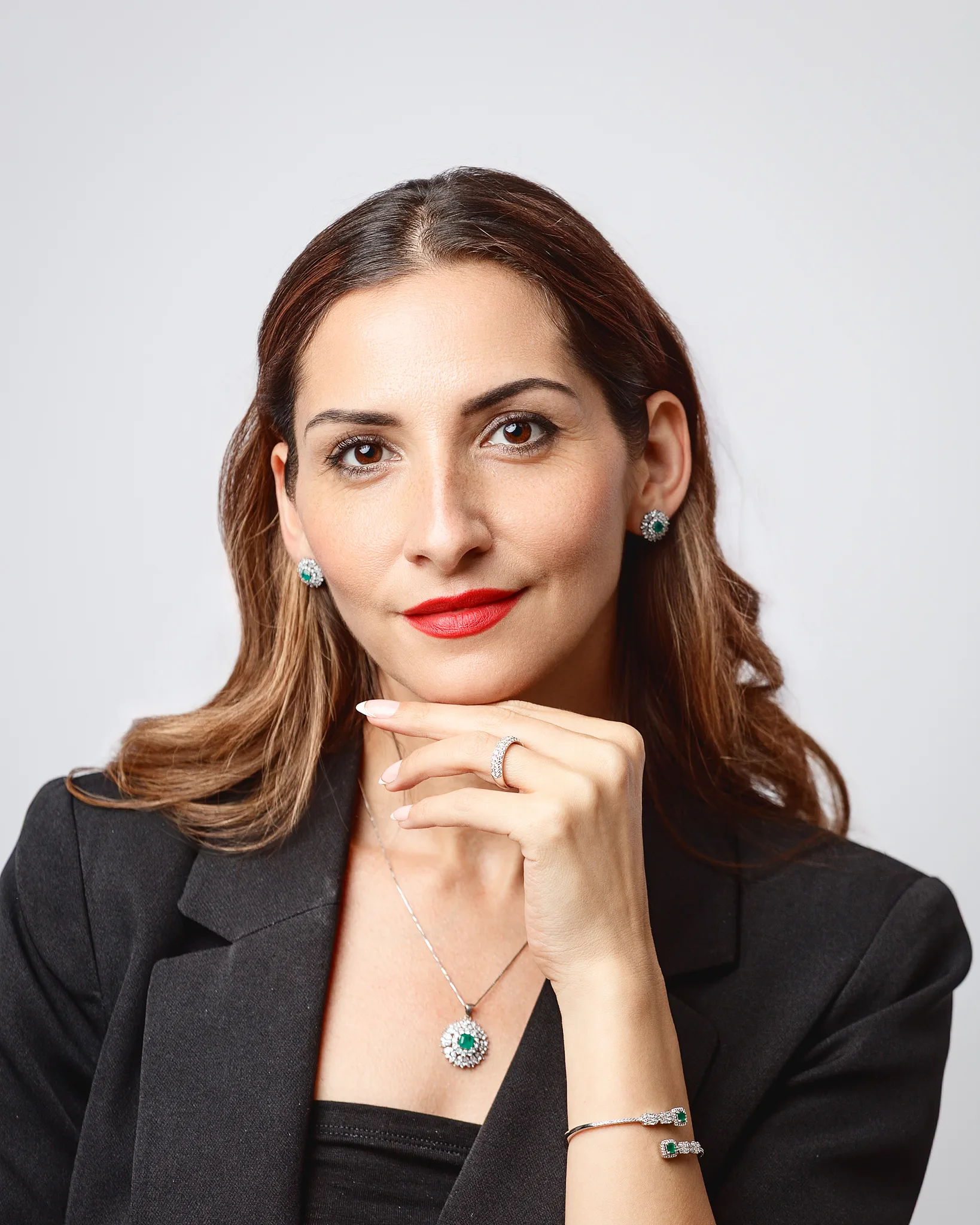
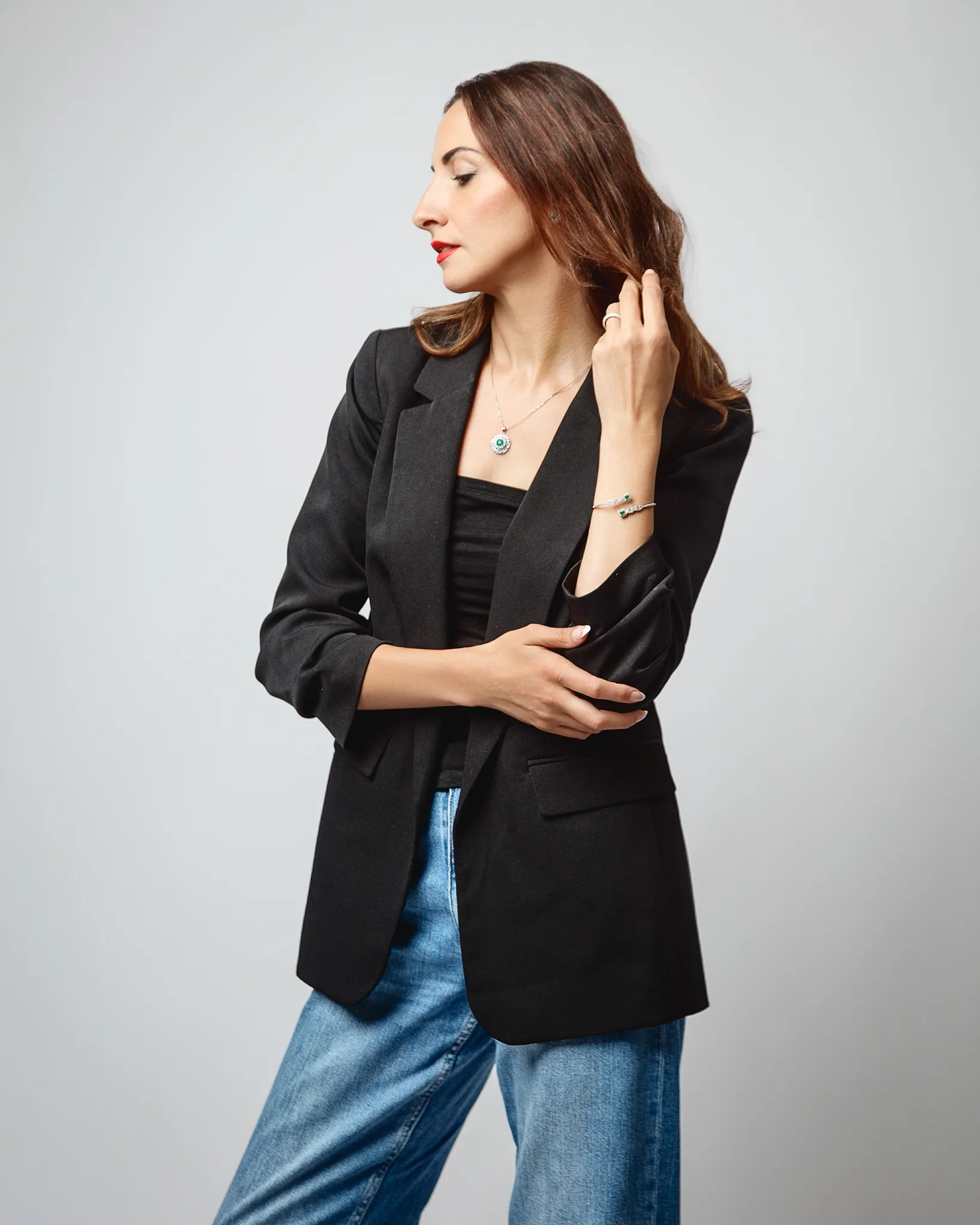
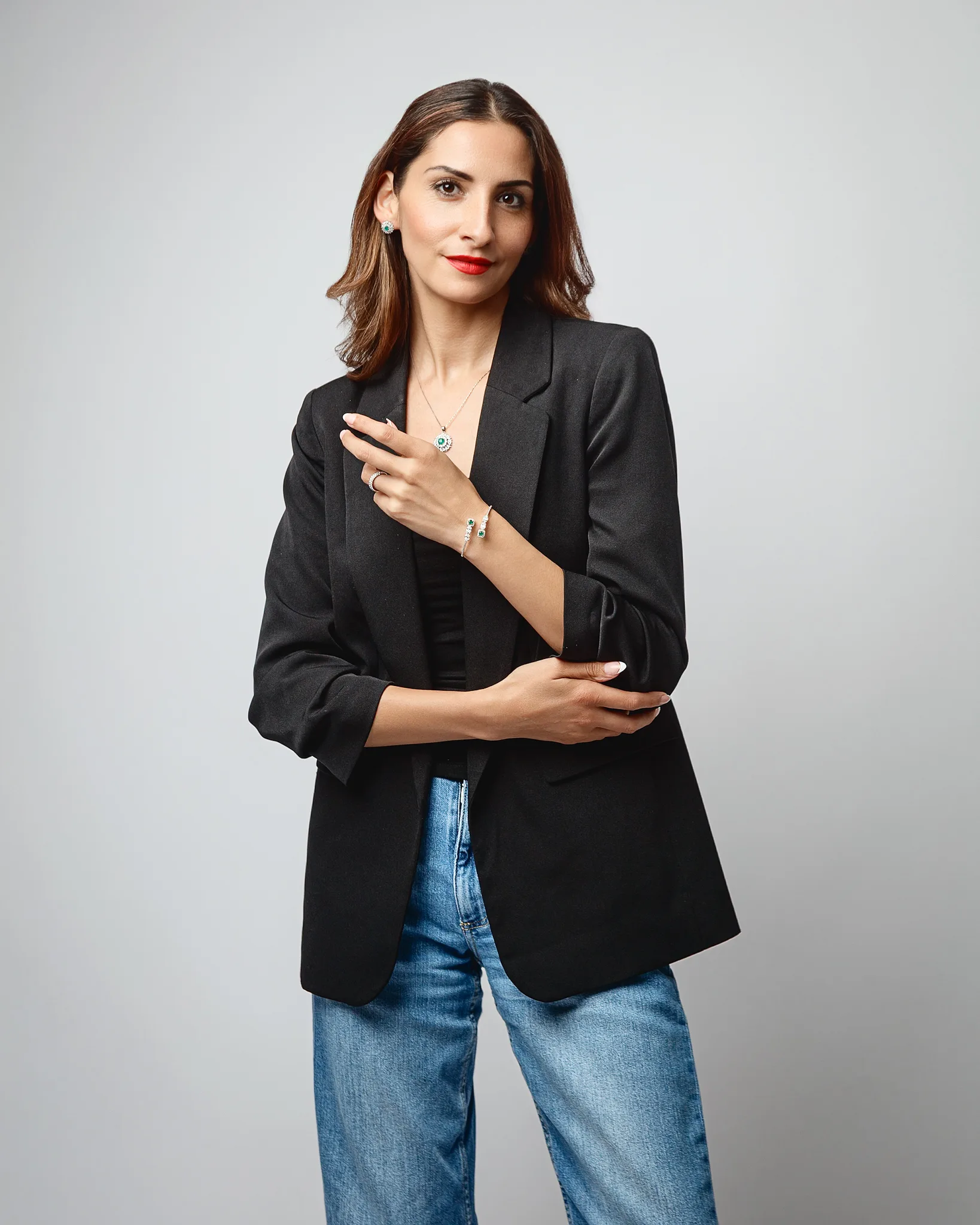
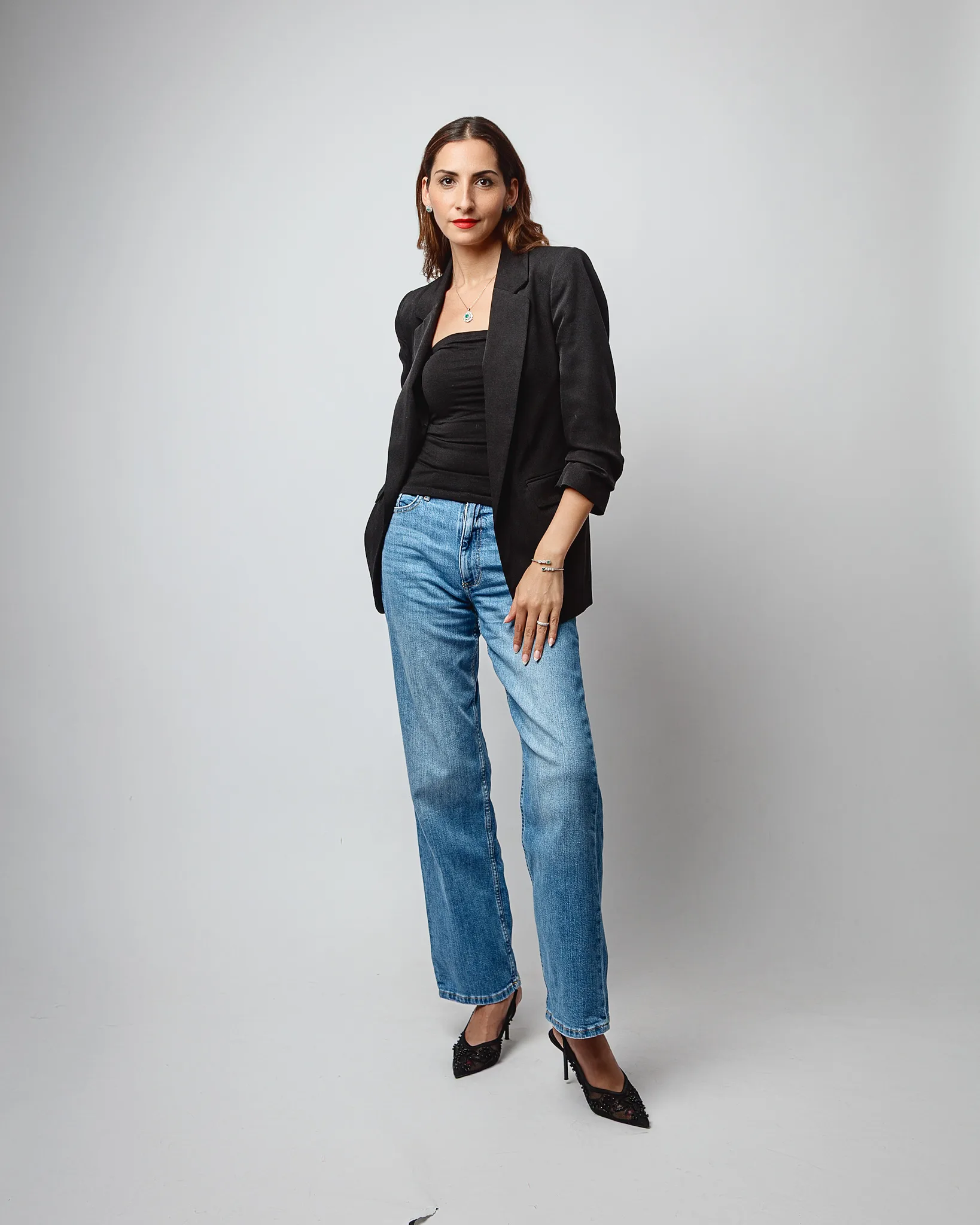
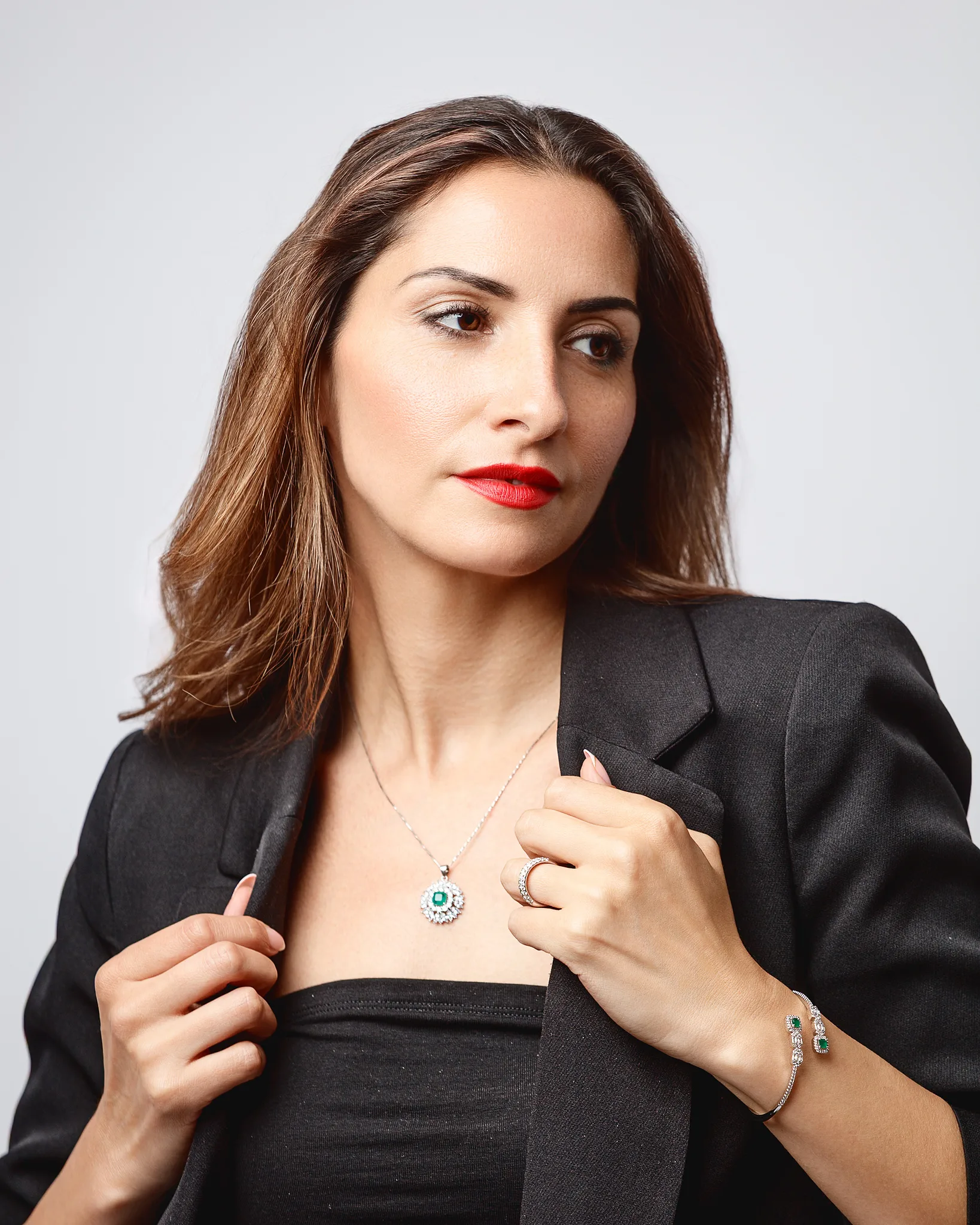
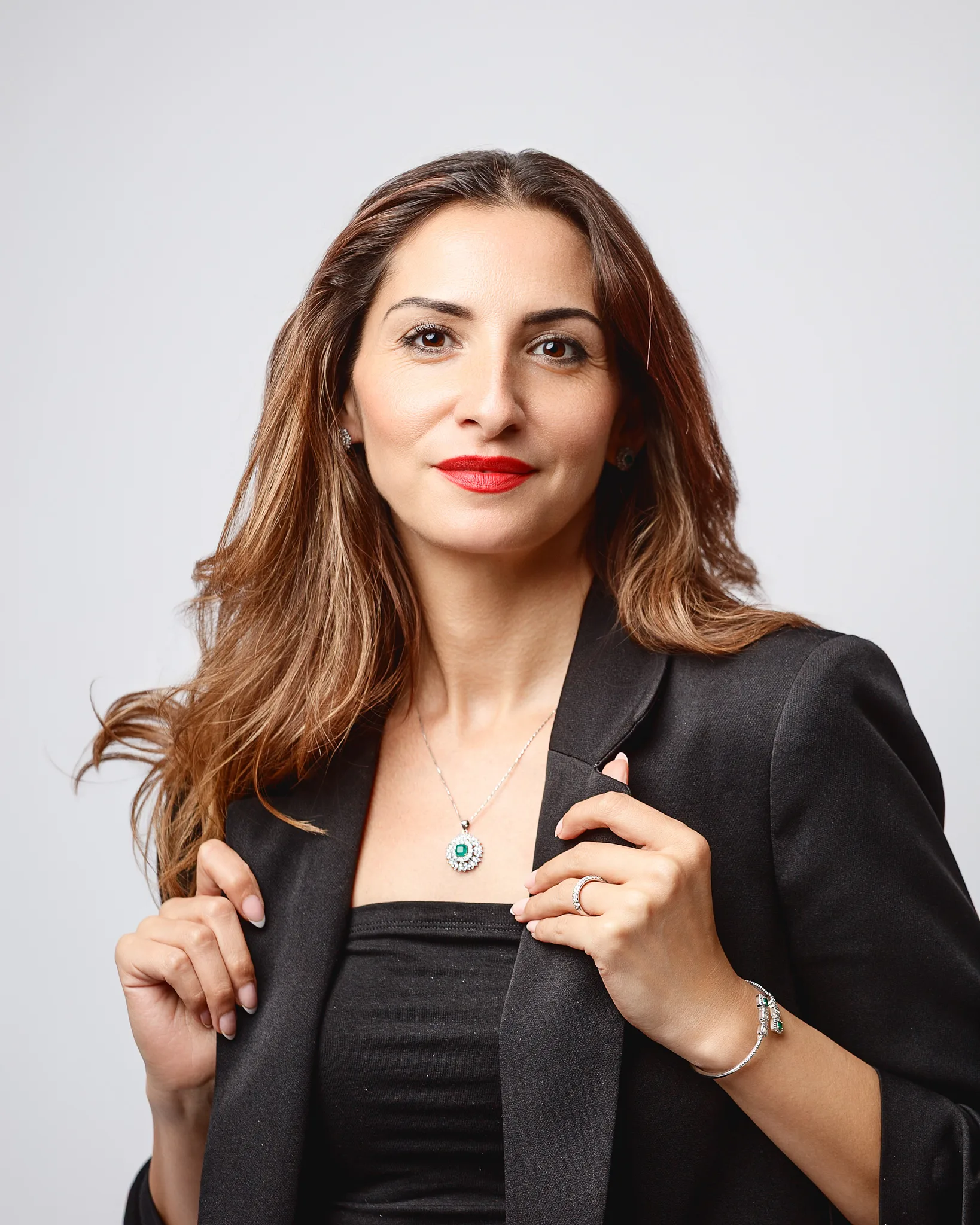
Look one was less about the races specifically and more about jewellery. Margita wore a black blazer over a black strapless top, clean and simple in its styling, and the focus shifted to a set of emerald and diamond pieces she’d brought with her: a pendant necklace, earrings, a ring and a bracelet. The dark clothing gave the jewellery room to read clearly, and this look produced some of the stronger portrait-style frames of the day. When the outfit is that minimal, expression and detail carry the image rather than the clothing itself.
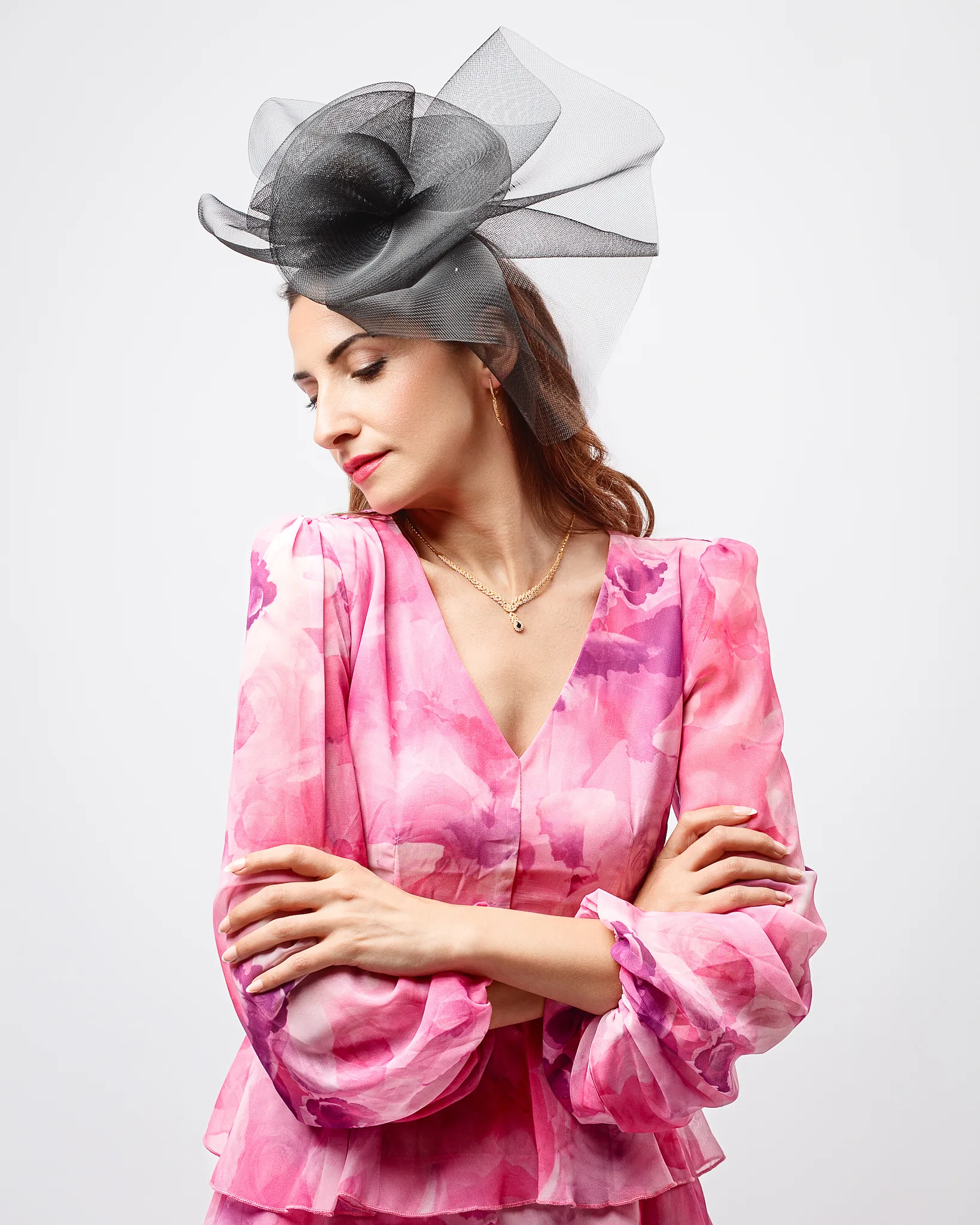
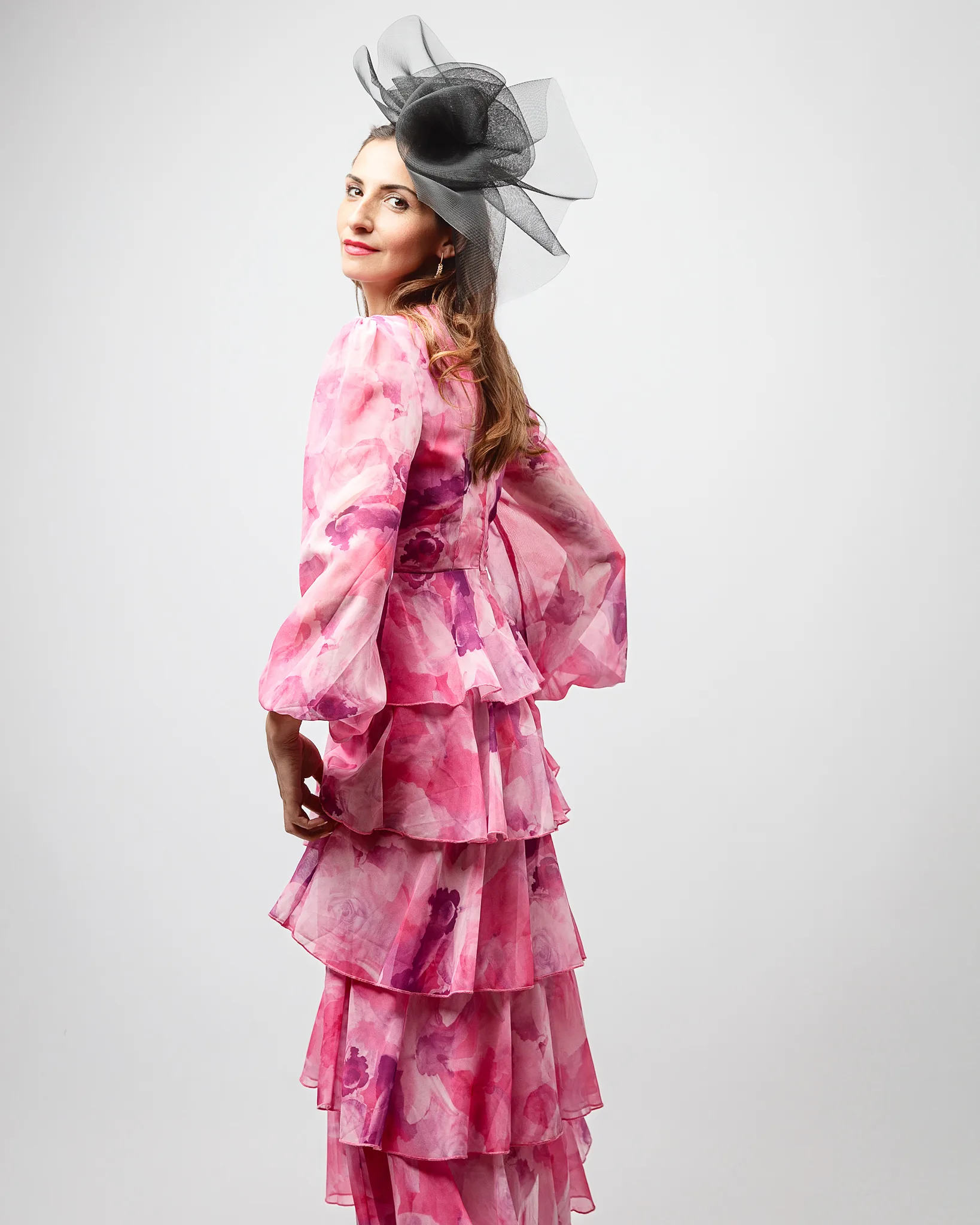
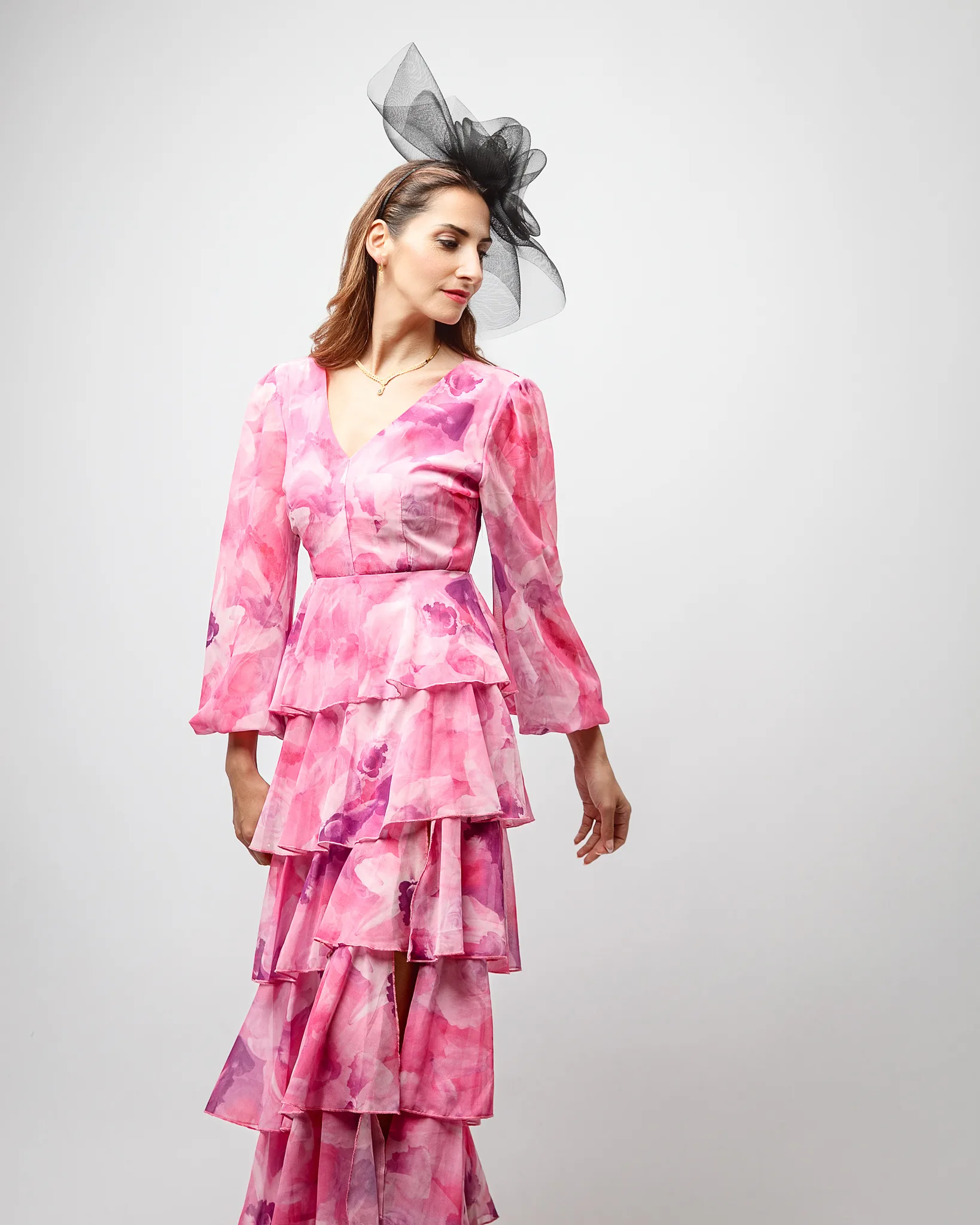
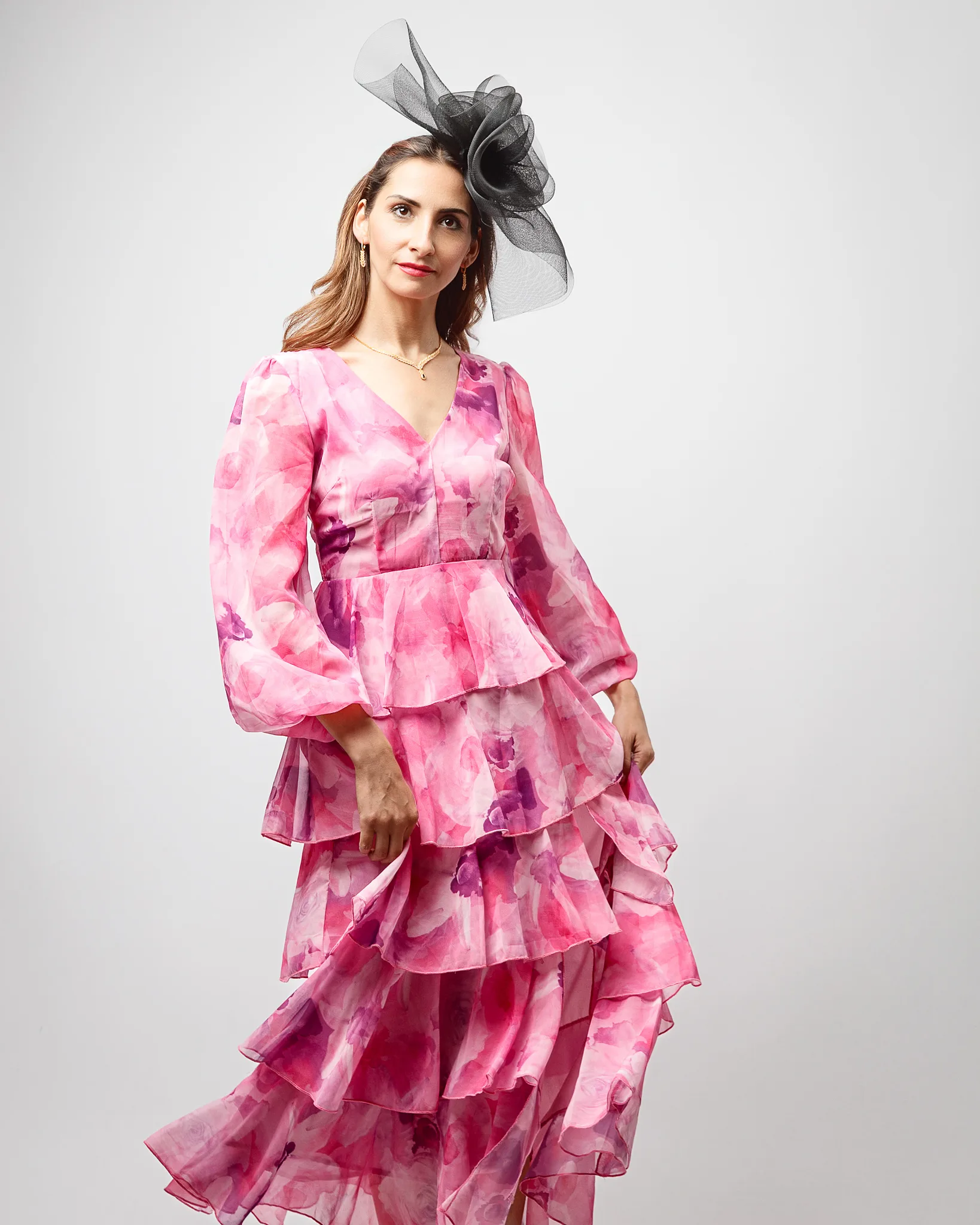
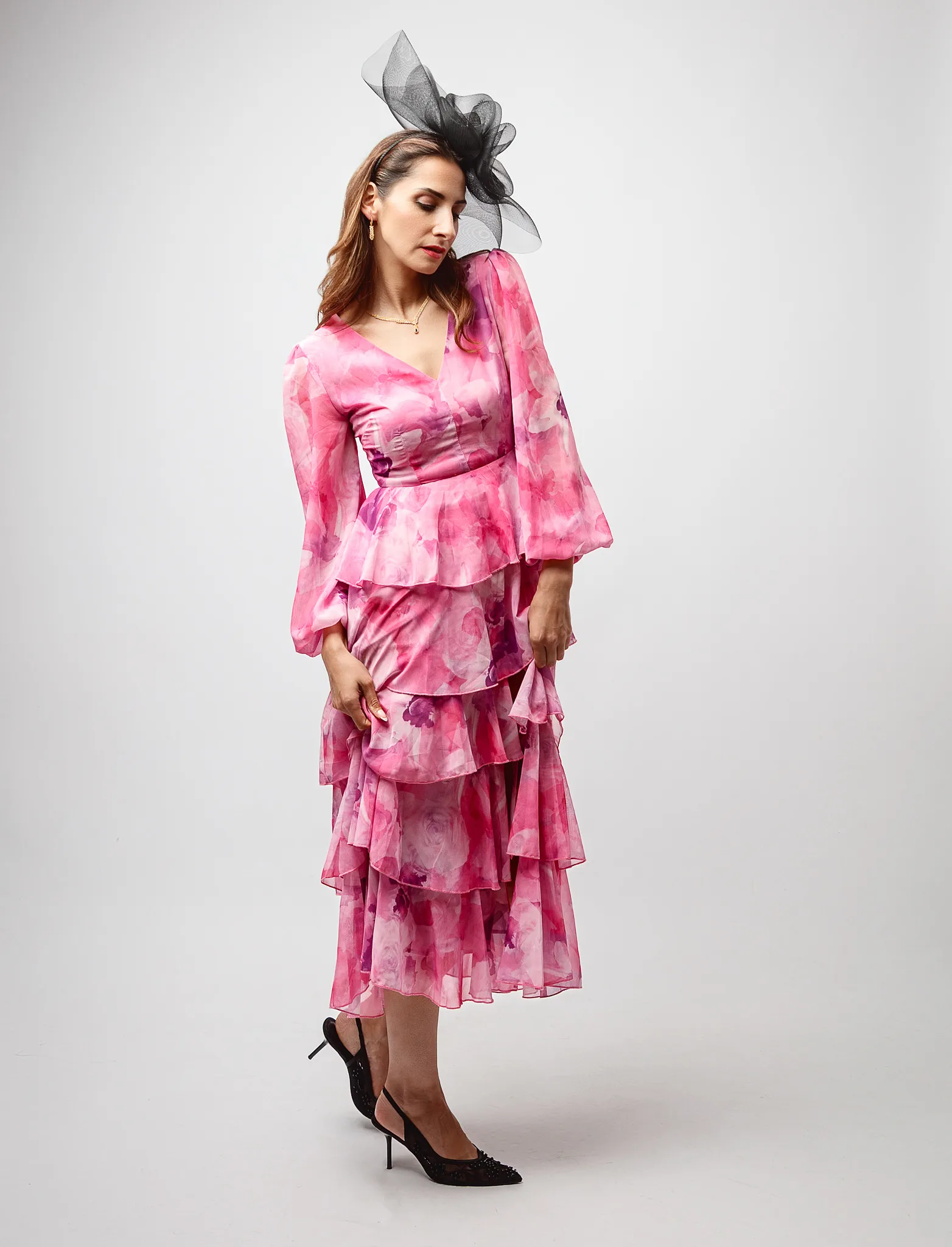
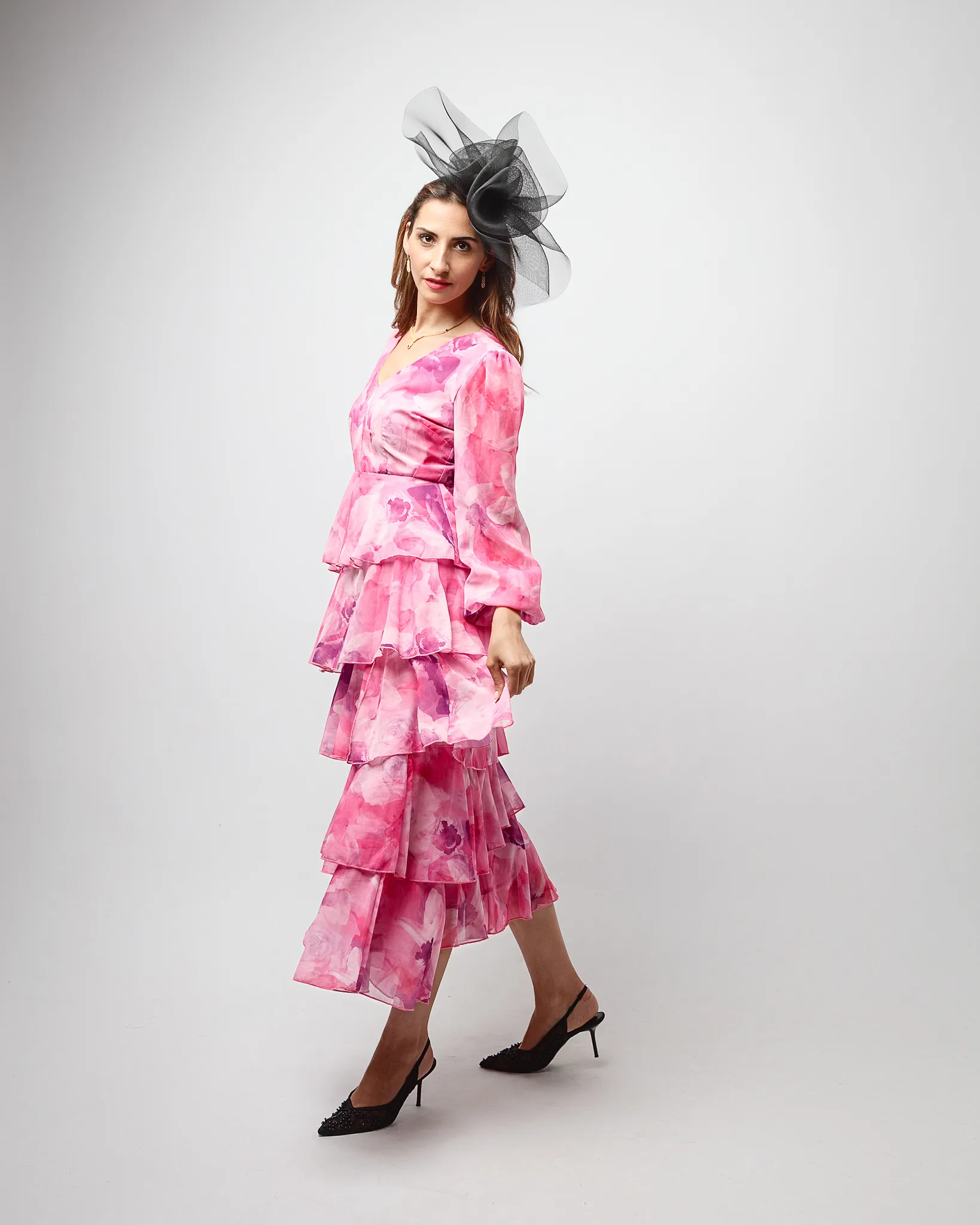
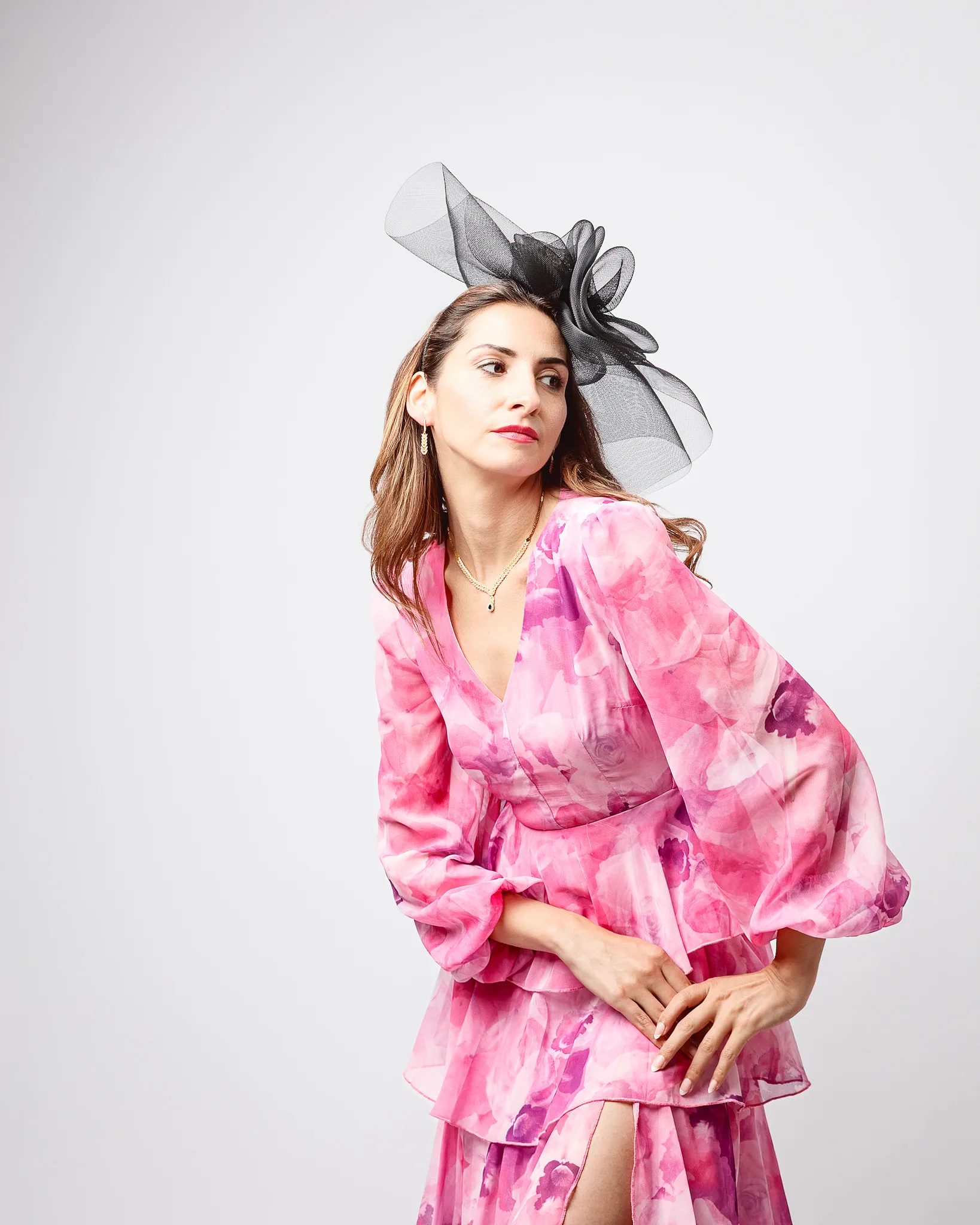
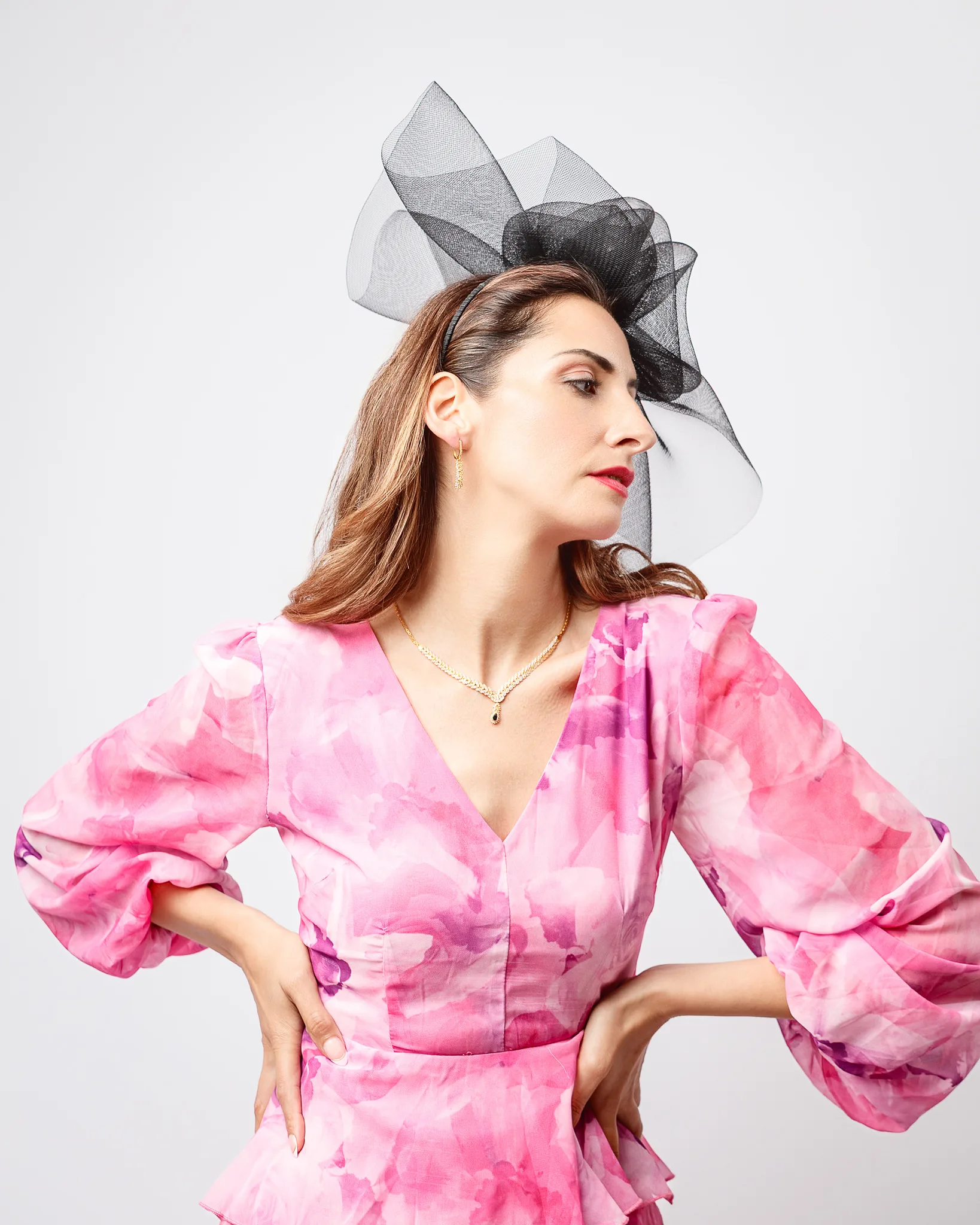
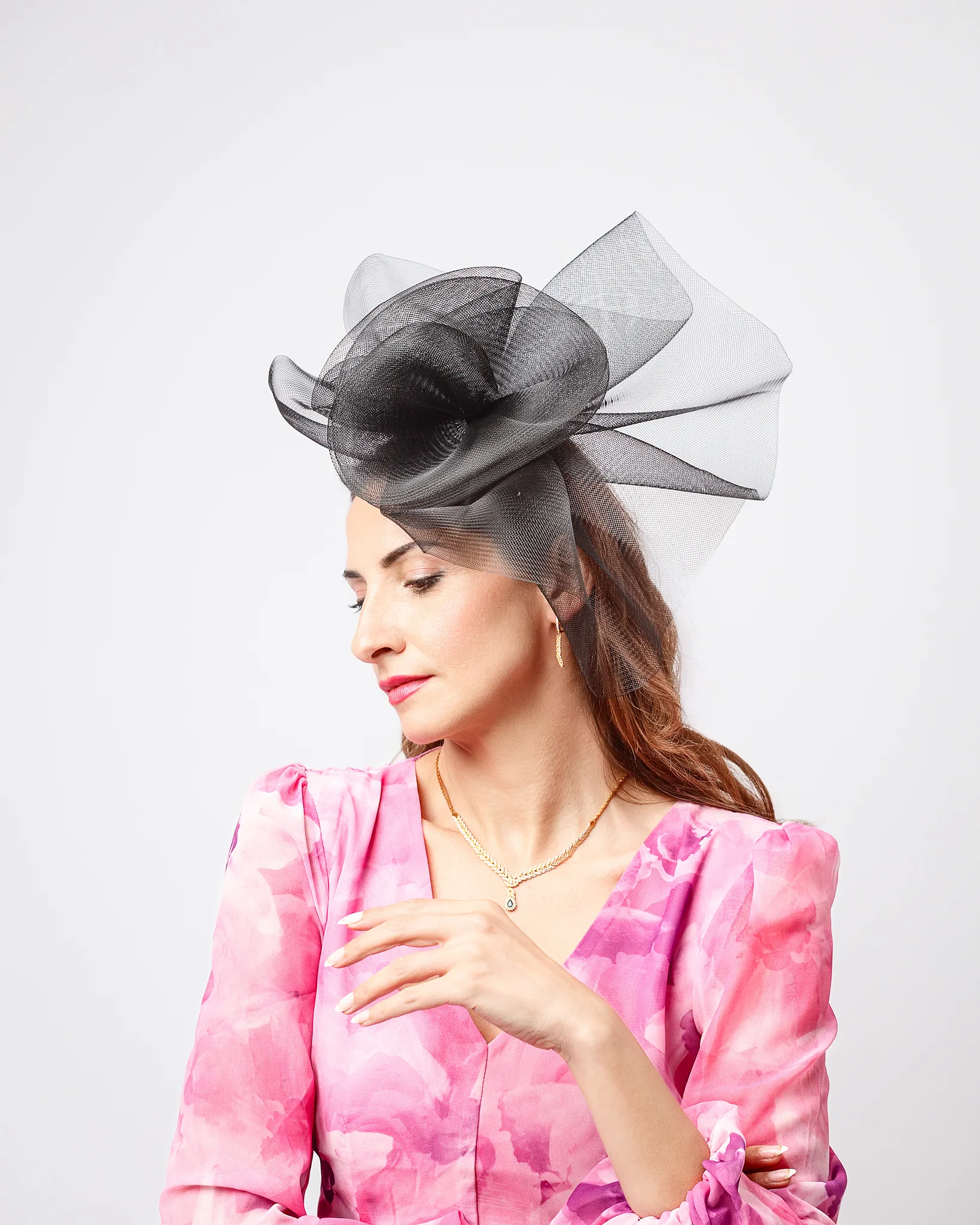
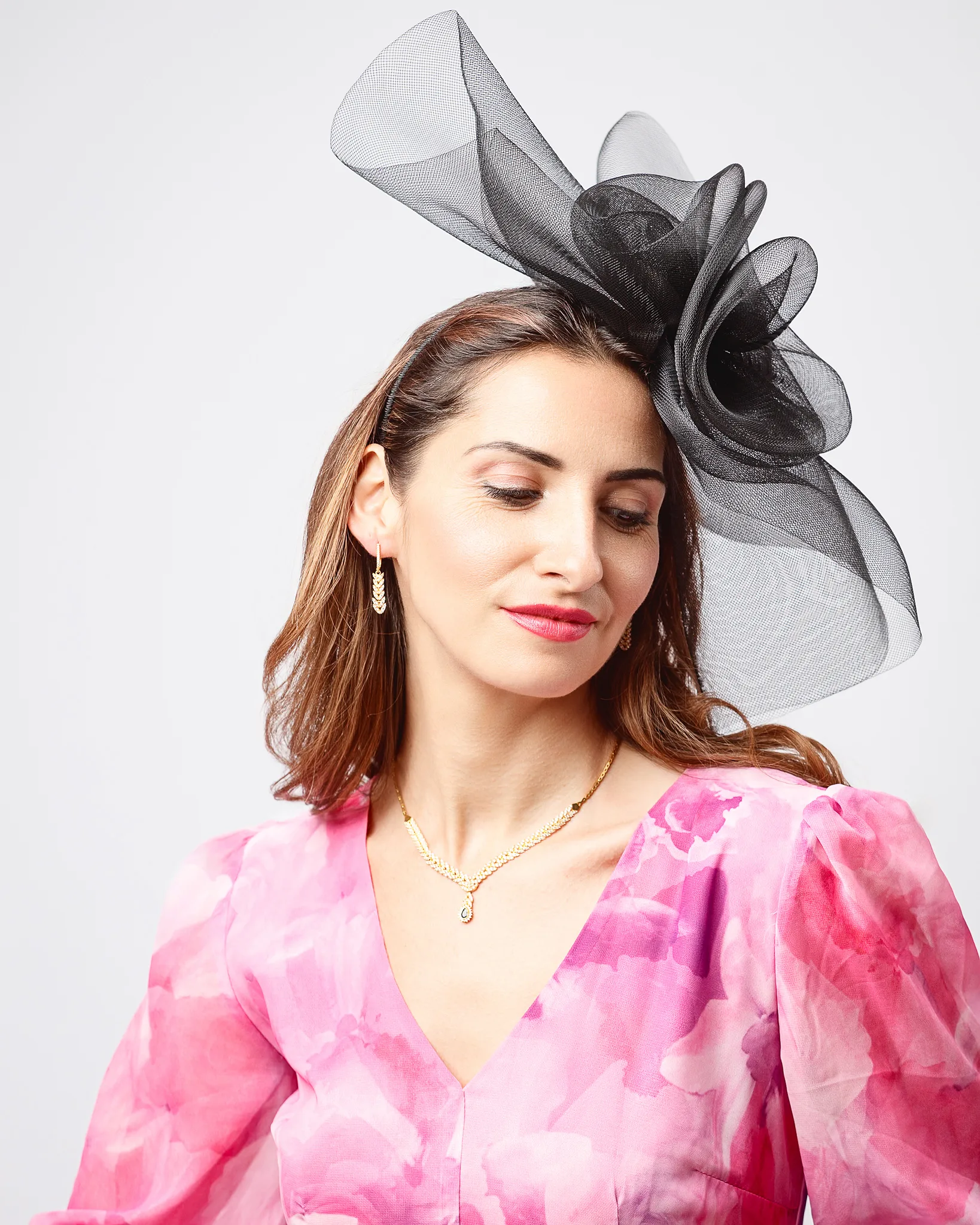
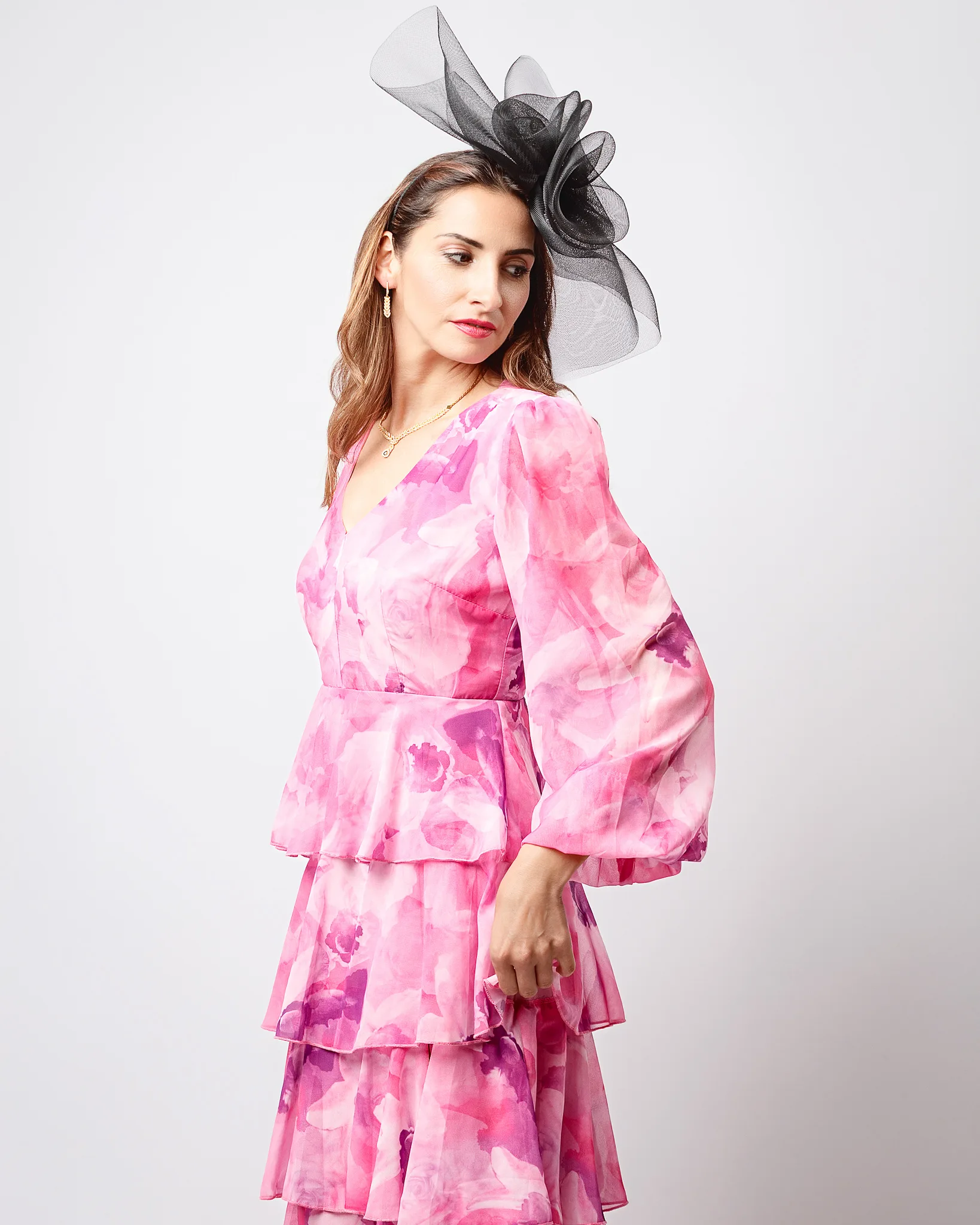
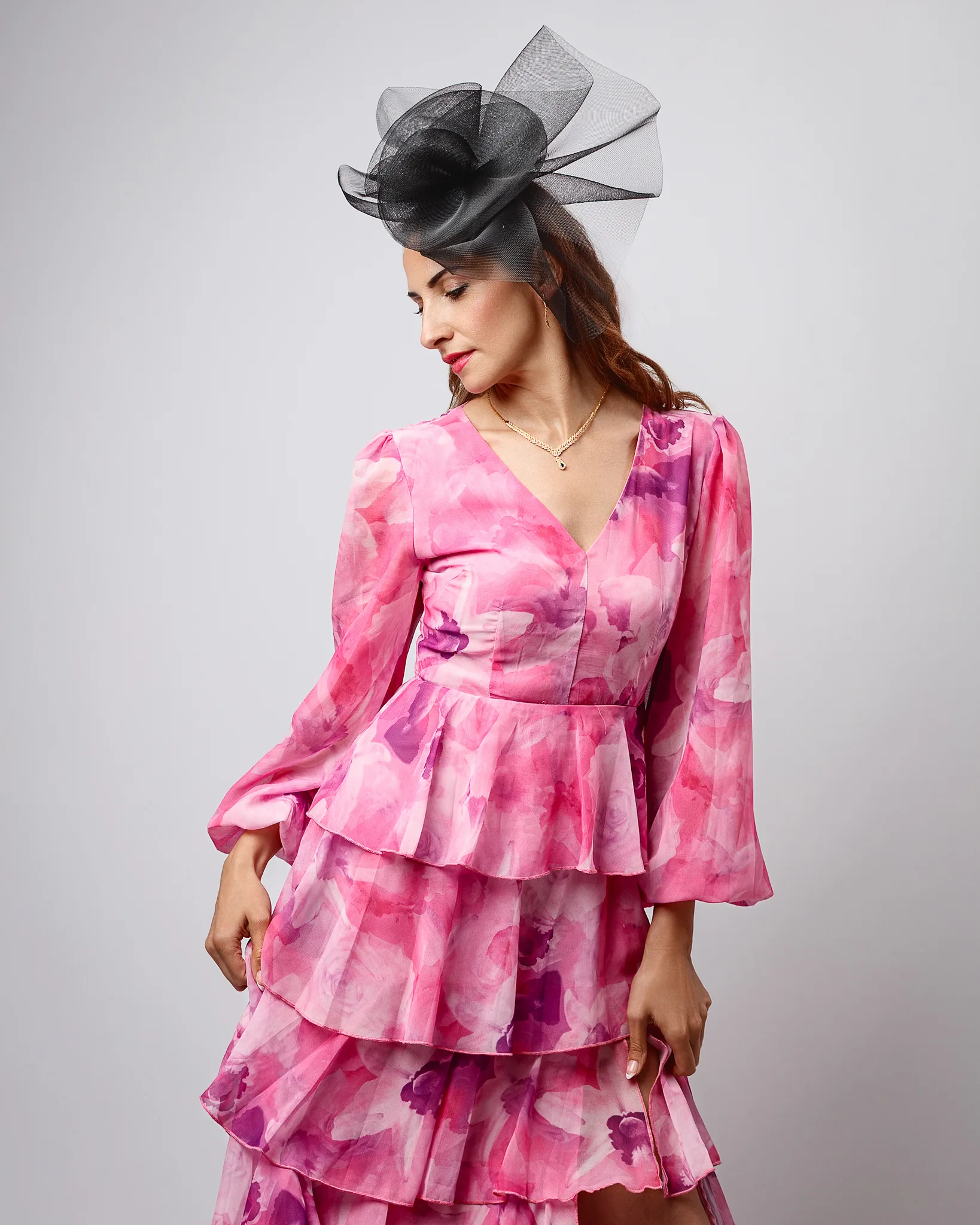
Look two moved firmly into race day territory. Margita wore a bold pink tiered floral dress with a large black net and tulle fascinator, and the combination was striking. There’s real volume in a look like that, and it needed to be shown properly, so we worked across a range of compositions: close portraits where the fascinator dominated the frame, three-quarter and full-length shots to show the dress and how it moved, and images that showed the back and profile to give a complete picture of the outfit. That range matters for editorial work.
This was also where we began leaning into Norman Parkinson as a reference point. Parkinson’s fashion editorial work from the mid-twentieth century has a quality that I find genuinely useful as a touchstone. There’s composure to it, a sense of the subject being entirely present rather than performing. His work treats clothing not just as something being worn but as part of the whole frame, almost architectural. That was the tone we were working towards for the second and third looks.
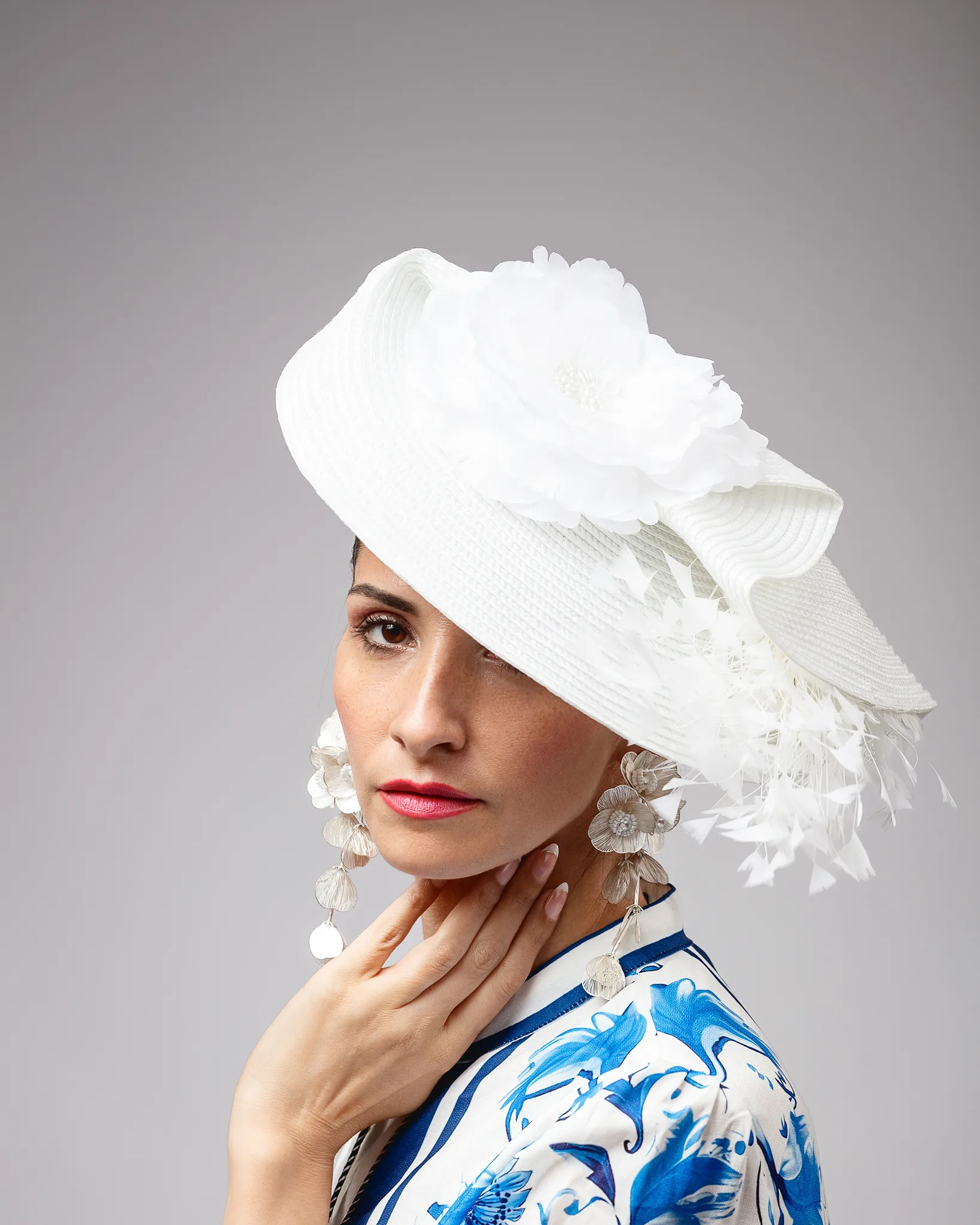
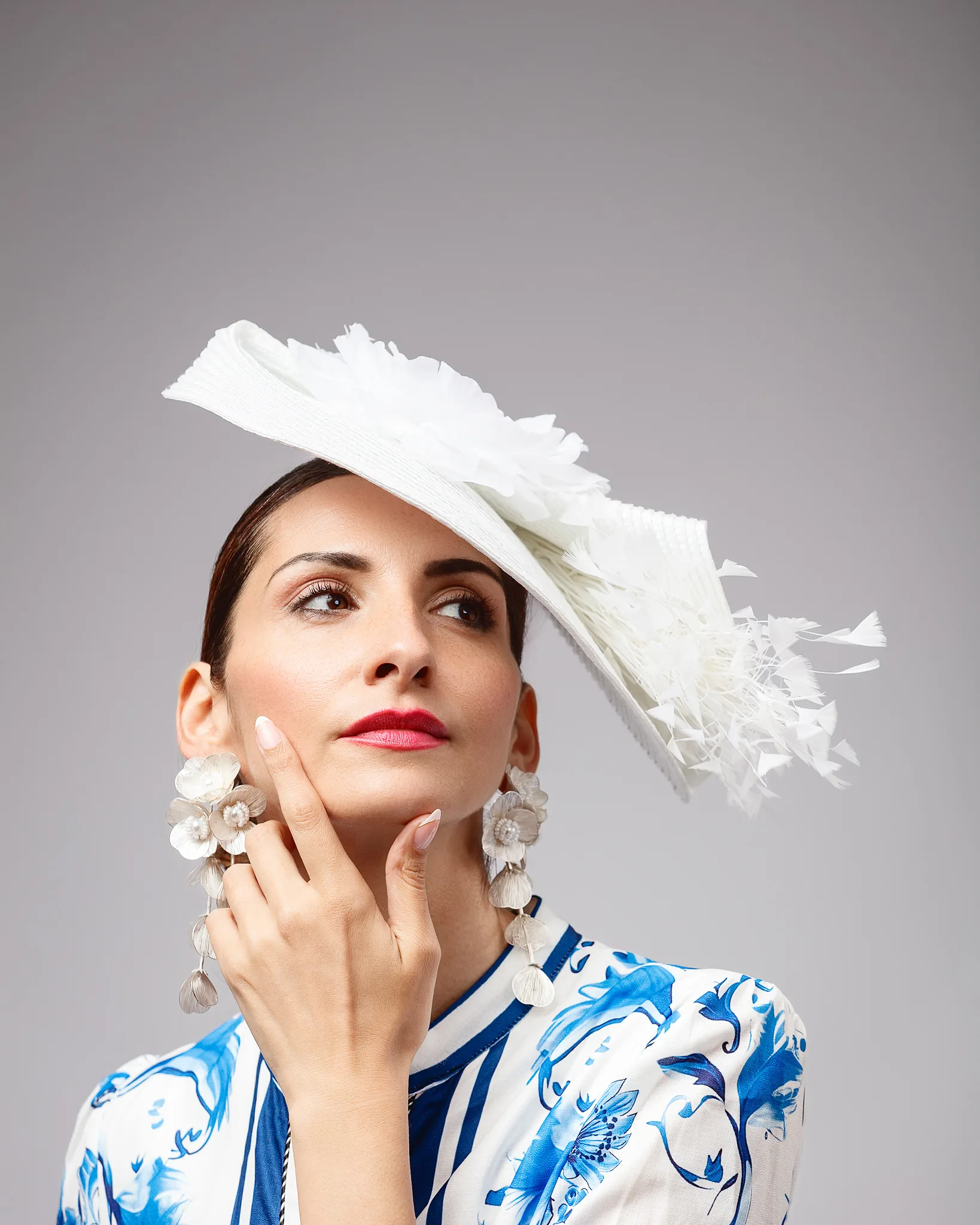
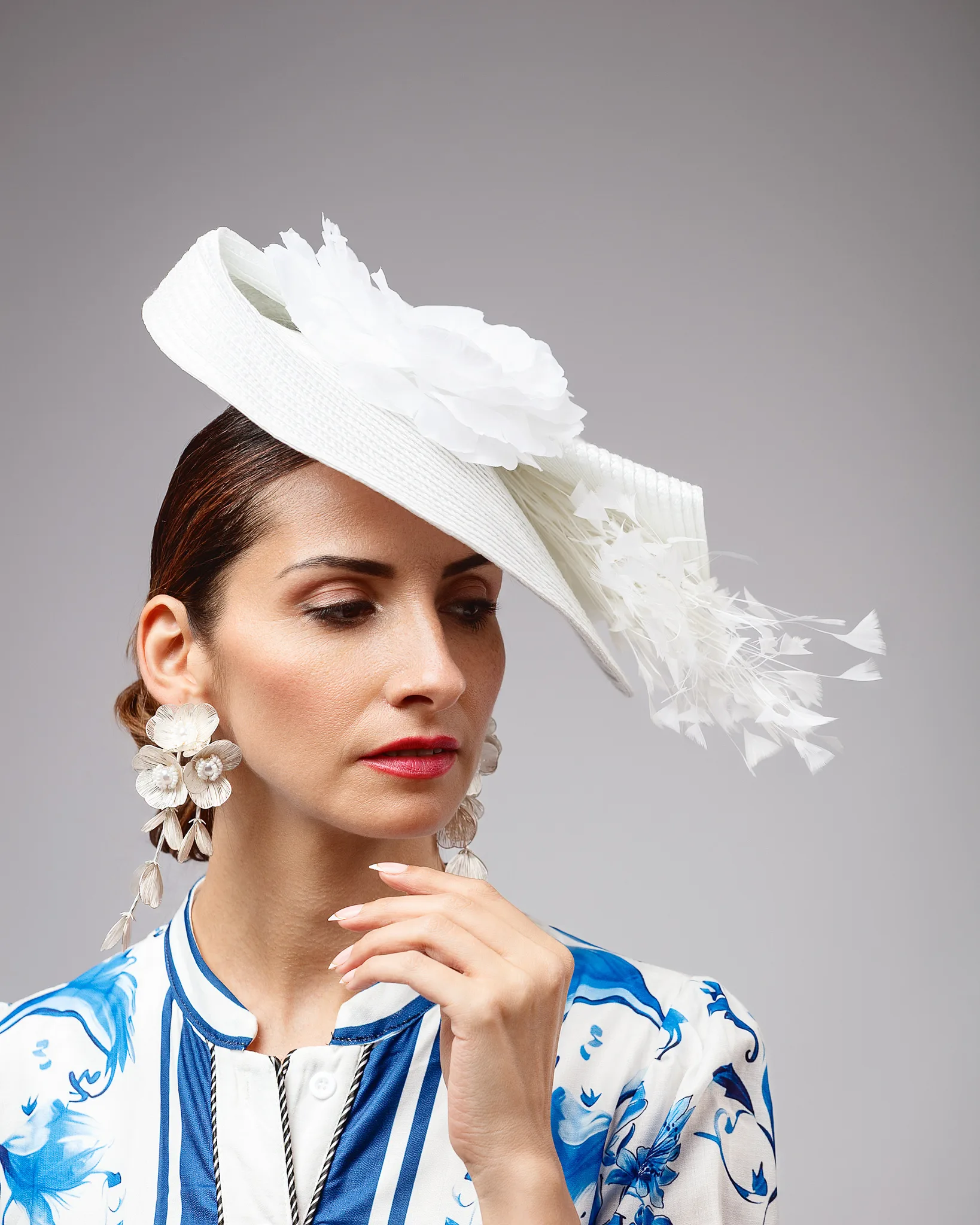
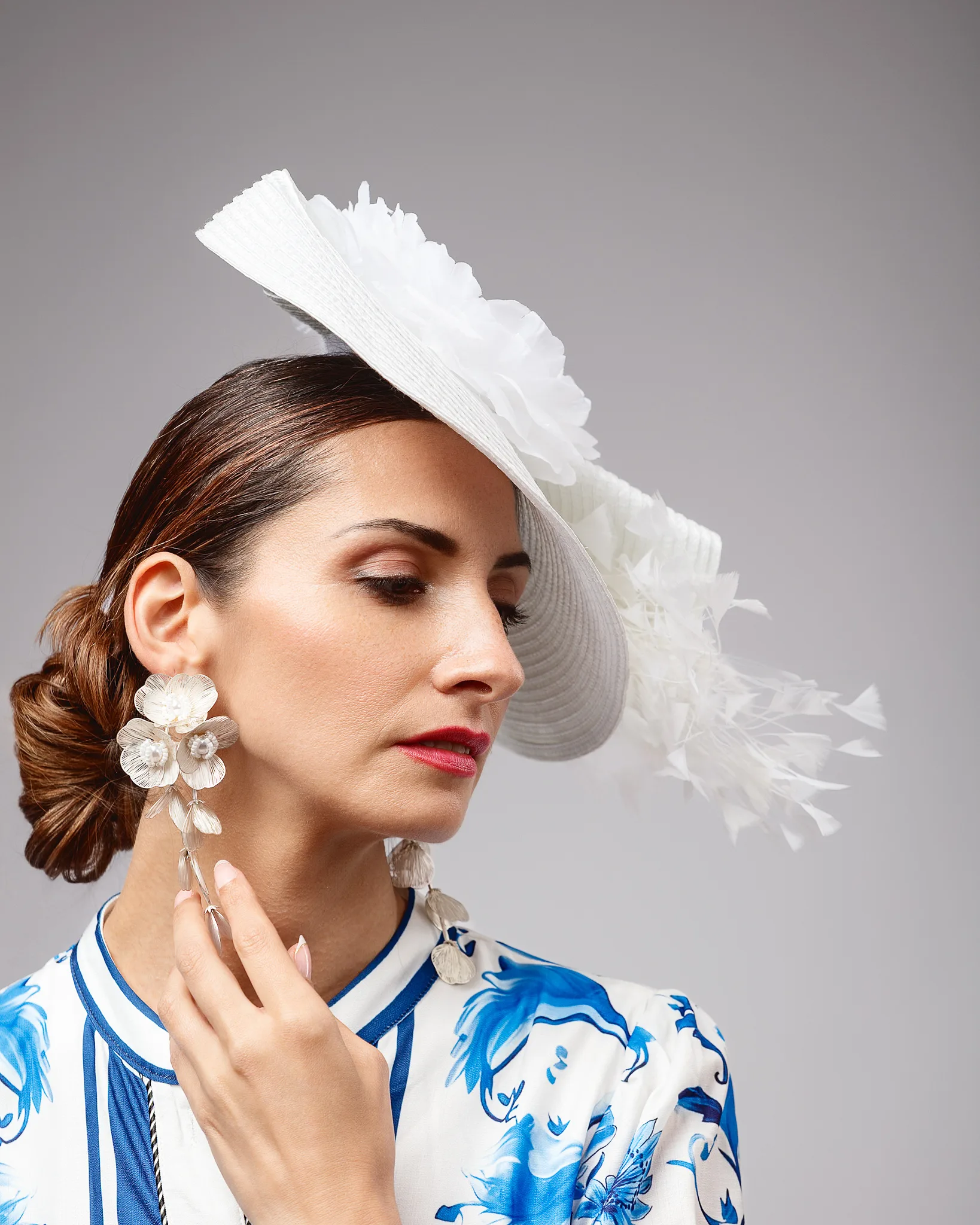
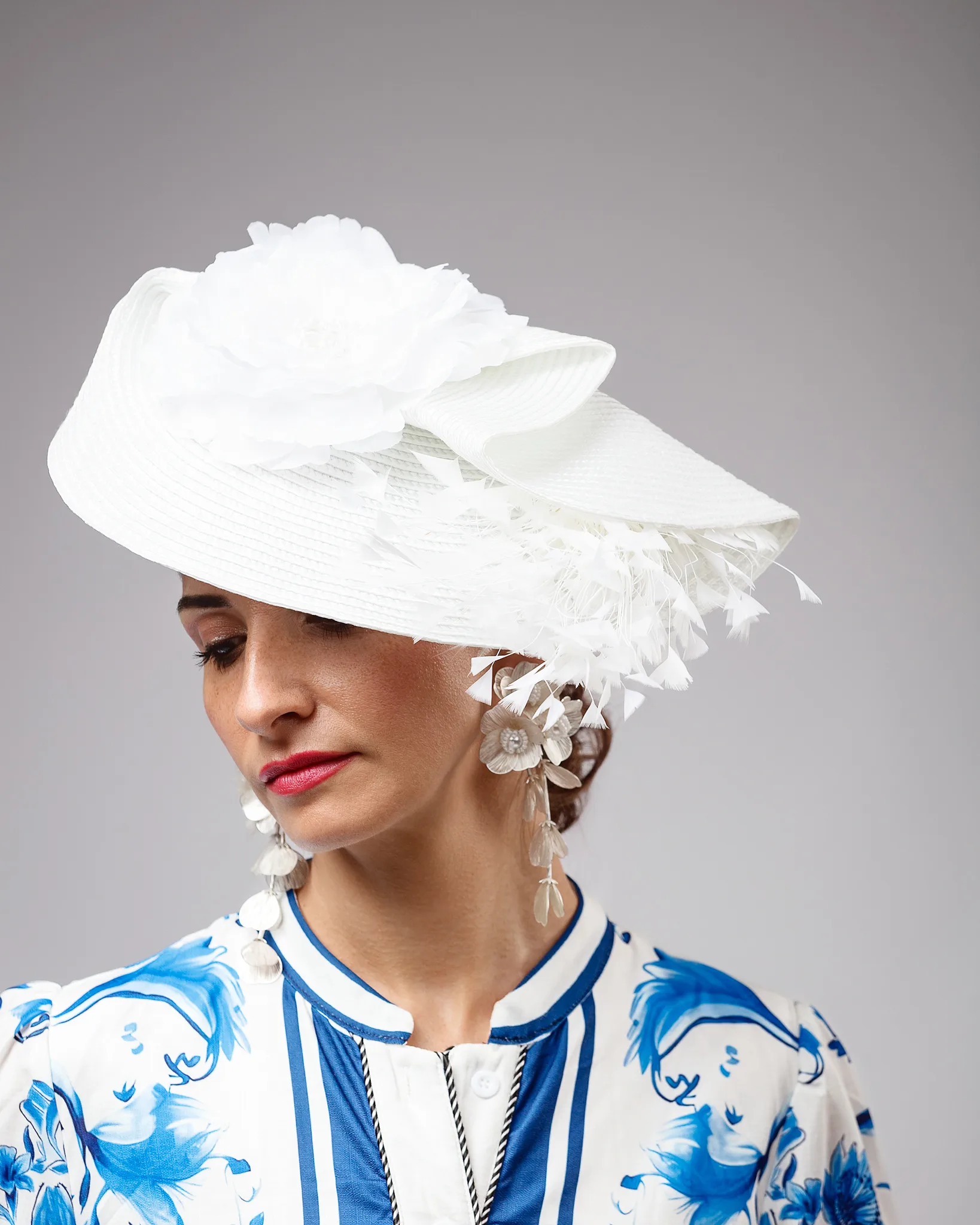
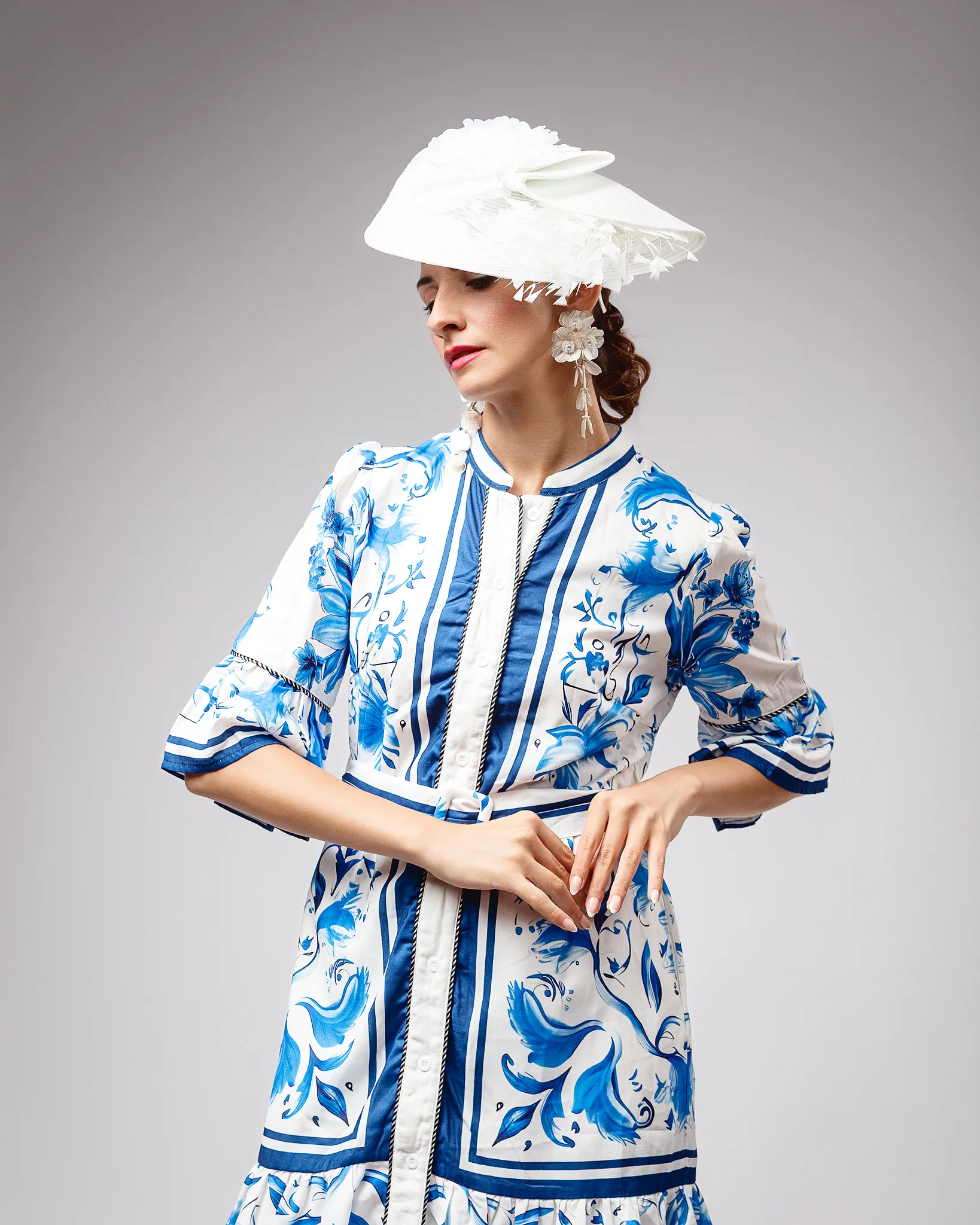
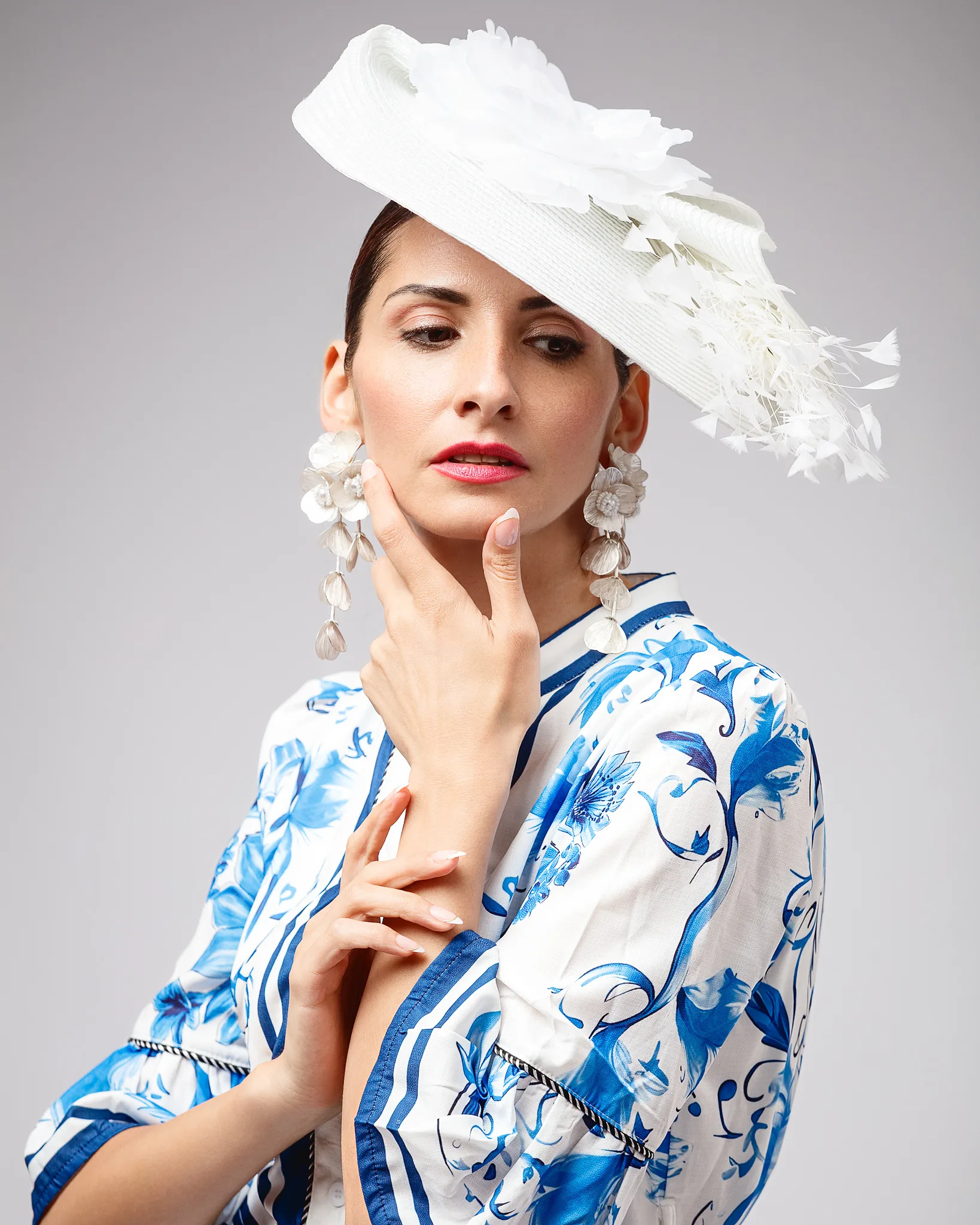
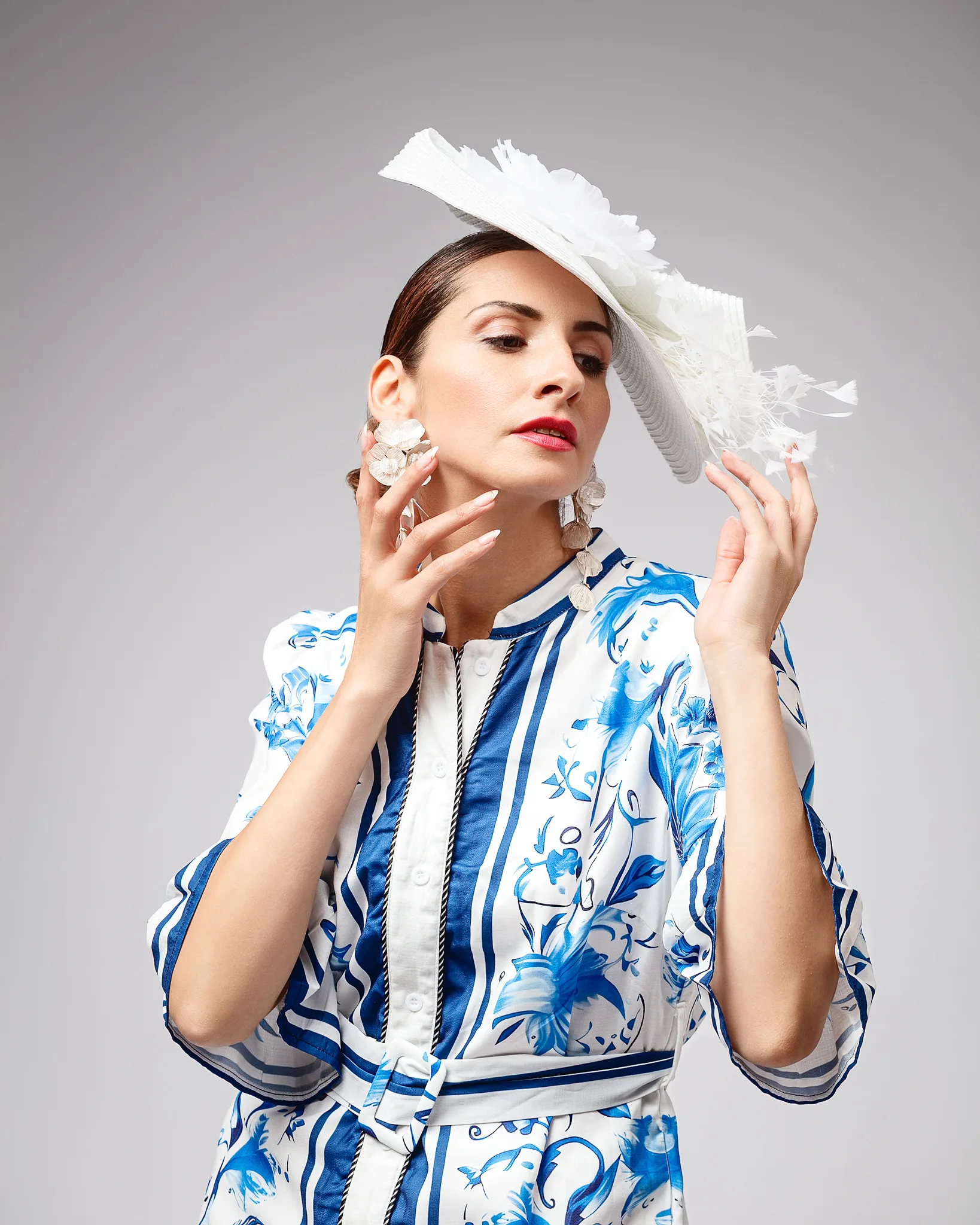
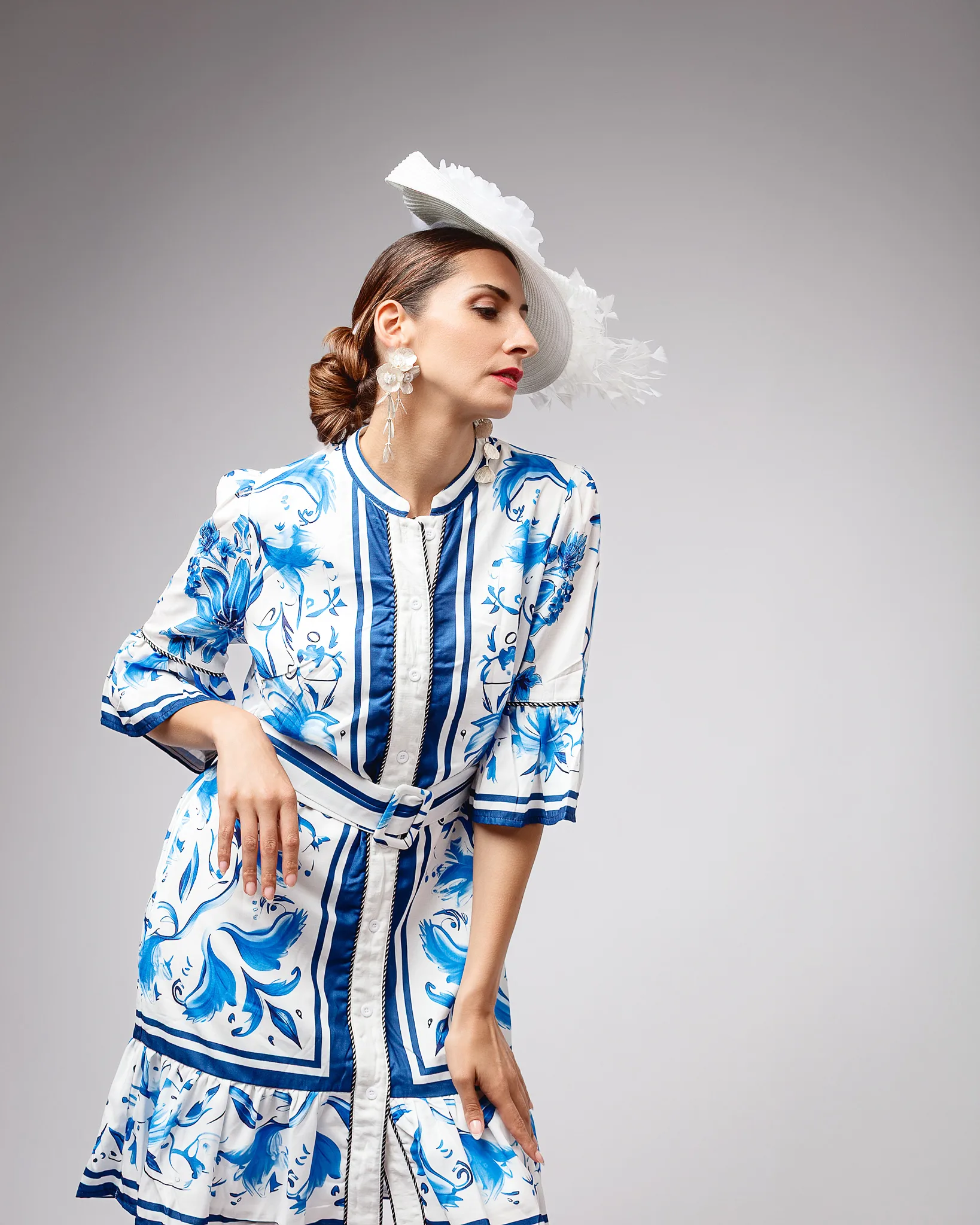
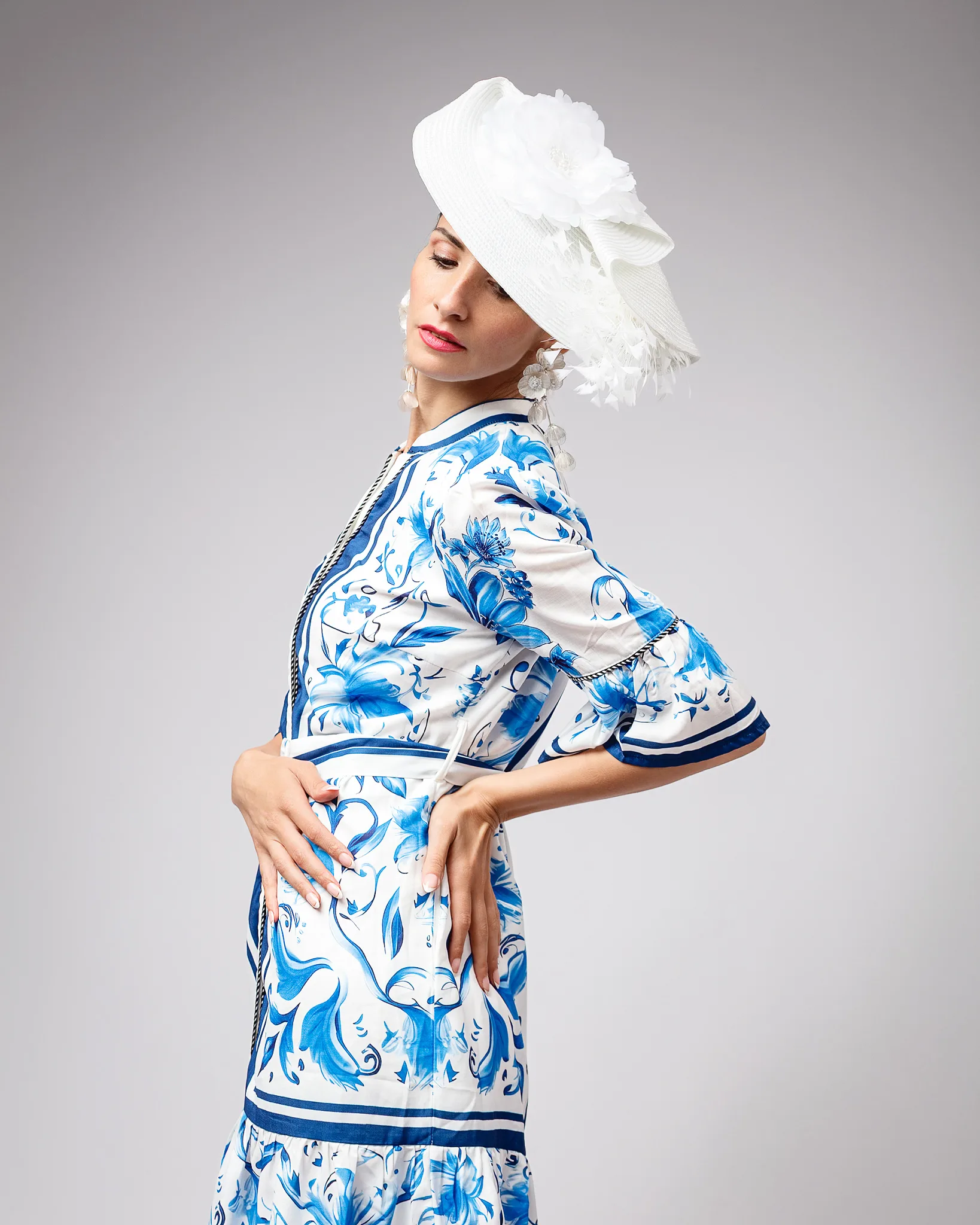
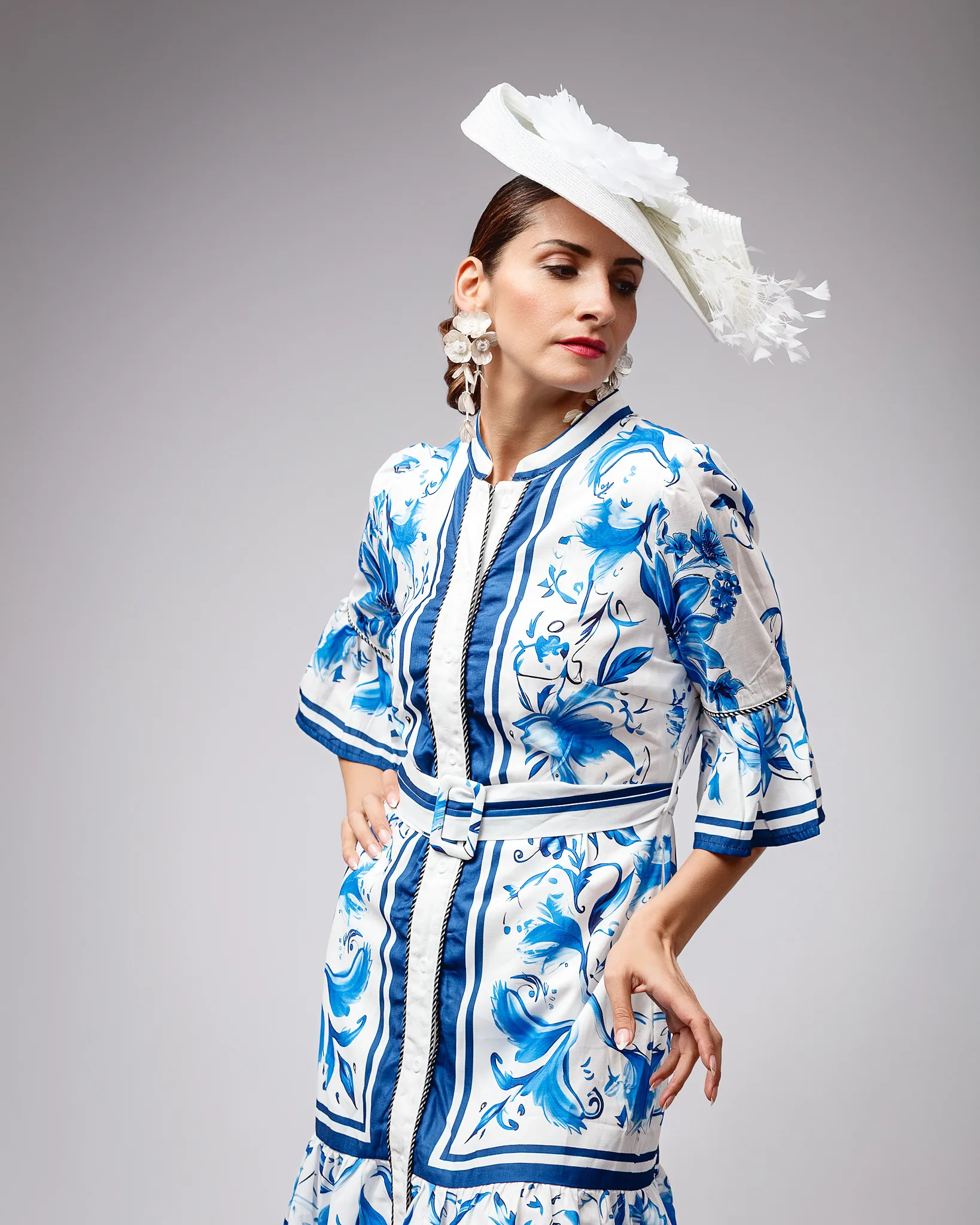
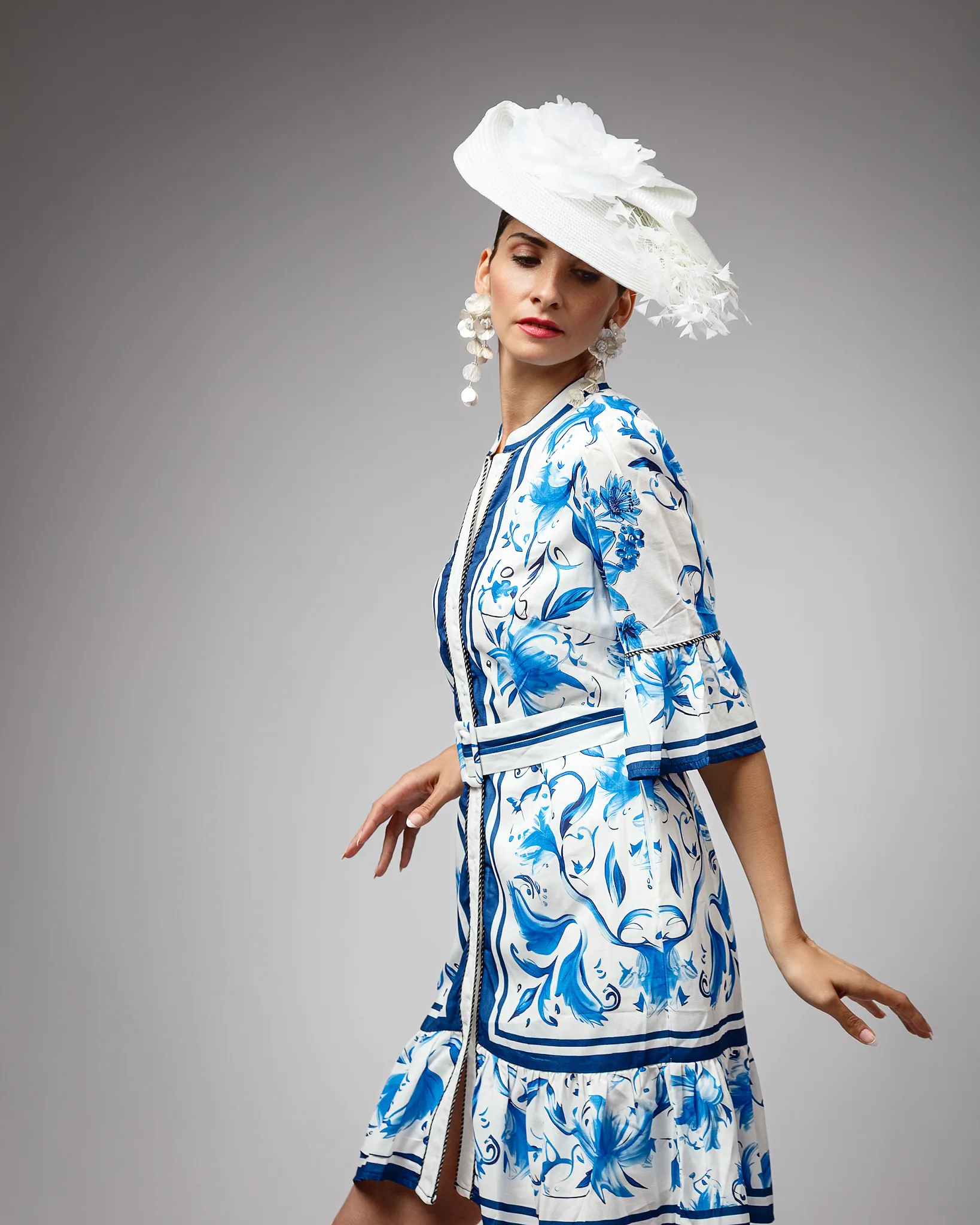
Look three continued in the same direction. The dress changed to a bold blue and white floral print, and we used two different white hats across the frames, a flat-brimmed tilted fascinator with feather detail and a full-brimmed hat with a large fabric flower. Both read very differently. The fascinator gave a more angular, modern editorial feel; the full hat was more classic and structured. Margita wore her hair up for this look, which changed the balance of the frame considerably and let both hats sit cleanly.
Working in the Studio: Light, Background, and Control
I shoot fashion editorial on grey. My preference is a clean neutral, and for this session I worked primarily on a light grey background throughout. It keeps the emphasis on the subject and the clothing without adding a competing mood. There are shoots where a darker tone is the right call, and there are shoots where something more dramatic suits the brief, but for editorial work involving detailed print fabrics, elaborate millinery, and jewellery detail, a clean neutral background doesn’t compete with what’s in front of it. It just holds everything together.
All the lighting was studio controlled. I work from my studio at Base Business Park, Rendlesham, the former RAF Bentwaters site near Woodbridge in Suffolk, and having complete control over the light is what makes that kind of session possible. When you’re working with a white hat, a bold floral print, and pale skin all in the same frame, the ability to adjust precisely is not optional. You build exactly what you need, and you can change it when the look changes.
What Margita Brought to the Session
One of the reasons this shoot ran as smoothly as it did is that Margita came entirely prepared. She handled her own hair and makeup throughout the day, and all three outfits, including both sets of millinery, were hers. That level of preparation makes a significant difference to a fashion editorial session. You’re not solving problems that should have been sorted before the shoot; you’re working with choices that have already been made carefully.
There’s also a confidence that comes from working with someone who understands how to present what they’re wearing. Margita has a good instinct for how a look should sit in a frame, which means the direction in the session is a genuine two-way process rather than one-sided instruction. That’s what builds the better images. We’re already talking about what comes next.
Advice for Models: How Many Outfits to Bring
This is something worth setting out clearly, because I get asked about it regularly. For a fashion editorial or model portfolio session, how many looks you bring has a direct impact on what the session can achieve.
For something like this shoot, I’d recommend three to six outfits as a sensible range. Fewer than three and the portfolio lacks variety. More than six and the session becomes hurried; you lose the rhythm, and the quality of the later frames tends to drop because everyone is rushing to get through the changes.
Three to four well-considered looks will generally produce more useful images than six outfits brought in a hurry. The key is variety in terms of colour, silhouette, formality, and mood, not just bringing several versions of a similar outfit. Accessories, jewellery, and headwear can extend the range of a look considerably without requiring a full change, and that’s worth thinking about when you’re planning the session.
Think about what the images need to do. If you’re building a portfolio for agency submission, range is important. If the session has a specific editorial theme, it’s better to bring outfits that fit the concept well than to arrive with everything you own and work out the brief on the day.
A Note on Safety for Models
I include this section in any blog post that involves working with models, because I think it deserves to be said plainly.
There is no physical contact between me and any model during a shoot. If a posing adjustment needs to be made, I describe it verbally or demonstrate it from a distance. That’s how it works, and that’s how it should always work.
I actively encourage every model to bring a chaperone. A friend, a family member, someone they trust. The offer is made before the shoot, not as an afterthought when someone arrives. Any photographer who discourages a model from bringing a chaperone, or makes it feel like a problem, is raising a significant red flag. There is no legitimate professional reason to object to a chaperone being present.
Your safety is not something you should have to negotiate. A photographer who is doing this properly will answer your questions clearly, explain how the session runs, and have no objection to you bringing someone you trust. If that’s not what the communication leading up to a shoot looks like, pay attention to that.
Behind the Scenes
I filmed a behind-the-scenes video on the day, which covers how the session ran from start to finish. If you’re thinking about a fashion editorial or model portfolio shoot and want a sense of how the studio works, it’s worth watching.
The Next Shoot
Margita and I are already planning the next project. I’m not ready to say much about what it is yet, but it’s a different direction from this one. I’ll write it up here when it happens.
Where the Studio Is
My studio is at Base Business Park, Rendlesham, near Woodbridge in Suffolk. It’s a short drive from Ipswich, easy to find, and has parking on site. If you’re a model based in Suffolk or East Anglia and you’re looking to build a portfolio or work on editorial images, feel free to get in touch through the website. If you’re a business or brand looking for something with a fashion editorial quality for commercial use, that’s also a conversation worth having.
Model portfolio photography
Building your modelling portfolio?
I photograph new and experienced models across Suffolk. Session details, pricing and booking are all on the aspiring models page.