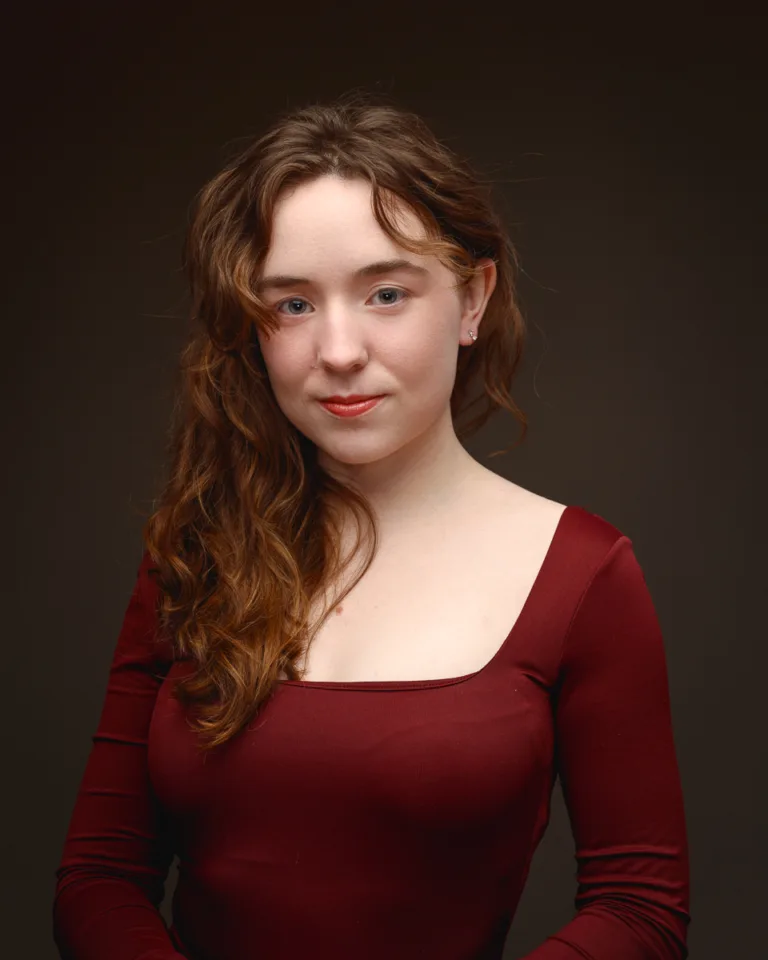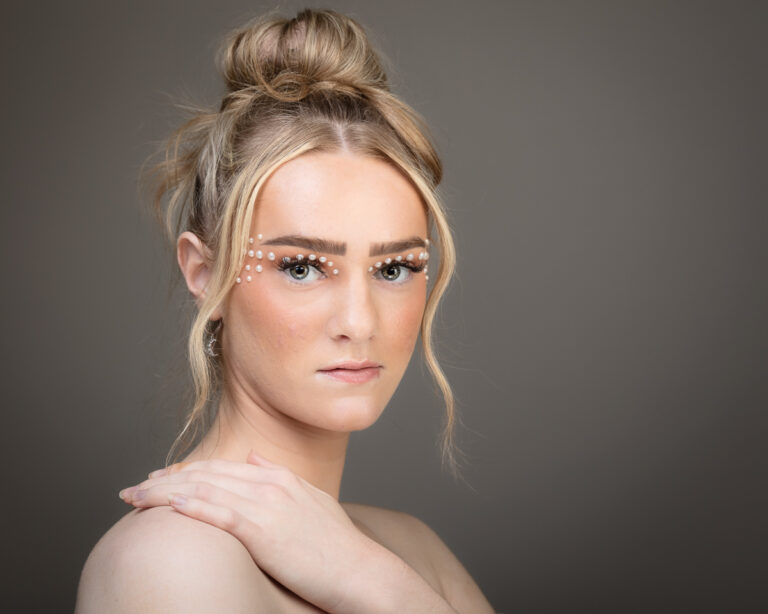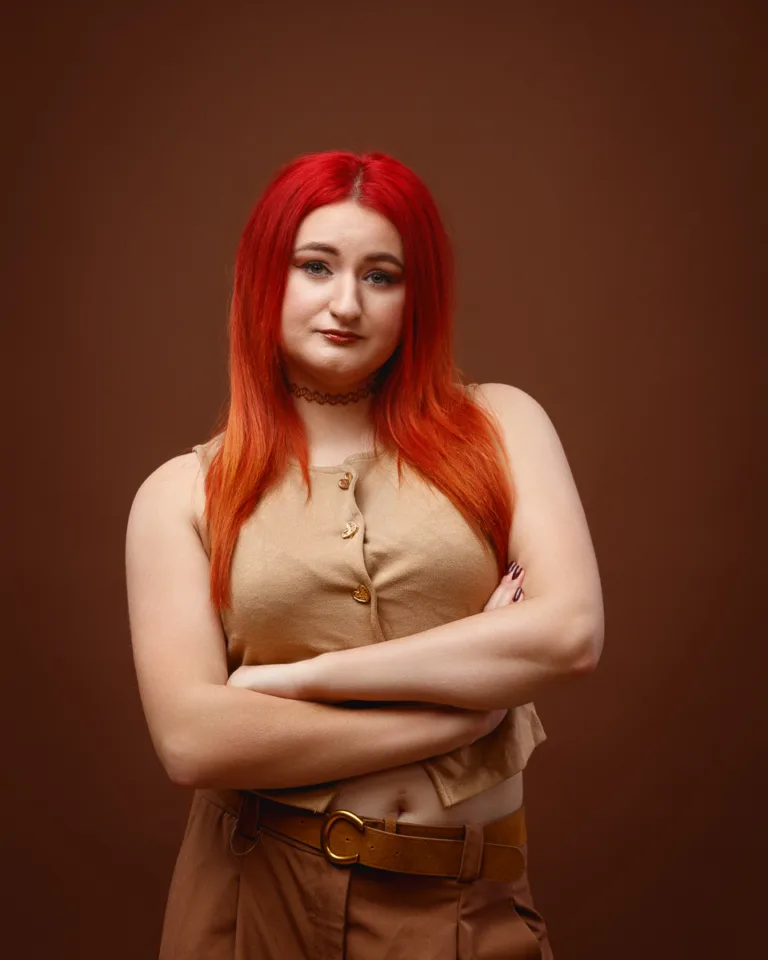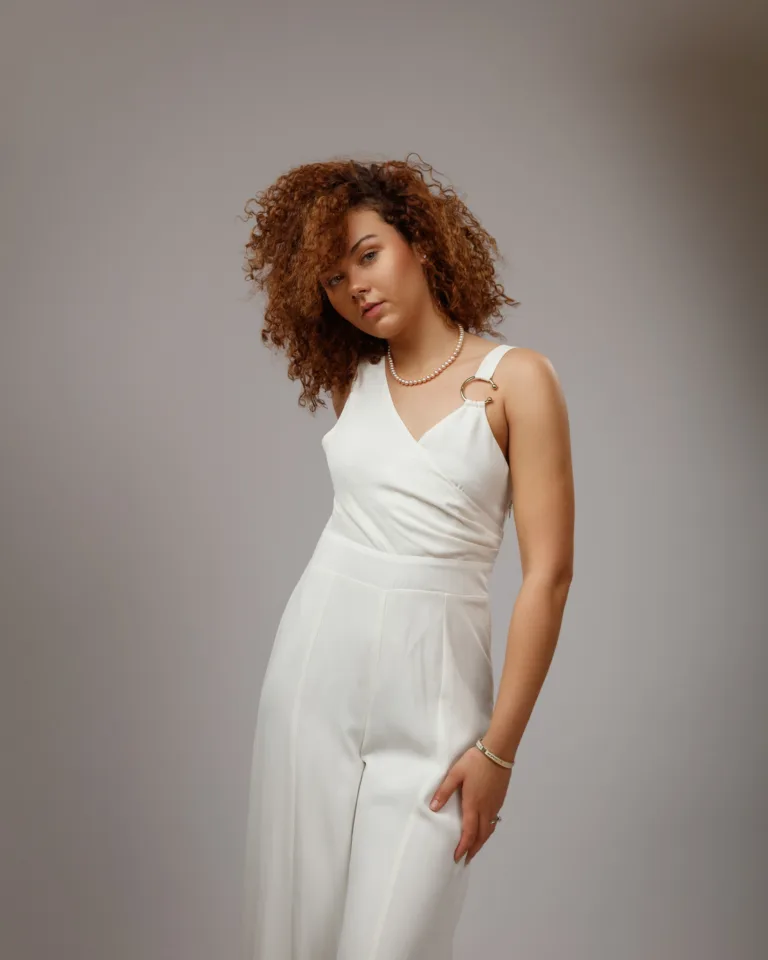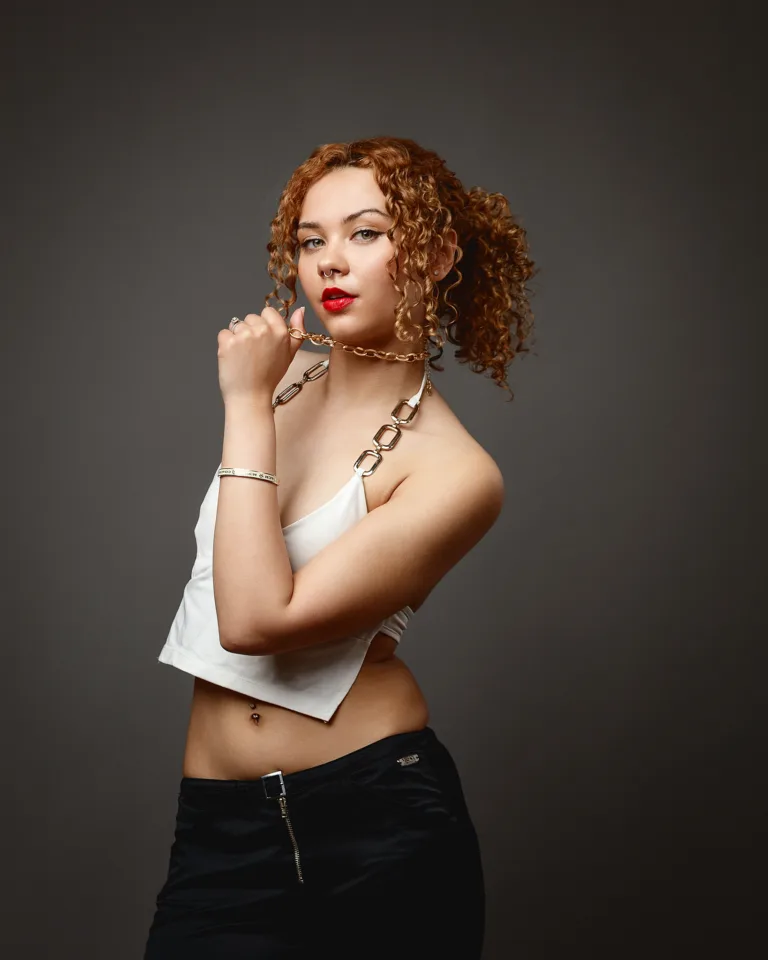
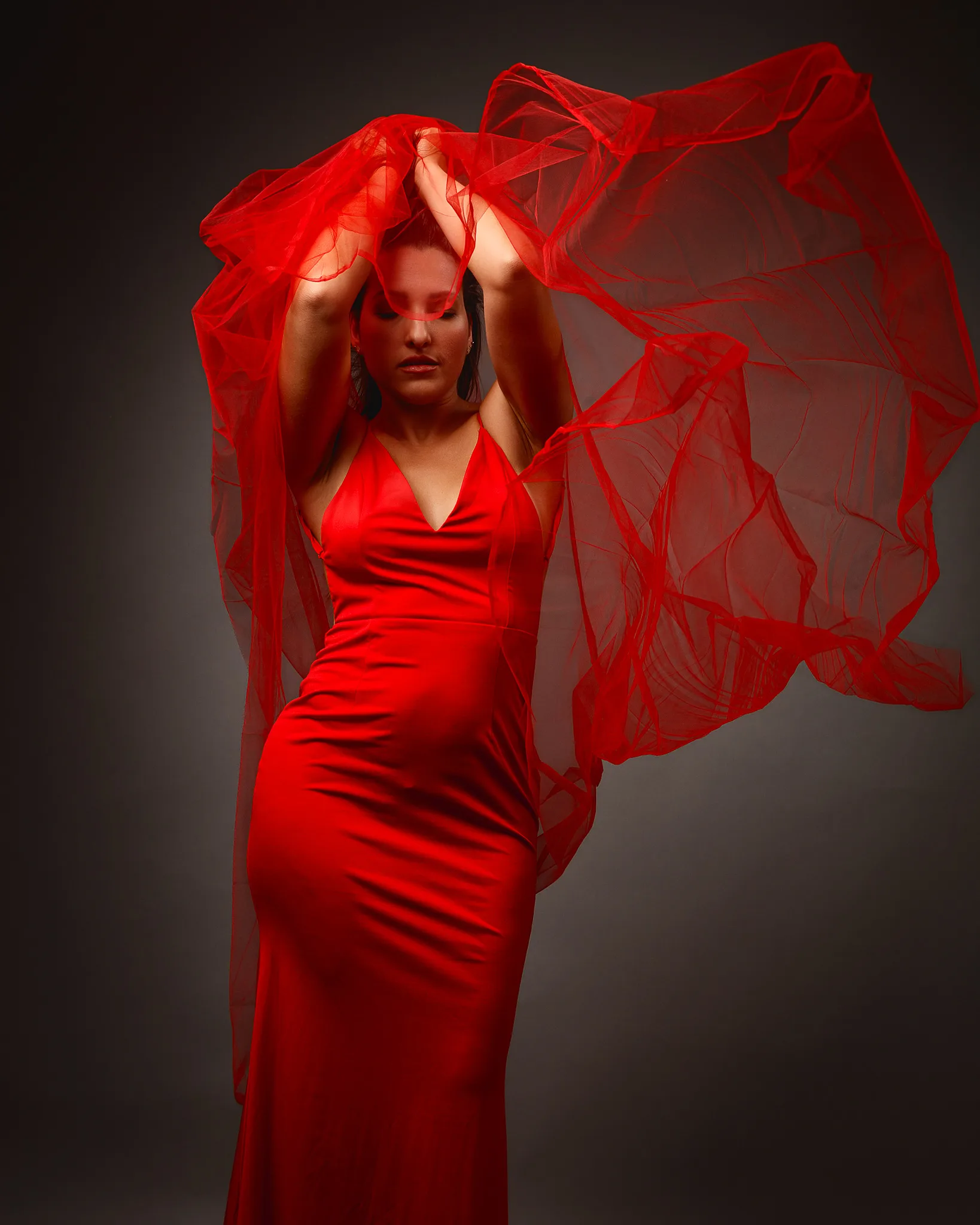
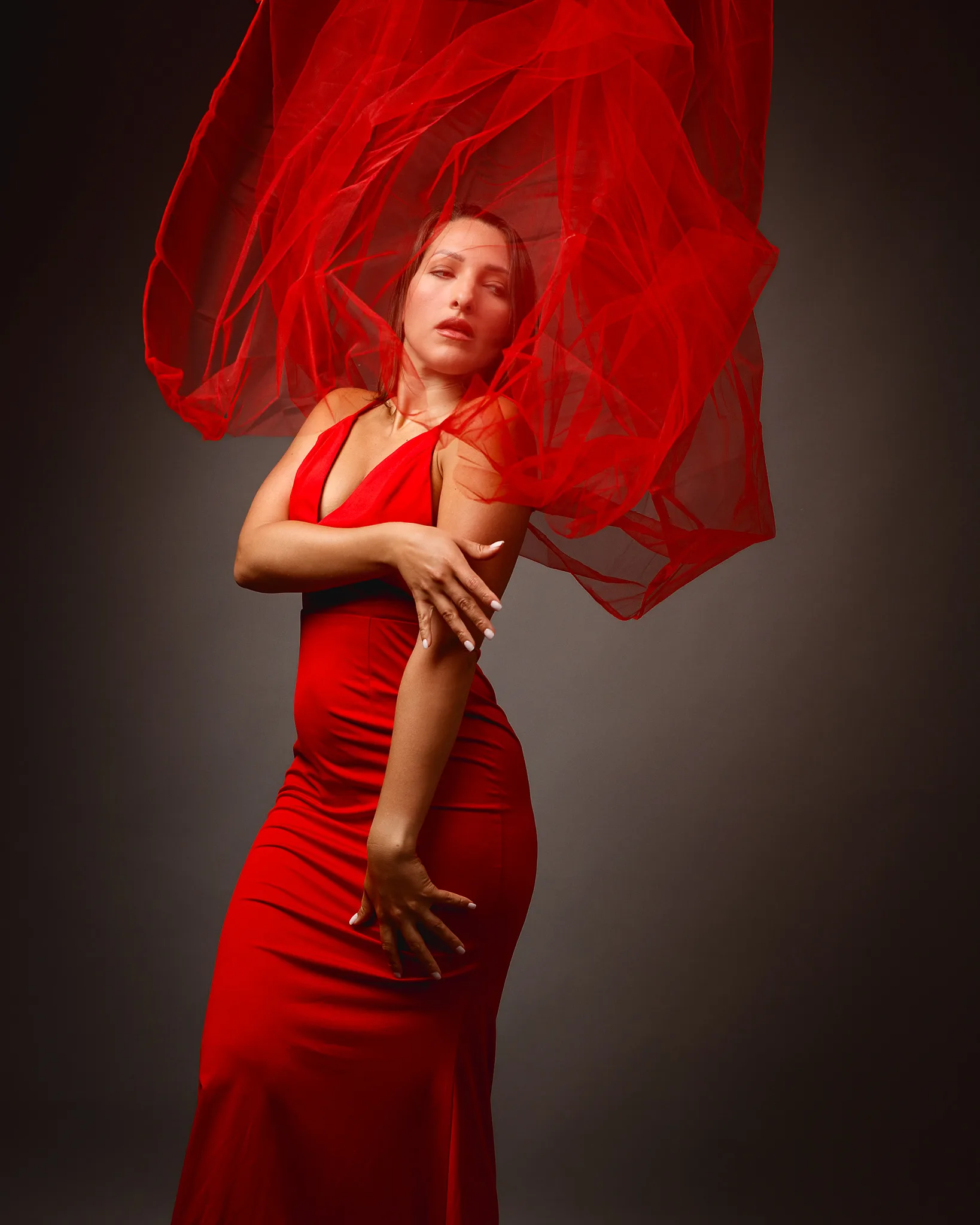
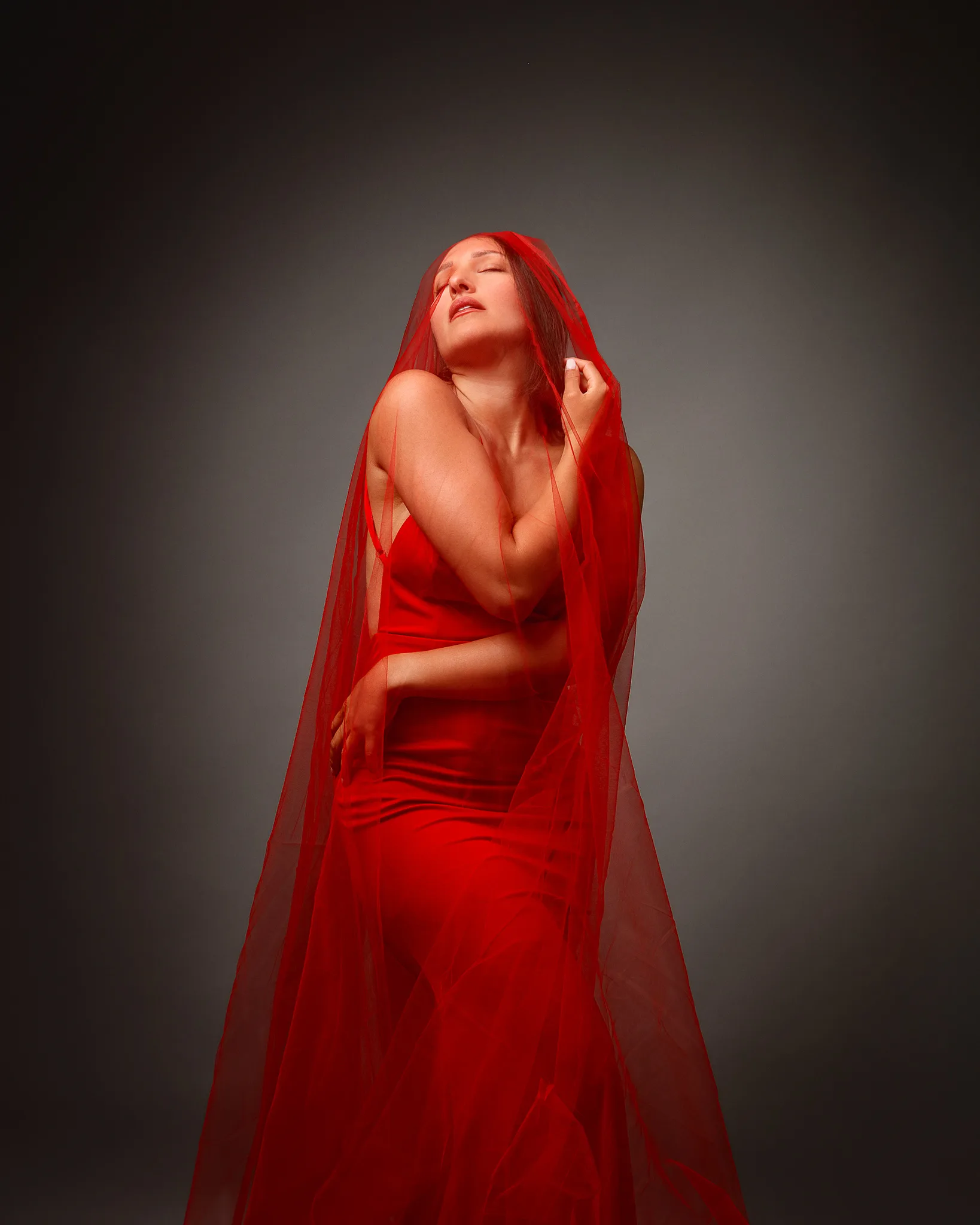
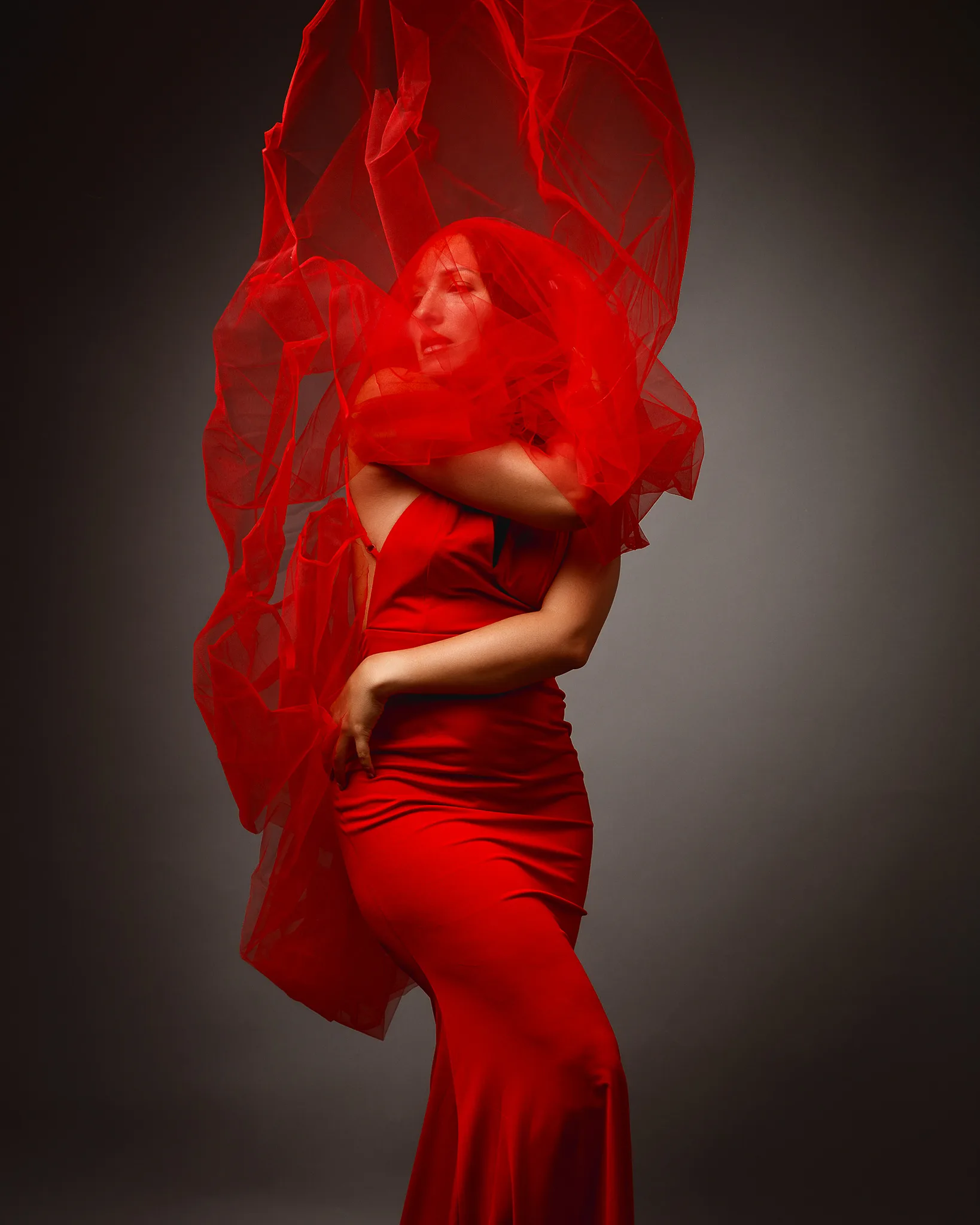
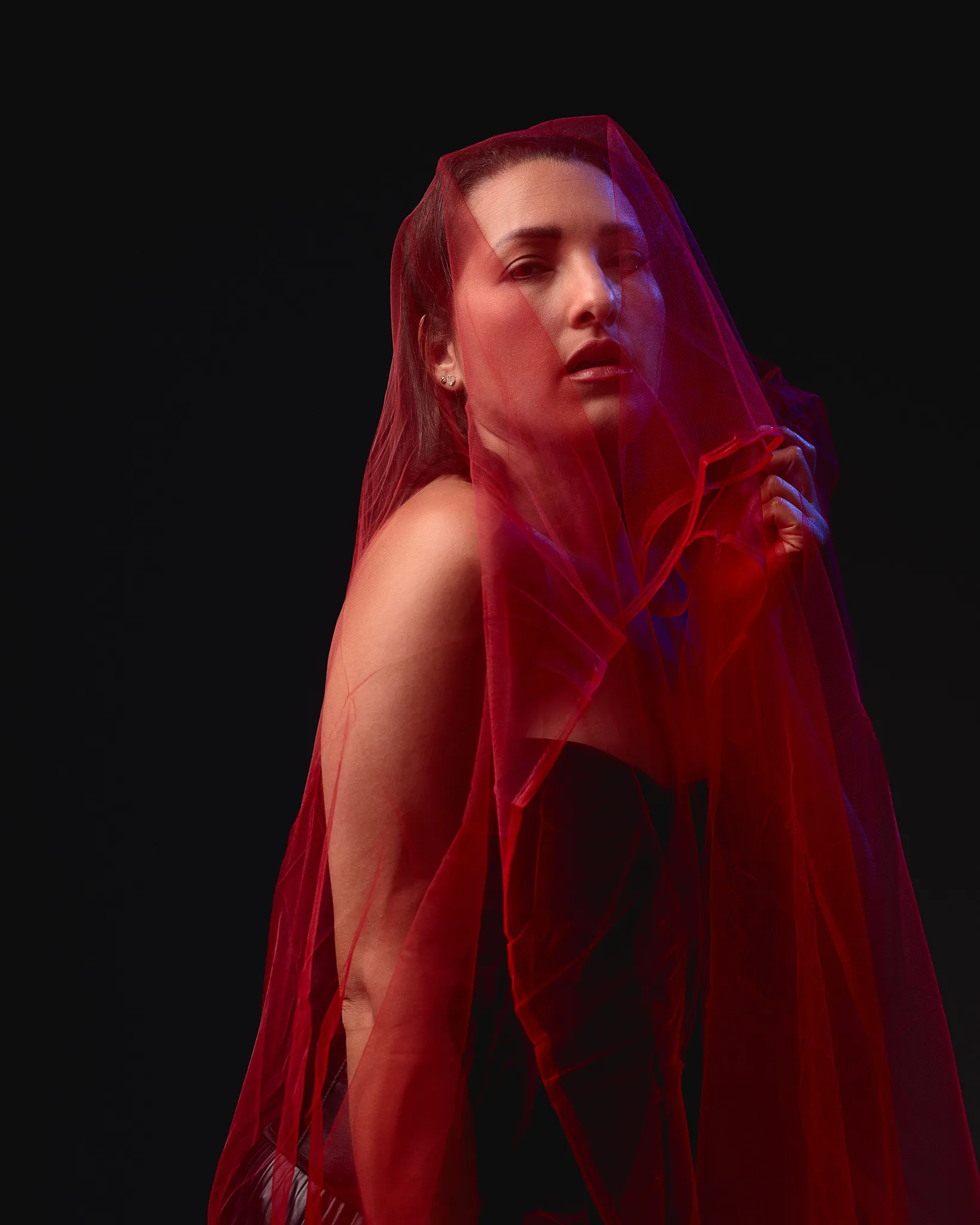
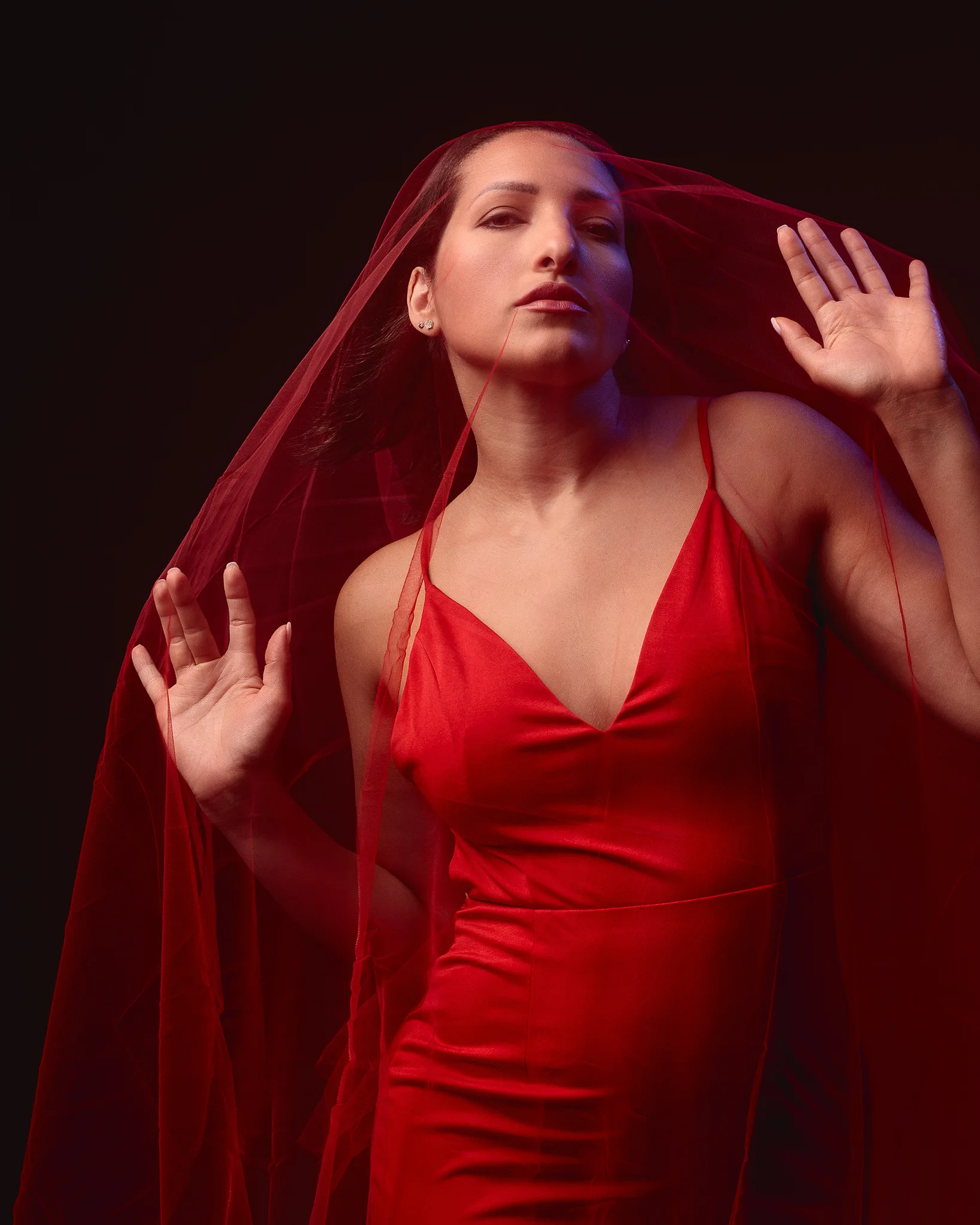
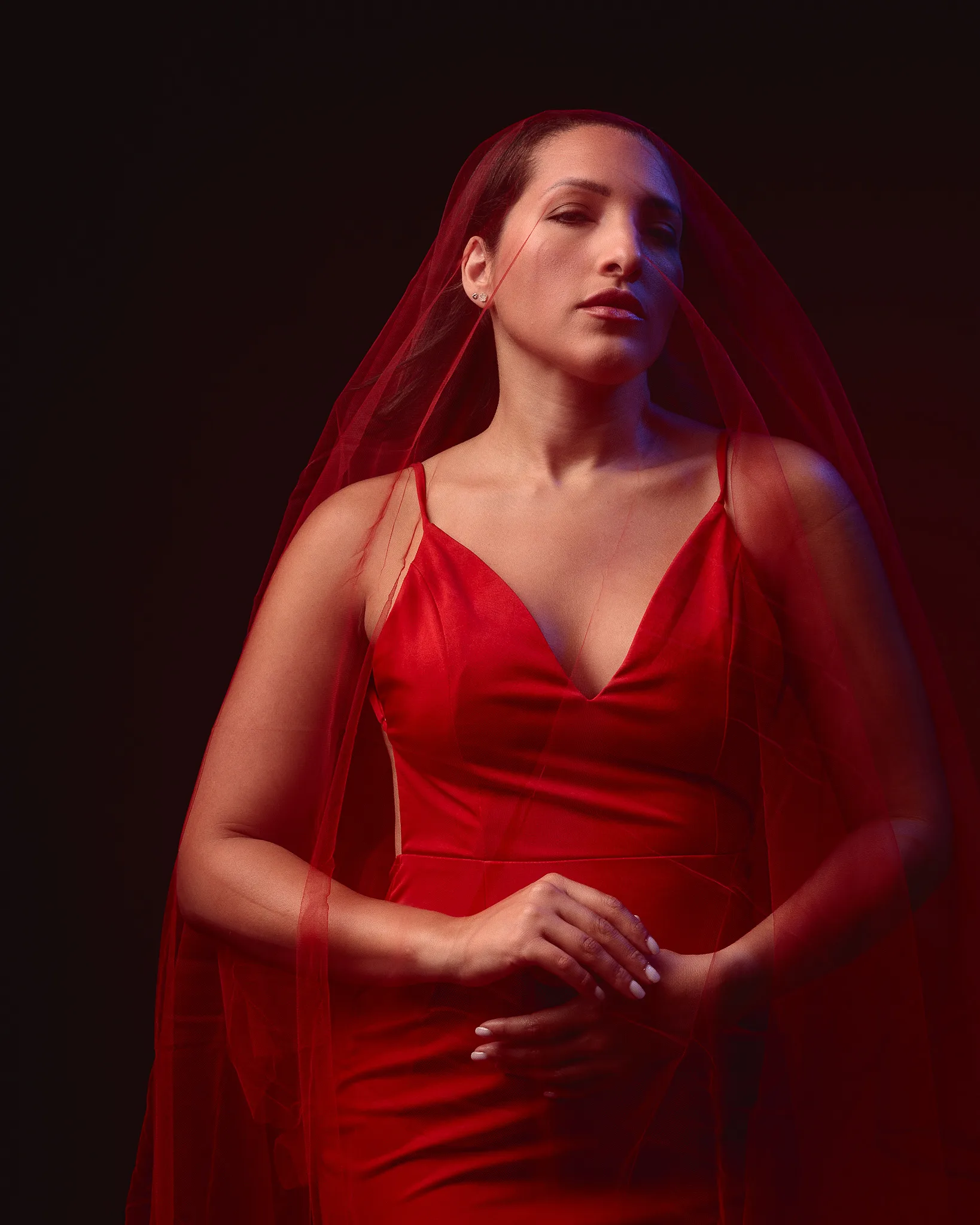
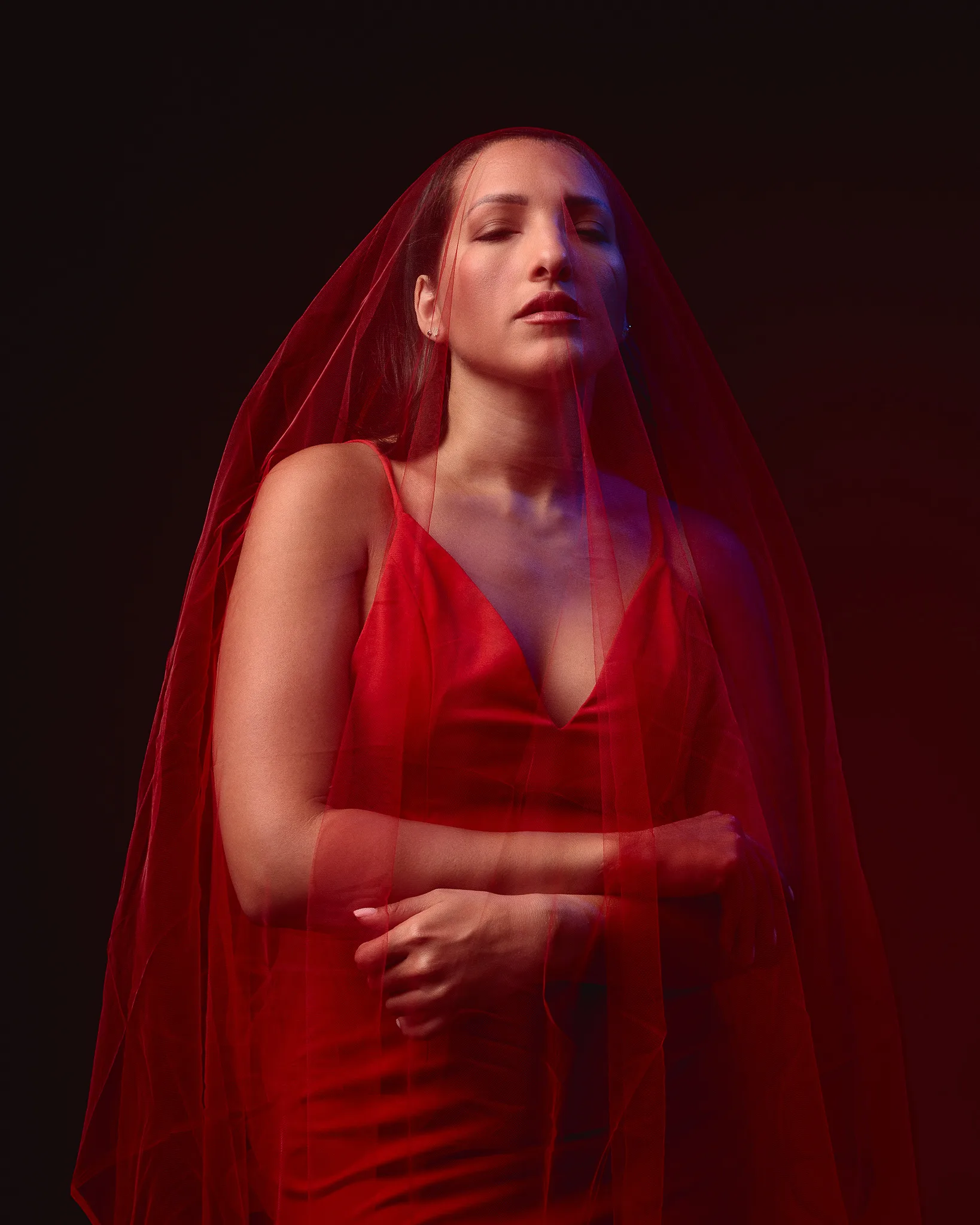
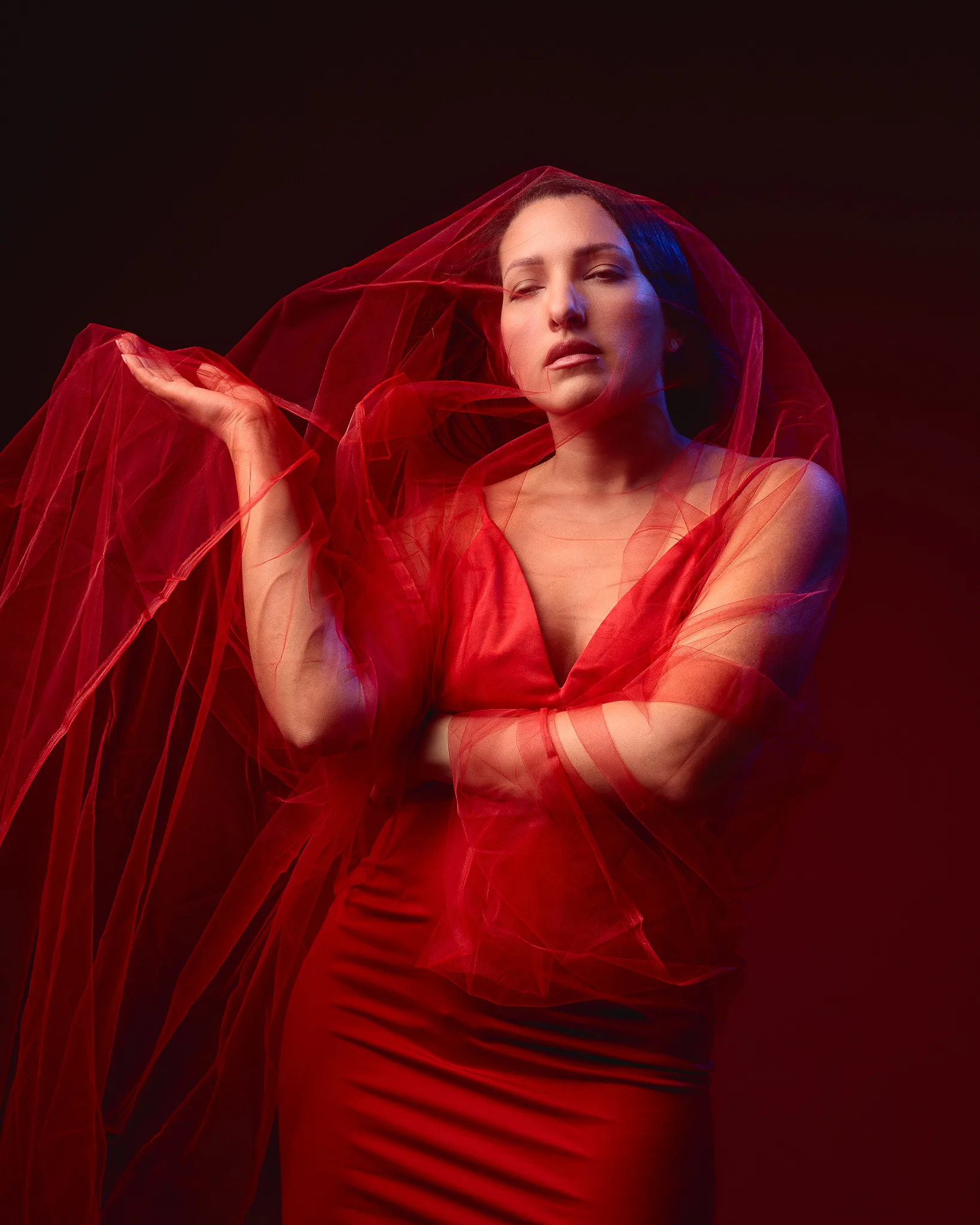
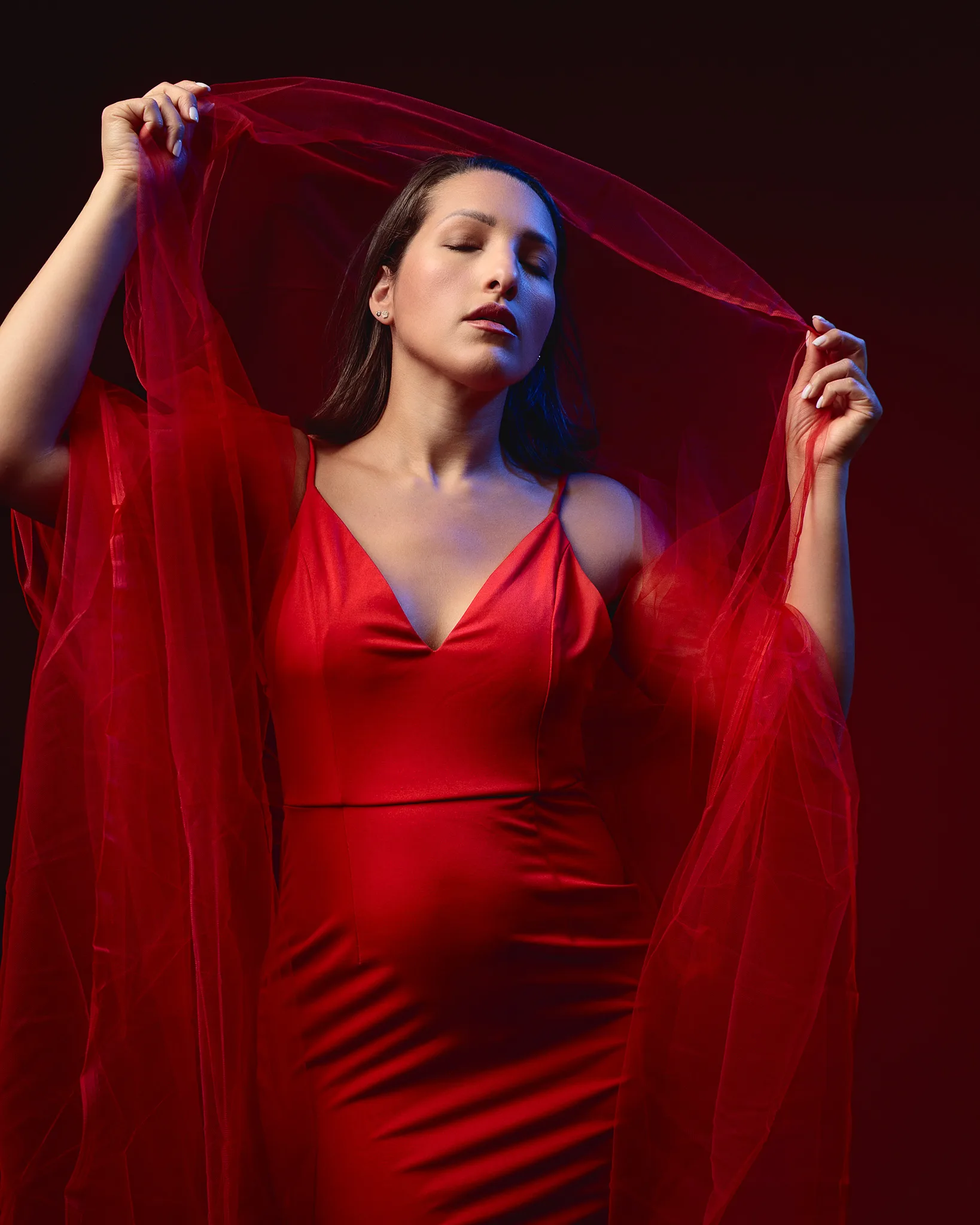
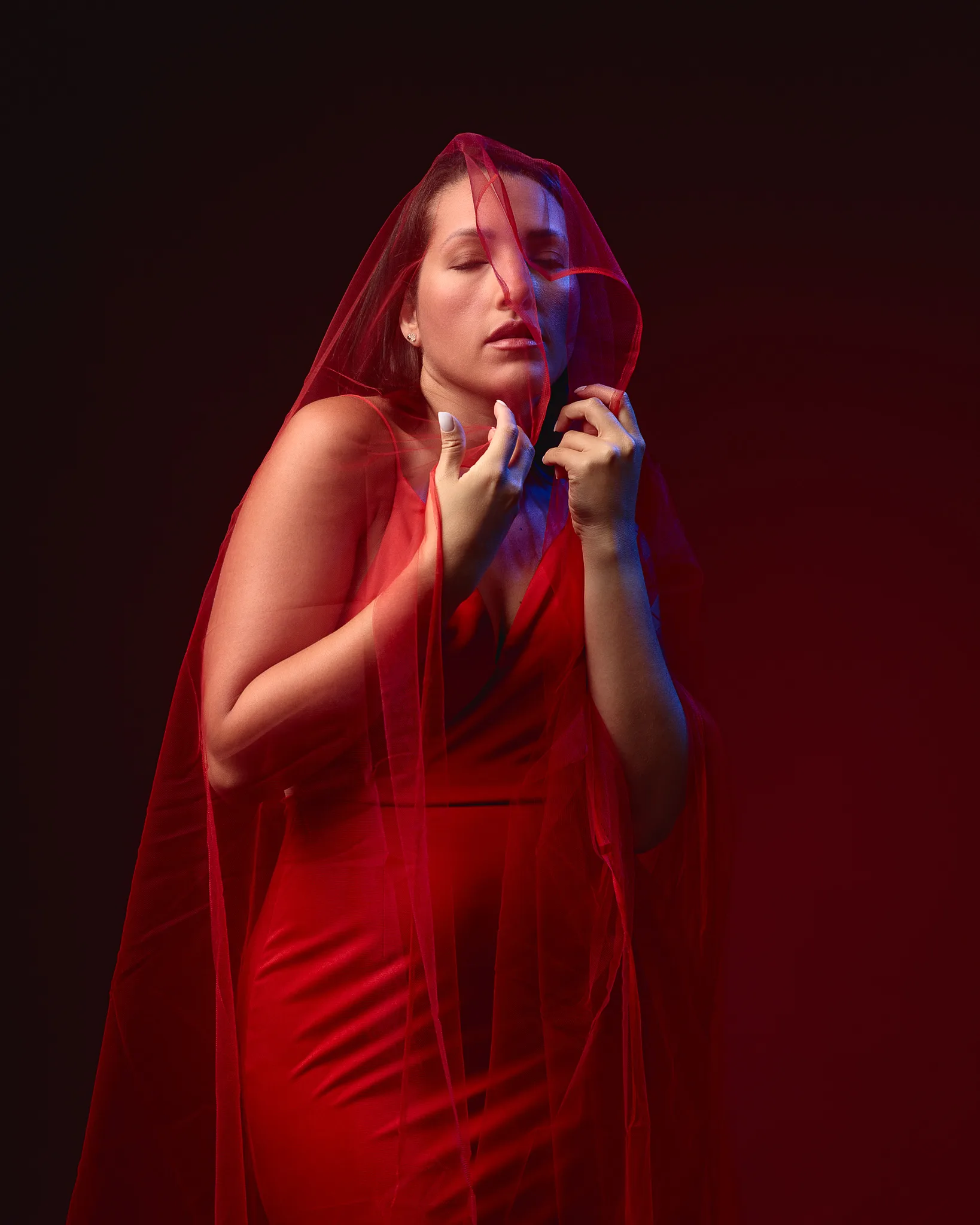
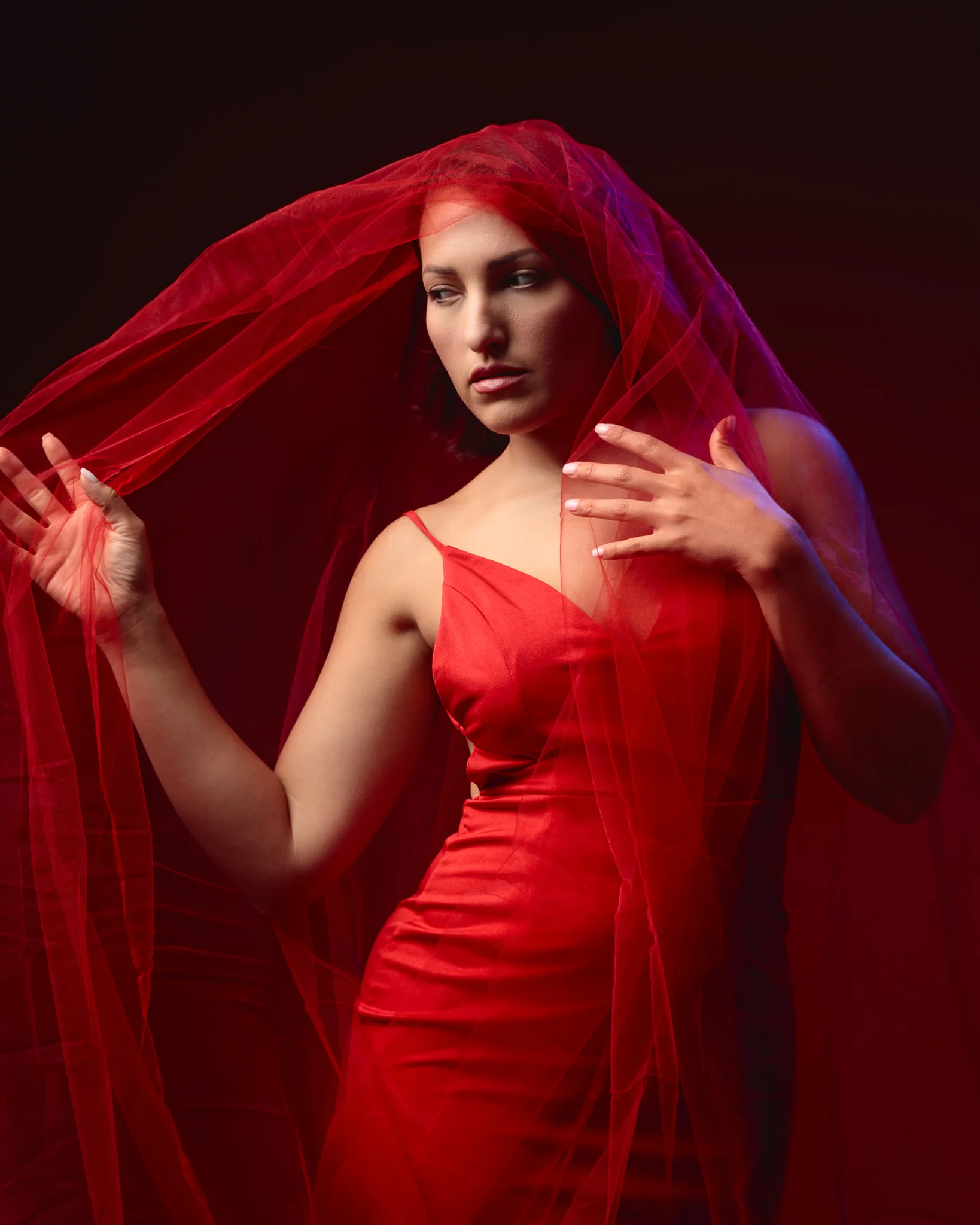
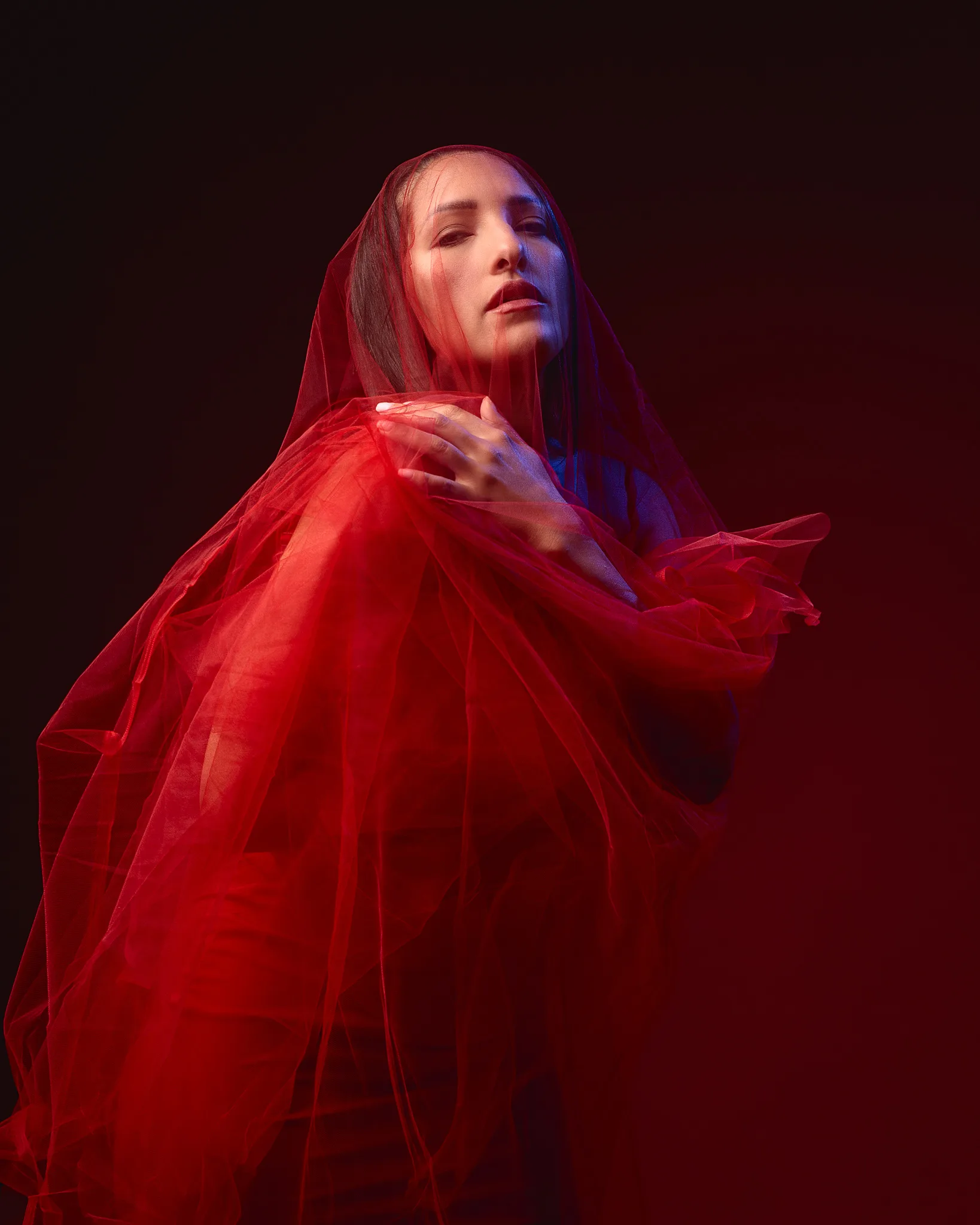
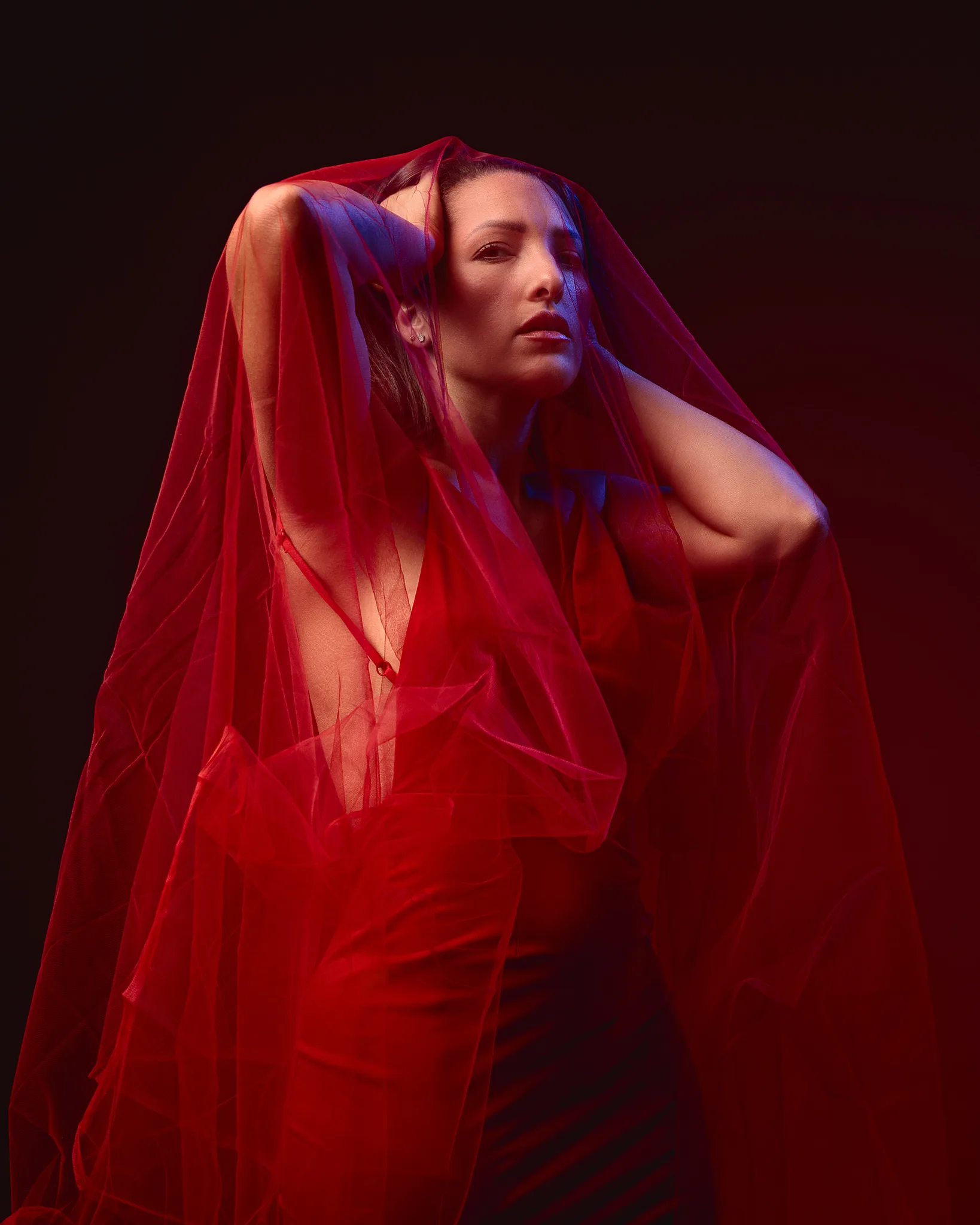
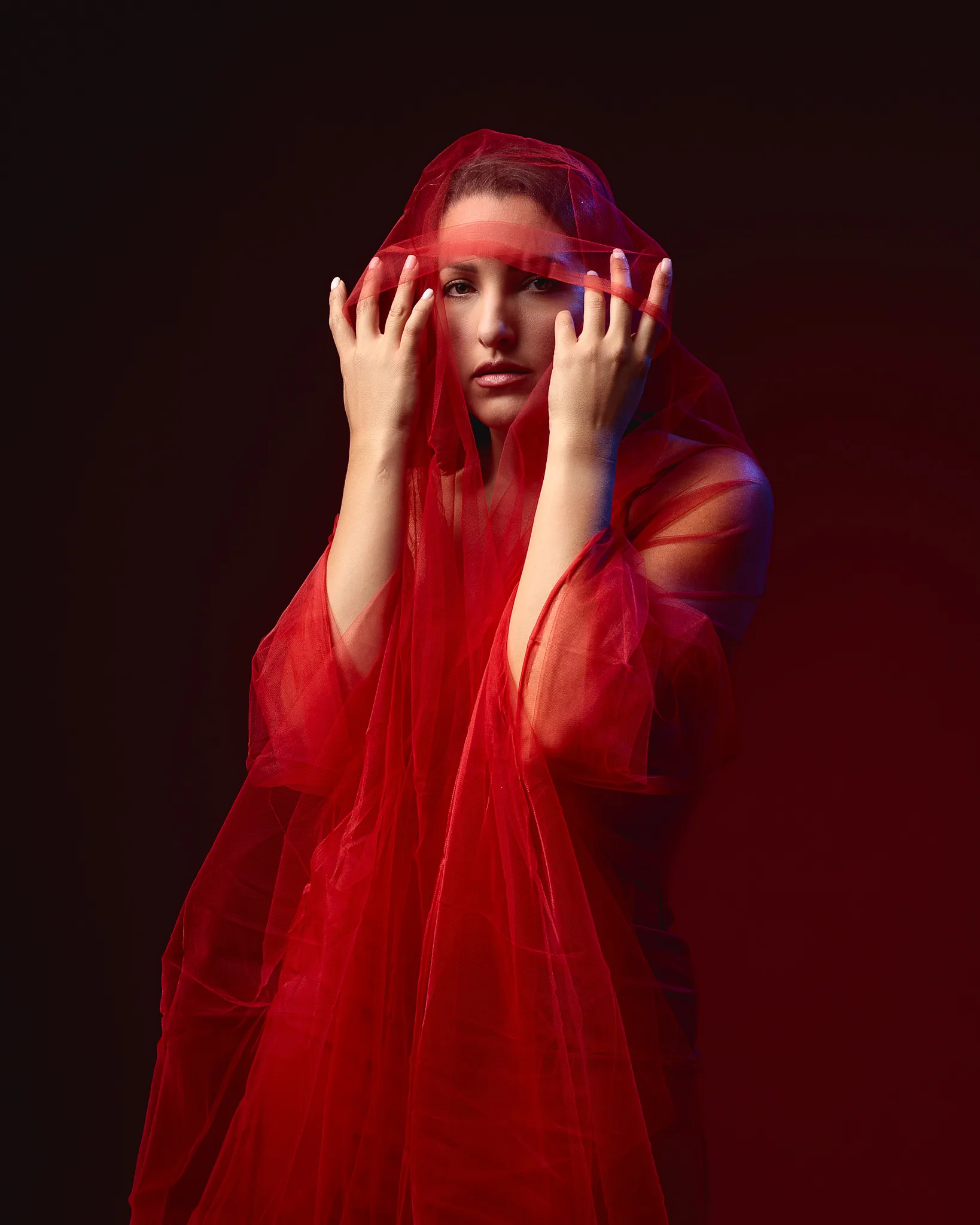
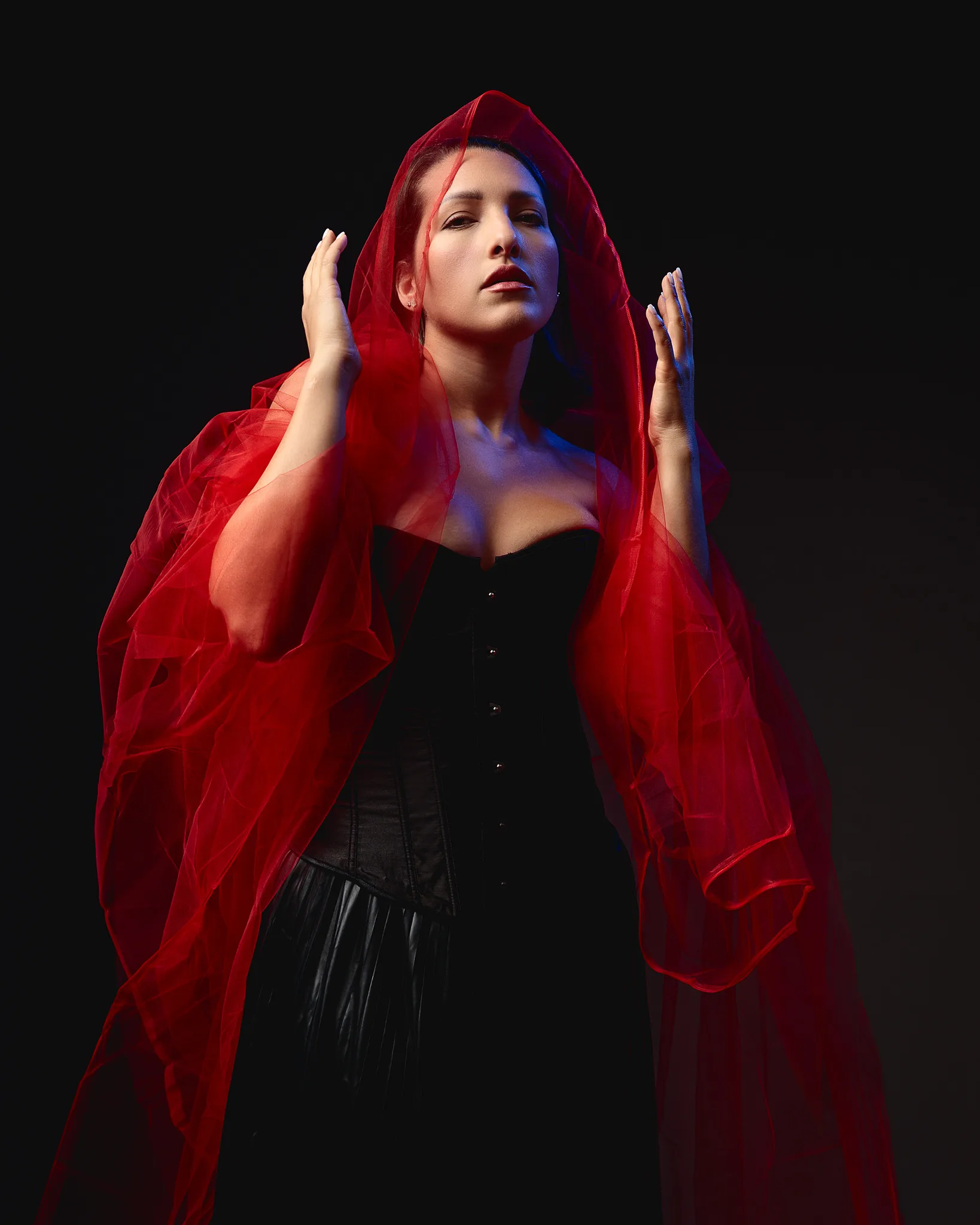
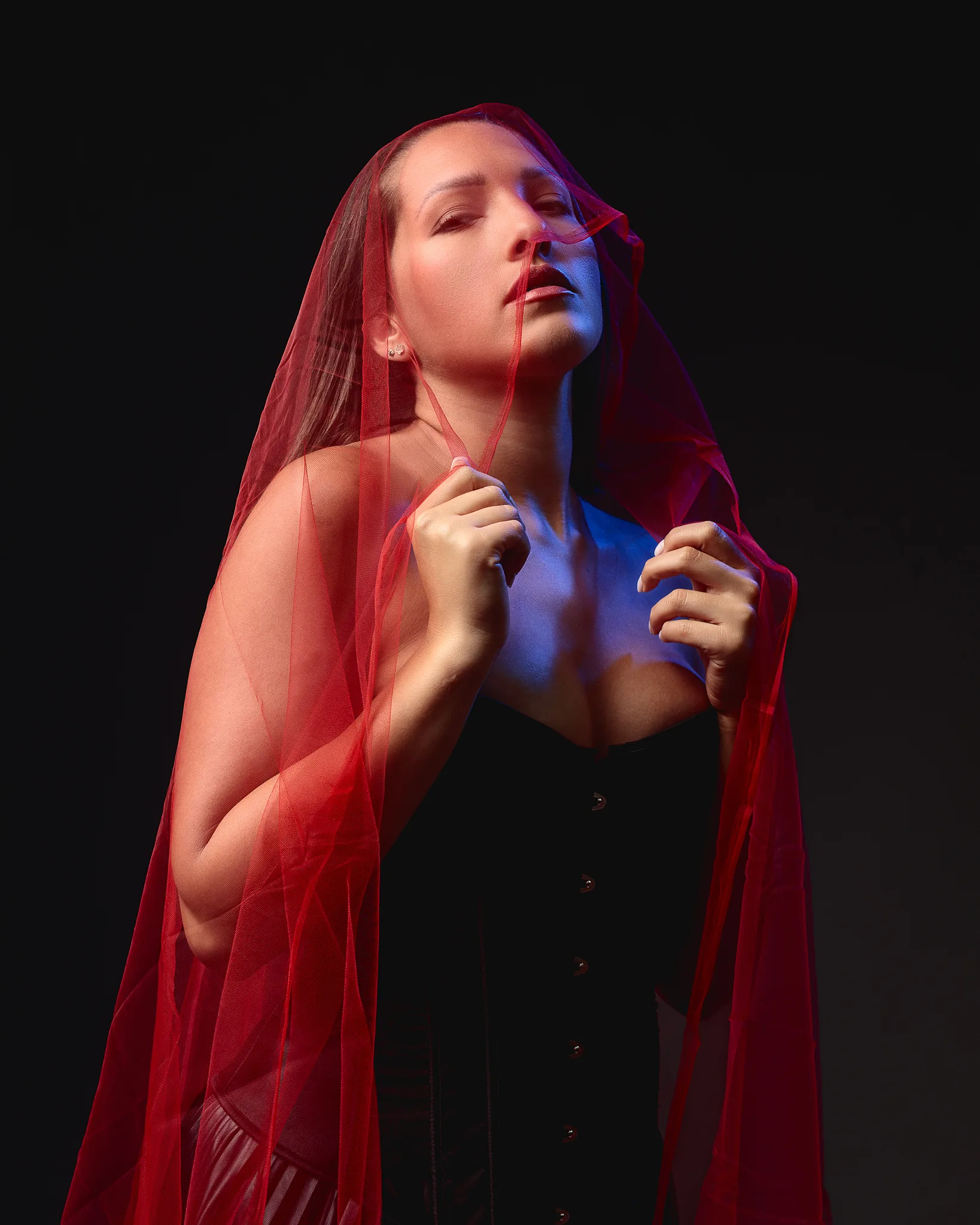
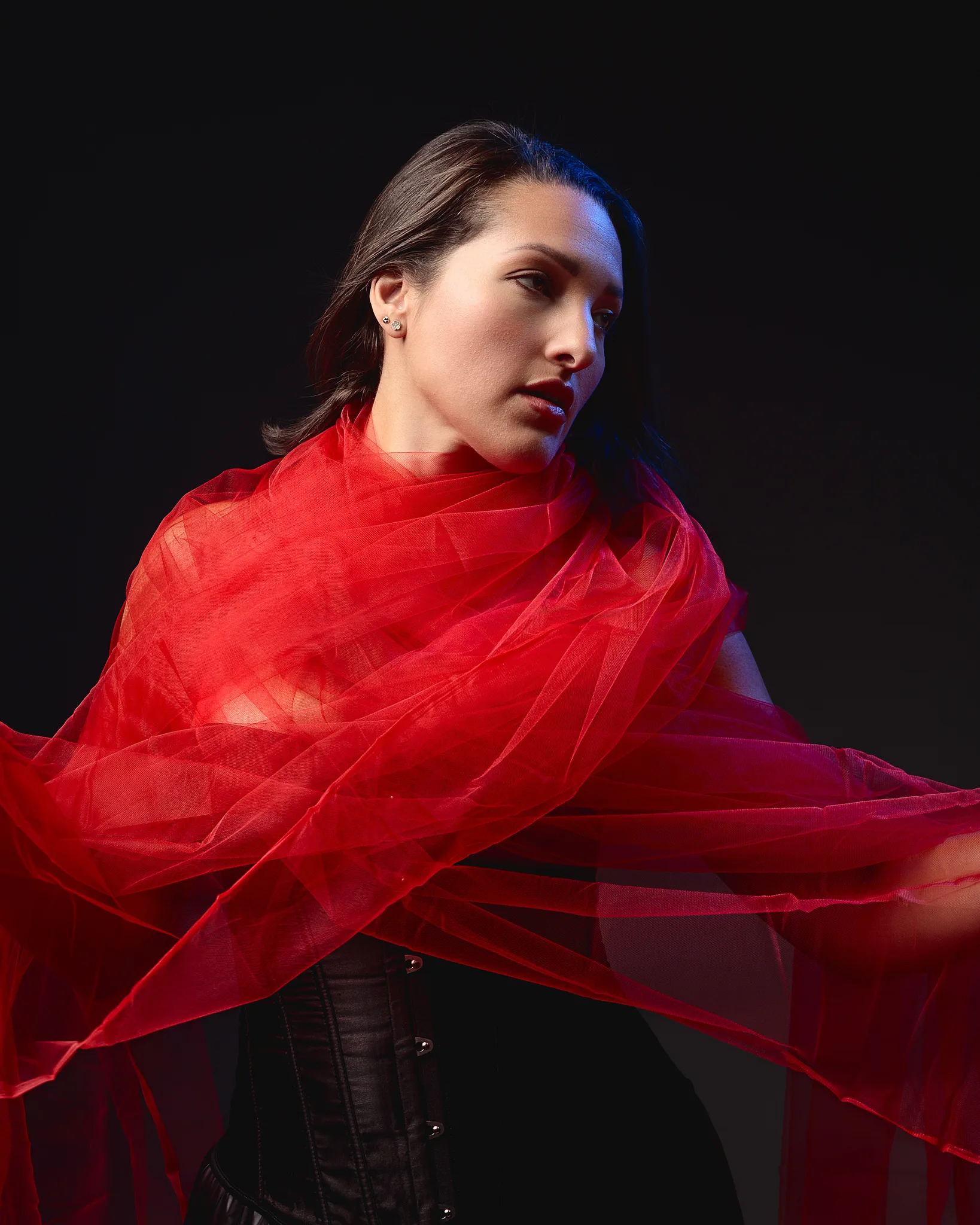
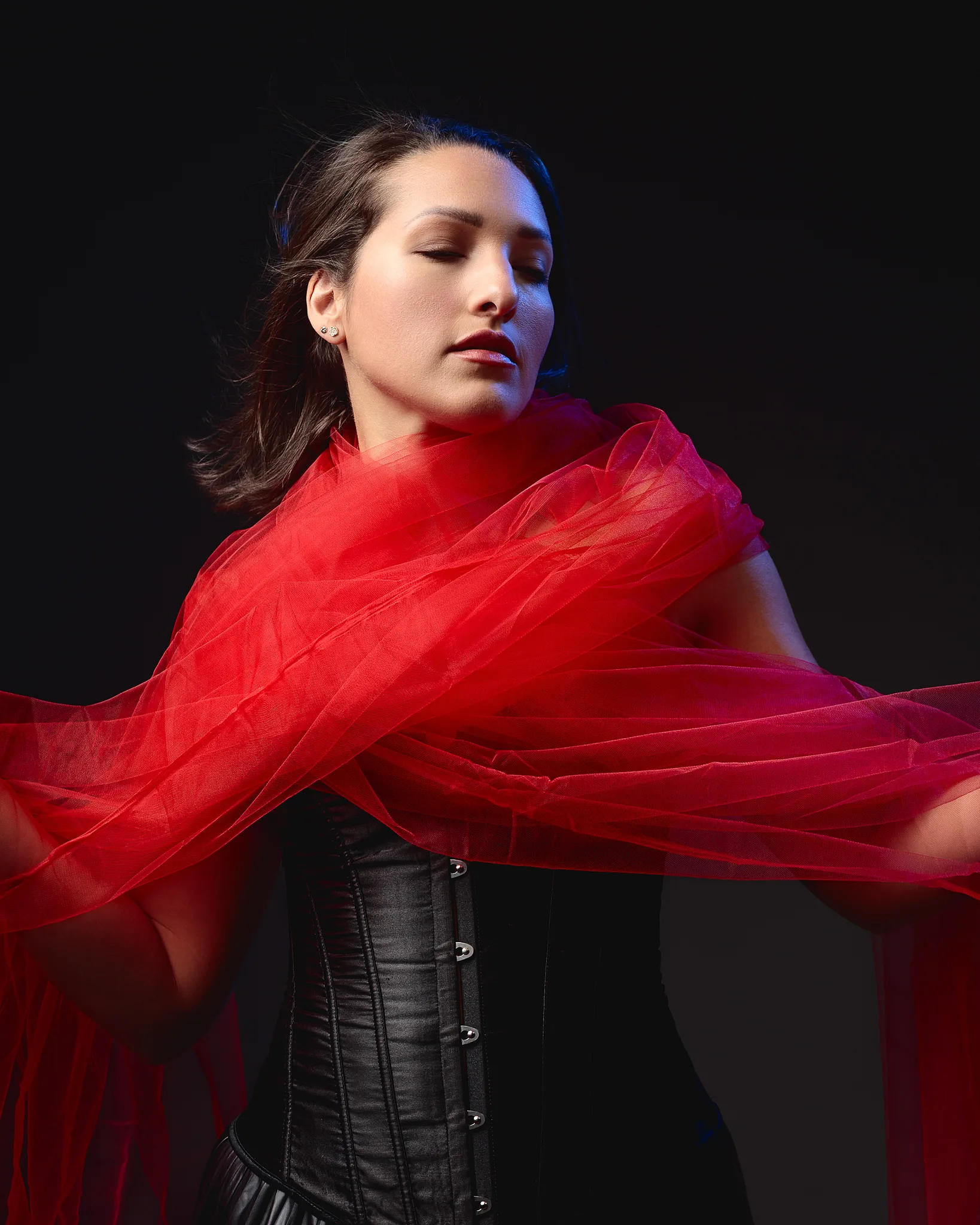
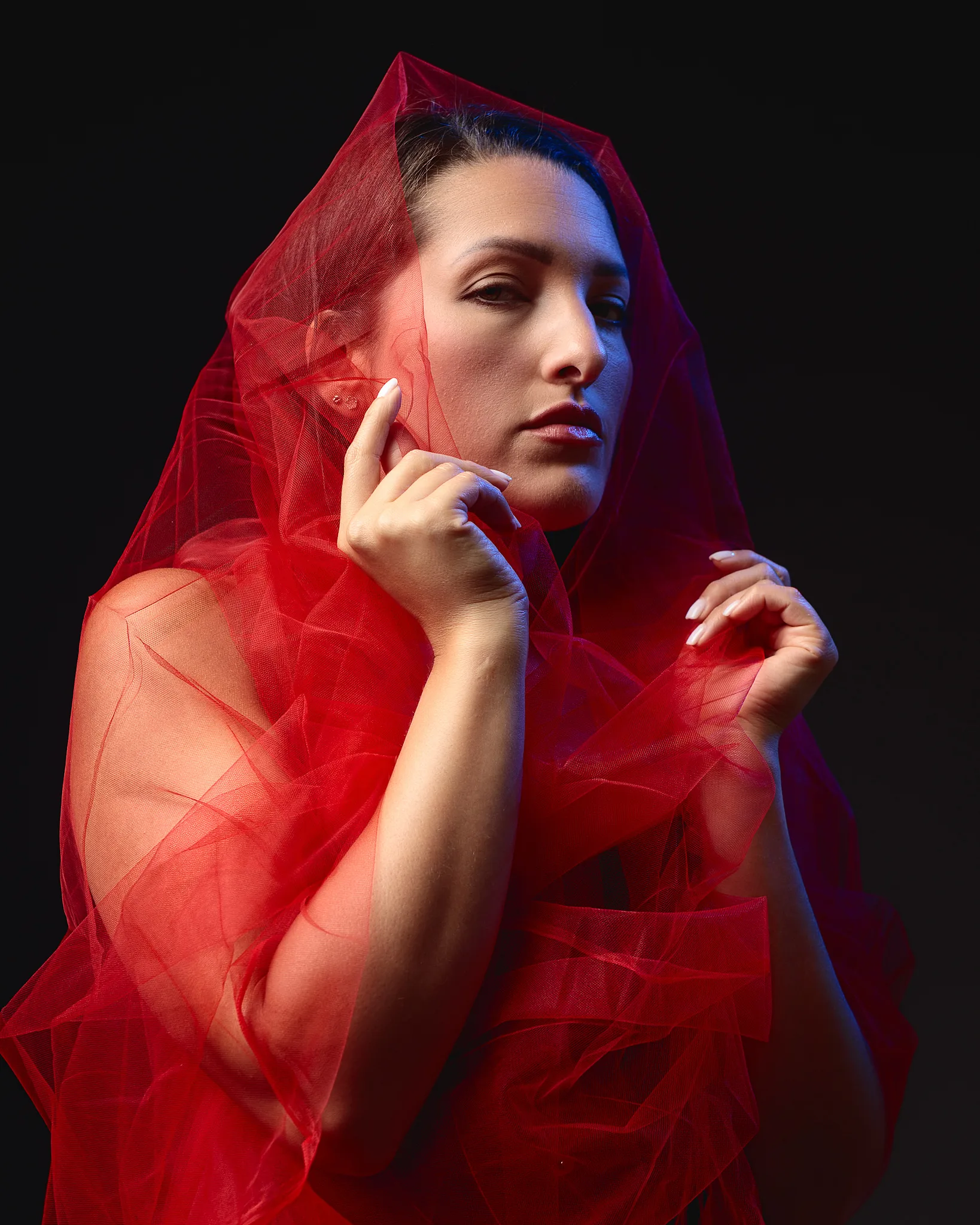
Mariana came into the studio at Rendlesham for another portfolio session on Tuesday 25 August, and this time we brought a length of red tulle into the mix to see what it would do. It sounds like a small addition, and in a way it was, but it changed the whole feel of the middle of the session. That’s usually how it goes in a studio: the biggest shift in a set of images usually comes down to one simple prop, used well, rather than a big idea.
I have lost count of how many times Mariana and I have worked together now, and that matters, because a session like this runs on trust and a shared sense of what works, and that only builds up over repeated sittings rather than a single booking.
Planning Without Being Bound by the Plan
Before a shoot, Mariana and I send each other a Pinterest board each. It is a way of showing the other person the feeling and direction we are drawn to, rather than a fixed brief. I think that distinction matters. A mood board is a starting point rather than a set of instructions, and treating it as gospel is a mistake I see people make. Some of the ideas on a board translate straight into the studio. Others do not, because a pose or an effect that works in a single still online can fall apart the moment you try to recreate it with a real person under real lights. Sometimes what’s missing is a prop, sometimes it’s a different background. This time it was a piece of red tulle, which is a simple thing to bring into a session and one of the more effective ones. My job is to take the ideas that survive that translation and make them work properly in front of the camera.
Five Looks and the Light Behind Them
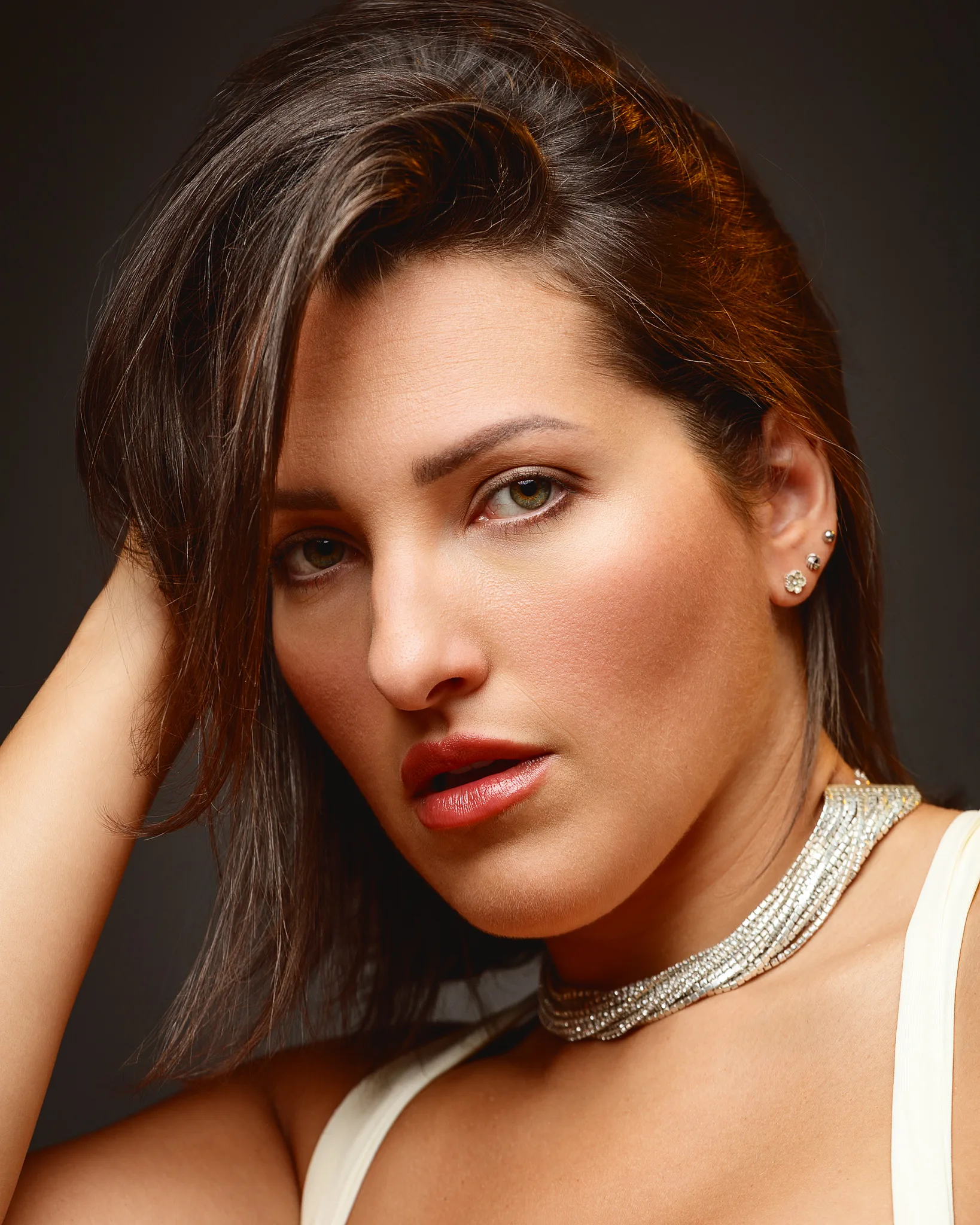
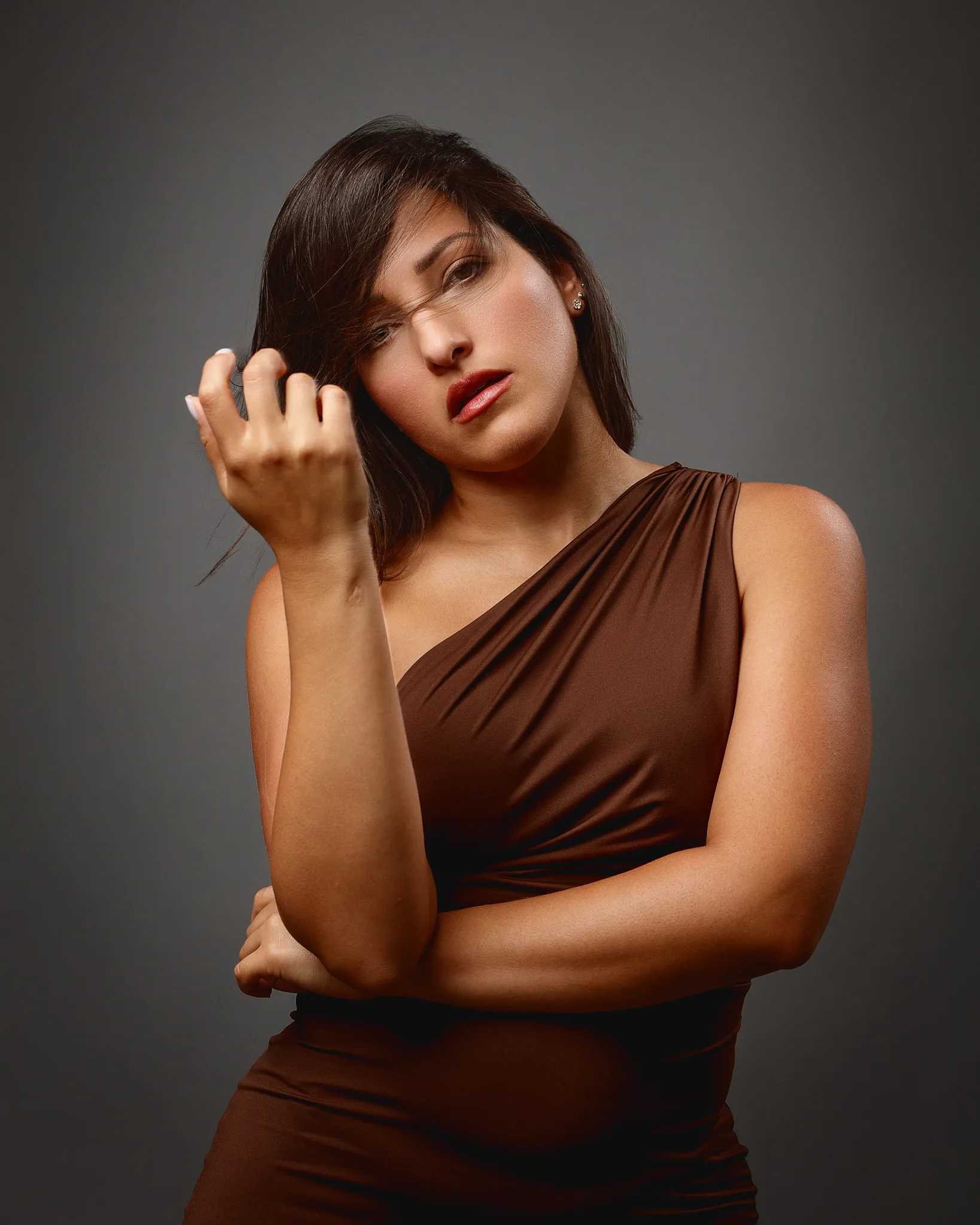
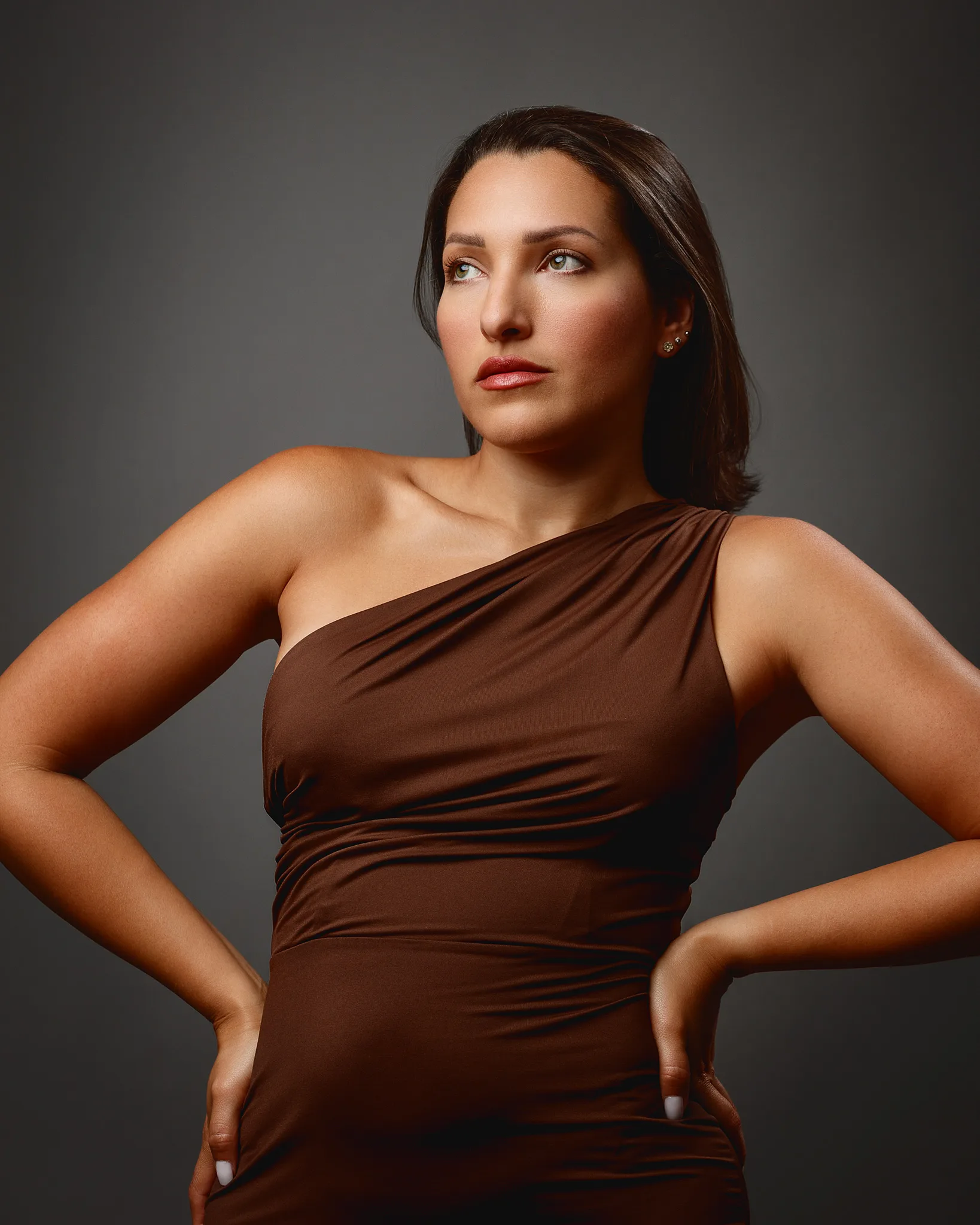
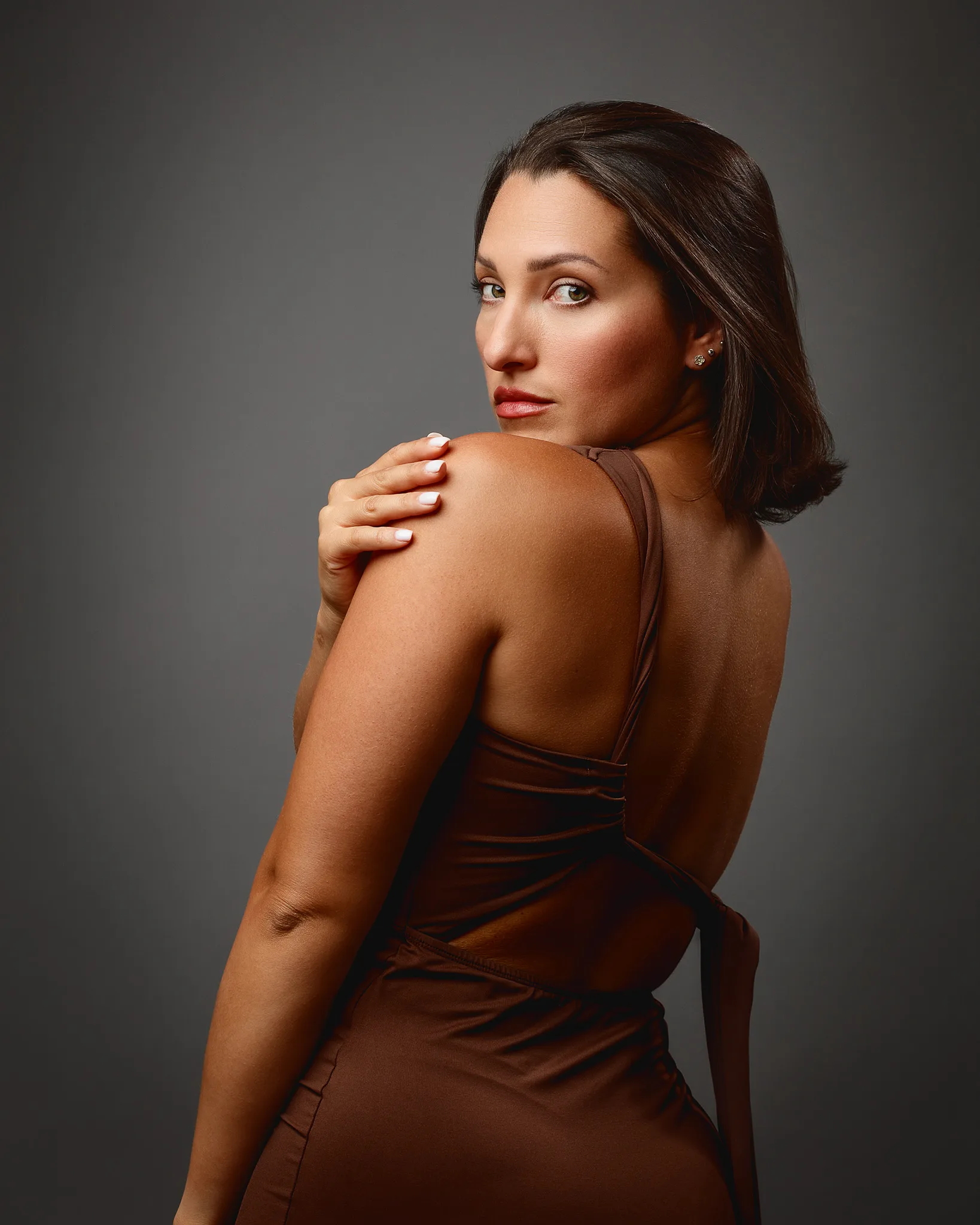
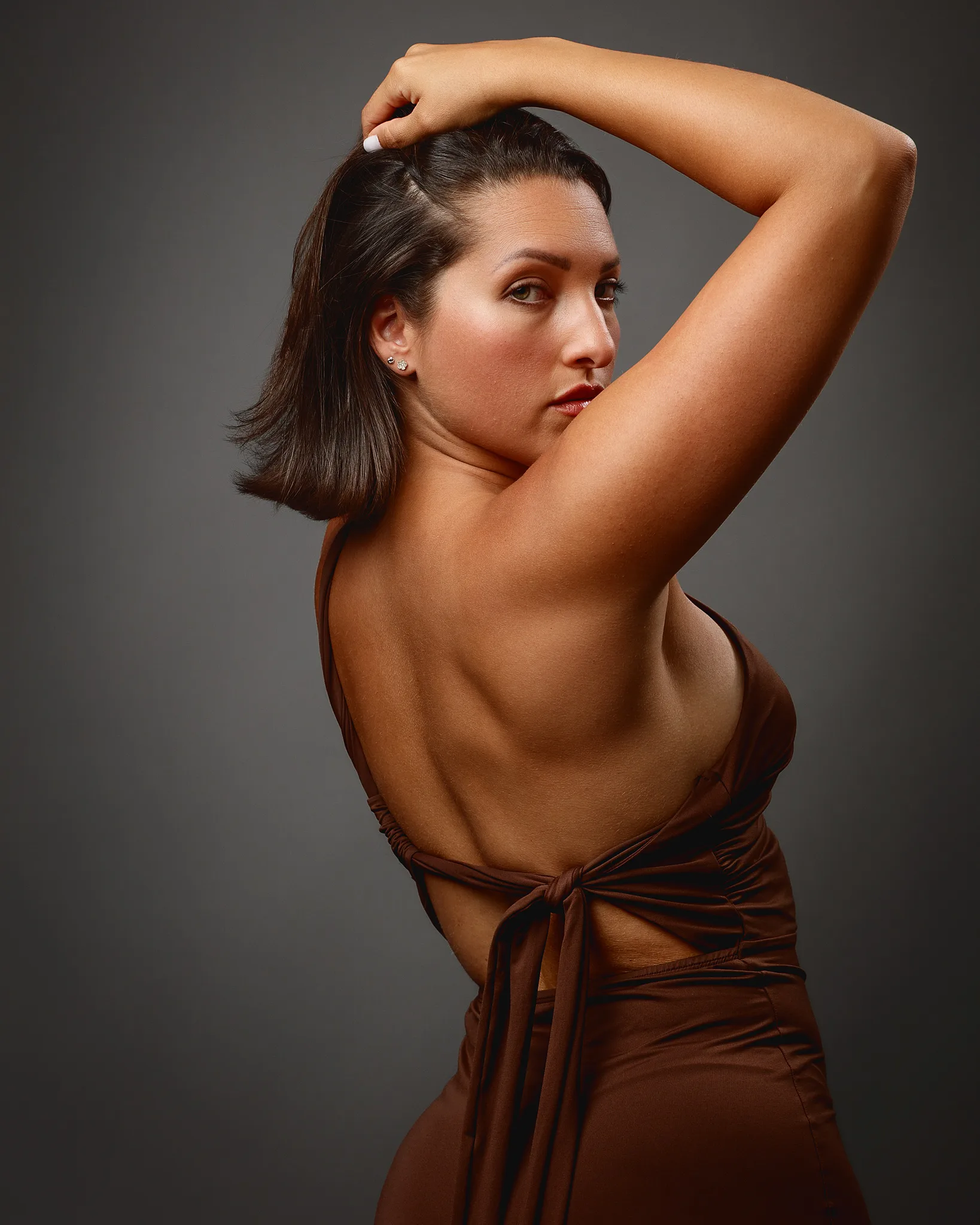
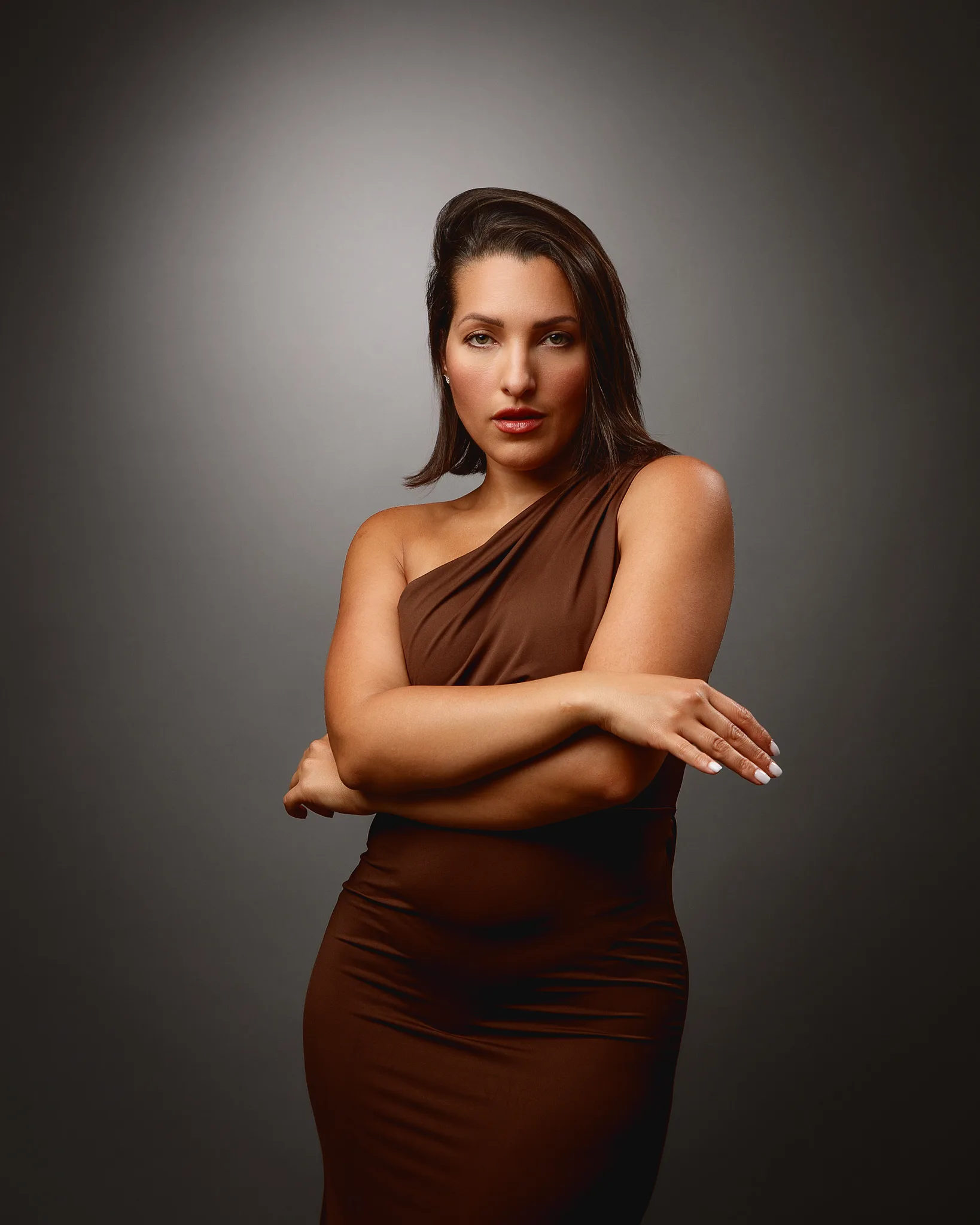
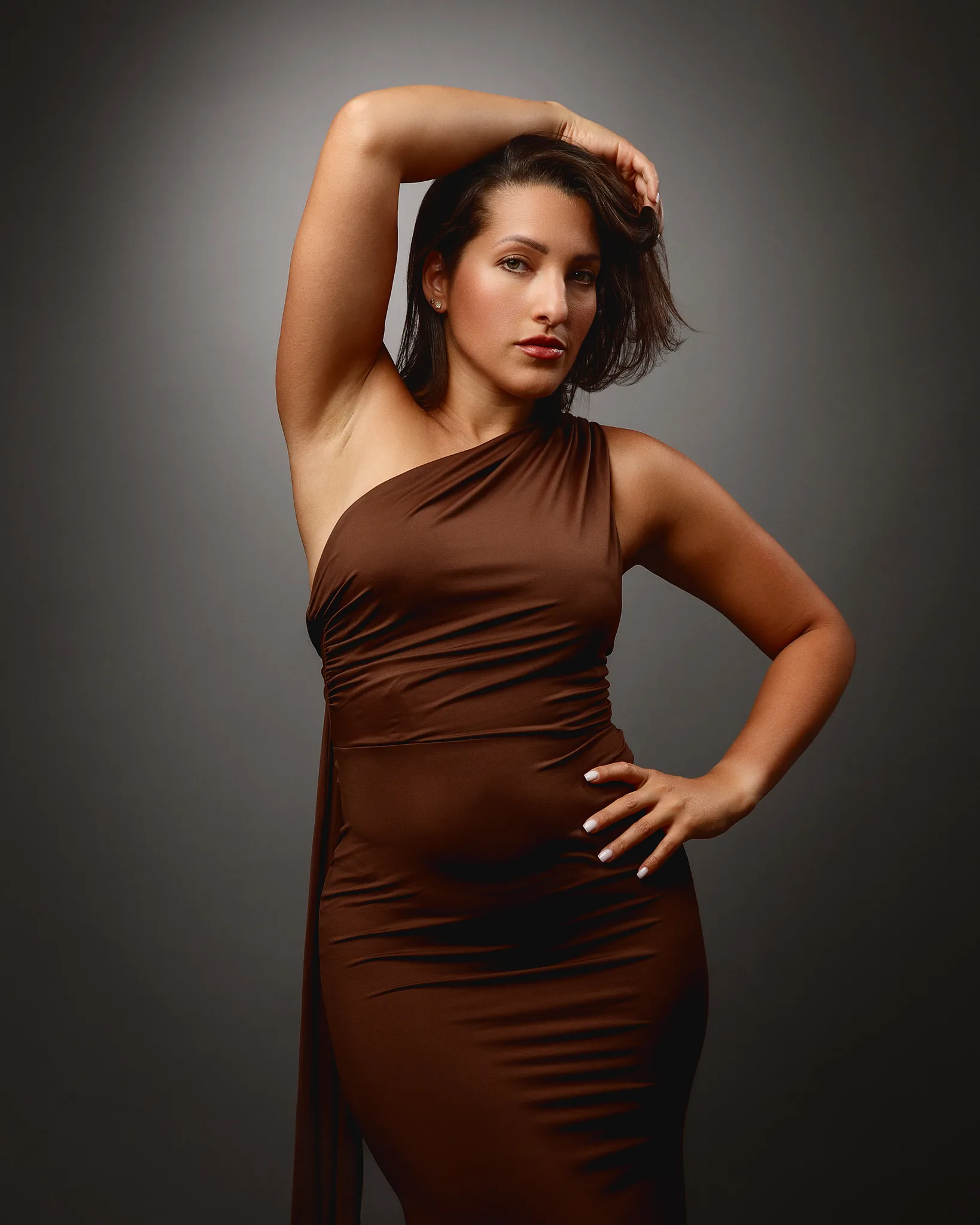
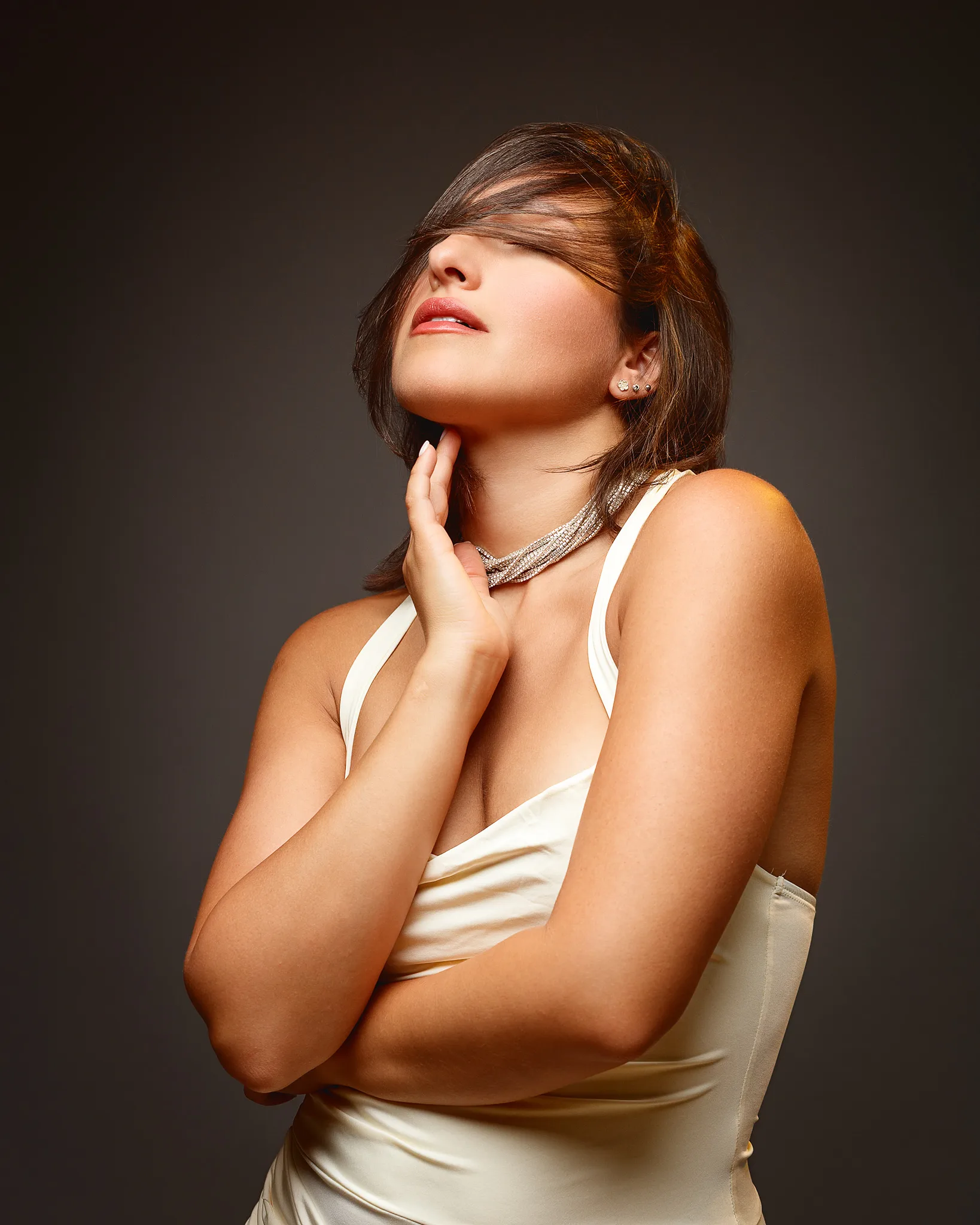
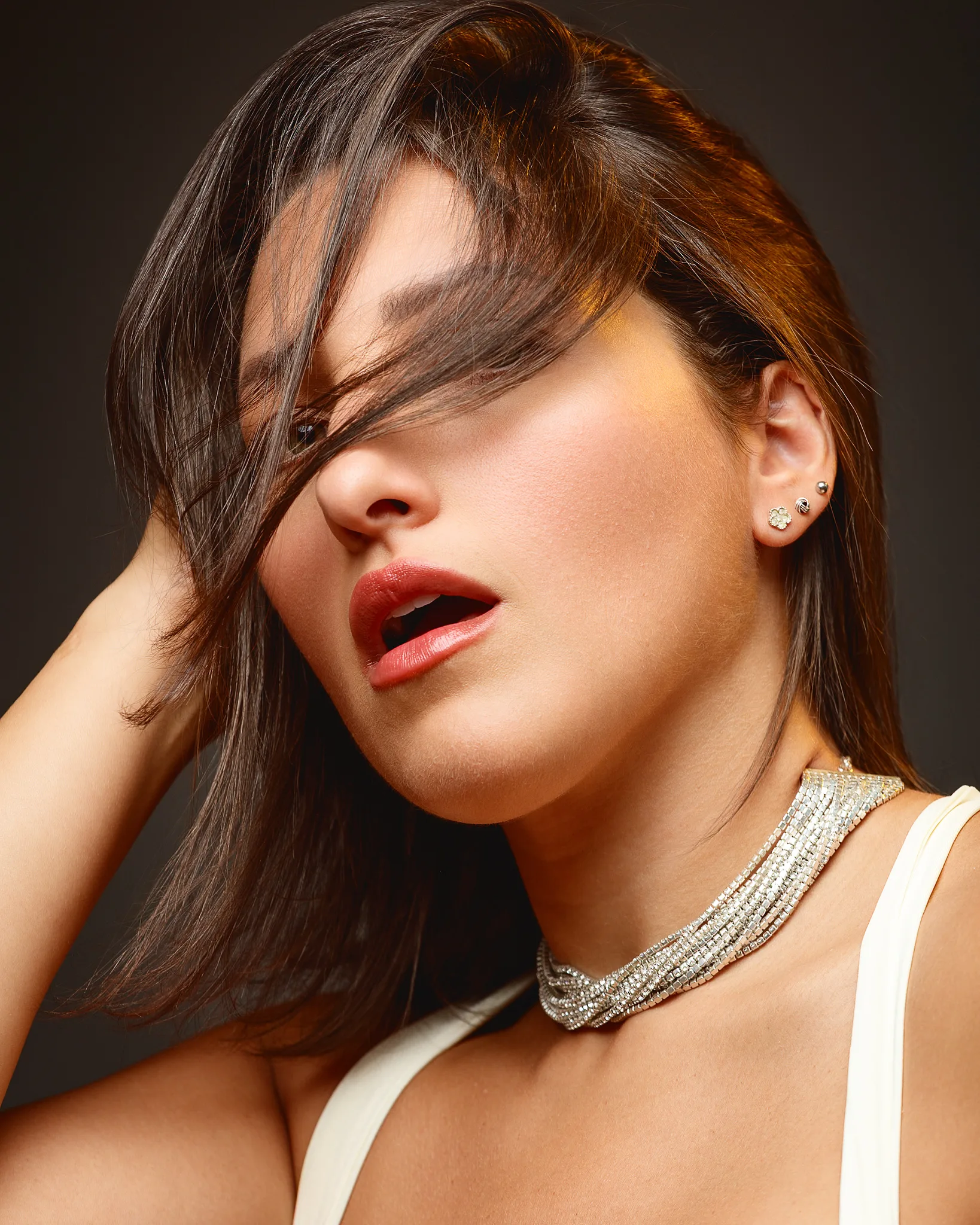
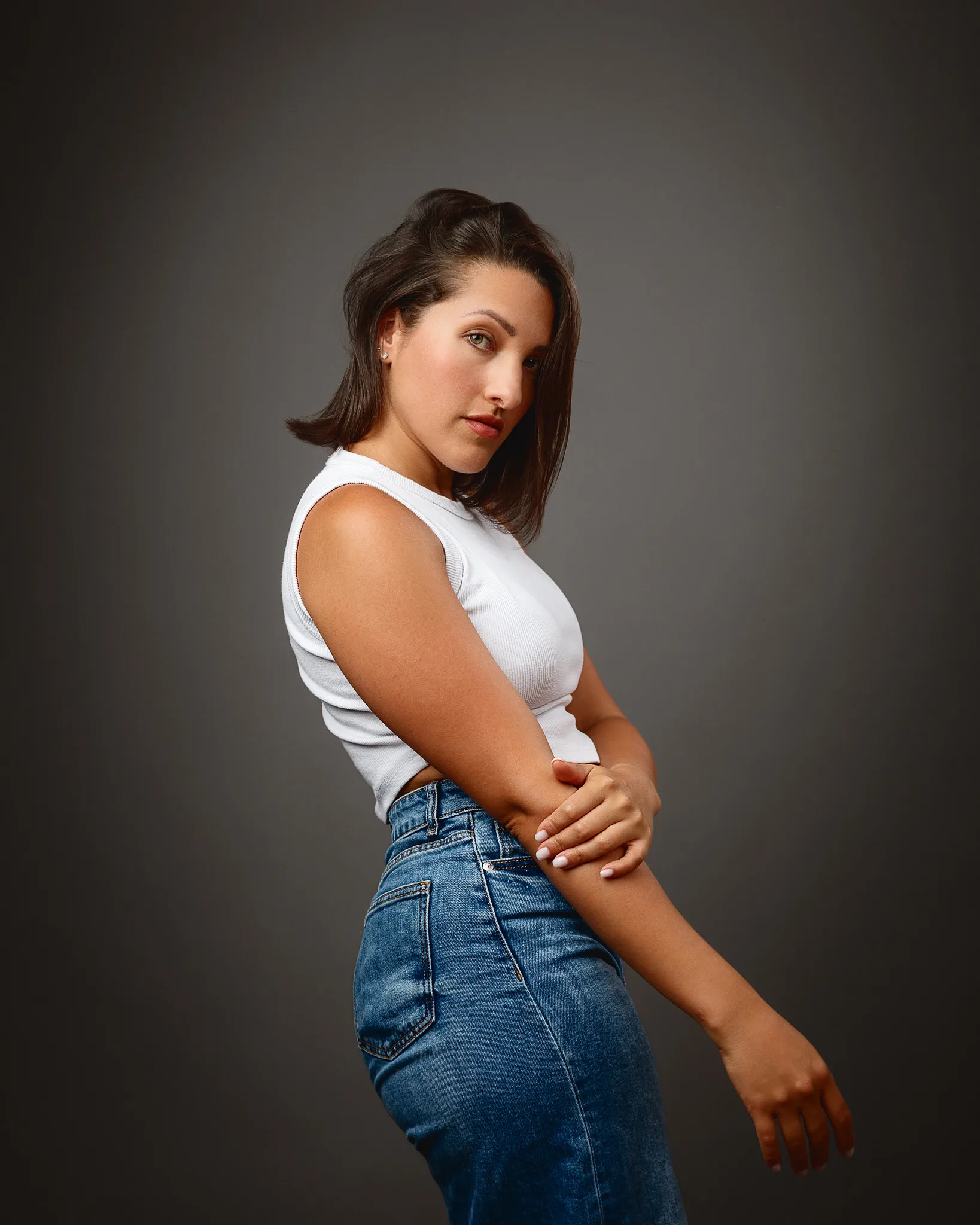
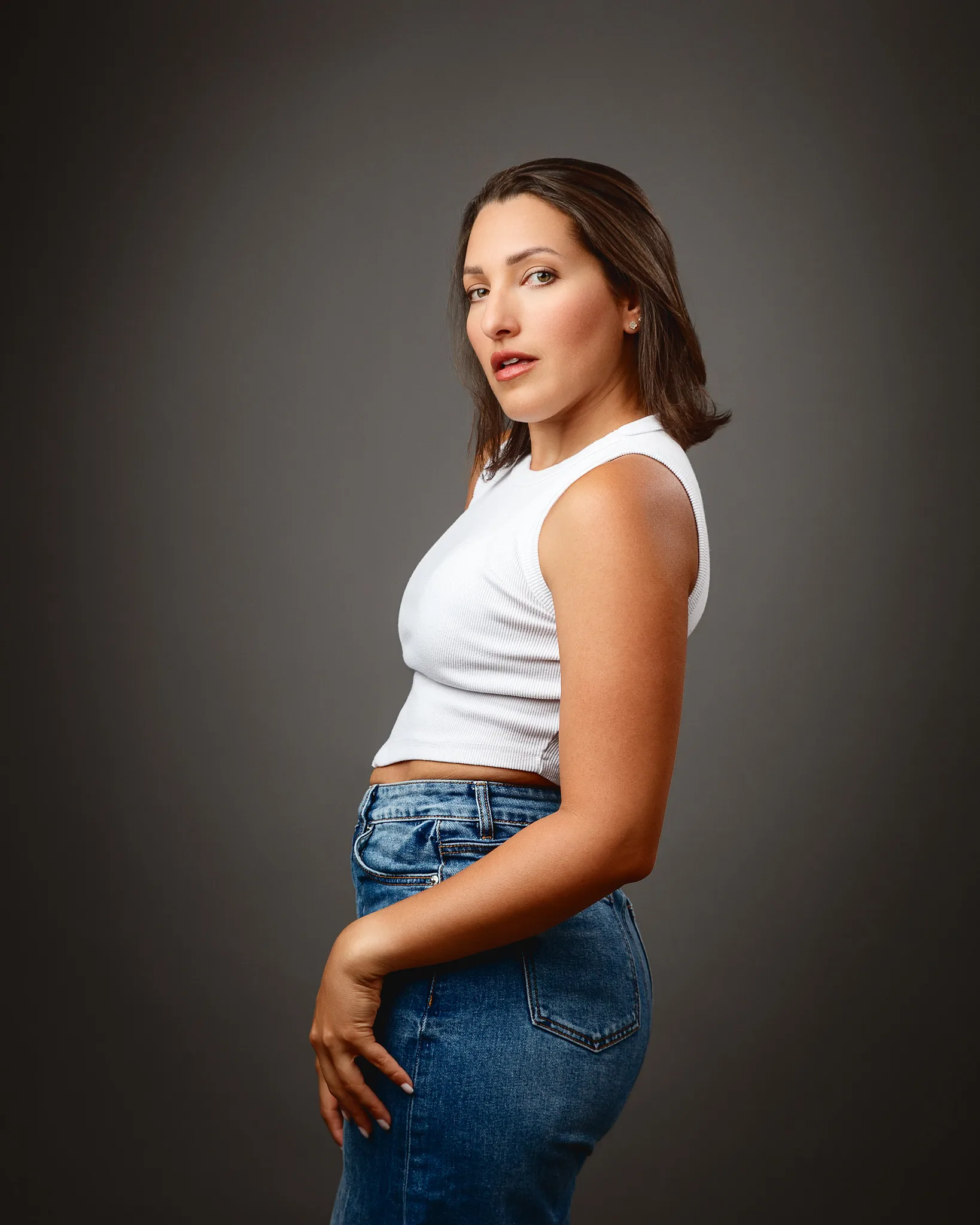
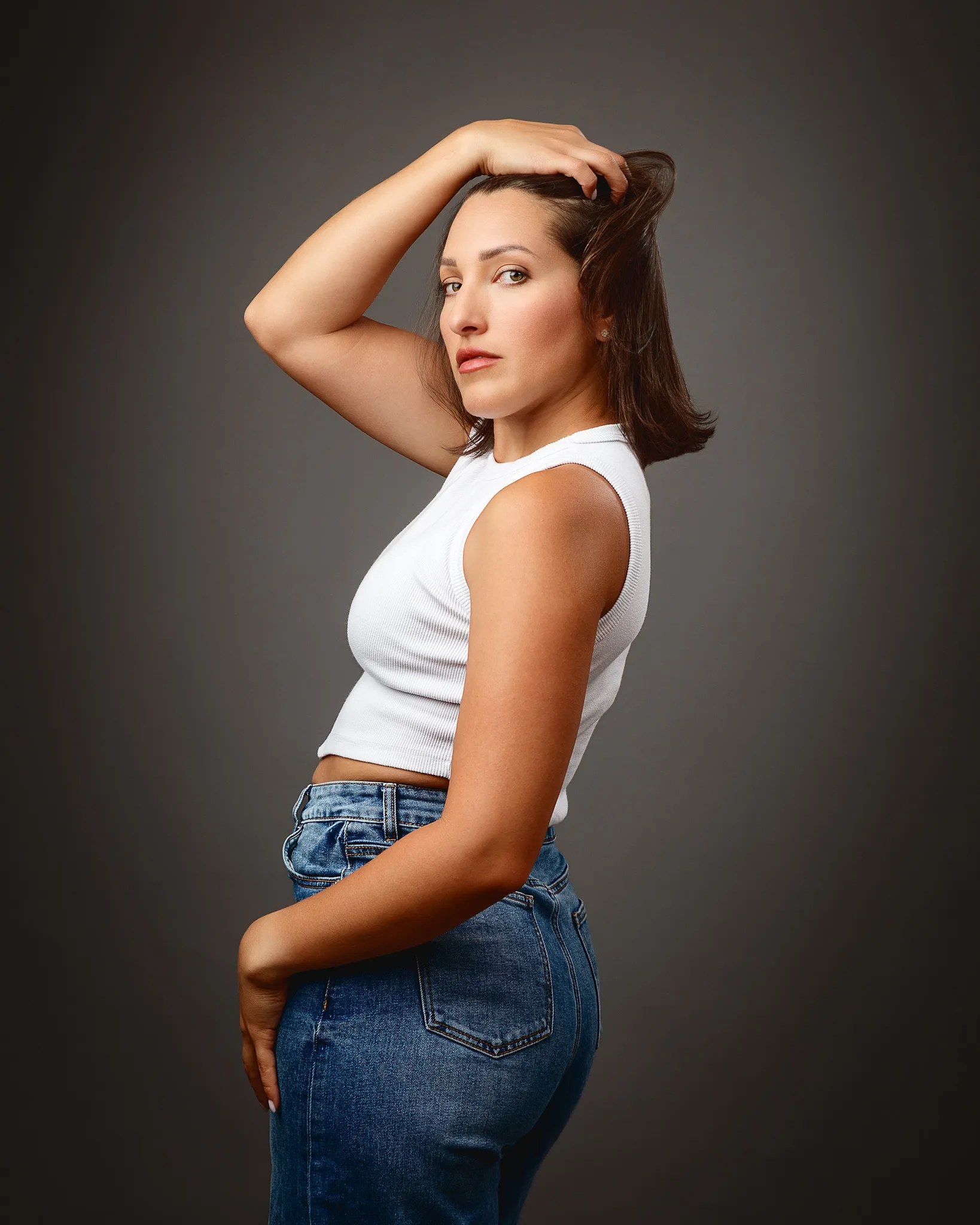
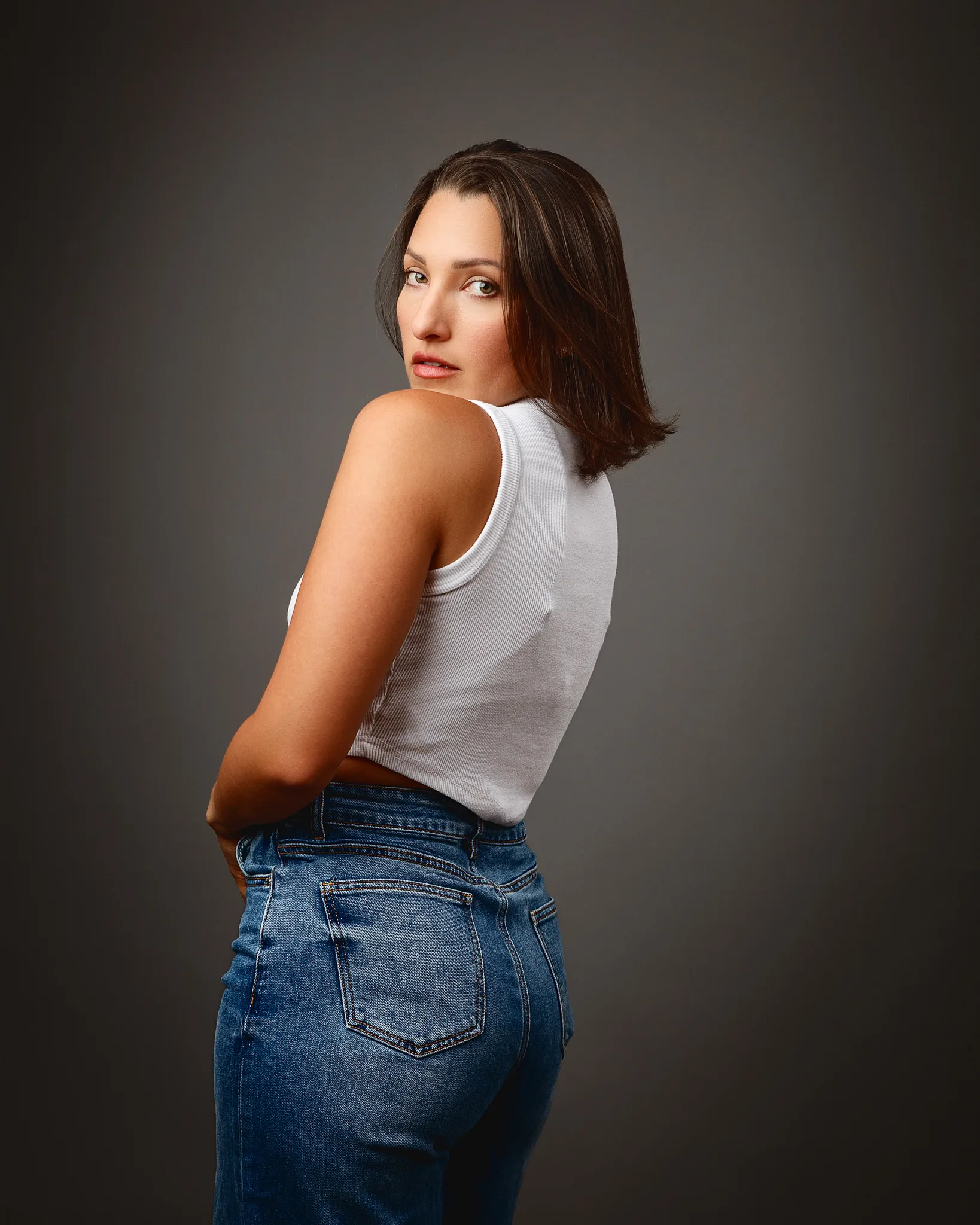
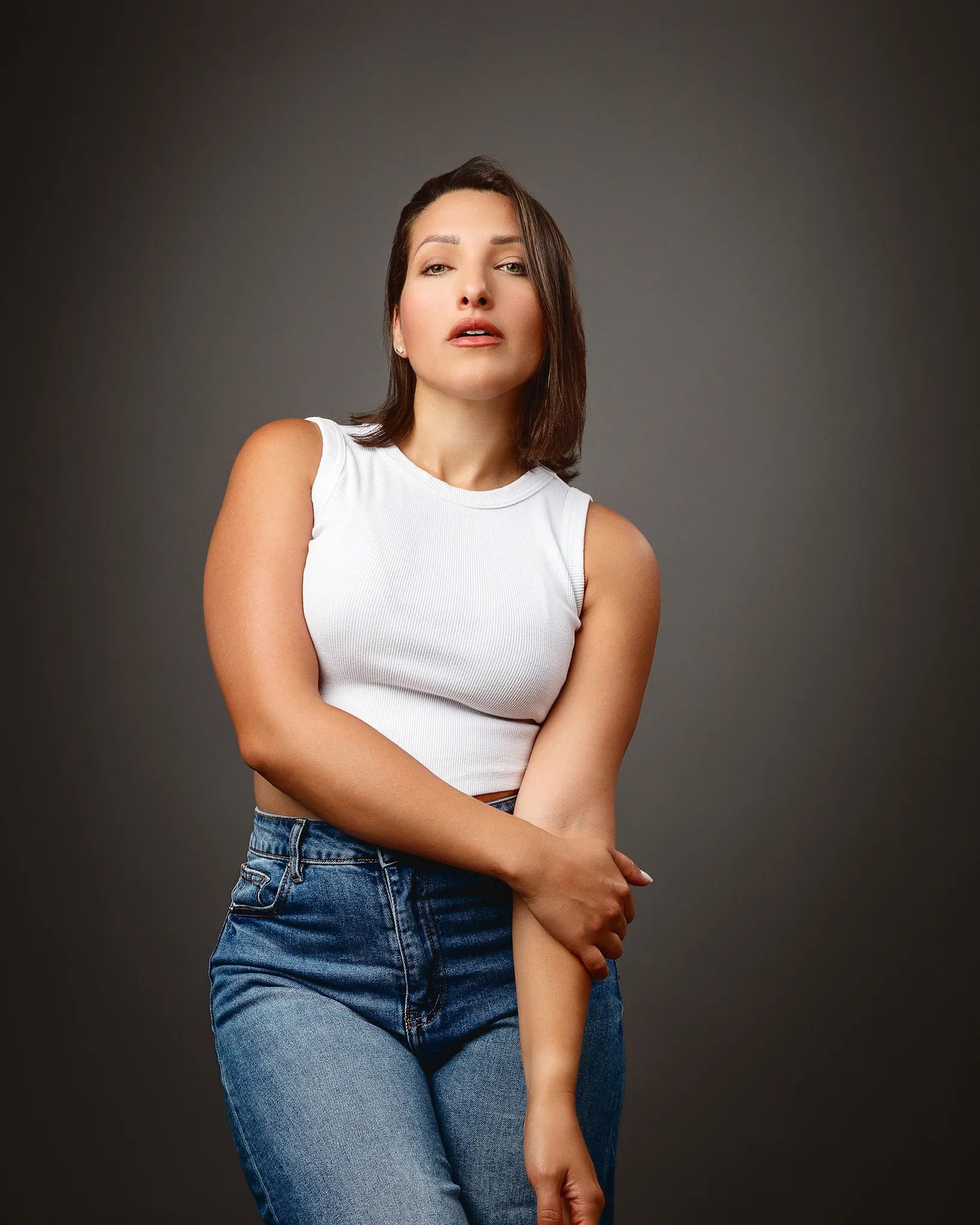
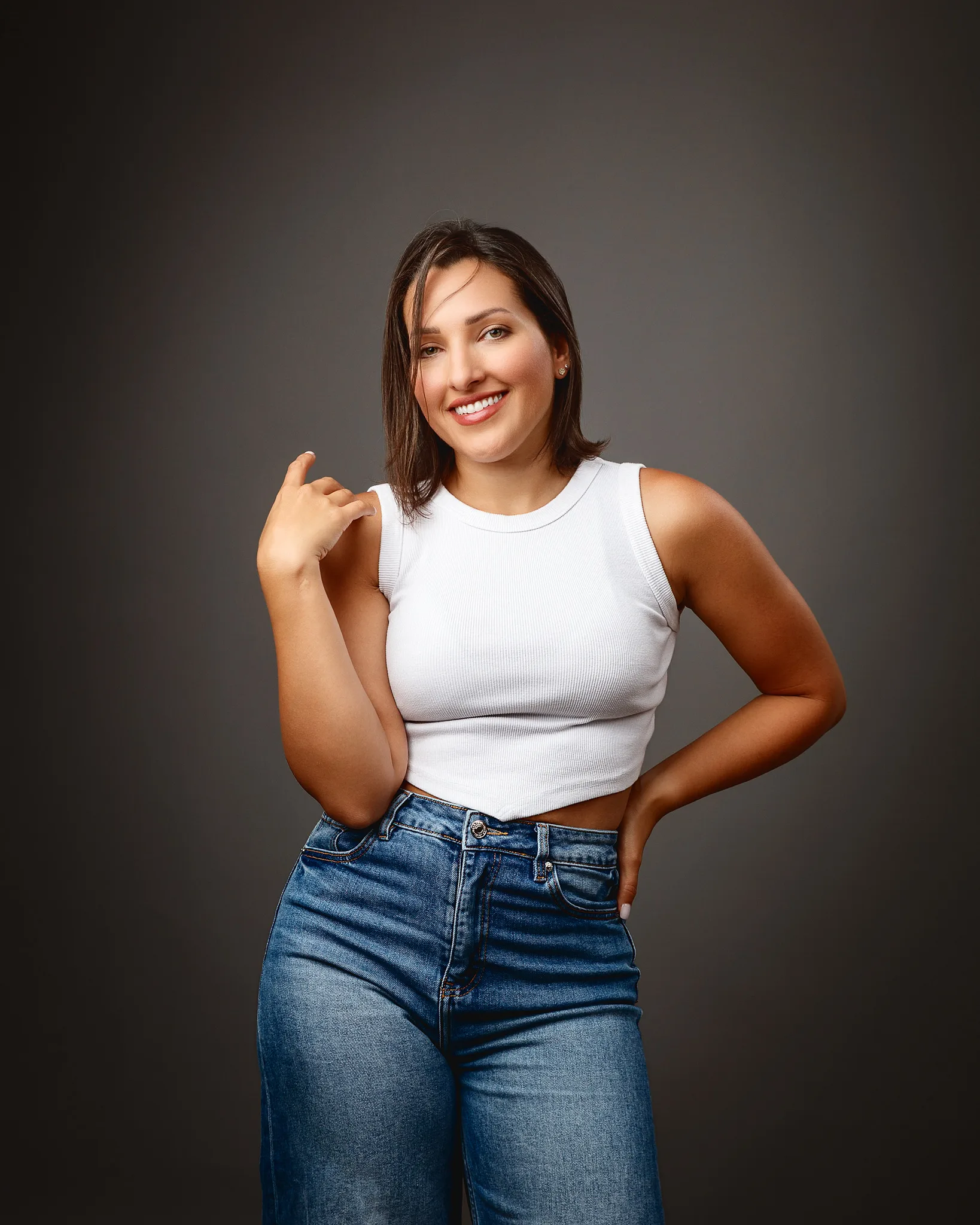
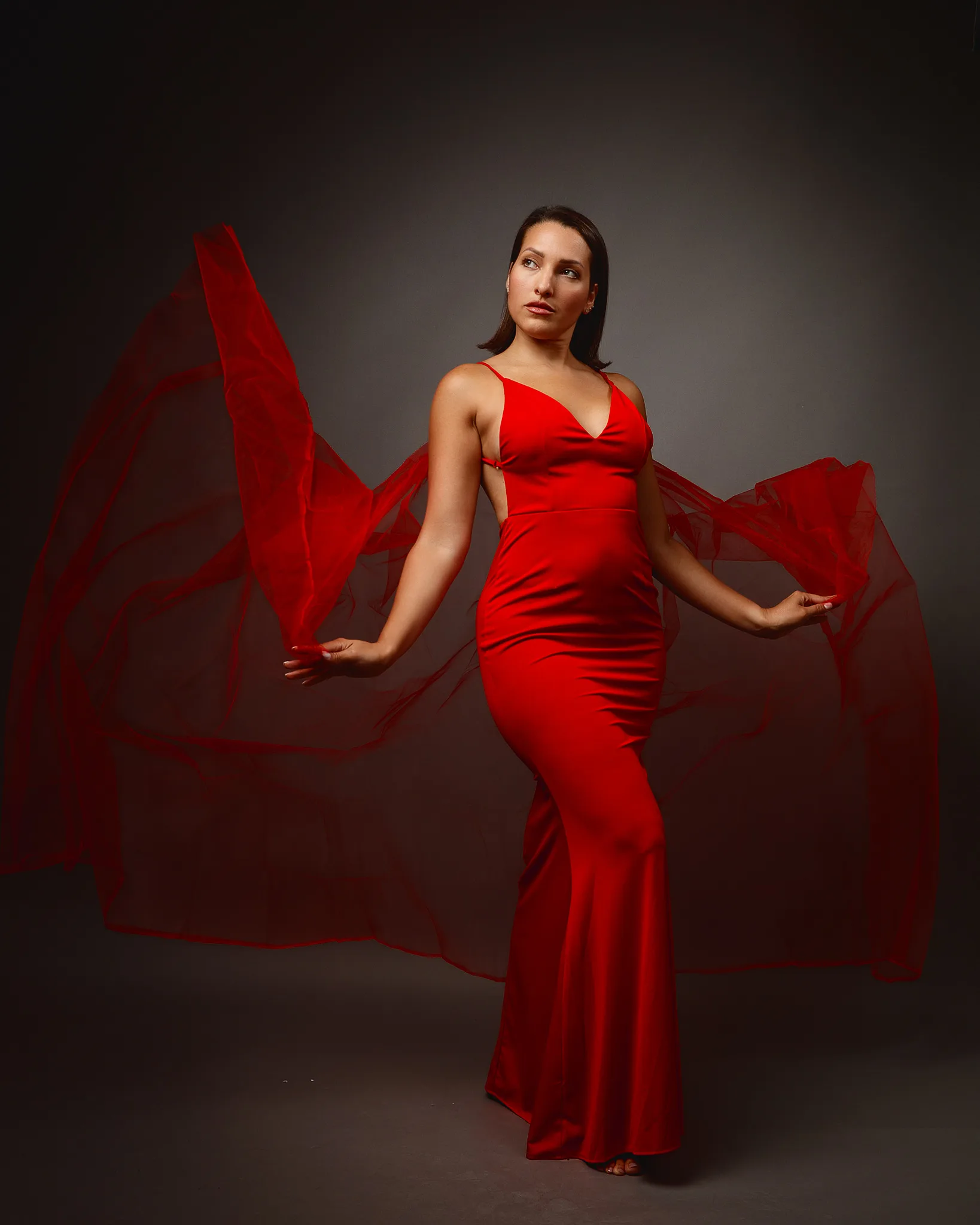
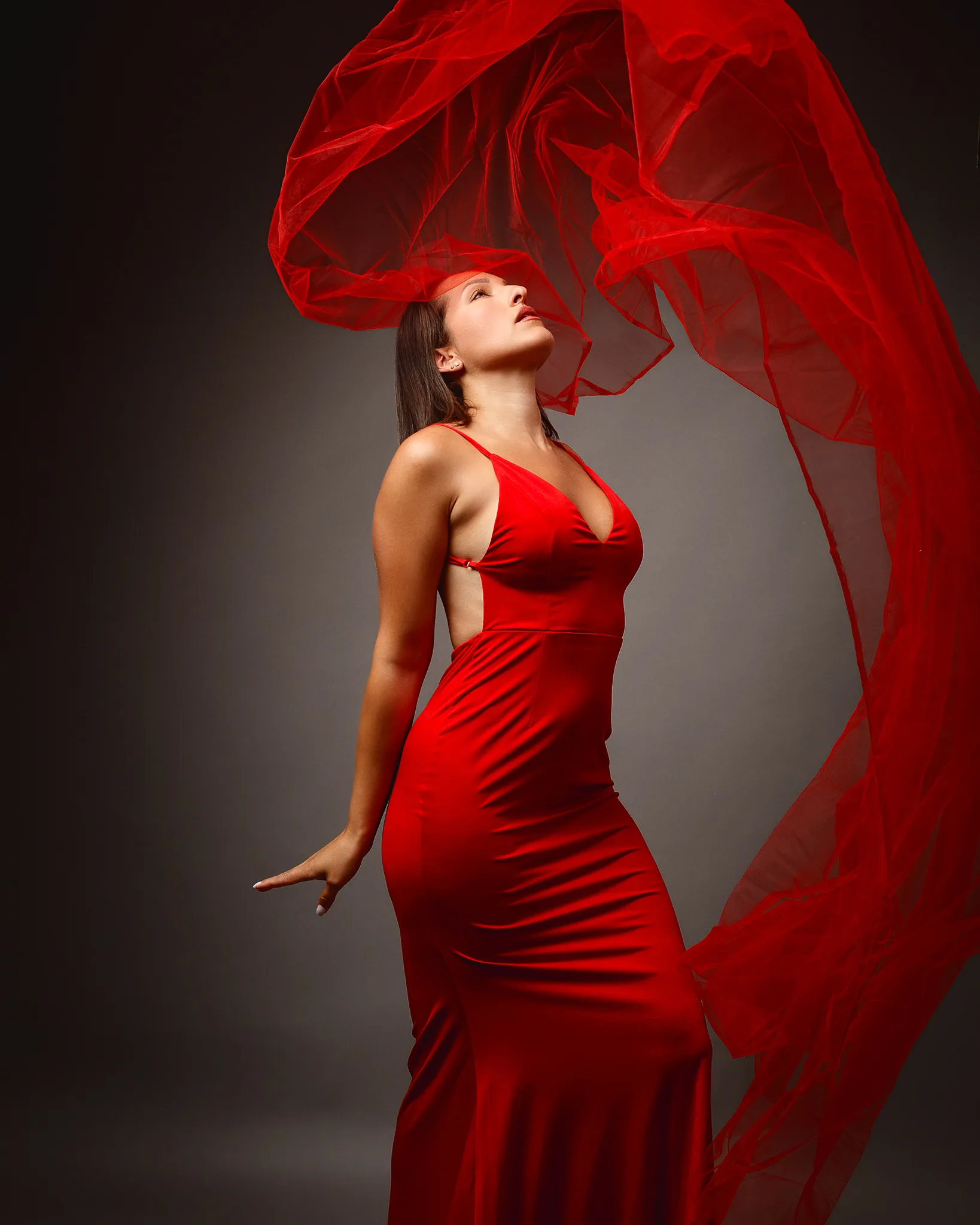
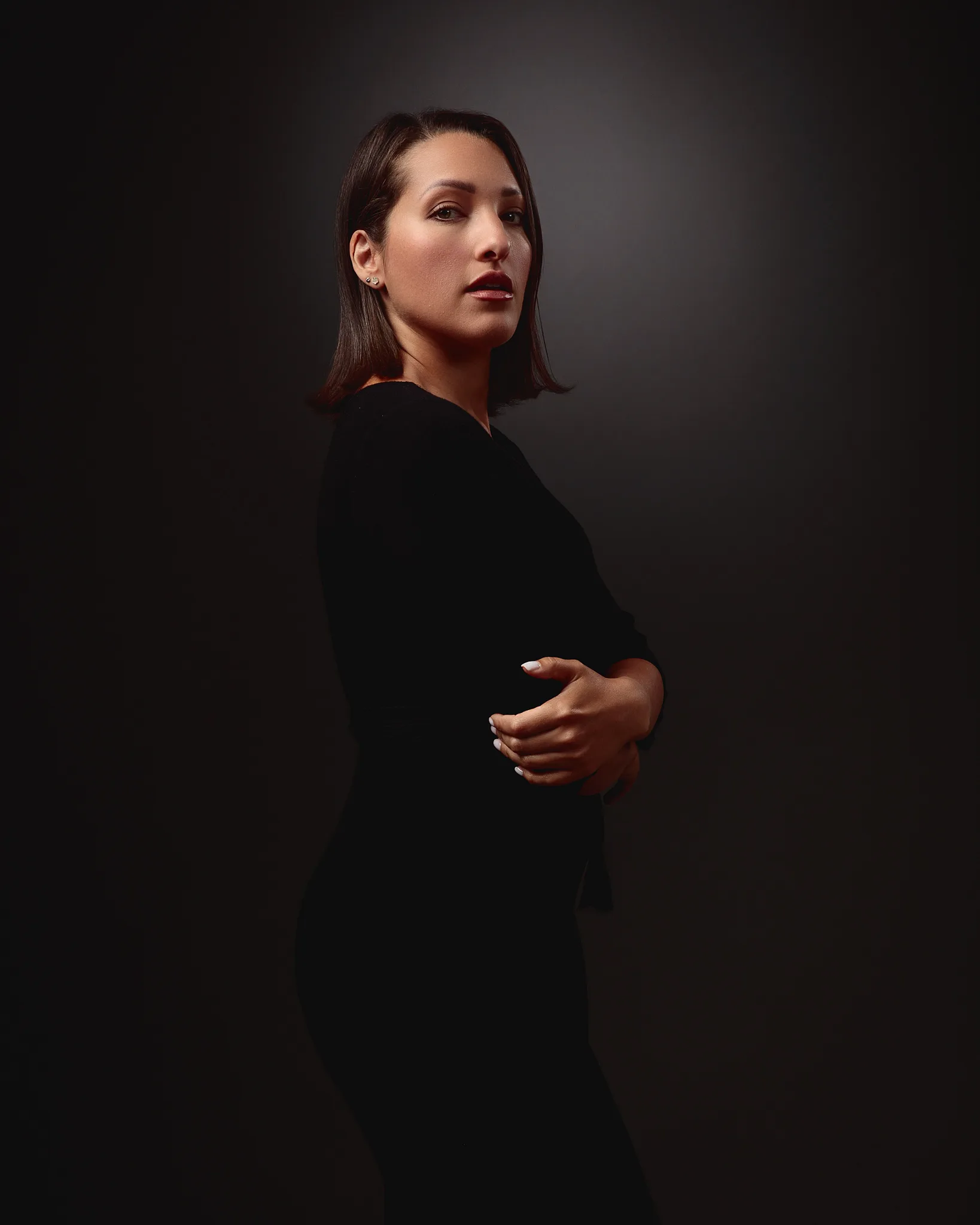
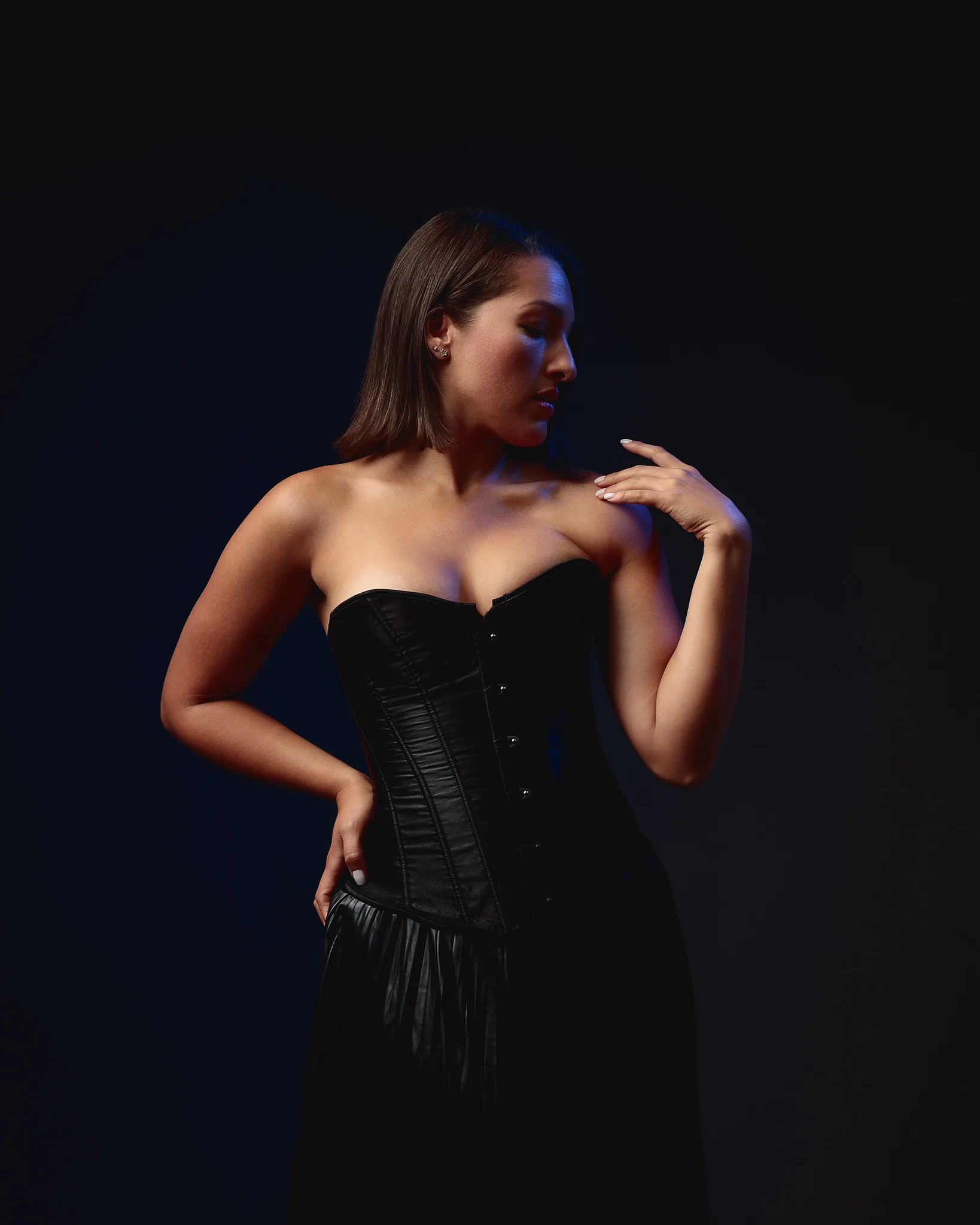
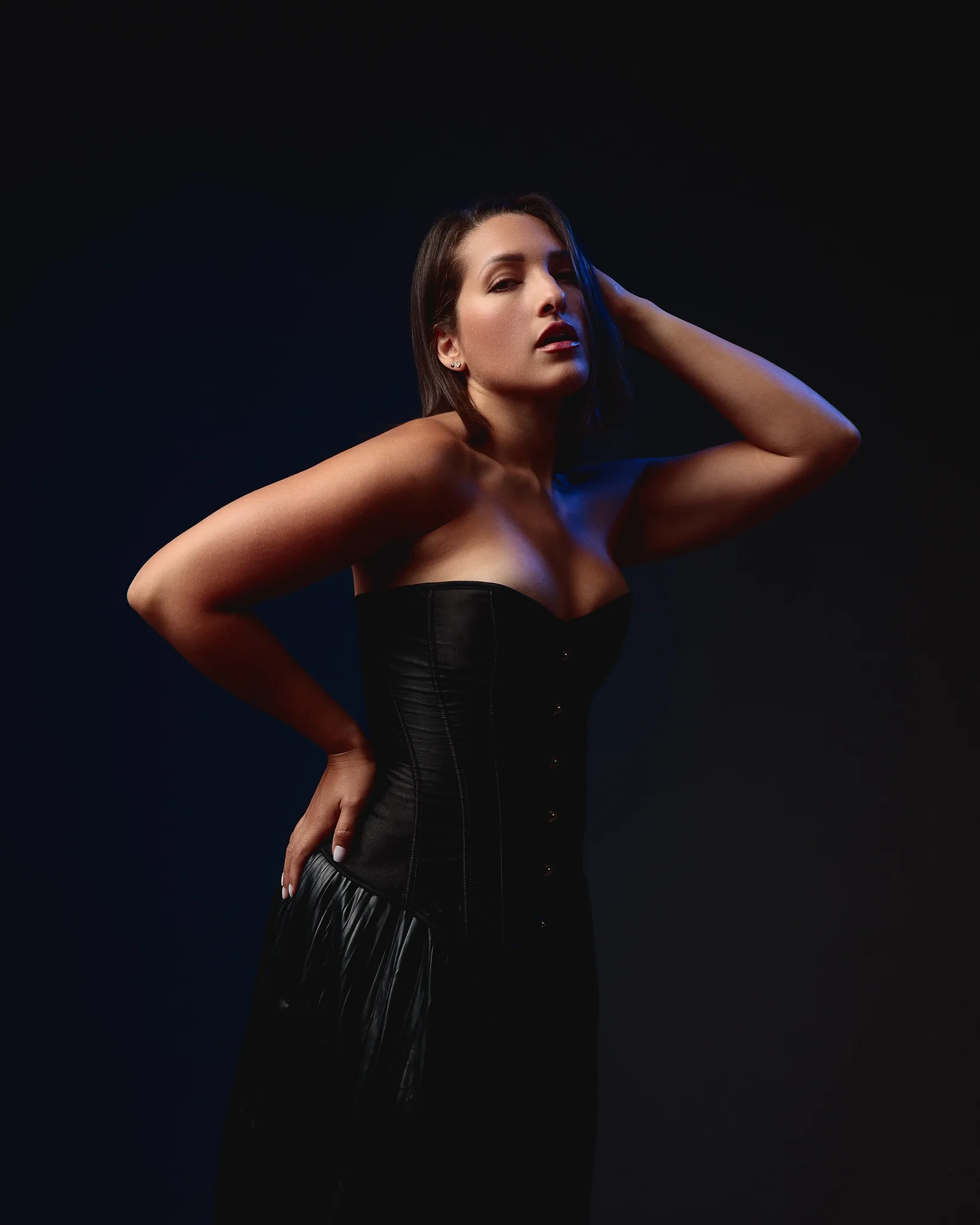
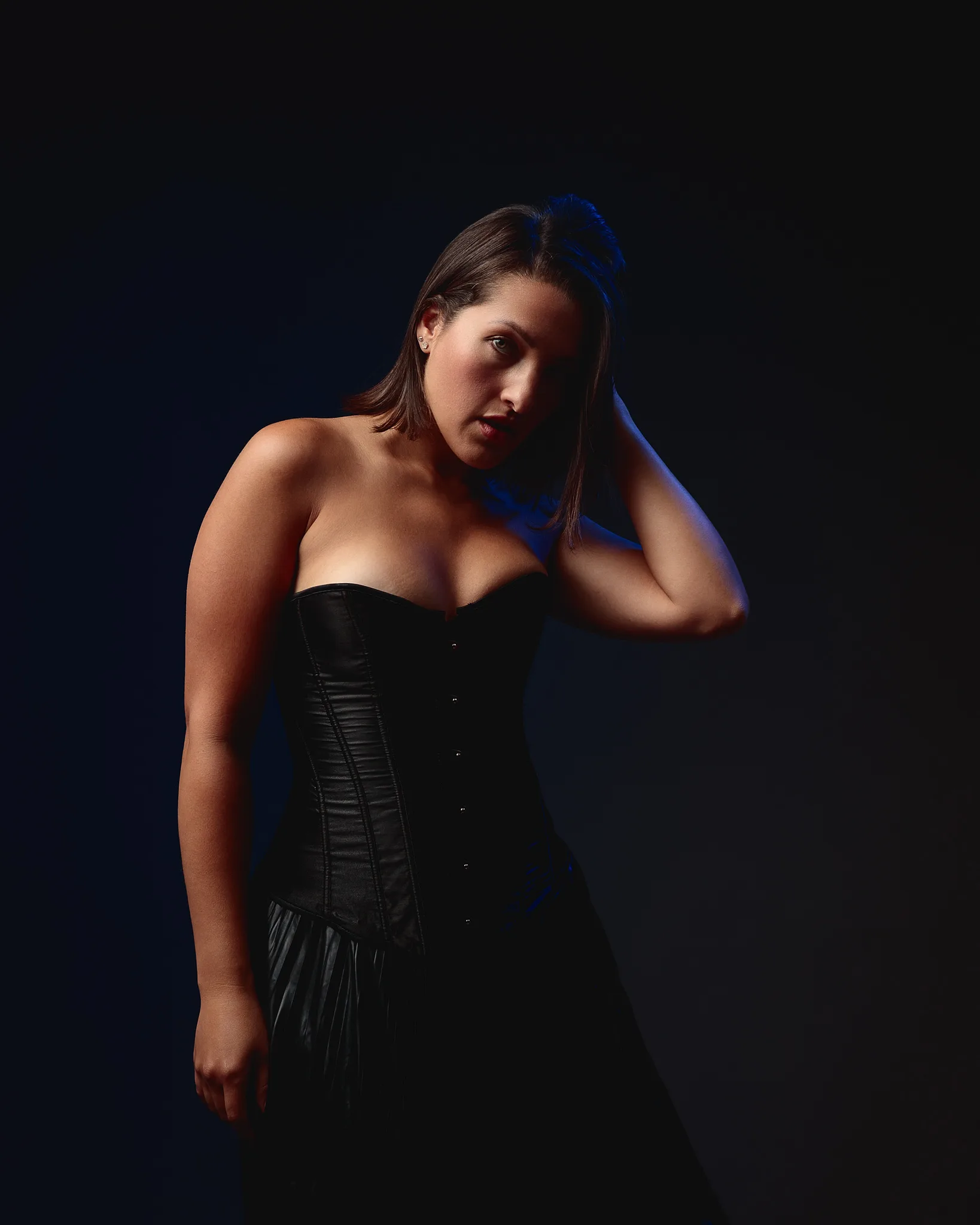
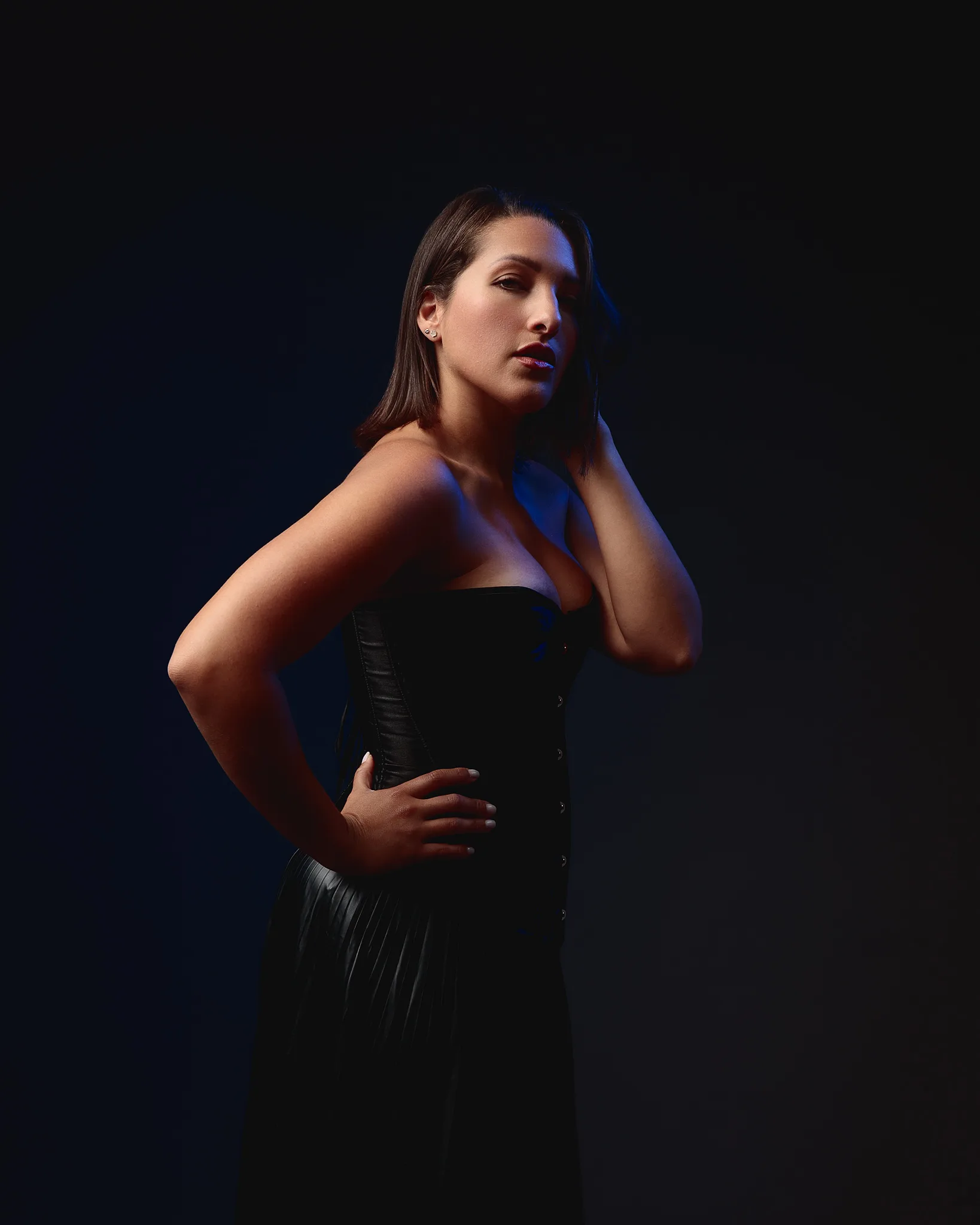
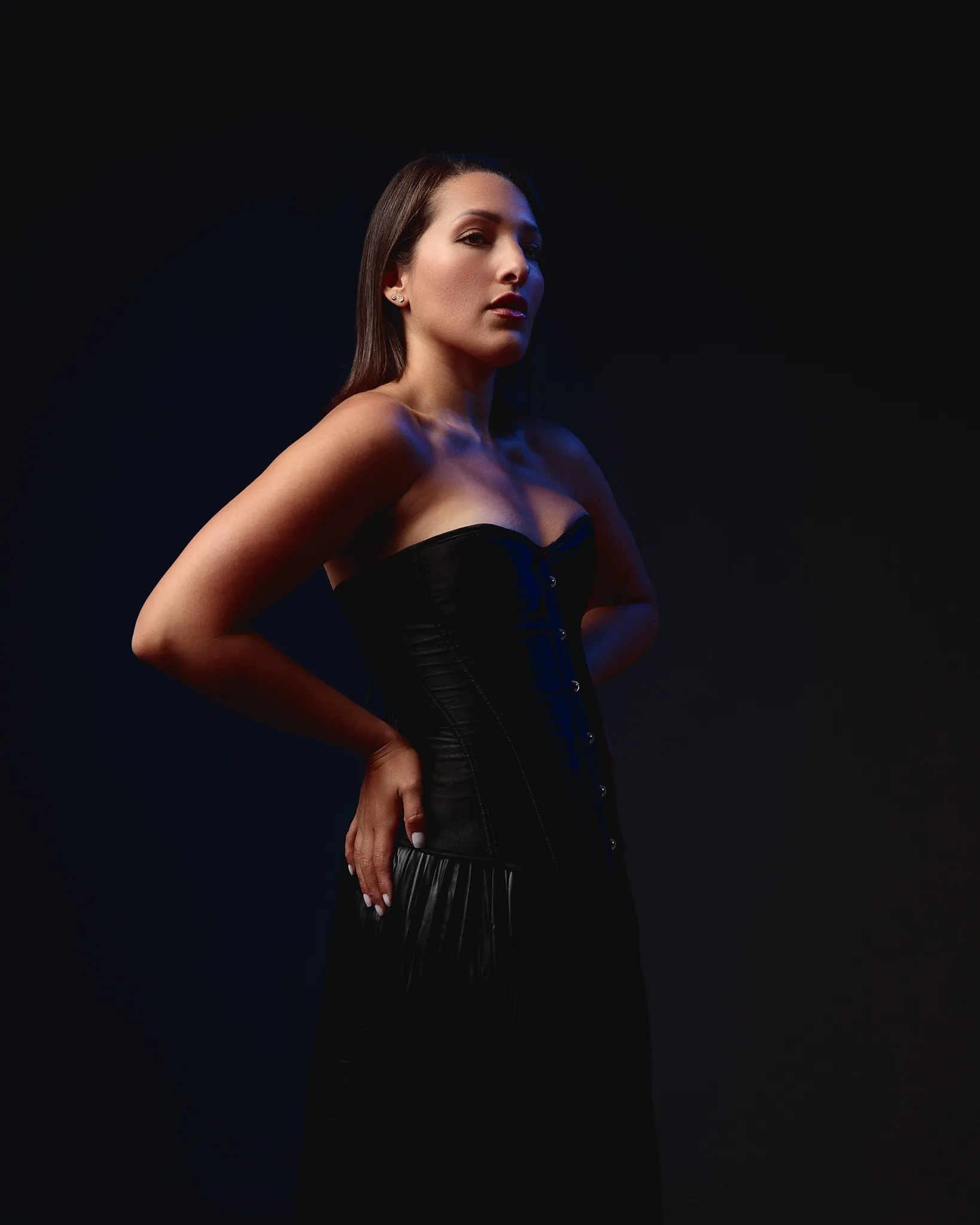
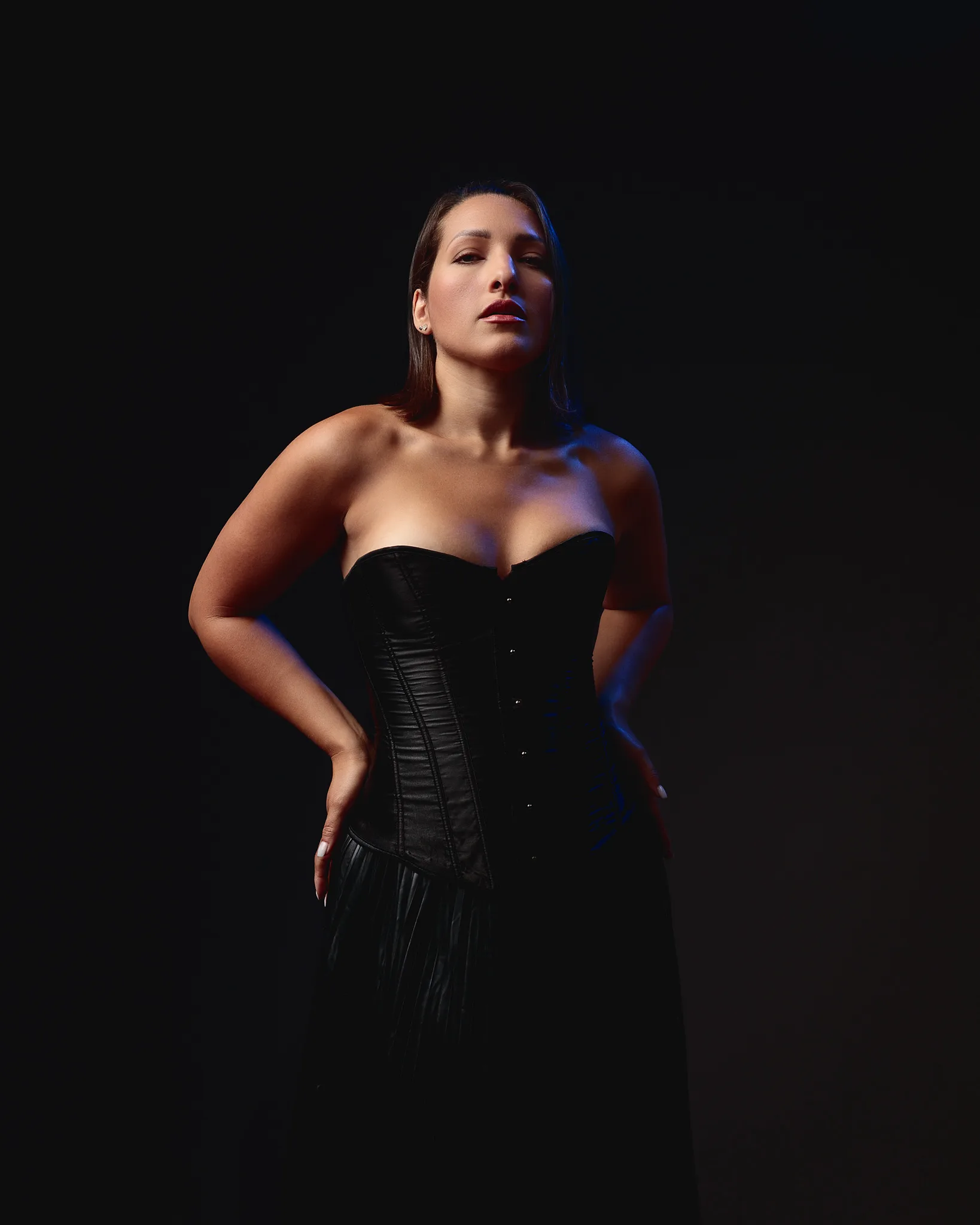
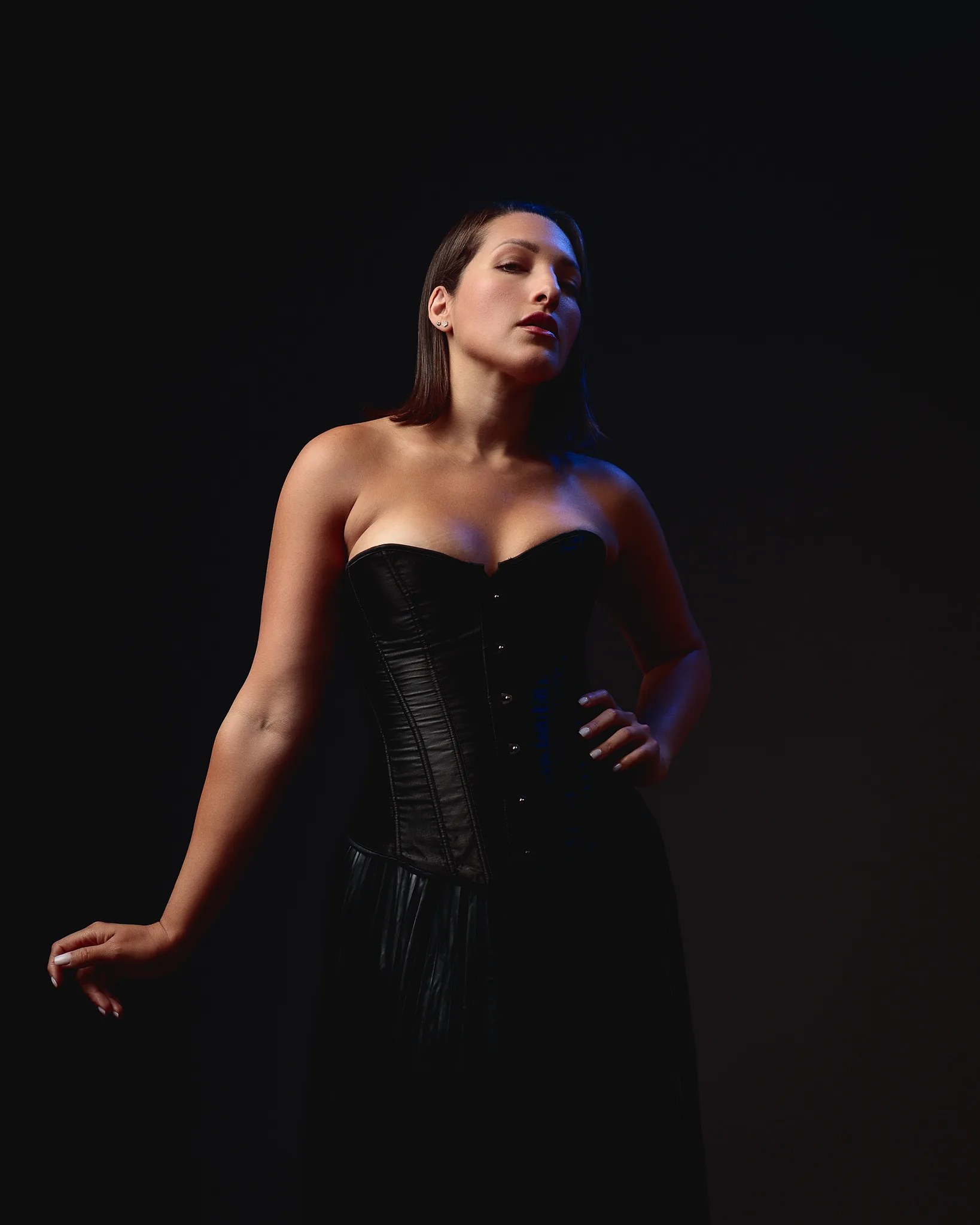
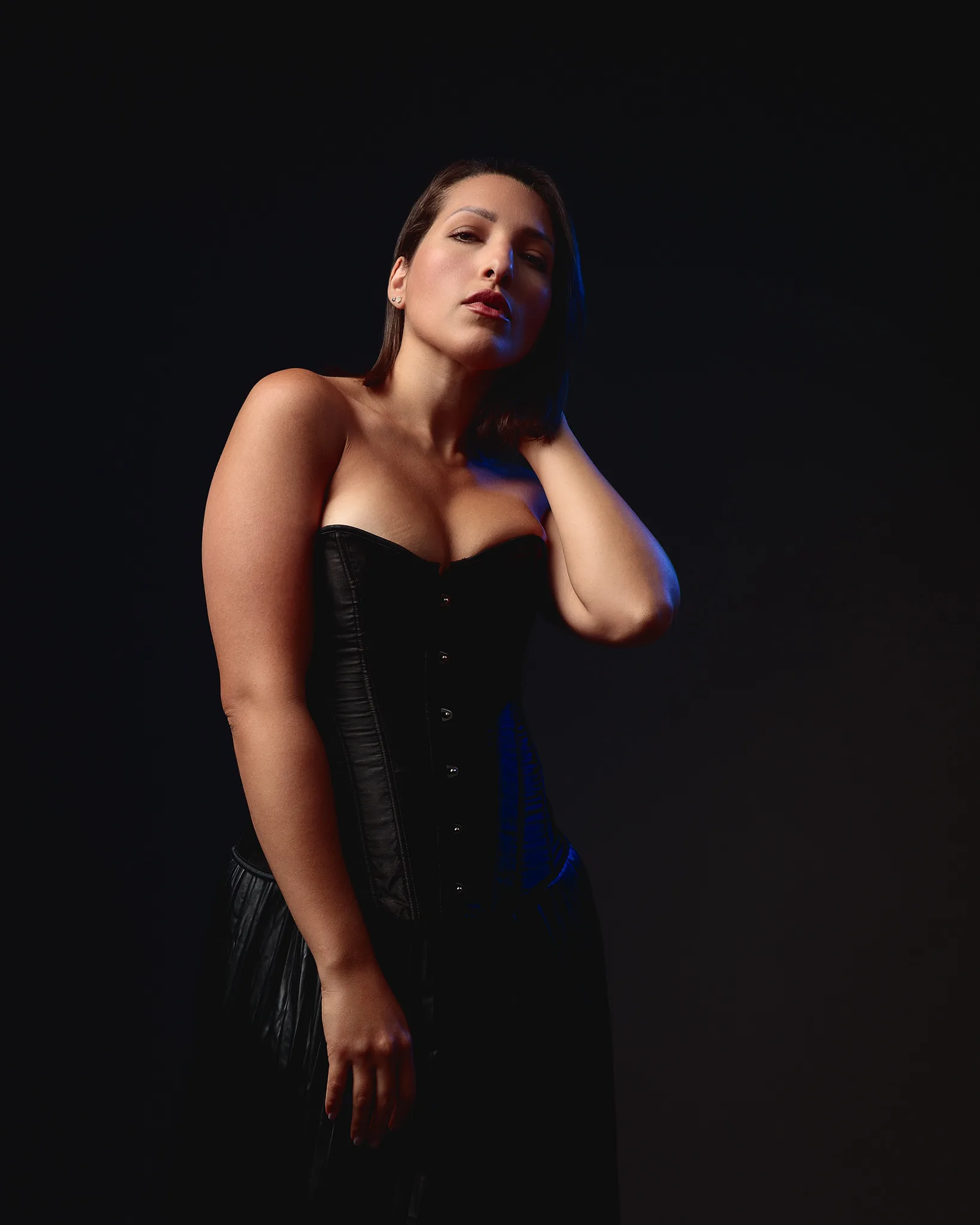
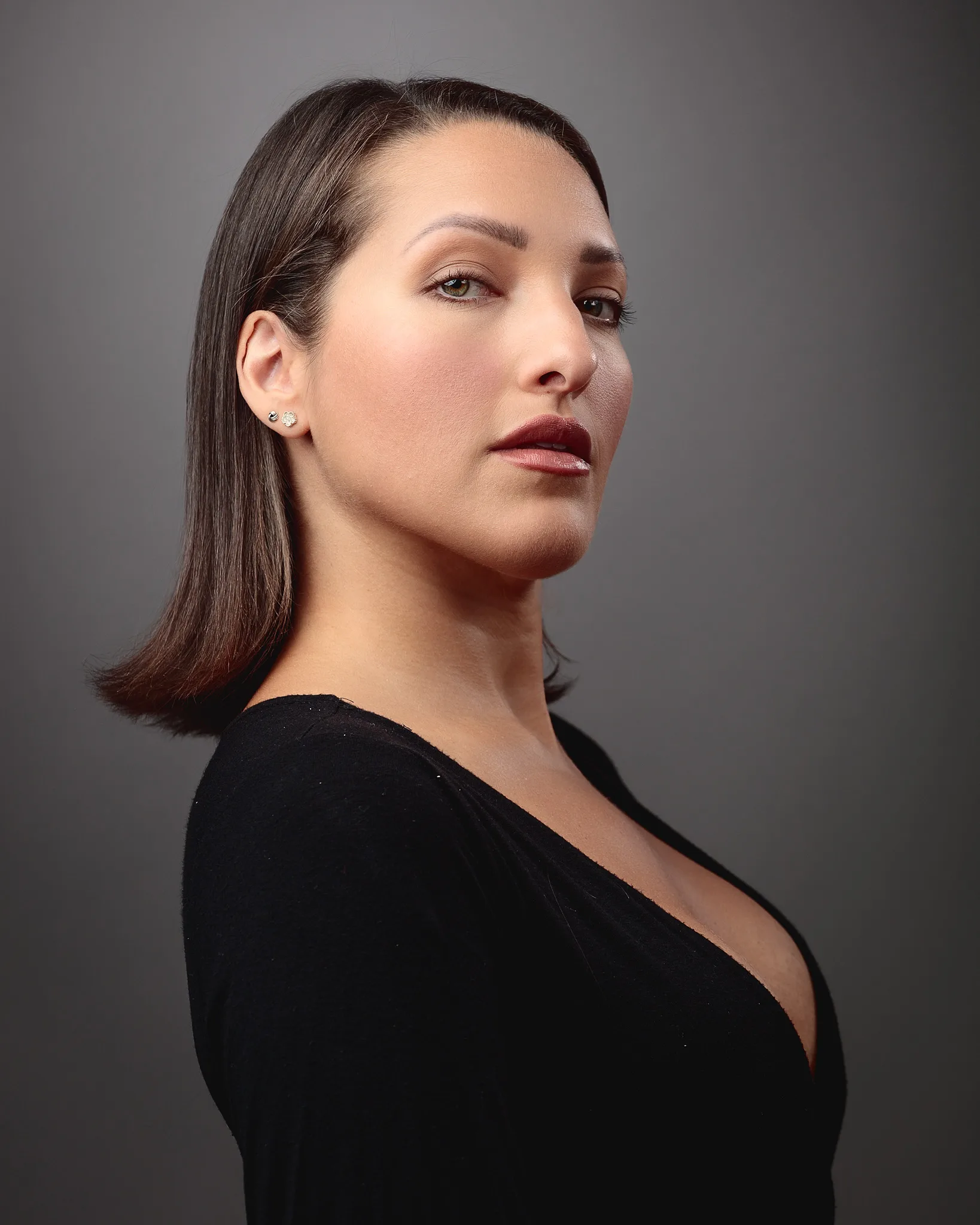
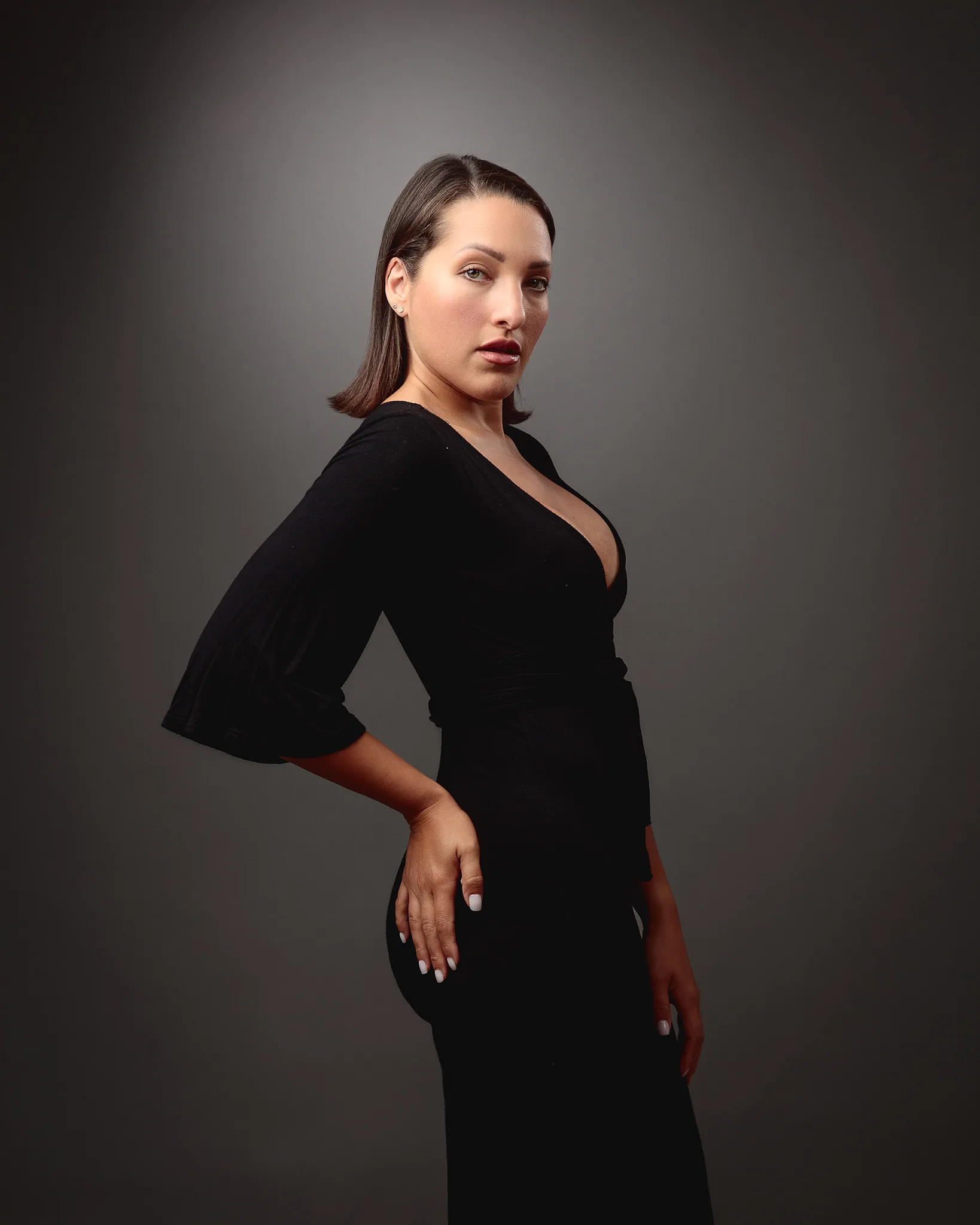
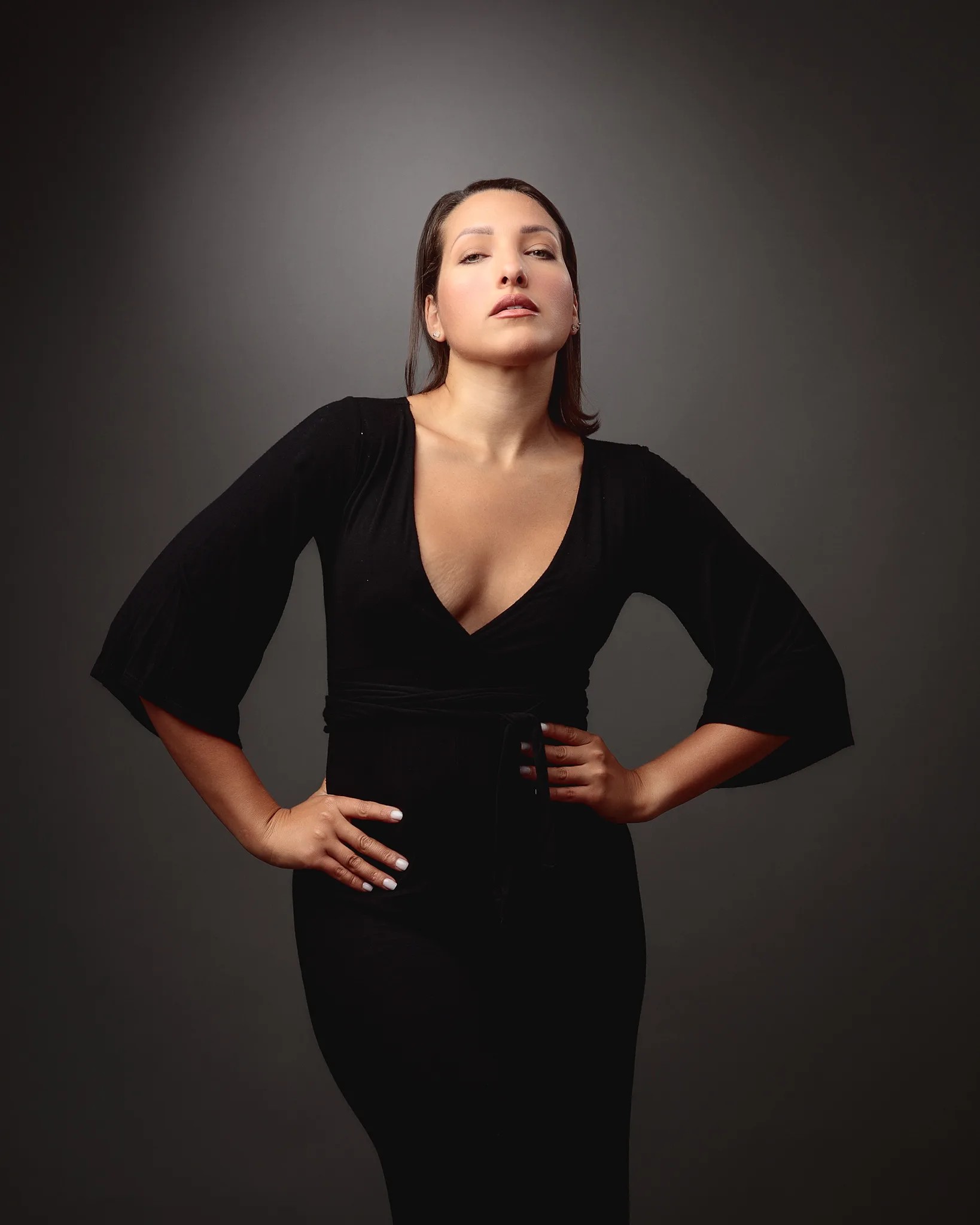
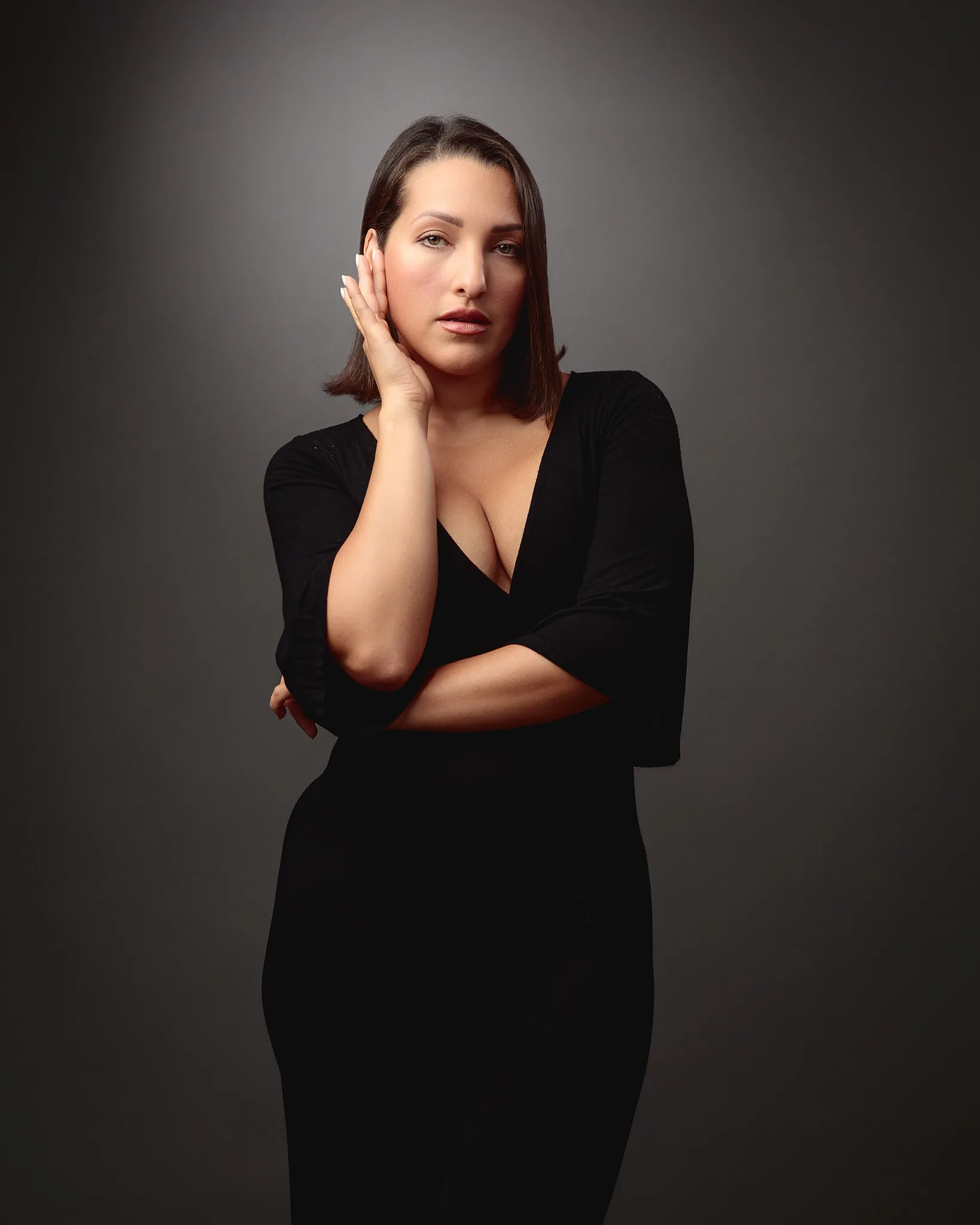
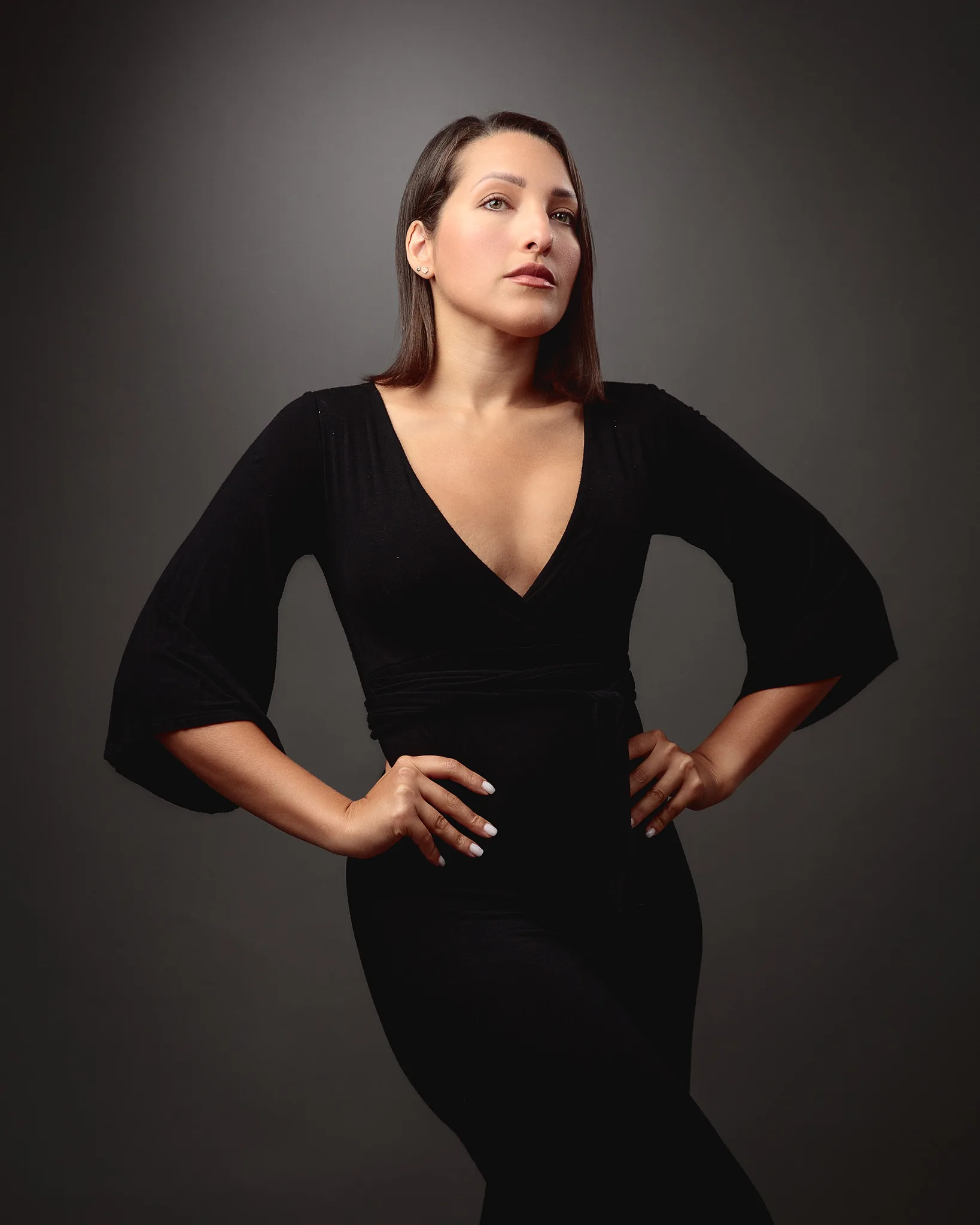
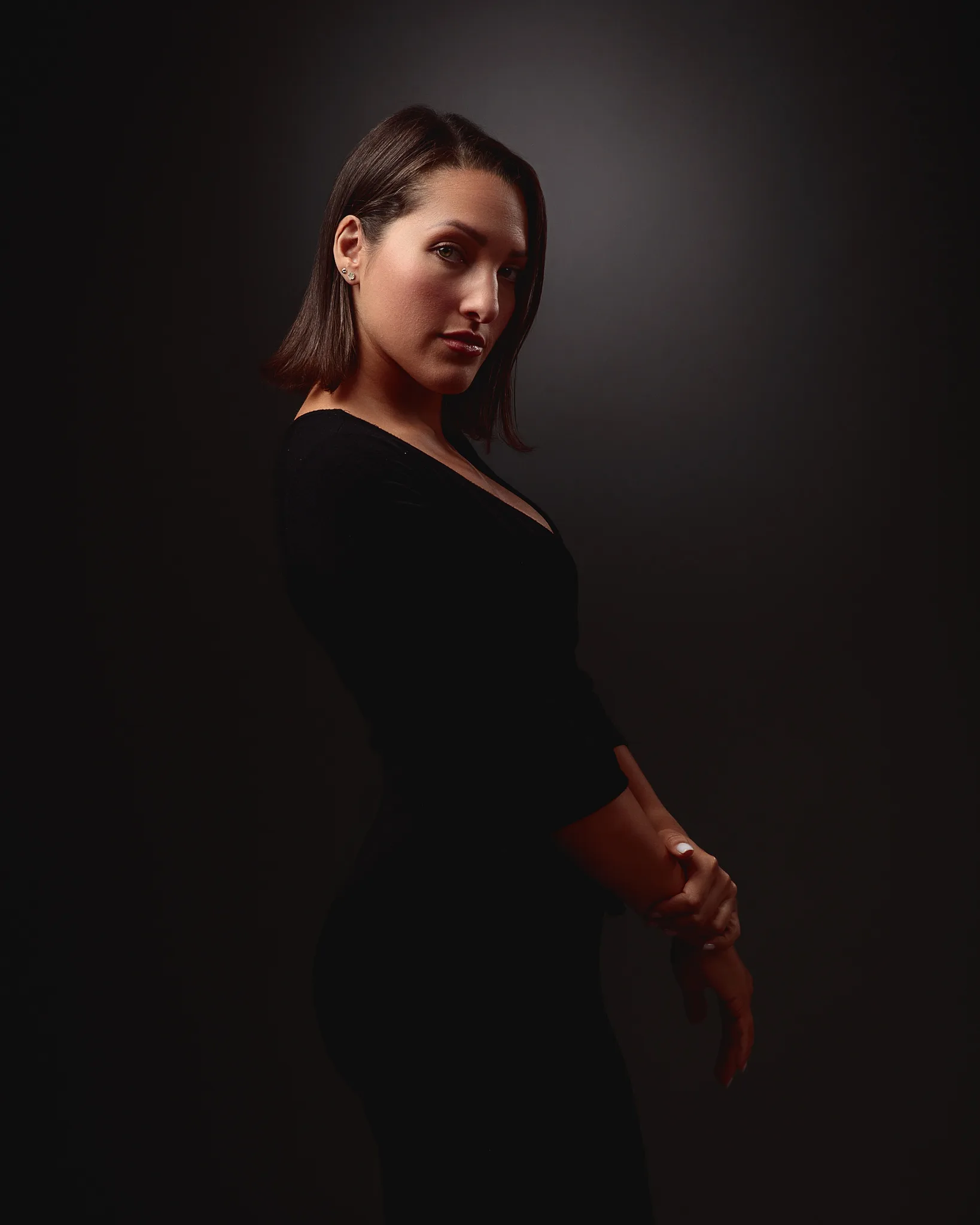
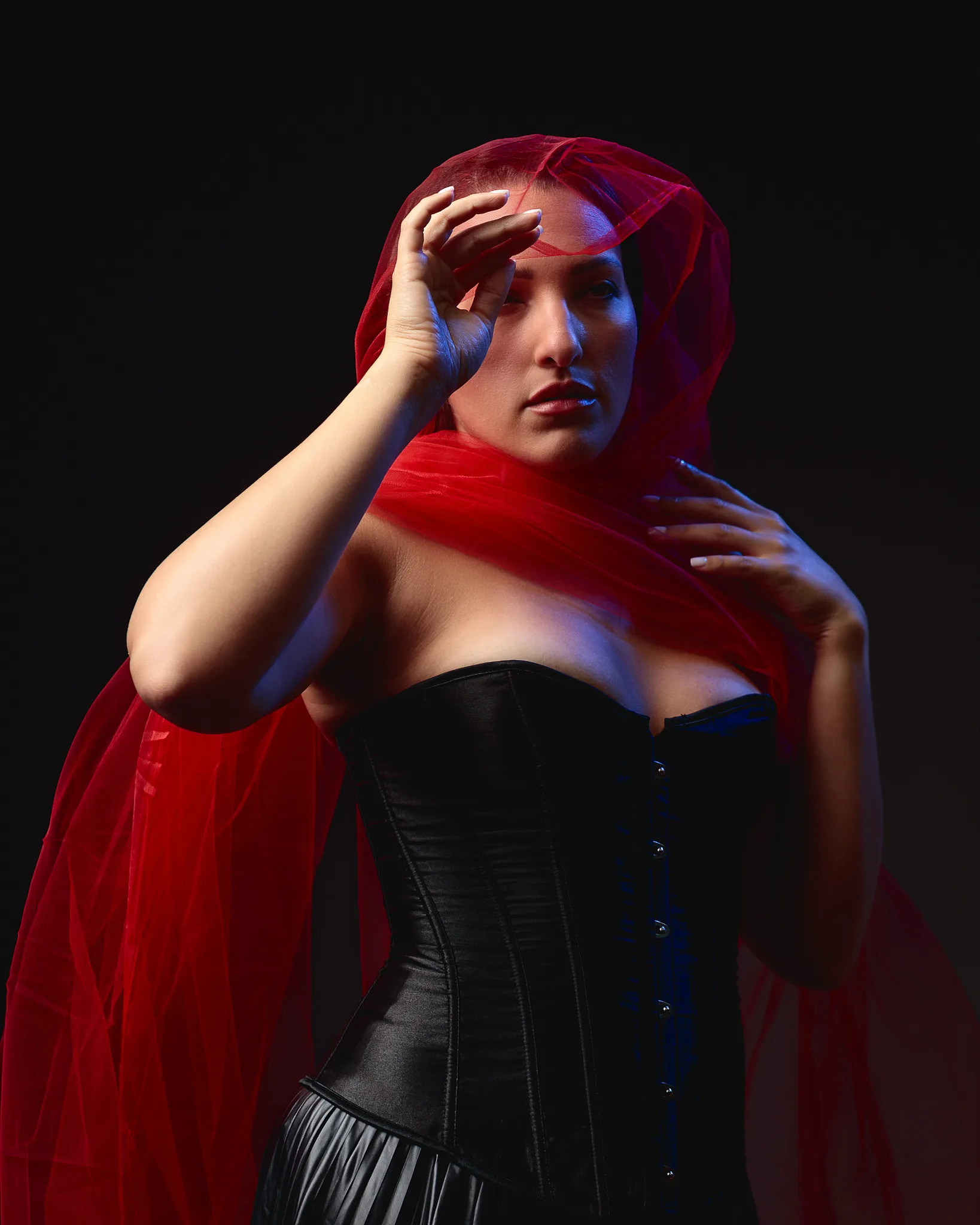
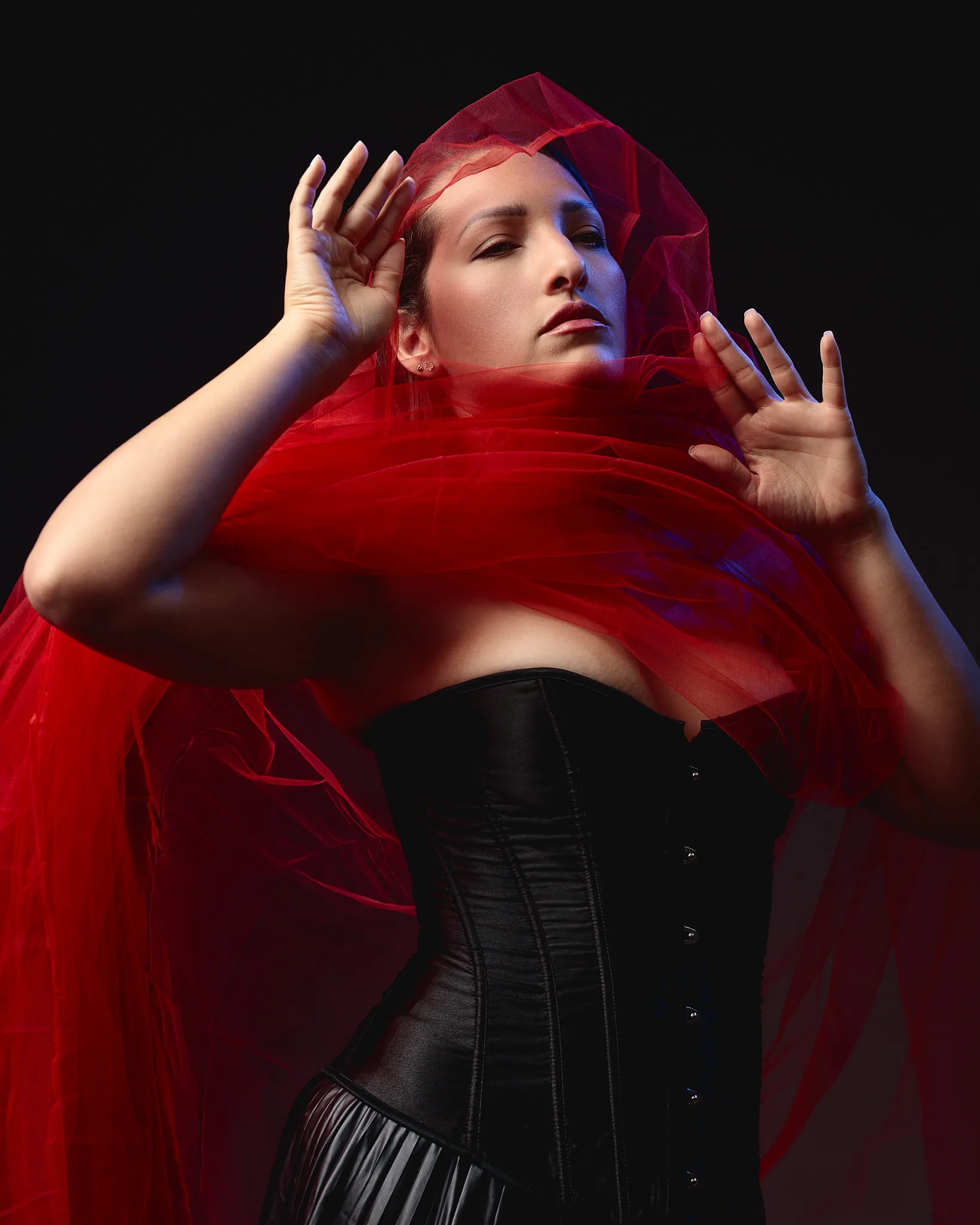
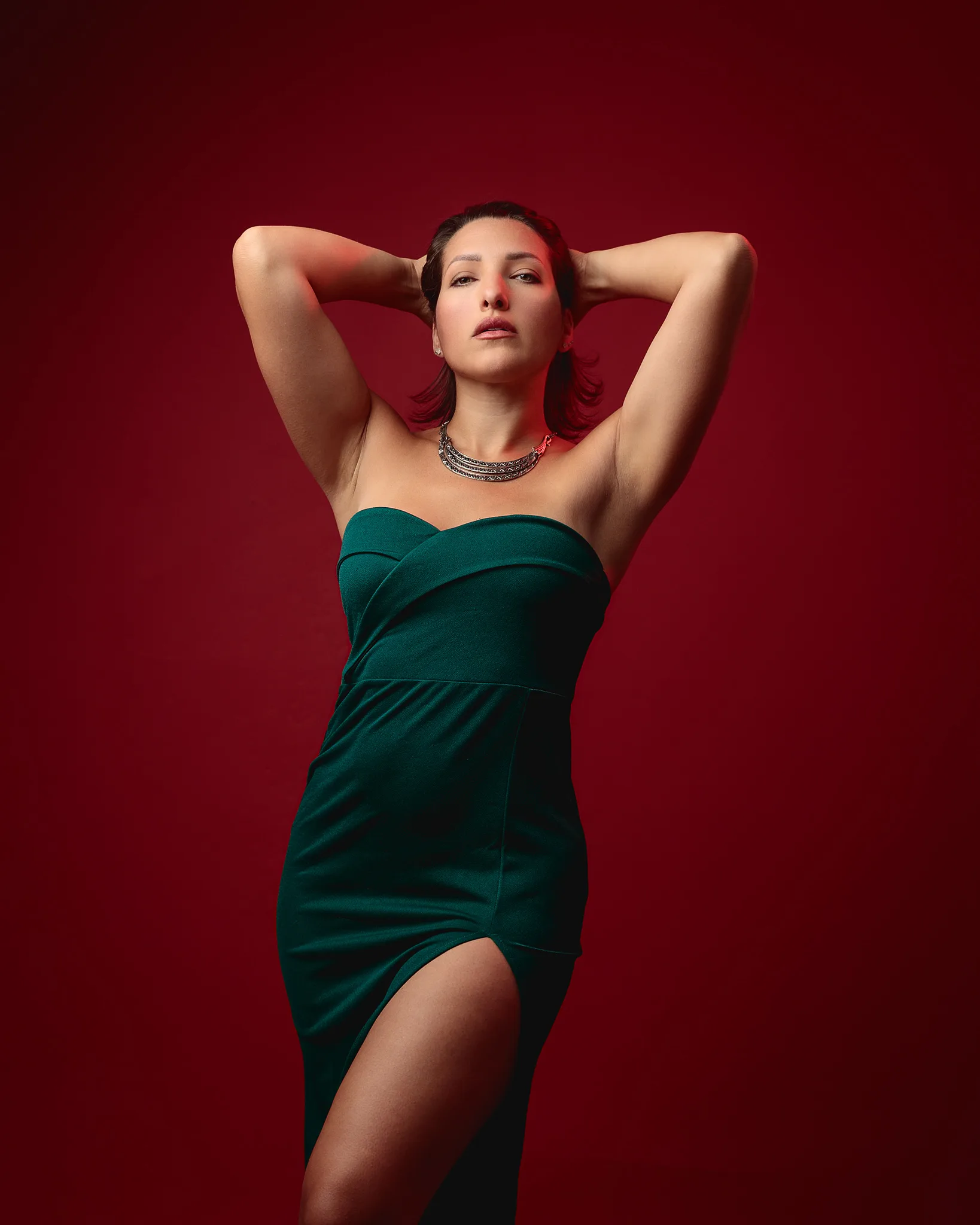
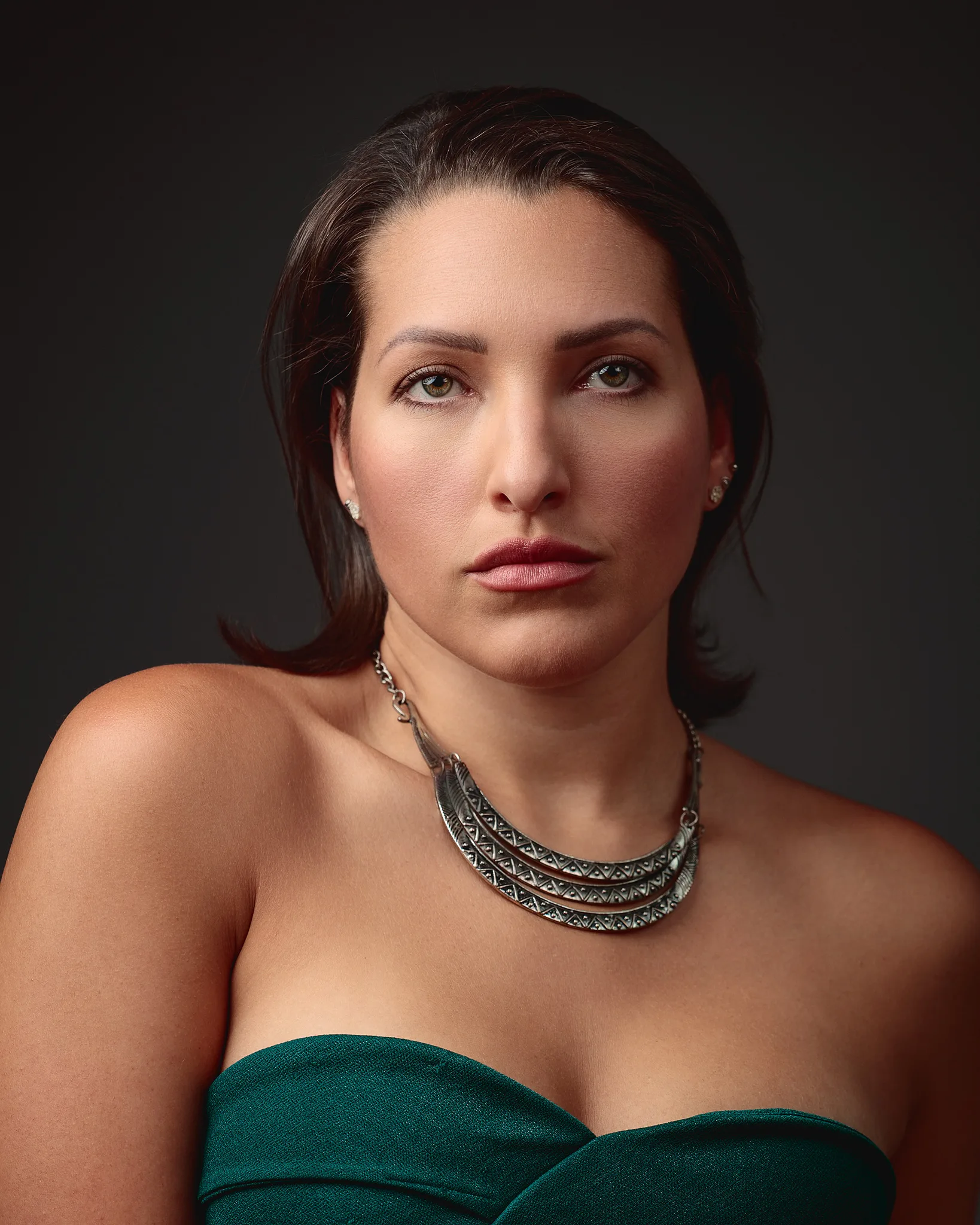
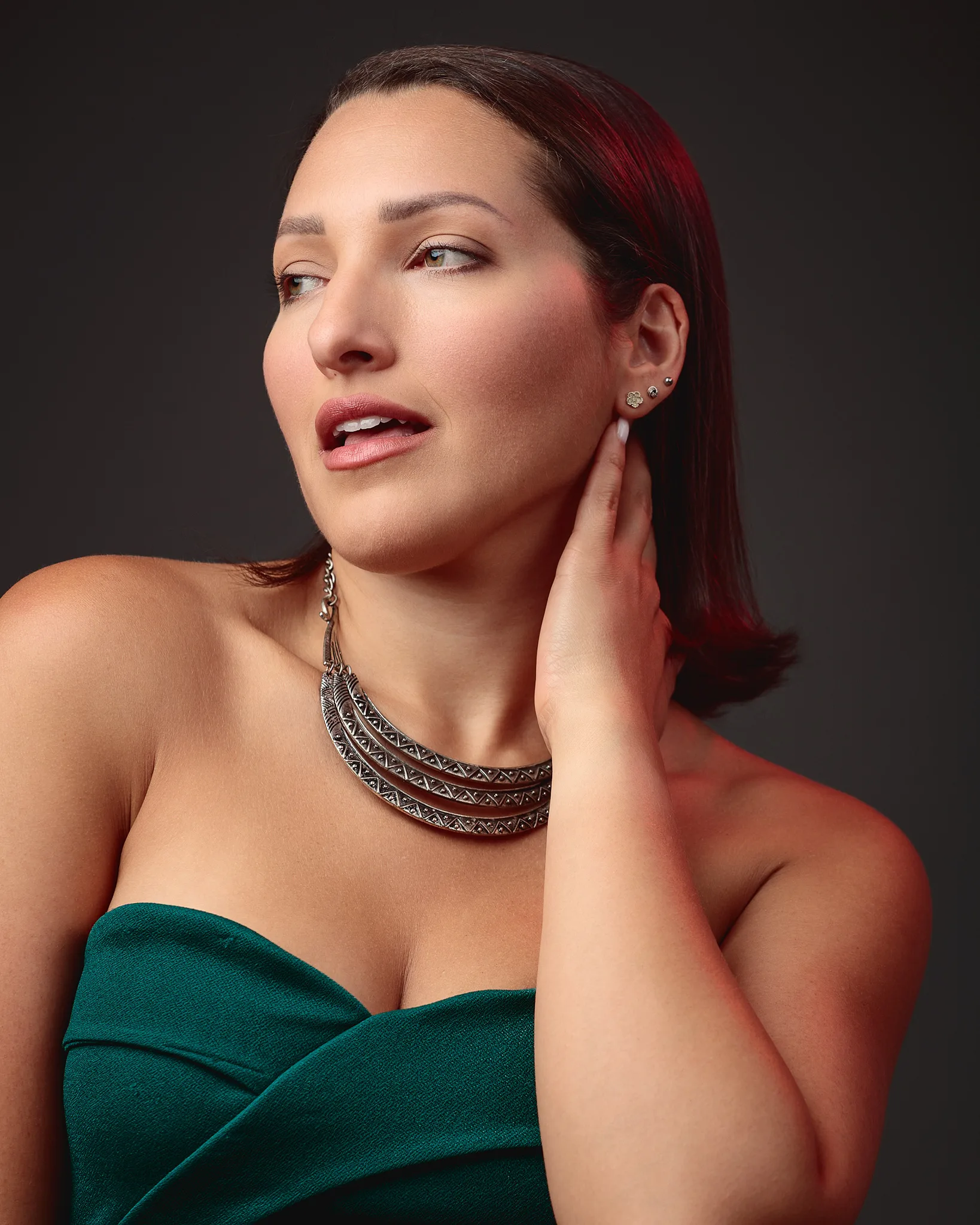
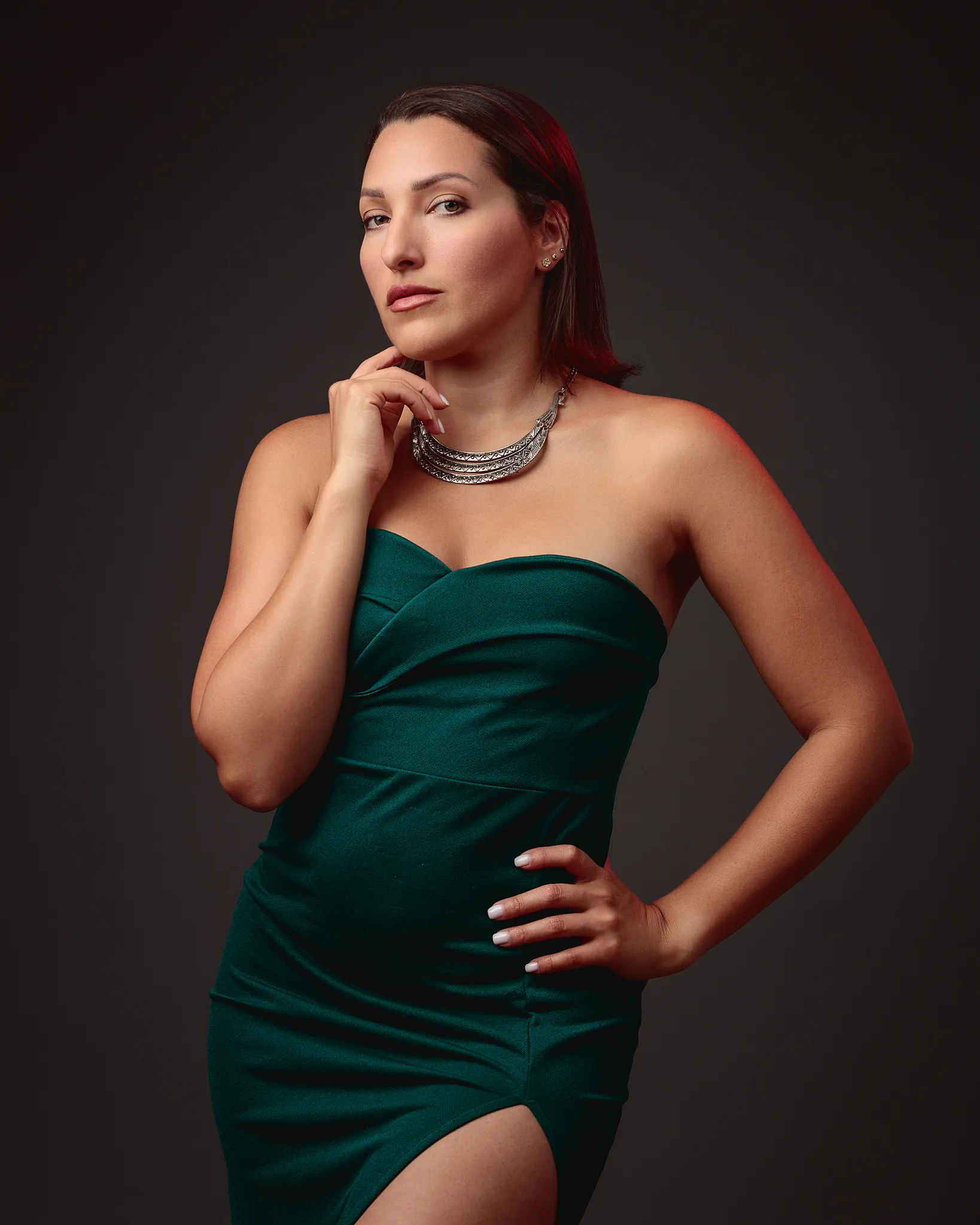
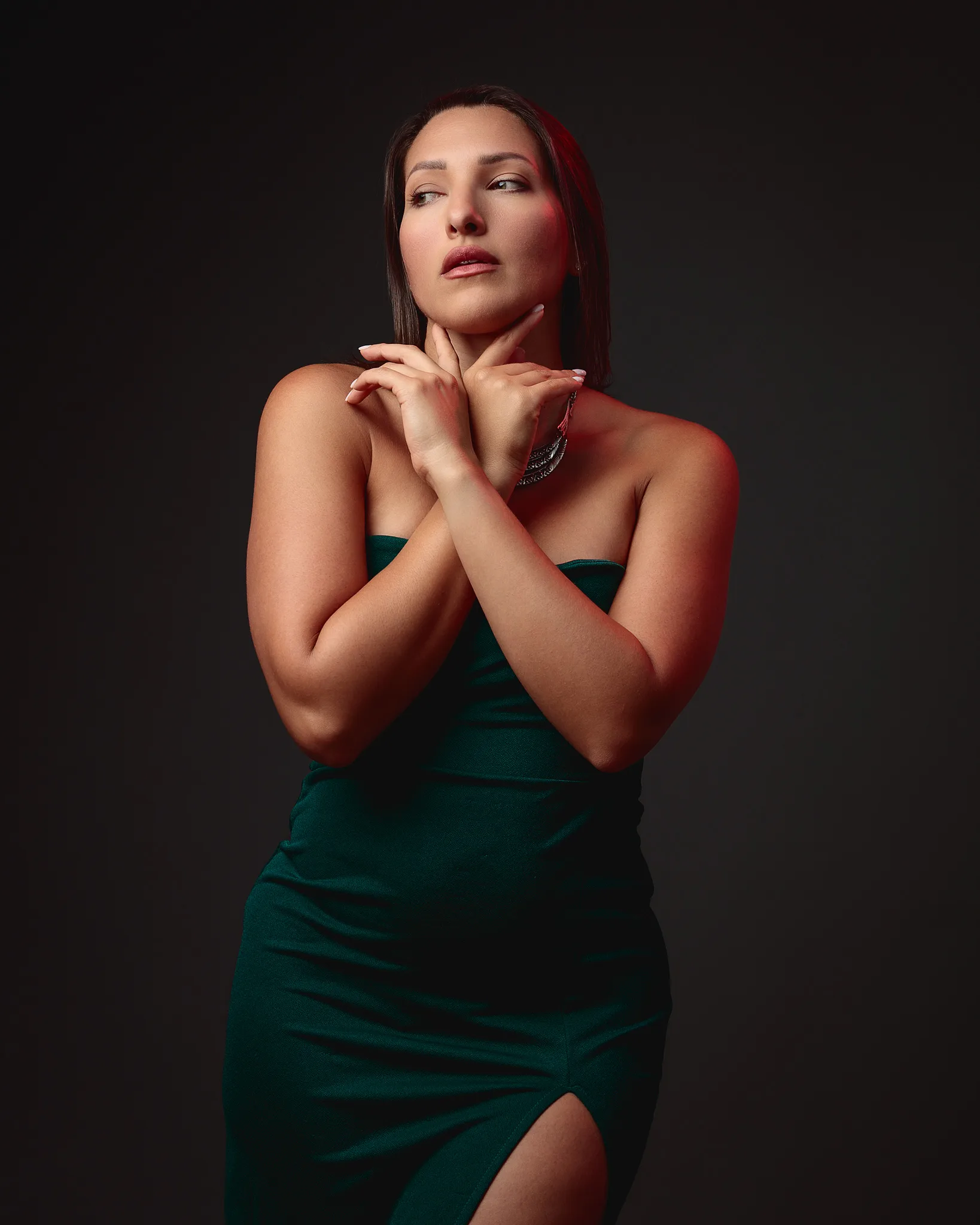
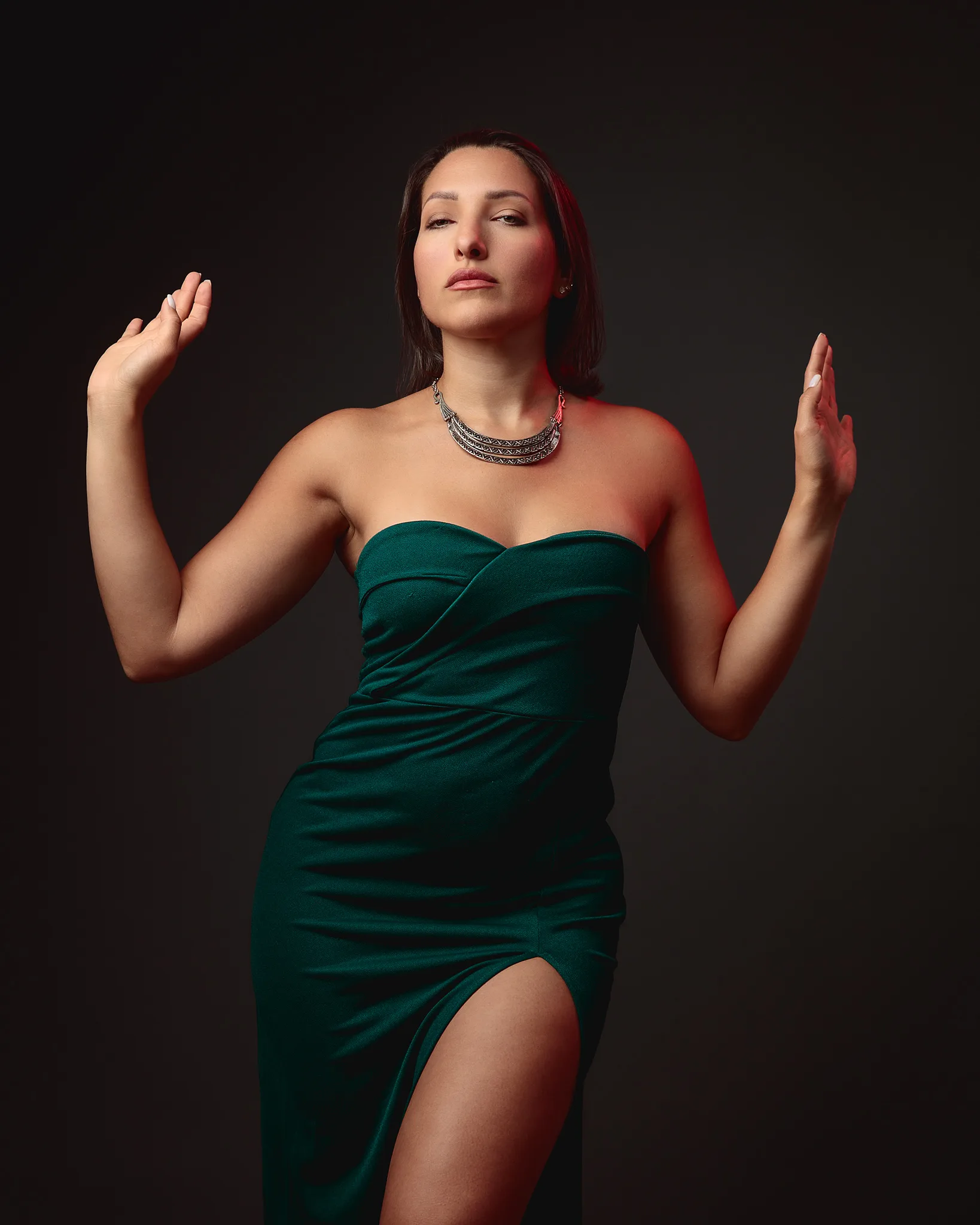
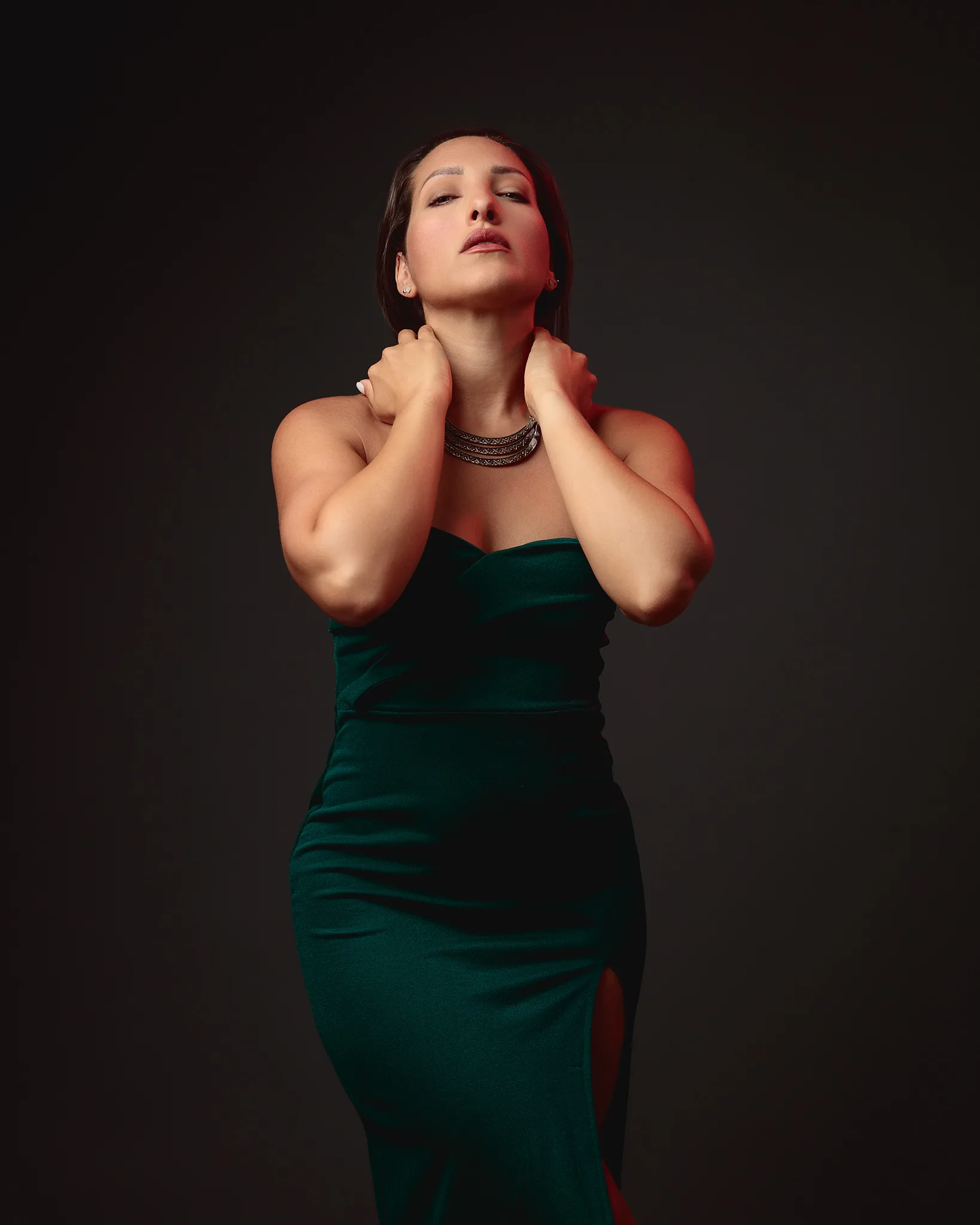
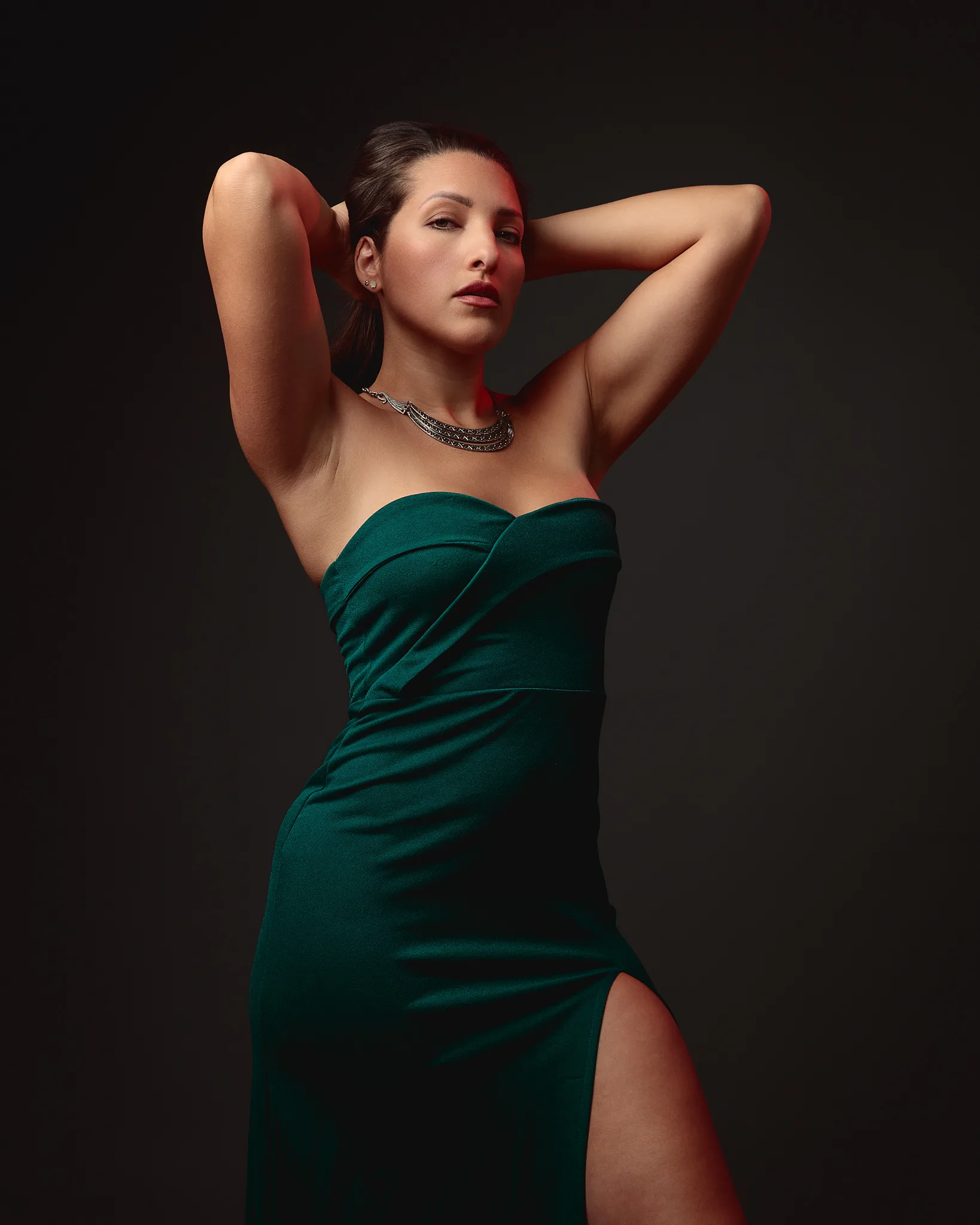
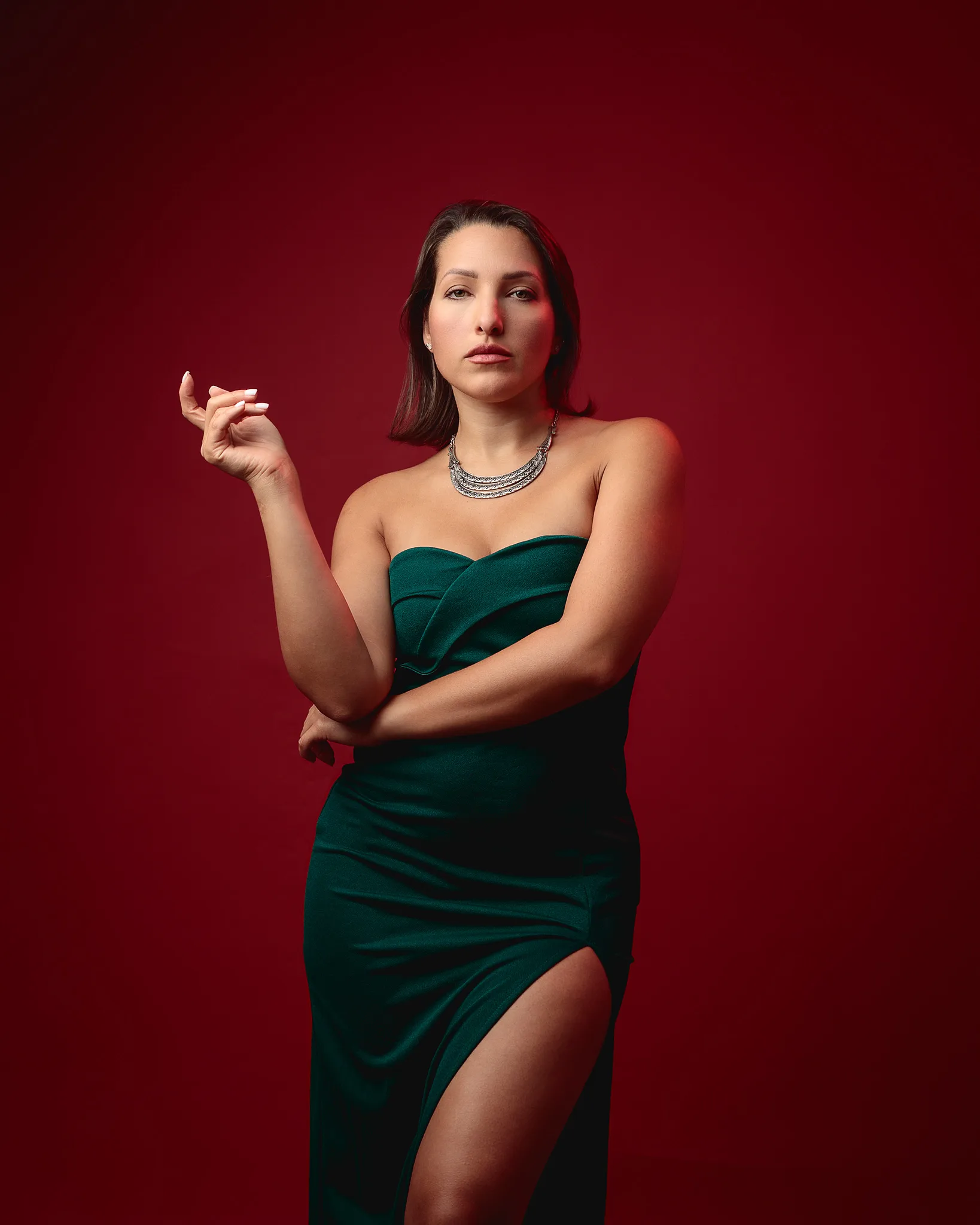
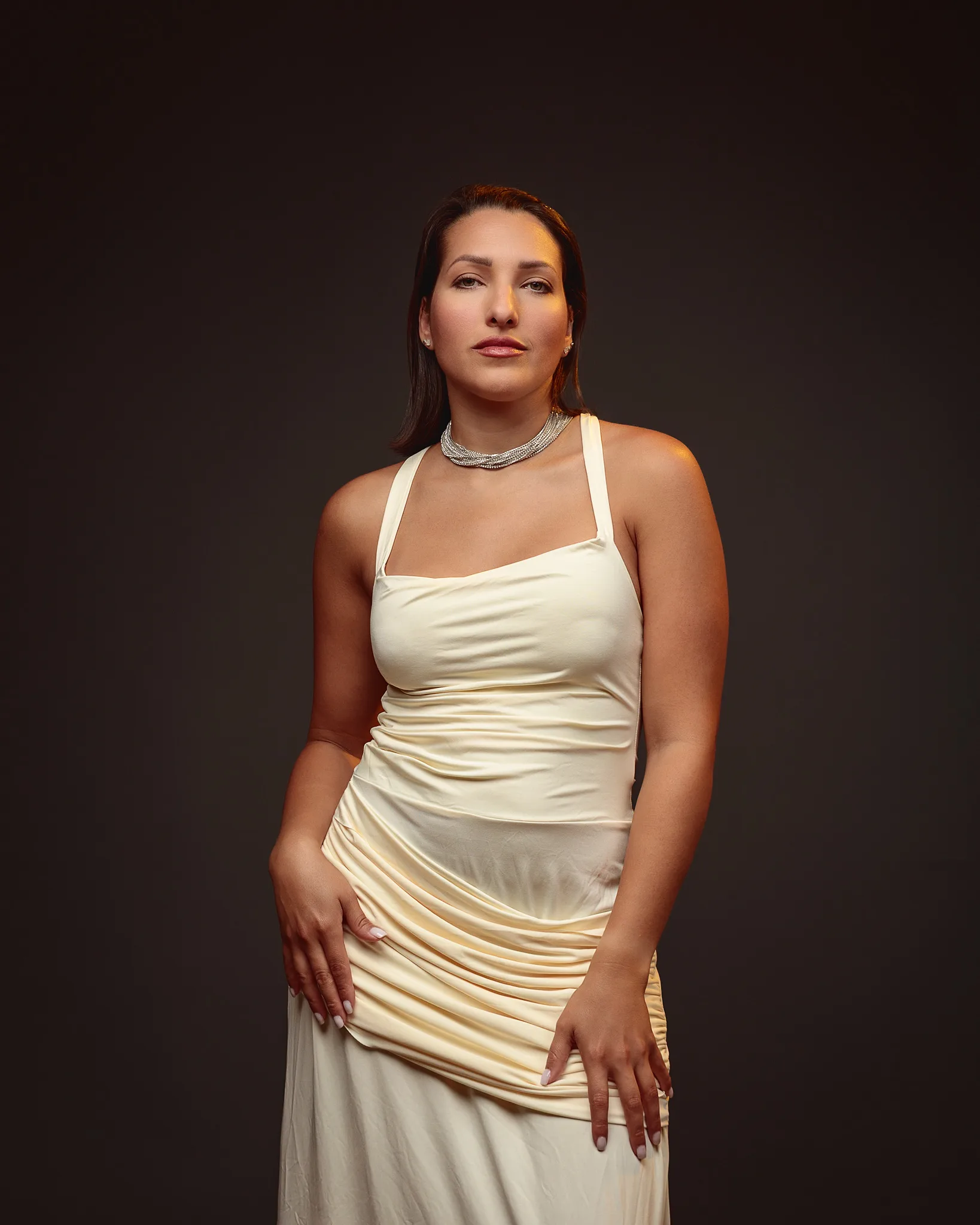
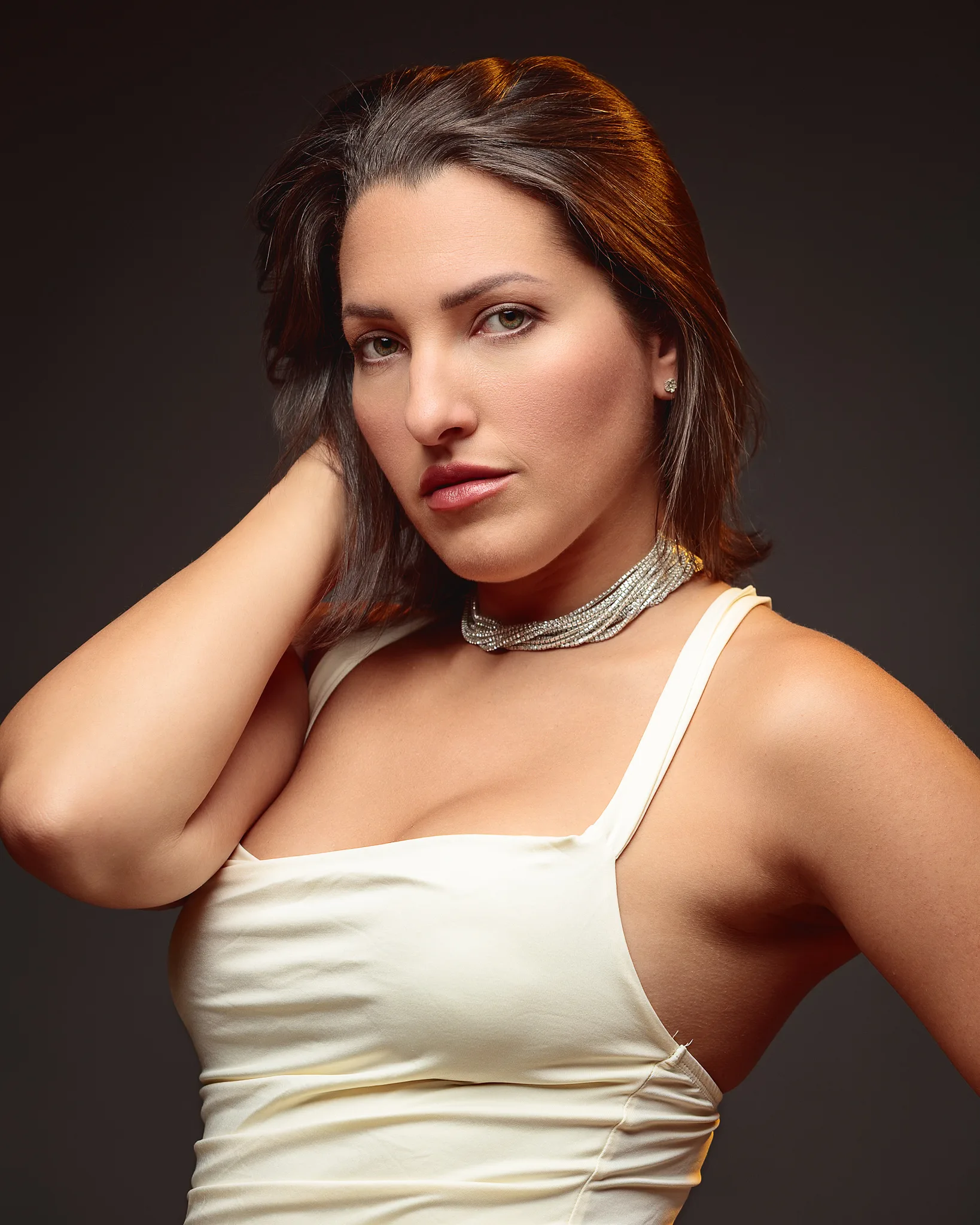
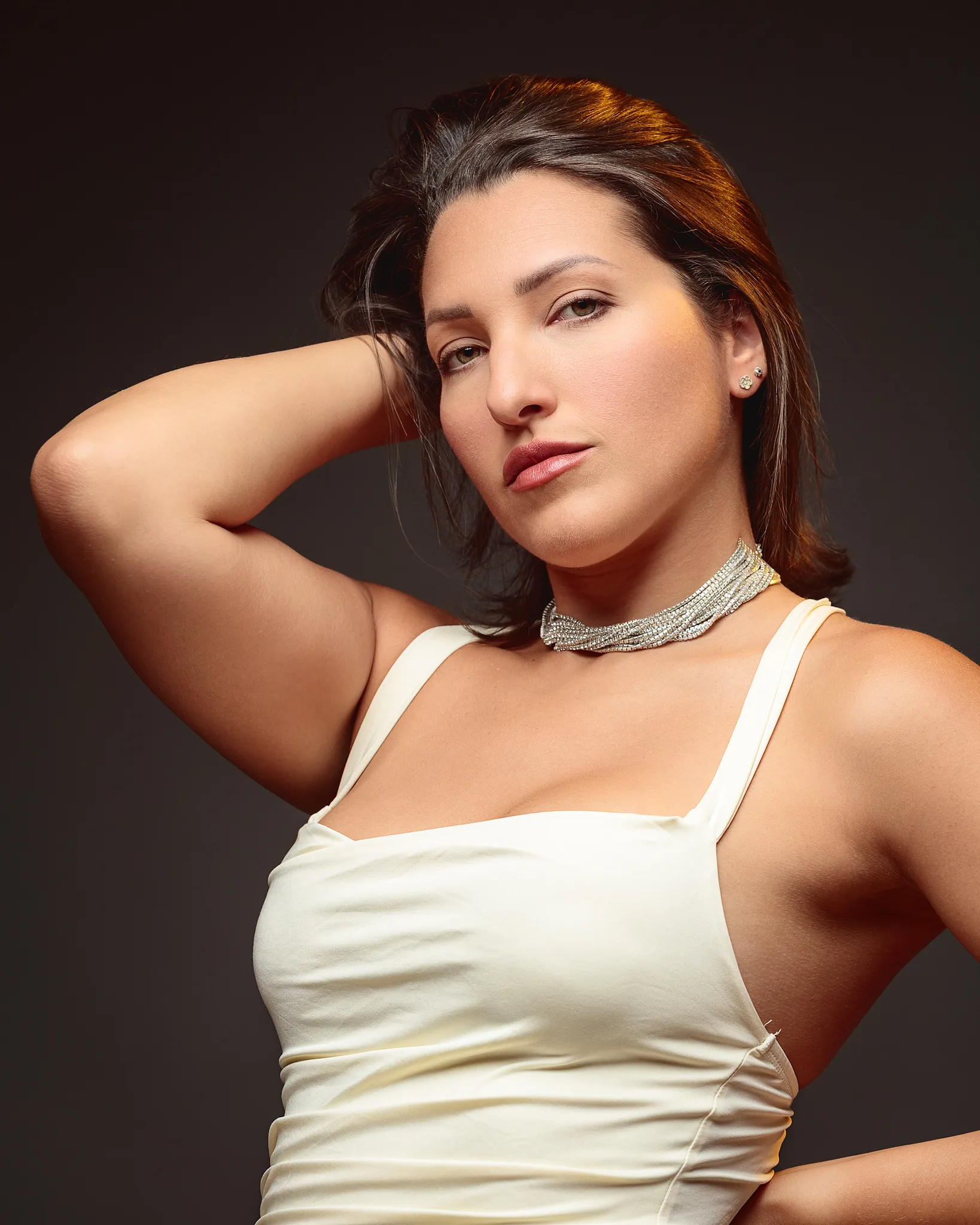
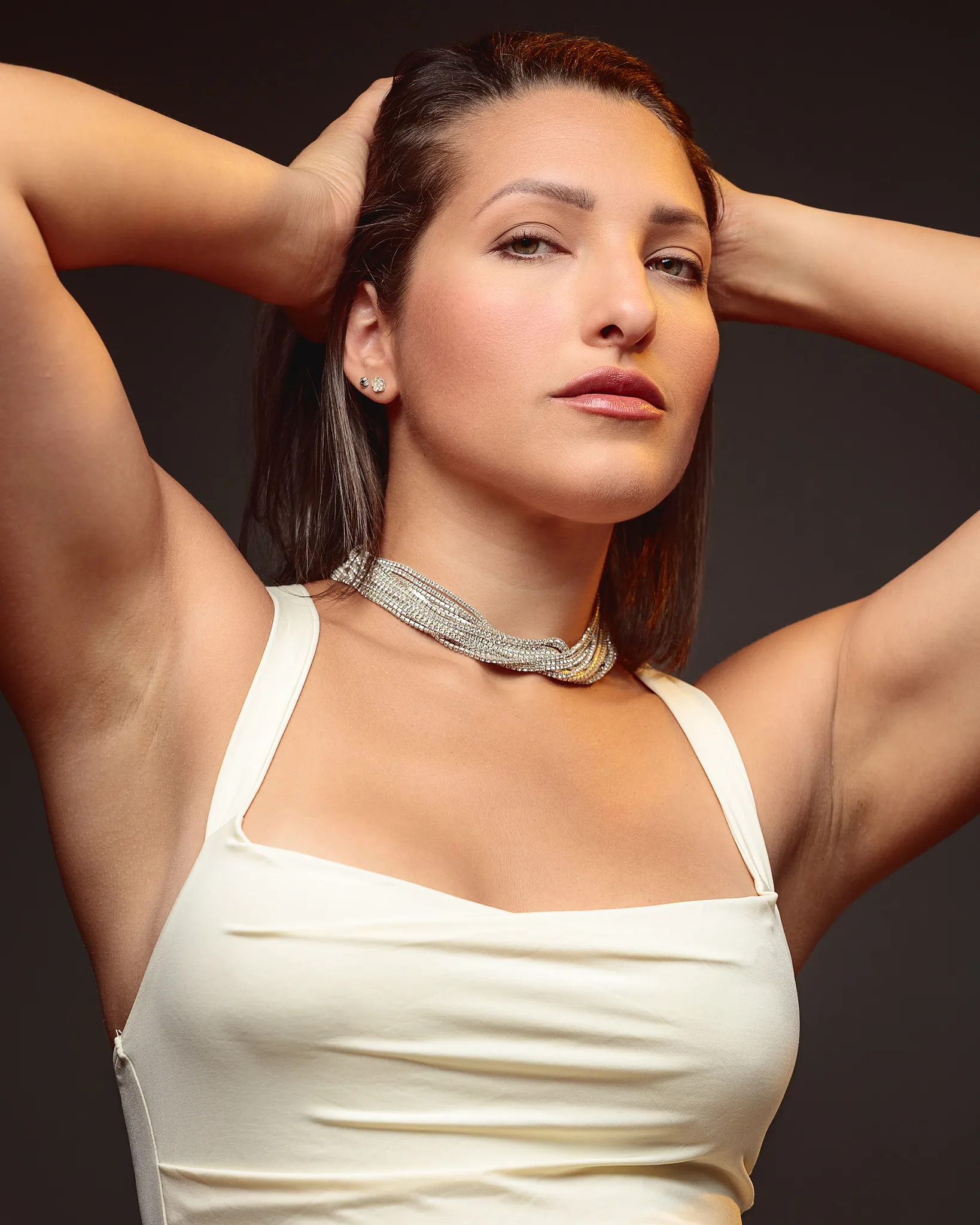
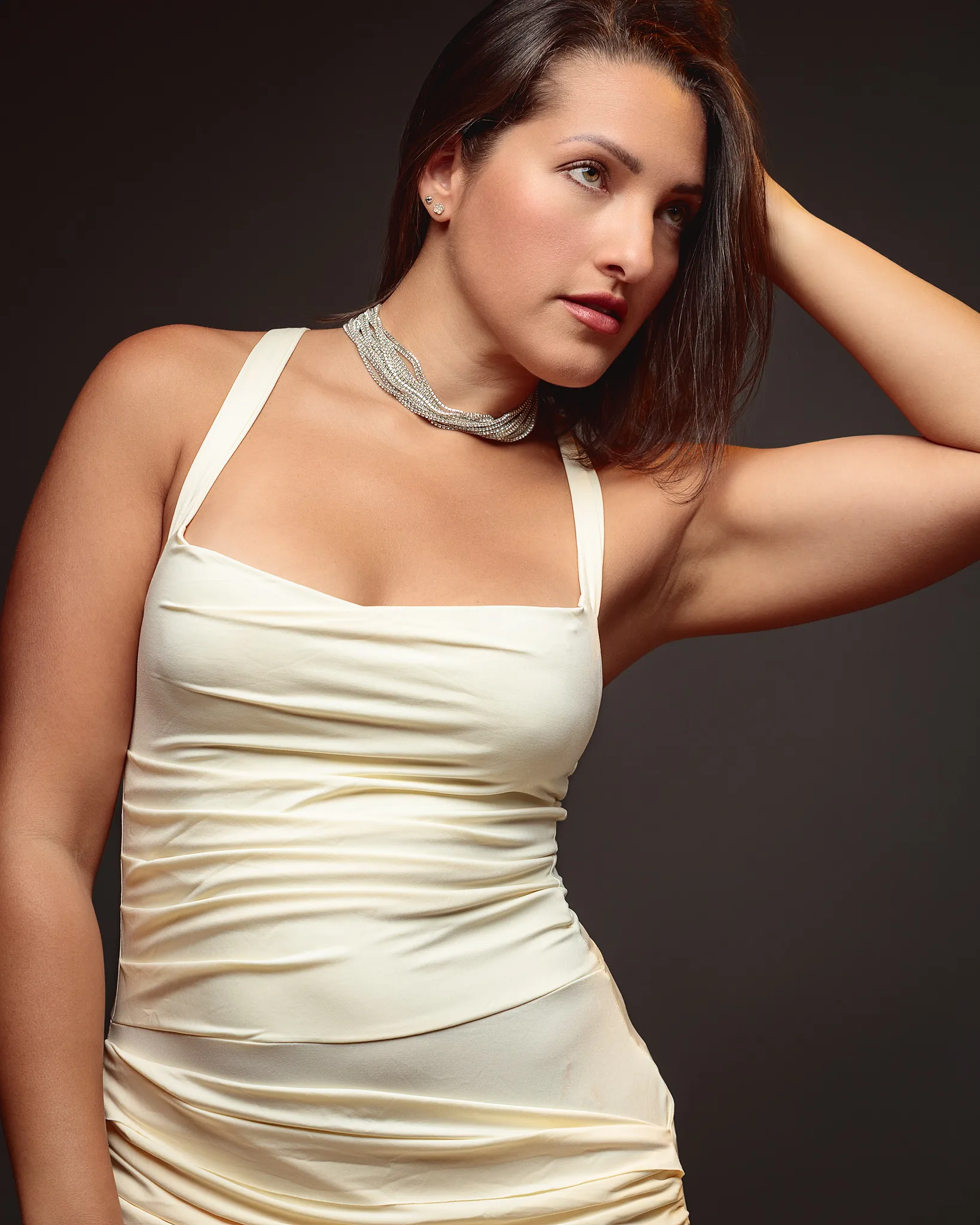
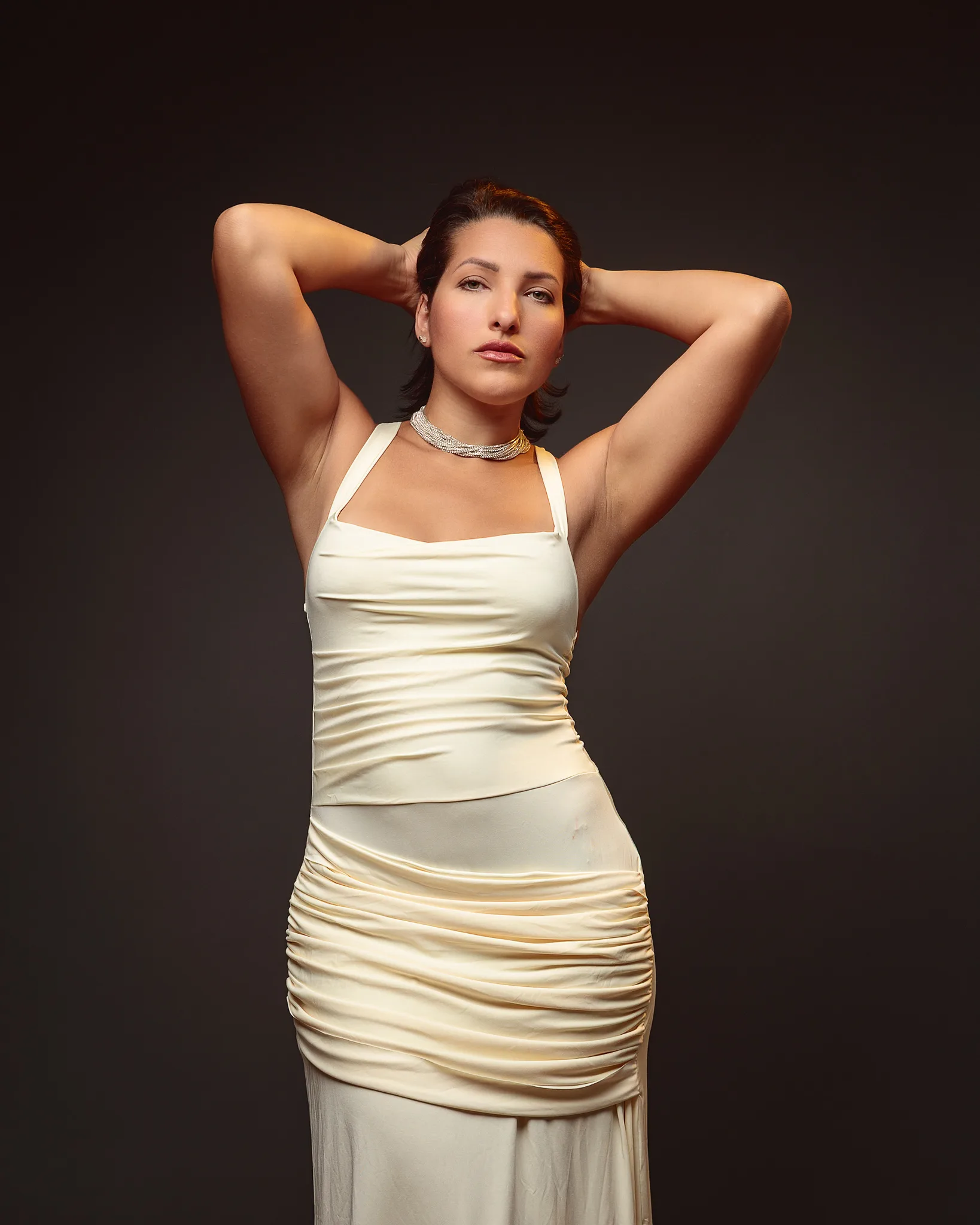
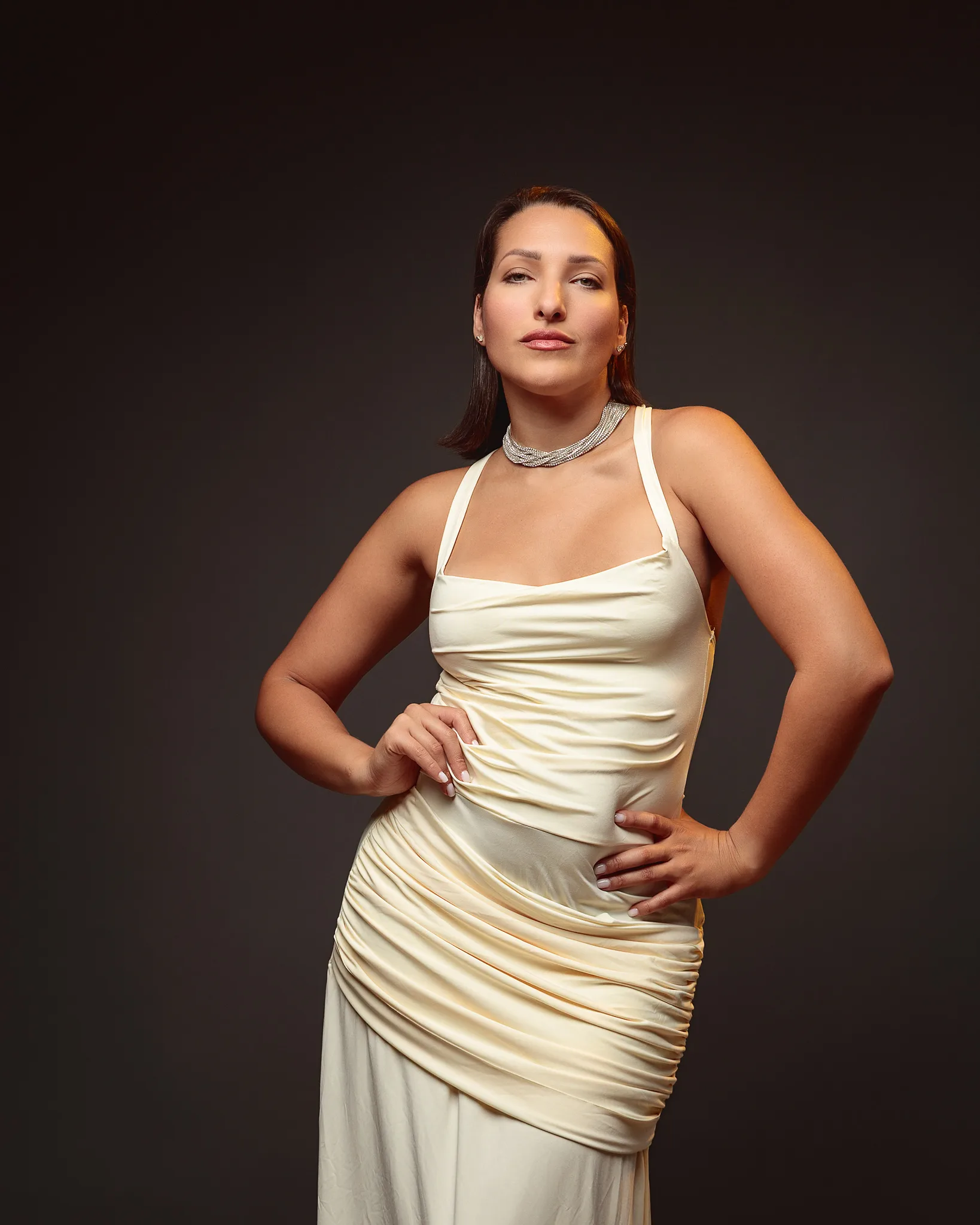
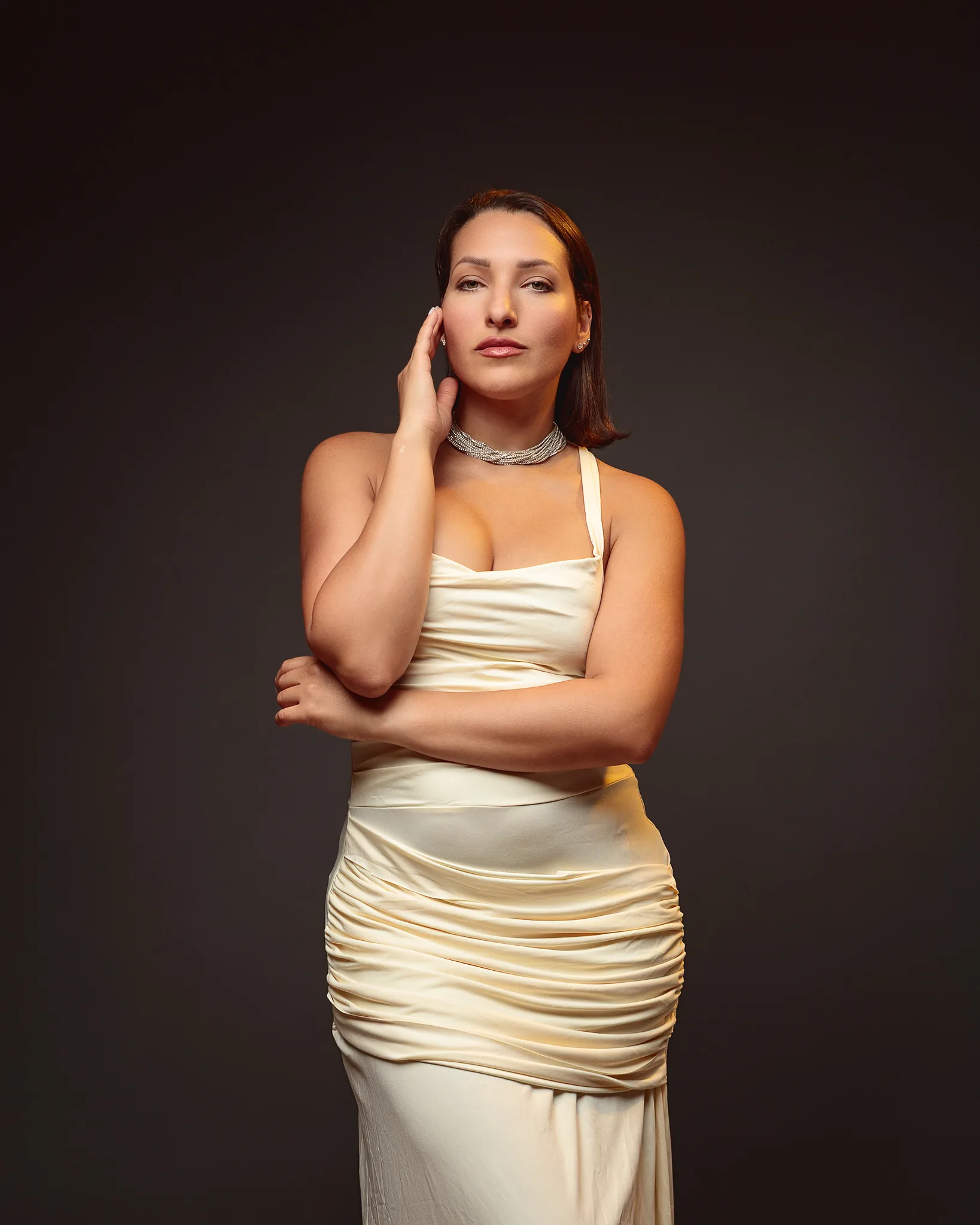
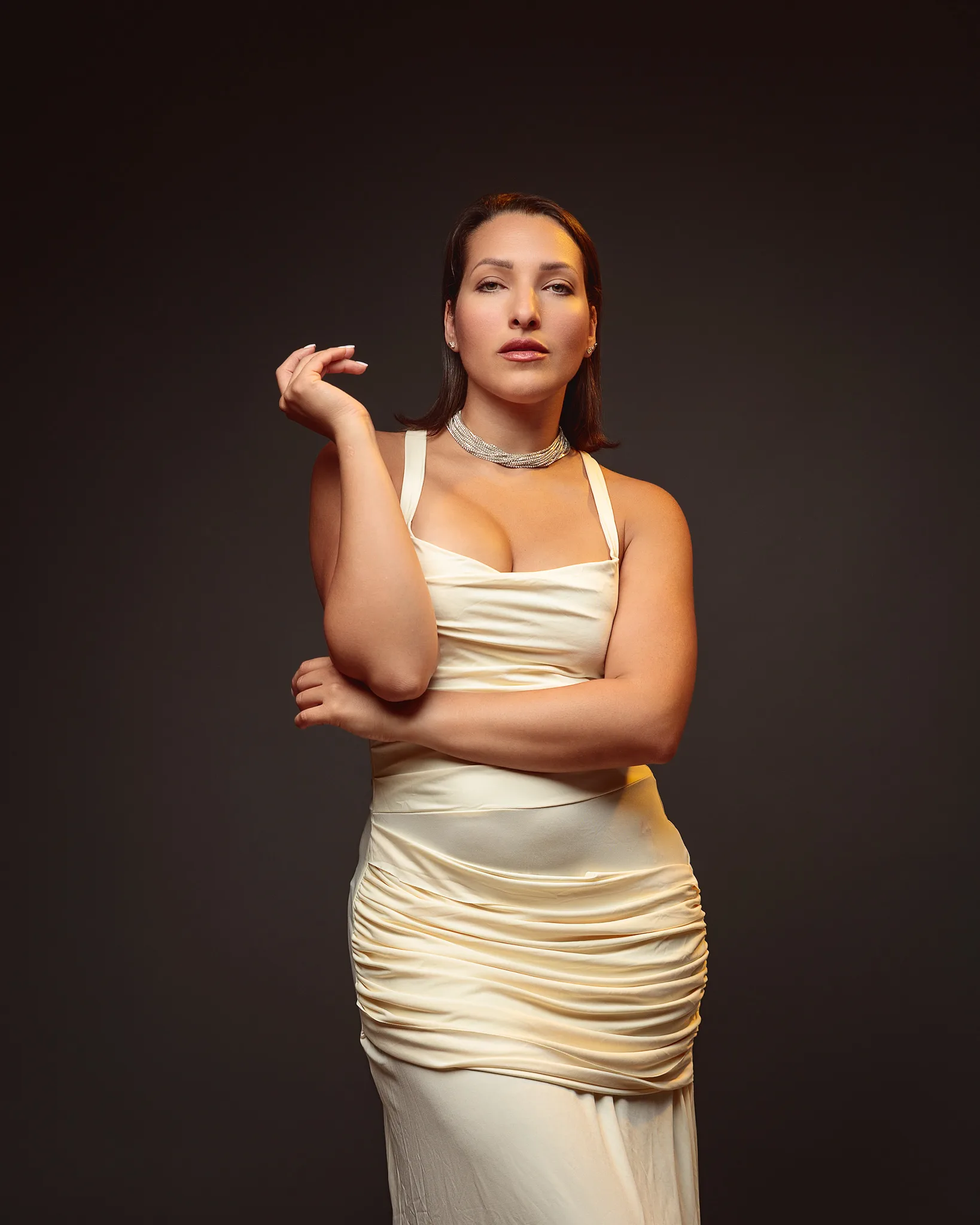
We worked through five looks over the course of the morning: a black dress to open, a black corset with a leather look skirt, a red silk slip dress with the tulle, a green look, and a cream satin dress with a pearl choker to close. The wardrobe and the styling were entirely Mariana’s. She brought her own rail and made her own choices about what to wear and how to wear it, which is how I prefer to work on a portfolio shoot. The lighting and the composition are mine.
The key light stayed the same large octabox, camera left, for the whole session. What changed was how I used it. Feathering it away from Mariana softened the light off gradually. Adding a grid brought the background down into near darkness around her. The colour in the images comes mostly from gelled rim lighting behind her rather than from anything added afterwards in the edit, blue against the red silk and tulle, warm tones against the green look. A small, deliberate amount of colour placed correctly does more for an image than pushing the whole frame one way in post. Throughout the session I kept a colour checker on a stand just out of frame, so skin tone stayed consistent from the first frame to the last regardless of what colour was being thrown around it. Camera settings barely moved all morning, sitting between f/5.6 and f/7.1 at a two hundredth of a second and ISO 200, on a Canon EOS 5DS with a 24 to 70mm lens for most of the session and the 70 to 200mm f/4L brought in once we returned to stiller, more considered frames.
The red tulle earned its place. It catches air, holds colour well under a gel, and turns what would otherwise be a static portrait into something with real movement in it.
Clearly Defined Roles, and Why They Work
Mariana and I have a working relationship with a clear division that I think is a large part of why the sessions go so well. She styles herself and comes up with the poses, often without me needing to suggest anything, which keeps the shoot flowing rather than stopping every few minutes to work out what comes next. I handle the light and the composition. Neither of us is trying to do the other’s job, and that leaves both of us free to concentrate on getting the images right rather than negotiating who is responsible for what.
These images are going out on social media as well as the website, both mine and Mariana’s. The honest goal with work like this is to make someone stop scrolling past. That matters more than it sounds, because platforms such as Instagram reward the length of time somebody spends looking at an image, not simply whether they like it. An image that holds attention gets shown to more people. It is a useful thing to understand if you are trying to build a following around your work, and it shapes some of the decisions I make when I am putting a set of images together for a model.
Why Portfolio Work Is Never a One-Off
I would say to any model, Mariana included, that a portfolio is not something you build once and leave. It needs updating, and the sessions themselves are part of how you get better at the work. Modelling is not an easy industry to succeed in, and the people who do well tend to be the ones who have properly learned their craft rather than relying on how they look. How you work with other people matters just as much. Photographers, stylists, set designers and everyone else on a shoot are more likely to want to work with you again if you are good to be around, and that reputation follows you further than any single set of images.
I also charge a different rate for model portfolio sessions than I do for headshots or a standard portrait sitting. That is deliberate. The edit for a portfolio shoot is a standard edit across a larger number of images, because a model needs a good spread to choose from. A headshot edit is far more involved on a per image basis, which is why that work costs more. That reflects the amount of time each type of session actually takes to finish, not an arbitrary one.
Model Safety in the Studio
There is no physical contact between me and any model during a session. If a pose needs adjusting, I describe it or show it from where I am standing.
I encourage every model to bring a chaperone, a friend, a partner or anyone they trust, and that offer is made before every shoot regardless of whether it is taken up. With Mariana, we have worked together enough times now that we are both comfortable in that studio space without one, but the offer still stands for her as it does for everyone, and it always will.
If a photographer refuses to allow a chaperone, or tries to talk a model out of bringing one, that is a red flag and should be treated as one. There is no legitimate reason to object to it. A model’s safety is not something they should have to negotiate for.
What’s Next, and Where to Find Me
We have a couple of things coming up, including a shoot at a stately home, and we are also going to have another go at a sunrise session after the weather let us down badly on the last attempt. The images from that one were interesting but not what either of us wanted, so we are going back for a proper version. We also filmed a short behind the scenes video during this session, which I do not do with every shoot but which I enjoy when the chance comes up, because it gives people a look at how a session like this actually runs.
This shoot was photographed at my studio at Base Business Park in Rendlesham, on the former RAF Bentwaters site near Woodbridge. I photograph model portfolios, portraits, headshots and personal branding work there, and I cover Suffolk, Norfolk, Essex and Cambridgeshire. If you are thinking about a portfolio session, I am happy to talk through how it works and what a shoot with me involves.