A model portfolio shoot should feel model-led
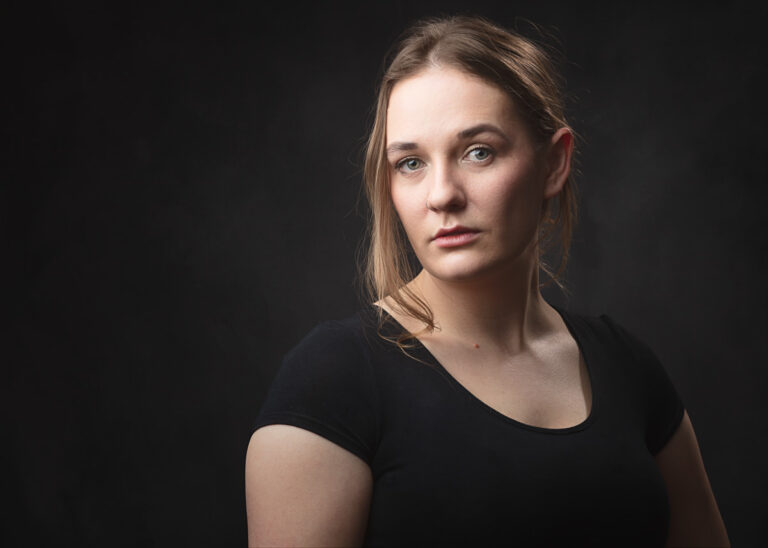
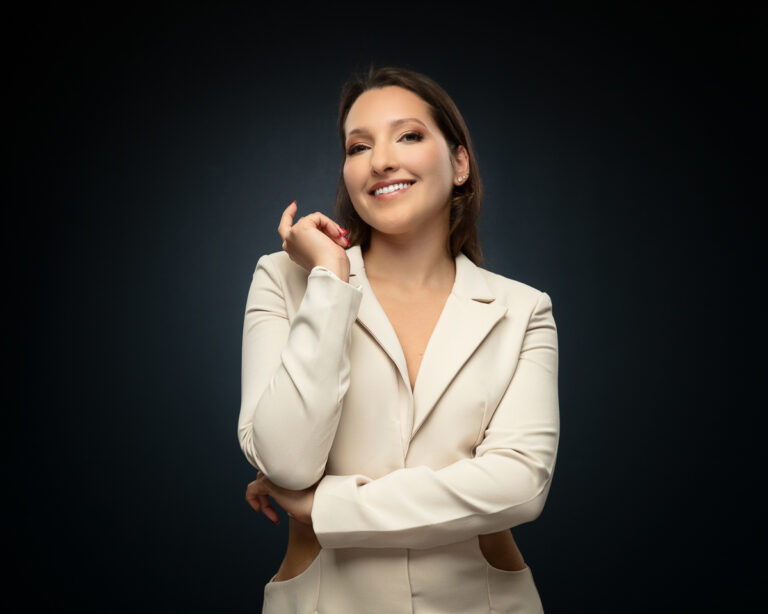
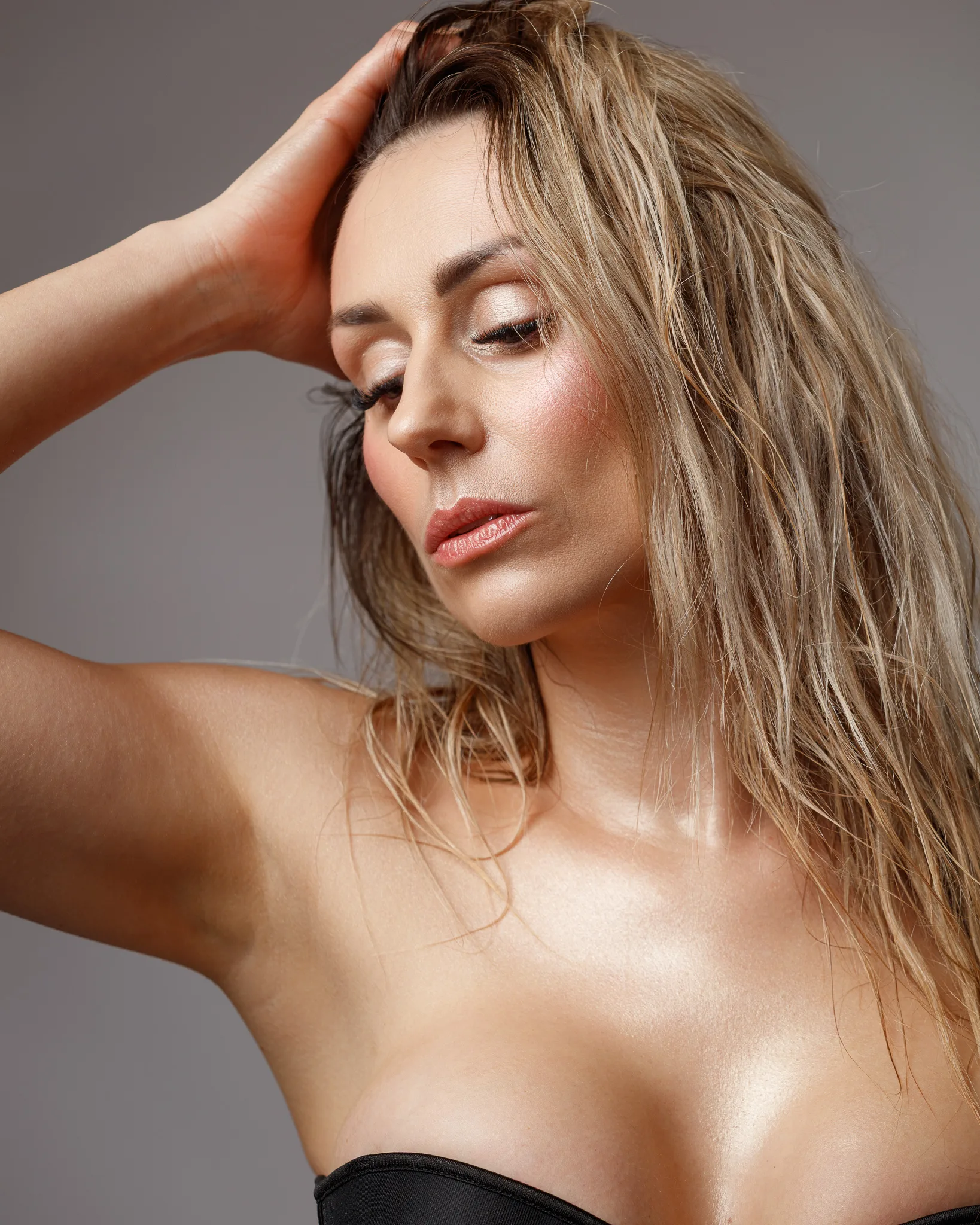
I recently photographed a model portfolio shoot with Roksana in my studio, and it was a genuinely enjoyable session. Roksana is calm, focused, and expressive, which makes it easy to build variety without losing consistency. We worked through ten distinct looks, moving from lingerie-led editorial into concept glamour, then into bold red fashion, and finishing with a playful lipstick-mark narrative.
Makeup was done by Andzelika Kurek (Amakeuproom), a bridal makeup artist based in Norwich. Her work sits nicely in that “modern medium glam” space, where the skin still looks like skin, and the structure reads well under studio light.
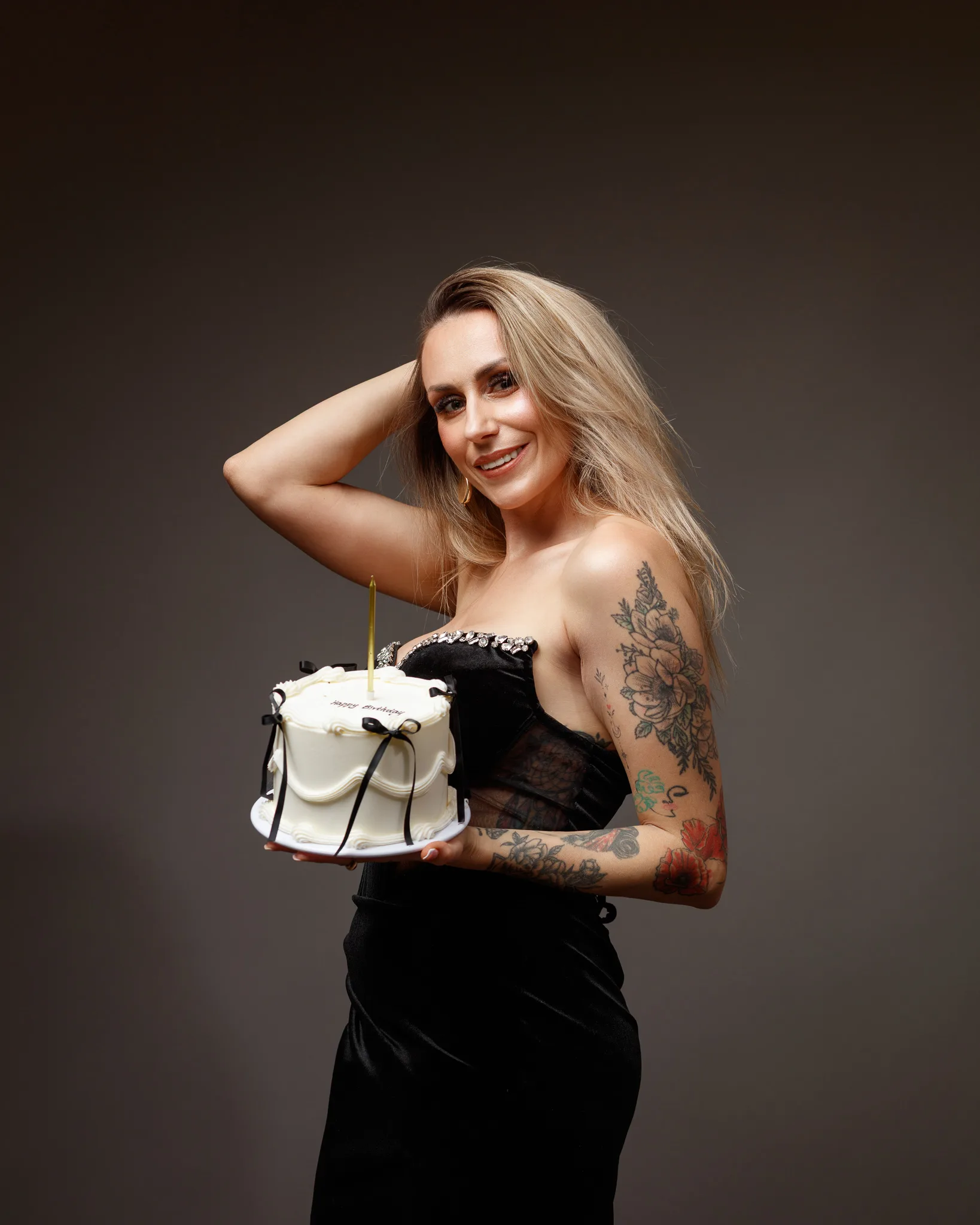
Because Roksana’s birthday is coming up soon, we built a birthday theme into the middle of the shoot. We also folded in Valentine’s styling for the red sequence and the kiss-mark concept.
The most important thing to understand: the model leads the shoot
I want to be very clear about something that matters a lot, especially for young models and first-timers.
The outfits, the level of coverage, the styling direction, and the overall feel of the shoot are led by the model. Not by me.
My job is to photograph what the model is aiming for, within sensible boundaries of safety, legality, and professionalism. I can suggest what might work well on camera, or how to tighten the set so it looks more “agency-ready”, but I do not choose what you wear. I do not push a model into styling they do not want. And I do not treat discomfort as something you should “get over”.
If you are a model reading this, your comfort level is part of your professional boundary. You are allowed to say:
- “I’m fine with this outfit, but not that one.”
- “I’ll do fitted, but not lingerie.”
- “I’m happy with implied styling, but not a lingerie look.”
- “I want a fashion feel, but I want it to stay modest.”
- “I’m not comfortable with this pose.”
That is not awkward. That is normal.
If you are a parent reading this, the same principle applies. The model sets the tone, and I work to that. For younger models, I also expect a chaperone, and I keep communication clear and practical throughout.
Mood boards make the shoot smoother and safer
We built this shoot around a mood board, which meant the day was relaxed and organised. A good mood board helps in three ways.
First, it gets everyone on the same page. You know what sort of images you are trying to create, and what “good” looks like.
Second, it prevents wasted time. If you are bringing ten looks, we need a plan so the shoot stays efficient.
Third, it supports consent and comfort. When the model has already approved the vibe, the wardrobe direction, and the rough pose ideas, nothing feels like a surprise on the day.
Even with a mood board, I still check in during the shoot. People’s comfort can change once they see the light, the set, and the pace. That is normal too.
A quick note on studio approach: consistency first, then variety
This shoot is a good example of how I like to build a portfolio set.
I keep the lighting clean and controlled, so the “photographic language” stays coherent. Then I let the wardrobe, props, and expression do the heavy lifting across the looks. It is a strong way to create range without making the portfolio feel chaotic.
The result is a set of images that can work across different uses:
- fashion and editorial style selection
- bolder concept images for social and promotion
- cleaner “hero” frames that read well at small sizes online
Makeup credits: Andzelika Kurek (Amakeuproom)
Andzelika’s makeup held up across ten looks, which is not always easy when you are moving between mood, prop styling, and colour shifts.
If you want to find her work, she trades as Amakeuproom and is based in Norwich. She describes her style as modern medium glam tailored to natural beauty, with wedding, occasion, and photoshoot makeup.
Look-by-look breakdown: 10 outfits, 10 clear chapters
Below is how the shoot progressed. I’m describing these looks in plain language because it helps models learn how to plan a shoot that feels intentional.
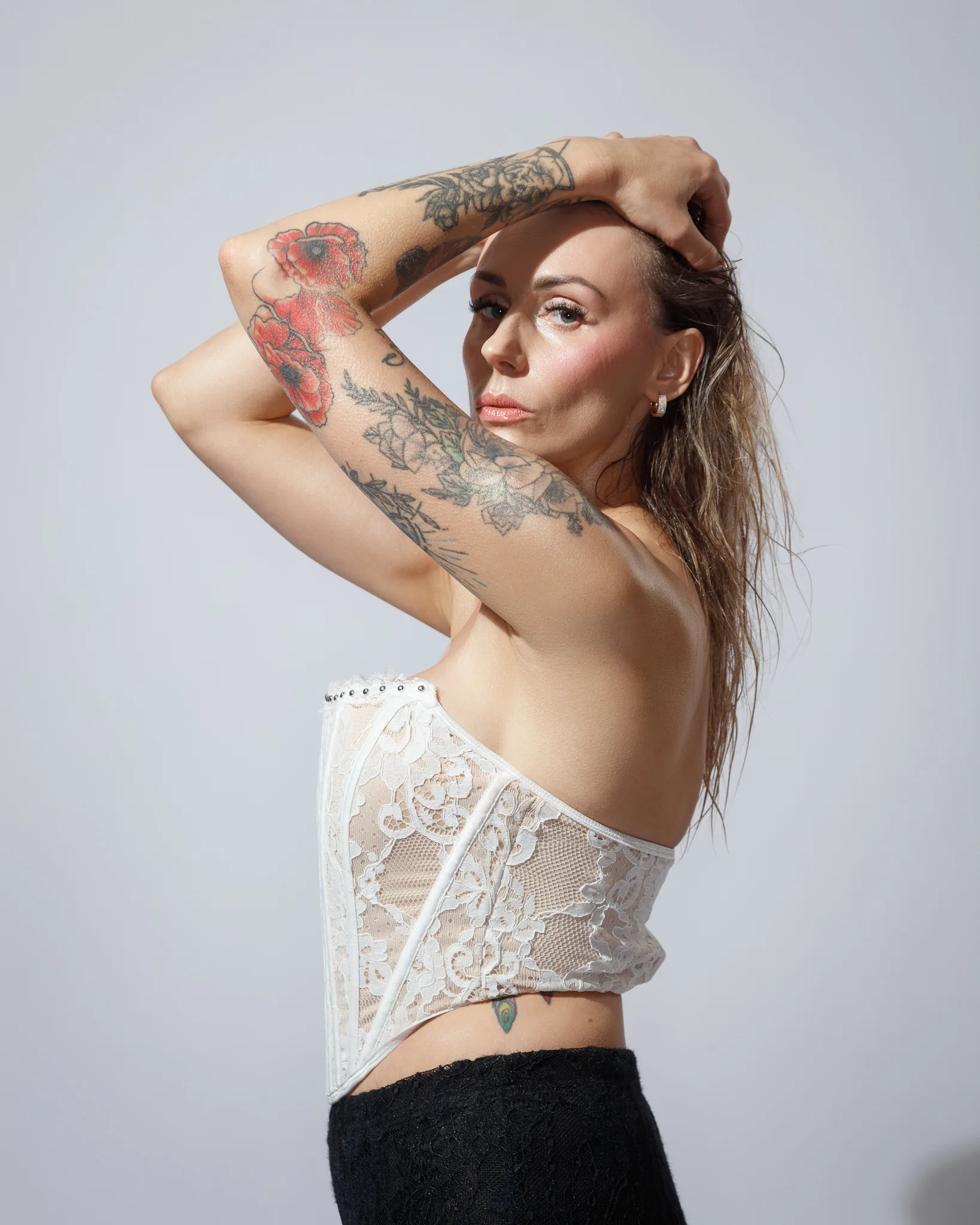
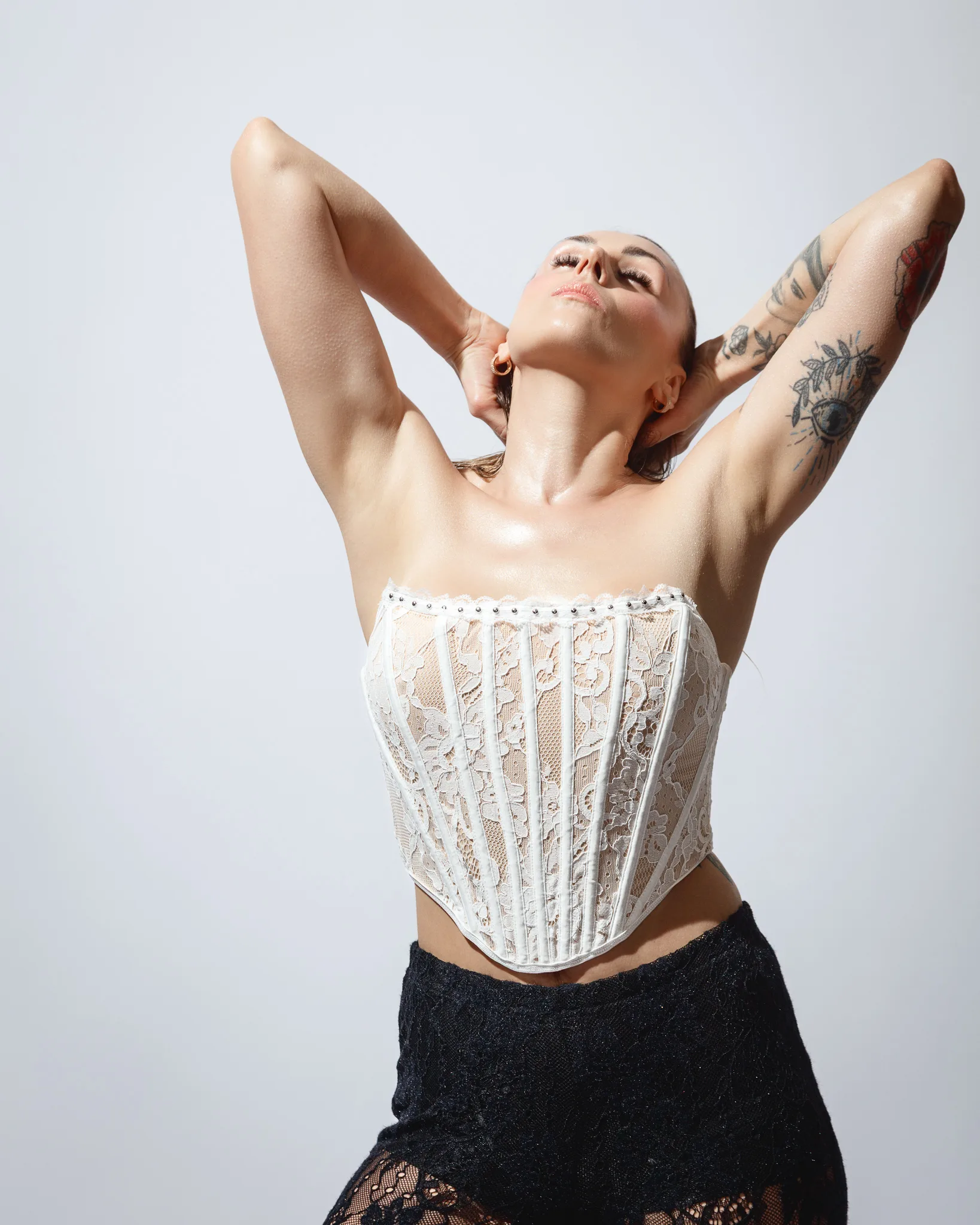
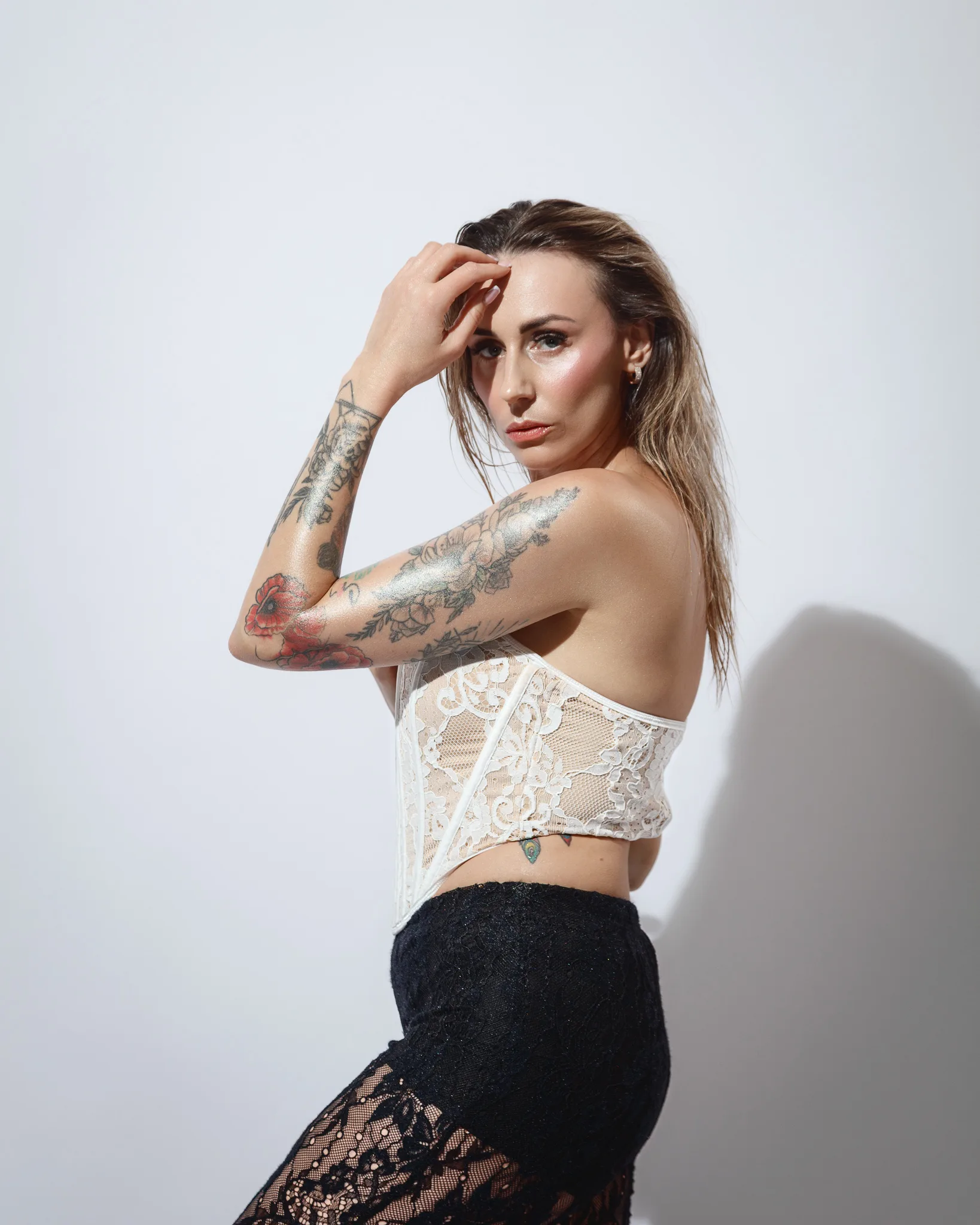
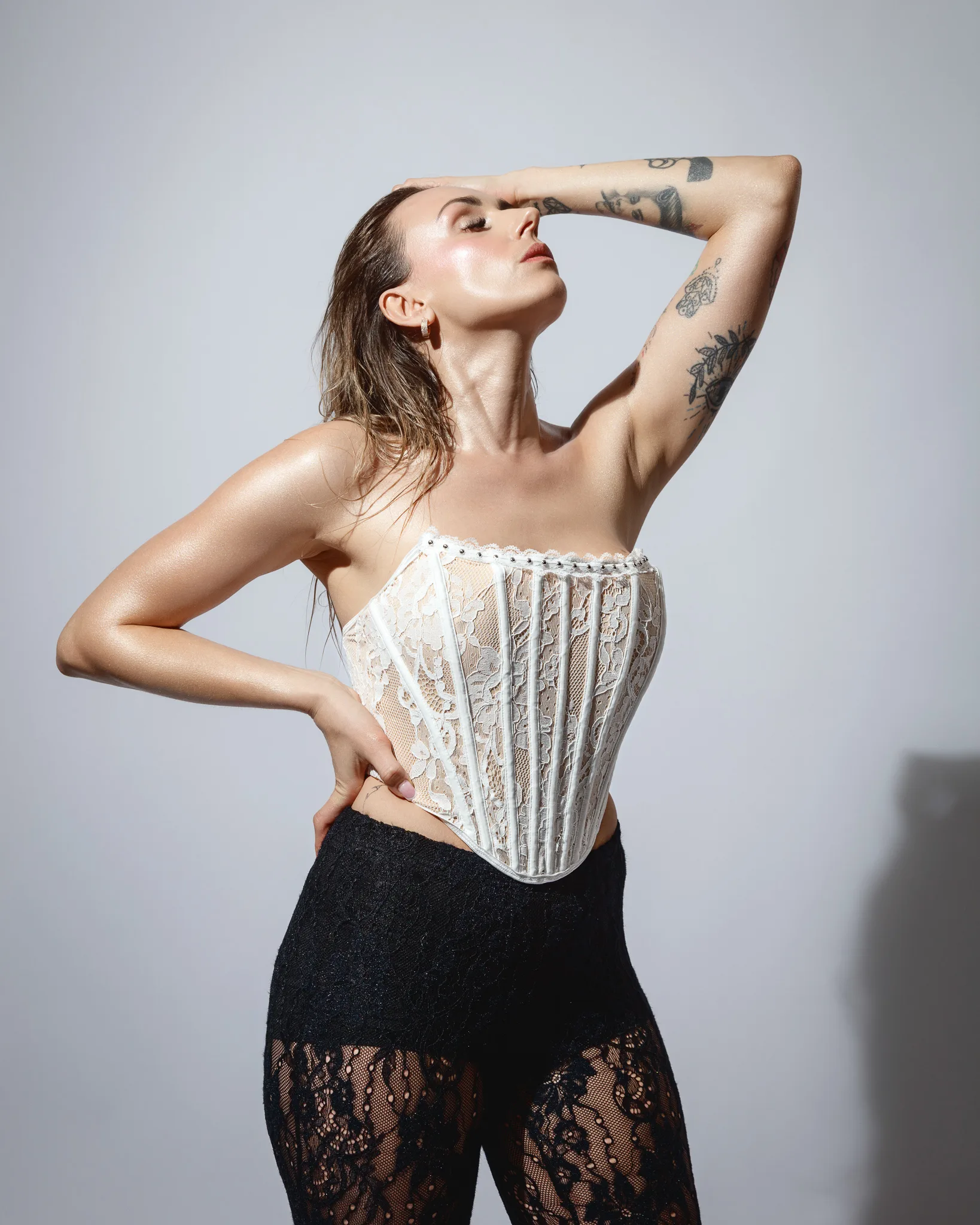
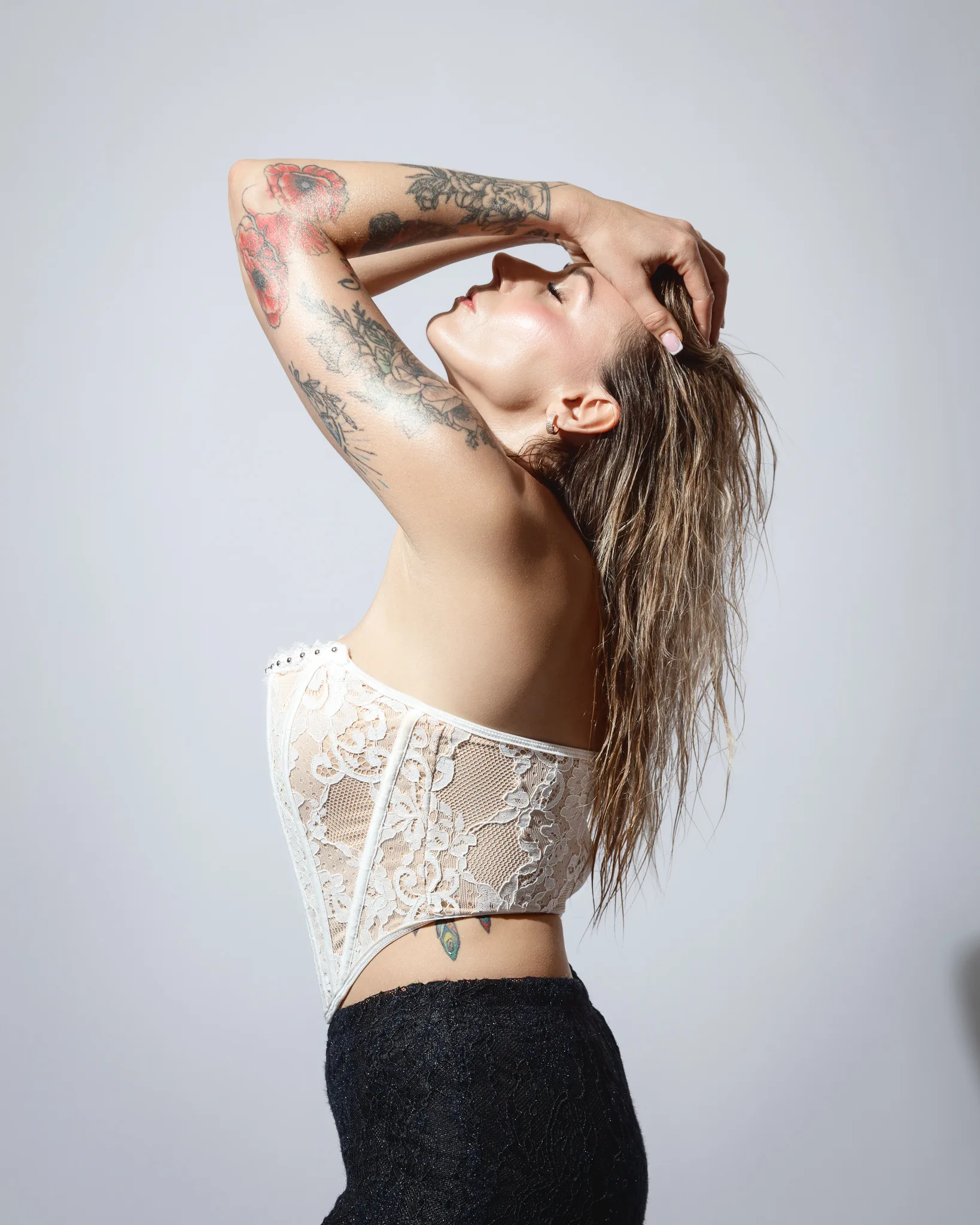
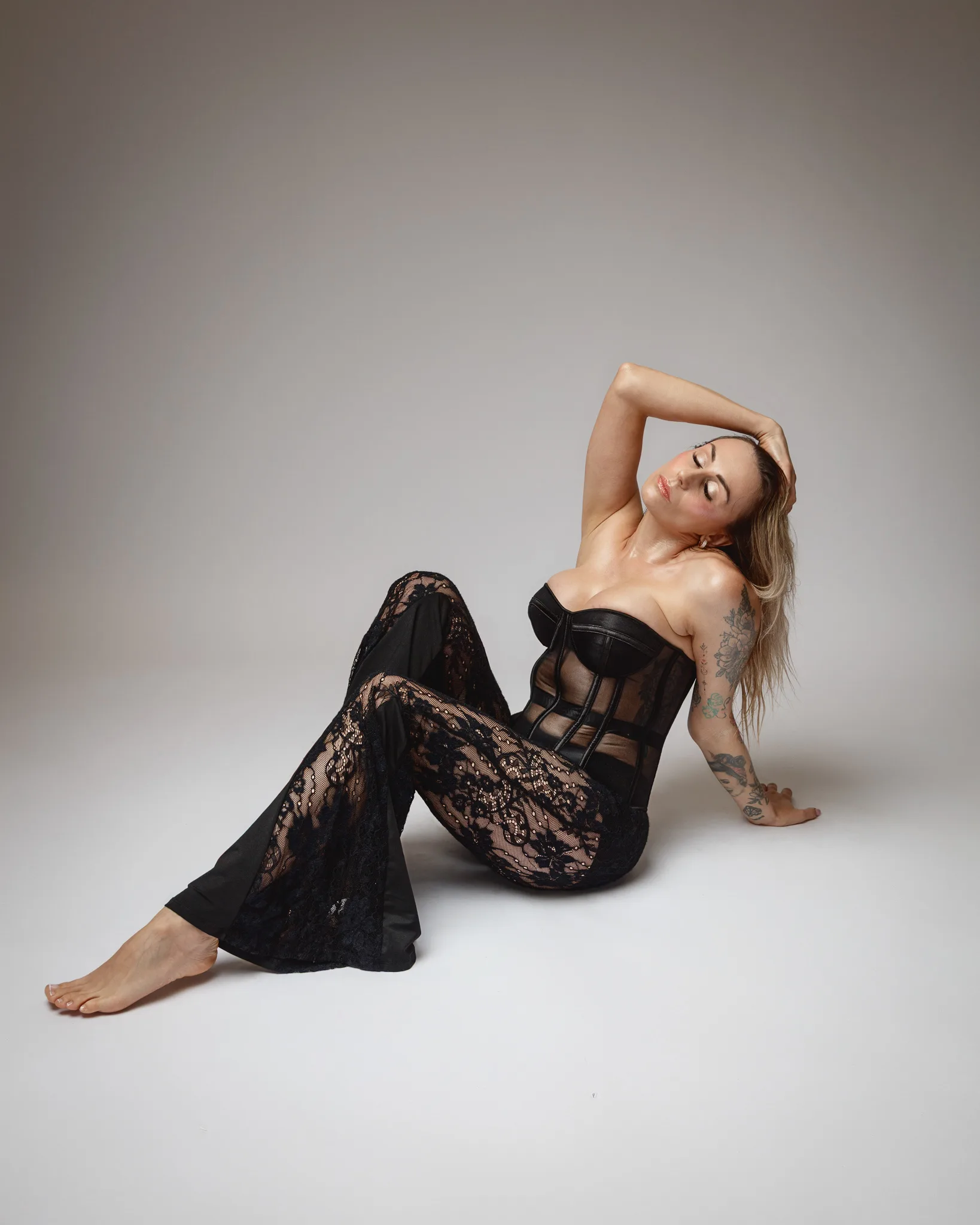
Look 1: Ivory corsetry and black lace, sculptural editorial
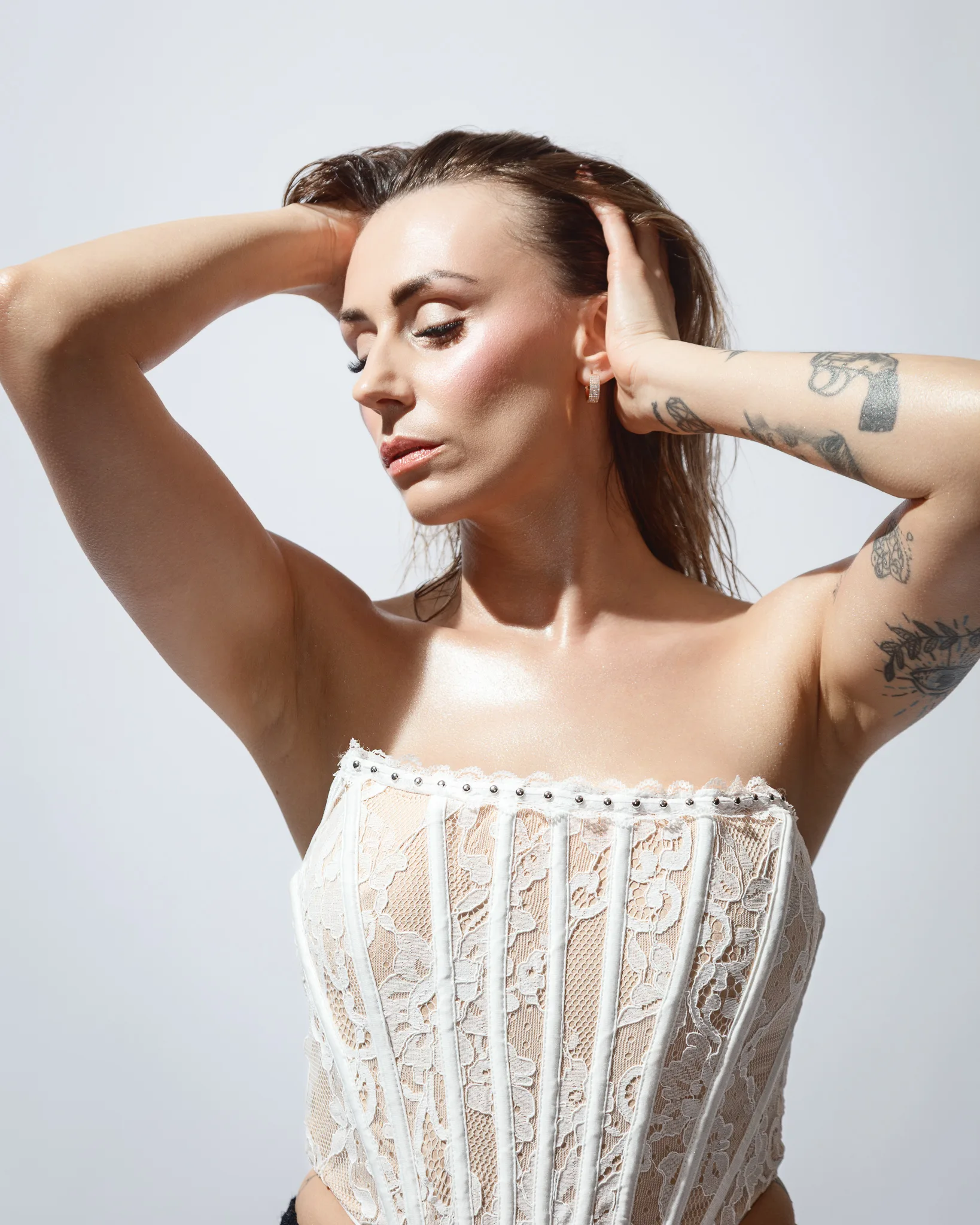
This look set the baseline. Structured ivory corsetry with visible boning and lace detail, paired with black lace leggings. Strong pose, clean background, crisp light. It reads as lingerie-led editorial, but it stays modern because the styling is restrained and the posing is deliberate.
If you are building a portfolio, this sort of look can work well as an opening chapter because it establishes confidence and body awareness. It also shows how you hold shape through the torso and shoulders.
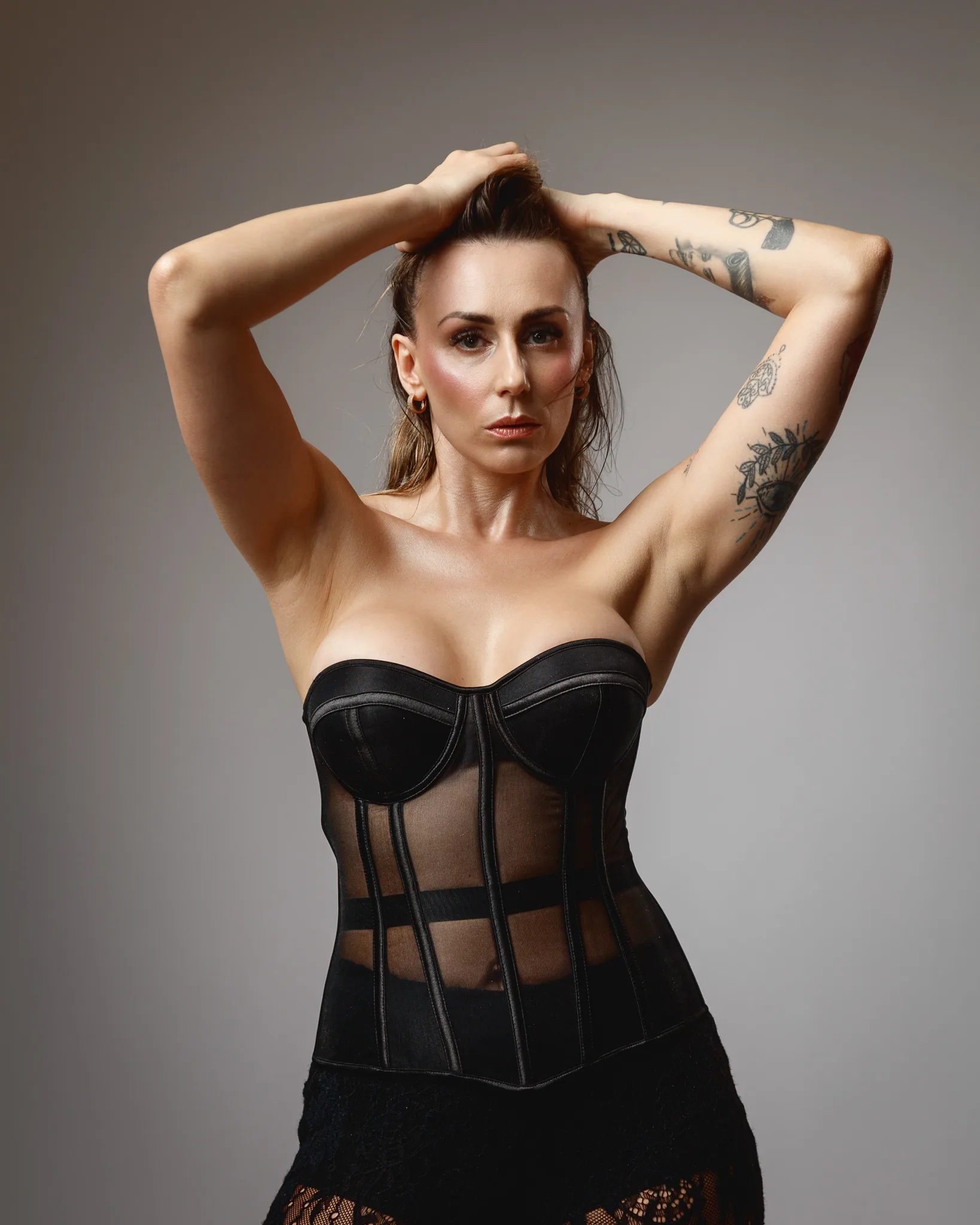
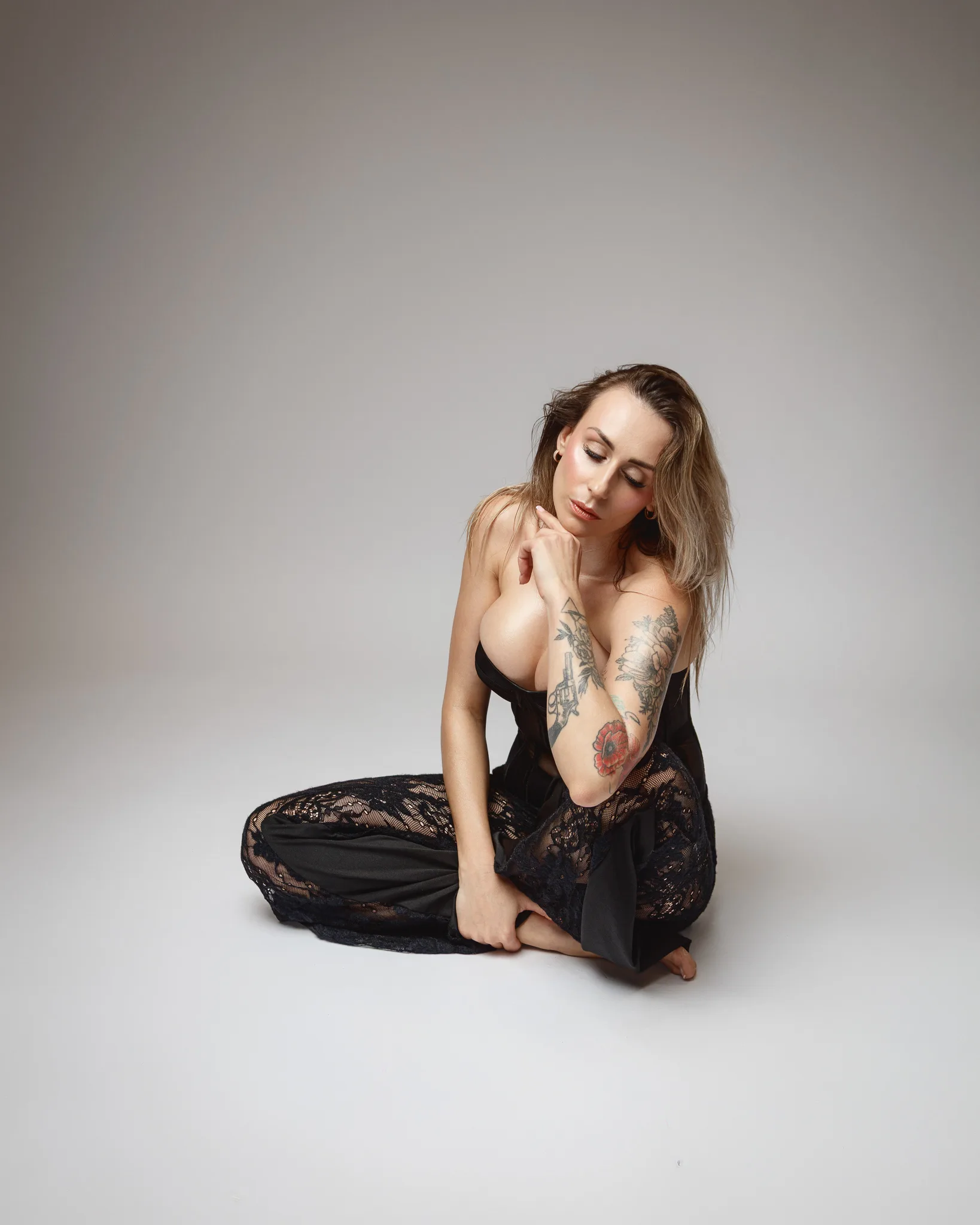
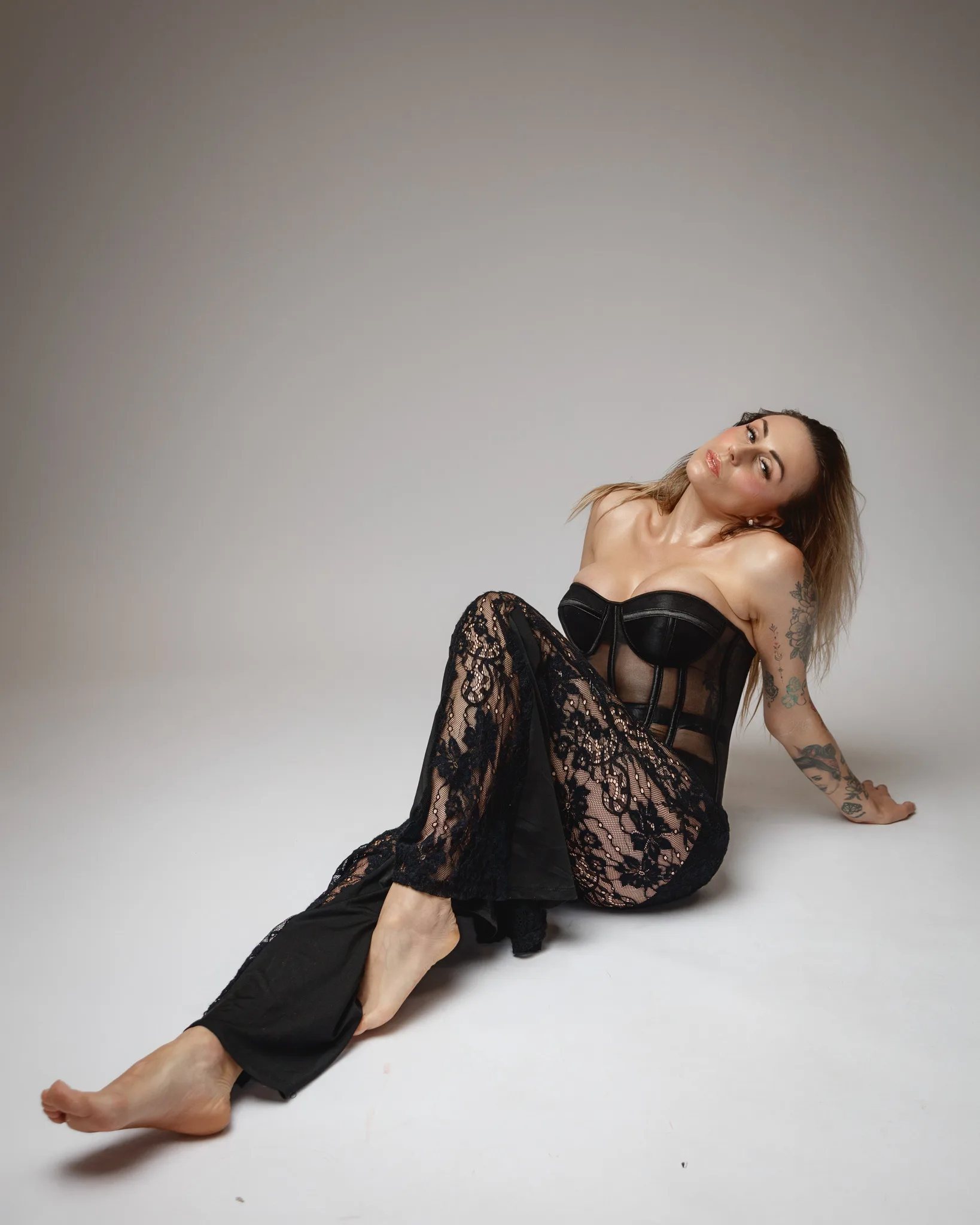
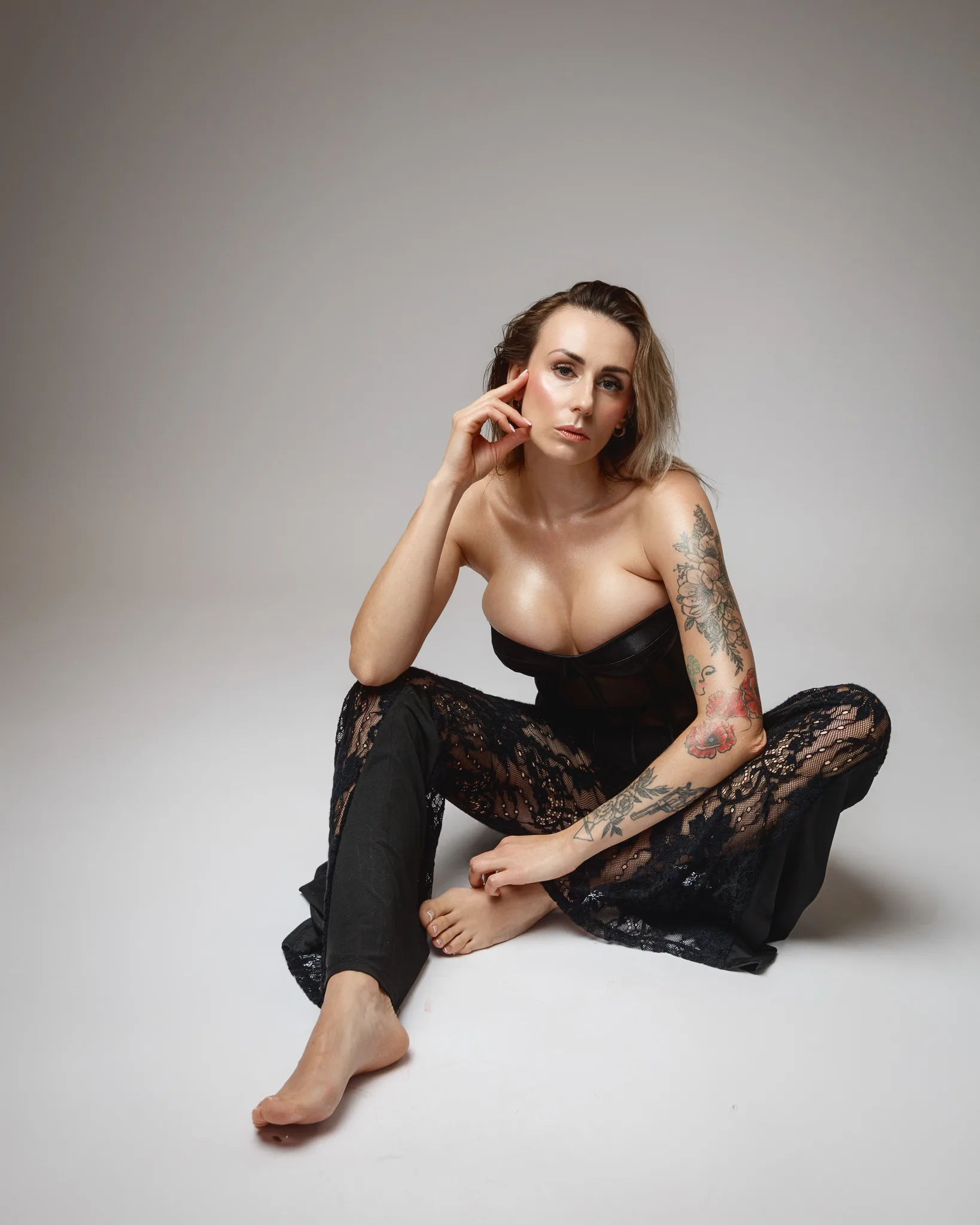
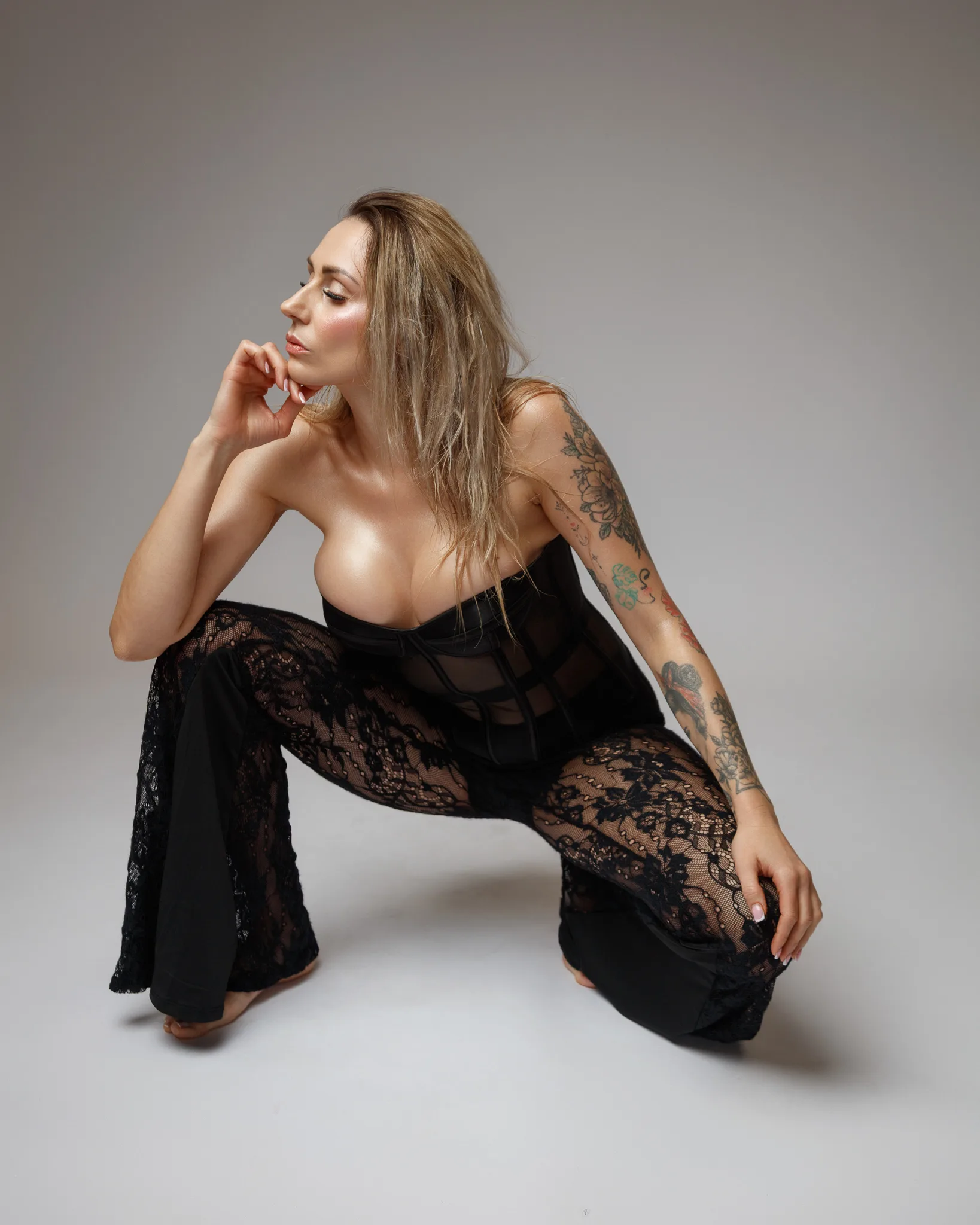
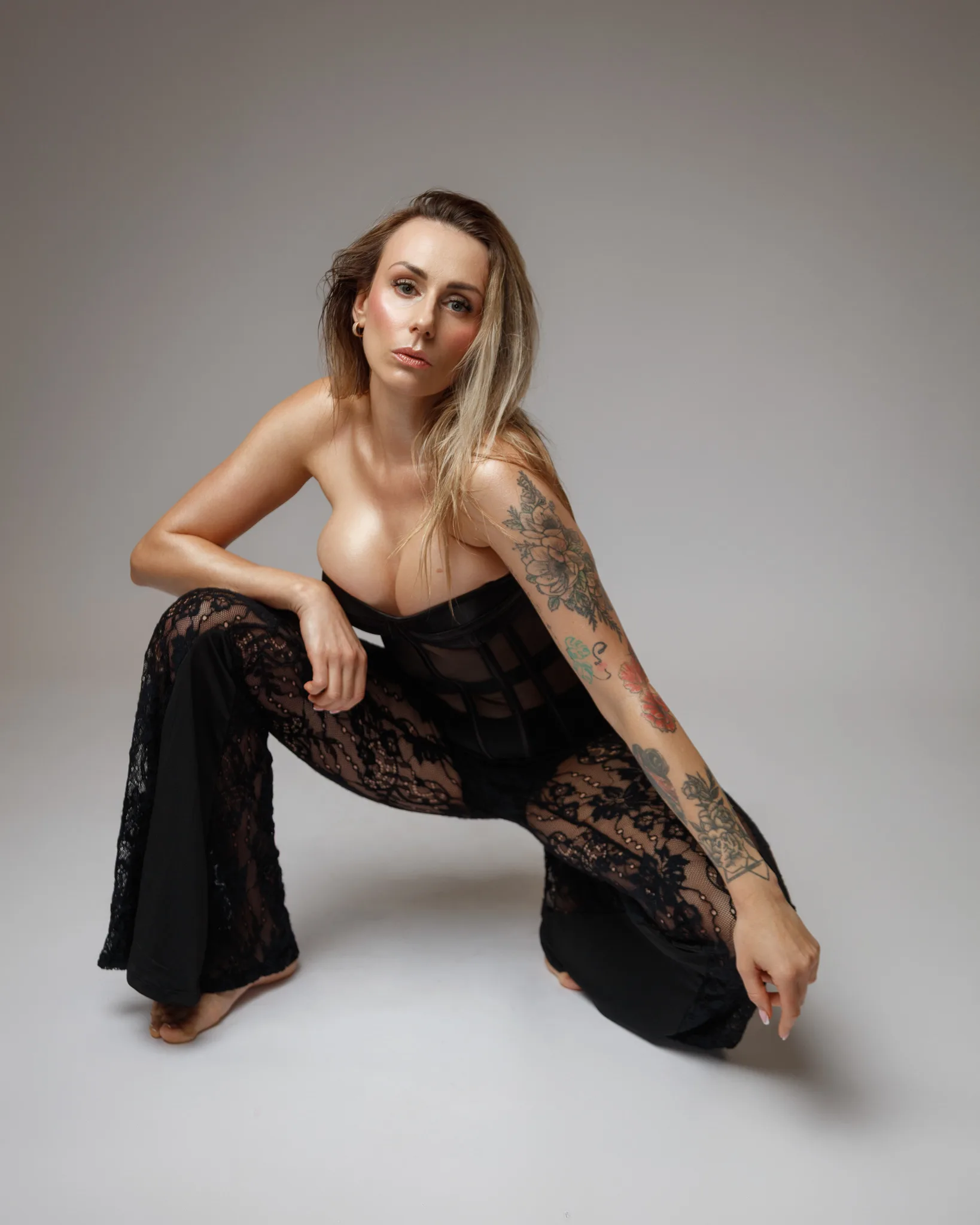
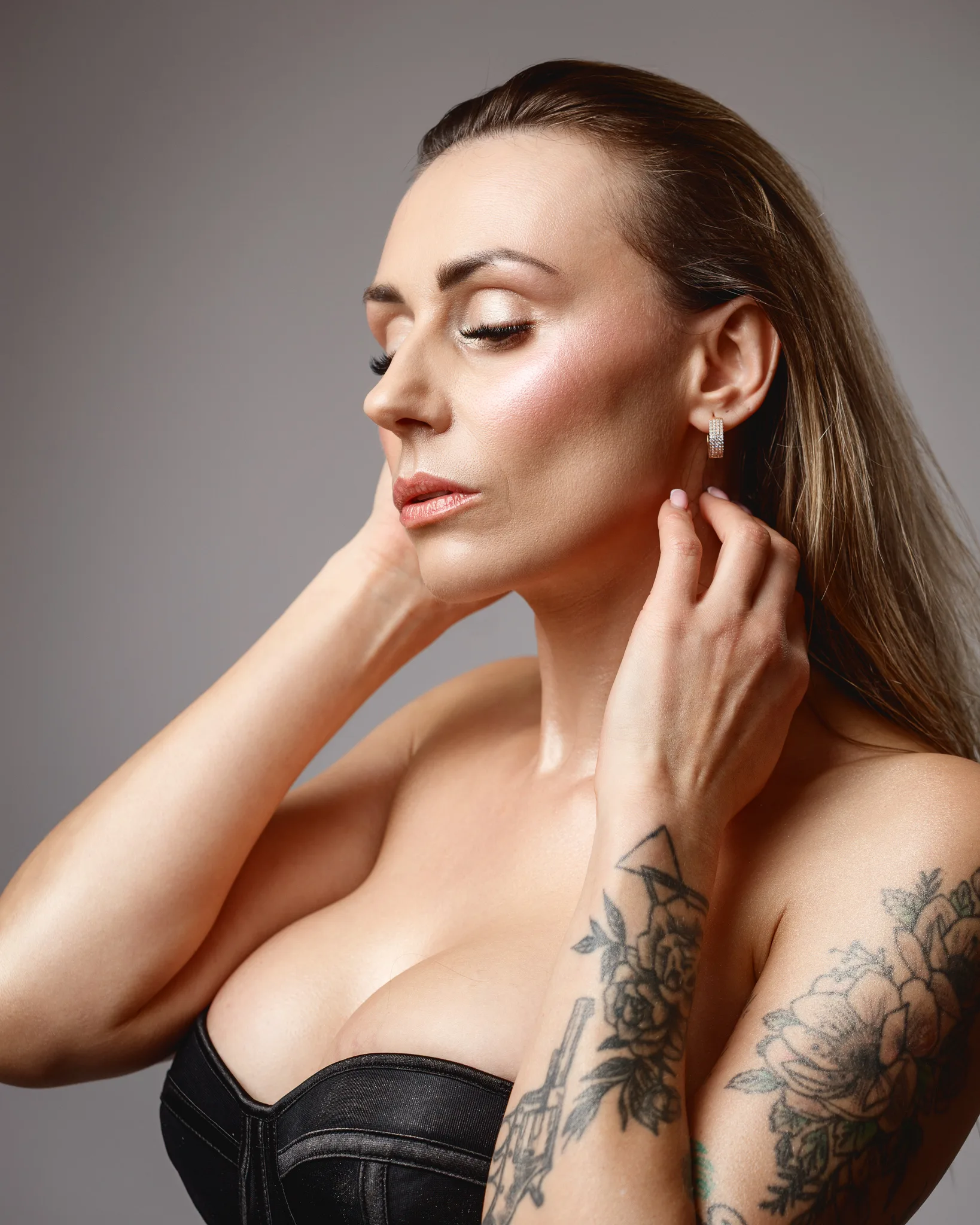
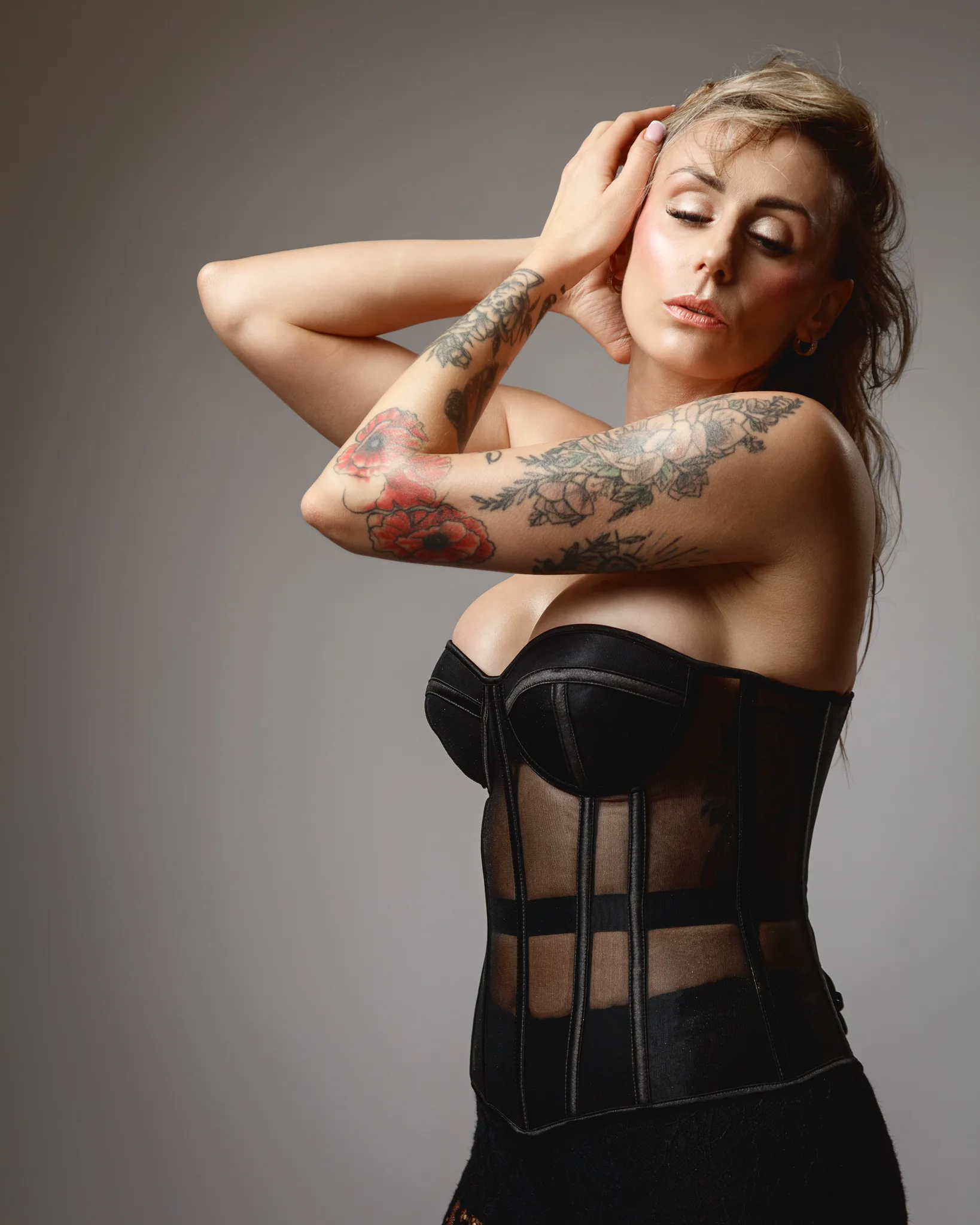
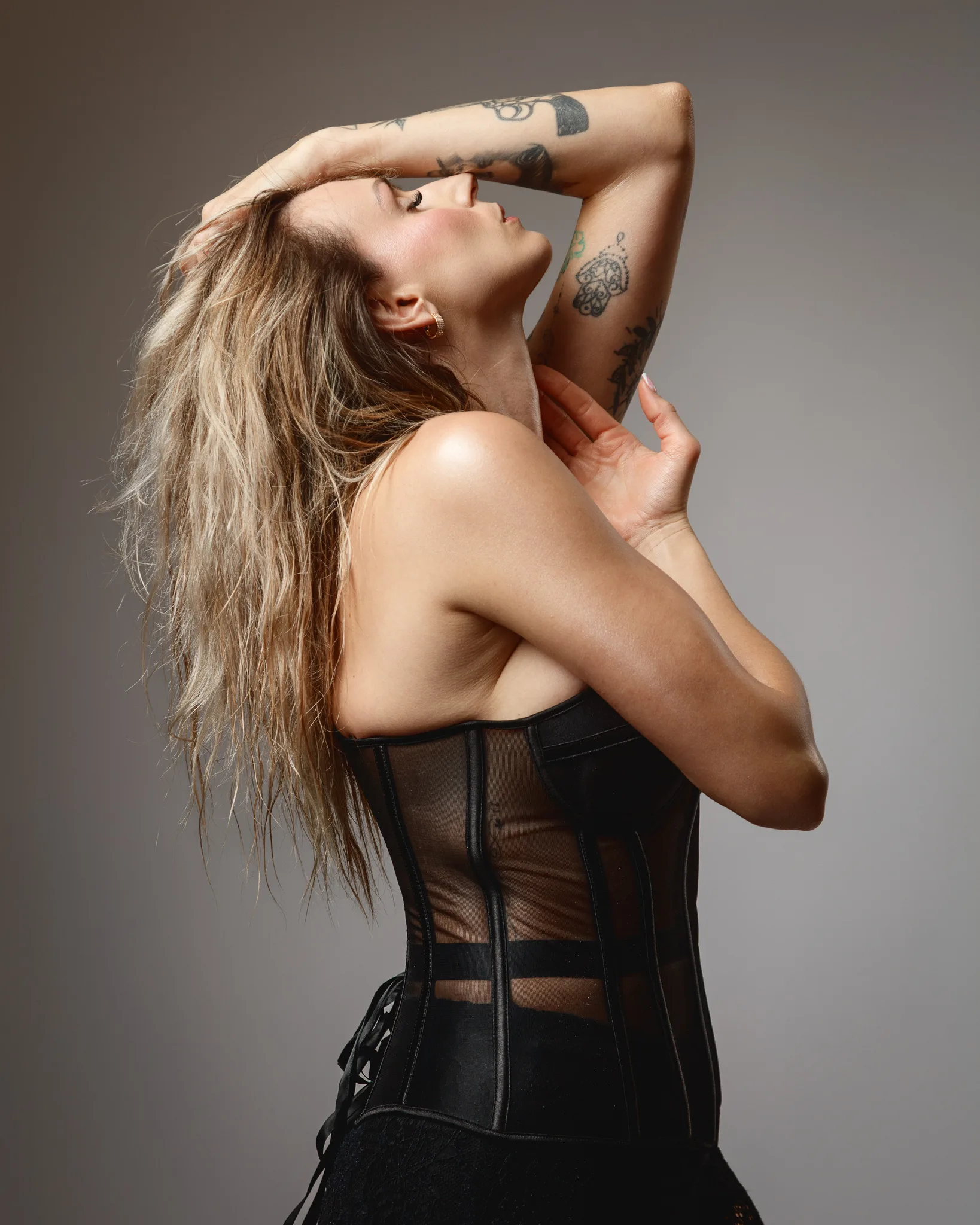
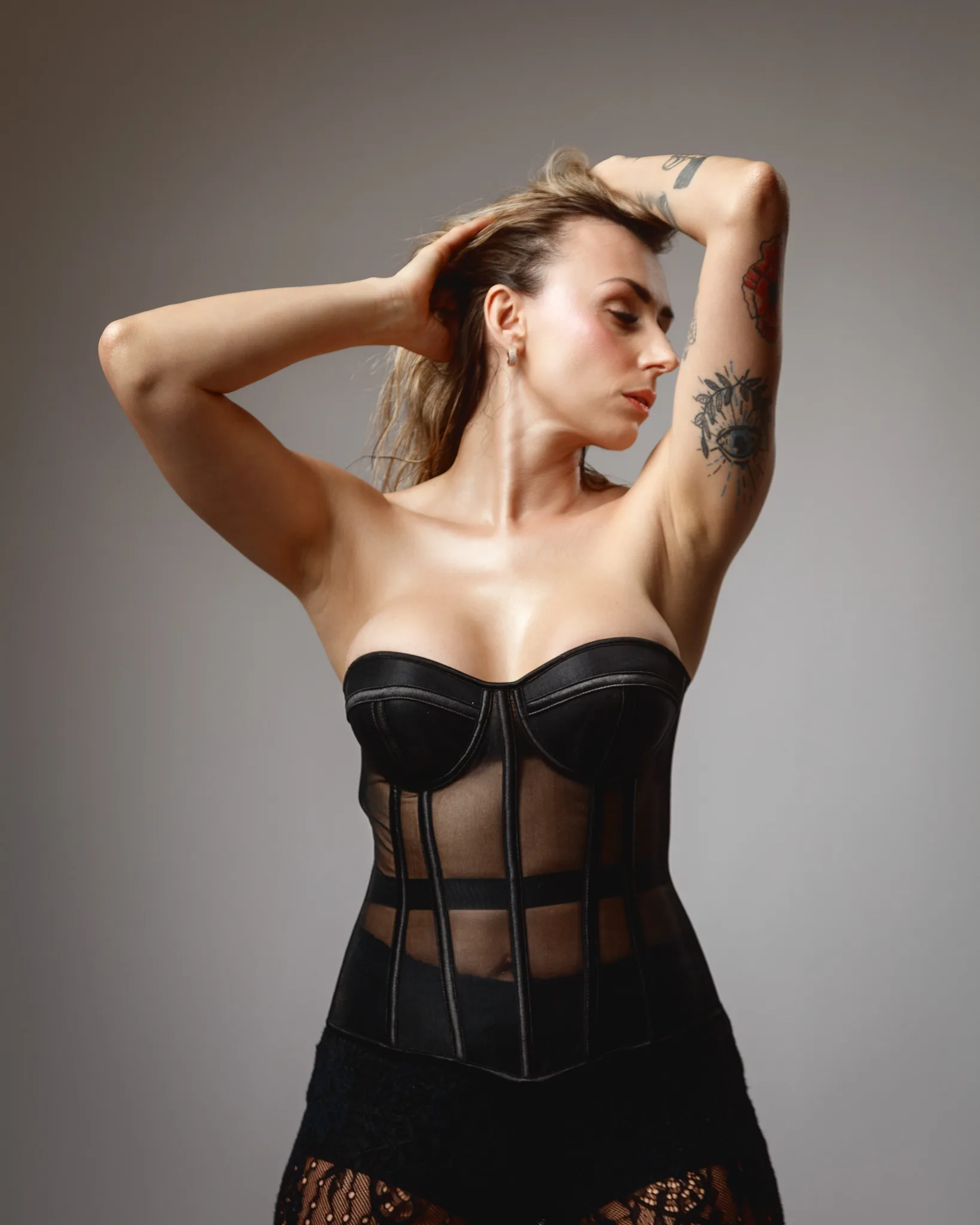
Look 2: Black corset and lace trousers, grounded and direct
The darker companion look. Black corset bodice, black lace trousers, and a lower, more grounded pose. The gaze is direct and calm, with less theatrical shape than look 1. It is intimate without being soft.
For portfolio purposes, this is useful because it shows range inside the same styling family. You are still in lingerie-fashion territory, but the energy is different.
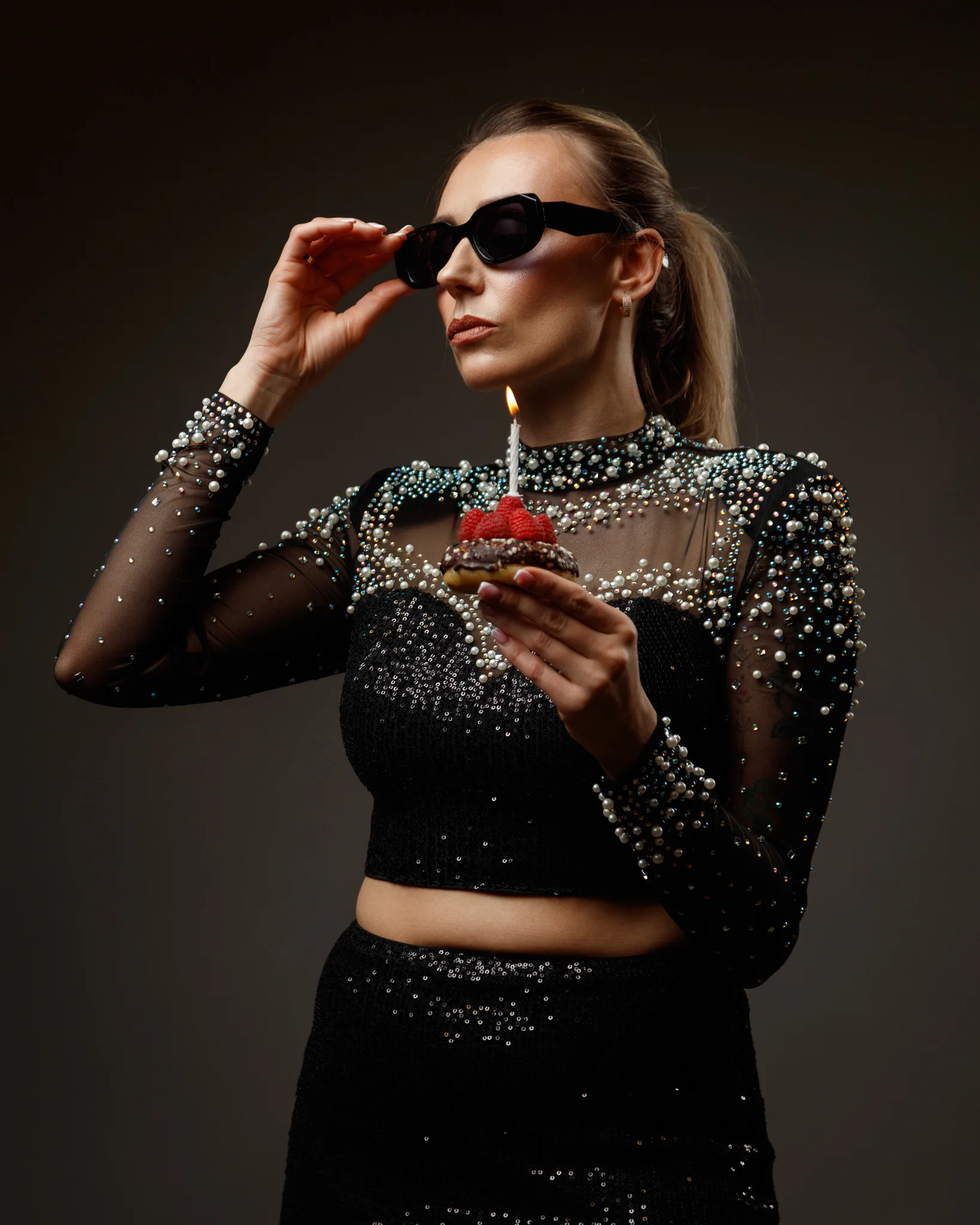
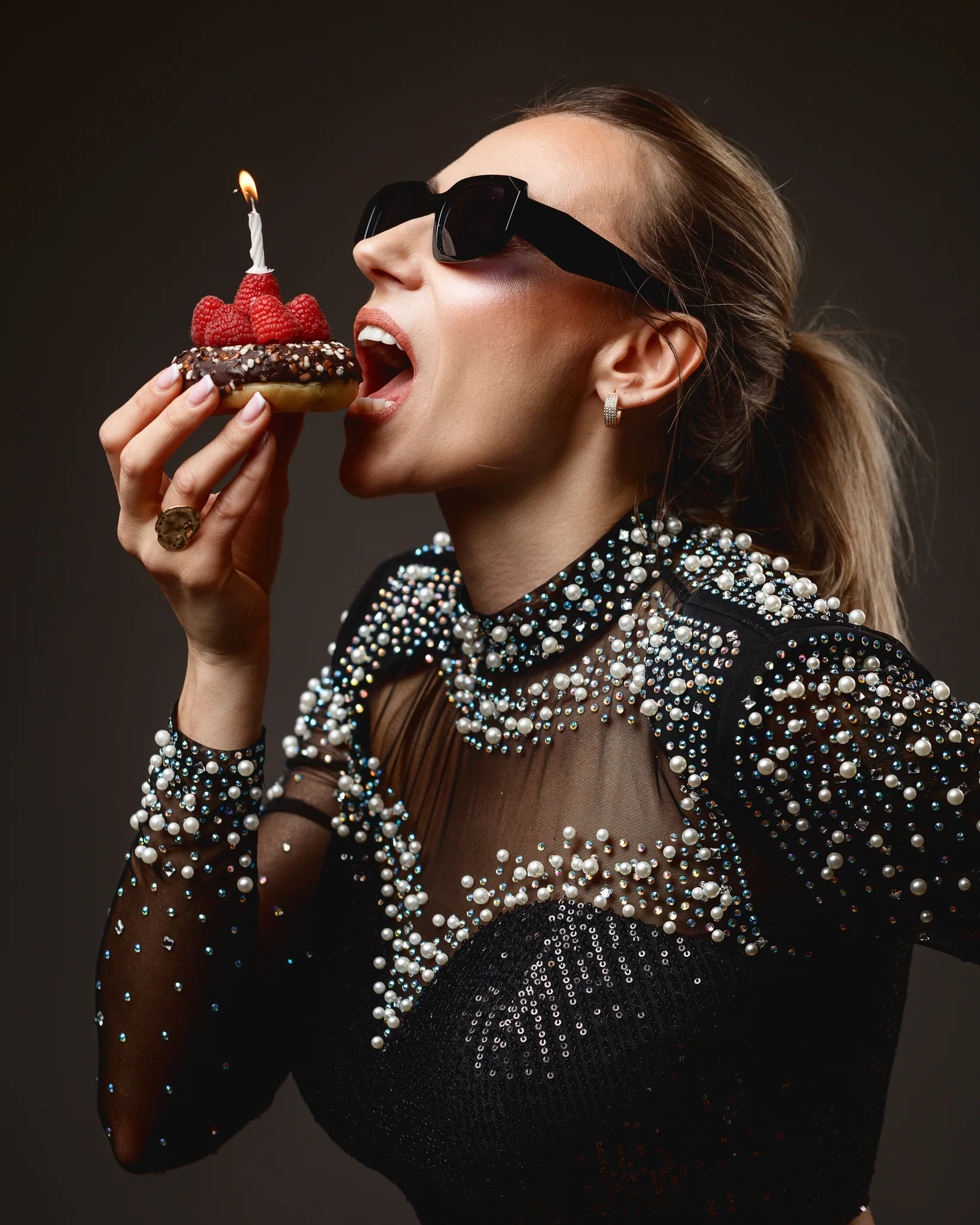
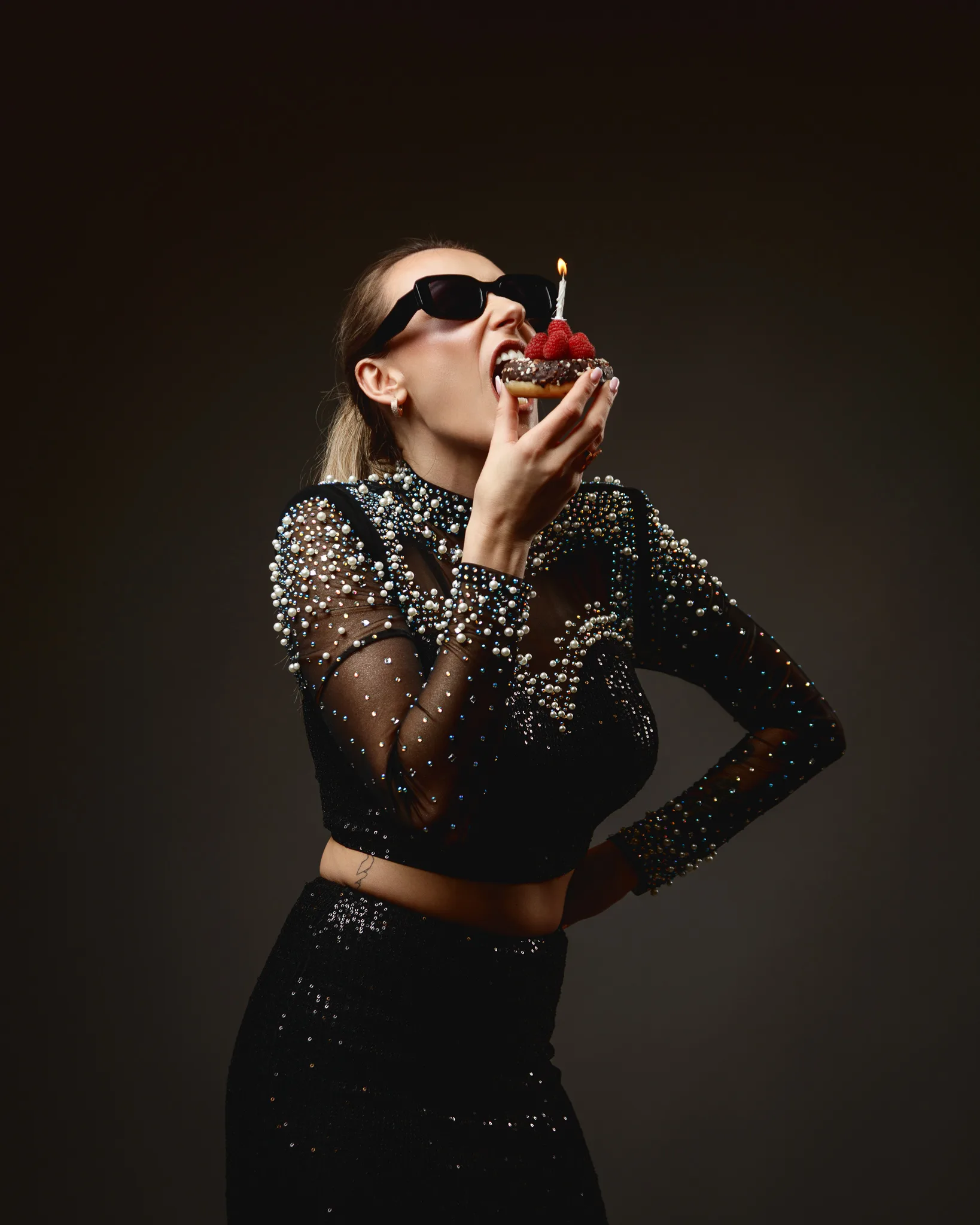
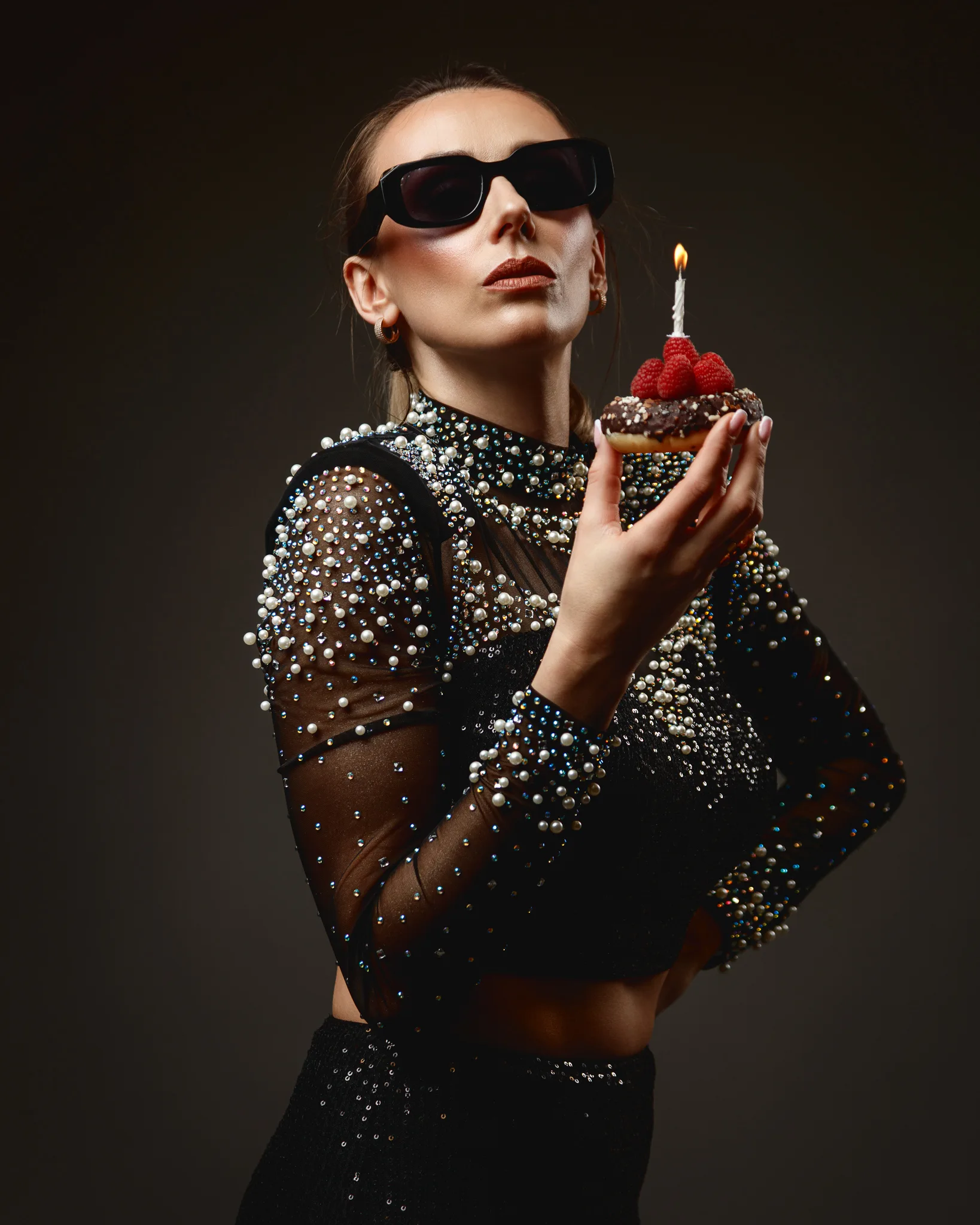
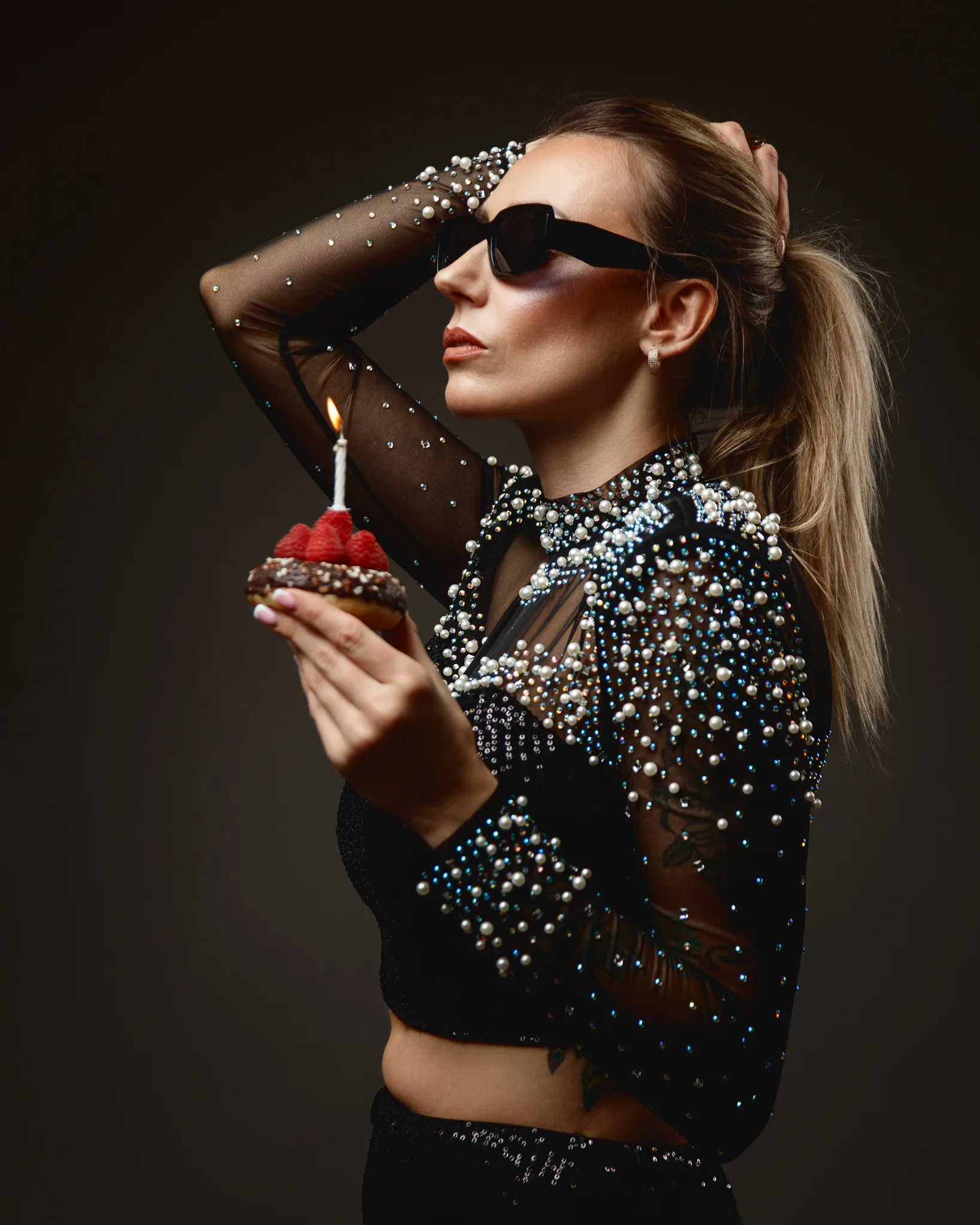
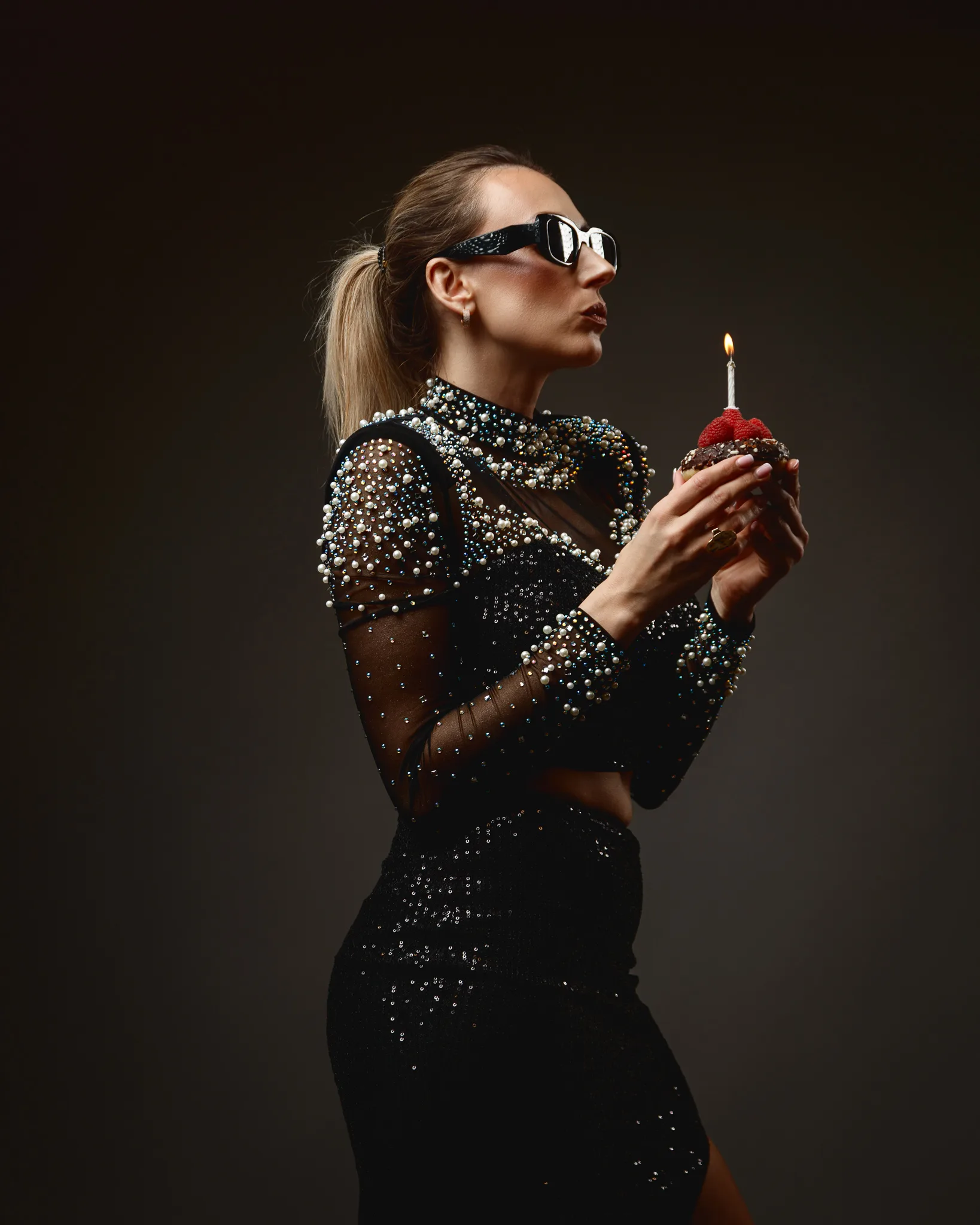
Look 3: Pearl-studded sheer top, sunglasses, and a candle-topped doughnut
This is where the shoot pivoted into concept-led glamour. The embellished sheer top catches the light in a way that feels expensive on camera, and the oversized sunglasses push the look into attitude.
The doughnut and candle add humour, but the key is that it still reads editorial. The prop does not turn it into a novelty photo because the styling stays controlled and the expression stays composed.
If you are a model, this is a useful reminder: you can add a prop without losing professionalism, as long as you commit to the fashion tone.
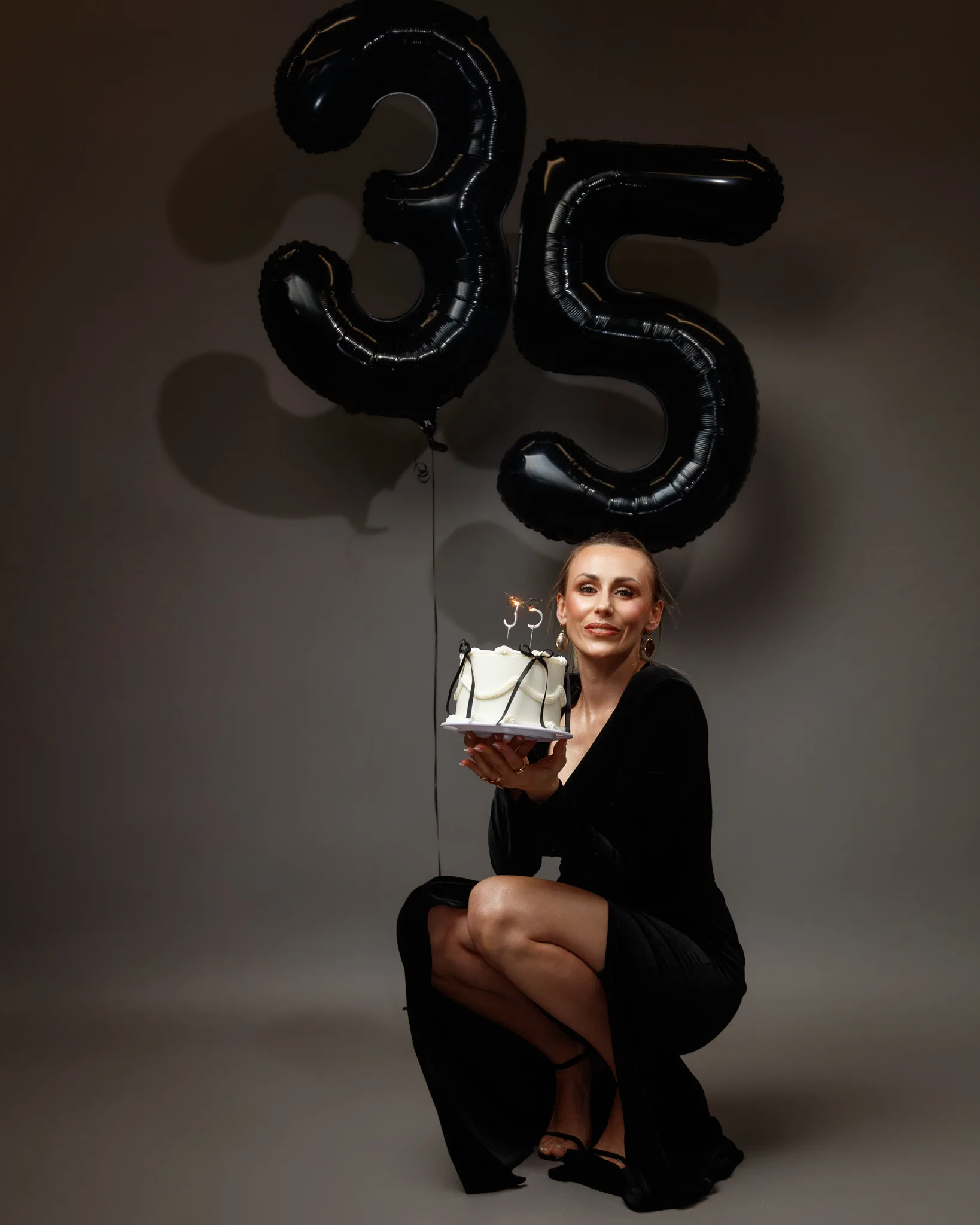
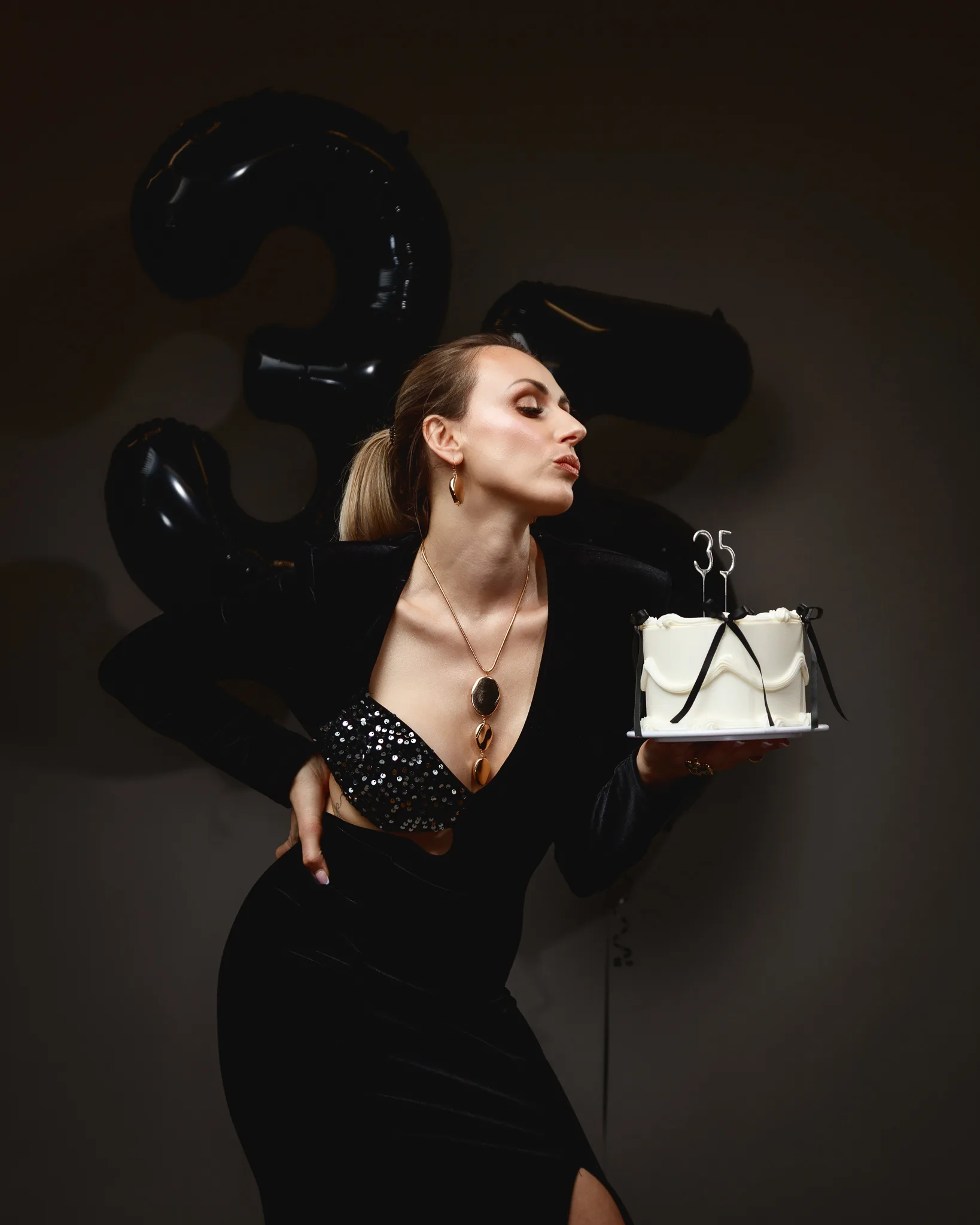
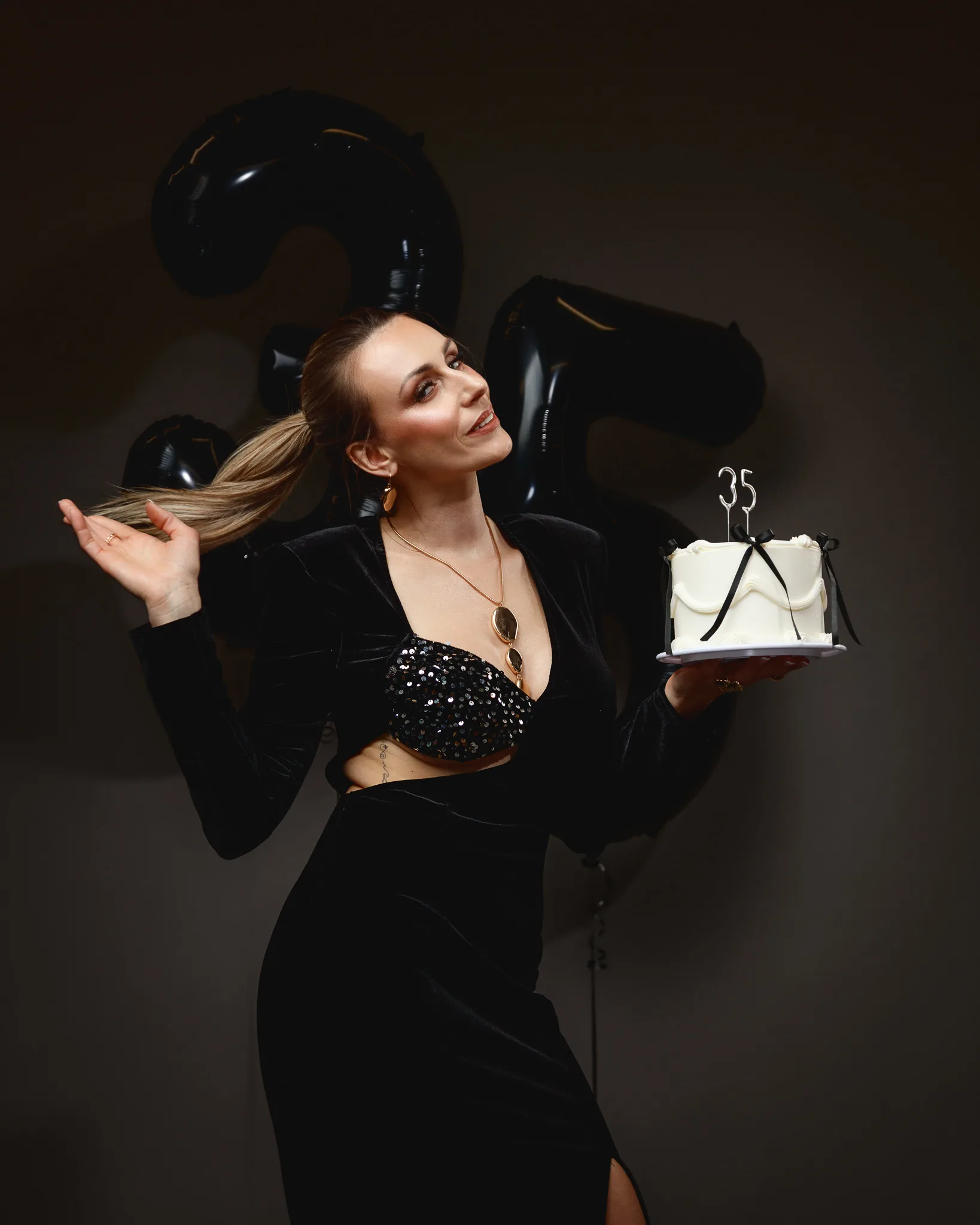
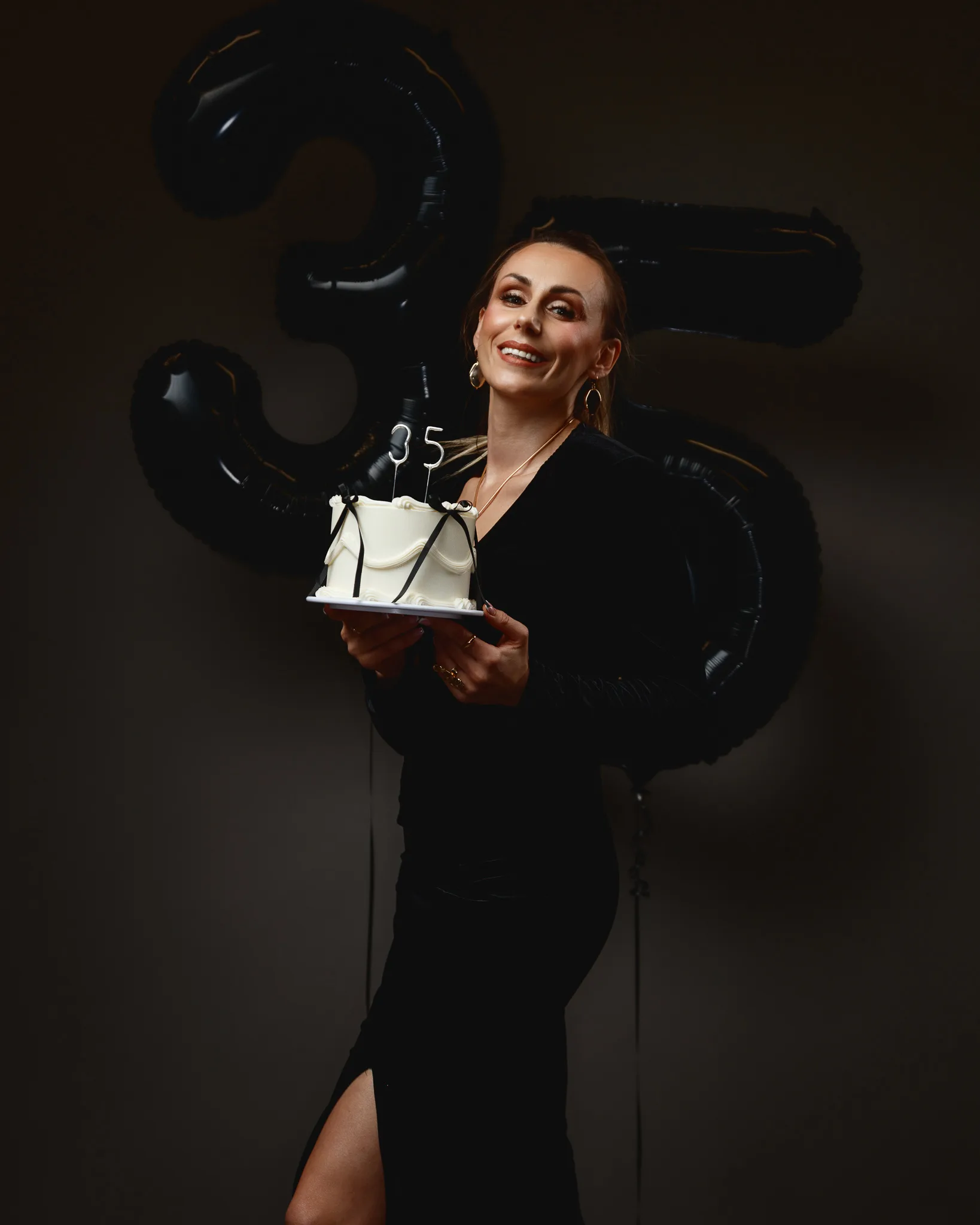
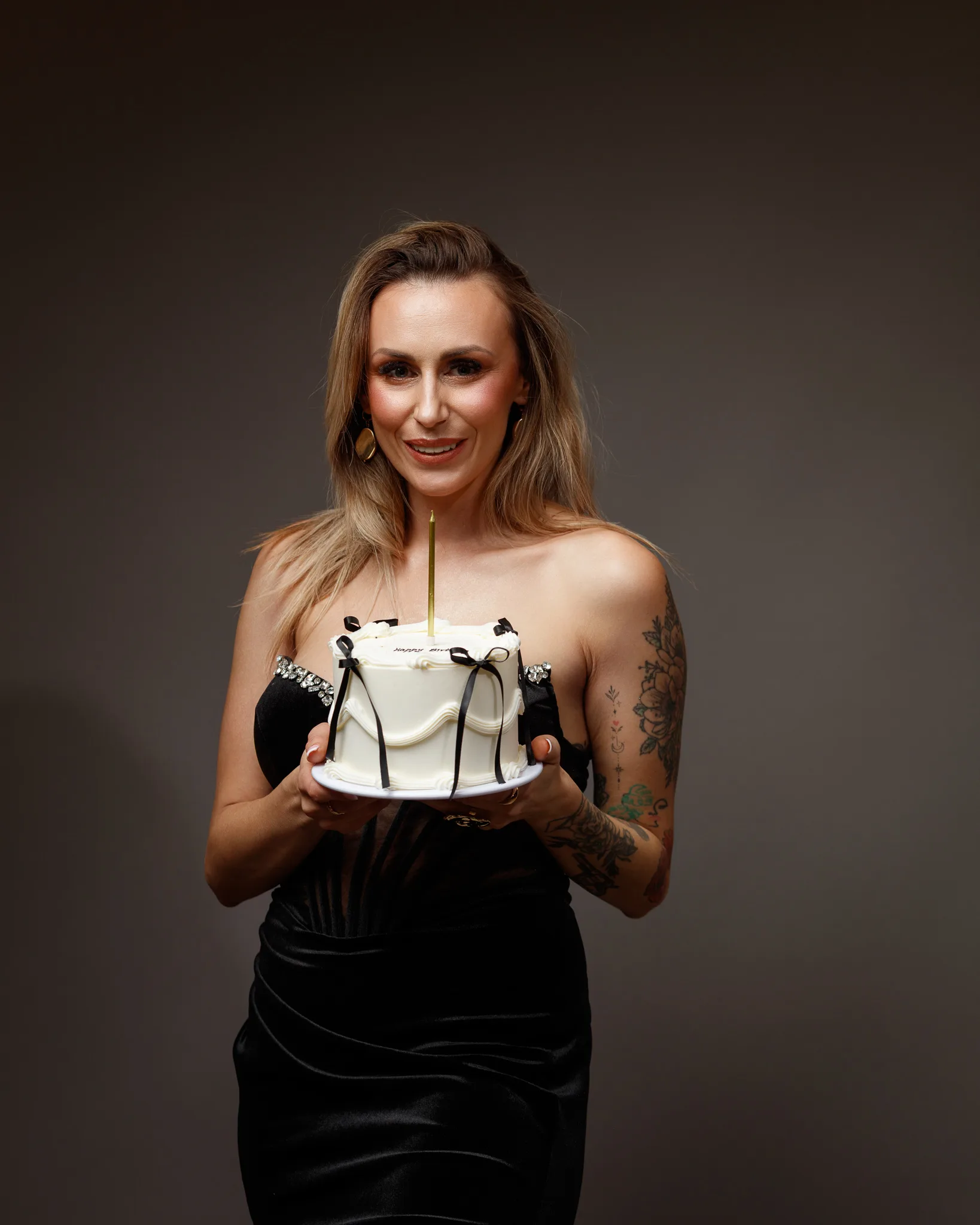
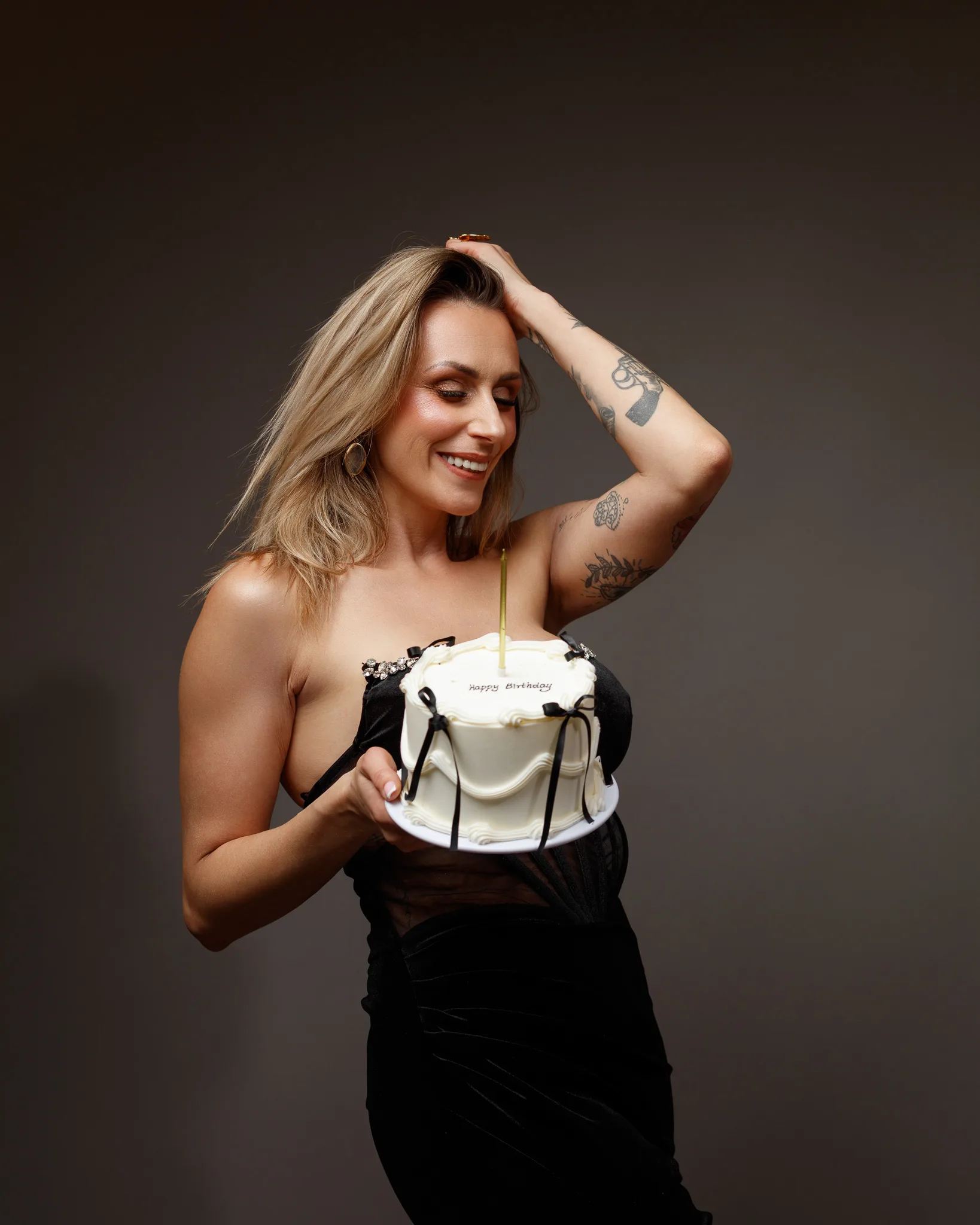
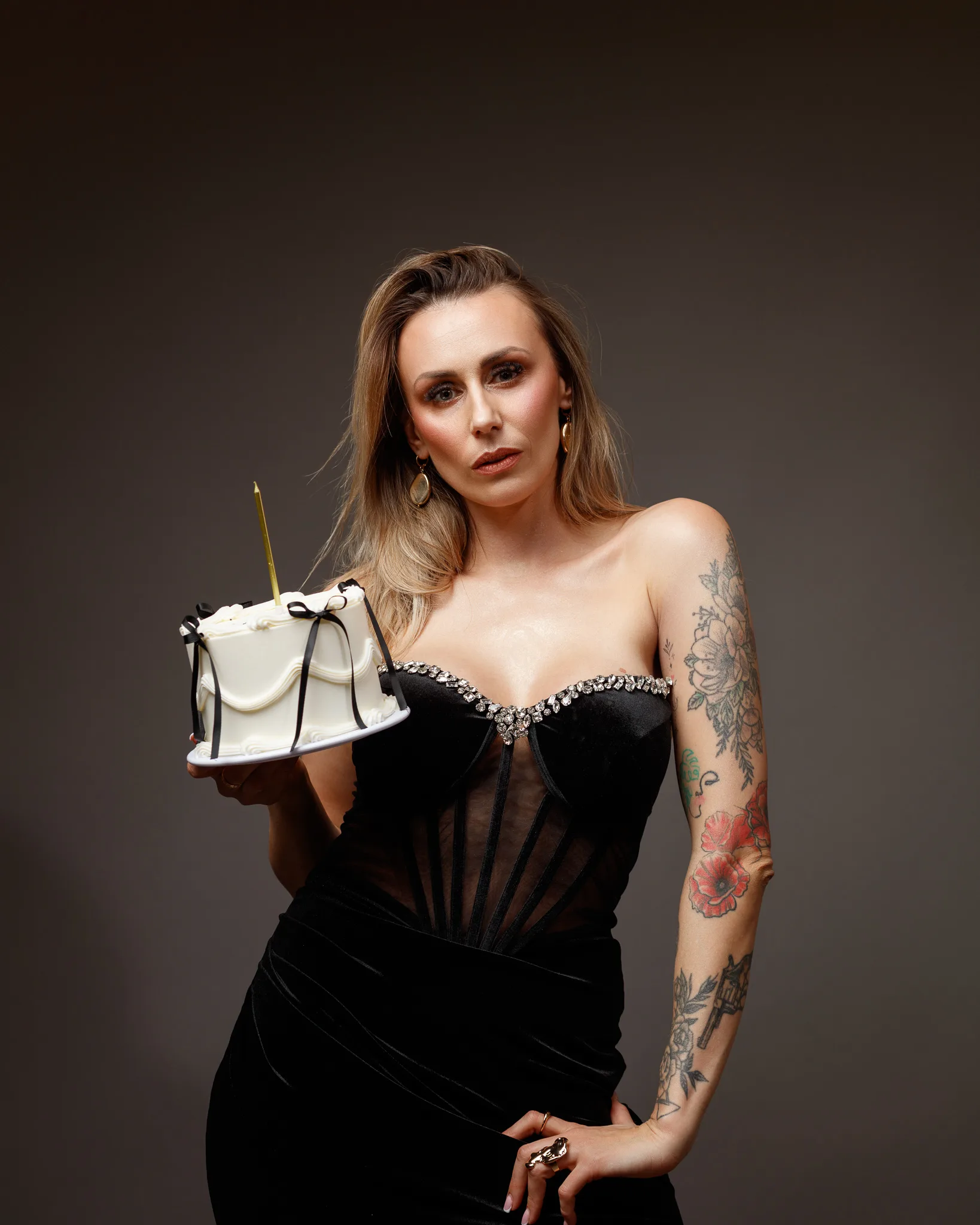
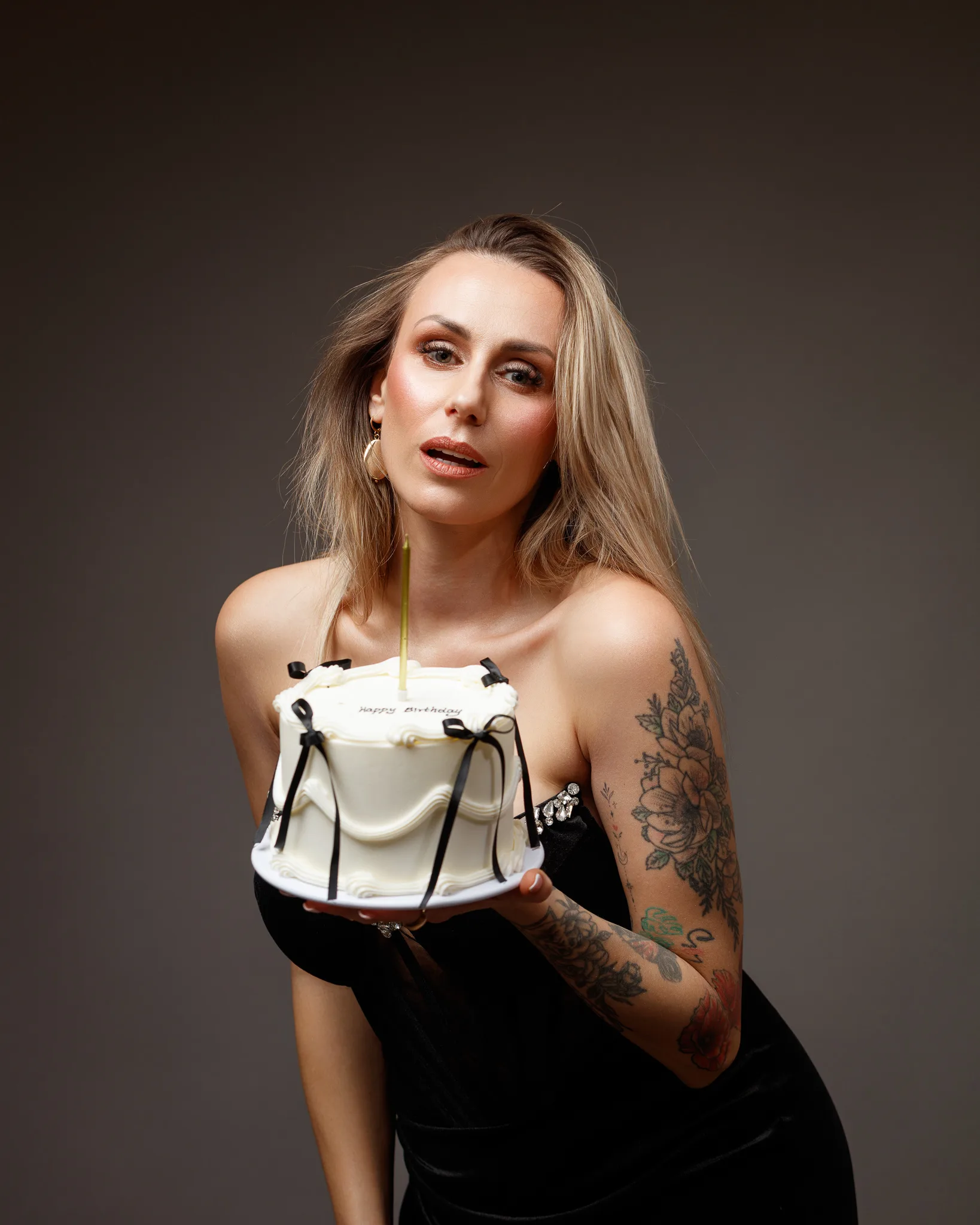
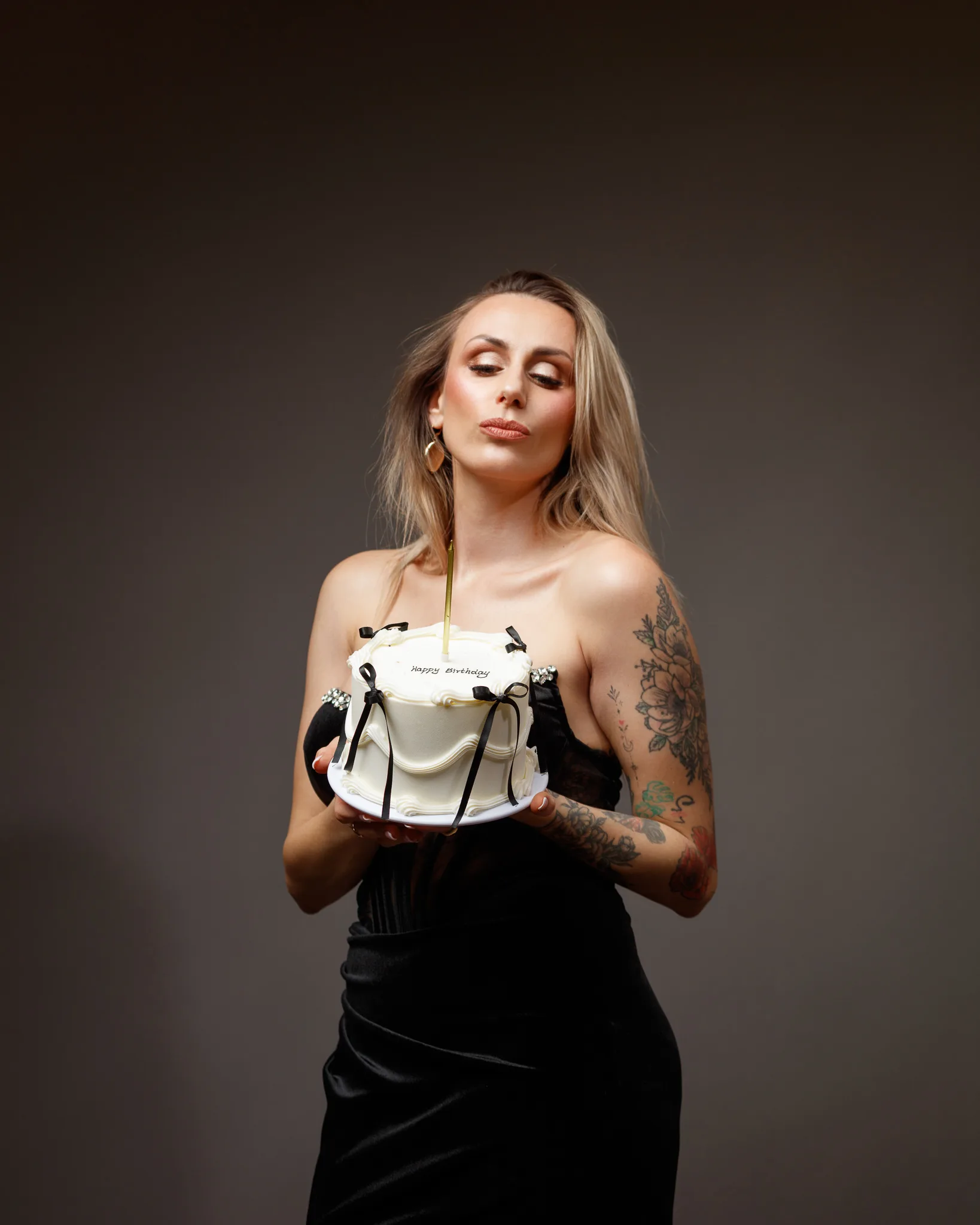
Look 4: Black tailoring, sequins, “35” balloons, and the birthday cake
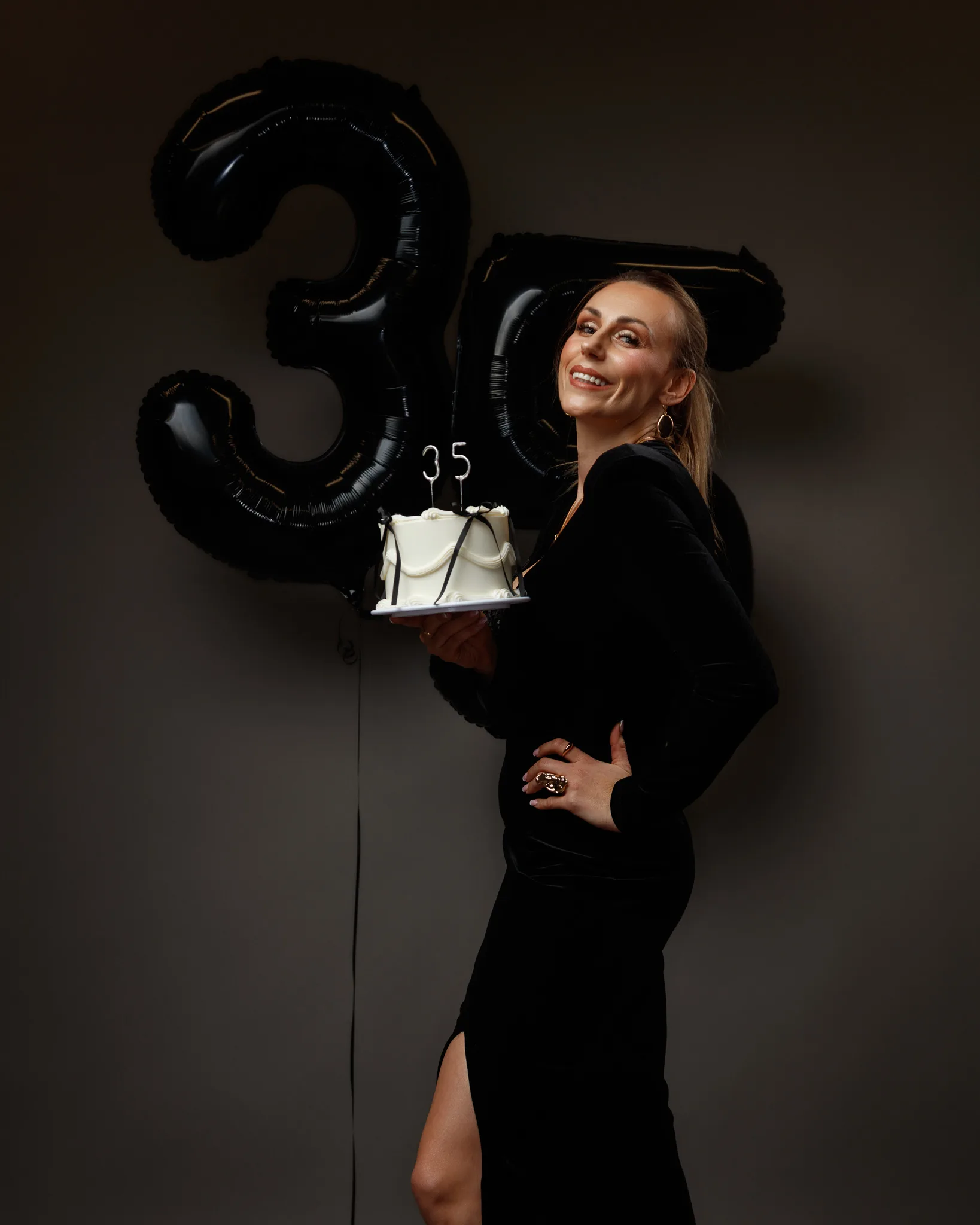
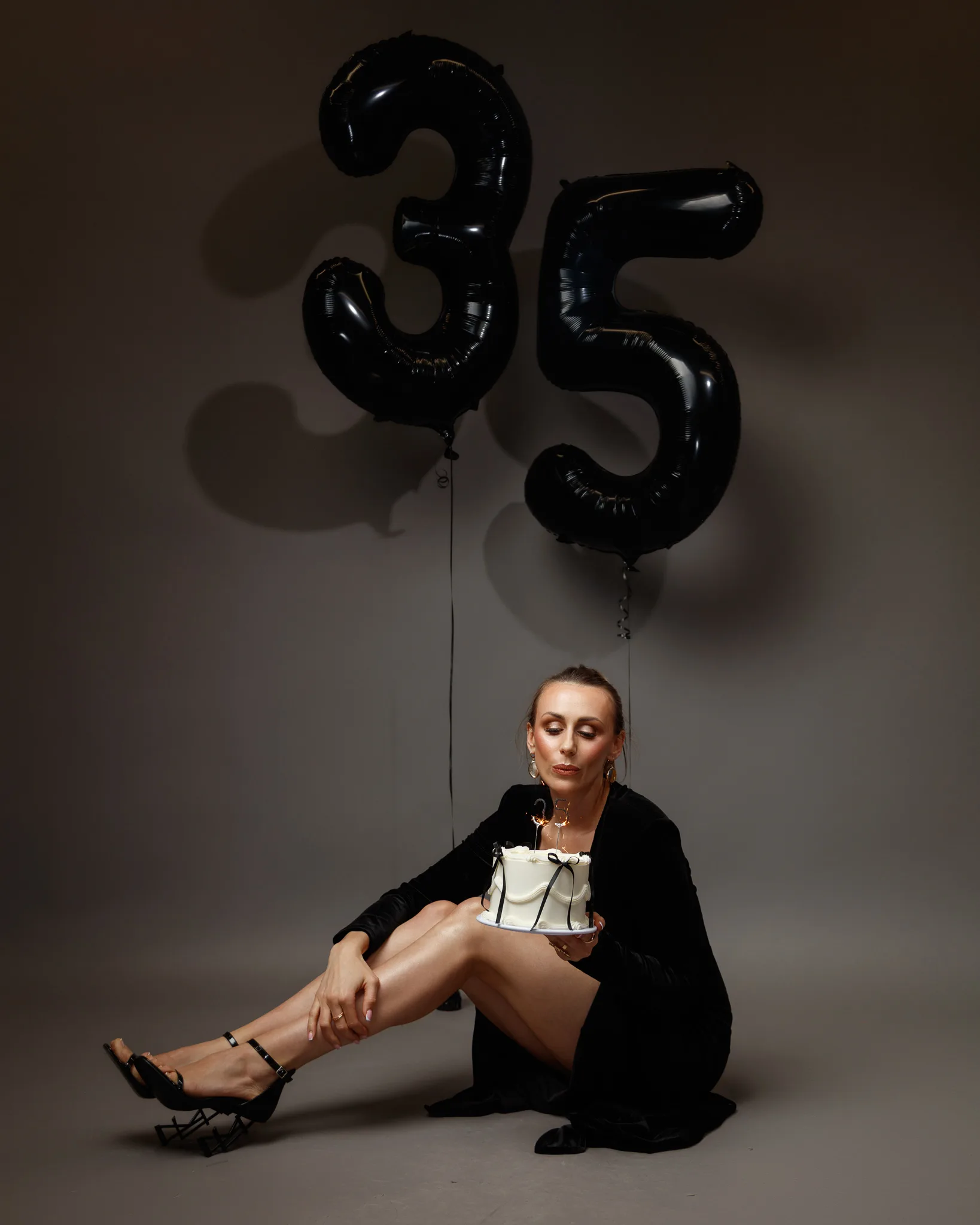
This was the birthday chapter, and it worked because it was styled like a fashion story, not like a party snapshot.
Black tailored jacket with structure, sequinned bralette, fitted skirt with a slit, gold jewellery, and the “35” balloons creating a graphic background. The cake becomes a bright focal point, which is exactly what you want in a darker set.
This look shows a very employable skill: interaction with props while staying in character.
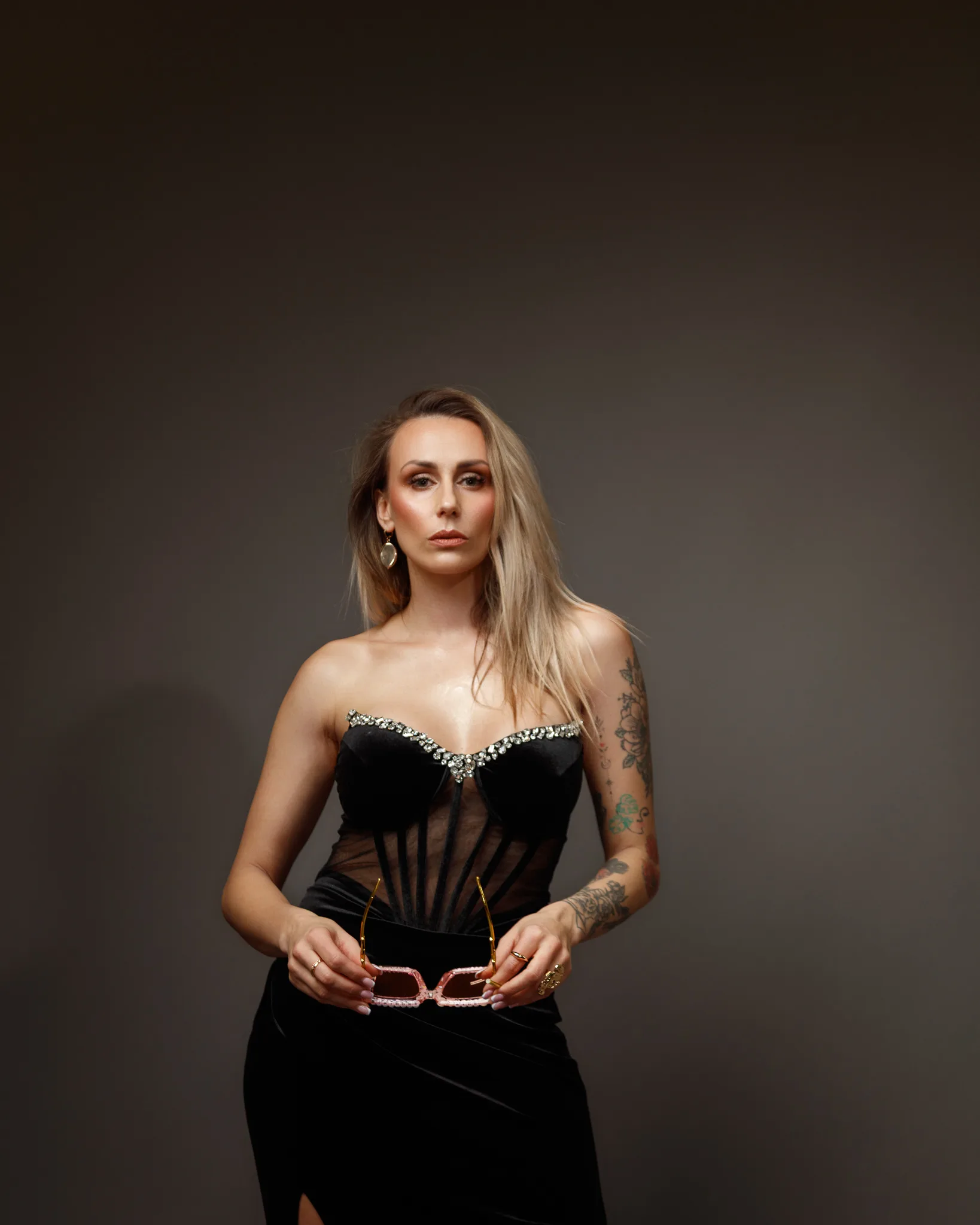
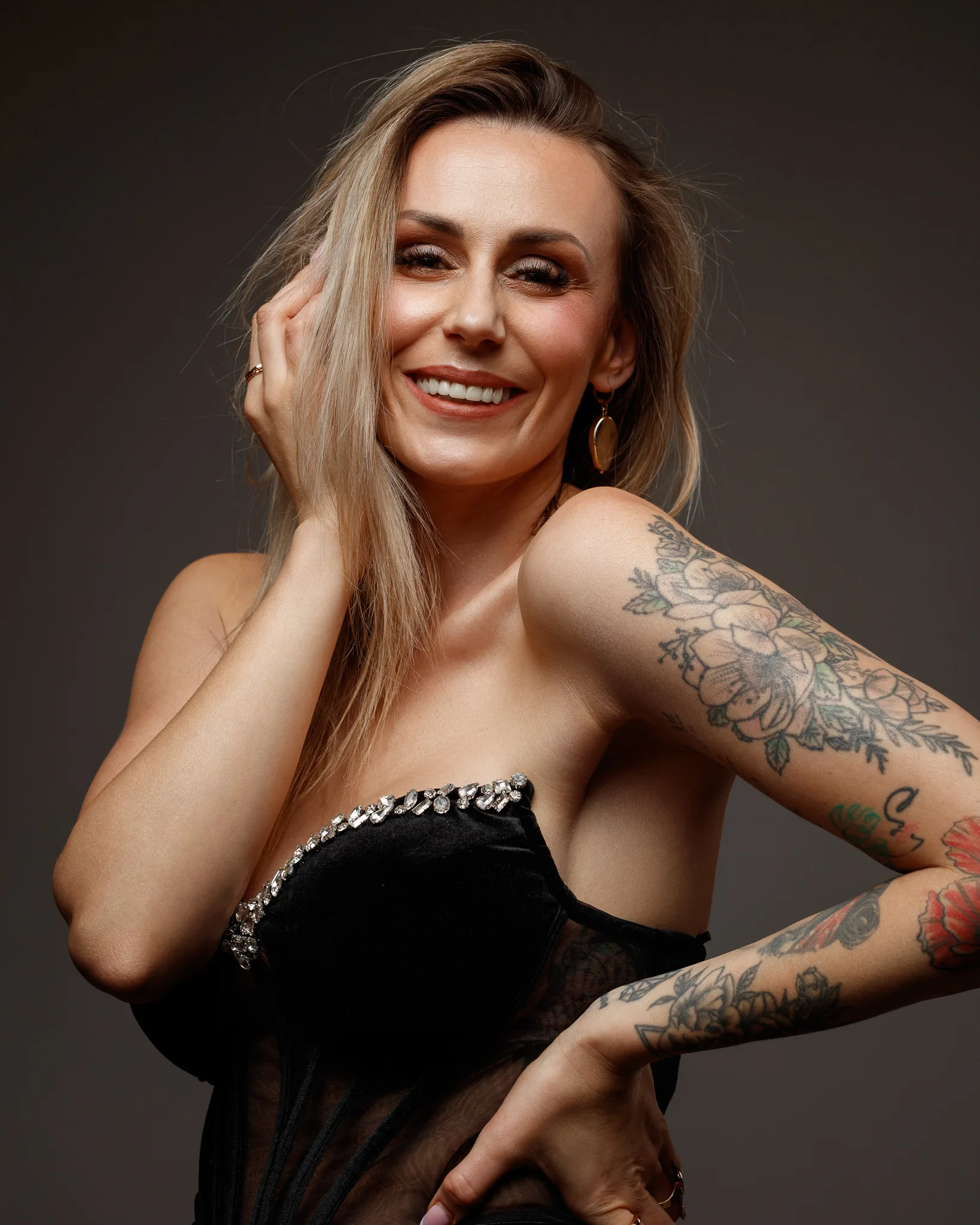
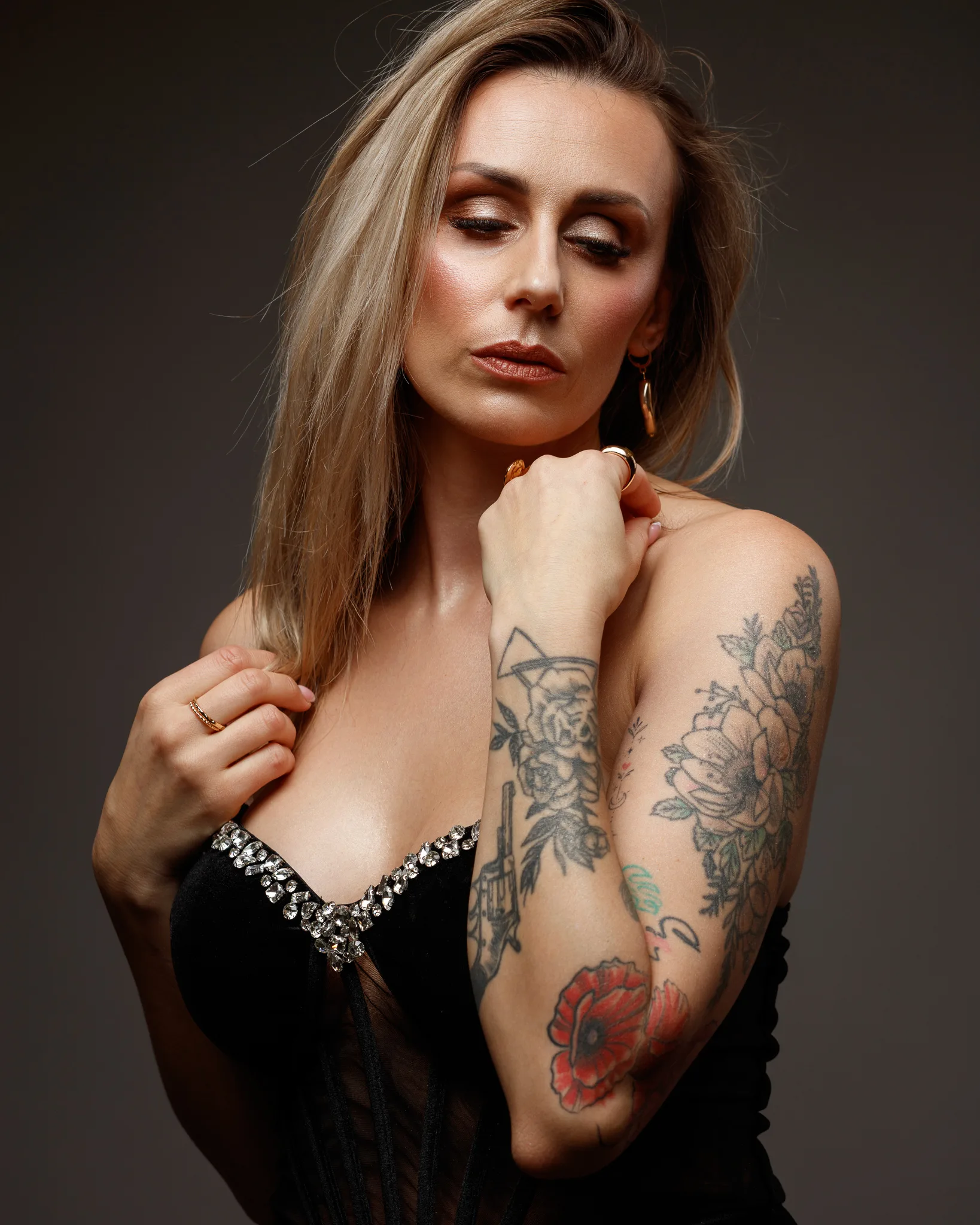
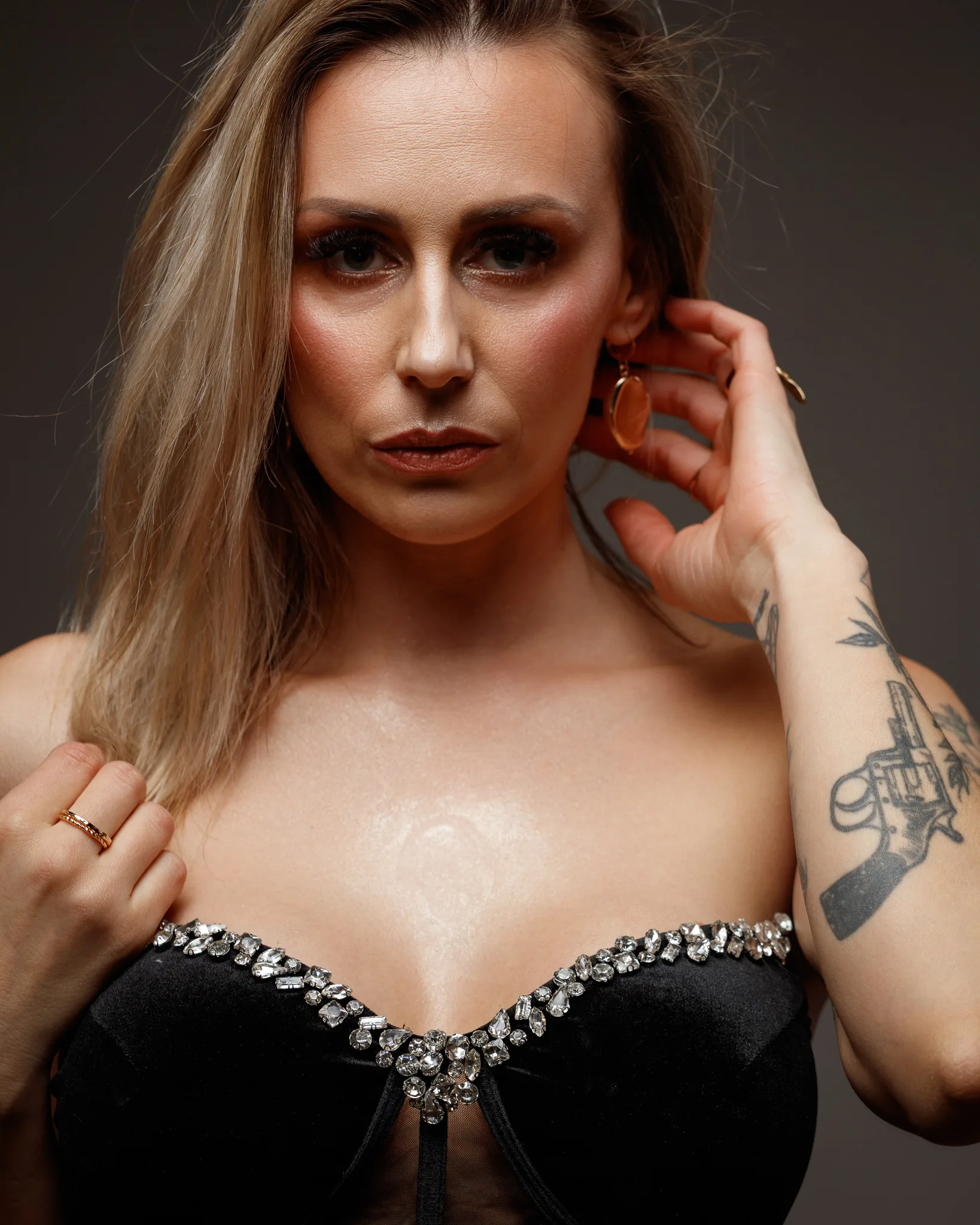
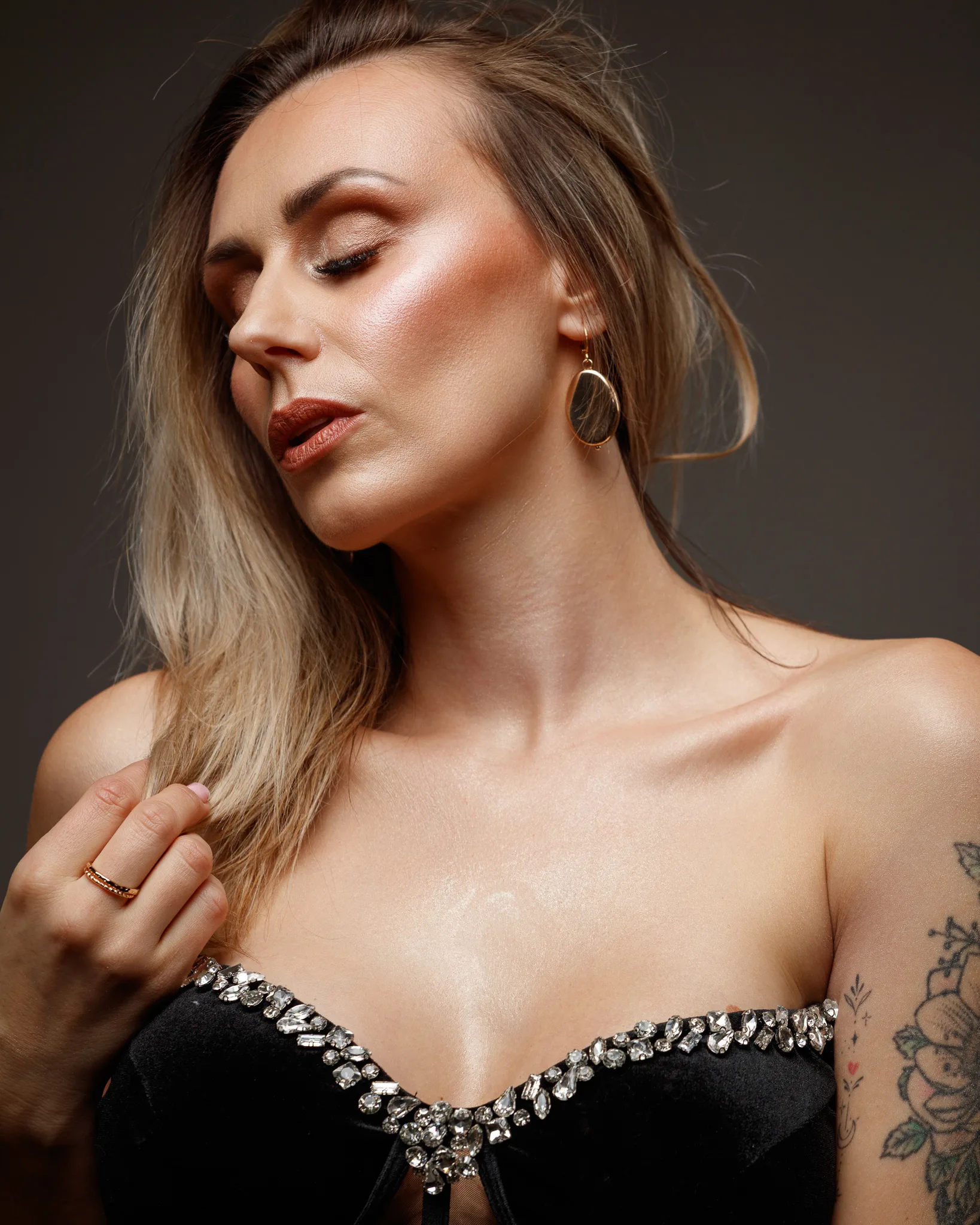
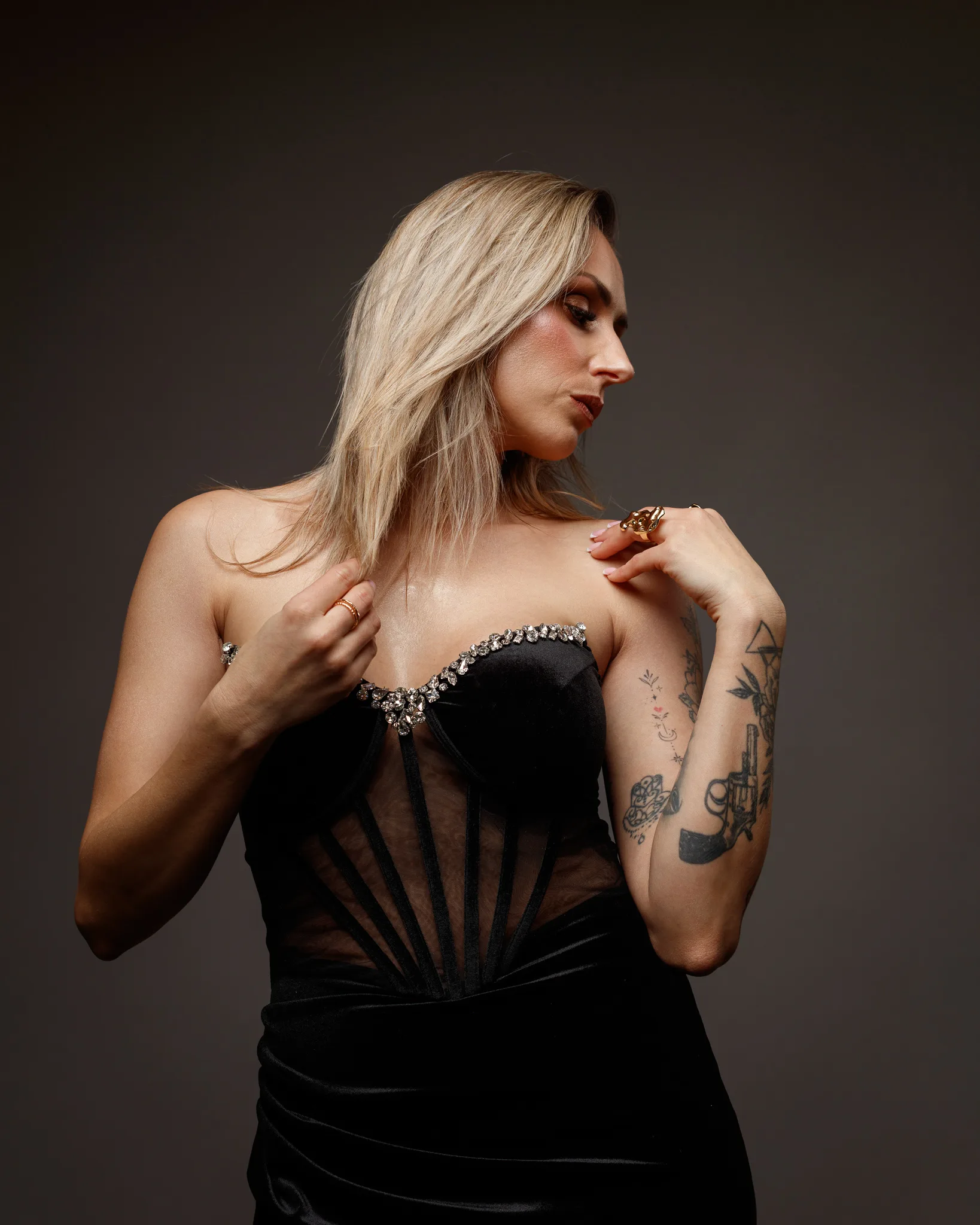
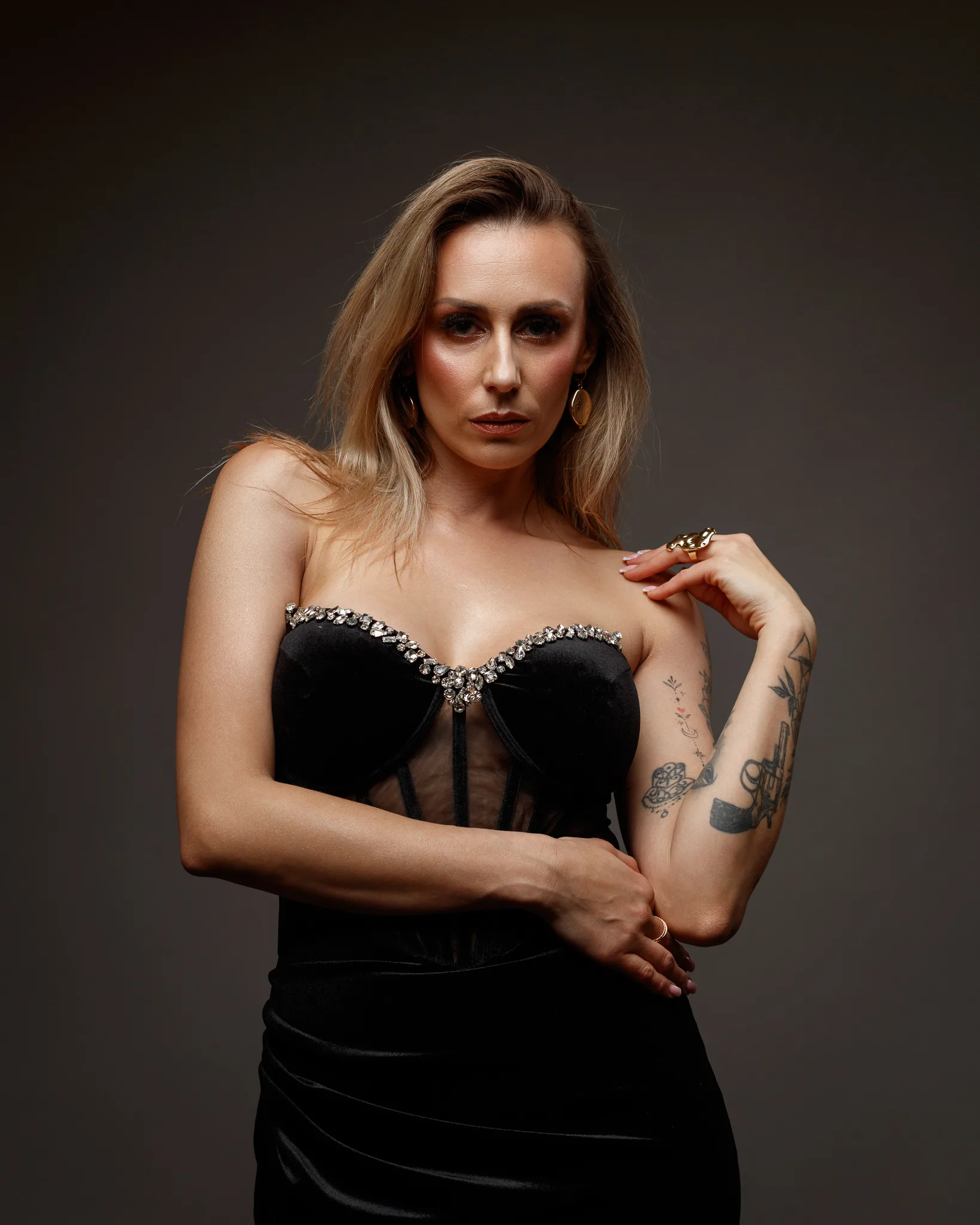
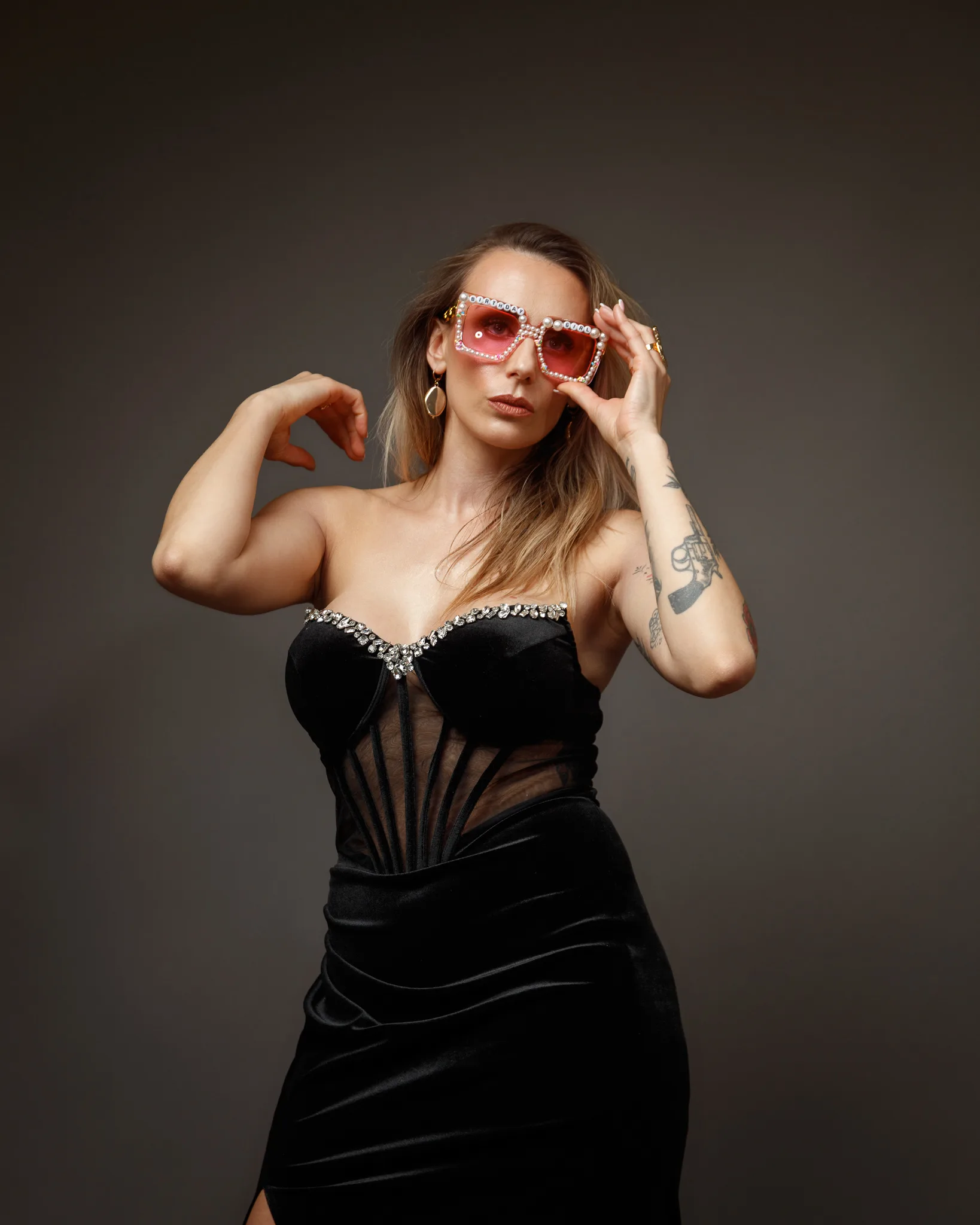
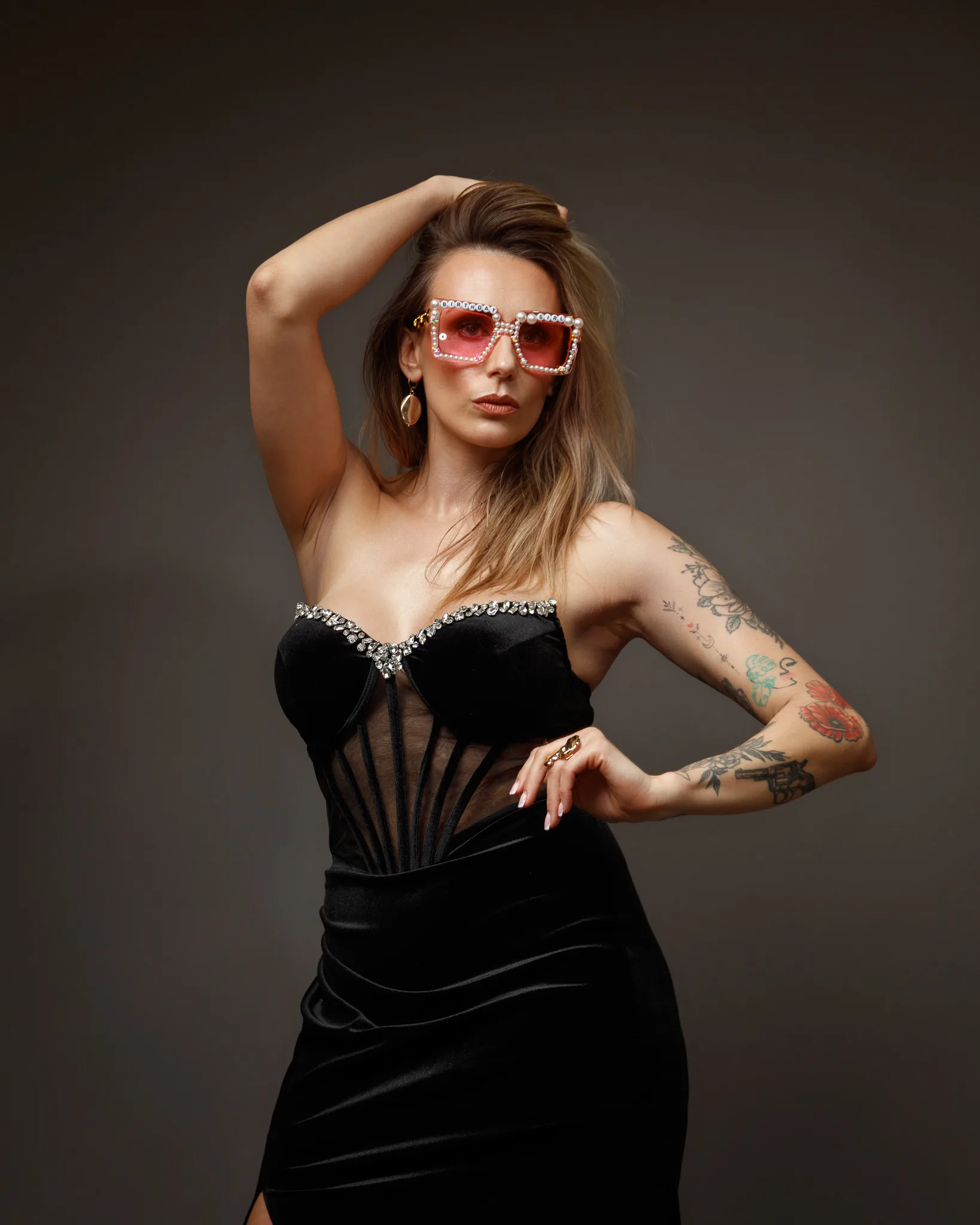
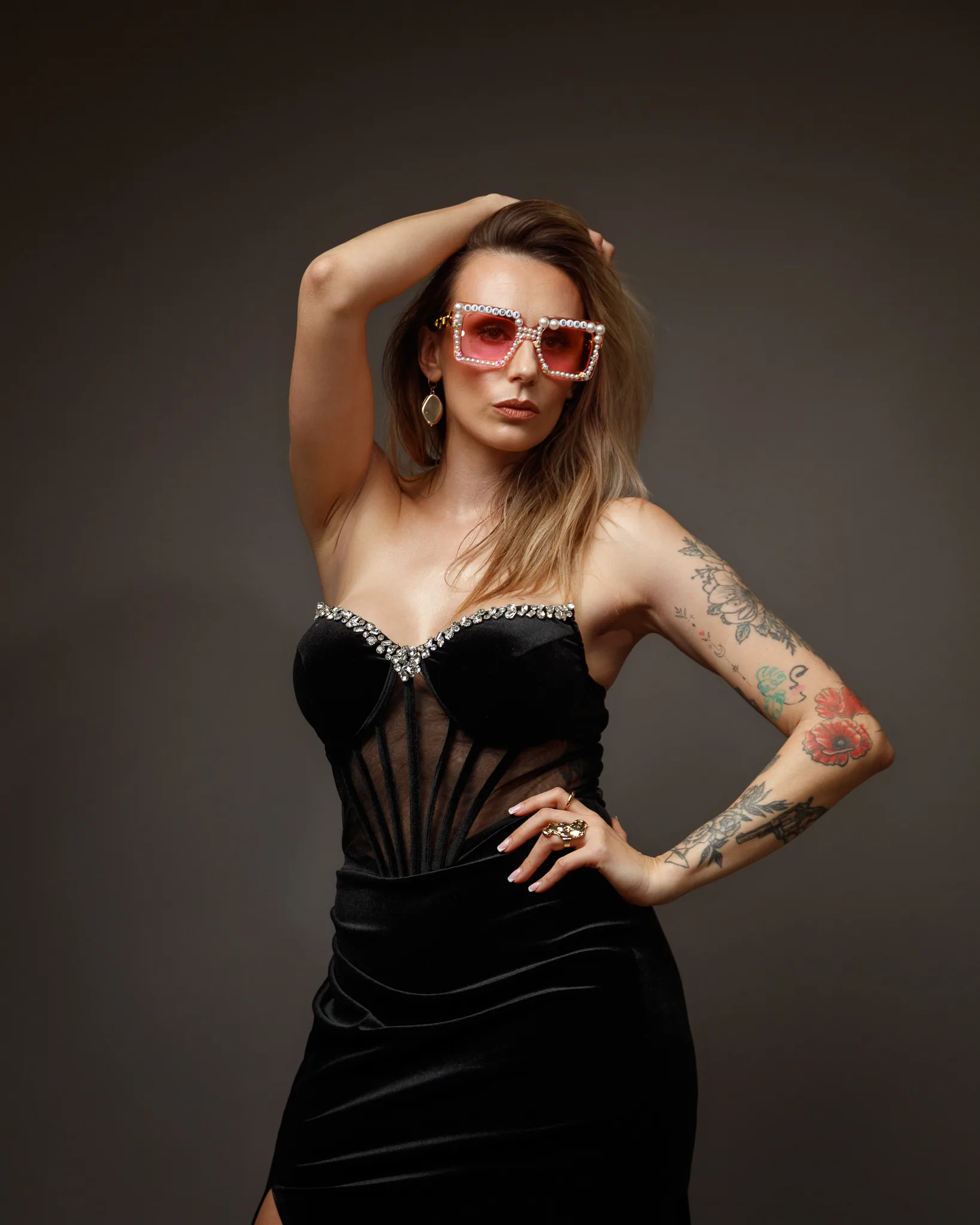
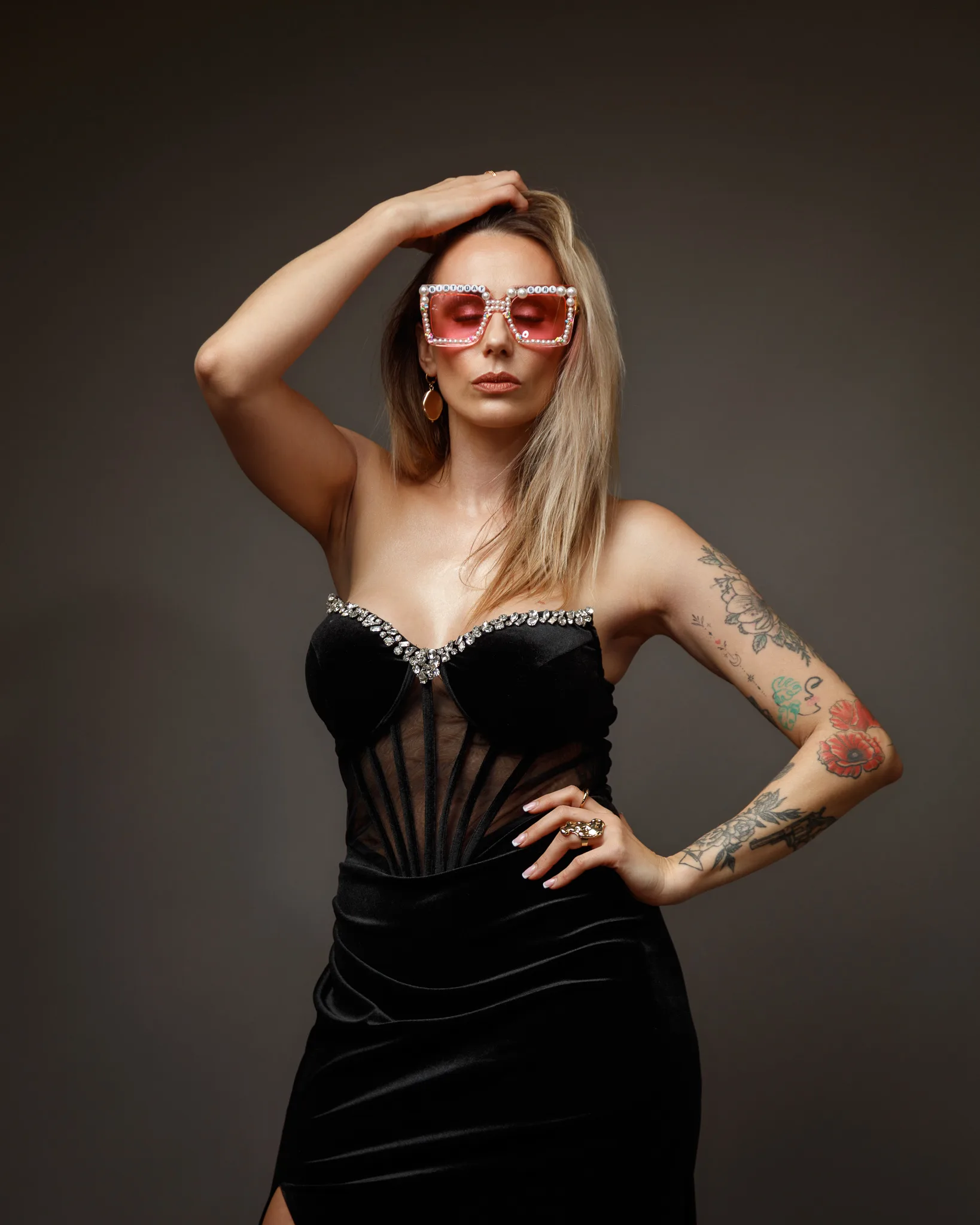
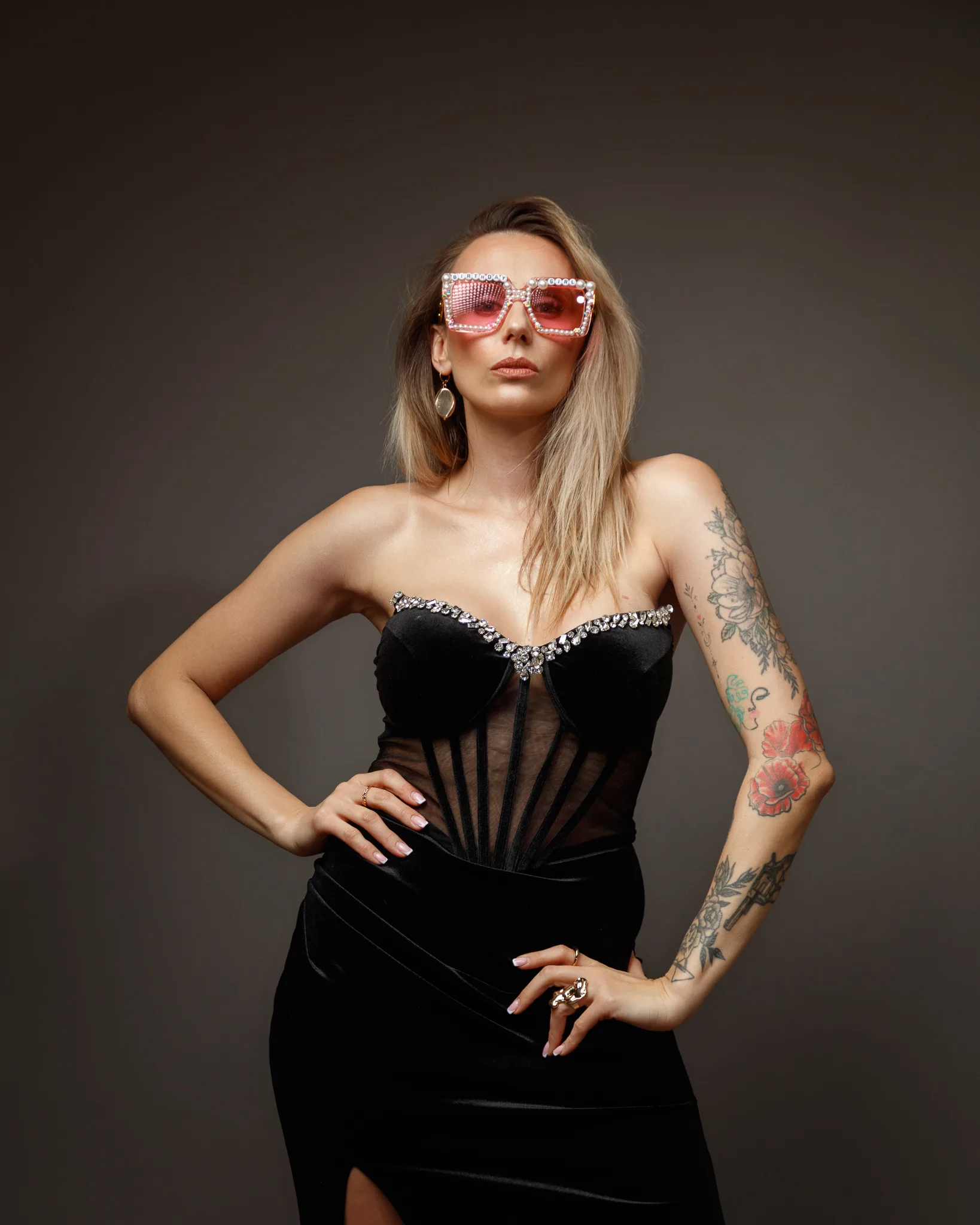
Look 5: Strapless black corset dress with crystal neckline, pink statement sunglasses
Still in black glamour, but simplified. No cake, no balloons, just silhouette and styling.
The pink, pearl-trim sunglasses are a brilliant “character” accessory because they shift the tone without changing the whole look. That matters when you want a portfolio to feel varied but still cohesive.
This look is also a good example of how a single accessory can carry a concept.
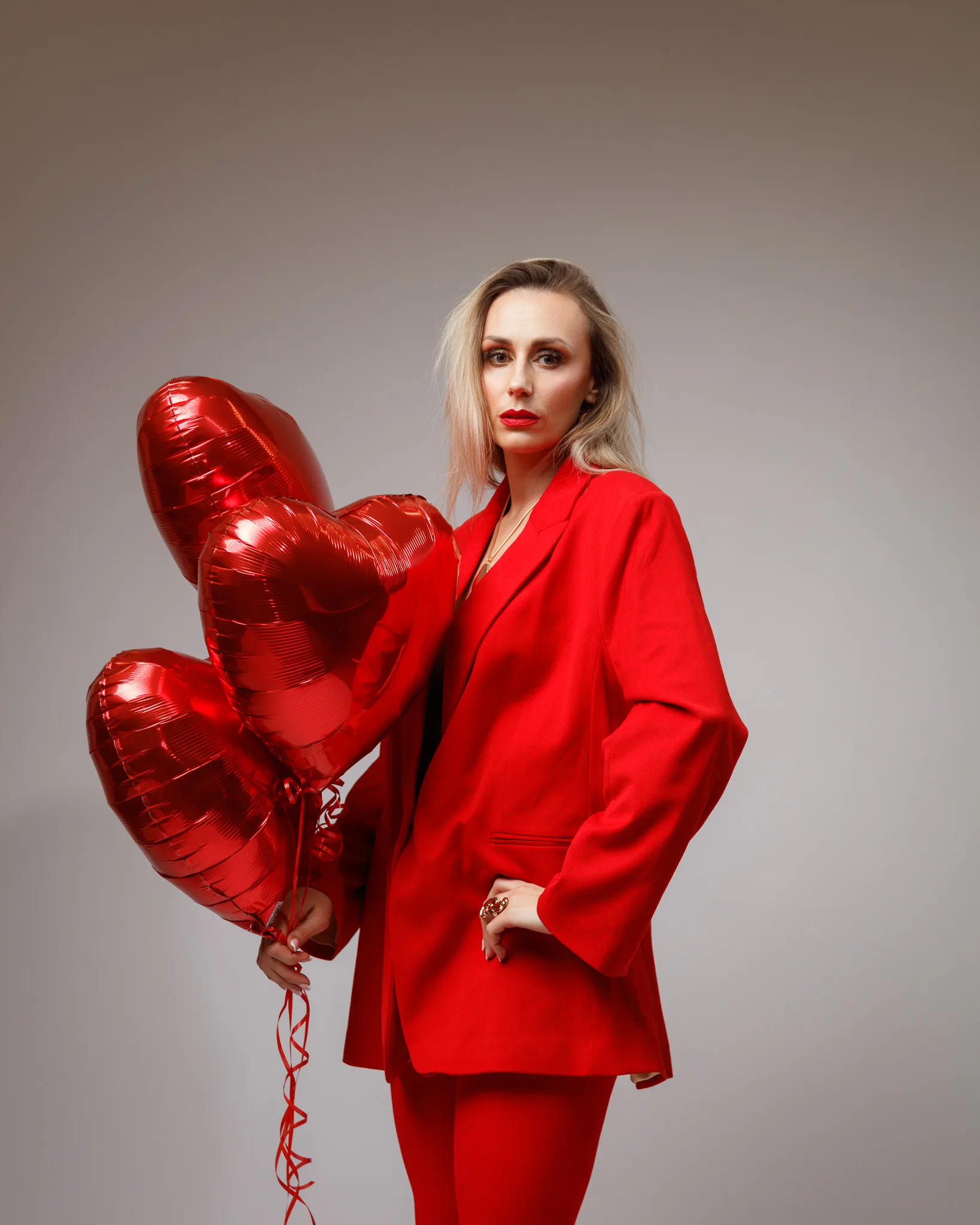
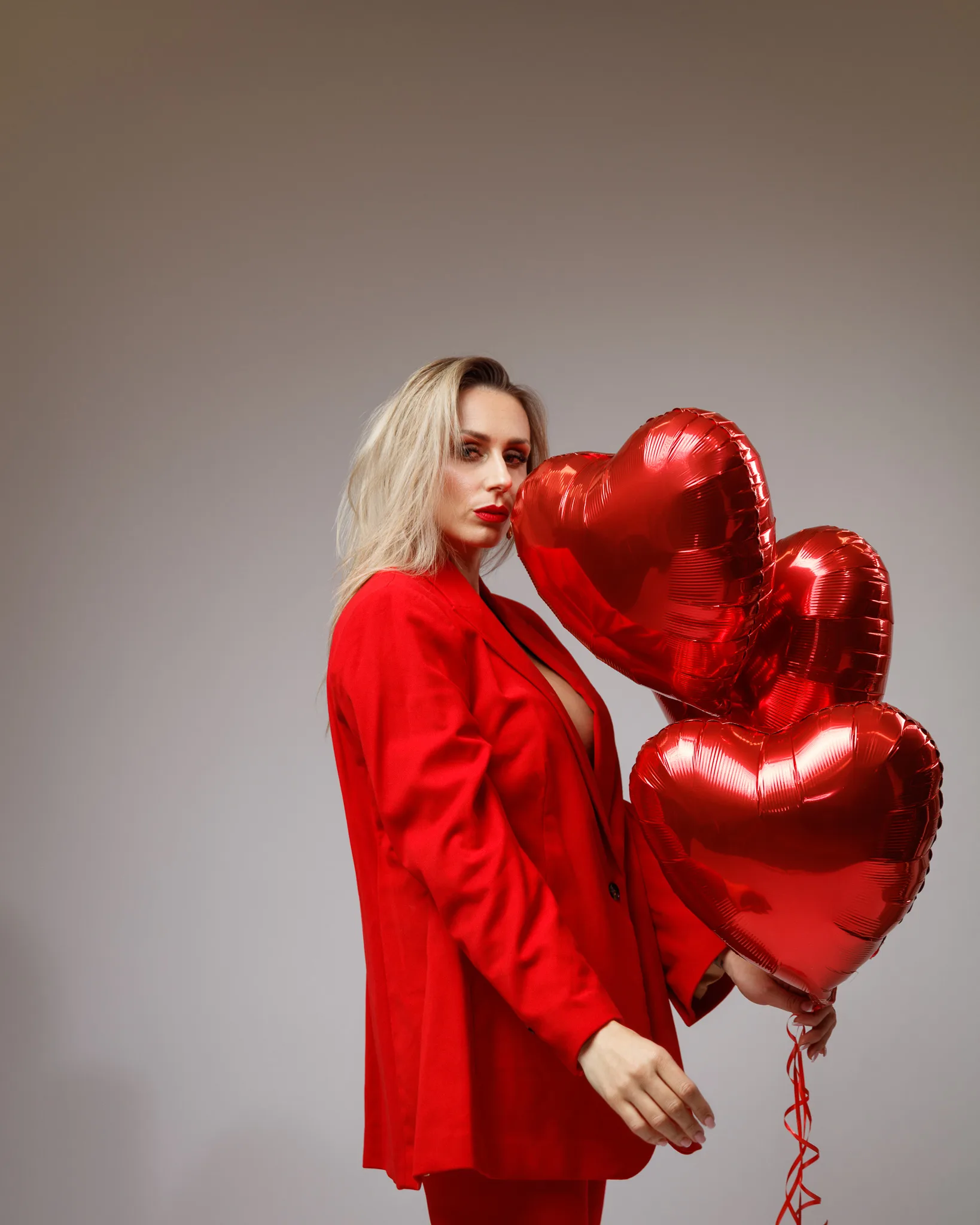
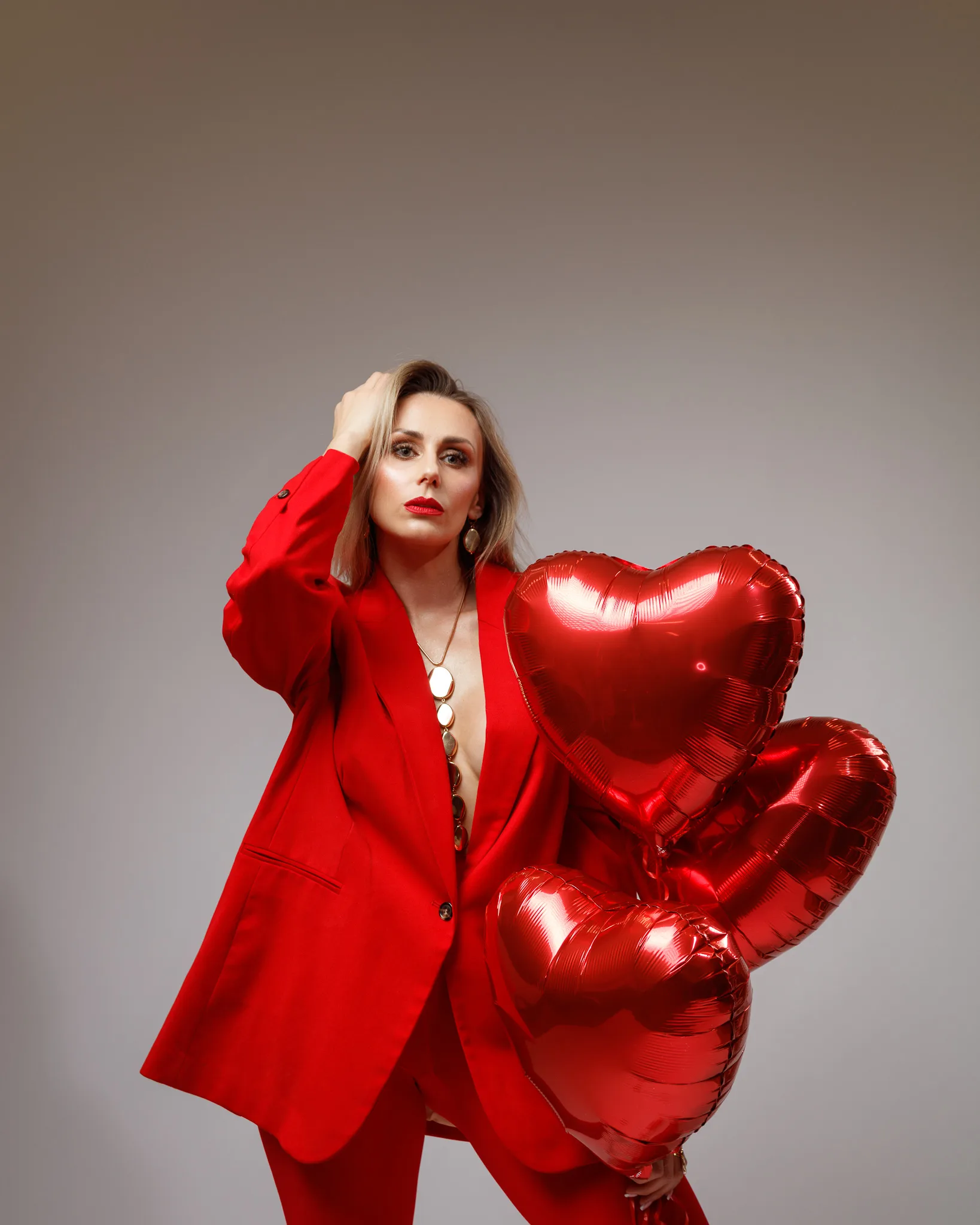
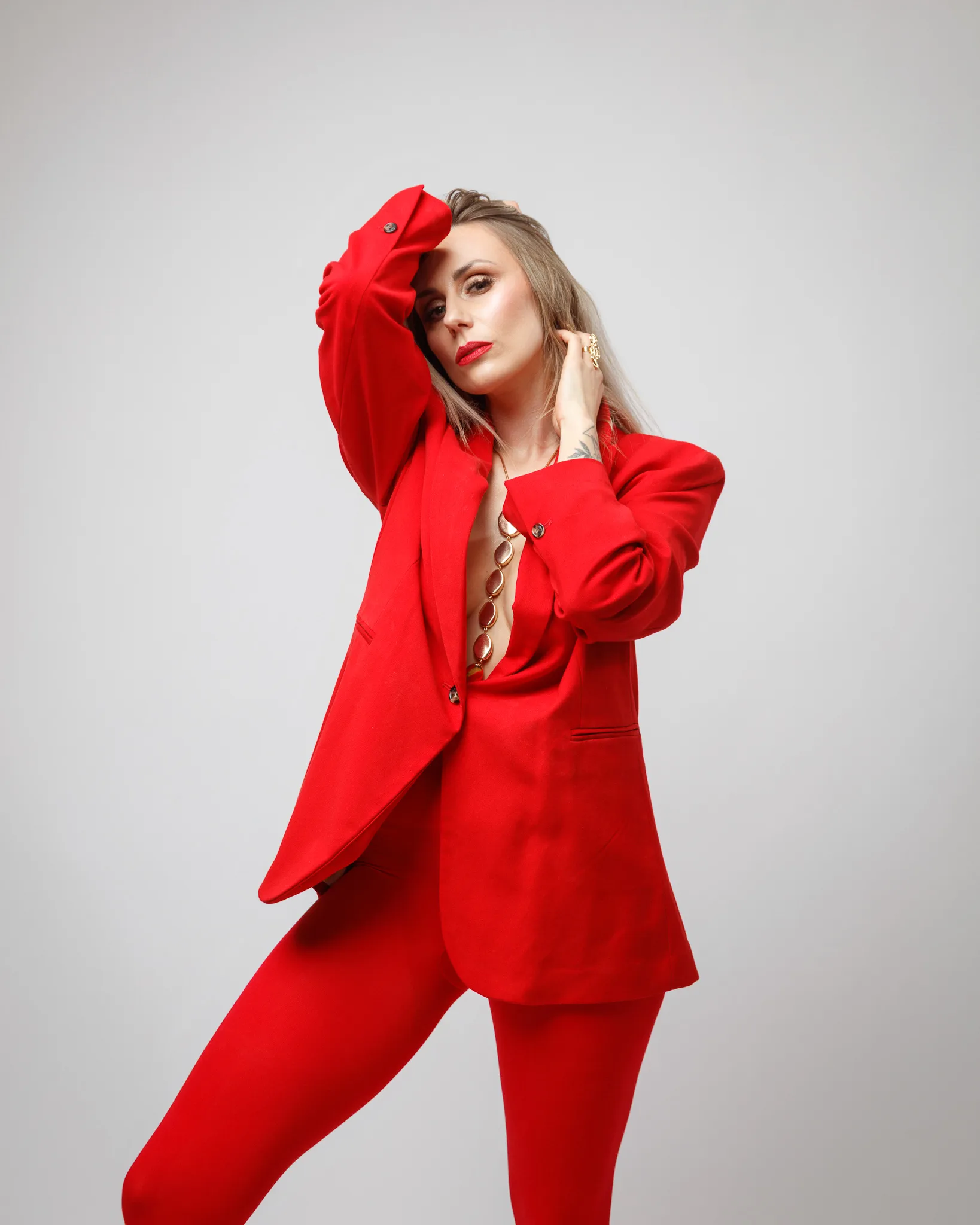
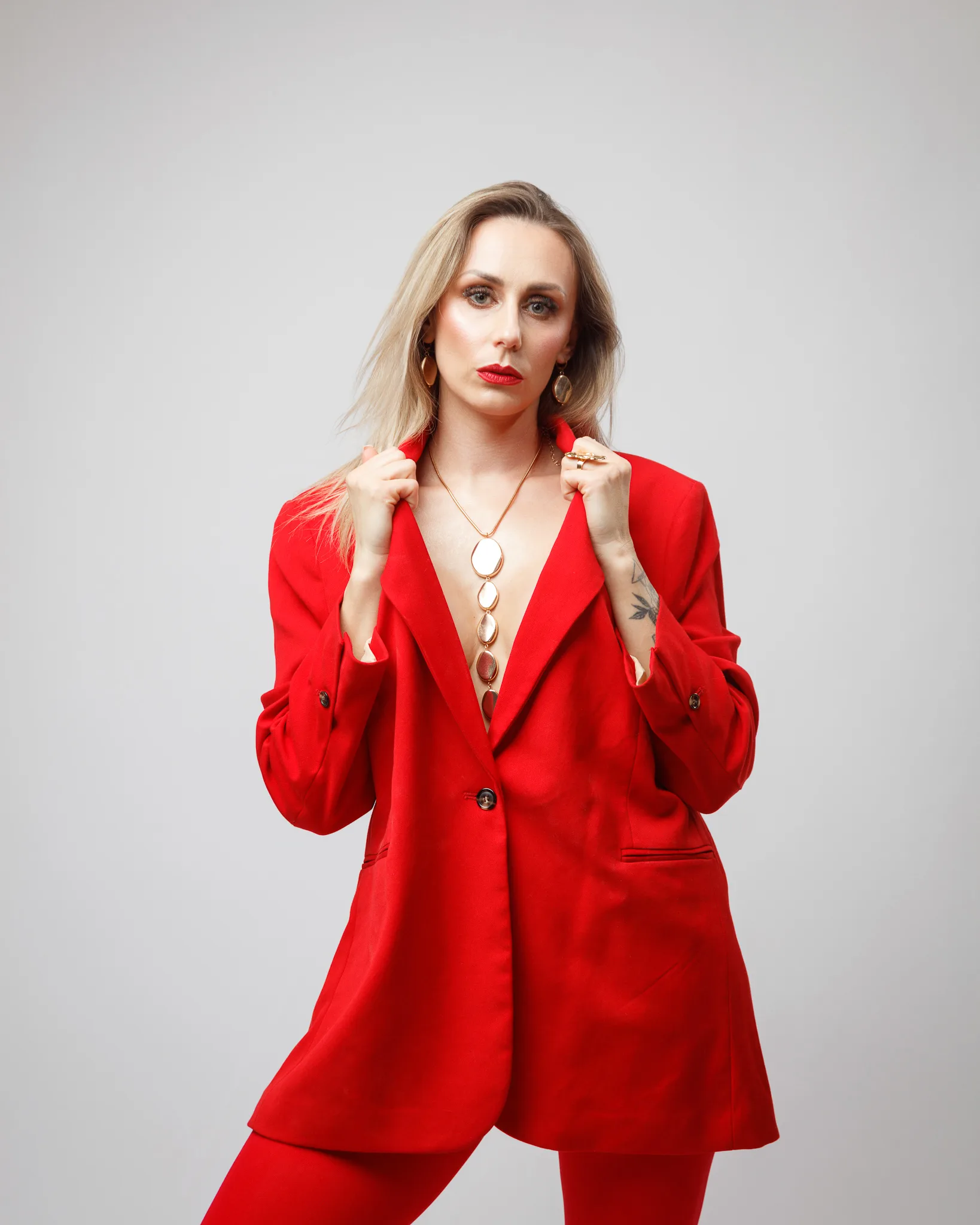
Look 6: Red suit with heart balloons, bold colour and playful editorial
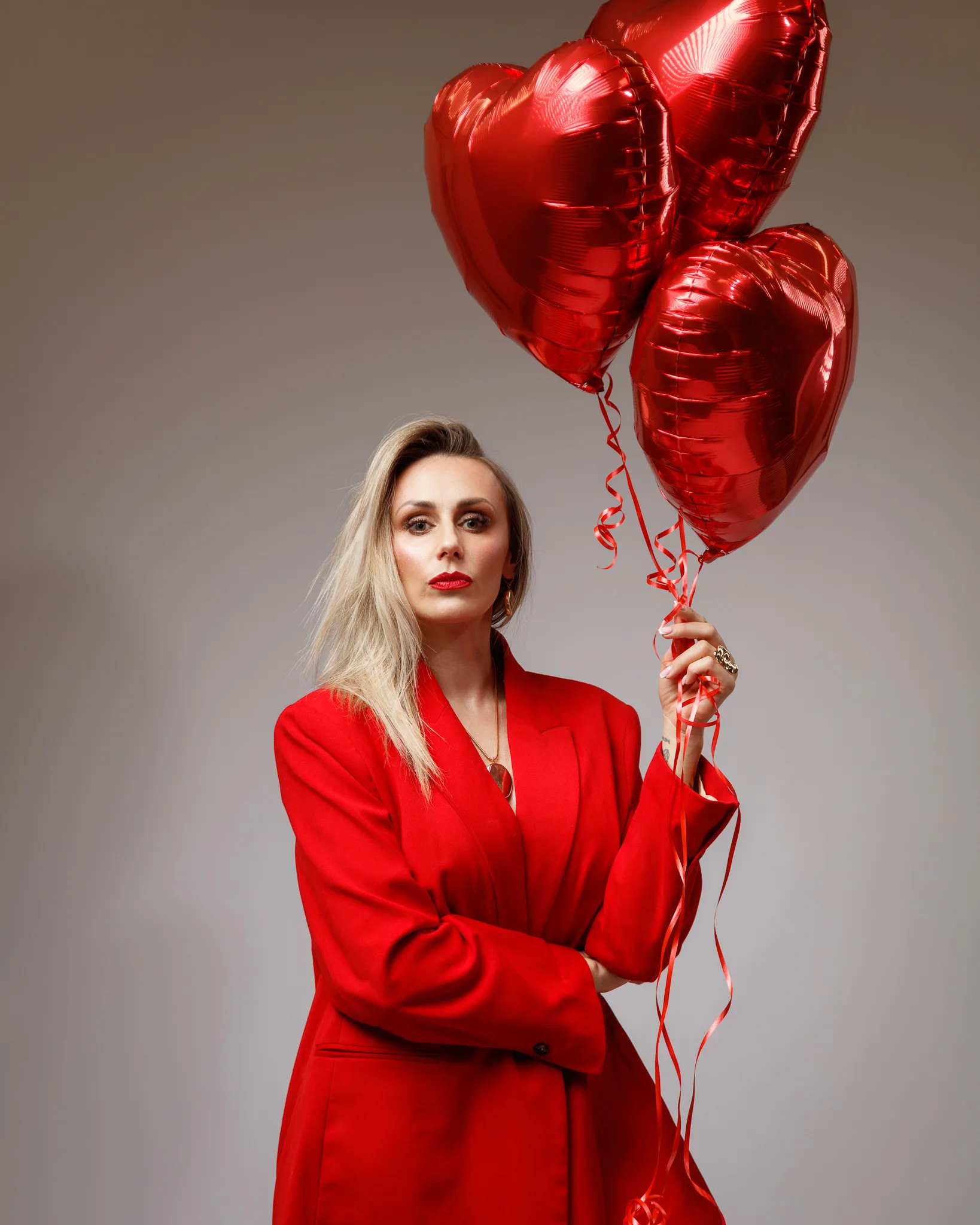
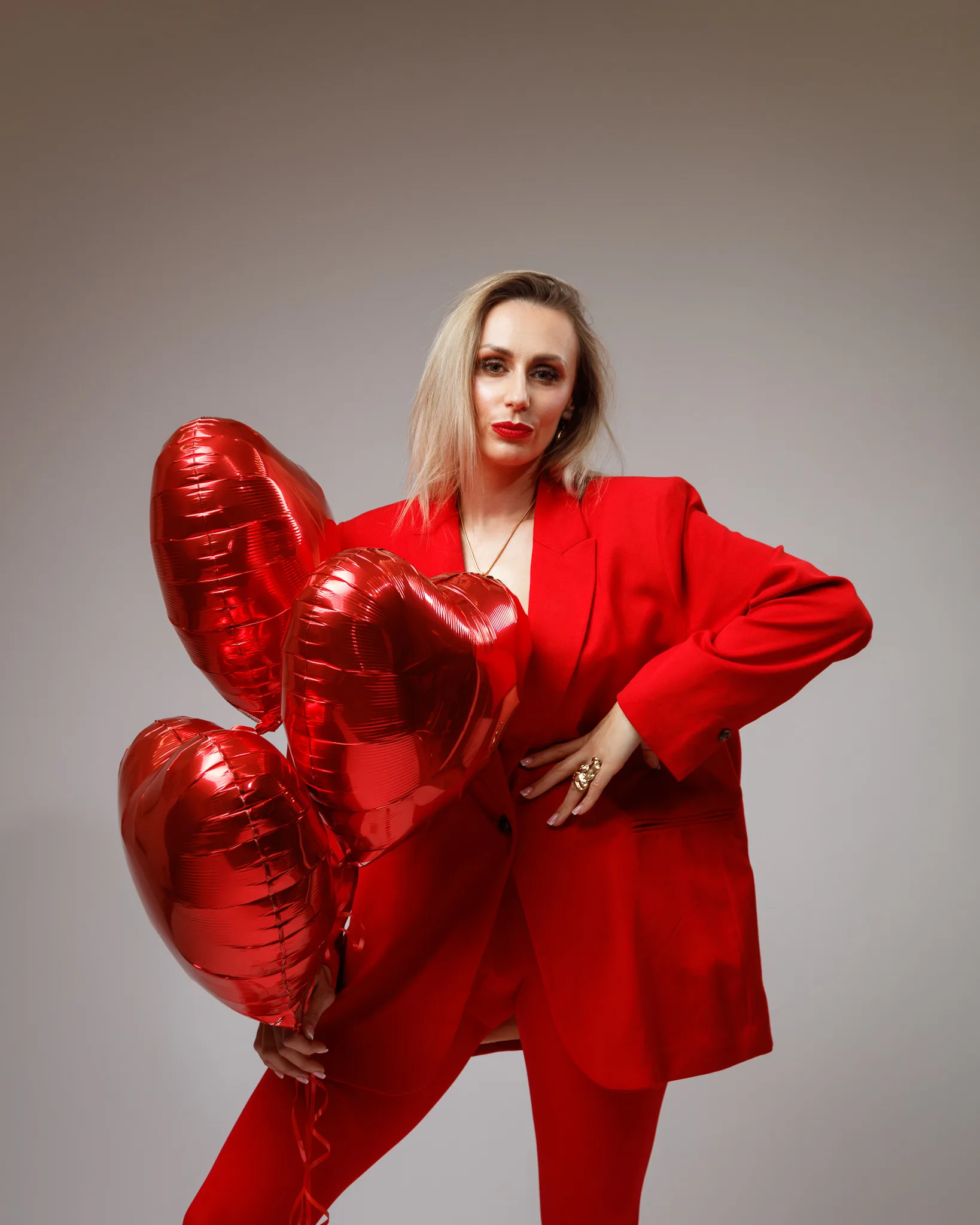
The colour story snapped into red here, and it immediately lifts the energy.
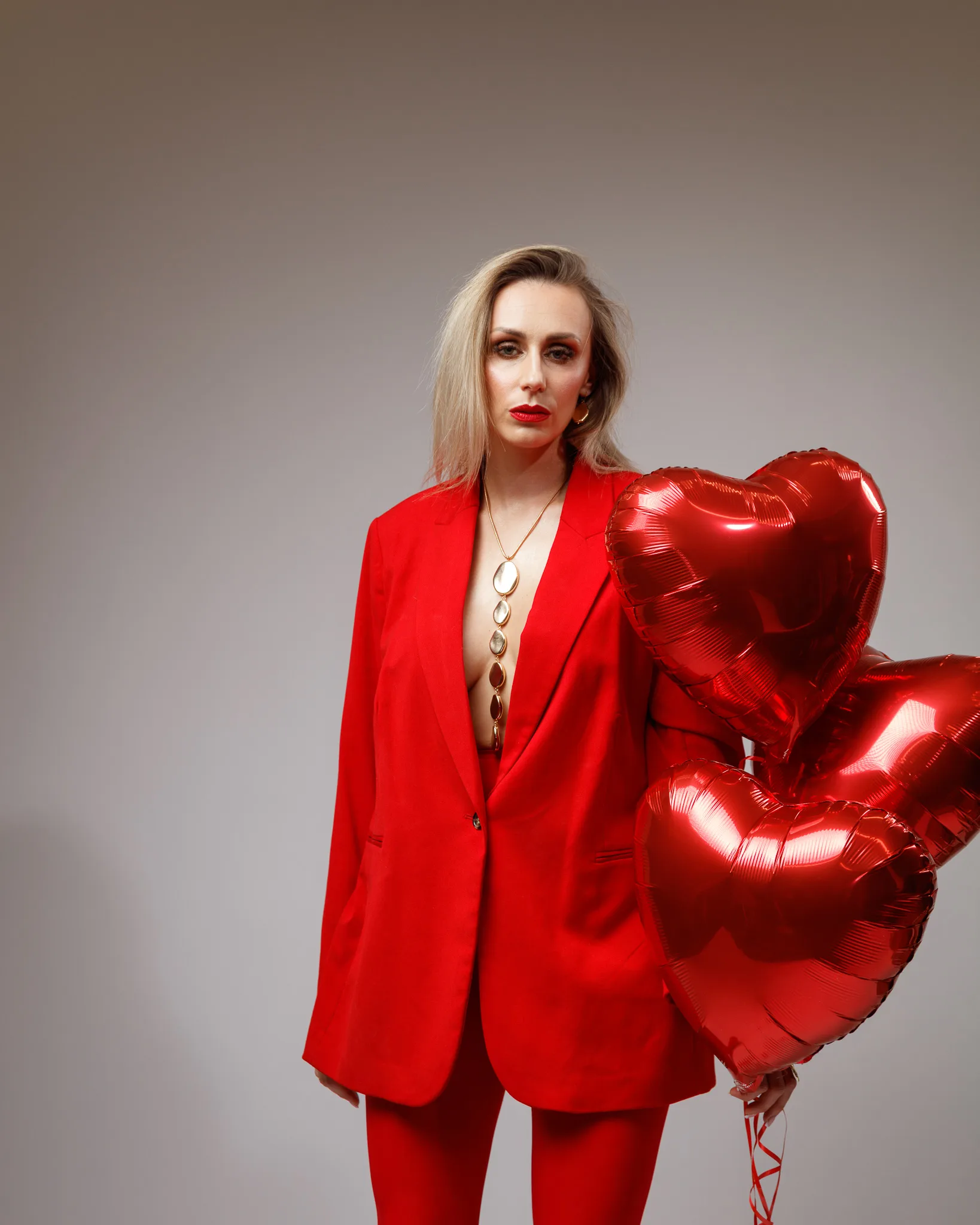
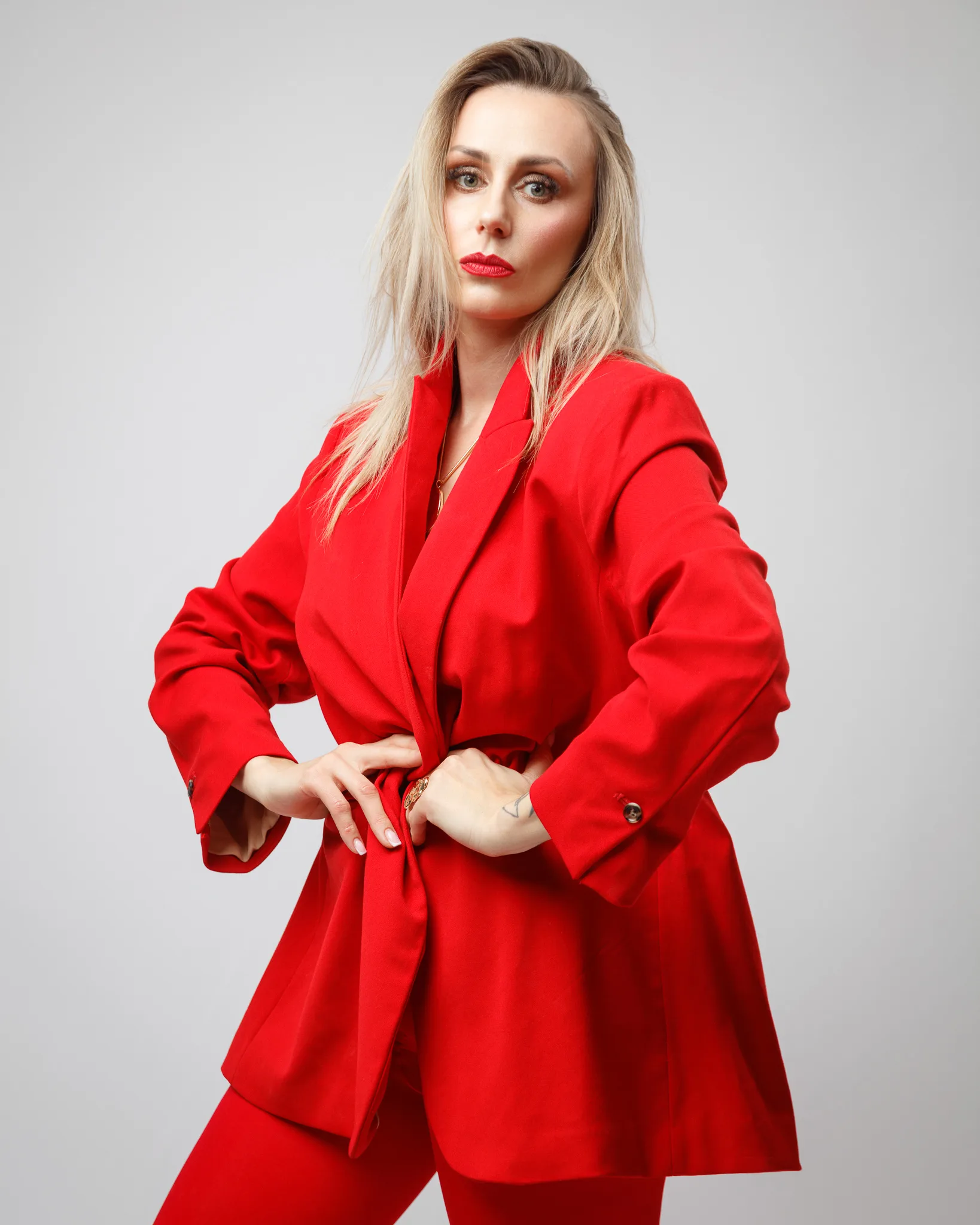
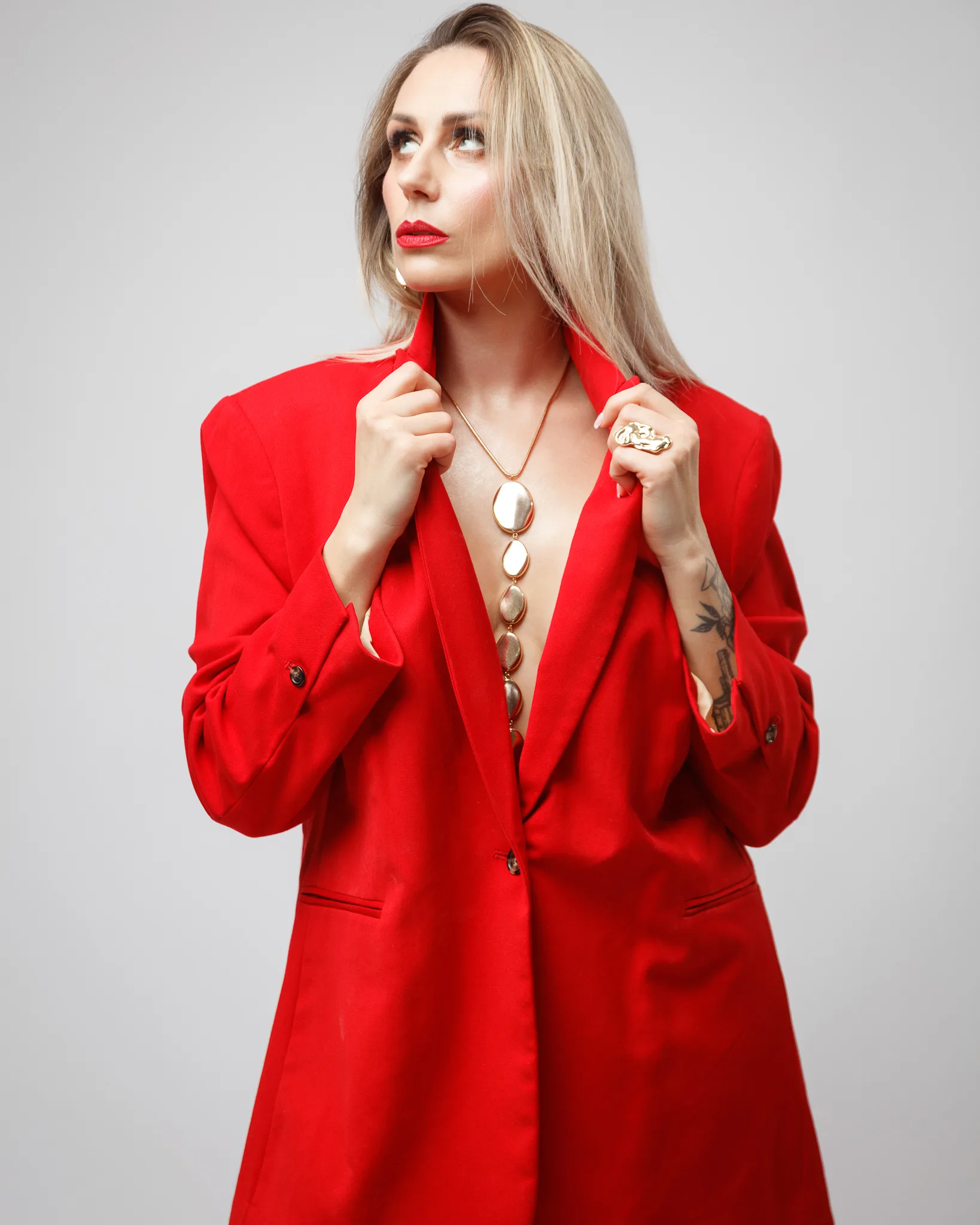
Oversized red blazer, matching trousers, long gold necklace, red lip, and metallic red heart balloons. The pose stays simple so the colour and shape can do the work.
For a portfolio, this sort of bold block colour set is useful because it reads strongly on social platforms, and it also performs well when cropped.
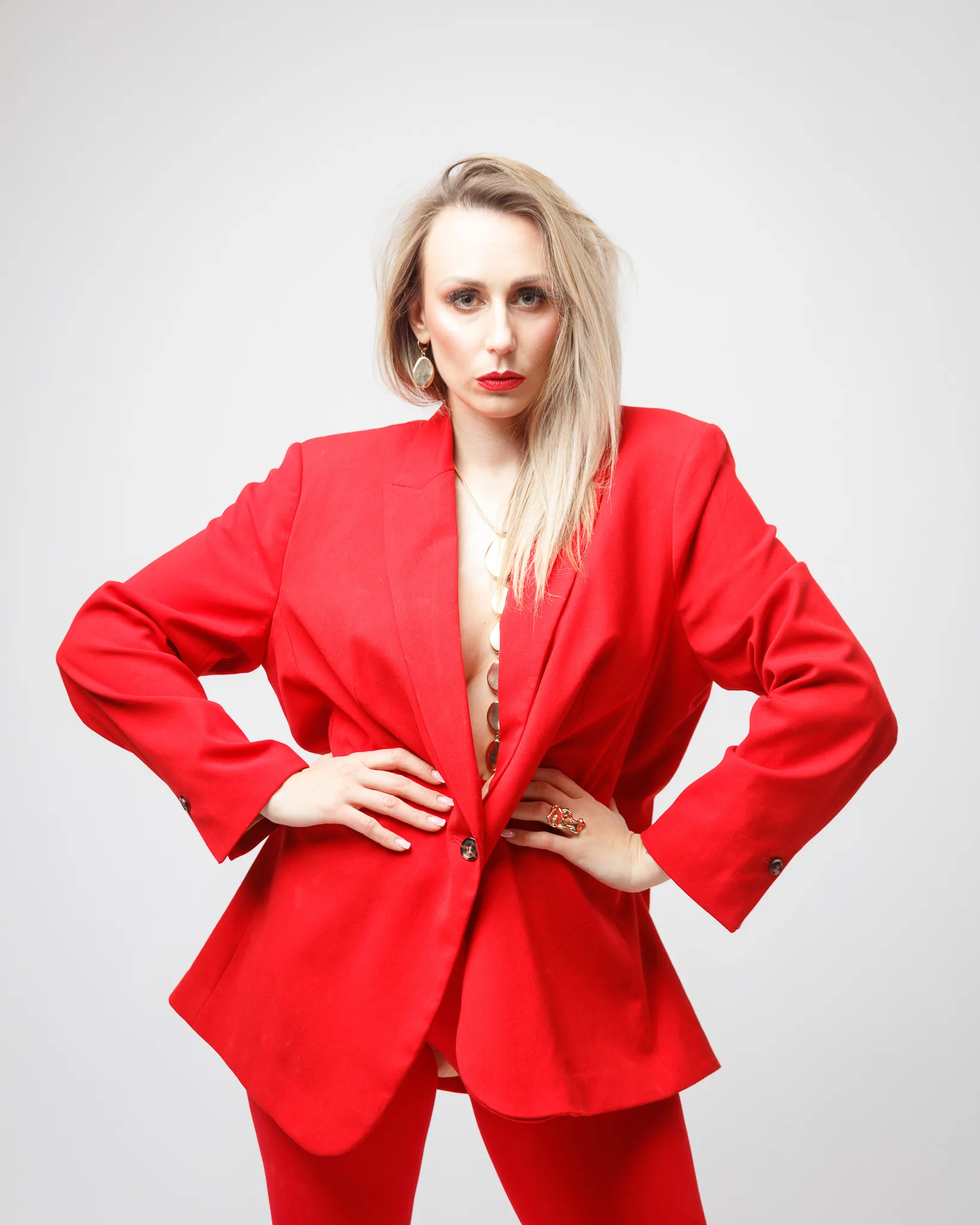
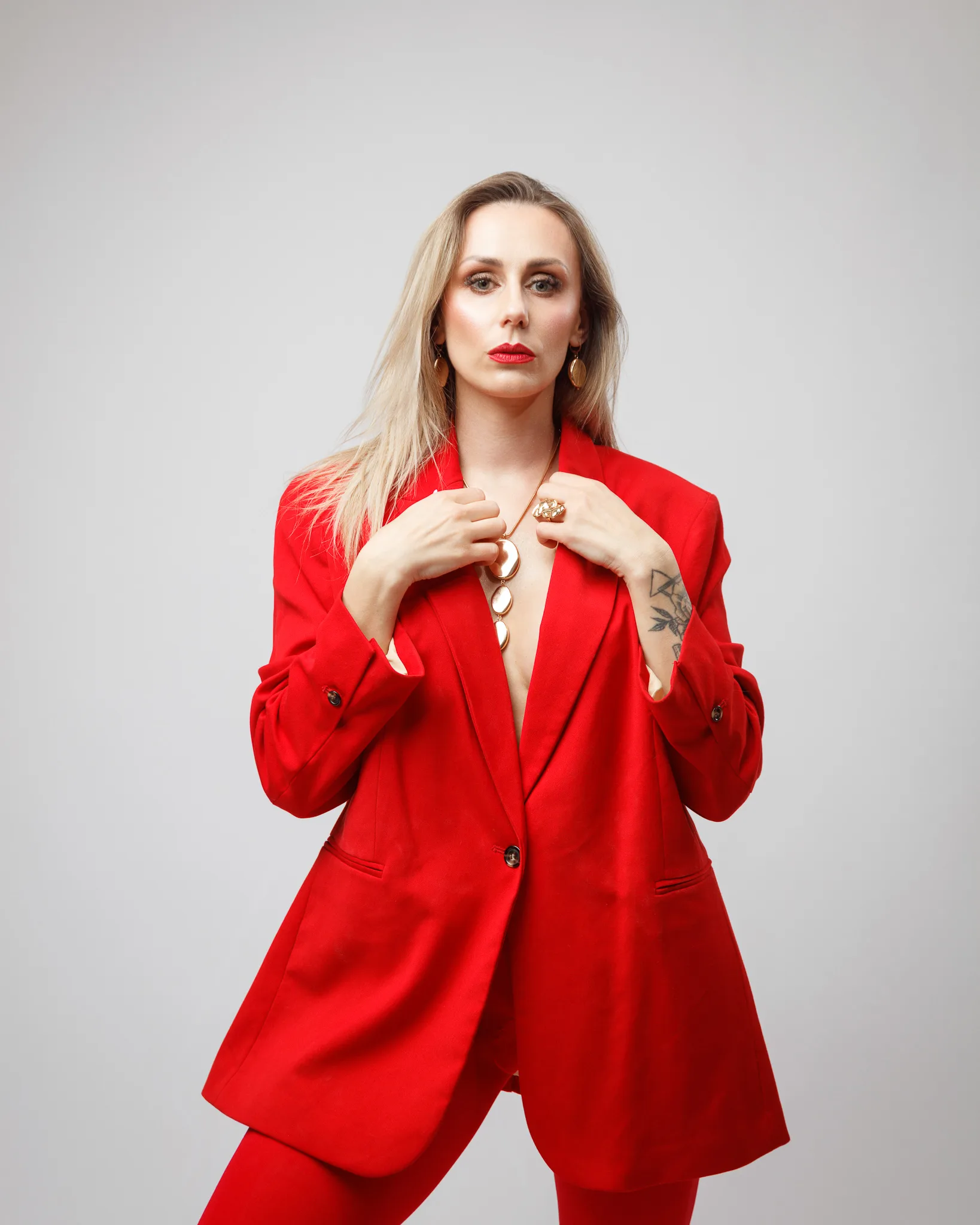
Look 7: Red suit “hero” portrait, clean, symmetrical, and direct
This is the cleaner companion to look 6. Brighter background, stronger symmetry, hands on waist, elbows out. It is a confident “power image”.
If you are building a book, you want at least one image like this. It is the kind of frame that works as a profile image, comp card lead, website banner crop, or agency submission support image.
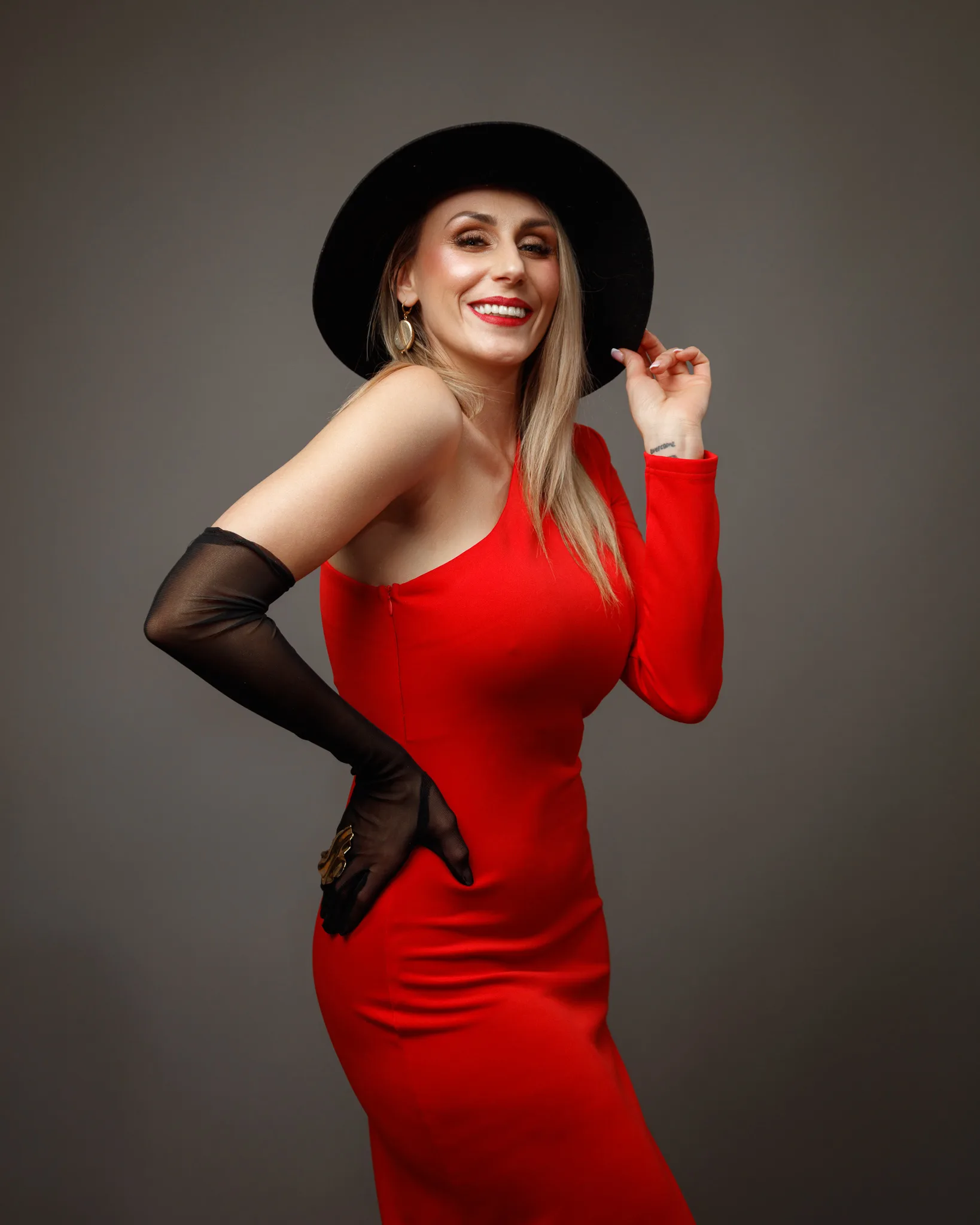
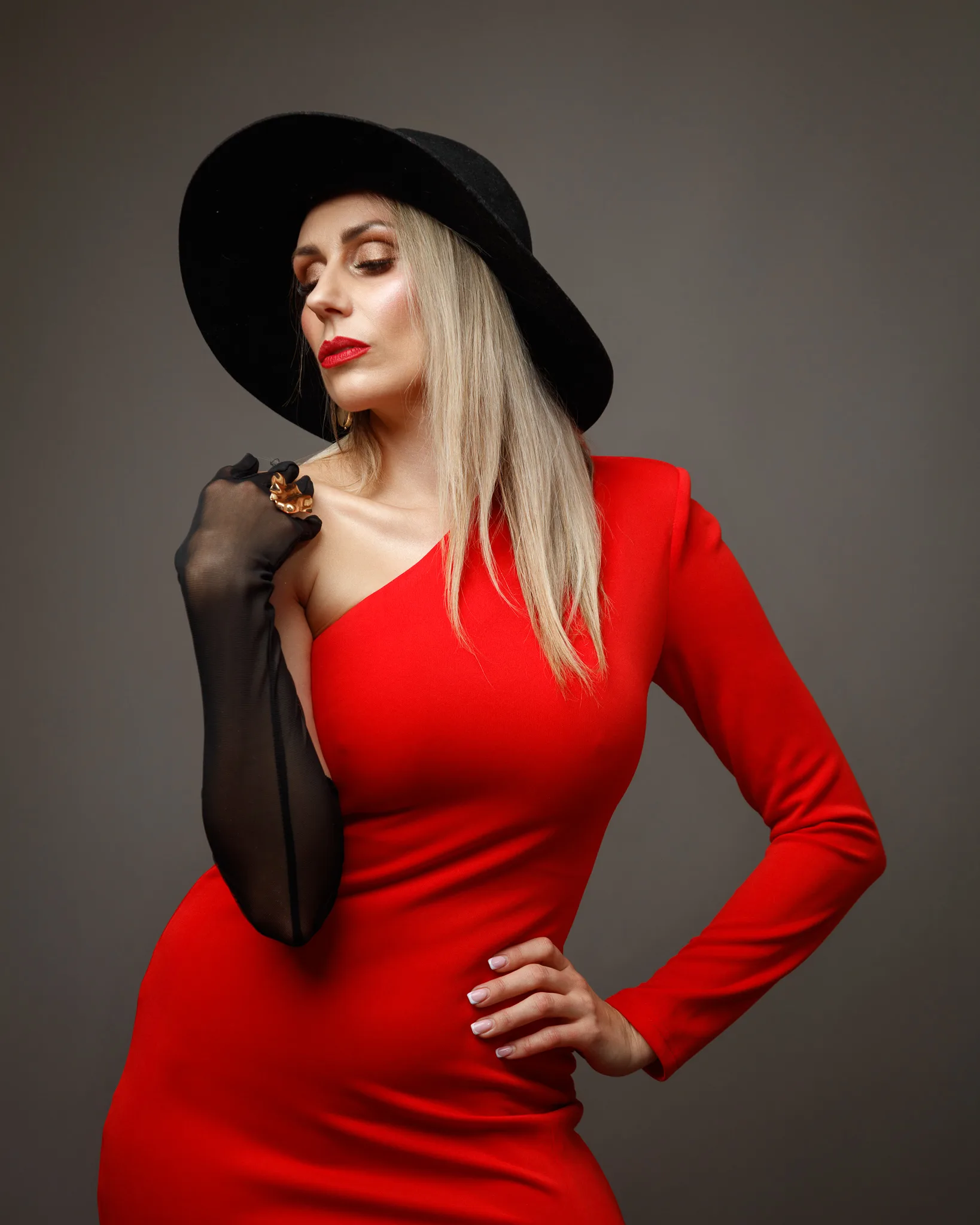
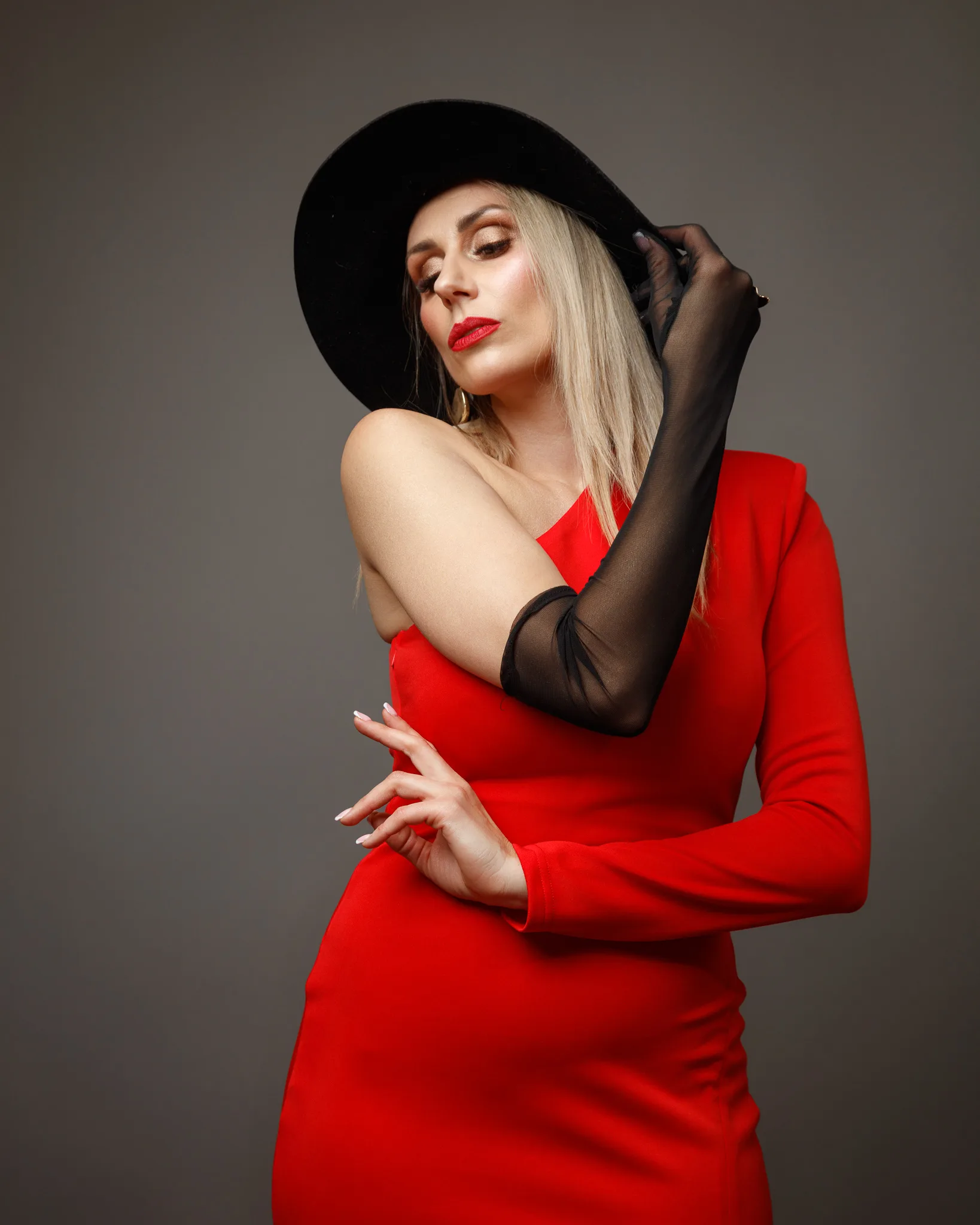
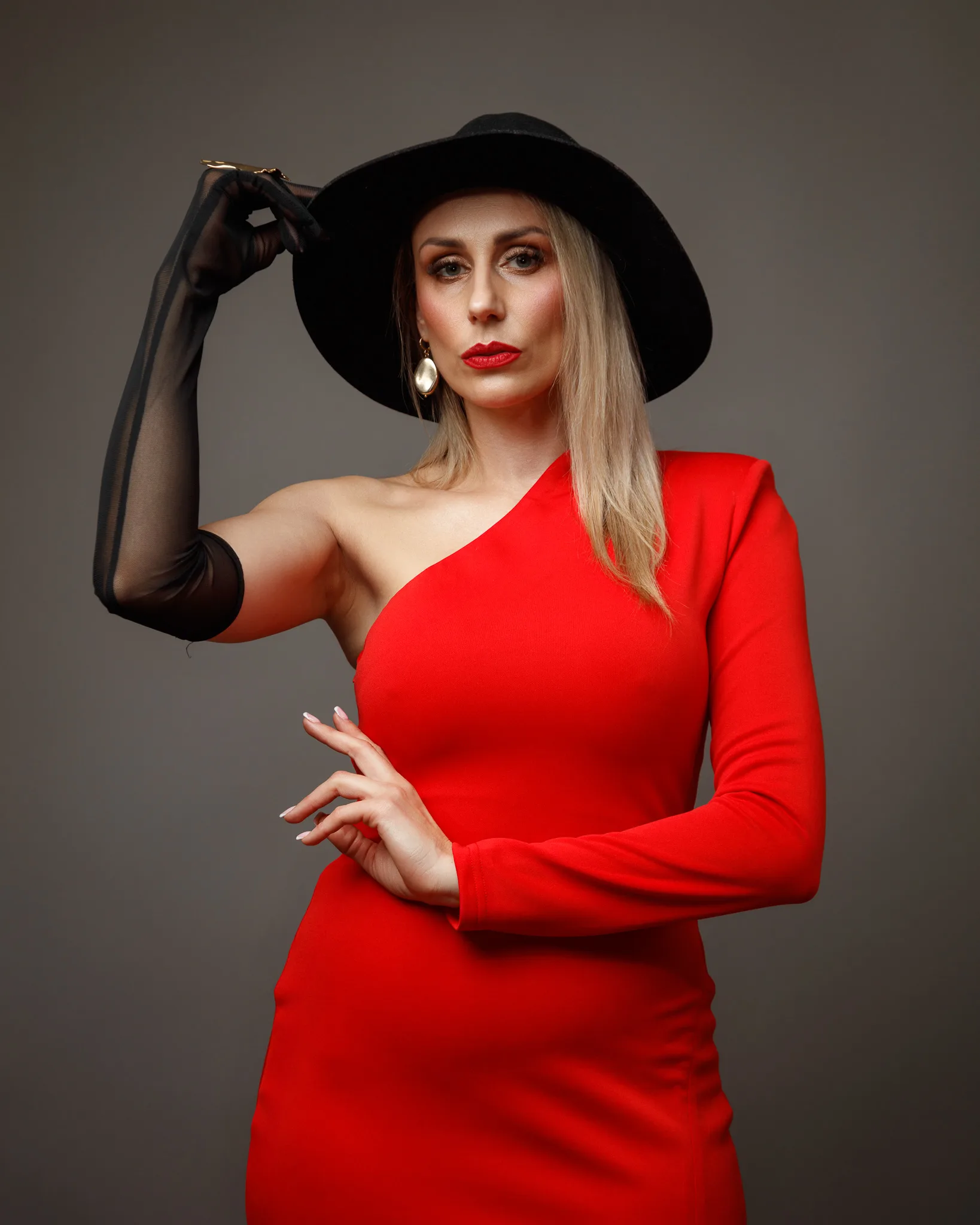
Look 8: Red one-shoulder dress, black hat and opera glove
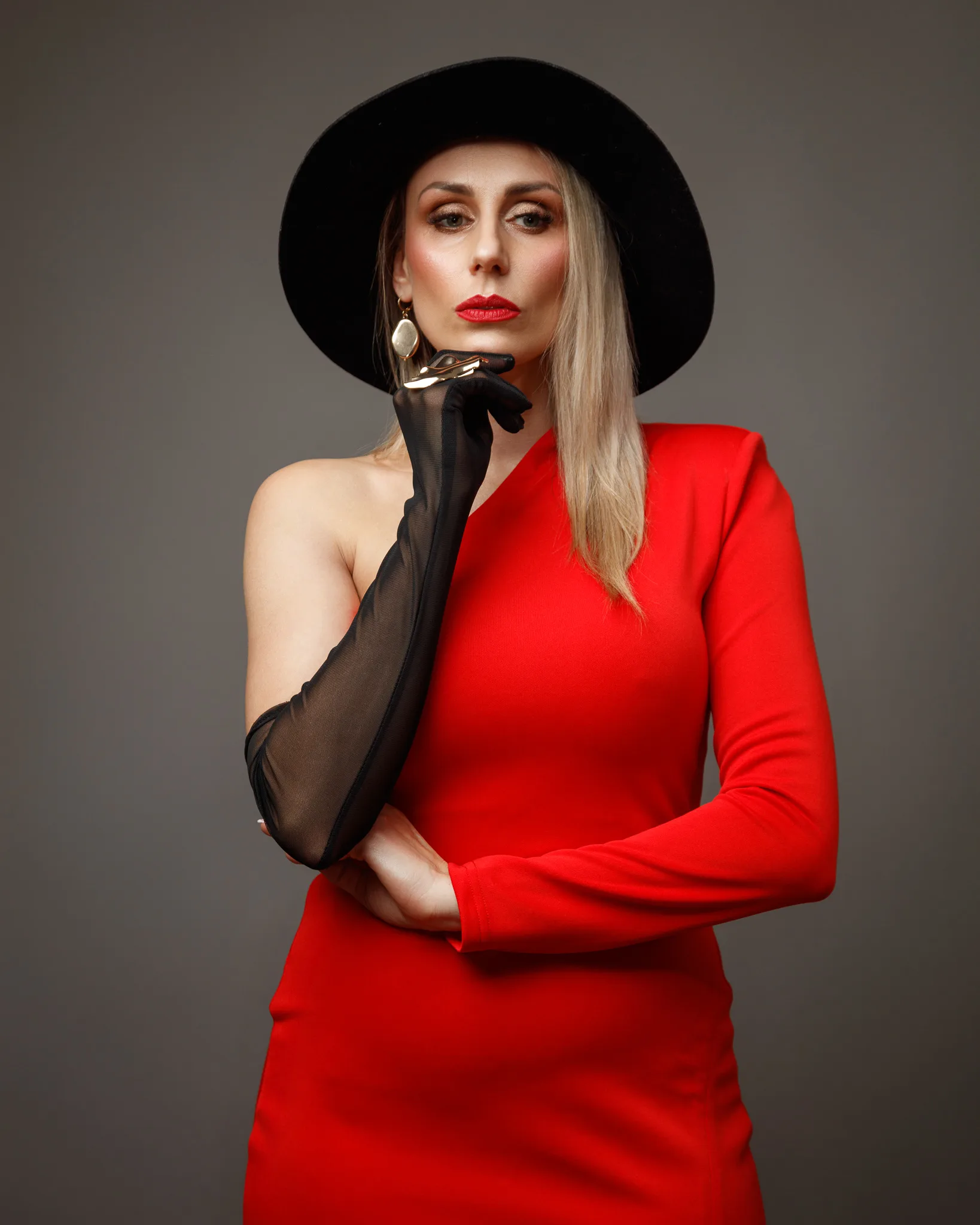
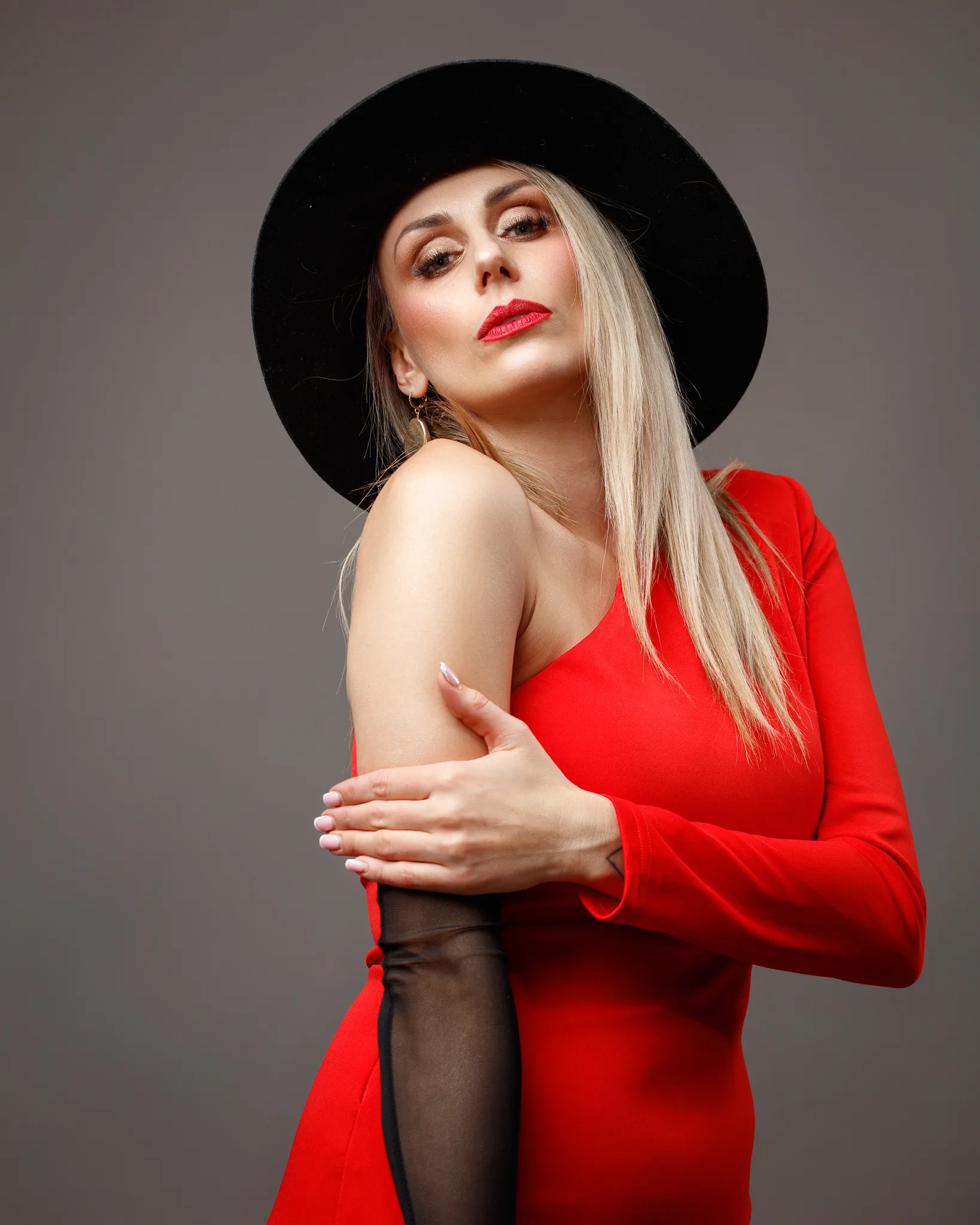
This is cinematic glamour. The hat frames the face, the glove adds texture, and the one-shoulder line gives strong shape.
What I like about this look is that it introduces character without turning into costume. It feels like a fashion portrait with a story implied, not acted out.
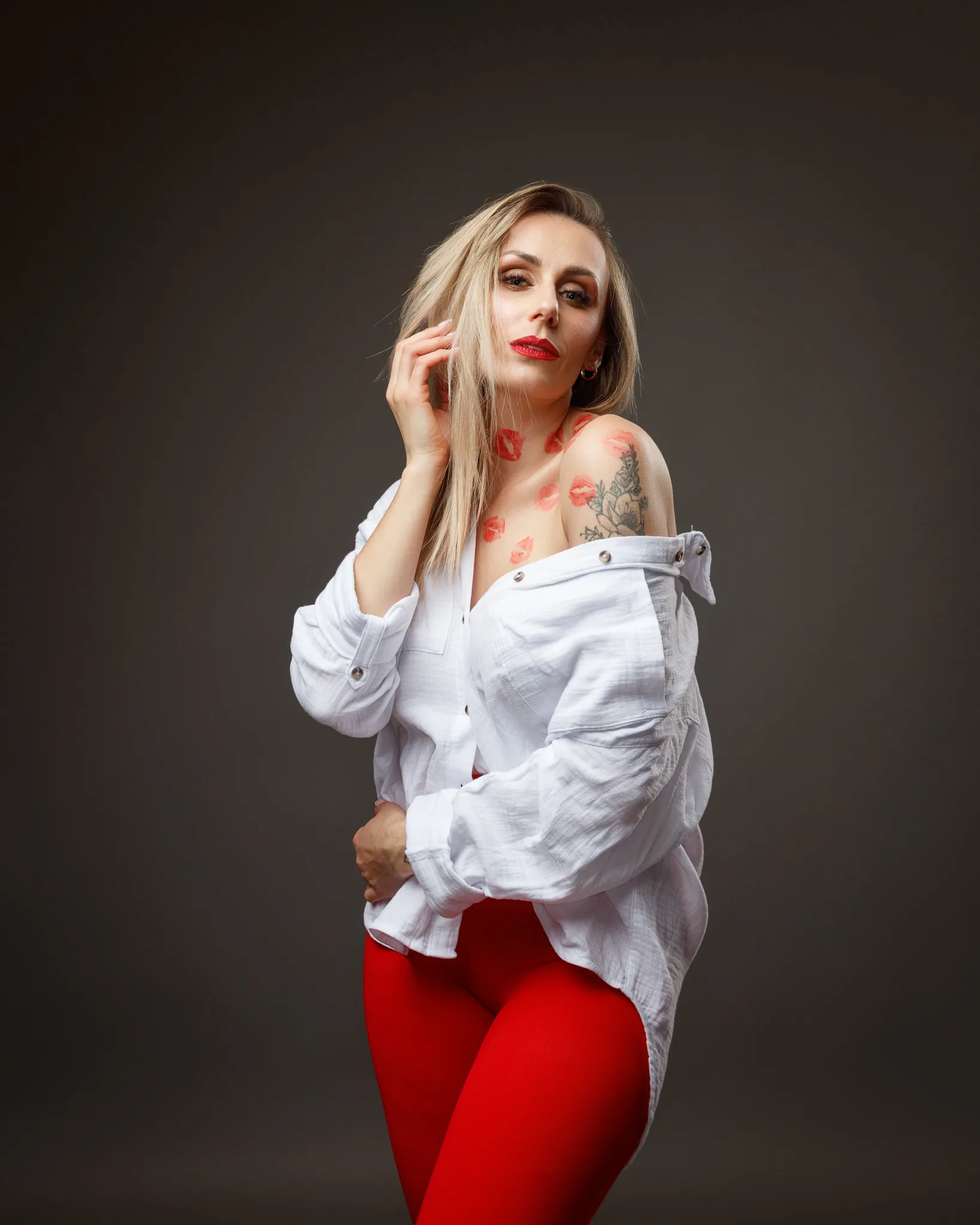
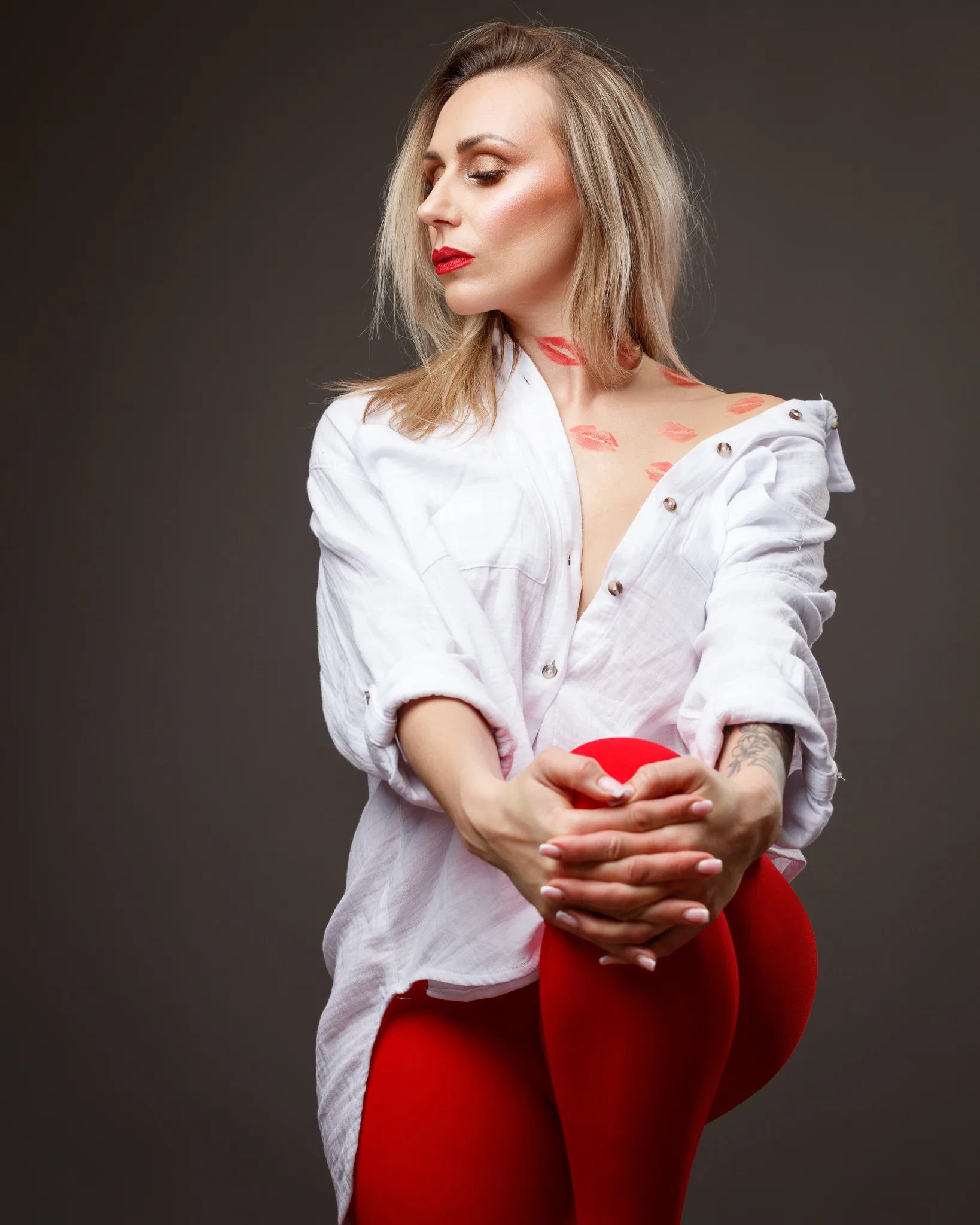
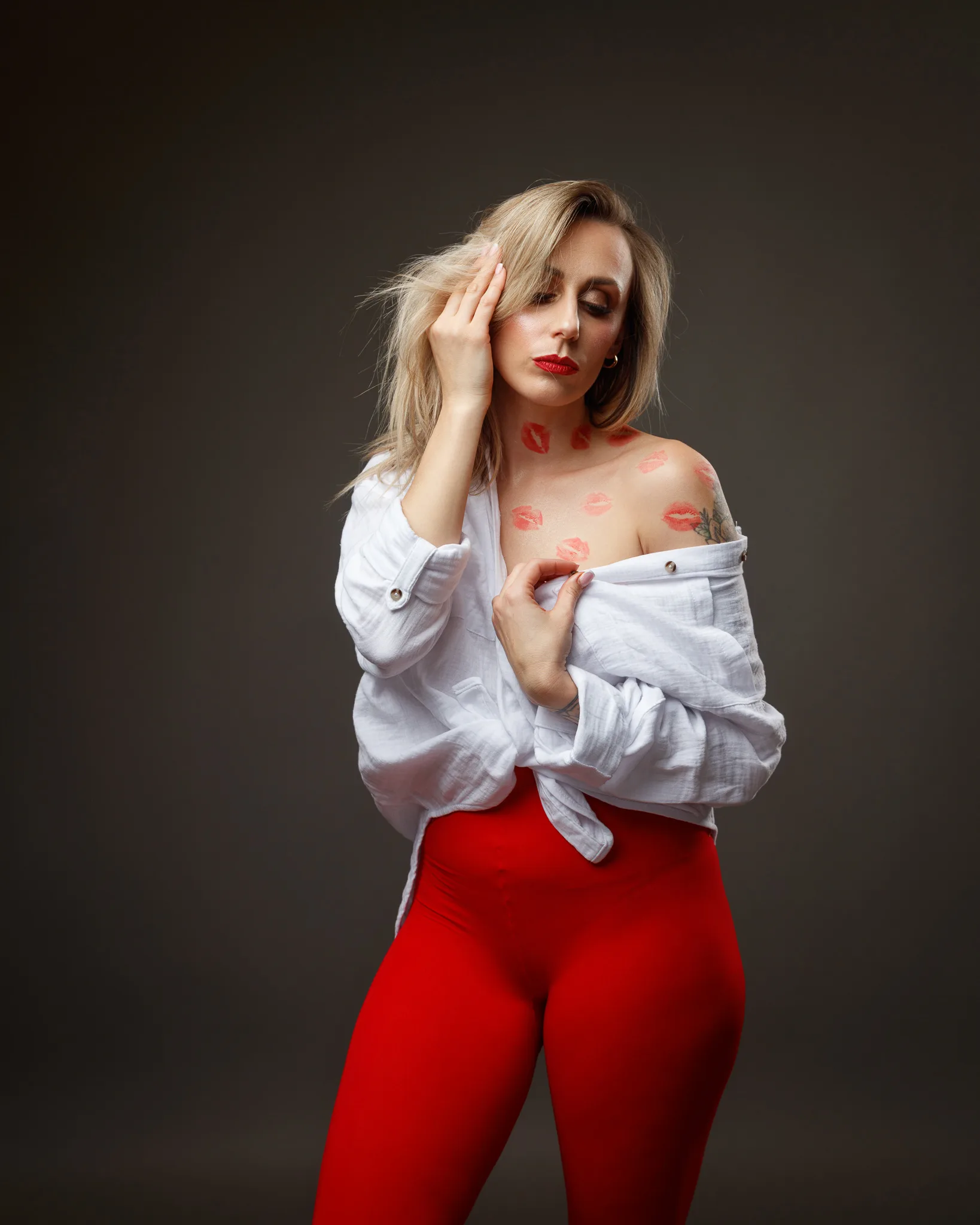
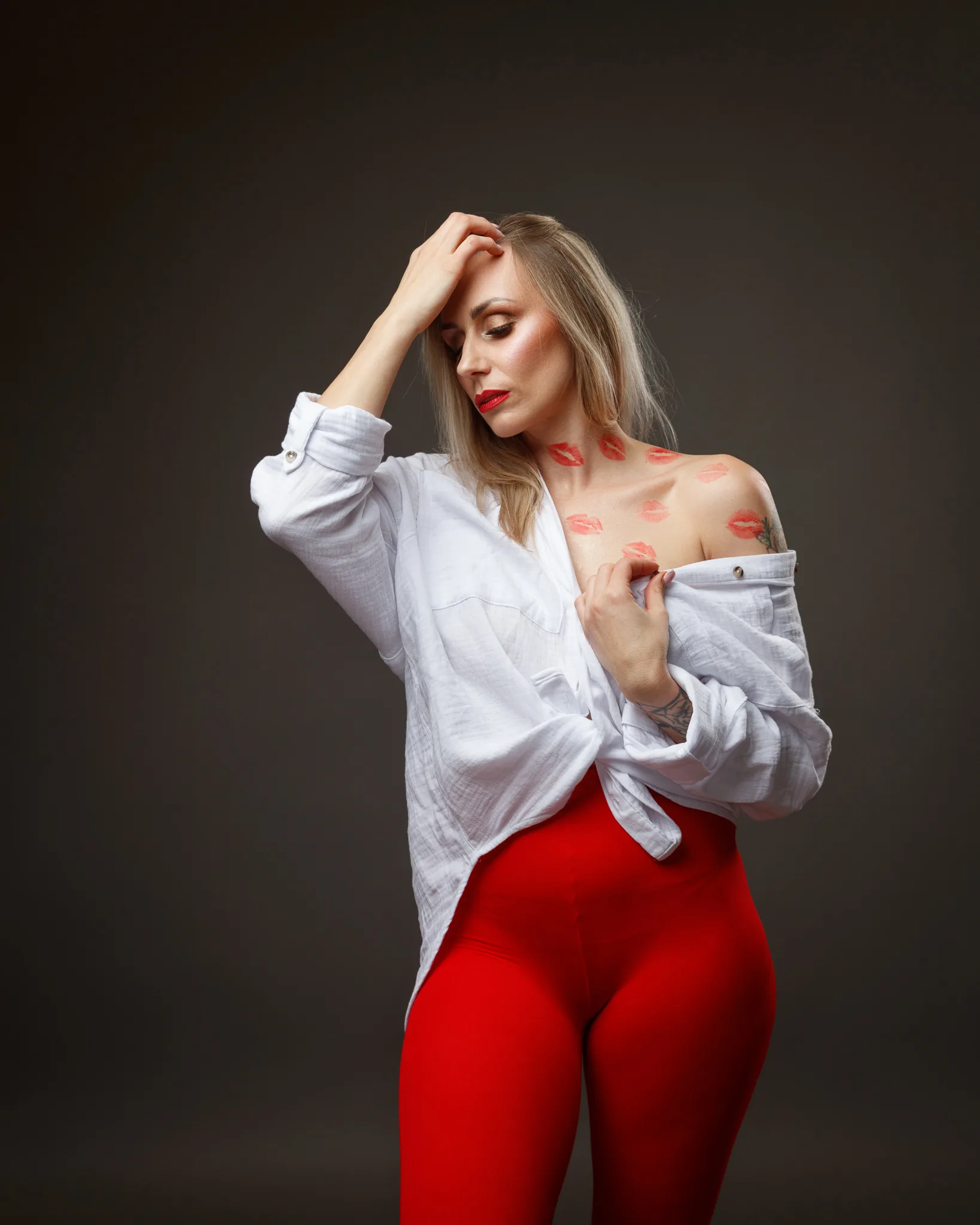
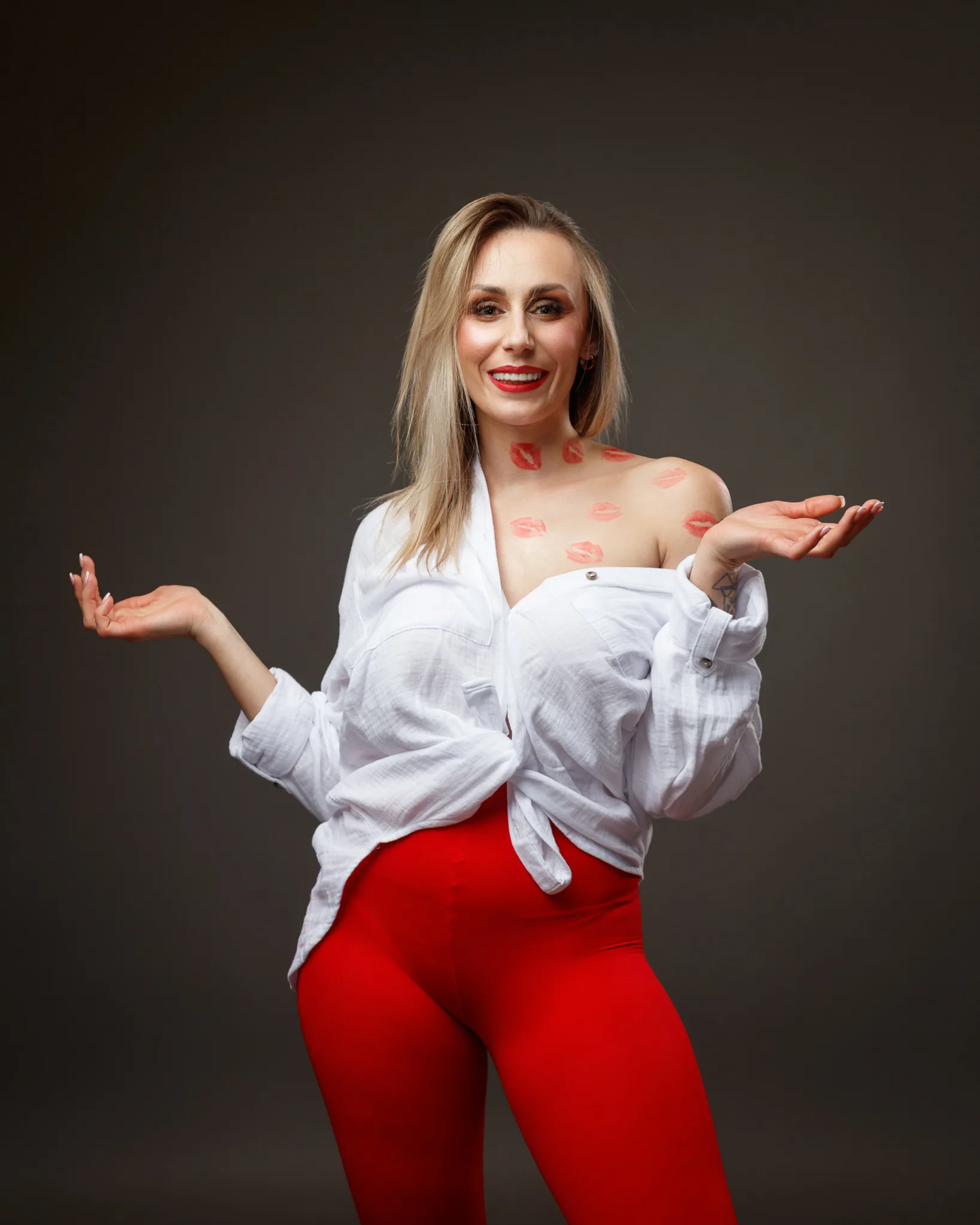
Look 9: Oversized white shirt, red leggings, lipstick kiss marks
This is a concept portrait built from simple wardrobe. That is worth noting because you do not need complex styling to create narrative.
The kiss marks are instantly readable, and the oversized white shirt gives you shape variation. The pose is more introspective, with softer energy and a downward gaze.
For models, this is a useful template. If you want concept images, keep the wardrobe simple and let one clear idea carry the frame.
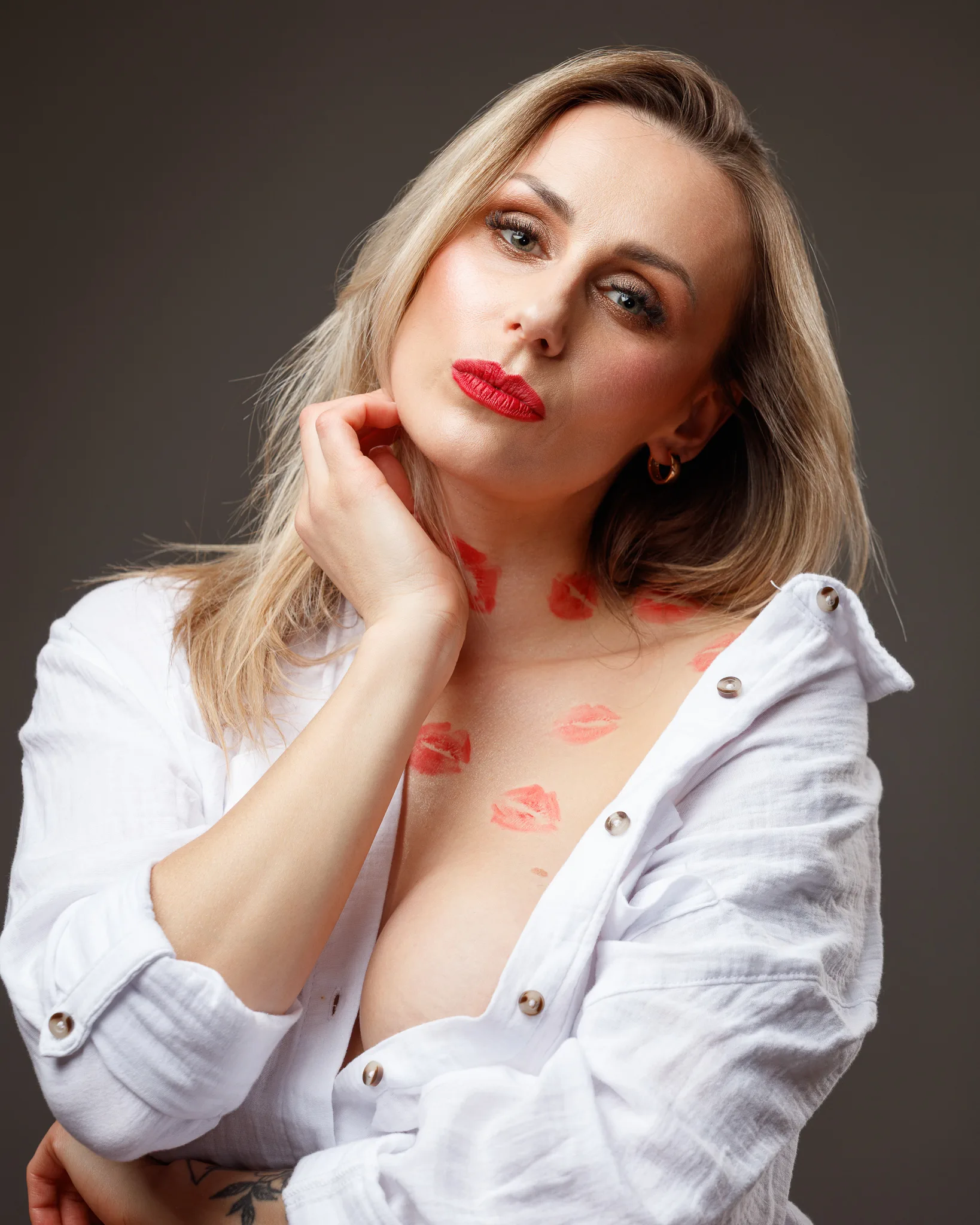
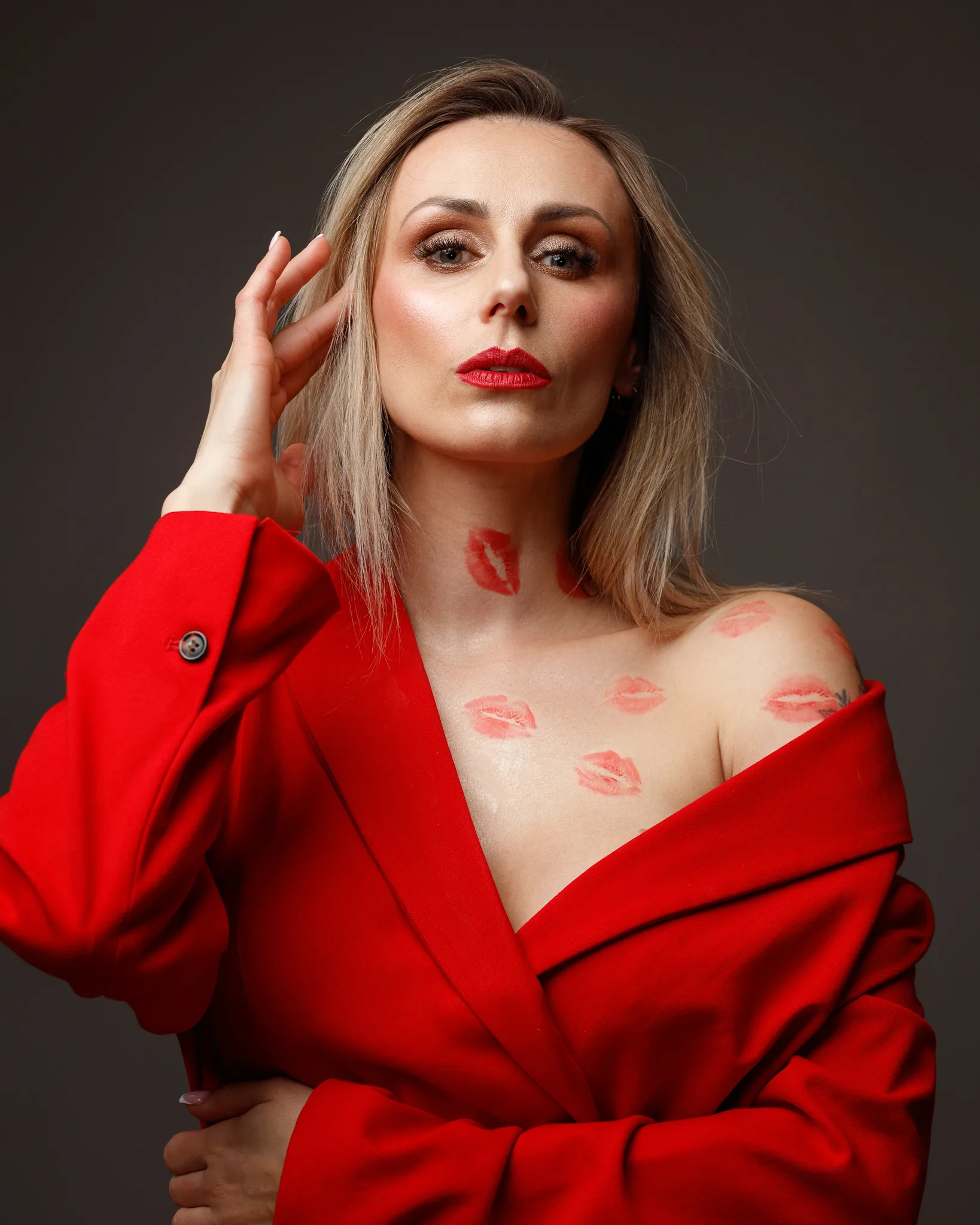
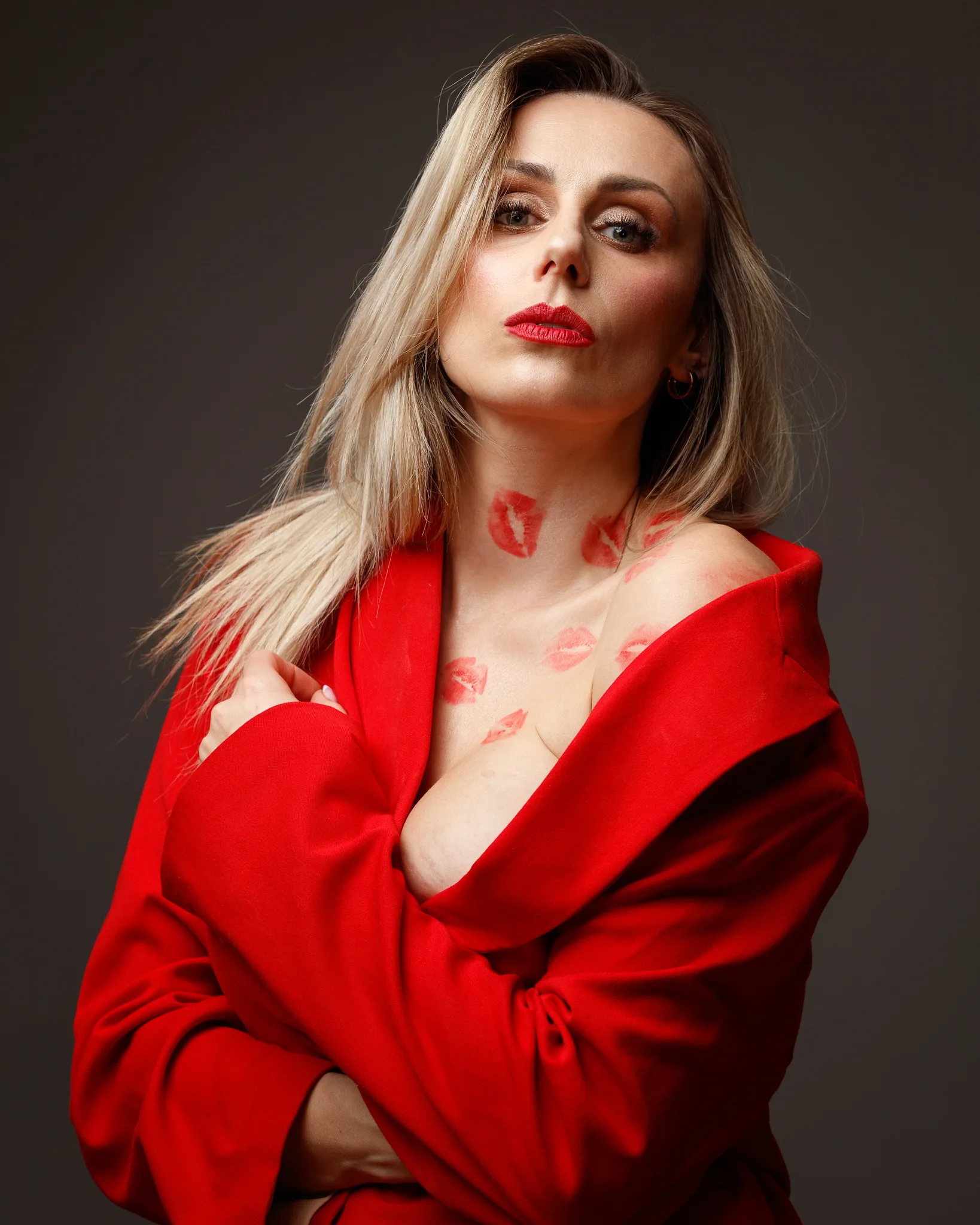
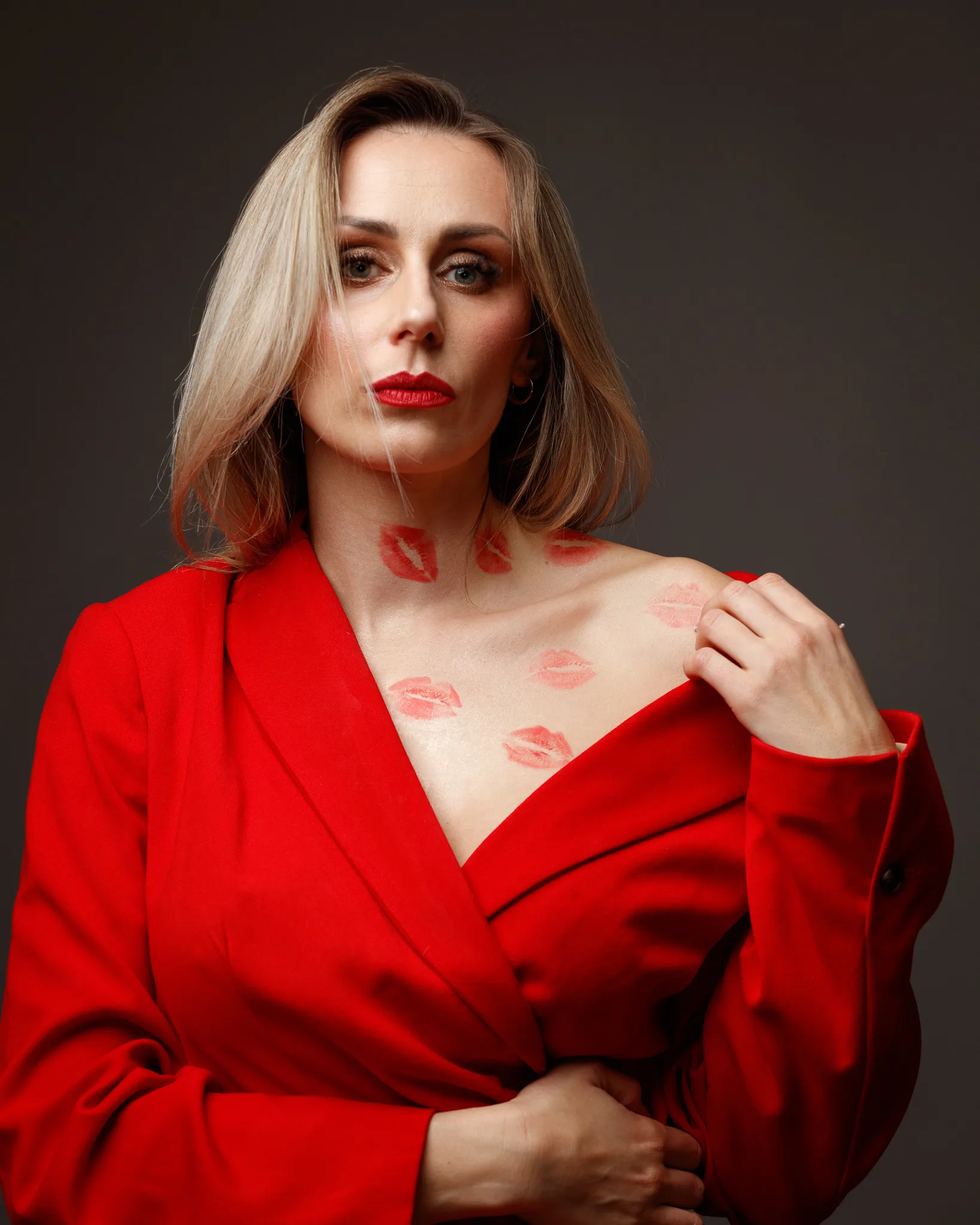
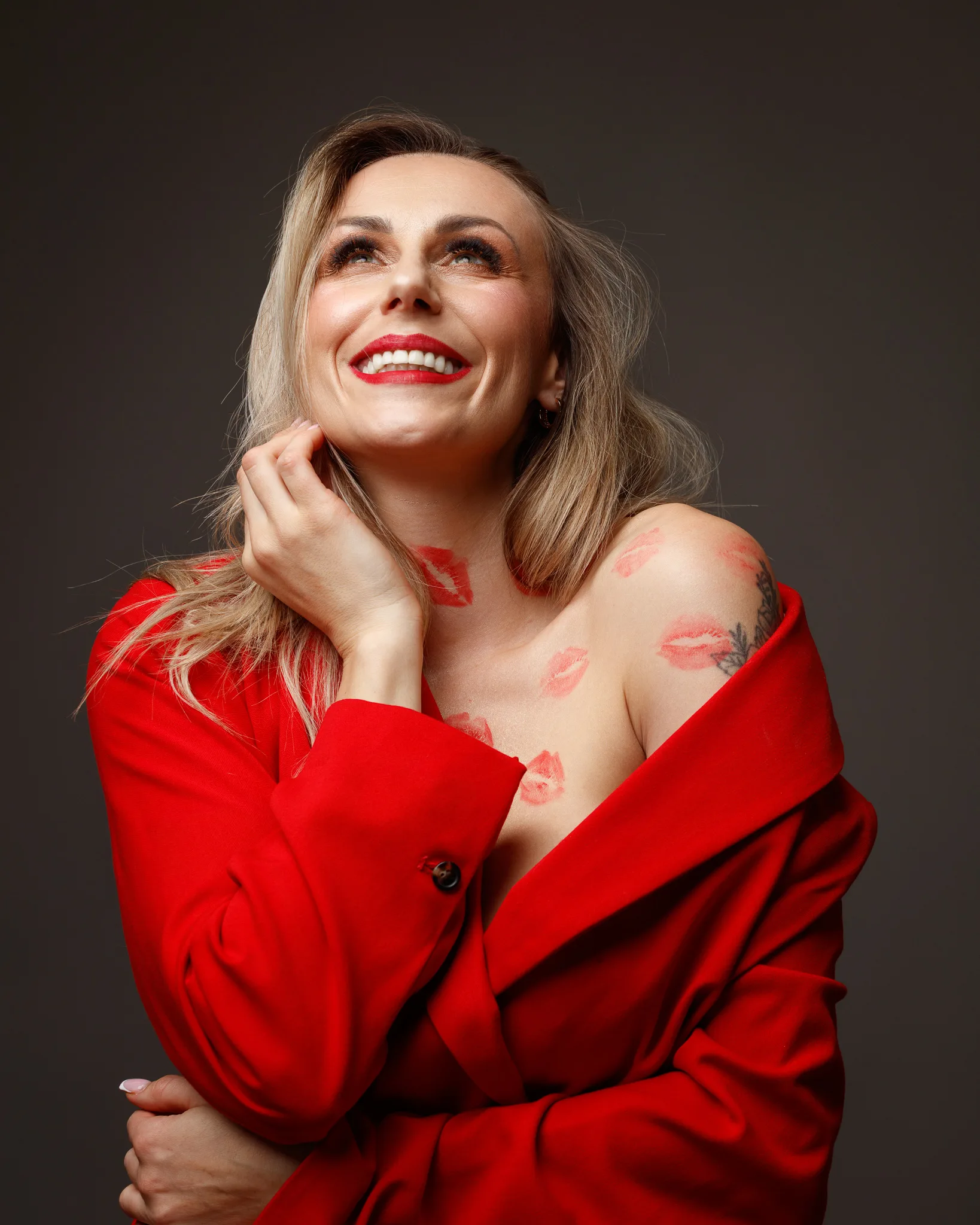
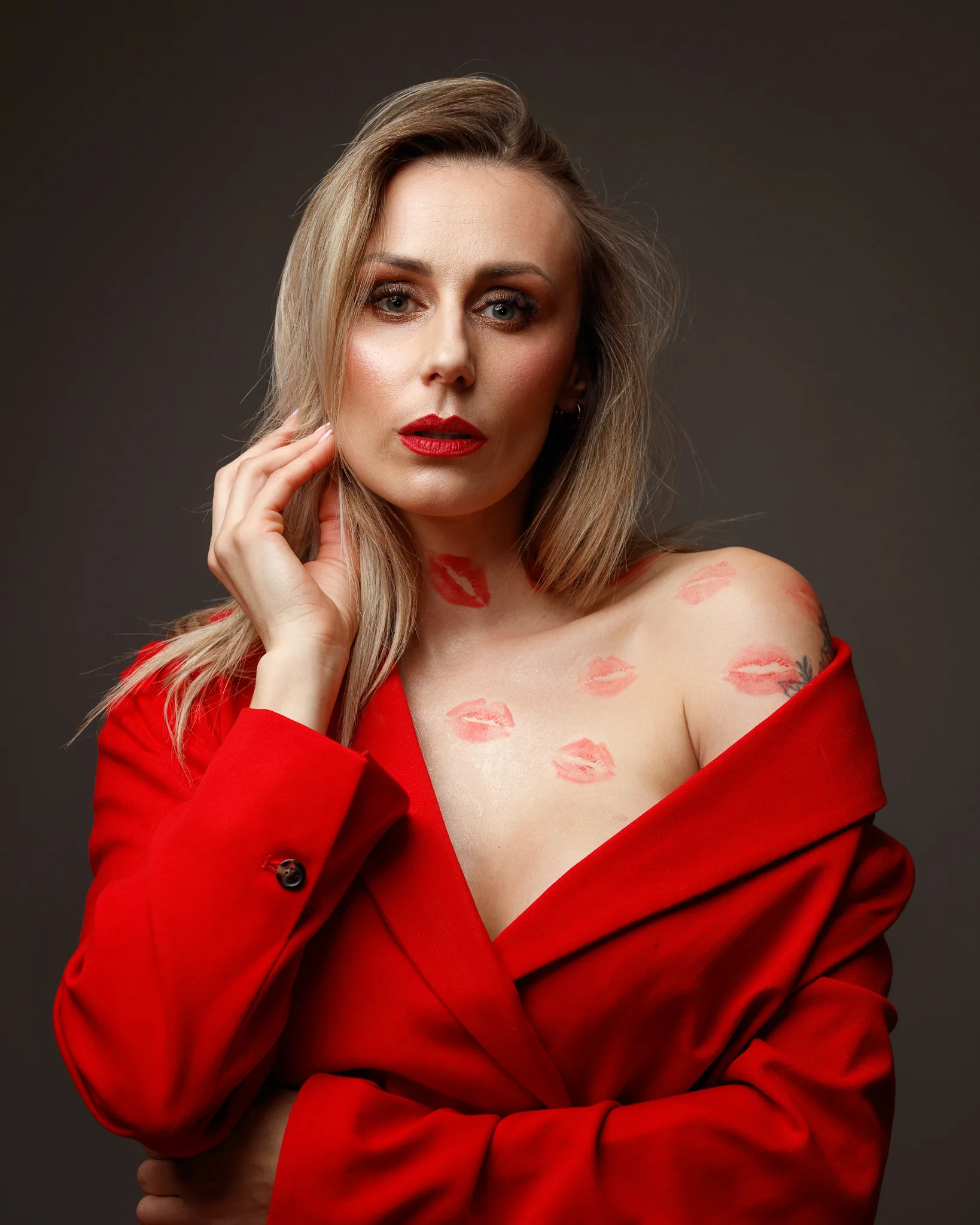
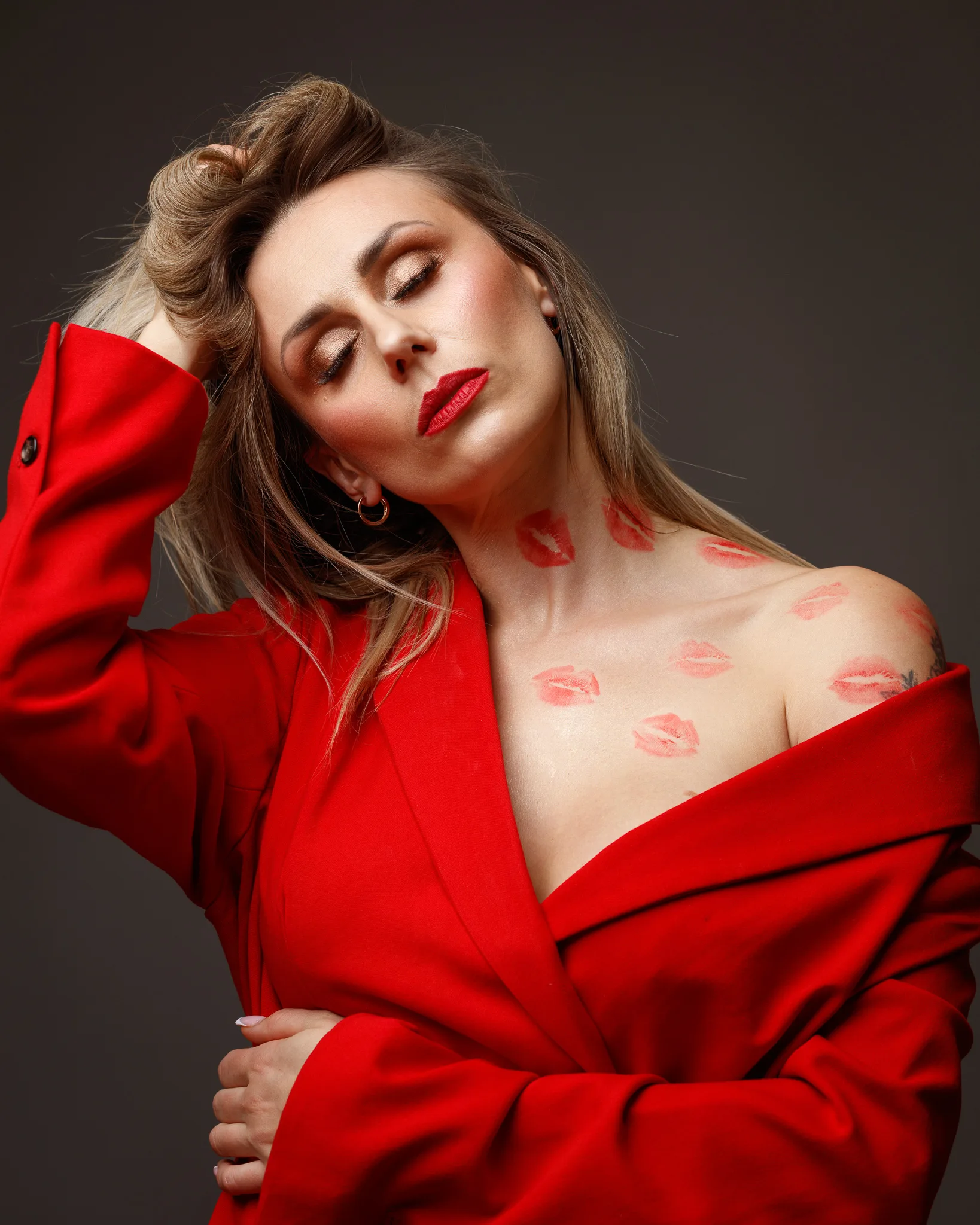
Look 10: Red blazer close-up with kiss marks, final punch
The tighter ending frame. Red blazer off-shoulder, kiss marks dominant, direct gaze, clean crop.
As a final image in a set, it works because it is distilled. The viewer understands the concept instantly, and the lighting stays consistent with the moodier story chapter.
What aspiring models can learn from this shoot
If you are building a portfolio, I would take these lessons from Roksana’s session.
First, plan your looks as chapters. Ten looks like a lot, but it works when each one has a job to do.
Second, keep consistency in one area. Here, that was studio control and clean lighting. It lets the styling evolve without the portfolio feeling messy.
Third, know the difference between creative portfolio images and “digitals”.
Digitals, often called Polaroids, are simple, unfiltered images that show what you look like right now, with minimal styling. Agencies and clients use them as a reference point. Backstage has a straightforward explanation of what modelling digitals are and why they exist: https://www.backstage.com/magazine/article/how-to-take-modeling-digitals-and-polaroids-76696/
Fourth, be cautious with anyone pushing upfront fees with big promises. The UK government has documented misleading practices where consumers paid upfront fees for modelling services that were partially provided or not provided at all: https://www.gov.uk/cma-cases/misleading-claims-by-modelling-agencies
The Guardian has also reported on “test shoot” style schemes that result in hefty bills: https://www.theguardian.com/money/2017/dec/18/modelling-agencies-platforms-scam-studio-collective
I am not saying every paid shoot is a scam. Paid photography is normal. But “pay us a lot, and we will make you a model” should always trigger questions.
Finally, professionalism matters as much as looks. Turn up on time. Bring what you said you would bring. Communicate clearly. Protect your boundaries. Those habits get remembered.
Behind-the-scenes video
I filmed a behind-the-scenes video from this session, which shows the pace of the shoot, how the looks changed, and how the concepts were built in real time.