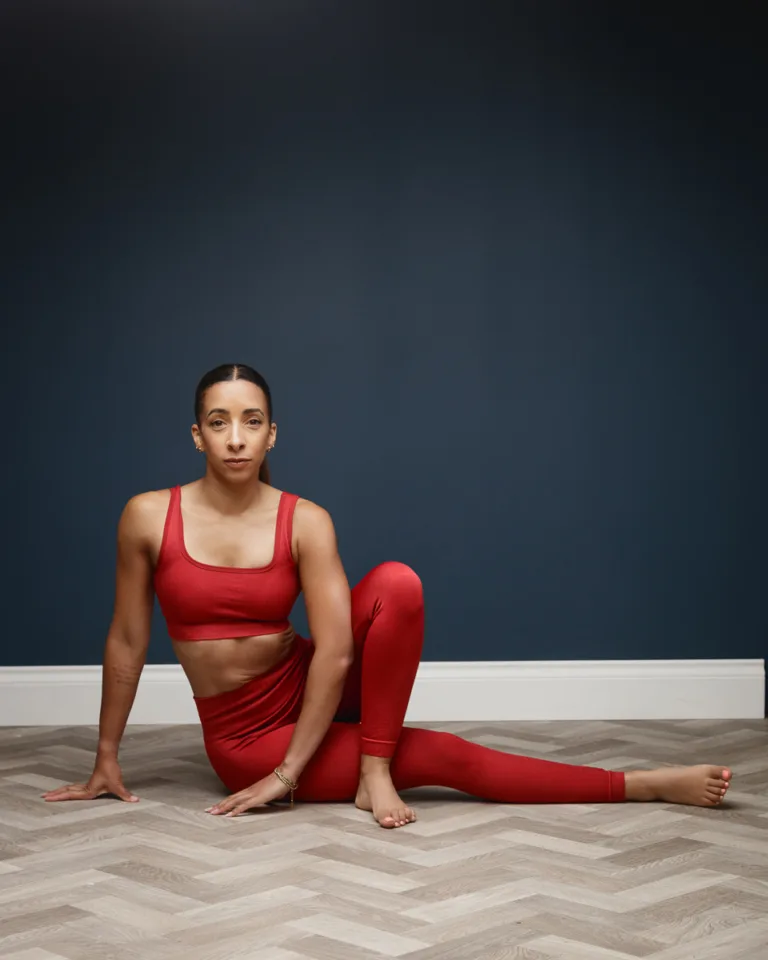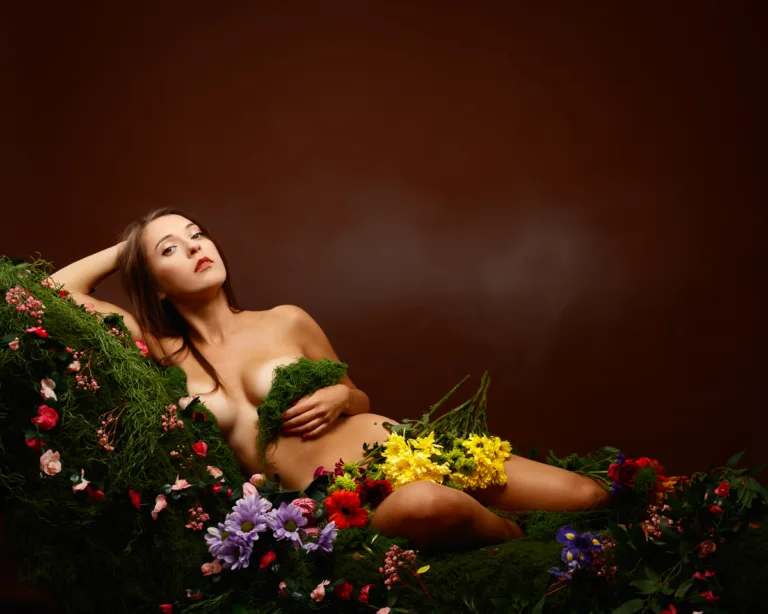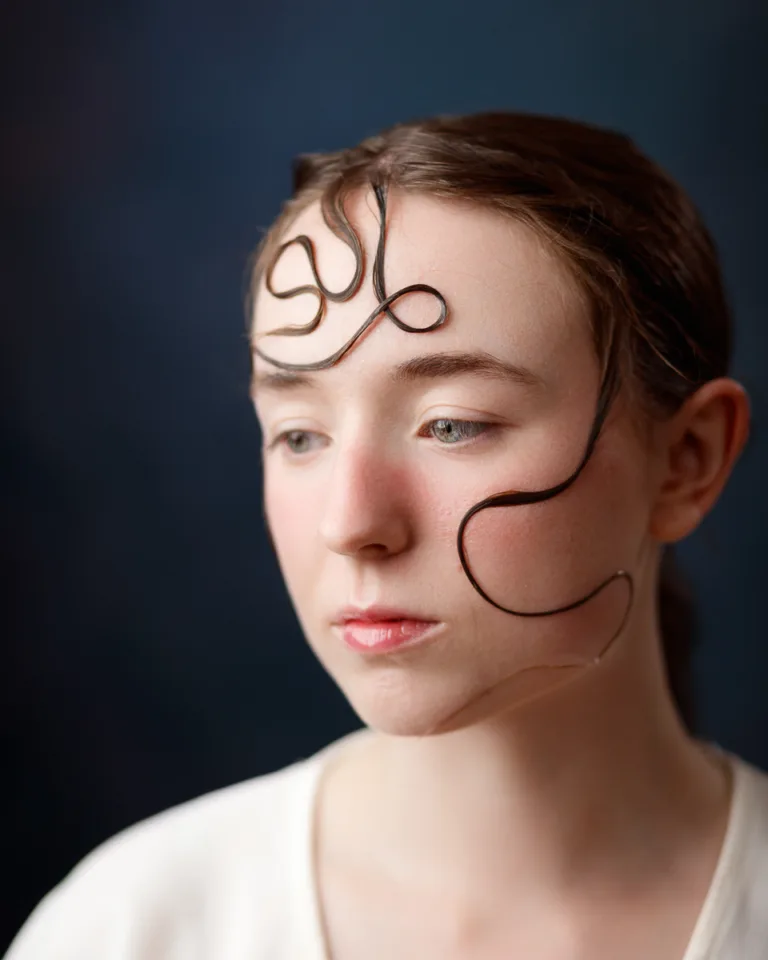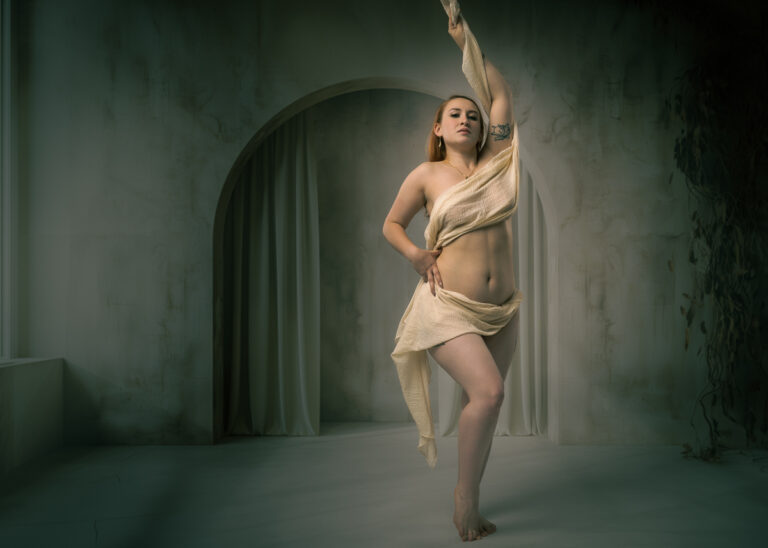
If you are a young model and you are thinking about your first studio photoshoot, I want this post to give you a clear picture of what it can be like, and how to get the most from it. I recently photographed Natalie in my studio for a portrait session that leaned into dark elegance, cinematic light, and a slightly gothic sense of romance. The results worked because Natalie arrived prepared, the styling was strong, and we kept the lighting consistent enough that every frame belonged to the same story.
Natalie describes herself as a goth, and she wears that identity with confidence. She is 26, has over six years of modelling experience, and has worked across fashion modelling, glamour, and boudoir. She is relaxed on set, takes direction well, and understands how small changes in expression can shift the feel of an image.
Natalie also came to the studio with her partner, Connor, who attended as her chaperone. I always welcome this, because having someone you trust nearby can make a studio photoshoot feel calmer and more grounded, especially when you are working through outfits and poses that carry a strong mood or sense of character. Connor was supportive throughout, gave Natalie space to work, and helped the session run smoothly, which meant we could stay focused on the lighting, expression, and small refinements that make portraits feel intentional.
Below, I will walk you through how we built the session, why the lighting and posing choices mattered, and what you can take from it for your own studio portrait photography and model portfolio work.
Who this session is for
If you want a studio photoshoot that feels polished but still personal, this is the kind of approach that works well. It suits:
- Young models building a first serious model portfolio
- Anyone refining a niche look, such as alternative fashion or gothic styling
- Models who want images with mood, not just plain headshots
- People who want variety without changing the whole setup every ten minutes
A studio is ideal for this because it removes distractions. You control the light. You control the background. You can focus on expression, posing, and small details.
Natalie’s look and why it photographs well
Natalie has a strong, recognisable look. Dark hair, defined brows, bold eye makeup, and a deep lip colour all suit this style. Her tattoos also play a big role. They add texture and story, especially in simple lighting where skin, fabric, and ink hold detail, without getting busy.
The key point for young models is this: you do not need to fit a single “standard” look. You need clarity. If your look is distinctive, lean into it and build a set of images that feel true to you. Casting teams often remember the model who looks like themselves, not the model who copies everyone else.
Setting the tone with light and simplicity
For this shoot, I wanted the portraits to feel intimate and timeless. I kept the background dark and unobtrusive, so the viewer’s eye stays on Natalie’s face, shape, and gesture.
The look comes from controlled shadow and gentle fall-off. The subject stays luminous, while the edges soften and recede. That gives a painterly feel, but it still reads as clean studio work.
If you are new to studio modelling, here is the practical takeaway. A strong studio portrait does not need five lights and a complicated set. It needs:
- A clear lighting plan
- A background choice that supports your styling
- Consistent exposure and skin tones
- Enough time to refine pose and expression
This is also why studio work is great for young models. You can slow down and learn. You can review frames together. You can improve quickly within one session.
Why consistent lighting helps your portfolio
A lot of early portfolios look messy because the images do not feel connected. The light changes, the colour changes, and the editing style changes. It can make the model look like five different people.
For Natalie’s session, I kept the photographic language consistent. That means:
- Similar contrast and shadow depth
- Similar background tone
- Similar retouching style
- A steady pace, rather than rushing through outfits
The outfits changed. The mood shifted. But the set stayed cohesive.
If you want a portfolio that looks professional, consistency is one of the simplest wins.
A study in expression and elegant posing
Natalie is very natural in front of the camera. That meant we could work with subtle changes rather than constant reinvention. Small shifts did most of the work:
- Head angle
- Eye line
- Shoulder position
- Hand placement
- Weight shift through the hips and feet
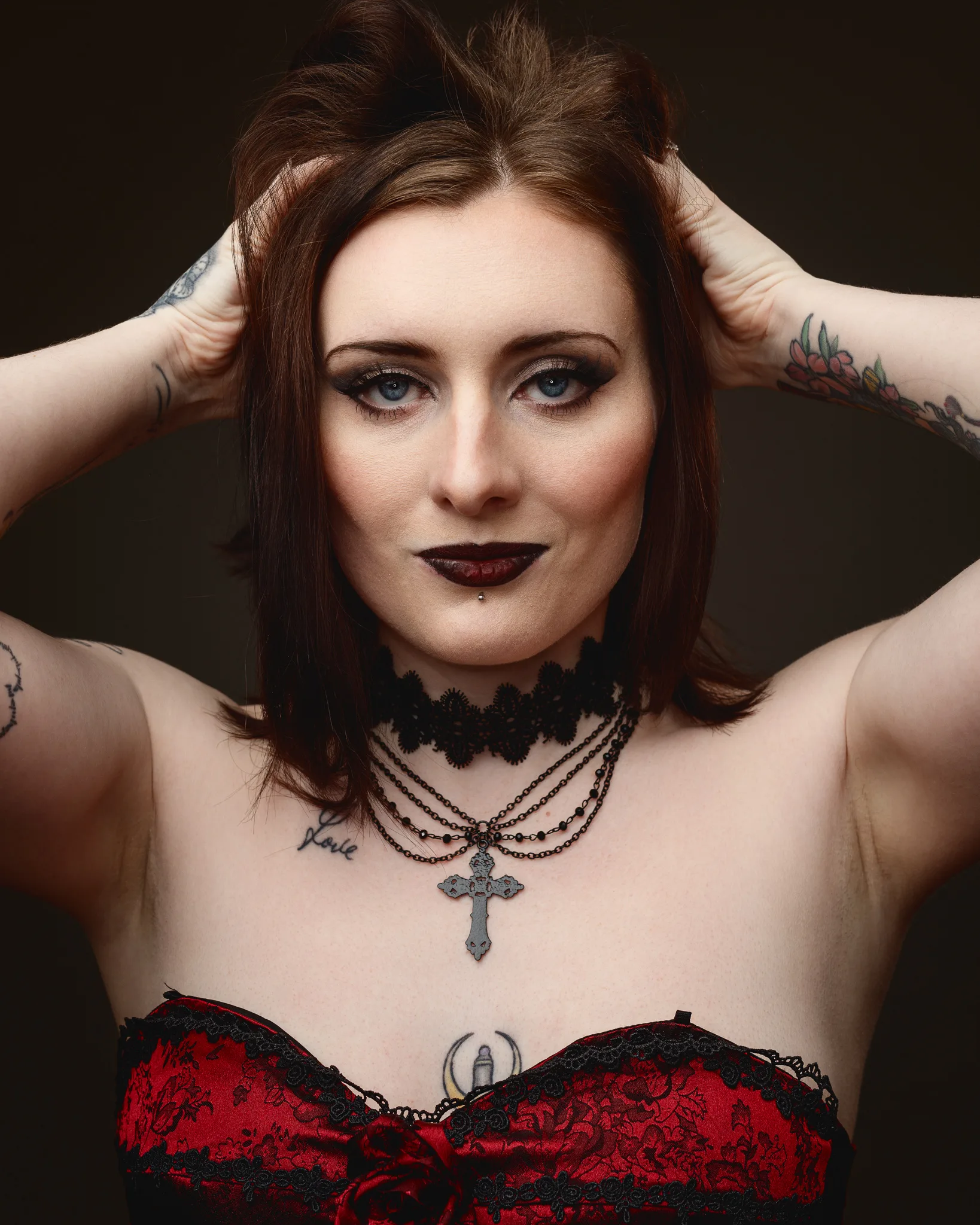
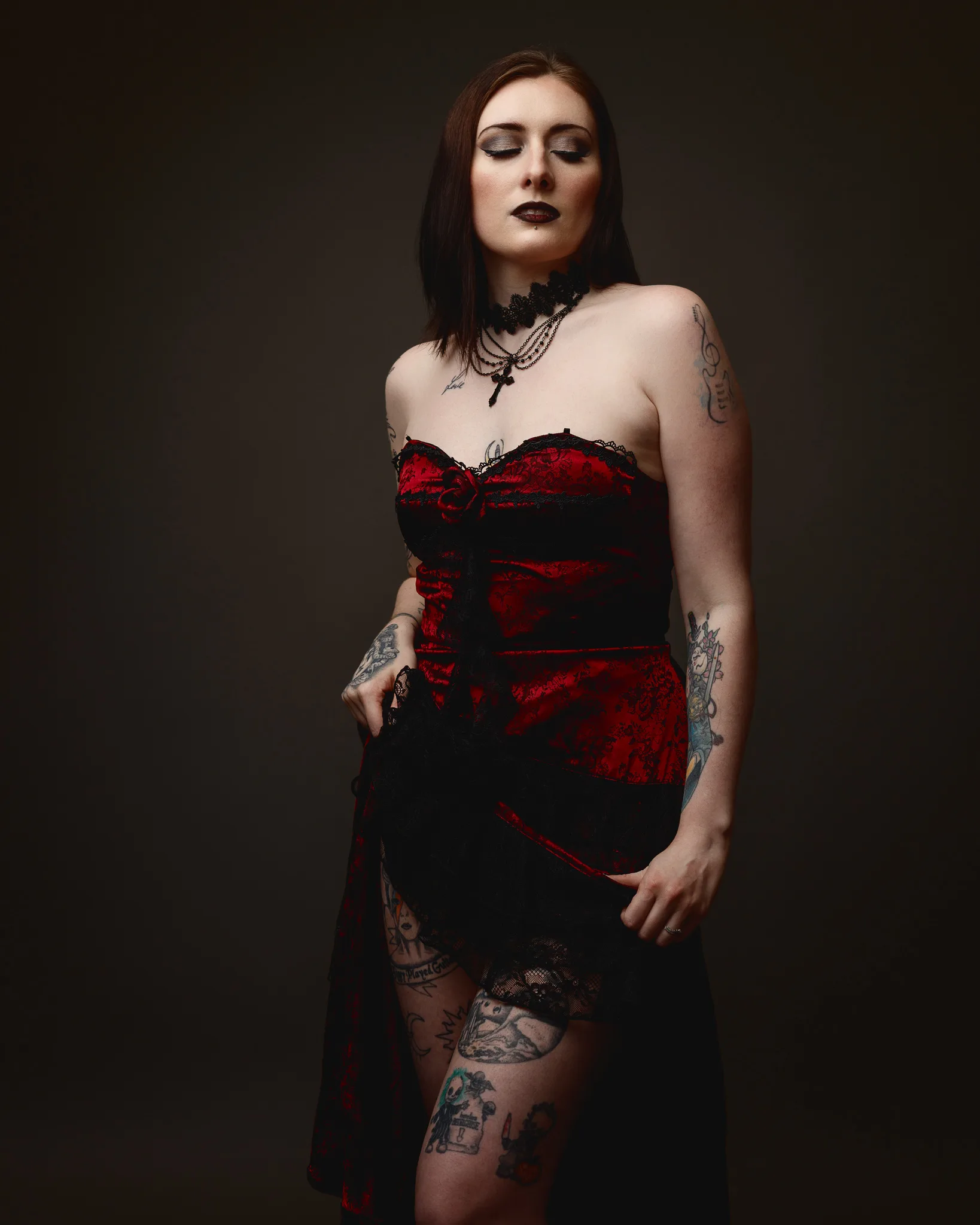
Some of my favourite frames were the quiet ones. Eyes closed. Chin slightly down. Hands lifted into the hair. A pause between bigger poses. Those moments feel self-possessed rather than performed, and they suit this styling perfectly.
If you are a young model, I want you to hear this clearly. You do not need to “do loads”. You need control. Learn three strong poses, then refine them. Change your eye line. Change your breathing. Change the shape of your hands. That is how you build variety without losing quality.
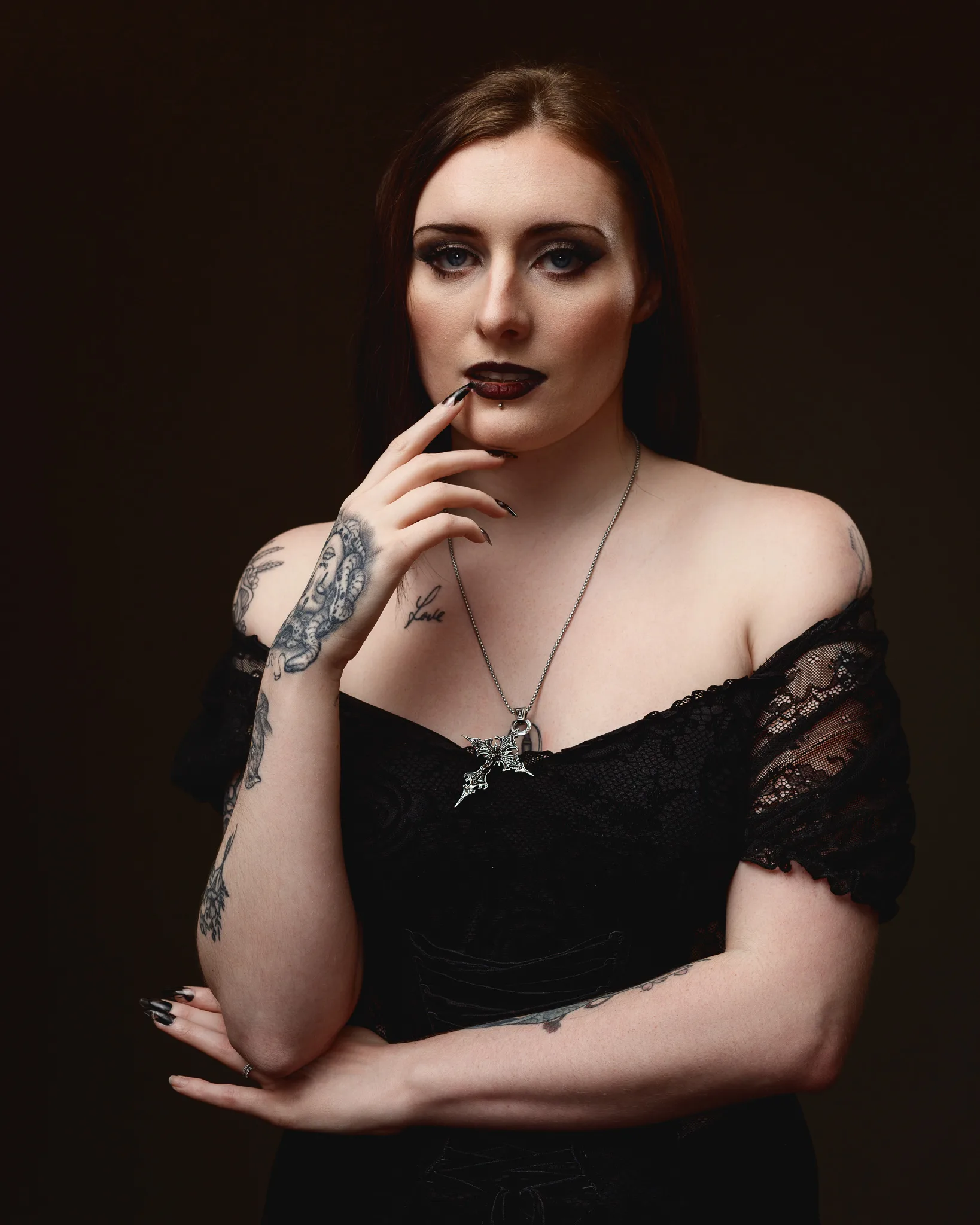
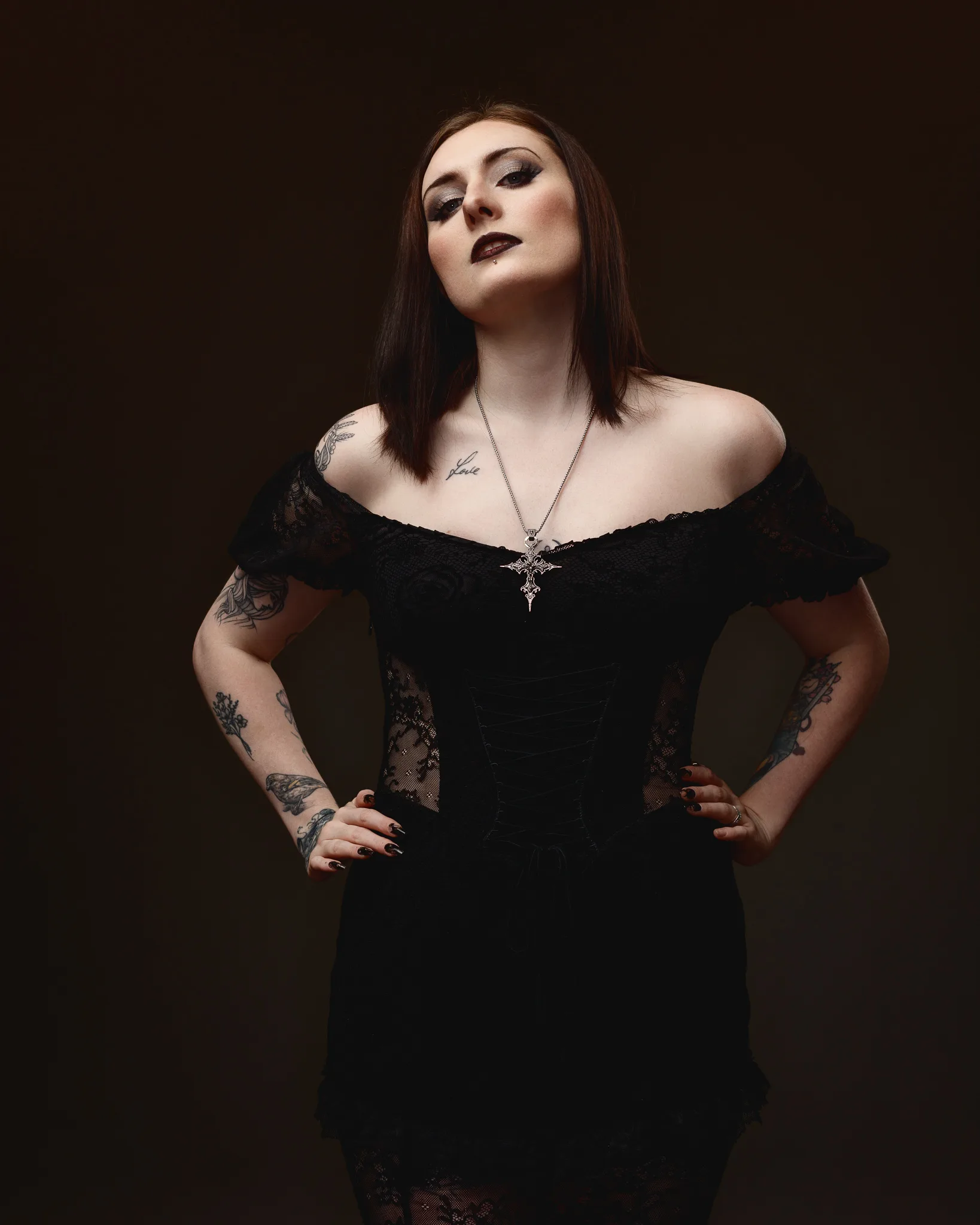
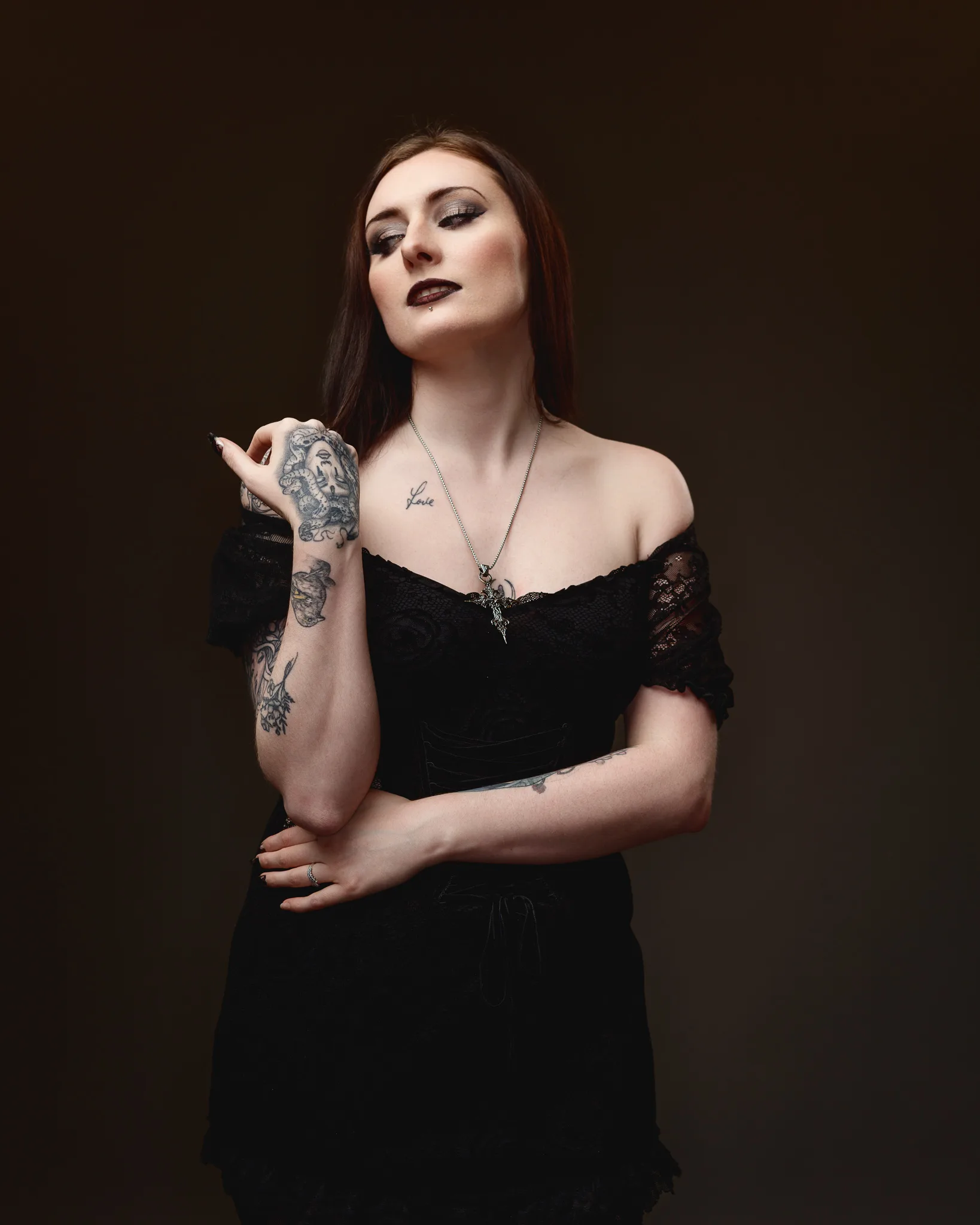
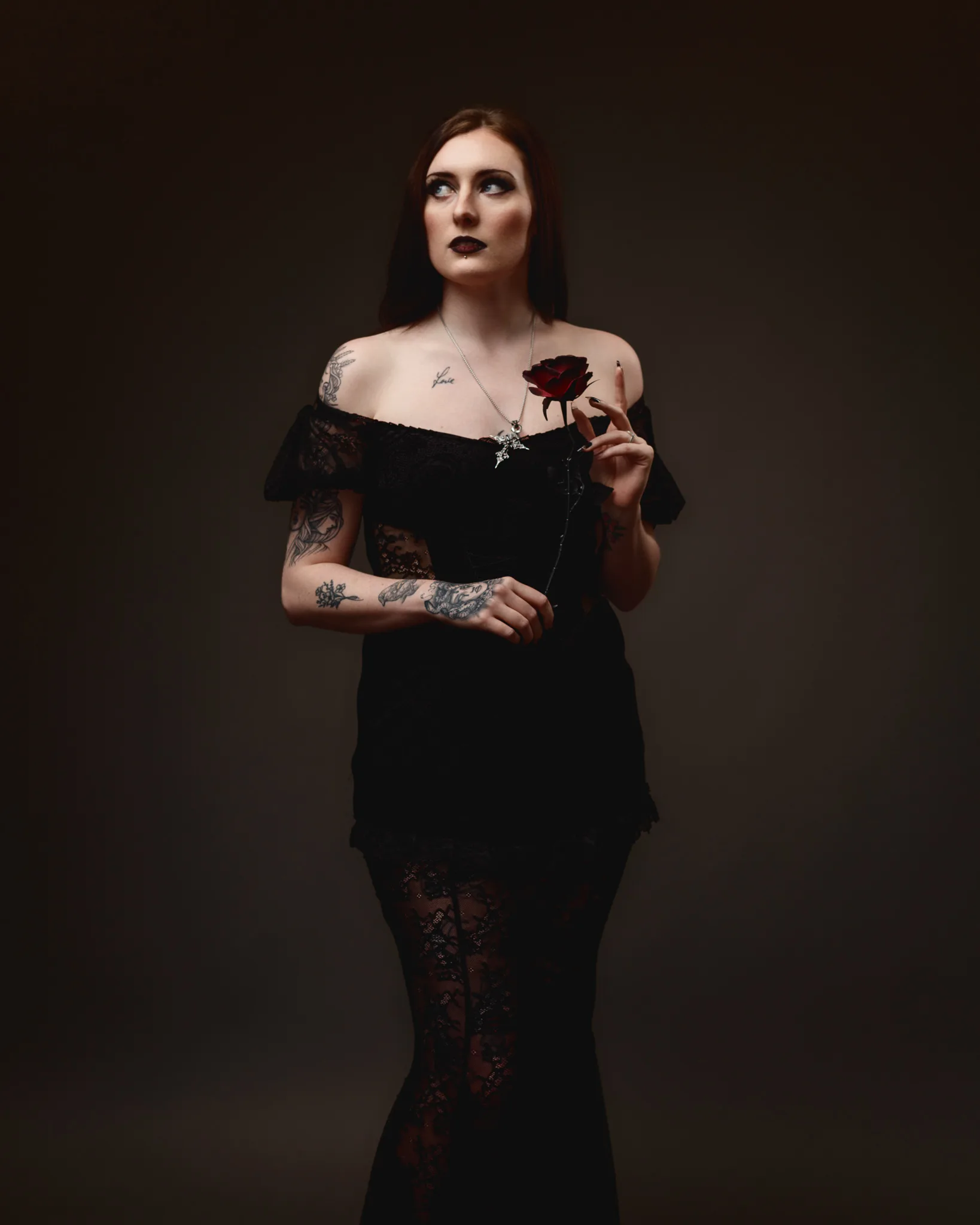
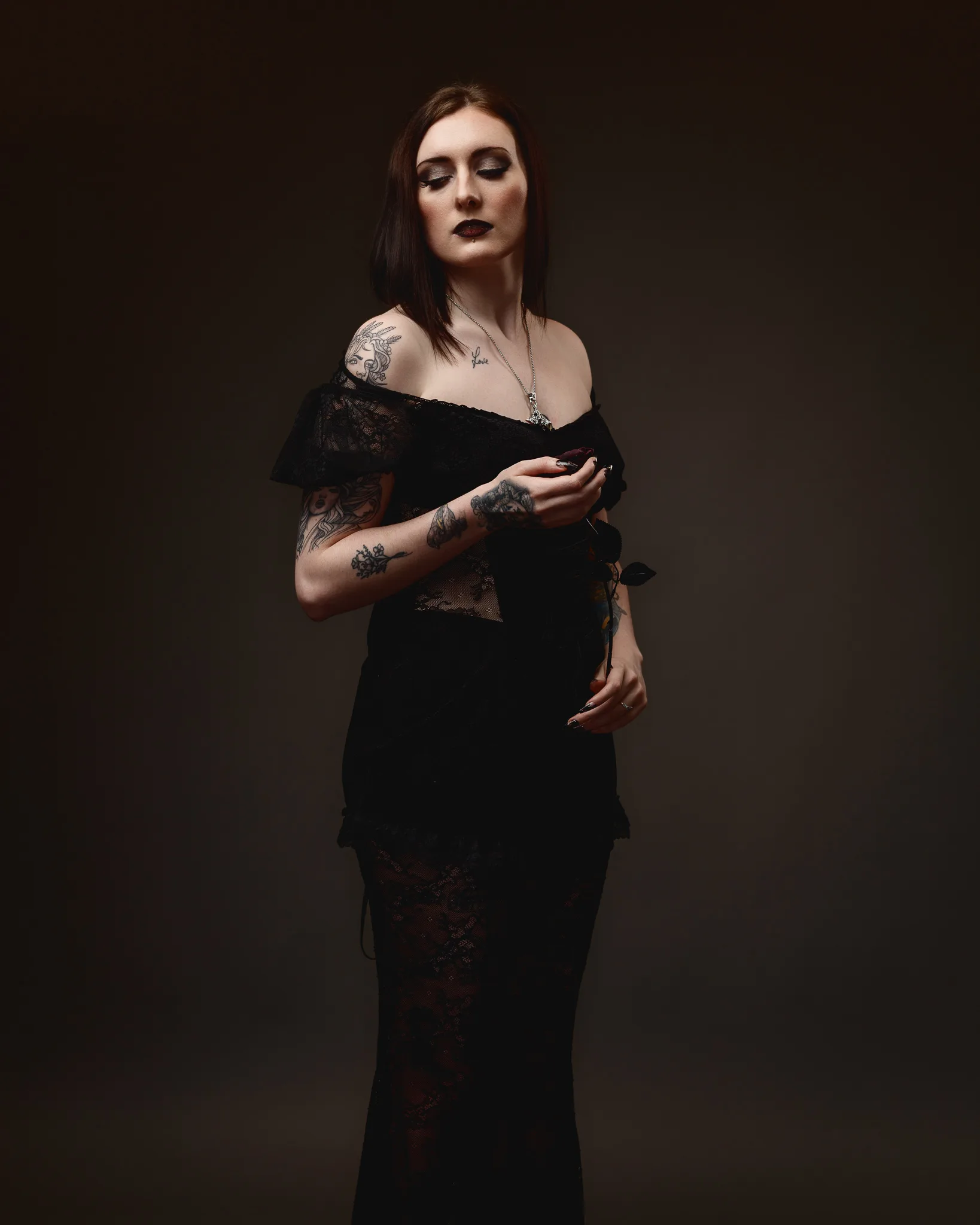
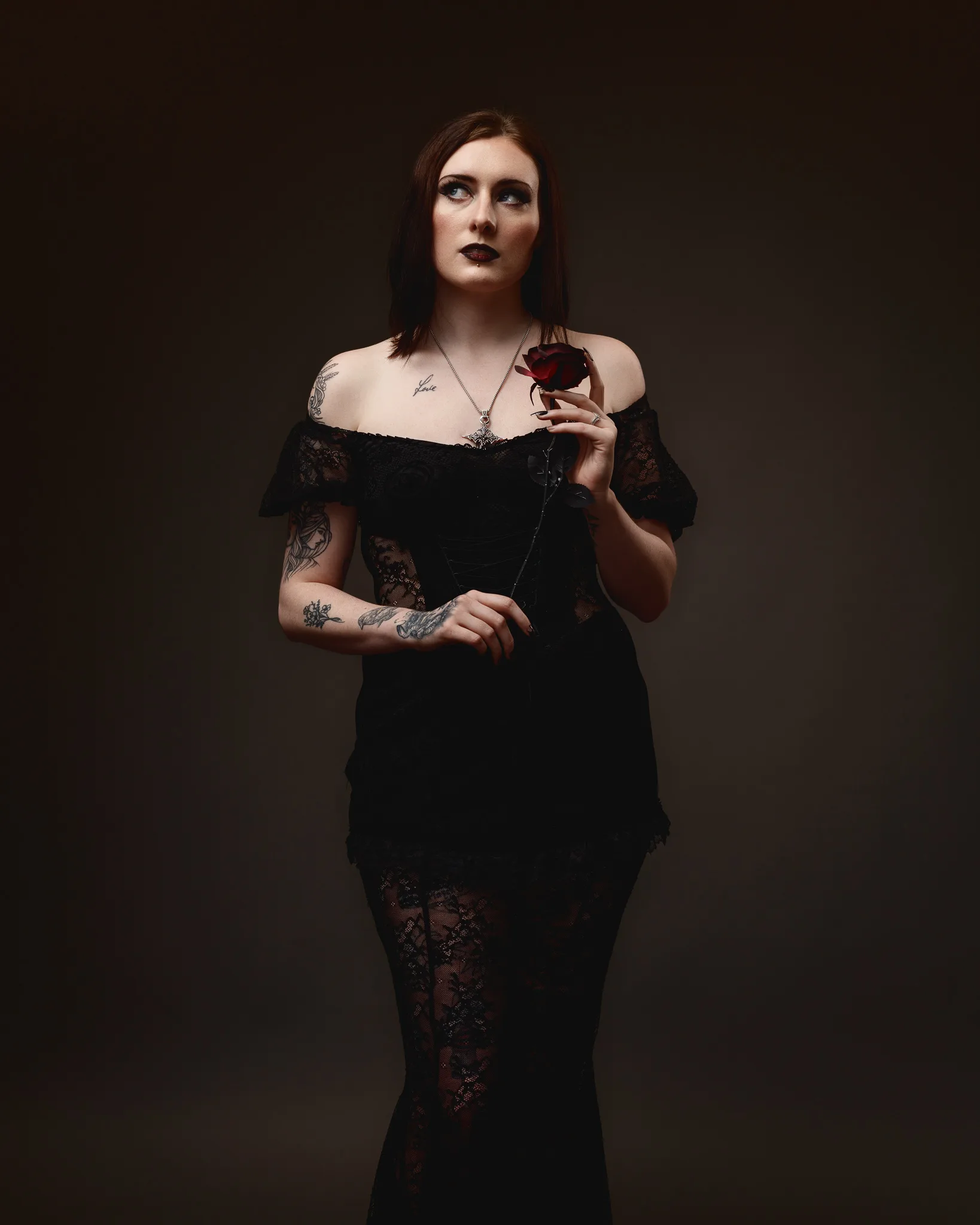
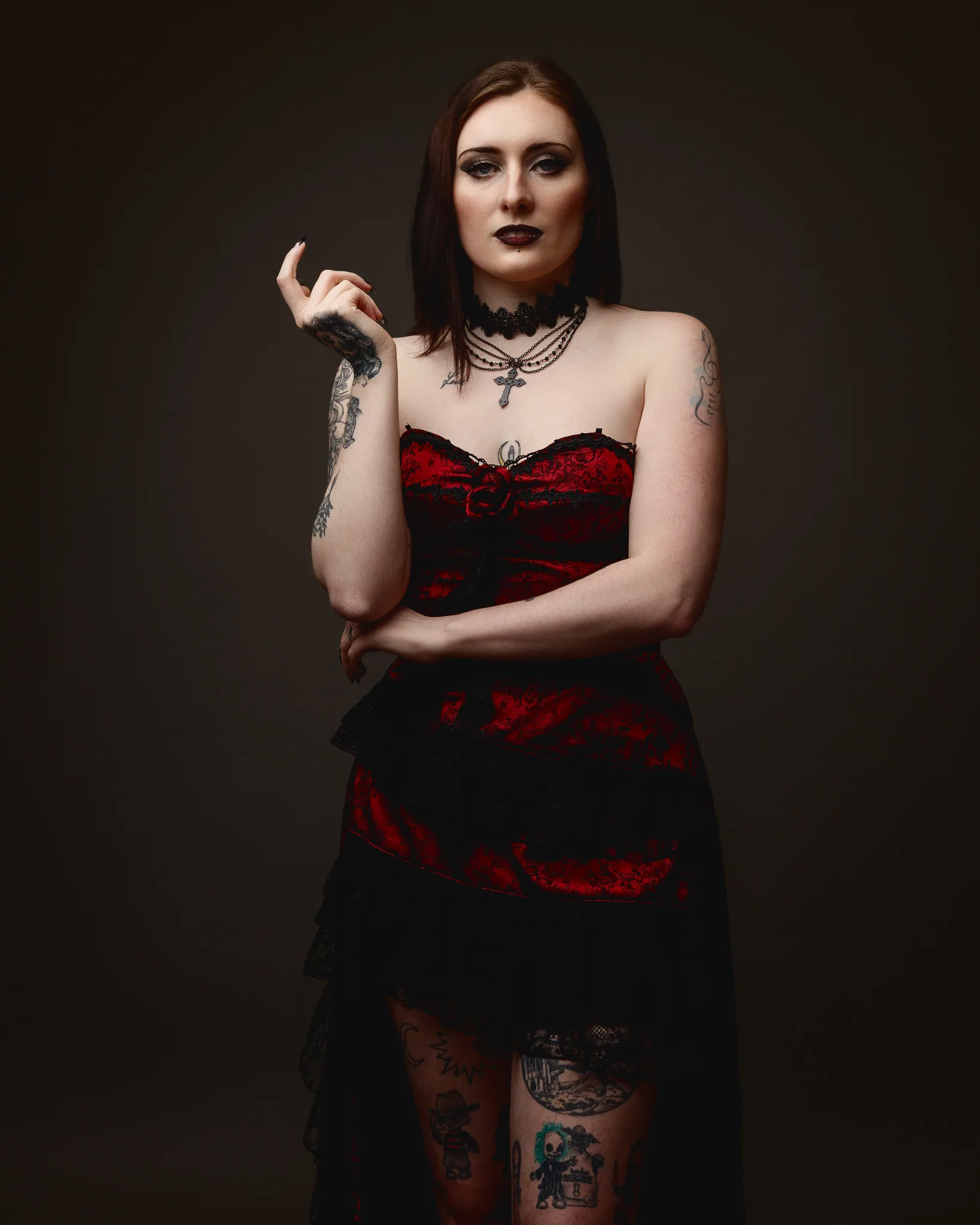
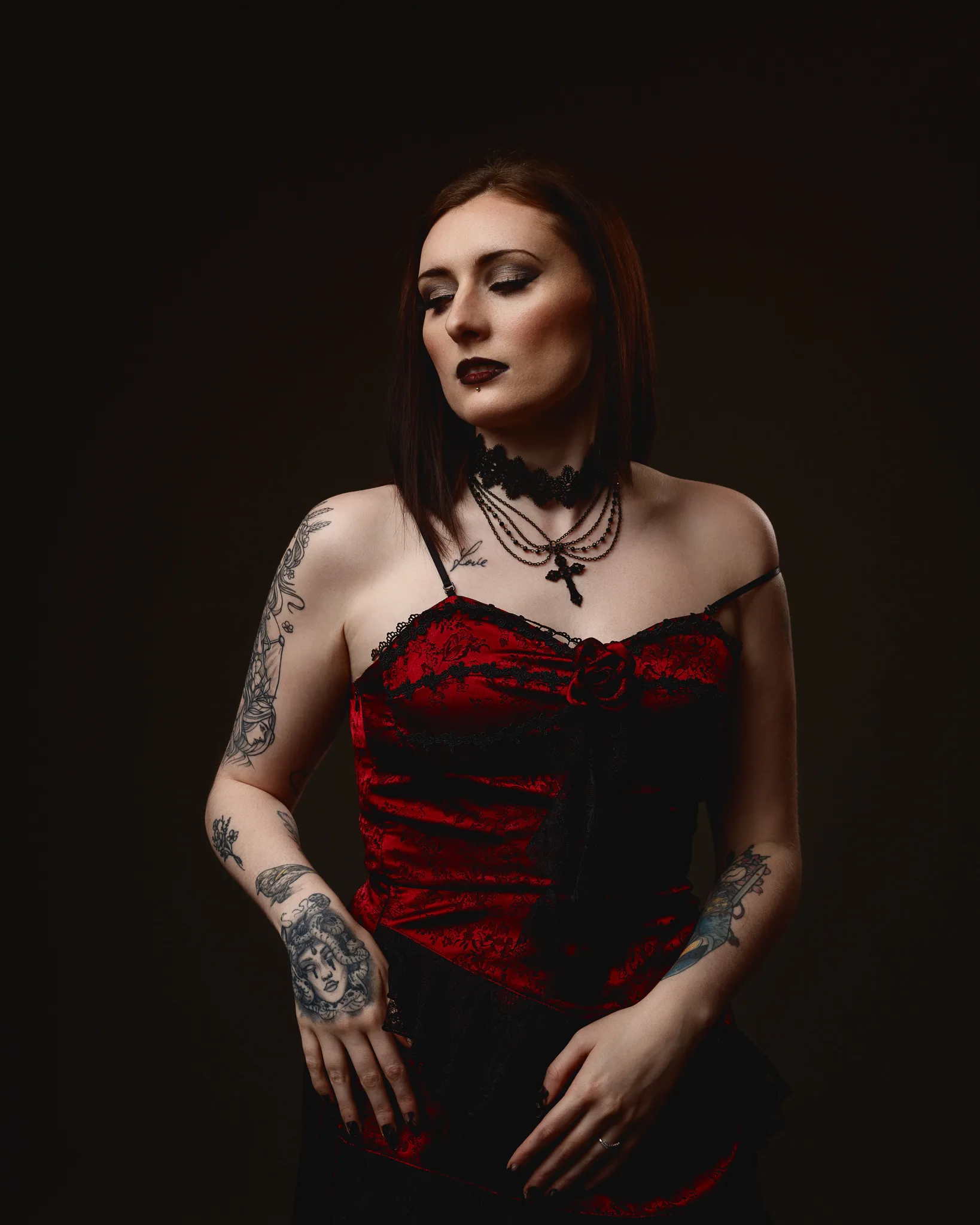
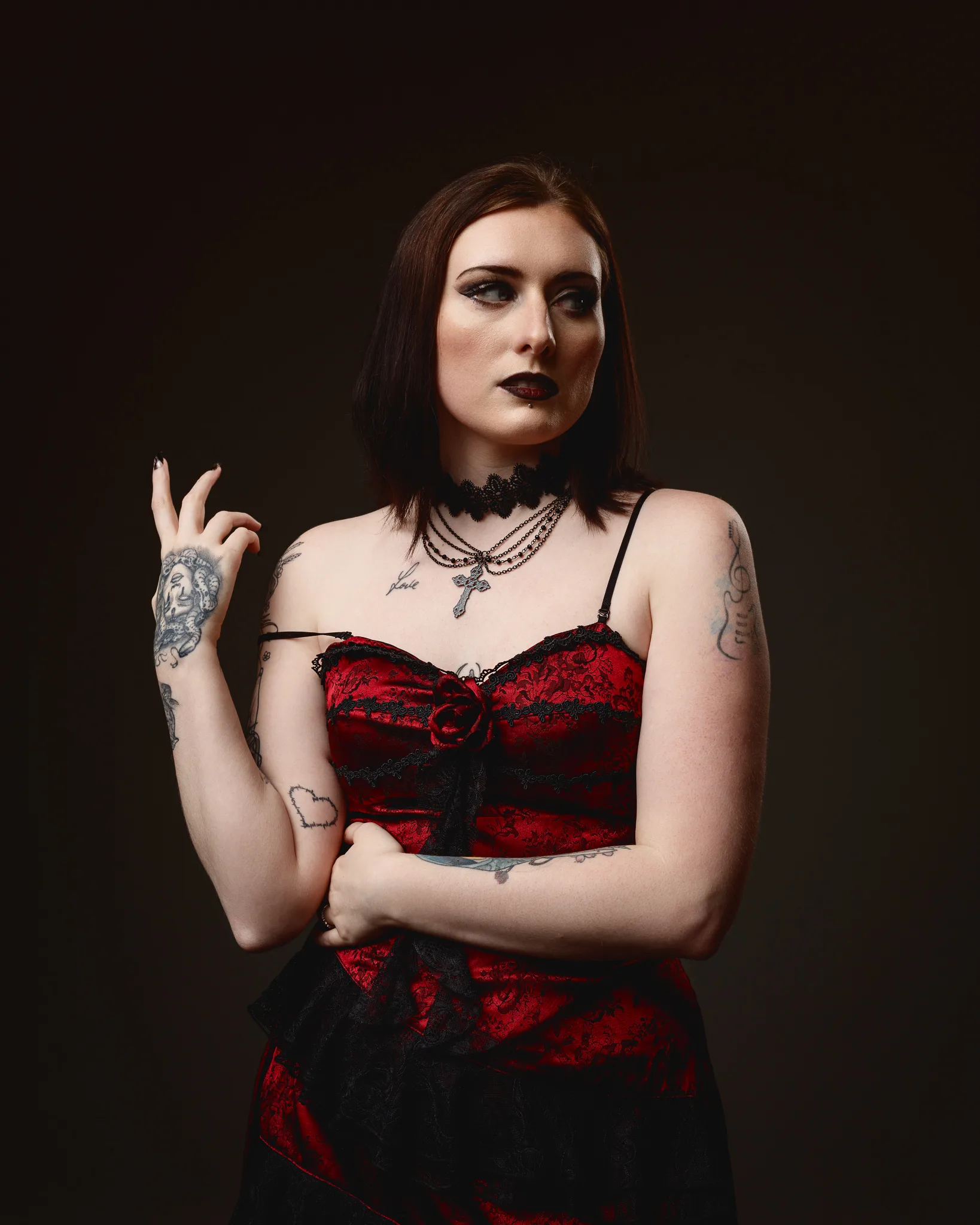
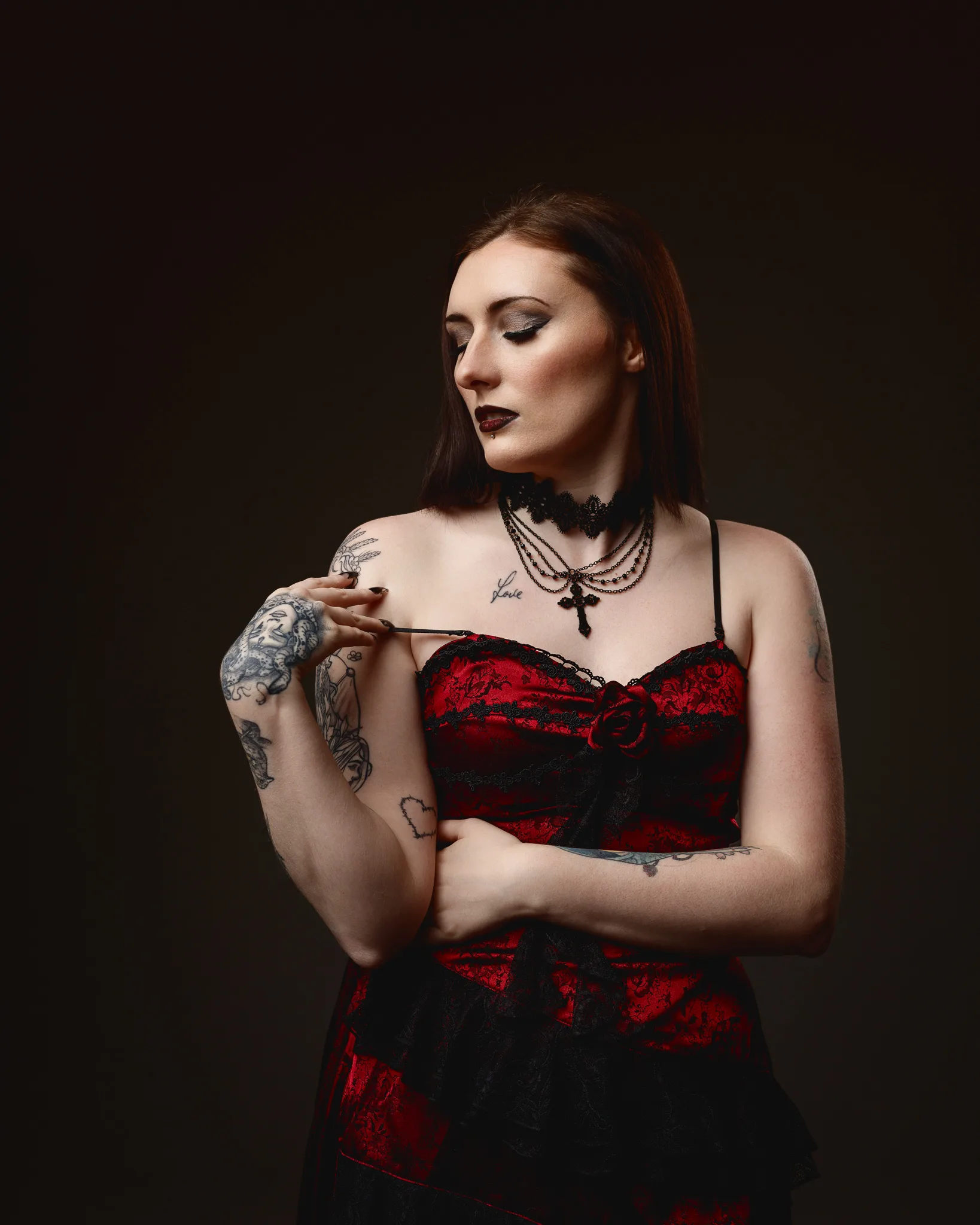
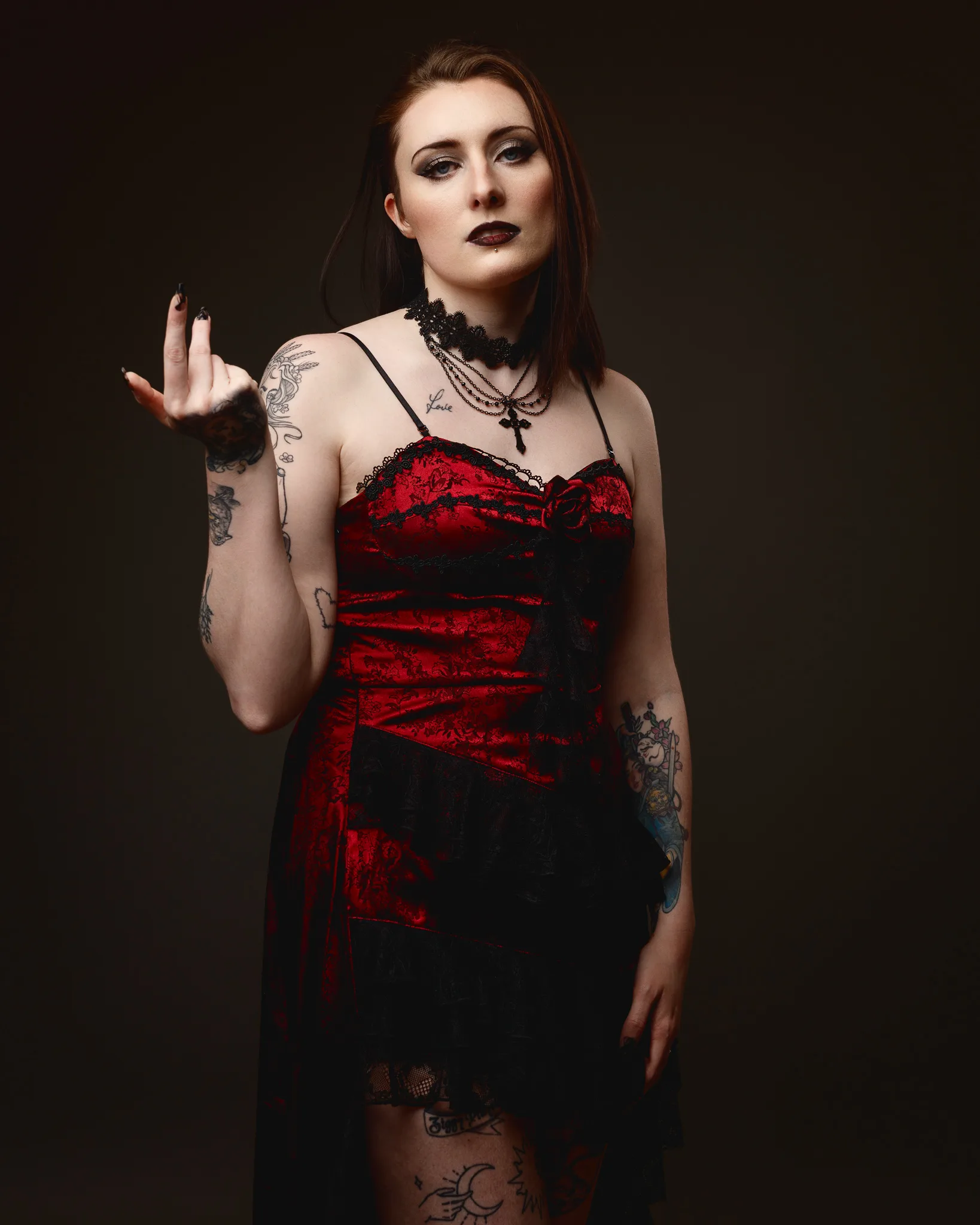
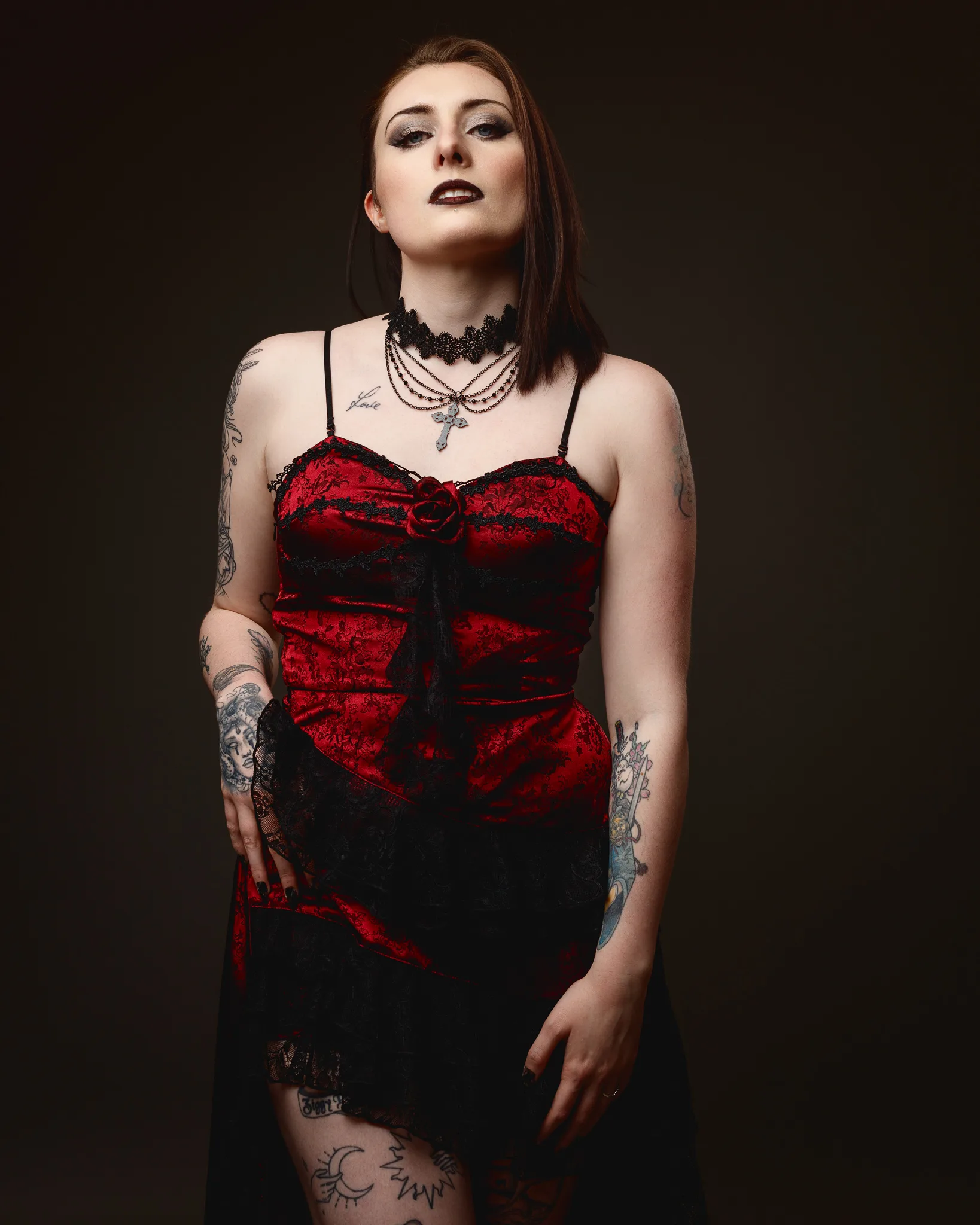
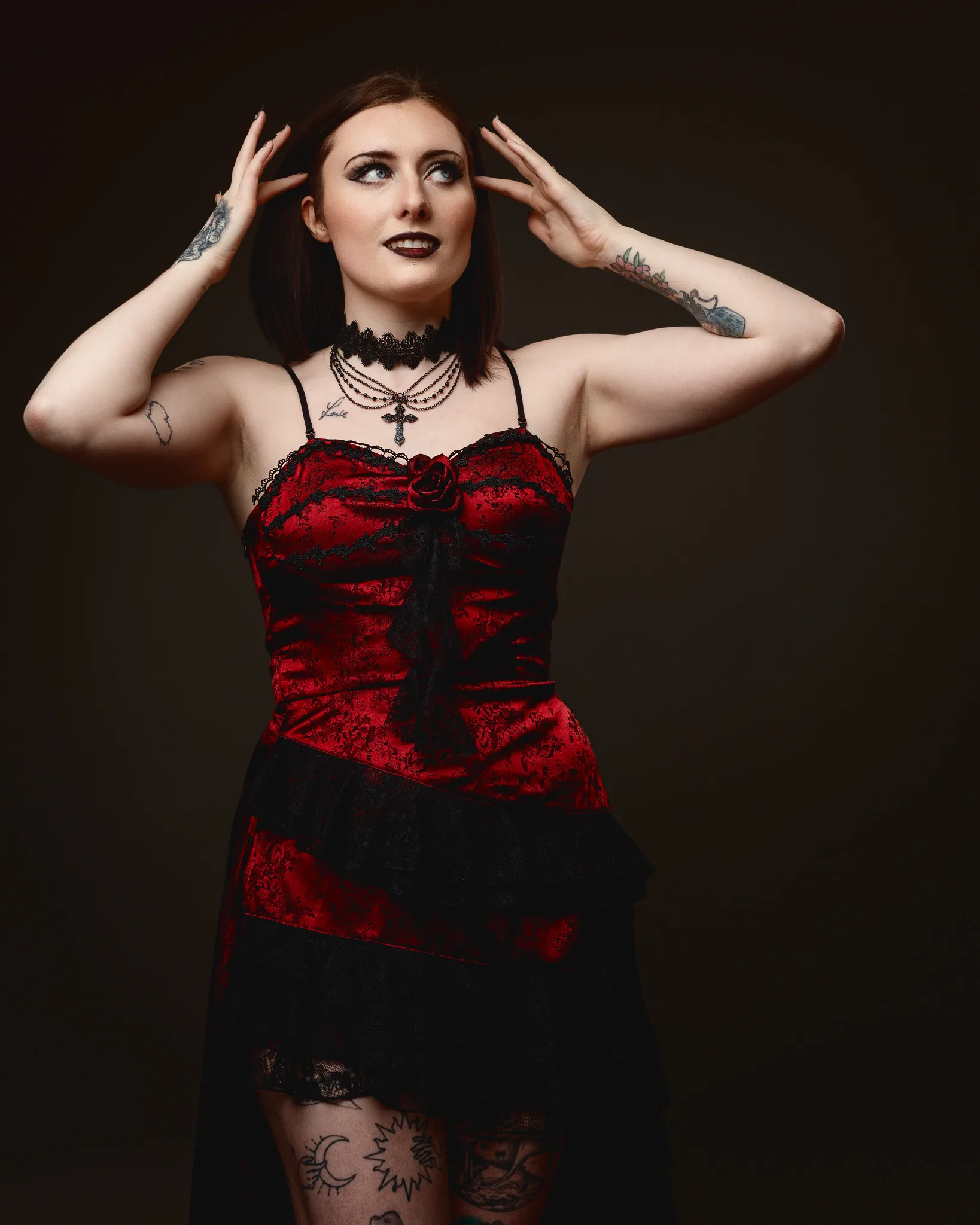
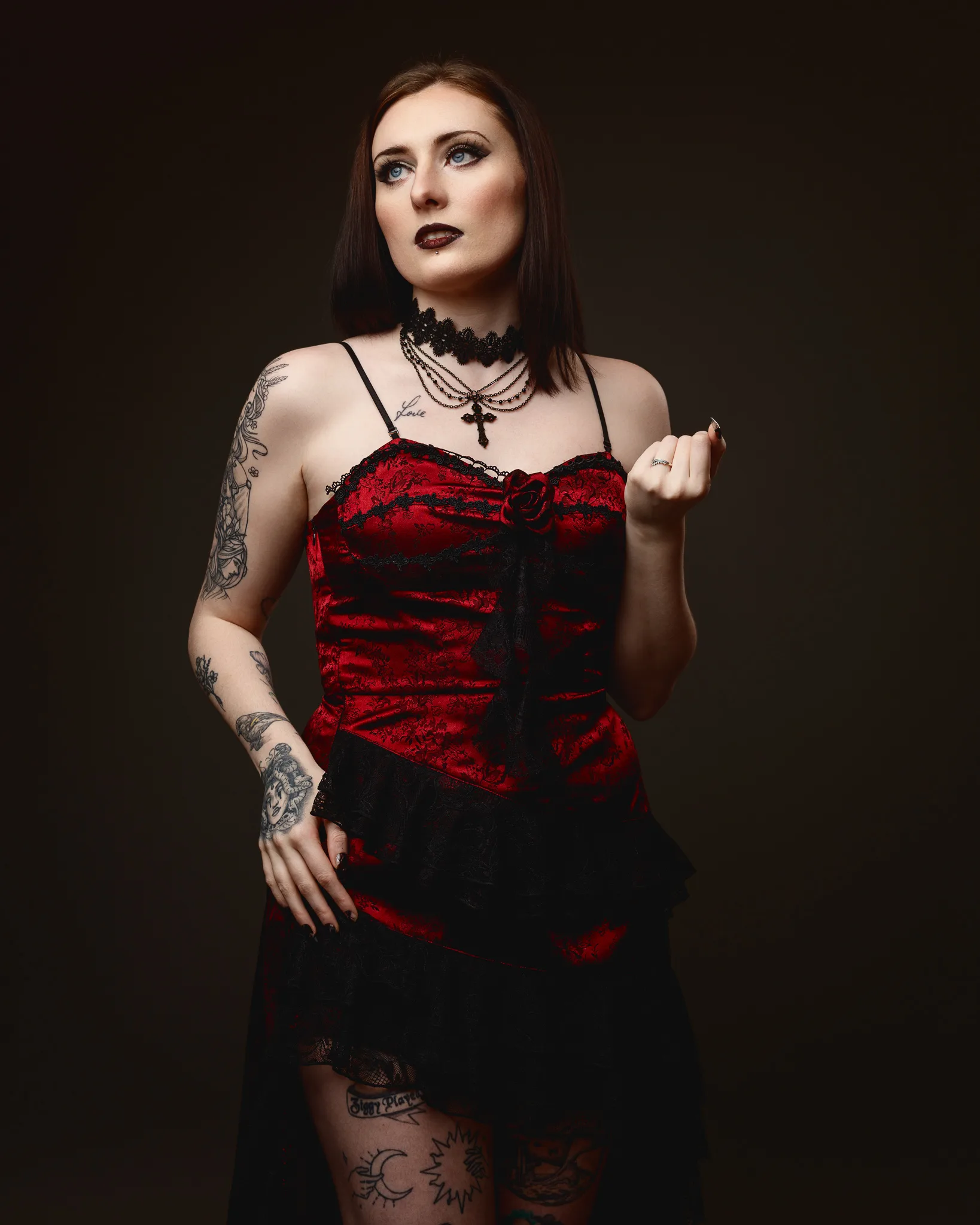
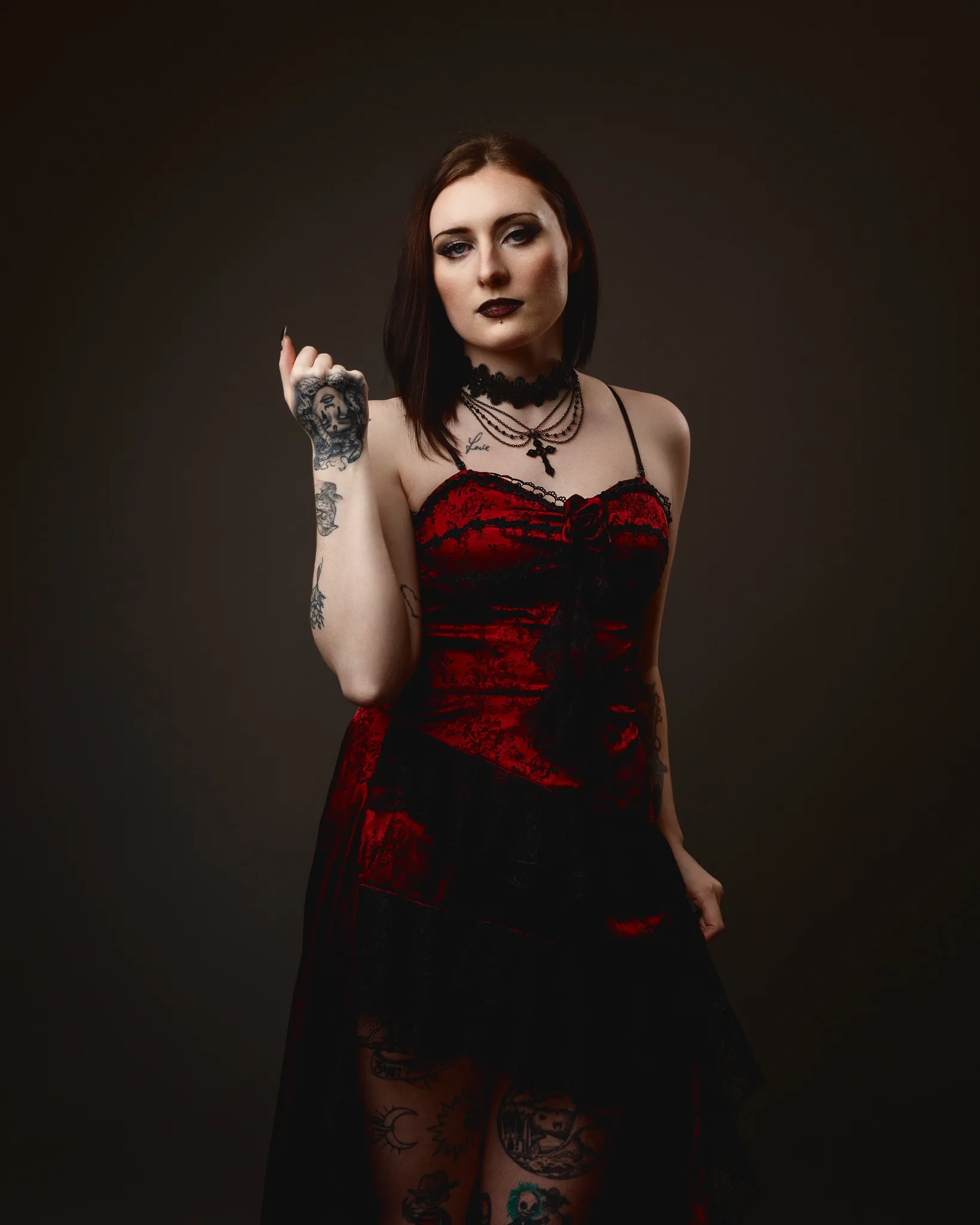
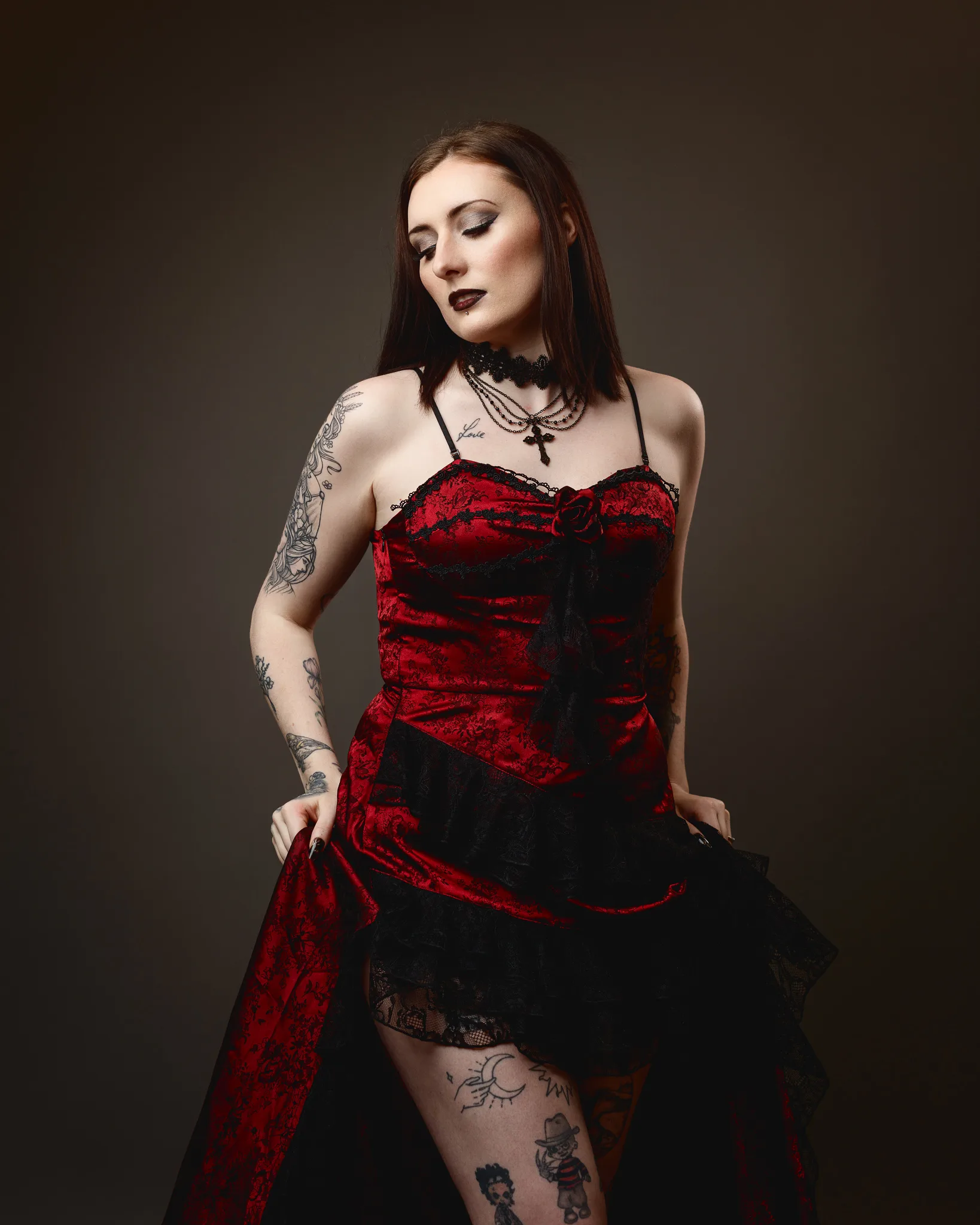
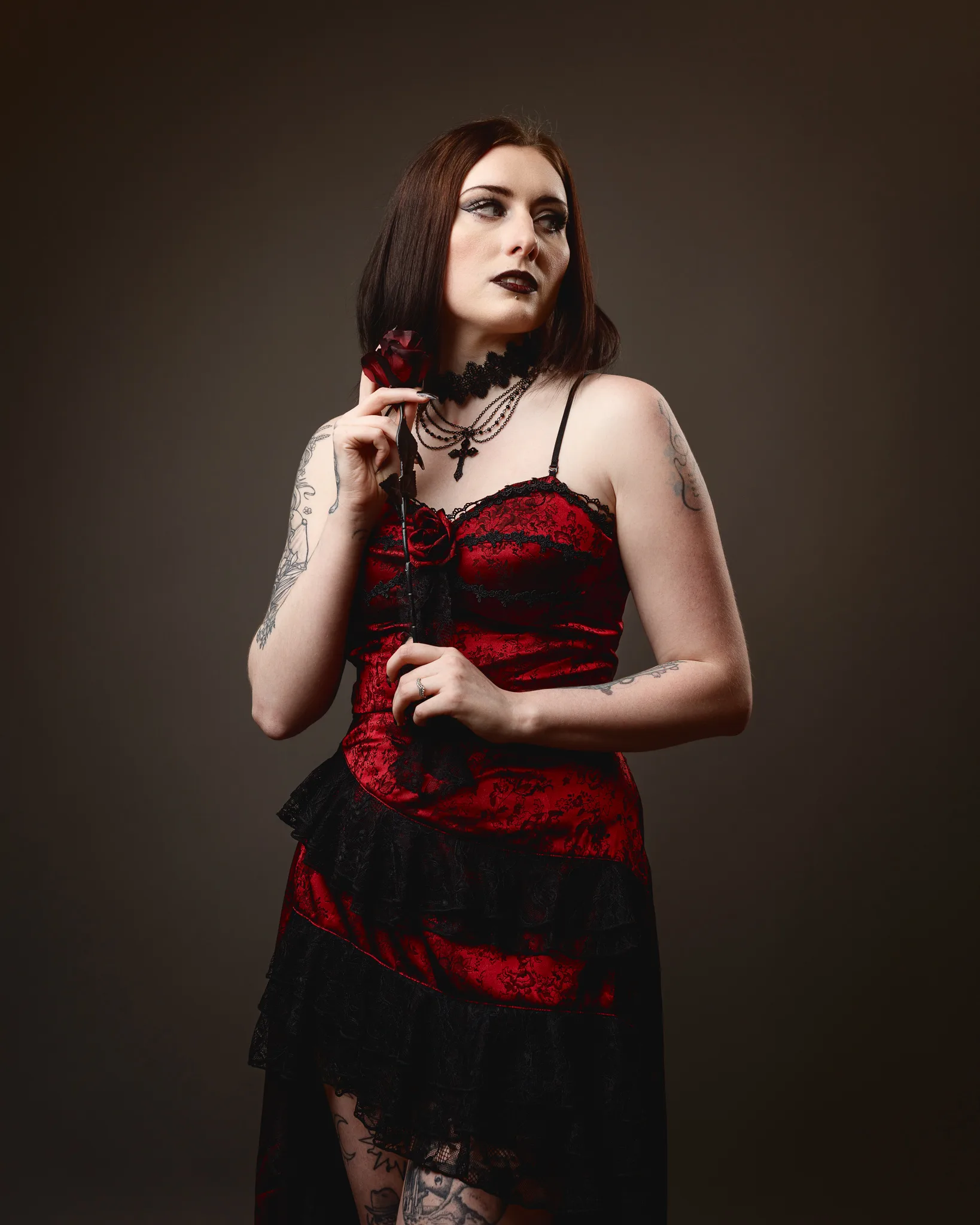
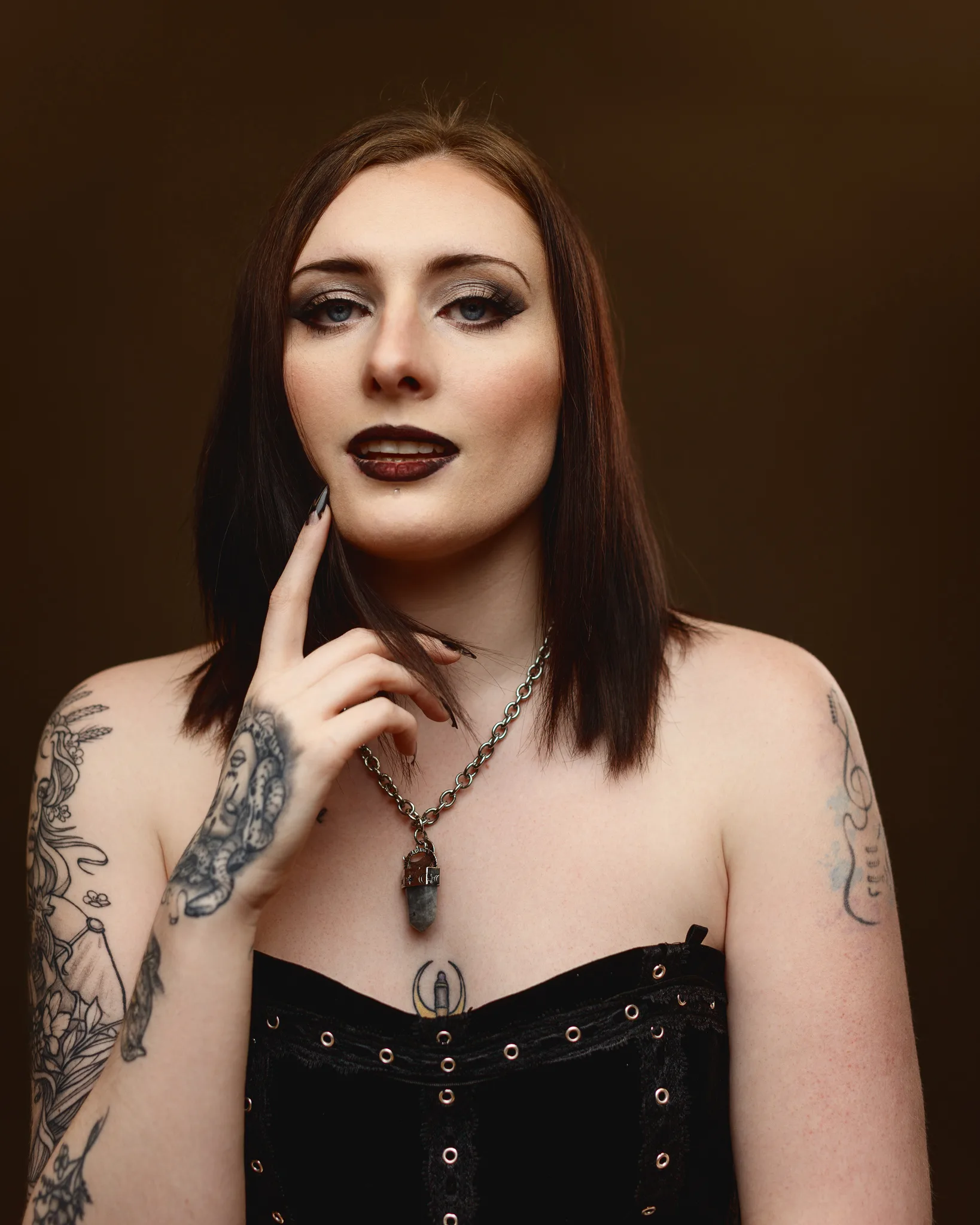
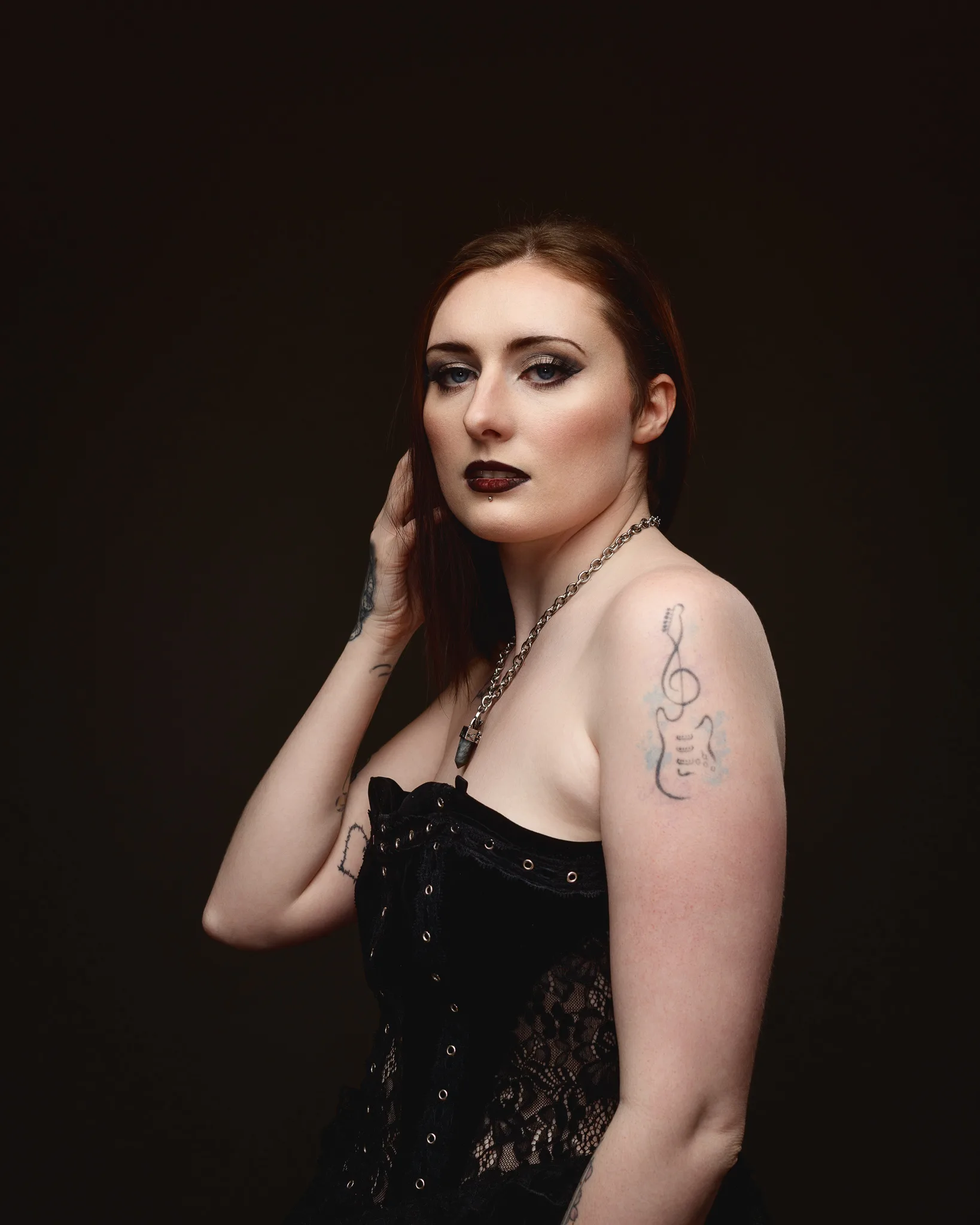
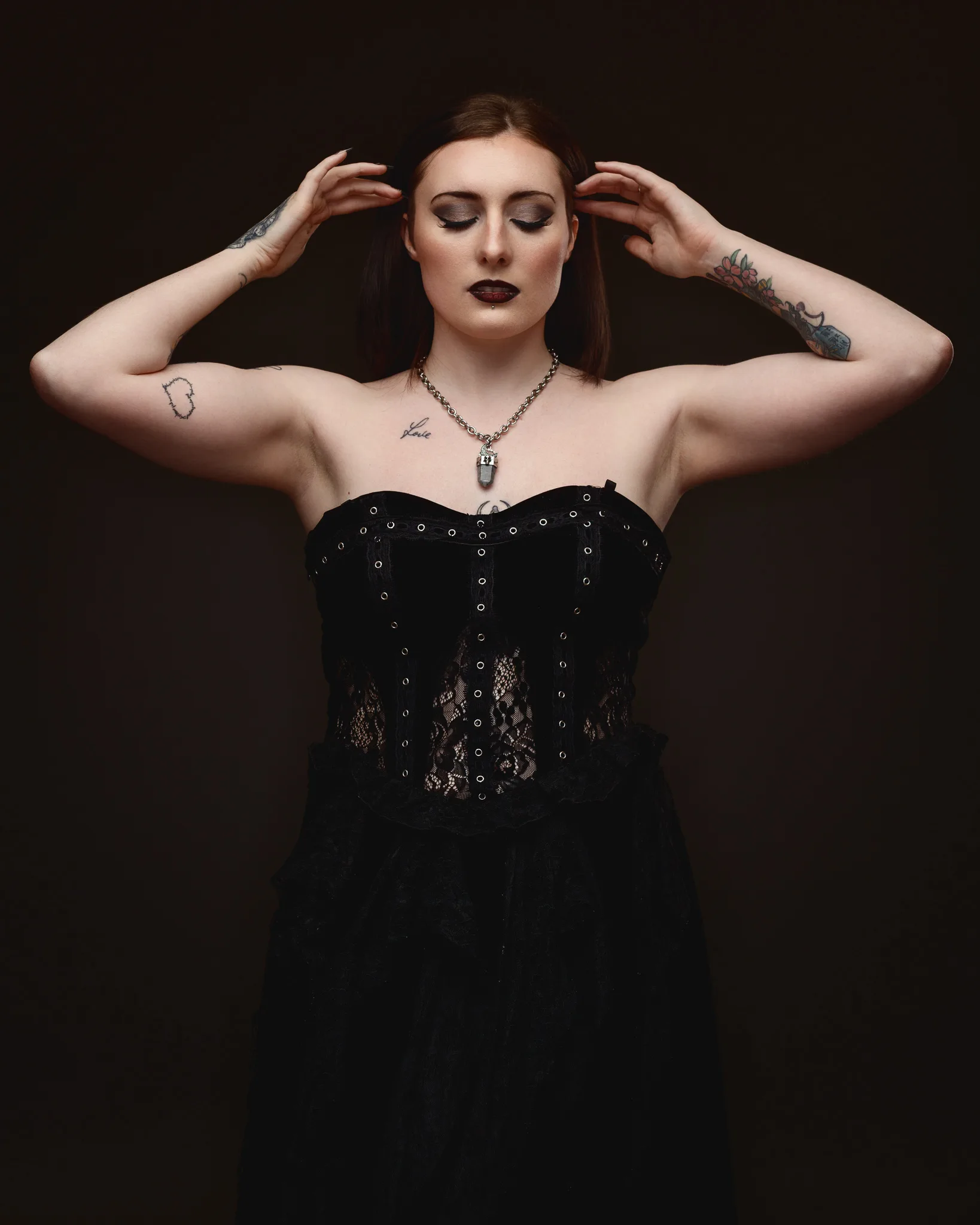
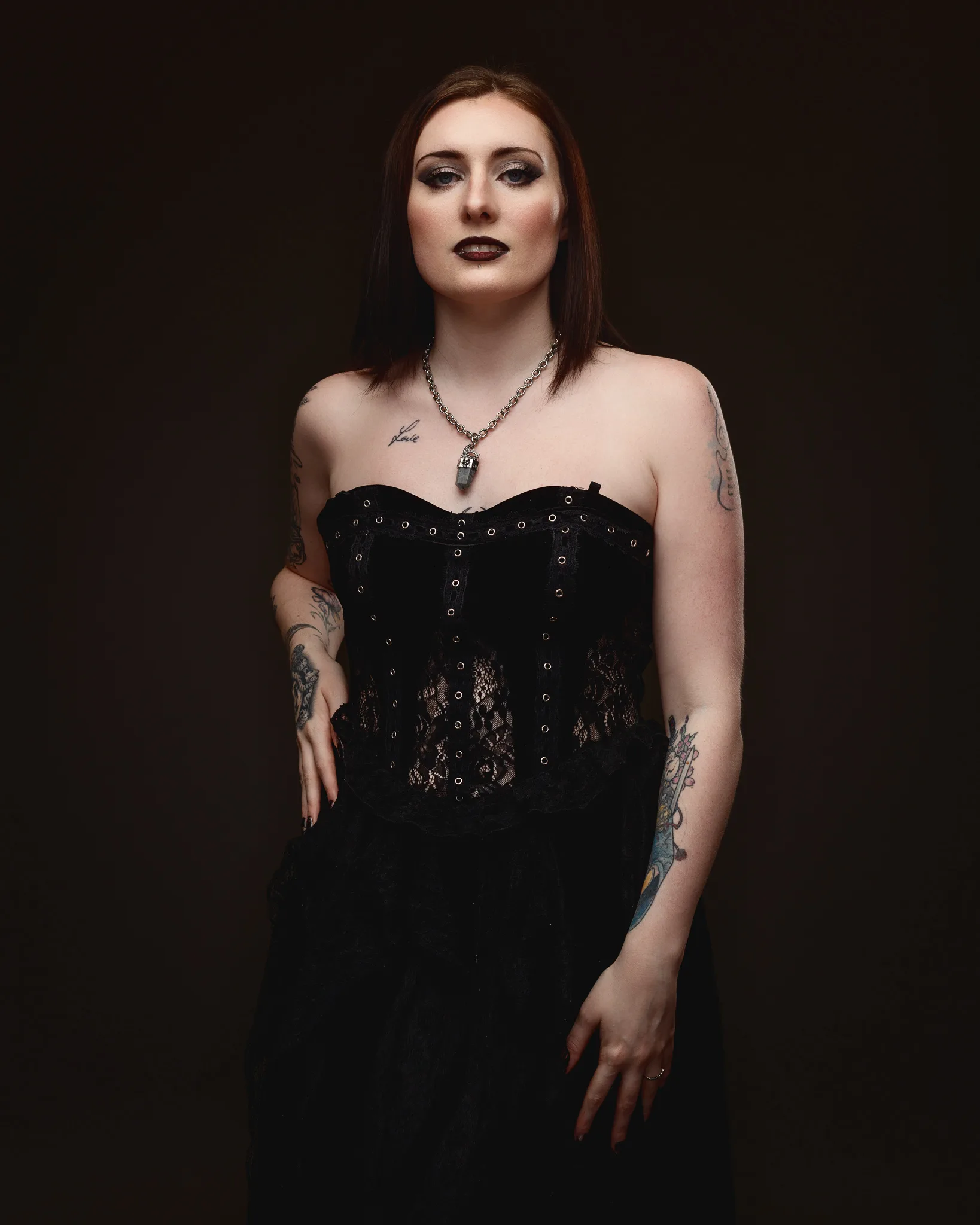
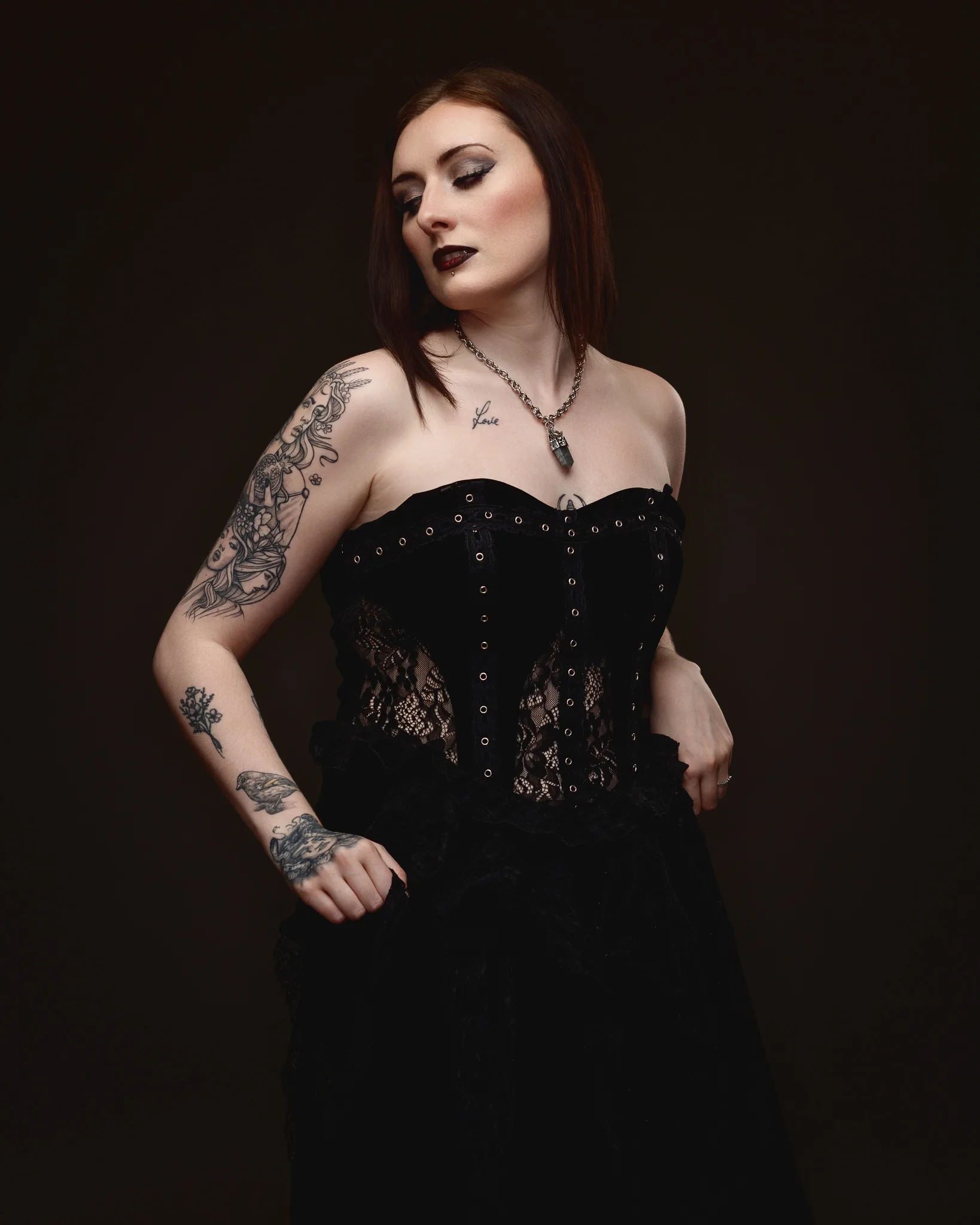
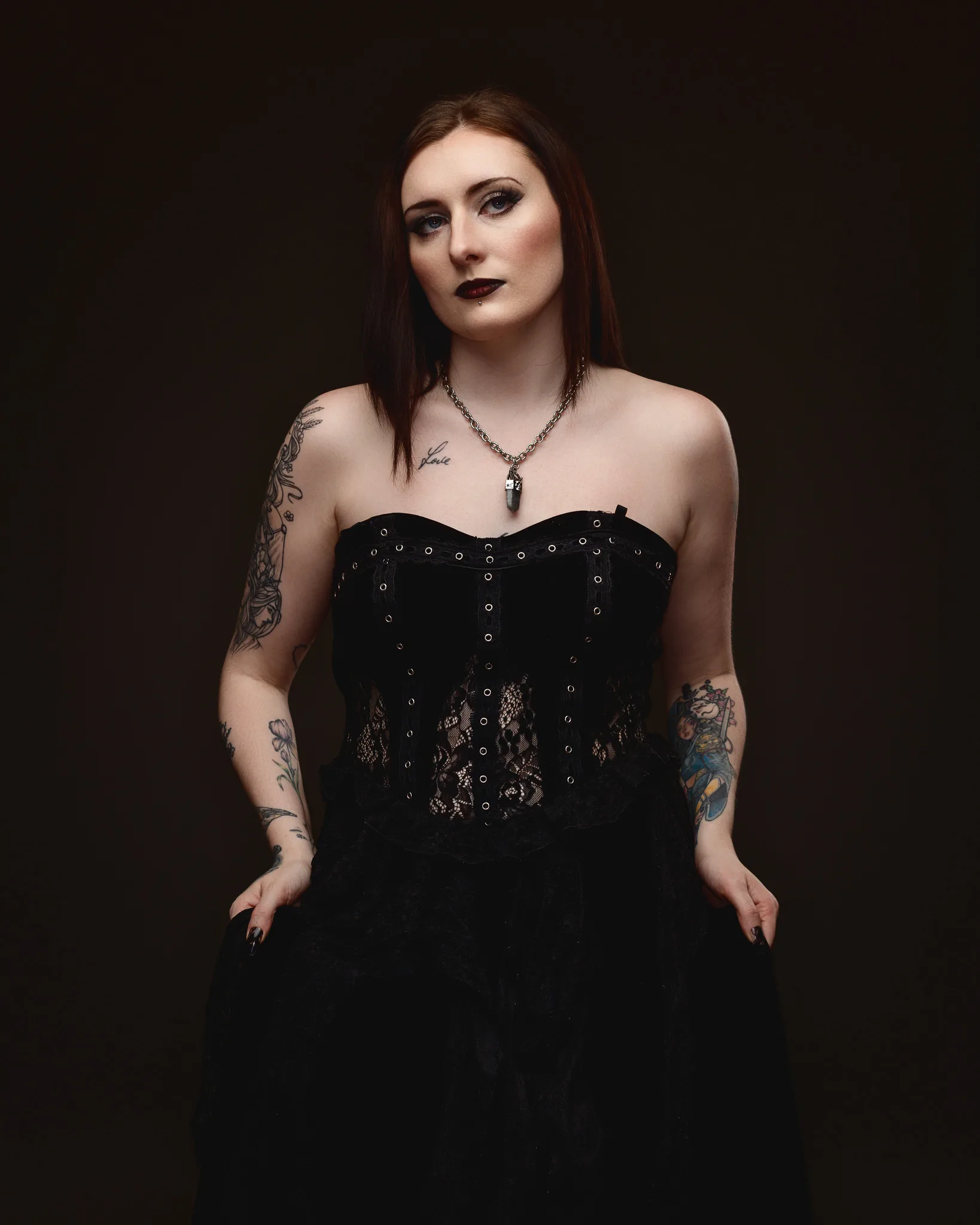
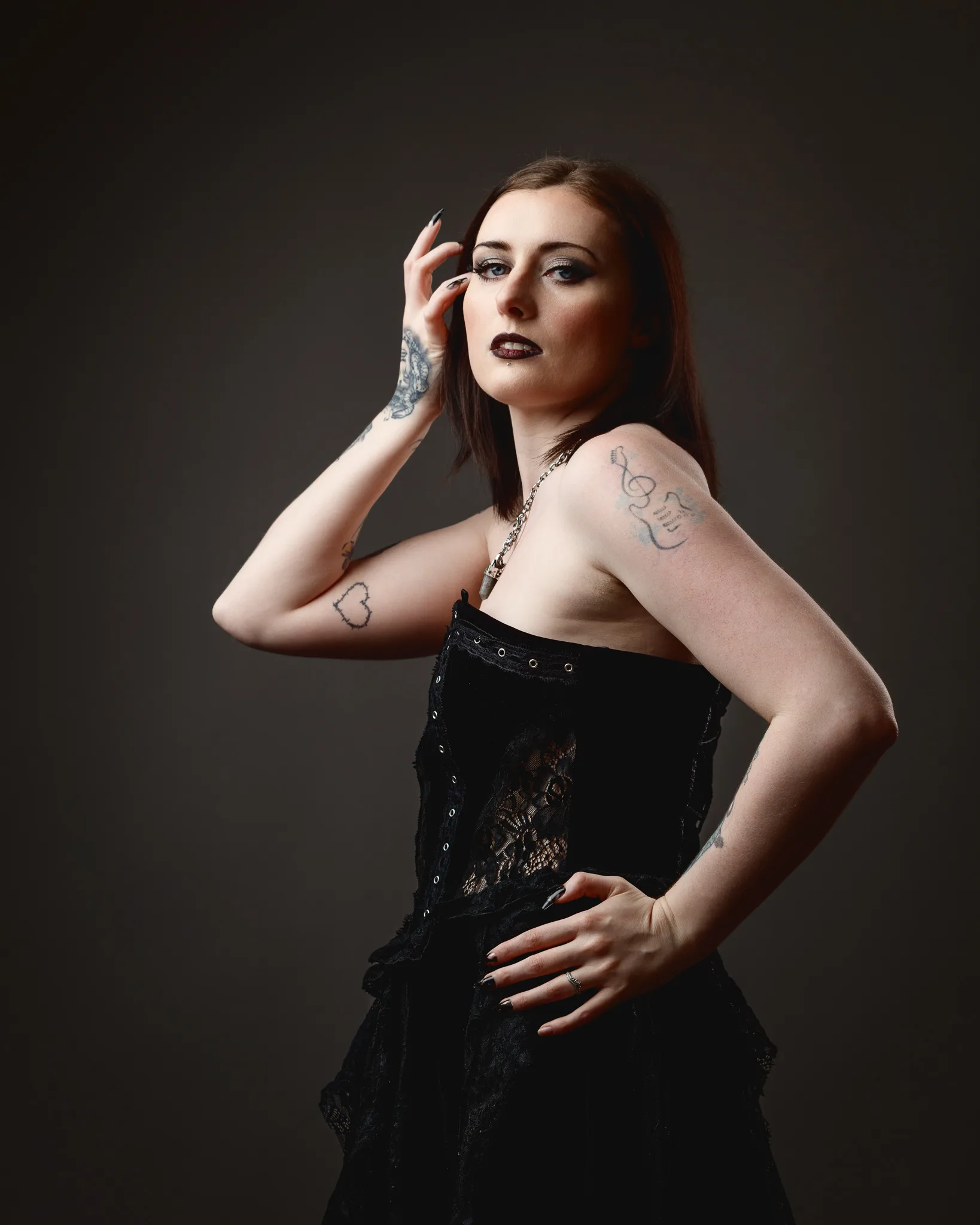
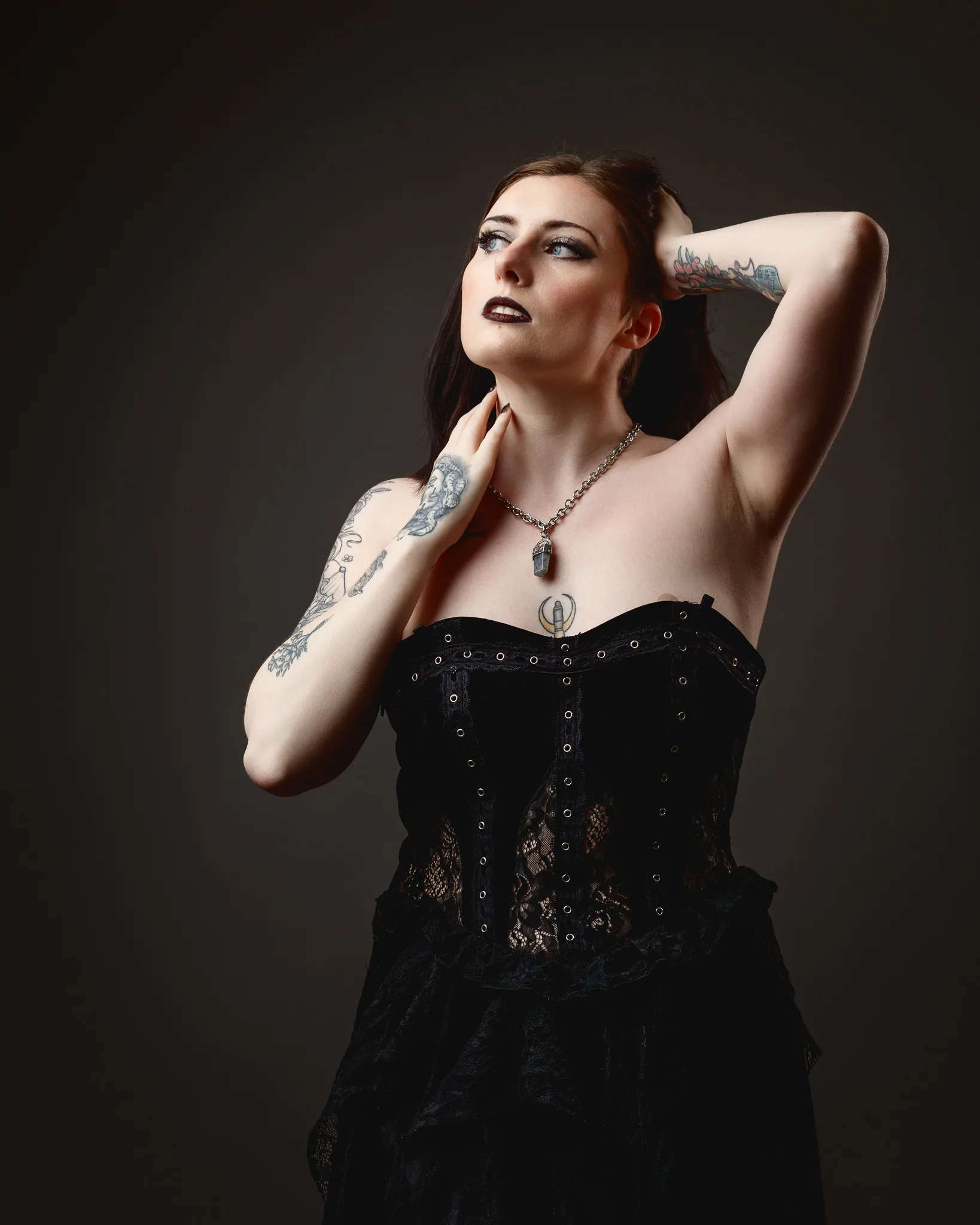
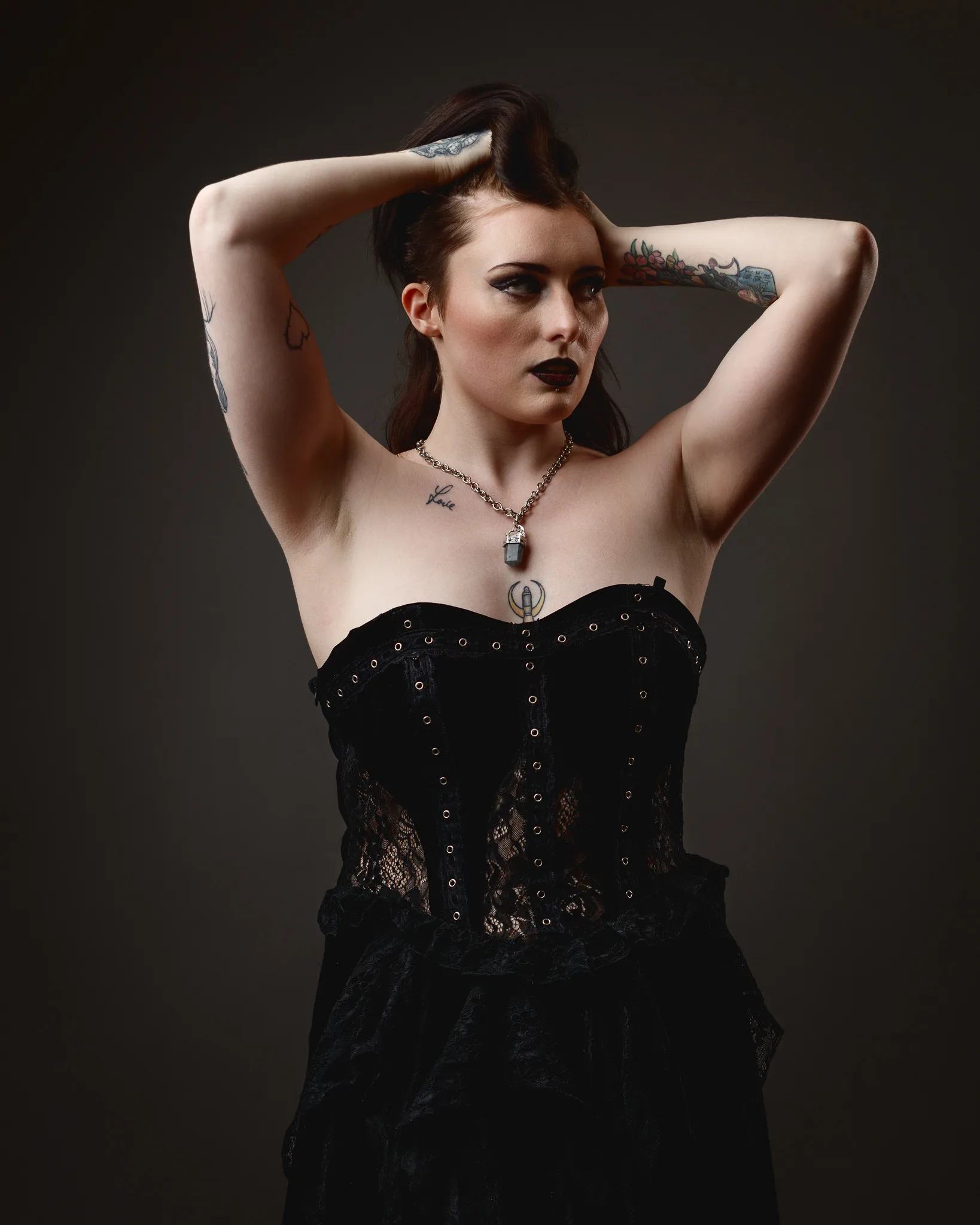
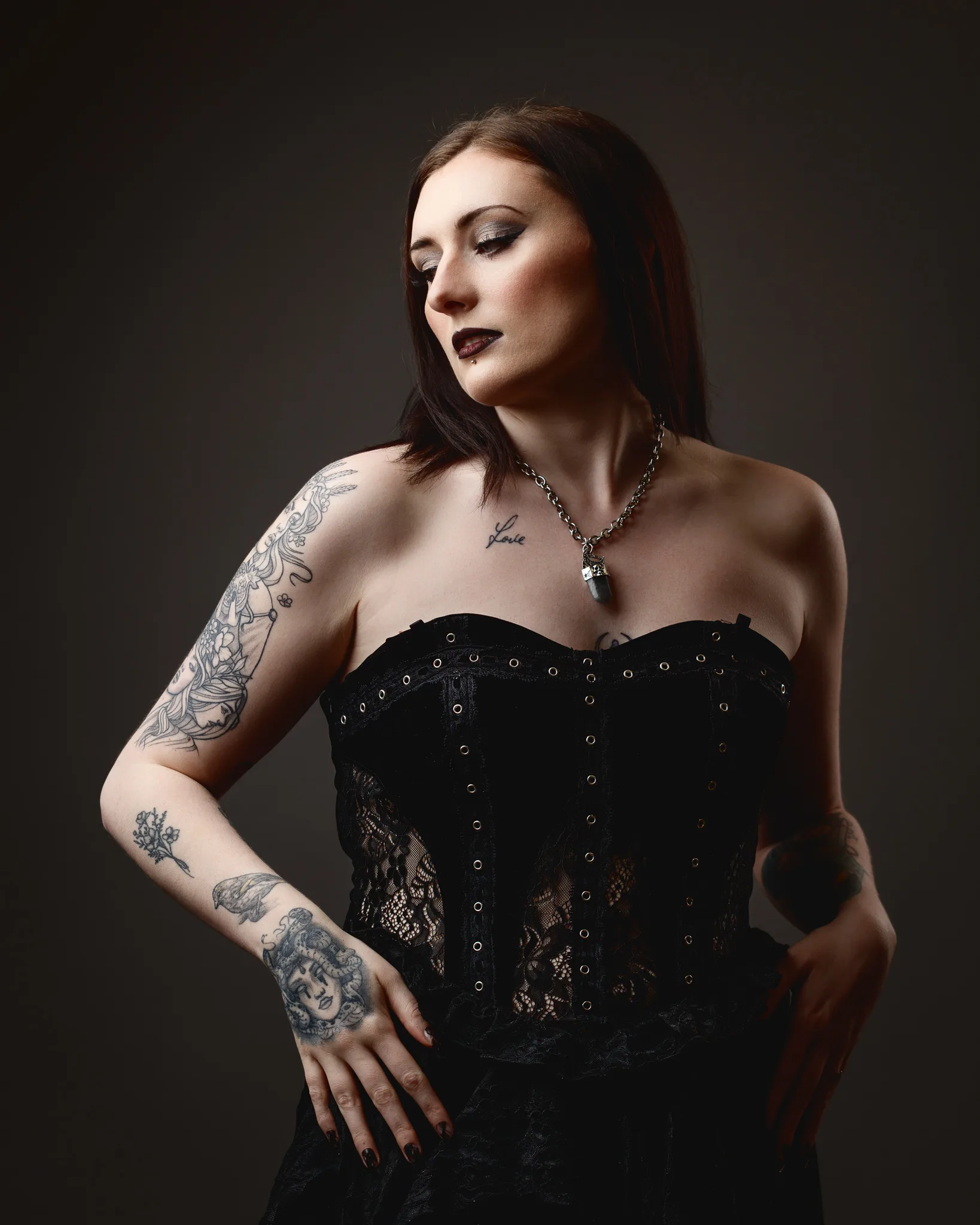
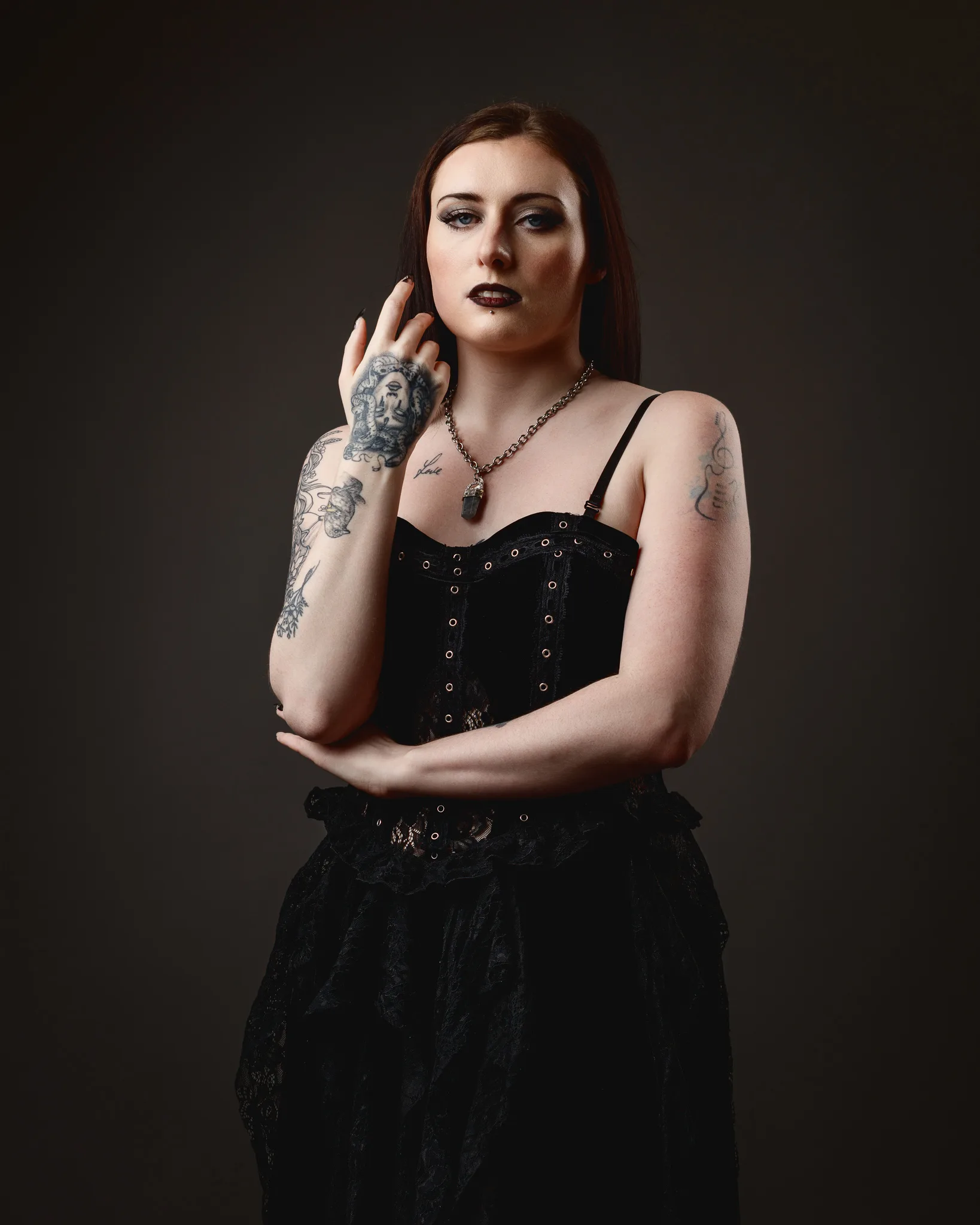
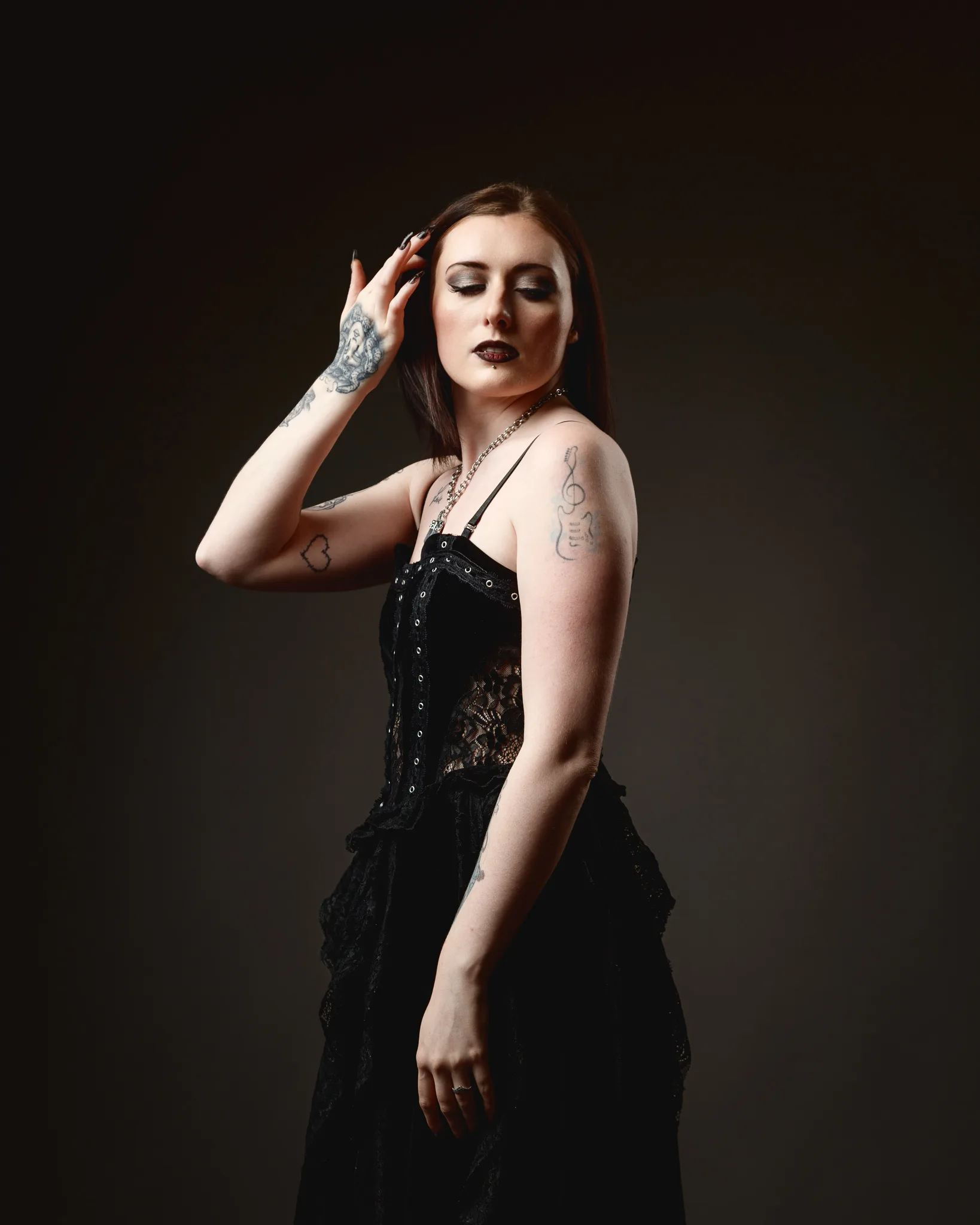
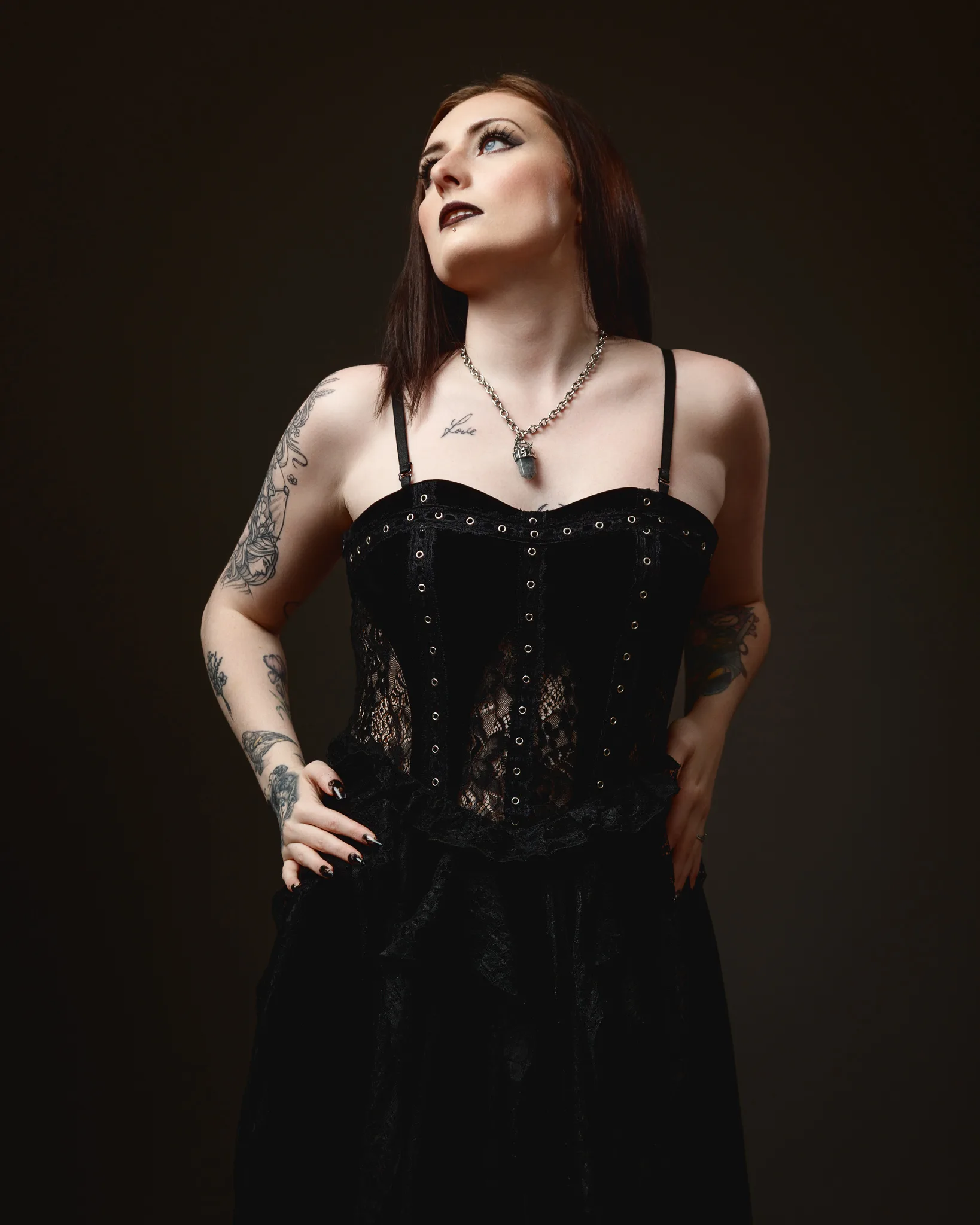
Look one: black lace and corsetry, clean and editorial
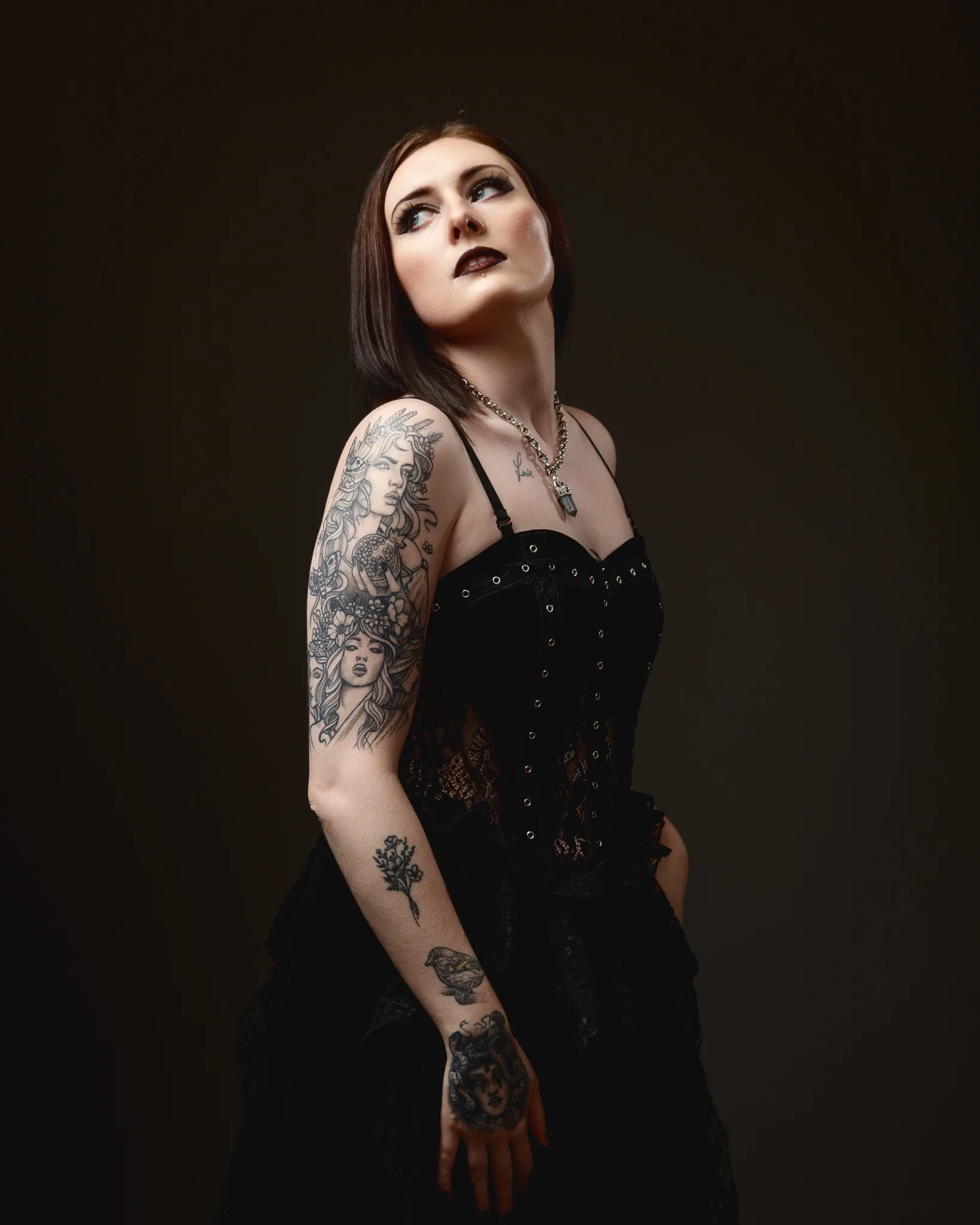
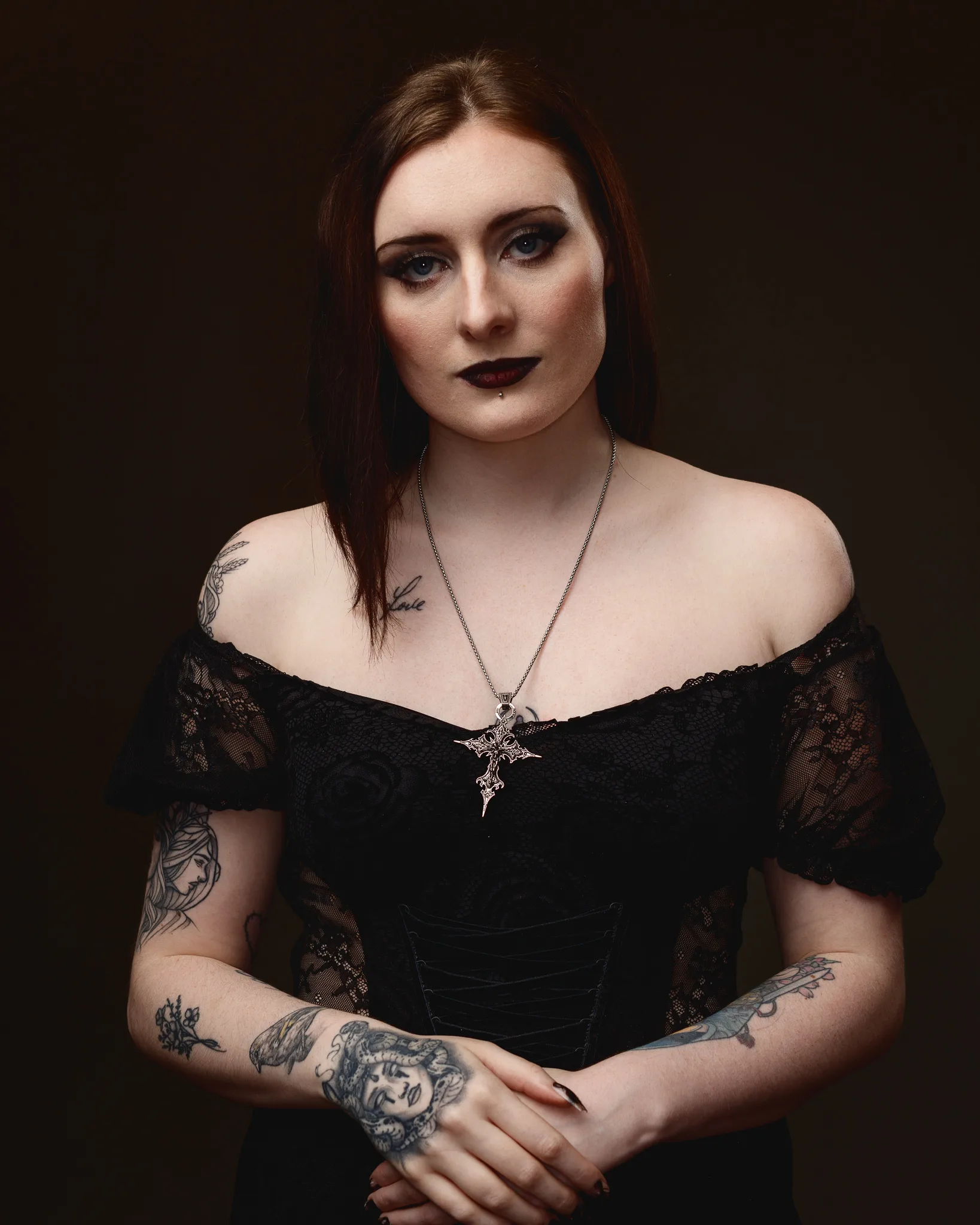
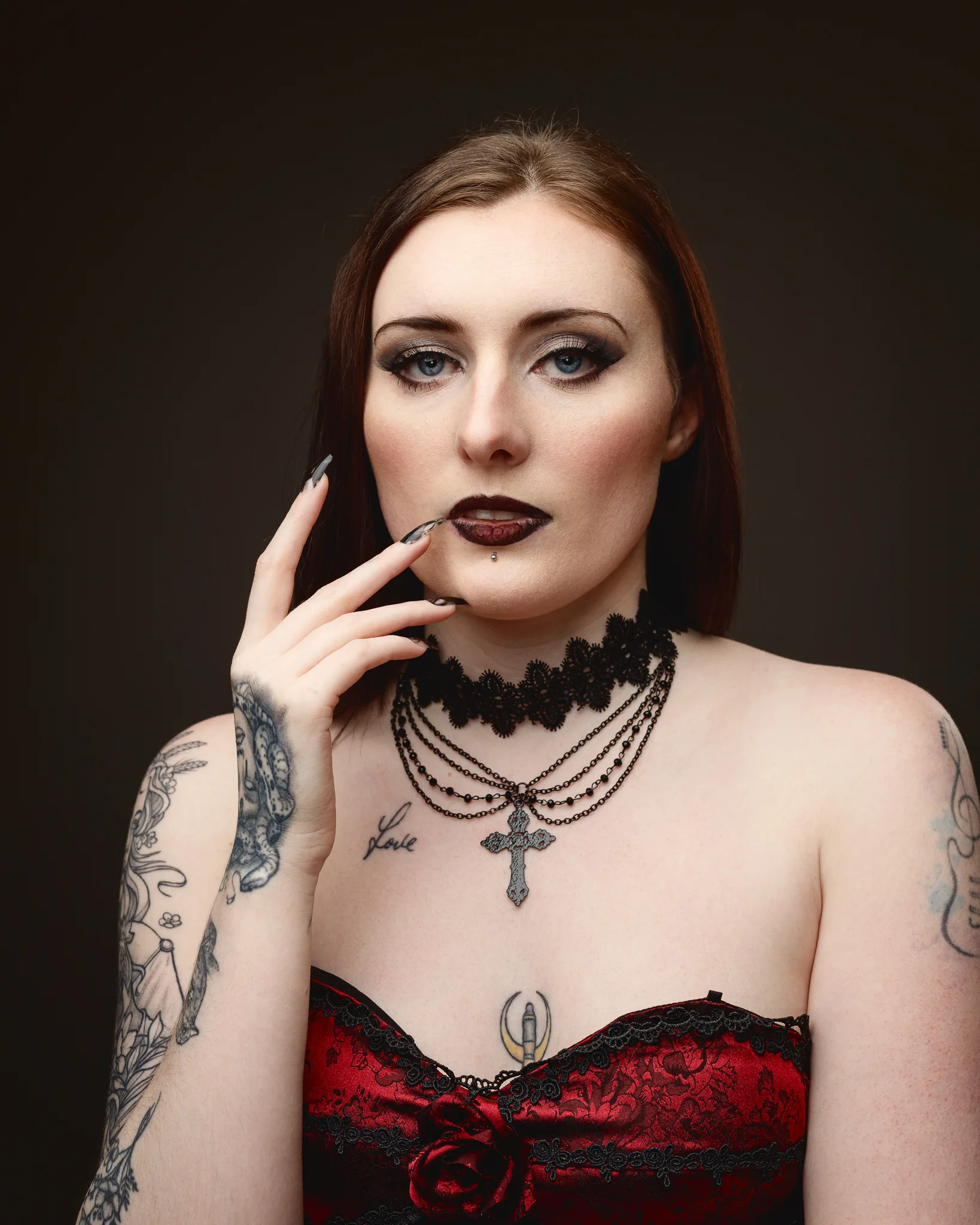
We started with black lace and corsetry. It set the tone straight away. Black photographs beautifully in controlled studio light, but only if the light is shaped carefully. Lace can hold detail and still look soft, as long as you avoid flat light that kills texture.
This part of the shoot produced portraits that felt modern, but also classic. Strong shape, clean lines, and a slightly mysterious emotional tone.
For young models, this is a useful reminder. Textures matter. Lace, mesh, leather, denim, and satin all behave differently under studio light. Bring a mix of textures, not just a mix of colours.
Look two: black strapless corset portraits, focus on face and neckline
We kept the styling in the same world, but shifted it slightly. A strapless corset changes the lines of the body. It opens the shoulders and collarbones, and it draws attention to the face and neck.
That meant we could lean into elegant posing. Longer neck. Slight shoulder roll. A clean jawline. Calm hands. This is where controlled studio portrait photography shines. You can shape the body with micro-adjustments, rather than big movements.
If you are building a model portfolio, images like this are useful because they show:
- Your bone structure and neck line
- How you hold posture
- How you use your gaze
- A clean, simple silhouette
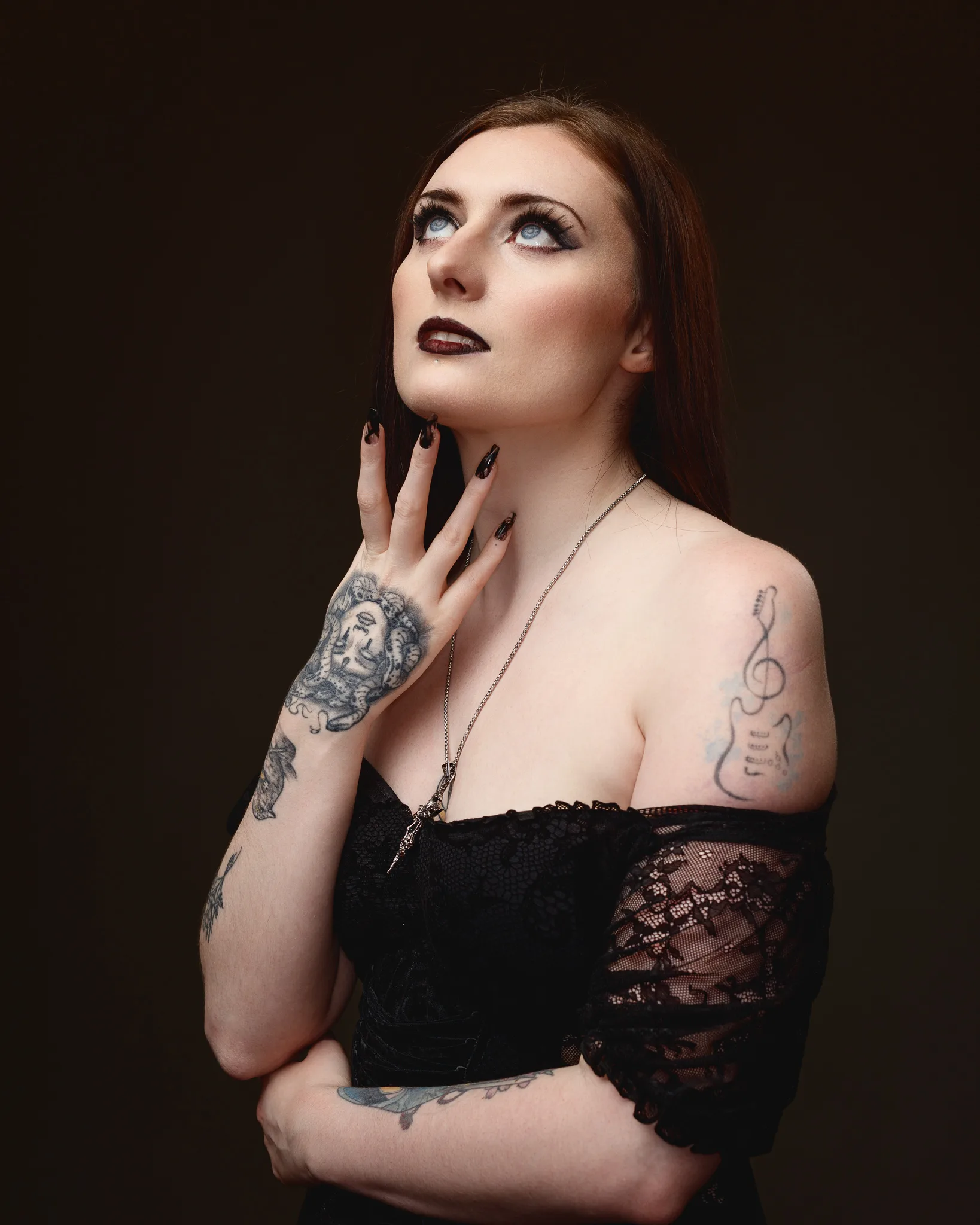
Look three: hands, hair, and the power of stillness
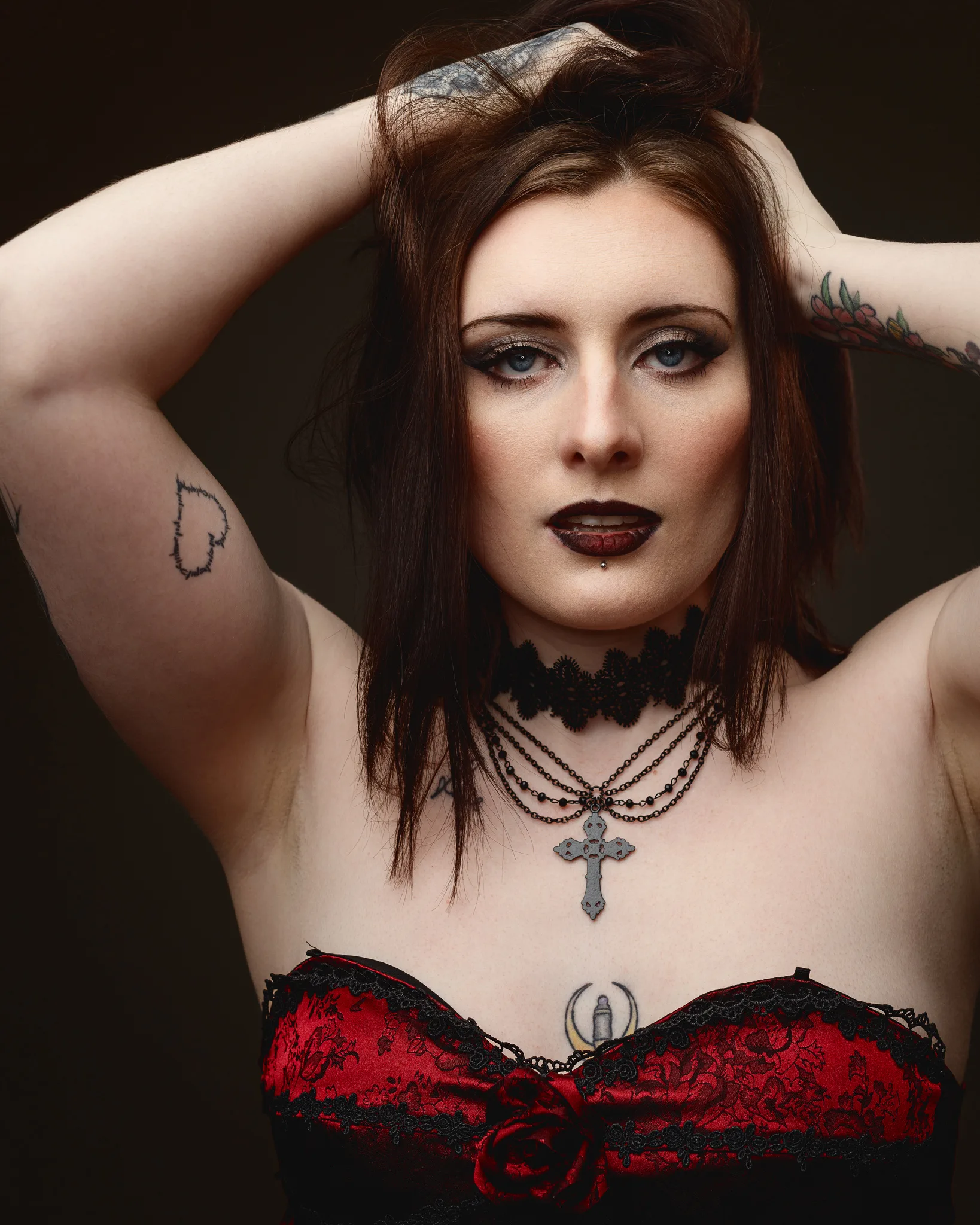
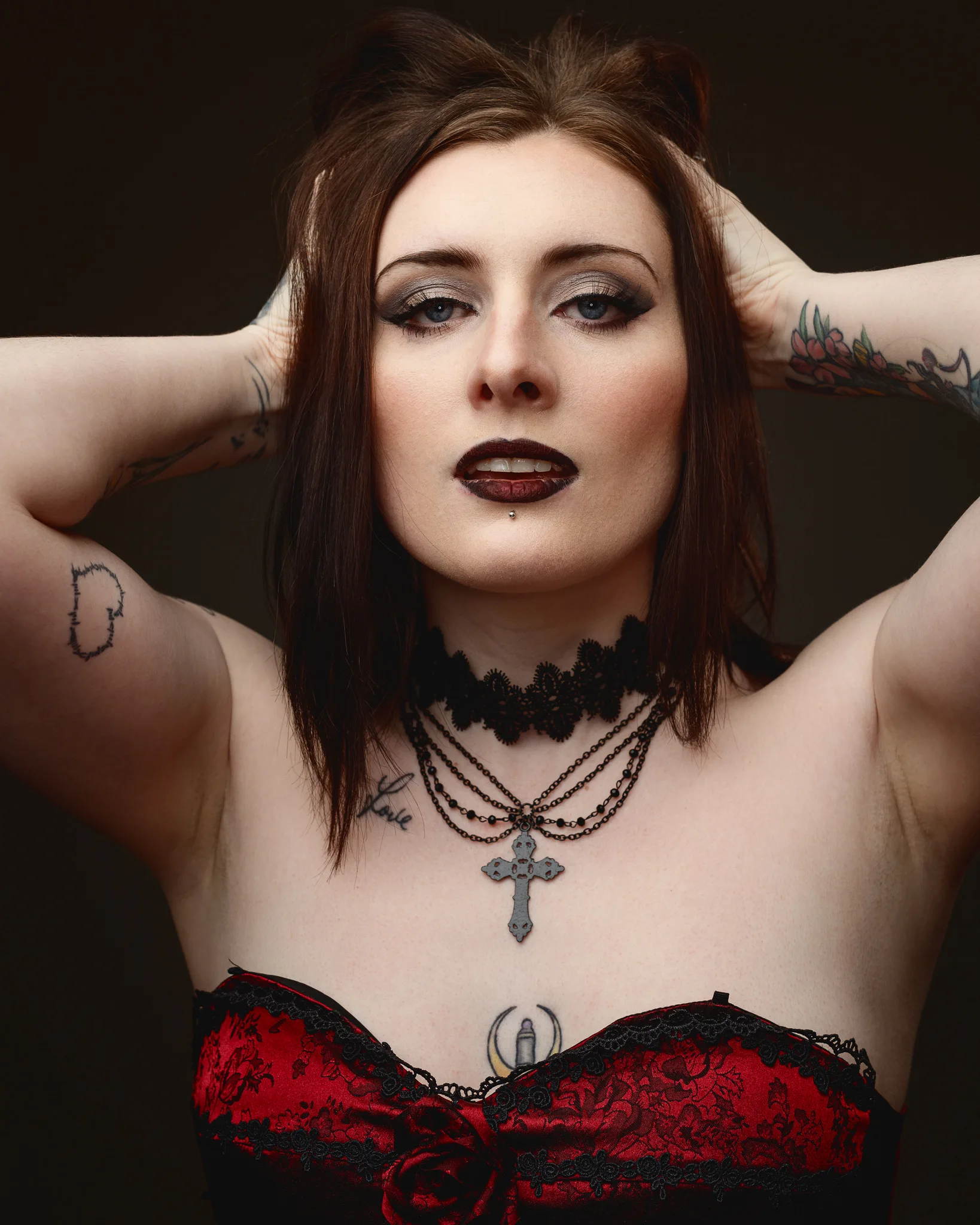
One of the strongest sets from this session used very simple posing. Hands in the hair. Eyes closed. A moment of stillness. This creates frames that feel intimate, without needing anything suggestive or extreme.
If you are a young model, this is worth practising at home. Stand in front of a mirror and learn how your hands look. The goal is not “pretty hands”. The goal is relaxed hands. Tension shows in fingers before it shows anywhere else.
Useful prompts that help many models:
- Let your fingers rest, do not spread them
- Lead with your wrist, not your fingertips
- Breathe out as the shutter clicks
- Think “soft”, not “posed”
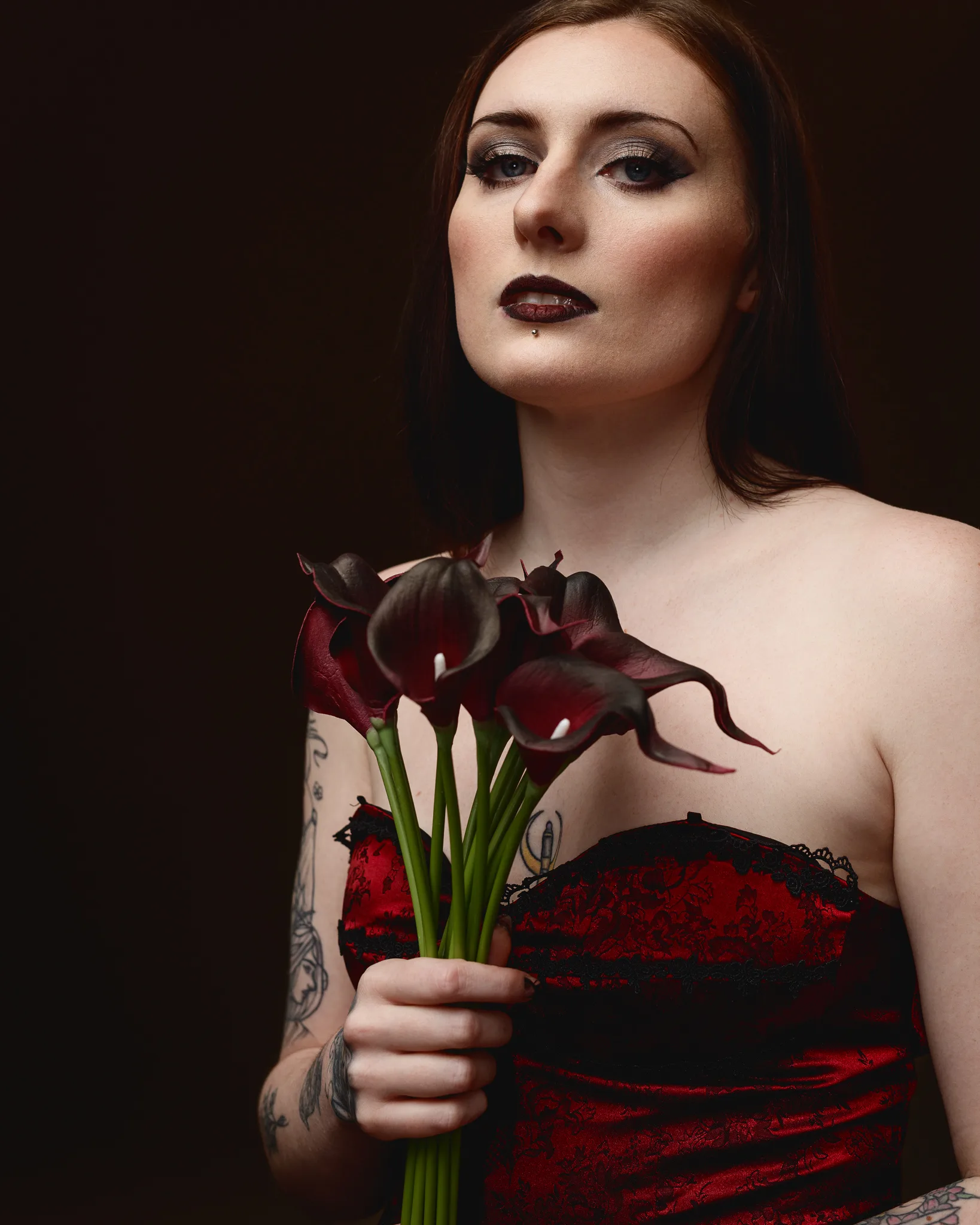
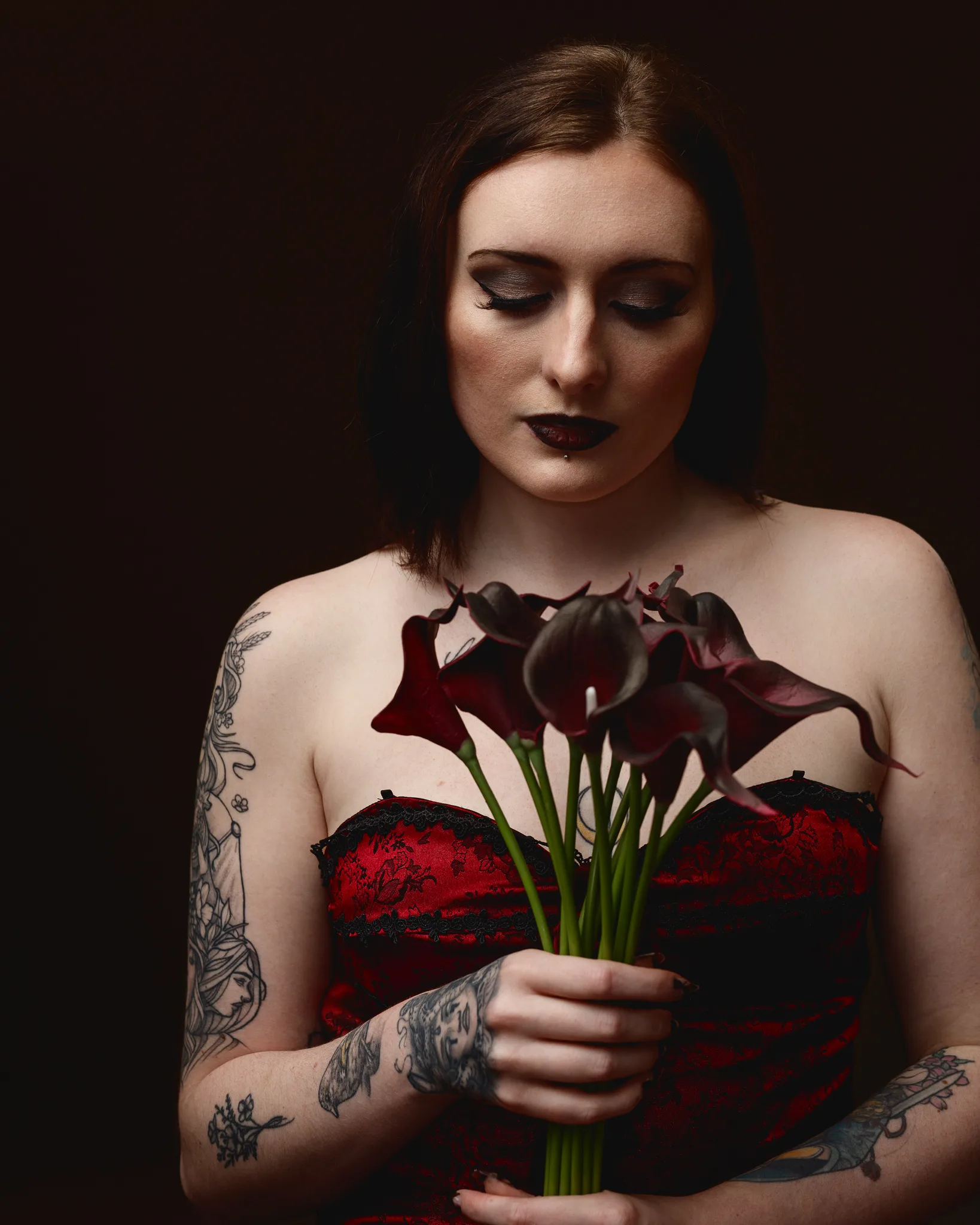
Look four: red and black, a stronger energy shift
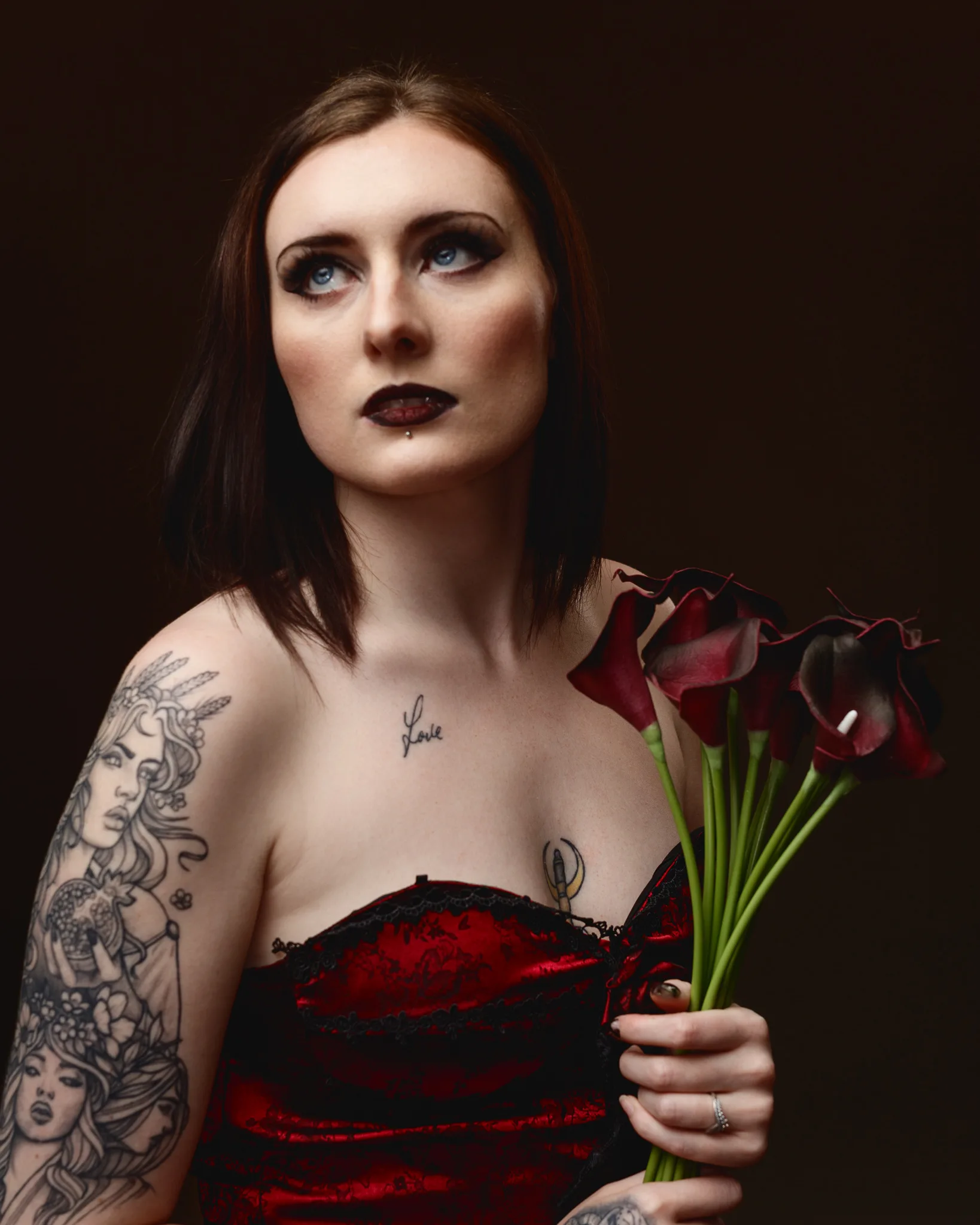
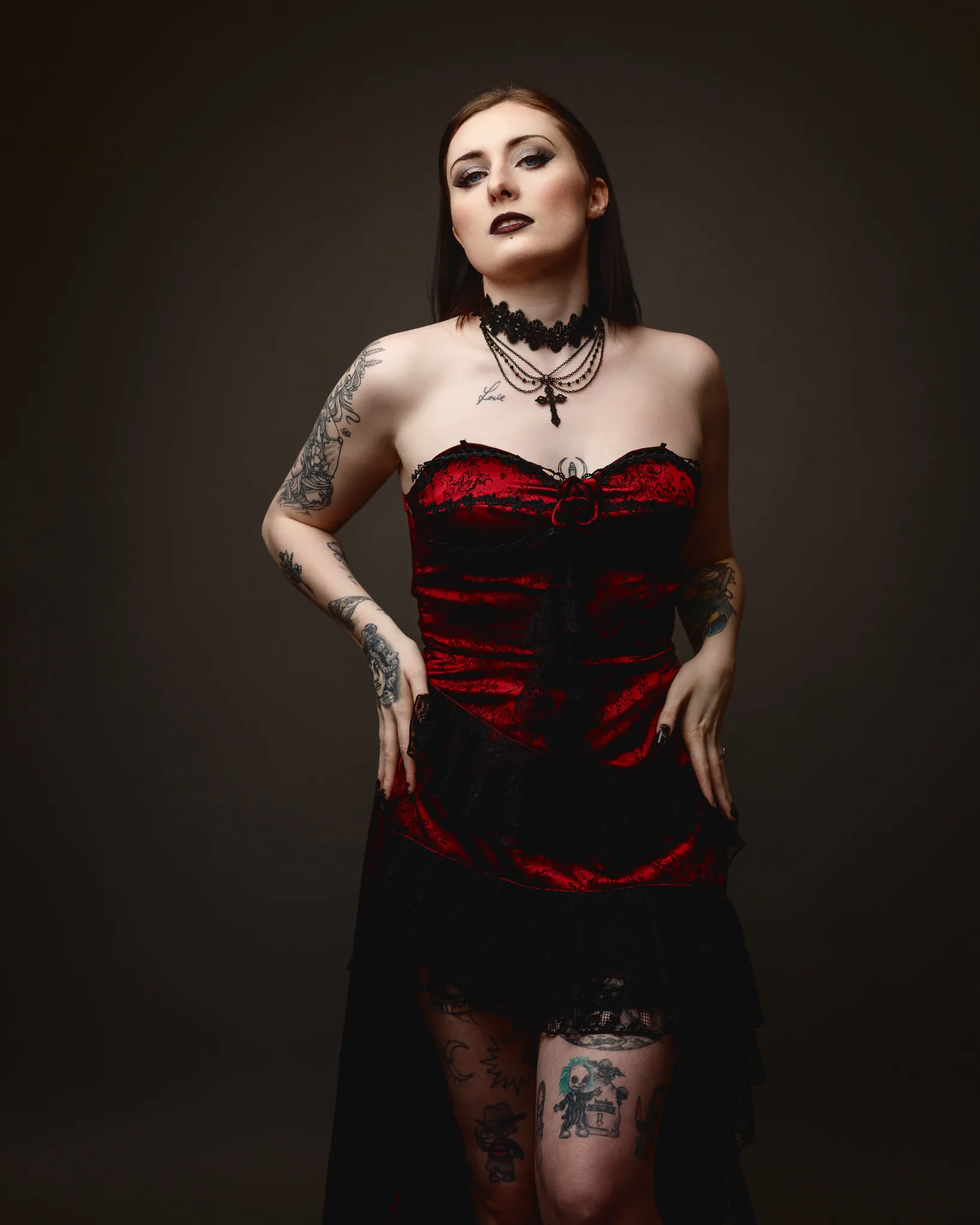
When we moved into the red-and-black look, the energy changed straight away. Red always changes the mood in a portrait. It reads as intensity, romance, and confidence, even when used in a controlled way.
The styling did a lot of work here. The contrast between rich red fabric and black lace adds depth and dimension. It also changes how you pose. In black, you can be restrained and minimal. In red, you can be a touch more direct.
For Natalie, that meant:
- More eye contact
- Stronger shoulders
- Cleaner, firmer lines in arms and hands
- A slower pace, so the drama has room
These portraits can work well for alternative fashion, editorial-style casting, and personal branding for models who want a signature look.
Look five: props that add story, not clutter
We introduced deep burgundy calla lilies near the end of the session. I like props when they add meaning, not when they exist as decoration. These flowers matched the tone of the shoot and gave us symbolism and texture, without stealing attention from Natalie’s expression.
They also solved a practical problem that young models often face. Hands can look awkward when you do not know what to do with them. A prop gives you a purpose. It creates natural hand placement and a calmer rhythm.
If you bring props to a studio photoshoot, keep them simple:
- One item that fits your styling
- No bright logos
- No cluttered patterns
- Something you can hold, move, and pause with
What young models can learn from Natalie’s outfit planning
Natalie arrived with a clear direction and a strong selection of outfits. The session had a natural progression. We started restrained and refined, then moved into higher contrast and drama, then finished with florals and symbolism.
Here is a simple way to plan your own shoot.
Outfit plan (simple structure)
- Start clean: simple outfit, simple posing
- Add texture: lace, mesh, leather, layered fabrics
- Add colour: one strong colour choice, used well
- Add story: a prop or styling shift that feels “you”
You do not need ten outfits. Four well-chosen looks will often beat ten rushed ones.
A practical “portfolio value” checklist
If you are paying for a studio photoshoot or investing time into one, it helps to know what each look is giving you. Here is a quick guide.
- Clean black look: strong shapes, classic portrait set
- Strapless corset set: shoulders, neckline, facial focus
- Hands and hair set: softer mood, intimate frames
- Red and black set: drama, stronger editorial feel
- Flowers set: story, symbolism, controlled prop work
When you review your images, ask: “What job does this photo do in my portfolio?” If you cannot answer, it may be a lovely image, but not a useful one.
Studio etiquette and boundaries for young models
A studio should feel calm and professional. You should also feel in control. These are basic standards I believe every model should expect.
Before the shoot
- Agree on what the shoot is for: portfolio, casting, personal work
- Confirm what levels of styling are in scope
- Ask about changing space and privacy
- Bring a chaperone if you want one
During the shoot
- Ask to review a few frames early
- Speak up if something feels off
- Take breaks, drink water, slow down
- Keep communication direct and clear
After the shoot
- Make sure you understand how images will be delivered
- Confirm what retouching is included
- Confirm how images can be used and shared
If you want a basic explainer on image rights in the UK, the UK Intellectual Property Office has a helpful overview: https://www.gov.uk/copyright
For model releases and image use clarity, this is also a good starting reference: https://www.ipo.gov.uk/types-of-intellectual-property/copyright/
Why sessions like this work so well in the studio
This shoot is a good example of why I enjoy studio portraiture. When the light is controlled and the environment is calm, you have space for expression and detail. Styling becomes the narrative. My job is to shape it cleanly, respectfully, and consistently.
The most successful portraits feel intentional. Natalie brought a clear aesthetic and a strong presence. I focused on flattering, sculpted light, guided her posing, and let the story unfold frame by frame.
If you are a young model booking your first studio photoshoot
If you take nothing else from this post, take this. Preparation beats nerves.
Bring fewer outfits, chosen with care. Think about textures. Practise a handful of poses. Arrive with a clear mood in mind. Then relax into the session and let the small changes do the work.
If you want to see how I structure model portfolio sessions in my studio, my rates page is here: https://foyers.photography/rates/model-portfolio-and-aspiring-models/