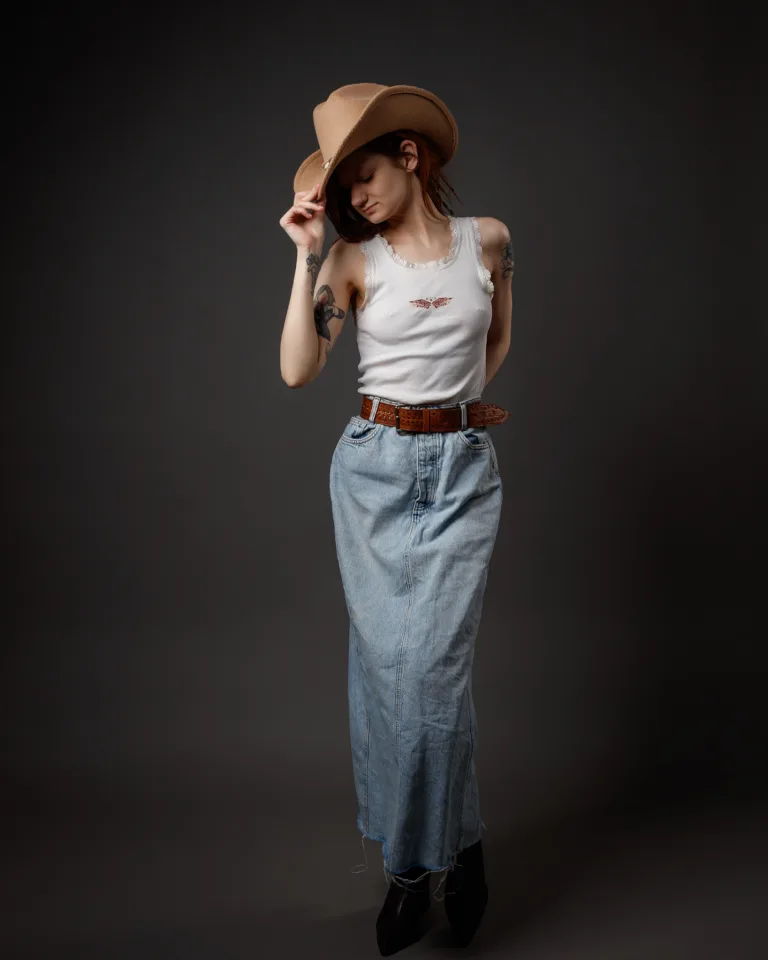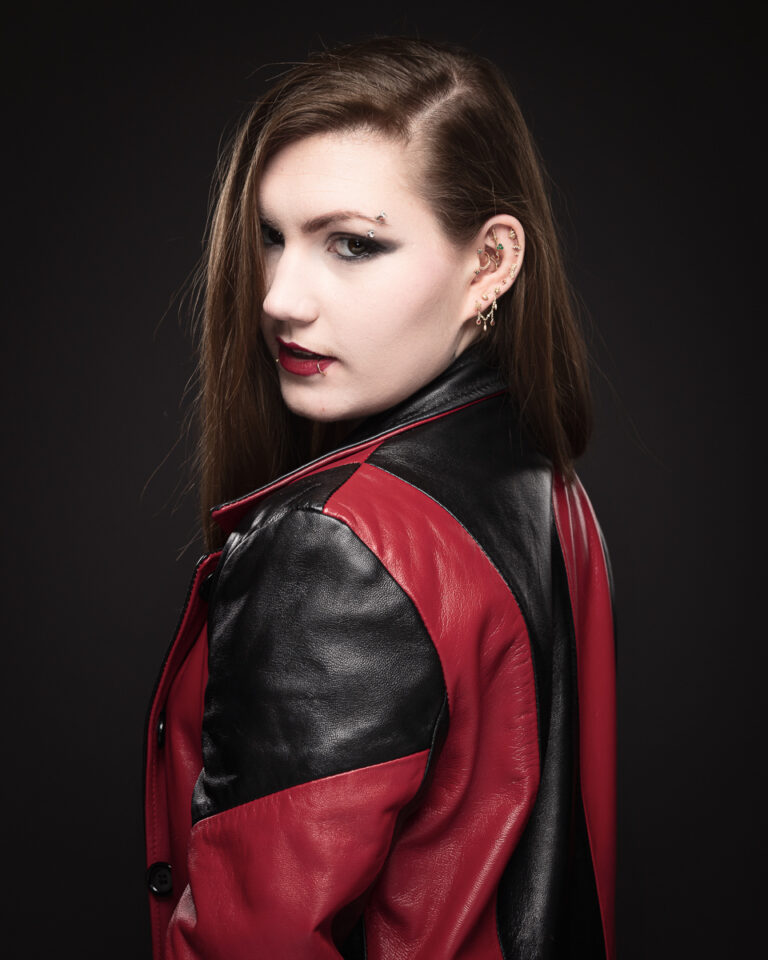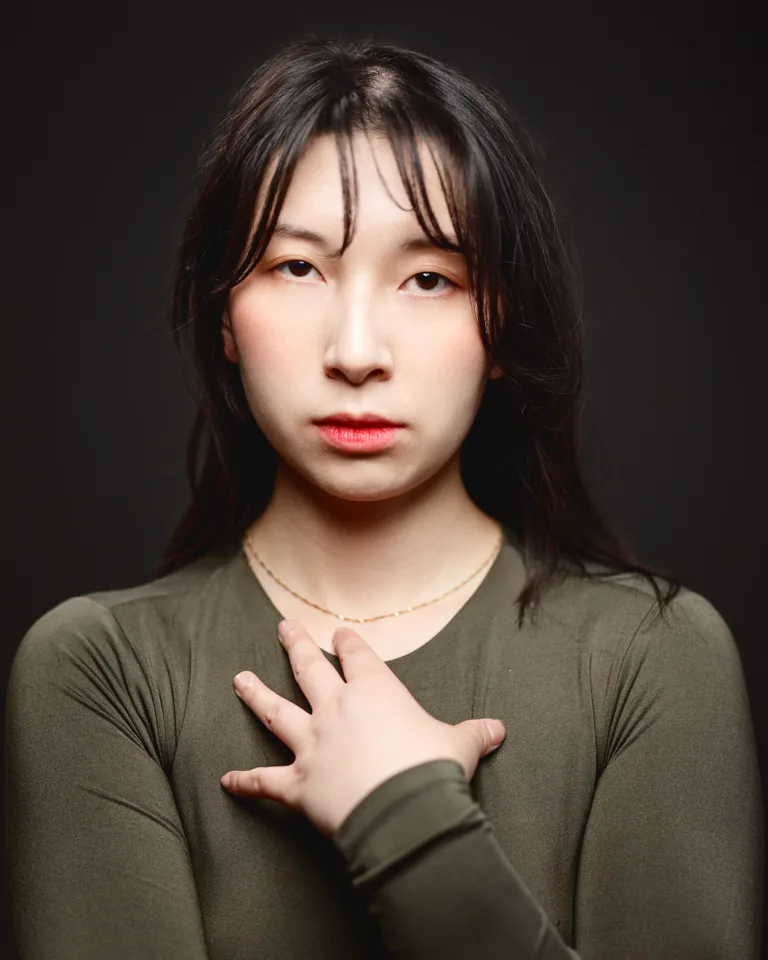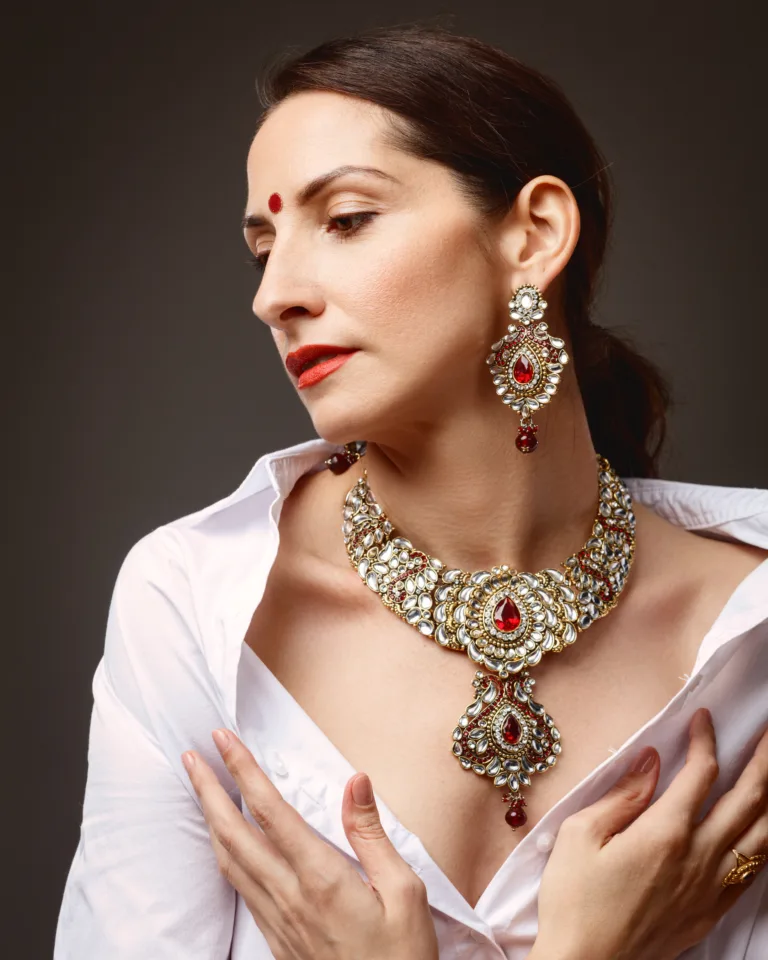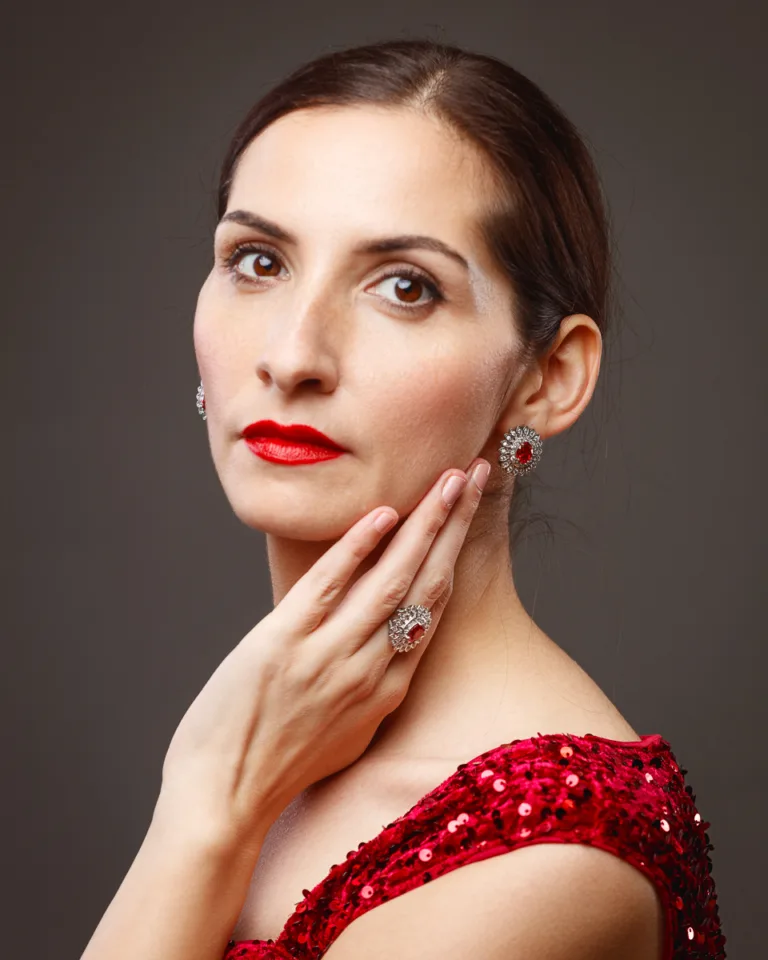
Some shoots come together through careful planning, and others grow out of an existing creative working relationship. This recent portrait session with Courtney felt like both.
Courtney and I have worked together many times over the years, but usually with her behind the scenes as the makeup artist on my shoots. She is exceptionally talented, highly skilled, and brings a calm professionalism to the work. More recently, she has also been working in film and TV, which says a lot about the standard of her craft and the level she is operating at.
This time, though, Courtney stepped in front of the camera.
The result was a two-part portrait shoot built around a dark, romantic, neo-Victorian concept that was inspired by Courtney herself. We photographed the first part on location at Framlingham Castle in Suffolk, then continued the theme in the studio, where we could push the styling, lighting, and atmosphere further.
A Dark Romantic Portrait Concept
From the start, the theme had a clear visual identity. The styling centred around a white period-inspired dress with a vivid red corset, which immediately gave the images a strong sense of drama and contrast. That combination of soft whites, deep reds, antique props, lace, flowers, and candlelight created something that felt gothic, theatrical, and painterly without becoming overly costume-led.
For me, the shoot sat somewhere between fine art portraiture, historical styling, and cinematic storytelling.
There is a sense of romance running through the series, but also a subtle tension. That balance was important. I did not want the images to feel too polished or decorative. I wanted them to have mood, presence, and a little unease. Courtney understood that instinctively, which made the whole process very collaborative.
Part One: Portraits at Framlingham Castle
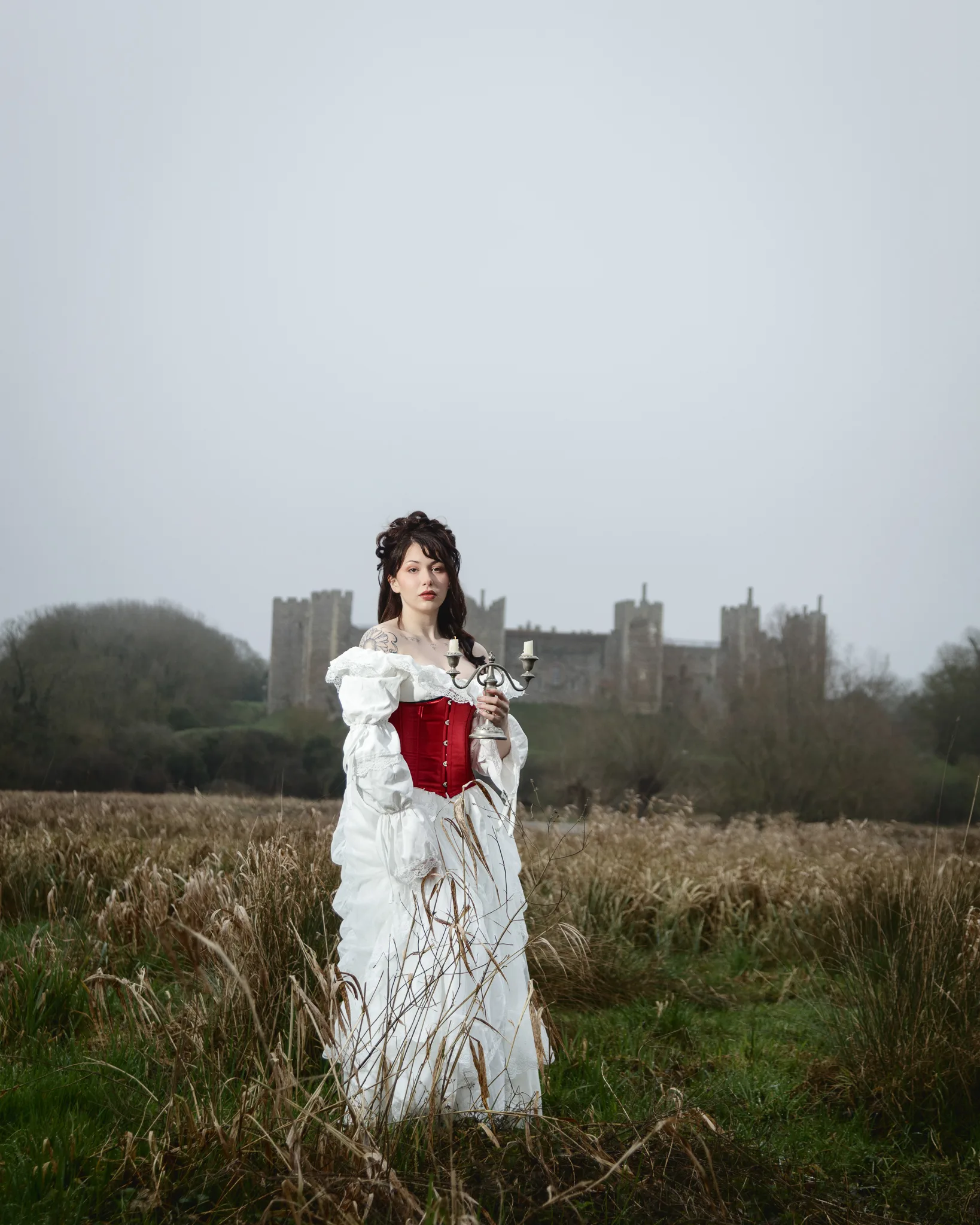
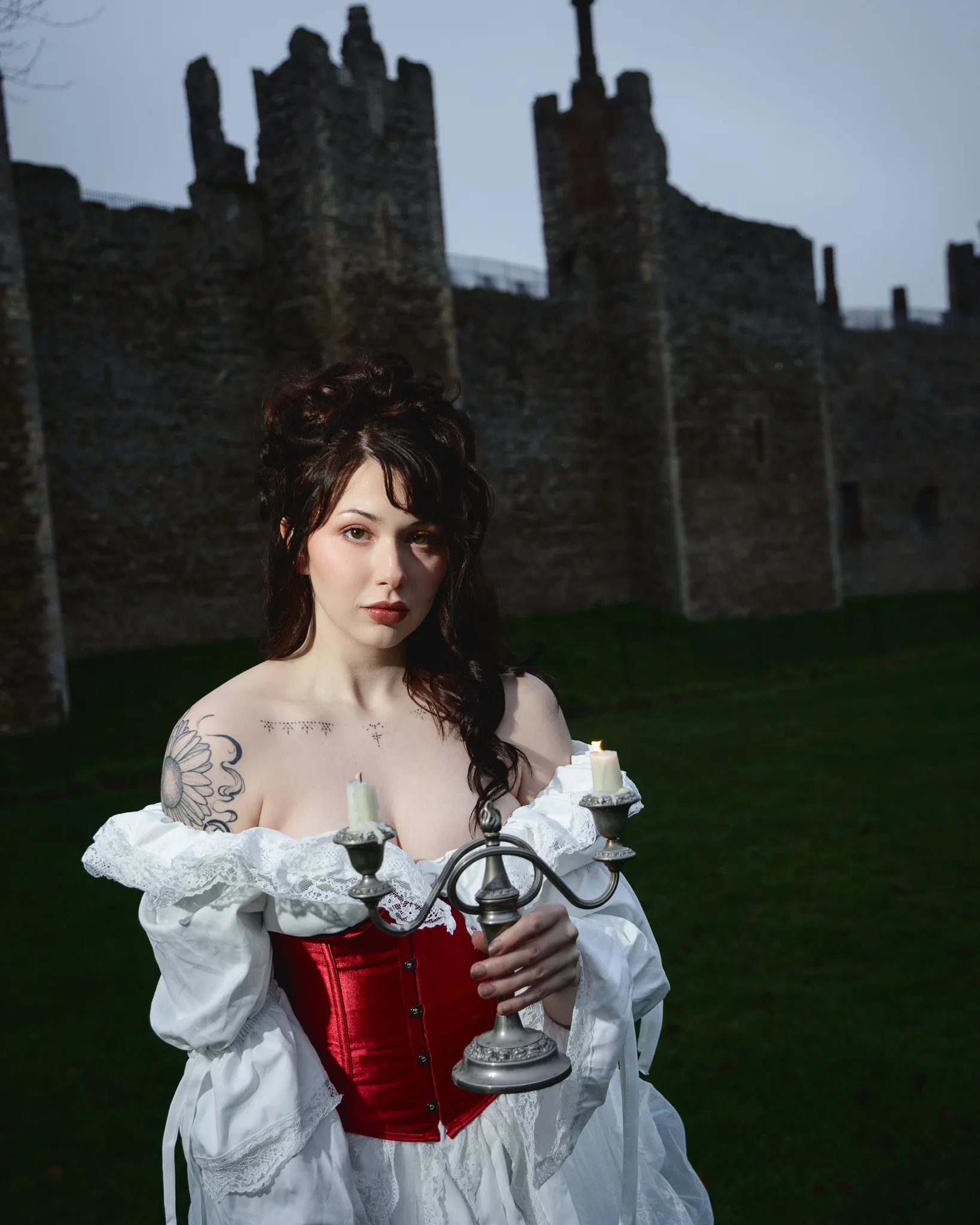
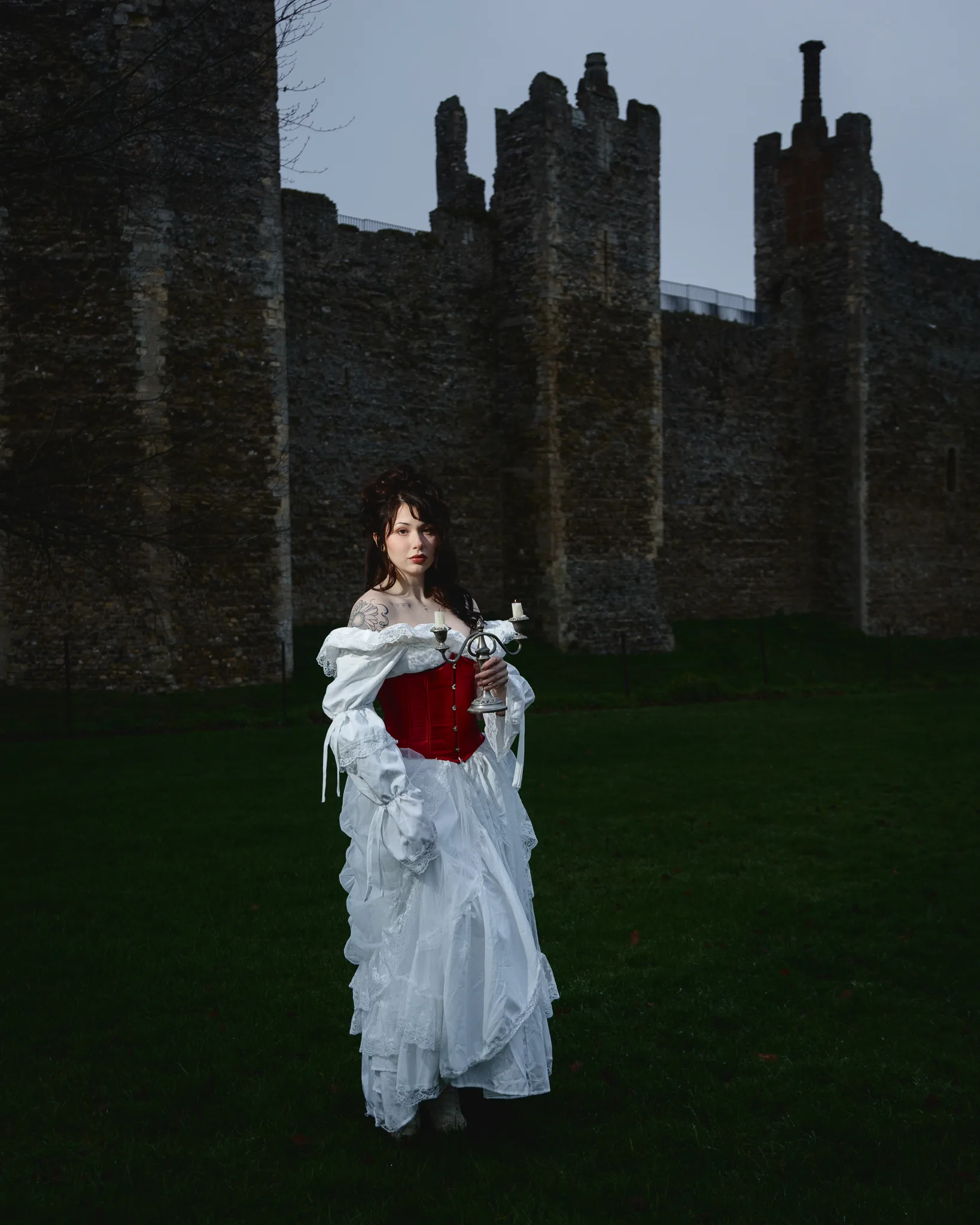
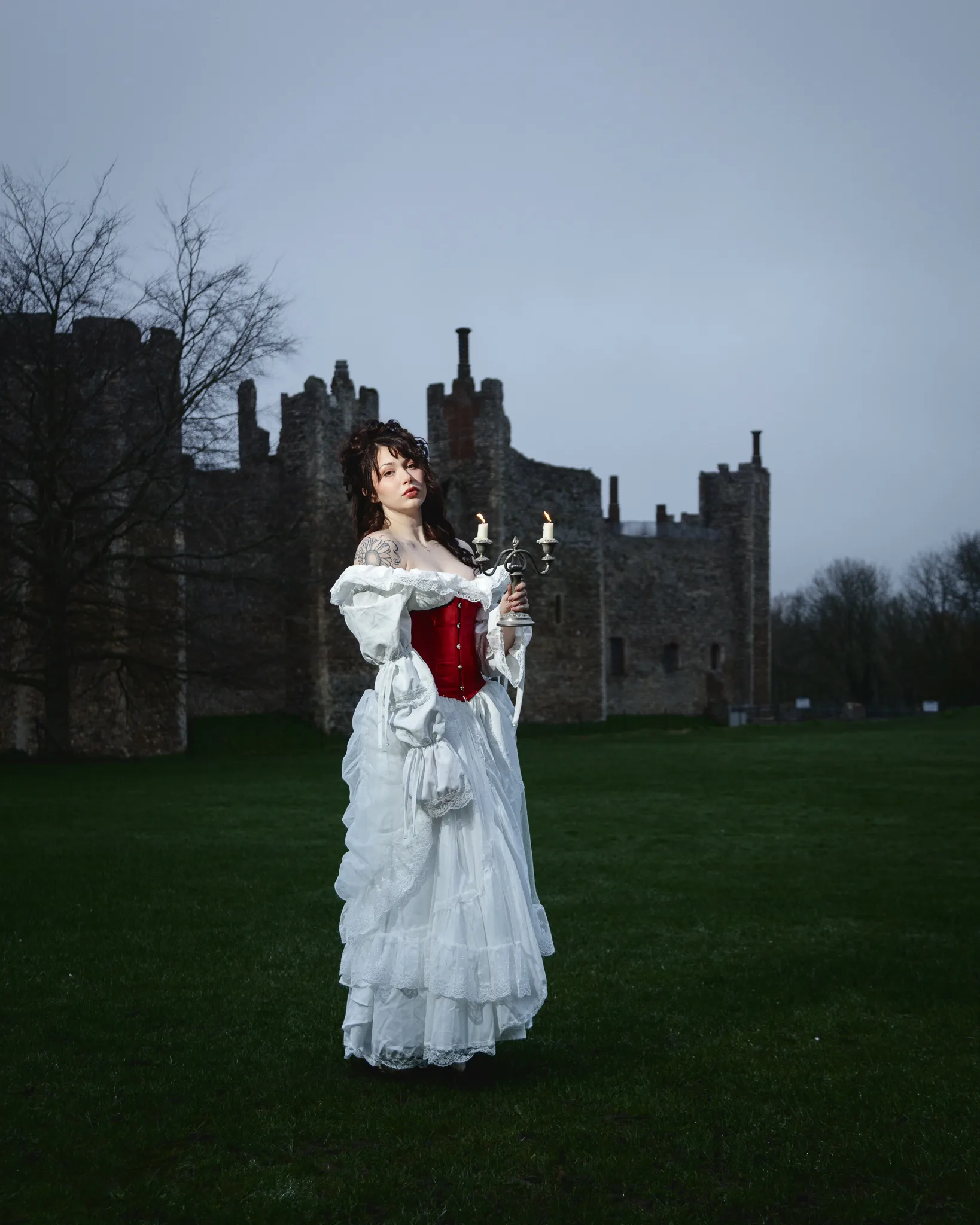
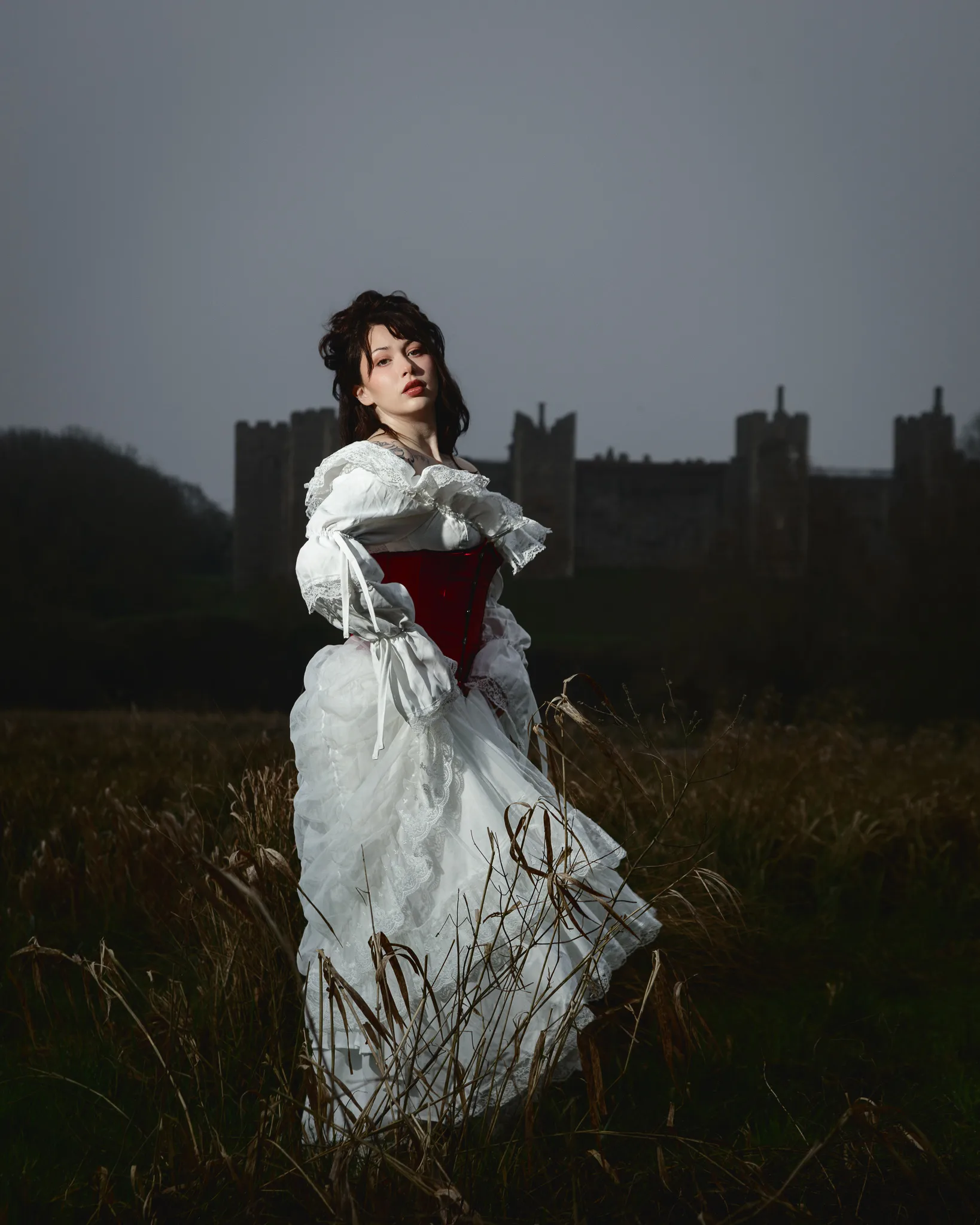
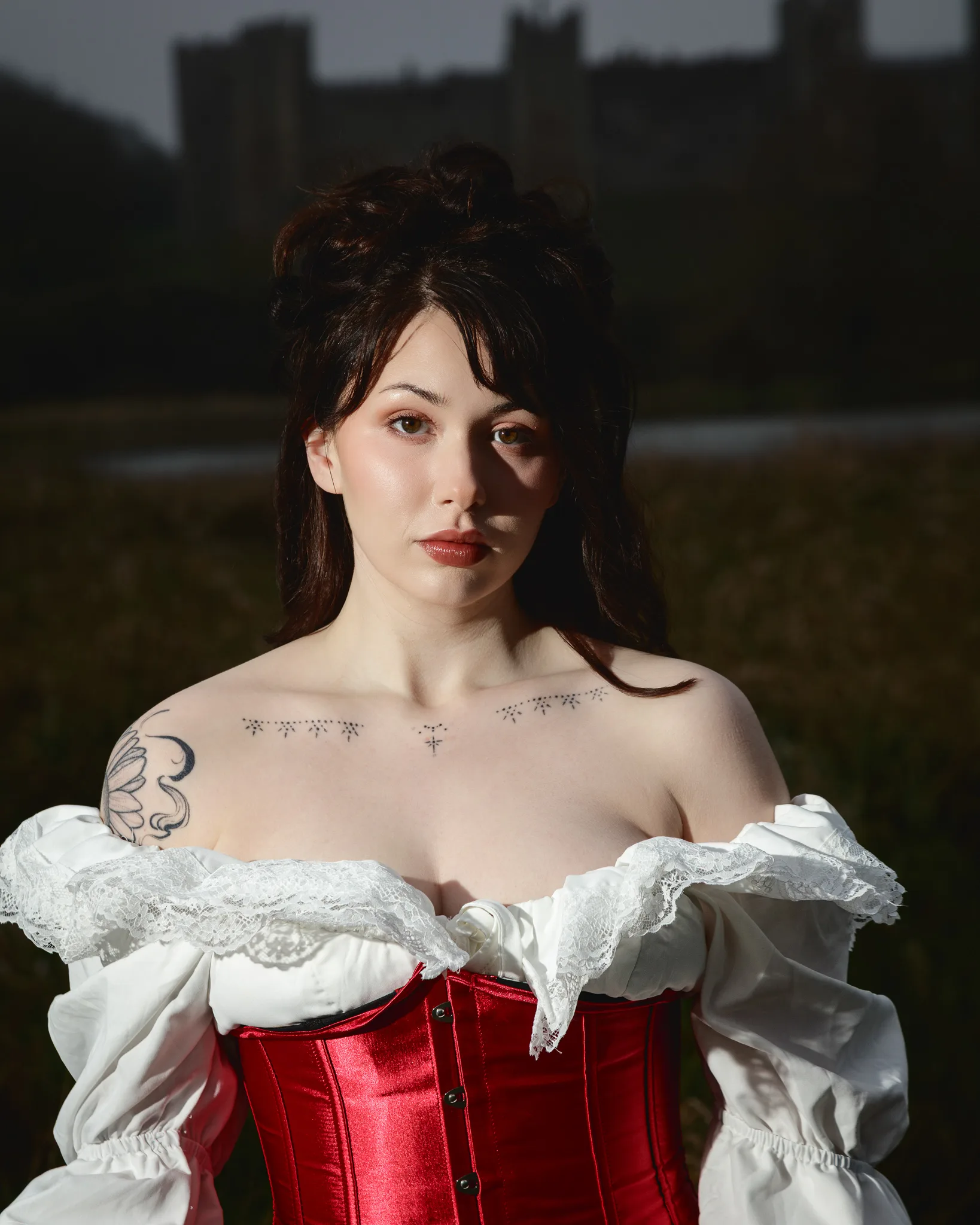
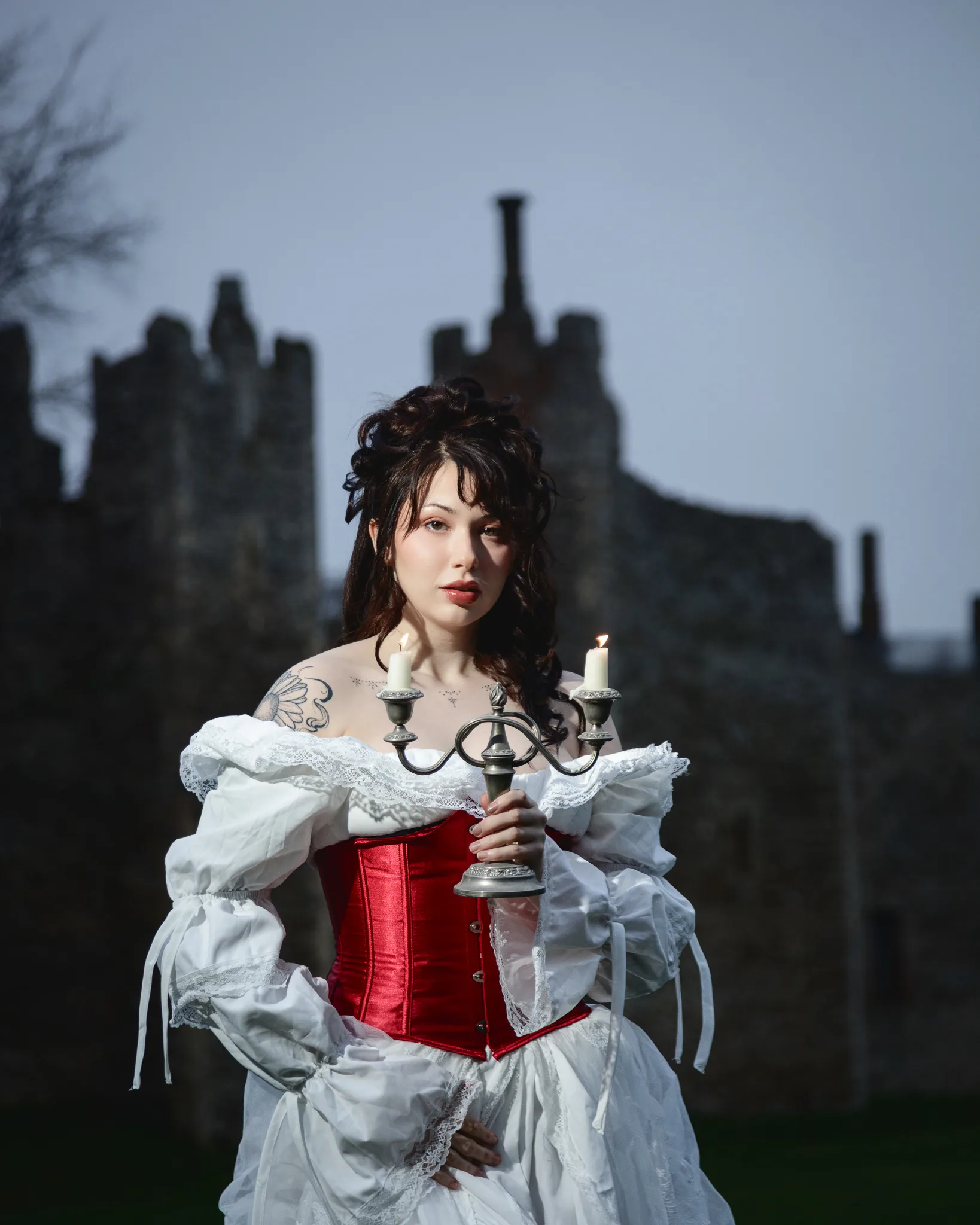
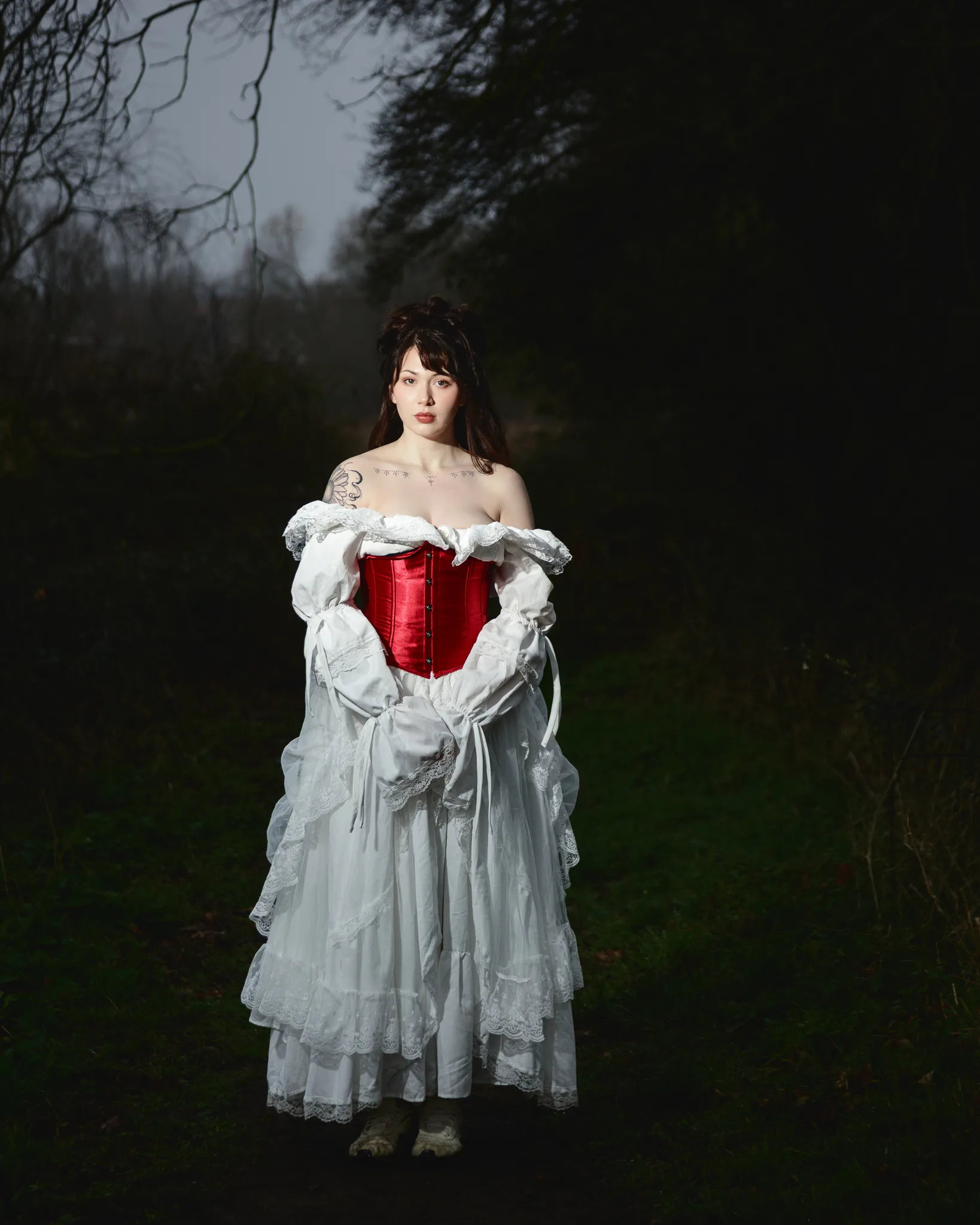
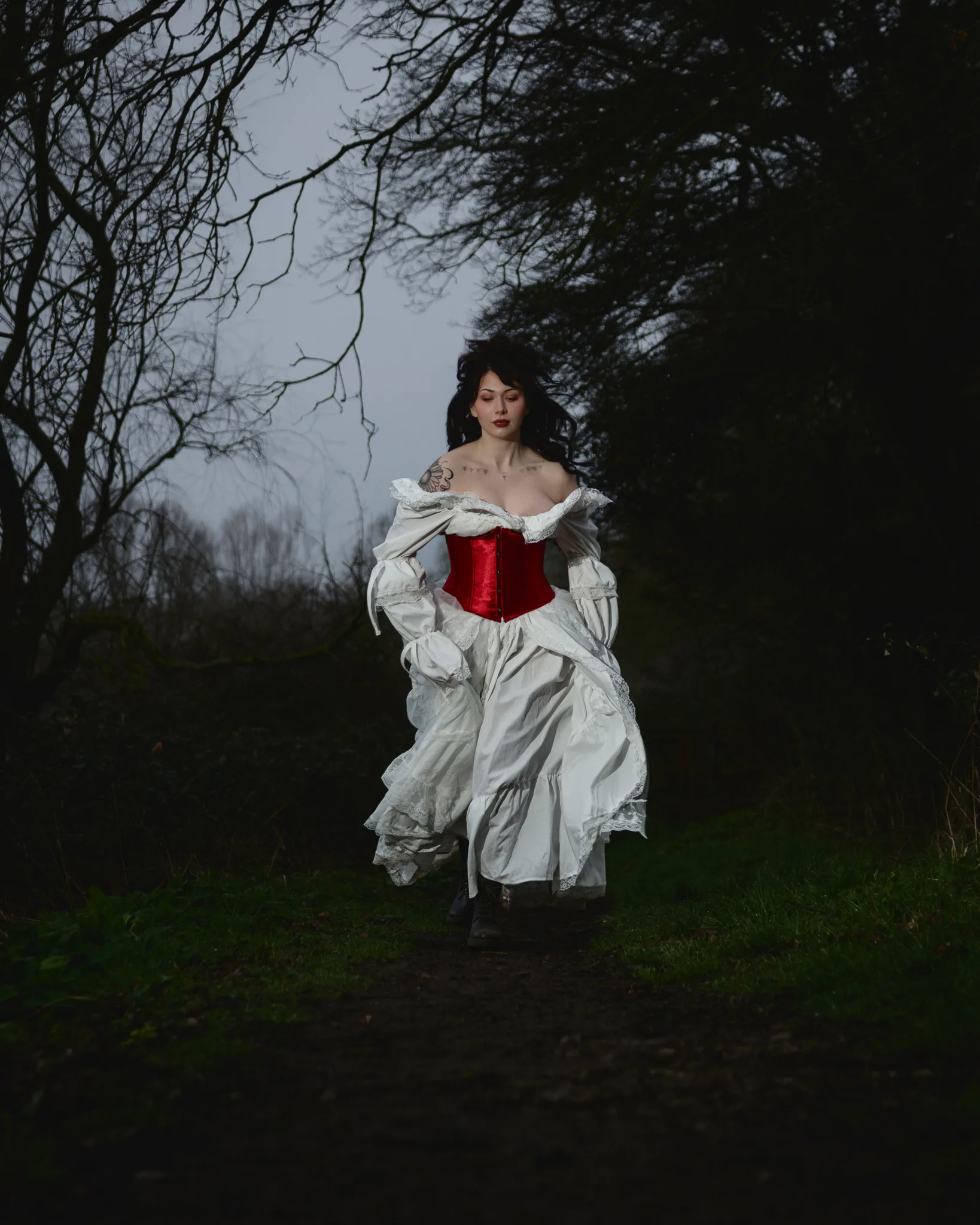
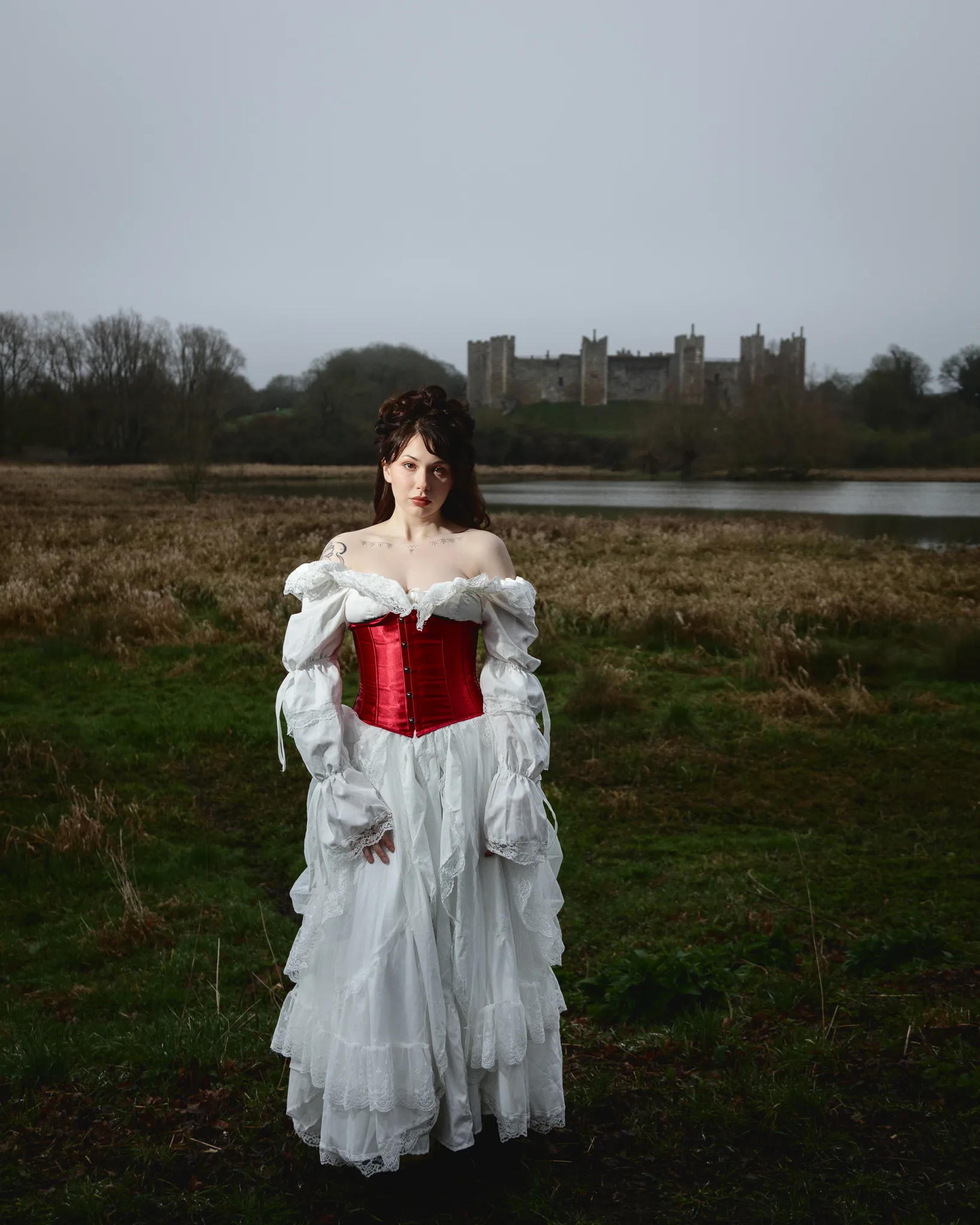
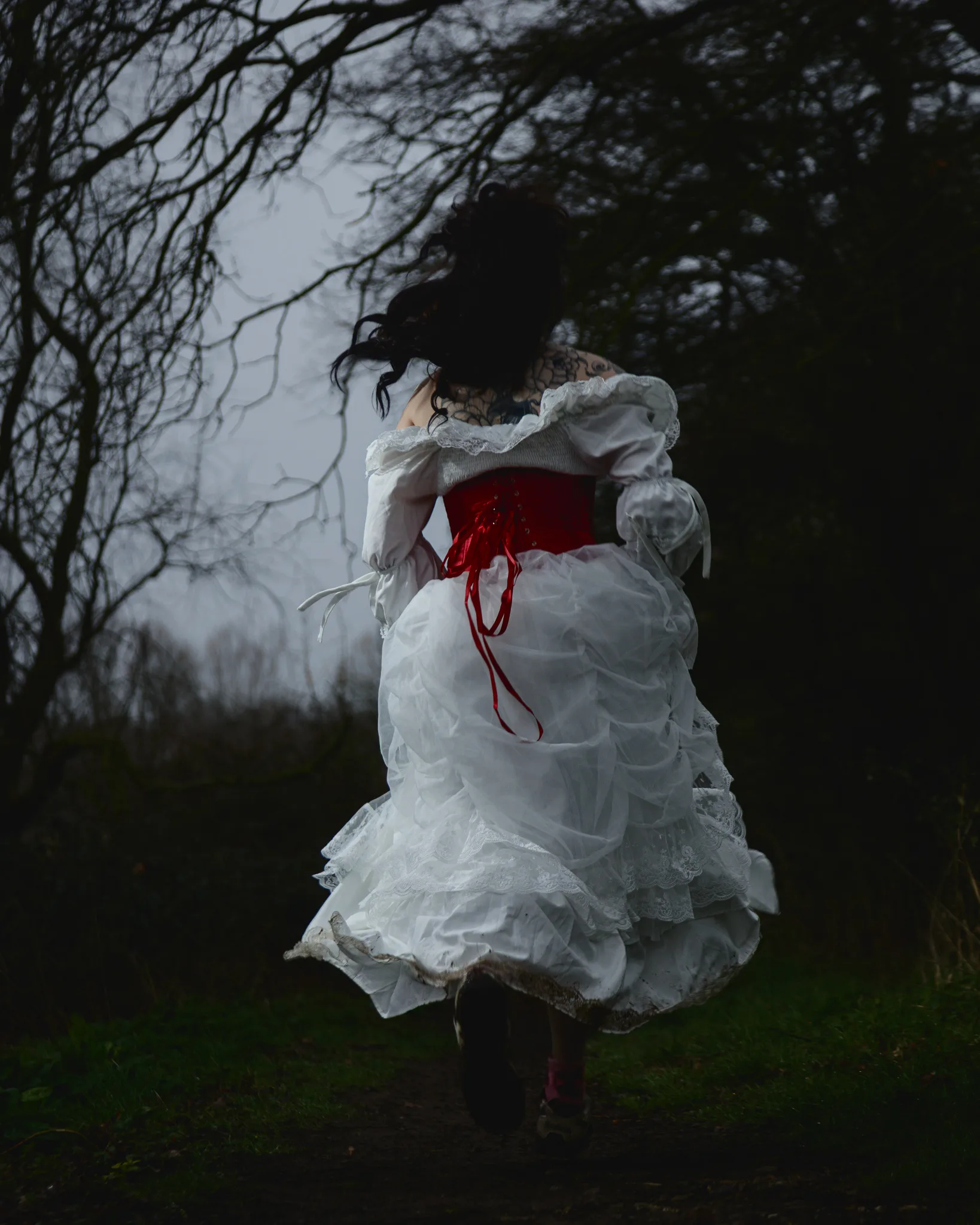
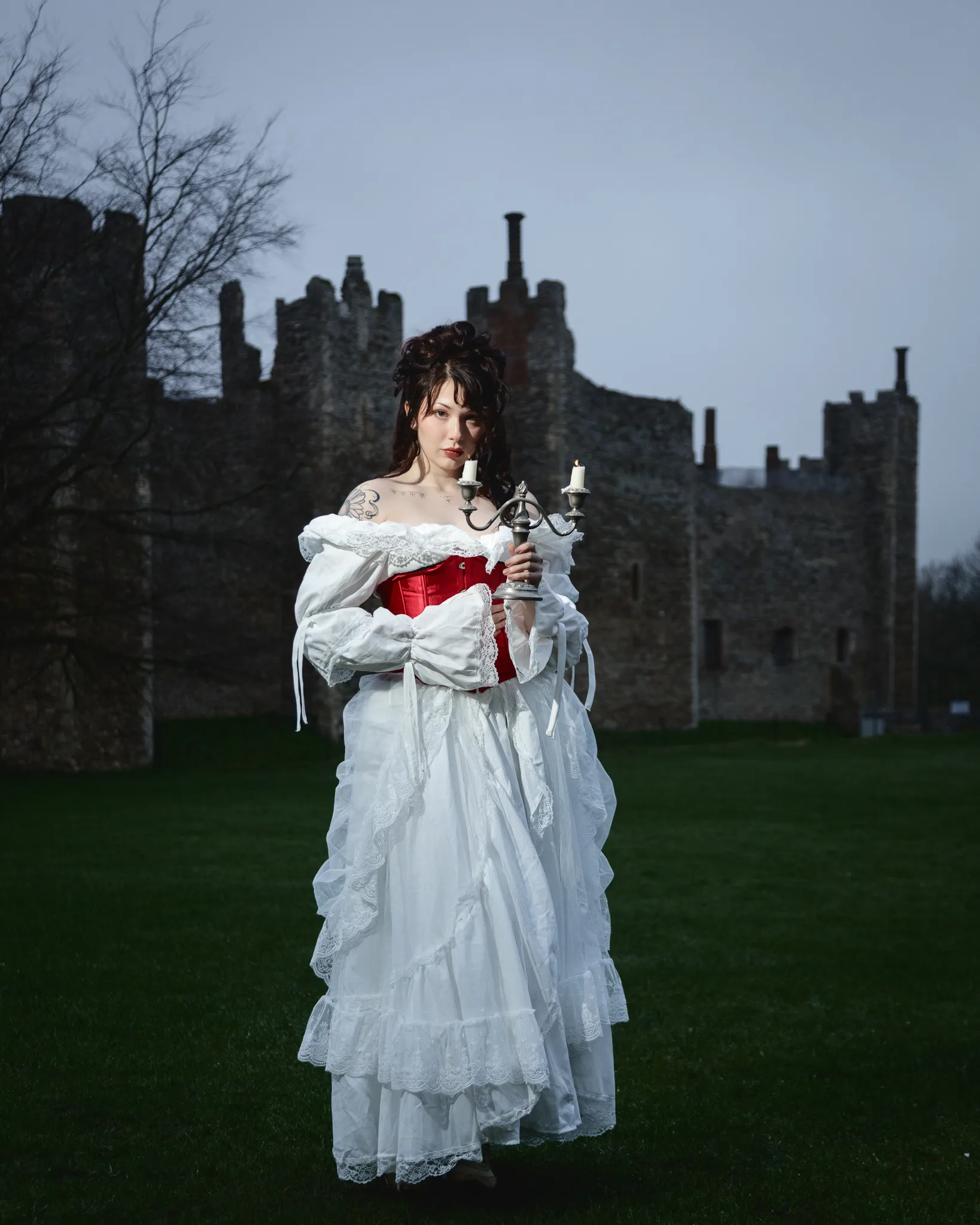
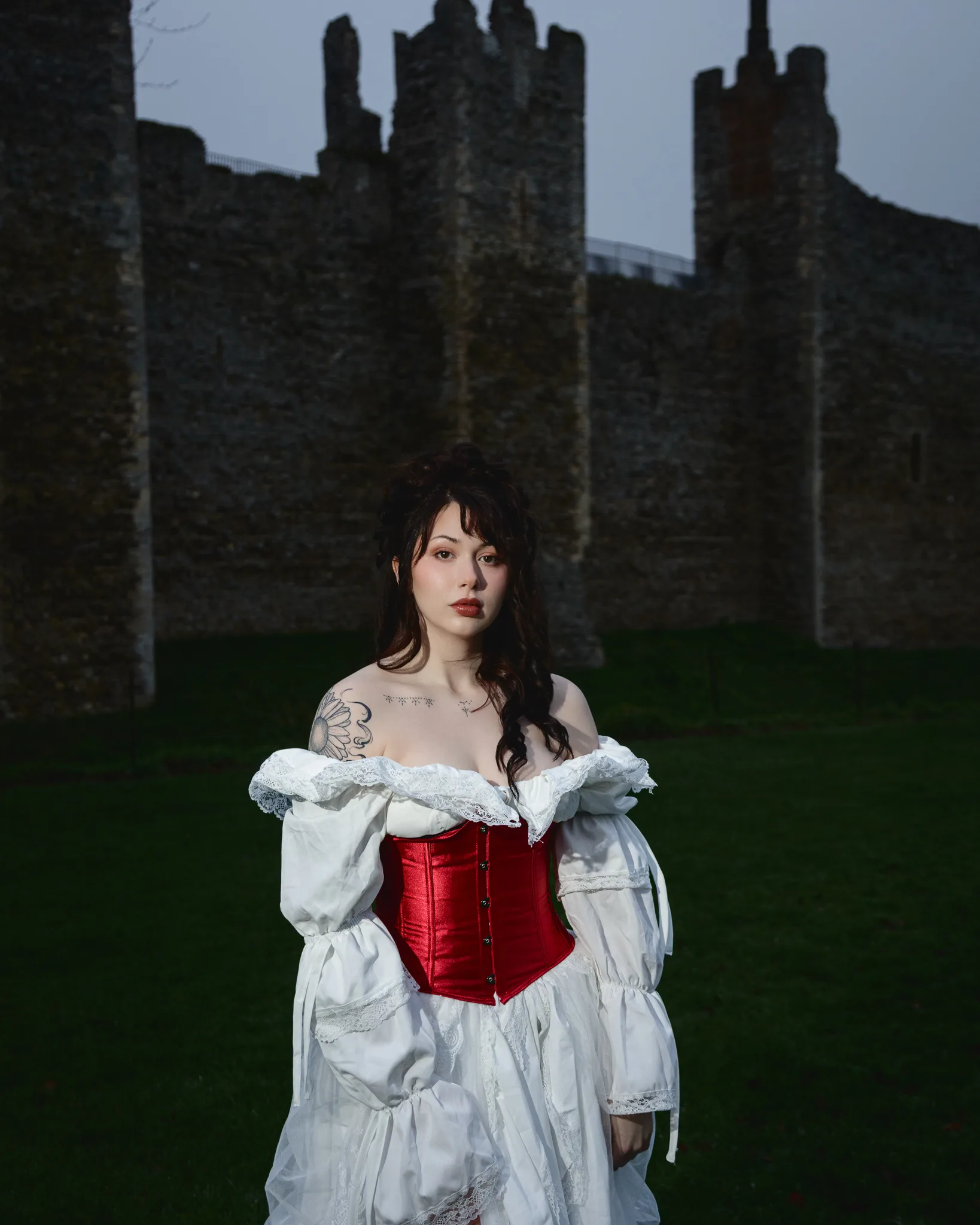
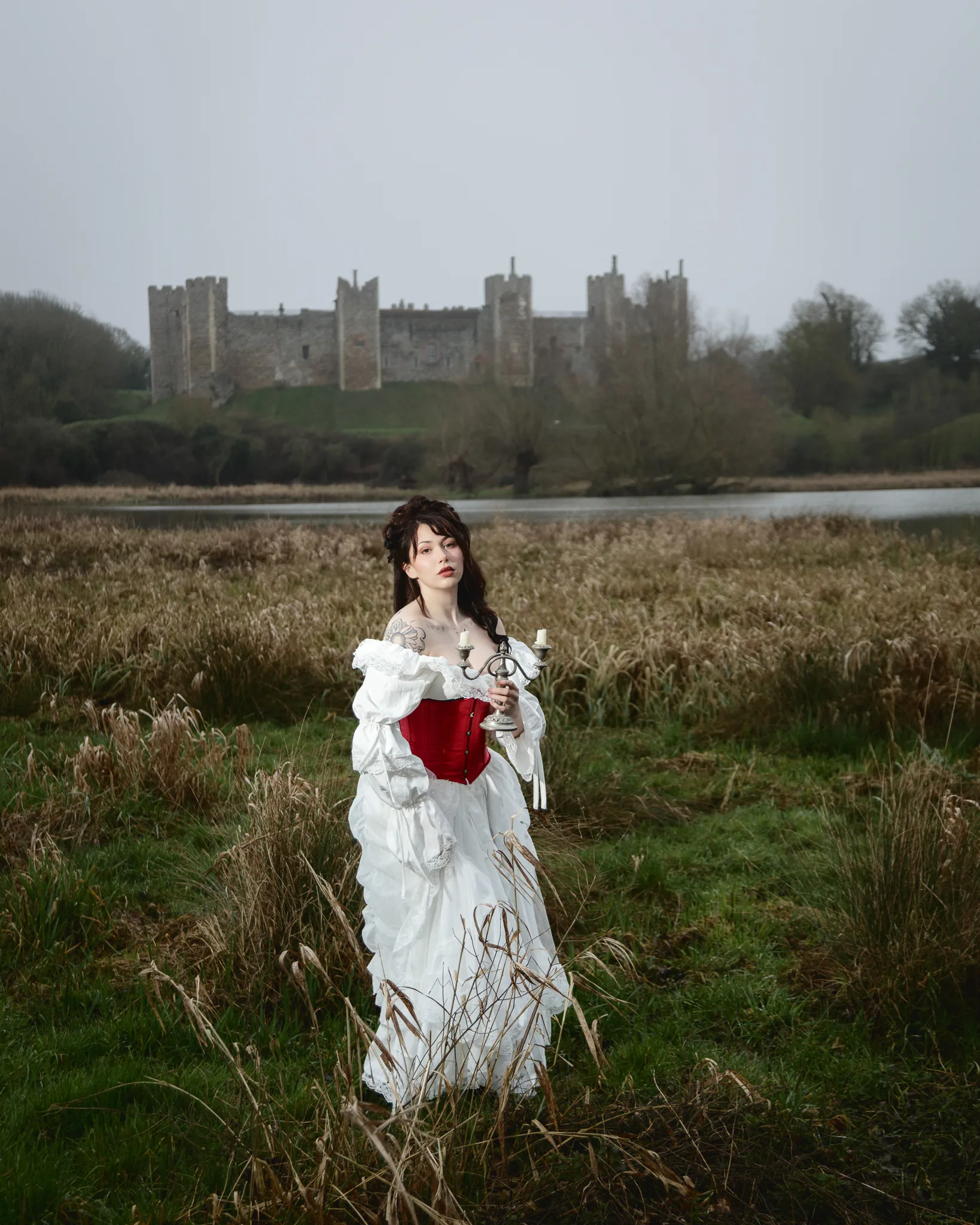
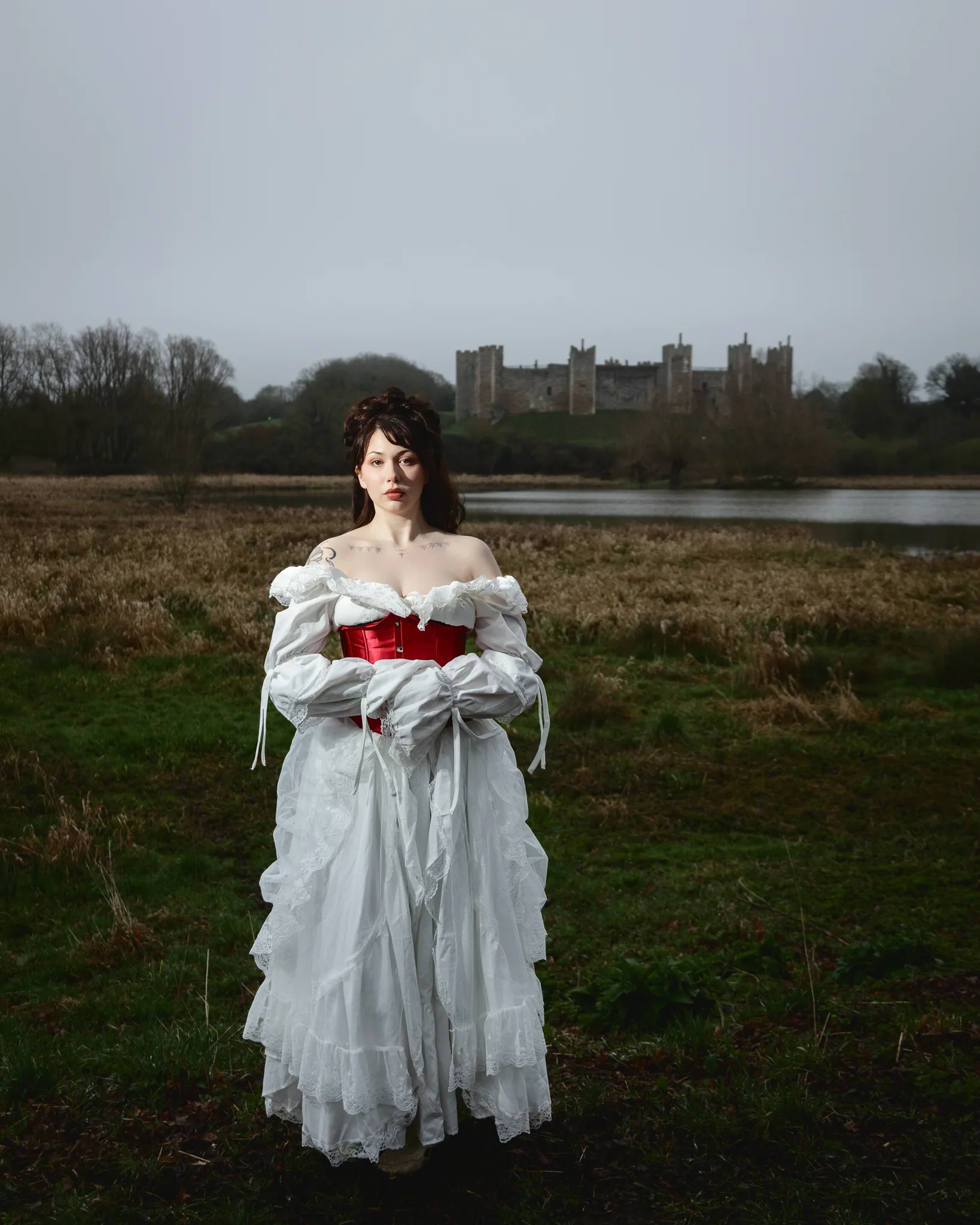
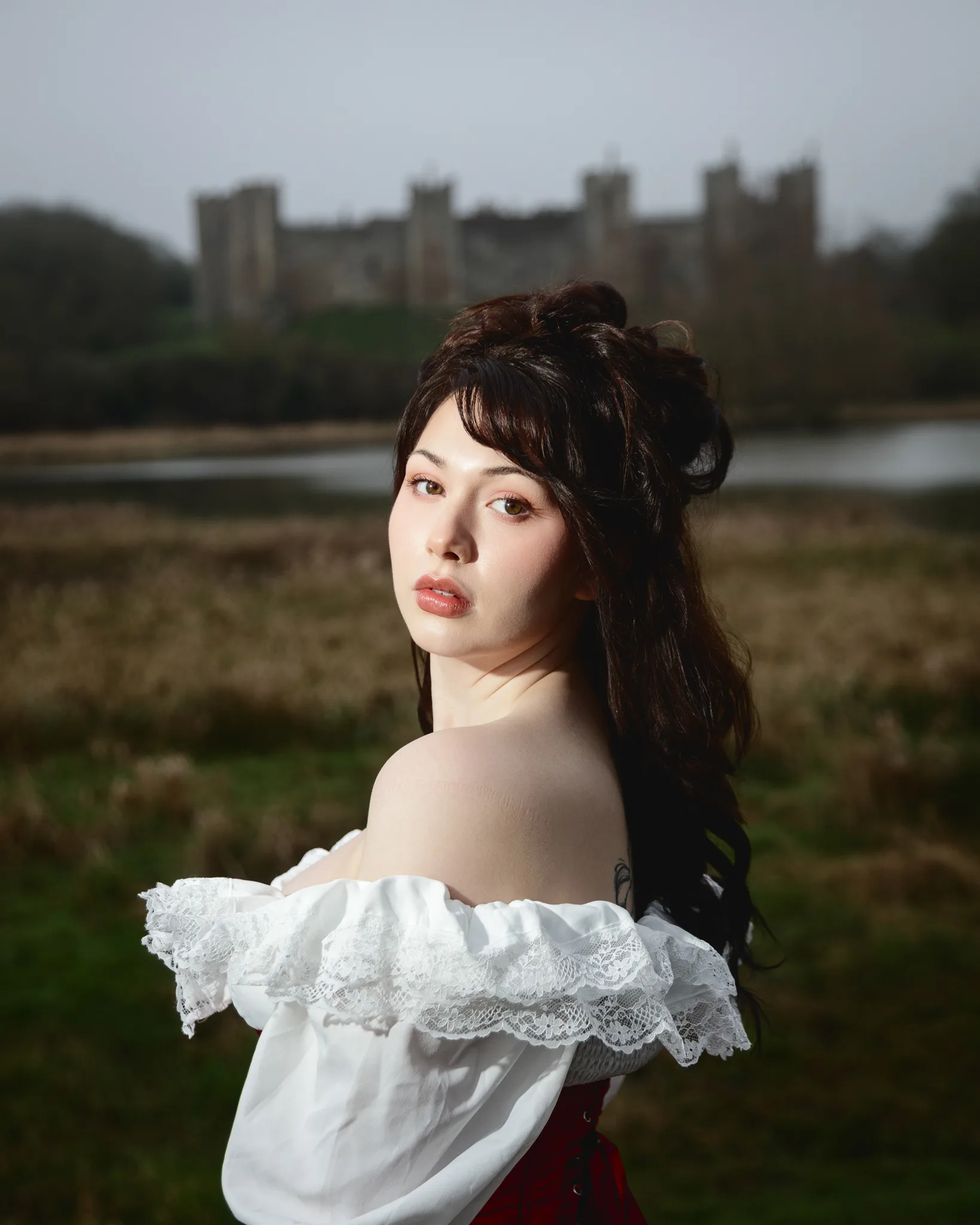
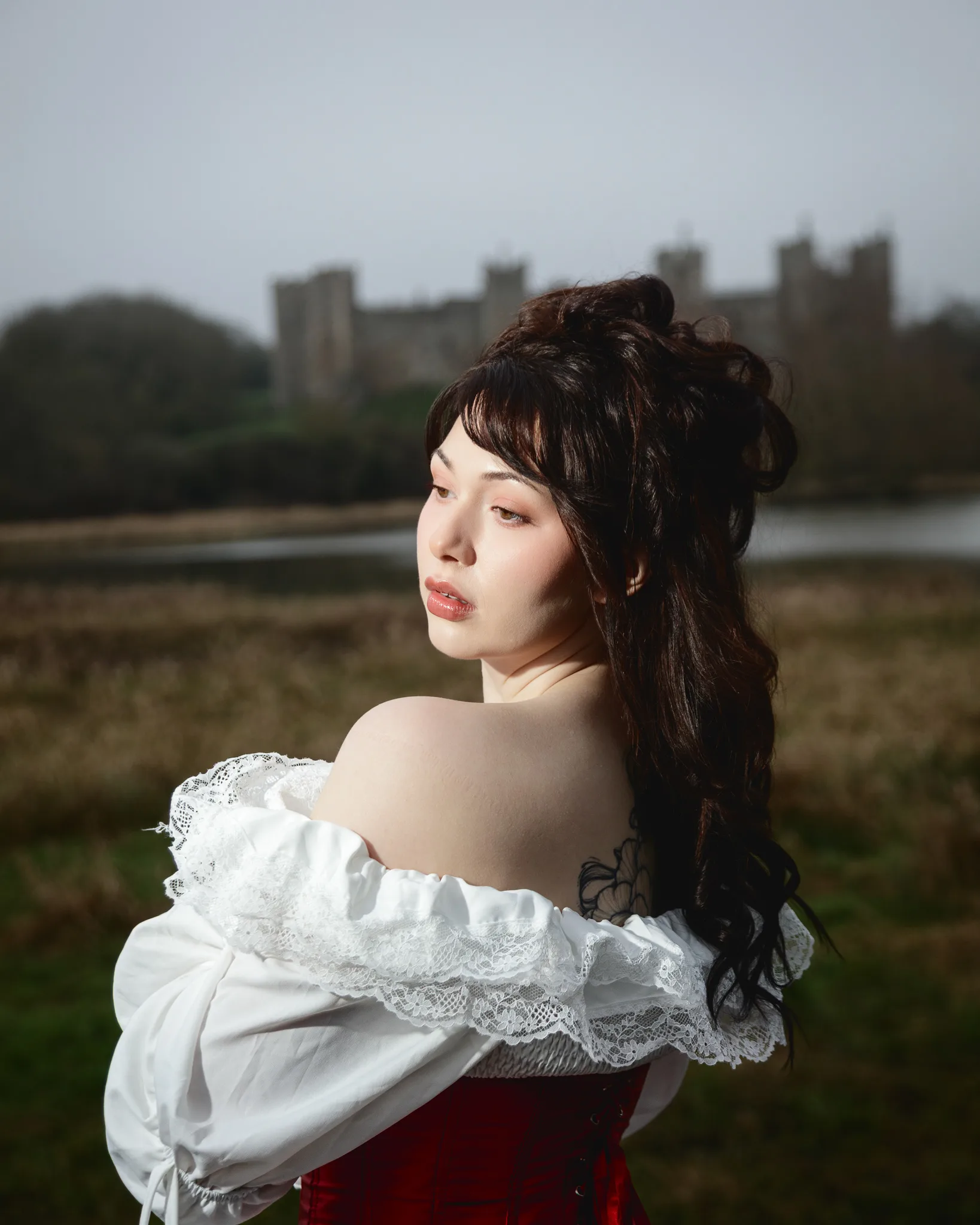
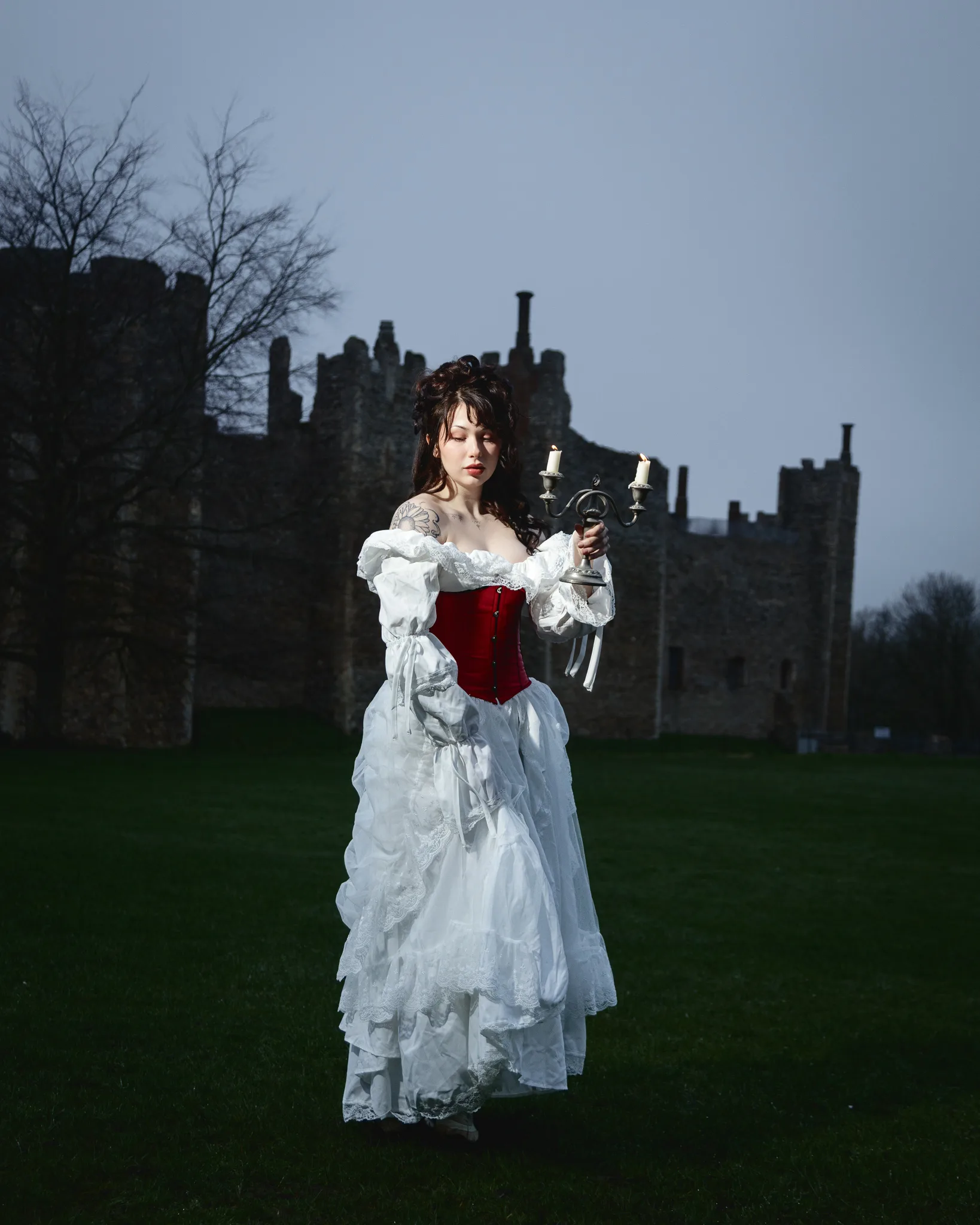
The first part of the shoot took place at Framlingham Castle, one of Suffolk’s most recognisable historic landmarks. The castle dates from the late 12th century and is known for its dramatic curtain wall and mural towers. It is also strongly associated with Mary Tudor, who was at Framlingham when she was proclaimed queen in 1553. Today the site is managed by English Heritage. It is also widely recognised as the castle that inspired Ed Sheeran’s “Castle on the Hill”.
That setting gave us exactly the kind of atmosphere the concept needed.
Rather than approaching the castle in a documentary or tourist way, I wanted to use it as a backdrop that supported the mood of the portraits. The open land, winter grasses, muted skies, and imposing stonework all helped build a sense of isolation and drama. Courtney’s styling worked brilliantly against that environment. The red corset stood out against the subdued tones of the landscape, while the white dress caught the available light in a way that made her feel almost ghostlike within the frame.
Some of the strongest location images came from allowing space around the figure. Instead of filling the frame, I often let Courtney appear smaller within the landscape, with the castle behind her or beyond her. That gave the photographs a more cinematic quality and reinforced the idea of a character moving through a historic setting rather than simply posing in front of it.
The candelabra prop added another useful layer to the story. It gave the outdoor portraits a ceremonial, almost haunting quality, especially against the cold, subdued surroundings. It helped tie the location work to the studio portraits later on.
Why the Location Worked So Well
Framlingham Castle has a visual weight to it that suits stylised portrait photography. Its history is significant, but so is its shape, scale, and relationship to the surrounding land. The walls and towers feel imposing without overwhelming the subject, and the open foreground around the site gives plenty of scope to build atmosphere in-camera. English Heritage notes the castle’s long association with the Howard family as well as its role in the story of Mary Tudor.
For this particular shoot, the weather also helped. The subdued light and pale sky gave the location images a restrained, melancholic tone. A brighter or more colourful day would have changed the feel entirely. Here, the conditions supported the concept.
That is often the difference between a location simply looking nice and a location actually serving the narrative of the shoot.
Part Two: Building the World in the Studio
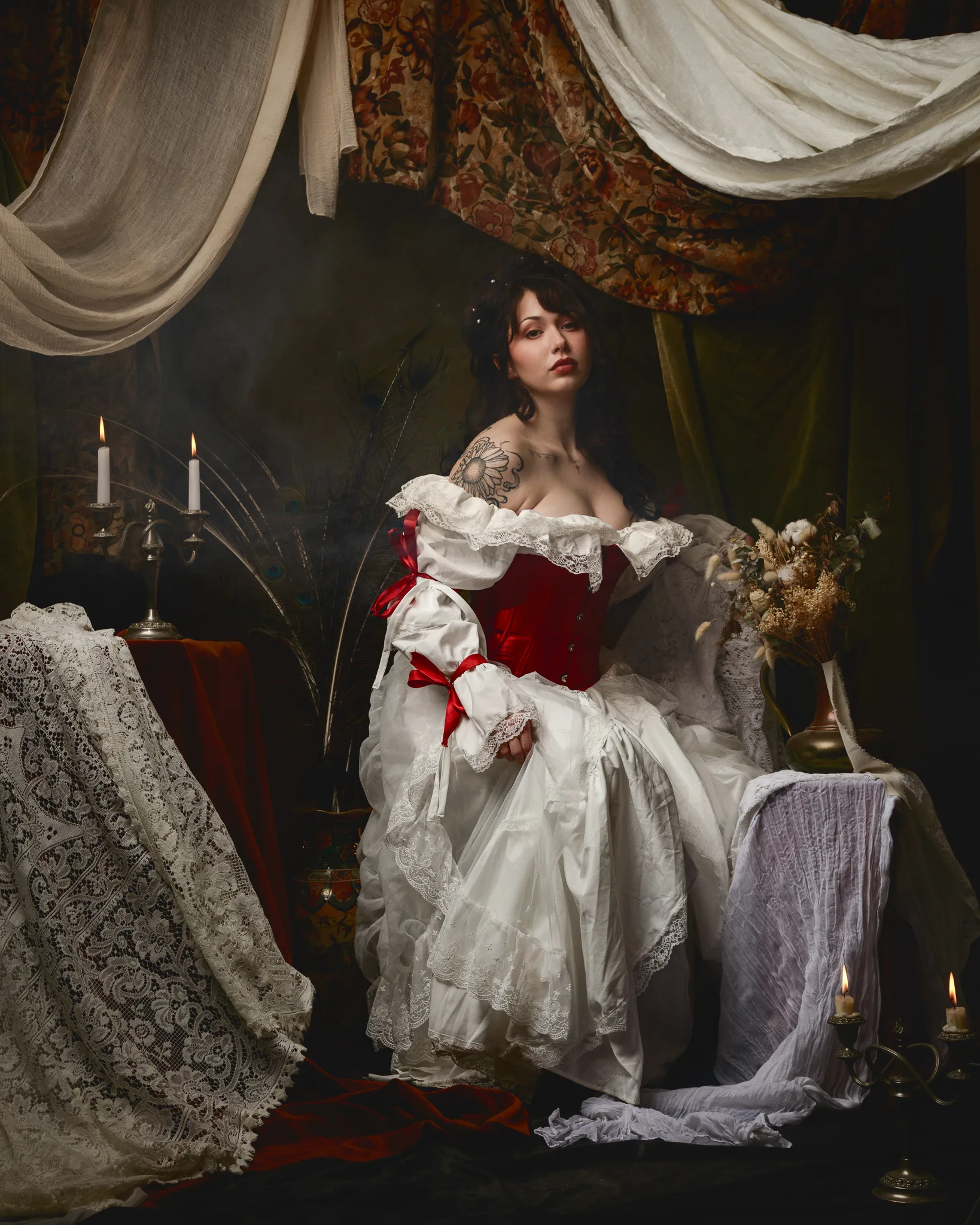
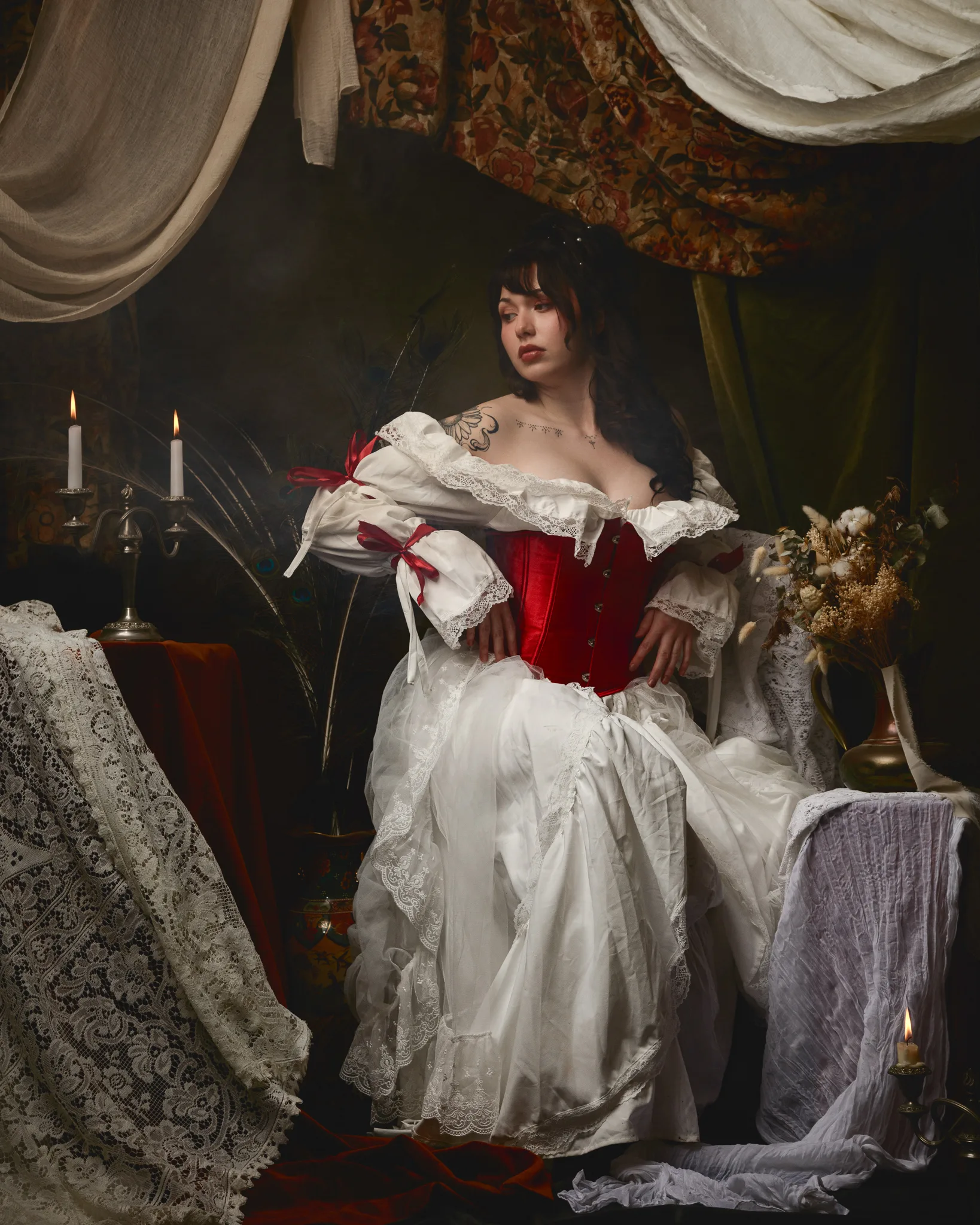
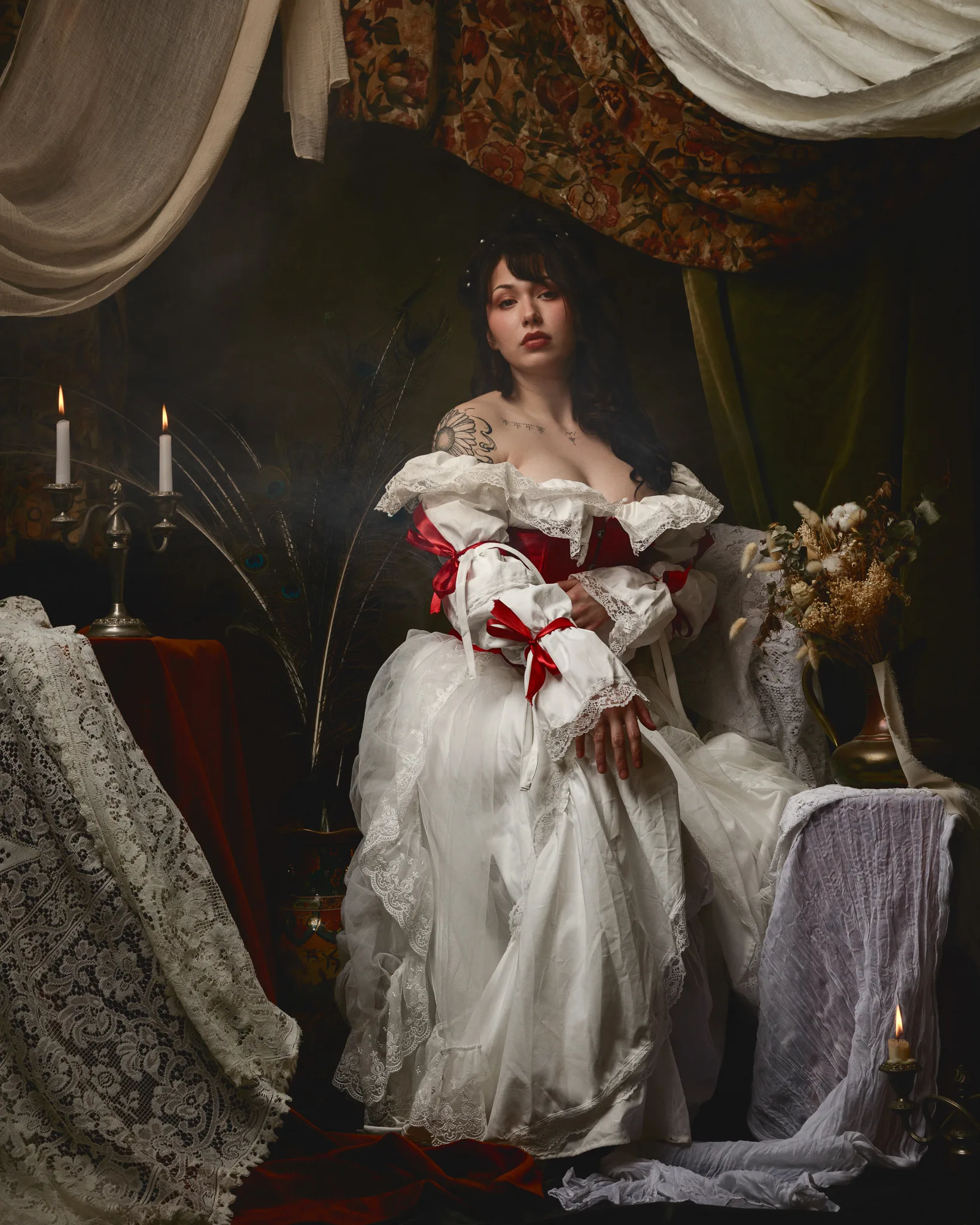
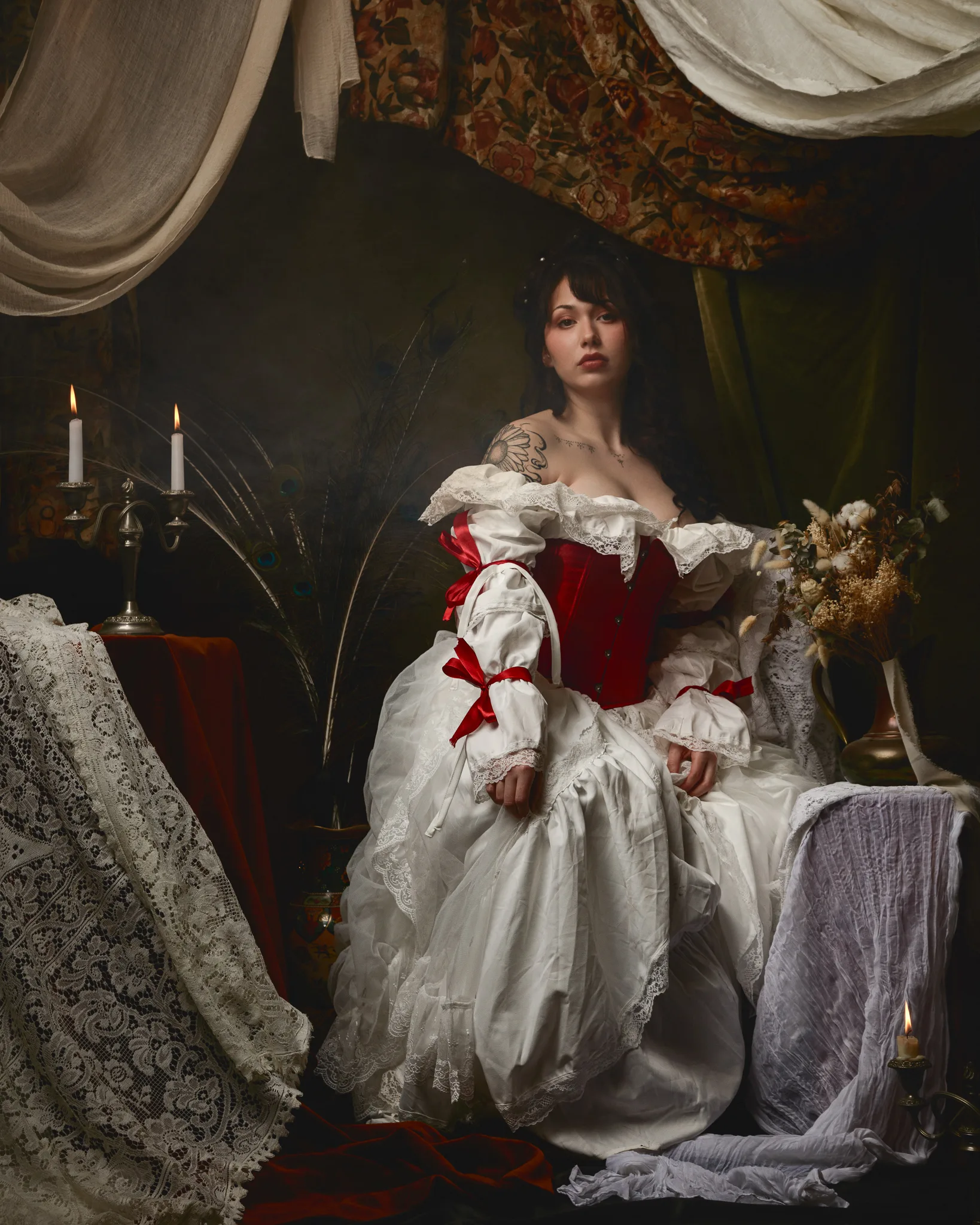
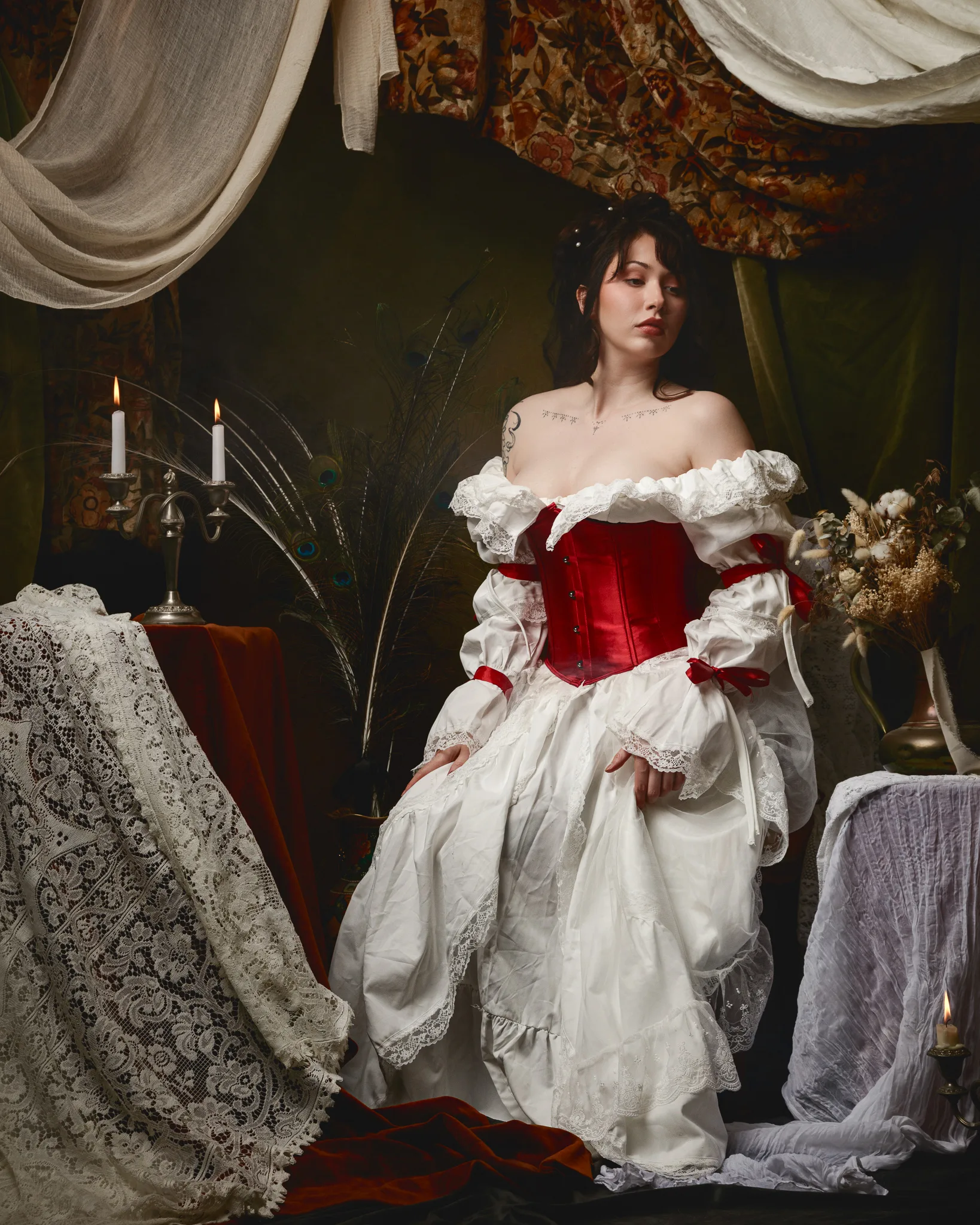
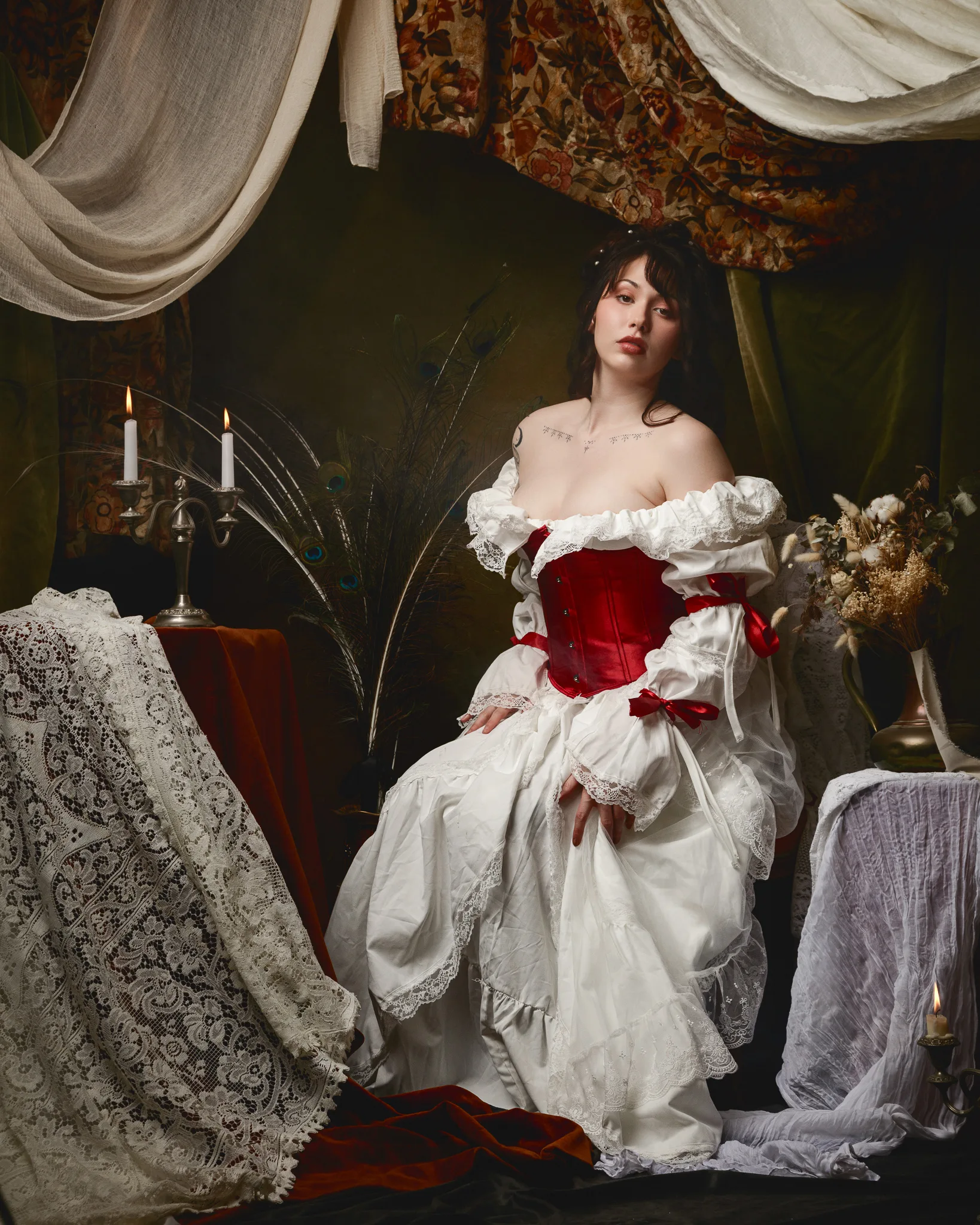
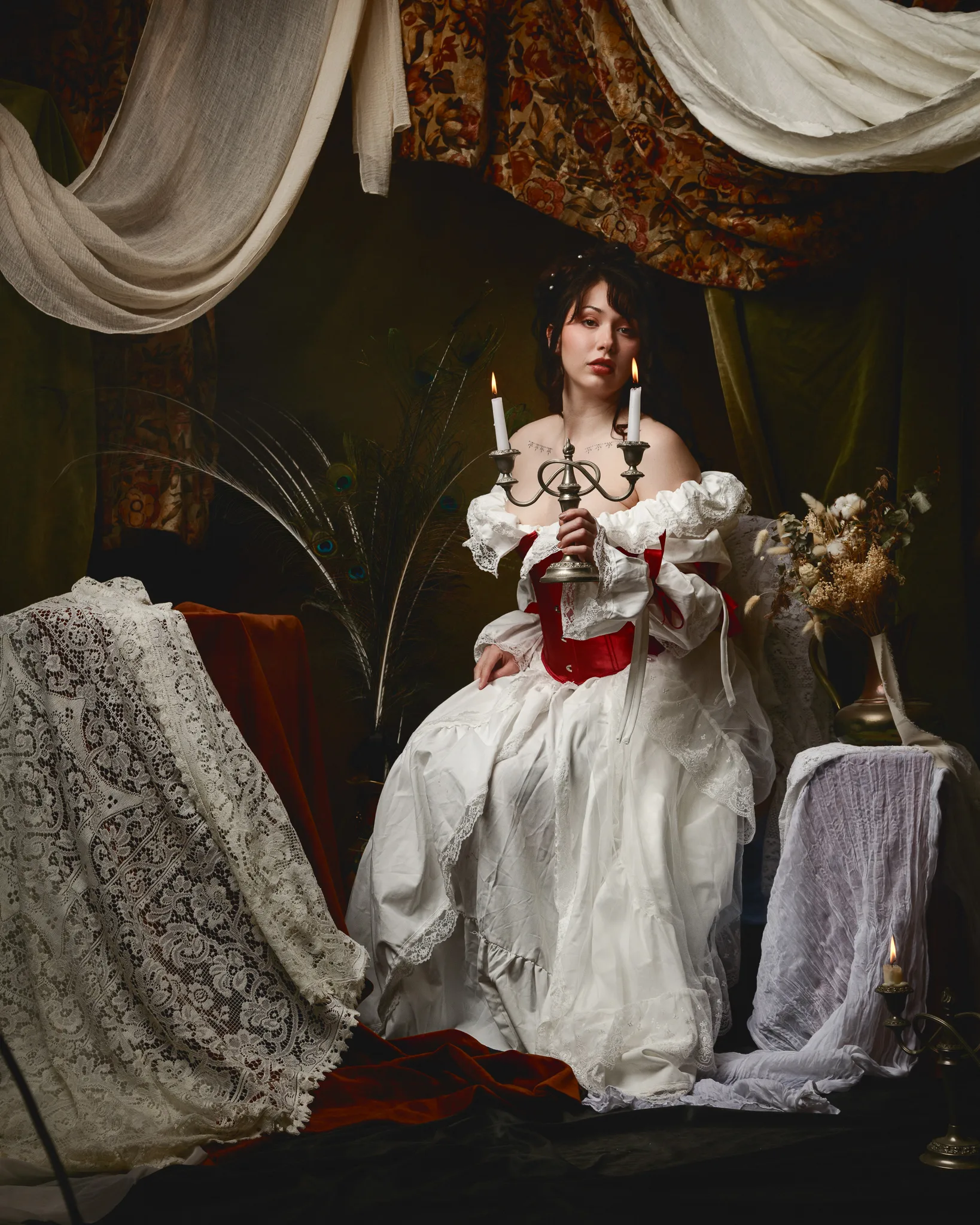
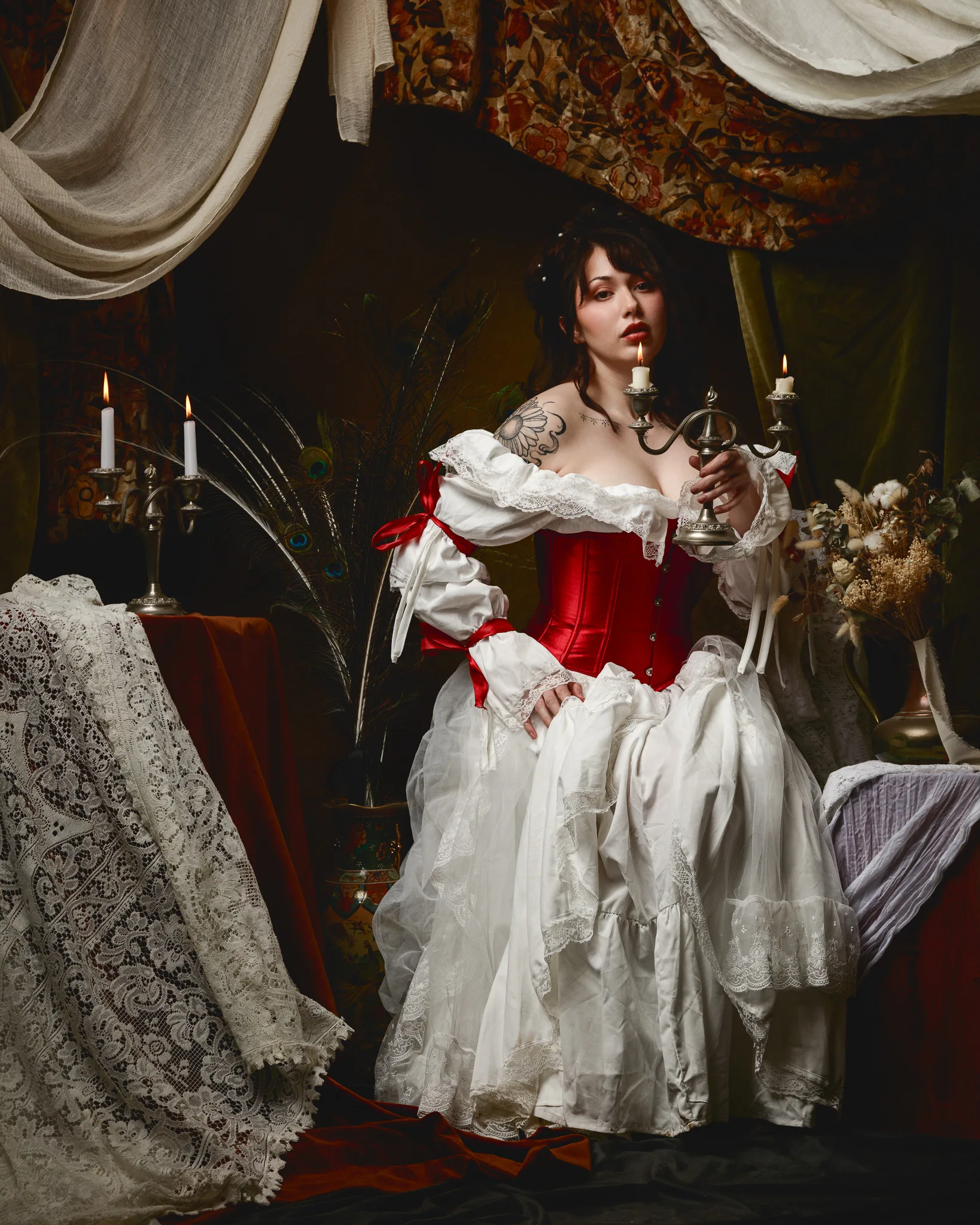
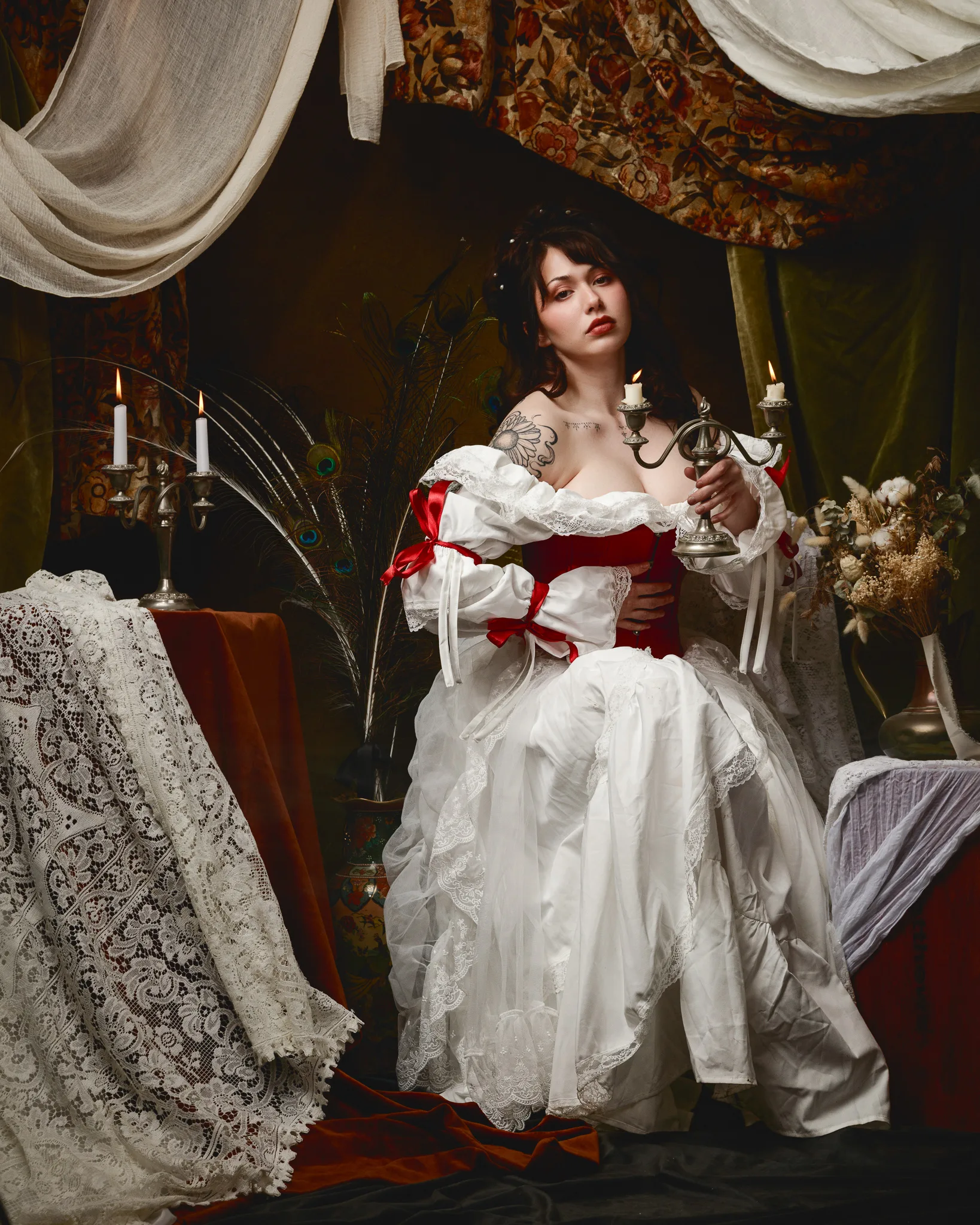
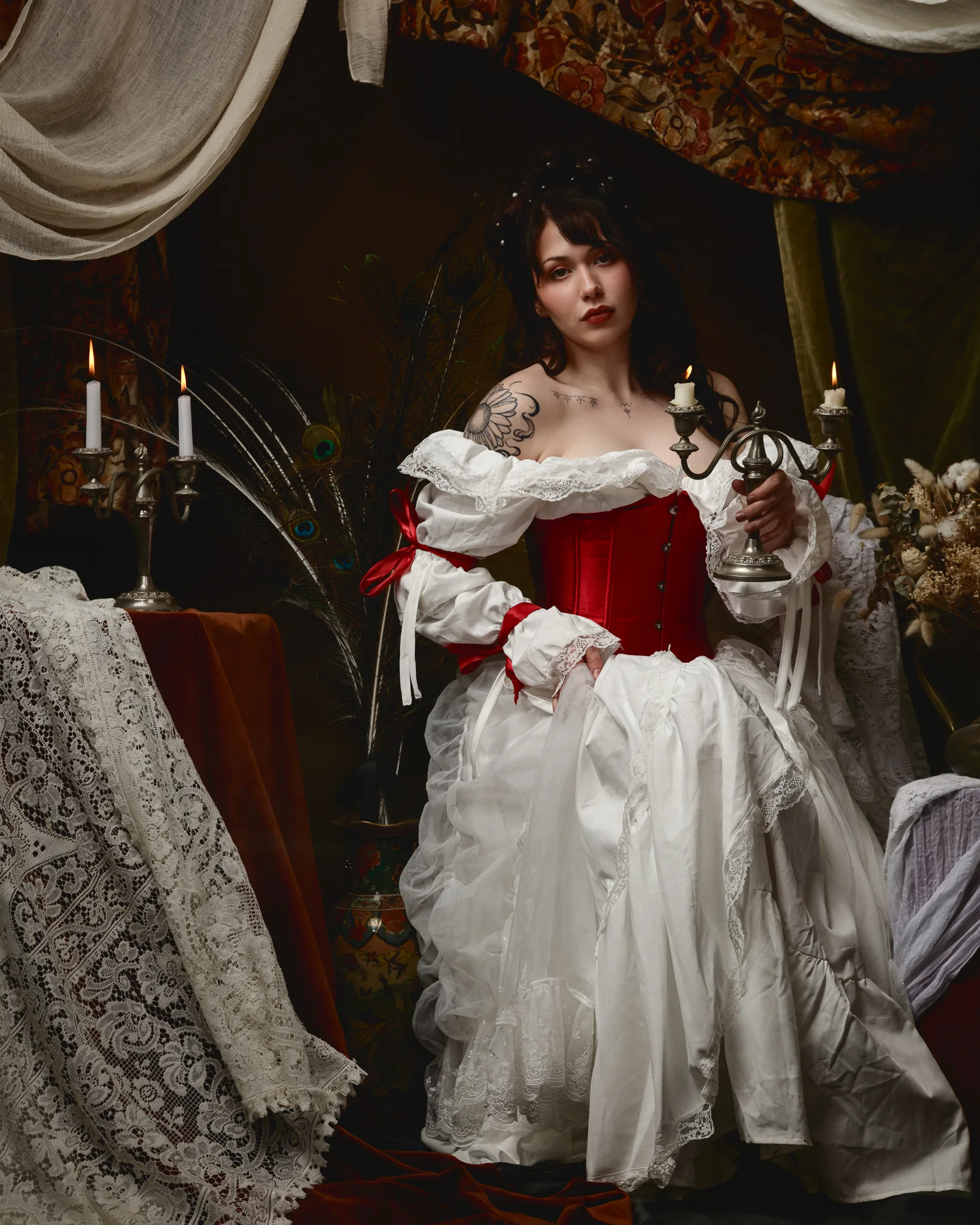
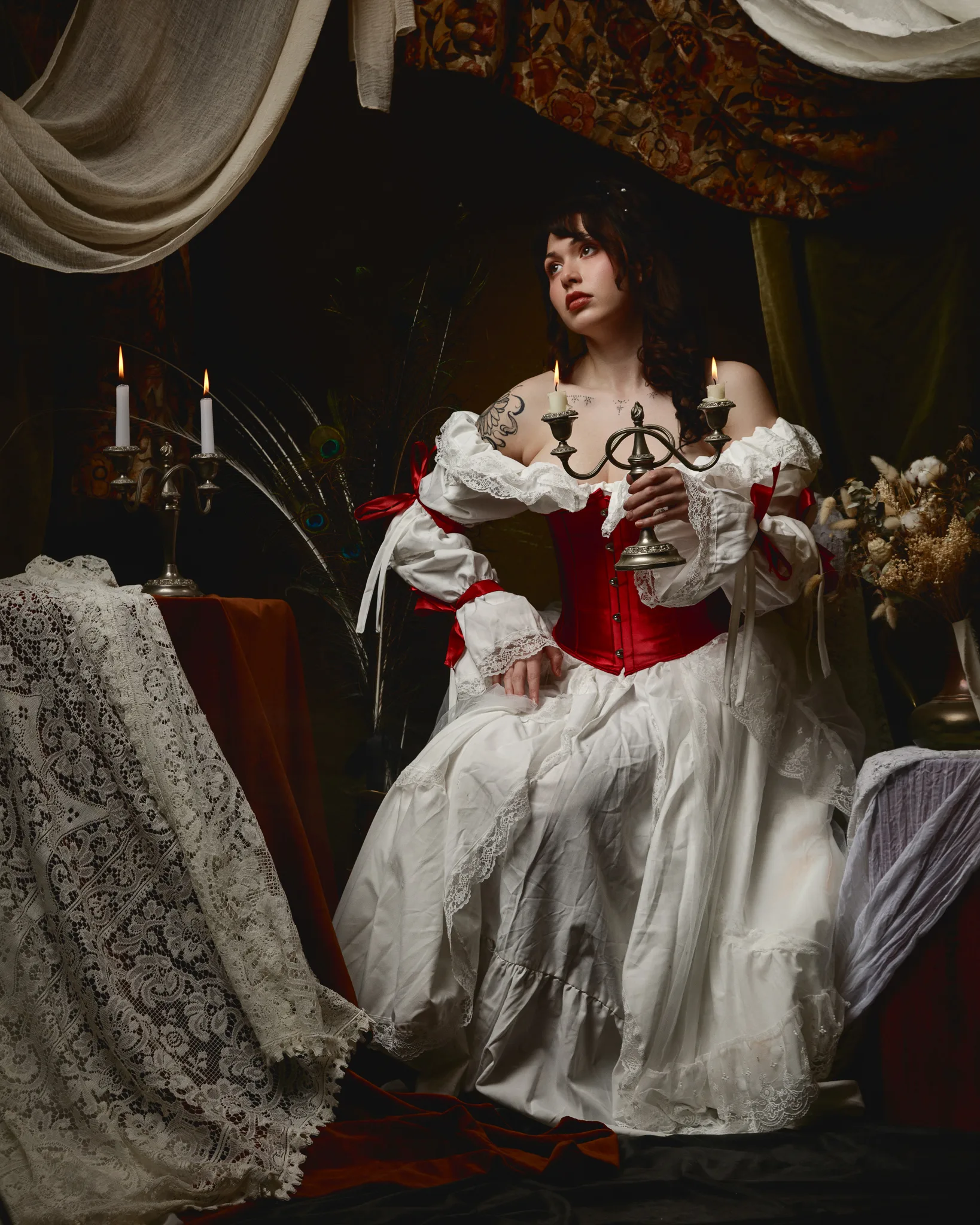
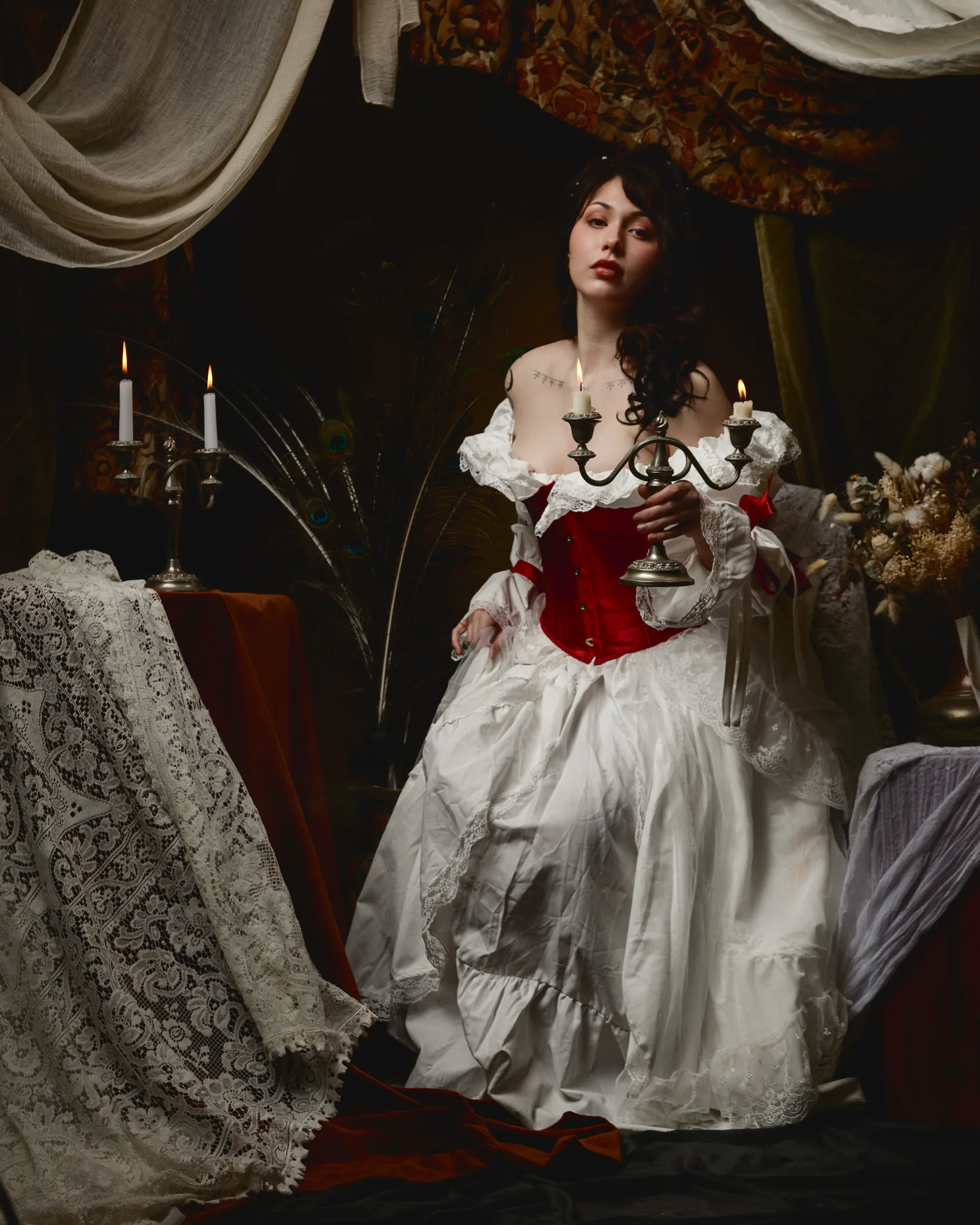
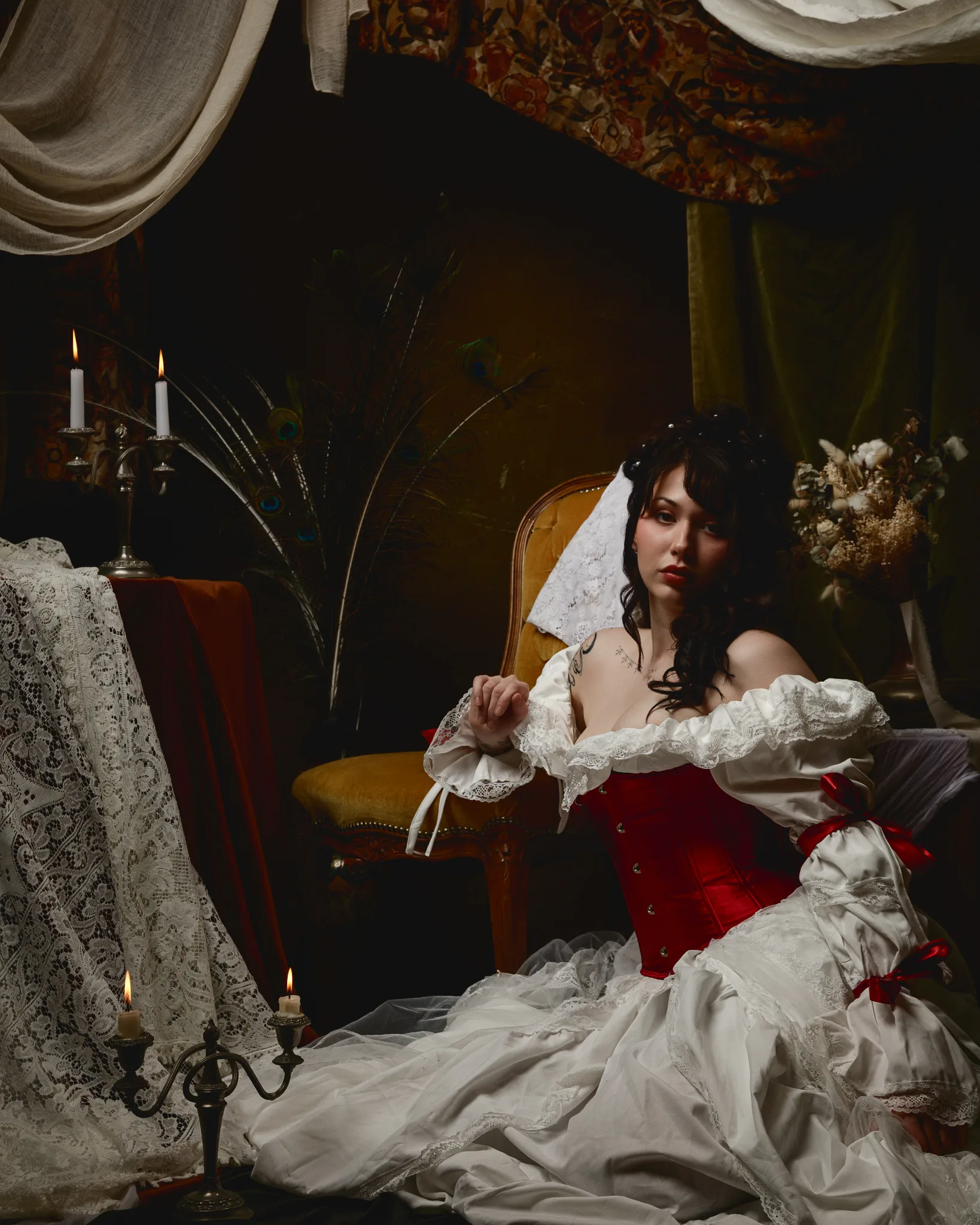
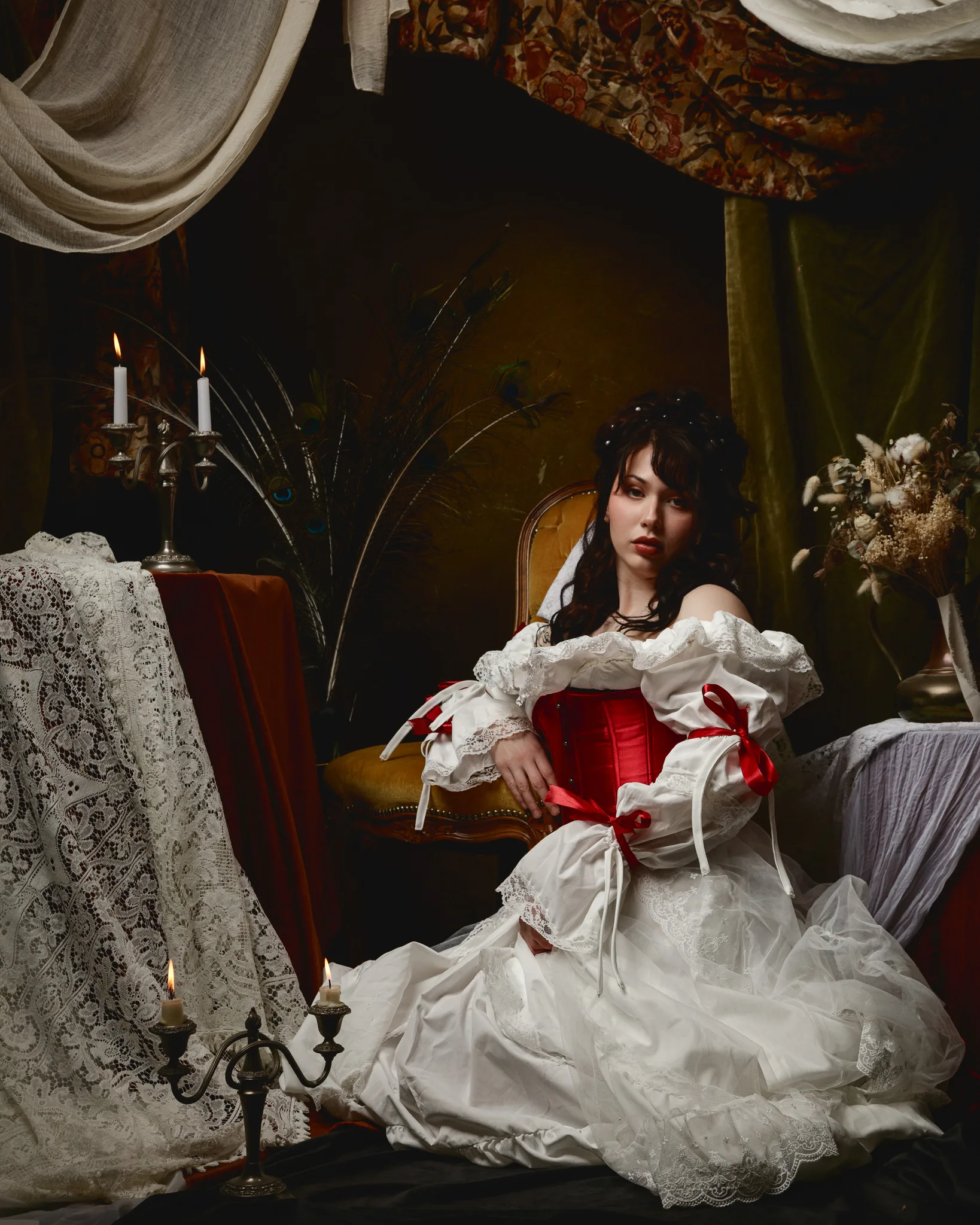
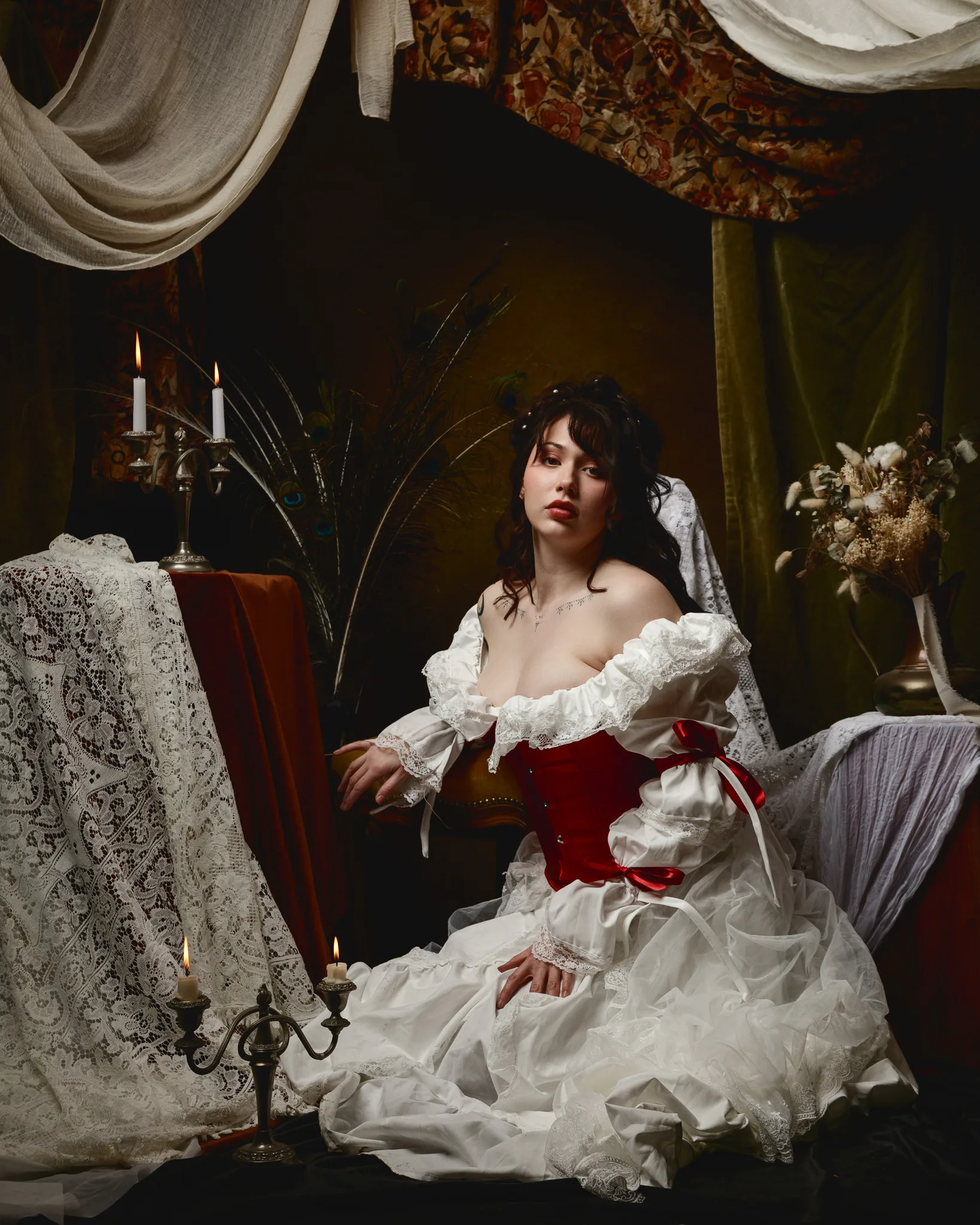
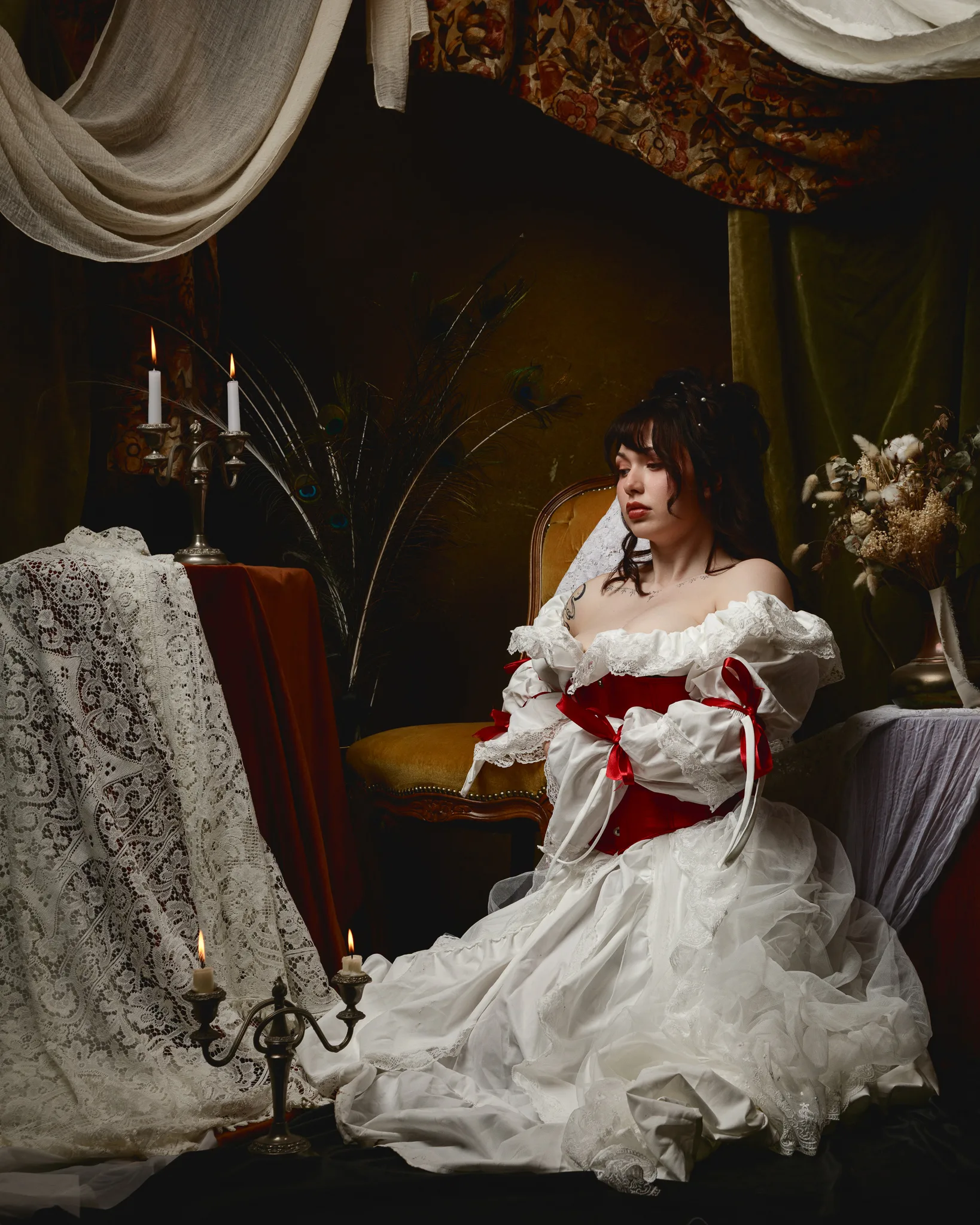
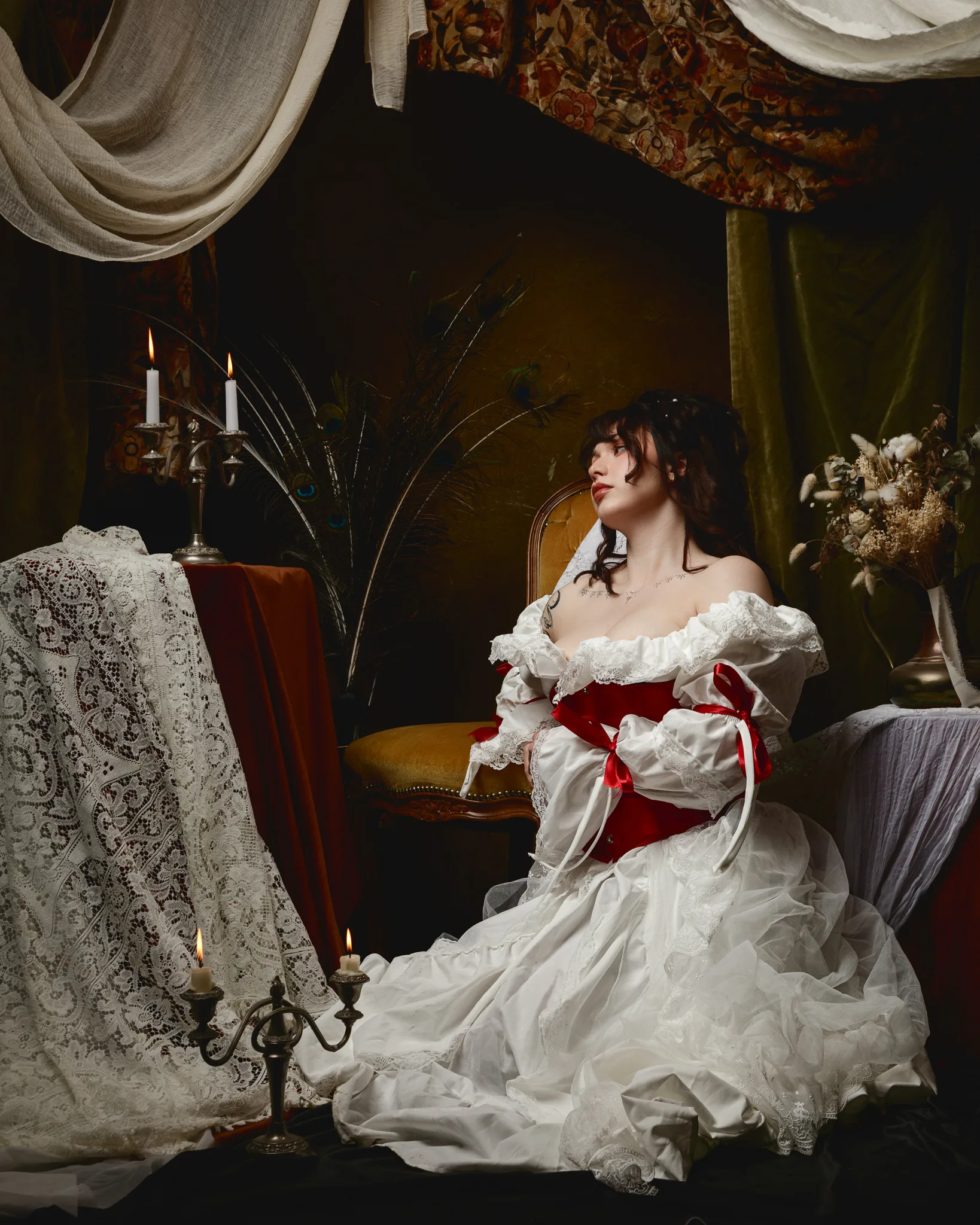
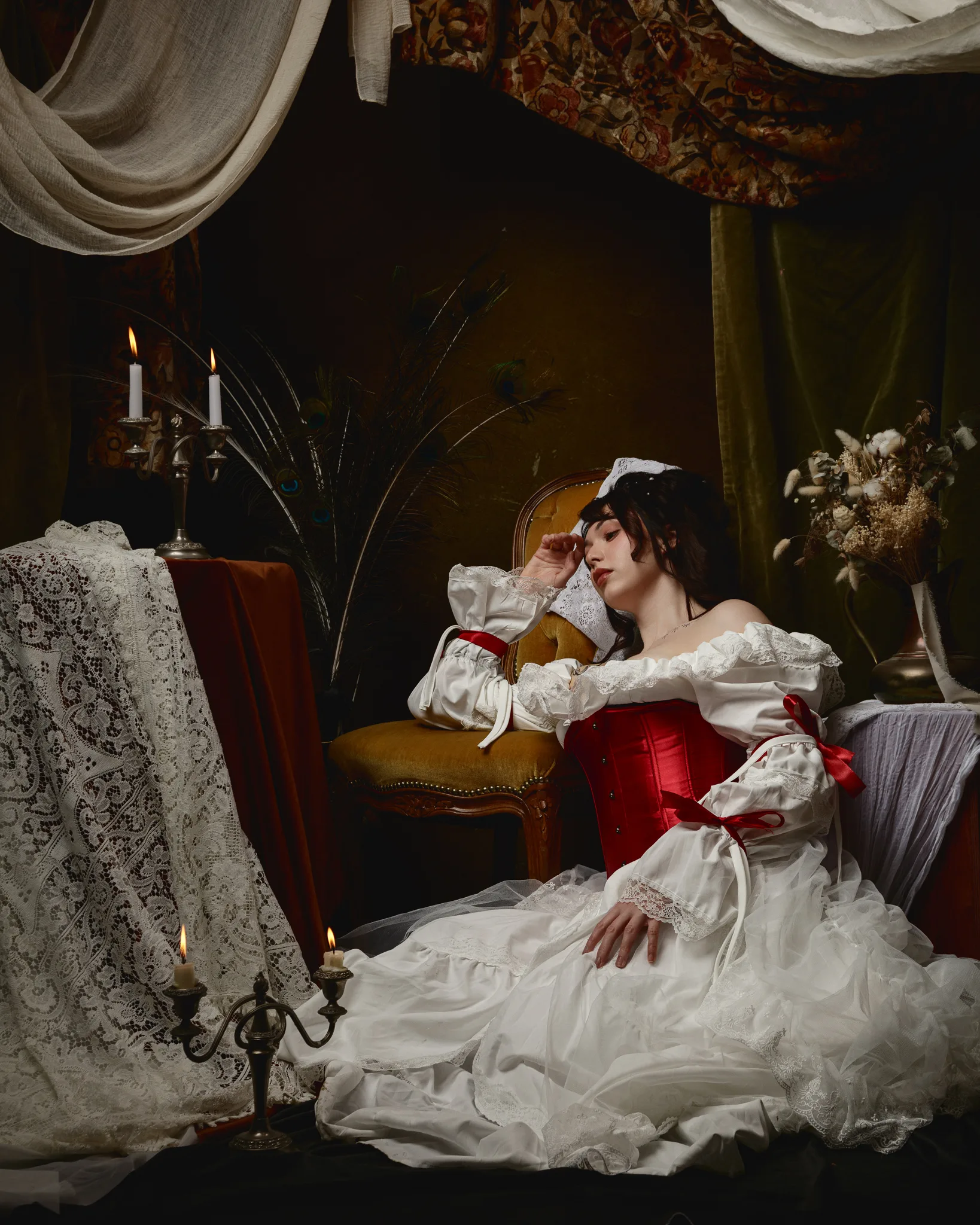
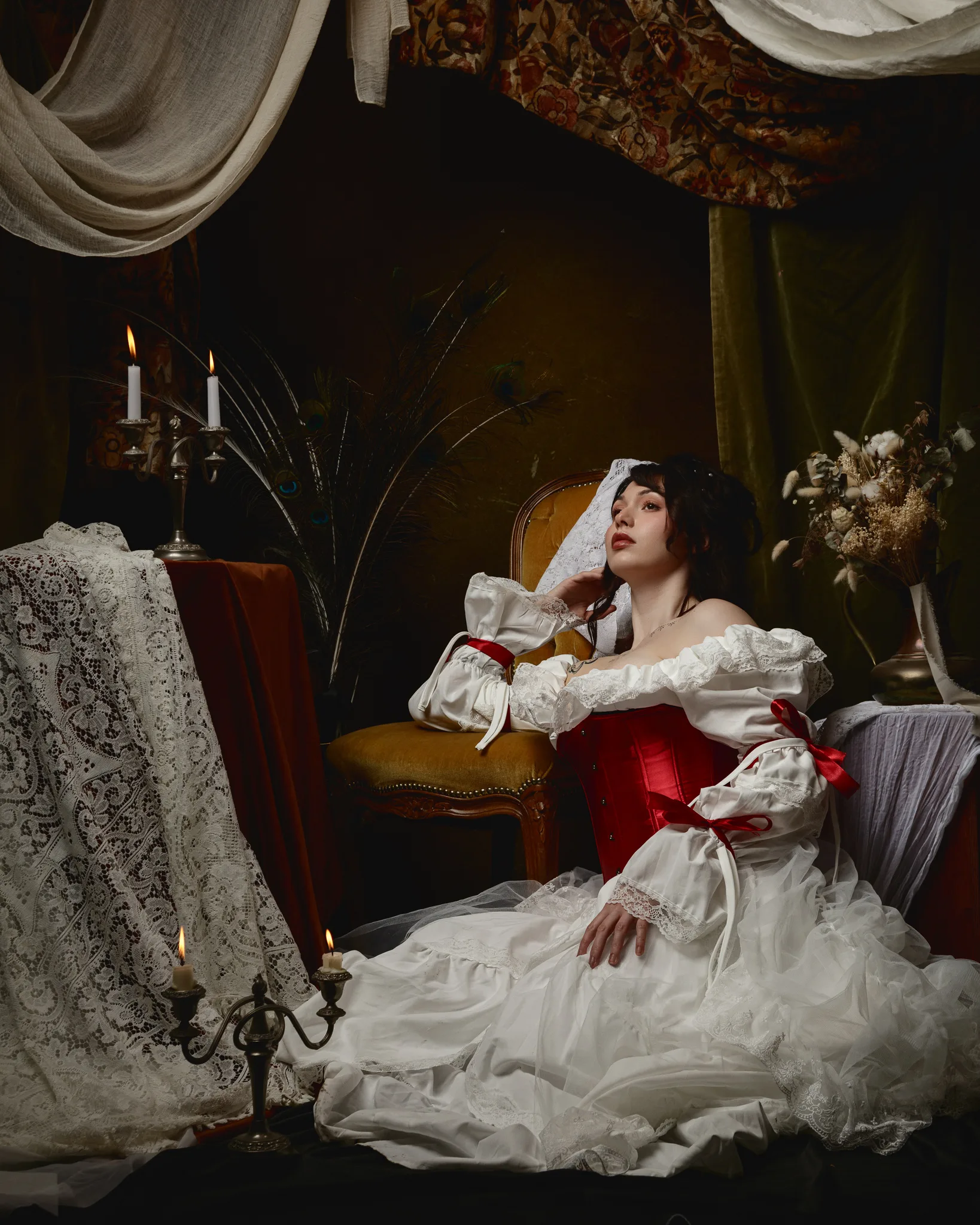
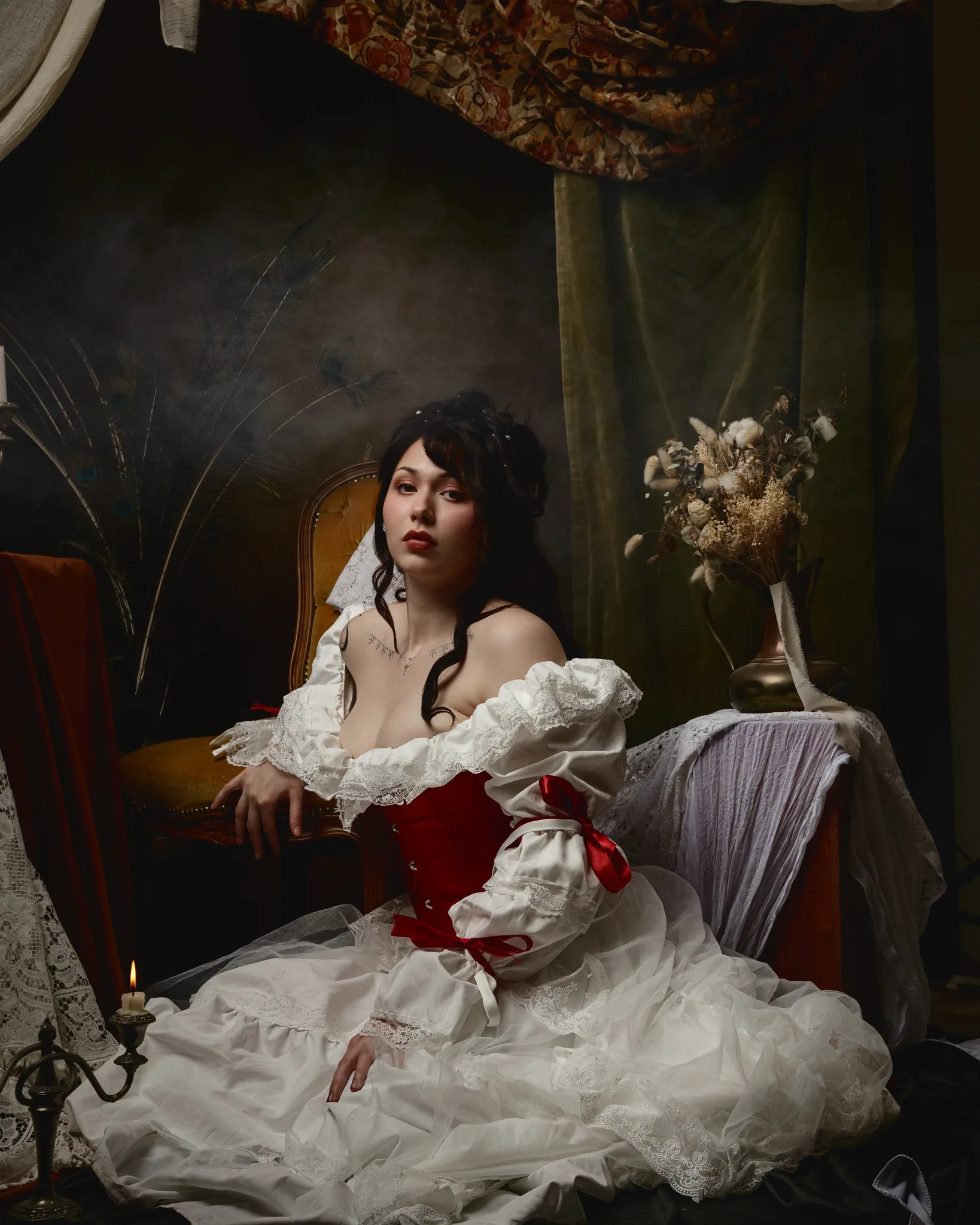
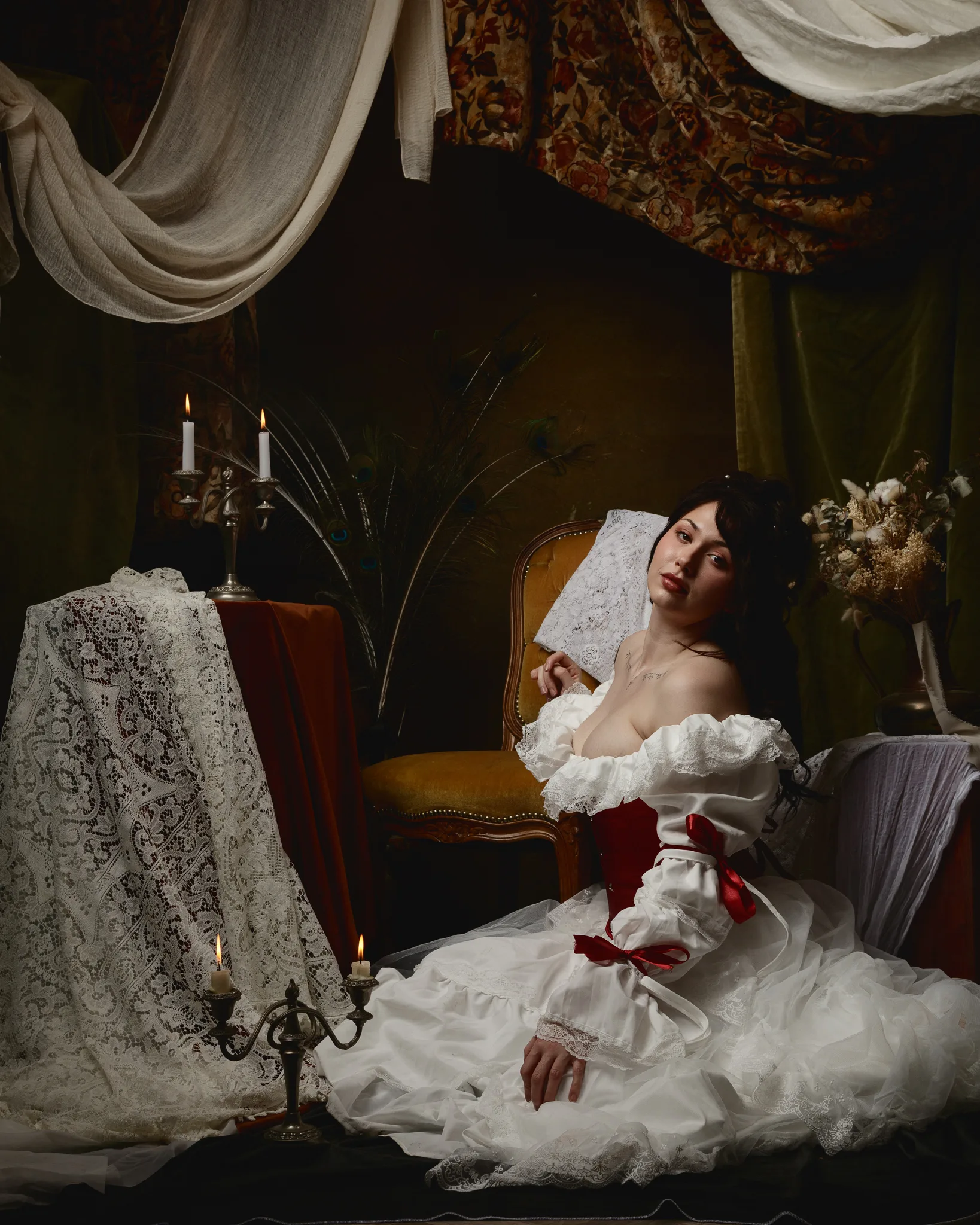
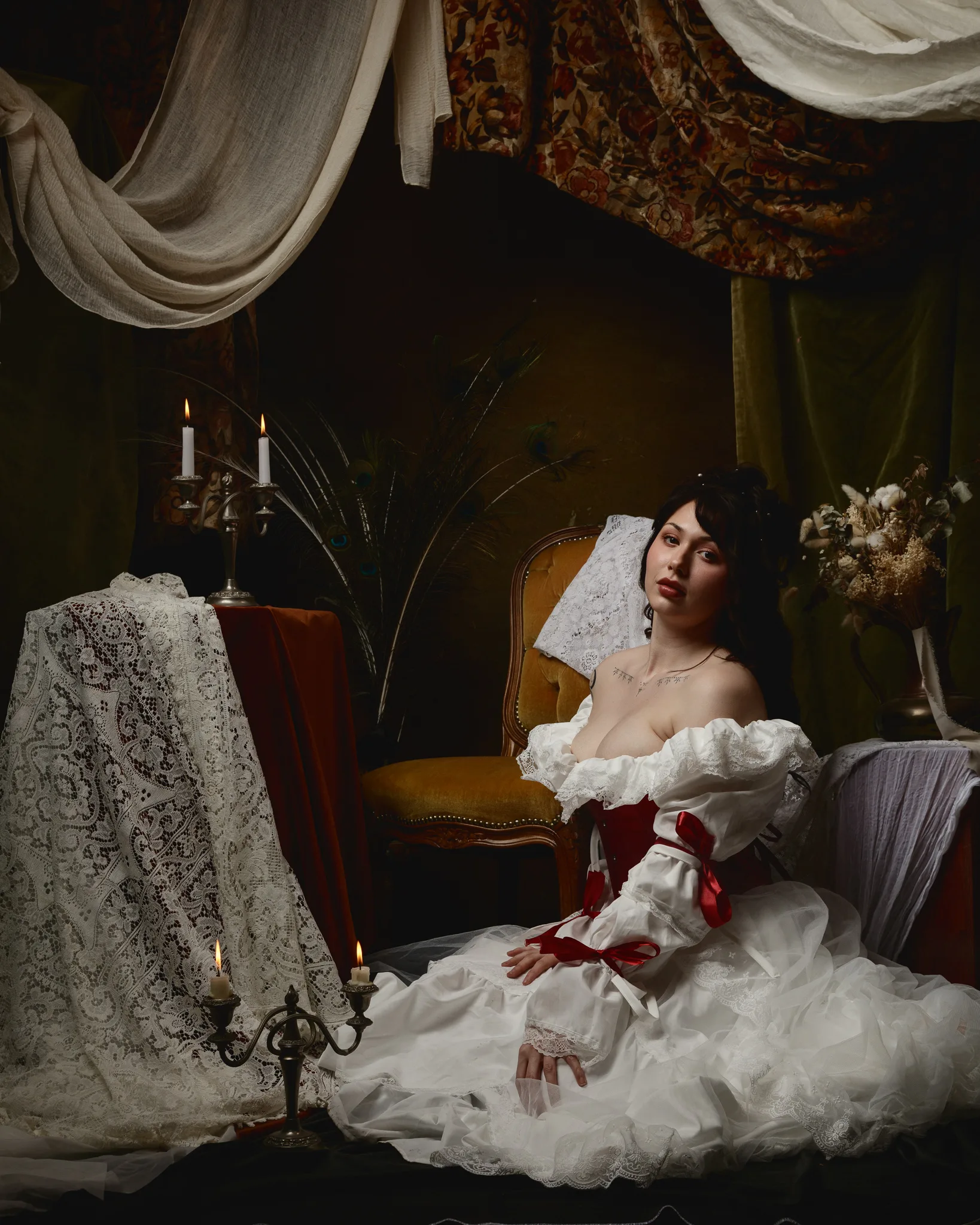
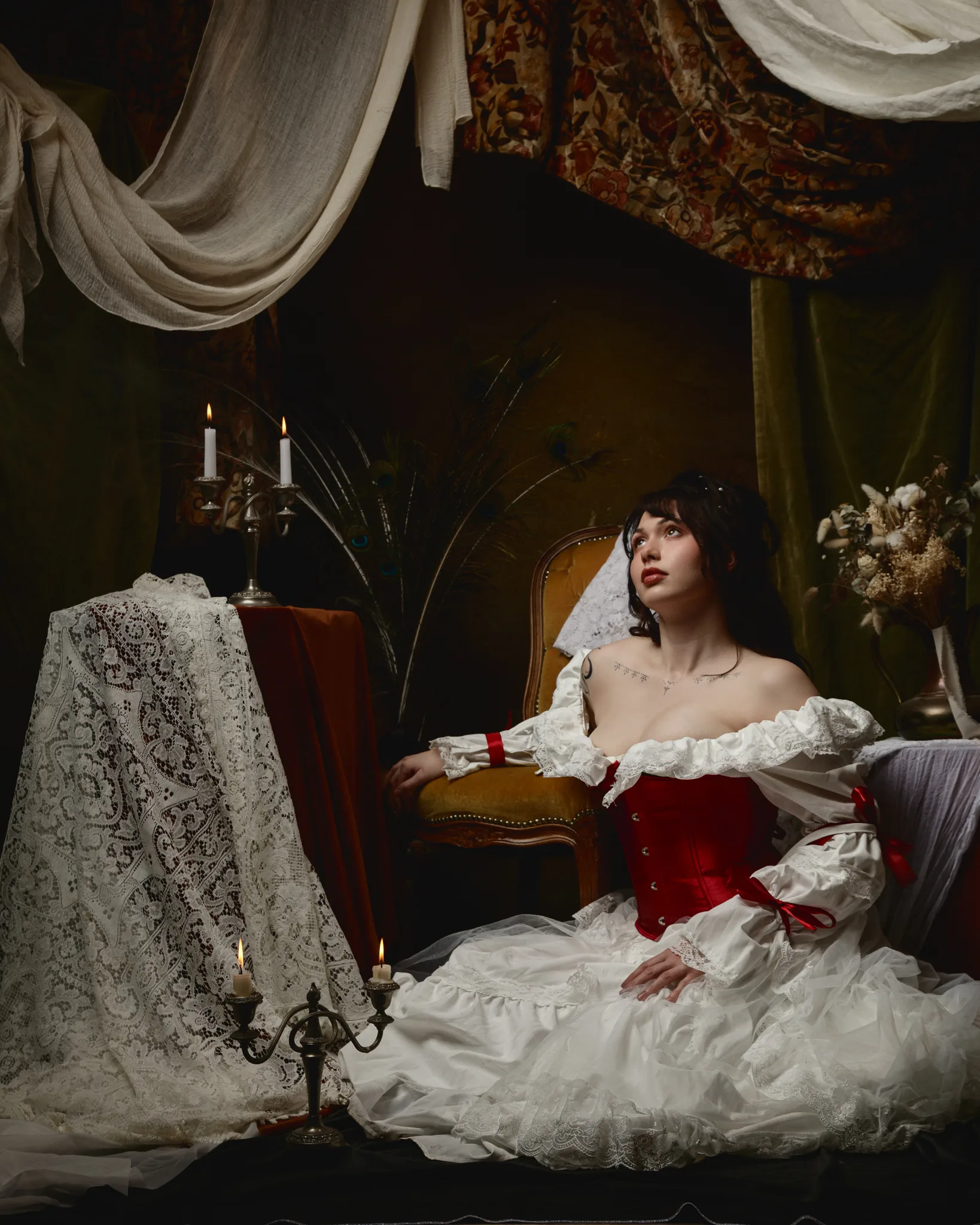
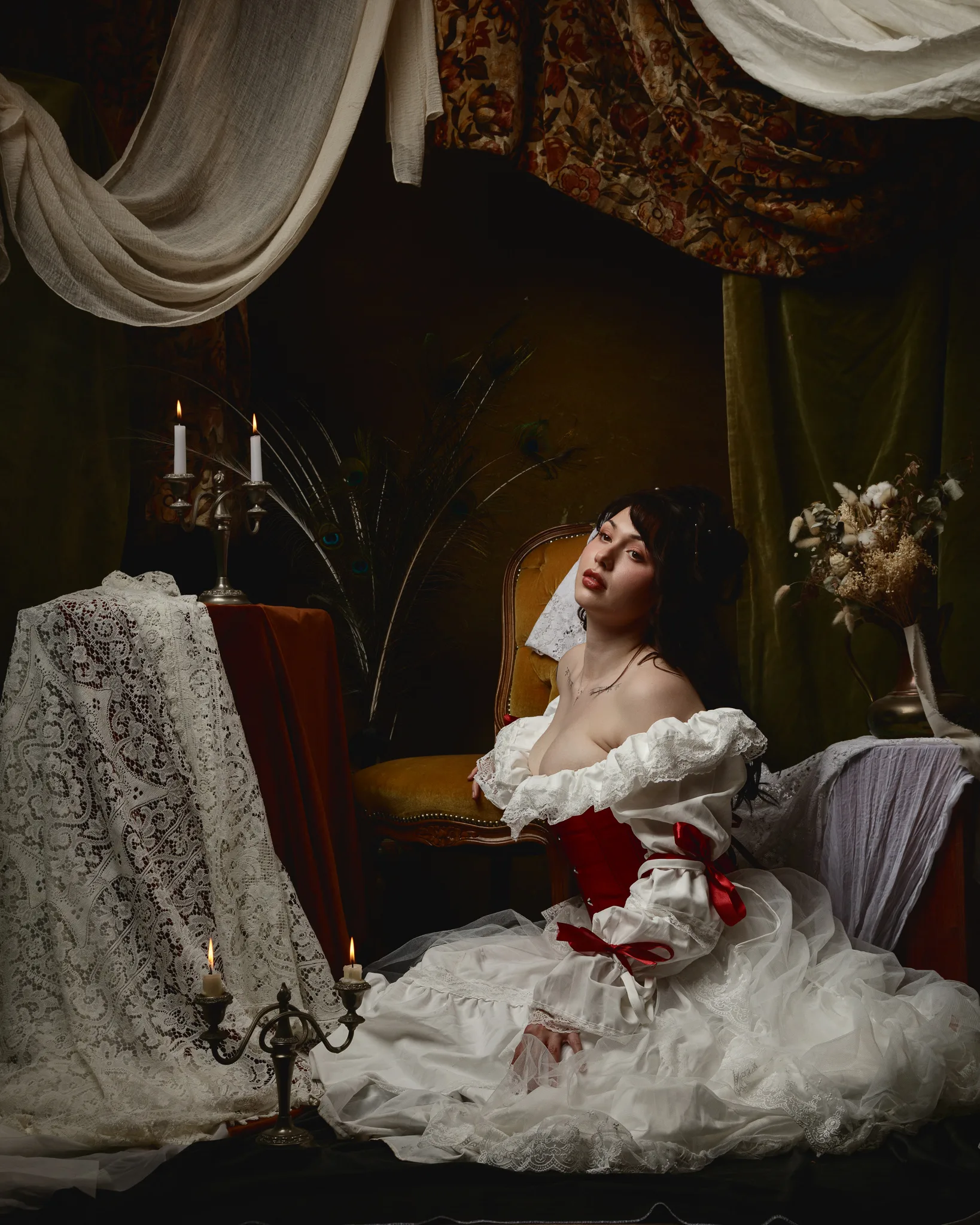
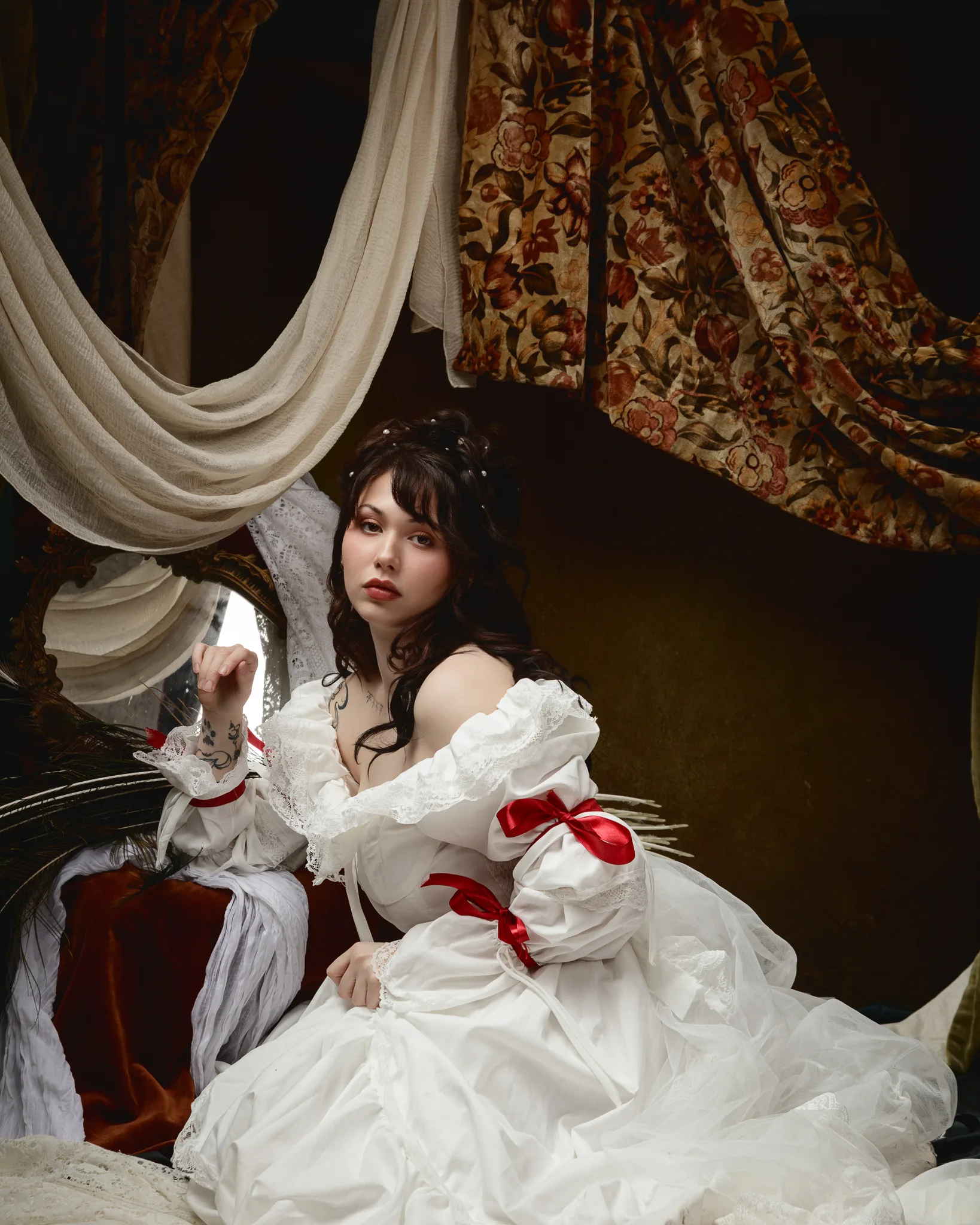
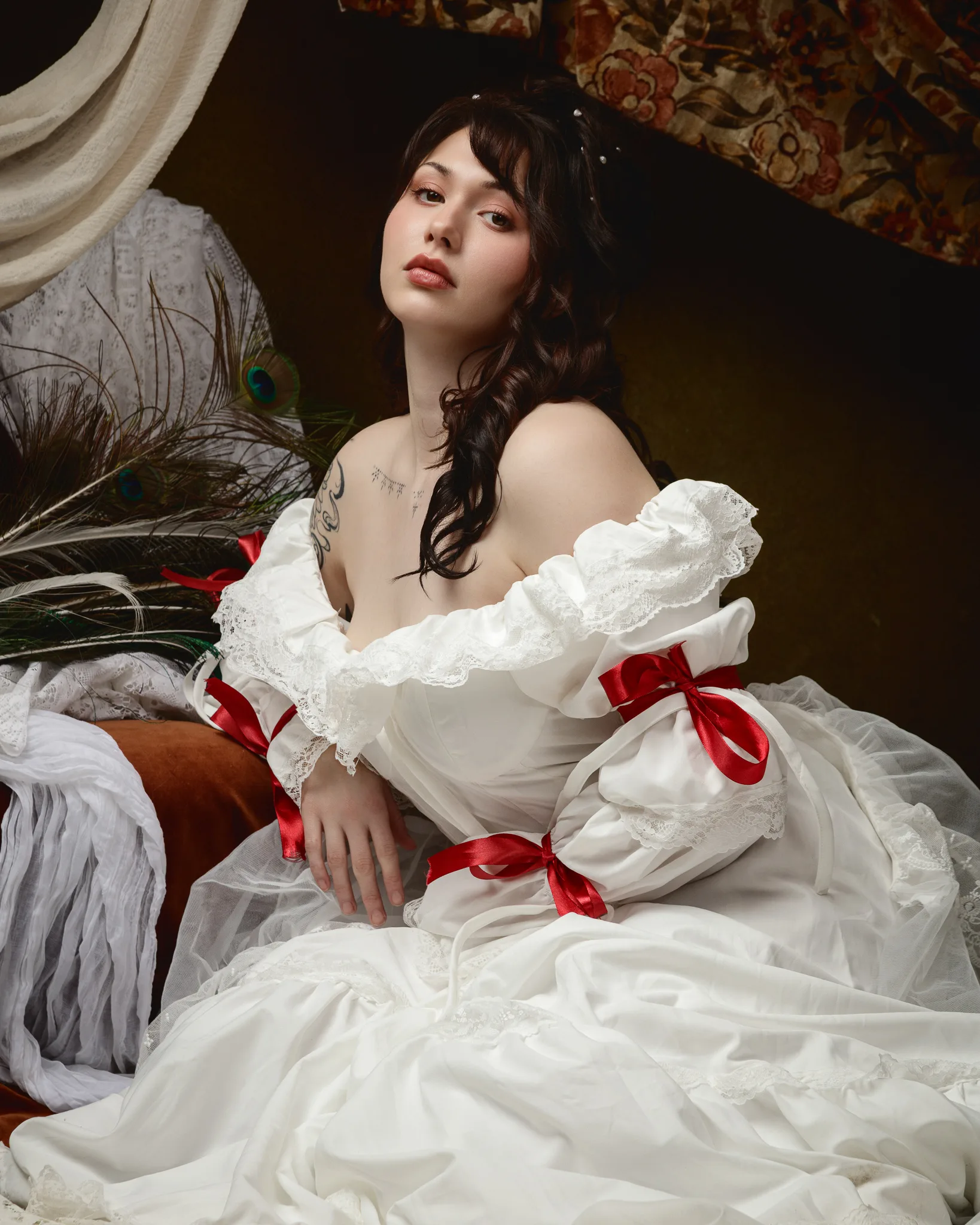
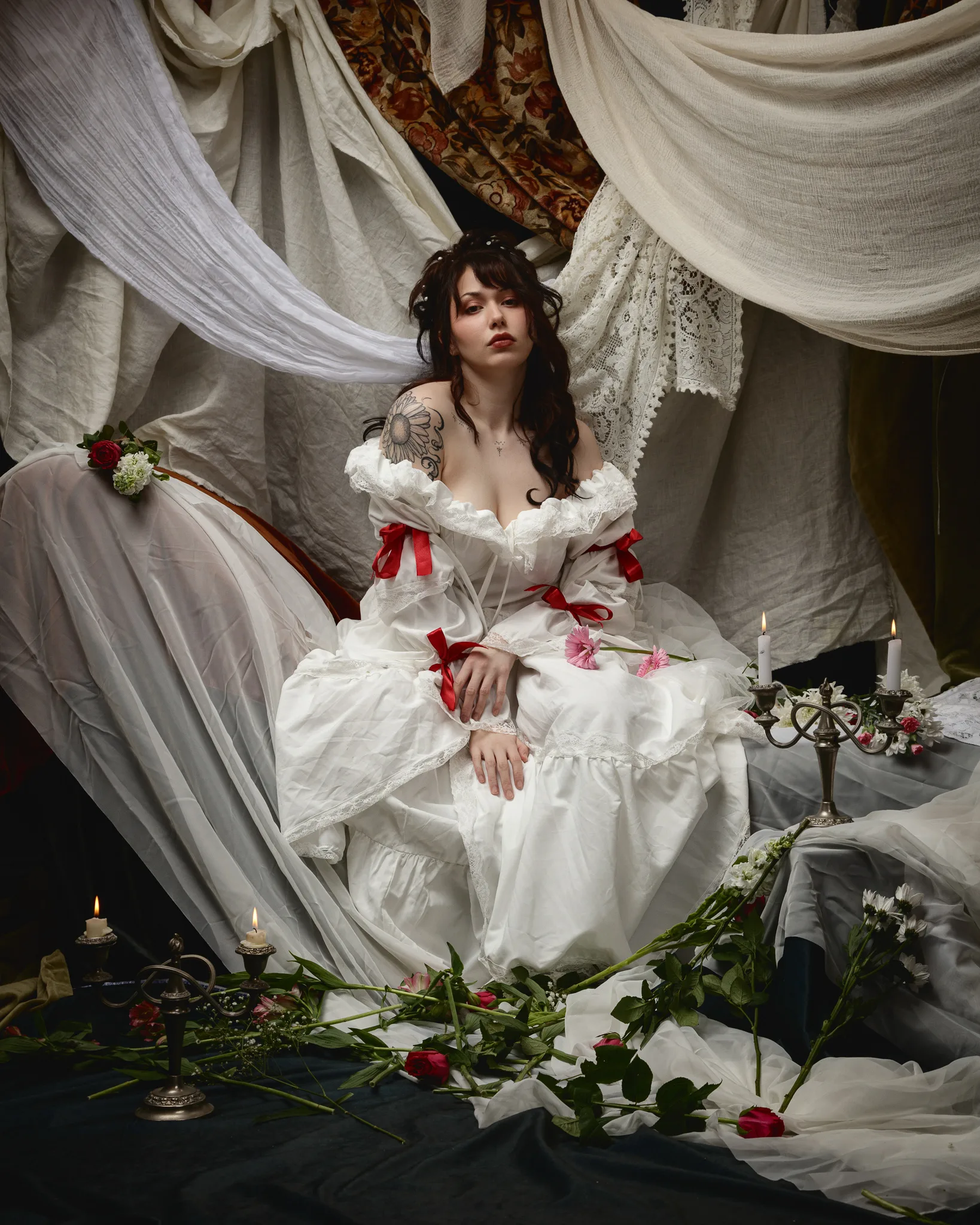
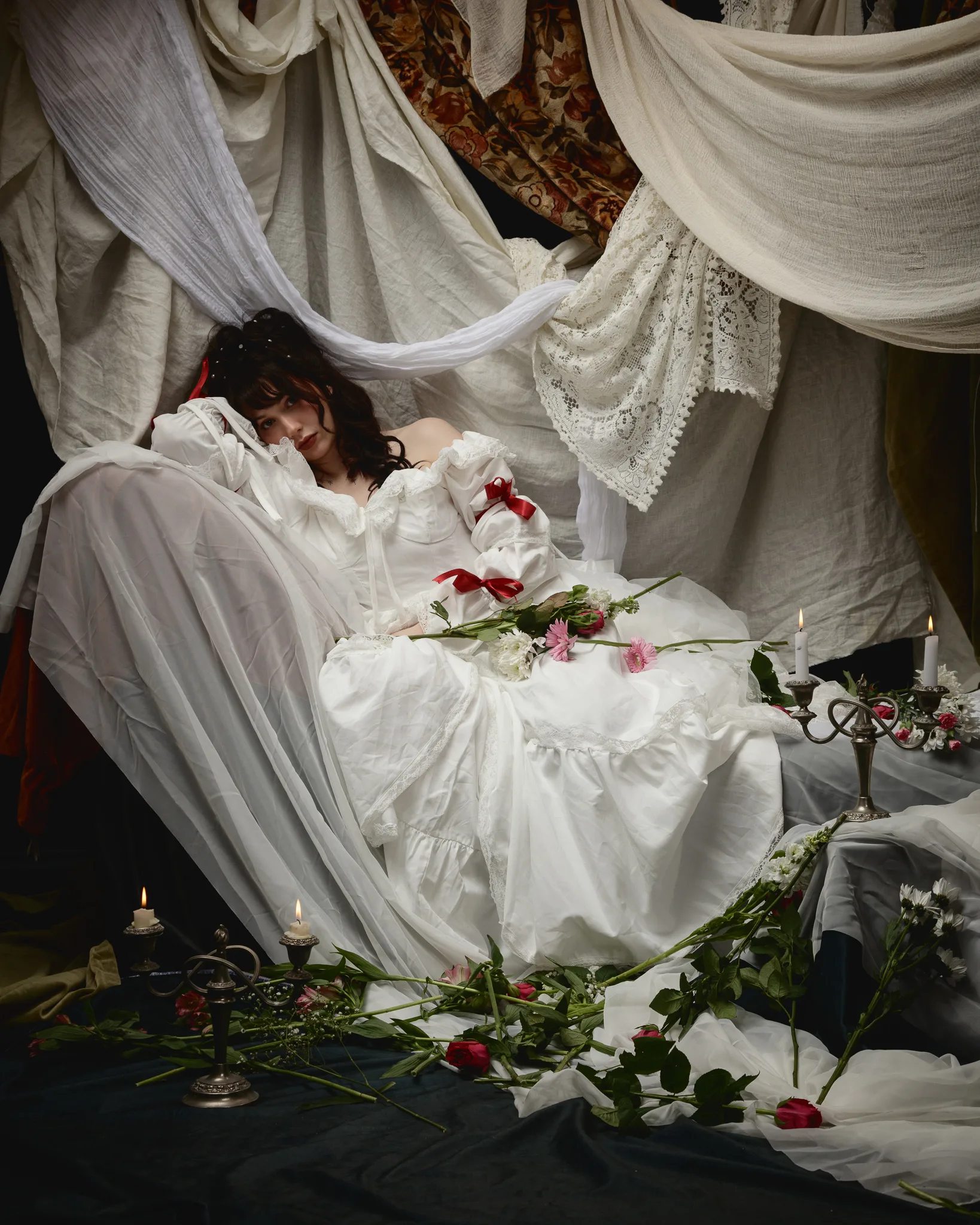
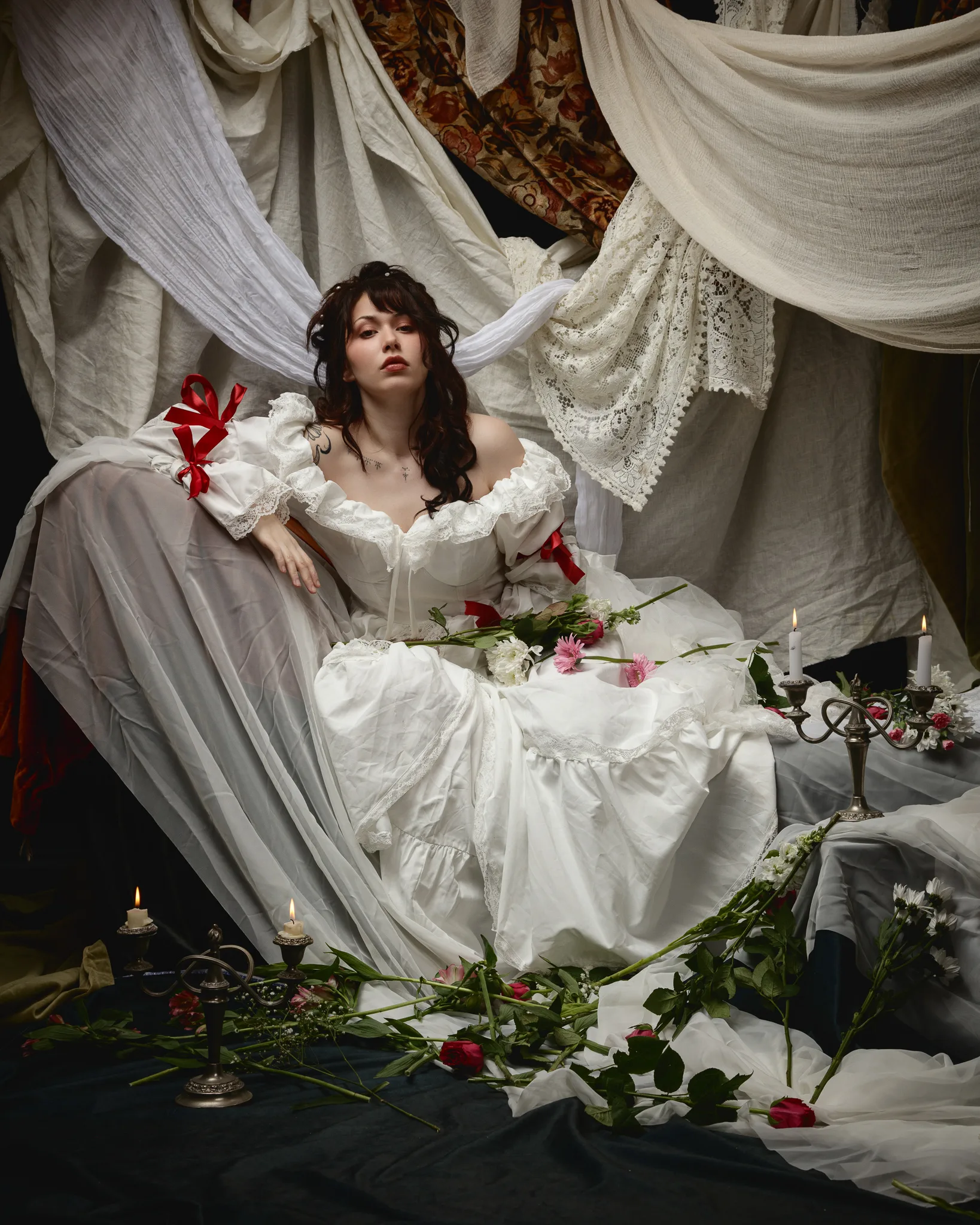
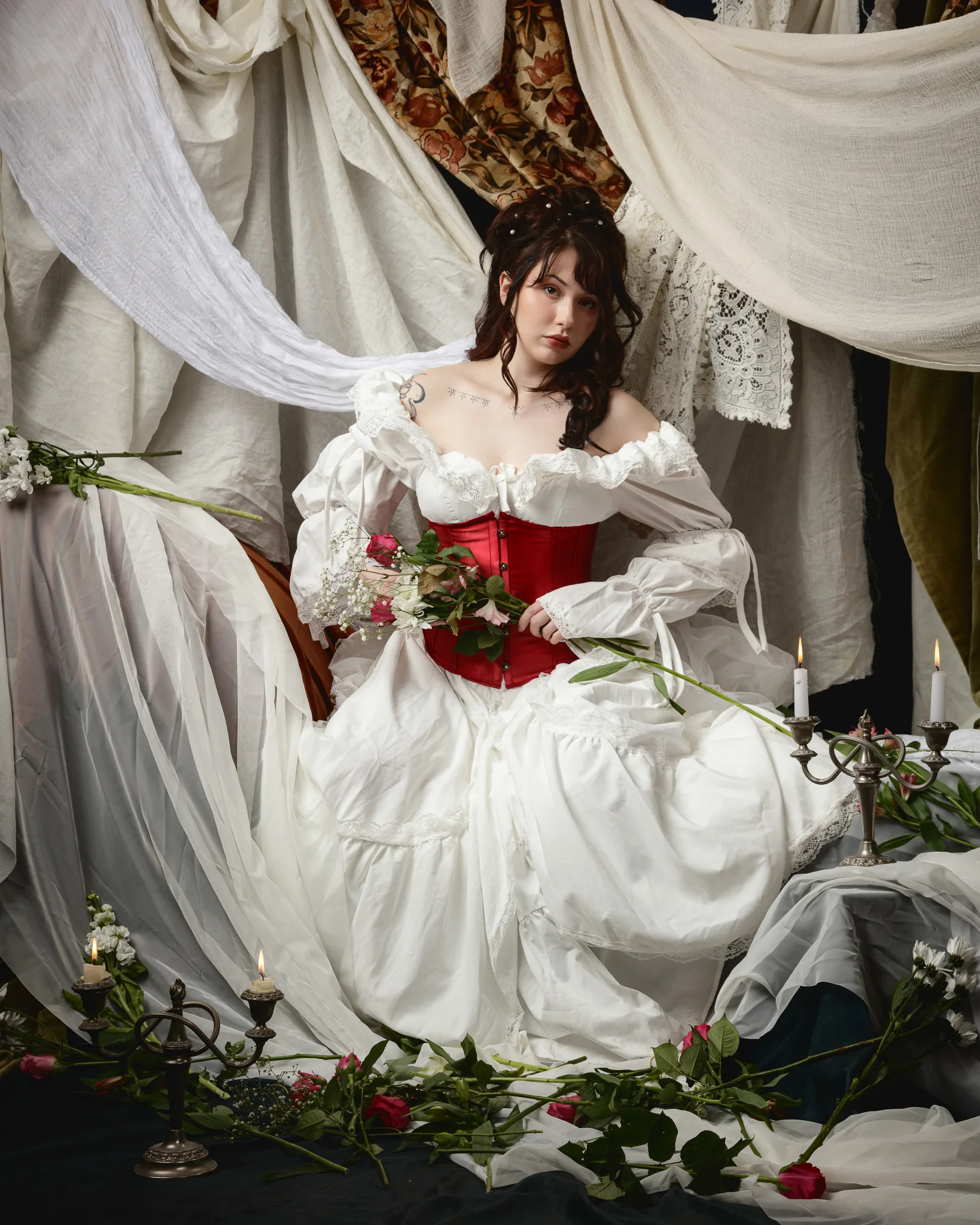
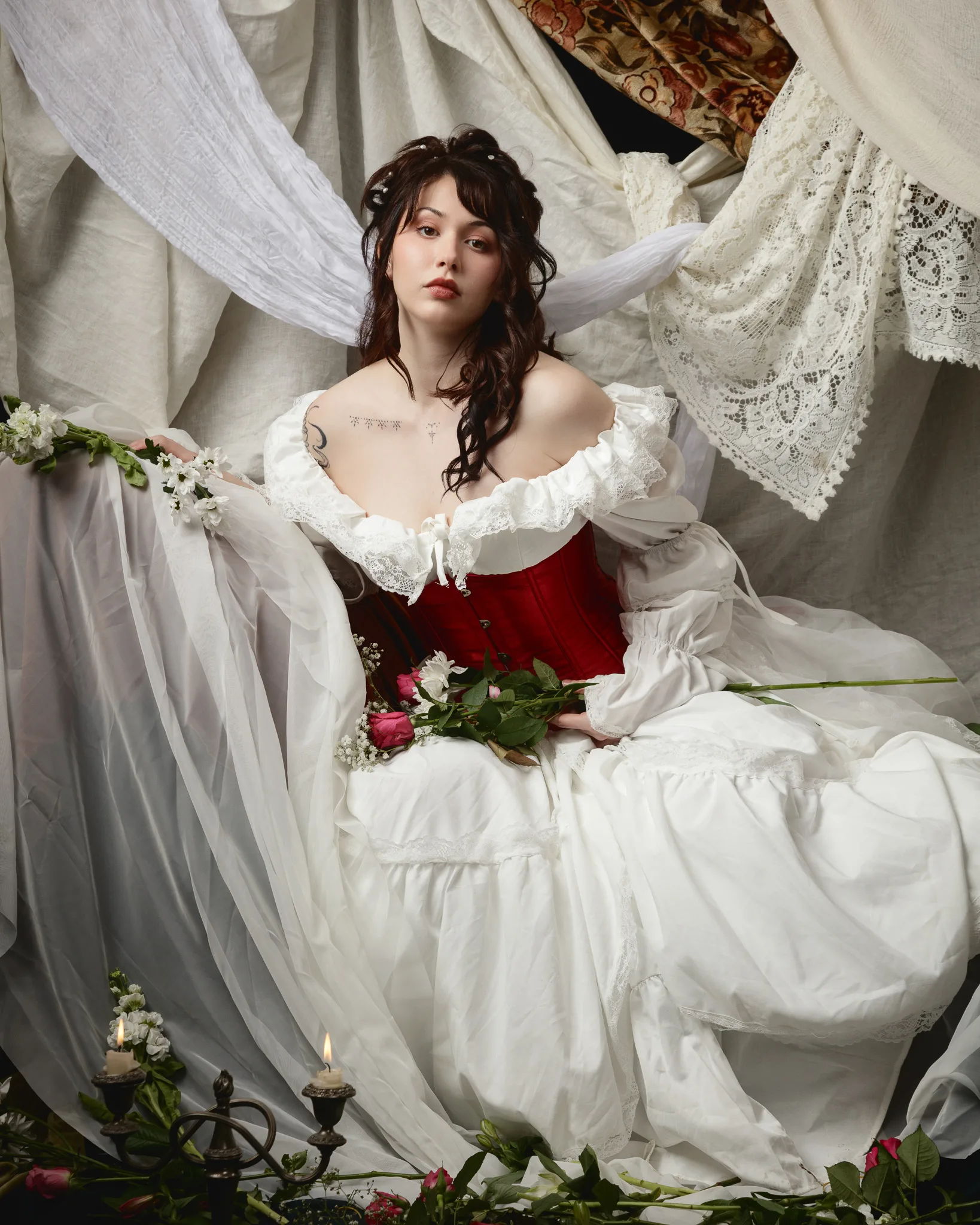
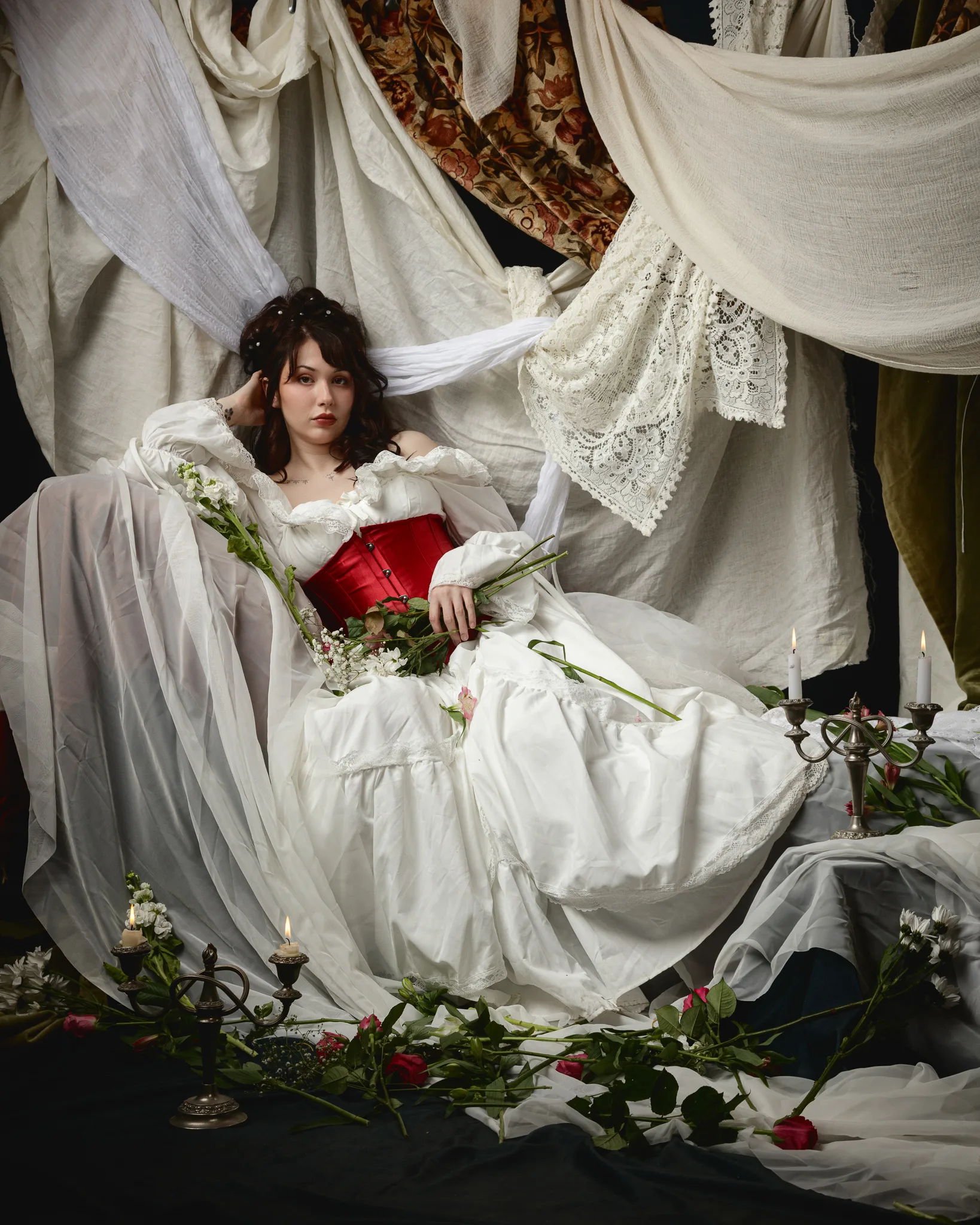
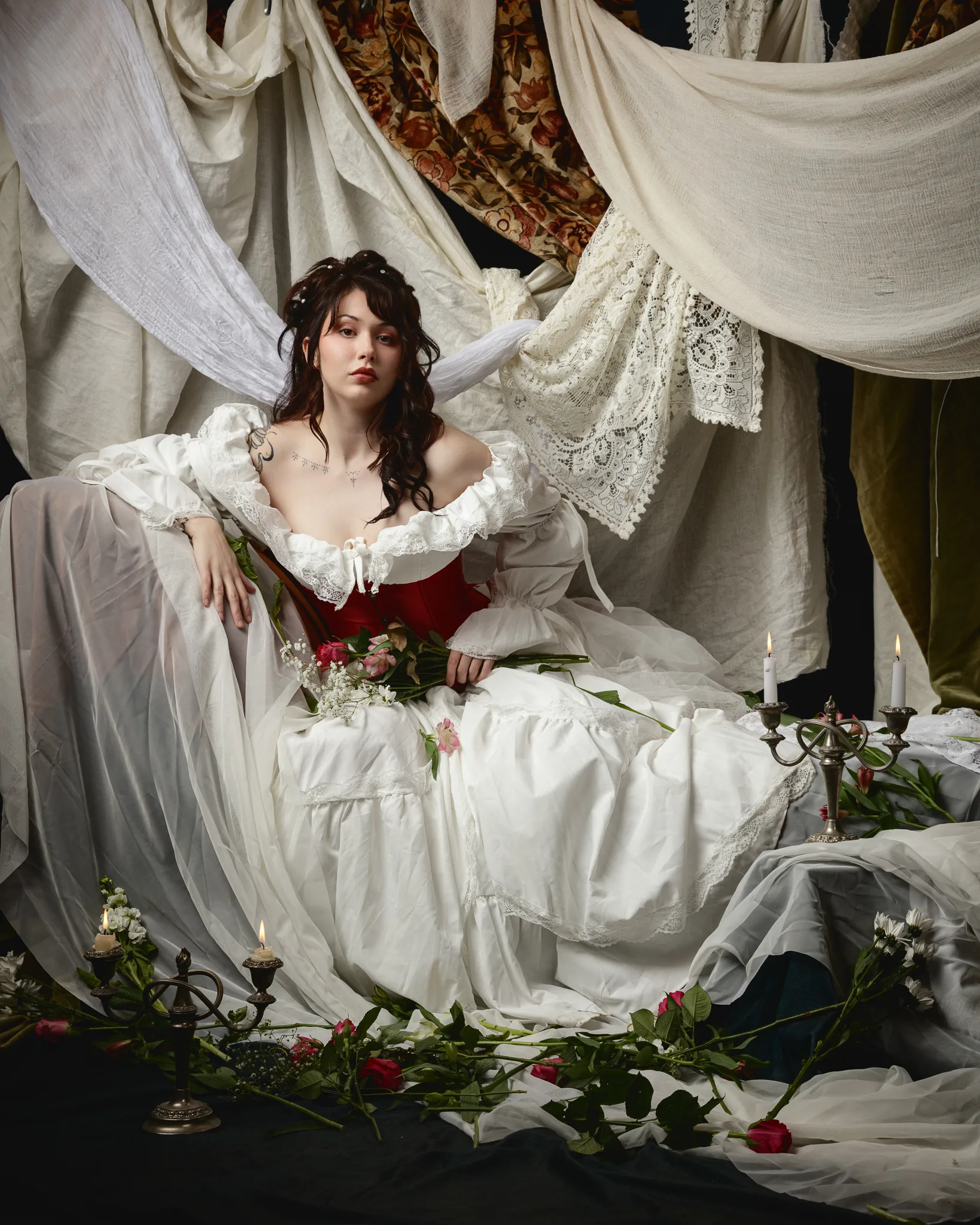
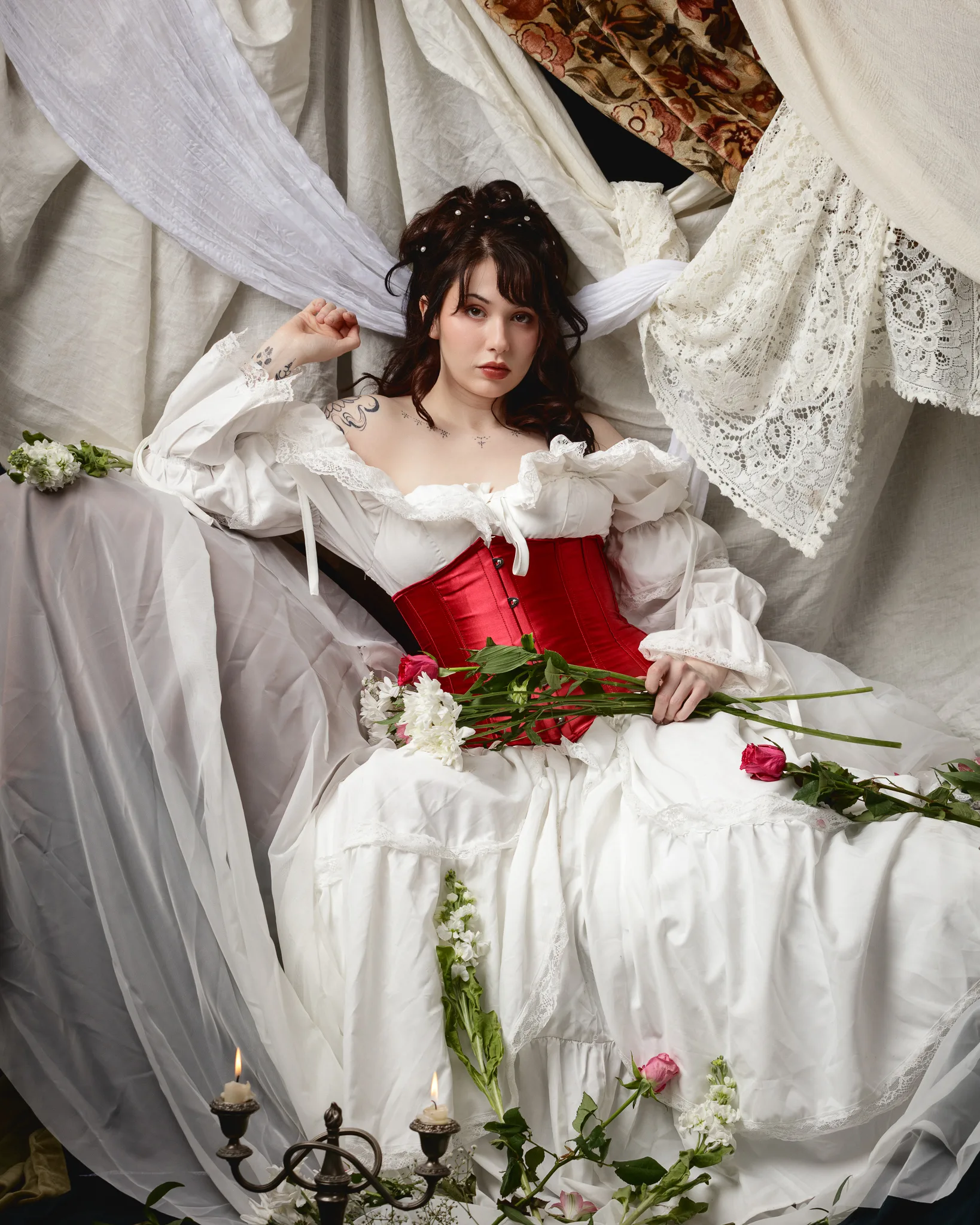
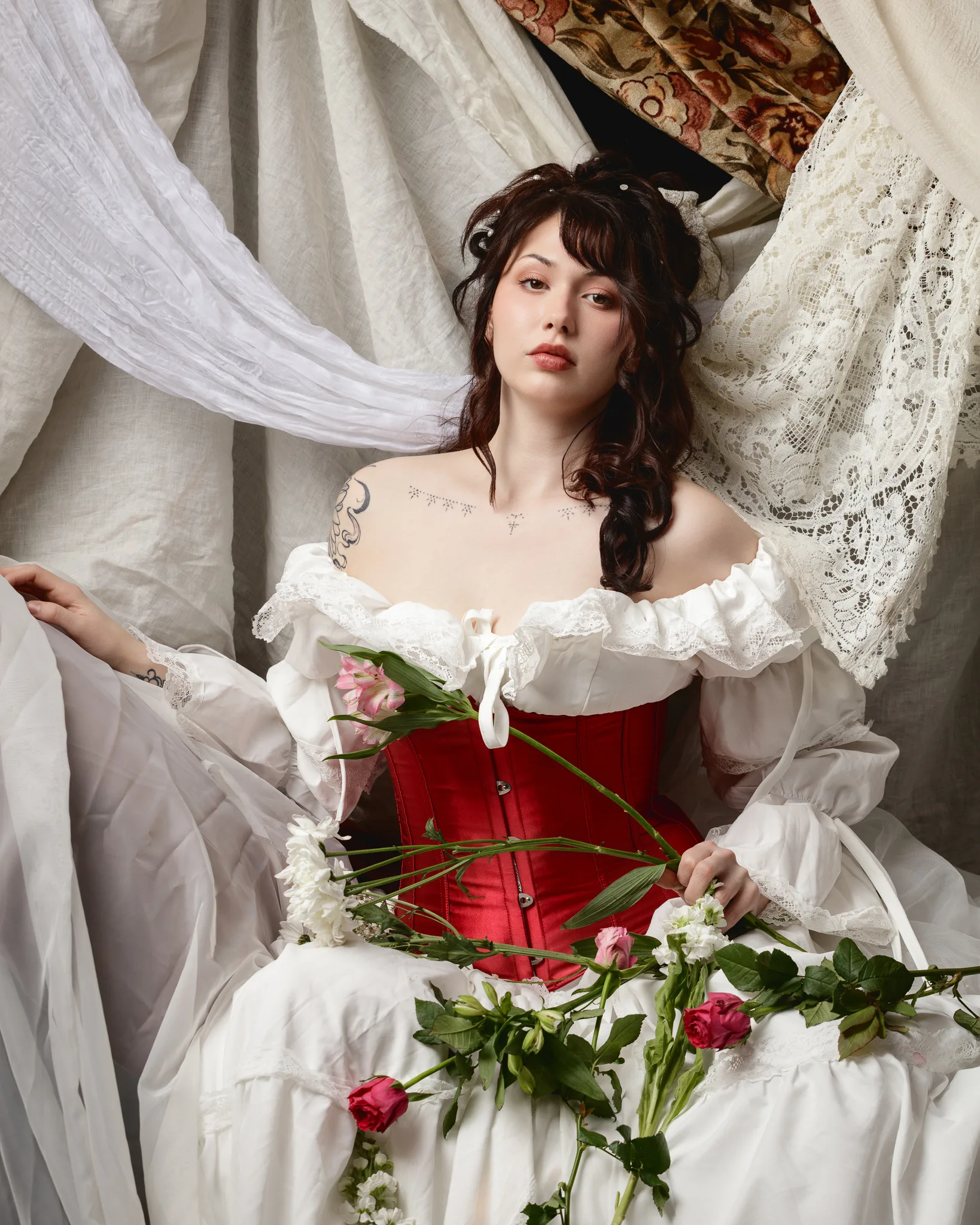
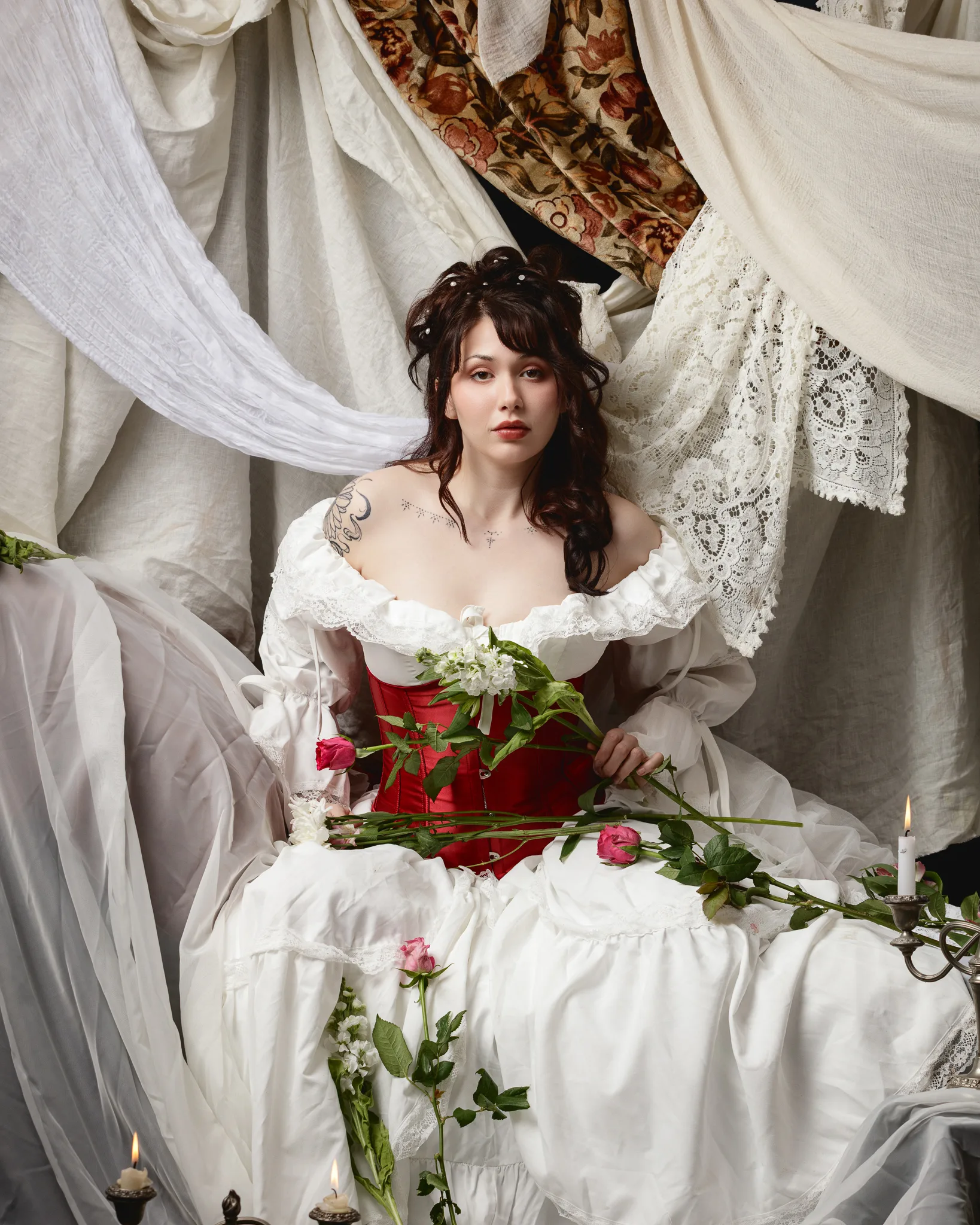
After photographing the location work, we moved into the studio for the second part of the shoot.
This allowed us to build a much more controlled, layered environment around Courtney. Draped fabrics, lace, flowers, candlelight, antique-inspired props, and carefully shaped lighting all helped create the mood. The studio setup was not about realism. It was about constructing a visual world that felt intimate, rich, and painterly.
Where the location images felt open and cinematic, the studio portraits became more enclosed and theatrical. That contrast was one of my favourite things about the finished set.
The indoor images feel closer to classical painted portraiture. The folds of fabric, the arrangement of props, and the direction of Courtney’s pose all contributed to that. Some frames have a softness to them, while others feel more direct and confrontational. That variation matters to me. I always want a portrait set to have range, even when the concept itself is tightly defined.
Courtney was excellent in front of the camera. Although I already knew her creative instincts from working together before, seeing her move into the role of subject brought something new to the collaboration. She carried the styling naturally and understood the tone of the shoot without needing much explanation.
Working with Courtney
One of the reasons this shoot worked so well is that Courtney and I already had an established creative shorthand.
As a makeup artist, she has been part of many shoots with me, and she understands the level of detail I look for. She also knows how much difference styling, makeup, and overall visual cohesion can make to a final image. That made this shoot feel like a genuine collaboration rather than a photographer imposing an idea onto a subject.
It was also good to photograph someone whose professional background is so rooted in visual craft. Courtney brought her own inspiration to the shoot, and that gave the work a stronger identity from the start.
That is often when portraiture becomes most interesting. Not when the photographer controls every part of the process, but when the person in front of the camera brings something specific and personal into it.
The Overall Mood of the Shoot
If I had to describe the overall theme simply, I would call it dark romantic portraiture with neo-Victorian and gothic influences.
There is a fairytale quality to parts of it, but it is not fantasy in a glossy or escapist sense. It feels more grounded than that. The studio images are textured, intimate, and slightly haunted. The location images feel windswept, quiet, and cinematic. Together, they create a set that moves between interior tableau and historical landscape while staying visually consistent.
The red corset was central to that consistency. It gave the whole set a visual anchor and introduced an element of tension into otherwise soft, pale styling. Without it, the series would have felt much gentler. With it, the images have more edge.
Looking Ahead
This was one of those shoots that reminded me how valuable long-term creative relationships can be. Courtney and I already knew how each other worked, which meant we could focus fully on the idea and the execution.
I was very pleased with what we created across both parts of the session. The final images feel cohesive, atmospheric, and true to the inspiration behind them.
We are already planning our next adventure, which I am looking forward to.
Final Thoughts
Shoots like this are a good example of why I enjoy portrait photography so much. It gives space for collaboration, character, styling, and mood in a way that feels much broader than simply taking a photograph of someone.
With Courtney, the combination of strong styling, a historic Suffolk location, and a carefully built studio set allowed us to create something with a distinct visual identity. It felt timeless, dramatic, and personal all at once.