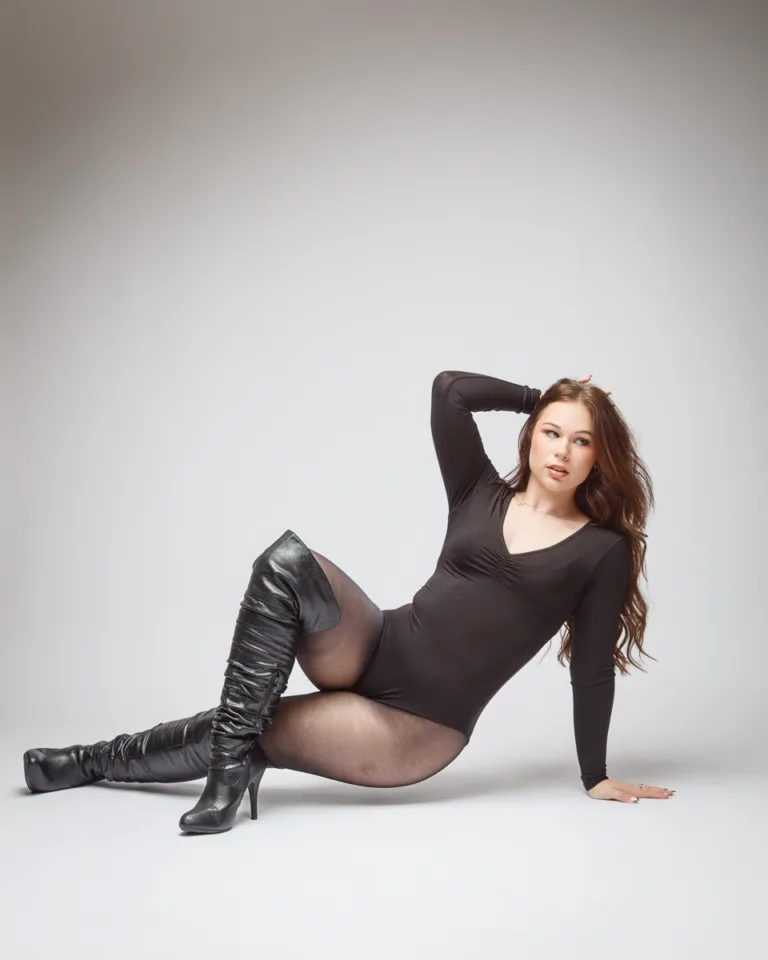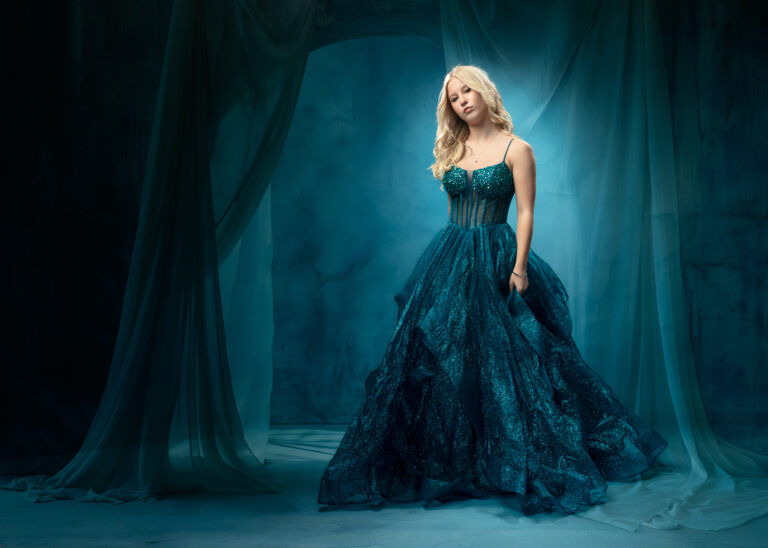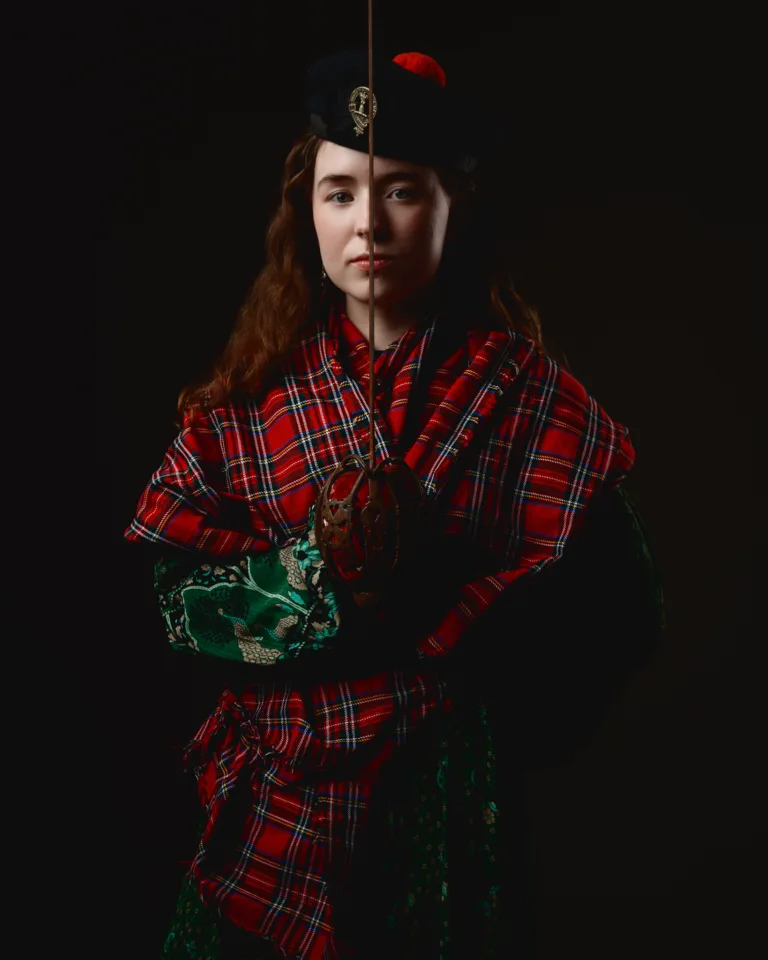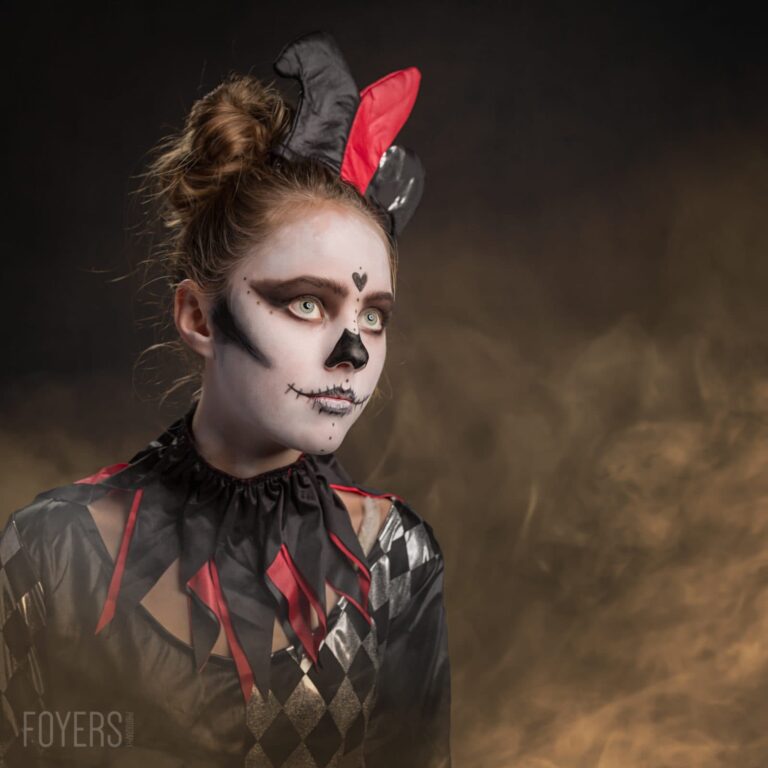
Fine art portraits offer a unique way to merge artistry and photography. Working with models Karolina and Justyna was a truly rewarding experience. Both were inspiring and brought creativity to the forefront of this studio-based project. They also served as each other’s chaperones, creating a comfortable and collaborative environment for everyone involved.
This photoshoot centred around the concept of the “living statue” and explored implied nude photography, combining artistry, texture, and dramatic lighting techniques to achieve visually compelling results. Let’s delve into how this session unfolded, the methods used, and what makes fine art portraits a compelling avenue for both photographers and models.

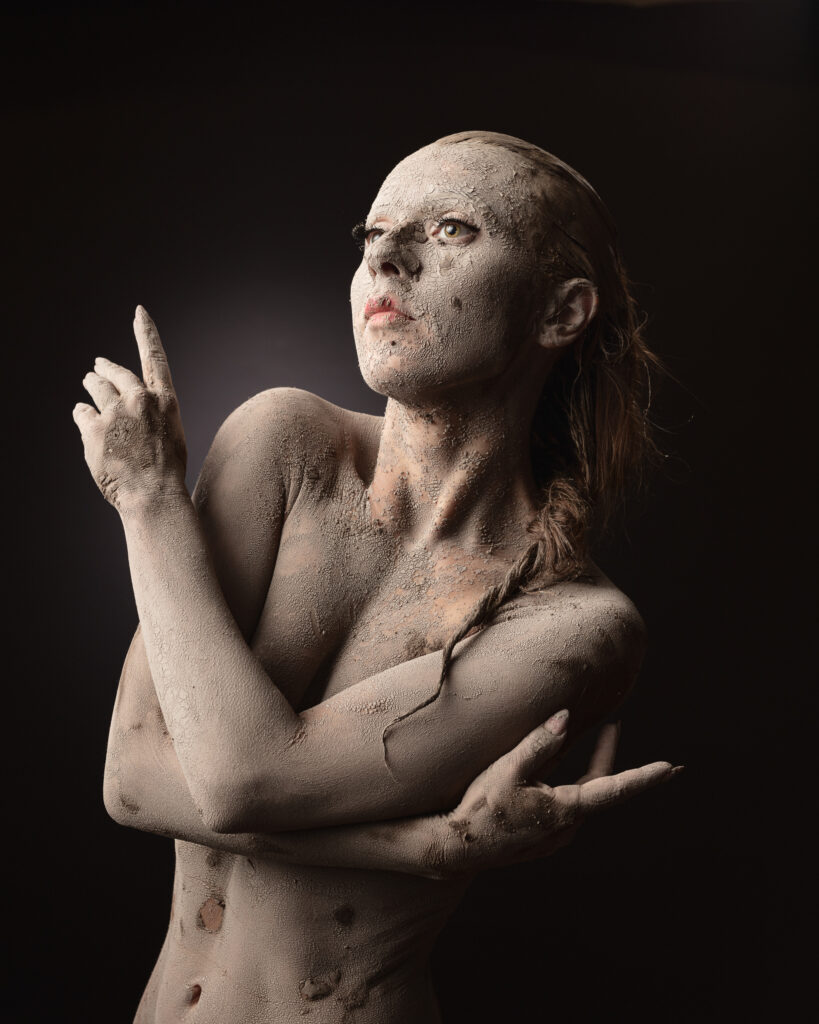
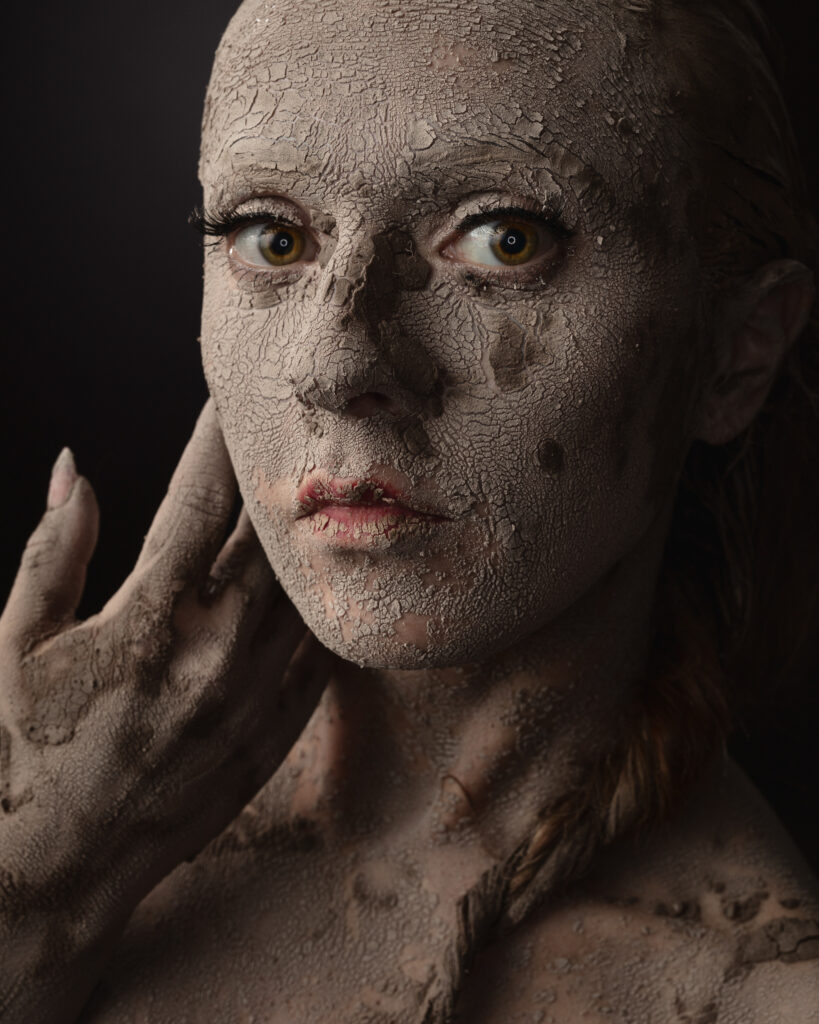

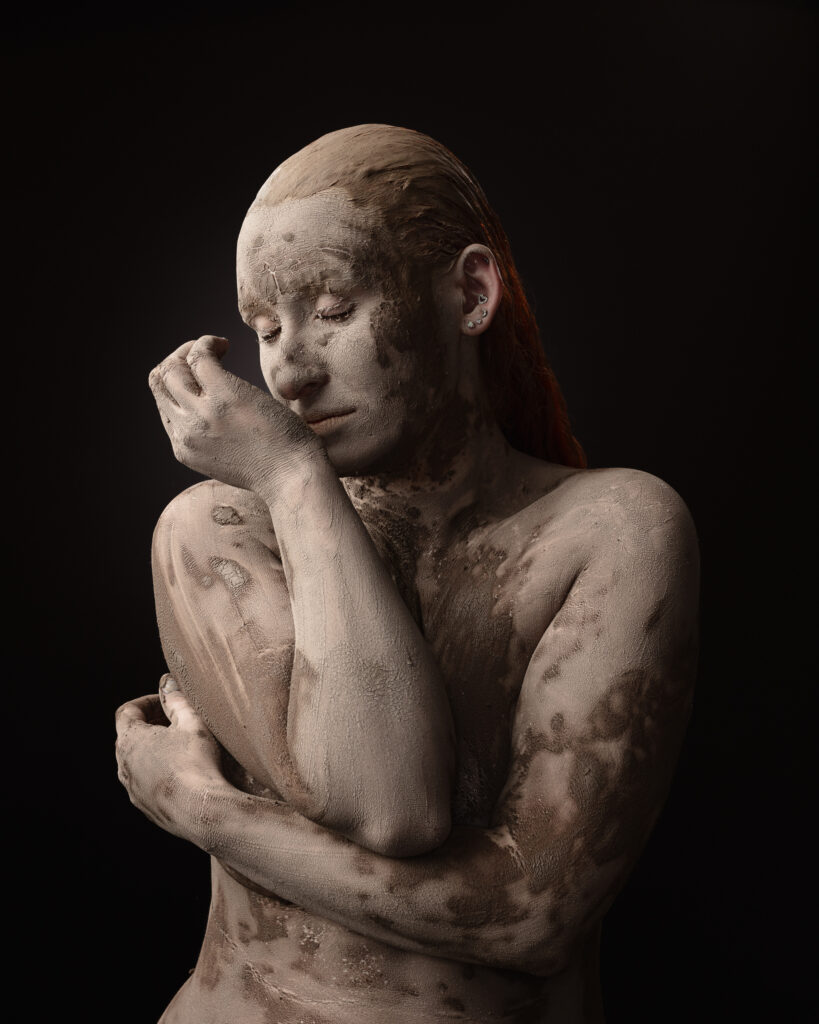
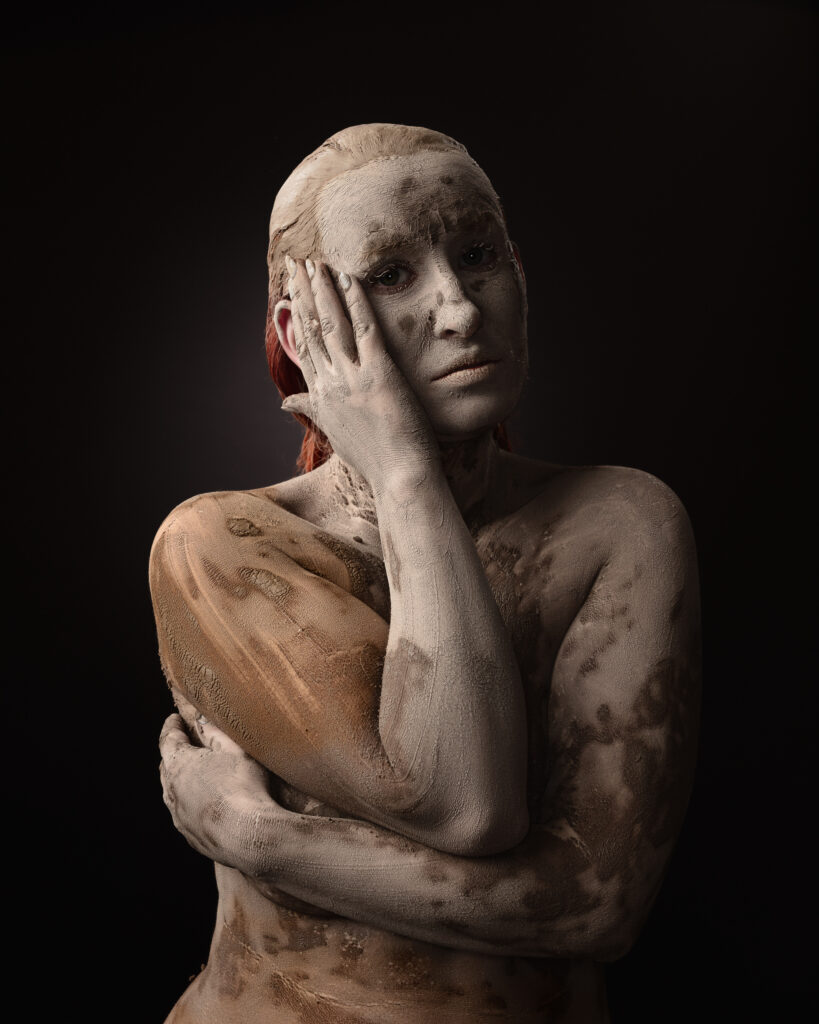
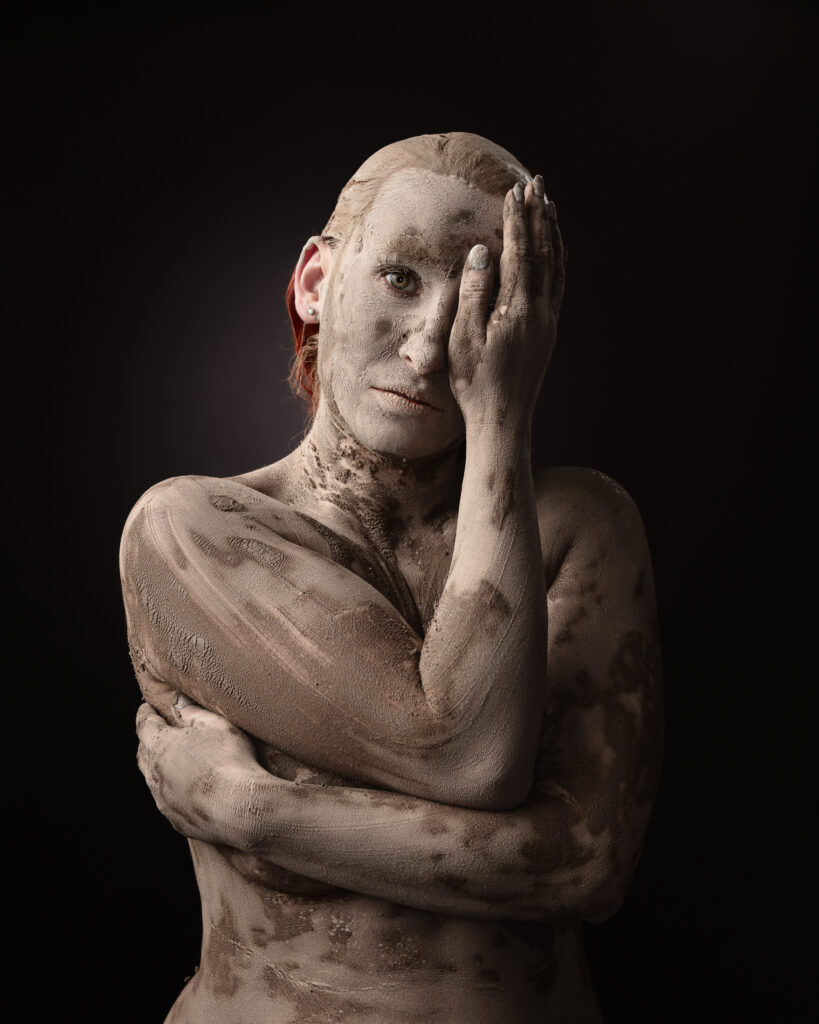
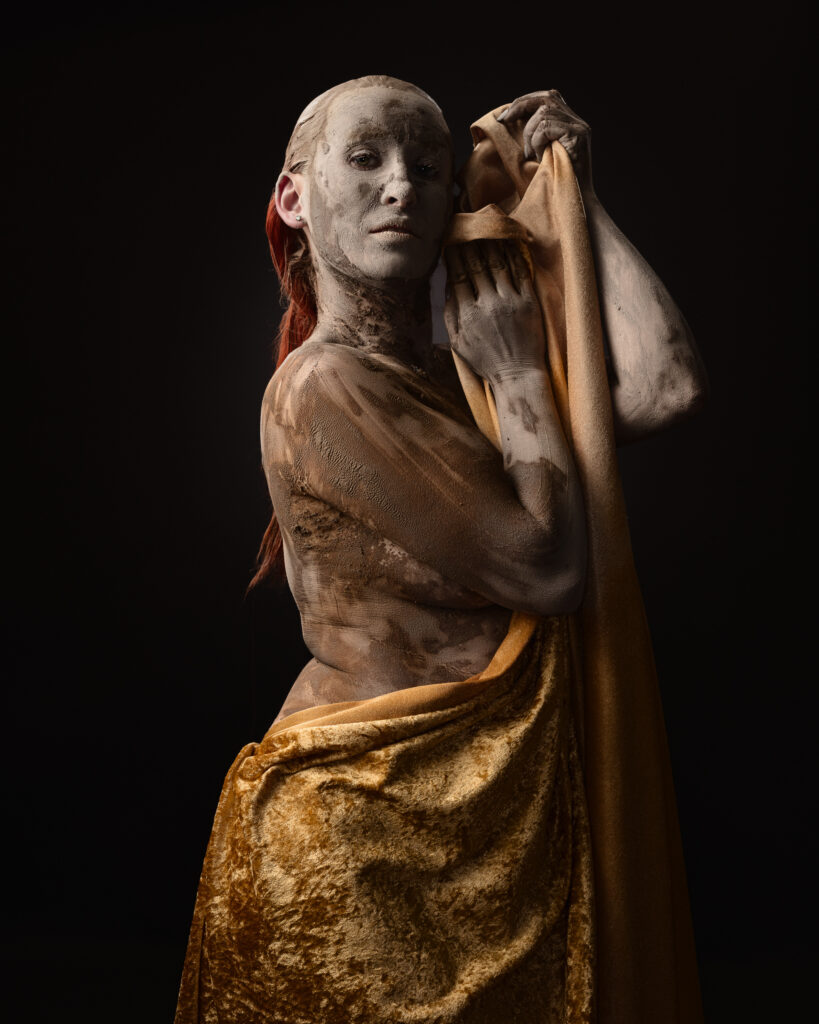
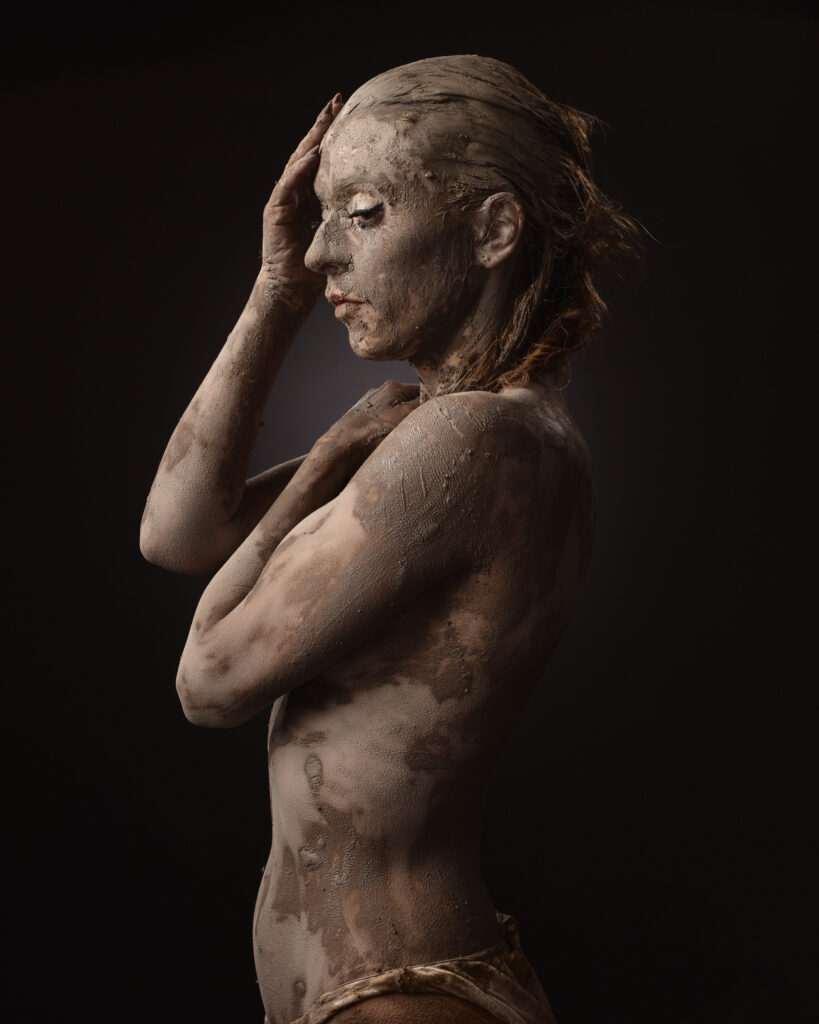
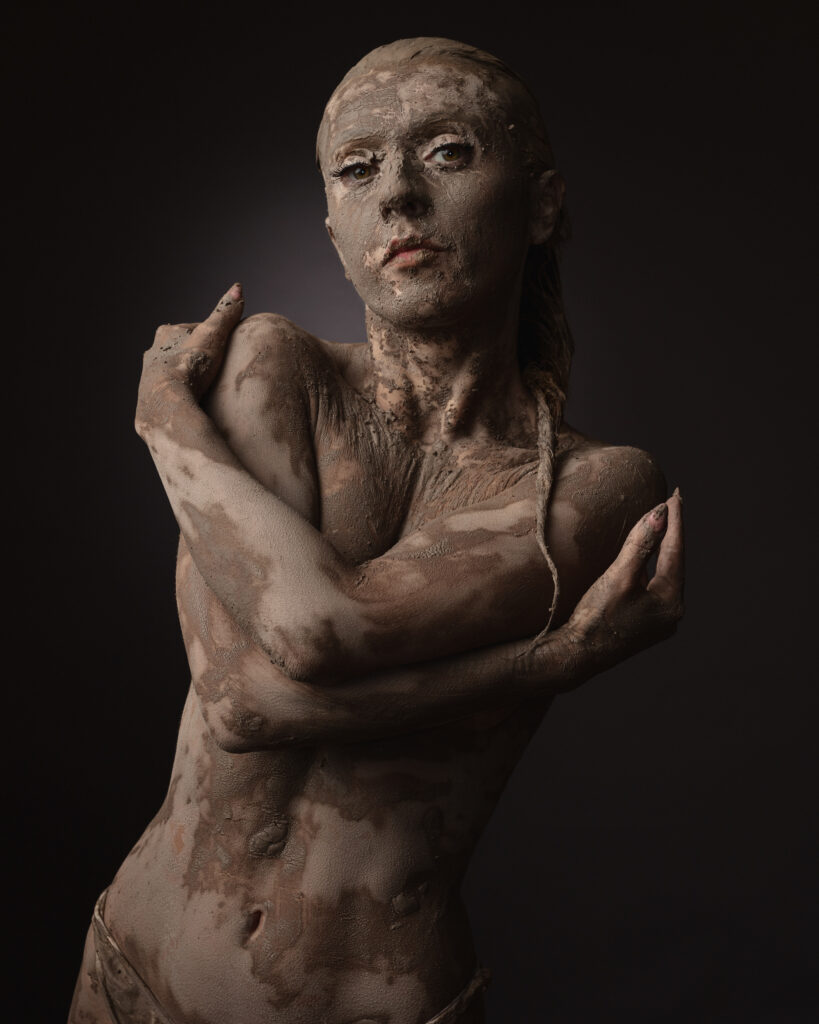
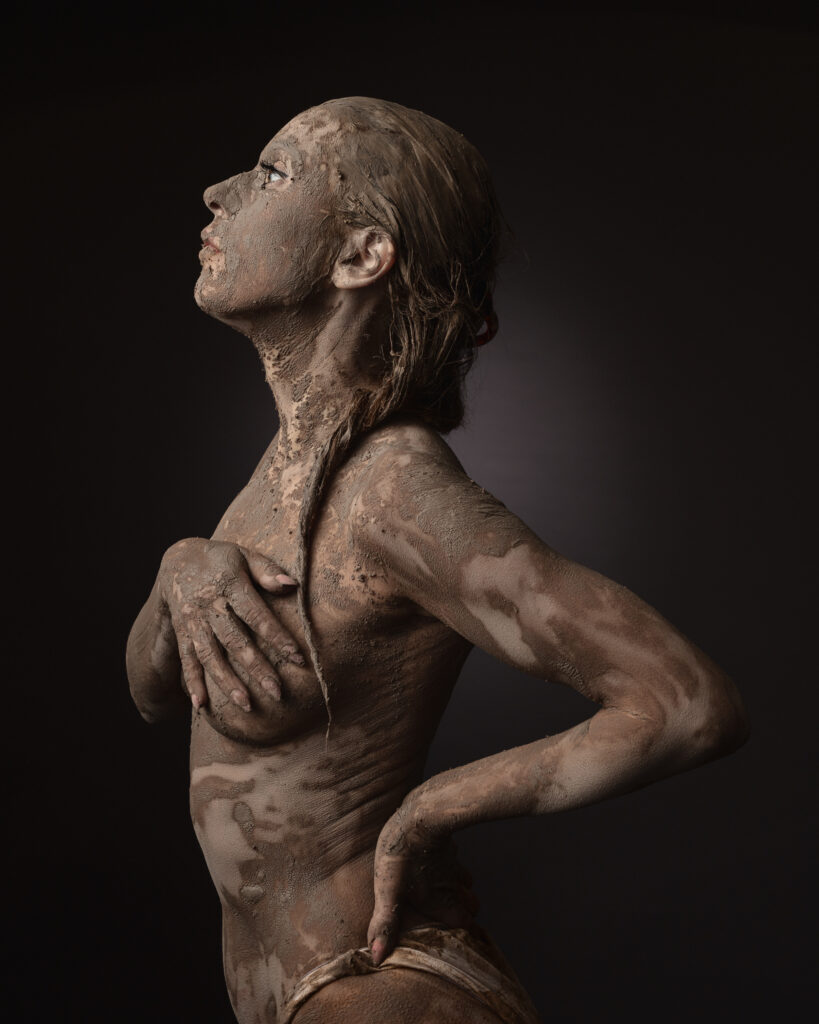
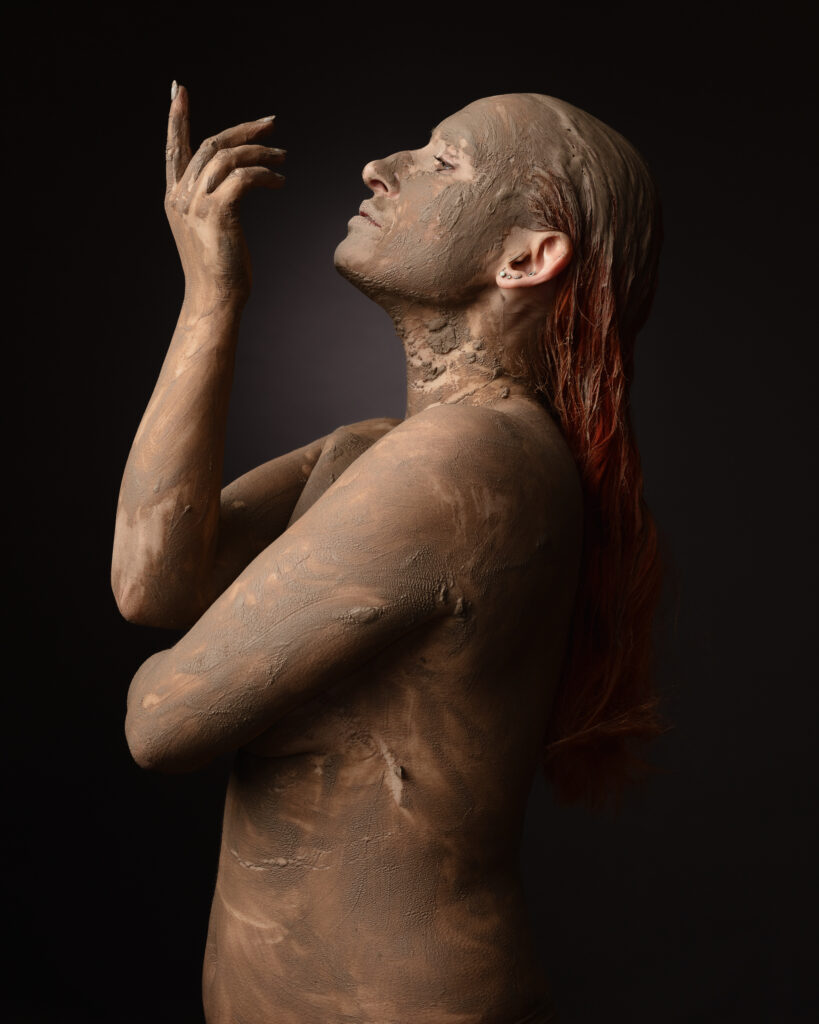
The Concept: Living Statues
The inspiration for this shoot stemmed from the idea of the “living statue.” This concept allowed for a deep exploration of texture, form, and expression. Clay-textured body art was central to the theme, bringing a sculptural and earthy quality to the portraits. The models’ collaboration and willingness to experiment brought this vision to life in a powerful way.
Why Clay-Textured Body Art?
- Adds Depth and Dimension: The textured clay provided a unique visual element, mimicking the look of a weathered sculpture.
- Enhances Lighting Effects: When paired with dramatic studio lighting techniques, the clay texture created intricate shadows and highlights.
- Supports the Theme: The “living statue” concept demands a tactile and earthy aesthetic, and clay-textured body art was perfect for this.
The results were striking. Each image felt like a piece of conceptual photography art, blending the rawness of texture with the grace of fine art portraiture.
Studio Lighting Techniques
Lighting plays a critical role in studio fine art photography. For this shoot, I relied on dramatic studio lighting techniques to enhance the textural details and sculptural appearance of the clay-textured models.
Lighting Setup
- Key Light: A softbox was used as the primary light source, positioned to create a balance between soft illumination and dramatic contrast.
- Rim Lighting: Additional lights were placed behind the models to outline their form and separate them from the dark background.
- Directional Control: Barn doors and grids helped control the light, ensuring it highlighted the textured areas without overwhelming the scene.
This setup allowed the clay’s texture to stand out while maintaining a sense of mystery and drama.
Collaboration with Karolina and Justyna
Karolina and Justyna were not only exceptional models but also brought an engaging dynamic to the session. Each served as the other’s chaperone, fostering a relaxed and supportive atmosphere. This collaboration made it easier to experiment with different poses and concepts, resulting in images that truly captured the essence of the “living statue” theme.
The Role of Collaboration in Fine Art Portraiture
- Posing and Expression: Both models offered creative input, which enhanced the overall outcome of the session.
- Comfort and Trust: Having a familiar person as a chaperone created a safe space, enabling more natural and authentic expressions.
- Idea Development: Their feedback and willingness to try new ideas added depth to the creative process.
This mutual collaboration is a vital aspect of artistic photography, especially when exploring abstract or avant-garde themes.
Implied Nude Photography
Implied nude photography is a delicate art form that focuses on suggestion rather than explicit detail. For this project, the approach was tasteful and fully aligned with the fine art aesthetic.
Why Choose Implied Nude?
- Focus on Form and Texture: By removing distractions, the viewer’s attention is drawn to the textures, shapes, and emotions conveyed.
- Emphasises Creativity: Implied nude photography allows for artistic interpretation, giving the final images a timeless quality.
- Respects Boundaries: It maintains a level of discretion and comfort for all parties involved.
The implied nature of the portraits worked seamlessly with the clay-textured body art, reinforcing the theme of abstract body art photography.
Why I Love Portrait Shoots
Portrait shoots have always been a source of inspiration for me. They offer endless possibilities for creativity, collaboration, and storytelling. This particular session with Karolina and Justyna reaffirmed my passion for studio artistic photography.
What Makes Portrait Photography Special?
- Versatility: From minimalist fine art photography to sculptural portraits, the possibilities are endless.
- Human Connection: Each portrait tells a story and captures a unique moment in time.
- Creative Freedom: There is room to experiment with textures, lighting, and themes.
Tips for Aspiring Photographers
If you’re looking to explore studio fine art photography, here are some practical tips:
Before the Shoot
- Plan the Concept: Have a clear vision for the theme and aesthetic.
- Prepare the Studio: Ensure the lighting equipment and props are ready.
- Communicate with the Models: Discuss the concept and make sure everyone is on the same page.
During the Shoot
- Experiment with Lighting: Don’t be afraid to adjust and refine your setup.
- Focus on Details: Pay attention to textures, expressions, and poses.
- Collaborate: Involve the models in the creative process for better results.
After the Shoot
- Edit Thoughtfully: Enhance textures and lighting effects without overdoing it.
- Reflect on the Session: Consider what worked well and what could be improved for future projects.
Closing Thoughts
Studio fine art photography is a journey of creativity and collaboration. This session with Karolina and Justyna, inspired by the “living statue” concept, was a perfect example of how artistry and technical skill can come together to create something extraordinary. Whether you’re a photographer, model, or simply someone interested in art, exploring fine art portraiture offers a chance to push boundaries and create truly unique works.
For those seeking fine art photography inspiration or considering their own artistic photoshoot, I encourage you to think beyond the conventional and embrace creativity in all its forms.