Daisy came to my studio at Bentwaters for her first session with me, and I had a good idea of how the day would go before she arrived. We’d been talking for a while beforehand, we had a shared Pinterest board, and ideas kept coming through right up to the shoot. That kind of communication makes a real difference. I knew what she wanted from the session, she knew what I’d need from her, and we could get straight to work when she walked through the door.
A shoot planned in two halves
We split the session into two parts on purpose. The first half was the practical modelling work: a comp card, a set of headshots and then her portfolio looks. The second half was a Halloween shoot, darker and moodier, using a few of the props I keep in the studio. Planning it that way meant the essential images were done early, while everyone was fresh, and the creative work had the rest of the session to develop.
Starting with the comp card
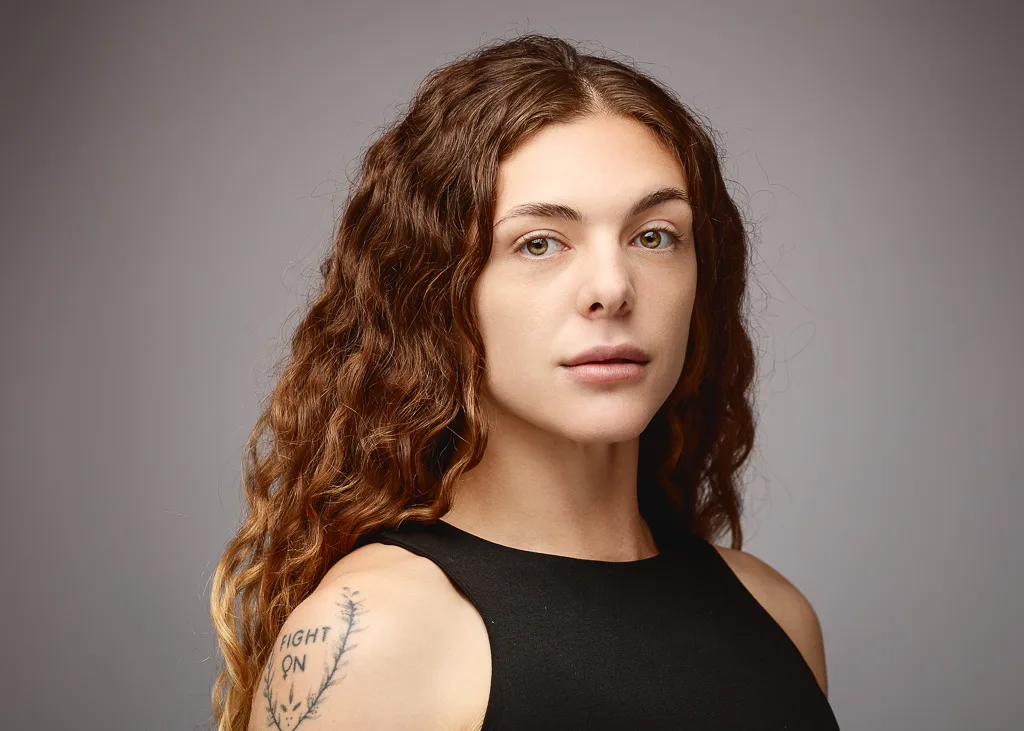
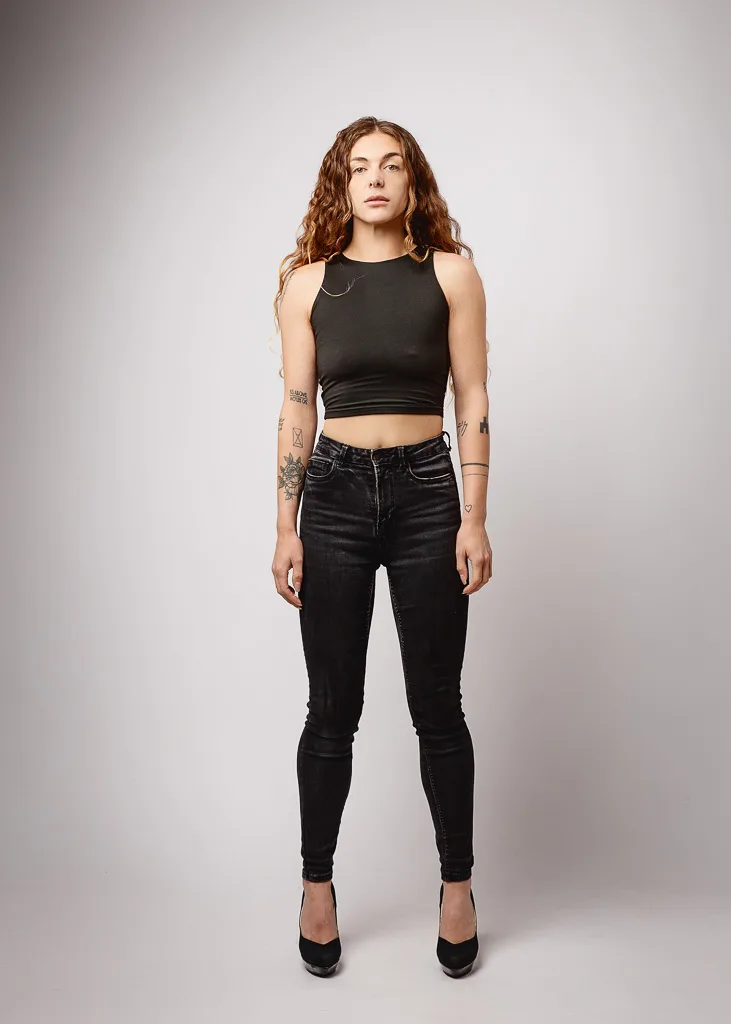
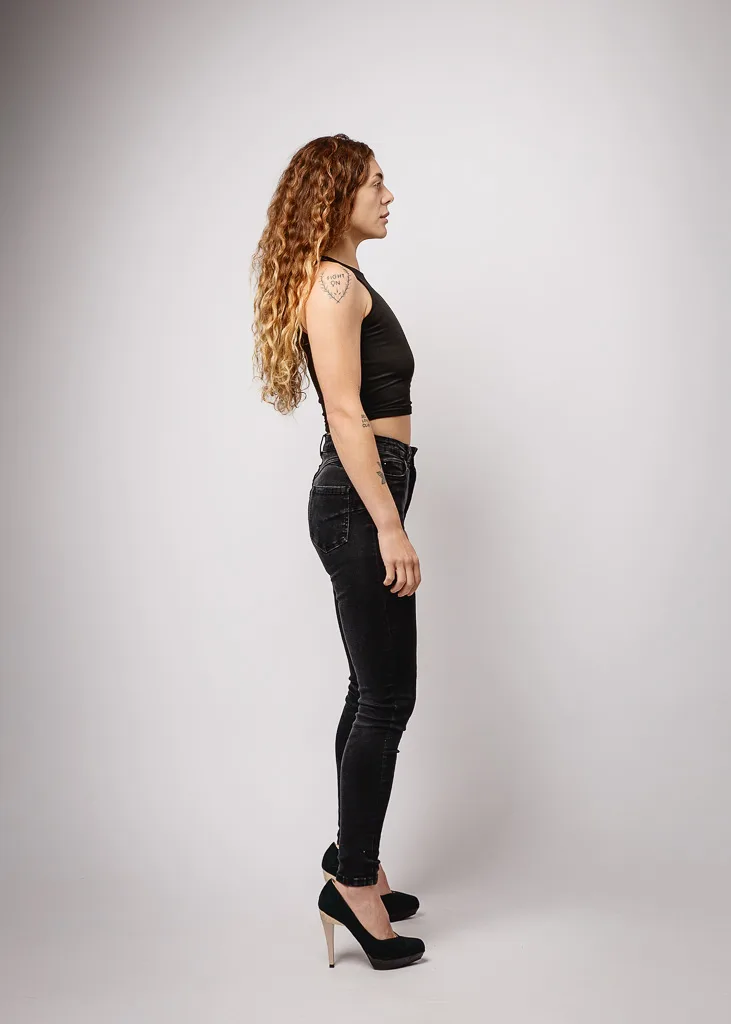
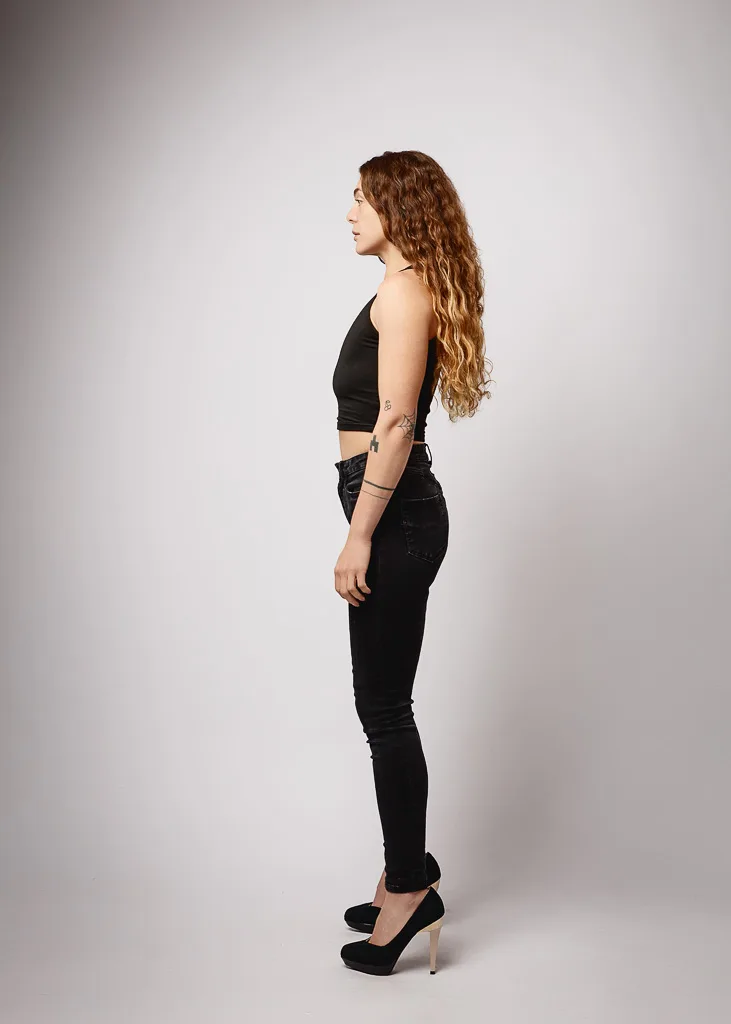
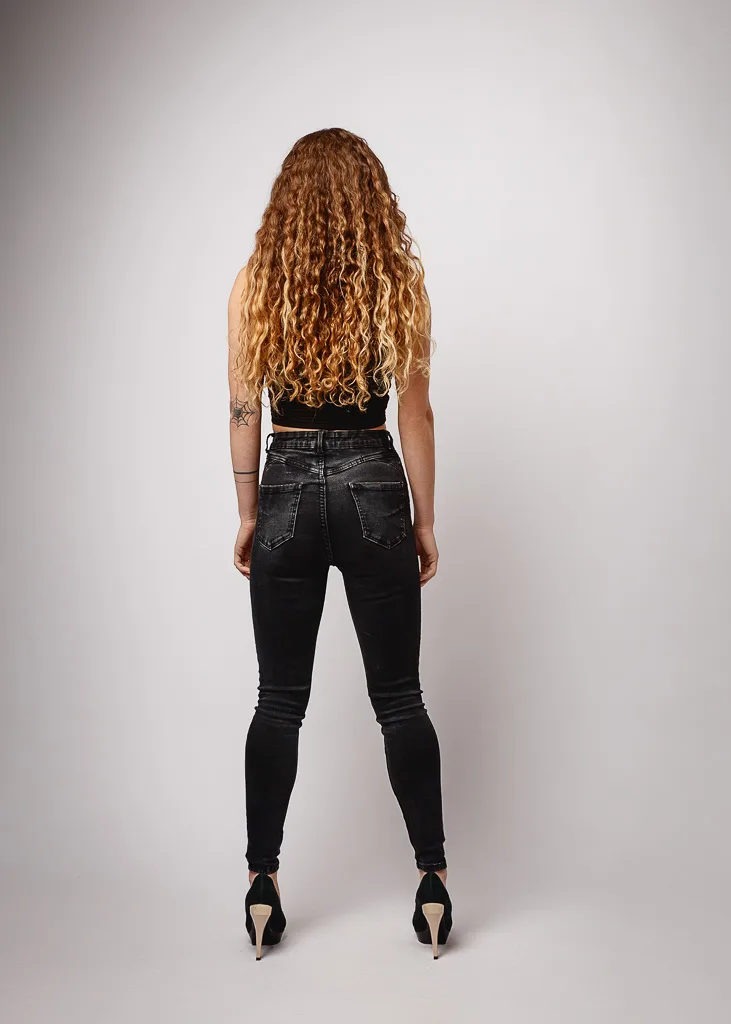
A comp card is the least glamorous part of a model’s portfolio, and one of the most useful. It’s a headshot plus full-length images from the front, the side and the back. There’s no expression to speak of, the lighting is flat and the editing is kept to a minimum. Casting directors and clients use it to see what the model actually looks like, as a whole, without any styling or retouching getting in the way. Daisy wore a plain black top and dark jeans against a pale grey backdrop, which is exactly what a comp card needs. After that we moved on to her headshots, still clean and simple, on a mid-grey background with the focus on her face and expression.
Portfolio looks, chosen by Daisy
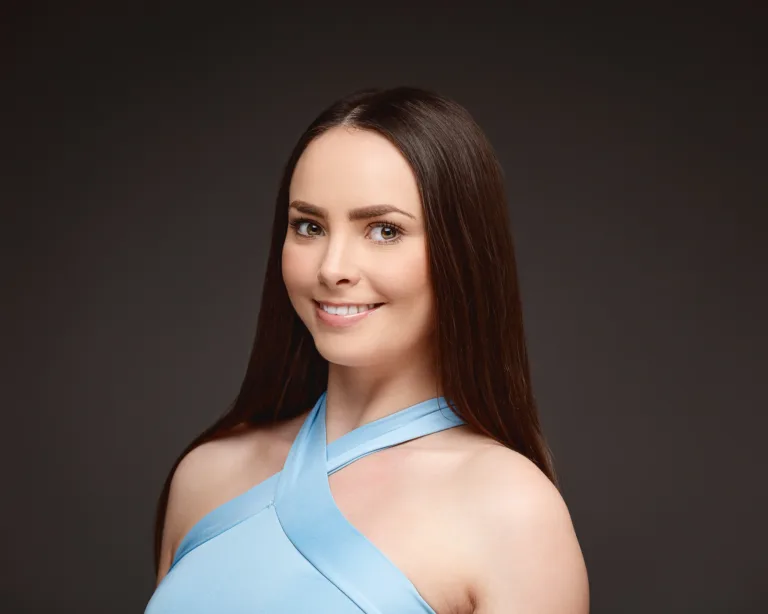
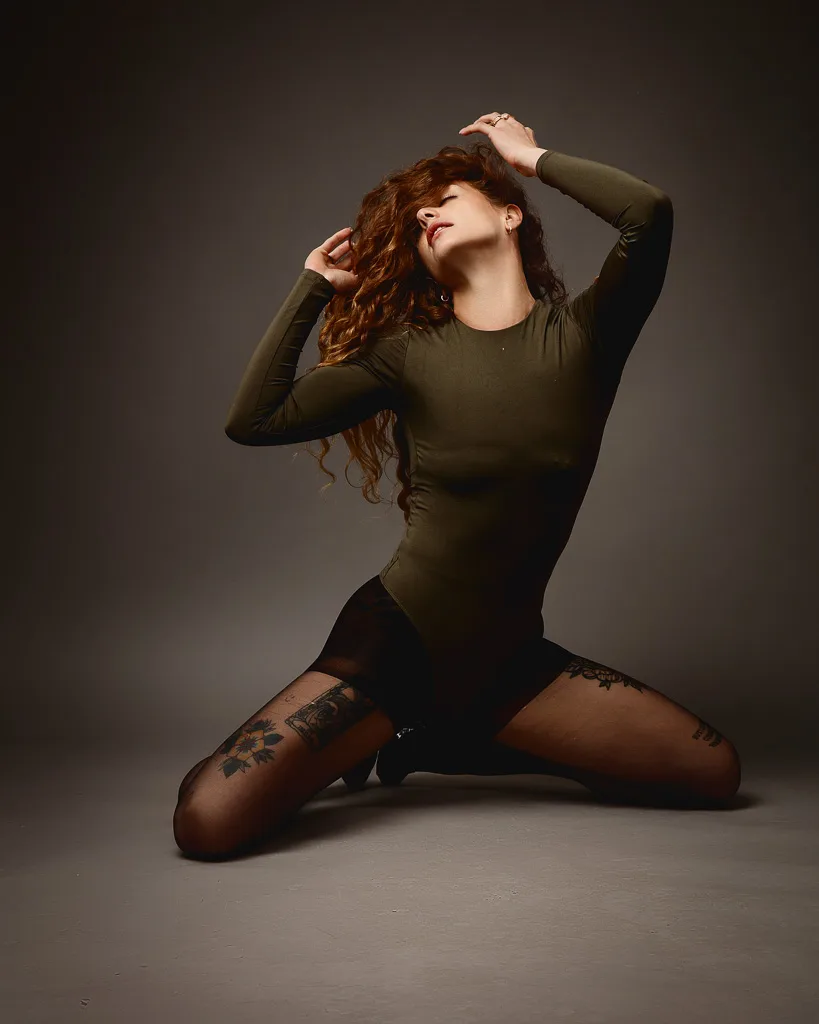
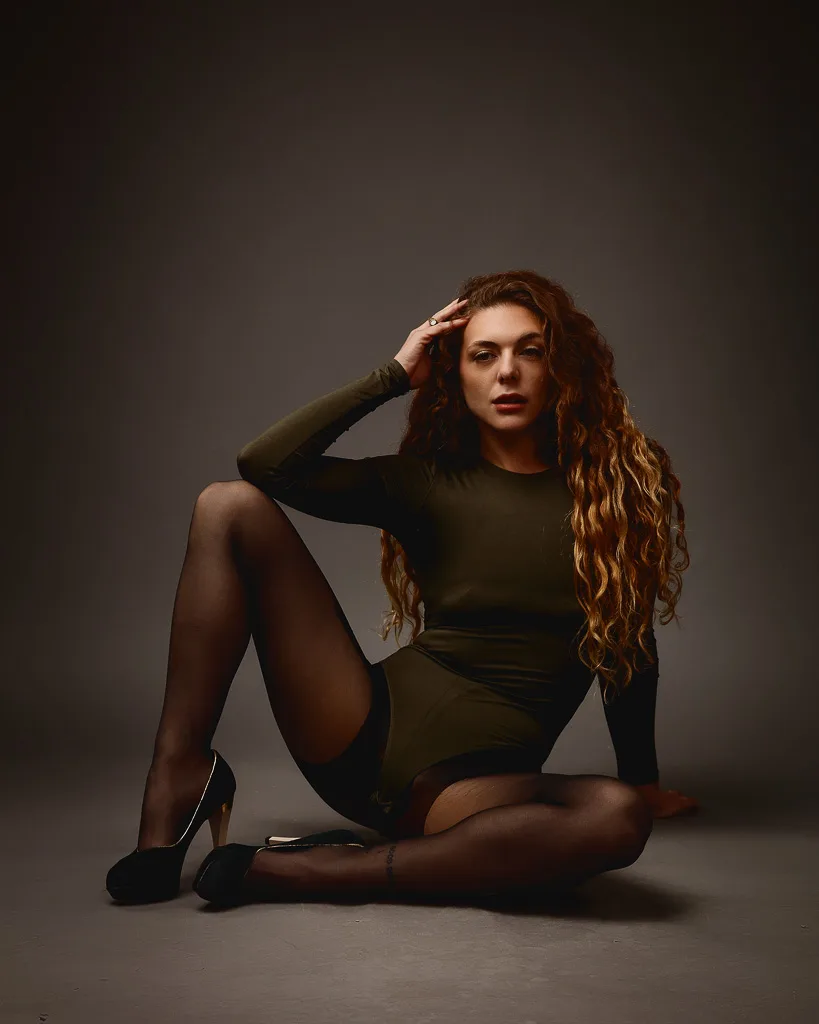
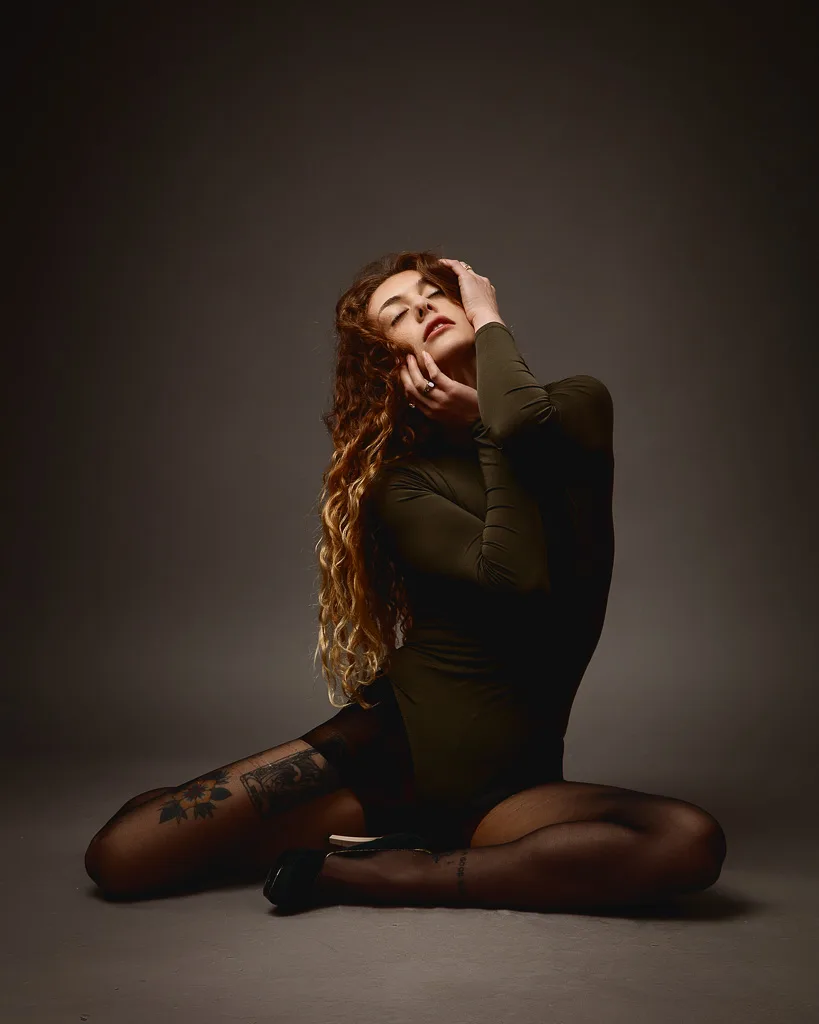
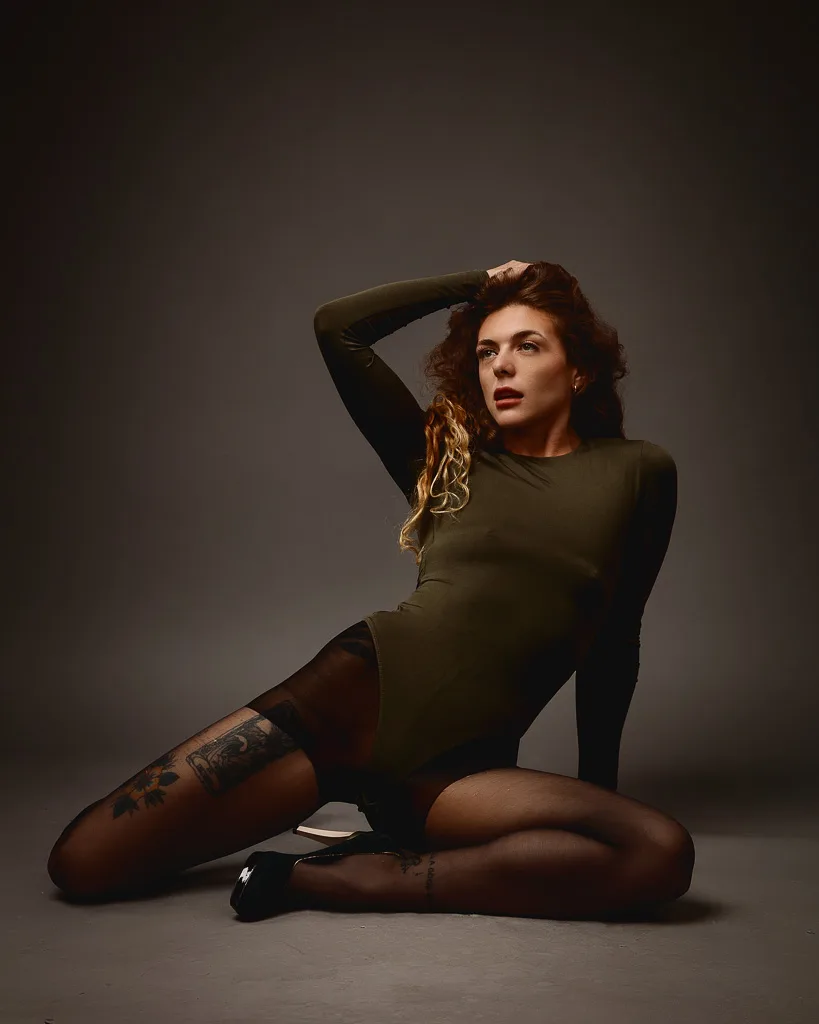
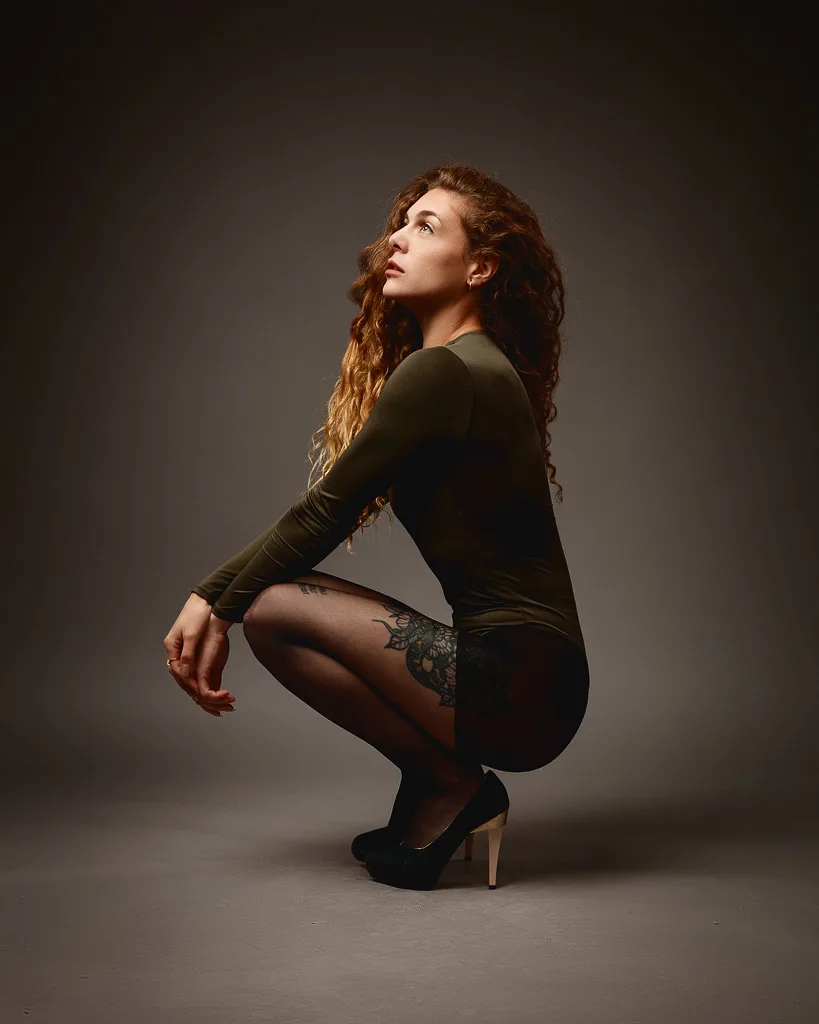
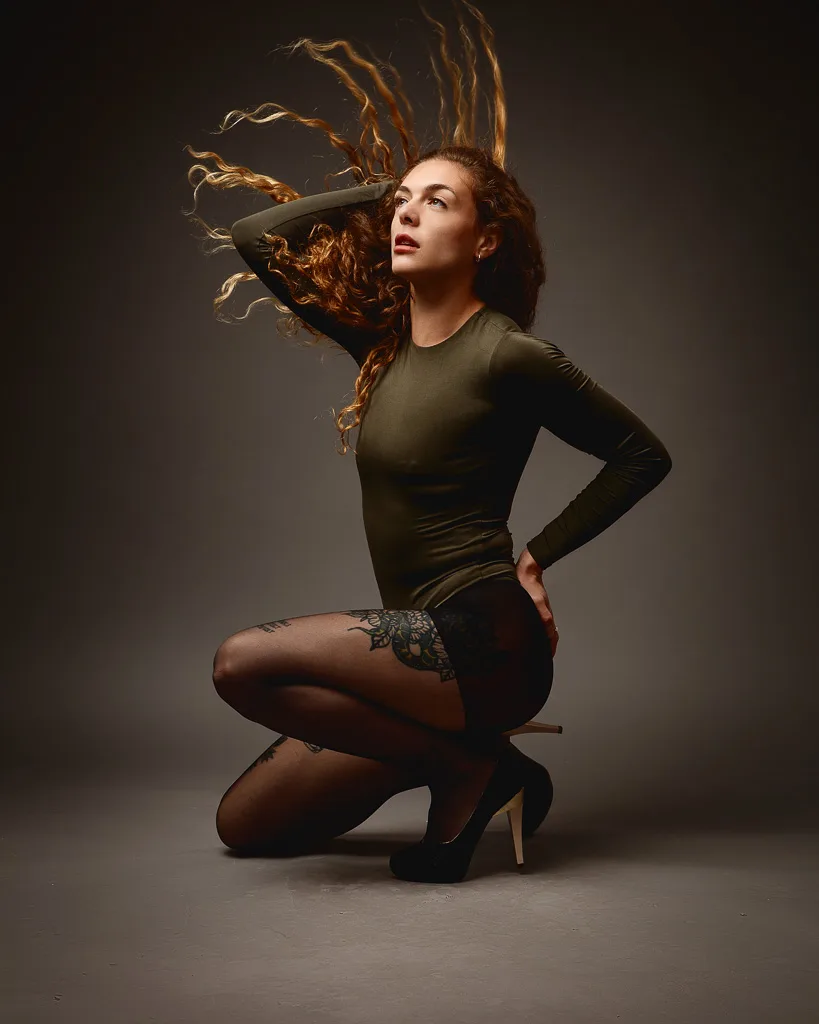
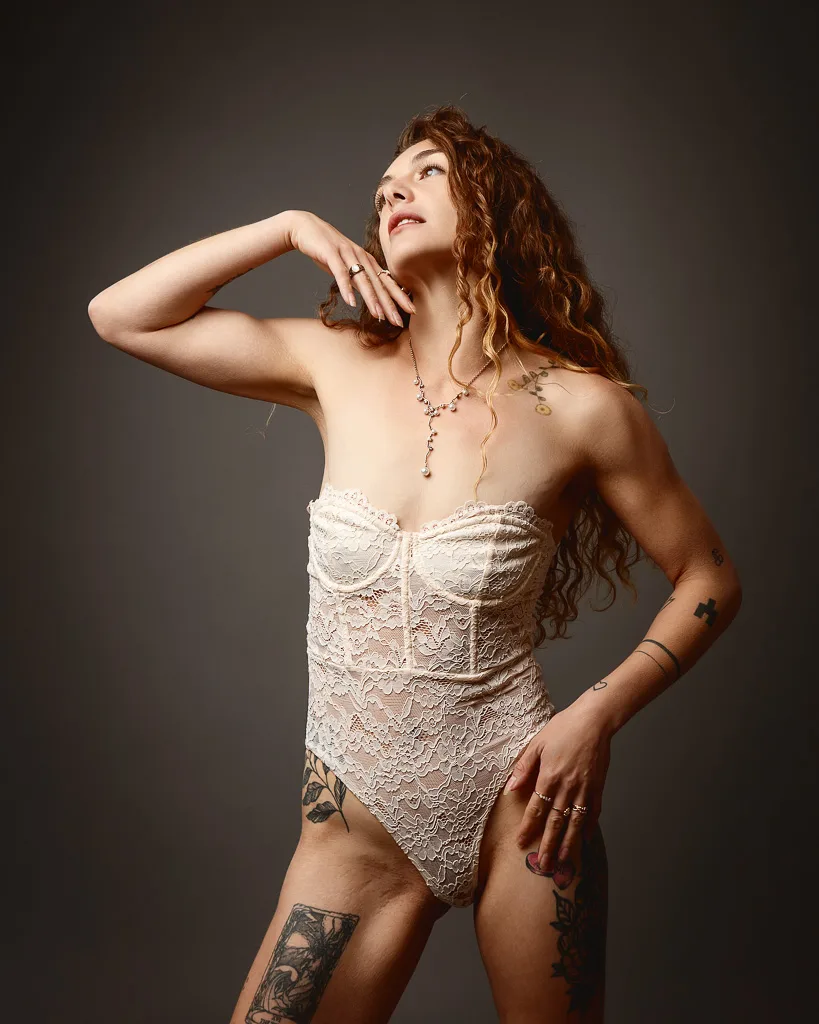
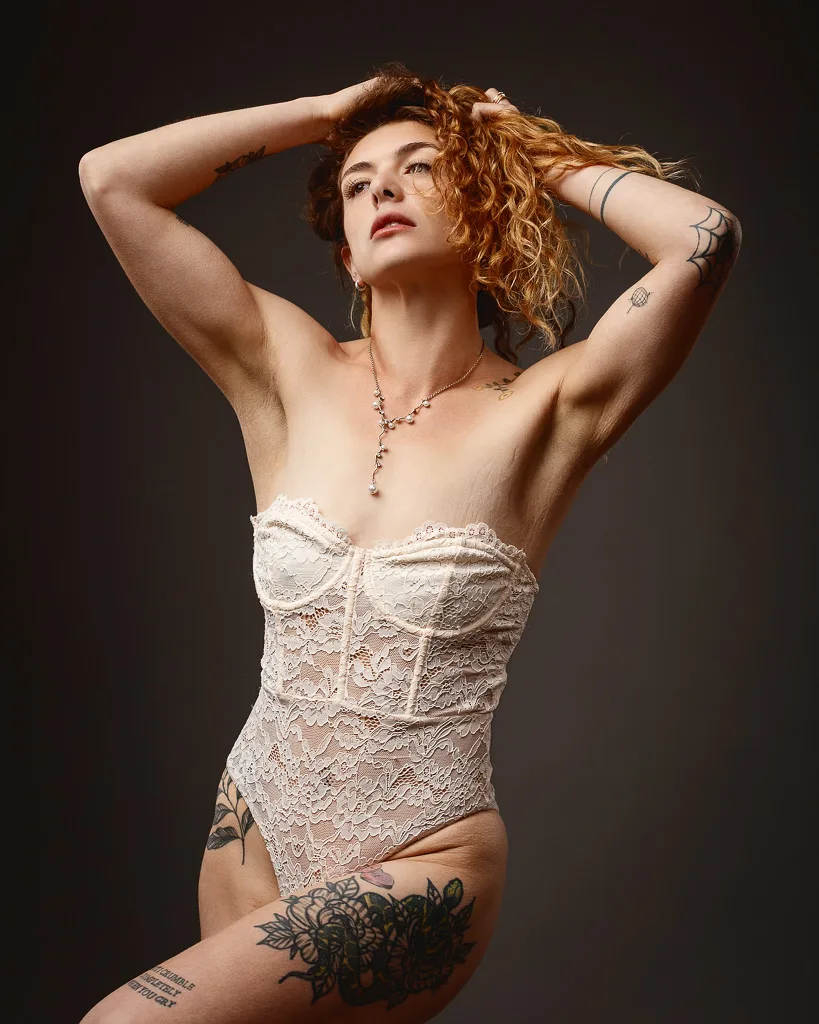
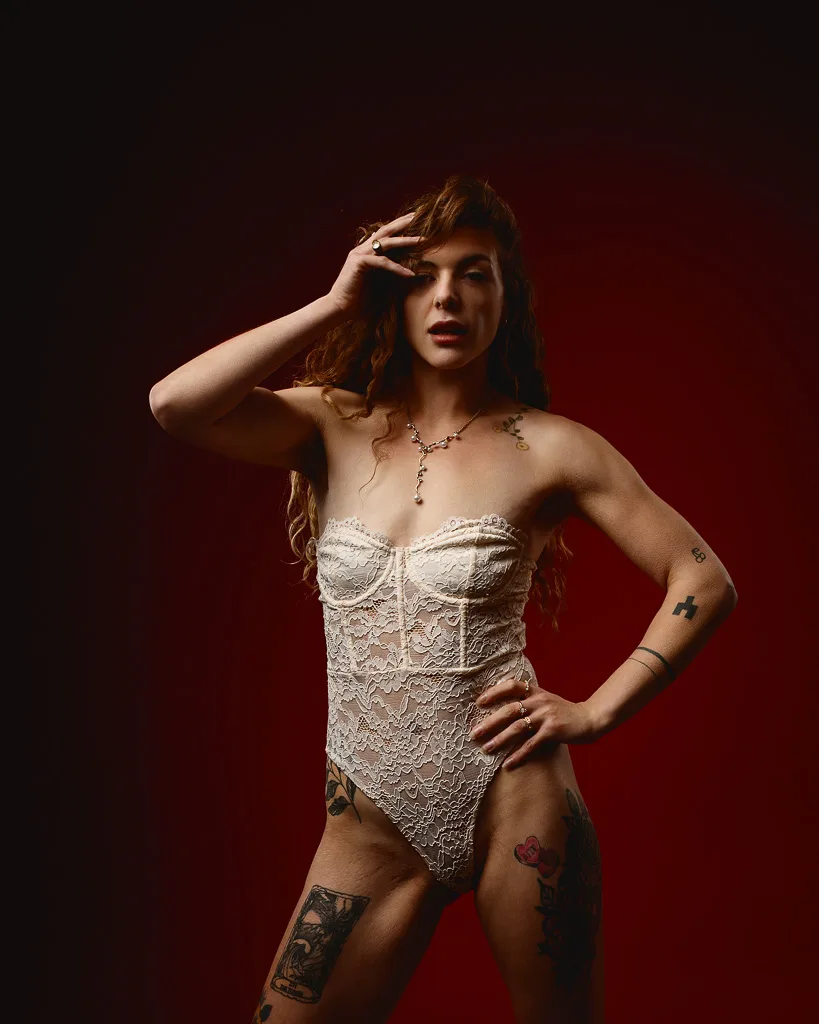
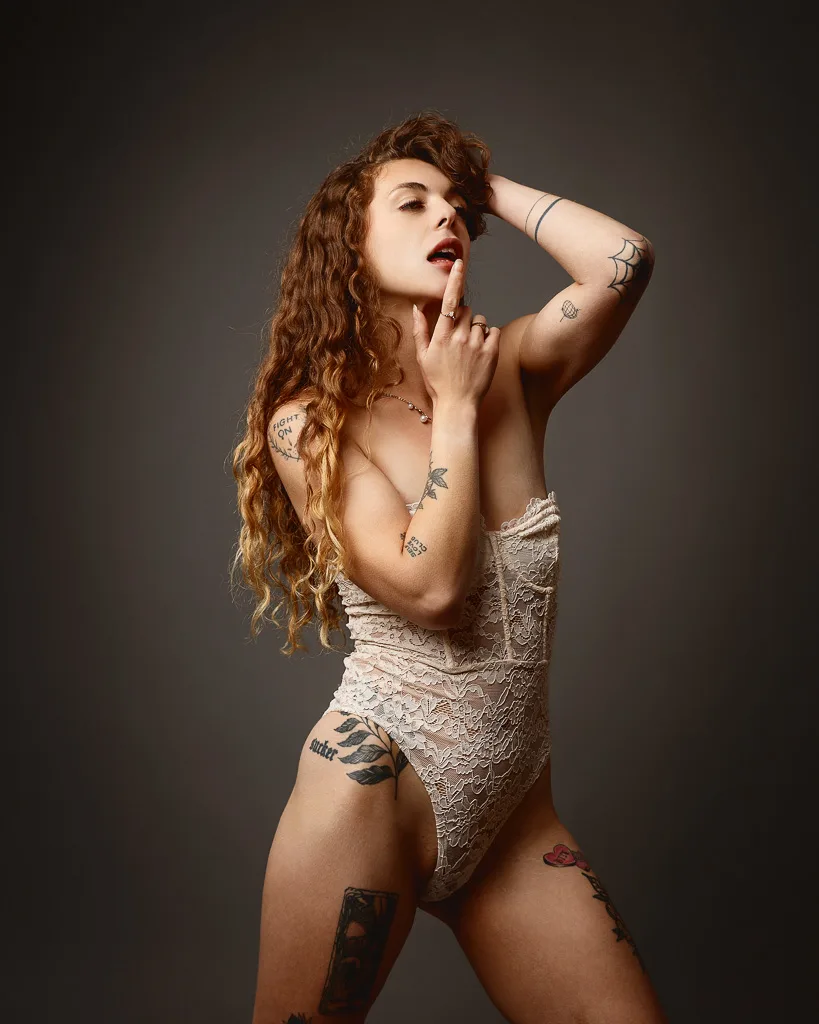
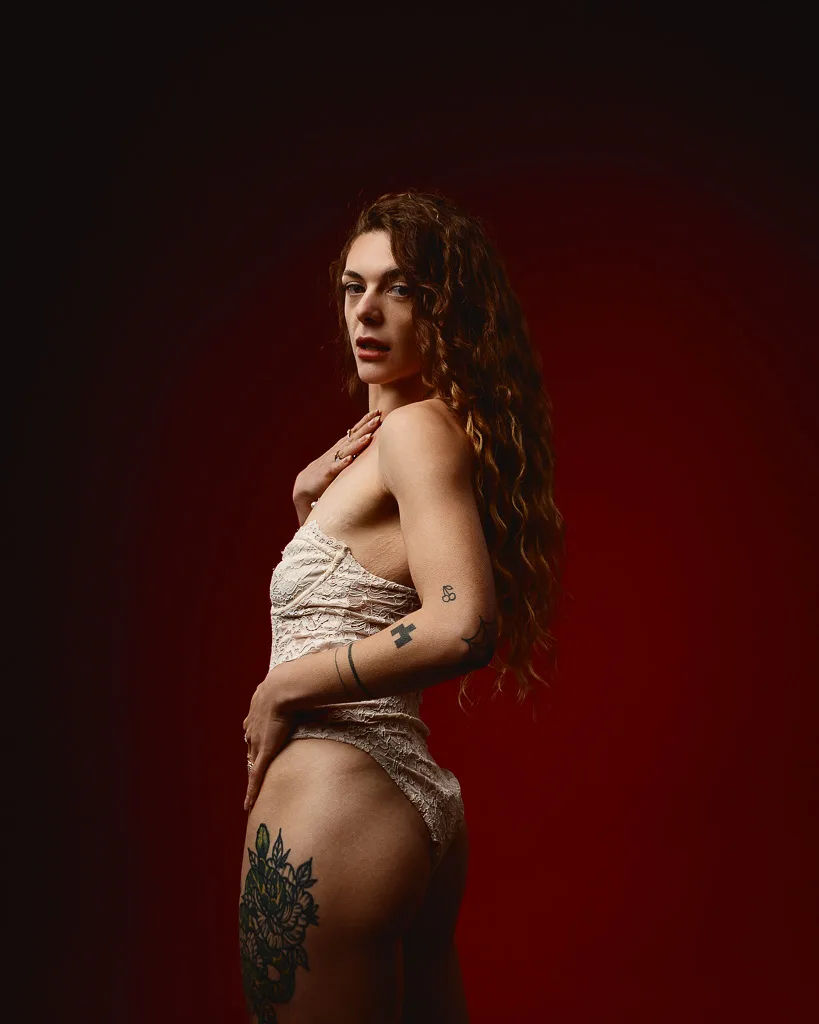
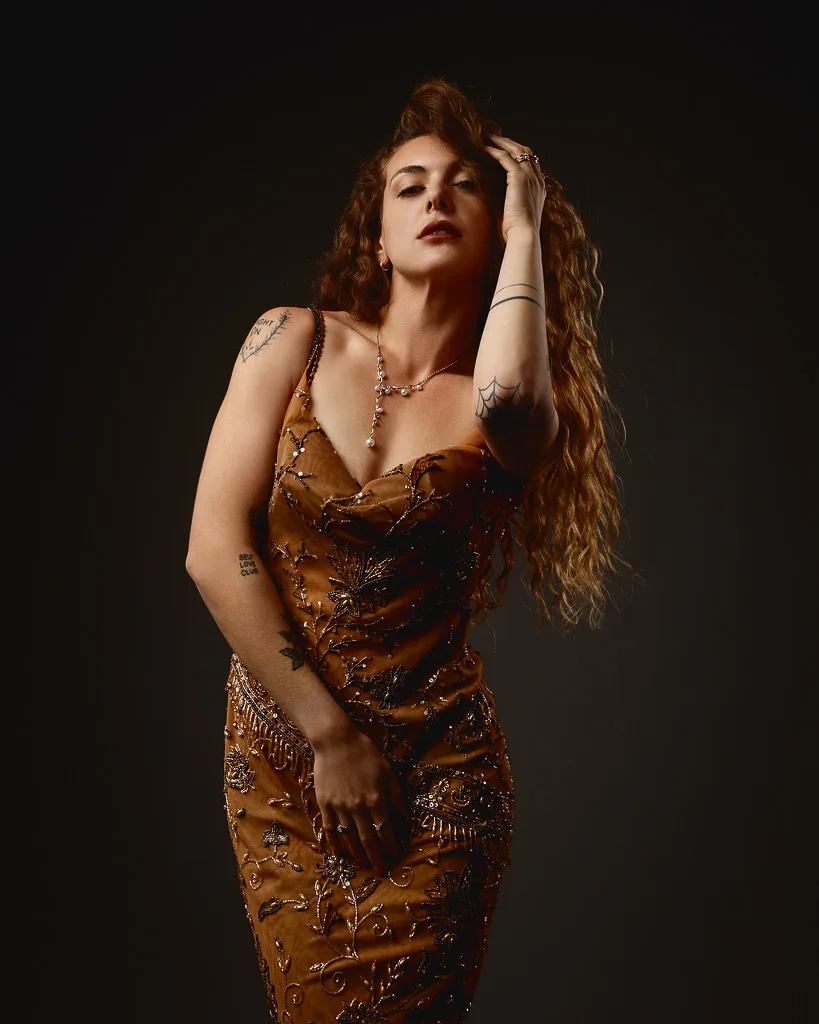
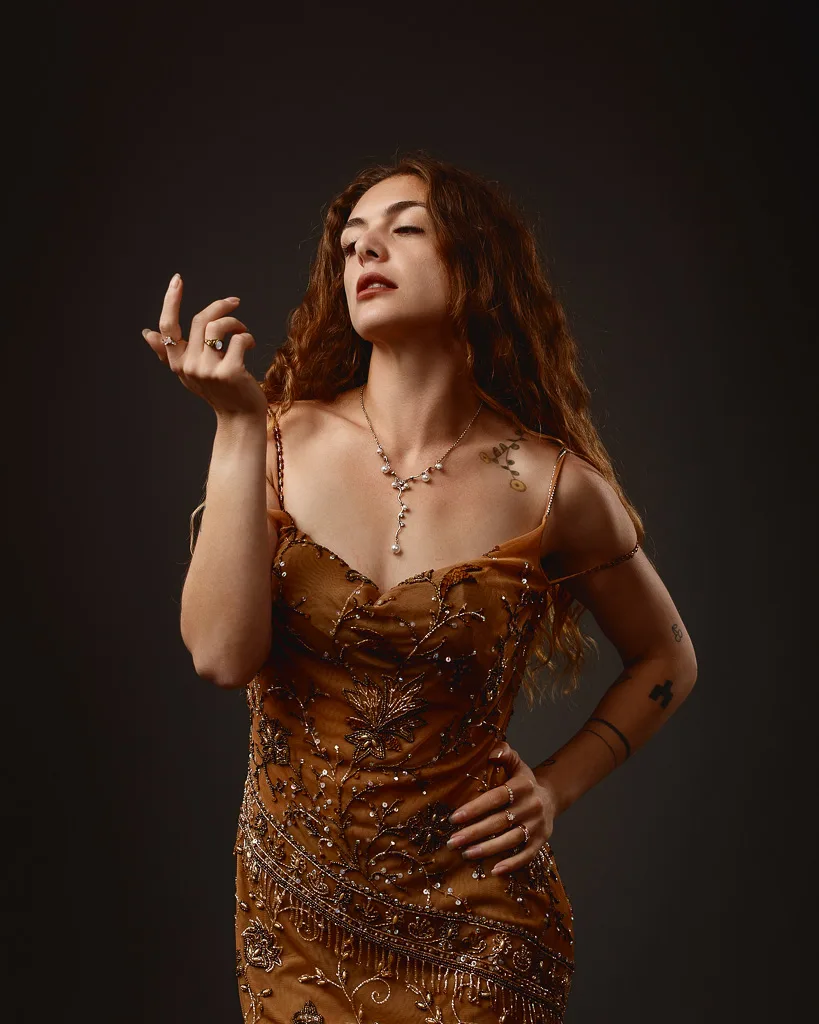
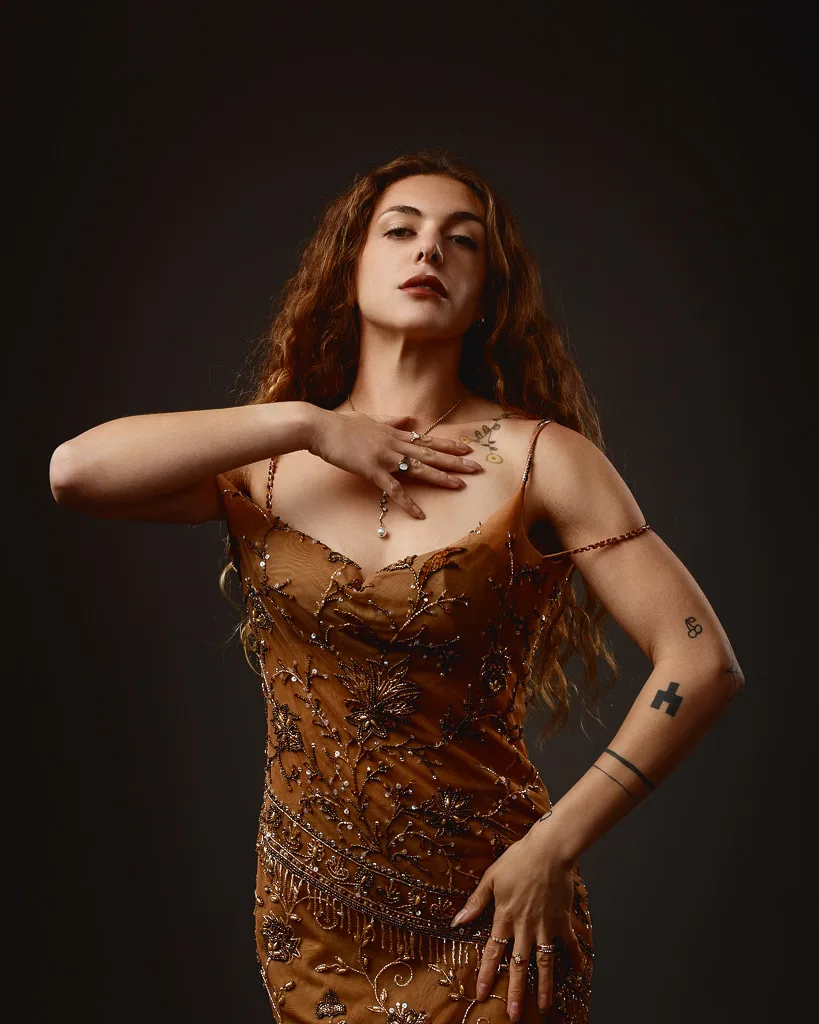
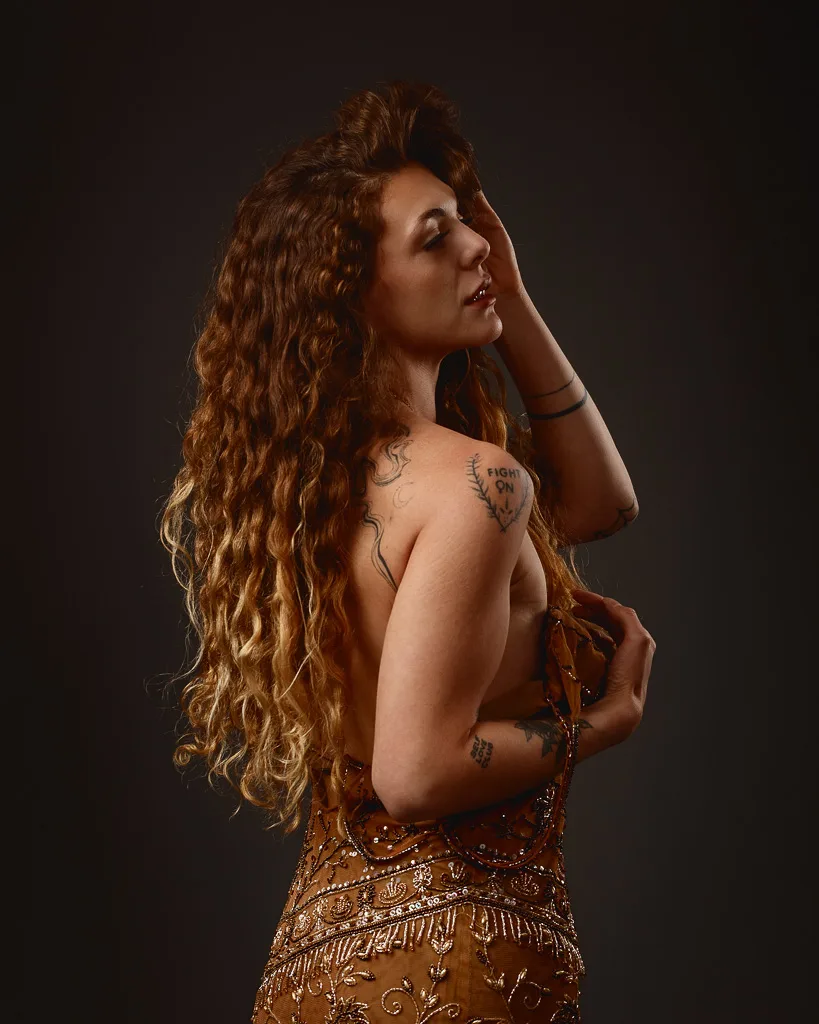
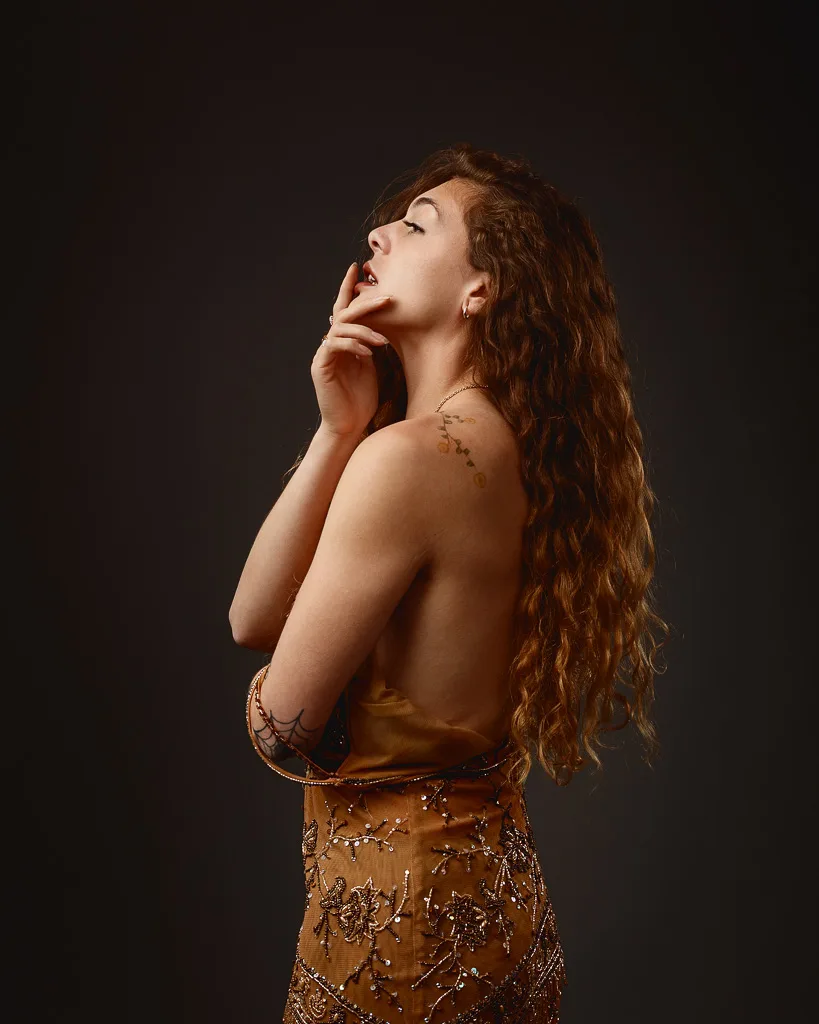
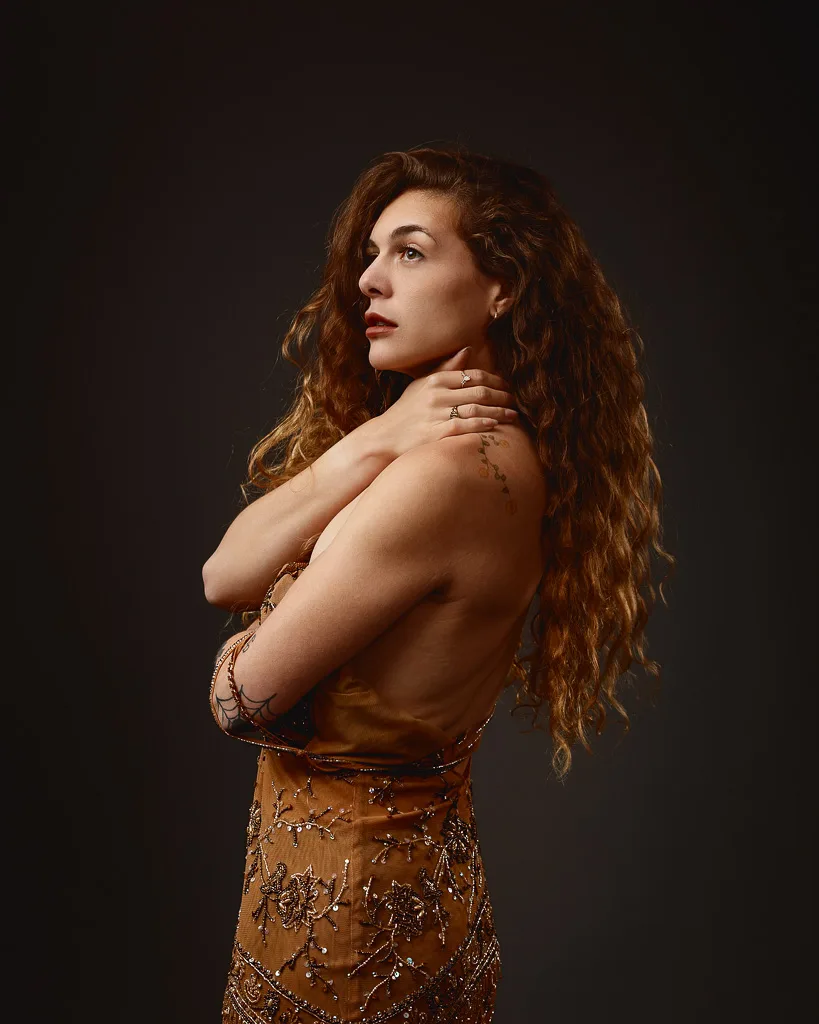
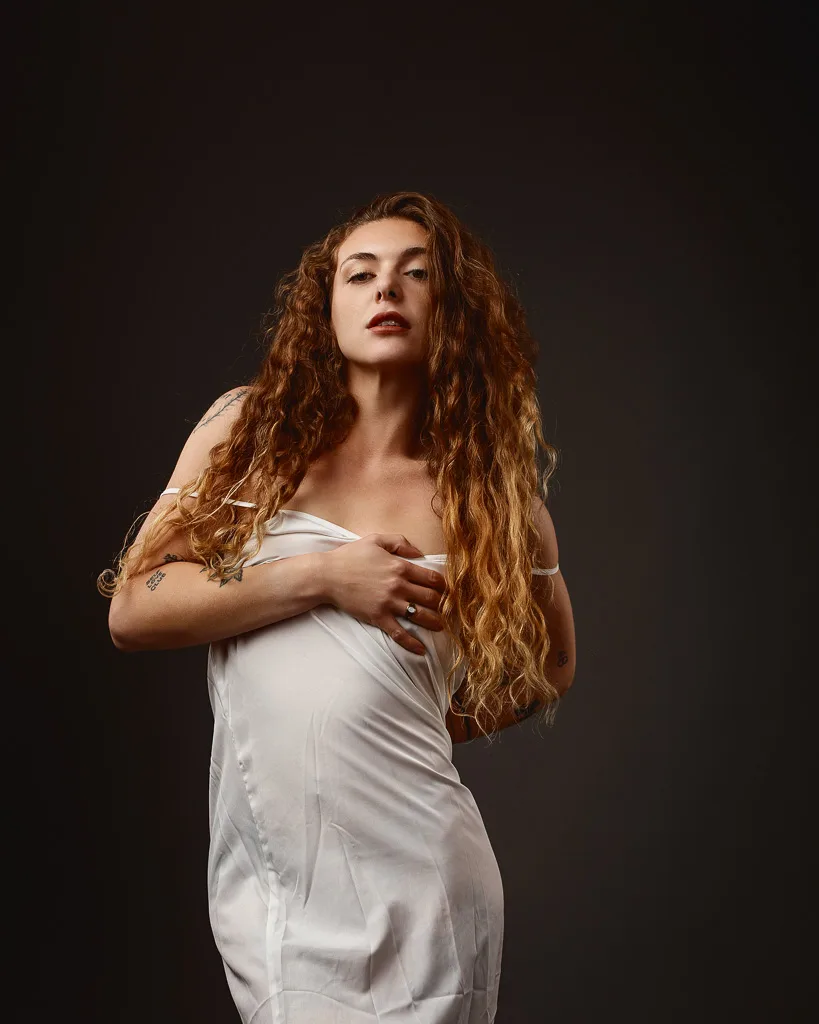
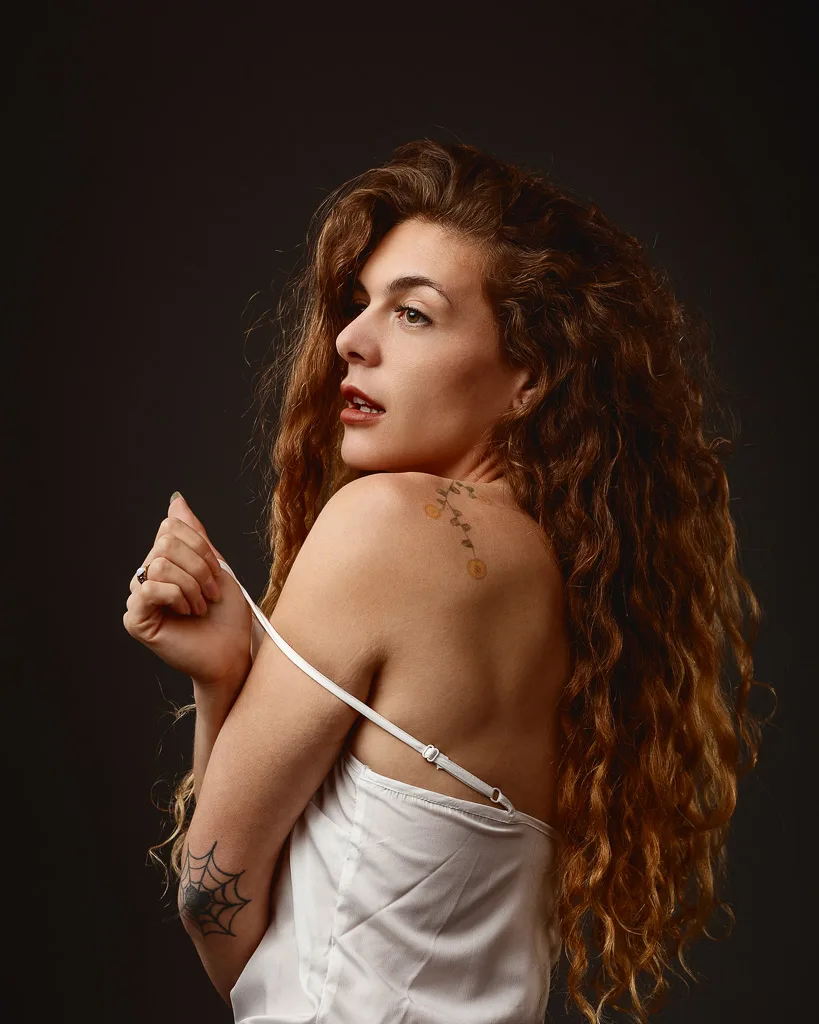
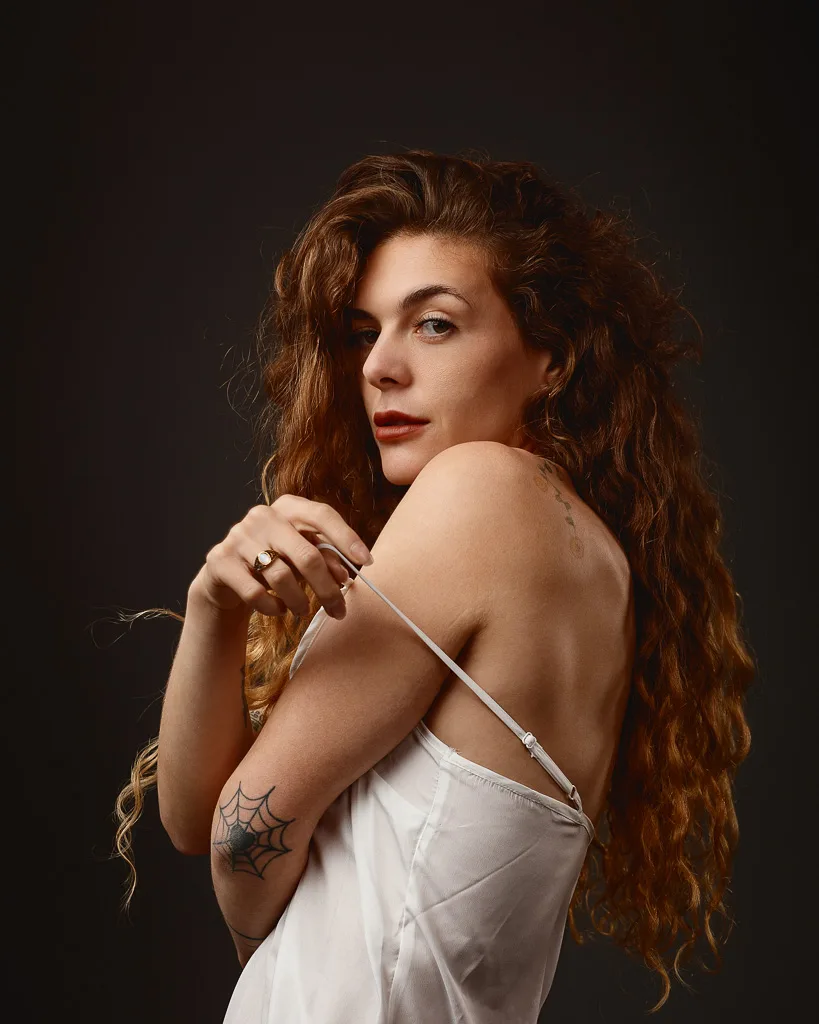
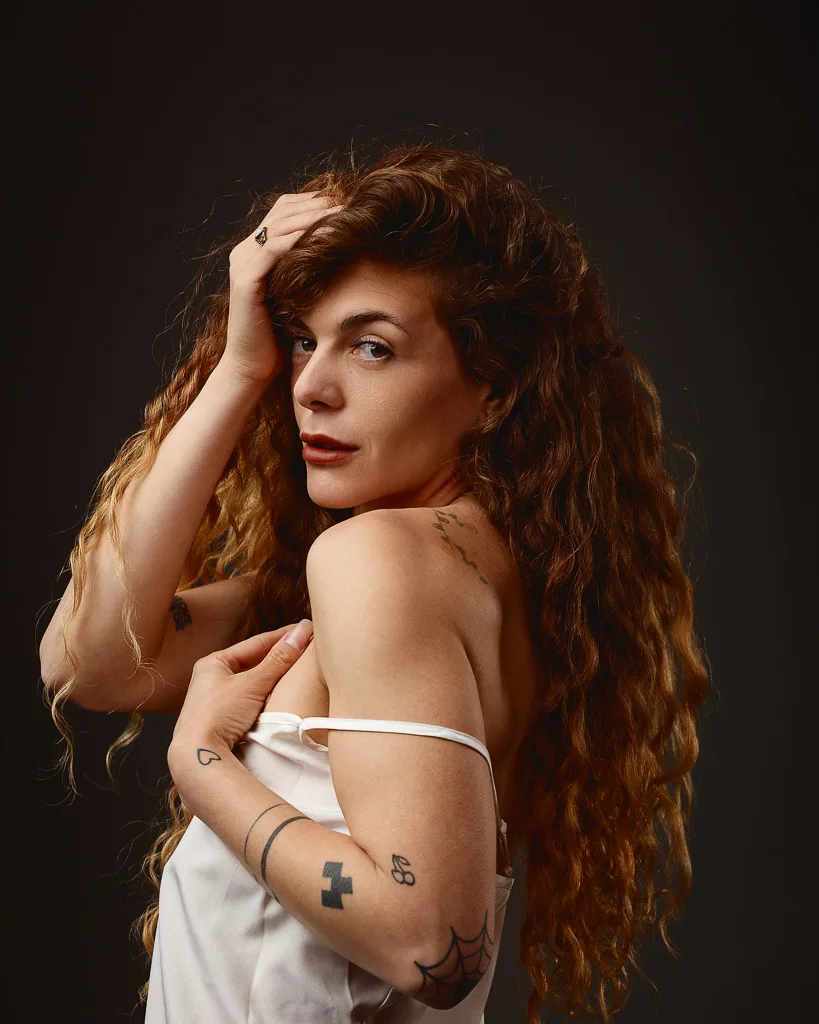
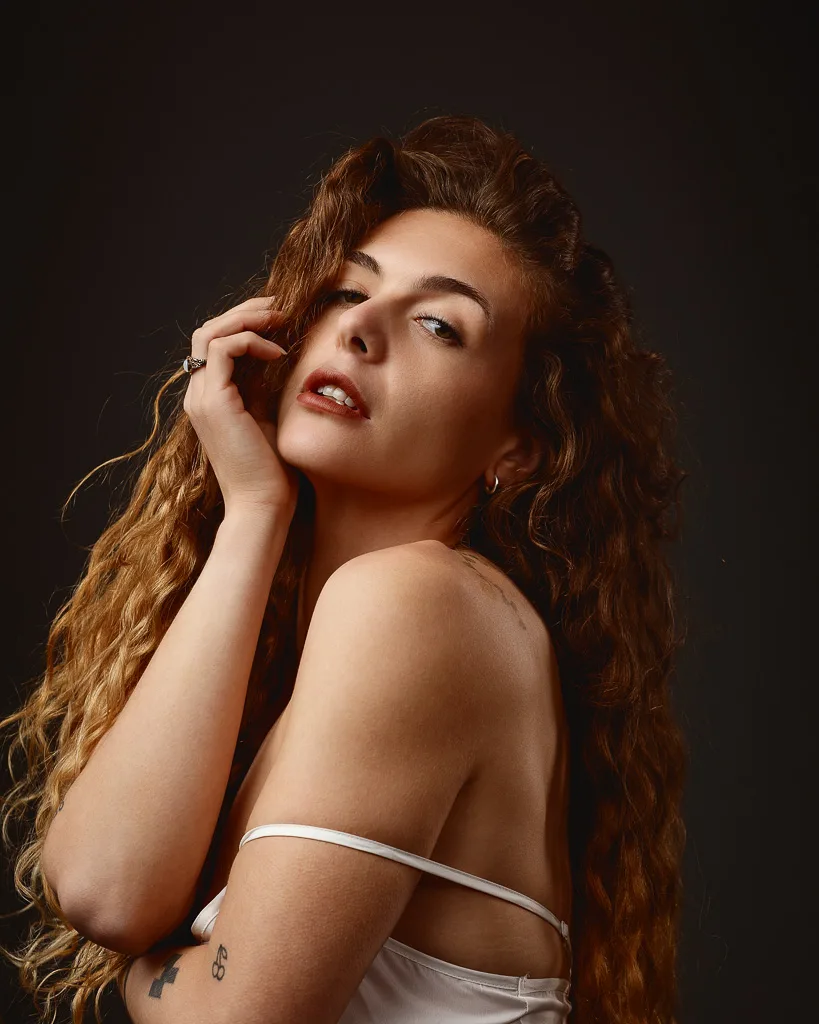
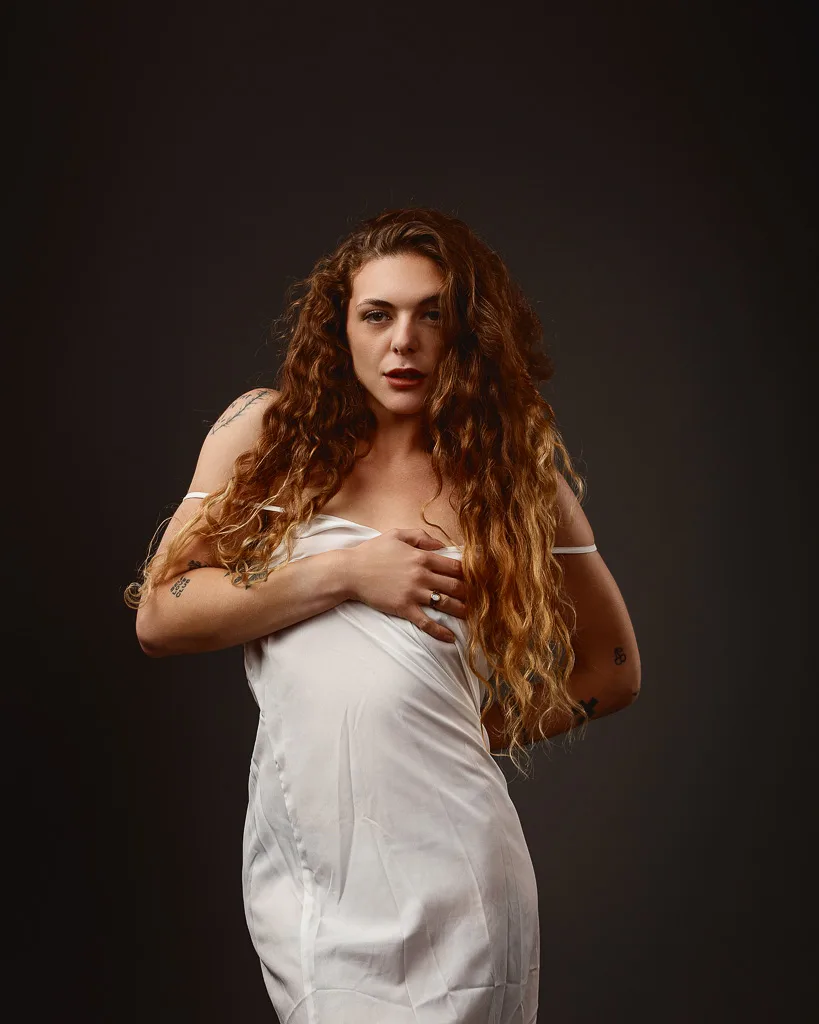
I have a simple rule for model portfolio shoots: the outfits and clothing choices belong to the model, not me. I’m happy to work that way because it puts the model in charge of the look and feel of the session, and of what they want to come away with. My job is to take what they bring, light it properly and then edit the images so they look the best they possibly can. Daisy worked through a good range. There was a white lace bodysuit, an olive green long-sleeved bodysuit with black tights and heels, a copper beaded dress with an open back and a white satin top for some closer portrait work. I changed the backdrops as we went, so the same studio gave a different feel for each outfit. Daisy did all of her own hair and makeup, and all of the styling was hers too. I also keep a rail of outfits in the changing room. Some pieces suit certain shoots better than others, but it’s there for anyone who wants an extra option or has run out of outfits, and the choice is always the model’s.
How I lit the studio
My main light was a large octabox, camera left. Behind Daisy I had a hair light camera right and a rim light camera left, which separate her hair and shoulders from the darker backdrops. Behind me is a large softbox, one metre by two metres, which I only use as a fill light. It gives a lovely soft light, and it lets me change how deep the shadows are quickly and easily without changing the direction the light is coming from. On a shoot like this, where the mood shifts from look to look, being able to lift or drop the shadows without moving the key light saves a lot of time.
The Halloween shoot
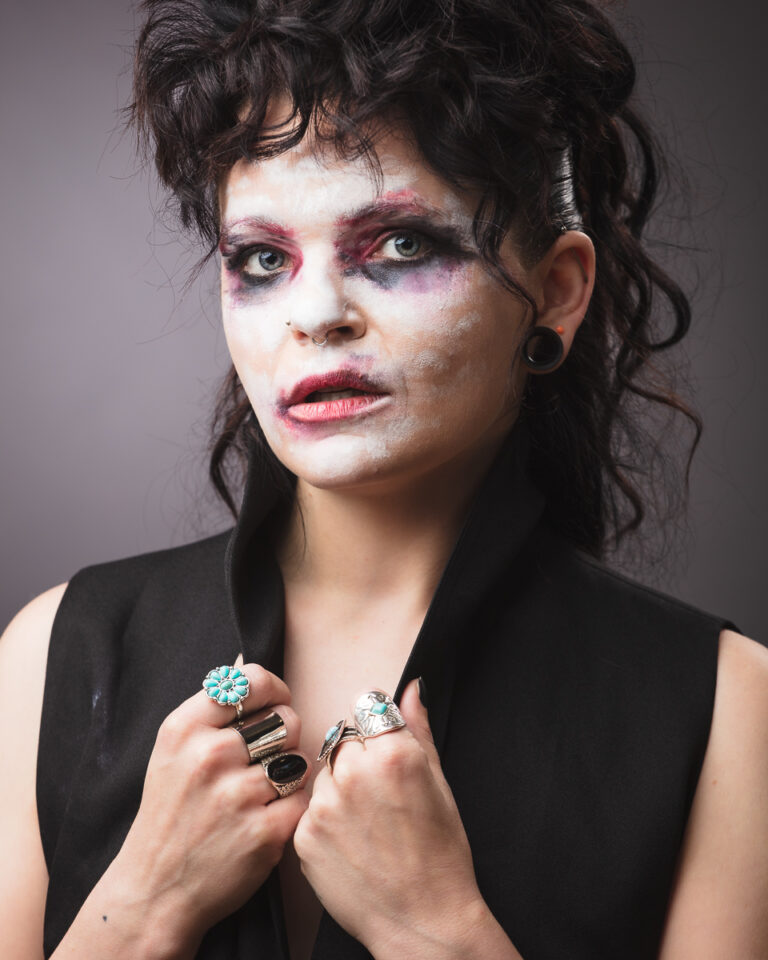
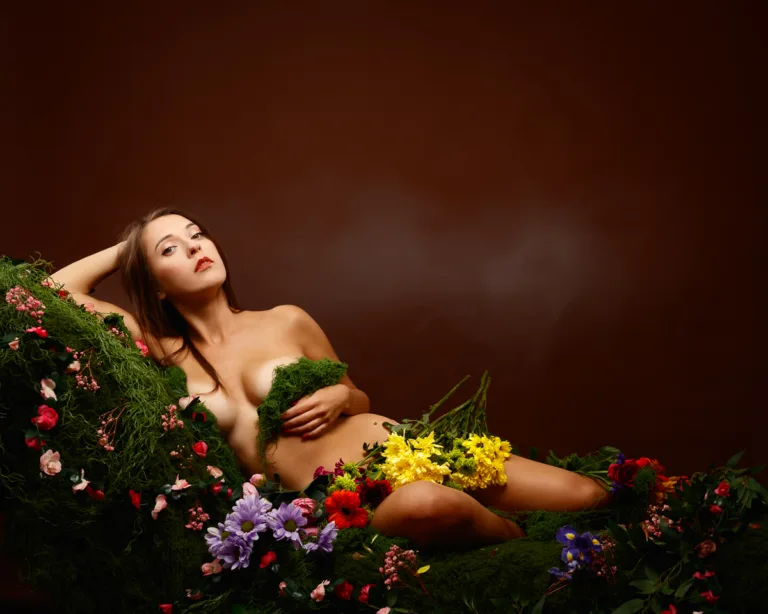
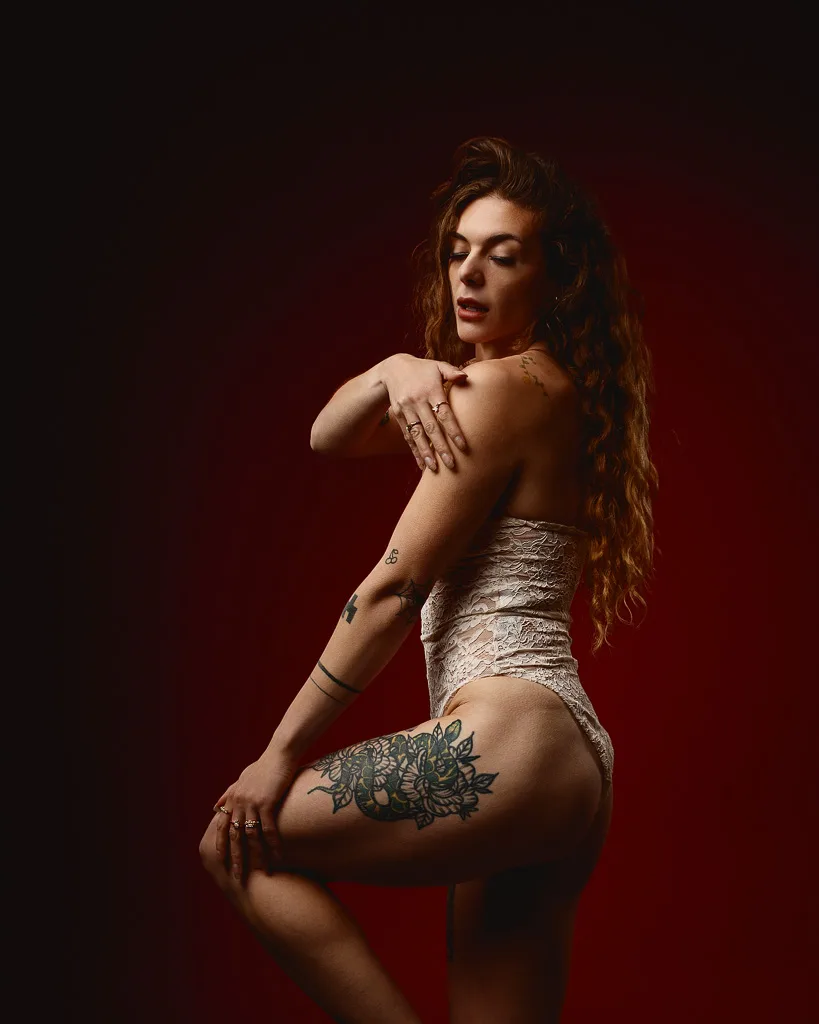
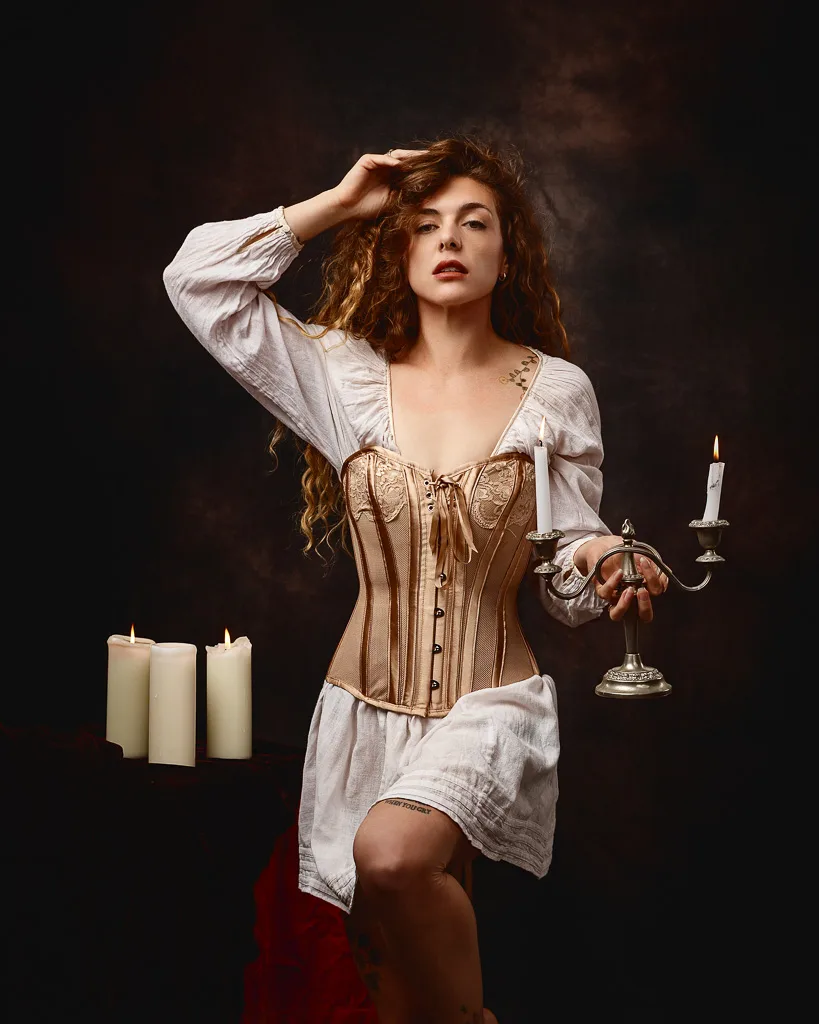
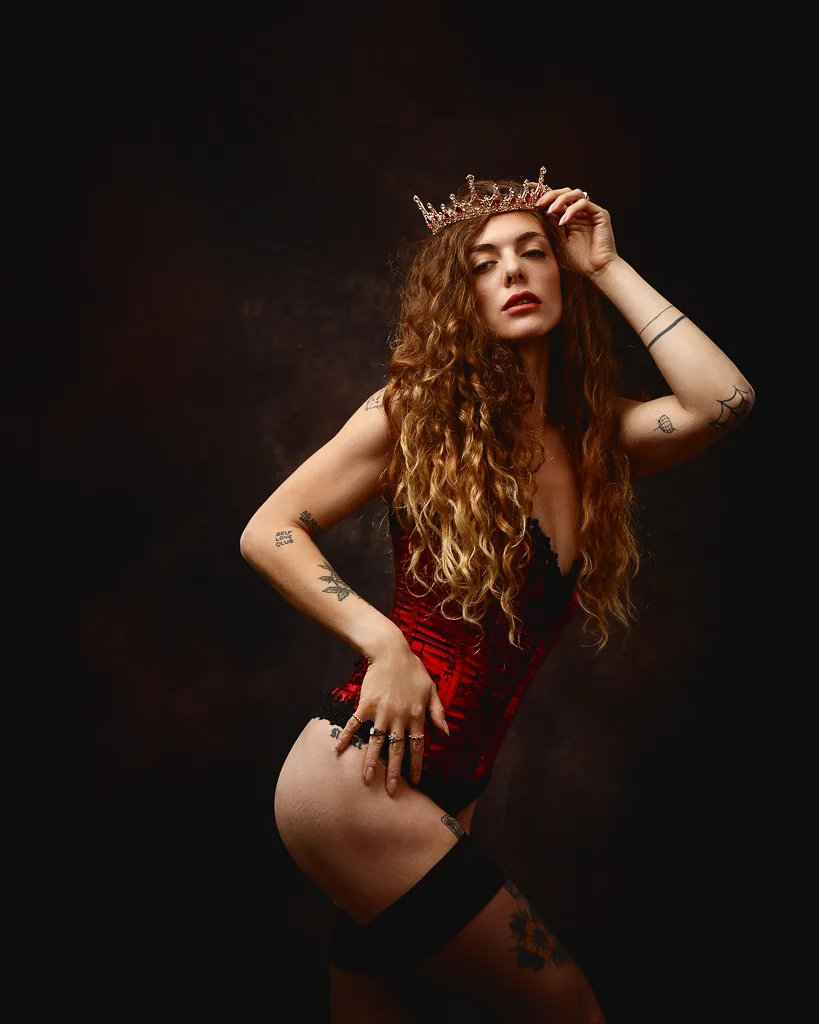
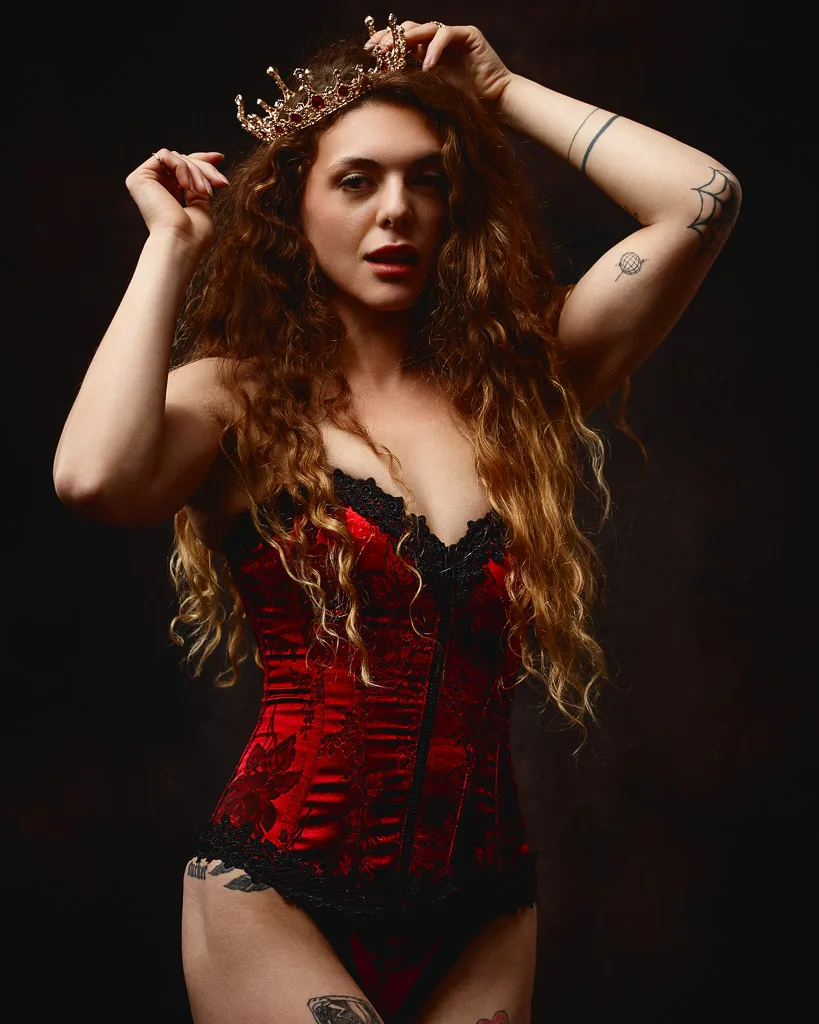
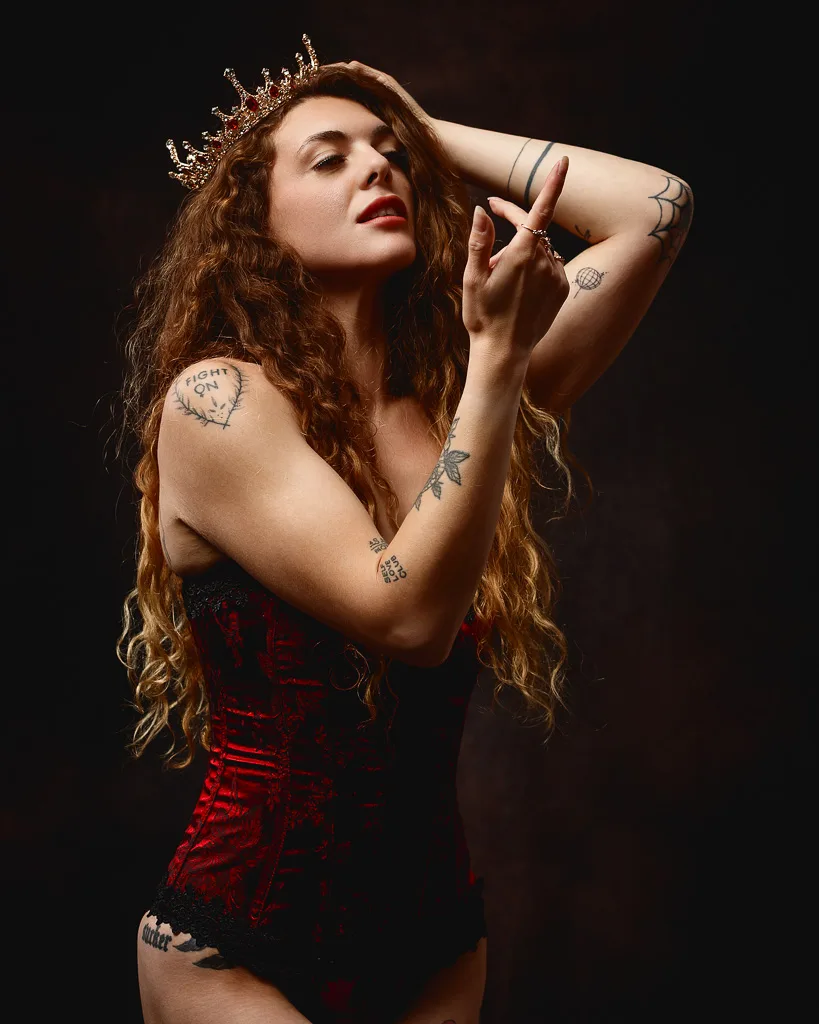
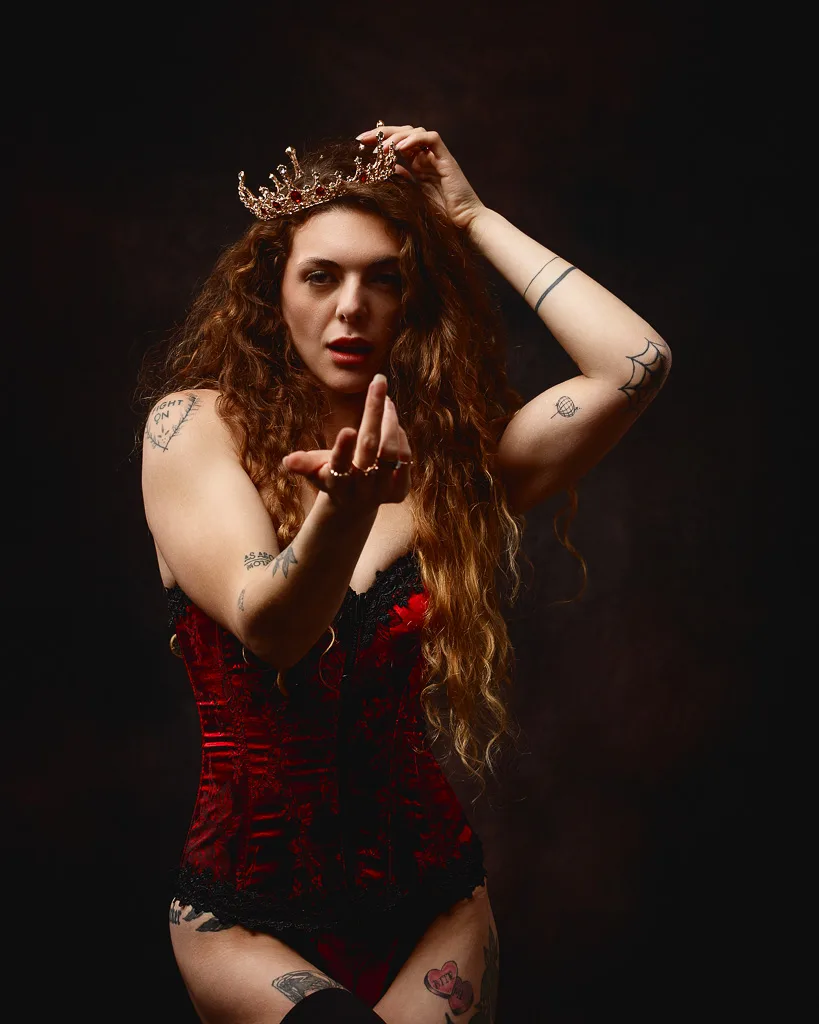
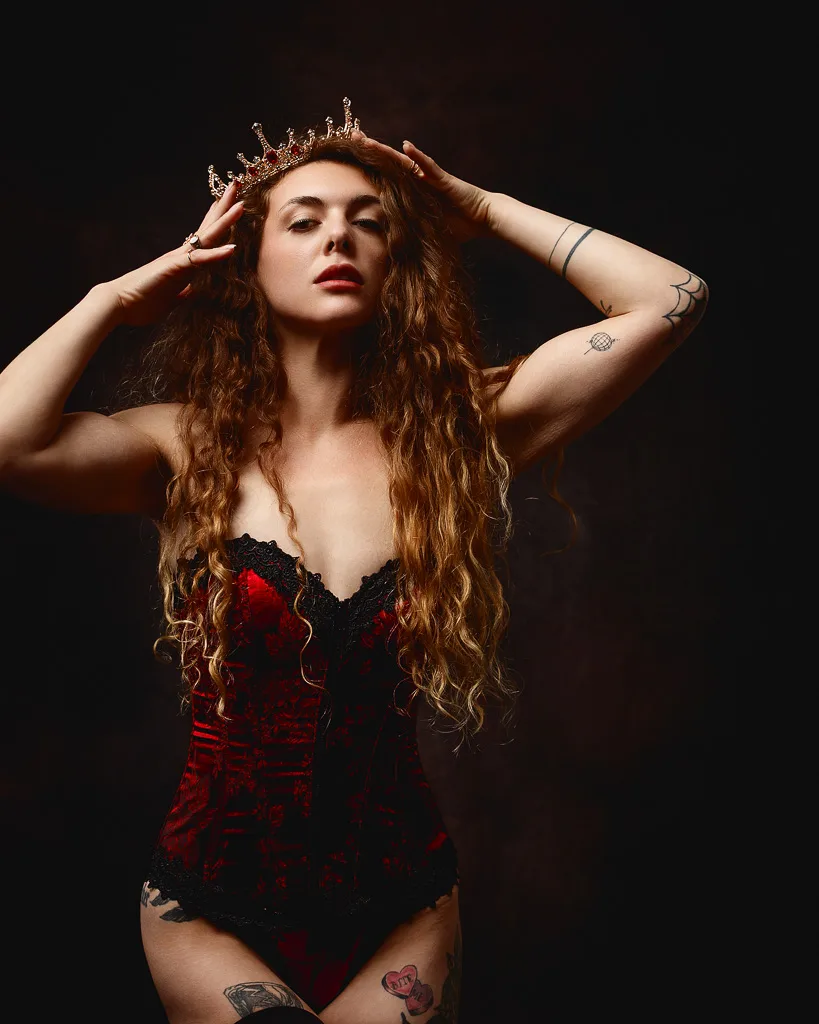
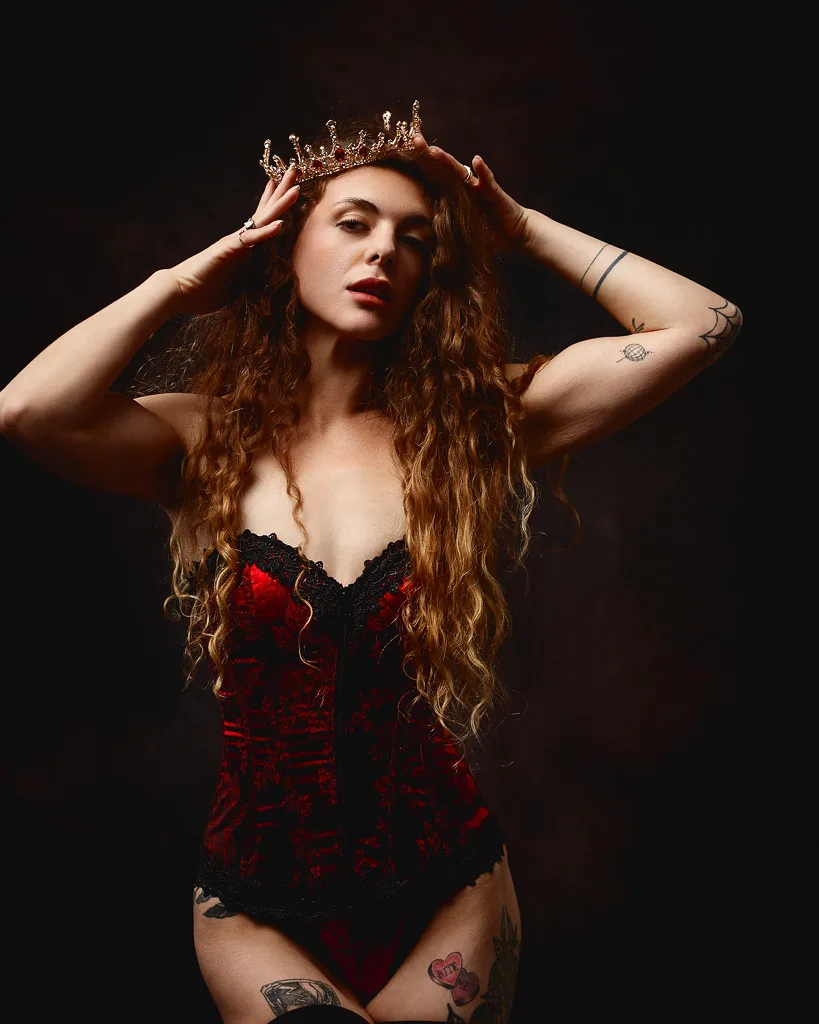
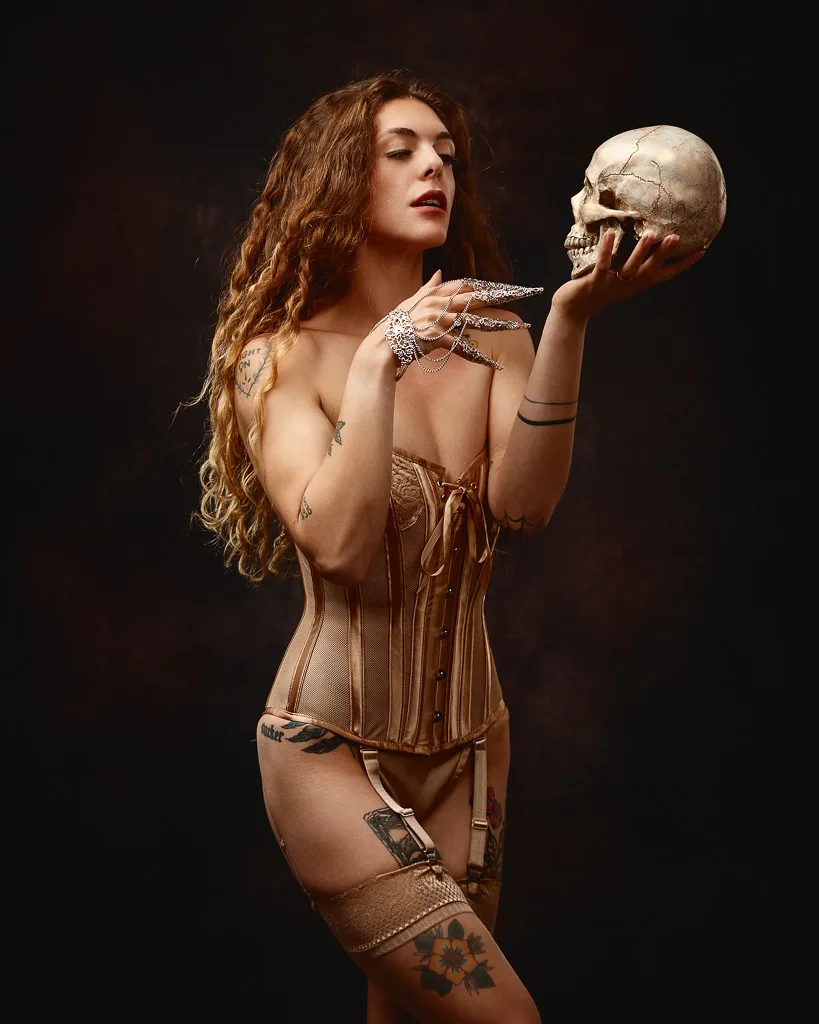
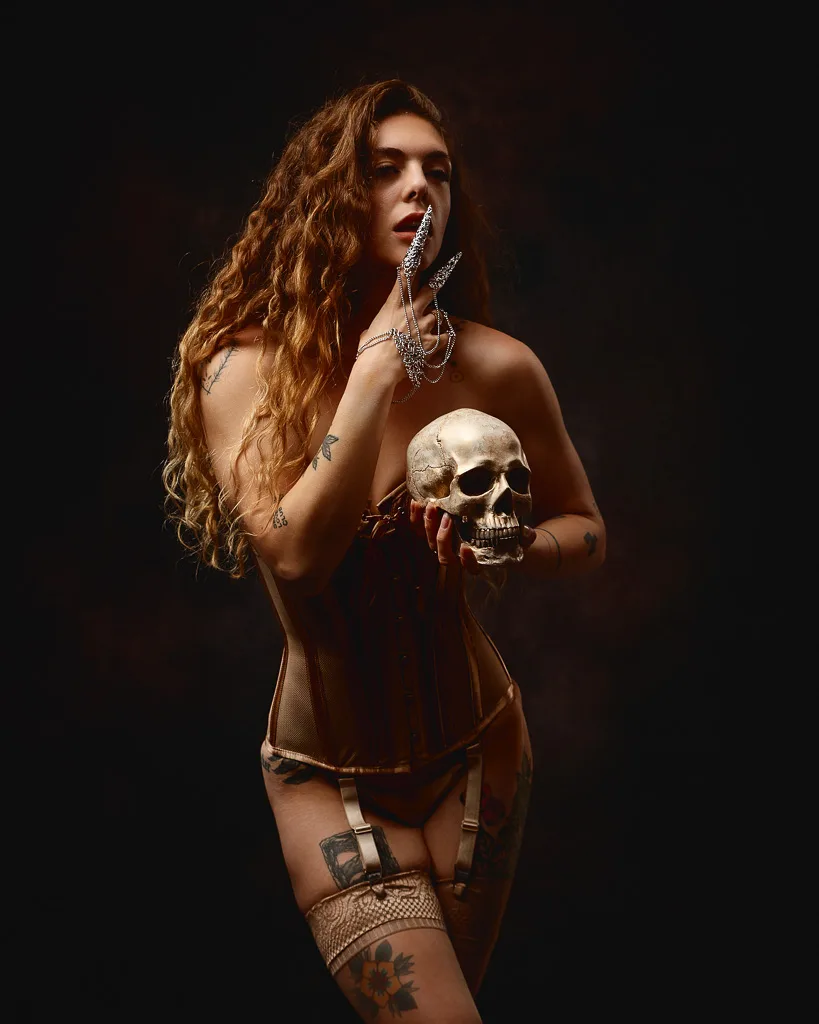
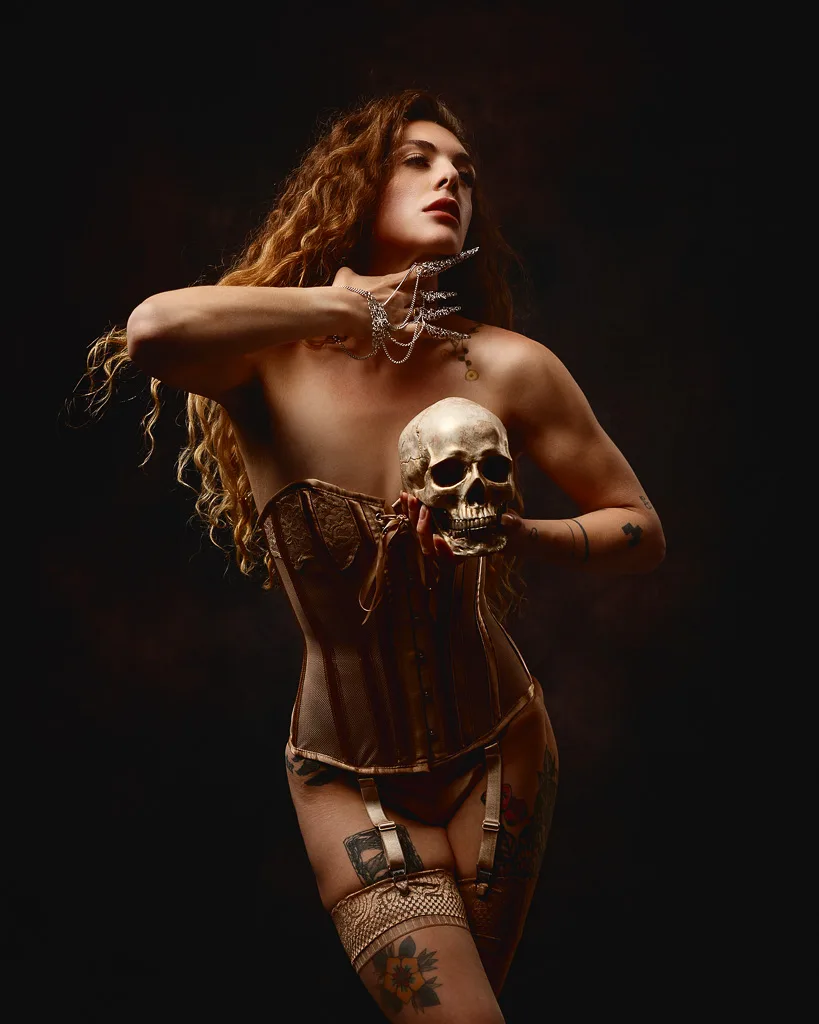
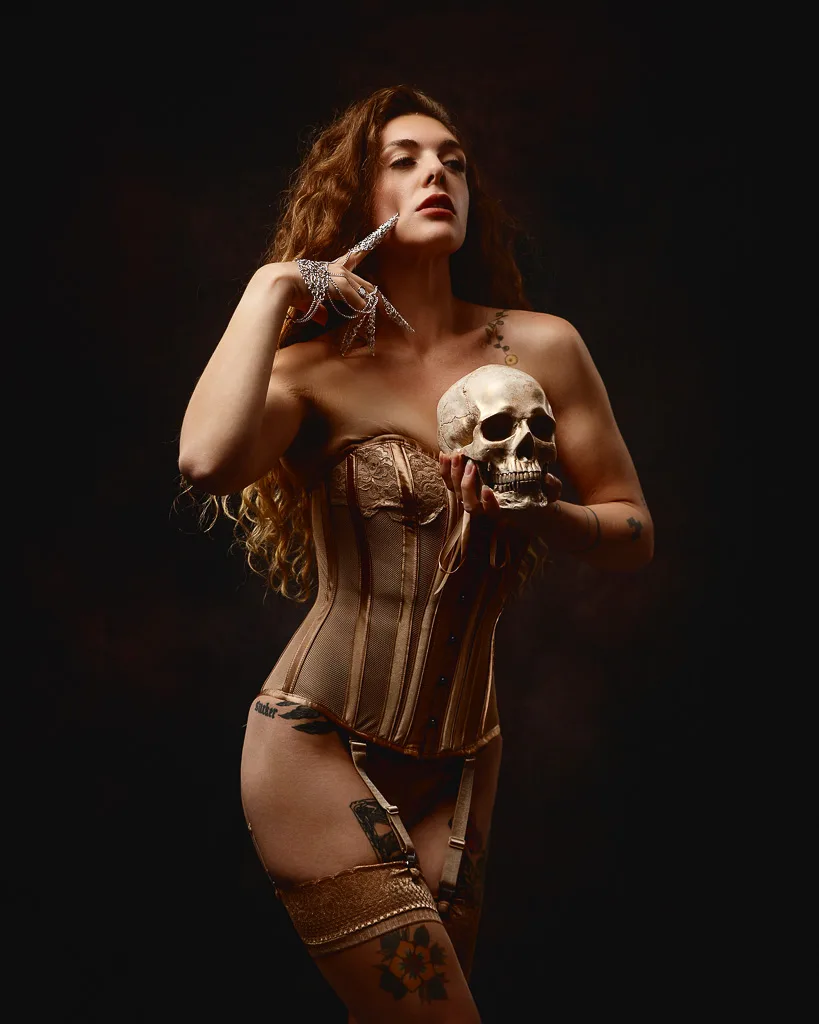
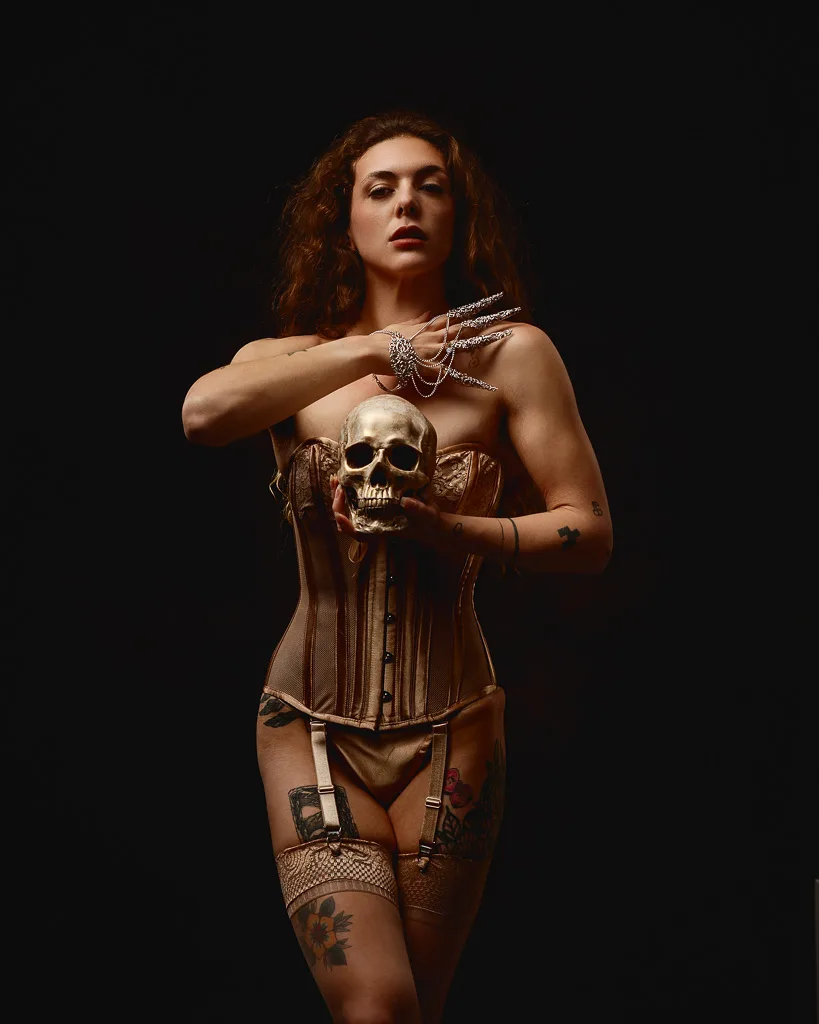
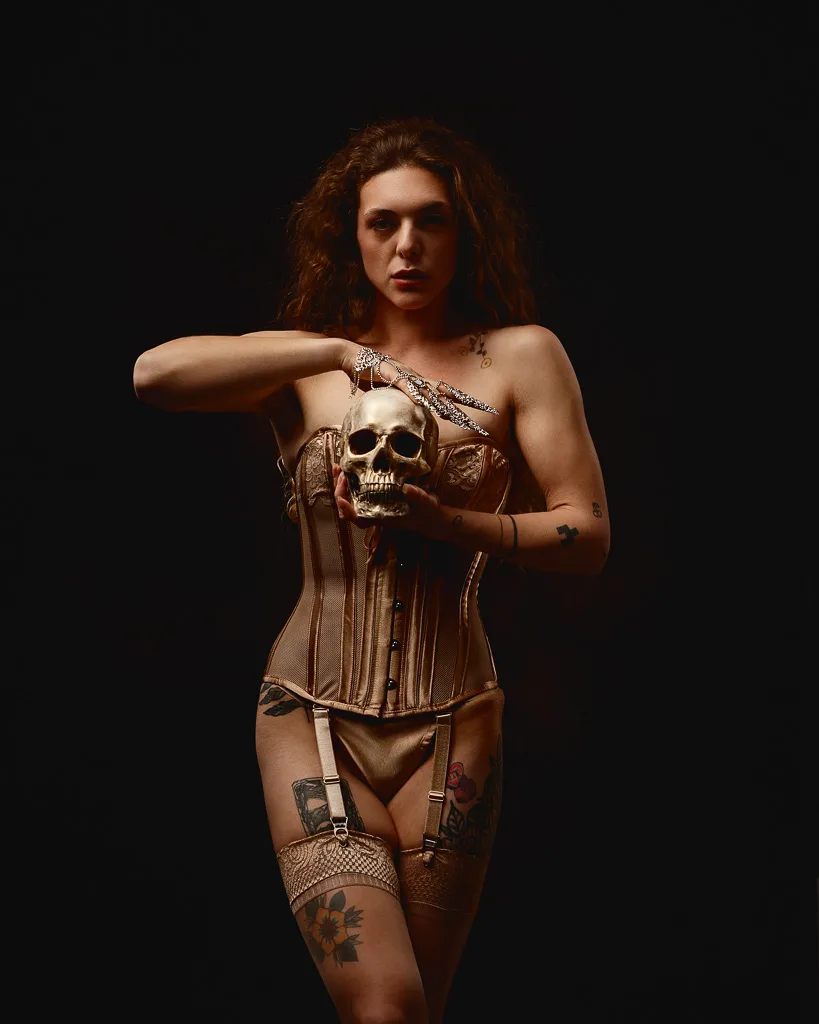
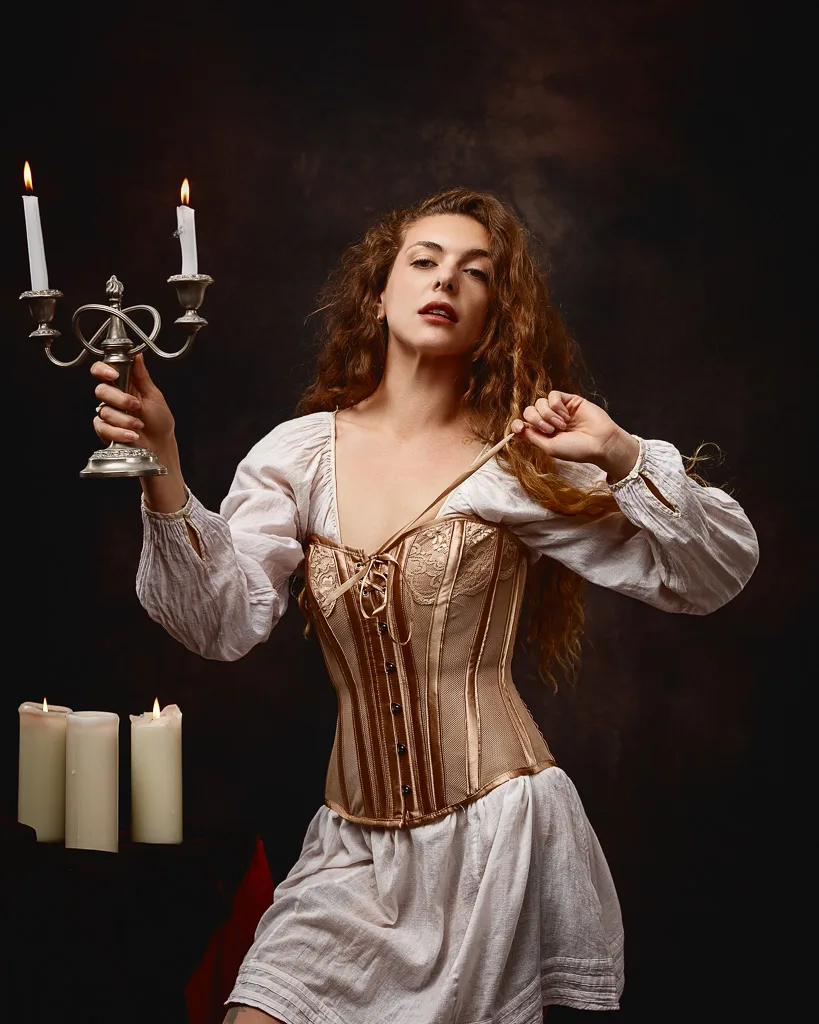
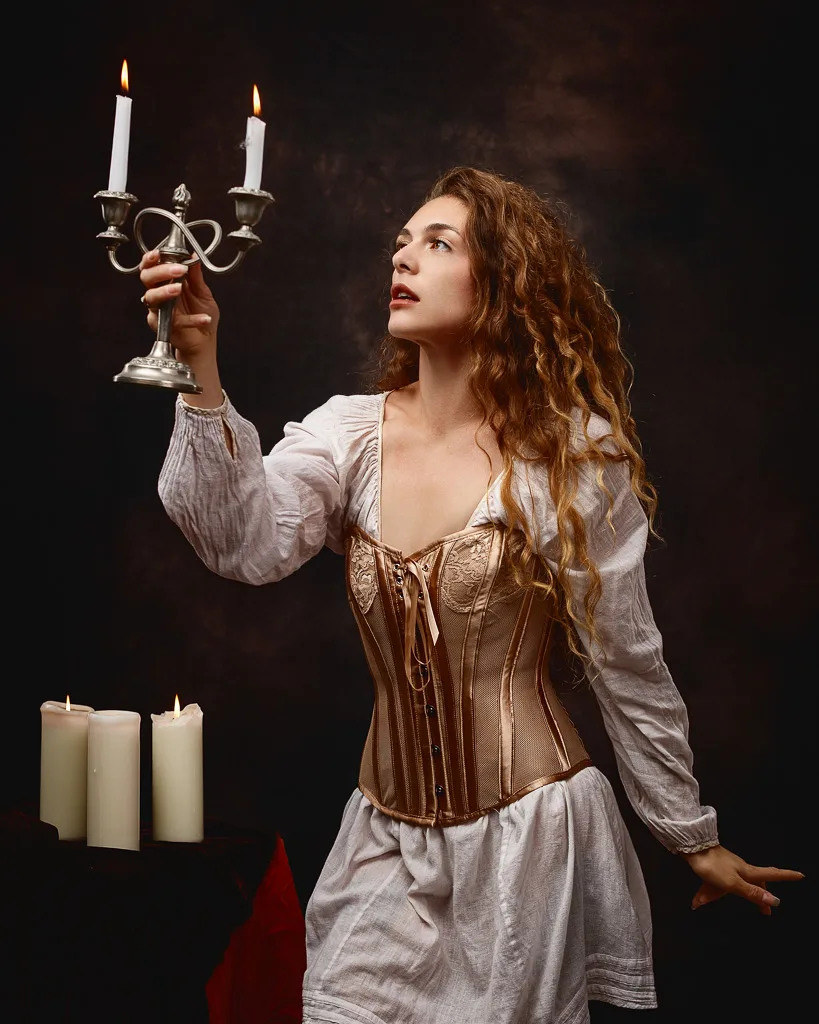
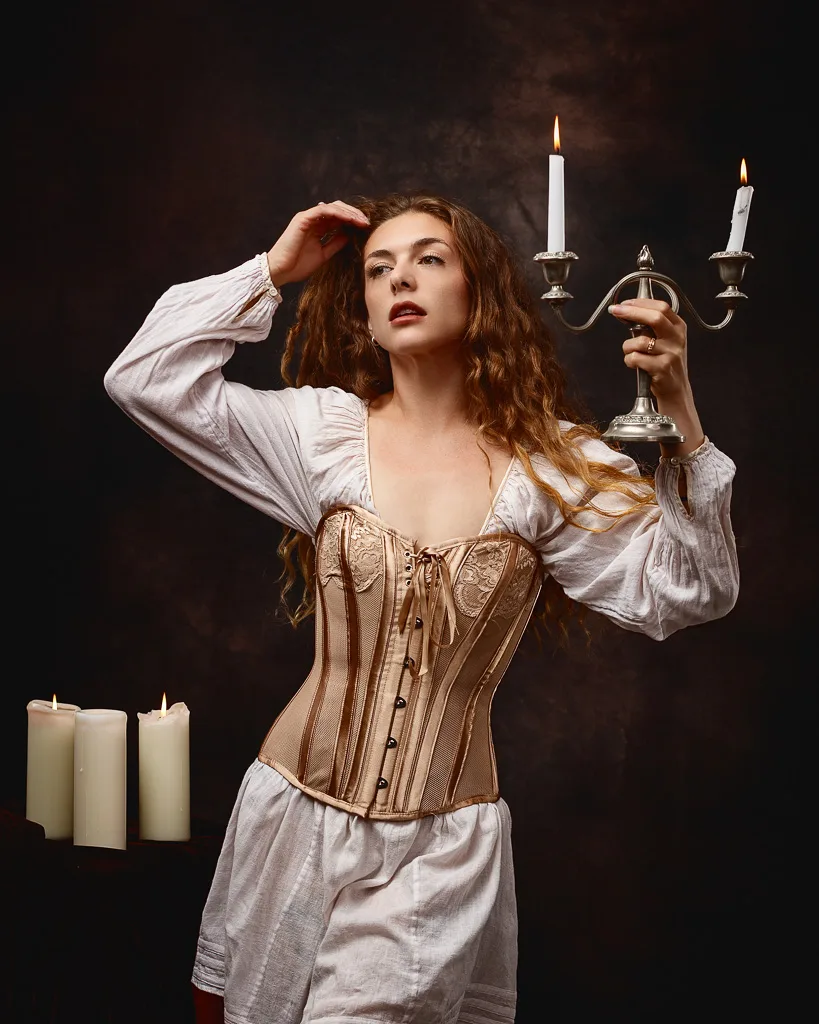
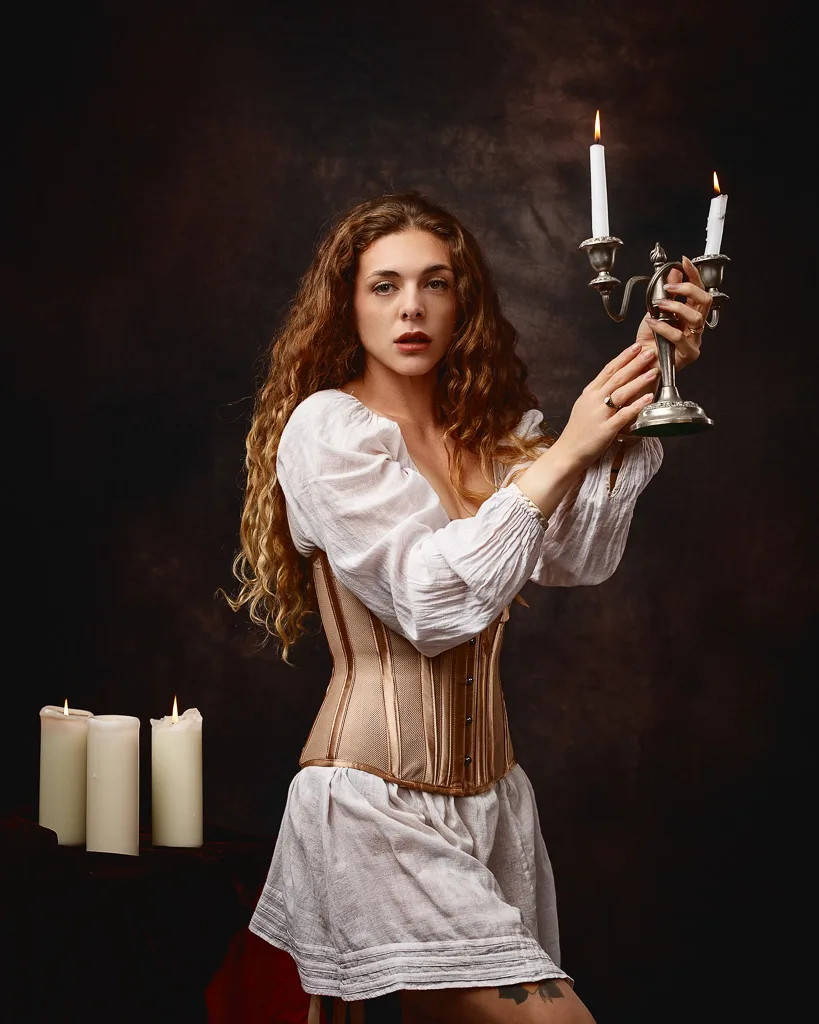
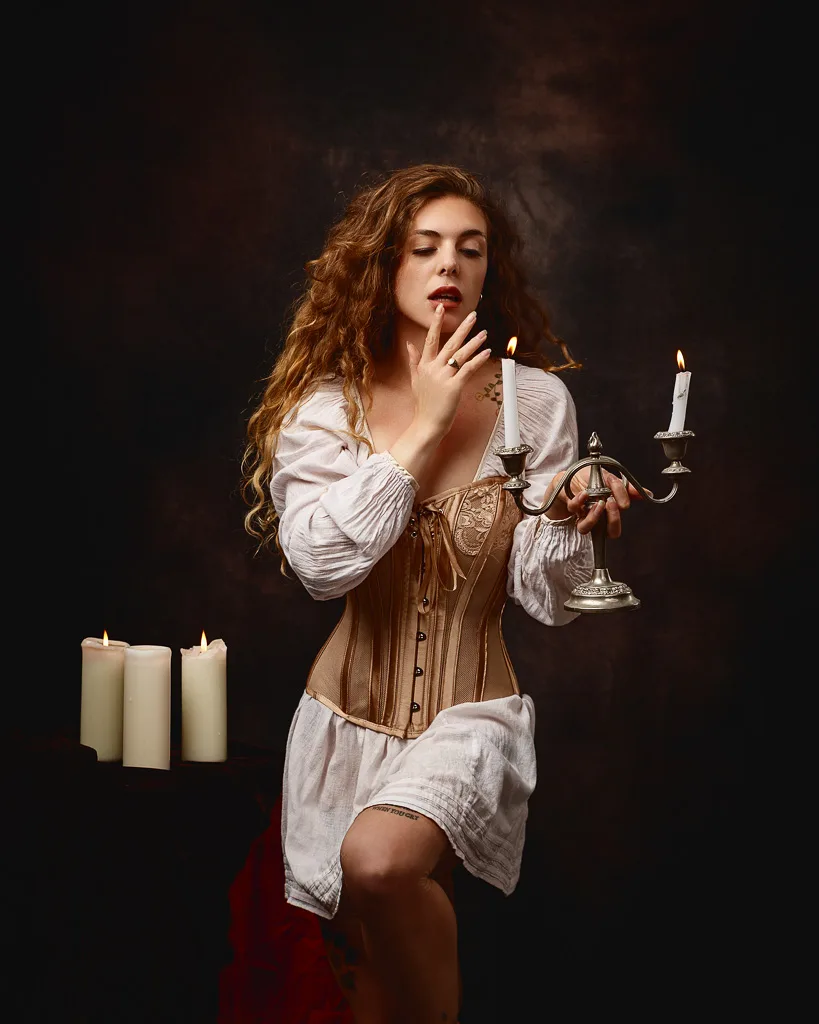
For the last part of the session we wanted something mean and moody, so I switched to dark, mottled backdrops and kept the light low. The Pinterest board was clear and concise about what Daisy wanted to wear, which helped a great deal. We went for a romantic look built around corsetry. To me it had a touch of Vivienne Westwood and Jean Paul Gaultier about it, and with the loose, flowing white shirt there was a bit of a pirate feel too. Darker outfits followed, including a red and black corset, so everything stayed in the same world. The props came from the studio. The little silver candelabra came out first, and candlelight against a dark backdrop was exactly the look we were after. Later a small jewelled crown came out, and we went back to the candelabra for a few more frames. Last of all came the ceramic skull, which lives in the studio and is a really interesting prop to work with. It gives a model something to hold and react to, and it fits a Halloween set without needing any explanation.
What Daisy brought to the session
Daisy has real charisma in front of the camera. I couldn’t get over how well she posed, how much movement she put into each shot and how much thought she gave to the whole thing from start to finish. She’d shift her hands, turn her head or throw her hair between frames, so every few shots gave me something new to work with. Most of the strongest images came from that movement, and very little of it needed direction from me. She’s a pleasure to work with, and I’m already looking forward to the next shoot.
What other models can take from this shoot
If you’re building or updating a portfolio, Daisy’s session is a good example of how to approach it. Get your comp card and headshots done first, while you’re fresh and before any heavy styling goes on. Share a Pinterest board with your photographer beforehand, because it gives both of you a clear starting point and saves time on the day. Bring more outfits than you think you’ll need and know which ones matter most to you. If you’re doing your own hair and makeup, as Daisy did, plan how each look will change from one outfit to the next. None of this needs to be complicated, but it does need some thought before you arrive.
Model safety in my studio
I want to be clear about how I work, because it matters, particularly for newer models. There is no physical contact between me and any model during a shoot. If a pose needs adjusting, I describe it or demonstrate it from a distance. I don’t touch models, and I don’t adjust their clothing or hair. I encourage every model to bring a chaperone, whether that’s a friend, a family member or someone else they trust. I make that offer before every shoot, even when the model decides to come on their own. If a photographer refuses to let you bring a chaperone, or tries to talk you out of it, treat that as a serious red flag. There’s no professional reason for it. Your safety isn’t something you should have to negotiate. The right photographer will explain everything clearly and won’t have any objection to you bringing someone you trust.
The behind the scenes video
I filmed a behind the scenes video during the session, and it’s one of my favourites so far. It follows the shoot in order, from the comp card to the portfolio looks and through the Halloween set, with the finished images at the end. I didn’t film every outfit, so the video and this post work well alongside each other. You can watch it here:
Working with Daisy again
Daisy isn’t local, but she’s in Suffolk a few times a year, so we’re hoping to fit in three or four more shoots over the next year. You can see more of her work here:
- Model profile: https://models.foyers.photography/model/daisy-jones/
- Instagram: https://www.instagram.com/daisydreamjones/
- PurplePort: https://purpleport.com/portfolio/daisyxjones/
- Kavyar: https://kavyar.com/mxsljhl0n7hz
- Ugly Models: https://www.ugly.org/2016/girls/girls-1/3832-daisy-jones
My studio at Bentwaters
My studio is at Base Business Park in Rendlesham, on the former RAF Bentwaters site near Woodbridge. It’s easy to reach from Ipswich, Woodbridge, Saxmundham and the Suffolk coast, and I work with models, actors and portrait clients from across Suffolk, Norfolk, Essex and Cambridgeshire. There’s free parking on site, a changing room, a choice of backdrops and enough space to work through several looks in one session.