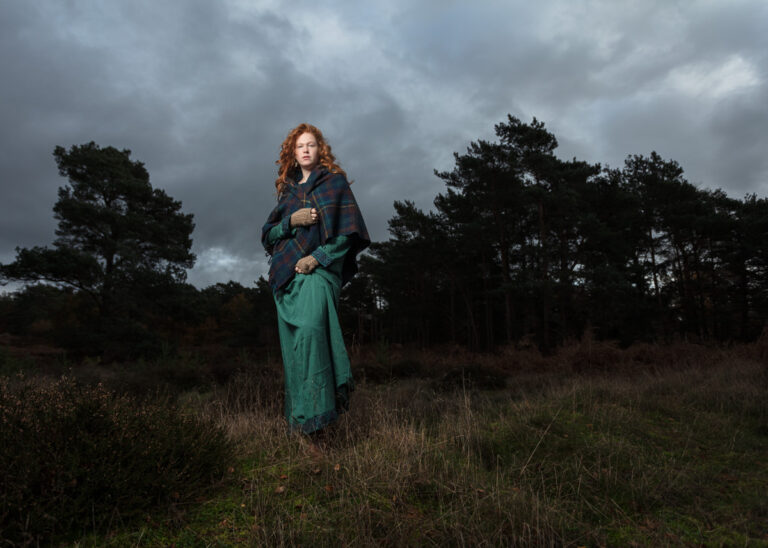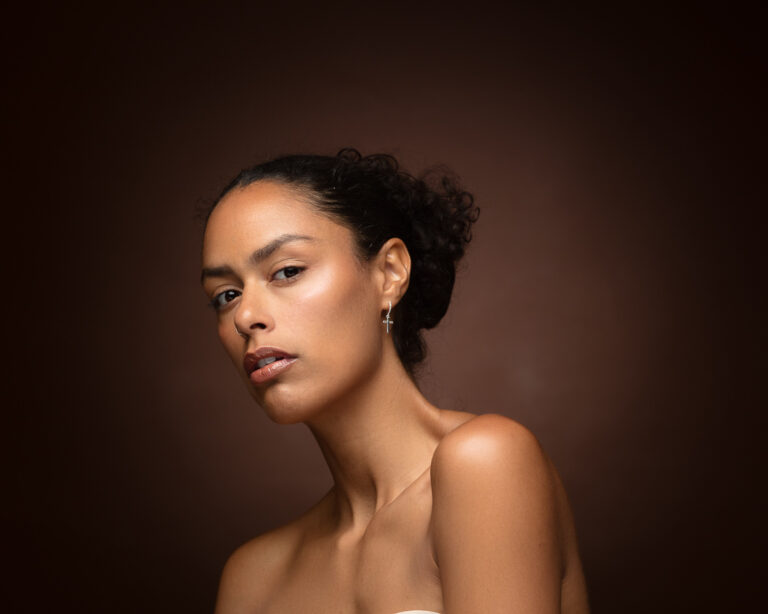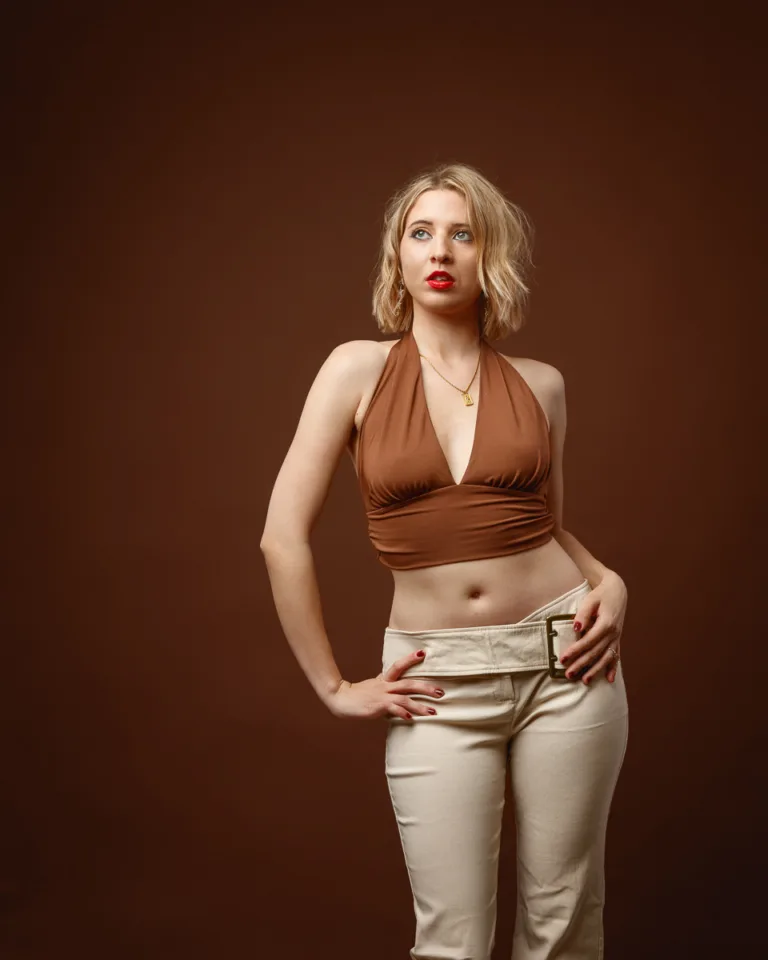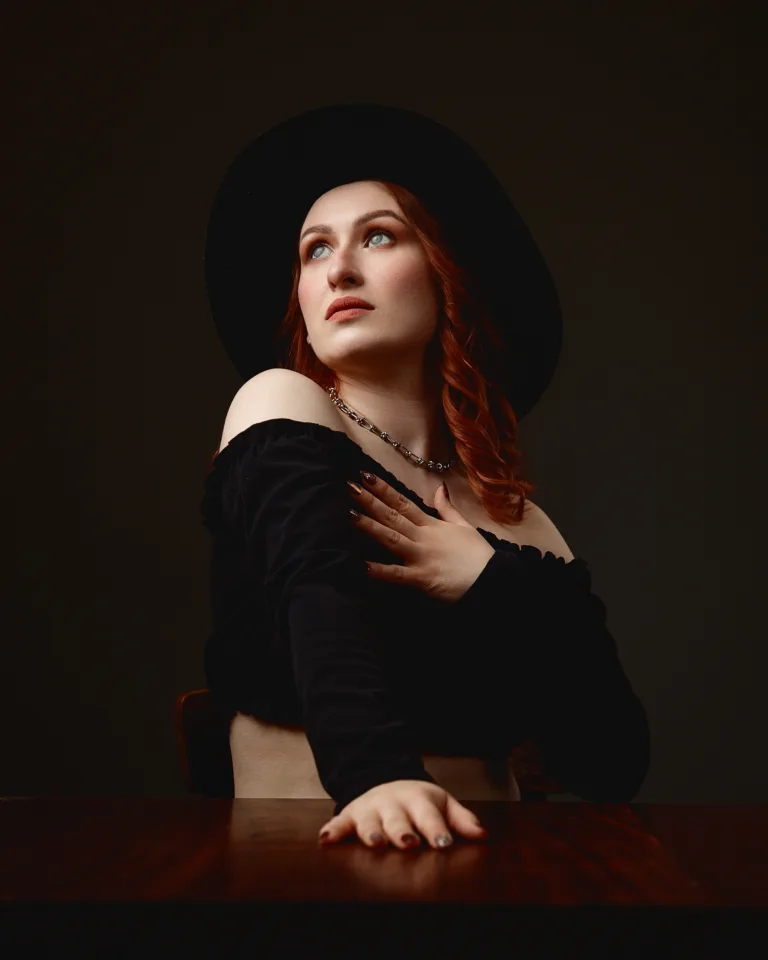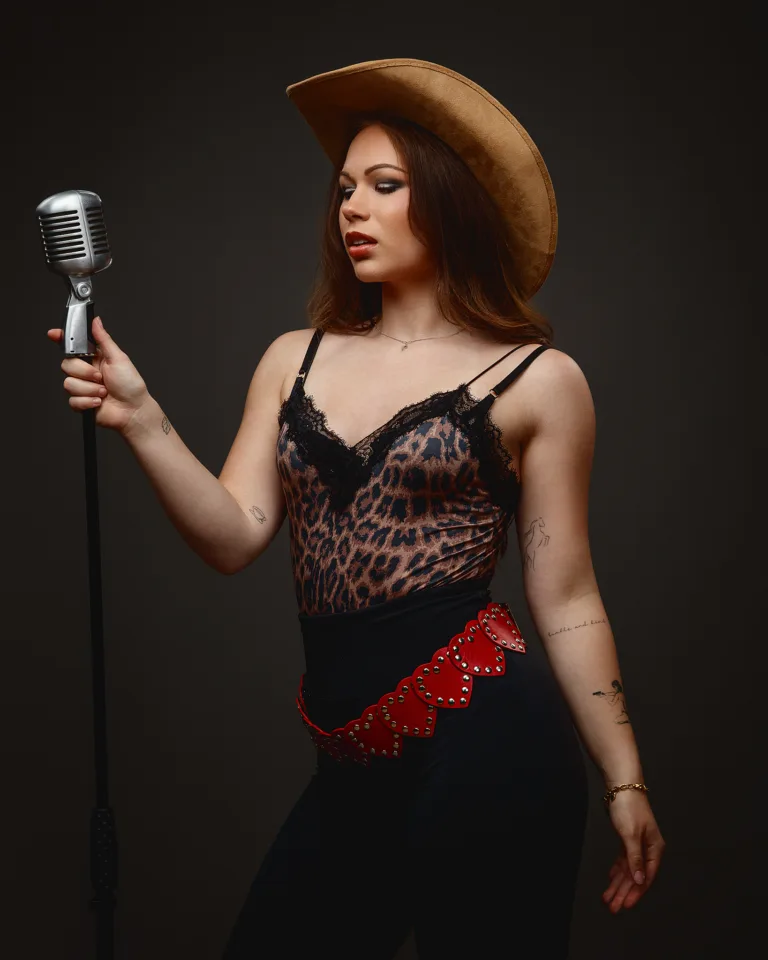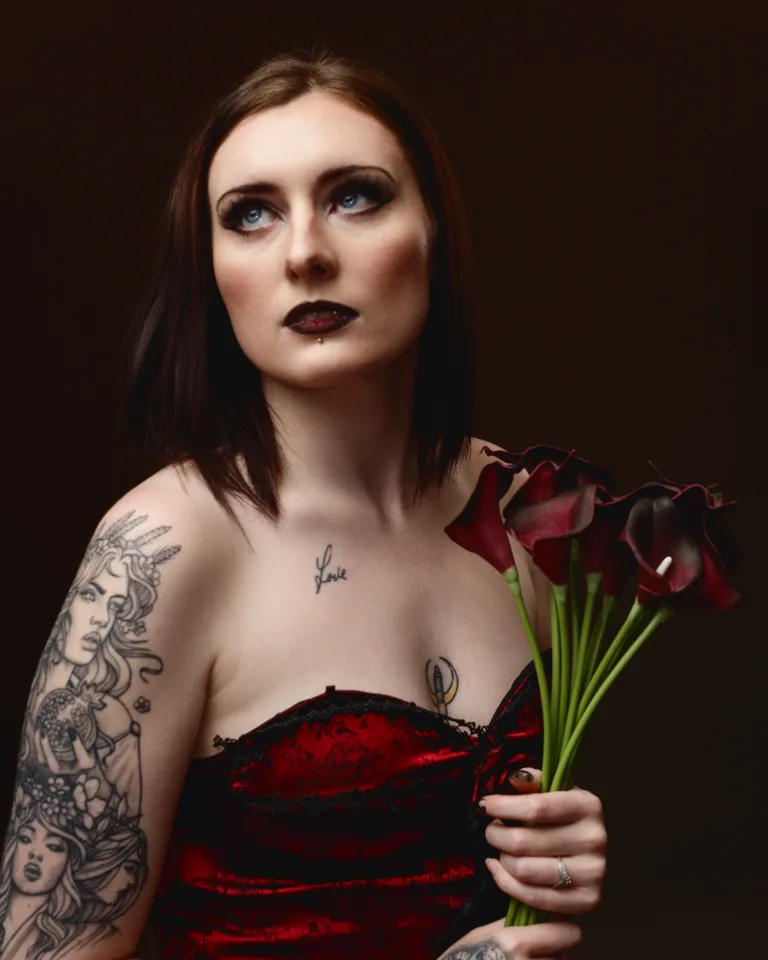
There is always something interesting about photographing someone who is new to modelling but already understands photography from the other side of the camera. Annabelle came to my studio at Bentwaters for her first studio model portfolio shoot, and while she is new to modelling, she is certainly not new to photography. She is a fellow photographer and has recently completed her degree in photography, so she arrived with a good understanding of image-making, direction, light, and the way small details can affect the final photograph.
That gave the session a slightly different feel. Annabelle was stepping into the role of model for the first time, but she was also aware of the process behind the camera. That can be helpful, although it can also make someone more self-aware at the start of a shoot. My job was to keep the session calm, clear, and structured so she could relax into the process and build confidence as we worked through the different looks.
Annabelle came to the studio with her friend Olya, who was a wonderful chaperone throughout the shoot. I always welcome chaperones, particularly when working with younger or newer models, because a good chaperone helps create a professional and supportive environment. Olya was helpful, engaged, and keen to support Annabelle without getting in the way of the session, which made the whole shoot feel relaxed and collaborative.
A First Model Portfolio Shoot at My Studio in Bentwaters
For Annabelle’s first model portfolio shoot, I wanted to keep the setup simple and controlled. My studio at Bentwaters, near Woodbridge in Suffolk, gives me the space to work with clean backgrounds, controlled lighting, and a slower, more considered approach to portrait and model portfolio photography.
A studio model portfolio shoot is not just about creating attractive photographs. It is about producing a useful set of images that show expression, confidence, posing ability, posture, and how the model responds in front of the camera. For someone starting out, that variety matters.
The aim was not to overcomplicate the images or cover them in heavy styling. I wanted Annabelle to have a set of photographs that showed different sides of her, while still keeping the whole portfolio coherent. That meant using neutral grey and darker studio backgrounds, controlled lighting, and styling changes that shifted the mood without allowing the clothes or setting to take over completely.
What I like about this set is the range. The images move from simple, natural portraiture through to more styled, editorial-feeling frames, but the whole shoot still feels consistent. The attention stays on Annabelle’s face, expression, styling, and posture, which is exactly what I want from a strong studio model portfolio set.
Keeping the Studio Backgrounds Clean and Useful
Neutral studio backgrounds are particularly useful for model portfolio photography because they keep the images clean, versatile, and easy to use. A grey or dark background does not fight for attention. It allows the viewer to concentrate on the model’s face, body language, expression, and styling.
For aspiring models, this kind of background can be especially helpful. It creates images that feel clear and portfolio-ready without becoming too decorative or location-dependent. A strong model portfolio should include variety, but it should not become so busy that the model disappears inside the styling or environment.
This is one of the reasons I often use simple backgrounds for studio portrait photography in Suffolk. Whether I am photographing model portfolios, actor headshots, personal branding portraits, or creative studio portraits, a controlled background gives the image structure. It also gives me the option to shift the mood through lighting, wardrobe, expression, and posing rather than relying on a complicated setting.
For Annabelle’s shoot, the neutral grey and darker backgrounds gave the full set a consistent visual language. Each look had its own character, but the lighting and studio approach helped keep everything connected.
Starting with a Softer, Natural Portrait Look
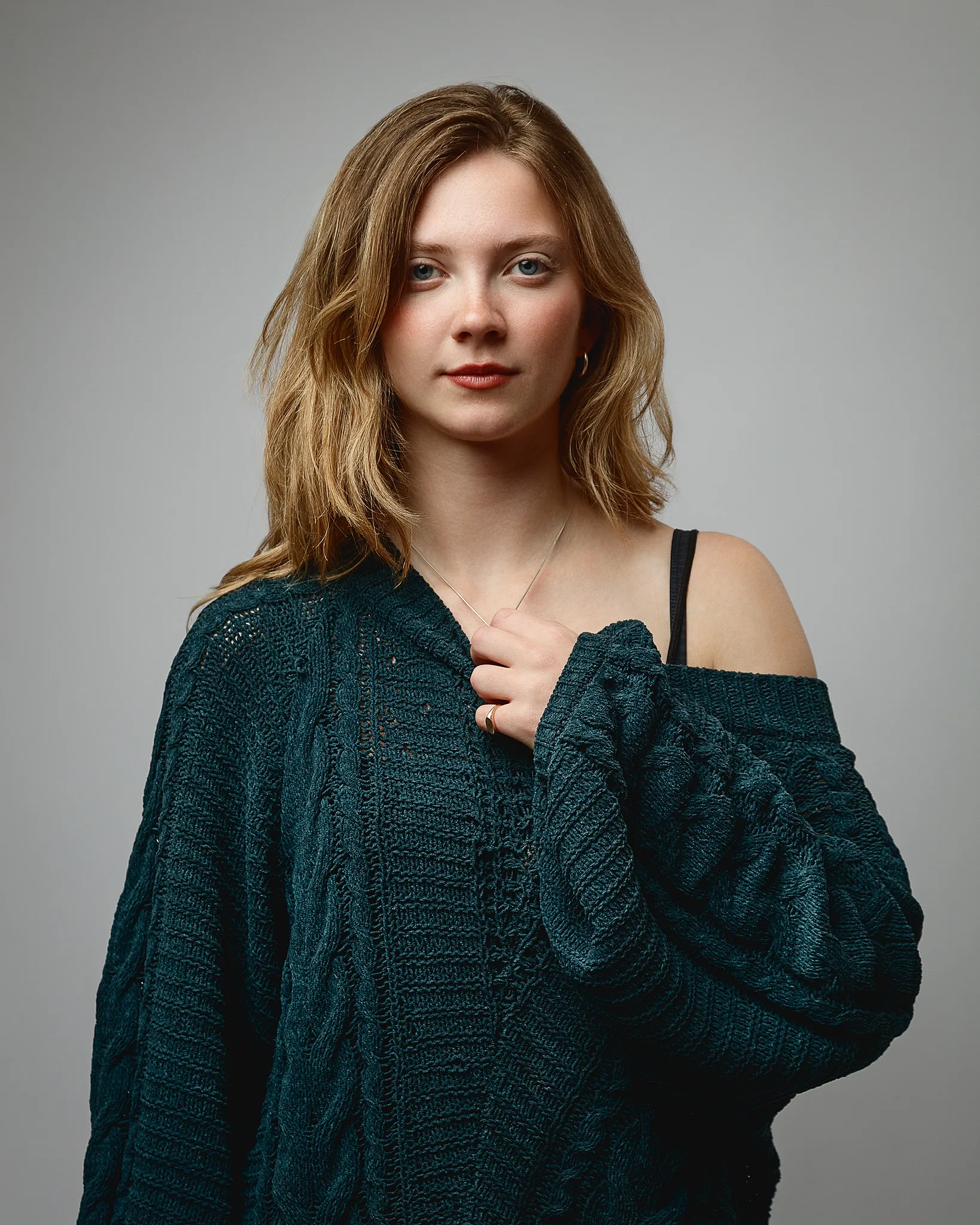
The first look, with the oversized knitted jumper, has a softer and more natural feel. It works well as an introductory portrait because it feels calm, direct, and approachable.
There is a quiet confidence in these images. The texture of the jumper gives the photograph some visual weight, but it does not push the image too far into fashion styling. It still feels like a portrait first. That is useful for a first model portfolio because it gives the viewer a clear sense of the person before moving into more styled images.
With newer models, I often like to begin with something simple. It gives them time to settle into the studio, understand the direction, and get used to being photographed under controlled lighting. A good first look should not feel too forced. It should allow the model to find their rhythm.
Annabelle responded well to this. The softness of the styling, combined with a straightforward portrait approach, gave us a gentle starting point before we moved into looks with more attitude, shape, and structure.
Creating a Cinematic Feel with the Brown Leather Jacket
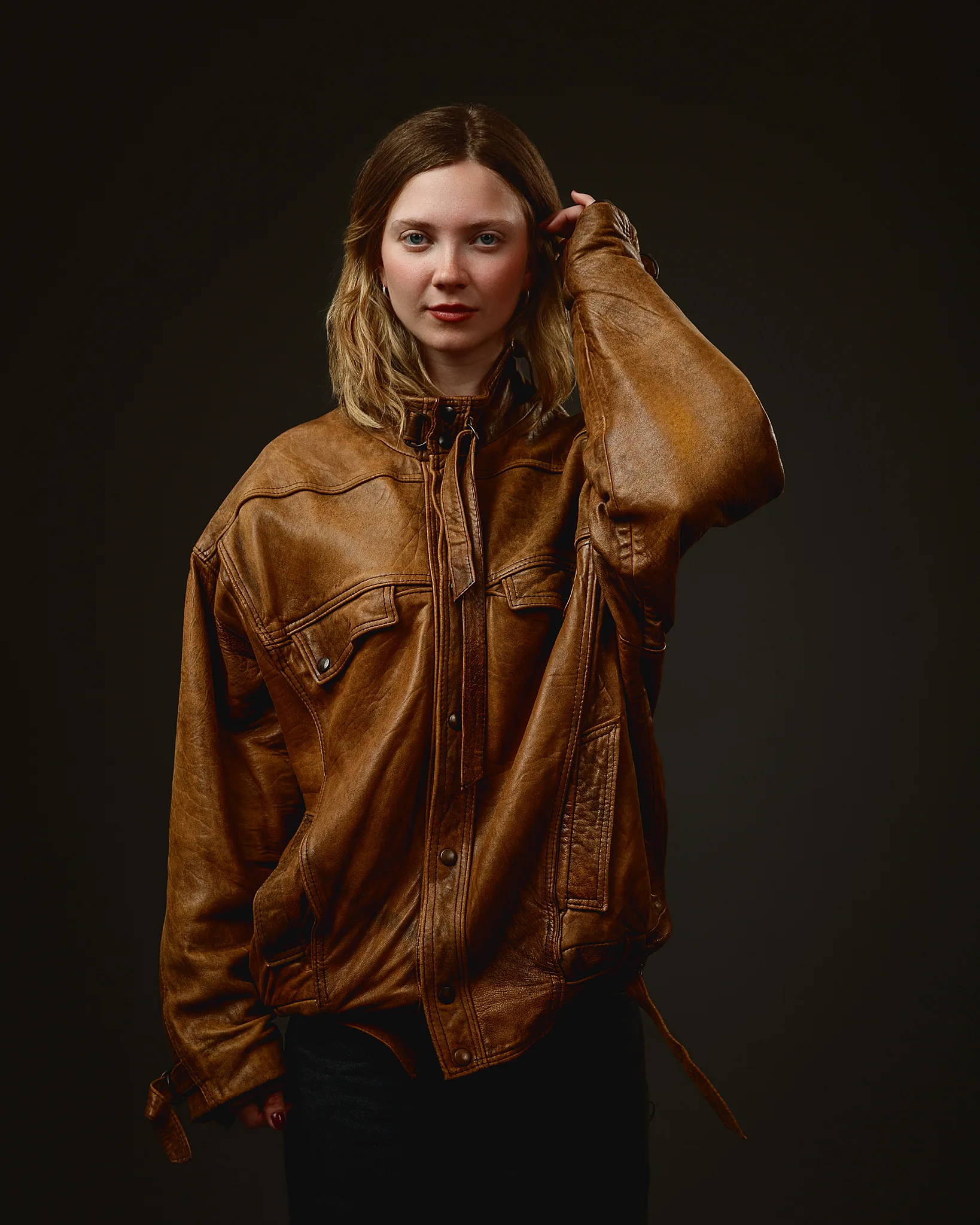
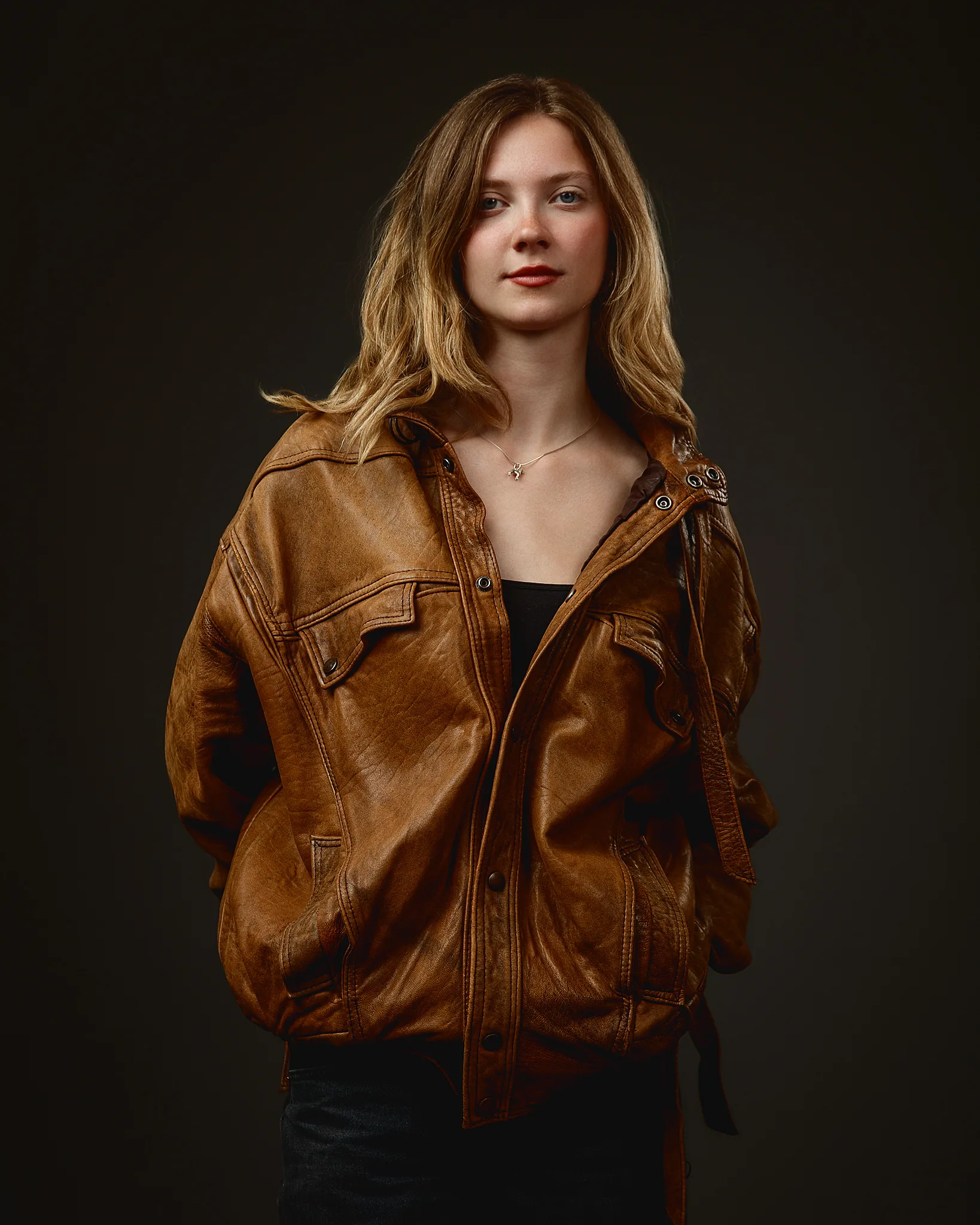
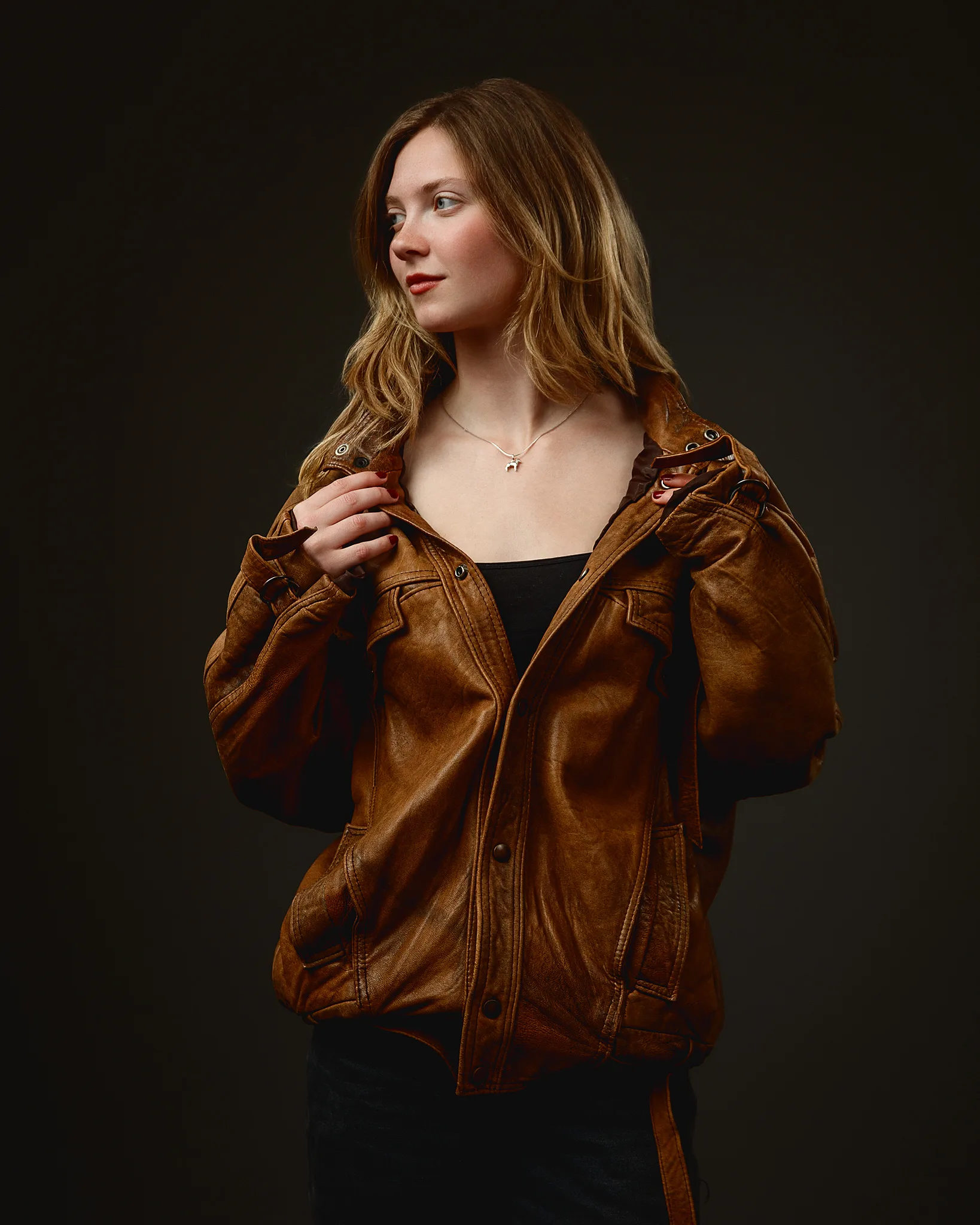
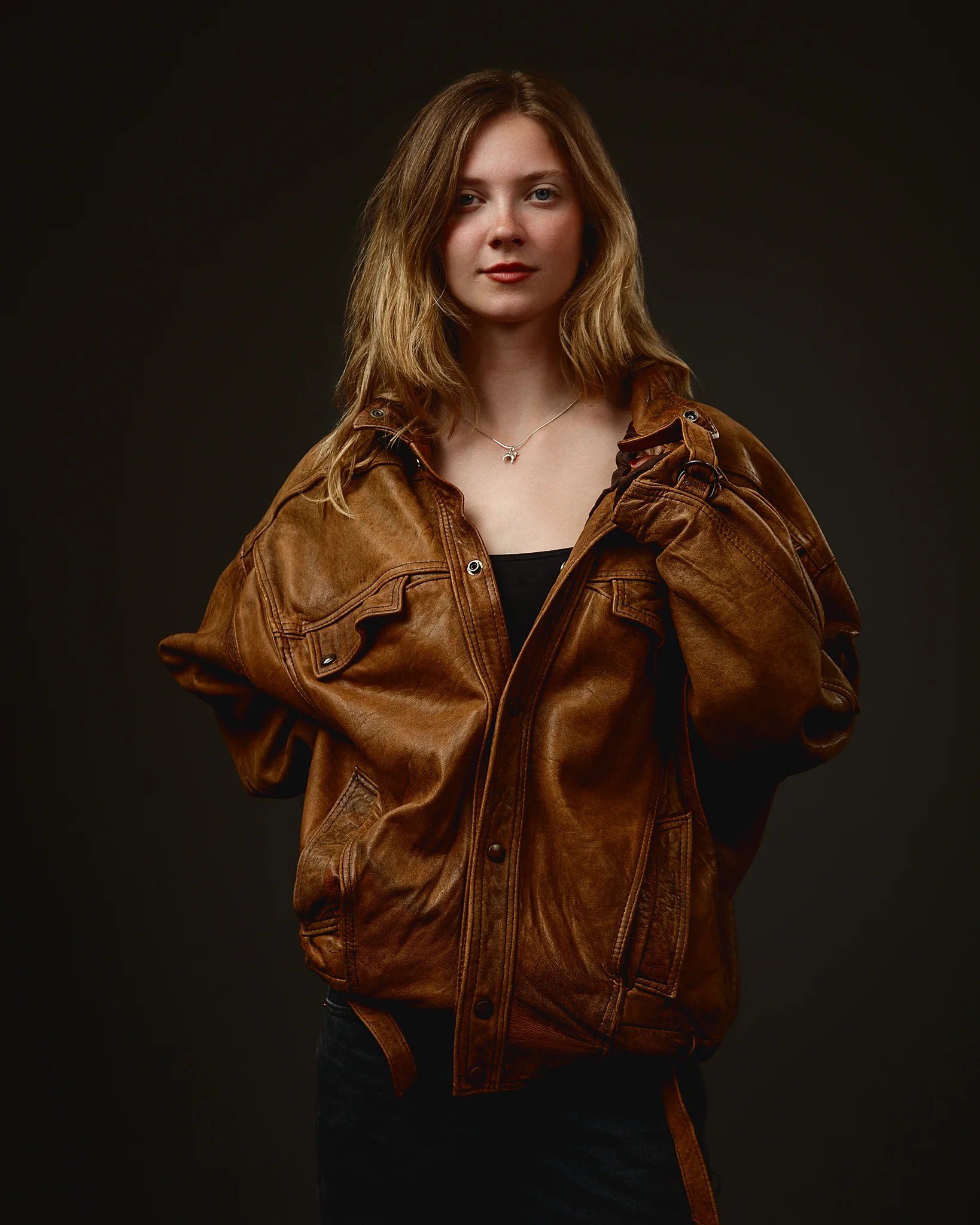
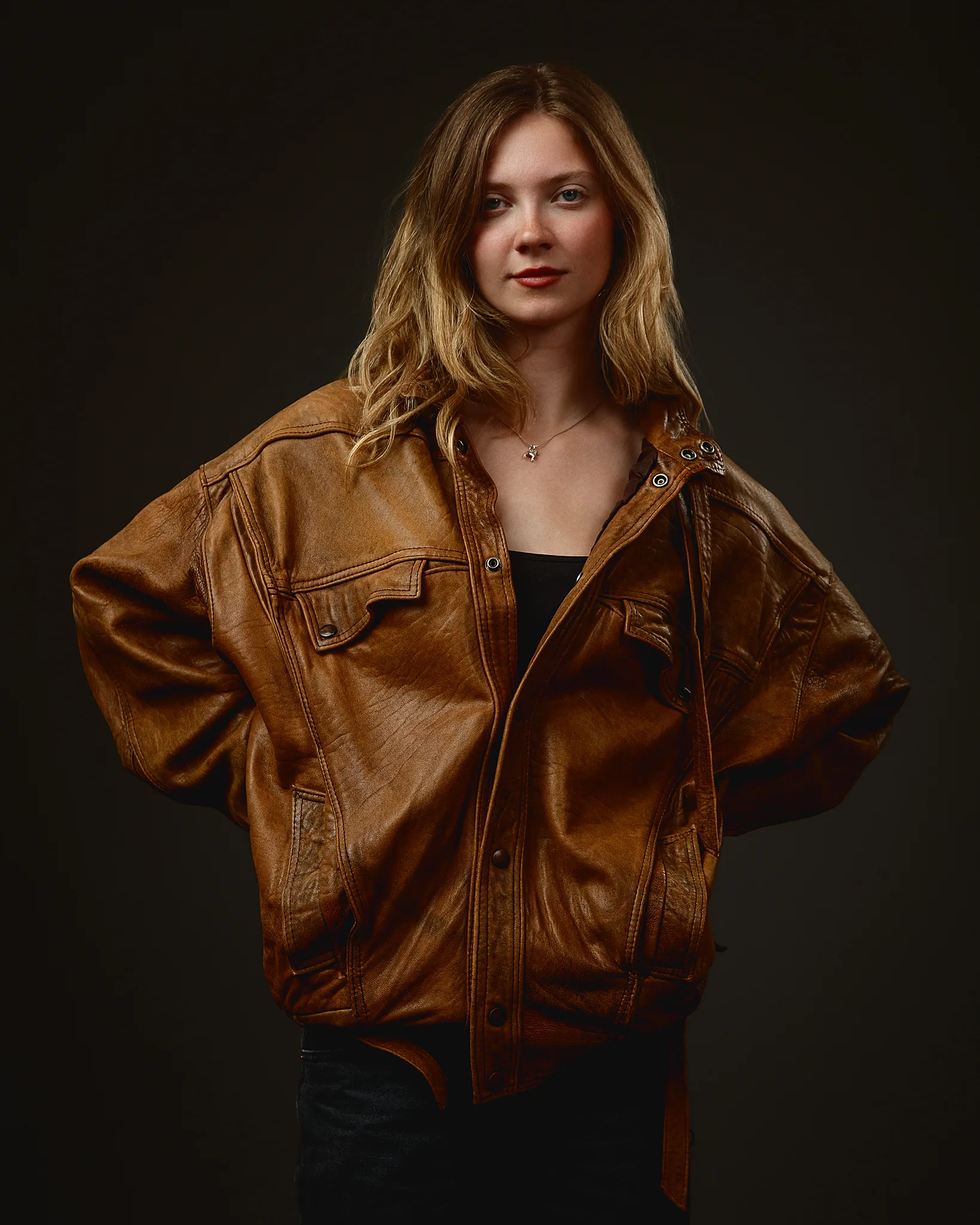
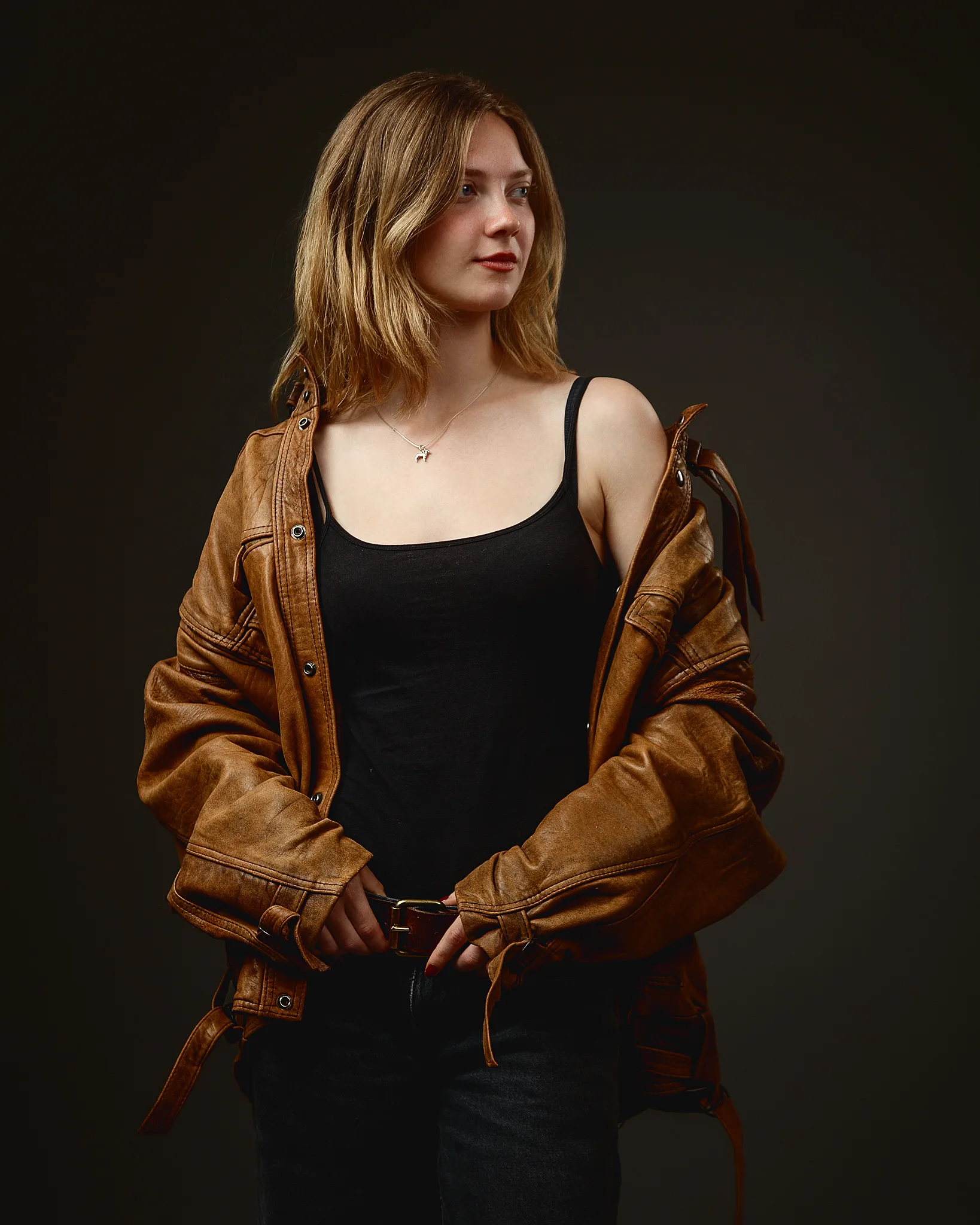
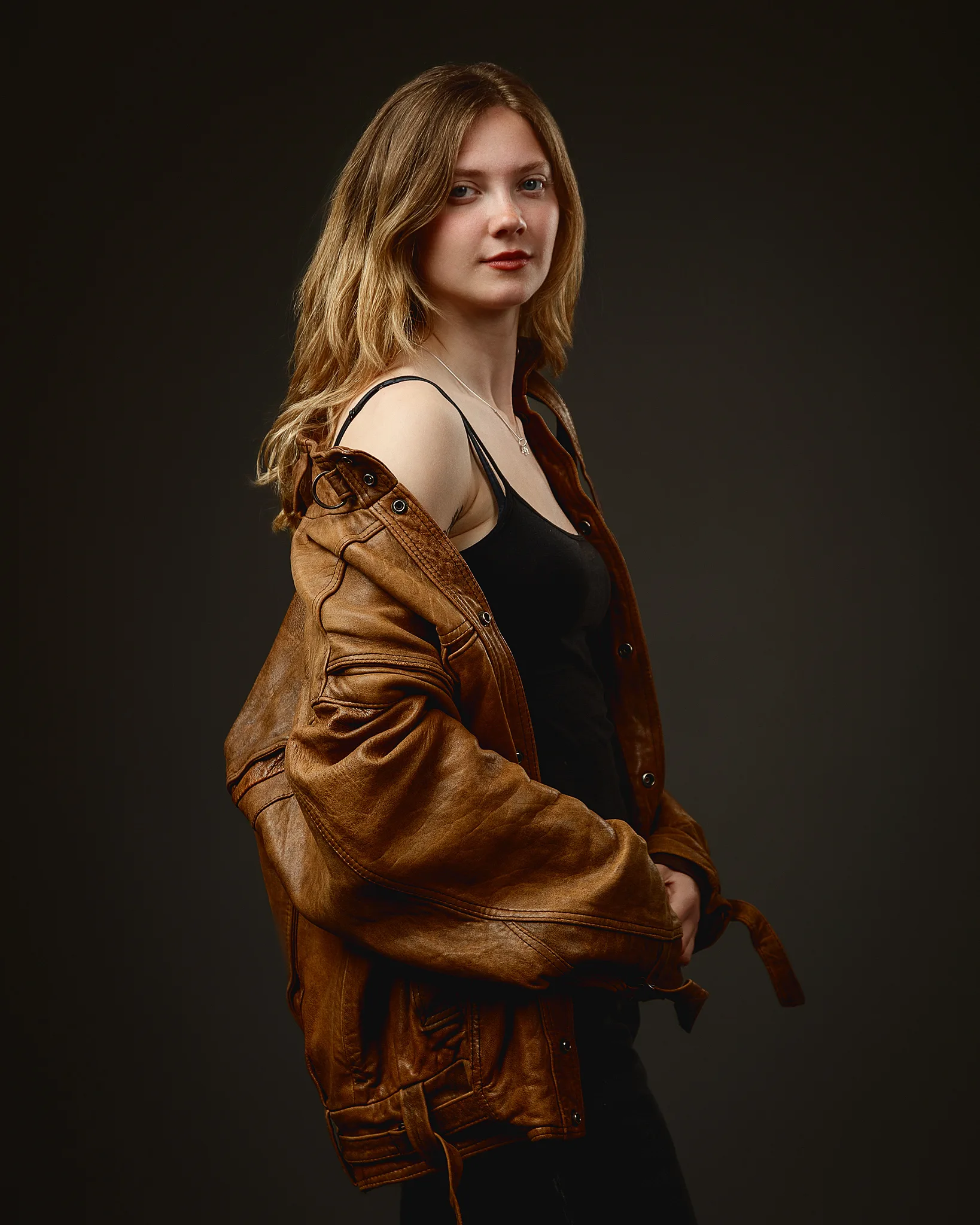
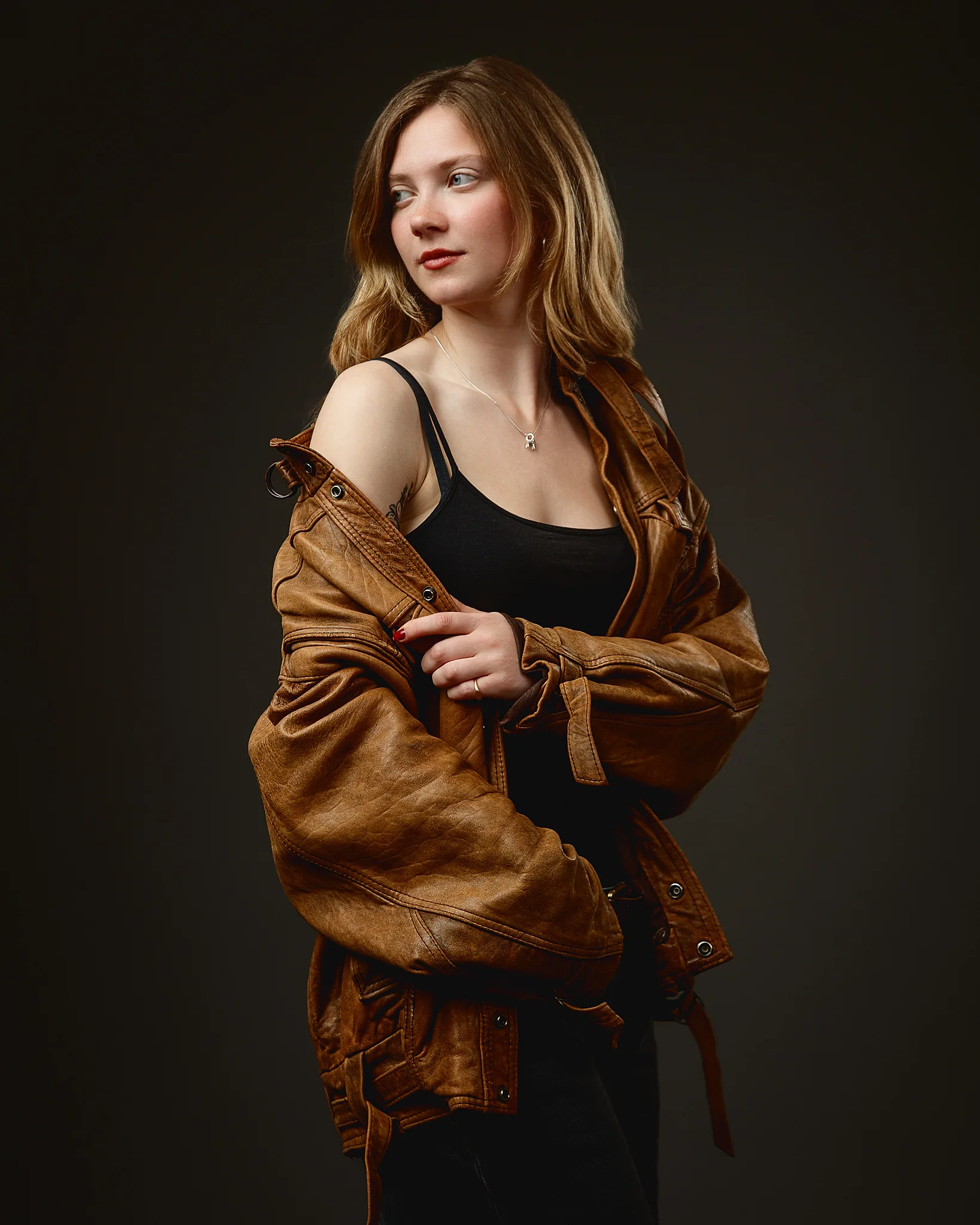
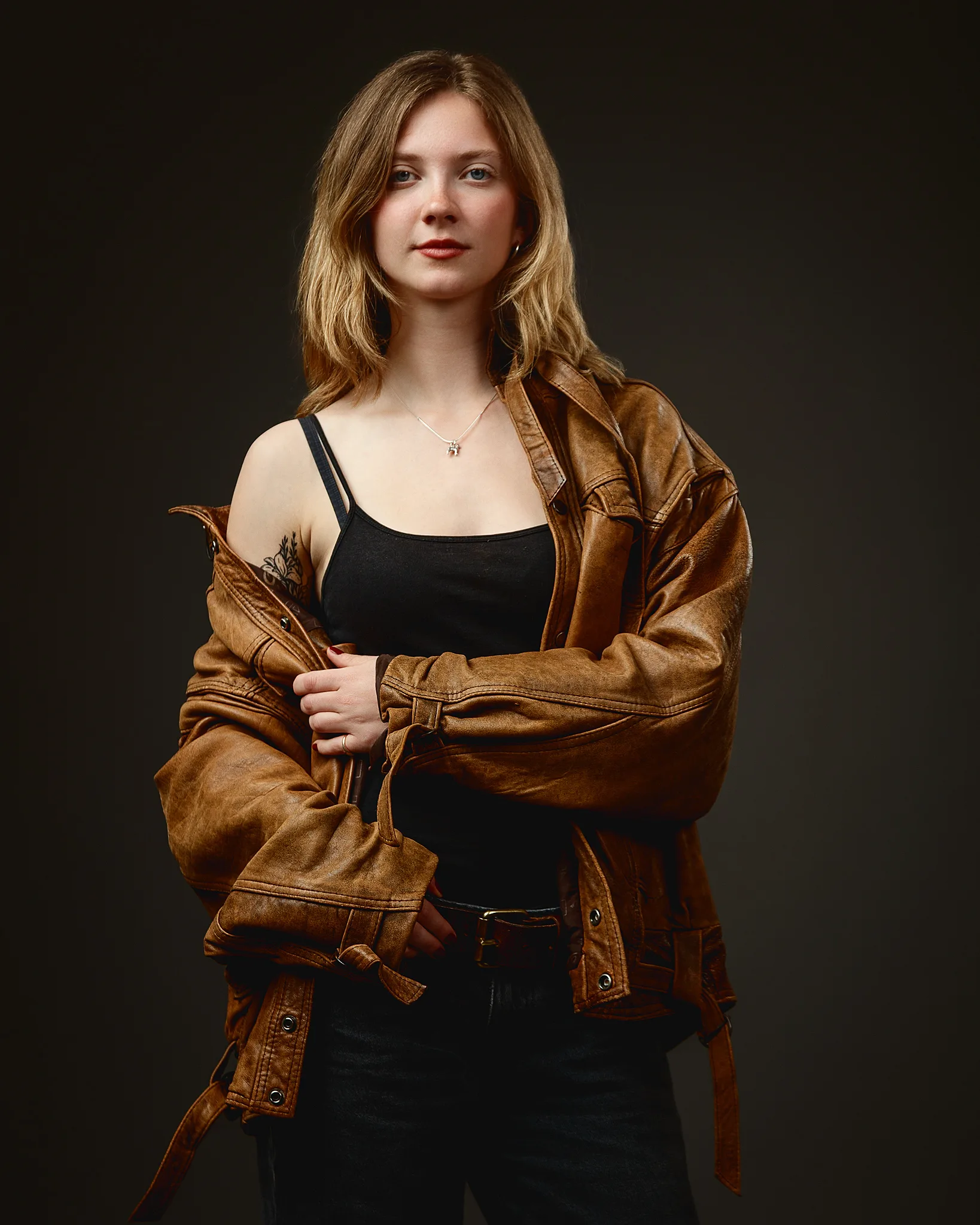
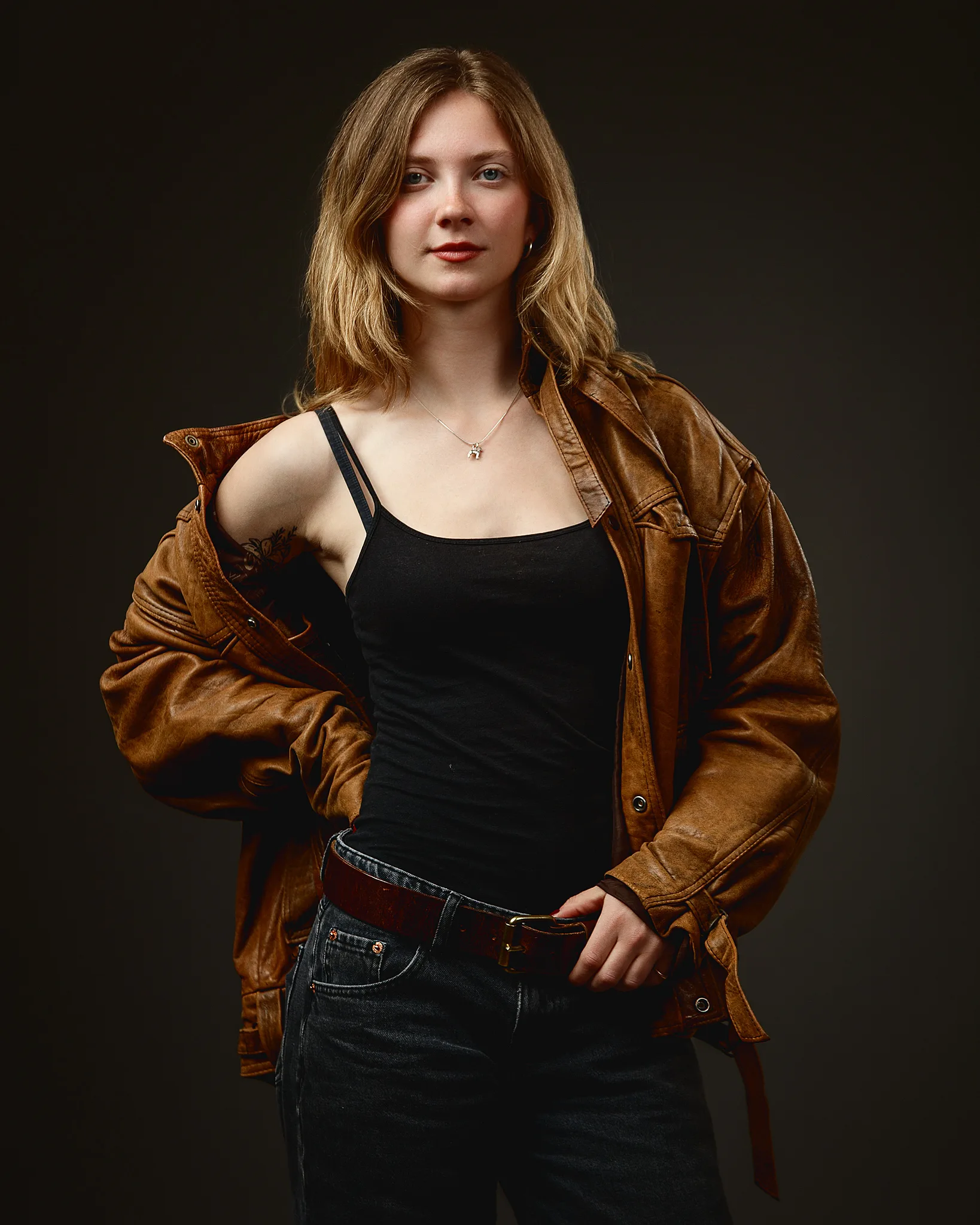
The brown leather jacket images added a different tone to the shoot. They feel more cinematic and slightly nostalgic, particularly with the warmer colour palette and darker background.
This is where a small change in wardrobe can make a noticeable difference. The expression, lighting, and pose do not have to change dramatically, but the overall mood shifts. The jacket introduces a different texture and a different kind of visual weight. It gives the image more character without needing a complicated setup.
That kind of variation is useful in a model portfolio. It shows that the model can move from something softer and more natural into a stronger, more mood-led image. For Annabelle, it helped add another layer to the set without making the shoot feel disconnected.
A first portfolio does not need to include every possible style. In fact, it is usually better when it does not. But it does need to show enough range to suggest potential. These images did that well.
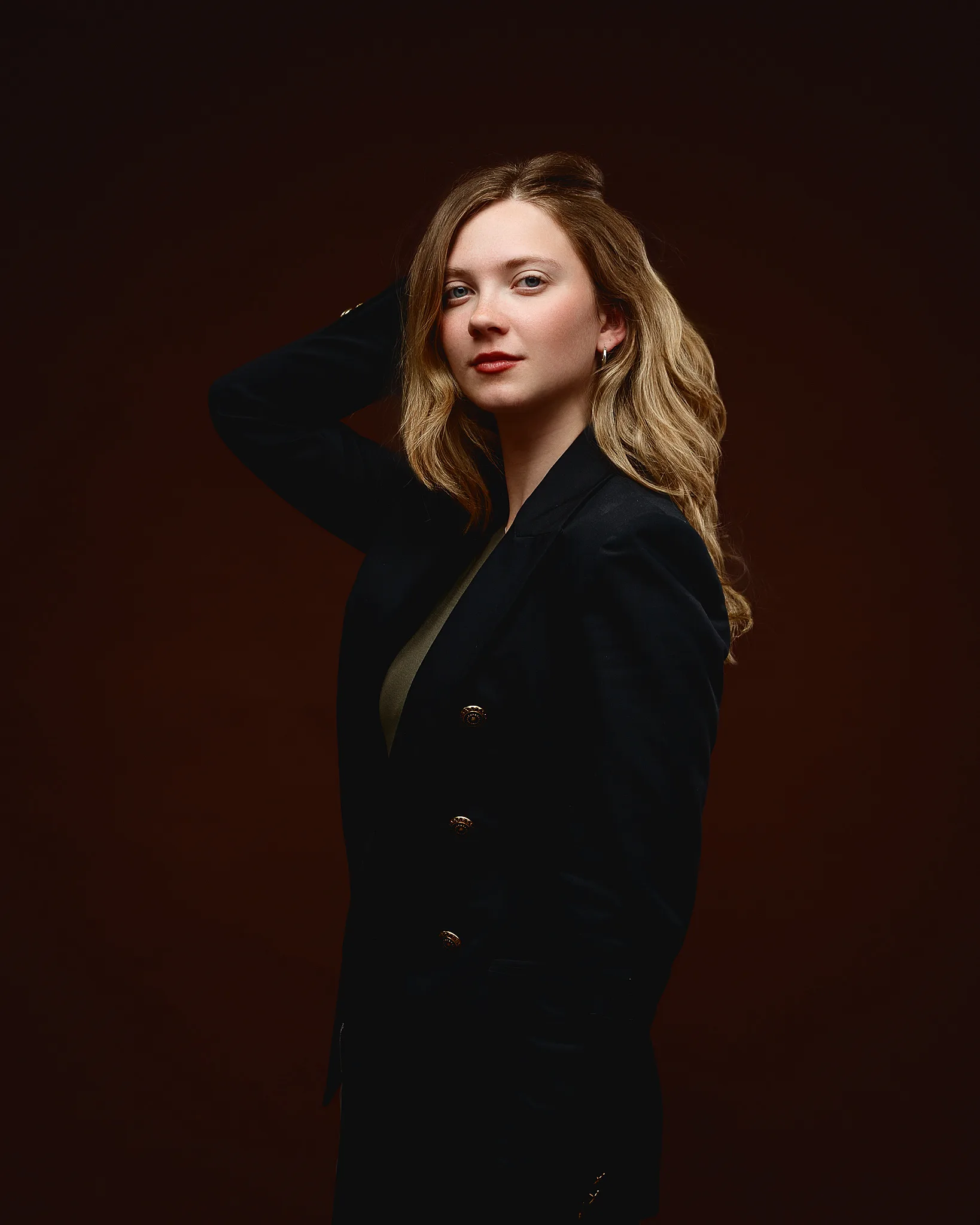
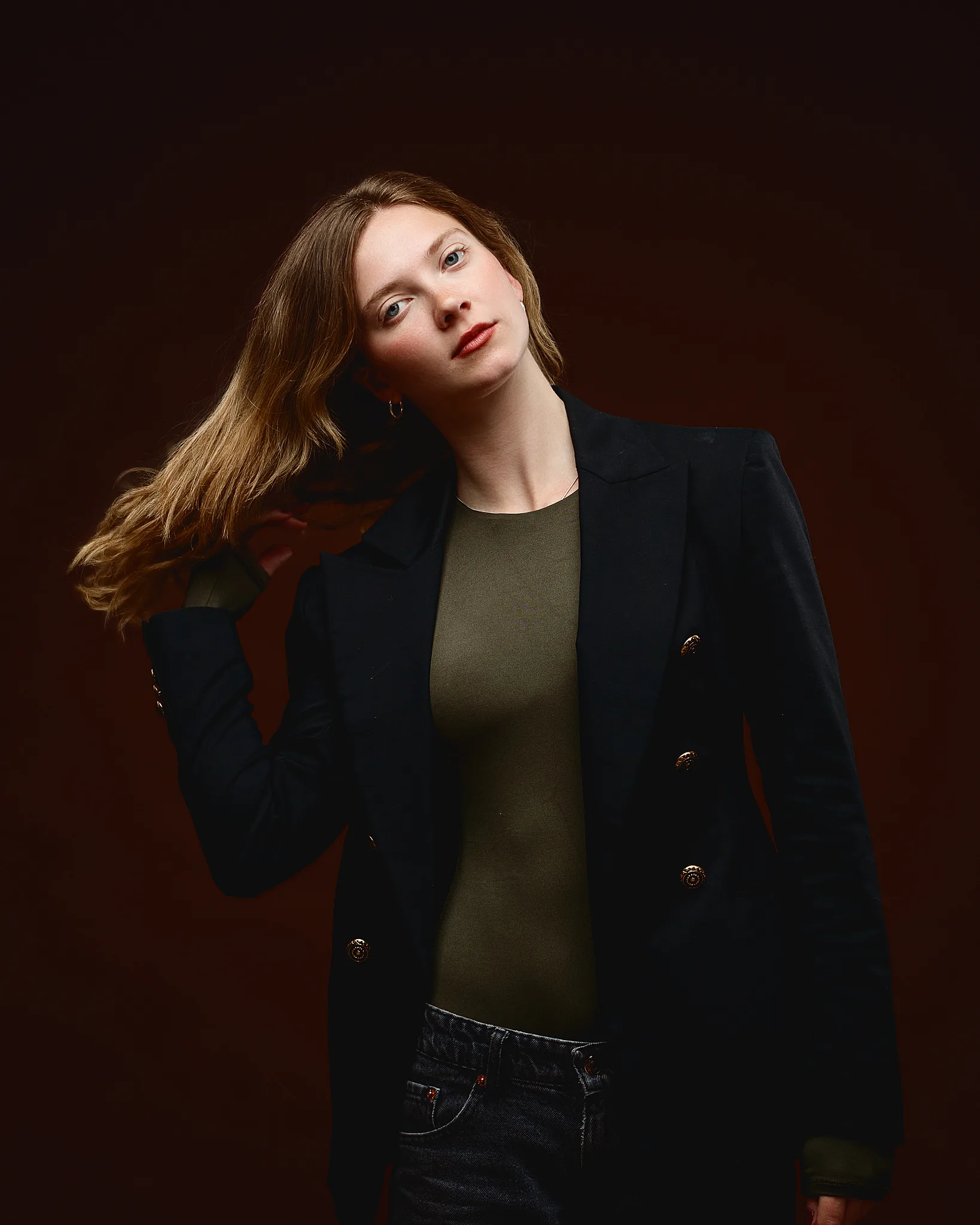
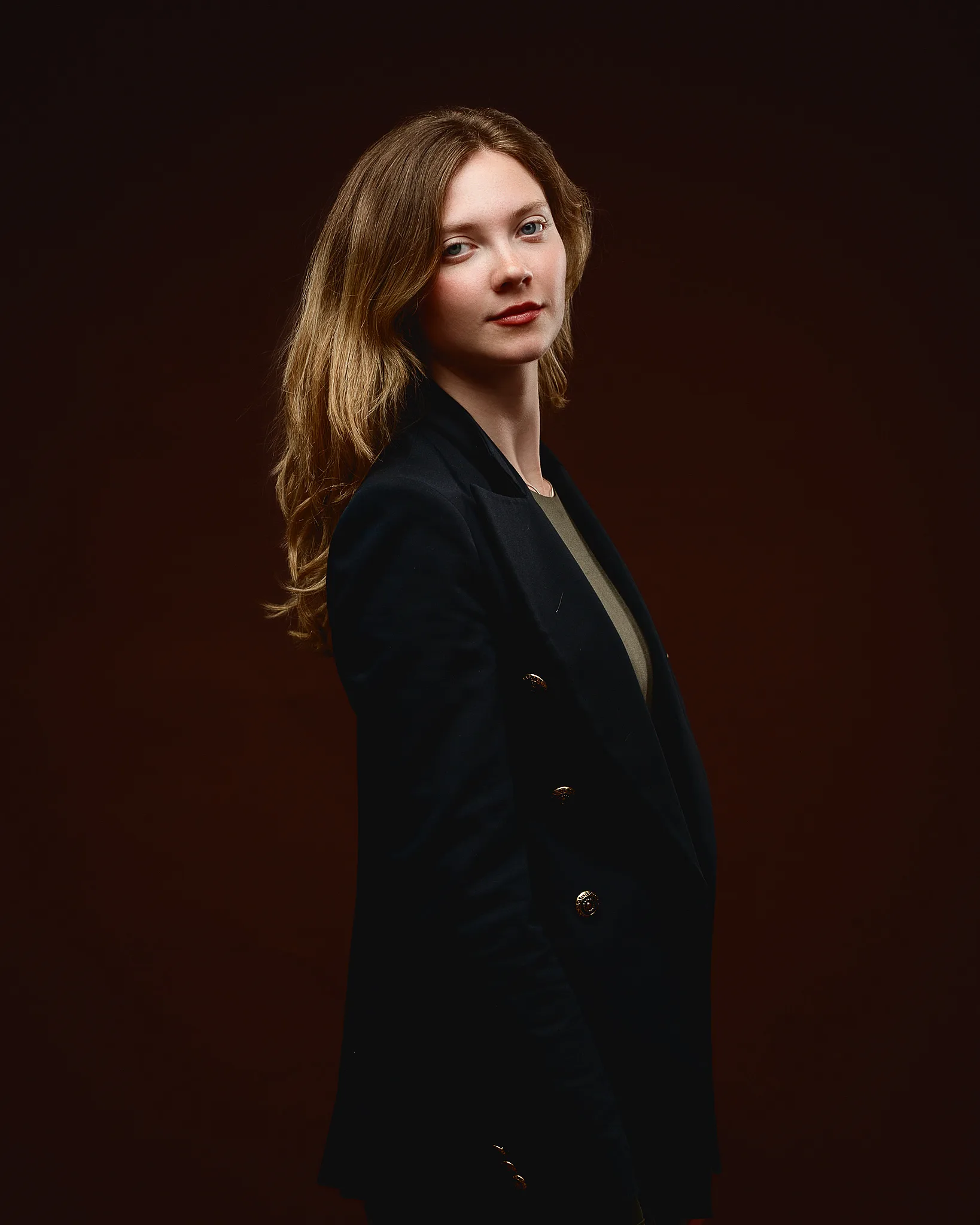
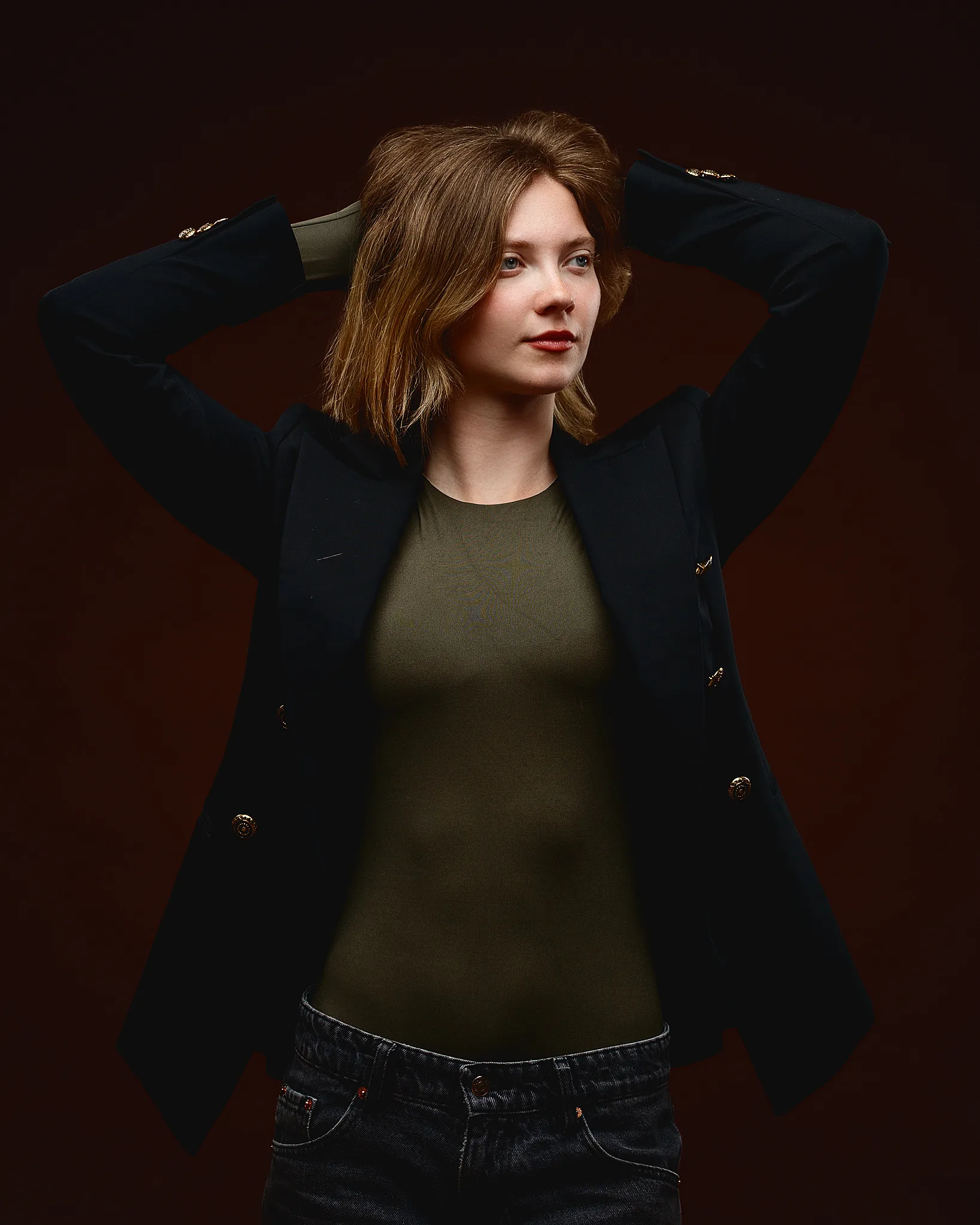
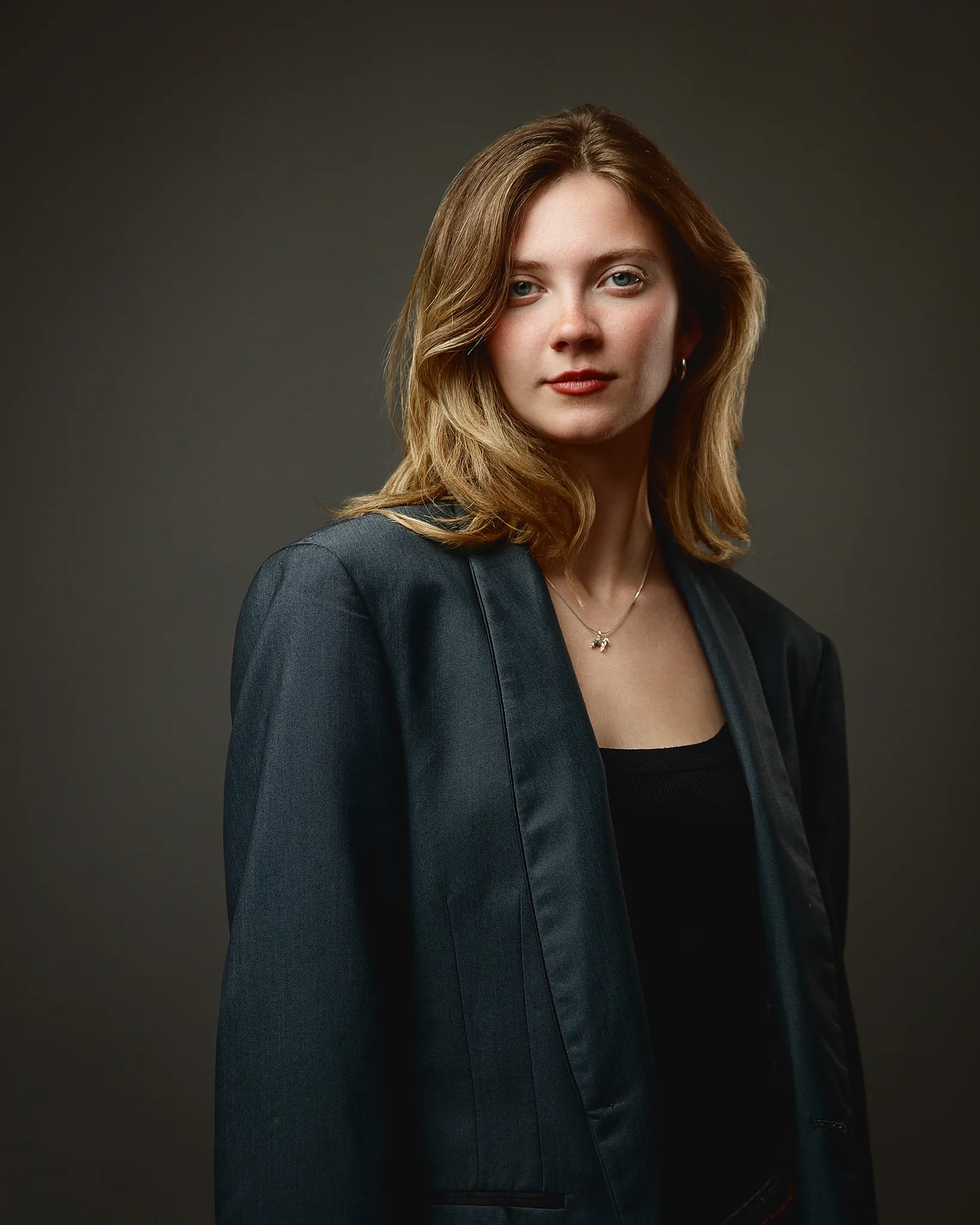
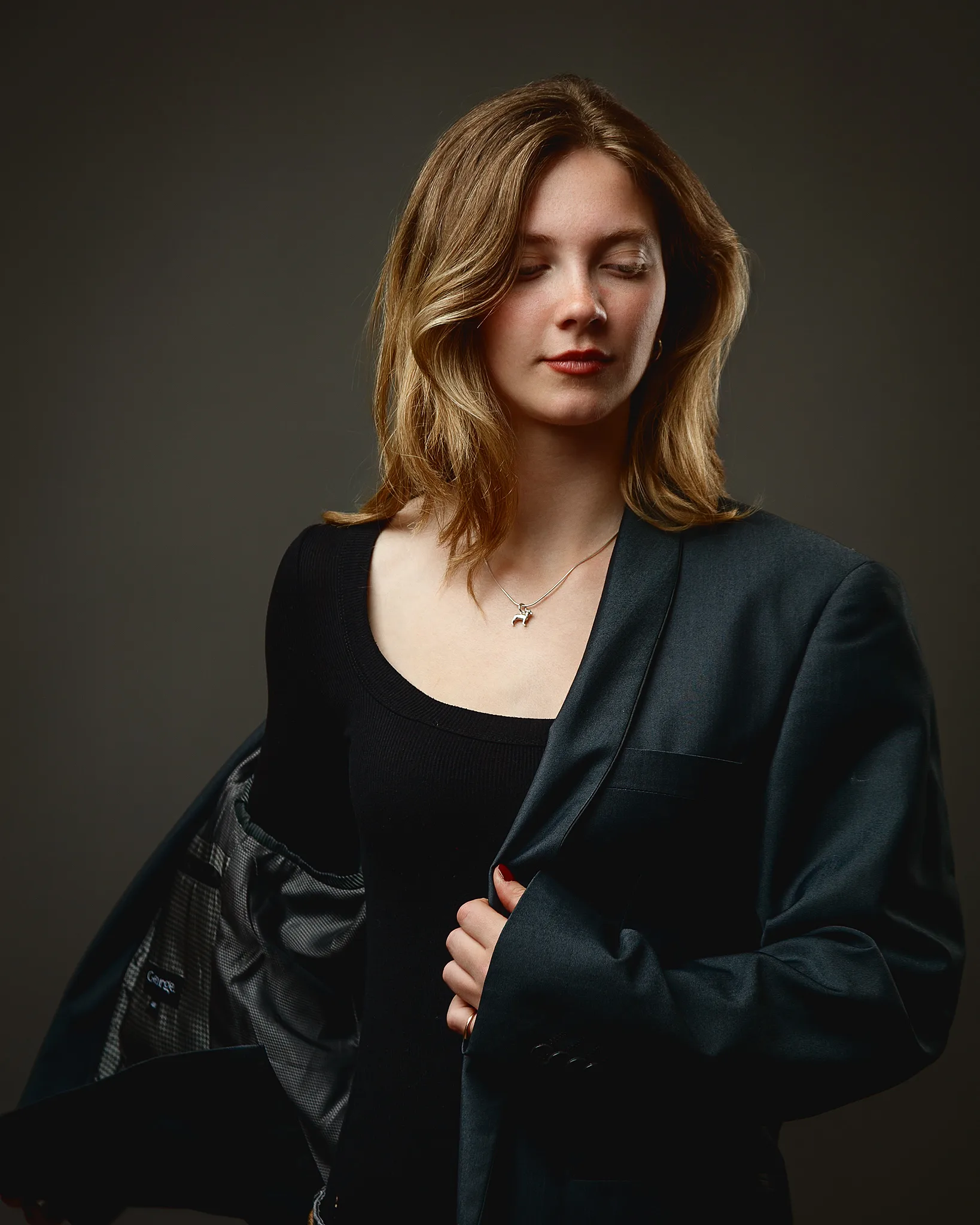
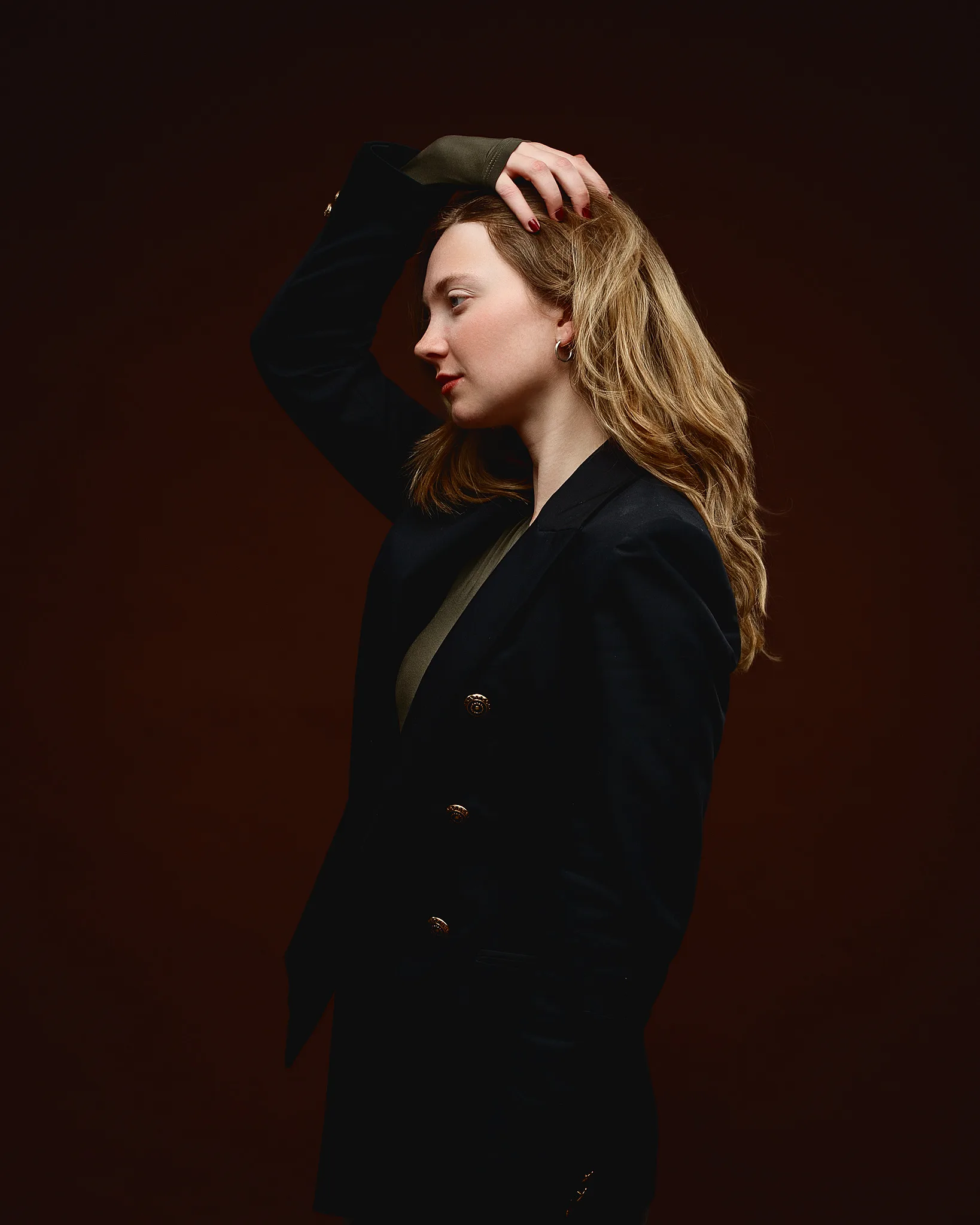
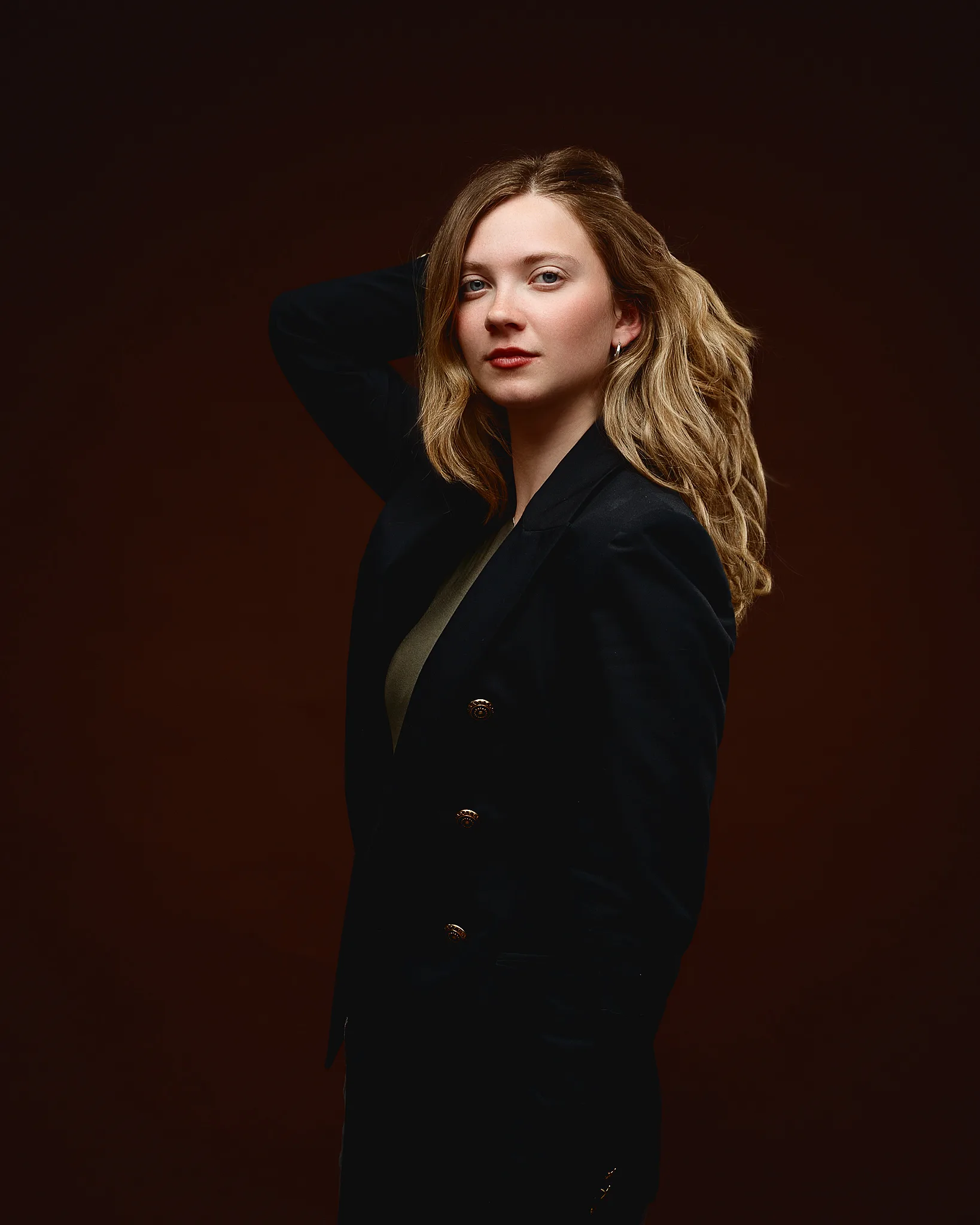
The Black Blazer and Satin Jacket Looks
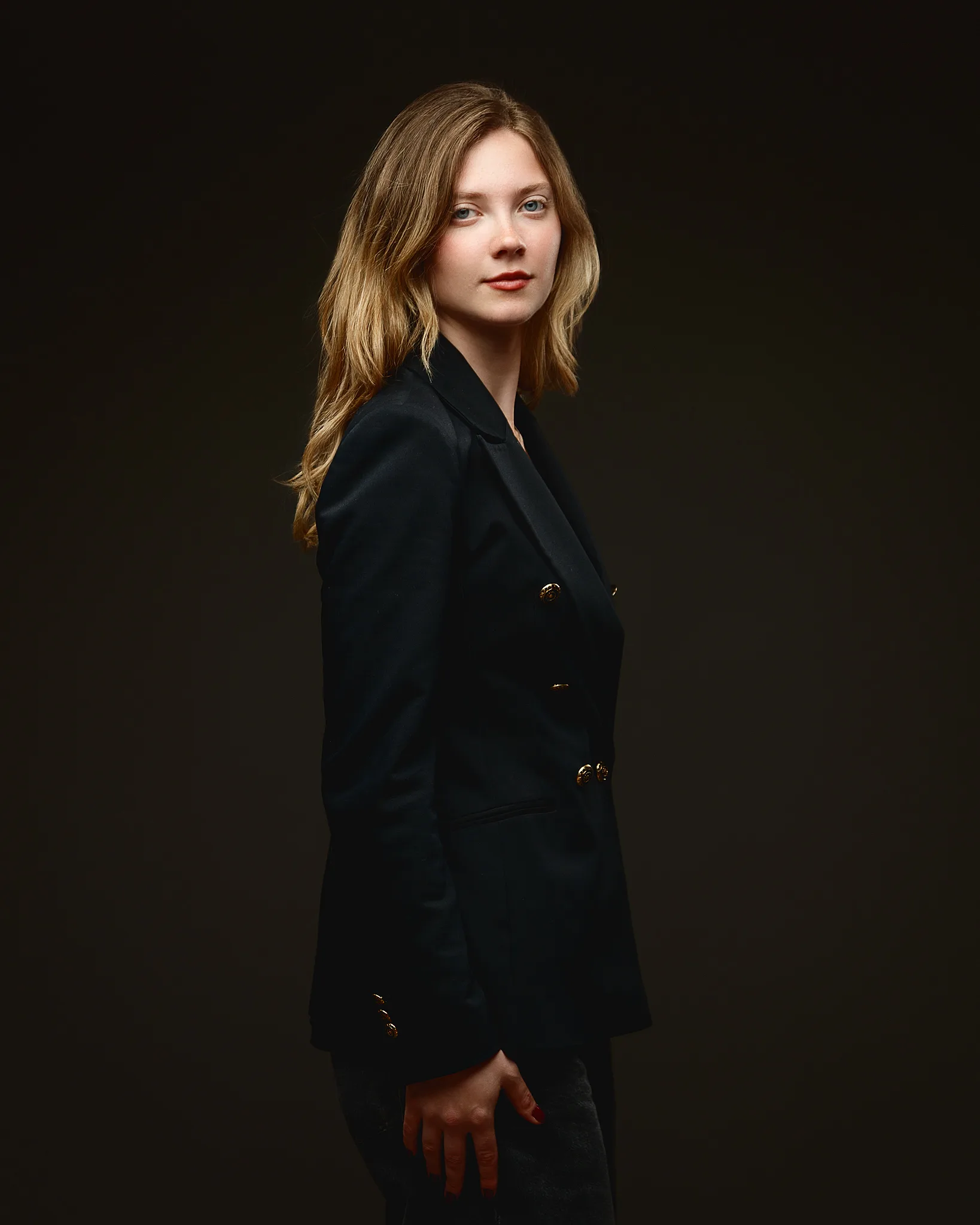
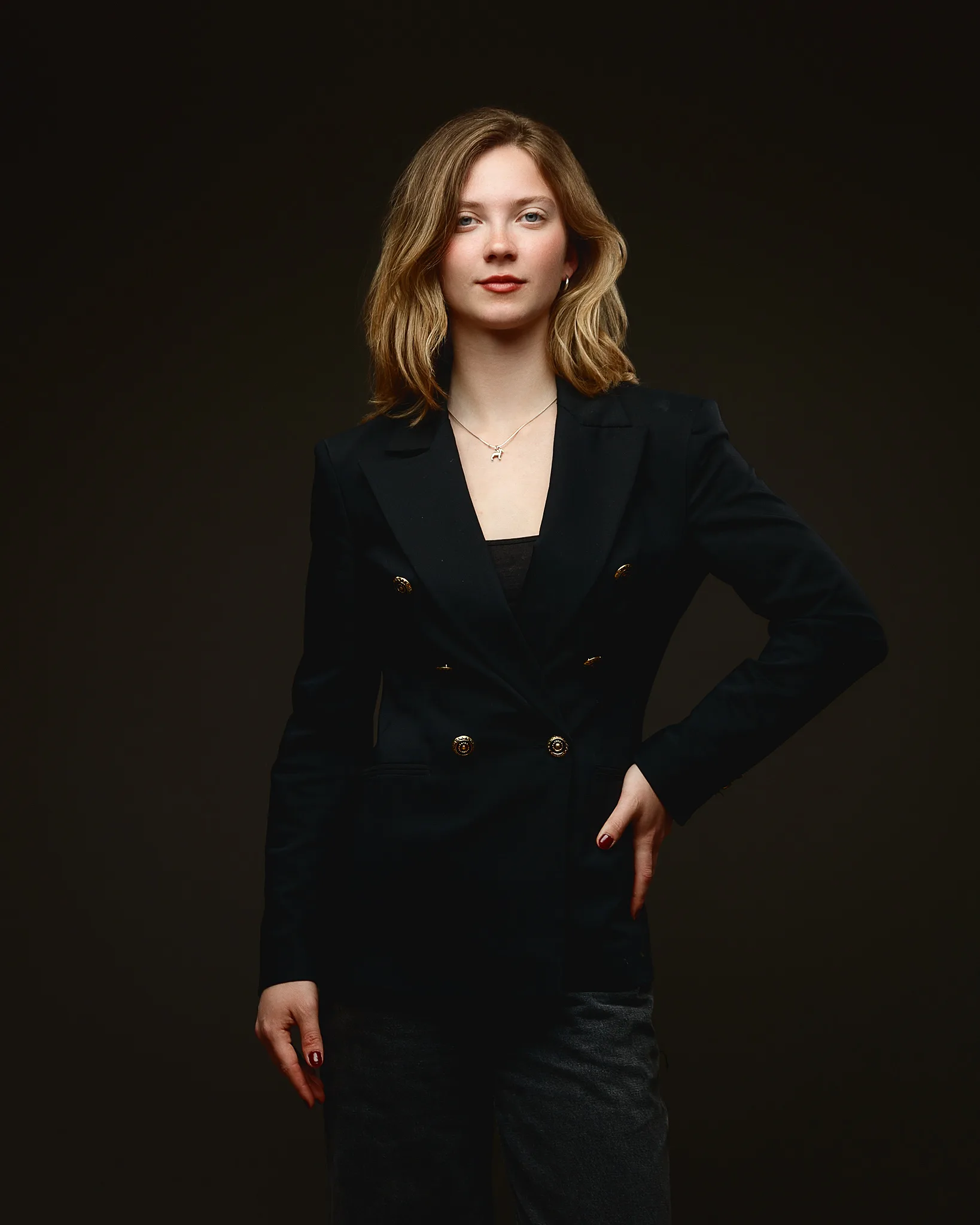
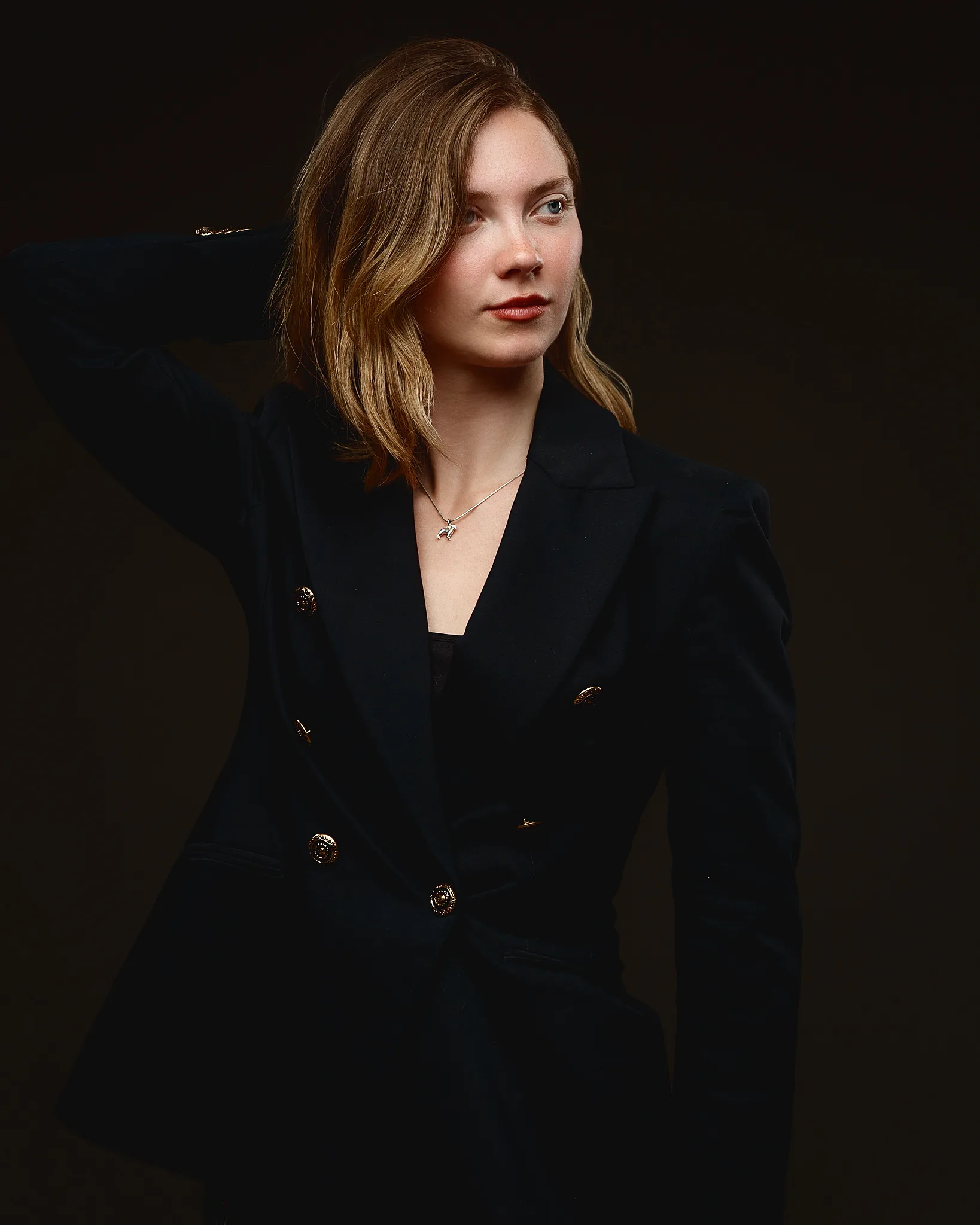
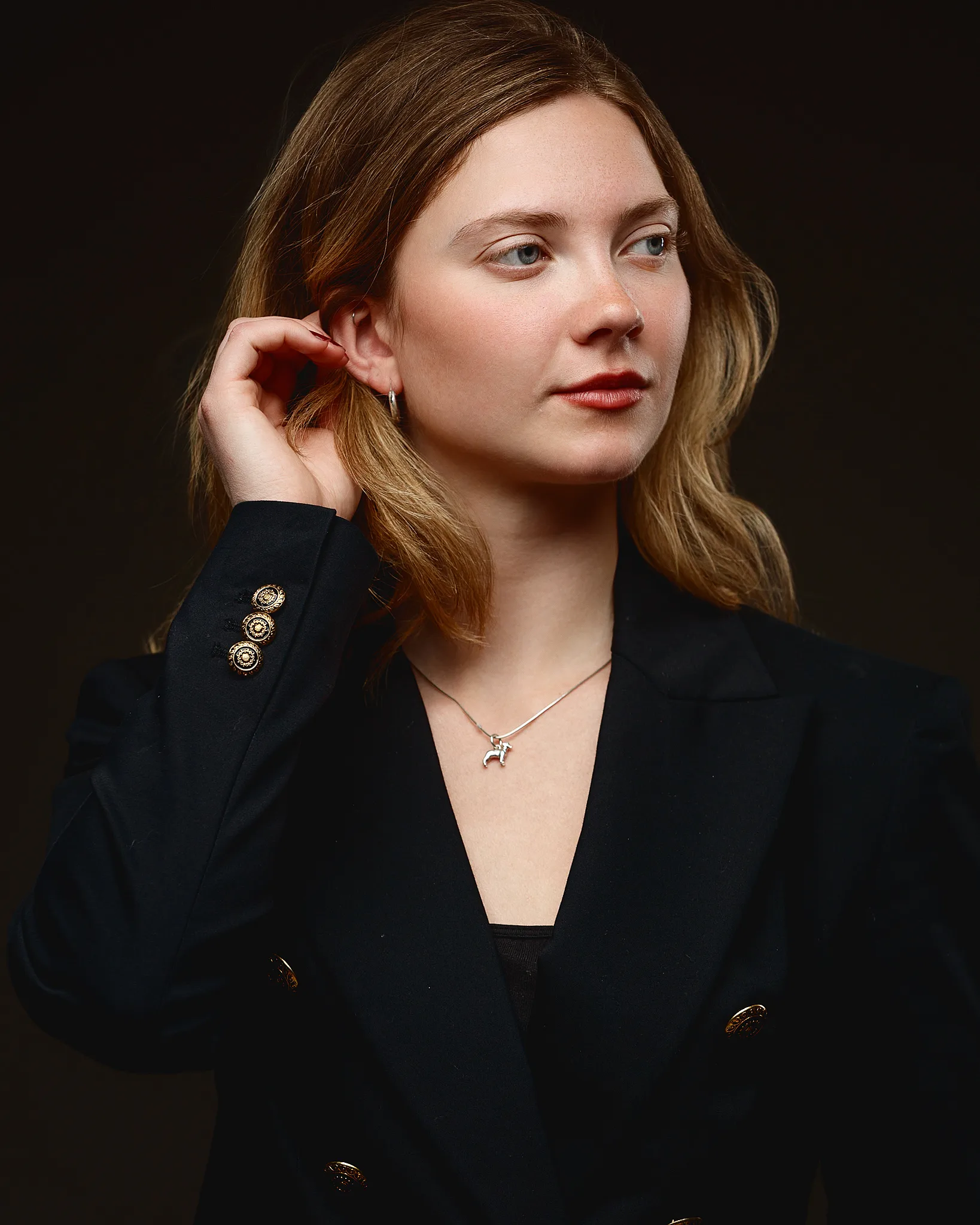
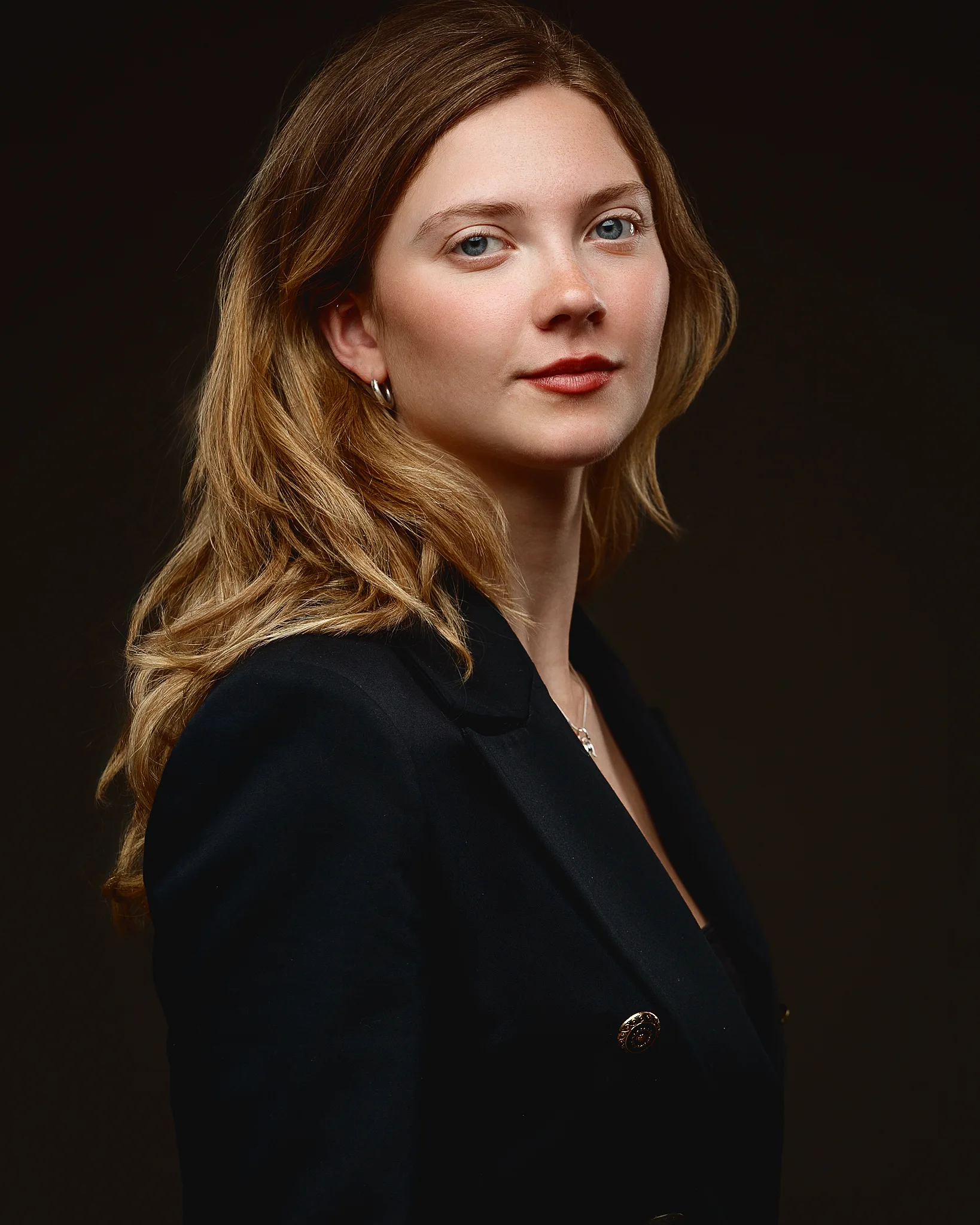
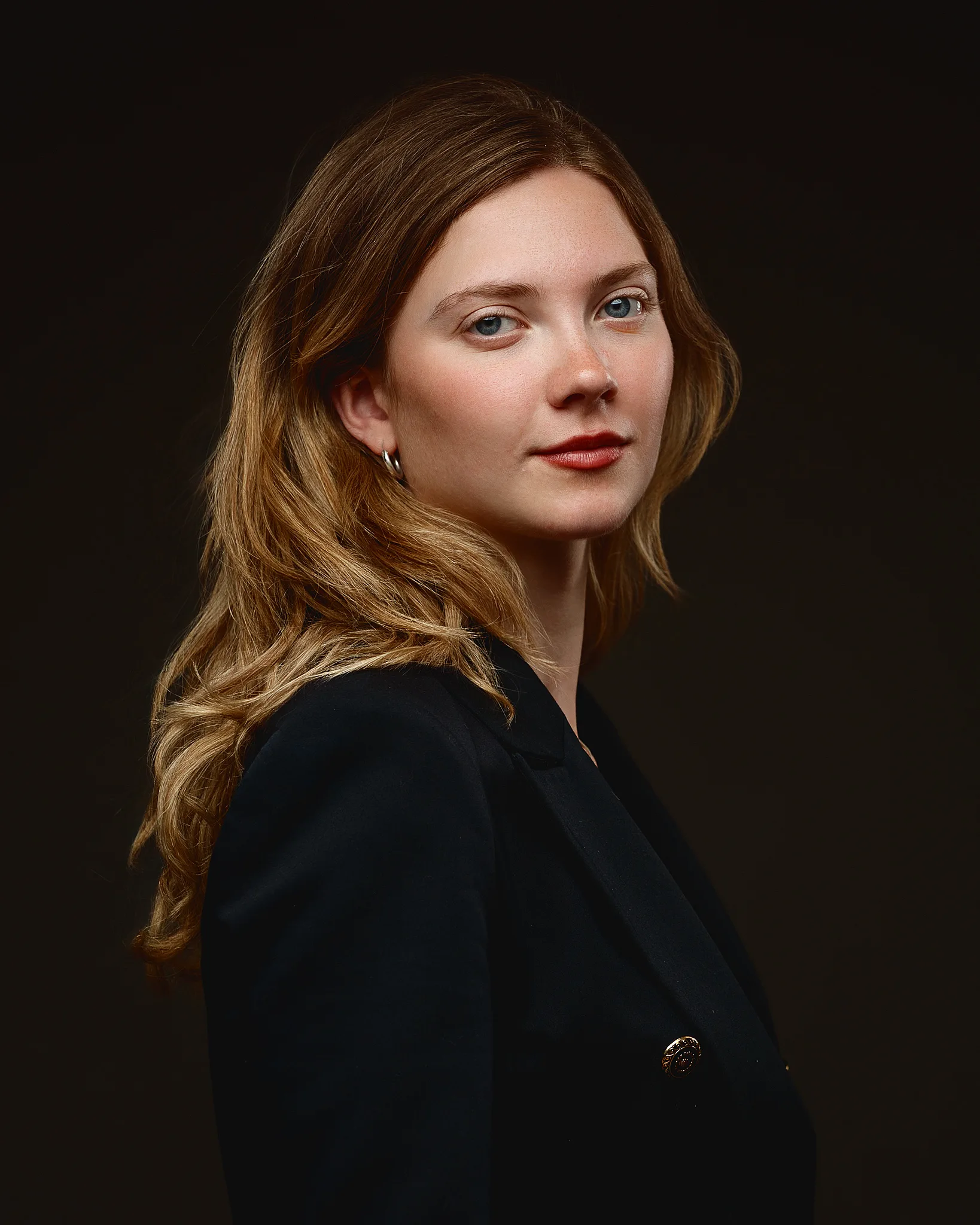
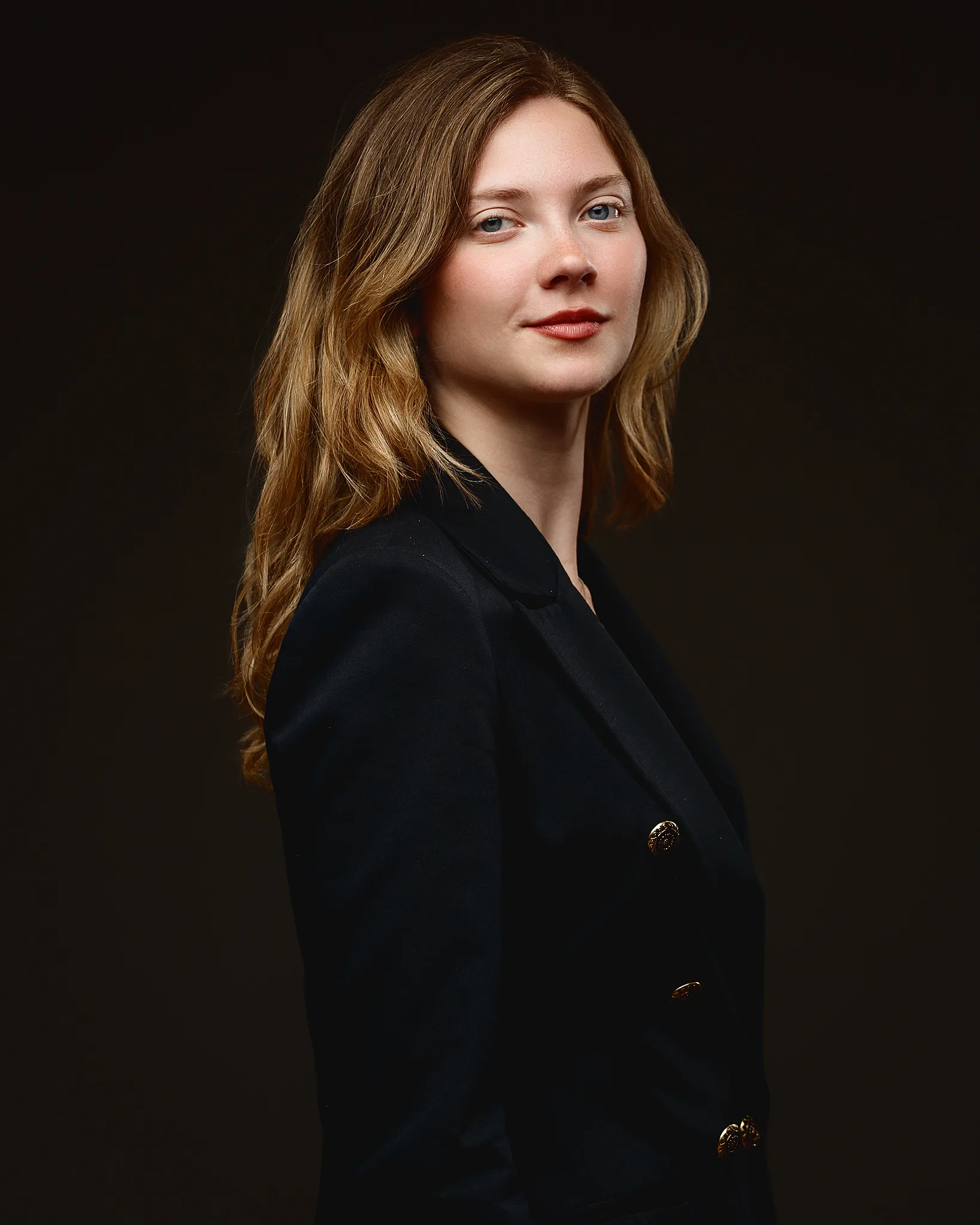
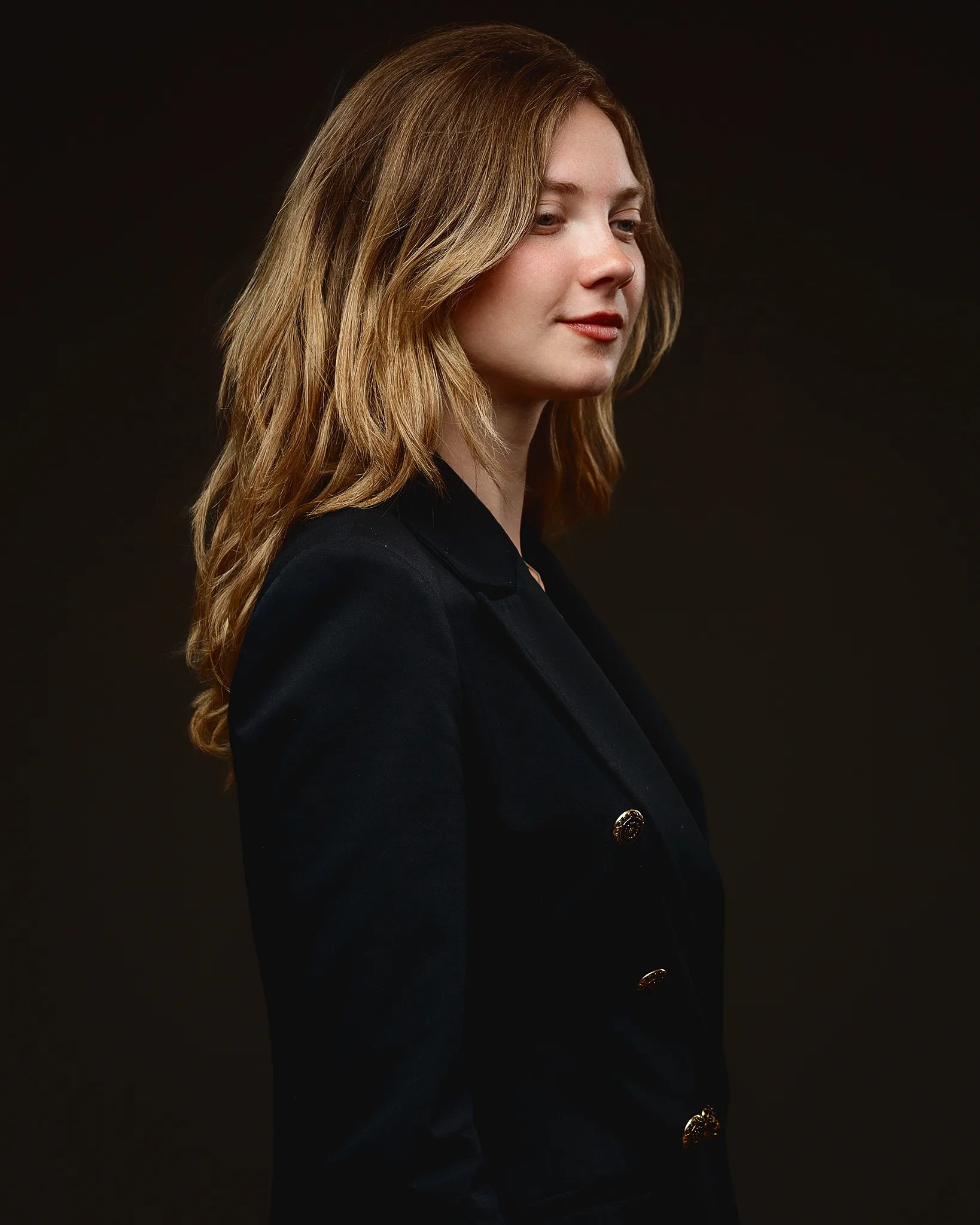
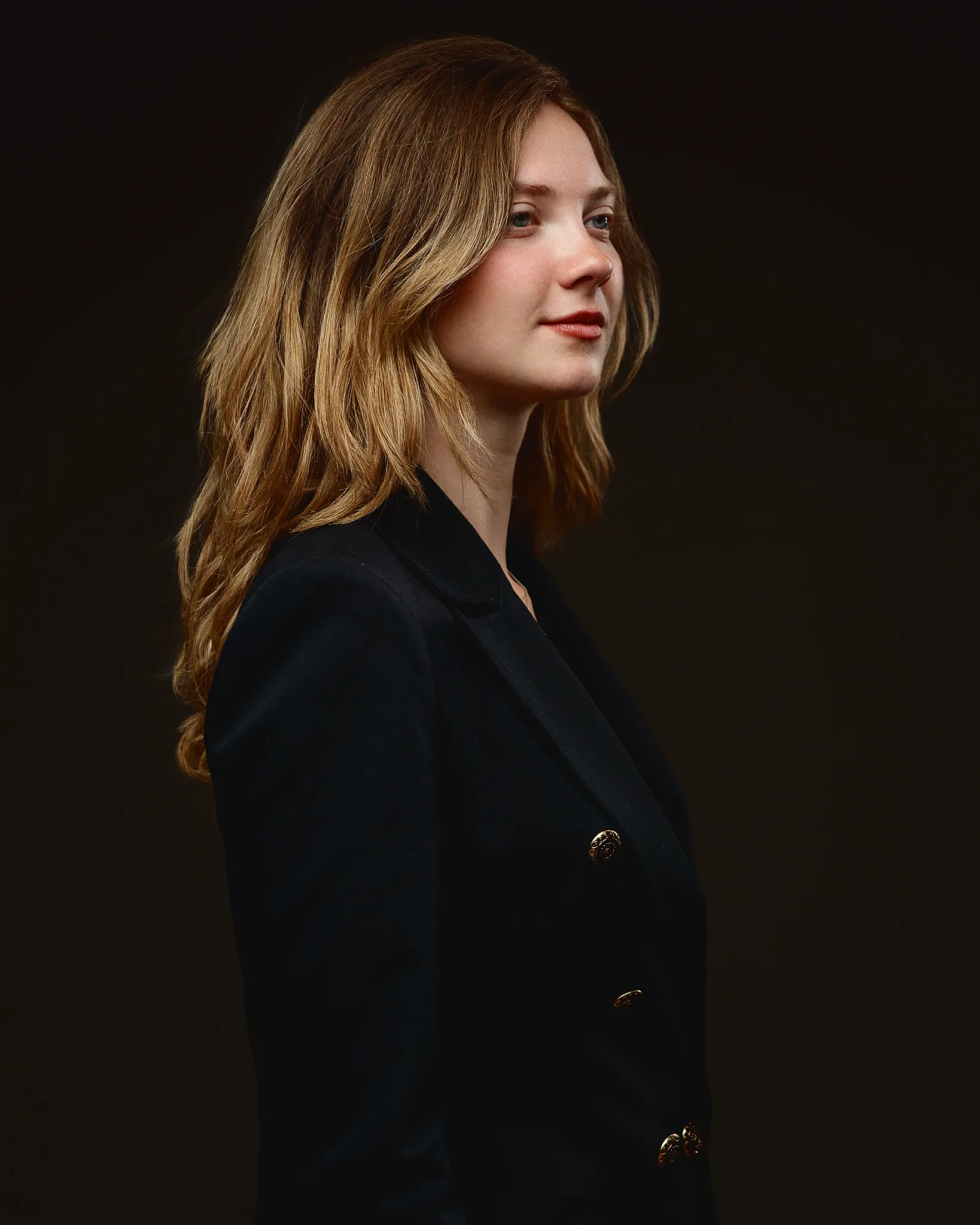
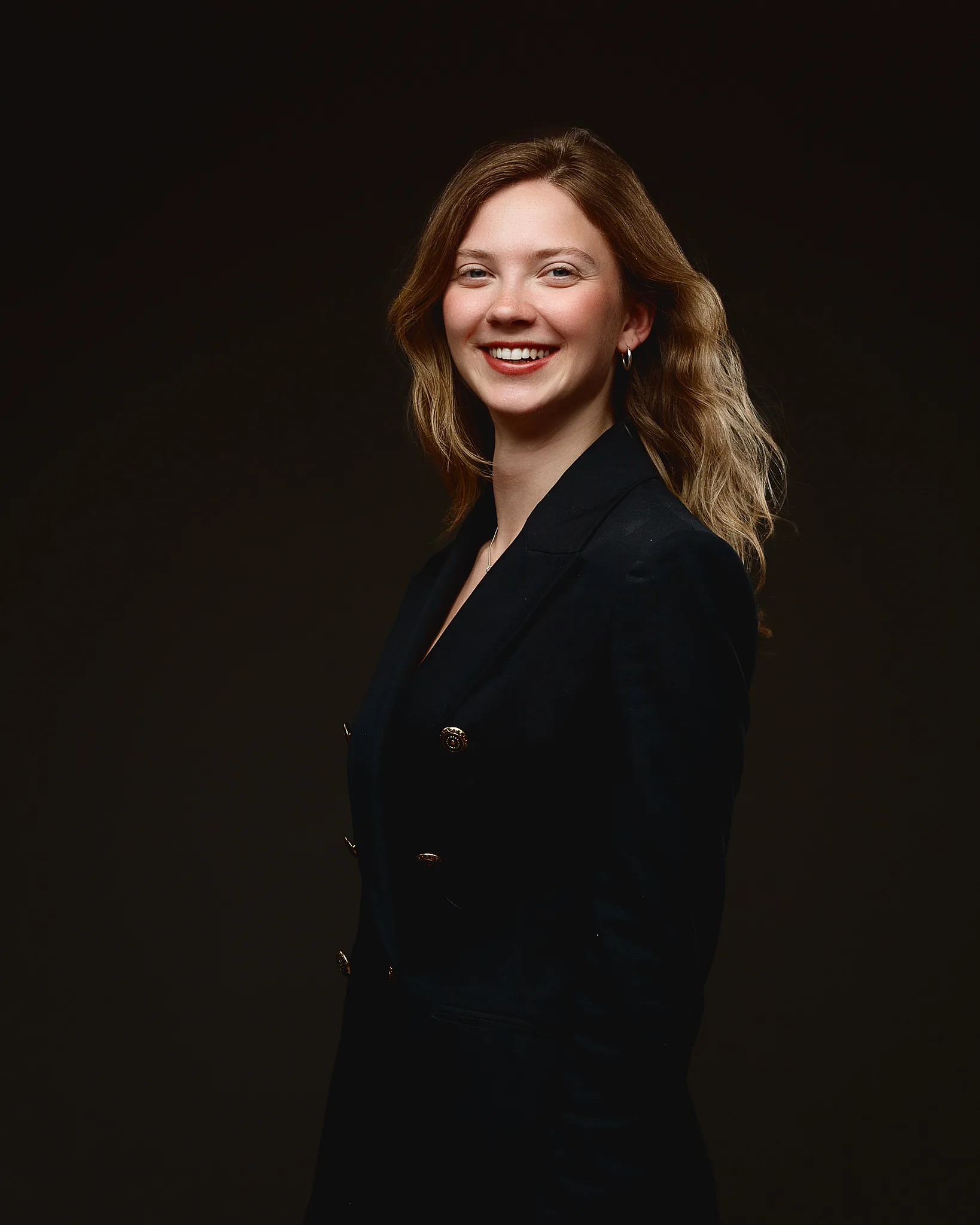
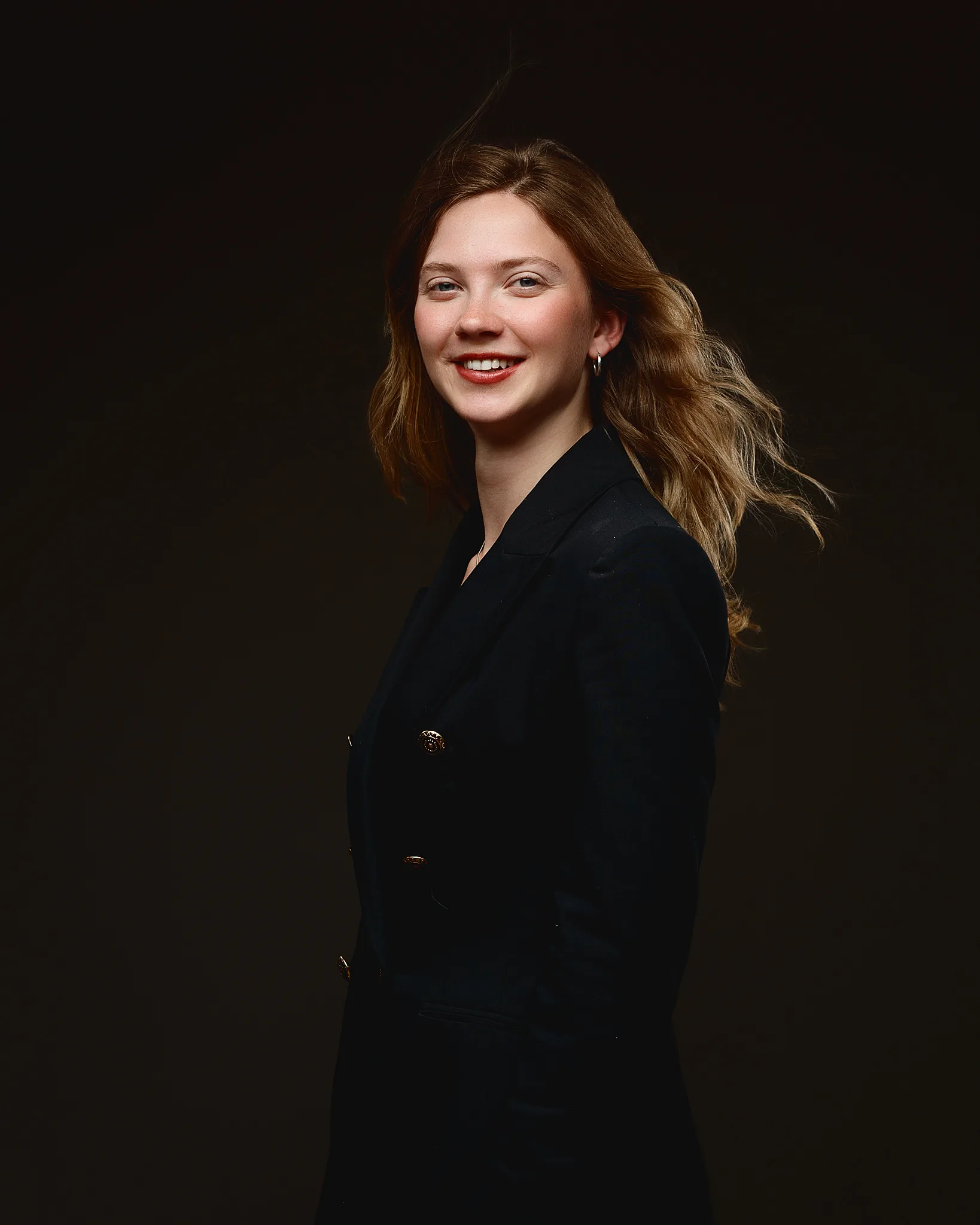
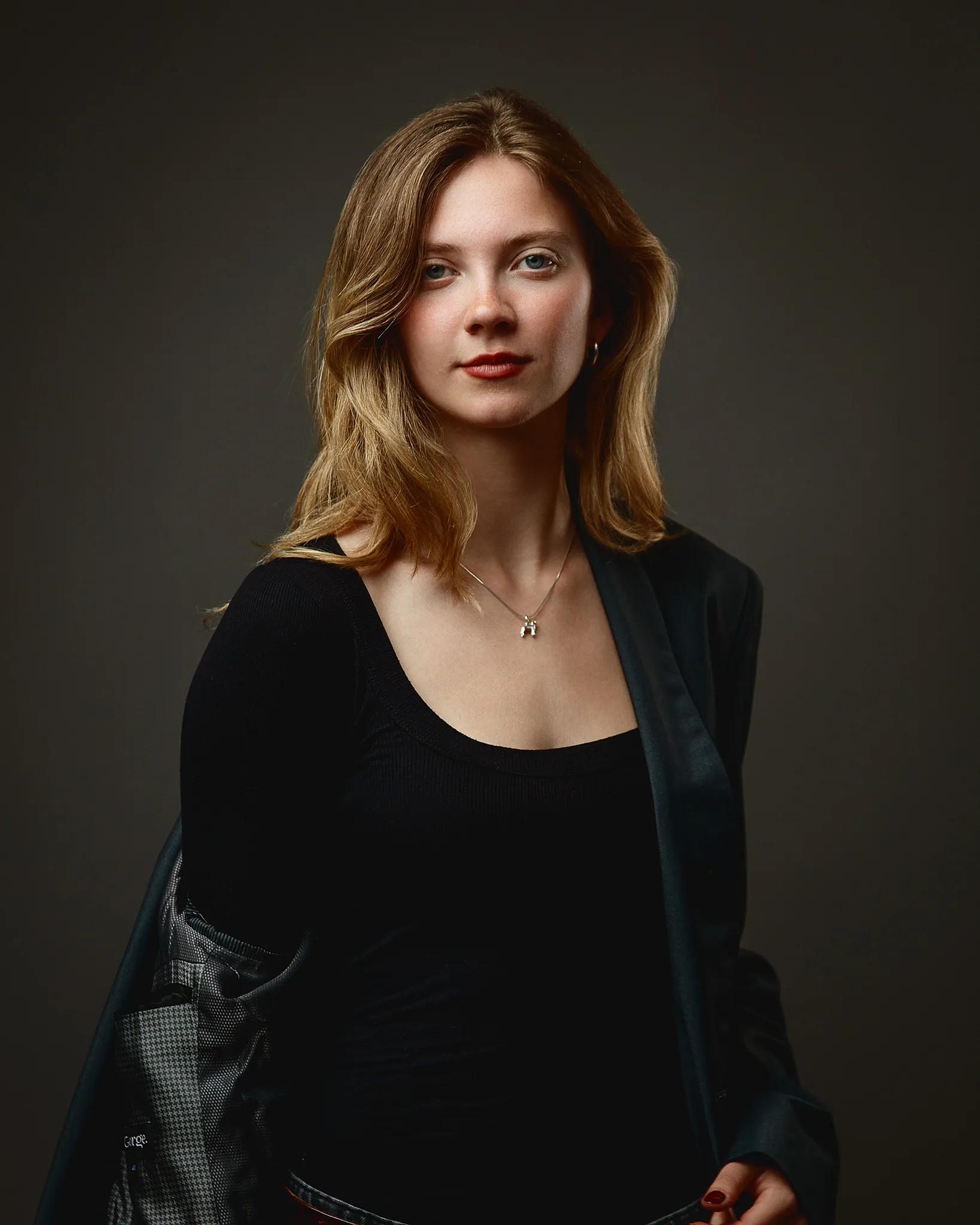
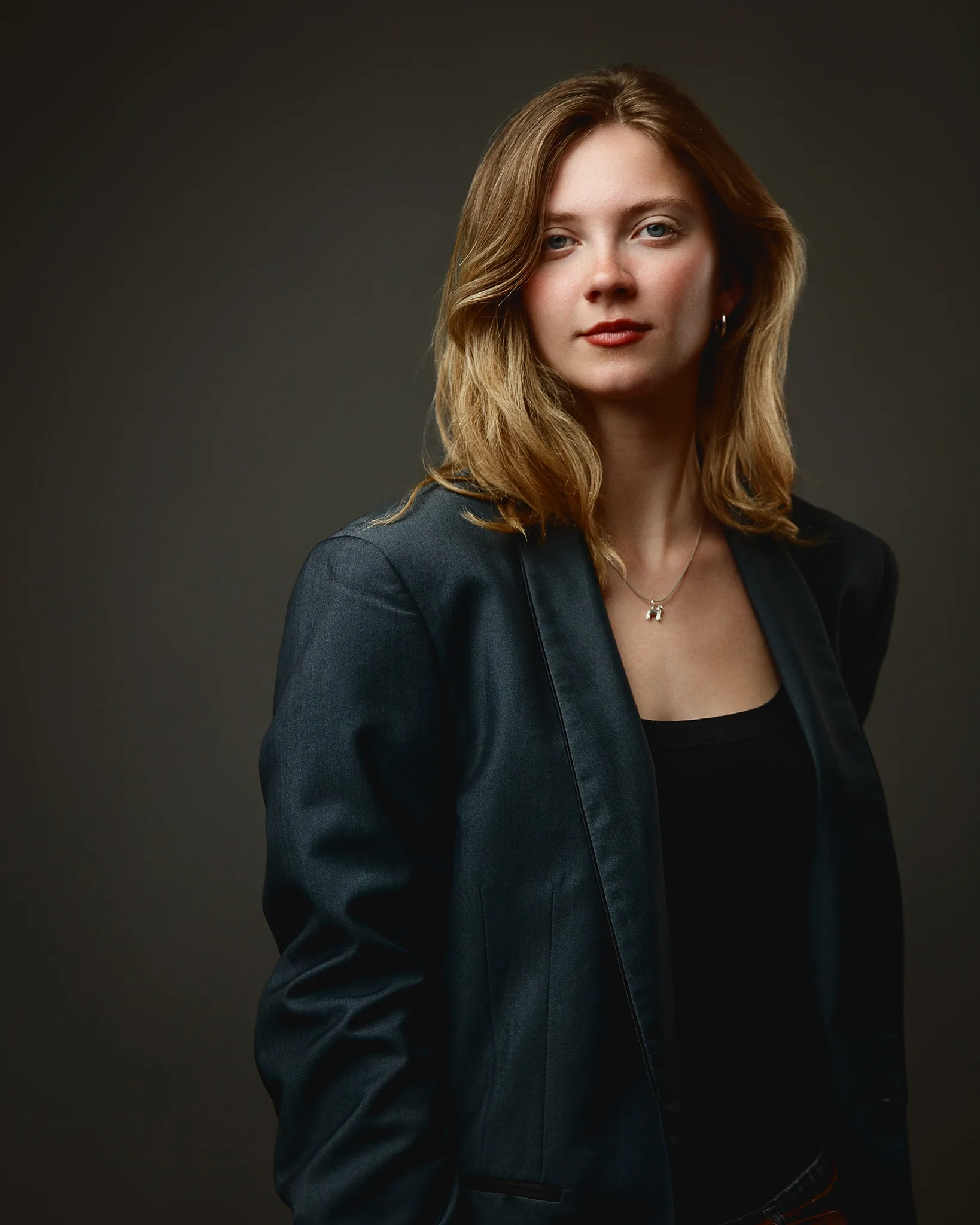
The black blazer and satin jacket looks gave the set a more polished and structured feel. These images sit somewhere between portrait, fashion, and personal branding photography.
The clean lines of the jackets helped shape the frame, while Annabelle’s controlled expression gave the images a more composed and mature quality. They do not feel over-styled, but they do feel more deliberate. That balance is important.
For model portfolio photography, I want to see whether someone can hold a more refined expression without becoming stiff. There is a difference between looking controlled and looking tense. Annabelle handled this well, especially given that it was her first time modelling in this kind of studio session.
These images are also a good example of how model portfolio work overlaps with other areas of studio photography. The same attention to posture, expression, light, and clothing shape applies to headshots, personal branding portraits, and commercial portraiture. The purpose may be different, but the fundamentals are very similar.
Why the White Blouse Look Works Well for a Portfolio
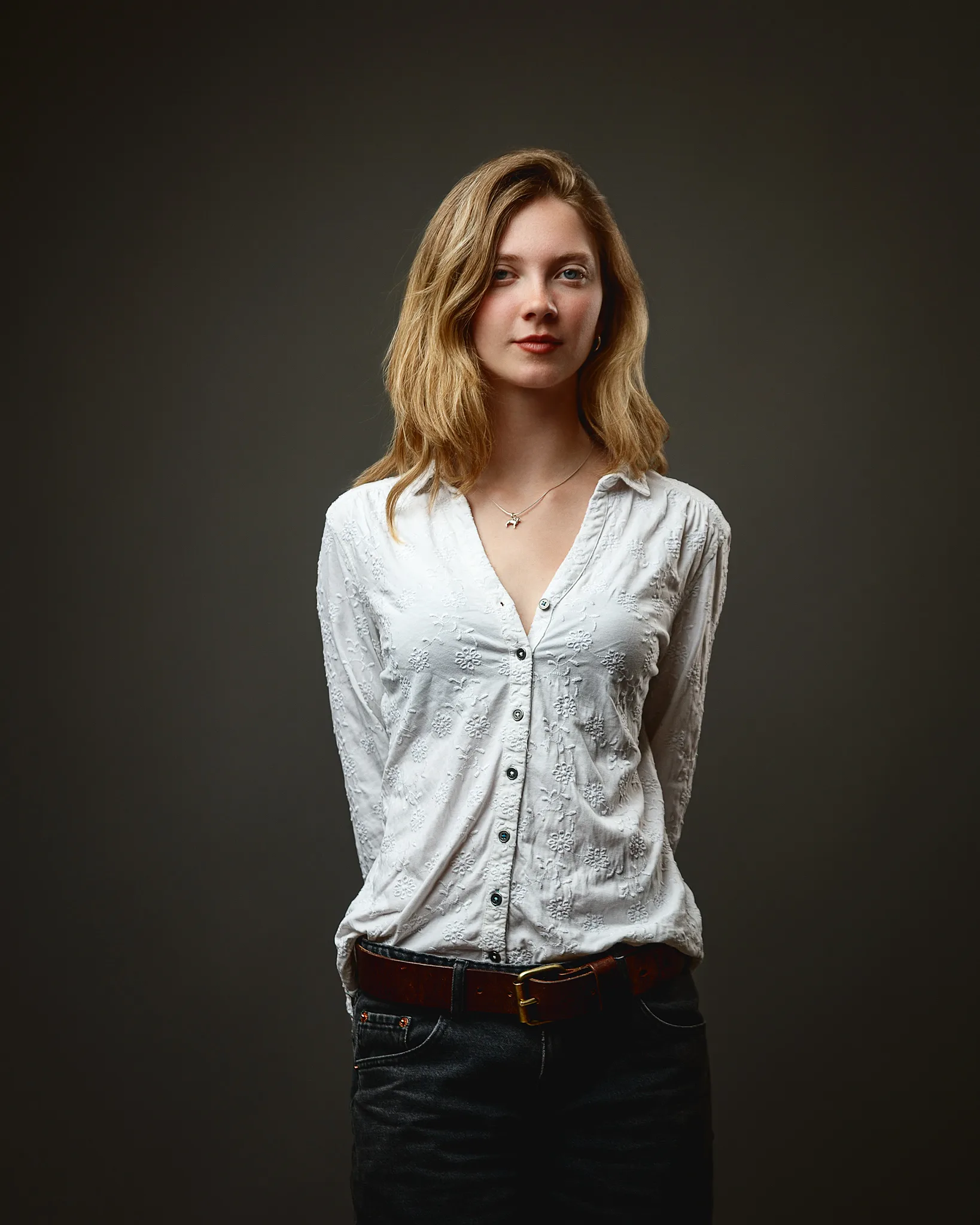
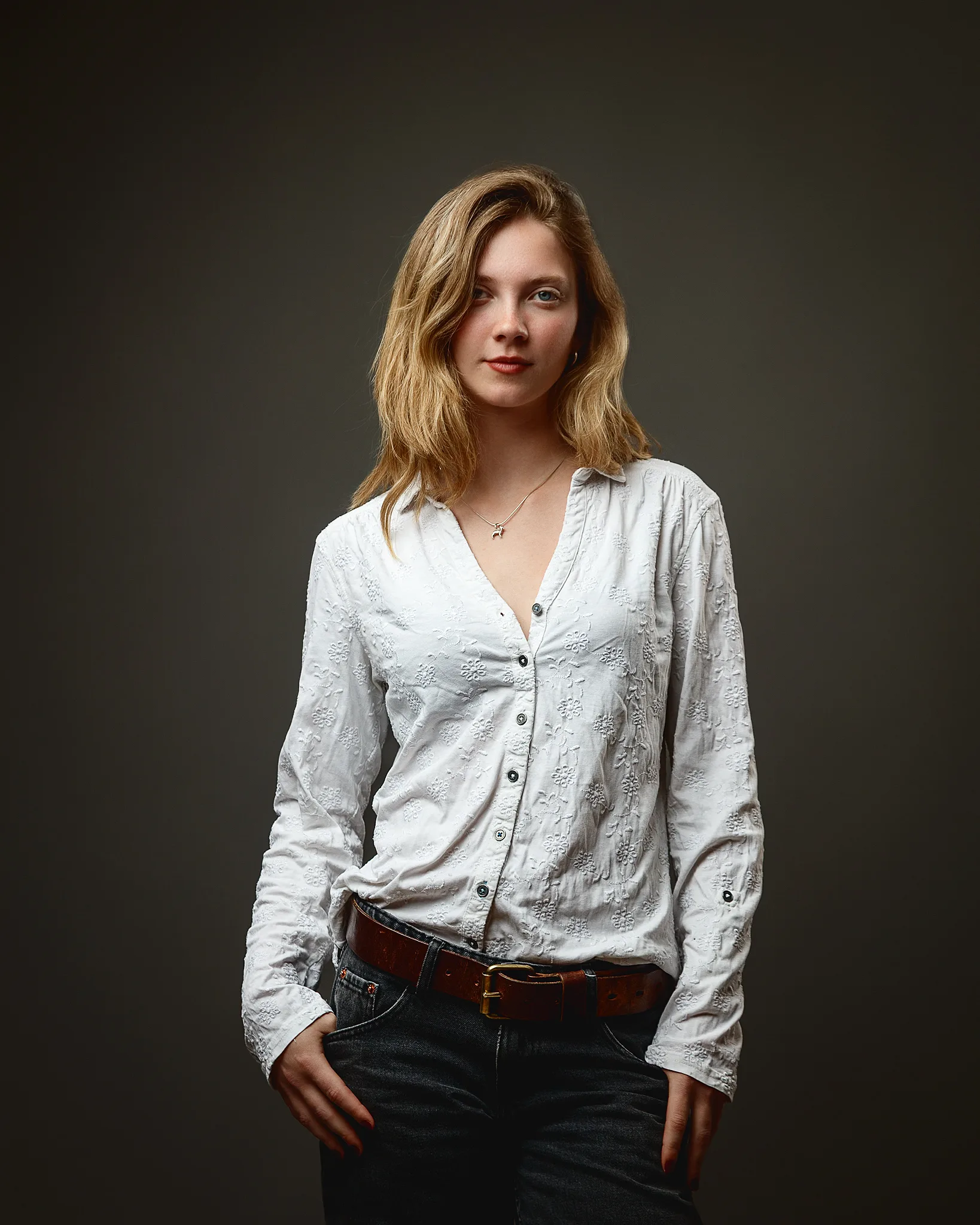
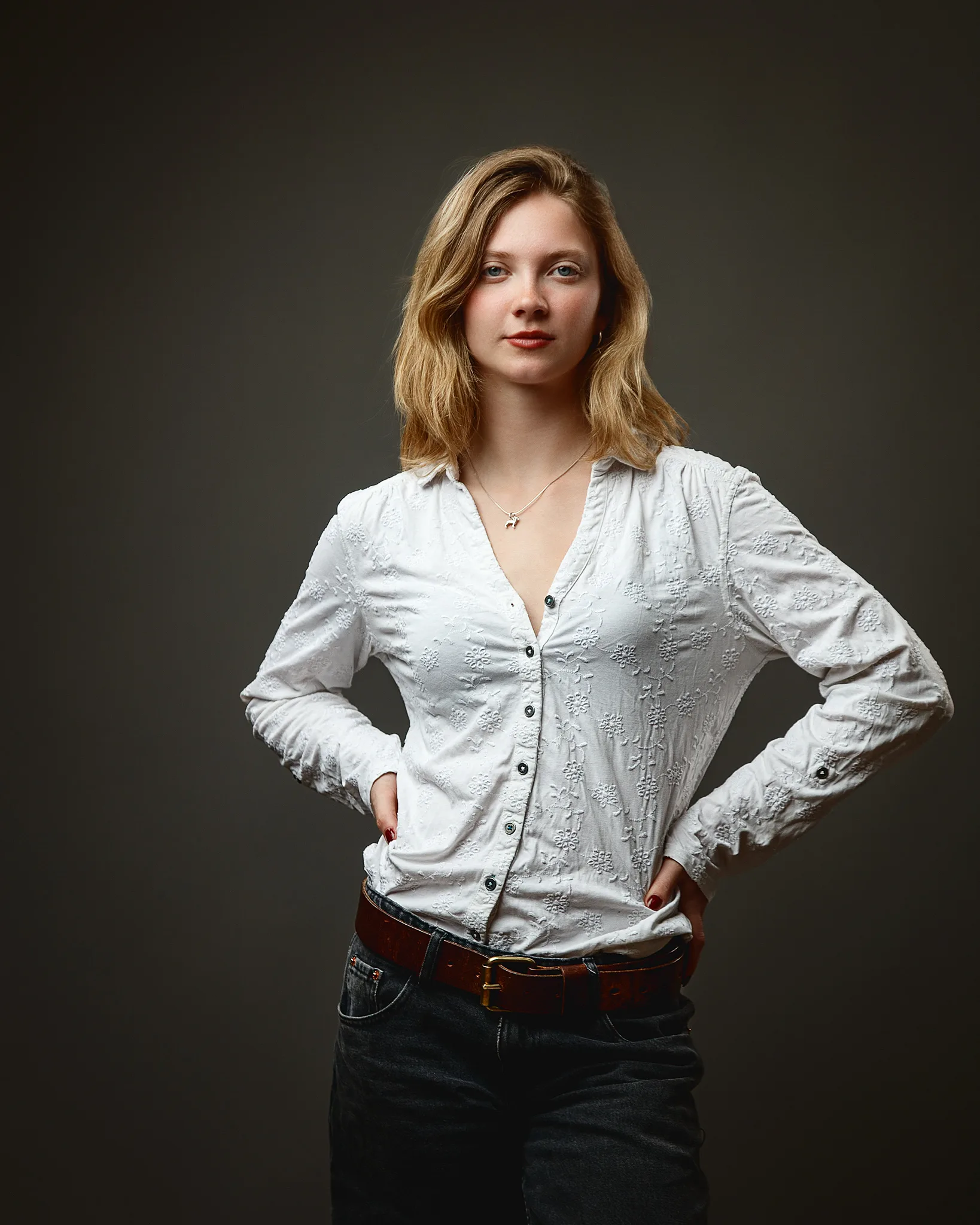
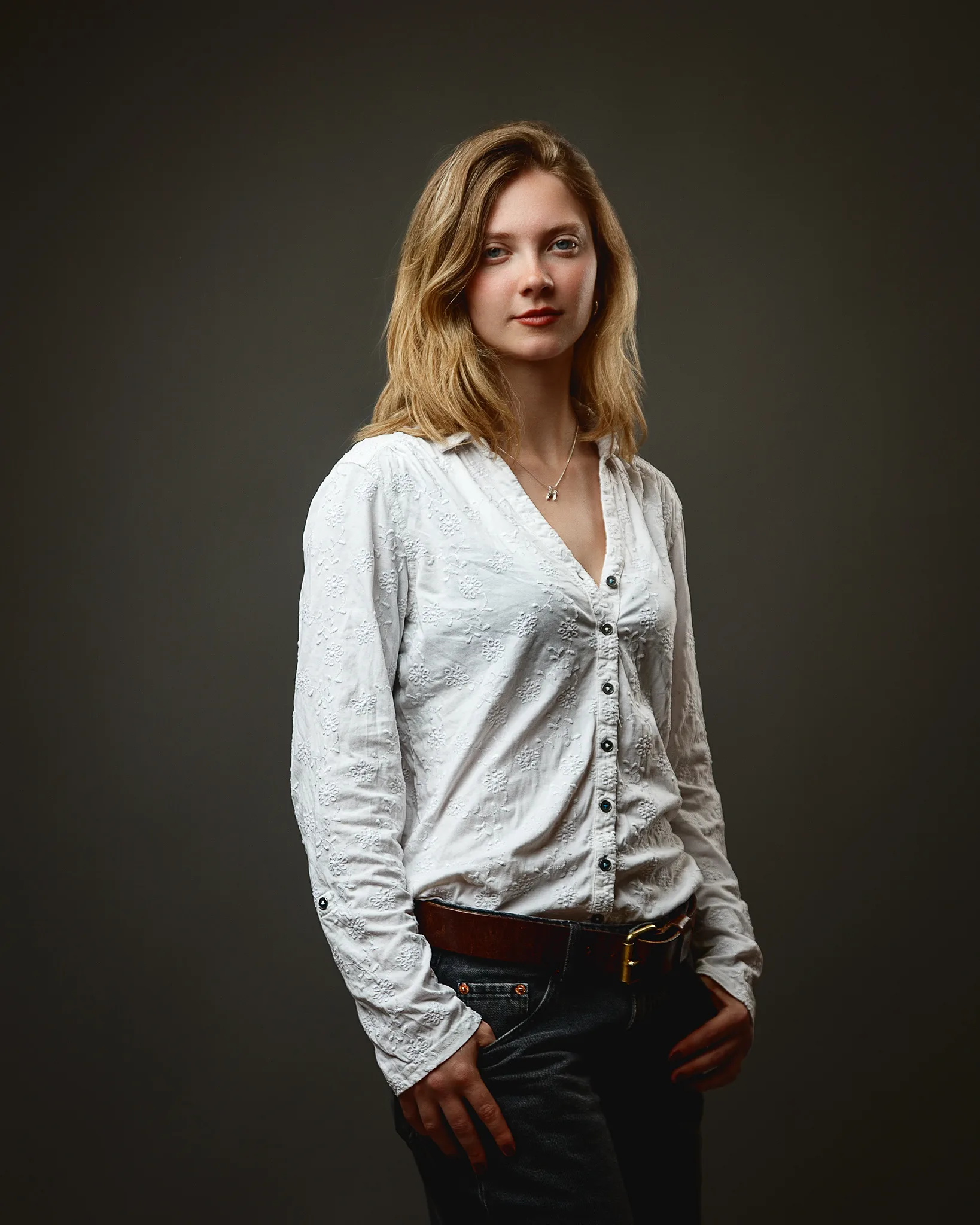
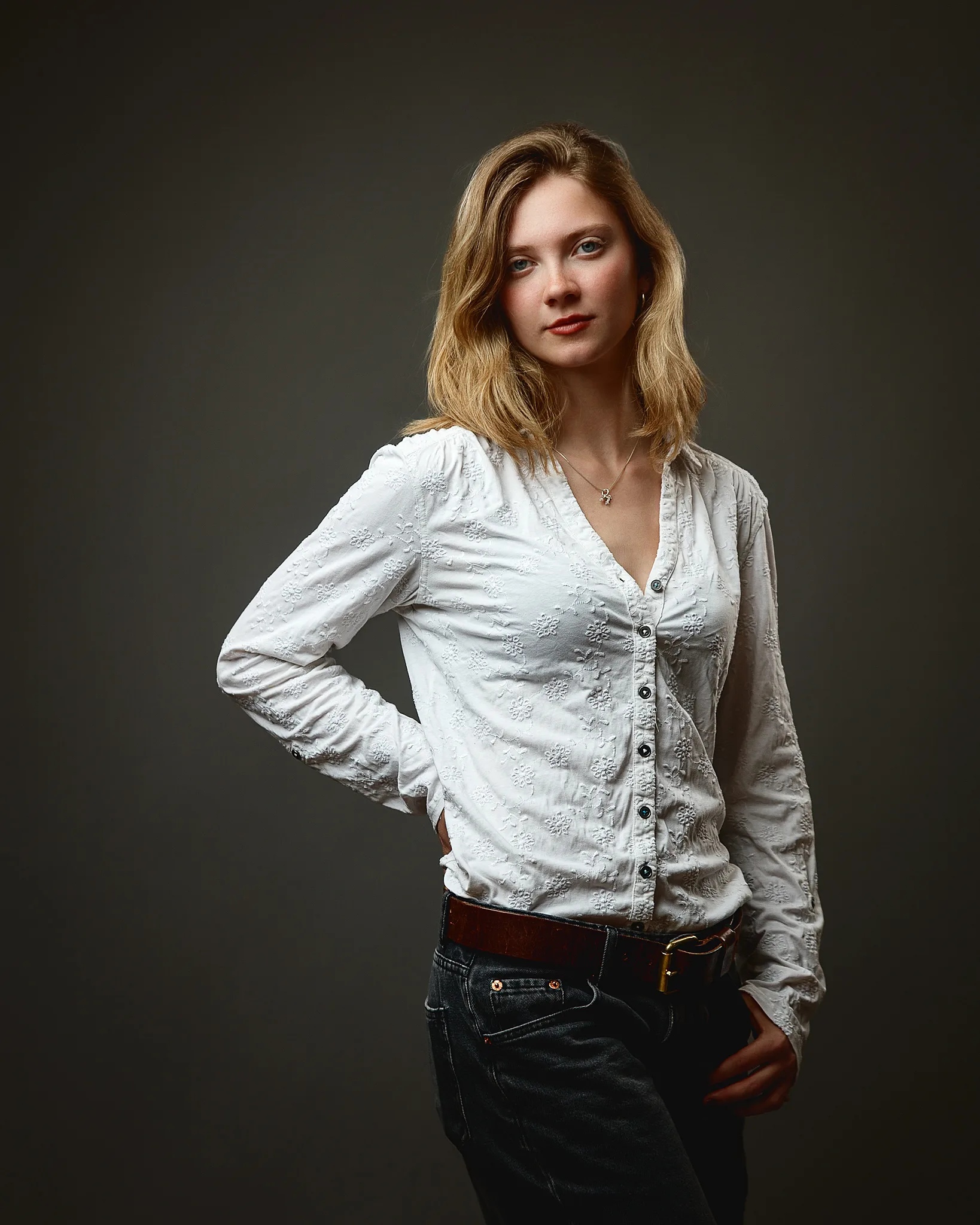
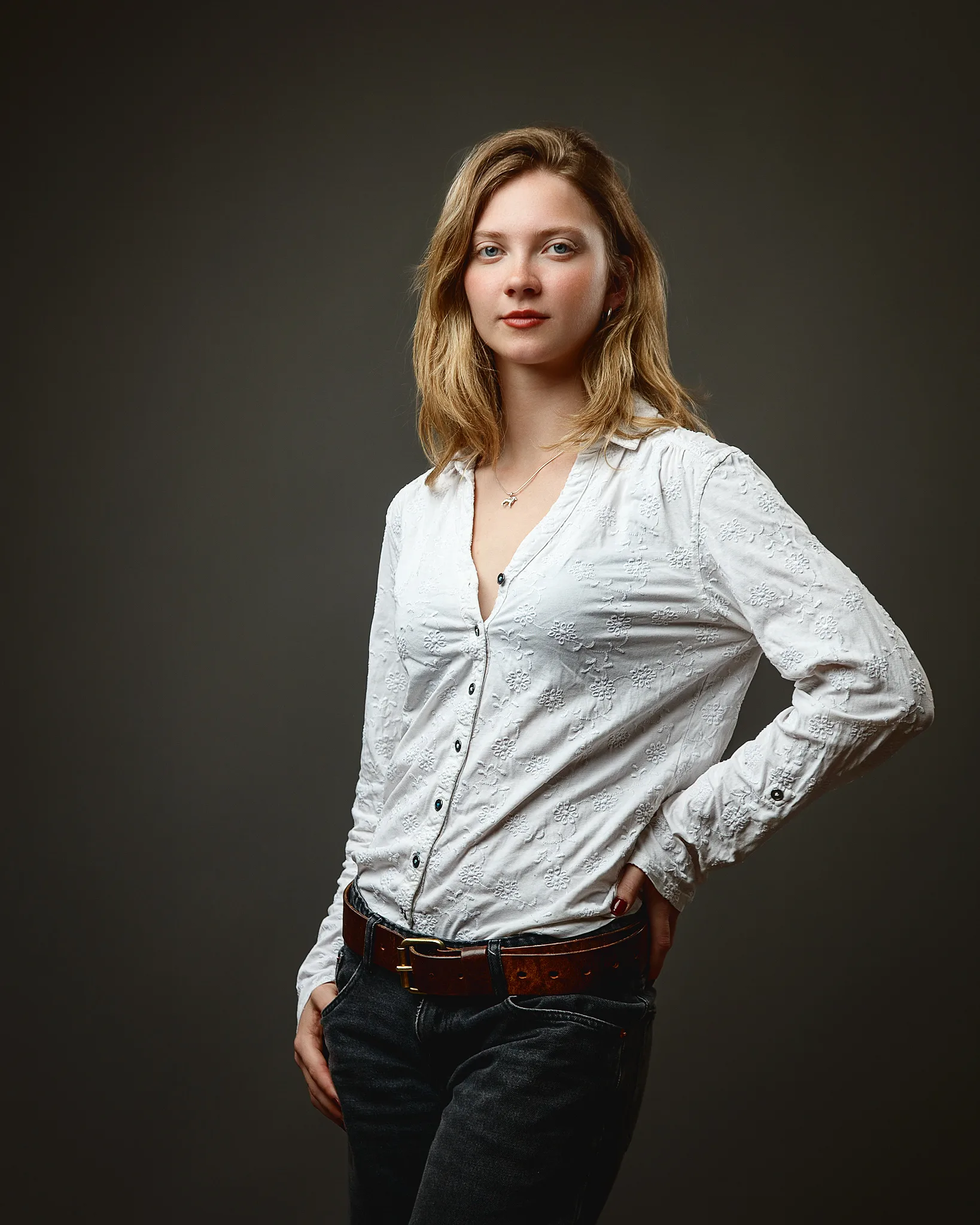
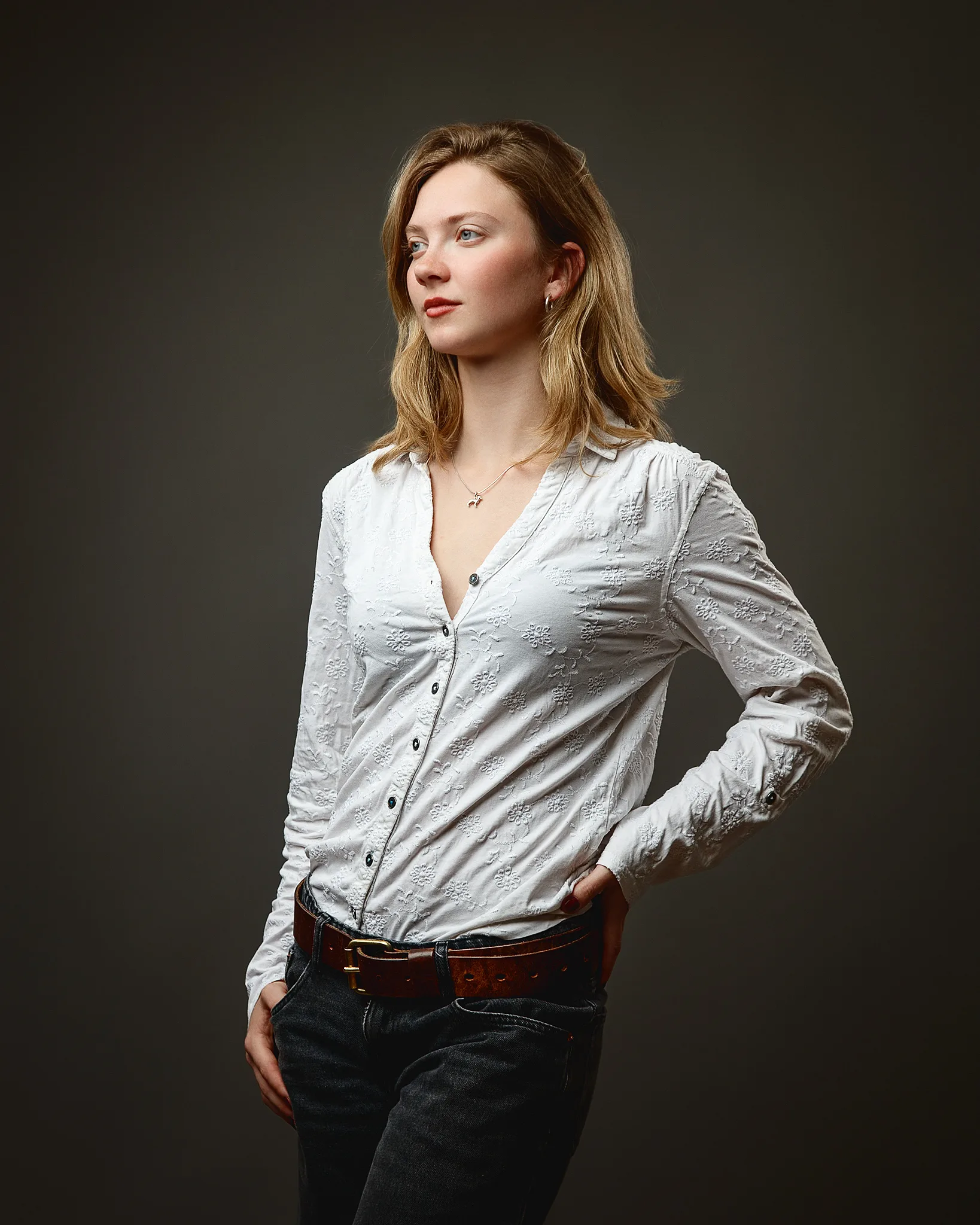
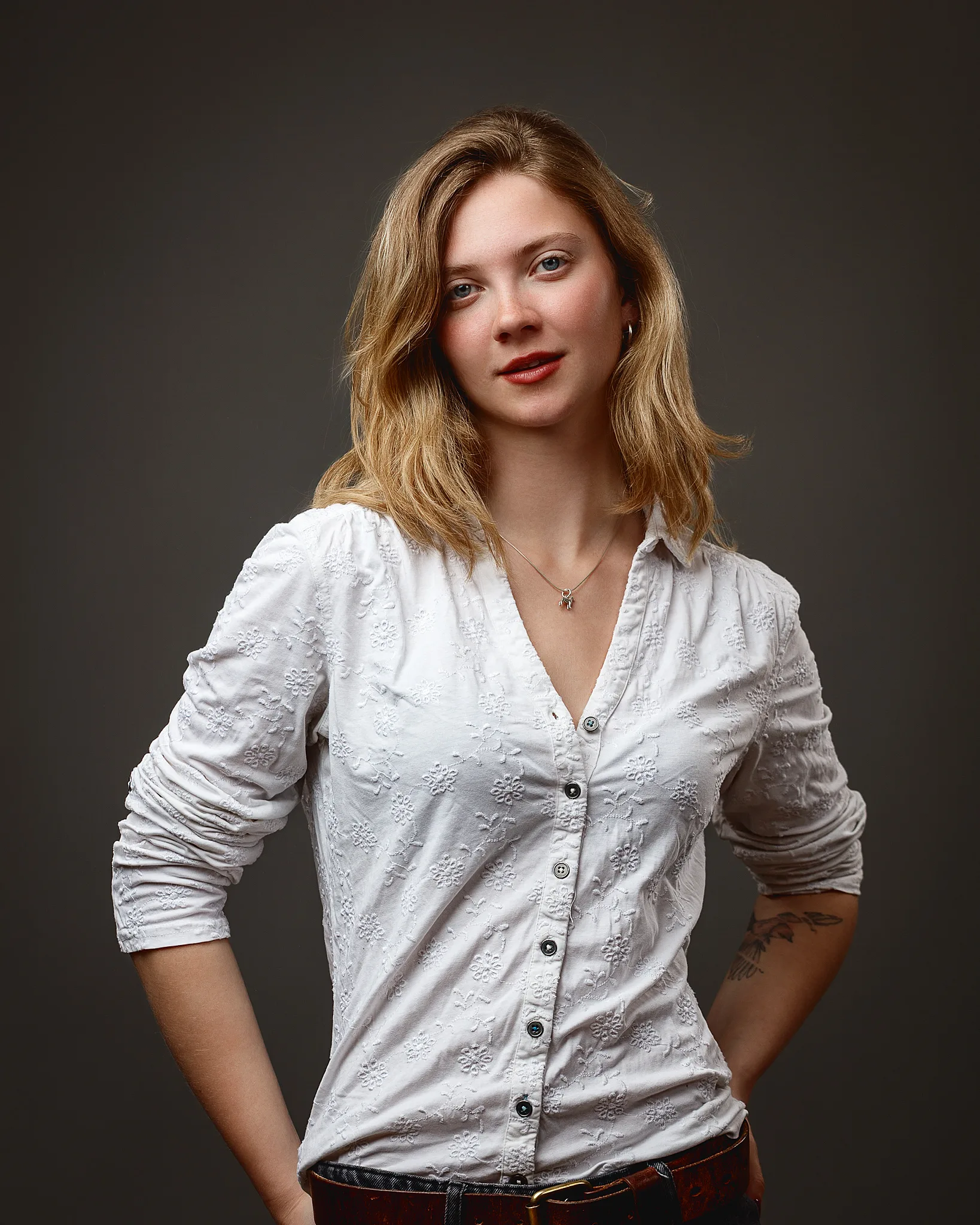
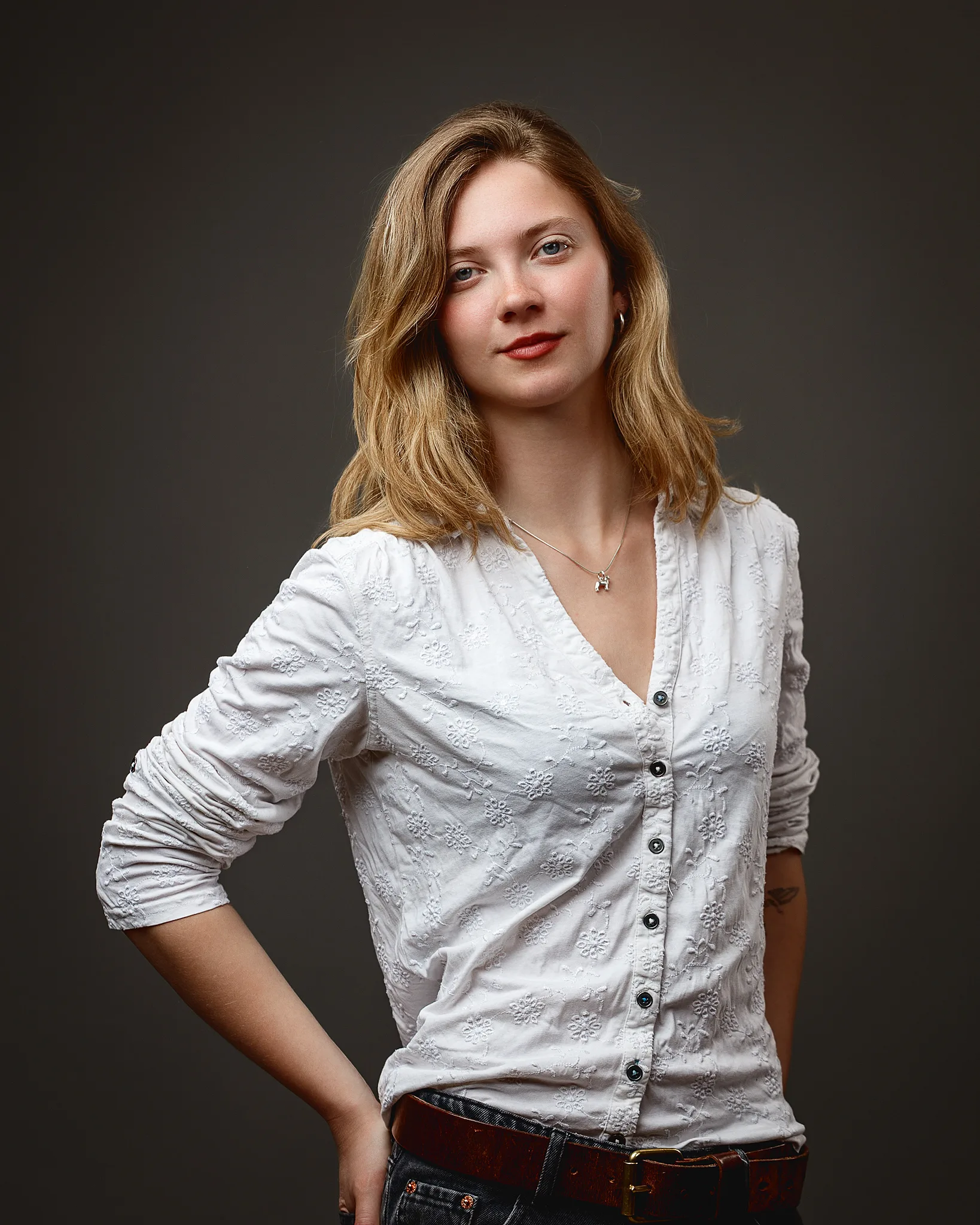
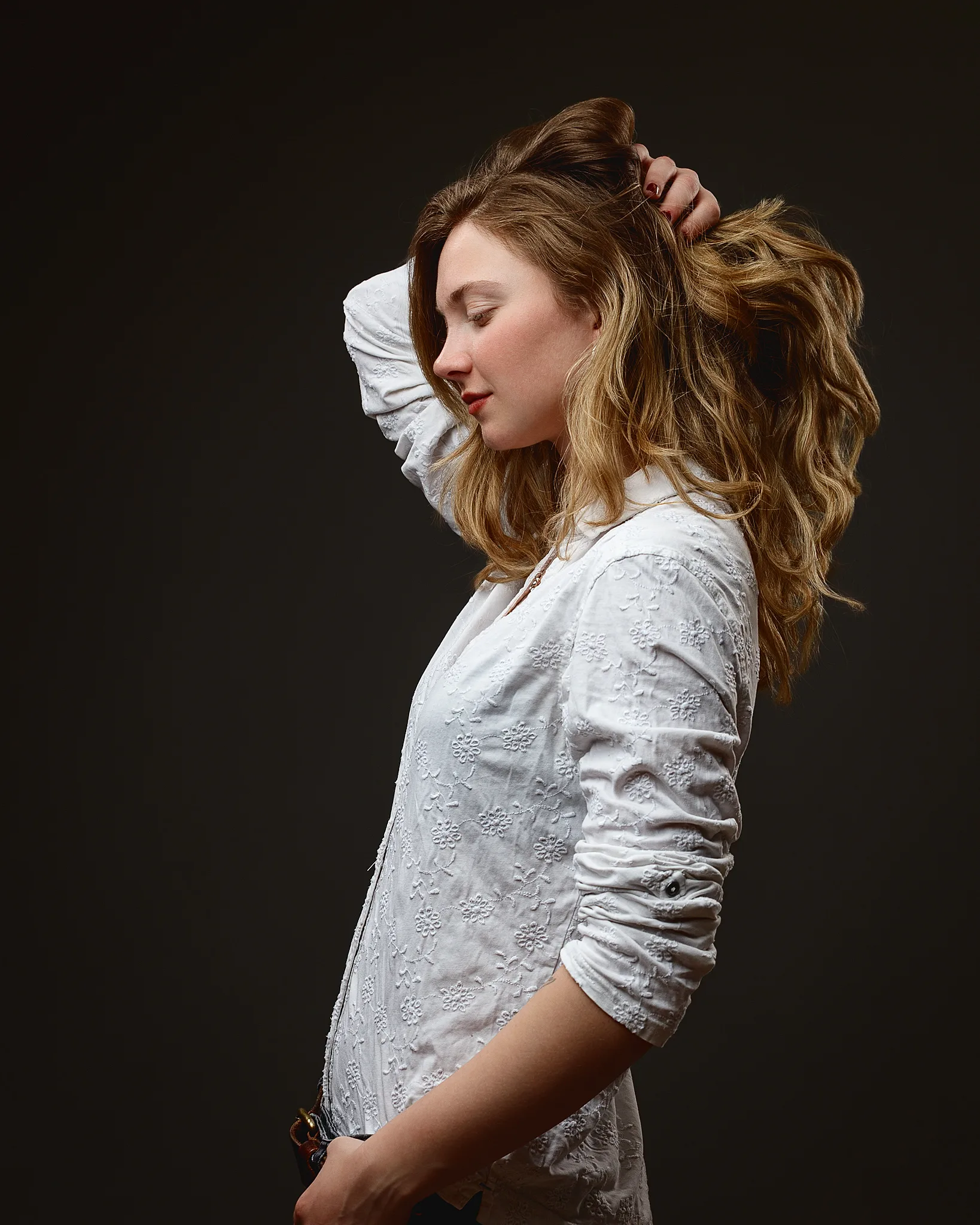
The white blouse look is particularly useful from a portfolio point of view because it is clean, simple, and versatile. It gives a clearer view of posture and shape while still keeping the styling understated.
This sort of image can be very helpful in a model portfolio because it does not rely on heavy styling to work. It is easy to overthink portfolio images, especially for someone new to modelling. Sometimes the strongest photographs are the ones where there is very little to hide behind.
A simple white blouse against a clean studio background keeps the focus on the model. It shows how they hold themselves, how they respond to direction, and how they work with subtle changes in pose and expression. These are the details that matter when building a useful model portfolio.
For Annabelle, this look added a quieter but important part of the set. It gave us images that were less theatrical and more straightforward, which helped balance the more editorial frames from later in the shoot.
Adding a Stronger Editorial Element
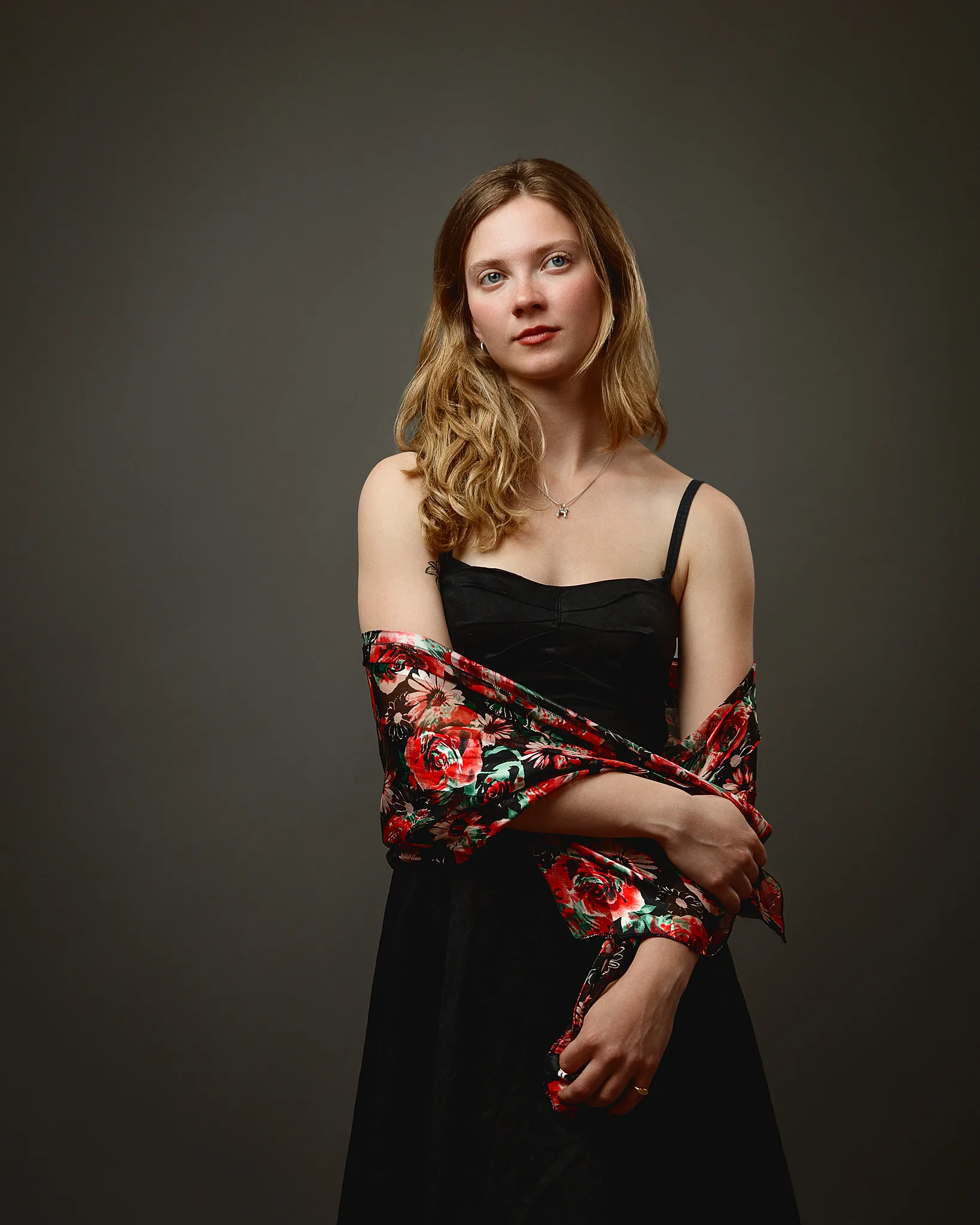
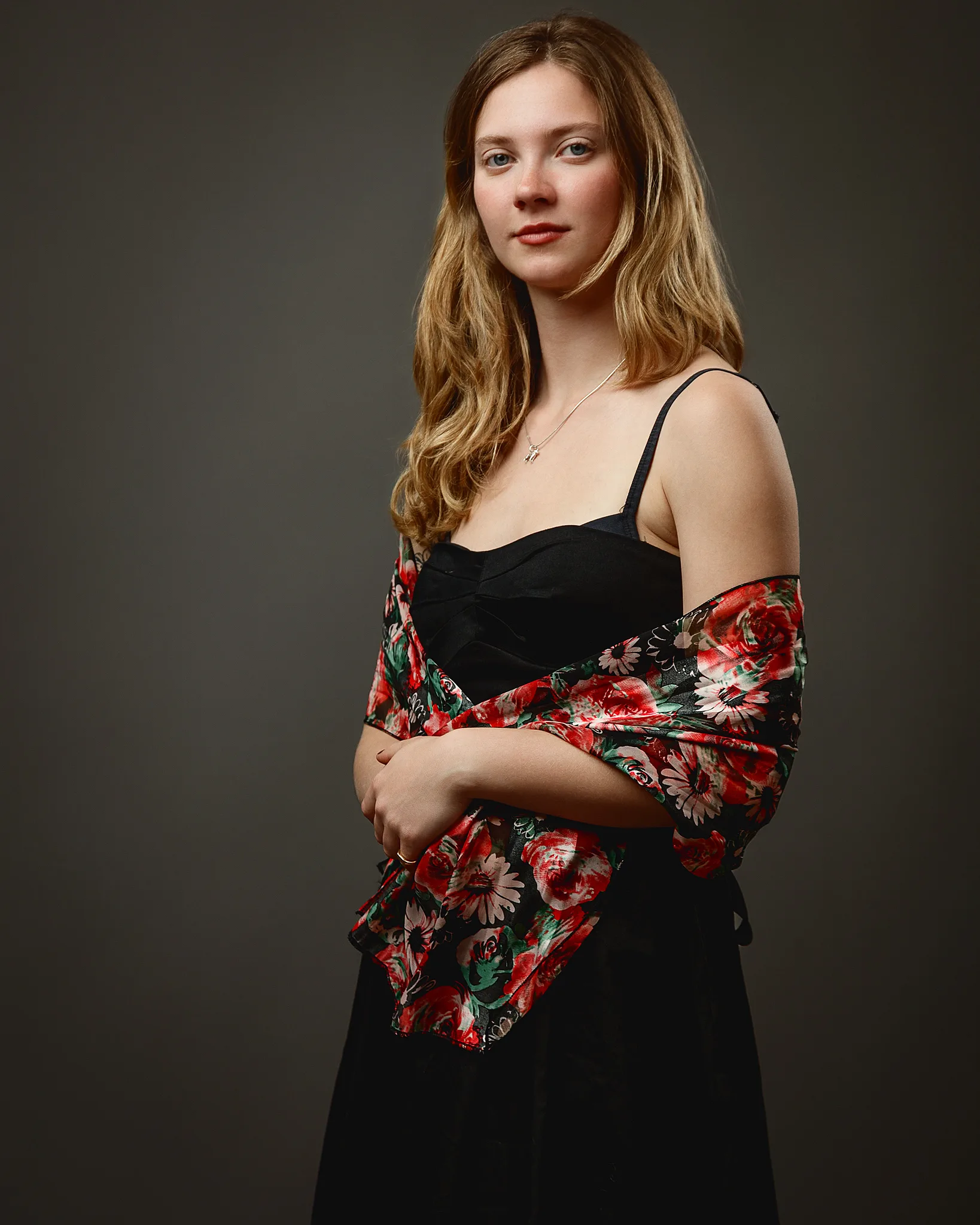
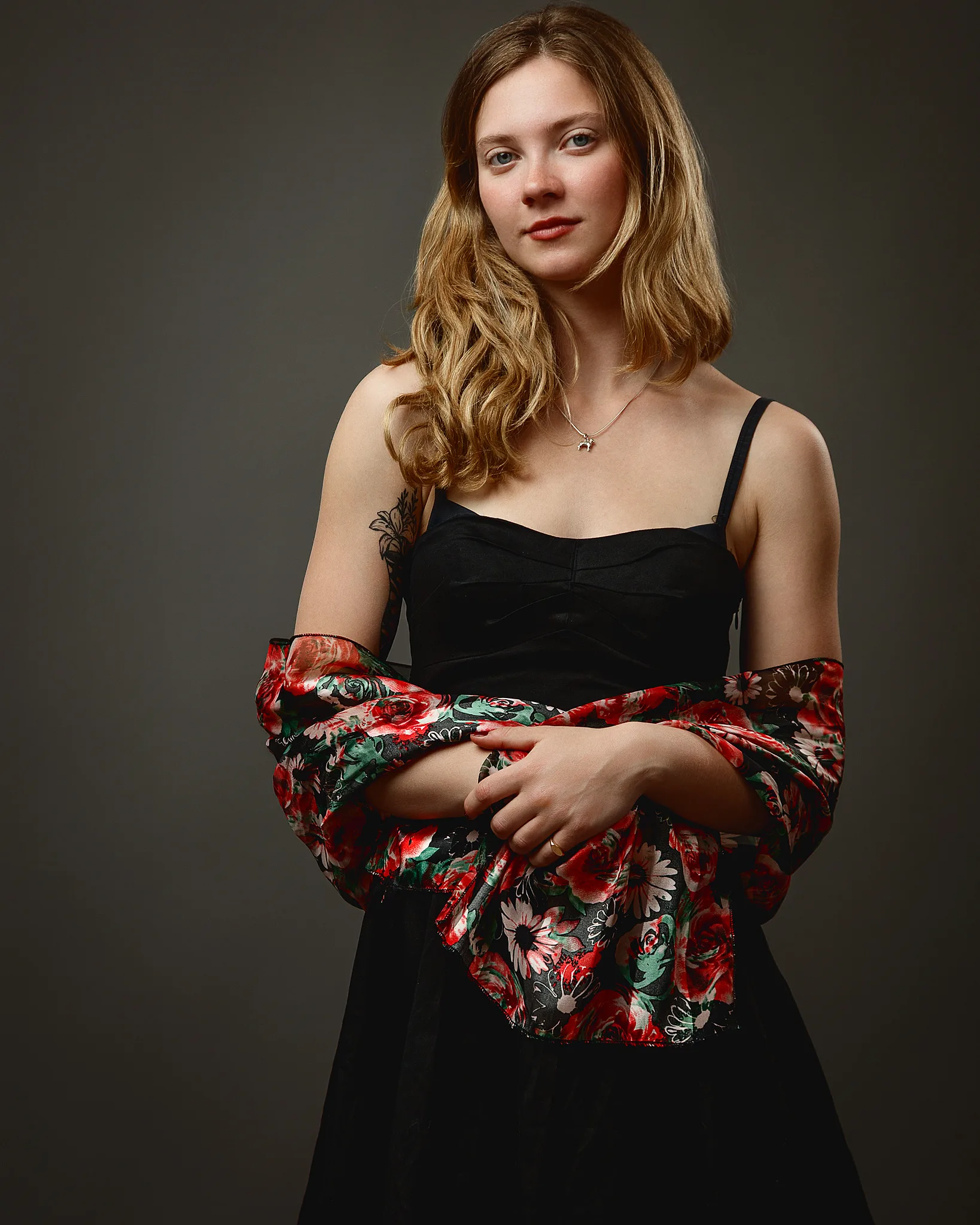
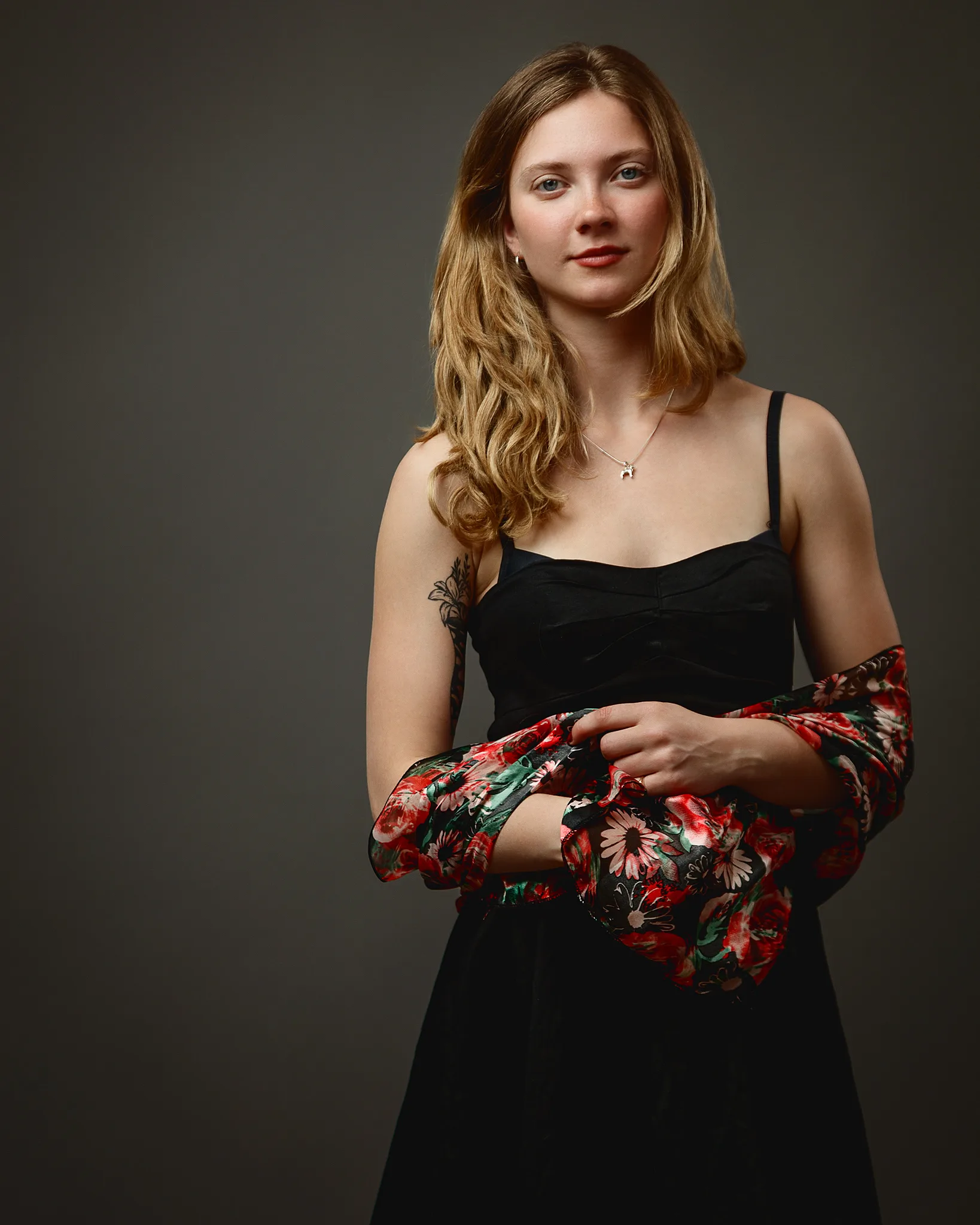
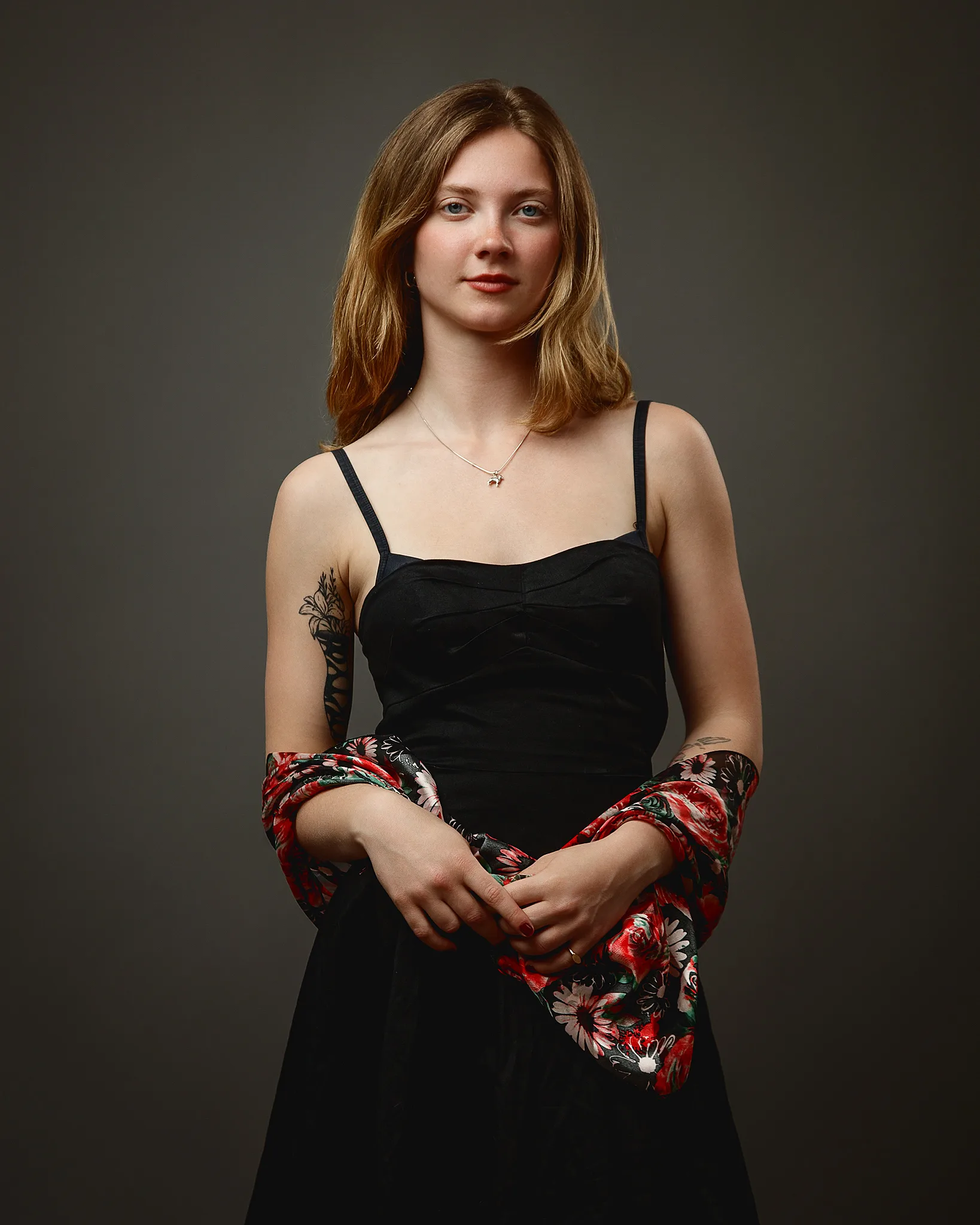
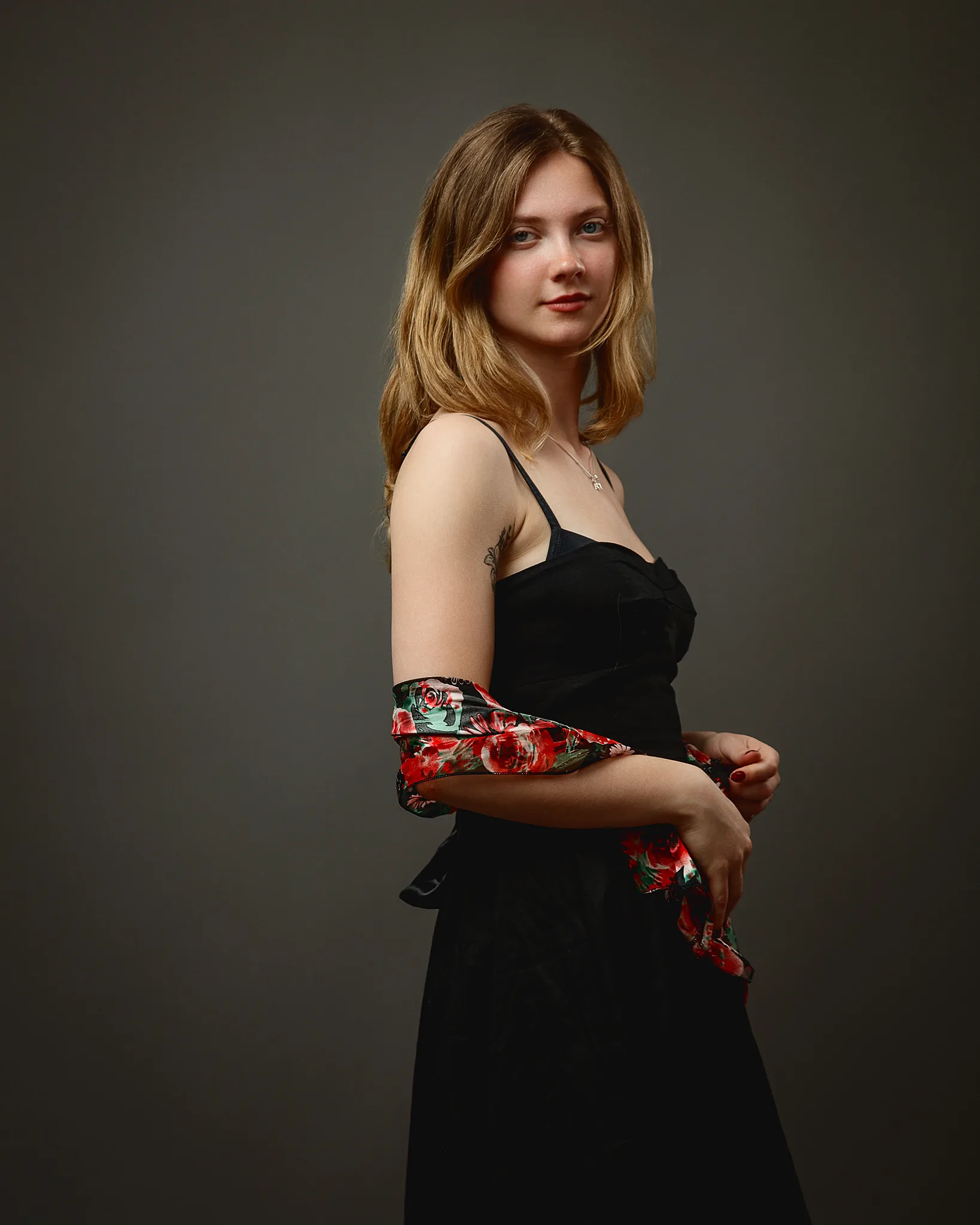
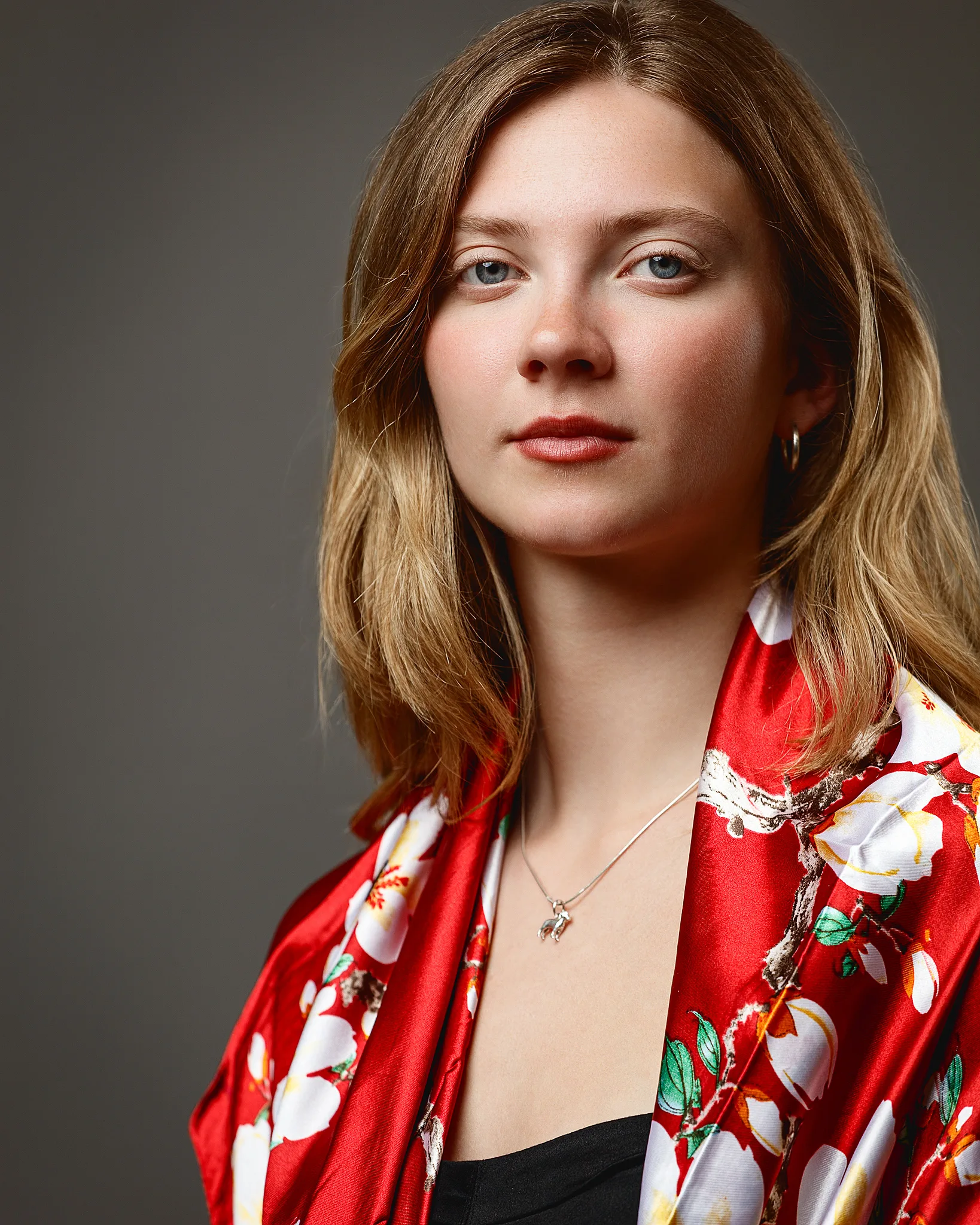
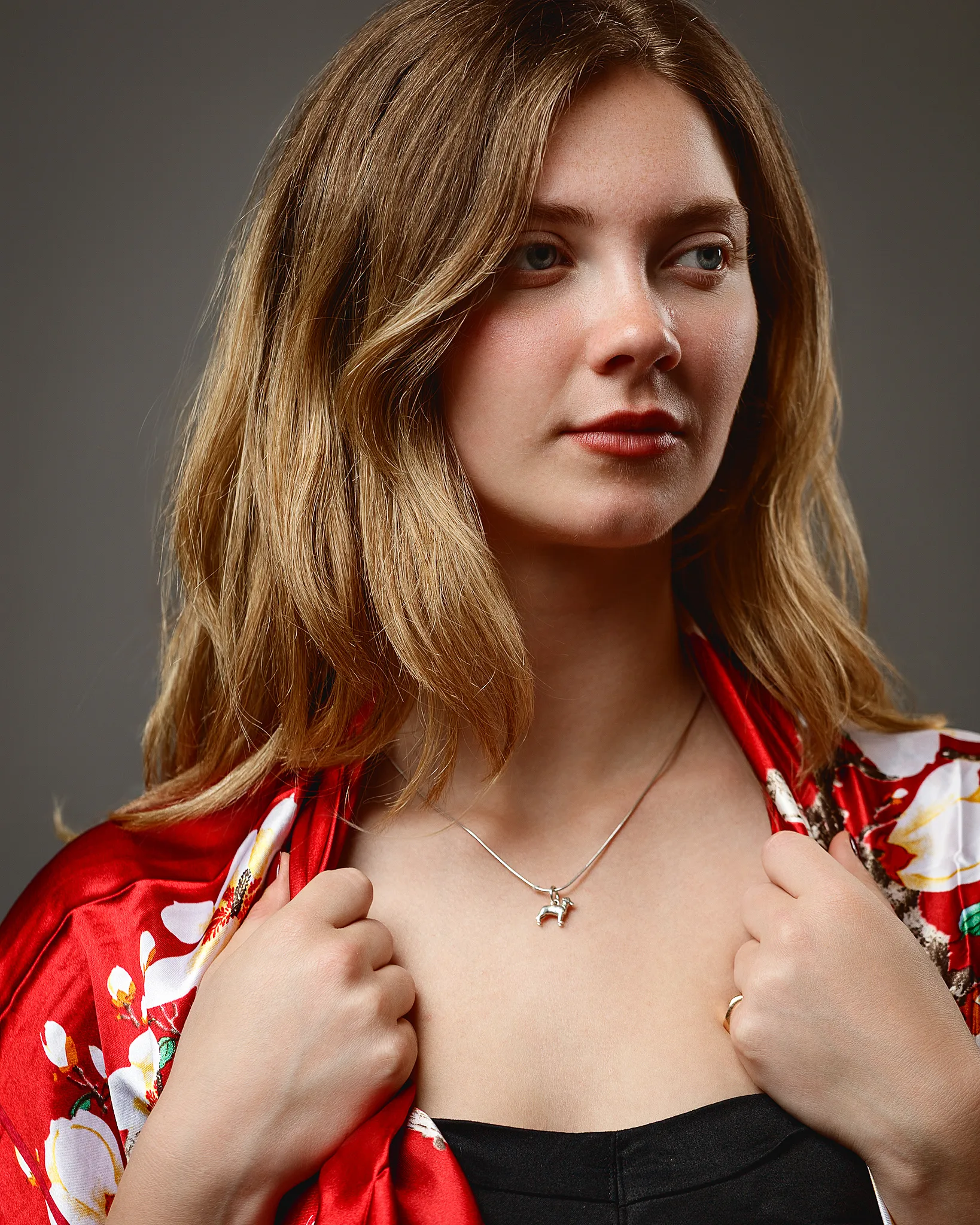
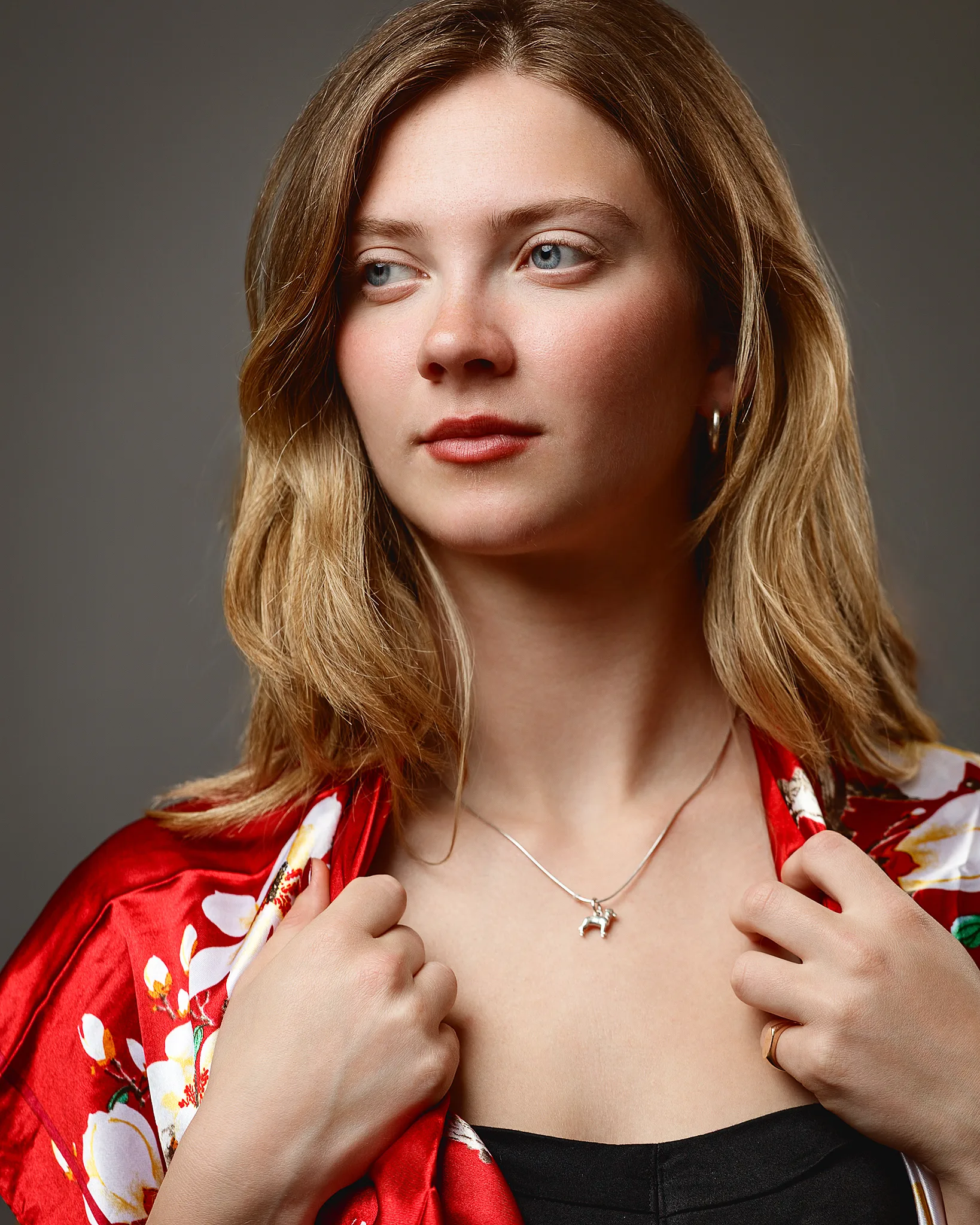
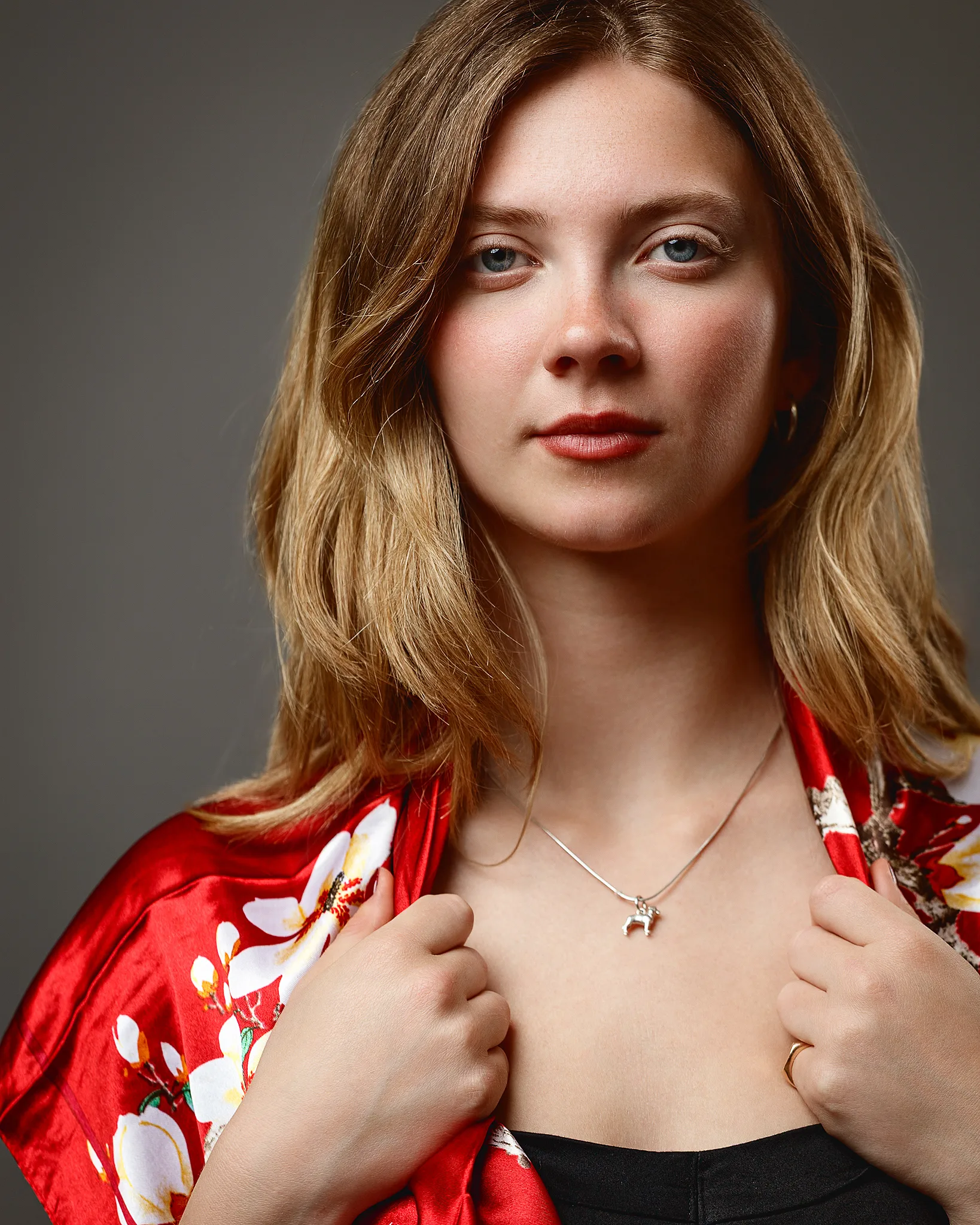
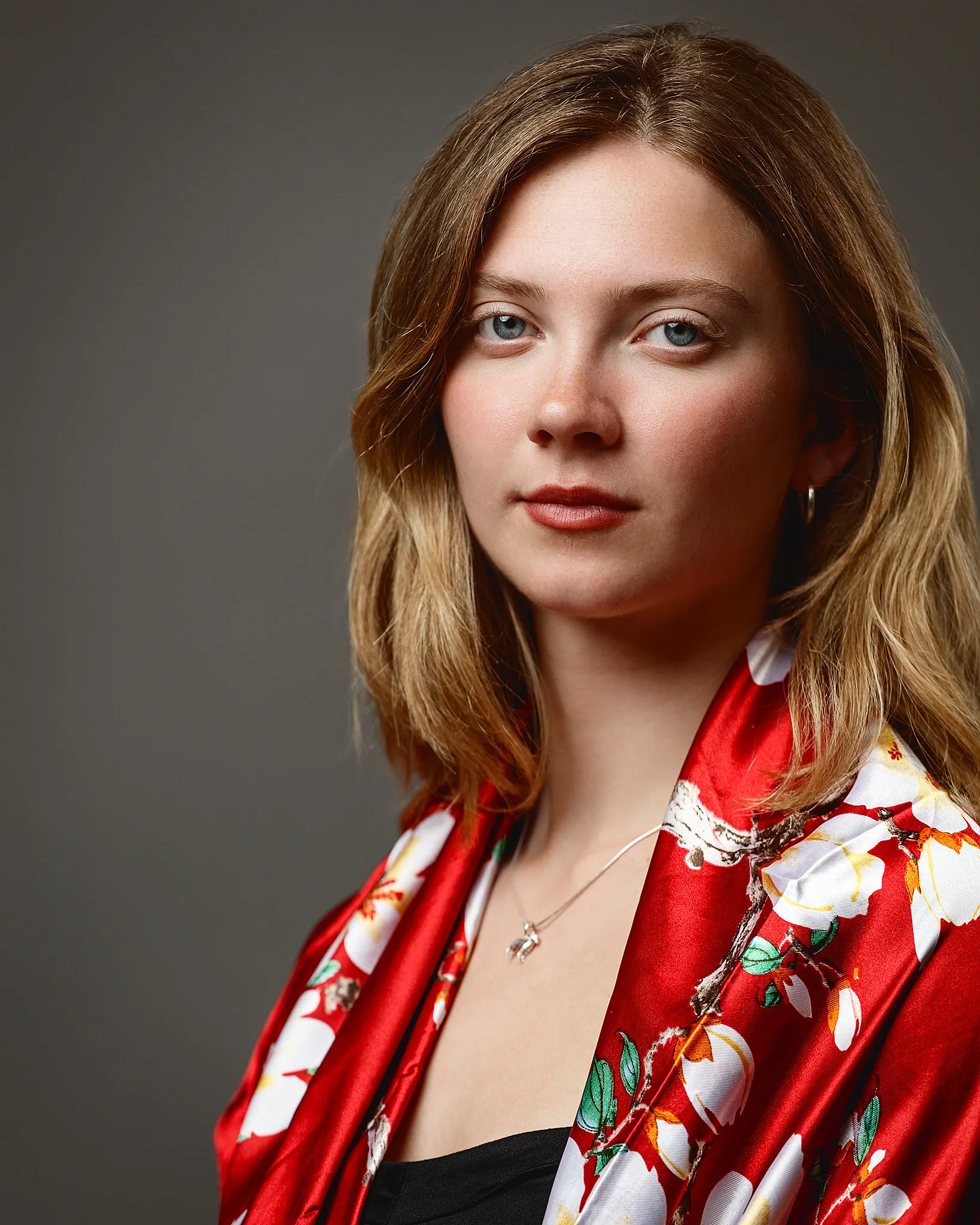
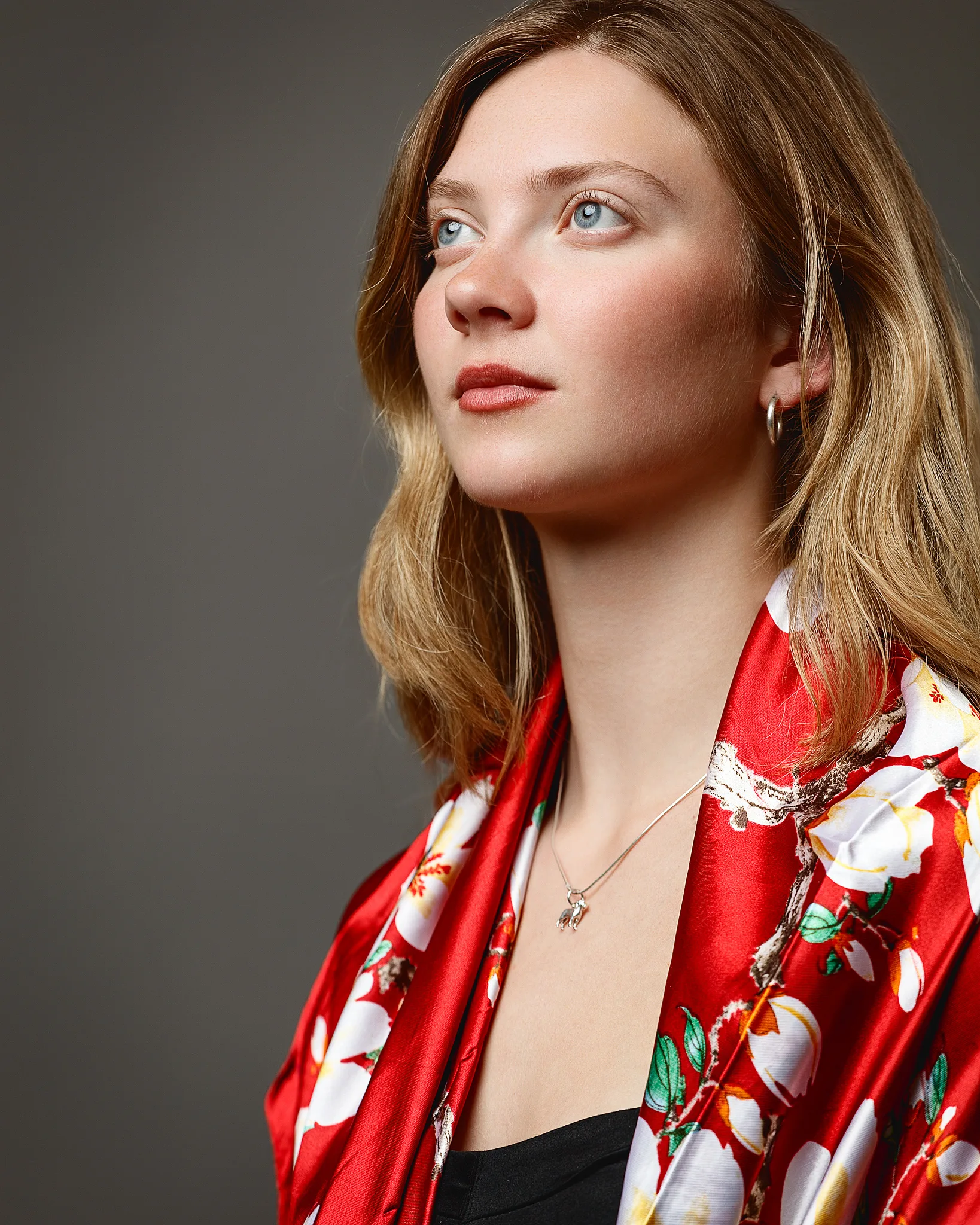
The black dress with the floral scarf brought in a stronger editorial element. The tattoo, the black dress, and the red floral fabric introduced more personality and visual contrast.
This part of the shoot felt less like a standard portrait and more like a styled fashion image. That gave the portfolio another useful layer. It showed that Annabelle could work with more expressive styling without losing her own presence in the image.
The key with this kind of look is not to let the styling overpower the person. A scarf, a dress, a tattoo, or a strong colour can all become the main subject if the photographer is not careful. My aim was to use those elements to support the portrait rather than dominate it.
The red floral fabric worked particularly well because it introduced colour and movement while still allowing Annabelle’s face and expression to remain central. That is always the balance I am looking for in editorial-style studio portraits.
A More Dramatic Feather Collar Portrait
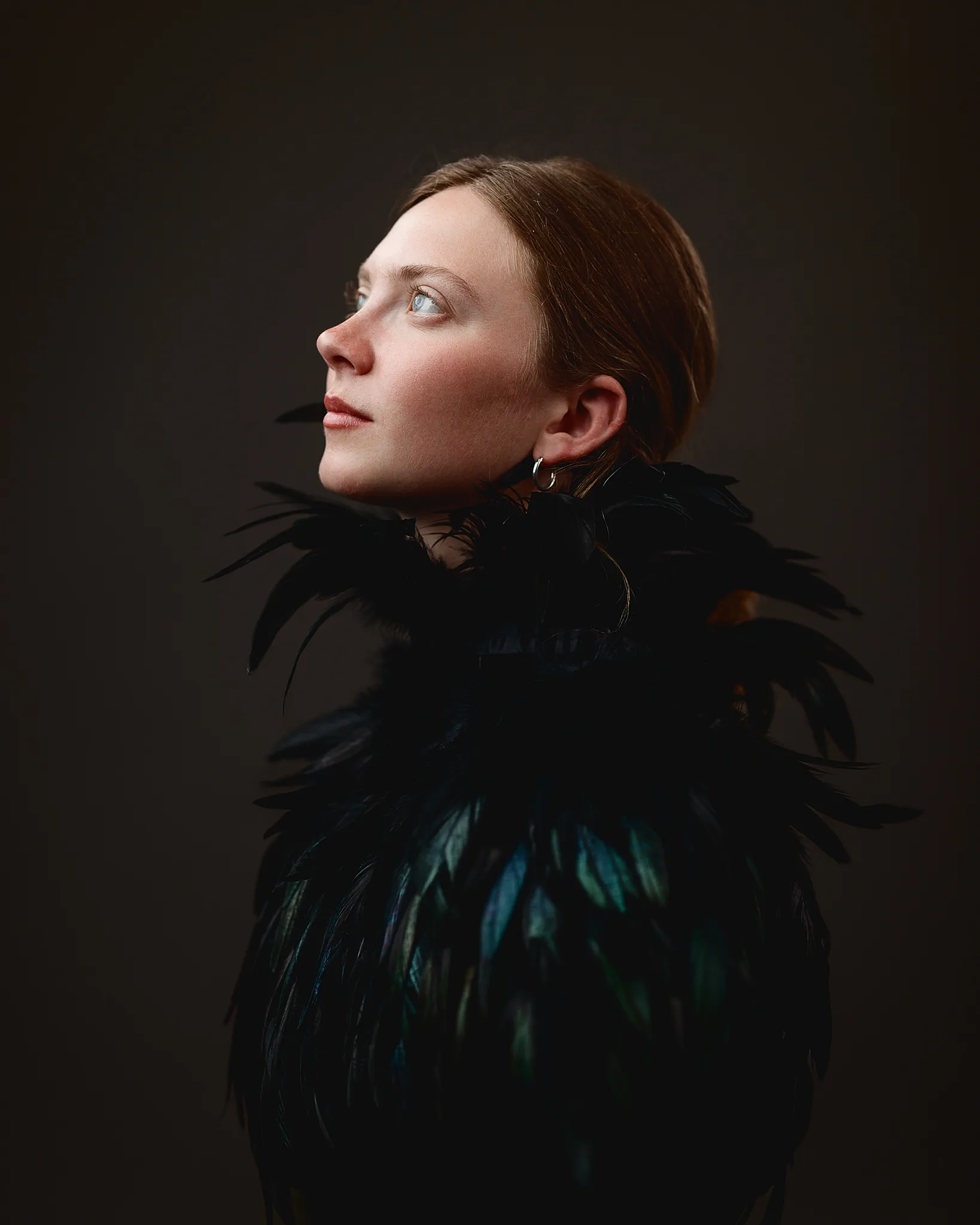
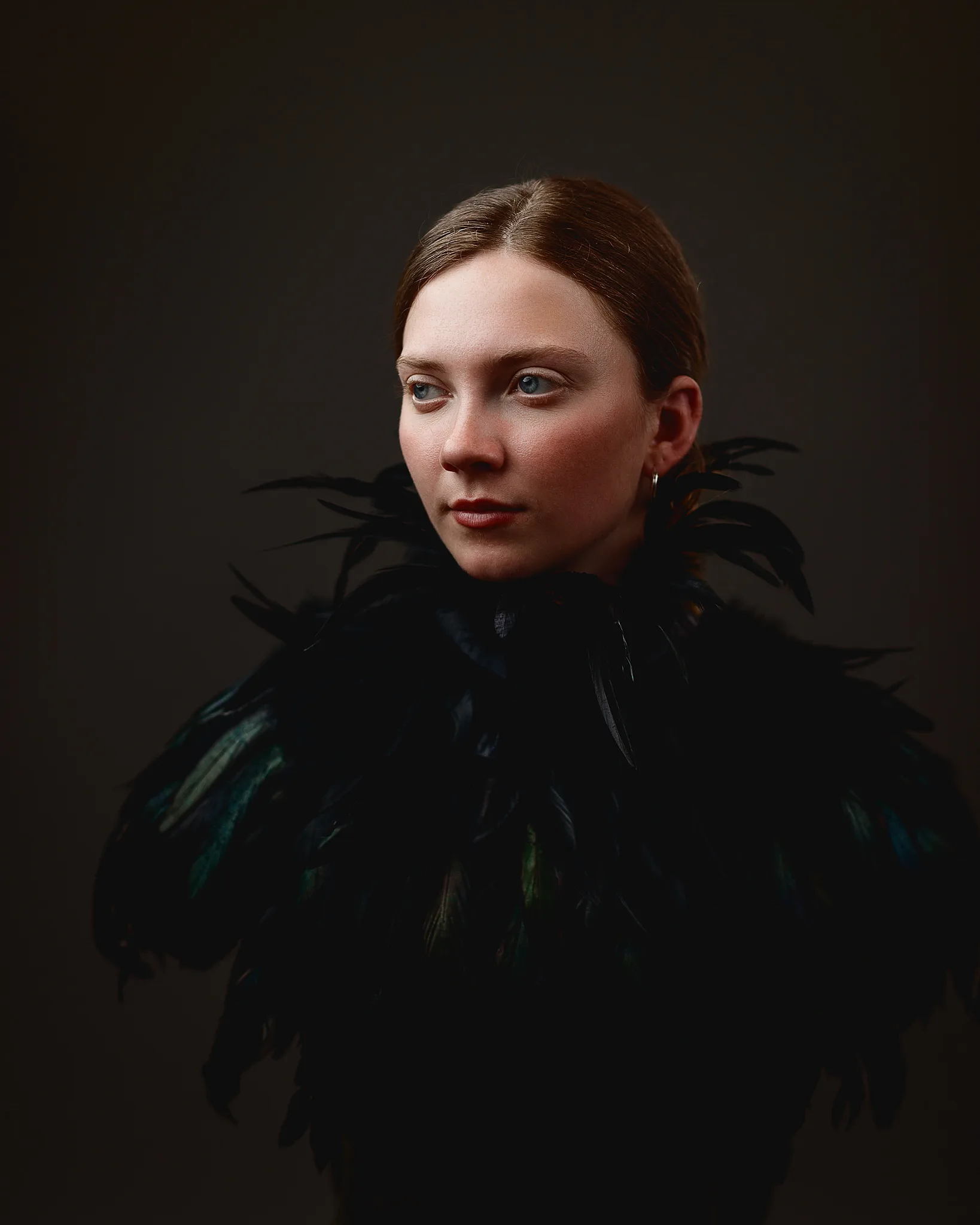
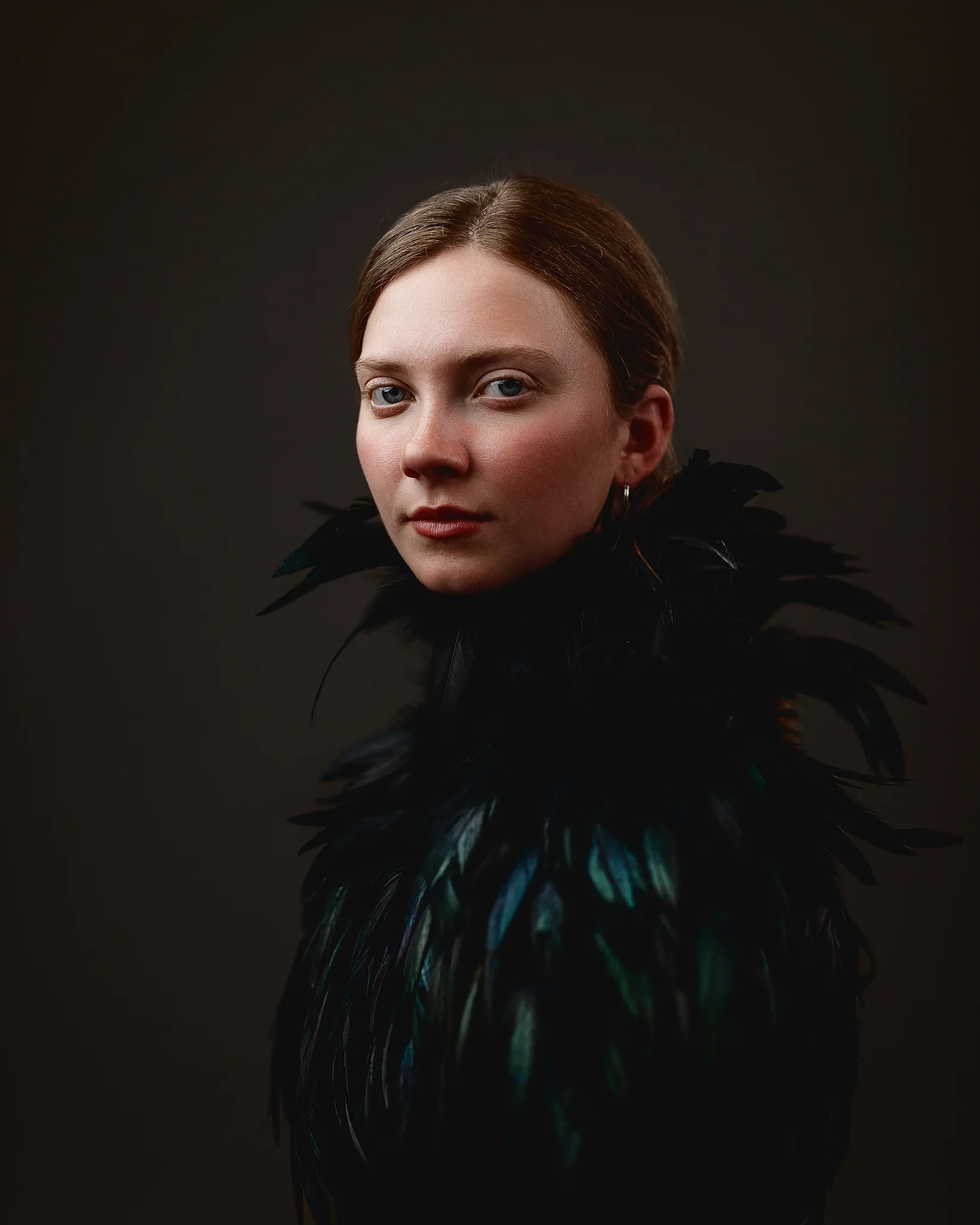
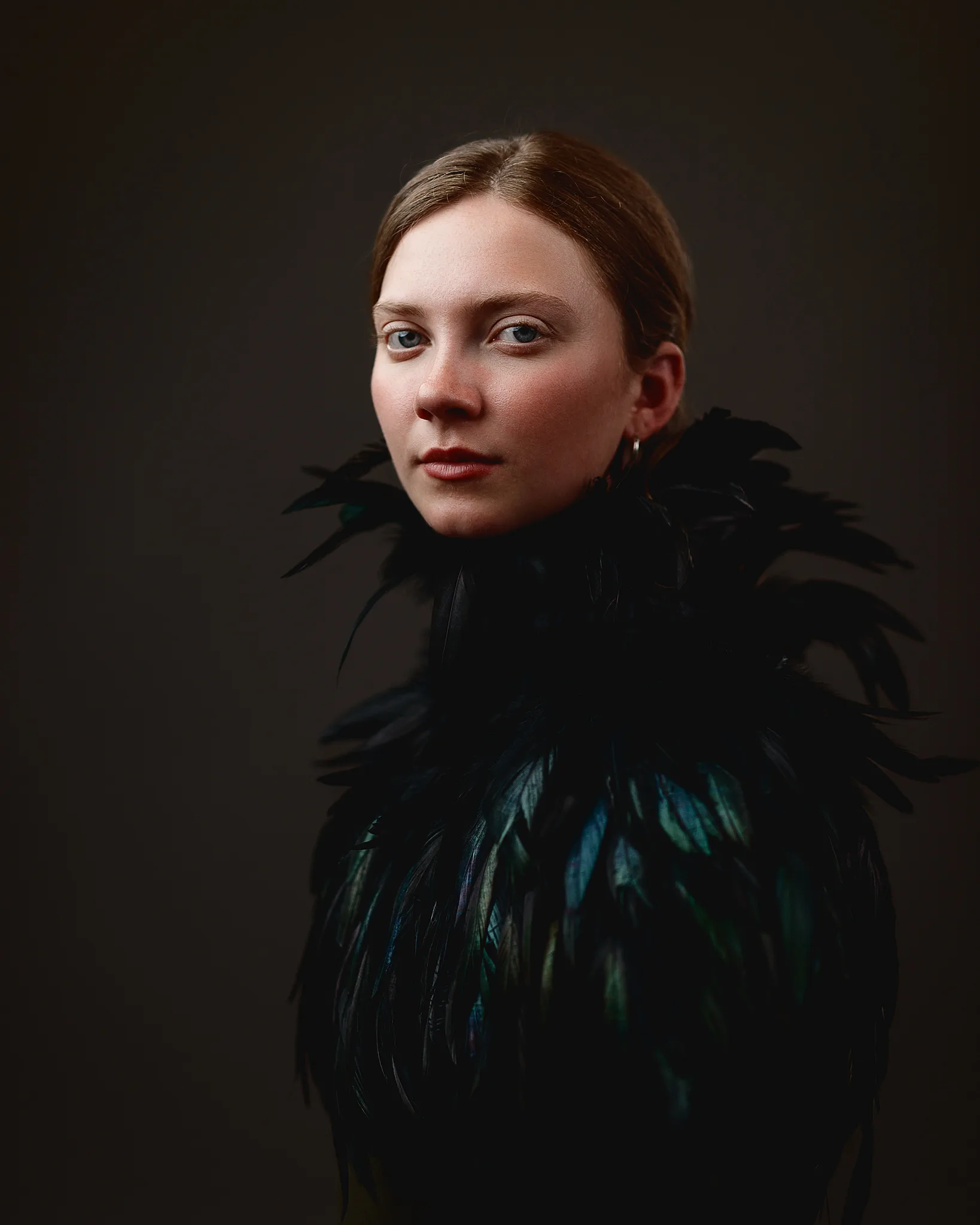
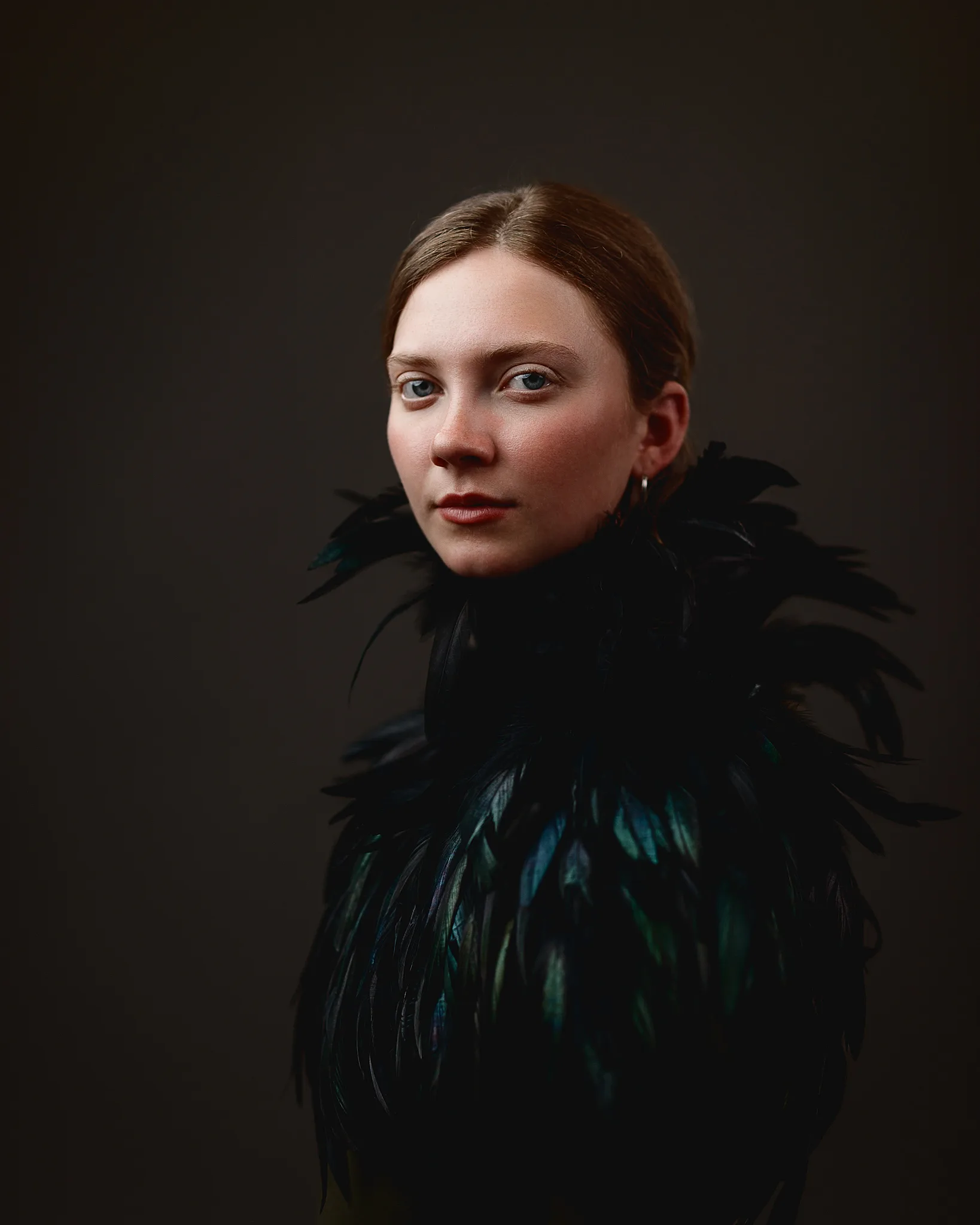
The feather collar image is one of the most dramatic frames from the shoot. It has a darker, more theatrical quality, and the close crop works well because Annabelle’s expression remains composed.
This image gives the portfolio a more creative edge. It shows a different type of presence, where the styling is stronger and the frame feels more intense. For a first studio model portfolio shoot, I think it is useful to include one or two images like this, provided they still feel connected to the rest of the set.
The feather collar could easily have become too much if the expression had been exaggerated or the lighting too heavy-handed. Instead, the controlled expression helped keep the image grounded. It feels more dramatic, but still portrait-led.
That is often where the best creative portrait images sit for me. They have enough styling and atmosphere to feel distinctive, but they still come back to the person in the photograph.
Adding Colour with the Blue Dress and Red Floral Scarf
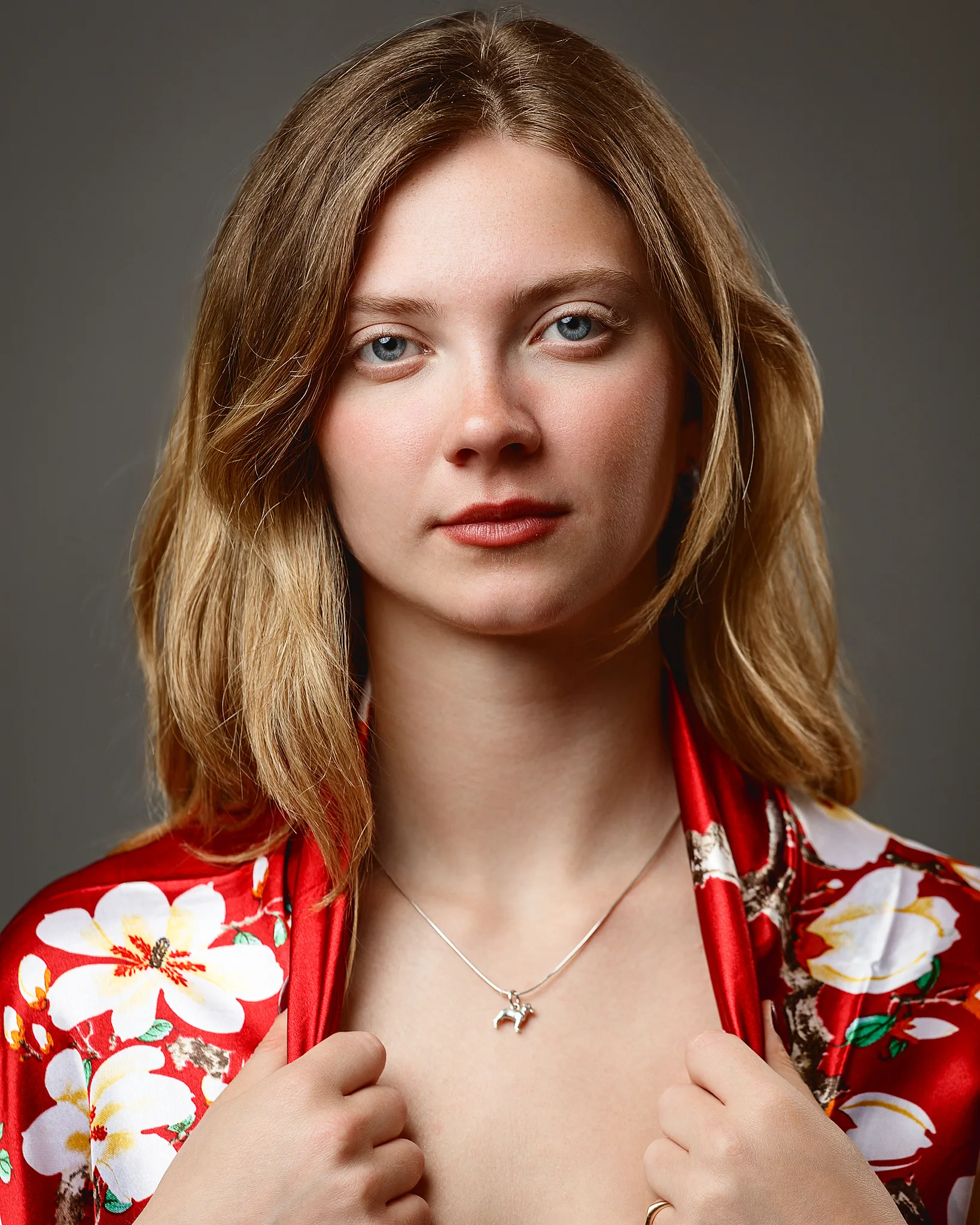
The blue dress and red floral scarf images added colour and variation towards the end of the set. The blue dress had a softer and more elegant feel, while the red scarf created a stronger visual statement.
Both looks helped show that Annabelle could work across different styling choices without losing her own presence in the images. That is important. A model portfolio should not look like the same photograph repeated with different outfits, but it also should not feel so scattered that there is no consistency.
The blue dress softened the overall tone, giving the set a more refined and graceful quality. The red scarf added contrast and energy. Together, they helped broaden the portfolio while still fitting within the overall studio approach.
For a first shoot, this is a strong outcome. The set shows natural portraits, cleaner model portfolio images, slightly fashion-led styling, and a more editorial finish. There is enough variety to show potential, but the lighting, background choices, and photographic approach keep the whole shoot coherent.
Direction, Confidence, and Communication
Working with Annabelle was a good reminder that model portfolio photography is often as much about direction and communication as it is about lighting and camera settings.
When photographing a young model, or someone who is building their first portfolio, I think it is important to create a calm, professional environment where they can take direction, try different expressions, and gradually build confidence during the session. It is not about expecting someone to arrive knowing exactly what to do. It is about guiding them through the shoot and allowing them to develop as the session progresses.
Because Annabelle is also a photographer, she had an understanding of the process, but modelling requires a different kind of confidence. Being in front of the camera is very different from standing behind it. There is more vulnerability in it, especially when the shoot is designed to show expression, posture, and presence.
This is where the pace of the shoot matters. I would rather build a set carefully than rush through too many looks without giving the model time to settle. Olya’s presence as a supportive chaperone also helped create a relaxed atmosphere, which I think is important for this kind of work.
Why Variety Matters in a Model Portfolio
A strong model portfolio should include variety without becoming overcomplicated. During a studio model portfolio shoot, I usually aim to create a mixture of headshots, three-quarter portraits, full-length images, and more expressive editorial-style frames.
Each type of image has a different purpose. A simple headshot shows the face clearly. A three-quarter portrait gives more information about posture and body language. A full-length image shows shape and proportion. A more editorial frame shows how the model responds to styling, mood, and creative direction.
For Annabelle’s first studio model portfolio shoot in Suffolk, the range of images was one of the strongest parts of the session. The shoot did not rely on one look or one mood. It moved through softness, structure, colour, drama, and simplicity, while still keeping the focus on Annabelle.
That is what makes a portfolio useful. It should not just show that someone can be photographed well. It should show how they work in front of the camera.
Studio Lighting for Model Portfolio Photography
Studio lighting gives me control over shape, tone, and consistency, which is particularly useful when creating portfolio images for aspiring models.
In a studio environment, I can keep the lighting clean and repeatable while making small adjustments to suit each look. That level of control helps keep the portfolio consistent, even when the styling changes. It also means I can concentrate on expression, posing, and detail rather than constantly reacting to changing outdoor light.
For this shoot, the lighting was kept controlled and relatively simple. The point was not to create overly complicated lighting setups. The point was to use light in a way that supported Annabelle and allowed the images to feel polished, current, and versatile.
Good studio lighting should not always announce itself. Sometimes, it is doing its job best when the viewer notices the person first.
A Useful First Studio Portfolio Shoot
Overall, this felt like a very useful first studio portfolio shoot for Annabelle. It showed natural portraits, clean model portfolio images, slightly fashion-led styling, and a more editorial finish.
What I liked most was that the set had range without losing consistency. The neutral grey and darker studio backgrounds, the controlled lighting, and the gradual shift in styling all helped create a coherent body of work. Annabelle brought presence, patience, and a willingness to try different ideas, and that made the session enjoyable to photograph.
It was also lovely to work with someone who understands photography from both sides of the camera. Annabelle may be new to modelling, but she brought thoughtfulness and awareness to the shoot. With Olya there as a supportive chaperone, the session had a calm and collaborative feel throughout.
For anyone building a first model portfolio, I think this shoot is a good example of why a simple studio approach can be so effective. The images do not need to be overcomplicated. They need to show the person clearly, offer variety, and give a sense of how they respond to direction, styling, and light.
That is what I aimed to create with Annabelle’s first studio model portfolio shoot at my studio in Bentwaters, near Woodbridge in Suffolk.
Model portfolio photography
Building your modelling portfolio?
I photograph new and experienced models across Suffolk. Session details, pricing and booking are all on the aspiring models page.