
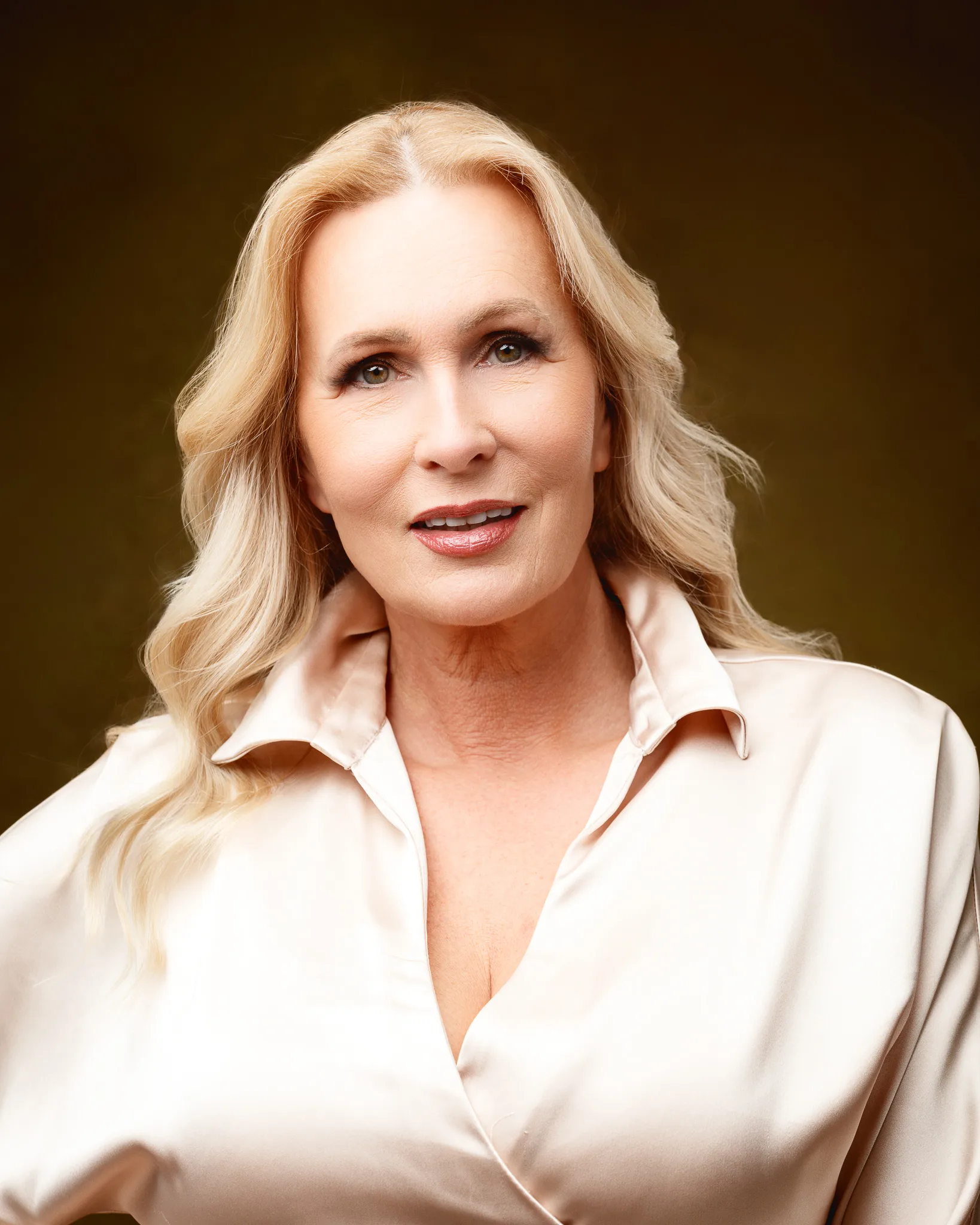
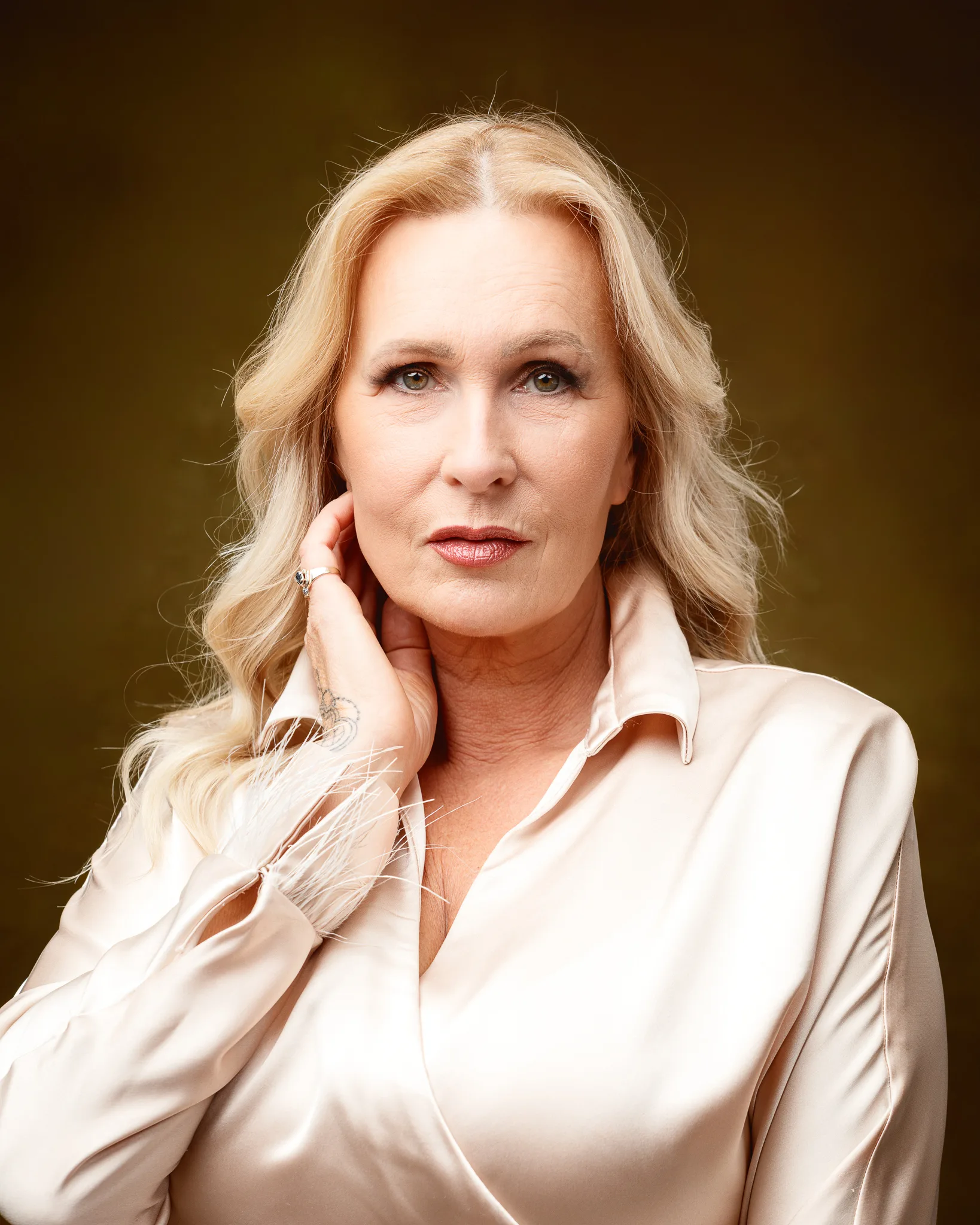
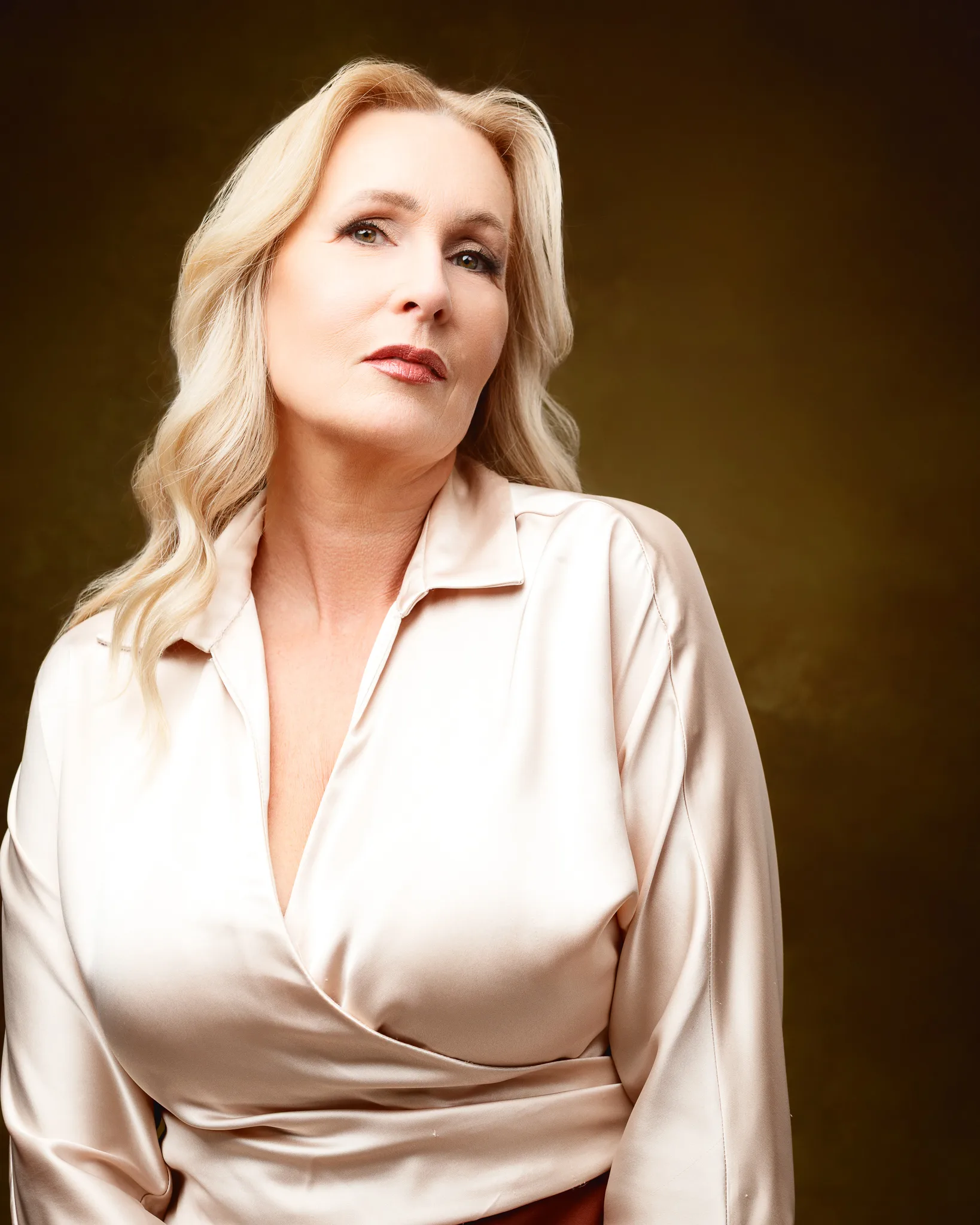
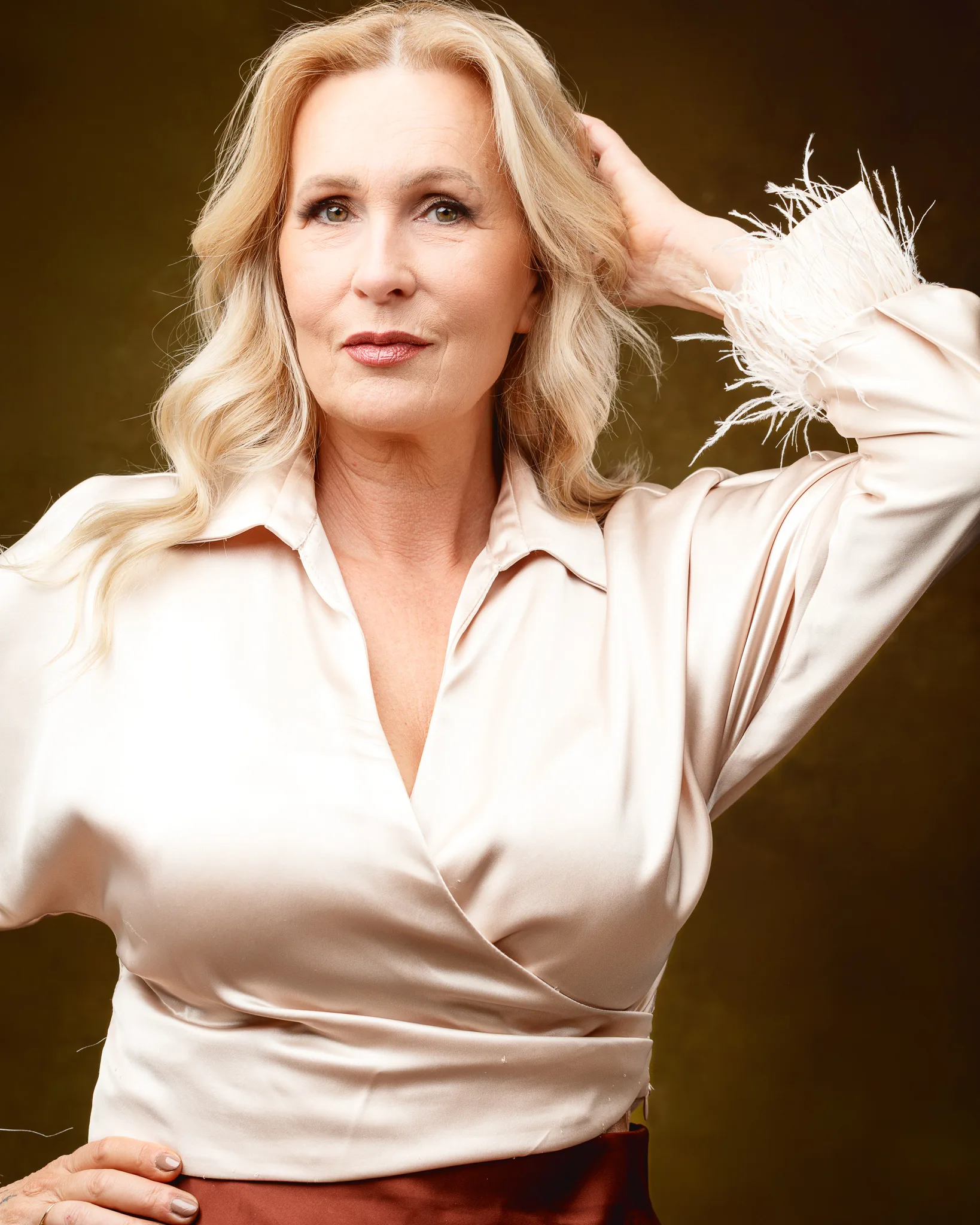
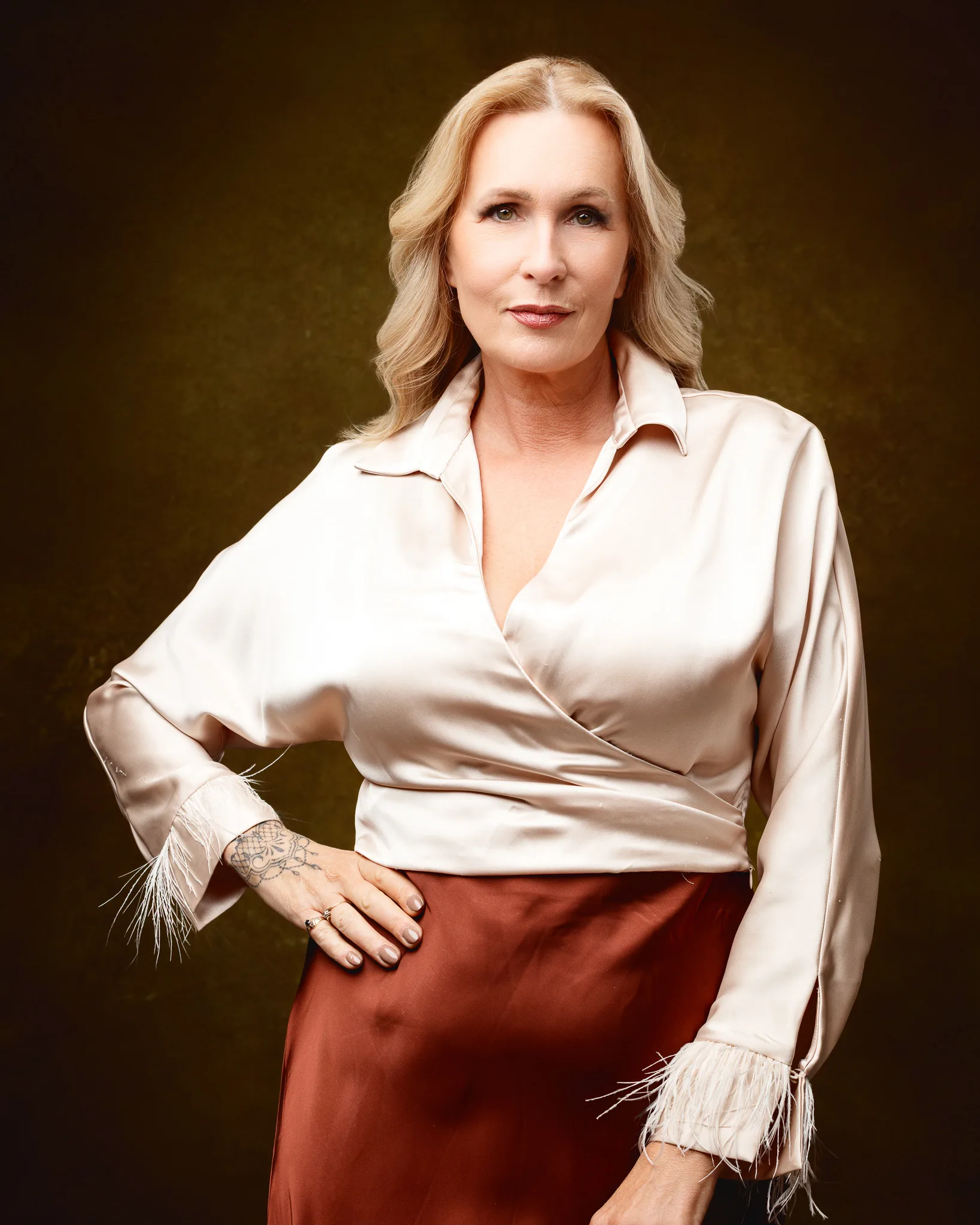
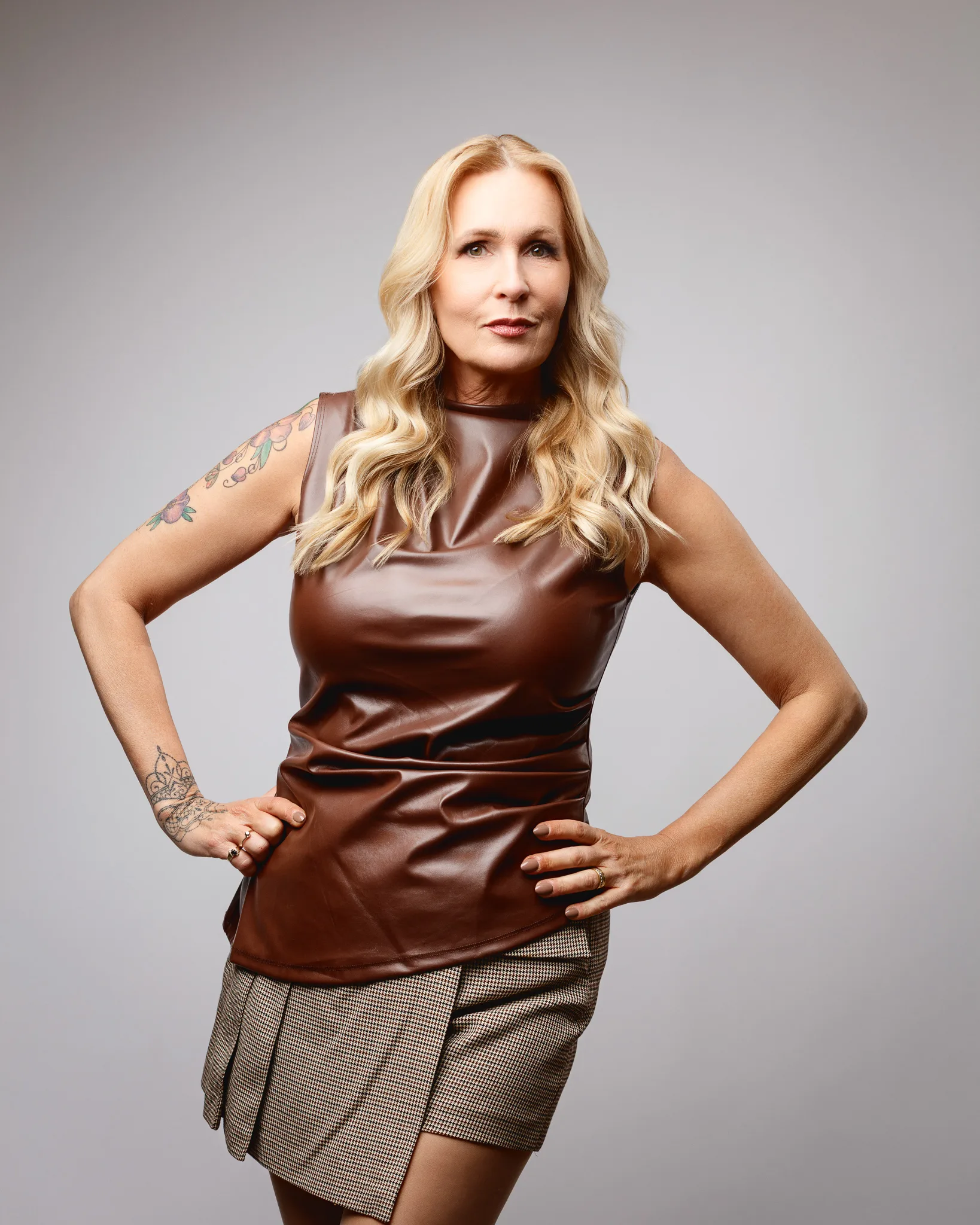
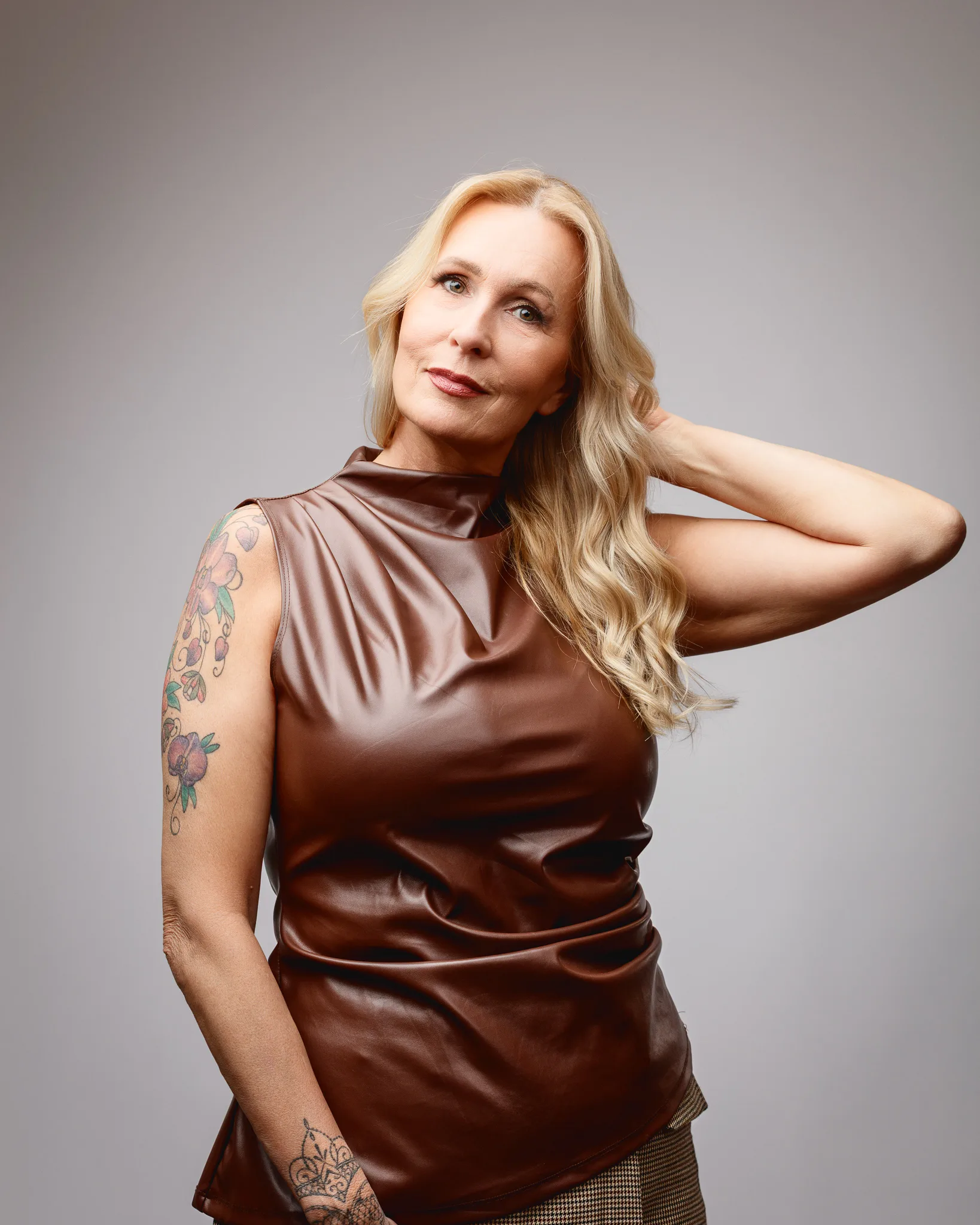
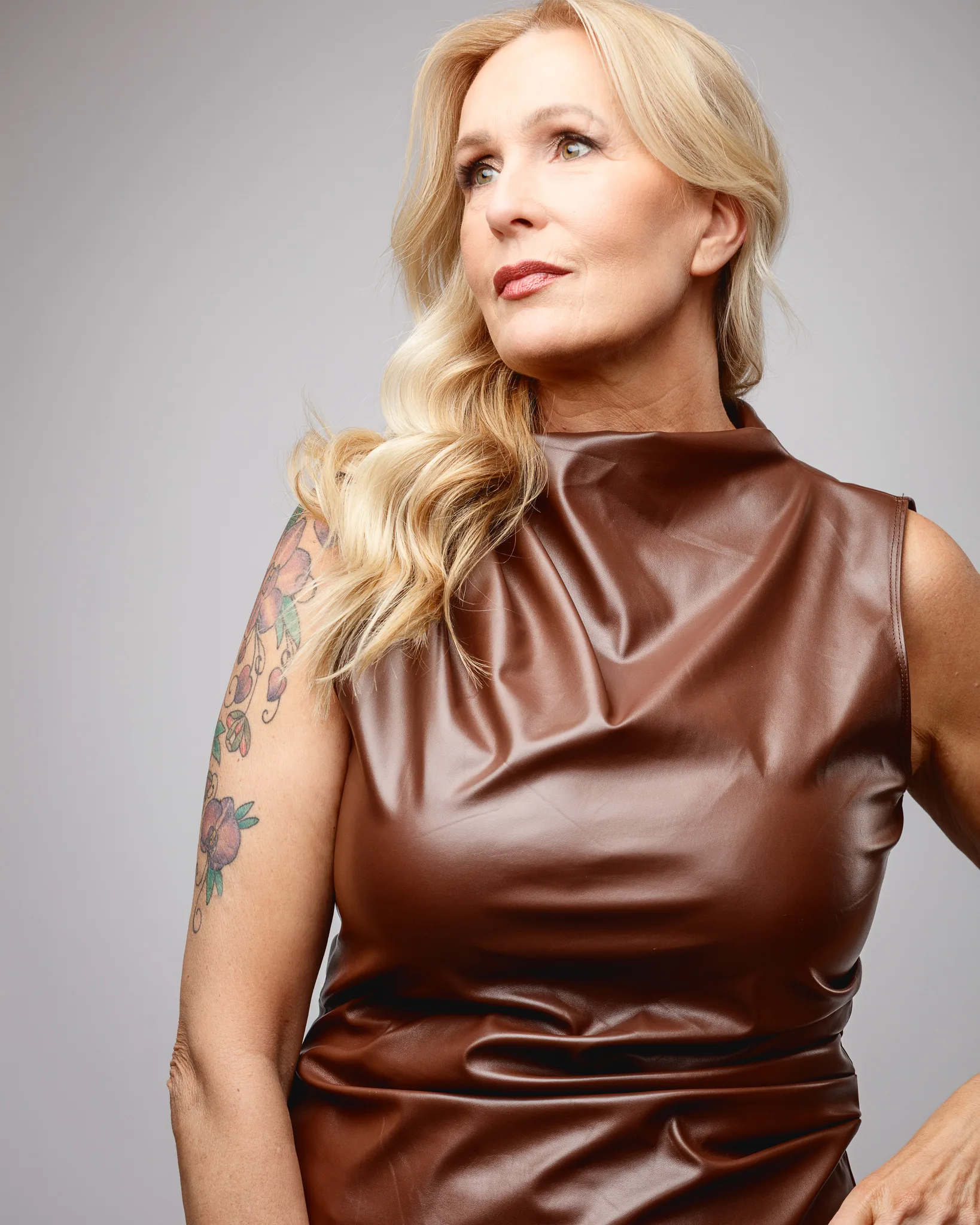
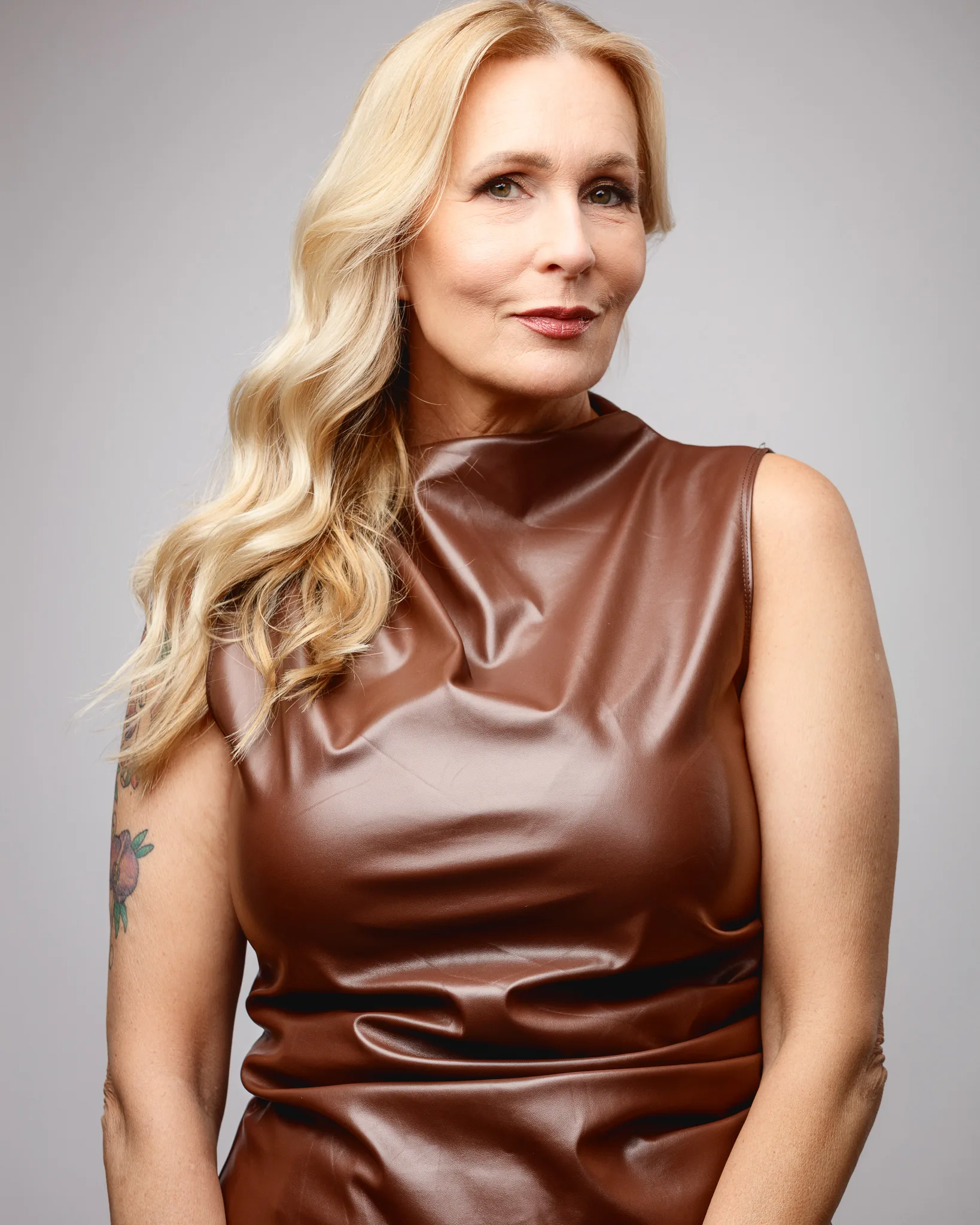
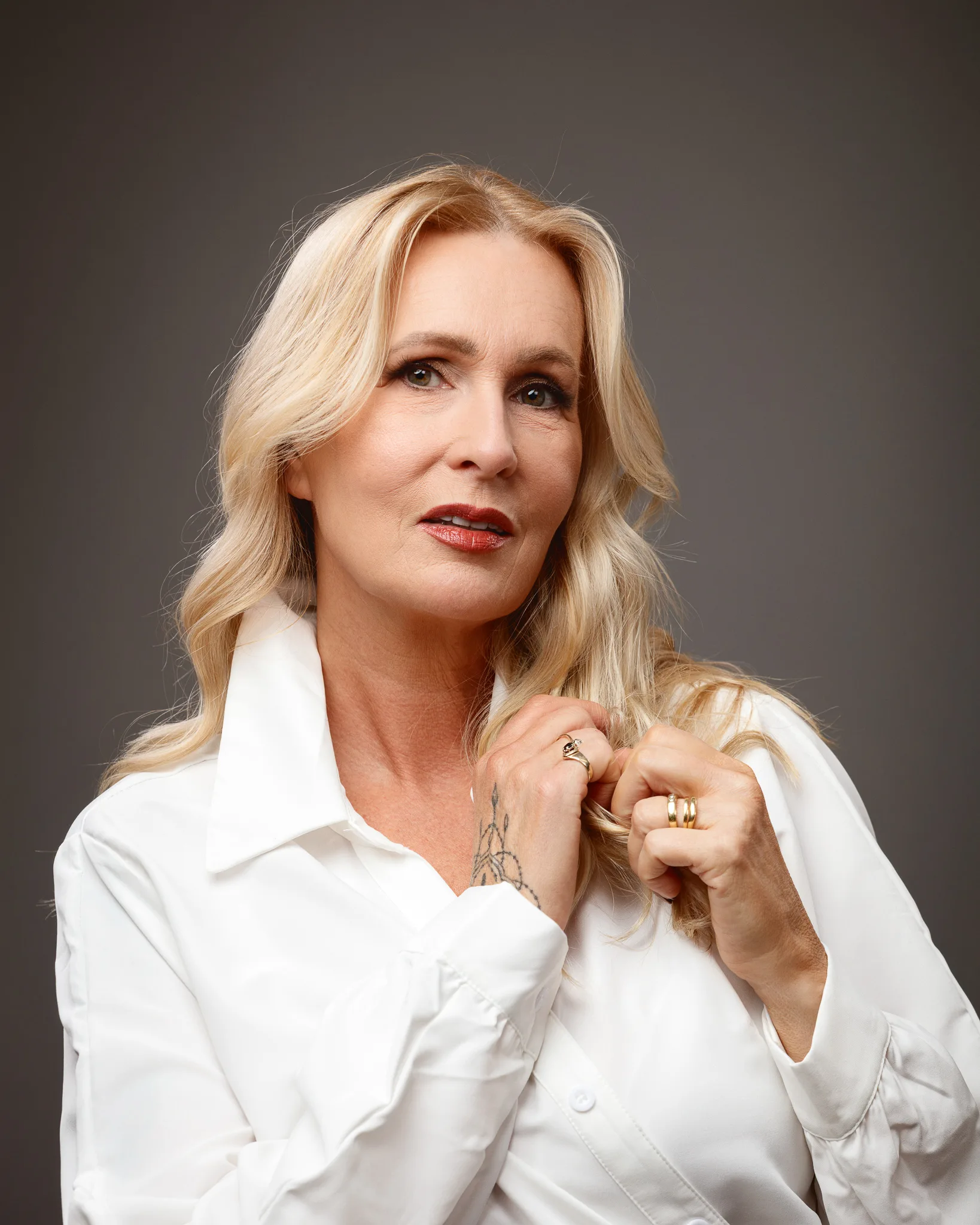
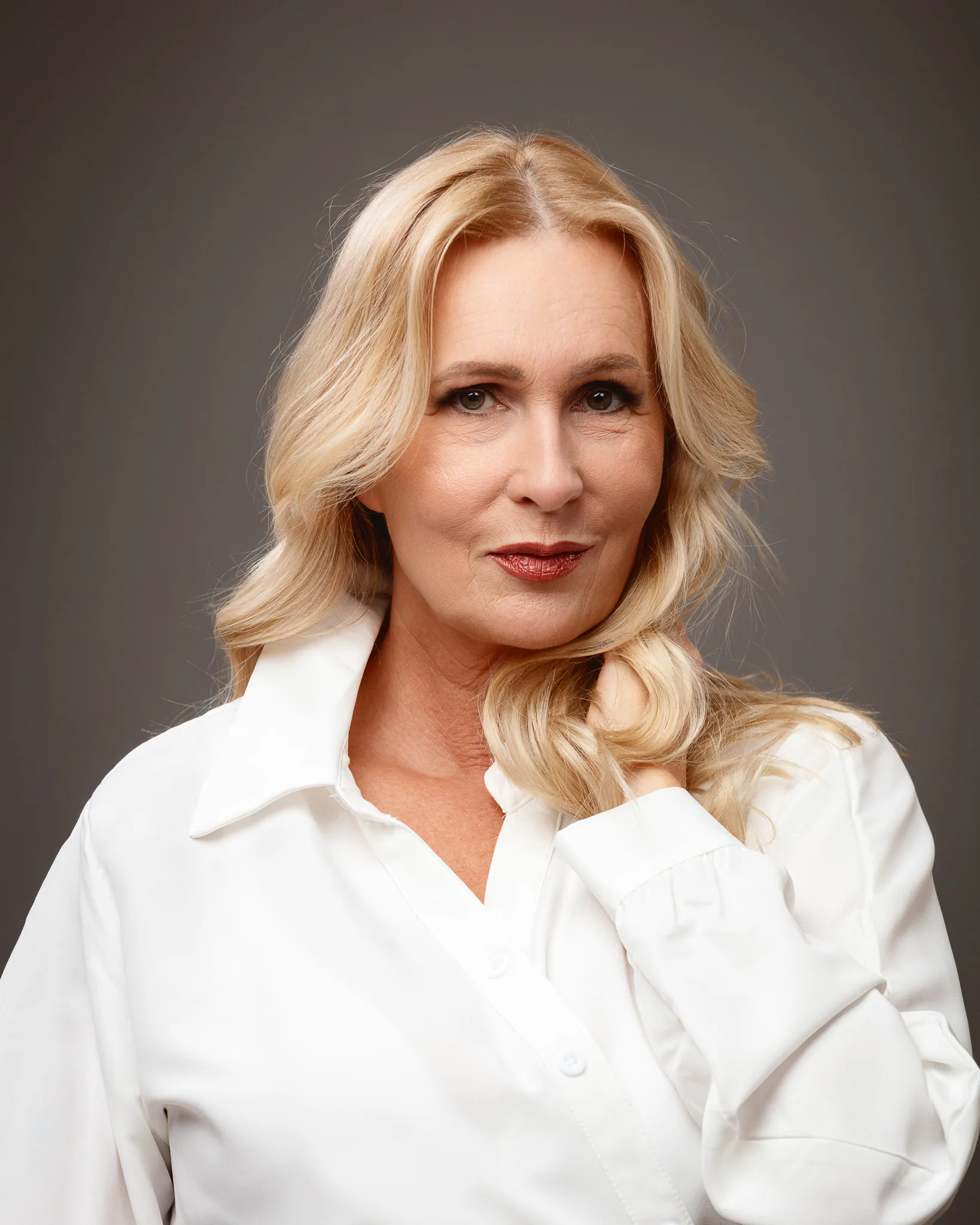
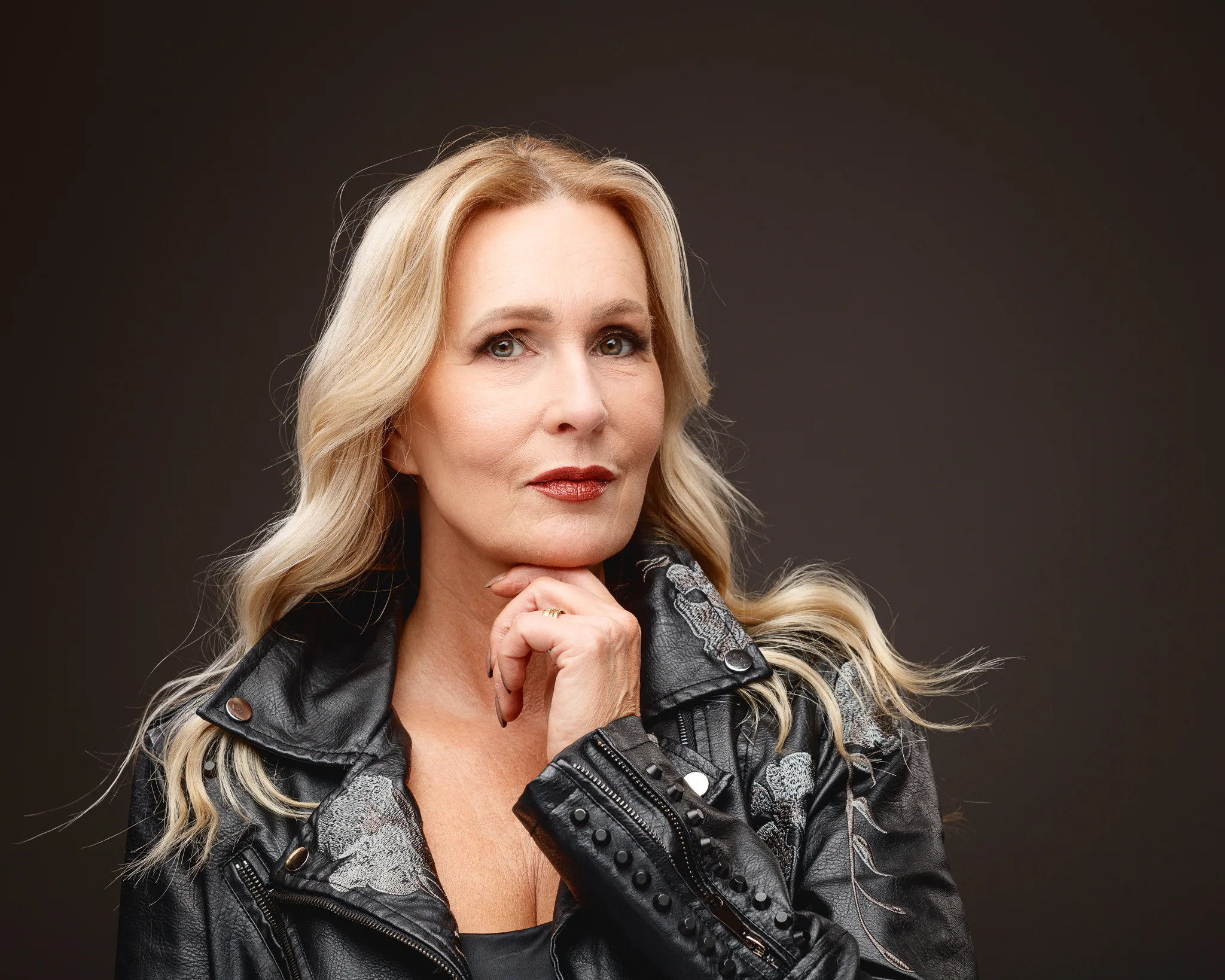
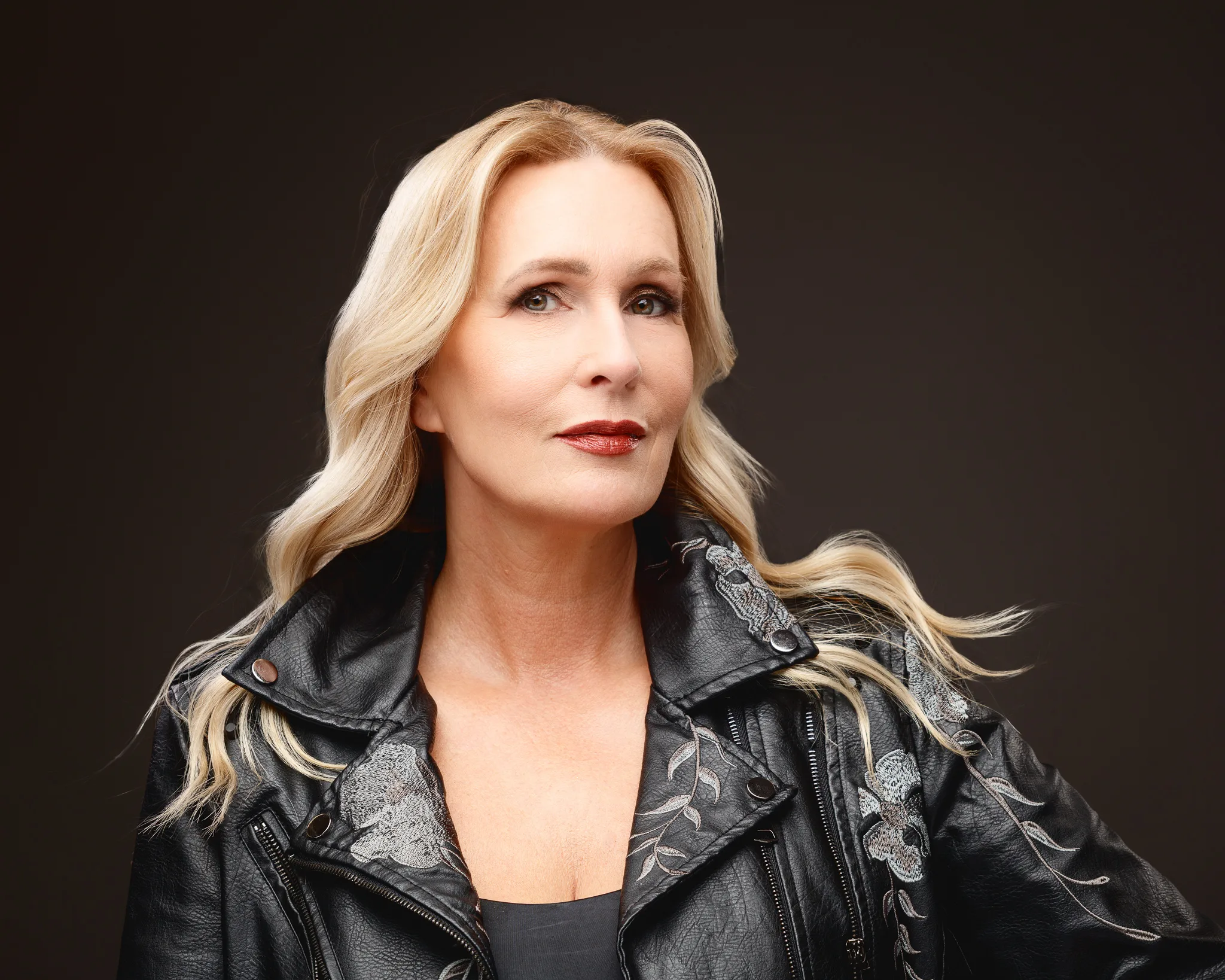
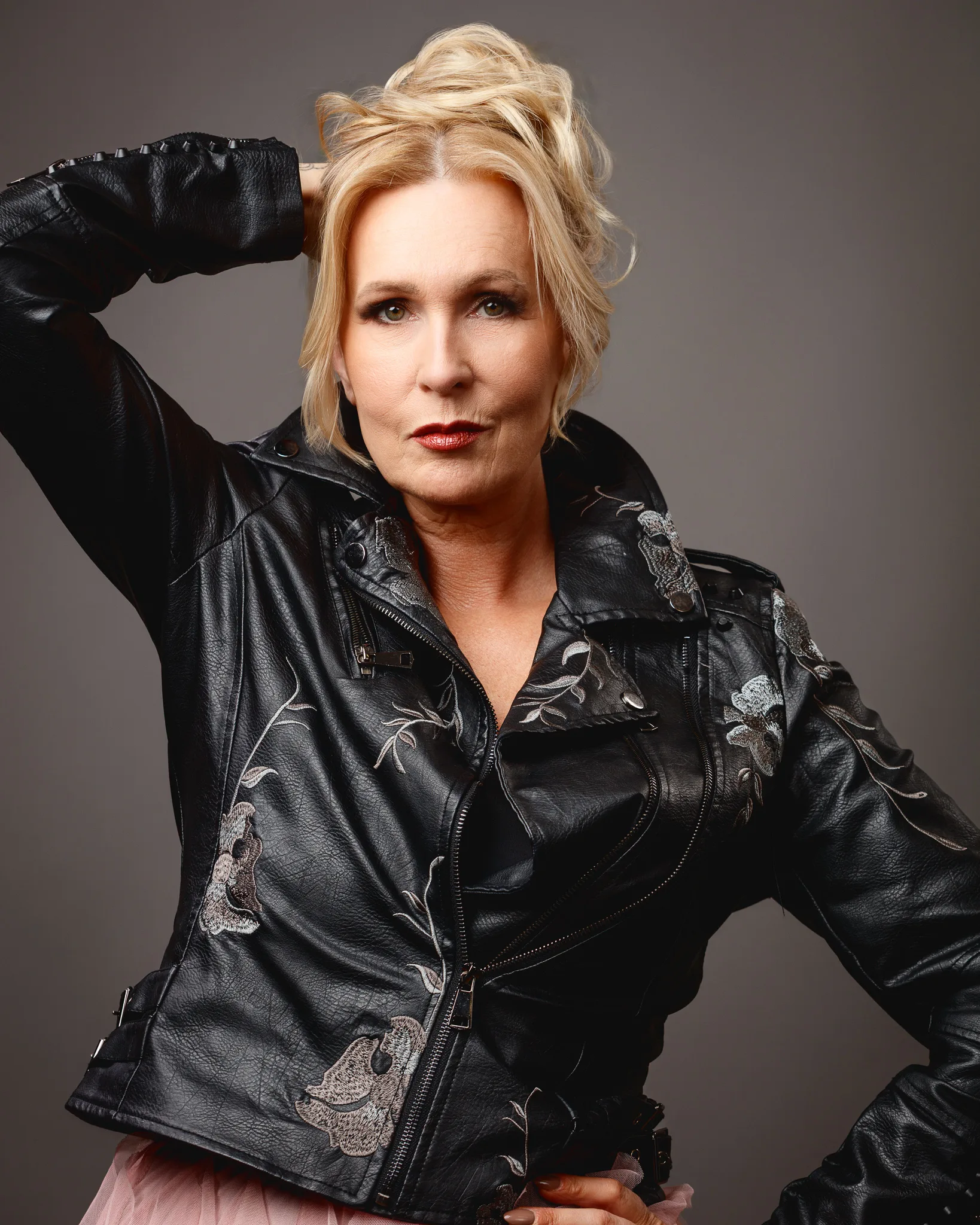
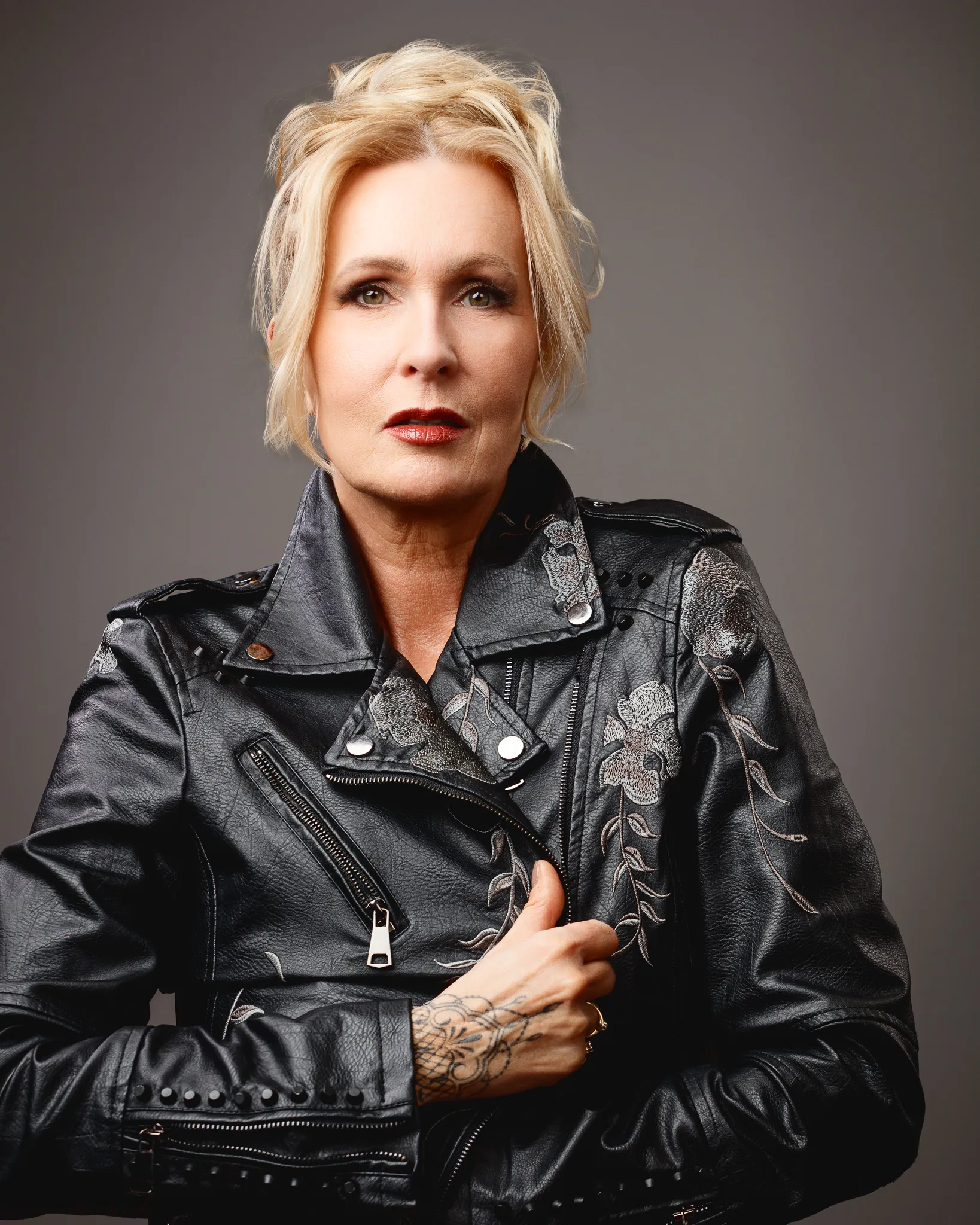
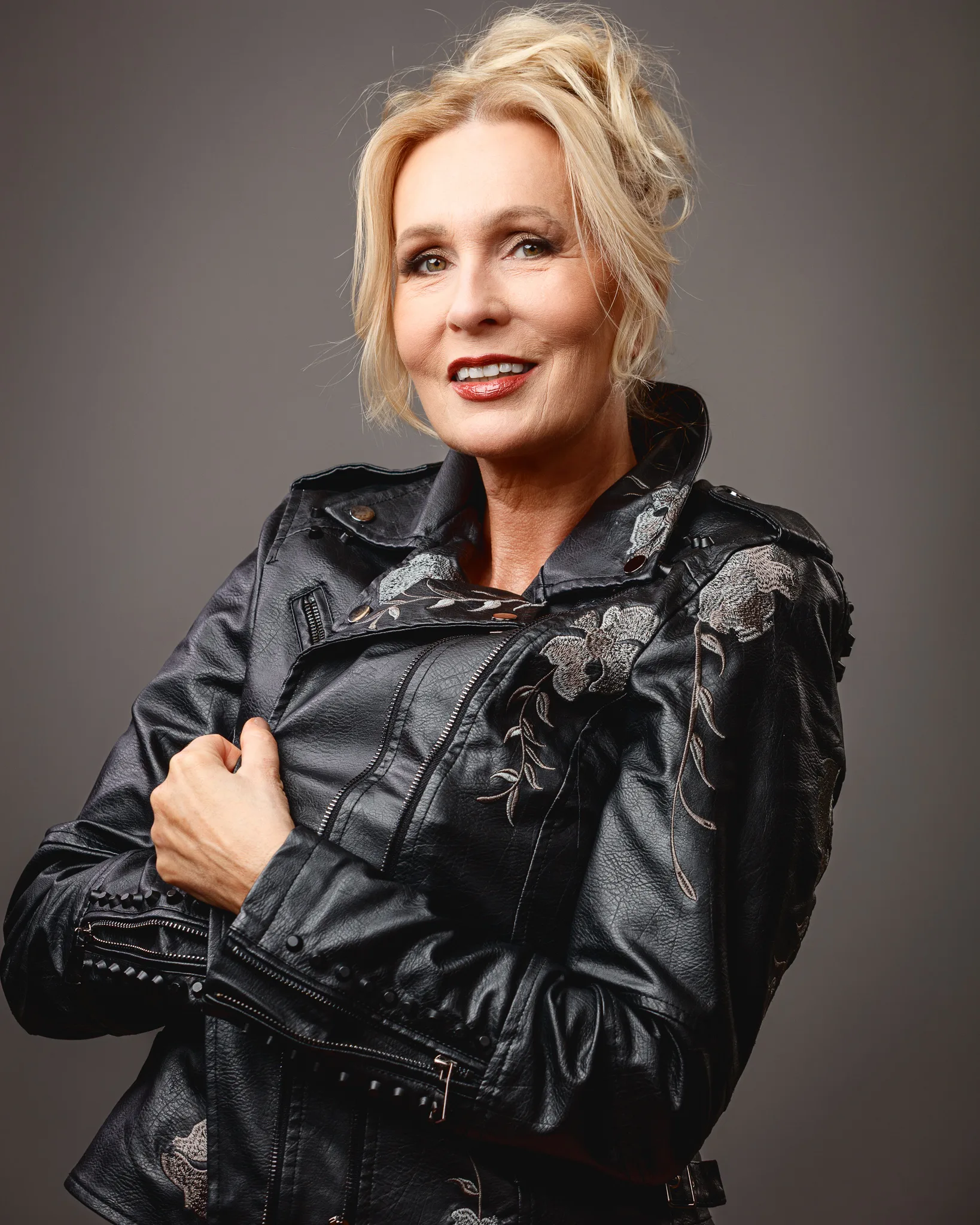
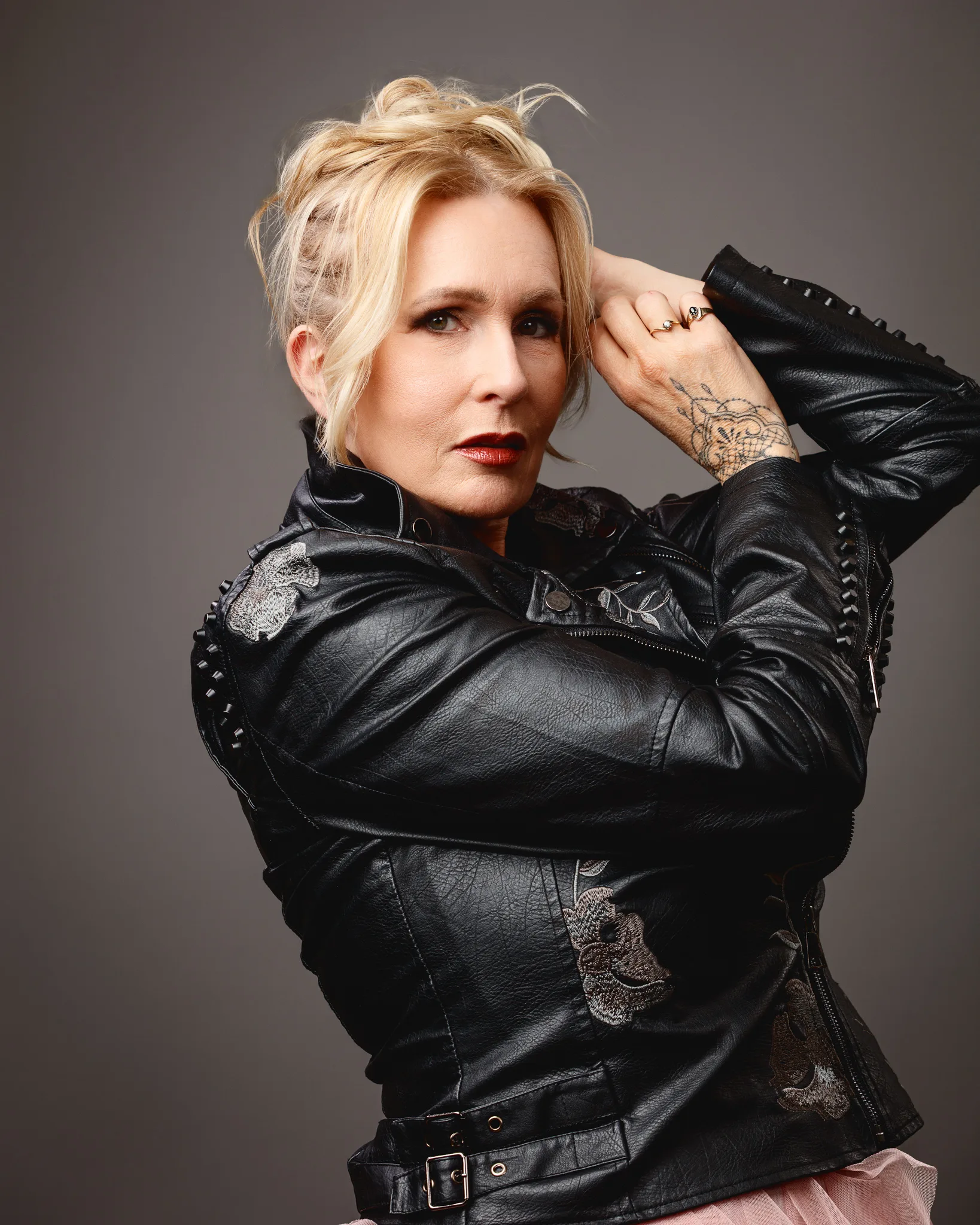
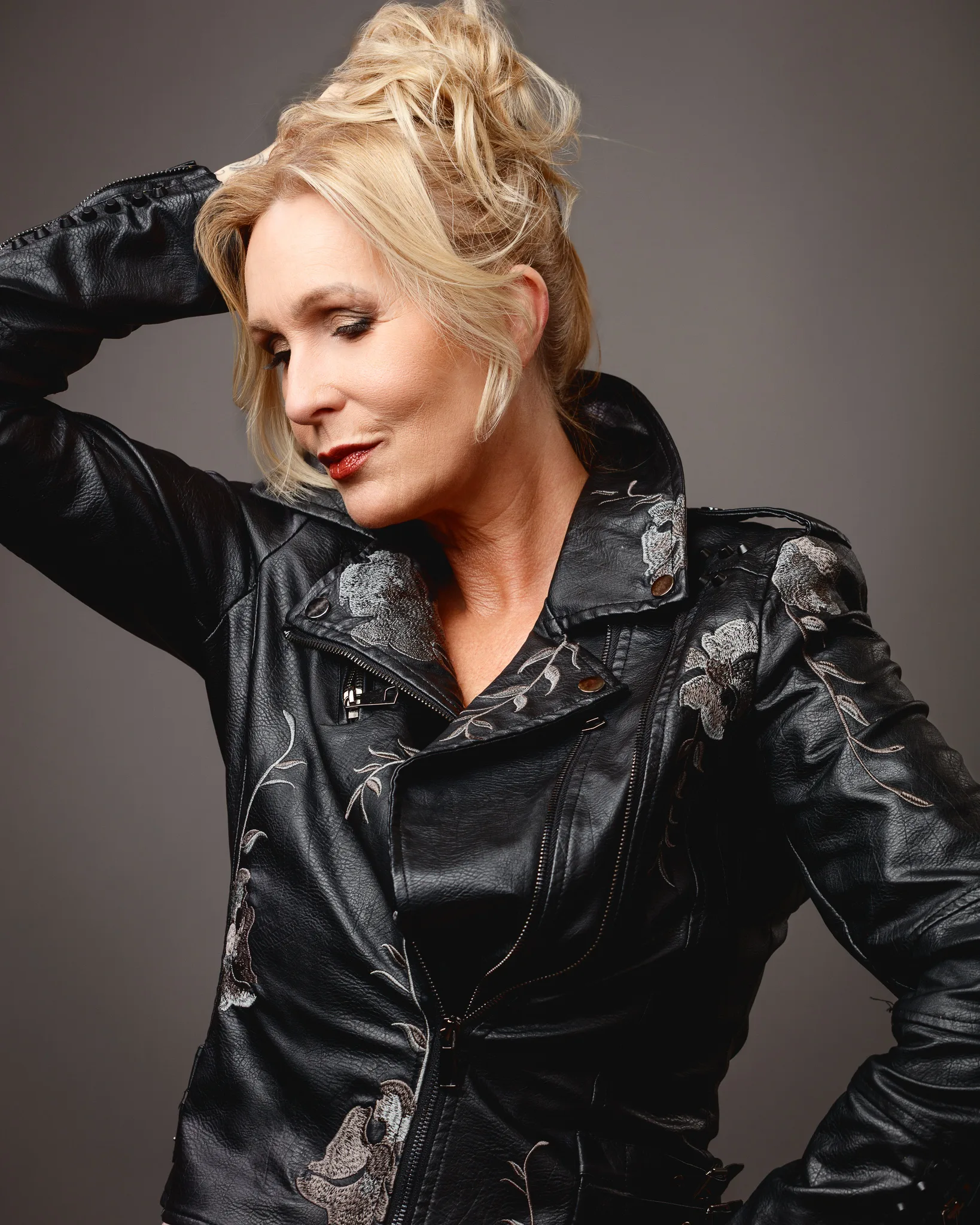
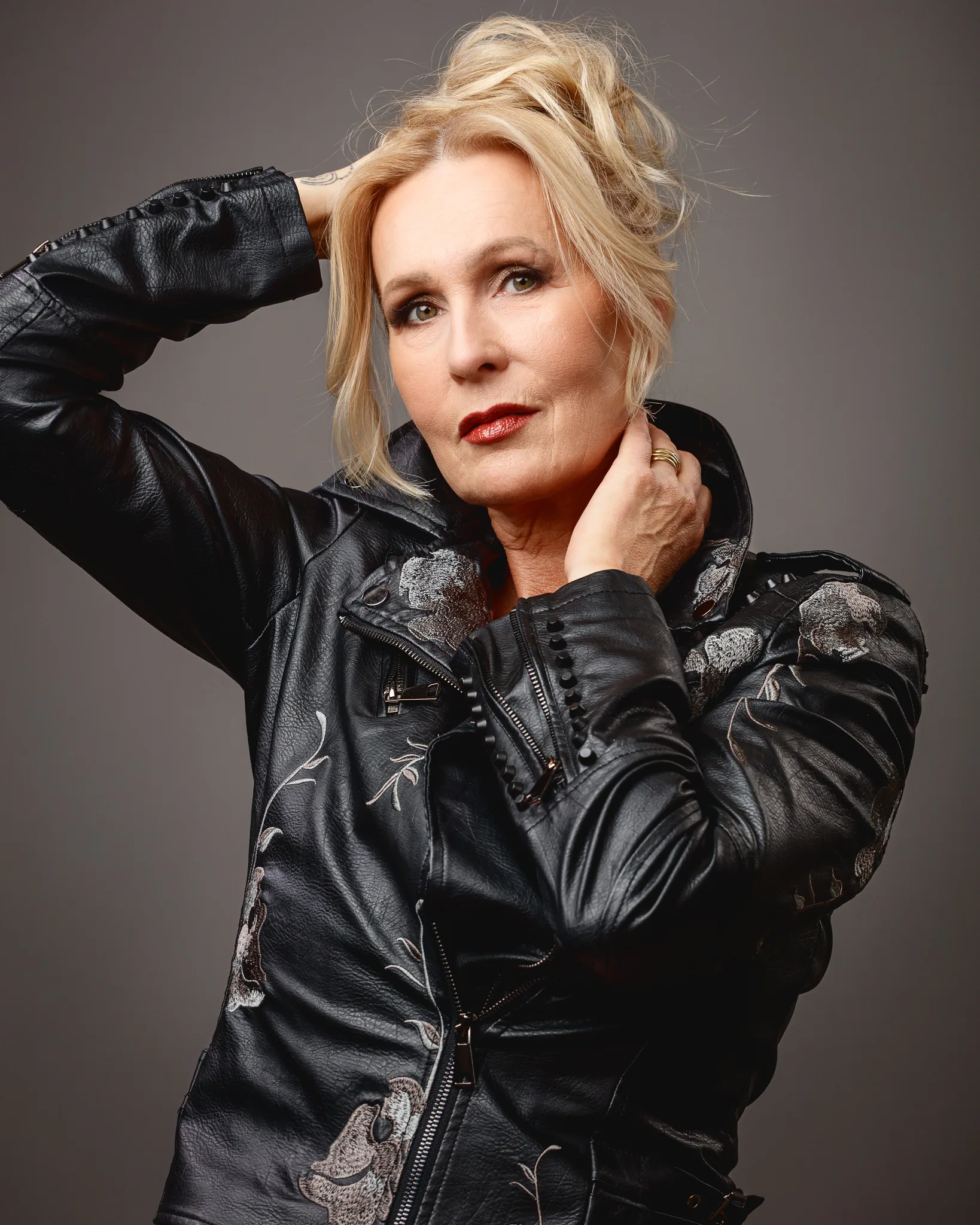
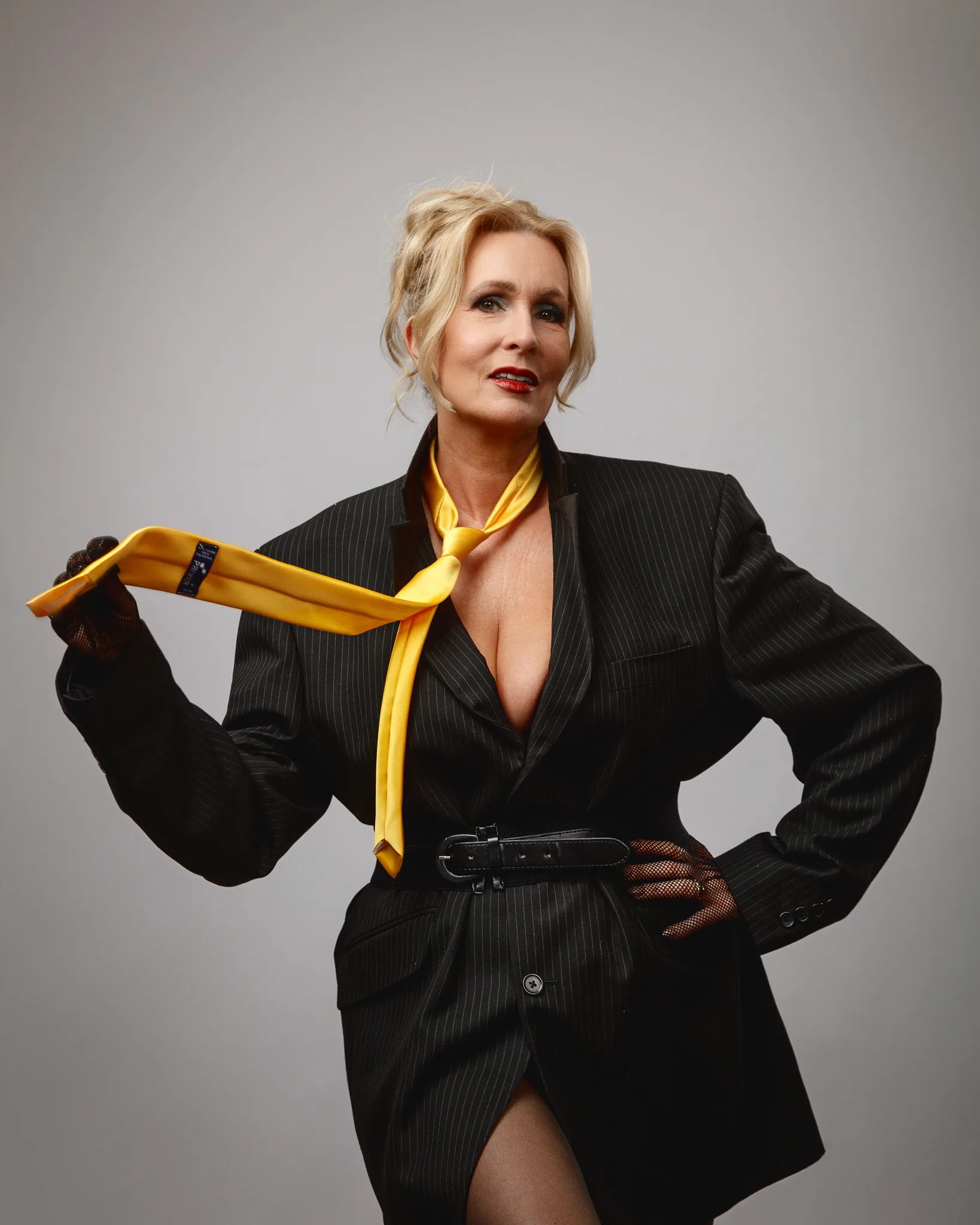
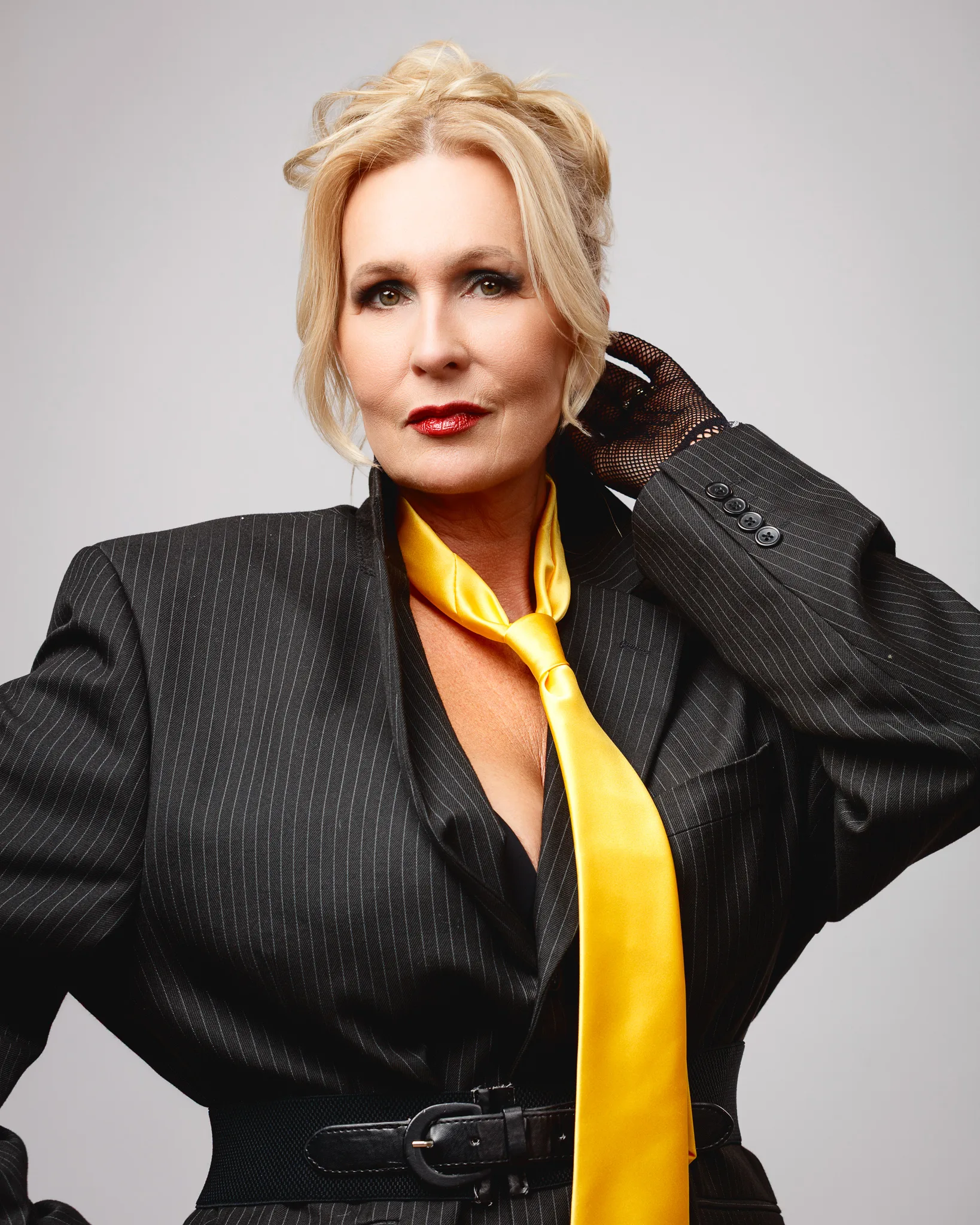
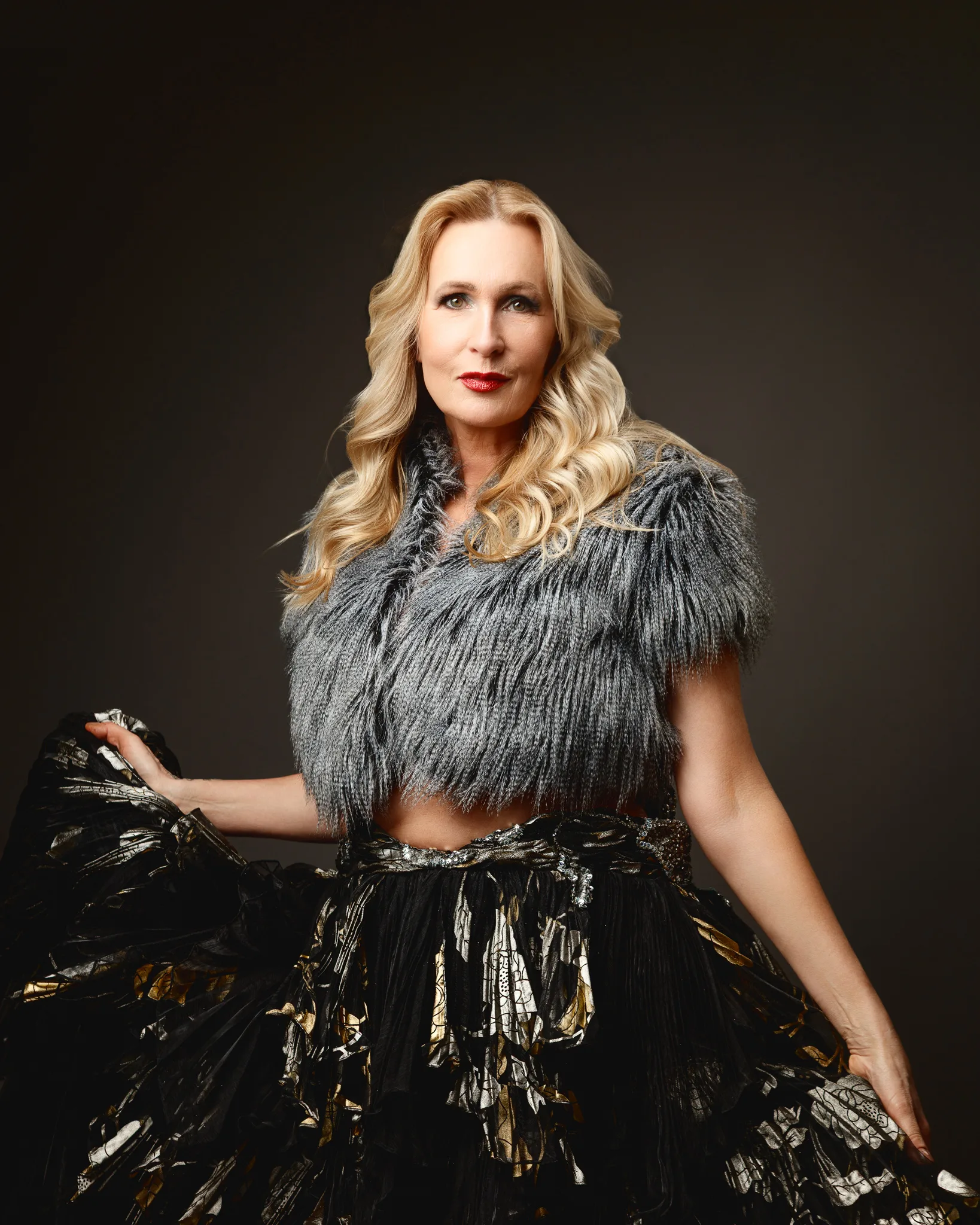
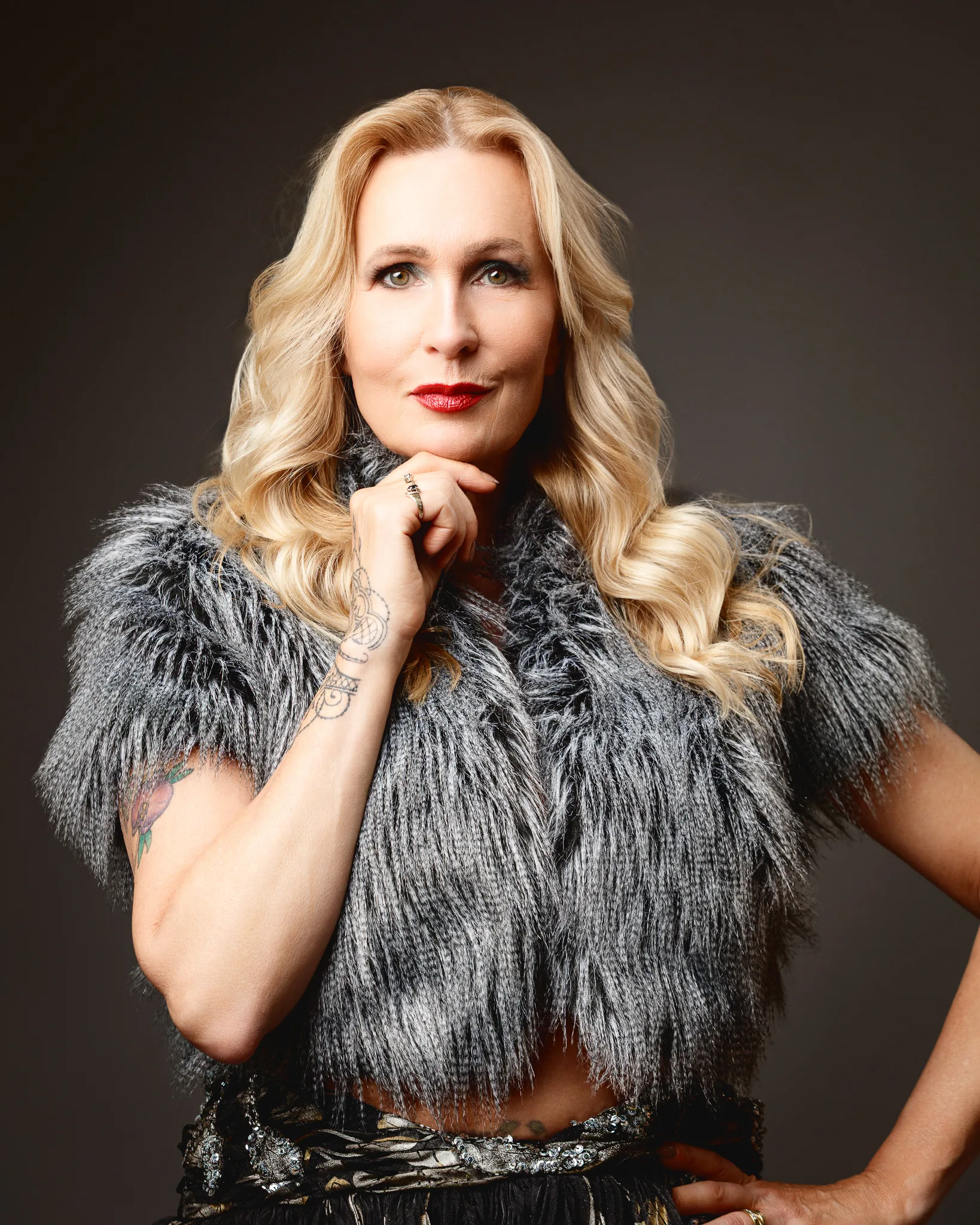
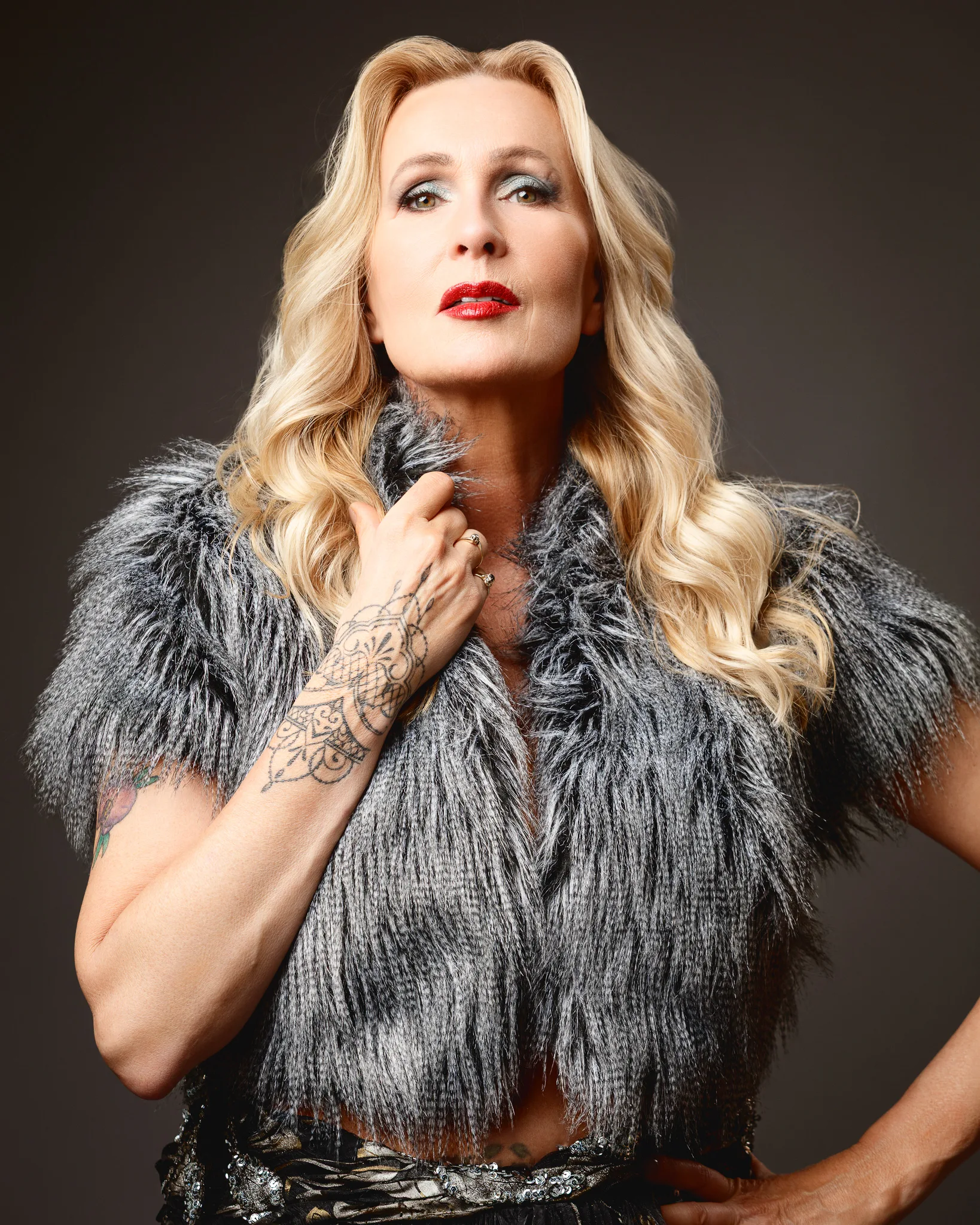
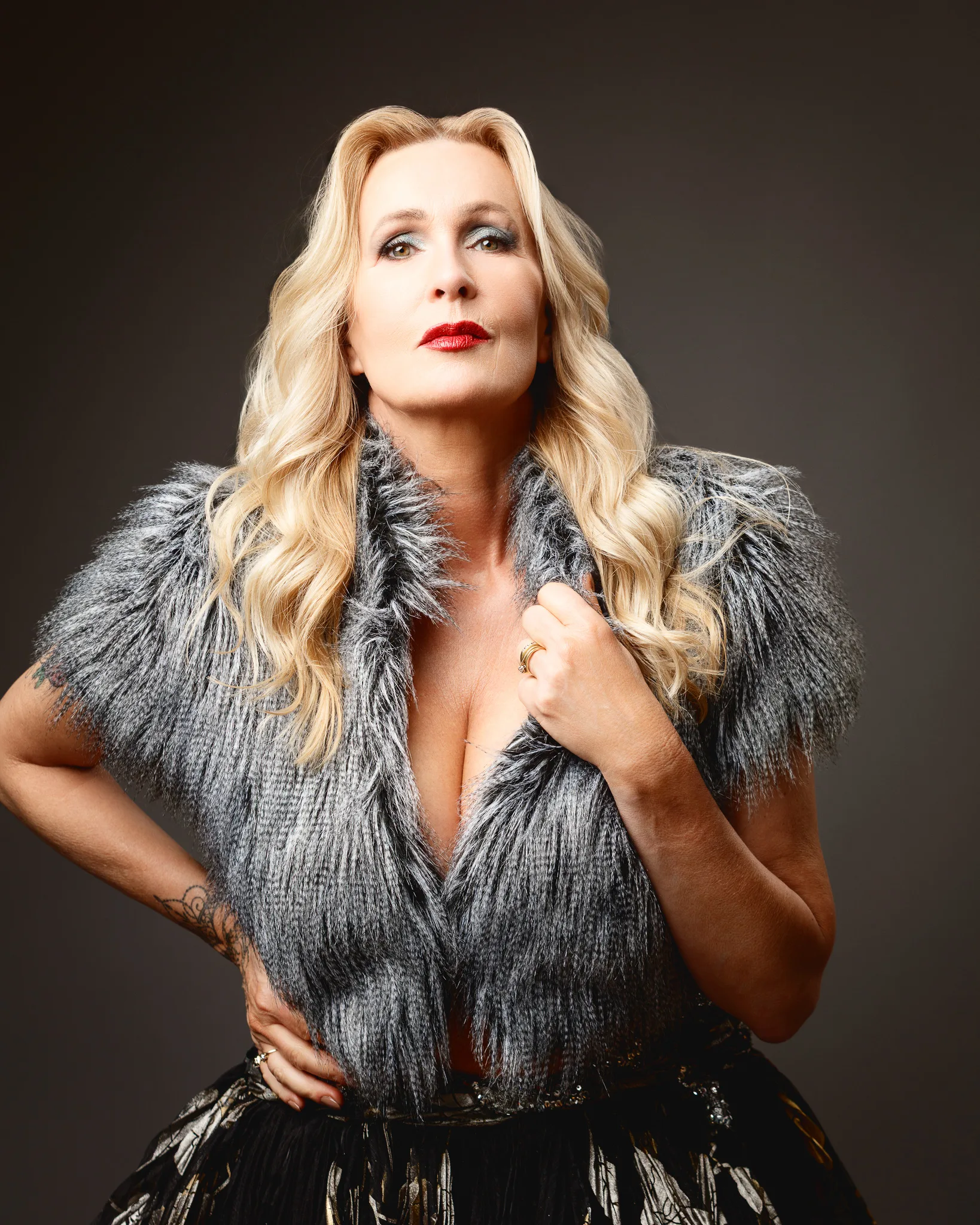
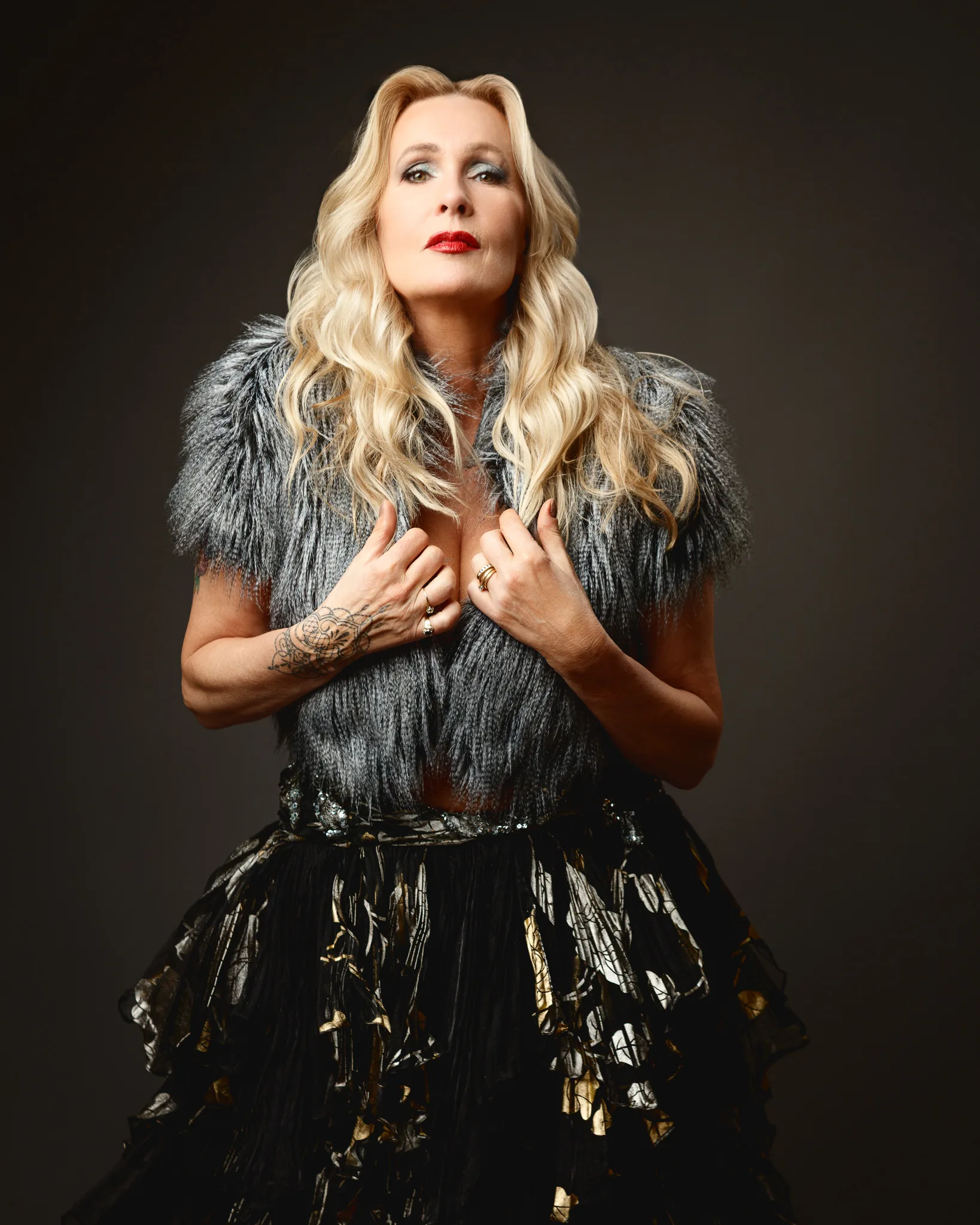
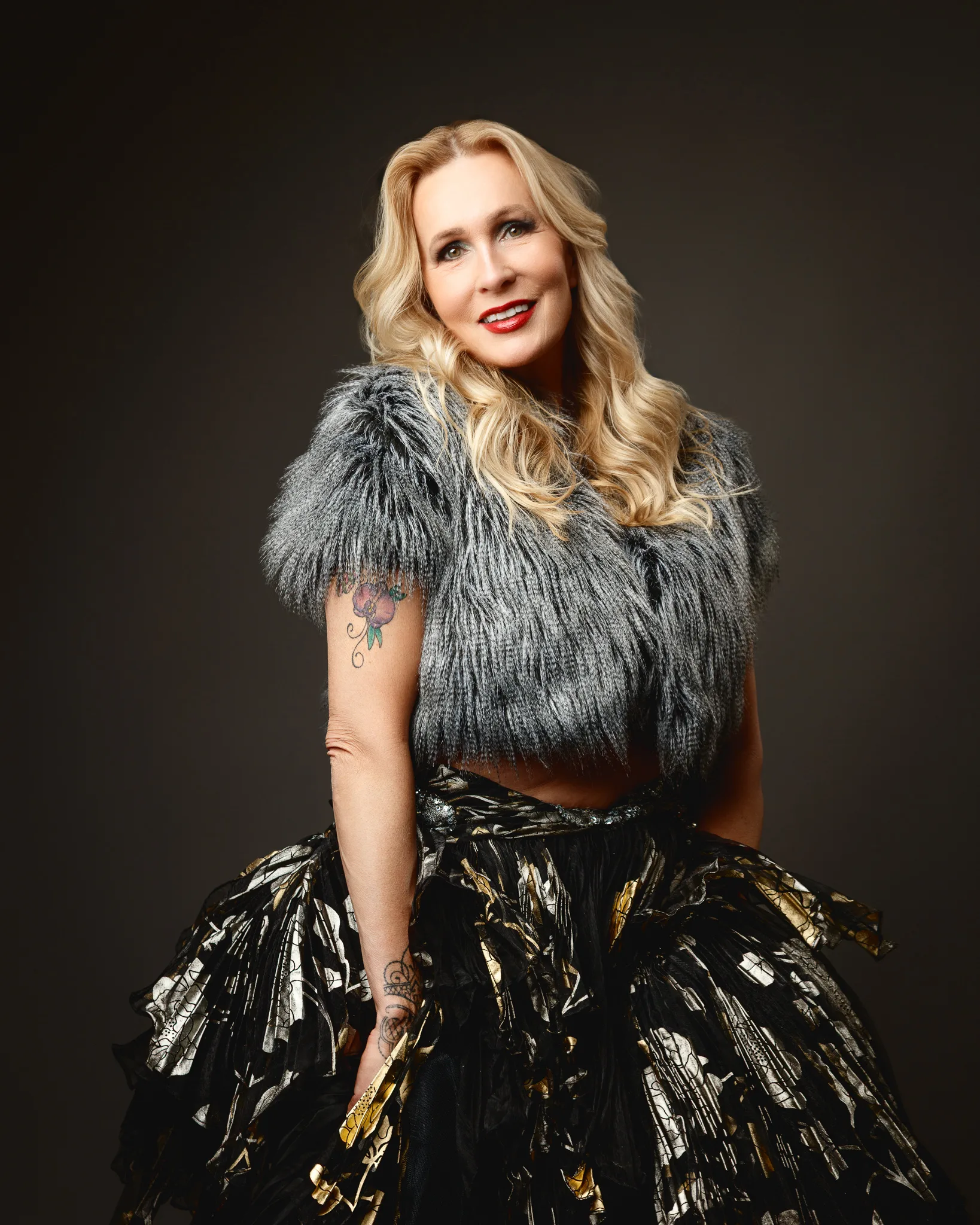
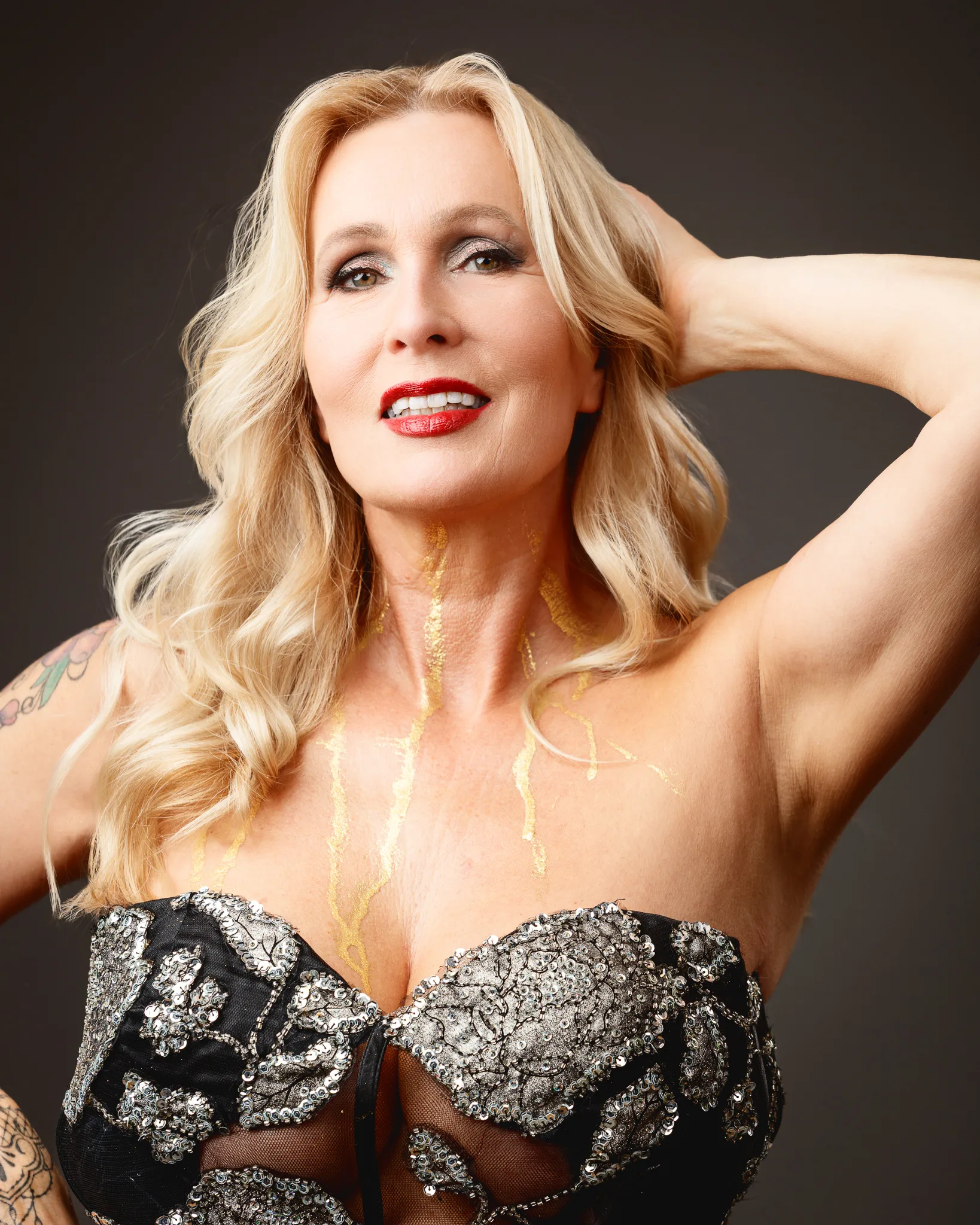
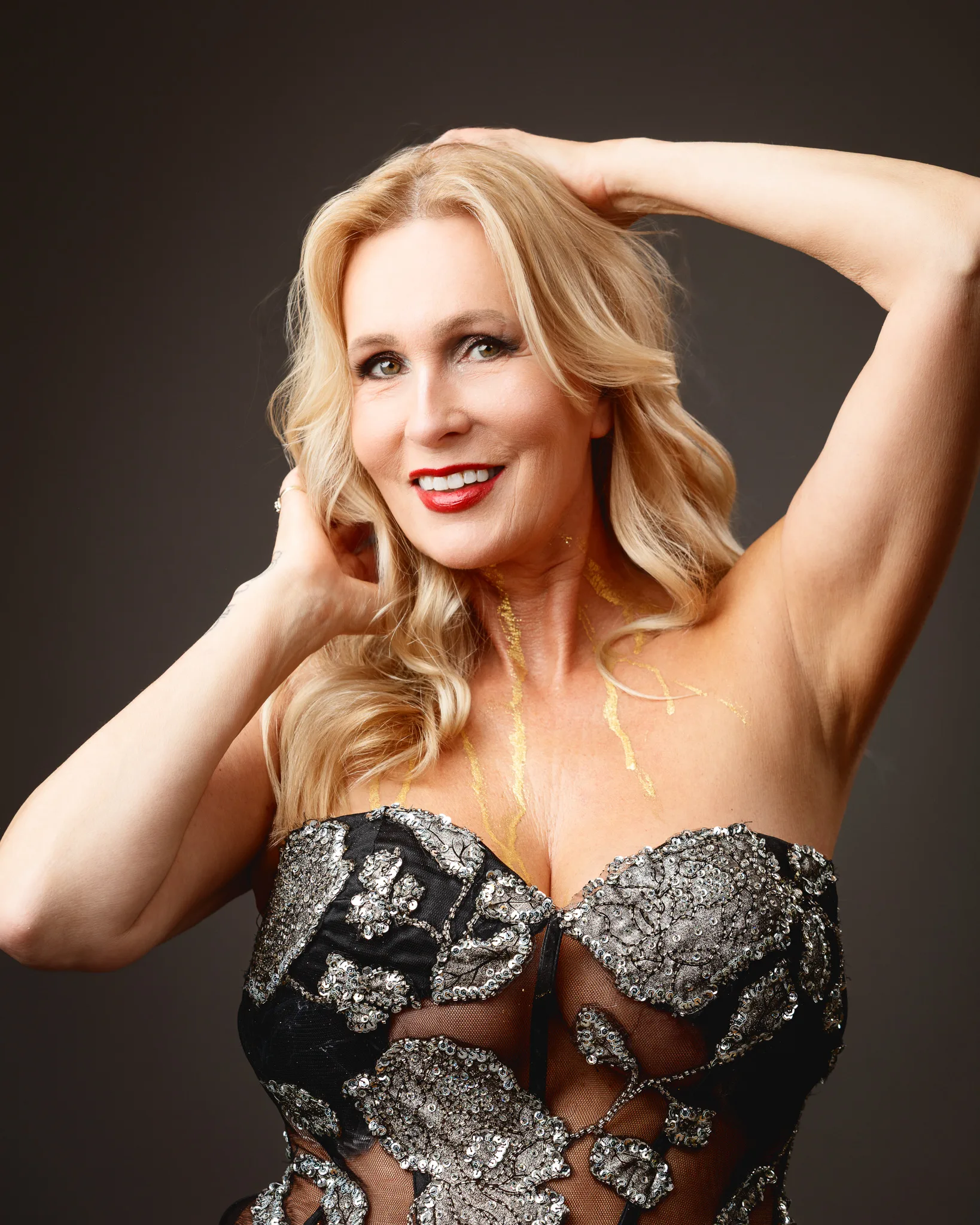
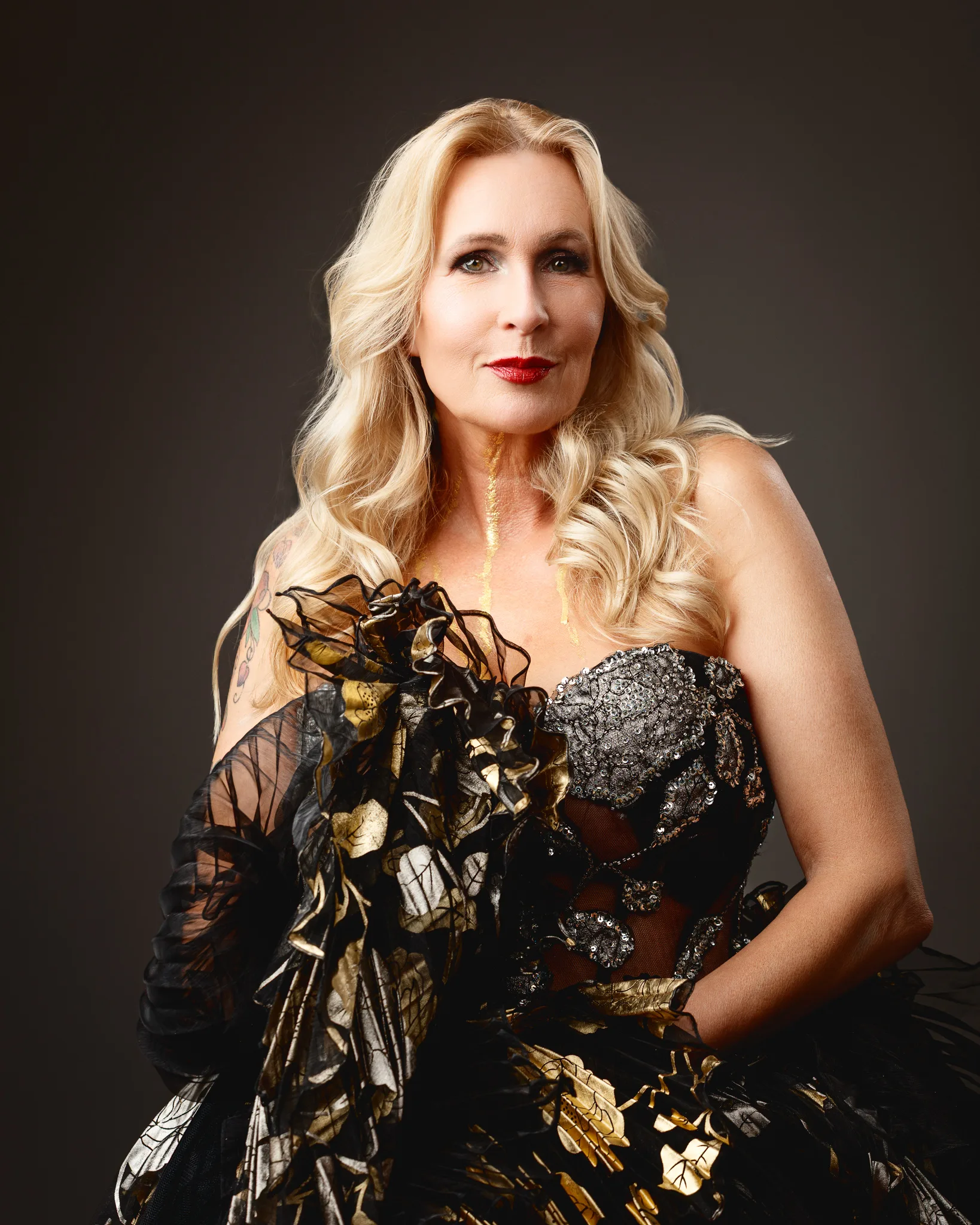
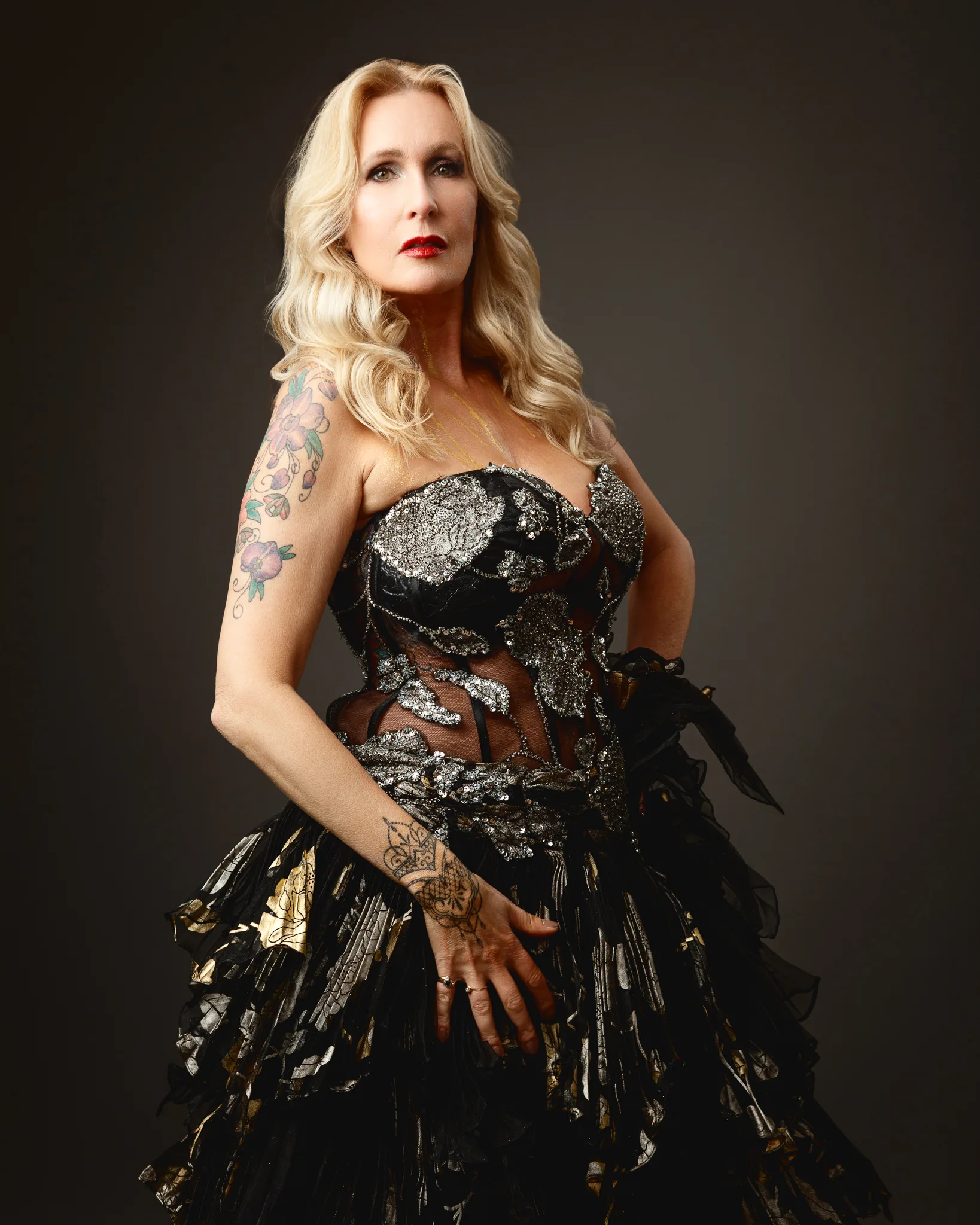
I recently photographed Lynn for the second time at my studio at Bentwaters near Woodbridge, Suffolk. This session had a clear goal from the start. We wanted a classical portrait look that feels timeless, calm, and confident.
When I say “classical”, I mean portraits that rely on the basics. Clean light. Strong posture. Good expression. Thoughtful posing. Nothing that distracts from the person. It is the sort of work that stays useful for years, because it does not chase trends.
Lynn was a genuine joy to work with. She arrived prepared, she listened well, and she brought a calm professionalism that makes the whole session flow. That matters more than most people realise. In studio portraiture, the mood in the room shows up in the face. You cannot fake ease.
Why a second shoot matters for a model portfolio
A first shoot often has a learning curve, even for people who are confident. You are finding your rhythm. You are learning what camera angles suit you. You are testing how expressions land when you review frames. You are also learning how quickly you can change looks without stress.
By the second shoot, everything usually tightens up.
You have momentum.
You have trust.
You have clarity about what you want from the images.
With Lynn, that showed straight away. She knew how she wanted to present herself. She knew what felt “her”, and what did not. That is exactly what I want in a model portfolio session. The portfolio needs variety, but it also needs identity.
The look and feel we aimed for
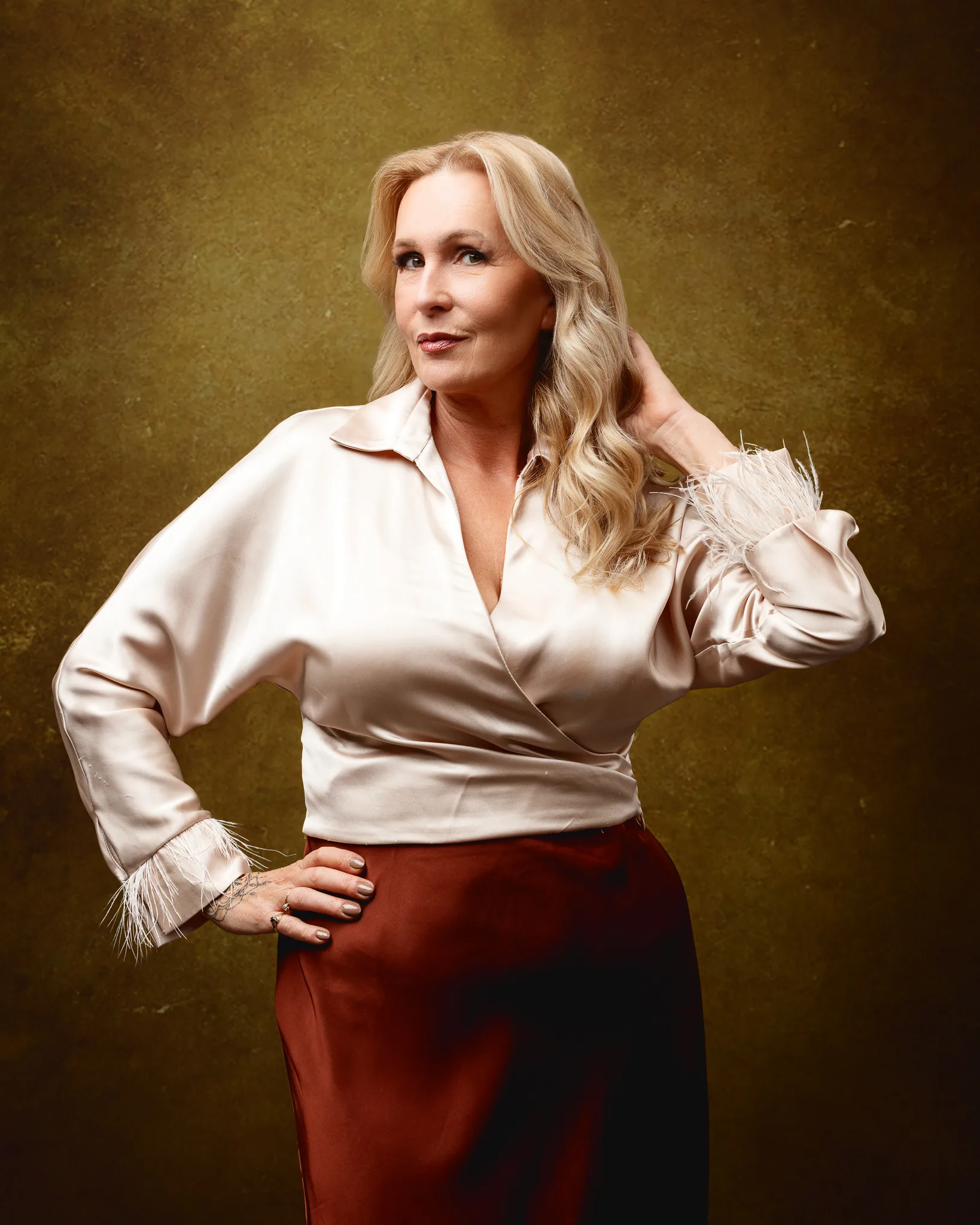
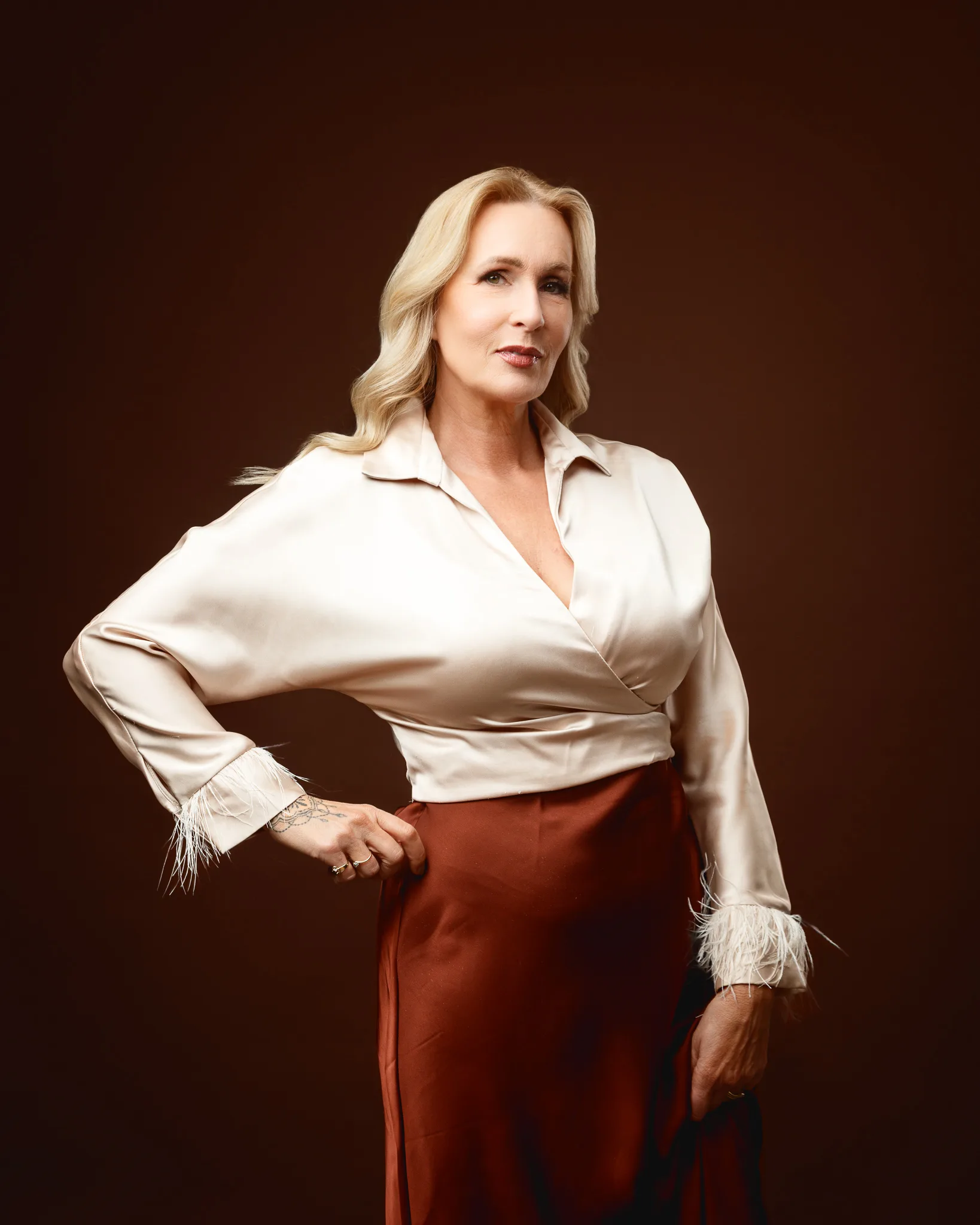
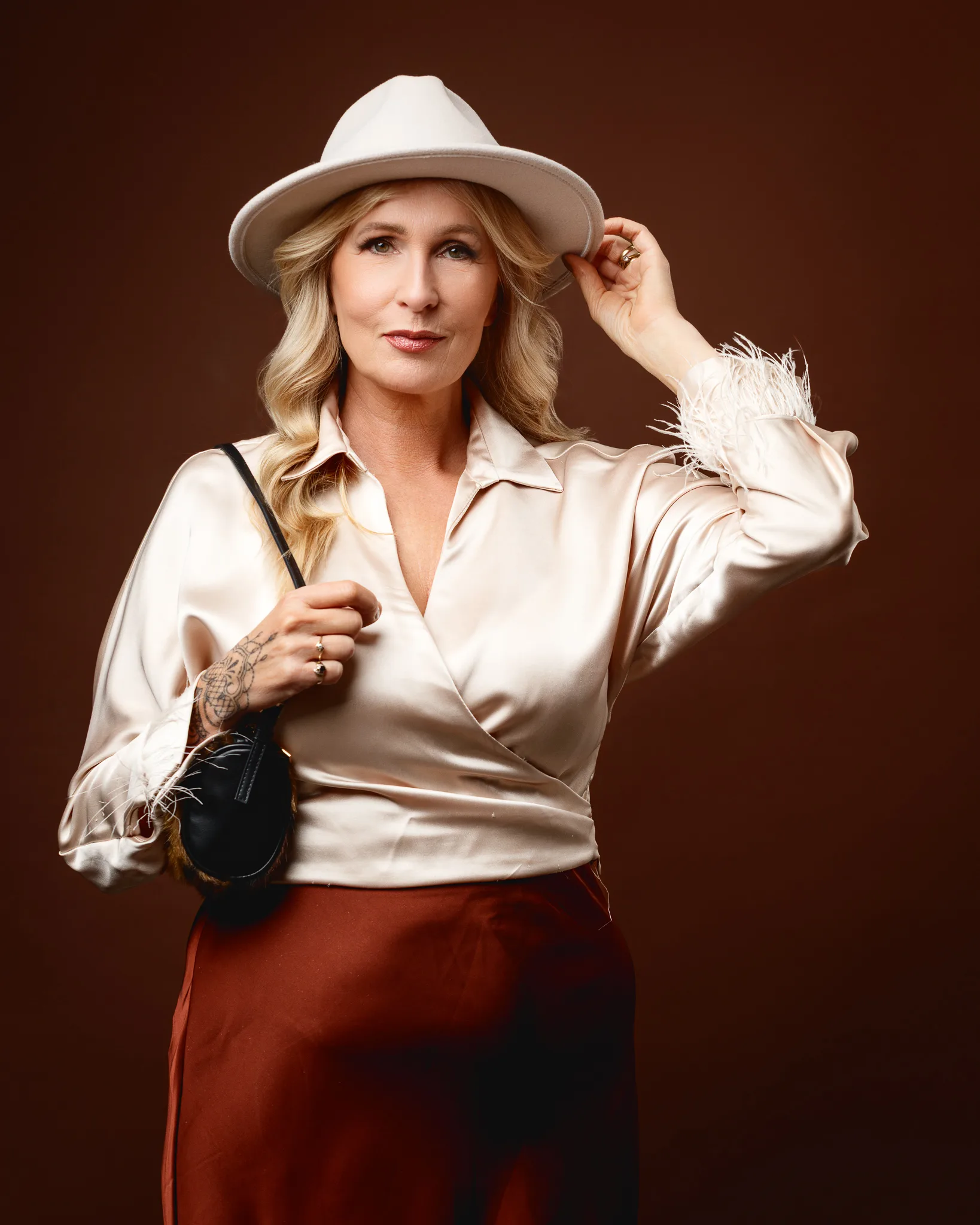
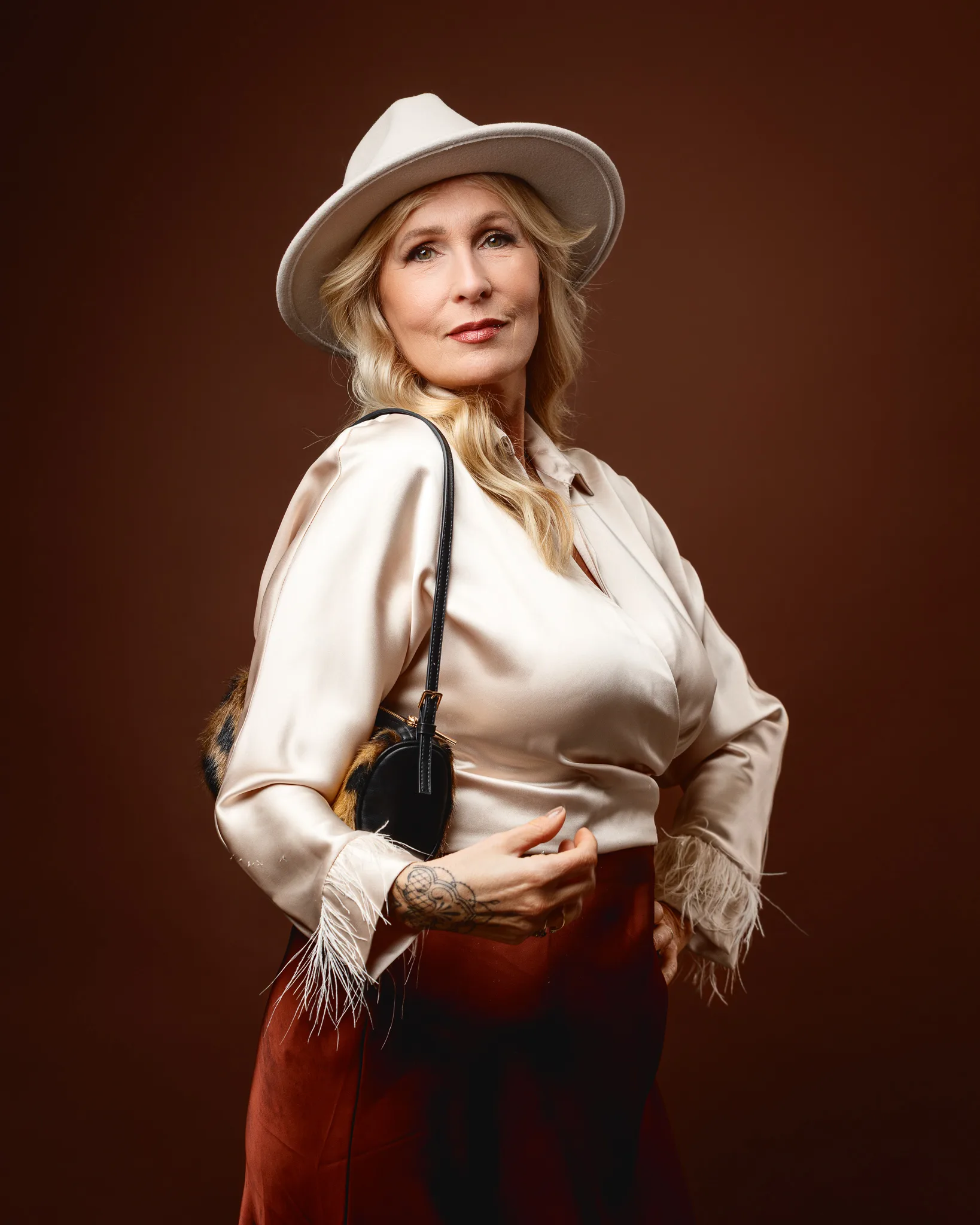
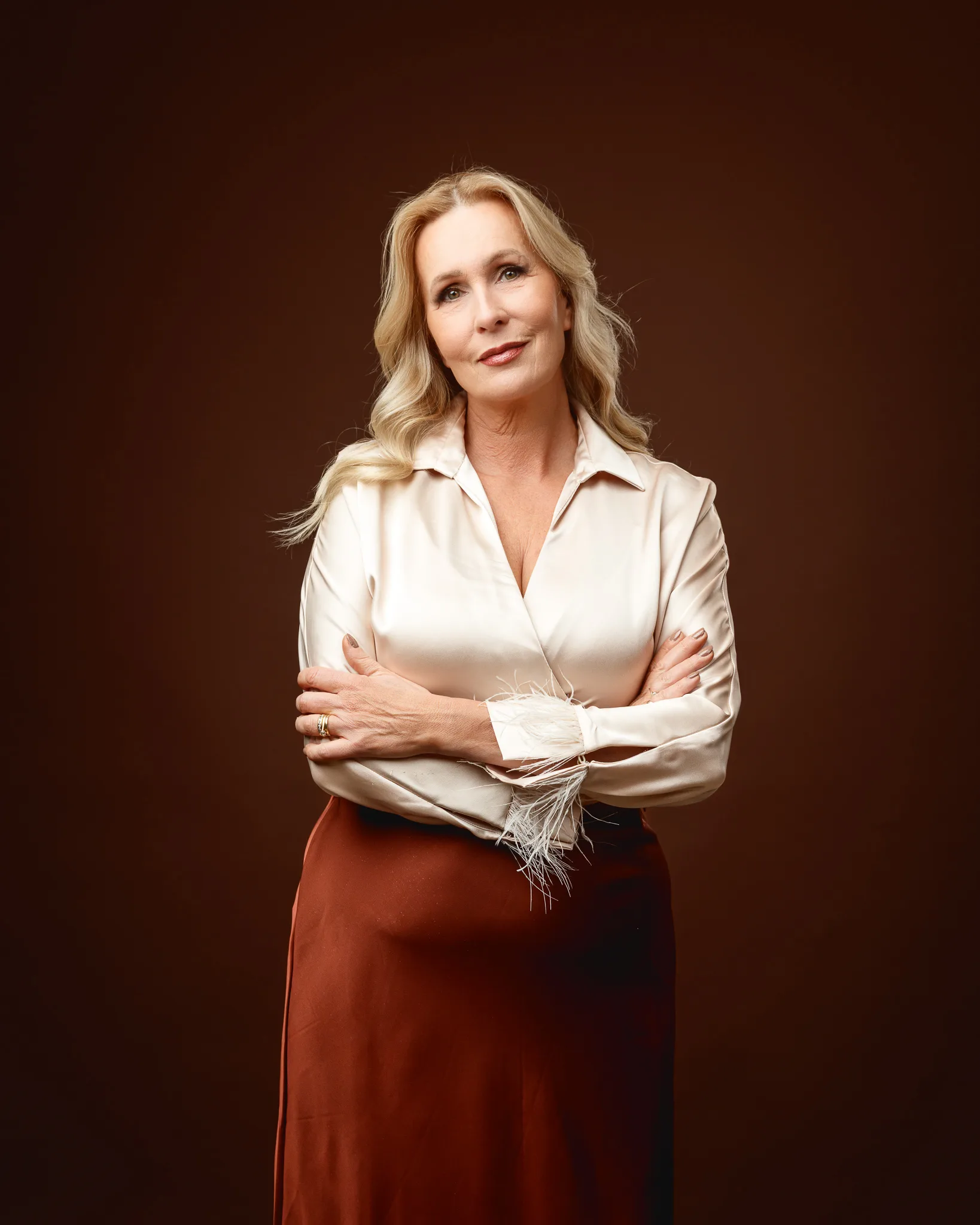
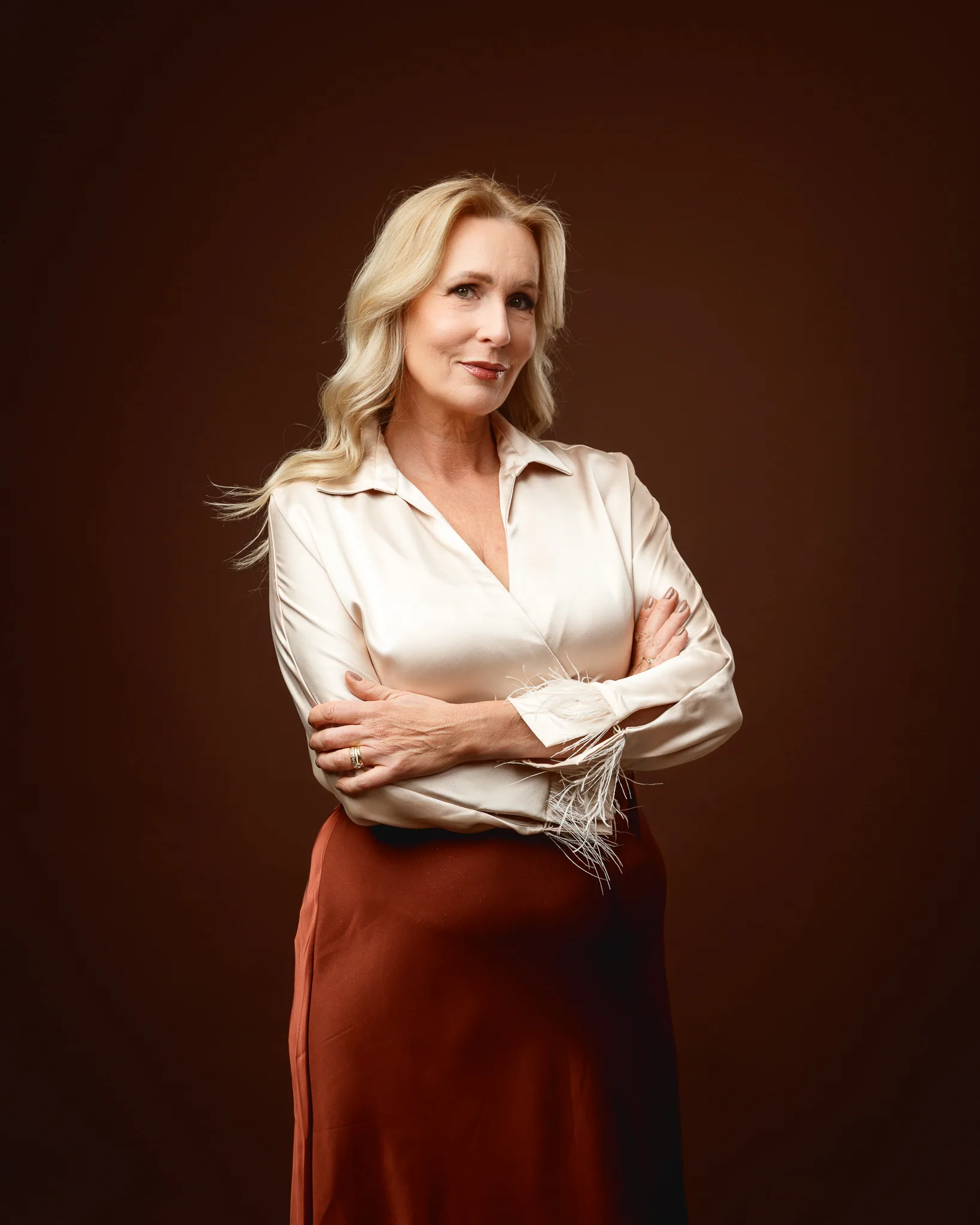
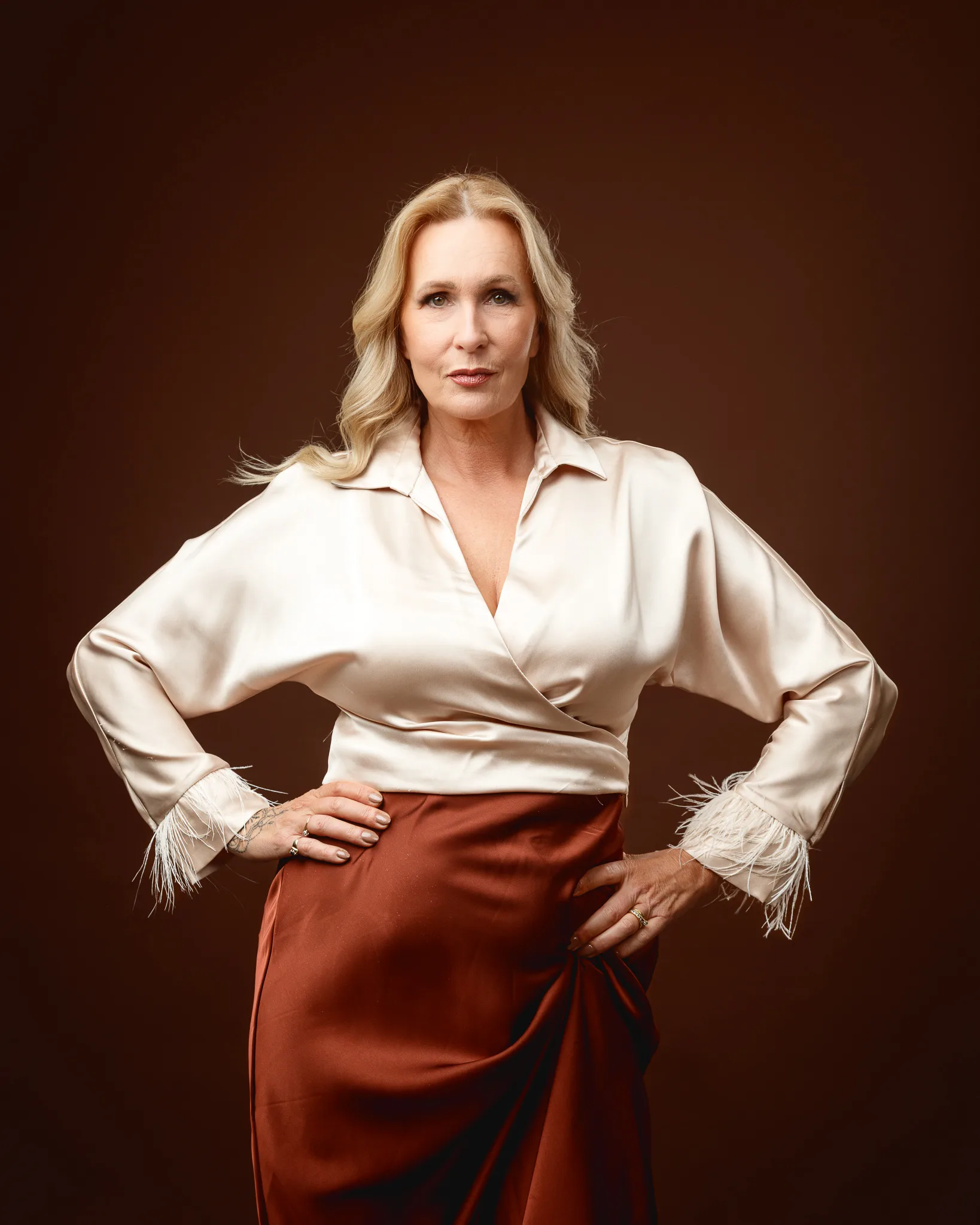
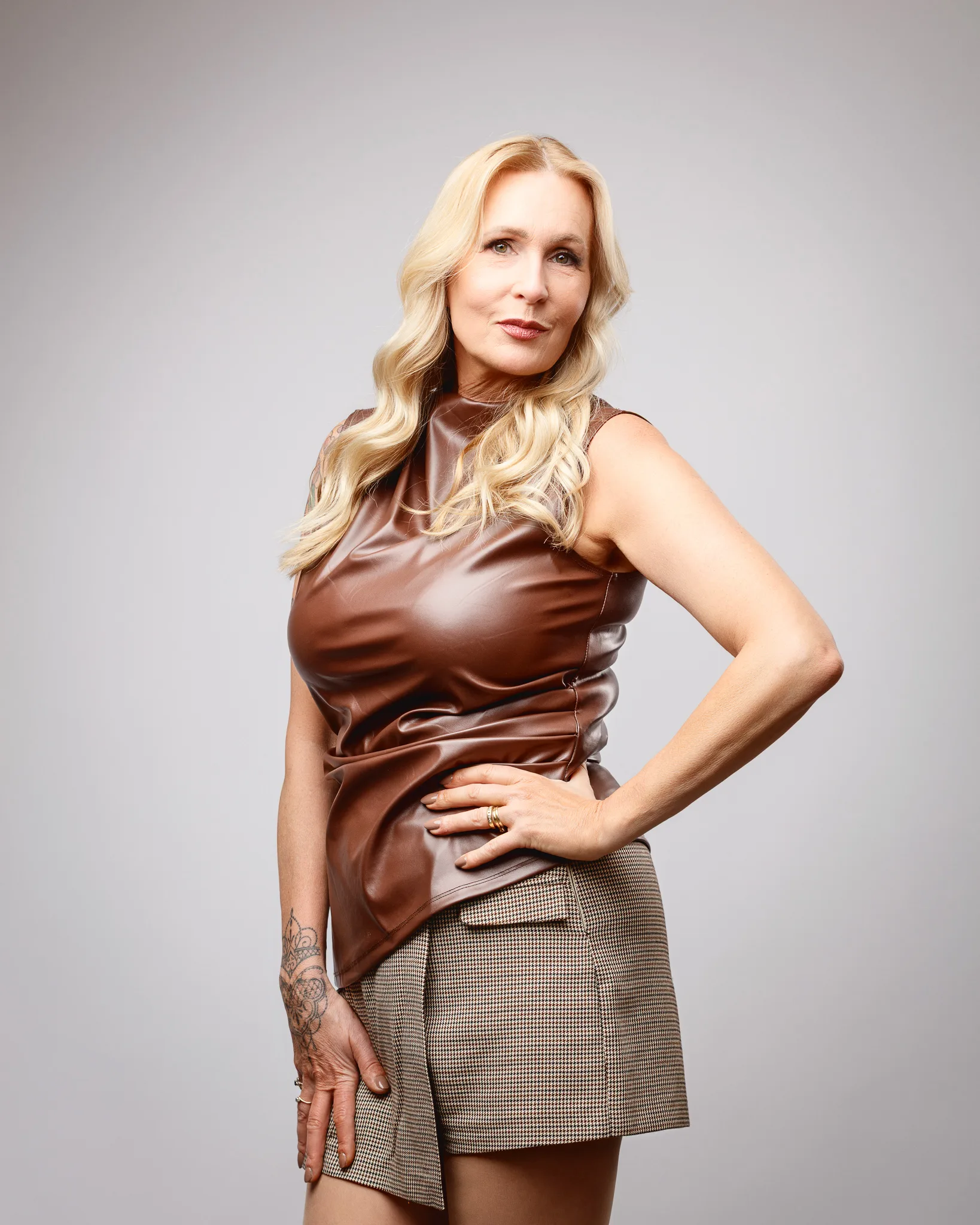
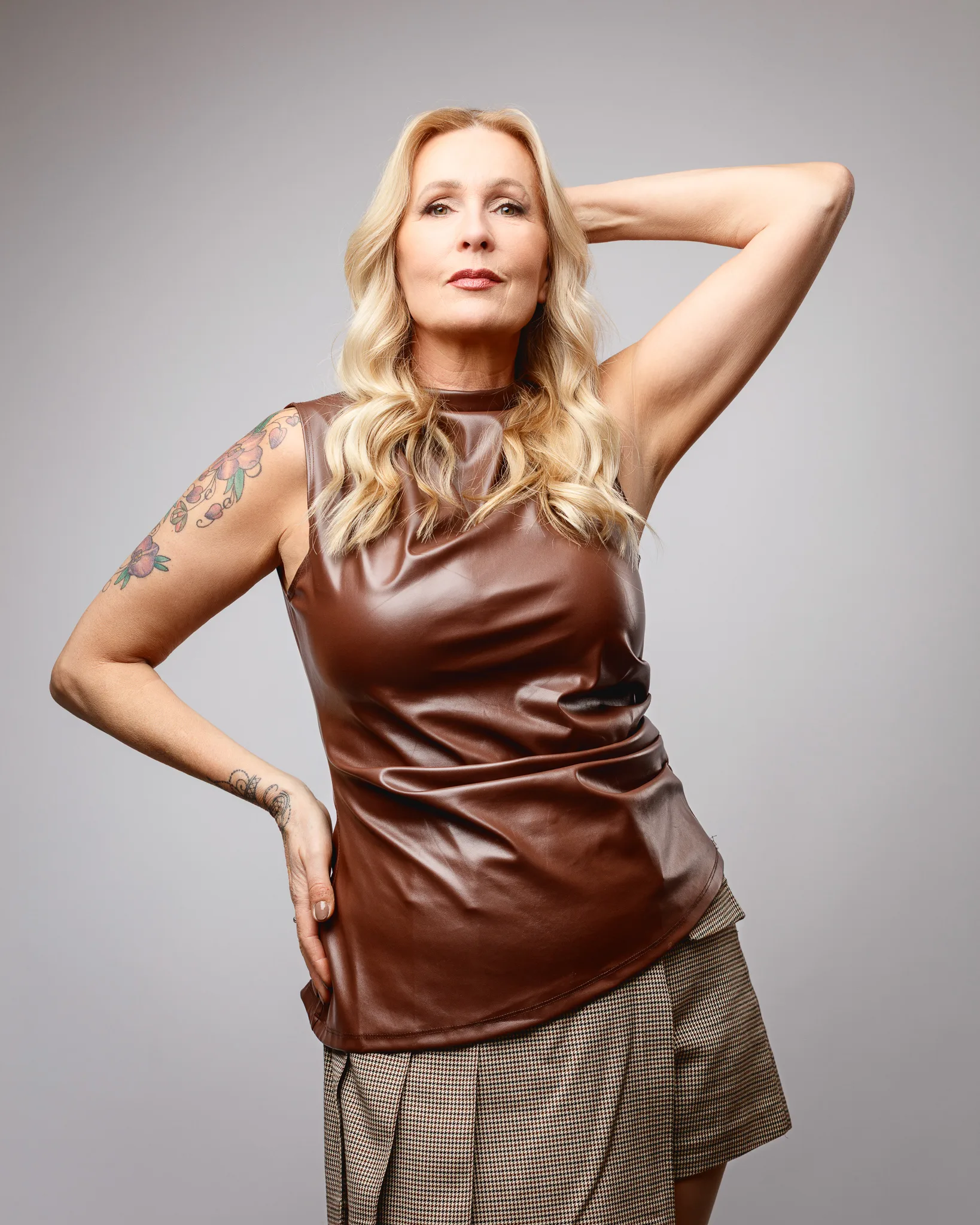
This shoot was built around a classic studio portrait feel. The wardrobe helped, but the core was lighting and pose.
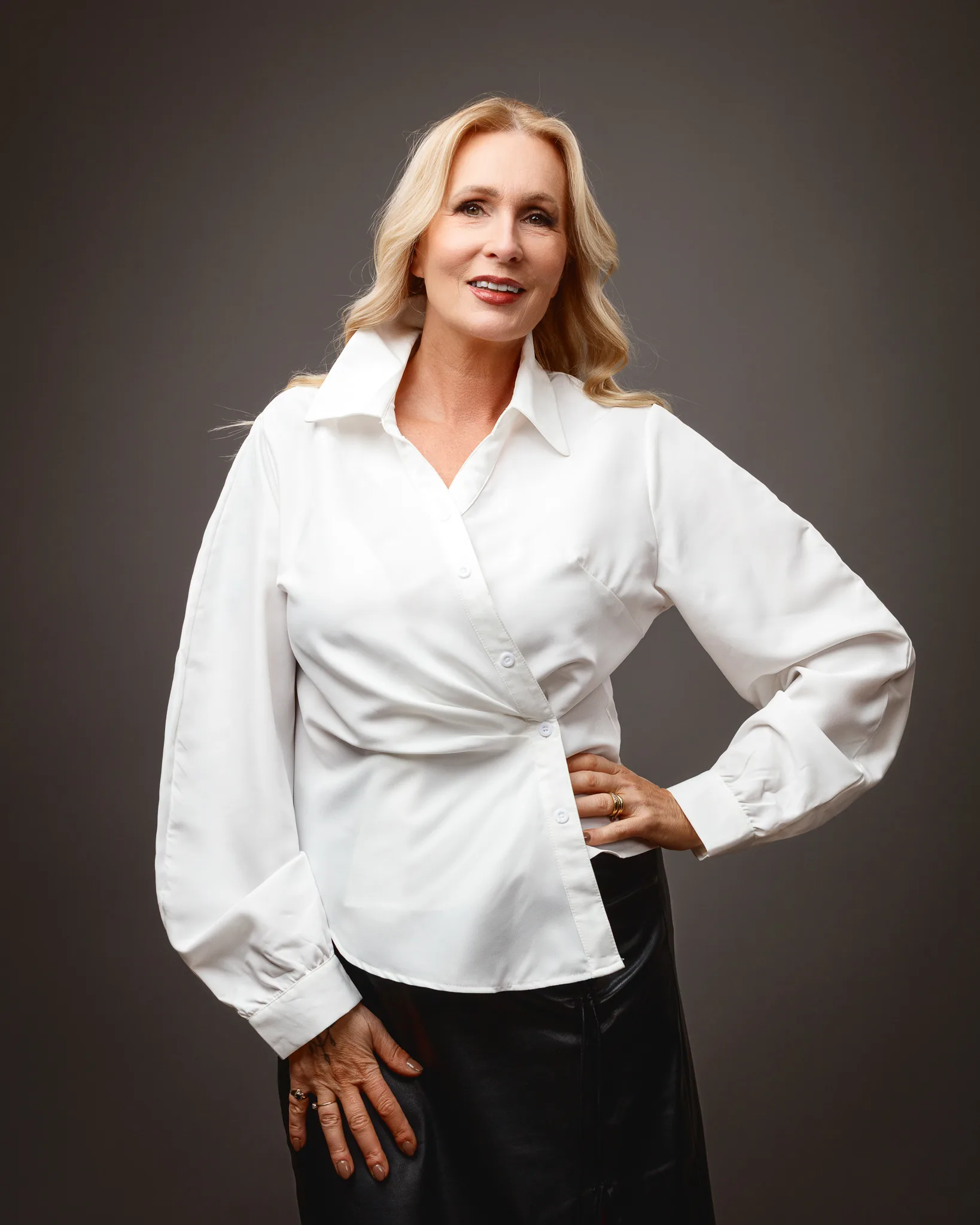
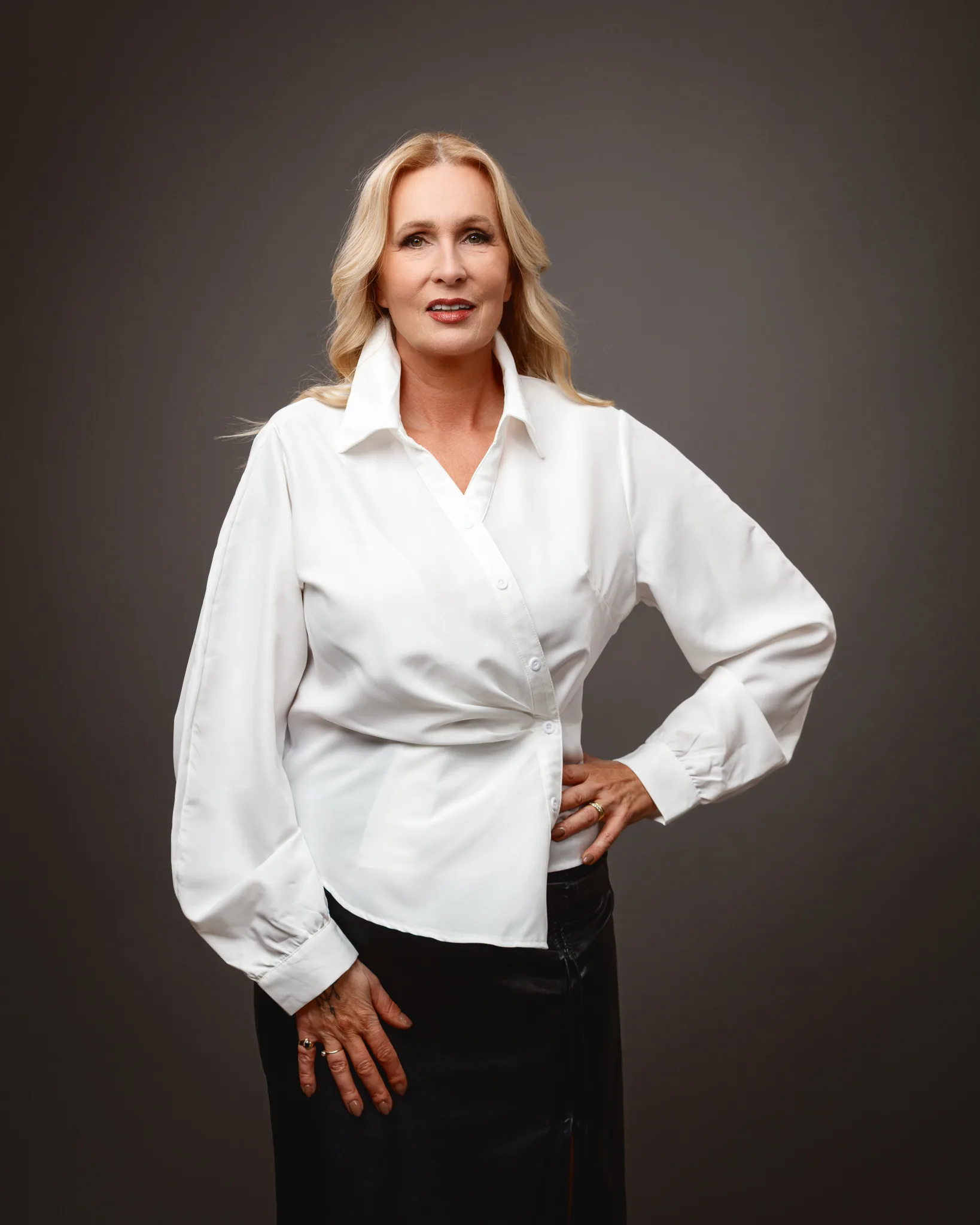
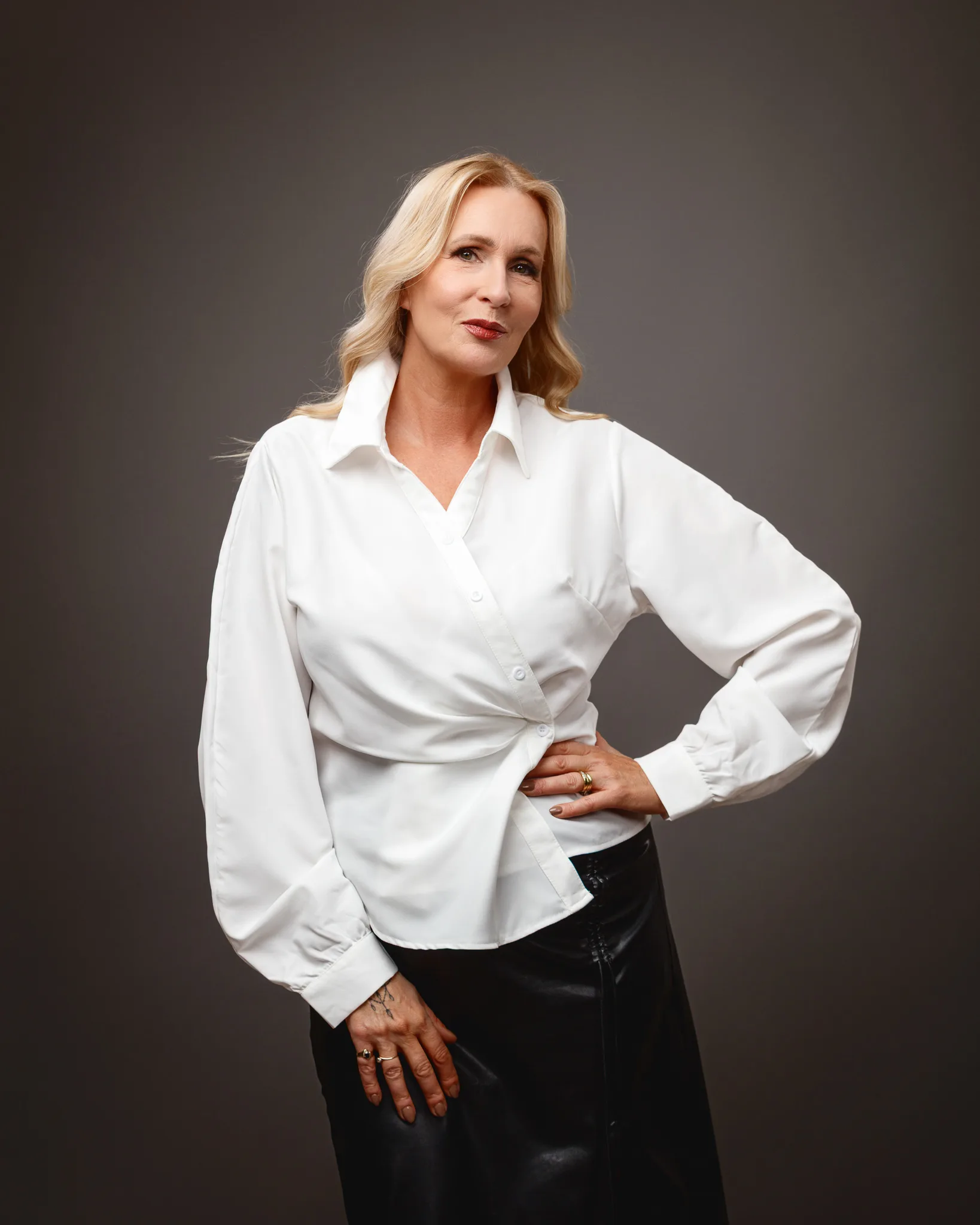
The styling had a soft, elegant palette. Cream tones against a warm brown background. Rich, earthy colour in the skirt. Subtle texture in the cuffs. Nothing noisy. Nothing fighting for attention.
That sort of styling does something very useful. It keeps the viewer’s attention on Lynn’s face, and on the shape of the pose. It also photographs well across a range of expressions, from serious to soft.
The background choice and why it works
The warm brown background gave the images a grounded, traditional feel. It also helped the cream blouse separate nicely, without harsh edges. Brown can be tricky if you light it badly. It can go flat fast. It needs control.
In this session, the background stayed clean and smooth, with gentle fall-off. That gives depth without turning the image into a “special effect”. The subject still leads the frame.
If you are building a model portfolio, backgrounds like this are useful. They are not loud. They do not date quickly. They also suit a wide range of outfits.
What I look for in a classical portrait pose
Classical portrait posing is not stiff. It is structured. There is a big difference.
The goal is simple.
- Clear lines through the body.
- Relaxed hands that still feel intentional.
- A neck position that flatters, without strain.
- Shoulders that sit naturally, not raised.
- A face angle that suits the light.
Lynn handled this very well. She moved with control, and she held poses without tension. That lets me work fast, because I am not constantly correcting micro-details.
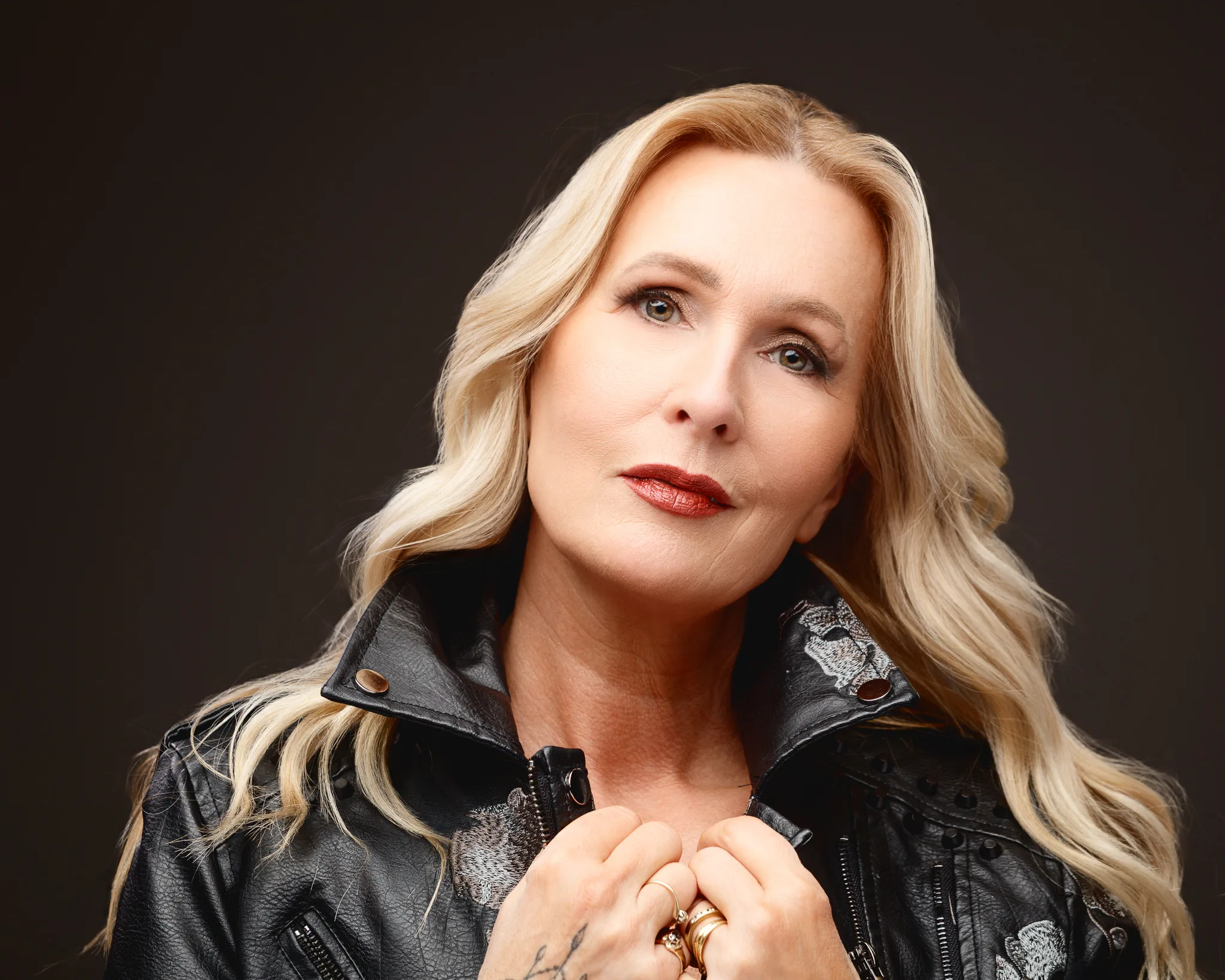
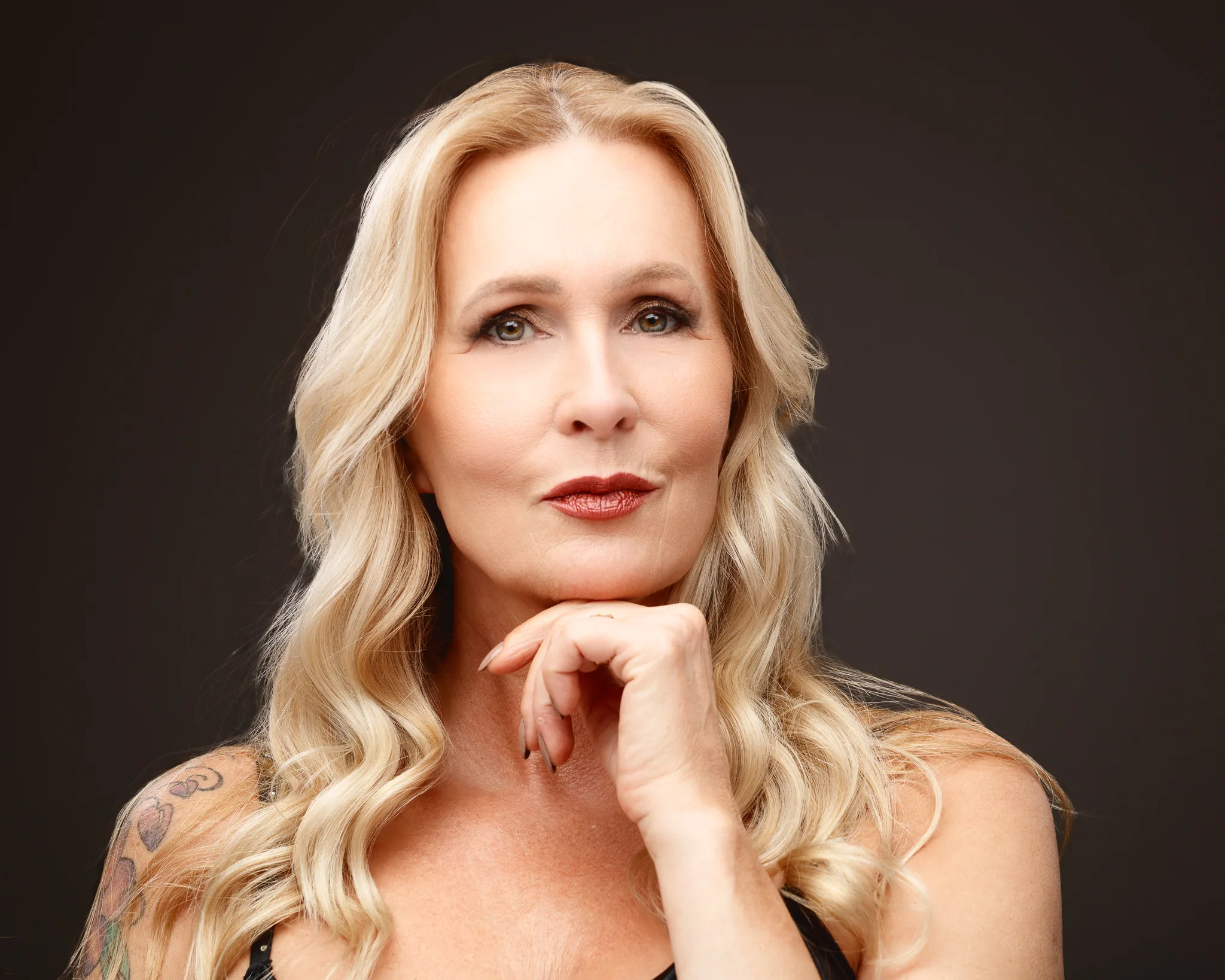
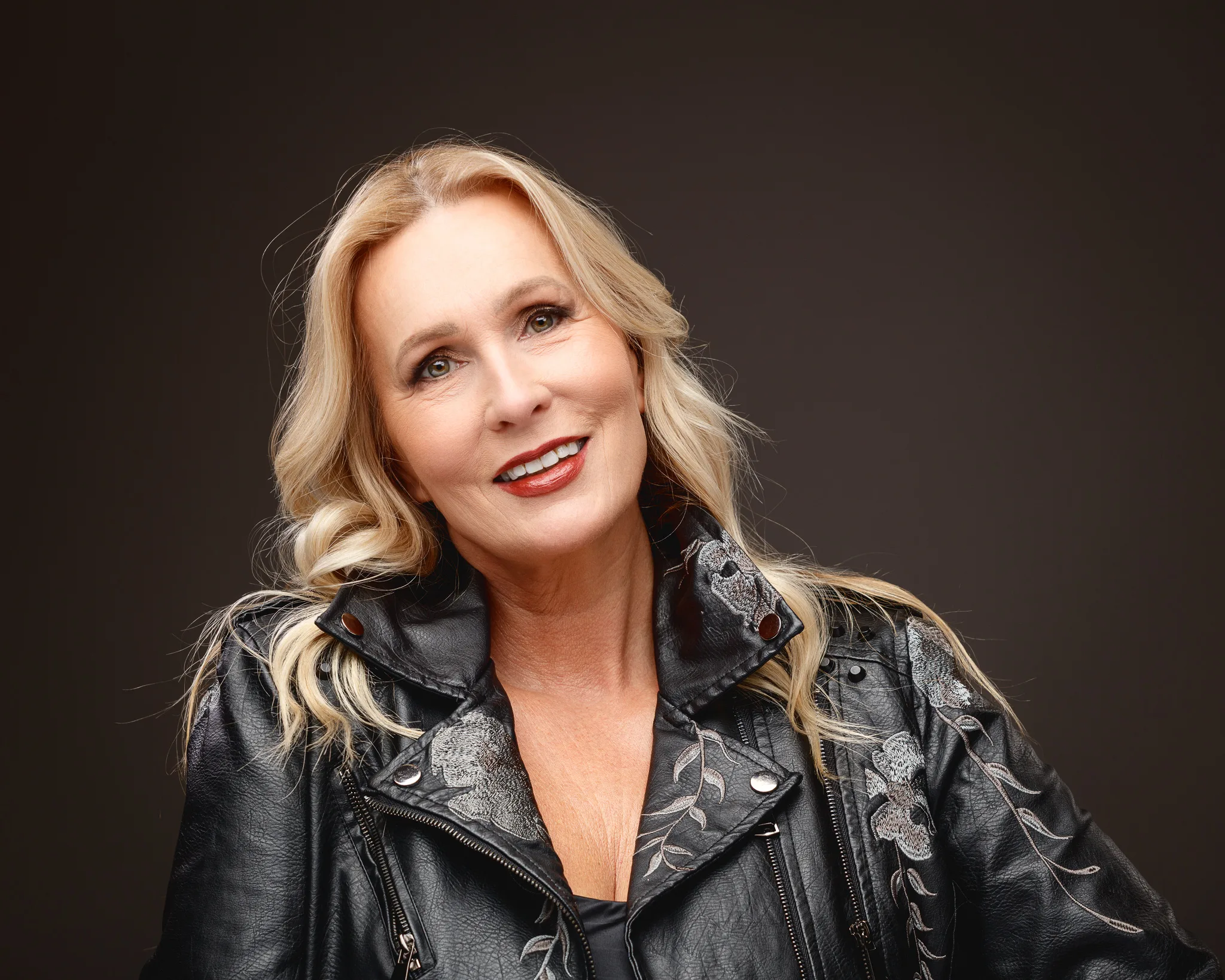
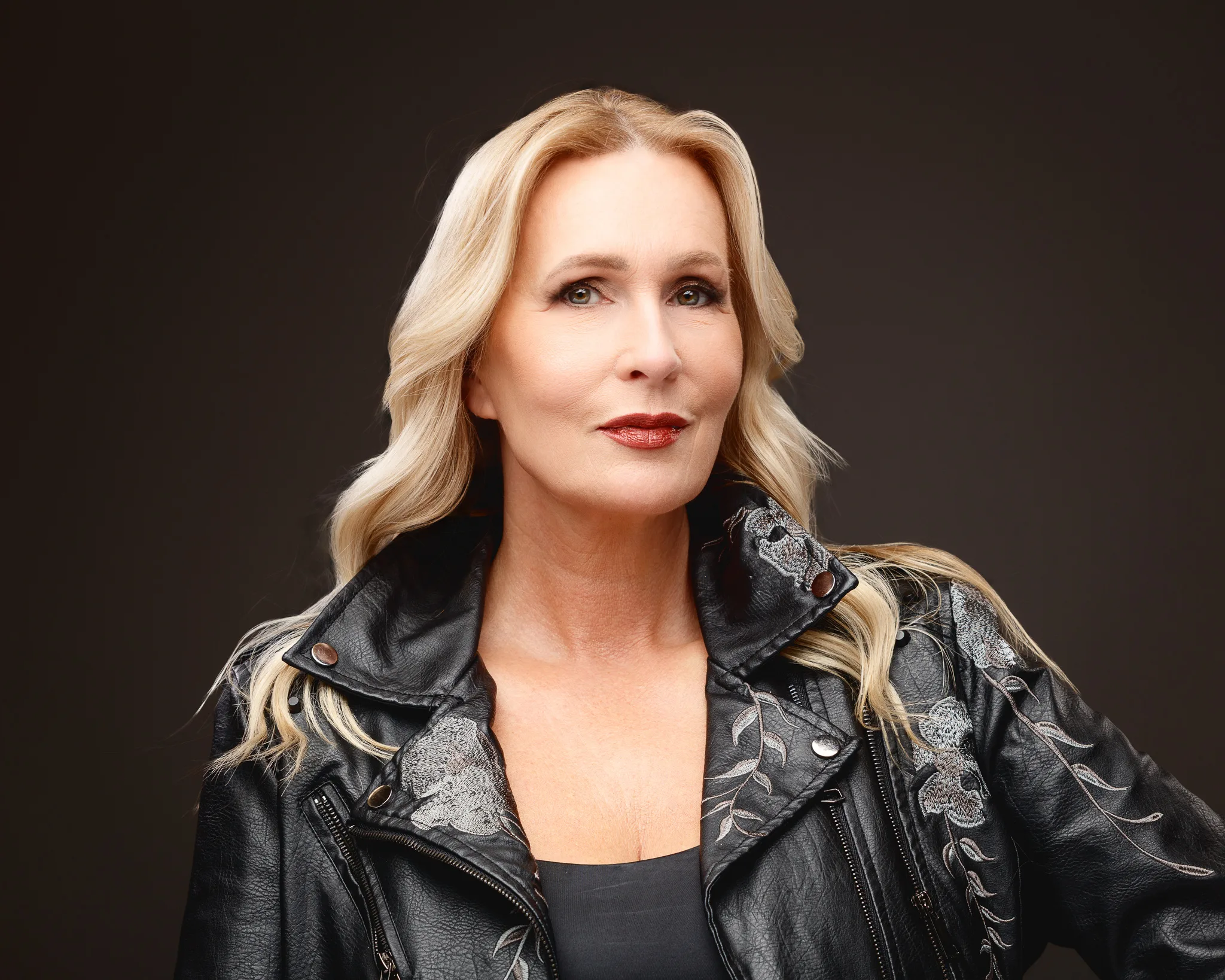
Three strong pose directions from the session
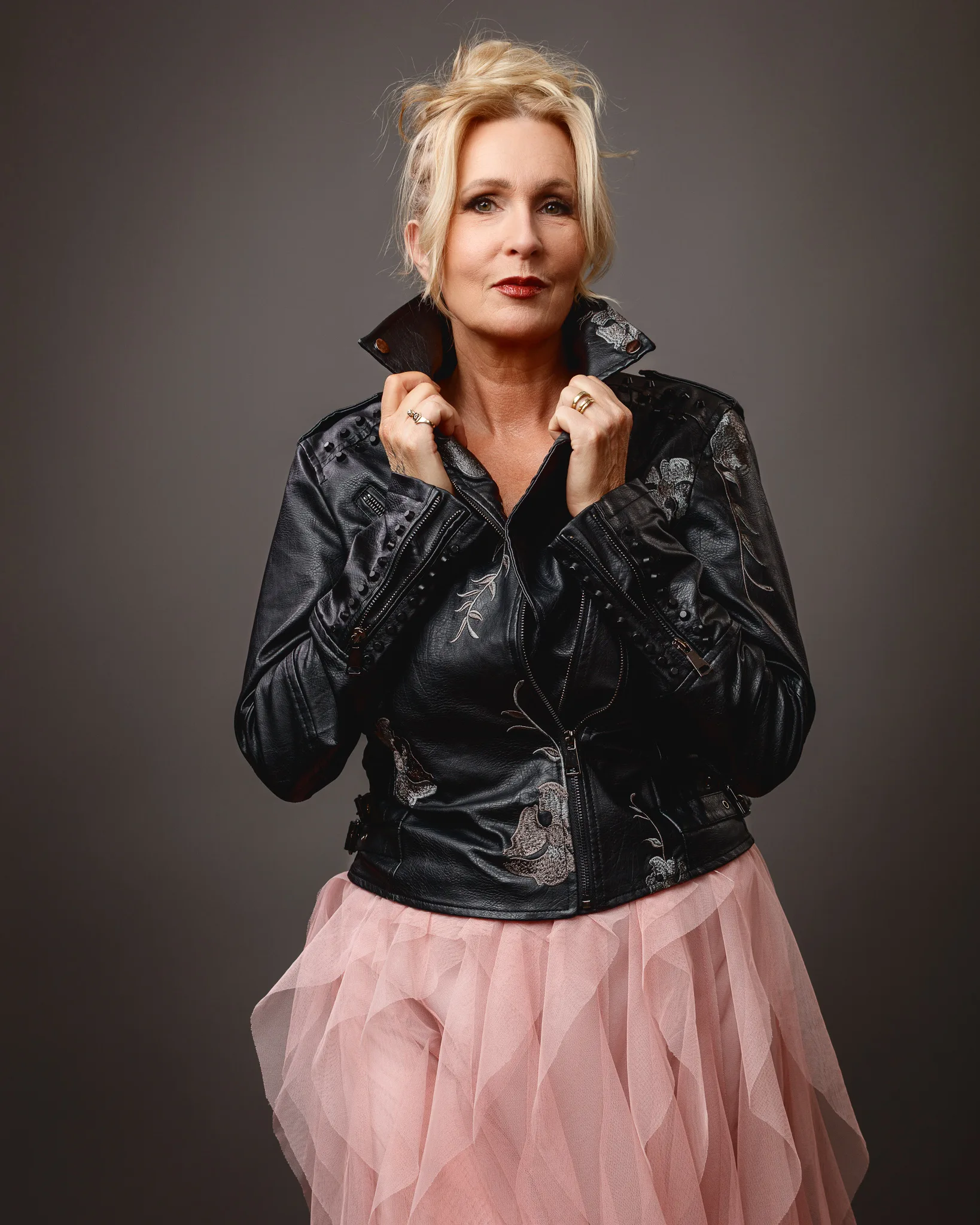
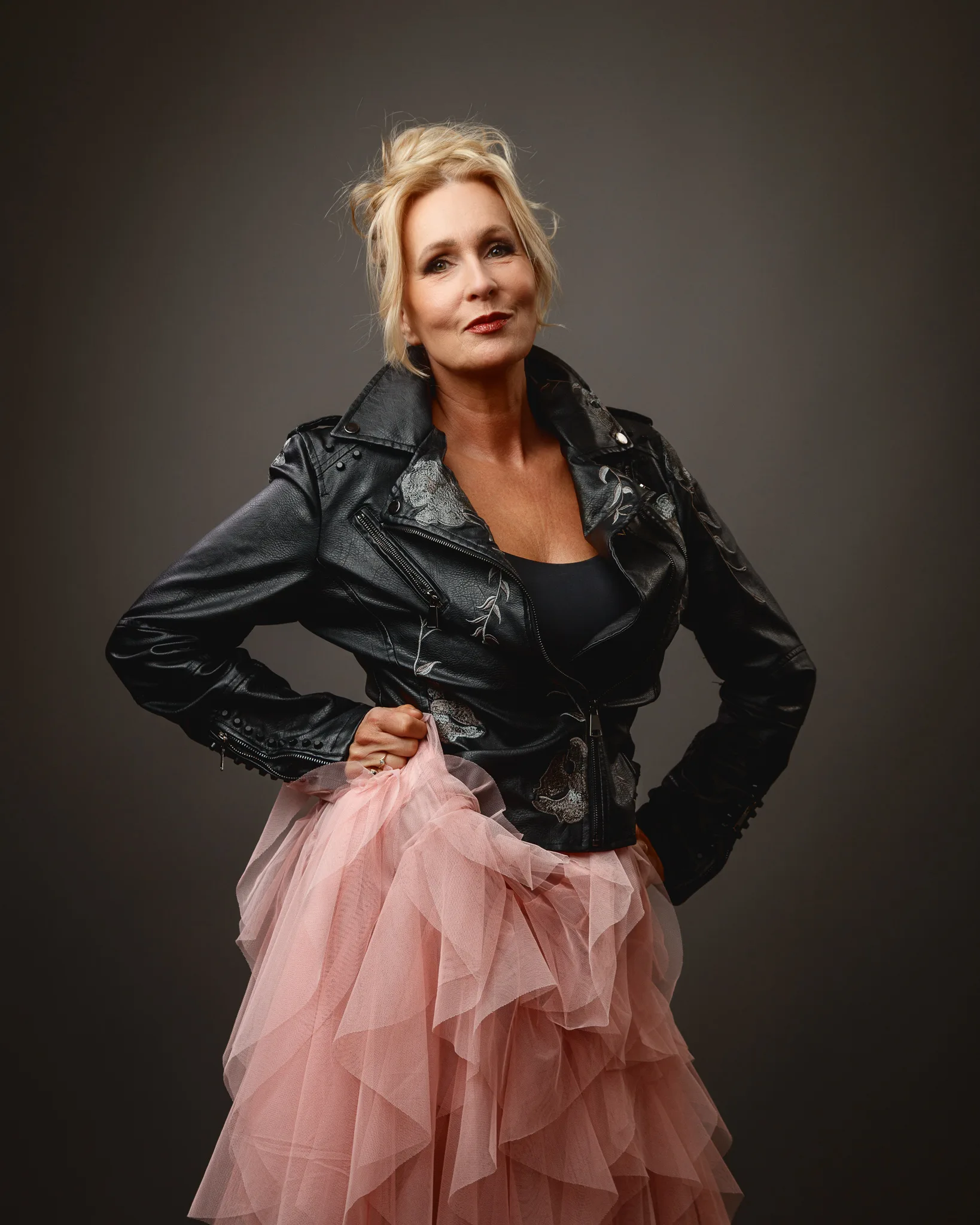
Even within a “classical” brief, you still want variety. For Lynn, we built that variety through pose and expression, not costume changes.
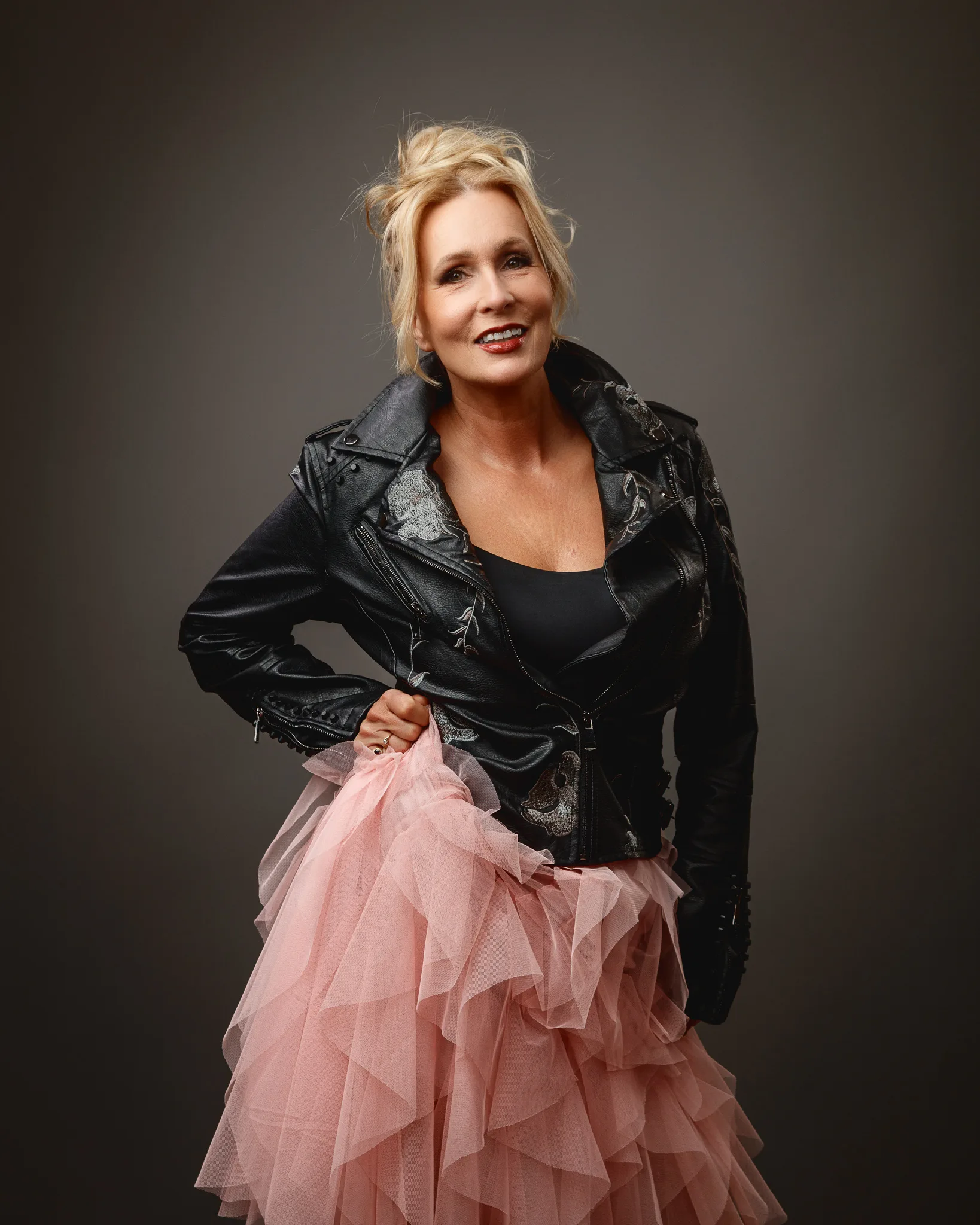
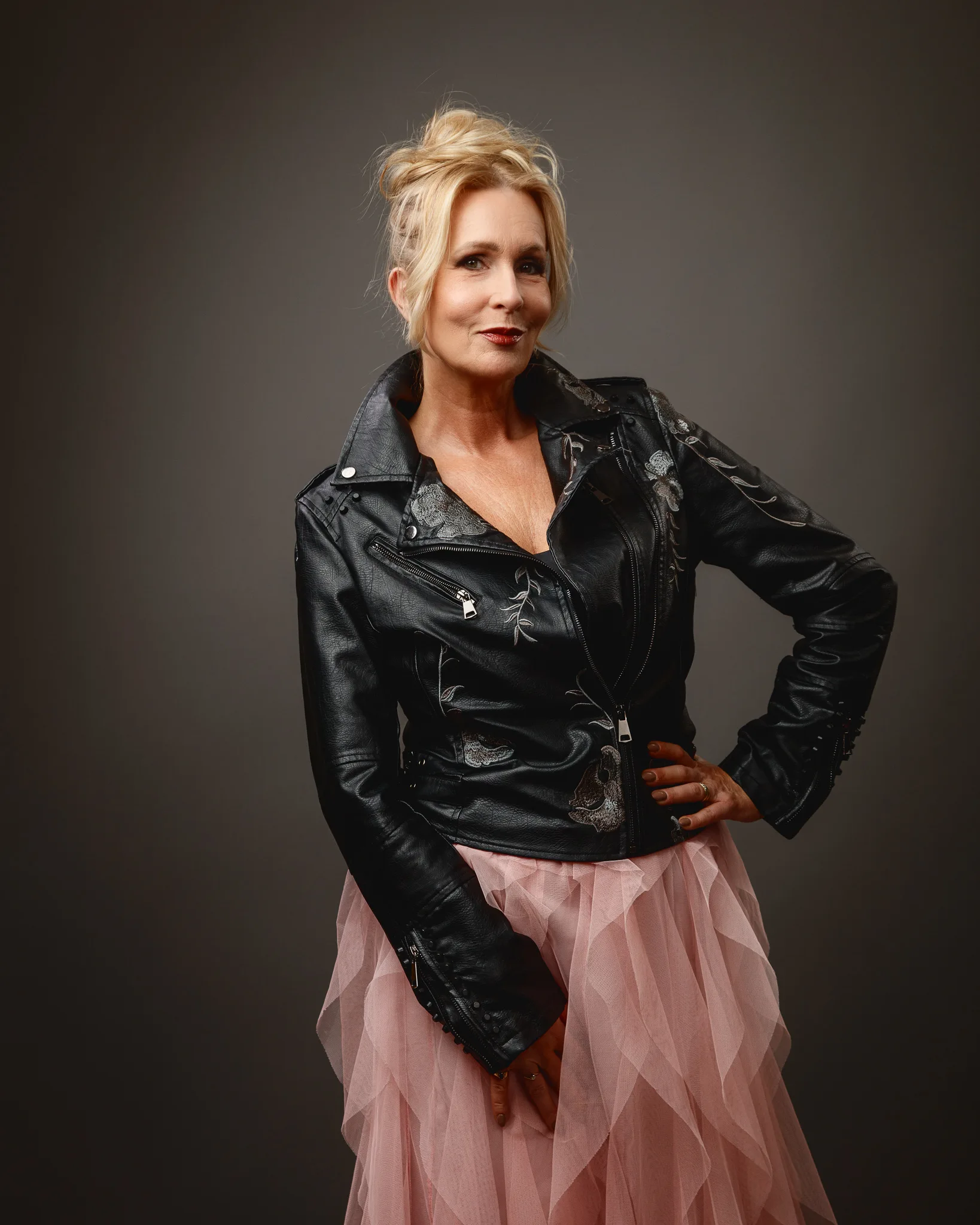
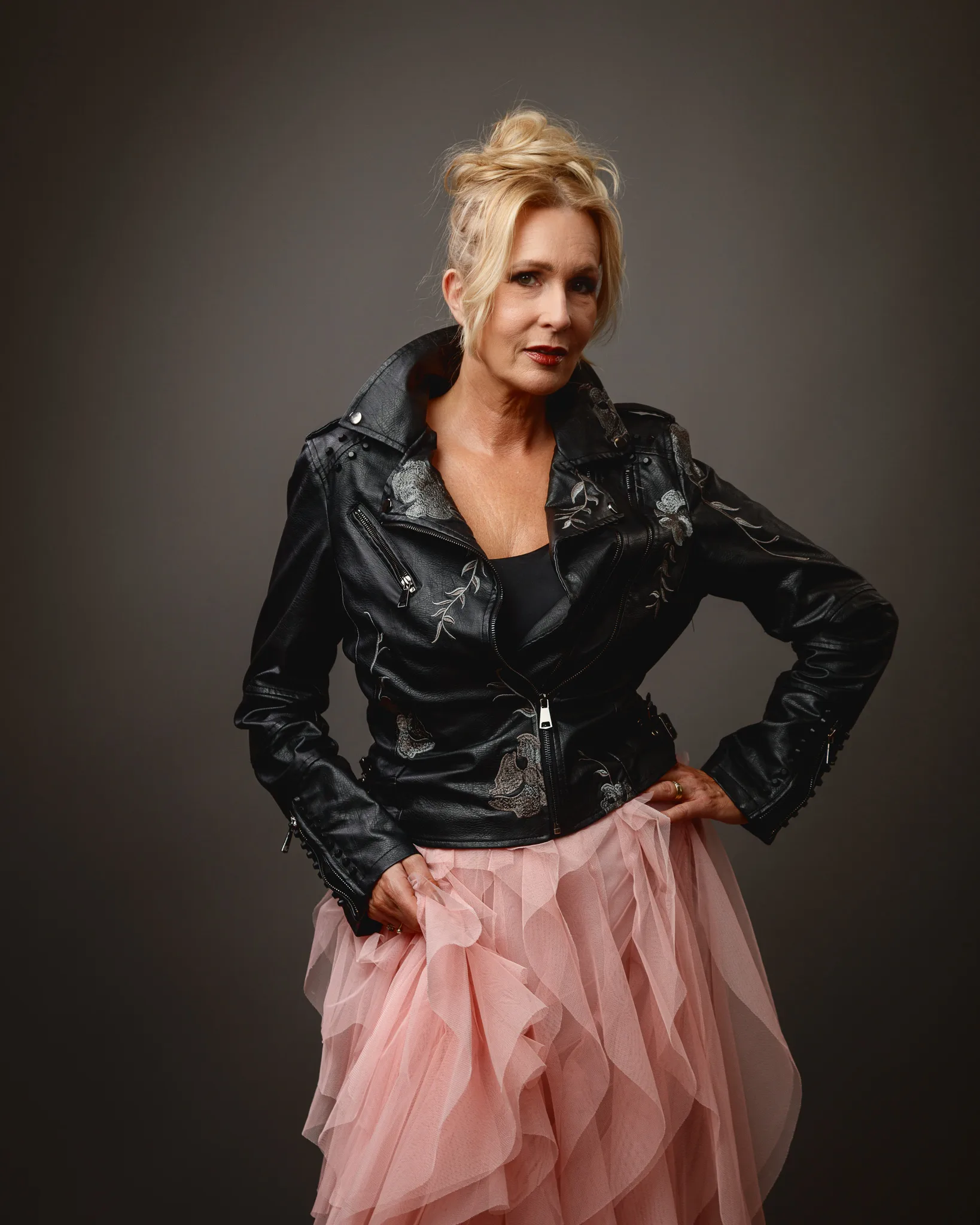
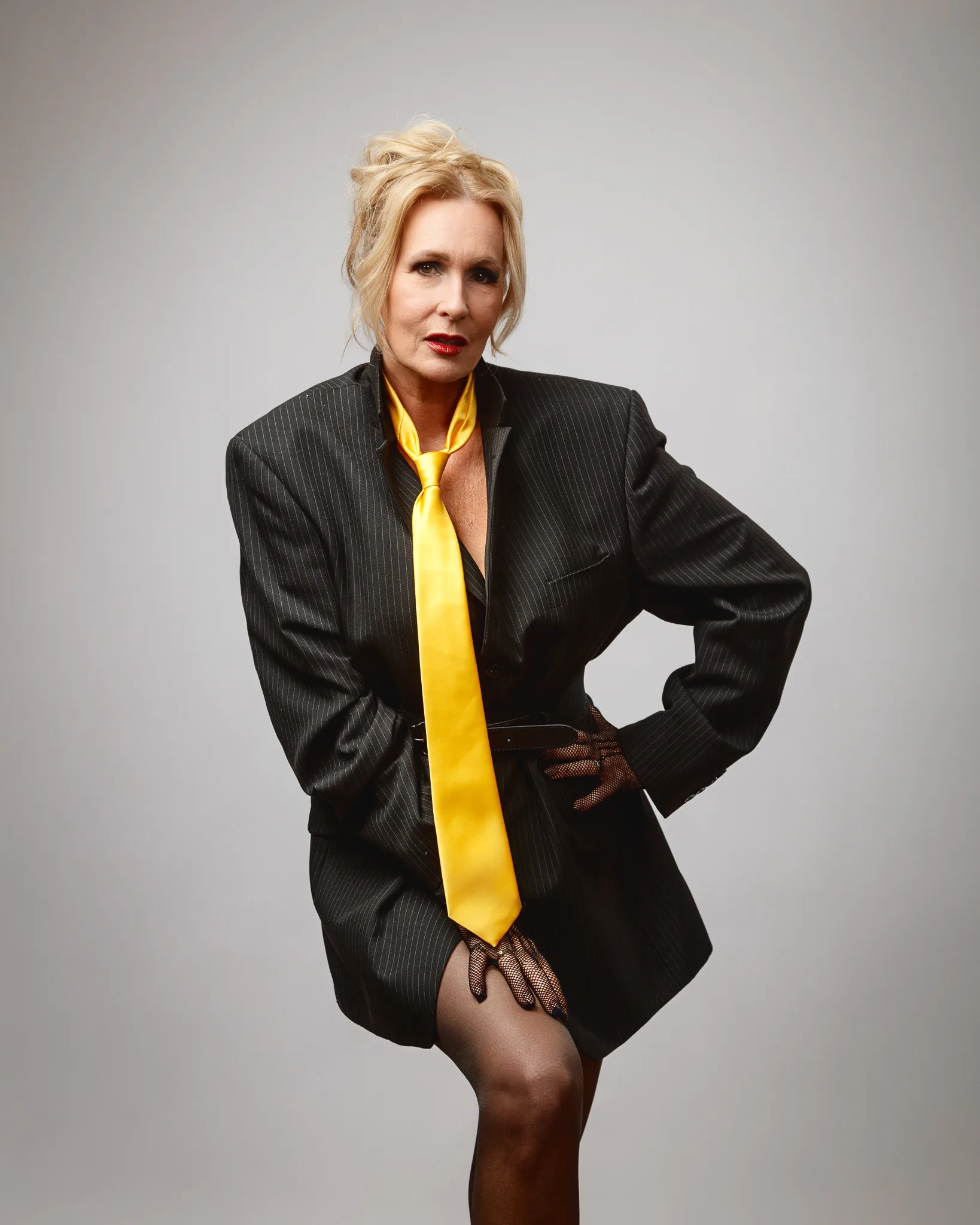
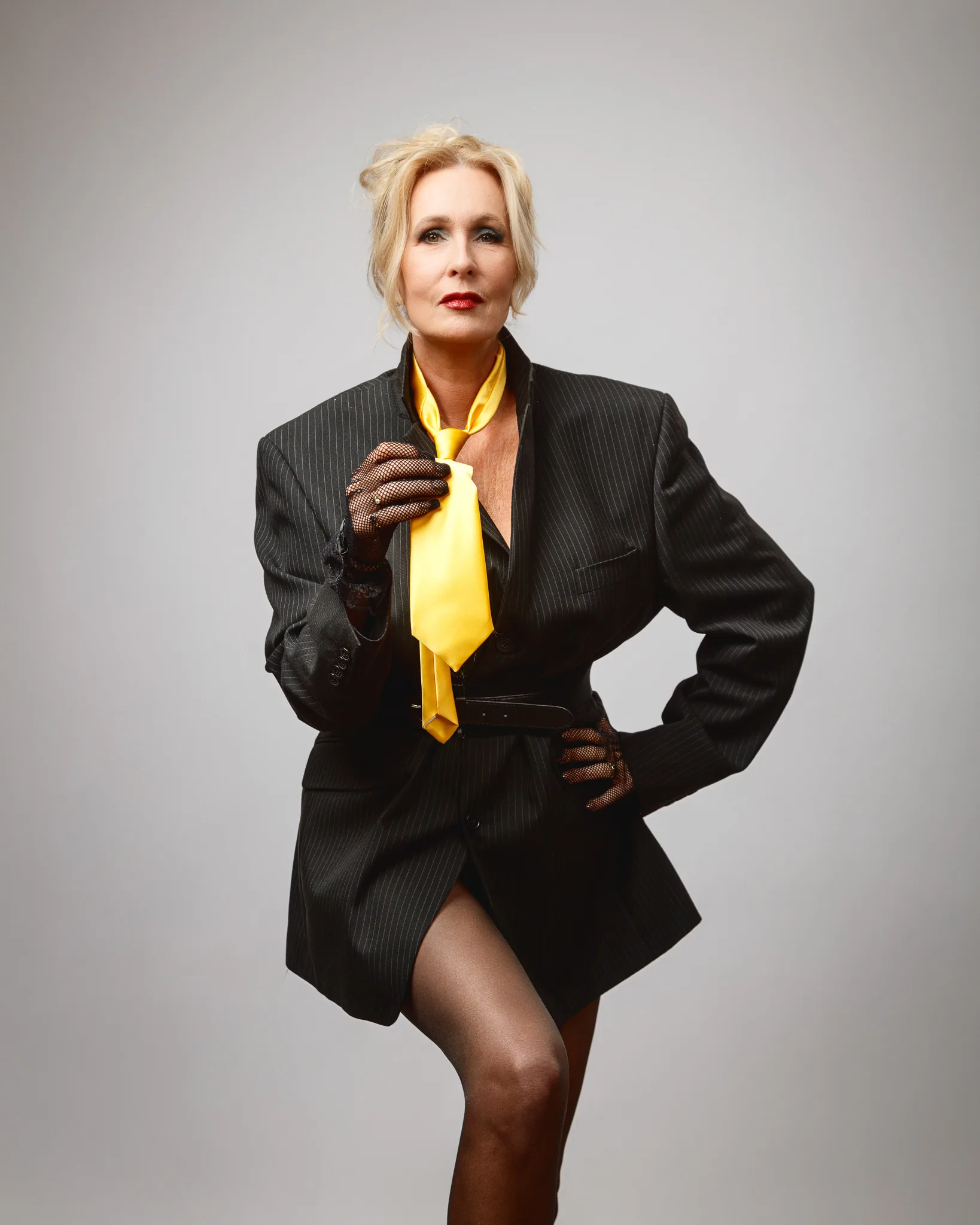
1) The three-quarter stance with one hand on hip
This pose reads confident and direct, without feeling aggressive. It is a simple structure, but it needs good posture. Lynn held her shoulders steady and her chin clean. That is what makes it work.
The slight turn through the torso gives shape. It also gives a stronger line through the waist. With the wrap blouse, it created clean folds and a flattering V line.
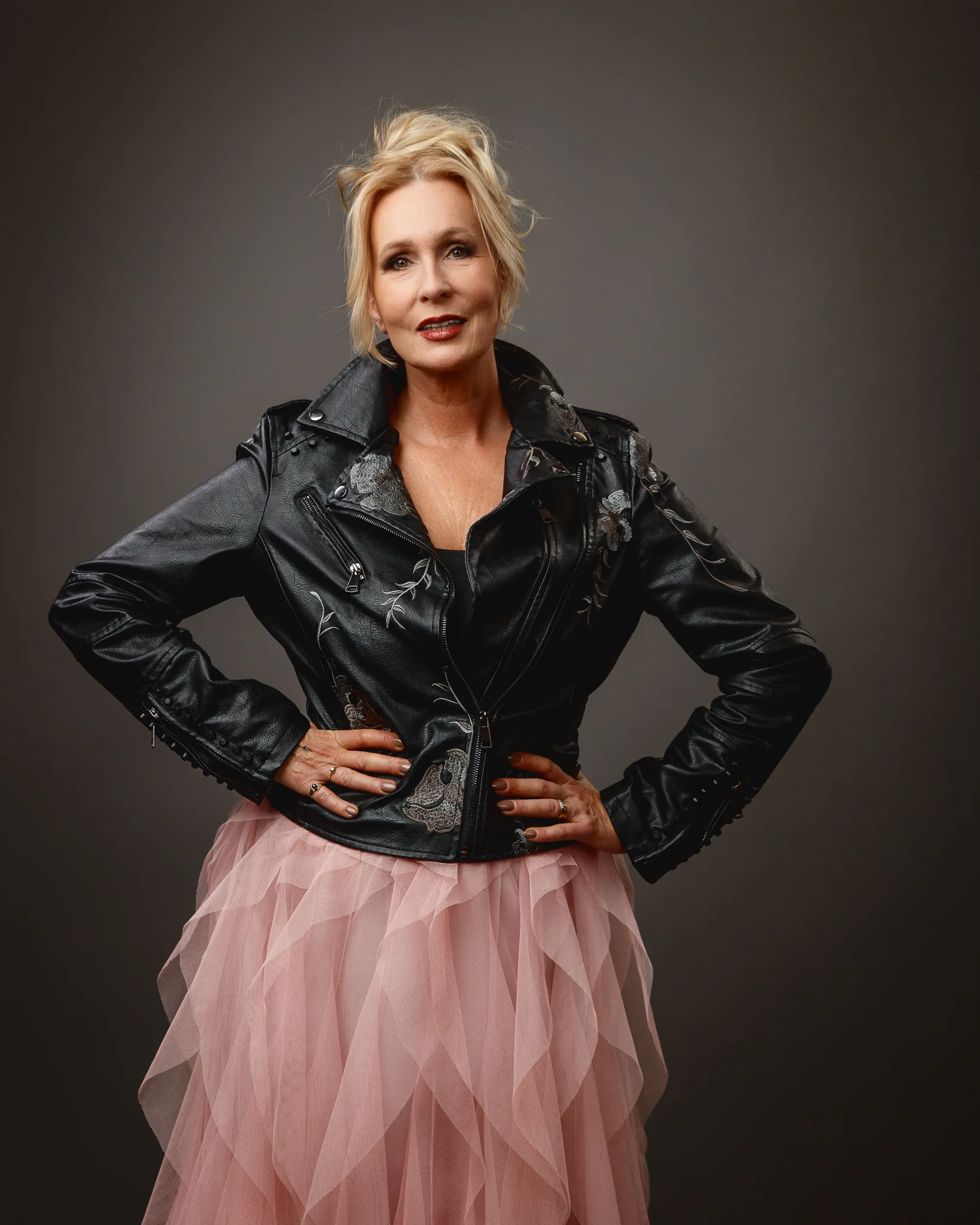
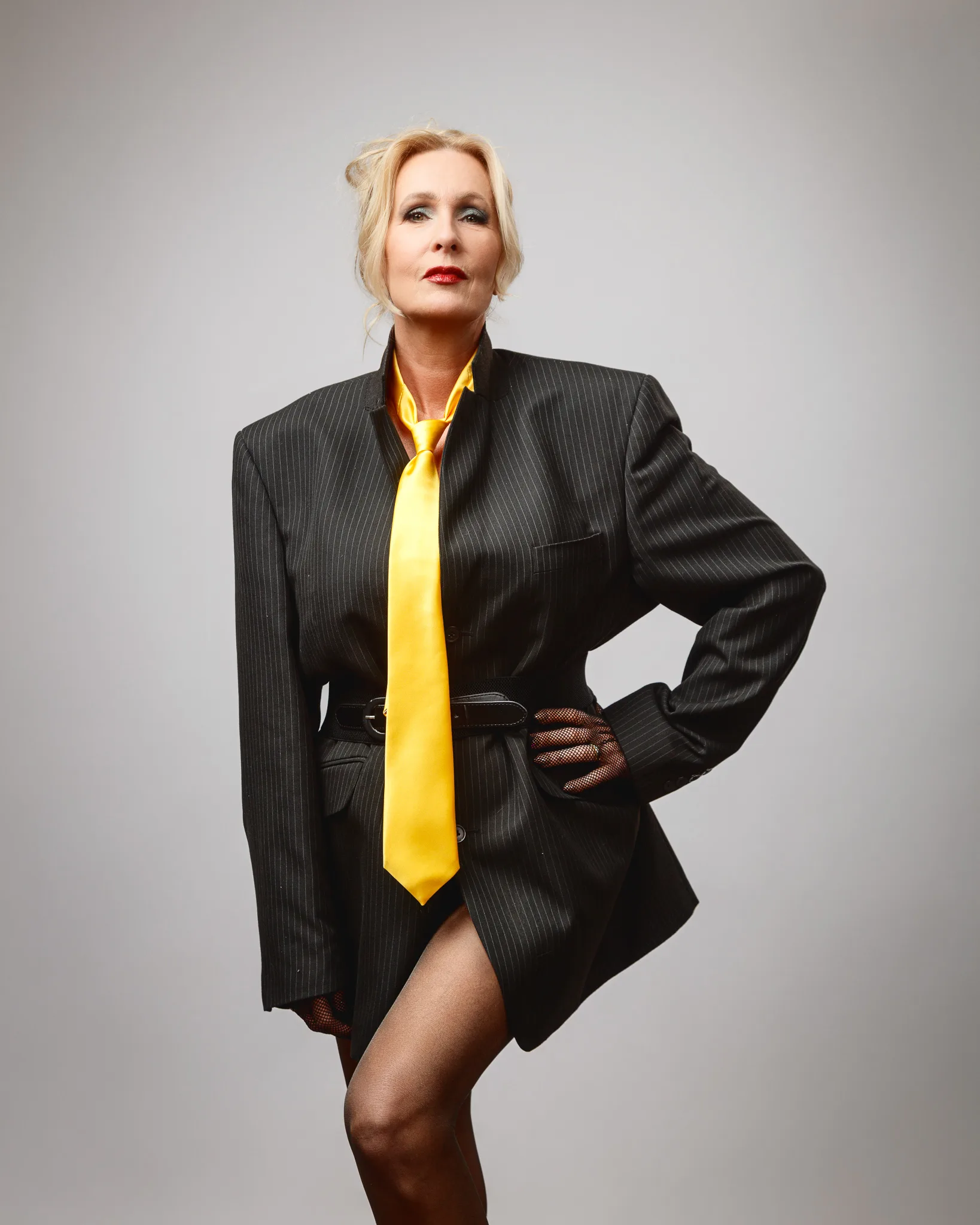
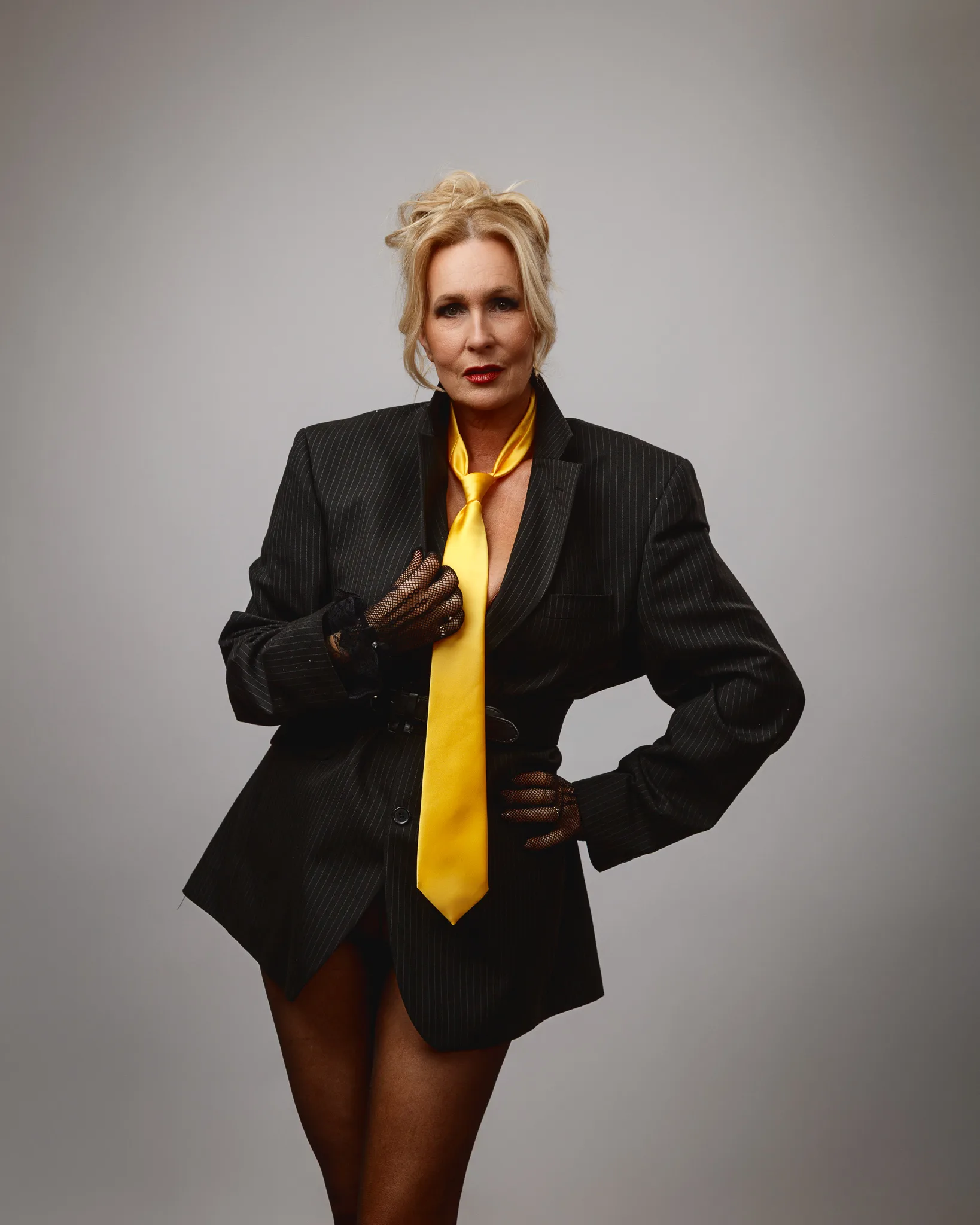
2) The squared stance with hands on hips
This is more assertive. It works well for a portfolio because it shows strength. It also shows how a model can hold symmetry without looking rigid.
The key here is expression. If you overdo it, it can feel forced. Lynn kept her gaze steady and calm. That balance is what I want.
3) Arms crossed with a relaxed lean
This pose can look closed if it is done badly. Done well, it looks composed and self-assured. Lynn’s version felt relaxed. The shoulders stayed down. The hands stayed soft. The face stayed open.
It is a great pose for a model portfolio because it reads adult, capable, and grounded.
Expression: the biggest difference between good and great portraits
In studio portraiture, expression is everything. People often focus on outfits first. Outfits matter, but expression carries the image.
A classical portrait look needs a controlled expression range.
- Neutral and calm.
- Soft confidence.
- Slight smile that does not feel “performed”.
- Direct gaze with steady eyes.
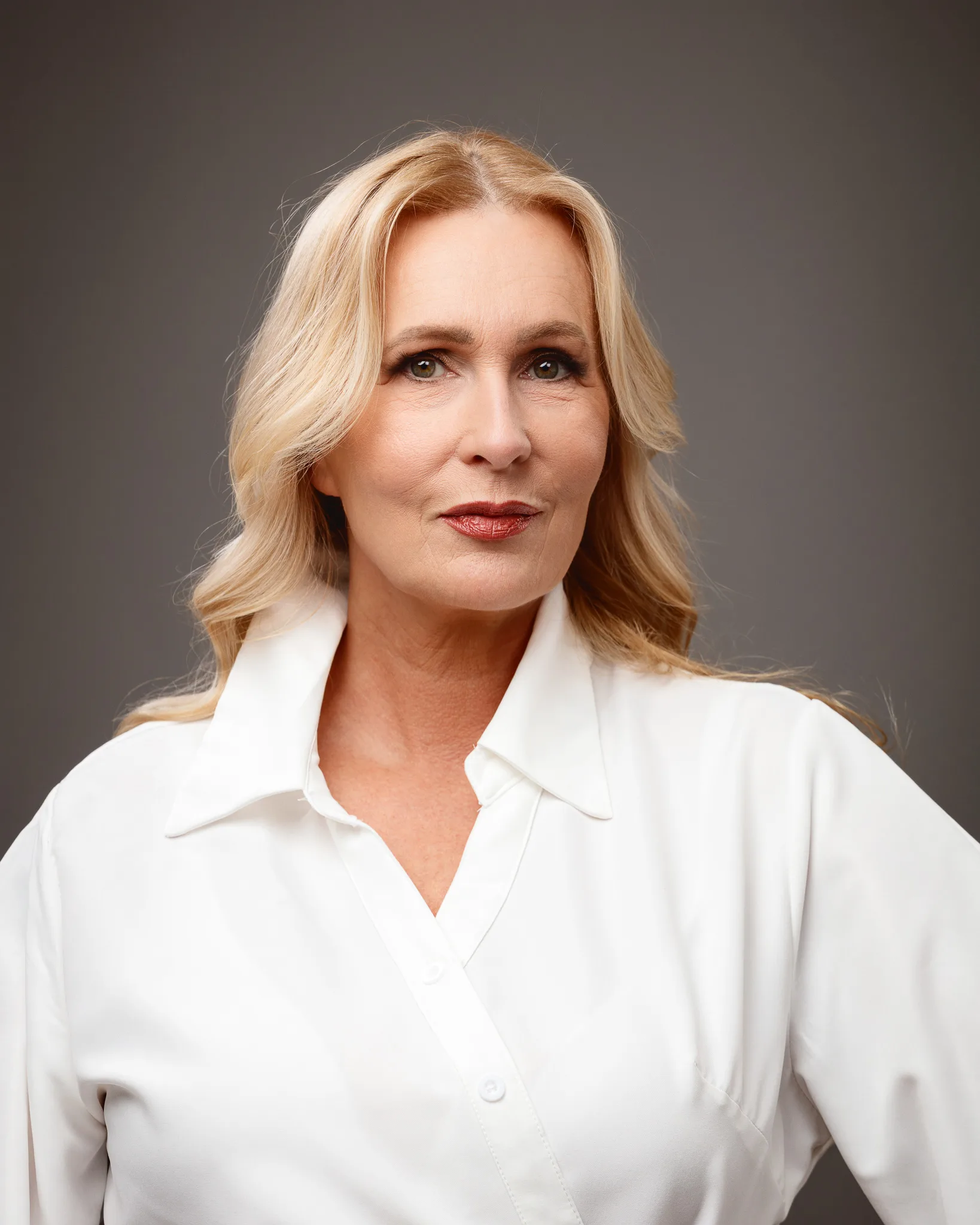
Lynn’s expression control was excellent. That comes from experience, but it also comes from comfort. When someone feels safe and respected, their face relaxes. The eyes look present. The mouth sits naturally.
Why I care so much about preparation
Preparation is not about being perfect. It is about removing stress.
When a model arrives with options, with basics covered, and with a clear idea of the look, we get more done. We also keep the session enjoyable. Nobody wants to spend their shoot fixing small issues that could have been avoided.
For a classical portrait session, preparation becomes even more important. The style is simple, so every tiny detail shows. Creases show. Lint shows. Hair flyaways show. Over-shiny skin shows. You can fix a lot in post, but it is always better to get it right in camera.
Five useful things to bring to a studio model portfolio shoot
This is the practical list I give models, and it applies perfectly to a session like Lynn’s.
1) Multiple clothing options on hangers (4 to 6 outfits)
Bring a few different looks, already pressed. Keep them on hangers. High-resolution images show creases quickly. A hanger keeps things ready to shoot.
Try to bring options that cover:
- A clean, simple “blank canvas” look.
- A slightly smarter option.
- A casual option.
- One statement outfit, if it fits your style.
Avoid bold logos and busy patterns, unless the brief needs them.
2) Proper undergarments and small wardrobe fixes
This is the unglamorous part, but it matters.
Bring seamless underwear that suits your outfits. Nude options are useful under lighter fabrics. Black options help for darker looks. Strapless choices can save time if necklines change.
Also bring:
- Fashion tape.
- A couple of safety pins.
- Nipple covers, if you use them.
A quick note from me. As a male photographer, I keep this topic professional, but it can feel awkward to raise in detail. It helps if you arrive already informed and prepared. That way, you stay in control of your comfort, and we do not have to troubleshoot basics mid-session.
3) Translucent setting powder and a simple touch-up kit
Studio lighting can bring out shine fast. Even if you have great skin, the light is honest.
Bring:
- Translucent powder.
- Blotting papers.
- Concealer for small fixes.
- Your lip product, plus a neutral back-up.
This saves time and keeps your look consistent.
4) Hair brush and basic styling products
Hair changes constantly in a studio. Movement creates flyaways. Static can lift strands. Outfit changes can create frizz.
Bring:
- A brush or comb.
- Hair ties and grips.
- Light hairspray or smoothing product.
If you use heat tools, only bring them if you are confident.
5) Shoes for the look, plus comfortable shoes between sets
Shoes affect posture. Heels change hip position, core engagement, and shoulder placement. They also affect mood.
Bring shoes for each outfit. Do not assume the studio has your size. If you are shooting on a white floor, make sure soles are clean.
Also bring comfortable trainers or flats for breaks. Fatigue shows in shoulders and face.
How I run a calm and respectful studio session
This matters, and I think it should be normal to talk about it.
A successful shoot is not just technical. It is also how the session feels. Models perform better when they feel safe, listened to, and not rushed. That is true for experienced models and new ones.
In practice, that means:
- Clear boundaries and clear communication.
- Breaks when needed.
- Room to review images together.
- Respect for what the model feels comfortable doing.
Lynn’s professionalism made this easy. She communicated well and stayed focused. That is why the session felt smooth.
Portfolio value: why these images are useful
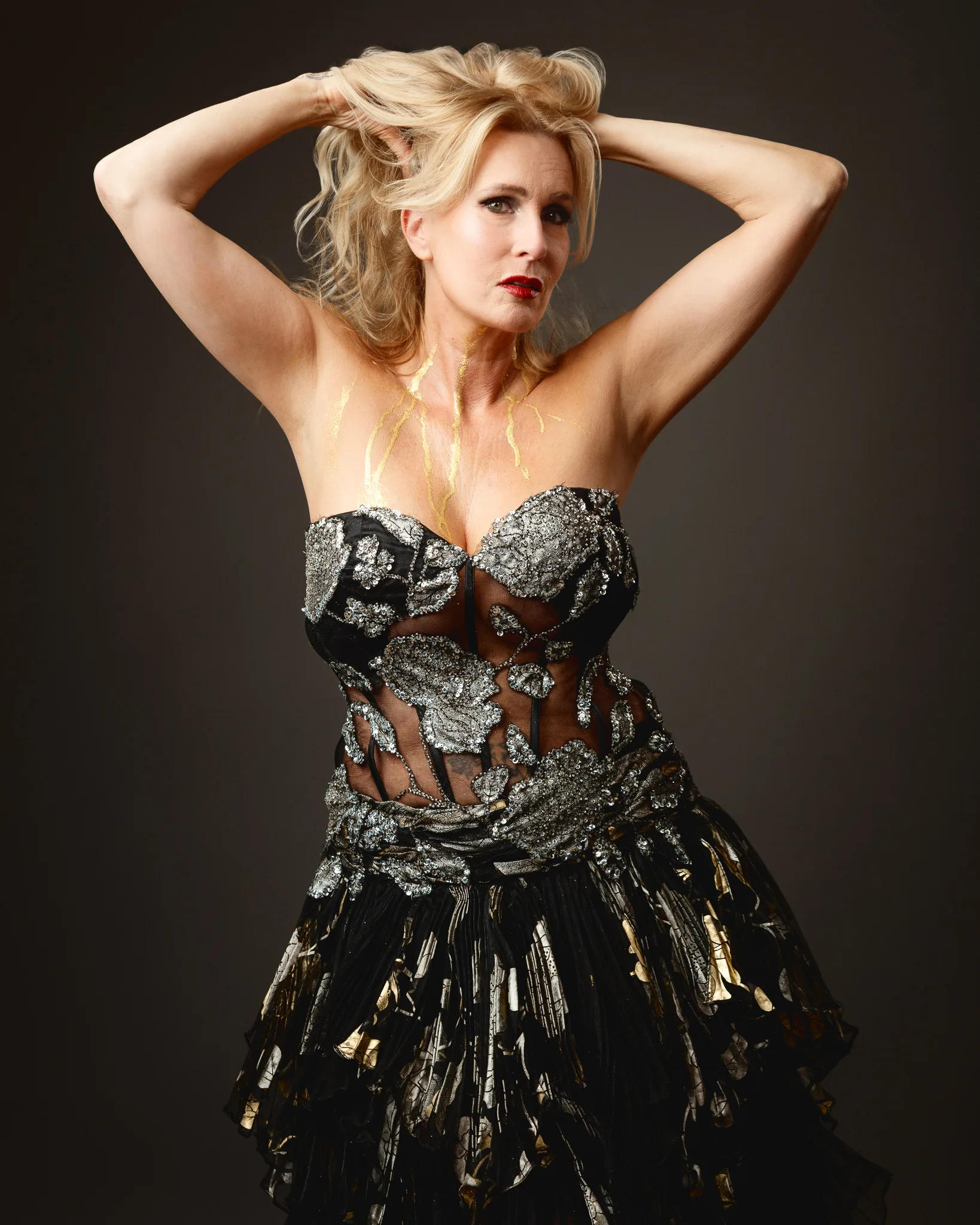
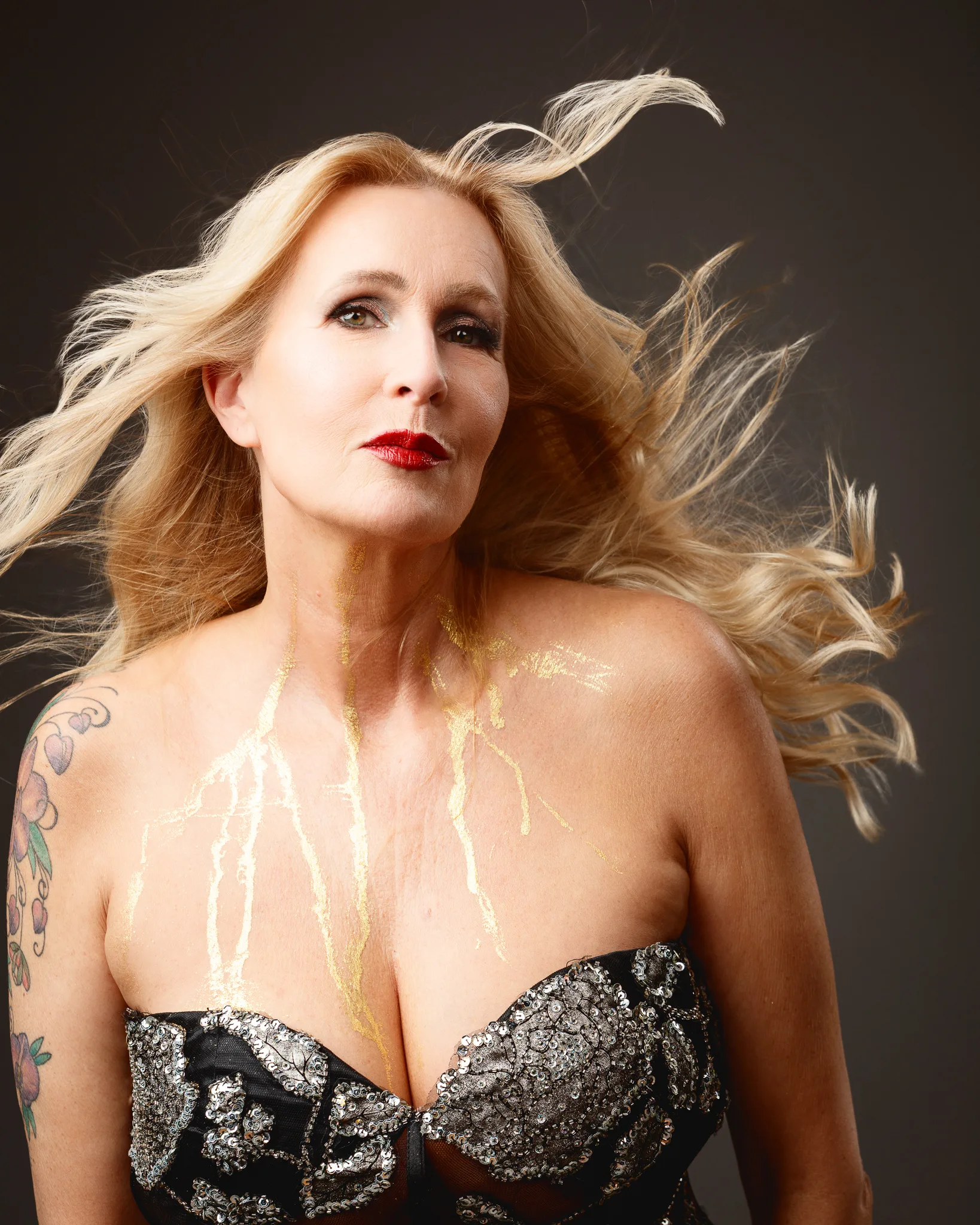
A classical portrait set has real value in a model portfolio, even if you also shoot fashion and editorial work.
These images show:
- Facial structure clearly.
- Skin and hair in honest light.
- Expression control.
- Strong, simple posing.
- A style that is not tied to a short-lived trend.
If you ever need to submit for something that asks for “clean”, “natural”, or “simple”, these portraits work. They also sit well alongside stronger, more stylised sets. They help tell a complete story.
My favourite part of working with Lynn
It is always the same thing for me. When someone turns up prepared, brings calm energy, and trusts the process, the portraits come alive.
Lynn was a pleasure to photograph. She was engaged, focused, and easy to direct. She also brought her own presence to each frame. That is the part you cannot teach quickly. It is built over time.
I am glad we have now worked together twice, and I would happily photograph Lynn again when the next brief calls for it.
A few helpful references for models preparing for studio portraits
If you like to read around the subject, these are practical starting points:
- https://www.modelmanagement.com/modeling-advice/modeling-portfolio/
- https://www.britishfashioncouncil.co.uk/
I do not agree with every tip on every page, but they are useful for context. The best preparation is always the preparation that fits your own comfort and the brief of the shoot.
Final thoughts
This session with Lynn was a great example of how strong portraits come from simple choices. A clean background. thoughtful styling. steady light. controlled posing. calm direction. Good preparation.
If you are building a model portfolio, I want you to take one thing from this. Keep at least one part of your portfolio simple and timeless. It will keep paying you back.
And if you are coming into a studio shoot soon, pack the basics properly. It makes the whole day easier, and it shows in the images.