Most men who book a portrait session with me arrive with one shirt and a question about whether it will do. This session was the other end of that scale. Four looks, all of them thought through, all of them saying something slightly different, and a moustache that had clearly had proper attention paid to it before he walked through the door.
The session was with Hans Zee, and the brief was men’s fashion. Editorial rather than corporate. Not headshots for a website, not a LinkedIn update, but the kind of images you would expect to see across a spread in a magazine. That gave us room to work with styling, colour and posture in a way a straightforward headshot session never does.
Who Hans Zee Is
Hans is a performer. His work sits in burlesque and cabaret, and he performs with Snapdragon Cabaret, the Norwich company I have photographed at Norwich Pride for the last five years. That background matters more than people expect. Someone who performs for a living has spent years learning what their body does under lights and in front of an audience, and that transfers into a studio almost immediately.
Everything you see him wearing is his own. Hans put all four looks together himself, down to the jewellery, and I had no hand in any of it. That is worth saying plainly, because the wardrobe is the backbone of a session like this one. Someone arriving with four coherent looks already worked out changes what is possible in the time we have, and most sessions do not start from there.
Four Looks, Four Different Feelings
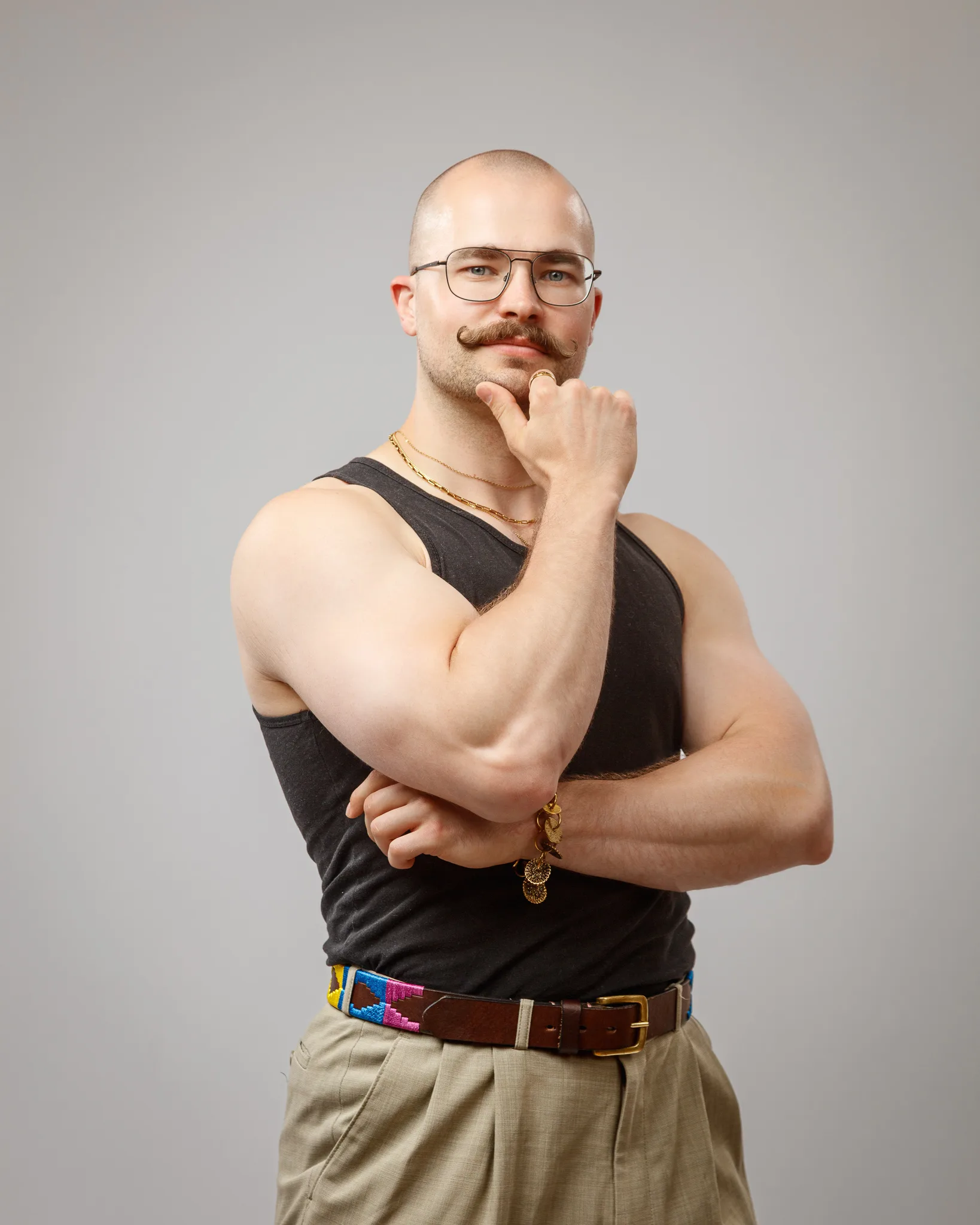
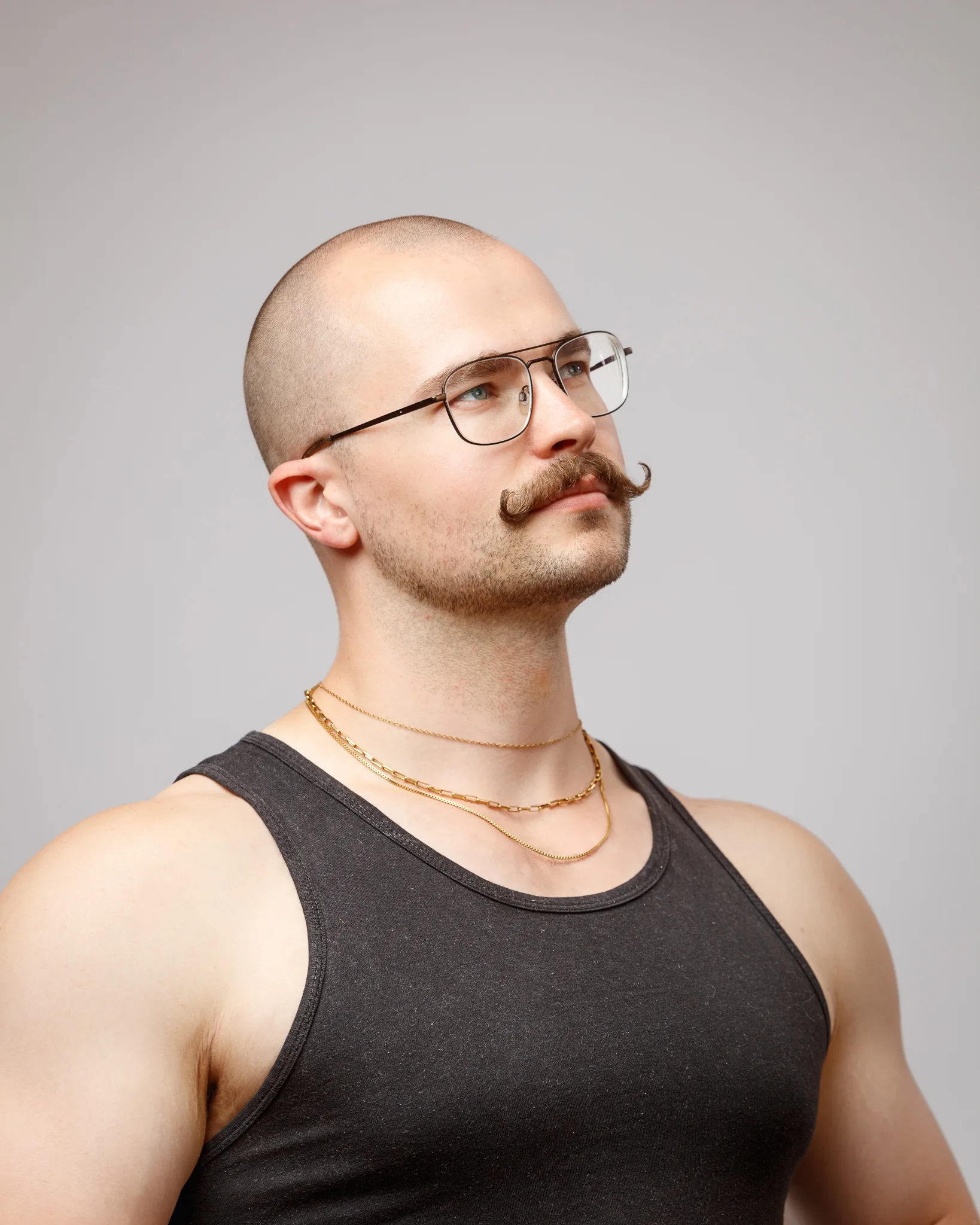
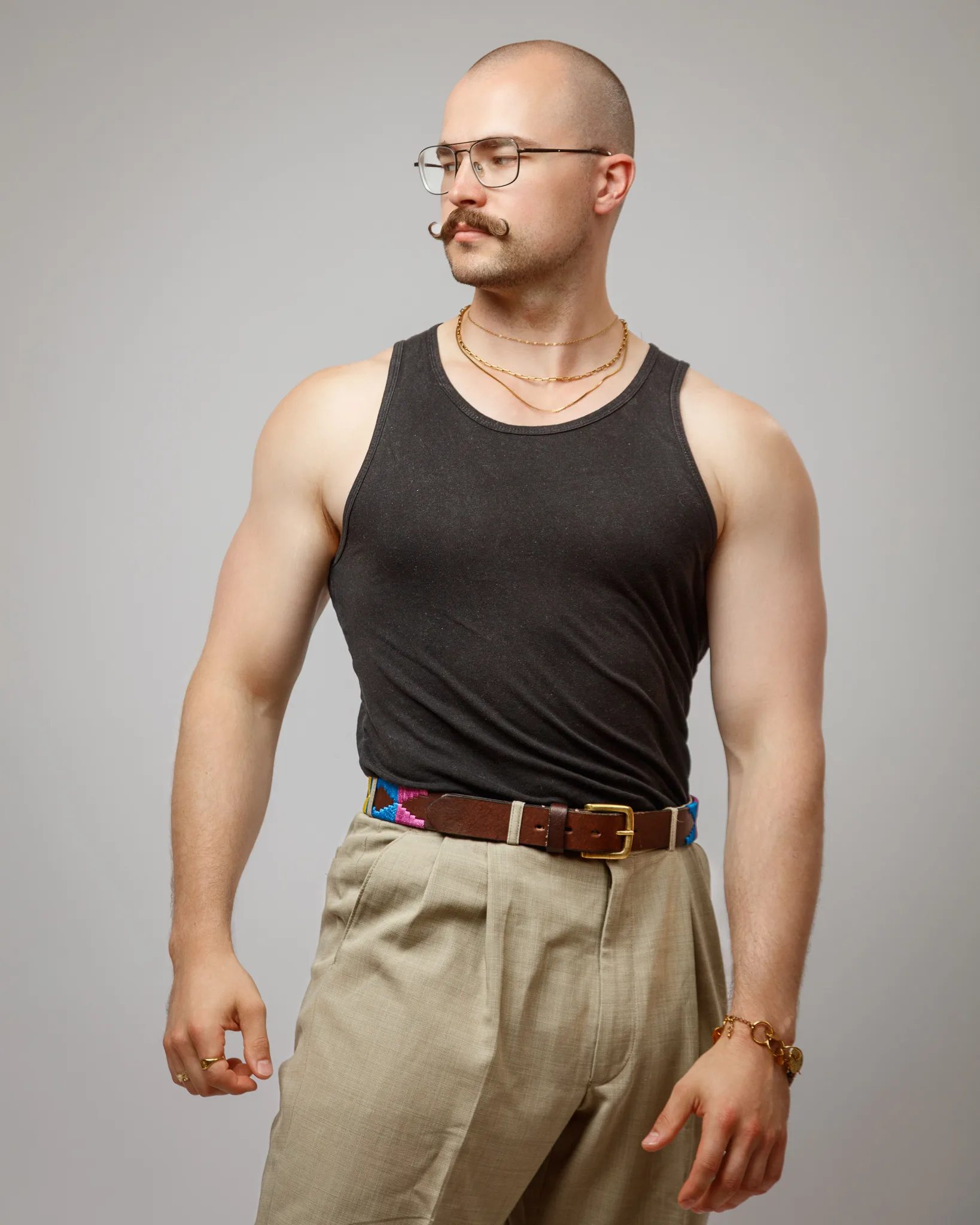
The first look was the simplest and probably my favourite. A washed charcoal vest, high waisted tan pleated trousers, a brown leather belt worn over a brightly embroidered polo belt, layered gold chains and a coin bracelet. Shot against a clean pale grey. It has a slightly nineteen eighties feel to it without tipping into fancy dress, and because the clothing is so plain across the top half, everything reads through the arms, the shoulders and the face.
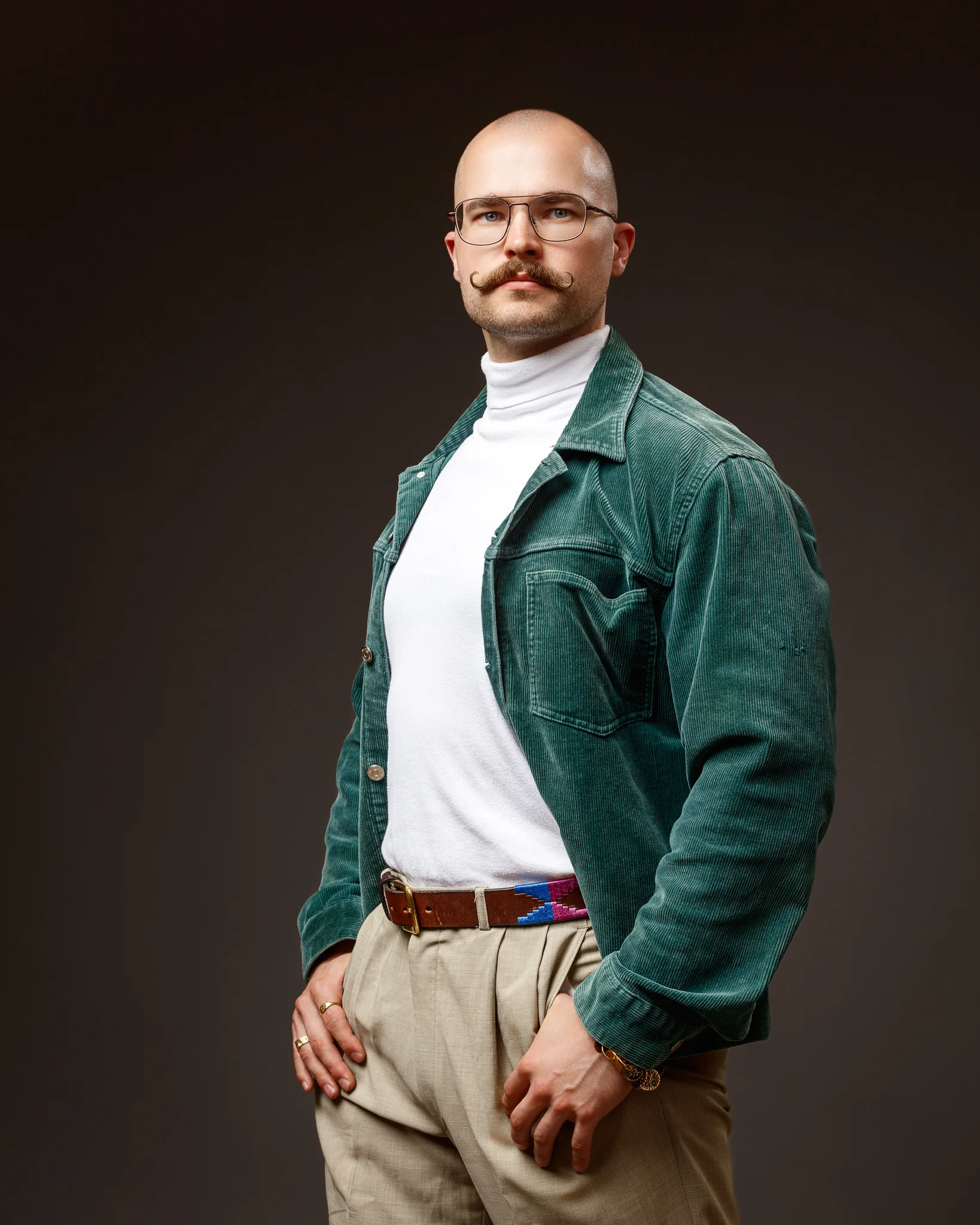
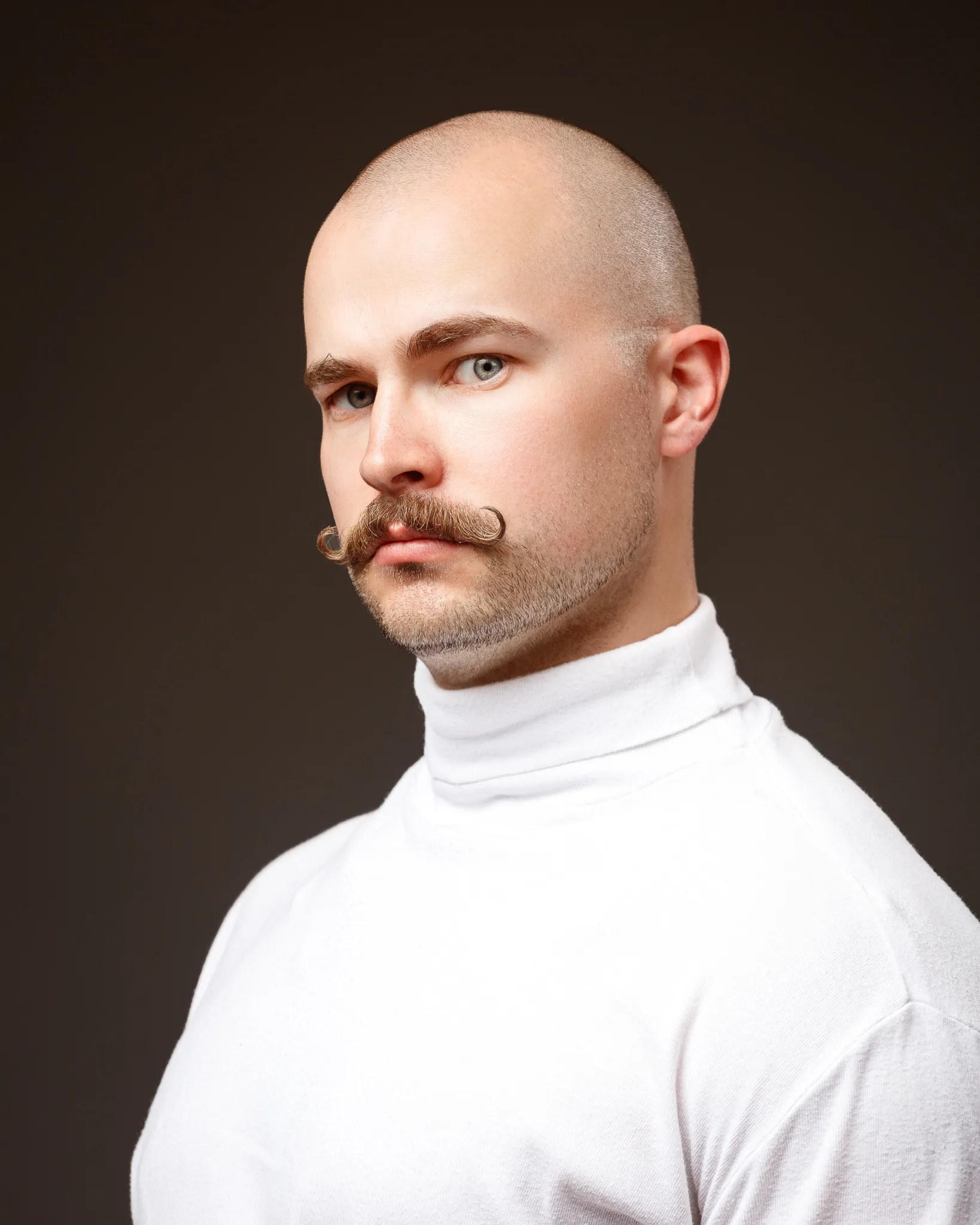
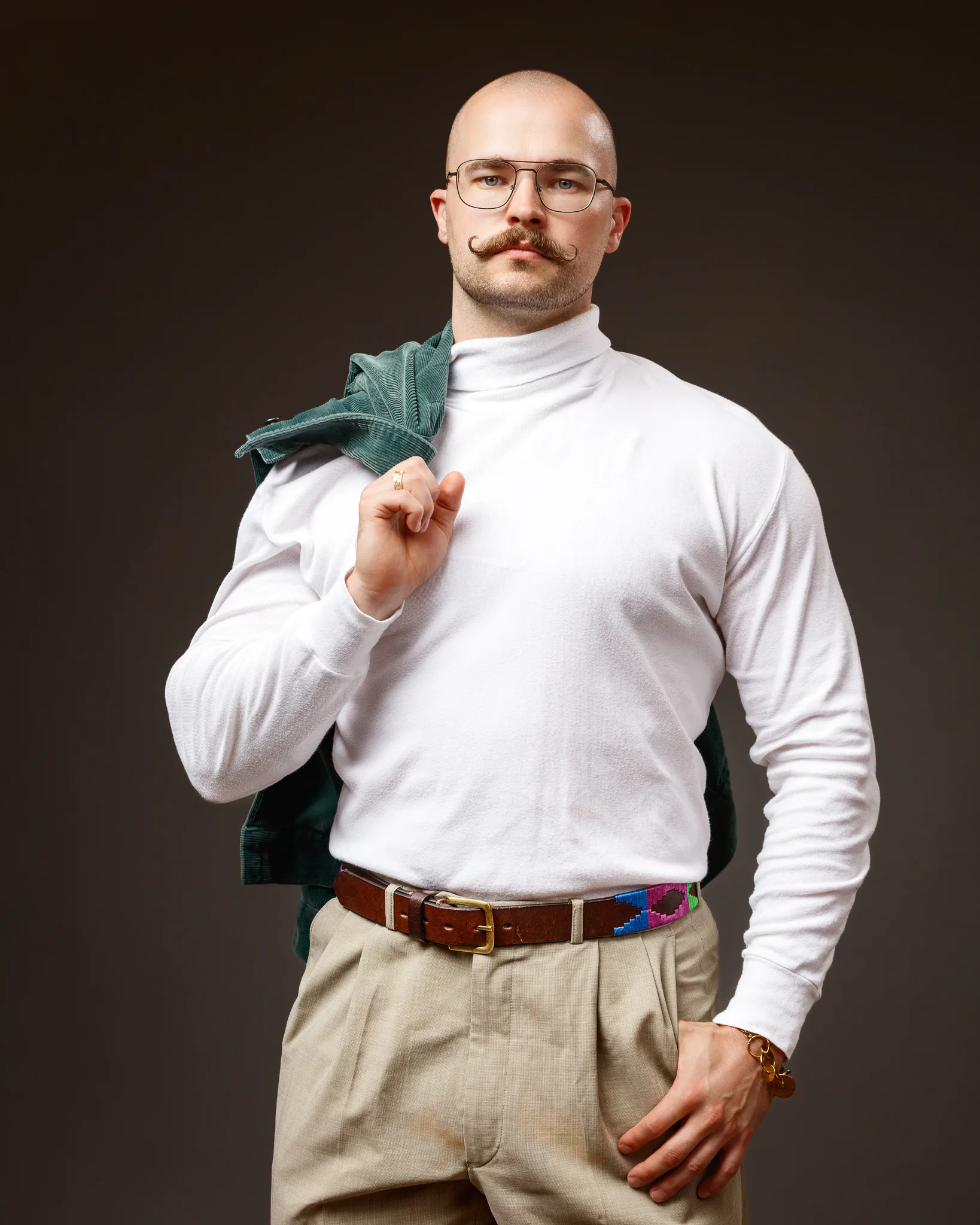
The second look put a green corduroy jacket over a white roll neck. That went onto a dark chocolate background rather than the grey, because a mid green against pale grey would have sat flat. The darker set gave the jacket somewhere to separate from, and the white roll neck became the brightest thing in the frame, which pulls the eye straight up to the face.
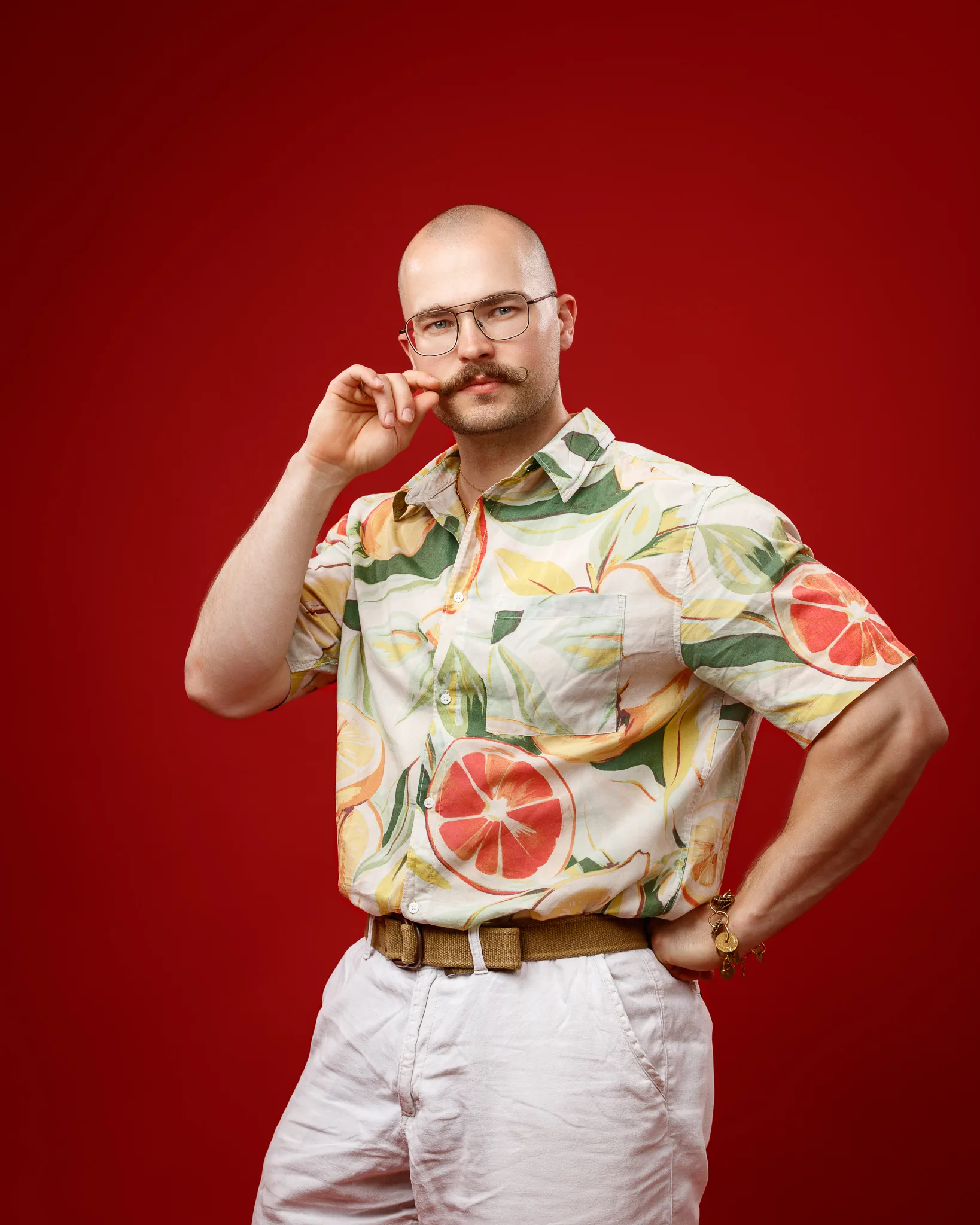
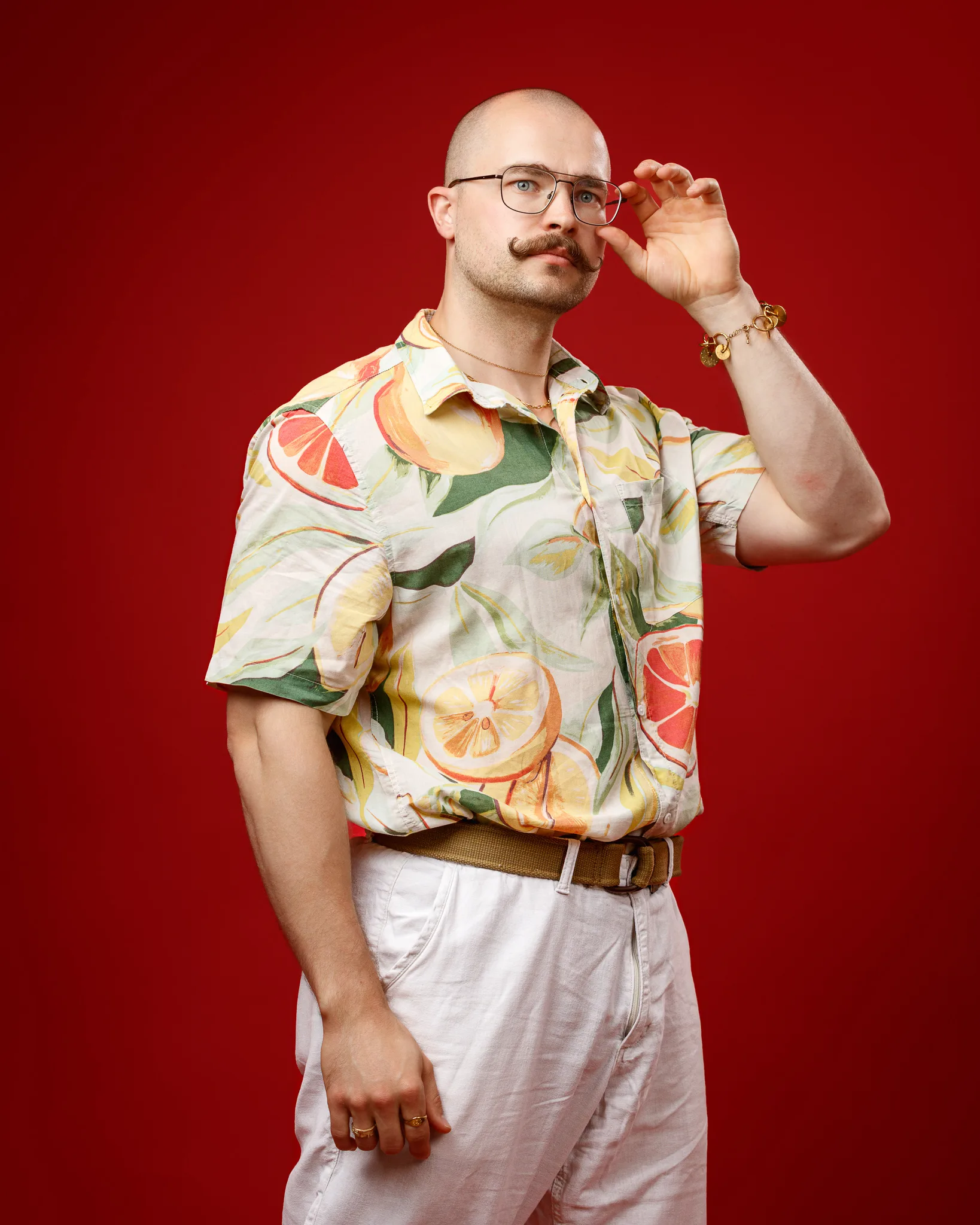
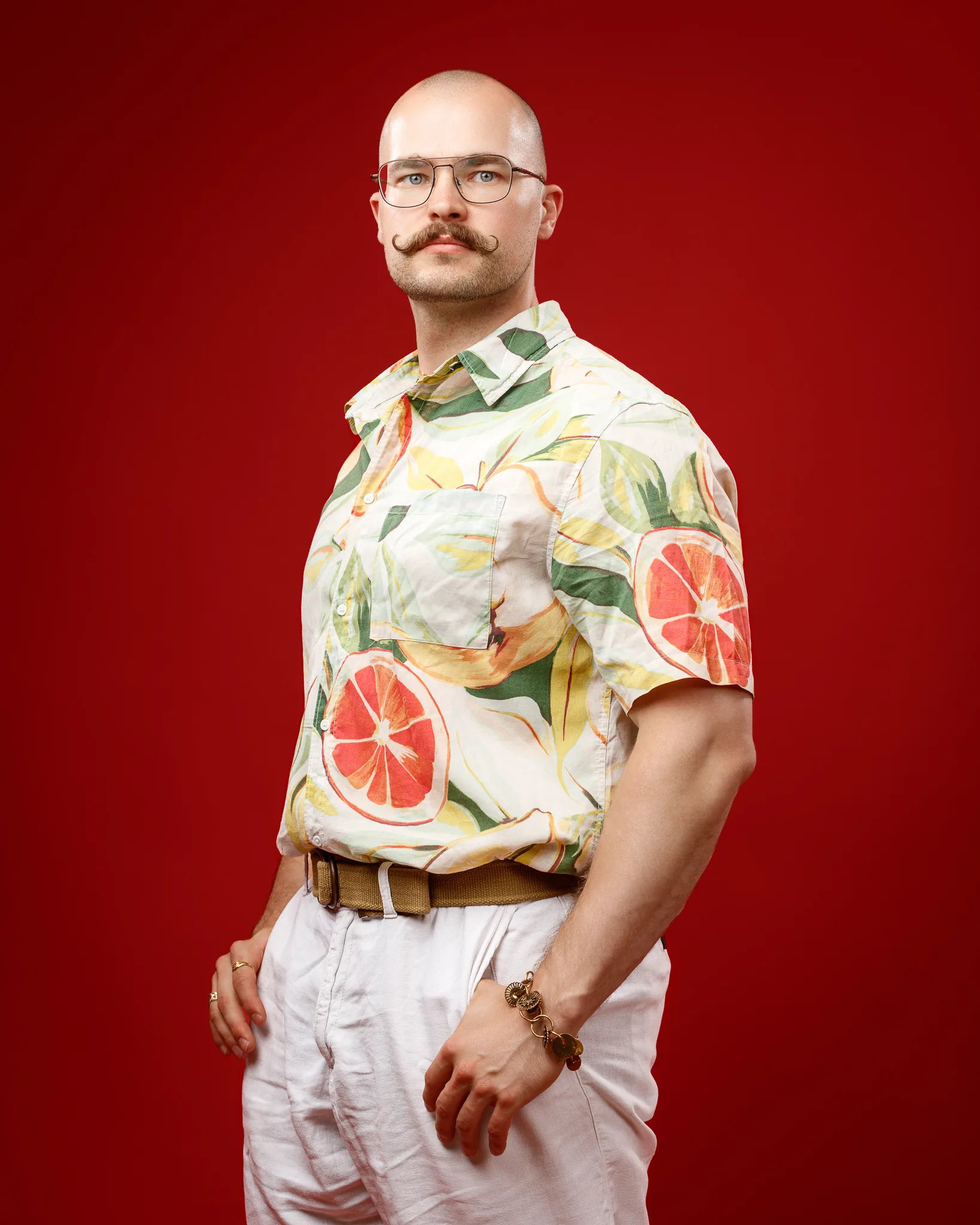
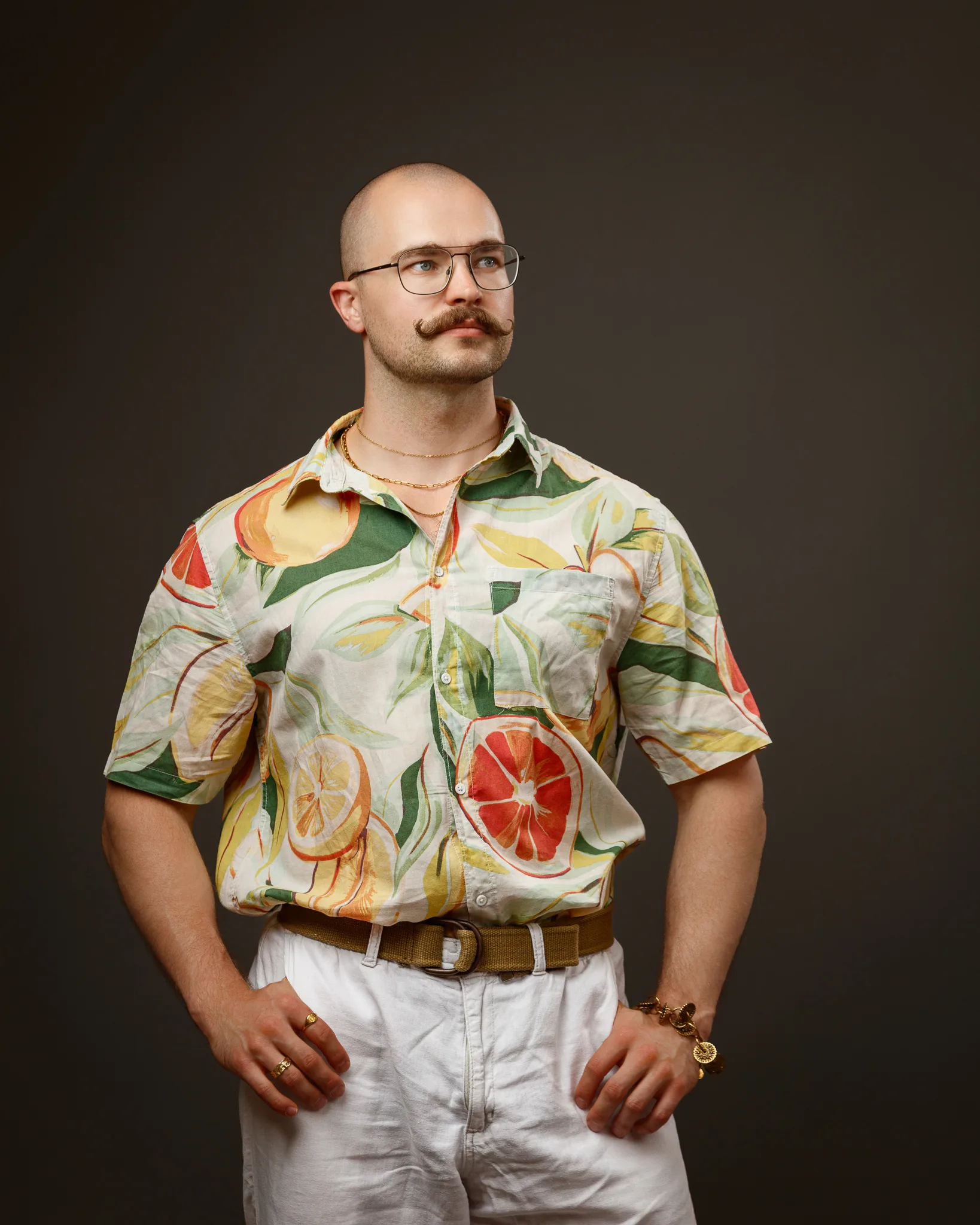
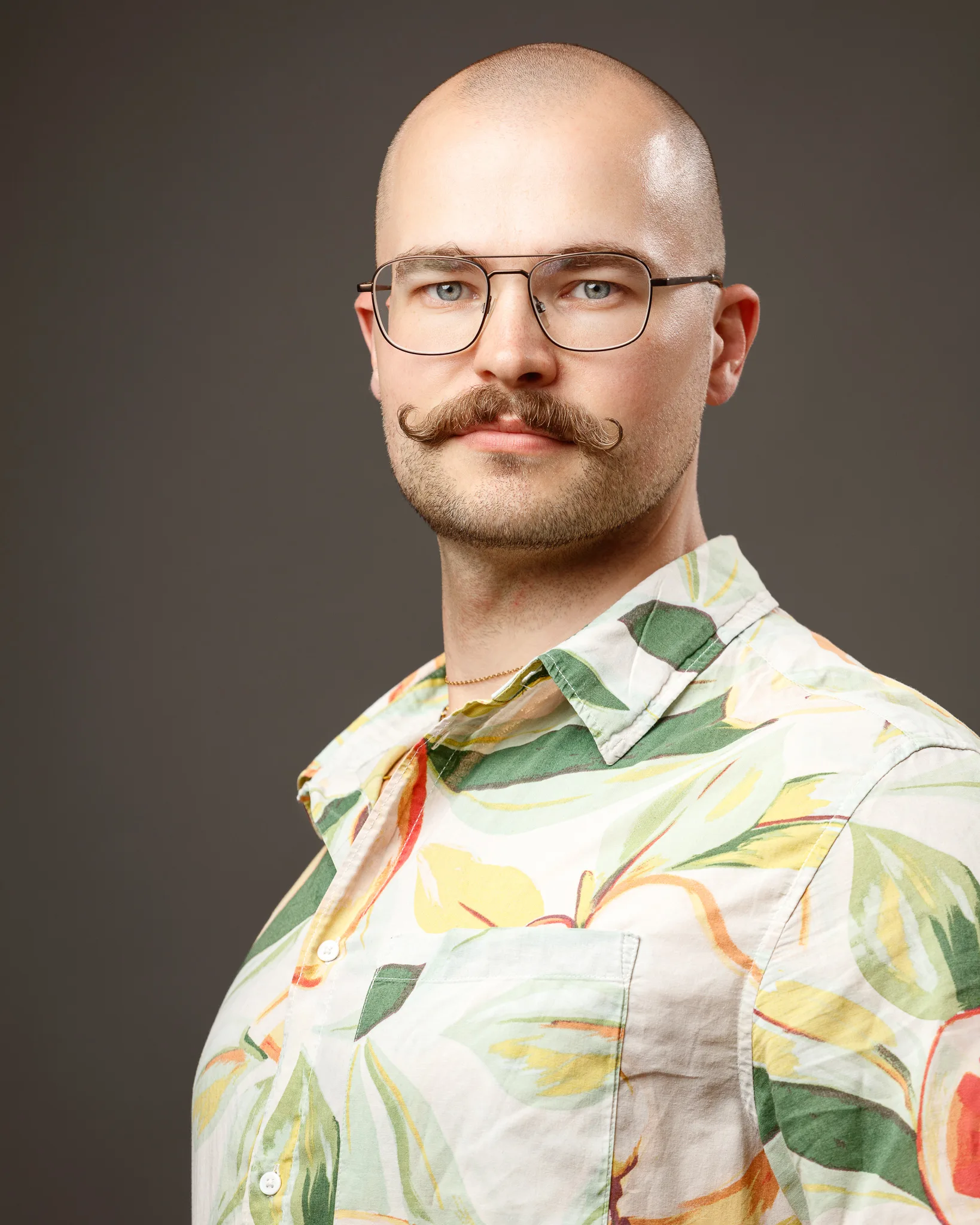
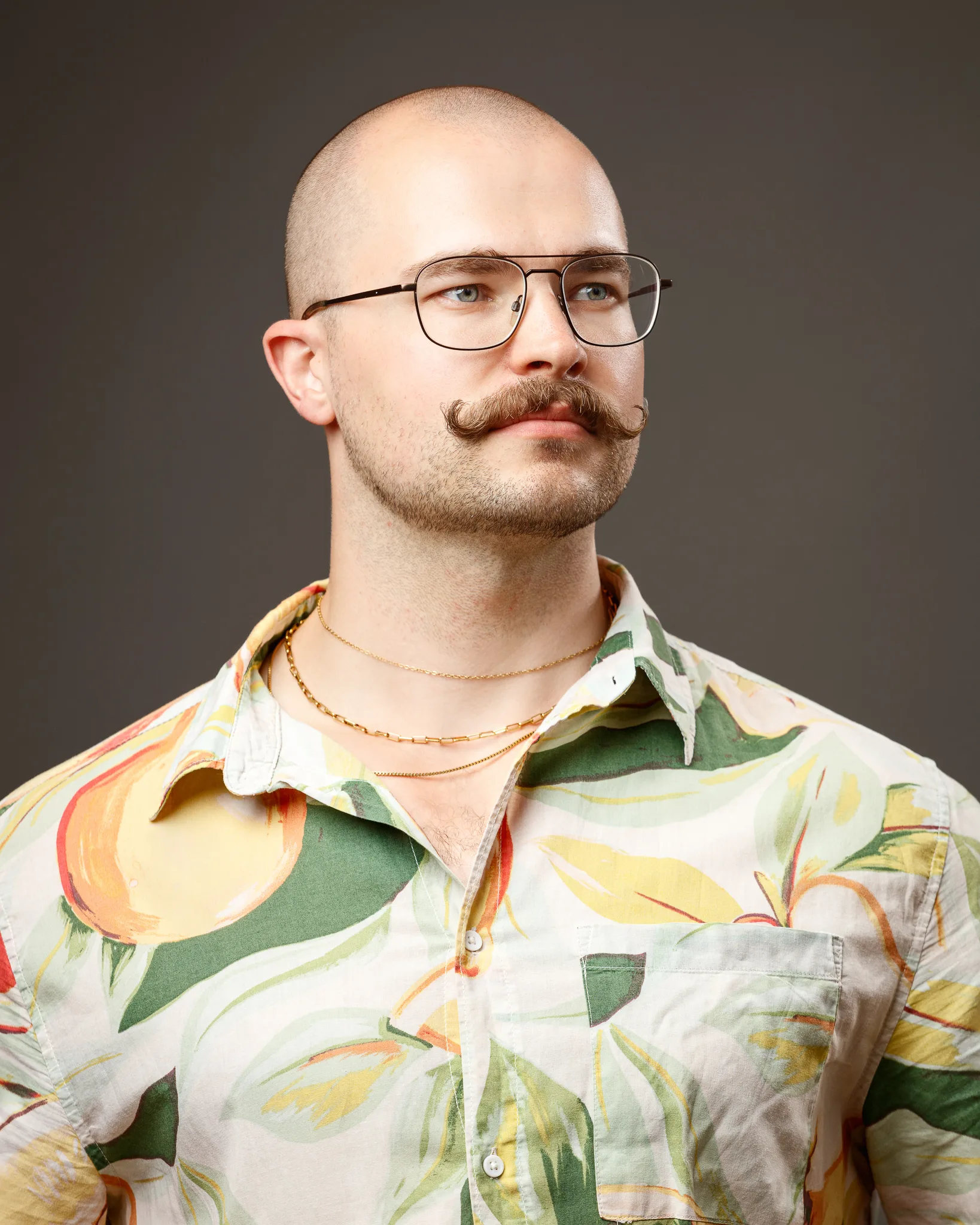
Third was a short sleeved shirt printed with lemons and grapefruit, worn with white trousers and a tan webbing belt. That one I shot twice, once against a strong red and once against the brown. The red version is loud in the best way. Print against print, warm against warm, and it works because the shirt is already busy so the background has to either match its energy or get out of the way. The brown version is the quieter cousin of the same look and it is the one that would sit more easily in a printed layout.
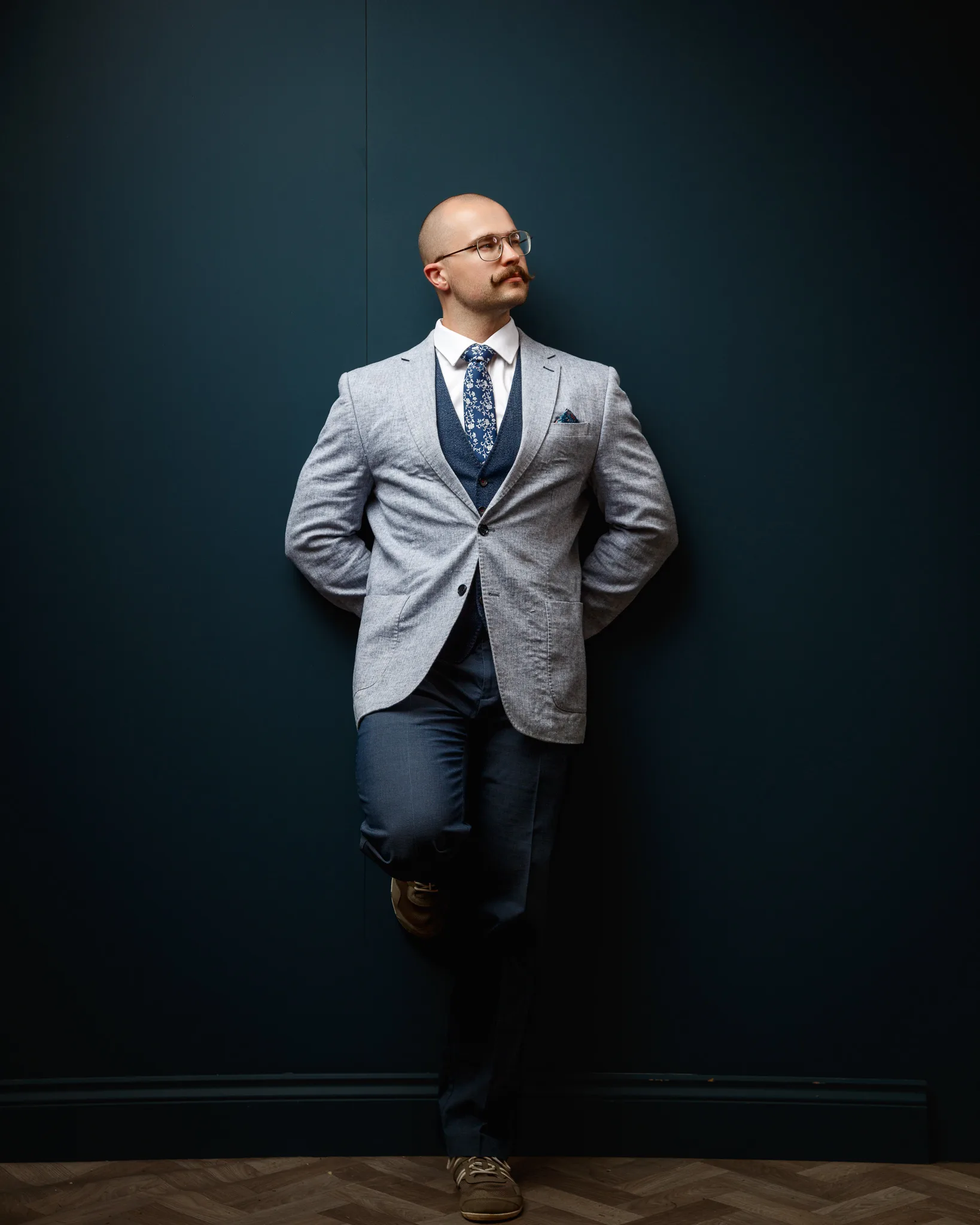
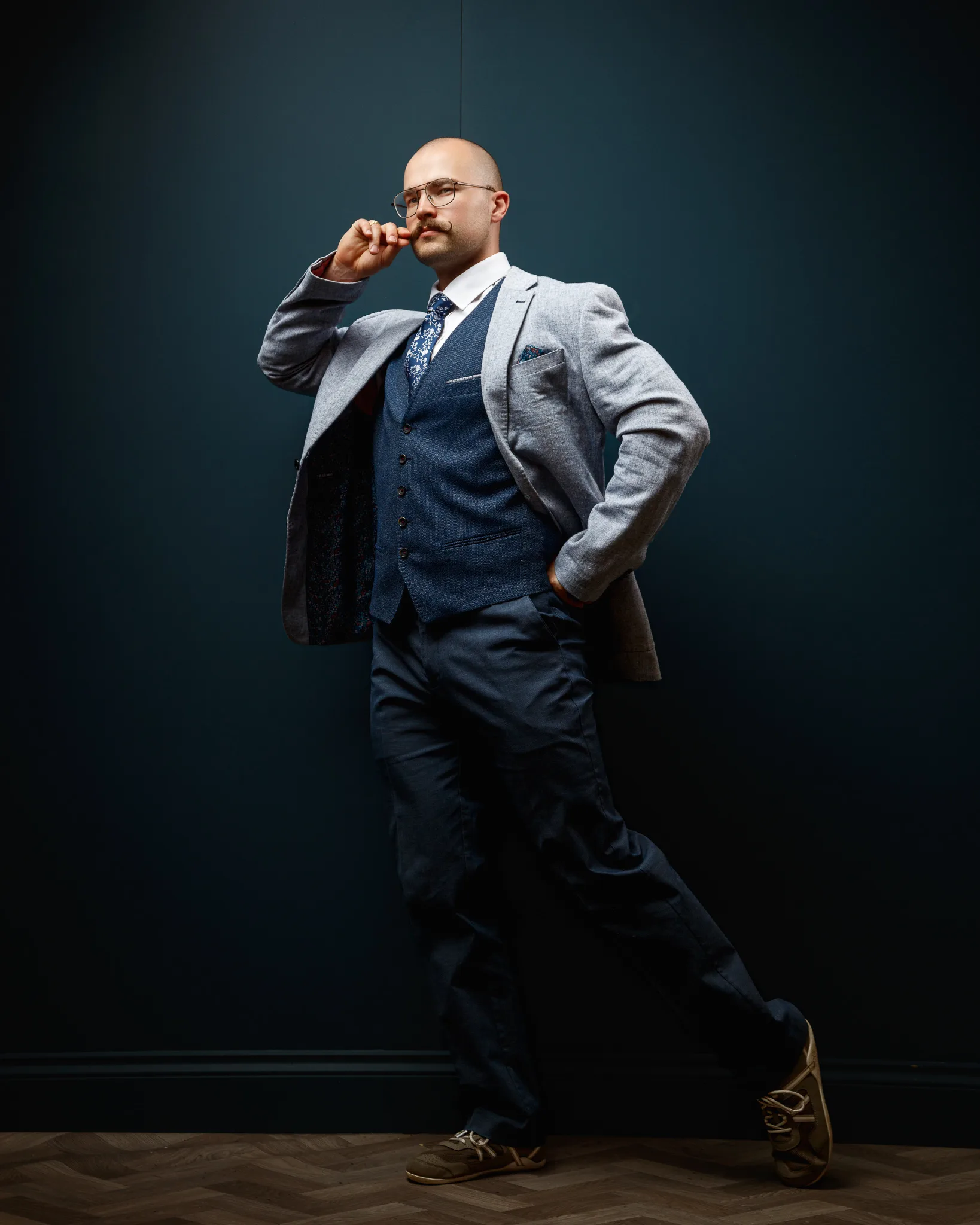
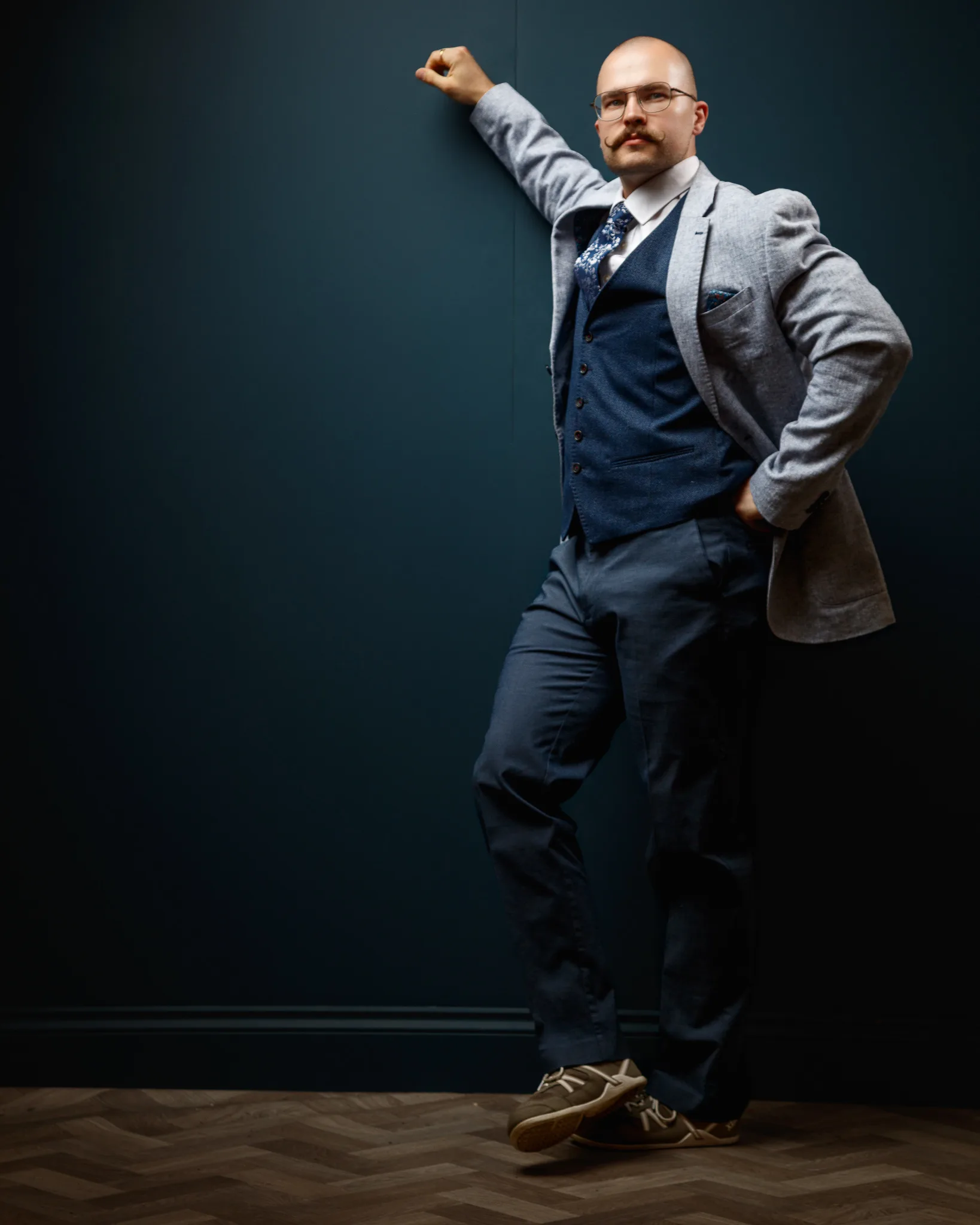
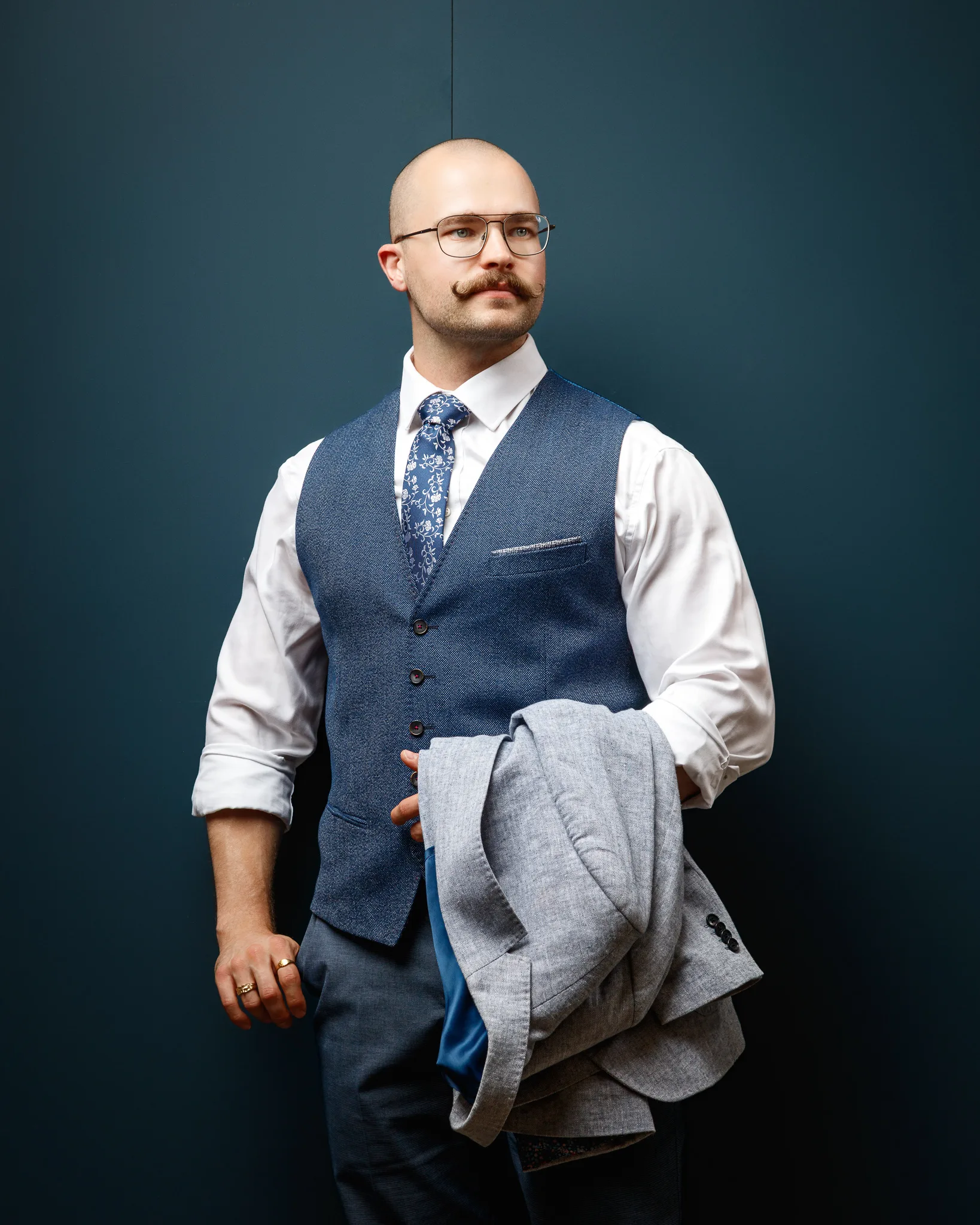
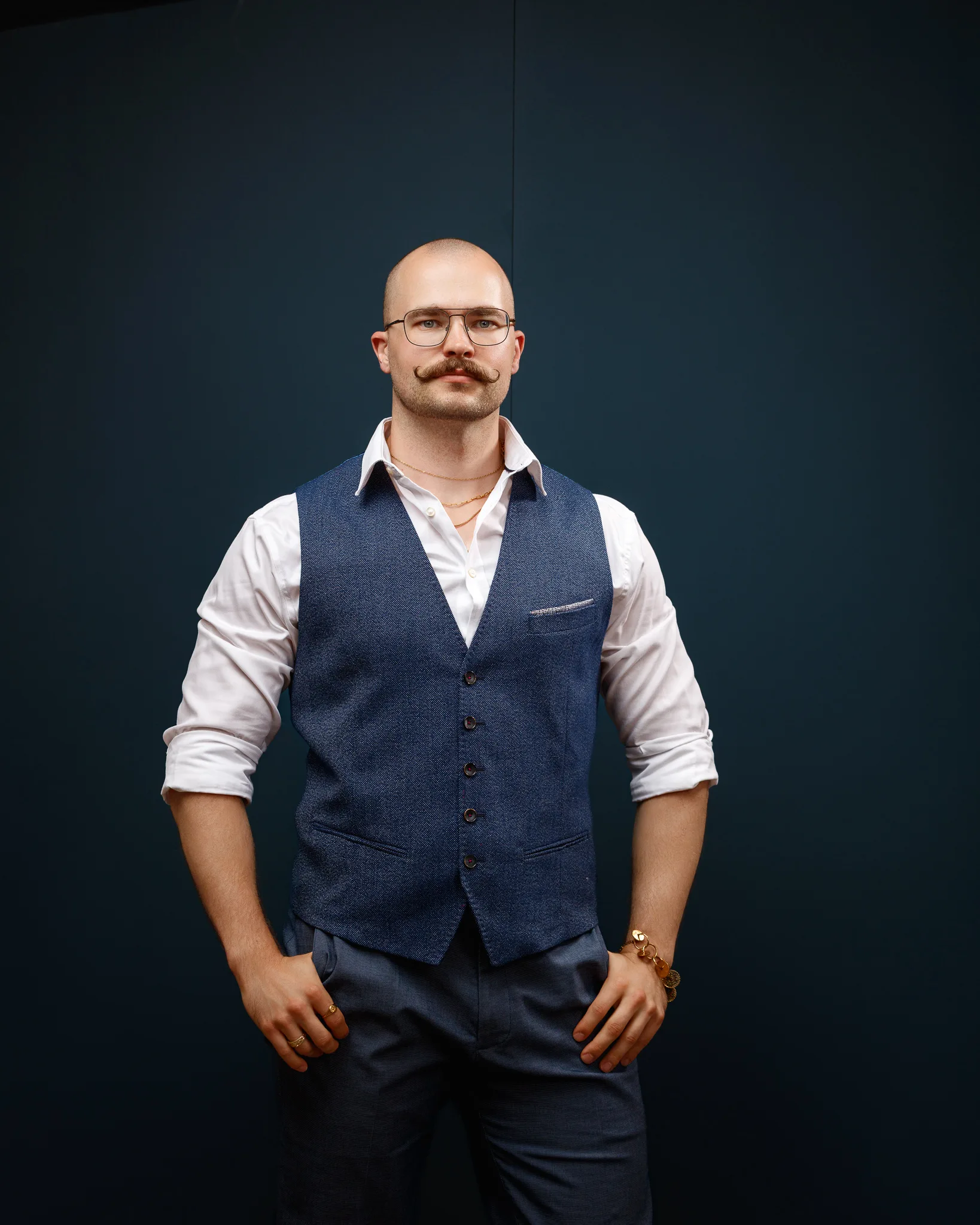
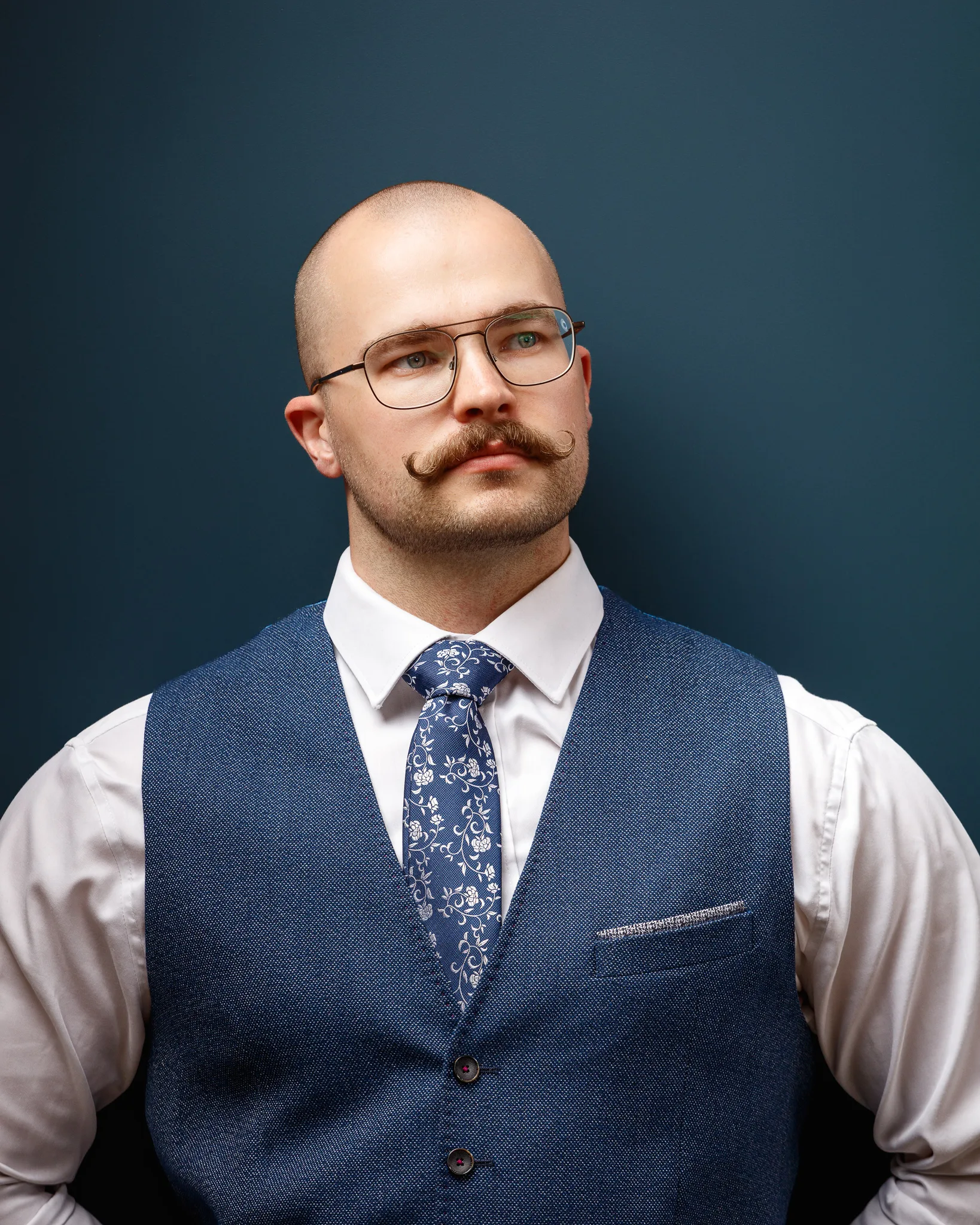
The last look was tailoring. Grey linen jacket, navy tweed waistcoat, white shirt, blue floral tie, navy trousers, and trainers rather than smart shoes, which is the detail that stops it looking like a wedding. Those went full length against a dark teal painted wall with a herringbone floor, which gave the images somewhere to exist rather than floating on a plain backdrop.
Lighting the Looks
I did not use one setup and leave it alone. Each background wanted something different.
On the pale grey I kept the key soft and fairly frontal with a gentle falloff, so the tone stayed clean and the detail in the vest and the gold held together. On the dark brown I moved the light round and let the shadow build on the far side of the face, so the background falls away into a gradient rather than reading as a flat wall. That is the setup doing most of the work in the roll neck frames.
The red needed a harder, more deliberate key to stop the colour bleeding into the skin tones. Strong saturated backgrounds will happily contaminate a face if you let them, and the fix is control rather than correction afterwards.
The full length tailoring shots were lit more directionally still, with real shadow in the frame. Full length is harder than head and shoulders because you have to light a person from head to foot without flattening them, and you have to think about the floor as well as the wall.
What Hans Brought to It
He had done the hard part before he arrived. With the styling settled, the session was about direction rather than problem solving. I could suggest a change of weight, a turn of the chin, a hand to the moustache, and he would take it and add something. Several of the frames I would not have thought to ask for. The one where he pushes his glasses up with one hand while the other sits on his hip came from him, not from me.
That is the difference between photographing someone who is waiting to be told what to do and photographing someone who is contributing. The images get better, and the session goes quicker, because you are not spending the first forty minutes getting a person to relax.
Why Editorial Styling Works for Men’s Portraits
Most men undersell themselves in front of a camera because they think a portrait is about their face and nothing else. It is not. Clothing, colour, posture and where the hands go account for most of what a portrait actually communicates.
If you are booking a men’s portrait session, whether that is for personal branding, a performing portfolio or something more editorial, the single most useful thing you can do is bring more than one option and bring things you actually like wearing. Well fitting and slightly interesting beats expensive and safe every time. A plain vest and a good belt gave us stronger images than the suit did, and the suit was perfectly good.
The other thing worth knowing is that background and clothing are one decision, not two. I would rather see what you are bringing before we settle on a set, because the wrong pairing wastes a look that would have worked beautifully somewhere else.
Model Safety and How I Work
This applies to every model and performer I photograph, so it belongs here rather than being left as an assumption.
There is no physical contact between me and anyone I am photographing. If a pose needs adjusting, I describe it or I demonstrate it myself from where I am standing. I do not move people with my hands.
I encourage every model to bring a chaperone. A friend, a partner, a family member, anyone they trust. The offer is made before the shoot, every time, and it stands whether the model takes it up or not.
If a photographer refuses to allow a chaperone, or talks a model out of bringing one, that is a red flag and it should be treated as one. There is no legitimate professional reason to refuse. Your safety is not something you should have to negotiate for, and a photographer worth working with will explain the whole session to you in advance and have no objection at all to you bringing someone with you.
On Sharing These Images
Hans and I both wanted the images from this session, so we worked on it together on that basis, and he has been happy for me to share them here.
Worth saying, since this comes up: if you are paying me for a shoot, I do not assume I can use your images on the blog or on social media. I ask first, every time, and no is a perfectly acceptable answer.
Where I Work
I work from my studio at Base Business Park in Rendlesham, on the site of the former RAF Bentwaters, a short drive from Woodbridge and around half an hour from Ipswich. Sessions like this one, men’s portraits, editorial styling, personal branding and performer portfolios, all happen there, and I also work on location across Suffolk, Norfolk, Essex and Cambridgeshire.
If you are thinking about a men’s portrait session and you are not sure what to bring or what it would look like, get in touch and we can talk it through first.