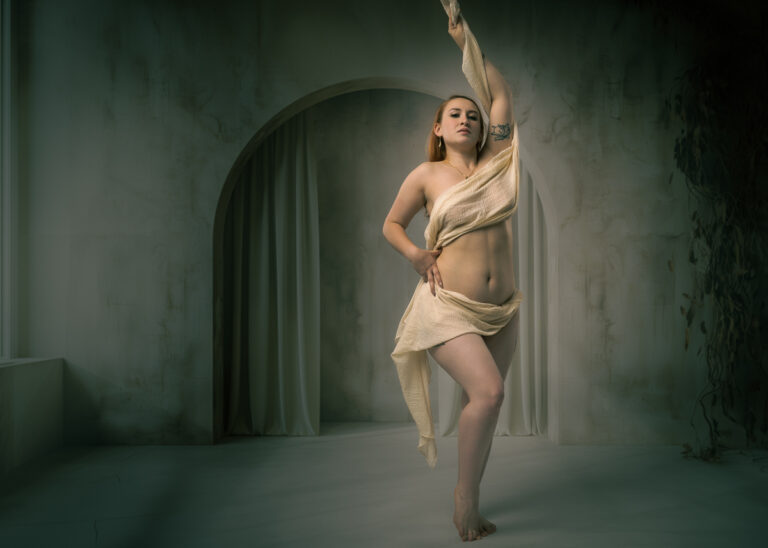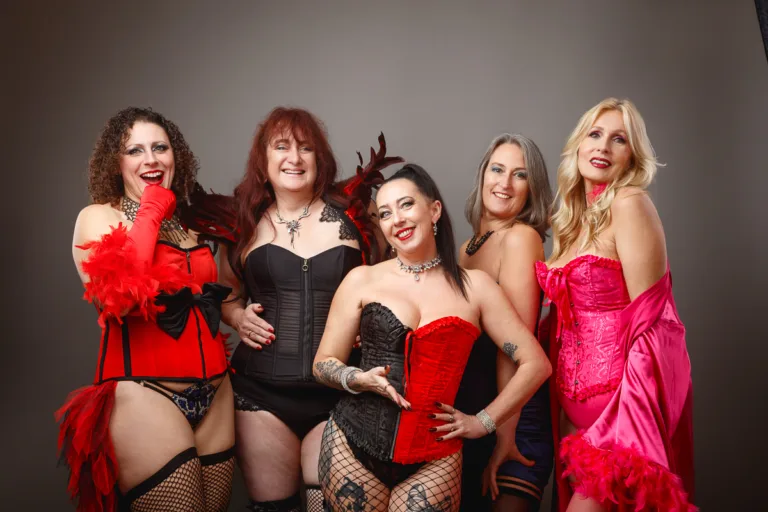
When someone is new to modelling, it is very easy to focus on where it might lead. That is completely understandable. There is always a sense of possibility when someone starts building a portfolio, especially if they enjoy fashion, portrait photography, creative styling, or simply being in front of the camera.
However, I think it is important to approach modelling with the right mindset from the beginning.
A model portfolio shoot can be useful, but it should also be enjoyable. There is nothing wrong with doing a shoot because you want to try something new, build confidence, create interesting images, or simply enjoy the process. Not every shoot has to lead to agency representation, paid work, or a clear next step. Sometimes the value is in the experience itself.
That does not make it less worthwhile.
For many new models, the first few shoots are about learning. You begin to understand how you photograph, how you respond to direction, what kind of styling works for you, and how much you actually enjoy the process. That is important, because modelling is not only about the final images. It is also about patience, confidence, professionalism, and being able to work with other people in a creative setting.
At the same time, I would be cautious about banking on modelling leading somewhere quickly. A portfolio shoot is not a guarantee of work. It is not a promise that an agency will sign you. It is not a shortcut into the industry. It is simply a useful starting point.
This post is my honest advice for new models before booking a portfolio shoot, based on my own experience photographing model portfolios, studio portraits, creative portrait sessions, headshots, and personal branding work from my studio at Bentwaters near Woodbridge in Suffolk.
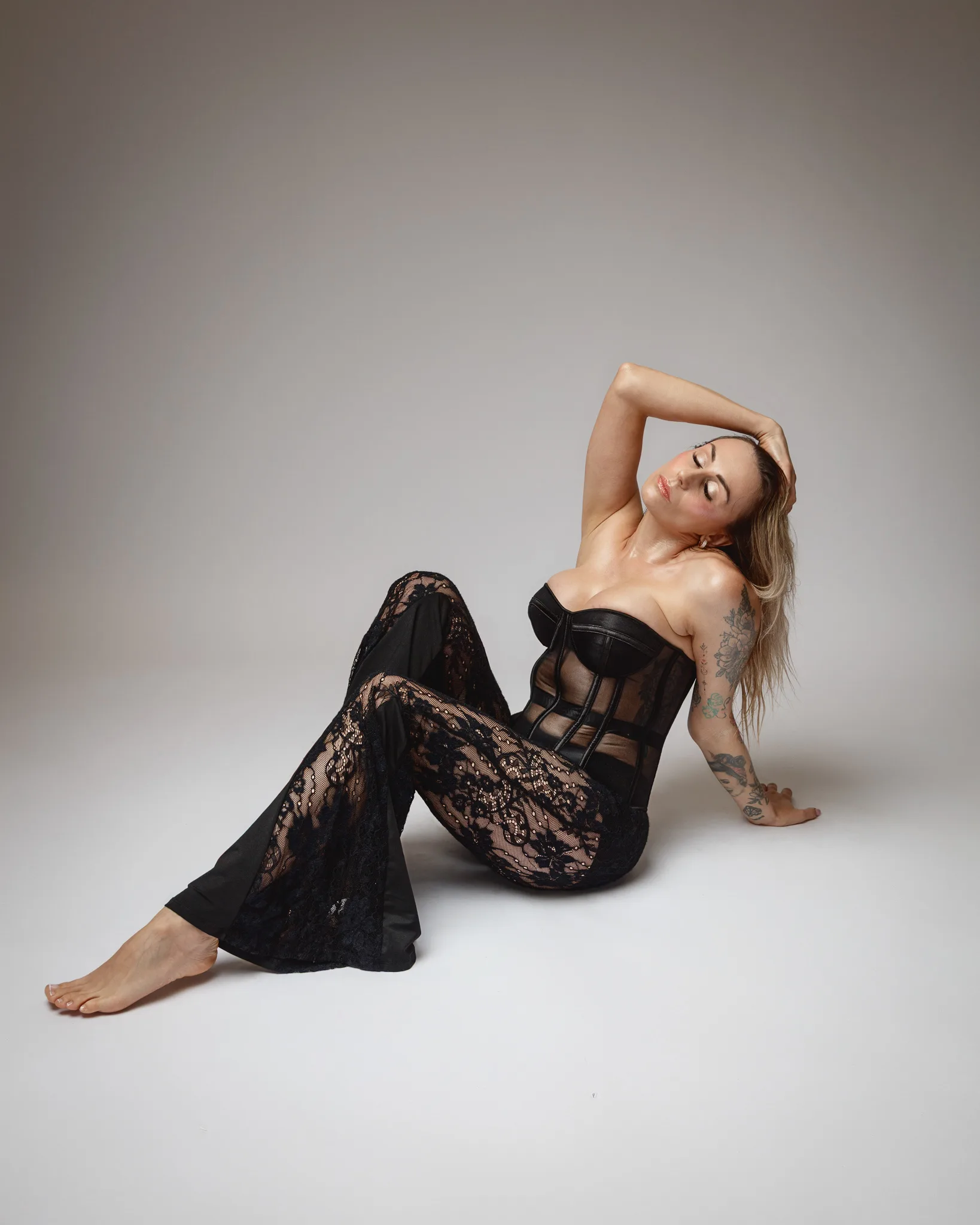
A portfolio shoot should be useful, but it should also be enjoyable
I think one of the healthiest ways to approach a first model portfolio shoot is to see it as a starting point, not a final destination.
There can be a lot of pressure attached to modelling, especially when someone is new. People sometimes feel that every shoot has to have a clear outcome. They want to know if it will lead to an agency, paid modelling work, brand shoots, fashion work, or a steady stream of creative opportunities.
Sometimes it might. Often, it will not happen that quickly.
That does not mean the shoot has failed.
A good portfolio shoot can help you understand how you appear on camera. It can show you which angles work, how different lighting changes your face, how clothing affects the overall image, and how your expression reads in a photograph. It can also help you understand whether you actually enjoy being directed, standing under studio lights, trying different poses, and working through ideas with a photographer.
That experience has value in itself.
Some people book a studio portrait shoot or model portfolio session because they are curious. Some want to build confidence. Some want creative images for themselves. Some are genuinely interested in modelling and want to see whether it might be something they can develop further. All of those reasons are valid, as long as the expectations are realistic.
I would rather someone came into a shoot with an open mind than with a pressured idea that everything has to become something immediately.
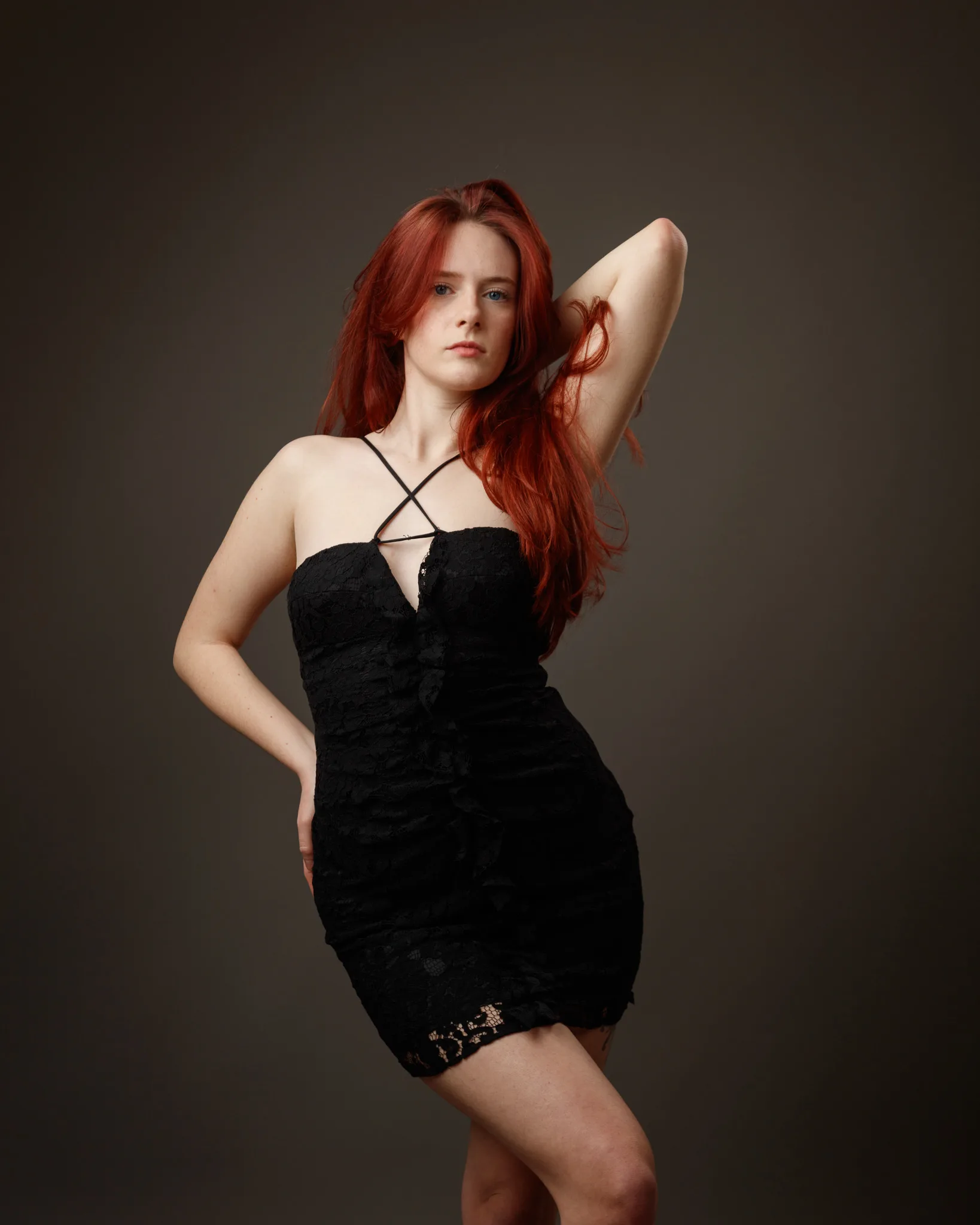
Modelling is not only about the final images
From the outside, modelling can look as though it is mostly about appearance and the finished photograph. In reality, there is much more to it than that.
During a shoot, you are learning how to take direction, how to hold yourself, how to repeat a pose, how to make small adjustments, and how to stay focused when something does not work straight away. You are also learning how to communicate with the photographer and how to be part of a creative process.
That is especially true in a studio environment.
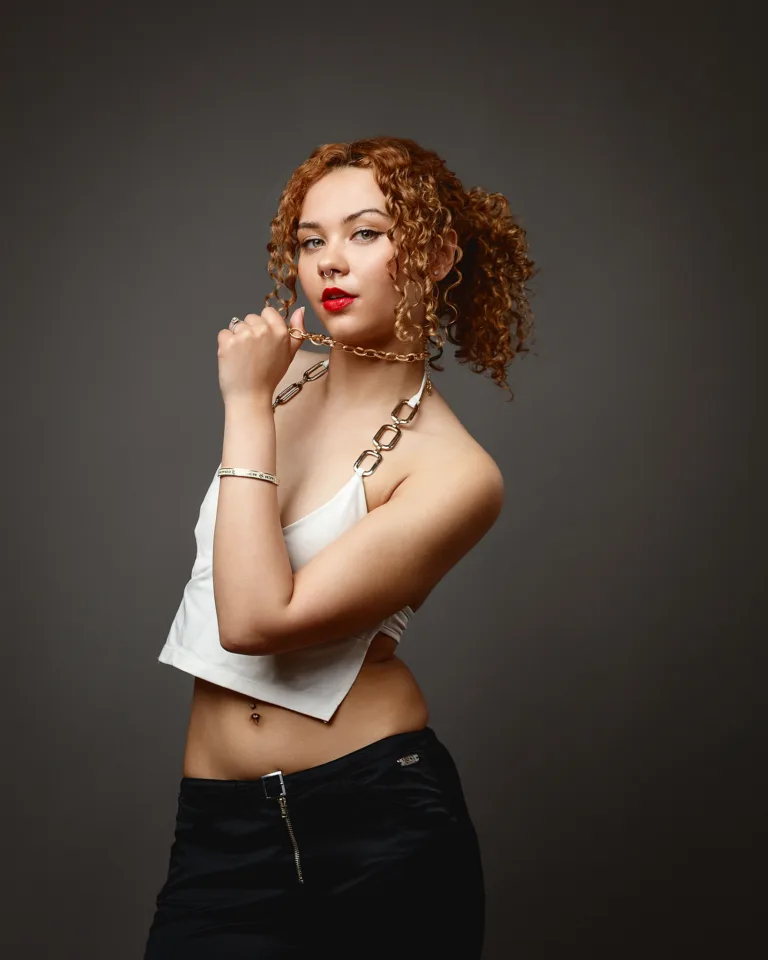
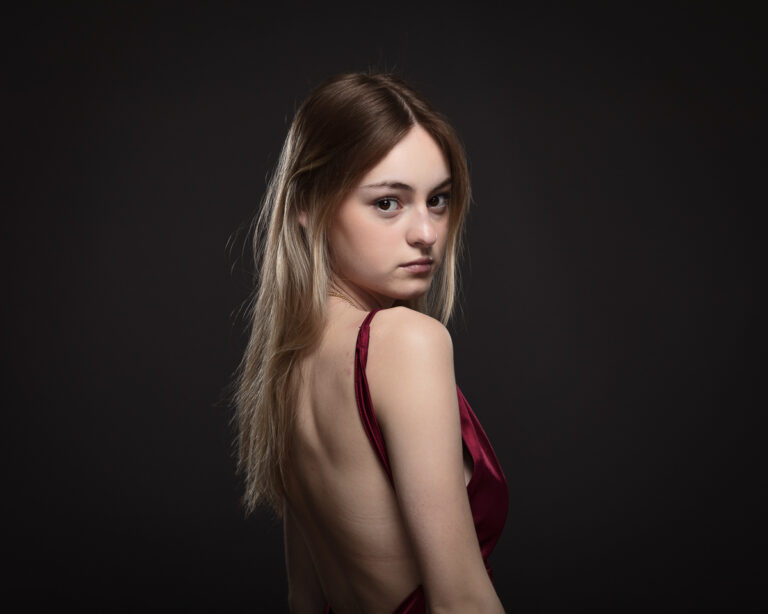
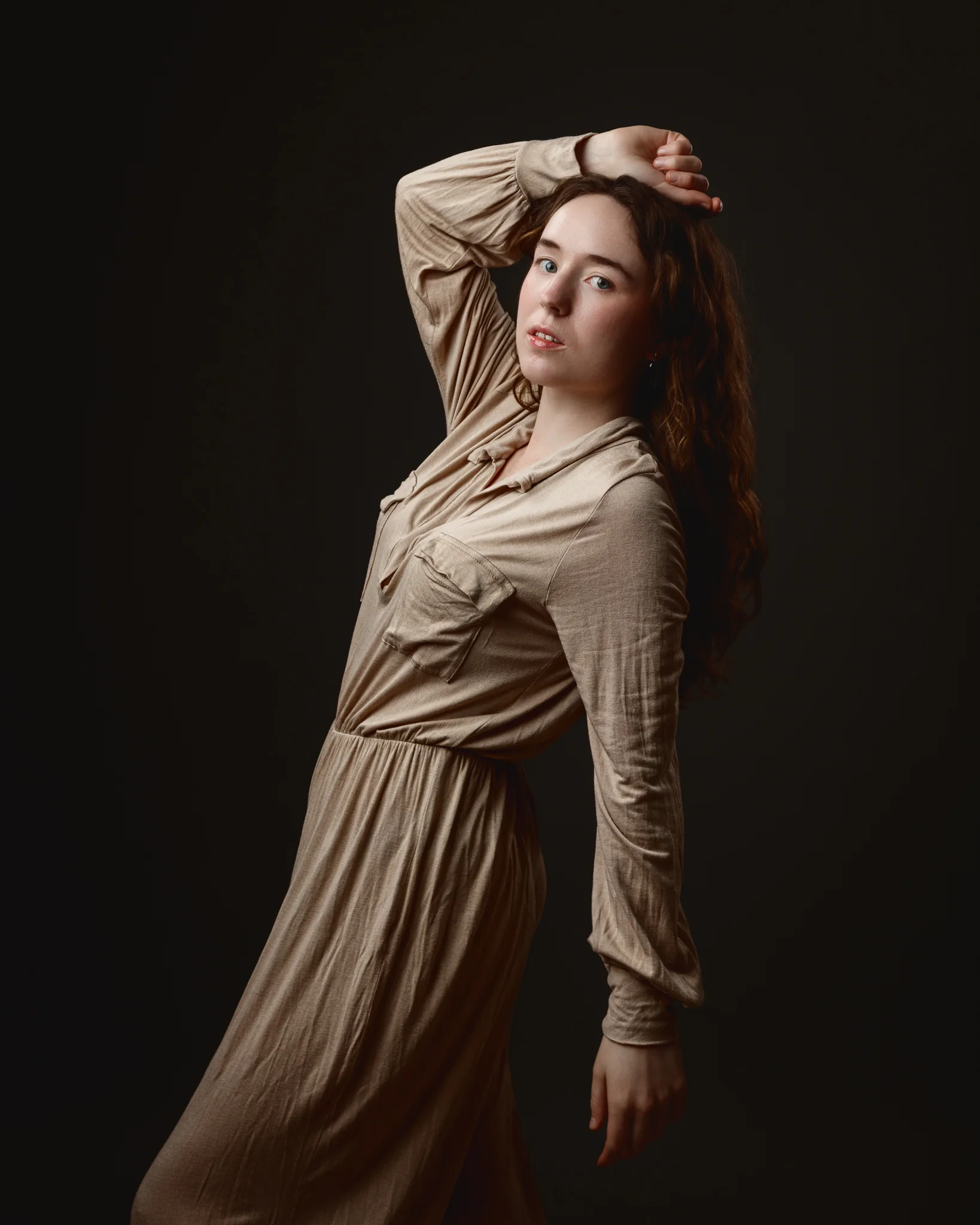
At my studio near Woodbridge, I often use controlled lighting, simple backgrounds, and a structured approach to posing. That can be useful for new models because it removes some distractions. The focus becomes expression, posture, presence, styling, and how the person responds to the camera.
For a new model, those first few shoots are rarely about perfection. They are about learning what happens when you step in front of the camera properly. You may discover that you are naturally expressive. You may find that you need more practice with your hands, posture, or facial expression. You may realise that some outfits photograph far better than others. You may also find that your confidence builds during the session, which is often one of the most useful parts of the experience.
A portfolio is not built in one shot. It develops over time.
Do not stop the moment it feels quiet
The best advice I could give to anyone who is genuinely keen to see if modelling might go somewhere is this: do not stop the moment it feels quiet.
There will probably be a point where it feels as though nothing is happening. Nobody seems to be noticing you. The messages are not coming in. The opportunities are not appearing as quickly as you hoped. That is often the point where many people give up.
If you are still genuinely interested, that is the moment to do a little more.
Update your portfolio. Arrange another test shoot. Practise posing. Learn from the images you already have. Approach agencies properly. Contact photographers whose work fits the kind of images you want to build. Improve your communication. Think about your styling. Look honestly at what is working and what is not.
Sometimes it is that extra bit of effort that gets you over the hill.
It still may not lead anywhere, and I think it is important to be honest about that. Modelling is competitive, unpredictable, and not always fair. But at least then you know you gave it a proper try rather than stopping just before things had a chance to develop.
That, to me, is a much healthier way to approach modelling. Enjoy the shoot. Enjoy the process. Learn from it. Take it seriously enough to do it properly, but not so seriously that the whole experience becomes a pressure-filled expectation.
Not all attention is useful attention
One uncomfortable truth about modelling, particularly when someone is new, is that not all attention is good attention.
That is something I think new models need to understand early on. Getting comments, messages, likes, or interest from photographers can feel encouraging, especially at the beginning. It can make it seem as though things are starting to happen. But attention on its own does not always mean progress.
There are, unfortunately, a lot of what people often describe as “men with cameras”. I do not say that as a scathing indictment of male photographers. I am a male photographer myself, and I know many professional, respectful, and highly skilled male photographers who work properly and with care. The issue is not gender. The issue is behaviour, professionalism, boundaries, and intent.
I often read the comments on models’ Instagram posts and portfolio pages, particularly when I am looking at how someone presents themselves online. Some of those comments are quite upsetting to read. They may not always be wholly inappropriate in an obvious or reportable way, but they often give a very skewed idea of what useful attention looks like.
For a new model, that can be confusing.
A stream of flattering comments does not necessarily mean someone is building a serious portfolio. A photographer wanting to shoot does not automatically mean the opportunity is worthwhile. Being noticed is not the same as being respected. Feeling wanted is not the same as being professionally valued.
That distinction matters.
Good attention should feel constructive, respectful, and clear. It should come with proper communication, a sensible shoot plan, agreed boundaries, transparency about image use, and an understanding of what both sides are hoping to create. It should never rely on pressure, vague promises, flattery, or making someone feel that they have to say yes to keep an opportunity alive.
Chaperones should not be a problem
This is one of the reasons I strongly support chaperones, especially for younger models or anyone new to working with photographers.
A professional photographer should have no issue with a parent, partner, friend, or trusted person being present. If someone objects strongly to a chaperone without a very clear and reasonable explanation, I would treat that as a concern.
I have worked with many models where a parent, partner, friend, or chaperone has been present during the shoot. I see that as completely normal. If it helps someone feel comfortable, safe, and able to relax into the shoot, that is a positive thing.
There are practical boundaries, of course. A chaperone should not interfere with the shoot, take over the direction, or distract the model. But a sensible, supportive person in the room is not a problem. In many cases, it helps.
For new models, especially younger ones, I think this is worth saying plainly: do not measure your progress by the amount of attention you receive. Measure it by the quality of the work you are building, the professionalism of the people you work with, and whether each shoot helps you learn, improve, and feel respected.
Modelling can be enjoyable. It can be creative. It can help build confidence. But it should never require someone to ignore their instincts, accept poor boundaries, or mistake uncomfortable attention for opportunity.
Do your research before you start
If you are a new model starting out, one of the most useful things you can do is take your time and do some proper research.
Before arranging shoots, messaging photographers, or putting yourself forward for collaborations, it is worth thinking about how you want to present yourself online. I would strongly suggest setting up separate social media accounts for modelling. Keep your personal accounts private, and use your modelling account as the public-facing place where you share portfolio images, behind-the-scenes content, and relevant updates.
That separation is important. It gives you more control over what people see, protects your personal life, and helps keep your modelling activity more professional.
Your modelling account does not need to be complicated, but it should be clear. Post your modelling images, simple updates from shoots, and a bit of behind-the-scenes content. People do enjoy seeing behind the scenes, and it also helps show that you are actively working, learning, and building experience.
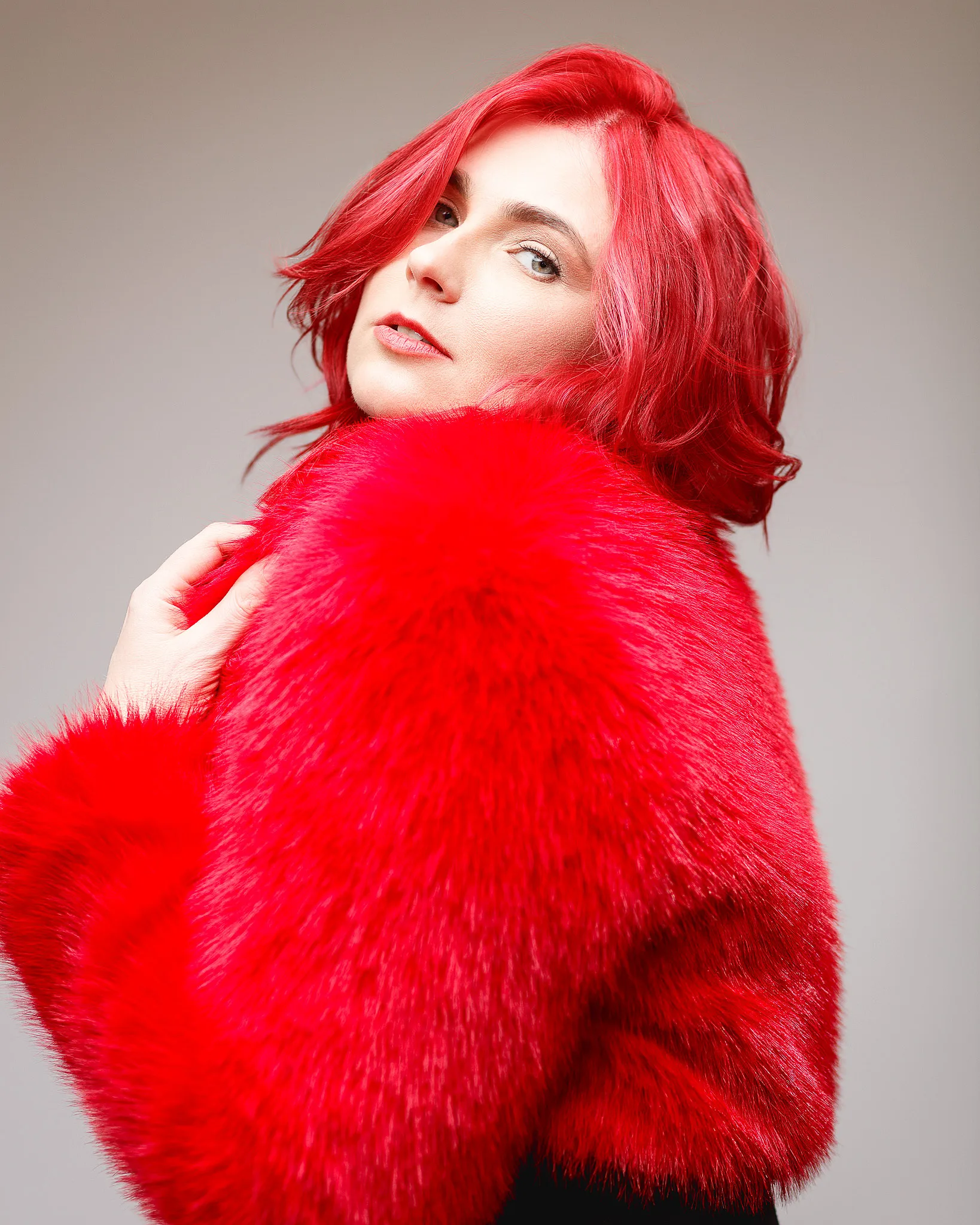
I would also take time to follow local photographers and local models before rushing into shoots. Look at the type of work photographers produce. Look at how they communicate. Look at whether they credit the people they work with. Look at the comments, the captions, the consistency of their work, and whether the models they photograph seem comfortable and respected.
Following other local models can be especially helpful. Models will often have first-hand experience with photographers in your area, and that can be more useful than simply judging someone by their best images.
If you are considering working with a photographer, it is perfectly reasonable to ask another model for a reference, particularly if they have already worked with them.
A simple message such as, “I’m thinking of arranging a shoot with this photographer. Would you recommend working with them?” can tell you a great deal.
I have written a fuller piece on staying safe as a model, covering how to check a photographer before you go and the ten things that make the most difference.
Be careful how you read feedback online
Friends and family are usually kind, supportive, and encouraging, which is lovely. But their likes and comments are not always the most useful measure of whether your modelling images are working.
They are responding to you as someone they care about, not necessarily judging the images from a modelling, photography, or portfolio point of view.
For that reason, it may be worth not following all your friends and family from your modelling account, at least at the beginning. That does not mean shutting them out or being secretive. It simply means giving your modelling account a clearer purpose.
If most of the engagement comes from family and close friends saying supportive things, it can create a slightly false sense of feedback. Positive comments are nice, but they are not always the same as useful feedback.
A modelling account should help you build a realistic picture of how your work is developing. It should connect you with photographers, makeup artists, stylists, other models, agencies, and creative people who understand the kind of images you are trying to build.
The more research you do at the start, the better your decisions are likely to be. It can help you avoid unsuitable shoots, recognise professional behaviour, understand the local creative scene, and build a portfolio in a more considered way.
Understanding TFP shoots
TFP shoots can be an important starting point for new and aspiring models, but I think it is very important to understand what they actually are.
TFP usually means “time for prints” or, more commonly now, “time for photographs”. In simple terms, the model gives their time to the shoot, and the photographer provides images from the shoot. No money usually changes hands, but that does not mean it is a free shoot.
That distinction matters.
The model is trading their time, preparation, styling, travel, and effort in exchange for photographs they can use. The photographer is also trading their time, skill, equipment, studio costs, editing time, experience, and creative input.
Both sides are contributing something of value, even if there is no direct monetary payment.
It is also worth being clear that “no money changes hands” usually means exactly that. Travel is still a cost. Clothing, makeup, time off work, childcare, fuel, train fares, parking, studio hire, props, equipment, insurance, and editing time all have value.
That does not mean every TFP shoot needs to become a formal business negotiation, but it does mean both sides should understand what they are contributing.
For that reason, a TFP shoot should be treated as a professional agreement, not a casual favour.
There is more on where TFP fits, and on the money and tax side once you do start being paid, in modelling as a hobby, not a career.
A TFP shoot is still an agreement
In my own work, I use a written agreement before a TFP shoot. I think that is important because it makes the arrangement clear from the start.
Even when there is no written contract, there is still an agreement being made. The model and photographer are both entering into a working arrangement, and both need to understand what they are agreeing to.
A proper agreement should make the basic details clear. What is the shoot for? What style of images are being created? How many images might be supplied? How can the images be used? Are there any limits on use? Are there any agreed boundaries around styling, levels, or publication?
These things are much easier to discuss before the shoot than afterwards.
A relaxed, creative shoot can still be professional. In fact, I think the best creative shoots usually are professional, because everyone knows what they are doing, what has been agreed, and where the boundaries are.
Understanding image use and copyright
One area that is often missed is image use.
If a photographer has produced the images, they usually own the copyright, unless there is a written agreement saying otherwise. The model may be given permission to use the photographs for their portfolio, social media, or self-promotion, but that does not normally mean they own the photographs or control all future use.
This is something new models need to understand properly.
If a model later changes their mind, that does not automatically mean they have the right to ask the photographer to remove images from their website, social media, portfolio, or marketing. There may be legal or safeguarding reasons why an image needs to be removed, and those should always be taken seriously.
But simply no longer liking the image, changing direction, or feeling differently about the shoot years later is not the same thing.
The photographer has also worked on the project. They may have paid for studio hire, equipment, insurance, lighting, editing software, props, travel, and many hours of post-production.
If I agree to a TFP shoot, which I only do occasionally, there is usually a sound creative or marketing reason behind it. I am not just creating images for the model. I am also creating work that I may use to show my photography, develop ideas, update my portfolio, write blog posts, create social media content, or revisit later.
I often return to images from shoots I did several years ago. My editing style changes over time, my eye develops, and sometimes an older image becomes useful again in a different context. That is part of the long-term value of creative work.
I have set out what a release actually controls and what to ask before you sign one in model releases and what you are signing.
Think carefully about what you agree to
This is why I think new models should be sensible about the TFP projects they agree to.
Do not agree to a shoot just because someone offers you images. Think carefully about what is being created, how the images may be used, and whether you will still be comfortable with those images existing online in five or ten years.
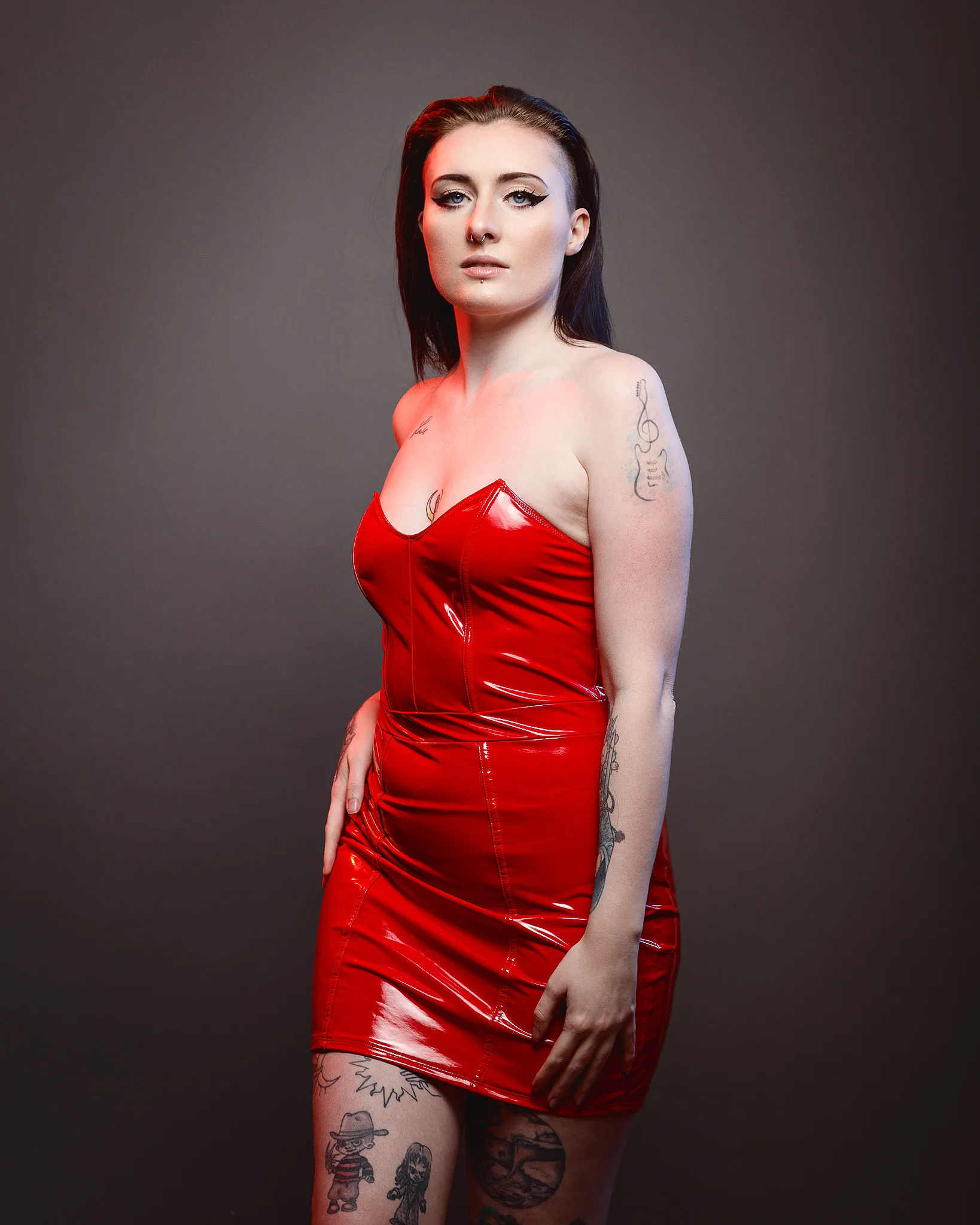
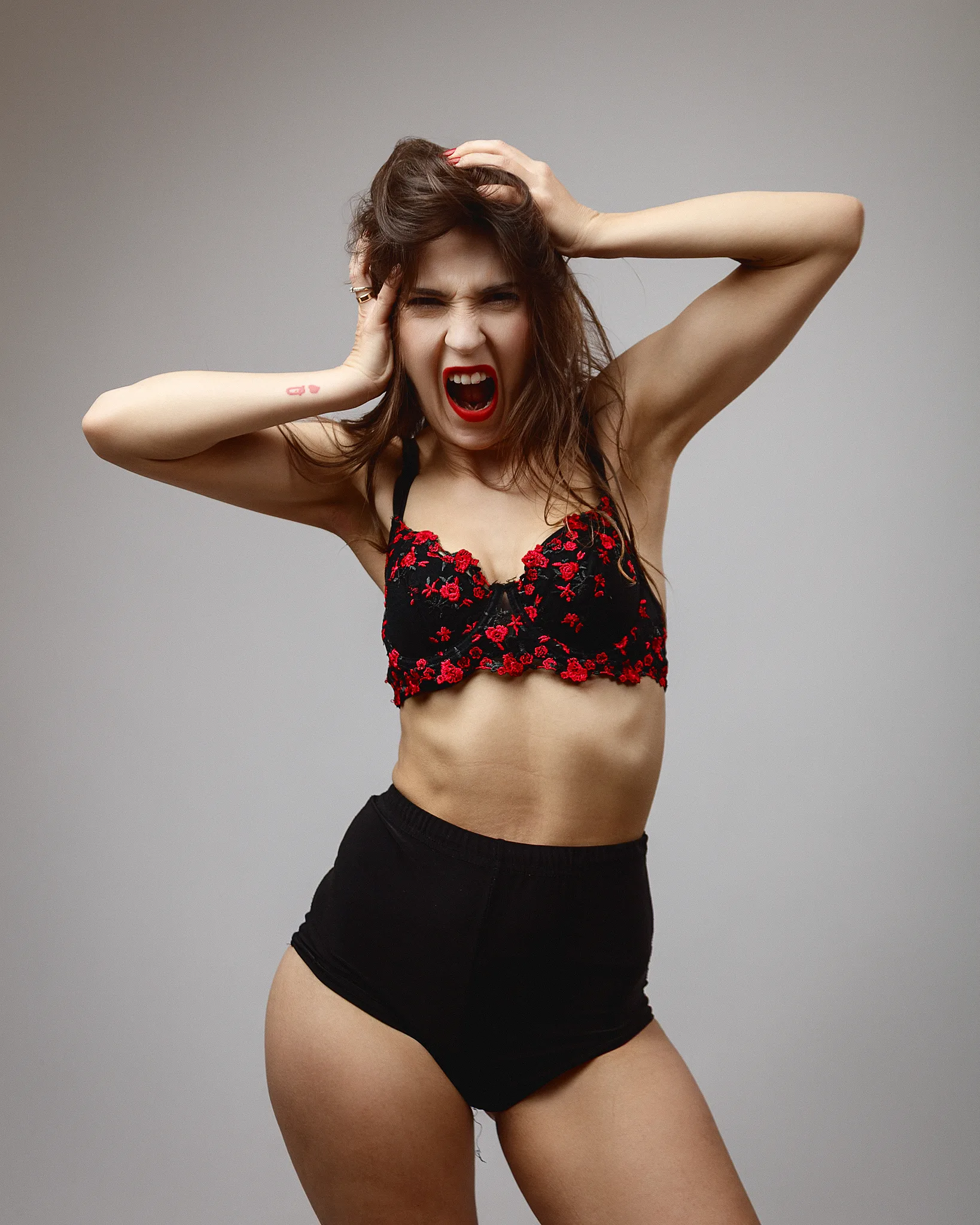
That is especially important with nude, implied nude, lingerie, or overtly sexualised images. I am not saying those genres are automatically wrong. That is a personal decision for each adult model to make. But new models should not be naive about the long-term consequences.
Once images are created and released, control over them may be limited, especially if they have been posted online.
It is also important to understand that the photographer, as the copyright holder, may use, release, revisit, re-edit, license, or publish the images in the years to come, depending on the agreement that was made.
That is why the agreement matters. That is why the type of shoot matters. That is why models should not agree to concepts they may later regret simply because they feel flattered, pressured, or keen to build a portfolio quickly.
What I look for in a good portfolio shoot
For me, a good model portfolio shoot is not about trying to produce dozens of unrelated images. It is about creating a useful, considered set of photographs that show the person clearly.
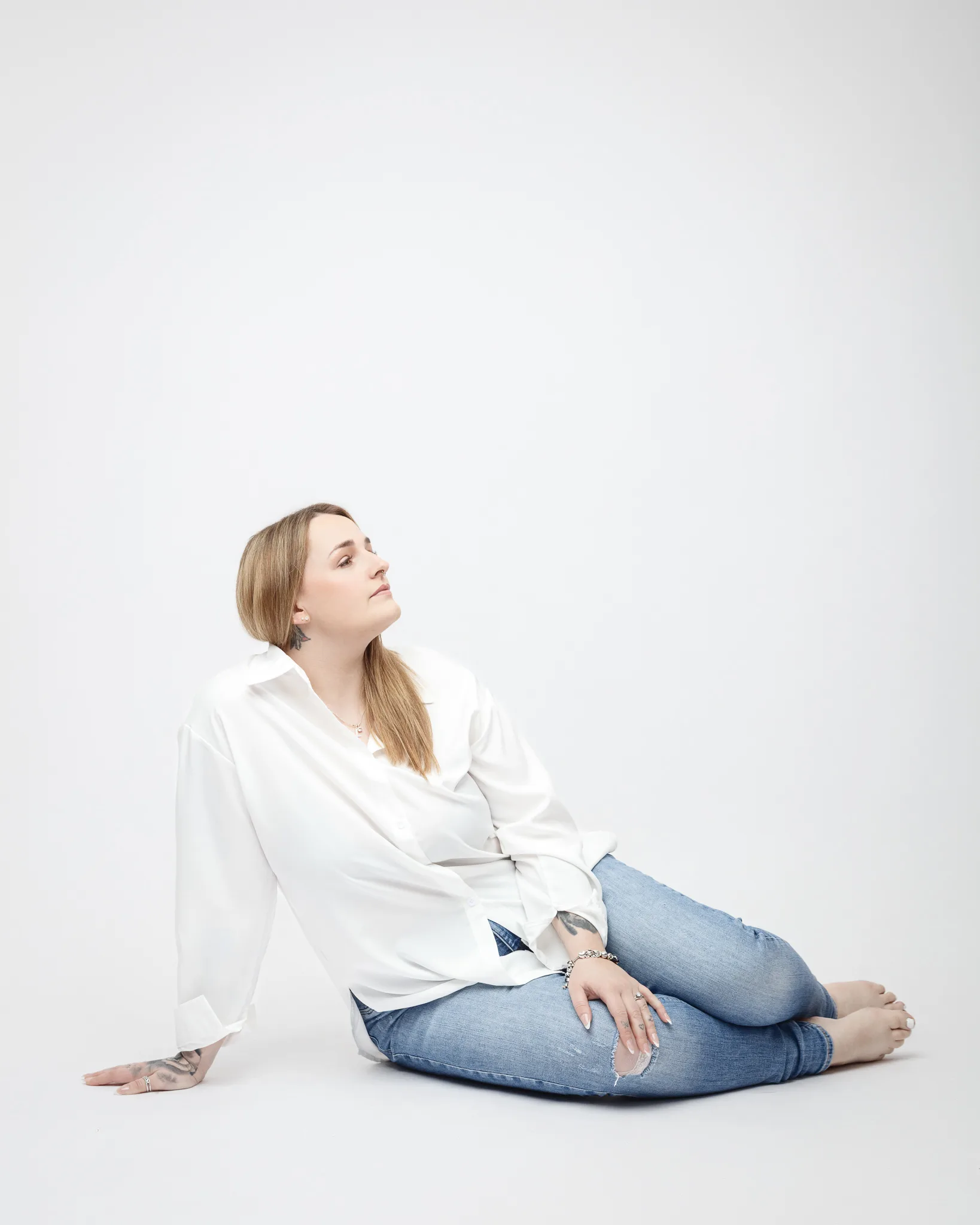
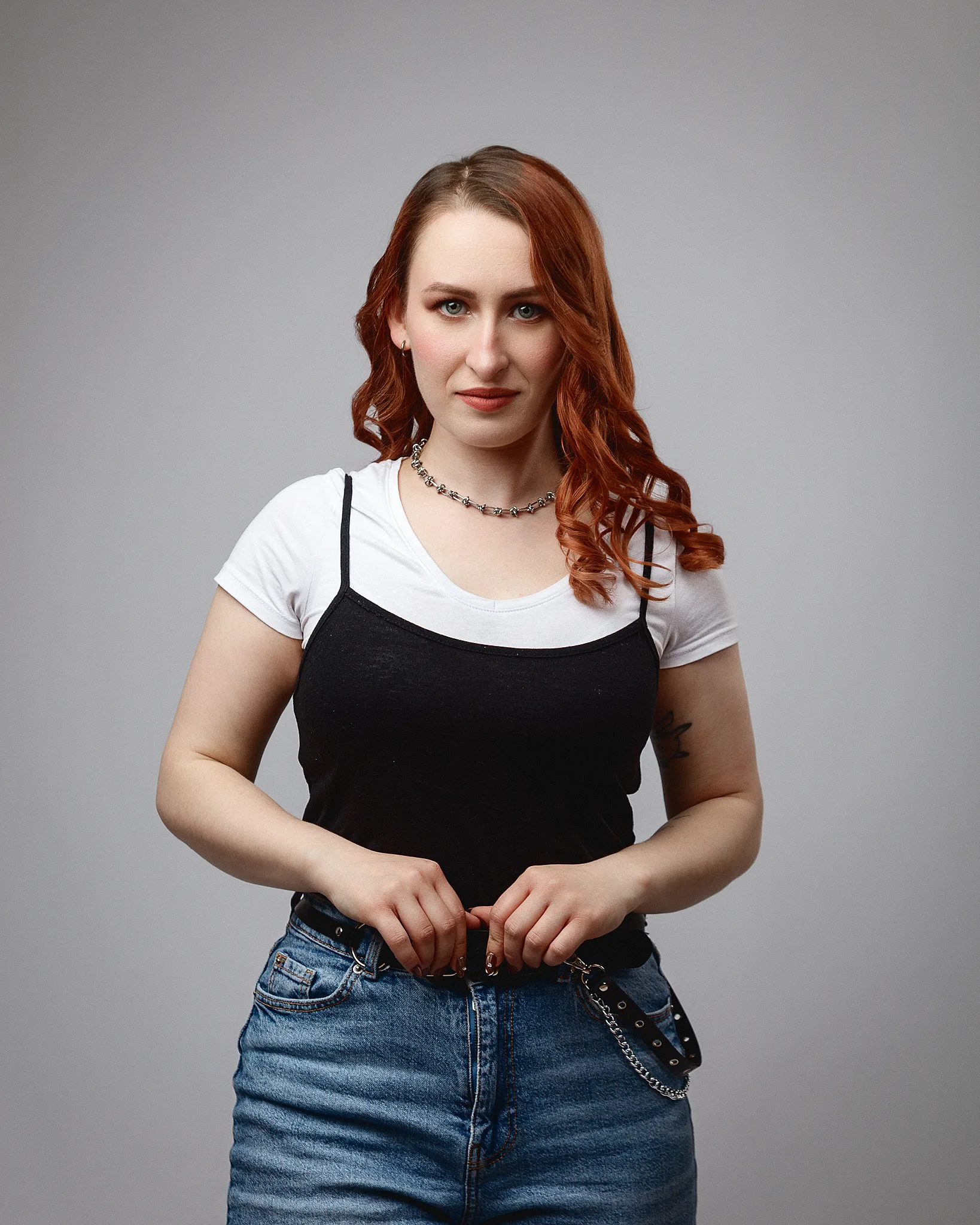
That might include a simple headshot, a three-quarter portrait, full-length images, seated poses, a cleaner agency-style look, and something with a little more character or styling. It depends on the person and the purpose of the shoot.
For new models, I tend to think simple is often better. Good lighting, clear posing, controlled styling, and a neutral studio background can be far more useful than trying to do too much too soon.
A plain grey or neutral background can be very effective because it keeps the attention on the model. It also helps avoid colour casts from strongly coloured backdrops and gives the final images a cleaner, more flexible feel. That can be useful for a model portfolio, especially when someone is still working out their direction.
Clothing also matters. It does not have to be expensive or elaborate. In fact, simple outfits often work best. Denim, plain tops, fitted jackets, dresses with clean shapes, and clothes that show posture clearly can all be useful. The aim is not to bury the person under styling, but to create images that show their presence, expression, and versatility.
I have gone into this properly in building a portfolio that works, including the plain shots most books are short of.
Modelling confidence comes from practice
I do not expect a new model to arrive fully formed. That would be unrealistic.
Confidence in front of the camera often comes from doing the work. It comes from standing under the lights, trying a pose, seeing what works, adjusting, and trying again. It comes from realising that not every frame needs to be perfect.
In a studio shoot, I will usually direct where needed. That might include small adjustments to posture, chin position, shoulders, hands, expression, or where the eyes are looking. Sometimes, very small changes make a significant difference to the final image.
For a new model, this can be a useful learning process. You begin to understand how subtle posing works. You also start to see the difference between a photograph where you are simply standing there and a photograph where you are engaged with the camera.
That distinction is important in model portfolio photography, portrait photography, headshots, and personal branding work. Presence matters.
A portfolio shoot is a starting point, not a guarantee
I think it is important to be very clear about this: a model portfolio shoot is not a guarantee of work.
It is not a promise that an agency will sign you. It is not a shortcut into the modelling industry. It is not proof that modelling will become a career. It is simply one useful step in seeing whether this is something you want to pursue properly.
That may sound blunt, but I think it is fairer to say it honestly.
A good portfolio can help you present yourself more clearly. It can give you better images to use when approaching agencies, photographers, makeup artists, stylists, or creative collaborators. It can also help you understand where your strengths are and what you might need to work on.
But the portfolio is only part of it.
Communication matters. Reliability matters. Turning up on time matters. Being clear about boundaries matters. Understanding agreements matters. Researching people properly matters. Treating modelling as a professional environment, even when it is creative and enjoyable, matters.
Final thoughts for new models
If you are new to modelling and thinking about booking a portfolio shoot, my advice would be to approach it with a balance of enthusiasm and realism.
Enjoy the shoot. Let yourself be creative. Use it as a chance to learn, build confidence, and produce a set of images that gives you a useful starting point. But do not put too much pressure on one shoot to determine everything.
Do your research. Be careful about who you work with. Understand what TFP means before agreeing to it. Use separate social media accounts if you want to keep your modelling activity professional. Ask for references if you are unsure. Take chaperones seriously. Pay attention to how people communicate with you before the shoot, not just how good their images look online.
Most importantly, do not confuse attention with progress.
Good modelling experiences should feel respectful, clear, and collaborative. They should help you learn something about yourself and about working in front of the camera. Whether modelling becomes a serious direction or simply something you enjoy for a while, it is still worth doing properly.
A model portfolio shoot can be a positive and useful experience when it is handled with care, clarity, and realistic expectations. No money changing hands does not mean no value is involved. In many ways, that is exactly why the agreement needs to be taken seriously.
Model portfolio photography
Building your modelling portfolio?
I photograph new and experienced models across Suffolk. Session details, pricing and booking are all on the aspiring models page.